EP2923618A1 - Enameled container and method for manufacturing same - Google Patents
Enameled container and method for manufacturing same Download PDFInfo
- Publication number
- EP2923618A1 EP2923618A1 EP15151617.6A EP15151617A EP2923618A1 EP 2923618 A1 EP2923618 A1 EP 2923618A1 EP 15151617 A EP15151617 A EP 15151617A EP 2923618 A1 EP2923618 A1 EP 2923618A1
- Authority
- EP
- European Patent Office
- Prior art keywords
- less
- container
- shaped article
- lid
- enameled
- Prior art date
- Legal status (The legal status is an assumption and is not a legal conclusion. Google has not performed a legal analysis and makes no representation as to the accuracy of the status listed.)
- Withdrawn
Links
Images


Classifications
-
- A—HUMAN NECESSITIES
- A47—FURNITURE; DOMESTIC ARTICLES OR APPLIANCES; COFFEE MILLS; SPICE MILLS; SUCTION CLEANERS IN GENERAL
- A47J—KITCHEN EQUIPMENT; COFFEE MILLS; SPICE MILLS; APPARATUS FOR MAKING BEVERAGES
- A47J36/00—Parts, details or accessories of cooking-vessels
- A47J36/02—Selection of specific materials, e.g. heavy bottoms with copper inlay or with insulating inlay
-
- C—CHEMISTRY; METALLURGY
- C22—METALLURGY; FERROUS OR NON-FERROUS ALLOYS; TREATMENT OF ALLOYS OR NON-FERROUS METALS
- C22C—ALLOYS
- C22C38/00—Ferrous alloys, e.g. steel alloys
- C22C38/02—Ferrous alloys, e.g. steel alloys containing silicon
-
- C—CHEMISTRY; METALLURGY
- C22—METALLURGY; FERROUS OR NON-FERROUS ALLOYS; TREATMENT OF ALLOYS OR NON-FERROUS METALS
- C22C—ALLOYS
- C22C38/00—Ferrous alloys, e.g. steel alloys
- C22C38/04—Ferrous alloys, e.g. steel alloys containing manganese
-
- C—CHEMISTRY; METALLURGY
- C22—METALLURGY; FERROUS OR NON-FERROUS ALLOYS; TREATMENT OF ALLOYS OR NON-FERROUS METALS
- C22C—ALLOYS
- C22C38/00—Ferrous alloys, e.g. steel alloys
- C22C38/08—Ferrous alloys, e.g. steel alloys containing nickel
-
- C—CHEMISTRY; METALLURGY
- C22—METALLURGY; FERROUS OR NON-FERROUS ALLOYS; TREATMENT OF ALLOYS OR NON-FERROUS METALS
- C22C—ALLOYS
- C22C38/00—Ferrous alloys, e.g. steel alloys
- C22C38/18—Ferrous alloys, e.g. steel alloys containing chromium
-
- C—CHEMISTRY; METALLURGY
- C22—METALLURGY; FERROUS OR NON-FERROUS ALLOYS; TREATMENT OF ALLOYS OR NON-FERROUS METALS
- C22C—ALLOYS
- C22C38/00—Ferrous alloys, e.g. steel alloys
- C22C38/18—Ferrous alloys, e.g. steel alloys containing chromium
- C22C38/20—Ferrous alloys, e.g. steel alloys containing chromium with copper
-
- C—CHEMISTRY; METALLURGY
- C22—METALLURGY; FERROUS OR NON-FERROUS ALLOYS; TREATMENT OF ALLOYS OR NON-FERROUS METALS
- C22C—ALLOYS
- C22C38/00—Ferrous alloys, e.g. steel alloys
- C22C38/18—Ferrous alloys, e.g. steel alloys containing chromium
- C22C38/22—Ferrous alloys, e.g. steel alloys containing chromium with molybdenum or tungsten
-
- C—CHEMISTRY; METALLURGY
- C23—COATING METALLIC MATERIAL; COATING MATERIAL WITH METALLIC MATERIAL; CHEMICAL SURFACE TREATMENT; DIFFUSION TREATMENT OF METALLIC MATERIAL; COATING BY VACUUM EVAPORATION, BY SPUTTERING, BY ION IMPLANTATION OR BY CHEMICAL VAPOUR DEPOSITION, IN GENERAL; INHIBITING CORROSION OF METALLIC MATERIAL OR INCRUSTATION IN GENERAL
- C23D—ENAMELLING OF, OR APPLYING A VITREOUS LAYER TO, METALS
- C23D5/00—Coating with enamels or vitreous layers
- C23D5/08—Applying enamels non-uniformly over the surface
Definitions
- the present invention relates to an enameled container, such as a pan or tableware, and a method for manufacturing the enameled container.
- the related art example relates to formation of an enamel layer by applying a glass-based glaze primarily containing silica onto the surface of a container-shaped article made of iron and baking the resultant structure in a heat treatment apparatus, the enamel layer improving durability and the degree of high value of the enameled container.
- the container-shaped article when the glazed container-shaped article is placed in a heat treatment apparatus for a baking process, the container-shaped article is mounted on a mount in the heat treatment apparatus, for example, with the container-shaped article turned upside down.
- no enamel layer is formed on part of the opening edge of the container-shaped article that comes into contact with the mount, but the metal is undesirably exposed.
- the glaze on having been applied to the opening edge, undesirably adheres to the mount with which the opening edge of the container-shaped article comes into contact.
- the mount is designed to have a shape that achieves, for example, point contact, but part of the opening edge of the container-shaped article inevitably has an exposed metal portion.
- the exposed metal portion where no enamel layer is formed, rusts if no measures are taken, an antirust material is applied to the exposed metal portion.
- the antirust material comes off in the course of continuous use, and the exposed metal portion eventually rusts. Further, even in a portion where the enamel layer is formed, the enamel layer is undesirably worn and shaved and the metal is exposed and rusts.
- the present invention solves the problems described above and provides an innovative enameled container having an extremely high commercial value and a method for manufacturing the enameled container.
- a first aspect of the present invention relates to an enameled container characterized in that an enamel layer 2 is formed on a surface 1a of a container-shaped article 1 made of a stainless material described in (a) below:
- a second aspect of the present invention relates to an enameled container according to the first aspect, the enameled container may be characterized in that the enameled container is provided with a lid, and the container-shaped article 1 has the enamel layer 2 formed in a portion elsewhere besides an opening edge 1b with which a lower circumferential edge of the lid comes into contact and which the lower circumferential edge overlies.
- a third aspect of the present invention relates to an enameled container according to the second aspect, the enameled container may be characterized in that the lid is an enameled lid produced by forming an enamel layer 5 on a surface 3a of a lid-shaped article 3 made of a stainless material described in (b) below:
- a fourth aspect of the present invention relates to an enameled container according to the third aspect, the enameled container may be characterized in that the lid-shaped article 3 has the enamel layer 5 formed in a portion elsewhere besides a lower circumferential edge 3b that comes into contact with and overlies the opening edge 1b of the container-shaped article 1.
- a fifth aspect of the present invention relates to an enameled container according to any one of the first to fourth aspects, the enameled container may be characterized in that the surface 1a of the container-shaped article 1 is blasted.
- a sixth aspect of the present invention relates to an enameled container according to any one of the third and fourth aspects, the enameled container may be characterized in that the surface 3a of the lid-shaped article 3 is blasted.
- a seventh aspect of the present invention relates to a method for manufacturing an enameled container in which a lid is provided and an enamel layer 2 is formed on a surface 1a of a container-shaped article 1 made of a stainless material described in (c) below, the method comprising: masking an opening edge 1b of the container-shaped article 1 with which a lower circumferential edge of the lid comes into contact and which the lower circumferential edge overlies and applying a glaze 4 by using appropriate means; and subsequently baking the container-shaped article 1 onto which the glaze 4 has been applied and which is supported at the masked portion to form an enamel layer 2 on the surface 1a of the container-shaped article 1 elsewhere besides the opening edge 1b thereof:
- an eighth aspect of the present invention relates to an enameled container according to the seventh aspect, the method for manufacturing an enameled container may be characterized in that the lid has an enamel layer 5 formed on a surface 3a of a lid-shaped article 3 made of a stainless material described in (d) below in a method described in (e) below:
- the present invention configured as described above provides an innovative enameled container that has an extremely high commercial value, for example, is unlikely to rust and excels in durability even if the container-shaped article has an exposed metal portion, as compared with the related art example described above.
- an enamel layer 2 is formed on a surface 1a of a container-shaped article 1 made of stainless material having the composition described above.
- the exposed metal portion is unlikely to rust but excels in durability because the container-shaped article 1 is made of the stainless material described above.
- the inventor has attempted to use various existing stainless materials, such as SCS13 (SUS304 equivalent), SCS14 (SUS316 equivalent), and SCS16 (SUS316L equivalent) and found that cracks, blisters, and fish-scaling that make the enamel layer 2 inappropriate for practical use (as enameled container, such as pans and tableware) are undesirably formed in the enamel layer 2 formed on the container-shaped article 1.
- SCS13 SUS304 equivalent
- SCS14 SUS316 equivalent
- SCS16 SUS316L equivalent
- the inventor has intensively conducted a variety of experiments and studies on the stainless material of which the container-shaped article 1 is made and developed a stainless material that is described in (a) below and unlikely to cause cracks, blisters, or fish-scaling to be formed in the enamel layer 2:
- the inventor has actually formed the enamel layer 2 on the container-shaped article 1 made of the stainless material according to the present invention and ascertained that cracks, blisters, or fish-scaling are unlikely to be formed in the enamel layer 2 and the enamel layer 2 is therefore suitable for practical use.
- the reason why cracking is suppressed conceivably relates to the coefficient of thermal expansion according to which a material expands when heated.
- the coefficient of thermal expansion of the stainless material according to the present invention is lower than that for each of the existing stainless materials described above. It is therefore believed that the formation of cracks in the enamel layer 2 formed on the container-shaped article 1 according to the present invention is suppressed.
- the reason why the formation of blisters and fish-scaling is suppressed conceivably relates to hydrogen produced when a material is heated.
- the stainless material according to the present invention produces a smaller amount of hydrogen than the existing stainless materials described above. It is therefore believed that the formation of blisters and fish-scaling in the enamel layer 2 formed on the container-shaped article 1 according to the present invention is suppressed.
- the present example relates to an enameled container in which the enamel layer 2 is formed on the surface 1a of the container-shaped article 1, which is made of a metal.
- a pan provided with an enameled lid (described later) is employed as the enameled container, but a dish, a deep bowl, or any other article of tableware that has a configuration that achieves the feature of the present example may be employed as appropriate.
- the enameled container is so configured that the stainless material described below in (b) is integrally molded through lost wax casting to provide the container-shaped article 1 and the enamel layer 2, which will be described later, is formed on the surface 1a (outer and inner surfaces) of the container-shaped article 1, as shown in FIG. 1 .
- handles 1c are provided.
- the inventor has ascertained that the enamel layer 2 actually formed on the container-shaped article 1 made of the stainless material described above is unlikely to cause cracks, blisters, or fish-scaling to be formed in the enamel layer 2 and the resultant enameled container is therefore suitable for practical use.
- the inventor has further ascertained that the stainless material described in (c) below may be used to achieve an enameled container suitable for practical use:
- the inventor has still further ascertained that the stainless material described above is unlikely to rust in a salt spray test using a salt spray tester as in the case of the existing stainless materials.
- the enameled lid is so configured that the stainless material described above is integrally molded in a casting process (lost wax casting) to provide a lid-shaped article 3 and an enamel layer 5 is formed on a surface 3a (outer and inner surfaces) of the lid-shaped article 3, as shown in FIG. 1 , as in the case of the container-shaped article 1 described above.
- the container-shaped article 1 and the lid-shaped article 3 are produced through lost wax casting but are not necessarily produced this way; sand mold casting, investment casting, or any other types of casting that achieve the feature of the present example can be employed as appropriate.
- the container-shaped article 1 and the lid-shaped article 3 may still instead be produced in a forging process.
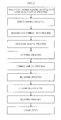
- steps of manufacturing the enameled container are described, and the enameled lid is also manufactured in the same manufacturing steps. That is, the lid-shaped article 3 produced in the lost wax casting process undergoes pre-processes and an enameling process that will be described later, and a lower circumferential edge 3b of the lid-shaped article 3 is masked with a masking material in the enameling process (in application of glaze 4, followed by baking).
- the container-shaped article 1 is integrally molded by shaping the stainless material described above through lost wax casting, and then the pre-processes are performed on the container-shaped article 1, followed by the enameling process.
- the container-shaped article 1 is placed in a heat treatment apparatus 10 and subjected to a first baking process at a temperature of from 800 to 900°C (the material is so heated to a temperature higher than or equal to 800°C but lower than or equal to 850°C) for 10 to 20 minutes.
- a first baking process at a temperature of from 800 to 900°C (the material is so heated to a temperature higher than or equal to 800°C but lower than or equal to 850°C) for 10 to 20 minutes.
- the material is softened in preparation for a distortion correcting process that follows the first baking process.
- the container-shaped article 1 having undergone the first baking process is allowed to undergo a distortion correction process based on press working.
- the distortion correction process any distortion of the container-shaped article 1 having been integrally molded in the lost wax casting process is corrected, for example, by reshaping the opening of the container-shaped article 1 into a complete round.
- the container-shaped article 1 having undergone the distortion correction process is placed in the heat treatment apparatus 10 and allowed to undergo a second baking process at a temperature ranging from 800 to 900°C (the material is so heated to a temperature higher than or equal to 800°C but lower than or equal to 850°C) for 10 to 20 minutes.
- a second baking process stress produced in the distortion correction process and left in the container-shaped article 1 is removed.
- the container-shaped article 1 having undergone the second baking process is allowed to undergo a cutting process.
- an opening edge 1b of the container-shaped article 1 (surface that the lower circumferential edge 3b of the lid-shaped article 3 overlies) is flattened.
- the container-shaped article 1 having undergone the cutting process is placed in the heat treatment apparatus 10 and allowed to undergo a third baking process at 700°C (the material is so heated to a temperature higher than or equal to 600°C but lower than or equal to 850°C) for 10 to 20 minutes.
- the third baking process is what is called post-baking for removing oil components having adhered to the surface 1a of the container-shaped article 1 in the cutting process.
- the container-shaped article 1 having undergone the third baking process is subjected to blasting.
- abrasive grains are sprayed onto the surface 1a of the container-shaped article 1 to completely remove the oil components having adhered thereto in the cutting process and roughen the surface 1a of the container-shaped article 1 into a rough surface to achieve satisfactory fixation between the surface 1a and the enamel layer 2.
- the blasting process may be replaced with a wet blasting process in which abrasive grains and a liquid are sprayed with the aid of compressed air.
- a glaze 4 is first applied onto the surface 1a of the container-shaped article 1.
- the glaze 4 is a combination of glass, clay, an inorganic pigment, an inorganic chemical, and water and is sprayed onto the container-shaped article 1 (see FIG. 3(a) ). Before the glaze 4 is sprayed, a masking material 11 is attached in advance to the opening edge 1b of the container-shaped article 1.
- the container-shaped article 1 onto which the glaze 4 has been sprayed is placed in the heat treatment apparatus 10 and so mounted on a rectangularly tubular mount 10a in the heat treatment apparatus 10 that the container-shaped article 1 is turned upside down and supported at the masked portion and baked at a temperature ranging from 800 to 900°C for 10 to 20 minutes, followed by a step of further spraying the glaze 4 and baking the container-shaped article 1 once or twice (see FIG. 3(b) ).
- the masking material 11 is peeled off, and the enameled container is thus completed (see FIG. 3(c) ).
- the opening edge 1b of the container-shaped article 1 is allowed to undergo a buffing process (flattering process) as required.
- the exposed metal portion is unlikely to rust but excels in durability because the container-shaped article 1 is made of a stainless material that is unlikely to rust.
- the enamel layers 2 and 5 are formed in the portions elsewhere besides the opening edge 1b of the container-shaped article 1 and the lower circumferential edge 3b of the lid-shaped article 3.
- the enamel layers 2 and 5 are formed on the opening edge 1b of the container-shaped article 1 and the lower circumferential edge 3b of the lid-shaped article 3 and slight irregularities of the enamel layers 2 and 5 degrade sealing performance
- excellent sealing performance is achieved because no enamel layer 2 or 5 is formed on the opening edge 1b of the container-shaped article 1 or the lower circumferential edge 3b of the lid-shaped article 3 and flattened surface contact is achieved.
- the present invention is not limited to the present example but the specific configuration of each of the components can be designed as appropriate.
Landscapes
- Chemical & Material Sciences (AREA)
- Engineering & Computer Science (AREA)
- Materials Engineering (AREA)
- Mechanical Engineering (AREA)
- Metallurgy (AREA)
- Organic Chemistry (AREA)
- Food Science & Technology (AREA)
- Cookers (AREA)
- Containers Opened By Tearing Frangible Portions (AREA)
- Glass Compositions (AREA)
- Closures For Containers (AREA)
Applications Claiming Priority (1)
| Application Number | Priority Date | Filing Date | Title |
|---|---|---|---|
| JP2014039626A JP6310279B2 (ja) | 2014-02-28 | 2014-02-28 | 琺瑯容体及びその製造方法 |
Publications (1)
| Publication Number | Publication Date |
|---|---|
| EP2923618A1 true EP2923618A1 (en) | 2015-09-30 |
Family
ID=52449943
Family Applications (1)
| Application Number | Title | Priority Date | Filing Date |
|---|---|---|---|
| EP15151617.6A Withdrawn EP2923618A1 (en) | 2014-02-28 | 2015-01-19 | Enameled container and method for manufacturing same |
Country Status (3)
| Country | Link |
|---|---|
| EP (1) | EP2923618A1 (enExample) |
| JP (1) | JP6310279B2 (enExample) |
| CN (1) | CN104873109A (enExample) |
Cited By (1)
| Publication number | Priority date | Publication date | Assignee | Title |
|---|---|---|---|---|
| CN115008126A (zh) * | 2022-04-23 | 2022-09-06 | 兰溪市锐兴工贸有限公司 | 一种搪瓷保暖杯的制造工艺 |
Families Citing this family (2)
| Publication number | Priority date | Publication date | Assignee | Title |
|---|---|---|---|---|
| CN110791759B (zh) * | 2019-11-29 | 2022-03-22 | 常熟市广达搪玻璃设备有限责任公司 | 一种搪玻璃容器的加工成型方法 |
| JP7542848B2 (ja) * | 2020-06-22 | 2024-09-02 | 新潟精密鋳造 株式会社 | アイススケート靴用ブレード |
Citations (5)
| Publication number | Priority date | Publication date | Assignee | Title |
|---|---|---|---|---|
| US4508100A (en) * | 1983-04-15 | 1985-04-02 | Seb S.A. | Method for enameling the bottom face of a culinary vessel of aluminum or aluminum alloy and a culinary vessel obtained in accordance with said method |
| JPH11350083A (ja) * | 1998-06-11 | 1999-12-21 | Nippon Steel Corp | 耐食鋼 |
| JP2001104162A (ja) | 1999-10-08 | 2001-04-17 | Masahiro Fukui | ホーロー製品 |
| JP3279792B2 (ja) * | 1994-02-03 | 2002-04-30 | 株式会社エジリー | 琺瑯引き物品 |
| US20060130668A1 (en) * | 2002-06-03 | 2006-06-22 | Xinhui Rixing Stainless Steel Product Co. Ltd. | Application of a alloy in kitchen utensils manufacture |
Family Cites Families (4)
| Publication number | Priority date | Publication date | Assignee | Title |
|---|---|---|---|---|
| JPH0621524U (ja) * | 1992-04-14 | 1994-03-22 | 有限会社広原絞り工業 | ケトル |
| JPH09263901A (ja) * | 1996-03-26 | 1997-10-07 | Nisshin Steel Co Ltd | 琺瑯密着性に優れた琺瑯基材用フェライト系ステンレス鋼板 |
| JP3320357B2 (ja) * | 1998-06-15 | 2002-09-03 | 株式会社日立ビルシステム | ホーロー壁板 |
| JP5559089B2 (ja) * | 2011-03-24 | 2014-07-23 | 象印マホービン株式会社 | 調理釜の製造方法およびこの方法によって製造した加熱調理器用調理釜 |
-
2014
- 2014-02-28 JP JP2014039626A patent/JP6310279B2/ja active Active
- 2014-12-30 CN CN201410842770.0A patent/CN104873109A/zh active Pending
-
2015
- 2015-01-19 EP EP15151617.6A patent/EP2923618A1/en not_active Withdrawn
Patent Citations (5)
| Publication number | Priority date | Publication date | Assignee | Title |
|---|---|---|---|---|
| US4508100A (en) * | 1983-04-15 | 1985-04-02 | Seb S.A. | Method for enameling the bottom face of a culinary vessel of aluminum or aluminum alloy and a culinary vessel obtained in accordance with said method |
| JP3279792B2 (ja) * | 1994-02-03 | 2002-04-30 | 株式会社エジリー | 琺瑯引き物品 |
| JPH11350083A (ja) * | 1998-06-11 | 1999-12-21 | Nippon Steel Corp | 耐食鋼 |
| JP2001104162A (ja) | 1999-10-08 | 2001-04-17 | Masahiro Fukui | ホーロー製品 |
| US20060130668A1 (en) * | 2002-06-03 | 2006-06-22 | Xinhui Rixing Stainless Steel Product Co. Ltd. | Application of a alloy in kitchen utensils manufacture |
Cited By (1)
| Publication number | Priority date | Publication date | Assignee | Title |
|---|---|---|---|---|
| CN115008126A (zh) * | 2022-04-23 | 2022-09-06 | 兰溪市锐兴工贸有限公司 | 一种搪瓷保暖杯的制造工艺 |
Also Published As
| Publication number | Publication date |
|---|---|
| CN104873109A (zh) | 2015-09-02 |
| JP6310279B2 (ja) | 2018-04-11 |
| JP2015163727A (ja) | 2015-09-10 |
Similar Documents
| Publication | Publication Date | Title |
|---|---|---|
| JP2011036913A (ja) | 金属高温成型金型及びその製造方法 | |
| JP5559089B2 (ja) | 調理釜の製造方法およびこの方法によって製造した加熱調理器用調理釜 | |
| CN107252875A (zh) | 一种高强度阀体的制造方法 | |
| JP6310279B2 (ja) | 琺瑯容体及びその製造方法 | |
| KR20170054132A (ko) | 법랑 코팅 용기의 제조 방법 | |
| WO2017031571A1 (en) | Process chamber shielding system and method | |
| CN108968637A (zh) | 铸造锅具的制造方法 | |
| CN109431239A (zh) | 一种免包边搪瓷锅及其制作方法 | |
| CN105455614A (zh) | 一种烹饪器具内锅的制造方法和相应的内锅及电热锅 | |
| JP5862912B1 (ja) | シリコーン被膜金属材およびその製造方法 | |
| KR20170024753A (ko) | 법랑 용기체 및 그 제조 방법 | |
| KR100527796B1 (ko) | 조리용기 제조방법 | |
| KR100394045B1 (ko) | 외면법랑 및 내면 테프론 코팅이 된 주방용기 | |
| KR102096329B1 (ko) | 알루미늄 금형 및 이의 제조방법 | |
| KR102354885B1 (ko) | 알루미늄 판재를 이용한 인덕션 조리 용기 제조방법 및 그 장치 | |
| CN107348828A (zh) | 用于烹饪器具的内锅、烹饪器具和制造内锅的方法 | |
| CN104550678A (zh) | 一种铝活塞金属型重力铸造模具表面长效涂层及制备方法 | |
| CN112626457A (zh) | 一种高硬度pvd膜层及其制备方法 | |
| CN111096655A (zh) | 内锅和烹饪器具 | |
| KR20210077994A (ko) | 효율적인 플라스틱 사출 금형 제조방법 | |
| US20060005373A1 (en) | Metal container processing method | |
| JPS61286077A (ja) | 鋼管圧延機用芯金 | |
| CN113446632B (zh) | 聚能锅架的制造方法及聚能锅架 | |
| CN108213346A (zh) | 金属型重力浇注工艺 | |
| CN104846263A (zh) | 一种汽车刹车盘板材的制备方法 |
Legal Events
| Date | Code | Title | Description |
|---|---|---|---|
| PUAI | Public reference made under article 153(3) epc to a published international application that has entered the european phase |
Free format text: ORIGINAL CODE: 0009012 |
|
| AK | Designated contracting states |
Kind code of ref document: A1 Designated state(s): AL AT BE BG CH CY CZ DE DK EE ES FI FR GB GR HR HU IE IS IT LI LT LU LV MC MK MT NL NO PL PT RO RS SE SI SK SM TR |
|
| AX | Request for extension of the european patent |
Extension state: BA ME |
|
| 17P | Request for examination filed |
Effective date: 20160201 |
|
| RBV | Designated contracting states (corrected) |
Designated state(s): AL AT BE BG CH CY CZ DE DK EE ES FI FR GB GR HR HU IE IS IT LI LT LU LV MC MK MT NL NO PL PT RO RS SE SI SK SM TR |
|
| 17Q | First examination report despatched |
Effective date: 20170912 |
|
| GRAP | Despatch of communication of intention to grant a patent |
Free format text: ORIGINAL CODE: EPIDOSNIGR1 |
|
| INTG | Intention to grant announced |
Effective date: 20180504 |
|
| STAA | Information on the status of an ep patent application or granted ep patent |
Free format text: STATUS: THE APPLICATION IS DEEMED TO BE WITHDRAWN |
|
| 18D | Application deemed to be withdrawn |
Effective date: 20180915 |