EP2913007B1 - System zur verhinderung von bakteriellen infektionen bei nadeldurchgängen - Google Patents
System zur verhinderung von bakteriellen infektionen bei nadeldurchgängen Download PDFInfo
- Publication number
- EP2913007B1 EP2913007B1 EP13849478.6A EP13849478A EP2913007B1 EP 2913007 B1 EP2913007 B1 EP 2913007B1 EP 13849478 A EP13849478 A EP 13849478A EP 2913007 B1 EP2913007 B1 EP 2913007B1
- Authority
- EP
- European Patent Office
- Prior art keywords
- current
- instrument
- needle
- terminal
- ions
- Prior art date
- Legal status (The legal status is an assumption and is not a legal conclusion. Google has not performed a legal analysis and makes no representation as to the accuracy of the status listed.)
- Not-in-force
Links
- 208000035143 Bacterial infection Diseases 0.000 title claims description 15
- 208000022362 bacterial infectious disease Diseases 0.000 title claims description 15
- 210000001519 tissue Anatomy 0.000 claims description 58
- 238000001574 biopsy Methods 0.000 claims description 53
- 229910052709 silver Inorganic materials 0.000 claims description 44
- 239000004332 silver Substances 0.000 claims description 44
- 229910052751 metal Inorganic materials 0.000 claims description 43
- 239000002184 metal Substances 0.000 claims description 43
- 239000011248 coating agent Substances 0.000 claims description 28
- 238000000576 coating method Methods 0.000 claims description 28
- BQCADISMDOOEFD-UHFFFAOYSA-N Silver Chemical compound [Ag] BQCADISMDOOEFD-UHFFFAOYSA-N 0.000 claims description 27
- 229910021645 metal ion Inorganic materials 0.000 claims description 26
- 150000002500 ions Chemical class 0.000 claims description 22
- -1 silver ions Chemical class 0.000 claims description 22
- 230000000845 anti-microbial effect Effects 0.000 claims description 21
- 231100000331 toxic Toxicity 0.000 claims description 16
- 230000002588 toxic effect Effects 0.000 claims description 16
- 231100000053 low toxicity Toxicity 0.000 claims description 14
- 230000006698 induction Effects 0.000 claims description 13
- 230000002265 prevention Effects 0.000 claims description 12
- 210000002307 prostate Anatomy 0.000 claims description 12
- 230000000638 stimulation Effects 0.000 claims description 7
- HCHKCACWOHOZIP-UHFFFAOYSA-N Zinc Chemical compound [Zn] HCHKCACWOHOZIP-UHFFFAOYSA-N 0.000 claims description 6
- 230000001939 inductive effect Effects 0.000 claims description 6
- 230000002232 neuromuscular Effects 0.000 claims description 6
- 229910052725 zinc Inorganic materials 0.000 claims description 6
- 239000011701 zinc Substances 0.000 claims description 6
- 230000004087 circulation Effects 0.000 claims description 4
- PTFCDOFLOPIGGS-UHFFFAOYSA-N Zinc dication Chemical compound [Zn+2] PTFCDOFLOPIGGS-UHFFFAOYSA-N 0.000 claims description 2
- 230000002045 lasting effect Effects 0.000 claims description 2
- 239000002923 metal particle Substances 0.000 claims description 2
- 230000001105 regulatory effect Effects 0.000 claims 1
- 208000015181 infectious disease Diseases 0.000 description 17
- 239000000523 sample Substances 0.000 description 15
- 230000000694 effects Effects 0.000 description 13
- 241000282412 Homo Species 0.000 description 11
- 239000012678 infectious agent Substances 0.000 description 11
- 206010028980 Neoplasm Diseases 0.000 description 10
- 210000003491 skin Anatomy 0.000 description 10
- 238000006243 chemical reaction Methods 0.000 description 9
- 238000010438 heat treatment Methods 0.000 description 8
- 241000894006 Bacteria Species 0.000 description 7
- 239000000463 material Substances 0.000 description 7
- 238000000034 method Methods 0.000 description 7
- 230000000750 progressive effect Effects 0.000 description 7
- 230000002035 prolonged effect Effects 0.000 description 7
- VEXZGXHMUGYJMC-UHFFFAOYSA-M Chloride anion Chemical compound [Cl-] VEXZGXHMUGYJMC-UHFFFAOYSA-M 0.000 description 6
- HKZLPVFGJNLROG-UHFFFAOYSA-M silver monochloride Chemical compound [Cl-].[Ag+] HKZLPVFGJNLROG-UHFFFAOYSA-M 0.000 description 6
- NDVLTYZPCACLMA-UHFFFAOYSA-N silver oxide Chemical compound [O-2].[Ag+].[Ag+] NDVLTYZPCACLMA-UHFFFAOYSA-N 0.000 description 6
- 241000894007 species Species 0.000 description 6
- 206010064091 Iatrogenic infection Diseases 0.000 description 5
- 229910021607 Silver chloride Inorganic materials 0.000 description 5
- 230000000844 anti-bacterial effect Effects 0.000 description 5
- 238000003487 electrochemical reaction Methods 0.000 description 5
- 210000004209 hair Anatomy 0.000 description 5
- 210000000664 rectum Anatomy 0.000 description 5
- 210000004881 tumor cell Anatomy 0.000 description 5
- 241000588724 Escherichia coli Species 0.000 description 4
- 238000002679 ablation Methods 0.000 description 4
- 239000002775 capsule Substances 0.000 description 4
- 239000013626 chemical specie Substances 0.000 description 4
- 239000013078 crystal Substances 0.000 description 4
- 230000006378 damage Effects 0.000 description 4
- 238000002474 experimental method Methods 0.000 description 4
- 239000000499 gel Substances 0.000 description 4
- 238000010874 in vitro model Methods 0.000 description 4
- 238000001727 in vivo Methods 0.000 description 4
- 239000002609 medium Substances 0.000 description 4
- 238000004458 analytical method Methods 0.000 description 3
- 230000002421 anti-septic effect Effects 0.000 description 3
- 230000001580 bacterial effect Effects 0.000 description 3
- 230000004888 barrier function Effects 0.000 description 3
- 230000008901 benefit Effects 0.000 description 3
- 230000015572 biosynthetic process Effects 0.000 description 3
- 239000004020 conductor Substances 0.000 description 3
- 238000001514 detection method Methods 0.000 description 3
- 230000005684 electric field Effects 0.000 description 3
- 239000004744 fabric Substances 0.000 description 3
- 239000007943 implant Substances 0.000 description 3
- 230000005012 migration Effects 0.000 description 3
- 238000013508 migration Methods 0.000 description 3
- 230000004048 modification Effects 0.000 description 3
- 238000012986 modification Methods 0.000 description 3
- 230000009467 reduction Effects 0.000 description 3
- 238000005070 sampling Methods 0.000 description 3
- 229910001923 silver oxide Inorganic materials 0.000 description 3
- SQGYOTSLMSWVJD-UHFFFAOYSA-N silver(1+) nitrate Chemical compound [Ag+].[O-]N(=O)=O SQGYOTSLMSWVJD-UHFFFAOYSA-N 0.000 description 3
- 239000007787 solid Substances 0.000 description 3
- 238000011477 surgical intervention Methods 0.000 description 3
- 208000032843 Hemorrhage Diseases 0.000 description 2
- 208000007101 Muscle Cramp Diseases 0.000 description 2
- 206010031252 Osteomyelitis Diseases 0.000 description 2
- 206010051077 Post procedural haemorrhage Diseases 0.000 description 2
- 208000005392 Spasm Diseases 0.000 description 2
- 230000004913 activation Effects 0.000 description 2
- 239000003242 anti bacterial agent Substances 0.000 description 2
- 230000002924 anti-infective effect Effects 0.000 description 2
- 229940088710 antibiotic agent Drugs 0.000 description 2
- 229940064004 antiseptic throat preparations Drugs 0.000 description 2
- 201000011510 cancer Diseases 0.000 description 2
- 210000004027 cell Anatomy 0.000 description 2
- 150000001875 compounds Chemical class 0.000 description 2
- 238000013461 design Methods 0.000 description 2
- 238000005868 electrolysis reaction Methods 0.000 description 2
- 150000002739 metals Chemical class 0.000 description 2
- 238000010899 nucleation Methods 0.000 description 2
- 239000002245 particle Substances 0.000 description 2
- 230000003449 preventive effect Effects 0.000 description 2
- 229910001961 silver nitrate Inorganic materials 0.000 description 2
- 238000001356 surgical procedure Methods 0.000 description 2
- 208000034309 Bacterial disease carrier Diseases 0.000 description 1
- 208000012661 Dyskinesia Diseases 0.000 description 1
- 241000792859 Enema Species 0.000 description 1
- 108010010803 Gelatin Proteins 0.000 description 1
- 241000167880 Hirundinidae Species 0.000 description 1
- 238000012404 In vitro experiment Methods 0.000 description 1
- 208000015592 Involuntary movements Diseases 0.000 description 1
- 239000006154 MacConkey agar Substances 0.000 description 1
- 229910019142 PO4 Inorganic materials 0.000 description 1
- 239000004698 Polyethylene Substances 0.000 description 1
- 230000001133 acceleration Effects 0.000 description 1
- 230000009471 action Effects 0.000 description 1
- 239000000956 alloy Substances 0.000 description 1
- 229910045601 alloy Inorganic materials 0.000 description 1
- 210000000436 anus Anatomy 0.000 description 1
- 235000013871 bee wax Nutrition 0.000 description 1
- 239000012166 beeswax Substances 0.000 description 1
- 230000009286 beneficial effect Effects 0.000 description 1
- 230000031018 biological processes and functions Effects 0.000 description 1
- 230000000740 bleeding effect Effects 0.000 description 1
- 230000017531 blood circulation Effects 0.000 description 1
- 210000000988 bone and bone Anatomy 0.000 description 1
- 238000010349 cathodic reaction Methods 0.000 description 1
- 230000003306 cell dissemination Effects 0.000 description 1
- 230000012292 cell migration Effects 0.000 description 1
- 230000003833 cell viability Effects 0.000 description 1
- 210000003169 central nervous system Anatomy 0.000 description 1
- 230000008859 change Effects 0.000 description 1
- 239000003795 chemical substances by application Substances 0.000 description 1
- 150000001805 chlorine compounds Chemical class 0.000 description 1
- 239000000470 constituent Substances 0.000 description 1
- 238000013270 controlled release Methods 0.000 description 1
- 230000007797 corrosion Effects 0.000 description 1
- 238000005260 corrosion Methods 0.000 description 1
- 238000012258 culturing Methods 0.000 description 1
- 230000009849 deactivation Effects 0.000 description 1
- 208000002925 dental caries Diseases 0.000 description 1
- 238000003745 diagnosis Methods 0.000 description 1
- 238000002405 diagnostic procedure Methods 0.000 description 1
- 201000010099 disease Diseases 0.000 description 1
- 208000037265 diseases, disorders, signs and symptoms Diseases 0.000 description 1
- 238000002001 electrophysiology Methods 0.000 description 1
- 230000007831 electrophysiology Effects 0.000 description 1
- 238000001861 endoscopic biopsy Methods 0.000 description 1
- 239000007920 enema Substances 0.000 description 1
- 229940079360 enema for constipation Drugs 0.000 description 1
- 244000000036 gastrointestinal pathogen Species 0.000 description 1
- 239000008273 gelatin Substances 0.000 description 1
- 229920000159 gelatin Polymers 0.000 description 1
- 235000019322 gelatine Nutrition 0.000 description 1
- 235000011852 gelatine desserts Nutrition 0.000 description 1
- 210000003780 hair follicle Anatomy 0.000 description 1
- XLYOFNOQVPJJNP-ZSJDYOACSA-N heavy water Substances [2H]O[2H] XLYOFNOQVPJJNP-ZSJDYOACSA-N 0.000 description 1
- 238000000338 in vitro Methods 0.000 description 1
- 230000000415 inactivating effect Effects 0.000 description 1
- 238000003780 insertion Methods 0.000 description 1
- 230000037431 insertion Effects 0.000 description 1
- 230000036210 malignancy Effects 0.000 description 1
- 230000007246 mechanism Effects 0.000 description 1
- 229910001510 metal chloride Inorganic materials 0.000 description 1
- 244000005700 microbiome Species 0.000 description 1
- 238000000386 microscopy Methods 0.000 description 1
- 239000002480 mineral oil Substances 0.000 description 1
- 235000010446 mineral oil Nutrition 0.000 description 1
- 239000000203 mixture Substances 0.000 description 1
- 230000017311 musculoskeletal movement, spinal reflex action Effects 0.000 description 1
- 238000013188 needle biopsy Methods 0.000 description 1
- 230000003472 neutralizing effect Effects 0.000 description 1
- 230000003647 oxidation Effects 0.000 description 1
- 238000007254 oxidation reaction Methods 0.000 description 1
- 230000001717 pathogenic effect Effects 0.000 description 1
- 230000035515 penetration Effects 0.000 description 1
- 230000002688 persistence Effects 0.000 description 1
- 235000021317 phosphate Nutrition 0.000 description 1
- 150000003013 phosphoric acid derivatives Chemical class 0.000 description 1
- 229920000573 polyethylene Polymers 0.000 description 1
- 229920001343 polytetrafluoroethylene Polymers 0.000 description 1
- 239000004810 polytetrafluoroethylene Substances 0.000 description 1
- 230000001376 precipitating effect Effects 0.000 description 1
- 238000002360 preparation method Methods 0.000 description 1
- 230000035755 proliferation Effects 0.000 description 1
- 230000000069 prophylactic effect Effects 0.000 description 1
- 230000027756 respiratory electron transport chain Effects 0.000 description 1
- 150000003839 salts Chemical class 0.000 description 1
- 150000003378 silver Chemical class 0.000 description 1
- 229940100890 silver compound Drugs 0.000 description 1
- 150000003379 silver compounds Chemical class 0.000 description 1
- 229910000108 silver(I,III) oxide Inorganic materials 0.000 description 1
- VFWRGKJLLYDFBY-UHFFFAOYSA-N silver;hydrate Chemical compound O.[Ag].[Ag] VFWRGKJLLYDFBY-UHFFFAOYSA-N 0.000 description 1
- UKHWJBVVWVYFEY-UHFFFAOYSA-M silver;hydroxide Chemical compound [OH-].[Ag+] UKHWJBVVWVYFEY-UHFFFAOYSA-M 0.000 description 1
- 210000004872 soft tissue Anatomy 0.000 description 1
- 239000002195 soluble material Substances 0.000 description 1
- 238000010186 staining Methods 0.000 description 1
- 239000010935 stainless steel Substances 0.000 description 1
- 229910001220 stainless steel Inorganic materials 0.000 description 1
- 238000004659 sterilization and disinfection Methods 0.000 description 1
- 239000000725 suspension Substances 0.000 description 1
- 238000012360 testing method Methods 0.000 description 1
- 238000002560 therapeutic procedure Methods 0.000 description 1
- 210000001685 thyroid gland Anatomy 0.000 description 1
- 230000000451 tissue damage Effects 0.000 description 1
- 231100000827 tissue damage Toxicity 0.000 description 1
- 230000000699 topical effect Effects 0.000 description 1
- XLYOFNOQVPJJNP-UHFFFAOYSA-N water Chemical compound O XLYOFNOQVPJJNP-UHFFFAOYSA-N 0.000 description 1
- 239000002023 wood Substances 0.000 description 1
Images

Classifications
-
- A—HUMAN NECESSITIES
- A47—FURNITURE; DOMESTIC ARTICLES OR APPLIANCES; COFFEE MILLS; SPICE MILLS; SUCTION CLEANERS IN GENERAL
- A47F—SPECIAL FURNITURE, FITTINGS, OR ACCESSORIES FOR SHOPS, STOREHOUSES, BARS, RESTAURANTS OR THE LIKE; PAYING COUNTERS
- A47F5/00—Show stands, hangers, or shelves characterised by their constructional features
- A47F5/10—Adjustable or foldable or dismountable display stands
- A47F5/11—Adjustable or foldable or dismountable display stands made of cardboard, paper or the like
- A47F5/112—Adjustable or foldable or dismountable display stands made of cardboard, paper or the like hand-folded from sheet material
-
- A—HUMAN NECESSITIES
- A61—MEDICAL OR VETERINARY SCIENCE; HYGIENE
- A61B—DIAGNOSIS; SURGERY; IDENTIFICATION
- A61B10/00—Instruments for taking body samples for diagnostic purposes; Other methods or instruments for diagnosis, e.g. for vaccination diagnosis, sex determination or ovulation-period determination; Throat striking implements
- A61B10/02—Instruments for taking cell samples or for biopsy
- A61B10/0233—Pointed or sharp biopsy instruments
-
- A—HUMAN NECESSITIES
- A61—MEDICAL OR VETERINARY SCIENCE; HYGIENE
- A61B—DIAGNOSIS; SURGERY; IDENTIFICATION
- A61B10/00—Instruments for taking body samples for diagnostic purposes; Other methods or instruments for diagnosis, e.g. for vaccination diagnosis, sex determination or ovulation-period determination; Throat striking implements
- A61B10/02—Instruments for taking cell samples or for biopsy
- A61B10/0233—Pointed or sharp biopsy instruments
- A61B10/0241—Pointed or sharp biopsy instruments for prostate
-
- A—HUMAN NECESSITIES
- A61—MEDICAL OR VETERINARY SCIENCE; HYGIENE
- A61B—DIAGNOSIS; SURGERY; IDENTIFICATION
- A61B10/00—Instruments for taking body samples for diagnostic purposes; Other methods or instruments for diagnosis, e.g. for vaccination diagnosis, sex determination or ovulation-period determination; Throat striking implements
- A61B10/02—Instruments for taking cell samples or for biopsy
- A61B10/0233—Pointed or sharp biopsy instruments
- A61B10/0266—Pointed or sharp biopsy instruments means for severing sample
- A61B10/0275—Pointed or sharp biopsy instruments means for severing sample with sample notch, e.g. on the side of inner stylet
-
- A—HUMAN NECESSITIES
- A61—MEDICAL OR VETERINARY SCIENCE; HYGIENE
- A61B—DIAGNOSIS; SURGERY; IDENTIFICATION
- A61B18/00—Surgical instruments, devices or methods for transferring non-mechanical forms of energy to or from the body
- A61B18/04—Surgical instruments, devices or methods for transferring non-mechanical forms of energy to or from the body by heating
- A61B18/12—Surgical instruments, devices or methods for transferring non-mechanical forms of energy to or from the body by heating by passing a current through the tissue to be heated, e.g. high-frequency current
- A61B18/14—Probes or electrodes therefor
- A61B18/1477—Needle-like probes
-
- A—HUMAN NECESSITIES
- A61—MEDICAL OR VETERINARY SCIENCE; HYGIENE
- A61L—METHODS OR APPARATUS FOR STERILISING MATERIALS OR OBJECTS IN GENERAL; DISINFECTION, STERILISATION OR DEODORISATION OF AIR; CHEMICAL ASPECTS OF BANDAGES, DRESSINGS, ABSORBENT PADS OR SURGICAL ARTICLES; MATERIALS FOR BANDAGES, DRESSINGS, ABSORBENT PADS OR SURGICAL ARTICLES
- A61L31/00—Materials for other surgical articles, e.g. stents, stent-grafts, shunts, surgical drapes, guide wires, materials for adhesion prevention, occluding devices, surgical gloves, tissue fixation devices
- A61L31/08—Materials for coatings
- A61L31/082—Inorganic materials
- A61L31/088—Other specific inorganic materials not covered by A61L31/084 or A61L31/086
-
- A—HUMAN NECESSITIES
- A61—MEDICAL OR VETERINARY SCIENCE; HYGIENE
- A61L—METHODS OR APPARATUS FOR STERILISING MATERIALS OR OBJECTS IN GENERAL; DISINFECTION, STERILISATION OR DEODORISATION OF AIR; CHEMICAL ASPECTS OF BANDAGES, DRESSINGS, ABSORBENT PADS OR SURGICAL ARTICLES; MATERIALS FOR BANDAGES, DRESSINGS, ABSORBENT PADS OR SURGICAL ARTICLES
- A61L31/00—Materials for other surgical articles, e.g. stents, stent-grafts, shunts, surgical drapes, guide wires, materials for adhesion prevention, occluding devices, surgical gloves, tissue fixation devices
- A61L31/14—Materials characterised by their function or physical properties, e.g. injectable or lubricating compositions, shape-memory materials, surface modified materials
- A61L31/16—Biologically active materials, e.g. therapeutic substances
-
- A—HUMAN NECESSITIES
- A61—MEDICAL OR VETERINARY SCIENCE; HYGIENE
- A61M—DEVICES FOR INTRODUCING MEDIA INTO, OR ONTO, THE BODY; DEVICES FOR TRANSDUCING BODY MEDIA OR FOR TAKING MEDIA FROM THE BODY; DEVICES FOR PRODUCING OR ENDING SLEEP OR STUPOR
- A61M37/00—Other apparatus for introducing media into the body; Percutany, i.e. introducing medicines into the body by diffusion through the skin
-
- A—HUMAN NECESSITIES
- A61—MEDICAL OR VETERINARY SCIENCE; HYGIENE
- A61N—ELECTROTHERAPY; MAGNETOTHERAPY; RADIATION THERAPY; ULTRASOUND THERAPY
- A61N1/00—Electrotherapy; Circuits therefor
- A61N1/02—Details
- A61N1/04—Electrodes
- A61N1/05—Electrodes for implantation or insertion into the body, e.g. heart electrode
- A61N1/0502—Skin piercing electrodes
-
- F—MECHANICAL ENGINEERING; LIGHTING; HEATING; WEAPONS; BLASTING
- F16—ENGINEERING ELEMENTS AND UNITS; GENERAL MEASURES FOR PRODUCING AND MAINTAINING EFFECTIVE FUNCTIONING OF MACHINES OR INSTALLATIONS; THERMAL INSULATION IN GENERAL
- F16B—DEVICES FOR FASTENING OR SECURING CONSTRUCTIONAL ELEMENTS OR MACHINE PARTS TOGETHER, e.g. NAILS, BOLTS, CIRCLIPS, CLAMPS, CLIPS OR WEDGES; JOINTS OR JOINTING
- F16B12/00—Jointing of furniture or the like, e.g. hidden from exterior
-
- A—HUMAN NECESSITIES
- A47—FURNITURE; DOMESTIC ARTICLES OR APPLIANCES; COFFEE MILLS; SPICE MILLS; SUCTION CLEANERS IN GENERAL
- A47F—SPECIAL FURNITURE, FITTINGS, OR ACCESSORIES FOR SHOPS, STOREHOUSES, BARS, RESTAURANTS OR THE LIKE; PAYING COUNTERS
- A47F5/00—Show stands, hangers, or shelves characterised by their constructional features
- A47F5/10—Adjustable or foldable or dismountable display stands
- A47F5/11—Adjustable or foldable or dismountable display stands made of cardboard, paper or the like
-
- A—HUMAN NECESSITIES
- A61—MEDICAL OR VETERINARY SCIENCE; HYGIENE
- A61B—DIAGNOSIS; SURGERY; IDENTIFICATION
- A61B10/00—Instruments for taking body samples for diagnostic purposes; Other methods or instruments for diagnosis, e.g. for vaccination diagnosis, sex determination or ovulation-period determination; Throat striking implements
- A61B2010/009—Various features of diagnostic instruments
-
- A—HUMAN NECESSITIES
- A61—MEDICAL OR VETERINARY SCIENCE; HYGIENE
- A61B—DIAGNOSIS; SURGERY; IDENTIFICATION
- A61B17/00—Surgical instruments, devices or methods
- A61B2017/00831—Material properties
- A61B2017/00889—Material properties antimicrobial, disinfectant
-
- A—HUMAN NECESSITIES
- A61—MEDICAL OR VETERINARY SCIENCE; HYGIENE
- A61L—METHODS OR APPARATUS FOR STERILISING MATERIALS OR OBJECTS IN GENERAL; DISINFECTION, STERILISATION OR DEODORISATION OF AIR; CHEMICAL ASPECTS OF BANDAGES, DRESSINGS, ABSORBENT PADS OR SURGICAL ARTICLES; MATERIALS FOR BANDAGES, DRESSINGS, ABSORBENT PADS OR SURGICAL ARTICLES
- A61L2300/00—Biologically active materials used in bandages, wound dressings, absorbent pads or medical devices
- A61L2300/40—Biologically active materials used in bandages, wound dressings, absorbent pads or medical devices characterised by a specific therapeutic activity or mode of action
- A61L2300/404—Biocides, antimicrobial agents, antiseptic agents
-
- A—HUMAN NECESSITIES
- A61—MEDICAL OR VETERINARY SCIENCE; HYGIENE
- A61L—METHODS OR APPARATUS FOR STERILISING MATERIALS OR OBJECTS IN GENERAL; DISINFECTION, STERILISATION OR DEODORISATION OF AIR; CHEMICAL ASPECTS OF BANDAGES, DRESSINGS, ABSORBENT PADS OR SURGICAL ARTICLES; MATERIALS FOR BANDAGES, DRESSINGS, ABSORBENT PADS OR SURGICAL ARTICLES
- A61L2300/00—Biologically active materials used in bandages, wound dressings, absorbent pads or medical devices
- A61L2300/60—Biologically active materials used in bandages, wound dressings, absorbent pads or medical devices characterised by a special physical form
- A61L2300/606—Coatings
Definitions
- the present invention generally relates to a system for the prevention of bacterial infections in biopsy needle tracts when these needles, after having been inserted into a target tissue, are withdrawn through tissues existing in the tract leading to the target tissue, and in which bacterial infections are prevented by means of applying an electric current to the surgical instrument or needle, and more particularly to a system comprising means for the massive and sudden release of metal ions with antibacterial properties, preferably silver ions.
- the system of the present invention is particularly applicable in preventing bacterial infections that occur in needle tracts defined when performing a biopsy.
- a biopsy is a medical diagnostic procedure consisting of taking a tissue sample for subsequent analysis. Said analysis is usually carried out by means of microscopy and sometimes requires treating the sample with biochemical markers and staining for histological analysis.
- Biopsies are common in oncology for determining tumor malignancy and type in order to adapt the therapy to be applied to the patient.
- a large number of biopsies are performed in a minimally invasive manner by means of sharp instruments in the form of a needle which pierce epithelia of the patient to enter a region in which the tumor to be sampled is located.
- infectious agents such as bacteria are carried along and conduits are established through which said infectious agents can cause infections.
- the pierced barrier is the skin, it is generally easy to prevent said infections by means of hygienic measures and by means of applying antiseptics on the skin.
- Some of these measures are hygienic measures, such as the administration of enemas, and others are based on the preventive administration of antibiotics. However, even by adopting these measures, there is a very significant proportion of cases, i.e., between 0.5% and 11%, which result in clinically relevant infections ( J Urol. 2003, 169(5): 1762-5 ; Int J Urol. 2008,15(5):457-9 ; Br J Urol. June 1996; 77(6):851-5 ).
- Methods are also known for producing thermal ablation or cauterization of tissues surrounding the needle tract by means of heating the needle, as described in patent documents WO9614018A1 and US2003109802A1 , for example, or by means of heating the tissues around the needle tract based on the Joule effect with radiofrequency currents, as described by P. F. Laeseke, T. C. Winter 3rd, C. L. Davis, K. R. Stevens, C. D. Johnson, F. J. Fronczak, J. G. Webster and F. T. Lee Jr, in "Postbiopsy bleeding in a porcine model: reduction with radiofrequency ablation-preliminary results" Radiology, vol. 227, pp. 493-499, May 2003 , S. A.
- Such devices require complete control of the temperature of the needle and its surroundings, which requires at least one temperature sensor in the distal portion of the probe, and therefore modification of the design, since lack of temperature control may result in excessively high temperatures which can make the patient uncomfortable, cause the needle to adhere to cauterized tissue or, on the other hand, constitute insufficient treatment of the tissue surrounding the needle trajectory, in addition to the risk of the heating damaging the samples taken.
- patent document WO2009156506A1 describes a biopsy needle having two electric conductors connected to a high-frequency generator and arranged such that a high-frequency alternating current produced entirely in the tissue of the patient flows between the ends of said conductors, such that cauterization by heat takes place in the tissue without directly heating the needle, the spread of active tumor cells and bleeding in the needle tract thereby being prevented.
- this biopsy needle basically has the same drawbacks as those mentioned above in reference to biopsy needles in which the needle is heated to achieve cauterization.
- post-treatment infection would not be effectively prevented since the bacterial proliferation of bacteria migrating through the hole left by the biopsy needle can still occur in treated tissues.
- electrochemical reactions are chemical reactions that take place in the interface between a metal electrode and the biological medium and lead to an electron transfer between the electrode and the biological medium when direct current flows through the interface. These reactions comprise oxidations and reductions involving chemical species of the electrode and biological medium. When released into the biological medium, some of the resulting species can damage tissue components or interfere with biological processes to the extent of compromising cell viability. For solid tumor destruction, these chemical reactions are induced by means of metal needles introduced into the tumor and low currents are applied to said needles, this treatment being referred to as "electrochemical treatment”.
- Patent document ES 2 366 845 A1 which is considered to be the closest prior art discloses a system for the prevention of needle tract bacterial infections, in biopsy needle tracts, comprising:
- the system described in said article includes the elements of the preamble of claim 1 of the present invention, although as regards bacterial prevention it has not been proven in vivo or in tissues, but only in vitro and in a gelatinous preparation suitable for bacterial colonization, the article itself indicating that the numerical conclusions extracted from such in vitro model must not be directly extrapolated to clinical cases since tumor cells and the surroundings thereof are significantly different from the conditions of such in vitro model.
- bacteria studied in the mentioned "proof of concept" are not of the same type as those existing in the mentioned in vivo environments in human tissues.
- Operation of the system disclosed in said article is based on generating cathodic electrochemical reactions on the surface of the needle, producing a sufficiently toxic, high pH microenvironment in the tissue surrounding the needle, resulting, in the experiment conducted in an in vitro model, in the electrochemical reactions generated around the needle inactivating bacteria in contact with the needle, and therefore preventing growth of bacterial colonies in the needle tract given that the bacteria carried by the needle had previously been inactivated by the increase in pH.
- the needle was used as a cathode in all the experiments described in said article, i.e., negative-polarity voltage was applied to the needle, use of the needle as an anode not being negative-polarity voltage was applied to the needle, use of the needle as an anode not being suggested in the article.
- the effect of the achieved increase in pH would not remain active (i.e., sufficiently toxic for infectious agents) for more than several minutes or a few hours, because it would be dampened by the organic constituents of living tissues.
- the tissues will act as a buffer, and after the end of applying the current, they will end up neutralizing the increase in pH in several minutes or a few hours. Therefore, the risk of infection will return if the wound left by the needle allows infectious agents to migrate from their usually harmless location to those regions in which they can cause harmful infections.
- silver (Ag) is particularly indicated since it has been observed to have a very strong antibacterial effect and very mild contraindications as well. Said properties do no usually present in solid silver but tend to be more obvious in colloidal silver suspensions or in silver compounds from which silver ions (Ag + ) can become detached. Therefore, bandages with silver nitrate are used today to prevent infections in burns and after surgical interventions, for example.
- US2011054612 (A1) describes devices, systems and methods for treating disease and/or infection by the release of silver from an implant over an extended period of time.
- the devices described may be used to treat infections such as osteomyelitis by the controlled release of silver ions from multiple sites of an extended-use implant.
- This implant typically includes a plurality of arms that both anchor and help distribute the released ions within the tissue. Power may be applied to release the silver ions into the tissue.
- US5738110 (A ) relates to a device for the diagnosis of certain gastrointestinal pathogens that includes a gelatin pharmaceutical capsule which contains a malleable drag material made of a mixture of beeswax and mineral oil. Embedded in the drag material is a narrow piece of thin sampling cloth with inwardly tapered ends. The free end of the sampling cloth is attached to a string which extends through a perforation in the capsule. The patient holds the free end of the string and swallows the capsule. The sampling cloth and drag material are retrieved for testing after the capsule is digested.
- the present invention relates to a system according to claim 1.
- said connection can be carried out in different ways according to different embodiments, such as by means of the surface itself joining the distal portion with the proximal end when said surface is electrically conductive and the first terminal is connected to the proximal end, or by means of an electrical conductor running through the inside of the instrument and connected at one end to the first terminal and at the other end to the distal portion of the instrument, or in any other manner a person skilled in the art considers suitable for the proposed end.
- the system proposed by the present invention is characteristically provided for preventing post-treatment bacterial infections, for which it comprises means for the massive and sudden release of metal ions comprising:
- the system will include the mentioned metal coating which can in turn be an independent element of the instrument to be arranged therein (through any type of known securing or fixing mechanism considered suitable) or to form all or part of the instrument, as in the case of the instrument containing the metal element as part of an alloy or being formed entirely by the metal element.
- the system proposed by the present invention is provided for preventing post-treatment bacterial infections for a long duration, for hours or for days.
- use of the system proposed by the present invention includes a massive and sudden release of metal ions from the metal coating or metal element towards living tissues during the induction of current, and a subsequent slow and progressive release of metal ions from the metal chloride compound formed by combining such released ions with chloride ions, which assures the mentioned post-treatment effect with a duration ranging from hours up to days.
- the field of application of the present invention requires very short treatment times so that the system is clinically practical, ideally under a minute or half a minute, which makes it necessary to deal with two phenomena that require limiting current levels and application times. These two phenomena are heating by Joule effect and electrical stimulation.
- the application time and particularly the magnitude of the applied current density which will be proportional to the applied current and particularly high around thin electrodes, must be reduced. It is generally considered that a temperature below 55°C for less than 10 seconds will not cause any tissue damage. Temperature must be reduced for longer exposure times. A temperature of 42°C can be considered completely safe for times in the order of a few minutes.
- the instrument is a biopsy needle, the system being provided for performing prostate biopsies, although the system proposed by the present invention is also valid for any case in which the needle pierces or reaches regions in which there are microorganisms that can potentially cause infection when being delocalized and cannot be effectively eliminated by means of topical antiseptics or antibiotics, such as those referring to oral biopsies, endoscopic biopsies, thyroid biopsies, central nervous system biopsies, or any other case in which such risks do exist but are apparently not as common or as damaging as in the case of a prostate biopsy.
- the system proposed by the present invention comprises automatic control means configured for starting current supply once the biopsy sample has been taken.
- Magnitude of the current and dimensions of at least the electrically conductive distal portion of the instrument, including the metal coating or metal element the ions of which have antimicrobial properties with low toxicity, are determined so that the induced current has an average current density measured on the surface of the percutaneously introducible portion of the instrument between 1 mA/cm 2 and 1000 mA/cm 2 , preferably between 1 mA/cm 2 and 200 mA/cm 2 , and even more preferably of substantially 10 mA/cm 2 .
- the magnitude of the current preferably has an instantaneous value (product of current density by the active area of the needle) which will not be less than 1 mA (to minimize treatment time) or greater than 100 mA (to minimize neuromuscular stimulation).
- the specific duration of the electric current generator generating the current to be induced it is between 0.1 and 1000 seconds, preferably between 0.1 and 10 seconds.
- the thickness of the metal coating is comprised between 10 nanometers and 100 micrometers.
- At least the metal coating or metal element the ions of which have antimicrobial properties with low toxicity for humans, and sometimes the entire instrument is preferably disposable after one or multiple uses, the thickness thereof being determined according to the number of uses.
- the coating must be thick enough so that it is not used up during multiple punctures, being estimated to have a thickness of at least 1 micrometer. In contrast, if the coating is for a single use, it can be less thick.
- the metal coating or metal element the ions of which have antimicrobial properties with low toxicity for humans is configured, sized and arranged so that at least 10 ⁇ g of silver per cm 2 of surface are broken down by means of said massive and sudden release of metal ions during the time corresponding to the mentioned determined duration, per use.
- the biopsy needle is a TRUCUT-type needle, the metal coating or metal element the ions of which have antimicrobial properties with low toxicity for humans being arranged around the outer surface of the outer needle or forming part thereof.
- the electric current generator is configured for inverting the polarity of said terminals by applying a current in the opposite direction, after the end of the induction of said current with said positive polarity in the first terminal and negative polarity in the second terminal, to generate a toxic microenvironment in the tissue around the portion of the instrument introduced therein by means of increasing the pH of the surroundings of the instrument and/or for generating a deposit of oxide particles of the metal in question on the metal coating or metal element the ions of which have antimicrobial properties with low toxicity for humans.
- the electric current generator is configured for implementing a sequence with the order inverted with respect to that mentioned in the preceding paragraph, i.e., it is for inducing a current in the opposite direction by applying negative polarity in the first terminal and positive polarity in the second terminal, before the start of the induction of current with positive polarity in the first terminal and negative polarity in the second terminal, to generate a toxic microenvironment in the tissue around the portion of the instrument introduced therein by means of increasing the pH of the surroundings of the instrument.
- the electric current generator is configured for repeating said inductions of current in opposite directions according to a plurality of induction cycles, for both of said embodiments.
- the electric current generator is configured for interposing a pause lasting a determined interval of time between the end of the induction of current with positive polarity in the first terminal and negative polarity in the second terminal and the start of the induction of current in the opposite direction, or vice versa.
- the current induced by the current generator has at least one alternating current component having a frequency between 0.01 Hz and 100 kHz.
- the metal coating or metal element the ions of which have antimicrobial properties with low toxicity for humans is made of silver or is at least partially formed by silver, the mentioned metal ions being silver ions.
- the metal coating or metal element the ions of which have antimicrobial properties with low toxicity for humans is made of zinc or is at least partially formed by zinc, the metal ions being zinc ions.
- the system proposed by the present invention enables implementing a method for the prevention of needle tract bacterial infections, which comprises using the system proposed by the present invention for:
- Figure 1 illustrates all the components of the system proposed by the present invention during use in a transrectal prostate biopsy, according to a first embodiment.
- the system comprises:
- Said silver ions released from the needle 1 are combined with the chemical species of tissues and form new partially stable chemical species causing the toxic environment to remain active for a long time.
- the silver ions are combined with chloride ions existing in the tissue 3, thereby generating crystals of silver chloride which form a kind of slow and progressive dispenser dispensing silver ions into the tissue 3, thereby assuring prevention of post-treatment bacterial infection by means of the action of said silver ions slowly released by the silver chloride, generating a toxic or sterile environment 5, illustrated in Figures 1 and 2 as an area demarcated by a dotted line.
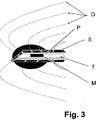
- Figure 2 shows the cylindrical hole T or needle tract caused by the biopsy once the needle 1 has been withdrawn from the patient, as well as the ion environment with an antimicrobial effect remaining around the hole T for hours or days.
- silver is particularly suitable because it has been observed to have a very strong antimicrobial effect, and furthermore it has very minor contraindications.
- silver is particularly suitable because it has been observed to have a very strong antimicrobial effect, and furthermore it has very minor contraindications.
- its antimicrobial capacity against Escherichia coli bacteria is very relevant since these bacteria are the main infectious agent related to the problem of infections in transrectal prostate biopsies.
- part of the electrons discharged by the silver electrode forming the needle 1 allow releasing silver ions (Ag+), and these ions are combined with chloride ions existing in living tissues to form silver chloride, as indicated above.
- silver chloride AgCl
- the formation of silver chloride (AgCl) in the surrounding areas of the needle is the fundamental aspect for the persistence of the ion environment with an antimicrobial effect 5 since low solubility of this compound causes silver ions to be released gradually over a prolonged interval of time.
- the formation of other chemical species such as silver nitrates and phosphates (in much smaller amounts) and the formation of small silver aggregates in tissue which will also contribute to a prolonged release of silver ions over time cannot be ruled out.
- the first embodiment i.e., anodic use of the needle 1
- another already known embodiment relating to cathodic use of the needle 1
- the needle 1 as a cathode first and then as an anode, or vice versa.
- the current sequence consists of two or three steps: 1-applying current in one direction, 2- a pause without applying current (optional) and 3- applying current in the opposite direction.
- the non-specific and instantaneous toxic effect of the increase in pH is combined with the prolonged effect of the metal ion release.
- steps 1 and 3 the ranges of currents, average current densities and application times would be the same as in the cases of the first embodiment.
- the pause between steps 1 and 3 will be comprised in the range of from 0 seconds to 100 seconds.
- steps 1 and 3 and optionally step 2 are cyclically repeated a certain number of times.
- the first embodiment i.e., anodic use of the needle 1
- the needle 1 can be combined with cathodic use of the needle 1, but in this case, unlike the second embodiment, the needle 1 must first be used as an anode and then as a cathode.
- the anodic reaction would release silver ions that would then be combined with hydroxide ions generated during the cathodic reaction to form silver hydroxide, which would spontaneously generate silver oxide due to the energy balance of the reaction.
- one or more cycles of the following sequence applied by the generator and consisting of two or three steps must be performed: 1- applying current in the positive direction (biopsy needle 1 as an anode), 2- optional pause without applying current, and 3- applying current in the negative direction (biopsy needle 1 as a cathode).
- the cycle can be started in step 3 provided that it returns to said step after having gone through step 1.
- the pause between steps 1 and 3 will be comprised in the range of from 0 seconds to 100 seconds.
- the deposit can also be generated by means of applying a low-frequency alternating current.
- steps 1 and 3 or in half cycles of a low-frequency alternating current, the ranges of currents, average current densities and application times would be the same as in the cases of the first embodiment and second embodiment.
- frequency will be comprised between 0.01 Hz and 100 kHz.
- the system according to the present invention is provided with detection means for automatically detecting the start of withdrawal of the needle 1 from the tissue 3.
- these detection means comprise a sensor and an impedance meter connected such that they detect increases in the impedance between the needle 1 and the contact electrode 4, for which purpose the impedance meter can be connected to terminals 2a, 2b of the electric current generator 2, for example, and serving to detect the start of withdrawal of the needle 1 from the tissue 3 through the change in impedance occurring when withdrawal of the needle 1 from the tissue 3 starts.
- the impedance meter When withdrawal of the needle 1 starts, the relative increase in impedance between the needle 1 and contact electrode 4 can be detected by means of the impedance meter, the corresponding detected signal being able to be used to start up current supply by the electric current generator 2.
- the impedance meter can be used as a safety measure as follows: if the impedance meter detects withdrawal of the needle 1 while current is being applied, the system can detect withdrawal and generate a warning signal to alert medical staff to take the necessary measures to prevent possible unwanted effects of, for example, heating, spasms, etc., or also to automatically reduce same as the needle 1 is being withdrawn, and emits a warning only when withdrawal is too rapid.
- the detection means can comprise an acceleration sensor connected to the proximal end of the needle 1.
- the system according to the present invention comprises current supply control means connected to the electric current generator 2 for progressively increasing electric current supplied by the electric current generator 2 from zero until generating the chosen current density in the portion of the instrument 1 introduced in the tissue 3, and progressively reducing electric current corresponding to the chosen current density from the chosen level to zero before withdrawing the instrument 1.
- the progressive increase and reduction prevent neuromuscular stimulations that occur when current is applied or cut off abruptly and that result in the patient feeling uncomfortable and even suffering spasms.
- Insulating sheath
- the biopsy instrument or needle 1 is provided with an electrically insulating sheath 1c (made of polytetrafluoroethylene or polyethylene, for example) covering part of the metal area of the needle 1.
- This sheath 1c can be fixed to the needle 1 or be free such that the user (i.e., the doctor) can place it at the location of interest or even cut it before introducing it through the needle to adapt it for use.
- This sheath 1c has two purposes. On one hand, it will prevent electrochemical reactions from occurring where they are not wanted to prevent unwanted and unnecessary damage (for example, when piercing the skin), i.e., the toxic environment 5 is restricted to the region of interest.
- the sheath 1c allows improving system efficiency and safety since it reduces necessary current levels for one and the same current density, whereby minimizing the possibility of neuromuscular stimulation, or it allows reducing the application time for a given current.
- a current density capable of producing a supraphysiological pH preferably a pH of at least 8.5, preferably between 10 and 13.8 in said toxic microenvironment, is chosen.
- the system is also designed for applying, together with direct current, an alternating current component (having a frequency greater than 10 kHz) for slightly heating the tissue 3, as in the case of electric hair removal devices.
- an alternating current component having a frequency greater than 10 kHz
- an alternating current component can be superimposed on the direct current component.
- a similar strategy is currently used in electric hair removal systems.
- External electrode with gel and/or having a large surface External electrode with gel and/or having a large surface:
- a conductive gel of the type used in electrophysiology is placed between the skin 3a of the patient and the contact electrode 4 acting as a return electrode.
- the function of this gel is to protect the skin 3a of the patient from damage such as electrochemical burns, i.e., electrical conduction is maintained but the toxic species generated on the surface of the return electrode 4 are prevented from reaching the skin 3a of the patient.
- the thickness of the gel is about 10 mm, which offers sufficient protection for application times less than 60 seconds and electric fields of 10 V/cm or less of the electric current, because at such magnitudes of the electric field the migration speed of toxic species formed in the anode is about 0.1 mm/s.
- a large-sized contact electrode surface more than ten times that of the active area of the biopsy instrument) which prevents electrochemical burns due to the extension thereof on the skin since it produces low concentrations of toxic species incapable of damaging the skin 3 a of the patient.
- the electrical sequence will preferably be applied once the sample has been taken.
- biopsy systems for example, fine needle biopsy systems in which cells are aspirated by means of a syringe
- this will mean that the sample will already be far enough away from the region in which treatment will be applied, and therefore there will be no possibility of the sample being affected by treatment.
- the sample will be confined in a space of the biopsy instrument before the instrument is withdrawn from the patient.
- the foregoing will be valid provided that the inner compartment is sufficiently leak-tight so as to prevent penetration of a significant amount of species electrochemically generated by treatment from the outer surfaces.
Landscapes
- Health & Medical Sciences (AREA)
- Life Sciences & Earth Sciences (AREA)
- Engineering & Computer Science (AREA)
- Public Health (AREA)
- Heart & Thoracic Surgery (AREA)
- Veterinary Medicine (AREA)
- Animal Behavior & Ethology (AREA)
- General Health & Medical Sciences (AREA)
- Biomedical Technology (AREA)
- Surgery (AREA)
- Molecular Biology (AREA)
- Medical Informatics (AREA)
- Pathology (AREA)
- Chemical & Material Sciences (AREA)
- Nuclear Medicine, Radiotherapy & Molecular Imaging (AREA)
- Epidemiology (AREA)
- Vascular Medicine (AREA)
- Inorganic Chemistry (AREA)
- General Engineering & Computer Science (AREA)
- Cardiology (AREA)
- Radiology & Medical Imaging (AREA)
- Dermatology (AREA)
- Hematology (AREA)
- Anesthesiology (AREA)
- Medicinal Chemistry (AREA)
- Mechanical Engineering (AREA)
- Physics & Mathematics (AREA)
- Plasma & Fusion (AREA)
- Otolaryngology (AREA)
- Apparatus For Disinfection Or Sterilisation (AREA)
- Electrotherapy Devices (AREA)
Claims (10)
- System zur Verhinderung von bakteriellen Infektionen bei Nadeldurchgängen, in Biopsienadeldurgängen, wenn diese Nadeln, nachdem sie in ein Zielgewebe eingefügt worden sind, durch Gewebe, welche auf dem zum Zielgewebe führenden Weg vorhanden sind, herausgezogen werden, umfassend:- ein metallisches perkutanes chirurgisches Instrument (1) mit einem Proximalende (1a) und einem elektrisch leitenden distalen Teil, beinhaltend ein distales Ende (1b), welches perkutan in ein Gewebe (3) eines Patienten eingeführt werden kann;- eine Kontaktelektrode (4), welche auf der Haut (3a) eines Patienten angebracht werden kann; und- einen elektrischen Stromgenerator (2) mit einer ersten Klemme (2a), welche direkt oder indirekt mit mindestens dem distalen Teil des genannten Instruments (1) verbunden ist, und einer zweiten Klemme (2b), welche mit die genannte Kontaktelektrode (4) verbunden ist;wobei- das Instrument (1) eine Biopsienadel ist, welche dazu vorgesehen ist, bakterielle Nachbehandlungsinfektionen zu verhindern, wenn Prostatabiopsien durchgeführt werden, wofür es Mittel zur massiven und plötzlichen Freisetzung von Metallionen umfasst, umfassend eine Metallbeschichtung (P) deren Ionen antimikrobielle Eigenschaften mit niedriger Toxizität für die Menschen aufweisen, angeordnet in mindestens dem distalen Teil des genannten Instruments (1), wobei die genannte Metallbeschichtung (P) dazu ausgebildet, dimensioniert und vorgesehen ist, mittels elektrochemischer Freisetzung durchzubrechen, wenn Strom daran angelegt wird, unter Freisetzung von Metallionen in die Umgebung desselben, welche das genannte Gewebe (3) ist, wenn das Instrument (1) darin eingeführt worden ist; und- der genannte elektrische Stromgenerator (2) dazu angeordnet und ausgebildet ist, einen Strom zu erzeugen und die vorübergehende Zirkulation desselben jeweils zwischen dem Instrument (1), dem Gewebe (3) und der Kontaktelektrode (4) zu induzieren, mit positiver Polarität in der ersten Klemme (2a) und negativer Polarität in der zweiten Klemme (2b), mit einer durchschnittlichen Stromdichte, auf der Oberfläche im perkutan einführbaren Teil des Instruments (1) gemessen, zwischen 1 mA/cm2 und 1000 mA/cm2, vorzugsweise von im Wesentlichen 10 mA/cm2, wobei eine Größe des Stroms einen Momentanwert zwischen 1 mA und 100 mA und eine Dauer zwischen 0,1 und 1000 Sekunden, vorzugsweise zwischen 0,1 und 10 Sekunden aufweist, um die genannte massive und plötzliche Freisetzung der Metallionen der Metallbeschichtung (P) hervorzurufen,wobei die genannte Metallbeschichtung (P) derart ausgebildet, dimensioniert und angeordnet ist, dass mindestens 10 µg des Metalls pro cm2 Oberfläche mittels der genannten massiven und plötzlichen Freisetzung der Metallionen während der Zeit durchbrochen werden, welche der genannten, von der Verwendung des Instruments (1) bestimmten Dauer entspricht, und
wobei eine Ionenumgebung mit antimikrobiellem Effekt Stunden oder Tage lang erhalten bleibt, nachdem das Instrument (1) aus dem Patienten herausgezogen worden ist. - System nach einem der vorhergehenden Ansprüche, dadurch gekennzeichnet, dass die Dicke der genannten Metallbeschichtung (P) zwischen 10 Nanometern und 100 Mikrometern liegt, wobei die Dicke derselben gemäß der Anzahl von Verwendungen des Instruments bestimmt wird.
- System nach einem der vorhergehenden Ansprüche, dadurch gekennzeichnet, dass die genannte Biopsienadel eine Nadel des TRUCUT-Typs ist, wobei die genannte Metallbeschichtung um die äußere Oberfläche der äußeren Nadel herum angeordnet ist oder Teil davon ist.
- System nach einem der vorhergehenden Ansprüche, dadurch gekennzeichnet, dass der elektrische Stromgenerator (2) dazu ausgebildet ist:- die Polarität der genannten Klemmen (2a, 2b) durch das Anlegen eines Stroms in der entgegengesetzten Richtung zu umkehren, nach dem Ende der Induktion des genannten Stroms mit der genannten positiven Polarität in der ersten Klemme (2a) und der genannten negativen Polarität in der zweiten Klemme (2b), um eine toxische Mikroumgebung (5) im Gewebe (3) um den Teil des Instruments (1) herum, welches darin eingeführt worden ist, zu erzeugen, mittels der Erhöhung des pH-Wertes der Umgebung des Instruments (1) und/oder eine Ablagerung von Oxidpartikeln des betreffenden Metalls auf der Metallbeschichtung zu erzeugen,
oder- einen Strom in der entgegengesetzten Richtung durch das Anlegen einer negativen Polarität in der ersten Klemme (2a) und einer positiven Polarität in der zweiten Klemme (2b) zu induzieren, vor den Induktion des genannten Stroms mit der genannten positiven Polarität in der ersten Klemme (2a) und der genannten negativen Polarität in der zweiten Klemme (2b) gestartet wird, um eine toxische Mikroumgebung (5) im Gewebe (3) um den Teil des Instruments (1) herum, welches darin eingeführt worden ist, zu erzeugen, mittels der Erhöhung des pH-Wertes der Umgebung des Instruments (1). - System nach Anspruch 4, dadurch gekennzeichnet, dass der elektrische Stromgenerator (2) dazu ausgebildet ist, die genannten Strominduktionen in entgegengesetzten Richtungen gemäß einer Vielzahl von Induktionszyklen zu wiederholen.
- System nach Anspruch 4 oder 5, dadurch gekennzeichnet, dass der elektrische Stromgenerator (2) dazu ausgebildet ist, eine Pause einzufügen, welche ein bestimmtes Zeitintervall zwischen dem genannten Ende der Induktion des genannten Stroms mit der genannten positiven Polarität in der ersten Klemme (2a) und der genannten negativen Polarität in der zweiten Klemme (2b) und dem Start der genannten Strominduktion in der entgegengesetzten Richtung, oder umgekehrt, dauert.
- System nach Anspruch 4, dadurch gekennzeichnet, dass der genannte Strom mindestens einen Wechselstromkomponenten mit einer Frequenz zwischen 0,01 Hz und 100 kHz aufweist.
- System nach einem der vorhergehenden Ansprüche, dadurch gekennzeichnet, dass es automatische Steuermittel umfasst, welche dazu ausgebildet sind, die Stromzuführung zu starten, sobald die Biopsieprobe entnommen worden ist.
- System nach einem der vorhergehenden Ansprüche, dadurch gekennzeichnet, dass die Metallbeschichtung (P) deren Ionen antimikrobielle Eigenschaften mit niedriger Toxizität für die Menschen aufweisen, aus Silber hergestellt ist oder mindestens teilweise aus Silber gebildet ist, wobei den genannten Metallionen Silberionen sind, oder aus Zink hergestellt ist oder mindestens teilweise aus Zink gebildet ist, wobei den genannten Metallionen Zinkionen sind.
- System nach einem der vorhergehenden Ansprüche, dadurch gekennzeichnet, dass es eine elektrische Isolierummantelung (1c) umfasst, welche mindestens einen Teil einer elektrisch leitenden äußeren Oberfläche des Instruments (1) deckt ab, welche dazu ausgewählt werden kann, die induzierte Stromstärke richtig zu regulieren, so dass sie den nötigen Stromniveaus für eine und dieselbe Stromdichte verringert, wodurch die Möglichkeit einer neuromuskulären Stimulation minimiert wird, oder welche es erlaubt, die Anlegezeit für einen gegebenen Strom zu verringern.
Applications Claiming Priority (2)
| Application Number | Priority Date | Filing Date | Title |
|---|---|---|---|
| ES201231644A ES2482612B1 (es) | 2012-10-25 | 2012-10-25 | Sistema para la prevención de infecciones bacterianas en trayectos de aguja |
| PCT/ES2013/000231 WO2014064304A1 (es) | 2012-10-25 | 2013-10-22 | Sistema para la prevención de infecciones bacterianas en trayectos de aguja |
Publications (3)
| Publication Number | Publication Date |
|---|---|
| EP2913007A1 EP2913007A1 (de) | 2015-09-02 |
| EP2913007A4 EP2913007A4 (de) | 2016-06-29 |
| EP2913007B1 true EP2913007B1 (de) | 2018-01-10 |
Family
ID=50544064
Family Applications (1)
| Application Number | Title | Priority Date | Filing Date |
|---|---|---|---|
| EP13849478.6A Not-in-force EP2913007B1 (de) | 2012-10-25 | 2013-10-22 | System zur verhinderung von bakteriellen infektionen bei nadeldurchgängen |
Country Status (4)
| Country | Link |
|---|---|
| US (2) | US10278521B2 (de) |
| EP (1) | EP2913007B1 (de) |
| ES (2) | ES2482612B1 (de) |
| WO (1) | WO2014064304A1 (de) |
Families Citing this family (5)
| Publication number | Priority date | Publication date | Assignee | Title |
|---|---|---|---|---|
| ES2482612B1 (es) | 2012-10-25 | 2015-05-11 | Universitat Pompeu Fabra | Sistema para la prevención de infecciones bacterianas en trayectos de aguja |
| PL232535B1 (pl) | 2015-01-22 | 2019-06-28 | Artur Gibas | Igła do biopsji stercza |
| ES2963106T3 (es) * | 2017-03-03 | 2024-03-25 | Univ Arizona | Sistema de biopsia para recogida de tejidos mejorada |
| CN111729189B (zh) * | 2020-06-29 | 2023-01-06 | 嘉兴尚牧智能装备有限公司 | 硅基贴片及其制备方法 |
| CN113925572B (zh) * | 2021-11-10 | 2025-07-29 | 上海益超医疗器械有限公司 | 一种手术器械 |
Family Cites Families (22)
| Publication number | Priority date | Publication date | Assignee | Title |
|---|---|---|---|---|
| US4027393A (en) * | 1975-09-19 | 1977-06-07 | Sybron Corporation | Method of in vivo sterilization of surgical implantables |
| US4126937A (en) | 1977-03-23 | 1978-11-28 | Sybron Corporation | Material and method for introducing ionic silver to dental pulp |
| US4600014A (en) | 1984-02-10 | 1986-07-15 | Dan Beraha | Transrectal prostate biopsy device and method |
| GB8813395D0 (en) * | 1988-06-07 | 1988-07-13 | Elliott T S J | Medical devices |
| US5578030A (en) * | 1994-11-04 | 1996-11-26 | Levin; John M. | Biopsy needle with cauterization feature |
| US5738110A (en) * | 1996-05-29 | 1998-04-14 | Beal; Charles B. | Device for the diagnosis of certain gastrointestinal pathogens |
| US6463323B1 (en) * | 1998-11-12 | 2002-10-08 | Em Vascular, Inc. | Electrically mediated angiogenesis |
| US6709380B2 (en) * | 2001-05-31 | 2004-03-23 | Neoseed Technology Llc | Brachytherapy needle with impedance measurement apparatus and methods of use |
| US20030109802A1 (en) | 2001-12-12 | 2003-06-12 | Laeseke Paul F. | Cauterizing biopsy system |
| WO2003075978A2 (en) * | 2002-03-07 | 2003-09-18 | Merck & Co., Inc. | Clinical syringe with electrical stimulation aspects |
| US7425202B2 (en) | 2004-03-05 | 2008-09-16 | Percutaneous Systems, Inc. | Non-seeding biopsy device and method |
| US20100198066A1 (en) | 2004-03-12 | 2010-08-05 | Voegele James W | Method and Device for Obtaining Tissue Samples |
| US8623446B2 (en) * | 2006-02-25 | 2014-01-07 | Metascape Llc | Ultraviolet activated antimicrobial surfaces |
| US8609036B2 (en) * | 2006-12-28 | 2013-12-17 | Agentumcidalelectrics, Inc. | Ex vivo antimicrobial devices and methods |
| IL185637A (en) | 2007-08-30 | 2017-01-31 | Ortho-Ion Ltd | An instrument for the treatment and prevention of infectious diseases |
| US20100168829A1 (en) * | 2007-08-30 | 2010-07-01 | Liat Schwartz | System for implanting, activating, and operating an implantable battery |
| EP2259841A1 (de) * | 2008-02-25 | 2010-12-15 | The University of North Carolina At Chapel Hill | Abgabegerät und relevantes verfahren |
| DE102008029940A1 (de) | 2008-06-26 | 2009-12-31 | Rheinisch-Westfälische Technische Hochschule Aachen | Biopsienadel |
| DE102009023459B4 (de) * | 2009-06-02 | 2017-08-31 | Aap Implantate Ag | Osteosynthese mit Nanosilber |
| EP2470257B1 (de) * | 2009-08-27 | 2015-03-04 | Silver Bullet Therapeutics Inc. | Knochenimplantate zur Behandlung einer Infektion |
| ES2366845B1 (es) * | 2010-12-15 | 2012-10-08 | Universitat Pompeu Fabra | Sistema para la prevención electroquímica de la diseminación tumoral en trayectos de aguja y método para usar el sistema. |
| ES2482612B1 (es) | 2012-10-25 | 2015-05-11 | Universitat Pompeu Fabra | Sistema para la prevención de infecciones bacterianas en trayectos de aguja |
-
2012
- 2012-10-25 ES ES201231644A patent/ES2482612B1/es active Active
-
2013
- 2013-10-22 WO PCT/ES2013/000231 patent/WO2014064304A1/es not_active Ceased
- 2013-10-22 US US14/434,440 patent/US10278521B2/en not_active Expired - Fee Related
- 2013-10-22 EP EP13849478.6A patent/EP2913007B1/de not_active Not-in-force
- 2013-10-22 ES ES13849478.6T patent/ES2664986T3/es active Active
-
2019
- 2019-03-19 US US16/358,289 patent/US20190313812A1/en not_active Abandoned
Non-Patent Citations (1)
| Title |
|---|
| None * |
Also Published As
| Publication number | Publication date |
|---|---|
| US10278521B2 (en) | 2019-05-07 |
| ES2482612B1 (es) | 2015-05-11 |
| ES2482612A1 (es) | 2014-08-04 |
| US20150265751A1 (en) | 2015-09-24 |
| WO2014064304A1 (es) | 2014-05-01 |
| US20190313812A1 (en) | 2019-10-17 |
| EP2913007A1 (de) | 2015-09-02 |
| ES2664986T3 (es) | 2018-04-24 |
| EP2913007A4 (de) | 2016-06-29 |
Similar Documents
| Publication | Publication Date | Title |
|---|---|---|
| US20190313812A1 (en) | System for preventing bacterial infections in needle trajectories | |
| US12209318B2 (en) | Methods, systems, and apparatuses for delivery of electrolysis products | |
| CN112998846B (zh) | 用于使用脉冲形状设计的组织消融的方法、系统及设备 | |
| Lee et al. | Electron microscopic demonstration and evaluation of irreversible electroporation-induced nanopores on hepatocyte membranes | |
| JP2003529401A (ja) | 薬物供給および診断サンプリングのための組織エレクトロパーフォレーション | |
| US10857357B2 (en) | System for implanting, activating, and operating an implantable battery | |
| JP2016532490A (ja) | 半電池を介した治療用電子及びイオン移動 | |
| CN112512448B (zh) | 冷冻手术器械及其手术系统、制造方法以及器械保护装置 | |
| Miklavcic et al. | Tumor bioelectric potential and its possible exploitation for tumor growth retardation | |
| ES2366845B1 (es) | Sistema para la prevención electroquímica de la diseminación tumoral en trayectos de aguja y método para usar el sistema. | |
| EP2619602B1 (de) | Mr- oder ct-geführte medizinische instrumente | |
| CN111449830A (zh) | 可植入金属作为肿瘤精准高效磁热治疗试剂的应用 | |
| US20240216040A1 (en) | System and methods for minimally invasive ablation with injectable wire structure devices | |
| US20250064435A1 (en) | Method For Cell Treatment | |
| JP2010269053A (ja) | 医療器具 | |
| Ivorra | Electrochemical prevention of needle-tract seeding | |
| US20250134583A9 (en) | System and method for minimally invasive treatment with injectable electrodes | |
| RU2573984C1 (ru) | Способ удаления бородавок | |
| JP6739833B2 (ja) | プローブ、表皮電位測定装置 | |
| RU120877U1 (ru) | Игольчатый электрод для воздействия электрическим током на опухоль | |
| RU145929U1 (ru) | Установка для комбинированного разрушения биоткани | |
| WO2021223684A1 (zh) | 一种避免活性非消融电极附近组织损伤的装置 | |
| Ivorra Cano | Electrochemical prevention of needle-tract seeding | |
| Tokmakçi et al. | A programmable iontophoretic instrument and its application for local anesthesia before surgery in urology | |
| UA78491C2 (en) | Method for treating specific mycotic and nonspecific uretroprostatitis |
Legal Events
| Date | Code | Title | Description |
|---|---|---|---|
| PUAI | Public reference made under article 153(3) epc to a published international application that has entered the european phase |
Free format text: ORIGINAL CODE: 0009012 |
|
| 17P | Request for examination filed |
Effective date: 20150306 |
|
| AK | Designated contracting states |
Kind code of ref document: A1 Designated state(s): AL AT BE BG CH CY CZ DE DK EE ES FI FR GB GR HR HU IE IS IT LI LT LU LV MC MK MT NL NO PL PT RO RS SE SI SK SM TR |
|
| AX | Request for extension of the european patent |
Extension state: BA ME |
|
| DAX | Request for extension of the european patent (deleted) | ||
| RA4 | Supplementary search report drawn up and despatched (corrected) |
Effective date: 20160531 |
|
| RIC1 | Information provided on ipc code assigned before grant |
Ipc: A61B 18/14 20060101ALI20160524BHEP Ipc: A61B 10/02 20060101AFI20160524BHEP |
|
| 17Q | First examination report despatched |
Effective date: 20170104 |
|
| RIN1 | Information on inventor provided before grant (corrected) |
Inventor name: CASTELLVI FERNANDEZ, QUIM Inventor name: IVORRA CANO, ANTONIO |
|
| GRAP | Despatch of communication of intention to grant a patent |
Free format text: ORIGINAL CODE: EPIDOSNIGR1 |
|
| INTG | Intention to grant announced |
Effective date: 20170921 |
|
| GRAS | Grant fee paid |
Free format text: ORIGINAL CODE: EPIDOSNIGR3 |
|
| GRAA | (expected) grant |
Free format text: ORIGINAL CODE: 0009210 |
|
| AK | Designated contracting states |
Kind code of ref document: B1 Designated state(s): AL AT BE BG CH CY CZ DE DK EE ES FI FR GB GR HR HU IE IS IT LI LT LU LV MC MK MT NL NO PL PT RO RS SE SI SK SM TR |
|
| REG | Reference to a national code |
Ref country code: CH Ref legal event code: EP Ref country code: AT Ref legal event code: REF Ref document number: 961522 Country of ref document: AT Kind code of ref document: T Effective date: 20180115 |
|
| REG | Reference to a national code |
Ref country code: IE Ref legal event code: FG4D |
|
| REG | Reference to a national code |
Ref country code: DE Ref legal event code: R096 Ref document number: 602013031984 Country of ref document: DE |
|
| REG | Reference to a national code |
Ref country code: ES Ref legal event code: FG2A Ref document number: 2664986 Country of ref document: ES Kind code of ref document: T3 Effective date: 20180424 |
|
| REG | Reference to a national code |
Ref country code: NL Ref legal event code: MP Effective date: 20180110 |
|
| REG | Reference to a national code |
Ref country code: AT Ref legal event code: MK05 Ref document number: 961522 Country of ref document: AT Kind code of ref document: T Effective date: 20180110 |
|
| PG25 | Lapsed in a contracting state [announced via postgrant information from national office to epo] |
Ref country code: NL Free format text: LAPSE BECAUSE OF FAILURE TO SUBMIT A TRANSLATION OF THE DESCRIPTION OR TO PAY THE FEE WITHIN THE PRESCRIBED TIME-LIMIT Effective date: 20180110 |
|
| PG25 | Lapsed in a contracting state [announced via postgrant information from national office to epo] |
Ref country code: NO Free format text: LAPSE BECAUSE OF FAILURE TO SUBMIT A TRANSLATION OF THE DESCRIPTION OR TO PAY THE FEE WITHIN THE PRESCRIBED TIME-LIMIT Effective date: 20180410 Ref country code: CY Free format text: LAPSE BECAUSE OF FAILURE TO SUBMIT A TRANSLATION OF THE DESCRIPTION OR TO PAY THE FEE WITHIN THE PRESCRIBED TIME-LIMIT Effective date: 20180110 Ref country code: LT Free format text: LAPSE BECAUSE OF FAILURE TO SUBMIT A TRANSLATION OF THE DESCRIPTION OR TO PAY THE FEE WITHIN THE PRESCRIBED TIME-LIMIT Effective date: 20180110 Ref country code: HR Free format text: LAPSE BECAUSE OF FAILURE TO SUBMIT A TRANSLATION OF THE DESCRIPTION OR TO PAY THE FEE WITHIN THE PRESCRIBED TIME-LIMIT Effective date: 20180110 Ref country code: FI Free format text: LAPSE BECAUSE OF FAILURE TO SUBMIT A TRANSLATION OF THE DESCRIPTION OR TO PAY THE FEE WITHIN THE PRESCRIBED TIME-LIMIT Effective date: 20180110 |
|
| PG25 | Lapsed in a contracting state [announced via postgrant information from national office to epo] |
Ref country code: BG Free format text: LAPSE BECAUSE OF FAILURE TO SUBMIT A TRANSLATION OF THE DESCRIPTION OR TO PAY THE FEE WITHIN THE PRESCRIBED TIME-LIMIT Effective date: 20180410 Ref country code: GR Free format text: LAPSE BECAUSE OF FAILURE TO SUBMIT A TRANSLATION OF THE DESCRIPTION OR TO PAY THE FEE WITHIN THE PRESCRIBED TIME-LIMIT Effective date: 20180411 Ref country code: SE Free format text: LAPSE BECAUSE OF FAILURE TO SUBMIT A TRANSLATION OF THE DESCRIPTION OR TO PAY THE FEE WITHIN THE PRESCRIBED TIME-LIMIT Effective date: 20180110 Ref country code: IS Free format text: LAPSE BECAUSE OF FAILURE TO SUBMIT A TRANSLATION OF THE DESCRIPTION OR TO PAY THE FEE WITHIN THE PRESCRIBED TIME-LIMIT Effective date: 20180510 Ref country code: LV Free format text: LAPSE BECAUSE OF FAILURE TO SUBMIT A TRANSLATION OF THE DESCRIPTION OR TO PAY THE FEE WITHIN THE PRESCRIBED TIME-LIMIT Effective date: 20180110 Ref country code: RS Free format text: LAPSE BECAUSE OF FAILURE TO SUBMIT A TRANSLATION OF THE DESCRIPTION OR TO PAY THE FEE WITHIN THE PRESCRIBED TIME-LIMIT Effective date: 20180110 Ref country code: PL Free format text: LAPSE BECAUSE OF FAILURE TO SUBMIT A TRANSLATION OF THE DESCRIPTION OR TO PAY THE FEE WITHIN THE PRESCRIBED TIME-LIMIT Effective date: 20180110 Ref country code: AT Free format text: LAPSE BECAUSE OF FAILURE TO SUBMIT A TRANSLATION OF THE DESCRIPTION OR TO PAY THE FEE WITHIN THE PRESCRIBED TIME-LIMIT Effective date: 20180110 |
|
| REG | Reference to a national code |
Ref country code: DE Ref legal event code: R097 Ref document number: 602013031984 Country of ref document: DE |
|
| REG | Reference to a national code |
Ref country code: FR Ref legal event code: PLFP Year of fee payment: 6 |
|
| PG25 | Lapsed in a contracting state [announced via postgrant information from national office to epo] |
Ref country code: RO Free format text: LAPSE BECAUSE OF FAILURE TO SUBMIT A TRANSLATION OF THE DESCRIPTION OR TO PAY THE FEE WITHIN THE PRESCRIBED TIME-LIMIT Effective date: 20180110 Ref country code: EE Free format text: LAPSE BECAUSE OF FAILURE TO SUBMIT A TRANSLATION OF THE DESCRIPTION OR TO PAY THE FEE WITHIN THE PRESCRIBED TIME-LIMIT Effective date: 20180110 Ref country code: AL Free format text: LAPSE BECAUSE OF FAILURE TO SUBMIT A TRANSLATION OF THE DESCRIPTION OR TO PAY THE FEE WITHIN THE PRESCRIBED TIME-LIMIT Effective date: 20180110 |
|
| PLBE | No opposition filed within time limit |
Free format text: ORIGINAL CODE: 0009261 |
|
| STAA | Information on the status of an ep patent application or granted ep patent |
Free format text: STATUS: NO OPPOSITION FILED WITHIN TIME LIMIT |
|
| PG25 | Lapsed in a contracting state [announced via postgrant information from national office to epo] |
Ref country code: CZ Free format text: LAPSE BECAUSE OF FAILURE TO SUBMIT A TRANSLATION OF THE DESCRIPTION OR TO PAY THE FEE WITHIN THE PRESCRIBED TIME-LIMIT Effective date: 20180110 Ref country code: SK Free format text: LAPSE BECAUSE OF FAILURE TO SUBMIT A TRANSLATION OF THE DESCRIPTION OR TO PAY THE FEE WITHIN THE PRESCRIBED TIME-LIMIT Effective date: 20180110 Ref country code: SM Free format text: LAPSE BECAUSE OF FAILURE TO SUBMIT A TRANSLATION OF THE DESCRIPTION OR TO PAY THE FEE WITHIN THE PRESCRIBED TIME-LIMIT Effective date: 20180110 Ref country code: DK Free format text: LAPSE BECAUSE OF FAILURE TO SUBMIT A TRANSLATION OF THE DESCRIPTION OR TO PAY THE FEE WITHIN THE PRESCRIBED TIME-LIMIT Effective date: 20180110 |
|
| 26N | No opposition filed |
Effective date: 20181011 |
|
| PG25 | Lapsed in a contracting state [announced via postgrant information from national office to epo] |
Ref country code: SI Free format text: LAPSE BECAUSE OF FAILURE TO SUBMIT A TRANSLATION OF THE DESCRIPTION OR TO PAY THE FEE WITHIN THE PRESCRIBED TIME-LIMIT Effective date: 20180110 |
|
| REG | Reference to a national code |
Ref country code: CH Ref legal event code: PL |
|
| REG | Reference to a national code |
Ref country code: BE Ref legal event code: MM Effective date: 20181031 |
|
| PG25 | Lapsed in a contracting state [announced via postgrant information from national office to epo] |
Ref country code: LU Free format text: LAPSE BECAUSE OF NON-PAYMENT OF DUE FEES Effective date: 20181022 Ref country code: MC Free format text: LAPSE BECAUSE OF FAILURE TO SUBMIT A TRANSLATION OF THE DESCRIPTION OR TO PAY THE FEE WITHIN THE PRESCRIBED TIME-LIMIT Effective date: 20180110 |
|
| REG | Reference to a national code |
Ref country code: IE Ref legal event code: MM4A |
|
| PG25 | Lapsed in a contracting state [announced via postgrant information from national office to epo] |
Ref country code: LI Free format text: LAPSE BECAUSE OF NON-PAYMENT OF DUE FEES Effective date: 20181031 Ref country code: CH Free format text: LAPSE BECAUSE OF NON-PAYMENT OF DUE FEES Effective date: 20181031 Ref country code: BE Free format text: LAPSE BECAUSE OF NON-PAYMENT OF DUE FEES Effective date: 20181031 |
|
| PG25 | Lapsed in a contracting state [announced via postgrant information from national office to epo] |
Ref country code: IE Free format text: LAPSE BECAUSE OF NON-PAYMENT OF DUE FEES Effective date: 20181022 |
|
| PG25 | Lapsed in a contracting state [announced via postgrant information from national office to epo] |
Ref country code: MT Free format text: LAPSE BECAUSE OF NON-PAYMENT OF DUE FEES Effective date: 20181022 |
|
| PGFP | Annual fee paid to national office [announced via postgrant information from national office to epo] |
Ref country code: DE Payment date: 20191029 Year of fee payment: 7 |
|
| PGFP | Annual fee paid to national office [announced via postgrant information from national office to epo] |
Ref country code: IT Payment date: 20191025 Year of fee payment: 7 Ref country code: FR Payment date: 20191025 Year of fee payment: 7 Ref country code: ES Payment date: 20191113 Year of fee payment: 7 |
|
| PG25 | Lapsed in a contracting state [announced via postgrant information from national office to epo] |
Ref country code: TR Free format text: LAPSE BECAUSE OF FAILURE TO SUBMIT A TRANSLATION OF THE DESCRIPTION OR TO PAY THE FEE WITHIN THE PRESCRIBED TIME-LIMIT Effective date: 20180110 |
|
| PGFP | Annual fee paid to national office [announced via postgrant information from national office to epo] |
Ref country code: GB Payment date: 20191028 Year of fee payment: 7 |
|
| PG25 | Lapsed in a contracting state [announced via postgrant information from national office to epo] |
Ref country code: PT Free format text: LAPSE BECAUSE OF FAILURE TO SUBMIT A TRANSLATION OF THE DESCRIPTION OR TO PAY THE FEE WITHIN THE PRESCRIBED TIME-LIMIT Effective date: 20180110 |
|
| PG25 | Lapsed in a contracting state [announced via postgrant information from national office to epo] |
Ref country code: MK Free format text: LAPSE BECAUSE OF NON-PAYMENT OF DUE FEES Effective date: 20180110 Ref country code: HU Free format text: LAPSE BECAUSE OF FAILURE TO SUBMIT A TRANSLATION OF THE DESCRIPTION OR TO PAY THE FEE WITHIN THE PRESCRIBED TIME-LIMIT; INVALID AB INITIO Effective date: 20131022 |
|
| REG | Reference to a national code |
Ref country code: DE Ref legal event code: R119 Ref document number: 602013031984 Country of ref document: DE |
|
| GBPC | Gb: european patent ceased through non-payment of renewal fee |
Effective date: 20201022 |
|
| PG25 | Lapsed in a contracting state [announced via postgrant information from national office to epo] |
Ref country code: DE Free format text: LAPSE BECAUSE OF NON-PAYMENT OF DUE FEES Effective date: 20210501 Ref country code: FR Free format text: LAPSE BECAUSE OF NON-PAYMENT OF DUE FEES Effective date: 20201031 |
|
| PG25 | Lapsed in a contracting state [announced via postgrant information from national office to epo] |
Ref country code: GB Free format text: LAPSE BECAUSE OF NON-PAYMENT OF DUE FEES Effective date: 20201022 |
|
| PG25 | Lapsed in a contracting state [announced via postgrant information from national office to epo] |
Ref country code: IT Free format text: LAPSE BECAUSE OF NON-PAYMENT OF DUE FEES Effective date: 20201022 |
|
| REG | Reference to a national code |
Ref country code: ES Ref legal event code: FD2A Effective date: 20220128 |
|
| PG25 | Lapsed in a contracting state [announced via postgrant information from national office to epo] |
Ref country code: ES Free format text: LAPSE BECAUSE OF NON-PAYMENT OF DUE FEES Effective date: 20201023 |