EP2912641B1 - Kommerzielle betankungsumgebung mit stromgetriebener kommunikation über eine veraltete verkabelung - Google Patents
Kommerzielle betankungsumgebung mit stromgetriebener kommunikation über eine veraltete verkabelung Download PDFInfo
- Publication number
- EP2912641B1 EP2912641B1 EP13849819.1A EP13849819A EP2912641B1 EP 2912641 B1 EP2912641 B1 EP 2912641B1 EP 13849819 A EP13849819 A EP 13849819A EP 2912641 B1 EP2912641 B1 EP 2912641B1
- Authority
- EP
- European Patent Office
- Prior art keywords
- legacy
- power
- relay
- communications
- cabling
- Prior art date
- Legal status (The legal status is an assumption and is not a legal conclusion. Google has not performed a legal analysis and makes no representation as to the accuracy of the status listed.)
- Not-in-force
Links
Images



Classifications
-
- G—PHYSICS
- G07—CHECKING-DEVICES
- G07F—COIN-FREED OR LIKE APPARATUS
- G07F13/00—Coin-freed apparatus for controlling dispensing or fluids, semiliquids or granular material from reservoirs
- G07F13/02—Coin-freed apparatus for controlling dispensing or fluids, semiliquids or granular material from reservoirs by volume
- G07F13/025—Coin-freed apparatus for controlling dispensing or fluids, semiliquids or granular material from reservoirs by volume wherein the volume is determined during delivery
-
- B—PERFORMING OPERATIONS; TRANSPORTING
- B67—OPENING, CLOSING OR CLEANING BOTTLES, JARS OR SIMILAR CONTAINERS; LIQUID HANDLING
- B67D—DISPENSING, DELIVERING OR TRANSFERRING LIQUIDS, NOT OTHERWISE PROVIDED FOR
- B67D7/00—Apparatus or devices for transferring liquids from bulk storage containers or reservoirs into vehicles or into portable containers, e.g. for retail sale purposes
- B67D7/06—Details or accessories
-
- G—PHYSICS
- G06—COMPUTING OR CALCULATING; COUNTING
- G06F—ELECTRIC DIGITAL DATA PROCESSING
- G06F1/00—Details not covered by groups G06F3/00 - G06F13/00 and G06F21/00
- G06F1/26—Power supply means, e.g. regulation thereof
-
- G—PHYSICS
- G06—COMPUTING OR CALCULATING; COUNTING
- G06F—ELECTRIC DIGITAL DATA PROCESSING
- G06F21/00—Security arrangements for protecting computers, components thereof, programs or data against unauthorised activity
- G06F21/30—Authentication, i.e. establishing the identity or authorisation of security principals
-
- G—PHYSICS
- G07—CHECKING-DEVICES
- G07F—COIN-FREED OR LIKE APPARATUS
- G07F9/00—Details other than those peculiar to special kinds or types of apparatus
- G07F9/002—Vending machines being part of a centrally controlled network of vending machines
-
- G—PHYSICS
- G07—CHECKING-DEVICES
- G07F—COIN-FREED OR LIKE APPARATUS
- G07F9/00—Details other than those peculiar to special kinds or types of apparatus
- G07F9/02—Devices for alarm or indication, e.g. when empty; Advertising arrangements in coin-freed apparatus
-
- H—ELECTRICITY
- H02—GENERATION; CONVERSION OR DISTRIBUTION OF ELECTRIC POWER
- H02J—ELECTRIC POWER NETWORKS; CIRCUIT ARRANGEMENTS OR SYSTEMS FOR SUPPLYING OR DISTRIBUTING ELECTRIC POWER; SYSTEMS FOR STORING ELECTRIC ENERGY
- H02J7/00—Circuit arrangements for charging or discharging batteries or for supplying loads from batteries
- H02J7/34—Parallel operation in networks using both storage and other DC sources, e.g. providing buffering
- H02J7/345—Parallel operation in networks using both storage and other DC sources, e.g. providing buffering using capacitors as storage or buffering devices
-
- H—ELECTRICITY
- H04—ELECTRIC COMMUNICATION TECHNIQUE
- H04L—TRANSMISSION OF DIGITAL INFORMATION, e.g. TELEGRAPHIC COMMUNICATION
- H04L67/00—Network arrangements or protocols for supporting network services or applications
- H04L67/01—Protocols
- H04L67/12—Protocols specially adapted for proprietary or special-purpose networking environments, e.g. medical networks, sensor networks, networks in vehicles or remote metering networks
Definitions
- the subject matter described herein relates generally to retail fueling environments commonly referred to as service stations. More particularly, subject matter described herein relates to a retail fueling environment in which powered communications are provided over legacy cabling.
- Fuel dispensing sites typically include one or more fuel dispensers and at least a backroom with one or more components to communicate with the one or more fuel dispensers.
- the backroom components operate the fuel dispenser to activate dispensing, process consumption data, facilitate video surveillance, perform leak detection, perform valve status detection, or additional operations effectuated by communicating with the fuel dispensers.
- Fuel dispensing sites typically run power to each fuel dispenser at a forecourt, or at least to a central power source at the forecourt, and the backroom components are powered as well.
- Power for the backroom components is typically standard alternating current (AC) power with accessible outlets and available branch circuits, such that a backup power source (e.g., uninterruptible power supply (UPS)) can be utilized with the backroom components.
- Fuel dispensers are typically hardwired, and thus may not have a backup power source, or may have an insufficient backup power source for during at least a portion of a power outage.
- Fuel dispensers and backroom components typically communicate via a 2-wire communication protocol, such as currently loop, RS-422/485, or similar protocols.
- a 2-wire communication protocol such as currently loop, RS-422/485, or similar protocols.
- Wireless protocols can also be used for high-speed communications between the backroom and fuel dispensers, but cannot solve power outage issues.
- 2-wire current loop, RS-422/485 or similar communications circuits are sensitive to direct current (DC) or AC voltages imposed on a communications cable. Thus, application of power over the legacy 2-wire cables can cause damage to related circuitry and/or components receiving communications over the cabling.
- US 3931497 discloses an automated fuel dispenser
- US 5875037 discloses a communication apparatus
- US 2011302432 discloses a super capacitor supplemented server power.
- Claims 1, 9 disclose the present invention. Preferred embodiments are disclosed in claims 2-8.
- the following presents a simplified summary of one or more aspects of the subject matter disclosed herein to provide a basic understanding thereof. This summary is not an extensive overview of all contemplated aspects, and is intended to neither identify key or critical elements of all aspects nor delineate the scope of any or all aspects. Its sole purpose is to present some concepts of one or more aspects in a simplified form as a prelude to the more detailed description that follows.
- aspects described herein are directed to facilitating high bandwidth communications over legacy cabling, such as 2-wire cabling, and powering the high bandwidth communications equipment over the legacy cabling.
- Using communications with combined power over the cabling can allow components on a backup power source to power components for which backup power is not otherwise available during power outages.
- aspects described herein can preserve legacy communications among components when power is normally available.
- the concepts can be applied to a fuel dispensing environment where one or more backroom components can communicate with one or more fuel dispensers over preexisting 2-wire cabling installed in the forecourt.
- the backroom components can use a powered communication mechanism to communicate with the one or more fuel dispensers in certain cases (e.g., to obtain mission critical data therefrom during power outage).
- the powered communications allow the backroom components to power the fuel dispensers during at least part of the power outage to facilitate receiving or transmitting the mission critical data.
- the one or more aspects comprise the features hereinafter fully described and particularly pointed out in the claims.
- the following description and the annexed drawings set forth in detail certain illustrative features of the one or more aspects. These features are indicative, however, of but a few of the various ways in which the principles of various aspects may be employed, and this description is intended to include all such aspects and their equivalents.
- Described herein are various aspects relating to providing powered communications between components over legacy cabling to allow communication of critical data in the event of a power outage or other limited power scenarios.
- the powered communications can be selectively provided to allow legacy communications when full power is available.
- a component can detect power outage or other limitation, and can determine to activate powered communications; this can be performed by a control signal input to a dual relay that switches between legacy communications (or other non-powered communications) and powered communications based on the control signal.
- aspects described herein are employed in a fuel dispensing environment to allow one or more backroom components to obtain critical data from fuel dispensers over legacy 2-wire cabling in a power outage or limited power scenario.
- a component may be, but is not limited to being, a process running on a processor, a processor, an object, an executable, a thread of execution, a program, and/or a computer.
- an application running on a computing device and the computing device can be a component.
- One or more components can reside within a process and/or thread of execution and a component may be localized on one computer and/or distributed between two or more computers.
- these components can execute from various computer readable media having various data structures stored thereon.
- the components may communicate by way of local and/or remote processes such as in accordance with a signal having one or more data packets, such as data from one component interacting with another component in a local system, distributed system, and/or across a network such as the Internet with other systems by way of the signal.
- the term "or” is intended to mean an inclusive “or” rather than an exclusive “or.” That is, unless specified otherwise, or clear from the context, the phrase “X employs A or B” is intended to mean any of the natural inclusive permutations. That is, the phrase “X employs A or B” is satisfied by any of the following instances: X employs A; X employs B; or X employs both A and B.
- the articles “a” and “an” as used in this application document and the appended claims should generally be construed to mean “one or more” unless specified otherwise or clear from the context to be directed to a singular form.
- FIG. 1 illustrates an example retail site 100 in one exemplary application for concepts described herein.
- Retail site 100 can be a service station for dispensing fuel, in one example, and can include a power source 104 that provides power for various components at the retail site 100, such as a backroom 106, or one or more related components, a forecourt 108, or fuel dispensers 110 and 112 thereof, etc.
- the power source 104 can be, or can switch, power provided by an electrical grid, a solar or wind-powered source, a backup generator, and/or the like, such as alternating current (AC) power.
- backroom 106 can include a backup power source 114 to maintain power in the event of a planned or unplanned power outage or other power limitation at power source 104.
- backroom 106 can communicate with the forecourt 108 and/or related fuel dispensers 110 and 112 over a legacy cabling (e.g., 2-wire cabling) and/or using a legacy communication protocol.
- a legacy cabling e.g., 2-wire cabling
- backroom 106 can activate powered communications with fuel dispenser 110 and/or 112 over the legacy cabling to communicate critical data therewith.
- the backroom 106 which can include various components for communicating with and operating fuel dispensers 110 and 112, can detect the power outage or other limitation, and switch from legacy communications to powered communications over the legacy cabling to facilitate acquisition or provisioning the critical data from/to fuel dispensers 110 and 112.
- the critical data also referred to herein as mission critical data, can include pending transaction data, video surveillance data, leak detection data, valve status data, or similar data that should be preserved or communicated even when power is lost.
- the power from the powered communications can be used to power a modem at the fuel dispensers 110 and 112 for communicating the critical data.
- backroom 106 can revert from powered communications with fuel dispensers 110 and 112 to legacy communications over the legacy cabling.
- the fuel dispensers can protect legacy interfaces during the power outage to prevent powered communications from reaching associated circuitry.
- backroom 106 and fuel dispensers 110 and 112 can communicate using wireless technologies over respective modems.
- backroom 106 transmits power signals over legacy cabling in the event of a power outage, and fuel dispensers 110 and 112 can power wireless modems via the signals for wirelessly communicating with backroom 106.
- backroom 106 can revert to legacy communication with fuel dispensers 110 and 112 over the legacy cabling.
- communications over the modem of fuel dispensers 110 and 112, whether wired or wireless, can continue when power is restored to provide higher bandwidth than the legacy communications, and the modem can be powered by the power source 104 instead of powered communications from the backroom 106, in this example.
- Backroom components 202 can include a 2-wire current loop interface 210 for managing legacy 2-wire communications, a DC power supply 212 (e.g., a UPS) that can provide DC power in place of 2-wire signals, as described herein, and a dual relay 214 (or other suitable switching mechanism) that can control whether to output the 2-wire communications or the DC power signals based on a control signal.
- a DC power supply 212 e.g., a UPS
- a dual relay 214 or other suitable switching mechanism
- Backroom components 202 also include a broadband communications modem 216 that facilitates communicating with one or more dispensers using a broadband technology, such as digital subscriber line (DSL) or one or more variants thereof, or other high bandwidth transmission protocol, over legacy forecourt cabling.
- Backroom components 202 can additionally include a control microprocessor with power supervisor and watchdog timer 218 for determining whether to utilize legacy or powered communications in certain scenarios, a super capacitor and charging circuit 220 for providing a level of backup power at the backroom components 202 for a portion of a power outage, and a filter/splitter 222 for combining broadband communications with either power signals or legacy communications over legacy cabling (shown as a legacy forecourt cable).
- a broadband communications modem 216 that facilitates communicating with one or more dispensers using a broadband technology, such as digital subscriber line (DSL) or one or more variants thereof, or other high bandwidth transmission protocol, over legacy forecourt cabling.
- Backroom components 202 can additionally include a control microprocessor with
- Dispenser components 204 can be part of a dispenser communication module (DCM), protocol processor module (PPM), etc. within one or more fuel dispensers, and can include a corresponding filter/splitter 250 for separating broadband communications from power signals or legacy communications from a backroom, a relay 252 for passing the 2-wire signal where present, or opening where DC power signals are received from the backroom, so as not to damage the 2-wire current loop interface 254 or related circuitry, for example.
- a 2-wire current loop interface 254 is provided for processing 2-wire communications into data output.
- Dispenser components 204 further include a diode coupler 256 for enabling power received from the powered communications and/or from a mains DC 258 power source to power some of the dispenser components 204.
- Dispenser components 204 also include a broadband communications modem 260 for receiving high-speed communications from broadband communication modem 216 over the legacy cabling, a control microprocessor with power supervisor and watchdog timer 262 for determining whether to close relay 252, and a super capacitor and charging circuit 264 for providing a level of backup power at the dispenser components 204 for a portion of a power outage.
- a broadband communications modem 260 for receiving high-speed communications from broadband communication modem 216 over the legacy cabling
- a control microprocessor with power supervisor and watchdog timer 262 for determining whether to close relay 252
- a super capacitor and charging circuit 264 for providing a level of backup power at the dispenser components 204 for a portion of a power outage.
- relays 214 and 252 enable connection of the 2-wire circuits over legacy cabling when power is sufficiently available, and/or can facilitate powered communications when power is not sufficiently available.
- legacy communications from the backroom components 202 to dispenser components 204 can subsist.
- the 2-wire portion of dual relay 214 is normally closed (N.C.), allowing 2-wire current loop interface 210 output to pass to filter/splitter 222.
- the DC power supply portion of dual relay 214 is in a normally open (N.O.) state, and does not allow DC power to pass to filter/splitter 222 in this state.
- Relay 252 can be normally open (N.O.) to prevent powered communications unexpectedly reaching 2-wire current loop interface 254 in a normal operating state.
- Control microprocessors 218 and 262 can respectively operate relays 214 and 252, through control signaling. Thus, when power is sufficiently available, microprocessor 218 does not communicate a control signal to dual relay 214, and microprocessor 262 does communicate a control signal to relay 252 to close the circuit.
- dual relay 214 passes legacy communications from 2-wire current loop interface 210 over a DC-coupled low pass filter (LPF) connection between the backroom components 202 and dispenser components 204.
- LPF DC-coupled low pass filter
- microprocessor 218 can communicate a control signal to relay 214 to cause the legacy communication portion to open, and the DC power supply portion to close, and microprocessor 262 terminates the control signal to relay 252 to prevent DC power signals from passing to the 2-wire current loop interface 254.
- DC power supply 212 can be used to operate the microprocessor 218 and/or to charge capacitor 220 as well during a power outage, in one example.
- microprocessors 218 and 262 can control the relays 214 and 252 based in part on communicating with one another.
- microprocessors 218 and 262 can communicate using broadband communication modems 216 and 260.
- broadband communications modem 216 can communicate with broadband communications modem 260 via filter/splitters 222 and 250 over legacy cabling therebetween, such as video advertisements or other information, promotional data, critical data, etc.
- broadband communications modems 216 and 260 can establish an AC-coupled high pass filter (HPF) connection to facilitate communicating AC signals without DC current over the legacy cabling. This communication can occur alongside 2-wire communication or power signaling (e.g., as the DC-coupled LPF connection) depending on a state of dual relay 214.
- HPF high pass filter
- broadband communications modems 216 and 260 can communicate over the legacy cabling using very high digital subscriber line (VDSL), VDSL2, asymmetric digital subscriber line (ADSL), Broadband over Power Line (e.g., HomePlug, HomePlug AV, etc.), time division multiplexing (TDM)/time division multiple access (TDMA), and/or similar technologies.
- VDSL very high digital subscriber line
- VDSL2 VDSL2
- ADSL asymmetric digital subscriber line
- TDM time division multiplexing
- TDMA time division multiple access
- the technology utilized can include state machines for maintaining synchronization states and/or overhead communications between the modems 216 and 260, as described further herein (e.g., "out of sync," "show time,” or similar DSL states).
- Microprocessors 218 and 262 can leverage this communication to determine whether/when to use legacy and/or powered communications. Where microprocessors 218 and 262 determine to activate legacy communications, for example, microprocessor 262 can communicate a control signal to the dispenser relay 252, which operates N.O., to close the relay 252, thus enabling the 2-wire interface circuit.
- the power supervisor of the microprocessor 262 can be utilized to ensure this behavior when the link between broadband communications modems 216 and 260 is in a certain state, for example. This can include a "show time" state for digital subscriber link (DSL) technology indicating that the DSL link is active and communication with backroom microprocessor 218 is reliable, in one example, which can be communicated over modem synchronization and state buses, as depicted.
- DSL digital subscriber link
- the power supervisor of microprocessor 262 can send the control signal to relay 252 further based on whether microprocessor 262 and microprocessor 218 agree (e.g., via communications over broadband communications modems 216 and 260) that it is safe to switch the relay 252.
- Other communications technologies have state equivalents to DSL "show time" that can be communicated (e.g., unique word acquisition in TDM/TDMA systems).
- microprocessor 218 can accordingly terminate a control signal to dual relay 214 to facilitate switching from powered communications to legacy communications.
- the microprocessors 218 and 262 can each have interfaces for DSL (or other broadband communications technology) link status, relay control, power sensing, etc.
- microprocessors 218 and/or 262 can determine that a planned or unplanned power outage has occurred, and can communicate over the broadband communications link to determine to switch to powered communications. For instance, the backroom components 202 can have switched to power by super capacitor 220, and the dispenser components can have switched to power by super capacitor 264. This can allow the microprocessors to communicate for at least a period of time during the power outage. In one example, after a period of time of being powered by the capacitors, the microprocessors 218 and 262 can determine to switch to powered communications, which can include one of the microprocessors making the decisions and communicating to the other, expiration of a related timer at both microprocessors 218 and 262, etc.
- microprocessor 262 can determine that power is lost or that the link to the backroom via broadband communications modem 216 is down. In any case, microprocessor 262 can terminate the control signal to relay 252 (or otherwise the microprocessor 262 loses power as well causing termination of the control signal), which causes the relay to open and not pass the signals to 2-wire control loop interface 254. This can safeguard the 2-wire control loop interface 254 from powered communications, as the signals may be powered due to microprocessor 218 also detecting the power outage and communicating a control signal to dual relay 214 to facilitate powered communications.
- microprocessors 218 and 262 can perform processes to determine whether to switch to powered communications using steps described above, other processes are possible as well.
- microprocessors 218 and 262 can utilize processes defined based on other equipment installed at the site, as described in further detail below (e.g., site wiring, whether there is a common AC mains power source, etc.) to determine whether and/or how to switch to powered communications in the event of an outage.
- Filter/splitter 250 passes received signals, or at least a DC-coupled LPF component thereof, to diode coupler 256.
- the diode coupler 256 can use the received DC power portion of signals to power broadband communications modem 260 (e.g., and microprocessor 262 and capacitor 264 as well) for receiving the AC-coupled HPF portion of the signal from filter/splitter 250.
- diode coupler 256 allows for power from mains DC 258, which can be converted AC power from a power source, to power broadband communications modem 260. It is to be appreciated that the diode coupler 256 could be replaced with a relay if circuit design constraints require, in which case processor 262 can control the relay.
- microprocessors 218 and 262 can communicate via broadband link communications to determine when to activate legacy communications. For example, microprocessors 218 and 262 can wait for a "show time" status for the broadband link.
- microprocessor 218 can terminate the control signal to relay 214, and microprocessor 262 can communicate a control signal to relay 252, which refrains from powered communications at the relay 214, and allows 2-wire communications over the legacy cabling, as described.
- the watchdog timer at microprocessor 262 can disconnect the 2-wire interface (e.g., by terminating the control signal to relay 252) if the dispenser microprocessor 262 malfunctions.
- the watchdog timer of the backroom microprocessor 218 can refrain from enabling coupling of DC power to the legacy cable interface via dual relay 214 (e.g., by terminating a control signal to relay 214, leaving a portion related to DC power supply 212 in an open state) if microprocessor 218 malfunctions.
- Either watchdog timer event can require replacement of the defective microprocessor before normal function continues; however, redundant processors (not shown) can be provided for added reliability, in another example.
- the unpowered ("normal") state of the dispenser relay 252 can be N.O., such to render 2-wire current loop interface 254 normally disconnected, while the normal state of the backroom relay 214 is N.O. for the DC power supply 212 portion, such to render DC power supply 212 as normally disconnected, as described above.
- the microprocessors 218 and 262 can each utilize a super capacitor 220 or 264, respectively, that enables running timers in the backroom and dispensers, for example, to inhibit switching to powered communications during short power outages, and/or to store data regarding past and current link states.
- a super capacitor can be utilized to avoid life expectancy and temperature range problems with batteries. The super capacitor can typically hold up processor power for times longer than typical short-term power outages of less than 1 minute. Following expiration of a time, however, microprocessors 218 and 262 can determine to switch to powered communications, as described.
- operation of the broadband communication link can be critical for enabling of 2-wire circuits, as the backroom can surmise the dispenser power state by link status.
- An "out of sync" status e.g., in DSL
- a status other than "show time” for a time longer than short-term power outages that can be handled by the super capacitors 220 and 264 can be detected by the microprocessors 218 and 262, and used to enable powered communication over the legacy cabling, as described.
- the microprocessors 218 and 262 can both detect the time of the status, one of the microprocessors 218 or 262 can detect the time and notify the other over the broadband link, etc.
- microprocessors 218 and/or 262 detect a certain mode for the broadband link (e.g., "show time” mode for DSL) before expiration of the time (or before the threshold capacity is reached by capacitor 220 and/or 264), the appropriate control signals can be sent to or terminated from respective relay 214 or 252.
- the capacitors 220 and 264 can be a first measure to handle a power outage, and the microprocessors 218 and 262 can communicate to move to powered communications if power has not returned after the specified time.
- site-specific options can be configured as well.
- a common AC mains power source can be assumed for the backroom and dispensers to optimize the decision time for enabling the DC power supply in the backroom in the event of a power outage.
- this option can be enabled based on actual site wiring implementation.
- Other parameters, such as time lengths for performing switch of relay 214 and/or 252 can also be programmable.
- External elements to the system such as point-of-sale terminals, forecourt controllers, etc., can be utilized to configure, monitor and control the system, set various thresholds or constraints for detecting power outage, switching to powered communications, etc.
- such components can communicate with the system by a remote connection to one or more of broadband communications modems 216 or 260, or other connections thereto, and microprocessors 218 and 262 can accordingly generate control signals to the relays 214 and 252 based on commands from the components.
- a DSL out of band signaling channel of broadband communications modem 216 and/or 260 can be used for relay and 2-wire isolation state control if necessary, or in lieu of use of the modem synchronization and control bus depending on modem technology.
- broadband communications modem 216 and/or 260 can send the control signal to relay 214 or 252 over the out of band signaling channel (e.g., once the "show time" state is detected).
- the concepts described herein can be used with substantially any system for powering communications over at least a portion of legacy cabling.
- embodiments of the present invention may be utilized in non-dispenser applications, such as tank farms, or other remote applications not needing AC mains power.
- the system can use constantly powered communications (e.g., DSL powered as described) over legacy cabling.
- data interfaces are depicted as well, such as 2-wire data input to 2-wire current loop interface 210 and output from 2-wire current loop interface 254, a broadband "Primary Data Interface” and "Auxiliary Data Interface” as noted in Figure 2 .
- the "Primary Data Interface” can correlate to an interface for allowing applications at the backroom to communicate with applications at the dispensers.
- the "Auxiliary Data Interface” is shown connecting to microprocessors 218 and 262, and can include one or more low data rate interfaces, such as RS-232 serial ports, for defining behavior of microprocessors 218 and 262 in certain scenarios and/or to otherwise operate the microprocessors 218 and 262.
- the microprocessors 218 and 262 have access to the "overhead communications bus" to the modems 216 and 260, respectively, as shown.
- Various modem technologies can provide overhead data channel or signaling data channel interfaces, which can be used for low data rate Telco applications such as indicating line or equipment state.
- the overhead channel can be utilized as a generic low rate data interface.
- the microprocessors 218 and 262 provide appropriate multiplexing of auxiliary data interfaces to the overhead communications bus. This can facilitate processes to conserve power, as described herein.
- the interfaces can be physical interfaces, such as physical ports for connecting cabling, graphical user interfaces (GUI), application programming interfaces (API), etc.
- GUI graphical user interfaces
- API application programming interfaces
- the amount of power that can be sent over the legacy cabling is a function of cable length and wire gauge, and in some cases can be limited, for example, to meet "intrinsic safety" requirements.
- the dispenser components 204 can exist on a single printed wiring board, where the auxiliary data interfaces connect directly to sensors or other equipment that generate critical data. This allows mission critical systems to operate independent of the "Primary Data Interfaces" of the modems 216 and 260, which are typically an Ethernet, USB or other high bandwidth data interface.
- the power budget can be evaluated for various applications to determine if this feature is needed, otherwise, additional electronics can be powered, for example, devices connected to the primary data interface.
- the backroom can employ multiple modems 216, in one example.
- the modem 216, 2-wire current loop interface 210, dual relay 214, and filter/splitter 222 can be replicated for each dispenser on the forecourt.
- the "Modem Synchronization and State Bus” and "Overhead Communications Bus” can then extend between the control microprocessor 218 and all modems 216 in the backroom.
- FIG 3 illustrates example backroom components 302 and dispenser components 304 to allow powered communications over legacy cabling in another example.
- Backroom components 302 can be substantially similar to backroom components 202 of Figure 2
- dispenser components 304 can be substantially similar to dispenser components 204 of Figure 2 .
- backroom components 302 include a wireless broadband communications modem 310
- dispenser components 304 include a wireless broadband communications modem 320 for communicating data between a backroom and one or more dispensers.
- Broadband communications modems 310 and 320 can include respective antennas 311 and 321 to effectuate wireless communications therebetween.
- broadband communications modems 310 and 320 can establish a radio frequency (RF) connection using various wireless technologies (e.g., WiFi, cellular technologies, Bluetooth, ZigBee, etc.), and can communicate directly and/or via one or more intermediate nodes (e.g., a network switch, a router, the Internet, a mobile network, etc.).
- RF radio frequency
- the components 302 and 304 operate similarly as in Figure 2 except that high speed communications need not occur over legacy cabling because the modems 310 and 320 communicate wirelessly.
- the backroom can provide power signals from DC power supply 212 to the dispenser by activating a control signal to dual relay 214 causing the 2-wire current loop interface portion of the relay 214 to open, and the DC power supply portion to close.
- Diode coupler 256 receives the DC power signal, and powers broadband communications modem 320 for communicating with broadband communications modem 310 (over the wireless connection), microprocessor 262 and/or capacitor 264.
- the power outage (or signals from microprocessor 218) can cause microprocessor 262 to terminate a control signal to relay 252, which is normally open, causing the relay 252 to open and not forward the DC power signals to 2-wire current loop interface 254.
- diode coupler 256 can use mains DC 258 power to power the modem 320, microprocessor 262, and/or capacitor 264, microprocessors 218 and 262 can communicate to determine when to reactivate the control signals to relays 214 and 252, as described, to facilitate 2-wire communications over the legacy cabling.
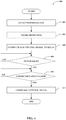
- Figure 4 illustrates an example methodology 400 performed by a microprocessor for operating one or more backroom components described above.
- a power outage can be detected. For example, this can include a local determination that power is not available, a detected or indicated switch to powering by a super capacitor, a notification from the power source, an inference based on an inability to communicate with one or more fuel dispensers, etc.
- dispensers can be optionally notified of the power outage. For example, this can include communicating a notification to the dispensers over a broadband communications link where the dispensers are able to switch to alternate power for at least a portion of the power outage (e.g., using a super capacitor).
- the notification can cause the dispensers to open a relay connected to a legacy interface for ceasing signal passage thereto based on the power outage.
- a control signal can be communicated to a relay based on the power outage.
- the control signal for example, can cause the relay to close a portion of the relay related to a legacy interface and open a portion of the relay related to signals received from a power supply to facilitate powered communications, as described herein.
- connection status over a broadband link with one or more dispensers can be determined. If the connection status is good at 410 (e.g., "show time" status for DSL), the control signal is terminated at 412, which can cause the relay to close the legacy interface portion, and open the DC power supply portion to allow legacy communications to pass. If the connection status is not good or is in another defined state, the status can be continually checked until it reaches the desired state, for example.
- FIG. 5 illustrates an example methodology 500 for a microprocessor operating a dispenser, as described herein.
- a power outage can be detected. For example, this can include a local determination that power is not available, a detected or indicated switch to powering by a super capacitor, a notification from the power source, a notification from a backroom, etc.
- a control signal to a relay can be terminated.
- the control signal can cause the relay to close and pass signals to a legacy interface; thus, terminating the control signal, which can cause the relay to not pass signals to the legacy interface. This can allow for passing power over legacy cabling without damaging the legacy interface.
- connection status over a broadband link with the backroom can be determined. If the connection status is good at 508 (e.g., "show time” status for DSL), the control signal is communicated to the relay at 510, which can cause the relay to close the legacy interface portion to allow legacy communications to pass. If the connection status is not good or is in another defined state, the status can be continually checked until it reaches the desired state, for example.
- DSP digital signal processor
- ASIC application specific integrated circuit
- FPGA field programmable gate array
- a general-purpose processor may be a microprocessor, but, in the alternative, the processor may be any conventional processor, controller, microcontroller, or state machine.
- a processor may also be implemented as a combination of computing devices, e.g., a combination of a DSP and a microprocessor, a plurality of microprocessors, one or more microprocessors in conjunction with a DSP core, or any other such configuration. Additionally, at least one processor may comprise one or more modules operable to perform one or more of the steps and/or actions described above.
- An exemplary storage medium may be coupled to the processor, such that the processor can read information from, and write information to, the storage medium. In the alternative, the storage medium may be integral to the processor. Further, in some aspects, the processor and the storage medium may reside in an ASIC.
- the functions, methods, or algorithms described may be implemented in hardware, software, firmware, or any combination thereof. If implemented in software, the functions may be stored or transmitted as one or more instructions or code on a computer-readable medium, which may be incorporated into a computer program product.
- Computer-readable media includes both computer storage media and communication media including any medium that facilitates transfer of a computer program from one place to another.
- a storage medium may be any available media that can be accessed by a computer.
- such computer-readable media can comprise random access memory (RAM), read-only memory (ROM), electrically erasable programmable ROM (EEPROM), compact disc (CD)-ROM or other optical disk storage, magnetic disk storage or other magnetic storage devices, or any other medium that can be used to carry or store desired program code in the form of instructions or data structures and that can be accessed by a computer.
- Disk and disc includes CD, laser disc, optical disc, digital versatile disc (DVD), floppy disk and blu-ray disc where disks usually reproduce data magnetically, while discs usually reproduce data optically with lasers. Combinations of the above should also be included within the scope of computer-readable media.
Landscapes
- Engineering & Computer Science (AREA)
- General Physics & Mathematics (AREA)
- Physics & Mathematics (AREA)
- Theoretical Computer Science (AREA)
- Computer Security & Cryptography (AREA)
- General Engineering & Computer Science (AREA)
- Computer Networks & Wireless Communication (AREA)
- General Health & Medical Sciences (AREA)
- Mechanical Engineering (AREA)
- Signal Processing (AREA)
- Power Engineering (AREA)
- Computing Systems (AREA)
- Health & Medical Sciences (AREA)
- Medical Informatics (AREA)
- Computer Hardware Design (AREA)
- Software Systems (AREA)
- Telephonic Communication Services (AREA)
- Loading And Unloading Of Fuel Tanks Or Ships (AREA)
- Small-Scale Networks (AREA)
- Cable Transmission Systems, Equalization Of Radio And Reduction Of Echo (AREA)
Claims (9)
- System mit Hintergrundkomponenten, die mit einer oder mehreren Kraftstoffabgabeeinrichtungen (110, 112) unter Verwendung von herkömmlicher Verkabelung verbunden sind und mit ihnen Daten austauschen, wobei die Hintergrundkomponenten umfassen:eine Backup-Energieversorgung (114) mit Gleichstrom (DC),eine herkömmliche Schnittstelle (210) zur Kommunikation mit der einen oder den mehreren Kraftstoffabgabeeinrichtungen unter Verwendung der herkömmlichen Verkabelung,ein Relais (214) zum Umschalten zwischen einer herkömmlichen Kommunikation und einer aktivierten Kommunikation mindestens teilweise basierend auf einem empfangenen Steuersignal, undeinen Mikroprozessor (218) zur Kommunikation des Steuersignals zum Relais (214, 252), wobei das System dazu ausgebildet ist, dassdie aktivierte Kommunikation Energie von der Backup-DC-Energieversorgung zu der einen oder den mehreren Kraftstoffabgabeeinrichtungen über die herkömmliche Verkabelung leitet unddie herkömmliche Kommunikation Signale von der herkömmlichen Schnittstelle zu der einen oder den mehreren Kraftstoffabgabeeinrichtungen über die herkömmliche Verkabelung leitet.
- System nach Anspruch 1, weiter umfassend ein Breitbandkommunikationsmodem (216) zur Kommunikation von Daten mit der einen oder den mehreren Kraftstoffabgabeeinrichtungen (110, 112).
- System nach Anspruch 2, weiter umfassend einen Filter/Splitter (222) zum Kombinieren von Signalen aus dem Breitbandkommunikationsmodem (216) mit den vom Relais (214) zugeleiteten Signalen zur Kommunikation über die herkömmliche Verkabelung.
- System nach Anspruch 2, wobei der Mikroprozessor (218) einen Energieausfall detektiert und das Steuersignal zum Relais (214) kommuniziert, was das Relais (214) veranlasst, Signale von der DC-Energieversorgung (114) zu leiten.
- System nach Anspruch 4, wobei der Mikroprozessor (218) weiter den Energieausfall an die eine oder die mehreren Kraftstoffabgabeeinrichtungen (110, 112) über das Breitbandkommunikationsmodem (216) anzeigt.
- System nach Anspruch 4, wobei die DC-Energieversorgung (114) das Breitbandkommunikationsmodem (216) und den Mikroprozessor (218) während des Energieausfalls mit Energie versorgt.
- System nach Anspruch 4, wobei ein Superkondensator das Breitbandkommunikationsmodem (216) und den Mikroprozessor (218) zumindest während eines Teils des Energieausfalls mit Energie versorgt.
- System nach Anspruch 1, weiter umfassend Empfangen des empfangenen Steuersignals von einer entfernt gelegenen Verkaufsstellen-Einrichtung oder Außenbereichs-Steuerung.
- Verfahren zum Austauschen von Daten unter Verwendung von herkömmlicher Verkabelung in einem System mit Hintergrundkomponenten, die mit einer oder mehreren Kraftstoffabgabeeinrichtungen (110, 112) verbunden sind, wobei die Hintergrundkomponenten umfassen:eine Backup-Energieversorgung (114) mit Gleichstrom (DC),eine herkömmliche Schnittstelle (210),ein Relais (214) undeinen Mikroprozessor (218) zur Kommunikation der herkömmlichen Schnittstelle (210) mit der einen oder den mehreren Kraftstoffabgabeeinrichtungen (110, 112) unter Verwendung der herkömmlichen Verkabelung, Umschalten zwischen einer herkömmlichen Kommunikation und einer aktivierten Kommunikation mindestens teilweise basierend auf einem empfangenen Steuersignal unter Verwendung des Relais (214), zur Kommunikation des Steuersignals zum Relais (214) unter Verwendung des Mikroprozessors (218), wobei das Verfahren an den Hintergrundkomponenten umfasst: Leiten von Energie von der Backup-DC-Energieversorgung zu der einen oder den mehreren Kraftstoffabgabeeinrichtungen über die herkömmliche Verkabelung bei der aktivierten Kommunikation, und Leiten von Signalen von den herkömmlichen Kommunikationssignalen von der herkömmlichen Schnittstelle zu der einen oder den mehreren Kraftstoffabgabeeinrichtungen über die herkömmliche Verkabelung bei der herkömmlichen Kommunikation.
Applications Claiming Priority (3)
| Application Number | Priority Date | Filing Date | Title |
|---|---|---|---|
| US201261717874P | 2012-10-24 | 2012-10-24 | |
| US14/057,344 US9495822B2 (en) | 2012-10-24 | 2013-10-18 | Retail fueling environment utilizing powered communication over legacy cabling |
| PCT/US2013/066099 WO2014066336A2 (en) | 2012-10-24 | 2013-10-22 | Retail fueling environment utilizing powered communication over legacy cabling |
Publications (3)
| Publication Number | Publication Date |
|---|---|
| EP2912641A2 EP2912641A2 (de) | 2015-09-02 |
| EP2912641A4 EP2912641A4 (de) | 2016-04-13 |
| EP2912641B1 true EP2912641B1 (de) | 2018-09-05 |
Family
ID=50486067
Family Applications (1)
| Application Number | Title | Priority Date | Filing Date |
|---|---|---|---|
| EP13849819.1A Not-in-force EP2912641B1 (de) | 2012-10-24 | 2013-10-22 | Kommerzielle betankungsumgebung mit stromgetriebener kommunikation über eine veraltete verkabelung |
Country Status (10)
| Country | Link |
|---|---|
| US (1) | US9495822B2 (de) |
| EP (1) | EP2912641B1 (de) |
| CN (1) | CN104969271B (de) |
| AU (1) | AU2013334798B9 (de) |
| BR (1) | BR112015009274A2 (de) |
| CA (1) | CA2889186C (de) |
| EA (1) | EA201500441A1 (de) |
| MY (1) | MY183069A (de) |
| NZ (2) | NZ721936A (de) |
| WO (1) | WO2014066336A2 (de) |
Families Citing this family (12)
| Publication number | Priority date | Publication date | Assignee | Title |
|---|---|---|---|---|
| WO2015054631A1 (en) | 2013-10-10 | 2015-04-16 | Gilbarco Inc. | Fuel dispensing environment utilizing active sniffer to upgrade legacy equipment |
| US10332083B2 (en) | 2013-10-10 | 2019-06-25 | Gilbarco Inc. | System and method providing improved user experience in a fuel dispensing environment |
| US20160016783A1 (en) * | 2014-07-21 | 2016-01-21 | Gilbarco Inc. | Systems and methods to predict fuel flow issues by monitoring trends in the operation of fuel valves |
| US10567217B2 (en) * | 2016-02-29 | 2020-02-18 | Whatsapp Inc. | Techniques to perform the dynamic configuration of load-balanced relay operations |
| US12248995B2 (en) * | 2016-04-21 | 2025-03-11 | Wayne Fueling Systems Llc | Intelligent fuel dispensers |
| ES2968143T3 (es) | 2016-04-21 | 2024-05-08 | Wayne Fueling Systems Llc | Dispensadores inteligentes de combustible |
| US11790335B2 (en) * | 2016-07-11 | 2023-10-17 | Wayne Fueling Systems Llc | Fuel dispenser wired communication |
| US10155652B2 (en) | 2016-07-28 | 2018-12-18 | Gilbarco Inc. | Fuel dispensing environment utilizing fueling position availability indicator system |
| CN106254082B (zh) * | 2016-08-01 | 2019-06-14 | 北京航空航天大学 | 一种平流层飞艇电机控制数据传输方法 |
| CA3122069A1 (en) | 2018-12-03 | 2020-06-11 | AvaLAN Wireless Systems, Inc. | Virtual payment system and method for dispensing fuel |
| CN110796792A (zh) * | 2019-10-23 | 2020-02-14 | 广州掌趣网络科技有限公司 | 一种基于直饮水系统的购水方法和直饮水系统以及设备 |
| AU2021337857A1 (en) * | 2020-09-04 | 2023-04-06 | Eni S.P.A. | Advanced service station system and control process |
Family Cites Families (29)
| Publication number | Priority date | Publication date | Assignee | Title |
|---|---|---|---|---|
| US3931497A (en) | 1973-10-19 | 1976-01-06 | Docutel Corporation | Automated fuel dispenser |
| US5875037A (en) | 1992-09-03 | 1999-02-23 | Canon Kabushiki Kaisha | Communication apparatus |
| US5797470A (en) | 1995-12-01 | 1998-08-25 | Atlantic Richfield Company | System for transacting fuel purchases using an island transaction terminal |
| US6092629A (en) | 1995-12-01 | 2000-07-25 | Atlantic Richfield Co. | Service station island transaction terminal |
| US6810304B1 (en) | 1997-09-26 | 2004-10-26 | Gilbarco Inc. | Multistage ordering system for a fueling and retail environment |
| CA2304250C (en) | 1997-12-24 | 2005-02-08 | Abb Power T & D Company Inc. | Method and apparatus for detecting and reporting a power outage |
| JPH11284773A (ja) | 1998-03-31 | 1999-10-15 | Japan Aviation Electronics Ind Ltd | Dslモデム |
| US6442448B1 (en) | 1999-06-04 | 2002-08-27 | Radiant Systems, Inc. | Fuel dispensing home phone network alliance (home PNA) based system |
| AU5323300A (en) | 1999-06-04 | 2000-12-28 | Radiant Systems, Inc. | Fuel dispensing system |
| US6801835B2 (en) | 2000-02-28 | 2004-10-05 | Autogas Systems, Inc. | System and method for controlling an automated fueling station |
| ITFI20040015A1 (it) | 2004-01-20 | 2004-04-20 | Gilbarco S P A | Dispositivo per la trasmissione di dati ad onde convogliate per impianti ed installazioni non domestiche |
| US20060209857A1 (en) * | 2005-03-15 | 2006-09-21 | Bellsouth Intellectual Property Corporation | Broadband home applications gateway/residential gateway systems, methods and computer program products |
| TWI289386B (en) | 2005-12-30 | 2007-11-01 | Ind Tech Res Inst | AC/DC power line communication modem |
| US8491159B2 (en) | 2006-03-28 | 2013-07-23 | Wireless Environment, Llc | Wireless emergency lighting system |
| EP2036189B1 (de) * | 2006-06-01 | 2019-04-03 | Google LLC | Verteilungsarchitektur für ununterbrechbare stromversorgung einer datenzentrale |
| US7849335B2 (en) | 2006-11-14 | 2010-12-07 | Dell Products, Lp | System and method for providing a communication enabled UPS power system for information handling systems |
| JP5315621B2 (ja) * | 2007-03-15 | 2013-10-16 | 富士電機株式会社 | 無停電電源装置 |
| US20080259841A1 (en) | 2007-04-17 | 2008-10-23 | Parag Deshpande | Subscription aggregation and load balancing in a broadband router |
| AU2008271033B2 (en) * | 2007-06-29 | 2012-08-09 | Ncr Voyix Corporation | Multi-channel controller |
| US20090045925A1 (en) * | 2007-08-17 | 2009-02-19 | Franklin Fueling Systems, Inc. | System, Apparatus, and Method for Communicating Sensor Information of a System Component that is Disposed in a Hazardous Location |
| US20090129403A1 (en) | 2007-11-20 | 2009-05-21 | Harrell Daniel C | Fueling Facility Communication |
| CA2749876C (en) | 2009-01-18 | 2018-05-22 | Gilbarco Inc. | Payment processing system for use in a retail environment having segmented architecture |
| US20110022223A1 (en) * | 2009-07-21 | 2011-01-27 | Verifone, Inc. | Retrofit data communication at filling stations |
| WO2011040036A1 (ja) | 2009-09-30 | 2011-04-07 | パナソニック株式会社 | 直流電力線通信システム及び直流電力線通信装置 |
| US9071083B2 (en) | 2010-06-08 | 2015-06-30 | Microsoft Technology Licensing, Llc | Super capacitor supplemented server power |
| CN102006339A (zh) | 2010-11-22 | 2011-04-06 | 上海南华机电有限公司 | 基于ofdm技术的交直流电源线工业现场电话机 |
| TWI478560B (zh) * | 2011-03-06 | 2015-03-21 | Pcn Technology Inc | 資料傳輸與管理的系統及方法 |
| CA2774364C (en) | 2011-04-18 | 2014-01-28 | Norman R. Byrne | Electrical system with circuit limiter |
| US9496920B2 (en) | 2011-11-16 | 2016-11-15 | Gilbarco Inc. | Fuel dispensing environment utilizing retrofit broadband communication system |
-
2013
- 2013-10-18 US US14/057,344 patent/US9495822B2/en active Active
- 2013-10-22 MY MYPI2015701309A patent/MY183069A/en unknown
- 2013-10-22 NZ NZ721936A patent/NZ721936A/en unknown
- 2013-10-22 NZ NZ708318A patent/NZ708318A/en unknown
- 2013-10-22 EA EA201500441A patent/EA201500441A1/ru unknown
- 2013-10-22 WO PCT/US2013/066099 patent/WO2014066336A2/en not_active Ceased
- 2013-10-22 CN CN201380067502.XA patent/CN104969271B/zh active Active
- 2013-10-22 BR BR112015009274A patent/BR112015009274A2/pt not_active Application Discontinuation
- 2013-10-22 EP EP13849819.1A patent/EP2912641B1/de not_active Not-in-force
- 2013-10-22 AU AU2013334798A patent/AU2013334798B9/en active Active
- 2013-10-22 CA CA2889186A patent/CA2889186C/en active Active
Non-Patent Citations (1)
| Title |
|---|
| None * |
Also Published As
| Publication number | Publication date |
|---|---|
| AU2013334798B2 (en) | 2017-04-06 |
| CA2889186C (en) | 2021-03-02 |
| EA201500441A1 (ru) | 2015-08-31 |
| CN104969271B (zh) | 2018-04-10 |
| US20140114473A1 (en) | 2014-04-24 |
| EP2912641A2 (de) | 2015-09-02 |
| AU2013334798B9 (en) | 2017-05-11 |
| EP2912641A4 (de) | 2016-04-13 |
| CA2889186A1 (en) | 2014-05-01 |
| MY183069A (en) | 2021-02-10 |
| AU2013334798A1 (en) | 2015-06-11 |
| US9495822B2 (en) | 2016-11-15 |
| BR112015009274A2 (pt) | 2017-07-04 |
| NZ708318A (en) | 2016-07-29 |
| CN104969271A (zh) | 2015-10-07 |
| WO2014066336A3 (en) | 2014-08-28 |
| WO2014066336A2 (en) | 2014-05-01 |
| NZ721936A (en) | 2017-06-30 |
Similar Documents
| Publication | Publication Date | Title |
|---|---|---|
| EP2912641B1 (de) | Kommerzielle betankungsumgebung mit stromgetriebener kommunikation über eine veraltete verkabelung | |
| EP3504696B1 (de) | Optisch kommunikatives batteriemanagementsystem | |
| US20110068630A1 (en) | Power supply cooperation system and uninterruptible power supply device | |
| CN101834727A (zh) | 设备和网络系统 | |
| EP2220739A1 (de) | System und verfahren zum power management und load shedding | |
| CN102571457A (zh) | 一种触发旁路设备切换的方法、旁路设备切换方法及装置 | |
| CN109490771B (zh) | 一种继电器检测方法以及继电器检测装置 | |
| EP2765679B1 (de) | Intelligente Stromnetzwerkvorrichtung | |
| US20200073843A1 (en) | Redundant communication system to increase operational reliability | |
| CN103151765B (zh) | 自适应零时差过电流保护方法 | |
| CN104079066B (zh) | 一种判断远端变电站二次直流电源消失的方法 | |
| US11588315B2 (en) | Control system for an electrical apparatus | |
| CN113759291B (zh) | 故障检测方法、装置、储能系统及可读存储介质 | |
| KR20130022813A (ko) | 계전기 이중화 장치 | |
| CN104467182B (zh) | 一种站控层设备不停电遥控系统及方法 | |
| JP2022505260A (ja) | 配電ネットワーク上のパワーアイランド検出方法及びシステム | |
| CN104656478B (zh) | 一种多电源模块的控制电路及控制方法 | |
| CN103703721B (zh) | 用于管理互联网访问连接的家庭系统 | |
| US20250112467A1 (en) | Protection And Control Scheme For Utility Tie And Industrial Cogeneration System | |
| CN204243907U (zh) | 一种站控层设备不停电遥控系统 | |
| CN220855504U (zh) | 用于储能升压一体机的监控系统 | |
| Sakthi et al. | Intelligent Management and Control of Electrical Loads using a Microcontroller | |
| JP2018033023A (ja) | 加入者線終端装置及び制御方法 | |
| JP2019062620A (ja) | 電力監視制御システム、電力監視制御用電源装置および電力監視制御装置 | |
| Negreanu et al. | Remote Supervision And Control Systems For Electrified Transport Power Supply |
Legal Events
| Date | Code | Title | Description |
|---|---|---|---|
| PUAI | Public reference made under article 153(3) epc to a published international application that has entered the european phase |
Free format text: ORIGINAL CODE: 0009012 |
|
| 17P | Request for examination filed |
Effective date: 20150515 |
|
| AK | Designated contracting states |
Kind code of ref document: A2 Designated state(s): AL AT BE BG CH CY CZ DE DK EE ES FI FR GB GR HR HU IE IS IT LI LT LU LV MC MK MT NL NO PL PT RO RS SE SI SK SM TR |
|
| AX | Request for extension of the european patent |
Extension state: BA ME |
|
| DAX | Request for extension of the european patent (deleted) | ||
| A4 | Supplementary search report drawn up and despatched |
Effective date: 20160311 |
|
| RIC1 | Information provided on ipc code assigned before grant |
Ipc: G07F 11/00 20060101AFI20160307BHEP Ipc: G07F 13/02 20060101ALI20160307BHEP |
|
| STAA | Information on the status of an ep patent application or granted ep patent |
Free format text: STATUS: EXAMINATION IS IN PROGRESS |
|
| 17Q | First examination report despatched |
Effective date: 20170210 |
|
| GRAP | Despatch of communication of intention to grant a patent |
Free format text: ORIGINAL CODE: EPIDOSNIGR1 |
|
| STAA | Information on the status of an ep patent application or granted ep patent |
Free format text: STATUS: GRANT OF PATENT IS INTENDED |
|
| INTG | Intention to grant announced |
Effective date: 20180320 |
|
| GRAS | Grant fee paid |
Free format text: ORIGINAL CODE: EPIDOSNIGR3 |
|
| GRAA | (expected) grant |
Free format text: ORIGINAL CODE: 0009210 |
|
| STAA | Information on the status of an ep patent application or granted ep patent |
Free format text: STATUS: THE PATENT HAS BEEN GRANTED |
|
| AK | Designated contracting states |
Kind code of ref document: B1 Designated state(s): AL AT BE BG CH CY CZ DE DK EE ES FI FR GB GR HR HU IE IS IT LI LT LU LV MC MK MT NL NO PL PT RO RS SE SI SK SM TR |
|
| REG | Reference to a national code |
Ref country code: GB Ref legal event code: FG4D |
|
| REG | Reference to a national code |
Ref country code: CH Ref legal event code: EP |
|
| REG | Reference to a national code |
Ref country code: AT Ref legal event code: REF Ref document number: 1038743 Country of ref document: AT Kind code of ref document: T Effective date: 20180915 |
|
| REG | Reference to a national code |
Ref country code: IE Ref legal event code: FG4D |
|
| REG | Reference to a national code |
Ref country code: DE Ref legal event code: R096 Ref document number: 602013043328 Country of ref document: DE |
|
| REG | Reference to a national code |
Ref country code: NL Ref legal event code: MP Effective date: 20180905 |
|
| REG | Reference to a national code |
Ref country code: LT Ref legal event code: MG4D |
|
| PG25 | Lapsed in a contracting state [announced via postgrant information from national office to epo] |
Ref country code: LT Free format text: LAPSE BECAUSE OF FAILURE TO SUBMIT A TRANSLATION OF THE DESCRIPTION OR TO PAY THE FEE WITHIN THE PRESCRIBED TIME-LIMIT Effective date: 20180905 Ref country code: RS Free format text: LAPSE BECAUSE OF FAILURE TO SUBMIT A TRANSLATION OF THE DESCRIPTION OR TO PAY THE FEE WITHIN THE PRESCRIBED TIME-LIMIT Effective date: 20180905 Ref country code: BG Free format text: LAPSE BECAUSE OF FAILURE TO SUBMIT A TRANSLATION OF THE DESCRIPTION OR TO PAY THE FEE WITHIN THE PRESCRIBED TIME-LIMIT Effective date: 20181205 Ref country code: NO Free format text: LAPSE BECAUSE OF FAILURE TO SUBMIT A TRANSLATION OF THE DESCRIPTION OR TO PAY THE FEE WITHIN THE PRESCRIBED TIME-LIMIT Effective date: 20181205 Ref country code: SE Free format text: LAPSE BECAUSE OF FAILURE TO SUBMIT A TRANSLATION OF THE DESCRIPTION OR TO PAY THE FEE WITHIN THE PRESCRIBED TIME-LIMIT Effective date: 20180905 Ref country code: GR Free format text: LAPSE BECAUSE OF FAILURE TO SUBMIT A TRANSLATION OF THE DESCRIPTION OR TO PAY THE FEE WITHIN THE PRESCRIBED TIME-LIMIT Effective date: 20181206 Ref country code: FI Free format text: LAPSE BECAUSE OF FAILURE TO SUBMIT A TRANSLATION OF THE DESCRIPTION OR TO PAY THE FEE WITHIN THE PRESCRIBED TIME-LIMIT Effective date: 20180905 |
|
| REG | Reference to a national code |
Ref country code: AT Ref legal event code: MK05 Ref document number: 1038743 Country of ref document: AT Kind code of ref document: T Effective date: 20180905 |
|
| PG25 | Lapsed in a contracting state [announced via postgrant information from national office to epo] |
Ref country code: HR Free format text: LAPSE BECAUSE OF FAILURE TO SUBMIT A TRANSLATION OF THE DESCRIPTION OR TO PAY THE FEE WITHIN THE PRESCRIBED TIME-LIMIT Effective date: 20180905 Ref country code: AL Free format text: LAPSE BECAUSE OF FAILURE TO SUBMIT A TRANSLATION OF THE DESCRIPTION OR TO PAY THE FEE WITHIN THE PRESCRIBED TIME-LIMIT Effective date: 20180905 Ref country code: LV Free format text: LAPSE BECAUSE OF FAILURE TO SUBMIT A TRANSLATION OF THE DESCRIPTION OR TO PAY THE FEE WITHIN THE PRESCRIBED TIME-LIMIT Effective date: 20180905 |
|
| PG25 | Lapsed in a contracting state [announced via postgrant information from national office to epo] |
Ref country code: CZ Free format text: LAPSE BECAUSE OF FAILURE TO SUBMIT A TRANSLATION OF THE DESCRIPTION OR TO PAY THE FEE WITHIN THE PRESCRIBED TIME-LIMIT Effective date: 20180905 Ref country code: IT Free format text: LAPSE BECAUSE OF FAILURE TO SUBMIT A TRANSLATION OF THE DESCRIPTION OR TO PAY THE FEE WITHIN THE PRESCRIBED TIME-LIMIT Effective date: 20180905 Ref country code: RO Free format text: LAPSE BECAUSE OF FAILURE TO SUBMIT A TRANSLATION OF THE DESCRIPTION OR TO PAY THE FEE WITHIN THE PRESCRIBED TIME-LIMIT Effective date: 20180905 Ref country code: NL Free format text: LAPSE BECAUSE OF FAILURE TO SUBMIT A TRANSLATION OF THE DESCRIPTION OR TO PAY THE FEE WITHIN THE PRESCRIBED TIME-LIMIT Effective date: 20180905 Ref country code: AT Free format text: LAPSE BECAUSE OF FAILURE TO SUBMIT A TRANSLATION OF THE DESCRIPTION OR TO PAY THE FEE WITHIN THE PRESCRIBED TIME-LIMIT Effective date: 20180905 Ref country code: EE Free format text: LAPSE BECAUSE OF FAILURE TO SUBMIT A TRANSLATION OF THE DESCRIPTION OR TO PAY THE FEE WITHIN THE PRESCRIBED TIME-LIMIT Effective date: 20180905 Ref country code: PL Free format text: LAPSE BECAUSE OF FAILURE TO SUBMIT A TRANSLATION OF THE DESCRIPTION OR TO PAY THE FEE WITHIN THE PRESCRIBED TIME-LIMIT Effective date: 20180905 Ref country code: IS Free format text: LAPSE BECAUSE OF FAILURE TO SUBMIT A TRANSLATION OF THE DESCRIPTION OR TO PAY THE FEE WITHIN THE PRESCRIBED TIME-LIMIT Effective date: 20190105 Ref country code: ES Free format text: LAPSE BECAUSE OF FAILURE TO SUBMIT A TRANSLATION OF THE DESCRIPTION OR TO PAY THE FEE WITHIN THE PRESCRIBED TIME-LIMIT Effective date: 20180905 |
|
| REG | Reference to a national code |
Ref country code: DE Ref legal event code: R119 Ref document number: 602013043328 Country of ref document: DE |
|
| PG25 | Lapsed in a contracting state [announced via postgrant information from national office to epo] |
Ref country code: PT Free format text: LAPSE BECAUSE OF FAILURE TO SUBMIT A TRANSLATION OF THE DESCRIPTION OR TO PAY THE FEE WITHIN THE PRESCRIBED TIME-LIMIT Effective date: 20190105 Ref country code: SM Free format text: LAPSE BECAUSE OF FAILURE TO SUBMIT A TRANSLATION OF THE DESCRIPTION OR TO PAY THE FEE WITHIN THE PRESCRIBED TIME-LIMIT Effective date: 20180905 Ref country code: SK Free format text: LAPSE BECAUSE OF FAILURE TO SUBMIT A TRANSLATION OF THE DESCRIPTION OR TO PAY THE FEE WITHIN THE PRESCRIBED TIME-LIMIT Effective date: 20180905 |
|
| REG | Reference to a national code |
Ref country code: CH Ref legal event code: PL |
|
| REG | Reference to a national code |
Ref country code: BE Ref legal event code: MM Effective date: 20181031 |
|
| PG25 | Lapsed in a contracting state [announced via postgrant information from national office to epo] |
Ref country code: LU Free format text: LAPSE BECAUSE OF NON-PAYMENT OF DUE FEES Effective date: 20181022 |
|
| PLBE | No opposition filed within time limit |
Free format text: ORIGINAL CODE: 0009261 |
|
| STAA | Information on the status of an ep patent application or granted ep patent |
Free format text: STATUS: NO OPPOSITION FILED WITHIN TIME LIMIT |
|
| REG | Reference to a national code |
Ref country code: IE Ref legal event code: MM4A |
|
| PG25 | Lapsed in a contracting state [announced via postgrant information from national office to epo] |
Ref country code: DK Free format text: LAPSE BECAUSE OF FAILURE TO SUBMIT A TRANSLATION OF THE DESCRIPTION OR TO PAY THE FEE WITHIN THE PRESCRIBED TIME-LIMIT Effective date: 20180905 Ref country code: DE Free format text: LAPSE BECAUSE OF NON-PAYMENT OF DUE FEES Effective date: 20190501 Ref country code: MC Free format text: LAPSE BECAUSE OF FAILURE TO SUBMIT A TRANSLATION OF THE DESCRIPTION OR TO PAY THE FEE WITHIN THE PRESCRIBED TIME-LIMIT Effective date: 20180905 |
|
| 26N | No opposition filed |
Effective date: 20190606 |
|
| GBPC | Gb: european patent ceased through non-payment of renewal fee |
Effective date: 20181205 |
|
| PG25 | Lapsed in a contracting state [announced via postgrant information from national office to epo] |
Ref country code: LI Free format text: LAPSE BECAUSE OF NON-PAYMENT OF DUE FEES Effective date: 20181031 Ref country code: CH Free format text: LAPSE BECAUSE OF NON-PAYMENT OF DUE FEES Effective date: 20181031 Ref country code: BE Free format text: LAPSE BECAUSE OF NON-PAYMENT OF DUE FEES Effective date: 20181031 Ref country code: SI Free format text: LAPSE BECAUSE OF FAILURE TO SUBMIT A TRANSLATION OF THE DESCRIPTION OR TO PAY THE FEE WITHIN THE PRESCRIBED TIME-LIMIT Effective date: 20180905 |
|
| PG25 | Lapsed in a contracting state [announced via postgrant information from national office to epo] |
Ref country code: IE Free format text: LAPSE BECAUSE OF NON-PAYMENT OF DUE FEES Effective date: 20181022 Ref country code: FR Free format text: LAPSE BECAUSE OF NON-PAYMENT OF DUE FEES Effective date: 20181105 |
|
| PG25 | Lapsed in a contracting state [announced via postgrant information from national office to epo] |
Ref country code: GB Free format text: LAPSE BECAUSE OF NON-PAYMENT OF DUE FEES Effective date: 20181205 |
|
| PG25 | Lapsed in a contracting state [announced via postgrant information from national office to epo] |
Ref country code: MT Free format text: LAPSE BECAUSE OF NON-PAYMENT OF DUE FEES Effective date: 20181022 |
|
| PG25 | Lapsed in a contracting state [announced via postgrant information from national office to epo] |
Ref country code: TR Free format text: LAPSE BECAUSE OF FAILURE TO SUBMIT A TRANSLATION OF THE DESCRIPTION OR TO PAY THE FEE WITHIN THE PRESCRIBED TIME-LIMIT Effective date: 20180905 |
|
| PG25 | Lapsed in a contracting state [announced via postgrant information from national office to epo] |
Ref country code: HU Free format text: LAPSE BECAUSE OF FAILURE TO SUBMIT A TRANSLATION OF THE DESCRIPTION OR TO PAY THE FEE WITHIN THE PRESCRIBED TIME-LIMIT; INVALID AB INITIO Effective date: 20131022 Ref country code: CY Free format text: LAPSE BECAUSE OF FAILURE TO SUBMIT A TRANSLATION OF THE DESCRIPTION OR TO PAY THE FEE WITHIN THE PRESCRIBED TIME-LIMIT Effective date: 20180905 Ref country code: MK Free format text: LAPSE BECAUSE OF NON-PAYMENT OF DUE FEES Effective date: 20180905 |