EP2908658B1 - Process for production of animal feed components based on mussels - Google Patents
Process for production of animal feed components based on mussels Download PDFInfo
- Publication number
- EP2908658B1 EP2908658B1 EP13779206.5A EP13779206A EP2908658B1 EP 2908658 B1 EP2908658 B1 EP 2908658B1 EP 13779206 A EP13779206 A EP 13779206A EP 2908658 B1 EP2908658 B1 EP 2908658B1
- Authority
- EP
- European Patent Office
- Prior art keywords
- mussel meat
- shells
- mussel
- animal feed
- mussels
- Prior art date
- Legal status (The legal status is an assumption and is not a legal conclusion. Google has not performed a legal analysis and makes no representation as to the accuracy of the status listed.)
- Active
Links
Images
Classifications
-
- A—HUMAN NECESSITIES
- A23—FOODS OR FOODSTUFFS; TREATMENT THEREOF, NOT COVERED BY OTHER CLASSES
- A23K—FODDER
- A23K50/00—Feeding-stuffs specially adapted for particular animals
-
- A—HUMAN NECESSITIES
- A23—FOODS OR FOODSTUFFS; TREATMENT THEREOF, NOT COVERED BY OTHER CLASSES
- A23K—FODDER
- A23K10/00—Animal feeding-stuffs
- A23K10/10—Animal feeding-stuffs obtained by microbiological or biochemical processes
- A23K10/14—Pretreatment of feeding-stuffs with enzymes
-
- A—HUMAN NECESSITIES
- A23—FOODS OR FOODSTUFFS; TREATMENT THEREOF, NOT COVERED BY OTHER CLASSES
- A23K—FODDER
- A23K10/00—Animal feeding-stuffs
- A23K10/20—Animal feeding-stuffs from material of animal origin
-
- A—HUMAN NECESSITIES
- A23—FOODS OR FOODSTUFFS; TREATMENT THEREOF, NOT COVERED BY OTHER CLASSES
- A23K—FODDER
- A23K10/00—Animal feeding-stuffs
- A23K10/20—Animal feeding-stuffs from material of animal origin
- A23K10/22—Animal feeding-stuffs from material of animal origin from fish
-
- A—HUMAN NECESSITIES
- A23—FOODS OR FOODSTUFFS; TREATMENT THEREOF, NOT COVERED BY OTHER CLASSES
- A23K—FODDER
- A23K10/00—Animal feeding-stuffs
- A23K10/20—Animal feeding-stuffs from material of animal origin
- A23K10/26—Animal feeding-stuffs from material of animal origin from waste material, e.g. feathers, bones or skin
-
- A—HUMAN NECESSITIES
- A23—FOODS OR FOODSTUFFS; TREATMENT THEREOF, NOT COVERED BY OTHER CLASSES
- A23K—FODDER
- A23K50/00—Feeding-stuffs specially adapted for particular animals
- A23K50/80—Feeding-stuffs specially adapted for particular animals for aquatic animals, e.g. fish, crustaceans or molluscs
Definitions
- the present invention relates to a process for preparing animal feed from mussels, such as Mytilus spp and Dressenia spp.
- Mussel meat has an overall high nutritional content, in particular a high protein content (20 g/ 100 g meat, w/w), as well as a low fat content (3 g/100 g meat, w/w) and low caloric value (110 kcal/100g meat, w/w). Mussel meat also provides a good source of zinc, copper and iodine ( Silva et al, JFS, Vol. 75, No. 1:201 0 ).
- the apparatus comprises means for separating useful extracts, decomposed matter and shells from shellfish debris growing on power plant cooling pipes or the like.
- Shellfish is collected, crushed, extracted, and decomposed by addition of hot water and an enzyme such as papain. Decomposed matter is further extracted and shells and flesh may be separated.
- mussels Due to their high nutritional content, mussels remain an interesting material for use in food processing. Industrial processes for extracting the nutrition from mussels may however be further improved in order to increase process efficiency as well as expected demands from feed industry.
- An object of the invention is to provide an improved animal feed having a high nutritional content, such as a high protein content, that is environment friendly.
- a further object is to provide a process for preparing such an animal feed, which process provides improved energy consumption and process economy.
- the process as described above thus achieves decomposition by dissolution of mussel meat under gentle conditions, such as under moderate heating and stirring.
- gentle conditions such as under moderate heating and stirring.
- the inventor has surprisingly found that no exogenous enzymes need to be added in order to accomplish the decomposition under the described gentle conditions.
- Mechanical stirring performed concurrently with the heating may physically affect both the shells and the mussel meat of the mussels.
- the shells may at least partly break, the mussel meat may at least partly come off the shells and the tissue may be at least partly dispersed and/or divided into pieces.
- the shells as such may moreover facilitate the decomposition of the mussel meat, by tearing or dividing the mussel meat into smaller pieces. By stressing the mussel tissue in this way, the mussel meat may be further decomposed.
- the decomposing comprises heating the mussels to a temperature of between 30 and 50 °C and maintaining the temperature between 30 and 50 °C while decomposing is conducted.
- said decomposing proceeds for a time period of between approximately 1 - 2 hours. It is contemplated that dissolution for a relatively short period of time such as 1-2 hours provides a suspension having a desired content of both a low molecular weight fraction rich in important amino acids, such as methionine, threonine, cysteine and lysine, and a (relatively) high(er) molecular weight fraction having functional properties, the suspension being suitable for use as animal feed, in particular feed for poultry, fish and other mono-gastric animals.
- the separation enables formation of a liquefied mussel meat fraction which is free from shells, or essentially free from shells.
- a shell fraction comprising shells and a mixed fraction comprising shells having mussel meat attached thereto may optionally individually be formed.
- various animal feed products that are suitable for different animals may be provided in parallel.
- the shells separated in this way may be at least partly broken to provide a shell fraction comprising partly broken shells.
- the liquefied mussel meat fraction separated as described above is heated, e.g. to a temperature of maximum 90 °C.
- the stability of the mussel meat fraction is improved by said heating by accomplishing elimination of any harmful bacteria, such as salmonella bacteria and enterobacteria.
- the heating may also serve to terminate the decomposing process, which may also improve stability of the mixture.
- heating and stirring are performed concurrently in order to achieve a desired homogeneous temperature increase.
- Heating may be performed solely for hygienic and safety reasons and not primarily for, e.g., drying reasons.
- heating provides a liquid product comprising liquefied mussel meat.
- the water content of the liquefied mussel meat resulting from the heating may still be high, and if a relatively dry feed product is desired, the water content may have to be reduced. This may be accomplished by removal of water and/or concentration of the liquefied mussel meat in order to provide a relatively dry final product suitable for distribution and use as an animal feed.
- the liquefied mussel meat fraction separated as described above is heated to a temperature of e.g. maximum 90 °C not only for hygienic reasons but also to dry the liquefied mussel meat and to form dried mussel meat. Heating is thus conducted until a dry mussel meat product is obtained.
- This dried mussel meat is, in a further embodiment, grinded to form mussel meal.
- Mussel meal having a high nutritional content prepared by the described process may serve as animal feed.
- the water content of the liquefied mussel meat is reduced prior to said heating. Removing excess water from the liquefied mussel meat before heating may be an energy efficient way of reducing the water content of the liquefied mussel meat as well as of a resulting animal feed product.
- stirring is performed concurrently with heating of the liquefied mussel meat fraction in order to for example achieve the desired homogeneous temperature increase.
- the shell fraction may also be processed.
- the shell fraction separated as described above is heated to a temperature of e.g. maximum 90 °C to form dried shells.
- heating and stirring are performed concurrently in order to for example achieve a desired homogeneous temperature increase.
- This shell fraction may in itself serve as an animal feed by providing a source of calcium, or may conveniently be mixed with any other animal feed component(s), such as for example liquefied or dried mussel meat or mussel meal prepared as described above.
- An animal feed product comprising shells may be advantageous in that it further provides a source of calcium.
- the shells may provide activation of e.g. laying hens and chickens such that feather picking is avoided.
- the mixed fraction optionally separated as described above is, in one embodiment, heated to a temperature of e.g. maximum 90 °C to form dried shells having dried mussel meat attached thereto. Heating is preferably conducted carefully and successively in order not to over-heat the mussel meat still being attached to the shells. In some embodiments, heating and stirring are performed concurrently in order to for example achieve a desired homogeneous temperature increase.
- This process provides yet another animal feed product comprising shells having dried mussel meat attached thereto and having the advantages as previously described.
- the shell-containing fractions are separated from the suspension as one fraction, or the shell-containing fractions are combined after being individually separated from the suspension.
- the pooled shell-containing fractions may thereafter be processed as previously described for the individual fractions.
- the (entire) suspension is after dissolution for e.g. 1-2 hours in one embodiment heated, optionally to a temperature of maximum 90 °C, to dry the suspension to form a mixture of dried mussel meat, shells and optionally shells having dried mussel meat attached thereto.
- heating may be performed to improve feed hygiene such that a safe and stable product is provided that fulfil the safety requirements of feed control legislation.
- the stability may moreover be improved in that the total water content of the formed mixed product is reduced, to e.g. 6 - 7 % by weight or less.
- the mixture resulting from heating of the suspension may additionally be grinded to form a mixture of mussel meal, shells and optionally shells having dried mussel meat attached thereto.
- an animal feed product containing shells may serve to activate e.g. laying hens and chickens and to prevent e.g. feather picking.
- the shells While grinding the decomposed mussel meat to mussel meal, the shells may be crushed or grinded to smaller chips in order to further make the calcium accessible for animals.
- at least part of the shells having and not having mussel meat attached thereto may be removed prior to grinding the mussel meat to meal or after grinding the mussel meat to meal. In this way, a balanced shell content, or calcium content, in the animal feed is achieved.
- the processes described above providing shell-containing animal feed may additionally, in further embodiments, comprise stirring of the suspension, mixture or fraction to form a suspension, mixture or fraction comprising shell chips.
- Stirring may be conducted while drying.
- the size of the shells may be reduced moderately or considerably in order to produce shell chips of a desired size.
- a desired size fraction may further be separated through sorting.
- the mussels used in the present invention belong to the Mytilus spp species, such as the Mytilus edulis species, or to the Dressenia spp species, such as the Dressenia polymorpha species.
- the decomposing involves no further additions of external reagents or substances.
- External reagents or substances should in this context be understood as any ingredients that may chemically or physiologically affect the mussels.
- This example process thus accomplishes decomposition of the mussel meat by heating and stirring only, thus without any addition of e.g. salt, acids, bases and exogenous enzymes.
- the mussels to be used in the process may come in various forms, for example, whole, pre-crushed and/or dewatered.
- the process thus comprises initially providing whole mussels, for example in sizes of 1 to 10 cm, and removing water from the mussels by breaking the shells and withdrawing water.
- Removal of excess so-called shell water prior to decomposing the mussel meat may provide a suspension with a relatively lower water content. This may further facilitate drying of the suspension.
- dewatering may remove any excess salt water from the mussels and thereby contribute to the provision of a final product having a balanced salt content. As much salt water as possible may have to be removed in order to provide a tasty and healthy animal feed for the various animal species. Pre-crushing of the mussels may also stress the mussel tissue further such as to facilitate initiation of decomposition.
- decomposing further comprises adding water to the mussels.
- small amounts of water may have to be added, preferably prior to heating.
- Addition of water may simplify removal of mussel meat from the shells to provide a suspension of liquefied mussel meat and (clean) shells, and preferably no, or nearly no, shells having mussel meat attached thereto.
- the added water may be removed in subsequent process steps, it may still enable provision of a product, such as mussel meal, having a balanced salt (e.g. NaCl) content.
- a balanced salt e.g. NaCl
- an animal feed product as obtainable by the process described above wherein a mussel meal is provided, the animal feed product having a protein content of above 40 %, such as between 40 and 70 % by weight, and a lipid content of above 4 %, such as between 4 and 15 % by weight.
- the animal feed product obtainable by said advantageous process, has high protein content and may readily be provided to animals, such as poultry, e.g. laying hens and chickens, fish and other mono-gastric animals.
- Said animal feed product may be free from shells and shell residues, or essentially free from shells and shell residues.
- an animal feed product as obtainable by the process described above wherein liquefied mussel meat is provided, the animal feed product having a protein content of above 40 %, such as between 40 and 70 % by weight, and a lipid content of above 4 %, such as between 4 and 15 % by weight.
- the animal feed product obtainable by said advantageous process, has high protein content and may readily be provided to animals, such as poultry, e.g. laying hens and chickens, fish and other mono-gastric animals.
- an animal feed product as obtainable by the process as previously described, wherein dried shells having dried meat attached thereto is formed, the animal feed product comprising between 50 and 90 % of shells and between 10 and 50 % of dried mussel meat, by total weight, said dried mussel meat having a protein content of above 40 %, such as between 40 and 70 %, and a lipid content of above 4 %, such as between 4 and 15 %, by weight of the mussel meat.
- an animal feed product as obtainable by a process as described herein provides several important nutrition for animals. Both shells and meat are used for producing the animal feed product, which thus provides a product comprising proteins, lipids and calcium and in some instances astaxanthin and a number of micro-minerals.
- an animal feed product as obtainable by the process described above wherein the entire suspension is dried and the mussel meat is grinded to provide a mixture of mussel meal, shells and shells having dried mussel meat attached thereto, the animal feed product comprising between 50 and 90 % of shells and between 10 and 50 % of mussel meal, by total weight, said mussel meal having a protein content of above 40 %, such as between 40 and 70 % and a lipid content of above 4 %, such as between 4 and 15 %, by weight of the mussel meal.
- the animal feed product thus comprises proteins, and lipids, as well as calcium-containing mussel shells.
- the animal feed may moreover contain astaxanthin and a number of micro-minerals.
- Such animal feed is advantageous in that it provides high protein content as well as further nutrition to animals such as poultry, e.g. laying hens and chickens, fish and other mono-gastric animals.
- the resulting animal feed is a mixture of mussel meal, shells and shells having mussel meat attached thereto.
- the ratio of the latter may be relatively small since most of the meat may have been separated from the shells during processing.
- the content of shells, including any shells having mussel meat attached thereto, and mussel meal is calculated by total weight of the components, whereas the content of the mussel meal is based on the weight on the mussel meal only.
- an animal feed product based on mussels for example mussels described as suitable for the present process aspect, comprising mussel meal having a protein content of above 40 %, such as between 40 and 70 % by weight, and a lipid content of above 4 %, such as between 4 and 15 % by weight.
- Such animal feed is advantageous in that it provides high protein content as well as further nutrition to animals such as poultry, e.g. laying hens and chickens, fish and other mono-gastric animals.
- an animal feed product based on mussels comprising between 50 and 90 % by weight of shells and between 10 and 50 % by weight of dried mussel meat at least partly being attached to the shells, said dried mussel meat having a protein content of above 40 %, such as between 40 and 70 %,and a lipid content of above 4 %, such as between 4 and 15 %, by dry weight of the mussel meat.
- an animal feed product based on mussels comprising liquefied mussel meat, i.e. decomposed and dissolved mussel meat, said liquefied mussel meat having a protein content of above 40 %, such as between 40 and 70 % and a lipid content of above 4 %, such as between 4 and 15 %, by weight of the mussel meat.
- an animal feed product based on mussels comprising between 50 and 90 % by weight of shells and between 10 and 50 % by weight of mussel meal, said mussel meal having a protein content of above 40 %, such as between 40 and 70 %, and a lipid content of above 4 %, such as between 4 and 15 %, by weight of the mussel meal.
- the animal feed product provides a source of calcium by incorporating a shell fraction.
- the shell fraction may moreover serve to activate e.g. poultry and thereby prevent undesired feather picking.
- the shells comprised in the animal feed may have mussel meat attached thereto.
- Mussels to be used in the present process may be whole mussels; fresh or frozen, or slightly broken mussels having meat attached to the shells; such as lightly crushed, broken or shattered mussels.
- Whole mussels may come in sizes of e.g. 1 cm to 10 cm.
- the origin of the Mytilus spp mussels may vary, they may for example be derived from seas and oceans having a specific temperature and/or salinity, such as from temperate seas having a salinity range from approximately 4 psu (practical salinity unit) in brackish waters and to above 35 psu, e.g. full salinity of the oceans.
- the mussels may for example have their origin in the Baltic Sea, Skagerak, Kattegat, the North Sea, the Atlantic, the Mediterranean and the Pacific.
- the origin of the Dressenia spp mussels may also vary.
- Such mussels may be derived from fresh water or slightly brackish waters conditions having a salinity less than approximately 2 psu.
- mussels should be understood as a combination of mussel meat and shells in any form, e.g. fresh, frozen, whole or pre-crushed.
- the mussels are preferably of sea-food or comparable quality.
- water may however be added during the decomposition step.
- Water may be added in order to simplify and further remove mussel meat from shells to provide mussel meat separated from shells and clean(er) shells. Any water added during the decomposition step may be removed during subsequent process steps, for example before or after the liquefied mussel meat, shell fraction, or mixed fraction is heated to form dried mussel meat, dried shells or dried shells having mussel meat attached thereto.
- any autolysis taking place intends to inactivate the endogenous enzymes by heating in order to provide a stable product comprising mussel meat, optionally in the form of mussel meal, and optionally shells.
- decomposition of mussel meat by dissolution may be conducted for a time period of approximately 30 minutes to 4 hours, such as for example, 45 minutes to 3 hours, such as for example 1 hour to 2.5 hours, such as for example 1 hour to 2 hours. In some instances, decomposition is conducted for a time period of approximately 1 hour, 1.5 hours or 2 hours.
- the mussels may be heated to decompose the mussel meat to a temperature of 25 to 60 °C, such as for example, 25 to 55 °C, such as for example 30 to 55 °C, such as for example 30 to 50 °C, such as for example 35 to 50 °C, such as for example 40 to 50 °C.
- the mussels are heated to a temperature of approximately 40 °C, such as approximately 45 °C, such as approximately 50 °C.
- Stirring is conducted while decomposing the mussel meat. It is to be understood that stirring may be accomplished in various ways by different types of equipment. For example, the stirring during decomposition may be gentle and slow, whereas stirring during optional later operations of the process may be more distinct and faster.
- drying may be initiated.
- different fractions may be separated from the suspension prior to drying depending on the particular animal feed product(s) to be produced.
- shell containing fractions may be removed from the liquefied mussel meat prior to heating.
- Any shell-containing fractions may be separated from the liquefied mussel meat by for example filtration. This is advantageous, since an essentially, or entirely, shell-free liquefied mussel meat fraction, and subsequently an essentially, or entirely, shell-free mussel meat based animal feed, may be produced.
- decomposition (dissolution) and drying may be accomplished in the same equipment.
- drying may be conducted according to more or less the same procedure for the different process embodiments.
- drying is preferably conducted successively in a controlled manner. This prevents mussel meat or meal from getting over-heated which may destroy important proteins and give a bad taste to the final product.
- Drying is for example accomplished by heating to a temperature of maximum 100 °C, such as maximum 90 °C, such as maximum 85 °C, such as maximum 80 °C.
- the temperature may be maintained at that level for a period of time which is long enough to ensure that homogenous drying is accomplished and that required micro-biological and hygienical requirements are fulfilled.
- drying may be conducted until the total water content of the mussel meal is less than 8 % by weight, such as less than 7 % by weight, such as less than 6 % by weight, such as less than 5 % by weight. Drying may for example be conducted in a roller dryer that enables concurrent drying and grinding of mussel meat to meal. Thus, no separate equipment is needed for grinding of mussel meat to meal.
- decomposed liquefied mussel meat is to be the final product
- drying in the sense of heating to provide an essentially dry product is consequently not conducted. Instead, the liquefied mussel meat is heated, for stability and feed safety reasons as previously mentioned, relatively quickly.
- the product resulting from said heating is thus still in liquid form.
- shell-containing animal feed are to be produced, drying and optionally stirring may be performed in a drum dryer.
- Shell-containing animal feed are for example shells as such, shells having dried meat attached thereto and mussel meal mixed with shells.
- stirring is conducted while drying.
- the drying equipment may thus allow for concurrent stirring.
- Stirring for example prevents build up of temperature gradients in the suspension, liquefied mussel meat, mixed fraction or shell fraction and thus accomplishes more homogenous drying.
- Stirring may also affect the size of any shells. If for example shell chips are desired, the rotational speed may be higher than if larger pieces of shells are desired.
- grinding of mussel meat to mussel meal may in some instances be performed at the same time.
- the equipment used for those process operations may thus be the same.
- One example of an apparatus that enables concurrent drying and grinding of mussel meat to mussel meal is, as previously mentioned, a roller dryer.
- the animal feed product comprising both mussel meal (or dried mussel meat) and shells as described herein may have a content of mussel meal (or dried mussel meat) and shells, based on the total weight of the components, in a ratio of 10 % to 90 % by weight, 15 % to 85 % by weight, 20 % to 80 % by weight, 25 % to 75 % by weight, 30 % to 70 % by weight, 35 % to 65 % by weight, 40 % to 60 % by weight, 45 % to 55 % by weight, 50 % to 50 % by weight, 55 % to 45 % by weight, 60 % to 40 % by weight, 65 % to 35 % by weight, 70 % to 30 % by weight, 75 % to 25 % by weight, 80 % to 20 % by weight, 85 % to 15 % by weight, 90 % to 10 % by weight, 95 % to 5 % by weight, or 100 % by weight.
- animal feed products i.e. animal feed products in different forms that have different content.
- animal feed products as herein described may be combined as individual animal feed components in order to provide animal feed in a specific desired form.
- a meal-based product may be combined with dried meat and shell if so is desired.
- the final products may be combined or the same effect may be achieved during the process by separating/not separating the different fractions from the suspension resulting from the decomposition.
- An animal feed product based on mussel meal, liquefied or dried (decomposed) mussel meat as described herein may have a protein content, based on the dry weight of the mussel meal or mussel meat, of above 40 %, such as between 40 and 70 %, such as between 40 and 65 %, such as between 45 and 65 %, such as between 45 and 60 %, such as between 50 and 60 %, such as between 55 and 65 %, such as between 55 and 60 %, such as between 60 and 65 %.
- Such animal feeds may be obtained by processes as described herein.
- An animal feed product based on mussel meal, liquefied or dried (decomposed) mussel meat as described herein may have a total content of the amino acids lysine, threonine, cysteine and methionine, based on the dry weight of the mussel meal or mussel meat, of above 4 %, such as between 4 and 6 %, such as between 4,5 and 5,5 %, such as approximately 5 %.
- Such animal feeds may be obtained by processes as described herein.
- An animal feed product based on mussel meal, liquefied or dried (decomposed) mussel meat as described herein may have a lipid content, based on the weight of the mussel meal or mussel meat, of above 4 %, such as between 4 and 15 %, such as between 5 and 14 %, such as between 5 and 13 %, such as between 5 and 12 %, such as between 6 and 11 %, such as between 7 and 10 %, such as between 8 and 10 %.
- Such animal feeds may be obtained by processes as described herein.
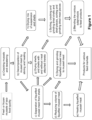
- each of the process routes depicted in Fig.1 provides an optional route for production of an animal feed.
- Each of the process routes may thus be performed separately or may be combined with (an)other process route(s) as desired.
- Fresh or frozen mussels of sea-food quality or equivalent quality are initially provided.
- the shells of the mussels are cracked to enable withdrawing of water (dewatering) of the mussels as described in a). This provides cracked mussels from which excess (salt) water have been removed. Should cracked mussels for example be provided to the process, this step may be omitted.
- a small amount of water may be added to the mussels. This may increase the yield of meat, clean the shells from meat and decrease the salt content of the final product(s).
- the cracked mussels are thereafter heated, e.g. to a temperature of between 30 and 50 °C for approximately one hour. Stirring is performed during heating.
- This accomplishes decomposition b), or dissolution, of the mussel meat such as to provide a suspension of mussel meat in liquid form (liquefied mussel meat) and shells, some of which may have (non-dissolved) mussel meat attached thereto.
- decomposition b) is followed by separation c) of different fractions from the suspension.
- the dissolved mussel meat also denoted as liquefied mussel meat, separated in c) might contain water that for process economical reasons should be removed prior to heating.
- the volume of the liquefied mussel meat may therefore be reduced d) by removal of nearly all of the remaining water by evaporation, e.g. in a roller dryer.
- the liquefied mussel meat, from which water may have been removed, is subsequently forwarded to a heating equipment in which the liquefied mussel meat is heated e). Heating is performed immediately, e.g. to a temperature of maximum 90 °C. This may terminate decomposition and provides a stable and safe product.
- liquefied mussel meat derived from separation c) is also dried and grinded f) to mussel meal. Drying is performed by immediate heating, e.g. to a temperature of maximum 90 °C. When the desired, e.g. maximum, temperature is reached, heating is stopped and the temperature is maintained e.g. at the maximum for a period of time that is sufficient for producing an essentially dry mussel meal.
- the dry mussel meal may optionally be blended, e.g. with other mussel-based constituents or components as provided by other process routes, and optionally bagged to provide a desired animal feed composition.
- volume reduced and liquefied mussel meat, resulting from the optional volume reduction step d) might be dried and grinded f) to mussel meal.
- the shells separated from the suspension c) are forwarded to drying g).
- the shells, of which some may have (non-dissolved) mussel meat attached thereto, are dried by heating, e.g. to a temperature of maximum 85-90 °C while stirring.
- a temperature of maximum 85-90 °C When the desired, e.g. maximum, temperature is reached, said temperature may be maintained for a period of time before ending the drying.
- Heat is carefully supplied in order to avoid over-heating of any mussel meat.
- temperature and the stirring By varying the temperature and the stirring, different products may be obtained.
- a relatively low frequent stirring combined with a relatively higher drying temperature provides shells having dried meat attached thereto, whereas a relatively high frequent stirring combined with a relatively low temperature drying provides a mixture of mussel meal and shell chips.
- the shell-containing product obtained in g) may be further sorted, cracked or grinded i) to provide an animal feed in a desired form. Thereafter, the shell-containing products may be blended to provide a desired animal feed composition.
- (part of) the suspension derived from decomposition b) is forwarded to drying h).
- the suspension comprising liquefied mussel meat and shells, including any shells having meat attached thereto, is dried by heating, e.g. to a temperature of maximum 90 °C.
- a temperature of maximum 90 °C When the desired, e.g. maximum, temperature is reached, no further heat is added but the temperature is maintained at the desired level for a period of time that is sufficient to accomplish a sufficiently dry product. Stirring may be performed while drying.
- the dried suspension, comprising dried mussel meat and shells, including any shells having meat attached thereto is forwarded to sorting, cracking and grinding i) before conducting blending j).
Landscapes
- Life Sciences & Earth Sciences (AREA)
- Chemical & Material Sciences (AREA)
- Polymers & Plastics (AREA)
- Engineering & Computer Science (AREA)
- Food Science & Technology (AREA)
- Animal Husbandry (AREA)
- Zoology (AREA)
- Biotechnology (AREA)
- Health & Medical Sciences (AREA)
- Biomedical Technology (AREA)
- Molecular Biology (AREA)
- Physiology (AREA)
- Birds (AREA)
- Marine Sciences & Fisheries (AREA)
- Microbiology (AREA)
- Insects & Arthropods (AREA)
- Biochemistry (AREA)
- Fodder In General (AREA)
Priority Applications (1)
| Application Number | Priority Date | Filing Date | Title |
|---|---|---|---|
| EP13779206.5A EP2908658B1 (en) | 2012-10-18 | 2013-10-17 | Process for production of animal feed components based on mussels |
Applications Claiming Priority (3)
| Application Number | Priority Date | Filing Date | Title |
|---|---|---|---|
| EP12188952 | 2012-10-18 | ||
| PCT/EP2013/071687 WO2014060497A1 (en) | 2012-10-18 | 2013-10-17 | Process for production of animal feed components based on mussels |
| EP13779206.5A EP2908658B1 (en) | 2012-10-18 | 2013-10-17 | Process for production of animal feed components based on mussels |
Publications (3)
| Publication Number | Publication Date |
|---|---|
| EP2908658A1 EP2908658A1 (en) | 2015-08-26 |
| EP2908658C0 EP2908658C0 (en) | 2025-01-29 |
| EP2908658B1 true EP2908658B1 (en) | 2025-01-29 |
Family
ID=47046424
Family Applications (1)
| Application Number | Title | Priority Date | Filing Date |
|---|---|---|---|
| EP13779206.5A Active EP2908658B1 (en) | 2012-10-18 | 2013-10-17 | Process for production of animal feed components based on mussels |
Country Status (5)
| Country | Link |
|---|---|
| EP (1) | EP2908658B1 (pl) |
| CA (1) | CA2927838C (pl) |
| ES (1) | ES3022195T3 (pl) |
| PL (1) | PL2908658T3 (pl) |
| WO (1) | WO2014060497A1 (pl) |
Families Citing this family (3)
| Publication number | Priority date | Publication date | Assignee | Title |
|---|---|---|---|---|
| EP3192377B1 (en) * | 2016-01-14 | 2018-07-25 | Tessenderlo Group NV/SA | Method for producing partly hydrolyzed keratinaceous material |
| CN110604313A (zh) * | 2019-09-30 | 2019-12-24 | 浙江海洋大学 | 一种利用贻贝废弃物质制备高蛋白高钙补钙剂的方法 |
| CN115843929B (zh) * | 2020-09-02 | 2024-08-02 | 山东普兴生物科技有限公司 | 一种复合多肽饲料在调控鸡卵巢颗粒细胞中的应用 |
Family Cites Families (2)
| Publication number | Priority date | Publication date | Assignee | Title |
|---|---|---|---|---|
| KR20010089861A (ko) * | 2000-03-24 | 2001-10-12 | 지재근 | 양어용 사료의 제조방법 |
| DE102010002210A1 (de) * | 2009-07-02 | 2011-02-17 | Ernst-Moritz-Arndt-Universität | Verarbeitung von Muschelbiomasse zu lagerfähigen Zusammensetzungen für die Verwendung in Futtermitteln |
-
2013
- 2013-10-17 WO PCT/EP2013/071687 patent/WO2014060497A1/en not_active Ceased
- 2013-10-17 ES ES13779206T patent/ES3022195T3/es active Active
- 2013-10-17 CA CA2927838A patent/CA2927838C/en active Active
- 2013-10-17 EP EP13779206.5A patent/EP2908658B1/en active Active
- 2013-10-17 PL PL13779206.5T patent/PL2908658T3/pl unknown
Also Published As
| Publication number | Publication date |
|---|---|
| EP2908658C0 (en) | 2025-01-29 |
| CA2927838A1 (en) | 2014-04-24 |
| WO2014060497A1 (en) | 2014-04-24 |
| ES3022195T3 (en) | 2025-05-28 |
| CA2927838C (en) | 2021-03-09 |
| PL2908658T3 (pl) | 2025-05-19 |
| EP2908658A1 (en) | 2015-08-26 |
Similar Documents
| Publication | Publication Date | Title |
|---|---|---|
| Miles et al. | The benefits of fish meal in aquaculture diets: FA122/FA122, 5/2006 | |
| KR20110084878A (ko) | 크릴새우로부터 단백질성 농축물을 제조시 불소 함량을 감소시키는 방법 | |
| CN111642648B (zh) | 一种高蛋白狗零食猫零食及其制备方法 | |
| CN102925279A (zh) | 一种白鲢鱼内脏中鱼油的提取精炼技术 | |
| CA2990514A1 (en) | Process for the preparation of an additivie as a food supplement based on seaweeds for birds and animals; as well as the product obtained and its use in the food conversion and inthe production of bird and animal meat | |
| CN108497365A (zh) | 一种芝士虾滑及其加工方法 | |
| RU2458523C1 (ru) | Способ получения кормового продукта | |
| KR102440350B1 (ko) | 철갑상어 엑기스 조성물의 제조방법 | |
| EP2908658B1 (en) | Process for production of animal feed components based on mussels | |
| KR20180109589A (ko) | 어분대체제를 이용한 강도다리용 완전배합 ep사료 조성물 | |
| Jonsson et al. | By-products from whitefish processing | |
| CN104431360A (zh) | 螺蛳膏及其生产工艺 | |
| Ramírez | Innovative uses of fisheries by-products | |
| KR102440349B1 (ko) | 철갑상어 분말 원료 조성물의 제조방법 | |
| Abasubong et al. | A review of fish waste and byproducts in poultry production: effects on growth, egg quality, carcass traits, and broader knowledge beyond physiological response | |
| Arason | Utilization of fish byproducts in Iceland | |
| Kristbergsson et al. | Utilization of by-products in the fish industry | |
| CN101720905B (zh) | 一种风味酵母蛋白粉及其制备方法 | |
| KR102444221B1 (ko) | 철갑상어로부터 3가지의 원재료를 수득하는 방법 | |
| Marsh et al. | Waste (By‐Product) Utilization | |
| RU2388318C1 (ru) | Способ приготовления кормового продукта | |
| Bechtel | By-products from seafood processing for aquaculture and animal feeds | |
| KR102085775B1 (ko) | 참치 껍질로부터 dha를 분리 및 정제하는 방법 | |
| Zynudheen | Utilization of fishery waste in India | |
| RU2390252C1 (ru) | Способ получения белковой добавки из сырья животного происхождения |
Legal Events
| Date | Code | Title | Description |
|---|---|---|---|
| PUAI | Public reference made under article 153(3) epc to a published international application that has entered the european phase |
Free format text: ORIGINAL CODE: 0009012 |
|
| 17P | Request for examination filed |
Effective date: 20150511 |
|
| AK | Designated contracting states |
Kind code of ref document: A1 Designated state(s): AL AT BE BG CH CY CZ DE DK EE ES FI FR GB GR HR HU IE IS IT LI LT LU LV MC MK MT NL NO PL PT RO RS SE SI SK SM TR |
|
| AX | Request for extension of the european patent |
Extension state: BA ME |
|
| DAX | Request for extension of the european patent (deleted) | ||
| STAA | Information on the status of an ep patent application or granted ep patent |
Free format text: STATUS: EXAMINATION IS IN PROGRESS |
|
| 17Q | First examination report despatched |
Effective date: 20170913 |
|
| REG | Reference to a national code |
Ref country code: DE Ref legal event code: R079 Free format text: PREVIOUS MAIN CLASS: A23K0001000000 Ipc: A23K0010220000 Ref country code: DE Ref legal event code: R079 Ref document number: 602013086472 Country of ref document: DE Free format text: PREVIOUS MAIN CLASS: A23K0001000000 Ipc: A23K0010220000 |
|
| GRAP | Despatch of communication of intention to grant a patent |
Free format text: ORIGINAL CODE: EPIDOSNIGR1 |
|
| STAA | Information on the status of an ep patent application or granted ep patent |
Free format text: STATUS: GRANT OF PATENT IS INTENDED |
|
| RIC1 | Information provided on ipc code assigned before grant |
Ipc: A23K 50/80 20160101ALI20241007BHEP Ipc: A23K 10/22 20160101AFI20241007BHEP |
|
| INTG | Intention to grant announced |
Effective date: 20241016 |
|
| GRAS | Grant fee paid |
Free format text: ORIGINAL CODE: EPIDOSNIGR3 |
|
| GRAA | (expected) grant |
Free format text: ORIGINAL CODE: 0009210 |
|
| STAA | Information on the status of an ep patent application or granted ep patent |
Free format text: STATUS: THE PATENT HAS BEEN GRANTED |
|
| AK | Designated contracting states |
Kind code of ref document: B1 Designated state(s): AL AT BE BG CH CY CZ DE DK EE ES FI FR GB GR HR HU IE IS IT LI LT LU LV MC MK MT NL NO PL PT RO RS SE SI SK SM TR |
|
| REG | Reference to a national code |
Ref country code: GB Ref legal event code: FG4D |
|
| REG | Reference to a national code |
Ref country code: CH Ref legal event code: EP |
|
| REG | Reference to a national code |
Ref country code: DE Ref legal event code: R096 Ref document number: 602013086472 Country of ref document: DE |
|
| REG | Reference to a national code |
Ref country code: IE Ref legal event code: FG4D |
|
| U01 | Request for unitary effect filed |
Effective date: 20250129 |
|
| U07 | Unitary effect registered |
Designated state(s): AT BE BG DE DK EE FI FR IT LT LU LV MT NL PT RO SE SI Effective date: 20250204 |
|
| REG | Reference to a national code |
Ref country code: ES Ref legal event code: FG2A Ref document number: 3022195 Country of ref document: ES Kind code of ref document: T3 Effective date: 20250528 |
|
| PG25 | Lapsed in a contracting state [announced via postgrant information from national office to epo] |
Ref country code: RS Free format text: LAPSE BECAUSE OF FAILURE TO SUBMIT A TRANSLATION OF THE DESCRIPTION OR TO PAY THE FEE WITHIN THE PRESCRIBED TIME-LIMIT Effective date: 20250429 |
|
| PG25 | Lapsed in a contracting state [announced via postgrant information from national office to epo] |
Ref country code: HR Free format text: LAPSE BECAUSE OF FAILURE TO SUBMIT A TRANSLATION OF THE DESCRIPTION OR TO PAY THE FEE WITHIN THE PRESCRIBED TIME-LIMIT Effective date: 20250129 |
|
| PG25 | Lapsed in a contracting state [announced via postgrant information from national office to epo] |
Ref country code: GR Free format text: LAPSE BECAUSE OF FAILURE TO SUBMIT A TRANSLATION OF THE DESCRIPTION OR TO PAY THE FEE WITHIN THE PRESCRIBED TIME-LIMIT Effective date: 20250430 |
|
| PG25 | Lapsed in a contracting state [announced via postgrant information from national office to epo] |
Ref country code: SM Free format text: LAPSE BECAUSE OF FAILURE TO SUBMIT A TRANSLATION OF THE DESCRIPTION OR TO PAY THE FEE WITHIN THE PRESCRIBED TIME-LIMIT Effective date: 20250129 |
|
| PG25 | Lapsed in a contracting state [announced via postgrant information from national office to epo] |
Ref country code: CZ Free format text: LAPSE BECAUSE OF FAILURE TO SUBMIT A TRANSLATION OF THE DESCRIPTION OR TO PAY THE FEE WITHIN THE PRESCRIBED TIME-LIMIT Effective date: 20250129 |
|
| PGFP | Annual fee paid to national office [announced via postgrant information from national office to epo] |
Ref country code: IE Payment date: 20250923 Year of fee payment: 13 |
|
| PG25 | Lapsed in a contracting state [announced via postgrant information from national office to epo] |
Ref country code: SK Free format text: LAPSE BECAUSE OF FAILURE TO SUBMIT A TRANSLATION OF THE DESCRIPTION OR TO PAY THE FEE WITHIN THE PRESCRIBED TIME-LIMIT Effective date: 20250129 |
|
| U20 | Renewal fee for the european patent with unitary effect paid |
Year of fee payment: 13 Effective date: 20251009 |
|
| PLBE | No opposition filed within time limit |
Free format text: ORIGINAL CODE: 0009261 |
|
| STAA | Information on the status of an ep patent application or granted ep patent |
Free format text: STATUS: NO OPPOSITION FILED WITHIN TIME LIMIT |
|
| 26N | No opposition filed |
Effective date: 20251030 |
|
| PGFP | Annual fee paid to national office [announced via postgrant information from national office to epo] |
Ref country code: IS Payment date: 20251013 Year of fee payment: 13 |
|
| PGFP | Annual fee paid to national office [announced via postgrant information from national office to epo] |
Ref country code: GB Payment date: 20251013 Year of fee payment: 13 |
|
| PGFP | Annual fee paid to national office [announced via postgrant information from national office to epo] |
Ref country code: NO Payment date: 20251013 Year of fee payment: 13 |
|
| PGFP | Annual fee paid to national office [announced via postgrant information from national office to epo] |
Ref country code: PL Payment date: 20251014 Year of fee payment: 13 |
|
| PGFP | Annual fee paid to national office [announced via postgrant information from national office to epo] |
Ref country code: ES Payment date: 20251212 Year of fee payment: 13 |