EP2901573B1 - Kommunikationssystem in einem flugzeug mit einer nahfeldkommunikationsschnittstelle. - Google Patents
Kommunikationssystem in einem flugzeug mit einer nahfeldkommunikationsschnittstelle. Download PDFInfo
- Publication number
- EP2901573B1 EP2901573B1 EP13771445.7A EP13771445A EP2901573B1 EP 2901573 B1 EP2901573 B1 EP 2901573B1 EP 13771445 A EP13771445 A EP 13771445A EP 2901573 B1 EP2901573 B1 EP 2901573B1
- Authority
- EP
- European Patent Office
- Prior art keywords
- passenger
- communication
- aircraft
- communication system
- seat
- Prior art date
- Legal status (The legal status is an assumption and is not a legal conclusion. Google has not performed a legal analysis and makes no representation as to the accuracy of the status listed.)
- Active
Links
Images

Classifications
-
- H—ELECTRICITY
- H04—ELECTRIC COMMUNICATION TECHNIQUE
- H04B—TRANSMISSION
- H04B5/00—Near-field transmission systems, e.g. inductive or capacitive transmission systems
- H04B5/70—Near-field transmission systems, e.g. inductive or capacitive transmission systems specially adapted for specific purposes
-
- H—ELECTRICITY
- H04—ELECTRIC COMMUNICATION TECHNIQUE
- H04B—TRANSMISSION
- H04B7/00—Radio transmission systems, i.e. using radiation field
- H04B7/14—Relay systems
- H04B7/15—Active relay systems
- H04B7/185—Space-based or airborne stations; Stations for satellite systems
- H04B7/18502—Airborne stations
- H04B7/18506—Communications with or from aircraft, i.e. aeronautical mobile service
-
- H—ELECTRICITY
- H04—ELECTRIC COMMUNICATION TECHNIQUE
- H04B—TRANSMISSION
- H04B5/00—Near-field transmission systems, e.g. inductive or capacitive transmission systems
- H04B5/40—Near-field transmission systems, e.g. inductive or capacitive transmission systems characterised by components specially adapted for near-field transmission
- H04B5/45—Transponders
Definitions
- the invention relates to a communication system in an aircraft, which enables communication between a passenger and an aircraft-fixed communication device.
- passengers in the cabins of aircraft with appropriate equipment with the help of self-brought passenger equipment via a wireless network access point, for example. WLAN use in the plane contents of an on-board entertainment system.
- the passenger can gain access to the Internet with his passenger device via such a radio link, wherein the Internet connection can be made via a powerful radio device of the aircraft, eg satellite-based.
- the integration of passenger equipment and an assignment the data connections used can be made prior to the flight by a corresponding additional booking, the passenger receives a corresponding code to integrate his passenger device in the wireless network of the aircraft.
- Passenger devices may be mobile phones or portable computers, as well as any hybrid of these two types of devices, such as smart phones or tablet PCs.
- the passenger equipment is brought by the passengers of a flight in the plane and can be used there by the passengers.
- the payment process can be done by cash or card readers for debit and / or credit cards.
- a cash payment is unmanageable in international travel, since the multiplicity of possible currencies necessitates a restriction to a few currencies for organizational reasons. Cabin crews must also keep appropriate change totals on each flight.
- the card payments with debit or credit card requires the staffing of the cabin staff, since the usual card readers are used in the cabin by the cabin crew. Furthermore, it usually requires a manual signature matching to verify the payment process. With the usual card payments, a large number of smaller individual amounts for each passenger during the flight is very inefficient to handle.
- the usual payment methods include a manual response to these electronic systems by the cabin crew necessary to assign the payment process to the corresponding passenger in the aircraft.
- a wireless communication system that can deliver audio content from an in-flight entertainment system to a passenger's headphones.
- the connection from the communication system to a receiving unit connected to the headphone is made by Bluetooth TM technology or near-field communication.
- a system which allows the use of a mobile phone in the cabin of an aircraft.
- a transceiver is provided in the cabin, which can communicate with a transceiver on the ground. Via the transceiver in the cabin can then be made a connection to the mobile phone of the passenger.
- Similar systems are also from the US Pat. No. 6,788,935 B1 and from the WO 03/073674 A2 known.
- the WO 03/067818 shows a local network for data exchange between portable microcomputers of passengers.
- the connection of the portable microcomputer with the local network is made via an access point at a passenger seat, wherein the microcomputer can be connected to the Internet by the connection to the local network.
- the US 2003/045322 A1 discloses a method for wireless communication within a restricted area.
- a wireless communication device is equipped with two transceiver units, wherein the first transceiver unit is adapted to be connected to a standardized wireless network, while the second transceiver unit with a special wireless network within the restricted area.
- the first transceiver becomes inoperative and the second transceiver is activated.
- the second transceiver may, for example, use Bluetooth TM technology.
- the EP 1 863 194 A1 discloses a communication system in which a mobile device can automatically dial into a WLAN network of a vehicle.
- the vehicle is equipped with an RFID tag, so that a signal is sent to the mobile device as soon as it is in the immediate vicinity of the vehicle or inside the vehicle.
- the ID and password are then sent to the mobile device via a 3G network for dialing into the WLAN network.
- the object of the invention is to provide a communication system in an aircraft, which overcomes the above-mentioned disadvantages.
- a communication system in an aircraft enables communication between a passenger and an aircraft-fixed communication device.
- the communication device has a near-field communication interface, which is set up for communication with a passenger device.
- the near-field communication interface enables digital communication of a passenger by means of his passenger device with on-board electronic systems, wherein the communication through the use of Nahfeldkommunikationsterrorismstelle clearly only between two communication partners, in this case between the passenger device and the corresponding communication device, can take place.
- the communication interface may preferably have a closed surface without sockets and slots, whereby the communication device is insensitive to mechanical impact by passengers. This contributes to improved reliability and high availability of the communication device. For example, accompanying children can not mechanically manipulate a corresponding communication device or insert objects in sockets or slots.
- the Nahfeldkommunikationsitesites allows a low installation depth, so that the installation in the cabin of an aircraft can be largely freely selected.
- the near-field communication interface is preferably set up for communication with a passenger transponder element.
- the communication device is assigned to a specific seat. It is therefore advantageously assigned to each or a plurality of seats in the aircraft each have a communication device.
- the passenger thus has a communication device available at his seat so that he can use his passenger device and / or his passenger transponder element for communication with the communication device directly at his seat. He can thus also receive an input option for electronic on-board systems of the aircraft.
- Electronic on-board systems may be an in-flight entertainment system, a call system for service personnel or data access.
- the assignment of the near field communication interface to a seat can lead to a significant simplification of the payment processes in an aircraft.
- the payment of goods and services in the aircraft can thus be carried out quickly and efficiently with low personnel costs.
- the payment for electronic offers can be made for the passenger on short notice in the aircraft, without any intervention of the cabin crew is required because, for example, after a successful payment process, an automatic configuration of the in-flight entertainment system can take place.
- a seat-based control of an on-board entertainment system can be coupled with the communication system in an advantageous manner.
- the seat allocation allows the cabin crew in a simple way an information display, from which seat from an order, comment and / or payment is assumed, so that the cabin crew can provide the appropriate service easily at the right seat.
- the communication device preferably has a data connection to a central data processing device of the aircraft. This allows the central management in the aircraft, so that the operation of the communication system can be realized in a simple manner. Furthermore, interfaces to an in-flight entertainment system for media entertainment of the passengers and / or a wireless network access point for data connections to WLAN standards, eg IE-EE 802.11, for the passenger devices can be produced in a simple manner by the central data processing device. Furthermore, a radio device of the aircraft for external communication of the passenger devices via the radio device can be controlled by the data processing device. In addition, a power distribution device can overflow the power distribution to electrical connections in the cabin for the passengers control the data connection of the communication device to the central data processing device.
- a radio device of the aircraft for external communication of the passenger devices via the radio device can be controlled by the data processing device.
- a power distribution device can overflow the power distribution to electrical connections in the cabin for the passengers control the data connection of the communication device to the central data processing device.
- the communication device is set up to read out a digital identifier and / or signature of an associated passenger device and / or passenger transponder element.
- Such a digital identifier may, for example, be a MAC address of network adapters of the passenger device. This allows a simple recognition of a once registered passenger device, which facilitates the subsequent authentication and subsequent connection setups during the flight.
- the digital identifier and / or signature can be used for other communication paths in addition to the near field communication, such as in a wired data network for the passenger or a cabin-wide wireless network.
- passenger-specific assignments of electronic services can be used.
- the digital identifier of the passenger device and / or the passenger transponder element with the Nahfeldkommunikationsterrorismstelle can be read out. This firstly enables a secure transmission of the digital identification and / or the signature in a near field communication between the communication device and the passenger device, which can take place, for example, in connection with a secure payment process by means of near field communication, so that subsequently this passenger device uses its digital identifier to connect to a Establish a wireless network in the aircraft and use the wireless network according to a payment process. Furthermore, with the digital Identification various electronic services for this passenger device can be unlocked with this digital identifier.
- the near-field communication interface in the communication device By means of the near-field communication interface in the communication device, only one passenger device can communicate with the communication device at the same time, whereby a unique assignment of a passenger device to a seat is made possible without the use of a cable, without further manual inputs on the respective seat necessary. This is particularly advantageous for payment transactions.
- an assignment of seats to passenger devices and / or passenger transponder elements can be stored in the central data processing device. This simplifies the use and operation of the communication system, especially with a possible involvement of cabin crew. In addition, thereby seat-based feedback from the data processing device to individual seats on the corresponding passenger equipment is possible.
- the near-field communication interface is set up to transmit an identifier and / or a password for a wireless network of the aircraft to the passenger device.
- the identifier and / or the password can thus be transmitted tap-proof and wired to a particular passenger device, which is determined by the seat, whereby the passenger device can be clearly identified by means of Nahfeldkommunikations reinforcestelle the communication device as the correct communication partner.
- the communication device preferably has a power connection for a low-voltage power supply of a passenger device on.
- This allows loading and / or operation of the passenger device at the seat of the passenger, without the use of a charger or transformer of the passenger.
- Most passenger aircraft require a supply voltage of 5 V to 12 V DC, which can be provided via the power connection for the low-voltage power supply. In this way, at the passenger's seat no outlet with dangerous voltages for people over 24 V is needed.
- the provision of the low voltage can be done centrally with the systems of the aircraft, whereby the efficiency for the entire power supply of the cabin can be increased in the aircraft involving the passenger equipment.
- the chargers of the passengers can pose a fire hazard because they can be used in an unexpected and uncontrolled manner.
- the corresponding low-voltage supply to the power connector of the communication device corresponding chargers of the passengers are superfluous, which can reduce their use on board and thus contribute to increasing safety, eg against fires by short circuits.
- the communication device has a plug connection for a wired data connection between the passenger device and a central data processing device of the aircraft.
- a plug connection for a wired data connection between the passenger device and a central data processing device of the aircraft.
- This can be advantageous for a fast data connection, this being positive in particular for many passengers with active passenger devices in the aircraft since, for example, a negative mutual influence of the passenger devices in a wireless network can be excluded by the limited bandwidth of the radio channels.
- the transmission power of the individual devices required for a wireless network is reduced, which can lead to a lower electro-magnetic load on the on-board systems.
- a wired data connection via a plug connection to the communication device can be particularly advantageous if a cable connection of the passenger device to the power connection of the communication device is already being used.
- a combination in a common connection, as provided by most mobile phones, smartphones or tablet PCs, is advantageous here. Such a connection may, for example, follow the USB standard.
- the communication device has a holding device for holding the passenger device.
- the holding device can enable a secure fixation of the passenger devices in the range of the passengers, whereby preferably the majority of the functions of the passenger devices in the holding device remain usable for the passenger.
- the passenger device is preferably held by the holding device such that the near field communication interface of the communication device and the corresponding passenger device are in communication range. By the holding device, the passenger device can be used parallel to the meals that are served on the usual folding table, regardless of the table.
- the communication device has a screen and / or an input area.
- a screen with input area on the communication device which is preferably arranged at each seat in the cabin, can be used independently of the screen of a potential in-flight entertainment system to display flight information, menus for food and drinks as well as information for the payment functions by means of near-field communication NFC.
- different requests For example, create seatbelts or occupy an upright sitting position.
- the communication device has an audio system, wherein the audio system has at least one loudspeaker.
- the use of a loudspeaker which is preferably installed in the region of the head of the passenger on the seat, eliminating the use of headphones, which must be connected.
- the speaker or speakers are each assigned a seat.
- the activation of the audio system can take place, for example, via the in-flight entertainment system, via an aircraft-compatible intercom and / or via the passenger equipment.
- the passenger device can be connected to a corresponding connection with the communication device of the communication system.
- the compound can e.g. via a jack plug, preferably 3.5 mm according to IEC 60603-11, and / or via a USB connection.
- the audio system preferably has an audio amplifier.
- a corresponding audio amplifier can be significantly more powerful than is possible with the integrated amplifiers in the passenger device. This can further lead to a lower load on the batteries of the passenger device.
- the passenger device can also be a music player without any further functionality.
- the amplification with an audio amplifier of the audio system is particularly advantageous when the sound is reproduced with a loudspeaker in the cabin at the seat, and especially when no additional connected headphones is used.
- Inventive is an audio system for a cabin of an aircraft, wherein the audio system is assigned to a seat of a passenger for individual sounding of the passenger, and the audio system has at least one individual loudspeaker permanently mounted on the seat.
- the audio system has an individual audio amplifier for amplifying the audio signal, wherein the audio system is set up to reproduce an audio signal received from a passenger device of the passenger.
- This is particularly advantageous for rendering an individual representation of sound information, e.g. Music to allow different in the cabin of the aircraft for each passenger, with the headphones are no fixed headphones or in-ear headphones for the passenger to listen to the individual sound information necessary.
- the audio system has an analog audio input.
- an audio signal from a passenger device can advantageously be transmitted to the audio system installed in the aircraft.
- the audio system has a data audio input.
- This data audio input may receive a digital audio signal transmitted from a passenger device.
- the data audio input can be executed, for example, in the form of a USB data connection.
- the speakers are integrated into the aircraft seat of this seat.
- the loudspeakers can be integrated, for example, in the aircraft seat in the area of the headrest, so that they can be used in the area of the ears of the passenger for the reproduction of sound information.
- At least one part of the audio system is arranged on a further aircraft seat, which is placed in front of the passenger's seat, wherein the reception of the audio signal preferably takes place in the part of the audio system in the further aircraft seat.
- the passenger device can be placed on the further aircraft seat and there transmit the audio signal to a part of the audio system, e.g. with an analog audio connection.
- the data transmission between the two aircraft seats can, for example, take place via a Bluetooth connection, wherein an association can be effected, in particular, by storing the pairing identifiers in the audio system and / or in the communication device of an aircraft seat and the other part of the audio system in the further aircraft seat.
- the audio signal can be transmitted, for example, by means of a cable, so-called feedback cable, between the aircraft seats, in particular from the front seat to the rear seat.
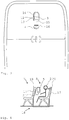
- FIG. 1 an embodiment of a communication system 1 in an aircraft is shown schematically.
- the aircraft has two seats 7.8, on each of which a passenger 2 sits.
- an aircraft-fixed communication device 3 is arranged, which has a near-field communication interface 4.
- the communication devices 3 have in this advantageous embodiment, a data connection 9 to a central data processing device 10 of the aircraft, which is preferably wired.
- a wireless data link 9 may be present between the communication devices 3 and the central data processing device 10.
- the communication devices 3 are advantageously associated with individual seats 7.8, wherein the assignment of communication devices 3 and near field communication interfaces 4 in the central data processing device 10 can be stored, whereby data and / or information that is transmitted from a communication device 3 to the central data processing device 10, a seat 7.8 can be assigned.
- the passengers 2 lead in this embodiment, a passenger device 5 with Nahfeldkommunikationscreate and a passenger transponder element 6 with.
- the passenger device 5 can be, for example, a smartphone which is set up for near field communication (NFC) according to international standards, eg according to ISO / IEC 13157.
- the near field communication interfaces 4 are set up accordingly for such a data transmission.
- the passenger transponder element 6 in this exemplary embodiment is a bank card which, in the case of communication with a near-field communication interface 3 has a passive role in communication and therefore does not need its own power supply.
- the passenger transponder element 6 can be operated, for example, by the electromagnetic field of the near field communication interface 3.
- a passenger device 5, in contrast to a passenger transponder element 6, can passively or actively communicate with the near field communication interface 3.
- NFC can be differentiated from radio-frequency identification (RFID) by the possibility of two-way communication.
- RFID radio-frequency identification
- a passenger 2 uses in the embodiment of Fig. 1 his passenger transponder element 6, his NFC-enabled bank card, to pay for his seat 7 a service during the flight.
- a service may, for example, be an extended program for an in-flight entertainment system, which is available to the passenger at his seat 7 via a corresponding output device, such as a monitor.
- the payment of this service can be assigned by the central data processing device 10 a seat 7, which can be controlled by means of a connection between the data processing device 10 and the in-flight entertainment system this at the seat 7.
- the second passenger 2 in the Fig. 1 uses his passenger device 5 to perform a payment process.
- This payment process is carried out by a contactless data exchange between the passenger device 5 and the Nahfeldkommunikationsexcellentstelle 4 according to a, preferably secured, transmission standard for near-field communication.
- the contactless data exchange is possible with the Nahfeldkommunikationsexcellentstelle only over a few centimeters.
- a communication system 1 wherein the communication devices 3 have a power connection 12 for a low-voltage supply.
- the passenger 2 has his passenger device 5 connected to the power connector 12, so that the passenger device 5 can be charged and / or operated without another power supply.
- the voltage of such a power connection is in an advantageous embodiment, 5 V DC.
- the communication devices 3 in the embodiment of the Fig. 2 a plug connection 13 for a wired data connection, wherein by means of the plug connection 13 a wired data transmission between the passenger device 5 and the communication device 3 is possible.
- the corresponding data can be further transmitted to the central data processing device 10 via the data connection 9, so that a wired data transmission between a passenger device 5 and the central data processing device 10 is possible.
- This wired data transmission can be used in parallel with the near-field communication interface if, for example, a higher transmission rate is required for certain contents.
- the power connection 12 for the low-voltage power supply and the plug connection 13 for the wired data connection in a USB connection are combined, so that the passenger 2 can use both connections with a cable.
- the passenger 2 wants to use Internet access in the aircraft via the radio devices of the aircraft. For this purpose, he leads his passenger device 5 to the near field communication interface 4 of the communication device 3 at his seat 8. On his passenger device 5, the passenger 2 confirms the payment of a corresponding amount, for example for the unrestricted use of an Internet connection during the flight, which is to be made available to the passenger 2 on his passenger device 5. After payment of the Nahfeldkommunikationsterrorismstelle a digital identifier, eg. In the form of the MAC address of the WLAN adapter of the passenger unit 5, read out. Additionally or alternatively, a password for the wireless network 11 in the aircraft can be transmitted to the passenger device 5 by means of the near field communication interface 4. The limited range of the near field communication in this case ensures that the password is transmitted to the correct and only to a passenger device 5.
- the passenger 2 can log into the wireless network 11 by means of the password with his passenger device 5 and use the data connection in accordance with his previously performed payment transaction and make a data exchange with the Internet via the radio devices of the aircraft.
- the passenger 2 after the payment process by means of near-field communication between the passenger device 5 and the near-field communication interface, for example for Internet use, the passenger 2 connects the passenger device 5 to the plug connection 13 with a cable.
- the communication device 3 reads out the corresponding hardware identifier in the form of a MAC address and stores it in the central data processing device 10.
- the passenger 2 can thus obtain an Internet access on his passenger device 5 via the communication device 3.
- the corresponding assignment of the payment process can via the assignment of the connector 13th and the communication device 3 can be achieved with the near-field communication interface 4.
- the assignment can be made via the digital identification of the passenger device 5, so that the passenger, provided that he converts during the flight in the aircraft, continues to have his corresponding Internet access available.
- contents of an in-flight entertainment system which may also be transferable to the passenger device 5, can be used by the passenger for a corresponding payment process.
- the assignment of a payment process to a passenger or to his passenger device 5 can be done here in analogy to the Internet use described above.
- the contents of an in-flight entertainment system can accordingly be transmitted via the wireless network 11 or via the plug connection 13 to the passenger device 5.
- Fig. 3 shows the back of an aircraft seat 17, in which a communication device 3 is integrated.
- the communication device has a Nahfeldkommunikationsterrorismstelle 4, which is arranged in this embodiment in the lower part of the communication device.
- the plug connection 13 and the power connection 12 are combined in this embodiment in a USB connection, which in Fig. 3 is shown on the left side of the communication device 3.
- the communication device 3 has a screen 15 and an input area 16. The passenger 2 can thus select in an advantageous embodiment with the input area 16 different services on the screen 15 and get a corresponding amount to be paid.
- the passenger 2 for example, his passenger transponder element 6, are deposited on the appropriate payment data, bring in a range of preferably less than 4 cm to the Nahfeldkommunikationsexcellentstelle 4, whereby he can perform the payment process.
- the passenger 2 uses a passenger device 5, then in this advantageous exemplary embodiment he can fasten it to the communication device 3 by means of a holding device 14, so that he can use the passenger device 5 at his seat 7, 8.
- the passenger device 5 with the holding device 14 so fastened that it can communicate with the Nahfeldkommunikationsexcellentstelle 4 in the attached state.
- FIG. 4 An embodiment of an audio system 18 for a cabin of an aircraft is shown.
- the audio system 18 is in each case assigned to a specific seat 8, so that this can be used individually by each passenger 2 on a corresponding aircraft seat 17.
- the audio system 18 has a loudspeaker 20, which in this exemplary embodiment is integrated in the aircraft seat 17 in the region of the headrest.
- the audio system has two loudspeakers 20.
- the passenger 2 controls his passenger device 5 to reproduce sound information, such as music, stored on the passenger device 5.
- the passenger 2 connects his passenger device 5 to the audio input of the audio system 18, which in this embodiment is located on the backrest of another aircraft seat 17 of the seat 7.
- the passenger device 5 can be fastened there, for example, with a holding device 14 by the passenger 2.
- the audio system 18 transmits the received audio signal to the loudspeaker 20, which is fixed to the aircraft seat 17 seat 8 is installed.
- the audio signal is here amplified by an audio amplifier of the audio system 18, so that the speaker 20 can reproduce the sound information at a higher volume than would be possible with the signal power of a conventional passenger device 5. In this way, disturbing noises can be drowned out, especially when the aircraft is running.
- Use of headphones by means of a corresponding connection may be possible with the audio system 18, but is not necessary because the speakers 20 can be used for audio playback.
Landscapes
- Engineering & Computer Science (AREA)
- Computer Networks & Wireless Communication (AREA)
- Signal Processing (AREA)
- Physics & Mathematics (AREA)
- Astronomy & Astrophysics (AREA)
- Aviation & Aerospace Engineering (AREA)
- General Physics & Mathematics (AREA)
- Mobile Radio Communication Systems (AREA)
Description
- Die Erfindung betrifft ein Kommunikationssystem in einem Flugzeug, welches eine Kommunikation zwischen einem Passagier und einer flugzeugfesten Kommunikationseinrichtung ermöglicht.
- In der Kabine eines Flugzeugs ergeben sich für Passagiere vielfältige Möglichkeiten mit einer flugzeugfesten Kommunikationseinrichtung in Verbindung zu treten.
- Es ist üblich, dass an den Sitzplätzen im Flugzeug Ruftasten für die Passagiere vorhanden sind, mit deren Hilfe sie in einfacher Weise das Kabinenpersonal rufen können. Es leuchtet in der Regel eine Lampe auf, welche unter der Gepäckablage angeordnet ist.
- Weiterhin besteht für die Passagiere häufig die Möglichkeit ein Bordunterhaltungssystem mit einem Bildschirm am Sitzplatz zu nutzen und bspw. verschiedene Filme während des Fluges anzuschauen. Eine entsprechende akustische Unterhaltung kann über einen Kopfhöreranschluss am Sitzplatz dem Passagier zur Verfügung gestellt werden. Die Abrechnung von Sonderleistungen oder einzelnen Dienstleistungen ist nicht möglich.
- Weiterhin können Passagiere in den Kabinen von Flugzeugen mit entsprechender Ausstattung mit Hilfe von selbst mitgebrachten Passagiergeräten über einen Drahtlosnetzwerkzugangspunkt, bspw. WLAN, im Flugzeug Inhalte eines Bordunterhaltungssystems nutzen. Weiterhin kann der Passagier über eine solche Funkverbindung einen Zugang zum Internet mit seinem Passagiergerät erhalten, wobei die Internetverbindung über eine leistungsstarke Funkeinrichtung des Flugzeugs, z.B. satellitengestützt, erfolgen kann. Die Einbindung der Passagiergeräte und eine Zuordnung der genutzten Datenverbindungen kann im Vorfeld des Fluges durch eine entsprechende Zusatzbuchung erfolgen, wobei der Passagier einen entsprechenden Code erhält, um sein Passagiergerät in das Drahtlosnetzwerk des Flugzeugs einzubinden.
- Passagiergeräte können Mobiltelefone oder tragbare Computer sein sowie jegliche Mischform dieser beiden Gerätearten, wie beispielsweise Smartphones oder Tablet-PCs. Die Passagiergeräte werden von den Passagieren eines Fluges mit in das Flugzeug gebracht und können dort von den Passagieren genutzt werden.
- Im Weiteren findet in der Kabine eines Flugzeugs während des Fluges häufig ein Verkauf von Waren und Dienstleistungen statt, wobei der Bezahlvorgang mittels Bargeld oder Kartenlesern für Debit- und/oder Kreditkarten erfolgen kann. Eine Bargeldzahlung ist im internationalen Reiseverkehr unhandlich, da hier die Vielzahl möglicher Währungen aus organisatorischen Gründen eine Einschränkung auf wenige Währungen notwendig macht. Das Kabinenpersonal muss zudem entsprechende Wechselgeldsummen bei jedem Flug vorhalten. Die Kartenzahlungen mit Debit- oder Kreditkarte erfordert den Personaleinsatz des Kabinenpersonals, da die üblichen Kartenleser in der Kabine durch das Kabinenpersonal eingesetzt werden. Weiterhin benötigt es in der Regel einen manuellen Unterschriftenabgleich, um den Bezahlvorgang zu verifizieren. Bei den üblichen Kartenzahlungen ist eine Vielzahl von kleineren Einzelbeträgen für jeden Passagier während des Fluges nur sehr ineffizient zu handhaben.
- Betreffen die gekauften Dienstleistungen elektronische Angebote an Bord, wie ein Bordunterhaltungssystem oder ein Drahtlosnetzwerk, so ist bei den üblichen Bezahlmethoden eine manuelle Rückmeldung an diese elektronischen Systeme durch das Kabinenpersonal notwendig, um den Bezahlvorgang dem entsprechenden Passagier im Flugzeug zuzuordnen.
- Aus der
US 2006/271967 A1 ist ein drahtloses Kommunikationssystem bekannt, das Audioinhalte von einem Inflight Entertainment System zu den Kopfhörern eines Passagiers übermitteln kann. Die Verbindung von dem Kommunikationssystem zu einer mit dem Kopfhörer verbundenen Empfangseinheit erfolgt durch Bluetooth™ Technologie oder durch Nahfeld-Kommunikation. - Aus der
US 7 734 288 A1 ist ein System bekannt, das die Nutzung eines Mobiltelefons in der Kabine eines Luftfahrzeugs erlaubt. Hierzu ist ein Sende-Empfangsgerät in der Kabine vorgesehen, das mit einem Sende-Empfangsgerät auf dem Boden kommunizieren kann. Über das Sende-Empfangsgerät in der Kabine kann dann eine Verbindung zu dem Mobiltelefon des Passagiers hergestellt werden. Ähnliche Systeme sind auch aus derUS 6 788 935 B1 und aus derWO 03/073674 A2 - Die
WO 03/067818 - Die
US 2003/045322 A1 offenbart ein Verfahren zur drahtlosen Kommunikation innerhalb eines beschränkten Gebiets. Dafür ist ein drahtloses Kommunikationsgerät mit zwei Sende-Empfangseinheiten ausgestattet, wobei die erste Sende-Empfangseinheit dazu eingerichtet ist, mit einem standardisierten Drahtlosnetzwerk verbunden zu werden, während die zweite Sende-Empfangseinheit mit einem speziellen Drahtlosnetzwerk innerhalb des beschränkten Gebiets kommunizieren kann. Sobald sich das drahtlose Kommunikationsgerät in dem beschränkten Gebiet befindet, wird das erste Sende-Empfangsgerät funktionslos und das zweite Sende-Empfangsgerät aktiv geschaltet. Das zweite Sende-Empfangsgerät kann beispielsweise die Bluetooth™ Technologie nutzen. - Die
EP 1 863 194 A1 offenbart ein Kommunikationssystem, bei dem sich ein mobiles Gerät automatisiert in ein WLAN-Netzwerk eines Fahrzeugs einwählen kann. Das Fahrzeug ist dabei mit einem RFID-Tag ausgestattet, so dass an das mobile Gerät ein Signal gesendet wird, sobald es sich in unmittelbarer Nähe des Fahrzeugs oder innerhalb des Fahrzeugs befindet. Über ein 3G-Netzwerk werden dann die Kennung und das Passwort zum Einwählen in das WLAN-Netzwerk an das mobile Gerät gesendet. - Die Aufgabe der Erfindung ist es, ein Kommunikationssystem in einem Flugzeug anzugeben, welches die oben genannten Nachteile überkommt.
- Die Aufgabe der Erfindung wird ausgehend vom Oberbegriff des Anspruchs 1 mit dessen kennzeichnenden Merkmalen gelöst. Ein Kommunikationssystem in einem Flugzeug ermöglicht eine Kommunikation zwischen einem Passagier und einer flugzeugfesten Kommunikationseinrichtung. Erfindungsgemäß weist die Kommunikationseinrichtung eine Nahfeldkommunikationsschnittstelle auf, die zur Kommunikation mit einem Passagiergerät eingerichtet ist.
- Die Nahfeldkommunikationsschnittstelle ermöglicht eine digitale Kommunikation von einem Passagier mittels seines Passagiergeräts mit elektronischen Bordsystemen, wobei die Kommunikation durch die Verwendung der Nahfeldkommunikationsschnittstelle eindeutig nur zwischen zwei Kommunikationspartnern, in diesem Fall zwischen dem Passagiergerät und der entsprechenden Kommunikationseinrichtung, erfolgen kann.
- Die Kommunikationsschnittstelle kann vorzugsweise eine geschlossene Oberfläche ohne Steckbuchsen und Schlitze aufweisen, wodurch die Kommunikationseinrichtung unempfindlich gegen mechanische Einwirkung durch Passagiere ist. Dies trägt zu einer verbesserten Betriebssicherheit und zu einer hohen Verfügbarkeit der Kommunikationseinrichtung bei. Beispielsweise können mitreisende Kinder eine entsprechende Kommunikationseinrichtung nicht mechanisch manipulieren oder Gegenstände in Buchsen oder Schlitze stecken. Die Nahfeldkommunikationsschnittstelle ermöglicht eine geringe Einbautiefe, so dass der Einbauort in der Kabine eines Flugzeugs weitgehend frei gewählt werden kann.
- Vorzugsweise ist die Nahfeldkommunikationsschnittstelle zur Kommunikation mit einem Passagier-Transponderelement eingerichtet.
- Vorzugsweise ist die Kommunikationseinrichtung einem bestimmten Sitzplatz zugeordnet. Es wird daher vorteilhafterweise jedem oder einer Mehrzahl von Sitzplätzen im Flugzeug jeweils eine Kommunikationseinrichtung zugeordnet. Der Passagier hat an seinem Sitzplatz somit eine Kommunikationseinrichtung zur Verfügung, so dass er direkt an seinem Sitzplatz sein Passagiergerät und/oder sein Passagier-Transponderelement zur Kommunikation mit der Kommunikationseinrichtung nutzen kann. Er kann somit auch eine Eingabemöglichkeit für elektronische Bordsysteme des Flugzeugs erhalten. Elektronische Bordsysteme können ein Bordunterhaltungssystem, ein Rufsystem für Servicepersonal oder Datenzugänge sein.
- Insbesondere kann die Zuordnung der Nahfeldkommunikationsschnittstelle zu einem Sitzplatz zu einer deutlichen Vereinfachung der Bezahlvorgänge in einem Flugzeug führen. Die Bezahlung von Waren und Dienstleistungen im Flugzeug kann somit schnell und effizient mit geringem Personalaufwand ausgeführt werden. Die Bezahlung für elektronische Angebote kann für den Passagier kurzfristig im Flugzeug erfolgen, ohne dass ein Eingriff des Kabinenpersonals erforderlich wird, da bspw. nach einem erfolgten Bezahlvorgang eine automatische Konfiguration des Bordunterhaltungssystems erfolgen kann. Eine sitzplatzbezogene Steuerung eines Bordunterhaltungssystems lässt sich in vorteilhafter Weise mit dem Kommunikationssystem koppeln.
- Viele Dienstleistungen im Flugzeug, wie vom Standard abweichende Mahlzeiten, Getränke oder im Flugzeug verkaufte Waren, können sitzplatzbezogen abgerechnet werden, da die Passagiere ihren Sitzplatz während des Fluges in der Regel beibehalten und die Waren und Dienstleistungen meistens am Sitzplatz abgenommen werden, so dass die Zuordnung von Sitzplätzen zu Kommunikationseinrichtungen mit Nahfeldkommunikationsschnittstellen zur Bezahlung vorteilhaft ist.
- Weiterhin ist es möglich, einer Kommunikationseinrichtung eine Mehrzahl von Sitzplätzen zuzuordnen, so dass beispielsweise zwei nebeneinander angeordnete Sitze Zugriff auf eine Kommunikationseinrichtung haben.
- Die Sitzplatzzuordnung ermöglicht dem Kabinenpersonal in einfacher Weise eine Informationsdarstellung, von welchem Sitzplatz aus eine Bestellung, Anmerkung und/oder Bezahlung ausgegangen ist, so dass das Kabinenpersonal den entsprechenden Service leicht am richtigen Sitzplatz erbringen kann.
- Die Kommunikationseinrichtung weist vorzugsweise eine Datenverbindung zu einer zentralen Datenverarbeitungseinrichtung des Flugzeugs auf. Dies ermöglicht die zentrale Verwaltung im Flugzeug, so dass der Betrieb des Kommunikationssystems in einfacher Weise realisiert werden kann. Weiterhin können durch die zentrale Datenverarbeitungseinrichtung in einfacher Weise Schnittstellen zu einem Bordunterhaltungssystem zur medialen Unterhaltung der Passagiere und/oder einem Drahtlosnetzwerkzugangspunkt für Datenverbindungen nach WLAN Standards, z.B. IE-EE 802.11, für die Passagiergeräte hergestellt werden. Weiterhin lässt sich eine Funkeinrichtung des Flugzeugs für eine externe Kommunikation der Passagiergeräte über die Funkeinrichtung durch die Datenverarbeitungseinrichtung steuern. Darüber hinaus kann eine Stromverteilungseinrichtung die Stromverteilung an Stromanschlüsse in der Kabine für die Passagiere über die Datenverbindung der Kommunikationseinrichtung zu der zentralen Datenverarbeitungseinrichtung steuern.
- Vorzugsweise ist die Kommunikationseinrichtung eingerichtet, eine digitale Kennung und/oder Signatur eines zugeordneten Passagiergeräts und/oder Passagier-Transponderelements auszulesen.
- Eine solche digitale Kennung kann bspw. eine MAC-Adresse von Netzwerkadaptern des Passagiergerätes sein. Dies erlaubt eine einfache Wiedererkennung eines einmal registrierten Passagiergerätes, was die spätere Authentifizierung und spätere Verbindungsaufbauten während des Fluges erleichtert. Die digitale Kennung und/oder Signatur kann für weitere Kommunikationswege neben der Nahfeldkommunikation genutzt werden, wie bspw. in einem kabelgebundenen Datennetzwerk für den Passagier oder einem kabinenweiten Drahtlosnetzwerk. Weiterhin können mittels der eindeutigen Kennung passagiergerätespezifische Zuordnungen von elektronischen Diensten genutzt werden.
- In einer vorteilhaften Ausführungsform ist die digitale Kennung des Passagiergeräts und/oder des Passagier-Transponderelements mit der Nahfeldkommunikationsschnittstelle auslesbar. Dies ermöglicht zunächst eine gesicherte Übertragung von der digitalen Kennung und/oder der Signatur in einer Nahfeldkommunikation zwischen Kommunikationseinrichtung und Passagiergerät, die bspw. im Zusammenhang mit einem gesicherten Bezahlvorgang mittels Nahfeldkommunikation erfolgen kann, so dass anschließend dieses Passagiergerät anhand seiner digitalen Kennung eine Verbindung zu einem Drahtlosnetzwerk im Flugzeug aufbauen und das Drahtlosnetzwerk entsprechend eines Bezahlvorgangs nutzen kann. Im Weiteren können mit der digitalen Kennung verschiedene elektronische Dienste für dieses Passagiergerät mit dieser digitalen Kennung freigeschaltet werden.
- Mittels der Nahfeldkommunikationsschnittstelle in der Kommunikationseinrichtung kann jeweils nur ein Passagiergerät gleichzeitig mit der Kommunikationseinrichtung kommunizieren, wodurch ohne die Verwendung eines Kabels eine eindeutige Zuordnung eines Passagiergeräts zu einem Sitzplatz ermöglicht wird, ohne dass weitere manuelle Eingaben über den jeweiligen Sitzplatz notwendig werden. Dies ist insbesondere für Bezahlvorgänge vorteilhaft.
- Vorteilhafterweise ist in der zentralen Datenverarbeitungseinrichtung eine Zuordnung von Sitzplätzen zu Passagiergeräten und/oder Passagier-Transponderelementen speicherbar. Dies vereinfacht die Nutzung und den Betrieb des Kommunikationssystems, insbesondere bei einer möglichen Einbindung von Kabinenpersonal. Zudem werden hierdurch sitzplatzbezogene Rückmeldungen von der Datenverarbeitungseinrichtung an einzelne Sitzplätze über die entsprechenden Passagiergeräte ermöglicht.
- Erfindungsgemäß ist die Nahfeldkommunikationsschnittstelle dazu eingerichtet, eine Kennung und/oder ein Passwort für ein Drahtlosnetzwerk des Flugzeugs an das Passagiergerät zu übermitteln. Die Kennung und/oder das Passwort können somit abhörsicher und drahtgebunden an ein bestimmtes Passagiergerät übertragen werden, welches durch den Sitzplatz bestimmt wird, wodurch das Passagiergerät mittels der Nahfeldkommunikationsschnittstelle der Kommunikationseinrichtung eindeutig als korrekter Kommunikationspartner identifiziert werden kann.
- Die Kommunikationseinrichtung weist vorzugsweise einen Stromanschluss für eine Niederspannungsstromversorgung eines Passagiergeräts auf. Dies ermöglicht ein Laden und/oder einen Betrieb des Passagiergeräts am Sitzplatz des Passagiers, ohne die Verwendung eines Ladegerätes oder Transformators des Passagiers. Die meisten Passagiergeräte benötigen eine Versorgungsspannung von 5 V bis 12 V Gleichspannung, die über den Stromanschluss für die Niederspannungsstromversorgung zur Verfügung gestellt werden kann. Auf diese Weise wird am Sitzplatz des Passagiers keine Steckdose mit für den Menschen gefährlichen Spannungen über 24 V benötigt. Weiterhin kann die Bereitstellung der Niederspannung zentral mit den Systemen des Flugzeugs erfolgen, wodurch die Effizienz für die gesamte Stromversorgung der Kabine in dem Flugzeug unter Einbeziehung der Passagiergeräte gesteigert werden kann. Darüber hinaus kann durch die Ladegeräte der Passagiere eine Brandgefahr ausgehen, da diese ungewartet und unkontrolliert verwendet werden können. Durch die entsprechende Niederspannungsversorgung an dem Stromanschluss der Kommunikationseinrichtung werden entsprechende Ladegeräte der Passagiere überflüssig, was deren Nutzung an Bord reduzieren kann und somit zur Erhöhung der Sicherheit, z.B. gegen Brände durch Kurzschlüsse, beitragen kann.
- Die Kommunikationseinrichtung weist in einer bevorzugten Ausführungsform einen Steckanschluss für eine kabelgebundene Datenverbindung zwischen dem Passagiergerät und einer zentralen Datenverarbeitungseinrichtung des Flugzeugs auf. Dies kann für eine schnelle Datenverbindung vorteilhaft sein, wobei dies insbesondere bei vielen Passagieren mit jeweils aktiven Passagiergeräten im Flugzeug positiv ist, da z.B. eine negative gegenseitige Beeinflussung der Passagiergeräte in einem Drahtlosnetzwerk durch die begrenzte Bandbreite der Funkkanäle ausgeschlossen werden kann. Weiterhin wird die bei einem Drahtlosnetzwerk notwendige Sendeleistung der einzelnen Geräte reduziert, was zu einer geringeren elektro-magnetischen Belastung der Bordsysteme führen kann. Eine kabelgebundene Datenverbindung über einen Steckanschluss an der Kommunikationseinrichtung kann insbesondere vorteilhaft sein, wenn bereits eine Kabelverbindung des Passagiergeräts mit dem Stromanschluss der Kommunikationseinrichtung genutzt wird. Eine Kombination in einem gemeinsamen Anschluss, wie es die meisten Mobiltelefone, Smartphones oder Tablet-PCs vorsehen, ist hier vorteilhaft. Ein solcher Anschluss kann bspw. dem USB-Standard folgen.
- Vorzugsweise weist die Kommunikationseinrichtung eine Haltevorrichtung zur Halterung des Passagiergeräts auf. Die Haltevorrichtung kann eine sichere Fixierung der Passagiergeräte in der Reichweite der Passagiere ermöglichen, wobei vorzugsweise die Mehrzahl der Funktionen der Passagiergeräte in der Haltevorrichtung für den Passagier nutzbar bleibt. Weiterhin wird das Passagiergerät von der Haltevorrichtung vorzugsweise so gehalten, dass sich die Nahfeldkommunikationsschnittstelle der Kommunikationseinrichtung und das entsprechende Passagiergerät in Kommunikationsreichweite befinden. Durch die Haltevorrichtung kann das Passagiergerät parallel zu den Mahlzeiten, die auf dem üblichen Klapptisch serviert werden, unabhängig vom Tisch genutzt werden.
- In einer vorteilhaften Ausführungsform weist die Kommunikationseinrichtung einen Bildschirm und/oder einen Eingabebereich auf. Ein Bildschirm mit Eingabebereich an der Kommunikationseinrichtung, welche vorzugsweise an jedem Sitzplatz in der Kabine angeordnet ist, kann unabhängig von dem Bildschirm eines möglichen Bordunterhaltungssystems genutzt werden, um Fluginformationen, Menükarten für Essen und Getränke sowie Informationen für die Bezahlfunktionen mittels Nahfeldkommunikation NFC darzustellen. Weiterhin können verschiedene Aufforderungen, z.B. Sicherheitsgurte anlegen oder aufrechte Sitzposition einnehmen, dargestellt werden.
- Vorteilhafterweise weist die Kommunikationseinrichtung ein Audiosystem auf, wobei das Audiosystem mindestens einen Lautsprecher aufweist. Die Nutzung eines Lautsprechers, welcher vorzugsweise im Bereich des Kopfes des Passagiers an dem Sitz installiert ist, erübrigt die Nutzung von Kopfhörern, welche angeschlossen werden müssen. Der oder die Lautsprecher sind hierfür jeweils einem Sitzplatz zugeordnet. Die Ansteuerung des Audiosystems kann bspw. über das Bordunterhaltungssystem, über eine flugzeugfeste Sprechanlage und/oder über die Passagiergeräte erfolgen. Das Passagiergerät kann hierfür mit einer entsprechenden Verbindung mit der Kommunikationseinrichtung des Kommunikationssystems verbunden sein. Die Verbindung kann z.B. über einen Klinkenstecker, vorzugsweise 3,5 mm nach IEC 60603-11, und/oder über einen USB-Anschluss erfolgen.
- Das Audiosystem weist vorzugsweise einen Audioverstärker auf. Ein entsprechender Audioverstärker kann deutlich leistungsstärker sein als dies mit den integrierten Verstärkern in dem Passagiergerät möglich ist. Dies kann weiterhin zu einer geringeren Belastung für die Batterien des Passagiergerätes führen. Das Passagiergerät kann in diesem Fall auch ein Musikabspielgerät ohne weitere Funktionalität sein. Die Verstärkung mit einem Audioverstärker des Audiosystems ist insbesondere vorteilhaft, wenn die Tonwiedergabe mit einem Lautsprecher in der Kabine am Sitzplatz erfolgt, und besonders wenn kein zusätzlich angeschlossener Kopfhörer verwendet wird.
- Die folgenden Merkmale sind auch unabhängig von der Erfindung selbstständig erfinderisch.
- Erfinderisch ist ein Audiosystem für eine Kabine eines Flugzeugs, wobei das Audiosystem einem Sitzplatz eines Passagiers zur individuellen Beschallung des Passagiers zugeordnet ist, und das Audiosystem mindestens einen individuellen, an dem Sitzplatz fest montierten Lautsprecher aufweist. Das Audiosystem weist einen individuellen Audioverstärker zur Verstärkung des Audiosignals auf, wobei das Audiosystem zur Wiedergabe eines von einem Passagiergerät des Passagiers empfangenen Audiosignals eingerichtet ist. Dies ist besonders vorteilhaft, um eine individuelle Wiedergabe von Toninformationen, z.B. Musik, in der Kabine des Flugzeugs für jeden einzelnen Passagier unterschiedlich zu ermöglichen, wobei durch die fest montierten Lautsprecher keine Kopfhörer oder In-Ohr-Kopfhörer für den Passagier zum Hören der individuellen Toninformation notwendig sind.
- Vorzugsweise weist das Audiosystem einen analogen Audioeingang auf. Hierdurch kann in vorteilhafter Weise ein Audiosignal von einem Passagiergerät auf das in dem Flugzeug installierte Audiosystem übertragen werden.
- Weiterhin weist das Audiosystem in einer vorteilhaften Ausführungsform einen Datenaudioeingang auf. Dieser Datenaudioeingang kann ein digitales Audiosignal empfangen, welches von einem Passagiergerät übertragen wird. Der Datenaudioeingang kann bspw. in Form eines USB-Datenanschlusses ausgeführt werden.
- Vorzugsweise sind die Lautsprecher in den Flugzeugsitz dieses Sitzplatzes integriert. Die Lautsprecher können bspw. im Flugzeugsitz im Bereich der Kopfstütze integriert sein, so dass diese im Bereich der Ohren des Passagiers zur Wiedergabe von Toninformationen eingesetzt werden können.
- In einer vorteilhaften Ausführungsform ist mindestens ein Teil des Audiosystems an einem weiteren Flugzeugsitz, welcher vor dem Sitzplatz des Passagiers platziert ist, angeordnet, wobei der Empfang des Audiosignals vorzugsweise in dem Teil des Audiosystems in dem weiteren Flugzeugsitz erfolgt. Auf diese Weise kann beispielsweise das Passagiergerät an dem weiteren Flugzeugsitz platziert sein und dort das Audiosignal ein Teil des Audiosystems übertragen, z.B. mit einem analogen Audioanschluss. Die Datenübertragung zwischen beiden Flugzeugsitzen kann bspw. über eine Bluetooth Verbindung stattfinden, wobei eine Zuordnung insbesondere durch eine Speicherung der Pairing-Kennungen in dem Audiosystem und/oder in der Kommunikationseinrichtung eines Flugzeugsitzes und dem anderen Teil des Audiosystems in dem weiteren Flugzeugsitz erfolgen kann. Alternativ kann das Audiosignal beispielsweise mittels eines Kabels, sog. Feedback Kabel, zwischen den Flugzeugsitzen, insbesondere von Vordersitz zu Hintersitz, übertragen werden.
- Die Erfindung wird im Folgenden anhand bevorzugter Ausführungsformen unter Bezugnahme auf die beigefügten Figuren erläutert. Dabei zeigt:
- Fig. 1
- ein Kommunikationssystem in einem Flugzeug;
- Fig. 2
- ein Kommunikationssystem mit zusätzlichen Datenverbindungen;
- Fig. 3
- eine Kommunikationseinrichtung in einem Flugzeugsitz; und
- Fig. 4
- ein Audiosystem in einem Flugzeug.
- In
Fig. 1 ist ein Ausführungsbeispiel eines Kommunikationssystems 1 in einem Flugzeug schematisch dargestellt. In diesem Ausführungsbeispiel weist das Flugzeug zwei Sitzplätze 7,8 auf, auf denen jeweils ein Passagier 2 sitzt. An den beiden Sitzplätzen 7,8 ist jeweils eine flugzeugfeste Kommunikationseinrichtung 3 angeordnet, die eine Nahfeldkommunikationsschnittstelle 4 aufweisen. Die Kommunikationseinrichtungen 3 weisen in diesem vorteilhaften Ausführungsbeispiel eine Datenverbindung 9 zu einer zentralen Datenverarbeitungseinrichtung 10 des Flugzeugs auf, welche vorzugsweise kabelgebunden ist. In alternativen Ausführungsbeispielen kann eine drahtlose Datenverbindung 9 zwischen den Kommunikationseinrichtungen 3 und der zentralen Datenverarbeitungseinrichtung 10 vorhanden sein. - Die Kommunikationseinrichtungen 3 sind vorteilhafterweise einzelnen Sitzplätzen 7,8 zugeordnet, wobei die Zuordnung von Kommunikationseinrichtungen 3 und Nahfeldkommunikationsschnittstellen 4 in der zentralen Datenverarbeitungseinrichtung 10 speicherbar ist, wodurch Daten und/oder Informationen, die von einer Kommunikationseinrichtung 3 an die zentrale Datenverarbeitungseinrichtung 10 übermittelt werden, einem bestimmten Sitzplatz 7,8 zugeordnet werden können.
- Die Passagiere 2 führen in diesem Ausführungsbeispiel ein Passagiergerät 5 mit Nahfeldkommunikationsfähigkeit und ein Passagier-Transponderelement 6 mit. Das Passagiergerät 5 kann beispielsweise ein Smartphone sein, welches zur Nahfeldkommunikation (NFC) nach internationalem Standard, z.B. nach ISO/IEC 13157, eingerichtet ist. Die Nahfeldkommunikationsschnittstellen 4 sind entsprechend für eine solche Datenübertragung eingerichtet. Das Passagier-Transponderelement 6 ist in diesem Ausführungsbeispiel eine Bankkarte, die bei einer Kommunikation mit einer Nahfeldkommunikationsschnittstelle 3 eine passive Rolle in der Kommunikation einnimmt und daher keine eigene Energieversorgung benötigt. Das Passagier-Transponderelement 6 kann bspw. durch das elektro-magnetische Feld der Nahfeldkommunikationsschnittstelle 3 betrieben werden. Ein Passagiergerät 5 kann im Gegensatz zu einem Passagier-Transponderelement 6 passiv oder aktiv mit der Nahfeldkommunikationsschnittstelle 3 kommunizieren. NFC kann sich gegenüber Radio-frequency identification (RFID) durch die Möglichkeit einer Zweiwegekommunikation unterscheiden.
- Ein Passagier 2 nutzt im Ausführungsbeispiel der
Fig. 1 sein Passagier-Transponderelement 6, seine NFC fähige Bankkarte, um an seinem Sitzplatz 7 eine Servicedienstleistung während des Fluges zu bezahlen. Eine solche Servicedienstleistung kann bspw. ein erweitertes Programm für ein Bordunterhaltungssystem sein, welches dem Passagier an seinem Sitzplatz 7 über eine entsprechende Ausgabeeinrichtung, wie z.B. ein Monitor, zur Verfügung steht. Die Bezahlung dieser Servicedienstleistung kann von der zentralen Datenverarbeitungseinrichtung 10 einem Sitzplatz 7 zugeordnet werden, wodurch mittels einer Verbindung zwischen Datenverarbeitungseinrichtung 10 und dem Bordunterhaltungssystem dieses entsprechend am Sitzplatz 7 gesteuert werden kann. - Der zweite Passagier 2 in der
Fig. 1 nutzt sein Passagiergerät 5, um einen Bezahlvorgang durchzuführen. Dieser Bezahlvorgang wird durch einen kontaktlosen Datenaustausch zwischen dem Passagiergerät 5 und der Nahfeldkommunikationsschnittstelle 4 nach einem, vorzugsweise gesicherten, Übertragungsstandard für Nahfeldkommunikation durchgeführt. Der kontaktlose Datenaustausch ist mit der Nahfeldkommunikationsschnittstelle nur über wenige Zentimeter möglich. - In
Fig. 2 ist ein Kommunikationssystem 1 dargestellt, wobei die Kommunikationseinrichtungen 3 einen Stromanschluss 12 für eine Niederspannungsversorgung aufweisen. Der Passagier 2 hat sein Passagiergerät 5 an den Stromanschluss 12 angeschlossen, so dass das Passagiergerät 5 ohne ein weiteres Netzteil geladen und/oder betrieben werden kann. Die Spannung eines solchen Stromanschlusses beträgt in einem vorteilhaften Ausführungsbeispiel 5 V Gleichspannung. - Weiterhin weisen die Kommunikationseinrichtungen 3 im Ausführungsbeispiel der
Fig. 2 einen Steckanschluss 13 für eine kabelgebundene Datenverbindung auf, wobei mittels des Steckanschlusses 13 eine kabelgebundene Datenübertragung zwischen dem Passagiergerät 5 und der Kommunikationseinrichtung 3 möglich ist. Die entsprechenden Daten können weiter zur zentralen Datenverarbeitungseinrichtung 10 über die Datenverbindung 9 übertragen werden, so dass eine kabelgebundene Datenübertragung zwischen einem Passagiergerät 5 und der zentralen Datenverarbeitungseinrichtung 10 möglich ist. Diese kabelgebundene Datenübertragung kann parallel zu der Nahfeldkommunikationsschnittstelle genutzt werden, wenn bspw. eine höhere Übertragungsrate für bestimmte Inhalte notwendig ist. - In diesem vorteilhaften Ausführungsbeispiel sind der Stromanschluss 12 für die Niederspannungsversorgung und der Steckanschluss 13 für die kabelgebundene Datenverbindung in einem USB-Anschluss kombiniert, so dass der Passagier 2 beide Anschlüsse mit einem Kabel nutzen kann.
- In einem möglichen Ausführungsbeispiel möchte der Passagier 2 einen Internetzugang im Flugzeug über die Funkeinrichtungen des Flugzeugs nutzen. Hierfür führt er sein Passagiergerät 5 an die Nahfeldkommunikationsschnittstelle 4 der Kommunikationseinrichtung 3 an seinem Sitzplatz 8. Auf seinem Passagiergerät 5 bestätigt der Passagier 2 die Bezahlung eines entsprechenden Betrages, bspw. für die unbeschränkte Nutzung einer Internetverbindung während des Fluges, die dem Passagier 2 auf seinem Passagiergerät 5 zur Verfügung gestellt werden soll. Nach der Bezahlung wird von der Nahfeldkommunikationsschnittstelle eine digitale Kennung, bspw. in Form der MAC-Adresse des WLAN Adapters des Passagiergerätes 5, ausgelesen. Ergänzend oder alternativ kann ein Passwort für das Drahtlosnetzwerk 11 im Flugzeug mittels der Nahfeldkommunikationsschnittstelle 4 an das Passagiergerät 5 übertragen werden. Die begrenzte Reichweite der Nahfeldkommunikation stellt in diesem Fall sicher, dass das Passwort an das richtige und nur an ein Passagiergerät 5 übertragen wird.
- Der Passagier 2 kann sich mittels des Passwortes mit seinem Passagiergerät 5 in das Drahtlosnetzwerk 11 einloggen und die Datenverbindung entsprechend seines zuvor getätigten Bezahlvorgangs nutzen und einen Datenaustausch mit dem Internet über die Funkeinrichtungen des Flugzeugs vornehmen.
- In einem weiteren vorteilhaften Ausführungsbeispiel schließt der Passagier 2 nach dem Bezahlvorgang mittels Nahfeldkommunikation zwischen dem Passagiergerät 5 und der Nahfeldkommunikationsschnittstelle, bspw. für eine Internetnutzung, das Passagiergerät 5 mit einem Kabel an den Steckanschluss 13 an. Die Kommunikationseinrichtung 3 liest die entsprechende Hardwarekennung in Form einer MAC-Adresse aus und speichert diese in der zentralen Datenverarbeitungseinrichtung 10. Für den weiteren Verlauf des Fluges kann der Passagier 2 somit einen Internetzugang auf seinem Passagiergerät 5 über die Kommunikationseinrichtung 3 erhalten. Die entsprechende Zuordnung des Bezahlvorgangs kann über die Zuordnung des Steckanschlusses 13 und der Kommunikationseinrichtung 3 mit der Nahfeldkommunikationsschnittstelle 4 erreicht werden. Alternativ kann die Zuordnung über die digitale Kennung des Passagiergerätes 5 erfolgen, so dass dem Passagier, sofern dieser sich während des Fluges im Flugzeug umsetzt, weiterhin sein entsprechender Internetzugang zur Verfügung steht.
- Weiterhin können durch einen entsprechenden Bezahlvorgang Inhalte eines Bordunterhaltungssystems, welche auch auf das Passagiergerät 5 übertragbar sein können, für den Passagier nutzbar werden. Die Zuordnung eines Bezahlvorganges zu einem Passagier bzw. zu seinem Passagiergerät 5 kann hier in Analogie zu der oben beschriebenen Internetnutzung erfolgen. Die Inhalte eines Bordunterhaltungssystems lassen sich dementsprechend über das Drahtlosnetzwerk 11 oder über den Steckanschluss 13 auf das Passagiergerät 5 übertragen.
-
Fig. 3 zeigt die Rückseite eines Flugzeugsitzes 17, in den eine Kommunikationseinrichtung 3 integriert ist. Die Kommunikationseinrichtung weist eine Nahfeldkommunikationsschnittstelle 4 auf, die in diesem Ausführungsbeispiel im unteren Bereich der Kommunikationseinrichtung angeordnet ist. Der Steckanschluss 13 und der Stromanschluss 12 sind in diesem Ausführungsbeispiel in einem USB-Anschluss kombiniert, welcher inFig. 3 auf der linken Seite der Kommunikationseinrichtung 3 dargestellt ist. Für die Darstellung von Informationen und insbesondere zur Visualisierung von kontaktlosen Bezahlvorgängen mittels Nahfeldkommunikation weist die Kommunikationseinrichtung 3 einen Bildschirm 15 und einen Eingabebereich 16 auf. Der Passagier 2 kann somit in einem vorteilhaften Ausführungsbeispiel mit dem Eingabebereich 16 verschiedene Services auf dem Bildschirm 15 auswählen und einen entsprechenden zu bezahlenden Betrag angezeigt bekommen. Zur Durchführung eines Bezahlvorgangs kann der Passagier 2 bspw. sein Passagier-Transponderelement 6, auf dem entsprechende Bezahldaten hinterlegt sind, in einen Bereich von vorzugsweise weniger als 4 cm um die Nahfeldkommunikationsschnittstelle 4 bringen, wodurch er den Bezahlvorgang durchführen kann. Verwendet der Passagier 2 ein Passagiergerät 5, so kann er dieses in diesem vorteilhaften Ausführungsbeispiel mittels einer Haltevorrichtung 14 an der Kommunikationseinrichtung 3 befestigen, so dass er das Passagiergerät 5 an seinem Sitzplatz 7,8 nutzen kann. Vorteilhafterweise ist das Passagiergerät 5 mit der Haltevorrichtung 14 so befestigbar, dass es im befestigten Zustand mit der Nahfeldkommunikationsschnittstelle 4 kommunizieren kann. - In
Fig. 4 ist ein Ausführungsbeispiel eines Audiosystems 18 für eine Kabine eines Flugzeugs gezeigt. Das Audiosystem 18 ist hier jeweils einem bestimmten Sitzplatz 8 zugeordnet, so dass dies von jedem Passagier 2 auf einem entsprechenden Flugzeugsitz 17 individuell genutzt werden kann. Das Audiosystem 18 weist einen Lautsprecher 20 auf, welcher in diesem Ausführungsbeispiel im Flugzeugsitz 17 im Bereich der Kopfstütze integriert ist. In einem weiteren vorteilhaften Ausführungsbeispiel weist das Audiosystem zwei Lautsprecher 20 auf. Der Passagier 2 steuert sein Passagiergerät 5 zur Wiedergabe von Toninformation, bspw. Musik, die auf dem Passagiergerät 5 gespeichert ist. Der Passagier 2 schließt hierfür sein Passagiergerät 5 an den Audioeingang des Audiosystems 18 an, welcher sich in diesem Ausführungsbeispiel an der Rückenlehne eines weiteren Flugzeugsitzes 17 des Sitzplatzes 7 befindet. Das Passagiergerät 5 kann dort bspw. mit einer Haltevorrichtung 14 durch den Passagier 2 befestigt werden. Die Übertragung des Audiosignals erfolgt über ein Audiokabel 21 an den Audioeingang. Das Audiosystem 18 übermittelt das empfangene Audiosignal zu dem Lautsprecher 20, welcher fest am Flugzeugsitz 17 des Sitzplatzes 8 installiert ist. Das Audiosignal wird hierbei durch einen Audioverstärker des Audiosystems 18 verstärkt, so dass der Lautsprecher 20 die Toninformation mit einer höheren Lautstärke wiedergeben kann als dies mit der Signalleistung eines üblichen Passagiergeräts 5 möglich wäre. Auf diese Weise können insbesondere bei laufenden Triebwerken des Flugzeugs störende Geräusche übertönt werden. Eine Nutzung von Kopfhörern mittels eines entsprechenden Anschlusses kann mit dem Audiosystem 18 möglich sein, ist aber nicht notwendig, da die Lautsprecher 20 zur Audiowiedergabe genutzt werden können.
Claims (13)
- Kommunikationssystem (1) in einem Flugzeug, welches eine Kommunikation zwischen einem Passagier (2) und einer flugzeugfesten Kommunikationseinrichtung (3) ermöglicht, wobei die Kommunikationseinrichtung (3) eine Nahfeldkommunikationsschnittstelle (4) aufweist, die zur Kommunikation mit einem Passagiergerät (5) eingerichtet ist, dadurch gekennzeichnet, dass die Nahfeldkommunikationsschnittstelle (4) dazu eingerichtet ist, eine Kennung und/oder ein Passwort für ein Drahtlosnetzwerk (11) des Flugzeugs an das Passagiergerät (5) zu übermitteln.
- Kommunikationssystem (1) nach Anspruch 1, dadurch gekennzeichnet, dass- die Nahfeldkommunikationsschnittstelle (4) zur Kommunikation mit einem Passagier-Transponderelement (6) eingerichtet ist.
- Kommunikationssystem (1) nach einem der vorangehenden Ansprüche, dadurch gekennzeichnet, dass die Kommunikationseinrichtung (3) einem bestimmten Sitzplatz (7,8) zugeordnet ist.
- Kommunikationssystem (1) nach einem der vorangehenden Ansprüche, dadurch gekennzeichnet, dass die Kommunikationseinrichtung (3) eine Datenverbindung (9) zu einer zentralen Datenverarbeitungseinrichtung (10) des Flugzeugs aufweist.
- Kommunikationssystem (1) nach einem der vorangehenden Ansprüche, dadurch gekennzeichnet, dass die Kommunikationseinrichtung (3) eingerichtet ist, eine digitale Kennung und/oder Signatur eines zugeordneten Passagiergeräts (5) und/oder Passagier-Transponderelements (6) auszulesen.
- Kommunikationssystem (1) nach Anspruch 5, dadurch gekennzeichnet, dass die digitale Kennung des Passagiergeräts (5) und/oder des Passagier-Transponderelements (6) mit der Nahfeldkommunikationsschnittstelle (4) auslesbar ist.
- Kommunikationssystem (1) nach Anspruch 5 oder 6, dadurch gekennzeichnet, dass in der zentralen Datenverarbeitungseinrichtung (10) eine Zuordnung von Sitzplätzen (7,8) zu Passagiergeräten (5) und/oder Passagier-Transponderelementen (6) speicherbar ist.
- Kommunikationssystem (1) nach einem der vorangehenden Ansprüche, dadurch gekennzeichnet, dass die Kommunikationseinrichtung (3) einen Stromanschluss (12) für eine Niederspannungsstromversorgung eines Passagiergeräts (5) aufweist.
- Kommunikationssystem (1) nach einem der vorangehenden Ansprüche, dadurch gekennzeichnet, dass die Kommunikationseinrichtung (3) einen Steckanschluss (13) für eine kabelgebundene Datenverbindung zwischen dem Passagiergerät (5) und einer zentralen Datenverarbeitungseinrichtung (10) des Flugzeugs aufweist.
- Kommunikationssystem (1) nach einem der vorangehenden Ansprüche, dadurch gekennzeichnet, dass die Kommunikationseinrichtung (3) eine Haltevorrichtung (14) zur Halterung des Passagiergeräts (5) aufweist.
- Kommunikationssystem (1) nach einem der vorangehenden Ansprüche, dadurch gekennzeichnet, dass die Kommunikationseinrichtung (3) einen Bildschirm (15) und/oder einen Eingabebereich (16) aufweist.
- Kommunikationssystem (1) nach einem der vorangehenden Ansprüche, dadurch gekennzeichnet, dass die Kommunikationseinrichtung (3) ein Audiosystem aufweist, wobei das Audiosystem mindestens einen Lautsprecher aufweist.
- Kommunikationssystem (1) nach Anspruch 12, dadurch gekennzeichnet, dass das Audiosystem einen Audioverstärker aufweist.
Applications Claiming Priority (2)
| Application Number | Priority Date | Filing Date | Title |
|---|---|---|---|
| DE102012217797.3A DE102012217797A1 (de) | 2012-09-28 | 2012-09-28 | Kommunikationssystem in einem Flugzeug |
| PCT/EP2013/070115 WO2014049077A1 (de) | 2012-09-28 | 2013-09-26 | Kommunikationssystem in einem flugzeug mit einer nahfeldkommunikationsschnittstelle |
Publications (2)
| Publication Number | Publication Date |
|---|---|
| EP2901573A1 EP2901573A1 (de) | 2015-08-05 |
| EP2901573B1 true EP2901573B1 (de) | 2017-06-28 |
Family
ID=49301464
Family Applications (1)
| Application Number | Title | Priority Date | Filing Date |
|---|---|---|---|
| EP13771445.7A Active EP2901573B1 (de) | 2012-09-28 | 2013-09-26 | Kommunikationssystem in einem flugzeug mit einer nahfeldkommunikationsschnittstelle. |
Country Status (5)
| Country | Link |
|---|---|
| US (1) | US20150358052A1 (de) |
| EP (1) | EP2901573B1 (de) |
| DE (1) | DE102012217797A1 (de) |
| ES (1) | ES2641445T3 (de) |
| WO (1) | WO2014049077A1 (de) |
Families Citing this family (9)
| Publication number | Priority date | Publication date | Assignee | Title |
|---|---|---|---|---|
| US10152698B2 (en) * | 2014-08-26 | 2018-12-11 | Samsung Electronics Co., Ltd. | System and method for mobile payments in a vehicle |
| EP3050800A1 (de) | 2015-01-28 | 2016-08-03 | KID-Systeme GmbH | Steckdose mit drahtlosem Kommunikationsmodul, Fahrzeugsitz mit der Steckdose und Betriebsverfahren einer Steckdose |
| DE102015202030A1 (de) * | 2015-02-05 | 2016-08-11 | Bayerische Motoren Werke Aktiengesellschaft | Wiedergabe unterschiedlicher Audio-Dateien an unterschiedlichen Sitzplätzen eines Kraftfahrzeugs |
| US10742727B2 (en) * | 2016-03-15 | 2020-08-11 | Arria Live Media, Inc. | Interfacing legacy analog components to digital media systems |
| US11538001B2 (en) * | 2017-04-03 | 2022-12-27 | Safran Passenger Innovations, Llc | Systems and methods for cryptocurrency transactions in aircraft |
| US10370116B2 (en) | 2017-07-25 | 2019-08-06 | Gogo Llc | Wireless cabin seatback screen location determination |
| GB2595198B (en) * | 2018-02-07 | 2023-06-14 | Ifpl Group Ltd | Apparatus for device charging |
| DE102018115900A1 (de) * | 2018-06-30 | 2020-01-02 | Airbus Operations Gmbh | Flugzeugsitz, Flugzeugsitzanordnung mit einem Flugzeugsitz und Flugzeug mit einer Flugzeugsitzanordnung |
| GB202014141D0 (en) * | 2020-09-09 | 2020-10-21 | Ifpl Group Ltd | Contactless reader |
Citations (3)
| Publication number | Priority date | Publication date | Assignee | Title |
|---|---|---|---|---|
| US5206642A (en) | 1990-05-11 | 1993-04-27 | U.S. Philips Corporation | Device for detecting data relating to the passage of vehicles on a road |
| WO2003073674A2 (de) | 2002-02-28 | 2003-09-04 | Manfred Eckelt | Kommunikationssystem für passagiere in einem verkehrsmittel |
| EP1863194A1 (de) * | 2005-03-18 | 2007-12-05 | Fujitsu Ltd. | Kommunikationssystem in passagier- und frachttransportmitteln |
Family Cites Families (10)
| Publication number | Priority date | Publication date | Assignee | Title |
|---|---|---|---|---|
| US6788935B1 (en) * | 1992-03-06 | 2004-09-07 | Aircell, Inc. | Aircraft-based network for wireless subscriber stations |
| US6782266B2 (en) * | 2001-08-31 | 2004-08-24 | Motorola, Inc. | Method of wireless communication in restricted wireless zones |
| FR2835675B1 (fr) * | 2002-02-05 | 2004-10-15 | Thales Sa | Reseau local d'echange de donnees entre les micro-ordinateurs portables des passagers d'un aeronef |
| US20060271967A1 (en) * | 2005-05-27 | 2006-11-30 | Nasaco Electronics (Hong Kong) Ltd. | In-flight entertainment wireless audio transmitter/receiver system |
| US7734288B1 (en) * | 2006-01-25 | 2010-06-08 | Rockwell Collins, Inc. | In-cabin phone service by extending cellular Um interface |
| EP1973299A1 (de) * | 2007-03-23 | 2008-09-24 | Lufthansa Technik AG | Drahtlos ansteuerbare, elektrische Funktionseinheit für ein Luftfahrzeug |
| WO2009036362A1 (en) * | 2007-09-14 | 2009-03-19 | Panasonic Avionics Corporation | System and method for interfacing a portable media device with a vehicle information system |
| US8620354B2 (en) * | 2009-12-03 | 2013-12-31 | Richard K. Beasley | Method and system for selectively limiting wireless communication in a motor vehicle |
| US20110313826A1 (en) * | 2010-06-22 | 2011-12-22 | Livetv Llc | Personal electronic device (ped) operating as a commerce device onboard an aircraft and associated methods |
| US8826830B2 (en) * | 2011-10-13 | 2014-09-09 | Nick Pajic | Tray table with rotatable inner tray for electronic device docking |
-
2012
- 2012-09-28 DE DE102012217797.3A patent/DE102012217797A1/de not_active Ceased
-
2013
- 2013-09-26 ES ES13771445.7T patent/ES2641445T3/es active Active
- 2013-09-26 EP EP13771445.7A patent/EP2901573B1/de active Active
- 2013-09-26 WO PCT/EP2013/070115 patent/WO2014049077A1/de not_active Ceased
- 2013-09-26 US US14/432,418 patent/US20150358052A1/en not_active Abandoned
Patent Citations (4)
| Publication number | Priority date | Publication date | Assignee | Title |
|---|---|---|---|---|
| US5206642A (en) | 1990-05-11 | 1993-04-27 | U.S. Philips Corporation | Device for detecting data relating to the passage of vehicles on a road |
| WO2003073674A2 (de) | 2002-02-28 | 2003-09-04 | Manfred Eckelt | Kommunikationssystem für passagiere in einem verkehrsmittel |
| DE10208934A1 (de) | 2002-02-28 | 2003-09-11 | Deutsche Lufthansa | Kommunikationssystem für Passagiere in einem Verkehrsmittel |
| EP1863194A1 (de) * | 2005-03-18 | 2007-12-05 | Fujitsu Ltd. | Kommunikationssystem in passagier- und frachttransportmitteln |
Also Published As
| Publication number | Publication date |
|---|---|
| DE102012217797A1 (de) | 2014-04-03 |
| ES2641445T3 (es) | 2017-11-10 |
| US20150358052A1 (en) | 2015-12-10 |
| WO2014049077A1 (de) | 2014-04-03 |
| EP2901573A1 (de) | 2015-08-05 |
Similar Documents
| Publication | Publication Date | Title |
|---|---|---|
| WO2014049077A1 (de) | Kommunikationssystem in einem flugzeug mit einer nahfeldkommunikationsschnittstelle | |
| DE102013203226A1 (de) | Verfahren und System zur Sitzplatzallokation persönlicher elektronischer Geräte in einem Flugzeug | |
| EP1192602B1 (de) | Informationssystem für öffentliche verkehrsmittel und entsprechendes kommunikationsverfahren | |
| EP2820816B1 (de) | Authentifizierungsverfahren für einen passagier und korrespondierende software | |
| DE102017123157A1 (de) | Handset mit Virtual Reality Brille | |
| DE112015000702T5 (de) | Verfahren zum Abgeben von Fahrerfunkvorrichtungsaktivitäten an Passagiere über eine drahtlose Fahrzeugschnittstelle | |
| DE102013006087A1 (de) | Verfahren um Einstellen von fahrer- und kraftfahrzeugspezifischen Konfigurationsparameter in einem Kraftfahrzeug gemäß einem Nutzerprofil mittels eines mobilen Kommunikationsendgeräts | |
| DE112013006286B4 (de) | Verfahren und System zur Authentifizierung und zum Betreiben persönlicher Kommunikationsgeräte über Netzwerke der öffentlichen Sicherheit | |
| DE102011122461A1 (de) | Zugangssystem für ein Fahrzeug und Verfahren zum Verwalten des Zugangs zu einem Fahrzeug | |
| DE102017207541A1 (de) | Kommunikationsintegration per drahtlosem kurzreichweiten-konnektivitätsrelais | |
| DE102012217795A1 (de) | Software, Kommunikationssystem und -verfahren in einem Flugzeug | |
| DE10208934A1 (de) | Kommunikationssystem für Passagiere in einem Verkehrsmittel | |
| DE102018205291A1 (de) | Kontrollsystem für die Kabine eines Luftfahrzeugs, Datenverteilungsvorrichtung und Luftfahrzeug | |
| DE102012020900A1 (de) | Verfahren und Vorrichtung zur Authentifizierung von mobilen Geräten an einem fahrzeugseitigen WLAN-Zugangspunkt | |
| DE102018115900A1 (de) | Flugzeugsitz, Flugzeugsitzanordnung mit einem Flugzeugsitz und Flugzeug mit einer Flugzeugsitzanordnung | |
| WO2021239428A1 (de) | Ladestation für ein elektrofahrzeug und ladeinfrastruktur | |
| EP3980331B1 (de) | Sitzsystem | |
| DE102019008569A1 (de) | Kabineninnenanordnung mit einer Energieübertragungsanordnung für ein Flugzeug sowie Flugzeug mit der Kabineninnenanordnung | |
| DE102014208347A1 (de) | Passagiersitz und Anpassung einer Sitzplatzumgebung | |
| DE10147051A1 (de) | Universal-Ladeeinrichtung und Anordnung derselbigen | |
| DE102013006133A1 (de) | Steuerungssystem zum Steuern von Bühnentechnik, Fernbedienungseinrichtung zum Fernbedienen eines Steuerungssystems zum Steuern von Bühnentechnik sowie Verfahren zum Steuern von Bühnentechnik | |
| DE102022115354A1 (de) | Kraftfahrzeug, Datenverarbeitungseinrichtung und Verfahren zum Bereitstellen eines Versorgungsstroms | |
| DE102019108218A1 (de) | Flugzeugsitz, Flugzeugsitzanordnung mit einem Flugzeugsitz und Flugzeug mit einer Flugzeugsitzanordnung | |
| EP3414836B1 (de) | Verfahren und anordnung zum steuern einer ausgabelautstärke wenigstens einer akustischen ausgabeeinrichtung | |
| DE102015005704A1 (de) | Fahrzeug mit einem Infotainmentsystem |
Legal Events
| Date | Code | Title | Description |
|---|---|---|---|
| PUAI | Public reference made under article 153(3) epc to a published international application that has entered the european phase |
Free format text: ORIGINAL CODE: 0009012 |
|
| 17P | Request for examination filed |
Effective date: 20150327 |
|
| AK | Designated contracting states |
Kind code of ref document: A1 Designated state(s): AL AT BE BG CH CY CZ DE DK EE ES FI FR GB GR HR HU IE IS IT LI LT LU LV MC MK MT NL NO PL PT RO RS SE SI SK SM TR |
|
| AX | Request for extension of the european patent |
Extension state: BA ME |
|
| DAX | Request for extension of the european patent (deleted) | ||
| 17Q | First examination report despatched |
Effective date: 20160111 |
|
| 17Q | First examination report despatched |
Effective date: 20160212 |
|
| GRAP | Despatch of communication of intention to grant a patent |
Free format text: ORIGINAL CODE: EPIDOSNIGR1 |
|
| STAA | Information on the status of an ep patent application or granted ep patent |
Free format text: STATUS: GRANT OF PATENT IS INTENDED |
|
| INTG | Intention to grant announced |
Effective date: 20161128 |
|
| GRAS | Grant fee paid |
Free format text: ORIGINAL CODE: EPIDOSNIGR3 |
|
| GRAJ | Information related to disapproval of communication of intention to grant by the applicant or resumption of examination proceedings by the epo deleted |
Free format text: ORIGINAL CODE: EPIDOSDIGR1 |
|
| GRAL | Information related to payment of fee for publishing/printing deleted |
Free format text: ORIGINAL CODE: EPIDOSDIGR3 |
|
| STAA | Information on the status of an ep patent application or granted ep patent |
Free format text: STATUS: EXAMINATION IS IN PROGRESS |
|
| INTC | Intention to grant announced (deleted) | ||
| GRAJ | Information related to disapproval of communication of intention to grant by the applicant or resumption of examination proceedings by the epo deleted |
Free format text: ORIGINAL CODE: EPIDOSDIGR1 |
|
| GRAR | Information related to intention to grant a patent recorded |
Free format text: ORIGINAL CODE: EPIDOSNIGR71 |
|
| STAA | Information on the status of an ep patent application or granted ep patent |
Free format text: STATUS: GRANT OF PATENT IS INTENDED |
|
| GRAA | (expected) grant |
Free format text: ORIGINAL CODE: 0009210 |
|
| STAA | Information on the status of an ep patent application or granted ep patent |
Free format text: STATUS: THE PATENT HAS BEEN GRANTED |
|
| AK | Designated contracting states |
Kind code of ref document: B1 Designated state(s): AL AT BE BG CH CY CZ DE DK EE ES FI FR GB GR HR HU IE IS IT LI LT LU LV MC MK MT NL NO PL PT RO RS SE SI SK SM TR |
|
| INTG | Intention to grant announced |
Effective date: 20170523 |
|
| REG | Reference to a national code |
Ref country code: GB Ref legal event code: FG4D Free format text: NOT ENGLISH |
|
| REG | Reference to a national code |
Ref country code: CH Ref legal event code: EP |
|
| REG | Reference to a national code |
Ref country code: AT Ref legal event code: REF Ref document number: 905677 Country of ref document: AT Kind code of ref document: T Effective date: 20170715 |
|
| REG | Reference to a national code |
Ref country code: IE Ref legal event code: FG4D Free format text: LANGUAGE OF EP DOCUMENT: GERMAN |
|
| REG | Reference to a national code |
Ref country code: DE Ref legal event code: R096 Ref document number: 502013007651 Country of ref document: DE |
|
| REG | Reference to a national code |
Ref country code: FR Ref legal event code: PLFP Year of fee payment: 5 |
|
| PG25 | Lapsed in a contracting state [announced via postgrant information from national office to epo] |
Ref country code: NO Free format text: LAPSE BECAUSE OF FAILURE TO SUBMIT A TRANSLATION OF THE DESCRIPTION OR TO PAY THE FEE WITHIN THE PRESCRIBED TIME-LIMIT Effective date: 20170928 Ref country code: FI Free format text: LAPSE BECAUSE OF FAILURE TO SUBMIT A TRANSLATION OF THE DESCRIPTION OR TO PAY THE FEE WITHIN THE PRESCRIBED TIME-LIMIT Effective date: 20170628 Ref country code: GR Free format text: LAPSE BECAUSE OF FAILURE TO SUBMIT A TRANSLATION OF THE DESCRIPTION OR TO PAY THE FEE WITHIN THE PRESCRIBED TIME-LIMIT Effective date: 20170929 Ref country code: HR Free format text: LAPSE BECAUSE OF FAILURE TO SUBMIT A TRANSLATION OF THE DESCRIPTION OR TO PAY THE FEE WITHIN THE PRESCRIBED TIME-LIMIT Effective date: 20170628 Ref country code: LT Free format text: LAPSE BECAUSE OF FAILURE TO SUBMIT A TRANSLATION OF THE DESCRIPTION OR TO PAY THE FEE WITHIN THE PRESCRIBED TIME-LIMIT Effective date: 20170628 |
|
| REG | Reference to a national code |
Ref country code: NL Ref legal event code: MP Effective date: 20170628 |
|
| REG | Reference to a national code |
Ref country code: ES Ref legal event code: FG2A Ref document number: 2641445 Country of ref document: ES Kind code of ref document: T3 Effective date: 20171110 Ref country code: LT Ref legal event code: MG4D |
|
| PG25 | Lapsed in a contracting state [announced via postgrant information from national office to epo] |
Ref country code: BG Free format text: LAPSE BECAUSE OF FAILURE TO SUBMIT A TRANSLATION OF THE DESCRIPTION OR TO PAY THE FEE WITHIN THE PRESCRIBED TIME-LIMIT Effective date: 20170928 Ref country code: LV Free format text: LAPSE BECAUSE OF FAILURE TO SUBMIT A TRANSLATION OF THE DESCRIPTION OR TO PAY THE FEE WITHIN THE PRESCRIBED TIME-LIMIT Effective date: 20170628 Ref country code: SE Free format text: LAPSE BECAUSE OF FAILURE TO SUBMIT A TRANSLATION OF THE DESCRIPTION OR TO PAY THE FEE WITHIN THE PRESCRIBED TIME-LIMIT Effective date: 20170628 Ref country code: RS Free format text: LAPSE BECAUSE OF FAILURE TO SUBMIT A TRANSLATION OF THE DESCRIPTION OR TO PAY THE FEE WITHIN THE PRESCRIBED TIME-LIMIT Effective date: 20170628 Ref country code: NL Free format text: LAPSE BECAUSE OF FAILURE TO SUBMIT A TRANSLATION OF THE DESCRIPTION OR TO PAY THE FEE WITHIN THE PRESCRIBED TIME-LIMIT Effective date: 20170628 |
|
| PG25 | Lapsed in a contracting state [announced via postgrant information from national office to epo] |
Ref country code: EE Free format text: LAPSE BECAUSE OF FAILURE TO SUBMIT A TRANSLATION OF THE DESCRIPTION OR TO PAY THE FEE WITHIN THE PRESCRIBED TIME-LIMIT Effective date: 20170628 Ref country code: RO Free format text: LAPSE BECAUSE OF FAILURE TO SUBMIT A TRANSLATION OF THE DESCRIPTION OR TO PAY THE FEE WITHIN THE PRESCRIBED TIME-LIMIT Effective date: 20170628 Ref country code: SK Free format text: LAPSE BECAUSE OF FAILURE TO SUBMIT A TRANSLATION OF THE DESCRIPTION OR TO PAY THE FEE WITHIN THE PRESCRIBED TIME-LIMIT Effective date: 20170628 Ref country code: CZ Free format text: LAPSE BECAUSE OF FAILURE TO SUBMIT A TRANSLATION OF THE DESCRIPTION OR TO PAY THE FEE WITHIN THE PRESCRIBED TIME-LIMIT Effective date: 20170628 |
|
| PG25 | Lapsed in a contracting state [announced via postgrant information from national office to epo] |
Ref country code: IT Free format text: LAPSE BECAUSE OF FAILURE TO SUBMIT A TRANSLATION OF THE DESCRIPTION OR TO PAY THE FEE WITHIN THE PRESCRIBED TIME-LIMIT Effective date: 20170628 Ref country code: SM Free format text: LAPSE BECAUSE OF FAILURE TO SUBMIT A TRANSLATION OF THE DESCRIPTION OR TO PAY THE FEE WITHIN THE PRESCRIBED TIME-LIMIT Effective date: 20170628 Ref country code: IS Free format text: LAPSE BECAUSE OF FAILURE TO SUBMIT A TRANSLATION OF THE DESCRIPTION OR TO PAY THE FEE WITHIN THE PRESCRIBED TIME-LIMIT Effective date: 20171028 Ref country code: PL Free format text: LAPSE BECAUSE OF FAILURE TO SUBMIT A TRANSLATION OF THE DESCRIPTION OR TO PAY THE FEE WITHIN THE PRESCRIBED TIME-LIMIT Effective date: 20170628 |
|
| REG | Reference to a national code |
Ref country code: DE Ref legal event code: R026 Ref document number: 502013007651 Country of ref document: DE |
|
| PLBI | Opposition filed |
Free format text: ORIGINAL CODE: 0009260 |
|
| 26 | Opposition filed |
Opponent name: ECKELT, MANFRED Effective date: 20180306 |
|
| PLAX | Notice of opposition and request to file observation + time limit sent |
Free format text: ORIGINAL CODE: EPIDOSNOBS2 |
|
| PG25 | Lapsed in a contracting state [announced via postgrant information from national office to epo] |
Ref country code: DK Free format text: LAPSE BECAUSE OF FAILURE TO SUBMIT A TRANSLATION OF THE DESCRIPTION OR TO PAY THE FEE WITHIN THE PRESCRIBED TIME-LIMIT Effective date: 20170628 |
|
| REG | Reference to a national code |
Ref country code: CH Ref legal event code: PL |
|
| PG25 | Lapsed in a contracting state [announced via postgrant information from national office to epo] |
Ref country code: MC Free format text: LAPSE BECAUSE OF FAILURE TO SUBMIT A TRANSLATION OF THE DESCRIPTION OR TO PAY THE FEE WITHIN THE PRESCRIBED TIME-LIMIT Effective date: 20170628 |
|
| REG | Reference to a national code |
Ref country code: BE Ref legal event code: MM Effective date: 20170930 |
|
| PG25 | Lapsed in a contracting state [announced via postgrant information from national office to epo] |
Ref country code: LU Free format text: LAPSE BECAUSE OF NON-PAYMENT OF DUE FEES Effective date: 20170926 |
|
| PLBB | Reply of patent proprietor to notice(s) of opposition received |
Free format text: ORIGINAL CODE: EPIDOSNOBS3 |
|
| PG25 | Lapsed in a contracting state [announced via postgrant information from national office to epo] |
Ref country code: CH Free format text: LAPSE BECAUSE OF NON-PAYMENT OF DUE FEES Effective date: 20170930 Ref country code: LI Free format text: LAPSE BECAUSE OF NON-PAYMENT OF DUE FEES Effective date: 20170930 |
|
| PG25 | Lapsed in a contracting state [announced via postgrant information from national office to epo] |
Ref country code: SI Free format text: LAPSE BECAUSE OF FAILURE TO SUBMIT A TRANSLATION OF THE DESCRIPTION OR TO PAY THE FEE WITHIN THE PRESCRIBED TIME-LIMIT Effective date: 20170628 Ref country code: BE Free format text: LAPSE BECAUSE OF NON-PAYMENT OF DUE FEES Effective date: 20170930 |
|
| REG | Reference to a national code |
Ref country code: FR Ref legal event code: PLFP Year of fee payment: 6 |
|
| PG25 | Lapsed in a contracting state [announced via postgrant information from national office to epo] |
Ref country code: MT Free format text: LAPSE BECAUSE OF FAILURE TO SUBMIT A TRANSLATION OF THE DESCRIPTION OR TO PAY THE FEE WITHIN THE PRESCRIBED TIME-LIMIT Effective date: 20170628 |
|
| PLAY | Examination report in opposition despatched + time limit |
Free format text: ORIGINAL CODE: EPIDOSNORE2 |
|
| PLBC | Reply to examination report in opposition received |
Free format text: ORIGINAL CODE: EPIDOSNORE3 |
|
| PG25 | Lapsed in a contracting state [announced via postgrant information from national office to epo] |
Ref country code: HU Free format text: LAPSE BECAUSE OF FAILURE TO SUBMIT A TRANSLATION OF THE DESCRIPTION OR TO PAY THE FEE WITHIN THE PRESCRIBED TIME-LIMIT; INVALID AB INITIO Effective date: 20130926 |
|
| PG25 | Lapsed in a contracting state [announced via postgrant information from national office to epo] |
Ref country code: CY Free format text: LAPSE BECAUSE OF FAILURE TO SUBMIT A TRANSLATION OF THE DESCRIPTION OR TO PAY THE FEE WITHIN THE PRESCRIBED TIME-LIMIT Effective date: 20170628 |
|
| REG | Reference to a national code |
Ref country code: AT Ref legal event code: MM01 Ref document number: 905677 Country of ref document: AT Kind code of ref document: T Effective date: 20180926 |
|
| PG25 | Lapsed in a contracting state [announced via postgrant information from national office to epo] |
Ref country code: MK Free format text: LAPSE BECAUSE OF FAILURE TO SUBMIT A TRANSLATION OF THE DESCRIPTION OR TO PAY THE FEE WITHIN THE PRESCRIBED TIME-LIMIT Effective date: 20170628 |
|
| PG25 | Lapsed in a contracting state [announced via postgrant information from national office to epo] |
Ref country code: AT Free format text: LAPSE BECAUSE OF NON-PAYMENT OF DUE FEES Effective date: 20180926 |
|
| PLCK | Communication despatched that opposition was rejected |
Free format text: ORIGINAL CODE: EPIDOSNREJ1 |
|
| PG25 | Lapsed in a contracting state [announced via postgrant information from national office to epo] |
Ref country code: TR Free format text: LAPSE BECAUSE OF FAILURE TO SUBMIT A TRANSLATION OF THE DESCRIPTION OR TO PAY THE FEE WITHIN THE PRESCRIBED TIME-LIMIT Effective date: 20170628 |
|
| APBM | Appeal reference recorded |
Free format text: ORIGINAL CODE: EPIDOSNREFNO |
|
| APBP | Date of receipt of notice of appeal recorded |
Free format text: ORIGINAL CODE: EPIDOSNNOA2O |
|
| APAH | Appeal reference modified |
Free format text: ORIGINAL CODE: EPIDOSCREFNO |
|
| PG25 | Lapsed in a contracting state [announced via postgrant information from national office to epo] |
Ref country code: PT Free format text: LAPSE BECAUSE OF FAILURE TO SUBMIT A TRANSLATION OF THE DESCRIPTION OR TO PAY THE FEE WITHIN THE PRESCRIBED TIME-LIMIT Effective date: 20170628 |
|
| PG25 | Lapsed in a contracting state [announced via postgrant information from national office to epo] |
Ref country code: AL Free format text: LAPSE BECAUSE OF FAILURE TO SUBMIT A TRANSLATION OF THE DESCRIPTION OR TO PAY THE FEE WITHIN THE PRESCRIBED TIME-LIMIT Effective date: 20170628 |
|
| APBY | Invitation to file observations in appeal sent |
Free format text: ORIGINAL CODE: EPIDOSNOBA2O |
|
| APCA | Receipt of observations in appeal recorded |
Free format text: ORIGINAL CODE: EPIDOSNOBA4O |
|
| REG | Reference to a national code |
Ref country code: DE Ref legal event code: R100 Ref document number: 502013007651 Country of ref document: DE |
|
| APBU | Appeal procedure closed |
Free format text: ORIGINAL CODE: EPIDOSNNOA9O |
|
| PLBN | Opposition rejected |
Free format text: ORIGINAL CODE: 0009273 |
|
| STAA | Information on the status of an ep patent application or granted ep patent |
Free format text: STATUS: OPPOSITION REJECTED |
|
| 27O | Opposition rejected |
Effective date: 20210430 |
|
| P01 | Opt-out of the competence of the unified patent court (upc) registered |
Effective date: 20230524 |
|
| PGFP | Annual fee paid to national office [announced via postgrant information from national office to epo] |
Ref country code: DE Payment date: 20250919 Year of fee payment: 13 |
|
| PGFP | Annual fee paid to national office [announced via postgrant information from national office to epo] |
Ref country code: GB Payment date: 20250923 Year of fee payment: 13 |
|
| PGFP | Annual fee paid to national office [announced via postgrant information from national office to epo] |
Ref country code: FR Payment date: 20250926 Year of fee payment: 13 |
|
| PGFP | Annual fee paid to national office [announced via postgrant information from national office to epo] |
Ref country code: IE Payment date: 20250919 Year of fee payment: 13 |
|
| PGFP | Annual fee paid to national office [announced via postgrant information from national office to epo] |
Ref country code: ES Payment date: 20251020 Year of fee payment: 13 |