EP2899686A1 - Vorrichtung, verfahren und programm zur unterstützung der pflege der psychischen gesundheit - Google Patents
Vorrichtung, verfahren und programm zur unterstützung der pflege der psychischen gesundheit Download PDFInfo
- Publication number
- EP2899686A1 EP2899686A1 EP13839113.1A EP13839113A EP2899686A1 EP 2899686 A1 EP2899686 A1 EP 2899686A1 EP 13839113 A EP13839113 A EP 13839113A EP 2899686 A1 EP2899686 A1 EP 2899686A1
- Authority
- EP
- European Patent Office
- Prior art keywords
- feeling
- category
- automatic thought
- counselee
- automatic
- Prior art date
- Legal status (The legal status is an assumption and is not a legal conclusion. Google has not performed a legal analysis and makes no representation as to the accuracy of the status listed.)
- Withdrawn
Links
Images





Classifications
-
- G—PHYSICS
- G16—INFORMATION AND COMMUNICATION TECHNOLOGY [ICT] SPECIALLY ADAPTED FOR SPECIFIC APPLICATION FIELDS
- G16H—HEALTHCARE INFORMATICS, i.e. INFORMATION AND COMMUNICATION TECHNOLOGY [ICT] SPECIALLY ADAPTED FOR THE HANDLING OR PROCESSING OF MEDICAL OR HEALTHCARE DATA
- G16H20/00—ICT specially adapted for therapies or health-improving plans, e.g. for handling prescriptions, for steering therapy or for monitoring patient compliance
- G16H20/70—ICT specially adapted for therapies or health-improving plans, e.g. for handling prescriptions, for steering therapy or for monitoring patient compliance relating to mental therapies, e.g. psychological therapy or autogenous training
-
- A—HUMAN NECESSITIES
- A61—MEDICAL OR VETERINARY SCIENCE; HYGIENE
- A61B—DIAGNOSIS; SURGERY; IDENTIFICATION
- A61B5/00—Measuring for diagnostic purposes; Identification of persons
-
- A—HUMAN NECESSITIES
- A61—MEDICAL OR VETERINARY SCIENCE; HYGIENE
- A61B—DIAGNOSIS; SURGERY; IDENTIFICATION
- A61B5/00—Measuring for diagnostic purposes; Identification of persons
- A61B5/16—Devices for psychotechnics; Testing reaction times ; Devices for evaluating the psychological state
-
- G—PHYSICS
- G09—EDUCATION; CRYPTOGRAPHY; DISPLAY; ADVERTISING; SEALS
- G09B—EDUCATIONAL OR DEMONSTRATION APPLIANCES; APPLIANCES FOR TEACHING, OR COMMUNICATING WITH, THE BLIND, DEAF OR MUTE; MODELS; PLANETARIA; GLOBES; MAPS; DIAGRAMS
- G09B19/00—Teaching not covered by other main groups of this subclass
-
- G—PHYSICS
- G09—EDUCATION; CRYPTOGRAPHY; DISPLAY; ADVERTISING; SEALS
- G09B—EDUCATIONAL OR DEMONSTRATION APPLIANCES; APPLIANCES FOR TEACHING, OR COMMUNICATING WITH, THE BLIND, DEAF OR MUTE; MODELS; PLANETARIA; GLOBES; MAPS; DIAGRAMS
- G09B7/00—Electrically-operated teaching apparatus or devices working with questions and answers
- G09B7/02—Electrically-operated teaching apparatus or devices working with questions and answers of the type wherein the student is expected to construct an answer to the question which is presented or wherein the machine gives an answer to the question presented by a student
-
- G—PHYSICS
- G16—INFORMATION AND COMMUNICATION TECHNOLOGY [ICT] SPECIALLY ADAPTED FOR SPECIFIC APPLICATION FIELDS
- G16H—HEALTHCARE INFORMATICS, i.e. INFORMATION AND COMMUNICATION TECHNOLOGY [ICT] SPECIALLY ADAPTED FOR THE HANDLING OR PROCESSING OF MEDICAL OR HEALTHCARE DATA
- G16H10/00—ICT specially adapted for the handling or processing of patient-related medical or healthcare data
- G16H10/20—ICT specially adapted for the handling or processing of patient-related medical or healthcare data for electronic clinical trials or questionnaires
-
- G—PHYSICS
- G06—COMPUTING OR CALCULATING; COUNTING
- G06Q—INFORMATION AND COMMUNICATION TECHNOLOGY [ICT] SPECIALLY ADAPTED FOR ADMINISTRATIVE, COMMERCIAL, FINANCIAL, MANAGERIAL OR SUPERVISORY PURPOSES; SYSTEMS OR METHODS SPECIALLY ADAPTED FOR ADMINISTRATIVE, COMMERCIAL, FINANCIAL, MANAGERIAL OR SUPERVISORY PURPOSES, NOT OTHERWISE PROVIDED FOR
- G06Q50/00—Information and communication technology [ICT] specially adapted for implementation of business processes of specific business sectors, e.g. utilities or tourism
- G06Q50/10—Services
- G06Q50/22—Social work or social welfare, e.g. community support activities or counselling services
Definitions
- the present invention relates to a mental health care support device, a mental health care support system, a mental health care support method and a mental health care support program which support a mental health care.
- a cognition reconstruction method is exemplified as one of the cognitive behavior therapies each of which is a methodology for curing a habit of thinking in a bad direction to get a well-balanced way of thinking by focusing on a fact and a behavior.
- the cognition reconstruction method makes it possible to review the way of thinking.
- a patent literature 1 describes a mental health care system in which a state of a user's stress is acquired or measured, and counseling is carried out to the user in a dialogue mode by use of the measurement result.
- the counselor can have correctly the feeling that something is wrong, and can investigate the feeling furthermore.
- thought which causes the anger is, for example, that colleagues of company do not follow the counselee.
- it is possible to set a problem for assuaging the feeling for example, "How to construct a cooperative relation with the colleagues of company?".
- an object of the present invention is to provide a mental health care support device, a mental health care support system, a mental health care support method and a mental health care support program by which it is possible to carry out accurate counseling even in the case that a counselee cannot express own automatic thoughts and own feelings with correct words or in the case that a contradiction between the thoughts and the feelings of the counselee is generated.
- a mental health care support device is characterized by including: contradiction determination means for determining whether there is a contradiction between an automatic thought and a feeling, on the basis of an automatic thought expression expressing the automatic thought of the counselee or an automatic thought category in which the automatic thought of the counselee is classified into prescribed category, and the feeling expression expressing the feeling of the counselee when the automatic thought occurs or a feeling category in which the feeling of the counselee is classified into prescribed category.
- a mental health care support device is characterized by including, when an automatic thought expression expressing the automatic thought of the counselee or an automatic thought category in which the automatic thought of the counselee is classified into prescribed category, and the feeling expression expressing the feeling of the counselee when the automatic thought occurs or a feeling category in which the feeling of the counselee is classified into prescribed category are inputted, outputting whether there is a contradiction between the automatic thought and the feeling.
- a mental health care support device is characterized by including, when an automatic thought expression expressing the automatic thought of the counselee or an automatic thought category in which the automatic thought of the counselee is classified into prescribed category, and the feeling expression expressing the feeling of the counselee when the automatic thought occurs or a feeling category in which the feeling of the counselee is classified into prescribed category are inputted, rechecking the automatic thought or the feeling, or outputting an inquiry message for investigating the automatic thought or the feeling furthermore.
- a mental health care support system is characterized by including a server connected with a client terminal, which is operated by a counselee or a counselor, through a network; and the server includes automatic thought information input means for being inputted an automatic thought expression expressing the automatic thought of the counselee or an automatic thought category in which the automatic thought of the counselee is classified into prescribed category from the client terminal through the network, feeling information input means for being inputted the feeling expression expressing the feeling of the counselee when the automatic thought occurs or a feeling category in which the feeling of the counselee is classified into prescribed category, contradiction determination means for determining whether there is a contradiction between an automatic thought and a feeling, on the basis of the automatic thought expression or the automatic thought category received by the automatic thought information input means and the feeling expression or the feeling category received by the feeling information input means, and determination result output means for outputting a determination result issued by the contradiction determination means to the client terminal through the network.
- a mental health care support system is characterized by including a server connected with a client terminal, which is operated by a counselee or a counselor, through a network; and the server includes contradiction determination means for determining, when receiving an automatic thought expression expressing the automatic thought of the counselee or an automatic thought category in which the automatic thought of the counselee is classified into prescribed category, and the feeling expression expressing the feeling of the counselee when the automatic thought occurs or a feeling category in which the feeling of the counselee is classified into prescribed category, whether there is a contradiction between an automatic thought and a feeling, on the basis of the received automatic thought expression or the automatic thought category, and the feeling expression or the feeling category.
- a mental health care support method is characterized by including, when an automatic thought expression expressing the automatic thought of the counselee or an automatic thought category in which the automatic thought of the counselee is classified into prescribed category, and the feeling expression expressing the feeling of the counselee when the automatic thought occurs or a feeling category in which the feeling of the counselee is classified into prescribed category are inputted, determining whether there is a contradiction between the automatic thought and the feeling on the basis of the inputted automatic thought expression or the automatic thought category, and the feeling expression or the feeling category.
- a mental health care support program is characterized by causing a computer to execute: a process for, when an automatic thought expression expressing the automatic thought of the counselee or an automatic thought category in which the automatic thought of the counselee is classified into prescribed category, and the feeling expression expressing the feeling of the counselee when the automatic thought occurs or a feeling category in which the feeling of the counselee is classified into prescribed category are inputted, determining whether there is a contradiction between the automatic thought and the feeling on the basis of the inputted automatic thought expression or the automatic thought category, and the feeling expression or the feeling category.
- FIG. 1 is an explanation diagram explaining correspondences between the automatic thoughts and the feelings.
- categories into which the automatic thoughts are classified from a cognition point of view as shown in Fig. 1 are called “automatic thought categories", and categories of feelings corresponding to the automatic thought categories are called “feeling categories”. While only the negative automatic thought is considered to be an object of the automatic thought category according to the present invention, it is also possible to consider the positive automatic thought to be the object of the automatic thought category.
- Fig. 2 is a block diagram exemplifying the configuration of the mental health care support device of the exemplary embodiment.
- the mental health care support device shown in Fig. 2 includes an automatic thought category input unit 1, a feeling category input unit 2, a contradiction determination unit 3 and a determination result output unit 4.
- the automatic thought category input unit 1 is an information input means which is inputted of an automatic thought category corresponding to a cognition category of an automatic thought related to a thought which occurs to a counselee when an event which beats a heart of the counselee happens. For example, by making a user select an automatic thought category to which an automatic thought occurring to the user is corresponding, through an interface which can input any one selected by the user out of three or four kinds of the automatic thought categories, the automatic thought category input unit 1 may receive the input of the automatic thought category.
- the feeling category input unit 2 is an information input means which is inputted a feeling category corresponding to a category of a feeling which the counselee has when the automatic thought occurs. By making a user select a feeling category to which a feeling occurring to the user is corresponding, through an interface which can input any one selected by the user out of three or four kinds of the feeling categories, the feeling category input unit 2 may receive the input of the feeling category.
- the contradiction determination unit 3 determines whether there is a contradiction between the automatic thoughts and the feelings or not.
- the contradiction determination unit 3 firstly acquires the feeling category which can be thought easily from the automatic thought category which the automatic thought category input unit 1 inputs. Then, the contradiction determination unit 3 determines whether there is a contradiction by determining whether the feeling category which is acquired from the automatic thought category, and the feeling category of the feeling which the user inputs are coincident. For example, in the case that the feeling category which is acquired from the automatic thought category, and the feeling category of the feeling which the user inputs are coincident to each other, the contradiction determination unit 3 determines that there is no contradiction. On the other hand, in the case that both of the feeling categories mentioned above are not coincident to each other, the contradiction determination unit 3 determines that there is a contradiction.
- the mental health care support device may stores beforehand a correspondence between the automatic thought category and the feeling category, the feeling category being able to be thought easily from the automatic thought category, as an "automatic thought category and feeling category" correspondence table.
- the contradiction determination unit 3 can acquire the feeling category which is corresponding to the automatic thought.
- the determination result output unit 4 outputs a determination result which is issued by the contradiction determination unit 3.
- the determination result output unit 4 may output additionally the feeling category, which is acquired from the automatic thought category and which is used in the contradiction determination process, in order to inform what kind of contradiction is generated.
- Fig. 3 is a flowchart exemplifying an operation of the mental health care support device of the exemplary embodiment.
- the feeling category input unit 2 receives inputs of the feeling category (Step S11).
- the automatic thought category input unit 1 receives inputs of the automatic thought category (Step S12).
- the contradiction determination unit 3 determines whether there is a contradiction between the automatic thought and the feeling of the counselee on the basis of the feeling category and the automatic thought category which are inputted (Step S13). Then, the determination result output unit 4 outputs the determination result which is issued by the contradiction determination unit 3(Step S14).
- the exemplary embodiment is not limited to the example shown in Fig. 3 .
- the automatic thought category may be inputted earlier than the feeling category is inputted, or the automatic thought category and the feeling category may be inputted at the same time.
- the present invention since it is determined whether there is a contradiction between the automatic thoughts and the feelings or not, and the determination result is outputted, it is possible to make the counselor and the counselee perceive whether there is a contradiction between the automatic thoughts and the feelings or not, and consequently it is possible to support the accurate counseling.
- Fig. 4 is a block diagram exemplifying a configuration of a mental health care support device of the second exemplary embodiment.
- the mental health care support device shown in Fig. 4 includes an automatic thought and feeling input unit 51, a feeling category estimation unit 52, a feeling classification unit 53, the contradiction determination unit 3 and the determination result output unit 4.
- the configuration of the exemplary embodiment is different in a point that the mental health care support device includes the automatic thought and feeling input unit 51, the feeling category estimation unit 52 and the feeling classification unit 53 in place of the automatic thought category input unit 1 and the feeling category input unit 2.
- the automatic thought and feeling input unit 51 is an information input means for inputting information such as a text which expresses an automatic thought which occurs to a counselee when an event beats a heart of the counselee, and a feeling which the counselee has at the time.
- a user may make the automatic thought and feeling input unit 51 input the automatic thought and the feeling, which are exemplified in Fig. 5 , through an interface through which the user can input automatic thoughts and feelings.
- the counselee is a user, when inquiring of the counselee his thought and feeling directly, it is difficult that the user replies with no help of a counselor. Therefore, the automatic thought and feeling input unit 51 may inquire of the user the thought and the feeling simply in a way like "what did you think about at that time ?" or "what kind of feelings did you have at that time ?”.
- Fig 5 is an explanation diagram exemplifying an input interface of the exemplary embodiment.
- Fig. 5 shows a screen including an input column 401 and an input column 402 for writing the thought and the feeling respectively.
- the feeling category estimation unit 52 extracts an expression (hereinafter, referred to as "automatic thought expression") expressing the automatic thought from the information which is received by the automatic and feeling input unit 51, and estimates a feeling category corresponding to the automatic thought of the counselee on the basis of the extracted automatic thought expression.
- automated thought expression an expression (hereinafter, referred to as "automatic thought expression") expressing the automatic thought from the information which is received by the automatic and feeling input unit 51, and estimates a feeling category corresponding to the automatic thought of the counselee on the basis of the extracted automatic thought expression.
- the feeling classification unit 53 extracts a feeling expression from the information which is received by the automatic and feeling input unit 51, and classifies the feeling, which the counselee had at that time, into the feeling category.
- the contradiction determination unit 3 compares the feeling category which is estimated by the feeling category estimation unit 52, and the feeling category into which the feeling is classified by the feeling classification unit 53, and determines whether there is a contradiction between the automatic thought and the feeling of the counselee or not.
- the feeling category estimation unit 52 carries out up to the process of extracting the automatic thought expression and estimating the corresponding feeling category. Meanwhile, the feeling category estimation unit 52 may carry out up to the process of extracting the automatic thought expression and estimating the automatic thought category related to the extracted automatic thought expression. Afterward, similarly to the first exemplary embodiment, the contradiction determination unit 3 may estimate the feeling category which is corresponding to the estimated automatic thought category.
- the feeling category estimation unit 52 may use, for example, the document classification art for estimating the feeling category or the automatic thought category. For example, as shown in Fig. 6 , the feeling category estimation unit 52 may prepare a correct solution set, which indicates a degree of relation of the feeling category to the automatic thought expression, and may construct a statistical model regarding usage frequency of a word or sentence structure which is included in the automatic thought expression, and a value of the feeling category. By carrying out the above, the feeling category estimation unit 52 can estimate which feeling category each automatic thought is corresponding to. Moreover, the feeling category estimation unit 52 can estimate an automatic thought category from each automatic thought expression by associating the automatic thought expression with not the feeling category but the automatic thought category in the correct solution set.
- Fig. 6 is an explanation diagram showing an example of registering the correct solution set of the automatic thought expression and the feeling category.
- a feeling category which is corresponding to an example of automatic thought expression is registered together with a probability value of each feeling category.
- a set of the probability values which will be exemplified in the following, is stored.
- a probability value of a probability that the feeling category, which is corresponding to an expression that "My actual life ought to be done better.”, is a "depression” category is 5
- a probability value of a probability that the feeling category which is corresponding to, for example, an expression that "That person does not understand me.”, is the "depression” category is 4
- a probability value of a probability that the feeling category corresponding to the above-mentioned expression is the "anxiety” category is 2
- a probability value of a probability that the feeling category corresponding to the above-mentioned expression is the "anger” category is 3.
- a probability value of a probability that the feeling category which is corresponding to, for example, an expression that "That load is too heavy for me.”, is the "depression” category is 0 and a probability value of a probability that the feeling category corresponding to the above-mentioned expression is the "anxiety” category is 4, and a probability value of a probability that the feeling category corresponding to the above-mentioned expression is the "anger” category is 2.
- a maximum value of the probability value is "5" and minimum value of the probability value is "0" of each feeling category in Fig. 6 .
- a correspondence table for converting an expression (hereinafter, referred to as "feeling expression"), which expresses the feeling and which is stored in advance, into the feeling category may be used.
- Fig. 7 is an explanation diagram showing an example of registering the correspondence table indicating a correspondence between an example of the feeling expression, and the feeling category.
- the feeling category which is corresponding to the example of the feeling expression is registered.
- a "depression” category is registered correspondingly to expressions of, for example, “sad”, “lonely”, “depressed” and “uninterested”.
- an "anxiety” category is registered correspondently to expressions of "anxious", “hasty” and “upset”.
- an "anger” category is registered correspondently to expressions of "irritated”, “angry” and “impermissible”.
- Fig. 5 shows the example of receiving the automatic thought and the feeling separately.
- the feeling category estimation unit 52 may regard a phrase, which is included in the input and which includes an expression such as "felt that" or “thought that", as the automatic thought, and may extract the phrase as the automatic thought.
- the feeling classification unit 53 may extract an expression, which is regarded as "feeling", from the input by use of a dictionary or the like.
- the feeling category estimation unit 52 may use a classifier (model) such as a probability model or the like.
- the feeling category estimation unit 52 can use a document classifier such as a generation model, an identification model or the like.
- the model can identify which feeling category or which automatic though category the automatic thought is corresponding to, the classifier has no particular limitation.
- a classifier which can be used with ease according to a usage scene may be selected.
- Naive Bayes Naive Bayes classifier
- the feeling category estimation unit 52 may find out statistically in which feeling category a word is apt to be included on the basis of a stored pair of "automatic thought expression and feeling category" by use of Naive Bayes. By virtue of the above, it is possible to find out statistically to which feeling category an unknown automatic thought expression is apt to be corresponding.
- the generation model has an advantage that it is unnecessary to carry out re-learning to the category which has been stored, even if high speed learning is carried out and kinds of categories to be used become increasing.
- the feeling category estimation unit 52 may estimate a hyper-plane, which identifies the feeling category, in space of original characters of the automatic thought expression, for example, on the basis of a stored pair of "automatic thought expression and feeling category" by use of SVM. By mapping also an unknown automatic thought expression on the space, the feeling category estimation unit 52 can estimate to which feeling category the unknown automatic thought expression is corresponding. Since it is necessary to find a boundary which separates the categories in the case of a method which uses the identification model, when kinds of the categories become increasing, it is necessary to carry out re-learning. On the other hand, it is known that the identification model is generally more accurate than the generation model.
- cognition category which is the automatic thought category has a characteristic tendency regarding a way of thinking. For example, as cognition which is classified into a "loss” category, like an expression that "I have no bright future”, there are many ways of thinking such that “I am spoiled”, “Another person says that I am spoiled” or “My future is broken”. Moreover, as cognition which is classified into a “crisis” category, like an expression that "A depressive surely cannot be restored to the former position”, there are many ways of thinking such that "Danger is drawing near”, “I am powerless” or "I have no support of another person”.
- the feeling category estimation unit 52 may learn a difference between the tendencies of the ways of thinking.
- Fig. 8 is an explanation diagram exemplifying characteristics of the automatic thought expression per the category.
- Fig. 8 shows the tense, the subject and the voice of verb, and the type of sentence of each automatic thought category which are the characteristics of the expression.
- the automatic thought expression which is classified into the "loss" category has characteristics shown in the following. That is, the automatic thought expression is often expressed in a form of the past tense and the present tense. Moreover, the automatic thought expression is often expressed in a form that the subject is me, and in a form of the active voice. Moreover, the automatic thought expression is often expressed in a form of an interrogative sentence.
- the automatic thought expression which is classified into the "danger" category has characteristics shown in the following. That is, the automatic thought expression is often expressed in a form of the present tense and a future tense. Moreover, the automatic thought expression is often expressed in a form that the subject is another person, and in a form of the active voice. Moreover, the automatic thought expression is often expressed in a form of presumption.
- the automatic thought expression which is classified into the "unfairness" category has characteristics shown in the following. That is, the automatic thought expression is often expressed in a form of the present tense and the past tense. Moreover, the automatic thought expression is often expressed in a form that the subject is me, and in a form of the active voice. Or, the automatic thought expression is often expressed in a form that the subject is me, and in a form of the passive voice.
- the feeling category estimation unit 52 extracts a characteristic word from the automatic thought expression, and calculates frequency of the characteristic word. As a result, it is possible to express the automatic thought as a frequency spectrum of word.
- the characteristic word may be limited to a word of a specific part of speech such as a noun, an adjective or the like.
- a word which is un-useful for identification such as word "thing"(that is, "mono” or "koto” in Japanese may be registered as a stop word, and then the word may be removed from the characteristic word.
- the characteristic words which are continuous may be regarded as one characteristic word.
- the feeling category estimation unit 52 expresses the automatic thought as a frequency vector of word (hereinafter, referred to as "characteristic word vector") regarding the given pair.
- the feeling category estimation unit 52 receives the tense, the subject and the voice of verb, and the type of sentence, which are inputted if used, and the characteristic word vector, and learns a relation between these inputs and the feeling category.
- the feeling category estimation unit 52 may set the tense, the subject and the voice of verb, and the type of sentence as components of the vector. In this way, the statistical model is constructed.
- the feeling category estimation unit 52 extracts a characteristic word from an unknown automatic thought expression. This process may be the same as the process which is carried out when constructing the model. Moreover, in the case that the tense, the subject and the voice of verb, the type of sentence and the like are used at a time of learning for constructing the model, the feeling category estimation unit 52 determines the tense, the subject and the voice of verb, the type of sentence and the like from the unknown automatic thought expression also at the usage time.
- the tense and the type of sentence can be identified on the basis of an expression of sentence end for the morphological analysis result.
- the voice of verb can be identified on the basis of existence or non-existence of an expression (for example, existence or non-existence of an expression such as "reru” or "rareru” in Japanese ).
- words which express the first person may be stored in a dictionary or the like in advance, and the feeling category estimation unit 52 may determine the subject by determining whether a word just before the postpositional particle "ga" or "wa” in Japanese is the word of the first-person or not.
- the feeling category estimation unit 52 may regard the subject as the first-person.
- the feeling category estimation unit 52 can estimate statistically to which feeling category a feeling, which is corresponding to the unknown automatic thought expression, is corresponding.
- the contradiction determination unit 3 in the exemplary embodiment may determine by a distance between two vectors whether being coincident or not coincident.
- Fig. 9 is a flowchart exemplifying an operation of the mental health care device of the exemplary embodiment.
- the automatic thought and feeling input unit 51 receives an input of a feeling expression of the counselee regarding an event which beats a heart of the counselee (Step S21).
- the automatic thought and feeling input unit 51 receives an input of an automatic thought expression of the counselee regarding the event which beats the heart of the counselee (Step S22).
- the feeling category estimation unit 52 estimates a feeling category, which is corresponding to the automatic thought of the counselee, on the basis of the inputted automatic thought expression (Step S23).
- the feeling classification unit 53 classifies the feeling of the counselee into one of the feeling categories.
- Step S25 When acquiring the feeling category which is estimated from the automatic thought of the counselee, and the feeling category which is the result of classifying the feeling of the counselee, the contradiction determination unit 3 determines a contradiction between the automatic thought and the feeling of the counselee (Step S25). Then, the determination result output unit 4 outputs the determination result issued by the contradiction determination unit 3 (Step S26).
- Step 25 and Step S26 are the same as the Step S13 and Step S14 shown in Fig. 3 according to the first exemplary embodiment respectively.
- Fig. 10 is an explanation diagram exemplifying the output which indicates the determination result issued by the determination result output unit 4.
- the determination result output unit 4 may output coincidence or non-coincidence, which is indicated in the determination result, together with the input result of the automatic thought and the input result of the feeling.
- Fig. 11 is a block diagram exemplifying a configuration of a mental health care support device of the third exemplary embodiment.
- the configuration of the mental health care support device shown in Fig. 11 is different from the configuration of the second exemplary embodiment shown in Fig. 4 in a point that the determination result output unit 4 is replaced by an utterance content determination unit 6.
- the utterance content determination unit 6 determines utterance contents on the basis of the determination result issued by the contradiction determination unit 3.
- the utterance content determination unit 6 may make the contradiction perceived, and may make the automatic thought and the feeling rechecked. Moreover, the utterance content determination unit 6 may output a message for furthermore investigation.
- the utterance content determination unit 6 may output a check message that "We understand that the thought of 'OO' causes you the feeling of 'XX'. Is it correct?".
- the utterance content determination unit 6 outputs a message for inquiring again either of the automatic thought and the feeling.
- the utterance content determination unit 6 has a function to determine which of the automatic thought and the feeling should be inquired again. For example, if a situation (an event which beats a heart) is inputted, the utterance content determination unit 6 estimates a feeling category, which is corresponding to the situation, by use of a means to estimates a feeling category, which is corresponding to a situation, from the information. The utterance content determination unit 6 may inquire again a feeling category, which is not coincident to the feeling category corresponding to the situation, out of the feeling category which is corresponding to the inputted automatic thought, and the feeling category of the inputted feeling.
- the utterance content determination 6 may use a method, which is similar to the method of the feeling category estimation unit 52, as a method for estimating the feeling category corresponding to the situation. That is, the utterance content determination 6 may construct a statistical model from a preset correct solution pair of one which expresses a situation (hereinafter, referred to as "situation expression"), and a feeling category, and may estimate the feeling category from the optional situation expression by use of the constructed statistical model.
- the function to estimate the feeling category corresponding to the situation may be installed in the feeling category estimation unit 52, and the feeling category estimation unit 52 may estimate the feeling category corresponding to the situation.
- the utterance content determination unit 6 may output a message for inquiring the feeling again like "Is it correct that this thought makes you feel 'sad' ? Please let us know again your feeling which you had when you got this thought.”
- the utterance content determination unit 6 may output a message for inquiring the automatic thought again like "Is it correct that the thought of 'XX' makes you feel 'sad' ? Please let us know again your thought which you got when you felt 'sad'.”
- the utterance content determination unit 6 outputs an inquiry message for investigating the automatic thought furthermore.
- an automatic thought expression which is inputted to the feeling category estimation unit 52, include a small amount of information on the automatic thought, there is a case that it is ambiguous which feeling category the automatic thought belongs to.
- the utterance content determination unit 6 may inquire more specific automatic thought in the case that a difference between the maximum value and the minimum value of the probability in the estimation result issued by the feeling category estimation unit 52 is not larger than a prescribed value, etc.
- the utterance content determination unit 6 may output a message that "Would you write your thought, which you got when you felt sad, a little bit in detail?".
- the automatic thought and feeling input unit 51 may extract the automatic thought and the feeling of the counselee in turn by carrying out a hearing in the dialogue mode.
- the automatic thought and feeling input unit 51 may output a message for extracting "situation” like "What has happened ?”, and may receive a text, which is a reply to the message, as the situation expression.
- the automatic thought and feeling input unit 51 may output a message for extracting "feeling” like "What kind of feeling did you have at that time ?”, and may receive a text, which is a reply to the message, as the feeling expression.
- the automatic thought and feeling input unit 51 may output a message for extracting "automatic thought” like "What kind of thought did you get at that time ?”, and may receive a text, which is a reply to the message, as the automatic thought expression.
- Fig. 12 is a flowchart exemplifying an operation of the mental health care support device of the exemplary embodiment. Operations of Step S31 to S35 are the same as the operations of Step S21 to Step 25 shown in Fig. 9 according to the second exemplary embodiment respectively.
- the utterance content determination unit 6 when acquiring the determination result issued by the contradiction determination unit 3, the utterance content determination unit 6 outputs a message based on the determination result (Step S36 to S38). According to the example, the utterance content determination unit 6 checks the determination result (Step S36). In the case that the determination result indicates that there is no contradiction, that is, in the case that the feeling category which is corresponding to the automatic thought, and the feeling category which is corresponding to the inputted feeling are coincident to each other, the utterance content determination unit 6 outputs a predetermined message which is used when there is no contradiction (Step S37).
- the utterance content determination unit 6 outputs a predetermined message which is used when there is a contradiction (Step S38).
- the utterance content determination unit 6 may be a means which not only determines the utterance contents based on the determination whether there is a contradiction or not, but also determines utterance contents of a whole of counseling.
- the present invention may be arranged, for example, in a system, which carries out the automatic counseling in the dialogue mode on the basis of the cognition reconstruction method, as the means for checking whether there is a contradiction between the automatic thoughts and the feelings in order that an effect of counseling may be improved.
- a usual flow of the cognitive behavior therapy is corresponding to a series of steps which are to question the situation, the feeling, the automatic thought, the basis and the counterevidence in turn, and finally to provide adaptive thoughts and to check the current feeling. Then, in a process of carrying out a question sequence based on the cognitive behavior therapy, the present invention can be used for determining whether there is a contradiction between the thoughts and the feelings at the time when the thoughts and the feelings are inputted.
- Fig. 13 is a flowchart exemplifying an operation which is carried out in the case that the present invention is applied to a system which carries out self-counseling.
- a process of extracting the situation, the feeling, the automatic thought, the basis and the counterevidence in turn by a hearing a process of extracting the situation, the feeling and the automatic thought by the hearing is firstly carried out in turn (Step S101 to S103).
- the contradiction determination process according to the present invention may be carried out (Step S104) without proceeding directly to Step 106, and may change the inquiry sequence, which follows Step S104, according to the result (Step S105).
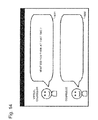
- each of Fig. 14 to Fig. 17 is an image diagram of a screen exemplifying a content of service according to the present invention.
- Fig. 14 is an image diagram of a screen which is displayed in the case that the present invention is applied to an automatic counseling system or a self-care system which the counselee uses.
- Fig. 14 shows a screen which includes a virtual counselor's message display column 501 and a user's message input column 502.
- the automatic counseling system prepares a screen such as the above-mentioned screen, and displays a series of messages, which is based on a predetermined scenario, in turn in the message display column 501, and receives the thought and the feeling which are written in the message input column 502 in turn by the user.
- the automatic counseling system carries out the contradiction determination process according to the present invention on the basis of the information, and changes message, which will be displayed in the message display column 501, according to the determination result.
- Fig. 15 is an image diagram of a screen which is displayed in the case that the present invention is applied to the automatic counseling system or the self-care system which the counselee uses.
- Fig. 15 shows a screen which includes a user's message input column 511, a user's message input column 512 and a user's message input column 513 which are related to the event, the feeling and the thought respectively, and a counselor-agent's message display column 514.
- the automatic counseling system prepares a screen such as the above-mentioned screen, and receives the thought and the feeling which are inputted in the message input column 511, the message input column 512 and the message input column 513.
- the automatic counseling system carries out the contradiction determination process according to the present invention on the basis of the information.
- the automatic counseling system carries out the input support.
- Fig. 16 is an image diagram of a screen which is displayed when the counselor diagnoses the counselee in the case that the present invention is applied to a counselor support system.
- Fig. 16 shows an example that a screen for the counselee and a screen for the counselor are prepared separately.
- the screen for the counselee includes message input/output columns 521 to 523 in which messages communicating between the counselee and the counselor mode are written in the dialogue.
- the screen for the counselor includes a message display column 525, in which, in the case that a contradiction is found, the import or the determination result on contradiction is written, other than an area 524 which displays the message input/output columns 521 to 523 of the screen for the counselee.
- the counselor support system prepares a screen such as the above-mentioned screen, and the user and the counselor input the inquiry message and the reply message in turn in the message input/output columns 521 to 523.
- the counselor support system carries out the input detection process and the contradiction determination process at a period of time of the input process, and displays an import if a contradiction is found, or the determination result in the message display column 525 of the screen which the counselor uses.
- the counseling by the counselor is supported.
- the system may be a remote counseling system in which the counseling is carried out to the counselee by the counselor through a network.
- Fig. 17 is an image diagram of a screen which is displayed in the case that the present invention is applied to a counselor training system.
- Fig. 17 shows a screen including message display columns 531 to 533 and a selection button 534.
- the message display columns 531 to 533 display an event occurring to a counselee, a feeling which the counselee had at that time, and a thought which the counselee had at that time respectively, and the selection button 534 is used for inputting whether there is a contradiction between the thoughts and the feelings of the counselee.
- the training system prepares a screen such as the above-mentioned screen, and inquires whether an item which is displayed to the counselor on the screen has a contradiction between the thoughts and the feelings of the counselee.
- the training system receives the selection result which is inputted by handling the selection button 534 in reply to the inquiry, and then carries out the contradiction determination process to the item.
- the training system may determine whether the inputted selection result is correct or incorrect on the assumption that the result of the contradiction determination process is correct, and may output the determination result.
- Fig. 18 is a block diagram exemplifying a configuration of a mental health care support system of the present invention.
- the mental health care support system shown in Fig. 18 which is a system supporting the mental health care by use of a Web system, includes a client terminal 701, a control server 702, and a contradiction determination and utterance content determination server 703.
- the client terminal 701 which is a terminal used by the counselee or the counselor, may be a usual terminal which can use a Web system.
- the client terminal 701 may be, for example, a personal computer which is equipped with an input device such as the mouse, the key-board or the like, and an output device such as the display or the like.
- the control server 702 is a Web server which sends and receives various data with the client terminal 701.
- the control server 702 carries out user authentication, determination on a process related to the user (for example, check of data format inputted by user, or the like), generation of a next screen and the like.
- the control server 702 is connected with the contradiction determination and utterance content determination server 703, which will be mentioned later, so as to be able to exchange data with the contradiction determination and utterance content determination server 703.
- the control server 702 transfers information (specifically, text which expresses thought, feeling and the like) which is inputted by the user to the contradiction determination and utterance content determination server 703, and then receives message information (determination result on contradiction, next inquiry message or the like), which should be outputted next, from the contradiction determination and utterance content determination server 703.
- the contradiction determination and utterance content determination server 703 is a server which carries out the contradiction determination process or the like according to the present invention actually. Moreover, the contradiction determination and utterance content determination server 703 carries out the process of determining the utterance contents according to the determination result on contradiction.
- the contradiction determination and utterance content determination server 703 may be equipped with each process unit of the mental health care support device which are shown in each of the exemplary embodiments.
- the contradiction determination and utterance content determination server 703 may receive desired information from the client terminal 701 and the control server 702 through the network.
- control server 701 and the contradiction determination and utterance content determination server 703 may be united to be one device.
- the control server 702 may call an execution file of a program which includes the function of each process unit of the mental health care support device shown in each of the exemplary embodiments, and the contradiction determination and utterance content determination server 703 may include the program.
- the contradiction determination and utterance content determination server 703 may operate as individual services.
- the control server 702 may provide input the thoughts and the feelings which are received from the client terminal 701 with the contradiction determination and utterance content determination server 703, and may receive the determination indicating whether there is a contradiction or not, and the message to be displayed next, and may outputs them to the client terminal 701.
- each function of the contradiction determination and utterance content determination server 703 may be provided as WebAPI.
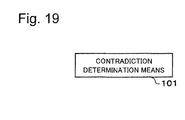
- FIG. 19 is a block diagram showing the outline of the present invention.
- a mental health care support device includes a contradiction determination means 101.
- the contradiction determination means 101 determines whether there is a contradiction between automatic thoughts and feelings, on the basis of automatic thoughts categories in which either the automatic thoughts of a counselee or automatic thought expressions expressing the automatic thoughts of the counselee are classified into prescribed categories, and feelings categories in which either the feelings of the counselee or feeling expressions expressing the feelings, which the counselee has when an automatic thought occurs, are classified into prescribed categories.
- the contradiction determination means 101 may determine whether there is a contradiction between the thoughts and the feeling of the counselee by determining whether the feeling category corresponding to the automatic thought which is estimated from the automatic thought expressions or the automatic thought categories, and the feeling category into which the feeling of the counselee is classified are coincident to each other or not.
- the mental health care support device of the present invention may include furthermore a feeling category estimation means 102 (for example, feeling category estimation unit 52) for estimating the feeling category, which is corresponding to the automatic thought, from the automatic thought expressions expressing the automatic thoughts of the counselee.
- a feeling category estimation means 102 for example, feeling category estimation unit 52 for estimating the feeling category, which is corresponding to the automatic thought, from the automatic thought expressions expressing the automatic thoughts of the counselee.
- the mental health care support device of the present invention may include furthermore a feeling classification means 103 (for example, feeling classification unit 53) which, on the basis of the feeling expressions expressing the feelings which the counselee has when an automatic thought occurs, classifies the feelings into prescribed categories.
- a feeling classification means 103 for example, feeling classification unit 53
- the mental health care support device of the present invention may include furthermore a determination result output means 104 (for example, determination result output unit 4) which outputs the determination result issued by the contradiction determination means 101.
- a determination result output means 104 for example, determination result output unit 4
- the mental health care support device of the present invention may include furthermore an utterance content determination means 105 (for example, utterance content determination unit 6) which determines a next utterance content on the basis of the determination result issued by the contradiction determination means 101.
- an utterance content determination means 105 for example, utterance content determination unit 6 which determines a next utterance content on the basis of the determination result issued by the contradiction determination means 101.
- the utterance content determination means 105 may recheck the automatic thought or the feeling or may output an inquiry message for investigating the automatic thought and the feeling furthermore.
- the mental health care support device of the present invention may include furthermore an information input means 201 (for example, automatic thought category input unit 1, feeling category input unit 2 or automatic thought and feeling input unit 51) for inputting the automatic thought categories in which either the automatic thoughts of the counselee or the automatic thought expressions expressing the automatic thoughts of the counselee are classified into prescribed categories, and the feelings categories in which either the feelings of the counselee or the feeling expressions expressing the feelings, which the counselee has when an automatic thought occurs, are classified into prescribed categories.
- an information input means 201 for example, automatic thought category input unit 1, feeling category input unit 2 or automatic thought and feeling input unit 51
- the information input means 201 may include an automatic thought information input means 106 for inputting the automatic thought categories in which the automatic thought expressions expressing the automatic thoughts of the counselee, or the automatic thoughts of the counselee are classified into prescribed categories, and a feeling information input means 107 for inputting the feeling categories in which either the feelings of the counselee or the feeling expressions expressing the feelings, which the counselee has when an automatic thought occurs, are classified into prescribed categories.
- the contradiction determination means 101 may be installed as one process means of a contradiction determination process means 202 which includes the feeling category estimation means 102 and the feeling classification means 103.
- each process means determines whether there is a contradiction between the automatic thoughts and the feelings on the basis of the automatic thought expressions or the automatic thought categories, and the feeling expressions or the feeling categories which are inputted.
- the feeling category estimation means 102 and the feeling classification means 103 can be omitted dependently on the inputted information.
- either of, or both of the determination result output means 104 and the utterance content determination means 105 as an information output means 203 may be installed.
- the mental health care support device may have a configuration that, when inputting the automatic thoughts categories in which either the automatic thoughts of the counselee or the automatic thought expressions expressing the automatic thoughts of the counselee are classified into prescribed categories, and the feelings categories in which either the feelings of the counselee or the feeling expressions expressing the feelings, which the counselee has when an automatic thought occurs, are classified into prescribed categories, it is outputted whether there is a contradiction between the automatic thoughts and the feelings.
- the mental health care support device may have a configuration that, when inputting the automatic thoughts categories in which either the automatic thoughts of the counselee or the automatic thought expressions expressing the automatic thoughts of the counselee are classified into prescribed categories, and the feelings categories in which either the feelings of the counselee or the feeling expressions expressing the feelings, which the counselee has when an automatic thought occurs, are classified into prescribed categories, the automatic thoughts and the feelings may be rechecked, or the inquiry message for investigating the automatic thoughts and the feelings furthermore may be outputted.
- the present invention is preferably applicable to not only the mental health care support system for the counselee but also the mental health care support system for the counselor.
Landscapes
- Health & Medical Sciences (AREA)
- Engineering & Computer Science (AREA)
- Life Sciences & Earth Sciences (AREA)
- General Health & Medical Sciences (AREA)
- Medical Informatics (AREA)
- Public Health (AREA)
- Physics & Mathematics (AREA)
- Primary Health Care (AREA)
- Epidemiology (AREA)
- Theoretical Computer Science (AREA)
- Business, Economics & Management (AREA)
- Educational Technology (AREA)
- Veterinary Medicine (AREA)
- Hospice & Palliative Care (AREA)
- Surgery (AREA)
- Molecular Biology (AREA)
- Heart & Thoracic Surgery (AREA)
- Biomedical Technology (AREA)
- Social Psychology (AREA)
- Psychology (AREA)
- Pathology (AREA)
- Psychiatry (AREA)
- Biophysics (AREA)
- Child & Adolescent Psychology (AREA)
- Developmental Disabilities (AREA)
- Animal Behavior & Ethology (AREA)
- General Physics & Mathematics (AREA)
- Educational Administration (AREA)
- Entrepreneurship & Innovation (AREA)
- Medical Treatment And Welfare Office Work (AREA)
Applications Claiming Priority (2)
| Application Number | Priority Date | Filing Date | Title |
|---|---|---|---|
| JP2012209523 | 2012-09-24 | ||
| PCT/JP2013/005367 WO2014045546A1 (ja) | 2012-09-24 | 2013-09-11 | メンタルヘルスケア支援装置、システム、方法およびプログラム |
Publications (2)
| Publication Number | Publication Date |
|---|---|
| EP2899686A1 true EP2899686A1 (de) | 2015-07-29 |
| EP2899686A4 EP2899686A4 (de) | 2016-11-23 |
Family
ID=50340888
Family Applications (1)
| Application Number | Title | Priority Date | Filing Date |
|---|---|---|---|
| EP13839113.1A Withdrawn EP2899686A4 (de) | 2012-09-24 | 2013-09-11 | Vorrichtung, verfahren und programm zur unterstützung der pflege der psychischen gesundheit |
Country Status (5)
| Country | Link |
|---|---|
| US (1) | US20150287337A1 (de) |
| EP (1) | EP2899686A4 (de) |
| JP (1) | JP6030659B2 (de) |
| AU (1) | AU2013319705A1 (de) |
| WO (1) | WO2014045546A1 (de) |
Families Citing this family (6)
| Publication number | Priority date | Publication date | Assignee | Title |
|---|---|---|---|---|
| AU2013349184A1 (en) * | 2012-11-21 | 2015-07-02 | Nec Solution Innovators, Ltd. | System for supporting correction of distorted cognition, method of eliciting user consciousness information and program therefor |
| JP6574644B2 (ja) * | 2015-08-26 | 2019-09-11 | 株式会社キュア・アップ | 肥満患者のためのプログラム、装置、システム及び方法 |
| CN113892147A (zh) * | 2019-04-17 | 2022-01-04 | 派尔疗法股份有限公司 | 用于治疗与多发性硬化症相关联的抑郁性症状的电子设备和方法 |
| WO2020214513A1 (en) * | 2019-04-17 | 2020-10-22 | Pear Therapeutics, Inc. | Electronic devices and methods for treatment of depressive symptoms, depressive disorders utilizing digital therapies |
| JP6862009B2 (ja) * | 2019-08-19 | 2021-04-21 | 株式会社Cureapp | 肥満患者のためのプログラム、装置、システム及び方法 |
| WO2025105380A1 (ja) * | 2023-11-15 | 2025-05-22 | Boost Health株式会社 | セルフメンタルケア装置、セルフメンタルケア方法、及びセルフメンタルケアプログラム |
Family Cites Families (25)
| Publication number | Priority date | Publication date | Assignee | Title |
|---|---|---|---|---|
| US4823808A (en) * | 1987-07-06 | 1989-04-25 | Clegg Charles T | Method for control of obesity, overweight and eating disorders |
| US5961332A (en) * | 1992-09-08 | 1999-10-05 | Joao; Raymond Anthony | Apparatus for processing psychological data and method of use thereof |
| US5392788A (en) * | 1993-02-03 | 1995-02-28 | Hudspeth; William J. | Method and device for interpreting concepts and conceptual thought from brainwave data and for assisting for diagnosis of brainwave disfunction |
| US5377258A (en) * | 1993-08-30 | 1994-12-27 | National Medical Research Council | Method and apparatus for an automated and interactive behavioral guidance system |
| WO2001077952A1 (en) * | 2000-04-06 | 2001-10-18 | Bindler Paul R | Automated and intelligent networked-based psychological services |
| JP2003303272A (ja) * | 2002-04-09 | 2003-10-24 | Optimum:Kk | マーケッティングデータ取得装置 |
| US7360151B1 (en) * | 2003-05-27 | 2008-04-15 | Walt Froloff | System and method for creating custom specific text and emotive content message response templates for textual communications |
| JP2004355328A (ja) * | 2003-05-29 | 2004-12-16 | Sanyo Electric Co Ltd | 健康管理支援装置、健康管理支援システム、健康管理支援方法および健康管理支援プログラム |
| JP2005334205A (ja) | 2004-05-26 | 2005-12-08 | Ryozo Saito | メンタルヘルスケアシステム及び方法 |
| US7947661B2 (en) * | 2004-08-11 | 2011-05-24 | The Mclean Hospital Corporation | Compounds for the treatment of marihuana dependence, withdrawal, and usage |
| US20060036430A1 (en) * | 2004-08-12 | 2006-02-16 | Junling Hu | System and method for domain-based natural language consultation |
| US20060085217A1 (en) * | 2004-10-14 | 2006-04-20 | Grace Christopher J | Self-management system and method |
| JP2006178852A (ja) * | 2004-12-24 | 2006-07-06 | Hitachi Ltd | 訪問調査支援用プログラム、訪問調査支援装置、及び訪問調査支援装置の制御方法 |
| US7788087B2 (en) * | 2005-03-01 | 2010-08-31 | Microsoft Corporation | System for processing sentiment-bearing text |
| JP2007004662A (ja) * | 2005-06-27 | 2007-01-11 | Tatsunori Yuumen | 訪問診療支援システムおよび方法 |
| JP2007148939A (ja) * | 2005-11-29 | 2007-06-14 | Kyocera Corp | 通信機器及び通信方法 |
| AU2007311166A1 (en) * | 2006-10-13 | 2008-04-24 | Wm. Wrigley Jr. Company | Method of weight control employing chewing gum |
| US8201223B2 (en) * | 2006-11-03 | 2012-06-12 | Joanne Walker | Systems and methods for computer implemented treatment of behavorial disorders |
| US20080113322A1 (en) * | 2006-11-14 | 2008-05-15 | Smart Thot, Llc | Kit And Method For Assessing, Labeling, Understanding And Directing Thoughts |
| US20080214944A1 (en) * | 2007-02-09 | 2008-09-04 | Morris Margaret E | System, apparatus and method for mobile real-time feedback based on changes in the heart to enhance cognitive behavioral therapy for anger or stress reduction |
| JP2010094243A (ja) * | 2008-10-15 | 2010-04-30 | Kithit Co Ltd | 自動問診システム |
| US20110070571A1 (en) * | 2009-07-28 | 2011-03-24 | Joanne Gosselin Verkuilen | Method and systems for improving fertility |
| CN102023967A (zh) * | 2010-11-11 | 2011-04-20 | 清华大学 | 一种面向股票领域的文本情感分类方法 |
| US20120179751A1 (en) * | 2011-01-06 | 2012-07-12 | International Business Machines Corporation | Computer system and method for sentiment-based recommendations of discussion topics in social media |
| EP2895970B1 (de) * | 2012-09-14 | 2018-11-07 | InteraXon Inc. | Systeme und verfahren zum sammeln, analysieren und teilen von biosignal- und nicht-biosignal-daten |
-
2013
- 2013-09-11 AU AU2013319705A patent/AU2013319705A1/en not_active Abandoned
- 2013-09-11 US US14/430,354 patent/US20150287337A1/en not_active Abandoned
- 2013-09-11 WO PCT/JP2013/005367 patent/WO2014045546A1/ja not_active Ceased
- 2013-09-11 EP EP13839113.1A patent/EP2899686A4/de not_active Withdrawn
- 2013-09-11 JP JP2014536581A patent/JP6030659B2/ja active Active
Also Published As
| Publication number | Publication date |
|---|---|
| US20150287337A1 (en) | 2015-10-08 |
| WO2014045546A1 (ja) | 2014-03-27 |
| AU2013319705A1 (en) | 2015-04-02 |
| JPWO2014045546A1 (ja) | 2016-08-18 |
| JP6030659B2 (ja) | 2016-11-24 |
| EP2899686A4 (de) | 2016-11-23 |
Similar Documents
| Publication | Publication Date | Title |
|---|---|---|
| CN109523194B (zh) | 汉语阅读能力测评方法、装置及可读存储介质 | |
| EP2899686A1 (de) | Vorrichtung, verfahren und programm zur unterstützung der pflege der psychischen gesundheit | |
| JP7285589B2 (ja) | 対話型健康状態評価方法およびそのシステム | |
| US20210357771A1 (en) | Natural language virtual assistant | |
| US20200143792A1 (en) | Interactive system, apparatus, and method | |
| WO2016085409A1 (en) | A method and system for sentiment classification and emotion classification | |
| CN111090641B (zh) | 数据处理方法及装置、电子设备、存储介质 | |
| US10978209B2 (en) | Method of an interactive health status assessment and system thereof | |
| US20210049303A1 (en) | Information processing apparatus and information processing method, and program | |
| CN109659009A (zh) | 情绪管理方法、装置及电子设备 | |
| JP2025152786A (ja) | 情報処理装置、プログラム及び情報処理方法 | |
| CN110647523A (zh) | 数据质量的分析方法及装置、存储介质、电子设备 | |
| CN118039139A (zh) | 一种健康管理的方法、装置、系统、电子设备及存储介质 | |
| CN111309990B (zh) | 一种语句应答方法及装置 | |
| CN111400759A (zh) | 访视时间表生成方法及装置、存储介质、电子设备 | |
| KR101984063B1 (ko) | 영단어 학습을 위한 시스템 | |
| CN113032469B (zh) | 文本结构化模型训练、医疗文本结构化方法及装置 | |
| Zheng et al. | Persono: Personalised notification urgency classifier in mixed reality | |
| EP3809411A1 (de) | Mehrsprachiges system zur früherkennung von morbus alzheimer | |
| Donadelli et al. | Evidence-inclusive communication: steering crisis leadership outcomes in Portugal, Brazil, New Zealand, and the US | |
| CN112200602A (zh) | 用于广告推荐的神经网络模型训练方法及装置 | |
| JP2021056857A (ja) | 情報処理システム、情報処理方法、プログラム | |
| EP3401795A1 (de) | Klassifizierung von konversationsdiensten | |
| KR20240040859A (ko) | 심리지원 챗봇 서비스 제공 방법 | |
| EP3136260A1 (de) | System zur analyse von informationen, verfahren zur analyse von informationen und programm zur analyse von informationen |
Legal Events
| Date | Code | Title | Description |
|---|---|---|---|
| PUAI | Public reference made under article 153(3) epc to a published international application that has entered the european phase |
Free format text: ORIGINAL CODE: 0009012 |
|
| 17P | Request for examination filed |
Effective date: 20150323 |
|
| AK | Designated contracting states |
Kind code of ref document: A1 Designated state(s): AL AT BE BG CH CY CZ DE DK EE ES FI FR GB GR HR HU IE IS IT LI LT LU LV MC MK MT NL NO PL PT RO RS SE SI SK SM TR |
|
| AX | Request for extension of the european patent |
Extension state: BA ME |
|
| DAX | Request for extension of the european patent (deleted) | ||
| RA4 | Supplementary search report drawn up and despatched (corrected) |
Effective date: 20161021 |
|
| RIC1 | Information provided on ipc code assigned before grant |
Ipc: G06Q 50/22 20120101AFI20161017BHEP Ipc: A61B 5/16 20060101ALI20161017BHEP Ipc: A61B 5/00 20060101ALI20161017BHEP |
|
| 17Q | First examination report despatched |
Effective date: 20181109 |
|
| STAA | Information on the status of an ep patent application or granted ep patent |
Free format text: STATUS: THE APPLICATION HAS BEEN WITHDRAWN |
|
| 18W | Application withdrawn |
Effective date: 20190213 |