EP2890616B1 - Schachtel zum verpacken und verfahren zum verpacken von gegenständen mit dem verpackungskarton - Google Patents
Schachtel zum verpacken und verfahren zum verpacken von gegenständen mit dem verpackungskarton Download PDFInfo
- Publication number
- EP2890616B1 EP2890616B1 EP13792441.1A EP13792441A EP2890616B1 EP 2890616 B1 EP2890616 B1 EP 2890616B1 EP 13792441 A EP13792441 A EP 13792441A EP 2890616 B1 EP2890616 B1 EP 2890616B1
- Authority
- EP
- European Patent Office
- Prior art keywords
- reinforcing wing
- wing
- article
- crease line
- reinforcing
- Prior art date
- Legal status (The legal status is an assumption and is not a legal conclusion. Google has not performed a legal analysis and makes no representation as to the accuracy of the status listed.)
- Active
Links
Images

Classifications
-
- B—PERFORMING OPERATIONS; TRANSPORTING
- B65—CONVEYING; PACKING; STORING; HANDLING THIN OR FILAMENTARY MATERIAL
- B65D—CONTAINERS FOR STORAGE OR TRANSPORT OF ARTICLES OR MATERIALS, e.g. BAGS, BARRELS, BOTTLES, BOXES, CANS, CARTONS, CRATES, DRUMS, JARS, TANKS, HOPPERS, FORWARDING CONTAINERS; ACCESSORIES, CLOSURES, OR FITTINGS THEREFOR; PACKAGING ELEMENTS; PACKAGES
- B65D5/00—Rigid or semi-rigid containers of polygonal cross-section, e.g. boxes, cartons or trays, formed by folding or erecting one or more blanks made of paper
- B65D5/02—Rigid or semi-rigid containers of polygonal cross-section, e.g. boxes, cartons or trays, formed by folding or erecting one or more blanks made of paper by folding or erecting a single blank to form a tubular body with or without subsequent folding operations, or the addition of separate elements, to close the ends of the body
- B65D5/0281—Rigid or semi-rigid containers of polygonal cross-section, e.g. boxes, cartons or trays, formed by folding or erecting one or more blanks made of paper by folding or erecting a single blank to form a tubular body with or without subsequent folding operations, or the addition of separate elements, to close the ends of the body the tubular body presenting double or multiple walls
-
- B—PERFORMING OPERATIONS; TRANSPORTING
- B65—CONVEYING; PACKING; STORING; HANDLING THIN OR FILAMENTARY MATERIAL
- B65B—MACHINES, APPARATUS OR DEVICES FOR, OR METHODS OF, PACKAGING ARTICLES OR MATERIALS; UNPACKING
- B65B5/00—Packaging individual articles in containers or receptacles, e.g. bags, sacks, boxes, cartons, cans, jars
- B65B5/02—Machines characterised by incorporation of means for making the containers or receptacles
- B65B5/024—Machines characterised by incorporation of means for making the containers or receptacles for making containers from preformed blanks
-
- B—PERFORMING OPERATIONS; TRANSPORTING
- B65—CONVEYING; PACKING; STORING; HANDLING THIN OR FILAMENTARY MATERIAL
- B65D—CONTAINERS FOR STORAGE OR TRANSPORT OF ARTICLES OR MATERIALS, e.g. BAGS, BARRELS, BOTTLES, BOXES, CANS, CARTONS, CRATES, DRUMS, JARS, TANKS, HOPPERS, FORWARDING CONTAINERS; ACCESSORIES, CLOSURES, OR FITTINGS THEREFOR; PACKAGING ELEMENTS; PACKAGES
- B65D5/00—Rigid or semi-rigid containers of polygonal cross-section, e.g. boxes, cartons or trays, formed by folding or erecting one or more blanks made of paper
- B65D5/20—Rigid or semi-rigid containers of polygonal cross-section, e.g. boxes, cartons or trays, formed by folding or erecting one or more blanks made of paper by folding-up portions connected to a central panel from all sides to form a container body, e.g. of tray-like form
-
- B—PERFORMING OPERATIONS; TRANSPORTING
- B65—CONVEYING; PACKING; STORING; HANDLING THIN OR FILAMENTARY MATERIAL
- B65D—CONTAINERS FOR STORAGE OR TRANSPORT OF ARTICLES OR MATERIALS, e.g. BAGS, BARRELS, BOTTLES, BOXES, CANS, CARTONS, CRATES, DRUMS, JARS, TANKS, HOPPERS, FORWARDING CONTAINERS; ACCESSORIES, CLOSURES, OR FITTINGS THEREFOR; PACKAGING ELEMENTS; PACKAGES
- B65D5/00—Rigid or semi-rigid containers of polygonal cross-section, e.g. boxes, cartons or trays, formed by folding or erecting one or more blanks made of paper
- B65D5/20—Rigid or semi-rigid containers of polygonal cross-section, e.g. boxes, cartons or trays, formed by folding or erecting one or more blanks made of paper by folding-up portions connected to a central panel from all sides to form a container body, e.g. of tray-like form
- B65D5/2095—Rigid or semi-rigid containers of polygonal cross-section, e.g. boxes, cartons or trays, formed by folding or erecting one or more blanks made of paper by folding-up portions connected to a central panel from all sides to form a container body, e.g. of tray-like form a part of the folded-up portions defining an inwardly folded ledge at the edges of the central panel
-
- B—PERFORMING OPERATIONS; TRANSPORTING
- B65—CONVEYING; PACKING; STORING; HANDLING THIN OR FILAMENTARY MATERIAL
- B65D—CONTAINERS FOR STORAGE OR TRANSPORT OF ARTICLES OR MATERIALS, e.g. BAGS, BARRELS, BOTTLES, BOXES, CANS, CARTONS, CRATES, DRUMS, JARS, TANKS, HOPPERS, FORWARDING CONTAINERS; ACCESSORIES, CLOSURES, OR FITTINGS THEREFOR; PACKAGING ELEMENTS; PACKAGES
- B65D5/00—Rigid or semi-rigid containers of polygonal cross-section, e.g. boxes, cartons or trays, formed by folding or erecting one or more blanks made of paper
- B65D5/42—Details of containers or of foldable or erectable container blanks
- B65D5/44—Integral, inserted or attached portions forming internal or external fittings
- B65D5/441—Reinforcements
- B65D5/443—Integral reinforcements, e.g. folds, flaps
-
- B—PERFORMING OPERATIONS; TRANSPORTING
- B65—CONVEYING; PACKING; STORING; HANDLING THIN OR FILAMENTARY MATERIAL
- B65D—CONTAINERS FOR STORAGE OR TRANSPORT OF ARTICLES OR MATERIALS, e.g. BAGS, BARRELS, BOTTLES, BOXES, CANS, CARTONS, CRATES, DRUMS, JARS, TANKS, HOPPERS, FORWARDING CONTAINERS; ACCESSORIES, CLOSURES, OR FITTINGS THEREFOR; PACKAGING ELEMENTS; PACKAGES
- B65D5/00—Rigid or semi-rigid containers of polygonal cross-section, e.g. boxes, cartons or trays, formed by folding or erecting one or more blanks made of paper
- B65D5/42—Details of containers or of foldable or erectable container blanks
- B65D5/44—Integral, inserted or attached portions forming internal or external fittings
- B65D5/50—Internal supporting or protecting elements for contents
- B65D5/5002—Integral elements for containers having tubular body walls
- B65D5/5011—Integral elements for containers having tubular body walls formed by folding inwardly of extensions hinged to the upper or lower edges of the body
- B65D5/5014—Integral elements for containers having tubular body walls formed by folding inwardly of extensions hinged to the upper or lower edges of the body and with an integral end closure
Definitions
- the present invention relates to the technical sector relating to packing of articles, such as books, dvd packs, reams of paper and the like.
- the invention relates to a carton for packing and a method for packing articles using the carton for packing.
- a carton of known type comprises a central portion formed by: a first wall which defines a front face of the carton; a second wall which is hinged to the first wall by means of a first crease line and defines a first flank of the carton; a third wall which is hinged to the second wall by means of a second crease line and has the same dimensions as the first wall and defines the rear face of the carton; and a fourth wall which is hinged to the third wall by means of a third crease line and defines a second flank of the carton, opposite the first flank of the carton.
- each wall of the central portion is provided, at two opposite ends thereof, with closing wings of the carton.
- a carton of this type has a low resistance to impacts and can therefore be damaged during transport, which can also lead to damage of the article contained therein.
- To improve the resistance to impacts of the carton more rigid cartons can be used, which however incur greater costs.
- the aim of the present invention consists in overcoming this drawback.
- the carton for packing and the method for packing articles according to the invention advantageously offer an improved protection at least at the flanks of the article which is packed: in fact, the first superposing group and the second superposing group exhibit at least two layers of carton for packing which function as a covering of the first flank and the second flank of the article resting on the first portion; in detail, the first flank of the article is protected by an internal layer that in each section thereof can be made up of the first reinforcing wing or the second reinforcing wing or by the superposing of the first reinforcing wing and the second reinforcing wing on one another, as well as by an external layer constituted by the second portion; in a similar way, the second flank of the article is protected by an internal layer that in each section thereof can be made up by the third reinforcing wing or the fourth reinforcing wing or the superposing of the third reinforcing wing and the fourth reinforcing wing on one another, as well as by an external layer constituted by the third portion.
- the length of the first reinforcing wing, the second reinforcing wing, the third reinforcing wing and the fourth reinforcing wing can be selected so that the first reinforcing wing and the second reinforcing wing superpose completely on one another and the third reinforcing wing and the fourth reinforcing wing completely superpose on one another.
- the first superposing group and the second superposing group will each comprise three layers of carton for respectively protecting the first flank and the second flank of the carton.
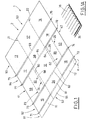
- (1) denotes the carton for packing in a flat configuration object of the present invention, which comprises a central portion (2) which is strip-shaped and in turn comprises a first portion (51), a second portion (52) and a third portion (53); the first portion (51) being interposed between the second portion (52) and the third portion (53) and being dimensioned such as to restingly receive at least an article (6) to be packed; the second portion (52) being dimensioned such as to wrap the article (6) at least at a first flank (7) of the article (6); the third portion (53) being dimensioned such as to wrap the article (6) at least at a second flank (6) of the article (6) which is opposite the first flank (7) of the article (6).
- the carton is provided with a first crease line (21) and a second crease line (22).
- the carton (1) further comprises: a first reinforcing wing (11) that is hinged to a first end of the second portion (52) by means of the first crease line (21), which first reinforcing wing (11) is foldable towards the second portion (52); and a second reinforcing wing (12) which is hinged to a second end of the second portion (52) by means of the second crease line (22), which second reinforcing wing (12) is foldable towards the second portion (52).
- the first end of the second portion (52) and the second end of the second portion (52) are opposite one another.
- the first reinforcing wing (11) and the second reinforcing wing (12) are preferably dimensioned such that when they are folded towards the second portion (52), they contact one another and superpose one another at least partly.
- the second portion (52), the first reinforcing wing (11) and the second reinforcing wing (12) when they are all reciprocally superposed define a first superposing group (31) which is foldable such as to wrap at least the first flank (7) of the article (6) when the article (6) is resting on the first portion (51).
- the carton (1) further comprises: a third reinforcing wing (13) which is hinged to a first end of the third portion (53) by the first crease line (21), which third reinforcing wing (13) is foldable towards the third portion (53); and a fourth reinforcing wing (14) which is hinged to a second end of the third portion (53) by the second crease line (22), which fourth reinforcing wing (14) is foldable towards the third portion (53).
- the first end of the third portion (53) and the second end of the third portion (53) are opposite one another.
- the third reinforcing wing (13) and the fourth reinforcing wing (14) are preferably dimensioned such that when they are folded towards the third portion (53), they contact one another and superpose one another at least partly.
- the carton (1) comprises: a first closing wing (41) which is hinged to a first end of the first portion (51) by the first crease line (21), which first closing wing (41) is foldable towards the first portion (51) and is dimensioned such as to wrap the article (6) at least at a third flank (101) which is comprised between the first flank and the relative second flank; and a second closing wing (42) which is hinged to a second end of the first portion (51) by the second crease line (22), which second closing wing (42) is foldable towards the first portion (51) and is dimensioned such as to wrap the article at least at a fourth flank (102) which is opposite the relative third flank (101).
- the first end of the first portion (51) and the second end of the first portion (51) are opposite one another.
- the first closing wing (41) and the second closing wing (42) are preferably dimensioned so that: when the article (6) is resting on the first portion (51); and when they are folded towards the first portion (51), they contact one another and at least partially superposed.
- the present invention further relates to a method for packing articles, comprising steps of:
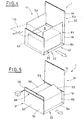
- steps a)-h) are carried out can be different from what is described above; for example the steps can be carried out in the following order: first steps a), b), c), e) are carried out, see figures 3A , 3B , then steps d), f), see figure 4 , and lastly steps g), h) are carried out, see figure 5 .
- the central portion (2) is preferably a continuous strip, i.e. without creases (the lines indicated in figure 1 which involve the central portion are only by way of example, to indicate sectors 55, 81, 54, 82, 51, 84, 56, 83, 57 which will be discussed in the following part of the description, and do not represent fold lines); this is advantageous as it enables minimizing the number of crease line to be applied to the carton (1), which reduces the realization times of the carton (1).
- the carton (1) is preferably in a single piece.
- the first crease line (21) and the second crease line (22) are preferably parallel to one another and parallel to the development direction of the central portion (2), which simplifies the realisation of the first crease line (21) and second crease line (22).
- the central portion (2) of the carton (1) is preferably rectangular and oblong, thus having a length that is greater than the width thereof; in the following description length will be taken to mean the dimension parallel to the development of the central portion (2) and width will be taken to mean the dimension which is perpendicular to the development of the central portion (2).
- the first crease line (21) and the second crease line (22) delimit the central portion (2) from the remaining parts of the carton (1), i.e. from the first reinforcing wing (11), from the second reinforcing wing (12), the third reinforcing wing (13), the fourth reinforcing wing (14), the first closing wing (41) and the second closing wing (42).
- the first reinforcing wing (11) is foldable towards the second portion (52) up to contacting the second portion (52) so as to be substantially parallel thereto; likewise, the second reinforcing wing (12) is foldable towards the second portion (52) up to contacting the second portion (52) such as to be substantially parallel thereto.
- the first reinforcing wing (11) can be folded first so as to contact and be superposed on the second portion (52), while the second reinforcing wing (12) can be folded subsequently so as to contact the first reinforcing wing (11) and be superposed thereon and on the second portion (52), or vice versa.
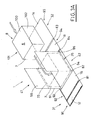
- the mutual superposing between the first reinforcing wing (11) and the second reinforcing wing (12) can be partial, as illustrated in figure 3B , or complete, as illustrated in figure 3A .
- the superposing in general terms when referring to superposing between two elements it is meant that the superposing is at least partial.
- the third reinforcing wing (13) is foldable towards the third portion (53) up to contacting the third portion (53) so as to be substantially parallel thereto; likewise, the fourth reinforcing wing (14) is foldable towards the third portion (53) up to contacting the third portion (53) so as to be substantially parallel thereto.
- the third reinforcing wing (13) can be folded first so as to contact and be superposed on the third portion (53), while the fourth reinforcing wing (14) can be folded subsequently so as to contact the third reinforcing wing (13) and be superposed thereon and on the third portion (53), or vice versa.
- the mutual superposing between the third reinforcing wing (13) and the fourth reinforcing wing (14) can be partial, as illustrated in figure 3B , or complete, as illustrated in figure 3A .
- the first closing wing (41) and the second closing wing (42) can delimit the lengthwise extension of the first portion (51) ( figures 1 , 2 ).
- the first reinforcing wing (11) and the second reinforcing wing (12) can delimit the lengthwise extension of the second portion (52) (solution not shown in the figures): in other words, the length of the first reinforcing wing (11) and the second reinforcing wing (12) can coincide with the length of the second portion (52).
- the third reinforcing wing (13) and the fourth reinforcing wing (14) can delimit the lengthwise extension of the third portion (53) (solution not shown in the figures): in other words, the length of the third reinforcing wing (13) and the fourth reinforcing wing (14) can coincide with the length of the third portion (53).
- the carton (1) is preferably made up of a first sheet (35) having a planar development and a second sheet (36) having an undulating development; the first sheet (35) and the second sheet (6) are fixed to one another.
- the carton (1) thus-obtained advantageously exhibits good characteristics of flexibility and foldability even without recourse to additional crease lines to the first crease line (21) and the second crease line (22) (as mentioned, the central portion (2) does not require crease lines transversal to the relative longitudinal development direction); in particular, the first superposing group (31) and the second superposing group (32) can be folded respectively against the first flank (7) and the second flank (8) of the article (6) easily and without need or transversal crease lines, i.e.
- first closing wing (41) and the second closing wing (42) can be folded against the article (6) easily, without need for additional crease lines parallel to the first crease line (21) and the second crease line (22).
- Known-type cartons for packing articles use, instead, a third sheet having a planar development such that the second sheet (36) is interposed between the first sheet (35) and the third sheet.
- These known cartons are not foldable if not about crease lines especially provided for obtaining a box-type packing.
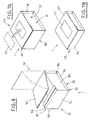
- the carton (1) of the invention is preferably configured so that the first sheet (35) is exposed to the outside when the packing (112) of the article (6) is completed, so that the carton (1) more effectively protects the packed article (6); to obtain this, the carton (1) is designed so that the first portion (51) contacts the article (6) by means of the second sheet (36) thereof, see figure 1A .
- the second portion (52) is preferably dimensioned so as to wrap the first flank (7) of the article (6) and to partially wrap a first part of the upper side (100) of the article (6) when the article is resting on the first portion (51); consequently, a fourth portion (54) and a fifth portion (55) are identifiable in the second portion (52), the fourth portion (54) being interposed between the first portion (51) and the fifth portion (55) and being dimensioned such as to wrap around the first flank (7) of the article (6).
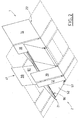
- the first reinforcing wing (11) is preferably dimensioned and arranged to fold towards the second portion (52) and in particular superpose the fifth portion (55) ( figure 2 ).
- the second reinforcing wing (12) is preferably dimensioned and arranged such as to fold towards the second portion (52) and superpose the fifth portion (55) ( figure 2 ).
- the carton (1) for packing preferably comprises a fifth reinforcing wing (15) which is hinged to the first end of the second portion (52) by the first crease line (21), which fifth reinforcing wing (15) is dimensioned and arranged such as to fold towards the second portion (52) and superpose in particular the fourth portion (54).
- the carton (1) for packing preferably comprises a sixth reinforcing wing (16) which is hinged to the second end of the second portion (52) by the second crease line (22), which sixth reinforcing wing (16) is dimensioned and arranged such as to fold towards the second portion (52) and superpose on the fourth portion (54).
- the method of the invention comprises: that when the first reinforcing wing (11) is folded towards the second portion (52) it superposes on the fifth portion (55); and that when the second reinforcing wing (12) is folded towards the second portion (52) it superposes on the fifth portion (55).
- the method comprises further steps of:
- the first reinforcing wing (11) and the second reinforcing wing (12) are preferably identical to one another and arranged symmetrically with respect to the central portion (2) ( figure 1 ).
- the fifth reinforcing wing (15) and the sixth reinforcing wing (16) are preferably identical to one another and arranged symmetrically with respect to the central portion (2) ( figure 1 ).
- the first reinforcing wing (11) and the fifth reinforcing wing (15) are preferably separated by a first window (71), i.e. an opening which is preferably rectangular; the second reinforcing wing (12) and the sixth reinforcing wing (16) are separated by a second window (72), i.e. an opening that is preferably rectangular. Also the first window (71) and the second window (72) are preferably positioned symmetrically with respect to the central portion (2).
- the fifth reinforcing wing (15) and the first closing wing (41) are preferably separated by a third window (73), i.e. an opening which is preferably rectangular; the sixth reinforcing wing (16) and the second closing wing (42) are preferably separated by a fourth window (74), i.e. an opening that is preferably rectangular. Also the third window (73) and the fourth window (74) are preferably positioned symmetrically with respect to the central portion (2).
- a first fold strip (81) is defined between the first group (91) and the second group (92) and a second fold strip (82) is defined between the second group (92) and the first portion (51).
- the first fold strip (81) and the second fold strip (82) are perpendicular to the development direction of the central portion (2), i.e. perpendicular to the first crease line (21) and the second crease line (22).
- the first fold strip (81) and the second fold strip (82) represent weakened regions of the first group, as each of them is formed only by a corresponding sector of the second portion (52) and therefore exhibits only one layer of carton (1) (see figures 3A , 3B ), differently to the first group (91) and the second group (92) which each exhibit at least two layers of carton (1).
- the first fold strip (81) and the second fold strip (82) are thus equivalent to crease lines; in fact, when the first superposing group (31) is folded against the first flank (7) of the article (6) resting on the first portion (51), the second group (92) tends to rotate about the second fold strip (82) and the first group (91) tends to rotate with respect to the second group (92) about the first fold strip (81).
- the fifth reinforcing wing (15) and the sixth reinforcing wing (16) to have a length (i.e. a longitudinal extension in the development direction of the central portion 2) which is greater than or equal to (preferable equal to) the height of the first flank (7) of the article (6) to be packed.
- the third portion (53) is preferably dimensioned such as to wrap the second flank (8) of the article (6) and partially wrap a second part of the upper side (100) of the article (6) when the article (6) is resting on the first portion (51). Consequently, a sixth portion (56) and a seventh portion (57) are identifiable in the third portion (53), the sixth portion (56) being interposed between the first portion (51) and the seventh portion (57) and being dimensioned such as to wrap the second flank (8) of the article (6).
- the third reinforcing wing (13) is preferably dimensioned and arranged such as to fold against the third portion (53) and superpose on the seventh portion (57) ( figure 2 ); preferably the fourth reinforcing wing (14) is dimensioned and arranged so as to fold towards the third portion (53) and superpose in particular on the seventh portion (57) ( figure 2 ).
- the carton for packing (1) preferably comprises a seventh reinforcing wing (17) which is hinged to the first end of the third portion (53) by means of the first crease line (21), which seventh reinforcing wing (17) is dimensioned and arranged to as to fold towards the third portion (53) and superpose on the sixth portion (56).
- the carton (1) for wrapping preferably comprises an eighth reinforcing wing (18) which is hinged to the second end of the third portion (53) by the second crease line (22), which eighth reinforcing wing (18) is dimensioned and arranged such as to fold towards the third portion (53) and superpose on the sixth portion (56).
- the seventh reinforcing wing (17) and the eighth reinforcing wing (18), when superposed on one another and superposed on the sixth portion (56) are a part of the second superposing group (32); the third portion (53), the third reinforcing wing (13), the fourth reinforcing wing (14), the seventh reinforcing wing (17) and the eighth reinforcing wing (18) being configured such that when the second superposing group (32) is folded to wrap the second flank (8) of the article (6) and to partially wrap the second part of the supper side (100) of the article (6), a third group (93) formed by the seventh portion (57), the third reinforcing wing (13) and the fourth reinforcing wing (14) is arranged at an angle preferably of 90° with respect to a fourth group (94) formed by the sixth portion (56), the seventh reinforcing wing (17) and the eighth reinforcing wing (18).
- the method of the invention comprises, according to the further characteristics defined for the carton (1): that when the third reinforcing wing (13) is folded towards the third portion (53) it superposes on the seventh portion (57); and when the fourth reinforcing wing (14) is folded towards the third portion (53) it superposes on the seventh portion (57).
- the method comprises further steps of:
- the third reinforcing wing (13) and the fourth reinforcing wing (14) are preferably identical to one another and arranged symmetrically with respect to the central portion (2) ( figure 1 ).
- the second reinforcing wing (17) and the eighth reinforcing wing (18) are preferably identical to one another and arranged symmetrically with respect to the central portion (2) ( figure 1 ).
- the third reinforcing wing (13) and the seventh reinforcing wing (17) are preferably separated by a fifth window (75), i.e. an opening which is preferably rectangular; the fourth reinforcing wing (14) and the eighth reinforcing wing (18) are preferably separated by a sixth window (76), i.e. an opening that is preferably rectangular. Also the fifth window (75) and the sixth window (76) are preferably positioned symmetrically with respect to the central portion (2).
- the seventh reinforcing wing (17) and the first closing wing (41) are preferably separated by a seventh window (77), i.e. an opening which is preferably rectangular; the eighth reinforcing wing (14) and the second reinforcing wing (18) are preferably separated by an eighth window (78), i.e. an opening that is preferably rectangular. Also the seventh window (77) and the eighth window (78) are preferably positioned symmetrically with respect to the central portion (2).
- a third folding strip (83) is defined between the third group (93) and the fourth group (94) and a fourth folding strip (84) is defined between the fourth group (94) and the first portion (51).
- the third folding strip (83) and the fourth folding strip (84) are perpendicular to the development direction of the central portion (2), i.e. perpendicular to the first crease line (21) and the second crease line (22).
- the third folding strip (83) and the fourth folding strip (84) represent weakened regions of the second group, as each of them is formed only by a corresponding sector of the third portion (53) and thus exhibits one only layer of carton (1) (see figures 3A , 3B ), differently to the third group (93) and the fourth group (94) which each exhibit at least two layers of carton (1).
- the third fold line (83) and the fourth fold line (84) are therefore equivalent to crease lines; in fact, when the second superposing group (32) is folded against the second flank (8) of the article (6) resting on the first portion (51), the fourth group (94) tends to rotate about the fourth fold strip (84) and the third group (93) tends to rotate with respect to the fourth group (94) about the third fold strip (83).
- the seventh reinforcing wing (17) and the eighth reinforcing wing (18) to have a length that is greater than or equal to (preferably equal to) the heightof the second flank (8) of the article (6) to be packed.
- the second portion (52) and the third portion (53) are preferably dimensioned such that when they wrap the article (6) resting in the third portion (51) they partially reciprocally superpose; in other words, the first group and the second group contact and partially superpose on one another when they are folded respectively against the first flank (7) and the second flank (8) of the article (6) resting on the first portion (51).
- the carton (1) for packing can be dimensioned so that the upper side (100) of the article (6), opposite the relative bottom which is in contact with the first portion (51), is covered by the reciprocal superposing of the first superposing group (31) and the second superposing group (32) and/or the reciprocal superposing of the first closing wing (41) and the second closing wing (42).
- the carton (1) for packing can be dimensioned so that the upper side (100) of the article (6) is uncovered; this can be useful if it is desired that the upper side (100) of the article (6) remains in view even after the packing of the article is completed.
- the first closing wing (41) is preferably provided with a third crease line (23), which divides the first closing wing (41) into an eighth portion (58), comprised between the first crease line (21) and the third crease line (23), and a ninth portion (59) comprised between the third crease line (23) and the free end of the first closing wing (41), the first closing wing (41) being foldable towards the first portion (51) such that the ninth portion (59) is arranged at an angle with respect to the eighth portion (58).
- a third crease line (23) which divides the first closing wing (41) into an eighth portion (58), comprised between the first crease line (21) and the third crease line (23), and a ninth portion (59) comprised between the third crease line (23) and the free end of the first closing wing (41), the first closing wing (41) being foldable towards the first portion (51) such that the ninth portion (59) is arranged at an angle with respect to the eighth portion (58).
- the first closing wing (41) is preferably provided with a fourth crease line (24) comprised between the first crease line (21) and the third crease line (23), which fourth crease line (24) divides the eighth portion (58) into a tenth portion (60), comprised between the first crease line (21) and the fourth crease line (24), and into an eleventh portion (61), comprised between the fourth crease line (24) and the third crease line (23), the first closing wing (41) being foldable towards the first portion (51) such that: the tenth portion (60) contacts the first portion (51), the eleventh portion (61) is arranged at an angle with respect to the tenth portion (60) and the ninth portion (59) is arranged at an angle with respect to the eleventh portion (61 ( figure 5 ).
- the tenth portion (60) superposes on the first portion (51), being arranged parallel thereto and forming a first reinforced edge ( figures 3A , 3B ) which further protects the article (6), once the packing (112) has been completed, from impacts and accidental falls.
- the step of folding the first closing wing (41) towards the first portion (51) is done in such a way that: the tenth portion (60) contacts the first portion (51), the eleventh portion (61) is arranged at an angle (preferably 90°) with respect to the tenth portion (60) and the ninth portion (59) is arranged at an angle (preferably 90°) with respect to the eleventh portion (61).
- the second closing wing (42) is preferably provided with a fifth crease line (25), which divides the second closing wing (42) into a twelfth portion (62), comprised between the second crease line (22) and the fifth crease line (25), and a thirteenth portion (63) comprised between the fifth crease line (25) and the free end of the second closing wing (42), the second closing wing (42) being foldable towards the first portion (51) in such a way that the thirteenth portion (63) is arranged at an angle with respect to the twelfth portion (62) ( figure 5 ).
- the second closing wing (42) is preferably provided with a sixth crease line (26) comprised between the second crease line (22) and the fifth crease line (25), which sixth crease line (26) divides the twelfth portion (62) into a fourteenth portion (64) comprised between the second crease line (22) and the sixth crease line (26), and into a fifteenth portion (65), comprised between the sixth crease line (26) and the fifth crease line (25), the second closing wing (42) being foldable towards the first portion (51) such that: the fourteenth portion (64) contacts the first portion (51), the fifteenth portion (65) is arranged at an angle with respect to the fourteenth portion (64) and the thirteenth portion (63) is arranged at an angle with respect to the fifteenth portion (65).
- the fourteenth portion (64) superposes on the first portion (51), being arranged parallel thereto and forming a second reinforced edge ( figures 3A , 3B ) which advantageously protects the article (6), once the packing (112) has been completed, from impacts and accidental falls.
- the step of folding the second closing wing (42) towards the first portion (51) is done in such a way that: the fourteenth portion (64) contacts the first portion (51), the fifteenth portion (65) is arranged at an angle with respect to the fourteenth portion (64) and the thirteenth portion (63) is arranged at an angle with respect to the fifteenth portion (65).
- Figure 2 illustrates two strips of glue applied on the central portion (2), i.e: a first strip of glue (96) arranged in proximity of the first crease line (21) and parallel thereto; and a second strip of glue (97) which is arranged in proximity of the second crease line (22) and parallel thereto.
- the first strip of glue (96) is arranged, with respect to the first crease line (21) so as to make the fixing possible: from the second reinforcing wing (12) to the fifth portion (55); from the sixth reinforcing wing (16) to the fourth portion (54); from the fourteenth portion (64) to the first portion (51); from the eighth reinforcing wing (18) to the sixth portion (56); and from the fourth reinforcing wing (14) to the seventh portion (57).
- the second strip of glue (97) is arranged, with respect to the seconds crease line (22) so as to make the fixing possible: from the first reinforcing wing (11) to the fifth portion (55); from the fifth reinforcing wing (15) to the fourth portion (54); from the tenth portion (60) to the first portion (51); from the seventh reinforcing wing (17) to the sixth portion (56); and from the third reinforcing wing (13) to the seventh portion (57).
- Figures 3A , 3B clarify how it is possible to pack articles (6) of different dimensions (in the illustrated case of two articles they are of different height) by adapting the measurements of the carton (1) of the present invention.
- Figure 4 illustrates the step of inserting a document (110) into the packing in formation, before a packing operation is completed.
- Figure 5 illustrates an application of a third strip of glue (98) on the first group (91), which third strip of glue (98) in particular contacts the fifth portion (55) so as to ensure sealing of the packing (112) ( figure 6 ) once all the folding operations of the carton (1) have been carried out.
- Figures 7A, 7B show packings (112) suitable for articles of different dimensions and a step of applying a label (111) to the packing (112).
Landscapes
- Engineering & Computer Science (AREA)
- Mechanical Engineering (AREA)
- Cartons (AREA)
- Container Filling Or Packaging Operations (AREA)
Claims (15)
- Karton (1) zum Verpacken, der, wenn er in einem flachen Zustand ist, bevor er um einen Artikel herum aufgerichtet wird:einen zentralen Abschnitt (2), der streifenförmig ist und einen ersten Abschnitt (51) umfasst, einen zweiten Abschnitt (52) und einen dritten Abschnitt (53) umfasst; wobei der erste Abschnitt (51) zwischen dem zweiten Abschnitt (52) und dem dritten Abschnitt (53) angeordnet ist und derart abgemessen ist, dass er wenigstens einen zu verpackenden Artikel (6) ruhend aufnimmt; wobei der zweite Abschnitt (52) derart abgemessen ist, dass er den Artikel (6) wenigstens an einer ersten Flanke (7) des Artikels (6) umwickelt; wobei der dritte Abschnitt (53) derart abgemessen ist, dass er den Artikel (6) wenigstens an einer zweiten Flanke (8) des Artikels (6) gegenüber der ersten Flanke (7) des Artikels (6) umwickelt;mit einer ersten Falzlinie (21) und einer zweiten Falzlinie (22) versehen ist;einen ersten Verstärkungsflügel (11) umfasst, der mittels der ersten Falzlinie (21) drehbar an einem ersten Ende des zweiten Abschnitts (52) angebracht ist, wobei der erste Verstärkungsflügel (11) zum zweiten Abschnitt (52) hin faltbar ist;einen zweiten Verstärkungsflügel (12) umfasst, der mittels der zweiten Falzlinie (22) drehbar an einem zweiten Ende des zweiten Abschnitts (52) angebracht ist, wobei der zweite Verstärkungsflügel (12) zum zweiten Abschnitt (52) hin faltbar ist;wobei das erste Ende des zweiten Abschnitts (52) und das zweite Ende des zweiten Abschnitts (52) einander gegenüber liegen;einen dritten Verstärkungsflügel (13) umfasst, der mittels der dritten Falzlinie (21) drehbar an einem ersten Ende des dritten Abschnitts (53) angebracht ist, wobei der dritte Verstärkungsflügel (13) zum dritten Abschnitt (53) hin faltbar ist;einen vierten Verstärkungsflügel (14) umfasst, der mittels der zweiten Falzlinie (22) drehbar an einem zweiten Ende des dritten Abschnitts (53) angebracht ist, wobei der vierte Verstärkungsflügel (14) zum dritten Abschnitt (53) hin faltbar ist;wobei das erste Ende des dritten Abschnitts (53) und das zweite Ende des dritten Abschnitts (53) einander gegenüber liegen;einen ersten Schließflügel (41) umfasst, der mittels der ersten Falzlinie (21) drehbar an einem ersten Ende des ersten Abschnitts (51) angebracht ist, wobei der erste Schließflügel (41) zum ersten Abschnitt (51) hin faltbar ist und derart abgemessen ist, dass er den Artikel wenigstens an einer dritten Flanke (101) umwickelt, die zwischen der ersten Flanke und der zweiten Flanke gebildet ist;einen zweiten Schließflügel (42) umfasst, der mittels der zweiten Falzlinie (22) drehbar an einem zweiten Ende des ersten Abschnitts (51) angebracht ist, wobei der zweite Schließflügel (42) zum ersten Abschnitt (51) hin faltbar ist und derart abgemessen ist, dass er den Artikel wenigstens an einer vierten Flanke (102) gegenüber der dritten Flanke (101) umwickelt;wobei das erste Ende des ersten Abschnitts (51) und das zweite Ende des ersten Abschnitts (51) einander gegenüber liegen;dadurch gekennzeichnet, dass:der zweiten Abschnitt (52), der erste Verstärkungsflügel (11) und der zweite Verstärkungsflügel (12), wenn sie alle übereinander gelagert sind, eine erste überlagernde Gruppe (31) definieren, die derart faltbar ist, dass sie wenigstens die erste Flanke (7) des Artikels (6) umwickelt, wenn der Artikel (6) auf dem ersten Abschnitt (51) ruht;der dritte Abschnitt (53), der dritte Verstärkungsflügel (13) und der vierte Verstärkungsflügel (14), wenn sie alle übereinander gelagert sind, eine zweiten überlagernde Gruppe (32) definieren, die derart faltbar ist, dass sie wenigstens die zweite Flanke (8) des Artikels (6) umwickelt, wenn der Artikel auf dem ersten Abschnitt (51) ruht.
- Karton (1) zum Verpacken nach dem vorangehenden Anspruch, wobei der zweite Abschnitt (52) dazu abgemessen ist, die erste Flanke (7) des Artikels (6) zu umwickeln, und teilweise einen ersten Teil der Oberseite (100) des Artikels (6) zu umwickeln, wenn der Artikel auf dem ersten Abschnitt (51) ruht, wobei ein vierter Abschnitt (54) und ein fünfter Abschnitt (55) im zweiten Abschnitt (52) identifizierbar sind, wobei der vierte Abschnitt (54) zwischen dem ersten Abschnitt (51) und dem fünften Abschnitt (55) angeordnet ist und derart abgemessen, dass er die erste Flanke (7) des Artikels (6) umwickelt; wobei der erste Verstärkungsflügel (11) dazu abgemessen und angeordnet ist, sich zum zweiten Abschnitt (52) hin zu falten und den fünften Abschnitt (55) zu überlagern; wobei der zweite Verstärkungsflügel (12) dazu abgemessen und angeordnet ist, sich zum zweiten Abschnitt (52) hin zu falten und den fünften Abschnitt (55) zu überlagern; wobei der Karton (1) zum Verpacken einen fünften Verstärkungsflügel (15) umfasst, der mittels der ersten Falzlinie (21) drehbar am Ende des zweiten Abschnitts (52) angebracht ist, wobei der fünfte Verstärkungsflügel (15) dazu abgemessen und angeordnet ist, sich zum zweiten Abschnitt (52) hin zu falten und den vierten Abschnitt (54) zu überlagern; wobei der Karton (1) zum Verpacken einen sechsten Verstärkungsflügel (16) umfasst, der mittels der zweiten Falzlinie (22) drehbar am zweiten Ende des zweiten Abschnitts (52) angebracht ist, wobei der sechste Verstärkungsflügel (16) dazu abgemessen und angeordnet ist, sich zum zweiten Abschnitt (52) hin zu falten und den vierten Abschnitt (54) zu überlagern; wobei der fünfte Verstärkungsflügel (15) und der sechste Verstärkungsflügel (16), wenn sie einander überlagern und den vierten Abschnitt (54) überlagern, ein Teil der ersten überlagernden Gruppe (31) sind; wobei der zweite Abschnitt (52), der erste Verstärkungsflügel (11), der zweite Verstärkungsflügel (12), der fünfte Verstärkungsflügel (15) und der sechste Verstärkungsflügel (16) derart konfiguriert sind, dass, wenn die erste überlagernde Gruppe (31) gefaltet wird, um die erste Flanke (7) des Artikels (6) zu umwickeln und teilweise den ersten Teil der Oberseite (100) des Artikels (6) zu umwickeln, eine erste Gruppe (91), die von dem fünften Abschnitt (55), dem ersten Verstärkungsflügel (11) und dem zweiten Verstärkungsflügel (12) gebildet wird, in einem Winkel in Bezug auf eine zweite Gruppe (92) angeordnet wird, die von dem vierten Abschnitt (54), dem fünften Verstärkungsflügel (15) und dem sechsten Verstärkungsflügel (16) gebildet wird.
- Karton (1) zum Verpacken nach Anspruch 1 oder 2, wobei der dritte Abschnitt (53) derart abgemessen ist, dass er die zweite Flanke (8) des Artikels (6) umwickelt und teilweise einen zweiten Teil der Oberseite (100) des Artikels (6) umwickelt, wenn der Artikel (6) auf dem ersten Abschnitt (51 ruht, wobei ein sechster Abschnitt (56) und ein siebter Abschnitt (57) im dritten Abschnitt (53) identifizierbar sind, wobei der sechste Abschnitt (56) zwischen dem ersten Abschnitt (51) und dem siebten Abschnitt (57) angeordnet ist und derart abgemessen, dass er die zweite Flanke (8) des Artikels (6) umwickelt; wobei der dritte Verstärkungsflügel (13) dazu abgemessen und angeordnet ist, dass er an den dritten Abschnitt (53) gefaltet wird und den siebten Abschnitt (57) überlagert; wobei der vierte Verstärkungsflügel (14) dazu abgemessen und angeordnet ist, sich zum dritten Abschnitt (53) hin zu falten und den siebten Abschnitt (57) zu überlagern; wobei der Karton (1) zum Umwickeln einen siebten Verstärkungsflügel (17) umfasst, der mittels der ersten Falzlinie (21) drehbar am ersten Ende des dritten Abschnitts (53) angebracht ist, wobei der siebte Verstärkungsflügel (17) dazu abgemessen und angeordnet ist, sich zum dritten Abschnitt (53) hin zu falten und den sechsten Abschnitt (56) zu überlagern; wobei der Karton (1) zum Umwickeln einen achten Verstärkungsflügel (18) umfasst, der mittels der zweiten Falzlinie (22) drehbar am zweiten Ende des dritten Abschnitts (53) angebracht ist, wobei der achte Verstärkungsflügel (18) dazu abgemessen und angeordnet ist, dass er sich zum dritten Abschnitt (53) hin faltet und den sechsten Abschnitt (56) überlagert; wobei der siebte Verstärkungsflügel (17) und der achte Verstärkungsflügel (18), wenn sie einander überlagern und den sechsten Abschnitt (56) überlagern, ein Teil der zweiten überlagernden Gruppe (32) sind; wobei der dritte Abschnitt (53), der dritte Verstärkungsflügel (13), der vierte Verstärkungsflügel (14), der siebte Verstärkungsflügel (17) und der achte Verstärkungsflügel (18) derart konfiguriert sind, dass, wenn die zweite überlagerte Gruppe (32) gefaltet wird, um die zweite Flanke (8) des Artikels (6) zu umwickeln und teilweise den zweiten Teil der Oberseite (100) des Artikels (6) zu umwickeln, eine dritten Gruppe (93), die von dem siebten Abschnitt (57), dem dritten Verstärkungsflügel (13) und dem vierten Verstärkungsflügel (14) gebildet wird, in einem Winkel in Bezug auf eine vierte Gruppe (94) angeordnet wird, die von dem sechsten Abschnitt (56), dem siebten Verstärkungsflügel (17) und dem achten Verstärkungsflügel (18) gebildet wird.
- Karton (1) zum Verpacken nach einem der vorangehenden Ansprüche, wobei der zweite Abschnitt (52) und der dritte Abschnitt (53) derart abgemessen sind, dass sie einander teilweise überlagern, wenn sie den Artikel (6), der in dem dritten Abschnitt (51) ruht, umwickeln.
- Karton (1) zum Verpacken nach einem der vorangehenden Ansprüche, wobei der erste Schließflügel (41) mit einer dritten Falzlinie (23) versehen ist, die den ersten Schließflügel (41) in einen achten Abschnitt (58), der zwischen der ersten Falzlinie (21) und der dritten Falzlinie (23) gebildet ist, und einen neunten Abschnitt (59) unterteilt, der zwischen der dritten Falzlinie (23) und dem freien Ende des ersten Schließflügels (41) gebildet ist, wobei der erste Schließflügel (41) zum ersten Abschnitt (51) hin faltbar ist, derart, dass der neunte Abschnitt (59) in einem Winkel in Bezug auf den achten Abschnitt (58) angeordnet wird.
- Karton (1) zum Verpacken nach dem vorangehenden Anspruch, wobei der erste Schließflügel (41) mit einer vierten Falzlinie (24) versehen ist, die zwischen der ersten Falzlinie (21) und der dritten Falzlinie (23) gebildet ist, wobei die vierte Falzlinie (24) den achten Abschnitt (58) in einen zehnten Abschnitt (60), der zwischen der ersten Falzlinie (21) und der vierten Falzlinie (24) gebildet ist, und in einen elften Abschnitt (61) unterteilt, der zwischen der vierten Falzlinie (24) und der dritten Falzlinie (23) gebildet ist, wobei der erste Schließflügel (41) zum ersten Abschnitt (51) hin faltbar ist, derart, dass: der zehnte Abschnitt (60) in Kontakt mit dem ersten Abschnitt (51) gelangt, der elfte Abschnitt (61) in einem Winkel in Bezug auf den zehnten Abschnitt (60) angeordnet wird und der neunte Abschnitt (59) in einem Winkel in Bezug auf den elften Abschnitt (61) angeordnet wird.
- Karton (1) zum Verpacken nach einem der vorangehenden Ansprüche, wobei der zweite Schließflügel (42) mit einer fünfen Falzlinie (25) versehen ist, die den zweiten Schließflügel (42) in einen zwölften Abschnitt (62), der zwischen der zweiten Falzlinie (22) und der fünften Falzlinie (25) gebildet ist, und einen dreizehnten Abschnitt (63) unterteilt, der zwischen der fünften Falzlinie (25) und dem freien Ende des zweiten Schließflügels (42) gebildet ist, wobei der zweite Schließflügel (42) zum ersten Abschnitt (51) hin faltbar ist, derart, dass der dreizehnte Abschnitt (63) in einem Winkel in Bezug auf den zwölften Abschnitt (62) angeordnet wird.
- Karton (1) zum Verpacken nach dem vorangehenden Anspruch, wobei der zweiten Schließflügel (42) mit einer sechsten Falzlinie (26) versehen ist, die zwischen der zweiten Falzlinie (22) und der fünften Falzlinie (25) gebildet ist, wobei die sechste Falzlinie (26) den zwölften Abschnitt (62) in einen vierzehnten Abschnitt (64), der zwischen der zweiten Falzlinie (22) und der sechsten Falzlinie (26) gebildet ist, und in einen fünfzehnten Abschnitt (65) unterteilt, der zwischen der sechsten Falzlinie (26) und der fünfen Falzlinie (25) gebildet ist, wobei der zweite Schließflügel (42) zum ersten Abschnitt (51) hin faltbar ist, derart, dass: der vierzehnte Abschnitt (64) in Kontakt mit dem ersten Abschnitt (51) gelangt, der fünfzehnte Abschnitt (65) in einem Winkel in Bezug auf den vierzehnten Abschnitt (64) angeordnet wird und der dreizehnte Abschnitt (63) in einem Winkel in Bezug auf den fünfzehnten Abschnitt (65) angeordnet wird.
- Karton (1) zum Verpacken nach einem der vorangehenden Ansprüche, umfassend eine erste Bahn (35) mit einer planaren Entwicklung und eine zweite Bahn (36) mit einer welligen Entwicklung, wobei die erste Bahn (35) und die zweiten Bahn (36) aneinander befestigt sind.
- Karton (1) zum Verpacken nach dem vorangehenden Anspruch, der derart konfiguriert ist, dass der erste Abschnitt (51) mittels der zweiten Bahn (36) in Kontakt mit dem Artikel (6) gelangt.
- Verfahren zum Verpacken von Artikeln, gekennzeichnet durch folgende Schritte:Verwenden eines Kartons (1) zum Verpacken nach einem der vorangehenden Ansprüche; Freigeben von wenigstens einem Artikel (6) am ersten Abschnitt (51);Falten sowohl des ersten Verstärkungsflügels (11) als auch des zweiten Verstärkungsflügels (12) zum zweiten Abschnitt (52), bis die erste überlagernde Gruppe (31) gebildet wird, wobei der zweite Abschnitt (52), der erste Verstärkungsflügel (11) und der zweite Verstärkungsflügel (12) einander überlagern;Falten der ersten überlagernde Gruppe (31) an den Artikel (6), um wenigstens die erste Flanke (7) des Artikels (6) zu umwickeln;Falten sowohl des dritten Verstärkungsflügels (13) als auch des vierten Verstärkungsflügels (14) zum dritten Abschnitt (53), bis die zweite überlagernde Gruppe (32) gebildet wird, wobei der dritte Abschnitt (53), der dritte Verstärkungsflügel (13) und der vierte Verstärkungsflügel (14) einander überlagern;Falten der zweiten überlagernde Gruppe (32) an den Artikel (6), um wenigstens die zweite Flanke (8) des Artikels (6) zu umwickeln;Falten des ersten Schließflügels (41) zum ersten Abschnitt (51) hin, um den Artikel (6) wenigstens an der dritten Flanke (101) zu umwickeln;Falten des zweiten Schließflügels (42) zum ersten Abschnitt (51) hin, um den Artikel (6) wenigstens an der vierten Flanke (102) zu umwickeln.
- Verfahren zum Verpacken Artikels nach dem vorangehenden Anspruch, wobei der verwendete Karton (1) zum Verpacken gemäß Anspruch 2 oder einem der Ansprüche 3 bis 10 in Abhängigkeit von Anspruch 2 ist, wobei, wenn der erste Verstärkungsflügel (11) zum zweiten Abschnitt (52) hin gefaltet wird, er den fünften Abschnitt (55) überlagert; wobei, wenn der zweite Verstärkungsflügel (12) zum zweiten Abschnitt (52) hin gefaltet wird, er den fünften Abschnitt (55) überlagert; wobei das Verfahren ferner folgende Schritte umfasst:Falten des fünften Verstärkungsflügels (15) zum zweiten Abschnitt (52) hin, derart, dass er den vierten Abschnitt (54) überlagert;Falten des sechsten Verstärkungsflügels (16) zum zweiten Abschnitt (52) hin, derart, dass er den vierten Abschnitt (54) überlagert;Falten der ersten überlagernden Gruppe (31), die den zweiten Abschnitt (52), den ersten Verstärkungsflügel (11), den zweiten Verstärkungsflügel (12), den fünften Verstärkungsflügel (15) und den sechsten Verstärkungsflügel (16) umfasst, an den Artikel (6), derart, dass die erste Flanke (7) des Artikels (6) umwickelt wird und teilweise der erste Teil der Oberseite (100) des Artikels (6) umwickelt wird, derart, dass die Gruppe, die von dem fünften Abschnitt (55), dem ersten Verstärkungsflügel (11) und dem zweiten Verstärkungsflügel (12) gebildet wird, in einem Winkel in Bezug auf die Gruppe angeordnet wird, die von dem vierten Abschnitt (54), dem fünften Verstärkungsflügel (15) und dem sechsten Verstärkungsflügel (16) gebildet wird.
- Verfahren zum Verpacken Artikels nach Anspruch 11 oder 12, wobei der verwendete Karton (1) zum Verpacken gemäß Anspruch 3 oder einem der Ansprüche 4 bis 10 in Abhängigkeit von Anspruch 3 ist, wobei, wenn der dritte Verstärkungsflügel (13) zum dritten Abschnitt (53) hin gefaltet wird, er den siebten Abschnitt (57) überlagert; wobei, wenn der vierte Verstärkungsflügel (14) zum dritten Abschnitt (53) hin gefaltet wird, er den siebten Abschnitt (57) überlagert; wobei das Verfahren ferner folgende Schritte umfasst:Falten des siebten Verstärkungsflügels (17) zum dritten Abschnitt (53) hin, derart, dass er den sechsten Abschnitt (56) überlagert;Falten des achten Verstärkungsflügels (18) zum dritten Abschnitt (53) hin, derart, dass er den sechsten Abschnitt (56) überlagert;Falten der zweiten überlagernden Gruppe (32), die den dritten Abschnitt (53), den dritten Verstärkungsflügel (13), den vierten Verstärkungsflügel (14), den siebten Verstärkungsflügel (17) und den achten Verstärkungsflügel (18) umfasst, an den Artikel (6), derart, dass die zweite Flanke (8) des Artikels (6) umwickelt wird und teilweise der zweite Teil der Oberseite (100) des Artikels (6) umwickelt wird, derart, dass die Gruppe, die von dem siebten Abschnitt (57), dem dritten Verstärkungsflügel (13) und dem vierten Verstärkungsflügel (14) gebildet wird, in einem Winkel in Bezug auf die Gruppe angeordnet wird, die von dem sechsten Abschnitt (56), dem siebten Verstärkungsflügel (17) und dem achten Verstärkungsflügel (18) gebildet wird.
- Verfahren zum Verpacken von Artikeln 11 oder 12 oder 13, wobei der verwendete Karton (1) zum Verpacken gemäß Anspruch 6 oder einem der Ansprüche 7 bis 10 in Abhängigkeit von Anspruch 6 ist, wobei der Schritt des Faltens des ersten Schließflügels (41) zum ersten Abschnitt (51) hin derart erfolgt, dass: der zehnte Abschnitt (60) in Kontakt mit dem ersten Abschnitt (51) gelangt, der elfte Abschnitt (61) in einem Winkel in Bezug auf den zehnten Abschnitt (60) angeordnet wird und der neunte Abschnitt (59) in einem Winkel in Bezug auf den elften Abschnitt (61) angeordnet wird.
- Verfahren zum Verpacken von Artikeln 11 oder 12 oder 13 oder 14, wobei der verwendete Karton (1) zum Verpacken gemäß Anspruch 8 oder einem der Ansprüche 9 bis 10 in Abhängigkeit von Anspruch 8 ist, wobei der Schritt des Faltens des zweiten Schließflügels (42) zum ersten Abschnitt (51) hin derart erfolgt, dass: der vierzehnte Abschnitt (64) in Kontakt mit dem ersten Abschnitt (51) gelangt, der fünfzehnte Abschnitt (65) in einem Winkel in Bezug auf den vierzehnten Abschnitt (64) angeordnet wird und der dreizehnte Abschnitt (63) in einem Winkel in Bezug auf den fünfzehnten Abschnitt (65) angeordnet wird.
Priority Applications (1)
| Application Number | Priority Date | Filing Date | Title |
|---|---|---|---|
| PL13792441T PL2890616T3 (pl) | 2012-08-31 | 2013-08-27 | Karton do pakowania i sposób pakowania artykułów przy użyciu kartonu do pakowania |
Applications Claiming Priority (2)
| Application Number | Priority Date | Filing Date | Title |
|---|---|---|---|
| IT000462A ITBO20120462A1 (it) | 2012-08-31 | 2012-08-31 | Cartone per imballaggio e metodo per imballare articoli utilizzando il cartone per imballaggio |
| PCT/IB2013/058014 WO2014033624A1 (en) | 2012-08-31 | 2013-08-27 | A carton for packing and a method for packing articles using the packing carton |
Publications (2)
| Publication Number | Publication Date |
|---|---|
| EP2890616A1 EP2890616A1 (de) | 2015-07-08 |
| EP2890616B1 true EP2890616B1 (de) | 2015-10-21 |
Family
ID=46981029
Family Applications (1)
| Application Number | Title | Priority Date | Filing Date |
|---|---|---|---|
| EP13792441.1A Active EP2890616B1 (de) | 2012-08-31 | 2013-08-27 | Schachtel zum verpacken und verfahren zum verpacken von gegenständen mit dem verpackungskarton |
Country Status (11)
| Country | Link |
|---|---|
| US (1) | US9981769B2 (de) |
| EP (1) | EP2890616B1 (de) |
| JP (1) | JP6238143B2 (de) |
| CN (1) | CN104661924B (de) |
| BR (1) | BR112015004534B1 (de) |
| CA (1) | CA2883211A1 (de) |
| ES (1) | ES2558583T3 (de) |
| IT (1) | ITBO20120462A1 (de) |
| PL (1) | PL2890616T3 (de) |
| PT (1) | PT2890616E (de) |
| WO (1) | WO2014033624A1 (de) |
Families Citing this family (9)
| Publication number | Priority date | Publication date | Assignee | Title |
|---|---|---|---|---|
| ITBO20120463A1 (it) * | 2012-08-31 | 2014-03-01 | Ponti Group Holding S P A | Metodo per realizzare cartoni per imballaggi ed apparato che attua tale metodo |
| WO2016014679A1 (en) * | 2014-07-22 | 2016-01-28 | Altria Client Services Inc. | Carton for displaying articles attachable to a flip sign |
| EP3164333B1 (de) * | 2014-10-16 | 2017-08-30 | Neopost Technologies | System und verfahren zum automatischen verpacken von artikeln unterschiedlicher grösse und anzahl für den versand |
| ITUB20150469A1 (it) * | 2015-05-13 | 2016-11-13 | F L Auto Srl | Cartone per l'imballaggio di un articolo e metodo per imballare un articolo utilizzando detto cartone |
| ITUA20163739A1 (it) * | 2016-05-24 | 2017-11-24 | F L Auto Srl | Stazione di chiusura per la chiusura di una scatola di cartone formata attorno ad un articolo e macchina per l’imballaggio di un articolo all’interno di una scatola di cartone ottenuta da un cartone da imballaggio |
| ITUA20163736A1 (it) * | 2016-05-24 | 2017-11-24 | F L Auto Srl | Stazione di piegatura per la piegatura di un cartone di imballaggio attorno ad un articolo appoggiato sul cartone e macchina per l’imballaggio di un articolo all’interno di una scatola di cartone ottenuta dal cartone di imballaggio |
| ITUA20163733A1 (it) | 2016-05-24 | 2017-11-24 | F L Auto Srl | Stazione di piegatura per la piegatura di un cartone di imballaggio e macchina per l’imballaggio di un articolo all’interno di una scatola di cartone ottenuta dal cartone di imballaggio |
| DE102016221887B4 (de) * | 2016-11-08 | 2018-07-12 | SOMIC Verpackungsmaschinen GmbH & Co. KG | Verpackungsanlage |
| IT201900001889A1 (it) * | 2019-02-11 | 2020-08-11 | Tecnobrevetti S N C Di Ponti Giuseppe & Bianconi Mirella | Metodo per realizzare un fustellato da un cartone per imballaggio e per inscatolare almeno un articolo con tale fustellato |
Family Cites Families (11)
| Publication number | Priority date | Publication date | Assignee | Title |
|---|---|---|---|---|
| US3986657A (en) * | 1975-09-12 | 1976-10-19 | Trent Box Manufacturing Company, Inc. | Multi-cornered box |
| US4006854A (en) * | 1975-11-26 | 1977-02-08 | International Paper Company | Wire dispenser container |
| US4319710A (en) * | 1980-05-01 | 1982-03-16 | Westvaco Corporation | Reinforced end sealed container |
| US4300679A (en) * | 1980-08-27 | 1981-11-17 | Container Corporation Of America | Self locking folder |
| JPH0211017U (de) * | 1988-07-01 | 1990-01-24 | ||
| JPH111223A (ja) * | 1997-06-11 | 1999-01-06 | Oji Paper Co Ltd | ホット充填用バッグインボックス |
| US6808105B2 (en) * | 2000-12-30 | 2004-10-26 | Dong-Jin Paper Board Box Co., Ltd. | Box for transportation |
| US7891541B2 (en) * | 2007-03-27 | 2011-02-22 | Chris Mittelstaedt | Storage container |
| CN101367446A (zh) * | 2007-08-14 | 2009-02-18 | 上海新洲包装印刷有限公司 | 可折叠压平式立体硬盒 |
| JP2009091028A (ja) * | 2007-10-11 | 2009-04-30 | Ishizaki Sangyo Kk | 段ボールと段ボール箱 |
| CN201437435U (zh) * | 2009-03-30 | 2010-04-14 | 林世峰 | 包装缓冲装置 |
-
2012
- 2012-08-31 IT IT000462A patent/ITBO20120462A1/it unknown
-
2013
- 2013-08-27 EP EP13792441.1A patent/EP2890616B1/de active Active
- 2013-08-27 WO PCT/IB2013/058014 patent/WO2014033624A1/en not_active Ceased
- 2013-08-27 US US14/423,942 patent/US9981769B2/en active Active
- 2013-08-27 JP JP2015529177A patent/JP6238143B2/ja active Active
- 2013-08-27 BR BR112015004534-0A patent/BR112015004534B1/pt not_active IP Right Cessation
- 2013-08-27 CA CA2883211A patent/CA2883211A1/en not_active Abandoned
- 2013-08-27 ES ES13792441.1T patent/ES2558583T3/es active Active
- 2013-08-27 CN CN201380049175.5A patent/CN104661924B/zh active Active
- 2013-08-27 PL PL13792441T patent/PL2890616T3/pl unknown
- 2013-08-27 PT PT137924411T patent/PT2890616E/pt unknown
Also Published As
| Publication number | Publication date |
|---|---|
| JP6238143B2 (ja) | 2017-11-29 |
| US20150225110A1 (en) | 2015-08-13 |
| PL2890616T3 (pl) | 2016-04-29 |
| WO2014033624A1 (en) | 2014-03-06 |
| CA2883211A1 (en) | 2014-03-06 |
| US9981769B2 (en) | 2018-05-29 |
| CN104661924B (zh) | 2017-06-20 |
| EP2890616A1 (de) | 2015-07-08 |
| BR112015004534B1 (pt) | 2021-03-30 |
| ITBO20120462A1 (it) | 2014-03-01 |
| BR112015004534A2 (pt) | 2017-07-04 |
| ES2558583T3 (es) | 2016-02-05 |
| CN104661924A (zh) | 2015-05-27 |
| PT2890616E (pt) | 2016-02-15 |
| JP2015526355A (ja) | 2015-09-10 |
Similar Documents
| Publication | Publication Date | Title |
|---|---|---|
| EP2890616B1 (de) | Schachtel zum verpacken und verfahren zum verpacken von gegenständen mit dem verpackungskarton | |
| JP3175003U (ja) | ラップアラウンドキャリヤ及びブランク | |
| CA2386216C (en) | Overpack carton | |
| US9771176B2 (en) | Reinforced package | |
| US9428300B2 (en) | Foldable box template with internal glue flap | |
| CA2804378A1 (en) | Sealed clamshell carton | |
| WO2013070622A1 (en) | Insulated shipping system | |
| US4097611A (en) | Sliced food package with side windows | |
| CN101668684B (zh) | 包装及其组装方法 | |
| EP3325362B1 (de) | Verstärkte verpackung | |
| US7849662B2 (en) | Blister package and method for packing a blister in the blister package | |
| US7721940B2 (en) | Cardboard box having an expandable volume | |
| US4197962A (en) | Packaging container | |
| KR102019553B1 (ko) | 포장용 박스 | |
| KR102465593B1 (ko) | 모서리 보호용 완충 포장재 및 이의 제조 방법 | |
| US20190389620A1 (en) | Box template | |
| US20100218463A1 (en) | Food Packages and Methods of Manufacture | |
| RU140506U1 (ru) | Упаковка для яиц ( варианты) | |
| EP4516688A1 (de) | Zuschnitt und verfahren zum falten eines zuschnitts | |
| KR100898981B1 (ko) | 접이식 용기 및 그 포장방법 | |
| FR2965553A1 (fr) | Caisse de transport avec cloisonnement integre | |
| WO2025104542A1 (en) | Sealed packaging for consumer products and its manufacturing method | |
| KR200362212Y1 (ko) | 진열 포장용 상자 | |
| KR200357023Y1 (ko) | 포장용지대의 마감구조 | |
| GB2068902A (en) | Packaging member |
Legal Events
| Date | Code | Title | Description |
|---|---|---|---|
| PUAI | Public reference made under article 153(3) epc to a published international application that has entered the european phase |
Free format text: ORIGINAL CODE: 0009012 |
|
| GRAP | Despatch of communication of intention to grant a patent |
Free format text: ORIGINAL CODE: EPIDOSNIGR1 |
|
| 17P | Request for examination filed |
Effective date: 20150305 |
|
| AK | Designated contracting states |
Kind code of ref document: A1 Designated state(s): AL AT BE BG CH CY CZ DE DK EE ES FI FR GB GR HR HU IE IS IT LI LT LU LV MC MK MT NL NO PL PT RO RS SE SI SK SM TR |
|
| AX | Request for extension of the european patent |
Extension state: BA ME |
|
| DAX | Request for extension of the european patent (deleted) | ||
| INTG | Intention to grant announced |
Effective date: 20150706 |
|
| GRAS | Grant fee paid |
Free format text: ORIGINAL CODE: EPIDOSNIGR3 |
|
| GRAA | (expected) grant |
Free format text: ORIGINAL CODE: 0009210 |
|
| AK | Designated contracting states |
Kind code of ref document: B1 Designated state(s): AL AT BE BG CH CY CZ DE DK EE ES FI FR GB GR HR HU IE IS IT LI LT LU LV MC MK MT NL NO PL PT RO RS SE SI SK SM TR |
|
| REG | Reference to a national code |
Ref country code: GB Ref legal event code: FG4D |
|
| REG | Reference to a national code |
Ref country code: CH Ref legal event code: EP |
|
| REG | Reference to a national code |
Ref country code: AT Ref legal event code: REF Ref document number: 756437 Country of ref document: AT Kind code of ref document: T Effective date: 20151115 |
|
| REG | Reference to a national code |
Ref country code: IE Ref legal event code: FG4D |
|
| REG | Reference to a national code |
Ref country code: DE Ref legal event code: R096 Ref document number: 602013003600 Country of ref document: DE |
|
| RAP2 | Party data changed (patent owner data changed or rights of a patent transferred) |
Owner name: F.L. AUTO S.R.L. |
|
| REG | Reference to a national code |
Ref country code: ES Ref legal event code: FG2A Ref document number: 2558583 Country of ref document: ES Kind code of ref document: T3 Effective date: 20160205 |
|
| REG | Reference to a national code |
Ref country code: PT Ref legal event code: SC4A Free format text: AVAILABILITY OF NATIONAL TRANSLATION Effective date: 20160115 |
|
| REG | Reference to a national code |
Ref country code: NL Ref legal event code: FP |
|
| REG | Reference to a national code |
Ref country code: LT Ref legal event code: MG4D |
|
| REG | Reference to a national code |
Ref country code: AT Ref legal event code: MK05 Ref document number: 756437 Country of ref document: AT Kind code of ref document: T Effective date: 20151021 |
|
| PG25 | Lapsed in a contracting state [announced via postgrant information from national office to epo] |
Ref country code: HR Free format text: LAPSE BECAUSE OF FAILURE TO SUBMIT A TRANSLATION OF THE DESCRIPTION OR TO PAY THE FEE WITHIN THE PRESCRIBED TIME-LIMIT Effective date: 20151021 Ref country code: IS Free format text: LAPSE BECAUSE OF FAILURE TO SUBMIT A TRANSLATION OF THE DESCRIPTION OR TO PAY THE FEE WITHIN THE PRESCRIBED TIME-LIMIT Effective date: 20160221 Ref country code: NO Free format text: LAPSE BECAUSE OF FAILURE TO SUBMIT A TRANSLATION OF THE DESCRIPTION OR TO PAY THE FEE WITHIN THE PRESCRIBED TIME-LIMIT Effective date: 20160121 Ref country code: LT Free format text: LAPSE BECAUSE OF FAILURE TO SUBMIT A TRANSLATION OF THE DESCRIPTION OR TO PAY THE FEE WITHIN THE PRESCRIBED TIME-LIMIT Effective date: 20151021 |
|
| PG25 | Lapsed in a contracting state [announced via postgrant information from national office to epo] |
Ref country code: FI Free format text: LAPSE BECAUSE OF FAILURE TO SUBMIT A TRANSLATION OF THE DESCRIPTION OR TO PAY THE FEE WITHIN THE PRESCRIBED TIME-LIMIT Effective date: 20151021 Ref country code: LV Free format text: LAPSE BECAUSE OF FAILURE TO SUBMIT A TRANSLATION OF THE DESCRIPTION OR TO PAY THE FEE WITHIN THE PRESCRIBED TIME-LIMIT Effective date: 20151021 Ref country code: SE Free format text: LAPSE BECAUSE OF FAILURE TO SUBMIT A TRANSLATION OF THE DESCRIPTION OR TO PAY THE FEE WITHIN THE PRESCRIBED TIME-LIMIT Effective date: 20151021 Ref country code: AT Free format text: LAPSE BECAUSE OF FAILURE TO SUBMIT A TRANSLATION OF THE DESCRIPTION OR TO PAY THE FEE WITHIN THE PRESCRIBED TIME-LIMIT Effective date: 20151021 Ref country code: GR Free format text: LAPSE BECAUSE OF FAILURE TO SUBMIT A TRANSLATION OF THE DESCRIPTION OR TO PAY THE FEE WITHIN THE PRESCRIBED TIME-LIMIT Effective date: 20160122 Ref country code: RS Free format text: LAPSE BECAUSE OF FAILURE TO SUBMIT A TRANSLATION OF THE DESCRIPTION OR TO PAY THE FEE WITHIN THE PRESCRIBED TIME-LIMIT Effective date: 20151021 |
|
| REG | Reference to a national code |
Ref country code: DE Ref legal event code: R097 Ref document number: 602013003600 Country of ref document: DE |
|
| PG25 | Lapsed in a contracting state [announced via postgrant information from national office to epo] |
Ref country code: CZ Free format text: LAPSE BECAUSE OF FAILURE TO SUBMIT A TRANSLATION OF THE DESCRIPTION OR TO PAY THE FEE WITHIN THE PRESCRIBED TIME-LIMIT Effective date: 20151021 |
|
| REG | Reference to a national code |
Ref country code: FR Ref legal event code: PLFP Year of fee payment: 4 |
|
| PLBE | No opposition filed within time limit |
Free format text: ORIGINAL CODE: 0009261 |
|
| STAA | Information on the status of an ep patent application or granted ep patent |
Free format text: STATUS: NO OPPOSITION FILED WITHIN TIME LIMIT |
|
| PG25 | Lapsed in a contracting state [announced via postgrant information from national office to epo] |
Ref country code: SK Free format text: LAPSE BECAUSE OF FAILURE TO SUBMIT A TRANSLATION OF THE DESCRIPTION OR TO PAY THE FEE WITHIN THE PRESCRIBED TIME-LIMIT Effective date: 20151021 Ref country code: SM Free format text: LAPSE BECAUSE OF FAILURE TO SUBMIT A TRANSLATION OF THE DESCRIPTION OR TO PAY THE FEE WITHIN THE PRESCRIBED TIME-LIMIT Effective date: 20151021 Ref country code: EE Free format text: LAPSE BECAUSE OF FAILURE TO SUBMIT A TRANSLATION OF THE DESCRIPTION OR TO PAY THE FEE WITHIN THE PRESCRIBED TIME-LIMIT Effective date: 20151021 Ref country code: DK Free format text: LAPSE BECAUSE OF FAILURE TO SUBMIT A TRANSLATION OF THE DESCRIPTION OR TO PAY THE FEE WITHIN THE PRESCRIBED TIME-LIMIT Effective date: 20151021 Ref country code: RO Free format text: LAPSE BECAUSE OF FAILURE TO SUBMIT A TRANSLATION OF THE DESCRIPTION OR TO PAY THE FEE WITHIN THE PRESCRIBED TIME-LIMIT Effective date: 20151021 |
|
| 26N | No opposition filed |
Effective date: 20160722 |
|
| PG25 | Lapsed in a contracting state [announced via postgrant information from national office to epo] |
Ref country code: SI Free format text: LAPSE BECAUSE OF FAILURE TO SUBMIT A TRANSLATION OF THE DESCRIPTION OR TO PAY THE FEE WITHIN THE PRESCRIBED TIME-LIMIT Effective date: 20151021 |
|
| PG25 | Lapsed in a contracting state [announced via postgrant information from national office to epo] |
Ref country code: MC Free format text: LAPSE BECAUSE OF FAILURE TO SUBMIT A TRANSLATION OF THE DESCRIPTION OR TO PAY THE FEE WITHIN THE PRESCRIBED TIME-LIMIT Effective date: 20151021 |
|
| REG | Reference to a national code |
Ref country code: FR Ref legal event code: PLFP Year of fee payment: 5 |
|
| PG25 | Lapsed in a contracting state [announced via postgrant information from national office to epo] |
Ref country code: HU Free format text: LAPSE BECAUSE OF FAILURE TO SUBMIT A TRANSLATION OF THE DESCRIPTION OR TO PAY THE FEE WITHIN THE PRESCRIBED TIME-LIMIT; INVALID AB INITIO Effective date: 20130827 |
|
| PG25 | Lapsed in a contracting state [announced via postgrant information from national office to epo] |
Ref country code: MT Free format text: LAPSE BECAUSE OF NON-PAYMENT OF DUE FEES Effective date: 20160831 Ref country code: CY Free format text: LAPSE BECAUSE OF FAILURE TO SUBMIT A TRANSLATION OF THE DESCRIPTION OR TO PAY THE FEE WITHIN THE PRESCRIBED TIME-LIMIT Effective date: 20151021 Ref country code: MK Free format text: LAPSE BECAUSE OF FAILURE TO SUBMIT A TRANSLATION OF THE DESCRIPTION OR TO PAY THE FEE WITHIN THE PRESCRIBED TIME-LIMIT Effective date: 20151021 |
|
| PG25 | Lapsed in a contracting state [announced via postgrant information from national office to epo] |
Ref country code: BG Free format text: LAPSE BECAUSE OF FAILURE TO SUBMIT A TRANSLATION OF THE DESCRIPTION OR TO PAY THE FEE WITHIN THE PRESCRIBED TIME-LIMIT Effective date: 20151021 |
|
| REG | Reference to a national code |
Ref country code: FR Ref legal event code: PLFP Year of fee payment: 6 |
|
| PG25 | Lapsed in a contracting state [announced via postgrant information from national office to epo] |
Ref country code: AL Free format text: LAPSE BECAUSE OF FAILURE TO SUBMIT A TRANSLATION OF THE DESCRIPTION OR TO PAY THE FEE WITHIN THE PRESCRIBED TIME-LIMIT Effective date: 20151021 |
|
| REG | Reference to a national code |
Ref country code: DE Ref legal event code: R081 Ref document number: 602013003600 Country of ref document: DE Owner name: C.M.C. S.P.A., CERBARA CITTA' DI CASTELLO, IT Free format text: FORMER OWNER: F.L. AUTO S.R.L., ROMA, IT Ref country code: DE Ref legal event code: R082 Ref document number: 602013003600 Country of ref document: DE |
|
| REG | Reference to a national code |
Ref country code: LU Ref legal event code: PD Owner name: C.M.C. S.P.A.; IT Free format text: FORMER OWNER: F.L. AUTO S.R.L. Effective date: 20220506 |
|
| REG | Reference to a national code |
Ref country code: NL Ref legal event code: PD Owner name: C.M.C. S.P.A.; IT Free format text: DETAILS ASSIGNMENT: CHANGE OF OWNER(S), ASSIGNMENT; FORMER OWNER NAME: F.L. AUTO S.R.L. Effective date: 20220614 |
|
| REG | Reference to a national code |
Ref country code: BE Ref legal event code: PD Owner name: C.M.C. S.P.A.; IT Free format text: DETAILS ASSIGNMENT: CHANGE OF OWNER(S), ASSIGNMENT; FORMER OWNER NAME: F.L. AUTO S.R.L. Effective date: 20220516 |
|
| REG | Reference to a national code |
Ref country code: CH Ref legal event code: PK Free format text: BERICHTIGUNGEN |
|
| P01 | Opt-out of the competence of the unified patent court (upc) registered |
Effective date: 20230529 |
|
| PGFP | Annual fee paid to national office [announced via postgrant information from national office to epo] |
Ref country code: LU Payment date: 20250822 Year of fee payment: 13 Ref country code: NL Payment date: 20250811 Year of fee payment: 13 |
|
| PGFP | Annual fee paid to national office [announced via postgrant information from national office to epo] |
Ref country code: ES Payment date: 20250911 Year of fee payment: 13 Ref country code: PT Payment date: 20250704 Year of fee payment: 13 |
|
| PGFP | Annual fee paid to national office [announced via postgrant information from national office to epo] |
Ref country code: DE Payment date: 20250917 Year of fee payment: 13 |
|
| PGFP | Annual fee paid to national office [announced via postgrant information from national office to epo] |
Ref country code: PL Payment date: 20250707 Year of fee payment: 13 Ref country code: TR Payment date: 20250808 Year of fee payment: 13 Ref country code: IT Payment date: 20250828 Year of fee payment: 13 |
|
| PGFP | Annual fee paid to national office [announced via postgrant information from national office to epo] |
Ref country code: BE Payment date: 20250825 Year of fee payment: 13 Ref country code: GB Payment date: 20250820 Year of fee payment: 13 |
|
| PGFP | Annual fee paid to national office [announced via postgrant information from national office to epo] |
Ref country code: FR Payment date: 20250821 Year of fee payment: 13 |
|
| PGFP | Annual fee paid to national office [announced via postgrant information from national office to epo] |
Ref country code: CH Payment date: 20250901 Year of fee payment: 13 |
|
| PGFP | Annual fee paid to national office [announced via postgrant information from national office to epo] |
Ref country code: IE Payment date: 20250707 Year of fee payment: 13 |