EP2890384B1 - Drug delivery systems and methods for treatment of bladder cancer comprising oxaliplatin - Google Patents
Drug delivery systems and methods for treatment of bladder cancer comprising oxaliplatin Download PDFInfo
- Publication number
- EP2890384B1 EP2890384B1 EP13765839.9A EP13765839A EP2890384B1 EP 2890384 B1 EP2890384 B1 EP 2890384B1 EP 13765839 A EP13765839 A EP 13765839A EP 2890384 B1 EP2890384 B1 EP 2890384B1
- Authority
- EP
- European Patent Office
- Prior art keywords
- bladder
- oxaliplatin
- drug
- patient
- drug delivery
- Prior art date
- Legal status (The legal status is an assumption and is not a legal conclusion. Google has not performed a legal analysis and makes no representation as to the accuracy of the status listed.)
- Active
Links
Images





Classifications
-
- A—HUMAN NECESSITIES
- A61—MEDICAL OR VETERINARY SCIENCE; HYGIENE
- A61K—PREPARATIONS FOR MEDICAL, DENTAL OR TOILETRY PURPOSES
- A61K9/00—Medicinal preparations characterised by special physical form
- A61K9/0012—Galenical forms characterised by the site of application
- A61K9/0034—Urogenital system, e.g. vagina, uterus, cervix, penis, scrotum, urethra, bladder; Personal lubricants
-
- A—HUMAN NECESSITIES
- A61—MEDICAL OR VETERINARY SCIENCE; HYGIENE
- A61M—DEVICES FOR INTRODUCING MEDIA INTO, OR ONTO, THE BODY; DEVICES FOR TRANSDUCING BODY MEDIA OR FOR TAKING MEDIA FROM THE BODY; DEVICES FOR PRODUCING OR ENDING SLEEP OR STUPOR
- A61M31/00—Devices for introducing or retaining media, e.g. remedies, in cavities of the body
- A61M31/002—Devices for releasing a drug at a continuous and controlled rate for a prolonged period of time
-
- A—HUMAN NECESSITIES
- A61—MEDICAL OR VETERINARY SCIENCE; HYGIENE
- A61K—PREPARATIONS FOR MEDICAL, DENTAL OR TOILETRY PURPOSES
- A61K31/00—Medicinal preparations containing organic active ingredients
- A61K31/28—Compounds containing heavy metals
- A61K31/282—Platinum compounds
-
- A—HUMAN NECESSITIES
- A61—MEDICAL OR VETERINARY SCIENCE; HYGIENE
- A61K—PREPARATIONS FOR MEDICAL, DENTAL OR TOILETRY PURPOSES
- A61K31/00—Medicinal preparations containing organic active ingredients
- A61K31/33—Heterocyclic compounds
- A61K31/555—Heterocyclic compounds containing heavy metals, e.g. hemin, hematin, melarsoprol
-
- A—HUMAN NECESSITIES
- A61—MEDICAL OR VETERINARY SCIENCE; HYGIENE
- A61K—PREPARATIONS FOR MEDICAL, DENTAL OR TOILETRY PURPOSES
- A61K31/00—Medicinal preparations containing organic active ingredients
- A61K31/70—Carbohydrates; Sugars; Derivatives thereof
- A61K31/7042—Compounds having saccharide radicals and heterocyclic rings
- A61K31/7048—Compounds having saccharide radicals and heterocyclic rings having oxygen as a ring hetero atom, e.g. leucoglucosan, hesperidin, erythromycin, nystatin, digitoxin or digoxin
-
- A—HUMAN NECESSITIES
- A61—MEDICAL OR VETERINARY SCIENCE; HYGIENE
- A61K—PREPARATIONS FOR MEDICAL, DENTAL OR TOILETRY PURPOSES
- A61K45/00—Medicinal preparations containing active ingredients not provided for in groups A61K31/00 - A61K41/00
- A61K45/06—Mixtures of active ingredients without chemical characterisation, e.g. antiphlogistics and cardiaca
-
- A—HUMAN NECESSITIES
- A61—MEDICAL OR VETERINARY SCIENCE; HYGIENE
- A61P—SPECIFIC THERAPEUTIC ACTIVITY OF CHEMICAL COMPOUNDS OR MEDICINAL PREPARATIONS
- A61P13/00—Drugs for disorders of the urinary system
- A61P13/10—Drugs for disorders of the urinary system of the bladder
-
- A—HUMAN NECESSITIES
- A61—MEDICAL OR VETERINARY SCIENCE; HYGIENE
- A61P—SPECIFIC THERAPEUTIC ACTIVITY OF CHEMICAL COMPOUNDS OR MEDICINAL PREPARATIONS
- A61P35/00—Antineoplastic agents
-
- A—HUMAN NECESSITIES
- A61—MEDICAL OR VETERINARY SCIENCE; HYGIENE
- A61K—PREPARATIONS FOR MEDICAL, DENTAL OR TOILETRY PURPOSES
- A61K2300/00—Mixtures or combinations of active ingredients, wherein at least one active ingredient is fully defined in groups A61K31/00 - A61K41/00
-
- A—HUMAN NECESSITIES
- A61—MEDICAL OR VETERINARY SCIENCE; HYGIENE
- A61M—DEVICES FOR INTRODUCING MEDIA INTO, OR ONTO, THE BODY; DEVICES FOR TRANSDUCING BODY MEDIA OR FOR TAKING MEDIA FROM THE BODY; DEVICES FOR PRODUCING OR ENDING SLEEP OR STUPOR
- A61M2205/00—General characteristics of the apparatus
- A61M2205/04—General characteristics of the apparatus implanted
-
- A—HUMAN NECESSITIES
- A61—MEDICAL OR VETERINARY SCIENCE; HYGIENE
- A61M—DEVICES FOR INTRODUCING MEDIA INTO, OR ONTO, THE BODY; DEVICES FOR TRANSDUCING BODY MEDIA OR FOR TAKING MEDIA FROM THE BODY; DEVICES FOR PRODUCING OR ENDING SLEEP OR STUPOR
- A61M2210/00—Anatomical parts of the body
- A61M2210/10—Trunk
- A61M2210/1078—Urinary tract
- A61M2210/1085—Bladder
-
- A—HUMAN NECESSITIES
- A61—MEDICAL OR VETERINARY SCIENCE; HYGIENE
- A61M—DEVICES FOR INTRODUCING MEDIA INTO, OR ONTO, THE BODY; DEVICES FOR TRANSDUCING BODY MEDIA OR FOR TAKING MEDIA FROM THE BODY; DEVICES FOR PRODUCING OR ENDING SLEEP OR STUPOR
- A61M2210/00—Anatomical parts of the body
- A61M2210/10—Trunk
- A61M2210/1078—Urinary tract
- A61M2210/1089—Urethra
- A61M2210/1096—Male
-
- A—HUMAN NECESSITIES
- A61—MEDICAL OR VETERINARY SCIENCE; HYGIENE
- A61M—DEVICES FOR INTRODUCING MEDIA INTO, OR ONTO, THE BODY; DEVICES FOR TRANSDUCING BODY MEDIA OR FOR TAKING MEDIA FROM THE BODY; DEVICES FOR PRODUCING OR ENDING SLEEP OR STUPOR
- A61M2210/00—Anatomical parts of the body
- A61M2210/16—Male reproductive, genital organs
- A61M2210/166—Prostate
Definitions
- This disclosure is generally in the field of pharmaceutical agents for use in treating the bladder, and more particularly to drug delivery systems, methods, and drug formulations for targeted treatment of urinary bladder cancer.
- drugs may be delivered locally onto tissues at or near the target tissue.
- tissue at or near the target tissue may not be well tolerated by the tissue at the delivery site and/or may not be sufficiently permeable to the particular drug being delivered.
- a therapeutic agent that is well tolerated by the bladder when the agent is applied at concentrations effective to achieve sufficient therapeutic (i.e., cytotoxic) concentrations within the target tissues.
- a medicament in one aspect, includes oxaliplatin for use in the treatment of bladder cancer by locally administering oxaliplatin into the bladder of a patient to achieve a sustained concentration of oxaliplatin in urine in the bladder sufficient to produce a therapeutic concentration of oxaliplatin in bladder tissue.
- the locally administering into the patient's bladder may be continuous or intermittent.
- the oxaliplatin is delivered into the bladder from an intravesical drug delivery device inserted into the bladder, and the device continuously releases the oxaliplatin into the urine in the bladder over a sustained period.
- the oxaliplatin is delivered into the bladder from a coating substance applied to the bladder, which coating substance continuously releases the oxaliplatin into the urine in the bladder over a sustained period.
- the coating substance may include a mucoadhesive formulation.
- a liquid form of the oxaliplatin is pumped into the bladder through a urethral catheter inserted into the bladder.
- the oxaliplatin is released into the patient's bladder continuously over a period of at least 2 hours, such as from 1 day to 14 days.
- the oxaliplatin is released into the patient's bladder at a mean average amount of from 1 mg to about 100 mg oxaliplatin per day for 1 day to 14 days. In an embodiment, the oxaliplatin is released into the patient's bladder at a mean average amount of from 1 mg to about 100 mg oxaliplatin per day for up to 7 days.
- a medical device for intravesical administration of oxaliplatin.
- the device includes a housing configured for intravesical insertion, and a dosage form comprising oxaliplatin, wherein the housing holds the dosage form and is configured to controllably release the oxaliplatin into the bladder.
- the device comprises is elastically deformable between a retention shape configured to retain the device in a patient's bladder and a deployment shape for passage of the device through the patient's urethra.
- the device is configured to release from 1 mg/day to 100 mg/day of oxaliplatin for up to 7 days.
- a method for administering oxaliplatin to a patient in need of treatment of bladder cancer.
- the method includes locally administering oxaliplatin into the bladder of a patient to achieve a sustained concentration of oxaliplatin in urine in the bladder sufficient to produce a therapeutic concentration of oxaliplatin in bladder tissue.
- the method may further include administering at least a second therapeutic agent to the patient.
- second therapeutic agents include gemcitabine or another cytotoxic agent; an analgesic agent; an anti-inflammatory agent; or a combination thereof.
- the second therapeutic agent may be administered intravesically and/or by other routes of administration.
- oxaliplatin intravesical administration of oxaliplatin can be used to achieve therapeutically effective amount of the drug in the tissues where needed and also is well tolerated by the bladder tissue. That is, oxaliplatin was unexpectedly shown to meet both the tissue permeability criteria and the urothelium tolerability criteria when administered into the bladder. Several other drugs tested failed to achieve both. Furthermore, by local, intravesical administration of the oxaliplatin, systemic exposure to the drug is advantageously minimized.
- the present methods and devices for treating bladder cancer include locally administering oxaliplatin into the bladder of a patient to achieve a sustained concentration of oxaliplatin in urine in the bladder sufficient to produce a therapeutic concentration of oxaliplatin in bladder tissue.
- bladedder tissue refers to the bladder wall or one or more layers thereof (e.g., mucosa, muscle, and submucosa).
- patient refers to humans or other mammals, such as in veterinary or livestock applications, in need of treatment.
- patient is an adult human.
- Oxaliplatin is platinum based antineoplastic agent. It is known for use in chemotherapy, for example in the treatment of colorectal cancer, where it is formulated for intravenous administration, e.g., EloxatinTM (Sanofi-Aventis).
- the oxaliplatin is formulated for local delivery. It may be provided in solid or semi-solid form or in a liquid form, depending on the delivery mechanism employed, as described herein.
- Oxaliplatin and methods of manufacture thereof are described, for example, in U.S. Patent 5,338,874 ; U.S. Patent 5,420,319 ; U.S. Patent 5,716,988 ; and U.S. Patent 5,290,961 .
- the oxaliplatin can be provided by direct instillation of a simple solution into the bladder.
- a solution of the oxaliplatin may be pumped into the bladder through a urethral or suprapubic catheter in a continuous or pulsatile manner over the treatment period.
- the oxaliplatin is released from a device or composition deployed in the bladder, wherein the device or composition releases the oxaliplatin (continuously or intermittently) at a rate effective to produce the desired concentration of drug in the urine over a specified treatment period.
- the device may be retrieved from the bladder, or it may be eliminated by being resorbed, dissolved, excreted, or a combination thereof.
- the oxaliplatin is administered to the bladder from an intravesical device.
- an intravesical drug delivery device and methods for deploying those devices into the bladder are described in the following U.S.
- Patent Application Publications US 2012/0203203 (Lee et al. ); US 2012/0089122 (Lee et al. ); US 2012/0089121 (Lee et al. ); US 2011/0218488 (Boyko et al. ); US 2011/0202036 (Boyko et al. ); US 2011/0152839 (Cima et al. ); US 2011/0060309 (Lee et al. ); US 2010/0331770 (Lee et al. ); US 2010/0330149 (Daniel et al. ); US 2010/0003297 (Tobias et al. ); US 2009/0149833 (Cima et al. ); and US 2007/0202151 (Lee et al. ).
- the oxaliplatin may be housed in the device in various forms, which may depend on the particular mechanism by which the device controllably releases the oxaliplatin into fluid (e.g., urine) in the bladder.
- the oxaliplatin is provided in a solid, semi-solid, or other non-liquid form, which advantageously may facilitate stable storage of the drug before the device is used and advantageously may enable the drug payload of the device to be stored in smaller volume than would be possible if the drug were housed in the form of a liquid solution.
- the non-liquid form is selected from tablets, granules, semisolids, capsules, and combinations thereof.
- the oxaliplatin is in the form of a plurality of tablets, such as mini-tablets described in U.S. Patent No. 8,343,516 .
- the oxaliplatin may be housed in a liquid form, such as in a solution with a pharmaceutically acceptable excipient.
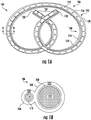
- FIG. 1A An embodiment of a drug delivery device 100 is illustrated in FIG. 1A .
- the device 100 includes a device body having a drug reservoir portion 102 and a retention frame portion 104.
- the device 100 is shown in a relatively expanded shape suited for retention in the body. Following deployment into the body, the device 100 may assume the relatively expanded shape to retain the drug delivery device in the body cavity or lumen.
- terms such as “relatively expanded shape”, “relatively higher-profile shape”, or “retention shape” generally denote any shape suited for retaining the device in the intended implantation location, including but not limited to the pretzel shape shown in FIG. 1A that is suited for retaining the device in the bladder.
- terms such as “relatively lower-profile shape” or “deployment shape” generally denote any shape suited for deploying the drug delivery device into the body, including a linear or elongated shape that is suited for deploying the device through the working channel of catheter, cystoscope, or other deployment instrument positioned in the urethra.
- the drug delivery device may naturally assume the relatively expanded shape and may be deformed, either manually or with the aid of an external apparatus, into the relatively lower-profile shape for insertion into the body. Once deployed the device may spontaneously or naturally return to the initial, relatively expanded shape for retention in the body.
- the drug reservoir and retention frame portions 102, 104 of the drug delivery device 100 are longitudinally aligned and are coupled to each other along their length, although other configurations are possible.
- the drug delivery device 100 includes an elastic or flexible device body 106 that defines a drug reservoir lumen 108 (i.e., the drug housing) and a retention frame lumen 110.
- the drug reservoir lumen 108 is designed to house a drug formulation that comprises the oxaliplatin.
- the drug formulation in the form of a number of solid drug tablets 112.
- the retention frame lumen 110 is designed to house a retention frame 114 to form the retention frame portion 104.
- the illustrated lumens 108, 110 are discrete from each other, although other configurations are possible.
- the device body 106 includes a tube or wall 122 that defines the drug reservoir lumen 108 and a tube or wall 124 that defines the retention frame lumen 110.
- the tubes 122, 124 and lumens 108, 110 can be substantially cylindrical, with the drug reservoir lumen 108 having a relatively larger diameter than the retention frame lumen 110, although other configurations can be selected based on, for example, the amount of drug to be delivered, the diameter of the retention frame, and deployment considerations such as the inner diameter of the deployment instrument.
- the wall 124 that defines the retention frame lumen 110 may extend along the entire length of the wall 122 that defines the drug reservoir lumen 108, so that the retention frame lumen 110 has the same length as the drug reservoir lumen 108 as shown, although one wall may be shorter than the other wall in other embodiments.
- the two walls 122, 124 are attached along the entire length of the device in the illustrated embodiment, although intermittent attachment can be employed.
- the drug reservoir lumen 108 is loaded with a number of drug units 112 in a serial arrangement. Essentially any number of drug units may be used, for example, depending upon the sizes of the reservoir and the drug units.
- the drug reservoir lumen 108 includes a first end opening 130 and an opposed second end opening 132.
- restraining plugs 120 are disposed in the openings 130 and 132.
- the restraining plugs 120 in this embodiment, are cylindrical plugs secured into the entry 130 and the exit 132.
- the openings 130 and 132 are closed off with other structures or materials, which may, depending on the particular embodiments, include an aperture or a water- or drug-permeable wall to facilitate ingress or egress of water or drug during use.
- the retention frame lumen 110 is loaded with the retention frame 114, which may be an elastic wire.
- the retention frame 110 may be configured to return spontaneously to a retention shape, such as the illustrated example "pretzel" shape or another coiled shape, such as those disclosed in the applications previously incorporated.
- the retention frame 114 may retain the device 100 in the body, such as in the bladder.
- the retention frame 114 may have an elastic limit and modulus that allows the device 100 to be introduced into the body in a relatively lower-profile shape, permits the device 100 to return to the relatively expanded shape once inside the body, and impedes the device from assuming the relatively lower-profile shape within the body in response to expected forces, such as the hydrodynamic forces associated with contraction of the detrusor muscle and urination.
- expected forces such as the hydrodynamic forces associated with contraction of the detrusor muscle and urination.
- the device 100 may be retained in the body once implanted, limiting or prevent accidental expulsion.
- the material used to form the device body 106 may be elastic or flexible to permit moving the device 100 between deployment and retention shapes.
- the retention frame portion 104 may tend to lie inside the drug reservoir portion 102 as shown, although the retention frame portion 104 can be positioned inside, outside, above, or below the drug reservoir portion 102 in other cases.
- the material used to form the device body 106 may be water permeable so that solubilizing fluid (e.g., urine or other bodily fluid) can enter the drug reservoir portion 102 to solubilize the drug units 112 once the device is implanted.
- solubilizing fluid e.g., urine or other bodily fluid
- silicone or another biocompatible elastomeric material may be used.
- the device body may be formed, at least in part, of a water-impermeable material.
- FIG. 2A illustrates an implantable drug delivery device 200, which includes a drug reservoir 202 loaded with drug 212 and a retention structure that includes two filaments 220, 222 associated with a fastener 230.
- the drug reservoir 202 is an elongated tube that can be deformed between a relatively linear deployment shape, such as the shape shown in FIG. 2A , and a relatively circular retention shape, such as the shape shown in FIG. 2B .
- the drug 212 may be loaded in the tube in a flexible form, so that the drug reservoir 102 can be moved between the two shapes.
- the drug 212 may be a number of solid drug tablets, a liquid, or a gel.
- the filaments 220, 222 may be attached to opposite ends of the drug reservoir 202 and joined by the fastener 230.
- the fastener 230 can be adjusted to adjust the position of one filament 220 with reference to the other 222, thereby adjusting the position of one end of the drug reservoir 2102 with reference to the other end.
- the device 200 can assume the retention shape by adjusting the filaments 220, 222 to draw the ends of the drug reservoir 202 closer together, and thereafter the device 200 can be retained in the retention shape by preventing adjustment of the filaments 220, 222 with the fastener 230.
- the device 200 is manually adjusted into the retention shape by manually adjusting the filaments 220, 222 after the device 200 is inserted into the bladder.
- the fastener 230 is a cinch nut that permits shortening the portion of the filaments 220, 222 between the drug reservoir ends and the cinch nut, but prevents lengthening of these portions of the filaments 220, 222.
- the ends of the drug reservoir 202 can be drawn closer together by pulling one or both of the filaments 220, 222 through the cinch nut, causing the device 200 to assume the retention shape.
- the cinch nut prevents lengthening of the filaments 220, 222, retaining the device in the retention shape.
- manually adjusting the device 200 into the retention shape once implanted merely requires pulling one or both of the filaments 220, 222, although other fasteners 230 that require separate manipulation can be employed. Other fasteners may also be used.
- FIGS. 3A-3C Another embodiment of an intravesical drug delivery device is illustrated in FIGS. 3A-3C .
- the device includes a housing 300 having a single, continuous structure with multiple, discrete drug reservoir lumens 320 and optionally having at least one retention frame lumen 330 in which a retention frame 360 is disposed.
- Each drug reservoir lumen 320 has two defined openings, as shown in FIG. 3B , and is dimensioned to hold at least one solid drug unit 340.
- Solid drug unit 340 may be a drug tablet or capsule. In other embodiments not shown, each drug reservoir lumen has one defined opening.
- the housing may be formed of a flexible polymer, such as silicone.
- FIG. 3B is a cross-sectional view of the plane that bisects one of the drug reservoir lumens 320 of the housing shown in FIG. 3A along line 3B-3B.
- the monolithic housing 300 has two defined openings (350a, 350b) in its drug reservoir lumen 320 that expose both ends of the solid drug unit 340.
- the retention frame lumen 330 in this embodiment, is aligned parallel to the longitudinal axis of the housing and perpendicular to the drug reservoir lumen 320.
- FIG. 3C is a perspective view of a portion of the embodiment of the device 300 shown in FIG. 3A when the device is in its retention shape, which is taken when the retention frame 360 is disposed in the retention frame lumen 330.
- the drug reservoir lumens 320 and the retention frame 360 in the housing of this embodiment are oriented so that the drug reservoir lumens 320 are outside the retention frame's 360 arc.
- the housing in FIG. 3C can be rotated 180 degrees about the retention frame 360 to yield a configuration in which the drug reservoir lumens 320 are arranged within the retention frame's 360 arc.
- the devices provide sufficient direct contact between solid drug units and with urine surrounding the device when deployed and retained in the bladder.
- release of the drug from the device is controlled by erosion of an exposed portion of the surface of a solid drug unit, such that the rate of drug release from the drug delivery device may be directly proportional to and limited by the total exposed surface area of the solid drug units.
- FIGS. 4A and 4B One embodiment of inserting an intravesical device 400 for subsequent controlled release of the oxaliplatin into the bladder is shown in FIGS. 4A and 4B .
- the device 400 is shown assuming a retention shape as the device exits a deployment instrument 402.
- the deployment instrument 402 may be any suitable device. It may be a lumenal device, such as a catheter, urethral catheter, or cystoscope.
- the deployment instrument 402 may be a commercially available device or a device specially adapted for the present drug delivery devices.
- FIG. 4B illustrates the insertion of the device 400 into the bladder, wherein the adult male anatomy is shown by way of example.
- the deployment instrument 402 is inserted through the urethra to the bladder, and the device 400 may be passed from/through the deployment instrument 402, driven by a stylet or flow of lubricant or combination thereof until the device 400 exits into the bladder, and as shown is in a retention shape.
- the oxaliplatin may be released from the intravesical drug delivery device by diffusion to through a wall of the drug housing, by diffusion to through one or more defined apertures in a wall of the drug housing, by osmotic pressure through an aperture in the drug housing, by erosion of a drug formulation in contact with urine in the bladder, or by a combination thereof.
- the device comprises a drug in a solid form
- elution of drug from the device occurs following dissolution of the drug within the device. Bodily fluid enters the device, contacts the drug and solubilizes the drug, and thereafter the dissolved drug diffuses from the device or flows from the device under osmotic pressure or via diffusion.
- the drug may be solubilized upon contact with urine in cases in which the device is implanted in the bladder.
- the intravesical device may release oxaliplatin continuously or intermittent to achieve a therapeutically effective concentration of oxaliplatin in the bladder tissue over a sustained period, e.g., from 1 hour to 1 month, for example from 2 hours to 2 weeks, from 6 hours to 1 week, from 24 hours to 72 hours, etc.
- the device may be retrieved from the body, such as in cases in which the device is non-resorbable or otherwise needs to be removed.
- Retrieval devices for this purpose are known in the art or can be specially produced.
- the device also may be completely or partially bioresorbable, such that retrieval is unnecessary, as either the entire device is resorbed or the device sufficiently degrades for expulsion from the bladder during urination.
- the device may not be retrieved or resorbed until some of the drug, or preferably most or all of the drug, has been released. If needed, a new drug-loaded device may subsequently be implanted, during the same procedure as the retrieval or at a later time.
- a coating substance may be intravesically applied to the bladder wall, wherein the coating substance includes oxaliplatin and one or more excipient materials that promote adherance of the coating substance to the bladder wall and provides continuous controlled release of the drug over the treatment period.
- the coating substance may be a mucoadhesive formulation, such as gels, ointments, creams, films, emulsion gels, tablets, polymers, or a combination thereof.
- Mucoadhesive formulation polymers may include hydrogels or hydrophilic polymers, polycarbophil (i.e.
- Suitable celluloses include methyl cellulose (MC), carboxymethyl cellulose (CMC), hydroxypropyl cellulose (HPC), or combinations thereof.
- the coating substance may include a permeation enhancer.
- permeation enhancers include dimethyl sulfoxide (DMSO), sodium carboxymethyl cellulose (NaCMC), lipids, surfactants, or combinations thereof.
- a coating substance 500 may be deployed in the bladder 550 so that the coating substance 500 engages/adheres to the bladder wall 552.
- the coating substance 500 may be deployed in the bladder using a deployment instrument.
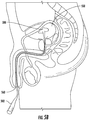
- FIG. 5B is a sagittal view of a male genitourinary system, illustrating a coating substance 500 being deployed through a deployment instrument 502 into the bladder 550.
- the coating substance 500 may be an embodiment of one of the coating substances described herein.
- the deployment instrument 502 is sized and shaped for passing through a urethra 560 of a patient to a bladder 550 as shown.
- the deployment instrument 502 may be a known device, such as a catheter or cystoscope, or a specially designed device.
- the deployment instrument 502 is used to deploy the coating substance 500 into the bladder and is subsequently removed from the body, leaving the coating substance 500 in the bladder. Once so inserted, the coating substance 500 releases the oxaliplatin into urine and the bladder wall.
- the study protocol was as follows: Cisplatin Carboplatin Group 1 24-hr perfusion via cannula to bladder dome 24-hr perfusion via cannula to bladder dome Group 2 72-hr perfusion via cannula to bladder dome 72-hr perfusion via cannula to bladder dome Group 3 Negative control - 72-hr perfusion via cannual to bladder dome Negative control - 72-hr perfusion via cannual to bladder dome Group 4 IV bolus with saline perfusion via cannula IV bolus with saline perfusion via cannula
- each test group included three male rats.
- the perfusate drug concentration was set to 0.3mg/mL and the perfusion rate used was 300 ⁇ L/hour over the test periods.
- Perfusion solutions were prepared by dissolving each drug substance into an appropriate volume of saline. The finals doses administered are summarized below.
- Animal # Compound Administration Route Amount Compound Administered via Perfusion Wt. (g) Actual Dose Administered (mg/kg) 1 (Group 1) Cisplatin Bladder Perf. 6.95 2.14 2 (Group 1) Cisplatin Bladder Perf. 6.88 2.12 3 (Group 1) Cisplatin Bladder Perf. 7.02 2.16 4 (Group 2) Cisplatin Bladder Perf. 20.44 6.30 5 (Group 2) Cisplatin Bladder Perf. 21.20 6.53 6 (Group 2) Cisplatin Bladder Perf.
- terminal blood samples were taken via the abdominal aorta, and the bladder, prostate, ureter, and kidney tissues were collected, weighed, and visually inspected for evidence of drug tolerability.
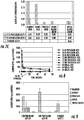
- FIG. 6 is a graph showing the blood profile for cisplatin.
- the 72 h group show rising blood levels suggesting degradation of the bladder lumen permitting increased tissue cisplatin uptake.
- FIGS. 7A and 7B are graphs showing cisplatin terminal concentrations in the various tissue and fluid samples. Significantly higher and more variable bladder platinum concentrations were observed following 72 hr perfusions when compared to 24 hr perfusions and were associated with the pronounced bladder tissue toxicities observed at necropsy. Individual 72 hr bladder concentration values were 12,000 ng/g, 60,000 ng/g and 160,000 ng/g.
- kidney to bladder platinum concentration ratio was the inverse of that observed following bladder perfusion. Kidney tissue concentration was highest, followed by the bladder concentration both of which were achieved at approximately half the plasma concentrations observed at 72 h. Increased bladder concentration observed following perfusion may reflect absorption by bladder from both systemic (blood) and urine (urinary clearance) of platinum (which is also supported by elevated kidney levels).
- FIG. 7C is another graph showing cisplatin terminal concentrations.
- the bladder:urine ratio was near 100% for the 72 h perfusion (tox).
- the bladder:urine ratio was 5% for the 24 h perfusion, which reflects cisplatnin partitioning when the urothelium is less damaged, exhibiting only mild to moderate erythema as observed in the 24hr necropsy results (Group 1).
- the bladder ratio was 66% at 72 hr for the IV bolus administration due to the long half-life of platinum compounds when administered systemically.
- FIG. 8 is a graph showing the blood profile for carboplatin. Observed plasma levels were near the limit of the assay detection (twice the limits of detection) to below the quantitation limit were observed for the perfusion groups.
- the IV bolus shows significant peak systemic platinum exposure followed by a sharp decay (faster clearance than observed with cisplatin). There was one quarter less carboplatin in the IV bolus terminal phase as compared with cisplatin.
- FIG. 9 is a graph showing carboplatin terminal concentrations in the various tissue and fluid samples. Note the scale difference compared to FIG. 6 . Carboplatin tissue levels were observed to be consistently less than those observed following cisplatin bladder perfusion. In the bladder, tissue concentrations were below the IC 50 of carboplatin. The findings suggest intravesical perfusion of carboplatin does not achieve therapeutic tissue platinum concentrations.
- oxaliplatin Clear solutions of oxaliplatin were prepared in saline vehicle.
- the perfusate formulation concentration was 0.308 mg/mL.
- Dose (mg/kg) was calculated as (Dose administered (g) x formulation concentration (mg/mL))/Animal Wt. (kg).
- the drug solutions were dosed over a 72-hour period into the non-fasted animal's bladder by intra-urinary bladder cannula using an infusion pump. This dose was selected based results observed with carboplatin and cisplatin.
- FIG. 10 compares the blood profiles for cisplatin, carboplatin, and oxaliplatin. Comparing these graphs, it was observed that oxaliplatin concentrations fell between cisplatin and carboplatin.
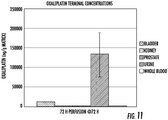
- FIGS. 11 graphs of the terminal bladder concentrations for oxaliplatin.
- Oxaliplatin data showed a bladder:urine ratio of 10%. No appreciable platinum concentration was observed in the kidney or prostate.
- FIGS. 12A and 12B compare bladder platinum concentrations following cisplatin, carboplatin and oxaliplatin bladder perfusion. Surprisingly, oxaliplatin exhibited significant platinum bladder concentrations compared to the trends observed following cisplatin and carboplatin. Comparatively low blood and kidney platinum concentrations were observed in contrast to cisplatin. In comparison to carboplatin, high bladder platinum concentrations were associated with comparably low platinum levels in the blood.
Landscapes
- Health & Medical Sciences (AREA)
- Life Sciences & Earth Sciences (AREA)
- Public Health (AREA)
- Veterinary Medicine (AREA)
- Animal Behavior & Ethology (AREA)
- General Health & Medical Sciences (AREA)
- Chemical & Material Sciences (AREA)
- Medicinal Chemistry (AREA)
- Pharmacology & Pharmacy (AREA)
- Epidemiology (AREA)
- Engineering & Computer Science (AREA)
- Bioinformatics & Cheminformatics (AREA)
- Heart & Thoracic Surgery (AREA)
- Biomedical Technology (AREA)
- Anesthesiology (AREA)
- Hematology (AREA)
- Urology & Nephrology (AREA)
- Nuclear Medicine, Radiotherapy & Molecular Imaging (AREA)
- Organic Chemistry (AREA)
- Chemical Kinetics & Catalysis (AREA)
- General Chemical & Material Sciences (AREA)
- Reproductive Health (AREA)
- Gynecology & Obstetrics (AREA)
- Molecular Biology (AREA)
- Acyclic And Carbocyclic Compounds In Medicinal Compositions (AREA)
- Medicinal Preparation (AREA)
- Infusion, Injection, And Reservoir Apparatuses (AREA)
- Medicines That Contain Protein Lipid Enzymes And Other Medicines (AREA)
- Pharmaceuticals Containing Other Organic And Inorganic Compounds (AREA)
- Nanotechnology (AREA)
Priority Applications (5)
| Application Number | Priority Date | Filing Date | Title |
|---|---|---|---|
| SM20220010T SMT202200010T1 (it) | 2012-08-31 | 2013-09-03 | Sistemi di somministrazione di farmaco e metodi per trattamento di cancro della vescica comprendente oxaliplatino |
| RS20220054A RS62875B1 (sr) | 2012-08-31 | 2013-09-03 | Sistemi isporuke lekova i metode za lečenje raka bešike koji sadrže oksaliplatin |
| HRP20211921TT HRP20211921T1 (hr) | 2012-08-31 | 2013-09-03 | Sustavi isporuke lijeka i postupci za liječenje raka mokraćnog mjehura s oksaliplatinom |
| PL13765839T PL2890384T3 (pl) | 2012-08-31 | 2013-09-03 | Układy podawania leku i sposoby leczenia raka pęcherza obejmujące oksaliplatynę |
| SI201331961T SI2890384T1 (sl) | 2012-08-31 | 2013-09-03 | Sistemi za dostavo zdravila in postopki za zdravljenje raka sečnega mehurja, ki obsegajo oksaliplatin |
Applications Claiming Priority (2)
| Application Number | Priority Date | Filing Date | Title |
|---|---|---|---|
| US201261696027P | 2012-08-31 | 2012-08-31 | |
| PCT/US2013/057836 WO2014036555A1 (en) | 2012-08-31 | 2013-09-03 | Drug delivery systems and methods for treatment of bladder cancer comprising oxaliplatin |
Publications (2)
| Publication Number | Publication Date |
|---|---|
| EP2890384A1 EP2890384A1 (en) | 2015-07-08 |
| EP2890384B1 true EP2890384B1 (en) | 2021-11-03 |
Family
ID=49226511
Family Applications (1)
| Application Number | Title | Priority Date | Filing Date |
|---|---|---|---|
| EP13765839.9A Active EP2890384B1 (en) | 2012-08-31 | 2013-09-03 | Drug delivery systems and methods for treatment of bladder cancer comprising oxaliplatin |
Country Status (25)
| Country | Link |
|---|---|
| US (2) | US10543346B2 (da) |
| EP (1) | EP2890384B1 (da) |
| JP (1) | JP6463266B2 (da) |
| KR (1) | KR102157548B1 (da) |
| CN (1) | CN104640549B (da) |
| AU (1) | AU2013308464B2 (da) |
| BR (1) | BR112015003836A2 (da) |
| CA (1) | CA2882319C (da) |
| CY (1) | CY1124890T1 (da) |
| DK (1) | DK2890384T3 (da) |
| ES (1) | ES2902833T3 (da) |
| HR (1) | HRP20211921T1 (da) |
| HU (1) | HUE056976T2 (da) |
| IL (1) | IL237281B (da) |
| IN (1) | IN2015DN01561A (da) |
| LT (1) | LT2890384T (da) |
| MX (1) | MX365688B (da) |
| PL (1) | PL2890384T3 (da) |
| PT (1) | PT2890384T (da) |
| RS (1) | RS62875B1 (da) |
| RU (1) | RU2657591C2 (da) |
| SG (1) | SG11201501424SA (da) |
| SI (1) | SI2890384T1 (da) |
| SM (1) | SMT202200010T1 (da) |
| WO (1) | WO2014036555A1 (da) |
Families Citing this family (13)
| Publication number | Priority date | Publication date | Assignee | Title |
|---|---|---|---|---|
| US8721621B2 (en) | 2009-09-10 | 2014-05-13 | Taris Biomedical, Inc. | Systems and methods for deploying devices to genitourinary sites |
| AU2013308465B2 (en) | 2012-08-31 | 2018-05-17 | Taris Biomedical Llc | Drug delivery systems and methods for treatment of prostate disease comprising gemicitabine |
| US20150250717A1 (en) | 2014-03-06 | 2015-09-10 | Taris Biomedical Llc | Drug delivery systems and methods for treatment of bladder cancer with gemcitabine |
| EP3797768A1 (en) | 2014-06-23 | 2021-03-31 | Placon Therapeutics, Inc. | Maleimide-functionalised platinum for use in the treatment of cancer |
| PT3865484T (pt) | 2015-07-07 | 2024-01-30 | H Lundbeck As | Inibidor da pde9 com esqueleto de imidazo pirazinona para tratamento de doenças periféricas |
| CN118453872A (zh) | 2016-05-06 | 2024-08-09 | 塔里斯生物医药公司 | 治疗下尿路尿道上皮癌的方法 |
| MX2018016127A (es) | 2016-07-06 | 2019-05-30 | Imara Inc | Inhibidores de pde9 para el tratamiento de enfermedades perifericas. |
| CN115746003B (zh) | 2017-05-26 | 2024-08-09 | 卡都瑞恩医药公司 | 制备和使用pde9抑制剂的方法 |
| SG10201913998YA (en) | 2017-07-25 | 2020-03-30 | Taris Biomedical Llc | Methods of treating tumor metastasis |
| IL302714B1 (en) | 2017-11-08 | 2026-01-01 | Taris Biomedical Llc | Methods for treating and maintaining bladder cancer using gemcitabine |
| CA3100988A1 (en) | 2018-05-25 | 2019-11-28 | Imara Inc. | Monohydrate and crystalline forms of 6-[(3s,4s)-4-methyl-1-(pyrimidin-2-ylmethyl)pyrrolidin-3-yl]-3-tetrahydropyran-4-yl-7h-imidazo[1,5-a]pyrazin-8-one |
| CN112839653A (zh) * | 2018-08-01 | 2021-05-25 | 塔里斯生物医药公司 | 使用曲司氯铵治疗膀胱过度活动症的方法 |
| CA3110680A1 (en) | 2018-08-31 | 2020-03-05 | Imara Inc. | Pde9 inhibitors for treating sickle cell disease |
Family Cites Families (20)
| Publication number | Priority date | Publication date | Assignee | Title |
|---|---|---|---|---|
| US6171298B1 (en) | 1996-05-03 | 2001-01-09 | Situs Corporation | Intravesical infuser |
| WO2009139984A2 (en) | 2008-04-04 | 2009-11-19 | Lipella Pharmaceuticals, Inc. | Method of treatment for bladder dysfunction |
| US20040260272A1 (en) | 2002-10-22 | 2004-12-23 | Friedman Craig D. | Method and system for intravesicular delivery of therapeutic agents |
| MXPA06013997A (es) * | 2004-06-03 | 2007-02-08 | Hoffmann La Roche | Tratamiento con oxaliplatino y un inhibidor de la quinasa del receptor del factor de crecimiento epidermal (egfr). |
| US8361490B2 (en) | 2004-09-16 | 2013-01-29 | Theracoat Ltd. | Biocompatible drug delivery apparatus and methods |
| JP5265359B2 (ja) | 2005-08-11 | 2013-08-14 | マサチューセッツ インスティテュート オブ テクノロジー | 膀胱内薬物送達デバイスおよび方法 |
| US9586035B2 (en) | 2007-12-11 | 2017-03-07 | Massachusetts Institute Of Technology | Implantable drug delivery device and methods for treatment of the bladder and other body vesicles or lumens |
| JP2011528275A (ja) * | 2008-07-17 | 2011-11-17 | ミセル テクノロジーズ,インク. | 薬物送達医療デバイス |
| EA201170297A1 (ru) | 2008-08-09 | 2011-08-30 | Массачусетс Инститьют Оф Текнолоджи | Имплантируемое устройство для доставки лекарственных средств и способ лечения мужской мочеполовой системы и окружающих тканей |
| CN102470237A (zh) * | 2009-06-26 | 2012-05-23 | 塔里斯生物医药公司 | 用于可植入药物递送装置的固体药物片剂 |
| US9017312B2 (en) | 2009-09-10 | 2015-04-28 | Taris Biomedical Llc | Implantable device for controlled drug delivery |
| PL3884988T3 (pl) | 2009-12-17 | 2025-09-08 | Taris Biomedical Llc | Urządzenie implantowalne z tolerancją wewnątrzpęcherzową |
| JP5945544B2 (ja) | 2010-10-06 | 2016-07-05 | タリス バイオメディカル エルエルシー | 時間選択的に生体吸収可能または崩壊可能な薬剤送達システムおよび方法 |
| WO2012065044A2 (en) | 2010-11-12 | 2012-05-18 | Purdue Research Foundation | Treating bladder tumor cells using fibronectin attachment protein as a target |
| US9114111B2 (en) | 2011-01-10 | 2015-08-25 | Allergan, Inc. | Methods for sustained treatment of bladder pain and irritative voiding |
| AU2012211960B2 (en) * | 2011-02-04 | 2016-12-01 | Taris Biomedical Llc | Implantable device for controlled release of low solubility drug |
| AU2013308465B2 (en) | 2012-08-31 | 2018-05-17 | Taris Biomedical Llc | Drug delivery systems and methods for treatment of prostate disease comprising gemicitabine |
| BR112015005351A2 (pt) | 2012-09-18 | 2017-07-04 | Taris Biomedical Llc | sistemas para distribuição de drogas e métodos para tratamento de disfunção de esvaziamento da bexiga e outros distúrbios do trato urinário inferior |
| PT2968880T (pt) | 2013-03-15 | 2025-07-07 | Taris Biomedical Llc | Dispositivos de aplicação de fármaco com componente permeável a fármaco |
| CN113413393B (zh) | 2013-08-19 | 2025-03-04 | 塔里斯生物医药公司 | 多单元药物递送装置和方法 |
-
2013
- 2013-09-03 JP JP2015530138A patent/JP6463266B2/ja not_active Expired - Fee Related
- 2013-09-03 SM SM20220010T patent/SMT202200010T1/it unknown
- 2013-09-03 RS RS20220054A patent/RS62875B1/sr unknown
- 2013-09-03 KR KR1020157007349A patent/KR102157548B1/ko not_active Expired - Fee Related
- 2013-09-03 PT PT137658399T patent/PT2890384T/pt unknown
- 2013-09-03 WO PCT/US2013/057836 patent/WO2014036555A1/en not_active Ceased
- 2013-09-03 EP EP13765839.9A patent/EP2890384B1/en active Active
- 2013-09-03 BR BR112015003836A patent/BR112015003836A2/pt not_active Application Discontinuation
- 2013-09-03 CN CN201380044244.3A patent/CN104640549B/zh not_active Expired - Fee Related
- 2013-09-03 DK DK13765839.9T patent/DK2890384T3/da active
- 2013-09-03 SG SG11201501424SA patent/SG11201501424SA/en unknown
- 2013-09-03 ES ES13765839T patent/ES2902833T3/es active Active
- 2013-09-03 SI SI201331961T patent/SI2890384T1/sl unknown
- 2013-09-03 HR HRP20211921TT patent/HRP20211921T1/hr unknown
- 2013-09-03 HU HUE13765839A patent/HUE056976T2/hu unknown
- 2013-09-03 LT LTEPPCT/US2013/057836T patent/LT2890384T/lt unknown
- 2013-09-03 RU RU2015109296A patent/RU2657591C2/ru active
- 2013-09-03 CA CA2882319A patent/CA2882319C/en active Active
- 2013-09-03 MX MX2015002325A patent/MX365688B/es active IP Right Grant
- 2013-09-03 AU AU2013308464A patent/AU2013308464B2/en not_active Ceased
- 2013-09-03 PL PL13765839T patent/PL2890384T3/pl unknown
-
2015
- 2015-02-17 IL IL237281A patent/IL237281B/en active IP Right Grant
- 2015-02-23 US US14/628,900 patent/US10543346B2/en not_active Expired - Fee Related
- 2015-02-25 IN IN1561DEN2015 patent/IN2015DN01561A/en unknown
-
2019
- 2019-12-16 US US16/715,857 patent/US11007355B2/en not_active Expired - Fee Related
-
2022
- 2022-01-05 CY CY20221100014T patent/CY1124890T1/el unknown
Non-Patent Citations (1)
| Title |
|---|
| None * |
Also Published As
Similar Documents
| Publication | Publication Date | Title |
|---|---|---|
| US11007355B2 (en) | Drug delivery devices and methods for treatment of bladder cancer with oxaliplatin | |
| US20200108057A1 (en) | Drug delivery systems and methods for treatment of bladder dysfunction or disorder using trospium | |
| US10406335B2 (en) | Drug delivery systems and methods for treatment of prostate | |
| HK40042011A (en) | Drug delivery systems and methods for treatment of prostate | |
| HK40026424A (en) | Drug delivery systems and methods for treatment of bladder voiding dysfunction and other lower urinary tract disorders by using trospium |
Legal Events
| Date | Code | Title | Description |
|---|---|---|---|
| REG | Reference to a national code |
Ref country code: HR Ref legal event code: TUEP Ref document number: P20211921 Country of ref document: HR |
|
| PUAI | Public reference made under article 153(3) epc to a published international application that has entered the european phase |
Free format text: ORIGINAL CODE: 0009012 |
|
| 17P | Request for examination filed |
Effective date: 20150303 |
|
| AK | Designated contracting states |
Kind code of ref document: A1 Designated state(s): AL AT BE BG CH CY CZ DE DK EE ES FI FR GB GR HR HU IE IS IT LI LT LU LV MC MK MT NL NO PL PT RO RS SE SI SK SM TR |
|
| AX | Request for extension of the european patent |
Extension state: BA ME |
|
| DAX | Request for extension of the european patent (deleted) | ||
| STAA | Information on the status of an ep patent application or granted ep patent |
Free format text: STATUS: EXAMINATION IS IN PROGRESS |
|
| 17Q | First examination report despatched |
Effective date: 20180619 |
|
| RAP1 | Party data changed (applicant data changed or rights of an application transferred) |
Owner name: TARIS BIOMEDICAL LLC |
|
| GRAP | Despatch of communication of intention to grant a patent |
Free format text: ORIGINAL CODE: EPIDOSNIGR1 |
|
| STAA | Information on the status of an ep patent application or granted ep patent |
Free format text: STATUS: GRANT OF PATENT IS INTENDED |
|
| RIC1 | Information provided on ipc code assigned before grant |
Ipc: A61K 31/555 20060101AFI20210415BHEP Ipc: A61K 9/00 20060101ALI20210415BHEP Ipc: A61M 31/00 20060101ALI20210415BHEP Ipc: A61P 13/10 20060101ALI20210415BHEP Ipc: A61P 35/00 20060101ALI20210415BHEP |
|
| INTG | Intention to grant announced |
Effective date: 20210519 |
|
| GRAS | Grant fee paid |
Free format text: ORIGINAL CODE: EPIDOSNIGR3 |
|
| GRAA | (expected) grant |
Free format text: ORIGINAL CODE: 0009210 |
|
| STAA | Information on the status of an ep patent application or granted ep patent |
Free format text: STATUS: THE PATENT HAS BEEN GRANTED |
|
| AK | Designated contracting states |
Kind code of ref document: B1 Designated state(s): AL AT BE BG CH CY CZ DE DK EE ES FI FR GB GR HR HU IE IS IT LI LT LU LV MC MK MT NL NO PL PT RO RS SE SI SK SM TR |
|
| REG | Reference to a national code |
Ref country code: GB Ref legal event code: FG4D |
|
| REG | Reference to a national code |
Ref country code: AT Ref legal event code: REF Ref document number: 1443371 Country of ref document: AT Kind code of ref document: T Effective date: 20211115 Ref country code: CH Ref legal event code: EP |
|
| REG | Reference to a national code |
Ref country code: DE Ref legal event code: R096 Ref document number: 602013079898 Country of ref document: DE |
|
| REG | Reference to a national code |
Ref country code: IE Ref legal event code: FG4D |
|
| REG | Reference to a national code |
Ref country code: DK Ref legal event code: T3 Effective date: 20220104 |
|
| REG | Reference to a national code |
Ref country code: FI Ref legal event code: FGE |
|
| REG | Reference to a national code |
Ref country code: PT Ref legal event code: SC4A Ref document number: 2890384 Country of ref document: PT Date of ref document: 20220121 Kind code of ref document: T Free format text: AVAILABILITY OF NATIONAL TRANSLATION Effective date: 20220112 |
|
| REG | Reference to a national code |
Ref country code: NL Ref legal event code: FP |
|
| REG | Reference to a national code |
Ref country code: SE Ref legal event code: TRGR |
|
| REG | Reference to a national code |
Ref country code: NO Ref legal event code: T2 Effective date: 20211103 |
|
| REG | Reference to a national code |
Ref country code: GR Ref legal event code: EP Ref document number: 20220400022 Country of ref document: GR Effective date: 20220211 |
|
| REG | Reference to a national code |
Ref country code: HR Ref legal event code: T1PR Ref document number: P20211921 Country of ref document: HR |
|
| REG | Reference to a national code |
Ref country code: SK Ref legal event code: T3 Ref document number: E 38989 Country of ref document: SK |
|
| REG | Reference to a national code |
Ref country code: EE Ref legal event code: FG4A Ref document number: E021864 Country of ref document: EE Effective date: 20220111 |
|
| REG | Reference to a national code |
Ref country code: ES Ref legal event code: FG2A Ref document number: 2902833 Country of ref document: ES Kind code of ref document: T3 Effective date: 20220330 |
|
| REG | Reference to a national code |
Ref country code: HU Ref legal event code: AG4A Ref document number: E056976 Country of ref document: HU |
|
| REG | Reference to a national code |
Ref country code: DE Ref legal event code: R097 Ref document number: 602013079898 Country of ref document: DE |
|
| PLBE | No opposition filed within time limit |
Free format text: ORIGINAL CODE: 0009261 |
|
| STAA | Information on the status of an ep patent application or granted ep patent |
Free format text: STATUS: NO OPPOSITION FILED WITHIN TIME LIMIT |
|
| PGFP | Annual fee paid to national office [announced via postgrant information from national office to epo] |
Ref country code: NL Payment date: 20220819 Year of fee payment: 10 |
|
| REG | Reference to a national code |
Ref country code: HR Ref legal event code: ODRP Ref document number: P20211921 Country of ref document: HR Payment date: 20220901 Year of fee payment: 10 |
|
| 26N | No opposition filed |
Effective date: 20220804 |
|
| PGFP | Annual fee paid to national office [announced via postgrant information from national office to epo] |
Ref country code: TR Payment date: 20220901 Year of fee payment: 10 Ref country code: SM Payment date: 20220831 Year of fee payment: 10 Ref country code: SK Payment date: 20220815 Year of fee payment: 10 Ref country code: SE Payment date: 20220811 Year of fee payment: 10 Ref country code: RO Payment date: 20220829 Year of fee payment: 10 Ref country code: PT Payment date: 20220901 Year of fee payment: 10 Ref country code: LU Payment date: 20220826 Year of fee payment: 10 Ref country code: LT Payment date: 20220823 Year of fee payment: 10 Ref country code: IT Payment date: 20220811 Year of fee payment: 10 Ref country code: IE Payment date: 20220809 Year of fee payment: 10 Ref country code: HR Payment date: 20220901 Year of fee payment: 10 Ref country code: GB Payment date: 20220728 Year of fee payment: 10 Ref country code: EE Payment date: 20220803 Year of fee payment: 10 Ref country code: DE Payment date: 20220609 Year of fee payment: 10 Ref country code: CZ Payment date: 20220818 Year of fee payment: 10 Ref country code: BG Payment date: 20220818 Year of fee payment: 10 Ref country code: AT Payment date: 20220825 Year of fee payment: 10 |
|
| PGFP | Annual fee paid to national office [announced via postgrant information from national office to epo] |
Ref country code: SI Payment date: 20220815 Year of fee payment: 10 Ref country code: RS Payment date: 20220810 Year of fee payment: 10 Ref country code: PL Payment date: 20220809 Year of fee payment: 10 Ref country code: MC Payment date: 20220826 Year of fee payment: 10 Ref country code: LV Payment date: 20220803 Year of fee payment: 10 Ref country code: IS Payment date: 20220816 Year of fee payment: 10 Ref country code: HU Payment date: 20220816 Year of fee payment: 10 Ref country code: GR Payment date: 20220816 Year of fee payment: 10 Ref country code: FR Payment date: 20220808 Year of fee payment: 10 Ref country code: BE Payment date: 20220819 Year of fee payment: 10 |
|
| PGFP | Annual fee paid to national office [announced via postgrant information from national office to epo] |
Ref country code: ES Payment date: 20221005 Year of fee payment: 10 Ref country code: CY Payment date: 20220805 Year of fee payment: 10 |
|
| PGFP | Annual fee paid to national office [announced via postgrant information from national office to epo] |
Ref country code: CH Payment date: 20221001 Year of fee payment: 10 |
|
| REG | Reference to a national code |
Ref country code: AT Ref legal event code: UEP Ref document number: 1443371 Country of ref document: AT Kind code of ref document: T Effective date: 20211103 |
|
| PGFP | Annual fee paid to national office [announced via postgrant information from national office to epo] |
Ref country code: MK Payment date: 20220809 Year of fee payment: 10 Ref country code: AL Payment date: 20220908 Year of fee payment: 10 |
|
| REG | Reference to a national code |
Ref country code: NO Ref legal event code: MMEP |
|
| PG25 | Lapsed in a contracting state [announced via postgrant information from national office to epo] |
Ref country code: FI Free format text: LAPSE BECAUSE OF NON-PAYMENT OF DUE FEES Effective date: 20220903 |
|
| REG | Reference to a national code |
Ref country code: DK Ref legal event code: EBP Effective date: 20220930 |
|
| PG25 | Lapsed in a contracting state [announced via postgrant information from national office to epo] |
Ref country code: NO Free format text: LAPSE BECAUSE OF NON-PAYMENT OF DUE FEES Effective date: 20220930 |
|
| PG25 | Lapsed in a contracting state [announced via postgrant information from national office to epo] |
Ref country code: DK Free format text: LAPSE BECAUSE OF NON-PAYMENT OF DUE FEES Effective date: 20220930 |
|
| REG | Reference to a national code |
Ref country code: HR Ref legal event code: PBON Ref document number: P20211921 Country of ref document: HR Effective date: 20230903 |
|
| REG | Reference to a national code |
Ref country code: LT Ref legal event code: MM4D Effective date: 20230903 |
|
| REG | Reference to a national code |
Ref country code: DE Ref legal event code: R119 Ref document number: 602013079898 Country of ref document: DE |
|
| PG25 | Lapsed in a contracting state [announced via postgrant information from national office to epo] |
Ref country code: LT Free format text: LAPSE BECAUSE OF NON-PAYMENT OF DUE FEES Effective date: 20230903 |
|
| REG | Reference to a national code |
Ref country code: EE Ref legal event code: MM4A Ref document number: E021864 Country of ref document: EE Effective date: 20230930 |
|
| REG | Reference to a national code |
Ref country code: SK Ref legal event code: MM4A Ref document number: E 38989 Country of ref document: SK Effective date: 20230903 |
|
| PG25 | Lapsed in a contracting state [announced via postgrant information from national office to epo] |
Ref country code: RO Free format text: LAPSE BECAUSE OF NON-PAYMENT OF DUE FEES Effective date: 20230903 Ref country code: LT Free format text: LAPSE BECAUSE OF NON-PAYMENT OF DUE FEES Effective date: 20230903 Ref country code: CZ Free format text: LAPSE BECAUSE OF NON-PAYMENT OF DUE FEES Effective date: 20230903 Ref country code: CY Free format text: LAPSE BECAUSE OF NON-PAYMENT OF DUE FEES Effective date: 20230903 Ref country code: BG Free format text: LAPSE BECAUSE OF NON-PAYMENT OF DUE FEES Effective date: 20240331 Ref country code: PT Free format text: LAPSE BECAUSE OF NON-PAYMENT OF DUE FEES Effective date: 20240304 Ref country code: SK Free format text: LAPSE BECAUSE OF NON-PAYMENT OF DUE FEES Effective date: 20230903 |
|
| REG | Reference to a national code |
Ref country code: CH Ref legal event code: PL Ref country code: SE Ref legal event code: EUG |
|
| PG25 | Lapsed in a contracting state [announced via postgrant information from national office to epo] |
Ref country code: SI Free format text: LAPSE BECAUSE OF NON-PAYMENT OF DUE FEES Effective date: 20230904 |
|
| REG | Reference to a national code |
Ref country code: NL Ref legal event code: MM Effective date: 20231001 |
|
| REG | Reference to a national code |
Ref country code: AT Ref legal event code: MM01 Ref document number: 1443371 Country of ref document: AT Kind code of ref document: T Effective date: 20230903 |
|
| PG25 | Lapsed in a contracting state [announced via postgrant information from national office to epo] |
Ref country code: LU Free format text: LAPSE BECAUSE OF NON-PAYMENT OF DUE FEES Effective date: 20230903 |
|
| REG | Reference to a national code |
Ref country code: BE Ref legal event code: MM Effective date: 20230930 |
|
| GBPC | Gb: european patent ceased through non-payment of renewal fee |
Effective date: 20230903 |
|
| PG25 | Lapsed in a contracting state [announced via postgrant information from national office to epo] |
Ref country code: SI Free format text: LAPSE BECAUSE OF NON-PAYMENT OF DUE FEES Effective date: 20230904 Ref country code: RS Free format text: LAPSE BECAUSE OF NON-PAYMENT OF DUE FEES Effective date: 20230903 Ref country code: LV Free format text: LAPSE BECAUSE OF NON-PAYMENT OF DUE FEES Effective date: 20230903 Ref country code: LU Free format text: LAPSE BECAUSE OF NON-PAYMENT OF DUE FEES Effective date: 20230903 Ref country code: HR Free format text: LAPSE BECAUSE OF NON-PAYMENT OF DUE FEES Effective date: 20230903 Ref country code: MC Free format text: LAPSE BECAUSE OF NON-PAYMENT OF DUE FEES Effective date: 20231002 |
|
| PG25 | Lapsed in a contracting state [announced via postgrant information from national office to epo] |
Ref country code: NL Free format text: LAPSE BECAUSE OF NON-PAYMENT OF DUE FEES Effective date: 20231001 |
|
| PG25 | Lapsed in a contracting state [announced via postgrant information from national office to epo] |
Ref country code: NL Free format text: LAPSE BECAUSE OF NON-PAYMENT OF DUE FEES Effective date: 20231001 |
|
| REG | Reference to a national code |
Ref country code: SI Ref legal event code: KO00 Effective date: 20240429 |
|
| REG | Reference to a national code |
Ref country code: IE Ref legal event code: MM4A |
|
| PG25 | Lapsed in a contracting state [announced via postgrant information from national office to epo] |
Ref country code: IE Free format text: LAPSE BECAUSE OF NON-PAYMENT OF DUE FEES Effective date: 20230903 |
|
| PG25 | Lapsed in a contracting state [announced via postgrant information from national office to epo] |
Ref country code: GB Free format text: LAPSE BECAUSE OF NON-PAYMENT OF DUE FEES Effective date: 20230903 |
|
| PG25 | Lapsed in a contracting state [announced via postgrant information from national office to epo] |
Ref country code: GR Free format text: LAPSE BECAUSE OF NON-PAYMENT OF DUE FEES Effective date: 20240408 |
|
| PG25 | Lapsed in a contracting state [announced via postgrant information from national office to epo] |
Ref country code: CH Free format text: LAPSE BECAUSE OF NON-PAYMENT OF DUE FEES Effective date: 20230930 |
|
| PG25 | Lapsed in a contracting state [announced via postgrant information from national office to epo] |
Ref country code: AT Free format text: LAPSE BECAUSE OF NON-PAYMENT OF DUE FEES Effective date: 20230903 |
|
| PG25 | Lapsed in a contracting state [announced via postgrant information from national office to epo] |
Ref country code: SM Free format text: LAPSE BECAUSE OF NON-PAYMENT OF DUE FEES Effective date: 20240404 Ref country code: IE Free format text: LAPSE BECAUSE OF NON-PAYMENT OF DUE FEES Effective date: 20230903 Ref country code: GR Free format text: LAPSE BECAUSE OF NON-PAYMENT OF DUE FEES Effective date: 20240408 Ref country code: GB Free format text: LAPSE BECAUSE OF NON-PAYMENT OF DUE FEES Effective date: 20230903 Ref country code: FR Free format text: LAPSE BECAUSE OF NON-PAYMENT OF DUE FEES Effective date: 20230930 Ref country code: EE Free format text: LAPSE BECAUSE OF NON-PAYMENT OF DUE FEES Effective date: 20230930 Ref country code: DE Free format text: LAPSE BECAUSE OF NON-PAYMENT OF DUE FEES Effective date: 20240403 Ref country code: CH Free format text: LAPSE BECAUSE OF NON-PAYMENT OF DUE FEES Effective date: 20230930 Ref country code: AT Free format text: LAPSE BECAUSE OF NON-PAYMENT OF DUE FEES Effective date: 20230903 |
|
| PG25 | Lapsed in a contracting state [announced via postgrant information from national office to epo] |
Ref country code: SE Free format text: LAPSE BECAUSE OF NON-PAYMENT OF DUE FEES Effective date: 20230904 Ref country code: HU Free format text: LAPSE BECAUSE OF NON-PAYMENT OF DUE FEES Effective date: 20230904 Ref country code: BE Free format text: LAPSE BECAUSE OF NON-PAYMENT OF DUE FEES Effective date: 20230930 |
|
| PG25 | Lapsed in a contracting state [announced via postgrant information from national office to epo] |
Ref country code: MT Free format text: LAPSE BECAUSE OF FAILURE TO SUBMIT A TRANSLATION OF THE DESCRIPTION OR TO PAY THE FEE WITHIN THE PRESCRIBED TIME-LIMIT Effective date: 20211103 |
|
| REG | Reference to a national code |
Ref country code: ES Ref legal event code: FD2A Effective date: 20241028 |
|
| PG25 | Lapsed in a contracting state [announced via postgrant information from national office to epo] |
Ref country code: IT Free format text: LAPSE BECAUSE OF NON-PAYMENT OF DUE FEES Effective date: 20230903 |
|
| PG25 | Lapsed in a contracting state [announced via postgrant information from national office to epo] |
Ref country code: IT Free format text: LAPSE BECAUSE OF NON-PAYMENT OF DUE FEES Effective date: 20230903 |
|
| PG25 | Lapsed in a contracting state [announced via postgrant information from national office to epo] |
Ref country code: ES Free format text: LAPSE BECAUSE OF NON-PAYMENT OF DUE FEES Effective date: 20230904 |
|
| PG25 | Lapsed in a contracting state [announced via postgrant information from national office to epo] |
Ref country code: ES Free format text: LAPSE BECAUSE OF NON-PAYMENT OF DUE FEES Effective date: 20230904 |
|
| PG25 | Lapsed in a contracting state [announced via postgrant information from national office to epo] |
Ref country code: PL Free format text: LAPSE BECAUSE OF NON-PAYMENT OF DUE FEES Effective date: 20230903 |
|
| PG25 | Lapsed in a contracting state [announced via postgrant information from national office to epo] |
Ref country code: IS Free format text: LAPSE BECAUSE OF NON-PAYMENT OF DUE FEES Effective date: 20240405 |