EP2889387A1 - Ni-based alloy having excellent hydrogen embrittlement resistance, and method for producing ni-based alloy material - Google Patents
Ni-based alloy having excellent hydrogen embrittlement resistance, and method for producing ni-based alloy material Download PDFInfo
- Publication number
- EP2889387A1 EP2889387A1 EP13831112.1A EP13831112A EP2889387A1 EP 2889387 A1 EP2889387 A1 EP 2889387A1 EP 13831112 A EP13831112 A EP 13831112A EP 2889387 A1 EP2889387 A1 EP 2889387A1
- Authority
- EP
- European Patent Office
- Prior art keywords
- based alloy
- hydrogen
- hydrogen embrittlement
- temperature
- ppm
- Prior art date
- Legal status (The legal status is an assumption and is not a legal conclusion. Google has not performed a legal analysis and makes no representation as to the accuracy of the status listed.)
- Granted
Links
Images

Classifications
-
- C—CHEMISTRY; METALLURGY
- C22—METALLURGY; FERROUS OR NON-FERROUS ALLOYS; TREATMENT OF ALLOYS OR NON-FERROUS METALS
- C22C—ALLOYS
- C22C19/00—Alloys based on nickel or cobalt
- C22C19/03—Alloys based on nickel or cobalt based on nickel
- C22C19/05—Alloys based on nickel or cobalt based on nickel with chromium
- C22C19/051—Alloys based on nickel or cobalt based on nickel with chromium and Mo or W
- C22C19/056—Alloys based on nickel or cobalt based on nickel with chromium and Mo or W with the maximum Cr content being at least 10% but less than 20%
-
- C—CHEMISTRY; METALLURGY
- C22—METALLURGY; FERROUS OR NON-FERROUS ALLOYS; TREATMENT OF ALLOYS OR NON-FERROUS METALS
- C22F—CHANGING THE PHYSICAL STRUCTURE OF NON-FERROUS METALS AND NON-FERROUS ALLOYS
- C22F1/00—Changing the physical structure of non-ferrous metals or alloys by heat treatment or by hot or cold working
- C22F1/10—Changing the physical structure of non-ferrous metals or alloys by heat treatment or by hot or cold working of nickel or cobalt or alloys based thereon
-
- C—CHEMISTRY; METALLURGY
- C22—METALLURGY; FERROUS OR NON-FERROUS ALLOYS; TREATMENT OF ALLOYS OR NON-FERROUS METALS
- C22C—ALLOYS
- C22C19/00—Alloys based on nickel or cobalt
- C22C19/03—Alloys based on nickel or cobalt based on nickel
- C22C19/05—Alloys based on nickel or cobalt based on nickel with chromium
-
- C—CHEMISTRY; METALLURGY
- C22—METALLURGY; FERROUS OR NON-FERROUS ALLOYS; TREATMENT OF ALLOYS OR NON-FERROUS METALS
- C22C—ALLOYS
- C22C19/00—Alloys based on nickel or cobalt
- C22C19/03—Alloys based on nickel or cobalt based on nickel
- C22C19/05—Alloys based on nickel or cobalt based on nickel with chromium
- C22C19/058—Alloys based on nickel or cobalt based on nickel with chromium without Mo and W
-
- C—CHEMISTRY; METALLURGY
- C22—METALLURGY; FERROUS OR NON-FERROUS ALLOYS; TREATMENT OF ALLOYS OR NON-FERROUS METALS
- C22C—ALLOYS
- C22C30/00—Alloys containing less than 50% by weight of each constituent
Definitions
- the present invention relates to a Ni-based alloy having excellent hydrogen embrittlement resistance and a method for producing a Ni-based alloy material.
- ammonothermal method has been known as a kind of single crystal growing method and the ammonothermal method has been, for example, applied to single crystal growth of gallium nitride that is a nitride semiconductor for a blue light emitting diode.
- Gallium nitride has been expected to be utilized as an optical device such as a high-brightness LED and a semiconductor laser, and an electronic device for use in a transistor for electric vehicle, an amplifier for mobile phone base station, or the like.
- an optical device such as a high-brightness LED and a semiconductor laser
- an electronic device for use in a transistor for electric vehicle, an amplifier for mobile phone base station, or the like For the application to these devices, it is necessary to enlarge the size of the gallium nitride single crystal and a size of 2 inches or more to 6 inches or more, further a size larger than that has been desired.
- a vapor-phase growth method has been a main stream for the growth of the gallium nitride single crystal.
- the method is being replaced by the ammonothermal method in which a crystal is grown in high-temperature and high-pressure ammonia. Since a temperature of 600 to 650°C and a pressure of 200 to 250 MPa are generally used as synthetic conditions in the ammonothermal method, application of a Ni-Fe-based alloy is attempted as a pressure vessel material having high strength under a high-temperature environment.
- Patent Document I discloses a technique relating to an Fe-Ni-based alloy having high strength and excellent hydrogen embrittlement resistance, which is used as a high-pressure hydrogen piping material for hydrogen station.
- the document presents a two-layer structure piping material consisting of an outer layer having high strength imparted thereto by aging and an inner layer having hydrogen embrittlement resistance imparted thereto.
- Patent Document 2 discloses a Ni-Fe alloy in which high strength and hydrogen embrittlement resistance are exhibited by controlling particle size of the ⁇ ' phase and fractions of individual precipitation phases.
- Patent Document 3 discloses a technique dealing with hydrogen embrittlement resistance and the like at high temperature.
- Patent Documents 1 and 2 the temperature at which the alloys have high strength and excellent hydrogen embrittlement resistance is room temperature in Patent Documents 1 and 2 and it is unclear whether these characteristics may be assured or not under high temperature and high pressure.
- Patent Document 3 deals with a high Ni-based alloy having high strength and excellent hydrogen embrittlement resistance, which is usable at 200 to 500°C, it is considered that characteristics at 600 to 650°C, which are problems of the present invention, cannot be secured in the alloy and also characteristics under high pressure cannot be assured at all.
- any of the conventional Ni-Fe-based alloys having high strength and excellent hydrogen embrittlement resistance cannot assure those characteristics under the conditions dealt with in the present invention.
- the present invention has been made based on the above circumstances and an object thereof is to provide a Ni-based alloy having high strength and excellent hydrogen embrittlement resistance even in a high-temperature and high pressure environment, such as 600 to 650°C and 200 to 250 MPa, and a method for producing a Ni-based alloy material.
- the present inventors have found that a Ni-based alloy having high strength and excellent hydrogen embrittlement resistance even under high temperature and high pressure is obtained by restricting the composition of the Ni-based alloy to a specific range and thus they have accomplished the present invention.
- the gist of the invention lies on the following ⁇ 1> to ⁇ 7>.
- Ni-based alloy having good hydrogen embrittlement resistance at such a high temperature as 600°C or higher and excellent creep properties in such a higher-temperature region as 700°C. Furthermore, as a secondary effect, application of the Ni-based alloy to a pressure vessel material for an ammonothermal method enables production of a pressure vessel capable of coping with a higher-temperature and higher-pressure environment and thus, for example, it is expected that enlargement, mass production, and cost reduction of a gallium nitride single crystal useful as an electronic device may be remarkably advanced.
- the Ni-based alloy according to the invention includes, in terms of mass ratios, Fe: 30 to 40%, Cr: 14 to 16%, Ti: 1.2 to 1.7%, Al: 1.1 to 1.5%, Nb: 1.9 to 2.7%, and P: 40 to 150 ppm, with the remainder being Ni and unavoidable impurities.
- the Ni-based alloy further includes at least either one of Mg: 0.01% or less and Zr: 0.1% or less.
- Fe is effective for cost reduction of the alloy when the content thereof increases but a Laves phase forms when Fe is excessively incorporated together with Nb incorporation and the formation invites deterioration of material characteristics, such as an increase in hydrogen embrittlement susceptibility. Therefore, the content of Fe is controlled to 30 to 40%. For the same reason, it is preferable to determine the lower limit thereof to 33% and the upper limit thereof to 38%.
- Cr is an element necessary for enhancing oxidation resistance, corrosion resistance, and strength. Also, it combines with C to form a carbide, thereby enhancing high-temperature strength. However, too large content thereof invites destabilization of matrix and promotes the formation of harmful TCP phases such as a ⁇ phase and ⁇ -Cr, resulting in adverse influences on ductility and toughness. Also, there is a concern that the ⁇ phase acts as a hydrogen accumulation site in the alloy to enhance the hydrogen embrittlement susceptibility. Therefore, the content of Cr is limited to 14 to 16%.
- Ti mainly forms a MC carbide to suppress crystal grain coarsening of the alloy and also combines with Ni to precipitate a ⁇ ' phase, thereby contributing to precipitation strengthening of the alloy.
- the stability of the ⁇ ' phase at high temperature is lowered and an ⁇ phase is formed, thereby impairing strength, ductility, toughness, and high-temperature long-term structural stability.
- the ⁇ phase also acts as a hydrogen accumulation site in the alloy to enhance the hydrogen embrittlement susceptibility. Therefore, the content ofTi is limited to the range of 1.2 to 1.7%.
- Al combines with Ni to precipitate a ⁇ ' phase, thereby contributing to precipitation strengthening of the alloy.
- the ⁇ ' phase aggregates at grain boundaries and is coarsened, thereby drastically impairing mechanical properties at high temperature and also lowering hot workability. Therefore, the content of Al is limited to 1.1 to 1.5%.
- Nb is an element that stabilizes the ⁇ ' phase and contributes to strength enhancement but when Nb is exceedingly incorporated, the precipitation of the ⁇ phase, the ⁇ phase, and the Laves phase that are harmful phases is promoted, thereby remarkably lowering the structural stability and enhancing the hydrogen embrittlement susceptibility. Therefore, the content ofNb is limited to 1.9 to 2.7%.
- P is considered to have an effect of suppressing excessive accumulation of hydrogen at grain boundaries by increasing consistency of the grain boundaries and lowering the hydrogen embrittlement susceptibility, so that P is incorporated.
- a P content of 40 ppm or more is necessary.
- P has effects of lengthening the creep rupture time and decreasing the minimum creep rate.
- the content of P is limited to 40 to 150 ppm. For the same reason, it is preferable to determine the lower limit thereof to 45 ppm and the upper limit thereof to 140 ppm.
- Mg mainly combines with S to form a sulfide and enhances hot workability, so that Mg is incorporated as desired.
- the content of Mg is preferably controlled to 0.01% or less.
- the lower limit of the Mg content is more preferably controlled to 0.0005% or more.
- Zr segregates at grain boundaries to contribute to an improvement in high-temperature characteristics, so that Zr is incorporated as desired.
- the hot workability of the alloy is lowered, so that the content of Zr is preferably controlled to 0.1% or less.
- Mg and Zr are contained in the above ranges but it is more preferable to contain both of Mg and Zr in view of securing good hot workability.
- the remainder in the Ni-based alloy according to the invention is Ni and unavoidable impurities.
- the unavoidable impurities mean elements which are initially contained in raw materials of the alloy or are unavoidably mixed in during the smelting of the alloy, and examples thereof include O, N and S.
- the content of the unavoidable impurities in the whole Ni-based alloy is preferably as low as possible and is more preferably 50 ppm or less in view of high purification of the alloy.
- the Ni-based alloy of the invention has excellent hydrogen embrittlement resistance and can be suitably used as a material to be exposed to a hydrogen atmosphere. Also, it is excellent in high strength characteristic at high temperature and can be suitably used as an ammonothermal pressure vessel material.
- the Ni-based alloy of the invention can be smelted by a usual method and, as the invention, the smelting method is not particularly limited.
- the Ni-based alloy of the invention can be subjected to processing such as forging as desired and can be subjected to a solution treatment or a thermal treatment by aging (aging treatment).
- the solution treatment can be performed, for example, under conditions of 1,040 to 1,140°C for 4 to 10 hours.
- the aging treatment is preferably a treatment performed in at least two stages.
- the aging treatment can be performed twice at a temperature of 825 to 855°C and at a temperature of 710 to 740°C.
- the treatment is preferably performed first at a temperature of 825 to 855°C (first stage) and subsequently at a temperature of 710 to 740°C (second stage) in this order.
- the time for the aging treatment is more preferably from 4 to 10 hours at the first stage and from 4 to 24 hours at the second stage.
- tensile strength at room temperature and high tensile strength at a high temperature of 600°C or higher can be secured and a Ni-based alloy material having excellent hydrogen embrittlement resistance can be obtained.
- the resulting tensile strength is preferably 1,000 MPa or more at room temperature and 820 MPa or more at 625°C.
- M 23 C 6 type carbide precipitates in excess when the temperature at the second stage of the aging treatment is lower than 710°C, and MC type carbide is coarsened when the temperature is higher than 740°C. Thereby, there is a concern that adverse influences such as a decrease in high-temperature ductility are caused in both cases.
- the hydrogen charge is simulated by intrusion of a hydrogen quantity of 50 ppm.
- Ni-based alloys obtained in the above more preferred is also the Ni-based alloy affording such a high-temperature creep property that a creep rupture time at 700°C and 333 MPa is 1,500 hours or more.
- Ni-based alloys obtained in the above more preferred is also the Ni-based alloy affording such a high-temperature creep property that a minimum creep rate at 700°C and 333 MPa is 1 ⁇ 10 -8 s -1 or less.
- the Ni-based alloy having the above-mentioned hydrogen embrittlement index and high-temperature creep properties can be obtained by satisfying the compositional requirements mentioned above, and particularly containing P in an amount of 40 ppm or more.
- the material using the Ni-based alloy according to the invention can be used for any desired uses capable of exhibiting the hydrogen embrittlement resistance through plastic working or machining, and particularly can be suitably used as an ammonothermal pressure vessel material. Thereby, it becomes possible to realize the enlargement, mass production, and cost reduction of a gallium nitride single crystal, for example.
- test materials invention materials P1, P2 and comparative materials 1, 2.
- test materials were machined to form tensile test pieces for evaluation of hydrogen embrittlement resistance and creep test pieces.
- Test material Chemical composition of test material (% by mass; ppm by mass for P, S, N, and O) C Si Mn P (ppm) S (ppm) Ni Cr Al Ti Nb Fe Mg Zr N (ppm) O (ppm) Invention material (P1) 0.011 0.01 0.01 45 2 41.40 15.41 1.26 1.45 2.05 38.26 0.0015 0.030 13 16 Invention material (P2) 0.012 0.01 0.01 130 2 41.37 15.40 1.26 1.44 2.06 38.30 0.0015 0.030 12 15 Comparative material 1 0.011 0.01 0.02 33 ⁇ 1 41.66 15.10 1.11 1.68 2.06 38.20 ⁇ 0.0005 ⁇ 0.010 31 7 Comparative material 2 0.011 0.01 0.01 8 3 41.39 15.40 1.24 1.41 2.08 38.24 0.0012 0.036 7 16
- the hydrogen charging conditions are set so as to simulate 50 ppm that is a hydrogen quantity which is assumed to intrude into the material in an actual ammonothermal method.
- a tensile test was performed at 625°C and a tensile strength and a reduction of area were measured.
- test temperature was 700°C
- test stress was 333 MPa and 275 MPa in the rupture test and was 333 MPa in the rate test.
- Table 2 shows the tensile strength, reduction of area, and hydrogen embrittlement index of each of the hydrogen charged materials and the hydrogen non-charged materials at 625°C. Incidentally, the hydrogen embrittlement index of the invention material P1 became negative but this is indicated as 0.00 for convenience sake in Table 2.
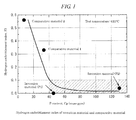
- FIG. 1 shows a relationship between the hydrogen embrittlement index of each of the invention materials P1 and P2 (hereinafter sometimes collectively referred to as “invention material”) and the comparative materials 1 and 2 (hereinafter sometimes collectively referred to as “comparative material”) at 625°C and the P content in each Ni-based alloy.
- the hydrogen embrittlement index of the invention material is remarkably small as compared with that of the comparative material and thus it is realized that the invention material is extremely excellent in the hydrogen embrittlement resistance at high temperature.
- the hydrogen embrittlement index decreases to 0.1 or less and the hydrogen embrittlement susceptibility reduces to such a degree that the influence of hydrogen can be almost ignored. From the results, it is realized that P has effects of suppressing excessive accumulation of hydrogen at grain boundaries by increasing the consistency of the grain boundaries and lowering the hydrogen embrittlement susceptibility and a P content of 40 ppm or more is necessary for improving the hydrogen embrittlement resistance by increasing the P content.
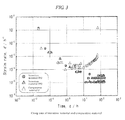
- FIG. 2 and FIG. 3 show results of the creep rupture test and results of the creep rate test, respectively.
- the rupture time of the invention material is greatly longer than that of the comparative material.
- the rupture time of the invention material in the case where the test stress is 333 MPa is at least ten times that of the comparative material 1 and the rupture time is about 1,500 hours in the case of the invention material P1 and is about 2,000 hours in the case of the invention material P2.
- the minimum creep rate of the invention material is at least one fourth or less as compared with that of the comparative material 2 and the value is 1 ⁇ 10 -8 s -1 (3.6 ⁇ 10 -5 h -1 ) or less.
Landscapes
- Chemical & Material Sciences (AREA)
- Engineering & Computer Science (AREA)
- Materials Engineering (AREA)
- Mechanical Engineering (AREA)
- Metallurgy (AREA)
- Organic Chemistry (AREA)
- Physics & Mathematics (AREA)
- Thermal Sciences (AREA)
- Crystallography & Structural Chemistry (AREA)
- Filling Or Discharging Of Gas Storage Vessels (AREA)
- Turbine Rotor Nozzle Sealing (AREA)
- Heat Treatment Of Steel (AREA)
- Pressure Vessels And Lids Thereof (AREA)
Abstract
Description
- The present invention relates to a Ni-based alloy having excellent hydrogen embrittlement resistance and a method for producing a Ni-based alloy material.
- An ammonothermal method has been known as a kind of single crystal growing method and the ammonothermal method has been, for example, applied to single crystal growth of gallium nitride that is a nitride semiconductor for a blue light emitting diode.
- Gallium nitride has been expected to be utilized as an optical device such as a high-brightness LED and a semiconductor laser, and an electronic device for use in a transistor for electric vehicle, an amplifier for mobile phone base station, or the like. For the application to these devices, it is necessary to enlarge the size of the gallium nitride single crystal and a size of 2 inches or more to 6 inches or more, further a size larger than that has been desired.
- Hitherto, a vapor-phase growth method has been a main stream for the growth of the gallium nitride single crystal. However, for coping with the enlargement and mass production of the crystal as described above or cost reduction, the method is being replaced by the ammonothermal method in which a crystal is grown in high-temperature and high-pressure ammonia. Since a temperature of 600 to 650°C and a pressure of 200 to 250 MPa are generally used as synthetic conditions in the ammonothermal method, application of a Ni-Fe-based alloy is attempted as a pressure vessel material having high strength under a high-temperature environment.
- Since operations are conducted under high temperature and high pressure in the ammonothermal method, ammonia as a raw material is decomposed to generate a large amount of high-pressure hydrogen. Therefore, as characteristics required for the pressure vessel material, excellent hydrogen embrittlement resistance at high temperature is first mentioned. In addition, since the vessel is used under a high-temperature environment, creep properties are also required.
- Hitherto, some techniques relating to a Ni-Fe-based alloy having high strength and excellent hydrogen embrittlement resistance have been developed. For example,
- Patent Document I discloses a technique relating to an Fe-Ni-based alloy having high strength and excellent hydrogen embrittlement resistance, which is used as a high-pressure hydrogen piping material for hydrogen station. The document presents a two-layer structure piping material consisting of an outer layer having high strength imparted thereto by aging and an inner layer having hydrogen embrittlement resistance imparted thereto.
-
Patent Document 2 discloses a Ni-Fe alloy in which high strength and hydrogen embrittlement resistance are exhibited by controlling particle size of the γ' phase and fractions of individual precipitation phases. - Moreover, Patent Document 3 discloses a technique dealing with hydrogen embrittlement resistance and the like at high temperature.
-
- Patent Document 1:
JP-A-2010-174360 - Patent Document 2:
JP-A-2009-68031 - Patent Document 3:
JP-A-5-255788 - However, the temperature at which the alloys have high strength and excellent hydrogen embrittlement resistance is room temperature in
Patent Documents - As mentioned above, any of the conventional Ni-Fe-based alloys having high strength and excellent hydrogen embrittlement resistance cannot assure those characteristics under the conditions dealt with in the present invention.
- The present invention has been made based on the above circumstances and an object thereof is to provide a Ni-based alloy having high strength and excellent hydrogen embrittlement resistance even in a high-temperature and high pressure environment, such as 600 to 650°C and 200 to 250 MPa, and a method for producing a Ni-based alloy material.
- The present inventors have found that a Ni-based alloy having high strength and excellent hydrogen embrittlement resistance even under high temperature and high pressure is obtained by restricting the composition of the Ni-based alloy to a specific range and thus they have accomplished the present invention. Namely, the gist of the invention lies on the following <1> to <7>.
- <1> A Ni-based alloy including, in terms of mass ratios, Fe: 30 to 40%, Cr: 14 to 16%, Ti: 1.2 to 1.7%, Al: 1.1 to 1.5%, Nb: 1.9 to 2.7%, and P: 40 to 150 ppm, with the remainder being Ni and unavoidable impurities.
- <2> The Ni-based alloy according to <1>, which further includes at least either one ofMg: 0.01% or less and Zr: 0.1% or less in terms of mass ratios.
- <3> The Ni-based alloy according to <1> or <2>, in which a hydrogen embrittlement index EI defined by EI=(RAA-RAH)/RAA when a reduction of area of a hydrogen charged material and a reduction of area of a hydrogen non-charged material at a tensile test are indicated as RAH and RAA, respectively, is 0.1 or less at 625°C.
- <4> The Ni-based alloy according to any one of <1> to <3>, in which a creep rupture time at 700°C and 333 MPa is 1,500 hours or more.
- <5> The Ni-based alloy according to any one of <1> to <4>, in which a minimum creep rate at 700°C and 333 MPa is 1×10⁻⁸ s-1 or less.
- <6> The Ni-based alloy according to any one of <1> to <5>, which is used as an ammonothermal pressure vessel material.
- <7> A method for producing a Ni-based alloy material, the method including subjecting the Ni-based alloy according to <1> or <2> to a solution treatment and subsequently to an aging treatment twice at a temperature of 825 to 855°C and at a temperature of 710 to 740°C.
- According to the present invention, it becomes possible to provide a Ni-based alloy having good hydrogen embrittlement resistance at such a high temperature as 600°C or higher and excellent creep properties in such a higher-temperature region as 700°C. Furthermore, as a secondary effect, application of the Ni-based alloy to a pressure vessel material for an ammonothermal method enables production of a pressure vessel capable of coping with a higher-temperature and higher-pressure environment and thus, for example, it is expected that enlargement, mass production, and cost reduction of a gallium nitride single crystal useful as an electronic device may be remarkably advanced.
-
- [
FIG. 1] FIG. 1 shows a relationship between hydrogen embrittlement index and P content of invention materials and comparative materials. - [
FIG. 2] FIG. 2 shows a relationship between creep stress and creep rupture time of the invention materials and the comparative materials. - [
FIG. 3] FIG. 3 shows a relationship between creep test time and creep rate of the invention materials and the comparative materials. - The following will explain embodiments of the present invention in detail but the invention is not limited to the following explanations and can be carried out with appropriately changing it in the range without departing from the gist of the invention.
- Here, "% by weight", "ratio by weight", and "ppm by weight" are the same as "% by mass", "ratio by mass", and "ppm by mass", respectively.
- The Ni-based alloy according to the invention includes, in terms of mass ratios, Fe: 30 to 40%, Cr: 14 to 16%, Ti: 1.2 to 1.7%, Al: 1.1 to 1.5%, Nb: 1.9 to 2.7%, and P: 40 to 150 ppm, with the remainder being Ni and unavoidable impurities.
- Moreover, it is more preferable that the Ni-based alloy further includes at least either one of Mg: 0.01% or less and Zr: 0.1% or less.
- The following will explain reasons for determining the above-mentioned alloy composition. Hereinafter, the content of each element other than P is shown in terms of % by mass and the content of P is shown in terms of ppm by mass.
- Fe is effective for cost reduction of the alloy when the content thereof increases but a Laves phase forms when Fe is excessively incorporated together with Nb incorporation and the formation invites deterioration of material characteristics, such as an increase in hydrogen embrittlement susceptibility. Therefore, the content of Fe is controlled to 30 to 40%. For the same reason, it is preferable to determine the lower limit thereof to 33% and the upper limit thereof to 38%.
- Cr is an element necessary for enhancing oxidation resistance, corrosion resistance, and strength. Also, it combines with C to form a carbide, thereby enhancing high-temperature strength. However, too large content thereof invites destabilization of matrix and promotes the formation of harmful TCP phases such as a σ phase and α-Cr, resulting in adverse influences on ductility and toughness. Also, there is a concern that the σ phase acts as a hydrogen accumulation site in the alloy to enhance the hydrogen embrittlement susceptibility. Therefore, the content of Cr is limited to 14 to 16%.
- Ti mainly forms a MC carbide to suppress crystal grain coarsening of the alloy and also combines with Ni to precipitate a γ' phase, thereby contributing to precipitation strengthening of the alloy. However, when Ti is exceedingly incorporated, the stability of the γ' phase at high temperature is lowered and an η phase is formed, thereby impairing strength, ductility, toughness, and high-temperature long-term structural stability. Moreover, there is a concern that the η phase also acts as a hydrogen accumulation site in the alloy to enhance the hydrogen embrittlement susceptibility. Therefore, the content ofTi is limited to the range of 1.2 to 1.7%.
- Al combines with Ni to precipitate a γ' phase, thereby contributing to precipitation strengthening of the alloy. However, when the content thereof is too large, the γ' phase aggregates at grain boundaries and is coarsened, thereby drastically impairing mechanical properties at high temperature and also lowering hot workability. Therefore, the content of Al is limited to 1.1 to 1.5%.
- Nb is an element that stabilizes the γ' phase and contributes to strength enhancement but when Nb is exceedingly incorporated, the precipitation of the η phase, the σ phase, and the Laves phase that are harmful phases is promoted, thereby remarkably lowering the structural stability and enhancing the hydrogen embrittlement susceptibility. Therefore, the content ofNb is limited to 1.9 to 2.7%.
- P is considered to have an effect of suppressing excessive accumulation of hydrogen at grain boundaries by increasing consistency of the grain boundaries and lowering the hydrogen embrittlement susceptibility, so that P is incorporated. In order to obtain the above effect, a P content of 40 ppm or more is necessary. Also, P has effects of lengthening the creep rupture time and decreasing the minimum creep rate. However, when P is exceedingly incorporated, there is a possibility that grain boundary segregation of P becomes excessive to contrarily lower the consistency of the grain boundaries and the effect of reducing the hydrogen embrittlement susceptibility is lost. Therefore, the content of P is limited to 40 to 150 ppm. For the same reason, it is preferable to determine the lower limit thereof to 45 ppm and the upper limit thereof to 140 ppm.
- Mg mainly combines with S to form a sulfide and enhances hot workability, so that Mg is incorporated as desired. However, when the content thereof is too large, the grain boundaries are contrarily embrittled and hot workability decreases, so that the content of Mg is preferably controlled to 0.01% or less. Incidentally, for sufficiently exhibiting the above effect, the lower limit of the Mg content is more preferably controlled to 0.0005% or more.
- Zr segregates at grain boundaries to contribute to an improvement in high-temperature characteristics, so that Zr is incorporated as desired. However, when Zr is exceedingly incorporated, the hot workability of the alloy is lowered, so that the content of Zr is preferably controlled to 0.1% or less. Moreover, in order to obtain the above effect, it is more preferable to incorporate it in an amount of 0.01% or more.
- It is preferable that at least either one of Mg and Zr is contained in the above ranges but it is more preferable to contain both of Mg and Zr in view of securing good hot workability.
- The remainder in the Ni-based alloy according to the invention is Ni and unavoidable impurities.
- The unavoidable impurities mean elements which are initially contained in raw materials of the alloy or are unavoidably mixed in during the smelting of the alloy, and examples thereof include O, N and S. The content of the unavoidable impurities in the whole Ni-based alloy is preferably as low as possible and is more preferably 50 ppm or less in view of high purification of the alloy.
- The Ni-based alloy of the invention has excellent hydrogen embrittlement resistance and can be suitably used as a material to be exposed to a hydrogen atmosphere. Also, it is excellent in high strength characteristic at high temperature and can be suitably used as an ammonothermal pressure vessel material.
- The Ni-based alloy of the invention can be smelted by a usual method and, as the invention, the smelting method is not particularly limited.
- The Ni-based alloy of the invention can be subjected to processing such as forging as desired and can be subjected to a solution treatment or a thermal treatment by aging (aging treatment).
- The solution treatment can be performed, for example, under conditions of 1,040 to 1,140°C for 4 to 10 hours. Moreover, the aging treatment is preferably a treatment performed in at least two stages. For example, the aging treatment can be performed twice at a temperature of 825 to 855°C and at a temperature of 710 to 740°C. As the temperature for the aging treatment, the treatment is preferably performed first at a temperature of 825 to 855°C (first stage) and subsequently at a temperature of 710 to 740°C (second stage) in this order. Furthermore, the time for the aging treatment is more preferably from 4 to 10 hours at the first stage and from 4 to 24 hours at the second stage.
- By adopting the above-mentioned conditions for the solution treatment and the aging treatment, high tensile strength at room temperature and high tensile strength at a high temperature of 600°C or higher can be secured and a Ni-based alloy material having excellent hydrogen embrittlement resistance can be obtained. The resulting tensile strength is preferably 1,000 MPa or more at room temperature and 820 MPa or more at 625°C.
- Incidentally, when the temperature at the first stage of the aging treatment is lower than 825°C or higher than 855°C, there is a concern that the γ' phase cannot be sufficiently grown and the above tensile strength cannot be secured.
- Moreover, M23C6 type carbide precipitates in excess when the temperature at the second stage of the aging treatment is lower than 710°C, and MC type carbide is coarsened when the temperature is higher than 740°C. Thereby, there is a concern that adverse influences such as a decrease in high-temperature ductility are caused in both cases.
- Among the Ni-based alloys obtained in the above, more preferred is the Ni-based alloy affording such hydrogen embrittlement resistance that hydrogen embrittlement index EI defined by EI=(RAA-RAH)/RAA when a reduction of area of a hydrogen charged material and a reduction of area of a hydrogen non-charged material at a tensile test are indicated as RAH and RAA, respectively, is 0.1 or less at 625°C. The hydrogen charge is simulated by intrusion of a hydrogen quantity of 50 ppm.
- Moreover, among the Ni-based alloys obtained in the above, more preferred is also the Ni-based alloy affording such a high-temperature creep property that a creep rupture time at 700°C and 333 MPa is 1,500 hours or more.
- Furthermore, among the Ni-based alloys obtained in the above, more preferred is also the Ni-based alloy affording such a high-temperature creep property that a minimum creep rate at 700°C and 333 MPa is 1×10⁻⁸ s-1 or less.
- Incidentally, the Ni-based alloy having the above-mentioned hydrogen embrittlement index and high-temperature creep properties can be obtained by satisfying the compositional requirements mentioned above, and particularly containing P in an amount of 40 ppm or more.
- The material using the Ni-based alloy according to the invention can be used for any desired uses capable of exhibiting the hydrogen embrittlement resistance through plastic working or machining, and particularly can be suitably used as an ammonothermal pressure vessel material. Thereby, it becomes possible to realize the enlargement, mass production, and cost reduction of a gallium nitride single crystal, for example.
- The following will explain examples of the present invention.
- Smelting and forging of a material of 50 kg round steel ingot were performed by a vacuum induction melting method to form plates so as to achieve compositions shown in Table 1, in order to obtain two kinds of invention materials and two kinds of comparative materials, respectively.
- The obtained forged plates were cut into ones having an appropriate size, which were then subjected to a solution treatment of 1,040°C×4 hours and to a two-stage aging treatment of 840°C×10 hours and subsequent 730°Cx24 hours, thereby obtaining test materials (invention materials P1, P2 and
comparative materials 1, 2). Subsequently, the test materials were machined to form tensile test pieces for evaluation of hydrogen embrittlement resistance and creep test pieces.[Table 1] Test material Chemical composition of test material (% by mass; ppm by mass for P, S, N, and O) C Si Mn P (ppm) S (ppm) Ni Cr Al Ti Nb Fe Mg Zr N (ppm) O (ppm) Invention material (P1) 0.011 0.01 0.01 45 2 41.40 15.41 1.26 1.45 2.05 38.26 0.0015 0.030 13 16 Invention material (P2) 0.012 0.01 0.01 130 2 41.37 15.40 1.26 1.44 2.06 38.30 0.0015 0.030 12 15 Comparative material 10.011 0.01 0.02 33 <1 41.66 15.10 1.11 1.68 2.06 38.20 <0.0005 <0.010 31 7 Comparative material 20.011 0.01 0.01 8 3 41.39 15.40 1.24 1.41 2.08 38.24 0.0012 0.036 7 16 - Evaluation of the hydrogen embrittlement resistance was performed by the following procedure.
- First, a test piece having a diameter and a length of the parallel part of 10 mm and 50 mm, respectively, was hold in an atmosphere of a temperature of 450°C and a hydrogen pressure of 25 MPa for 72 hours to charge hydrogen. The hydrogen charging conditions are set so as to simulate 50 ppm that is a hydrogen quantity which is assumed to intrude into the material in an actual ammonothermal method. Using a hydrogen charged material after the hydrogen charge, a tensile test was performed at 625°C and a tensile strength and a reduction of area were measured.
- Also, for a test piece in a hydrogen uncharged state (hydrogen non-charged material), a tensile strength and a reduction of area were similarly measured.
- As for the hydrogen embrittlement resistance, also using the tensile test results of the hydrogen non-charged material at 625°C, the hydrogen embrittlement index EI defined by the following equation (1) was calculated to perform evaluation:
- hydrogen embrittlement index EI=(RAA-RAH)/RAA ... (1) in which RAA is a reduction of area of a hydrogen non-charged material and RAH is a reduction of area of a hydrogen charged material.
- A smaller value of the hydrogen embrittlement index indicates more excellent hydrogen embrittlement resistance.
- The creep properties were evaluated by performing a creep rupture test and a creep rate test. In both tests, test temperature was 700°C, and test stress was 333 MPa and 275 MPa in the rupture test and was 333 MPa in the rate test.
- Table 2 shows the tensile strength, reduction of area, and hydrogen embrittlement index of each of the hydrogen charged materials and the hydrogen non-charged materials at 625°C. Incidentally, the hydrogen embrittlement index of the invention material P1 became negative but this is indicated as 0.00 for convenience sake in Table 2.
[Table 2] Tensile strength, reduction of area, and hydrogen embrittlement index of invention material and comparative material at 625°C Test material Hydrogen charged material Hydrogen non-charged material Hydrogen embrittlement index EI Tensile strength /MPa Reduction of area RAH (%) Tensile strength /MPa Reduction of area RAA (%) Invention material (P1) 725 30.1 733 28.7 0.00 Invention material (P2) 729 38.8 794 39.9 0.03 Comparative material I 721 17.0 711 25.2 0.33 Comparative material 2732 15.5 717 35.1 0.56 -
FIG. 1 shows a relationship between the hydrogen embrittlement index of each of the invention materials P1 and P2 (hereinafter sometimes collectively referred to as "invention material") and thecomparative materials 1 and 2 (hereinafter sometimes collectively referred to as "comparative material") at 625°C and the P content in each Ni-based alloy. - From the figure, the hydrogen embrittlement index of the invention material is remarkably small as compared with that of the comparative material and thus it is realized that the invention material is extremely excellent in the hydrogen embrittlement resistance at high temperature. As shown at the shaded section in the figure, when the P content becomes 40 ppm or more, the hydrogen embrittlement index decreases to 0.1 or less and the hydrogen embrittlement susceptibility reduces to such a degree that the influence of hydrogen can be almost ignored. From the results, it is realized that P has effects of suppressing excessive accumulation of hydrogen at grain boundaries by increasing the consistency of the grain boundaries and lowering the hydrogen embrittlement susceptibility and a P content of 40 ppm or more is necessary for improving the hydrogen embrittlement resistance by increasing the P content.
-
FIG. 2 andFIG. 3 show results of the creep rupture test and results of the creep rate test, respectively. FromFIG. 2 , the rupture time of the invention material is greatly longer than that of the comparative material. The rupture time of the invention material in the case where the test stress is 333 MPa is at least ten times that of thecomparative material 1 and the rupture time is about 1,500 hours in the case of the invention material P1 and is about 2,000 hours in the case of the invention material P2. Furthermore, fromFIG. 3 , it is realized that the minimum creep rate of the invention material is at least one fourth or less as compared with that of thecomparative material 2 and the value is 1 × 10⁻⁸ s-1 (3.6×10⁻⁵ h-1) or less. - From the above, it becomes obvious that the invention material according to the present invention has excellent creep properties.
- While the invention has been described based on the above embodiments and examples, it will be apparent to one skilled in the art that the invention is not limited to the contents of the above embodiments and examples and various changes and modifications can be made therein without departing from the spirit and scope of the invention.
- The present application is based on Japanese Patent Application No.
2012-184966 filed on August 24, 2012
Claims (7)
- A Ni-based alloy comprising, in terms of mass ratios, Fe: 30 to 40%, Cr: 14 to 16%, Ti: 1.2 to 1.7%, Al: 1.1 to 1.5%, Nb: 1.9 to 2.7%, and P: 40 to 150 ppm, with the remainder being Ni and unavoidable impurities.
- The Ni-based alloy according to claim 1, which further comprises at least either one of Mg: 0.01% or less and Zr: 0.1% or less in terms of mass ratios.
- The Ni-based alloy according to claim 1 or 2, wherein a hydrogen embrittlement index EI defined by EI=(RAA-RAH)/RAA when a reduction of area of a hydrogen charged material and a reduction of area of a hydrogen non-charged material at a tensile test are indicated as RAH and RAA, respectively, is 0.1 or less at 625°C.
- The Ni-based alloy according to any one of claims 1 to 3, wherein a creep rupture time at 700°C and 333 MPa is 1,500 hours or more.
- The Ni-based alloy according to any one of claims 1 to 4, wherein a minimum creep rate at 700°C and 333 MPa is 1×10⁻⁸ s-1 or less.
- The Ni-based alloy according to any one of claims 1 to 5, which is used as an ammonothermal pressure vessel material.
- A method for producing a Ni-based alloy material, said method comprising subjecting the Ni-based alloy according to claim 1 or 2 to a solution treatment and subsequently to an aging treatment twice at a temperature of 825 to 855°C and at a temperature of 710 to 740°C.
Applications Claiming Priority (2)
| Application Number | Priority Date | Filing Date | Title |
|---|---|---|---|
| JP2012184966A JP5599850B2 (en) | 2012-08-24 | 2012-08-24 | Ni-base alloy excellent in hydrogen embrittlement resistance and method for producing Ni-base alloy material excellent in hydrogen embrittlement resistance |
| PCT/JP2013/072431 WO2014030705A1 (en) | 2012-08-24 | 2013-08-22 | Ni-based alloy having excellent hydrogen embrittlement resistance, and method for producing ni-based alloy material |
Publications (3)
| Publication Number | Publication Date |
|---|---|
| EP2889387A1 true EP2889387A1 (en) | 2015-07-01 |
| EP2889387A4 EP2889387A4 (en) | 2016-04-27 |
| EP2889387B1 EP2889387B1 (en) | 2018-05-02 |
Family
ID=50150009
Family Applications (1)
| Application Number | Title | Priority Date | Filing Date |
|---|---|---|---|
| EP13831112.1A Active EP2889387B1 (en) | 2012-08-24 | 2013-08-22 | Ni-based alloy having excellent hydrogen embrittlement resistance, and method for producing ni-based alloy material |
Country Status (6)
| Country | Link |
|---|---|
| US (1) | US20150225827A1 (en) |
| EP (1) | EP2889387B1 (en) |
| JP (1) | JP5599850B2 (en) |
| KR (1) | KR101704312B1 (en) |
| CN (1) | CN104583432B (en) |
| WO (1) | WO2014030705A1 (en) |
Families Citing this family (4)
| Publication number | Priority date | Publication date | Assignee | Title |
|---|---|---|---|---|
| JP6176665B2 (en) * | 2014-02-20 | 2017-08-09 | 株式会社日本製鋼所 | Ni-Fe base alloy and method for producing Ni-Fe base alloy material |
| US12109546B1 (en) | 2023-12-14 | 2024-10-08 | First Ammonia Motors, Inc. | System and method for heating gas in a continuous focused path within an electric heating unit |
| US12357957B2 (en) | 2023-12-14 | 2025-07-15 | First Ammonia Motors, Inc. | System and method for a three-dimensionally printed lattice structure for heating gas in a non-linear path |
| US12023643B1 (en) * | 2023-12-14 | 2024-07-02 | First Ammonia Motors, Inc. | System and method for heating gas in a continuous focused path within an electric catalyst unit |
Family Cites Families (14)
| Publication number | Priority date | Publication date | Assignee | Title |
|---|---|---|---|---|
| JPS57149441A (en) * | 1981-03-12 | 1982-09-16 | Res Inst Electric Magnetic Alloys | Elinver type alloy for high temperature and preparation thereof |
| JPH05255788A (en) | 1992-03-12 | 1993-10-05 | Sumitomo Metal Ind Ltd | Hydrogen embrittlement resistant high Ni-based alloy and method for producing the same |
| JP3058794B2 (en) * | 1993-08-19 | 2000-07-04 | 日立金属株式会社 | Fe-Ni-Cr based super heat resistant alloy, knit mesh for engine valve and exhaust gas catalyst |
| JP2003164946A (en) * | 2001-11-29 | 2003-06-10 | Daido Steel Co Ltd | Method for producing nickel-based superalloy ingots |
| JP4123064B2 (en) * | 2003-06-13 | 2008-07-23 | 株式会社日立製作所 | Steam turbine rotor and steam turbine plant |
| JP4773773B2 (en) * | 2005-08-25 | 2011-09-14 | 東京電波株式会社 | Corrosion-resistant material for supercritical ammonia reaction equipment |
| JP5147037B2 (en) * | 2006-04-14 | 2013-02-20 | 三菱マテリアル株式会社 | Ni-base heat-resistant alloy for gas turbine combustor |
| JP4261562B2 (en) | 2006-08-25 | 2009-04-30 | 株式会社日立製作所 | Ni-Fe based forged superalloy excellent in high temperature strength and high temperature ductility, its manufacturing method, and steam turbine rotor |
| JP4784501B2 (en) * | 2006-12-12 | 2011-10-05 | 株式会社日立製作所 | High pressure hydrogen flow meter |
| JP2009068031A (en) | 2007-09-11 | 2009-04-02 | Hitachi Ltd | High strength FeNi base alloy |
| SE533124C2 (en) * | 2008-05-28 | 2010-06-29 | Westinghouse Electric Sweden | Nuclear fuel rods spreader |
| JP2010174360A (en) | 2009-02-02 | 2010-08-12 | Hitachi Ltd | Hydrogen embrittlement resistant material, and method for producing the same |
| JP5561583B2 (en) * | 2009-12-21 | 2014-07-30 | 日立金属株式会社 | High pressure hydrogen components |
| JP5633883B2 (en) * | 2010-08-26 | 2014-12-03 | 三菱日立パワーシステムズ株式会社 | Forged alloy for steam turbine, steam turbine rotor using the same |
-
2012
- 2012-08-24 JP JP2012184966A patent/JP5599850B2/en active Active
-
2013
- 2013-08-22 US US14/423,328 patent/US20150225827A1/en not_active Abandoned
- 2013-08-22 WO PCT/JP2013/072431 patent/WO2014030705A1/en not_active Ceased
- 2013-08-22 CN CN201380044315.XA patent/CN104583432B/en active Active
- 2013-08-22 KR KR1020157004576A patent/KR101704312B1/en active Active
- 2013-08-22 EP EP13831112.1A patent/EP2889387B1/en active Active
Also Published As
| Publication number | Publication date |
|---|---|
| CN104583432A (en) | 2015-04-29 |
| JP2014043597A (en) | 2014-03-13 |
| EP2889387A4 (en) | 2016-04-27 |
| KR101704312B1 (en) | 2017-02-07 |
| WO2014030705A1 (en) | 2014-02-27 |
| US20150225827A1 (en) | 2015-08-13 |
| KR20150034282A (en) | 2015-04-02 |
| EP2889387B1 (en) | 2018-05-02 |
| JP5599850B2 (en) | 2014-10-01 |
| CN104583432B (en) | 2017-05-24 |
Similar Documents
| Publication | Publication Date | Title |
|---|---|---|
| EP2826877B1 (en) | Hot-forgeable Nickel-based superalloy excellent in high temperature strength | |
| EP3133179A1 (en) | Austenitic stainless steel and method for producing same | |
| EP2610360A1 (en) | Co-based alloy | |
| EP3202931B1 (en) | Ni BASED SUPERHEAT-RESISTANT ALLOY | |
| EP3208354B1 (en) | Ni-based superalloy for hot forging | |
| EP3208355B1 (en) | Ni-based superalloy for hot forging | |
| EP2889387B1 (en) | Ni-based alloy having excellent hydrogen embrittlement resistance, and method for producing ni-based alloy material | |
| EP3249063B1 (en) | High strength ni-based superalloy | |
| EP2775004B1 (en) | HIGHLY HEAT-RESISTANT AND HIGH-STRENGTH Rh-BASED ALLOY AND METHOD FOR PRODUCING SAME | |
| US20170342525A1 (en) | High strength ni-based superalloy | |
| EP2940174B1 (en) | Fe-ni-based alloy having excellent high-temperature characteristics and hydrogen embrittlement resistance characteristics, and method for producing same | |
| EP2993243B1 (en) | High-strength ni-base alloy | |
| EP3252180B1 (en) | Ni-based alloy having excellent high-temperature creep characteristics, and gas turbine member using same | |
| JP2018095929A (en) | Stainless steel | |
| JP2015042770A (en) | HIGH-STRENGTH Ni-BASED ALLOY | |
| JP2015108177A (en) | Nickel base alloy | |
| JP6025216B2 (en) | Fe-Ni base alloy and method for producing Fe-Ni base alloy | |
| JP2013209721A (en) | Ni-BASED ALLOY AND METHOD FOR PRODUCING THE SAME | |
| JP2019085594A (en) | Fe-Ni base alloy | |
| JPH09324233A (en) | Nickel-based alloy and its heat treatment method |
Legal Events
| Date | Code | Title | Description |
|---|---|---|---|
| PUAI | Public reference made under article 153(3) epc to a published international application that has entered the european phase |
Free format text: ORIGINAL CODE: 0009012 |
|
| 17P | Request for examination filed |
Effective date: 20150224 |
|
| AK | Designated contracting states |
Kind code of ref document: A1 Designated state(s): AL AT BE BG CH CY CZ DE DK EE ES FI FR GB GR HR HU IE IS IT LI LT LU LV MC MK MT NL NO PL PT RO RS SE SI SK SM TR |
|
| AX | Request for extension of the european patent |
Extension state: BA ME |
|
| DAX | Request for extension of the european patent (deleted) | ||
| RA4 | Supplementary search report drawn up and despatched (corrected) |
Effective date: 20160401 |
|
| RIC1 | Information provided on ipc code assigned before grant |
Ipc: C22C 19/05 20060101AFI20160324BHEP Ipc: C22C 30/00 20060101ALI20160324BHEP Ipc: C22F 1/10 20060101ALI20160324BHEP Ipc: C22F 1/00 20060101ALI20160324BHEP |
|
| 17Q | First examination report despatched |
Effective date: 20170327 |
|
| GRAP | Despatch of communication of intention to grant a patent |
Free format text: ORIGINAL CODE: EPIDOSNIGR1 |
|
| INTG | Intention to grant announced |
Effective date: 20171208 |
|
| GRAS | Grant fee paid |
Free format text: ORIGINAL CODE: EPIDOSNIGR3 |
|
| GRAA | (expected) grant |
Free format text: ORIGINAL CODE: 0009210 |
|
| AK | Designated contracting states |
Kind code of ref document: B1 Designated state(s): AL AT BE BG CH CY CZ DE DK EE ES FI FR GB GR HR HU IE IS IT LI LT LU LV MC MK MT NL NO PL PT RO RS SE SI SK SM TR |
|
| REG | Reference to a national code |
Ref country code: GB Ref legal event code: FG4D |
|
| REG | Reference to a national code |
Ref country code: CH Ref legal event code: EP Ref country code: AT Ref legal event code: REF Ref document number: 995320 Country of ref document: AT Kind code of ref document: T Effective date: 20180515 |
|
| REG | Reference to a national code |
Ref country code: DE Ref legal event code: R096 Ref document number: 602013037017 Country of ref document: DE Ref country code: IE Ref legal event code: FG4D |
|
| REG | Reference to a national code |
Ref country code: DE Ref legal event code: R096 Ref document number: 602013037017 Country of ref document: DE |
|
| REG | Reference to a national code |
Ref country code: FR Ref legal event code: PLFP Year of fee payment: 6 |
|
| REG | Reference to a national code |
Ref country code: NL Ref legal event code: MP Effective date: 20180502 |
|
| REG | Reference to a national code |
Ref country code: LT Ref legal event code: MG4D |
|
| PG25 | Lapsed in a contracting state [announced via postgrant information from national office to epo] |
Ref country code: LT Free format text: LAPSE BECAUSE OF FAILURE TO SUBMIT A TRANSLATION OF THE DESCRIPTION OR TO PAY THE FEE WITHIN THE PRESCRIBED TIME-LIMIT Effective date: 20180502 Ref country code: FI Free format text: LAPSE BECAUSE OF FAILURE TO SUBMIT A TRANSLATION OF THE DESCRIPTION OR TO PAY THE FEE WITHIN THE PRESCRIBED TIME-LIMIT Effective date: 20180502 Ref country code: NO Free format text: LAPSE BECAUSE OF FAILURE TO SUBMIT A TRANSLATION OF THE DESCRIPTION OR TO PAY THE FEE WITHIN THE PRESCRIBED TIME-LIMIT Effective date: 20180802 Ref country code: SE Free format text: LAPSE BECAUSE OF FAILURE TO SUBMIT A TRANSLATION OF THE DESCRIPTION OR TO PAY THE FEE WITHIN THE PRESCRIBED TIME-LIMIT Effective date: 20180502 Ref country code: BG Free format text: LAPSE BECAUSE OF FAILURE TO SUBMIT A TRANSLATION OF THE DESCRIPTION OR TO PAY THE FEE WITHIN THE PRESCRIBED TIME-LIMIT Effective date: 20180802 Ref country code: ES Free format text: LAPSE BECAUSE OF FAILURE TO SUBMIT A TRANSLATION OF THE DESCRIPTION OR TO PAY THE FEE WITHIN THE PRESCRIBED TIME-LIMIT Effective date: 20180502 |
|
| PG25 | Lapsed in a contracting state [announced via postgrant information from national office to epo] |
Ref country code: NL Free format text: LAPSE BECAUSE OF FAILURE TO SUBMIT A TRANSLATION OF THE DESCRIPTION OR TO PAY THE FEE WITHIN THE PRESCRIBED TIME-LIMIT Effective date: 20180502 Ref country code: RS Free format text: LAPSE BECAUSE OF FAILURE TO SUBMIT A TRANSLATION OF THE DESCRIPTION OR TO PAY THE FEE WITHIN THE PRESCRIBED TIME-LIMIT Effective date: 20180502 Ref country code: HR Free format text: LAPSE BECAUSE OF FAILURE TO SUBMIT A TRANSLATION OF THE DESCRIPTION OR TO PAY THE FEE WITHIN THE PRESCRIBED TIME-LIMIT Effective date: 20180502 Ref country code: GR Free format text: LAPSE BECAUSE OF FAILURE TO SUBMIT A TRANSLATION OF THE DESCRIPTION OR TO PAY THE FEE WITHIN THE PRESCRIBED TIME-LIMIT Effective date: 20180803 Ref country code: LV Free format text: LAPSE BECAUSE OF FAILURE TO SUBMIT A TRANSLATION OF THE DESCRIPTION OR TO PAY THE FEE WITHIN THE PRESCRIBED TIME-LIMIT Effective date: 20180502 |
|
| REG | Reference to a national code |
Ref country code: AT Ref legal event code: MK05 Ref document number: 995320 Country of ref document: AT Kind code of ref document: T Effective date: 20180502 |
|
| PG25 | Lapsed in a contracting state [announced via postgrant information from national office to epo] |
Ref country code: CZ Free format text: LAPSE BECAUSE OF FAILURE TO SUBMIT A TRANSLATION OF THE DESCRIPTION OR TO PAY THE FEE WITHIN THE PRESCRIBED TIME-LIMIT Effective date: 20180502 Ref country code: DK Free format text: LAPSE BECAUSE OF FAILURE TO SUBMIT A TRANSLATION OF THE DESCRIPTION OR TO PAY THE FEE WITHIN THE PRESCRIBED TIME-LIMIT Effective date: 20180502 Ref country code: EE Free format text: LAPSE BECAUSE OF FAILURE TO SUBMIT A TRANSLATION OF THE DESCRIPTION OR TO PAY THE FEE WITHIN THE PRESCRIBED TIME-LIMIT Effective date: 20180502 Ref country code: AT Free format text: LAPSE BECAUSE OF FAILURE TO SUBMIT A TRANSLATION OF THE DESCRIPTION OR TO PAY THE FEE WITHIN THE PRESCRIBED TIME-LIMIT Effective date: 20180502 Ref country code: SK Free format text: LAPSE BECAUSE OF FAILURE TO SUBMIT A TRANSLATION OF THE DESCRIPTION OR TO PAY THE FEE WITHIN THE PRESCRIBED TIME-LIMIT Effective date: 20180502 Ref country code: RO Free format text: LAPSE BECAUSE OF FAILURE TO SUBMIT A TRANSLATION OF THE DESCRIPTION OR TO PAY THE FEE WITHIN THE PRESCRIBED TIME-LIMIT Effective date: 20180502 Ref country code: PL Free format text: LAPSE BECAUSE OF FAILURE TO SUBMIT A TRANSLATION OF THE DESCRIPTION OR TO PAY THE FEE WITHIN THE PRESCRIBED TIME-LIMIT Effective date: 20180502 |
|
| REG | Reference to a national code |
Ref country code: DE Ref legal event code: R097 Ref document number: 602013037017 Country of ref document: DE |
|
| PG25 | Lapsed in a contracting state [announced via postgrant information from national office to epo] |
Ref country code: SM Free format text: LAPSE BECAUSE OF FAILURE TO SUBMIT A TRANSLATION OF THE DESCRIPTION OR TO PAY THE FEE WITHIN THE PRESCRIBED TIME-LIMIT Effective date: 20180502 |
|
| PLBE | No opposition filed within time limit |
Free format text: ORIGINAL CODE: 0009261 |
|
| STAA | Information on the status of an ep patent application or granted ep patent |
Free format text: STATUS: NO OPPOSITION FILED WITHIN TIME LIMIT |
|
| PG25 | Lapsed in a contracting state [announced via postgrant information from national office to epo] |
Ref country code: MC Free format text: LAPSE BECAUSE OF FAILURE TO SUBMIT A TRANSLATION OF THE DESCRIPTION OR TO PAY THE FEE WITHIN THE PRESCRIBED TIME-LIMIT Effective date: 20180502 |
|
| REG | Reference to a national code |
Ref country code: CH Ref legal event code: PL |
|
| 26N | No opposition filed |
Effective date: 20190205 |
|
| GBPC | Gb: european patent ceased through non-payment of renewal fee |
Effective date: 20180822 |
|
| PG25 | Lapsed in a contracting state [announced via postgrant information from national office to epo] |
Ref country code: CH Free format text: LAPSE BECAUSE OF NON-PAYMENT OF DUE FEES Effective date: 20180831 Ref country code: LI Free format text: LAPSE BECAUSE OF NON-PAYMENT OF DUE FEES Effective date: 20180831 Ref country code: LU Free format text: LAPSE BECAUSE OF NON-PAYMENT OF DUE FEES Effective date: 20180822 |
|
| REG | Reference to a national code |
Ref country code: BE Ref legal event code: MM Effective date: 20180831 |
|
| PG25 | Lapsed in a contracting state [announced via postgrant information from national office to epo] |
Ref country code: SI Free format text: LAPSE BECAUSE OF FAILURE TO SUBMIT A TRANSLATION OF THE DESCRIPTION OR TO PAY THE FEE WITHIN THE PRESCRIBED TIME-LIMIT Effective date: 20180502 |
|
| PG25 | Lapsed in a contracting state [announced via postgrant information from national office to epo] |
Ref country code: BE Free format text: LAPSE BECAUSE OF NON-PAYMENT OF DUE FEES Effective date: 20180831 |
|
| PG25 | Lapsed in a contracting state [announced via postgrant information from national office to epo] |
Ref country code: GB Free format text: LAPSE BECAUSE OF NON-PAYMENT OF DUE FEES Effective date: 20180822 |
|
| PG25 | Lapsed in a contracting state [announced via postgrant information from national office to epo] |
Ref country code: AL Free format text: LAPSE BECAUSE OF FAILURE TO SUBMIT A TRANSLATION OF THE DESCRIPTION OR TO PAY THE FEE WITHIN THE PRESCRIBED TIME-LIMIT Effective date: 20180502 |
|
| PG25 | Lapsed in a contracting state [announced via postgrant information from national office to epo] |
Ref country code: MT Free format text: LAPSE BECAUSE OF NON-PAYMENT OF DUE FEES Effective date: 20180822 |
|
| PG25 | Lapsed in a contracting state [announced via postgrant information from national office to epo] |
Ref country code: TR Free format text: LAPSE BECAUSE OF FAILURE TO SUBMIT A TRANSLATION OF THE DESCRIPTION OR TO PAY THE FEE WITHIN THE PRESCRIBED TIME-LIMIT Effective date: 20180502 |
|
| PG25 | Lapsed in a contracting state [announced via postgrant information from national office to epo] |
Ref country code: PT Free format text: LAPSE BECAUSE OF FAILURE TO SUBMIT A TRANSLATION OF THE DESCRIPTION OR TO PAY THE FEE WITHIN THE PRESCRIBED TIME-LIMIT Effective date: 20180502 |
|
| PG25 | Lapsed in a contracting state [announced via postgrant information from national office to epo] |
Ref country code: CY Free format text: LAPSE BECAUSE OF FAILURE TO SUBMIT A TRANSLATION OF THE DESCRIPTION OR TO PAY THE FEE WITHIN THE PRESCRIBED TIME-LIMIT Effective date: 20180502 Ref country code: HU Free format text: LAPSE BECAUSE OF FAILURE TO SUBMIT A TRANSLATION OF THE DESCRIPTION OR TO PAY THE FEE WITHIN THE PRESCRIBED TIME-LIMIT; INVALID AB INITIO Effective date: 20130822 Ref country code: MK Free format text: LAPSE BECAUSE OF NON-PAYMENT OF DUE FEES Effective date: 20180502 Ref country code: IE Free format text: LAPSE BECAUSE OF NON-PAYMENT OF DUE FEES Effective date: 20180822 |
|
| PG25 | Lapsed in a contracting state [announced via postgrant information from national office to epo] |
Ref country code: IS Free format text: LAPSE BECAUSE OF FAILURE TO SUBMIT A TRANSLATION OF THE DESCRIPTION OR TO PAY THE FEE WITHIN THE PRESCRIBED TIME-LIMIT Effective date: 20180902 |
|
| REG | Reference to a national code |
Ref country code: DE Ref legal event code: R081 Ref document number: 602013037017 Country of ref document: DE Owner name: JAPAN STEEL WORKS M&E, INC., MURORAN-SHI, JP Free format text: FORMER OWNER: THE JAPAN STEEL WORKS, LTD., TOKYO, JP |
|
| P01 | Opt-out of the competence of the unified patent court (upc) registered |
Effective date: 20230515 |
|
| PGFP | Annual fee paid to national office [announced via postgrant information from national office to epo] |
Ref country code: DE Payment date: 20250702 Year of fee payment: 13 |
|
| PGFP | Annual fee paid to national office [announced via postgrant information from national office to epo] |
Ref country code: IT Payment date: 20250722 Year of fee payment: 13 |
|
| PGFP | Annual fee paid to national office [announced via postgrant information from national office to epo] |
Ref country code: FR Payment date: 20250703 Year of fee payment: 13 |