EP2886554A1 - An schweissallergie-antigenprotein bindender monoklonaler ige-antikörper - Google Patents
An schweissallergie-antigenprotein bindender monoklonaler ige-antikörper Download PDFInfo
- Publication number
- EP2886554A1 EP2886554A1 EP13879589.3A EP13879589A EP2886554A1 EP 2886554 A1 EP2886554 A1 EP 2886554A1 EP 13879589 A EP13879589 A EP 13879589A EP 2886554 A1 EP2886554 A1 EP 2886554A1
- Authority
- EP
- European Patent Office
- Prior art keywords
- antibody
- ige
- human
- sweat allergy
- antigen protein
- Prior art date
- Legal status (The legal status is an assumption and is not a legal conclusion. Google has not performed a legal analysis and makes no representation as to the accuracy of the status listed.)
- Ceased
Links
Images





Classifications
-
- G—PHYSICS
- G01—MEASURING; TESTING
- G01N—INVESTIGATING OR ANALYSING MATERIALS BY DETERMINING THEIR CHEMICAL OR PHYSICAL PROPERTIES
- G01N33/00—Investigating or analysing materials by specific methods not covered by groups G01N1/00 - G01N31/00
- G01N33/48—Biological material, e.g. blood, urine; Haemocytometers
- G01N33/50—Chemical analysis of biological material, e.g. blood, urine; Testing involving biospecific ligand binding methods; Immunological testing
- G01N33/68—Chemical analysis of biological material, e.g. blood, urine; Testing involving biospecific ligand binding methods; Immunological testing involving proteins, peptides or amino acids
- G01N33/6893—Chemical analysis of biological material, e.g. blood, urine; Testing involving biospecific ligand binding methods; Immunological testing involving proteins, peptides or amino acids related to diseases not provided for elsewhere
-
- A—HUMAN NECESSITIES
- A61—MEDICAL OR VETERINARY SCIENCE; HYGIENE
- A61P—SPECIFIC THERAPEUTIC ACTIVITY OF CHEMICAL COMPOUNDS OR MEDICINAL PREPARATIONS
- A61P11/00—Drugs for disorders of the respiratory system
- A61P11/02—Nasal agents, e.g. decongestants
-
- A—HUMAN NECESSITIES
- A61—MEDICAL OR VETERINARY SCIENCE; HYGIENE
- A61P—SPECIFIC THERAPEUTIC ACTIVITY OF CHEMICAL COMPOUNDS OR MEDICINAL PREPARATIONS
- A61P17/00—Drugs for dermatological disorders
- A61P17/04—Antipruritics
-
- A—HUMAN NECESSITIES
- A61—MEDICAL OR VETERINARY SCIENCE; HYGIENE
- A61P—SPECIFIC THERAPEUTIC ACTIVITY OF CHEMICAL COMPOUNDS OR MEDICINAL PREPARATIONS
- A61P37/00—Drugs for immunological or allergic disorders
- A61P37/08—Antiallergic agents
-
- C—CHEMISTRY; METALLURGY
- C07—ORGANIC CHEMISTRY
- C07K—PEPTIDES
- C07K16/00—Immunoglobulins [IG], e.g. monoclonal or polyclonal antibodies
- C07K16/14—Immunoglobulins [IG], e.g. monoclonal or polyclonal antibodies against material from fungi, algea or lichens
-
- C—CHEMISTRY; METALLURGY
- C07—ORGANIC CHEMISTRY
- C07K—PEPTIDES
- C07K16/00—Immunoglobulins [IG], e.g. monoclonal or polyclonal antibodies
- C07K16/18—Immunoglobulins [IG], e.g. monoclonal or polyclonal antibodies against material from animals or humans
-
- C—CHEMISTRY; METALLURGY
- C07—ORGANIC CHEMISTRY
- C07K—PEPTIDES
- C07K16/00—Immunoglobulins [IG], e.g. monoclonal or polyclonal antibodies
- C07K16/40—Immunoglobulins [IG], e.g. monoclonal or polyclonal antibodies against enzymes
-
- G—PHYSICS
- G01—MEASURING; TESTING
- G01N—INVESTIGATING OR ANALYSING MATERIALS BY DETERMINING THEIR CHEMICAL OR PHYSICAL PROPERTIES
- G01N33/00—Investigating or analysing materials by specific methods not covered by groups G01N1/00 - G01N31/00
- G01N33/48—Biological material, e.g. blood, urine; Haemocytometers
- G01N33/50—Chemical analysis of biological material, e.g. blood, urine; Testing involving biospecific ligand binding methods; Immunological testing
- G01N33/68—Chemical analysis of biological material, e.g. blood, urine; Testing involving biospecific ligand binding methods; Immunological testing involving proteins, peptides or amino acids
- G01N33/6854—Immunoglobulins
-
- C—CHEMISTRY; METALLURGY
- C07—ORGANIC CHEMISTRY
- C07K—PEPTIDES
- C07K2317/00—Immunoglobulins specific features
- C07K2317/20—Immunoglobulins specific features characterized by taxonomic origin
- C07K2317/21—Immunoglobulins specific features characterized by taxonomic origin from primates, e.g. man
-
- C—CHEMISTRY; METALLURGY
- C07—ORGANIC CHEMISTRY
- C07K—PEPTIDES
- C07K2317/00—Immunoglobulins specific features
- C07K2317/70—Immunoglobulins specific features characterized by effect upon binding to a cell or to an antigen
- C07K2317/76—Antagonist effect on antigen, e.g. neutralization or inhibition of binding
-
- G—PHYSICS
- G01—MEASURING; TESTING
- G01N—INVESTIGATING OR ANALYSING MATERIALS BY DETERMINING THEIR CHEMICAL OR PHYSICAL PROPERTIES
- G01N2333/00—Assays involving biological materials from specific organisms or of a specific nature
- G01N2333/37—Assays involving biological materials from specific organisms or of a specific nature from fungi
-
- G—PHYSICS
- G01—MEASURING; TESTING
- G01N—INVESTIGATING OR ANALYSING MATERIALS BY DETERMINING THEIR CHEMICAL OR PHYSICAL PROPERTIES
- G01N2800/00—Detection or diagnosis of diseases
- G01N2800/20—Dermatological disorders
- G01N2800/202—Dermatitis
-
- G—PHYSICS
- G01—MEASURING; TESTING
- G01N—INVESTIGATING OR ANALYSING MATERIALS BY DETERMINING THEIR CHEMICAL OR PHYSICAL PROPERTIES
- G01N2800/00—Detection or diagnosis of diseases
- G01N2800/24—Immunology or allergic disorders
Definitions
- the present invention primarily relates to a human IgE antibody that binds to a sweat allergy antigen, a method of screening or manufacturing the human IgE antibody, use of the human IgE antibody in detection or measurement of a sweat allergy antigen contained in human sweat, use of the human IgE antibody in detection or measurement of an antibody that binds to a sweat allergy antigen contained in human sweat, and use of the human IgE antibody in neutralization or removal of a sweat allergy antigen.
- An allergy reaction is referred to as an immediate-type or a type-I hypersensitive reaction and is mediated by an IgE antibody.
- an IgE-antibody-producing B cell starts producing a soluble IgE molecule.
- the soluble IgE molecule binds to a high-affinity IgE receptor present on a surface of mast cells or a basophils. If the living body encounters the same allergen again, the high-affinity IgE receptor is crosslinked with the IgE antibody by the allergen, causing the allergy reaction in which histamine and cytokine are released from a cell.
- Anti-IgE antibodies that neutralize IgE antibodies are put into practical use as antibodies for suppressing the allergy reaction.
- a human IgE antibody that binds to the high-affinity IgE receptor has a property of activating mast cells and basophils solely or in combination with the allergen further binding thereto. Therefore, in general, the human IgE antibody is not considered to be useful for neutralization of the allergen.
- a human antibody can be prepared with various methods (e.g., an Epstein-Barr virus (EBV) immortalization method, a phage display method, and a complete human antibody producing hybridoma method).
- EBV Epstein-Barr virus
- Human IgE monoclonal antibodies are also reported as being manufactured by using a phage display method, for example (Patent Document 1, Non-Patent Literature 1).
- Patent Document 1 Japanese Unexamined Patent Application Publication (Translation of PCT Application) No. 2010-516747
- Non-Patent Literature 1 Steinverger P. et al., (1996) J. Biol. Chem. 271, 10967-10972
- the present inventers purified a human sweat antigen from human sweat based on the histamine release activity from peripheral blood basophils of atopic dermatitis patients and identified by mass spectrometry that the human sweat antigen was MGL_1304, which is a protein derived from Malassezia globosa.
- MGL_1304 is a protein derived from Malassezia globosa.
- the present inventers also identified a human IgE antibody that specifically binds to a human sweat antigen.
- the present invention provides a human IgE antibody or an antibody fragment thereof that binds to a sweat allergy antigen protein and a human high-affinity IgE receptor but does not induce degranulation in a reaction with the sweat allergy antigen protein, a method of screening the antibody, and a method of manufacturing the antibody.
- the present invention provides a composition for treatment of sweat allergy or a disease related to a sweat allergy antigen, a composition for removal or neutralization of a sweat allergy antigen, or a material for removal of a sweat allergy antigen , comprising a human IgE antibody or an antibody fragment thereof that binds to a sweat allergy antigen protein and a human high-affinity IgE receptor but does not induce degranulation in a reaction with the sweat allergy antigen protein.
- the present invention provides a composition or kit for detection of a human sweat allergy antigen protein, or for measurement of the amount of a human sweat allergy antigen protein, comprising a human IgE antibody or an antibody fragment thereof that binds to a sweat allergy antigen protein and a human high-affinity IgE receptor but does not induce degranulation in a reaction with the sweat allergy antigen protein.
- the present invention provides a composition or kit for detection of an antibody that binds to a human sweat allergy antigen protein, or for measurement of the amount of an antibody that binds to a human sweat allergy antigen protein, which comprises a standard substance, wherein the standard substance is a human IgE antibody that binds to a sweat allergy antigen protein and a human high-affinity IgE receptor but does not induce degranulation in a reaction with the sweat allergy antigen protein.
- the present invention provides a human IgE antibody or an antibody fragment that binds to a sweat allergy antigen protein and a human high-affinity IgE receptor but does not induce degranulation in a reaction with the sweat allergy antigen protein, and a method of manufacturing the same.
- a sweat allergy antigen protein is a protein that is an antigen of sweat allergy, and may be a protein that is a partially purified protein obtained from human sweat by a known method (e.g., Toshihiko Tanaka, et al., Allergy 56: 54-57, 2007 ; Tanaka A, et al. Exp Dermatol 15: 283-290, 2006 , and WO 2009-133951 ), or a protein produced by a microorganism: Malassezia globosa (e.g., Malassezia globosa (No. MYA-4612) purchasable from ATCC), and binds to serum derived from a sweat allergy patient and/or Smith2 antibody (Accession No.
- the sweat allergy antigen protein may be a protein of about 17 kDa (e.g., from 14 kDa to 20 kDa) secreted by Malassezia globosa to the outside of the fungus body.
- the sweat allergy antigen protein may be a protein encoded by an MGL_1304 gene (e.g., a protein consisting of the amino acid sequence represented by SEQ ID NO: 1).
- the amino acid sequence represented by SEQ ID NO: 1 is as follows:
- the sweat allergy antigen has histamine release activity.
- the histamine release activity can be measured in accordance with a known method ( Koro, O. et al., J. Allergy Clin. Immunol., 103, 663-670, 1999 ).
- the histamine release activity may be determined by contacting a sweat allergy antigen and an IgE antibody with cells expressing an IgE receptor on the cell surface and measuring the amount of histamine secreted from the cells.
- Examples of cells expressing an IgE receptor on the cell surfaces include basophils, mast cells, and a cell line being able to release a chemical transmitter such as histamine that is artificially prepared to express an IgE receptor gene.
- the histamine release activity is positive ( Koro, O. et al., J. Allergy Clin. Immunol., 103, 663-670, 1999 ).
- a human IgE antibody that does not induce degranulation in a reaction with a sweat allergy antigen protein may be a human IgE antibody that does not cause extracellular release of intragranular substances such as histamine and enzymes when the human IgE antibody contacts with cells expressing a high-affinity IgE receptor, such as mast cells or basophils, in the presence of the sweat allergy antigen protein.
- the human IgE antibody is a human antibody and may be a polyclonal antibody or a monoclonal antibody.
- the human IgE antibody or an antibody fragment thereof may be labeled by an enzyme (e.g., Horseradish Peroxidase, biotin).
- an antibody fragment is a portion of an antibody that specifically binds to an antigen.
- antibody fragments include Fab (fragment of antigen binding), F(ab')2, Fab', a single-chain antibody (single chain Fv; hereinafter referred to as scFv), a disulfide stabilized antibody (disulfide stabilized Fv; hereinafter referred to as dsFv), a dimerized V-region fragment (hereinafter referred to as a diabody), and a peptide comprising CDR ( Expert Opinion on Therapeutic Patents, Vol. 6, No. 5, pp.441-456, 1996 ).
- the antibody and antibody fragment can be prepared by a well-known method in the art(see, e.g., Antibodies: A Laboratory Manual, Cold Spring Harbor Laboratory Press, 1988; http://www.gene.mie-u.ac.jp/Protocol/Original/Antibody.html ; U.S. patent Nos. 6331415 , 5693761 , 5225539 , 5981175 , 5612205 , 5814318 , 5545806 , 7145056 , 6492160 , 5871907 , and 5733743 ).
- IgE monoclonal antibody (clone HE1) (DIA HE1-01A/DIA HE1-1A) (also referred to as ABS IgE antibody) purchasable from ABS is a human IgE antibody that binds to a sweat allergy antigen protein and a human high-affinity IgE receptor but does not induce degranulation in a reaction with the sweat allergy antigen protein.
- the human IgE antibody or antibody fragment that binds to a sweat allergy antigen protein and a human high-affinity IgE receptor but does not induce degranulation in a reaction with the sweat allergy antigen protein may be IgE monoclonal antibody (clone HE1) (DIA HE1-01A/DIA HE1-1A) purchasable from ABS or an antibody fragment thereof.
- the IgE monoclonal antibody (clone HE1) (DIA HE1-01A/DIA HE1-1A) is used as non-specific human IgE (http://www.diatec.com, Oslo, Norway) in Fairley J.A., et al., (2007) J. Invest. Dermatol. 127:2605-2611 .
- the IgE monoclonal antibody (clone HE1) (Catalog Number: DIA HE1-01A/DIA HE1-1A) is an IgE monoclonal antibody derived from a healthy person.
- a human IgE antibody that binds to a sweat allergy antigen protein and a human high-affinity IgE receptor but does not induce degranulation in a reaction with the sweat allergy antigen protein can be isolated from an IgE antibody expression library derived from a healthy person, rather than a sweat allergy patient. Therefore, in one embodiment, the present invention provides a method of screening a human IgE antibody that binds to a sweat allergy antigen protein and a human high-affinity IgE receptor but does not induce degranulation in a reaction with the sweat allergy antigen protein from an IgE antibody expression library derived from a healthy person.
- a human IgE monoclonal antibody and a fragment thereof can be screened by using a phage display method (e.g., Steinverger P. et al., (1996) J. Biol. Chem. 271, 10967-10972 ).
- a human IgE monoclonal antibody having a desired bioactivity may be obtained by preparing a human IgE naive (i.e., non-immunized) library using filamentous phages such as M13 that express proteins from total RNA extracted from human IgE producing cells, and screening the library by panning.
- a human IgE naive (i.e., non-immunized) library using filamentous phages such as M13 that express proteins from total RNA extracted from human IgE producing cells, and screening the library by panning.
- the present invention provides a method of screening a human IgE antibody that binds to a sweat allergy antigen protein and a human high-affinity IgE receptor but does not induce degranulation with the sweat allergy antigen, comprising the steps of:
- a specific example of the method of screening "a human IgE antibody or an antibody fragment thereof that binds to a sweat allergy antigen protein and a human high-affinity IgE receptor but does not induce degranulation with the sweat allergy antigen" may be a method comprising, but not limited to, the following steps:
- the present invention provides a method of manufacturing a human IgE antibody that binds to a human high-affinity IgE receptor but does not induce degranulation with the sweat allergy antigen, comprising the step of culturing an animal cell (e.g., CHO cell) that expresses a gene encoding the human IgE antibody isolated by the screening method as described above.
- an animal cell e.g., CHO cell
- a human IgE antibody or an antibody fragment that binds to a sweat allergy antigen protein and a human high-affinity IgE receptor but does not induce degranulation in a reaction with the sweat allergy antigen protein provided by the present invention may be a human IgE antibody or an antibody fragment thereof isolated from a human IgE expression library prepared from RNA of IgE producing cells of a healthy person.
- the present invention provides a composition for treatment of sweat allergy or a disease related to a sweat allergy antigen, a composition for removal or neutralization of a sweat allergy antigen, or a material for removal of a sweat allergy antigen , which comprises a human IgE antibody or an antibody fragment thereof that binds to a sweat allergy antigen protein and a human high-affinity IgE receptor but does not induce degranulation in a reaction with the sweat allergy antigen protein.
- the IgE monoclonal antibody provided by the present invention is a human IgE that binds to a sweat allergy antigen protein and also stably binds to (sensitizes) a high-affinity IgE but does not induce degranulation from mast cells and basophils sensitized by this monoclonal antibody.
- This IgE monoclonal antibody may be the antibody provided in the first aspect of the present invention and may be, but not limited to, the IgE monoclonal antibody (clone HE1) purchasable from ABS, for example.
- composition comprising the IgE monoclonal antibody (clone HE1) or an antibody fragment thereof may be used for treatment of sweat allergy or a disease related to a sweat allergy antigen.
- the disease related to a sweat allergy antigen may be a disease accompanied by sweat allergy induced by an antigenic substance contained in sweat and includes, for example, atopic dermatitis, urticaria (e.g., cholinergic urticaria), and allergic rhinitis.
- atopic dermatitis e.g., cholinergic urticaria
- allergic rhinitis e.g., allergic rhinitis
- composition for treatment provided by the present invention is appropriately formulated by using the antibody provided in the first aspect of the present invention (e.g., IgE monoclonal antibody (clone HE1) purchasable from ABS).
- the composition for treatment provided by the present invention can be formulated with pharmaceutically acceptable carriers (including additives).
- the pharmaceutically acceptable carriers include, but not limited to, excipients (e.g., dextrin, hydroxypropyl cellulose, and polyvinylpyrrolidone), disintegrators (e.g., carboxymethyl cellulose), lubricants (e.g., magnesium stearate), surfactants (e.g., sodium lauryl sulfate), solvents (e.g., water, saline, and soybean oil), and preservatives (e.g., p-hydroxybenzoic acid ester).
- excipients e.g., dextrin, hydroxypropyl cellulose, and polyvinylpyrrolidone
- disintegrators e.g., carboxymethyl cellulose
- lubricants e.g., magnesium stearate
- surfactants e.g., sodium lauryl sulfate
- solvents e.g., water, saline, and soybean oil
- preservatives e.
- the dosage and administration method of the composition for treatment may appropriately be selected by those skilled in the art depending on age, body weight, and health condition of the subject.
- the human IgE antibody or an antibody fragment thereof that binds to a sweat allergy antigen protein and a human high-affinity IgE receptor but does not induce degranulation in a reaction with the sweat allergy antigen protein may be administrated at 0.1 ⁇ g/kg body weight to 10 mg/kg body weight and may intravenously be administered at 0.1 to 100 mg per day for an human adult, for example.
- An antibody that specifically binds to a sweat allergy antigen protein e.g., IgE monoclonal antibody (clone HE1) purchasable from ABS) or an antibody fragment thereof can be used for neutralizing the antigen activity of the sweat allergy antigen.
- the antibody also can be used for removing the sweat allergy antigen from an affected part.
- an isotonic solution such as saline containing an antibody that specifically binds to a sweat allergy antigen protein or an antibody fragment thereof may be contacted with an affected part to neutralize the sweat allergy antigen and/or to achieve removal of the sweat allergy antigen from the affected part.
- composition for removal or neutralization of a sweat allergy antigen provided by the present invention is appropriately formulated by using the antibody provided in the first aspect of the present invention (e.g., IgE monoclonal antibody (clone HE1) purchasable from ABS).
- a liquied composition may be prepared that contains 0.01 ⁇ g/ml to 10 mg/ml of a human IgE antibody or an antibody fragment thereof that binds to a sweat allergy antigen protein and a human high-affinity IgE receptor but does not induce degranulation in a reaction with the sweat allergy antigen protein.
- An antibody that specifically binds to a sweat allergy antigen protein may be immobilized to fibers to prepare a material for removal of the sweat allergy antigen from an affected part.
- a material for removal of the sweat allergy antigen examples include a wiping sheet.
- the material for removal of a sweat allergy antigen can appropriately be manufactured by those skilled in the art.
- Japanese Patent No. 3642340 discloses a method of manufacturing a material for removal such as a wiping sheet, comprising immobilizing an antibody to fibers (woven fabric or nonwoven fabric) with an official moisture regain of 7 % or more.
- Examples of methods of immobilizing an antibody to a carrier such as fibers include a method in which after the carrier is silanized using ⁇ -aminopropyltriethoxysilane etc., an aldehyde group is introduced to a carrier surface by means of glutaraldehyde etc.
- an untreated carrier is immersed in an aqueous solution of the antibody to immobilize the antibody to the carrier though ion binding; a method in which an aldehyde group is introduced to a carrier having a certain functional group to covalently bind the aldehyde group and the antibody; a method in which the antibody is subjected to ion-binding to a carrier having a certain functional group; and a method in which after a carrier is coated with a polymer having a certain functional group, an aldehyde group is introduced to covalently bind the aldehyde group and the antibody.
- the certain functional group as described above may be an NHR group (R is an alkyl group of any of methyl, ethyl, propyl, and butyl other than H), an NH2 group, a C6H5NH2 group, a CHO group, a COOH group, and an OH group.
- the antibody may be supported via a linker by the carrier, and examples of linkers to be used include maleimide, NHS (N-Hydroxysuccinimidyl) ester, imidoester, EDC (1-Etyl-3-[3-dimetylaminopropyl]carbodiimido), and PMPI (N-[p-Maleimidophenyl]isocyanete).
- the material for removal may be impregnated with water containing glycerol to be stored.
- the present invention provides use of an human IgE antibody or an antibody fragment thereof that binds to a sweat allergy antigen protein and a human high-affinity IgE receptor but does not induce degranulation in a reaction with the sweat allergy antigen protein (e.g., IgE monoclonal antibody (clone HE1) purchasable from ABS) for manufacturing a composition for treatment of sweat allergy or a disease related to a sweat allergy antigen, a composition for removal or neutralization of a sweat allergy antigen, or a material for removal of a sweat allergy antigen.
- the sweat allergy antigen protein e.g., IgE monoclonal antibody (clone HE1) purchasable from ABS
- the present invention provides a method of treating sweat allergy or a disease related to a sweat allergy antigen comprising administering a human IgE antibody that binds to a sweat allergy antigen protein and a human high-affinity IgE receptor but does not induce degranulation in a reaction with the sweat allergy antigen protein (e.g., IgE monoclonal antibody (clone HE1) purchasable from ABS) or an antibody fragment thereof.
- a human IgE antibody that binds to a sweat allergy antigen protein and a human high-affinity IgE receptor but does not induce degranulation in a reaction with the sweat allergy antigen protein (e.g., IgE monoclonal antibody (clone HE1) purchasable from ABS) or an antibody fragment thereof.
- a human IgE antibody that binds to a sweat allergy antigen protein and a human high-affinity IgE receptor but does not induce degranulation in a reaction with the sweat allergy antigen protein (e.g., Ig
- the present invention also provides a method of neutralization or removal of a sweat allergy antigen protein comprising contacting a sweat allergy antigen protein with a human IgE antibody that binds to a sweat allergy antigen protein and a human high-affinity IgE receptor but does not induce degranulation in a reaction with the sweat allergy antigen protein (e.g., IgE monoclonal antibody (clone HE1) purchasable from ABS) or an antibody fragment thereof.
- a human IgE antibody that binds to a sweat allergy antigen protein and a human high-affinity IgE receptor but does not induce degranulation in a reaction with the sweat allergy antigen protein (e.g., IgE monoclonal antibody (clone HE1) purchasable from ABS) or an antibody fragment thereof.
- the present invention provides a composition or kit for detection of a human sweat allergy antigen protein or for measurement of the amount of a human sweat allergy antigen protein, comprising a human IgE antibody or an antibody fragment thereof that binds to a sweat allergy antigen protein and a human high-affinity IgE receptor but does not induce degranulation in a reaction with the sweat allergy antigen protein.
- the human IgE antibody that binds to a sweat allergy antigen protein and a human high-affinity IgE receptor but does not induce degranulation in a reaction with the sweat allergy antigen protein may be the antibody provided in the first aspect of the present invention and may be, but not limited to, IgE monoclonal antibody (clone HE1) purchasable from ABS, for example.
- the detection of a sweat allergy antigen protein and the measurement of the amount of a sweat allergy antigen can be conducted by any method.
- the detection of a sweat allergy antigen protein and the measurement of the amount of a sweat allergy antigen can be performed by Western blotting or ELISA.
- the composition for detection of a human sweat allergy antigen protein or for measurement of the amount of a human sweat allergy antigen may be a composition comprising a human IgE antibody that binds to a sweat allergy antigen protein and a human high-affinity IgE receptor but does not induce degranulation in a reaction with the sweat allergy antigen protein (e.g., IgE monoclonal antibody (clone HE1) purchasable from ABS) or an antibody fragment thereof, for use in Western blotting or ELISA.
- a human IgE antibody that binds to a sweat allergy antigen protein and a human high-affinity IgE receptor but does not induce degranulation in a reaction with the sweat allergy antigen protein (e.g., IgE monoclonal antibody (clone HE1) purchasable from ABS) or an antibody fragment thereof, for use in Western blotting or ELISA.
- the kit for detection of a human sweat allergy antigen protein or for measurement of the amount of a human sweat allergy antigen may be a kit comprising reagents necessary for Western blotting or ELISA.
- reagents necessary for Western blotting include an SDS-PAGE gel, a nitrocellulose membrane or PVDF membrane, a human IgE antibody that binds to a sweat allergy antigen protein and a human high-affinity IgE receptor but does not induce degranulation in a reaction with the sweat allergy antigen protein (e.g., IgE monoclonal antibody (clone HE1) purchasable from ABS) or an antibody fragment thereof, a blocking solution (e.g., BSA solution, milk protein solution), a washing solution (phosphate buffer solution containing a surfactant (e.g., PBS containing Tween20)), and a luminescence detection reagent.
- a blocking solution e.g., BSA solution, milk protein solution
- washing solution phosphate buffer solution
- reagents necessary for ELISA include a plate (e.g., a 96-well plate), a human IgE antibody that binds to a sweat allergy antigen protein and a human high-affinity IgE receptor but does not induce degranulation in a reaction with the sweat allergy antigen protein (e.g., IgE monoclonal antibody (clone HE1) purchasable from ABS) or an antibody fragment thereof, a blocking solution (e.g., BSA solution, milk protein solution), a washing solution (phosphate buffer solution containing a surfactant (e.g., PBS containing Tween20)), and a chromogenic substrate (e.g., TMB).
- a plate e.g., a 96-well plate
- a human IgE antibody that binds to a sweat allergy antigen protein and a human high-affinity IgE receptor but does not induce degranulation in a reaction with the sweat allergy antigen protein e.g., Ig
- ELISA may be performed using a human sweat allergy antigen protein directly immobilized on an ELISA plate and "a human IgE antibody or an antibody fragment thereof that binds to a sweat allergy antigen protein and a human high-affinity IgE receptor but does not induce degranulation in a reaction with the sweat allergy antigen protein" as a detection antibody.
- ELISA may be sandwich ELISA using, for example, "a human IgE antibody or an antibody fragment thereof that binds to a sweat allergy antigen protein and a human high-affinity IgE receptor but does not induce degranulation in a reaction with the sweat allergy antigen protein" along with a different antibody that specifically binds to a sweat allergy antigen protein (e.g., a protein consisting of the amino acid sequence represented by SEQ ID NO: 1) or an antibody fragment thereof.
- a human IgE antibody or an antibody fragment thereof that binds to a sweat allergy antigen protein and a human high-affinity IgE receptor but does not induce degranulation in a reaction with the sweat allergy antigen protein
- a different antibody that specifically binds to a sweat allergy antigen protein e.g., a protein consisting of the amino acid sequence represented by SEQ ID NO: 1
- Examples of different antibodies that specifically bind to a sweat allergy antigen protein include, but not limited to, a monoclonal antibody or a polyclonal antibody prepared by immunizing a mammal (e.g., rat or rabbit) with the protein consisting of the amino acid sequence represented by SEQ ID NO: 1.
- the monoclonal antibody may be any one of the following (i) to (iii):
- the present invention provides an ELISA kit for detection of a human sweat allergy antigen protein or for measurement of the amount of a human sweat allergy antigen, comprising:
- the human IgE antibody e.g., IgE monoclonal antibody (clone HE1) purchasable from ABS) or antibody fragment thereof as described in (1) and the monoclonal or polyclonal antibody prepared by immunizing a mammal (e.g., rat or rabbit) with the protein consisting of the amino acid sequence represented by SEQ ID NO: 1 (e.g., Smith1 antibody, Smith2 antibody, or Smith8 antibody) or antibody fragment thereof as described in (2) may be used as an immobilized antibody and as a detection antibody.
- a mammal e.g., rat or rabbit
- SEQ ID NO: 1 e.g., Smith1 antibody, Smith2 antibody, or Smith8 antibody
- the Smith2 antibody may be immobilized and the IgE monoclonal antibody (clone HE1) purchasable from ABS may be used as a detection antibody for for detecting a human sweat allergy antigen bound to the immobilized Smith2 antibody.
- the IgE monoclonal antibody clone HE1
- the detection antibody for for detecting a human sweat allergy antigen bound to the immobilized Smith2 antibody.
- the kit for detection of a human sweat allergy antigen protein or for measurement of the amount of a human sweat allergy antigen provided in the third aspect by the invention may include, as a standard substance, a protein encoded by MGL_1304 gene (e.g., the protein consisting of the amino acid sequence represented by SEQ ID NO: 1), or a protein that is present in a culture supernatant of Malassezia globosa and binds to serum derived from a sweat allergy patient and/or Smith2 antibody, or a protein that is obtained by partial purification from human sweat by a known method and binds to serum derived from a sweat allergy patient and/or Smith2 antibody.
- a protein encoded by MGL_1304 gene e.g., the protein consisting of the amino acid sequence represented by SEQ ID NO: 1
- a protein that is present in a culture supernatant of Malassezia globosa and binds to serum derived from a sweat allergy patient and/or Smith2 antibody
- a solution comprising at a known concentration a protein encoded by MGL_1304 gene (e.g., the protein consisting of the amino acid sequence represented by SEQ ID NO: 1) or a protein that is present in a culture supernatant of Malassezia globosa and binds to serum derived from a sweat allergy patient and/or Smith2 antibody
- the amount of a sweat allergy antigen can be accurately quantified.
- solutions each comprising a known concentration of a protein that is present in a culture supernatant of Malassezia globosa and binds to serum derived from a sweat allergy patient and/or Smith2 antibody the amount of a sweat allergy antigen can accurately be quantified.
- a sample containing a sweat allergy antigen is separated by electrophoresis in a SDS-PAGE gel, and transcribed to a PVDF membrane.
- the membrane is reacted with "a human IgE antibody that binds to a sweat allergy antigen protein and a human high-affinity IgE receptor but does not induce degranulation in a reaction with the sweat allergy antigen protein or an antibody fragment thereof” (e.g., IgE monoclonal antibody (clone HE1) purchasable from ABS) and then with an enzyme-labeled anti-human IgE antibody.
- the sweat allergy antigen can be detected or quantified based on the enzyme activity.
- composition or kit provided in the third aspect of the present invention is appropriately formulated by using the antibody provided in the first aspect of the present invention (e.g., IgE monoclonal antibody (clone HE1) purchasable from ABS).
- a liquid composition or kit may be prepared that comprises 0.01 ⁇ g/ml to 10 mg/ml of a human IgE antibody or an antibody fragment thereof that binds to a sweat allergy antigen protein and a human high-affinity IgE receptor but does not induce degranulation in a reaction with the sweat allergy antigen protein.
- the present invention provides use of a human IgE antibody or an antibody fragment thereof that binds to a sweat allergy antigen protein and a human high-affinity IgE receptor but does not induce degranulation in a reaction with the sweat allergy antigen protein (e.g., IgE monoclonal antibody (clone HE1) purchasable from ABS), for manufacturing a composition or kit for detection of a human sweat allergy antigen protein or for measurement of the amount of a human sweat allergy antigen protein.
- a human IgE antibody or an antibody fragment thereof that binds to a sweat allergy antigen protein and a human high-affinity IgE receptor but does not induce degranulation in a reaction with the sweat allergy antigen protein (e.g., IgE monoclonal antibody (clone HE1) purchasable from ABS)
- the sweat allergy antigen protein e.g., IgE monoclonal antibody (clone HE1) purchasable from ABS
- the present invention provides a method of detection of a human sweat allergy antigen protein, a method of measurement of the amount of a human sweat allergy antigen protein, or a method of diagnosis of sweat allergy or a disease related to a sweat allergy antigen, comprising contacting a human-derived sample with "a human IgE antibody that binds to a sweat allergy antigen protein and a human high-affinity IgE receptor but does not induce degranulation in a reaction with the sweat allergy antigen protein (e.g., IgE monoclonal antibody (clone HE1)" or an antibody fragment thereof.
- the method may be performed in vitro.
- the human-derived sample may be a sample containing a human sweat allergy antigen protein and may be, for example, sweat collected from a human (e.g., sweat collected from a sweat allergy patient), skin washing (e.g., a solution obtained by washing skin of a sweat allergy patient with saline), horny layer of human body surface (e.g., cubital fossa, upper arm, neck), serum, or plasma.
- a human e.g., sweat collected from a sweat allergy patient
- skin washing e.g., a solution obtained by washing skin of a sweat allergy patient with saline
- horny layer of human body surface e.g., cubital fossa, upper arm, neck
- the present invention provides a composition or kit for detection of an antibody that binds to a human sweat allergy antigen protein, or for measurement of the amount of an antibody that binds to a human sweat allergy antigen protein, comprising a standard substance, wherein the standard substance is a human IgE antibody that binds to a sweat allergy antigen protein and a human high-affinity IgE receptor but does not induce degranulation in a reaction with the sweat allergy antigen protein.
- a standard substance is a substance that acts as a positive control when a certain substance is detected or quantified.
- the result of quantification can be represented in an absolute concentration (e.g., pg/ml) of the standard substance.
- a human IgE antibody that binds to a sweat allergy antigen protein and a human high-affinity IgE receptor but does not induce degranulation in a reaction with the sweat allergy antigen protein used as a standard substance may be the antibody provided in the first aspect of the present invention and is preferably a monoclonal antibody.
- the antibody may be, but not limited to, the IgE monoclonal antibody (clone HE1) purchasable from ABS, for example.
- Examples of antibodies that bind to a human sweat allergy antigen protein to be detected or measured in amount in the fourth aspect of the invention include a human IgE antibody, a human IgG antibody, a human IgA antibody, a human IgD antibody, and a human IgM antibody. These antibodies that bind to a human sweat allergy antigen protein can be detected or measured by any method and may be detected or measured by ELISA or Western blotting, for example. Therefore, the composition or kit provided in the fourth aspect of the present invention may be for ELISA or Western blotting.
- ELISA for detection or measurement of a human IgE antibody, a human IgG antibody, a human IgA antibody, a human IgD antibody, or a human IgM antibody that binds to a human sweat allergy antigen protein may be designed as appropriate by those skilled in the art.
- the detection or measurement of a human IgG antibody, a human IgA antibody, a human IgD antibody, or a human IgM antibody that binds to a human sweat allergy antigen protein can be performed by using an ELISA system in which the IgE monoclonal antibody (clone HE1) purchasable from ABS is immobilized, a human sweat allergy antigen protein is added to bind to the immobilized antibody, and then a human antibody (e.g., IgG antibody in human serum) bound to the human sweat allergy antigen protein is detected by an HRP-labeled anti-human immunoglobulin (e.g., IgG) antibody.
- IgG antibody an HRP-labeled anti-human immunoglobulin
- the detection or measurement of a human IgE antibody that binds to a human sweat allergy antigen protein can be performed by using an ELISA system in which a Fab fragment, Fab' fragment, or F(ab')2 fragment of the IgE monoclonal antibody (clone HE1) purchasable from ABS is immobilized, a human sweat allergy antigen protein is added to bind to the immobilized fragment, and then a human IgE antibody (e.g., IgE antibody in human serum) bound to the human sweat allergy antigen protein is detected by an HRP-labeled anti-human IgE antibody specifically recognizing the FC portion of IgE.
- an HRP-labeled anti-human IgE antibody specifically recognizing the FC portion of IgE.
- the present invention provides use of a human IgE antibody or an antibody fragment thereof that binds to a sweat allergy antigen protein and a human high-affinity IgE receptor but does not induce degranulation in a reaction with the sweat allergy antigen protein (e.g., the IgE monoclonal antibody (clone HE1) purchasable from ABS), for manufacturing a composition or kit for detection of an antibody that binds to a human sweat allergy antigen protein or for measurement of the amount of an antibody that binds to a human sweat allergy antigen protein.
- the IgE monoclonal antibody clonal antibody
- Human serum may contain an antibody such as human IgG or IgE that recognizes mouse IgG (Human Anti-Mouse Antibody: HAMA).
- HAMA Human Anti-Mouse Antibody
- HAMA HAMA-associated antigen protein
- a human IgE antibody or antibody fragment thereof that binds to a sweat allergy antigen protein and a human high-affinity IgE receptor but does not induce degranulation in a reaction with the sweat allergy antigen protein e.g., the IgE monoclonal antibody (clone HE1) purchasable from ABS, a Fab fragment, a Fab' fragment, or a F(ab')2 fragment thereof
- clone HE1 the IgE monoclonal antibody purchasable from ABS, a Fab fragment, a Fab' fragment, or a F(ab')2 fragment thereof
- sweat allergy or a disease related to a sweat allergy antigen can be diagnosed.
- the amount of an antibody e.g., IgE and/or IgG (all types of IgG and/or IgG4, for example)
- a sweat allergy antigen in a blood sample e.g., serum or plasma
- the kit provided in the fourth aspect of the present invention is measured by the kit provided in the fourth aspect of the present invention, and compared with the amount of the antibody in a blood sample of a healthy person.
- the amount of the antibody in the blood sample of the subject is higher than the amount of the antibody in the blood sample of a healthy person, it can be diagnosed that the subject has sweat allergy or a disease related to sweat allergy antigens, or has a risk of sweat allergy or a disease related to sweat allergy antigens.
- the result of measurement of the amount of an antibody that binds to a sweat allergy antigen can be used to assist diagnosis of sweat allergy or a disease related to a sweat allergy antigen based on clinical findings. Further, when the concentration of an antibody that binds to a sweat allergy antigen in a blood sample is high in a patient diagnosed as having sweat allergy or a disease related to a sweat allergy antigen, it can be diagnosed that the treatment of removing the sweat allergy antigen protein and/or improving sweat allergy is more effective for the patient compared to a patient who has a low concentration of the antibody.
- the concentration of the antibody of a subject or a healthy person can be converted into the concentration (e.g., in pg/ml) of the IgE monoclonal antibody (clone HE1) purchasable from ABS, and the value can be compared with a corresponding value obtained at a different time. While the value primarily measured in ELISA is absorbance in general, comparison of test results conducted at different times is practically impossible because the absorbance is not constant in every test.
- the human IgE antibody that binds to a sweat allergy antigen protein and a human high-affinity IgE receptor but does not induce degranulation in a reaction with the sweat allergy antigen protein e.g., the IgE monoclonal antibody (clone HE1) purchasable from ABS) at a known concentration as a standard substance and by converting the test results into the concentrations of the standard substance, the test results conducted at different times can be compared in an objective manner.
- the sweat allergy antigen protein e.g., the IgE monoclonal antibody (clone HE1) purchasable from ABS
- composition or kit provided by the fourth embodiment of the present invention is useful, for example, for determining the therapeutic effect of a hyposensitization therapy. For example, when the amount of the IgE antibody that binds to a sweat allergy antigen decreases and/or the amount of IgG4 antibody that binds to a sweat allergy antigens increases as a result of the hyposensitization therapy with the sweat allergy antigen for a sweat allergy patient, the hyposensitization therapy can be determined as effective.
- kits provided in the fourth aspect of the present invention include:
- composition or kit provided in the fourth aspect of the present invention is appropriately formulated by using the antibody provided in the first aspect of the present invention (e.g., the IgE monoclonal antibody (clone HE1) purchasable from ABS).
- a liquid composition or kit may be prepared that contains 0.01 ⁇ g/ml to 10 mg/ml of the human IgE antibody or an antibody fragment thereof that binds to a sweat allergy antigen protein and a human high-affinity IgE receptor but does not induce degranulation in a reaction with the sweat allergy antigen protein.
- the present invention provides use of "a human IgE antibody that binds to a sweat allergy antigen protein and a human high-affinity IgE receptor but does not induce degranulation in a reaction with the sweat allergy antigen protein (e.g., the IgE monoclonal antibody (clone HE1) purchasable from ABS) " or an antibody fragment thereof, as a standard substance in detection of an antibody, or measurement of the amount of an antibody that binds to a human sweat allergy antigen protein.
- the antibody or antibody fragment thereof may be used in vitro.
- each of the appropriately diluted fractions was mixed at 1:1 with a basophil fraction of an atopic dermatitis patient prepared in a HEPES buffer containing 5 mmol/L glucose, 0.03 w/v% HSA, 2 mmol/L CaCl 2 , and 1 mmol/L MgCl 2 , and was incubated at 37 °C for 40 minutes.
- a histamine concentration in the supernatant obtained by the centrifugation was measured by HPLC (Shimadzu LC solution). The percentage of the histamine amount of the supernatant relative to the total histamine amount was defined as a histamine release activity.
- the histamine amount was measured in accordance with a method described in a literature ( Koro, O. et al., J. Allergy Clin. Immunol., 103, 663-670, 1999 ).
- QR fraction A fraction eluted with the salt concentration range of 0.25 to 0.3 mol/L NaCl having a higher histamine release activity compared to the other fractions was recovered as a fraction exhibiting the histamine release activity, referred to as "QR fraction" herein after.
- Example 1-2 After 18 mL of the fraction (QR) acquired in Example 1-2 is diluted with pure water 10 times, TFA was added at a final concentration of 0.1 v/v%. The solution was loaded to a reverse-phase column (SOURCE 15RPC ST 4.6/100 (GE Healthcare Bio-Sciences)) and was eluted through concentration gradient from 0.1 v/v% TFA/distilled water to 0.1 v/v% TFA/acetonitrile. AKTA Explorer (GE Healthcare Bio-Sciences) was used as a chromatographic device for purification.
- SOURCE 15RPC ST 4.6/100 GE Healthcare Bio-Sciences
- Example 1-3 After lyophilization, the fractions obtained in Example 1-3 were re-dissolved in PBS, loaded to Superdex 75 PC 3.2/30 (GE Healthcare Bio-Sciences), and fractionated and eluted in PBS (-). Smart System (GE Healthcare Bio-Sciences) was used as a chromatographic device for purification.
- the histamine release test was performed as in Example 1-2.
- the partially purified sweat antigen (QRX) was purified by using an Aqua 5 ⁇ -C18-200A HPLC column (manufactured by Phenomenex) (eluted through concentration gradient from 0.1 v/v% TFA/distilled water to 0.1 v/v% TFA/100% acetonitrile).
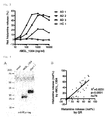
- the fraction exhibiting the histamine release activity was recovered and further purified by a Jupiter 5 ⁇ -C18-300A HPLC column (manufactured by Phenomenex) (eluted through concentration gradient from 0.1 v/v% TFA/distilled water to 0.1 v/v% TFA/80% acetonitrile), and a mass spectrometry (TOF-MS) was performed for the fraction exhibiting the histamine release activity (fraction indicated by an arrow in Fig. 1 ). While a sample was generally cationized in TOF-MS, the mass measurement was performed through anionization in this experiment. The histamine release activity was measured in accordance with a method described in Koro, O. et al., J. Allergy Clin. Immunol., 103, 663-670, 1999 . The detected amino acid sequence matched MGL_1304.
- Malassezia globosa was purchased from ATCC (MYA-4612). Reverse transcription of mRNA extracted from Malassezia globosa to cDNA was performed and cDNA encoding MGL_1304 was amplified by PCR (sense primer: 5'-GGGGTACCGTATCCCTCAACATTTTCTCAGCTGC-3' (SEQ ID NO: 2); antisense primer: 5'-CCCAAGCTTTTAGCAGTCGTACTTGCCGGGGATG-3' (SEQ ID NO: 3), (94 °C, 5 min/60 °C, 1 min/72 °C, 1 min) ⁇ 1 cycle, (94 °C, 1 min/60 °C, 1 min/72 °C, 1 min) ⁇ 30 cycles, (94 °C, 5 min/60 °C, 1 min/72 °C, 10 min) ⁇ 1 cycle).
- the amplified cDNA was inserted into the p Cold TF vectors (manufactured by TAKARA BIO INC.) followed by transfection of E. coli JM109 with the obtained vector. After 24 hours culture at 15 °C, the resulting E. coli was dissolved in xTractor buffer and a recombinant protein was purified by a cobalt column. Trigger Factor only (TF), a TF-MGL_1304 fusion protein (TF-MGL_1304), and a protein obtained by removal of TF from the fusion protein by enzyme treatment (rMGL_1304) were prepared. The obtained proteins were subjected to acrylamide gel electrophoresis and were directly CBB-stained (left side of Fig.
- the prepared rMGL_1304 was reacted with atopic dermatitis patient peripheral blood basophils ( Fig. 3 , AD1, AD2, and AD3) and healthy person peripheral blood basophils ( Fig. 3 , HC1) to perform the histamine release test.
- MGL_1304 induced histamine release specifically in the atopic dermatitis patients.
- cDNA encoding the MGL_1304 described above or mite cDNA was inserted into pSecTag2/Hygro vector (manufactured by Invitrogen) containing Myc-tag and COS7 cells were transfected with the resulting vector.
- a culture supernatant of the COS7 cells transfected with these DNAs was subjected to acrylamide gel electrophoresis and transferred to a PVDF membrane for immunoblotting with anti-Myc tag antibodies.
- the culture supernatant contained proteins corresponding to respective cDNAs ( Fig. 4A ).
- the culture supernatant was further reacted with atopic dermatitis patient peripheral blood basophils for the histamine release test.
- MGL_1304 protein produced by the COS7 cells induced histamine release similar to the partially purified human sweat antigen (QR).
- MGL_1304 had substantially the same property as the partially purified sweat antigen (QRX) that has been used so far.
- Recombinant mite antigen (Der f1), QRX, and MGL_1304 were electrophoresed and transferred to a plurality of PVDF membranes.
- An atopic patient serum (AD serum) pretreated with QRX or MGL_1304 prepared in Example 3 or AD serum without pretreatment was used for immunoblotting.
- the atopic dermatitis patient serums were obtained from three patients.
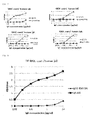
- the pretreatment with MGL_1304 inhibited the binding of IgE to QRX and the pretreatment with QRX inhibited the binding of IgE to MGL_1304 ( Fig. 5 ).
- atopic dermatitis patient serums (AD1 to AD4) were pretreated with TF or TF-MGL_1304 and used for sensitization of a rat cell line expressing a human IgE receptor (sub-unit A), and the degranulation induced by the stimulation with an anti-human IgE antibody (anti-IgE), QRX, or a mite extract (Mite-Df) was measured.
- anti-IgE anti-human IgE antibody
- QRX mite extract
- mite-Df mite extract
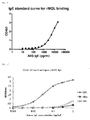
- An ELISA plate was coated with QRX prepared in Example 1 (50 ng/well).
- ABS human monoclonal IgE (non-immune) antibody ⁇ , derived from monoclonal hybridoma: ABS DIA HE1-01A/DIA HE1-1A
- AbD serotec human myeloma IgE antibody ⁇ : AbD serotec PHP 142
- GenWay Biotech human myeloma IgE antibody ⁇ : GenWay Biotech 11-511-248640
- concentration-dependent detection of QRX was studied by ELISA.
- the human IgE antibody that bound to QRX was detected with an HRP-labeled anti-human IgE antibody.
- QRX was detected in a concentration-dependent manner only when the AB human monoclonal IgE antibody was used ( Fig. 7 ).
- the results demonstrate that the ABS human monoclonal IgE antibody binds to QRX and can detect QRX quantitatively.
- An ELISA plate was coated with the TF-MGL_1304 fusion protein prepared by forced expression from E. coli in Example 3 (150 ng/well). It was studied by ELISA whether the ABS IgE antibody and the CHEMICON human myeloma IgE antibody detect the TF-MGL_1304 fusion protein in a concentration dependent manner. The human IgE antibody binding to the TF-MGL_1304 fusion protein was detected with an HRP-labeled anti-human IgE antibody.
- the ABS human monoclonal IgE antibody detected the TF-MGL_1304 fusion protein in a concentration dependent manner ( Fig. 8 ).
- the result demonstrates that the ABS human monoclonal IgE antibody binds to the MGL_1304 protein and can detect the MGL_1304 protein quantitatively.
- the TF-MGL_1304 fusion protein was not sufficiently detected with the CHEMICON human myeloma IgE antibody ( Fig. 8 ).
- An ELISA plate was coated with the TF-MGL_1304 fusion protein (150 ng/well).
- concentration of the ABS human monoclonal IgE antibody was varied in a wider range (0.02 to 20ng/ml) and the immobilized recombinant MGL_1304 protein was detected by ELISA and a standard curve was created.
- the ABS IgE antibody bindig to the TF-MGL_1304 fusion protein was detected with an HRP-labeled anti-human IgE antibody.
- the TF-MGL_1304 fusion protein is an antigen of sweat allergy (a sweat antigen) as described in Example 1-3. Therefore, those results demonstrate that the ABS IgE antibody can be used as a standard product at the time of quantification of IgE antibody that binds to a sweat antigen.
- An ELISA plate was coated with the partially purified sweat antigen (QRX) prepared in Example 1 (50 ng/well).
- ELISA plates were respectively coated with a mite antigen and a silk antigen expressed in E. coli (50 ng/well for each). It was studied by ELISA whether each antigen can be detected with the ABS IgE antibody.
- the ABS IgE antibody binding to each of the antigen was detected with an HRP-labeled anti-human IgE antibody.
- the partially purified sweat antigen (QRX) was specifically detected with the ABS IgE antibody ( Fig. 10 ).
- An ELISA plate was coated with the partially purified sweat antigen (QRX) prepared in Example 1 (50 ng/well). The concentration was compared between the ABS IgE antibody and the Smith2 antibody (Accession No. FERM BP-11111) for detection of QRX. The ABS IgE antibody binding to QRX was detected with an HRP-labeled anti-human IgE antibody, and the Smith2 antibody bunding to QRX was detected with an HRP-labeled anti-mouse IgG antibody.
- the ABS IgE antibody could detect the immobilized QRX from 0.01 ⁇ g/ml and the detection of QRX was saturated when the absorbance reached about three at 1 ⁇ g/ml, while the Smith2 antibody could detect QRX at 100 ⁇ g/ml with the absorbance of about 0.5.
- This result indicates that the ABS IgE antibody has an extremely high sensitivity to detect QRX compared to the Smith2 antibody ( Fig. 11 ).
- ABS IgE antibody quantitatively bound to an antigen of sweat allergy (a sweat antigen)
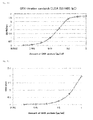
- ELISA system I an ELISA system using the Smith2 antibody as an immobilized antibody and the ABS IgE antibody as a detection antibody was tested (this ELISA system is also referred to as ELISA system I hereinafter).
- the Smith2 antibody was immobilized on an ELISA plate (10, 30, and 100 ⁇ g/ml, 50 ⁇ l/well) and, subsequently, QRX (1 ⁇ g/ml, 100 ⁇ l/well) or vehicle was added.
- the ABS IgE antibody (1 ⁇ g/ml, 100 ⁇ l/well) and an HRP-labeled anti-human IgE antibody (manufactured by KPL) were added and the absorbance (450nm) was measured.
- the absorbance without addition of QRX background
- the absorbance was about 3.5 when QRX was added ( Fig. 12 ).
- ELISA system II an ELISA system using the ABS IgE antibody as an immobilized antibody and the Smith2 antibody as a detection antibody was tested (this ELISA system is referred to as ELISA system II hereinafter).
- the ABS IgE antibody was immobilized on an ELISA plate (1, 3, and 10 ⁇ g/ml, 50 ⁇ l/well) and, subsequently, QRX (1 ⁇ g/ml, 100 ⁇ l/well) or vehicle was added.
- the Smith2 antibody (10 ⁇ g/ml, 100 ⁇ l/well) and an HRP-labeled anti-mouse IgE antibody (manufactured by KPL) were added and the absorbance (450nm) was measured.
- the absorbance without addition of QRX background
- the absorbance was about 3.5 when QRX was added ( Fig. 12 ).
- the ELISA system I could detect QRX at about 300-times lower concentration as compared to an ELISA system in which QRX was directly immobilized on a plate and detected with the ABS IgE antibody ( Fig. 14 ).
- QRX sweat antigen
- QRX was contained in the cubital fossa at 1.01 ⁇ 2.64 ng/ml, in the upper arm at 0.13 ⁇ 0.078 ng/ml, in the neck at 1.01 ⁇ 1.38 ng/ml ( Fig. 15 ).
- ABS IgE antibody recognized the following partial peptides of the MGL_1304 protein prepared by forced expression:
- ABS IgE antibody bound mainly to the P3 and P4 regions ( Fig. 17 ).
- ABS IgE antibody suppressed the histamine release induced by QRX from basophils derived from a sweat allergy patient.
- the ABS IgE antibody suppressed the histamine release induced by QRX ( Fig. 18 ).
- a rat mast cell expressing a human high-affinity IgE receptor was sensitized by serum of an atopic dermatitis patient or the ABS IgE antibody and the histamine release by stimulation with QRX was examined.
- basophils were prepared from blood samples of two human subjects and added with an anti-human IgE antibody (anti-IgE) that crosslinked IgE binding to an IgE receptor and activated the IgE receptor.
- anti-IgE anti-human IgE antibody
- the histamine release was observed from the basophils derived from both donors (see "untreated” in Fig. 21 ).
- ORX a partially purified sweat antigen, was added, weak histamine release was observed from the basophils derived from donor 1 and no histamine release was observed from the basophils derived from donor 2.
- the histamine release percentage (net %) due to the anti-human IgE antibody stimulation was further reduced when the basophils of donor 2 were re-sensitized by IgE because the spontaneous histamine release percentage was increased by the treatment of the cells and the net release percentage was reduced.
- IgE was dissociated from a large number of the high-affinity IgE receptors by the lactic acid treatment and the re-sensitization by IgE bound IgE again to a large number of the high-affinity IgE receptors, because the histamine release percentage due to the IgE-competitive anti-high-affinity-IgE receptor monoclonal antibody, 6F7, was increased by the lactic acid treatment and it was reduced or eliminated by the IgE re-sensitization.
- ABS IgE antibody binds to an IgE receptor on a cell but does not induce degranulation of mast cells even in the presence of an sweat allergy antigen.
- a 96-well ELISA plate was coated with rTF or rTF-MGL at 3 ⁇ g/ml and 50 ⁇ l/well and was left overnight at 4 °C. The plate was washed twice, blocked by 2 % BSA (room temperature, one hour), and then washed twice. The serum diluted 10 times ( ⁇ 10) or 20 times ( ⁇ 20) by 1 % BSA was added at 100 ⁇ l/well and left for one hour at room temperature. After the plate was washed three times, a solution containing an HRP-labeled anti-human IgE antibody was added at 100 ⁇ l/well, left for one hour, and washed three times, and a color was developed with TMB for the measurement of absorbance (450 nm).
- the absorbance obtained from the well coated with rTF was subtracted from the absorbance obtained from the well coated with rTF-MGL and the amount of MGL-specific IgE binding was determined.
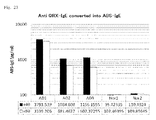
- the standard curve of the ABS IgE antibody described in Example 6 ( Fig. 9 ) was created at the same time.
- IgE that specifically bound to the sweat antigen (MGL) was detected in the serum of atopic dermatitis patients and allergic rhinitis patients by ELISA with immobilized rTF and rTF-rMGL and the concentration of the IgE antibody was quantified with the ABS IgE antibody as a standard substance ( Fig. 22 ).
- IgE that bound to the sweat allergy antigen protein (rMGL) was at an extremely low value or equal to or less than the detection limit (100 pg/ml) ( Fig. 22 ).
- the IgE antibody that specifically bound to a sweat antigen in serum of atopic dermatitis patients (AD1-3) and healthy persons (Normal1-2) was quantified with the ELISA system prepared in Example 9, in which a human IgE antibody was considered to bind to QRX bound to the immobilized Smith2 antibody ( Fig. 16 ).
- a 96-well ELISA plate was provided with the Smith2 antibody (10 ⁇ g/ml, 100 ⁇ l/well), left overnight at 4°C, washed twice, blocked by 2 % BSA (room temperature, one hour), and washed twice. After QRX (1 ⁇ g/ml, 100 ⁇ l/well) was added, the plate was washed twice. The serum diluted 40 times ( ⁇ 40) or 80 times ( ⁇ 80) by 1 % BSA was added at 100 ⁇ l/well and left for 90 minutes at room temperature.
- microorganism identified under I above was accompanied by: a scientific description a proposed taxonomic designation
- This International Depositary Authority accepts the microorganism as identified in the above item I, which was received by it on
Landscapes
- Health & Medical Sciences (AREA)
- Chemical & Material Sciences (AREA)
- Life Sciences & Earth Sciences (AREA)
- Immunology (AREA)
- Organic Chemistry (AREA)
- Molecular Biology (AREA)
- Engineering & Computer Science (AREA)
- General Health & Medical Sciences (AREA)
- Medicinal Chemistry (AREA)
- Biochemistry (AREA)
- Proteomics, Peptides & Aminoacids (AREA)
- Hematology (AREA)
- Biomedical Technology (AREA)
- Urology & Nephrology (AREA)
- Genetics & Genomics (AREA)
- Biophysics (AREA)
- Pathology (AREA)
- Food Science & Technology (AREA)
- Physics & Mathematics (AREA)
- Microbiology (AREA)
- Analytical Chemistry (AREA)
- General Physics & Mathematics (AREA)
- Biotechnology (AREA)
- Cell Biology (AREA)
- Nuclear Medicine, Radiotherapy & Molecular Imaging (AREA)
- General Chemical & Material Sciences (AREA)
- Bioinformatics & Cheminformatics (AREA)
- Veterinary Medicine (AREA)
- Public Health (AREA)
- Animal Behavior & Ethology (AREA)
- Pharmacology & Pharmacy (AREA)
- Chemical Kinetics & Catalysis (AREA)
- Pulmonology (AREA)
- Dermatology (AREA)
- Otolaryngology (AREA)
- Preparation Of Compounds By Using Micro-Organisms (AREA)
- Peptides Or Proteins (AREA)
- Medicines Containing Antibodies Or Antigens For Use As Internal Diagnostic Agents (AREA)
Applications Claiming Priority (2)
| Application Number | Priority Date | Filing Date | Title |
|---|---|---|---|
| JP2012181051 | 2012-08-17 | ||
| PCT/JP2013/071715 WO2014027626A1 (ja) | 2012-08-17 | 2013-08-09 | 汗アレルギー抗原蛋白質に結合するモノクローナルIgE抗体 |
Publications (2)
| Publication Number | Publication Date |
|---|---|
| EP2886554A1 true EP2886554A1 (de) | 2015-06-24 |
| EP2886554A4 EP2886554A4 (de) | 2016-09-07 |
Family
ID=50685583
Family Applications (1)
| Application Number | Title | Priority Date | Filing Date |
|---|---|---|---|
| EP13879589.3A Ceased EP2886554A4 (de) | 2012-08-17 | 2013-08-09 | An schweissallergie-antigenprotein bindender monoklonaler ige-antikörper |
Country Status (4)
| Country | Link |
|---|---|
| US (1) | US9989538B2 (de) |
| EP (1) | EP2886554A4 (de) |
| JP (1) | JP6385005B2 (de) |
| WO (1) | WO2014027626A1 (de) |
Families Citing this family (2)
| Publication number | Priority date | Publication date | Assignee | Title |
|---|---|---|---|---|
| WO2014003008A1 (ja) | 2012-06-28 | 2014-01-03 | 国立大学法人広島大学 | ヒト汗中に含まれる新規ヒスタミン遊離物質 |
| CN107621548A (zh) * | 2017-09-15 | 2018-01-23 | 深圳市因诺赛生物科技有限公司 | 人全血中游离型及细胞结合型总IgE测定诊断试剂盒及制备方法 |
Family Cites Families (19)
| Publication number | Priority date | Publication date | Assignee | Title |
|---|---|---|---|---|
| US4816567A (en) | 1983-04-08 | 1989-03-28 | Genentech, Inc. | Recombinant immunoglobin preparations |
| US5225539A (en) | 1986-03-27 | 1993-07-06 | Medical Research Council | Recombinant altered antibodies and methods of making altered antibodies |
| US5530101A (en) | 1988-12-28 | 1996-06-25 | Protein Design Labs, Inc. | Humanized immunoglobulins |
| DE69133557D1 (de) | 1990-08-29 | 2007-03-15 | Pharming Intellectual Pty Bv | Homologe rekombination in säugetier-zellen |
| US5545806A (en) | 1990-08-29 | 1996-08-13 | Genpharm International, Inc. | Ransgenic non-human animals for producing heterologous antibodies |
| US5814318A (en) | 1990-08-29 | 1998-09-29 | Genpharm International Inc. | Transgenic non-human animals for producing heterologous antibodies |
| US6492160B1 (en) | 1991-05-15 | 2002-12-10 | Cambridge Antibody Technology Limited | Methods for producing members of specific binding pairs |
| DE69230142T2 (de) | 1991-05-15 | 2000-03-09 | Cambridge Antibody Technology Ltd. | Verfahren zur herstellung von spezifischen bindungspaargliedern |
| US5733743A (en) | 1992-03-24 | 1998-03-31 | Cambridge Antibody Technology Limited | Methods for producing members of specific binding pairs |
| US5981175A (en) | 1993-01-07 | 1999-11-09 | Genpharm Internation, Inc. | Methods for producing recombinant mammalian cells harboring a yeast artificial chromosome |
| US6130364A (en) | 1995-03-29 | 2000-10-10 | Abgenix, Inc. | Production of antibodies using Cre-mediated site-specific recombination |
| EP1792992A1 (de) | 1995-12-12 | 2007-06-06 | Takara Bio Inc. | Antigenes Protein aus Malassezia |
| JPWO2003084991A1 (ja) | 2002-04-08 | 2005-08-11 | 独立行政法人科学技術振興機構 | アトピー性皮膚炎誘引蛋白質 |
| JP3642340B2 (ja) | 2003-03-28 | 2005-04-27 | ダイキン工業株式会社 | 有害物質除去方法、並びに、それに用いる空気浄化用フィルタ、拭き取りシートなどの有害物質除去材、及び、その保管方法 |
| JP3983260B2 (ja) | 2003-07-09 | 2007-09-26 | 塩野義製薬株式会社 | アトピー性皮膚炎誘引物質 |
| JP2008069118A (ja) | 2006-09-15 | 2008-03-27 | Hiroshima Univ | 汗抗原吸着剤 |
| CA2676843A1 (en) | 2007-01-29 | 2008-08-07 | Valtion Teknillinen Tutkimuskeskus | Method for producing novel ige based reagents |
| WO2009133951A1 (ja) | 2008-05-02 | 2009-11-05 | 国立大学法人 広島大学 | 抗汗抗原モノクローナル抗体 |
| WO2014003008A1 (ja) | 2012-06-28 | 2014-01-03 | 国立大学法人広島大学 | ヒト汗中に含まれる新規ヒスタミン遊離物質 |
-
2013
- 2013-08-09 JP JP2014530543A patent/JP6385005B2/ja not_active Expired - Fee Related
- 2013-08-09 US US14/421,821 patent/US9989538B2/en active Active
- 2013-08-09 EP EP13879589.3A patent/EP2886554A4/de not_active Ceased
- 2013-08-09 WO PCT/JP2013/071715 patent/WO2014027626A1/ja not_active Ceased
Also Published As
| Publication number | Publication date |
|---|---|
| EP2886554A4 (de) | 2016-09-07 |
| JP6385005B2 (ja) | 2018-09-05 |
| US9989538B2 (en) | 2018-06-05 |
| JPWO2014027626A1 (ja) | 2016-07-25 |
| US20150212097A1 (en) | 2015-07-30 |
| WO2014027626A1 (ja) | 2014-02-20 |
Similar Documents
| Publication | Publication Date | Title |
|---|---|---|
| JP5982698B2 (ja) | Dll4に特異的に結合する新規モノクローナル抗体及びその用途 | |
| EP3322715B1 (de) | Peptid-mimotope der cd3-t-zell-co-rezeptor-epsilon-kette und verwendungen davon | |
| KR101760465B1 (ko) | Clec14a에 특이성을 갖는 신규한 항체 및 그 용도 | |
| US9709576B2 (en) | Histamine releaser contained in human sweat | |
| CN109563169A (zh) | 抗hla-g特异性抗体 | |
| JP2018139530A (ja) | 認知症治療又は予防のためのヒト化抗体及びその製造方法、並びにそれを用いた認知症治療剤又は予防剤 | |
| EP3641892A1 (de) | Antiallergenantikörper | |
| JP2006524486A (ja) | チロトロピン受容体の結合対象及びその使用 | |
| US9989538B2 (en) | Monoclonal IgE antibody that binds to sweat allergy antigen protein | |
| WO2019075392A1 (en) | ANTIGEN-BINDING PROTEIN CONSTRUCTS AND USES THEREOF | |
| CN114058595B (zh) | 一株分泌抗lag3单克隆抗体的杂交瘤细胞株及其应用 | |
| EP3920958A1 (de) | Behandlung von krebsmetastasen durch targeting von exosomproteinen | |
| EP3072527B1 (de) | Immunsuppressiionsmittel | |
| CN114163528B (zh) | Cd47结合分子及其应用 | |
| Xu et al. | Screening and functional studies of Norrin-related nanobodies | |
| CN114213539A (zh) | 可结合cd4的纳米抗体4nb357及其应用 | |
| RU2747793C1 (ru) | Пептид со способностью специфически связываться с молекулой контроля иммунного ответа CTLA-4 | |
| KR102281512B1 (ko) | TGFBIp의 아세틸화 수준을 측정하는 제제를 포함하는 염증성 질환 진단용 조성물 | |
| CN120137037A (zh) | Cd3的特异性结合蛋白及其制备方法和应用 | |
| KR20160038824A (ko) | 세포침투 기능을 갖는 타우 단백질의 도메인 및 이의 용도 | |
| CN121878224A (zh) | 特异性结合屋尘螨提取物的IgG4抗体及其制备方法 | |
| CN120887992A (zh) | 一种特异性结合蛋白及其应用 | |
| WO2023170282A1 (en) | Single domain antibodies against bee venom epitopes | |
| CN118055951A (zh) | 免疫反应性分子及其用途 |
Legal Events
| Date | Code | Title | Description |
|---|---|---|---|
| PUAI | Public reference made under article 153(3) epc to a published international application that has entered the european phase |
Free format text: ORIGINAL CODE: 0009012 |
|
| 17P | Request for examination filed |
Effective date: 20150316 |
|
| AK | Designated contracting states |
Kind code of ref document: A1 Designated state(s): AL AT BE BG CH CY CZ DE DK EE ES FI FR GB GR HR HU IE IS IT LI LT LU LV MC MK MT NL NO PL PT RO RS SE SI SK SM TR |
|
| AX | Request for extension of the european patent |
Extension state: BA ME |
|
| DAX | Request for extension of the european patent (deleted) | ||
| RIC1 | Information provided on ipc code assigned before grant |
Ipc: C12P 21/08 20060101ALI20160414BHEP Ipc: A61K 39/395 20060101ALI20160414BHEP Ipc: C12N 15/09 20060101ALI20160414BHEP Ipc: G01N 33/53 20060101ALI20160414BHEP Ipc: C07K 16/18 20060101AFI20160414BHEP Ipc: A61P 37/08 20060101ALI20160414BHEP Ipc: A61P 11/02 20060101ALI20160414BHEP |
|
| RA4 | Supplementary search report drawn up and despatched (corrected) |
Effective date: 20160810 |
|
| RIC1 | Information provided on ipc code assigned before grant |
Ipc: C12N 15/09 20060101ALI20160804BHEP Ipc: A61P 11/02 20060101ALI20160804BHEP Ipc: C12P 21/08 20060101ALI20160804BHEP Ipc: A61P 37/08 20060101ALI20160804BHEP Ipc: A61K 39/395 20060101ALI20160804BHEP Ipc: G01N 33/53 20060101ALI20160804BHEP Ipc: C07K 16/18 20060101AFI20160804BHEP |
|
| 17Q | First examination report despatched |
Effective date: 20170816 |
|
| REG | Reference to a national code |
Ref country code: DE Ref legal event code: R003 |
|
| STAA | Information on the status of an ep patent application or granted ep patent |
Free format text: STATUS: THE APPLICATION HAS BEEN REFUSED |
|
| 18R | Application refused |
Effective date: 20190916 |