EP2882866B1 - Verfahren zur diagnose und behandlung von medullärer zystischer nierenerkrankung - Google Patents
Verfahren zur diagnose und behandlung von medullärer zystischer nierenerkrankung Download PDFInfo
- Publication number
- EP2882866B1 EP2882866B1 EP13750467.6A EP13750467A EP2882866B1 EP 2882866 B1 EP2882866 B1 EP 2882866B1 EP 13750467 A EP13750467 A EP 13750467A EP 2882866 B1 EP2882866 B1 EP 2882866B1
- Authority
- EP
- European Patent Office
- Prior art keywords
- nucleic acid
- muc
- sequence
- vntr
- sample
- Prior art date
- Legal status (The legal status is an assumption and is not a legal conclusion. Google has not performed a legal analysis and makes no representation as to the accuracy of the status listed.)
- Active
Links
Images




Classifications
-
- C—CHEMISTRY; METALLURGY
- C12—BIOCHEMISTRY; BEER; SPIRITS; WINE; VINEGAR; MICROBIOLOGY; ENZYMOLOGY; MUTATION OR GENETIC ENGINEERING
- C12Q—MEASURING OR TESTING PROCESSES INVOLVING ENZYMES, NUCLEIC ACIDS OR MICROORGANISMS; COMPOSITIONS OR TEST PAPERS THEREFOR; PROCESSES OF PREPARING SUCH COMPOSITIONS; CONDITION-RESPONSIVE CONTROL IN MICROBIOLOGICAL OR ENZYMOLOGICAL PROCESSES
- C12Q1/00—Measuring or testing processes involving enzymes, nucleic acids or microorganisms; Compositions therefor; Processes of preparing such compositions
- C12Q1/68—Measuring or testing processes involving enzymes, nucleic acids or microorganisms; Compositions therefor; Processes of preparing such compositions involving nucleic acids
- C12Q1/6876—Nucleic acid products used in the analysis of nucleic acids, e.g. primers or probes
- C12Q1/6883—Nucleic acid products used in the analysis of nucleic acids, e.g. primers or probes for diseases caused by alterations of genetic material
-
- C—CHEMISTRY; METALLURGY
- C12—BIOCHEMISTRY; BEER; SPIRITS; WINE; VINEGAR; MICROBIOLOGY; ENZYMOLOGY; MUTATION OR GENETIC ENGINEERING
- C12N—MICROORGANISMS OR ENZYMES; COMPOSITIONS THEREOF; PROPAGATING, PRESERVING, OR MAINTAINING MICROORGANISMS; MUTATION OR GENETIC ENGINEERING; CULTURE MEDIA
- C12N15/00—Mutation or genetic engineering; DNA or RNA concerning genetic engineering, vectors, e.g. plasmids, or their isolation, preparation or purification; Use of hosts therefor
- C12N15/09—Recombinant DNA-technology
- C12N15/11—DNA or RNA fragments; Modified forms thereof; Non-coding nucleic acids having a biological activity
- C12N15/113—Non-coding nucleic acids modulating the expression of genes, e.g. antisense oligonucleotides; Antisense DNA or RNA; Triplex- forming oligonucleotides; Catalytic nucleic acids, e.g. ribozymes; Nucleic acids used in co-suppression or gene silencing
- C12N15/1138—Non-coding nucleic acids modulating the expression of genes, e.g. antisense oligonucleotides; Antisense DNA or RNA; Triplex- forming oligonucleotides; Catalytic nucleic acids, e.g. ribozymes; Nucleic acids used in co-suppression or gene silencing against receptors or cell surface proteins
-
- C—CHEMISTRY; METALLURGY
- C12—BIOCHEMISTRY; BEER; SPIRITS; WINE; VINEGAR; MICROBIOLOGY; ENZYMOLOGY; MUTATION OR GENETIC ENGINEERING
- C12Q—MEASURING OR TESTING PROCESSES INVOLVING ENZYMES, NUCLEIC ACIDS OR MICROORGANISMS; COMPOSITIONS OR TEST PAPERS THEREFOR; PROCESSES OF PREPARING SUCH COMPOSITIONS; CONDITION-RESPONSIVE CONTROL IN MICROBIOLOGICAL OR ENZYMOLOGICAL PROCESSES
- C12Q2600/00—Oligonucleotides characterized by their use
- C12Q2600/118—Prognosis of disease development
-
- C—CHEMISTRY; METALLURGY
- C12—BIOCHEMISTRY; BEER; SPIRITS; WINE; VINEGAR; MICROBIOLOGY; ENZYMOLOGY; MUTATION OR GENETIC ENGINEERING
- C12Q—MEASURING OR TESTING PROCESSES INVOLVING ENZYMES, NUCLEIC ACIDS OR MICROORGANISMS; COMPOSITIONS OR TEST PAPERS THEREFOR; PROCESSES OF PREPARING SUCH COMPOSITIONS; CONDITION-RESPONSIVE CONTROL IN MICROBIOLOGICAL OR ENZYMOLOGICAL PROCESSES
- C12Q2600/00—Oligonucleotides characterized by their use
- C12Q2600/156—Polymorphic or mutational markers
Definitions
- This invention relates to the identification of a frameshift mutation in the VNTR region of the MUC1 gene in subject having medullary cystic kidney disease and an assay to identify subjects having this mutation that is useful in the diagnosis of the disease.
- MCKD Medullary cystic kidney disease type 1 is a rare disorder characterized by autosomal dominant inheritance of tubulo-interstitial kidney disease ( Bleyer et al., 2010, Semin. Nephrol 30, 366-373 ). Affected individuals develop a slow deterioration in kidney function (specifically, in glomerular filtration rate), usually commencing in the second to third decade of life and resulting in the need for dialysis or kidney transplantation approximately two decades later.
- MCKD1 Diagnosis of MCKD1 in patients is complicated by the disease's variable severity and age at onset, its absence of extrarenal manifestations, and its absence of characteristic renal manifestations such as hematuria, proteinuria, nephrolithiasis, or pathognomonic morphological changes in the kidney. These characteristics, together with the high frequency of kidney disease in the general population ( Castro et al., 2009, Am. J. Kidney Dis. 53, S46-S55 ), have complicated individual diagnosis and have hampered MCKD1 research. Diagnostic difficulties have also prevented living related kidney donation, as potential donor family members have not known their status as unaffected or (yet-to-be) affected. Conclusive determination of the molecular bases of MCKD1 would lead both to much-needed diagnostics for families and to general functional insights into the pathogenesis of tubulo-interstitial kidney disease, which could inform prevention and therapy.
- Kidney Dis., 44, 611-617 many additional families of European descent ( Wolf, M. T. F. et al, 2006, Hum. Genet. 7, 905-911 ; Fuchshuber, A. et al., 2001, Genomics, 72, 278-284 ), and a family with coexisting bipolar disease. Attempts to identify the mutated gene(s), however, have not been successful; mutational analysis of 37 candidate genes within the linked interval in 23 MCKD1 patients was unable to identify the causative genetic mutation(s) ( Wolf, M. T. F. et al, 2006, Hum. Genet. 7, 905-911 ).
- MPS massively parallel sequencing
- This invention based upon the discovery of a frameshift mutation in the GC-rich variable number of tandem repeats (VNTR) sequence of the coding region of the mucin 1 gene (MUC-1).
- VNTR variable number of tandem repeats
- MUC-1 mucin 1 gene
- the present invention features a method of diagnosing or determining a predisposition to developing medullary cystic kidney disease type 1 (MCKD1) comprising detecting, in a sample, a point mutation resulting in insertion of a cytosine in the GC-rich variable number of tandem repeats (VNTR) sequence of the coding region of the mucin 1 gene (MUC-1), wherein the presence of the point mutation indicates that the subject has or is predisposed to developing MCKD1.
- MCKD1 medullary cystic kidney disease type 1
- the present invention features a method of diagnosing a frameshift mutation in a subject comprising analyzing a sample to determine the presence or absence of a frameshift mutation in the GC-rich variable number of tandem repeats (VNTR) sequence, wherein said frameshift mutation produces a mutant 8G homopolymer.
- the frameshift mutation produces a truncated MUC-1 polypeptide having a pI (isoelectric point) greater that the wildtype MUC-1 polypeptide.
- the sample is a nucleic acid sample.
- the nucleic acid is DNA, RNA or cDNA.
- the sample is any sample containing the truncated MUC-1 polypeptide.
- the present invention features an assay for determining a cytosine insertion in the GC-rich variable number of tandem repeats (VNTR) sequence of the coding region of the mucin 1 gene (MUC-1) comprising: a) performing an endonuclease digestion on a nucleic acid sample, wherein said endonuclease selectively cleaves a wild-type MUC-1 nucleic acid sequence and not a mutant MUC-1 sequence having a cytosine insertion in the GC-rich variable number of tandem repeats (VNTR) region to produce a first plurality of nucleic acid fragments, b) performing a PCR reaction on said first plurality of nucleic acid fragments to produced a plurality of amplified nucleic acid products, performing a second endonuclease digestion on the plurality of amplified nucleic acid products, wherein the endonuclease selectively cleaves a wild-type MUC-1 nucleic acid sequence and not a mutant M
- the invention features an assay wherein the endonuclease specifically cleaves a nucleic acid having the nucleic acid sequence GCCCCCCCAGC (SEQ ID NO: 1) and not a mutant sequence having the nucleic acid sequence GCCCCCCCCAGC (SEQ ID NO: 2).
- the invention features an assay wherein the endonuclease is Mwol.
- the invention features an assay wherein the probe comprises the nucleic acid sequence CGGGCTCCACCGCCCCC (SEQ ID NO: 3).
- the invention features an assay wherein the detecting is performed by size exclusion chromatography.
- the invention features an assay wherein the detecting is performed by mass spectroscopy.
- the invention features an assay wherein the reaction product containing the cytosine insertion is about 5,904 daltons. In one aspect, the invention features an assay wherein a purification step is performed before step (b), (c) and or (d). In one aspect, the invention features an assay wherein the nucleic acid sample is DNA, RNA or cDNA.
- the present invention provides a method of treating or alleviating a symptom of MCKD1 comprising, administering to a subject a compound that inhibits the expression or activity of MUC-1.
- the compound is an antisense MUC-1 nucleic acid, a MUC-1 specific short-interfering RNA, or a MUC-1 specific ribozyme.
- the sample is a nucleic acid sample.
- the sample is a nucleic acid sample.
- the nucleic acid is DNA, RNA or cDNA.
- the sample is any sample containing the truncated MUC-1 polypeptide.
- This invention based upon the discovery of a frameshift mutation in the GC-rich variable number of tandem repeats (VNTR) sequence of the coding region of the mucin 1 gene (MUC-1).
- VNTR variable number of tandem repeats
- MUC-1 cytosine
- MUC1-fs A MUC-1 containing the frameshift mutation is also referred to herein as MUC1-fs.
- the MCKD1 mutations predict a truncated MUC1 polypeptide having significant amounts of novel sequence generated by frameshifting.
- Immunospecific detection confirmed the presence of the predicted mutant gene product in renal tubular epithelial cells, demonstrating biosynthesis, accumulation, and partial mislocalization of the mutant MUC1-fs protein.
- pI refers to isoelectric point, or the pH at which the particular molecule ( i.e ., nucleic acid) carries no net electrical charge.
- This invention provides a robust and reliable assay for detecting a single base insertion/ frame shift mutation located within the VNTR region of the MUC1 gene.
- This frame shift mutation thought to be an autosomal dominant variation, appears to be strongly associated with MCKD1.
- the invention provides a method of diagnosing or determining a predisposition to developing MCKD1 by detecting an insertion of a cytosine in the VNTR region of the MUC1 gene.
- the invention provides an assay for detecting the frameshift mutation.
- the assay method described herein unlike direct next generation sequencing, has the ability to enrich for the mutant signal over background as well as tolerate the high GC content of this tandem repeat region.
- the key concept on which the assay is based is the enrichment for the mutant signal over wildtype background using a restriction endonuclease which specifically targets and digests the 7G homopolymer sequence. Iterative rounds of locus specific PCR amplification and restriction digestion is followed by probe extension and mass detection by MALDI-TOF mass spectrometry. This allows for the clear detection of the single base insertion event.
- the identified mutations and the genotyping assay described herein provide a potential screening tool for younger members of families in which MCKD1 has been previously diagnosed, as well as in potential sporadic cases. Additionally, knock-out studies indicate that the MUC1 gene is not essential in mice. Together with the dominant and late-onset nature of the disease, this raises the possibility of preventative or therapeutic approaches based on treatments that decrease expression of the MUC1 gene or splice out its single VNTR-encoding exon.
- the invention provides methods of diagnosing a frameshift mutation in a subject by analyzing a DNA sample to determine the presence or absence of a frameshift mutation in the GC-rich variable number of tandem repeats (VNTR) sequence.
- the frameshift mutation results in the insertion of a cytosine in the GC-rich variable number of tandem repeats (VNTR) sequence of the coding region of the mucin 1 gene (MUC-1).
- the frameshift mutation produces a mutant 8G homopolymer.
- the mutation predicts a truncated MUC1 polypeptide having significant amounts of novel sequence generated by frameshifting.
- Immunospecific detection confirmed the presence of the predicted mutant gene product in renal tubular epithelial cells, demonstrating biosynthesis, accumulation, and partial mislocalization of the mutant MUC1-fs protein.
- the novel repeat sequence caused by the frameshift has a pI greater that the wildtype MUC-1 polypeptide. Identification of the frameshift indicates the subject has or is predisposed to developing medullary cystic kidney disease type 1 (MCKD1).
- the frameshift mutation can be detected by any method know in the art or preferably by the assay method described herein.
- the method for diagnosing or determining a predisposition to developing medullary cystic kidney disease type 1 (MCKD1) or diagnosing a frameshift may include the following steps: a) performing an endonuclease digestion on a nucleic acid sample, wherein said endonuclease selectively cleaves a wild-type MUC-1 nucleic acid sequence and not a mutant MUC-1 sequence having a cytosine insertion in the GC-rich variable number of tandem repeats (VNTR) region to produce a first plurality of nucleic acid fragments, b) performing a PCR reaction on said first plurality of nucleic acid fragments to produced a plurality of amplified nucleic acid products, performing a second endonuclease digestion on the plurality of amplified nucleic acid products, wherein the endonuclease selectively cleaves a wild-type MUC-1 nucleic acid sequence and not a mutant MUC-1 sequence having a cytos
- the sample can be any biological sample such as a tissue or fluid.
- Various embodiments include cells of the skin, muscle, fascia, brain, prostate, breast, endometrium, lung, head & neck, pancreas, small intestine, blood cells, liver, testes, ovaries, colon, rectum, skin, stomach, esophagus, spleen, lymph nodes, bone marrow or kidney.
- Other embodiments include fluid samples such as peripheral blood, lymph fluid, ascites, serous fluid, pleural effusion, sputum, cerebrospinal fluid, lacrimal fluid, stool urine or amniotic fluid. Nucleic acids used are isolated from cells contained in the biological sample, according to standard methodologies (Sambrook et al., 1989).
- the nucleic acids may be DNA (e.g., genomic DNA, mitochondrial DNA), or RNA (e.g., mRNA, structural RNA), or cDNA (e.g., reverse-transcribed using methods known in the art from RNA).
- DNA e.g., genomic DNA, mitochondrial DNA
- RNA e.g., mRNA, structural RNA
- cDNA e.g., reverse-transcribed using methods known in the art from RNA.
- the invention provides a method for detecting one or more sequence changes in a plurality of target nucleic acid sequences in a nucleic acid sample comprising five steps. The five steps are described in more detail below.
- endonuclease digestion is performed on a nucleic acid sample, for example, DNA, to produce a first plurality of DNA fragments.
- the endonuclease is chosen to specifically target and digest the wild-type 7G homopolymer sequence (GCCCCCCCAGC (SEQ ID NO:1)) compared to the mutant 8G homopolymer sequence (GCCCCCCCCAGC (SEQ ID NO:2)).
- the endonuclease is for example MwoI.
- the 100 ng of nucleic acid sample e.g., DNA
- Optimal reaction and digestion conditions for performing the endonuclease digestion are further described herein.
- PCR amplification is performed on the first plurality of DNA fragments obtained from the first step, to enrich for the mutant insertion-containing fragments over wild-type background.
- the plurality of DNA fragments are amplified using, for example, tailed primers nested within the 60-bp VNTR repeat.
- the primers specifically amplify intact VNTR fragments and produce a plurality of amplified DNA fragments. Examples of such primers are: InterMuc_L (CTGGGAATCGCACCAGCGTGTGGCCCCGGGCTCCACC (SEQ ID NO:4)) InterMuc_R (CGTGGATGAGGAGCCGCAGTGTCCGGGGCCGAGGTGACA (SEQ ID NO:5)).
- the PCR reaction is performed using 18.5 ul of the digestion reaction, 5 U of HotStart Plus Taq, and 10uM of primers in each reaction.
- the PCR program features the denaturing step at 94°C for 30 seconds, the annealing step at 67°C for 30 seconds, and the elongation step at 72°C for 1 minute for 45 cycles, and a final elongation step at 72°C for 10 minutes. Additional reaction and amplification conditions for performing the PCR reaction are further described herein.
- endonuclease digestion is performed on the plurality of amplified DNA fragments in the second step (step (b)).
- the endonuclease is chosen to specifically target and digest the wild-type 7G homopolymer sequence (GCCCCCCCAGC (SEQ ID NO:1)) compared to the mutant 8G homopolymer sequence (GCCCCCCCCAGC (SEQ ID NO:2)).
- the endonuclease is for example MwoI.
- the 21.5 ul of the PCR product is digested with 5 U of MwoI for 16 or more hours at 60 °C.
- Optimal reaction and digestion conditions for performing the endonuclease digestion are further described herein.
- a probe extension reaction is performed using the second plurality of DNA fragments obtained from the third step (step (c)).
- the probe is designed to specifically bind upstream of the cytosine insertion.
- the probe extension is performed using a high fidelity DNA polymerase and a nucleotide termination mix containing dATP, ddCTP and ddGTP.
- the probe extension reaction produces a plurality of reaction products.
- the probe is a 19 bp probe having the sequence of CGGGCTCCACCGCCCCCCC (SEQ ID NO:3).
- the probe extension reaction is performed with template from the second endonuclease digestion, 10 mM of nucleotide termination mix, a probe (e.g., SEQ ID NO:3), and 0.64 U of ThermoSequenase.
- the probe extension reaction program features the denaturing step at 94°C for 5 seconds, the annealing step at 52°C for 5 seconds, and the elongation step at 72°C for 5 seconds for a total of 55 cycles, and a final elongation step at 72°C for 7 minutes.
- the presence of the mutant 8G homopolymer sequence is detected.
- the mutant 8G homopolymer sequence is detected by any method known in the art. As the wildtype and mutant homopolymer are of different size, size exclusion chromatography is particular suited for detection of the mutant 8G homopolymer sequence For example the mutant 8G homopolymer sequence is detected using mass spectroscopy such as MALDI-TOF mass-spectrometry using the Sequenom MassArray platform.
- Spectra are assessed for the presence of peaks corresponding to the mutant extension-product (CGGGCTCCACCGCCCCCC (SEQ ID NO:6)) at 5,904.83 daltons) and the wild-type extension-product (CGGGCTCCACCGCCCCCCCAG (SEQ ID NO:7)) at 6258.06 daltons).
- a purification step is performed by any method know in the art.
- the invention provides a compound for use in methods of treating, alleviating a symptom or delaying the onset of MCKD1 by administering to a subject a compound that decreases the expression or activity of MUC-1.
- a decrease in MUC-1 expression or activity can be defined by a reduction of a biological function of the MUC-1 protein.
- a MUC-1 biological function includes for example, such as lubrication and hydration of cell surfaces as well as protection from microorganisms and degradative enzymes.
- MUC-1 expression is measured by detecting a MUC-1 RNA transcript or protein.
- MUC-linhibitors are known in the art or are identified using methods described herein.
- the MUC-1 inhibitor is for example an antisense MUC-1 nucleic acid, a MUC-1 specific short-interfering RNA, or a MUC-1 specific ribozyme.
- siRNA is meant a double stranded RNA molecule which prevents translation of a target mRNA.
- Standard techniques of introducing siRNA into a cell are used, including those in which DNA is a template from which an siRNA RNA is transcribed.
- the siRNA includes a sense MUC-1 nucleic acid sequence, an anti-sense MUC-1 nucleic acid sequence or both.
- the siRNA is constructed such that a single transcript has both the sense and complementary antisense sequences from the target gene, e.g., a hairpin.
- the length of the oligonucleotide is at least 10 nucleotides and may be as long as the naturally-occurring MUC-1 transcript.
- the oligonucleotide is 19-25 nucleotides in length.
- the oligonucleotide is less than 75, 50, or 25 nucleotides in length.
- the present invention provides compounds for use in both prophylactic and therapeutic methods of treating a subject at risk of (or susceptible to) a disorder or having a disorder associated with aberrant (e.g., insufficient) metabolism.
- treatment is defined as the application or administration of a therapeutic agent to a patient, or application or administration of a therapeutic agent to an isolated tissue or cell line from a patient, who has a disease, a symptom of disease or a predisposition toward a disease, with the purpose to cure, heal, alleviate, relieve, alter, remedy, ameliorate, improve or affect the disease, the symptoms of disease or the predisposition toward disease.
- MUC-1 inhibitors also referred to herein as "active compounds" of the invention, and derivatives, fragments, analogs and homo logs thereof, can be incorporated into pharmaceutical compositions suitable for administration.
- MUC-1 inhibitors include, but are not limited to, Go-201 and Go-203.
- Other MUC-1 inhibitors and methods of identifying such compounds are identified in US Publication No. 2011/0251246 .
- Such compositions typically comprise the peptide or mimetic, and a pharmaceutically acceptable carrier.
- pharmaceutically acceptable carrier is intended to include any and all solvents, dispersion media, coatings, antibacterial and antifungal agents, isotonic and absorption delaying agents, and the like, compatible with pharmaceutical administration.
- Suitable carriers are described in the most recent edition of Remington's Pharmaceutical Sciences, a standard reference text in the field.
- Preferred examples of such carriers or diluents include, but are not limited to, water, saline, finger's solutions, dextrose solution, and 5% human serum albumin.
- Liposomes and non-aqueous vehicles such as fixed oils may also be used.
- the use of such media and agents for pharmaceutically active substances is well known in the art. Except insofar as any conventional media or agent is incompatible with the active compound, use thereof in the compositions is contemplated. Supplementary active compounds can also be incorporated into the compositions.
- a pharmaceutical composition of the invention is formulated to be compatible with its intended route of administration.
- routes of administration include parenteral, e.g. , intravenous, intradermal, subcutaneous, oral ( e.g. , inhalation), transdermal (topical), transmucosal, and rectal administration.
- Solutions or suspensions used for parenteral, intradermal, or subcutaneous application can include the following components: a sterile diluent such as water for injection, saline solution, fixed oils, polyethylene glycols, glycerine, propylene glycol or other synthetic solvents; antibacterial agents such as benzyl alcohol or methyl parabens; antioxidants such as ascorbic acid or sodium bisulfite; chelating agents such as ethylenediaminetetraacetic acid; buffers such as acetates, citrates or phosphates, and agents for the adjustment of tonicity such as sodium chloride or dextrose.
- the pH can be adjusted with acids or bases, such as hydrochloric acid or sodium hydroxide.
- the parenteral preparation can be enclosed in ampoules, disposable syringes or multiple dose vials made of glass or plastic.
- compositions suitable for injectable use include sterile aqueous solutions (where water soluble) or dispersions and sterile powders for the extemporaneous preparation of sterile injectable solutions or dispersion.
- suitable carriers include physiological saline, bacteriostatic water, Cremophor ELTM (BASF, Parsippany, N.J.) or phosphate buffered saline (PBS).
- the composition must be sterile and should be fluid to the extent that easy syringeability exists. It must be stable under the conditions of manufacture and storage and must be preserved against the contaminating action of microorganisms such as bacteria and fungi.
- the carrier can be a solvent or dispersion medium containing, for example, water, ethanol, polyol (for example, glycerol, propylene glycol, and liquid polyethylene glycol, and the like), and suitable mixtures thereof.
- the proper fluidity can be maintained, for example, by the use of a coating such as lecithin, by the maintenance of the required particle size in the case of dispersion and by the use of surfactants.
- Prevention of the action of microorganisms can be achieved by various antibacterial and antifungal agents, for example, parabens, chlorobutanol, phenol, ascorbic acid, thimerosal, and the like.
- isotonic agents for example, sugars, polyalcohols such as manitol, sorbitol, sodium chloride in the composition.
- Prolonged absorption of the injectable compositions can be brought about by including in the composition an agent which delays absorption, for example, aluminum monostearate and gelatin.
- Sterile injectable solutions can be prepared by incorporating the active compound (e.g. , a MUC-1 inhibitor) in the required amount in an appropriate solvent with one or a combination of ingredients enumerated above, as required, followed by filtered sterilization.
- dispersions are prepared by incorporating the active compound into a sterile vehicle that contains a basic dispersion medium and the required other ingredients from those enumerated above.
- methods of preparation are vacuum drying and freeze-drying that yields a powder of the active ingredient plus any additional desired ingredient from a previously sterile-filtered solution thereof.
- Oral compositions generally include an inert diluent or an edible carrier. They can be enclosed in gelatin capsules or compressed into tablets. For the purpose of oral therapeutic administration, the active compound can be incorporated with excipients and used in the form of tablets, troches, or capsules. Oral compositions can also be prepared using a fluid carrier for use as a mouthwash, wherein the compound in the fluid carrier is applied orally and swished and expectorated or swallowed. Pharmaceutically compatible binding agents, and/or adjuvant materials can be included as part of the composition.
- the tablets, pills, capsules, troches and the like can contain any of the following ingredients, or compounds of a similar nature: a binder such as microcrystalline cellulose, gum tragacanth or gelatin; an excipient such as starch or lactose, a disintegrating agent such as alginic acid, Primogel, or corn starch; a lubricant such as magnesium stearate or Sterotes; a glidant such as colloidal silicon dioxide; a sweetening agent such as sucrose or saccharin; or a flavoring agent such as peppermint, methyl salicylate, or orange flavoring.
- a binder such as microcrystalline cellulose, gum tragacanth or gelatin
- an excipient such as starch or lactose, a disintegrating agent such as alginic acid, Primogel, or corn starch
- a lubricant such as magnesium stearate or Sterotes
- a glidant such as colloidal silicon dioxide
- the compounds are delivered in the form of an aerosol spray from pressured container or dispenser which contains a suitable propellant, e.g. , a gas such as carbon dioxide, or a nebulizer.
- a suitable propellant e.g. , a gas such as carbon dioxide, or a nebulizer.
- Systemic administration can also be by transmucosal or transdermal means.
- penetrants appropriate to the barrier to be permeated are used in the formulation.
- penetrants are generally known in the art, and include, for example, for transmucosal administration, detergents, bile salts, and fusidic acid derivatives.
- Transmucosal administration can be accomplished through the use of nasal sprays or suppositories.
- the active compounds are formulated into ointments, salves, gels, or creams as generally known in the art.
- the compounds can also be prepared in the form of suppositories (e.g ., with conventional suppository bases such as cocoa butter and other glycerides) or retention enemas for rectal delivery.
- suppositories e.g ., with conventional suppository bases such as cocoa butter and other glycerides
- retention enemas for rectal delivery.
- the active compounds are prepared with carriers that will protect the compound against rapid elimination from the body, such as a controlled release formulation, including implants and microencapsulated delivery systems.
- a controlled release formulation including implants and microencapsulated delivery systems.
- Biodegradable, biocompatible polymers can be used, such as ethylene vinyl acetate, polyanhydrides, polyglycolic acid, collagen, polyorthoesters, and polylactic acid. Methods for preparation of such formulations will be apparent to those skilled in the art.
- the materials can also be obtained commercially from Alza Corporation and Nova Pharmaceuticals, Inc.
- Liposomal suspensions (including liposomes targeted to infected cells with monoclonal antibodies to viral antigens) can also be used as pharmaceutically acceptable carriers. These can be prepared according to methods known to those skilled in the art, for example, as described in U.S. Pat. No. 4,522,811 .
- Dosage unit form refers to physically discrete units suited as unitary dosages for the subject to be treated; each unit containing a predetermined quantity of active compound calculated to produce the desired therapeutic effect in association with the required pharmaceutical carrier.
- the specification for the dosage unit forms of the invention are dictated by and directly dependent on the unique characteristics of the active compound and the particular therapeutic effect to be achieved.
- compositions can be included in a container, pack, or dispenser together with instructions for administration.
- the starting material for assay of the invention may be DNA (e.g., genomic DNA, mitochondrial DNA) or RNA (e.g., mRNA, structural RNA).
- the nucleic acid to be analyzed comprises a portion of a particular gene or genetic locus in a patient's genomic DNA known to be involved in a pathological condition or syndrome.
- the nucleic acid used as starting material may be obtained from any cell source or body fluid. Methods for converting RNA into DNA, such as, for example, by the use of reverse transcriptase with oligo-dT or random primers are known.
- Non-limiting examples of cell sources available in clinical practice include blood cells, buccal cells, cervicovaginal cells, epithelial cells from urine, fetal cells, or any cells present in tissue obtained by biopsy including tumor cells.
- Body fluids include blood, urine, cerebrospinal fluid, and tissue exudates at the site of infection or inflammation.
- DNA is extracted from the cell source or body fluid using any of the numerous methods that are standard in the art. It will be understood that the particular method used to extract DNA will depend on the nature of the source.
- the assay of the invention is directed to a method for detecting one or more sequence changes in a plurality of target nucleic acid sequences in a nucleic acid sample comprising four steps. Each of the steps is discussed in more detail below.
- step (a) endonuclease digestion is performed on a DNA sample to produce a plurality of DNA fragments.
- the endonuclease is chosen to specifically target and digest the wild-type 7G homopolymer sequence (GCCCCCCCAGC (SEQ ID NO: 1)) compared to the mutant 8G homopolymer sequence (GCCCCCCCCAGC (SEQ ID NO: 2)).
- the endonuclease is for example Mwol.
- the endonuclease digestion of step (a) is performed as follows: a. Prepare MwoI restriction digestion mix for 96 samples as follows: Reagent X1 Reaction (ul) X110 Reactions (1 plate) (ul) NEB Buffer #3 2.5 275 MwoI (5U/ul) 1 110 Water 16.5 1,815 DNA (20ng/ul) 5 NA b. Vortex digestion reaction well for 30 seconds and spin down c. Begin digestion program
- step (b) PCR is performed on the plurality of DNA fragments obtained from step (a) to enrich for insertion-containing fragments over wild-type background.
- the DNA fragments of step (a) are amplified using Tailed primers nested within the 60-bp VNTR repeat which will specifically amplify intact VNTR fragments.
- Primer sequences are: InterMuc_L (CTGGGAATCGCACCAGCGTGTGGCCCCGGGCTCCACC (SEQ ID NO:4)) InterMuc_R (CGTGGATGAGGAGCCGCAGTGTCCGGGGCCGAGGTGACA (SEQ ID NO: 5)).
- PCR amplification produces a plurality of amplified DNA fragments.
- the PCR amplification of step (b) is performed as follows: a. Prepare PCR master mix as follows: Reagent X1 Reaction (ul) X110 Reactions (1 plate) (ul) Buffer Qiagen 10X 2.5 275 MgCl2 (25mM) 1 110 dNTP Mix (10 mM) 1.92 211.2 Primer (InterMuc_L) (10um) 0.48 52.8 Primer (InterMuc_R) (10um) 0.48 52.8 HotStart Plus Taq (5U/ul) 0.16 17.6 Total: 6.54 719.4 b. Array 6.5 ul PCR master mix to each well of a fresh 96-well skirted Eppendorf plate c. Transfer 18.5 ul of eluted/ digested template to appropriate wells d. Seal and cortex plate well for 30 seconds e. Begin PCR program on MJ Tetrad Cycler "MUC1_45X"
- step (c) endonuclease digestion is performed on the plurality of amplified DNA fragments produced by step (b) to produce a second plurality of DNA fragments.
- the endonuclease is chosen to specifically target and digeststhe wild-type 7G homopolymer sequence (GCCCCCCCAGC (SEQ ID NO:1)) compared to the mutant 8G homopolymer sequence (GCCCCCCCCAGC (SEQ ID NO:2)).
- the endonuclease is for example Mwol.
- the endonuclease digestion of step (a) is performed as follows: a. Prepare MwoI restriction digestion mix as follows: Reagent X1 Reaction (ul) X110 Reactions (1 plate) (ul) NEB Buffer #3 2.5 275 MwoI (5U/ul) 1 110 Template 21.5 N/A b. Transfer 21.5 ul clean/ eluted PCR product to new 96 well skirted Eppendorf plate c. Array 3.5 ul MwoI mix to each well d. Vortex digestion reaction well for 30 seconds and spin down e. Begin digestion program
- step (d) a probe extension reaction is performed in the second plurality of DNA fragments obtained from step (c).
- the probe is designed to specifically bind upstream of the cytosine insertion.
- the probe extension is performed using a high fidelity DNA polymerase and a nucleotide termination mix containing dATP, ddCTP and ddGTP
- the probe extension reaction produces a plurality of reaction products.
- the probe is a 19 bp probe having the sequence of CGGGCTCCACCGCCCCCCC (SEQ ID NO:3).
- the probe exention is preformed as follows: a. Prepare extension master mix as follows Reagent X1 Reaction (ul) X110 Reactions (1 plate) (ul) Buffer Qiagen 10X 0.9 99 MgCl2 (25mM) 0.24 26.4 SAP Buffer 1.7 187 Term Mix (ddG, ddC, dA) (10mM each) 0.22 24.2 Probe_13 (SEQ ID NO:3) (10uM) 0.6 66 ThermoSequenase (32U/ul) 0.02 2.2 Water 1.16 127.6 Total 4.84 532.4 b. Array 4.84ul of TermMix/ Buffer to appropriate wells of a 384 well Eppendorf plate. c. Transfer 5.16ul of eluted template to mix containing wells d. Seal plate, vortex well and spin down. e. Place plate on ABI Viper cycler and run program: "HME-Ext"
- step (e) the presence of the mutant 8G homopolymer sequence is detected.
- the mutant 8G homopolymer sequence is detected by any method known in the art. As the wildtype and mutant homopolymer are of different size, size exclusion chromatography is particular suited for detection of the mutant 8G homopolymer sequence For example the mutant 8G homopolymer sequence is detected using mass spectroscopy such as MALDI-TOF mass-spectrometry using the Sequenom MassArray platform.
- Spectra are assessed for the presence of peaks corresponding to the mutant extension-product (CGGGCTCCACCGCCCCCC (SEQ ID NO: 6)) at 5,904.83 daltons) and the wild-type extension-product (CGGGCTCCACCGCCCCCCCAG (SEQ ID NO:7)) at 6258.06 daltons).
- a purification step is performed by any method know in the art.
- Families with MCKD1 share the following characteristics: absent or low grade proteinuria with bland urinary sediments; slowly progressive kidney dysfunction; absence of causative findings on renal ultrasound; and absence of other associated signs or symptoms of systemic disease. Hypertension tended to occur only after the onset of chronic kidney failure.
- GFR glomerular filtration rate
- serum creatinine is used to measure kidney function, as serum creatinine levels are reciprocally related to glomerular filtration rate.
- serum creatinine levels are also affected by other factors, including protein intake and muscle mass, making it an inaccurate renal function marker in people with preservation of 70%-100% of normal kidney function.
- the MDRD formula estimates kidney function based on race, gender, age, and serum creatinine. Unfortunately, this formula is also inaccurate for patients with 70%-100% of normal kidney function. To further complicate matters, kidney function normally decreases with age, with some individuals experiencing significant loss of function - this is especially the case in African Americans and Native Americans.
- age and GFR were the considering factors in arriving at the clinical diagnoses. Analysis of individuals of less than 18 years of age was not included, even though affected individuals under 18 could have a normal GFR. Individuals with significantly abnormal kidney function for their age were considered affected. Individuals were considered unaffected if kidney function was normal or if they were older and still had relatively preserved kidney function. In most of the families, affected individuals initiated renal replacement therapy (started dialysis) between 40 and 60 years of age.
- individuals were considered affected if they required renal replacement therapy, had biopsy-proven interstitial kidney disease, or had an estimated GFR ⁇ 2 standard deviations below the mean, adjusted for age and race. Individuals were considered to be unaffected if they were greater than 25 years of age and their estimated GFR was considered significantly higher than expected for affected family members. Approximately one-third of family members were excluded from initial genetic analysis due to indeterminate renal phenotypes. Medical records were reviewed and peripheral venous blood samples were obtained for DNA isolation and laboratory determinations.
- Family members were genotyped on the Affymetrix 6.0 platform using a standard analysis pipeline involving strict quality control of the raw data, rendering of highly informative subsets of markers appropriate for linkage mapping, confirmation of reported familial relationships, and further filtering of Mendelian inheritance errors and other likely genotyping errors.
- Linkage mapping was performed using the Merlin package under a rare autosomal-dominant model ( Abecasis, G. R., Cherny, S. S., Cookson, W. O. & Cardon, L. R. Nat. Genet. 30, 97-101 (2002 )). Marker maps typically contained ⁇ 5,700 markers. Particularly large pedigrees (>24 bit complexity) were divided into branches where required by computational constraints; the consistency of the alleles carried on the segregating risk haplotype was confirmed across branches.
- the boundaries of the linked region were refined by searching all well-typed markers- including many that were dropped solely to eliminate markers in LD (linkage disequilibrium) from the linkage calculations- for instances where affected members within the same pedigree shared no alleles IBD, or identical by descent (by virtue of being homozygous for opposite alleles - for example, one having genotype AA and another CC). Such markers necessarily lie outside the critical linkage interval.
- LD linkage disequilibrium
- LD-independent marker maps were separately created for each pedigree/branch, choosing single, well-typed, informative markers from LD-defined bins of SNPs based on phased, population-specific HapMap data (hapmap.org, release 22). Markers which showed no-call rates > 10% or any Mendelian inheritance errors within a pedigree/branch were excluded from specific pedigree/branch analyses. Additionally, markers were required to be spaced at least 0.1 cM apart according to published sex-averaged recombination positions (affymetrix.com).
- Affymetrix 6.0 intensity data were used by Birdsuite software to analyze copy-number variation ( Korn, J. M. et al., Nat. Genet. 40, 1253-1260 (2008 )).
- Exomes were captured using the Agilent SureSelect v2. For a subset of whole-genome samples, size selection was performed using gel electrophoresis, with a target insert size of either 340 bp or 370 bp +/- 10%. Multiple gel cuts were taken for libraries that required high sequencing coverage. For another subset of whole-genome samples, size selection was performed using Sage's Pippin Prep.
- libraries were quantified using quantitative PCR (kit purchased from KAPA biosystems) with probes specific to the ends of the adapters. This assay was automated using Agilent's Bravo liquid handling platform. Based on qPCR quantification, libraries were normalized to 2 nM and then denatured using 0.1 N NaOH using Perkin-Elmer's MultiProbe liquid handling platform.
- Cluster amplification of denatured templates was performed according to the manufacturer's protocol (Illumina) using either Genome Analyzer v3, Genome Analyzer v4, HiSeq 2000 v2, or HiSeq v3 cluster chemistry and flowcells.
- SYBR Green dye was added to all flowcell lanes, and a portion of each lane visualized using a light microscope, in order to confirm target cluster density.
- Flowcells were sequenced either on Genome Analyzer IIX using v3 or v4 Sequencing-by-Synthesis Kits, then analyzed using RTA v1.7.48; or on HiSeq 2000 using HiSeq 2000 v2 or v3 Sequencing-by-Synthesis Kits, then analyzed using RTA v1.10.15. or RTA v.1.12.4.2.
- a custom sequence-capture microarray was designed to perform target enrichment of chromosome 1 152-156 Mb (hg18), including the critical MCKD1-linked region. Of the 12 sequenced individuals, regional-capture sequencing was performed on 5 individuals ( ⁇ 220-fold coverage on average).
- the four megabase region was tiled with probes using Nimblegen in-house repeat masking algorithm ( Okou, D. T. et al., Nat. Methods 4, 907-909 (2007 )).
- Each array contains 385,000 probes tiled with ⁇ 5 bp overlap, excluding the repetitive sequence.
- the probe set covered 70% of the 4-Mb target region, or 85% if 100 bp offset around probes is used.
- a 3' adenosine overhang was added using Klenow exo fragment and 1 mM dATP followed by ligation of Illumina sequencing adapters with the Quick ligase. The agarose gel electrophoresis size-selection step was omitted. Ligated fragments were enriched using 11-15 cycles of linker mediated (LM) PCR using a high-fidelity polymerase (Phusion, Finnzymes). 1 ⁇ g of cleaned PCR product was hybridized on the Roche Nimblegen Sequence Capture array following the manufacturer's protocol. After 3 days of hybridization, slides were washed and the enriched DNA was eluted.
- LM linker mediated
- Eluted DNA was amplified with 14-18 cycles of LM-PCR, cleaned with QIAquick PCR purification kit (Qiagen), and quantified. Sequence capture efficiency was verified using real-time PCR amplification of three primer sets within the target region and three primer sets outside of the target region. Amplification of primer sets inside and outside the target region was compared using both sequence capture enriched DNA and the pre-capture DNA. An eight-to-ten fold difference in rt-PCR amplification was deemed to be successful enrichment.
- Sequence data was processed with Picard (http://picard.sourceforge.net/) and BWA for mapping reads ( DePristo, M. A. et al., Nat. Genet. 43, 491-498 (2011 ); Li, H. & Durbin, R., Bioinformatics 26, 589-595 (2010 )).
- SNPs and small indels were called using GATK, which utilizes base quality-score recalibration and local realignment at known indels ( DePristo, M. A. et al., Nat. Genet. 43, 491-498 (2011 ); McKenna, A. et al., Genome Res. 20, 1297-1303 (2010 )).
- the analyzed variable sites were restricted to those that pass GATK standard filters to eliminate events with strand-bias, low quality for the depth of sequencing achieved, homopolymer runs, and SNPs near indels.
- Genome STRiP was run on the sequenced individuals and on a control population of 32 Finnish genomes sequenced at low coverage by the 1000 Genomes Project ( A map of human genome variation from population-scale sequencing. Nature 467, 1061-1073 (2010 )).
- Genome STRiP was run on both with the default parameters and also with relaxed parameter settings to attempt to increase sensitivity. In normal use, Genome STRiP looks only for signatures of large deletions indicated by unusual spacing or orientation of read pairs. For this application, we additionally enabled Genome STRiP to perform read pair clustering across all possible read pair orientations to generate a set of 2,208 loci that might potentially contain some form of structural variation.
- Genomic DNA (5-8 ⁇ g) was digested with 100 u Hinf I (NEB). Digests were run on a 0.8% agarose gel, transferred to a BrightStar Plus Nylon membrane (Ambion) and hybridized overnight at 65°C to a quadruply biotinylated synthetic 100mer oligonucleotide probe /52-Bio/ CAGCCCACGGTGTCACCTCGGCCCCGGACACCAGGCCGGCCCCGGGC /iBiodT/ CCACCGCCCCCCCAGCCCACGGTGTCACC /iBiodT/ CGGCCCCGGACACCAGGCCGGC (SEQ ID NO: 8) (IDT) present at 2 ng/ml in SuperHyb hybridization solution (Ambion) supplemented with 100 ⁇ g/ml sonicated salmon sperm DNA (Stratagene). After a final high-stringency wash at 65°C in 0.2x SSC and 0.1% SDS, membrane-bound biotin was detected by a BrightStar Bio
- the long-range PCR protocol was adapted from Fowler et al. ( Fowler, J. C., Teixeira, A. S., Vinall, L. E. & Swallow, D. M., Hum. Genet. 113, 473-479 (2003 )).
- PCR reactions contained 15 or 30 ng genomic DNA, 1.75 pmol of forward (GGAGAAAAGGAGACTTCGGCTACCCAG (SEQ ID NO:9)) and reverse (GCCGTTGTGCACCAGAGTAGAAGCTGA (SEQ ID NO:10)) primers, 5% DMSO, 625 ⁇ M of each dNTP, 1x reaction buffer with 3 mM MgCl 2 , and 0.25 u DyNAzyme EXT DNA polymerase (Finnzymes).
- Thermocycling on GeneAmp 9700 instruments was as follows: initial denaturation (90 s at 96°C); 22 or 27 cycles (40 s at 96°C, 30 s at 65°C, 6 min at 68°C) and final extension (10 min at 68°C).
- PCR reactions were run on 0.8% agarose gels. Bona fide full-length PCR products were excised, cleaned-up by QiaQuick gel-extraction kits (Qiagen) and TOPO-TA cloned in pCR-4-TOPO vector in TOP10 cells (Invitrogen). After electroporation, kanamycin-resistant transformants (typically 8 clones per gel-purified PCR product) were analyzed by Eco RI digestion and long-range PCR (see above).
- Bona fide full-length plasmid clones typically 2x2 clones for each allele in a given individual (2 independent PCR reactions, 2 clones each, typically 8 clones per individual) were subjected to in vitro transposition with EZ-Tn5 ⁇ TET-1> (Epicentre).
- Sequencing reactions (5 ⁇ L) contained 0.75 ⁇ L 5x sequencing buffer, 0.4 ⁇ L BigDye Terminator v3.1, 0.1 ⁇ L dGTP BigDye Terminator v3.0 (all ABI), 3.5% DMSO, 1.8 pmol sequencing primer and 1.5 ⁇ L miniprepped plasmid. Sequencing reactions were thermocycled as follows: initial denaturation (1 min at 96°C) then 40 cycles (30 s at 96°C, 15 s at 50°C, 4 min at 60°C). Extension products were cleaned up by ethanol precipitation and run on 3730x1 DNA Analyzers (ABI).
- Genomic DNA was first over-digested using restriction endonuclease MwoI which selectively cleaves the wild-type sequence (GCCCCCCCAGC (SEQ ID NO:1)), while leaving intact fragments containing the +C insertion (GCCCCCCC*C*AGC (SEQ ID NO:2), wherein the '*' designates the C insertion).
- Tailed primers nested within the 60-bp repeat were then used to PCR amplify the remaining intact VNTR fragments, thus enriching for insertion-containing fragments over wild-type background. PCR products were then re-digested with MwoI for a second round of enrichment.
- a 20-bp probe was then designed just upstream of the insertion site, and probe extension was performed using a high fidelity DNA polymerase and a nucleotide termination mix containing dATP, ddCTP and ddGTP. Following probe extension, reaction products were separated and sized by MALDI-TOF mass-spectrometry using the Sequenom MassArray platform. Spectra were then assessed for the presence of peaks corresponding to the mutant extension-product (at 5,904.83 daltons) and the wild-type extension-product (at 6258.06 daltons).
- genomic DNA 100ug was digested in a 25ul reaction volume for 16 hours using 5 units of MwoI restriction endonuclease (New England Biolabs) with supplemental additions of 5 units of enzyme at hours 3 and 15.
- Digestion reactions were then cleaned using 50ul AmPure beads according to manufacturers protocol (Agencourt, Beverly, MA) and digested DNA was eluted in 20 of nuclease free water.
- VNTR fragments were PCR amplified using 1X HotStart buffer, ImM, 0.8mM dNTPs, 0.8 units of HotStart Taq Plus (Qiagen) and 0.2uM forward and reverse primers (Forward_Primer: 5'-CTGGGAATCGCACCAGCGTGTGGCCCCGGGCTCCACC(SEQ ID NO:13)), Reverse Primer: 5'- CGTGGATGAGGAGccGCAGTGTCCGGGGCCGAGGTGACA(SEQ ID NO:14)) in a 25ul reaction volume.
- PCR cycling conditions were: one hold at 95°C for 5 min; 45 cycles of 94 °C for 30 sec, 67 °C for 30 sec, 72 °C for 1 min; followed by one hold at 72 °C for 10 min.
- PCR reactions were cleaned using 50ul AmPure beads according to manufacturers protocol (Agencourt, Beverly, MA) and amplicons were eluted in 23ul nuclease free water.
- probe extension was performed using 1X HotStart buffer, 0.6mM 1.7ul SAP buffer (Sequenom, San Diego, CA),0.2mM each of nucleotides ddGTP, ddCTP and dATP; 0.7 units of Thermo Sequenase DNA polymerase (Amersham) and 0.6uM of extension probe (5'-CGGGCTCCACCGCCCCCCC (SEQ ID NO:3)) in a 10ul reaction volume.
- Probe extension was performed on a 384-well ABI GeneAMP 9700 and cycling conditions were; one hold at 94°C for 2 min 55 cycles of 94°C for 5 sec, 52°C for 5 sec, 72°C for 5 sec; followed by one hold at 72 °C for 7 min. Reactions were then de-salted using the addition of a cation-exchange resin and ⁇ 7nl of purified extension reaction was spotted onto a SpectroChip (Sequenom) containing matrix 3-hydroxipicoloinic acid. Arrayed reactions were then analyzed by matrix-assisted laser desorption/ionization-time of flight (MALDI-TOF) on a Compact mass spectrometer (Sequenom/Bruker)
- MALDI-TOF matrix-assisted laser desorption/ionization-time of flight
- the perfect co-segregation suggested little, if any, phenocopy.
- the MCKD1 critical region spanned 2.07 Mb (hg19 chr1:154,370,020-156,439,000), bounded on each side by recombination breakpoints in two different pedigrees.
- MCKD1 might be due to expansions in a coding VNTR sequence, because recurrent mutations at coding VNTRs have been documented as the cause of many genomic disorders and because massively parallel sequencing data might not readily reveal such an expansion ( Gemayel, R., Vinces, M. D., Legendre, M. & Verstrepen, K. J., Annu. Rev. Genet. 44, 445-477 (2010 )).
- Candidate VNTRs in the first four genes were found either to be non-polymorphic or to show no notable expansion in affected individuals (relative to family members not sharing the risk haplotype and to CEPH family samples), based on direct assays of length by PCR.
- VNTR most strongly predicted to be polymorphic was in MUC1 , and although often annotated as non-coding, the evidence is clear that the VNTR is fully contained within coding sequence ( Brayman, M., Thathiah, A. & Carson, D. D., Reprod. Biol. Endocrinol. 2, 4 (2004 ); Swallow, D.M. et al., Nature 328, 82-84 (1987 ); Levitin, F. et al., J. Biol. Chem. 280, 33374-33386 (2005 )).
- MUC1 was of particular interest because it was the only gene in the critical region with highly enriched mRNA expression in the kidney, based on RNASeq data from an adult control individual (unrelated to this study).
- the MUC1 VNTR proved remarkably difficult to assay: it consists of a large repeat unit (60 bases) with very high GC-content (>80%) and many repeats (20-125 copies) ( Home, A. W. et al., Lancet 357, 1336-1337 (2001 ); Fowler, J. C., Teixeira, A. S., Vinall, L. E. & Swallow, D. M., Hum. Genet. 113, 473-479 (2003 )).
- MUC1 VNTR was polymorphic in our families, we found no evidence of unusual expansion on risk chromosomes.
- EXAMPLE 5 TARGETED SANGER SEQUENCING OF MUC1 CODING VNTR REVEALS INSERTION VARIANT IN AFFECTEDS
- MCKD1 might be caused by point mutations within the large, extremely GC-rich MUC1 coding VNTR, which was poorly represented in our sequence data: (i) it was excluded from whole-exome and regional-capture probes due to its low-complexity and extreme sequence composition and (ii) it was dramatically underrepresented in QC-filtered data, even in the whole-genome sequence, likely due to its GC-richness and homopolymer content.
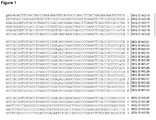
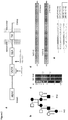
- VNTR assemblies We found a number of point variants in the VNTR assemblies. With one exception, they either did not segregate with the risk haplotype or were present in the alleles of the CEPH trio and/or unaffected chromosomes. However, we found one variant consistent with disease segregation: the insertion of a single C (relative to the coding strand of MUC1 ) within a stretch of seven C's occurring at positions 53-59 in a single copy of the canonical 60-mer repeat ( Figure 2e ). In all six families, we found the +C insertion in the assemblies of VNTR alleles, even when the assembly graph could not be fully and unambiguously resolved ( Table 1 ).
- Single-base insertions in a coding region cause a frameshift that is typically followed soon thereafter by a novel stop codon.
- no novel stop codon is encountered within the MUC1 VNTR owing to its high GC-content.
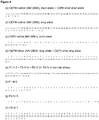
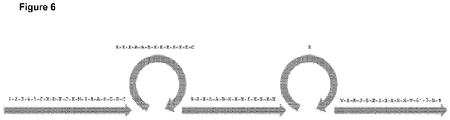
- the first novel stop codon is predicted to occur shortly beyond the VNTR terminus at hg19 position 155,160,870 (negative strand) ( Figure 2a ), producing a mutant protein that contains many copies of a novel repeat sequence (obtained by shifted translation of the VNTR) but lacks the downstream SEA self-cleavage and transmembrane domain characteristic of the wild-type MUC1 precursor protein.
- genotyping assay we studied all samples collected from the six MCKD1 families used for linkage analysis, including 62 phenotypically affected and 79 unaffected relatives ( Figure 7b -c ). Additionally, we genotyped over 500 control individuals from CEU, Japanese, Chinese, Yoruba and Italian HapMap3 populations ( Figure 7d ). For each affected individual found by sequencing to carry a +C insertion, the genotyping assay confirmed the presence of a +C insertion, and full genotyping of all family members showed that the insertion segregated perfectly with each family's risk haplotype. None of the over 500 HapMap individuals showed evidence of a +C insertion.
- EXAMPLE 7 EXISTENCE OF MUC1-FS CONFIRMED IN KIDNEYS OF MCKD1 PATIENTS
- Co-staining of patient and control tissue additionally with antibodies against wild-type MUC1 demonstrated the specificity of the MUC1-fs antibodies for the mutant protein, with diffuse and/or fine granular intracellular localization of the MUC1-fs protein in patient kidney ( Figure 8c ), and also patchy co-localization of MUC1-fs and wild-type MUC1 signals on the apical membrane of collecting duct epithelial cells ( Figure 8c, 8d ).
- Detailed image analysis of patient tissue ( Figure 8d ) compared to control tissue ( Figure 8e ) detected no intracellular co-localization of MUC1-fs and wild-type MUC1 proteins in patient tissue, but revealed puncti of colocalization in distinct plasmalemmal subdomains.
Landscapes
- Life Sciences & Earth Sciences (AREA)
- Chemical & Material Sciences (AREA)
- Health & Medical Sciences (AREA)
- Engineering & Computer Science (AREA)
- Genetics & Genomics (AREA)
- Organic Chemistry (AREA)
- Zoology (AREA)
- Wood Science & Technology (AREA)
- Proteomics, Peptides & Aminoacids (AREA)
- General Engineering & Computer Science (AREA)
- Bioinformatics & Cheminformatics (AREA)
- Biotechnology (AREA)
- Molecular Biology (AREA)
- Biomedical Technology (AREA)
- Analytical Chemistry (AREA)
- Physics & Mathematics (AREA)
- Biochemistry (AREA)
- General Health & Medical Sciences (AREA)
- Microbiology (AREA)
- Biophysics (AREA)
- Pathology (AREA)
- Immunology (AREA)
- Plant Pathology (AREA)
- Measuring Or Testing Involving Enzymes Or Micro-Organisms (AREA)
- Investigating Or Analysing Biological Materials (AREA)
Claims (17)
- Verfahren zum Diagnostizieren oder Bestimmen einer Prädisposition für die Entwicklung einer medullär-zystischen Nierenerkrankung Typ 1 (MCKD1), welches das Detektieren einer Punktmutation, die zur Insertion eines Cytosins in der GC-reichen "Variable-Number-of Tandem-Repeats"(VNTR)-Sequenz der codierenden Region des Mucin-1-Gens (MUC-1) führt, in einer Probe umfasst, wobei die Anwesenheit der Punktmutation MCKD1 oder eine Prädisposition für die Entwicklung von MCKD1 anzeigt.
- Verfahren zum Diagnostizieren einer Rasterschubmutation in einer GC-reichen "Variable-Number-of-Tandem-Repeats"(VNTR)-Sequenz eines MUC-1-Gens, wobei das Verfahren das Analysieren einer Probe zum Bestimmen der Anwesenheit oder Abwesenheit einer Rasterschubmutation in der GC-reichen "Variable-Number-of-Tandem-Repeats"(VNTR)-Sequenz des Gens umfasst, wobei die Rasterschubmutation ein Mutanten-8G-Homopolymer produziert.
- Verfahren gemäß Anspruch 2, wobei die Rasterschubmutation ein trunkiertes MUC-1-Polypeptid produziert, welches einen größeren pI als das Wildtyp-MUC-1-Polypeptid aufweist.
- Assay zum Bestimmen einer Cytosin-Insertion in der GC-reichen "Variable-Number-of Tandem-Repeats"(VNTR)-Sequenz der codierenden Region des Mucin-1-Gens (MUC-1), der umfasst:a) Durchführen eines Endonuklease-Verdaus auf einer Nukleinsäureprobe, wobei die Endonuklease selektiv eine Wildtyp-MUC-1-Nukleinsäuresequenz und nicht eine Mutanten-MUC-1-Sequenz, aufweisend eine Cytosin-Insertion in der GC-reichen "Variable-Number-of-Tandem-Repeats"(VNTR)-Region, spaltet, so dass eine erste Vielzahl an Nukleinsäurefragmenten produziert wird;b) Durchführen einer PCR-Reaktion auf der ersten Vielzahl an Nukleinsäurefragmenten, so dass eine Vielzahl amplifizierter Nukleinsäureprodukte produziert wird;c) Durchführen eines zweiten Endonuklease-Verdaus auf der Vielzahl amplifizierter Nukleinsäureprodukte, wobei die Endonuklease selektiv eine Wildtyp-MUC-1-Nukleinsäuresequenz und nicht eine Mutanten-MUC-1-Sequenz, aufweisend eine Cytosin-Insertion in der GC-reichen "Variable-Number-of-Tandem-Repeats"(VNTR)-Region, spaltet, so dass eine zweite Vielzahl an Nukleinsäurefragmenten produziert wird;d) Durchführen einer Sondenverlängerungsreaktion auf der zweiten Vielzahl an Nukleinsäurefragmenten unter Verwendung einer Sonde, welche spezifisch stromaufwärts der Cytosin-Insertion bindet, so dass eine Vielzahl an Reaktionsprodukten produziert wird; unde) Detektieren der Anwesenheit eines die Cytosin-Insertion enthaltenden Reaktionsprodukts, wodurch eine Cytosin-Insertion in der GC-reichen "Variable-Number-of-Tandem-Repeats"(VNTR)-Sequenz der codierenden Region des Mucin-1-Gens (MUC-1) bestimmt wird.
- Assay gemäß Anspruch 4, wobei die Endonuklease spezifisch eine Nukleinsäure, welche die Nukleinsäuresequenz GCCCCCCCAGC (SEQ ID NO: 1) aufweist, und nicht eine Mutantensequenz, welche die Nukleinsäuresequenz GCCCCCCCCAGC (SEQ ID NO: 2) aufweist, spaltet.
- Assay gemäß Anspruch 4, wobei es sich bei der Endonuklease um Mwo1 handelt.
- Assay gemäß Anspruch 4, wobei die Sonde die Nukleinsäuresequenz CGGGCTCCACCGCCCCCCC (SEQ ID NO:3) umfasst.
- Assay gemäß Anspruch 4, wobei das Detektieren durch Größenausschlusschromatographie durchgeführt wird.
- Assay gemäß Anspruch 4, wobei das Detektieren durch Massenspektroskopie durchgeführt wird.
- Assay gemäß Anspruch 4, wobei das Reaktionsprodukt, das die Cytosin-Insertion enthält, etwa 5904 Dalton beträgt.
- Assay gemäß Anspruch 4, wobei ein Reinigungsschritt vor Schritt (b), (c) und/oder (d) durchgeführt wird.
- Verbindung zur Verwendung in einem Verfahren zum Behandeln oder Lindern eines Symptoms von MCKD1, wobei die Verbindung die Expression oder Aktivität von MUC-1 inhibiert.
- Verbindung zur Verwendung gemäß Anspruch 12, wobei die Verbindung eine Antisense-MUC-1-Nukleinsäure, eine MUC-1-spezifische kurze interferierende RNA oder ein MUC-1-spezifisches Ribozym ist.
- Verfahren gemäß Anspruch 2, wobei die Probe eine Nukleinsäureprobe ist.
- Verfahren gemäß Anspruch 14, wobei die Nukleinsäure DNA, RNA oder cDNA ist.
- Verfahren gemäß Anspruch 2, wobei die Probe jedwede Probe ist, die das trunkierte MUC-1-Polypeptid enthält.
- Verfahren gemäß Anspruch 4, wobei die Nukleinsäureprobe DNA, RNA oder cDNA ist.
Applications Claiming Priority (2)
| Application Number | Priority Date | Filing Date | Title |
|---|---|---|---|
| US201261681937P | 2012-08-10 | 2012-08-10 | |
| PCT/US2013/054301 WO2014026092A1 (en) | 2012-08-10 | 2013-08-09 | Methods of diagnosing and treating medullary cystic kidney disease |
Publications (2)
| Publication Number | Publication Date |
|---|---|
| EP2882866A1 EP2882866A1 (de) | 2015-06-17 |
| EP2882866B1 true EP2882866B1 (de) | 2018-03-14 |
Family
ID=48998743
Family Applications (1)
| Application Number | Title | Priority Date | Filing Date |
|---|---|---|---|
| EP13750467.6A Active EP2882866B1 (de) | 2012-08-10 | 2013-08-09 | Verfahren zur diagnose und behandlung von medullärer zystischer nierenerkrankung |
Country Status (4)
| Country | Link |
|---|---|
| US (1) | US10370716B2 (de) |
| EP (1) | EP2882866B1 (de) |
| MX (1) | MX358037B (de) |
| WO (1) | WO2014026092A1 (de) |
Families Citing this family (4)
| Publication number | Priority date | Publication date | Assignee | Title |
|---|---|---|---|---|
| CN112760371A (zh) * | 2021-03-09 | 2021-05-07 | 上海交通大学 | 一种检测muc1基因突变的引物、试剂盒及分析方法 |
| JPWO2023074723A1 (de) * | 2021-10-27 | 2023-05-04 | ||
| CZ309668B6 (cs) * | 2022-01-25 | 2023-06-28 | GeneSpector Innovations s.r.o. | Způsob stanovení mutované formy bílkoviny mucinu-1 v biologickém vzorku |
| WO2025231266A1 (en) * | 2024-05-01 | 2025-11-06 | Emory University | Use of muc1 mimetic peptide inhibitors for inhibition of mucus secretion |
Family Cites Families (2)
| Publication number | Priority date | Publication date | Assignee | Title |
|---|---|---|---|---|
| US4522811A (en) | 1982-07-08 | 1985-06-11 | Syntex (U.S.A.) Inc. | Serial injection of muramyldipeptides and liposomes enhances the anti-infective activity of muramyldipeptides |
| US8952054B2 (en) | 2010-03-15 | 2015-02-10 | Dana-Farber Cancer Institute, Inc. | Small molecule inhibitors of MUC1 and methods of identifying the same |
-
2013
- 2013-08-09 EP EP13750467.6A patent/EP2882866B1/de active Active
- 2013-08-09 MX MX2015001778A patent/MX358037B/es active IP Right Grant
- 2013-08-09 WO PCT/US2013/054301 patent/WO2014026092A1/en not_active Ceased
-
2015
- 2015-02-10 US US14/618,525 patent/US10370716B2/en active Active
Also Published As
| Publication number | Publication date |
|---|---|
| MX2015001778A (es) | 2015-10-09 |
| US20150252423A1 (en) | 2015-09-10 |
| US10370716B2 (en) | 2019-08-06 |
| HK1205535A1 (en) | 2015-12-18 |
| MX358037B (es) | 2018-08-02 |
| EP2882866A1 (de) | 2015-06-17 |
| WO2014026092A1 (en) | 2014-02-13 |
Similar Documents
| Publication | Publication Date | Title |
|---|---|---|
| CN102010902B (zh) | 产前诊断和监测的标记 | |
| EP2851432B1 (de) | RCA-Locus-Analyse zur Beurteilung der Anfälligkeit für AMD | |
| TWI541507B (zh) | 評估肝臟病變之方法 | |
| CN103534591A (zh) | 通过测序分析进行的非侵入性胎儿遗传筛选 | |
| US10947592B2 (en) | Method for detecting cystic fibrosis | |
| WO2014181107A9 (en) | Genetic method of aiding the diagnosis and treatment of familial hypercholesterolaemia | |
| EP2882866B1 (de) | Verfahren zur diagnose und behandlung von medullärer zystischer nierenerkrankung | |
| US20140148344A1 (en) | Association markers for beta thalassemia trait | |
| CA3163367A1 (en) | Biomarkers and uses thereof in the treatment of chronic hepatitis b infection | |
| WO2010102387A1 (en) | Interleukin-12 polymorphisms for identifying risk for primary biliary cirrhosis | |
| KR102063486B1 (ko) | Rnf213 단일염기다형성과 한국인 모야모야병 발병 위험도의 연관성 | |
| KR102189142B1 (ko) | 만성신장질환의 악화 예측 마커로서의 snp 및 이의 이용 | |
| KR102189143B1 (ko) | 만성신장질환 예후 예측을 위한 조성물 및 방법 | |
| TW202146660A (zh) | 用於評估神經傳導物轉運子抑制劑之功效之組合物及方法 | |
| KR102189144B1 (ko) | 만성신장질환 악화 예측 마커 및 이를 이용한 악화 예측 방법 | |
| HK1205535B (en) | Methods of diagnosing and treating medullary cystic kidney disease | |
| US20240084389A1 (en) | Use of simultaneous marker detection for assessing difuse glioma and responsiveness to treatment | |
| US20260035748A1 (en) | Methods for detecting and treating idiopathic pulmonary fibrosis | |
| KR102409336B1 (ko) | 면역글로불린 a 신병증 및 혈관염 진단용 snp 마커 및 이를 이용한 진단 방법 | |
| JP2026513264A (ja) | ロングリードシーケンシングハイブリッドデータ解析による接合性解析による遠位ゲノム遺伝子座のフェージングのための新規アッセイ | |
| WO2022080882A1 (ko) | 만성신장질환의 악화 예측 마커로서의 snp 및 이의 이용 | |
| Fish | Analysis of genetic variations associated with arrhythmogenic right ventricular cardiomyopathy | |
| KR20240088237A (ko) | 당뇨병성 신장질환 진단용 단일염기다형성 및 이의 용도 | |
| US8268562B2 (en) | Biomarkers for predicting response of esophageal cancer patient to chemoradiotherapy | |
| WO2013173993A1 (zh) | 鉴定双胞胎类型的方法和系统 |
Legal Events
| Date | Code | Title | Description |
|---|---|---|---|
| PUAI | Public reference made under article 153(3) epc to a published international application that has entered the european phase |
Free format text: ORIGINAL CODE: 0009012 |
|
| 17P | Request for examination filed |
Effective date: 20150213 |
|
| AK | Designated contracting states |
Kind code of ref document: A1 Designated state(s): AL AT BE BG CH CY CZ DE DK EE ES FI FR GB GR HR HU IE IS IT LI LT LU LV MC MK MT NL NO PL PT RO RS SE SI SK SM TR |
|
| AX | Request for extension of the european patent |
Extension state: BA ME |
|
| DAX | Request for extension of the european patent (deleted) | ||
| REG | Reference to a national code |
Ref country code: HK Ref legal event code: DE Ref document number: 1205535 Country of ref document: HK |
|
| GRAP | Despatch of communication of intention to grant a patent |
Free format text: ORIGINAL CODE: EPIDOSNIGR1 |
|
| INTG | Intention to grant announced |
Effective date: 20161021 |
|
| RAP1 | Party data changed (applicant data changed or rights of an application transferred) |
Owner name: THE GENERAL HOSPITAL CORPORATION DBA Owner name: THE BROAD INSTITUTE, INC. |
|
| GRAJ | Information related to disapproval of communication of intention to grant by the applicant or resumption of examination proceedings by the epo deleted |
Free format text: ORIGINAL CODE: EPIDOSDIGR1 |
|
| GRAP | Despatch of communication of intention to grant a patent |
Free format text: ORIGINAL CODE: EPIDOSNIGR1 |
|
| INTC | Intention to grant announced (deleted) | ||
| INTG | Intention to grant announced |
Effective date: 20170403 |
|
| RAP1 | Party data changed (applicant data changed or rights of an application transferred) |
Owner name: THE GENERAL HOSPITAL CORPORATION Owner name: THE BROAD INSTITUTE, INC. |
|
| GRAJ | Information related to disapproval of communication of intention to grant by the applicant or resumption of examination proceedings by the epo deleted |
Free format text: ORIGINAL CODE: EPIDOSDIGR1 |
|
| INTC | Intention to grant announced (deleted) | ||
| GRAP | Despatch of communication of intention to grant a patent |
Free format text: ORIGINAL CODE: EPIDOSNIGR1 |
|
| INTG | Intention to grant announced |
Effective date: 20171011 |
|
| RAP1 | Party data changed (applicant data changed or rights of an application transferred) |
Owner name: INSTITUTO CARLOS SLIM DE LA SALUD, A.C. Owner name: THE GENERAL HOSPITAL CORPORATION Owner name: THE BROAD INSTITUTE, INC. |
|
| GRAS | Grant fee paid |
Free format text: ORIGINAL CODE: EPIDOSNIGR3 |
|
| GRAA | (expected) grant |
Free format text: ORIGINAL CODE: 0009210 |
|
| AK | Designated contracting states |
Kind code of ref document: B1 Designated state(s): AL AT BE BG CH CY CZ DE DK EE ES FI FR GB GR HR HU IE IS IT LI LT LU LV MC MK MT NL NO PL PT RO RS SE SI SK SM TR |
|
| REG | Reference to a national code |
Ref country code: GB Ref legal event code: FG4D |
|
| REG | Reference to a national code |
Ref country code: CH Ref legal event code: EP Ref country code: AT Ref legal event code: REF Ref document number: 978922 Country of ref document: AT Kind code of ref document: T Effective date: 20180315 |
|
| REG | Reference to a national code |
Ref country code: IE Ref legal event code: FG4D |
|
| REG | Reference to a national code |
Ref country code: DE Ref legal event code: R096 Ref document number: 602013034419 Country of ref document: DE |
|
| REG | Reference to a national code |
Ref country code: NL Ref legal event code: MP Effective date: 20180314 |
|
| REG | Reference to a national code |
Ref country code: LT Ref legal event code: MG4D |
|
| PG25 | Lapsed in a contracting state [announced via postgrant information from national office to epo] |
Ref country code: CY Free format text: LAPSE BECAUSE OF FAILURE TO SUBMIT A TRANSLATION OF THE DESCRIPTION OR TO PAY THE FEE WITHIN THE PRESCRIBED TIME-LIMIT Effective date: 20180314 Ref country code: LT Free format text: LAPSE BECAUSE OF FAILURE TO SUBMIT A TRANSLATION OF THE DESCRIPTION OR TO PAY THE FEE WITHIN THE PRESCRIBED TIME-LIMIT Effective date: 20180314 Ref country code: HR Free format text: LAPSE BECAUSE OF FAILURE TO SUBMIT A TRANSLATION OF THE DESCRIPTION OR TO PAY THE FEE WITHIN THE PRESCRIBED TIME-LIMIT Effective date: 20180314 Ref country code: FI Free format text: LAPSE BECAUSE OF FAILURE TO SUBMIT A TRANSLATION OF THE DESCRIPTION OR TO PAY THE FEE WITHIN THE PRESCRIBED TIME-LIMIT Effective date: 20180314 Ref country code: NO Free format text: LAPSE BECAUSE OF FAILURE TO SUBMIT A TRANSLATION OF THE DESCRIPTION OR TO PAY THE FEE WITHIN THE PRESCRIBED TIME-LIMIT Effective date: 20180614 |
|
| REG | Reference to a national code |
Ref country code: AT Ref legal event code: MK05 Ref document number: 978922 Country of ref document: AT Kind code of ref document: T Effective date: 20180314 |
|
| REG | Reference to a national code |
Ref country code: FR Ref legal event code: PLFP Year of fee payment: 6 |
|
| PG25 | Lapsed in a contracting state [announced via postgrant information from national office to epo] |
Ref country code: BG Free format text: LAPSE BECAUSE OF FAILURE TO SUBMIT A TRANSLATION OF THE DESCRIPTION OR TO PAY THE FEE WITHIN THE PRESCRIBED TIME-LIMIT Effective date: 20180614 Ref country code: RS Free format text: LAPSE BECAUSE OF FAILURE TO SUBMIT A TRANSLATION OF THE DESCRIPTION OR TO PAY THE FEE WITHIN THE PRESCRIBED TIME-LIMIT Effective date: 20180314 Ref country code: GR Free format text: LAPSE BECAUSE OF FAILURE TO SUBMIT A TRANSLATION OF THE DESCRIPTION OR TO PAY THE FEE WITHIN THE PRESCRIBED TIME-LIMIT Effective date: 20180615 Ref country code: LV Free format text: LAPSE BECAUSE OF FAILURE TO SUBMIT A TRANSLATION OF THE DESCRIPTION OR TO PAY THE FEE WITHIN THE PRESCRIBED TIME-LIMIT Effective date: 20180314 Ref country code: SE Free format text: LAPSE BECAUSE OF FAILURE TO SUBMIT A TRANSLATION OF THE DESCRIPTION OR TO PAY THE FEE WITHIN THE PRESCRIBED TIME-LIMIT Effective date: 20180314 |
|
| REG | Reference to a national code |
Ref country code: HK Ref legal event code: GR Ref document number: 1205535 Country of ref document: HK |
|
| REG | Reference to a national code |
Ref country code: DE Ref legal event code: R082 Ref document number: 602013034419 Country of ref document: DE Representative=s name: SCHUHMANN, ALBRECHT, DE |
|
| PG25 | Lapsed in a contracting state [announced via postgrant information from national office to epo] |
Ref country code: RO Free format text: LAPSE BECAUSE OF FAILURE TO SUBMIT A TRANSLATION OF THE DESCRIPTION OR TO PAY THE FEE WITHIN THE PRESCRIBED TIME-LIMIT Effective date: 20180314 Ref country code: NL Free format text: LAPSE BECAUSE OF FAILURE TO SUBMIT A TRANSLATION OF THE DESCRIPTION OR TO PAY THE FEE WITHIN THE PRESCRIBED TIME-LIMIT Effective date: 20180314 Ref country code: PL Free format text: LAPSE BECAUSE OF FAILURE TO SUBMIT A TRANSLATION OF THE DESCRIPTION OR TO PAY THE FEE WITHIN THE PRESCRIBED TIME-LIMIT Effective date: 20180314 Ref country code: ES Free format text: LAPSE BECAUSE OF FAILURE TO SUBMIT A TRANSLATION OF THE DESCRIPTION OR TO PAY THE FEE WITHIN THE PRESCRIBED TIME-LIMIT Effective date: 20180314 Ref country code: AL Free format text: LAPSE BECAUSE OF FAILURE TO SUBMIT A TRANSLATION OF THE DESCRIPTION OR TO PAY THE FEE WITHIN THE PRESCRIBED TIME-LIMIT Effective date: 20180314 Ref country code: EE Free format text: LAPSE BECAUSE OF FAILURE TO SUBMIT A TRANSLATION OF THE DESCRIPTION OR TO PAY THE FEE WITHIN THE PRESCRIBED TIME-LIMIT Effective date: 20180314 Ref country code: IT Free format text: LAPSE BECAUSE OF FAILURE TO SUBMIT A TRANSLATION OF THE DESCRIPTION OR TO PAY THE FEE WITHIN THE PRESCRIBED TIME-LIMIT Effective date: 20180314 |
|
| PG25 | Lapsed in a contracting state [announced via postgrant information from national office to epo] |
Ref country code: AT Free format text: LAPSE BECAUSE OF FAILURE TO SUBMIT A TRANSLATION OF THE DESCRIPTION OR TO PAY THE FEE WITHIN THE PRESCRIBED TIME-LIMIT Effective date: 20180314 Ref country code: SM Free format text: LAPSE BECAUSE OF FAILURE TO SUBMIT A TRANSLATION OF THE DESCRIPTION OR TO PAY THE FEE WITHIN THE PRESCRIBED TIME-LIMIT Effective date: 20180314 Ref country code: SK Free format text: LAPSE BECAUSE OF FAILURE TO SUBMIT A TRANSLATION OF THE DESCRIPTION OR TO PAY THE FEE WITHIN THE PRESCRIBED TIME-LIMIT Effective date: 20180314 Ref country code: CZ Free format text: LAPSE BECAUSE OF FAILURE TO SUBMIT A TRANSLATION OF THE DESCRIPTION OR TO PAY THE FEE WITHIN THE PRESCRIBED TIME-LIMIT Effective date: 20180314 |
|
| REG | Reference to a national code |
Ref country code: DE Ref legal event code: R097 Ref document number: 602013034419 Country of ref document: DE |
|
| PG25 | Lapsed in a contracting state [announced via postgrant information from national office to epo] |
Ref country code: PT Free format text: LAPSE BECAUSE OF FAILURE TO SUBMIT A TRANSLATION OF THE DESCRIPTION OR TO PAY THE FEE WITHIN THE PRESCRIBED TIME-LIMIT Effective date: 20180716 |
|
| PLBE | No opposition filed within time limit |
Free format text: ORIGINAL CODE: 0009261 |
|
| STAA | Information on the status of an ep patent application or granted ep patent |
Free format text: STATUS: NO OPPOSITION FILED WITHIN TIME LIMIT |
|
| PG25 | Lapsed in a contracting state [announced via postgrant information from national office to epo] |
Ref country code: DK Free format text: LAPSE BECAUSE OF FAILURE TO SUBMIT A TRANSLATION OF THE DESCRIPTION OR TO PAY THE FEE WITHIN THE PRESCRIBED TIME-LIMIT Effective date: 20180314 |
|
| 26N | No opposition filed |
Effective date: 20181217 |
|
| PG25 | Lapsed in a contracting state [announced via postgrant information from national office to epo] |
Ref country code: SI Free format text: LAPSE BECAUSE OF FAILURE TO SUBMIT A TRANSLATION OF THE DESCRIPTION OR TO PAY THE FEE WITHIN THE PRESCRIBED TIME-LIMIT Effective date: 20180314 |
|
| PG25 | Lapsed in a contracting state [announced via postgrant information from national office to epo] |
Ref country code: MC Free format text: LAPSE BECAUSE OF FAILURE TO SUBMIT A TRANSLATION OF THE DESCRIPTION OR TO PAY THE FEE WITHIN THE PRESCRIBED TIME-LIMIT Effective date: 20180314 |
|
| REG | Reference to a national code |
Ref country code: CH Ref legal event code: PL |
|
| PG25 | Lapsed in a contracting state [announced via postgrant information from national office to epo] |
Ref country code: LU Free format text: LAPSE BECAUSE OF NON-PAYMENT OF DUE FEES Effective date: 20180809 Ref country code: LI Free format text: LAPSE BECAUSE OF NON-PAYMENT OF DUE FEES Effective date: 20180831 Ref country code: CH Free format text: LAPSE BECAUSE OF NON-PAYMENT OF DUE FEES Effective date: 20180831 |
|
| REG | Reference to a national code |
Ref country code: BE Ref legal event code: MM Effective date: 20180831 |
|
| REG | Reference to a national code |
Ref country code: IE Ref legal event code: MM4A |
|
| PG25 | Lapsed in a contracting state [announced via postgrant information from national office to epo] |
Ref country code: IE Free format text: LAPSE BECAUSE OF NON-PAYMENT OF DUE FEES Effective date: 20180809 |
|
| PG25 | Lapsed in a contracting state [announced via postgrant information from national office to epo] |
Ref country code: BE Free format text: LAPSE BECAUSE OF NON-PAYMENT OF DUE FEES Effective date: 20180831 |
|
| PG25 | Lapsed in a contracting state [announced via postgrant information from national office to epo] |
Ref country code: MT Free format text: LAPSE BECAUSE OF NON-PAYMENT OF DUE FEES Effective date: 20180809 |
|
| PG25 | Lapsed in a contracting state [announced via postgrant information from national office to epo] |
Ref country code: TR Free format text: LAPSE BECAUSE OF FAILURE TO SUBMIT A TRANSLATION OF THE DESCRIPTION OR TO PAY THE FEE WITHIN THE PRESCRIBED TIME-LIMIT Effective date: 20180314 |
|
| PG25 | Lapsed in a contracting state [announced via postgrant information from national office to epo] |
Ref country code: HU Free format text: LAPSE BECAUSE OF FAILURE TO SUBMIT A TRANSLATION OF THE DESCRIPTION OR TO PAY THE FEE WITHIN THE PRESCRIBED TIME-LIMIT; INVALID AB INITIO Effective date: 20130809 |
|
| PG25 | Lapsed in a contracting state [announced via postgrant information from national office to epo] |
Ref country code: MK Free format text: LAPSE BECAUSE OF NON-PAYMENT OF DUE FEES Effective date: 20180314 |
|
| PG25 | Lapsed in a contracting state [announced via postgrant information from national office to epo] |
Ref country code: IS Free format text: LAPSE BECAUSE OF FAILURE TO SUBMIT A TRANSLATION OF THE DESCRIPTION OR TO PAY THE FEE WITHIN THE PRESCRIBED TIME-LIMIT Effective date: 20180714 |
|
| P01 | Opt-out of the competence of the unified patent court (upc) registered |
Effective date: 20230524 |
|
| PGFP | Annual fee paid to national office [announced via postgrant information from national office to epo] |
Ref country code: DE Payment date: 20250827 Year of fee payment: 13 |
|
| PGFP | Annual fee paid to national office [announced via postgrant information from national office to epo] |
Ref country code: GB Payment date: 20250827 Year of fee payment: 13 |
|
| PGFP | Annual fee paid to national office [announced via postgrant information from national office to epo] |
Ref country code: FR Payment date: 20250825 Year of fee payment: 13 |