EP2868144B1 - Low power consumption mode for wlan access point - Google Patents
Low power consumption mode for wlan access point Download PDFInfo
- Publication number
- EP2868144B1 EP2868144B1 EP13730903.5A EP13730903A EP2868144B1 EP 2868144 B1 EP2868144 B1 EP 2868144B1 EP 13730903 A EP13730903 A EP 13730903A EP 2868144 B1 EP2868144 B1 EP 2868144B1
- Authority
- EP
- European Patent Office
- Prior art keywords
- access point
- wlan
- inactivity
- period
- gateway
- Prior art date
- Legal status (The legal status is an assumption and is not a legal conclusion. Google has not performed a legal analysis and makes no representation as to the accuracy of the status listed.)
- Active
Links
Images

Classifications
-
- H—ELECTRICITY
- H04—ELECTRIC COMMUNICATION TECHNIQUE
- H04W—WIRELESS COMMUNICATION NETWORKS
- H04W52/00—Power management, e.g. Transmission Power Control [TPC] or power classes
- H04W52/02—Power saving arrangements
- H04W52/0203—Power saving arrangements in the radio access network or backbone network of wireless communication networks
- H04W52/0206—Power saving arrangements in the radio access network or backbone network of wireless communication networks in access points, e.g. base stations
-
- H—ELECTRICITY
- H04—ELECTRIC COMMUNICATION TECHNIQUE
- H04W—WIRELESS COMMUNICATION NETWORKS
- H04W24/00—Supervisory, monitoring or testing arrangements
- H04W24/08—Testing, supervising or monitoring using real traffic
-
- H—ELECTRICITY
- H04—ELECTRIC COMMUNICATION TECHNIQUE
- H04W—WIRELESS COMMUNICATION NETWORKS
- H04W84/00—Network topologies
- H04W84/02—Hierarchically pre-organised networks, e.g. paging networks, cellular networks, WLAN [Wireless Local Area Network] or WLL [Wireless Local Loop]
- H04W84/10—Small scale networks; Flat hierarchical networks
- H04W84/12—WLAN [Wireless Local Area Networks]
-
- H—ELECTRICITY
- H04—ELECTRIC COMMUNICATION TECHNIQUE
- H04W—WIRELESS COMMUNICATION NETWORKS
- H04W88/00—Devices specially adapted for wireless communication networks, e.g. terminals, base stations or access point devices
- H04W88/08—Access point devices
-
- Y—GENERAL TAGGING OF NEW TECHNOLOGICAL DEVELOPMENTS; GENERAL TAGGING OF CROSS-SECTIONAL TECHNOLOGIES SPANNING OVER SEVERAL SECTIONS OF THE IPC; TECHNICAL SUBJECTS COVERED BY FORMER USPC CROSS-REFERENCE ART COLLECTIONS [XRACs] AND DIGESTS
- Y02—TECHNOLOGIES OR APPLICATIONS FOR MITIGATION OR ADAPTATION AGAINST CLIMATE CHANGE
- Y02D—CLIMATE CHANGE MITIGATION TECHNOLOGIES IN INFORMATION AND COMMUNICATION TECHNOLOGIES [ICT], I.E. INFORMATION AND COMMUNICATION TECHNOLOGIES AIMING AT THE REDUCTION OF THEIR OWN ENERGY USE
- Y02D30/00—Reducing energy consumption in communication networks
- Y02D30/70—Reducing energy consumption in communication networks in wireless communication networks
Definitions
- the invention relates to the domain of wireless home networks and more specifically to the reduction of power consumption of equipment participating in the implementation of these networks.
- WLAN Wireless Local Area Network
- ADSL Asymmetric Digital Subscriber Line
- WIFI Wireless Fidelity
- WLAN network technology now makes it possible, for example, to transport audiovisual programs in a WLAN-type home network and notably between a video server platform comprising a WLAN access point (decoder or home gateway, for example) and a client decoder.
- WO 2011/015370 discloses a device that can operate as an access point. The device regularly broadcasts a beacon frame and has an operational mode of alternating awake and sleep periods.
- An item of equipment implementing WLAN technology is considered here as being in accordance with standard IEEE802.11-2012 (IEEE Std 802.11TM - 2012/IEEE Standard for Information technology-Telecommunications and information exchange between systems Local and metropolitan area networks-Specific requirements - Part 11: Wireless LAN Medium Access Control (MAC) and Physical Layer (PHY) Specifications).
- IEEE802.11-2012 IEEE Std 802.11TM - 2012/IEEE Standard for Information technology-Telecommunications and information exchange between systems Local and metropolitan area networks-Specific requirements - Part 11: Wireless LAN Medium Access Control (MAC) and Physical Layer (PHY) Specifications.
- WLAN standard IEEE802.11-2012, which specifies elements relating to the implementation of the physical layer of wireless local networks.
- WLAN wireless local area network
- the equipment meeting the specifications of this WLAN standard will be called “WLAN” equipment and the networks meeting these same specifications will be called “WLAN networks” in the remainder of this document.
- the constraints relating to the power consumption of decoder equipment and those relating to the power consumption of home network gateways are different.
- the decoders must meet increasing constraints in terms of power consumption. New regulations, applicable from 2014, will impose a maximum power consumption of 4W measured on the first part of the power supply (that is to say the mains side) for a decoder having at least one network interface adapted to be remotely activated and remaining in an inactive state (for example without implementing an application or service) for a predefined minimum time period.
- the WLAN standard also specifies low power consumption standby modes also called “Power Save” modes which enable an item of WLAN equipment connected to a WLAN wireless network (which equipment is also commonly called “STA”, abbreviation meaning “Station”) to reduce its power consumption.
- the invention enables the situation to be improved by proposing a method for implementing a low power consumption mode specific to a WLAN access point in a WLAN wireless local network.
- the invention relates more specifically to a method for managing the power consumption in an item of equipment comprising a wireless local network access point device, as set out in appended claim 1.
- the step for evaluating the quantity of data transmitted comprises a step for measuring a data bitrate.
- the step for evaluating the quantity of data transmitted comprises a step for defining (or counting) a number of communication sessions in progress managed by the equipment.
- the communication sessions comprise a session corresponding to a service from among the following list: television, audio broadcasting, video on demand, file download, web page broadcasting.
- control frame is a "beacon" frame such as defined by WLAN standard 802.11-2012.
- the at least one item of information is inserted into the "Quiet Element" information field of a control frame such as defined in standard IEEE802.11-2012.
- the start of the period of inactivity is defined by a temporal reference of the wireless local network.
- the start of the period of inactivity is defined with reference to the instant of transmission of one of the control frames.
- the step for evaluating the quantity of data transmitted comprises a step for analyzing the type of data transmitted.
- the invention also relates to a communication device in a wireless local network, the device comprising an access point for access to the wireless local network, as set out in appended claim 11.
- the switch acts on at least one current feed line of the communication interface.
- the switch acts on at least one clock line connected to the communication interface.
- the invention also relates to a computer program product, characterized in that it comprises program code instructions for executing the steps of the method for managing the power consumption in an item of equipment, such as described above, when the program is executed on a computer.
- the invention relates to a method for managing the power consumption of a WLAN access point device in a network gateway.
- the access point of a WLAN wireless local network notifies the connected WLAN stations of a future period of inactivity during which it will neither transmit nor receive any data and will be at least partially deactivated with a view to reducing its power consumption.
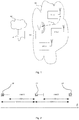
- FIG. 1 shows a communication gateway GW comprising a WLAN access point in a WLAN wireless communication network N1.
- WLAN network N1 also comprises three WLAN communication stations STA1, STA2 and STA3.
- WLAN stations STA1, STA2 and STA3 are connected to the gateway.
- This set of equipment constitutes a WLAN local home network.
- Wireless communication link L1 connecting the gateway GW to a station (STA1, for example) is a WLAN link.
- the gateway GW is connected to network N2 by means of a link L2.
- Link L2 comprises an item of equipment of DSLAM type (Digital Subscriber Line Access Multiplexer) for connection to network N2.
- DSLAM type Digital Subscriber Line Access Multiplexer
- L2 is a link of ADSL type (Asymmetric Digital Subscriber Line) and N2 is the internet network to which the gateway GW is connected by means of a WAN (Wide Area Network) broadband network.
- N2 comprises a plurality of servers accessible by stations STA1, STA2 and STA3 via the network gateway GW.
- the gateway GW exchanges data with stations STA1, STA2 and STA3 by wireless connections according to the WLAN standard adapted according to an embodiment of the invention.
- the gateway GW transmits information frames, also called control frames, to remote stations STA1, STA2 and STA3 of WLAN network N1.
- These frames are "beacon” frames such as defined in the WLAN standard.
- the "beacon” frames sent at regular intervals, provide the characteristics of the WLAN network N1. These characteristics are for example the identifier of the network, the list of available bitrates and the supported modes and methods of identification.
- remote WLAN stations such as STA1, STA2 and STA3 in the case of network N1
- the gateway GW executes a software routine aiming to define instants of entering and exiting low power consumption mode according to predefined conditions. These conditions are, for example, the frequency of exchanges with stations STA1, STA2 and STA3 and the type of data transmitted. For example, in the absence of video stream reception, and if the transmission of useful data does not exceed a predefined bandwidth occupancy on network N2, the algorithm being executed in the gateway GW (whose steps are executed by the control unit of the gateway) configures the WLAN access point of the gateway GW to low power consumption mode.
- the low power consumption mode corresponds to an alternation of periods of activity and periods of inactivity of the WLAN access point module of the gateway GW.
- the gateway When the gateway is in low power consumption mode, it regularly deactivates, for periods known as periods of inactivity, its WLAN access point module, after notifying the set of connected equipment (remote stations STA1, STA2 and STA3), by inserting an item of information into an information field of a "beacon" control frame.
- the gateway indicates, for example, in the information field that it will deactivate its WLAN access point module 10 ms after transmission of the "beacon” frame until the following "beacon” frame is sent.
- the "beacon” frames are sent by the gateway GW at regular intervals, every 100 ms.
- the gateway deactivates its WLAN access point and will only reactivate it 90 ms after.
- the gateway transmits nothing more via its WLAN access point module and cannot receive frames from stations STA1, STA2 and STA3. This is not, however, detrimental to the data exchanges on network N1 since the stations have received a notification of a future period of inactivity in a "beacon" frame and send no more frames to the gateway GW for the entire duration of the period of inactivity.
- the WLAN access point of the gateway GW is partially or completely deactivated for 90% of the time when the gateway is configured to low power consumption mode.
- the deactivation of the WLAN access point makes it possible to save power due to the total or partial absence of power consumption.
- the communication interfaces of stations STA1, STA2 and STA3 of network N1 are also deactivated for the periods of inactivity of the low power consumption mode.
- the stations after receiving the information providing notification of a future period of inactivity, transmitted from the WLAN access point of the gateway GW, in a "beacon" frame, also position themselves in low power consumption mode by configuring their interfaces so as to consequently reduce their power consumption.
- the low power consumption mode of the stations is configured for each of the stations by its onboard control unit (comprising a microcontroller and associated onboard software).
- the power consumption of all interconnected WLAN equipment of the network is thus reduced simply by notification of periods of inactivity of the WLAN access point of the gateway GW.
- Figure 2 shows a sequencing of periods of activity and periods of inactivity INACT of the WLAN access point WLAN-AP of the network gateway GW.
- the WLAN access point transmits "beacon" frames CF every 100 ms.
- the WLAN access point of the gateway GW is configured to low power consumption mode.
- the "beacon" frames CF comprise information relating to the periods of inactivity INACT.
- the items of information INF relating to the periods of inactivity indicate to the stations connected to the WLAN network N1 that the gateway will deactivate its WLAN access point at the end of a period of 10 ms, which period begins from the start of the next "beacon" information frame CF.
- the items of information INF comprise a notification indicating that the periods of inactivity thus notified are to be considered for each of the periods delimited by two successive "beacon" frames CF.
- the WLAN access point WLAN-AP of the network gateway GW is deactivated 90% of the time for the entire duration of the low power consumption mode.
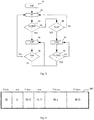
- Figure 4 shows the elements of information inserted into a "beacon" control frame CF and transmitted on network N1 by the gateway GW.
- the "Quiet" information field defined in the WLAN standard is used for the transmission of information related to future periods of inactivity.
- the set of information is called INF.
- the information field INF comprises a header and four indicators.
- the header comprises a field identifier ID and an item of field length information L.
- L indicates the length in bytes of the field including the header and length bytes.
- Indicator IN-C indicates the number of future "beacon" frames, preceding the start of the next period of inactivity.
- Indicator IN-P indicates, when its value is non-zero, the number of "beacon” frames separating two successive periods of inactivity. If the value of indicator IN-P is zero, this indicates that there is no future period of inactivity following the next notified period of inactivity. Indicator IN-L serves to describe a periodic succession of periods of inactivity. If the value is zero, there is no periodicity of periods of inactivity. If the value is non-zero, it indicates the number of "beacon” frames separating two periods of inactivity. Indicator IN-O makes it possible to offset the start of a period of inactivity with respect to a "beacon" information frame.
- a period of inactivity does not necessarily correspond to one or more intervals between two "beacon” frames; the IN-O indicator therefore indicates a number of units of time separating the start of a "beacon” frame and the start of the period of inactivity to follow.
- FIG. 3 is a diagram showing an algorithm implemented by the control unit of the network gateway GW. This diagram describes the different steps of the routine for managing the low power consumption mode of the WLAN access point of the gateway GW. It describes the conditions (events and/or actions) resulting in the entering or exiting of the low power consumption mode of the WLAN access point of the gateway GW.
- Step S1 is a step for initializing the gateway GW. This step follows power-up.
- the set of modules of the gateway are configured with a view to its nominal operation, notably the control unit, the WLAN access point and an internal routing module.
- the gateway GW configures the WLAN access point to low power consumption mode when the number of packets transiting corresponds to a low occupancy of the available bandwidth. For example, in the absence of transfer of data related to the transmission of an item of audiovisual content, the gateway GW positions the WLAN access point in low power consumption mode.
- VOIP type Voice Over IP
- the access point can be configured to low power consumption mode when the remaining periods of activity make it possible to guarantee the transfer of data transiting by the gateway GW.
- the detection in the gateway GW by the routine for managing the low power consumption mode of the WLAN access point, of a request aiming to access an item of audiovisual content, leads to the exiting of the low power consumption mode or the modification of the ratio between the periods of activity and the periods of inactivity.
- the quantity of useful data is significant and it is necessary to maintain periods of activity sufficiently long to guarantee the transfer of all of the data.
- low power consumption mode can be understood to be either a mode defined by the mere presence of periods of inactivity of the WLAN access point, or a mode defined by exceeding a ratio (or threshold) between the periods of activity and periods of inactivity of the WLAN access point. Regardless of the definition of low power consumption mode, the more frequent (and/or long) the periods of inactivity of the WLAN access point, the longer the time during which all or part of the WLAN access point is not powered, thus saving power as a result.
- step S2 the gateway GW performs the transfers of data which arise on one or other of its network interfaces (WAN or WLAN), without, however, a request for access to an item of audiovisual content transmitted by one of stations STA1, STA2 or STA3 being detected.
- step S3 the management routine tests if a request for access to an item of audiovisual content was transmitted by one of stations STA1, STA2 or STA3, to a remote server (located on network N2). Such a request is called CLI REQ (client request).
- step S6 If no client request was detected by the routine for managing the low power consumption mode of the gateway, a time counter is initiated in step S6, at the end of which, still in the absence of a request for access to an item of audiovisual content, the gateway GW will enter low power consumption mode.
- the low power consumption mode LOW corresponds to step S7.
- the routine returns to step S2 and the gateway manages the transit of the data which arise.
- the WLAN access point is configured to low power consumption mode in step S7.
- the low power consumption mode is maintained as long as there is not client request aiming to access an item of audiovisual content via the gateway network GW (steps S7 and S8).
- step S8 a client request from a station is detected, the gateway GW deactivates the low power consumption mode LOW of the WLAN access point implemented in step S7 and configures the WLAN access point to an active mode ACT, in step S4.
- the data stream transiting by the gateway comprises data corresponding to the transfer of one or more items of audiovisual content.
- the management routine detects the end EOS (End of Service) of the transmission in step S5 and returns to step S2.
- the routine (or algorithm) for managing entry into low power consumption mode of the WLAN access point and exit from this mode comprises a step for detecting an action of the user enabling entry into low power consumption mode of the access point to be forced.
- This step is, for example, pressing a configuration key of the network gateway GW.
- the key can be dedicated to this use or shared with one or more other functions of the network gateway GW.
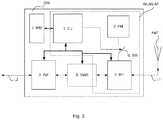
- FIG. 5 shows the internal architecture of the network gateway GW comprising a WLAN access point WLAN-AP.
- the gateway comprises a network interface IN2 3 for connection to a broadband network of WAN type (giving access to the internet) via the ADSL link L2 and a network interface IN1 4, of WLAN type.
- Network interface IN1 and the control unit CU 1 implementing, amongst other things, the control of network interface IN1, constitute the WLAN access point of the gateway GW.
- the connection between the gateway GW and remote stations STA1, ST2 and ST3 uses an antenna ANT which can be internal or external to the network gateway GW and which corresponds to link L1 in the figure.
- the routing of data between the WAN and WLAN network interfaces, that is to say between IN2 and IN1 respectively, is realized by a routing module SWR 5.
- the routing module SWR 5 directs the data frames received on interface IN2 3 and intended for the connected stations to the WLAN interface IN1 4 and vice versa.
- the control and the configuration of the different modules of the gateway GW is realized by the control unit CU 1 which, coupled to the memory module MM 7, comprises a microcontroller and all elements useful for executing onboard software routines.
- the details of the control unit CU 1 are not described here, being well known to those skilled in the art.
- the control unit CU 1 executes the routine for managing the low power consumption mode LOW of the WLAN access point of the gateway GW.
- Wireless network interface IN1 4 is a WLAN transmission-reception module which is powered by a power module PM 2, via a controllable switch SW 6 connected to a control port of the control unit CU 1.
- the management routine configures the WLAN access point of the gateway GW to low power consumption mode LOW
- the control port of the control unit CU 1 is positioned so that the switch SW 6 is open and a part at least of the WLAN access point is no longer powered by the power module PM 2.
- the power consumption of the access point (and therefore of the gateway GW) is thus lower.
- the control port of the control unit CU 1 is positioned such that the switch SW 6 is closed and that the set of elements which constitute network interface IN1 4 of the access point WLAN-AP, powered by the module PM2 is switched on.
- all or part of network interface IN1 4 is deactivated not by a controlled switch-off but by a deactivation of one or more clocks useful for the operation of the WLAN access point of the gateway GW.
- the routine executed by the control unit CU 1 of the network gateway GW implements a method for managing the power consumption of the WLAN access point of the gateway GW, in the WLAN network comprising the gateway GW and stations STA1, STA2 and STA3.
- the gateway network GW comprises the WLAN access point and transmits control frames and information to the remote stations connected to the WLAN network.
- the method for managing the power consumption of the WLAN access point of the gateway comprises the following steps:
- the power consumption of the gateway GW in low power consumption mode LOW is lower than its power consumption in active mode ACT (see figure 3 ).
- Figure 6 shows the steps for implementing the low power consumption mode LOW of the method for managing the power consumption in the gateway GW which comprises the access point device WLAN-AP of the WLAN wireless local network N1.
- the access point WLAN-AP transmits "beacon" control frames CF. More specifically, the method comprises steps of:
- Step S10 corresponds to the nominal operation of the gateway, in active mode ACT. No period of inactivity of the access point WLAN-AP has yet been defined.
- the exchanges of data are operational via the gateway GW.
- the control unit evaluates the useful bitrate of the data transiting.
- the evaluation of the useful bitrate is made, for example, by counting the number of bytes transmitted between networks N2 and N1 via the router SWR 5 of the gateway GW.
- the evaluation of the bitrate includes an analysis step associating a predetermined theoretical bitrate according to the type of data transiting.
- the analysis step consists in the detection in the data transiting of information indicating the transmission of an item of audiovisual content, or even the resolution of the images carried in the audiovisual stream and the type of coding used.
- the routine for managing the low power consumption mode determines a useful bitrate according to these elements and defines one or more periods of inactivity of the access point WLAN-AP in network N1.
- the item or items of information aiming to provide notification of the future period or periods of inactivity are inserted into one of the "beacon" control frames CF regularly transmitted on network N1 by the control unit CU 1 and network interface IN1.
- step S13 network interface IN1 transmits on network N1 the "beacon" control frame CF containing the item or items of information, intended for the stations connected to the access point WLAN-AP, via network N1.
- step S14 and at the moment corresponding to that which is notified by the item or items of information inserted and transmitted, the control unit CU 1 of the gateway deactivates all or part of network interface IN1 for the entire duration of the period of inactivity defined in step S11. The control unit then waits for the end of the period of inactivity, by counting the time since the deactivation, to reactivate network interface IN1. The control unit then performs a return to step S11 with a view to determining the next future period of inactivity or the next series of future periods of inactivity.
- the communication interfaces of connected stations STA1, STA2 and STA3 are deactivated for the periods of inactivity defined by the network gateway GW (or by the routine for managing its power consumption).
- the start of the future period of inactivity is defined according to a temporal reference common to the gateway GW and stations STA1, STA2 and STA3.
- This reference is, for example, the reference clock of WLAN network N1.
- the method for managing the power consumption in the network gateway GW comprising the access point device WLAN-AP of the wireless local network N1 comprises a step for evaluating the quantity of data transiting by the gateway GW, which step is different from a measurement of bitrate in the sense of the number of data transmitted during a time interval.
- the step for evaluating the quantity of data by the control unit CU 1 of the gateway GW, consists in defining the number of services in progress (or active services) available for the user.
- the term service can mean here a communication session in progress enabling the transmission of data corresponding to this service.
- a service available for the user is for example the reception of a television program, the reception of web pages, the reception of one or more items of content during a download session, a video-on-demand session or a session for broadcasting one or more pieces of music.
- the control unit analyzes the data streams transferred via the routing module SWR 5 and/or the access point device WLAN-AP and increments a session counter for service in progress at each detection of transferred data corresponding to a new service (or more specifically to a newly activated service).
- the control unit CU 1 of the gateway GW configures the gateway to low power consumption mode LOW.
- the low power consumption mode LOW is activated immediately or after a time delay of a predetermined duration (several minutes, for example).
- the insertion into at least one of the control frames CF of at least one item of information INF relating to a future period of inactivity INACT of the access point device WLAN-AP depends on the number of service sessions in progress and/or the time elapsed since the end of the last service session.
- the invention does not apply solely to the embodiment described above but relates to any system enabling, in an item of equipment comprising a WLAN access point connected to a WLAN network, one or more stations connected to the WLAN network to be notified of a future period of inactivity of the access point WLAN-AP on a WLAN network, during which period all or part of the network interface of the WLAN access point is deactivated with a view to reducing its power consumption (and therefore the power consumption of the equipment).
- an item of information INF relating to a future period of inactivity of the WLAN access point of the network gateway GW is inserted into a new information field, entirely dedicated to this use, and defined in an adaptation of the existing WLAN standard.
- the user can configure a ratio between the periods of activity and the periods of inactivity of the low power consumption mode, consequently imposing a limit on the useful data, but enabling the user to reduce the power consumption of the WLAN access point, and consequently of the network gateway GW.
- the user uses for example configuration fields which are accessible to him in a "configuration page" of the gateway GW.
- the user connects to the configuration page on an available port of the routing module SWR 5 or via one of remote stations STA1, STA2 or STA3.
- the configuration page is generated by the control unit CU 1 of the gateway GW by means, for example, of a web server which uses an HTTP (Hypertext Transfer Protocol) protocol.
- HTTP Hypertext Transfer Protocol
- the user configures for example a ratio between the periods of activity and the periods of inactivity, either as a percentage, or by defining a maximum bitrate value of the data transiting by the access point of the gateway.
- the control unit reads the configuration parameters thus entered by the user and positions them in the registers accessible to the management routine of the low power consumption mode.
Landscapes
- Engineering & Computer Science (AREA)
- Computer Networks & Wireless Communication (AREA)
- Signal Processing (AREA)
- Mobile Radio Communication Systems (AREA)
- Small-Scale Networks (AREA)
Applications Claiming Priority (2)
| Application Number | Priority Date | Filing Date | Title |
|---|---|---|---|
| FR1256234 | 2012-06-29 | ||
| PCT/EP2013/063214 WO2014001294A1 (en) | 2012-06-29 | 2013-06-25 | Low power consumption mode for wlan access point |
Publications (2)
| Publication Number | Publication Date |
|---|---|
| EP2868144A1 EP2868144A1 (en) | 2015-05-06 |
| EP2868144B1 true EP2868144B1 (en) | 2018-06-13 |
Family
ID=46785692
Family Applications (1)
| Application Number | Title | Priority Date | Filing Date |
|---|---|---|---|
| EP13730903.5A Active EP2868144B1 (en) | 2012-06-29 | 2013-06-25 | Low power consumption mode for wlan access point |
Country Status (7)
| Country | Link |
|---|---|
| US (1) | US9717046B2 (enExample) |
| EP (1) | EP2868144B1 (enExample) |
| JP (1) | JP6472003B2 (enExample) |
| KR (1) | KR102078893B1 (enExample) |
| CN (1) | CN104429133B (enExample) |
| TW (1) | TW201401914A (enExample) |
| WO (1) | WO2014001294A1 (enExample) |
Families Citing this family (7)
| Publication number | Priority date | Publication date | Assignee | Title |
|---|---|---|---|---|
| US8831666B2 (en) | 2009-06-30 | 2014-09-09 | Intel Corporation | Link power savings with state retention |
| FR3018409B1 (fr) * | 2014-03-06 | 2018-01-05 | Sagemcom Broadband Sas | Systeme et procede permettant de reduire la consommation energetique d'un dispositif d'interconnexion |
| KR102226522B1 (ko) * | 2014-11-04 | 2021-03-11 | 삼성전자주식회사 | 네트워크 상태를 판단하는 장치 및 방법 |
| US10382215B2 (en) * | 2015-12-22 | 2019-08-13 | Forescout Technologies, Inc. | Device identification and policy enforcement using power over ethernet (POE) |
| EP3398383B1 (en) * | 2015-12-30 | 2020-05-20 | Telefonaktiebolaget LM Ericsson (PUBL) | Method for operating a capillary network gateway |
| EP3758438A4 (en) * | 2018-03-14 | 2021-04-21 | Sony Corporation | COMMUNICATION DEVICE AND COMMUNICATION SYSTEM |
| WO2022178896A1 (zh) * | 2021-02-27 | 2022-09-01 | 华为技术有限公司 | 无线保真WiFi通信方法及装置 |
Citations (1)
| Publication number | Priority date | Publication date | Assignee | Title |
|---|---|---|---|---|
| US20100284316A1 (en) * | 2009-05-05 | 2010-11-11 | Atheros Communications, Inc. | Dynamic energy saving mechanism for access points |
Family Cites Families (18)
| Publication number | Priority date | Publication date | Assignee | Title |
|---|---|---|---|---|
| JP2004164566A (ja) * | 2002-09-27 | 2004-06-10 | Casio Comput Co Ltd | 通信端末の電力制御装置及び通信端末の電力制御方法 |
| JP4251010B2 (ja) * | 2003-05-08 | 2009-04-08 | ソニー株式会社 | 無線通信システム |
| KR100542348B1 (ko) | 2003-09-03 | 2006-01-10 | 삼성전자주식회사 | 무선 랜 시스템의 전력 감소 방법 및 그 장치 |
| ATE332056T1 (de) * | 2004-03-17 | 2006-07-15 | Cit Alcatel | Verfahren zum steuern des schlafmodus eines endgerätes, dazugehöriges mobiles endgerät und funkzugriffsknoten |
| US7593417B2 (en) | 2005-01-21 | 2009-09-22 | Research In Motion Limited | Handling broadcast and multicast traffic as unicast traffic in a wireless network |
| KR101267308B1 (ko) * | 2006-06-05 | 2013-05-27 | 삼성전자주식회사 | 무선 메시 네트워크에서의 전력 절약을 위한 수면모드 제어방법 및 시스템 |
| CN101502085A (zh) * | 2006-08-11 | 2009-08-05 | 日本电气株式会社 | 无线通信终端及其处理器和无线通信终端的功率管理方法 |
| US7961659B2 (en) | 2007-01-16 | 2011-06-14 | Texas Instruments Incorporated | Idle connection state power consumption reduction in a wireless local area network using variable beacon data advertisement |
| BRPI0813927B1 (pt) * | 2007-07-09 | 2020-10-20 | Telefonaktiebolaget Lm Ericsson (Publ) | método para controlar uma taxa de bits de uma sessão, receptor para receber mídia codificada comutada por pacote, remetente para transmitir mídia codificada comutada por pacote e sistema de comunicações comutado por pacote |
| WO2010001577A1 (ja) * | 2008-06-30 | 2010-01-07 | パナソニック株式会社 | 無線通信装置,端末,システム,プログラム |
| JP2010062846A (ja) * | 2008-09-03 | 2010-03-18 | Ntt Docomo Inc | 無線通信制御方法、無線通信基地局、無線通信端末および無線通信システム |
| US20120327779A1 (en) * | 2009-06-12 | 2012-12-27 | Cygnus Broadband, Inc. | Systems and methods for congestion detection for use in prioritizing and scheduling packets in a communication network |
| AU2010269280B2 (en) * | 2009-07-09 | 2013-08-29 | Lg Electronics Inc. | Power management method for station in wireless LAN system and station that supports same |
| US9204384B2 (en) * | 2009-08-07 | 2015-12-01 | Nec Europe Ltd. | Method for operating a mobile terminal as access point and mobile terminal |
| JP5409191B2 (ja) * | 2009-08-21 | 2014-02-05 | 株式会社Nttドコモ | 無線通信方法及び無線通信装置 |
| US8400955B2 (en) * | 2009-09-21 | 2013-03-19 | Samsung Electronics Co., Ltd. | System and method for power saving by coordinated wake-up in a wireless multi-band network |
| EP2498552A4 (en) * | 2009-11-02 | 2014-06-25 | Nec Corp | COMMUNICATION DEVICE, COMMUNICATION SYSTEM, CONTROL METHOD FOR A COMMUNICATION DEVICE AND CONTROL PROGRAM FOR A COMMUNICATION DEVICE |
| CN102763452B (zh) * | 2010-12-20 | 2016-04-27 | 松下知识产权经营株式会社 | 通信装置、通信方法、终端装置及通信系统 |
-
2013
- 2013-06-25 JP JP2015519042A patent/JP6472003B2/ja not_active Expired - Fee Related
- 2013-06-25 KR KR1020157002172A patent/KR102078893B1/ko not_active Expired - Fee Related
- 2013-06-25 WO PCT/EP2013/063214 patent/WO2014001294A1/en not_active Ceased
- 2013-06-25 EP EP13730903.5A patent/EP2868144B1/en active Active
- 2013-06-25 CN CN201380034405.0A patent/CN104429133B/zh active Active
- 2013-06-25 US US14/411,545 patent/US9717046B2/en active Active
- 2013-06-28 TW TW102123090A patent/TW201401914A/zh unknown
Patent Citations (1)
| Publication number | Priority date | Publication date | Assignee | Title |
|---|---|---|---|---|
| US20100284316A1 (en) * | 2009-05-05 | 2010-11-11 | Atheros Communications, Inc. | Dynamic energy saving mechanism for access points |
Also Published As
| Publication number | Publication date |
|---|---|
| CN104429133B (zh) | 2018-10-26 |
| KR102078893B1 (ko) | 2020-02-19 |
| WO2014001294A1 (en) | 2014-01-03 |
| JP6472003B2 (ja) | 2019-02-20 |
| EP2868144A1 (en) | 2015-05-06 |
| CN104429133A (zh) | 2015-03-18 |
| KR20150023895A (ko) | 2015-03-05 |
| JP2015521824A (ja) | 2015-07-30 |
| TW201401914A (zh) | 2014-01-01 |
| US9717046B2 (en) | 2017-07-25 |
| US20150156715A1 (en) | 2015-06-04 |
Similar Documents
| Publication | Publication Date | Title |
|---|---|---|
| US9717046B2 (en) | Low power consumption mode for WLAN access point | |
| US10693613B2 (en) | Telecommunications apparatus and methods | |
| CN111586813B (zh) | 用于目标唤醒时间服务周期间隔的动态调整系统和方法 | |
| TWI542235B (zh) | 建立休眠模式操作的方法 | |
| CN100481790C (zh) | 在用于实时通信的无线局域网中的非调度功率节约传送方法 | |
| US8599729B2 (en) | Adaptive power control in a wireless device | |
| US8743859B2 (en) | Apparatuses, systems, and methods for managing operation status of wireless transmissions and receptions | |
| JP6313460B2 (ja) | 無線lanにおけるパワーセーブモードに基づく動作方法及び装置 | |
| JP2016513439A (ja) | ポーリングビーコン | |
| US10085293B2 (en) | Telecommunications apparatus and methods | |
| TW200814804A (en) | Methods and apparatus for communicating device capability and/or setup imformation | |
| JP2015521824A5 (enExample) | ||
| EP2836030A1 (en) | Wireless communication system, user equipment, base station, network, and communication control method | |
| EP2471216B1 (en) | Network apparatus and method | |
| JPWO2011148748A1 (ja) | 伝送装置、帯域制御方法及びコンピュータプログラム | |
| US8631260B2 (en) | Low power paging of consumer electronics | |
| JP2008301263A (ja) | 通信方法、通信装置、及び通信システム | |
| US11832177B2 (en) | Transmission system comprising first and second bridge devices | |
| WO2021075290A1 (ja) | 無線通信装置および方法、並びに無線通信端末および方法 | |
| EP4576715A1 (en) | Method of scheduling resources in a time sensitive network based on a quality of service information | |
| Ji et al. | Network-adaptive and energy-efficient multi-user video communication over QOS enabled WLAN | |
| MXPA06006977A (es) | Metodo de suministro no prgramado de ahorro de energia en una red inalambrica de area local para la comunicacion en tiempo real | |
| WO2012152299A1 (en) | Method for operating a wi-fi station and wi-fi station |
Legal Events
| Date | Code | Title | Description |
|---|---|---|---|
| PUAI | Public reference made under article 153(3) epc to a published international application that has entered the european phase |
Free format text: ORIGINAL CODE: 0009012 |
|
| 17P | Request for examination filed |
Effective date: 20141230 |
|
| AK | Designated contracting states |
Kind code of ref document: A1 Designated state(s): AL AT BE BG CH CY CZ DE DK EE ES FI FR GB GR HR HU IE IS IT LI LT LU LV MC MK MT NL NO PL PT RO RS SE SI SK SM TR |
|
| AX | Request for extension of the european patent |
Extension state: BA ME |
|
| DAX | Request for extension of the european patent (deleted) | ||
| 17Q | First examination report despatched |
Effective date: 20170131 |
|
| GRAP | Despatch of communication of intention to grant a patent |
Free format text: ORIGINAL CODE: EPIDOSNIGR1 |
|
| INTG | Intention to grant announced |
Effective date: 20180119 |
|
| GRAS | Grant fee paid |
Free format text: ORIGINAL CODE: EPIDOSNIGR3 |
|
| GRAA | (expected) grant |
Free format text: ORIGINAL CODE: 0009210 |
|
| AK | Designated contracting states |
Kind code of ref document: B1 Designated state(s): AL AT BE BG CH CY CZ DE DK EE ES FI FR GB GR HR HU IE IS IT LI LT LU LV MC MK MT NL NO PL PT RO RS SE SI SK SM TR |
|
| REG | Reference to a national code |
Ref country code: GB Ref legal event code: FG4D |
|
| REG | Reference to a national code |
Ref country code: CH Ref legal event code: EP Ref country code: AT Ref legal event code: REF Ref document number: 1009823 Country of ref document: AT Kind code of ref document: T Effective date: 20180615 |
|
| REG | Reference to a national code |
Ref country code: FR Ref legal event code: PLFP Year of fee payment: 6 |
|
| REG | Reference to a national code |
Ref country code: DE Ref legal event code: R084 Ref document number: 602013038877 Country of ref document: DE |
|
| REG | Reference to a national code |
Ref country code: GB Ref legal event code: 746 Effective date: 20180619 Ref country code: IE Ref legal event code: FG4D |
|
| REG | Reference to a national code |
Ref country code: DE Ref legal event code: R096 Ref document number: 602013038877 Country of ref document: DE |
|
| REG | Reference to a national code |
Ref country code: NL Ref legal event code: FP |
|
| REG | Reference to a national code |
Ref country code: LT Ref legal event code: MG4D |
|
| PG25 | Lapsed in a contracting state [announced via postgrant information from national office to epo] |
Ref country code: BG Free format text: LAPSE BECAUSE OF FAILURE TO SUBMIT A TRANSLATION OF THE DESCRIPTION OR TO PAY THE FEE WITHIN THE PRESCRIBED TIME-LIMIT Effective date: 20180913 Ref country code: FI Free format text: LAPSE BECAUSE OF FAILURE TO SUBMIT A TRANSLATION OF THE DESCRIPTION OR TO PAY THE FEE WITHIN THE PRESCRIBED TIME-LIMIT Effective date: 20180613 Ref country code: NO Free format text: LAPSE BECAUSE OF FAILURE TO SUBMIT A TRANSLATION OF THE DESCRIPTION OR TO PAY THE FEE WITHIN THE PRESCRIBED TIME-LIMIT Effective date: 20180913 Ref country code: SE Free format text: LAPSE BECAUSE OF FAILURE TO SUBMIT A TRANSLATION OF THE DESCRIPTION OR TO PAY THE FEE WITHIN THE PRESCRIBED TIME-LIMIT Effective date: 20180613 Ref country code: ES Free format text: LAPSE BECAUSE OF FAILURE TO SUBMIT A TRANSLATION OF THE DESCRIPTION OR TO PAY THE FEE WITHIN THE PRESCRIBED TIME-LIMIT Effective date: 20180613 Ref country code: CY Free format text: LAPSE BECAUSE OF FAILURE TO SUBMIT A TRANSLATION OF THE DESCRIPTION OR TO PAY THE FEE WITHIN THE PRESCRIBED TIME-LIMIT Effective date: 20180613 Ref country code: LT Free format text: LAPSE BECAUSE OF FAILURE TO SUBMIT A TRANSLATION OF THE DESCRIPTION OR TO PAY THE FEE WITHIN THE PRESCRIBED TIME-LIMIT Effective date: 20180613 |
|
| PG25 | Lapsed in a contracting state [announced via postgrant information from national office to epo] |
Ref country code: LV Free format text: LAPSE BECAUSE OF FAILURE TO SUBMIT A TRANSLATION OF THE DESCRIPTION OR TO PAY THE FEE WITHIN THE PRESCRIBED TIME-LIMIT Effective date: 20180613 Ref country code: RS Free format text: LAPSE BECAUSE OF FAILURE TO SUBMIT A TRANSLATION OF THE DESCRIPTION OR TO PAY THE FEE WITHIN THE PRESCRIBED TIME-LIMIT Effective date: 20180613 Ref country code: HR Free format text: LAPSE BECAUSE OF FAILURE TO SUBMIT A TRANSLATION OF THE DESCRIPTION OR TO PAY THE FEE WITHIN THE PRESCRIBED TIME-LIMIT Effective date: 20180613 Ref country code: GR Free format text: LAPSE BECAUSE OF FAILURE TO SUBMIT A TRANSLATION OF THE DESCRIPTION OR TO PAY THE FEE WITHIN THE PRESCRIBED TIME-LIMIT Effective date: 20180914 |
|
| REG | Reference to a national code |
Ref country code: AT Ref legal event code: MK05 Ref document number: 1009823 Country of ref document: AT Kind code of ref document: T Effective date: 20180613 |
|
| PG25 | Lapsed in a contracting state [announced via postgrant information from national office to epo] |
Ref country code: RO Free format text: LAPSE BECAUSE OF FAILURE TO SUBMIT A TRANSLATION OF THE DESCRIPTION OR TO PAY THE FEE WITHIN THE PRESCRIBED TIME-LIMIT Effective date: 20180613 Ref country code: IS Free format text: LAPSE BECAUSE OF FAILURE TO SUBMIT A TRANSLATION OF THE DESCRIPTION OR TO PAY THE FEE WITHIN THE PRESCRIBED TIME-LIMIT Effective date: 20181013 Ref country code: EE Free format text: LAPSE BECAUSE OF FAILURE TO SUBMIT A TRANSLATION OF THE DESCRIPTION OR TO PAY THE FEE WITHIN THE PRESCRIBED TIME-LIMIT Effective date: 20180613 Ref country code: AT Free format text: LAPSE BECAUSE OF FAILURE TO SUBMIT A TRANSLATION OF THE DESCRIPTION OR TO PAY THE FEE WITHIN THE PRESCRIBED TIME-LIMIT Effective date: 20180613 Ref country code: CZ Free format text: LAPSE BECAUSE OF FAILURE TO SUBMIT A TRANSLATION OF THE DESCRIPTION OR TO PAY THE FEE WITHIN THE PRESCRIBED TIME-LIMIT Effective date: 20180613 Ref country code: SK Free format text: LAPSE BECAUSE OF FAILURE TO SUBMIT A TRANSLATION OF THE DESCRIPTION OR TO PAY THE FEE WITHIN THE PRESCRIBED TIME-LIMIT Effective date: 20180613 Ref country code: PL Free format text: LAPSE BECAUSE OF FAILURE TO SUBMIT A TRANSLATION OF THE DESCRIPTION OR TO PAY THE FEE WITHIN THE PRESCRIBED TIME-LIMIT Effective date: 20180613 |
|
| REG | Reference to a national code |
Ref country code: CH Ref legal event code: PL |
|
| PG25 | Lapsed in a contracting state [announced via postgrant information from national office to epo] |
Ref country code: SM Free format text: LAPSE BECAUSE OF FAILURE TO SUBMIT A TRANSLATION OF THE DESCRIPTION OR TO PAY THE FEE WITHIN THE PRESCRIBED TIME-LIMIT Effective date: 20180613 Ref country code: IT Free format text: LAPSE BECAUSE OF FAILURE TO SUBMIT A TRANSLATION OF THE DESCRIPTION OR TO PAY THE FEE WITHIN THE PRESCRIBED TIME-LIMIT Effective date: 20180613 |
|
| REG | Reference to a national code |
Ref country code: BE Ref legal event code: MM Effective date: 20180630 |
|
| REG | Reference to a national code |
Ref country code: DE Ref legal event code: R097 Ref document number: 602013038877 Country of ref document: DE |
|
| REG | Reference to a national code |
Ref country code: IE Ref legal event code: MM4A |
|
| PG25 | Lapsed in a contracting state [announced via postgrant information from national office to epo] |
Ref country code: LU Free format text: LAPSE BECAUSE OF NON-PAYMENT OF DUE FEES Effective date: 20180625 Ref country code: MC Free format text: LAPSE BECAUSE OF FAILURE TO SUBMIT A TRANSLATION OF THE DESCRIPTION OR TO PAY THE FEE WITHIN THE PRESCRIBED TIME-LIMIT Effective date: 20180613 |
|
| PLBE | No opposition filed within time limit |
Free format text: ORIGINAL CODE: 0009261 |
|
| STAA | Information on the status of an ep patent application or granted ep patent |
Free format text: STATUS: NO OPPOSITION FILED WITHIN TIME LIMIT |
|
| PG25 | Lapsed in a contracting state [announced via postgrant information from national office to epo] |
Ref country code: LI Free format text: LAPSE BECAUSE OF NON-PAYMENT OF DUE FEES Effective date: 20180630 Ref country code: CH Free format text: LAPSE BECAUSE OF NON-PAYMENT OF DUE FEES Effective date: 20180630 Ref country code: IE Free format text: LAPSE BECAUSE OF NON-PAYMENT OF DUE FEES Effective date: 20180625 |
|
| REG | Reference to a national code |
Ref country code: DE Ref legal event code: R081 Ref document number: 602013038877 Country of ref document: DE Owner name: INTERDIGITAL CE PATENT HOLDINGS SAS, FR Free format text: FORMER OWNER: THOMSON LICENSING, ISSY-LES-MOULINEAUX, FR |
|
| 26N | No opposition filed |
Effective date: 20190314 |
|
| PG25 | Lapsed in a contracting state [announced via postgrant information from national office to epo] |
Ref country code: BE Free format text: LAPSE BECAUSE OF NON-PAYMENT OF DUE FEES Effective date: 20180630 Ref country code: SI Free format text: LAPSE BECAUSE OF FAILURE TO SUBMIT A TRANSLATION OF THE DESCRIPTION OR TO PAY THE FEE WITHIN THE PRESCRIBED TIME-LIMIT Effective date: 20180613 Ref country code: DK Free format text: LAPSE BECAUSE OF FAILURE TO SUBMIT A TRANSLATION OF THE DESCRIPTION OR TO PAY THE FEE WITHIN THE PRESCRIBED TIME-LIMIT Effective date: 20180613 |
|
| REG | Reference to a national code |
Ref country code: NL Ref legal event code: PD Owner name: INTERDIGITAL CE PATENT HOLDINGS; FR Free format text: DETAILS ASSIGNMENT: CHANGE OF OWNER(S), ASSIGNMENT; FORMER OWNER NAME: THOMSON LICENSING Effective date: 20190903 |
|
| REG | Reference to a national code |
Ref country code: GB Ref legal event code: 732E Free format text: REGISTERED BETWEEN 20190926 AND 20191002 |
|
| PG25 | Lapsed in a contracting state [announced via postgrant information from national office to epo] |
Ref country code: AL Free format text: LAPSE BECAUSE OF FAILURE TO SUBMIT A TRANSLATION OF THE DESCRIPTION OR TO PAY THE FEE WITHIN THE PRESCRIBED TIME-LIMIT Effective date: 20180613 |
|
| PG25 | Lapsed in a contracting state [announced via postgrant information from national office to epo] |
Ref country code: MT Free format text: LAPSE BECAUSE OF NON-PAYMENT OF DUE FEES Effective date: 20180625 |
|
| PG25 | Lapsed in a contracting state [announced via postgrant information from national office to epo] |
Ref country code: TR Free format text: LAPSE BECAUSE OF FAILURE TO SUBMIT A TRANSLATION OF THE DESCRIPTION OR TO PAY THE FEE WITHIN THE PRESCRIBED TIME-LIMIT Effective date: 20180613 |
|
| PG25 | Lapsed in a contracting state [announced via postgrant information from national office to epo] |
Ref country code: PT Free format text: LAPSE BECAUSE OF FAILURE TO SUBMIT A TRANSLATION OF THE DESCRIPTION OR TO PAY THE FEE WITHIN THE PRESCRIBED TIME-LIMIT Effective date: 20180613 |
|
| PG25 | Lapsed in a contracting state [announced via postgrant information from national office to epo] |
Ref country code: MK Free format text: LAPSE BECAUSE OF NON-PAYMENT OF DUE FEES Effective date: 20180613 Ref country code: HU Free format text: LAPSE BECAUSE OF FAILURE TO SUBMIT A TRANSLATION OF THE DESCRIPTION OR TO PAY THE FEE WITHIN THE PRESCRIBED TIME-LIMIT; INVALID AB INITIO Effective date: 20130625 |
|
| PGFP | Annual fee paid to national office [announced via postgrant information from national office to epo] |
Ref country code: NL Payment date: 20200625 Year of fee payment: 8 |
|
| REG | Reference to a national code |
Ref country code: NL Ref legal event code: MM Effective date: 20210701 |
|
| PG25 | Lapsed in a contracting state [announced via postgrant information from national office to epo] |
Ref country code: NL Free format text: LAPSE BECAUSE OF NON-PAYMENT OF DUE FEES Effective date: 20210701 |
|
| P01 | Opt-out of the competence of the unified patent court (upc) registered |
Effective date: 20230628 |
|
| PGFP | Annual fee paid to national office [announced via postgrant information from national office to epo] |
Ref country code: DE Payment date: 20250626 Year of fee payment: 13 |
|
| PGFP | Annual fee paid to national office [announced via postgrant information from national office to epo] |
Ref country code: GB Payment date: 20250617 Year of fee payment: 13 |
|
| PGFP | Annual fee paid to national office [announced via postgrant information from national office to epo] |
Ref country code: FR Payment date: 20250624 Year of fee payment: 13 |