EP2864035B1 - Procede de preparation d'un materiau multicompartimente pour la delivrance thermostimulee de substances d'interet - Google Patents
Procede de preparation d'un materiau multicompartimente pour la delivrance thermostimulee de substances d'interet Download PDFInfo
- Publication number
- EP2864035B1 EP2864035B1 EP13737339.5A EP13737339A EP2864035B1 EP 2864035 B1 EP2864035 B1 EP 2864035B1 EP 13737339 A EP13737339 A EP 13737339A EP 2864035 B1 EP2864035 B1 EP 2864035B1
- Authority
- EP
- European Patent Office
- Prior art keywords
- phase
- fatty phase
- aqueous phase
- weight
- temperature
- Prior art date
- Legal status (The legal status is an assumption and is not a legal conclusion. Google has not performed a legal analysis and makes no representation as to the accuracy of the status listed.)
- Active
Links
Images
Classifications
-
- A—HUMAN NECESSITIES
- A61—MEDICAL OR VETERINARY SCIENCE; HYGIENE
- A61K—PREPARATIONS FOR MEDICAL, DENTAL OR TOILETRY PURPOSES
- A61K8/00—Cosmetics or similar toiletry preparations
- A61K8/18—Cosmetics or similar toiletry preparations characterised by the composition
- A61K8/19—Cosmetics or similar toiletry preparations characterised by the composition containing inorganic ingredients
- A61K8/25—Silicon; Compounds thereof
-
- A—HUMAN NECESSITIES
- A61—MEDICAL OR VETERINARY SCIENCE; HYGIENE
- A61K—PREPARATIONS FOR MEDICAL, DENTAL OR TOILETRY PURPOSES
- A61K8/00—Cosmetics or similar toiletry preparations
- A61K8/02—Cosmetics or similar toiletry preparations characterised by special physical form
- A61K8/0241—Containing particulates characterized by their shape and/or structure
- A61K8/025—Explicitly spheroidal or spherical shape
-
- A—HUMAN NECESSITIES
- A61—MEDICAL OR VETERINARY SCIENCE; HYGIENE
- A61K—PREPARATIONS FOR MEDICAL, DENTAL OR TOILETRY PURPOSES
- A61K8/00—Cosmetics or similar toiletry preparations
- A61K8/02—Cosmetics or similar toiletry preparations characterised by special physical form
- A61K8/11—Encapsulated compositions
-
- A—HUMAN NECESSITIES
- A61—MEDICAL OR VETERINARY SCIENCE; HYGIENE
- A61K—PREPARATIONS FOR MEDICAL, DENTAL OR TOILETRY PURPOSES
- A61K8/00—Cosmetics or similar toiletry preparations
- A61K8/18—Cosmetics or similar toiletry preparations characterised by the composition
- A61K8/30—Cosmetics or similar toiletry preparations characterised by the composition containing organic compounds
- A61K8/31—Hydrocarbons
-
- A—HUMAN NECESSITIES
- A61—MEDICAL OR VETERINARY SCIENCE; HYGIENE
- A61K—PREPARATIONS FOR MEDICAL, DENTAL OR TOILETRY PURPOSES
- A61K8/00—Cosmetics or similar toiletry preparations
- A61K8/18—Cosmetics or similar toiletry preparations characterised by the composition
- A61K8/30—Cosmetics or similar toiletry preparations characterised by the composition containing organic compounds
- A61K8/33—Cosmetics or similar toiletry preparations characterised by the composition containing organic compounds containing oxygen
- A61K8/36—Carboxylic acids; Salts or anhydrides thereof
- A61K8/361—Carboxylic acids having more than seven carbon atoms in an unbroken chain; Salts or anhydrides thereof
-
- A—HUMAN NECESSITIES
- A61—MEDICAL OR VETERINARY SCIENCE; HYGIENE
- A61K—PREPARATIONS FOR MEDICAL, DENTAL OR TOILETRY PURPOSES
- A61K8/00—Cosmetics or similar toiletry preparations
- A61K8/18—Cosmetics or similar toiletry preparations characterised by the composition
- A61K8/30—Cosmetics or similar toiletry preparations characterised by the composition containing organic compounds
- A61K8/33—Cosmetics or similar toiletry preparations characterised by the composition containing organic compounds containing oxygen
- A61K8/37—Esters of carboxylic acids
- A61K8/375—Esters of carboxylic acids the alcohol moiety containing more than one hydroxy group
-
- A—HUMAN NECESSITIES
- A61—MEDICAL OR VETERINARY SCIENCE; HYGIENE
- A61K—PREPARATIONS FOR MEDICAL, DENTAL OR TOILETRY PURPOSES
- A61K8/00—Cosmetics or similar toiletry preparations
- A61K8/18—Cosmetics or similar toiletry preparations characterised by the composition
- A61K8/92—Oils, fats or waxes; Derivatives thereof, e.g. hydrogenation products thereof
- A61K8/922—Oils, fats or waxes; Derivatives thereof, e.g. hydrogenation products thereof of vegetable origin
-
- A—HUMAN NECESSITIES
- A61—MEDICAL OR VETERINARY SCIENCE; HYGIENE
- A61Q—SPECIFIC USE OF COSMETICS OR SIMILAR TOILETRY PREPARATIONS
- A61Q15/00—Anti-perspirants or body deodorants
-
- A—HUMAN NECESSITIES
- A61—MEDICAL OR VETERINARY SCIENCE; HYGIENE
- A61Q—SPECIFIC USE OF COSMETICS OR SIMILAR TOILETRY PREPARATIONS
- A61Q19/00—Preparations for care of the skin
-
- B—PERFORMING OPERATIONS; TRANSPORTING
- B01—PHYSICAL OR CHEMICAL PROCESSES OR APPARATUS IN GENERAL
- B01J—CHEMICAL OR PHYSICAL PROCESSES, e.g. CATALYSIS OR COLLOID CHEMISTRY; THEIR RELEVANT APPARATUS
- B01J13/00—Colloid chemistry, e.g. the production of colloidal materials or their solutions, not otherwise provided for; Making microcapsules or microballoons
- B01J13/02—Making microcapsules or microballoons
- B01J13/06—Making microcapsules or microballoons by phase separation
- B01J13/10—Complex coacervation, i.e. interaction of oppositely charged particles
-
- B—PERFORMING OPERATIONS; TRANSPORTING
- B01—PHYSICAL OR CHEMICAL PROCESSES OR APPARATUS IN GENERAL
- B01J—CHEMICAL OR PHYSICAL PROCESSES, e.g. CATALYSIS OR COLLOID CHEMISTRY; THEIR RELEVANT APPARATUS
- B01J13/00—Colloid chemistry, e.g. the production of colloidal materials or their solutions, not otherwise provided for; Making microcapsules or microballoons
- B01J13/02—Making microcapsules or microballoons
- B01J13/06—Making microcapsules or microballoons by phase separation
- B01J13/14—Polymerisation; cross-linking
- B01J13/18—In situ polymerisation with all reactants being present in the same phase
-
- C—CHEMISTRY; METALLURGY
- C09—DYES; PAINTS; POLISHES; NATURAL RESINS; ADHESIVES; COMPOSITIONS NOT OTHERWISE PROVIDED FOR; APPLICATIONS OF MATERIALS NOT OTHERWISE PROVIDED FOR
- C09B—ORGANIC DYES OR CLOSELY-RELATED COMPOUNDS FOR PRODUCING DYES, e.g. PIGMENTS; MORDANTS; LAKES
- C09B67/00—Influencing the physical, e.g. the dyeing or printing properties of dyestuffs without chemical reactions, e.g. by treating with solvents grinding or grinding assistants, coating of pigments or dyes; Process features in the making of dyestuff preparations; Dyestuff preparations of a special physical nature, e.g. tablets, films
- C09B67/0097—Dye preparations of special physical nature; Tablets, films, extrusion, microcapsules, sheets, pads, bags with dyes
-
- A—HUMAN NECESSITIES
- A61—MEDICAL OR VETERINARY SCIENCE; HYGIENE
- A61K—PREPARATIONS FOR MEDICAL, DENTAL OR TOILETRY PURPOSES
- A61K2800/00—Properties of cosmetic compositions or active ingredients thereof or formulation aids used therein and process related aspects
- A61K2800/40—Chemical, physico-chemical or functional or structural properties of particular ingredients
- A61K2800/41—Particular ingredients further characterized by their size
- A61K2800/412—Microsized, i.e. having sizes between 0.1 and 100 microns
-
- A—HUMAN NECESSITIES
- A61—MEDICAL OR VETERINARY SCIENCE; HYGIENE
- A61K—PREPARATIONS FOR MEDICAL, DENTAL OR TOILETRY PURPOSES
- A61K2800/00—Properties of cosmetic compositions or active ingredients thereof or formulation aids used therein and process related aspects
- A61K2800/40—Chemical, physico-chemical or functional or structural properties of particular ingredients
- A61K2800/56—Compounds, absorbed onto or entrapped into a solid carrier, e.g. encapsulated perfumes, inclusion compounds, sustained release forms
-
- A—HUMAN NECESSITIES
- A61—MEDICAL OR VETERINARY SCIENCE; HYGIENE
- A61K—PREPARATIONS FOR MEDICAL, DENTAL OR TOILETRY PURPOSES
- A61K9/00—Medicinal preparations characterised by special physical form
- A61K9/0002—Galenical forms characterised by the drug release technique; Application systems commanded by energy
- A61K9/0004—Osmotic delivery systems; Sustained release driven by osmosis, thermal energy or gas
-
- A—HUMAN NECESSITIES
- A61—MEDICAL OR VETERINARY SCIENCE; HYGIENE
- A61K—PREPARATIONS FOR MEDICAL, DENTAL OR TOILETRY PURPOSES
- A61K9/00—Medicinal preparations characterised by special physical form
- A61K9/48—Preparations in capsules, e.g. of gelatin, of chocolate
- A61K9/50—Microcapsules having a gas, liquid or semi-solid filling; Solid microparticles or pellets surrounded by a distinct coating layer, e.g. coated microspheres, coated drug crystals
- A61K9/5005—Wall or coating material
- A61K9/501—Inorganic compounds
-
- Y—GENERAL TAGGING OF NEW TECHNOLOGICAL DEVELOPMENTS; GENERAL TAGGING OF CROSS-SECTIONAL TECHNOLOGIES SPANNING OVER SEVERAL SECTIONS OF THE IPC; TECHNICAL SUBJECTS COVERED BY FORMER USPC CROSS-REFERENCE ART COLLECTIONS [XRACs] AND DIGESTS
- Y10—TECHNICAL SUBJECTS COVERED BY FORMER USPC
- Y10T—TECHNICAL SUBJECTS COVERED BY FORMER US CLASSIFICATION
- Y10T428/00—Stock material or miscellaneous articles
- Y10T428/29—Coated or structually defined flake, particle, cell, strand, strand portion, rod, filament, macroscopic fiber or mass thereof
- Y10T428/2982—Particulate matter [e.g., sphere, flake, etc.]
- Y10T428/2991—Coated
- Y10T428/2993—Silicic or refractory material containing [e.g., tungsten oxide, glass, cement, etc.]
Definitions
- the present invention relates to a process for preparing a material consisting of a silica shell containing an aqueous phase comprising at least one droplet of crystallizable oil in the solid state.
- microencapsulation may be useful to encapsulate molecules of interest such as drugs, dyes, pigments, reagents, perfumes, pesticides, etc ..., to protect them from external aggression, including oxidation, to transport them to a place of administration where they can be delivered or even to store them before use under conditions where they will be released from their capsule under the influence of an external stimulus.
- molecules of interest such as drugs, dyes, pigments, reagents, perfumes, pesticides, etc ...
- One of the first applications of microencapsulation was the development of a carbonless copy paper marketed in the late 1960s in which microcapsules trapped ink were present on the back of a sheet of paper so as to release ink by breaking the capsules under the pressure exerted by the tip of a pen during writing.
- encapsulation is developing in various industrial sectors such as the pharmaceutical, cosmetic, food, textile and agricultural industries. Capsules and microcapsules become more and more sophisticated, especially in the pharmaceutical field where they make it possible to deliver controlled and
- capsules and microcapsules Different types and morphologies of capsules and microcapsules have already been proposed such as, for example, protein capsules, cyclodextrins, liposomes, concentrated lamellar vesicles, double emulsions, colloidosomes, silica-shell microcapsules, silica nanocapsules and of heat-sensitive polymers such as poly ( N- isopropylacrylamide (PNIPAM), thermosensitive hydrogel microspheres, microspheres of PNIPAM-Polylactide, etc. .... Many methods for preparing these different types of capsules and microcapsules have also been used. developed and developed in recent years, such as for example and not exhaustively the precipitation of polymers by phase separation, layer-by-layer electrolyte deposition, interfacial polycondensation polymerization, etc.
- PNIPAM N- isopropylacrylamide
- thermosensitive hydrogel microspheres thermosensitive hydrogel microspheres
- the encapsulated phase of these materials contains several substances of different chemical nature, they are in contact with each other which does not allow, within the same material, to encapsulate substances that may have an incompatibility chemical and / or physical.
- these materials do not make it possible to contain both hydrophilic and lipophilic substances both in solubilized form since only the lipophilic substances can be present in solubilized form in the fatty phase encapsulated by the silica envelope while the hydrophilic substances are in dispersed form.
- At least two substances of interest may also possibly be incompatible with each other, said substances being lipophilic or hydrophilic and authorizing a rapid and complete release of these substances of interest under the effect of an external stimulus under mild conditions.
- the purpose of the present disclosure is therefore to propose a material that makes it possible to encapsulate several molecules of interest in a compartmentalized manner and that also allow their rapid and total release under the influence of an external stimulus, and in particular an increase of the temperature.
- the subject of the present disclosure is a material in the form of solid particles having a diameter ranging from 1 ⁇ m to 1 cm and consisting of a continuous envelope comprising at least one silicon oxide, said envelope enclosing an aqueous phase, said material being characterized in that said aqueous phase contains at least one hydrophilic substance of interest S H and at least one droplet of a fatty phase comprising from 50 to 99.9% by weight relative to the weight of said fatty phase of a crystallizable oil at solid state at the storage temperature of said material, said crystallizable oil having a melting temperature (T F ) of less than 100 ° C, and containing at least one substance of lipophilic interest S L.
- T F melting temperature
- the term "storage temperature of said material" the temperature at which the material according to the present invention is stored before use. This temperature is always lower than the melting point of the crystallizable oil contained in the fatty phase.
- the storage temperature corresponds to a temperature of less than or equal to 20 ° C.
- the material according to the present disclosure has the following feature: when the material is subjected to a temperature higher than the melting temperature of the crystallizable oil, a thermal expansion of the fatty phase is observed, causing the rupture of the envelope of silica entrapping the aqueous phase and the rapid and complete release of the aqueous phase comprising the hydrophilic substance (s) of interest S H as well as the molten (that is to say, in the liquid state) fatty phase comprising the lipophilic substance or substances S L.
- This result is quite surprising insofar as the silicon oxide forming part of the envelope is known to be a thermal insulator.
- the thermal expansion of the fatty phase contained in the aqueous phase allows to cause the rupture of the silica envelope encapsulating the aqueous phase.
- crystallizable oil means fat and fat mixtures, of natural origin (animal or vegetable) or synthetic, with a melting point greater than 15 ° C, preferably having a melting point of about 20 to 100 ° C, and particularly from about 20 to 50 ° C. All melting points mentioned in the description of the present application refer to melting points determined by Differential Scanning Calorimetry (DSC) differential calorimetry in English.
- DSC Differential Scanning Calorimetry
- the crystallizable oil forms a major part of the fatty phase and may even, in addition to the substance or substances of interest S L it contains, be the sole constituent thereof.
- the crystallizable oil preferably represents from 75 to 99.9% by weight approximately based on the weight of the fatty phase.
- crystallizable oil naturally depends on the application envisaged for the material and therefore on the temperature at which it is desired to observe the thermal expansion of the fatty phase and consequently the rupture of the silica envelope encapsulating the aqueous phase.
- paraffins such as paraffins having a melting point between 42 and 44 ° C. or between 46 and 48 ° C. [RN-8002-74-2] sold by the Company. Merck company,; triglycerides; fatty acids; rosin; waxes (long alkanes) such as eicosane and octadecane; hydrogenated vegetable oils and mixtures thereof; and synthetic bitumens.
- paraffins such as paraffins having a melting point between 42 and 44 ° C. or between 46 and 48 ° C. [RN-8002-74-2] sold by the Company. Merck company,; triglycerides; fatty acids; rosin; waxes (long alkanes) such as eicosane and octa
- the material according to the present disclosure is preferably in the form of a powder of spherical or substantially spherical particles.
- the diameter of the particles preferably ranges from about 5 ⁇ m to about 500 ⁇ m, and even more preferably from 10 to 200 ⁇ m.
- the diameter of the fat phase droplet (s) present in each particle of the material according to the disclosure generally varies from 8 to 80 ⁇ m and preferably from 30 ⁇ m to 70 ⁇ m.
- each particle of material according to the disclosure comprises only one droplet of fatty phase in the aqueous phase contained in the silica shell and the volume of said droplet of fatty phase represents from 30 to 70% of the internal volume of the particles.
- the silica shell must have a thickness sufficient to have a mechanical strength allowing the encapsulation of the aqueous phase. However, it must also have a thickness that allows it to break upon raising the temperature to a temperature greater than the melting temperature of the fatty phase present in the aqueous phase.
- the thickness of the silica envelope generally varies from approximately 0.1 to 2 ⁇ m, and preferably from approximately 0.2 to 2 ⁇ m.
- the silica shell may further comprise one or more metal oxides of formula MeO 2 in which Me is a metal selected from Zr, Ti, Th, Nb, Ta, V, W and Al
- the silica envelope consists of a mixed matrix of SiO 2 -MeO 2 type in which the MeO 2 content remains minor relative to the silicon oxide content, preferably the MeO 2 content represents from 1% to 40% by weight, more particularly from 5% to 30% by weight relative to the total weight of the envelope.
- medicaments active principles
- active ingredients that can be used in cosmetics
- chemical reagents dyes, pigments, inks
- these substances are incorporated in the fatty phase present in the aqueous phase when they are lipophilic and in the aqueous phase when they are hydrophilic, a person skilled in the art who knows how to discriminate the lipophilic or hydrophilic nature of a given substance as a function of its HLB value (" Hydrophilic-Lipophilic Balance ": hydrophilic / hydrophobic balance).
- bactericides such as antiseptics and antibiotics, anti-inflammatories, analgesics, local laxatives, hormones, proteins, etc.
- cosmetic active principles include vitamins, sunscreens, antioxidants such as antiradicals such as superoxide dismutase, perfumes, odor absorbing agents, deodorants, antiperspirants , dyes, pigments, emollients, moisturizers, etc.
- color reagents examples include pH indicators, catalysts, polymerization initiators, monomers, complexing agents, etc.
- the substance or substances of interest S L generally represent from 0.001 to 50% by weight approximately, and preferably from 0.01 to 25% by weight approximately of the mass of the fatty phase contained in the aqueous phase.
- the substance or substances of interest S H generally represent from 0.1 to 50% by weight approximately, and preferably from 0.1 to 25% by weight approximately of the mass of the aqueous phase.
- the aqueous phase and / or the fatty phase contained in the aqueous phase may also contain one or more additives conventionally used in the emulsions and among which may be mentioned by way of example the protectors or conservation of the substance of interest , such as antioxidants, anti-UV agents, etc.
- crystallizable oil used in the first step as well as the substances of lipophilic and hydrophilic interest mentioned respectively in steps 2) and 3) are as defined above with reference to the material according to the invention.
- the colloidal solid particles present in the aqueous phase used during the third step may be inorganic or organic.
- it is inorganic particles selected from the group of oxides, hydroxides and sulfates of metals.
- oxides mention may be made especially of oxides of silicon, titanium, zirconium and iron, as well as their salts such as silicates (for example clays).
- colloidal carbon particles there may be mentioned the colloidal carbon particles.
- the organic colloidal solid particles there may be mentioned in particular polymeric particles, for example latex particles.
- the solid particles In order to be colloidal, the solid particles generally have a size of less than a few micrometers. Thus, these particles generally have an average size of between 5 and 5000 nm, and preferably between 5 and 500 nm.
- the solid colloidal particles are chosen from oxide nanoparticles of silicon.
- oxide nanoparticles of silicon By way of example, mention may be made especially of the products sold under the trade name Aerosil® by the company Evonik Degussa.
- the amount of colloidal solid particles generally ranges from 0.01% to 10%, in particular from 0.1% to 7%, and preferably from 1% to 5% by weight, relative to the total weight of the aqueous PA phase. .
- the quantity of colloidal solid particles present in the aqueous phase varies as a function of the average volume size of the PG1 fatty phase droplets desired in the emulsion and whose average diameter varies from 10 to 100 ⁇ m, preferably from 10 to 100 ⁇ m. 30 microns, and even more preferably from 15 to 25 microns approximately.
- the colloidal solid particles generally have a hydrophilic and charged surface, which does not promote their adsorption on the surface of the droplets of the PG1 fatty phase.
- the colloidal solid particles are functionalized on the surface to promote their adsorption at the interface formed between the fat phase PG1 and the continuous aqueous PA phase during step 4).
- the colloidal solid particles can thus be functionalized with compounds bound to their surface by covalent bonds. This can be achieved by prior treatment of the particles, in particular by chemical grafting of a compound comprising hydrophobic groups such as a trialkoxysilane of formula R-Si- (OR ') 3 , in which R is a linear or branched alkyl in C 1 to C 12 , in particular C 2 to C 10 , especially n-octyl, optionally carrying an amino group and R ', which is identical to or different from R, is a linear or branched C 1 to C 12 alkyl group, in particular from C 1 to C 6 , and most preferably ethyl.
- a trialkoxysilane of formula R-Si- (OR ') 3 in which R is a linear or branched alkyl in C 1 to C 12 , in particular C 2 to C 10 , especially n-octyl, optionally carrying an amino group
- R ' which is identical to or different
- the colloidal solid particles may also be functionalized by adsorption of surfactant molecules on their surface which make it possible to confer some hydrophobicity on them, the hydrophilic end of the surfactant being adsorbed on the surface of the particles.
- the surfactants that can be used to functionalize the particles are preferably cationic or anionic surfactants.
- sodium alkyl sulphates such as, in particular, sodium dodecyl sulphate (SDS) and alkyltrimethylammonium bromides.
- the surfactant is preferably selected from surfactants with a charge opposite to that of the surface of the colloidal solid particles. This choice makes it possible to promote the adsorption of the surfactant on the surface of the particles.
- silica nanoparticles whose surface is functionalized with a quaternary ammonium such as those sold under the name Aerosil® A380 by the company Evonik Degussa, with a diameter of 7 nm, and whose surface is functionalized with cetyltrimethylammonium bromide (CTAB).
- CTCAB cetyltrimethylammonium bromide
- Functionalization of the solid colloidal particles with a surfactant can also be carried out in situ, that is to say when they are introduced into the aqueous PA phase of the emulsion.
- the aqueous PA phase of the emulsion also contains said surfactant in an amount preferably less than the critical micelle concentration (CMC), the latter then being adsorbed on the surface of the particles when they are in the aqueous phase of the emulsion.
- the amount of surfactant ranges from 1/200 to 1/2 of the CMC.
- the aqueous phase mainly comprises water and optionally an alcohol, such as methanol, ethanol, isopropanol or butanol, preferably ethanol.
- an alcohol such as methanol, ethanol, isopropanol or butanol, preferably ethanol.
- the amount of PG1 fatty phase used in the third represents at most about 40% by weight, and still more preferably from 30 to 40% by weight relative to the mass of the aqueous phase.
- the mechanical stirrings carried out during the fourth and seventh steps may in particular be carried out in a device intended to emulsify such as, for example, in devices sold under the trade names Ultra-Turrax® or Rayneri®.
- the size distribution of the fat phase droplets PG1 in the O / W emulsion is generally narrow (U ⁇ 40%).
- the pH of the aqueous phase during the fifth step is preferably adjusted to a value ranging from -0.5 to 0.5, and even more preferably from -0.25 to 0.
- the acidifying agent used to adjust the pH of the aqueous phase may be chosen from inorganic and organic acids among which may be mentioned in particular hydrochloric acid, acetic acid, nitric acid and sulfuric acid.
- the liquid oil at the temperature T H / E used as the fat phase PG2 during the sixth step can for example be chosen from polydimethylsiloxane, peanut oil, sunflower oil, triesters, etc. and their mixtures.
- a liquid oil at the temperature T H / E whose use is compatible with the process according to the invention, that is to say a liquid oil in which the oil crystallizable used as fat phase PG1 is not soluble.
- the nonionic surfactant also used during the sixth step makes it possible to stabilize the double emulsion, that is to say the dispersion of the aqueous phase droplets within the PG 2 fatty phase.
- the nature of the nonionic surfactant is not critical from the moment it is soluble in the PG 2 fatty phase.
- the nonionic surfactant is chosen from cyclic polydimethylsiloxanes, ethoxylated block copolymers, nonylphenols, and mixtures thereof.
- the nonionic surfactant represents from 1 to 5% by weight approximately, and even more preferably from 2% to 4% by weight approximately, relative to the total weight of the PG 2 fatty phase. .
- the O / W emulsion represents at most 20% by weight, and even more preferably at most 10% by weight, approximately of the mass of the PG 2 fatty phase. .
- the silicon oxide precursors used in the sixth step may be chosen from silicon alkoxides and in particular from tetramethoxyorthosilane (TMOS), tetraethoxyorthosilane (TEOS), dimethyldiethoxysilane (DMDES), (3-mercaptopropyl) trimethoxysilane (3-aminopropyl) triethoxysilane, N- (3-trimethoxysilylpropyl) pyrrole, 3- (2,4-dinitrophenylamino) propyltriethoxysilane, N- (2-aminoethyl) -3-aminopropyltrimethoxysilane, phenyltriethoxysilane, methyltriethoxysilane and mixtures thereof.
- TMOS tetramethoxyorthosilane
- TEOS tetraethoxyorthosilane
- DMDES dimethyldiethoxysilane
- the thickness of the envelope formed around each droplet of aqueous phase depends on the amount of silicon oxide precursors used during the sixth step and the diameter of the droplets of the aqueous phase dispersed in the PG2 fatty phase.
- the amount of silicon oxide precursor varies from 1 to 7% by weight, more particularly from 3 to 5% by weight, relative to the total weight of the emulsion. double.
- the silica shells of the material according to the invention comprise, besides the silicon oxide, a metal oxide, then at least one emulsion of the at least one precursor of a metal oxide of formula MeO is also added to the aqueous phase. 2 , said precursor being selected from alkoxides, chlorides or nitrates of metals selected from Zr, Ti, Th, Nb, Ta, V, W and Al.
- the amount of these metal oxide precursors of formula MeO 2 varies from about 1% to 7%, more particularly from about 3% to 5% by weight relative to the total mass of the double emulsion. .
- the acidic pH conditions cause the hydrolysis and condensation of the silicon oxide precursor (s) at the interface of the aqueous phase droplets dispersed in the PG2 fatty phase. There is therefore formation of a silica envelope around each of the aqueous phase droplets PA contained in the fat phase PG2.
- the material according to the invention can be separated from the fat phase PG2 and recovered by any conventional separation technique known to those skilled in the art, such as filtration, centrifugation and the use of sieves. . It is then preferably washed, for example with water or with the aid of the oil used in the fat phase PG2 during its preparation, and then dried for example by lyophilization to give a powder.
- the material thus obtained is storage stable for several months provided that the storage temperature is lower than the temperature T F of the PG1 fatty phase contained in the aqueous phase trapped in the silica shell.
- the material according to the disclosure can be used in the form of a powder or dispersion in a solvent to deliver the substance or substances of interest lipophilic (s) present in the PG1 solid fatty phase contained in the aqueous phase trapped in the silica-based casing, as well as the substance or substances of hydrophilic interest (s) present in the aqueous phase .
- the disclosure therefore also relates to the use of a material according to the disclosure and as described above for the thermostimulated and simultaneous delivery of at least one substance of lipophilic interest and at least one substance of hydrophilic interest. .
- the delivery of the substances of lipophilic and hydrophilic interest is obtained by thermal expansion of the PG1 fatty phase contained in the aqueous phase inducing the rupture of the silica envelope surrounding the aqueous phase, under the effect of a rise in temperature. of the material at a delivery temperature T D such that T D > T F.
- the crystallizable oil present in the fatty phase is preferably selected from crystallizable oils having a melting point of less than 37 ° C.
- the ingested composition will be at body temperature, generally 37 ° C or more, which will resulting in the melting of the fatty phase and its volume expansion and thus the rupture of the silica envelope surrounding the aqueous phase and the delivery of the active ingredients or active ingredients.
- the substances of lipophilic and hydrophilic interest are cosmetic active ingredients and the material is one of the components of a cosmetic composition with topical application, such as a powder, a cream or a gel.
- a cosmetic composition with topical application such as a powder, a cream or a gel.
- the heating of the fatty phase of the material at a temperature above T F can in this case be caused by a local friction during the spreading of the cosmetic composition, which induces a local heating causing rupture of the silica shells and local release of the substances of interest.
- the cosmetic composition is in the form of a powder, its application by spreading may be accompanied by a change in texture (transformation of the powder into a composition having a greasy feel due to the rupture of the envelope).
- the disclosure also relates to the use of the material as described above, as an ingredient, for the preparation of pharmaceutical, cosmetic or food products, as well as pharmaceutical, cosmetic or food products, containing, as an ingredient, ingredient, at least one material according to the invention.
- compositions may contain conventional pharmaceutical, cosmetic or food media well known to those skilled in the art, as well as one or more surfactants intended to promote the release of the liquid fatty phase and the encapsulated aqueous phase upon rupture of the the silica envelope.
- the present invention is illustrated by the following exemplary embodiments, to which it is however not limited.
- CMC critical micellar concentration
- the materials obtained were characterized using an inverted optical microscope sold under the trade name Axiovert® X100 by the company Zeiss and equipped with a hot plate from the Mettler company to control the temperature and the heating rates and cooling.
- the fatty and aqueous phases do not contain substances of interest, this example being given to demonstrate the structural feasibility of the compartmentalized material according to the process according to the invention.
- the amount of CTAB was adapted to the mass of the silica particles in order to obtain a specific coverage of 25 nm 2 / molecule of CTAB at the silica / water interface, considering that all the CTAB used is adsorbed on the surface of the particles of silica. silica.
- the container was brought to a temperature of 60 ° C to cause melting of paraffin (fat phase).
- the emulsification of the fatty phase and of the aqueous phase was carried out using an agitator sold under the name Ultra-Turrax® T25 by the company Janke & Kunkel, equipped with an S25 dispersion tool KV-25F , at 9000 rpm. for 30 seconds.
- the resultant monodisperse O / W emulsion thus obtained mean size of the fat phase droplets centered at 20 ⁇ m in diameter was maintained at 60 ° C. in a thermostatic bath without stirring in order to allow the limited coalescence phenomenon to occur (adsorption of the particles silica on the surface of the dispersed fatty phase droplets, which makes it possible to improve the homogeneity of the distribution of the size of the droplets of water dispersed in the oil).
- the pH of the continuous aqueous phase of the O / W emulsion obtained above in the preceding step was then adjusted to a value close to 0 by adding hydrochloric acid. This very low pH value then makes it possible to catalyze the hydrolysis of TEOS and its condensation in the form of silicon oxide at the PG2 / PA interface.
- the emulsification of the O / W emulsion in the PG 2 fatty phase was carried out using the same stirrer as above in stage ii), ending with stirring at 3500 rpm. for 10 seconds.
- the double O / W / W emulsion thus obtained was then stored at room temperature without stirring for 24 hours in order to bring about the solidification of the fatty phase and to leave the TEOS hydrolysis and its condensation in the form of a silica envelope. produce around droplets of aqueous phase.
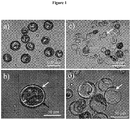
- FIG. 1a is a view of several particles after sedimentation
- the figure 1b is centered on a single particle
- the Figures 1c and 1d show the particles of the material after application of a mechanical pressure using a spatula at room temperature on the blade covering the drop observed under the microscope this mechanical pressure having caused rupture of the silica shells.
- the white arrows point the envelopes of silica
- the black arrows point the droplets of solid fatty phase after rupture of the envelope
- the white circles in dashed lines show that the volume reserved for the fatty phase is filled with a fatty phase on the figure 1b while it is empty of fatty phase after rupture of the silica envelope on the figure 1d .
- the material was incorporated in an oily phase consisting of PDMS and containing 20% by weight of DC3225C.
- the resulting composition was brought to a temperature of 44 ° C by gradually raising the temperature at 5 ° C per minute on the heating stage of the microscope.
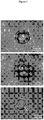
- the composition was observed by confocal microscopy before and after temperature rise.
- the corresponding photos are given on the figure 2 attached.
- the figure 2a corresponds to the image taken before raising the temperature
- the Figures 2b and 2c correspond to images taken after raising the temperature.
Landscapes
- Health & Medical Sciences (AREA)
- Life Sciences & Earth Sciences (AREA)
- Chemical & Material Sciences (AREA)
- Animal Behavior & Ethology (AREA)
- General Health & Medical Sciences (AREA)
- Public Health (AREA)
- Veterinary Medicine (AREA)
- Birds (AREA)
- Epidemiology (AREA)
- Organic Chemistry (AREA)
- Chemical Kinetics & Catalysis (AREA)
- Dispersion Chemistry (AREA)
- Emergency Medicine (AREA)
- Dermatology (AREA)
- Oil, Petroleum & Natural Gas (AREA)
- Inorganic Chemistry (AREA)
- Medicinal Preparation (AREA)
- Cosmetics (AREA)
- General Preparation And Processing Of Foods (AREA)
- Silicon Compounds (AREA)
- Pharmaceuticals Containing Other Organic And Inorganic Compounds (AREA)
- Fats And Perfumes (AREA)
Applications Claiming Priority (2)
| Application Number | Priority Date | Filing Date | Title |
|---|---|---|---|
| FR1255846A FR2992232B1 (fr) | 2012-06-21 | 2012-06-21 | Materiau multicompartimente pour la delivrance thermostimulee de substances d'interet, procede de preparation, applications. |
| PCT/FR2013/051439 WO2013190241A2 (fr) | 2012-06-21 | 2013-06-20 | Materiau multicompartimente pour la delivrance thermostimulee de substances d'interet, procede de preparation, applications. |
Publications (2)
| Publication Number | Publication Date |
|---|---|
| EP2864035A2 EP2864035A2 (fr) | 2015-04-29 |
| EP2864035B1 true EP2864035B1 (fr) | 2018-10-24 |
Family
ID=46852194
Family Applications (1)
| Application Number | Title | Priority Date | Filing Date |
|---|---|---|---|
| EP13737339.5A Active EP2864035B1 (fr) | 2012-06-21 | 2013-06-20 | Procede de preparation d'un materiau multicompartimente pour la delivrance thermostimulee de substances d'interet |
Country Status (5)
| Country | Link |
|---|---|
| US (1) | US9763862B2 (enExample) |
| EP (1) | EP2864035B1 (enExample) |
| JP (1) | JP6177902B2 (enExample) |
| FR (1) | FR2992232B1 (enExample) |
| WO (1) | WO2013190241A2 (enExample) |
Families Citing this family (4)
| Publication number | Priority date | Publication date | Assignee | Title |
|---|---|---|---|---|
| FR2992231B1 (fr) * | 2012-06-21 | 2014-08-01 | Centre Nat Rech Scient | Materiau multicompartimente pour la delivrance thermostimulee de substances d'interet, procede de preparation, applications. |
| EP3312291B1 (en) * | 2015-06-19 | 2020-03-11 | Shino-Test Corporation | Substrate solution for measuring lipase activity, and method and reagent for measuring lipase activity in sample |
| FR3070858B1 (fr) * | 2017-09-14 | 2020-02-21 | Capsum | Dispersion avec phase grasse dispersee a teneur elevee en pigments |
| GB202114759D0 (en) * | 2021-10-15 | 2021-12-01 | Syngenta Crop Protection Ag | Microencapsulation |
Family Cites Families (8)
| Publication number | Priority date | Publication date | Assignee | Title |
|---|---|---|---|---|
| JPS5946124A (ja) * | 1982-09-07 | 1984-03-15 | Nippon Sanso Kk | マイクロカプセルの製造法 |
| JP2739026B2 (ja) * | 1993-07-14 | 1998-04-08 | 三菱重工業株式会社 | 蓄熱用マイクロカプセルおよびその製造方法 |
| JPH10174861A (ja) * | 1996-12-19 | 1998-06-30 | Lion Corp | マイクロカプセル及びマイクロカプセルの製造方法 |
| JP4637991B2 (ja) * | 1999-07-27 | 2011-02-23 | 株式会社資生堂 | マイクロカプセル及びその製造方法 |
| CN101237860B (zh) * | 2005-06-17 | 2011-11-09 | 澳大利亚核科学技术组织 | 其中具有疏水材料的颗粒 |
| DE102008021005A1 (de) * | 2008-04-25 | 2009-10-29 | Byk-Chemie Gmbh | Partikuläre Wachskomposite mit Kern/Hülle-Struktur und Verfahren zu deren Herstellung sowie deren Verwendung |
| FR2948581B1 (fr) | 2009-07-31 | 2011-09-09 | Centre Nat Rech Scient | Materiau coeur-ecorce, son procede de preparation et utilisation pour la delivrance thermostimulee de susbtances d'interet |
| CN101824307B (zh) * | 2010-04-30 | 2012-07-25 | 北京化工大学 | 一种微胶囊复合相变储能材料及其制备方法 |
-
2012
- 2012-06-21 FR FR1255846A patent/FR2992232B1/fr active Active
-
2013
- 2013-06-20 EP EP13737339.5A patent/EP2864035B1/fr active Active
- 2013-06-20 WO PCT/FR2013/051439 patent/WO2013190241A2/fr not_active Ceased
- 2013-06-20 JP JP2015517829A patent/JP6177902B2/ja active Active
- 2013-06-20 US US14/409,710 patent/US9763862B2/en active Active
Non-Patent Citations (1)
| Title |
|---|
| None * |
Also Published As
| Publication number | Publication date |
|---|---|
| WO2013190241A2 (fr) | 2013-12-27 |
| US9763862B2 (en) | 2017-09-19 |
| US20150151267A1 (en) | 2015-06-04 |
| JP2015528794A (ja) | 2015-10-01 |
| FR2992232B1 (fr) | 2017-12-15 |
| WO2013190241A3 (fr) | 2014-07-03 |
| EP2864035A2 (fr) | 2015-04-29 |
| JP6177902B2 (ja) | 2017-08-09 |
| FR2992232A1 (fr) | 2013-12-27 |
Similar Documents
| Publication | Publication Date | Title |
|---|---|---|
| EP2459306B1 (fr) | Materiau c ur ecorce, son procede de preparation et utilisation pour la delivrance thermostimulee de substances d'interet | |
| EP1265698B1 (fr) | Nanocapsules lipidiques, procede de preparation et utilisation comme medicament | |
| EP2864035B1 (fr) | Procede de preparation d'un materiau multicompartimente pour la delivrance thermostimulee de substances d'interet | |
| JP2013237051A (ja) | 金属酸化物シェルを有するナノメートルコアシェル粒子の形成 | |
| EP2894978B1 (fr) | Procede alternatif de microencapsulation de principes actifs | |
| CN108348407B (zh) | 胶囊的制备方法 | |
| CA2297760A1 (fr) | Procede de preparation de nanocapsules de type vesiculaire | |
| AU2004208524B2 (en) | Microencapsulation systems and applications of same | |
| EP2864034B1 (fr) | Matériau multicompartimente pour la délivrance thermostimulée de substances d'intérêt, procédé de préparation, applications | |
| JP4637993B2 (ja) | マイクロカプセル及びその製造方法 | |
| JP2015528794A5 (enExample) | ||
| EP1713570B1 (fr) | Compositions d huile cristallisable stabilisees par des particules solides colloi dales | |
| CA3042971A1 (fr) | Materiau coeur organique magnetique-ecorce inorganique, son procede de preparation et ses utilisations pour la delivrance magneto-stimulee de substances d'interet | |
| JP2015523357A5 (enExample) |
Legal Events
| Date | Code | Title | Description |
|---|---|---|---|
| PUAI | Public reference made under article 153(3) epc to a published international application that has entered the european phase |
Free format text: ORIGINAL CODE: 0009012 |
|
| 17P | Request for examination filed |
Effective date: 20150107 |
|
| AK | Designated contracting states |
Kind code of ref document: A2 Designated state(s): AL AT BE BG CH CY CZ DE DK EE ES FI FR GB GR HR HU IE IS IT LI LT LU LV MC MK MT NL NO PL PT RO RS SE SI SK SM TR |
|
| AX | Request for extension of the european patent |
Extension state: BA ME |
|
| DAX | Request for extension of the european patent (deleted) | ||
| STAA | Information on the status of an ep patent application or granted ep patent |
Free format text: STATUS: EXAMINATION IS IN PROGRESS |
|
| 17Q | First examination report despatched |
Effective date: 20171222 |
|
| GRAP | Despatch of communication of intention to grant a patent |
Free format text: ORIGINAL CODE: EPIDOSNIGR1 |
|
| STAA | Information on the status of an ep patent application or granted ep patent |
Free format text: STATUS: GRANT OF PATENT IS INTENDED |
|
| INTG | Intention to grant announced |
Effective date: 20180621 |
|
| RIN1 | Information on inventor provided before grant (corrected) |
Inventor name: DEPARDIEU, MARTIN Inventor name: NOLLET, MAXIME Inventor name: SCHMITT, VERONIQUE Inventor name: BACKOV, RENAL |
|
| GRAS | Grant fee paid |
Free format text: ORIGINAL CODE: EPIDOSNIGR3 |
|
| GRAJ | Information related to disapproval of communication of intention to grant by the applicant or resumption of examination proceedings by the epo deleted |
Free format text: ORIGINAL CODE: EPIDOSDIGR1 |
|
| GRAL | Information related to payment of fee for publishing/printing deleted |
Free format text: ORIGINAL CODE: EPIDOSDIGR3 |
|
| GRAP | Despatch of communication of intention to grant a patent |
Free format text: ORIGINAL CODE: EPIDOSNIGR1 |
|
| STAA | Information on the status of an ep patent application or granted ep patent |
Free format text: STATUS: EXAMINATION IS IN PROGRESS |
|
| GRAJ | Information related to disapproval of communication of intention to grant by the applicant or resumption of examination proceedings by the epo deleted |
Free format text: ORIGINAL CODE: EPIDOSDIGR1 |
|
| GRAL | Information related to payment of fee for publishing/printing deleted |
Free format text: ORIGINAL CODE: EPIDOSDIGR3 |
|
| GRAR | Information related to intention to grant a patent recorded |
Free format text: ORIGINAL CODE: EPIDOSNIGR71 |
|
| STAA | Information on the status of an ep patent application or granted ep patent |
Free format text: STATUS: GRANT OF PATENT IS INTENDED |
|
| GRAA | (expected) grant |
Free format text: ORIGINAL CODE: 0009210 |
|
| STAA | Information on the status of an ep patent application or granted ep patent |
Free format text: STATUS: THE PATENT HAS BEEN GRANTED |
|
| INTC | Intention to grant announced (deleted) | ||
| INTC | Intention to grant announced (deleted) | ||
| AK | Designated contracting states |
Kind code of ref document: B1 Designated state(s): AL AT BE BG CH CY CZ DE DK EE ES FI FR GB GR HR HU IE IS IT LI LT LU LV MC MK MT NL NO PL PT RO RS SE SI SK SM TR |
|
| INTG | Intention to grant announced |
Effective date: 20180917 |
|
| REG | Reference to a national code |
Ref country code: CH Ref legal event code: EP |
|
| REG | Reference to a national code |
Ref country code: IE Ref legal event code: FG4D Free format text: LANGUAGE OF EP DOCUMENT: FRENCH |
|
| REG | Reference to a national code |
Ref country code: DE Ref legal event code: R096 Ref document number: 602013045556 Country of ref document: DE Ref country code: AT Ref legal event code: REF Ref document number: 1056043 Country of ref document: AT Kind code of ref document: T Effective date: 20181115 |
|
| REG | Reference to a national code |
Ref country code: NL Ref legal event code: MP Effective date: 20181024 |
|
| REG | Reference to a national code |
Ref country code: LT Ref legal event code: MG4D |
|
| REG | Reference to a national code |
Ref country code: AT Ref legal event code: MK05 Ref document number: 1056043 Country of ref document: AT Kind code of ref document: T Effective date: 20181024 |
|
| PG25 | Lapsed in a contracting state [announced via postgrant information from national office to epo] |
Ref country code: NL Free format text: LAPSE BECAUSE OF FAILURE TO SUBMIT A TRANSLATION OF THE DESCRIPTION OR TO PAY THE FEE WITHIN THE PRESCRIBED TIME-LIMIT Effective date: 20181024 |
|
| PG25 | Lapsed in a contracting state [announced via postgrant information from national office to epo] |
Ref country code: HR Free format text: LAPSE BECAUSE OF FAILURE TO SUBMIT A TRANSLATION OF THE DESCRIPTION OR TO PAY THE FEE WITHIN THE PRESCRIBED TIME-LIMIT Effective date: 20181024 Ref country code: PL Free format text: LAPSE BECAUSE OF FAILURE TO SUBMIT A TRANSLATION OF THE DESCRIPTION OR TO PAY THE FEE WITHIN THE PRESCRIBED TIME-LIMIT Effective date: 20181024 Ref country code: LT Free format text: LAPSE BECAUSE OF FAILURE TO SUBMIT A TRANSLATION OF THE DESCRIPTION OR TO PAY THE FEE WITHIN THE PRESCRIBED TIME-LIMIT Effective date: 20181024 Ref country code: AT Free format text: LAPSE BECAUSE OF FAILURE TO SUBMIT A TRANSLATION OF THE DESCRIPTION OR TO PAY THE FEE WITHIN THE PRESCRIBED TIME-LIMIT Effective date: 20181024 Ref country code: BG Free format text: LAPSE BECAUSE OF FAILURE TO SUBMIT A TRANSLATION OF THE DESCRIPTION OR TO PAY THE FEE WITHIN THE PRESCRIBED TIME-LIMIT Effective date: 20190124 Ref country code: FI Free format text: LAPSE BECAUSE OF FAILURE TO SUBMIT A TRANSLATION OF THE DESCRIPTION OR TO PAY THE FEE WITHIN THE PRESCRIBED TIME-LIMIT Effective date: 20181024 Ref country code: LV Free format text: LAPSE BECAUSE OF FAILURE TO SUBMIT A TRANSLATION OF THE DESCRIPTION OR TO PAY THE FEE WITHIN THE PRESCRIBED TIME-LIMIT Effective date: 20181024 Ref country code: ES Free format text: LAPSE BECAUSE OF FAILURE TO SUBMIT A TRANSLATION OF THE DESCRIPTION OR TO PAY THE FEE WITHIN THE PRESCRIBED TIME-LIMIT Effective date: 20181024 Ref country code: IS Free format text: LAPSE BECAUSE OF FAILURE TO SUBMIT A TRANSLATION OF THE DESCRIPTION OR TO PAY THE FEE WITHIN THE PRESCRIBED TIME-LIMIT Effective date: 20190224 Ref country code: NO Free format text: LAPSE BECAUSE OF FAILURE TO SUBMIT A TRANSLATION OF THE DESCRIPTION OR TO PAY THE FEE WITHIN THE PRESCRIBED TIME-LIMIT Effective date: 20190124 |
|
| PG25 | Lapsed in a contracting state [announced via postgrant information from national office to epo] |
Ref country code: GR Free format text: LAPSE BECAUSE OF FAILURE TO SUBMIT A TRANSLATION OF THE DESCRIPTION OR TO PAY THE FEE WITHIN THE PRESCRIBED TIME-LIMIT Effective date: 20190125 Ref country code: PT Free format text: LAPSE BECAUSE OF FAILURE TO SUBMIT A TRANSLATION OF THE DESCRIPTION OR TO PAY THE FEE WITHIN THE PRESCRIBED TIME-LIMIT Effective date: 20190224 Ref country code: AL Free format text: LAPSE BECAUSE OF FAILURE TO SUBMIT A TRANSLATION OF THE DESCRIPTION OR TO PAY THE FEE WITHIN THE PRESCRIBED TIME-LIMIT Effective date: 20181024 Ref country code: RS Free format text: LAPSE BECAUSE OF FAILURE TO SUBMIT A TRANSLATION OF THE DESCRIPTION OR TO PAY THE FEE WITHIN THE PRESCRIBED TIME-LIMIT Effective date: 20181024 Ref country code: SE Free format text: LAPSE BECAUSE OF FAILURE TO SUBMIT A TRANSLATION OF THE DESCRIPTION OR TO PAY THE FEE WITHIN THE PRESCRIBED TIME-LIMIT Effective date: 20181024 |
|
| REG | Reference to a national code |
Ref country code: DE Ref legal event code: R097 Ref document number: 602013045556 Country of ref document: DE |
|
| PG25 | Lapsed in a contracting state [announced via postgrant information from national office to epo] |
Ref country code: DK Free format text: LAPSE BECAUSE OF FAILURE TO SUBMIT A TRANSLATION OF THE DESCRIPTION OR TO PAY THE FEE WITHIN THE PRESCRIBED TIME-LIMIT Effective date: 20181024 Ref country code: CZ Free format text: LAPSE BECAUSE OF FAILURE TO SUBMIT A TRANSLATION OF THE DESCRIPTION OR TO PAY THE FEE WITHIN THE PRESCRIBED TIME-LIMIT Effective date: 20181024 Ref country code: IT Free format text: LAPSE BECAUSE OF FAILURE TO SUBMIT A TRANSLATION OF THE DESCRIPTION OR TO PAY THE FEE WITHIN THE PRESCRIBED TIME-LIMIT Effective date: 20181024 |
|
| PG25 | Lapsed in a contracting state [announced via postgrant information from national office to epo] |
Ref country code: SK Free format text: LAPSE BECAUSE OF FAILURE TO SUBMIT A TRANSLATION OF THE DESCRIPTION OR TO PAY THE FEE WITHIN THE PRESCRIBED TIME-LIMIT Effective date: 20181024 Ref country code: SM Free format text: LAPSE BECAUSE OF FAILURE TO SUBMIT A TRANSLATION OF THE DESCRIPTION OR TO PAY THE FEE WITHIN THE PRESCRIBED TIME-LIMIT Effective date: 20181024 Ref country code: EE Free format text: LAPSE BECAUSE OF FAILURE TO SUBMIT A TRANSLATION OF THE DESCRIPTION OR TO PAY THE FEE WITHIN THE PRESCRIBED TIME-LIMIT Effective date: 20181024 Ref country code: RO Free format text: LAPSE BECAUSE OF FAILURE TO SUBMIT A TRANSLATION OF THE DESCRIPTION OR TO PAY THE FEE WITHIN THE PRESCRIBED TIME-LIMIT Effective date: 20181024 |
|
| PLBE | No opposition filed within time limit |
Free format text: ORIGINAL CODE: 0009261 |
|
| STAA | Information on the status of an ep patent application or granted ep patent |
Free format text: STATUS: NO OPPOSITION FILED WITHIN TIME LIMIT |
|
| 26N | No opposition filed |
Effective date: 20190725 |
|
| PG25 | Lapsed in a contracting state [announced via postgrant information from national office to epo] |
Ref country code: SI Free format text: LAPSE BECAUSE OF FAILURE TO SUBMIT A TRANSLATION OF THE DESCRIPTION OR TO PAY THE FEE WITHIN THE PRESCRIBED TIME-LIMIT Effective date: 20181024 |
|
| PG25 | Lapsed in a contracting state [announced via postgrant information from national office to epo] |
Ref country code: MC Free format text: LAPSE BECAUSE OF FAILURE TO SUBMIT A TRANSLATION OF THE DESCRIPTION OR TO PAY THE FEE WITHIN THE PRESCRIBED TIME-LIMIT Effective date: 20181024 |
|
| REG | Reference to a national code |
Ref country code: CH Ref legal event code: PL |
|
| REG | Reference to a national code |
Ref country code: BE Ref legal event code: MM Effective date: 20190630 |
|
| PG25 | Lapsed in a contracting state [announced via postgrant information from national office to epo] |
Ref country code: TR Free format text: LAPSE BECAUSE OF FAILURE TO SUBMIT A TRANSLATION OF THE DESCRIPTION OR TO PAY THE FEE WITHIN THE PRESCRIBED TIME-LIMIT Effective date: 20181024 |
|
| PG25 | Lapsed in a contracting state [announced via postgrant information from national office to epo] |
Ref country code: IE Free format text: LAPSE BECAUSE OF NON-PAYMENT OF DUE FEES Effective date: 20190620 |
|
| PG25 | Lapsed in a contracting state [announced via postgrant information from national office to epo] |
Ref country code: BE Free format text: LAPSE BECAUSE OF NON-PAYMENT OF DUE FEES Effective date: 20190630 Ref country code: CH Free format text: LAPSE BECAUSE OF NON-PAYMENT OF DUE FEES Effective date: 20190630 Ref country code: LI Free format text: LAPSE BECAUSE OF NON-PAYMENT OF DUE FEES Effective date: 20190630 Ref country code: LU Free format text: LAPSE BECAUSE OF NON-PAYMENT OF DUE FEES Effective date: 20190620 |
|
| PG25 | Lapsed in a contracting state [announced via postgrant information from national office to epo] |
Ref country code: CY Free format text: LAPSE BECAUSE OF FAILURE TO SUBMIT A TRANSLATION OF THE DESCRIPTION OR TO PAY THE FEE WITHIN THE PRESCRIBED TIME-LIMIT Effective date: 20181024 |
|
| PG25 | Lapsed in a contracting state [announced via postgrant information from national office to epo] |
Ref country code: MT Free format text: LAPSE BECAUSE OF FAILURE TO SUBMIT A TRANSLATION OF THE DESCRIPTION OR TO PAY THE FEE WITHIN THE PRESCRIBED TIME-LIMIT Effective date: 20181024 Ref country code: HU Free format text: LAPSE BECAUSE OF FAILURE TO SUBMIT A TRANSLATION OF THE DESCRIPTION OR TO PAY THE FEE WITHIN THE PRESCRIBED TIME-LIMIT; INVALID AB INITIO Effective date: 20130620 |
|
| PG25 | Lapsed in a contracting state [announced via postgrant information from national office to epo] |
Ref country code: MK Free format text: LAPSE BECAUSE OF FAILURE TO SUBMIT A TRANSLATION OF THE DESCRIPTION OR TO PAY THE FEE WITHIN THE PRESCRIBED TIME-LIMIT Effective date: 20181024 |
|
| PGFP | Annual fee paid to national office [announced via postgrant information from national office to epo] |
Ref country code: GB Payment date: 20250626 Year of fee payment: 13 |
|
| PGFP | Annual fee paid to national office [announced via postgrant information from national office to epo] |
Ref country code: FR Payment date: 20250626 Year of fee payment: 13 |
|
| PGFP | Annual fee paid to national office [announced via postgrant information from national office to epo] |
Ref country code: DE Payment date: 20250725 Year of fee payment: 13 |