EP2862442A1 - Insektenabwehrmittel - Google Patents
Insektenabwehrmittel Download PDFInfo
- Publication number
- EP2862442A1 EP2862442A1 EP13004956.2A EP13004956A EP2862442A1 EP 2862442 A1 EP2862442 A1 EP 2862442A1 EP 13004956 A EP13004956 A EP 13004956A EP 2862442 A1 EP2862442 A1 EP 2862442A1
- Authority
- EP
- European Patent Office
- Prior art keywords
- acid
- composition according
- weight
- emulsifier
- composition
- Prior art date
- Legal status (The legal status is an assumption and is not a legal conclusion. Google has not performed a legal analysis and makes no representation as to the accuracy of the status listed.)
- Withdrawn
Links
- 239000000077 insect repellent Substances 0.000 title claims abstract description 19
- 239000000203 mixture Substances 0.000 claims abstract description 73
- 239000002253 acid Substances 0.000 claims abstract description 61
- 239000003995 emulsifying agent Substances 0.000 claims abstract description 49
- 229930003658 monoterpene Natural products 0.000 claims abstract description 22
- 238000000034 method Methods 0.000 claims abstract description 17
- 150000002773 monoterpene derivatives Chemical class 0.000 claims abstract description 17
- NEHNMFOYXAPHSD-UHFFFAOYSA-N citronellal Chemical compound O=CCC(C)CCC=C(C)C NEHNMFOYXAPHSD-UHFFFAOYSA-N 0.000 claims description 60
- 229930003633 citronellal Natural products 0.000 claims description 30
- 235000000983 citronellal Nutrition 0.000 claims description 30
- LMXFTMYMHGYJEI-UHFFFAOYSA-N p-menthane-3,8-diol Chemical compound CC1CCC(C(C)(C)O)C(O)C1 LMXFTMYMHGYJEI-UHFFFAOYSA-N 0.000 claims description 29
- KRKNYBCHXYNGOX-UHFFFAOYSA-N citric acid Chemical compound OC(=O)CC(O)(C(O)=O)CC(O)=O KRKNYBCHXYNGOX-UHFFFAOYSA-N 0.000 claims description 28
- XLYOFNOQVPJJNP-UHFFFAOYSA-N water Substances O XLYOFNOQVPJJNP-UHFFFAOYSA-N 0.000 claims description 26
- -1 glycerine fatty acid esters Chemical class 0.000 claims description 18
- ZYTMANIQRDEHIO-KXUCPTDWSA-N isopulegol Chemical compound C[C@@H]1CC[C@@H](C(C)=C)[C@H](O)C1 ZYTMANIQRDEHIO-KXUCPTDWSA-N 0.000 claims description 16
- PEDCQBHIVMGVHV-UHFFFAOYSA-N Glycerol Natural products OCC(O)CO PEDCQBHIVMGVHV-UHFFFAOYSA-N 0.000 claims description 10
- 150000001735 carboxylic acids Chemical class 0.000 claims description 10
- 235000015165 citric acid Nutrition 0.000 claims description 10
- JVTAAEKCZFNVCJ-UHFFFAOYSA-N lactic acid Chemical compound CC(O)C(O)=O JVTAAEKCZFNVCJ-UHFFFAOYSA-N 0.000 claims description 10
- ZYTMANIQRDEHIO-UHFFFAOYSA-N neo-Isopulegol Natural products CC1CCC(C(C)=C)C(O)C1 ZYTMANIQRDEHIO-UHFFFAOYSA-N 0.000 claims description 9
- 239000001871 (1R,2R,5S)-5-methyl-2-prop-1-en-2-ylcyclohexan-1-ol Substances 0.000 claims description 8
- 229940095045 isopulegol Drugs 0.000 claims description 8
- OFOBLEOULBTSOW-UHFFFAOYSA-N Malonic acid Chemical compound OC(=O)CC(O)=O OFOBLEOULBTSOW-UHFFFAOYSA-N 0.000 claims description 7
- 238000002156 mixing Methods 0.000 claims description 7
- FEWJPZIEWOKRBE-JCYAYHJZSA-N Dextrotartaric acid Chemical compound OC(=O)[C@H](O)[C@@H](O)C(O)=O FEWJPZIEWOKRBE-JCYAYHJZSA-N 0.000 claims description 5
- 150000002191 fatty alcohols Chemical class 0.000 claims description 5
- 235000011187 glycerol Nutrition 0.000 claims description 5
- 239000004310 lactic acid Substances 0.000 claims description 5
- 235000014655 lactic acid Nutrition 0.000 claims description 5
- 235000002906 tartaric acid Nutrition 0.000 claims description 5
- FEWJPZIEWOKRBE-UHFFFAOYSA-N Tartaric acid Natural products [H+].[H+].[O-]C(=O)C(O)C(O)C([O-])=O FEWJPZIEWOKRBE-UHFFFAOYSA-N 0.000 claims description 4
- 239000000654 additive Substances 0.000 claims description 4
- BVKZGUZCCUSVTD-UHFFFAOYSA-N carbonic acid Chemical compound OC(O)=O BVKZGUZCCUSVTD-UHFFFAOYSA-N 0.000 claims description 4
- 239000011975 tartaric acid Substances 0.000 claims description 4
- 230000000996 additive effect Effects 0.000 claims description 3
- 235000014113 dietary fatty acids Nutrition 0.000 claims description 3
- 239000000194 fatty acid Substances 0.000 claims description 3
- 229930195729 fatty acid Natural products 0.000 claims description 3
- 239000004615 ingredient Substances 0.000 claims description 3
- 239000012875 nonionic emulsifier Substances 0.000 claims description 2
- 229930006948 p-menthane-3,8-diol Natural products 0.000 claims description 2
- 229920001223 polyethylene glycol Polymers 0.000 claims description 2
- 229920001451 polypropylene glycol Polymers 0.000 claims description 2
- 235000000346 sugar Nutrition 0.000 claims description 2
- 150000003628 tricarboxylic acids Chemical class 0.000 claims description 2
- 238000004519 manufacturing process Methods 0.000 claims 1
- 238000002360 preparation method Methods 0.000 abstract description 5
- 238000006243 chemical reaction Methods 0.000 description 32
- 239000000047 product Substances 0.000 description 26
- 239000003921 oil Substances 0.000 description 24
- 150000001241 acetals Chemical class 0.000 description 19
- 244000165852 Eucalyptus citriodora Species 0.000 description 17
- HEMHJVSKTPXQMS-UHFFFAOYSA-M Sodium hydroxide Chemical compound [OH-].[Na+] HEMHJVSKTPXQMS-UHFFFAOYSA-M 0.000 description 12
- CIWBSHSKHKDKBQ-JLAZNSOCSA-N Ascorbic acid Natural products OC[C@H](O)[C@H]1OC(=O)C(O)=C1O CIWBSHSKHKDKBQ-JLAZNSOCSA-N 0.000 description 11
- 235000004722 Eucalyptus citriodora Nutrition 0.000 description 11
- 150000001299 aldehydes Chemical class 0.000 description 11
- QTBSBXVTEAMEQO-UHFFFAOYSA-N Acetic acid Chemical compound CC(O)=O QTBSBXVTEAMEQO-UHFFFAOYSA-N 0.000 description 10
- 238000013459 approach Methods 0.000 description 10
- DSSYKIVIOFKYAU-XCBNKYQSSA-N (R)-camphor Chemical compound C1C[C@@]2(C)C(=O)C[C@@H]1C2(C)C DSSYKIVIOFKYAU-XCBNKYQSSA-N 0.000 description 9
- WNLRTRBMVRJNCN-UHFFFAOYSA-N adipic acid Chemical compound OC(=O)CCCCC(O)=O WNLRTRBMVRJNCN-UHFFFAOYSA-N 0.000 description 9
- 230000015572 biosynthetic process Effects 0.000 description 9
- 229960004106 citric acid Drugs 0.000 description 8
- 238000005580 one pot reaction Methods 0.000 description 8
- 239000005871 repellent Substances 0.000 description 8
- 230000002940 repellent Effects 0.000 description 8
- YGSDEFSMJLZEOE-UHFFFAOYSA-N salicylic acid Chemical compound OC(=O)C1=CC=CC=C1O YGSDEFSMJLZEOE-UHFFFAOYSA-N 0.000 description 8
- KFZMGEQAYNKOFK-UHFFFAOYSA-N Isopropanol Chemical compound CC(C)O KFZMGEQAYNKOFK-UHFFFAOYSA-N 0.000 description 7
- MUBZPKHOEPUJKR-UHFFFAOYSA-N Oxalic acid Chemical compound OC(=O)C(O)=O MUBZPKHOEPUJKR-UHFFFAOYSA-N 0.000 description 7
- LMXFTMYMHGYJEI-IWSPIJDZSA-N (1R,2R,5R)-2-(1-hydroxy-1-methylethyl)-5-methylcyclohexanol Chemical compound C[C@@H]1CC[C@@H](C(C)(C)O)[C@H](O)C1 LMXFTMYMHGYJEI-IWSPIJDZSA-N 0.000 description 6
- 150000007513 acids Chemical class 0.000 description 6
- LMXFTMYMHGYJEI-HLTSFMKQSA-N cis-p-Menthane-3,8-diol Natural products C[C@@H]1CC[C@@H](C(C)(C)O)[C@@H](O)C1 LMXFTMYMHGYJEI-HLTSFMKQSA-N 0.000 description 6
- 239000000839 emulsion Substances 0.000 description 6
- 239000011541 reaction mixture Substances 0.000 description 6
- JDRSMPFHFNXQRB-CMTNHCDUSA-N Decyl beta-D-threo-hexopyranoside Chemical compound CCCCCCCCCCO[C@@H]1O[C@H](CO)C(O)[C@H](O)C1O JDRSMPFHFNXQRB-CMTNHCDUSA-N 0.000 description 5
- DHKHKXVYLBGOIT-UHFFFAOYSA-N acetaldehyde Diethyl Acetal Natural products CCOC(C)OCC DHKHKXVYLBGOIT-UHFFFAOYSA-N 0.000 description 5
- 235000010323 ascorbic acid Nutrition 0.000 description 5
- 239000011668 ascorbic acid Substances 0.000 description 5
- 229960005070 ascorbic acid Drugs 0.000 description 5
- 229940073499 decyl glucoside Drugs 0.000 description 5
- 230000036571 hydration Effects 0.000 description 5
- 238000006703 hydration reaction Methods 0.000 description 5
- GLDOVTGHNKAZLK-UHFFFAOYSA-N octadecan-1-ol Chemical compound CCCCCCCCCCCCCCCCCCO GLDOVTGHNKAZLK-UHFFFAOYSA-N 0.000 description 5
- 150000003839 salts Chemical class 0.000 description 5
- 239000002904 solvent Substances 0.000 description 5
- YASYEJJMZJALEJ-UHFFFAOYSA-N Citric acid monohydrate Chemical compound O.OC(=O)CC(O)(C(O)=O)CC(O)=O YASYEJJMZJALEJ-UHFFFAOYSA-N 0.000 description 4
- 229920000858 Cyclodextrin Polymers 0.000 description 4
- BDAGIHXWWSANSR-UHFFFAOYSA-N Formic acid Chemical compound OC=O BDAGIHXWWSANSR-UHFFFAOYSA-N 0.000 description 4
- GLZPCOQZEFWAFX-UHFFFAOYSA-N Geraniol Chemical compound CC(C)=CCCC(C)=CCO GLZPCOQZEFWAFX-UHFFFAOYSA-N 0.000 description 4
- RRHGJUQNOFWUDK-UHFFFAOYSA-N Isoprene Chemical compound CC(=C)C=C RRHGJUQNOFWUDK-UHFFFAOYSA-N 0.000 description 4
- MMOXZBCLCQITDF-UHFFFAOYSA-N N,N-diethyl-m-toluamide Chemical compound CCN(CC)C(=O)C1=CC=CC(C)=C1 MMOXZBCLCQITDF-UHFFFAOYSA-N 0.000 description 4
- 241000607479 Yersinia pestis Species 0.000 description 4
- 239000001361 adipic acid Substances 0.000 description 4
- 235000011037 adipic acid Nutrition 0.000 description 4
- 150000001732 carboxylic acid derivatives Chemical class 0.000 description 4
- 229940081733 cetearyl alcohol Drugs 0.000 description 4
- 239000007795 chemical reaction product Substances 0.000 description 4
- 229960002303 citric acid monohydrate Drugs 0.000 description 4
- QMVPMAAFGQKVCJ-UHFFFAOYSA-N citronellol Chemical compound OCCC(C)CCC=C(C)C QMVPMAAFGQKVCJ-UHFFFAOYSA-N 0.000 description 4
- 239000000470 constituent Substances 0.000 description 4
- RRAFCDWBNXTKKO-UHFFFAOYSA-N eugenol Chemical compound COC1=CC(CC=C)=CC=C1O RRAFCDWBNXTKKO-UHFFFAOYSA-N 0.000 description 4
- 238000009472 formulation Methods 0.000 description 4
- FJKROLUGYXJWQN-UHFFFAOYSA-N papa-hydroxy-benzoic acid Natural products OC(=O)C1=CC=C(O)C=C1 FJKROLUGYXJWQN-UHFFFAOYSA-N 0.000 description 4
- 229960004889 salicylic acid Drugs 0.000 description 4
- 239000007921 spray Substances 0.000 description 4
- 238000003756 stirring Methods 0.000 description 4
- 238000003786 synthesis reaction Methods 0.000 description 4
- 238000005303 weighing Methods 0.000 description 4
- LWWSLALQNBCHNL-UHFFFAOYSA-N 5-methyl-2-propan-2-ylcyclohex-2-en-1-ol Chemical compound CC(C)C1=CCC(C)CC1O LWWSLALQNBCHNL-UHFFFAOYSA-N 0.000 description 3
- 241000238876 Acari Species 0.000 description 3
- 229920001450 Alpha-Cyclodextrin Polymers 0.000 description 3
- LFQSCWFLJHTTHZ-UHFFFAOYSA-N Ethanol Chemical compound CCO LFQSCWFLJHTTHZ-UHFFFAOYSA-N 0.000 description 3
- VZCYOOQTPOCHFL-OWOJBTEDSA-N Fumaric acid Chemical compound OC(=O)\C=C\C(O)=O VZCYOOQTPOCHFL-OWOJBTEDSA-N 0.000 description 3
- WQZGKKKJIJFFOK-GASJEMHNSA-N Glucose Natural products OC[C@H]1OC(O)[C@H](O)[C@@H](O)[C@@H]1O WQZGKKKJIJFFOK-GASJEMHNSA-N 0.000 description 3
- AEMRFAOFKBGASW-UHFFFAOYSA-N Glycolic acid Chemical compound OCC(O)=O AEMRFAOFKBGASW-UHFFFAOYSA-N 0.000 description 3
- 125000000217 alkyl group Chemical group 0.000 description 3
- WPYMKLBDIGXBTP-UHFFFAOYSA-N benzoic acid Chemical compound OC(=O)C1=CC=CC=C1 WPYMKLBDIGXBTP-UHFFFAOYSA-N 0.000 description 3
- 239000006227 byproduct Substances 0.000 description 3
- 239000008103 glucose Substances 0.000 description 3
- 239000007788 liquid Substances 0.000 description 3
- 239000003755 preservative agent Substances 0.000 description 3
- 239000000126 substance Substances 0.000 description 3
- VZCYOOQTPOCHFL-UHFFFAOYSA-N trans-butenedioic acid Natural products OC(=O)C=CC(O)=O VZCYOOQTPOCHFL-UHFFFAOYSA-N 0.000 description 3
- 239000000341 volatile oil Substances 0.000 description 3
- QMVPMAAFGQKVCJ-SNVBAGLBSA-N (R)-(+)-citronellol Natural products OCC[C@H](C)CCC=C(C)C QMVPMAAFGQKVCJ-SNVBAGLBSA-N 0.000 description 2
- BJEPYKJPYRNKOW-REOHCLBHSA-N (S)-malic acid Chemical compound OC(=O)[C@@H](O)CC(O)=O BJEPYKJPYRNKOW-REOHCLBHSA-N 0.000 description 2
- VBICKXHEKHSIBG-UHFFFAOYSA-N 1-monostearoylglycerol Chemical compound CCCCCCCCCCCCCCCCCC(=O)OCC(O)CO VBICKXHEKHSIBG-UHFFFAOYSA-N 0.000 description 2
- RZRNAYUHWVFMIP-KTKRTIGZSA-N 1-oleoylglycerol Chemical compound CCCCCCCC\C=C/CCCCCCCC(=O)OCC(O)CO RZRNAYUHWVFMIP-KTKRTIGZSA-N 0.000 description 2
- NPBVQXIMTZKSBA-UHFFFAOYSA-N Chavibetol Natural products COC1=CC=C(CC=C)C=C1O NPBVQXIMTZKSBA-UHFFFAOYSA-N 0.000 description 2
- 241000723346 Cinnamomum camphora Species 0.000 description 2
- FBPFZTCFMRRESA-FSIIMWSLSA-N D-Glucitol Natural products OC[C@H](O)[C@H](O)[C@@H](O)[C@H](O)CO FBPFZTCFMRRESA-FSIIMWSLSA-N 0.000 description 2
- FBPFZTCFMRRESA-JGWLITMVSA-N D-glucitol Chemical compound OC[C@H](O)[C@@H](O)[C@H](O)[C@H](O)CO FBPFZTCFMRRESA-JGWLITMVSA-N 0.000 description 2
- RGHNJXZEOKUKBD-SQOUGZDYSA-N D-gluconic acid Chemical compound OC[C@@H](O)[C@@H](O)[C@H](O)[C@@H](O)C(O)=O RGHNJXZEOKUKBD-SQOUGZDYSA-N 0.000 description 2
- RTZKZFJDLAIYFH-UHFFFAOYSA-N Diethyl ether Chemical compound CCOCC RTZKZFJDLAIYFH-UHFFFAOYSA-N 0.000 description 2
- NIQCNGHVCWTJSM-UHFFFAOYSA-N Dimethyl phthalate Chemical compound COC(=O)C1=CC=CC=C1C(=O)OC NIQCNGHVCWTJSM-UHFFFAOYSA-N 0.000 description 2
- WEEGYLXZBRQIMU-UHFFFAOYSA-N Eucalyptol Chemical compound C1CC2CCC1(C)OC2(C)C WEEGYLXZBRQIMU-UHFFFAOYSA-N 0.000 description 2
- 239000005770 Eugenol Substances 0.000 description 2
- 241000238631 Hexapoda Species 0.000 description 2
- CSNNHWWHGAXBCP-UHFFFAOYSA-L Magnesium sulfate Chemical compound [Mg+2].[O-][S+2]([O-])([O-])[O-] CSNNHWWHGAXBCP-UHFFFAOYSA-L 0.000 description 2
- 241001465754 Metazoa Species 0.000 description 2
- AFVFQIVMOAPDHO-UHFFFAOYSA-N Methanesulfonic acid Chemical compound CS(O)(=O)=O AFVFQIVMOAPDHO-UHFFFAOYSA-N 0.000 description 2
- 208000002193 Pain Diseases 0.000 description 2
- 239000005662 Paraffin oil Substances 0.000 description 2
- 229920002690 Polyoxyl 40 HydrogenatedCastorOil Polymers 0.000 description 2
- 239000004721 Polyphenylene oxide Substances 0.000 description 2
- UVMRYBDEERADNV-UHFFFAOYSA-N Pseudoeugenol Natural products COC1=CC(C(C)=C)=CC=C1O UVMRYBDEERADNV-UHFFFAOYSA-N 0.000 description 2
- LCTONWCANYUPML-UHFFFAOYSA-N Pyruvic acid Chemical compound CC(=O)C(O)=O LCTONWCANYUPML-UHFFFAOYSA-N 0.000 description 2
- CZMRCDWAGMRECN-UGDNZRGBSA-N Sucrose Chemical compound O[C@H]1[C@H](O)[C@@H](CO)O[C@@]1(CO)O[C@@H]1[C@H](O)[C@@H](O)[C@H](O)[C@@H](CO)O1 CZMRCDWAGMRECN-UGDNZRGBSA-N 0.000 description 2
- 102100038968 WAP four-disulfide core domain protein 1 Human genes 0.000 description 2
- 239000004480 active ingredient Substances 0.000 description 2
- BJEPYKJPYRNKOW-UHFFFAOYSA-N alpha-hydroxysuccinic acid Natural products OC(=O)C(O)CC(O)=O BJEPYKJPYRNKOW-UHFFFAOYSA-N 0.000 description 2
- WQZGKKKJIJFFOK-VFUOTHLCSA-N beta-D-glucose Chemical compound OC[C@H]1O[C@@H](O)[C@H](O)[C@@H](O)[C@@H]1O WQZGKKKJIJFFOK-VFUOTHLCSA-N 0.000 description 2
- JGQFVRIQXUFPAH-UHFFFAOYSA-N beta-citronellol Natural products OCCC(C)CCCC(C)=C JGQFVRIQXUFPAH-UHFFFAOYSA-N 0.000 description 2
- 229930008380 camphor Natural products 0.000 description 2
- 229960000846 camphor Drugs 0.000 description 2
- 230000000711 cancerogenic effect Effects 0.000 description 2
- 239000003054 catalyst Substances 0.000 description 2
- 239000003795 chemical substances by application Substances 0.000 description 2
- 229960005233 cineole Drugs 0.000 description 2
- 235000000484 citronellol Nutrition 0.000 description 2
- 239000010634 clove oil Substances 0.000 description 2
- 150000001875 compounds Chemical class 0.000 description 2
- 239000002537 cosmetic Substances 0.000 description 2
- 150000001991 dicarboxylic acids Chemical class 0.000 description 2
- 229960001673 diethyltoluamide Drugs 0.000 description 2
- VUCKYGJSXHHQOJ-UHFFFAOYSA-N dihydroxymalonic acid Chemical compound OC(=O)C(O)(O)C(O)=O VUCKYGJSXHHQOJ-UHFFFAOYSA-N 0.000 description 2
- 230000000694 effects Effects 0.000 description 2
- BEFDCLMNVWHSGT-UHFFFAOYSA-N ethenylcyclopentane Chemical compound C=CC1CCCC1 BEFDCLMNVWHSGT-UHFFFAOYSA-N 0.000 description 2
- 229960002217 eugenol Drugs 0.000 description 2
- 238000002474 experimental method Methods 0.000 description 2
- 238000000769 gas chromatography-flame ionisation detection Methods 0.000 description 2
- 238000002290 gas chromatography-mass spectrometry Methods 0.000 description 2
- 239000000499 gel Substances 0.000 description 2
- IZHVBANLECCAGF-UHFFFAOYSA-N glyceryl distearate Natural products CCCCCCCCCCCCCCCCCC(=O)OCC(O)COC(=O)CCCCCCCCCCCCCCCCC IZHVBANLECCAGF-UHFFFAOYSA-N 0.000 description 2
- 125000002887 hydroxy group Chemical group [H]O* 0.000 description 2
- ROBFUDYVXSDBQM-UHFFFAOYSA-N hydroxymalonic acid Chemical compound OC(=O)C(O)C(O)=O ROBFUDYVXSDBQM-UHFFFAOYSA-N 0.000 description 2
- 238000011835 investigation Methods 0.000 description 2
- 230000007794 irritation Effects 0.000 description 2
- VZCYOOQTPOCHFL-UPHRSURJSA-N maleic acid Chemical compound OC(=O)\C=C/C(O)=O VZCYOOQTPOCHFL-UPHRSURJSA-N 0.000 description 2
- 239000011976 maleic acid Substances 0.000 description 2
- 239000001630 malic acid Substances 0.000 description 2
- 235000011090 malic acid Nutrition 0.000 description 2
- 235000013336 milk Nutrition 0.000 description 2
- 239000008267 milk Substances 0.000 description 2
- 210000004080 milk Anatomy 0.000 description 2
- 239000001788 mono and diglycerides of fatty acids Substances 0.000 description 2
- 230000003505 mutagenic effect Effects 0.000 description 2
- 239000012074 organic phase Substances 0.000 description 2
- KHPXUQMNIQBQEV-UHFFFAOYSA-N oxaloacetic acid Chemical compound OC(=O)CC(=O)C(O)=O KHPXUQMNIQBQEV-UHFFFAOYSA-N 0.000 description 2
- 239000002304 perfume Substances 0.000 description 2
- 229920000570 polyether Polymers 0.000 description 2
- 239000000256 polyoxyethylene sorbitan monolaurate Substances 0.000 description 2
- 230000035484 reaction time Effects 0.000 description 2
- 239000007787 solid Substances 0.000 description 2
- 239000004334 sorbic acid Substances 0.000 description 2
- 235000010199 sorbic acid Nutrition 0.000 description 2
- 229940075582 sorbic acid Drugs 0.000 description 2
- 239000000600 sorbitol Substances 0.000 description 2
- 239000004094 surface-active agent Substances 0.000 description 2
- 210000004243 sweat Anatomy 0.000 description 2
- 235000007586 terpenes Nutrition 0.000 description 2
- HLZKNKRTKFSKGZ-UHFFFAOYSA-N tetradecan-1-ol Chemical compound CCCCCCCCCCCCCCO HLZKNKRTKFSKGZ-UHFFFAOYSA-N 0.000 description 2
- 230000002110 toxicologic effect Effects 0.000 description 2
- 231100000027 toxicology Toxicity 0.000 description 2
- GHPCICSQWQDZLM-UHFFFAOYSA-N 1-(4-chlorophenyl)sulfonyl-1-methyl-3-propylurea Chemical compound CCCNC(=O)N(C)S(=O)(=O)C1=CC=C(Cl)C=C1 GHPCICSQWQDZLM-UHFFFAOYSA-N 0.000 description 1
- ZRFOXNYUNAQKII-UHFFFAOYSA-N 2,3-dihydroxybutanedioic acid 2-hydroxypropane-1,2,3-tricarboxylic acid oxalic acid Chemical compound C(C(O)C(O)C(=O)O)(=O)O.C(CC(O)(C(=O)O)CC(=O)O)(=O)O.C(C(=O)O)(=O)O ZRFOXNYUNAQKII-UHFFFAOYSA-N 0.000 description 1
- JFHJQMVVJLVRHX-UHFFFAOYSA-N 2-ethylhexane-1,3-diol Chemical compound CCCC(O)C(CC)CO.CCCC(O)C(CC)CO JFHJQMVVJLVRHX-UHFFFAOYSA-N 0.000 description 1
- XULHFMYCBKQGEE-UHFFFAOYSA-N 2-hexyl-1-Decanol Chemical compound CCCCCCCCC(CO)CCCCCC XULHFMYCBKQGEE-UHFFFAOYSA-N 0.000 description 1
- 125000000954 2-hydroxyethyl group Chemical group [H]C([*])([H])C([H])([H])O[H] 0.000 description 1
- OSWFIVFLDKOXQC-UHFFFAOYSA-N 4-(3-methoxyphenyl)aniline Chemical compound COC1=CC=CC(C=2C=CC(N)=CC=2)=C1 OSWFIVFLDKOXQC-UHFFFAOYSA-N 0.000 description 1
- 239000005711 Benzoic acid Substances 0.000 description 1
- KWIUHFFTVRNATP-UHFFFAOYSA-N Betaine Natural products C[N+](C)(C)CC([O-])=O KWIUHFFTVRNATP-UHFFFAOYSA-N 0.000 description 1
- LSNNMFCWUKXFEE-UHFFFAOYSA-M Bisulfite Chemical compound OS([O-])=O LSNNMFCWUKXFEE-UHFFFAOYSA-M 0.000 description 1
- 241000195940 Bryophyta Species 0.000 description 1
- OKIJSNGRQAOIGZ-UHFFFAOYSA-N Butopyronoxyl Chemical compound CCCCOC(=O)C1=CC(=O)CC(C)(C)O1 OKIJSNGRQAOIGZ-UHFFFAOYSA-N 0.000 description 1
- WTEVQBCEXWBHNA-UHFFFAOYSA-N Citral Natural products CC(C)=CCCC(C)=CC=O WTEVQBCEXWBHNA-UHFFFAOYSA-N 0.000 description 1
- KRKNYBCHXYNGOX-UHFFFAOYSA-K Citrate Chemical compound [O-]C(=O)CC(O)(CC([O-])=O)C([O-])=O KRKNYBCHXYNGOX-UHFFFAOYSA-K 0.000 description 1
- 240000004784 Cymbopogon citratus Species 0.000 description 1
- 235000017897 Cymbopogon citratus Nutrition 0.000 description 1
- 244000166675 Cymbopogon nardus Species 0.000 description 1
- 235000018791 Cymbopogon nardus Nutrition 0.000 description 1
- RGHNJXZEOKUKBD-UHFFFAOYSA-N D-gluconic acid Natural products OCC(O)C(O)C(O)C(O)C(O)=O RGHNJXZEOKUKBD-UHFFFAOYSA-N 0.000 description 1
- 241000255925 Diptera Species 0.000 description 1
- 244000166124 Eucalyptus globulus Species 0.000 description 1
- 235000004692 Eucalyptus globulus Nutrition 0.000 description 1
- 240000006934 Eucalyptus pilularis Species 0.000 description 1
- 244000061408 Eugenia caryophyllata Species 0.000 description 1
- 208000010201 Exanthema Diseases 0.000 description 1
- 108010010803 Gelatin Proteins 0.000 description 1
- 239000005792 Geraniol Substances 0.000 description 1
- GLZPCOQZEFWAFX-YFHOEESVSA-N Geraniol Natural products CC(C)=CCC\C(C)=C/CO GLZPCOQZEFWAFX-YFHOEESVSA-N 0.000 description 1
- UFHFLCQGNIYNRP-UHFFFAOYSA-N Hydrogen Chemical compound [H][H] UFHFLCQGNIYNRP-UHFFFAOYSA-N 0.000 description 1
- 206010061217 Infestation Diseases 0.000 description 1
- CKLJMWTZIZZHCS-REOHCLBHSA-N L-aspartic acid Chemical compound OC(=O)[C@@H](N)CC(O)=O CKLJMWTZIZZHCS-REOHCLBHSA-N 0.000 description 1
- JVTAAEKCZFNVCJ-UHFFFAOYSA-M Lactate Chemical compound CC(O)C([O-])=O JVTAAEKCZFNVCJ-UHFFFAOYSA-M 0.000 description 1
- 244000178870 Lavandula angustifolia Species 0.000 description 1
- 235000010663 Lavandula angustifolia Nutrition 0.000 description 1
- 208000016604 Lyme disease Diseases 0.000 description 1
- 239000004907 Macro-emulsion Substances 0.000 description 1
- 239000004909 Moisturizer Substances 0.000 description 1
- KWIUHFFTVRNATP-UHFFFAOYSA-O N,N,N-trimethylglycinium Chemical compound C[N+](C)(C)CC(O)=O KWIUHFFTVRNATP-UHFFFAOYSA-O 0.000 description 1
- GLZPCOQZEFWAFX-JXMROGBWSA-N Nerol Natural products CC(C)=CCC\C(C)=C\CO GLZPCOQZEFWAFX-JXMROGBWSA-N 0.000 description 1
- 229910019142 PO4 Inorganic materials 0.000 description 1
- NBIIXXVUZAFLBC-UHFFFAOYSA-N Phosphoric acid Chemical compound OP(O)(O)=O NBIIXXVUZAFLBC-UHFFFAOYSA-N 0.000 description 1
- 241001674048 Phthiraptera Species 0.000 description 1
- 239000004952 Polyamide Substances 0.000 description 1
- 239000004698 Polyethylene Substances 0.000 description 1
- 229920000388 Polyphosphate Polymers 0.000 description 1
- 238000010478 Prins reaction Methods 0.000 description 1
- 208000003251 Pruritus Diseases 0.000 description 1
- 206010040880 Skin irritation Diseases 0.000 description 1
- 239000004902 Softening Agent Substances 0.000 description 1
- KDYFGRWQOYBRFD-UHFFFAOYSA-N Succinic acid Natural products OC(=O)CCC(O)=O KDYFGRWQOYBRFD-UHFFFAOYSA-N 0.000 description 1
- 229930006000 Sucrose Natural products 0.000 description 1
- QAOWNCQODCNURD-UHFFFAOYSA-L Sulfate Chemical compound [O-]S([O-])(=O)=O QAOWNCQODCNURD-UHFFFAOYSA-L 0.000 description 1
- 235000016639 Syzygium aromaticum Nutrition 0.000 description 1
- 208000004006 Tick-borne encephalitis Diseases 0.000 description 1
- PHYFQTYBJUILEZ-UHFFFAOYSA-N Trioleoylglycerol Natural products CCCCCCCCC=CCCCCCCCC(=O)OCC(OC(=O)CCCCCCCC=CCCCCCCCC)COC(=O)CCCCCCCC=CCCCCCCCC PHYFQTYBJUILEZ-UHFFFAOYSA-N 0.000 description 1
- 241000256856 Vespidae Species 0.000 description 1
- 239000013543 active substance Substances 0.000 description 1
- 125000002015 acyclic group Chemical group 0.000 description 1
- 125000002252 acyl group Chemical group 0.000 description 1
- 229960000250 adipic acid Drugs 0.000 description 1
- 230000002411 adverse Effects 0.000 description 1
- 150000001298 alcohols Chemical class 0.000 description 1
- GZCGUPFRVQAUEE-SLPGGIOYSA-N aldehydo-D-glucose Chemical compound OC[C@@H](O)[C@@H](O)[C@H](O)[C@@H](O)C=O GZCGUPFRVQAUEE-SLPGGIOYSA-N 0.000 description 1
- HFHDHCJBZVLPGP-RWMJIURBSA-N alpha-cyclodextrin Chemical compound OC[C@H]([C@H]([C@@H]([C@H]1O)O)O[C@H]2O[C@@H]([C@@H](O[C@H]3O[C@H](CO)[C@H]([C@@H]([C@H]3O)O)O[C@H]3O[C@H](CO)[C@H]([C@@H]([C@H]3O)O)O[C@H]3O[C@H](CO)[C@H]([C@@H]([C@H]3O)O)O3)[C@H](O)[C@H]2O)CO)O[C@@H]1O[C@H]1[C@H](O)[C@@H](O)[C@@H]3O[C@@H]1CO HFHDHCJBZVLPGP-RWMJIURBSA-N 0.000 description 1
- 229940043377 alpha-cyclodextrin Drugs 0.000 description 1
- 150000001408 amides Chemical class 0.000 description 1
- 150000001412 amines Chemical class 0.000 description 1
- 125000000129 anionic group Chemical group 0.000 description 1
- 239000002518 antifoaming agent Substances 0.000 description 1
- 239000003963 antioxidant agent Substances 0.000 description 1
- 235000006708 antioxidants Nutrition 0.000 description 1
- 239000008346 aqueous phase Substances 0.000 description 1
- 125000003118 aryl group Chemical group 0.000 description 1
- 235000003704 aspartic acid Nutrition 0.000 description 1
- 239000000440 bentonite Substances 0.000 description 1
- 229910000278 bentonite Inorganic materials 0.000 description 1
- SVPXDRXYRYOSEX-UHFFFAOYSA-N bentoquatam Chemical compound O.O=[Si]=O.O=[Al]O[Al]=O SVPXDRXYRYOSEX-UHFFFAOYSA-N 0.000 description 1
- 235000010233 benzoic acid Nutrition 0.000 description 1
- OQFSQFPPLPISGP-UHFFFAOYSA-N beta-carboxyaspartic acid Natural products OC(=O)C(N)C(C(O)=O)C(O)=O OQFSQFPPLPISGP-UHFFFAOYSA-N 0.000 description 1
- 229960003237 betaine Drugs 0.000 description 1
- 125000002619 bicyclic group Chemical group 0.000 description 1
- 239000011230 binding agent Substances 0.000 description 1
- 239000008280 blood Substances 0.000 description 1
- 210000004369 blood Anatomy 0.000 description 1
- 230000036760 body temperature Effects 0.000 description 1
- 238000009835 boiling Methods 0.000 description 1
- 239000000872 buffer Substances 0.000 description 1
- QLHULAHOXSSASE-UHFFFAOYSA-N butan-2-yl 2-(2-hydroxyethyl)piperidine-1-carboxylate Chemical compound CCC(C)OC(=O)N1CCCCC1CCO QLHULAHOXSSASE-UHFFFAOYSA-N 0.000 description 1
- KDYFGRWQOYBRFD-NUQCWPJISA-N butanedioic acid Chemical compound O[14C](=O)CC[14C](O)=O KDYFGRWQOYBRFD-NUQCWPJISA-N 0.000 description 1
- 150000007942 carboxylates Chemical class 0.000 description 1
- 231100000357 carcinogen Toxicity 0.000 description 1
- 231100000315 carcinogenic Toxicity 0.000 description 1
- 239000003183 carcinogenic agent Substances 0.000 description 1
- 239000004359 castor oil Substances 0.000 description 1
- 235000019438 castor oil Nutrition 0.000 description 1
- 125000002091 cationic group Chemical group 0.000 description 1
- 229930007050 cineol Natural products 0.000 description 1
- RFFOTVCVTJUTAD-UHFFFAOYSA-N cineole Natural products C1CC2(C)CCC1(C(C)C)O2 RFFOTVCVTJUTAD-UHFFFAOYSA-N 0.000 description 1
- 229940043350 citral Drugs 0.000 description 1
- 239000003086 colorant Substances 0.000 description 1
- 239000012141 concentrate Substances 0.000 description 1
- 239000006071 cream Substances 0.000 description 1
- 125000004122 cyclic group Chemical group 0.000 description 1
- 230000018044 dehydration Effects 0.000 description 1
- 238000006297 dehydration reaction Methods 0.000 description 1
- 239000002274 desiccant Substances 0.000 description 1
- GUJOJGAPFQRJSV-UHFFFAOYSA-N dialuminum;dioxosilane;oxygen(2-);hydrate Chemical compound O.[O-2].[O-2].[O-2].[Al+3].[Al+3].O=[Si]=O.O=[Si]=O.O=[Si]=O.O=[Si]=O GUJOJGAPFQRJSV-UHFFFAOYSA-N 0.000 description 1
- 150000005690 diesters Chemical class 0.000 description 1
- 238000006471 dimerization reaction Methods 0.000 description 1
- FBSAITBEAPNWJG-UHFFFAOYSA-N dimethyl phthalate Natural products CC(=O)OC1=CC=CC=C1OC(C)=O FBSAITBEAPNWJG-UHFFFAOYSA-N 0.000 description 1
- 229960001826 dimethylphthalate Drugs 0.000 description 1
- SZHZCPHKDJWHNG-UHFFFAOYSA-N dipropyl butanedioate Chemical class CCCOC(=O)CCC(=O)OCCC SZHZCPHKDJWHNG-UHFFFAOYSA-N 0.000 description 1
- IITCWRFYJWUUPC-UHFFFAOYSA-N dipropyl pyridine-2,5-dicarboxylate Chemical compound CCCOC(=O)C1=CC=C(C(=O)OCCC)N=C1 IITCWRFYJWUUPC-UHFFFAOYSA-N 0.000 description 1
- 201000010099 disease Diseases 0.000 description 1
- 208000037265 diseases, disorders, signs and symptoms Diseases 0.000 description 1
- 239000006185 dispersion Substances 0.000 description 1
- 238000004090 dissolution Methods 0.000 description 1
- 229940079593 drug Drugs 0.000 description 1
- 239000003814 drug Substances 0.000 description 1
- 238000001035 drying Methods 0.000 description 1
- 150000002148 esters Chemical class 0.000 description 1
- YSPVHAUJXLGZHP-UHFFFAOYSA-N ethyl piperidine-1-carboxylate Chemical compound CCOC(=O)N1CCCCC1 YSPVHAUJXLGZHP-UHFFFAOYSA-N 0.000 description 1
- 239000000294 eucalyptus globulus labille leaf/twig oil Substances 0.000 description 1
- 239000010642 eucalyptus oil Substances 0.000 description 1
- 201000005884 exanthem Diseases 0.000 description 1
- 239000000945 filler Substances 0.000 description 1
- 239000010408 film Substances 0.000 description 1
- 239000006260 foam Substances 0.000 description 1
- 235000019253 formic acid Nutrition 0.000 description 1
- 239000001530 fumaric acid Substances 0.000 description 1
- 239000008273 gelatin Substances 0.000 description 1
- 229920000159 gelatin Polymers 0.000 description 1
- 235000019322 gelatine Nutrition 0.000 description 1
- 235000011852 gelatine desserts Nutrition 0.000 description 1
- 239000003349 gelling agent Substances 0.000 description 1
- WTEVQBCEXWBHNA-JXMROGBWSA-N geranial Chemical compound CC(C)=CCC\C(C)=C\C=O WTEVQBCEXWBHNA-JXMROGBWSA-N 0.000 description 1
- 229940113087 geraniol Drugs 0.000 description 1
- 239000000174 gluconic acid Substances 0.000 description 1
- 235000012208 gluconic acid Nutrition 0.000 description 1
- 229950006191 gluconic acid Drugs 0.000 description 1
- 229930182478 glucoside Natural products 0.000 description 1
- 150000004676 glycans Chemical class 0.000 description 1
- ZEMPKEQAKRGZGQ-XOQCFJPHSA-N glycerol triricinoleate Natural products CCCCCC[C@@H](O)CC=CCCCCCCCC(=O)OC[C@@H](COC(=O)CCCCCCCC=CC[C@@H](O)CCCCCC)OC(=O)CCCCCCCC=CC[C@H](O)CCCCCC ZEMPKEQAKRGZGQ-XOQCFJPHSA-N 0.000 description 1
- 229940074045 glyceryl distearate Drugs 0.000 description 1
- 229940075507 glyceryl monostearate Drugs 0.000 description 1
- 229940093915 gynecological organic acid Drugs 0.000 description 1
- 150000002373 hemiacetals Chemical class 0.000 description 1
- SFFVATKALSIZGN-UHFFFAOYSA-N hexadecan-7-ol Chemical compound CCCCCCCCCC(O)CCCCCC SFFVATKALSIZGN-UHFFFAOYSA-N 0.000 description 1
- 229910052739 hydrogen Inorganic materials 0.000 description 1
- 239000001257 hydrogen Substances 0.000 description 1
- 229950011440 icaridin Drugs 0.000 description 1
- 238000010813 internal standard method Methods 0.000 description 1
- 231100000400 irritating Toxicity 0.000 description 1
- 230000000622 irritating effect Effects 0.000 description 1
- 229960000448 lactic acid Drugs 0.000 description 1
- 239000000171 lavandula angustifolia l. flower oil Substances 0.000 description 1
- 235000018219 lavender Nutrition 0.000 description 1
- 239000006210 lotion Substances 0.000 description 1
- 239000000314 lubricant Substances 0.000 description 1
- 230000001926 lymphatic effect Effects 0.000 description 1
- 229910052943 magnesium sulfate Inorganic materials 0.000 description 1
- 235000019341 magnesium sulphate Nutrition 0.000 description 1
- 201000004792 malaria Diseases 0.000 description 1
- 229940099690 malic acid Drugs 0.000 description 1
- 239000000463 material Substances 0.000 description 1
- 229940098779 methanesulfonic acid Drugs 0.000 description 1
- 125000002496 methyl group Chemical group [H]C([H])([H])* 0.000 description 1
- 239000004530 micro-emulsion Substances 0.000 description 1
- 230000001333 moisturizer Effects 0.000 description 1
- 125000002950 monocyclic group Chemical group 0.000 description 1
- 229910052901 montmorillonite Inorganic materials 0.000 description 1
- 235000011929 mousse Nutrition 0.000 description 1
- 210000004400 mucous membrane Anatomy 0.000 description 1
- 231100000219 mutagenic Toxicity 0.000 description 1
- 239000003471 mutagenic agent Substances 0.000 description 1
- 231100000707 mutagenic chemical Toxicity 0.000 description 1
- LRHPLDYGYMQRHN-UHFFFAOYSA-N n-Butanol Substances CCCCO LRHPLDYGYMQRHN-UHFFFAOYSA-N 0.000 description 1
- 239000007908 nanoemulsion Substances 0.000 description 1
- 231100000252 nontoxic Toxicity 0.000 description 1
- 230000003000 nontoxic effect Effects 0.000 description 1
- 150000007524 organic acids Chemical class 0.000 description 1
- 235000005985 organic acids Nutrition 0.000 description 1
- 235000006408 oxalic acid Nutrition 0.000 description 1
- XEEVLJKYYUVTRC-UHFFFAOYSA-N oxomalonic acid Chemical compound OC(=O)C(=O)C(O)=O XEEVLJKYYUVTRC-UHFFFAOYSA-N 0.000 description 1
- 230000037361 pathway Effects 0.000 description 1
- 229920001277 pectin Polymers 0.000 description 1
- 239000001814 pectin Substances 0.000 description 1
- 235000010987 pectin Nutrition 0.000 description 1
- 230000000149 penetrating effect Effects 0.000 description 1
- 230000035515 penetration Effects 0.000 description 1
- WXZMFSXDPGVJKK-UHFFFAOYSA-N pentaerythritol Chemical compound OCC(CO)(CO)CO WXZMFSXDPGVJKK-UHFFFAOYSA-N 0.000 description 1
- 239000000575 pesticide Substances 0.000 description 1
- 239000003444 phase transfer catalyst Substances 0.000 description 1
- 239000010452 phosphate Substances 0.000 description 1
- NBIIXXVUZAFLBC-UHFFFAOYSA-K phosphate Chemical compound [O-]P([O-])([O-])=O NBIIXXVUZAFLBC-UHFFFAOYSA-K 0.000 description 1
- 208000017983 photosensitivity disease Diseases 0.000 description 1
- 231100000434 photosensitization Toxicity 0.000 description 1
- 230000035479 physiological effects, processes and functions Effects 0.000 description 1
- 229920000058 polyacrylate Polymers 0.000 description 1
- 229920002647 polyamide Polymers 0.000 description 1
- 239000001205 polyphosphate Substances 0.000 description 1
- 235000011176 polyphosphates Nutrition 0.000 description 1
- 229920001282 polysaccharide Polymers 0.000 description 1
- 239000005017 polysaccharide Substances 0.000 description 1
- 229920000136 polysorbate Polymers 0.000 description 1
- 229940068965 polysorbates Drugs 0.000 description 1
- 230000001681 protective effect Effects 0.000 description 1
- 229940107700 pyruvic acid Drugs 0.000 description 1
- 125000001453 quaternary ammonium group Chemical group 0.000 description 1
- 206010037844 rash Diseases 0.000 description 1
- 239000002994 raw material Substances 0.000 description 1
- 239000000376 reactant Substances 0.000 description 1
- RMAQACBXLXPBSY-UHFFFAOYSA-N silicic acid Chemical compound O[Si](O)(O)O RMAQACBXLXPBSY-UHFFFAOYSA-N 0.000 description 1
- 235000012239 silicon dioxide Nutrition 0.000 description 1
- 230000036556 skin irritation Effects 0.000 description 1
- 231100000475 skin irritation Toxicity 0.000 description 1
- 238000007614 solvation Methods 0.000 description 1
- 238000001256 steam distillation Methods 0.000 description 1
- 239000005720 sucrose Substances 0.000 description 1
- 229960004793 sucrose Drugs 0.000 description 1
- NVBFHJWHLNUMCV-UHFFFAOYSA-N sulfamide Chemical compound NS(N)(=O)=O NVBFHJWHLNUMCV-UHFFFAOYSA-N 0.000 description 1
- BDHFUVZGWQCTTF-UHFFFAOYSA-M sulfonate Chemical compound [O-]S(=O)=O BDHFUVZGWQCTTF-UHFFFAOYSA-M 0.000 description 1
- 150000003460 sulfonic acids Chemical class 0.000 description 1
- 229960001367 tartaric acid Drugs 0.000 description 1
- 229940095064 tartrate Drugs 0.000 description 1
- 150000003505 terpenes Chemical class 0.000 description 1
- 238000012360 testing method Methods 0.000 description 1
- 239000002562 thickening agent Substances 0.000 description 1
- JOXIMZWYDAKGHI-UHFFFAOYSA-N toluene-4-sulfonic acid Chemical compound CC1=CC=C(S(O)(=O)=O)C=C1 JOXIMZWYDAKGHI-UHFFFAOYSA-N 0.000 description 1
- 238000011282 treatment Methods 0.000 description 1
- ITMCEJHCFYSIIV-UHFFFAOYSA-N triflic acid Chemical compound OS(=O)(=O)C(F)(F)F ITMCEJHCFYSIIV-UHFFFAOYSA-N 0.000 description 1
- 239000000080 wetting agent Substances 0.000 description 1
- 239000000230 xanthan gum Substances 0.000 description 1
- 229920001285 xanthan gum Polymers 0.000 description 1
- 229940082509 xanthan gum Drugs 0.000 description 1
- 235000010493 xanthan gum Nutrition 0.000 description 1
Images







Classifications
-
- A—HUMAN NECESSITIES
- A01—AGRICULTURE; FORESTRY; ANIMAL HUSBANDRY; HUNTING; TRAPPING; FISHING
- A01N—PRESERVATION OF BODIES OF HUMANS OR ANIMALS OR PLANTS OR PARTS THEREOF; BIOCIDES, e.g. AS DISINFECTANTS, AS PESTICIDES OR AS HERBICIDES; PEST REPELLANTS OR ATTRACTANTS; PLANT GROWTH REGULATORS
- A01N25/00—Biocides, pest repellants or attractants, or plant growth regulators, characterised by their forms, or by their non-active ingredients or by their methods of application, e.g. seed treatment or sequential application; Substances for reducing the noxious effect of the active ingredients to organisms other than pests
- A01N25/02—Biocides, pest repellants or attractants, or plant growth regulators, characterised by their forms, or by their non-active ingredients or by their methods of application, e.g. seed treatment or sequential application; Substances for reducing the noxious effect of the active ingredients to organisms other than pests containing liquids as carriers, diluents or solvents
- A01N25/04—Dispersions, emulsions, suspoemulsions, suspension concentrates or gels
Definitions
- the present invention relates to an insect repellent (repellent) against flying, stinging, biting and sucking insects (eg mosquitoes, lice, brakes and wasps) and pests of the genus Acarina (mites and ticks).
- insect repellent repellent against flying, stinging, biting and sucking insects (eg mosquitoes, lice, brakes and wasps) and pests of the genus Acarina (mites and ticks).
- Repellents are chemical substances that repel insects and acarina. Of great practical importance is their application in human and veterinary hygiene, where they humans and animals from infestation with blood-sucking, stinging, biting and thus not only annoying, but also potentially disease-transmitting (eg malaria, TBE, Lyme disease) pests protect.
- disease-transmitting eg malaria, TBE, Lyme disease
- the protection of the treated areas of the skin or the protection of humans and animals by treated environment objects should last as long as possible and the range of action of the repellents should be as large as possible, d. H. they should act against as many different pests and pests as possible.
- Synthetic repellents used in the prior art are e.g. Dimethyl phthalate, 1,2-ethylhexane-1,3-diol, n-butyl 3,4-dihydro-2,2-dimethyl-4-oxo-2H-pyran-6-carboxylate, Succinic acid dipropyl esters, N, N-diethyl-3-methylbenzamide (DEET, also N, N-diethyl-m-toluamide) and pyridine-2,5-dicarboxylic acid di-n-propyl ester ( Ullmann's Encyclopaedia of Techn. Chemistry, 4th Edition, Vol.
- Lately is amplified hydroxyethyl butylpiperidincarboxylat [1-piperidinecarboxylate-2- (2-hydroxyethyl) -1-methylpropyl], 3- [N-butyl-N-acetyl] -aminopropion Acidethylester (IR3535 ®) or 1-piperidinecarboxylic acid (Icaridin ® ) ( BW Bissinger et al, Pesticide Biochemistry and Physiology 96 (2010) 63-79 ).
- these synthetic repellents are not sweat-resistant, irritate the mucous membranes, and are also capable of penetrating the uppermost skin layer and accumulating in the body, with the resulting side effects not yet fully explored, but justifiable suspicion of adverse effects is suggested ,
- the WO-A-03/011805 relates to insect repellents containing a hydrated compound of a monoterpenoid in combination with a C 6 -C 13 carboxylic acid.
- these compositions have only a low water solubility and are therefore poorly formulated.
- WO-A-2004/039158 describes acetals or hemiacetals from acyclic terpenes and their use as insect repellents. However, acetals are only partially stable (acid) and can therefore easily be split again.
- the EP-A-2439188 describes derivatives of para-menthane-3,8-diol (PMD) and their use as insect repellents.
- PMD para-menthane-3,8-diol
- the hydrogen of the ring OH group is substituted by an alkyl or acyl group.
- the resulting PMD derivatives have a high water solubility, but are less resistant to perspiration due to this high water solubility.
- the WO-A-2009/034352 also describes insect repellents based on PMD, and a method of producing PMD from citronellal.
- citronellal is reacted with the aid of an acid and in the presence of a phase transfer catalyst.
- further by-products such as PMD-citronellal acetal are formed in this reaction.
- the WO 2011/161426 refers to insect repellants that also contain PMD. However, PMD-citronellal acetal is also included in these compositions.
- the object of the present invention is to provide a composition which is suitable as an effective insect repellent for application directly to the skin, and / or clothing and / or other articles and materials surrounding the protecting user (bedding , Tablecloths etc.) based on natural and nature-identical raw materials with the lowest toxicological risk, which is also stable over a long period of time as possible and has high efficacy.
- composition comprising at least one monoterpenoid, at least one acid and at least one emulsifier, wherein the emulsifier is present in at least 2 wt .-%, based on the total composition.
- an insect repellent comprising the composition according to the invention, by a process for the preparation of the composition according to the invention, comprising the mixing of the constituents, as well as by the use of the composition according to the invention as insect repellents.
- the present invention relates to a composition
- a composition comprising at least one monoterpenoid, at least one acid and at least one emulsifier, wherein the Emulsifier in at least 2 wt .-%, based on the total composition is included.
- the present invention also relates to an insect repellent comprising the composition according to the invention, a process for the preparation of the composition according to the invention, comprising the mixing of the constituents, and the use of the composition according to the invention as insect repellents.
- the present invention provides a stable alcohol-free composition and a stable alcohol-free insect repellent, which are very well suited for users with problematic skin and infants due to their lack of irritation and skin drying potential, as latent in the application of alcohols to the skin.
- monoterpenoids are understood as meaning dimerization products of isoprene (2-methyl-1,3-butadiene, C 5 H 8 ) which have a C 10 skeleton.
- Monoterpenoids can be acyclic, mono- and bicyclic.
- Preferred monoterpenoids are citronellal or an isomer thereof and a p-menthenol or an isomer thereof.
- p-menthenol isopulegol or an isomer thereof or p-menthane-3,8-diol is preferably used.
- Further examples of p-menthenols are z. As shown in the R ⁇ MPP Lexikon Naturtechnik, 1997, p. 393.
- the monoterpenoids can be prepared as an essential oil by steam distillation from the leaves of Eucalyptus citriodora, z.
- citronellal prepared synthetically from geraniol, nerol, citronellol and / or citral and isopulegol isomerized therefrom by known methods of the perfumery base industry.
- citronellal and Eucalyptus citriodora oil can also be used.
- the monoterpenoid is citronellal, a para-menthenol or an isomer thereof, more preferably isopulegol, hydrated isopulegol, hydrated citronellal or a para-menthane-3,8-diol, especially citronellal.
- the monoterpenoid in the composition according to the invention in an amount of 5 to 70 wt .-%, particularly preferably 10 to 60 wt .-%, in particular 25 to 50 wt. %, based on the total composition.
- the composition according to the invention also contains at least one acid.
- the acid is a carboxylic acid, particularly preferably a C 1 -C 10 carboxylic acid, in particular a C 2 carboxylic acid, C 3 carboxylic acid, C 4 carboxylic acid, C 5 carboxylic acid or C 6 carboxylic acid.
- the acid is a hydroxycarboxylic acid, in particular an ⁇ -hydroxycarboxylic acid, a dicarboxylic acid or a tricarboxylic acid.
- composition according to the invention particularly preferably contains citric acid, lactic acid or tartaric acid.
- the acid of the composition of the invention may also be selected from sulfonic acids such as para-toluenesulfonic acid, methanesulfonic acid, trifluoromethanesulfonic acid and camphor (10) sulfonic acid.
- sulfonic acids such as para-toluenesulfonic acid, methanesulfonic acid, trifluoromethanesulfonic acid and camphor (10) sulfonic acid.
- the acid is present in the composition according to the invention in an amount of 1 to 20% by weight, more preferably 2 to 10% by weight, in particular 4 to 6% by weight. %, based on the total composition.
- All emulsifiers also contain lipophilic end groups, such as alkyl or alkenyl radicals, in each case straight-chain, branched or cyclic, and also aryl or alkylary radicals.
- lipophilic end groups such as alkyl or alkenyl radicals, in each case straight-chain, branched or cyclic, and also aryl or alkylary radicals.
- hydrophilic side groups such as hydroxyl, ester, sulfamide, amide, amine, polyamide, ether, polyether, glycerol, sorbitol, pentaerytherite or saccharose groups may be present.
- the emulsifier is a nonionic emulsifier, more preferably a polyethylene or polypropylene glycol based emulsifier, e.g. PEG-40 Castor Oil or PEG-40 Hydrogenated Castor Oil (PHCO), and / or a fatty alcohol ethoxylate or propoxylate, e.g. Cetearyl alcohol, ceteareth-12, and / or a fatty alcohol, e.g. As tetradecanol, octadecanol, hexyldecanol, and / or a glycerin fatty acid ester, eg. B.
- PHCO Hydrogenated Castor Oil
- Glycerylstearatmonoester or diester and / or a sugar-based emulsifier, for.
- the emulsifier in the mixture according to the invention is selected from PEG-40 castor oil or PHCO, ⁇ -, ⁇ - or ⁇ -cyclodextrins, glyceryl oleate or decyl glucoside (DG).
- the emulsifier is present in at least 3% by weight, based on the total composition, more preferably at least 5% by weight, in particular 5 to 20% by weight.
- the composition according to the invention comprises 5 to 70% by weight of monoterpenoid, 1 to 20% by weight of acid, 2 to 20% by weight of emulsifier and 10 to 65% by weight .-% water, more preferably 5 to 25 wt .-% monoterpenoid and 5 to 15 wt .-% emulsifier.
- the composition according to the invention contains 25 to 50% by weight of Citronellal or Eucalyptus citriodora oil, 4 to 6% by weight of acid, preferably citric acid, 5 to 15% by weight of emulsifier, preferably 10% by weight of PEG-40 and 30 to 40% by weight of water, based on the total composition.
- the pH of the composition according to the invention can be increased by adding bases.
- bases are z. As NaOH, KOH, NaHCO 3 or Na 2 CO 3 .
- the pH of the composition is adjusted by addition of base to pH> 2. Most preferably, the pH of the composition is> 2 and ⁇ 8.
- the acid By adding base, the acid can be partially neutralized and is present in neutralized form as the corresponding acid salt.
- the unneutralized acid remains in free form.
- the term “acid” comprises both the free acid and the neutralized acid, ie the acid salt.
- the acid may also be present only as a free acid or only as an acid salt.
- neutralized acid is used synonymously.
- free acid and “acid in free form” are also used synonymously.
- composition according to the invention and the insect repellent according to the invention can be used in finished products, such as an emulsion, a dispersion, a lotion, a cream, a gel, a spray, a milk, a foam, a mousse or a solution.
- the usual preparation methods can be used.
- the usual basic substances and additives can be used. They include the commonly used solvents, dissolution accelerators, emulsifiers, solubilizers, wetting agents, antifoaming agents, salt formers, buffers, gelling agents, thickeners, film formers, binders, lubricants, anti-sticking agents, flow regulators, moisturizers and drying agents, fillers and auxiliaries, such as antioxidants, preservatives, odor control agents and colorants.
- emulsion includes all disperse systems of two or more immiscible liquids, wherein the emulsion partners may also be present as solids at room temperature. These emulsions can be macro, micro or nanoemulsions. Typically, water-in-oil or oil-in-water emulsions or blended emulsions such as water-in-oil-in-water, or oil-in-water-in-oil are used.
- gels includes dimensionally stable, easily deformable, liquid-rich systems of at least two components. Usually these two components are a) a liquid and b) a solid, colloidally distributed substance, such as gelatin, silicic acid, montmorillonite, bentonite, polysaccharides, polyacrylate and pectins.
- the finished product according to the invention comprises 0.5 to 10 Wt .-% emulsifier, based on the total finished product.
- the finished product according to the invention comprises 4 to 8 wt .-% emulsifier, based on the total finished product, in another particularly preferred embodiment, the finished product according to the invention comprises 0.5 to 3.0 wt .-% emulsifier, based on the entire finished product.
- the finished product according to the invention contains 10 to 50% by weight of the composition according to the invention, particularly preferably 10 to 30% by weight, based on the total finished product.
- the pH of the finished product can be increased by adding bases such as NaOH, KOH, NaHCO 3 or Na 2 CO 3 .
- bases such as NaOH, KOH, NaHCO 3 or Na 2 CO 3 .
- the pH of the finished product is adjusted by base addition to 4.5 to 6.5, in particular 5.0 to 6.0.
- the finished product according to the invention comprises 0.1 to 10% by weight of acid, more preferably 1 to 6% by weight, in particular 2 to 5% by weight, based on the entire finished product.
- the finished product according to the invention contains 0.01 to 6 wt .-%, in particular 0.01 to 5 wt .-% of free acid.
- the finished product according to the invention comprises 0.5 to 50% by weight monoterpenoid, 0.1 to 10% by weight, particularly preferably 2 to 5% by weight, Acid, 0.2 to 20 wt .-%, particularly preferably 6 to 10 wt .-%, emulsifier and 20 to 99.3 wt .-% additive, based on the total finished product.
- the finished product is formulated as a spray and preferably contains 10 to 25% by weight of monoterpenoid, 0.1 to 2% by weight, particularly preferably 0.2 to 1, 2 wt .-%, acid, 0 to 4 wt .-%, particularly preferably 2 to 4 wt .-%, cetearyl alcohol, 0 to 2 wt .-%, particularly preferably 1 to 2 wt .-%, Ceteareth-12, 0.5 to 5 wt .-% of at least one further emulsifier, optionally up to 8 wt .-% skin softener (eg., Paraffin oil), up to 5 wt .-% alcohol, based on the total finished product and optionally preservatives and Perfume, as well as rest water.
- the pH of the spray is adjusted by addition of KOH, NaOH or NaHCO 3 to 4.5 to 6.5, more preferably 5.0 to 6.0.
- the finished product is formulated as milk and preferably contains 10 to 25 wt .-% monoterpenoid, 0.1 to 2 wt .-%, particularly preferably 0.2 to 1 , 2 wt .-%, acid, 0 to 4 wt .-%, particularly preferably 2 to 4 wt .-%, cetearyl alcohol, 0 to 2 wt .-%, particularly preferably 1 to 2 wt .-%, Ceteareth-12 , 0 to 4 wt .-% 2-hexyldecanol, 0 to 6 wt .-% glyceryl monostearate and distearate, 0.5 to 5 wt .-% of at least one other emulsifier, optionally up to 8 wt .-% skin softening agent (eg B.
- skin softening agent eg B.
- Paraffin oil up to 5 wt .-% alcohol, based on the total finished product and optionally xanthan gum, preservatives and perfume, and the balance water.
- the pH of the spray is adjusted by addition of KOH, NaOH or NaHCO 3 to 4.5 to 6.5, more preferably 5.0 to 6.0.
- the process according to the invention for the preparation of the composition according to the invention comprises the mixing of the constituents.
- the method is carried out as a one-pot method, i. H. the ingredients are all mixed together and reacted directly.
- a hydration of the monoterpenoid takes place.
- Hydration is understood to mean the process which takes place by chemical reaction and covalent binding of H and OH from water to two neighboring atoms and must not be confused with hydration (solvation in water as solvent). Hydration is exemplified by citronellal in FIG. 1 shown.
- the hydration takes place in the presence of acid as a catalyst.
- the abovementioned acids are preferably used as acids in the process according to the invention.
- citric acid, lactic acid, sorbic acid, ascorbic acid, salicylic acid, malic acid and tartaric acid are preferred.
- the main product obtained by the process according to the invention is cis- and trans-PMD and only a small amount of acetals as by-product. Furthermore, a complete conversion of the monoterpenoid takes place.
- composition obtained by the process according to the invention preferably contains less than 5% by weight of acetals, more preferably less than 3% by weight, in particular less than 2% by weight, based on the total composition.
- the mixing takes place at a temperature of 20 to 145 ° C, more preferably at 60 to 95 ° C.
- the mixing takes place at temperatures above the boiling point of the solvent used, this is carried out in a closed vessel under pressure. In this case, the exothermicity of the reaction can be used to maintain the temperature.
- reaction time is 0.5 to 6 h, more preferably 1 to 5 h, in particular 2 to 4 h.
- the ratio of cis-PMD to trans-PMD can be controlled.
- the cis isomer is preferably formed.
- acetal formation can be controlled by choice of reaction conditions.
- acetals are increasingly formed at higher temperatures.
- the inventive method thus allows a simplified reaction of monoterpenoids in a one-pot reaction, wherein the composition of the reaction products formed by selecting the reaction conditions and the reactants used, such as. As emulsifiers or acids, can be controlled and controlled.
- citronellal is converted to PMD, isopulegolene and acetals.
- Table 1 Overview of the temperature and weights used in grams for reaction mixture 1.
- Batch 3 T 90 ° C Weighing [g] citronellal 100.72 citric acid monohydrate 10.01 PhCO 21,50 water 70,00 202.23
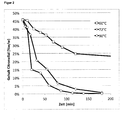
- FIG. 2 shows the reaction at different temperatures
- FIG. 3 shows the concentration course of the formation of cis / trans PMD
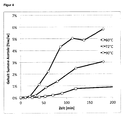
- FIG. 4 shows the concentration curve of the acetals formed.
- citronellal is converted to PMD and acetals in the implementation of the invention.
- Figures 5 and 6 show a virtually identical decrease of citronellal ( FIG. 5 ) and increase in the sum of cis and trans PMD ( FIG. 6 ) for the conversion of E. citriodora oil compared to citronellal at 72 ° C.
- FIG. 7 shows the temperature dependence of the formation of the acetals.
- Example 2 As described in Example 1, the weights listed in the respective tables were weighed into a suitable vessel and reacted with stirring and at the temperatures indicated and analyzed.
- oxalic, maleic and adipic acid were selected as dicarboxylic acids, and salicylic, tartaric and citric acids as hydroxycarboxylic acids and ascorbic acid as representatives of vinylogous carboxylic acids.
- the initial weights were chosen such that a constant molar ratio between the available protons to Eucalyptus citriodora oil (EC oil, aldehyde) (about 1:10), and a constant ratio of Aldehyde to water (about 1: 6) is ensured, and the emulsifier is about 10 wt .-%.
- Table 5 Overview of the temperature and weights used in grams for the reaction mixtures 5-8. approach 5 6 7 8th acid citric acid tartaric acid oxalic acid maleic Temp.
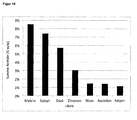
- FIG. 9 shows the proportions of sum PMD, sum of acetals and the remaining terpene-like constituents (isopulegols, citronellal, citronellol, etc.).
- Emulsifiers and acids were not taken into account, since they are in the aqueous phase. This is particularly evident when comparing the dicarboxylic acids and hydroxycarboxylic acids. This applies in particular to the formation of the acetals in the reaction mixture, as in FIG. 10 shown.
- the content of acetal is controllable not only by the temperature and the proportions of acid: water: aldehyde, as shown above, but also by the acid used.
- Example 2 As described in Example 1, the weights listed in the respective tables were weighed into a suitable vessel and reacted with stirring and at the temperatures indicated and analyzed.
- Table 7 Overview of the temperature and weights used in grams for the reaction mixtures 12-16. approach 12 13 14 15 16 emulsifier DG PS20 CD1 CD2 CD3 Temp.
- composition of the reaction products also depends significantly on the type of emulsifier used, but not the conversion (all approaches were virtually complete).
- the distribution of the reaction products depends even more clearly than with the different acids from the emulsifier used.
- the proportion of acetals formed is more than 35 wt .-%.
- Equally surprising is the variation in the ratios of cis to trans PMD, as in FIG. 13 demonstrated.
- the ratios of cis to trans PMD vary from 1.9 when using ⁇ -cyclodextrin to 1.1 when using decyl glucoside.
Landscapes
- Life Sciences & Earth Sciences (AREA)
- General Health & Medical Sciences (AREA)
- Health & Medical Sciences (AREA)
- Pest Control & Pesticides (AREA)
- Agronomy & Crop Science (AREA)
- Dispersion Chemistry (AREA)
- Chemical & Material Sciences (AREA)
- Plant Pathology (AREA)
- Toxicology (AREA)
- Engineering & Computer Science (AREA)
- Dentistry (AREA)
- Wood Science & Technology (AREA)
- Zoology (AREA)
- Environmental Sciences (AREA)
- Agricultural Chemicals And Associated Chemicals (AREA)
Abstract
Description
- Die vorliegende Erfindung betrifft ein Insektenabwehrmittel (Repellent) gegen fliegende, stechende, beißende und saugende Insekten (z. B. Mücken, Läuse, Bremsen und Wespen) sowie Lästlinge der Gattung Acarina (Milben und Zecken).
- Repellentien sind chemische Substanzen, die auf Insekten und Acarina abstoßend wirken. Große praktische Bedeutung hat ihre Anwendung in der Human- und Veterinärhygiene, wo sie Mensch und Tier vor Befall mit blutsaugenden, stechenden, beißenden und damit nicht nur lästigen, sondern auch potentiell krankheitsübertragenden (z. B. Malaria, FSME, Lyme-Borreliose) Schädlingen schützen. Bei unmittelbar auf die Haut aufzutragenden Repellentien ist es erforderlich, dass sie hautverträglich, ungiftig, schweiß- und lichtecht und in kosmetischer, damit äußerlich nicht hautbeeinträchtigender (Austrocknung, Faltenbildung) und pharmakologisch-gesundheitlicher (Irritationen, Penetration in tiefere Hautschichten und in den Blut- und Lymphkreislauf) Hinsicht einwandfrei sind. Außerdem soll der Schutz der behandelten Hautpartien oder der Schutz von Mensch und Tier durch behandelte Umgebungsgegenstände möglichst lange Zeit anhalten und die Wirkungsbreite der Repellentien möglichst groß sein, d. h. sie sollen gegen möglichst viele, unterschiedliche Schädlinge und Lästlinge wirken.
- In der Vergangenheit und in geringerem Maße bis heute wurden und werden etherische Öle, wie Citronell- und Lemongras-, sowie Nelken-, Lavendel- und Eukalyptusöl, sowie Campher als Repellentien eingesetzt, die aber allesamt folgende Nachteile aufweisen:
- bedenkliche Inhaltsstoffe, wie z. B. Eugenol in Nelkenöl, das im Experiment als carcinogen, mutagen und hautreizend befunden wurde, oder Cineol im Öl aus Eucalyptus globulus, das auf der Haut im Stande ist, heftig juckende Exantheme hervorzurufen,
- nur kurzzeitige Wirksamkeit, da die etherischen Öle allesamt schnell durch die Körpertemperatur von der Hautoberfläche abdunsten und damit häufige Nachbehandlungen notwendig sind, um den Schutz zu gewährleisten,
- fehlende Lichtechtheit und damit die permanente Gefahr von Photosensibilisierung und Produktveränderungen bereits vor Anwendung.
- In der jüngeren Vergangenheit wurden sie dadurch überwiegend durch sogenannte synthetische Repellentien ersetzt. Im Stand der Technik angewandte synthetische Repellentien sind z. B. Phthalsäuredimethylester, 1,2-Ethylhexan-1,3-diol, 3,4-Dihydro-2,2-dimethyl-4-oxo-2H-pyran-6-carbonsäure-n-butylester, Bernsteinsäuredipropylester, N,N-Diethyl-3-methyl-benzamid (DEET, auch N,N-Diethyl-m-toluamid) und Pyridin-2,5-dicarbonsäure-di-n-propylester (Ullmanns Encyclopädie der techn. Chemie, 4. Auflage, Bd. 13, S. 237 ff., 1977). In letzter Zeit wird verstärkt Hydroxyethyl-butylpiperidincarboxylat [1-Piperidincarboxylsäure-2-(2-hydroxyethyl)-1-methylpropylester], 3-[N-butyl-N-acetyl]-aminopropionsäureethylester (IR3535®) oder 1-Piperidincarbonsäure (Icaridin®) eingesetzt (B.W. Bissinger et.al., Pesticide Biochemistry and Physiology 96 (2010) 63-79).
- Häufig sind diese synthetischen Repellentien jedoch nicht schweißbeständig, reizen die Schleimhäute und sind ebenso imstande, durch die oberste Hautschicht zu penetrieren und sich damit im Körper zu akkumulieren, wobei die daraus resultierenden Nebenwirkungen noch nicht vollständig erforscht sind, aber berechtigter Verdacht auf schädliche Auswirkungen nahegelegt ist.
- Die
WO-A-03/011805 - Die
WO-A-2004/039158 beschreibt Acetale bzw. Halbacetale aus acyclischen Terpenen und deren Verwendung als Insektenabwehrmittel. Acetale sind jedoch nur bedingt (säure)stabil und können daher leicht wieder gespalten werden. - Die
EP-A-2439188 beschreibt Derivate von para-Menthan-3,8-diol (PMD) und deren Verwendung als Insektenabwehrmittel. In den darin beschriebenen PMD-Derivaten ist der Wasserstoff der Ring-OH-Gruppe durch eine Alkyl- oder Acylgruppe substituiert. Die so erhaltenen PMD-Derivate weisen eine hohe Wasserlöslichkeit auf, sind aber eben aufgrund dieser hohen Wasserlöslichkeit weniger schweißbeständig. - Die
WO-A-2009/034352 beschreibt ebenfalls Insektenabwehrmittel auf der Basis von PMD, sowie ein Herstellungsverfahren von PMD aus Citronellal. Dabei wird Citronellal mit Hilfe einer Säure und in Gegenwart eines Phasentransferkatalysators umgesetzt. Allerdings werden bei dieser Reaktion neben PMD noch weitere Nebenprodukte wie PMD-Citronellalacetal gebildet. - B. Mpuhlu, Synthesis of p-Menthane-3,8-diol, Nelson Mandela Metropolitan University, 2007 beschreibt verschiedene Synthesewege von PMD, unter anderem ausgehend von Citronellal. Die Synthese erfolgt in Gegenwart einer Säure als Katalysator. Auch bei dieser Reaktion werden neben PMD noch Nebenprodukte gebildet.
- Die
WO-A-2011/161426 betrifft Insektenabwehrmittel, die ebenfalls PMD enthalten. Allerdings ist auch in diesen Zusammensetzungen PMD-Citronellalacetal enthalten. - Kunz et al., Chemistry & Biodiversity 2009, 6, 934-947 untersuchten Insektenabwehrmittelformulierungen, die PMD und eine oberflächenaktive Substanz enthalten. Allerdings enthalten die beschriebenen Formulierungen eine erhebliche Menge an Isopropanol, was zu Hautreizungen führen kann.
- Kunz et al., Comptes Rendus Chimie 2011, 14, 629-635 untersuchten die Synthese von PMD aus Citronellal durch eine Prins Reaktion. Dabei setzten sie Eucalyptus citriodora Öl mit Citronensäure um und erhielten ein Gemisch aus cis und trans Isomeren von PMD neben weiteren Verbindungen. Das erhaltene Gemisch hatte allerdings eine kürzere Schutzwirkung als eine Zusammensetzung mit 20 Gew.-% reinem PMD oder 20 Gew.-% DEET als Wirkstoff. Des weiteren wurde als Lösungsmittel Isopropanol verwendet.
- Demgemäß liegt der vorliegenden Erfindung die Aufgabe zugrunde, eine Zusammensetzung zur Verfügung zu stellen, die geeignet ist als wirksames Insektenabwehrmittel für den Auftrag direkt auf die Haut, und/oder die Kleidung und/oder andere, den sich schützenwollenden Anwender umgebende Gegenstände und Materialien (Bettwäsche, Tischdecken etc.) auf Basis natürlicher und naturidentischer Rohstoffe mit geringstem toxikologischen Risiko, die außerdem über einen möglichst langen Zeitraum hinweg stabil ist und eine hohe Wirksamkeit entfaltet.
- Diese Aufgabe wird gelöst durch eine Zusammensetzung, umfassend mindestens ein Monoterpenoid, mindestens eine Säure und mindestens einen Emulgator, wobei der Emulgator in mindestens 2 Gew.-%, bezogen auf die Gesamtzusammensetzung, enthalten ist.
- Weiterhin wird die Aufgabe der vorliegenden Erfindung durch ein Insektenabwehrmittel gelöst, umfassend die erfindungsgemäße Zusammensetzung, durch ein Verfahren zur Herstellung der erfindungsgemäßen Zusammensetzung, umfassend das Vermischen der Bestandteile, sowie durch die Verwendung der erfindungsgemäßen Zusammensetzung als Insektenabwehrmittel.
-
-
Figur 1 zeigt beispielhaft die Umsetzung von Citronellal im Ein-Topf-Verfahren in Gegenwart von Citronensäure. -
Figur 2 zeigt die Umsetzung von Citronellal im Ein-Topf-Verfahren bei verschiedenen Temperaturen. -
Figur 3 zeigt den Konzentrationsverlauf der gebildeten cis- und trans-p-Menthan-3,8-diole (cis-/trans-PMD) während der Reaktion der Ansätze 1 bis 3. -
Figur 4 zeigt den Konzentrationsverlauf der gebildeten Acetale während der Reaktion der Ansätze 1 bis 3. -
Figur 5 zeigt die Umsetzung von Citronellal im Vergleich mit Eucalyptus citriodora Öl bei 72°C. -
Figur 6 zeigt die Bildung von cis- und trans-p-Menthan-3,8-diol während Umsetzung von Citronellal und Eucalyptus citriodora Öl bei 72 °C. -
Figur 7 zeigt den Gehalt an Acetalen in Abhängigkeit der Temperatur. -
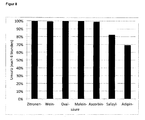
Figur 8 zeigt den Umsatz von Eucalyptus citriodora Öl nach 6 Stunden in Abhängigkeit der verwendeten Säure. -
Figur 9 zeigt die Produktzusammensetzung in Abhängigkeit der verwendeten Säure. -
Figur 10 zeigt den Gehalt an Acetalen in Abhängigkeit der verwendeten Säure. -
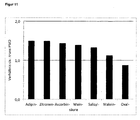
Figur 11 zeigt das Verhältnis von cis- und trans-p-Menthan-3,8-diol in Abhängigkeit der verwendeten Säure. -
Figur 12 zeigt die Produktzusammensetzung in Abhängigkeit des verwendeten Emulgators. -
Figur 13 zeigt das Verhältnis von cis- und trans-p-Menthan-3,8-diol in Abhängigkeit des verwendeten Emulgators. - Die vorliegende Erfindung betrifft eine Zusammensetzung, umfassend mindestens ein Monoterpenoid, mindestens eine Säure und mindestens einen Emulgator, wobei der Emulgator in mindestens 2 Gew.-%, bezogen auf die Gesamtzusammensetzung, enthalten ist.
- Die vorliegende Erfindung betrifft außerdem ein Insektenabwehrmittel, umfassend die erfindungsgemäße Zusammensetzung, ein Verfahren zur Herstellung der erfindungsgemäßen Zusammensetzung, umfassend das Vermischen der Bestandteile, sowie die Verwendung der erfindungsgemäßen Zusammensetzung als Insektenabwehrmittel.
- Überraschenderweise stellt die vorliegende Erfindung eine stabile alkoholfreie Zusammensetzung und ein stabiles alkoholfreies Insektenabwehrmittel bereit, die auf Grund ihres fehlenden Reiz- und Hautaustrocknungspotentials, wie es bei Aufbringung von Alkoholen auf die Haut latent ist, sehr gut für Verwender mit Problemhaut und für Kleinkinder geeignet sind.
- Unter Monoterpenoiden versteht man erfindungsgemäß Dimerisierungsprodukte des Isoprens (2-Methyl-1,3-butadien, C5H8), die ein C10-Grundgerüst haben. Monoterpenoide können acyclisch, mono- und bicyclisch sein.
- Bevorzugte Monoterpenoide sind Citronellal oder ein Isomer davon und ein p-Menthenol oder ein Isomer davon. Als p-Menthenol wird bevorzugt Isopulegol oder ein Isomer davon oder p-Menthan-3,8-diol verwendet. Weitere Beispiele für p-Menthenole sind z. B. dargestellt im RÖMPP Lexikon Naturstoffe, 1997, S. 393.
- (±)-Citronellal [(±)-3,7-Dimethyl-6-octanal] hat folgende Formel:

- (±)-Isopulegol [2-Isopropenyl-5-methyl-cyclohexanol] hat folgende Formel:

- Die Monoterpenoide können als etherisches Öl durch Wasserdampfdestillation aus den Blättern von Eucalyptus citriodora, z. B. Eucalyptus citriodora Hook (Hauptbestandteile: 70 bis 90% Citronellal und Isopulegol) gewonnen werden.
- Ebenso möglich ist die Verwendung von synthetisch aus Geraniol, Nerol, Citronellol und/oder Citral hergestelltem Citronellal und dem daraus nach bekannten Methoden der Parfumgrundstoffindustrie isomerisierten Isopulegol. Ferner können auch Gemische aus Citronellal und Eucalyptus citriodora Öl verwendet werden.
- In einer bevorzugten Ausführungsform in Verbindung mit einer der oben oder unten genannten Ausführungsformen ist das Monoterpenoid Citronellal, ein para-Menthenol oder ein Isomer davon, besonders bevorzugt Isopulegol, hydratisiertes Isopulegol, hydratisiertes Citronellal oder ein para-Menthan-3,8-diol, insbesondere Citronellal.
- In einer weiteren bevorzugten Ausführungsform in Verbindung mit einer der oben oder unten genannten Ausführungsformen ist das Monoterpenoid in der erfindungsgemäßen Zusammensetzung in einer Menge von 5 bis 70 Gew.-%, besonders bevorzugt 10 bis 60 Gew.-%, insbesondere 25 bis 50 Gew.-%, bezogen auf die Gesamtzusammensetzung, enthalten.
- Die erfindungsgemäße Zusammensetzung enthält außerdem mindestens eine Säure. In einer weiteren bevorzugten Ausführungsform in Verbindung mit einer der oben oder unten genannten Ausführungsformen ist die Säure eine Carbonsäure, besonders bevorzugt eine C1-C10 Carbonsäure, insbesondere eine C2 Carbonsäure, C3 Carbonsäure, C4 Carbonsäure, C5 Carbonsäure oder C6 Carbonsäure. Vorzugsweise ist die Säure eine Hydroxycarbonsäure, insbesondere eine α-Hydroxycarbonsäure, eine Dicarbonsäure oder eine Tricarbonsäure.
- Übliche geeignete Carbonsäuren sind beispielsweise:
- C1 Carbonsäuren: Ameisensäure;
- C2 Carbonsäuren: Oxalsäure, Glycolsäure, Essigsäure;
- C3 Carbonsäuren: Malonsäure, Dihydroxymalonsäure, Mesoxalsäure, Tartronsäure, Milchsäure, Brenztraubensäure;
- C4 Carbonsäuren: Asparaginsäure, Äpfelsäure, Maleinsäure, Weinsäure, Bernsteinsäure, Fumarsäure, Oxalessigsäure;
- C6 Carbonsäuren: Adipinsäure, Ascorbinsäure, Citronensäure, Gluconsäure, Sorbinsäure;
- C7 Carbonsäuren: Salicylsäure, Benzoesäure.
- Besonders bevorzugt enthält die erfindungsgemäße Zusammensetzung Citronensäure, Milchsäure oder Weinsäure.
- Alternativ kann die Säure der erfindungsgemäßen Zusammensetzung auch ausgewählt sein aus Sulfonsäuren, wie para-Toluolsulfonsäure, Methansulfonsäure, Trifluormethansulfonsäure und Campher(10)sulfonsäure.
- In einer weiteren bevorzugten Ausführungsform in Verbindung mit einer der oben oder unten genannten Ausführungsformen ist die Säure in der erfindungsgemäßen Zusammensetzung in einer Menge von 1 bis 20 Gew.-%, besonders bevorzugt 2 bis 10 Gew.-%, insbesondere 4 bis 6 Gew.-%, bezogen auf die Gesamtzusammensetzung, enthalten.
- Die erfindungsgemäße Zusammensetzung enthält mindestens einen Emulgator. Emulgatoren sind üblicherweise oberflächenaktive Stoffe, typischerweise mit hydrophilen Endgruppen. Typische Beispiele davon umfassen:
- a) anionische Emulgatoren, d. h. Emulgatoren mit Carboxylat-, Sulfonat-, Sulfat-, Phosphat-, Polyphosphat-, Lactat-, Citrat-, Tartrat-, Glucose- oder Polyglucose-Endgruppen;
- b) kationische Emulgatoren, d. h. Emulgatoren mit Aminsalz- oder quartären Ammonium-Endgruppen;
- c) amphotere und zwitterionische Emulgatoren, d. h. Emulgatoren mit zwitterionischen Endgruppen oder Betain-Engruppen; sowie
- d) nicht-ionische Emulgatoren, d. h. Emulgatoren mit Alkohol-, Polyether-, Glycerin-, Sorbit-, Pentaerythrit-, Glucose-, Saccharose-, Essigsäure und/oder Milchsäure-Resten in der Endgruppe.
- Alle Emulgatoren beinhalten zudem lipophile Endgruppen, wie Alkyl- oder Alkenylreste, jeweils geradkettig, verzweigt oder cyclisch, sowie Aryl- oder Alkylaryreste. Weiterhin können hydrophile Seitengruppen, wie Hydroxyl-, Ester-, Sulfamid-, Amid-, Amin-, Polyamid-, Ether-, Polyether-, Glycerin-, Sorbit-, Pentaerytherit- oder Saccarosegruppen, enthalten sein.
- In einer bevorzugten Ausführungsform in Verbindung mit einer der oben oder unten genannten Ausführungsformen ist der Emulgator ein nicht-ionischer Emulgator, besonders bevorzugt ein Polyethylen- oder Polypropylenglycol basierter Emulgator, z. B. PEG-40 Castor Oil oder PEG-40 hydrogenated Castor Oil (PHCO), und/oder ein Fettalkoholethoxylat oder -propoxylat, z. B. Cetearylalkohol, Ceteareth-12, und/oder ein Fettalkohol, z. B. Tetradecanol, Octadecanol, Hexyldecanol, und/oder ein Glycerinfettsäureester, z. B. Glycerylstearatmonoester bzw. -diester, und/oder ein zuckerbasierter Emulgator, z. B. Fettalkoholglucoside (C8-C16), α-, β- oder γ-Cyclodextrine (CD1, CD2, CD3), sowie methylierte oder acetylierte Derivate, ethoxylierte und/oder propoxylierte Alkyl(methyl)glucoseether, ethoxylierte Sorbitanfettsäurester (Polysorbate; z. B. PS20), N-Methylglucamid, oder Cocoamid DEA, oder Gemische daraus. Insbesondere ist der Emulgator in dem erfindungsgemäßen Gemisch ausgewählt aus PEG-40 Castor Oil oder PHCO, α-, β- oder γ-Cyclodextrinen, Glyceryloleat oder Decylglucosid (DG).
- In einer bevorzugten Ausführungsform in Verbindung mit einer der oben oder unten genannten Ausführungsformen ist der Emulgator in mindestens 3 Gew.-%, bezogen auf die Gesamtzusammensetzung enthalten, besonders bevorzugt mindestens 5 Gew.-%, insbesondere 5 bis 20 Gew.-%.
- In einer weiteren bevorzugten Ausführungsform in Verbindung mit einer der oben oder unten genannten Ausführungsformen umfasst die erfindungsgemäße Zusammensetzung 5 bis 70 Gew.-% Monoterpenoid, 1 bis 20 Gew.-% Säure, 2 bis 20 Gew.-% Emulgator und 10 bis 65 Gew.-% Wasser, besonders bevorzugt 5 bis 25 Gew.-% Monoterpenoid und 5 bis 15 Gew.-% Emulgator. Insbesondere enthält die erfindungsgemäße Zusammensetzung 25 bis 50 Gew.-% Citronellal oder Eucalyptus citriodora Öl, 4 bis 6 Gew.-% Säure, vorzugsweise Citronensäure, 5 bis 15 Gew.-% Emulgator, vorzugsweise 10 Gew.-% PEG-40 und 30 bis 40 Gew.-% Wasser, bezogen auf die Gesamtzusammensetzung.
- Der pH-Wert der erfindungsgemäßen Zusammensetzung kann durch Zusatz von Basen erhöht werden. Übliche Basen sind z. B. NaOH, KOH, NaHCO3 oder Na2CO3. In einer bevorzugten Ausführungsform in Verbindung mit einer der oben oder unten genannten Ausführungsformen wird der pH-Wert der Zusammensetzung durch Basenzusatz auf pH > 2 eingestellt. Besonders bevorzugt ist der pH-Wert der Zusammensetzung >2 und <8.
- Durch den Zusatz von Base kann die Säure zum Teil neutralisiert werden und liegt in neutralisierter Form als entsprechendes Säuresalz vor. Die nicht neutralisierte Säure liegt weiterhin in freier Form vor.
- Der Begriff "Säure" umfasst erfindungsgemäß sowohl die freie Säure als auch die neutralisierte Säure also das Säuresalz. Dabei kann die Säure auch nur als freie Säure oder nur als Säuresalz vorliegen. Die Begriffe "neutralisierte Säure", "Säuresalz" und "Säure in neutralisierter Form" werden gleichbedeutend verwendet. Die Begriffe "freie Säure" und "Säure in freier Form" werden ebenfalls gleichbedeutend verwendet.
- Die erfindungsgemäße Zusammensetzung und das erfindungsgemäße Insektenabwehrmittel kann in Fertigprodukten, wie eine Emulsion, eine Dispersion, eine Lotion, eine Creme, ein Gel, ein Spray, eine Milch, ein Schaum, ein Mousse oder eine Lösung eingesetzt werden.
- Zur Herstellung dieser Fertigprodukte können die allgemein üblichen Präparationsverfahren zum Einsatz kommen. Ebenso können dabei die üblichen Grundstoffe und Additive eingesetzt werden. Sie umfassen die üblicherweise verwendeten Lösungsmittel, Lösungsbeschleuniger, Emulgatoren, Lösungsmittler, Netzmittler, Antischaummittel, Salzbildner, Puffer, Gelbildner, Verdickungsmittel, Filmbildner, Bindemittel, Gleitmittel, Antiklebmittel, Fließregulierungsmittel, Feuchthalte- und Trockenmittel, Füllstoffe und Hilfsstoffe, wie Antioxidantien, Konservierungsmittel, Geruchskorrigentien und Färbemittel.
- Der Begriff Emulsion umfasst alle dispersen Systeme aus zwei oder mehreren miteinander nicht mischbaren Flüssigkeiten, wobei die Emulsionspartner auch als feste Stoffe bei Raumtemperatur vorliegen können. Diese Emulsionen können Makro-, Mikro- oder Nanoemulsionen sein. Typischerweise werden Wasser-in-Öl- oder Öl-in-Wasser-Emulsionen oder Mischemulsionen wie Wasser-in-Öl-in-Wasser, oder Öl-in-Wasser-in-Öl verwendet.
- Der Begriff Gele umfasst formbeständige, leicht deformierbare, an Flüssigkeiten reiche Systeme aus mindestens zwei Komponenten. Üblicherweise sind diese zwei Komponenten a) eine Flüssigkeit und b) ein fester, kolloidal verteilter Stoff, wie Gelatine, Kieselsäure, Montmorillonit, Bentonit, Polysaccharide, Polyacrylat und Pektine.
- In einer bevorzugten Ausführungsform in Verbindung mit einer der oben oder unten genannten Ausführungsformen umfasst das erfindungsgemäße Fertigprodukt 0,5 bis 10 Gew.-% Emulgator, bezogen auf das gesamte Fertigprodukt. In einer besonders bevorzugten Ausführungsform umfasst das erfindungsgemäße Fertigprodukt 4 bis 8 Gew.-% Emulgator, bezogen auf das gesamte Fertigprodukt, in einer anderen besonders bevorzugten Ausführungsform umfasst das erfindungsgemäße Fertigprodukt 0,5 bis 3,0 Gew.-% Emulgator, bezogen auf das gesamte Fertigprodukt.
- In einer weiteren bevorzugten Ausführungsform in Verbindung mit einer der oben oder unten genannten Ausführungsformen enthält das erfindungsgemäße Fertigprodukt 10 bis 50 Gew.-% der erfindungsgemäßen Zusammensetzung, besonders bevorzugt 10 bis 30 Gew.-%, bezogen auf das gesamte Fertigprodukt.
- Der pH-Wert des Fertigprodukts kann durch Zusatz von Basen wie NaOH, KOH, NaHCO3 oder Na2CO3 erhöht werden. In einer bevorzugten Ausführungsform in Verbindung mit einer der oben oder unten genannten Ausführungsformen wird der pH-Wert des Fertigprodukts durch Basenzusatz auf 4,5 bis 6,5, insbesondere 5,0 bis 6,0, eingestellt.
- In einer bevorzugten Ausführungsform in Verbindung mit einer der oben oder unten genannten Ausführungsformen umfasst das erfindungsgemäße Fertigprodukt 0,1 bis 10 Gew.-% Säure, besonders bevorzugt 1 bis 6 Gew.-%, insbesondere 2 bis 5 Gew.-%, bezogen auf das gesamte Fertigprodukt. Vorzugsweise enthält das erfindungsgemäße Fertigprodukt 0,01 bis 6 Gew.-%, insbesondere 0,01 bis 5 Gew.-% freie Säure.
- In einer weiteren bevorzugten Ausführungsform in Verbindung mit einer der oben oder unten genannten Ausführungsformen umfasst das erfindungsgemäße Fertigprodukt 0,5 bis 50 Gew.-% Monoterpenoid, 0,1 bis 10 Gew.-%, besonders bevorzugt 2 bis 5 Gew.-%, Säure, 0,2 bis 20 Gew.-%, besonders bevorzugt 6 bis 10 Gew.-%, Emulgator und 20 bis 99,3 Gew.-% Additiv, bezogen auf das gesamte Fertigprodukt.
- In einer bevorzugten Ausführungsform in Verbindung mit einer der oben oder unten genannten Ausführungsformen wird das Fertigprodukt als Spray formuliert und enthält vorzugsweise 10 bis 25 Gew.-% Monoterpenoid, 0,1 bis 2 Gew.-%, besonders bevorzugt 0,2 bis 1,2 Gew.-%, Säure, 0 bis 4 Gew.-%, besonders bevorzugt 2 bis 4 Gew.-%, Cetearylalkohol, 0 bis 2 Gew.-%, besonders bevorzugt 1 bis 2 Gew.-%, Ceteareth-12, 0,5 bis 5 Gew.-% mindestens eines weiteren Emulgators, ggf. bis zu 8 Gew.-% Hautweichmacher (z. B. Paraffinöl), bis zu 5 Gew.-% Alkohol, bezogen auf das gesamte Fertigprodukt und optional Konservierungsmittel und Parfüm, sowie Rest Wasser. Der pH-Wert des Sprays wird durch Zusatz von KOH, NaOH oder NaHCO3 auf 4,5 bis 6,5, besonders bevorzugt 5,0 bis 6,0 eingestellt.
- In einer weiteren bevorzugten Ausführungsform in Verbindung mit einer der oben oder unten genannten Ausführungsformen wird das Fertigprodukt als Milch formuliert und enthält vorzugsweise 10 bis 25 Gew.-% Monoterpenoid, 0,1 bis 2 Gew.-%, besonders bevorzugt 0,2 bis 1,2 Gew.-%, Säure, 0 bis 4 Gew.-%, besonders bevorzugt 2 bis 4 Gew.-%, Cetearylalkohol, 0 bis 2 Gew.-%, besonders bevorzugt 1 bis 2 Gew.-%, Ceteareth-12, 0 bis 4 Gew.-% 2-Hexyldecanol, 0 bis 6 Gew.-% Glycerylmonostearat und -distearat, 0,5 bis 5 Gew.-% mindestens eines weiteren Emulgators, ggf. bis zu 8 Gew.-% Hautweichmacher (z. B. Paraffinöl), bis zu 5 Gew.-% Alkohol, bezogen auf das gesamte Fertigprodukt und optional Xanthan Gummi, Konservierungsmittel und Parfüm, sowie Rest Wasser. Der pH-Wert des Sprays wird durch Zusatz von KOH, NaOH oder NaHCO3 auf 4,5 bis 6,5, besonders bevorzugt 5,0 bis 6,0 eingestellt.
- Das erfindungsgemäße Verfahren zur Herstellung der erfindungsgemäßen Zusammensetzung umfasst das Vermischen der Bestandteile. In einer bevorzugten Ausführungsform in Verbindung mit einer der oben oder unten genannten Ausführungsformen wird das Verfahren als Ein-Topf-Verfahren durchgeführt, d. h. die Bestandteile werden alle miteinander vermischt und direkt umgesetzt.
- Unter den Reaktionsbedingungen des erfindungsgemäßen Verfahrens findet eine Hydratisierung des Monoterpenoids statt. Unter Hydratisierung ist hier jener Vorgang zu verstehen, der durch chemische Reaktion und kovalent erfolgende Bindung von H und OH aus Wasser an zwei benachbarte Atome erfolgt und mit Hydratation (Solvatation in Wasser als Lösungsmittel) nicht verwechselt werden darf. Die Hydratisierung ist beispielhaft an Citronellal in
Figur 1 gezeigt. - Die Hydratisierung erfolgt in Gegenwart von Säure als Katalysator. Dabei werden im erfindungsgemäßen Verfahren als Säuren vorzugsweise die oben genannten Säuren verwendet. Aus toxikologischen und dermatologischen Gründen sind Citronensäure, Milchsäure, Sorbinsäure, Ascorbinsäure, Salicylsäure, Äpfelsäure und Weinsäure bevorzugt.
- Überraschenderweise wird nach dem erfindungsgemäßen Verfahren als Hauptprodukt cis- und trans-PMD erhalten und nur eine geringe Menge an Acetalen als Nebenprodukt. Des weiteren findet ein vollständiger Umsatz des Monoterpenoids statt.
- Die nach dem erfindungsgemäßen Verfahren erhaltene Zusammensetzung enthält vorzugsweise weniger als 5 Gew.-% Acetale, besonders bevorzugt weniger als 3 Gew.-%, insbesondere weniger als 2 Gew.-%, bezogen auf die Gesamtzusammensetzung.
- In einer bevorzugten Ausführungsform in Verbindung mit einer der oben oder unten genannten Ausführungsformen findet das Vermischen bei einer Temperatur von 20 bis 145 °C statt, besonders bevorzugt bei 60 bis 95 °C.
- Findet das Vermischen bei Temperaturen oberhalb des Siedepunkts des verwendeten Lösungsmittels statt, wird dies in einem geschlossenen Gefäß unter Druck durchgeführt. Dabei kann die Exothermie der Reaktion zur Aufrechterhaltung der Temperatur verwendet werden.
- In einer weiteren bevorzugten Ausführungsform in Verbindung mit einer der oben oder unten genannten Ausführungsformen beträgt die Reaktionsdauer 0,5 bis 6 h, besonders bevorzugt 1 bis 5 h, insbesondere 2 bis 4 h.
- Ferner kann durch Auswahl der Reaktionsbedingungen im erfindungsgemäßen Verfahren das Verhältnis von cis-PMD zu trans-PMD gesteuert werden. So wird bei niedrigeren Temperaturen bevorzugt das cis-Isomer gebildet. Ebenfalls kann die Acetalbildung durch Wahl der Reaktionsbedingungen gesteuert werden. So werden bei höheren Temperaturen vermehrt Acetale gebildet.
- Das erfindungsgemäße Verfahren ermöglicht somit eine vereinfachte Umsetzung von Monoterpenoiden in einer Ein-Topf-Reaktion, wobei die Zusammensetzung der gebildeten Reaktionsprodukte durch Wahl der Reaktionsbedingungen und der verwendeten Edukte, wie z. B. Emulgatoren oder Säuren, gesteuert und kontrolliert werden kann.
- Im folgenden wird die Erfindung anhand von Beispielen erläutert.
- Ein-Topf-Verfahren zur Umsetzung von Citronellal:
- Die in den jeweiligen Tabellen angeführten Einwaagen wurden in ein geeignetes Gefäß eingewogen und unter Rühren und bei den angeführten Temperaturen umgesetzt. Zur Verfolgung der Umsetzung wurden zu definierten Zeitpunkten vernachlässigbare Teile der Reaktionslösung entnommen und mittels interner Standardmethode mittels GC-FID bzw. GC-MS analysiert.
- Unter den Reaktionsbedingungen wird Citronellal zu PMD, Isopulegolen und Acetalen umgesetzt.
Tabelle 1: Übersicht der Temperatur und verwendeten Einwaagen in Gramm für Reaktionsansatz 1. Ansatz 1 T = 60 °C Einwaage [g] Citronellal 101,15 Citronensäuremonohydrat 10,01 PHCO 20,24 Wasser 71,18 202,58 Tabelle 2: Übersicht der Temperatur und verwendeten Einwaagen in Gramm für Reaktionsansatz 2. Ansatz 2 T = 72 °C Einwaage [g] Citronellal 100,13 Citronensäuremonohydrat 10,05 PHCO 20,07 Wasser 70,68 200,93 Tabelle 3: Übersicht der Temperatur und verwendeten Einwaagen in Gramm für Reaktionsansatz 3. Ansatz 3 T = 90 °C Einwaage [g] Citronellal 100,72 Citronensäuremonohydrat 10,01 PHCO 21,50 Wasser 70,00 202,23 -
Figur 2 zeigt die Umsetzung bei verschiedenen Temperaturen,Figur 3 zeigt den Konzentrationsverlauf der Bildung von cis-/trans-PMD undFigur 4 zeigt den Konzentrationsverlauf der gebildeten Acetale. - Wie aus
Figuren 2 bis 4 erkennbar, wird bei der erfindungsgemäßen Umsetzung Citronellal zu PMD und Acetalen umgesetzt. - Ein-Topf-Verfahren zur Umsetzung von Eucalyptus citriodora Öl (E. Citriodora Öl):
- Entsprechend den Ansätzen 1 bis 3 wurde die Umsetzung mit Eucalyptus citriodora Öl bei 72 °C durchgeführt (Ansatz 4).
Tabelle 4: Übersicht der Temperatur und verwendeten Einwaagen in Gramm für Reaktionsansatz 4. Ansatz 4 T = 72 °C Einwaage [g] E. Citriodora Öl 100,44 Citronensäuremonohydrat 10,03 PHCO 20,26 Wasser 70,02 200,75 -
Figuren 5 und6 zeigen eine praktisch identische Abnahme von Citronellal (Figur 5 ) und Zunahme der Summe aus cis- und trans-PMD (Figur 6 ) für die Umsetzung von E. Citriodora Öl im Vergleich zu Citronellal bei 72 °C. - Des weiteren wurde eine Steigerung des Acetalgehalts bei einer Steigerung der Temperatur gefunden.
Figur 7 zeigt die Temperaturabhängigkeit der Bildung der Acetale. - Wie in Beispiel 1 beschrieben wurden die in den jeweiligen Tabellen angeführten Einwaagen in ein geeignetes Gefäß eingewogen und unter Rühren und bei den angeführten Temperaturen umgesetzt und analysiert.
- Die Untersuchung der Anwendung unterschiedlicher organischer Säuren wurde wie in Tabellen 5 und 6 durchgeführt.
- Hier wurden Oxal-, Malein- und Adipinsäure als Dicarbonsäuren, sowie Salicyl-, Wein- und Citronensäure als Hydroxycarbonsäuren und Ascorbinsäure als Vertreter von vinylogen Carbonsäuren ausgewählt.
- Um ein Vergleichbarkeit der Ergebnisse zu gewährleisten, wurden die Einwaagen so gewählt, dass jeweils ein konstantes molares Verhältnis zwischen den zur Reaktion zur Verfügung stehenden Protonen zu Eucalyptus citriodora Öl (E.C. Öl, Aldehyd) (etwa 1:10), sowie ein konstantes Verhältnis von Aldehyd zu Wasser (etwa 1:6) gewährleistet ist, und der Emulgator bei etwa 10 Gew.-% liegt.
Tabelle 5: Übersicht der Temperatur und verwendeten Einwaagen in Gramm für die Reaktionsansätze 5 - 8. Ansatz 5 6 7 8 Säure Citronensäure Weinsäure Oxalsäure Maleinsäure Temp. 90°C 90°C 90°C 90°C E.C. Öl 100,08 126,08 100,19 100,23 Säure 10,00 12,61 9,01 8,28 PHCO 19,99 25,22 21,94 21,26 Wasser 72,00 88,99 72,81 70,76 Summe 202,07 252,9 203,95 200,53 Säure : Aldehyd (Molverhältnis) 0,103 0,103 0,110 0,110 Wasser: Aldehyd (Molverhältnis) 6,16 6,04 6,22 6,04 Tabelle 6: Übersicht der Temperatur und verwendeten Einwaagen in Gramm für die Reaktionsansätze 9 - 11. Ansatz 9 10 11 Säure Adipinsäure Ascorbinsäure Salicylsäure Temp. 90°C 90°C 90°C E.C. Öl. 100,02 75,52 75,45 Säure 10,45 9,52 7,40 PHCO 21,07 15,55 15,09 Wasser 71,94 52,90 52,78 Summe 203,48 153,49 150,72 Säure : Aldehyd (Molverhältnis) 0,110 0,110 0,110 Wasser: Aldehyd (Molverhältnis) 6,16 6,00 5,99 -
Figur 8 zeigt die erzielten Umsätze nach 6 Stunden Reaktionsdauer. Überraschenderweise ist der Umsatz nicht von der Säurestärke (pKa-Wert) determiniert. So zeigte beispielsweise Ascorbinsäure (pKa=4,37) noch praktisch vollständige Konversion des Citronellal, während Salicylsäure (pKa=2,75) und Adipinsäure (pKa=4,43) keinen vollständigen Umsatz nach 6 Stunden zeigten. - Betrachtet man die Zusammensetzung der Reaktionsprodukte (normiert auf die E. Citriodora Öl basierte, organische Phase), so zeigt sich überraschenderweise auch kein einheitliches Bild.
Figur 9 zeigt die Anteile an Summe PMD, Summe Acetalen sowie den restlichen terpenartigen Bestandteilen (Isopulegole, Citronellal, Citronellol, etc.). Emulgatoren und Säuren wurden nicht berücksichtigt, da sich diese in der wässrigen Phase befinden. Dies tritt insbesondere beim Vergleich der Dicarbonsäuren und Hydroxycarbonsäuren zu Tage. Dies gilt insbesondere für die Entstehung der Acetale im Reaktionsgemisch, wie inFigur 10 gezeigt. Damit ist der Gehalt an Acetal nicht nur wie bereits zuvor gezeigt durch die Temperatur und die Mengenverhältnisse von Säure : Wasser: Aldehyd steuerbar, sondern auch durch die verwendete Säure. - Betrachtet man die Zusammensetzung des entstandenen PMD im Detail, so zeigt sich überraschenderweise, dass sich in Abhängigkeit der verwendeten Säure, das Verhältnis von cis- zu trans-PMD in einem Bereich von 1,5 bis 0,88 deutlich unterscheidet, und durch die verwendete Säure gesteuert werden kann (
Figur 11 ). - Umsetzung von E. Citriodora Öl mit unterschiedlichen Emulgatoren:
- Wie in Beispiel 1 beschrieben wurden die in den jeweiligen Tabellen angeführten Einwaagen in ein geeignetes Gefäß eingewogen und unter Rühren und bei den angeführten Temperaturen umgesetzt und analysiert.
- Die Untersuchung der Anwendung unterschiedlicher Emulgatoren wurde wie in Tabelle 7 durchgeführt.
Tabelle 7: Übersicht der Temperatur und verwendeten Einwaagen in Gramm für die Reaktionsansätze 12 - 16. Ansatz 12 13 14 15 16 Emulgator DG PS20 CD1 CD2 CD3 Temp. 90°C 90°C 90°C 90°C 90°C E.C. Öl 100,51 100,52 102,38 100,79 100,54 Citronensäure H2O 10,08 10,03 10,12 10,01 10,08 Emulgator 20,12 20,20 18,95 22,06 25,24 Wasser 70,22 70,36 77,40 75,95 78,27 Summe 200,93 201,11 208,85 208,81 214,13 Säure: Aldehyd (Molverhältnis) 0,221 0,220 0,218 0,219 0,221 Wasser: Aldehyd (Molverhältnis) 5,98 5,99 6,47 6,45 6,66 - Auch hier zeigte sich ein überraschenderweise, dass die Zusammensetzung der Reaktionsprodukte auch deutlich vom Typ des verwendeten Emulgator abhängt, jedoch nicht der Umsatz (Alle Ansätze setzten praktisch vollständig um).
- Wie in
Figur 12 dargestellt, hängt die Verteilung der Reaktionsprodukte (normiert auf die E. Citriodora Öl basierte, organische Phase) noch deutlicher als bei den unterschiedlichen Säuren vom verwendeten Emulgator ab. Insbesondere im Falle von Decylglucosid beträgt der Anteil an gebildeten Acetale mehr als 35 Gew.-%. Ebenso überraschend ist auch hier die Variation der Verhältnisse von cis- zu trans-PMD, wie inFigur 13 aufgezeigt. Die Verhältnisse von cis- zu trans-PMD variieren von 1,9, bei Verwendung von α-Cyclodextrin, bis 1,1 bei der Verwendung von Decylglucosid. - Ein-Topf-Verfahren zur direkten Umsetzung einer Fertigformulierung:
- Wie in Beispiel 1 beschrieben wurden die in den jeweiligen Tabellen angeführten Einwaagen in ein geeignetes Gefäß eingewogen und unter Rühren und bei den angeführten Temperaturen umgesetzt und analysiert.
Tabelle 8: Übersicht der Temperatur und verwendeten Einwaagen in Gramm für die Reaktionsansätze 17 - 20. Ansatz 17 18 19 20 Temp. 90°C 80°C 95°C 90°C E.C. Öl - 50,14 - 100,11 Citronellal 50,14 - 50,38 - Citronensäure 5,04 4,99 5,00 9,99 PHCO 10,20 10,18 10,02 - Cetearyl Alkohol 7,50 7,49 7,52 - Ceteareth-12 3,84 3,75 3,75 - Weisöl 16,31 16,26 7,55 6,01 Glycerinoleat - - - 12,08 2-Propanol - - 5,00 - n-Butanol - 3,93 3,93 - Glycerin - - - 6,00 Magnesiumsulfat - - - 1,00 Wasser 133,33 132,15 132,38 64,06 Summe 226,36 228,89 225,53 199,25 Säure : Aldehyd (Molverhältnis) 0,22 0,22 0,22 0,22 Wasser: Aldehyd (Molverhältnis) 22,76 22,56 22,49 5,48 Zeit [min] 240 240 210 180 - Überraschenderweise zeigten alle in Tabelle 8 angeführten Ansätze praktisch vollständigen Umsatz nach den angegebenen Zeiten. Ein Vergleich mit gemäß kosmetischer Arbeitsweise hergestellten Formulierungen in diesen Zusammensetzungen, jedoch ausgehend von einem zuvor hergestellten Wirkstoffkonzentrat, zeigte praktisch keinen Unterschied zu den im Ein-Topf-Verfahren hergestellten - ebenso wenig Unterschied beim Vergleich der GC-FID und GC-MS Analysen und im Anwendungstest.
Tabelle 9 zeigt die Verteilung der Zusammensetzung der einzelnen Wirkstoffkomponenten: Ansatz 17 18 19 20 cis-/trans-PMD 17,6% 12,0% 15,6% 26,9% Acetale 0,5% 0,7% 0,6% 3,1% andere Terpene 3,9% 3,9% 3,8% 11,0% Wirkstoffgehalt 22,0% 16,6% 20,0% 40,9% cis:trans PMD 1,41 1,49 1,39 1,33
Claims (15)
- Zusammensetzung, umfassend mindestens ein Monoterpenoid, mindestens eine Säure und mindestens einen Emulgator, wobei der Emulgator in mindestens 2 Gew.-%, bezogen auf die Gesamtzusammensetzung, enthalten ist.
- Zusammensetzung nach Anspruch 1, wobei das Monoterpenoid Citronellal, ein para-Menthenol oder ein Isomer davon ist.
- Zusammensetzung nach Anspruch 2, wobei das para-Menthenol, Isopulegol, hydratisiertes Isopulegol, hydratisiertes Citronellal oder ein p-Menthan-3,8-diol ist.
- Zusammensetzung nach einem der Ansprüche 1 bis 3, wobei die Säure eine Carbonsäure ist.
- Zusammensetzung nach Anspruch 4, wobei die Carbonsäure eine C1-C6 Carbonsäure ist.
- Zusammensetzung nach Anspruch 4 oder 5, wobei die Carbonsäure eine Hydroxycarbonsäure, vorzugsweise eine α-Hydroxycarbonsäure, ist.
- Zusammensetzung nach einem der Ansprüche 4 bis 6, wobei die Carbonsäure eine Dicarbonsäure oder Tricarbonsäure ist.
- Zusammensetzung nach einem der Ansprüche 4, 6 oder 7, wobei die Carbonsäure Citronensäure, Milchsäure oder Weinsäure ist.
- Zusammensetzung nach einem der Ansprüche 1 bis 8, wobei der Emulgator ein nicht-ionischer Emulgator ist, vorzugsweise ausgewählt aus Polyethylenglycolen, Polypropylenglycolen, Fettalkoholethoxylaten, Fettalkoholpropoxylaten, Fettalkoholen, Glycerinfettsäureestern, zuckerbasierte Emulgatoren oder Gemischen daraus.
- Zusammensetzung nach einem der Ansprüche 1 bis 9, umfassend 5 bis 70 Gew.-% Monoterpenoid, 1 bis 10 Gew.-% Säure, 2 bis 20 Gew.-% Emulgator und 10 bis 65 Gew.-% Wasser.
- Insektenabwehrmittel, umfassend eine Zusammensetzung nach einem der Ansprüche 1 bis 10.
- Fertigprodukt, umfassend die Zusammensetzung nach einem der Ansprüche 1 bis 10 und mindestens ein Additiv, vorzugsweise umfassend 0,5 bis 50 Gew.-% Monoterpenoid, 0,1 bis 10 Gew.-% Säure, 0,2 bis 20 Gew.-% Emulgator und 20 bis 99,2 Gew.-% Additiv, bezogen auf das gesamte Fertigprodukt.
- Verfahren zur Herstellung einer Zusammensetzung nach einem der Ansprüche 1 bis 10, umfassend das Vermischen der Bestandteile.
- Verfahren nach Anspruch 13, wobei das Vermischen bei einer Temperatur von 20 bis 100 °C erfolgt.
- Verwendung der Zusammensetzung nach einem der Ansprüche 1 bis 10 als Insektenabwehrmittel.
Priority Applications (1)
| Application Number | Priority Date | Filing Date | Title |
|---|---|---|---|
| EP13004956.2A EP2862442A1 (de) | 2013-10-16 | 2013-10-16 | Insektenabwehrmittel |
Applications Claiming Priority (1)
| Application Number | Priority Date | Filing Date | Title |
|---|---|---|---|
| EP13004956.2A EP2862442A1 (de) | 2013-10-16 | 2013-10-16 | Insektenabwehrmittel |
Publications (1)
| Publication Number | Publication Date |
|---|---|
| EP2862442A1 true EP2862442A1 (de) | 2015-04-22 |
Family
ID=49447325
Family Applications (1)
| Application Number | Title | Priority Date | Filing Date |
|---|---|---|---|
| EP13004956.2A Withdrawn EP2862442A1 (de) | 2013-10-16 | 2013-10-16 | Insektenabwehrmittel |
Country Status (1)
| Country | Link |
|---|---|
| EP (1) | EP2862442A1 (de) |
Cited By (5)
| Publication number | Priority date | Publication date | Assignee | Title |
|---|---|---|---|---|
| WO2021005214A1 (fr) | 2019-07-10 | 2021-01-14 | Centre National De La Recherche Scientifique | Nouveau procédé de préparation d'un agent répulsif d'insectes |
| WO2021005204A1 (fr) | 2019-07-10 | 2021-01-14 | Centre National De La Recherche Scientifique | Composition répulsive de moustique et procédé de préparation |
| WO2023099327A1 (en) | 2021-11-30 | 2023-06-08 | Glycoscience, S.L. | Slow-release formulation |
| CN117466706A (zh) * | 2023-11-01 | 2024-01-30 | 安徽丰乐香料有限责任公司 | 高纯度顺式对䓝烷-3,8-二醇的合成方法 |
| EP4563705A1 (de) | 2023-11-30 | 2025-06-04 | Universität Stuttgart | Biokatalytische stereogesteuerte herstellung von 1-(r)-cis-pmd |
Citations (14)
| Publication number | Priority date | Publication date | Assignee | Title |
|---|---|---|---|---|
| US5698209A (en) * | 1994-09-30 | 1997-12-16 | Sumitomo Chemical Company, Limited | Arthropod repellent composition |
| WO2000006103A1 (en) * | 1998-07-30 | 2000-02-10 | The Procter & Gamble Company | Hair care compositions |
| WO2002043490A1 (en) * | 2000-11-28 | 2002-06-06 | Avon Products, Inc. | Foaming insect repellent compositions |
| WO2003011805A1 (de) | 2001-07-30 | 2003-02-13 | Fulltec Ag | Insektenabwehrmittel |
| WO2003092383A1 (de) * | 2002-04-29 | 2003-11-13 | Fulltec Ag | Citronella java öl enthaltende zusammensetzung und deren verwendung zur abwehr von insekten |
| WO2004039158A1 (de) | 2002-10-31 | 2004-05-13 | Franz Bencsits | Acetale als insektenabwehrmittel |
| JP2005287570A (ja) * | 2004-03-31 | 2005-10-20 | Takasago Internatl Corp | 水性蛍光芳香消臭剤組成物 |
| JP2005350411A (ja) * | 2004-06-11 | 2005-12-22 | Dainippon Jochugiku Co Ltd | 飛翔害虫忌避剤 |
| US20080253973A1 (en) * | 2002-10-25 | 2008-10-16 | Foamix Ltd. | Sensation modifying topical composition foam |
| WO2009034352A1 (en) | 2007-09-13 | 2009-03-19 | Ian Thomas Dell | Composition containing p-menthane-3, 8-diol and its use as insect repellent |
| WO2009084580A1 (ja) * | 2007-12-28 | 2009-07-09 | Dainihon Jochugiku Co., Ltd. | 匍匐害虫忌避剤並びに匍匐害虫の忌避方法 |
| WO2011161426A1 (en) | 2010-06-24 | 2011-12-29 | Ian Thomas Dell | Composition comprising para -menthane - 3, 8 - diol for controlling mites |
| EP2439188A1 (de) | 2010-09-15 | 2012-04-11 | SKH GmbH | p-Menthan-3,8-diolderivate und sie enthaltende Insektenschutzmittel |
| US20130136704A1 (en) * | 2011-11-28 | 2013-05-30 | Takasago International Corporation | P-menthane-3,8-diol isomer mixture, composition comprising the same, and products comprising the mixture or composition |
-
2013
- 2013-10-16 EP EP13004956.2A patent/EP2862442A1/de not_active Withdrawn
Patent Citations (14)
| Publication number | Priority date | Publication date | Assignee | Title |
|---|---|---|---|---|
| US5698209A (en) * | 1994-09-30 | 1997-12-16 | Sumitomo Chemical Company, Limited | Arthropod repellent composition |
| WO2000006103A1 (en) * | 1998-07-30 | 2000-02-10 | The Procter & Gamble Company | Hair care compositions |
| WO2002043490A1 (en) * | 2000-11-28 | 2002-06-06 | Avon Products, Inc. | Foaming insect repellent compositions |
| WO2003011805A1 (de) | 2001-07-30 | 2003-02-13 | Fulltec Ag | Insektenabwehrmittel |
| WO2003092383A1 (de) * | 2002-04-29 | 2003-11-13 | Fulltec Ag | Citronella java öl enthaltende zusammensetzung und deren verwendung zur abwehr von insekten |
| US20080253973A1 (en) * | 2002-10-25 | 2008-10-16 | Foamix Ltd. | Sensation modifying topical composition foam |
| WO2004039158A1 (de) | 2002-10-31 | 2004-05-13 | Franz Bencsits | Acetale als insektenabwehrmittel |
| JP2005287570A (ja) * | 2004-03-31 | 2005-10-20 | Takasago Internatl Corp | 水性蛍光芳香消臭剤組成物 |
| JP2005350411A (ja) * | 2004-06-11 | 2005-12-22 | Dainippon Jochugiku Co Ltd | 飛翔害虫忌避剤 |
| WO2009034352A1 (en) | 2007-09-13 | 2009-03-19 | Ian Thomas Dell | Composition containing p-menthane-3, 8-diol and its use as insect repellent |
| WO2009084580A1 (ja) * | 2007-12-28 | 2009-07-09 | Dainihon Jochugiku Co., Ltd. | 匍匐害虫忌避剤並びに匍匐害虫の忌避方法 |
| WO2011161426A1 (en) | 2010-06-24 | 2011-12-29 | Ian Thomas Dell | Composition comprising para -menthane - 3, 8 - diol for controlling mites |
| EP2439188A1 (de) | 2010-09-15 | 2012-04-11 | SKH GmbH | p-Menthan-3,8-diolderivate und sie enthaltende Insektenschutzmittel |
| US20130136704A1 (en) * | 2011-11-28 | 2013-05-30 | Takasago International Corporation | P-menthane-3,8-diol isomer mixture, composition comprising the same, and products comprising the mixture or composition |
Non-Patent Citations (17)
| Title |
|---|
| "Mintel record ID 950287 - Confirmation of Publication Date", 29 April 2016 (2016-04-29), pages 1 - 5, XP055269683, Retrieved from the Internet <URL:www.gnpd.com> [retrieved on 20160429] * |
| "Mosquito Repellent: Bye Bites Spray", GLOBAL NEW PRODUCTS DATABASE, 1 July 2008 (2008-07-01), Netherlands, pages 1 - 2, XP055090639, Retrieved from the Internet <URL:www.gnpd.com> [retrieved on 20131128] * |
| "Ullmanns Encyclopädie der techn. Chemie", vol. 13, 1977, pages: 237 FF |
| ANONYMOUS: "Sicherheitsdatenblatt – Wikipedia die freie Enzyklopädie", 1 June 2007 (2007-06-01), pages 1 - 7, XP055296152, Retrieved from the Internet <URL:https://de.wikipedia.org/wiki/Sicherheitsdatenblatt> |
| B. MPUHLU, SYNTHESIS OF P-MENTHANE-3,8-DIOL, 2007 |
| B.W. BISSINGER, PESTICIDE BIOCHEMISTRY AND PHYSIOLOGY, vol. 96, 2010, pages 63 - 79 |
| FRANK W. BENCSITS: "Mosquito Protector PEG-Free Concentrate", PRE-INQUIRY QUESTIONNAIRE FOR VERIFICATION OF RAW MATERIALS ACCORDING TO T HE STANDARDS FOR ECOLOGICAL AND ORGANIC COSMETICS, 13 July 2009 (2009-07-13), pages 1 - 4, XP055296147 |
| FULLTEC AG: "Mosquito Protector Konzentrat ALA", EG-SICHERHEITSDATENBLATT GEMÄSS 1907/2006/EG, ARTIKEL 31, 13 September 2007 (2007-09-13), pages 1 - 8, XP055296140 |
| FULLTEC AG: "Mosquito Protector Konzentrat ALALVA", EG-SICHERHEITSDATENBLATT GEMÄSS 1907/2006/EG, ARTIKEL 31, 13 September 2007 (2007-09-13), pages 1 - 8, XP055296139 |
| J. K. TRIGG ET AL: "Laboratory Evaluation of a Eucalyptus-based Repellent against Four Biting Arthropods", PHYTOTHERAPY RESEARCH, 30 June 1996 (1996-06-30), pages 313 - 316, XP055013059, ISSN: 1099-1573, Retrieved from the Internet <URL:http://onlinelibrary.wiley.com/store/10.1002/(SICI)1099-1573(199606)10:4<313::AID-PTR854>3.0.CO;2-O/asset/854_ftp.pdf?v=1&t=gvdvp5wk&s=ea9d89a80d098a2a37a396ef93c73812269324df> [retrieved on 20111124], DOI: 10.1002/(SICI)1099-1573(199606)10:4<313::AID-PTR854>3.0.CO;2-O * |
| JEREMY DRAPEAU ET AL: "Effective Insect Repellent Formulation in both Surfactantless and Classical Microemulsions with a Long-Lasting Protection for Human Beings", CHEMISTRY & BIODIVERSITY, 1 January 2009 (2009-01-01), pages 934 - 947, XP055068511, Retrieved from the Internet <URL:http://onlinelibrary.wiley.com/store/10.1002/cbdv.200800225/asset/934_ftp.pdf?v=1&t=hifob18g&s=556d6a5cc01ba414257775b9ddaa2620de1da6c0> [retrieved on 20130627] * |
| JEREMY DRAPEAU ET AL: "Green synthesis of para-Menthane-3,8-diol from Eucalyptus citriodora: Application for repellent products", COMPTES RENDUS CHIMIE, vol. 14, no. 7-8, 1 July 2011 (2011-07-01), pages 629 - 635, XP055090644, ISSN: 1631-0748, DOI: 10.1016/j.crci.2011.02.008 * |
| KUNZ ET AL., CHEMISTRY & BIODIVERSITY, vol. 6, 2009, pages 934 - 947 |
| KUNZ ET AL., COMPTES RENDUS CHIMIE, vol. 14, 2011, pages 629 - 635 |
| R O WIJESEKERA: "The Chemical Composition and Analysis of Citronella Oil", JOURNAL OF THE NATIONAL SCIENCE COUNCIL OF SRI LANKA, 1 October 1973 (1973-10-01), Sri Lanka, pages 67 - 81, XP055090847, Retrieved from the Internet <URL:http://dl.nsf.ac.lk/bitstream/1/6606/1/JNSF1_2_67.pdf> [retrieved on 20131129] * |
| RÖMPP LEXIKON NATURSTOFFE, 1997, pages 393 |
| YUWADEE TRONGTOKIT ET AL: "EFFICACY OF REPELLENT PRODUCTS AGAINST CAGED AND FREE FLYING ANOPHELES STEPHENSI MOSQUITOES", SOUTHEAST ASIAN J. TROP. MED. PUBLIC HEALTH, 1 January 2005 (2005-01-01), pages 1423 - 1431, XP055056751, Retrieved from the Internet <URL:http://imsear.hellis.org/bitstream/123456789/31300/2/1423.pdf> [retrieved on 20130315] * |
Cited By (8)
| Publication number | Priority date | Publication date | Assignee | Title |
|---|---|---|---|---|
| WO2021005214A1 (fr) | 2019-07-10 | 2021-01-14 | Centre National De La Recherche Scientifique | Nouveau procédé de préparation d'un agent répulsif d'insectes |
| WO2021005204A1 (fr) | 2019-07-10 | 2021-01-14 | Centre National De La Recherche Scientifique | Composition répulsive de moustique et procédé de préparation |
| FR3098373A1 (fr) | 2019-07-10 | 2021-01-15 | Centre National De La Recherche Scientifique | Composition répulsive de moustique et procédé de préparation |
| FR3098374A1 (fr) | 2019-07-10 | 2021-01-15 | Centre National De La Recherche Scientifique | Nouveau procédé de préparation d’un agent répulsif d’insectes |
| WO2023099327A1 (en) | 2021-11-30 | 2023-06-08 | Glycoscience, S.L. | Slow-release formulation |
| US12533323B2 (en) | 2021-11-30 | 2026-01-27 | Glycoscience, S.L. | Slow-release formulation |
| CN117466706A (zh) * | 2023-11-01 | 2024-01-30 | 安徽丰乐香料有限责任公司 | 高纯度顺式对䓝烷-3,8-二醇的合成方法 |
| EP4563705A1 (de) | 2023-11-30 | 2025-06-04 | Universität Stuttgart | Biokatalytische stereogesteuerte herstellung von 1-(r)-cis-pmd |
Similar Documents
| Publication | Publication Date | Title |
|---|---|---|
| EP0582246B1 (de) | Polyglycerinfettsäureestergemisch | |
| DE60104860T2 (de) | Zusammensetzung mit insektabschreckenden eigenschaften | |
| EP2153889A2 (de) | Nanoemulsionen und Verfahren zu deren Herstellung, sowie deren Verwendung als Formulierungen von Pflanzenschutz- und/oder Schädlingsbekämpfungsmitteln und/oder kosmetischen Zubereitungen | |
| EP2439188B1 (de) | p-Menthan-3,8-diolderivate und sie enthaltende Insektenschutzmittel | |
| DE60200526T2 (de) | Milben abschreckendes und/oder abtötendes Mittel | |
| EP1499193B1 (de) | Citronella java öl enthaltende zusammensetzung und deren verwendung zur abwehr von insekten | |
| EP1924144B1 (de) | Wund- und schleimhautdesinfektionsmittel | |
| DE19626469A1 (de) | Neue insektizide Formulierungen | |
| EP1567013B1 (de) | Acetale als insektenabwehrmittel | |
| DE3943562A1 (de) | Desinfektions- und konservierungsmittel | |
| EP2470008A2 (de) | Verwendung von cycloaliphatischen diolen als biozide | |
| DE3733640A1 (de) | Biologisches insektizidspray mit schwarzpfefferoel | |
| EP2223601A1 (de) | Zusammensetzungen enthaltend Reaktionsprodukte aus Alkylamidoaminen, Alkylaminoimidazolinen und freiem Amin sowie deren Verwendung | |
| EP2000027A1 (de) | Insektizide Zusammensetzungen mit verbesserter Wirkung | |
| EP1412314B1 (de) | Insektenabwehrmittel | |
| DE2218417A1 (de) | Verwendung substituierter oxazolidine als antimikrobielle wirkstoffe | |
| DE19812927C1 (de) | Verwendung von natürlicher und/oder synthetischer Chinasäure und/oder Shikimisäure als Schädlingsabwehrmittel | |
| DE60214989T2 (de) | Verwendung von vicinalen 1,2-Diole zur Bekämpfung von Anthropoden | |
| DE3148047C2 (de) | ||
| DE4217690C1 (en) | Disinfectant for use in animal stalls - contains aldehyde(s), alkyl:alkanol(s) and phenoxy:alkanol(s) | |
| EP1869979B1 (de) | Mittel gegen kopfläuse | |
| DE3147990C2 (de) | ||
| DD279370A7 (de) | Rodenticide verbindungen, diese enthaltende konzentrateund daraus hergestellte mittel | |
| DE2516922C3 (de) | Desinfektionsmittel | |
| DE3927908A1 (de) | Desinfektions- und konservierungsmittel |
Legal Events
| Date | Code | Title | Description |
|---|---|---|---|
| PUAI | Public reference made under article 153(3) epc to a published international application that has entered the european phase |
Free format text: ORIGINAL CODE: 0009012 |
|
| 17P | Request for examination filed |
Effective date: 20131016 |
|
| AK | Designated contracting states |
Kind code of ref document: A1 Designated state(s): AL AT BE BG CH CY CZ DE DK EE ES FI FR GB GR HR HU IE IS IT LI LT LU LV MC MK MT NL NO PL PT RO RS SE SI SK SM TR |
|
| AX | Request for extension of the european patent |
Extension state: BA ME |
|
| R17P | Request for examination filed (corrected) |
Effective date: 20151022 |
|
| RBV | Designated contracting states (corrected) |
Designated state(s): AL AT BE BG CH CY CZ DE DK EE ES FI FR GB GR HR HU IE IS IT LI LT LU LV MC MK MT NL NO PL PT RO RS SE SI SK SM TR |
|
| 17Q | First examination report despatched |
Effective date: 20160506 |
|
| TPAC | Observations filed by third parties |
Free format text: ORIGINAL CODE: EPIDOSNTIPA |
|
| STAA | Information on the status of an ep patent application or granted ep patent |
Free format text: STATUS: THE APPLICATION IS DEEMED TO BE WITHDRAWN |
|
| 18D | Application deemed to be withdrawn |
Effective date: 20181211 |