EP2861759B1 - Biomarkers for prostate cancer - Google Patents
Biomarkers for prostate cancer Download PDFInfo
- Publication number
- EP2861759B1 EP2861759B1 EP13732819.1A EP13732819A EP2861759B1 EP 2861759 B1 EP2861759 B1 EP 2861759B1 EP 13732819 A EP13732819 A EP 13732819A EP 2861759 B1 EP2861759 B1 EP 2861759B1
- Authority
- EP
- European Patent Office
- Prior art keywords
- seq
- c1orf114
- methylation
- basepair
- nucleotide sequence
- Prior art date
- Legal status (The legal status is an assumption and is not a legal conclusion. Google has not performed a legal analysis and makes no representation as to the accuracy of the status listed.)
- Active
Links
Images








Classifications
-
- C—CHEMISTRY; METALLURGY
- C12—BIOCHEMISTRY; BEER; SPIRITS; WINE; VINEGAR; MICROBIOLOGY; ENZYMOLOGY; MUTATION OR GENETIC ENGINEERING
- C12Q—MEASURING OR TESTING PROCESSES INVOLVING ENZYMES, NUCLEIC ACIDS OR MICROORGANISMS; COMPOSITIONS OR TEST PAPERS THEREFOR; PROCESSES OF PREPARING SUCH COMPOSITIONS; CONDITION-RESPONSIVE CONTROL IN MICROBIOLOGICAL OR ENZYMOLOGICAL PROCESSES
- C12Q1/00—Measuring or testing processes involving enzymes, nucleic acids or microorganisms; Compositions therefor; Processes of preparing such compositions
- C12Q1/68—Measuring or testing processes involving enzymes, nucleic acids or microorganisms; Compositions therefor; Processes of preparing such compositions involving nucleic acids
- C12Q1/6876—Nucleic acid products used in the analysis of nucleic acids, e.g. primers or probes
- C12Q1/6883—Nucleic acid products used in the analysis of nucleic acids, e.g. primers or probes for diseases caused by alterations of genetic material
- C12Q1/6886—Nucleic acid products used in the analysis of nucleic acids, e.g. primers or probes for diseases caused by alterations of genetic material for cancer
-
- A—HUMAN NECESSITIES
- A61—MEDICAL OR VETERINARY SCIENCE; HYGIENE
- A61P—SPECIFIC THERAPEUTIC ACTIVITY OF CHEMICAL COMPOUNDS OR MEDICINAL PREPARATIONS
- A61P13/00—Drugs for disorders of the urinary system
- A61P13/08—Drugs for disorders of the urinary system of the prostate
-
- A—HUMAN NECESSITIES
- A61—MEDICAL OR VETERINARY SCIENCE; HYGIENE
- A61P—SPECIFIC THERAPEUTIC ACTIVITY OF CHEMICAL COMPOUNDS OR MEDICINAL PREPARATIONS
- A61P35/00—Antineoplastic agents
-
- G—PHYSICS
- G16—INFORMATION AND COMMUNICATION TECHNOLOGY [ICT] SPECIALLY ADAPTED FOR SPECIFIC APPLICATION FIELDS
- G16H—HEALTHCARE INFORMATICS, i.e. INFORMATION AND COMMUNICATION TECHNOLOGY [ICT] SPECIALLY ADAPTED FOR THE HANDLING OR PROCESSING OF MEDICAL OR HEALTHCARE DATA
- G16H50/00—ICT specially adapted for medical diagnosis, medical simulation or medical data mining; ICT specially adapted for detecting, monitoring or modelling epidemics or pandemics
- G16H50/30—ICT specially adapted for medical diagnosis, medical simulation or medical data mining; ICT specially adapted for detecting, monitoring or modelling epidemics or pandemics for calculating health indices; for individual health risk assessment
-
- C—CHEMISTRY; METALLURGY
- C12—BIOCHEMISTRY; BEER; SPIRITS; WINE; VINEGAR; MICROBIOLOGY; ENZYMOLOGY; MUTATION OR GENETIC ENGINEERING
- C12Q—MEASURING OR TESTING PROCESSES INVOLVING ENZYMES, NUCLEIC ACIDS OR MICROORGANISMS; COMPOSITIONS OR TEST PAPERS THEREFOR; PROCESSES OF PREPARING SUCH COMPOSITIONS; CONDITION-RESPONSIVE CONTROL IN MICROBIOLOGICAL OR ENZYMOLOGICAL PROCESSES
- C12Q2600/00—Oligonucleotides characterized by their use
- C12Q2600/106—Pharmacogenomics, i.e. genetic variability in individual responses to drugs and drug metabolism
-
- C—CHEMISTRY; METALLURGY
- C12—BIOCHEMISTRY; BEER; SPIRITS; WINE; VINEGAR; MICROBIOLOGY; ENZYMOLOGY; MUTATION OR GENETIC ENGINEERING
- C12Q—MEASURING OR TESTING PROCESSES INVOLVING ENZYMES, NUCLEIC ACIDS OR MICROORGANISMS; COMPOSITIONS OR TEST PAPERS THEREFOR; PROCESSES OF PREPARING SUCH COMPOSITIONS; CONDITION-RESPONSIVE CONTROL IN MICROBIOLOGICAL OR ENZYMOLOGICAL PROCESSES
- C12Q2600/00—Oligonucleotides characterized by their use
- C12Q2600/118—Prognosis of disease development
-
- C—CHEMISTRY; METALLURGY
- C12—BIOCHEMISTRY; BEER; SPIRITS; WINE; VINEGAR; MICROBIOLOGY; ENZYMOLOGY; MUTATION OR GENETIC ENGINEERING
- C12Q—MEASURING OR TESTING PROCESSES INVOLVING ENZYMES, NUCLEIC ACIDS OR MICROORGANISMS; COMPOSITIONS OR TEST PAPERS THEREFOR; PROCESSES OF PREPARING SUCH COMPOSITIONS; CONDITION-RESPONSIVE CONTROL IN MICROBIOLOGICAL OR ENZYMOLOGICAL PROCESSES
- C12Q2600/00—Oligonucleotides characterized by their use
- C12Q2600/154—Methylation markers
Definitions
- the present invention relates to a method for diagnosing prostate cancer in an individual, prognosing the disease progression of prostate cancer in an individual having developed prostate cancer, predicting the outcome of prostate cancer in an individual having developed prostate cancer, monitoring the effect of treatment on prostate cancer progression in an individual having developed prostate cancer, monitoring the progression of prostate cancer from a silent/indolent to an aggressive prostate cancer in an individual having developed prostate cancer and determining the treatment regime of an individual having developed prostate cancer.
- PC Prostate cancer
- PSA serum prostate specific antigen
- AOX1, C1orf114, GAS6, HAPLN3, ST6GALNAC3 and ZNF660 genes are associated with prostate cancer.
- Each of the genes can be used individually as an independent marker of prostate cancer; but they may also be used in combination with one another or with previously known prostate markers.
- the present disclosure also describes a method of determining if an individual has, or is at risk of developing prostate cancer, the method comprising the steps of:
- the invention concerns a method of determining if an individual has, or is at risk of developing prostate cancer, the method comprising the steps of:
- the invention concerns a method of determining if an individual has, or is at risk of developing prostate cancer, the method comprising the steps of:
- the present invention additionally provides methods for assisting in determining treatment strategy.
- the invention concerns a method of identifying a prostate cancer patient in need of adjuvant therapy, comprising:
- the present invention in a further aspect concerns a method for prognosing disease progression of prostate cancer in a patient, said method comprising the steps of:
- the invention concerns a method for prognosing disease progression of prostate cancer in a patient, said method comprising the steps of:
- the invention concerns a method of determining the risk of progression of a prostate cancer patient after therapy, comprising:
- the description relates to a method for assisting prognosis of disease progression of prostate cancer in an individual having developed prostate cancer, the method comprising the steps of:
- the description relates to a method for assisting in predicting and/or for predicting the outcome of prostate cancer in an individual having developed prostate cancer comprising the steps of:
- the description relates to a method for assisting in monitoring and/or for monitoring the effect of treatment on prostate cancer progression in an individual having developed prostate cancer and being treated for said prostate cancer, comprising the steps of:
- the description relates to a method for assisting in monitoring and/or for monitoring the progression of prostate cancer from a silent/indolent to an aggressive prostate cancer in an individual having developed prostate cancer comprising the steps of:
- the description relates to a method for assisting in determining and/or determining the treatment regime of an individual having developed prostate cancer comprising the steps of:
- the present invention can also be applied for use in the treatment of prostate cancer.
- the invention concerns a method of treating a prostate cancer patient comprising determining at least one clinical parameter for said patient, determining the status of at least one gene selected from the group consisting of C1orf114 (SEQ ID NO:2), HAPLN3 (SEQ ID NO:4), AOX1 (SEQ ID NO:1), GAS6 (SEQ ID NO:3), ST6GALNAC3 (SEQ ID NO:5) and ZNF660 (SEQ ID NO:6), in a sample obtained from the patient, and (a) recommending, prescribing or initiating active treatment if said patient has at least one risk- associated clinical parameter and an elevated status for said gene, or (b) recommending, prescribing or initiating watchful waiting if said patient has neither a risk-associated clinical parameter nor an elevated status for said gene or genes.
- the invention furthermore concerns tool for assessing status of a certain gene of interest.
- the invention concerns the use of a plurality of oligonucleotides for determining the expression level of a panel of genes, where said panel comprises
- a diagnostic product useful to determine the prognosis or likelihood of recurrence of prostate cancer in an individual.
- the present disclosure also describes the use of a plurality of oligonucleotides for determining the expression level of a panel of genes, where said panel comprises two or more biomarkers selected from:
- the diagnostic and/or prognostic uses may be implemented
- a system for predicting the prognosis of an individual with prostate cancer comprising:
- a computer readable medium comprising a computer program product having, said computer program product providing a system for predicting the prognosis of an individual, said computer program product comprising means for carrying out any of the steps of the methods outlined herein above.
- an apparatus for predicting a probability of disease recurrence in a patient with prostate cancer following a radical prostatectomy comprises: a) a correlation of a set of pre-operative factors for each of a plurality of persons previously diagnosed with prostatic cancer and having been treated by radical prostatectomy with the incidence of recurrence of prostatic cancer for each person of the plurality of persons, wherein the set of pre-operative factors comprises pre-treatment methylation level, transcriptional level, and/or translational expression levels of one or more genes selected from the group consisting of C1orf114 (SEQ ID NO:2), HAPLN3 (SEQ ID NO:4), AOX1 (SEQ ID NO:1), GAS6 (SEQ ID NO:3), ST6GALNAC3 (SEQ ID NO:5) and ZNF660 (SEQ ID NO:6), and optionally one or more of pre- treatment PSA level, primary Gleason grade or secondary Gleason grade; and b) a means for comparing an identical
- the description concerns a method for predicting a probability of recurrence of prostate cancer in a patient following radical prostatectomy, comprising correlating a set of pre-operative factors for the patient to a functional representation of a set of pre-operative factors determined for each of a plurality of persons previously diagnosed with prostatic cancer and having been treated by radical prostatectomy, so as to yield a value for total points for the patient, which set of factors for each of a plurality of persons is correlated with the incidence of recurrence of prostatic cancer for each person in the plurality of persons, wherein the set of pre-operative factors comprises pre-treatment methylation level, transcriptional level, and/or translational expression levels of one or more genes selected from the group consisting of: C1orf114 (SEQ ID NO:2), HAPLN3 (SEQ ID NO:4), AOX1 (SEQ ID NO:1), GAS6 (SEQ ID NO:3), ST6GALNAC3 (SEQ ID NO:5) and ZNF660 (SEQ ID NO:
- biomarker refers to a gene or a nucleotide sequence, wherein the methylation level, methylation incidence, transcriptional expression level and/or translational expression level indicate the presence or the absence of prostate cancer.
- the biomarker is selected from the group consisting of AOX1 (SEQ ID NO:1), C1orf114 (SEQ ID NO:2), GAS6 (SEQ ID NO:3), HAPLN3 (SEQ ID NO:4), ST6GALNAC3 (SEQ ID NO:5) and ZNF660 (SEQ ID NO:6) or of a nucleotide sequence having at least 90 % sequence identity with a nucleotide sequence selected from the group consisting of SEQ ID NO:1, SEQ ID NO:2, SEQ ID NO:3, SEQ ID NO:4, SEQ ID NO:5 and SEQ ID NO:6.
- biomarker may be used interchangeably with “marker”.
- fragment refers to a fragment comprising at least 15 consecutive nucleotides of any one of said SEQ ID NO:s 1, 2, 3, 4, 5 or 6; such as a fragment comprising at least 20 consecutive nucleotides, such as a fragment comprising at least 25 consecutive nucleotides, such as a fragment comprising at least 30 consecutive nucleotides, such as a fragment comprising at least 35 consecutive nucleotides, such as a fragment comprising at least 40 consecutive nucleotides, such as a fragment comprising at least 45 consecutive nucleotides, such as a fragment comprising at least 50 consecutive nucleotides, such as a fragment comprising at least 55 consecutive nucleotides, such as a fragment comprising at least 60 consecutive nucleotides, such as a fragment comprising at least 65 consecutive nucleotides, such as a fragment comprising at least 70 consecutive nucleotides, such as a fragment comprising at least 75 consecutive nucleotides, such as a fragment
- methylation status refers to the methylation level such as the methylation degree and/or the methylation incidence of a gene.
- the term 'assisting' as used to describe the methods herein is to emphasise that the methods herein are directed at the step of gathering data to assist in the diagnosis, prediction, and/or prognosis of prostate cancer. Accordingly, methods for assisting in such methods are not to be construed as diagnostic methods practised on the human body per se.
- the term 'individual' as used herein refers to a mammal, such as a human being, e.g. a male human being, such as a male human being afflicted with prostate cancer.
- the term individual may in certain embodiments refer to a patient.
- 'prediction, predictive, predicting' are used herein as terms for predicting the outcome or disease progression following intervention for example in the form of surgery, medication etc.
- an intervention may be radical prostatectomy.
- progression of prostate cancer refers to the progression of the course of disease and/or the progression of the individual stages or grades of prostate cancer.
- stage of prostate cancer may be defined using the TMN system as described elsewhere herein.
- grade of prostate cancer by be defined using the Gleason grading system as described elsewhere herein.
- absence of prostate cancer refers to a stage wherein prostate cancer cannot be detected by taking a tissue sample from the prostate gland and examine the tissue sample under a microscope to determine whether cancer cells are present. The absence of cancer cells indicates the absence of prostate cancer.
- Presence of prostate cancer refers to a stage wherein prostate cancer can be detected by taking a tissue sample from the prostate gland and examine the tissue sample under a microscope to determine whether cancer cells are present. The presence of cancer cells indicates the presence of prostate cancer.
- methylation or "DNA methylation” as used herein refers to the addition of a methyl group to the 5 position of the cytosine pyrimidine ring.
- the methylation reaction involves flipping a target cytosine out of an intact double helix thereby allowing the transfer of a methyl group from S-adenosylmethionine in a cleft of the enzyme DNA (cystosine-5)-methyltransferase to form 5-methylcytosine (5-mCyt).
- hypomethylation refers to an increase in the methylation of cytosine residues in DNA when compared to an unmethylated DNA sample
- a nucleotide is herein defined as a monomer of RNA or DNA.
- a nucleotide is a ribose or a deoxyribose ring attached to both a base and a phosphate group. Both mono-, di-, and tri-phosphate nucleosides are referred to as nucleotides.
- dinucleotide refers to two sequential nucleotides.
- the dinucleotide may be comprised in an oligonucleotide or a polynucleotide.
- the dinucleotide CpG which denotes a cytosine linked to a guanine by a phosphodiester bond, may be comprised in an oligonucleotide according to the present invention.
- a CpG dinucleotide is also herein referred to as a CpG site.
- the present inventors have found that the genes AOX1, C1orf114, GAS6, HAPLN3, ST6GALNAC3 and ZNF660 are useful as biomarkers for prostate cancer for use in a method for assisting in diagnosing and/or for diagnosing prostate cancer in an individual and/or a method for assisting in prognosing and/or for prognosing the disease progression of prostate cancer in an individual having developed prostate cancer and/or a method for assisting in predicting and/or for predicting the outcome of prostate cancer in an individual having developed prostate cancer and/or a method for assisting in monitoring and/or for monitoring the effect of treatment on prostate cancer progression in an individual having developed prostate cancer and being treated for said prostate cancer and/or a method for assisting in monitoring and/or for monitoring the progression of prostate cancer from a silent/indolent to an aggressive prostate cancer in an individual having developed prostate cancer and/or a method for assisting in determining and/or determining the treatment regime of an individual having developed prostate cancer.
- Prostate cancer is a disease wherein cancer develops in the prostate gland of the male reproductive system.
- prostate cancer is classified as an adenocarcinoma (glandular cancer) in which normal secretorial prostate gland cells mutate into cancer cells.
- the region of prostate gland where the adenocarcinoma is most common is the peripheral zone.
- small clumps of cancer cells remain confined to otherwise normal prostate glands, a condition known as carcinoma in situ or prostatic intraepithelial neoplasia (PIN).
- PIN prostatic intraepithelial neoplasia
- PIN has not been proven to be a cancer precursor, it is closely associated with cancer. Over time these cancer cells begin to multiply and spread to the surrounding prostate tissue, known as the stroma, forming a tumour.
- Prostate cancer is a malignant neoplasm because it displays the three key malignant properties of cancers: Uncontrolled growth (division beyond the normal limits), invasion (intrusion on and destruction of adjacent tissues), and sometimes metastasis (spread to other locations in the body via lymph or blood). Prostate cancer most commonly metastasizes to the bones, lymph nodes, rectum, and bladder.
- Prostate cancer is evaluated by the stage of the cancer i.e., how much the cancer has spread.
- the marker in the present invention knowledge of the stage is useful in defining the prognosis of prostate cancer and for deciding on treatment regimes.
- the three stage TNM system (Tumour/Nodes/Metastases) is widely used for staging prostate cancer. The system makes use of information regarding the size of the tumour, the number of involved lymph nodes, and the presence of any other metastases.
- TNM tumor necrosis neoplasm originating from the prostate.
- T2 tumor necrosis originating from the prostate.
- T3 and T4 cancers have spread elsewhere.
- the following terms of the TNM system are used to stage a prostate cancer: T - primary tumour Tx Primary tumour cannot be assessed T0 No evidence of primary tumour T1
- Clinically inapparent tumour neither palpable nor visible by imaging: 1a Tumour incidental histologic finding in 5% or less of tissue resected 1b Tumour incidental histologic finding in more than 5% of tissue resected 1c Tumour identified by needle biopsy (e.g.
- T2 Tumour confined within the prostate 1 2a Tumour involves one-half of one lobe or less 2b Tumour involves more than one-half of one lobe but not both lobes 2c Tumour involves both lobes T3 Tumour extends through the prostatic capsule 2 : 3a Extracapsular extension in periprostatic tissue (unilateral or bilateral) 3b Invasion of the seminal vesicle(s) T4 Tumour is fixed or invades adjacent structures other than the seminal vesicles: bladder neck, external sphincter, rectum, levator muscles, or pelvic wall 3 1 Tumour found in one or both lobes by needle biopsy, but not palpable or visible by imaging, is classified as T1c.
- Tissue samples are examined microscopically to determine the features of any cancer identified.
- the so-called Gleason-score is used to help evaluating the prognosis of individuals having developed prostate cancer.
- a pathologist assigns grades to the most common tumour pattern of the sample. The two grades are added together to get a Gleason score. The grades range from 1 to 5, with 5 having the worst prognosis.
- the Gleason scores range from 2 to 10, with 10 having the worst prognosis.
- Gleason scores are associated with the following features: Grade 1 - The cancerous prostate closely resembles normal prostate tissue. The glands are small, well-formed, and closely packed; Grade 2 - The tissue still has well-formed glands, but they are larger and have more tissue between them; Grade 3 - The tissue still has recognizable glands, but the cells are darker. At high magnification, some of these cells have left the glands and are beginning to invade the surrounding tissue; Grade 4 - The tissue has few recognizable glands. Many cells are invading the surrounding tissue; Grade 5 - The tissue does not have recognizable glands. There are often just sheets of cells throughout the surrounding tissue.
- the sample that is used in the methods of the present invention may be in a form suitable to allow analysis by the skilled artisan.
- the samples according to the present invention may be selected from a tissue sample, or from body fluid samples such as samples selected from the group consisting of blood, plasma, serum, semen and urine.
- the sample is selected from the group consisting of tissue samples, preferably a prostate sample or the sample is selected from the group consisting of blood, plasma, serum, and semen samples.
- the sample is a urine sample.
- a preferred urine sample is a urine sample taken after the prostate gland has been massaged prior to the sampling in order to transfer as many cells of prostate origin to the urine.
- the sample is a tissue sample, such as a biopsy of the tissue, or a superficial sample scraped from the tissue.
- the sample may be prepared by forming a suspension of cells made from the tissue.
- the sample may, however, also be an extract obtained from the tissue or obtained from a cell suspension made from the tissue.
- the sample is a histopathologically negative biopsy.
- a histopathologically negative biopsy is a biopsy or tissue sample, wherein it has been determined by microscopic examination of the tissue that the sample is negative, i.e. the individual from which the sample is taken does not have prostate cancer.
- RNA in general requires biopsies or body fluids suspected to comprise relevant cells.
- Working with RNA in general requires freshly frozen or immediately processed biopsies, or chemical pretreatment of the biopsy.
- biopsies do normally contain many different cell types, such as cells present in the blood, connective and muscle tissue, endothelium etc.
- microdissection or laser capture are methods of choice, however the time-dependent degradation of RNA may make it difficult to perform manipulation of the tissue for more than a few minutes.
- the sample may be fresh or frozen, or treated with chemicals.
- the methods of the present invention comprises a step of determining the methylation degree and/or the methylation incidence of at least one gene selected from the group consisting of AOX1 (SEQ ID NO:1), C1orf114 (SEQ ID NO:2), GAS6 (SEQ ID NO:3), HAPLN3 (SEQ ID NO:4), ST6GALNAC3 (SEQ ID NO:5) and ZNF660 (SEQ ID NO:6), or nucleotide sequence having at least 85% sequence identity, such as at least 90% sequence identity, at least 95% sequence identity, such as at least 99% sequence identity with a nucleotide sequence selected from the group consisting of SEQ ID NO:1, SEQ ID NO:2, SEQ ID NO:3, SEQ ID NO:4, SEQ ID NO:5 and SEQ ID NO:6 or part thereof.
- an increased methylation level such as an increased methylation degree and/or methylation incidence
- a decreased methylation degree and/or methylation incidence is indicative of the absence of prostate cancer.
- the methylation degree as used herein refers to an average value of the percentage of all CpG dinucleotides on a region of the AOX1, C1orf114, GAS6, HAPLN3, ST6GALNAC3 and ZNF660 gene being methylated in all cells of a given sample.
- the sample may be any of the samples mentioned herein and above in the section "Samples", such as for example a tissue sample, a blood, serum, plasma, semen or urine sample.
- the sample may therefore comprise a variety of cells, such as for example a mixture of prostate cancer cells and non-malignant cells.
- the methylation degree in a urine sample from an individual having prostate cancer may typically be lower than the methylation degree in a tissue sample from the same individual, because the fraction of malignant cells in a urine sample are typically smaller than in a tissue sample.
- the methylation degree may also be measured relative to a control sample.
- the control sample is an unmethylated nucleotide sequence having at least 90 % sequence identity with SEQ ID NO: 1, SEQ ID NO: 2, SEQ ID NO: 3, SEQ ID NO: 4, SEQ ID NO: 5 and/or SEQ ID NO: 6 or part thereof.
- the control sample is a fully methylated nucleotide sequence having at least 90 % sequence identity with SEQ ID NO: 1, SEQ ID NO: 2, SEQ ID NO: 3, SEQ ID NO: 4, SEQ ID NO: 5 and/or SEQ ID NO: 6 or part thereof.
- the control sample is obtained from a healthy individual from the same tissue or body fluid as the sample of said individual.
- the methylation degree is determined over the entire AOX1 gene according to SEQ ID NO:1.
- the methylation degree is determined over a stretch of 10 to 90000 consecutive basepairs, such as of consecutive 10 to 70000 basepairs such as for example of 10 to 50000 consecutive basepairs, such as of 10 to 30000 consecutive basepairs, such as for example of 10 to 10000 consecutive basepairs, such as of 10 to 7000 consecutive basepairs, such as of 10 to 5000 consecutive basepairs, such as of 10 to 4000 consecutive basepairs, such as of 10 to 3000 consecutive basepairs, such as for example of 10 to 2000 consecutive basepairs, such as of 10 to 1000 consecutive basepairs, such as for example of 10 to 500 consecutive basepairs, such as of 10 to 400 consecutive basepairs, such as of 10 to 300 consecutive basepairs, such as for example of 10 to 200 consecutive basepairs, such as of 10 to 100 consecutive basepairs, of the AOX1 gene according to SEQ ID NO:1.
- the methylation degree is determined over a stretch of 100 to 1000 consecutive basepairs, such as for example of 100 to 800 consecutive basepairs, such as of 100 to 600 consecutive basepairs, such as for example of 100 to 200 consecutive basepairs of the AOX gene according to SEQ ID NO:1.
- the methylation degree is determined over a stretch of 100 to 500 consecutive base pairs of the AOX gene according to SEQ ID NO:1.
- the methylation degree is determined in the region of basepair no. 1 to basepair no. 45000 of SEQ ID NO: 1, preferably the methylation degree is determined over a stretch of in the range of 100 to 1000 consecutive bp, for example in the range of 100 to 500 consecutive bp, such as in the range of 100 to 200 consecutive bp within the region of base pair no. 1 to base pair no. 45000 of SEQ ID NO: 1, more preferably over the entire region of base pair no. 1 to base pair no. 45000 of SEQ ID NO: 1.
- the methylation degree is determined in the region of base pair no. 45000 to base pair no. 90487 of SEQ ID NO: 1, preferably the methylation degree is determined over a stretch of in the range of 100 to 1000 consecutive bp, for example in the range of 100 to 500 consecutive bp, such as in the range of 100 to 200 consecutive bp within the region of basepair no. 45000 to basepair no. 90487 of SEQ ID NO: 1, more preferably over the entire region of basepair no. 45000 to basepair no. 90487 of SEQ ID NO: 1.
- the methylation degree is determined in the region of basepair no. 1 to basepair no. 15000 of SEQ ID NO: 1, preferably the methylation degree is determined over a stretch of in the range of 100 to 1000 consecutive basepairs, for example in the range of 100 to 500 consecutive basepairs, such as in the range of 100 to 200 consecutive basepairs within the region of basepair no. 1 to basepair no. 15000 of SEQ ID NO: 1, more preferably over the entire region of basepair no. 1 to basepair no. 15000 of SEQ ID NO: 1.
- the methylation degree is determined in the region of basepair no. 15000 to basepair no. 30000 of SEQ ID NO: 1, preferably the methylation degree is determined over a stretch of in the range of 100 to 1000 consecutive basepairs, for example in the range of 100 to 500 consecutive basepairs, such as in the range of 100 to 200 consecutive basepairs within the region of basepair no. 15000 to basepair no. 30000 of SEQ ID NO: 1, more preferably over the entire region of basepair no. 15000 to basepair no. 30000 of SEQ ID NO: 1.
- the methylation degree is determined in the region of basepair no. 30000 to basepair no. 45000 of SEQ ID NO: 1, preferably the methylation degree is determined over a stretch of in the range of 100 to 1000 consecutive basepairs, for example in the range of 100 to 500 consecutive basepairs, such as in the range of 100 to 200 consecutive basepairs within the region of basepair no. 30000 to basepair no. 45000 of SEQ ID NO: 1, more preferably over the entire region of basepair no. 30000 to basepair no. 45000 of SEQ ID NO: 1.
- the methylation degree is determined in the region of basepair no. 45000 to basepair no. 60000 of SEQ ID NO: 1, preferably the methylation degree is determined over a stretch of in the range of 100 to 1000 consecutive basepairs, for example in the range of 100 to 500 consecutive basepairs, such as in the range of 100 to 200 consecutive basepairs within the region of basepair no. 45000 to base pair no. 60000 of SEQ ID NO: 1, more preferably over the entire region of basepair no. 45000 to basepair no. 60000 of SEQ ID NO: 1.
- the methylation degree is determined in the region of basepair no. 60000 to basepair no. 75000 of SEQ ID NO: 1, preferably the methylation degree is determined over a stretch of in the range of 100 to 1000 consecutive basepairs, for example in the range of 100 to 500 consecutive basepairs, such as in the range of 100 to 200 consecutive basepairs within the region of base pair no. 60000 to basepair no. 75000 of SEQ ID NO: 1, more preferably over the entire region of basepair no. 60000 to basepair no. 75000 of SEQ ID NO: 1.
- the methylation degree is determined in the region of basepair no. 75000 to basepair no. 90487 of SEQ ID NO: 1, preferably the methylation degree is determined over a stretch of in the range of 100 to 1000 consecutive basepairs, for example in the range of 100 to 500 consecutive basepairs, such as in the range of 100 to 200 consecutive basepairs within the region of base pair no. 75000 to basepair no. 90487 of SEQ ID NO: 1, more preferably over the entire region of basepair no. 75000 to basepair no. 90487 of SEQ ID NO: 1.
- the methylation degree is determined over a sequence of basepair no. 4000 to basepair no. 6000 of SEQ ID NO:1, or a sequence which is at least 90% identical to basepair no. 4000 to basepair no. 6000 of SEQ ID NO:1. It is also preferred that the methylation degree is determined over a stretch of in the range of 100 to 1000 consecutive basepairs, for example in the range of 100 to 500 consecutive basepairs, such as in the range of 100 to 200 consecutive basepairs within the region of base pair no. 4000 to basepair no. 6000 of SEQ ID NO: 1, more preferably over the entire region of basepair no. 4000 to basepair no. 6000 of SEQ ID NO: 1
- the methylation degree is determined over a sequence of at the most 800 basepairs, preferably at the most 500 basepairs comprising basepair no. 4907 to basepair no. 5374 of SEQ ID NO:1, or a sequence which is at least 90% identical to basepair no. 4907 to basepair no. 5374 of SEQ ID NO:1. Yet more preferably the methylation degree is determined over the stretch of basepair no. 4907 to basepair no. 5374 of SEQ ID NO:1, or a sequence which is at least 90% identical to basepair no. 4907 to basepair no. 5374 of SEQ ID NO:1.
- the methylation degree is determined over a part of the AOX1 gene comprising at least basepair no. 4907 to basepair no. 5374 of SEQ ID NO:1, or a sequence which is at least 90% identical to basepair no. 4907 to basepair no. 5374 of SEQ ID NO:1.
- the methylation degree is determined in at least a part of a region of the AOX1 gene comprising basepair no. 4907 to basepair no. 5374 of SEQ ID NO:1, or a sequence which is at least 90% identical to basepair no. 4907 to basepair no. 5374 of SEQ ID NO:1.
- the methylation degree is determined over the entire C1orf114 gene according to SEQ ID NO:2.
- the methylation degree is determined over a stretch of 100 to 1000 consecutive basepairs, such as for example of 100 to 800 consecutive basepairs, such as of 100 to 600 consecutive basepairs, such as for example of 100 to 200 consecutive basepairs of the C1orf114 gene according to SEQ ID NO:2.
- the methylation degree is determined over a stretch of 100 to 500 consecutive base pairs of the C1orf114 gene according to SEQ ID NO:2.
- the methylation degree is determined in the region of basepair no. 1 to basepair no. 20000 of SEQ ID NO: 2, preferably the methylation degree is determined over a stretch of in the range of 100 to 1000 consecutive bp, for example in the range of 100 to 500 consecutive bp, such as in the range of 100 to 200 consecutive bp within the region of base pair no. 1 to base pair no. 20000 of SEQ ID NO: 2, more preferably over the entire region of base pair no. 1 to base pair no. 20000 of SEQ ID NO: 2.
- the methylation degree is determined in the region of base pair no. 20000 to base pair no. 37557 of SEQ ID NO: 2, preferably the methylation degree is determined over a stretch of in the range of 100 to 1000 consecutive bp, for example in the range of 100 to 500 consecutive bp, such as in the range of 100 to 200 consecutive bp within the region of basepair no. 20000 to basepair no. 37557 of SEQ ID NO: 2, more preferably over the entire region of basepair no. 20000 to basepair no. 37557 of SEQ ID NO: 2.
- the methylation degree is determined in the region of basepair no. 1 to basepair no. 10000 of SEQ ID NO: 2, preferably the methylation degree is determined over a stretch of in the range of 100 to 1000 consecutive basepairs, for example in the range of 100 to 500 consecutive basepairs, such as in the range of 100 to 200 consecutive basepairs within the region of basepair no. 1 to basepair no. 10000 of SEQ ID NO: 2, more preferably over the entire region of basepair no. 1 to basepair no. 10000 of SEQ ID NO: 2.
- the methylation degree is determined in the region of basepair no. 10000 to basepair no. 20000 of SEQ ID NO: 2, preferably the methylation degree is determined over a stretch of in the range of 100 to 1000 consecutive basepairs, for example in the range of 100 to 500 consecutive basepairs, such as in the range of 100 to 200 consecutive basepairs within the region of basepair no. 10000 to basepair no. 20000 of SEQ ID NO: 2, more preferably over the entire region of basepair no. 10000 to basepair no. 20000 of SEQ ID NO: 2.
- the methylation degree is determined in the region of basepair no. 20000 to basepair no. 30000 of SEQ ID NO: 2, preferably the methylation degree is determined over a stretch of in the range of 100 to 1000 consecutive basepairs, for example in the range of 100 to 500 consecutive basepairs, such as in the range of 100 to 200 consecutive basepairs within the region of basepair no. 20000 to basepair no. 30000 of SEQ ID NO: 2, more preferably over the entire region of basepair no. 20000 to basepair no. 30000 of SEQ ID NO: 2.
- the methylation degree is determined in the region of basepair no. 30000 to basepair no. 37557 of SEQ ID NO: 2, preferably the methylation degree is determined over a stretch of in the range of 100 to 1000 consecutive basepairs, for example in the range of 100 to 500 consecutive basepairs, such as in the range of 100 to 200 consecutive basepairs within the region of basepair no. 30000 to base pair no. 37557 of SEQ ID NO: 2, more preferably over the entire region of basepair no. 30000 to basepair no. 37557 of SEQ ID NO: 2.
- the methylation degree is determined over a sequence of basepair no. 4000 to basepair no. 6000 of SEQ ID NO:2, or a sequence which is at least 90% identical to basepair no. 4000 to basepair no. 6000 of SEQ ID NO:2. It is also preferred that the methylation degree is determined over a stretch of in the range of 100 to 1000 consecutive basepairs, for example in the range of 100 to 500 consecutive basepairs, such as in the range of 100 to 200 consecutive basepairs within the region of base pair no. 4000 to basepair no. 6000 of SEQ ID NO: 2, more preferably over the entire region of basepair no. 4000 to basepair no. 6000 of SEQ ID NO: 2.
- the methylation degree is determined over a sequence of at the most 800 basepairs, preferably at the most 500 basepairs comprising basepair no. 4777 to basepair no. 5072 of SEQ ID NO:2, or a sequence which is at least 90% identical to basepair no. 4777 to basepair no. 5072 of SEQ ID NO:2. Yet more preferably the methylation degree is determined over the stretch of basepair no. 4777 to basepair no. 5072 of SEQ ID NO:2, or a sequence which is at least 90% identical to basepair no. 4777 to basepair no. 5072 of SEQ ID NO:2.
- the methylation degree is determined over a part of the C1orf114 gene comprising at least basepair no. 4777 to basepair no. 5072 of SEQ ID NO:2, or a sequence which is at least 90% identical to basepair no. 4777 to basepair no. 5072 of SEQ ID NO:2.
- the methylation degree is determined in at least a part of a region of the C1orf114 gene comprising basepair no. 4777 to basepair no. 5072 of SEQ ID NO:2, or a sequence which is at least 90% identical to basepair no. 4777 to basepair no. 5072 of SEQ ID NO:2.
- the methylation degree is determined over the entire GAS6 gene according to SEQ ID NO:3.
- the methylation degree is determined over a stretch of 10 to 48000 consecutive basepairs, such as for example of 10 to 40000 consecutive basepairs, such as of 10 to 30000 consecutive basepairs, such as for example of 10 to 20000 consecutive basepairs, such as of 10 to 10000 consecutive basepairs, such as of 10 to 5000 consecutive basepairs, such as of 10 to 4000 consecutive basepairs, such as of 10 to 3000 consecutive basepairs, such as for example of 10 to 2000 consecutive basepairs, such as of 10 to 1000 consecutive basepairs, such as for example of 10 to 500 consecutive basepairs, such as of 10 to 400 consecutive basepairs, such as of 10 to 300 consecutive basepairs, such as for example of 10 to 200 consecutive basepairs, such as of 10 to 100 consecutive basepairs, of the GAS6 gene according to SEQ ID NO:3.
- the methylation degree is determined over a stretch of 100 to 1000 consecutive basepairs, such as for example of 100 to 800 consecutive basepairs, such as of 100 to 600 consecutive basepairs, such as for example of 100 to 200 consecutive basepairs of the GAS6 gene according to SEQ ID NO:3.
- the methylation degree is determined over a stretch of 100 to 500 consecutive base pairs of the GAS6 gene according to SEQ ID NO:3.
- the methylation degree is determined in the region of basepair no. 1 to basepair no. 25000 of SEQ ID NO:3, preferably the methylation degree is determined over a stretch of in the range of 100 to 1000 consecutive bp, for example in the range of 100 to 500 consecutive bp, such as in the range of 100 to 200 consecutive bp within the region of base pair no. 1 to base pair no. 25000 of SEQ ID NO: 3, more preferably over the entire region of base pair no. 1 to base pair no. 25000 of SEQ ID NO: 3.
- the methylation degree is determined in the region of base pair no. 25000 to base pair no. 48525 of SEQ ID NO: 3, preferably the methylation degree is determined over a stretch of in the range of 100 to 1000 consecutive bp, for example in the range of 100 to 500 consecutive bp, such as in the range of 100 to 200 consecutive bp within the region of basepair no. 25000 to basepair no. 48525 of SEQ ID NO: 3, more preferably over the entire region of basepair no. 25000 to basepair no. 48525 of SEQ ID NO: 3.
- the methylation degree is determined in the region of basepair no. 1 to basepair no. 10000 of SEQ ID NO: 3, preferably the methylation degree is determined over a stretch of in the range of 100 to 1000 consecutive basepairs, for example in the range of 100 to 500 consecutive basepairs, such as in the range of 100 to 200 consecutive basepairs within the region of basepair no. 1 to basepair no. 10000 of SEQ ID NO: 3, more preferably over the entire region of basepair no. 1 to basepair no. 10000 of SEQ ID NO: 3.
- the methylation degree is determined in the region of basepair no. 10000 to basepair no. 20000 of SEQ ID NO: 3, preferably the methylation degree is determined over a stretch of in the range of 100 to 1000 consecutive basepairs, for example in the range of 100 to 500 consecutive basepairs, such as in the range of 100 to 200 consecutive basepairs within the region of basepair no. 10000 to basepair no. 20000 of SEQ ID NO: 3, more preferably over the entire region of basepair no. 10000 to basepair no. 20000 of SEQ ID NO: 3.
- the methylation degree is determined in the region of basepair no. 20000 to basepair no. 30000 of SEQ ID NO: 3, preferably the methylation degree is determined over a stretch of in the range of 100 to 1000 consecutive basepairs, for example in the range of 100 to 500 consecutive basepairs, such as in the range of 100 to 200 consecutive basepairs within the region of basepair no. 20000 to basepair no. 30000 of SEQ ID NO: 3, more preferably over the entire region of basepair no. 20000 to basepair no. 30000 of SEQ ID NO: 3.
- the methylation degree is determined in the region of basepair no. 30000 to basepair no. 40000 of SEQ ID NO: 3, preferably the methylation degree is determined over a stretch of in the range of 100 to 1000 consecutive basepairs, for example in the range of 100 to 500 consecutive basepairs, such as in the range of 100 to 200 consecutive basepairs within the region of basepair no. 30000 to base pair no. 40000 of SEQ ID NO: 3, more preferably over the entire region of basepair no. 30000 to basepair no. 40000 of SEQ ID NO: 3.
- the methylation degree is determined in the region of basepair no. 40000 to basepair no. 48525 of SEQ ID NO: 3, preferably the methylation degree is determined over a stretch of in the range of 100 to 1000 consecutive basepairs, for example in the range of 100 to 500 consecutive basepairs, such as in the range of 100 to 200 consecutive basepairs within the region of basepair no. 40000 to base pair no. 48525 of SEQ ID NO: 3, more preferably over the entire region of basepair no. 40000 to basepair no. 48525 of SEQ ID NO: 3.
- the methylation degree is determined over a sequence of basepair no. 5000 to basepair no. 7000 of SEQ ID NO:3, or a sequence which is at least 90% identical to basepair no. 5000 to basepair no. 7000 of SEQ ID NO:3. It is also preferred that the methylation degree is determined over a stretch of in the range of 100 to 1000 consecutive basepairs, for example in the range of 100 to 500 consecutive basepairs, such as in the range of 100 to 200 consecutive basepairs within the region of base pair no. 5000 to basepair no. 7000 of SEQ ID NO: 3, more preferably over the entire region of basepair no. 5000 to basepair no. 7000 of SEQ ID NO: 3.
- the methylation degree is determined over a sequence of at the most 800 basepairs, preferably at the most 500 basepairs comprising basepair no. 5948 to basepair no. 6265 of SEQ ID NO:3, or a sequence which is at least 90% identical to basepair no. 5948 to basepair no. 6265 of SEQ ID NO:3. Yet more preferably the methylation degree is determined over the stretch of basepair no. 5948 to basepair no. 6265 of SEQ ID NO:2, or a sequence which is at least 90% identical to basepair no. 5948 to basepair no. 6265 of SEQ ID NO:3.
- the methylation degree is determined over a part of the GAS6 gene comprising at least basepair no. 5948 to basepair no. 6265 of SEQ ID NO:3, or a sequence which is at least 90% identical to basepair no. 5948 to basepair no. 6265 of SEQ ID NO:3.
- the methylation degree is determined in at least a part of a region of the GAS6 gene comprising basepair no. 5948 to basepair no. 6265 of SEQ ID NO:3, or a sequence which is at least 90% identical to basepair no. 5948 to basepair no. 6265 of SEQ ID NO:3.
- the methylation degree is determined over the entire HAPLN3 gene according to SEQ ID NO:4.
- the methylation degree is determined over a stretch of 10 to 23000 consecutive basepairs, such as for example of 10 to 15000 consecutive basepairs, such as of 10 to 10000 consecutive basepairs, such as of 10 to 5000 consecutive basepairs, such as of 10 to 4000 consecutive basepairs, such as of 10 to 3000 consecutive basepairs, such as for example of 10 to 2000 consecutive basepairs, such as of 10 to 1000 consecutive basepairs, such as for example of 10 to 500 consecutive basepairs, such as of 10 to 400 consecutive basepairs, such as of 10 to 300 consecutive basepairs, such as for example of 10 to 200 consecutive basepairs, such as of 10 to 100 consecutive basepairs, of the C1orf114 gene according to SEQ ID NO:4.
- the methylation degree is determined over a stretch of 100 to 1000 consecutive basepairs, such as for example of 100 to 800 consecutive basepairs, such as of 100 to 500 consecutive basepairs, such as for example of 100 to 200 consecutive basepairs of the HAPLN3 gene according to SEQ ID NO:4.
- the methylation degree is determined over a stretch of 100 to 600 consecutive base pairs of the HAPLN3 gene according to SEQ ID NO:4.
- the methylation degree is determined in the region of basepair no. 1 to basepair no. 10000 of SEQ ID NO: 4, preferably the methylation degree is determined over a stretch of in the range of 100 to 1000 consecutive bp, for example in the range of 100 to 500 consecutive bp, such as in the range of 100 to 200 consecutive bp within the region of base pair no. 1 to base pair no. 10000 of SEQ ID NO: 4, more preferably over the entire region of base pair no. 1 to base pair no. 10000 of SEQ ID NO: 4.
- the methylation degree is determined in the region of base pair no. 10000 to base pair no. 23252 of SEQ ID NO: 4, preferably the methylation degree is determined over a stretch of in the range of 100 to 1000 consecutive bp, for example in the range of 100 to 500 consecutive bp, such as in the range of 100 to 200 consecutive bp within the region of basepair no. 10000 to basepair no. 23252 of SEQ ID NO: 4, more preferably over the entire region of basepair no. 10000 to basepair no. 23252 of SEQ ID NO: 4.
- the methylation degree is determined in the region of basepair no. 1 to basepair no. 6000 of SEQ ID NO: 4, preferably the methylation degree is determined over a stretch of in the range of 100 to 1000 consecutive basepairs, for example in the range of 100 to 500 consecutive basepairs, such as in the range of 100 to 200 consecutive basepairs within the region of basepair no. 1 to basepair no. 6000 of SEQ ID NO: 4, more preferably over the entire region of basepair no. 1 to basepair no. 6000 of SEQ ID NO: 4.
- the methylation degree is determined in the region of basepair no. 6000 to basepair no. 12000 of SEQ ID NO: 4, preferably the methylation degree is determined over a stretch of in the range of 100 to 1000 consecutive basepairs, for example in the range of 100 to 500 consecutive basepairs, such as in the range of 100 to 200 consecutive basepairs within the region of basepair no. 6000 to basepair no. 12000 of SEQ ID NO: 4, more preferably over the entire region of basepair no. 6000 to basepair no. 12000 of SEQ ID NO: 4.
- the methylation degree is determined in the region of basepair no. 12000 to basepair no. 18000 of SEQ ID NO: 4, preferably the methylation degree is determined over a stretch of in the range of 100 to 1000 consecutive basepairs, for example in the range of 100 to 500 consecutive basepairs, such as in the range of 100 to 200 consecutive basepairs within the region of basepair no. 12000 to basepair no. 18000 of SEQ ID NO: 4, more preferably over the entire region of basepair no. 12000 to basepair no. 18000 of SEQ ID NO: 4.
- the methylation degree is determined in the region of basepair no. 18000 to basepair no. 23252 of SEQ ID NO: 4, preferably the methylation degree is determined over a stretch of in the range of 100 to 1000 consecutive basepairs, for example in the range of 100 to 500 consecutive basepairs, such as in the range of 100 to 200 consecutive basepairs within the region of basepair no. 18000 to base pair no. 23252 of SEQ ID NO: 4, more preferably over the entire region of basepair no. 18000 to basepair no. 23252 of SEQ ID NO: 4.
- the methylation degree is determined over a sequence of basepair no. 4000 to basepair no. 6000 of SEQ ID NO:4, or a sequence which is at least 90% identical to basepair no. 4000 to basepair no. 6000 of SEQ ID NO:4. It is also preferred that the methylation degree is determined over a stretch of in the range of 100 to 1000 consecutive basepairs, for example in the range of 100 to 500 consecutive basepairs, such as in the range of 100 to 200 consecutive basepairs within the region of base pair no. 4000 to basepair no. 6000 of SEQ ID NO: 4, more preferably over the entire region of basepair no. 4000 to basepair no. 6000 of SEQ ID NO: 4.
- the methylation degree is determined over a sequence of at the most 800 basepairs, preferably at the most 500 basepairs comprising basepair no. 4896 to basepair no. 5402 of SEQ ID NO:4, or a sequence which is at least 90% identical to basepair no. 4896 to basepair no. 5402 of SEQ ID NO:4. Yet more preferably the methylation degree is determined over the stretch of basepair no. 4896 to basepair no. 5402 of SEQ ID NO:4, or a sequence which is at least 90% identical to basepair no. 4896 to basepair no. 5402 of SEQ ID NO:4.
- the methylation degree is determined over a part of the HAPLN3 gene comprising at least basepair no. 4896 to basepair no. 5402 of SEQ ID NO:4, or a sequence which is at least 90% identical to basepair no. 4896 to basepair no. 5402 of SEQ ID NO:4.
- the methylation degree is determined in at least a part of a region of the HAPLN3 gene comprising basepair no. 4896 to basepair no. 5402 of SEQ ID NO:4, or a sequence which is at least 90% identical to basepair no. 4896 to basepair no. 5402 of SEQ ID NO:4.
- the methylation degree is determined over the entire ST6GALNAC3 gene according to SEQ ID NO:5.
- the methylation degree is determined over a stretch of 10 to 1.122.000 consecutive basepairs, such as of consecutive 10 to 700.000 basepairs such as for example of 10 to 400.000 consecutive basepairs, such as of 10 to 100.000 consecutive basepairs, such as 50.000 consecutive basepairs, such as for example of 10 to 10000 consecutive basepairs, such as of 10 to 7000 consecutive basepairs, such as of 10 to 5000 consecutive basepairs, such as of 10 to 4000 consecutive basepairs, such as of 10 to 3000 consecutive basepairs, such as for example of 10 to 2000 consecutive basepairs, such as of 10 to 1000 consecutive basepairs, such as for example of 10 to 500 consecutive basepairs, such as of 10 to 400 consecutive basepairs, such as of 10 to 300 consecutive basepairs, such as for example of 10 to 200 consecutive basepairs, such as of 10 to 100 consecutive basepairs, of the ST6GALNAC3 gene according to SEQ ID NO:5.
- the methylation degree is determined over a stretch of 100 to 1000 consecutive basepairs, such as for example of 100 to 800 consecutive basepairs, such as of 100 to 600 consecutive basepairs, such as for example of 100 to 200 consecutive basepairs of the ST6GALNAC3 gene according to SEQ ID NO:5.
- the methylation degree is determined over a stretch of 100 to 500 consecutive base pairs of the ST6GALNAC3 gene according to SEQ ID NO:5.
- the methylation degree is determined in the region of base pair no. 500.000 to base pair no. 1.122.510 of SEQ ID NO: 1, preferably the methylation degree is determined over a stretch of in the range of 100 to 1000 consecutive bp, for example in the range of 100 to 500 consecutive bp, such as in the range of 100 to 200 consecutive bp within the region of basepair no. 500.000 to basepair no. 1.122.510 of SEQ ID NO: 5, more preferably over the entire region of basepair no. 500.000 to basepair no. 1.122.510 of SEQ ID NO: 5.
- the methylation degree is determined in the region of basepair no. 1 to basepair no. 10000 of SEQ ID NO: 5, preferably the methylation degree is determined over a stretch of in the range of 100 to 1000 consecutive basepairs, for example in the range of 100 to 500 consecutive basepairs, such as in the range of 100 to 200 consecutive basepairs within the region of basepair no. 1 to basepair no. 10000 of SEQ ID NO: 5, more preferably over the entire region of basepair no. 1 to basepair no. 10000 of SEQ ID NO: 5.
- the methylation degree is determined in the region of basepair no. 10000 to basepair no. 100.000 of SEQ ID NO: 5, preferably the methylation degree is determined over a stretch of in the range of 100 to 1000 consecutive basepairs, for example in the range of 100 to 500 consecutive basepairs, such as in the range of 100 to 200 consecutive basepairs within the region of basepair no. 10000 to basepair no. 100.000 of SEQ ID NO: 5, more preferably over the entire region of basepair no. 10000 to basepair no. 100.000 of SEQ ID NO: 5.
- the methylation degree is determined in the region of basepair no. 200.000 to basepair no. 400.000 of SEQ ID NO: 5, preferably the methylation degree is determined over a stretch of in the range of 100 to 1000 consecutive basepairs, for example in the range of 100 to 500 consecutive basepairs, such as in the range of 100 to 200 consecutive basepairs within the region of basepair no. 200.000 to basepair no. 400.000 of SEQ ID NO: 5, more preferably over the entire region of basepair no. 200.000 to basepair no. 400.000 of SEQ ID NO: 5.
- the methylation degree is determined in the region of basepair no. 400.000 to basepair no. 700.000 of SEQ ID NO: 5, preferably the methylation degree is determined over a stretch of in the range of 100 to 1000 consecutive basepairs, for example in the range of 100 to 500 consecutive basepairs, such as in the range of 100 to 200 consecutive basepairs within the region of basepair no. 400.000 to basepair no. 700.000 of SEQ ID NO: 5, more preferably over the entire region of basepair no. 400.000 to basepair no. 700.000 of SEQ ID NO: 5.
- the methylation degree is determined in the region of basepair no. 700.000 to basepair no. 1.122.510 of SEQ ID NO: 5, preferably the methylation degree is determined over a stretch of in the range of 100 to 1000 consecutive basepairs, for example in the range of 100 to 500 consecutive basepairs, such as in the range of 100 to 200 consecutive basepairs within the region of base pair no. 700.000 to basepair no. 1.122.510 of SEQ ID NO: 5, more preferably over the entire region of basepair no. 700.000 to basepair no. 1.122.510 of SEQ ID NO: 5.
- the methylation degree is determined over a sequence of basepair no. 4000 to basepair no. 6000 of SEQ ID NO:5, or a sequence which is at least 90% identical to basepair no. 4000 to basepair no. 6000 of SEQ ID NO:1. It is also preferred that the methylation degree is determined over a stretch of in the range of 100 to 1000 consecutive basepairs, for example in the range of 100 to 500 consecutive basepairs, such as in the range of 100 to 200 consecutive basepairs within the region of base pair no. 4000 to basepair no. 6000 of SEQ ID NO: 5, more preferably over the entire region of basepair no. 4000 to basepair no. 6000 of SEQ ID NO: 5
- the methylation degree is determined over a sequence of at the most 800 basepairs, preferably at the most 500 basepairs comprising basepair no. 5097 to basepair no. 5186 of SEQ ID NO:5, or a sequence which is at least 90% identical to basepair no. 5097 to basepair no. 5186 of SEQ ID NO:5. Yet more preferably the methylation degree is determined over the stretch of basepair no. 5097 to basepair no. 5186 of SEQ ID NO:5, or a sequence which is at least 90% identical to basepair no. 5097 to basepair no. 5186 of SEQ ID NO:5.
- the methylation degree is determined over a part of the ST6GALNAC3 gene comprising at least basepair no. 5097 to basepair no. 5186 of SEQ ID NO:5, or a sequence which is at least 90% identical to basepair no. 5097 to basepair no. 5186 of SEQ ID NO:5.
- the methylation degree is determined in at least a part of a region of the ST6GALNAC3 gene comprising basepair no. 5097 to basepair no. 5186 of SEQ ID NO:5, or a sequence which is at least 90% identical to basepair no. 5097 to basepair no. 5186 of SEQ ID NO:5.
- the methylation degree is determined over the entire ZNF660 gene according to SEQ ID NO:6.
- the methylation degree is determined over a stretch of 10 to 16000 consecutive basepairs, such as for example of 10 to 13000 consecutive basepairs, such as of 10 to 10000 consecutive basepairs, such as for example of 10 to 7000 consecutive basepairs,such as of 10 to 5000 consecutive basepairs, such as of 10 to 4000 consecutive basepairs, such as of 10 to 3000 consecutive basepairs, such as for example of 10 to 2000 consecutive basepairs, such as of 10 to 1000 consecutive basepairs, such as for example of 10 to 500 consecutive basepairs, such as of 10 to 400 consecutive basepairs, such as of 10 to 300 consecutive basepairs, such as for example of 10 to 200 consecutive basepairs, such as of 10 to 100 consecutive basepairs, of the ZNF660 gene according to SEQ ID NO:6.
- the methylation degree is determined over a stretch of 100 to 1000 consecutive basepairs, such as for example of 100 to 800 consecutive basepairs, such as of 100 to 600 consecutive basepairs, such as for example of 100 to 200 consecutive basepairs of the ZNF660 gene according to SEQ ID NO:6.
- the methylation degree is determined over a stretch of 100 to 500 consecutive base pairs of the ZNF660 gene according to SEQ ID NO:6.
- the methylation degree is determined in the region of basepair no. 1 to basepair no. 8000 of SEQ ID NO: 6, preferably the methylation degree is determined over a stretch of in the range of 100 to 1000 consecutive bp, for example in the range of 100 to 500 consecutive bp, such as in the range of 100 to 200 consecutive bp within the region of base pair no. 1 to base pair no. 8000 of SEQ ID NO: 6, more preferably over the entire region of base pair no. 1 to base pair no. 8000 of SEQ ID NO: 6.
- the methylation degree is determined in the region of base pair no. 8000 to base pair no. 16102 of SEQ ID NO: 6, preferably the methylation degree is determined over a stretch of in the range of 100 to 1000 consecutive bp, for example in the range of 100 to 500 consecutive bp, such as in the range of 100 to 200 consecutive bp within the region of basepair no. 8000 to base pair no. 16102 of SEQ ID NO: 6, more preferably over the entire region of basepair no. 8000 to base pair no. 16102 of SEQ ID NO: 6.
- the methylation degree is determined in the region of basepair no. 1 to basepair no. 4000 of SEQ ID NO: 6, preferably the methylation degree is determined over a stretch of in the range of 100 to 1000 consecutive basepairs, for example in the range of 100 to 500 consecutive basepairs, such as in the range of 100 to 200 consecutive basepairs within the region of basepair no. 1 to basepair no. 4000 of SEQ ID NO: 6, more preferably over the entire region of basepair no. 1 to basepair no. 4000 of SEQ ID NO: 6.
- the methylation degree is determined in the region of basepair no. 4000 to basepair no. 8000 of SEQ ID NO: 6, preferably the methylation degree is determined over a stretch of in the range of 100 to 1000 consecutive basepairs, for example in the range of 100 to 500 consecutive basepairs, such as in the range of 100 to 200 consecutive basepairs within the region of basepair no. 4000 to basepair no. 8000 of SEQ ID NO: 6, more preferably over the entire region of basepair no. 4000 to basepair no. 8000 of SEQ ID NO: 6.
- the methylation degree is determined in the region of basepair no. 8000 to basepair no. 12000 of SEQ ID NO: 6, preferably the methylation degree is determined over a stretch of in the range of 100 to 1000 consecutive basepairs, for example in the range of 100 to 500 consecutive basepairs, such as in the range of 100 to 200 consecutive basepairs within the region of basepair no. 8000 to basepair no. 12000 of SEQ ID NO: 6, more preferably over the entire region of basepair no. 8000 to basepair no. 12000 of SEQ ID NO: 6.
- the methylation degree is determined in the region of basepair no. 12000 to basepair no. 16102 of SEQ ID NO: 6, preferably the methylation degree is determined over a stretch of in the range of 100 to 1000 consecutive basepairs, for example in the range of 100 to 500 consecutive basepairs, such as in the range of 100 to 200 consecutive basepairs within the region of basepair no. 12000 to basepair no. 16102 of SEQ ID NO: 6, more preferably over the entire region of basepair no. 12000 to basepair no. 16102 of SEQ ID NO: 6.
- the methylation degree is determined over a sequence of basepair no. 4000 to basepair no. 6000 of SEQ ID NO:6, or a sequence which is at least 90% identical to basepair no. 4000 to basepair no. 6000 of SEQ ID NO:6. It is also preferred that the methylation degree is determined over a stretch of in the range of 100 to 1000 consecutive basepairs, for example in the range of 100 to 500 consecutive basepairs, such as in the range of 100 to 200 consecutive basepairs within the region of base pair no. 4000 to basepair no. 6000 of SEQ ID NO: 6, more preferably over the entire region of basepair no. 4000 to basepair no. 6000 of SEQ ID NO: 6.
- the methylation degree is determined over a sequence of at the most 800 basepairs, preferably at the most 500 basepairs comprising basepair no. 4923 to basepair no. 5225 of SEQ ID NO:6, or a sequence which is at least 90% identical to basepair no. 4923 to basepair no. 5225 of SEQ ID NO:6. Yet more preferably the methylation degree is determined over the stretch of basepair no. 4923 to basepair no. 5225 of SEQ ID NO:6, or a sequence which is at least 90% identical to basepair no. 4923 to basepair no. 5225 of SEQ ID NO:6.
- the methylation degree is determined over a part of the ZNF660 gene comprising at least basepair no. 4923 to basepair no. 5225 of SEQ ID NO:6, or a sequence which is at least 90% identical to basepair no. 4923 to basepair no. 5225 of SEQ ID NO:6.
- the methylation degree is determined in at least a part of a region of the ZNF660 gene comprising basepair no. 4923 to basepair no. 5225 of SEQ ID NO:6, or a sequence which is at least 90% identical to basepair no. 4923 to basepair no. 5225 of SEQ ID NO:6.
- the methylation degree of at least one CpG dinucleotide of SEQ ID NO:1, SEQ ID NO:2, SEQ ID NO:3, SEQ ID NO:4, SEQ ID NO:5 and/or SEQ ID NO:6 is determined, such as two, three, four, 5, 6, 7, 8, 9, 10, 11, 12, 13, 14, 15, 16, 17, 18, 19, 20, 21, 22, 23, 24, 25, 26, 27, 28, 29, 30, 31, 32,33, 34, 35, 36, 37, 38, 39, 40, 41, 42, 43, 44, 45, 46,47, 48, 49, 50, 55, 60, 65, 70, 75, 80, 85, 90, 95 or more than 100 CpG dinucleotides.
- an increased methylation degree of the AOX1, C1orf114, GAS6, HAPLN3, ST6GALNAC3 and/or ZNF660 gene is indicative of the presence of prostate cancer.
- a methylation degree in a sample increased by at least 1.5-fold or for example at least 2-fold, 3-fold, 5-fold, 10-fold or even more, relative to previous measurements on the same individual, or to measurements on non-diseased tissue from the same individual, or relative to a standard level, is considered an increased methylation degree according to the present invention.
- an increased methylation degree of the AOX1, C1orf114, GAS6, HAPLN3, ST6GALNAC3 and/or ZNF660 gene is indicative of the presence of prostate cancer.
- the tissue sample is a prostate tissue sample.
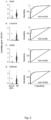
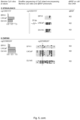
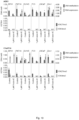
- a decreased methylation degree is exemplified in Fig. 1 where AOX1, C1orf114, GAS6, HAPLN3, ST6GALNAC3 and ZNF660 in the localized PC (RP) and metastatic PC (MPC) clinical tissue samples display increased methylation.
- a decreased methylation degree is exemplified in Fig. 1 where AOX1, C1orf114, GAS6, HAPLN3, ST6GALNAC3 and ZNF660 in adjacent normal (ADJ-N) and benign prostatic hyperplasia (BPH) clinical tissue samples display decreased methylation.
- the body fluid sample may be selected from the group consisting of urine, blood, plasma, serum and semen.
- the body fluid sample is a urine sample.
- the body fluid sample is a blood sample. In another preferred embodiment the body fluid sample is a urine sample.
- a histopathologically negative biopsy is a biopsy or tissue sample, wherein it has been determined by microscopic examination of the tissue that the sample is negative, i.e. the individual from which the sample is taken does not have prostate cancer.
- the biopsy sample can be a biopsy of the prostate gland or resected prostate tissue.
- an increased methylation degree in histopathological cancer-negative biopsies is indicative of cancer-positive repeat biopsies.
- An increased methylation degree is as defined above.
- the body fluid sample may be selected from the group consisting of urine, blood, plasma, serum and semen.
- the body fluid sample is a urine sample.
- methylation incidence refers to the percentage of DNA molecules in a given sample, wherein all or most of the CpG dinucleotides in a specific region of a gene selected from the group consisting of AOX1, C1orf114, GAS6, HAPLN3, ST6GALNAC3 and ZNF660 are methylated. Methylation of this specific region of said gene will indicate that the gene originates from a cell that is a PC cell.
- the methylation incidence of the AOX1 gene is 10% in a sample
- 10% of the DNA molecules in said sample have an AOX1gene which is fully or almost fully methylated in the region tested and consequently at least 10% of the DNA molecules in the sample originate from cells that are prostate cancer cells.
- the detection of one methylated AOX1, C1orf114, GAS6, HAPLN3, ST6GALNAC3 and/or ZNF660 gene will indicate the presence of a PC cell.
- the methylation incidence may for example be determined using methylation specific PCR (MSP) or Real-time fluorescent MSP (described below).
- MSP methylation specific PCR
- MSP Real-time fluorescent MSP
- a primer or a fluorescent probe is typically designed to anneal to a site containing one or more methylated CpGs.
- this primer or probe will preferably anneal to a completely methylated target region.
- MSP is a highly sensitive method, which may detect one methylated gene among 10.000-100.000 unmethylated genes.
- the methylation incidence of at least one CpG dinucleotide of SEQ ID NO:1, SEQ ID NO:2, SEQ ID NO:3, SEQ ID NO:4, SEQ ID NO:5 and/or SEQ ID NO:6 is determined, such as two, three, four, 5, 6, 7, 8, 9 or more than 10 CpG dinucleotides.
- the methylation incidence may be determined in same the gene regions as the methylation degrees as defined herein.
- the methylation incidence is determined over a part of the AOX1 gene comprising at least basepair no. 4907 to basepair no. 5374 of SEQ ID NO:1, or a sequence which is at least 90% identical to basepair no. 4907 to basepair no. 5374 of SEQ ID NO:1.
- the methylation incidence is determined in at least a part of a region of the AOX1 gene comprising basepair no. 4907 to basepair no. 5374 of SEQ ID NO:1, or a sequence which is at least 90% identical to basepair no. 4907 to basepair no. 5374 of SEQ ID NO:1.
- the methylation incidence is determined over a part of the C1orf114 gene comprising at least basepair no. 4777 to basepair no. 5072 of SEQ ID NO:2, or a sequence which is at least 90% identical to basepair no. 4777 to basepair no. 5072 of SEQ ID NO:2.
- the methylation incidence is determined in at least a part of a region of the C1orf114 gene comprising basepair no. 4777 to basepair no. 5072 of SEQ ID NO:2, or a sequence which is at least 90% identical to basepair no. 4777 to basepair no. 5072 of SEQ ID NO:2.
- the methylation incidence is determined over a part of the GAS6 gene comprising at least basepair no. 5948 to basepair no. 6265 of SEQ ID NO:3, or a sequence which is at least 90% identical to basepair no. 5948 to basepair no. 6265 of SEQ ID NO:3.
- the methylation incidence is determined in at least a part of a region of the GAS6 gene comprising basepair no. 5948 to basepair no. 6265 of SEQ ID NO:3, or a sequence which is at least 90% identical to basepair no. 5948 to basepair no. 6265 of SEQ ID NO:3.
- the methylation incidence is determined over a part of the HAPLN3 gene comprising at least basepair no. 4896 to basepair no. 5402 of SEQ ID NO:4, or a sequence which is at least 90% identical to basepair no 4896 to basepair no. 5402 of SEQ ID NO:4.
- the methylation incidence is determined in at least a part of a region of the HAPLN3 gene comprising basepair no. 4896 to basepair no. 5402 of SEQ ID NO:4, or a sequence which is at least 90% identical to basepair no 4896 to basepair no. 5402 of SEQ ID NO:4.
- the methylation incidence is determined over a part of the ST6GALNAC3 gene comprising at least basepair no. 5097 to basepair no. 5186 of SEQ ID NO:5, or a sequence which is at least 90% identical to basepair no. 5097 to basepair no. 5186 of SEQ ID NO:5.
- the methylation incidence is determined in at least a part of a region of the ST6GALNAC3 gene comprising basepair no. 5097 to basepair no. 5186 of SEQ ID NO:5, or a sequence which is at least 90% identical to basepair no. 5097 to basepair no. 5186 of SEQ ID NO:5.
- the methylation incidence is determined over a part of the ZNF660 gene comprising at least basepair no. 4923 to basepair no. 5225 of SEQ ID NO:6, or a sequence which is at least 90% identical to basepair no. 4923 to basepair no. 5225 of SEQ ID NO:6.
- the methylation incidence is determined in at least a part of a region of the ZNF660 gene comprising basepair no. 4923 to basepair no. 5225 of SEQ ID NO:6, or a sequence which is at least 90% identical to basepair no. 4923 to basepair no. 5225 of SEQ ID NO:6.
- An increased methylation incidence of the AOX1, C1orf114, GAS6, HAPLN3, ST6GALNAC3 and/or ZNF660 gene is indicative of the presence of prostate cancer whereas a decreased methylation incidence of the AOX1, C1orf114, GAS6, HAPLN3, ST6GALNAC3 and/or ZNF660 gene is indicative of the absence of prostate cancer
- a methylation incidence in a sample increased by at least 1.5-fold or for example at least 2-fold, 3-fold, 5-fold, 10-fold or even more, relative to previous measurements on the same individual, or to measurements on non-diseased tissue from the same individual, or relative to a standard level, is considered an increased methylation degree according to the present invention.
- a histopathologically negative biopsy is a biopsy or tissue sample, wherein it has been determined by microscopic examination of the tissue that the sample is negative, i.e. the individual from which the sample is taken does not have prostate cancer.
- the biopsy sample can be a biopsy of the prostate gland or resected prostate tissue.
- an increased methylation incidence in histopathological cancer-negative biopsies is indicative of cancer-positive repeat biopsies.
- An increased methylation incidence is as defined above.
- Determining the methylation degree and/or methylation incidence in the methods according to the invention may be done using any suitable method known to the skilled person.
- the methylation degree may be determined by sequencing of bisulphite-treated DNA.
- Bisulphate-based methylation genomic sequencing is capable of detecting every methylated cytosine on both strands of any target sequence, using DNA isolated from fewer than 100 cells, though of course more cells may be employed.
- sodium bisulphite is used to convert cytosine residues to uracil residues in single-stranded DNA, under conditions whereby 5-methylcytosine remains non-reactive.
- the converted DNA is amplified with specific primers and sequenced. All the cytosine residues remaining in the sequence represent previously methylated cytosines in the genome.
- This method may utilize defined procedures that maximize the efficiency of denaturation, bisulphite conversion and amplification, to permit methylation mapping of single genes from small amounts of genomic DNA.
- the methylation incidence may be determined using methylation specific PCR.
- Methylation specific PCR is one of the most widely used assays for the sensitive detection of methylation.
- US patent 5,786,146 discloses a method of methylation specific PCR (MSP) for identifying DNA methylation patterns in a CpG containing nucleic acid, which is useful for use with the present invention. The method uses agents to modify unmethylated cytosine in the nucleic acid. Prior to amplification, the DNA is treated with sodium bisulphite to convert all unmethylated cytosines to uracils. The bisulphite reaction effectively converts methylation information into sequence difference.
- CpG specific oligonucleotide primers are used to distinguish between modified methylated and unmethylated nucleic acid.
- the identification of the methylated nucleic acid is based on the presence or absence of amplification product resulting from the amplification and distinguishing modified methylated and non-methylated nucleic acids.
- the generated PCR product can for example be visualized on a gel.
- methylation-specific PCR An important parameter for the specificity of methylation-specific PCR is determined by primer design. Since modification of DNA by bisulfite destroys strand complementarity, either strand can serve as the template for subsequent PCR amplification and the methylation pattern of each strand can then be determined. It will be appreciated, though, that amplifying a single strand (e.g. sense strand) is preferable in practice.
- Primers are preferably designed to amplify a region that is 80-250 bp in length, which incorporates a sufficient number of cytosines in the original strand to assure that unmodified DNA does not serve as a template for the primers.
- the number and position of cytosines within the CpG dinucleotide determines the specificity of the primers for methylated and unmethylated templates.
- 1-3 CpG sites are included in each primer and concentrated in the 3' region of each primer. This provides optimal specificity and minimizes false positives due to mispriming.
- the length of the primers is adjusted to give nearly equal melting/annealing temperatures.
- Real-time fluorescent MSP (MethyLight) is based on real time PCR employing fluorescent probes in conjunction with MSP and allows for a homogeneous reaction which is of higher throughput.
- methylation status according to the methods of the invention may also be determined using real-time fluorescent MSP.
- the probe does not contain CpGs, the reaction is essentially a quantitative version of MSP.
- the fluorescent probe is typically designed to anneal to a site containing one or more CpGs, and this third oligonucleotide increases the specificity of the assay for completely methylated target strands. Because the detection of the amplification occurs in real time, there is no need for a secondary electrophoresis step.
- the MethyLight probe can be of any format including but not limited to a Taqman probe or a LightCycler hybridization probe pair and if multiple reporter dyes are used, several probes can be performed simultaneously.
- Real-time fluorescent MSP is one preferred method for determining the methylation incidence according to the present invention. Methods such as a PCR-based high-resolution melting analysis assay may, however, also be used to determine the methylation status.
- Methylation-sensitive high-resolution melting (MS-HRM) analysis is another PCR-based technology which can be used for determination of methylation status according to the invention and for highly specific and highly sensitive detection of methylated genes.
- This method takes advantage of the fact that methylated DNA and unmethylated DNA acquire different sequences after bisulphite treatment, which results in PCR products with markedly different melting profiles/temperature.
- PCR is used to amplify both methylated and unmethylated sequences in the same reaction, and this method can be optimised to detect methylation levels as low as 0.1%.
- MS-HRM also allows estimation of methylation levels by comparison of melting profiles for a test sample to the melting profiles of PCR products derived from standards with known ratios of methylated:unmethylated alleles.
- MS-HRM analysis protocols are simple and the method is characterized by high reproducibilty ( Wojdacz TK, Dobrovic A, Hansen LL. 2008, Nat Protoc. 2008;3(12):1903-8 ).
- the methylation status can also be measured quantitatively by pyrosequencing of bisulfite converted DNA following PCR amplification.
- Pyrosequencing is a sequencing-by-synthesis method that relies on the sequential addition and incorporation of nucleotides in a primer-directed polymerase extension. Only one of the four nucleotides is present at any time in the reaction vessel, and only if the added nucleotide is complementary to the template DNA will it be incorporated by a DNA polymerase. This event is monitored in real time and hence can be used to quantitate the ratio between methylated and unmethylated CpG dinucleotides.
- the pyrosequencing technology makes use of the release of PP i molecules during the iterative incorporation of unmodified nucleotides that are quantitatively converted into a bioluminometric signal ( Tost, J. & Gut, I.G. DNA methylation analysis by pyrosequencing, Nature Protocols 2, - 2265 - 2275 (2007 )).
- the methylation status is determined by targeted resequencing of bisulfite converted DNA (or PCR amplicons hereof) using massively parallel sequencing technologies (next-generation sequencing). This would allow digital quantification of the ratio between methylated and unmethylated CpG dinucleotide(s).
- Next-generation sequencing platforms are characterized by the ability to process millions of sequence reads in parallel rather than 96 at a time, as typically seen for capillary-based sequencing. The workflow to produce next-generation sequence-ready libraries is straightforward; DNA fragments are prepared for sequencing by ligating specific adaptor oligos to both ends of each DNA fragment. Importantly, relatively little input DNA (a few micrograms at most) is needed to produce a library.
- next-generation sequencing produces shorter read lengths (35-250 bp, depending on the platform), but longer reads will also be possible. ( Mardis, E.R. The impact of next-generation sequencing technology on genetics, Trends Genet. 2008 Mar;24(3):133-41 ).
- the methylation status is determined using microarrays wherein a specific DNA probe for each CpG site to be studied is used.
- a specific DNA probe is used to determine whether a specific CpG site is methylated.
- the quantitative methylation density assay may be used as previously described by Galm et al. (2002) Genome Res. 12, 153-7 .
- the region of interest is PCR amplified with nested primers. PCR products are purified and DNA amount is determined. A predetermined amount of DNA is incubated with .sup.3H-SAM (TRK581Bioscience, Amersham) and Sssl methyltransferase for methylation quantification. Once reactions are terminated products are purified from the in-vitro methylation mixture. 20% of the eluant volume is counted in .sup.3H counter. Normalizing radioactivity DNA of each sample is measured again and the count is normalized to the DNA amount.
- Restriction analysis of bisulphite modified DNA is a yet another quantitative technique which can be used to determine DNA methylation levels at specific gene loci in small amounts of genomic DNA. Restriction enzyme digestion is used to reveal methylation-dependent sequence differences in PCR products of sodium bisulfite-treated DNA. Methylation levels in original DNA sample are represented by the relative amounts of digested and undigested PCR product in a linearly quantitative fashion across a wide spectrum of DNA methylation levels. This technique can be reliably applied to DNA obtained from microdissected paraffin-embedded tissue samples.
- DMH differential methylation hybridization
- DMH integrates a high-density, microarray-based screening strategy to detect the presence or absence of methylated CpG dinucleotide genomic fragments.
- Array-based techniques are used when a number (e.g., >3) of methylation sites in a single region are to be analyzed.
- CpG dinucleotide nucleic acid fragments from a genomic library are generated, amplified and affixed on a solid support to create a CpG dinucleotide rich screening array.
- Amplicons are generated by digesting DNA from a sample with restriction endonucleases which digest the DNA into fragments but leaves the methylated CpG islands intact. These amplicons are used to probe the CpG dinucleotide rich fragments affixed on the screening array to identify methylation patterns in the CpG dinucleotide rich regions of the DNA sample. Unlike other methylation analysis methods such as Southern hybridization, bisulfite DNA sequencing and methylation-specific PCR which are restricted to analyzing one gene at a time, DMH utilizes numerous CpG dinucleotide rich genomic fragments which may be specifically designed to allow simultaneous analysis of multiple of methylation-associated genes in the genome (for further details see U.S. Pat. No. 6,605,432 ).
- immunoprecipitation of methylated sequences can be used to isolate sequence-specific methylated gene fragments. Briefly, genomic DNA is sonicated to yield fragments of 200-300 bp. The DNA is then denatured, precleaned with a protein A Fast FlowSepharose) and further incubated with a 5-methylcytidine monoclonal antibody. The complex may be purified using protein A Sepharose and subsequently washed. The immunoprecipitated samples are then analyzed using specific PCR primers.
- the methods of the present invention comprises a step of determining the transcriptional expression level of at least one
- the transcriptional expression level as referred to herein is the transcriptional level of at least one
- the control sample may be an RNA sample from one healthy male without clinically diagnosed prostate cancer or a pool of RNA samples from more than one healthy male without clinically diagnosed prostate cancer.
- the control sample may also be an RNA sample from the same person being tested, wherein said control sample has been taken at an earlier time point in the course of disease or before diagnosing the disease.
- the control sample may also be derived from healthy tissue of the person being tested.
- the control sample is preferably taken from the same source, such as for example urine, tissue or blood, as the sample to be tested and the control sample is analysed along with the test sample.
- a transcriptional level being decreased by at least 2 fold or more, such as at least 3-fold, at least 4-fold, at least 5-fold or more relative to previous measurements on the same individual, or to measurements on non-diseased tissue from the same individual, or relative to a standard level, is indicative of prostate cancer.
- Transcriptional expression levels of genes may in general be determined by detecting mRNA from the cells or sample of interest.
- the transcriptional expression levels of the AOX1, C1orf114, GAS6, HAPLN3, ST6GALNAC3 and/or ZNF660 genes may be determined by detecting AOX1 mRNA (SEQ ID NO:7), C1orf114 mRNA (SEQ ID NO:8), GAS6 mRNA (SEQ ID NO:9), HAPLN3 mRNA (SEQ ID NO:10), ST6GALNAC3 mRNA (SEQ ID NO:11) and/or ZNF660 mRNA (SEQ ID NO:12) and/or an mRNA sequence having at least 90 % sequence identity with a nucleotide sequence selected from the group consisting of SEQ ID NO:7, SEQ ID NO:8, SEQ ID NO:9, SEQ ID NO:10, SEQ ID NO:11 and SEQ ID NO:12.
- Transcriptional expression products such as m
- PCR Polymerase Chain Reaction
- RT-PCR Reverse transcription polymerase chain reaction
- PCR polymerase chain reaction
- the transcriptional expression level is determined by RT-PCR.
- Quantitative amplification involves simultaneously co-amplifying a known quantity of a control sequence using the same primers. This provides an internal standard that may be used to calibrate the PCR reaction. The high density array may then include probes specific to the internal standard for quantification of the amplified nucleic acid.
- this invention provides for a method of optimizing a probe set for detection of a particular gene.
- this method involves providing a high density array containing a multiplicity of probes of one or more particular length(s) that are complementary to sub-sequences of the mRNA transcribed by the target gene.
- the high density array may contain every probe of a particular length that is complementary to a particular mRNA.
- the probes of the high density array are then hybridized with their target nucleic acid alone and then hybridized with a high complexity, high concentration nucleic acid sample that does not contain the targets complementary to the probes.
- the probes are first hybridized with their target nucleic acid alone and then hybridized with RNA made from a cDNA library where the sense of the hybridized RNA is opposite that of the target nucleic acid (to insure that the high complexity sample does not contain targets for the probes).
- RNA made from a cDNA library where the sense of the hybridized RNA is opposite that of the target nucleic acid (to insure that the high complexity sample does not contain targets for the probes).
- Those probes that show a strong hybridization signal with their target and little or no cross-hybridization with the high complexity sample are preferred probes for use in the high density arrays of this invention.
- the methods of the present invention are also applicable to a number of other reaction types, e.g., reverse transcription, nick translation, and the like.
- the nucleic acids in a sample will generally be labelled to facilitate detection in subsequent steps. Labelling may be carried out during the amplification, in vitro transcription or nick translation processes. In particular, amplification, in vitro transcription or nick translation may incorporate a label into the amplified or transcribed sequence, either through the use of labelled primers or the incorporation of labelled dNTPs into the amplified sequence.
- Hybridization between the sample nucleic acid and the oligonucleotide probes upon the array is then detected, using, e.g., epifluorescence confocal microscopy.
- sample is mixed during hybridization to enhance hybridization of nucleic acids in the sample to nucleic acid probes on the array.
- hybridized oligonucleotides may be labelled following hybridization.
- biotin labeled dNTPs are used in, e.g. amplification or transcription
- streptavidin linked reporter groups may be used to label hybridized complexes.
- the nucleic acids in the sample may be labelled following amplification.
- Post amplification labelling typically involves the covalent attachment of a particular detectable group upon the amplified sequences. Suitable labels or detectable groups include a variety of fluorescent or radioactive labelling groups well known in the art. These labels may also be coupled to the sequences using methods that are well known in the art.
- Methods for detection of AOX1, C1orf114, GAS6, HAPLN3, ST6GALNAC3 and/or ZNF660 transcript or part thereof depend upon the label selected.
- a fluorescent label is preferred because of its extreme sensitivity and simplicity.
- Standard labelling procedures are used to determine the positions where interactions between a sequence and a reagent take place. For example, if a target sequence is labelled and exposed to a matrix of different probes, only those locations where probes do interact with the target will exhibit any signal. Alternatively, other methods may be used to scan the matrix to determine where interaction takes place. Of course, the spectrum of interactions may be determined in a temporal manner by repeated scans of interactions which occur at each of a multiplicity of conditions. However, instead of testing each individual interaction separately, a multiplicity of sequence interactions may be simultaneously determined on a matrix.
- Means of detecting labelled nucleic acids hybridized to the probes of the high density array are known to those of skill in the art. Thus, for example, where a colorimetric label is used, simple visualization of the label is sufficient. Where a radioactive labelled probe is used, detection of the radiation (e.g with photographic film or a solid state detector) is sufficient.
- the target nucleic acids are labelled with a fluorescent label and the localization of the label on the probe array is accomplished with fluorescent microscopy.
- the hybridized array is excited with a light source at the excitation wavelength of the particular fluorescent label and the resulting fluorescence at the emission wavelength is detected.
- the excitation light source is a laser appropriate for the excitation of the fluorescent label.
- the target polynucleotide may be labelled by any of a number of convenient detectable markers.
- a fluorescent label is preferred because it provides a very strong signal with low background. It is also optically detectable at high resolution and sensitivity through a quick scanning procedure.
- Other potential labelling moieties include, radioisotopes, chemiluminescent compounds, labelled binding proteins, heavy metal atoms, spectroscopic markers, magnetic labels, and linked enzymes.
- amplified sequences may be subjected to other post amplification treatments.
- analysis operations include, e.g. sequence based analyses using an oligonucleotide array and/or size based analyses using, e.g. microcapillary array electrophoresis.
- Transcriptional expression levels of genes may in general be determined by detecting mRNA from the cells or sample of interest.
- the transcriptional expression levels of the AOX1, C1orf114, GAS6, HAPLN3, ST6GALNAC3 and/or ZNF660 genes may be determined by detecting AOX1 mRNA (SEQ ID NO:7), C1orf114 mRNA (SEQ ID NO:8), GAS6 mRNA (SEQ ID NO:9), HAPLN3 mRNA (SEQ ID NO:10), ST6GALNAC3 mRNA (SEQ ID NO:11) and/or ZNF660 mRNA (SEQ ID NO:12) and/or an mRNA sequence having at least 90 % sequence identity with a nucleotide sequence selected from the group consisting of SEQ ID NO:7, SEQ ID NO:8, SEQ ID NO:9, SEQ ID NO:10, SEQ ID NO:11 and SEQ ID NO:12.
- Transcriptional expression products such as m
- the methods of the present invention comprises a step of determining the translational expression level of at least one
- the translational expression level as referred to herein is the translational level of at least one
- the translational expression level in the sample being tested is below the translational expression level of the corresponding gene in a control sample or a standard value, the translational level of the sample being tested is decreased.
- a decrease in the translational expression level is measured relative to the translational expression level of a control sample or a standard value.
- the translational expression level of the AOX1 gene in a control sample has a value of 100
- the translational expression level of the AOX1 gene in a test sample has a value of 50
- the translational expression level is said to be decreased by 50%.
- the control sample may be an equivalent protein sample from one healthy male without clinically diagnosed prostate cancer or a pool of protein samples from more than one healthy male without clinically diagnosed prostate cancer.
- the control sample may also be a protein sample from the same person being tested, wherein said control sample has been taken at an earlier time point in the course of disease or before diagnosing the disease.
- the control sample is taken from the same source, such as for example urine, tissue or blood, as the sample to be tested and the control sample is analysed along with the test sample.
- translational expression products such as peptides and proteins may be detected by any suitable technique or method known to the person skilled in the art.
- the translational expression levels may preferably be detected by means of specific antibodies directed to the protein, such as immunofluorescent and/or immunohistochemical staining of the tissue.
- the translational expression level is determined by immunohistochemical analysis.
- the translational expression level may be determined by means of peptide/protein chips capable of specifically binding the peptides and/or proteins assessed. Thereby an expression pattern may be obtained.
- Translational expression levels of genes may in general be determined by detecting protein from the cells or sample of interest.
- the transcriptional expression levels of the AOX1, C1orf114, GAS6, HAPLN3, ST6GALNAC3 and/or ZNF660 genes may be determined by detecting AOX1 protein (SEQ ID NO:13), C1orf114 protein (SEQ ID NO:14), GAS6 protein (SEQ ID NO:15), HAPLN3 protein (SEQ ID NO:16), ST6GALNAC3 protein (SEQ ID NO:17) and/or ZNF660 protein (SEQ ID NO:18) and/or an amino acid sequence having at least 90 % sequence identity with an amino acid sequence selected from the group consisting of SEQ ID NO:13, SEQ ID NO:14, SEQ ID NO:15, SEQ ID NO:16, SEQ ID NO:17 and SEQ ID NO:18 or part thereof.
- the translational expression products as described herein may be detected as indications of prostate cancer of the sample tested, such as diagnosing, predicting, prognosing, monitoring prostate cancer in an individual.
- the translational expression products of the genes may be detected in either a tissue sample as such, or in a body fluid sample, such as blood, serum, plasma, semen and/or urine of the individual.
- the translational level is measured in a tissue sample, for example a biopsy, prostate tumour tissue, or a tissue of a resected prostate.
- One aspect relates to a method for assisting in diagnosing and/or for diagnosing prostate cancer in an individual said method comprising
- the description concerns a method of determining if an individual has, or is at risk of developing prostate cancer, the method comprising the steps of:
- the methylation level such as the methylation degree and methylation incidence and methods for measuring the methylation degree and methylation incidence are defined in the section "Determining the methylation degree and the methylation incidence”.
- an increased methylation degree and/or methylation incidence is indicative of the presence of prostate cancer.
- a decreased methylation degree and/or methylation incidence is indicative of the absence of prostate cancer.
- An increased methylation degree and a decreased methylation degree are defined in the section "Determining the methylation degree and the methylation incidence”.
- an increased methylation incidence and a decreased methylation incidence are defined in the section “Determining the methylation degree and the methylation incidence”.
- a decreased transcriptional expression level and/or translational expression level is indicative of the presence of prostate cancer.
- an increased transcriptional expression level and/or translational expression level is indicative of the absence of prostate cancer.
- the transcriptional/translational expression level and methods for measuring the transcriptional/translational expression level are described in the sections "determining the transcriptional expression level of the AOX1, C1orf114, GAS6, HAPLN3, ST6GALNAC3 and/or ZNF660 genes" and "determining the translational expression level of the AOX1, C1orf114, GAS6, HAPLN3, ST6GALNAC3 and/or ZNF660 genes".
- a decreased and increased transcriptional/translational expression level are as defined in the sections "Determining the transcriptional expression level” and “Determining the translational expression level”.
- the method for assisting in diagnosing and/or for diagnosing prostate cancer further comprises a step of initiating treatment of prostate cancer if the methylation degree and/or methylation incidence are increased.
- the description relates to a method for assisting in prognosing and/or for prognosing the disease progression of prostate cancer in an individual having developed prostate cancer comprising the steps of
- the description concerns a method for prognosing disease progression of prostate cancer in a patient, said method comprising the steps of:
- the invention concerns a method for prognosing disease progression of prostate cancer in a patient, said method comprising the steps of:
- the biomarker score may be any suitable biomarker score known by those of skill in the art.
- the biomarker score may e.g. be based on the Gleason sum, prostate specific antigen (PSA) amount, MIC-I stromal staining and/or tumour-node-metastasis (TNM) stage.
- PSA prostate specific antigen
- TPM tumour-node-metastasis
- the present invention provides methods suitable for use during different stages of disease progression of prostate cancer, from testing a non-diseased individual to determining life expectancy of a severely diseased individual afflicted with prostate cancer.
- the description concerns a method of determining the risk of progression of a prostate cancer patient after therapy, comprising:
- the description concerns a method for assisting prognosis of disease progression of prostate cancer in an individual having developed prostate cancer, the method comprising the steps of:
- the description concerns a method for assisting in predicting and/or for predicting the outcome of prostate cancer in an individual having developed prostate cancer comprising the steps of:
- the monitoring may be a combination of methods wherein the method of the present invention is one.
- the description concerns a method for assisting in monitoring and/or for monitoring the effect of treatment on prostate cancer progression in an individual having developed prostate cancer and being treated for said prostate cancer, comprising the steps of:
- An increased methylation level is typically indicative of poor outcome, while a decreased transcriptional and/or translational expression level in the sample is indicative of poor outcome of the disease, e.g. decreased life expectancy.
- An increased methylation level is typically indicative of high recurrence risk of prostate cancer, and a decreased transcriptional and/or translational expression level is also typically indicative of high recurrence risk of prostate cancer.
- the recurrence risk may be determined at any suitable time as determined by the person of skill in the art. In one embodiment the recurrence risk is determined following radical prostatectomy.
- An increased methylation level in a sample from an individual is indicative of a progression of prostate cancer, when compared to the methylation level in a sample taken from the same individual before treatment onset and/or at an earlier time point during treatment
- a decreased transcriptional and/or translational expression level in a sample from an individual is also indicative of a progression of prostate cancer when compared to the transcriptional and/or translational expression level in a sample taken from the same individual before treatment onset and/or at an earlier time point during treatment.
- the present description concerns a method for assisting in monitoring and/or for monitoring the progression of prostate cancer from a silent/indolent to an aggressive prostate cancer in an individual having developed prostate cancer comprising the steps of:
- the silent/indolent prostate cancer is a slow-growing and slow-progressing organ-confined prostate cancer with no or only minor clinical symptoms.
- An aggressive prostate cancer is one which has progressed or will progress relatively fast (i.e. within the remaining life expectancy of a given patient) to non-organ-confined prostate cancer: Such an aggressive cancer is considered to be a treatment-requiring prostate cancer.
- An increased methylation level is indicative of a progression of prostate cancer when compared to the methylation level measured at an earlier time point of the course of disease of said prostate cancer.
- decreased transcriptional and/or translational expression levels are indicative of progression of the prostate cancer, when compared to transcriptional and/or translational expression level measured at an earlier time point of the course of disease of said prostate cancer,.
- the invention concerns a method comprising the steps of:
- the individual from which the sample originates has a normal prostate specific antigen (PSA) level. In another embodiment the individual has a PSA level higher than a normal PSA level.
- PSA level is a PSA level of at the most 3 ng per mL serum.
- prognosing refers to predicting the probable outcome or course of disease independent of possible intervention or treatment for example in the form of surgery, medication etc. Prognosing may refer to the likelihood of recovery from disease after intervention or treatment. Prognosing may also refer to predicting the time to recurrence and/or predicting the time to cancer specific death. The time to cancer specific death may for example be predicted after conservative treatment or watchful waiting.
- Watchful waiting may also be referred to as expectant management, conservative management, observation, or surveillance.
- the theory behind watchful waiting is that most prostate cancers, specifically prostate adenocarcinomas, usually grow very slowly. Patients who have low Gleason score, other medical complications, or low grade tumours may wish to postpone treatment due to the side effects.
- the methylation level and/or the transcriptional expression level and/or the translational expression level of the genes may be used as a surrogate marker for prognosing disease progression of prostate cancer.
- an increased methylation degree and/or methylation incidence is indicative of a poor outcome.
- a decreased transcriptional and/or translational expression level in the sample is indicative of a poor outcome.
- a poor outcome may represent a decrease in the time to recurrence and/or a decrease in the time to cancer specific death for example after conservative treatment.
- a poor outcome may also represent an increased risk of death after conservative treatment or watchful waiting. Thus, a poor outcome can indicate that a specific treatment should be initialized.
- a poor outcome may also represent an increased risk of PSA recurrence after radical prostatectomy.
- an increased methylation degree and/or incidence of C1orf114 indicates an increased risk of PSA recurrence after radical prostatectomy. This is exemplified in Table 8, right column, where multivariate analysis indicates that the methylation level of C1orf114 is a strong independent prognostic marker for prostate cancer.
- an increased methylation degree and/or incidence of AOX1 (SEQ ID NO:1), C1orf114 (SEQ ID NO:2) and HAPLN3 (SEQ ID NO:4) indicates an increased risk of PSA recurrence after radical prostatectomy. This is exemplified in table 10.
- Methylation degree methods for determining the methylation degree and an increased methylation degree is defined in the section “Determining the methylation degree and the methylation incidence”.
- Methylation incidence methods for determining the methylation incidence and an increased methylation incidence is defined in the section “Determining the methylation degree and the methylation incidence”.
- the transcriptional/translational expression level and methods for measuring the transcriptional/translational expression level and a decreased transcriptional/translational expression level are described and defined in the sections "Determining the transcriptional expression level” and “Determining the translational expression level”.
- a method for assisting in predicting and/or for predicting the outcome of prostate cancer in an individual having developed prostate cancer comprising:
- predicting refers to predicting the outcome or course of disease following intervention for example in the form of surgery, medication etc.
- an intervention may be radical prostatectomy.
- an increased methylation degree and/or methylation incidence is indicative of a poor outcome.
- a decreased transcriptional and/or translational expression level in the sample is indicative of a poor outcome.
- a poor outcome may represent a decrease in the time to recurrence and/or a decrease in the time to cancer specific death for example after conservative treatment.
- a poor outcome may also represent an increased risk of death after conservative treatment or watchful waiting.
- Methylation degree methods for determining the methylation degree and an increased methylation degree is defined in the section "Determining the methylation degree and the methylation incidence”.
- Methylation incidence methods for determining the methylation incidence and an increased methylation incidence is defined in the section "Determining the methylation degree and the methylation incidence”.
- the transcriptional/translational expression level and methods for measuring the transcriptional/translational expression level and a decreased transcriptional/translational expression level are described and defined in the sections "Determining the transcriptional expression level” and “Determining the translational expression level”.
- the recurrence risk is the risk of cancer recurring after intervention, for example following surgery, radical prostatectomy, radiation therapy, cryotherapy or brachytherapy.
- Recurrence can occur over a wide span in time, for example 2 months after intervention, such as 3 months, 4, months, 5 months, 6 months, 1 year, two years, three years, 4 years, 5, years, after intervention or even longer.
- the methods of the present invention can be used over a wide span of time to determine whether recurrence has occurred.
- an increased methylation degree and/or methylation incidence is indicative of high recurrence risk of prostate cancer. It is also preferred that a decreased transcriptional and/or translational expression level is indicative of high recurrence risk of prostate cancer.
- the recurrence risk is determined following radical prostatectomy.
- Another aspect relates to a method for assisting in monitoring and/or for monitoring the effect of treatment on prostate cancer progression in an individual having developed prostate cancer and being treated for said prostate cancer, comprising:
- the term "monitoring” refers to observing or watching the progression or development of prostate cancer of an individual.
- the progression of prostate cancer of an individual may be monitored by frequently taking samples from the individual having prostate cancer and determining the methylation degree and/or methylation incidence and/or the transcriptional expression level and/or the translational expression level as described herein. Samples may for example be taken on a weekly or monthly basis. However, sampling frequencies may be regulated depending on the individual and the stage of cancer.
- the methylation degree and/or methylation incidence and/or the transcriptional expression level and/or the translational expression level may be determined before and after treatment and compared or at different time point during treatment and compared.
- the methylation degree and/or methylation incidence and/or the transcriptional expression level and/or the translational expression level may in an embodiment be determined at different time points after treatment such as for example 1 week after treatment or 1 month after treatment, such as 2 months, 3 months, 4, months, 5 months, 6 months, 1 year, two years, three years, 4 years, 5, years or even more years after treatment.
- an increased methylation degree and/or methylation incidence in a sample from an individual when compared to the methylation degree and/or methylation incidence in a sample taken from the same individual
- Methylation degree methods for determining the methylation degree and an increased/decreased methylation degree is defined in the section "Determining the methylation degree and the methylation incidence”.
- Methylation incidence methods for determining the methylation incidence and an increased/decreased methylation incidence is defined in the section “Determining the methylation degree and the methylation incidence”.
- an increased methylation degree and/or methylation incidence in a sample from an individual when compared to the methylation degree and/or methylation incidence in a sample taken from the same individual
- a methylation degree and/or methylation incidence increased by at least 10% or for example at least 15%, 20%, 25%, 30%, 35%, 40%, 41%, 42%, 43%, 44%, 45%, 46%, 47%, 48%, 49%, 50%, 55%, 60%, 65%, 70%, 80%, 90%, 100% or even more in a sample from an individual, when compared to the methylation degree and/or methylation incidence in a sample taken from the same individual
- a methylation degree and/or methylation incidence increased by at least 1.5-fold or for example at least 2-fold, 3-fold, 5-fold, 10-fold or even more in a sample from an individual, when compared to the methylation degree and/or methylation incidence in a sample taken from the same individual
- a decreased methylation degree when compared to the methylation degree before treatment onset is indicative of a positive effect of the treatment and that the individual is in recovery.
- an increased transcriptional and/or translational expression level, when compared to the methylation degree before treatment onset, is indicative of a positive effect of the treatment and that the individual is in recovery.
- a methylation degree and/or methylation incidence decreased by at least 10% or for example at least 15%, 20%, 25%, 30%, 35%, 40%, 41%, 42%, 43%, 44%, 45%, 46%, 47%, 48%, 49%, 50%, 55%, 60%, 65%, 70%, 80%, 90%, 100% or even more in a sample from an individual, when compared to the methylation degree and/or methylation incidence in a sample taken from the same individual
- a methylation degree and/or methylation incidence in a sample decreased by at least 1.5-fold or for example at least 2-fold, 3-fold, 5-fold, 10-fold or even more in a sample from an individual, when compared to the methylation degree and/or methylation incidence in a sample taken from the same individual
- a decreased transcriptional and/or translational expression level in a sample from an individual when compared to the transcriptional and/or translational expression level in a sample taken from the same individual
- a transcriptional and/or translational expression level in a sample from an individual being decreased at least 10%, or for example at least 15%, 20%, 25%, 30%, 35%, 40%, 41%, 42%, 43%, 44%, 45%, 46%, 47%, 48%, 49%, or at least 50% and even more, when compared to the transcriptional and/or translational expression level in a sample taken from the same individual
- a transcriptional and/or translational level in a sample from an individual being decreased at least 2 fold or more, such as at least 3-fold, at least 4-fold, at least 5-fold or more, when compared to the transcriptional and/or translational expression level in a sample taken from the same individual
- a transcriptional and/or translational level in a sample from an individual being decreased by at least 45%, or for example at least 46%, 47%, 48%, 49%, 50%, 51%, 52%, 53%, 54%, 55%, 56%, 57%, 58%, 59% or at least 60% and even more, when compared to the transcriptional and/or translational expression level in a sample taken from the same individual
- a transcriptional and/or translational in a sample from an individual level being decreased by at least 50%, when compared to the transcriptional and/or translational expression level in a sample taken from the same individual
- a transcriptional and/or translational in a sample from an individual level being increased by at least 50%, when compared to the transcriptional and/or translational expression level in a sample taken from the same individual
- Active surveillance refers to observation and regular monitoring of outbreak without invasive treatment. Thus, active surveillance is often used when an early stage, slow-growing prostate cancer is suspected. For younger men (>10 years life expectancy), a programme of active surveillance may not mean avoiding treatment altogether, but may allow a delay of a few years or more, during which time the quality of life impact of active treatment can be avoided. Carefully selected men will not miss a window for cure with this approach. Careful selection of individuals for active surveillance ensures that the selected individuals will not be less prone to cure than other individuals.
- Programmes for 'watchful waiting' may also be suggested when the risks of surgery, radiation therapy, or hormonal therapy outweigh the possible benefits.
- Other treatments can be started if symptoms develop, or if there are signs that the cancer growth is accelerating (e.g., rapidly rising PSA, increase in Gleason score on repeat biopsy, etc.).
- the markers of the present invention can be used for monitoring prostate cancer progression, as independent markers, but preferably with one or more markers such as the PSA marker, the SLC18A2 gene, the ZNF132 gene and/or the TFF3 gene, and characterisation of stage and grade of the prostate cancer in said individual.
- the description relates to a method for assisting in monitoring and/or for monitoring the progression of prostate cancer from a silent/indolent to an aggressive prostate cancer in an individual having developed prostate cancer comprising:
- a silent/indolent prostate cancer is a slow-growing and slowprogressing organ-confined prostate cancer with no or only minor clinical symptoms.
- an aggressive prostate cancer is one which has progressed or will progress relatively fast (i.e. within the remaining life expectancy of a given patient) to non-organ-confined prostate cancer.
- an aggressive prostate cancer is a treatment-requiring prostate cancer.
- a methylation degree and/or methylation incidence in a sample from an individual wherein said methylation degree is increased when compared to methylation degree and/or methylation incidence in a sample taken from the same individual at an earlier time point of the course of disease of said prostate cancer, is indicative a progression of said prostate cancer.
- a decreased transcriptional and/or translational expression level in a sample from an individual when compared to transcriptional and/or translational expression level in a sample taken from the same individual at an earlier time point of the course of disease of said prostate cancer, is indicative a progression of said prostate cancer.
- a methylation degree and/or methylation incidence in a sample from an individual wherein said methylation degree is increased by at least 10% or for example at least 15%, 20%, 25%, 30%, 35%, 40%, 41%, 42%, 43%, 44%, 45%, 46%, 47%, 48%, 49%, 50%, 55%, 60%, 65%, 70%, 80%, 90%, 100% or even more, when compared to the methylation degree in a sample taken from the same individual at an earlier time point of the course of disease of said prostate cancer, is indicative a progression of said prostate cancer.
- a methylation degree and/or methylation incidence in a sample from an individual wherein said methylation degree is increased by at least 1.5-fold or for example at least 2-fold, 3-fold, 5-fold, 10-fold or even more, when compared to the methylation degree in a sample taken from the same individual at an earlier time point of the course of disease of said prostate cancer, is indicative a progression of said prostate cancer.
- a methylation degree and/or methylation incidence in a sample from an individual wherein said methylation degree and/or methylation incidence is decreased when compared to the methylation degree in a sample taken from the same individual at an earlier time point of the course of disease of said prostate cancer, indicates that the individual is in recovery.
- a methylation degree and/or methylation incidence in a sample from an individual wherein said methylation degree and/or methylation incidence is decreased by at least 10% or for example at least 15%, 20%, 25%, 30%, 35%, 40%, 41%, 42%, 43%, 44%, 45%, 46%, 47%, 48%, 49%, 50%, 55%, 60%, 65%, 70%, 80%, 90%, 100% or even more, when compared to the methylation degree in a sample taken from the same individual at an earlier time point of the course of disease of said prostate cancer, indicates that the individual is in recovery.
- a transcriptional and/or translational expression level in a sample from an individual wherein said transcriptional and/or translational expression level is decreased by at least 10%, or for example at least 15%, 20%, 25%, 30%, 35%, 40%, 41%, 42%, 43%, 44%, 45%, 46%, 47%, 48%, 49%, or at least 50% or even more when compared to the transcriptional and/or translational expression level in a sample taken from the same individual at an earlier time point of the course of disease of said prostate cancer, is indicative a progression of said prostate cancer.
- a transcriptional and/or translational expression level in a sample from an individual wherein said transcriptional and/or translational expression level is decreased by at least 2 fold or more, such as at least 3-fold, at least 4-fold, at least 5-fold or even more when compared to the transcriptional and/or translational expression level in a sample taken from the same individual at an earlier time point of the course of disease of said prostate cancer, is indicative a progression of said prostate cancer.
- a transcriptional and/or translational expression level in a sample from an individual wherein said transcriptional and/or translational expression level is decreased by at least 46%, 47%, 48%, 49%, 50%, 51%, 52%, 53%, 54%, 55%, 56%, 57%, 58%, 59% or at least 60% or even more when compared to the transcriptional and/or translational expression level in a sample taken from the same individual at an earlier time point of the course of disease of said prostate cancer, is indicative a progression of said prostate cancer.
- a transcriptional and/or translational expression level in a sample from an individual wherein said transcriptional and/or translational expression level is decreased by at least 50% when compared to the transcriptional and/or translational expression level in a sample taken from the same individual at an earlier time point of the course of disease of said prostate cancer, is indicative a progression of said prostate cancer.
- an increased transcriptional and/or translational expression level in a sample from an individual wherein said transcriptional and/or translational expression level is increased when compared to the transcriptional and/or translational expression level in a sample taken from the same individual at an earlier time point of the course of disease of said prostate cancer, indicates that the individual is in recovery.
- a method for assisting in determining and/or determining the treatment regime of an individual having developed prostate cancer comprising:
- the adjuvant therapy may be selected from the group consisting of radiation therapy, chemotherapy, immunotherapy, hormone therapy, and targeted therapy.
- the description concerns a method of treating a prostate cancer patient comprising determining at least one clinical parameter for said patient, determining the status of at least one gene selected from the group consisting of C1orf114 (SEQ ID NO:2), HAPLN3 (SEQ ID NO:4), AOX1 (SEQ ID NO:1), GAS6 (SEQ ID NO:3), ST6GALNAC3 (SEQ ID NO:5) and ZNF660 (SEQ ID NO:6), in a sample obtained from the patient, and (a) recommending, prescribing or initiating active treatment if said patient has at least one risk- associated clinical parameter and an elevated status for said gene, or (b) recommending, prescribing or initiating watchful waiting if said patient has neither a risk-associated clinical parameter nor an elevated status for said gene or genes.
- C1orf114 SEQ ID NO:2
- HAPLN3 SEQ ID NO:4
- AOX1 SEQ ID NO:1
- GAS6 SEQ ID NO:3
- treatment regime refers to a strategy for treatment of an individual. Determining the treatment regime of an individual means choosing a strategy for treatment of the individual. The treatment regime or the strategy for treatment of an individual having developed prostate cancer is determined based on the method as described above.
- the preferred treatment regime will be surgery.
- the preferred treatment regime will be radiation therapy.
- an increased methylation degree and/or methylation incidence will indicate that the treatment regime should be radiation therapy.
- a decreased transcriptional and/or translational expression level will indicate that the treatment regime should be radiation therapy.
- an increased methylation degree and an increased methylation incidence may be as described above, and a decreased transcriptional and/or translational expression level may be as described above.
- a transcriptional and/or translational expression level in a sample from an individual wherein said transcriptional and/or translational expression level is decreased by at least 10%, or for example at least 15%, 20%, 25%, 30%, 35%, 40%, 41%, 42%, 43%, 44%, 45%, 46%, 47%, 48%, 49%, or at least 50% and even more when compared to previous measurements on the same individual, or to measurements on non-diseased tissue from the same individual, or relative to a standard level, will indicate that the treatment regime should be radiation therapy.
- a transcriptional and/or translational level in a sample from an individual wherein said transcriptional and/or translational expression level is decreased by at least 2 fold or more, such as at least 3-fold, at least 4-fold, at least 5-fold or more relative to previous measurements on the same individual, or to measurements on non-diseased tissue from the same individual, or relative to a standard level, will indicate that the treatment regime should be radiation therapy.
- a transcriptional and/or translational expression level in a sample from an individual wherein said transcriptional and/or translational expression level is decreased by at least 45%, or for example at least 46%, 47%, 48%, 49%, 50%, 51%, 52%, 53%, 54%, 55%, 56%, 57%, 58%, 59% or at least 60% and even more relative to previous measurements on the same individual, or to measurements on non-diseased tissue from the same individual, or relative to a standard level, will indicate that the treatment regime should be radiation therapy.
- a transcriptional and/or translational expression level in a sample from an individual wherein said transcriptional and/or translational expression level is decreased by at least 50% relative to previous measurements on the same individual, or to measurements on non-diseased tissue from the same individual, or relative to a standard level, will indicate that the treatment regime should be radiation therapy.
- the methods as described herein may optionally comprise:
- the methods as described herein may optionally comprise a step of comparing the transcriptional and/or translational expression level in the sample to the expression level of a control sample, wherein the expression level in the sample is increased, when it is higher than the expression level in said control sample or decreased when it is lower than the expression level in said control sample.
- a control sample is described in the sections "Determining transcriptional expression level” and "Determining translational expression level”.
- the translational expression level of AOX1, C1orf114, GAS6, HAPLN3, ST6GALNAC3 and/or ZNF660 is determined by immunohistochemical analysis.
- the sample of the methods as described herein is a tissue sample.
- the tissue sample is a biopsy of the prostate gland or resected prostate tissue.
- the sample is a body fluid sample such as a blood, serum, semen, plasma or urine sample.
- the present invention provides C1orf114 as a marker which can be used independently of other markers or in combination with other markers and techniques.
- the AOX1, C1orf114, GAS6, HAPLN3, ST6GALNAC3 and/or ZNF660 markers of the present invention may for example be used in combination with a panel of genetic biomarkers as described below.
- the methods for assisting in diagnosing and/or for diagnosing prostate cancer in an individual cancer and/or for assisting in prognosing and/or for prognosing the disease progression of prostate cancer in an individual having developed prostate cancer and/or for assisting in predicting and/or for predicting the outcome of prostate cancer in an individual having developed prostate cancer and/or for assisting in monitoring and/or for monitoring the effect of treatment on prostate cancer progression in an individual having developed prostate cancer and being treated for said prostate cancer and/or for assisting in monitoring and/or for monitoring the progression of prostate cancer from a silent/indolent to an aggressive prostate cancer in an individual having developed prostate cancer and/or for assisting in determining and/or determining the treatment regime of an individual having developed prostate cancer may further comprise determining the methylation degree and/or translational level and/or transcriptional level of one or more biomarkers.
- a method for determining if an individual has, or is at risk of developing prostate cancer comprising the steps of:
- the invention concerns a method of determining if an individual has, or is at risk of developing prostate cancer, the method comprising the steps of:
- the invention concerns a method for prognosing disease progression of prostate cancer in a patient, said method comprising the steps of:
- PSA Prostate Specific Antigen
- a PSA level of 3 ng/mL or less is considered to be in the normal range for a man under 60 years old, whereas 4 ng/mL or less is normal for a man aged 60 to 69 years.
- a PSA level of 5 ng/mL or less is normal if you are aged over 70.
- the individual as described in the methods of the present invention has a normal prostate specific antigen (PSA) level. In another embodiment the individual as described in the methods of the present invention has a PSA level higher than a normal PSA level. It is preferred that a normal PSA level is a PSA level of at the most 3 ng per mL serum.
- PSA prostate specific antigen
- Tumour recurrence is often measured by increased levels of PSA defined as PSA level greater than or equal to 0.1 ng/mL serum measured at least one month after for example surgery. Individuals having PSA levels above 0.1 ng/mL serum measured less than 1 month after surgery, are not considered to suffer from reoccurrence but rather an indication that the primary tumour was not removed, for example in the event of advanced cancer at the time of surgery. In rare cases metastases are detected without an increase in PSA level.
- the AOX1, C1orf114, GAS6, HAPLN3, ST6GALNAC3 and/or ZNF660 markers of the present invention may for example be used in combination with PSA measurements.
- the method for assisting in diagnosing and/or for diagnosing prostate cancer in an individual and/or for assisting in prognosing and/or for prognosing the disease progression of prostate cancer in an individual having developed prostate cancer and/or for assisting in predicting and/or for predicting the outcome of prostate cancer in an individual having developed prostate cancer and/or for assisting in monitoring and/or for monitoring the effect of treatment on prostate cancer progression in an individual having developed prostate cancer and being treated for said prostate cancer and/or for assisting in monitoring and/or for monitoring the progression of prostate cancer from a silent/indolent to an aggressive prostate cancer in an individual having developed prostate cancer and/or for assisting in determining and/or determining the treatment regime of an individual having developed prostate cancer may further comprise determining the PSA level.
- hypomethylation of TFF3 and hypermethylation of SLC18A2 is indicative of the presence of prostate cancer ( US 2010/0303795 ). Furthermore, a decrease in the transcriptional and/or translational level of SLC18A2, whereas an increase in transcriptional and/or translational level of TFF3 is indicative of the presence of prostate cancer.
- the methods of the present invention may further comprise a step of determining the methylation degree and/or methylation incidence and/or translational level and/or transcriptional level of at least one of the genes selected from the group comprising TFF3 and SLC18A2.
- the methods of the present invention may further comprise a step of determining the methylation degree and/or methylation incidence and/or translational level and/or transcriptional level of at least one of the genes selected from the group comprising KLF8 and MOB3B (previously known as MOBKL2B).
- the methods of the present invention may further comprise a step of determining the methylation degree and/or methylation incidence and/or translational level and/or transcriptional level of at least one of the genes selected from the group comprising GABRE, TFF3, ZNF132, PCA3, GSTP1, PITX2 and SLC18A2.
- the description concerns a system for predicting the prognosis of an individual with prostate cancer, comprising:
- the description concerns an apparatus for predicting a probability of disease recurrence in a patient with prostate cancer following a radical prostatectomy, which apparatus comprises: a) a correlation of a set of pre-operative factors for each of a plurality of persons previously diagnosed with prostatic cancer and having been treated by radical prostatectomy with the incidence of recurrence of prostatic cancer for each person of the plurality of persons, wherein the set of pre-operative factors comprises pre-treatment methylation level, transcriptional level, and/or translational expression levels of one or more genes selected from the group consisting of C1orf114 (SEQ ID NO:2), HAPLN3 (SEQ ID NO:4), AOX1 (SEQ ID NO:1), GAS6 (SEQ ID NO:3), ST6GALNAC3 (SEQ ID NO:5) and ZNF660 (SEQ ID NO:6), and optionally one or more of pre- treatment PSA level, primary Gleason grade or secondary Gleason grade; and b) a means for a set
- the methylation level is selected from methylation degree and/or methylation incidence.
- kits for detecting prostate cancer and various aspects of prostate cancer, e.g., using the methods disclosed herein.
- the kit comprises means for determining the methylation level and/or methylation incidence of at least one gene selected from the group consisting of AOX1 (SEQ ID NO:1), C1orf114 (SEQ ID NO:2), GAS6 (SEQ ID NO:3), HAPLN3 (SEQ ID NO:4), ST6GALNAC3 (SEQ ID NO:5) and ZNF660 (SEQ ID NO:6) or nucleotide sequence having at least 90 % sequence identity with a nucleotide sequence selected from the group consisting of SEQ ID NO:1, SEQ ID NO:2, SEQ ID NO:3, SEQ ID NO:4, SEQ ID NO:5 and SEQ ID NO:6, or part thereof.
- the present invention provides a kit, e.g., a compartmentalized carrier including a first container containing a pair of primers for amplification of a region of at least one gene selected from the group consisting of AOX1 (SEQ ID NO:1), C1orf114 (SEQ ID NO:2), GAS6 (SEQ ID NO:3), HAPLN3 (SEQ ID NO:4), ST6GALNAC3 (SEQ ID NO:5) and ZNF660 (SEQ ID NO:6), optionally a second container containing a pair of primers for amplification of a region in a reference gene, and a third container containing a first and second oligonucleotide probe specific for the amplification of the test gene and the region of the reference gene, respectively.
- AOX1 SEQ ID NO:1
- C1orf114 SEQ ID NO:2
- GAS6 SEQ ID NO:3
- HAPLN3 SEQ ID NO:4
- the region of at least one gene selected from the group consisting of AOX1 (SEQ ID NO:1), C1orf114 (SEQ ID NO:2), GAS6 (SEQ ID NO:3), HAPLN3 (SEQ ID NO:4), ST6GALNAC3 (SEQ ID NO:5) and ZNF660 (SEQ ID NO:6) comprises at least one CpG site of interest.
- the at least one CpG site is comprised in the regions or gene sequences as defined in the section "Determining the methylation degree and the methylation incidence".
- the kit provided by the present invention further includes a fourth container containing a modifying agent that modifies unmethylated cytosine to produce a converted nucleic acid, e.g., uracil.
- a modifying agent that modifies unmethylated cytosine to produce a converted nucleic acid e.g., uracil.
- Any suitable modifying agent such as an agent that modifies unmethylated cytosine nucleotides, can be included in the kit provided by the present invention.
- the modifying agent can be sodium bisulfite.
- the kit may also comprise additional reagents used in the amplifying step of the detection method as disclosed herein.
- the kit may further comprise deoxyribonucleoside triphosphates, DNA polymerase enzyme and/or nucleic acid amplification buffer.
- the kit may further comprise instructions for the interpretation of the results obtained by the method. For example how to interpret the amplified products subsequently analysed by high resolution melting analysis or methods as described elsewhere herein.
- the kit in one embodiment comprises means for providing a methylation level and/or means for providing information as to determine whether the level of methylation is above or below a cut off value.
- the assay in another embodiment comprises means for providing a transcriptional and/or translational expression level, and/or means for providing information as to determine whether the level of expression is above or below a cut off value.
- the kit may in preferred embodiments further comprise software comprising an algorithm for calculation of primer annealing temperature and interpretation of results.
- the kit provided by the present invention further includes a probe for PSA determination.
- the kit provided by the present invention further includes an instruction insert disclosing normal and/or abnormal methylation ratio ranges for the detection of neoplasia, describing the types of samples suitable or unsuitable for the application of the kit, and/or the specificity or sensitivity provided by the assays utilizing the kit of the present invention.
- the present description also provides a kit useful for detecting prostate adenocarcinoma, for example in body fluid samples.
- the kit includes a first container containing at least one pair of primers capable of distinguishing between methylated and unmethylated nucleic acid for amplification of a region of at least one gene selected from the group consisting of AOX1 (SEQ ID NO:1), C1orf114 (SEQ ID NO:2), GAS6 (SEQ ID NO:3), HAPLN3 (SEQ ID NO:4), ST6GALNAC3 (SEQ ID NO:5) and ZNF660 (SEQ ID NO:6) and an instruction insert disclosing, among other things, that the kit is useful for detecting prostate cancer in a body fluid sample of an individual and that a methylation level of the region of at least one gene selected from the group consisting of AOX1 (SEQ ID NO:1), C1orf114 (SEQ ID NO:2), GAS6 (SEQ ID NO:3), HAPLN3 (S
- the kit in one embodiment comprises means for providing a methylation level and/or means for providing information as to determine whether the level of methylation is above or below a cut off value, and thus indicative of the presence or absence of prostate cancer, respectively.
- the kit may comprise a plurality of oligonucleotides for use in determining the expression level of a panel of genes.
- the invention concerns use of a plurality of oligonucleotides for determining the expression level of a panel of genes, where said panel comprises two or more biomarkers selected from:
- the oligonucleotides are for use in the manufacture of a diagnostic product for determining the prognosis or likelihood of recurrence of prostate cancer in an individual.
- PC Human prostate cancer (PC) cell lines LNCaP, DU145 (obtained from American Type Culture Collection) and BPH1 (obtained from the German Collection of Microorganisms and Cell Cultures) were cultured in RPMI 1640 with L-glutamin (Gibco, Invitrogen) supplemented with 10% fetal bovine serum and 100 U/ml penicillin and 100 ⁇ g/ml streptomycin. Cell line identity was verified by STR analysis (IdentiCell).
- Samples used for bisulfite sequencing were Five ADJ-N, ten RP and ten MPC samples were obtained as described above.
- Six benign prostatic hyperplasias (BPHs) samples were obtained from TURP specimens.
- Cohort 1 Radical prostatectomy cohort consisting of 293 RP, 26 RP with endocrine treatment, 18 ADJ-N, 15 BPH, 11 high-grade prostate intraepithelial neoplasia (PIN), 17 MPC and 28 castrate refractory PC (CRPC) samples (clinicopathological data in table 5 and table 6).
- RP, ADJ-N and PIN samples originated from radical prostatectomy specimens.
- BPH, MPC and CRPC samples originated from TURP specimens. Radical prostatectomies/TURPs were performed from 1993-2005 at Aarhus University Hospital, Denmark and University Hospital Zürich, Switzerland.
- Cohort 1 was originally used for construction of TMAs, tissue collection and characterization is described in Sorensen et al., 2009 ( Sorensen, K.D., et al., Genetic and epigenetic SLC18A2 silencing in prostate cancer is an independent adverse predictor of biochemical recurrence after radical prostatectomy, Clin Cancer Res, 2009, 15(4): p. 1400-10 ).
- FFPE blocks were biopsied (1.5 mm) next to the original cores used for the TMAs. Samples of lymph node metastases and of patients having received pre- or postoperative therapy were excluded. We originally sampled 532 FFPE blocks, but upon DNA quality control 124 samples failed resulting in the final cohort.
- Genomic DNA used for Infinium analysis and for bisulfite sequencing (BS) was purified from tissue samples and cell lines using the Qiagen Gentra Puregene Blood Kit with proteinase K treatment (100 U, 30 min at 55°C) and converted using the Qiagen EpiTect ® kit.
- DNA from FFPE samples was purified as previously described ( S ⁇ rensen, K.D., et al., Prognostic significance of aberrantly silenced ANPEP expression in prostate cancer. Br J Cancer, 2013. 108: p.
- cell line DNA used for qMSP was purified using the Macherey-Nagel Nucleospin kit and bisulfite converted using the EZ-96 DNA Methylation-Gold KitTM from Zymo as described in manual.
- Gel purified PCR products were cloned using the TOPO ® TA Cloning ® Kit for Sequencing (Invitrogen). Several single colonies were picked, PCR amplified and sequenced. All sequences were manually inspected for C/T status of each CpG site. Results were visualized and analyzed in QUMA ( Kumaki, Y., M. Oda, and M. Okano, QUMA: quantification tool for methylation analysis. Nucleic Acids Res, 2008. 36(Web Server issue): p. W170-5 ). Sequences with ⁇ 95% bisulfite conversion were excluded from further analysis. For each gene in each sample the overall methylation frequency (methylated CpG sites/all CpG sites) as well as the methylation frequency of the most methylated sequence was calculated.
- qMSP assays (suppl table 2) were designed using NetPrimer and Beacon DesignerTM (Premier Biosoft) Primer3 (Rozen, S., Skaletsky, H.J. , Primer3. Code available at http://www-genome.wi.mit.edu/genome_software/other/primer3.html) and PrimerquestSM (Integrated DNA Technologies) and were optimized on bisulfite converted CpGenome Universal Methylated and Unmethylated DNA (Millipore) using Taqman Universal Mastermix NO UNG.
- NetPrimer and Beacon DesignerTM Premier Biosoft Primer3
- Primer3 Code available at http://www-genome.wi.mit.edu/genome_software/other/primer3.html
- PrimerquestSM Integrated DNA Technologies
- MYOD1 (reference gene) primer set was from ( Jeronimo, C., et al., Quantitation of GSTP1 methylation in non-neoplastic prostatic tissue and organ-confined prostate adenocarcinoma. J Natl Cancer Inst, 2001. 93(22): p. 1747-52 ).
- Taqman ® gene expression assays AOX1 (Hs01565232_m1), C1orf114 (Hs00982321_g1), GAS6 (Hs01090305_m1), and HAPLN3 (Hs00820260_m1)were used with Taqman Mastermix no UNG.
- UBC was used for normalization (primers: 5'-GATTTGGGTCGCGGTTCTT-3' and 5'-TGCCTTGACATTCTCGATGGT-3' used with Power Sybr Green Mastermix). Assays were run twice in triplicate in 10 ⁇ L reactions. Reactions were mixed and run as described for qMSP assays.
- ChIP was performed using the MAGnify TM Chromatin Immunoprecipitation System (Invitrogen) as described by the manufacturer. 3 x 10⁶ cells were seeded, and after two days crosslinked directly in the flasks or dishes with 1% formaldehyde (Calbiochem), harvested and stored at -80°C. To shear the chromatin to 100-500 bp fragments, cell samples were transferred to microTUBEs (Covaris ® ) and fragmented on the Covaris ® S2 system (settings: Duty cycle: 20%; Cycles per burst: 200; Intensity: 5; Time: 300 sec; Temperature (water bath): 4°C; Power mode: Frequency sweeping; Degassing mode: continuous).
- Receiver operated characteristics (ROC) analysis was performed on ADJ-N and BPH versus RP samples. Survival analysis was conducted using PSA recurrence as endpoint.
- RP samples were divided into high and low methylation groups for each marker based on ROC analysis of recurrence/no recurrence data within 48 months of surgery;
- Individual markers, as well as all available clinicopathological parameters pre-operative PSA, Gleason sum, T-stage and free resection margins), were analyzed by uni- or multivariate cox regression analysis. Combinations of markers (as described in text) were tested by uni- or multivariate cox regression analysis. For all analyses, hazard ratios (HRs) were reported with 95% confidence intervals and P-values.
- PC samples often contained individual heavily methylated sequences in which most CpG sites were methylated, whereas the non-malignant samples rarely contained sequences with stretches of methylated CpG sites ( fig 1B and fig 6 ).
- ST6GALNAC3 and ZNF660 contained highly methylated sequences in non-malignant samples ( fig 1B ).
- qMSP assays targeting methylated alleles of each gene ( fig. 4 and fig. 5 ). qMSP assays clearly discriminated fully methylated DNA from heterogeneously methylated and un-methylated DNA in the cell lines BPH-1, LNCaP and DU145 ( fig 5 ).
- AOX1 and GAS6 were down-regulated in PC in multiple studies and C1orf114 in one study (Table 4), suggesting, that these genes may be repressed by cancer-specific DNA hypermethylation in patient samples, whereas HAPLN3 is not.
- Gene expression is regulated by interplay of histone modifications and DNA methylation.
- H3K4me3 histone H3 lysine 4 trimethylation
- H3K27me3 histone H3 lysine 27 trimethylation
- BPH-1 and PNT1A cell lines are both derived from benign tissues, whereas PC3, DU145, LNCaP and 22rv1 cell lines are all derived from PCs.
- Three out of four candidate genes were expressed in BPH-1, PNT1A or both, and were frequently bivalently marked by H3K4me3/H3K27me3 when expressed (e.g. C1orf114 fig 1C and suppl fig 5 ).
- AOX1 was hypermethylated in all cell lines ( fig. 10 ).
- RNA expression and epigenetic marks varied. Each gene was characterized by DNA hypermethylation, gene repression and absence of H3K4me3 in at least one PC cell line ( fig. 10 ), consistent with an epigenetic silencing mechanism.
- the H3K27me3 mark often accompanied DNA methylation and gene repression (e.g. C1orf114 fig. 1C and fig. 10 ).
- DNA demethylating drug 5-aza-dC generally stimulated RNA expression from DNA hypermethylated genes when methylation was reduced, but not when DNA methylation levels were unaffected by 5-aza-dC treatment (e.g. C1orf114 fig. 1C and GAS6 fig 10 ), suggesting that DNA hypermethylation is important for gene repression.
- methylation levels of the candidate genes were evaluated by qMSP in two independent radical prostatectomy cohorts.
- methylation of the potential markers was tested in cohort 1 consisting of 293 RP samples as well as 18 ADJ-Ns, 15 BPHs, 11 prostatic intraepithelial neoplasias (PINs), 28 castrate refractory PCs (CRPCs) and 17 MPCs.
- Clinicopathological data for cohort 1 are summarized in table 5 and table 6.
- the methylation levels of all 4 candidates were significantly lower in ADJ-N, BPH and PIN samples than in the clinically localized cancer (RP) samples (Mann-Whitney U test, P ⁇ 0.05) ( fig. 7 ).
- RP, MPC and CRPC methylation levels were generally highly similar, although C1orf114 methylation levels in MPCs, exceeded the methylation levels in RPs ( fig. 7 ).
- AOX1, C1orf114, HAPLN3, and KLF8 were significant in cohort 1 (training cohort) (P ⁇ 0.05); C1orf114 and KLF8 remained significant after adjustment for multiple testing (Table 8). C1orf114 was also significant in multivariate analysis including all clinicopathological parameters (Table 9). The prognostic value of C1orf114 in multivariate analysis was successfully validated in cohort 2 (Table 9). Thus, C1orf114 was a significant independent predictor of PSA recurrence after RP in two cohorts.
- biomarkers When applied clinically, biomarkers are often dichotomized (e.g. PSA and PCA3) facilitating unambiguous interpretation of test results.
- cohort 1 For training, we dichotomized AOX1, C1orf114, HAPLN3, and KLF8 into high/low methylation groups based on ROC analyses of recurrence status. All four dichotomized markers were significant in univariate cox regression analysis and log rank tests, while only C1orf114 remained significant in multivariate analysis ( Fig. 3A , Table 11).
- C1orf114 (dichotomized) was significant in univariate as well as multivariate analysis in cohort 2. By single-gene analysis, none of the other three markers were significant as dichotomized variables in cohort 2 ( Fig. 3B , Table 12).
- PC is an (epi)genetically heterogeneous disease, and combinations of markers are likely to perform better than single markers. We therefore tested whether including additional markers in dichotomized models could improve the prognostic accuracy.
- C1orf114/HAPLN3 The best two-gene (C1orf114/HAPLN3) and the best three-gene (AOX1/C1orf114/HAPLN3) model were successfully validated in cohort 2 as significant predictors of biochemical recurrence in multivariate analysis (Table 9, fig 4 , Table 14).
- C1orf114/HAPLN3 and AOX1/C1orf114/HAPLN3 both performed markedly better than C1orf114 alone, and AOX1/C1orf114/HAPLN3 performed slightly better than C1orf114/HAPLN3, suggesting that incorporation of a few genes into a simple dichotomized methylation-based test can improve robustness compared to a single-marker test.
- Methylation markers may be combined into multi-gene panels for both diagnostic (Table 16) and prognostic use (Table 17).
- PC is an (epi)genetically heterogeneous disease, and combinations of markers are likely to perform better than single markers ( Prensner et al.: Beyond PSA: The next generation of prostate cancer biomarkers. 2012. 4(127): 127rv3 ).
- the use of marker panels may alleviate loss of statistical power when markers are dichotomized (see e.g. example 3).
- Table 1. 413 CpG sites differentially methylated between ADJ-N and PC samples with a ⁇ of more than 0.3.
- GENE ID NCBI Gene ID.
- CpG site Infinium CpG site identification number.
- MAPINFO Chromosomal coordinate (hg18).
- CHR Chromosome.
- CPG ISLAND Infinium annotation of CpG site location relative to CpG islands.
- Mean ⁇ ADJ-N Mean ⁇ value of ADJ-N samples excluding smallest and largest value.
- Mean ⁇ PC Mean ⁇ value of PC samples excluding smallest and largest value.
- X ⁇ Mean ⁇ value of PC samples/mean ⁇ value of ADJ-N samples.
- ⁇ Mean ⁇ value of PC samples - mean ⁇ value of ADJ-N samples. * ⁇ 0.3 but ⁇ -values significantly different between PC and ADJ-N samples. *Datasets surveyed via oncomine.org, summary of significant (P ⁇ 0.05) RNA expression changes of more than 1.5 fold between PC and non-malignant samples.
- Table 7 Correlation of methylation levels to clinicopathological parameters in cohort 1 and 2.
- Gene Coh ort AOX 1 C1orf11 4 GAS6 HAPLN 3 Age dichotomized ( ⁇ median ⁇ ) Mann-Whitney P-value 1 0.7741 0.2574 0.9465 0.8847 2 0.4904 0.6532 0.9293 0.9612 Gleason score dichotomized ( ⁇ 6 ⁇ ) Mann- Whitney P-value 1 0.0003* 0.3712 0.0175* 0.0018* 2 0.0794 0.1430 0.6383 0.4262
- Table 13 Uni- and multivariate cox regression analysis of combinations of dichotomized methylation markers in cohort 1 (traning) Multivariate analysis Variable Characteristics HR (95% CI) P>
- Multivariate analysis Individual methylation markers analyzed in multivariate analysis including Preop. PSA, Tumor stage, Gleason score, Surgical margin, and Nodal status.
- AO AOX1, C1: C1orf114, HA: HAPLN3, KL: KLF8. Models significant after correction for multiple testing (Hochberg) in bold.
- Table 15 Primer sequences used for amplification of chromatin immunoprecipitated DNA ChIP-qPCR primers Amplicon Forward (pmol/reaction) Reverse (pmol/reaction) AOX1 CTAAAGGCTGCGTTTTCAGG (2 pmol) SEQ ID NO: 24 CTTGTGAGCCTTGGAAGGAG (2 pmol) SEQ ID NO: 25 C1orf114 GGGAGGGAGGGTAGGTAGTG (0.5 pmol) SEQ ID NO: 26 TTACCAGACTTCCCCACCAG (0.5 pmol) SEQ ID NO: 27 COL2A1 GCTCTTTTCCACCAGCTTTG (0.5 pmol) SEQ ID NO: 28 CTCGCGCTCTCTTTCCTA (0.5 pmol) SEQ ID NO: 29 GAPDH CTCTCTCCCATCCCTTCTCC (1 pmol) SEQ ID NO: 30 CCTAGTCCCAGGGCTTTGAT (1 pmol) SEQ ID NO: 31 GAS6 CAGTGGGATTGGATCTGACC (2
- PCR program 2 min 50°C, 10 min 95°C, 40x(15 s 95°C, 1 min 60°C), 15 s 95°C, 15 s 60°C, 15 s 95°C.
- Table 16 ROC analysis of benign and malignant prostate tissue samples using methylation of both single genes and multi-gene models Cut-point 1 (most patients correctly classified) Cut-point 2 (97% specificity) Single genes/multi-gene models AUC Cut-point Sens. Spec. Cut-point Sens. Spec.
- Sens sensitivity of methylation for prostate cancer at given cut-point.
- Spec specificity of methylation for prostate cancer at given cut-point.
- Combinations of genes were generated by adding methylation values for each individual gene. Table 17. Single genes and multi-gene models in uni- and multivariate cox regression analysis of time to PSA recurrence after radical prostatectomy.
Landscapes
- Health & Medical Sciences (AREA)
- Chemical & Material Sciences (AREA)
- Life Sciences & Earth Sciences (AREA)
- Engineering & Computer Science (AREA)
- Organic Chemistry (AREA)
- Proteomics, Peptides & Aminoacids (AREA)
- Pathology (AREA)
- General Health & Medical Sciences (AREA)
- Public Health (AREA)
- Zoology (AREA)
- Wood Science & Technology (AREA)
- Analytical Chemistry (AREA)
- Genetics & Genomics (AREA)
- Immunology (AREA)
- Medical Informatics (AREA)
- Bioinformatics & Cheminformatics (AREA)
- Microbiology (AREA)
- Physics & Mathematics (AREA)
- General Engineering & Computer Science (AREA)
- Biochemistry (AREA)
- Molecular Biology (AREA)
- Biotechnology (AREA)
- Biophysics (AREA)
- Hospice & Palliative Care (AREA)
- Oncology (AREA)
- Databases & Information Systems (AREA)
- Primary Health Care (AREA)
- Biomedical Technology (AREA)
- Epidemiology (AREA)
- Data Mining & Analysis (AREA)
- Animal Behavior & Ethology (AREA)
- Chemical Kinetics & Catalysis (AREA)
- Pharmacology & Pharmacy (AREA)
- Medicinal Chemistry (AREA)
- General Chemical & Material Sciences (AREA)
- Nuclear Medicine, Radiotherapy & Molecular Imaging (AREA)
- Veterinary Medicine (AREA)
- Urology & Nephrology (AREA)
- Measuring Or Testing Involving Enzymes Or Micro-Organisms (AREA)
- Medicines That Contain Protein Lipid Enzymes And Other Medicines (AREA)
Applications Claiming Priority (2)
| Application Number | Priority Date | Filing Date | Title |
|---|---|---|---|
| DKPA201270326 | 2012-06-14 | ||
| PCT/DK2013/050196 WO2013185779A2 (en) | 2012-06-14 | 2013-06-14 | Biomarkers for prostate cancer |
Publications (2)
| Publication Number | Publication Date |
|---|---|
| EP2861759A2 EP2861759A2 (en) | 2015-04-22 |
| EP2861759B1 true EP2861759B1 (en) | 2025-06-04 |
Family
ID=48740787
Family Applications (1)
| Application Number | Title | Priority Date | Filing Date |
|---|---|---|---|
| EP13732819.1A Active EP2861759B1 (en) | 2012-06-14 | 2013-06-14 | Biomarkers for prostate cancer |
Country Status (6)
| Country | Link |
|---|---|
| US (1) | US10106854B2 (enExample) |
| EP (1) | EP2861759B1 (enExample) |
| JP (1) | JP6242388B2 (enExample) |
| AU (1) | AU2013275761B2 (enExample) |
| CA (1) | CA2876252A1 (enExample) |
| WO (1) | WO2013185779A2 (enExample) |
Families Citing this family (14)
| Publication number | Priority date | Publication date | Assignee | Title |
|---|---|---|---|---|
| EP2971179B1 (en) | 2013-03-14 | 2019-01-09 | Mayo Foundation for Medical Education and Research | Detecting neoplasm |
| EP3037545A1 (en) * | 2014-12-23 | 2016-06-29 | The Provost, Fellows, Foundation Scholars, & the other members of Board, of the College of the Holy & Undiv. Trinity of Queen Elizabeth near Dublin | A DNA-methylation test for prostate cancer |
| WO2016160454A1 (en) | 2015-03-27 | 2016-10-06 | Exact Sciences Corporation | Detecting esophageal disorders |
| JP6871926B2 (ja) | 2015-08-31 | 2021-05-19 | マヨ ファウンデーション フォア メディカル エデュケーション アンド リサーチMayo Foundation for Medical Education and Research | 胃の新生物を検出すること |
| CN106480169B (zh) * | 2015-09-01 | 2019-10-08 | 杨小丽 | 人aqp10和sox17基因甲基化位点的检测和应用 |
| US10934592B2 (en) * | 2017-02-28 | 2021-03-02 | Mayo Foundation For Medical Education And Research | Detecting prostate cancer |
| GB201816820D0 (en) | 2018-10-16 | 2018-11-28 | Univ York | Diagnostic method |
| EP3880846B1 (en) | 2018-11-13 | 2024-08-28 | Bracco Imaging SPA | Gene signatures for the prediction of prostate cancer recurrence |
| CN109468381B (zh) * | 2018-11-19 | 2022-11-25 | 兰州市第一人民医院 | 用于宫颈癌筛查的甲基化位点及其检测引物 |
| EP3999662A1 (en) * | 2019-07-19 | 2022-05-25 | Vilnius University | Characterization of prostate cancer using dna methylation assay system |
| CN113122634B (zh) * | 2020-01-14 | 2026-03-10 | 江苏鹍远生物科技股份有限公司 | 检测dna甲基化的试剂及用途 |
| CA3172143A1 (en) * | 2020-05-04 | 2021-11-11 | David A. Ahlquist | Detecting pancreatic neuroendocrine tumors |
| US20230212684A1 (en) * | 2020-05-05 | 2023-07-06 | The Board Of Trustees Of The Leland Stanford Junior University | Cell-free dna biomarkers and their use in diagnosis, monitoring response to therapy, and selection of therapy for prostate cancer |
| CN118685523B (zh) * | 2024-08-26 | 2024-11-15 | 湖南宏雅基因技术有限公司 | 一种用于前列腺癌检测的生物标志物组合、引物探针组合物及其应用 |
Citations (7)
| Publication number | Priority date | Publication date | Assignee | Title |
|---|---|---|---|---|
| WO2002070742A1 (en) * | 2001-03-01 | 2002-09-12 | Epigenomics Ag | Method for the development of gene panels for diagnostic and therapeutic purposes based on the expression and methylatoin status of the genes |
| WO2008143896A1 (en) * | 2007-05-14 | 2008-11-27 | The Johns Hopkins University | Methylation markers for prostate cancer and methods of use |
| WO2010017301A1 (en) * | 2008-08-05 | 2010-02-11 | Veridex, Llc | Prostate cancer methylation assay |
| WO2010080933A1 (en) * | 2009-01-07 | 2010-07-15 | Myriad Genetics, Inc | Cancer biomarkers |
| WO2011027310A1 (en) * | 2009-09-03 | 2011-03-10 | Koninklijke Philips Electronics N.V. | Novel tumor markers |
| WO2011037936A2 (en) * | 2009-09-24 | 2011-03-31 | Oregon Health & Science University | Detection of dna methylation of tal1, erg and/or cd40 to diagnose prostate cancer |
| WO2011112845A2 (en) * | 2010-03-11 | 2011-09-15 | Board Of Regents, The University Of Texas System | Methods and compositions related to a multi-methylation assay to predict patient outcome |
Family Cites Families (5)
| Publication number | Priority date | Publication date | Assignee | Title |
|---|---|---|---|---|
| US5786146A (en) | 1996-06-03 | 1998-07-28 | The Johns Hopkins University School Of Medicine | Method of detection of methylated nucleic acid using agents which modify unmethylated cytosine and distinguishing modified methylated and non-methylated nucleic acids |
| US6605432B1 (en) | 1999-02-05 | 2003-08-12 | Curators Of The University Of Missouri | High-throughput methods for detecting DNA methylation |
| US20100303795A1 (en) * | 2009-05-27 | 2010-12-02 | Soerensen Karina Dalsgaard | Marker of prostate cancer |
| WO2011044902A1 (en) | 2009-10-13 | 2011-04-21 | Aarhus Universitet | Tff3 hypomethylation as a novel biomarker for prostate cancer |
| WO2012138609A2 (en) * | 2011-04-04 | 2012-10-11 | The Board Of Trustees Of The Leland Stanford Junior University | Methylation biomarkers for diagnosis of prostate cancer |
-
2013
- 2013-06-14 US US14/407,541 patent/US10106854B2/en active Active
- 2013-06-14 AU AU2013275761A patent/AU2013275761B2/en active Active
- 2013-06-14 WO PCT/DK2013/050196 patent/WO2013185779A2/en not_active Ceased
- 2013-06-14 JP JP2015516469A patent/JP6242388B2/ja active Active
- 2013-06-14 CA CA2876252A patent/CA2876252A1/en active Pending
- 2013-06-14 EP EP13732819.1A patent/EP2861759B1/en active Active
Patent Citations (7)
| Publication number | Priority date | Publication date | Assignee | Title |
|---|---|---|---|---|
| WO2002070742A1 (en) * | 2001-03-01 | 2002-09-12 | Epigenomics Ag | Method for the development of gene panels for diagnostic and therapeutic purposes based on the expression and methylatoin status of the genes |
| WO2008143896A1 (en) * | 2007-05-14 | 2008-11-27 | The Johns Hopkins University | Methylation markers for prostate cancer and methods of use |
| WO2010017301A1 (en) * | 2008-08-05 | 2010-02-11 | Veridex, Llc | Prostate cancer methylation assay |
| WO2010080933A1 (en) * | 2009-01-07 | 2010-07-15 | Myriad Genetics, Inc | Cancer biomarkers |
| WO2011027310A1 (en) * | 2009-09-03 | 2011-03-10 | Koninklijke Philips Electronics N.V. | Novel tumor markers |
| WO2011037936A2 (en) * | 2009-09-24 | 2011-03-31 | Oregon Health & Science University | Detection of dna methylation of tal1, erg and/or cd40 to diagnose prostate cancer |
| WO2011112845A2 (en) * | 2010-03-11 | 2011-09-15 | Board Of Regents, The University Of Texas System | Methods and compositions related to a multi-methylation assay to predict patient outcome |
Non-Patent Citations (2)
| Title |
|---|
| CHEN: "Significant elevation of CLDN16 and HAPLN3 gene expression in human breast cancer", ONCOLOGY REPORTS, vol. 24, no. 3, 23 July 2010 (2010-07-23), XP055336899, ISSN: 1021-335X, DOI: 10.3892/or_00000918 * |
| VARAMBALLY S ET AL: "Integrative genomic and proteomic analysis of prostate cancer reveals signatures of metastatic progression", CANCER CELL, CELL PRESS, US, vol. 8, no. 5, 14 November 2005 (2005-11-14), pages 393 - 406, XP002395335, ISSN: 1535-6108, DOI: 10.1016/J.CCR.2005.10.001 * |
Also Published As
| Publication number | Publication date |
|---|---|
| AU2013275761B2 (en) | 2017-09-28 |
| WO2013185779A3 (en) | 2014-02-06 |
| CA2876252A1 (en) | 2013-12-19 |
| EP2861759A2 (en) | 2015-04-22 |
| WO2013185779A2 (en) | 2013-12-19 |
| US20150152507A1 (en) | 2015-06-04 |
| JP6242388B2 (ja) | 2017-12-06 |
| AU2013275761A1 (en) | 2015-01-22 |
| JP2015527875A (ja) | 2015-09-24 |
| US10106854B2 (en) | 2018-10-23 |
Similar Documents
| Publication | Publication Date | Title |
|---|---|---|
| US10106854B2 (en) | Biomarkers for prostate cancer | |
| US11384401B2 (en) | Detecting gastrointestinal neoplasms | |
| Kron et al. | Discovery of novel hypermethylated genes in prostate cancer using genomic CpG island microarrays | |
| US9075063B2 (en) | Methylation analysis to determine the presence of cancer cells | |
| CA3154354A1 (en) | Detecting ovarian cancer | |
| US20120142546A1 (en) | Hypomethylated genes in cancer | |
| EP3589732A1 (en) | Detecting prostate cancer | |
| JP2005204651A (ja) | 乳房細胞増殖障害の患者の治療応答及び/又は生存期間の予測のための予後診断マーカー | |
| EP2707506A2 (en) | Method of detecting cancer through generalized loss of stability of epigenetic domains, and compositions thereof | |
| US12252747B2 (en) | Unbiased DNA methylation markers define an extensive field defect in histologically normal prostate tissues associated with prostate cancer: new biomarkers for men with prostate cancer | |
| EP3430162B1 (en) | Methylation markers for pancreatic cancer | |
| CN105452485A (zh) | 用于检测癌前病损的方法 | |
| CN111440863B (zh) | Kazn基因甲基化检测试剂在制备结直肠癌预后诊断试剂中的应用 | |
| US20090186360A1 (en) | Detection of GSTP1 hypermethylation in prostate cancer | |
| Fang et al. | Genome-wide analysis of aberrant DNA methylation for identification of potential biomarkers in colorectal cancer patients | |
| US20180135136A1 (en) | Unbiased dna methylation markers define an extensive field defect in histologically normal prostate tissues associated with prostate cancer: new biomarkers for men with prostate cancer | |
| Cavusoglu et al. | Promoter methylation and expression changes of CDH1 and P16 genes in invasive breast cancer and adjacent normal breast tissue | |
| WO2017119510A1 (ja) | 乳がんの診断のための検査方法、遺伝子マーカー、および検査薬 | |
| EP2978861B1 (en) | Unbiased dna methylation markers define an extensive field defect in histologically normal prostate tissues associated with prostate cancer: new biomarkers for men with prostate cancer | |
| Angulo et al. | DNA methylation and urological cancer, a step towards personalized medicine: current and future prospects | |
| EP2691535B1 (en) | Cancer markers | |
| EP3075852B1 (en) | Method for acquiring information on gynecologic cancer and gynecologic cancer detection kit | |
| Moradi et al. | Circulating RP11-445H22. 4 and TINCR are potential biomarkers for invasive ductal carcinoma of the breast | |
| JP2005224238A (ja) | 乳房細胞増殖障害の患者の治療応答及び/又は生存期間の予測のための予後診断マーカー |
Legal Events
| Date | Code | Title | Description |
|---|---|---|---|
| PUAI | Public reference made under article 153(3) epc to a published international application that has entered the european phase |
Free format text: ORIGINAL CODE: 0009012 |
|
| 17P | Request for examination filed |
Effective date: 20150109 |
|
| AK | Designated contracting states |
Kind code of ref document: A2 Designated state(s): AL AT BE BG CH CY CZ DE DK EE ES FI FR GB GR HR HU IE IS IT LI LT LU LV MC MK MT NL NO PL PT RO RS SE SI SK SM TR |
|
| AX | Request for extension of the european patent |
Extension state: BA ME |
|
| DAX | Request for extension of the european patent (deleted) | ||
| PUAG | Search results despatched under rule 164(2) epc together with communication from examining division |
Free format text: ORIGINAL CODE: 0009017 |
|
| STAA | Information on the status of an ep patent application or granted ep patent |
Free format text: STATUS: EXAMINATION IS IN PROGRESS |
|
| 17Q | First examination report despatched |
Effective date: 20170209 |
|
| B565 | Issuance of search results under rule 164(2) epc |
Effective date: 20170209 |
|
| RAP3 | Party data changed (applicant data changed or rights of an application transferred) |
Owner name: AARHUS UNIVERSITET Owner name: REGION MIDTJYLLAND |
|
| GRAP | Despatch of communication of intention to grant a patent |
Free format text: ORIGINAL CODE: EPIDOSNIGR1 |
|
| STAA | Information on the status of an ep patent application or granted ep patent |
Free format text: STATUS: GRANT OF PATENT IS INTENDED |
|
| INTG | Intention to grant announced |
Effective date: 20250313 |
|
| RIN1 | Information on inventor provided before grant (corrected) |
Inventor name: FALCK OERNTOFT, TORBEN Inventor name: HALDRUP, CHRISTA Inventor name: DALSGAARD SOERENSEN, KARINA |
|
| GRAS | Grant fee paid |
Free format text: ORIGINAL CODE: EPIDOSNIGR3 |
|
| GRAA | (expected) grant |
Free format text: ORIGINAL CODE: 0009210 |
|
| STAA | Information on the status of an ep patent application or granted ep patent |
Free format text: STATUS: THE PATENT HAS BEEN GRANTED |
|
| AK | Designated contracting states |
Kind code of ref document: B1 Designated state(s): AL AT BE BG CH CY CZ DE DK EE ES FI FR GB GR HR HU IE IS IT LI LT LU LV MC MK MT NL NO PL PT RO RS SE SI SK SM TR |
|
| REG | Reference to a national code |
Ref country code: GB Ref legal event code: FG4D |
|
| REG | Reference to a national code |
Ref country code: CH Ref legal event code: EP |
|
| REG | Reference to a national code |
Ref country code: DE Ref legal event code: R096 Ref document number: 602013086803 Country of ref document: DE |
|
| REG | Reference to a national code |
Ref country code: IE Ref legal event code: FG4D |
|
| PGFP | Annual fee paid to national office [announced via postgrant information from national office to epo] |
Ref country code: DE Payment date: 20250618 Year of fee payment: 13 |
|
| REG | Reference to a national code |
Ref country code: NL Ref legal event code: MP Effective date: 20250604 |
|
| PG25 | Lapsed in a contracting state [announced via postgrant information from national office to epo] |
Ref country code: FI Free format text: LAPSE BECAUSE OF FAILURE TO SUBMIT A TRANSLATION OF THE DESCRIPTION OR TO PAY THE FEE WITHIN THE PRESCRIBED TIME-LIMIT Effective date: 20250604 Ref country code: ES Free format text: LAPSE BECAUSE OF FAILURE TO SUBMIT A TRANSLATION OF THE DESCRIPTION OR TO PAY THE FEE WITHIN THE PRESCRIBED TIME-LIMIT Effective date: 20250604 |
|
| REG | Reference to a national code |
Ref country code: LT Ref legal event code: MG9D |
|
| PG25 | Lapsed in a contracting state [announced via postgrant information from national office to epo] |
Ref country code: GR Free format text: LAPSE BECAUSE OF FAILURE TO SUBMIT A TRANSLATION OF THE DESCRIPTION OR TO PAY THE FEE WITHIN THE PRESCRIBED TIME-LIMIT Effective date: 20250905 Ref country code: NO Free format text: LAPSE BECAUSE OF FAILURE TO SUBMIT A TRANSLATION OF THE DESCRIPTION OR TO PAY THE FEE WITHIN THE PRESCRIBED TIME-LIMIT Effective date: 20250904 |
|
| PG25 | Lapsed in a contracting state [announced via postgrant information from national office to epo] |
Ref country code: PL Free format text: LAPSE BECAUSE OF FAILURE TO SUBMIT A TRANSLATION OF THE DESCRIPTION OR TO PAY THE FEE WITHIN THE PRESCRIBED TIME-LIMIT Effective date: 20250604 |
|
| PG25 | Lapsed in a contracting state [announced via postgrant information from national office to epo] |
Ref country code: BG Free format text: LAPSE BECAUSE OF FAILURE TO SUBMIT A TRANSLATION OF THE DESCRIPTION OR TO PAY THE FEE WITHIN THE PRESCRIBED TIME-LIMIT Effective date: 20250604 |
|
| PGFP | Annual fee paid to national office [announced via postgrant information from national office to epo] |
Ref country code: GB Payment date: 20250722 Year of fee payment: 13 |
|
| PG25 | Lapsed in a contracting state [announced via postgrant information from national office to epo] |
Ref country code: HR Free format text: LAPSE BECAUSE OF FAILURE TO SUBMIT A TRANSLATION OF THE DESCRIPTION OR TO PAY THE FEE WITHIN THE PRESCRIBED TIME-LIMIT Effective date: 20250604 |
|
| PGFP | Annual fee paid to national office [announced via postgrant information from national office to epo] |
Ref country code: FR Payment date: 20250730 Year of fee payment: 13 |
|
| PG25 | Lapsed in a contracting state [announced via postgrant information from national office to epo] |
Ref country code: RS Free format text: LAPSE BECAUSE OF FAILURE TO SUBMIT A TRANSLATION OF THE DESCRIPTION OR TO PAY THE FEE WITHIN THE PRESCRIBED TIME-LIMIT Effective date: 20250904 |
|
| PG25 | Lapsed in a contracting state [announced via postgrant information from national office to epo] |
Ref country code: LV Free format text: LAPSE BECAUSE OF FAILURE TO SUBMIT A TRANSLATION OF THE DESCRIPTION OR TO PAY THE FEE WITHIN THE PRESCRIBED TIME-LIMIT Effective date: 20250604 |
|
| PG25 | Lapsed in a contracting state [announced via postgrant information from national office to epo] |
Ref country code: NL Free format text: LAPSE BECAUSE OF FAILURE TO SUBMIT A TRANSLATION OF THE DESCRIPTION OR TO PAY THE FEE WITHIN THE PRESCRIBED TIME-LIMIT Effective date: 20250604 |
|
| PG25 | Lapsed in a contracting state [announced via postgrant information from national office to epo] |
Ref country code: PT Free format text: LAPSE BECAUSE OF FAILURE TO SUBMIT A TRANSLATION OF THE DESCRIPTION OR TO PAY THE FEE WITHIN THE PRESCRIBED TIME-LIMIT Effective date: 20251006 |
|
| REG | Reference to a national code |
Ref country code: AT Ref legal event code: MK05 Ref document number: 1800374 Country of ref document: AT Kind code of ref document: T Effective date: 20250604 |
|
| PG25 | Lapsed in a contracting state [announced via postgrant information from national office to epo] |
Ref country code: IS Free format text: LAPSE BECAUSE OF FAILURE TO SUBMIT A TRANSLATION OF THE DESCRIPTION OR TO PAY THE FEE WITHIN THE PRESCRIBED TIME-LIMIT Effective date: 20251004 |
|
| PG25 | Lapsed in a contracting state [announced via postgrant information from national office to epo] |
Ref country code: SM Free format text: LAPSE BECAUSE OF FAILURE TO SUBMIT A TRANSLATION OF THE DESCRIPTION OR TO PAY THE FEE WITHIN THE PRESCRIBED TIME-LIMIT Effective date: 20250604 Ref country code: AT Free format text: LAPSE BECAUSE OF FAILURE TO SUBMIT A TRANSLATION OF THE DESCRIPTION OR TO PAY THE FEE WITHIN THE PRESCRIBED TIME-LIMIT Effective date: 20250604 |
|
| PG25 | Lapsed in a contracting state [announced via postgrant information from national office to epo] |
Ref country code: CZ Free format text: LAPSE BECAUSE OF FAILURE TO SUBMIT A TRANSLATION OF THE DESCRIPTION OR TO PAY THE FEE WITHIN THE PRESCRIBED TIME-LIMIT Effective date: 20250604 |
|
| PG25 | Lapsed in a contracting state [announced via postgrant information from national office to epo] |
Ref country code: EE Free format text: LAPSE BECAUSE OF FAILURE TO SUBMIT A TRANSLATION OF THE DESCRIPTION OR TO PAY THE FEE WITHIN THE PRESCRIBED TIME-LIMIT Effective date: 20250604 |
|
| PG25 | Lapsed in a contracting state [announced via postgrant information from national office to epo] |
Ref country code: SK Free format text: LAPSE BECAUSE OF FAILURE TO SUBMIT A TRANSLATION OF THE DESCRIPTION OR TO PAY THE FEE WITHIN THE PRESCRIBED TIME-LIMIT Effective date: 20250604 Ref country code: RO Free format text: LAPSE BECAUSE OF FAILURE TO SUBMIT A TRANSLATION OF THE DESCRIPTION OR TO PAY THE FEE WITHIN THE PRESCRIBED TIME-LIMIT Effective date: 20250604 |
|
| REG | Reference to a national code |
Ref country code: CH Ref legal event code: H13 Free format text: ST27 STATUS EVENT CODE: U-0-0-H10-H13 (AS PROVIDED BY THE NATIONAL OFFICE) Effective date: 20260127 |
|
| PG25 | Lapsed in a contracting state [announced via postgrant information from national office to epo] |
Ref country code: IT Free format text: LAPSE BECAUSE OF FAILURE TO SUBMIT A TRANSLATION OF THE DESCRIPTION OR TO PAY THE FEE WITHIN THE PRESCRIBED TIME-LIMIT Effective date: 20250604 |
|
| PG25 | Lapsed in a contracting state [announced via postgrant information from national office to epo] |
Ref country code: LU Free format text: LAPSE BECAUSE OF NON-PAYMENT OF DUE FEES Effective date: 20250614 |
|
| REG | Reference to a national code |
Ref country code: BE Ref legal event code: MM Effective date: 20250630 |
|
| REG | Reference to a national code |
Ref country code: DE Ref legal event code: R097 Ref document number: 602013086803 Country of ref document: DE |
|
| PG25 | Lapsed in a contracting state [announced via postgrant information from national office to epo] |
Ref country code: MC Free format text: LAPSE BECAUSE OF FAILURE TO SUBMIT A TRANSLATION OF THE DESCRIPTION OR TO PAY THE FEE WITHIN THE PRESCRIBED TIME-LIMIT Effective date: 20250604 |
|
| PLBE | No opposition filed within time limit |
Free format text: ORIGINAL CODE: 0009261 |
|
| STAA | Information on the status of an ep patent application or granted ep patent |
Free format text: STATUS: NO OPPOSITION FILED WITHIN TIME LIMIT |
|
| PG25 | Lapsed in a contracting state [announced via postgrant information from national office to epo] |
Ref country code: IE Free format text: LAPSE BECAUSE OF NON-PAYMENT OF DUE FEES Effective date: 20250614 Ref country code: DK Free format text: LAPSE BECAUSE OF FAILURE TO SUBMIT A TRANSLATION OF THE DESCRIPTION OR TO PAY THE FEE WITHIN THE PRESCRIBED TIME-LIMIT Effective date: 20250604 |
|
| PG25 | Lapsed in a contracting state [announced via postgrant information from national office to epo] |
Ref country code: BE Free format text: LAPSE BECAUSE OF NON-PAYMENT OF DUE FEES Effective date: 20250630 |
|
| REG | Reference to a national code |
Ref country code: CH Ref legal event code: L10 Free format text: ST27 STATUS EVENT CODE: U-0-0-L10-L00 (AS PROVIDED BY THE NATIONAL OFFICE) Effective date: 20260416 |
|
| PG25 | Lapsed in a contracting state [announced via postgrant information from national office to epo] |
Ref country code: CH Free format text: LAPSE BECAUSE OF NON-PAYMENT OF DUE FEES Effective date: 20250630 |
|
| 26N | No opposition filed |
Effective date: 20260305 |
|
| PG25 | Lapsed in a contracting state [announced via postgrant information from national office to epo] |
Ref country code: LT Free format text: LAPSE BECAUSE OF FAILURE TO SUBMIT A TRANSLATION OF THE DESCRIPTION OR TO PAY THE FEE WITHIN THE PRESCRIBED TIME-LIMIT Effective date: 20250604 |
|
| PG25 | Lapsed in a contracting state [announced via postgrant information from national office to epo] |
Ref country code: SE Free format text: LAPSE BECAUSE OF FAILURE TO SUBMIT A TRANSLATION OF THE DESCRIPTION OR TO PAY THE FEE WITHIN THE PRESCRIBED TIME-LIMIT Effective date: 20250604 Ref country code: CY Free format text: LAPSE BECAUSE OF FAILURE TO SUBMIT A TRANSLATION OF THE DESCRIPTION OR TO PAY THE FEE WITHIN THE PRESCRIBED TIME-LIMIT Effective date: 20250604 |