EP2856259B1 - Bioactive agent delivery devices and methods of making and using the same - Google Patents
Bioactive agent delivery devices and methods of making and using the same Download PDFInfo
- Publication number
- EP2856259B1 EP2856259B1 EP13797402.8A EP13797402A EP2856259B1 EP 2856259 B1 EP2856259 B1 EP 2856259B1 EP 13797402 A EP13797402 A EP 13797402A EP 2856259 B1 EP2856259 B1 EP 2856259B1
- Authority
- EP
- European Patent Office
- Prior art keywords
- microdevice
- reservoirs
- poly
- bioactive agent
- solution
- Prior art date
- Legal status (The legal status is an assumption and is not a legal conclusion. Google has not performed a legal analysis and makes no representation as to the accuracy of the status listed.)
- Not-in-force
Links
Images





Classifications
-
- A—HUMAN NECESSITIES
- A61—MEDICAL OR VETERINARY SCIENCE; HYGIENE
- A61M—DEVICES FOR INTRODUCING MEDIA INTO, OR ONTO, THE BODY; DEVICES FOR TRANSDUCING BODY MEDIA OR FOR TAKING MEDIA FROM THE BODY; DEVICES FOR PRODUCING OR ENDING SLEEP OR STUPOR
- A61M31/00—Devices for introducing or retaining media, e.g. remedies, in cavities of the body
- A61M31/002—Devices for releasing a drug at a continuous and controlled rate for a prolonged period of time
-
- A—HUMAN NECESSITIES
- A61—MEDICAL OR VETERINARY SCIENCE; HYGIENE
- A61K—PREPARATIONS FOR MEDICAL, DENTAL OR TOILETRY PURPOSES
- A61K9/00—Medicinal preparations characterised by special physical form
- A61K9/0087—Galenical forms not covered by A61K9/02 - A61K9/7023
- A61K9/0097—Medicinal compositions released by microdevices, e.g. microelectromechanical systems [MEMS], microdevices comprising chips or microdevices on silicon
-
- G—PHYSICS
- G03—PHOTOGRAPHY; CINEMATOGRAPHY; ANALOGOUS TECHNIQUES USING WAVES OTHER THAN OPTICAL WAVES; ELECTROGRAPHY; HOLOGRAPHY
- G03F—PHOTOMECHANICAL PRODUCTION OF TEXTURED OR PATTERNED SURFACES, e.g. FOR PRINTING, FOR PROCESSING OF SEMICONDUCTOR DEVICES; MATERIALS THEREFOR; ORIGINALS THEREFOR; APPARATUS SPECIALLY ADAPTED THEREFOR
- G03F7/00—Photomechanical, e.g. photolithographic, production of textured or patterned surfaces, e.g. printing surfaces; Materials therefor, e.g. comprising photoresists; Apparatus specially adapted therefor
- G03F7/0035—Multiple processes, e.g. applying a further resist layer on an already in a previously step, processed pattern or textured surface
-
- G—PHYSICS
- G03—PHOTOGRAPHY; CINEMATOGRAPHY; ANALOGOUS TECHNIQUES USING WAVES OTHER THAN OPTICAL WAVES; ELECTROGRAPHY; HOLOGRAPHY
- G03F—PHOTOMECHANICAL PRODUCTION OF TEXTURED OR PATTERNED SURFACES, e.g. FOR PRINTING, FOR PROCESSING OF SEMICONDUCTOR DEVICES; MATERIALS THEREFOR; ORIGINALS THEREFOR; APPARATUS SPECIALLY ADAPTED THEREFOR
- G03F7/00—Photomechanical, e.g. photolithographic, production of textured or patterned surfaces, e.g. printing surfaces; Materials therefor, e.g. comprising photoresists; Apparatus specially adapted therefor
- G03F7/26—Processing photosensitive materials; Apparatus therefor
- G03F7/40—Treatment after imagewise removal, e.g. baking
Definitions
- oral delivery of pharmaceuticals is a preferred route as it offers several advantages. It is less invasive, provides higher patient compliance, rapid availability, and low cost of manufacturing. However, a unique set of intestinal barriers including the stomach's acidic environment, poor permeation of active therapeutics across the thick mucus and epithelial interface, an array of drug degrading intestinal enzymes, and limited retention time due to peristalsis and shear flow conditions limit the overall drug efficacy. There are also instances where a combination therapy is needed, where multiple drugs are to be delivered at the same time to achieve a synergistic effect. In addition, the absence of targeting strategies for intestinal diseases such as, irritable bowel syndrome (IBS), inflammatory bowel disease (IBD), and Crohn's disease results in an increased risk of side effects.
- IBS irritable bowel syndrome
- IBD inflammatory bowel disease
- Crohn's disease results in an increased risk of side effects.
- Microfabricated drug delivery vehicles such as, micropoarticles have been developed by techniques such as, emulsification, droplet extrusion, solvent evaporation, or nanoprecipitation.
- these microparticles tend to aggregate leading to polydispersity ( B. Bugarski, et al., AIChE J. 40 (1994), 1026-1031 ; G.H.J. Wolters, et al., J. Appl. Biomater. 3 (1992), 281-286 ; W.T. Leach, et al., AAPS Pharm. Sci. Tech. 6 (2005), E605-E617 ).
- the polydispersity of these microparticles can lead to non-uniform drug loading and release ( S.K.
- Reservoir-containing particles for use in the the oral delivery of biopolymer therapeutic agents and method of their preparation are disclosed for instance WO 2000/41740 A2
- three dimensional cell patterned biopolymer scaffolds and methods of making them using selective photopolymerization of biopolymers are disclosed in WO 2004/006840 A2 .
- a method of preparing a planar microdevice comprising a plurality of reservoirs comprises forming a plurality of microdevices comprising a plurality of reservoirs from a planar layer of a biocompatible polymer.
- the method also comprises depositing one or more bioactive agents into the reservoirs.
- the microdevice is configured to attach to a target tissue and release the bioactive agent in close proximity to the tissue. Accordingly, the microdevice is configured to release the bioactive agent unidirectionally.
- the method of preparing a planar microdevice comprising a plurality of reservoirs includes fabricating a planar layer of a biocompatible polymer on a substrate, the planar layer comprising a first surface and a second surface opposite to the first surface; defining a microdevice structure in the planar layer using successive deposition of photoresist layer, light exposure, and etching; and introducing a plurality of reservoirs in the microdevice structure using successive deposition of photoresist layer, light exposure, and partial etching, wherein the plurality of reservoirs are open only at a first surface of the microdevice and are closed at the second surface of the microdevice, thereby producing a planar microdevice comprising a plurality of reservoirs.
- the method further comprises depositing a bioactive agent into the plurality of reservoirs.
- the bioactive agent is deposited by spin coating in the form of solution comprising the bioactive agent and a photopolymer, wherein the method further comprises exposing the reservoirs to light, thereby polymerizing the solution.
- the method includes depositing a first solution comprising a first bioactive agent into the plurality of reservoirs; polymerizing the first solution only in the first reservoir of the plurality of reservoirs; removing unpolymerized first solution; depositing a second solution comprising a second bioactive agent into the plurality of reservoirs and polymerizing the second solution only in a second reservoir of the plurality of reservoirs.
- the first solution also includes a prepolymer, for example, a photopolymer, and polymerizing the first solution only in the first reservoir may include exposing only the first reservoir to light.
- the second solution may also include a prepolymer, for example, a photopolymer, and polymerizing the second solution only in the second reservoir may include exposing only the second reservoir to light.
- the first solution may comprise a first prepolymer and the second solution may comprise a second prepolymer, wherein the first bioactive agent is released from the first reservoir at a different rate compared to release of the second bioactive agent from the second reservoir.
- the method includes, after the microdevice structure has been defined, a step of attaching an adhesion molecule to the first surface to facilitate attachment of the first surface of the microdevice to cells of a target tissue.
- the method includes a step of attaching an adhesion molecule to the first surface to facilitate attachment of the first surface of the microdevice to cells of a target tissue, after the plurality of reservoirs in the microdevice structure has been introduced.
- the biocompatible polymer may be poly(DL-lactide-co-glycolide) (PLGA), poly(DL-lactide-co- ⁇ -caprolactone) (DLPLCL), poly( ⁇ -caprolactone) (PCL), collogen, gelatin, agarose, poly(methyl methacrylate),galatin/ ⁇ -caprolactone, collagen-GAG, collagen, fibrin, PLA, PGA, PLA-PGA co-polymers, poly(anhydrides), poly(hydroxy acids), poly(ortho esters), poly(propylfumerates), poly(caprolactones), poly(hydroxyvalerate), polyamides, polyamino acids, polyacetals, biodegradable polycyanoacrylates, biodegradable polyurethanes and polysaccharides, polypyrrole, polyanilines, polythiophene, polystyrene, polyesters, non-biodegradable polyurethanes, polyureas, poly(ethylene vinyl acetate), polyprop
- the biocompatible polymer may be poly(methyl methacrylate) or a derivative thereof. In other embodiments, the biocompatible polymer may be poly( ⁇ -caprolactone) (PCL) or a derivative thereof.
- fabricating the planar layer includes depositing the biocompatible polymer at an average thickness of 5 ⁇ m to 100 ⁇ m.
- the microdevice may have an average thickness of 5 ⁇ m to 100 ⁇ m.
- the microdevice may be disc-shaped, which may be circular or oval in shape. In some cases, the microdevice has an average diameter of 50 ⁇ m -1000 ⁇ m.
- the plurality of reservoirs may have different depths. In other cases, the plurality of reservoirs may have the same or similar depths. In some embodiments, the plurality of reservoirs may have different volumes. In some embodiments, the plurality of reservoirs may have different diameters.
- the method may further comprise removing the microdevice from the substrate.
- the cell adhesion molecule is lectin, chitosan, laminin, fibrin, fibronectin, proteoglycans, glycoproteins, glycosaminoglycan, or a combination thereof.
- the microdevice may be useful as medical implants, including gastrointestinal implants, dental implants, cardiovascular implants, neurological implants, neurovascular implants, muscular implants, and ocular implants.
- the present invention also provides methods of treating a patient in need of such an implant.
- the microdevice includes a bioactive agent(s) for elution of the bioactive agent from a single surface of the microdevice to the adjacent tissue upon placement in a subject.
- the microdevice attaches to a mucosal surface and provides a localized delivery of the bioactive agent to the mucosal surface.
- the bioactive agent is selected from a polypeptide, growth factor, a steroid, an antibody, an antibody fragment, a DNA, an RNA, and siRNA, an antimicrobial agent, an antibiotic, an antiretroviral drug, an anti-inflammatory compound, an antitumor agent, anti-angiogeneic agent, and a chemotherapeutic agent.
- a microdevice produced by the process outlined above is also described herein.
- a method of preparing a substantially planar microdevice comprising a plurality of reservoirs comprises forming a plurality of microdevices containing a plurality of reservoirs from a planar layer of a biocompatible polymer.
- the method also comprises depositing by spin-coating a solution comprising one or more bioactive agents and a prepolymer into the reservoirs.
- the microdevice is configured to attach to a target tissue and release the bioactive agent into the tissue. Accordingly, the microdevice is configured to release the bioactive agent unidirectionally.
- the present invention provides a method for preparing microdevices that are generally planar and include a plurality of reservoirs in which a bioactive agent may be placed.
- These microdevices can contain a single bioactive agent in the plurality of reservoirs, a mixture of two or more bioactive agents in the plurality of reservoirs, or different bioactive agents in separate reservoirs.
- the microdevices may be configured to release bioactive agents present in different reservoirs at different rates.
- the microdevices may further include an adhesion molecule on a first surface of the microdevice. The adhesion molecule may facilitate attachment of the first surface of the microdevice to cells of a target tissue resulting in release of the bioactive agent from the reservoirs towards the cells.
- the planar microdevice comprising a plurality of reservoirs may be prepared by depositing a planar layer of a biocompatible polymer on a substrate.
- the planar layer is substantially flat and includes a first surface and a second surface opposite to the first surface, where the second surface is in contact with the substrate.
- a plurality of microdevice structures may be defined in the planar layer using photolithography and etching.
- the method may include depositing a layer of a photoresist on the first surface of the planar layer, exposing a defined region of the photoresist to light, and etching areas of the polymer layer from which the photoresist has been removed to remove the polymer, thereby providing a plurality of microdevice structures.
- the phrase "microdevice structure" refers to an unfinished microdevice, wherein the unfinished microdevices do not yet have reservoirs defined in the microdevice structure.
- a plurality of reservoirs may be introduced in the microdevice structures using photolithography and partial etching.
- the method may include depositing a layer of a photoresist on a first surface of the microdevice structures.
- the first surface of the microdevice structure corresponds to the first surface of the planar polymer layer.
- Defined regions of the photoresist may then be removed by exposure to light.
- the regions of polymer from which the photoresist has been removed may then be partially etched to remove the polymer.
- partial etching refers to removing the polymer partially, for example, in embodiments where the microdevice structure is, for example, 10 ⁇ m thick, partial etching removes the polymer to a depth of less than 10 ⁇ m, such as, a depth of 1 ⁇ m, 2 ⁇ m, 3 ⁇ m, 4 ⁇ m, 5 ⁇ m, 6 ⁇ m, 7 ⁇ m, 8 ⁇ m, or 9 ⁇ m.
- etching refers to removing the polymer completely or substantially completely, for example, in embodiments where the planar layer of biocompatible material is, for example, 10 ⁇ m thick
- etching or “complete etching” removes the polymer to a depth of about 10 ⁇ m, such as, a depth of 9.999 ⁇ m, 9.5 ⁇ m, 9.2 ⁇ m.
- etching or “complete etching” removes the polymer to an extent such that the individual microdevices fabricated on a substrate are no longer connected to each other as a result of the polymer present in between the microdevices not being completely removed.
- etching or “complete etching” provides for microdevices that when removed from the substrate are released as individual microdevices instead of being connected by residual polymer layer.
- the plurality of microdevices with the plurality of reservoirs may then be loaded with bioactive agent(s).
- the depositing of bioactive agent(s) in the microdevices is carried out while the microdevices are attached to the substrate.
- the bioactive agent is loaded into the reservoirs in conjunction with a prepolymer.
- the phrase "in conjunction with" in the context of a prepolymer refers to filling of the bioactive agent mixed with a prepolymer into the reservoirs, or loading the bioactive agent into reservoirs which already contain a prepolymer, or filling the bioactive agent into reservoirs followed by filling the reservoirs with a prepolymer.
- the bioactive agent is in a solution containing a prepolymer and the solution is then deposited into the reservoirs.
- the prepolymer may be polymerized in one or more of the reservoirs.
- one or more bioactive agents may be deposited in the reservoirs.
- a first bioactive agent may be deposited into a first reservoir or a plurality of first reservoirs and second bioactive agent may be deposited into a second reservoir or a plurality of second reservoirs of the microdevices.
- a first bioactive agent may be deposited into a first reservoir, a second bioactive agent may be deposited into a second reservoir, a third bioactive agent may be deposited into a third reservoir, and so on.
- the bioactive agent(s) is deposited into the reservoirs in conjunction with a prepolymer.
- the preolymer may be polymerized by a variety of techniques, such as, exposure to light, heating, drying, and the like.
- a first solution comprising a first bioactive agent and a first prepolymer may be deposited into a first reservoir of the plurality of microdevices.
- the depositing of the first solution comprises depositing the first solution onto the first surface of the microdevice resulting in filling of the plurality of reservoirs with the first solution.
- the first solution may then be polymerized only in the first reservoir in the plurality of microdevices. Any unpolymerized first solution deposited on the microdevice and/or in the reservoirs may then be removed.
- the method may further include depositing a second solution comprising a second bioactive agent and a second prepolymer into a second reservoir of the plurality of microdevices.
- the depositing of the second solution comprises depositing the second solution onto the first surface of the microdevice resulting in filling of any empty reservoirs with the second solution.
- the second solution may then be polymerized only in the second reservoir in the plurality of microdevices.
- the process may be repeated to deposit a third bioactive agent, a fourth bioactive agent, and so forth.
- the first, second, third, fourth bioactive agents may be different bioactive agents, where the different bioactive agents are released simultaneously or sequentially.
- the same prepolymer may be used for loading the different bioactive agents.
- different prepolymers may be used for loading the different bioactive agents. Accordingly, the first, second, third prepolymer may be the same prepolymer or different prepolymers.
- the prepolymer may be mixed with a photoinitiator, wherein exposure of the photoinitiator to light results in polymerization of the prepolymer.
- a photoinitiator can be those known in the art, such as, those disclosed in US 5,410,016 .
- the photoinitiator may be acetophenone derivatives, e.g., dimethyl acetophenone (DMPA), 2-methoxy-2-phenylacetophenone, 2,2-dimethoxy-2-phenyl acetophenone; ethyl eosin; camphorquinone.
- Initiation of polymerization may be accomplished by irradiation with light at a wavelength of between 200-700 nm, for example, 100 nm-440 nm.
- thermal polymerization initiator systems may also be used to selectively polymerize a bioactive agent containing solution in a particular reservoir.
- Such systems include, for example, potassium persulfate, with or without tetraamethyl ethylenediamine; benzoylperoxide, with or without triethanolamine; and ammonium persulfate with sodium bisulfite.
- one or more adhesion molecules may be deposited on the first surface of the microdevice structure before the defining of reservoirs in the microdevice structures. In other cases, one or more adhesion molecules may be deposited on the first surface of the microdevice after the defining of reservoirs in the microdevice structures. In certain cases, one or more adhesion molecules may be deposited on the first surface of the microdevice after depositing a bioactive agent in the reservoir(s) of the microdevices.
- the finished microdevice may be removed from the substrate using standard procedures to provide a plurality of individual microdevices.
- the microdevices released from the substrate are released as individual microdevices such that the microdevices are not interconnected by any residual polymer layer.
- removing the microdevice from the substrate results in release of microdevices wherein more than 50% of the microdevices are released as single microdevices, for example, more than 60%, 70%, 80%, 90%, or more of the microdevices are released as single microdevices.
- the substrate is a silicon wafer, a glass chip, a plastic chip, or another suitable material.
- the substrate may be of any size, shape, and dimension. The size of the substrate may be selected based on, for example, the number of microdevices to be manufactured.
- the substrate is a silicon wafer.
- the silicon wafer is a 1-inch silicon wafer, or a 2-inch silicon wafer, or a 3-inch silicon wafer, or a 4-inch silicon wafer, or a 6-inch silicon wafer, or a 12-inch silicon wafer.
- the planar layer of a biocompatible polymer may be deposited on the substrate using a variety of deposition techniques.
- the biocompatible polymer may be deposited by coating the polymer in form of a solution onto the substrate. Coating may be carried out by dipping the substrate in the polymer solution, by pipetting the polymer solution onto the substrate, or by spin coating, for example.
- the solvent in the polymer solution may be subsequently dried to obtain the planar layer of the biocompatible polymer. Drying may include air drying, forced air drying, heating, such as, baking, a combination thereof, and the like.
- the planar layer biocompatible polymer is uniform in thickness and the average thickness may range from 5 ⁇ m to 100 ⁇ m.
- the planar layer may have an average thickness of 5 ⁇ m, 8 ⁇ m, 10 ⁇ m, 12 ⁇ m, 15 ⁇ m, 30 ⁇ m, 40 ⁇ m, 50 ⁇ m, 60 ⁇ m, 70 ⁇ m, 80 ⁇ m, 90 ⁇ m, or 100 ⁇ m.
- the biocompatible polymer may be poly(DL-lactide-co-glycolide) (PLGA), poly(DL-lactide-co- ⁇ -caprolactone) (DLPLCL), poly( ⁇ -caprolactone) (PCL), collogen, gelatin, agarose, poly(methyl methacrylate),galatin/ ⁇ -caprolactone, collagen-GAG, collagen, fibrin, PLA, PGA, PLA-PGA co-polymers, poly(anhydrides), poly(hydroxy acids), poly(ortho esters), poly(propylfumerates), poly(caprolactones), poly(hydroxyvalerate), polyamides, polyamino acids, polyacetals, biodegradable polycyanoacrylates, biodegradable polyurethanes and polysaccharides, polypyrrole, polyanilines, polythiophene, polystyrene, polyesters, non-biodegradable polyurethanes, polyureas, poly(ethylene vinyl acetate), polypropylene,
- the biocompatible polymer may be poly(methyl methacrylate) or a derivative thereof. In other embodiments, the biocompatible polymer may be poly( ⁇ -caprolactone) (PCL) or a derivative thereof.
- Either a positive or a negative photoresist may be used to define the dimensions and shape of the microdevice structures.
- the photoresist may be deposited by dipping the substrate with the polymer layer in a solution containing the photoresist, by pipetting the photoresist solution onto the substrate, or by spin coating, for example.
- a positive photoresist may be used.
- a mask that defines the shape and surface area of the microdevice structures may be positioned over the photoresist.
- the mask may allow light to pass through a ring shaped region in the mask, thereby exposing a ring shaped region of the positive photoresist to light and making the photoresist in the ring shaped region soluble to the photoresist developer. Accordingly, upon development of the photoresist, ring shaped region of the photoresist is removed.
- the photoresist may be a negative photoresist.
- the mask may be designed to allow light to pass through a circular region in the mask, thereby exposing a circular region of the negative photoresist to light and making the photoresist in the ring shaped region surrounding the circular region soluble to the photoresist developer. Accordingly, upon development of the photoresist, a ring shaped region of the photoresist is removed.
- positive and negative photoresists may be used in the methods disclosed herein.
- the phrase “positive photoresist” refers to a type of photoresist in which the portion of the photoresist that is exposed to light becomes soluble to the photoresist developer. While, the portion of the photoresist that is unexposed remains insoluble to the photoresist developer.
- the phrase “negative photoresist” refers to a type of photoresist in which the portion of the photoresist that is exposed to light becomes insoluble to the photoresist developer. While, the unexposed portion of the photoresist is dissolved by the photoresist developer.
- the photoresist may be Hoechst AZ 4620, Hoechst AZ 4562, AZ 1500, e.g., AZ 1514 H, Shipley 1400-17, Shipley 1400-27, Shipley 1400-37, etc.
- the surface area of the microdevice may be determined by the surface area of the area in the photomask through which the light passes. As such, the surface area of the microdevice may be in the range of 1,900 ⁇ 2 -790,000 ⁇ m 2 , such as 3,000 ⁇ m 2 -500,000 ⁇ m 2 , or 10,000 ⁇ m 2 -100,000 ⁇ m 2 , or 15,000 ⁇ m 2 -50,000 ⁇ m 2 , or 20,000 ⁇ m 2 -40,000 ⁇ m 2 , e.g., 18,000 ⁇ m 2 -35,000 ⁇ m 2 , for example, 15,000 ⁇ m 2 , 17,000 ⁇ m 2 , 19,000 ⁇ m 2 , 20,000 ⁇ m 2 , or 23,000 ⁇ m 2 .
- the microdevice may be circular in shape and have an average diameter in the range of 50 ⁇ m -1000 ⁇ m, for example, 70 ⁇ m -500 ⁇ m, 80 ⁇ m -300 ⁇ m, 90 ⁇ m -250 ⁇ m, 100 ⁇ m -200 ⁇ m, e.g., 50 ⁇ m, 60 ⁇ m, 70 ⁇ m, 80 ⁇ m, 90 ⁇ m, 100 ⁇ m, 130 ⁇ m, 150 ⁇ m, 180 ⁇ m, 200 ⁇ m, 250 ⁇ m, 300 ⁇ m, 400 ⁇ m, or 500 ⁇ m.
- 50 ⁇ m -1000 ⁇ m for example, 70 ⁇ m -500 ⁇ m, 80 ⁇ m -300 ⁇ m, 90 ⁇ m -250 ⁇ m, 100 ⁇ m -200 ⁇ m, e.g., 50 ⁇ m, 60 ⁇ m, 70 ⁇ m, 80 ⁇ m, 90 ⁇ m, 100 ⁇ m, 130 ⁇ m, 150
- the photomask may be generated by standard procedure based on the desired pattern of the microdevices to be manufactured. As described above, the image for the photomask defines the shape and dimension of the microdevices.
- Light may be used to expose a defined region of the photoresist layer via the mask.
- light may be a short wavelength light (for example, a wavelength of 100 nm-440 nm), such as, ultra violet (UV) light, deep UV light, H and I lines of a mercury-vapor lamp.
- the step of exposing the photoresist to light may be followed with a step of photoresist development where the photoresist is contacted with a photoresist developer.
- a positive photoresist is used, the regions of the positive photoresist layer exposed to light are washed away in the photoresist developer.
- a negative photoresist the regions of the negative photoresist layer not exposed to light are washed away in the photoresist developer.
- Any standard photoresist developer compatible with the photoresist deposited may be used in the methods described herein. As such, a positive developer may be used to remove any positive photoresist exposed to light. In certain cases, a negative developer may be used to remove any negative photoresist not exposed to light.
- the regions of the polymer layer from which the photoresist has been removed are then etched to remove the biocompatible polymer layer.
- the portion or portions of the biocompatible polymer layer that are covered by the photoresist form the microdevice.
- a dry or wet etching process as is standard in the art may be used to remove the exposed biocompatible polymer layer.
- the etching process is reactive ion etching. Standard procedures and apparatus for etching may be used. For example, reactive ion etching methods and apparatus are described in US 6,669,807 , US 5,567,271 , which are herein incorporated by reference.
- the etching is carried out for a length of time sufficient to remove all of the polymer material not covered with the photoresist such that the plurality of microdevice structures are not connected together via any residual polymer material.
- the photoresist may be removed using any standard photoresist remover or photoresist stripper compatible with the photoresist used.
- exemplary photoresist removers include 1-methyl-2-pyrrolidon, dimethyl sulfoxide, AZ® 100 Remover, and the like.
- the plurality of microdevice structures generated by the foregoing method may be 2, 5, 10, 20, 50, 100, 500, 1000, 1500, 2000, 2500, 3000, 3500, 4000, 4500, 5000, 5500, 6000, 6500, or more, for example, 1000-10,000 microdevices may be generated, such as 2000-8000, or 3000-7000.
- Defining a plurality of reservoirs in the microdevice structures includes depositing a layer of photoresist onto the first surface of the microdevice structure. Depositing of the photoresist may be carried out in the same manner as described above.
- the photoresist may be the same photoresist used for fabricating the microdevice structures or a different photoresist.
- a mask may be positioned over the photoresist layer. The pattern in the mask defined the regions through which light may pass through to the photoresist layer. The pattern in the mask may be any desired pattern depending upon the number, shape and dimensions of the reservoirs to be defined in a microdevice structure.
- the plurality of reservoirs present per microdevice include 2 or more, 3 or more, 4 or more, 5 or more, 6 or more, 7 or more, 8 or more, 9 or more, 10 or more, or more.
- 1-10 reservoirs, or 2-8 reservoirs, or 3-7 reservoirs may be defined in a microdevice structure.
- the reservoirs may have any shape, such as, cylindrical, conical, frustoconical, cubical, cuboidal, etc.
- the volume of the reservoirs may be determined by dimension of the mask region allowing light to pass through to expose the photoresist layer.
- the volume of the reservoirs may be determined by the depth to which the polymer layer is removed.
- the reservoirs may be have a circular shaped opening, the average diameter of the opening may be 10 ⁇ m, 20 ⁇ m, 30 ⁇ m, 40 ⁇ m, 50 ⁇ m, 60 ⁇ m, 80 ⁇ m, 100 ⁇ m, 120 ⁇ m, 150 ⁇ m, 200 ⁇ m, 250 ⁇ m, or 300 ⁇ m.
- the average diameter of reservoirs with a circular opening may be in the range of 30 ⁇ m - 100 ⁇ m, or 40 ⁇ m -80 ⁇ m.
- the photoresist may be exposed to light, followed by removal of the exposed photoresist.
- the regions of the microdevice structures from which the photoresist has been removed may be partially etched to remove a portion of the biocompatible polymer layer.
- the duration and the intensity of the etching step may be varied to define reservoirs of different depths. For example, the etching process may be carried out for a shorter duration or with a low ion flow rate to define shallow reservoirs while the etching process may be carried out for a longer duration or with a high ion flow rate to define deep reservoirs.
- the thickness of the planar layer of biocompatible polymer affects the depth of the reservoir.
- the average depth of the reservoirs may range from 1 ⁇ m-80 ⁇ m, 1.5 ⁇ m -70 ⁇ m, 2 ⁇ m -50 ⁇ m, 2 ⁇ m -30 ⁇ m, 3 ⁇ m -30 ⁇ m, 3.5 ⁇ m -20 ⁇ m, such as 1 ⁇ m, 2 ⁇ m, 3 ⁇ m, 4 ⁇ m, 5 ⁇ m, 6 ⁇ m, 7 ⁇ m, 8 ⁇ m, 9 ⁇ m, or 10 ⁇ m.
- the volume of the reservoirs may be range from 1x 10 -3 nL to 1 ⁇ L, such as 5x 10 -3 nL to 0.1 ⁇ L, or 1x 10 -2 nL to 50 nL, or 1x 10 -2 nL to 5x 10 -1 nL, for example.
- the microdevices may include a plurality of reservoirs where the reservoirs are open on the first surface due to the removal of the polymer layer by etching and are closed on the second surface due to the presence of the polymer layer. As such, a bioactive agent deposited into the reservoirs may exit through the opening on the first surface of the microdevice.
- an adhesion molecule may be attached to the first surface of the microdevice to facilitate the attachment of the first surface of the microdevice to the cells of a target tissue.
- the microdevices include reservoirs comprising a single opening, wherein the opening is located on the first surface of the microdevices, which first surface may be the cell contacting surface.
- adhesion molecules that facilitate adhesion of the microdevice to the cells of a target tissue where the bioactive agents loaded into the microdevice need to be delivered, include lectin (e.g., wheat germ agglutinin), polycations (e.g., chitosan, polylysine, and the like), laminin, fibrin, fibronectin, integrin, vitronectin, hyaluronic acid, elastin, vitronectin, proteoglycans, glycoproteins, glycosaminoglycans, collagen, gelatin, and the like.
- the adhesion molecule may be attached covalently or non-covalently to the first surface of the microdevice.
- the method may include attaching an adhesion molecule to the first surface of the microdevice after defining the microdevice structure and before defining the reservoirs. In certain cases, the method may include attaching an adhesion molecule to the first surface of the microdevice after introducing the plurality of reservoirs in the microdevice structure.
- the cell adhesion molecule may be attached covalently to the first surface of the microdevice using a standard chemistry, which does not affect the integrity or stability of the polymer layer.
- the target tissue may be a mucosal tissue of a patient.
- the target tissue may be gastrointestinal tissue, for example, esophagus, stomach, small intestine, large intestine.
- the target tissue may be mucosal tissue in mouth, such as, epithelial cell lining of the mouth.
- the microdevices described herein may be administered to a patient in need thereof by a number of routes of administration, including but not limited to, oral, sublingual, ocular, intra-vaginal, intra-rectal.
- the bioactive agent(s) are deposited into the reservoirs in conjunction with a prepolymer.
- the preolymer may be polymerized by a variety of techniques, such as, exposure to light, heating, drying, and the like.
- the prepolymer polymerizes upon exposure to light, such as, UV light.
- a solution of a bioactive agent and a prepolymer deposited into a plurality of reservoirs of a microdevice(s) may be polymerized by exposure to light.
- only the reservoirs are exposed to light by using an appropriately patterned mask.
- a mask similar to the mask used for creating the reservoirs may be used for exposing the reservoirs to light.
- a first solution containing a first bioactive agent and a polymer present in a first reservoir may be polymerized by exposing only the first reservoir to light using a mask patterned to allow light to pass through to only the first reservoir. Any unpolymerized first solution may be removed.
- the method may further comprise, depositing a second bioactive agent into the microdevice. The depositing step may result in filling of any empty reservoirs with the second bioactive agent.
- the second bioactive agent may be deposited in form of a second solution comprising the second bioactive agent and the same polymer used with the first bioactive agent or a different prepolymer.
- the method further comprises exposing only the second reservoir to light thereby polymerizing the second bioactive agent in the second reservoir.
- Any unpolymerized second solution may then be removed.
- the steps of depositing a solution containing a bioactive agent and a prepolymer, polymerizing the solution in a particular reservoir by using a mask and light, and removing unpolymerized solution may be repeated to fill different reservoirs with different bioactive agents.
- the release kinetics of the bioactive agents that is eluted from the microdevice may be modulated by using an appropriate prepolymer or a combination of prepolymers and cross-linkers, modulating the concentration of the prepolymers and/or cross-linkers.
- prepolymer refers to a polymer that is not yet polymerized into a semi-solid or solid state.
- a synthetic or natural polymer can be used as a polymer and may be combined with the bioactive agent prior to or at the same time microdevices are loaded with the bioactive agent.
- Suitable synthetic and natural polymers include, but are not limited to, biodegradable or bioerodible polymers, such as poly(DL-lactide-co-glycolide) (PLGA), poly(DL-lactide-co- ⁇ -caprolactone) (DLPLCL), or poly( ⁇ -caprolactone) (PCL), collagen, gelatin, agarose, and other natural biodegradable materials.
- biodegradable or bioerodible polymers such as poly(DL-lactide-co-glycolide) (PLGA), poly(DL-lactide-co- ⁇ -caprolactone) (DLPLCL), or poly( ⁇ -caprolactone) (PCL), collagen, gelatin, agarose, and other natural biodegradable materials.
- the concentration of the polymer may be decreased or increased to achieve a higher or lower release kinetic for a bioactive agent.
- the release kinetics may be modulated by controlling the ratio of a cross linker to a monomer that react to form a polymer
- poly(ethylene glycol)dimethacrylate may be used to cross-link a monomer such as monomethyl methacyrlate.
- the ratio of the crosslinker to monomer may be decreased resulting in a less dense polymer through which the bioactive agent is released at a higher rate upon swelling of the polymer.
- Increasing the ratio of the crosslinker to monomer may result in a dense polymer through which the bioactive agent is released at a slower rate upon swelling of the polymer.
- a similar effect can also be obtained with the use of different molecular weight (length of the chain) monomers or crosslinkers.
- a first bioactive agent may be polymerized with a first polymer and a second bioactive agent may be polymerized with a second polymer, where the first and second polymers release the bioactive agents at different rates.
- the microdevice will elute the bioactive agent to the surrounding tissue upon placement of the microdevice in a patient for a period ranging from 2 minutes to 3 months or more, including 5 minutes to 14 weeks, such as 10 minutes, 30 minutes, 60 minutes, 100 minutes, 130 minutes, 200 minutes, 6 hours, 12 hours, 24 hours, 72 hours, 3 days, 7 days, 2 weeks, 3 weeks, 4 weeks, 6 weeks, 8 weeks, 12 weeks, or more.
- a first bioactive agent may be released from the first reservoir and a second bioactive agent may be released from a second reservoir over a similar period of time or over different periods of time.
- the subject method produces microdevices that are planar, and provide for release of the bioactive agent(s) deposited in the reservoirs of the microdevice from the first surface of the microdevice.
- the release of the bioactive agents is in a single direction in contrast to bioactive agents release from a capsule, tablet, or microsphere.
- the microdevice includes a cell adhesion molecule that mediates attachment of the first surface of the microdevice to the surface of a target tissue, such as, to epithelial cells of a mucosal lining of the gastrointestinal tract.
- the combination of attachment of the first surface of the microdevice to the target tissue and release of the bioactive agent from the first surface of the microdevice provides a localized release of the bioactive agent in close proximity to the target tissue, thereby providing a higher effective concentration of bioactive agent available for uptake by the cells.
- the microdevice lowers the amount of bioactive agent that may be required to treat a condition.
- the attachment of the microdevice to the target tissue may increase the residence time of the microdevice near the target tissue.
- attachment of the microdevice to the epithelial lining of the gastrointestinal tract increases its residence time in the gastrointestinal tract as the attached microdevice may be better able to resistant peristaltic motion of the gastrointestinal tract.
- the microdevice may be sized to increase the surface area available to attach to the cells of the target tissue while simultaneously being resistant to the shear stress that may be present in the target tissue.
- the openings of the reservoirs of the microdevice structures are located on the first surface of the microdevice facilitating simultaneous release of the bioactive agents present in the reservoirs.
- This feature of the microdevices may be especially useful for simultaneous release of different bioactive agents.
- the planar geometry of the microdevice leads to an improvement in the delivery of a bioactive agent, included in a reservoir of the microdevice, to the target tissue.
- the size of the microdevice leads to an improvement in the delivery of a bioactive agent, included in a reservoir of the microdevice, to the target tissue.
- the planar geometry and the size of the microdevice leads to an improvement in the delivery of a bioactive agent, included in a reservoir of the microdevice, to the target tissue.
- This restructuring of cell to cell adhesion by, for example, modulation of the tight junctions between the epithelial cells of intestinal wall, may result in increased permeability of the epithelial cell lining and thus may result increased delivery of the bioactive agent to the target tissue.
- the bioactive agents may be in a purified form, partially purified form, recombinant form, or any other form appropriate for inclusion in the microdevices.
- the bioactive agents are free of impurities and contaminants.
- Exemplary bioactive agents that may be incorporated in the microdevices are sugars, carbohydrates, peptides, nucleic acids, aptamers, small molecules, large molecules, vitamins; inorganic molecules, organic molecules, proteins, co-factors for protein synthesis, antibody therapies, such as Herceptin®, Rituxan®, Myllotarg®, and Erbitux®; hormones, enzymes such as collagenase, peptidases, and oxidases; antitumor agents and chemotherapeutics such as cis-platinum, ifosfamide, methotrexate, and doxorubicin hydrochloride; immuno-suppressants; permeation enhancers such as fatty acid esters including laureate, myristate, and stearate monoest
- antimicrobial agents include, but are not limited to, tobramycin, amoxicillin, amoxicillin/clavulanate, amphotericin B, ampicillin, ampicillin/sulbactam, atovaquone, azithromycin, cefazolin, cefepime, cefotaxime, cefotetan, cefpodoxime, ceftazidime, ceftizoxime, ceftriaxone, cefuroxime, cefuroxime axetil, cephalexin, chloramphenicol, clotrimazole, ciprofloxacin, clarithromycin, clindamycin, dapsone, dicloxacillin, doxycycline, erythromycin, fluconazole, foscarnet, ganciclovir, atifloxacin, imipenem/cilastatin, isoniazid, itraconazole, ketoconazole, metronidazole, nafcillin, naf
- Antiangiogenic agents include, but are not limited to, interferon-a, COX-2 inhibitors, integrin antagonists, angiostatin, endostatin, thrombospondin-1, vitaxin, celecoxib, rofecoxib, JTE-522, EMD-121974, and D-2163, FGFR kinase inhibitors, EGFR kinase inhibitors, VEGFR kinase inhibitors, matrix metalloproteinase inhibitors, marmiastat, prinomastat, BMS275291, BAY12-9566, neovastat, rhuMAb VEGF, SU5416, SU6668, ZD6474, CP-547, CP-632, ZD4190, thalidomide and thalidomide analoges, sqalamine, celecoxib, ZD6126, TNP-470, and other angiogenesis inhibitor drugs.
- the bioactive agent is a small molecule, such as but not limited to an anti-inflammatory drug, an immunosuppressant drug, a vitamin, micronutrient or antioxidant, an antibacterial drug (e.g., vancomycin or cephazolin), an anti-viral drug (e.g., gancyclovir, acyclovir or foscarnet), an anti-fungal drug (e.g., amphotericin B, fluconazole or voriconazole) or an anti-cancer drug (e.g., cyclophosphamide or melphalan).
- an anti-inflammatory drug e.g., vancomycin or cephazolin
- an anti-viral drug e.g., gancyclovir, acyclovir or foscarnet
- an anti-fungal drug e.g., amphotericin B, fluconazole or voriconazole
- an anti-cancer drug e.g., cyclophosphamide or melphal
- the small molecule is a vitamin, micronutrient or antioxidant, such as but not limited to, vitamin A, vitamin C, vitamin E, zinc, copper, lutein or zeaxanthin.
- the small molecule is an immunosuppressant drug, such as but not limited to, cyclosporine, methotrexate or azathioprine.
- the small molecule is an anti-inflammatory drug, such as but not limited to, a corticosteroid (e.g., triamcinolone acetonide or dexamethasone) or a non-steroidal drug (e.g., ketorolac or diclofenac).
- the large molecule drug is an immunosuppressant drug, such as but not limited to, etanercept, infliximab or daclizumab.
- the large molecule drug is a neuromuscular blocker drug, such as but not limited to, botulinum toxin A.
- the large molecule drug is a complement inhibitor, such as but not limited to, an anti-C3 compound.
- the bioactive agent may be Mesalazine, also known as Mesalamine, or 5-aminosalicylic acid (5-ASA), prednisone, TNF inhibitor, azathioprine (Imuran), methotrexate, or 6-mercaptopurine, aminosalicylate anti-inflammatory drugs, corticosteroids, azathioprine, mercaptopurine, methotrexate, infliximab, adalimumab, certolizumab, natalizumab, and hydrocortisone, statins, e.g., atorvastatin, such as atorvastatin calcium, anti-psychotic drugs, e.g., olanzapine.
- atorvastatin such as atorvastatin calcium
- anti-psychotic drugs e.g., olanzapine.
- the bioactive agent may be combined with a pharmaceutically acceptable additive before or after placement of the bioactive agent on a layer of the subject device.
- pharmaceutically acceptable additive refers to preservatives, antioxidants, emulsifiers, dyes and excipients known or used in the field of drug formulation and that do not unduly interfere with the effectiveness of the biological activity of the active agent, and that is sufficiently non-toxic to the patient.
- the bioactive agent may be formulated with inert fillers, anti-irritants, gelling agents, stabilizers, surfactant, emollients, coloring agents, preservatives, or buffering agents, as are known in the art.
- excipients is conventionally known to mean carriers, diluents and/or vehicles used in formulating drug compositions effective for the desired use.
- the microdevice may be configured to deliver any therapeutic of choice.
- the microdevice may be configured to deliver therapeutics that are delivered orally, such as, in the form of pills, tablets, capsules, solutions, emulsions, and the like.
- the microdevice may be suitable for treatment for a variety of conditions.
- the microdevice may be administered to patients diagnosed with inflammatory bowel disorder, irritable bowel syndrome, Crohn's disease, cancer, such as, intestinal cancer, Ulcerative colitis, etc.
- the subject or patient to whom the device is administered can be a human or, in the case of veterinary applications, can be a laboratory, agricultural, domestic, or wild animal.
- the subject devices and methods can be applied to animals including, but not limited to, humans, laboratory animals such as monkeys and chimpanzees, domestic animals such as dogs and cats, agricultural animals such as cows, horses, pigs, sheep, goats, and wild animals in captivity such as bears, pandas, lions, tigers, leopards, elephants, zebras, giraffes, gorillas, dolphins, and whales.
- the dosage of the microdevices required to treat a condition may be determined empirically or experimentally by a trained physician, and may depend on a number of factors, such as, route of administration, severity of the condition, amount of bioactive agent loaded per microdevice, etc. Utilizing ordinary skill, the competent clinician will be able to optimize the dosage of a particular therapeutic in the course of routine clinical trials.
- a planar microdevice comprises a plurality of reservoirs, wherein the planar device is provided.
- the planar microdevice comprising a plurality of reservoirs is prepared by a method comprising fabricating a planar layer of a biocompatible polymer on a substrate; defining a microdevice structure in the planar layer using successive deposition of photoresist layer, light exposure, and etching; an introducing a plurality of reservoirs in the microdevice structure using successive deposition of photoresist layer, light exposure, and partial etching, thereby producing a planar microdevice comprising a plurality of reservoirs, wherein the plurality of reservoirs are open at a first surface of the microdevice and are closed at the second surface of the microdevice.
- the plurality of reservoirs comprise a bioactive agent, the method further comprising depositing a solution comprising the bioactive agent and a prepolymer into the plurality of reservoirs and polymerizing the solution.
- a first reservoir of the plurality of reservoirs comprises a first bioactive agent and second reservoir of the plurality of reservoirs comprises a second bioactive agent
- the method further comprising depositing a first solution comprising the first bioactive agent into the plurality of reservoirs; polymerizing the first solution only in the first reservoir; removing unpolymerized first solution; depositing a second solution comprising the second bioactive agent into the plurality of reservoirs; polymerizing the second solution only in the second reservoir.
- the microdevice comprises an adhesion molecule attached to the first surface to facilitate adhesion of the first surface of the microdevice to cells of a target tissue.
- the biocompatible polymer may be poly(DL-lactide-co-glycolide) (PLGA), poly(DL-lactide-co- ⁇ -caprolactone) (DLPLCL), poly( ⁇ -caprolactone) (PCL), collogen, gelatin, agarose, poly(methyl methacrylate),galatin/ ⁇ -caprolactone, collagen-GAG, collagen, fibrin, PLA, PGA, PLA-PGA co-polymers, poly(anhydrides), poly(hydroxy acids), poly(ortho esters), poly(propylfumerates), poly(caprolactones), poly(hydroxyvalerate), polyamides, polyamino acids, polyacetals, biodegradable polycyanoacrylates, biodegradable polyurethanes and polysaccharides, polypyrrole, polyanilines, polythiophene, polystyrene, polyesters, non-biodegradable polyurethanes, polyureas, poly(ethylene vinyl acetate), polypropylene,
- the biocompatible polymer may be poly(methyl methacrylate) or a derivative thereof. In other cases, the biocompatible polymer may be poly( ⁇ -caprolactone) (PCL) or a derivative thereof.
- the microdevice may have an average thickness of 5 ⁇ m to 100 ⁇ m and wherein fabricating the substantially planar layer comprises depositing the biocompatible polymer at an average thickness of 5 ⁇ m to 100 ⁇ m.
- the microdevice may be disc-shaped.
- the microdevice may have an average diameter of 50 ⁇ m -1000 ⁇ m.
- the plurality of reservoirs may different depths, and/or different volumes, and/or different diameters.
- the cell adhesion molecule may be lectin, chitosan, laminin, fibrin, fibronectin, proteoglycans, glycoproteins, glycosaminoglycan, or a combination thereof.
- Microdevices having features similar to the microdevices disclosed herein are described in USSN 12/530,015 filed on November 16,2010 .
- Kits for use in connection with the subject invention are also provided.
- the above described microdevice comprising a plurality of reservoirs may be provided in kits, with suitable instructions in order to conduct the methods, such as, depositing bioactive agents into the reservoirs, as described above.
- Instructions e.g., written, tape, VCR, CD-ROM, etc.
- the kit can also contain, depending on the particular method, other packaged reagents and materials (i.e. buffers and the like).
- the instructions are generally recorded on a suitable recording medium.
- the instructions may be printed on a substrate, such as paper or plastic, etc.
- the instructions may be present in the kits as a package insert, in the labeling of the container of the kit or components thereof (e.g., associated with the packaging or subpackaging), etc.
- the instructions are present as an electronic storage data file present on a suitable computer readable storage medium, e.g., CD-ROM, diskette, etc, including the same medium on which the program is presented.
- the instructions are not themselves present in the kit, but means for obtaining the instructions from a remote source, e.g. via the Internet, are provided.
- An example of this embodiment is a kit that includes a web address where the instructions can be viewed from or from where the instructions can be downloaded.
- kit may be one in which the instructions are obtained are downloaded from a remote source, as in the Internet or world wide web. Some form of access security or identification protocol may be used to limit access to those entitled to use the subject invention.
- the means for obtaining the instructions and/or programming is generally recorded on a suitable recording medium.
- FIG 1 panel A shows the scheme of steps involved in the microfabrication process.
- the wafers were spin coated twice with PMMA (1400 rpm, 30 s) using a Headway Research PW101 spinner (Garland) to get the microdevice body layer. Baking was done before and after the second coat (110 °C, 1 min) on a vented hot plate to remove solvents from the PMMA layer. After 2 min of cooling, the wafers were spin coated with positive photoresist (5000 rpm, 30 s) and pre-baked (110 °C, 1 min).
- the cooled wafers were then exposed to a 405 nm UV light of a mercury lamp using a Karl Suss MJB3 mask aligner holding the positive photomask that defines the 200 ⁇ m microdevice body at 16 mW/cm 2 for 20 s.
- the photoresist was developed for 75 s in a 1:3 solution of 351 microposit developer to de-ionized (DI) water.
- DI de-ionized
- the exposed PMMA was dry etched away using a Surface Technology Systems PE1000 AC Plasma Source Reactive ion etcher (RIE; PETS Inc.) at 20% oxygen flow, 30 mTorr pressure, and 450 W power (75%) for 10 minutes. After etching any residual photoresist was removed using a 1112A photoresist remover for 1 min, followed by water, isopropanol rinse, and blown dry with nitrogen.
- RIE Plasma Source Reactive ion etcher
- a second photolithography step was performed to define the microdevice reservoirs.
- the wafers were spin coated with positive photoresist (5000 rpm, 30 s), pre-baked (110 °C, 1 min), and again exposed to UV light using the mask aligner through the second photomask designed to define the three 60 ⁇ m microdevice reservoirs.
- the reservoirs were aligned to the microdevice body using front side alignment techniques on the same mask aligner.
- the wafers were developed as before using the 351 developer-DI water mixture, rinsed in a DI cascade, nitrogen dried, and post-baked.
- the unmasked reservoir defining areas were reactive ion etched as before for 8 minutes.
- the depth of the reservoirs can be controlled by the etching time, but for this work, 5 ⁇ m deep reservoirs were obtained. Any residual resist was removed by using 1112A resist remover solution. Characterization of the microdevice dimensions was done using an Ambios Technology XP-2 Stylus Profiler at a scan speed of 0.05 mm/s, a length of 500 ⁇ m, and a stylus force of 0.8 mg, while a Novel X my-SEM (Lafayette, CA) scanning electron microscope was used to visualize the microdevices.
- the bioadhesive property to the PMMA microdevices is provided by binding targeting proteins to their surface.
- Amine groups were introduced to the PMMA microdevices using N-lithioethylenediamine. Briefly, N-lithioethylenediamine was synthesized by purging 19.8 mL of ethylenediamine with nitrogen for 30 min. 400 ⁇ l of butyllithium in 2 M cyclohexane was then added to ethylenediamine and the reaction was allowed to proceed under nitrogen atmosphere for 3 hr under constant stirring.
- the PMMA microdevice containing wafers were surface modified to include amines only on the sides containing the reservoirs.
- the wafers were rinsed in DI water, blown dry with nitrogen, and placed on a petri dish that was supplied with nitrogen. After 2 min of nitrogen purging, 500 ⁇ l of N-lithioethylenediamine was added to the wafers and evenly applied to coat all microdevices. After 3 min, the wafers were taken out and immersed in DI water to stop aminolysis and eventual release of pH responsive PMMA microdevices from the wafer. After gentle washing in DI water, the wafers were blown dry with nitrogen.
- amines were conjugated to model protein tomato lectin (Fluorescein isothiocyanate (FITC)-labeled) using 1-Ethyl-3-(3-dimethylaminopropyl)carbodiimide (EDC; Invitrogen) and N-Hydroxisuccinimide (NHS; Invitrogen). Briefly, to 600 ⁇ l of 1 mg/mL model protein in MES buffer (pH 5.5), 13 ⁇ l of 100 mM EDC and 13 ⁇ l of 200 mM NHS were added and allowed to react for 20 min.
- MES buffer pH 5.5
- the carboxylic acid groups of the proteins were modified into a stable EDC-NHS ester, the reaction was stopped by adding 0.8 ⁇ l of 14 M ⁇ -mercaptoethanol. After a min, the pH of the protein mixture was raised to 7.4 by adding sodium bicarbonate and immediately applied to the amine functionalized PMMA microdevice wafers. The binding of the amine groups of PMMA with the modified carboxylic acid groups of the protein was allowed to take place for 4 hr, after which, the wafers were extensively rinsed with DI water to remove any non-covalently bound protein.
- hydrogel-drug prepolymer solutions were prepared by mixing 2 mL of crosslinker poly(ethylene glycol) dimethacrylate (PEGDMA; 750 mol wt) with 300 ⁇ l of 60 mg/mL photoinitiator dimethyl acetophenone (DMPA) in monomer monomethyl methacrylate (MMA), and 200 ⁇ l of 3 mg/mL model fluorophore-drug in PBS.
- PEGDMA crosslinker poly(ethylene glycol) dimethacrylate
- DMPA photoinitiator dimethyl acetophenone
- MMA monomer monomethyl methacrylate
- model fluorophore-drug was dissolved in PBS via sonication prior to mixing with the crosslinker-monomer solution.
- the different fluorophore-drugs used were fluorescently labeled bovine serum albumins (BSA) - fluorescein isothiocyanate-BSA (FITC-BSA; excitation (ex): 494 nm; emission (em): 520 nm), Texas red-BSA (ex: 596 nm; em: 615 nm), and 2,4-dinitrophenylated-BSA (DNP-BSA; ex: 360 nm; em: 385 nm).
- BSA bovine serum albumins
- FITC-BSA fluorescein isothiocyanate-BSA
- DNP-BSA 2,4-dinitrophenylated-BSA
- the prefabricated wafers were spin coated (3000 rpm, 30 s) with 300 ⁇ l of the respective single drug prepolymer solution and exposed to UV light for 90 s using the mask aligner ( FIG 2 , Panel A).
- the photomask used for single drug loading in all three reservoirs is a negative photomask designed to allow light to pass through all three 60 ⁇ m reservoirs for photopolymerization of the prepolymer solution into a drug encompassing hydrogel matrix. Development was done using DI water for 30 s and blown dry using nitrogen.
- the caco-2 cells were maintained in Modified Eagle's Media (MEM) with 20% fetal bovine serum (Invitrogen), 2 mM L-glutamine, 1.5 g/L sodium bicarbonate, 2.5 g/L glucose, 10 mM HEPES buffer, 1.0 mM sodium pyruvate, and 1 mg/mL penicillin/streptomycin for 5 days or more prior to seeding.
- 500 ⁇ l of the microdevice solution containing about 1800 devices was added to the Transwell® insert.
- Discrete time (20 min) samples were taken from both the upper and lower chamber of the Transwell® for the different drug loaded systems and observed for fluorescence using a Packard Fluorocount Microplate Fluorometer (Meriden, CT).
- Bioadhesive displacement studies Caco-2 monolayers were grown to confluency on 6 well plates under standard conditions. About 100 microdevices per sample (with and without lectin and/or hydrogel) were incubated on the monolayer surface using PBS for 30 min at 37 oC. The wells were then visualized using the microscope. The wells were then displaced five times in a controlled vertical fashion with PBS. The initial view field that was imaged before displacement was imaged again and the microdevices were traced in a MS Word grid. Devices that were within 80% of their initial area were considered still stationary and bioadhesive. Those microdevices that were outside the initial 80% area were considered to be displaced.
- FIG 1 , Panel B shows the thickness profile of the device along the dotted line using a profilometer.
- the prototype device had a body thickness of about 7.5 ⁇ m, while the reservoirs were 5 ⁇ m deep.
- the thickness of the devices is chosen small enough to reduce the shear forces, per mass, experienced by the microdevice sides to flow conditions that can dislodge the device and disrupt therapeutic release and eventual permeation.
- the device body thickness limits the depth to which the reservoirs can be etched. In other words, the device thickness governs the volume of drug that can be loaded in a reservoir.
- the spin speed of PMMA 1000 - 5000 rpm
- baking with or without a bake step in between layers
- FIG 1 Panel A. Schematic representation of the process of fabricating PMMA microdevices.
- FIG 1 Panel B. A scanning electron microscopic image of the fabricated microdevice prototype (200 ⁇ m circular device with three 60 ⁇ m circular reservoirs).
- FIG 1 Panel C. The dimensions of the microdevice, as measured using a profilometer (dotted line). The scale bar represents 100 ⁇ m.
- the drugs were loaded into the reservoirs as a drug encompassing hydrogel matrix using photolithography ( FIG 2 , Panel A).
- the concentration of the photoinitiator DMPA was optimized to 6% and used to polymerize the entire of the reservoir volume ( K.M. Ainslie, T.A. Desai, Lab Chip. 8 (2008), 1864-1878 ).
- the microdevice wafers were agitated (250 rpm) in PBS for three days. No significant loss or removal of the hydrogel from the reservoirs was observed (98.6 ⁇ 0.9% devices remained occupied with hydrogel). From FIG 2 , Panel C, it is observed that a series of spinning and UV exposure in the presence of respective individual reservoir masks leads to the filling of three different drugs to the three reservoirs with ease.
- FIG 2 Panel A. Schematic process overview for fabricating single or multi-drug loaded microdevices using photolithography.
- FIG 2 Panel B. A fluorescent micrograph showing the presence of a single model drug (Texas red-BSA) loaded in all three reservoirs of the same microdevice. The drug uniformly filled all three reservoirs.
- FIG 2 Panel C. A fluorescent micrograph composite of a multi-drug (Texas red-BSA; red, FITC-BSA; green, DNP-BSA; blue) loaded microdevice as individual drug in separate reservoirs. The white circle highlights the microdevice area.
- the high surface area of the microdevice (23,000 ⁇ m 2 ) can be harnessed to facilitate multi-cell and multi-site attachment of the gastrointestinal mucosa to overcome issues associated with peristalsis and shear flow conditions experienced by current oral delivery systems.
- Tomato lectin is known to bind specifically to the N-acetylglucosamine moieties present on the epithelial cell lining of the intestinal wall, as modeled in vitro with caco-2 cells ( J. Rocca, K Shah, Drug Delivery Technology 2004, 4 ). Therefore, by introducing bioadhesive tomato lectin the microdevice transit time can be enhanced leading to increased drug retention, permeation, and eventual delivery.
- Tomato lectin was conjugated to the PMMA microdevice surface using two major steps: (a) the functionalization of PMMA to include amine groups via N-lithioethylene diamine aminolysis, and (b) the formation of amide bonds between the PMMA amines and the protein carboxylic acids using carbodiimide chemistry.
- the presence of amine functional groups and the ability of carbodiimide chemistry to bind the protein to PMMA surface were indirectly confirmed by probing the surface with fluorophore tagged tomato lectin.
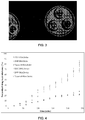
- FIG 3 shows the fluorescent image of a microdevice that was initially tagged with FITC-tomato lectin and then used to introduce Texas red-BSA to the reservoirs. Since protein conjugation to the microdevices takes place for a time of 4 hr, it is done first prior to drug loading to avoid any drug loss associated with the swelling of hydrogel in the protein solution and eventual release of the drug. It is clear from FIG 3 that the protein is mostly available on the surface of the PMMA microdevices and is readily available to recognize and bind with intestinal epithelia.
- FIG 3 A fluorescent micrograph composite confirming the conjugation of model fluorophore (FITC)-lectin to the surface of PMMA microdevice (bigger circle) and showing the loading of model drug (three reservoirs within the bigger circle).
- FITC model fluorophore
- BSA has a molecular weight of about 66 kDa (14 x 4 x 4 nm 3 ) and is above the gastrointestinal limit of epithelial absorption (20 kDa) (R. Goldie, Ed. C. Page, Elsevier 1994).
- the volume of a single reservoir is approximately 1.4 x 10 -2 nL and therefore a single drug loaded wafer (all three reservoirs loaded with same drug; FIG 2 , Panel B) or a multi-drug loaded wafer (different drug in different reservoir; FIG 2 , Panel C) holds approximately 85 ng of a single drug or 27 ng of each drug respectively.
- Similar drug loaded hydrogel boluses hydrogel pellets with no microdevices were polymerized as control samples and used for in vitro drug release studies. In the presence of a fluid, the hydrogel swells and allows the drug to diffuse out of the polymer matrix.
- microdevices were added to the apical side of a caco-2 monolayer that possesses in vivo- like tight-junctions (1-3 nm) and drug concentration was measured in the basal side ( K. Kitchens, et al., Pharm. Res. 33 (2006), 2818-2826 ).
- FIG 4 shows the in vitro release profile of the single drug loaded wafers.
- the microdevices Relative to the control (hydrogel bolus) sample, the microdevices show an enhanced permeation of drug across the caco-2 monolayer. This may be attributed to the fact that asymmetric microdevices release drug in a unidirectional way as compared to the hydrogel bolus to provide an increased concentration of drug across the device-cell interface. Similar results have been predicted by others, wherein the transport of high molecular weight proteins is attributed to the increased paracellular transport across the intestinal epithelium in the presence of a bioadhesive microparticle ( V. Uskokovic et al., Biomaterials 33 (2012), 1663-1672 ; K.E. Fischer et al., Nano Lett. 9 (2009), 716-720 ). This increase in drug permeation caused by the presence of a microdevice is important in the context of being able to improve the oral bioavailability of large molecules.
- FIG 4 shows the enhanced permeation of different single drug loaded microdevices as compared to their respective drug loaded hydrogel bolus (control; without devices) through a caco-2 epithelial monolayer on collagen treated Transwells®.
- This independent release behavior proves useful for combination therapies, wherein multiple drugs are to be delivered at the same time at the same place. All three drugs show linear release up to three hours, after which steady state is reached, which is consistent with the amount of drug loaded in each microdevice per wafer.
- the properties of the drug encompassing polymer matrix can also be modified to control the release kinetics.
- the polymer can be chosen specifically to release the drug via degradation or in response to external stimuli (pH, temperature, etc.).
- the swelling property of the hydrogel matrix in each reservoir was modified to provide different release kinetics by modifying the crosslinking ratio of the hydrogel.
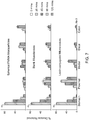
- Increasing crosslinking ratio of PEGDMA from 15 % for Texas red-BSA loaded reservoir to 30 % for FITC-BSA reservoir to 45 % for DNP-BSA reservoir was used for this study. It is observed from FIG 6 that Texas red-BSA released faster than FITC-BSA that released faster than DNP-BSA. In other words, the controlled release of different drugs is dependent on the crosslinking ratio of the hydrogel system.
- Timed release of drugs from microdevices may enable more effect delivery of therapeutics to different regions of the gut as the device transits through the intestinal tract.
- FIG 6 shows controlled release and permeation of different model drugs loaded into their respective reservoirs of the same device using different crosslinking ratio/amounts of crosslinker (PEGDMA).
- PEGDMA crosslinking ratio/amounts of crosslinker
- Intestines were dissected and divided into glass scintillation vials (Sigma, St. Louis MO). Proteinase K (Roche, Indianapolis, IN) at a concentration of 1mg/mL was added and the samples were incubated with gentle rocking at 56°C overnight. Lysates were passed though 40uM cell strainers (BD Falcon, Franklin Lakes, NJ), rinsed with DI water, and collected in a 5 mL water solution prior to quantitation of microdevices. Multiple random 100 ⁇ L samples of the washed lysates were added to a glass slide and counted using an optical microscope. The average number of microdevices in the respective sections of the intestine at different time points after gavaging is shown in FIG. 7 . A control sample of spherical PMMA microparticles having same surface area as that of flat microdevices was also used for comparison purposes.
- the shear experienced by the thin walls of the flat microdevices is less than that of the spherical microparticles of same total surface area. Also, there is an increased contact area in the case of flat microdevices than spherical microparticles. These reasons enhance the chances of a microdevice to stay longer in a given section of the gastrointestine as compared to spherical particles, thereby potentially increasing the residence time of a drug encompassed in microdevices. This should subsequently increase the drugs absorption in the GI and its overall therapeutic bioavailability.
- the stability of the drug encompassing hydrogel from releasing the drug in the various regions of the intestine was studied using different pH solutions. Briefly, 100 ⁇ L of FITC-BSA (37 ⁇ g) loaded PEG-MMA solution (used as before in loading microdevice reservoirs) was photopolymerized as hydrogel discs. The 100 ⁇ L discs were then individually placed in different pH solutions and the release of FITC-BSA was measured over time using a fluorimeter. FIG 8 shows the release profile of the drug across different pHs.
- the methacrylate group of the MMA in the hydrogel responds to changes in pH.
- the hydrogel behaves hydrophobic and therefore remains in a compressed state. At this state the diffusion of drug outside of the hydrogel is hindered.
- pH above pKa of the hydrogel they behave hydrophilic and result in swelling of the hydrogel. This opens up the mesh size of the hydrogel, thereby releasing out the model drug at a faster rate via diffusion. Therefore, the chosen PEGDMA-MMA hydrogel system would prove useful in not releasing the drug in the harsh stomach environment (where pH is around 2) but releases the drug faster in the near neutral intestinal and colonic pH.
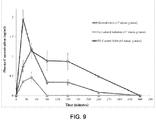
- FIG 9 shows the pharmacokinetic data of gavaged Acyclovir at various time points. It was observed that the plasma concentration of Acyclovir from microdevices at respective time points is more than that of orally gavaged Acyclovir solution of same concentration. This enhanced bioavailability of Acyclovir in plasma may be attributed to the increased bioadhesion of microdevices ( FIG 7 ) leading to an increased residency time of drug available for absorption in the small intestinal section of GI. Also, unidirectional release of drug from devices results in an increased local concentration of drug at the device-epithelia interface, thereby resulting in an increased absorption of the drug by the GI.
Landscapes
- Health & Medical Sciences (AREA)
- Physics & Mathematics (AREA)
- General Physics & Mathematics (AREA)
- Medicinal Chemistry (AREA)
- Chemical & Material Sciences (AREA)
- Public Health (AREA)
- Veterinary Medicine (AREA)
- Life Sciences & Earth Sciences (AREA)
- Animal Behavior & Ethology (AREA)
- General Health & Medical Sciences (AREA)
- Engineering & Computer Science (AREA)
- Epidemiology (AREA)
- Pharmacology & Pharmacy (AREA)
- Dermatology (AREA)
- Bioinformatics & Cheminformatics (AREA)
- Hematology (AREA)
- Heart & Thoracic Surgery (AREA)
- Biomedical Technology (AREA)
- Anesthesiology (AREA)
- Medicinal Preparation (AREA)
- Materials For Medical Uses (AREA)
- Apparatus Associated With Microorganisms And Enzymes (AREA)
Applications Claiming Priority (2)
| Application Number | Priority Date | Filing Date | Title |
|---|---|---|---|
| US201261653119P | 2012-05-30 | 2012-05-30 | |
| PCT/US2013/042710 WO2013181107A1 (en) | 2012-05-30 | 2013-05-24 | Bioactive agent delivery devices and methods of making and using the same |
Publications (3)
| Publication Number | Publication Date |
|---|---|
| EP2856259A1 EP2856259A1 (en) | 2015-04-08 |
| EP2856259A4 EP2856259A4 (en) | 2015-12-30 |
| EP2856259B1 true EP2856259B1 (en) | 2018-12-26 |
Family
ID=49673842
Family Applications (1)
| Application Number | Title | Priority Date | Filing Date |
|---|---|---|---|
| EP13797402.8A Not-in-force EP2856259B1 (en) | 2012-05-30 | 2013-05-24 | Bioactive agent delivery devices and methods of making and using the same |
Country Status (8)
| Country | Link |
|---|---|
| US (1) | US9878137B2 (enExample) |
| EP (1) | EP2856259B1 (enExample) |
| JP (1) | JP6336442B2 (enExample) |
| CN (1) | CN104412160B (enExample) |
| BR (1) | BR112014029760A2 (enExample) |
| CA (1) | CA2875146C (enExample) |
| IN (1) | IN2014DN10765A (enExample) |
| WO (1) | WO2013181107A1 (enExample) |
Families Citing this family (12)
| Publication number | Priority date | Publication date | Assignee | Title |
|---|---|---|---|---|
| AU2012340107B2 (en) | 2011-11-18 | 2017-06-15 | Regeneron Pharmaceuticals, Inc. | Polymer protein microparticles |
| WO2014039964A2 (en) | 2012-09-10 | 2014-03-13 | The Regents Of The University Of California | Compounds and methods for modulating vascular injury |
| CN106061292B (zh) | 2013-12-16 | 2020-01-21 | 麻省理工学院 | 强化的微量营养素盐调配物 |
| JP2017507165A (ja) | 2013-12-16 | 2017-03-16 | マサチューセッツ インスティテュート オブ テクノロジー | マイクロモールド成形された、または3次元印刷されたパルス放出ワクチン製剤 |
| EP3233124B1 (en) * | 2014-12-15 | 2020-11-18 | The Regents of The University of California | Nanowire-coated microdevice and method of making and using the same |
| MX390837B (es) | 2015-10-16 | 2025-03-21 | Regeneron Pharma | Composiciones de proteinas estables. |
| US10429387B2 (en) * | 2016-07-27 | 2019-10-01 | Universiteit Tweate | Simple and affordable method for immuophenotyping using a microfluidic chip sample preparation with image cytometry |
| US20190076631A1 (en) * | 2017-09-13 | 2019-03-14 | Massachusetts Institute Of Technology | Microdevices with complex geometries |
| JP7287032B2 (ja) * | 2019-03-20 | 2023-06-06 | 株式会社リコー | シート、シート積層体、医薬品、シートの製造方法、及びシート積層体の製造方法 |
| IL298019A (en) | 2020-05-13 | 2023-01-01 | Massachusetts Inst Technology | Compositions of polymeric microdevices and their use in cancer immunotherapy |
| CN113804667A (zh) * | 2021-09-23 | 2021-12-17 | 上海交通大学 | 一种新型可膨胀生物样本的水凝胶及其应用 |
| US20240077474A1 (en) * | 2022-09-06 | 2024-03-07 | Seagate Technology Llc | System and methods for positioning biomaterial on a substrate |
Family Cites Families (16)
| Publication number | Priority date | Publication date | Assignee | Title |
|---|---|---|---|---|
| US5410016A (en) | 1990-10-15 | 1995-04-25 | Board Of Regents, The University Of Texas System | Photopolymerizable biodegradable hydrogels as tissue contacting materials and controlled-release carriers |
| EP0832446A1 (en) * | 1995-06-07 | 1998-04-01 | The Regents Of The University Of California | Therapeutic microdevices and methods of making and using same |
| US5567271A (en) | 1995-07-26 | 1996-10-22 | Chartered Semiconductor Manufacturing Pte Ltd | Oxygen reactive ion etch (RIE) plasma method for removing oxidized organic residues from semiconductor substrates |
| US5797898A (en) * | 1996-07-02 | 1998-08-25 | Massachusetts Institute Of Technology | Microchip drug delivery devices |
| US6391216B1 (en) | 1997-09-22 | 2002-05-21 | National Research Institute For Metals | Method for reactive ion etching and apparatus therefor |
| US6355270B1 (en) * | 1999-01-11 | 2002-03-12 | The Regents Of The University Of California | Particles for oral delivery of peptides and proteins |
| US6770441B2 (en) * | 2000-02-10 | 2004-08-03 | Illumina, Inc. | Array compositions and methods of making same |
| US7351376B1 (en) * | 2000-06-05 | 2008-04-01 | California Institute Of Technology | Integrated active flux microfluidic devices and methods |
| DE60219607T2 (de) | 2001-01-09 | 2007-12-27 | Microchips, Inc., Bedford | Flexible mikrochip-vorrichtungen zur ophthalmologischen und anderen applikation |
| US20020115224A1 (en) * | 2001-02-16 | 2002-08-22 | Ulrich Rudel | Method for the preparation of optical (bio)chemical sensor devices |
| WO2004006840A2 (en) * | 2002-07-12 | 2004-01-22 | The Regents Of The University Of California | Three dimensional cell patterned bioploymer scaffolds and method of making the same |
| WO2006050106A1 (en) | 2004-10-28 | 2006-05-11 | Microchips, Inc. | Orthopedic and dental implant devices providing controlled drug delivery |
| EP2316505B1 (en) | 2006-03-14 | 2017-01-18 | University Of Southern California | Mems device for delivery of therapeutic agents |
| US20100318193A1 (en) * | 2007-03-08 | 2010-12-16 | Desai Tejal A | Topographically engineered structures and methods for using the same in regenerative medicine applications |
| EP3000434A1 (en) * | 2007-03-16 | 2016-03-30 | The Regents Of The University Of California | Nanostructure surface coated medical implants and methods of using the same |
| EP2427179A4 (en) | 2009-05-04 | 2013-09-11 | Psivida Inc | POROUS PARTICLES FOR THE RELEASE OF SILICIUM MEDICINES |
-
2013
- 2013-05-24 IN IN10765DEN2014 patent/IN2014DN10765A/en unknown
- 2013-05-24 BR BR112014029760A patent/BR112014029760A2/pt not_active Application Discontinuation
- 2013-05-24 CA CA2875146A patent/CA2875146C/en not_active Expired - Fee Related
- 2013-05-24 US US14/403,056 patent/US9878137B2/en active Active
- 2013-05-24 CN CN201380035217.XA patent/CN104412160B/zh not_active Expired - Fee Related
- 2013-05-24 EP EP13797402.8A patent/EP2856259B1/en not_active Not-in-force
- 2013-05-24 JP JP2015515097A patent/JP6336442B2/ja not_active Expired - Fee Related
- 2013-05-24 WO PCT/US2013/042710 patent/WO2013181107A1/en not_active Ceased
Non-Patent Citations (1)
| Title |
|---|
| None * |
Also Published As
| Publication number | Publication date |
|---|---|
| CA2875146A1 (en) | 2013-12-05 |
| US9878137B2 (en) | 2018-01-30 |
| JP2015519366A (ja) | 2015-07-09 |
| EP2856259A4 (en) | 2015-12-30 |
| JP6336442B2 (ja) | 2018-06-06 |
| WO2013181107A1 (en) | 2013-12-05 |
| CN104412160B (zh) | 2019-09-20 |
| IN2014DN10765A (enExample) | 2015-09-04 |
| CA2875146C (en) | 2022-03-22 |
| US20150119807A1 (en) | 2015-04-30 |
| CN104412160A (zh) | 2015-03-11 |
| BR112014029760A2 (pt) | 2017-06-27 |
| EP2856259A1 (en) | 2015-04-08 |
Similar Documents
| Publication | Publication Date | Title |
|---|---|---|
| US9878137B2 (en) | Bioactive agent delivery devices and methods of making and using the same | |
| Chirra et al. | Multi‐reservoir bioadhesive microdevices for independent rate‐controlled delivery of multiple drugs | |
| AU2006315238B2 (en) | Injectable formulation capable of forming a drug-releasing device | |
| US11173129B2 (en) | Nanowire-coated microdevice and method of making and using the same | |
| JP6204906B2 (ja) | 多層薄膜薬物送達デバイスとその作製方法および使用方法 | |
| US9180102B2 (en) | Methods for fabricating nano and microparticles for drug delivery | |
| US20180098934A1 (en) | Mucoadhesive devices for delivery of active agents | |
| US11020345B2 (en) | Nanostraw devices and methods of fabricating and using the same | |
| US20120059456A1 (en) | Modification of stent surfaces to impart functionality | |
| US8986596B2 (en) | Methods of forming nanoparticles using semiconductor manufacturing infrastructure | |
| Fox | Polymeric Micro-and Nanofabricatced Devices for Oral Drug Delivery | |
| EP3773480B1 (en) | An implantable device for localized drug delivery, uses thereof and a manufacturing method thereof | |
| MX2010005067A (es) | Novedoso sistema combinado de liberacion controlada. | |
| Buracas | Water-In-Oil-In-Water Emulsions of Biopharmaceuticals for Administration by Injection | |
| CN1561962A (zh) | 植入式可降解高分子材料药物控释载体及其制备工艺 | |
| CN118490898A (zh) | 气管支架以及气管支架薄膜的表面改性方法 | |
| CN116075294A (zh) | 用于局部药物递送的自包埋颗粒的受控释放 | |
| Singh | Formulation and Evaluation of Colon Targeted Drug Delivery System for an Anti-Amoebic Drug |
Legal Events
| Date | Code | Title | Description |
|---|---|---|---|
| PUAI | Public reference made under article 153(3) epc to a published international application that has entered the european phase |
Free format text: ORIGINAL CODE: 0009012 |
|
| 17P | Request for examination filed |
Effective date: 20141124 |
|
| AK | Designated contracting states |
Kind code of ref document: A1 Designated state(s): AL AT BE BG CH CY CZ DE DK EE ES FI FR GB GR HR HU IE IS IT LI LT LU LV MC MK MT NL NO PL PT RO RS SE SI SK SM TR |
|
| AX | Request for extension of the european patent |
Extension state: BA ME |
|
| DAX | Request for extension of the european patent (deleted) | ||
| RA4 | Supplementary search report drawn up and despatched (corrected) |
Effective date: 20151126 |
|
| RIC1 | Information provided on ipc code assigned before grant |
Ipc: G03F 7/00 20060101AFI20151120BHEP Ipc: A61K 9/00 20060101ALI20151120BHEP Ipc: G03F 7/40 20060101ALI20151120BHEP |
|
| GRAP | Despatch of communication of intention to grant a patent |
Free format text: ORIGINAL CODE: EPIDOSNIGR1 |
|
| STAA | Information on the status of an ep patent application or granted ep patent |
Free format text: STATUS: GRANT OF PATENT IS INTENDED |
|
| INTG | Intention to grant announced |
Effective date: 20180710 |
|
| GRAS | Grant fee paid |
Free format text: ORIGINAL CODE: EPIDOSNIGR3 |
|
| GRAA | (expected) grant |
Free format text: ORIGINAL CODE: 0009210 |
|
| STAA | Information on the status of an ep patent application or granted ep patent |
Free format text: STATUS: THE PATENT HAS BEEN GRANTED |
|
| AK | Designated contracting states |
Kind code of ref document: B1 Designated state(s): AL AT BE BG CH CY CZ DE DK EE ES FI FR GB GR HR HU IE IS IT LI LT LU LV MC MK MT NL NO PL PT RO RS SE SI SK SM TR |
|
| REG | Reference to a national code |
Ref country code: GB Ref legal event code: FG4D |
|
| REG | Reference to a national code |
Ref country code: CH Ref legal event code: EP |
|
| REG | Reference to a national code |
Ref country code: AT Ref legal event code: REF Ref document number: 1082218 Country of ref document: AT Kind code of ref document: T Effective date: 20190115 |
|
| REG | Reference to a national code |
Ref country code: DE Ref legal event code: R096 Ref document number: 602013048897 Country of ref document: DE |
|
| REG | Reference to a national code |
Ref country code: IE Ref legal event code: FG4D |
|
| PG25 | Lapsed in a contracting state [announced via postgrant information from national office to epo] |
Ref country code: FI Free format text: LAPSE BECAUSE OF FAILURE TO SUBMIT A TRANSLATION OF THE DESCRIPTION OR TO PAY THE FEE WITHIN THE PRESCRIBED TIME-LIMIT Effective date: 20181226 Ref country code: NO Free format text: LAPSE BECAUSE OF FAILURE TO SUBMIT A TRANSLATION OF THE DESCRIPTION OR TO PAY THE FEE WITHIN THE PRESCRIBED TIME-LIMIT Effective date: 20190326 Ref country code: LV Free format text: LAPSE BECAUSE OF FAILURE TO SUBMIT A TRANSLATION OF THE DESCRIPTION OR TO PAY THE FEE WITHIN THE PRESCRIBED TIME-LIMIT Effective date: 20181226 Ref country code: LT Free format text: LAPSE BECAUSE OF FAILURE TO SUBMIT A TRANSLATION OF THE DESCRIPTION OR TO PAY THE FEE WITHIN THE PRESCRIBED TIME-LIMIT Effective date: 20181226 Ref country code: HR Free format text: LAPSE BECAUSE OF FAILURE TO SUBMIT A TRANSLATION OF THE DESCRIPTION OR TO PAY THE FEE WITHIN THE PRESCRIBED TIME-LIMIT Effective date: 20181226 Ref country code: BG Free format text: LAPSE BECAUSE OF FAILURE TO SUBMIT A TRANSLATION OF THE DESCRIPTION OR TO PAY THE FEE WITHIN THE PRESCRIBED TIME-LIMIT Effective date: 20190326 |
|
| REG | Reference to a national code |
Ref country code: NL Ref legal event code: MP Effective date: 20181226 |
|
| REG | Reference to a national code |
Ref country code: LT Ref legal event code: MG4D |
|
| PG25 | Lapsed in a contracting state [announced via postgrant information from national office to epo] |
Ref country code: AL Free format text: LAPSE BECAUSE OF FAILURE TO SUBMIT A TRANSLATION OF THE DESCRIPTION OR TO PAY THE FEE WITHIN THE PRESCRIBED TIME-LIMIT Effective date: 20181226 Ref country code: RS Free format text: LAPSE BECAUSE OF FAILURE TO SUBMIT A TRANSLATION OF THE DESCRIPTION OR TO PAY THE FEE WITHIN THE PRESCRIBED TIME-LIMIT Effective date: 20181226 Ref country code: GR Free format text: LAPSE BECAUSE OF FAILURE TO SUBMIT A TRANSLATION OF THE DESCRIPTION OR TO PAY THE FEE WITHIN THE PRESCRIBED TIME-LIMIT Effective date: 20190327 Ref country code: SE Free format text: LAPSE BECAUSE OF FAILURE TO SUBMIT A TRANSLATION OF THE DESCRIPTION OR TO PAY THE FEE WITHIN THE PRESCRIBED TIME-LIMIT Effective date: 20181226 |
|
| REG | Reference to a national code |
Ref country code: AT Ref legal event code: MK05 Ref document number: 1082218 Country of ref document: AT Kind code of ref document: T Effective date: 20181226 |
|
| PG25 | Lapsed in a contracting state [announced via postgrant information from national office to epo] |
Ref country code: NL Free format text: LAPSE BECAUSE OF FAILURE TO SUBMIT A TRANSLATION OF THE DESCRIPTION OR TO PAY THE FEE WITHIN THE PRESCRIBED TIME-LIMIT Effective date: 20181226 |
|
| PG25 | Lapsed in a contracting state [announced via postgrant information from national office to epo] |
Ref country code: CZ Free format text: LAPSE BECAUSE OF FAILURE TO SUBMIT A TRANSLATION OF THE DESCRIPTION OR TO PAY THE FEE WITHIN THE PRESCRIBED TIME-LIMIT Effective date: 20181226 Ref country code: PL Free format text: LAPSE BECAUSE OF FAILURE TO SUBMIT A TRANSLATION OF THE DESCRIPTION OR TO PAY THE FEE WITHIN THE PRESCRIBED TIME-LIMIT Effective date: 20181226 Ref country code: ES Free format text: LAPSE BECAUSE OF FAILURE TO SUBMIT A TRANSLATION OF THE DESCRIPTION OR TO PAY THE FEE WITHIN THE PRESCRIBED TIME-LIMIT Effective date: 20181226 Ref country code: PT Free format text: LAPSE BECAUSE OF FAILURE TO SUBMIT A TRANSLATION OF THE DESCRIPTION OR TO PAY THE FEE WITHIN THE PRESCRIBED TIME-LIMIT Effective date: 20190426 Ref country code: IT Free format text: LAPSE BECAUSE OF FAILURE TO SUBMIT A TRANSLATION OF THE DESCRIPTION OR TO PAY THE FEE WITHIN THE PRESCRIBED TIME-LIMIT Effective date: 20181226 |
|
| PGFP | Annual fee paid to national office [announced via postgrant information from national office to epo] |
Ref country code: IT Payment date: 20190430 Year of fee payment: 7 |
|
| PG25 | Lapsed in a contracting state [announced via postgrant information from national office to epo] |
Ref country code: SM Free format text: LAPSE BECAUSE OF FAILURE TO SUBMIT A TRANSLATION OF THE DESCRIPTION OR TO PAY THE FEE WITHIN THE PRESCRIBED TIME-LIMIT Effective date: 20181226 Ref country code: EE Free format text: LAPSE BECAUSE OF FAILURE TO SUBMIT A TRANSLATION OF THE DESCRIPTION OR TO PAY THE FEE WITHIN THE PRESCRIBED TIME-LIMIT Effective date: 20181226 Ref country code: RO Free format text: LAPSE BECAUSE OF FAILURE TO SUBMIT A TRANSLATION OF THE DESCRIPTION OR TO PAY THE FEE WITHIN THE PRESCRIBED TIME-LIMIT Effective date: 20181226 Ref country code: SK Free format text: LAPSE BECAUSE OF FAILURE TO SUBMIT A TRANSLATION OF THE DESCRIPTION OR TO PAY THE FEE WITHIN THE PRESCRIBED TIME-LIMIT Effective date: 20181226 Ref country code: IS Free format text: LAPSE BECAUSE OF FAILURE TO SUBMIT A TRANSLATION OF THE DESCRIPTION OR TO PAY THE FEE WITHIN THE PRESCRIBED TIME-LIMIT Effective date: 20190426 |
|
| REG | Reference to a national code |
Ref country code: DE Ref legal event code: R097 Ref document number: 602013048897 Country of ref document: DE |
|
| PG25 | Lapsed in a contracting state [announced via postgrant information from national office to epo] |
Ref country code: DK Free format text: LAPSE BECAUSE OF FAILURE TO SUBMIT A TRANSLATION OF THE DESCRIPTION OR TO PAY THE FEE WITHIN THE PRESCRIBED TIME-LIMIT Effective date: 20181226 Ref country code: AT Free format text: LAPSE BECAUSE OF FAILURE TO SUBMIT A TRANSLATION OF THE DESCRIPTION OR TO PAY THE FEE WITHIN THE PRESCRIBED TIME-LIMIT Effective date: 20181226 |
|
| PLBE | No opposition filed within time limit |
Free format text: ORIGINAL CODE: 0009261 |
|
| STAA | Information on the status of an ep patent application or granted ep patent |
Free format text: STATUS: NO OPPOSITION FILED WITHIN TIME LIMIT |
|
| 26N | No opposition filed |
Effective date: 20190927 |
|
| REG | Reference to a national code |
Ref country code: CH Ref legal event code: PL |
|
| PG25 | Lapsed in a contracting state [announced via postgrant information from national office to epo] |
Ref country code: LI Free format text: LAPSE BECAUSE OF NON-PAYMENT OF DUE FEES Effective date: 20190531 Ref country code: CH Free format text: LAPSE BECAUSE OF NON-PAYMENT OF DUE FEES Effective date: 20190531 Ref country code: MC Free format text: LAPSE BECAUSE OF FAILURE TO SUBMIT A TRANSLATION OF THE DESCRIPTION OR TO PAY THE FEE WITHIN THE PRESCRIBED TIME-LIMIT Effective date: 20181226 |
|
| REG | Reference to a national code |
Ref country code: BE Ref legal event code: MM Effective date: 20190531 |
|
| PG25 | Lapsed in a contracting state [announced via postgrant information from national office to epo] |
Ref country code: SI Free format text: LAPSE BECAUSE OF FAILURE TO SUBMIT A TRANSLATION OF THE DESCRIPTION OR TO PAY THE FEE WITHIN THE PRESCRIBED TIME-LIMIT Effective date: 20181226 Ref country code: LU Free format text: LAPSE BECAUSE OF NON-PAYMENT OF DUE FEES Effective date: 20190524 |
|
| PG25 | Lapsed in a contracting state [announced via postgrant information from national office to epo] |
Ref country code: TR Free format text: LAPSE BECAUSE OF FAILURE TO SUBMIT A TRANSLATION OF THE DESCRIPTION OR TO PAY THE FEE WITHIN THE PRESCRIBED TIME-LIMIT Effective date: 20181226 |
|
| PG25 | Lapsed in a contracting state [announced via postgrant information from national office to epo] |
Ref country code: BE Free format text: LAPSE BECAUSE OF NON-PAYMENT OF DUE FEES Effective date: 20190531 |
|
| PG25 | Lapsed in a contracting state [announced via postgrant information from national office to epo] |
Ref country code: IE Free format text: LAPSE BECAUSE OF NON-PAYMENT OF DUE FEES Effective date: 20200524 |
|
| PG25 | Lapsed in a contracting state [announced via postgrant information from national office to epo] |
Ref country code: CY Free format text: LAPSE BECAUSE OF FAILURE TO SUBMIT A TRANSLATION OF THE DESCRIPTION OR TO PAY THE FEE WITHIN THE PRESCRIBED TIME-LIMIT Effective date: 20181226 |
|
| PG25 | Lapsed in a contracting state [announced via postgrant information from national office to epo] |
Ref country code: HU Free format text: LAPSE BECAUSE OF FAILURE TO SUBMIT A TRANSLATION OF THE DESCRIPTION OR TO PAY THE FEE WITHIN THE PRESCRIBED TIME-LIMIT; INVALID AB INITIO Effective date: 20130524 Ref country code: MT Free format text: LAPSE BECAUSE OF FAILURE TO SUBMIT A TRANSLATION OF THE DESCRIPTION OR TO PAY THE FEE WITHIN THE PRESCRIBED TIME-LIMIT Effective date: 20181226 |
|
| PGFP | Annual fee paid to national office [announced via postgrant information from national office to epo] |
Ref country code: GB Payment date: 20211103 Year of fee payment: 9 Ref country code: DE Payment date: 20211130 Year of fee payment: 9 Ref country code: FR Payment date: 20211104 Year of fee payment: 9 |
|
| PG25 | Lapsed in a contracting state [announced via postgrant information from national office to epo] |
Ref country code: MK Free format text: LAPSE BECAUSE OF FAILURE TO SUBMIT A TRANSLATION OF THE DESCRIPTION OR TO PAY THE FEE WITHIN THE PRESCRIBED TIME-LIMIT Effective date: 20181226 |
|
| REG | Reference to a national code |
Ref country code: DE Ref legal event code: R119 Ref document number: 602013048897 Country of ref document: DE |
|
| GBPC | Gb: european patent ceased through non-payment of renewal fee |
Effective date: 20220524 |
|
| PG25 | Lapsed in a contracting state [announced via postgrant information from national office to epo] |
Ref country code: FR Free format text: LAPSE BECAUSE OF NON-PAYMENT OF DUE FEES Effective date: 20220531 |
|
| PG25 | Lapsed in a contracting state [announced via postgrant information from national office to epo] |
Ref country code: GB Free format text: LAPSE BECAUSE OF NON-PAYMENT OF DUE FEES Effective date: 20220524 Ref country code: DE Free format text: LAPSE BECAUSE OF NON-PAYMENT OF DUE FEES Effective date: 20221201 |