EP2851807B1 - Method and system for supporting resource isolation under multi-core architecture - Google Patents
Method and system for supporting resource isolation under multi-core architecture Download PDFInfo
- Publication number
- EP2851807B1 EP2851807B1 EP13885510.1A EP13885510A EP2851807B1 EP 2851807 B1 EP2851807 B1 EP 2851807B1 EP 13885510 A EP13885510 A EP 13885510A EP 2851807 B1 EP2851807 B1 EP 2851807B1
- Authority
- EP
- European Patent Office
- Prior art keywords
- run
- core
- processing cores
- processing
- time
- Prior art date
- Legal status (The legal status is an assumption and is not a legal conclusion. Google has not performed a legal analysis and makes no representation as to the accuracy of the status listed.)
- Active
Links
Images



Classifications
-
- G—PHYSICS
- G06—COMPUTING OR CALCULATING; COUNTING
- G06F—ELECTRIC DIGITAL DATA PROCESSING
- G06F9/00—Arrangements for program control, e.g. control units
- G06F9/06—Arrangements for program control, e.g. control units using stored programs, i.e. using an internal store of processing equipment to receive or retain programs
- G06F9/46—Multiprogramming arrangements
- G06F9/50—Allocation of resources, e.g. of the central processing unit [CPU]
- G06F9/5005—Allocation of resources, e.g. of the central processing unit [CPU] to service a request
-
- G—PHYSICS
- G06—COMPUTING OR CALCULATING; COUNTING
- G06F—ELECTRIC DIGITAL DATA PROCESSING
- G06F9/00—Arrangements for program control, e.g. control units
- G06F9/06—Arrangements for program control, e.g. control units using stored programs, i.e. using an internal store of processing equipment to receive or retain programs
- G06F9/46—Multiprogramming arrangements
- G06F9/52—Program synchronisation; Mutual exclusion, e.g. by means of semaphores
-
- G—PHYSICS
- G06—COMPUTING OR CALCULATING; COUNTING
- G06F—ELECTRIC DIGITAL DATA PROCESSING
- G06F9/00—Arrangements for program control, e.g. control units
- G06F9/06—Arrangements for program control, e.g. control units using stored programs, i.e. using an internal store of processing equipment to receive or retain programs
- G06F9/44—Arrangements for executing specific programs
- G06F9/4401—Bootstrapping
- G06F9/4405—Initialisation of multiprocessor systems
-
- G—PHYSICS
- G06—COMPUTING OR CALCULATING; COUNTING
- G06F—ELECTRIC DIGITAL DATA PROCESSING
- G06F9/00—Arrangements for program control, e.g. control units
- G06F9/06—Arrangements for program control, e.g. control units using stored programs, i.e. using an internal store of processing equipment to receive or retain programs
- G06F9/44—Arrangements for executing specific programs
- G06F9/4401—Bootstrapping
- G06F9/4406—Loading of operating system
Definitions
- Embodiments of the present invention relate to computer technologies, and in particular, to a method and a system for supporting resource isolation in a multi-core architecture.
- a cloud storage system based on a large-scale unified resource pool focuses on data storage and management, supports unified deployment of multiple services, efficiently use disks, reduces investment loss by means of on-demand supply, and effectively uses resources and reduces comprehensive energy consumption by means of reasonable scheduling.
- a server that has a multi-core ARM processor and a few hard disks is adopted.
- an ARM server based on a reduced instruction set computing may give play to advantages of the ARM processor: low power consumption, high integration level, and low comprehensive costs.
- US 5,590,301 A discloses an address transformation in a cluster computer system.
- the processors are organized into clusters, each having a plurality of processors and a common secondary cache.
- Each cluster is assigned a two-bit cluster number.
- an address translator is provided for effecting transformation between internal memory space addresses and external memory space addresses.
- the external memory space is divided into areas private to each cluster and shared by all the processors.
- An internal address indicator bit in conjunction with the cluster number from a requesting processor primary cache, is employed to set up the transformation either to the private external space of that cluster or the shared external space.
- a pair of indicator bits are employed to set up the generation of an internal address and an indicator that the external address defines either shared external space or private external space for the designated cluster.
- a cluster member number assigned to each processor is used by the secondary cache of each cluster to track which processor sends/receives information to/from the mass memory.
- Embodiments of the present invention provide a method and a system for supporting resource isolation in a multi-core architecture, to enable a failure domain of a multi-core processor to remain in a single hard disk.
- an embodiment of the present invention provides a system for supporting resource isolation in a multi-core architecture, where the system includes: a processor, where the processor includes multiple processing cores, and the multiple processing cores include a start-time primary core and at least one start-time secondary core; and memory space, where the memory space includes a shared memory segment and memory segments of the processing cores.
- Running information and run-time entry addresses of the processing cores are stored in the shared memory segment.
- the running information includes a mapping relationship between each processing core and each operating system, and sizes and start addresses of the memory segments.
- the run-time entry addresses of the processing cores are used to indicate, in respective memory segments, storage addresses of kernel images of operating systems that the processing cores need to run.
- the processor separately stores, according to the running information, the kernel images of the operating systems that the processing cores need to run into the memory segments of the processing cores, and separately writes the run-time entry addresses of the processing cores into the shared memory segment.
- Processing cores to be started separately obtain respective run-time entry addresses, and run the kernel images of the operating systems stored in respective memory segments.
- the processing cores of the processor elect and determine a run-time primary core from the processing cores according to a preset election algorithm, where the run-time primary core is used to perform arbitration control over input/output I/O resources.
- a run-time secondary core puts data that requires an I/O operation in the shared memory segment, and notifies the run-time primary core of a memory address related to the I/O operation, so that the run-time primary core invokes its own local physical drive to perform the I/O operation on an external device.
- the run-time secondary core invokes its own local physical drive, to perform an I/O operation on an external device.
- a boot loader is disposed inside the start-time primary core; and that the processor separately stores the kernel images of the operating systems that the processing cores need to run into the memory segments of the processing cores includes: the boot loader separately stores, according to the running information, the kernel images of the operating systems that the processing cores need to run into the memory segments of the processing cores.
- a boot loader is disposed inside the start-time primary core; and that the processor separately stores the kernel images of the operating systems that the processing cores need to run into the memory segments of the processing cores includes: the boot loader stores, according to the running information, the kernel image of the operating system that needs to be run into the memory segment allocated to at least one processing core of the processor, and runs the kernel image of the operating system; and the processing core that runs the operating system separately stores, according to the running information, kernel images of operating systems corresponding to the other processing cores of the processor that need to run the operating systems into memory segments of the other processing cores.
- a processing core group that includes at least two processing cores runs a kernel image of a same operating system, and furthermore, all the processing cores that constitute the processing core group share a same memory segment; or, the processing cores run kernel images of mutually different operating systems.
- an embodiment of the present invention provides a method for supporting resource isolation in a multi-core architecture, applicable to a system for supporting resource isolation in a multi-core architecture, where the system includes a processor and memory space.
- the processor includes multiple processing cores, and the multiple processing cores include a start-time primary core and at least one start-time secondary core.
- the memory space includes a shared memory segment and memory segments of the processing cores.
- Running information and run-time entry addresses of the processing cores are stored in the shared memory segment.
- the running information includes a mapping relationship between each processing core and each operating system, and sizes and start addresses of the memory segments.
- the run-time entry addresses of the processing cores are used to indicate, in respective memory segments, storage addresses of kernel images of operating systems that the processing cores need to run.
- the method for supporting resource isolation in a multi-core architecture includes:
- the processing cores of the processor elect and determine a run-time primary core from the processing cores according to a preset election algorithme, where the run-time primary core is used to perform arbitration control over input/output I/O resources.
- a run-time secondary core puts data that requires an I/O operation in the shared memory segment, and notifies the run-time primary core of a memory address related to the I/O operation, so that the run-time primary core invokes its own local physical drive to perform the I/O operation on an external device.
- the run-time secondary core invokes its own local physical drive to perform the I/O operation on an external device.
- a boot loader is disposed inside the start-time primary core; and separately storing, by the processor, the kernel images of the operating systems that the processing cores need to run into the memory segments of the processing cores includes:
- a boot loader is disposed inside the start-time primary core
- a processing core group that includes at least two processing cores runs a kernel image of a same operating system, and furthermore, all the processing cores that constitute the processing core group share a same memory segment; or, the processing cores run kernel images of mutually different operating systems.
- FIG. 1a is a schematic structural diagram of a system for supporting resource isolation in a multi-core architecture according to a first embodiment of the present invention.
- a system 10 for supporting resource isolation in a multi-core architecture shown in FIG. 1a is applicable to a cloud storage system based on a large-scale unified resource pool.
- FIG. 1b is a schematic structural diagram of a topology of a cloud storage system that adopts the system for supporting resource isolation in a multi-core architecture in the first embodiment of the present invention.
- a cloud storage system 100 includes: a switch 102, at least one system 10 for supporting resource isolation in a multi-core architecture, and at least one application server 101.
- the application server 101 is connected to the switch 102, and the system 10 for supporting resource isolation in a multi-core architecture is connected to the switch 102.
- the system 10 for supporting resource isolation in a multi-core architecture in this embodiment includes: a processor 11 and memory space 12.
- the processor 11 includes multiple processing cores: a start-time primary core 111 and at least one start-time secondary core 112.
- the memory space 12 includes a shared memory segment 123, a memory segment 121 of the start-time primary core 111 and a memory segment 122 of the start-time secondary core 112.
- Running information and run-time entry addresses of the processing cores are stored in the shared memory segment 123.
- the running information includes a mapping relationship between each processing core and each operating system, and sizes and start addresses of the memory segments.
- the run-time entry addresses of the processing cores are used to indicate, in respective memory segments, storage addresses of kernel images of operating systems that the processing cores need to run.
- the processor 11 separately stores the kernel images of the operating systems that the processing cores need to run into the memory segments of the processing cores, and writes the run-time entry addresses of the processing cores into the shared memory segment 123.
- Processing cores to be started separately obtain respective run-time entry addresses, and run the kernel images of the operating systems stored in respective memory segments.
- the processor 11 is a multi-core processor including multiple processing cores.
- an ARM or Intel ATOM processor may be adopted, but the present invention is not limited thereto.
- the processor 11 includes multiple processing cores, and FIG. 1a shows an example of a situation in which the processor 11 includes a start-time primary core 111 and a start-time secondary core 112.
- the processor 11 may include one or more start-time secondary cores, and details are not described herein again.
- the start-time primary core 111 refers to a processing core pre-determined by hardware and is configured with a boot loader 1111. Furthermore, the start-time primary core 111 is capable of triggering other processing cores to start and run.
- the start-time secondary core 112 refers to another processing core that is triggered and started by the start-time primary core 111 when the processor 11 is started.
- the boot loader 1111 for example, a UBoot, disposed inside the start-time primary core may implement device initialization, and may also store a kernel image of an operating system into a memory segment of a processing core that needs to run the operating system. FIG.
- 1a shows a mapping relationship between the start-time primary core 111 and an operating system 1, and between the start-time secondary core 112 and an operating system 2 respectively, where the operating system 1 and the operating system 2 may be LINUX, Windows, Solaris, DOS, OS/2, UNIX, XENIX, Netware, or different versions of a same operating system.
- the operating system 1 and the operating system 2 may be identical operating systems, and may also be different versions of a same type of operating system, or be operating systems of different types, but the present invention is not limited thereto.
- FIG. 2 is a partial schematic structural diagram of a shared memory segment in the system for supporting resource isolation in a multi-core architecture shown in FIG. 1a .
- running information 123a a run-time entry address 123b of the start-time secondary core 112, and a run-time entry address 123c of the start-time primary core 111 are stored in the shared memory segment 123.
- the running information 123a records planning information of a memory segment, and at least includes: a mapping relationship between each processing core and each operating system, and sizes and start addresses of the memory segments, that is, the following information: (1) the start-time primary core 111 running the operating system 1, and a size and a start address of the memory segment 121 allocated to the start-time primary core 111; (2) the start-time secondary core 112 running the operating system 2, and a size and a start address of the memory segment 122 allocated to the start-time secondary core 112; and (3) a size and a start address of the shared memory segment 123.
- the memory segments are independent of each other and isolated from each other, thereby allocating memory segments that are independent of each other to different operating systems.
- a running information address 1231 is a storage address of the running information 123a in the shared memory segment 123.
- the processing cores need to comply with an agreement of the running information address 1231, and query the running information by using the running information address 1231.
- running information addresses of the processing cores are separately indicated in the kernel image of the operating system stored by each processing core, and the running information may be dynamically modified and adjusted in the system running process.
- a run-time entry address pointer 1232 of the start-time secondary core 112 points to the run-time entry address 123b of the start-time secondary core 112, where the run-time entry address 123b is used to indicate, in the memory segment 122, a storage address of a kernel image of the operating system 2 that the start-time secondary core 112 needs to run.
- a run-time entry address pointer 1233 of the start-time primary core 111 points to the run-time entry address 123c of the start-time primary core 111, where the run-time entry address 123c is used to indicate, in the memory segment 121, a storage address of a kernel image of the operating system 1 that the start-time primary core 111 requires to run.
- Run-time entry address pointers of each processing core are separately preset in the UBoot before the system is started.
- the processor 11 stores the kernel images of the operating systems that the processing cores need to run into the memory segments of the processing cores in at least the following two manners:
- the boot loader 1111 stores, according to the running information 123a, the kernel image of the operating system that at least one processing core of the processor needs to run into the memory segment of the processor.
- the boot loader 1111 stores, according to the running information 123a, the kernel image of the operating system 1 that the start-time primary core 111 needs to run into the memory segment 121 allocated to the start-time primary core 111; then, the start-time primary core 111 runs the kernel image of the operating system 1 in the memory segment 121; and subsequently, the start-time primary core 111 stores, according to the running information 123a and by using the running operating system 1, the kernel image of the operating system 2 that the start-time secondary core 112 needs to run into the memory segment 122 of the start-time secondary core 112, so as to spread, in respective memory segments, the kernel images of the operating systems that the processing cores need to run.
- start-time primary core 111 acts as the processing core that firstly runs an operating system
- processing core that firstly starts and runs the operating system is not limited to the start-time primary core 111, and that any processing core of the processor 11 may be determined as the processing core that firstly starts and runs the operating system in, for example, a manner designated in advance.
- the kernel images of the operating systems that the processing cores need to run are spread in respective memory segments, so that the memory segments of different processing cores store the kernel images of the operating systems that the respective processing cores need to run, and resources on the memory segments are isolated from each other.
- mapping relationship between each processing core and each operating system recorded in the running information at least includes the following two relationships.
- Mapping relationship 1 a processing core group that includes at least two processing cores runs a kernel image of a same operating system. Optionally, all processing cores that constitute the processing core group share a same memory segment.
- the processing core group that includes at least two processing cores runs a kernel image of a same operating system. All processing cores that constitute the processing core group may share a same memory segment.
- the number of the processing core groups may be more than one, and operating systems separately run by each processing core group are independent of each other. Memory segments that are independent of each other are allocated to different operating systems, so that a failure in a single operating system does not affect other processing core groups or operating systems that run on other processing core groups, and thereby it is achieved that a failure domain of the multi-core processor remains in a single hard disk.
- Mapping relationship 2 the processing cores run kernel images of mutually different operating systems.
- the operating systems that are independent of each other run on the processing core group or independent single processing cores, thereby achieving inter-core operating system isolation.
- I/O resources and coprocessors of the multi-core processor are globally shared, after the processing cores are started, it is required to select one processing core from the processing cores to perform unified arbitration control over the I/O resources.
- the processing cores of the processor elect and determine a run-time primary core from the processing cores according to a preset election algorithm. The run-time primary core is used to perform arbitration control over the I/O resources.
- a run-time secondary core puts data that requires an I/O operation in the shared memory segment, and notifies the run-time primary core of a memory address related to the I/O operation, so that the run-time primary core invokes its own local physical drive to perform the I/O operation on an external device.
- the run-time secondary core invokes its own local physical drive, to perform the I/O operation on an external device.
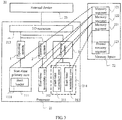
- FIG. 3 is a schematic structural diagram of a system for supporting resource isolation in a multi-core architecture according to a second embodiment of the present invention. This embodiment is implemented based on the foregoing embodiment.
- a system 20 for supporting resource isolation in a multi-core architecture in this embodiment includes a processor 21 and memory space 22.
- the processor 21 includes a start-time primary core 111, a start-time secondary core 112, a start-time secondary core 211, and a start-time secondary core 212.
- a boot loader 1111 is disposed inside the start-time primary core 111.
- the start-time primary core 111 and the start-time secondary core 112 run an operating system 1 and an operating system 2 respectively.
- the start-time secondary core 211 and the start-time secondary core 212 constitute a processing core group 214.
- the processing core group 214 runs a same operating system 3.
- the start-time primary core 111 corresponds to a memory segment 121
- the start-time secondary core 112 corresponds to a memory segment 122
- the processing core group 214 corresponds to a memory segment 221, and all these information is recorded in running information.
- the running information records, for example, the following information: (1) the start-time primary core 111 running the operating system 1, and a size and a start address of the memory segment 121 allocated to the start-time primary core 111; (2) the start-time secondary core 112 running the operating system 2, and a size and a start address of the memory segment 122 allocated to the start-time secondary core 112; and (3) the processing core group 214 running the operating system 3, and a size and a start address of the memory segment 221 allocated to the processing core group 214.
- memory segments are isolated among the memory segment 121, the memory segment 122, the memory segment 221, and the shared memory segment 123.
- each processing core is in a spin state, where the spin state refers to that the processing cores keep idling and wait to be waked by an external event.
- the processor 21 separately stores, according to a mapping relationship between each processing core and each operating system, and the sizes and the start addresses of the memory segments that are recorded in the running information, kernel images of the operating systems that the processing cores need to run into the memory segments of the processor by using a boot loader mode or a download mode, and separately writes the run-time entry addresses of the processing cores into the shared memory segment 123.
- the processing core that firstly starts and runs an operating system is preset to be the start-time primary core 111, but the present invention is not limited thereto, and the processing core that firstly starts and runs the operating system may also be preset to be another processing core of the processor 11.
- the start-time primary core 111 reads its own run-time entry address pointer, and checks whether there is a valid physical address, and if yes, jumps to the run-time entry address of the start-time primary core 111 to which the run-time entry address pointer points, and runs a kernel image of the operating system 1, so as to run the operating system 1.
- the start-time primary core 111 wakes processing cores to be started by using an inter-core communication mechanism.
- the processing cores to be started separately read respective run-time entry address pointers, and check whether there are valid physical addresses, and if yes, jump to run-time entry addresses to which respective run-time entry address pointers point, and run kernel images of corresponding operating systems, so as to run the corresponding operating systems.
- the processing cores jump to running information addresses to read the running information, and learn the operating systems that the respective processing cores need to run, and the sizes and the start addresses of the allocated memory segments. Therefore, the processing cores can only perform an operation on the shared memory segment 123 and respective memory segments. Therefore, in the system 20 for supporting resource isolation in a multi-core architecture in this embodiment, the operating systems that are independent of each other run on different processing cores or the processing core group of the processor. Furthermore, only when the system is started, the boot loader 1111 that runs on the start-time primary core 111 stores the kernel images of the operating systems that each processing core or the processing core group needs to run, into the memory segments of the processing cores or the processing core group.
- each processing core may be independently restarted, hibernated, or shut down, without affecting normal running of other processing cores.
- each processing core or its operating system fails, other processing cores or the operating systems run on other processing cores are not be affected, thereby achieving inter-core operating system isolation.
- An optional implementation scenario is that: when being restarted independently, a processing core only needs to be reset, reads a corresponding run-time entry address pointer to obtain the corresponding run-time entry address, and runs a kernel image of an operating system stored in a memory segment of the processing core without depending on the operating systems of the other processing cores.
- Another optional implementation scenario is that: in the system running process, for a certain processing core, the other processing cores may modify running information according to system requirements, the processing core is reset after learning that the running information is modified; when being restarted, the processing core learns new running information by reading the new running information in the running information address, and runs a re-designated operating system by reading a run-time entry address in a run-time entry address pointer.
- a processing core a of a multi-core processor has already occupied a memory segment, and runs an operating system A on the processing core a, and a processing core b is in a spin state;
- a processing core c may modify the running information according to a system running state, and the modified running information re-designates: that the processing core a and the processing core b constitute a processing core group T, and run a same operating system B on the processing core group T, a size of the memory segment allocated to the processing core group T, and a start address of the memory segment.
- the processing core a learns that the running information is changed, optionally, the processing core a firstly unloads the operating system A that run on the processing core a, and releases the occupied memory segment, and the processing core a is restarted.
- the processing core group T (the processing core a and the processing core b) runs the operating system B according to the modified running information, and occupies a new memory segment.
- the run-time primary core refers to the processing core that can perform centralized control and arbitration on the processing cores when the processing cores of the processor 21 are started.
- the run-time primary core is responsible for unified arbitration control over the I/O resources. Specifically, the run-time primary core is elected and determined by the processing cores of the processor 21 from the processing cores according to a preset election algorithm.
- the four processing cores in the running state constitute a cluster.
- the four processing cores run an election algorithm, for example, a PAXOS algorithm, by using inter-core communication, to elect and determine a run-time primary core.
- an election result is that: the start-time primary core 111 is elected as the run-time primary core, and the other processing cores are run-time secondary cores.
- the run-time primary core elected by the cluster by using multi-core negotiation is not limited to the start-time primary core 111, and may be any processing core.
- This embodiment merely shows an example that the start-time primary core acts as the elected run-time primary core, but the present invention is not limited thereto.
- the cluster of the processing cores re-elects a new run-time primary core. Uniqueness of the run-time primary core is ensured by the election algorithm, for example, the PAXOS algorithm.
- the run-time primary core is responsible for unified arbitration control over the I/O resources, and usage of all the I/O resources and coprocessor resources needs to be authorized by the run-time primary core.
- the run-time secondary core When a run-time secondary core needs to access an external device 23, the run-time secondary core sends a resource usage request to the run-time primary core. According to the resource usage request, the run-time primary core sends a resource request response to the run-time secondary core after exclusiveness usage resource arbitration based on a system resource usage condition and a resource allocation policy. After receiving the resource request response, the run-time secondary core obtains usage authorization of the I/O resources, and starts to perform an I/O operation on the external device 23.
- the run-time primary core may invoke its own local physical drive to perform the I/O operation on the external device.
- Each run-time secondary core may use the I/O resources to access the external device 23 in at least the following two manners:
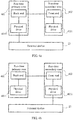
- FIG. 4a is a schematic diagram of implementation that a run-time secondary core of the system for supporting resource isolation in a multi-core architecture according to the second embodiment of the present invention accesses an external device
- FIG. 4b is a schematic diagram of another implementation that a run-time secondary core of the system for supporting resource isolation in a multi-core architecture according to the second embodiment of the present invention accesses an external device.
- a run-time secondary core 402 puts data that requires an I/O operation in the shared memory segment, and notifies a run-time primary core 401 of a memory address related to the I/O operation, so that the run-time primary core 401 invokes its own local physical drive 4011, to perform the I/O operation on the external device 23. That the run-time secondary core 402 performs the I/O operation on the external device 23 is implemented by the run-time primary core 401 as an agent.
- the run-time secondary core 402 may put the data that requires this I/O operation to the shared memory segment in a manner of sharing the memory, and notify the run-time primary core 401 of the memory address related to the I/O operation.
- the run-time primary core 401 receives notification information sent by the run-time secondary core 402, invokes the local physical drive 4011, and sends the data to the external device 23 by means of the I/O resources, to access the external device 23. For example, the run-time primary core 401 performs the I/O operation on the external device 23, and releases the I/O resources and related resources of the external device 23 after the access is completed.
- the run-time secondary core 402 invokes its own local physical drive 4021, and performs the I/O operation on the external device 23.
- the run-time primary core 401 approves the run-time secondary core 402 to use the I/O resources in a manner of control and arbitration.
- the run-time secondary core 402 accesses the allocated external device in a straight-through manner according to the resource request response sent by the run-time primary core 401, which includes performing an I/O straight-through operation on the external device 23, and directly performing the I/O resource operation by invoking the local physical drive 4021.
- each processing core performs the I/O operation on the external device 23 in a straight-through manner, and releases the control over the I/O resources to the run-time primary core 401 after the operation is completed, namely, notifies the run-time primary core 401 that the I/O operation on the external device 23 is completed.
- the run-time primary core 401 releases the I/O resources and related resource of the external device 23 according to the notification, so as to release the resources to the other processing cores.
- state synchronization information is maintained between the run-time primary core and the run-time secondary core.
- the run-time primary core finds that a certain processing core cannot be contacted, and if at this time the run-time primary core has already allocated an external device resource to the processing core that cannot be contacted, the run-time primary core takes back the external device resource.
- the run-time primary core is responsible for unified arbitration control over the I/O resources, so that each processing core uses the I/O resources to access the external device.
- the system for supporting resource isolation in a multi-core architecture provided by the foregoing embodiment of the present invention is also used for each processing core to access a common function part.
- the common function part may at least include coprocessor resources.
- the run-time primary core is elected from the processing cores to be responsible for unified arbitration control over I/O resources, thereby achieving I/O resource isolation.
- the operating systems that run on each processing core or the processing core group run independently of each other, unified I/O capability and coprocessor scheduling control in the multi-core processor are achieved, thereby ensuring that a failure domain of a multi-core processor remains in a single hard disk.
- FIG. 5 is a flowchart of a method for supporting resource isolation in a multi-core architecture according to a third embodiment of the present invention.
- the method of this embodiment is applicable to a system for supporting resource isolation in a multi-core architecture, where the system includes a processor and memory space.
- the processor includes multiple processing cores, and the multiple processing cores include a start-time primary core and at least one start-time secondary core.
- the memory space includes a shared memory segment and memory segments of the processing cores.
- Running information and run-time entry addresses of the processing cores are stored in the shared memory segment.
- the running information includes a mapping relationship between each processing core and each operating system, and sizes and start addresses of the memory segments.
- the run-time entry addresses of the processing cores are used to indicate, in respective memory segments, storage addresses of kernel images of operating systems that the processing cores need to run.
- the method in this embodiment includes the following steps.
- a processor separately stores the kernel images of the operating systems that the processing cores need to run into the memory segments of the processing cores, and separately writes the run-time entry addresses of the processing cores into the shared memory segment.
- the processing cores of the processor elect and determine a run-time primary core from the processing cores according to a preset election algorithm, where the run-time primary core is used to perform arbitration control over input/output I/O resources.
- a run-time secondary core puts data that requires an I/O operation in the shared memory segment, and notifies the run-time primary core of a memory address related to the I/O operation, so that the run-time primary core invokes its own local physical drive to perform the I/O operation on an external device.
- the run-time secondary core invokes its own local physical drive, to perform the I/O operation on an external device.
- a boot loader is disposed inside the start-time primary core; and that the processor separately stores the kernel images of the operating systems that the processing cores need to run into the memory segments of the processing cores includes: the boot loader separately stores, according to the running information, the kernel images of the operating systems that the processing cores need to run into the memory segments of the processing cores.
- a boot loader is disposed inside the start-time primary core; and that the processor separately stores the kernel images of the operating systems that the processing cores need to run into the memory segments of the processing cores includes: the boot loader stores, according to the running information, the kernel image of the operating system that needs to be run into the memory segment allocated to at least one processing core of the processor, and runs the kernel image of the operating system; and the processing core that runs the operating system separately stores, according to the running information, kernel images of operating systems corresponding to the other processing cores that need to run the operating systems, of the processor into memory segments of the other processing cores.
- a processing core group that includes at least two processing cores runs a kernel image of a same operating system, and furthermore, all the processing cores that constitute the processing core group share a same memory segment; or, the processing cores run kernel images of mutually different operating systems.
- the program may be stored in a computer readable storage medium.
- the foregoing storage medium includes: any medium that can store program code, such as a ROM, a RAM, a magnetic disk, or an optical disc.
Landscapes
- Engineering & Computer Science (AREA)
- Software Systems (AREA)
- Theoretical Computer Science (AREA)
- Physics & Mathematics (AREA)
- General Engineering & Computer Science (AREA)
- General Physics & Mathematics (AREA)
- Computer Security & Cryptography (AREA)
- Stored Programmes (AREA)
- Multi Processors (AREA)
Applications Claiming Priority (1)
| Application Number | Priority Date | Filing Date | Title |
|---|---|---|---|
| PCT/CN2013/076329 WO2014190486A1 (zh) | 2013-05-28 | 2013-05-28 | 支持多核架构下资源隔离的方法及系统 |
Publications (3)
| Publication Number | Publication Date |
|---|---|
| EP2851807A1 EP2851807A1 (en) | 2015-03-25 |
| EP2851807A4 EP2851807A4 (en) | 2015-04-22 |
| EP2851807B1 true EP2851807B1 (en) | 2017-09-20 |
Family
ID=50126070
Family Applications (1)
| Application Number | Title | Priority Date | Filing Date |
|---|---|---|---|
| EP13885510.1A Active EP2851807B1 (en) | 2013-05-28 | 2013-05-28 | Method and system for supporting resource isolation under multi-core architecture |
Country Status (5)
| Country | Link |
|---|---|
| US (1) | US9411646B2 (https=) |
| EP (1) | EP2851807B1 (https=) |
| JP (1) | JP6089349B2 (https=) |
| CN (1) | CN103608792B (https=) |
| WO (1) | WO2014190486A1 (https=) |
Families Citing this family (39)
| Publication number | Priority date | Publication date | Assignee | Title |
|---|---|---|---|---|
| CN104750510B (zh) * | 2013-12-30 | 2019-04-02 | 深圳市中兴微电子技术有限公司 | 一种芯片启动方法及多核处理器芯片 |
| TWI557644B (zh) * | 2014-11-12 | 2016-11-11 | 鴻海精密工業股份有限公司 | 雙處理器電子裝置及其快速開機啓動的方法 |
| CN106407131B (zh) * | 2016-03-30 | 2019-06-11 | 沈阳泰科易科技有限公司 | 内存访问方法和装置 |
| CN108228333A (zh) * | 2016-12-14 | 2018-06-29 | 中国航空工业集团公司西安航空计算技术研究所 | 一种多核系统的核间资源隔离方法 |
| CN108664325B (zh) * | 2017-03-30 | 2019-06-28 | 视联动力信息技术股份有限公司 | 处理数据的方法和电子设备 |
| US11240207B2 (en) | 2017-08-11 | 2022-02-01 | L3 Technologies, Inc. | Network isolation |
| US11601467B2 (en) | 2017-08-24 | 2023-03-07 | L3 Technologies, Inc. | Service provider advanced threat protection |
| US11336619B2 (en) | 2017-09-28 | 2022-05-17 | L3 Technologies, Inc. | Host process and memory separation |
| US11374906B2 (en) | 2017-09-28 | 2022-06-28 | L3 Technologies, Inc. | Data exfiltration system and methods |
| US11223601B2 (en) * | 2017-09-28 | 2022-01-11 | L3 Technologies, Inc. | Network isolation for collaboration software |
| US11552987B2 (en) | 2017-09-28 | 2023-01-10 | L3 Technologies, Inc. | Systems and methods for command and control protection |
| US10831626B2 (en) | 2017-10-19 | 2020-11-10 | International Business Machines Corporation | Method to sort partially good cores for specific operating system usage |
| US11550898B2 (en) | 2017-10-23 | 2023-01-10 | L3 Technologies, Inc. | Browser application implementing sandbox based internet isolation |
| US10824584B1 (en) * | 2018-04-03 | 2020-11-03 | Xilinx, Inc. | Device with data processing engine array that enables partial reconfiguration |
| US10642657B2 (en) * | 2018-06-27 | 2020-05-05 | The Hong Kong Polytechnic University | Client-server architecture for multicore computer system to realize single-core-equivalent view |
| CN109413497B (zh) * | 2018-09-12 | 2021-04-13 | 海信视像科技股份有限公司 | 一种智能电视机及其系统启动方法 |
| KR102558901B1 (ko) | 2018-09-19 | 2023-07-25 | 에스케이하이닉스 주식회사 | 메모리 시스템 및 메모리 시스템의 동작방법 |
| CN111767082A (zh) * | 2019-04-02 | 2020-10-13 | 华为技术有限公司 | 计算芯片启动方法、装置和计算机系统 |
| CN110471705A (zh) * | 2019-07-15 | 2019-11-19 | 江苏泛腾电子科技有限公司 | 一种定制双系统 |
| CN110704116A (zh) * | 2019-09-17 | 2020-01-17 | 一汽解放汽车有限公司 | 基于嵌入式处理器的一机多屏系统的实现方法 |
| CA3158104A1 (en) * | 2019-11-25 | 2021-06-03 | Mircea Orban | Automated lifecycle management flexible scaling and dynamic resource allocation for virtualized cable data plane applications |
| CN111240751B (zh) * | 2019-12-27 | 2024-06-07 | 深圳市众鸿科技股份有限公司 | 一种基于车载智能座舱的硬件隔离方法及系统 |
| CN111475213B (zh) * | 2020-04-03 | 2023-04-28 | 深圳忆联信息系统有限公司 | 多核结构固态硬盘的功耗降低方法、装置和计算机设备 |
| DE102020205146A1 (de) * | 2020-04-23 | 2021-10-28 | Robert Bosch Gesellschaft mit beschränkter Haftung | Vorrichtung und Verfahren zur Steuerung eines technischen Systems |
| CN114064128B (zh) * | 2020-07-29 | 2024-01-02 | 华为技术有限公司 | 内核重启方法 |
| CN111966410B (zh) * | 2020-07-31 | 2023-11-14 | 龙芯中科技术股份有限公司 | 启动处理方法、装置、电子设备及存储介质 |
| US11755223B2 (en) * | 2020-09-29 | 2023-09-12 | EMC IP Holding Company LLC | Systems for modular hybrid storage devices |
| US11586508B2 (en) | 2020-09-29 | 2023-02-21 | EMC IP Holding Company LLC | Systems and methods for backing up volatile storage devices |
| US11550506B2 (en) | 2020-09-29 | 2023-01-10 | EMC IP Holding Company LLC | Systems and methods for accessing hybrid storage devices |
| CN113094111B (zh) * | 2021-04-16 | 2024-01-09 | 三星(中国)半导体有限公司 | 设备以及设备的启动方法 |
| CN115221073A (zh) * | 2021-04-21 | 2022-10-21 | 华为云计算技术有限公司 | 用于运行云业务实例的物理服务器的内存管理方法和装置 |
| CN113407247A (zh) * | 2021-07-16 | 2021-09-17 | 上海金脉电子科技有限公司 | 基于多核处理器的双系统启动方法 |
| TWI841882B (zh) | 2021-11-25 | 2024-05-11 | 緯穎科技服務股份有限公司 | 系統開機方法及其相關電腦系統 |
| CN114281344B (zh) * | 2021-12-30 | 2025-10-21 | 成都乐创自动化技术股份有限公司 | 一种嵌入式设备多核多操作系统同时运行的方法 |
| CN115495159A (zh) * | 2022-11-14 | 2022-12-20 | 南京芯驰半导体科技有限公司 | 芯片多硬件域启动方法及装置 |
| CN115794680B (zh) * | 2022-11-29 | 2026-03-27 | 普华基础软件股份有限公司 | 一种基于硬件克隆技术的多核操作系统及其控制方法 |
| TWI864641B (zh) * | 2023-03-21 | 2024-12-01 | 瑞昱半導體股份有限公司 | 多叢集系統以及多叢集系統控制方法 |
| US20250355757A1 (en) * | 2024-05-17 | 2025-11-20 | Nvidia Corporation | Identifying thread errors |
| CN119946161B (zh) * | 2025-04-07 | 2025-06-17 | 南京理工大学 | 面向保护测量与控制的多业务强实时响应软件部署方法、系统及设备 |
Family Cites Families (31)
| Publication number | Priority date | Publication date | Assignee | Title |
|---|---|---|---|---|
| JP2753706B2 (ja) * | 1987-12-09 | 1998-05-20 | 富士通株式会社 | 計算機におけるipl方法 |
| JPH06295289A (ja) * | 1993-04-09 | 1994-10-21 | Hitachi Ltd | 複数計算機におけるブート方法 |
| US5590301A (en) * | 1995-10-06 | 1996-12-31 | Bull Hn Information Systems Inc. | Address transformation in a cluster computer system |
| CA2382929A1 (en) * | 1999-08-31 | 2001-03-08 | Times N Systems, Inc. | Shared memory disk |
| US6754788B2 (en) * | 2001-03-15 | 2004-06-22 | International Business Machines Corporation | Apparatus, method and computer program product for privatizing operating system data |
| US7007161B2 (en) * | 2002-01-08 | 2006-02-28 | Agile Tv Corporation | Fast booting of plex array |
| US7386711B1 (en) * | 2002-01-08 | 2008-06-10 | Cisco Technology, Inc. | Method and apparatus for redirecting the boot operations of one or more systems |
| US7363484B2 (en) * | 2003-09-15 | 2008-04-22 | Hewlett-Packard Development Company, L.P. | Apparatus and method for selectively mapping proper boot image to processors of heterogeneous computer systems |
| US7523157B2 (en) * | 2003-09-25 | 2009-04-21 | International Business Machines Corporation | Managing a plurality of processors as devices |
| US7581229B2 (en) * | 2005-03-11 | 2009-08-25 | Microsoft Corporation | Systems and methods for supporting device access from multiple operating systems |
| US20080046705A1 (en) * | 2006-08-15 | 2008-02-21 | Tyan Computer Corporation | System and Method for Flexible SMP Configuration |
| US7908470B1 (en) * | 2006-10-31 | 2011-03-15 | Hewlett-Packard Development Company, L.P. | Multi-processor computer with plural boot memories |
| US20080109624A1 (en) * | 2006-11-03 | 2008-05-08 | Gilbert Jeffrey D | Multiprocessor system with private memory sections |
| US7836293B1 (en) * | 2007-05-07 | 2010-11-16 | Force 10 Networks, Inc | Accelerated deserialized boot implementation for a multiprocessor system |
| US8015383B2 (en) * | 2007-06-27 | 2011-09-06 | International Business Machines Corporation | System, method and program to manage virtual memory allocated by a virtual machine control program |
| EP2195741A4 (en) * | 2007-10-04 | 2011-01-05 | Openpeak Inc | FIRMWARE IMAGE UPDATE AND ADMINISTRATION |
| CN100524286C (zh) * | 2007-10-29 | 2009-08-05 | 中国科学院计算技术研究所 | 一种多核处理系统及其管理方法 |
| CN101256512B (zh) * | 2008-03-20 | 2011-06-22 | 中兴通讯股份有限公司 | 异构多核体系中主引导核的自动选举方法 |
| JP5328410B2 (ja) * | 2009-02-20 | 2013-10-30 | 三菱電機株式会社 | 被起動オペレーティングシステム(os)動作計算機、計算機のos起動方法およびos起動プログラム |
| WO2010097925A1 (ja) * | 2009-02-26 | 2010-09-02 | 株式会社日立製作所 | 情報処理装置 |
| KR20110013867A (ko) * | 2009-08-04 | 2011-02-10 | 삼성전자주식회사 | 메모리 링크 아키텍쳐에서 플래시 레스 부팅 기능을 갖는 멀티 프로세서 시스템 |
| CN102576312A (zh) * | 2009-10-01 | 2012-07-11 | 三菱电机株式会社 | 计算机装置 |
| US9058191B2 (en) * | 2010-03-22 | 2015-06-16 | Qualcomm Incorporated | Direct transfer of executable software image to memory allocated by target processor based on transferred image header |
| US8838949B2 (en) * | 2010-03-22 | 2014-09-16 | Qualcomm Incorporated | Direct scatter loading of executable software image from a primary processor to one or more secondary processor in a multi-processor system |
| CN102541805A (zh) * | 2010-12-09 | 2012-07-04 | 沈阳高精数控技术有限公司 | 一种基于共享内存的多处理器通信方法及其实现装置 |
| KR20120092222A (ko) * | 2011-02-11 | 2012-08-21 | 삼성전자주식회사 | 보안 부팅 방법 및 보안 부트 이미지 생성 방법 |
| US8954721B2 (en) * | 2011-12-08 | 2015-02-10 | International Business Machines Corporation | Multi-chip initialization using a parallel firmware boot process |
| CN103020002B (zh) * | 2012-11-27 | 2015-11-18 | 中国人民解放军信息工程大学 | 可重构多处理器系统 |
| CN103092788B (zh) * | 2012-12-24 | 2016-01-27 | 华为技术有限公司 | 多核处理器及数据访问方法 |
| JP5756144B2 (ja) * | 2013-04-22 | 2015-07-29 | レノボ・シンガポール・プライベート・リミテッド | オペレーティング・システムの管理方法、コンピュータ・プログラムおよびコンピュータ |
| US9880888B2 (en) * | 2013-06-07 | 2018-01-30 | Mitsubishi Electric Corporation | Executing an operating system in a multiprocessor computer system |
-
2013
- 2013-05-28 WO PCT/CN2013/076329 patent/WO2014190486A1/zh not_active Ceased
- 2013-05-28 EP EP13885510.1A patent/EP2851807B1/en active Active
- 2013-05-28 JP JP2015559405A patent/JP6089349B2/ja active Active
- 2013-05-28 CN CN201380000917.5A patent/CN103608792B/zh active Active
-
2014
- 2014-12-17 US US14/573,428 patent/US9411646B2/en active Active
Non-Patent Citations (1)
| Title |
|---|
| None * |
Also Published As
| Publication number | Publication date |
|---|---|
| EP2851807A4 (en) | 2015-04-22 |
| CN103608792A (zh) | 2014-02-26 |
| WO2014190486A1 (zh) | 2014-12-04 |
| US9411646B2 (en) | 2016-08-09 |
| JP2016508647A (ja) | 2016-03-22 |
| CN103608792B (zh) | 2016-03-09 |
| JP6089349B2 (ja) | 2017-03-08 |
| US20150106822A1 (en) | 2015-04-16 |
| EP2851807A1 (en) | 2015-03-25 |
Similar Documents
| Publication | Publication Date | Title |
|---|---|---|
| EP2851807B1 (en) | Method and system for supporting resource isolation under multi-core architecture | |
| US10747673B2 (en) | System and method for facilitating cluster-level cache and memory space | |
| JP2016508647A5 (https=) | ||
| US9213609B2 (en) | Persistent memory device for backup process checkpoint states | |
| US20100312850A1 (en) | Extended virtual memory system and method in a computer cluster | |
| CN104160380B (zh) | 一种存储池中的磁盘所有权仲裁方法及节点群集 | |
| US9135126B2 (en) | Multi-core re-initialization failure control system | |
| US8775755B2 (en) | Peer-to-peer transcendent memory | |
| US10579413B2 (en) | Efficient task scheduling using a locking mechanism | |
| CN108647153A (zh) | 用于存储器的自适应控制的设备及方法 | |
| US10942798B2 (en) | Watchdog timer hierarchy | |
| US20130152103A1 (en) | Preparing parallel tasks to use a synchronization register | |
| US10990530B1 (en) | Implementation of global counters using locally cached counters and delta values | |
| US10545909B2 (en) | Computing system management using shared memory | |
| US11093332B2 (en) | Application checkpoint and recovery system | |
| Mahar et al. | Telepathic datacenters: Fast rpcs using shared cxl memory | |
| EP3959611B1 (en) | Intra-device notational data movement system | |
| WO2025200438A1 (zh) | 共享内存的读写权限管理方法、控制器及内存扩展设备 | |
| CN117093158A (zh) | 分布式存储系统的存储节点、系统、数据处理方法及装置 | |
| US10853293B2 (en) | Switch-based inter-device notational data movement system | |
| JP6351387B2 (ja) | 情報処理装置、プログラムおよび記録媒体 |
Legal Events
| Date | Code | Title | Description |
|---|---|---|---|
| PUAI | Public reference made under article 153(3) epc to a published international application that has entered the european phase |
Free format text: ORIGINAL CODE: 0009012 |
|
| 17P | Request for examination filed |
Effective date: 20141216 |
|
| AK | Designated contracting states |
Kind code of ref document: A1 Designated state(s): AL AT BE BG CH CY CZ DE DK EE ES FI FR GB GR HR HU IE IS IT LI LT LU LV MC MK MT NL NO PL PT RO RS SE SI SK SM TR |
|
| AX | Request for extension of the european patent |
Extension state: BA ME |
|
| RA4 | Supplementary search report drawn up and despatched (corrected) |
Effective date: 20150325 |
|
| RIC1 | Information provided on ipc code assigned before grant |
Ipc: G06F 15/167 20060101AFI20150319BHEP |
|
| 17Q | First examination report despatched |
Effective date: 20160111 |
|
| DAX | Request for extension of the european patent (deleted) | ||
| REG | Reference to a national code |
Ref country code: DE Ref legal event code: R079 Ref document number: 602013027011 Country of ref document: DE Free format text: PREVIOUS MAIN CLASS: G06F0015167000 Ipc: G06F0009520000 |
|
| GRAP | Despatch of communication of intention to grant a patent |
Free format text: ORIGINAL CODE: EPIDOSNIGR1 |
|
| STAA | Information on the status of an ep patent application or granted ep patent |
Free format text: STATUS: GRANT OF PATENT IS INTENDED |
|
| RIC1 | Information provided on ipc code assigned before grant |
Ipc: G06F 9/44 20060101ALI20170227BHEP Ipc: G06F 9/52 20060101AFI20170227BHEP |
|
| INTG | Intention to grant announced |
Effective date: 20170403 |
|
| GRAS | Grant fee paid |
Free format text: ORIGINAL CODE: EPIDOSNIGR3 |
|
| GRAA | (expected) grant |
Free format text: ORIGINAL CODE: 0009210 |
|
| STAA | Information on the status of an ep patent application or granted ep patent |
Free format text: STATUS: THE PATENT HAS BEEN GRANTED |
|
| AK | Designated contracting states |
Kind code of ref document: B1 Designated state(s): AL AT BE BG CH CY CZ DE DK EE ES FI FR GB GR HR HU IE IS IT LI LT LU LV MC MK MT NL NO PL PT RO RS SE SI SK SM TR |
|
| REG | Reference to a national code |
Ref country code: GB Ref legal event code: FG4D |
|
| REG | Reference to a national code |
Ref country code: CH Ref legal event code: EP |
|
| REG | Reference to a national code |
Ref country code: AT Ref legal event code: REF Ref document number: 930652 Country of ref document: AT Kind code of ref document: T Effective date: 20171015 |
|
| REG | Reference to a national code |
Ref country code: IE Ref legal event code: FG4D |
|
| REG | Reference to a national code |
Ref country code: DE Ref legal event code: R096 Ref document number: 602013027011 Country of ref document: DE |
|
| REG | Reference to a national code |
Ref country code: NL Ref legal event code: MP Effective date: 20170920 |
|
| PG25 | Lapsed in a contracting state [announced via postgrant information from national office to epo] |
Ref country code: LT Free format text: LAPSE BECAUSE OF FAILURE TO SUBMIT A TRANSLATION OF THE DESCRIPTION OR TO PAY THE FEE WITHIN THE PRESCRIBED TIME-LIMIT Effective date: 20170920 Ref country code: SE Free format text: LAPSE BECAUSE OF FAILURE TO SUBMIT A TRANSLATION OF THE DESCRIPTION OR TO PAY THE FEE WITHIN THE PRESCRIBED TIME-LIMIT Effective date: 20170920 Ref country code: FI Free format text: LAPSE BECAUSE OF FAILURE TO SUBMIT A TRANSLATION OF THE DESCRIPTION OR TO PAY THE FEE WITHIN THE PRESCRIBED TIME-LIMIT Effective date: 20170920 Ref country code: NO Free format text: LAPSE BECAUSE OF FAILURE TO SUBMIT A TRANSLATION OF THE DESCRIPTION OR TO PAY THE FEE WITHIN THE PRESCRIBED TIME-LIMIT Effective date: 20171220 Ref country code: HR Free format text: LAPSE BECAUSE OF FAILURE TO SUBMIT A TRANSLATION OF THE DESCRIPTION OR TO PAY THE FEE WITHIN THE PRESCRIBED TIME-LIMIT Effective date: 20170920 |
|
| REG | Reference to a national code |
Ref country code: LT Ref legal event code: MG4D |
|
| REG | Reference to a national code |
Ref country code: AT Ref legal event code: MK05 Ref document number: 930652 Country of ref document: AT Kind code of ref document: T Effective date: 20170920 |
|
| PG25 | Lapsed in a contracting state [announced via postgrant information from national office to epo] |
Ref country code: GR Free format text: LAPSE BECAUSE OF FAILURE TO SUBMIT A TRANSLATION OF THE DESCRIPTION OR TO PAY THE FEE WITHIN THE PRESCRIBED TIME-LIMIT Effective date: 20171221 Ref country code: LV Free format text: LAPSE BECAUSE OF FAILURE TO SUBMIT A TRANSLATION OF THE DESCRIPTION OR TO PAY THE FEE WITHIN THE PRESCRIBED TIME-LIMIT Effective date: 20170920 Ref country code: BG Free format text: LAPSE BECAUSE OF FAILURE TO SUBMIT A TRANSLATION OF THE DESCRIPTION OR TO PAY THE FEE WITHIN THE PRESCRIBED TIME-LIMIT Effective date: 20171220 Ref country code: RS Free format text: LAPSE BECAUSE OF FAILURE TO SUBMIT A TRANSLATION OF THE DESCRIPTION OR TO PAY THE FEE WITHIN THE PRESCRIBED TIME-LIMIT Effective date: 20170920 |
|
| PG25 | Lapsed in a contracting state [announced via postgrant information from national office to epo] |
Ref country code: NL Free format text: LAPSE BECAUSE OF FAILURE TO SUBMIT A TRANSLATION OF THE DESCRIPTION OR TO PAY THE FEE WITHIN THE PRESCRIBED TIME-LIMIT Effective date: 20170920 |
|
| REG | Reference to a national code |
Ref country code: FR Ref legal event code: PLFP Year of fee payment: 6 |
|
| PG25 | Lapsed in a contracting state [announced via postgrant information from national office to epo] |
Ref country code: ES Free format text: LAPSE BECAUSE OF FAILURE TO SUBMIT A TRANSLATION OF THE DESCRIPTION OR TO PAY THE FEE WITHIN THE PRESCRIBED TIME-LIMIT Effective date: 20170920 Ref country code: PL Free format text: LAPSE BECAUSE OF FAILURE TO SUBMIT A TRANSLATION OF THE DESCRIPTION OR TO PAY THE FEE WITHIN THE PRESCRIBED TIME-LIMIT Effective date: 20170920 Ref country code: CZ Free format text: LAPSE BECAUSE OF FAILURE TO SUBMIT A TRANSLATION OF THE DESCRIPTION OR TO PAY THE FEE WITHIN THE PRESCRIBED TIME-LIMIT Effective date: 20170920 Ref country code: RO Free format text: LAPSE BECAUSE OF FAILURE TO SUBMIT A TRANSLATION OF THE DESCRIPTION OR TO PAY THE FEE WITHIN THE PRESCRIBED TIME-LIMIT Effective date: 20170920 |
|
| PG25 | Lapsed in a contracting state [announced via postgrant information from national office to epo] |
Ref country code: IS Free format text: LAPSE BECAUSE OF FAILURE TO SUBMIT A TRANSLATION OF THE DESCRIPTION OR TO PAY THE FEE WITHIN THE PRESCRIBED TIME-LIMIT Effective date: 20180120 Ref country code: SK Free format text: LAPSE BECAUSE OF FAILURE TO SUBMIT A TRANSLATION OF THE DESCRIPTION OR TO PAY THE FEE WITHIN THE PRESCRIBED TIME-LIMIT Effective date: 20170920 Ref country code: AT Free format text: LAPSE BECAUSE OF FAILURE TO SUBMIT A TRANSLATION OF THE DESCRIPTION OR TO PAY THE FEE WITHIN THE PRESCRIBED TIME-LIMIT Effective date: 20170920 Ref country code: EE Free format text: LAPSE BECAUSE OF FAILURE TO SUBMIT A TRANSLATION OF THE DESCRIPTION OR TO PAY THE FEE WITHIN THE PRESCRIBED TIME-LIMIT Effective date: 20170920 Ref country code: IT Free format text: LAPSE BECAUSE OF FAILURE TO SUBMIT A TRANSLATION OF THE DESCRIPTION OR TO PAY THE FEE WITHIN THE PRESCRIBED TIME-LIMIT Effective date: 20170920 Ref country code: SM Free format text: LAPSE BECAUSE OF FAILURE TO SUBMIT A TRANSLATION OF THE DESCRIPTION OR TO PAY THE FEE WITHIN THE PRESCRIBED TIME-LIMIT Effective date: 20170920 |
|
| REG | Reference to a national code |
Ref country code: DE Ref legal event code: R097 Ref document number: 602013027011 Country of ref document: DE |
|
| PLBE | No opposition filed within time limit |
Free format text: ORIGINAL CODE: 0009261 |
|
| STAA | Information on the status of an ep patent application or granted ep patent |
Free format text: STATUS: NO OPPOSITION FILED WITHIN TIME LIMIT |
|
| PG25 | Lapsed in a contracting state [announced via postgrant information from national office to epo] |
Ref country code: DK Free format text: LAPSE BECAUSE OF FAILURE TO SUBMIT A TRANSLATION OF THE DESCRIPTION OR TO PAY THE FEE WITHIN THE PRESCRIBED TIME-LIMIT Effective date: 20170920 |
|
| 26N | No opposition filed |
Effective date: 20180621 |
|
| PG25 | Lapsed in a contracting state [announced via postgrant information from national office to epo] |
Ref country code: SI Free format text: LAPSE BECAUSE OF FAILURE TO SUBMIT A TRANSLATION OF THE DESCRIPTION OR TO PAY THE FEE WITHIN THE PRESCRIBED TIME-LIMIT Effective date: 20170920 |
|
| REG | Reference to a national code |
Ref country code: CH Ref legal event code: PL |
|
| REG | Reference to a national code |
Ref country code: BE Ref legal event code: MM Effective date: 20180531 |
|
| PG25 | Lapsed in a contracting state [announced via postgrant information from national office to epo] |
Ref country code: MC Free format text: LAPSE BECAUSE OF FAILURE TO SUBMIT A TRANSLATION OF THE DESCRIPTION OR TO PAY THE FEE WITHIN THE PRESCRIBED TIME-LIMIT Effective date: 20170920 |
|
| PG25 | Lapsed in a contracting state [announced via postgrant information from national office to epo] |
Ref country code: LI Free format text: LAPSE BECAUSE OF NON-PAYMENT OF DUE FEES Effective date: 20180531 Ref country code: CH Free format text: LAPSE BECAUSE OF NON-PAYMENT OF DUE FEES Effective date: 20180531 |
|
| PG25 | Lapsed in a contracting state [announced via postgrant information from national office to epo] |
Ref country code: LU Free format text: LAPSE BECAUSE OF NON-PAYMENT OF DUE FEES Effective date: 20180528 |
|
| PG25 | Lapsed in a contracting state [announced via postgrant information from national office to epo] |
Ref country code: BE Free format text: LAPSE BECAUSE OF NON-PAYMENT OF DUE FEES Effective date: 20180531 |
|
| PG25 | Lapsed in a contracting state [announced via postgrant information from national office to epo] |
Ref country code: MT Free format text: LAPSE BECAUSE OF NON-PAYMENT OF DUE FEES Effective date: 20180528 |
|
| PG25 | Lapsed in a contracting state [announced via postgrant information from national office to epo] |
Ref country code: TR Free format text: LAPSE BECAUSE OF FAILURE TO SUBMIT A TRANSLATION OF THE DESCRIPTION OR TO PAY THE FEE WITHIN THE PRESCRIBED TIME-LIMIT Effective date: 20170920 |
|
| PG25 | Lapsed in a contracting state [announced via postgrant information from national office to epo] |
Ref country code: PT Free format text: LAPSE BECAUSE OF FAILURE TO SUBMIT A TRANSLATION OF THE DESCRIPTION OR TO PAY THE FEE WITHIN THE PRESCRIBED TIME-LIMIT Effective date: 20170920 Ref country code: HU Free format text: LAPSE BECAUSE OF FAILURE TO SUBMIT A TRANSLATION OF THE DESCRIPTION OR TO PAY THE FEE WITHIN THE PRESCRIBED TIME-LIMIT; INVALID AB INITIO Effective date: 20130528 |
|
| PG25 | Lapsed in a contracting state [announced via postgrant information from national office to epo] |
Ref country code: CY Free format text: LAPSE BECAUSE OF FAILURE TO SUBMIT A TRANSLATION OF THE DESCRIPTION OR TO PAY THE FEE WITHIN THE PRESCRIBED TIME-LIMIT Effective date: 20170920 Ref country code: MK Free format text: LAPSE BECAUSE OF NON-PAYMENT OF DUE FEES Effective date: 20170920 |
|
| PG25 | Lapsed in a contracting state [announced via postgrant information from national office to epo] |
Ref country code: AL Free format text: LAPSE BECAUSE OF FAILURE TO SUBMIT A TRANSLATION OF THE DESCRIPTION OR TO PAY THE FEE WITHIN THE PRESCRIBED TIME-LIMIT Effective date: 20170920 |
|
| REG | Reference to a national code |
Ref country code: FR Ref legal event code: PLFP Year of fee payment: 11 |
|
| PGFP | Annual fee paid to national office [announced via postgrant information from national office to epo] |
Ref country code: DE Payment date: 20250402 Year of fee payment: 13 |
|
| PGFP | Annual fee paid to national office [announced via postgrant information from national office to epo] |
Ref country code: FR Payment date: 20250401 Year of fee payment: 13 |
|
| PGFP | Annual fee paid to national office [announced via postgrant information from national office to epo] |
Ref country code: IE Payment date: 20250402 Year of fee payment: 13 |
|
| PGFP | Annual fee paid to national office [announced via postgrant information from national office to epo] |
Ref country code: GB Payment date: 20260324 Year of fee payment: 14 |