EP2849178A2 - System und Verfahren für erweiterte Sprache-zu-Sprache-Übersetzung - Google Patents
System und Verfahren für erweiterte Sprache-zu-Sprache-Übersetzung Download PDFInfo
- Publication number
- EP2849178A2 EP2849178A2 EP14190061.3A EP14190061A EP2849178A2 EP 2849178 A2 EP2849178 A2 EP 2849178A2 EP 14190061 A EP14190061 A EP 14190061A EP 2849178 A2 EP2849178 A2 EP 2849178A2
- Authority
- EP
- European Patent Office
- Prior art keywords
- language
- translation
- user
- speech
- word
- Prior art date
- Legal status (The legal status is an assumption and is not a legal conclusion. Google has not performed a legal analysis and makes no representation as to the accuracy of the status listed.)
- Withdrawn
Links
Images




Classifications
-
- G—PHYSICS
- G10—MUSICAL INSTRUMENTS; ACOUSTICS
- G10L—SPEECH ANALYSIS TECHNIQUES OR SPEECH SYNTHESIS; SPEECH RECOGNITION; SPEECH OR VOICE PROCESSING TECHNIQUES; SPEECH OR AUDIO CODING OR DECODING
- G10L15/00—Speech recognition
- G10L15/06—Creation of reference templates; Training of speech recognition systems, e.g. adaptation to the characteristics of the speaker's voice
-
- G—PHYSICS
- G06—COMPUTING OR CALCULATING; COUNTING
- G06F—ELECTRIC DIGITAL DATA PROCESSING
- G06F40/00—Handling natural language data
- G06F40/40—Processing or translation of natural language
- G06F40/42—Data-driven translation
-
- G—PHYSICS
- G06—COMPUTING OR CALCULATING; COUNTING
- G06F—ELECTRIC DIGITAL DATA PROCESSING
- G06F40/00—Handling natural language data
- G06F40/40—Processing or translation of natural language
- G06F40/42—Data-driven translation
- G06F40/44—Statistical methods, e.g. probability models
-
- G—PHYSICS
- G10—MUSICAL INSTRUMENTS; ACOUSTICS
- G10L—SPEECH ANALYSIS TECHNIQUES OR SPEECH SYNTHESIS; SPEECH RECOGNITION; SPEECH OR VOICE PROCESSING TECHNIQUES; SPEECH OR AUDIO CODING OR DECODING
- G10L15/00—Speech recognition
- G10L15/08—Speech classification or search
- G10L15/18—Speech classification or search using natural language modelling
- G10L15/183—Speech classification or search using natural language modelling using context dependencies, e.g. language models
- G10L15/187—Phonemic context, e.g. pronunciation rules, phonotactical constraints or phoneme n-grams
-
- G—PHYSICS
- G10—MUSICAL INSTRUMENTS; ACOUSTICS
- G10L—SPEECH ANALYSIS TECHNIQUES OR SPEECH SYNTHESIS; SPEECH RECOGNITION; SPEECH OR VOICE PROCESSING TECHNIQUES; SPEECH OR AUDIO CODING OR DECODING
- G10L15/00—Speech recognition
- G10L15/22—Procedures used during a speech recognition process, e.g. man-machine dialogue
-
- G—PHYSICS
- G10—MUSICAL INSTRUMENTS; ACOUSTICS
- G10L—SPEECH ANALYSIS TECHNIQUES OR SPEECH SYNTHESIS; SPEECH RECOGNITION; SPEECH OR VOICE PROCESSING TECHNIQUES; SPEECH OR AUDIO CODING OR DECODING
- G10L13/00—Speech synthesis; Text to speech systems
-
- G—PHYSICS
- G10—MUSICAL INSTRUMENTS; ACOUSTICS
- G10L—SPEECH ANALYSIS TECHNIQUES OR SPEECH SYNTHESIS; SPEECH RECOGNITION; SPEECH OR VOICE PROCESSING TECHNIQUES; SPEECH OR AUDIO CODING OR DECODING
- G10L15/00—Speech recognition
- G10L15/06—Creation of reference templates; Training of speech recognition systems, e.g. adaptation to the characteristics of the speaker's voice
- G10L15/063—Training
-
- G—PHYSICS
- G10—MUSICAL INSTRUMENTS; ACOUSTICS
- G10L—SPEECH ANALYSIS TECHNIQUES OR SPEECH SYNTHESIS; SPEECH RECOGNITION; SPEECH OR VOICE PROCESSING TECHNIQUES; SPEECH OR AUDIO CODING OR DECODING
- G10L15/00—Speech recognition
- G10L15/26—Speech to text systems
-
- G—PHYSICS
- G10—MUSICAL INSTRUMENTS; ACOUSTICS
- G10L—SPEECH ANALYSIS TECHNIQUES OR SPEECH SYNTHESIS; SPEECH RECOGNITION; SPEECH OR VOICE PROCESSING TECHNIQUES; SPEECH OR AUDIO CODING OR DECODING
- G10L15/00—Speech recognition
- G10L15/06—Creation of reference templates; Training of speech recognition systems, e.g. adaptation to the characteristics of the speaker's voice
- G10L15/063—Training
- G10L2015/0631—Creating reference templates; Clustering
Definitions
- the present invention is directed generally to speech-to-speech translation systems for cross-lingual communication and, more particularly, to a method and system for field maintenance that enables users to add new vocabulary items and to improve and modify the content and usage of their system in the field, without requiring linguistic or technical knowledge or expertise.
- the systems and methods disclosed also enable non-expert users to improve and modify the coverage and usage of their system in the field and to maximize the usefulness for effective communication without requiring linguistic or technical knowledge or expertise and provide a novel.
- ASR Automatic speech recognition
- MT machine translation
- the system performs a translation. If "Hong Kong” is in the dictionary, the system would proceed from there normally, performing translation and synthesis. If, however, it is absent from the recognition and translation dictionary, the system would need to establish if this word is a named entity or not. Finally, and most importantly, even if a name or word can be translated properly to the output languages by user intervention, without learning it, the system would fail again when the user speaks the same word the next time around.
- a learning and customization module is needed that hides all the complexity from the user, and performs all the critical operations and language processing steps semi-autonomously or autonomously behind the scenes, and interacts with the human user in the least disruptive manner possible by way of a simple intuitive interface, thereby eliminating the need for linguistic or technical expertise in the field altogether.
- Speech translation systems have achieved a level of performance that now makes effective speech translation in broad popular use a reality, and permits its use on small portable platforms such as laptop computers, PDA's and mobile telephones. As such, it is impractical to send speech translation systems back to the developer every time errors occur, vocabulary items are missing. Similarly, field situations dictate, that a user must be able to deal with errors quickly and effectively, and that effective communication is supported through the device, however, imperfect its performance. Error handling becomes a critical part of delivering fast and effective speech communication. Errors are problematic only, if they cannot be aborted quickly, corrected quickly and system performance improve (learn) from the correction. Thus, there is a need for systems and methods that use machine translation techniques to provide techniques to efficiently deal with errors during translation.
- the present invention solves the foregoing problems by providing a system and methods for updating the vocabulary of a speech translation system.
- a computer assisted method is provided for overriding the recognition or translation of an utterance input in a speech translation system for translating a first language into a second language.
- the method includes accepting an utterance spoken in the first language, adds the utterance to a first automatic speech recognition module of the first language, translates the utterance to a corresponding translation in the second language using a first machine translation module, generates a speech output for the translated utterance via a text to speech module, and associates a description with the utterance.
- the description contains text of the utterance, a pronunciation, a translation and a pronunciation of the translation.
- the system then prompts the user to verify the description, and updates the utterance and the user verified description in a first machine translation module associated with the first language.
- the method aborts translation to remove any hypotheses or partial hypotheses that may have been created, terminates production of translation; and resets the translation system to accept a new utterance.
- the present invention is directed to a field maintainable class-based speech translation system for translating a first language into a second language.
- the translation system includes a speech recognition module of a first language, a first machine translation module, an interface, a correction module and an abort action unit.
- the speech recognition module accepts sound comprising an utterance in a first language, determines if it is a new utterance and associates a description with the new utterance.
- the first machine translation module is associated with the first language and comprises a first tagging module, a first translation model and a first language module.
- the description contains text of the utterance, a pronunciation, a translation and a pronunciation of the translation wherein the pronunciation and translation are generated via rule-based or statistical models.
- the interface is configured to output to a user the description of the new utterance.
- the correction module is configured to accept the user's verification or correction of the pronunciation and translation of the new utterance via user editable phonetic transcription, wherein the first machine translation module is configured to be updated with the new utterance and the description.
- the abort action unit is configured to abort processing of the utterance in the first speech recognition module, the first machine translation or both upon request from a user.
- a method for updating the vocabulary of a speech translation system for translating a first language into a second language including written and spoken words.
- the method includes adding a new word in the first language to a first recognition lexicon of the first language and associating a description with the new word, wherein the description contains a pronunciation, a translation a pronunciation of the translation and optionally the description also contains word class information.
- the new word and description are then updated in a first machine translation module associated with the first language.
- the first machine translation module contains a first tagging module, a first translation model and a first language module, and is configured to translate the new word to a corresponding translated word in the second language.
- the method additionally includes the steps of translating the translated word from the second language back into the new word of the first language, correlating the new word with a corresponding translated word of the second language and adding the translated word and its description to a second recognition lexicon of the second language.
- a second machine translation module associated with the second language is then updated with the translated word and the description.
- the second machine translation module contains a second tagging module, a second translation model and a second language module
- the method further comprises the further step of inputting the first word into a text-to-speech pronunciation lexicon associated with the first language, and inputting the second word into a text-to-speech pronunciation lexicon associated with the second language.
- the input signals may be of different modalities (eg. speech and nonverbal spelling, speech and verbal spelling, writing and speech, etc.) (referred to herein as "cross-modal") or may be of the same modality (speech and respeaking, writing and rewriting, etc.).
- An embodiment of the invention is directed to a field maintainable class-based speech-to-speech translation system embodied in a device for communicating between a first language and a second language.
- the system includes two speech recognition units, each configured for accepting sound comprising the spoken word of the first or second language and for producing text that corresponds to the spoken language, and two corresponding machine translation units, each configured to receive text from one of the speech recognition units and output a translation of the text into text of the other language.
- It also includes a user field customization module that enables the system to learn new words in cooperation with the user.
- the user field customization module is configured for accepting user selected input that comprises sounds or text corresponding to one or both of the languages and updates the machine translation units appropriately with the user selected input.
- four primary features equip the system to provide a field maintainable class-based speech-to-speech translation system.
- the first includes a speech translation framework that enables the addition of new words to the active system vocabulary implemented in the deployed system, or the switching between location or task specific vocabularies. This provides for dynamic addition of words to a speech recognition module without requiring the module to be re-started.
- the system uses multilingual system-dictionary and language independent word-classes across all system components in the speech-to-speech translation device, class-based machine-translation (phrase-based statistical MT, syntactic, example-based, etc,), multilingual word-class tagging during model training, based on combination of monolingual taggers, and word-class tagging in new language by way of alignment via parallel corpus from known tagged language.
- class-based machine-translation phrase-based statistical MT, syntactic, example-based, etc,
- multilingual word-class tagging during model training, based on combination of monolingual taggers
- word-class tagging in new language by way of alignment via parallel corpus from known tagged language.
- a multimodal interactive interface enables non-experts to add new words to the system.
- the system is designed to accommodate ASR and SMT model adaptation using multimodal feedback provided by the user.
- the system has networking capability to enable sharing of corrections or words.
- a multimodal interactive interface enabling a user to add new words to a speech-to-speech translation device in the field and without technical expertise. Examples include: (1) Methods to automatically classify class of word or word-phrase to be added to the system, and automatically generate pronunciations, and translation of the word; (2) Method for entering new words cross-modally by one or more of speaking, typing, spelling, handwriting, browsing, paraphrasing; (3) Multimodal feedback to help a linguistically untrained user determine if the phonetic pronunciation and translation is adequate.
- IPA pronunciation local method of pronunciation, including Katakana for Japanese or Pingying for Chinese, as well as pseudo-phonetic spelling for English, Irish and suitable pronunciation notations
- TTS text-to-speech
- an online system that corrects via multimodal user feedback in the field. Examples include: (1) Interface and methods to enable users to correct automatic speech recognition results, and use of this feedback information to adapt speech recognition components; (2) Interface and methods to enable users to correct machine translation hypotheses, and use of this feedback information to improve machine translation components; and (3) Method for automatically adjusting (enhancing or decreasing) language model, dictionary and translation model probability for correct or corrected word based on user correction.
- an internet application that allows users to share corrections or new word additions done in the field across devices. Examples include: (1) Methods to upload, download and edit models for use in speech-to-speech translation devices via the world-wide-web; (2) Methods to collate in-the-field new words additions and corrections across the entire community of users; and (3) Methods to upload, download and edit, location or task specific vocabularies for use in speech-to-speech translation devices.
- a speech translation device performs several tasks in sequence: speech recognition, machine translation, and text-to-speech synthesis in the new target language. Typically each of these steps is handled by system processes responsible for each of these steps. Each of these components can be launched in sequence or are often launched in parallel in a pipelined fashion to save overall processing time. Thus the processes are launched asynchronously in parallel, and often run already before the user actually finishes speaking. If erroneous input is received (a user misspeaks or system components produce erroneous output), a user typically has to wait till the full end-to-end speech translation completed, leading to unnecessary delays and confusion when the translated sentence is non-sensical.
- the speech translation system and methods include one or more additional modules. These modules, for examples, provide capabilities for the user to add phrases to the system via explicit input or correction, store favorites, automatically identify language, and create and utilize language drills. In examples, modules enable the system to change and/or adapt the language mode either automatically or manually by the user for leveraging discourse, environment and/or user context within the system. In examples, a module enables the system to bleep out rude words. In examples, the system connects to or is integrated with an external device for speech translation of incoming audio.
- the system provides continuous translation of incoming audio, automatically prompts back-channels, enables speech translation over the internet, and/or extracts information for targeted advertising / hotel information.
- These modules may be used with the speech translation system or methods alone or in combination with any of the other modules depending upon the anticipated or desired use of the speech translation system.
- Embodiments may be used to adapt to the user's voice and speaking style via model adaptation.
- the user can correct recognition errors and the system can explicitly learn from errors that the user corrected, thereby making it less likely that these errors occur again in the future.
- the present invention enables the user to customize the vocabulary to his or her individual needs and environment by either adding new words to the system, or selecting predefined dictionaries that are optimized for a specific location or task.
- a multimodal interface allows the user to correct and verify automatically generated translations and pronunciations. This allows the user to add new words to the system when the user has no knowledge of the other language.
- the system is further configured to transmit any new vocabulary inputted by a user to a community of users. This data is collated and dictionaries are automatically generated which can then be downloaded by any user.
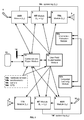
- Figure 1 illustrates a block diagram overview of an example of a field maintainable speech-to-speech translation system according to the present invention.
- the system operates between two languages L a and L b .
- This is the typical implementation of a speech-to-speech dialog system involving speech-to-speech translation in both directions, from L a to L b and from L b to L a .
- the bi-directionality of this configuration is not a prerequisite for the present disclosure.
- a uni-directional system from L a to L b , or a multi-directional system involving several languages L 1 ... L n could equally benefit from the present invention.
- the system has two ASR modules 2 and 9 , that recognize speech for L a and L b , respectively, and produce text corresponding to L a and L b , respectively using acoustic model 18 , ASR class-based language model 19 and a recognition lexicon model 20 (shown in Figure 3 ).
- ASR modules 2 and 9 that recognize speech for L a and L b , respectively, and produce text corresponding to L a and L b , respectively using acoustic model 18 , ASR class-based language model 19 and a recognition lexicon model 20 (shown in Figure 3 ).
- acoustic model 18 e.g., a speech recognition lexicon model
- ASR class-based language model 19 e.g., a recognition lexicon model 20
- FIG. 3 a recognition lexicon model
- the system also includes two machine translation modules 3 and 8, which translate text from L a to L b and from L b to L a , respectively (module 11).
- the MT module used in this example was the "PanDoRA" system developed at Mobile Technologies, LLC.
- Other MT modules could be used such as those developed by IBM Corporation, SRI, BBN or at Aachen university.
- Two text-to-speech engines, 4 and 7 each corresponding to one of the machine translation modules 3 and 8, are configured to receive text produced from a corresponding ASR unit.
- the output text is transferred to the respective MT module, 3 or 8, that translate text from L a to L b and from L b to L a , respectively.
- the TTS module generates audio output to convert at least one text word in L a to speech via an output device 5, such as a loud speaker, and at least one text word in L b to speech via device 5 or another output device, such as a loud speaker 6, respectively.
- a Cepstral TTS module was used. Any TTS modules which support Windows SAPI (speech application programming interface) conventions could also be employed.
- a correction and repair module 11 allows the user to correct the system output via multiple modalities; including speech, gesture, writing, tactile, touch-sensitive and keyboard interfaces, and enables the system to learn from the user's corrections.
- the correction and repair module may be of the type such as that disclosed in U.S. Patent No. 5,855,000 .
- a user field customization module 12 provides an interface for users to add new vocabulary to the system, and can also select an appropriate system vocabulary for their current situation. For example, triggered by a change in location, as determined by the GPS coordinates indicating the current location of the device, or an explicit selection of task or location by the user.
- the user can access the user field customization module 12 and interact with the system via a graphical user interface displayed on the screen (or active touch screen) of the device 13, and a pointing device 14, including a mouse or pen.
- a graphical user interface displayed on the screen (or active touch screen) of the device 13, and a pointing device 14, including a mouse or pen.
- FIG. 2 An example of a graphical user interface is shown in FIG. 2 .
- the device 13 displays the text of audio input of a L a and corresponding text in window 15.
- Machine translation of text L a in the second language L b is displayed in window 16.
- the same microphone and loud-speaker can be used for both languages.
- microphones 1 and 10 can be a single physical device
- speakers 5 and 6 can be a single physical device.
- an information extraction module, 12a will be present which extracts information from recent system logs 14e (for language La) and 14f (for language Lb), and presents targeted advertisement and supportive information via a graphical user interface displayed on the screen of the device 13. Relevant information will be obtained from the internet or a local knowledgebase.
- a language learning module, 12b will be present which extracts information from recent system logs (14e and 14f) to subsequently be used for language learning. Drills are automatically generated based on recent system usage by the user, additionally the user can choose any sentence output from the system to add to his/her active learning drill (step 34c).
- FIG 3 A flow chart illustrating the operation of an example of the method of the present invention is shown in FIG 3 .
- the speech recognition system is activated by the user at step 15b.
- a button can be selected on the graphical user interface ( Figure 2 , item 15b) or on an external physical button (not shown).
- the user's speech (item 25) is then recognized by one of the ASR modules in step 27; module 2, if the user is speaking L a , and module 9 if the user is speaking L b .
- the ASR modules 2 and 9 apply three models: acoustic model 18, ASR class-based language model 19 and a recognition lexicon model 20. These models are language specific and each ASR module contains its own set of models.
- the resulting text of the user's speech is displayed via the GUI on the device screen 13 at step 28.
- Translation is then applied via MT module 3 or 8 based on the input language (step 29).
- MT modules 3 and 8 apply three main models: a tagging or parsing [Collins02] model to identify word classes (model 22), a class-based translation model (model 23), and a class-based language model (model 24).
- the tagging model 22 may be any suitable type of tagging or parsing model such as the types described in J. Lafferty, A. McCallum, and F.
- the automatically generated translation ( Figure 2 , item 16) is translated back into the input language via MT module 3 or 8 and displayed with parentheses under the original input as illustrated for example in Figure 2 , item 15a. If the confidence of both speech recognition and translation are high (step 31) as determined by the ASR model, 2 or 9, and the MT module, 3 or 8, spoken output (item 26) is generated via loud speakers 5 or 6, via TTS modules 4 or 7 (step 33). Otherwise, the system indicates that the translation may be wrong via the GUI, audio and/or tactical feedback.
- the specific TTS module used in step 33 is selected based on the output language.
- the Correction and Repair Module (Module 11) records and logs any corrections the user may make, which can be later used to update ASR modules 2 and 9 and MT modules 3 and 8 as described in detail further below in this document.
- step 36 If the correction contains a new vocabulary item (step 36), or if the user enters the field customization mode to explicitly add a new word to the system in step 15c, or if a new word is automatically detected in the input audio using confidence measures or new word models, such as the method described in Thomas Schaaf, "Detection of OOV words using generalized word models and a semantic class language model," in Proc. of Eurospeech, 2001 in step 15d; the User Field Customization Module (Module 12) is invoked.
- confidence measures or new word models such as the method described in Thomas Schaaf, "Detection of OOV words using generalized word models and a semantic class language model," in Proc. of Eurospeech, 2001 in step 15d; the User Field Customization Module (Module 12) is invoked.
- a simultaneous translation mode will be present. In this mode no button push is required but the system continuously recognizes and translates all speech present on both microphone inputs ( Figure 1 , items 1 and 10). Continuously recognition and simultaneous translation is shown by steps 15e and 34a.
- the user can exit the main system to enter either the "field customization” mode (step 15c), the “translations favorites” mode (step 15f), or the "language learning” mode (step 15g).
- any sentence-pair outputted by the system can be added to the users "translations favorites" list (step 34b).
- the User Field Customization Module provides a multimodal interface to enable users to add new words to the active system vocabulary.
- the ASR, MT and TTS models are updated as required.
- a common set of classes for example person names, place names, and organization names
- ASR A common set of classes
- MT A common set of semantic slots that allows new words to be added to the system.
- the names, special terms and expressions that occur within these classes are the words that are most variable depending on different users' deployments, locations, cultures, customs and tasks, and thus they are in greatest need of user-customization.
- the specific classes used are dependent on the application domain of the system.
- the classes may include semantic classes for named-entities; person, place and organization names; or task-specific noun phrases; for example: names of foods, illnesses or medicines; and another open class for words or phrases that don't fit into any of the predefined classes. Syntactic classes or word equivalence classes such as synonyms could also be used.
- application domains include, but are not limited to, tourist, medical, peace keeping, and the like.
- classes required in the tourist application domain include names of persons, cities, foods and the like.
- for a medical professional application classes required include names of diseases, medications, anatomical names, and the like.
- classes required for a peace-keeping application include names of weapons, vehicles, and the like.
- the Correction and Repair Module (module 11) enables a user to intervene in the speech-to-speech translation process at any time.
- the user may either identify and log an error, or, if he/she wishes, correct an error in the speech recognition or translation output.
- Such user intervention is of considerable value, as it provides immediate correction in the human-human communication process, and opportunities for the system to adjust to user needs and interests and to learn from mistakes.
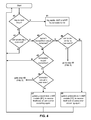
- a flow diagram illustrating this error feedback functionality is shown in Figure 4 . If the user is dissatisfied with a translation of an utterance (i.e. an error occurs) the user can log the current input (step 40). The system will save audio of the current utterance as well as other information to a log file. This can be accessed and corrected by the user at a later time, or can be uploaded to a community database to allow expert users to identify and correct errors.
- the user can also correct the speech recognition or machine translation output via a number of modalities.
- the user can correct the entire utterance, by re-speaking it or entering the sentence via a keyboard or handwriting interface.
- a user can highlight an erroneous segment in the output hypothesis via the touch-screen, mouse or cursor keys and correct only that phrase or word, using the keyboard, handwriting, speech, or explicitly spelling out the word letter-for-letter.
- the user can also select an erroneous segment in the output hypothesis via the touch screen and correct it by selecting a competing hypothesis in an automatically generated drop-down list, or by reentering it by speech, or by any other complementary modality (e.g., handwriting, spelling, paraphrasing, etc.).
- These methods and how to suitably combine complementary repair actions build on methods proposed by Waibel, et al., in US Patent No. 5,855,000 for multimodal speech recognition correction and repair. Here they are applied to the speech recognition and translation modules of interactive speech translation systems.
- the system first determines if the correction contains a new word (step 44). This determination is made by checking for the word in the recognition lexicon model 20 associated with each language, L a and L b . If the word is not found the system prompts the user to add the new word to the active system vocabulary if desired ( Figure 5 , step 50). Otherwise, the probabilities in the ASR models ( Figure 3 , item 17) are updated to reduce the likelihood of the same error occurring again. This can be performed in a discriminative manner where probabilities of the corrected word sequence are increased, and those of close-competing hypotheses are reduced.
- a user can also correct the machine translation output if they have sufficient language expertise.
- the same modalities as used in the ASR case can be used. If the machine translation output is corrected by the user (step 45) and the correction contains a new word, then the user is prompted with a dialog enabling them to add the new word to the active system vocabulary ( Figure 5 , step 50). If the correction only contains words which are already in the active system vocabulary, then the machine translation models ( Figure 3 , item 21) are updated. Specifically, an implementation can be used, where phrases are extracted from the corrected sentence pair and these are folded into translation models. The target language model used can be updated in a similar way to the ASR case.
- the abort action instantaneously aborts the speech-translation processes. It removes any hypotheses or partial hypotheses that may have already been output and resets the system to accept a new input.
- the abort action can be initiated by the user either depressing the push-to-talk button via the graphical user interface again (thus reinitiating recording for more input without waiting before the old one completes processing) or by shaking the phone to stop all processing.
- Output from internal accelerometers [14a] embeded in the hardware device or from an embedded camera [14b] that measures rapid shaking movement are used to determine if the device is being shaken by the user.
- the determination of the wrist shake by the user is then used to abort all processing that may be in progress and clear's the device's screen.
- the abort action can also be confirmed acoustically to the user with a crumbling paper noise, or other sound icon that confirms acoustically during field use that the speech translation process has been aborted.
- the simplicity of a shake of a wrist as well as the accompanying methods to confirm the abort by way of an acoustic sound icon, noise, beep, keyword or signal provides simple fast, effective, unambiguous and intuitive signaling for both dialog partners that correction has taken place.
- User field customization module 12 enables the system to learn new words in cooperation with the user. Prior systems do not allow users to modify vocabularies in speech-to-speech translation systems. Unlike prior systems, user field customization model 12 enables the user to make incremental modifications in a running system that are relatively easy to perform for a non-expert, with minimal or no knowledge of computer speech and language processing technology or of linguistics. Model 12 offers such field customization by providing and accepting certain easy-to-understand feedback from the user, and based on this feedback deriving all the necessary parameters and system configurations autonomously. Field customization module 12 accomplishes this through: 1) an intuitive interface for user-customization, and 2) internal tools that automatically estimate all the internal parameters and settings needed for user customization, thereby relieving the user from this burden.
- the system processes a minimum of four pieces of information about the word or phrase to add a new word or phrase to the active system vocabulary. These include:
- a flow chart illustrating the steps of operation of the user field customization model 12 is shown, for example, in Figure 5 .
- a new word is encountered by the system, based on a corrective intervention via the correction and repair model 11 in the previous section, it will prompt the user ( Figure 5 , step 50) to determine if this word should be "learned", i.e., added to the active system vocabulary. If so, a word learning mode is activated and the field customization module 12 begins to act.
- field customization or new-word learning need not only result from error correction dialogs.
- the user may also specifically choose to enter a word learning mode from a pull-down menu, to add a new word or a list of new words a priori. New word learning, could also be triggered by external events that cause a sudden need for different words, such as specialty terms, names, locations, etc. In all such instances, however, the system must collect the above information.
- step 50 the system first compares the word to entries in a large background recognition lexicon (item 50d), as listed in Figure 5 , step 50a. If the word is present in this lexicon then the listed pronunciations and matched n-gram entries from a large background speech recognition language model (item 50e) are included into the active ASR models (item 17). This step is shown in Figure 5 , step 50b. If the word is not present in the background recognition lexicon (item 50d) the system next compares the word to a large external dictionary, which is either contained locally on the device, or is a dictionary service that can be accessed via the Internet, or is a combination of both.
- the external dictionary consists of entries of word translation pairs. Each entry contains pronunciation and word-class information which enables the new word to be easily added to the active system vocabulary. Each entry also contains a description of each word-pair in both languages. This will allow the user to select the appropriate translation of the word, even if they have no knowledge of the target language. If the new word is contained within the external dictionary (step 51), the system displays a list of alternative translations of the word with a description of each (step 52). If the user selects one of the predefined translations from the dictionary (step 53), then they can verify the pronunciation and other information provided by the dictionary (step 53a), and the edit this if necessary.
- the phonetic pronunciation can be corrected using any suitable notation, including; IPA pronunciation, a local method of pronunciation notation, including Katakana for Japanese or Pingying for Chinese, a pseudo-phonetic spelling for English, or any other suitable phonetic notation. Since a user may not know how to write the correct phonetic spelling for a word, alternative pseudo-phonetic transcription are used in combination with synthesis to sound out the new word aloud. In this way, the user may type a name or new word according to his/her orthographic conventions, while the internal letter to sound conversion routines provide the conversion into phonetic notation based on each spelling. The word can then be played back according to the phonetic string, and if not satisfactory the user can iterate. Finally, when a satisfactory reading is achieved, the new word is then added to the active system vocabulary.
- suitable notation including; IPA pronunciation, a local method of pronunciation notation, including Katakana for Japanese or Pingying for Chinese, a pseudo-phonetic spelling for English, or any other suitable phonetic notation. Since
- step 59 To add a new word to the active system vocabulary, three steps are required (steps 59, 59a, 59b). First the word and its translation are added to the ASR recognition lexicons of modules 2 and 9 (step 59). The word is added to this recognition lexicon 20 along with the pronunciation(s) given by the dictionary. As the user has just entered this word its probability of occurrence is set to be greater than competing members of the same class within the ASR class-based language model 19. This is to make words that were specifically added by the user more likely. Next, the word and its translation are added to the MT models ( Figure 3 , item 21), enabling the system to translate the new-word in both translation directions. Finally, the word is registered with the TTS pronunciation model ( Figure 3 , model 33a), which enables the system to pronounce the word correctly in both languages.
- the system will automatically generate the information required to register the word into the active system vocabulary, and wll verify this information with the user.
- the class of the new word is estimated via a tagging model ( Figure 3 , model 22) using the surrounding word context if it is available (step 54).
- the pronunciation and translation of the new word are automatically generated via either rule-based or statistical models (step 55).
- the resulting information is then shown to the user via a multimodal interface (step 58).
- the system prompts the user to verify (step 58) or correct (step 57) the automatically generated translation or pronunciation.
- the new word is added to the active system vocabulary (steps 59, 59a, 59b).
- the recognition lexicon 20 (which is typically stored as a tree-structure, within ASR Modules 2 or 9) is searched and then updated to include the new word. This enables the new word to be added to the recognition vocabulary dynamically, and it can thus be recognized, immediately, if spoken in the following utterance.
- the ASR system does not need to be re-initialized or re-started as in prior systems.
- a new word (specifically, "word + translation + word class") can be appended to the MT translation model (59a), the translation model 23 (which is can be stored as a hash-map within MT modules 3 and/or 8) is searched and an new translation-pair containing the new word its translation, and word class is appended.
- word + translation + word class a new word
- the translation model 23 which is can be stored as a hash-map within MT modules 3 and/or 8
- word class is appended.
- the translation of the word and pronunciations for both the word and its translation are required. Generating this information can be implemented as a three-step process as shown, for example, in Figure 6 .
- the pronunciation of the word is generated (step 60). Based on the character sequence of the word and its pronunciation, a translation is generated (step 61).
- the pronunciation of the new word in the target language is generated (step 62) using information generated in previous steps. Two examples for generating this information using different techniques within a Japanese-English Field Maintainable S2S Translation System are shown on the left hand side of Figure 6 .
- To add a new English word "Wheeling" (item 61) to the system first the English pronunciation is generated via machine learning (step 65).
- Machine learning may be conducted by any suitable technique such as those described by Damper, R. I. (Ed.), Data-Driven Techniques in Speech Synthesis. Dordrecht, The Netherlands: Kluwer Academic Publishers (2001 ).
- the transliteration of this word in Japanese is automatically generated via statistical machine transliteration (step 66), and the Japanese pronunciation is then generated via manually defined rules (step 67).
- Transliteration may be accomplished by using any suitable statistical machine transliteration engine. Examples include those discussed by K. Knight and J. Graehl , Machine transliteration. Computational Linguistics 24 4 (1998), pp.
- the Japanese pronunciation is generated via manually defined rules (step 71).
- the transliteration of this word in Japanese is automatically generated via rule-based transliteration (step 72)
- the English pronunciation is then generated via manually defined rules (step 73 ).
- the rule based transliteration may be performed using methods of Mansur Arbabi, Scott M. Fischthal, Vincent C. Cheng, and Elizabeth Bar, "Algorithms for Arabic name transliteration," IBM Journal of research and Development, 38(2):183-193, 1994 .
- the resulting information (item 74) is then verified by the user before registering the word into the active system vocabulary.
- the user can verify the generated translation and pronunciation via audible output.
- Alternatively written form may be used if considered more suitable for the user, given their native language (i.e. in "Hanyu Pinyin” for Chinese, or "Romaji” for Japanese if the user is an English speaker).
- the user may edit the translation and/or pronunciation if required. Once approved by the user, the word and word characteristics are added to the multilingual system dictionary.
- the system also eliminates the need for a translation of each new word that is added to the dictionary by automatically generating the required information with the assistance of interactive user input.
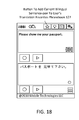
- An example of a user interface is shown in Figure 3 .
- the system consults the user to confirm and verify the estimated linguistic information. This is done in an intuitive manner, so as not to presume any special linguistic or technical knowledge. Thus, a suitable interface is used. In the following we describe the user interaction during new word learning.
- the user may select a "new-word" mode from the menu, or the new word learning mode could be invoked after a user correction has yielded a new/unknown word.
- the window pane that appears he/she can now type the desired new word, name, special term, concept, expression.
- the system Based on the orthographic input in the user's language (this can be character sets different from English, e.g., Chinese, Japanese, Russian, etc.).
- the system then generates a transliteration in Roman alphabet and the words predicted pronunciation. This is done by conversion rules that are either hand written or extracted from preexisting phonetic dictionaries or learned from transliterated speech data.
- the user views the automatic conversion and can play the sound of the generated pronunciation via TTS.
- the user may iterate and modify either of these representations (script, Romanized transliteration, phonetic transcription, and its sound in either language) and the other corresponding entries will be regenerated similarly (thus a modified transcription in one language may modify the transcription in the other).
- the system further automatically selects the most likely word class that the new word belongs to based on co-occurrence statistics of other words (with known class) in similar sentence contexts.
- the new word window pane also allows for a manual selection (and/or correction) of this class identity, however, so that the user can override any such estimated class assessment.
- the user can assign it to the 'unknown' class.
- the 'unknown' class is defined by words that occurred in the training data but not in the recognition lexicon.
- SMT bilingual entries that do not occur in the translation lexicon are set to the unknown tag in the target language model.
- Neither of these input methods requires linguistic training and provides an intuitive way for the user to judge if a new word was suitably represented.
- the user may then accept this new word entry by adding the word to a "multilingual system-dictionary", that is a user's individual lexicon.
- the overall system merges standardized lexica with customized lexica into the user's runtime dictionary.
- C) is also defined. In this fashion it is possible for the system to differentiate between words belonging to the same class. Thus words that are closer to the user's tasks, preferences and habits will be preferred and a higher intra-class probability assigned. This boosting of higher intra-class probability is determined based on relevance to the user, where relevance is assessed by observing:
- Such observations and relevance statistics are collected based on the user's observed location, history or activity, and/or alternatively by observing the occurrence of the system's new word in a large background language resource such as the internet. Such statistics may be collected monolingually, in a data-rich language and applied to the translation dictionary and translation language model.
- the relevance of boosted words may also decay over time, as the user's new activities and tasks render such words less likely over time and/or if new information (as the arrival at a different city) make a subclass of words less relevant.
- a new word is entered by one of the following:
- user customizations are uploaded to a community wide database, where names, special terms, or expressions are shared between interested parties.
- the vocabulary entries, translations and class tags are collected and related to similarly interested communities. Subsequent users can download these shared community resources and add as resource to their own system.
- users may choose to only upload poorly translated sentences, to request manual translation from the community.
- users may choose to only upload poorly translated sentences, to request manual translation from the community.
- incorrect or incomplete source words or sentences and their missing or incorrect translations other human users can provide online correction and translation on a volunteer (or paid fee) basis.
- the resulting corrections and translations are once again resubmitted into the updated shared community translation database.
- the speech-to-speech translation device or system automatically can use the fact that such ground truth has been provided to further adapt the ASR modules ( Figure 1 , module 2 or 9) to the primary user of the device.
- Such adaptation is designed to improve the accuracy and usability of the device.
- Two specific methods of adaptation are performed. First, adaptation of the system to better recognize the user's voice; acoustic model and pronunciation model adaptation, and second, adapting to the user's style of speech by way of language model adaptation. Profiles are used to store adaptation data for specific users and can be switched in the field.
- f J 1 argmax P f J 1
- Classes can be semantic classes, such as named-entities, syntactic classes or classes consisting of equivalent words or word phrases. As an example we describe the case when named-entity classes are incorporated into the system.
- the two most informative models applied during translation are the target language model P(e I 1 ) and the translation model P(f J 1
- e I 1 ) is a class-based translation model ( FIG 3 , model 23)
- P(e I 1 ) is a class-based language model ( FIG 3 , model 24).
- Class-based models for a statistical machine translation framework can be trained using the procedure shown in FIG 10 .
- the training corpora of sentence pairs are normalized (step 100) and tagging models ( FIG. 3 , model 22) are used to tag the corpora (step 101).
- tagging models FIG. 3 , model 22
- One approach to do this is described in Lafferty01.
- sentences that combine to form a training-pair can be tagged independently, tagged jointly, or tags from one language can be projected to the other.
- words within sentence-pairs are aligned (step 102). Alignment can be accomplished using current approaches such as those described by Franz Josef Och, Christoph Tillmann, Hermann Ney: "Improved Alignment Models for Statistical Machine Translation”; pp.
- the tagged corpus is also used to train class-based target language models ( FIG 3 , model 24). Training may be accomplished using a procedure such as that described in B. Suhm and W. Waibel, "Towards better language models for spontaneous speech' in Proc. ICSLP-1994, 1994 (“Suhm94"). (step 104).
- the method illustrated in FIG 11 is applied.
- the input sentence is normalized (step 105) and tagged (step 106) using a similar procedure as that applied to the training corpora.
- the input sentence is tagged using a monolingual tagger ( FIG 3 , model 22).
- the input sentence is decoded using class-based MT models ( FIG 3 , models 23 and 24).
- class-based statistical machine translation decoding is performed using the same procedure used in standard statistical machine translation, However, phrase-pairs are matched at the class-level, rather than the word, as shown in the example below.
- a labeled parallel corpora is obtained by independently tagging each side of the training corpora with monolingual taggers and then removing inconsistent labels from each sentence-pair.
- the label-sequence-pair (Ta,Tb) is selected which has maximum conditional probabilities P(Ta,Sa) and P(Tb,Sb). If the occurrence count of any class-tag differs between P(Ta,Sa) and P(Tb,Sb), that class-tag is removed from the label-sequence-pair (Ta,Tb).
- One method to estimate P(Ta,Sa) and P(Tb,Sb) is by applying conditional random field-based tagging models Lafferty01. An example of a feature set used during monolingual tagging is shown in FIG 11 .
- labeling consistency across sentence-pairs can be further improved by using the target word extracted from word-alignment (wb,j in FIG 11 ), in addition to monolingual features.
- both sentences in the translation-pair are jointly labeled while applying the constraint that the class-tag sets must be equivalent.
- the sentence-pair (Sa,Sb) we search for the label-sequence-pair (Ta,Tb) that maximizes the joint maximum conditional probability ⁇ a P Ta ⁇ Sa ⁇ ⁇ b P Tb ⁇ Sb
- O ⁇ i Ta O ⁇ i Tb for 1 ⁇ i ⁇ M
- Oi(Ta) occurrence count of class-tag i in label sequence Ta (number of entities, not word count) M total number of classes ⁇ a
- ⁇ b scaling factors if the performance of the monolingual models differ significantly ⁇ a and ⁇ b can be optimized to improve bilingual tagging performance.
- labels can be generated by projecting labels from a first language where labels are known, across the sentence-pairs in the training corpora to the non-annotated language.
- One approach to do this is described in D. Yarowsky, G. Ngai and R. Wicentowski, "Inducting Multilingual Text Analysis Tools via Robust Projection across Aligned Corpora, " In Proc. HLT, pages 161-168, 2001 (“Yarowsky01").
- Table 1 Training and Test Data English Japanese Parallel Training Corpora number of sentence-pairs 400k number of tokens 3,257k 3,171k average sentence length 8.7 8.5 Manually tagged training data (subset of above data) training (no. sentence-pairs) 12600 held-out Test (no. sentence-pairs) 1400 Test set number of sentence-pairs 600 number of tokens 4393 4669 average sentence length 7.3 7.8 OOV rate 0.3% 0.5%
- Table 3 Monolingual and Bilingual Tagging Accuracy on Held-Out Training Set Tagging Scheme English Japanese Bilingual % correctly tagged sentence-pairs P R F P R F P R F monolingual 0.95 0.89 0.92 0.94 0.88 0.91 0.88 0.80 0.84 80% + alignment features 0.97 0.85 0.91 0.98 0.93 0.95 0.95 0.82 0.88 82% + remove inconsistent tags 0.99 0.83 0.90 0.99 0.82 0.90 0.99 0.81 0.89 82% bilingual tagging 0.98 0.92 0.95 0.98 0.92 0.95 0.97 0.90 0.93 92% + alignment features 0.98 0.93 0.96 0.98 0.93 0.96 0.92 0.95 92%
- a tag is considered correct if the entity is correctly labeled on both sides of the corpora.
- the right hand column indicates the percentage of sentence-pairs in which both sides were tagged correctly.
- the F-score is above 0.90 for the independent languages
- the bilingual tagging accuracy is significantly lower at 0.84, and only 80% of the sentence-pairs were correctly tagged.
- Incorporating alignment features into the monolingual taggers improved precision for both languages and significantly improvement recall for the Japanese side, however, the percentage of correctly tagged sentence-pairs increased only slightly. Removing inconsistent tags across sentence-pairs improved precision, but the number of correctly tagged sentence-pairs did not improve.
- the decoder is described in Ying Zhang, Stephan Vogel, "PanDoRA: A Large-scale Two-way Statistical Machine Translation System for Hand-held Devices," In the Proceedings of MT Summit XI, Copenhagen, Denmark, Sep. 10-14 2007 .
- Systems were created for both translation directions J ⁇ E (Japanese to English) and E ⁇ J (English to Japanese) using the training set described in Table 1.
- the data used to train the target language models were limited to this corpora.
- the translation quality of the baseline system was evaluated on a test-set of 600 sentences. One reference was used during evaluation.
- the BLEU-score for the J ⁇ E and E ⁇ J systems were 0.4381 and 0.3947, respectively.
- BLEU-score is described in Kishore Papineni, Salim Roukos, Todd Ward and Wei-Jing Zhu "BLEU: a Method for Automatic Evaluation of Machine Translation, " In Proc. Association for Computational Linguistics, pp. 311-318, 2002 . Translation quality using three different tagging schemes was evaluated:
- Monolingual tagging was applied for the +num and +NE-class cases, and tags that were inconsistent across a sentence-pair were removed.
- +Bi-Tagging case bilingual tagging incorporating word alignment features were used.
- the entire training corpora was tagged with the appropriate set of class-labels.
- Class-based translation and language models were then trained using an equivalent procedure to that used in the baseline system.
- the input sentence was tagged using a monolingual tagger. All named-entities in the test set were entered into the user dictionary to be used during translation.
- Table 4 Translation Quality of Class - based SMT Translation Quality (BLEU [Papineni02]) System J ⁇ E E ⁇ J Baseline 0.4381 0.3947 +num 0.4441 0.4104 +NE-class 0.5014 0.4464 +Bi-Tagging 0.5083 0.4542
- BLEU-scores of 0.4441 and 0.4104 were obtained.
- BLEU-scores of 0.5014 for the J ⁇ E system and 0.4464 for the E ⁇ J case were obtained.
- bilingual tagging was used to tag the training corpora (+Bi-Tagging) a further 0.8 point gain in BLEU was obtained for both translation directions.
- embodiments of the invention provide a speech translation favorites module, which stores frequently used phrases for rapid play-back.
- This favorites modules differs from a plain list or phrase book in one most important aspect: it gets filled and built by the speech translation device, and thus, does not require a bilingual speaker to be on hand to know the correct translation to a term or phrase.
- the favorites module is programmed to enable a user to perform the following functions: Copy bilingual sentence-pair from the speech translation interaction window to a favorites list; provide editing capability to the newly copied bilingual sentence-pair, so a user can modify both input and output string; and provide the ability to play back the target language side of the added sentence pair by applying the synthesis module.
- a user With the favorites list in place, a user can simply play back various accumulated phrases from the favorites list, without speaking them first, invoking them by clicking on the selected favorite or by way of a voice command or key phrase. This saves time in field situations.
- the favorites list provides the full flexibility of a full two-way speech-to-speech translator since it does not require a linguistically trained expert knowledgeable of both languages to build such a list.
- a customized list can be built by the user in the field and on the fly.
- an embodiment of this system will add additional functionality to allow users to playback predefined phrases via TTS ( Figure 1 , modules 3 and 7).
- An example graphical user interface for this functionality is shown in Figure 16 . While using the speech translation system the users can select any output generated by the system and add this to their favor list (step 34b). The system will check if the sentence-pair already exists in the " Translation Favorites " list (step 109) and if not will append it (step 109a).
- a possible graphical user interface for this phrase-addition step is shown in Figure 13 . In this example the user can press a graphical button (item 127) to add the current bilingual sentence-pair to the user's "Translation Favorites " list.
- the user can enter the " Translations Favorites " mode (step 15f).
- this mode (detailed in Figure 13 )
- the system allows users to select a sentence-pair for playback (steps 110, 111), edit sentence-pairs currently in the list (steps 112,113), delete a sentence-pair from the list (setps 114, 115) or append a sentence-pair to the list (steps 116, 117) by typing in the required information.
- a mode switch or setting ("polite”, "informal”, etc.) or by inferring the appropriate mode perceptually (for example, the gender or a speaker, his/her location, his/her level of formality, etc.).
- the basic speech translation system shown in Figure 1 performs speech recognition (modules 2 and 9) using a single set of ASR models per language, machine translation (modules 3 and 8) using a single set of MT models per language-pair, and speech generation (modules 3 and 7) using a single set of TTS models per language.
- multiple language mode-dependent models will be available to the system rather than a single set of models.
- Specific models (ASR, MT and TTS) are developed for specific modes of communication including formal/colloquial/slang/rude, authoritative/submissive, and standard/dialectal language.
- the language mode can be estimated in the User Field Customization Module (item 12), based on device location, input speech or discourse history. Different language modes will generate different translation and speech output depending on the communication-style they are tuned towards, and will constrain the speech recognition components to the type of language used in that communication-style. In another embodiment, different language modes will be realized by simply filtering the output of the speech recognition (modules 2 and 9) and machine translation components (modules 3 and 8).
- slang or rude phrases will be filtered from the ASR and MT output, be replaced with a star symbol (*) in the display of the graphical user interface, and be replaced with an audible beep during TTS (modules 3 and 7).
- the User Field Customization Module (item 12) will contain the specific lists of words to be filtered for each language mode.
- the proposed system will come with a large background dictionary, and large pre-trained language models. This is possible without loss of advantage, since the large dictionaries and language models can be stored in flash memories that are typically available in abundance (e.g. to store music, pictures, etc.) on modem mobile phones.
- the system now provides an easy method to correct the consequential misrecognition by various corrective mechanisms. Once the correction has been noted, the appropriate dictionaries and models (recognition, translation, synthesis) can be retrieved and added or replace less useful ones.
- the speed of the speech translation system shown in Figure 1 is dependent on the vocabulary size of the speech recognition models (item 17) applied.
- recognition is performed with a medium sized recognition vocabularies consisting of around 40,000 entries.
- This vocabulary size provides reasonable coverage over possible words uttered by users and allows speech recognition (step 27) to be performed reasonably fast.
- an additional embodiment could be realized using a much smaller initial recognition vocabulary (item 20) and language model (item 19) consisting of less than 10,000 vocabulary entries.
- the correction and Repair Module module 11
- the appropriate speech recognition models (item 17) will be updated via the User Field Customization Module (module 12). This procedure is shown in Figure 3 , steps 35, 36 and 37. Once identified the new word is incorporated into the system as shown in Figure 5 and described in paragraph [00049].
- the basic speech translation system shown in Figure 1 operates over two languages, language La and language Lb.
- the user holds down a push-to-talk button ( Figure 3 , step 15b) to start the speech recognition process ( Figure 3 , step 27).
- the identity of the button pushed will determine if recognition is performed in language La (using Figure 1 , module 2) the primary users language, or in language Lb (using Figure 1 , module 9) the language of the dialog participant.
- an embodiment of the system will perform automatic identification of the input language (step 27a) to select the appropriate ASR module to use for recognition (step 27b).
- language identification is used to select the appropriate ASR module where modules exist for more than two languages.
- it is also applied during simultaneous translation.
- Speech translators today are aiming to provide two-way speech dialog communication for people who don't speak each other's languages. Frequently, though, a user may wish to learn another person's language themselves as well. To provide such possibilities, we expand the speech translator function by the function of providing language instruction to the human user.
- Such an expanded speech translator/language tutor/trainer differs from other language instruction/ tutoring software products in two fundamental ways: 1.) the disclosed combined language system provides a speech translator for language support when the user's language abilities are inadequate to navigate a real situation in actual use, and 2.) the combined system can then provide much more customized, targeted language learning drills and instruction that is responding specifically to a user's language learning interest, situations, and it bases its instruction on what it can observe from a user's language usage during speech translation dialog use.
- a user may converse with other individuals through use of the speech translator over a period of time, and then gradually attempt to learn for him/herself the key concepts, vocabularies, language constructs that he/she often uses and wishes to learn for him/herself.
- a language learning drill can be personalized and targeted much more concretely at the specific language needs of an individual user than static impersonal language learning books or software would and thus it presents a much more personal and alive human language learning experience.
- the language learning subsystem builds vocabulary, syntax or conversational drills that derive from the sentences found in the recent history of the speech translator.
- the language learning module observes sentences a user has uttered over a period of time (items 14e, 14f) and builds a profile of common language usage statistics. Statistics include typical syntactic constructs and vocabulary usage.
- the system will consolidate statistics from recent system logs (step 118) and use this information to construct vocabulary drills based on word usage by the user and related words based on topic or usage as determined by word frequency or semantic word clustering (step 119).
- a similar approach will be used to generate syntax drills (step 120).
- the drills will be presented to the user (step 121), and if performance is not satisfactory (step 122) the user will perform the drill again.
- the user is also provided with direct control over his/her language learning drills.
- Each sentence spoken in the speech translator can also be directly copied to the learning module (step 34c), so that its words and expressions appear in the subsequent learning drills.
- the system first checks if the drill contains the sentence (step 118a) and if it does not before appends it (step 118b).
- the basic speech translation mode operates using speech input from microphones (items 1 and 10) and loudspeakers (items 5 and 6) located on the device.
- speech translation can also be performed over a telephony network.
- audio for language Lb is transmitted over the telephone network and the microphone (item 10) and loudspeaker (item 5) for language Lb will be physically located on a recipient's telephony handset.
- speech recognition modules 2, 9
- machine translation module 3
- step 3 The utterance is then recognized and translated using the steps shown in Figure 3 .
- simultaneous translation steps 15d, 34a
- speech translation output from step 33
- step 33 is then provided either acoustically, overlaying or in place of the original speaker's speech, or visually, by displaying text on a user's telephone device.
- Speech Recognizers and Translators operating on a smart phone can also provide information as to a user's speech content.
- conversation enabled information extraction It could be used to provide more targeted advertising (perhaps in return for cheaper calling rates). It could also be used to provide the user with helpful supporting information (for example, calling up flight schedules, hotel availabilities & rates, recalling a person's contact details, etc.) when a conversation mentions certain topics, people, places, or activities.
- This information can also be recalled bilingually from sources in either of the languages handled by the speech translator.
- the information extraction module extracts key words and phrases from system logs (items 14e and 14f) generated by the speech recognition (modules 3, 8) and machine translation (modules 3, 8) components.
- usage statistics from recent system logs (step 123) are generated.
- relevant information is obtained from the internet or local knowledgebase (item 125) based on keyword occurrence and language usage (step 124).
- This information is subsequently presented to the user (step 126) via the screen of the device ( Figure 1 , item 13).
- Presented information will include targeted advertising and supportive information.
- Supportive information includes flight schedules, hotel availability and rates, and contact details of persons.
- Information can be presented bilingually in either language (La or Lb) by searching based on keywords in the output of machine translation (modules 3, 8).
Landscapes
- Engineering & Computer Science (AREA)
- Physics & Mathematics (AREA)
- Audiology, Speech & Language Pathology (AREA)
- Health & Medical Sciences (AREA)
- Computational Linguistics (AREA)
- Artificial Intelligence (AREA)
- Theoretical Computer Science (AREA)
- Human Computer Interaction (AREA)
- Acoustics & Sound (AREA)
- Multimedia (AREA)
- General Health & Medical Sciences (AREA)
- General Engineering & Computer Science (AREA)
- General Physics & Mathematics (AREA)
- Probability & Statistics with Applications (AREA)
- Machine Translation (AREA)
Applications Claiming Priority (2)
| Application Number | Priority Date | Filing Date | Title |
|---|---|---|---|
| US12/689,042 US9070363B2 (en) | 2007-10-26 | 2010-01-18 | Speech translation with back-channeling cues |
| EP11702324A EP2548201A1 (de) | 2010-01-18 | 2011-01-18 | System und verfahren für erweiterte sprach-zu-sprache-übersetzung |
Related Parent Applications (1)
| Application Number | Title | Priority Date | Filing Date |
|---|---|---|---|
| EP11702324A Division EP2548201A1 (de) | 2010-01-18 | 2011-01-18 | System und verfahren für erweiterte sprach-zu-sprache-übersetzung |
Publications (2)
| Publication Number | Publication Date |
|---|---|
| EP2849178A2 true EP2849178A2 (de) | 2015-03-18 |
| EP2849178A3 EP2849178A3 (de) | 2015-08-05 |
Family
ID=44319693
Family Applications (2)
| Application Number | Title | Priority Date | Filing Date |
|---|---|---|---|
| EP14190061.3A Withdrawn EP2849178A3 (de) | 2010-01-18 | 2011-01-18 | System und Verfahren für erweiterte Sprache-zu-Sprache-Übersetzung |
| EP11702324A Withdrawn EP2548201A1 (de) | 2010-01-18 | 2011-01-18 | System und verfahren für erweiterte sprach-zu-sprache-übersetzung |
Family Applications After (1)
| Application Number | Title | Priority Date | Filing Date |
|---|---|---|---|
| EP11702324A Withdrawn EP2548201A1 (de) | 2010-01-18 | 2011-01-18 | System und verfahren für erweiterte sprach-zu-sprache-übersetzung |
Country Status (3)
| Country | Link |
|---|---|
| US (1) | US9070363B2 (de) |
| EP (2) | EP2849178A3 (de) |
| WO (1) | WO2011094090A1 (de) |
Cited By (4)
| Publication number | Priority date | Publication date | Assignee | Title |
|---|---|---|---|---|
| WO2018057166A1 (en) * | 2016-09-23 | 2018-03-29 | Intel Corporation | Technologies for improved keyword spotting |
| US10878202B2 (en) | 2018-08-03 | 2020-12-29 | International Business Machines Corporation | Natural language processing contextual translation |
| WO2023009021A1 (en) * | 2021-07-28 | 2023-02-02 | Harman International Industries, Incorporated | Method and system for training classifiers for use in a voice recognition assistance system |
| EP4495932A1 (de) * | 2023-07-17 | 2025-01-22 | Techmo Sp. z o.o. | Automatisches spracherkennungssystem und verfahren zum trainieren eines spracherkennungsmodells |
Families Citing this family (22)
| Publication number | Priority date | Publication date | Assignee | Title |
|---|---|---|---|---|
| US9128926B2 (en) * | 2006-10-26 | 2015-09-08 | Facebook, Inc. | Simultaneous translation of open domain lectures and speeches |
| US8972268B2 (en) | 2008-04-15 | 2015-03-03 | Facebook, Inc. | Enhanced speech-to-speech translation system and methods for adding a new word |
| US9070363B2 (en) | 2007-10-26 | 2015-06-30 | Facebook, Inc. | Speech translation with back-channeling cues |
| US11222185B2 (en) | 2006-10-26 | 2022-01-11 | Meta Platforms, Inc. | Lexicon development via shared translation database |
| CN103116575B (zh) * | 2011-11-16 | 2016-06-22 | 富士通株式会社 | 基于层次短语模型的译文词序概率确定方法及装置 |
| DE102011055672A1 (de) * | 2011-11-24 | 2013-05-29 | Ben Fredj Mehdi | Verfahren zur Extraktion und Übersetzung eines Sprachinhalts, Vorrichtung auf dem das Verfahren durchführbar gespeichert ist und Verwendung eines dezentralen Netzwerks zur Durchführung des Verfahrens |
| US8954314B2 (en) | 2012-03-01 | 2015-02-10 | Google Inc. | Providing translation alternatives on mobile devices by usage of mechanic signals |
| US9146919B2 (en) | 2013-01-16 | 2015-09-29 | Google Inc. | Bootstrapping named entity canonicalizers from English using alignment models |
| US20140222413A1 (en) * | 2013-02-01 | 2014-08-07 | Klip, Inc. | Method and user interface for controlling language translations using touch sensitive display screens |
| US20130238311A1 (en) * | 2013-04-21 | 2013-09-12 | Sierra JY Lou | Method and Implementation of Providing a Communication User Terminal with Adapting Language Translation |
| US20140350933A1 (en) * | 2013-05-24 | 2014-11-27 | Samsung Electronics Co., Ltd. | Voice recognition apparatus and control method thereof |
| CN104050160B (zh) * | 2014-03-12 | 2017-04-05 | 北京紫冬锐意语音科技有限公司 | 一种机器与人工翻译相融合的口语翻译方法和装置 |
| KR102383791B1 (ko) * | 2014-12-11 | 2022-04-08 | 삼성전자주식회사 | 전자 장치에서의 개인 비서 서비스 제공 |
| US10229674B2 (en) * | 2015-05-15 | 2019-03-12 | Microsoft Technology Licensing, Llc | Cross-language speech recognition and translation |
| US20170060850A1 (en) * | 2015-08-24 | 2017-03-02 | Microsoft Technology Licensing, Llc | Personal translator |
| US10489516B2 (en) * | 2016-07-13 | 2019-11-26 | Fujitsu Social Science Laboratory Limited | Speech recognition and translation terminal, method and non-transitory computer readable medium |
| KR20200027331A (ko) * | 2018-09-04 | 2020-03-12 | 엘지전자 주식회사 | 음성 합성 장치 |
| CN110782871B (zh) * | 2019-10-30 | 2020-10-30 | 百度在线网络技术(北京)有限公司 | 一种韵律停顿预测方法、装置以及电子设备 |
| US12057108B2 (en) * | 2020-04-10 | 2024-08-06 | Collibra Belgium Bv | Methods and systems for word edit distance embedding |
| US12210848B2 (en) * | 2022-02-28 | 2025-01-28 | Google Llc | Techniques and models for multilingual text rewriting |
| US12136410B2 (en) | 2022-05-03 | 2024-11-05 | Google Llc | Speaker embeddings for improved automatic speech recognition |
| US12505307B2 (en) * | 2023-04-12 | 2025-12-23 | Microsoft Technology Licensing, Llc | Natural language training and/or augmentation with large language models |
Citations (1)
| Publication number | Priority date | Publication date | Assignee | Title |
|---|---|---|---|---|
| US5855000A (en) | 1995-09-08 | 1998-12-29 | Carnegie Mellon University | Method and apparatus for correcting and repairing machine-transcribed input using independent or cross-modal secondary input |
Family Cites Families (64)
| Publication number | Priority date | Publication date | Assignee | Title |
|---|---|---|---|---|
| US45079A (en) | 1864-11-15 | Improvement in priming metallic cartridges | ||
| US148105A (en) * | 1874-03-03 | Improvement in awnings | ||
| US92581A (en) | 1869-07-13 | Improvement in hand garden-cultivator | ||
| US93898A (en) | 1869-08-17 | Improved stone-sawing machine | ||
| JP3114181B2 (ja) * | 1990-03-27 | 2000-12-04 | 株式会社日立製作所 | 異言語交信用翻訳方法およびシステム |
| US5987402A (en) * | 1995-01-31 | 1999-11-16 | Oki Electric Industry Co., Ltd. | System and method for efficiently retrieving and translating source documents in different languages, and other displaying the translated documents at a client device |
| JPH08212216A (ja) | 1995-02-08 | 1996-08-20 | Toshiba Corp | 自然言語処理装置および自然言語処理方法 |
| US6292769B1 (en) * | 1995-02-14 | 2001-09-18 | America Online, Inc. | System for automated translation of speech |
| US6339754B1 (en) * | 1995-02-14 | 2002-01-15 | America Online, Inc. | System for automated translation of speech |
| AU6849196A (en) * | 1995-08-16 | 1997-03-19 | Syracuse University | Multilingual document retrieval system and method using semantic vector matching |
| US5794189A (en) | 1995-11-13 | 1998-08-11 | Dragon Systems, Inc. | Continuous speech recognition |
| TW347503B (en) | 1995-11-15 | 1998-12-11 | Hitachi Ltd | Character recognition translation system and voice recognition translation system |
| JPH09231225A (ja) * | 1996-02-26 | 1997-09-05 | Fuji Xerox Co Ltd | 言語情報処理装置 |
| US5819069A (en) * | 1996-02-27 | 1998-10-06 | Nexcom Technology, Inc. | Recording apparatus and method having low power consumption |
| US6085162A (en) * | 1996-10-18 | 2000-07-04 | Gedanken Corporation | Translation system and method in which words are translated by a specialized dictionary and then a general dictionary |
| TW421750B (en) * | 1997-03-14 | 2001-02-11 | Omron Tateisi Electronics Co | Language identification device, language identification method and storage media recorded with program of language identification |
| US6742047B1 (en) * | 1997-03-27 | 2004-05-25 | Intel Corporation | Method and apparatus for dynamically filtering network content |
| US6144938A (en) * | 1998-05-01 | 2000-11-07 | Sun Microsystems, Inc. | Voice user interface with personality |
| US6104989A (en) * | 1998-07-29 | 2000-08-15 | International Business Machines Corporation | Real time detection of topical changes and topic identification via likelihood based methods |
| JP3822990B2 (ja) * | 1999-01-07 | 2006-09-20 | 株式会社日立製作所 | 翻訳装置、記録媒体 |
| US6901367B1 (en) * | 1999-01-28 | 2005-05-31 | International Business Machines Corporation | Front end translation mechanism for received communication |
| US6356865B1 (en) * | 1999-01-29 | 2002-03-12 | Sony Corporation | Method and apparatus for performing spoken language translation |
| US6243669B1 (en) * | 1999-01-29 | 2001-06-05 | Sony Corporation | Method and apparatus for providing syntactic analysis and data structure for translation knowledge in example-based language translation |
| US6223150B1 (en) * | 1999-01-29 | 2001-04-24 | Sony Corporation | Method and apparatus for parsing in a spoken language translation system |
| US6278968B1 (en) * | 1999-01-29 | 2001-08-21 | Sony Corporation | Method and apparatus for adaptive speech recognition hypothesis construction and selection in a spoken language translation system |
| US6442524B1 (en) * | 1999-01-29 | 2002-08-27 | Sony Corporation | Analyzing inflectional morphology in a spoken language translation system |
| US6374224B1 (en) * | 1999-03-10 | 2002-04-16 | Sony Corporation | Method and apparatus for style control in natural language generation |
| US6584439B1 (en) * | 1999-05-21 | 2003-06-24 | Winbond Electronics Corporation | Method and apparatus for controlling voice controlled devices |
| US6438524B1 (en) * | 1999-11-23 | 2002-08-20 | Qualcomm, Incorporated | Method and apparatus for a voice controlled foreign language translation device |
| AU2001249777A1 (en) * | 2000-03-31 | 2001-10-15 | Amikai, Inc. | Method and apparatus for providing multilingual translation over a network |
| US7069222B1 (en) * | 2000-06-23 | 2006-06-27 | Brigido A Borquez | Method and system for consecutive translation from a source language to a target language via a simultaneous mode |
| US6697777B1 (en) * | 2000-06-28 | 2004-02-24 | Microsoft Corporation | Speech recognition user interface |
| US6999932B1 (en) * | 2000-10-10 | 2006-02-14 | Intel Corporation | Language independent voice-based search system |
| US6941269B1 (en) * | 2001-02-23 | 2005-09-06 | At&T Corporation | Method and system for providing automated audible backchannel responses |
| US20020169592A1 (en) * | 2001-05-11 | 2002-11-14 | Aityan Sergey Khachatur | Open environment for real-time multilingual communication |
| JP2003022265A (ja) * | 2001-07-06 | 2003-01-24 | Nec Corp | 言語自動翻訳システム |
| US7668718B2 (en) * | 2001-07-17 | 2010-02-23 | Custom Speech Usa, Inc. | Synchronized pattern recognition source data processed by manual or automatic means for creation of shared speaker-dependent speech user profile |
| US7711570B2 (en) * | 2001-10-21 | 2010-05-04 | Microsoft Corporation | Application abstraction with dialog purpose |
| AUPR956901A0 (en) * | 2001-12-17 | 2002-01-24 | Jayaratne, Neville | Real time translator |
| US7016849B2 (en) * | 2002-03-25 | 2006-03-21 | Sri International | Method and apparatus for providing speech-driven routing between spoken language applications |
| DE10216117A1 (de) * | 2002-04-12 | 2003-10-23 | Philips Intellectual Property | Verfahren und System zur Spracherkennung von Symbolfolgen |
| US7542908B2 (en) * | 2002-10-18 | 2009-06-02 | Xerox Corporation | System for learning a language |
| US20040102957A1 (en) * | 2002-11-22 | 2004-05-27 | Levin Robert E. | System and method for speech translation using remote devices |
| US7593842B2 (en) * | 2002-12-10 | 2009-09-22 | Leslie Rousseau | Device and method for translating language |
| US7539619B1 (en) * | 2003-09-05 | 2009-05-26 | Spoken Translation Ind. | Speech-enabled language translation system and method enabling interactive user supervision of translation and speech recognition accuracy |
| US20050144012A1 (en) * | 2003-11-06 | 2005-06-30 | Alireza Afrashteh | One button push to translate languages over a wireless cellular radio |
| CN101137979A (zh) * | 2003-11-14 | 2008-03-05 | 思比驰盖尔公司 | 用于翻译器的短语构造器 |
| US7590533B2 (en) * | 2004-03-10 | 2009-09-15 | Microsoft Corporation | New-word pronunciation learning using a pronunciation graph |
| US7478038B2 (en) * | 2004-03-31 | 2009-01-13 | Microsoft Corporation | Language model adaptation using semantic supervision |
| JP4220943B2 (ja) * | 2004-07-15 | 2009-02-04 | ソフトバンクモバイル株式会社 | 電子機器 |
| US20070016401A1 (en) * | 2004-08-12 | 2007-01-18 | Farzad Ehsani | Speech-to-speech translation system with user-modifiable paraphrasing grammars |
| JP2006318202A (ja) | 2005-05-12 | 2006-11-24 | Suri Kaiseki Kenkyusho:Kk | 翻訳装置、翻訳プログラム及び翻訳システム |
| US7552053B2 (en) * | 2005-08-22 | 2009-06-23 | International Business Machines Corporation | Techniques for aiding speech-to-speech translation |
| KR100755678B1 (ko) * | 2005-10-28 | 2007-09-05 | 삼성전자주식회사 | 개체명 검출 장치 및 방법 |
| US7536295B2 (en) * | 2005-12-22 | 2009-05-19 | Xerox Corporation | Machine translation using non-contiguous fragments of text |
| JP2007206975A (ja) * | 2006-02-01 | 2007-08-16 | Toshiba Corp | 言語情報変換装置及びその方法 |
| US7752031B2 (en) * | 2006-03-23 | 2010-07-06 | International Business Machines Corporation | Cadence management of translated multi-speaker conversations using pause marker relationship models |
| KR100834549B1 (ko) * | 2006-10-19 | 2008-06-02 | 한국전자통신연구원 | 번역 시스템 및 번역 서비스 제공방법 |
| US9070363B2 (en) | 2007-10-26 | 2015-06-30 | Facebook, Inc. | Speech translation with back-channeling cues |
| US8082149B2 (en) * | 2006-10-26 | 2011-12-20 | Biosensic, Llc | Methods and apparatuses for myoelectric-based speech processing |
| US8204739B2 (en) * | 2008-04-15 | 2012-06-19 | Mobile Technologies, Llc | System and methods for maintaining speech-to-speech translation in the field |
| US8090570B2 (en) * | 2006-10-26 | 2012-01-03 | Mobile Technologies, Llc | Simultaneous translation of open domain lectures and speeches |
| TW200824408A (en) * | 2006-11-27 | 2008-06-01 | Htc Corp | Methods and systems for information retrieval during communication, and machine readable medium thereof |
| JP2009192417A (ja) * | 2008-02-15 | 2009-08-27 | Panasonic Corp | 落下検出装置およびこれを備えた携帯型装置 |
-
2010
- 2010-01-18 US US12/689,042 patent/US9070363B2/en active Active
-
2011
- 2011-01-18 EP EP14190061.3A patent/EP2849178A3/de not_active Withdrawn
- 2011-01-18 EP EP11702324A patent/EP2548201A1/de not_active Withdrawn
- 2011-01-18 WO PCT/US2011/021530 patent/WO2011094090A1/en not_active Ceased
Patent Citations (1)
| Publication number | Priority date | Publication date | Assignee | Title |
|---|---|---|---|---|
| US5855000A (en) | 1995-09-08 | 1998-12-29 | Carnegie Mellon University | Method and apparatus for correcting and repairing machine-transcribed input using independent or cross-modal secondary input |
Non-Patent Citations (19)
| Title |
|---|
| "Data-Driven Techniques in Speech Synthesis", KLUWER ACADEMIC PUBLISHERS |
| A. STOLCKE: "SRILM - an extensible language modeling toolkit", PROC. OF ICSLP, 2002, pages 901 - 904 |
| A. WAIBEL; C. FUGEN: "Spoken language translation", SIGNAL PROCESSING MAGAZINE, IEEE, vol. 25, no. 3, May 2008 (2008-05-01), pages 70 - 79 |
| B. SUHM; W. WAIBEL: "Towards better language models for spontaneous speech", PROC. ICSLP-1994, 1994 |
| BING ZHAO; NGUYEN BACH; IAN LANE; STEPHAN VOGEL: "A Log-linear Block Transliteration Model based on Bi-Stream HMMs", HLT/NAACL, 2007 |
| BROWN, PETER F.; STEPHEN A. DELLA PIETRA; VINCENT J. DELLA PIETRA; R. L. MERCER: "The mathematics of statistical machine translation: Parameter estimation", COMPUTATIONAL LINGUISTICS, vol. 19, no. 2, 1993, pages 263 - 311 |
| D. CHIANG; A. LOPEZ; N. MADNANI; C. MONZ; P. RESNIK; M. SUBOTIN: "The Hiero machine translation system: extensions, evaluation, and analysis", PROC. HUMAN LANGUAGE TECHNOLOGY AND EMPIRICAL METHODS IN NATURAL LANGUAGE PROCESSING, 2005, pages 779 - 786 |
| D. YAROWSKY; G. NGAI; R. WICENTOWSKI: "Inducting Multilingual Text Analysis Tools via Robust Projection across Aligned Corpora", PROC. HLT, 2001, pages 161 - 168 |
| FRANZ JOSEF OCH; CHRISTOPH TILLMANN; HERMANN NEY: "Improved Alignment Models for Statistical Machine Translation", PROC. OF THE JOINT CONF. OF EMPIRICAL METHODS IN NATURAL LANGUAGE PROCESSING AND VERY LARGE CORPORA, June 1999 (1999-06-01), pages 20 - 28 |
| FRANZ JOSEF OCH; HERMANN NEY: "A Systematic Comparison of Various Statistical Alignment Models", COMPUTATIONAL LINGUISTICS, vol. 29, no. 1, March 2003 (2003-03-01), pages 19 - 51 |
| J. LAFFERTY; A. MCCALLUM; F. PEREIRA: "Conditional random fields: Probabilistic models for segmenting and labeling sequence data", PROCEEDINGS OF 18TH INTERNATIONAL CONFERENCE ON MACHINE LEARNING, 2001, pages 282 - 289 |
| K. KNIGHT; J. GRAEHL: "Machine transliteration", COMPUTATIONAL LINGUISTICS, vol. 24, no. 4, 1998, pages 599 - 612 |
| K. YAMADA; K. KNIGHT: "A decoder for syntax-based statistical MT", PROC. ASSOCIATION FOR COMPUTATIONAL LINGUISTICS, 2002 |
| KISHORE PAPINENI; SALIM ROUKOS; TODD WARD; WEI-JING ZHU: "BLEU: a Method for Automatic Evaluation of Machine Translation", PROC. ASSOCIATION FOR COMPUTATIONAL LINGUISTICS, 2002, pages 311 - 318 |
| MANSUR ARBABI; SCOTT M. FISCHTHAL; VINCENT C. CHENG; ELIZABETH BAR: "Algorithms for Arabic name transliteration", IBM JOURNAL OF RESEARCH AND DEVELOPMENT, vol. 38, no. 2, 1994, pages 183 - 193 |
| MICHAEL COLLINS: "New Developments in Parsing Technology", 2004, KLUWER, article "Parameter estimation for statistical parsing models: Theory and practice of distribution-free methods" |
| NGUYEN BACH; MATTHIAS ECK; PAISAM CHAROENPOMSAWAT; THILO KOHLER; SEBASTIAN STUKER; THUYLINH NGUYEN; ROGER HSIAO; ALEX WAIBEL; STEP: "The CMU TransTac 2007 eyes-free and hands-free two-way speech-to-speech translation system", PROC. OF THE IWSLT, TRENTO, ITALY, October 2007 (2007-10-01) |
| P. KOEHN; H. HOANG; A. BIRCH; C. CALLISON-BURCH; M. FEDERICO; N. BERTOLDI; B. COWAN; W. SHEN; C. MORAN; R. ZENS: "Moses: Open source toolkit for statistical machine translation", PROC. ACL, 2007 |
| YING ZHANG; STEPHAN VOGEL: "PanDoRA: A Large-scale Two-way Statistical Machine Translation System for Hand-held Devices", PROCEEDINGS OF MT SUMMIT XI, COPENHAGEN, DENMARK, 10 September 2007 (2007-09-10) |
Cited By (5)
| Publication number | Priority date | Publication date | Assignee | Title |
|---|---|---|---|---|
| WO2018057166A1 (en) * | 2016-09-23 | 2018-03-29 | Intel Corporation | Technologies for improved keyword spotting |
| US10217458B2 (en) | 2016-09-23 | 2019-02-26 | Intel Corporation | Technologies for improved keyword spotting |
| US10878202B2 (en) | 2018-08-03 | 2020-12-29 | International Business Machines Corporation | Natural language processing contextual translation |
| WO2023009021A1 (en) * | 2021-07-28 | 2023-02-02 | Harman International Industries, Incorporated | Method and system for training classifiers for use in a voice recognition assistance system |
| EP4495932A1 (de) * | 2023-07-17 | 2025-01-22 | Techmo Sp. z o.o. | Automatisches spracherkennungssystem und verfahren zum trainieren eines spracherkennungsmodells |
Also Published As
| Publication number | Publication date |
|---|---|
| EP2548201A1 (de) | 2013-01-23 |
| US9070363B2 (en) | 2015-06-30 |
| WO2011094090A1 (en) | 2011-08-04 |
| EP2849178A3 (de) | 2015-08-05 |
| US20100217582A1 (en) | 2010-08-26 |
Similar Documents
| Publication | Publication Date | Title |
|---|---|---|
| US11972227B2 (en) | Lexicon development via shared translation database | |
| US9753918B2 (en) | Lexicon development via shared translation database | |
| EP2849178A2 (de) | System und Verfahren für erweiterte Sprache-zu-Sprache-Übersetzung | |
| US8204739B2 (en) | System and methods for maintaining speech-to-speech translation in the field | |
| KR101445904B1 (ko) | 현장 음성 번역 유지 시스템 및 방법 | |
| JP6058039B2 (ja) | 対話から情報を抽出するデバイス及びその方法 | |
| US7047195B2 (en) | Speech translation device and computer readable medium | |
| Waibel et al. | Multilinguality in speech and spoken language systems | |
| US9195650B2 (en) | Translating between spoken and written language | |
| CN109313896B (zh) | 可扩展的动态类语言建模方法、用于生成话语转录的系统、计算机可读介质 | |
| Lyu et al. | Mandarin–English code-switching speech corpus in South-East Asia: SEAME | |
| US20150254238A1 (en) | System and Methods for Maintaining Speech-To-Speech Translation in the Field | |
| Anastasopoulos | Computational tools for endangered language documentation | |
| WO2009151868A2 (en) | System and methods for maintaining speech-to-speech translation in the field | |
| Prasad et al. | BBN TransTalk: Robust multilingual two-way speech-to-speech translation for mobile platforms | |
| Stallard et al. | The BBN transtalk speech-to-speech translation system | |
| Ore et al. | Foreign Language Analysis and Recognition (FLARE) Progress | |
| Gregory | Efficient Error Correction for Speech Recognition Systems using Constrained Re-recognition | |
| Myint | Analyzing word Error Rate using Semantic Oriented n Engine |
Legal Events
| Date | Code | Title | Description |
|---|---|---|---|
| PUAI | Public reference made under article 153(3) epc to a published international application that has entered the european phase |
Free format text: ORIGINAL CODE: 0009012 |
|
| 17P | Request for examination filed |
Effective date: 20141023 |
|
| AC | Divisional application: reference to earlier application |
Ref document number: 2548201 Country of ref document: EP Kind code of ref document: P |
|
| AK | Designated contracting states |
Kind code of ref document: A2 Designated state(s): AL AT BE BG CH CY CZ DE DK EE ES FI FR GB GR HR HU IE IS IT LI LT LU LV MC MK MT NL NO PL PT RO RS SE SI SK SM TR |
|
| RIC1 | Information provided on ipc code assigned before grant |
Ipc: G10L 13/00 20060101ALI20150224BHEP Ipc: G10L 15/22 20060101AFI20150224BHEP Ipc: G10L 15/06 20130101ALI20150224BHEP Ipc: G06F 17/28 20060101ALI20150224BHEP Ipc: G10L 15/26 20060101ALI20150224BHEP |
|
| PUAL | Search report despatched |
Free format text: ORIGINAL CODE: 0009013 |
|
| AK | Designated contracting states |
Kind code of ref document: A3 Designated state(s): AL AT BE BG CH CY CZ DE DK EE ES FI FR GB GR HR HU IE IS IT LI LT LU LV MC MK MT NL NO PL PT RO RS SE SI SK SM TR |
|
| RIC1 | Information provided on ipc code assigned before grant |
Ipc: G10L 15/26 20060101ALI20150626BHEP Ipc: G10L 13/00 20060101ALI20150626BHEP Ipc: G10L 15/22 20060101AFI20150626BHEP Ipc: G06F 17/28 20060101ALI20150626BHEP Ipc: G10L 15/06 20130101ALI20150626BHEP |
|
| R17P | Request for examination filed (corrected) |
Effective date: 20160204 |
|
| RBV | Designated contracting states (corrected) |
Designated state(s): AL AT BE BG CH CY CZ DE DK EE ES FI FR GB GR HR HU IE IS IT LI LT LU LV MC MK MT NL NO PL PT RO RS SE SI SK SM TR |
|
| 17Q | First examination report despatched |
Effective date: 20160812 |
|
| STAA | Information on the status of an ep patent application or granted ep patent |
Free format text: STATUS: THE APPLICATION IS DEEMED TO BE WITHDRAWN |
|
| 18D | Application deemed to be withdrawn |
Effective date: 20180301 |