EP2818404B2 - Herstellungsverfahren für eine schaumversteifte Struktur - Google Patents
Herstellungsverfahren für eine schaumversteifte Struktur Download PDFInfo
- Publication number
- EP2818404B2 EP2818404B2 EP14164626.5A EP14164626A EP2818404B2 EP 2818404 B2 EP2818404 B2 EP 2818404B2 EP 14164626 A EP14164626 A EP 14164626A EP 2818404 B2 EP2818404 B2 EP 2818404B2
- Authority
- EP
- European Patent Office
- Prior art keywords
- foam
- foam member
- density
- skin
- mold
- Prior art date
- Legal status (The legal status is an assumption and is not a legal conclusion. Google has not performed a legal analysis and makes no representation as to the accuracy of the status listed.)
- Not-in-force
Links
Images




Classifications
-
- B—PERFORMING OPERATIONS; TRANSPORTING
- B32—LAYERED PRODUCTS
- B32B—LAYERED PRODUCTS, i.e. PRODUCTS BUILT-UP OF STRATA OF FLAT OR NON-FLAT, e.g. CELLULAR OR HONEYCOMB, FORM
- B32B3/00—Layered products comprising a layer with external or internal discontinuities or unevennesses, or a layer of non-planar shape; Layered products comprising a layer having particular features of form
- B32B3/02—Layered products comprising a layer with external or internal discontinuities or unevennesses, or a layer of non-planar shape; Layered products comprising a layer having particular features of form characterised by features of form at particular places, e.g. in edge regions
- B32B3/08—Layered products comprising a layer with external or internal discontinuities or unevennesses, or a layer of non-planar shape; Layered products comprising a layer having particular features of form characterised by features of form at particular places, e.g. in edge regions characterised by added members at particular parts
-
- B—PERFORMING OPERATIONS; TRANSPORTING
- B29—WORKING OF PLASTICS; WORKING OF SUBSTANCES IN A PLASTIC STATE IN GENERAL
- B29C—SHAPING OR JOINING OF PLASTICS; SHAPING OF MATERIAL IN A PLASTIC STATE, NOT OTHERWISE PROVIDED FOR; AFTER-TREATMENT OF THE SHAPED PRODUCTS, e.g. REPAIRING
- B29C44/00—Shaping by internal pressure generated in the material, e.g. swelling or foaming ; Producing porous or cellular expanded plastics articles
- B29C44/02—Shaping by internal pressure generated in the material, e.g. swelling or foaming ; Producing porous or cellular expanded plastics articles for articles of definite length, i.e. discrete articles
- B29C44/025—Foaming in open moulds, followed by closing the moulds
-
- B—PERFORMING OPERATIONS; TRANSPORTING
- B29—WORKING OF PLASTICS; WORKING OF SUBSTANCES IN A PLASTIC STATE IN GENERAL
- B29C—SHAPING OR JOINING OF PLASTICS; SHAPING OF MATERIAL IN A PLASTIC STATE, NOT OTHERWISE PROVIDED FOR; AFTER-TREATMENT OF THE SHAPED PRODUCTS, e.g. REPAIRING
- B29C44/00—Shaping by internal pressure generated in the material, e.g. swelling or foaming ; Producing porous or cellular expanded plastics articles
- B29C44/02—Shaping by internal pressure generated in the material, e.g. swelling or foaming ; Producing porous or cellular expanded plastics articles for articles of definite length, i.e. discrete articles
- B29C44/04—Shaping by internal pressure generated in the material, e.g. swelling or foaming ; Producing porous or cellular expanded plastics articles for articles of definite length, i.e. discrete articles consisting of at least two parts of chemically or physically different materials, e.g. having different densities
- B29C44/0415—Shaping by internal pressure generated in the material, e.g. swelling or foaming ; Producing porous or cellular expanded plastics articles for articles of definite length, i.e. discrete articles consisting of at least two parts of chemically or physically different materials, e.g. having different densities by regulating the pressure of the material during or after filling of the mould, e.g. by local venting
-
- B—PERFORMING OPERATIONS; TRANSPORTING
- B29—WORKING OF PLASTICS; WORKING OF SUBSTANCES IN A PLASTIC STATE IN GENERAL
- B29C—SHAPING OR JOINING OF PLASTICS; SHAPING OF MATERIAL IN A PLASTIC STATE, NOT OTHERWISE PROVIDED FOR; AFTER-TREATMENT OF THE SHAPED PRODUCTS, e.g. REPAIRING
- B29C44/00—Shaping by internal pressure generated in the material, e.g. swelling or foaming ; Producing porous or cellular expanded plastics articles
- B29C44/02—Shaping by internal pressure generated in the material, e.g. swelling or foaming ; Producing porous or cellular expanded plastics articles for articles of definite length, i.e. discrete articles
- B29C44/08—Shaping by internal pressure generated in the material, e.g. swelling or foaming ; Producing porous or cellular expanded plastics articles for articles of definite length, i.e. discrete articles using several expanding or moulding steps
- B29C44/083—Increasing the size of the cavity after a first part has foamed, e.g. substituting one mould part with another
- B29C44/086—Increasing the size of the cavity after a first part has foamed, e.g. substituting one mould part with another and feeding more material into the enlarged cavity
-
- B—PERFORMING OPERATIONS; TRANSPORTING
- B29—WORKING OF PLASTICS; WORKING OF SUBSTANCES IN A PLASTIC STATE IN GENERAL
- B29C—SHAPING OR JOINING OF PLASTICS; SHAPING OF MATERIAL IN A PLASTIC STATE, NOT OTHERWISE PROVIDED FOR; AFTER-TREATMENT OF THE SHAPED PRODUCTS, e.g. REPAIRING
- B29C44/00—Shaping by internal pressure generated in the material, e.g. swelling or foaming ; Producing porous or cellular expanded plastics articles
- B29C44/02—Shaping by internal pressure generated in the material, e.g. swelling or foaming ; Producing porous or cellular expanded plastics articles for articles of definite length, i.e. discrete articles
- B29C44/10—Applying counter-pressure during expanding
-
- B—PERFORMING OPERATIONS; TRANSPORTING
- B29—WORKING OF PLASTICS; WORKING OF SUBSTANCES IN A PLASTIC STATE IN GENERAL
- B29C—SHAPING OR JOINING OF PLASTICS; SHAPING OF MATERIAL IN A PLASTIC STATE, NOT OTHERWISE PROVIDED FOR; AFTER-TREATMENT OF THE SHAPED PRODUCTS, e.g. REPAIRING
- B29C44/00—Shaping by internal pressure generated in the material, e.g. swelling or foaming ; Producing porous or cellular expanded plastics articles
- B29C44/34—Auxiliary operations
- B29C44/58—Moulds
- B29C44/588—Moulds with means for venting, e.g. releasing foaming gas
-
- B—PERFORMING OPERATIONS; TRANSPORTING
- B29—WORKING OF PLASTICS; WORKING OF SUBSTANCES IN A PLASTIC STATE IN GENERAL
- B29C—SHAPING OR JOINING OF PLASTICS; SHAPING OF MATERIAL IN A PLASTIC STATE, NOT OTHERWISE PROVIDED FOR; AFTER-TREATMENT OF THE SHAPED PRODUCTS, e.g. REPAIRING
- B29C44/00—Shaping by internal pressure generated in the material, e.g. swelling or foaming ; Producing porous or cellular expanded plastics articles
- B29C44/34—Auxiliary operations
- B29C44/60—Measuring, controlling or regulating
-
- B—PERFORMING OPERATIONS; TRANSPORTING
- B32—LAYERED PRODUCTS
- B32B—LAYERED PRODUCTS, i.e. PRODUCTS BUILT-UP OF STRATA OF FLAT OR NON-FLAT, e.g. CELLULAR OR HONEYCOMB, FORM
- B32B1/00—Layered products having a non-planar shape
-
- B—PERFORMING OPERATIONS; TRANSPORTING
- B32—LAYERED PRODUCTS
- B32B—LAYERED PRODUCTS, i.e. PRODUCTS BUILT-UP OF STRATA OF FLAT OR NON-FLAT, e.g. CELLULAR OR HONEYCOMB, FORM
- B32B5/00—Layered products characterised by the non- homogeneity or physical structure, i.e. comprising a fibrous, filamentary, particulate or foam layer; Layered products characterised by having a layer differing constitutionally or physically in different parts
- B32B5/18—Layered products characterised by the non- homogeneity or physical structure, i.e. comprising a fibrous, filamentary, particulate or foam layer; Layered products characterised by having a layer differing constitutionally or physically in different parts characterised by features of a layer of foamed material
-
- B—PERFORMING OPERATIONS; TRANSPORTING
- B32—LAYERED PRODUCTS
- B32B—LAYERED PRODUCTS, i.e. PRODUCTS BUILT-UP OF STRATA OF FLAT OR NON-FLAT, e.g. CELLULAR OR HONEYCOMB, FORM
- B32B5/00—Layered products characterised by the non- homogeneity or physical structure, i.e. comprising a fibrous, filamentary, particulate or foam layer; Layered products characterised by having a layer differing constitutionally or physically in different parts
- B32B5/22—Layered products characterised by the non- homogeneity or physical structure, i.e. comprising a fibrous, filamentary, particulate or foam layer; Layered products characterised by having a layer differing constitutionally or physically in different parts characterised by the presence of two or more layers which are next to each other and are fibrous, filamentary, formed of particles or foamed
- B32B5/24—Layered products characterised by the non- homogeneity or physical structure, i.e. comprising a fibrous, filamentary, particulate or foam layer; Layered products characterised by having a layer differing constitutionally or physically in different parts characterised by the presence of two or more layers which are next to each other and are fibrous, filamentary, formed of particles or foamed one layer being a fibrous or filamentary layer
- B32B5/245—Layered products characterised by the non- homogeneity or physical structure, i.e. comprising a fibrous, filamentary, particulate or foam layer; Layered products characterised by having a layer differing constitutionally or physically in different parts characterised by the presence of two or more layers which are next to each other and are fibrous, filamentary, formed of particles or foamed one layer being a fibrous or filamentary layer another layer next to it being a foam layer
-
- B—PERFORMING OPERATIONS; TRANSPORTING
- B32—LAYERED PRODUCTS
- B32B—LAYERED PRODUCTS, i.e. PRODUCTS BUILT-UP OF STRATA OF FLAT OR NON-FLAT, e.g. CELLULAR OR HONEYCOMB, FORM
- B32B5/00—Layered products characterised by the non- homogeneity or physical structure, i.e. comprising a fibrous, filamentary, particulate or foam layer; Layered products characterised by having a layer differing constitutionally or physically in different parts
- B32B5/22—Layered products characterised by the non- homogeneity or physical structure, i.e. comprising a fibrous, filamentary, particulate or foam layer; Layered products characterised by having a layer differing constitutionally or physically in different parts characterised by the presence of two or more layers which are next to each other and are fibrous, filamentary, formed of particles or foamed
- B32B5/24—Layered products characterised by the non- homogeneity or physical structure, i.e. comprising a fibrous, filamentary, particulate or foam layer; Layered products characterised by having a layer differing constitutionally or physically in different parts characterised by the presence of two or more layers which are next to each other and are fibrous, filamentary, formed of particles or foamed one layer being a fibrous or filamentary layer
- B32B5/26—Layered products characterised by the non- homogeneity or physical structure, i.e. comprising a fibrous, filamentary, particulate or foam layer; Layered products characterised by having a layer differing constitutionally or physically in different parts characterised by the presence of two or more layers which are next to each other and are fibrous, filamentary, formed of particles or foamed one layer being a fibrous or filamentary layer another layer next to it also being fibrous or filamentary
-
- B—PERFORMING OPERATIONS; TRANSPORTING
- B32—LAYERED PRODUCTS
- B32B—LAYERED PRODUCTS, i.e. PRODUCTS BUILT-UP OF STRATA OF FLAT OR NON-FLAT, e.g. CELLULAR OR HONEYCOMB, FORM
- B32B5/00—Layered products characterised by the non- homogeneity or physical structure, i.e. comprising a fibrous, filamentary, particulate or foam layer; Layered products characterised by having a layer differing constitutionally or physically in different parts
- B32B5/22—Layered products characterised by the non- homogeneity or physical structure, i.e. comprising a fibrous, filamentary, particulate or foam layer; Layered products characterised by having a layer differing constitutionally or physically in different parts characterised by the presence of two or more layers which are next to each other and are fibrous, filamentary, formed of particles or foamed
- B32B5/24—Layered products characterised by the non- homogeneity or physical structure, i.e. comprising a fibrous, filamentary, particulate or foam layer; Layered products characterised by having a layer differing constitutionally or physically in different parts characterised by the presence of two or more layers which are next to each other and are fibrous, filamentary, formed of particles or foamed one layer being a fibrous or filamentary layer
- B32B5/28—Layered products characterised by the non- homogeneity or physical structure, i.e. comprising a fibrous, filamentary, particulate or foam layer; Layered products characterised by having a layer differing constitutionally or physically in different parts characterised by the presence of two or more layers which are next to each other and are fibrous, filamentary, formed of particles or foamed one layer being a fibrous or filamentary layer impregnated with or embedded in a plastic substance
-
- B—PERFORMING OPERATIONS; TRANSPORTING
- B32—LAYERED PRODUCTS
- B32B—LAYERED PRODUCTS, i.e. PRODUCTS BUILT-UP OF STRATA OF FLAT OR NON-FLAT, e.g. CELLULAR OR HONEYCOMB, FORM
- B32B7/00—Layered products characterised by the relation between layers; Layered products characterised by the relative orientation of features between layers, or by the relative values of a measurable parameter between layers, i.e. products comprising layers having different physical, chemical or physicochemical properties; Layered products characterised by the interconnection of layers
- B32B7/04—Interconnection of layers
- B32B7/06—Interconnection of layers permitting easy separation
-
- B—PERFORMING OPERATIONS; TRANSPORTING
- B32—LAYERED PRODUCTS
- B32B—LAYERED PRODUCTS, i.e. PRODUCTS BUILT-UP OF STRATA OF FLAT OR NON-FLAT, e.g. CELLULAR OR HONEYCOMB, FORM
- B32B7/00—Layered products characterised by the relation between layers; Layered products characterised by the relative orientation of features between layers, or by the relative values of a measurable parameter between layers, i.e. products comprising layers having different physical, chemical or physicochemical properties; Layered products characterised by the interconnection of layers
- B32B7/04—Interconnection of layers
- B32B7/12—Interconnection of layers using interposed adhesives or interposed materials with bonding properties
-
- B—PERFORMING OPERATIONS; TRANSPORTING
- B64—AIRCRAFT; AVIATION; COSMONAUTICS
- B64C—AEROPLANES; HELICOPTERS
- B64C1/00—Fuselages; Constructional features common to fuselages, wings, stabilising surfaces or the like
- B64C1/06—Frames; Stringers; Longerons ; Fuselage sections
- B64C1/068—Fuselage sections
-
- B—PERFORMING OPERATIONS; TRANSPORTING
- B64—AIRCRAFT; AVIATION; COSMONAUTICS
- B64C—AEROPLANES; HELICOPTERS
- B64C3/00—Wings
- B64C3/20—Integral or sandwich constructions
-
- B—PERFORMING OPERATIONS; TRANSPORTING
- B64—AIRCRAFT; AVIATION; COSMONAUTICS
- B64C—AEROPLANES; HELICOPTERS
- B64C3/00—Wings
- B64C3/24—Moulded or cast structures
-
- B—PERFORMING OPERATIONS; TRANSPORTING
- B64—AIRCRAFT; AVIATION; COSMONAUTICS
- B64C—AEROPLANES; HELICOPTERS
- B64C5/00—Stabilising surfaces
- B64C5/10—Stabilising surfaces adjustable
-
- B—PERFORMING OPERATIONS; TRANSPORTING
- B29—WORKING OF PLASTICS; WORKING OF SUBSTANCES IN A PLASTIC STATE IN GENERAL
- B29K—INDEXING SCHEME ASSOCIATED WITH SUBCLASSES B29B, B29C OR B29D, RELATING TO MOULDING MATERIALS OR TO MATERIALS FOR MOULDS, REINFORCEMENTS, FILLERS OR PREFORMED PARTS, e.g. INSERTS
- B29K2075/00—Use of PU, i.e. polyureas or polyurethanes or derivatives thereof, as moulding material
-
- B—PERFORMING OPERATIONS; TRANSPORTING
- B29—WORKING OF PLASTICS; WORKING OF SUBSTANCES IN A PLASTIC STATE IN GENERAL
- B29K—INDEXING SCHEME ASSOCIATED WITH SUBCLASSES B29B, B29C OR B29D, RELATING TO MOULDING MATERIALS OR TO MATERIALS FOR MOULDS, REINFORCEMENTS, FILLERS OR PREFORMED PARTS, e.g. INSERTS
- B29K2105/00—Condition, form or state of moulded material or of the material to be shaped
- B29K2105/04—Condition, form or state of moulded material or of the material to be shaped cellular or porous
-
- B—PERFORMING OPERATIONS; TRANSPORTING
- B29—WORKING OF PLASTICS; WORKING OF SUBSTANCES IN A PLASTIC STATE IN GENERAL
- B29L—INDEXING SCHEME ASSOCIATED WITH SUBCLASS B29C, RELATING TO PARTICULAR ARTICLES
- B29L2031/00—Other particular articles
- B29L2031/30—Vehicles, e.g. ships or aircraft, or body parts thereof
- B29L2031/3076—Aircrafts
-
- B—PERFORMING OPERATIONS; TRANSPORTING
- B32—LAYERED PRODUCTS
- B32B—LAYERED PRODUCTS, i.e. PRODUCTS BUILT-UP OF STRATA OF FLAT OR NON-FLAT, e.g. CELLULAR OR HONEYCOMB, FORM
- B32B2250/00—Layers arrangement
- B32B2250/03—3 layers
-
- B—PERFORMING OPERATIONS; TRANSPORTING
- B32—LAYERED PRODUCTS
- B32B—LAYERED PRODUCTS, i.e. PRODUCTS BUILT-UP OF STRATA OF FLAT OR NON-FLAT, e.g. CELLULAR OR HONEYCOMB, FORM
- B32B2250/00—Layers arrangement
- B32B2250/40—Symmetrical or sandwich layers, e.g. ABA, ABCBA, ABCCBA
-
- B—PERFORMING OPERATIONS; TRANSPORTING
- B32—LAYERED PRODUCTS
- B32B—LAYERED PRODUCTS, i.e. PRODUCTS BUILT-UP OF STRATA OF FLAT OR NON-FLAT, e.g. CELLULAR OR HONEYCOMB, FORM
- B32B2260/00—Layered product comprising an impregnated, embedded, or bonded layer wherein the layer comprises an impregnation, embedding, or binder material
- B32B2260/02—Composition of the impregnated, bonded or embedded layer
- B32B2260/021—Fibrous or filamentary layer
- B32B2260/023—Two or more layers
-
- B—PERFORMING OPERATIONS; TRANSPORTING
- B32—LAYERED PRODUCTS
- B32B—LAYERED PRODUCTS, i.e. PRODUCTS BUILT-UP OF STRATA OF FLAT OR NON-FLAT, e.g. CELLULAR OR HONEYCOMB, FORM
- B32B2260/00—Layered product comprising an impregnated, embedded, or bonded layer wherein the layer comprises an impregnation, embedding, or binder material
- B32B2260/04—Impregnation, embedding, or binder material
- B32B2260/046—Synthetic resin
-
- B—PERFORMING OPERATIONS; TRANSPORTING
- B32—LAYERED PRODUCTS
- B32B—LAYERED PRODUCTS, i.e. PRODUCTS BUILT-UP OF STRATA OF FLAT OR NON-FLAT, e.g. CELLULAR OR HONEYCOMB, FORM
- B32B2266/00—Composition of foam
- B32B2266/02—Organic
- B32B2266/0214—Materials belonging to B32B27/00
- B32B2266/0278—Polyurethane
-
- B—PERFORMING OPERATIONS; TRANSPORTING
- B32—LAYERED PRODUCTS
- B32B—LAYERED PRODUCTS, i.e. PRODUCTS BUILT-UP OF STRATA OF FLAT OR NON-FLAT, e.g. CELLULAR OR HONEYCOMB, FORM
- B32B2305/00—Condition, form or state of the layers or laminate
- B32B2305/02—Cellular or porous
- B32B2305/022—Foam
-
- B—PERFORMING OPERATIONS; TRANSPORTING
- B32—LAYERED PRODUCTS
- B32B—LAYERED PRODUCTS, i.e. PRODUCTS BUILT-UP OF STRATA OF FLAT OR NON-FLAT, e.g. CELLULAR OR HONEYCOMB, FORM
- B32B2305/00—Condition, form or state of the layers or laminate
- B32B2305/07—Parts immersed or impregnated in a matrix
- B32B2305/076—Prepregs
-
- B—PERFORMING OPERATIONS; TRANSPORTING
- B32—LAYERED PRODUCTS
- B32B—LAYERED PRODUCTS, i.e. PRODUCTS BUILT-UP OF STRATA OF FLAT OR NON-FLAT, e.g. CELLULAR OR HONEYCOMB, FORM
- B32B2305/00—Condition, form or state of the layers or laminate
- B32B2305/10—Fibres of continuous length
-
- B—PERFORMING OPERATIONS; TRANSPORTING
- B32—LAYERED PRODUCTS
- B32B—LAYERED PRODUCTS, i.e. PRODUCTS BUILT-UP OF STRATA OF FLAT OR NON-FLAT, e.g. CELLULAR OR HONEYCOMB, FORM
- B32B2603/00—Vanes, blades, propellers, rotors with blades
-
- B—PERFORMING OPERATIONS; TRANSPORTING
- B32—LAYERED PRODUCTS
- B32B—LAYERED PRODUCTS, i.e. PRODUCTS BUILT-UP OF STRATA OF FLAT OR NON-FLAT, e.g. CELLULAR OR HONEYCOMB, FORM
- B32B2605/00—Vehicles
- B32B2605/18—Aircraft
-
- B—PERFORMING OPERATIONS; TRANSPORTING
- B64—AIRCRAFT; AVIATION; COSMONAUTICS
- B64C—AEROPLANES; HELICOPTERS
- B64C1/00—Fuselages; Constructional features common to fuselages, wings, stabilising surfaces or the like
- B64C2001/0054—Fuselage structures substantially made from particular materials
- B64C2001/0072—Fuselage structures substantially made from particular materials from composite materials
-
- B—PERFORMING OPERATIONS; TRANSPORTING
- B64—AIRCRAFT; AVIATION; COSMONAUTICS
- B64C—AEROPLANES; HELICOPTERS
- B64C27/00—Rotorcraft; Rotors peculiar thereto
- B64C27/32—Rotors
- B64C27/46—Blades
- B64C27/473—Constructional features
- B64C2027/4733—Rotor blades substantially made from particular materials
- B64C2027/4736—Rotor blades substantially made from particular materials from composite materials
-
- Y—GENERAL TAGGING OF NEW TECHNOLOGICAL DEVELOPMENTS; GENERAL TAGGING OF CROSS-SECTIONAL TECHNOLOGIES SPANNING OVER SEVERAL SECTIONS OF THE IPC; TECHNICAL SUBJECTS COVERED BY FORMER USPC CROSS-REFERENCE ART COLLECTIONS [XRACs] AND DIGESTS
- Y02—TECHNOLOGIES OR APPLICATIONS FOR MITIGATION OR ADAPTATION AGAINST CLIMATE CHANGE
- Y02T—CLIMATE CHANGE MITIGATION TECHNOLOGIES RELATED TO TRANSPORTATION
- Y02T50/00—Aeronautics or air transport
- Y02T50/40—Weight reduction
-
- Y—GENERAL TAGGING OF NEW TECHNOLOGICAL DEVELOPMENTS; GENERAL TAGGING OF CROSS-SECTIONAL TECHNOLOGIES SPANNING OVER SEVERAL SECTIONS OF THE IPC; TECHNICAL SUBJECTS COVERED BY FORMER USPC CROSS-REFERENCE ART COLLECTIONS [XRACs] AND DIGESTS
- Y10—TECHNICAL SUBJECTS COVERED BY FORMER USPC
- Y10T—TECHNICAL SUBJECTS COVERED BY FORMER US CLASSIFICATION
- Y10T156/00—Adhesive bonding and miscellaneous chemical manufacture
- Y10T156/10—Methods of surface bonding and/or assembly therefor
-
- Y—GENERAL TAGGING OF NEW TECHNOLOGICAL DEVELOPMENTS; GENERAL TAGGING OF CROSS-SECTIONAL TECHNOLOGIES SPANNING OVER SEVERAL SECTIONS OF THE IPC; TECHNICAL SUBJECTS COVERED BY FORMER USPC CROSS-REFERENCE ART COLLECTIONS [XRACs] AND DIGESTS
- Y10—TECHNICAL SUBJECTS COVERED BY FORMER USPC
- Y10T—TECHNICAL SUBJECTS COVERED BY FORMER US CLASSIFICATION
- Y10T428/00—Stock material or miscellaneous articles
- Y10T428/23—Sheet including cover or casing
- Y10T428/233—Foamed or expanded material encased
-
- Y—GENERAL TAGGING OF NEW TECHNOLOGICAL DEVELOPMENTS; GENERAL TAGGING OF CROSS-SECTIONAL TECHNOLOGIES SPANNING OVER SEVERAL SECTIONS OF THE IPC; TECHNICAL SUBJECTS COVERED BY FORMER USPC CROSS-REFERENCE ART COLLECTIONS [XRACs] AND DIGESTS
- Y10—TECHNICAL SUBJECTS COVERED BY FORMER USPC
- Y10T—TECHNICAL SUBJECTS COVERED BY FORMER US CLASSIFICATION
- Y10T428/00—Stock material or miscellaneous articles
- Y10T428/249921—Web or sheet containing structurally defined element or component
- Y10T428/249953—Composite having voids in a component [e.g., porous, cellular, etc.]
-
- Y—GENERAL TAGGING OF NEW TECHNOLOGICAL DEVELOPMENTS; GENERAL TAGGING OF CROSS-SECTIONAL TECHNOLOGIES SPANNING OVER SEVERAL SECTIONS OF THE IPC; TECHNICAL SUBJECTS COVERED BY FORMER USPC CROSS-REFERENCE ART COLLECTIONS [XRACs] AND DIGESTS
- Y10—TECHNICAL SUBJECTS COVERED BY FORMER USPC
- Y10T—TECHNICAL SUBJECTS COVERED BY FORMER US CLASSIFICATION
- Y10T428/00—Stock material or miscellaneous articles
- Y10T428/249921—Web or sheet containing structurally defined element or component
- Y10T428/249953—Composite having voids in a component [e.g., porous, cellular, etc.]
- Y10T428/249982—With component specified as adhesive or bonding agent
Definitions
- the method of the present application relates to making an airfoil structure for an aircraft, such as a rotorcraft.
- the method of the present application can be applied to many different structures, both static and mobile. Furthermore, the method of the present application is described herein with regard to a rotorcraft structure for exemplary purposes.
- One typical aerospace structural assembly includes an exterior aerodynamic skin with a plurality of internal structural members.
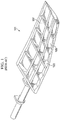
- FIG 1 an exemplary prior art airfoil structure 101 is illustrated.
- Structure 101 includes a plurality of ribs 103 and spars 105.
- the ribs 103 and spars 105 are configured to provide structural integrity to structure 101, as well as to provide support to a skin 107 (shown partially removed for clarity).
- Structure 101 requires a substantial amount of expense and effort to assembly.
- each rib 103 and spar 105 represents an individual part that must be fabricated, recorded, stocked, and assembled.
- the ribs 103, spars 105, and skin 107 are typically assembled with fasteners, usually requiring a considerable amount of effort and expense to install.
- the fasteners may promote corrosion, stress concentrations, and otherwise shorten the life of the structure.
- tolerance variations between the plurality of parts can lead to irregularities in the surface quality of skin 107.
- US 4671471 discloses a moulded foam structure to which a skin is applied. Pressure is then applied to the foam and skin combination to bond the structure.
- US3873654 discloses a composite structure in which a cut foam member is placed inside a mould in which a skin member has been laid up, and then is compressed within the mould to form the final shape of the structure.
- EP0671250 discloses the production of foam mouldings having layers of different density polyolefin foam particles, useful for shock absorbing packaging or structures.
- EP1582328 discloses a method for molding a foamable material into a predetermined shape, in which the foamable material is injected into a mold and foamed therein, to thereby fill a cavity of the mold with the foamed material.
- GB2120621 discloses a wing for a microlight aircraft cut from a block of foamed plastics material, e.g. polystyrene. Axial channels are cut to receive spars, and the foamed plastics wing members are adhered to transverse ribs to form the wing.
- foamed plastics material e.g. polystyrene
- a method of making an airfoil structure is set out in claim 1.
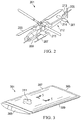
- Aircraft 201 includes main rotor blades 203, a fuselage 209, a landing gear 207, and a wing 211. Aircraft 201 further includes a tail boom assembly 212, which is an assembly of a tail boom 214, a tail fin 213, an elevator 301, and tail rotor blades 205. Elevator 301 functions to provide pitch control during flight of aircraft 201. Elevator 301 is illustrated and described herein as an embodiment of a foam stiffened structure. Further, it should be appreciated that elevator 301 is simply one example of a foam stiffened structure that can be manufactured in accordance with the method of the present application.
- aircraft 201 may be manufactured in accordance with the method of the present application.
- main rotor blade 203, tail rotor blade 205, wing 211, tail boom 214, tail fin 213, and fuselage 209 are all parts that may be manufactured in accordance with the method of the present application, so as to be stiffened by a molded foam member.
- aircraft 201 is merely exemplary of the wide variety of vehicles that may have foam stiffened structures formed from the method of the present application.
- other exemplary vehicles may include fixed wing aircraft, boats, ships, automobiles, and skateboards, to name a few.
- Elevator 301 includes a foam member 311 and a skin 307.
- foam member 311 is molded in a tool.
- skin 307 is preferably formed by placing uncured composite material onto foam member 311, such that foam member 311 acts as a tooled surface for the composite material. The composite material is subsequently cured to become a rigid skin 307.
- skin 307 is not formed from a composite material, but rather thin sheet metal, or other semi-rigid material.
- the thin sheet metal is formed and bonded to foam member 311, such that foam member 311 acts partly as tool by dictating final surface contour location of the sheet metal.
- skin 307 includes an upper airfoil surface 315 and a lower airfoil surface 313.
- elevator 301 may include an inboard rib 303, an outboard rib 305, and a trailing edge member 309.
- Inboard rib 303, outboard rib 305, and trailing edge member 309 are exemplary of members that may be formed integrally with foam member 311, or assembled to foam member 311 in an assembly operation subsequent to the formation of foam member 311.
- Inboard rib 303, outboard rib 305, and trailing edge member 311 can be formed from any conventional manufacturing operation, such as machining, molding, casting, injection molding, compression molding, to name a few.
- an adhesive can be used to promote a bond between any of the skin 307, foam member 311, inboard rib 303, outboard rib 305, and trailing edge member 309.
- Foam member 311 provides structural stiffness to elevator 301.
- Skin 307 preferably comprise a plurality of reinforcing fibers disposed in a polymeric matrix. As discussed further herein, skin 307 is preferably placed onto foam member 311 as a plurality of uncured composite plies, and then later cured to form a rigid composite laminate. It should be appreciated that skin 307 can be formed from a variety of fiber and resin systems. It should also be appreciated that the specific composite material, or sheet metal, is implementation specific. For example, carbon fiber may be desirable in one application, while fiberglass fiber may be desirable in another application.
- the molded foam member 311 is preferably formed with a pourable and expandable structural foam in a mold, as discussed further herein.
- the molded foam member 311 is configured to provide the structural integrity to elevator 301 in a wide variety of geometries and contours. Curing of skin 307 may require pressure, such as autoclave curing pressure, for proper curing. As such, foam member 311 is configured to provide structural resistance to the pressure so as to preserve the desired surface geometry of skin 307.
- Foam member 311 is configured to be isotropic, thus the isotropic properties of foam member 311 allow it to retain structural integrity in a wide variety of geometries and contours.
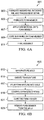
- a step 603 of method 601 includes fabricating inboard rib 303, outboard rib 305, and trailing edge member 309, which may be included in some embodiments of elevator 301. As discussed further herein, any of inboard rib 303, outboard rib 305, and trailing edge member 309 maybe located in the mold during the manufacturing of foam member 311.
- a process 605 of method 601 includes fabricating foam member 311. Referring now also to Figure 6B , process 605 is schematically illustrated in further detail. A step 613 of process 605 includes manufacturing a mold for which foam member 311 is formed within.
- Mold 701 preferably includes a first member 701 and a second member 703. Mold 701 also includes a cavity 707 formed partly in each of the first member 701 and a second member 703. It should be appreciated that mold 701 may be divided up into any number of separate members. Cavity 707 represents the desired geometry of foam member 311. A release agent is preferably applied to the interior of cavity 707 in order to promote the release and removal of foam member 311 from the mold 701.
- a step 615 of process 605 includes creating a foam mixture 807.
- the foam system used in the creation of foam member 311 is preferably a urethane foam system that expands to fill cavity 707 of mold 701.
- the foam is preferably rigid and flexible, while having a relatively low density.
- the preferred foam system is a polyisocyanurate pour foam system marketed under the name of Stepanfoam BX 450, by the Stepan Chemical Company. It should be fully appreciated that other foam systems may be used in the molding of foam member 311.
- the Stepanfoam BX 450 includes two separate resin components, namely a resin T (70% by weight) 805 and a resin R (30% by weight) 803.
- the desired weight amounts of resin T 805 and resin R 803 are measured and poured into a container 801.
- the resin T 805 and resin R 803 are mechanically agitated to form a homogenous mixture 807.
- a mixer 901 is used in rotation in order to mix resin T 805 and resin R 803 to form mixture 807.
- Mixer 901 includes a shaft 903, the shaft 903 being configured to be driven by a drill motor, or the like.
- Mixer 901 may include a plurality of blades located on a first blade disc 905 and a second blade disc 907. In the preferred embodiment, mixer 901 is rotated at 3500 revolutions per minute for 10-15 seconds when mixing resin T 805 and resin R 803 to form mixture 807.
- the total weight amount of mixture 807 is at least partially dependent upon the desired density and the volume of foam member 311. For example, because density is the relationship of mass per unit volume, the desired density of foam member 311 at least partially dictates the weight amount of mixture 807. However, a portion of the mixture 807 may escape from within cavity 707, which may affect the final density determination of foam member 311.
- a step 617 of process 605 includes pouring foam mixture 807 into cavity 707. Once the mixing in step 615 is complete, it is preferred that mixture 807 is poured into cavity 707 mold 701 as quickly as possible.
- a step 619 includes controlling expansion of foam mixture 807 in cavity 707.
- foam mixture 807 is allowed to "free rise" within cavity 707 so as to form foam member 311 at a "free rise” density.
- a density of approximately 8.0 pounds/ft3 and less can be achieved.
- the "free rise" embodiment of foam member 311 may be particularly desirable when the geometry and contours of foam member 311 are relatively simple. This is because the exposed surface would require a cutting or shaving operation to trim the exposed surface of foam member 311 to the desired contour.
- a "free rise” embodiment includes allowing foam mixture 807 to expand and polymerize without constraint. Expansion and polymerization of foam mixture 807 allows any volatiles to escape during the polymerization stage, and also to facilitate complete homogeneous fill of cavity 707. The polymerization stage is the expansion from a chemical reaction of the foam mixture 807.
- step 619 includes using a "captive process" to tailor the density of foam member 311.
- the captive process involves using a lid member 709 to generate pressure within cavity 707, thus inhibiting the expansion of foam mixture 807 during polymerization.
- Lid member 709 includes one or more openings 711a and 711b, which allow volatiles to escape during the polymerization of mixture 807.
- the size and number of openings 711a and 711b are also configured so as to selectively tailor the density of foam member 311.
- the openings 711a and 711b in lid member 709 are sized to create a foam member 311 having a density of approximately 12-16 pounds/ft3.
- this size and quantity of openings 711a and 711b can be increased/decreased to produce a foam member 311 of lower/higher density, respectively.
- the expected operational loading of elevator 101 is a factor that may contribute to the customization of the density of foam member 311.
- the density of foam member 311 can be customized in accordance with the desired structural strength of foam member 311.
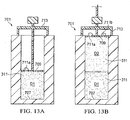
- step 619 includes selectively positioning lid member 709 to create volumes of different densities.
- a first volume having a density of D1 is created by selectively positioning lid member 709 by a locator tool 713.
- Locator tool 713 is configured to selectively position lid member 709 as desired position.
- lid member 709 has a single opening 711a in order to produce a density of D1. It should be appreciated that density D1 can also be produced by decreasing the size of openings 711a and 711b.
- the second volume has a density D2 which is less than density D1 due to the use of both venting openings 711a and 711b.
- the density of foam member 311 can be fully customized in accordance with the predicted loading of foam member 311 in a specific implementation. For example, the inboard portion of elevator 301 may experience higher loading than the outboard portion, as such, it may be desirable for foam member 301 to have a higher density, thus higher strength, near the inboard portion.
- step 619 may involve creating any number of volumes having a variety of densities. Further, the number of volumes and densities is implementation specific. For example, if the foam stiffened structure is a large wing on an aircraft, the foam stiffened wing may have a foam member with a dozen different volumes of varying densities.
- FIG. 14A and 14B another embodiment of process 605 includes locating a form 1401 in cavity 707 so as to create a void 1403 in foam member 311.
- the inclusion of void 1403 in foam member 311 may be particularly desirable for routing wiring, or other system components, through foam member 311.
- void 1403 may also be desirable to reduce the weight of foam member 311.
- form 1401 may be a rigid tool that is removed from foam member 311.
- form 1401 is a structure that forms a bond with foam member 311 and integral with foam member 311.
- form 1401 acts as a fly-away tool in that form 1401 dictates the geometry of void 1703, and form 1401 also remains with foam member 311.
- the geometry and size of void 1403 is implementation specific and may take on a wide variety of configurations.
- another embodiment of process 605 includes incorporating components into cavity 707 of mold 701 so that such components are integral to foam member 311.
- inboard rib 303, outboard rib 305, and trailing edge member 309 can be located in cavity 707 prior to the introduction of foam mixture 807.
- foam member 311 becomes integral with inboard rib 303, outboard rib 305, and trailing edge member 309.
- an aperture 1501 in outboard rib 305 is configured to allow the escape of volatiles during expansion of foam mixture 807, similar to vent openings 711a and 711b.
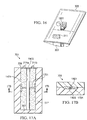
- FIG. 17A and 17B another embodiment of process 605 includes incorporating a rib 1701 into cavity 707 of mold 701 so that rib 1701 is integral to foam member 311.
- rib 1701 can be located chord-wise in cavity 707 prior to the introduction of foam mixture 807.
- an aperture in rib 1701 functions as a pour opening for foam mixture 807, as well as a vent opening to allow volatiles to escape during expansion of foam mixture 807.
- venting through rib 1701 may be accomplished in a variety of ways, such as through a gap between rib 1701 and form 1401.
- foam member 311 is formed in multiple steps, similar to the procedure described above in regard to Figures 13A and 13B .
- Rib 1701 is integral with foam member 311. Rib 1701 can be used to provide supplemental structural support in elevator 301. In the illustrated embodiment, rib 1701 is located approximately mid-span, but it should be appreciated that rib 1701 may be located in a variety of locations along the span of the foam member 311. Further, it should be appreciated that even though Figures 17A and 17B are illustrated with form 1401 and void 1403, these are optional features such that some embodiments may not include form 1401 and void 1403. In another alternative embodiment, rib 1701 is introduced after a first part of foam member 311 is formed in mold 701.
- rib 1701 may be "L" shaped in order to facilitate mating of rib 1701 to the first part of foam member 311. It should be appreciated that even though only a single rib 1701 is illustrated, one embodiment includes a plurality of ribs 1701 spaced through foam member 311.
- process 605 continues with a step 621 for curing foam member 311.
- a full cure of foam member 311 is preferred before foam member 311 is removed from mold 701. The full cure is achieved by first allowing the foam member 311 to remain within mold 701 for at least 24 hours after the expanding of the foam mixture 807 within mold 701. Thereafter, the mold 701, with foam member 311 remaining therein, is cured approximately between 350° F and 375° F for approximately two hours. It should be appreciated that alternative foam systems may require different curing requirements. It is preferred that foam member 311 and mold 701 are cooled to 150° F or below, before demolding.
- a step 623 includes demolding foam member 311. Demolding foam member includes removing foam member 311 from mold 701. Demolding of foam member 311 may require pliable tools to facilitate separation of the foam member 311 from within cavity 707.
- method 601 continues with a step 607 for applying skin material to foam member 311.
- foam member 311 is removed from mold 701 in step 623 of process 605, then skin material for skin 307 can be applied to foam member 311 in a manufacturing process.
- the geometry and contours of foam member 307 are accurate to a high tolerance because of being molded in mold tool 703.
- foam member 311 is configured to act as a "fly-away tool" such that it not only acts as a tooling surface for skin 307 during assembly of elevator 301, but also remains with elevator 301 during operation of the aircraft.
- a structural bond exists between skin 307 and foam member 311 such that shearing loads are transferred between skin 307 and foam member 311 through the structural bond.
- the bond can be formed from the resin in the composite skin.
- the structural bonding can also be created or supplemented with an adhesive layer located between foam member 311 and skin 307.
- a release material may be applied to prevent a structural bond between skin 307 and foam member 311.
- step 607 includes applying uncured composite material onto foam member 311.
- the composite manufacturing process may take on a wide variety of processes because skin 307 may be formed from a wide variety of composite fiber/resin systems, or from metallic materials.
- a fiber placement machine 1601 is used to apply tape strips of composite material in a certain configuration.
- Alternative embodiments can employ any number of composite manufacturing techniques known in the art.
- Foam member 311 acts as a tool by dictating the geometry of skin 307. Because foam member 311 was formed in mold 701, the geometry and contours are highly accurate. As such, foam member 311 acts as a high tolerance support of skin 307.
- a step 611 of method 601 includes final assembly elevator 301. If inboard rib 303, outboard rib 305, and trailing edge member 309 are not already integrated with foam member 311, then step 611 includes assembling these parts with foam member 311 and skin 307. Step 611 can include assembling any other parts and performing final finish to elevator 301.
- skin 307 is cured in a step 609 of method 601.
- Skin 307, while on foam member 311, may be vacuum bagged and cured in accordance with one of a variety of conventional composite curing processes.
- curing of the skin itself is not required.
- an adhesive may be used between the metal sheet and foam member 311, as such; the adhesive may require heat and pressure for curing.
- the method of the present application provides significant advantages, including: (1) providing a stiffness producing foam member in a composite structure that can be molded in a variety of geometries and contours; (2) providing a stiffness producing foam member in a composite structure that can withstand autoclave curing pressure; (3) providing a stiffness producing foam member in a composite structure, the density of the foam member being selectively tailored; (4) providing a stiffness producing foam member in a composite structure that provides tooled support for a skin, such that the foam member not only provides structural stiffness, but also a tooling surface for the skin; and (5) providing a stiffness producing foam member in a structure, the foam member having a plurality of volumes of varying densities so that the strength/weight of the foam member is optimized for the predicted loading.
Landscapes
- Engineering & Computer Science (AREA)
- Mechanical Engineering (AREA)
- Aviation & Aerospace Engineering (AREA)
- Casting Or Compression Moulding Of Plastics Or The Like (AREA)
- Laminated Bodies (AREA)
Claims (6)
- Verfahren zur Herstellung einer Verbundtragflächen-Struktur für ein Flugzeug, das Folgendes aufweist:die Ausformung eines mindestens teilweise gehärteten Schaum-Teils (311), das ein erstes Schaum-Volumen mit einer ersten Dichte D1 und ein zweites Schaum-Volumen mit einer zweiten Dichte D2 aufweist, die weniger als D1 beträgt;das Aufbringen einer ungehärteten Verbundaußenhaut (307) auf eine Außenfläche des Schaum-Teils, so dass das Schaum-Teil als Hilfsmittel für die ungehärtete Verbundaußenhaut wirkt; unddie Härtung der Verbundaußenhaut, während das Schaum-Teil den Teil der Verbundaußenhaut stützt;wobei das Schaum-Teil die Geometrie der Verbundaußenhaut bestimmt; undwobei der Schritt der Ausformung Folgendes aufweist:die Einspritzung eines Schaumgemisches (807) in eine Form (701) mit einem inneren Hohlraum (707), der der gewünschten Form des Schaum-Teils entspricht;die Verwendung eines Positionierungswerkzeugs (713), um ein Deckel-Teil (709) in einer gewünschten Position selektiv einzustellen und das erste Schaum-Volumen zu bilden;die Zulassung, dass sich das erste Schaum-Volumen ausdehnt und polymerisiert;die Verwendung eines Positionierungswerkzeugs (713), um das Deckel-Teil (709) in einer zweiten gewünschten Position neu einzustellen und das zweite Schaum-Volumen zu bilden;die Einführung eines weiteren Schaumgemisches in den Formhohlraum zwischen dem ersten Schaum-Volumen und dem Deckel-Teil und die Zulassung, dass sich das zweite Schaum-Volumen ausdehnt und polymerisiert;wobei das Verfahren darüberhinaus die Verwendung einer oder mehrerer Entlüftungsöffnungen (711a, 711b) im Deckel-Teil (709) aufweist, um die Dichte des ersten und des zweiten Schaum-Volumens zu steuern;wobei die eine oder mehreren Entlüftungsöffnungen so dimensioniert sind, dass sie die Dichte des ersten und des zweiten Schaum-Volumens steuern können.
- Verfahren gemäß Anspruch 1, wobei das Deckel-Teil (709) zwei Entlüftungsöffnungen (711a, 711b) aufweist, und das Verfahren die Verwendung einer der Entlüftungsöffnungen für die Steuerung der Dichte des ersten Schaum-Volumens und die Verwendung beider Entlüftungsöffnungen für die Steuerung der Dichte des zweiten Schaum-Volumens aufweist.
- Verfahren gemäß einem der Ansprüche 1-2, wobei der Schritt der Aufbringung einer ungehärteten Verbundaußenhaut auf eine Außenfläche des Schaum-Teils mit einer Faserpositionierungsmaschine erreicht wird.
- Verfahren gemäß einem der Ansprüche 1-3, wobei der Schritt der Ausformung eines mindestens teilweise gehärteten Schaum-Teils darüberhinaus Folgendes aufweist:
die Fixierung einer Versteifungsrippe (303, 305, 1701) in der Form. - Verfahren gemäß einem der Ansprüche 1-4, wobei das Verfahren keine Verwendung eines Haftmittels zwischen der Außenhaut und dem Schaum-Teil aufweist, und wobei eine Strukturbindung zwischen der Außenfläche des Schaum-Teils und der Verbundaußenhaut durch Harz in der Verbundaußenhaut gebildet wird.
- Verfahren gemäß einem der Ansprüche 1-5, wobei der Ausformungs-Schritt die Ausformung der Struktur aufweist, um eine Vielzahl verschiedener Volumina mit einer Vielzahl unterschiedlicher Dichten zu bilden und wobei die Struktur eine festgelegte Ausführung hat, und wobei die Dichten der Volumina ausgewählt sind auf der Grundlage der vorausgesagten Strukturbelastung, die in der festgelegten Ausführung zu erwarten ist.
Applications Claiming Priority (3)
| Application Number | Priority Date | Filing Date | Title |
|---|---|---|---|
| US41045810P | 2010-11-05 | 2010-11-05 | |
| US13/224,532 US20120114897A1 (en) | 2010-11-05 | 2011-09-02 | Foam Stiffened Structure and Method of Making the Same |
| EP20110186041 EP2450275A1 (de) | 2010-11-05 | 2011-10-20 | Schaumversteifte Struktur und Herstellungsverfahren dafür |
Related Parent Applications (1)
| Application Number | Title | Priority Date | Filing Date |
|---|---|---|---|
| EP20110186041 Division EP2450275A1 (de) | 2010-11-05 | 2011-10-20 | Schaumversteifte Struktur und Herstellungsverfahren dafür |
Publications (3)
| Publication Number | Publication Date |
|---|---|
| EP2818404A1 EP2818404A1 (de) | 2014-12-31 |
| EP2818404B1 EP2818404B1 (de) | 2016-01-13 |
| EP2818404B2 true EP2818404B2 (de) | 2018-11-14 |
Family
ID=44946981
Family Applications (2)
| Application Number | Title | Priority Date | Filing Date |
|---|---|---|---|
| EP14164626.5A Not-in-force EP2818404B2 (de) | 2010-11-05 | 2011-10-20 | Herstellungsverfahren für eine schaumversteifte Struktur |
| EP20110186041 Ceased EP2450275A1 (de) | 2010-11-05 | 2011-10-20 | Schaumversteifte Struktur und Herstellungsverfahren dafür |
Family Applications After (1)
| Application Number | Title | Priority Date | Filing Date |
|---|---|---|---|
| EP20110186041 Ceased EP2450275A1 (de) | 2010-11-05 | 2011-10-20 | Schaumversteifte Struktur und Herstellungsverfahren dafür |
Country Status (4)
| Country | Link |
|---|---|
| US (2) | US20120114897A1 (de) |
| EP (2) | EP2818404B2 (de) |
| CN (1) | CN102556334B (de) |
| CA (1) | CA2756119C (de) |
Families Citing this family (31)
| Publication number | Priority date | Publication date | Assignee | Title |
|---|---|---|---|---|
| US9266191B2 (en) | 2013-12-18 | 2016-02-23 | Aeroprobe Corporation | Fabrication of monolithic stiffening ribs on metallic sheets |
| US9511446B2 (en) | 2014-12-17 | 2016-12-06 | Aeroprobe Corporation | In-situ interlocking of metals using additive friction stir processing |
| US9511445B2 (en) * | 2014-12-17 | 2016-12-06 | Aeroprobe Corporation | Solid state joining using additive friction stir processing |
| US8632850B2 (en) | 2005-09-26 | 2014-01-21 | Schultz-Creehan Holdings, Inc. | Friction fabrication tools |
| US20130071604A1 (en) * | 2011-09-16 | 2013-03-21 | Annexair Inc. | Composite panel, a composite panel with an edge band, and method of applying and manufacturing the same |
| US9597826B2 (en) | 2012-10-30 | 2017-03-21 | Bell Helicopter Textron Inc. | Method of repairing, splicing, joining, machining, and stabilizing honeycomb core using pourable structural foam and a structure incorporating the same |
| US9149999B2 (en) | 2012-10-30 | 2015-10-06 | Bell Helicopter Textron Inc. | Method of repairing, splicing, joining, machining, and stabilizing honeycomb core using pourable structural foam and a structure incorporating the same |
| US9333684B2 (en) * | 2012-10-30 | 2016-05-10 | Bell Helicopter Textron Inc. | Method of repairing, splicing, joining, machining, and stabilizing honeycomb core using pourable structural foam and a structure incorporating the same |
| US20140119930A1 (en) * | 2012-10-30 | 2014-05-01 | Bell Helicopter Textron Inc. | Method of Repairing, Splicing, Joining, Machining, and Stabilizing Honeycomb Core Using Pourable Structural Foam and a Structure Incorporating the Same |
| EP2735504B1 (de) * | 2012-11-22 | 2017-01-18 | Airbus Operations S.L. | Herstellungsmethode für eine hochintegrierte struktur mit leit- und hinterkantenrippen für eine flugzeugtragfläche |
| KR20140147931A (ko) * | 2013-06-19 | 2014-12-31 | 주식회사 제이에스영테크 | 무인항공기용 날개 및 그 제조방법 |
| US9757883B2 (en) | 2014-09-25 | 2017-09-12 | Bell Helicopter Textron Inc. | Joining structural members using foam |
| US9849656B2 (en) * | 2014-10-13 | 2017-12-26 | Bell Helicopter Textron Inc. | Method of repairing a core stiffened structure |
| CN104494844B (zh) * | 2014-12-25 | 2016-09-14 | 深圳市博尔创意文化发展有限公司 | 一种复合材料机翼前后缘蒙皮制造工艺 |
| DE112016001251T5 (de) * | 2015-03-16 | 2017-11-30 | Rogers Corporation | Verfahren zur Herstellung eines Polymerschaumkomposits, dadurch hergestellte Polymerschaumkomposits und daraus hergestellte Gegenstände |
| CA3014381A1 (en) | 2016-02-09 | 2017-08-17 | Bauer Hockey Ltd. | Athletic gear or other devices comprising post-molded expandable components |
| CN108146652A (zh) * | 2016-12-06 | 2018-06-12 | 成都凯迪精工科技有限责任公司 | 一种展弦比大于9倍的舵面制造方法 |
| US10633976B2 (en) | 2017-07-25 | 2020-04-28 | Bell Helicopter Textron Inc. | Methods of customizing, manufacturing, and repairing a rotor blade using additive manufacturing processes |
| FR3069481B1 (fr) | 2017-07-28 | 2021-05-28 | Airbus Helicopters | Procede de fabrication d'un corps de remplissage d'une pale d'un rotor et corps de remplissage d'une pale de rotor comportant au moins un ensemble alveolaire a cellules fermees |
| JP7089034B2 (ja) | 2017-10-31 | 2022-06-21 | メルド マニファクチャリング コーポレーション | ソリッドステート積層造形システムならびに材料組成および構造背景 |
| US10933971B2 (en) * | 2017-12-08 | 2021-03-02 | Wing Aviation Llc | Injection molded wing structure for aerial vehicles |
| CN109774199B (zh) * | 2019-01-17 | 2021-07-13 | 江苏恒神股份有限公司 | 一种碳纤维复合材料舵型结构的成型方法 |
| US11427350B2 (en) | 2019-01-31 | 2022-08-30 | Textron Innovations Inc. | Methods of forming and assembling a rotor blade using additive manufacturing processes |
| US11298899B2 (en) | 2019-06-24 | 2022-04-12 | Textron Innovations Inc. | System and method for repairing a composite structure |
| CN110510145A (zh) * | 2019-08-30 | 2019-11-29 | 中国民用航空飞行学院 | 一种三梁式复合材料机翼整体结构及其成型工艺方法 |
| US12054237B2 (en) * | 2020-03-06 | 2024-08-06 | The Boeing Company | Skinned cell structures and methods of producing the same |
| CN113183487B (zh) * | 2021-05-28 | 2024-10-11 | 常州启赋安泰复合材料科技有限公司 | 一种直升机尾梁模具及制备一体成型复合材料尾梁制件的方法 |
| CN117858789A (zh) * | 2021-07-12 | 2024-04-09 | 想像航空有限公司 | 例如适用于机身和其他结构的制造方法和相关结构 |
| CN114104326B (zh) * | 2021-12-03 | 2024-04-26 | 西北工业大学 | 一种无人机生产方法 |
| CN116118995B (zh) * | 2022-11-11 | 2025-08-26 | 北京航天长征飞行器研究所 | 一种飞行滑板主体结构 |
| CN120134657B (zh) * | 2025-02-11 | 2025-12-09 | 北京玻钢院复合材料有限公司 | 一种双曲率层压板结构翼梢小翼的共固化成型方法 |
Citations (3)
| Publication number | Priority date | Publication date | Assignee | Title |
|---|---|---|---|---|
| DE3438602A1 (de) † | 1984-10-20 | 1986-04-24 | Robbe Modellsport Gmbh, 6424 Grebenhain | Verfahren zur herstellung eines modellteiles sowie nach diesem verfahren hergestelltes modellteil |
| US5087511A (en) † | 1990-08-31 | 1992-02-11 | General Electric Company | Composite element having a variable density core |
| US5096384A (en) † | 1990-07-27 | 1992-03-17 | The Marley Cooling Tower Company | Plastic fan blade for industrial cooling towers and method of making same |
Family Cites Families (36)
| Publication number | Priority date | Publication date | Assignee | Title |
|---|---|---|---|---|
| GB1040948A (en) * | 1962-07-26 | 1966-09-01 | Dow Chemical Co | Improved airfoil structure and method of manufacture |
| US3258861A (en) * | 1962-07-31 | 1966-07-05 | United Shoe Machinery Corp | Polyurethane footwear heels |
| US3809733A (en) * | 1968-11-06 | 1974-05-07 | Ici Ltd | Production of double layer laminates |
| DE2117070C3 (de) * | 1971-04-07 | 1975-09-18 | Sued-West Chemie Gmbh, 7910 Neu- Ulm | Bauelement aus einer Polyurethanschaumschicht und mindestens einer mit dieser verbundenen Deckschicht |
| US3873654A (en) * | 1973-03-05 | 1975-03-25 | Robert G Smith | Process of forming a rigid foam airfoil section |
| US3960631A (en) * | 1974-08-30 | 1976-06-01 | Whirlpool Corporation | Method of making a liner construction |
| US4181287A (en) * | 1978-06-26 | 1980-01-01 | Owens-Corning Fiberglas Corporation | Molding apparatus for rigid foam pipe insulation |
| DE2905701A1 (de) * | 1979-02-15 | 1980-08-28 | Arthur Wybiral | Verfahren zum herstellen von modellflugzeugteilen |
| GB2120621A (en) * | 1982-05-20 | 1983-12-07 | Heruport Limited | Aircraft wing |
| US4525228A (en) * | 1982-08-13 | 1985-06-25 | United Kingdom Atomic Energy Authority | Method of winding on foam mandrel |
| US4671471A (en) * | 1984-05-21 | 1987-06-09 | Mitchell Wing, Inc. | Foam reinforced aluminum wing structure |
| US4687691A (en) * | 1986-04-28 | 1987-08-18 | United Technologies Corporation | Honeycomb spliced multilayer foam core aircraft composite parts and method for making same |
| US4828325A (en) | 1986-05-16 | 1989-05-09 | University Of Tennessee Research Corporation | Method of making a custom fitted composite foamed cushion, a preform kit and the resultant product of the process |
| US5042968A (en) * | 1989-11-02 | 1991-08-27 | United Technologies Corporation | Propeller blade subassembly and method for making a propeller blade subassembly |
| US5071331A (en) * | 1990-08-27 | 1991-12-10 | Cabot Safety Corporation | Mold for foam products |
| US5173227A (en) * | 1990-12-06 | 1992-12-22 | United Technologies Corporation | In-situ molding of fiber reinforced composites to net shape |
| US5112663A (en) * | 1991-04-22 | 1992-05-12 | General Dynamics Corporation, Convair Division | Method of manufacturing composite structures |
| DE4407628A1 (de) * | 1994-03-08 | 1995-09-14 | Basf Ag | Verfahren zur Herstellung von Schaumstoff-Formteilen mit Schichten unterschiedlicher Dichte |
| US5773121A (en) | 1994-07-29 | 1998-06-30 | Isorca Inc. | Syntactic foam core incorporating honeycomb structure for composites |
| DE19649132C2 (de) * | 1996-11-27 | 1999-09-02 | Daimler Chrysler Aerospace | Nase für eine aerodynamische Fläche und Verfahren zu ihrer Herstellung |
| US6630093B1 (en) * | 1999-08-21 | 2003-10-07 | Ronald D. Jones | Method for making freeform-fabricated core composite articles |
| GB0001267D0 (en) | 2000-01-21 | 2000-03-08 | West Edward V | Method of composting and container therefor |
| JP4465929B2 (ja) * | 2001-07-05 | 2010-05-26 | 株式会社プライムポリマー | 熱可塑性樹脂組成物発泡体の製造方法 |
| US6818279B2 (en) | 2001-08-22 | 2004-11-16 | Parat Automotive Schonenbach Gmbh & Co. Kg | Foldable convertible top and method of making same |
| US6625830B2 (en) | 2001-10-02 | 2003-09-30 | Neal Lampel | Wheelchair cushion |
| DE10231830A1 (de) | 2002-07-12 | 2004-01-22 | Röhm GmbH & Co. KG | Schaumstoff mit verdichteter Oberfläche |
| US7732044B2 (en) * | 2002-09-04 | 2010-06-08 | Foam Matrix, Inc. | Foam core-surface reinforced article and method |
| AU2003277672A1 (en) * | 2002-11-11 | 2004-06-03 | Sunstar Suisse Sa | Method and apparatus for foam molding |
| DE10357656A1 (de) * | 2003-12-10 | 2005-07-07 | Mtu Aero Engines Gmbh | Verfahren zur Herstellung von Gasturbinenbauteilen und Bauteil für eine Gasturbine |
| US7531058B2 (en) * | 2005-02-24 | 2009-05-12 | The Boeing Company | Reinforced rampdown for composite structural member and method for same |
| ES2319152B1 (es) * | 2007-07-17 | 2010-01-11 | Fco.Javier Garcia Castro | Procedimiento para la fabricacion de palas eolicas. |
| US7879276B2 (en) * | 2007-11-08 | 2011-02-01 | The Boeing Company | Foam stiffened hollow composite stringer |
| US8221084B2 (en) * | 2008-02-28 | 2012-07-17 | Textron Innovations Inc. | Single-piece propeller and method of making |
| US8540921B2 (en) | 2008-11-25 | 2013-09-24 | The Boeing Company | Method of forming a reinforced foam-filled composite stringer |
| ATE537060T1 (de) * | 2009-05-27 | 2011-12-15 | Eurocopter Deutschland | Rotorblatt als faserverbundprofilkörper und verfahren zu seiner herstellung mittels harzinjektionstechnik |
| CN102917852A (zh) * | 2010-05-27 | 2013-02-06 | 陶氏环球技术有限责任公司 | 制造成形泡沫制品的方法 |
-
2011
- 2011-09-02 US US13/224,532 patent/US20120114897A1/en not_active Abandoned
- 2011-10-20 EP EP14164626.5A patent/EP2818404B2/de not_active Not-in-force
- 2011-10-20 CA CA2756119A patent/CA2756119C/en active Active
- 2011-10-20 EP EP20110186041 patent/EP2450275A1/de not_active Ceased
- 2011-11-02 CN CN201110364708.1A patent/CN102556334B/zh not_active Expired - Fee Related
-
2016
- 2016-06-28 US US15/195,501 patent/US11097507B2/en active Active
Patent Citations (3)
| Publication number | Priority date | Publication date | Assignee | Title |
|---|---|---|---|---|
| DE3438602A1 (de) † | 1984-10-20 | 1986-04-24 | Robbe Modellsport Gmbh, 6424 Grebenhain | Verfahren zur herstellung eines modellteiles sowie nach diesem verfahren hergestelltes modellteil |
| US5096384A (en) † | 1990-07-27 | 1992-03-17 | The Marley Cooling Tower Company | Plastic fan blade for industrial cooling towers and method of making same |
| US5087511A (en) † | 1990-08-31 | 1992-02-11 | General Electric Company | Composite element having a variable density core |
Also Published As
| Publication number | Publication date |
|---|---|
| US20160303818A1 (en) | 2016-10-20 |
| CA2756119A1 (en) | 2012-05-05 |
| CA2756119C (en) | 2016-08-02 |
| CN102556334B (zh) | 2016-06-01 |
| CN102556334A (zh) | 2012-07-11 |
| EP2818404B1 (de) | 2016-01-13 |
| US11097507B2 (en) | 2021-08-24 |
| US20120114897A1 (en) | 2012-05-10 |
| EP2450275A1 (de) | 2012-05-09 |
| EP2818404A1 (de) | 2014-12-31 |
Similar Documents
| Publication | Publication Date | Title |
|---|---|---|
| EP2818404B1 (de) | Schaumversteifte Struktur und Herstellungsverfahren dafür | |
| EP2635431B1 (de) | Struktursystem für ein formbares fly away-tool | |
| US9015941B2 (en) | Method of repairing honeycomb core using pourable structural foam | |
| US9149999B2 (en) | Method of repairing, splicing, joining, machining, and stabilizing honeycomb core using pourable structural foam and a structure incorporating the same | |
| EP2727697B1 (de) | Verfahren zum Stabilisieren eines Wabenkerns unter Verwendung eines gießbaren Strukturschaumes | |
| CA2908200C (en) | Method of repairing a core stiffened structure | |
| CA2831103C (en) | Method of repairing, splicing, joining, machining, and stabilizing honeycomb core using pourable structural foam and a structure incorporating the same | |
| EP2727698B1 (de) | Verfahren zum Verarbeiten und Stabilisieren eines Kerns mit Zellen unter Verwendung eines gießbaren Strukturschaumes |
Legal Events
| Date | Code | Title | Description |
|---|---|---|---|
| PUAI | Public reference made under article 153(3) epc to a published international application that has entered the european phase |
Free format text: ORIGINAL CODE: 0009012 |
|
| 17P | Request for examination filed |
Effective date: 20140414 |
|
| AC | Divisional application: reference to earlier application |
Ref document number: 2450275 Country of ref document: EP Kind code of ref document: P |
|
| AK | Designated contracting states |
Kind code of ref document: A1 Designated state(s): AL AT BE BG CH CY CZ DE DK EE ES FI FR GB GR HR HU IE IS IT LI LT LU LV MC MK MT NL NO PL PT RO RS SE SI SK SM TR |
|
| 17Q | First examination report despatched |
Effective date: 20150121 |
|
| RIC1 | Information provided on ipc code assigned before grant |
Ipc: B29C 44/10 20060101ALI20150911BHEP Ipc: B64C 1/06 20060101ALI20150911BHEP Ipc: B64C 3/20 20060101AFI20150911BHEP Ipc: B29C 44/08 20060101ALI20150911BHEP Ipc: B29C 44/02 20060101ALI20150911BHEP Ipc: B64C 3/24 20060101ALI20150911BHEP Ipc: B32B 5/18 20060101ALI20150911BHEP |
|
| GRAP | Despatch of communication of intention to grant a patent |
Free format text: ORIGINAL CODE: EPIDOSNIGR1 |
|
| GRAS | Grant fee paid |
Free format text: ORIGINAL CODE: EPIDOSNIGR3 |
|
| INTG | Intention to grant announced |
Effective date: 20151026 |
|
| GRAA | (expected) grant |
Free format text: ORIGINAL CODE: 0009210 |
|
| AC | Divisional application: reference to earlier application |
Ref document number: 2450275 Country of ref document: EP Kind code of ref document: P |
|
| AK | Designated contracting states |
Kind code of ref document: B1 Designated state(s): AL AT BE BG CH CY CZ DE DK EE ES FI FR GB GR HR HU IE IS IT LI LT LU LV MC MK MT NL NO PL PT RO RS SE SI SK SM TR |
|
| REG | Reference to a national code |
Ref country code: GB Ref legal event code: FG4D |
|
| REG | Reference to a national code |
Ref country code: CH Ref legal event code: EP |
|
| REG | Reference to a national code |
Ref country code: IE Ref legal event code: FG4D |
|
| REG | Reference to a national code |
Ref country code: AT Ref legal event code: REF Ref document number: 770313 Country of ref document: AT Kind code of ref document: T Effective date: 20160215 |
|
| REG | Reference to a national code |
Ref country code: DE Ref legal event code: R096 Ref document number: 602011022744 Country of ref document: DE |
|
| REG | Reference to a national code |
Ref country code: LT Ref legal event code: MG4D |
|
| REG | Reference to a national code |
Ref country code: NL Ref legal event code: MP Effective date: 20160113 |
|
| REG | Reference to a national code |
Ref country code: AT Ref legal event code: MK05 Ref document number: 770313 Country of ref document: AT Kind code of ref document: T Effective date: 20160113 |
|
| PG25 | Lapsed in a contracting state [announced via postgrant information from national office to epo] |
Ref country code: NL Free format text: LAPSE BECAUSE OF FAILURE TO SUBMIT A TRANSLATION OF THE DESCRIPTION OR TO PAY THE FEE WITHIN THE PRESCRIBED TIME-LIMIT Effective date: 20160113 |
|
| PG25 | Lapsed in a contracting state [announced via postgrant information from national office to epo] |
Ref country code: ES Free format text: LAPSE BECAUSE OF FAILURE TO SUBMIT A TRANSLATION OF THE DESCRIPTION OR TO PAY THE FEE WITHIN THE PRESCRIBED TIME-LIMIT Effective date: 20160113 Ref country code: NO Free format text: LAPSE BECAUSE OF FAILURE TO SUBMIT A TRANSLATION OF THE DESCRIPTION OR TO PAY THE FEE WITHIN THE PRESCRIBED TIME-LIMIT Effective date: 20160413 Ref country code: GR Free format text: LAPSE BECAUSE OF FAILURE TO SUBMIT A TRANSLATION OF THE DESCRIPTION OR TO PAY THE FEE WITHIN THE PRESCRIBED TIME-LIMIT Effective date: 20160414 Ref country code: HR Free format text: LAPSE BECAUSE OF FAILURE TO SUBMIT A TRANSLATION OF THE DESCRIPTION OR TO PAY THE FEE WITHIN THE PRESCRIBED TIME-LIMIT Effective date: 20160113 Ref country code: FI Free format text: LAPSE BECAUSE OF FAILURE TO SUBMIT A TRANSLATION OF THE DESCRIPTION OR TO PAY THE FEE WITHIN THE PRESCRIBED TIME-LIMIT Effective date: 20160113 |
|
| PG25 | Lapsed in a contracting state [announced via postgrant information from national office to epo] |
Ref country code: PT Free format text: LAPSE BECAUSE OF FAILURE TO SUBMIT A TRANSLATION OF THE DESCRIPTION OR TO PAY THE FEE WITHIN THE PRESCRIBED TIME-LIMIT Effective date: 20160513 Ref country code: LV Free format text: LAPSE BECAUSE OF FAILURE TO SUBMIT A TRANSLATION OF THE DESCRIPTION OR TO PAY THE FEE WITHIN THE PRESCRIBED TIME-LIMIT Effective date: 20160113 Ref country code: SE Free format text: LAPSE BECAUSE OF FAILURE TO SUBMIT A TRANSLATION OF THE DESCRIPTION OR TO PAY THE FEE WITHIN THE PRESCRIBED TIME-LIMIT Effective date: 20160113 Ref country code: RS Free format text: LAPSE BECAUSE OF FAILURE TO SUBMIT A TRANSLATION OF THE DESCRIPTION OR TO PAY THE FEE WITHIN THE PRESCRIBED TIME-LIMIT Effective date: 20160113 Ref country code: AT Free format text: LAPSE BECAUSE OF FAILURE TO SUBMIT A TRANSLATION OF THE DESCRIPTION OR TO PAY THE FEE WITHIN THE PRESCRIBED TIME-LIMIT Effective date: 20160113 Ref country code: IS Free format text: LAPSE BECAUSE OF FAILURE TO SUBMIT A TRANSLATION OF THE DESCRIPTION OR TO PAY THE FEE WITHIN THE PRESCRIBED TIME-LIMIT Effective date: 20160513 Ref country code: PL Free format text: LAPSE BECAUSE OF FAILURE TO SUBMIT A TRANSLATION OF THE DESCRIPTION OR TO PAY THE FEE WITHIN THE PRESCRIBED TIME-LIMIT Effective date: 20160113 Ref country code: LT Free format text: LAPSE BECAUSE OF FAILURE TO SUBMIT A TRANSLATION OF THE DESCRIPTION OR TO PAY THE FEE WITHIN THE PRESCRIBED TIME-LIMIT Effective date: 20160113 |
|
| REG | Reference to a national code |
Ref country code: DE Ref legal event code: R026 Ref document number: 602011022744 Country of ref document: DE |
|
| PLBI | Opposition filed |
Free format text: ORIGINAL CODE: 0009260 |
|
| REG | Reference to a national code |
Ref country code: FR Ref legal event code: PLFP Year of fee payment: 6 |
|
| PG25 | Lapsed in a contracting state [announced via postgrant information from national office to epo] |
Ref country code: EE Free format text: LAPSE BECAUSE OF FAILURE TO SUBMIT A TRANSLATION OF THE DESCRIPTION OR TO PAY THE FEE WITHIN THE PRESCRIBED TIME-LIMIT Effective date: 20160113 Ref country code: DK Free format text: LAPSE BECAUSE OF FAILURE TO SUBMIT A TRANSLATION OF THE DESCRIPTION OR TO PAY THE FEE WITHIN THE PRESCRIBED TIME-LIMIT Effective date: 20160113 |
|
| PLAX | Notice of opposition and request to file observation + time limit sent |
Free format text: ORIGINAL CODE: EPIDOSNOBS2 |
|
| 26 | Opposition filed |
Opponent name: EVONIK ROEHM GMBH Effective date: 20161013 |
|
| PG25 | Lapsed in a contracting state [announced via postgrant information from national office to epo] |
Ref country code: CZ Free format text: LAPSE BECAUSE OF FAILURE TO SUBMIT A TRANSLATION OF THE DESCRIPTION OR TO PAY THE FEE WITHIN THE PRESCRIBED TIME-LIMIT Effective date: 20160113 Ref country code: SM Free format text: LAPSE BECAUSE OF FAILURE TO SUBMIT A TRANSLATION OF THE DESCRIPTION OR TO PAY THE FEE WITHIN THE PRESCRIBED TIME-LIMIT Effective date: 20160113 Ref country code: RO Free format text: LAPSE BECAUSE OF FAILURE TO SUBMIT A TRANSLATION OF THE DESCRIPTION OR TO PAY THE FEE WITHIN THE PRESCRIBED TIME-LIMIT Effective date: 20160113 Ref country code: SK Free format text: LAPSE BECAUSE OF FAILURE TO SUBMIT A TRANSLATION OF THE DESCRIPTION OR TO PAY THE FEE WITHIN THE PRESCRIBED TIME-LIMIT Effective date: 20160113 |
|
| PG25 | Lapsed in a contracting state [announced via postgrant information from national office to epo] |
Ref country code: BE Free format text: LAPSE BECAUSE OF FAILURE TO SUBMIT A TRANSLATION OF THE DESCRIPTION OR TO PAY THE FEE WITHIN THE PRESCRIBED TIME-LIMIT Effective date: 20160113 |
|
| PG25 | Lapsed in a contracting state [announced via postgrant information from national office to epo] |
Ref country code: BG Free format text: LAPSE BECAUSE OF FAILURE TO SUBMIT A TRANSLATION OF THE DESCRIPTION OR TO PAY THE FEE WITHIN THE PRESCRIBED TIME-LIMIT Effective date: 20160413 Ref country code: SI Free format text: LAPSE BECAUSE OF FAILURE TO SUBMIT A TRANSLATION OF THE DESCRIPTION OR TO PAY THE FEE WITHIN THE PRESCRIBED TIME-LIMIT Effective date: 20160113 |
|
| PLBB | Reply of patent proprietor to notice(s) of opposition received |
Free format text: ORIGINAL CODE: EPIDOSNOBS3 |
|
| REG | Reference to a national code |
Ref country code: CH Ref legal event code: PL |
|
| REG | Reference to a national code |
Ref country code: IE Ref legal event code: MM4A |
|
| PG25 | Lapsed in a contracting state [announced via postgrant information from national office to epo] |
Ref country code: LI Free format text: LAPSE BECAUSE OF NON-PAYMENT OF DUE FEES Effective date: 20161031 Ref country code: CH Free format text: LAPSE BECAUSE OF NON-PAYMENT OF DUE FEES Effective date: 20161031 |
|
| PG25 | Lapsed in a contracting state [announced via postgrant information from national office to epo] |
Ref country code: LU Free format text: LAPSE BECAUSE OF NON-PAYMENT OF DUE FEES Effective date: 20161020 |
|
| REG | Reference to a national code |
Ref country code: FR Ref legal event code: PLFP Year of fee payment: 7 |
|
| PG25 | Lapsed in a contracting state [announced via postgrant information from national office to epo] |
Ref country code: IE Free format text: LAPSE BECAUSE OF NON-PAYMENT OF DUE FEES Effective date: 20161020 |
|
| PG25 | Lapsed in a contracting state [announced via postgrant information from national office to epo] |
Ref country code: HU Free format text: LAPSE BECAUSE OF FAILURE TO SUBMIT A TRANSLATION OF THE DESCRIPTION OR TO PAY THE FEE WITHIN THE PRESCRIBED TIME-LIMIT; INVALID AB INITIO Effective date: 20111020 |
|
| PG25 | Lapsed in a contracting state [announced via postgrant information from national office to epo] |
Ref country code: MC Free format text: LAPSE BECAUSE OF FAILURE TO SUBMIT A TRANSLATION OF THE DESCRIPTION OR TO PAY THE FEE WITHIN THE PRESCRIBED TIME-LIMIT Effective date: 20160113 Ref country code: CY Free format text: LAPSE BECAUSE OF FAILURE TO SUBMIT A TRANSLATION OF THE DESCRIPTION OR TO PAY THE FEE WITHIN THE PRESCRIBED TIME-LIMIT Effective date: 20160113 Ref country code: MT Free format text: LAPSE BECAUSE OF NON-PAYMENT OF DUE FEES Effective date: 20161031 Ref country code: MK Free format text: LAPSE BECAUSE OF FAILURE TO SUBMIT A TRANSLATION OF THE DESCRIPTION OR TO PAY THE FEE WITHIN THE PRESCRIBED TIME-LIMIT Effective date: 20160113 |
|
| APAH | Appeal reference modified |
Free format text: ORIGINAL CODE: EPIDOSCREFNO |
|
| APBM | Appeal reference recorded |
Free format text: ORIGINAL CODE: EPIDOSNREFNO |
|
| APBP | Date of receipt of notice of appeal recorded |
Free format text: ORIGINAL CODE: EPIDOSNNOA2O |
|
| APBU | Appeal procedure closed |
Free format text: ORIGINAL CODE: EPIDOSNNOA9O |
|
| RIN2 | Information on inventor provided after grant (corrected) |
Inventor name: MISHRA, SAVANKAR Inventor name: EVANS, WILLIAM Inventor name: THIAGARAJAN, RAMESH Inventor name: MIKEL, MIKE Inventor name: CHRIS, MARK |
|
| PUAH | Patent maintained in amended form |
Free format text: ORIGINAL CODE: 0009272 |
|
| STAA | Information on the status of an ep patent application or granted ep patent |
Free format text: STATUS: PATENT MAINTAINED AS AMENDED |
|
| REG | Reference to a national code |
Ref country code: FR Ref legal event code: PLFP Year of fee payment: 8 |
|
| PG25 | Lapsed in a contracting state [announced via postgrant information from national office to epo] |
Ref country code: TR Free format text: LAPSE BECAUSE OF FAILURE TO SUBMIT A TRANSLATION OF THE DESCRIPTION OR TO PAY THE FEE WITHIN THE PRESCRIBED TIME-LIMIT Effective date: 20160113 Ref country code: AL Free format text: LAPSE BECAUSE OF FAILURE TO SUBMIT A TRANSLATION OF THE DESCRIPTION OR TO PAY THE FEE WITHIN THE PRESCRIBED TIME-LIMIT Effective date: 20160113 |
|
| 27A | Patent maintained in amended form |
Effective date: 20181114 |
|
| AK | Designated contracting states |
Kind code of ref document: B2 Designated state(s): AL AT BE BG CH CY CZ DE DK EE ES FI FR GB GR HR HU IE IS IT LI LT LU LV MC MK MT NL NO PL PT RO RS SE SI SK SM TR |
|
| REG | Reference to a national code |
Ref country code: DE Ref legal event code: R102 Ref document number: 602011022744 Country of ref document: DE |
|
| P01 | Opt-out of the competence of the unified patent court (upc) registered |
Effective date: 20230602 |
|
| PGFP | Annual fee paid to national office [announced via postgrant information from national office to epo] |
Ref country code: GB Payment date: 20231027 Year of fee payment: 13 |
|
| PGFP | Annual fee paid to national office [announced via postgrant information from national office to epo] |
Ref country code: IT Payment date: 20231023 Year of fee payment: 13 Ref country code: FR Payment date: 20231025 Year of fee payment: 13 Ref country code: DE Payment date: 20231027 Year of fee payment: 13 |
|
| REG | Reference to a national code |
Ref country code: DE Ref legal event code: R119 Ref document number: 602011022744 Country of ref document: DE |
|
| GBPC | Gb: european patent ceased through non-payment of renewal fee |
Effective date: 20241020 |
|
| PG25 | Lapsed in a contracting state [announced via postgrant information from national office to epo] |
Ref country code: DE Free format text: LAPSE BECAUSE OF NON-PAYMENT OF DUE FEES Effective date: 20250501 |
|
| PG25 | Lapsed in a contracting state [announced via postgrant information from national office to epo] |
Ref country code: GB Free format text: LAPSE BECAUSE OF NON-PAYMENT OF DUE FEES Effective date: 20241020 |
|
| PG25 | Lapsed in a contracting state [announced via postgrant information from national office to epo] |
Ref country code: FR Free format text: LAPSE BECAUSE OF NON-PAYMENT OF DUE FEES Effective date: 20241031 |
|
| PG25 | Lapsed in a contracting state [announced via postgrant information from national office to epo] |
Ref country code: IT Free format text: LAPSE BECAUSE OF NON-PAYMENT OF DUE FEES Effective date: 20241020 |