EP2812624B1 - Behälter für transport und lagerung von kryogenen flüssiggasen - Google Patents
Behälter für transport und lagerung von kryogenen flüssiggasen Download PDFInfo
- Publication number
- EP2812624B1 EP2812624B1 EP13703580.4A EP13703580A EP2812624B1 EP 2812624 B1 EP2812624 B1 EP 2812624B1 EP 13703580 A EP13703580 A EP 13703580A EP 2812624 B1 EP2812624 B1 EP 2812624B1
- Authority
- EP
- European Patent Office
- Prior art keywords
- insulation
- vessel
- plate
- tank container
- plate element
- Prior art date
- Legal status (The legal status is an assumption and is not a legal conclusion. Google has not performed a legal analysis and makes no representation as to the accuracy of the status listed.)
- Not-in-force
Links
Images

Classifications
-
- F—MECHANICAL ENGINEERING; LIGHTING; HEATING; WEAPONS; BLASTING
- F17—STORING OR DISTRIBUTING GASES OR LIQUIDS
- F17C—VESSELS FOR CONTAINING OR STORING COMPRESSED, LIQUEFIED OR SOLIDIFIED GASES; FIXED-CAPACITY GAS-HOLDERS; FILLING VESSELS WITH, OR DISCHARGING FROM VESSELS, COMPRESSED, LIQUEFIED, OR SOLIDIFIED GASES
- F17C5/00—Methods or apparatus for filling containers with liquefied, solidified, or compressed gases under pressures
- F17C5/02—Methods or apparatus for filling containers with liquefied, solidified, or compressed gases under pressures for filling with liquefied gases
-
- F—MECHANICAL ENGINEERING; LIGHTING; HEATING; WEAPONS; BLASTING
- F17—STORING OR DISTRIBUTING GASES OR LIQUIDS
- F17C—VESSELS FOR CONTAINING OR STORING COMPRESSED, LIQUEFIED OR SOLIDIFIED GASES; FIXED-CAPACITY GAS-HOLDERS; FILLING VESSELS WITH, OR DISCHARGING FROM VESSELS, COMPRESSED, LIQUEFIED, OR SOLIDIFIED GASES
- F17C13/00—Details of vessels or of the filling or discharging of vessels
- F17C13/001—Thermal insulation specially adapted for cryogenic vessels
-
- F—MECHANICAL ENGINEERING; LIGHTING; HEATING; WEAPONS; BLASTING
- F17—STORING OR DISTRIBUTING GASES OR LIQUIDS
- F17C—VESSELS FOR CONTAINING OR STORING COMPRESSED, LIQUEFIED OR SOLIDIFIED GASES; FIXED-CAPACITY GAS-HOLDERS; FILLING VESSELS WITH, OR DISCHARGING FROM VESSELS, COMPRESSED, LIQUEFIED, OR SOLIDIFIED GASES
- F17C3/00—Vessels not under pressure
- F17C3/02—Vessels not under pressure with provision for thermal insulation
- F17C3/022—Land-based bulk storage containers
-
- F—MECHANICAL ENGINEERING; LIGHTING; HEATING; WEAPONS; BLASTING
- F17—STORING OR DISTRIBUTING GASES OR LIQUIDS
- F17C—VESSELS FOR CONTAINING OR STORING COMPRESSED, LIQUEFIED OR SOLIDIFIED GASES; FIXED-CAPACITY GAS-HOLDERS; FILLING VESSELS WITH, OR DISCHARGING FROM VESSELS, COMPRESSED, LIQUEFIED, OR SOLIDIFIED GASES
- F17C3/00—Vessels not under pressure
- F17C3/02—Vessels not under pressure with provision for thermal insulation
- F17C3/04—Vessels not under pressure with provision for thermal insulation by insulating layers
-
- F—MECHANICAL ENGINEERING; LIGHTING; HEATING; WEAPONS; BLASTING
- F17—STORING OR DISTRIBUTING GASES OR LIQUIDS
- F17C—VESSELS FOR CONTAINING OR STORING COMPRESSED, LIQUEFIED OR SOLIDIFIED GASES; FIXED-CAPACITY GAS-HOLDERS; FILLING VESSELS WITH, OR DISCHARGING FROM VESSELS, COMPRESSED, LIQUEFIED, OR SOLIDIFIED GASES
- F17C2201/00—Vessel construction, in particular geometry, arrangement or size
- F17C2201/01—Shape
- F17C2201/0104—Shape cylindrical
- F17C2201/0109—Shape cylindrical with exteriorly curved end-piece
-
- F—MECHANICAL ENGINEERING; LIGHTING; HEATING; WEAPONS; BLASTING
- F17—STORING OR DISTRIBUTING GASES OR LIQUIDS
- F17C—VESSELS FOR CONTAINING OR STORING COMPRESSED, LIQUEFIED OR SOLIDIFIED GASES; FIXED-CAPACITY GAS-HOLDERS; FILLING VESSELS WITH, OR DISCHARGING FROM VESSELS, COMPRESSED, LIQUEFIED, OR SOLIDIFIED GASES
- F17C2201/00—Vessel construction, in particular geometry, arrangement or size
- F17C2201/03—Orientation
- F17C2201/032—Orientation with substantially vertical main axis
-
- F—MECHANICAL ENGINEERING; LIGHTING; HEATING; WEAPONS; BLASTING
- F17—STORING OR DISTRIBUTING GASES OR LIQUIDS
- F17C—VESSELS FOR CONTAINING OR STORING COMPRESSED, LIQUEFIED OR SOLIDIFIED GASES; FIXED-CAPACITY GAS-HOLDERS; FILLING VESSELS WITH, OR DISCHARGING FROM VESSELS, COMPRESSED, LIQUEFIED, OR SOLIDIFIED GASES
- F17C2201/00—Vessel construction, in particular geometry, arrangement or size
- F17C2201/03—Orientation
- F17C2201/035—Orientation with substantially horizontal main axis
-
- F—MECHANICAL ENGINEERING; LIGHTING; HEATING; WEAPONS; BLASTING
- F17—STORING OR DISTRIBUTING GASES OR LIQUIDS
- F17C—VESSELS FOR CONTAINING OR STORING COMPRESSED, LIQUEFIED OR SOLIDIFIED GASES; FIXED-CAPACITY GAS-HOLDERS; FILLING VESSELS WITH, OR DISCHARGING FROM VESSELS, COMPRESSED, LIQUEFIED, OR SOLIDIFIED GASES
- F17C2201/00—Vessel construction, in particular geometry, arrangement or size
- F17C2201/05—Size
- F17C2201/054—Size medium (>1 m3)
-
- F—MECHANICAL ENGINEERING; LIGHTING; HEATING; WEAPONS; BLASTING
- F17—STORING OR DISTRIBUTING GASES OR LIQUIDS
- F17C—VESSELS FOR CONTAINING OR STORING COMPRESSED, LIQUEFIED OR SOLIDIFIED GASES; FIXED-CAPACITY GAS-HOLDERS; FILLING VESSELS WITH, OR DISCHARGING FROM VESSELS, COMPRESSED, LIQUEFIED, OR SOLIDIFIED GASES
- F17C2203/00—Vessel construction, in particular walls or details thereof
- F17C2203/03—Thermal insulations
-
- F—MECHANICAL ENGINEERING; LIGHTING; HEATING; WEAPONS; BLASTING
- F17—STORING OR DISTRIBUTING GASES OR LIQUIDS
- F17C—VESSELS FOR CONTAINING OR STORING COMPRESSED, LIQUEFIED OR SOLIDIFIED GASES; FIXED-CAPACITY GAS-HOLDERS; FILLING VESSELS WITH, OR DISCHARGING FROM VESSELS, COMPRESSED, LIQUEFIED, OR SOLIDIFIED GASES
- F17C2203/00—Vessel construction, in particular walls or details thereof
- F17C2203/03—Thermal insulations
- F17C2203/0304—Thermal insulations by solid means
- F17C2203/0308—Radiation shield
-
- F—MECHANICAL ENGINEERING; LIGHTING; HEATING; WEAPONS; BLASTING
- F17—STORING OR DISTRIBUTING GASES OR LIQUIDS
- F17C—VESSELS FOR CONTAINING OR STORING COMPRESSED, LIQUEFIED OR SOLIDIFIED GASES; FIXED-CAPACITY GAS-HOLDERS; FILLING VESSELS WITH, OR DISCHARGING FROM VESSELS, COMPRESSED, LIQUEFIED, OR SOLIDIFIED GASES
- F17C2203/00—Vessel construction, in particular walls or details thereof
- F17C2203/03—Thermal insulations
- F17C2203/0304—Thermal insulations by solid means
- F17C2203/0325—Aerogel
-
- F—MECHANICAL ENGINEERING; LIGHTING; HEATING; WEAPONS; BLASTING
- F17—STORING OR DISTRIBUTING GASES OR LIQUIDS
- F17C—VESSELS FOR CONTAINING OR STORING COMPRESSED, LIQUEFIED OR SOLIDIFIED GASES; FIXED-CAPACITY GAS-HOLDERS; FILLING VESSELS WITH, OR DISCHARGING FROM VESSELS, COMPRESSED, LIQUEFIED, OR SOLIDIFIED GASES
- F17C2203/00—Vessel construction, in particular walls or details thereof
- F17C2203/03—Thermal insulations
- F17C2203/0304—Thermal insulations by solid means
- F17C2203/0329—Foam
-
- F—MECHANICAL ENGINEERING; LIGHTING; HEATING; WEAPONS; BLASTING
- F17—STORING OR DISTRIBUTING GASES OR LIQUIDS
- F17C—VESSELS FOR CONTAINING OR STORING COMPRESSED, LIQUEFIED OR SOLIDIFIED GASES; FIXED-CAPACITY GAS-HOLDERS; FILLING VESSELS WITH, OR DISCHARGING FROM VESSELS, COMPRESSED, LIQUEFIED, OR SOLIDIFIED GASES
- F17C2203/00—Vessel construction, in particular walls or details thereof
- F17C2203/06—Materials for walls or layers thereof; Properties or structures of walls or their materials
- F17C2203/0602—Wall structures; Special features thereof
- F17C2203/0612—Wall structures
- F17C2203/0626—Multiple walls
- F17C2203/0629—Two walls
-
- F—MECHANICAL ENGINEERING; LIGHTING; HEATING; WEAPONS; BLASTING
- F17—STORING OR DISTRIBUTING GASES OR LIQUIDS
- F17C—VESSELS FOR CONTAINING OR STORING COMPRESSED, LIQUEFIED OR SOLIDIFIED GASES; FIXED-CAPACITY GAS-HOLDERS; FILLING VESSELS WITH, OR DISCHARGING FROM VESSELS, COMPRESSED, LIQUEFIED, OR SOLIDIFIED GASES
- F17C2203/00—Vessel construction, in particular walls or details thereof
- F17C2203/06—Materials for walls or layers thereof; Properties or structures of walls or their materials
- F17C2203/0634—Materials for walls or layers thereof
- F17C2203/0636—Metals
- F17C2203/0639—Steels
- F17C2203/0643—Stainless steels
-
- F—MECHANICAL ENGINEERING; LIGHTING; HEATING; WEAPONS; BLASTING
- F17—STORING OR DISTRIBUTING GASES OR LIQUIDS
- F17C—VESSELS FOR CONTAINING OR STORING COMPRESSED, LIQUEFIED OR SOLIDIFIED GASES; FIXED-CAPACITY GAS-HOLDERS; FILLING VESSELS WITH, OR DISCHARGING FROM VESSELS, COMPRESSED, LIQUEFIED, OR SOLIDIFIED GASES
- F17C2203/00—Vessel construction, in particular walls or details thereof
- F17C2203/06—Materials for walls or layers thereof; Properties or structures of walls or their materials
- F17C2203/068—Special properties of materials for vessel walls
- F17C2203/0697—Special properties of materials for vessel walls comprising nanoparticles
-
- F—MECHANICAL ENGINEERING; LIGHTING; HEATING; WEAPONS; BLASTING
- F17—STORING OR DISTRIBUTING GASES OR LIQUIDS
- F17C—VESSELS FOR CONTAINING OR STORING COMPRESSED, LIQUEFIED OR SOLIDIFIED GASES; FIXED-CAPACITY GAS-HOLDERS; FILLING VESSELS WITH, OR DISCHARGING FROM VESSELS, COMPRESSED, LIQUEFIED, OR SOLIDIFIED GASES
- F17C2205/00—Vessel construction, in particular mounting arrangements, attachments or identifications means
- F17C2205/01—Mounting arrangements
- F17C2205/0103—Exterior arrangements
- F17C2205/0107—Frames
-
- F—MECHANICAL ENGINEERING; LIGHTING; HEATING; WEAPONS; BLASTING
- F17—STORING OR DISTRIBUTING GASES OR LIQUIDS
- F17C—VESSELS FOR CONTAINING OR STORING COMPRESSED, LIQUEFIED OR SOLIDIFIED GASES; FIXED-CAPACITY GAS-HOLDERS; FILLING VESSELS WITH, OR DISCHARGING FROM VESSELS, COMPRESSED, LIQUEFIED, OR SOLIDIFIED GASES
- F17C2205/00—Vessel construction, in particular mounting arrangements, attachments or identifications means
- F17C2205/01—Mounting arrangements
- F17C2205/0123—Mounting arrangements characterised by number of vessels
- F17C2205/0126—One vessel
-
- F—MECHANICAL ENGINEERING; LIGHTING; HEATING; WEAPONS; BLASTING
- F17—STORING OR DISTRIBUTING GASES OR LIQUIDS
- F17C—VESSELS FOR CONTAINING OR STORING COMPRESSED, LIQUEFIED OR SOLIDIFIED GASES; FIXED-CAPACITY GAS-HOLDERS; FILLING VESSELS WITH, OR DISCHARGING FROM VESSELS, COMPRESSED, LIQUEFIED, OR SOLIDIFIED GASES
- F17C2205/00—Vessel construction, in particular mounting arrangements, attachments or identifications means
- F17C2205/01—Mounting arrangements
- F17C2205/0123—Mounting arrangements characterised by number of vessels
- F17C2205/013—Two or more vessels
-
- F—MECHANICAL ENGINEERING; LIGHTING; HEATING; WEAPONS; BLASTING
- F17—STORING OR DISTRIBUTING GASES OR LIQUIDS
- F17C—VESSELS FOR CONTAINING OR STORING COMPRESSED, LIQUEFIED OR SOLIDIFIED GASES; FIXED-CAPACITY GAS-HOLDERS; FILLING VESSELS WITH, OR DISCHARGING FROM VESSELS, COMPRESSED, LIQUEFIED, OR SOLIDIFIED GASES
- F17C2205/00—Vessel construction, in particular mounting arrangements, attachments or identifications means
- F17C2205/01—Mounting arrangements
- F17C2205/0153—Details of mounting arrangements
- F17C2205/0192—Details of mounting arrangements with external bearing means
-
- F—MECHANICAL ENGINEERING; LIGHTING; HEATING; WEAPONS; BLASTING
- F17—STORING OR DISTRIBUTING GASES OR LIQUIDS
- F17C—VESSELS FOR CONTAINING OR STORING COMPRESSED, LIQUEFIED OR SOLIDIFIED GASES; FIXED-CAPACITY GAS-HOLDERS; FILLING VESSELS WITH, OR DISCHARGING FROM VESSELS, COMPRESSED, LIQUEFIED, OR SOLIDIFIED GASES
- F17C2205/00—Vessel construction, in particular mounting arrangements, attachments or identifications means
- F17C2205/03—Fluid connections, filters, valves, closure means or other attachments
- F17C2205/0302—Fittings, valves, filters, or components in connection with the gas storage device
- F17C2205/0323—Valves
- F17C2205/0332—Safety valves or pressure relief valves
-
- F—MECHANICAL ENGINEERING; LIGHTING; HEATING; WEAPONS; BLASTING
- F17—STORING OR DISTRIBUTING GASES OR LIQUIDS
- F17C—VESSELS FOR CONTAINING OR STORING COMPRESSED, LIQUEFIED OR SOLIDIFIED GASES; FIXED-CAPACITY GAS-HOLDERS; FILLING VESSELS WITH, OR DISCHARGING FROM VESSELS, COMPRESSED, LIQUEFIED, OR SOLIDIFIED GASES
- F17C2209/00—Vessel construction, in particular methods of manufacturing
- F17C2209/22—Assembling processes
- F17C2209/221—Welding
-
- F—MECHANICAL ENGINEERING; LIGHTING; HEATING; WEAPONS; BLASTING
- F17—STORING OR DISTRIBUTING GASES OR LIQUIDS
- F17C—VESSELS FOR CONTAINING OR STORING COMPRESSED, LIQUEFIED OR SOLIDIFIED GASES; FIXED-CAPACITY GAS-HOLDERS; FILLING VESSELS WITH, OR DISCHARGING FROM VESSELS, COMPRESSED, LIQUEFIED, OR SOLIDIFIED GASES
- F17C2221/00—Handled fluid, in particular type of fluid
- F17C2221/01—Pure fluids
- F17C2221/011—Oxygen
-
- F—MECHANICAL ENGINEERING; LIGHTING; HEATING; WEAPONS; BLASTING
- F17—STORING OR DISTRIBUTING GASES OR LIQUIDS
- F17C—VESSELS FOR CONTAINING OR STORING COMPRESSED, LIQUEFIED OR SOLIDIFIED GASES; FIXED-CAPACITY GAS-HOLDERS; FILLING VESSELS WITH, OR DISCHARGING FROM VESSELS, COMPRESSED, LIQUEFIED, OR SOLIDIFIED GASES
- F17C2221/00—Handled fluid, in particular type of fluid
- F17C2221/01—Pure fluids
- F17C2221/013—Carbon dioxide
-
- F—MECHANICAL ENGINEERING; LIGHTING; HEATING; WEAPONS; BLASTING
- F17—STORING OR DISTRIBUTING GASES OR LIQUIDS
- F17C—VESSELS FOR CONTAINING OR STORING COMPRESSED, LIQUEFIED OR SOLIDIFIED GASES; FIXED-CAPACITY GAS-HOLDERS; FILLING VESSELS WITH, OR DISCHARGING FROM VESSELS, COMPRESSED, LIQUEFIED, OR SOLIDIFIED GASES
- F17C2221/00—Handled fluid, in particular type of fluid
- F17C2221/01—Pure fluids
- F17C2221/014—Nitrogen
-
- F—MECHANICAL ENGINEERING; LIGHTING; HEATING; WEAPONS; BLASTING
- F17—STORING OR DISTRIBUTING GASES OR LIQUIDS
- F17C—VESSELS FOR CONTAINING OR STORING COMPRESSED, LIQUEFIED OR SOLIDIFIED GASES; FIXED-CAPACITY GAS-HOLDERS; FILLING VESSELS WITH, OR DISCHARGING FROM VESSELS, COMPRESSED, LIQUEFIED, OR SOLIDIFIED GASES
- F17C2221/00—Handled fluid, in particular type of fluid
- F17C2221/01—Pure fluids
- F17C2221/016—Noble gases (Ar, Kr, Xe)
-
- F—MECHANICAL ENGINEERING; LIGHTING; HEATING; WEAPONS; BLASTING
- F17—STORING OR DISTRIBUTING GASES OR LIQUIDS
- F17C—VESSELS FOR CONTAINING OR STORING COMPRESSED, LIQUEFIED OR SOLIDIFIED GASES; FIXED-CAPACITY GAS-HOLDERS; FILLING VESSELS WITH, OR DISCHARGING FROM VESSELS, COMPRESSED, LIQUEFIED, OR SOLIDIFIED GASES
- F17C2221/00—Handled fluid, in particular type of fluid
- F17C2221/03—Mixtures
- F17C2221/032—Hydrocarbons
- F17C2221/033—Methane, e.g. natural gas, CNG, LNG, GNL, GNC, PLNG
-
- F—MECHANICAL ENGINEERING; LIGHTING; HEATING; WEAPONS; BLASTING
- F17—STORING OR DISTRIBUTING GASES OR LIQUIDS
- F17C—VESSELS FOR CONTAINING OR STORING COMPRESSED, LIQUEFIED OR SOLIDIFIED GASES; FIXED-CAPACITY GAS-HOLDERS; FILLING VESSELS WITH, OR DISCHARGING FROM VESSELS, COMPRESSED, LIQUEFIED, OR SOLIDIFIED GASES
- F17C2223/00—Handled fluid before transfer, i.e. state of fluid when stored in the vessel or before transfer from the vessel
- F17C2223/01—Handled fluid before transfer, i.e. state of fluid when stored in the vessel or before transfer from the vessel characterised by the phase
- F17C2223/0146—Two-phase
- F17C2223/0153—Liquefied gas, e.g. LPG, GPL
- F17C2223/0161—Liquefied gas, e.g. LPG, GPL cryogenic, e.g. LNG, GNL, PLNG
-
- F—MECHANICAL ENGINEERING; LIGHTING; HEATING; WEAPONS; BLASTING
- F17—STORING OR DISTRIBUTING GASES OR LIQUIDS
- F17C—VESSELS FOR CONTAINING OR STORING COMPRESSED, LIQUEFIED OR SOLIDIFIED GASES; FIXED-CAPACITY GAS-HOLDERS; FILLING VESSELS WITH, OR DISCHARGING FROM VESSELS, COMPRESSED, LIQUEFIED, OR SOLIDIFIED GASES
- F17C2223/00—Handled fluid before transfer, i.e. state of fluid when stored in the vessel or before transfer from the vessel
- F17C2223/03—Handled fluid before transfer, i.e. state of fluid when stored in the vessel or before transfer from the vessel characterised by the pressure level
- F17C2223/033—Small pressure, e.g. for liquefied gas
-
- F—MECHANICAL ENGINEERING; LIGHTING; HEATING; WEAPONS; BLASTING
- F17—STORING OR DISTRIBUTING GASES OR LIQUIDS
- F17C—VESSELS FOR CONTAINING OR STORING COMPRESSED, LIQUEFIED OR SOLIDIFIED GASES; FIXED-CAPACITY GAS-HOLDERS; FILLING VESSELS WITH, OR DISCHARGING FROM VESSELS, COMPRESSED, LIQUEFIED, OR SOLIDIFIED GASES
- F17C2250/00—Accessories; Control means; Indicating, measuring or monitoring of parameters
- F17C2250/04—Indicating or measuring of parameters as input values
- F17C2250/0404—Parameters indicated or measured
- F17C2250/0408—Level of content in the vessel
-
- F—MECHANICAL ENGINEERING; LIGHTING; HEATING; WEAPONS; BLASTING
- F17—STORING OR DISTRIBUTING GASES OR LIQUIDS
- F17C—VESSELS FOR CONTAINING OR STORING COMPRESSED, LIQUEFIED OR SOLIDIFIED GASES; FIXED-CAPACITY GAS-HOLDERS; FILLING VESSELS WITH, OR DISCHARGING FROM VESSELS, COMPRESSED, LIQUEFIED, OR SOLIDIFIED GASES
- F17C2250/00—Accessories; Control means; Indicating, measuring or monitoring of parameters
- F17C2250/04—Indicating or measuring of parameters as input values
- F17C2250/0404—Parameters indicated or measured
- F17C2250/043—Pressure
-
- F—MECHANICAL ENGINEERING; LIGHTING; HEATING; WEAPONS; BLASTING
- F17—STORING OR DISTRIBUTING GASES OR LIQUIDS
- F17C—VESSELS FOR CONTAINING OR STORING COMPRESSED, LIQUEFIED OR SOLIDIFIED GASES; FIXED-CAPACITY GAS-HOLDERS; FILLING VESSELS WITH, OR DISCHARGING FROM VESSELS, COMPRESSED, LIQUEFIED, OR SOLIDIFIED GASES
- F17C2250/00—Accessories; Control means; Indicating, measuring or monitoring of parameters
- F17C2250/06—Controlling or regulating of parameters as output values
- F17C2250/0605—Parameters
- F17C2250/0626—Pressure
-
- F—MECHANICAL ENGINEERING; LIGHTING; HEATING; WEAPONS; BLASTING
- F17—STORING OR DISTRIBUTING GASES OR LIQUIDS
- F17C—VESSELS FOR CONTAINING OR STORING COMPRESSED, LIQUEFIED OR SOLIDIFIED GASES; FIXED-CAPACITY GAS-HOLDERS; FILLING VESSELS WITH, OR DISCHARGING FROM VESSELS, COMPRESSED, LIQUEFIED, OR SOLIDIFIED GASES
- F17C2260/00—Purposes of gas storage and gas handling
- F17C2260/01—Improving mechanical properties or manufacturing
- F17C2260/012—Reducing weight
-
- F—MECHANICAL ENGINEERING; LIGHTING; HEATING; WEAPONS; BLASTING
- F17—STORING OR DISTRIBUTING GASES OR LIQUIDS
- F17C—VESSELS FOR CONTAINING OR STORING COMPRESSED, LIQUEFIED OR SOLIDIFIED GASES; FIXED-CAPACITY GAS-HOLDERS; FILLING VESSELS WITH, OR DISCHARGING FROM VESSELS, COMPRESSED, LIQUEFIED, OR SOLIDIFIED GASES
- F17C2260/00—Purposes of gas storage and gas handling
- F17C2260/01—Improving mechanical properties or manufacturing
- F17C2260/013—Reducing manufacturing time or effort
-
- F—MECHANICAL ENGINEERING; LIGHTING; HEATING; WEAPONS; BLASTING
- F17—STORING OR DISTRIBUTING GASES OR LIQUIDS
- F17C—VESSELS FOR CONTAINING OR STORING COMPRESSED, LIQUEFIED OR SOLIDIFIED GASES; FIXED-CAPACITY GAS-HOLDERS; FILLING VESSELS WITH, OR DISCHARGING FROM VESSELS, COMPRESSED, LIQUEFIED, OR SOLIDIFIED GASES
- F17C2260/00—Purposes of gas storage and gas handling
- F17C2260/03—Dealing with losses
- F17C2260/031—Dealing with losses due to heat transfer
- F17C2260/033—Dealing with losses due to heat transfer by enhancing insulation
-
- F—MECHANICAL ENGINEERING; LIGHTING; HEATING; WEAPONS; BLASTING
- F17—STORING OR DISTRIBUTING GASES OR LIQUIDS
- F17C—VESSELS FOR CONTAINING OR STORING COMPRESSED, LIQUEFIED OR SOLIDIFIED GASES; FIXED-CAPACITY GAS-HOLDERS; FILLING VESSELS WITH, OR DISCHARGING FROM VESSELS, COMPRESSED, LIQUEFIED, OR SOLIDIFIED GASES
- F17C2270/00—Applications
- F17C2270/01—Applications for fluid transport or storage
- F17C2270/0102—Applications for fluid transport or storage on or in the water
-
- F—MECHANICAL ENGINEERING; LIGHTING; HEATING; WEAPONS; BLASTING
- F17—STORING OR DISTRIBUTING GASES OR LIQUIDS
- F17C—VESSELS FOR CONTAINING OR STORING COMPRESSED, LIQUEFIED OR SOLIDIFIED GASES; FIXED-CAPACITY GAS-HOLDERS; FILLING VESSELS WITH, OR DISCHARGING FROM VESSELS, COMPRESSED, LIQUEFIED, OR SOLIDIFIED GASES
- F17C2270/00—Applications
- F17C2270/01—Applications for fluid transport or storage
- F17C2270/0165—Applications for fluid transport or storage on the road
-
- F—MECHANICAL ENGINEERING; LIGHTING; HEATING; WEAPONS; BLASTING
- F17—STORING OR DISTRIBUTING GASES OR LIQUIDS
- F17C—VESSELS FOR CONTAINING OR STORING COMPRESSED, LIQUEFIED OR SOLIDIFIED GASES; FIXED-CAPACITY GAS-HOLDERS; FILLING VESSELS WITH, OR DISCHARGING FROM VESSELS, COMPRESSED, LIQUEFIED, OR SOLIDIFIED GASES
- F17C2270/00—Applications
- F17C2270/01—Applications for fluid transport or storage
- F17C2270/0165—Applications for fluid transport or storage on the road
- F17C2270/0168—Applications for fluid transport or storage on the road by vehicles
- F17C2270/0173—Railways
Definitions
- the invention relates to the development of cryogenic equipment for transport and storage of liquefied gases where the family of cryogenic equipment for transport and storage consist of horizontal and vertical vessels and transportable - mobile equipment in ISO containers.
- the invention specifically relates to a tank container for the transport and storage of cryogenic liquefied gas, comprising a framework and a cylindrical vessel connected to the framework.
- Cryogenic gases are stored in liquid form at extremely low temperatures. Fields of application are expanding along with increased technological possibilities in the industry and energy supply.
- liquefied gas most are liquefied natural gas, liquefied nitrogen, liquefied oxygen, argon and CO2.
- the temperature of liquefied gas goes down to -196 ° C (liquid nitrogen - LIN), oxygen (LOX) and argon (LAR), natural gas (LNG) at -163 ° C
- carbon dioxide (LCO2) is the warmest with temperatures ranging from -40 ° C down to -80 ° C.
- a tank container for the transport and storage of a cryogenic liquefied gas comprising a framework and an insulated cylindrical vessel connected to the framework by a clamping device is disclosed.
- two or more clamping means are fixedly positioned.
- Said clamping means consist of a rubber-metal-rubber element covered with plates.
- One plate is connected directly or via a bridge to the outer shell of the cylindrical vessel and the other plate is connected to the seating on the framework and by a lower stop and sliding wedges the cylindrical vessel is locked to prevent its movements in lateral and longitudinal direction.
- a clamp is provided which extends over the clamping device. The lower stop and the clamp prevent the movements of the cylindrical vessel.
- the underlying problem of the present invention is therefore to provide a transport or storage tank, specifically a tank container for cryogenic gases like LNG, LOX, LIN or LAR, which allows for a high transport capacity, a low tare weight, a superinsulation arrangement with low maintenance and a simple structural design suitable for a high temperature difference between the tank vessel and the framework.
- a transport or storage tank specifically a tank container for cryogenic gases like LNG, LOX, LIN or LAR, which allows for a high transport capacity, a low tare weight, a superinsulation arrangement with low maintenance and a simple structural design suitable for a high temperature difference between the tank vessel and the framework.
- Such a tank container for the transport and storage of cryogenic liquefied gas comprises a framework and a cylindrical vessel connected to the framework, wherein the vessel is covered by a superinsulation arrangement based on an aerogel composition, and the vessel is connected to the framework by an insulating clamping device which is adapted to allow for a relative movement between the framework and the vessel due to thermal expansion or contraction of the vessel.
- the equipment based on the invention differs from the current solutions in the technology of insulation:
- the insulation is improved, the storage time is prolonged, manufacturing times are shortened, reduced material in quantity and the need for vacuum as the traditional technology of insulation is eliminated.
- the introduction of new technologic procedures, new materials and new composites contribute to the solution of technological difficulties, which are not satisfactorily resolved (thermal bridges on supports, losses on functional piping and valves, etc.).
- the vacuum insulated vessel requires two shells - an outer and an inner shell capable of operation under pressure conditions. The result is double quantity of material and at least double mass of the vessel.
- the manufacture of two complex vessels takes at least double time (the cryo temperature set due toaki complexity range the highest requirements).
- the process of establishing vacuum is slow, and the problem of maintaining vacuum remains. A great portion of time dedicated in the production of vacuum insulated vessels is necessary for the vacuuming process. In addition to this the vacuum through time is lost and regular vacuuming is necessary.
- the established solutions require repeated vacuuming every 290 to 365 days. The process of vacuuming takes some 250 to 550 hours.
- the vessel insulated with the solution presented in the invention can be manufactured in shorter time - a single pressure vessel, lighter - the mechanical protection is one tenth of the vacuum protection, less sensitive to mechanical and fire loads.
- cryogenic vessels in container frames enables multimodal transport within the scope of ADR (road) and RID (rail) and IMDG (sea). Such an implementation can relieve the road transportation and enable access to specific locations.
- the cryogenic insulation is suitable for cryo temperatures and also demonstrates in case of flammable gases fire resistance.
- liquefied gas at temperature of gas - 186 °C (LIN) to - 161 °C (LNG) at ambient pressure.
- the temperature would raise to -135 °C, and the pressure in the vessel rises to 6 bars due to heat transfer from the ambient through the insulation. This is the limited pressure where the safety relief valves start to operate or we need to direct the gas to immediate consumption.
- the insulation is very important for the function of the tank. For the stationary storage tanks the quantity of evaporated gas in a period of time is limited with losses under 0.38% of full load. The evaporation value is determined based on trial operation.
- the insulation of vessels with a modem and innovative insulating material based on nanostructure gels based on aerogel material according to the invention avoids the disadvantages of vacuum insulation.
- High-tech nano-insulation has extremely good insulating properties.
- Base material formed aerogel, which has in its structure of nano-size pores, which trap molecules of air, which eliminates nearly three modes of heat transfer - convection, -conduction and -radiation and are also flame-retardant. At the same time the material is mechanically stable at temperatures down to -200 °C. These properties in the other traditional insulation materials are not common.
- Prefabrication of insulation material with a specialized work group can reduce the insulation time and the overall finalization of products.
- the heat transfer from the ambient to the liquefied gas presents a difficulty, a portion of liquefied gas in the vessel is evaporating, and introduction of efficient insulation is essential.
- the introduction of innovative solutions based on nanostructure insulation materials provides also properties other than insulation alone. These required properties are resistance to low temperatures, fire resistance, light weight, water repellence, vapor permeability and adequate handling qualities.
- the new technology allows for significant savings on material and time of production, and in addition offers safety.
- the nanostructure insulation enables, in contrast to conventional vacuum, continuous heat shielding and prevents immediate evaporation in case of vacuum collapse and extends by a multiplier the available time for salvage.
- the damage causes immediate rise of pressure in the vacuum to the level of the atmosphere. With the rising pressure the vacuum loses its insulating properties and very fast evaporation of liquefied gas takes place.
- the family of cryogenic vessels for transport and storage of liquefied gases is composed of stationary horizontal vessels of 8600 to 27000 liters. In addition to the horizontal there is a family of vertical vessels with 8600 to 15000 liters.
- the family of transportable (intermodal) vessels in ISO container frames is two models with 16800 and 32600 liter volume.
- the pressure vessel is composed of an inner shell and an outer coat.
- the intermediate space is filled with a combination of insulating materials.
- the insulation from inside towards outside is composed from four to seven 10 mm thick layers of cryogenic protection (in total from 80 to 140mm) made of nanostructure insulating material (based on aerogel). Every layer is compressed with bands, so that there is no space for air in between.
- the next four to seven layers of insulation are installed. Every layer is compressed with bands.
- the next thermo shrink foil is installed.
- Existing vacuum insulated tanks have an outer shell made of construction steel 10mm thick and reinforced with U profiles in order to prevent the collapse due to outer pressure.
- the nanostructure insulated vessels have an outer coat of only 1 mm thickness of stainless steel.
- the intermodal unit CRYOTAINER 34000LNG/40' is some 10.000 kg lighter than comparable tanks with vacuum insulation. The difference in environmental load in the manufacture is significant it saves 10000 kg of steel and eliminates also the emissions to the environment derived from steel production. In stabile units the difference is equal depending on the size of the vessel.
- the stationary tanks are intended to replace the liquefied petrol gas (LPG) that is in production directly connected to the available crude oil production.
- LPG liquefied petrol gas
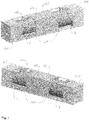
- CRYOTAINER 34000 LNG/40' ( Fig. 1 ) is intended for the long range transportation of liquefied natural gas and is assembled of two horizontal vessels 110 of 16.800 liter clamped into a standard frame 120 for a 40-foot ( ⁇ 12m long; in the following text as 40') container.
- Each pressure vessel 110 is horizontally embedded in the standard ISO 40 'container frame 120'.
- the pressure vessel 110 is defined of an inner shell 12 which is covered by an external coating formed by an outer coat 7.
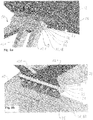
- the space between the inner shell 12 and the outer coat 7 is filled with an insulation arrangement 130 comprising a combination of insulating materials. ( Figure 7a , Figure 7b ).
- the insulation arrangement 130 from the inside towards the outside consists of at least one (two according to Fig. 7b ) set 131 of several (five with a thickness of 10-mm, as indicated in Fig. 7b ) nanostructure insulation layers 11 of cryogenic insulation based on an aerogel composition (total 100 mm).
- a composite material which contains homogeneous or heterogeneous aerogel phases with at least one additive incorporated either into the gel matrix (e.g. during synthesis) or added to the gel as a second distinct phase such as fibers, blankets, a fleece or also by a subsequent modification by compounding.
- the insulation arrangement 130 shown in Fig. 7a in connection with the storage vessel 300 is also applicable to the Tank container unit 100 and 100'.
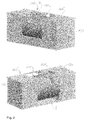
- Figs. 1 and 2 show optional insulation casings 135 which completely surround the saddle structures 121 and clamping devices 30 described below.
- Each insulation layer 11 is particularly well-compressed by means of tapes 14 (see Fig. 8 ), that the individual insulation layers 11 are separated by a thin air space.
- an internally installed thermal shrinkable foil 10 in the thickness of 0.05 mm is installed.
- the thermal shrinkable foil 10 acts as vapor barrier.
- Each layer is compressed by means of strong bands 14.
- Toward the outer circumference of the vessel coat the insulation is followed by a filling layer 9 based on expanded foam for filling the gaps, which are the result of variations in the circumference of the container and built-in installations.
- Under the outer coat 7 is a 10 mm fire protection layer 8.
- the outer coat 7 is formed from thin metal sheets which form a completely sealed enclosure of the insulation arrangement 130 and serve as an additional vapor barrier.
- the sheets of the outer coat 7 are welded to each other and/or to a suitable substructure connected to the frame 120' or to the vessel 110.
- the fire protection layer 8 underneath serves as thermal shield during welding and protects the components of the insulation arrangement 130 underneath the fire protection layer 8.
- the fire protection layer 8 may also be based on an aerogel composition.
- the filling layer 9 may also be based on an aerogel composition, e.g. finely divided aerogel pieces or crumbs of aerogel with typical diameters below 1 cm for granules and 1 mm for powders which may be provided in suitable bags, filled blankets or flexible hoses.
- Fig. 8 shows a further detail of the insulation arrangement 130.
- Each insulation layer 11 is provided with a thermal radiation sheet layer 16 formed as metallic sheet (e.g. aluminum) which is attached to the insulation layer 11.
- Gaps 15 between adjoining insulation layers 11 (and radiation shield layers 16) are sealed with a sealing tape 18 with self sticking layer 19.
- Each gap 15 is also bridged in a radial direction to the outer coat 7 by a preceding and/or following insulation layer 11 for improved insulation.
- the insulation layers 11 are fixed and optionally compressed by surrounding tightening bands or tapes 14.
- the inner shell 12 of the vessel 110 is made of stainless steel.
- the pressure vessel 110 is equipped with installations for the loading and unloading, pressure indication, level and of the pressure control.
- the pressure vessel is built with two safety relief valves, which prevent excessive increase in pressure in the tank due to gasification of liquefied gas.
- two pressure vessels 110 of the same size are arranged horizontally along a tank vessel axis 112. Each of these vessels 110 can be used due to installation that is functioning independently.
- the temperature elongations of the tank support structures formed as clamping devices 30 are neutralized by special mounting (clamping) of the vessel.
- the mounting into in a container frame is designed so that it allows the movement of the vessel due to thermal shrinkage or expansion.
- the vessel 110 is mounted in a fixed frame 120' of the tank container 100.
- the vessel support legs in a form of steel plate elements 33 have openings 37 (e.g. formed as elongated holes) that allow the movement - shrinkage - of the vessel due to temperature or strain within the frame.
- Joint elements 36 formed as screws are tightened with a force that does not cause excessive friction. Further suitable joint elements are bolt elements.
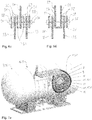
- a specificity of such clamping device 30 is the low thermal conductivity, which is achieved by a sandwich structure comprising a (first) steel plate element 34 which is welded to a saddle structure 121 of the frame 120'. Plate element 34 is sandwiched between two (second) steel plate elements 33 welded to the tank vessel inner shell 12 via a doubler plate 35 ( Figs. 6a and 6c ). Between the first plate element 34 and the second plate elements 33 insulation plate elements 32 are arranged, formed from suitable material having a low thermal conductivity and a suitable brittle resistance at very low temperatures (e.g. PTFE (Teflon) or reinforced plastic sheet material) which reduce the thermal conductivity between the vessel 110 and the frame 120'. Carbon steel (28 W / mK) conductivity is much higher than a typical thermal conductivity of PTFE (0.23 W / mK) panels.
- suitable material having a low thermal conductivity and a suitable brittle resistance at very low temperatures
- the whole sandwich structure of the clamping device 30 is compressed by the joint elements 36, which penetrate corresponding openings 37 in the plate elements 32, 33,34.
- the cross sectional dimension of the opening 37 exceeds in at least one direction the cross sectional dimension of the penetrating joint element 36 to reduce the contact area between the joint element 36 and the inner face of the opening 37.
- the opening 37 can be formed as an elongated hole (dashed outline 37') or with a circular diameter exceeding a smaller diameter of the joint element 36.
- the openings 37, 37' allow for displacement movements in a longitudinal direction L and in a radial direction R.
- the compressing force is exceeded by the head elements 38 of the joint element 36 configured as bolts and the nuts tightened on the thread of the bolt acting as a tie rod.
- FIG. 6a and 6b Details of the reduction of thermal bridge is shown in Figures 6a and 6b , with the structure containing PTFE insulation panels formed as insulation plate elements 32 and panels acting as stabilizing plate elements 31 made of metal (e.g. carbon steel).
- the insulation plate elements 32 and stabilizing plate elements 31 are optionally provided to improve the insulation capacity of the clamping device 30.
- a pair of an insulation plate element 32 and a stabilizing plate element 31 is arranged between the first 34 and the second plate element 33 or between at least one of the head elements 38 and the first 34 and/or the second plate element 33. (see Fig. 6b ) In the arrangement shown in Fig.
- the first plate elements 34 are part of box shaped saddle piece 39 connected to the saddle structure 121 which is sandwiched between insulation plate elements 32 and the second plate elements 33 connected to the vessel 110.
- the plate elements 31, 32, 33 and 34 extend in a longitudinal direction, parallel to a tank vessel axis 112. Depending of the cross sectional design of the openings 37 and the corresponding joint elements 36 a controlled sliding movement between the first plate elements 34 and the second plate elements 33 is possible at least at the clamping devices 30 at one end of the vessel which may occur due to thermal expansion or contraction.
- the plate elements 31, 32, 33 and 34 also extend in a radial direction to the vessel axis 112 they also allow for a radial displacement of the first plate element 34 relative to the second plate element 33.
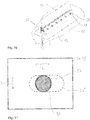
- Fig. 9 shows an embodiment in which the thermal insulation between the frame 120' and the vessel is further improved.
- a connecting plate 40 is sandwiched between insulation plate elements 32 and first plate elements 34 on the vessel side and second plate elements 33 on the frame side.
- Optional pairs of insulation plate elements 32 and stabilizing plate 31 elements are also provided to improve the insulation capacity of such a support structure.
- the connecting plate 40 is fabricated from steel or a different suitable material which meets the structural requirements necessary to transfer all operational (dynamic and static) loads between the vessel and the frame.
- Intermodal unit CRYOTAINER 16800 LNG/20' ( Figs. 2 and 5 ) is intended for local transport of liquefied natural gas and is composed of a horizontal vessel 110 of 16.800 liter volume clamped into a standard 20-foot (some 6m; v as 20' in the following text) frame 120'.
- Pressure vessel 110 is horizontally embedded in the standard ISO 40 'container frame 120'. All further features and embodiments of the insulation arrangement 130, clamping devices 30 and the saddle structure 121 described above in connection with embodiment 1 also apply to the tank container 100' with a single vessel 110 according to embodiment 2 ( Fig. 2 and 5 ).
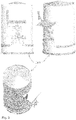
- the vertical stationary pressure vessel 200 CARD 8600 LNG ( Fig. 3 ) is intended for storage and distribution of liquefied natural gas.
- the volume of the vessel is 8.600 liter (the family extends from 8.600 to 15.000 liter).
- This vessel presents a cost effective alternative to local supply of customers on low population density areas, where a pipeline solution would prove not feasible due to high capital involvement.
- the use of liquefied natural gas in supply of medium and small consumers can present an option also for the supply of vehicles in traffic where it is one of the cleanest and environmentally most favorable solutions. All further features and embodiments of the insulation 130 described above in connection with embodiments 1 and 2 also apply to the vertical stationary vessel 200 according to embodiment 3.
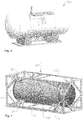
- the horizontal stationary pressure vessel 300 CARD 15600 LNG ( Fig. 4 ) is intended for distribution of liquefied natural gas.
- the volume of the vessel is 15.600 liter (the family of vessels is in the range from 8.600 to 27.000 liter).
- This vessel presents a cost effective alternative to local supply of customers on low population density areas, where a pipeline solution would prove not feasible due to high capital involvement.
- the use of liquefied natural gas in supply of medium and groups of small consumers can present an option also for the supply of vehicles in traffic where it is one of the cleanest and environmentally most favorable solutions.
- the vessel is supported by a foundation insulated with foam glass. All further features and embodiments of the insulation 130 described above in connection with embodiments 1 and 2 also apply to the horizontal stationary vessel 300 according to embodiment 4.
- the method of insulation of tank containers is not based on conventional vacuum insulation but on nanostructure insulation arrangement 130.
Landscapes
- Engineering & Computer Science (AREA)
- Mechanical Engineering (AREA)
- General Engineering & Computer Science (AREA)
- Physics & Mathematics (AREA)
- Thermal Sciences (AREA)
- Filling Or Discharging Of Gas Storage Vessels (AREA)
Claims (11)
- Ein Tankcontainer (100, 100') zum Transport und zur Lagerung von kryogenem Flüssiggas umfassend einen Rahmen (120, 120') und einen isolierten zylindrischen Behälter (110), der mit dem Rahmen (120, 120') verbunden ist, dadurch gekennzeichnet, dass der Behälter (110) von einer auf einer Aerogel-Zusammensetzung basierenden Superisolationsanordnung (130) sowie einer äußeren Decklage (7) bedeckt ist (130), wobei die Superisolationsanordnung (130) besteht aus:- mindestens einem Satz (131) von Nanostrukturisolationsschichten (11) auf Basis einer Aerogel-Zusammensetzung und jede Isolationsschicht (11) mit einer Wärmestrahlungsabschirmschicht (16) versehen ist, wobei jede Isolationsschicht (11) zusammen mit der Wärmestrahlungsabschirmschicht (16) durch ein Band (14) zusammengedrückt wird und jeder Satz (131) von einer als Dampfsperre dienenden wärmeschrumpfbaren Folie (10) bedeckt ist;- einem Spalt (15) zwischen den benachbarten Isolationsschichten (11) und/oder Strahlungsabschirmungsschichten (16) der durch mindestens eine Isolationsschicht (11), eine Strahlungsabschirmschicht (16) oder ein Dichtband (18) überbrückt wird;und der Behälter (110) mit dem Rahmen (120, 120') durch eine Klemmeinrichtung (30) verbunden ist.
- Tankcontainer (100, 100') nach Anspruch 1, wobei zwischen dem äußeren Deckblatt (7) und dem äußeren Satz (131) von Isolationsschichten (11, 16) eine Brandschutzschicht (8) vorgesehen ist.
- Tankcontainer (100, 100') nach Anspruch 1, dadurch gekennzeichnet, dass die Klemmvorrichtung (30) eine Sandwichstruktur ist, die mindestens ein erstes Plattenelement (34), das mit dem Rahmen (120, 120') verbunden ist, mindestens ein zweites Plattenelement (33), das mit dem Behälter (110) verbunden ist, und ein zwischen dem ersten (34) und dem zweiten Plattenelement (33) angeordnetes Isolationsplattenelement (32) umfasst, und wobei innerhalb jedes der Plattenelemente (34, 33, 32) Öffnungen (37) ausgebildet sind und die Plattenelemente (34, 33, 32) durch mindestens ein, die Öffnungen (37) durchsetzendes Gelenkelement (36), miteinander verbunden sind und die Abmessungen der Öffnungen (37) zumindest in einer Richtung eine Querschnittsabmessung des durchdringbaren Gelenkelements (36) überschreiten, um eine Relativbewegung zwischen dem Rahmen (120, 120') und dem Behälter (110) aufgrund einer thermischen Ausdehnung oder Kontraktion des Behälters (110) zu ermöglichen.
- Tankcontainer (100, 100') nach Anspruch 3, wobei die Sandwichstruktur zusätzlich eine Verbindungsplatte (40) mit Öffnungen (37) aufweist, die sich parallel zu dem ersten und zweiten Plattenelement (34, 33) erstreckt und das erste und zweite Plattenelement (34, 33) überlappt, wobei das erste und das zweite Plattenelement (34, 33) mit der Verbindungsplatte (40) durch ein dazwischen liegendes isolierendes Plattenelement (32) miteinander verbunden sind.
- Tankcontainer (100, 100') nach Anspruch 4, wobei die Verbindungsplatte (40) zwischen den zwei ersten und/oder zwei zweiten Platten (34, 33) angeordnet ist.
- Tankcontainer (100, 100') nach Ansprüchen 3 bis 5, wobei die Sandwichstruktur mindestens ein Paar eines zusätzlichen Stabilisierungsplattenelements (31) und eines isolierenden Plattenelements (32) umfasst, das entweder zwischen dem ersten und dem zweiten Plattenelement (34, 33) oder zwischen dem ersten Plattenelement (34) und der Verbindungsplatte (40) oder zwischen dem zweiten Plattenelement (33) und der Verbindungsplatte (40) angeordnet ist.
- Tankcontainer (100, 100') nach Ansprüchen 3 bis 6, wobei sich eine Hauptfläche der Plattenelemente (31, 32, 33, 34, 39) entlang einer Längsachse (112) des zylindrischen Behälters (110) erstreckt.
- Tankcontainer (100, 100') nach Ansprüchen 3 bis 7, wobei das Gelenkelement (36) als ein, die Sandwichstruktur zwischen den Kopfelementen (38) komprimierendes Zugelement, ausgebildet ist und das Stabilisierungsplattenelement (31) an dem Kopfelement (38) anliegt.
- Tankcontainer (100, 100') nach Ansprüchen 3 bis 8, wobei das erste Plattenelement (34) an einer Sattelstruktur (121) des Rahmens (120, 120') und das zweite Plattenelement (33) am Behälter (100) verschweißt ist.
- Tankcontainer (100, 100') nach Ansprüchen 3 bis 9, wobei die Isolationsplatten (32) aus einem faserverstärkten Kunststoffmaterial gefertigt sind, das insbesondere ein PTFE-Material umfasst.
- Tankcontainer (100,100') nach den vorangegangenen Ansprüchen, wobei eine radiale Dicke der Isolationsanordnung (130) den radialen Abmessungen der Sandwichstruktur der Klemmvorrichtung (30) derart entspricht, dass die Isolationsplattenelemente (32) und die Gelenkelemente (36) der Klemmvorrichtung (30) vollständig von der Isolationsanordnung (130) bedeckt sind.
Applications Claiming Priority (2)
| Application Number | Priority Date | Filing Date | Title |
|---|---|---|---|
| SI201200040A SI24001A (sl) | 2012-02-10 | 2012-02-10 | Kriogena naprava za transport in skladiščenje utekočinjenih plinov |
| PCT/EP2013/052559 WO2013117706A1 (en) | 2012-02-10 | 2013-02-08 | Tank container for transport and storage of cryogenic liquefied gases |
Publications (2)
| Publication Number | Publication Date |
|---|---|
| EP2812624A1 EP2812624A1 (de) | 2014-12-17 |
| EP2812624B1 true EP2812624B1 (de) | 2018-01-17 |
Family
ID=47683732
Family Applications (1)
| Application Number | Title | Priority Date | Filing Date |
|---|---|---|---|
| EP13703580.4A Not-in-force EP2812624B1 (de) | 2012-02-10 | 2013-02-08 | Behälter für transport und lagerung von kryogenen flüssiggasen |
Country Status (4)
| Country | Link |
|---|---|
| US (3) | US9488313B2 (de) |
| EP (1) | EP2812624B1 (de) |
| SI (1) | SI24001A (de) |
| WO (1) | WO2013117706A1 (de) |
Cited By (1)
| Publication number | Priority date | Publication date | Assignee | Title |
|---|---|---|---|---|
| IT202400006856A1 (it) * | 2024-03-27 | 2025-09-27 | Termisol Termica S R L | Sistema di isolamento per serbatoi refrigerati e suo metodo di realizzazione |
Families Citing this family (11)
| Publication number | Priority date | Publication date | Assignee | Title |
|---|---|---|---|---|
| SI24001A (sl) | 2012-02-10 | 2013-08-30 | Aerogel Card D.O.O. | Kriogena naprava za transport in skladiščenje utekočinjenih plinov |
| USD785778S1 (en) * | 2013-11-20 | 2017-05-02 | Worthington Industries, Inc. | Fuel tank frame assembly |
| USD759229S1 (en) | 2013-11-20 | 2016-06-14 | Worthington Industries | Fuel tank frame assembly |
| CN104154415B (zh) * | 2014-07-10 | 2016-04-20 | 新兴能源装备股份有限公司 | 一种加注结构的lng移动加注车 |
| CN105736903B (zh) * | 2016-02-02 | 2018-05-01 | 上海交通大学 | 带有防溅屏结构的独立b型lng船液货舱绝热系统 |
| KR101933058B1 (ko) * | 2018-06-12 | 2018-12-27 | (주)대웅씨티 | 이중 탱크 구조가 적용된 저온 액화가스용 탱크컨테이너 |
| CA3077045A1 (en) * | 2019-03-25 | 2020-09-25 | Marathon Petroleum Company Lp | Insulation securement system and associated methods |
| KR102640059B1 (ko) * | 2019-09-18 | 2024-02-26 | 삼성중공업(주) | 액화가스 저장탱크 지지 장치 |
| DE102021102749B4 (de) * | 2021-02-05 | 2025-05-28 | Deutsche Holzveredelung Schmeing GmbH & Co. KG | Lagerblock zur Lagerung eines Tanks für kryogene Flüssigkeiten und Verfahren zur Herstellung |
| CN115676151B (zh) * | 2021-07-23 | 2026-05-01 | 南通中集能源装备有限公司 | 联运罐箱 |
| EP4495473A1 (de) * | 2023-07-17 | 2025-01-22 | Airbus Operations, S.L.U. | Doppelwandiger tank |
Family Cites Families (58)
| Publication number | Priority date | Publication date | Assignee | Title |
|---|---|---|---|---|
| US2188007A (en) | 1937-07-03 | 1940-01-23 | Samuel S Kistler | Inorganic aerogel compositions |
| NL268332A (de) * | 1960-08-17 | |||
| DE1165624B (de) * | 1961-11-15 | 1964-03-19 | Linke Hofmann Busch | Waagerecht gelagerter Behaelter grossen Fassungsvermoegens zur Speicherung oder zum Transport verfluessigter Gase |
| US3583352A (en) * | 1968-12-24 | 1971-06-08 | Technigaz | Supporting device for self-carrying cylindrical or spherical storage tanks and its various applications |
| FR2321657A1 (fr) * | 1975-08-22 | 1977-03-18 | Gaz Transport | Cuve pour le stockage de produits liquides, en particulier pour navires transporteurs de gaz naturels liquefies |
| US4038832A (en) * | 1975-09-08 | 1977-08-02 | Beatrice Foods Co. | Liquefied gas container of large capacity |
| FR2463077A1 (fr) * | 1979-08-07 | 1981-02-20 | Anf Ind | Systeme de fixation d'une citerne dans un cadre de conteneur |
| DE2942180C2 (de) | 1979-10-18 | 1985-02-21 | Grünzweig + Hartmann und Glasfaser AG, 6700 Ludwigshafen | Verfahren zur Herstellung eines Wärmeisolierkörpers |
| DE3108816A1 (de) | 1981-03-09 | 1982-09-30 | Grünzweig + Hartmann und Glasfaser AG, 6700 Ludwigshafen | Waermedaemmender pressstoff auf der basis von aus der flammenhydrolyse gewonnenem mikroporoesem oxidaerogel, sowie verfahren zu seiner herstellung, eine daraus hergestellte folie und ein damit hergestelltes kaschiertes waermedaemmelement |
| US4481778A (en) * | 1983-03-21 | 1984-11-13 | Ball Corporation | Thermally disconnecting passive parallel orbital supports |
| US4717708A (en) | 1983-12-27 | 1988-01-05 | Stauffer Chemical Company | Inorganic oxide aerogels and their preparation |
| DE3429671A1 (de) | 1984-08-11 | 1986-02-20 | Basf Ag, 6700 Ludwigshafen | Verfahren zur herstellung von aerogelen |
| US4619908A (en) | 1984-12-24 | 1986-10-28 | Stauffer Chemical Company | Non-aged inorganic oxide-containing aerogels and their preparation |
| DE3890173C2 (de) | 1987-03-26 | 1992-11-19 | Matsushita Electric Works, Ltd., Kadoma, Osaka, Jp | |
| EP0497966B1 (de) | 1990-08-23 | 1997-10-29 | THE REGENTS OF THE UNIVERSITY OF CALIFORNIA as represented by Lawrence Livermore National Laboratory | Verfahren zur herstellung von metalloxidaerogelen mit dichte weniger als 0,02 g/cm3 |
| US5306555A (en) | 1991-09-18 | 1994-04-26 | Battelle Memorial Institute | Aerogel matrix composites |
| WO1993016125A1 (en) | 1992-02-18 | 1993-08-19 | Matsushita Electric Works, Ltd. | Process for producing hydrophobic aerogel |
| US5565142A (en) | 1992-04-01 | 1996-10-15 | Deshpande; Ravindra | Preparation of high porosity xerogels by chemical surface modification. |
| TW261654B (de) * | 1993-05-20 | 1995-11-01 | Ishikawajima Harima Heavy Ind | |
| DE4430642A1 (de) | 1994-08-29 | 1996-03-07 | Hoechst Ag | Aerogel- und Xerogelverbundstoffe, Verfahren zu ihrer Herstellung sowie ihre Verwendung |
| DE4430669A1 (de) | 1994-08-29 | 1996-03-07 | Hoechst Ag | Verfahren zur Herstellung von faserverstärkten Xerogelen, sowie ihre Verwendung |
| DE4441567A1 (de) | 1994-11-23 | 1996-05-30 | Hoechst Ag | Aerogelhaltiges Verbundmaterial, Verfahren zu seiner Herstellung sowie seine Verwendung |
| CA2205845A1 (en) | 1994-11-23 | 1996-05-30 | Hoechst Aktiengesellschaft | A composite material comprising an aerogel, a process for its preparation, and its use |
| RU2147054C1 (ru) | 1994-12-21 | 2000-03-27 | Кэбот Корпорейшн | Нетканый комбинированный материал, содержащий двухкомпонентные волокна, способ его получения |
| DE4447345C1 (de) * | 1994-12-31 | 1996-05-02 | Magerl Feinmechanik Gmbh | Stufenlos einstellbare Unterlage für auf Werkzeugmaschinen zu bearbeitende Werkstücke |
| US6887563B2 (en) | 1995-09-11 | 2005-05-03 | Cabot Corporation | Composite aerogel material that contains fibres |
| DE19541279A1 (de) | 1995-11-06 | 1997-05-07 | Hoechst Ag | Verfahren zur Herstellung von organisch modifizierten Aerogelen unter Verwendung von Alkoholen |
| AU7720596A (en) | 1995-11-09 | 1997-05-29 | Aspen Systems, Inc. | Flexible aerogel superinsulation and its manufacture |
| DE19548128A1 (de) | 1995-12-21 | 1997-06-26 | Hoechst Ag | Faservlies-Aerogel-Verbundmaterial enthaltend mindestens ein thermoplastisches Fasermaterial, Verfahren zu seiner Herstellung, sowie seine Verwendung |
| US5972254A (en) | 1996-12-06 | 1999-10-26 | Sander; Matthew T. | Ultra-thin prestressed fiber reinforced aerogel honeycomb catalyst monoliths |
| US6197270B1 (en) | 1996-12-20 | 2001-03-06 | Matsushita Electric Works, Ltd. | Process for producing aerogel |
| DE19718741A1 (de) | 1997-05-02 | 1998-11-05 | Hoechst Ag | Verfahren zur Kompaktierung von Aerogelen |
| US5962539A (en) | 1997-05-09 | 1999-10-05 | Separex S.A. | Process and equipment for drying a polymeric aerogel in the presence of a supercritical fluid |
| US5973015A (en) | 1998-02-02 | 1999-10-26 | The Regents Of The University Of California | Flexible aerogel composite for mechanical stability and process of fabrication |
| DE19834265A1 (de) | 1998-07-30 | 2000-02-17 | Thomas Gesner | Verfahren zur Herstellung von Aerogelen und Anlage zur Herstellung von Aerogelschichten auf Substraten oder aus Aerogelen bestehenden Produkten |
| US6187250B1 (en) | 1998-08-19 | 2001-02-13 | James Champagne | Continuous gel casting method and apparatus |
| TR200201096T2 (tr) | 1999-10-21 | 2002-09-23 | Aspen Systems, Inc. | Hızlı aerojel üretim prosesi. |
| CN1306993C (zh) | 2000-12-22 | 2007-03-28 | 思攀气凝胶公司 | 带有纤维胎的气凝胶复合材料 |
| US20030029877A1 (en) * | 2001-07-30 | 2003-02-13 | Mathur Virendra K. | Insulated vessel for storing cold fluids and insulation method |
| US6770584B2 (en) | 2002-08-16 | 2004-08-03 | The Boeing Company | Hybrid aerogel rigid ceramic fiber insulation and method of producing same |
| DE10302394A1 (de) * | 2003-04-16 | 2004-12-30 | Mlu Halle-Wittenberg | Positionierungs- und Dehnungsausgleichsvorrichtung |
| EP2422950B1 (de) | 2003-06-24 | 2014-10-01 | Aspen Aerogels Inc. | Verfahren zur Herstellung von Gelfolien |
| US20070228045A1 (en) * | 2004-03-05 | 2007-10-04 | Goldbach Robert D | Support Assemblies and Systems for Semi-Membrane Tanks |
| FR2877639B1 (fr) * | 2004-11-10 | 2006-12-15 | Gaz Transp Et Technigaz Soc Pa | Cuve etanche et thermiquement isolee integree a la stucture porteuse d'un navire |
| DE102005013620B3 (de) * | 2005-03-24 | 2006-07-27 | Bruker Biospin Ag | Kryostatanordnung mit thermisch kompensierter Zentrierung |
| US20070014979A1 (en) | 2005-07-15 | 2007-01-18 | Aspen Aerogels, Inc. | Secured Aerogel Composites and Methods of Manufacture Thereof |
| WO2007079244A2 (en) | 2005-12-29 | 2007-07-12 | Aspen Aerogels, Inc. | Improved gel production via multi-stream mixing |
| US7781492B2 (en) * | 2006-06-08 | 2010-08-24 | The United States Of America As Represented By The Administrator Of The National Aeronautics And Space Administration | Foam/aerogel composite materials for thermal and acoustic insulation and cryogen storage |
| US20080307798A1 (en) * | 2007-06-12 | 2008-12-18 | Yang Luo | Cryogenic liquid tank and method |
| DE102008052877A1 (de) * | 2008-10-23 | 2010-04-29 | Linde Aktiengesellschaft | Speichervorrichtung |
| WO2010068254A2 (en) * | 2008-12-10 | 2010-06-17 | Cabot Corporation | Insulation for storage or transport of cryogenic fluids |
| US10196814B2 (en) | 2009-04-27 | 2019-02-05 | Cabot Corporation | Aerogel compositions and methods of making and using them |
| US20110031861A1 (en) * | 2009-08-07 | 2011-02-10 | Conocophillips Company | Cryogenic insulation attachment |
| US8899000B2 (en) * | 2010-07-09 | 2014-12-02 | Birdair, Inc. | Architectural membrane and method of making same |
| NO333035B1 (no) * | 2011-04-29 | 2013-02-18 | Aker Engineering & Technology | A tank for fluid |
| SI24001A (sl) | 2012-02-10 | 2013-08-30 | Aerogel Card D.O.O. | Kriogena naprava za transport in skladiščenje utekočinjenih plinov |
| US20140034179A1 (en) * | 2012-08-03 | 2014-02-06 | Calvin Doyle HEYDEN | Insulation system and method of application thereof |
| US10781976B2 (en) * | 2017-05-03 | 2020-09-22 | Johns Manville | Systems and methods for compression pack pipe insulation |
-
2012
- 2012-02-10 SI SI201200040A patent/SI24001A/sl not_active IP Right Cessation
-
2013
- 2013-02-08 EP EP13703580.4A patent/EP2812624B1/de not_active Not-in-force
- 2013-02-08 WO PCT/EP2013/052559 patent/WO2013117706A1/en not_active Ceased
- 2013-02-08 US US14/377,629 patent/US9488313B2/en active Active
-
2016
- 2016-01-11 US US14/992,171 patent/US10731793B2/en active Active
-
2020
- 2020-08-02 US US16/945,903 patent/US11906110B2/en active Active
Cited By (1)
| Publication number | Priority date | Publication date | Assignee | Title |
|---|---|---|---|---|
| IT202400006856A1 (it) * | 2024-03-27 | 2025-09-27 | Termisol Termica S R L | Sistema di isolamento per serbatoi refrigerati e suo metodo di realizzazione |
Also Published As
| Publication number | Publication date |
|---|---|
| SI24001A (sl) | 2013-08-30 |
| EP2812624A1 (de) | 2014-12-17 |
| WO2013117706A1 (en) | 2013-08-15 |
| US10731793B2 (en) | 2020-08-04 |
| US9488313B2 (en) | 2016-11-08 |
| US11906110B2 (en) | 2024-02-20 |
| US20150008228A1 (en) | 2015-01-08 |
| US20160123533A1 (en) | 2016-05-05 |
| US20200363013A1 (en) | 2020-11-19 |
Similar Documents
| Publication | Publication Date | Title |
|---|---|---|
| US11906110B2 (en) | Tank container for transport and storage of cryogenic liquefied gases | |
| AU2014220575B2 (en) | Tank wall comprising a through-element | |
| AU2012291901B2 (en) | Sealed, thermally-insulating vessel | |
| US9617069B2 (en) | Thermal insulation system for non-vacuum applications including a multilayer composite | |
| EP3699476B1 (de) | Doppelmanteltank und schiff | |
| US12111013B2 (en) | Tank feasible for cryogenic service | |
| KR20250004680A (ko) | 밀봉 및 단열 용기용 벽 | |
| WO2016174837A1 (ja) | 真空断熱材、ならびに、これを用いた断熱容器、住宅壁、輸送機器、水素輸送タンカー、およびlng輸送タンカー | |
| EP3411623B1 (de) | Verbessertes tankdesign zur aufbewahrung von flüssigem erdgas | |
| JP7601908B2 (ja) | 多重殻タンク及び船舶 | |
| US3491910A (en) | Low temperature storage tank | |
| AU2014252951A1 (en) | Insulating block for producing a sealed and insulated tank wall | |
| KR20240089636A (ko) | 액화 가스를 저장 및/또는 수송하기 위한 밀봉 및 단열 탱크 | |
| US20210095820A1 (en) | Cryogenic fluid storage tank | |
| KR102478353B1 (ko) | 선박용 액화수소 저장탱크 | |
| KR101419821B1 (ko) | 이중구조의 액화천연가스 저장용기 | |
| CN118494686A (zh) | 一种船用薄膜型液氢储罐围护系统及船舶 | |
| KR20240029773A (ko) | 낮은 압력에서 액체 수소의 저장을 위한 시스템 및 방법 | |
| KR20210087372A (ko) | 단열구조 기술을 적용한 c 타입 극저온 액화가스 탱크, 그 c 타입 극저온 액화가스 탱크 제조방법, 및 극저온 액화가스의 운송방법 | |
| TW202509384A (zh) | 耐低溫泵液氫儲存容器 | |
| GB2636878A (en) | A thermal insulation system for cryogenic liquid storage and delivery containers | |
| CN121897851A (zh) | 包括拐角锚固元件的罐 | |
| Allen et al. | Microsphere insulation systems |
Legal Events
| Date | Code | Title | Description |
|---|---|---|---|
| PUAI | Public reference made under article 153(3) epc to a published international application that has entered the european phase |
Free format text: ORIGINAL CODE: 0009012 |
|
| 17P | Request for examination filed |
Effective date: 20140909 |
|
| AK | Designated contracting states |
Kind code of ref document: A1 Designated state(s): AL AT BE BG CH CY CZ DE DK EE ES FI FR GB GR HR HU IE IS IT LI LT LU LV MC MK MT NL NO PL PT RO RS SE SI SK SM TR |
|
| AX | Request for extension of the european patent |
Extension state: BA ME |
|
| DAX | Request for extension of the european patent (deleted) | ||
| GRAP | Despatch of communication of intention to grant a patent |
Free format text: ORIGINAL CODE: EPIDOSNIGR1 |
|
| GRAS | Grant fee paid |
Free format text: ORIGINAL CODE: EPIDOSNIGR3 |
|
| GRAA | (expected) grant |
Free format text: ORIGINAL CODE: 0009210 |
|
| INTG | Intention to grant announced |
Effective date: 20171124 |
|
| AK | Designated contracting states |
Kind code of ref document: B1 Designated state(s): AL AT BE BG CH CY CZ DE DK EE ES FI FR GB GR HR HU IE IS IT LI LT LU LV MC MK MT NL NO PL PT RO RS SE SI SK SM TR |
|
| REG | Reference to a national code |
Ref country code: GB Ref legal event code: FG4D |
|
| REG | Reference to a national code |
Ref country code: CH Ref legal event code: EP |
|
| REG | Reference to a national code |
Ref country code: IE Ref legal event code: FG4D |
|
| REG | Reference to a national code |
Ref country code: AT Ref legal event code: REF Ref document number: 964666 Country of ref document: AT Kind code of ref document: T Effective date: 20180215 |
|
| REG | Reference to a national code |
Ref country code: DE Ref legal event code: R096 Ref document number: 602013032309 Country of ref document: DE |
|
| REG | Reference to a national code |
Ref country code: NL Ref legal event code: MP Effective date: 20180117 |
|
| REG | Reference to a national code |
Ref country code: LT Ref legal event code: MG4D |
|
| REG | Reference to a national code |
Ref country code: AT Ref legal event code: MK05 Ref document number: 964666 Country of ref document: AT Kind code of ref document: T Effective date: 20180117 |
|
| PG25 | Lapsed in a contracting state [announced via postgrant information from national office to epo] |
Ref country code: NL Free format text: LAPSE BECAUSE OF FAILURE TO SUBMIT A TRANSLATION OF THE DESCRIPTION OR TO PAY THE FEE WITHIN THE PRESCRIBED TIME-LIMIT Effective date: 20180117 |
|
| PG25 | Lapsed in a contracting state [announced via postgrant information from national office to epo] |
Ref country code: ES Free format text: LAPSE BECAUSE OF FAILURE TO SUBMIT A TRANSLATION OF THE DESCRIPTION OR TO PAY THE FEE WITHIN THE PRESCRIBED TIME-LIMIT Effective date: 20180117 Ref country code: CY Free format text: LAPSE BECAUSE OF FAILURE TO SUBMIT A TRANSLATION OF THE DESCRIPTION OR TO PAY THE FEE WITHIN THE PRESCRIBED TIME-LIMIT Effective date: 20180117 Ref country code: NO Free format text: LAPSE BECAUSE OF FAILURE TO SUBMIT A TRANSLATION OF THE DESCRIPTION OR TO PAY THE FEE WITHIN THE PRESCRIBED TIME-LIMIT Effective date: 20180417 Ref country code: FI Free format text: LAPSE BECAUSE OF FAILURE TO SUBMIT A TRANSLATION OF THE DESCRIPTION OR TO PAY THE FEE WITHIN THE PRESCRIBED TIME-LIMIT Effective date: 20180117 Ref country code: LT Free format text: LAPSE BECAUSE OF FAILURE TO SUBMIT A TRANSLATION OF THE DESCRIPTION OR TO PAY THE FEE WITHIN THE PRESCRIBED TIME-LIMIT Effective date: 20180117 Ref country code: HR Free format text: LAPSE BECAUSE OF FAILURE TO SUBMIT A TRANSLATION OF THE DESCRIPTION OR TO PAY THE FEE WITHIN THE PRESCRIBED TIME-LIMIT Effective date: 20180117 |
|
| REG | Reference to a national code |
Ref country code: FR Ref legal event code: PLFP Year of fee payment: 6 |
|
| PG25 | Lapsed in a contracting state [announced via postgrant information from national office to epo] |
Ref country code: RS Free format text: LAPSE BECAUSE OF FAILURE TO SUBMIT A TRANSLATION OF THE DESCRIPTION OR TO PAY THE FEE WITHIN THE PRESCRIBED TIME-LIMIT Effective date: 20180117 Ref country code: AT Free format text: LAPSE BECAUSE OF FAILURE TO SUBMIT A TRANSLATION OF THE DESCRIPTION OR TO PAY THE FEE WITHIN THE PRESCRIBED TIME-LIMIT Effective date: 20180117 Ref country code: GR Free format text: LAPSE BECAUSE OF FAILURE TO SUBMIT A TRANSLATION OF THE DESCRIPTION OR TO PAY THE FEE WITHIN THE PRESCRIBED TIME-LIMIT Effective date: 20180418 Ref country code: BG Free format text: LAPSE BECAUSE OF FAILURE TO SUBMIT A TRANSLATION OF THE DESCRIPTION OR TO PAY THE FEE WITHIN THE PRESCRIBED TIME-LIMIT Effective date: 20180417 Ref country code: LV Free format text: LAPSE BECAUSE OF FAILURE TO SUBMIT A TRANSLATION OF THE DESCRIPTION OR TO PAY THE FEE WITHIN THE PRESCRIBED TIME-LIMIT Effective date: 20180117 Ref country code: SE Free format text: LAPSE BECAUSE OF FAILURE TO SUBMIT A TRANSLATION OF THE DESCRIPTION OR TO PAY THE FEE WITHIN THE PRESCRIBED TIME-LIMIT Effective date: 20180117 Ref country code: IS Free format text: LAPSE BECAUSE OF FAILURE TO SUBMIT A TRANSLATION OF THE DESCRIPTION OR TO PAY THE FEE WITHIN THE PRESCRIBED TIME-LIMIT Effective date: 20180517 Ref country code: PL Free format text: LAPSE BECAUSE OF FAILURE TO SUBMIT A TRANSLATION OF THE DESCRIPTION OR TO PAY THE FEE WITHIN THE PRESCRIBED TIME-LIMIT Effective date: 20180117 |
|
| PGFP | Annual fee paid to national office [announced via postgrant information from national office to epo] |
Ref country code: LU Payment date: 20180807 Year of fee payment: 6 |
|
| REG | Reference to a national code |
Ref country code: DE Ref legal event code: R097 Ref document number: 602013032309 Country of ref document: DE |
|
| PG25 | Lapsed in a contracting state [announced via postgrant information from national office to epo] |
Ref country code: IT Free format text: LAPSE BECAUSE OF FAILURE TO SUBMIT A TRANSLATION OF THE DESCRIPTION OR TO PAY THE FEE WITHIN THE PRESCRIBED TIME-LIMIT Effective date: 20180117 Ref country code: RO Free format text: LAPSE BECAUSE OF FAILURE TO SUBMIT A TRANSLATION OF THE DESCRIPTION OR TO PAY THE FEE WITHIN THE PRESCRIBED TIME-LIMIT Effective date: 20180117 Ref country code: EE Free format text: LAPSE BECAUSE OF FAILURE TO SUBMIT A TRANSLATION OF THE DESCRIPTION OR TO PAY THE FEE WITHIN THE PRESCRIBED TIME-LIMIT Effective date: 20180117 Ref country code: MC Free format text: LAPSE BECAUSE OF FAILURE TO SUBMIT A TRANSLATION OF THE DESCRIPTION OR TO PAY THE FEE WITHIN THE PRESCRIBED TIME-LIMIT Effective date: 20180117 Ref country code: AL Free format text: LAPSE BECAUSE OF FAILURE TO SUBMIT A TRANSLATION OF THE DESCRIPTION OR TO PAY THE FEE WITHIN THE PRESCRIBED TIME-LIMIT Effective date: 20180117 |
|
| PGFP | Annual fee paid to national office [announced via postgrant information from national office to epo] |
Ref country code: DE Payment date: 20180807 Year of fee payment: 6 Ref country code: IE Payment date: 20180820 Year of fee payment: 6 Ref country code: FR Payment date: 20180807 Year of fee payment: 6 |
|
| PLBE | No opposition filed within time limit |
Free format text: ORIGINAL CODE: 0009261 |
|
| STAA | Information on the status of an ep patent application or granted ep patent |
Free format text: STATUS: NO OPPOSITION FILED WITHIN TIME LIMIT |
|
| REG | Reference to a national code |
Ref country code: BE Ref legal event code: MM Effective date: 20180228 |
|
| PG25 | Lapsed in a contracting state [announced via postgrant information from national office to epo] |
Ref country code: SM Free format text: LAPSE BECAUSE OF FAILURE TO SUBMIT A TRANSLATION OF THE DESCRIPTION OR TO PAY THE FEE WITHIN THE PRESCRIBED TIME-LIMIT Effective date: 20180117 Ref country code: SK Free format text: LAPSE BECAUSE OF FAILURE TO SUBMIT A TRANSLATION OF THE DESCRIPTION OR TO PAY THE FEE WITHIN THE PRESCRIBED TIME-LIMIT Effective date: 20180117 Ref country code: DK Free format text: LAPSE BECAUSE OF FAILURE TO SUBMIT A TRANSLATION OF THE DESCRIPTION OR TO PAY THE FEE WITHIN THE PRESCRIBED TIME-LIMIT Effective date: 20180117 Ref country code: CZ Free format text: LAPSE BECAUSE OF FAILURE TO SUBMIT A TRANSLATION OF THE DESCRIPTION OR TO PAY THE FEE WITHIN THE PRESCRIBED TIME-LIMIT Effective date: 20180117 |
|
| PGFP | Annual fee paid to national office [announced via postgrant information from national office to epo] |
Ref country code: GB Payment date: 20180809 Year of fee payment: 6 Ref country code: CH Payment date: 20180809 Year of fee payment: 6 |
|
| 26N | No opposition filed |
Effective date: 20181018 |
|
| PG25 | Lapsed in a contracting state [announced via postgrant information from national office to epo] |
Ref country code: BE Free format text: LAPSE BECAUSE OF NON-PAYMENT OF DUE FEES Effective date: 20180228 Ref country code: SI Free format text: LAPSE BECAUSE OF FAILURE TO SUBMIT A TRANSLATION OF THE DESCRIPTION OR TO PAY THE FEE WITHIN THE PRESCRIBED TIME-LIMIT Effective date: 20180117 |
|
| REG | Reference to a national code |
Ref country code: DE Ref legal event code: R119 Ref document number: 602013032309 Country of ref document: DE |
|
| REG | Reference to a national code |
Ref country code: CH Ref legal event code: PL |
|
| GBPC | Gb: european patent ceased through non-payment of renewal fee |
Effective date: 20190208 |
|
| PG25 | Lapsed in a contracting state [announced via postgrant information from national office to epo] |
Ref country code: LU Free format text: LAPSE BECAUSE OF NON-PAYMENT OF DUE FEES Effective date: 20190208 |
|
| REG | Reference to a national code |
Ref country code: IE Ref legal event code: MM4A |
|
| PG25 | Lapsed in a contracting state [announced via postgrant information from national office to epo] |
Ref country code: CH Free format text: LAPSE BECAUSE OF NON-PAYMENT OF DUE FEES Effective date: 20190228 Ref country code: LI Free format text: LAPSE BECAUSE OF NON-PAYMENT OF DUE FEES Effective date: 20190228 |
|
| PG25 | Lapsed in a contracting state [announced via postgrant information from national office to epo] |
Ref country code: IE Free format text: LAPSE BECAUSE OF NON-PAYMENT OF DUE FEES Effective date: 20190208 Ref country code: MT Free format text: LAPSE BECAUSE OF NON-PAYMENT OF DUE FEES Effective date: 20180208 Ref country code: GB Free format text: LAPSE BECAUSE OF NON-PAYMENT OF DUE FEES Effective date: 20190208 Ref country code: DE Free format text: LAPSE BECAUSE OF NON-PAYMENT OF DUE FEES Effective date: 20190903 |
|
| PG25 | Lapsed in a contracting state [announced via postgrant information from national office to epo] |
Ref country code: FR Free format text: LAPSE BECAUSE OF NON-PAYMENT OF DUE FEES Effective date: 20190228 |
|
| PG25 | Lapsed in a contracting state [announced via postgrant information from national office to epo] |
Ref country code: TR Free format text: LAPSE BECAUSE OF FAILURE TO SUBMIT A TRANSLATION OF THE DESCRIPTION OR TO PAY THE FEE WITHIN THE PRESCRIBED TIME-LIMIT Effective date: 20180117 |
|
| PG25 | Lapsed in a contracting state [announced via postgrant information from national office to epo] |
Ref country code: PT Free format text: LAPSE BECAUSE OF FAILURE TO SUBMIT A TRANSLATION OF THE DESCRIPTION OR TO PAY THE FEE WITHIN THE PRESCRIBED TIME-LIMIT Effective date: 20180117 Ref country code: HU Free format text: LAPSE BECAUSE OF FAILURE TO SUBMIT A TRANSLATION OF THE DESCRIPTION OR TO PAY THE FEE WITHIN THE PRESCRIBED TIME-LIMIT; INVALID AB INITIO Effective date: 20130208 |
|
| PG25 | Lapsed in a contracting state [announced via postgrant information from national office to epo] |
Ref country code: MK Free format text: LAPSE BECAUSE OF NON-PAYMENT OF DUE FEES Effective date: 20180117 |