EP2808917B1 - Dispositif d'affichage électroluminescent organique - Google Patents
Dispositif d'affichage électroluminescent organique Download PDFInfo
- Publication number
- EP2808917B1 EP2808917B1 EP14170705.9A EP14170705A EP2808917B1 EP 2808917 B1 EP2808917 B1 EP 2808917B1 EP 14170705 A EP14170705 A EP 14170705A EP 2808917 B1 EP2808917 B1 EP 2808917B1
- Authority
- EP
- European Patent Office
- Prior art keywords
- layer
- electrode
- display apparatus
- insulating layer
- organic light
- Prior art date
- Legal status (The legal status is an assumption and is not a legal conclusion. Google has not performed a legal analysis and makes no representation as to the accuracy of the status listed.)
- Active
Links
Images





Classifications
-
- H—ELECTRICITY
- H10—SEMICONDUCTOR DEVICES; ELECTRIC SOLID-STATE DEVICES NOT OTHERWISE PROVIDED FOR
- H10K—ORGANIC ELECTRIC SOLID-STATE DEVICES
- H10K59/00—Integrated devices, or assemblies of multiple devices, comprising at least one organic light-emitting element covered by group H10K50/00
- H10K59/80—Constructional details
- H10K59/805—Electrodes
-
- H—ELECTRICITY
- H10—SEMICONDUCTOR DEVICES; ELECTRIC SOLID-STATE DEVICES NOT OTHERWISE PROVIDED FOR
- H10K—ORGANIC ELECTRIC SOLID-STATE DEVICES
- H10K59/00—Integrated devices, or assemblies of multiple devices, comprising at least one organic light-emitting element covered by group H10K50/00
- H10K59/10—OLED displays
- H10K59/12—Active-matrix OLED [AMOLED] displays
- H10K59/123—Connection of the pixel electrodes to the thin film transistors [TFT]
Definitions
- the present application concerns an organic light-emitting display apparatus.
- An organic light-emitting diode (OLED) display apparatus generally includes a hole injection electrode, an electron injection electrode, and an organic light-emitting layer formed therebetween.
- the OLED display apparatus is a self light-emitting display apparatus that emits light when holes injected from the hole injection electrode and electrons injected from the electron injection electrode recombine in the organic light-emitting layer to an excited state that gradually disappears thereafter.
- the OLED display apparatus Because of its high quality characteristics compared to other types of display devices, such as relatively low power consumption, relatively high brightness, and relatively fast response speed, the OLED display apparatus has received attention as a next generation display.
- US 2012/0139000 A1 discloses a manufacturing method for an organic light emitting display apparatus by which manufacturing costs are reduced due to a reduction in the number of masks required during the manufacturing process and a lifting phenomenon of the organic layer in the pad region is solved.
- US 2012/0104396 A1 discloses an organic light emitting display apparatus in which an intermediate layer is disposed between an opposite electrode and a pixel electrode, thereby preventing damage to the pixel electrode during the manufacturing process.
- US 2011/0140114 A1 discloses an organic light emitting display apparatus and the method of manufacturing the same wherein the image quality of the light emitting display apparatus is improved.
- US 2013/0126882 A1 discloses an organic light emitting display apparatus having a simple manufacturing process and exhibiting superior signal transfer capability.
- EP 1 635 407 A1 discloses an organic light emitting display apparatus that seeks to prevent a short circuit between a circuit measuring pad and an opposite electrode.
- Embodiments of the present invention set out to provide an organic light-emitting display apparatus having an excellent display quality.
- an organic light-emitting display apparatus according to claim 1.
- Preferred features of the invention are set-out in claims 2 to 24.
- the organic light-emitting display apparatus may further include a capacitor including a first electrode at a same layer as the active layer and a second electrode at a same layer as the gate electrode.
- the first electrode of the capacitor may include a semiconductor material doped with ion impurities.
- the second electrode of the capacitor may include a transparent conductive oxide.
- the capacitor may further include a third electrode at a same layer as the source electrode and the drain electrode.
- the organic light-emitting display apparatus may further include: a pixel electrode contact unit electrically coupled between the pixel electrode and one of the source electrode and the drain electrode through a contact hole formed in the third insulating layer, in which the pixel electrode contact unit may include a first contact layer including a same material as the source electrode and the drain electrode, a second contact layer including a same material as the second pad layer, and a third contact layer in the first insulating layer and the second insulating layer and including a same material as the second electrode of the capacitor, in which the first contact layer is electrically coupled to the third contact layer through a contact hole formed in the second insulating layer.
- the pixel electrode contact unit may further include a fourth contact layer between the first insulating layer and the third insulating layer and including a same material as the gate electrode.
- the organic light-emitting display apparatus may further include a capacitor including a first electrode at a same layer as the gate electrode and a second electrode at a same layer as the source electrode and the drain electrode.
- the first electrode of the capacitor may include a same material as the gate electrode.
- the second electrode of the capacitor may include a same material as the source electrode and the drain electrode.
- the second insulating layer may be disposed between the first electrode and the second electrode and the second electrode may be disposed in a trench formed in the second insulating layer.
- the first pad layer may include a same material as the source electrode and the drain electrode.
- the semi-transmissive electrically conductive layer may include silver (Ag) or a silver alloy.
- a first transparent conductive oxide layer may be further stacked between the pixel electrode and the protection layer.
- a second transparent conductive oxide layer may be further stacked on an upper portion of the pixel electrode.
- An opening in the second insulating layer, an opening in the third insulating layer, and an opening in the fourth insulating layer overlap with each other, in which a width of the opening in the third insulating layer is greater than a width of the opening formed in the fourth insulating layer and smaller than a width of the opening formed in the second insulating layer.
- An end portion of the pixel electrode may be on a top end of the opening formed in the third insulating layer.
- the word “comprise” or variations such as “comprises” or “comprising” is understood to mean “includes, but is not limited to” such that other elements that are not explicitly mentioned may also be included. Also, it will be understood that the term “on” encompasses orientations of both “over” and “under” without being limited to “over” in a direction of gravity. As used herein, the term “and/or” includes any and all combinations of one or more of the associated listed items. Expressions such as “at least one of,” when preceding a list of elements, modify the entire list of elements and do not modify the individual elements of the list.
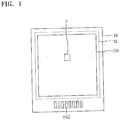
- FIG. 1 is a schematic plan view illustrating an organic light-emitting display apparatus 1 according to an embodiment of the present invention.
- FIG. 2 is a schematic cross-sectional view illustrating a portion of a plurality of pixels P and a plurality of pads PAD of the organic light-emitting display apparatus 1 according to an embodiment of the present invention.
- a display area DA that includes the plurality of pixels P and displays an image is provided on a substrate 10 of the organic light-emitting display apparatus 1 according to an embodiment of the present invention.
- the display area DA is formed in a sealing line SL and includes a sealing member (not shown) that seals the display area DA along the sealing line SL.
- a pixel area PXL1 including at least one organic emission layer 121, a transistor area TR1 including at least one thin film transistor, a capacitor area CAP1 including at least one capacitor, and a pad area PAD1 are provided on the substrate 10.
- An active layer 212 of the thin film transistor is provided (e.g., formed, deposited, or positioned) on the substrate 10 and a buffer layer 11 is included (e.g., formed or deposited) in the transistor area TR1
- the substrate 10 may be a transparent substrate, such as a plastic substrate including polyethylene terephthalate (PET), polyethylene naphthalate (PEN), and polyimide as well as a glass substrate.
- PET polyethylene terephthalate
- PEN polyethylene naphthalate
- polyimide as well as a glass substrate.
- the buffer layer 11 forms a planar surface and prevents impurity elements from penetrating into the substrate 10, and may extend across the surface of the substrate 10.
- the buffer layer 11 may have a single layer structure or a multilayer structure including silicon nitride and/or silicon oxide.
- the active layer 212 on the buffer layer 11 is included (e.g., formed, deposited, or located) in the transistor area TR1.
- the active layer 212 may be formed of a suitable semiconductor material such as amorphous silicon or crystalline silicon.
- the active layer 212 may include a channel area 212c, a source area 212a provided in the outside of the channel area 212c and doped with ion impurities, and a drain area 212b.
- the active layer 212 is not limited to amorphous silicon or crystalline silicon, and may include an oxide semiconductor or other suitable semiconductor materials.
- a gate electrode 215 is provided on the active layer 212 in a location corresponding to (e.g., overlapping or vertically aligned with at least a portion of) the channel area 212c of the active layer 212 with a first insulating layer 13 that is an insulation film formed (e.g., positioned or deposited) between the gate electrode 215 and the active layer 212.
- the gate electrode 215 may have a single layer structure or a multilayer structure including one or more metal materials selected from the group consisting of aluminum (Al), platinum (Pt), palladium (Pd), silver (Ag), magnesium (Mg), gold (Au), nickel (Ni), neodymium (Nd), iridium (Ir), chromium (Cr), lithium (Li), calcium (Ca), molybdenum (Mo), titanium (Ti), tungsten (W), and copper(Cu).
- metal materials selected from the group consisting of aluminum (Al), platinum (Pt), palladium (Pd), silver (Ag), magnesium (Mg), gold (Au), nickel (Ni), neodymium (Nd), iridium (Ir), chromium (Cr), lithium (Li), calcium (Ca), molybdenum (Mo), titanium (Ti), tungsten (W), and copper(Cu).
- a source electrode 217a and a drain electrode 217b that are respectively coupled to the source region 212a and the drain region 212b of the active layer 212 are provided on the gate electrode 215 with a second insulating layer 16 that is an interlayer insulating film between the source and drain electrodes 217a and 217b and the gate electrode 215.
- Each of the source electrode 217a and the drain electrode 217b may have a structure of two or more heterogeneous metal layers having different electron mobility.
- each of the source electrode 217a and the drain electrode 217b may have a two or more layer structure including a metal material selected from the group consisting of Al, Pt, Pd, Ag, Mg, Au, Ni, Nd, Ir, Cr, Li, Ca, Mo, Ti, W, Cu, and alloys of these metal materials.
- a metal material selected from the group consisting of Al, Pt, Pd, Ag, Mg, Au, Ni, Nd, Ir, Cr, Li, Ca, Mo, Ti, W, Cu, and alloys of these metal materials.
- a third insulating layer 19 is provided on the second insulating layer 16 to cover the source electrode 217a and the drain electrode 217b.
- the first insulating layer 13 and the second insulating layer 16 may include single layer inorganic insulating films or multilayer inorganic insulating films.
- the inorganic insulating films forming the first insulating layer 13 and the second insulating layer 16 may include a suitable insulating material such as SiO2, SiNx, SiON, Al2O3, TiO2, Ta2O5, HfO2, ZrO2, BST, or PZT, and the like.
- the third insulating layer 19 may include an organic insulating film.
- the third insulating layer 19 may include general-purpose polymers (e.g., PMMA, PS), polymer derivatives having a phenol group, acrylic polymers, imide based polymers, arylether based polymers, amide based polymers, fluorinate polymers, p-xylene based polymers, vinyl alcohol based polymers, or suitable blends of these or similar materials.
- general-purpose polymers e.g., PMMA, PS
- polymer derivatives having a phenol group acrylic polymers, imide based polymers, arylether based polymers, amide based polymers, fluorinate polymers, p-xylene based polymers, vinyl alcohol based polymers, or suitable blends of these or similar materials.
- a fourth insulating layer 20 is provided on the third insulating layer 19.
- the fourth insulating layer 20 may include an organic insulating film.
- the fourth insulating layer 20 may include general-purpose polymers (PMMA, PS), polymer derivatives having a phenol group, acrylic polymers, imide based polymers, arylether based polymers, amide based polymers, fluorinate polymers, p-xylene based polymers, vinyl alcohol based polymers, or suitable blends of these or similar materials.
- a pixel electrode 120 provided on the buffer layer 11 and the first insulating layer 13 is included in the pixel area PXL1.
- the pixel electrode 120 is positioned in an opening C5 formed in the third insulating layer 19.
- the opening C5 formed in the third insulating layer 19 is greater than an opening C8 formed in the fourth insulating layer 20 and is smaller than an opening C1 formed in the second insulating layer 16.
- the opening C1 formed in the second insulating layer 16, the opening C5 formed in the third insulating layer 19, and the opening C8 formed in the fourth insulating layer 20 overlap with each other.
- An end portion of the pixel electrode 120 is located on a top end of the opening C5 formed in the third insulating layer 19 and covered by the fourth insulating layer 20. Meanwhile, a top surface of the pixel electrode 120 located in the opening C5 formed in the third insulating layer 19 is exposed to the opening C8 formed in the fourth insulating layer 20.
- the pixel electrode 120 includes a semi-transmissive conductive (e.g., electrically conductive) layer 120b.
- the pixel electrode 120 may further include first and second transparent conductive oxide layers 120a and 120c that are respectively formed in lower and upper portions of the semi-transmissive conductive layer 120b and protect the semi-transmissive conductive layer 120b.
- the semi-transmissive conductive layer 120b may include silver (Ag) or a silver alloy.
- the semi-transmissive conductive layer 120b forms a micro cavity structure, along with an opposing electrode 122 that is a reflective electrode that will be described later, thereby increasing or improving light efficiency of the organic light-emitting display apparatus 1.
- the first and second transparent conductive oxide layers 120a and 120c may include at least one selected from the group consisting of indium tin oxide (ITO), indium zinc oxide (IZO), zinc oxide (ZnO), indium oxide (In2O3), indium gallium oxide (IGO), and aluminum zinc oxide (AZO).
- ITO indium tin oxide
- IZO indium zinc oxide
- ZnO zinc oxide
- IGO indium gallium oxide
- AZO aluminum zinc oxide
- the first transparent conductive oxide layer 120a formed in the lower portion of the semi-transmissive conductive layer 120b and including the transparent conductive oxide may reinforce adhesion between a protection layer 119 and the pixel electrode 120.
- the second transparent conductive oxide layer 120c formed in the upper portion of the semi-transmissive conductive layer 120b and including the transparent conductive oxide may function as a barrier layer protecting the semi-transmissive conductive layer 120b.
- silver (Ag) ions present in an etchant in an ion state may be problematically educed as silver (Ag) again.
- Such educed silver (Ag) may be a particle related defect factor causing a dark spot during a subsequent process of forming the pixel electrode 120.
- a first contact layer 117 of the pixel electrode contact unit PECNT1, the first pad layer 417 of a pad electrode, or a data wiring (not shown) formed of the same material as the materials of these is exposed to the etchant during a process of etching the pixel electrode 120 including silver (Ag)
- silver (Ag) ions having a strong reduction may be educed as silver (Ag) again by receiving electrons from these metal materials.
- these metal materials include molybdenum or aluminum
- silver (Ag) may be educed again by providing electrons received from molybdenum or aluminum to silver (Ag) ions again. Educed silver (Ag) particles may cause particle related defects in the display, such as dark spots.
- the source electrode 217a or the drain electrode 217b of the organic light-emitting display apparatus 1 according to the present embodiment is covered by the third insulating layer 19 that is the organic film, and thus the source electrode 217a or the drain electrode 217b is not exposed to the etchant including silver (Ag) ions during the process of etching the pixel electrode 120 including silver (Ag), thereby preventing a particle related defect due to the eduction of silver (Ag).
- the protection layer 119 is positioned between the pixel electrode 120 and the first insulating layer 13.
- the protection layer 119 is formed of the same material as those of a second pad layer 418 and a second contact layer 118 of the pixel electrode contact unit PECNT1.
- the protection layer 119 may be formed of a transparent conductive oxide including at least one selected from the group consisting of indium tin oxide (ITO), indium zinc oxide (IZO), zinc oxide (ZnO), indium oxide (In2O3), indium gallium oxide (IGO), and aluminum zinc oxide (AZO).
- the semi-transmissive conductive layer 120b of the pixel electrode 120 including silver (Ag) may react with a material of the first insulating layer 13 located in a lower portion of the pixel electrode 120.
- the first transparent conductive oxide layer 120a is formed in a lower portion of the semi-transmissive conductive layer 120b of the pixel electrode 120, the semi-transmissive conductive layer 120b has a very small thickness of about 70 ⁇ , the first transparent conductive oxide layer 120a does not entirely protect the semi-transmissive conductive layer 120b.
- the silicon nitride film provided on the first insulating layer 13 may be oxidized due to various factors, and thus the silicon oxide film is formed on a surface of the silicon nitride film.
- silver (Ag) included in the semi-transmissive conductive layer 120b reacts with the silicon oxide film formed on the surface of the silicon nitride film and diffuses through a pin hole of the first transparent conductive oxide layer 120a formed to be thin in the lower portion of the semi-transmissive conductive layer 120b.
- a void may be generated in the semi-transmissive conductive layer 120b, and the diffused silver (Ag) may cause a dark spot defect.
- the protection layer 119 is formed between the pixel electrode 120 and the first insulating layer 13, although a material that relatively easily reacts with silver (Ag) is formed on the first insulating layer 13, the protection layer 119 may be blocked. Thus, a reactivity of silver (Ag) particles is controlled, thereby remarkably improving or reducing the occurrence of dark spot defects due to silver (Ag) particles.
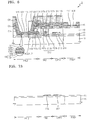
- FIG. 4 is a graph illustrating a number of dark spot defects of an organic light-emitting display apparatus before and after the protection layer 119 is applied under the same condition according to an embodiment of the present invention.
- an average number of dark spot defects before the protection layer 119 is applied may be, for example, 86, whereas the average number of dark spot defects after the protection layer 119 is applied may be, for example, 17, which shows a considerable reduction in the number of dark spot defects.
- the protection layer 119 of the present embodiment may increase the light efficiency of the organic light-emitting display apparatus 1 as well as reduce the dark spot defect.
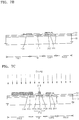
- FIG. 5 is a graph illustrating a relationship between a y color coordinate and efficiency of a blue emission layer with respect to a thickness of a protection layer.
- FIG. 5 shows the relationship between the y color coordinate and efficiency of the blue emission layer when 1) there is a structure having no protection layer (reference), 2) a thickness of the protection layer 119 is 150 ⁇ , 3) the thickness of the protection layer 119 is 300 ⁇ , and 4) the thickness of the protection layer 119 is 370 ⁇ .
- a transparent conductive layer uses ITO (in cases of 1 ⁇ 4), ITO having a thickness of 70 ⁇ is used as the first transparent conductive oxide layer 120a formed in the lower portion of the semi-transmissive conductive layer 120b).
- the thickness of the protection layer 119 may be formed in the range of 200 ⁇ and 800 ⁇ .
- the pixel electrode 120 is coupled to the pixel contact unit PECNT1 through a contact hole C6 formed in the third insulating layer 19.
- the pixel contact unit PECNT1 is electrically coupled to one of a source electrode and a drain electrode of a driving transistor and drives the pixel electrode 120.
- the pixel contact unit PECNT1 may include the first contact layer 117 including the same material as the above-described material of the source electrode 217a and the drain electrode 217b, the second contact layer 118 including a transparent conductive oxide, a third contact layer 114 including the transparent conductive oxide, and a fourth contact layer 115a including the same material as that of the gate electrode 215.
- the pixel electrode 120 and a driving device are electrically coupled to each other through the contact hole C6 formed in the third insulating layer 19, by way of the first contact layer 117 and the second contact layer 118, because a thickness of the pixel electrode 120 that is used as a semi-transmissive conductive layer may be relatively small or thin, a stable connection through an etching surface of the third insulating layer 19 or the contact hole C6 may be relatively difficult to obtain.
- the connection through the contact hole C6 formed in the third insulating layer 19 fails, because the pixel electrode 120 directly contacts the third contact layer 114 on a floor portion of the opening C5, a signal may be received from the driving device normally.
- the first contact layer 117 is coupled to a data line (not shown) that may be electrically coupled to one of the source electrode and the drain electrode of the driving transistor. If a transistor of FIG. 2 is the driving transistor, the first contact layer 117 may be directly coupled to the source electrode 217a or the drain electrode 217b.
- An intermediate layer including the organic emission layer 121 is provided on the pixel electrode 120 with the top surface exposed in the opening C8, which is formed in (e.g., through) the fourth insulating layer 20.
- the organic emission layer 121 may be formed of a low molecular weight organic material or a high molecular weight organic material.
- a hole transport layer (HTL), a hole injection layer (HIL), an electron transport layer (ETL), and an electron injection layer (EIL) may be stacked with respect to the organic emission layer 121.
- Various other layers may be stacked if necessary.
- various low molecular weight organic materials may be used including copper phthalocyanine (CuPc), N'-diphenyl-benzidine (NPB), and tris-8-hydroxyquinoline aluminum (Alq3).
- the HTL may be used in addition to the organic emission layer 121.
- the HTL may be formed of poly-(3,4)-ethylene-dihydroxy thiophene (PEDOT) or polyaniline (PANI).
- a high molecular weight organic material may include a polyphenylene vinylene (PPV)-based high molecular weight organic material and a polyfluorene-based high molecular weight organic material.
- An inorganic material may be further provided between the pixel electrode 120, and the opposing electrode 122.
- the organic emission layer 121 is positioned only on a floor of the opening C8 in FIG. 2 , this is for convenience of description and the present invention is not limited thereto.
- the organic emission layer 121 is formed on a top surface of the fourth insulating layer 20, along an etching surface of the opening C5 formed in the third insulating layer 19, as well as on the floor of the opening C8.
- the opposing electrode 122 is provided on the organic emission layer 121 as a common electrode.
- the organic light-emitting display apparatus 1 uses the pixel electrode 120 as an anode and the opposing electrode 122 as a cathode. Polarities of the electrodes may be switched.
- the opposing electrode 122 may be configured as a reflective electrode including a reflective material.
- the opposing electrode 122 may include one or more materials selected from the group consisting of Al, Mg, Li, Ca, LiF/Ca, and LiF/Al.
- the opposing electrode 122 is configured as the reflective electrode, so that light emitted from the organic emission layer 121 is reflected from the opposing electrode 121, is transmitted through the pixel electrode 120, and is emitted to the substrate 10.
- An organic light-emitting display apparatus to which the present invention is applied is a bottom emission light-emitting display apparatus in which light is emitted from the organic emission layer 121 toward the substrate 10 to form an image.
- the opposing electrode 122 is configured as a reflective electrode.
- the first electrode 312 of the capacitor may be formed as a semiconductor doped with ion impurities, like the source area 212a and the drain area 212b of the active layer 212.
- the second electrode 314 of the capacitor is positioned on the first insulating layer 13 in the same way as the gate electrode 215, whereas materials of the second electrode 314 and the gate electrode 215 may be different from each other.
- the material of the second electrode 314 may include the transparent conductive oxide.
- the semiconductor doped with ion impurities is formed on the first electrode 312 through the second electrode 314, thereby forming the capacitor having a metal-insulator-metal (MIM) structure.
- MIM metal-insulator-metal
- the third electrode 317 of the capacitor may be formed of the same material as those of the source electrode 217a and the drain electrode 217b. As described above, the third electrode 317 is covered by the third insulating layer 19 that is the organic film, and thus the third electrode 317 is not exposed to the etchant including silver (Ag) ions during the process of etching the pixel electrode 120 including silver (Ag), thereby preventing the particle related defect due to the eduction of silver (Ag).
- the capacitor constitutes a parallel circuit including the first electrode 312, the second electrode 314, and a third circuit, thereby increasing a capacitance of the organic light-emitting display apparatus 1 without increasing an area of the capacitor. Thus, the area of the capacitor may be reduced by the increase in the capacitance, thereby increasing an aperture ratio.
- the pad area PAD1 is an area in which pad electrodes 417 and 418 are located or positioned outside the display area DA as connection terminals for an external driver.
- the first pad layer 417 may have a structure of a plurality of metal layers having different electron mobility like the above-described source electrode 217a and drain electrode 217b.
- the first pad layer 417 may have a multilayer structure including one or more metal materials selected from the group consisting of aluminum (Al), platinum (Pt), palladium (Pd), silver (Ag), magnesium (Mg), gold (Au), nickel (Ni), neodymium (Nd), iridium (Ir), chromium (Cr), lithium (Li), calcium (Ca), molybdenum (Mo), titanium (Ti), tungsten (W), and copper(Cu).
- the second pad layer 418 may be formed of a transparent conductive oxide including at least one selected from the group consisting of indium tin oxide (ITO), indium zinc oxide (IZO), zinc oxide (ZnO), indium oxide (In 2 O 3 ), indium gallium oxide (IGO), and aluminum zinc oxide (AZO).
- ITO indium tin oxide
- IZO indium zinc oxide
- ZnO zinc oxide
- IGO indium gallium oxide
- AZO aluminum zinc oxide
- the first pad layer 417 is located in an area exposed to the contact hole C7 formed in the third insulating layer 19, because the second pad layer 418 that is a protection layer is formed on an upper portion of the first pad layer 417, the first pad layer 417 is not (or substantially not) exposed to the etchant during the process of etching the pixel electrode 120.
- an end portion (or peripheral area) of the first pad layer 417 that is sensitive to an external environment such as moisture or oxygen is covered by the third insulating layer 19, and thus the end portion (or peripheral area) of the first pad layer 417 is not also exposed to the etchant during the process of etching the pixel electrode 120.
- the particle related defect due to the eduction of silver (Ag) may be prevented, and the deterioration of reliability of the pad electrodes may also be prevented.
- the organic light-emitting display apparatus 1 may further include a sealing member that seals the display area DA including the pixel area PXL1, the capacitor area CAP1, and the transistor area TR1.
- the sealing member may be formed as a sealing thin film formed by alternating a substrate including a glass member, a metal film, or an organic insulating film, and an inorganic insulating film.
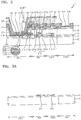
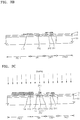
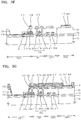
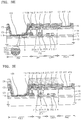
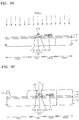
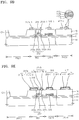
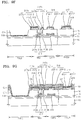
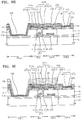
- FIGS. 3A through 3I are schematic cross-sectional views illustrating a method of manufacturing the organic light-emitting display apparatus 1, according to an embodiment of the present invention.
- FIG. 3A is a schematic cross-sectional view illustrating a first mask process of the organic light-emitting display apparatus 1 according to the present embodiment of the present invention.
- the buffer layer 11 is formed on the substrate 10 and a semiconductor layer is formed on the buffer layer 11 and patterned to form the active layer 212 of a thin film transistor and the first electrode 312 of a capacitor.
- a photoresist (not shown) is coated on the semiconductor layer, the semiconductor layer is patterned by using photolithography using a first photomask (not shown), and the active layer 212 and the first electrode 312 are formed.
- a first masking process using photolithography includes performing exposure using an exposure device (not shown) on the first mask (not shown), and performing a series of processes, such as developing, etching, stripping, and ashing.
- the semiconductor layer may include amorphous silicon or crystalline silicon.
- crystalline silicon may be formed by crystallizing amorphous silicon.
- Amorphous silicon may be crystallized by using various methods such as rapid thermal annealing (RTA), solid phase crystallization (SPC), excimer laser annealing (ELA), metal-induced crystallization (MIC), metal-induced lateral crystallization (MILC), sequential lateral solidification (SLS), and the like.
- RTA rapid thermal annealing
- SPC solid phase crystallization
- ELA excimer laser annealing
- MIC metal-induced crystallization
- MILC metal-induced lateral crystallization
- SLS sequential lateral solidification
- the semiconductor layer is not limited to amorphous silicon or crystalline silicon and may include an oxide semiconductor or other suitable semiconductor material.
- FIG. 3B is a schematic cross-sectional view illustrating a second mask process of the organic light-emitting display apparatus 1 according to the present embodiment of the present invention.
- the first insulating layer 13 is formed on a resultant structure of the first mask process of FIG. 3A , a transparent conductive oxide layer (not shown) is formed on the first insulating layer 13 and then patterned.
- the third contact layer 114 of the pixel electrode contact unit PECNT1 and the second electrode 314 of the capacitor are formed on the first insulating layer 13.
- FIG. 3C is a schematic cross-sectional view for illustrating a third mask process of the organic light-emitting display apparatus 1 according to the present embodiment of the present invention.
- a first metal (e.g., electrically conductive) layer is deposited on a resultant structure of the second mask process of FIG. 3B and then patterned.
- the first metal layer (not shown) may be a single layer or a multilayer formed of one or more metal materials selected from the group consisting of aluminum (Al), platinum (Pt), palladium (Pd), silver (Ag), magnesium (Mg), gold (Au), nickel (Ni), neodymium (Nd), iridium (Ir), chromium (Cr), lithium (Li), calcium (Ca), molybdenum (Mo), titanium (Ti), tungsten (W), and copper(Cu).
- the gate electrode 215 and a gate metal layer 115 covering the third contact layer 114 are formed on the first insulating layer 13.
- the above-described structure is doped with ion impurities.
- the active layer 212 of the thin film transistor and the first electrode 312 of the capacitor are doped with ion impurities B or P.
- the active layer 212 is doped with ion impurities by using the gate electrode 215 as a self-aligning mask, and thus the active layer 212 includes the source area 212a and the drain area 212b doped with ion impurities and the channel area 212c positioned between the source area 212a and the drain area 212b.
- the first electrode 312 of the capacitor is an electrode doped with ion impurities and forming a MIM CAP.
- the first electrode 312 of the capacitor as well as the active layer 212 are simultaneously or concurrently doped by using a single doping process, thereby reducing manufacturing cost by reducing the complexity of the doping process.
- FIG. 3D is a schematic cross-sectional view illustrating a fourth mask process of the organic light-emitting display apparatus 1 according to the present embodiment of the present invention.
- the second insulating layer 16 is formed on a resultant structure of the third mask process of FIG. 3C and then patterned, and thus openings C3 and C4 exposing the source area 212a and the drain area 212b of the active layer 212 and an opening C1 are formed in an area spaced apart from a side of the active layer 212 as an area in which the pixel electrode 120 is to be located that will be described later.
- FIG. 3E is a schematic cross-sectional view illustrating a fifth mask process of the organic light-emitting display apparatus 1 according to the present embodiment of the present invention.
- a second metal (e.g., electrically conductive) layer is formed on a resultant structure of the fourth mask process of FIG. 3D and then patterned to form the source electrode 217a and the drain electrode 217b, the first contact layer 117 of the pixel electrode contact unit PECNT1, and the first pad layer 417 of a pad electrode.
- a second metal e.g., electrically conductive
- the second metal layer may have a structure of two or more heterogeneous metal layers having different electron mobility.
- the second metal layer may have a multiple (e.g., two or more) layer structure including a metal material selected from the group consisting of aluminum (Al), platinum (Pt), palladium (Pd), silver (Ag), magnesium (Mg), gold (Au), nickel (Ni), neodymium (Nd), iridium (Ir), chromium (Cr), lithium (Li), calcium (Ca), molybdenum (Mo), titanium (Ti), tungsten (W), copper(Cu), and alloys of these metal materials.
- a metal material selected from the group consisting of aluminum (Al), platinum (Pt), palladium (Pd), silver (Ag), magnesium (Mg), gold (Au), nickel (Ni), neodymium (Nd), iridium (Ir), chromium (Cr), lithium (Li), calcium (Ca), molybden
- the second metal layer of the present embodiment may include a first layer 417a including molybdenum (Mo), a second layer 417b including aluminum (Al), and a third layer 417c including molybdenum (Mo).
- Mo molybdenum
- Al aluminum
- Mo molybdenum
- the second layer 417b including aluminum (Al) is a metal layer having a small resistance and excellent electrical characteristic.
- the first layer 417a located in a lower portion of the second layer 417b and including molybdenum (Mo) reinforces adhesion between the second insulating layer 16 and the second layer 417b.
- the third layer 417c located in an upper portion of the second layer 417b and including molybdenum (Mo) may function as a barrier layer preventing a heel lock of aluminum included in the second layer 417b, oxidation, and diffusion.
- a data wiring may also be formed by patterning the second metal layer during the fifth mask process.
- FIG. 3F is a schematic cross-sectional view illustrating a sixth mask process of the organic light-emitting display apparatus 1 according to the present embodiment of the present invention.
- a transparent conductive oxide layer is formed on a resultant structure of the fifth mask process of FIG. 3E and then patterned to form the second contact layer 118 of the pixel electrode contact unit PECNT1, the second pad layer 418 of the pad electrode, and the protection layer 119.
- the transparent conductive oxide layer include at least one selected from the group consisting of indium tin oxide (ITO), indium zinc oxide (IZO), zinc oxide (ZnO), indium oxide (In2O3), indium gallium oxide (IGO), and aluminum zinc oxide (AZO).
- ITO indium tin oxide
- IZO indium zinc oxide
- ZnO zinc oxide
- In2O3 indium oxide
- IGO indium gallium oxide
- AZO aluminum zinc oxide
- FIG. 3G is a schematic cross-sectional view illustrating a seventh mask process of the organic light-emitting display apparatus 1 according to the present embodiment of the present invention.
- the third insulating layer 19 is formed on a resultant structure of the sixth mask process of FIG. 3F and then patterned, and thus the contact hole C6 exposing an upper portion of the second contact layer 118, the contact hole C7 exposing an upper portion of the second pad layer 418, and the opening C5 are formed in the pixel area PXL1 in which the pixel electrode 120 is to be located that will be described later.
- the third insulating layer 19 is formed to completely surround the source electrode 217a and the drain electrode 217b so as to prevent heterogeneous wirings having different electric potentials from contacting an etchant in which silver (Ag) ions are dissolved during a process of etching the pixel electrode 120 including silver (Ag) that will be described later.
- the third insulating layer 19 may include an organic insulating film to function as a planarizing film.
- the organic insulating film may use general-purpose polymers (e.g., PMMA or PS), polymer derivatives having a phenol group, acrylic polymers, imide based polymers, arylether based polymers, amide based polymers, fluorinate polymers, p-xylene based polymers, vinyl alcohol based polymers, or suitable blends of these or other suitable insulating materials.
- general-purpose polymers e.g., PMMA or PS
- polymer derivatives having a phenol group e.g., acrylic polymers, imide based polymers, arylether based polymers, amide based polymers, fluorinate polymers, p-xylene based polymers, vinyl alcohol based polymers, or suitable blends of these or other suitable insulating materials.
- FIG. 3H is a schematic cross-sectional view illustrating an eighth mask process of the organic light-emitting display apparatus 1 according to the present embodiment of the present invention.
- a semitransparent metal (e.g., electrically conductive) layer is formed on a resultant structure of the seventh mask process of FIG. 3G and then patterned to form the pixel electrode 120.
- the pixel electrode 120 is coupled to a driving transistor through the pixel electrode contact unit PEDOT1 and located in the opening C5 formed in the third insulating layer 19.
- the pixel electrode 120 includes the semi-transmissive conductive layer 120b.
- the pixel electrode 120 may include the first and second transparent conductive oxide layers 120a and 120c that are respectively formed at lower and upper sides or surfaces of the semi-transmissive conductive layer 120b and protect the semi-transmissive conductive layer 120b.
- the semi-transmissive conductive layer 120b may be formed of silver (Ag) or a silver alloy.
- the first and second transparent conductive oxide layers 120a and 120c may include at least one selected from the group consisting of indium tin oxide (ITO), indium zinc oxide (IZO), zinc oxide (ZnO), indium oxide (In2O3), indium gallium oxide (IGO), and aluminum zinc oxide (AZO).
- ITO indium tin oxide
- IZO indium zinc oxide
- ZnO zinc oxide
- In2O3 indium oxide
- IGO indium gallium oxide
- AZO aluminum zinc oxide
- the semi-transmissive conductive layer 120b forms a micro cavity structure, along with the opposing electrode 122 that is a reflective electrode that will be described later, thereby increasing light efficiency of the organic light-emitting display apparatus 1.
- silver (Ag) ions present in an etchant in an ion state may be problematically educed as silver (Ag) again.
- the source electrode 217a or the drain electrode 217b, the first contact layer 117 of the pixel electrode contact unit PECNT1, the first pad layer 417 of a pad electrode, or a data wiring (not shown) formed of the same material as the materials of these is exposed to the etchant during a process of etching the pixel electrode 120 including silver (Ag), silver (Ag) ions having a strong reduction may be educed as silver (Ag) again by receiving electrons from these metal materials.
- the source electrode 217a or the drain electrode 217b according to the present embodiment is patterned before the eight mask process of patterning the pixel electrode 120 and is covered by the third insulating layer 19 that is the organic film. Accordingly, the source electrode 217a or the drain electrode 217b is not exposed to the etchant including silver (Ag) ions during the process of etching the pixel electrode 120 including silver (Ag), thereby preventing or reducing a particle related defect due to the eduction of silver (Ag).
- the first contact layer 117 of the pixel electrode contact unit PECNT1 and the first pad layer 417 are respectively positioned in areas exposed by the contact holes C6 and C7 formed in the third insulating layer 19, because the second contact layer 118 of the pixel electrode contact unit PECNT1 and the second pad layer 418 that are protection layers are respectively formed on the first contact layer 117 of the pixel electrode contact unit PECNT1 and the first pad layer 417, the first contact layer 117 of the pixel electrode contact unit PECNT1 and the first pad layer 417 are not exposed to the etchant during the process of etching the pixel electrode (120), thereby preventing or reducing a particle related defect due to the eduction of silver (Ag).
- silver (Ag) included in the semi-transmissive conductive layer 120b reacts with a silicon oxide film formed on a surface of a silicon nitride film and diffuses through a pin hole of the first transparent conductive oxide layer 120a formed to be thin in the lower portion of the semi-transmissive conductive layer 120b.
- a void is generated in the semi-transmissive conductive layer 120b, and the diffused silver (Ag) may cause a dark spot defect.
- the protection layer 119 is formed between the pixel electrode 120 and the first insulating layer 13, although a material that easily reacts with silver (Ag) is formed on the first insulating layer 13, the protection layer 119 may be blocked. Thus, a reactivity of silver (Ag) particles is controlled, thereby remarkably improving the dark spot defect due to silver (Ag) particles.
- FIG. 3I is a schematic cross-sectional view illustrating a ninth mask process of the organic light-emitting display apparatus 1 according to the present embodiment of the present invention.
- the fourth insulating layer 20 is formed on a resultant structure of the eighth mask process of FIG. 3H , and then the ninth mask process of forming the opening C8 exposing an upper portion of the pixel electrode 120 is performed.
- the fourth insulating layer 20 functions as a pixel defining layer and may include an organic insulating film including general-purpose polymers (e.g., PMMA, PS), polymer derivatives having a phenol group, acrylic polymers, imide based polymers, arylether based polymers, amide based polymers, fluorinate polymers, p-xylene based polymers, vinyl alcohol based polymers, or suitable blends of these or other suitable insulating materials.
- general-purpose polymers e.g., PMMA, PS
- polymer derivatives having a phenol group acrylic polymers, imide based polymers, arylether based polymers, amide based polymers, fluorinate polymers, p-xylene based polymers, vinyl alcohol based polymers, or suitable blends of these or other suitable insulating materials.
- An intermediate layer (not shown) including the organic emission layer 121 of FIG. 2 is formed on a resultant structure of the eighth mask process of FIG. 3H , and the opposing electrode 122 of FIG. 2 is formed.
- the pixel electrode 120 includes the semi-transmissive conductive layer 120b, thereby increasing light efficiency of the organic light-emitting display apparatus 1 by a micro-cavity.
- the source electrode 217a or the drain electrode 217b is covered by the third insulating layer 19 that is the organic film, and thus the source electrode 217a or the drain electrode 217b is not exposed to the etchant including silver (Ag) ions, thereby preventing the particle related defect due to the eduction of silver (Ag).
- the second contact layer 118 of the pixel electrode contact unit PECNT1 and the second pad layer 418 that are protection layers are respectively formed on the first contact layer 117 of the pixel electrode contact unit PECNT1 and the first pad layer 417, and thus the first contact layer 117 of the pixel electrode contact unit PECNT1 and the first pad layer 417 are not exposed to the etchant during the process of etching the pixel electrode (120), thereby preventing the particle related defect due to the eduction of silver (Ag).
- the protection layer 119 is formed in a lower portion of the pixel electrode 120, although a material that easily reacts with silver (Ag) is formed on the first insulating layer 13, the protection layer 119 may be blocked. Thus, a reactivity of silver (Ag) particles is controlled, thereby remarkably improving the dark spot defect due to silver (Ag) particles.
- a pixel area PXL2 including the at least one organic emission layer 121, a transistor area TR2 including at least one thin film transistor, a capacitor area CAP2 including at least one capacitor, and a pad area PAD2 are provided on the substrate 10.
- the transistor area TR2, the capacitor area CAP2, and the pad area PAD2 of the organic light-emitting display apparatus 2 according to the comparison example have similar configurations as those of the organic light-emitting display apparatus 1 according to the previous embodiment, except for the pixel area PXL2.
- the pixel area PXL2 according to the comparison example does not include the protection layer 119 of FIG. 2 between the pixel electrode 120 and the first insulating layer 13.
- the pixel electrode 120 includes the semi-transmissive conductive layer 120b and the first and second transparent conductive oxide layers 120a and 120c that are respectively formed in lower and upper portions of the semi-transmissive conductive layer 120b and protect the semi-transmissive conductive layer 120b.
- the first transparent conductive oxide layer 120a formed in the lower portion of the semi-transmissive conductive layer 120b has a very small thickness of about 70 ⁇ , and thus the first transparent conductive oxide layer 120a may not entirely protect the semi-transmissive conductive layer 120b.
- the first insulating layer 13 used as the gate insulating film has a double structure in which a silicon oxide film 13-1 and a silicon nitride film 13-2 are sequentially stacked from the buffer layer 11 to the protection layer 119, a silicon nitride film 13a provided on the first insulating layer 13 may be oxidized due to various factors, and thus the silicon oxide film 13a is formed on a surface of the silicon nitride film 13-2.
- the protection layer 119 is not formed between the pixel electrode 120 and the first insulating layer 13, and thus silver (Ag) included in the semi-transmissive conductive layer 120b may react with the silicon oxide film formed on the surface of the silicon nitride film and diffuse through a pin hole of the first transparent conductive oxide layer 120a formed to be thin in the lower portion of the semi-transmissive conductive layer 120b. Thus, a void may be generated in the semi-transmissive conductive layer 120b, and the diffused silver (Ag) may cause a dark spot defect.
- the silicon nitride film 13-2 provided on the first insulating layer 13 may be oxidized.
- the silicon oxide film 13a may be formed on a surface of the silicon nitride film 13-2.
- the silicon oxide film 13a causes to generate a pin hole in the first transparent conductive oxide layer 120a formed to be thin in the upper portion of the semi-transmissive conductive layer 120b formed in a subsequent process.
- Silver (Ag) particles included in the semi-transmissive conductive layer 120b react with the silicon oxide film 13a and agglomerate through the pin hole, and thus a void is generated in the semi-transmissive conductive layer 120b and causes a dark spot defect.
- FIG. 7A is a schematic cross-sectional view illustrating a first mask process of the organic light-emitting display apparatus 2 according to the comparison example.
- the active layer 212 of a thin film transistor and the first electrode 312 of a capacitor are formed on the substrate 10.
- FIG. 7B is a schematic cross-sectional view illustrating a second mask process of the organic light-emitting display apparatus 2 according to the comparison example.
- the third contact layer 114 of a cathode electrode contact unit and the second electrode 314 of the capacitor are formed on the first insulating layer 13.
- FIG. 7C is a schematic cross-sectional view illustrating a third mask process of the organic light-emitting display apparatus 2 according to the comparison example.
- the gate electrode 215 and a gate metal layer 115 covering the third contact layer 114 are formed on the first insulating layer 13.
- FIG. 7D is a schematic cross-sectional view illustrating a fourth mask process of the organic light-emitting display apparatus 2 according to the comparison example.
- Openings C3 and C4 exposing the source area 212a and the drain area 212b of the active layer 212 and the opening C1 are formed in an area spaced apart from a side of the active layer 212 as an area in which the pixel electrode 120 is to be located.
- FIG. 7E is a schematic cross-sectional view illustrating a fifth mask process of the organic light-emitting display apparatus 2 according to the comparison example.
- a second metal (e.g., electrically conductive) layer is formed on a resultant structure of the fourth mask process of FIG. 7D and then patterned to form the source electrode 217a and the drain electrode 217b, the first contact layer 117 of a pixel electrode contact unit, and the first pad layer 417 of a pad electrode.
- a second metal e.g., electrically conductive
- the gate metal layer 115 formed in the first insulating layer 13 of the opening C1 is etched and removed.
- the first insulating layer 13 may deteriorate.
- the silicon oxide film 13-1 and the silicon nitride film 13-2 are sequentially stacked from the buffer layer 11 to the protection layer 119
- the silicon nitride film 13-2 provided on the first insulating layer 13 may be oxidized.
- the silicon oxide film 13a may be formed on a surface of the silicon nitride film 13-2.
- the silicon oxide film 13a may also be formed on a surface of the first insulating layer 13 by another processing factor during the second through fourth mask processes.
- FIG. 7F is a schematic cross-sectional view illustrating a sixth mask process of the organic light-emitting display apparatus 2 according to the comparison example.
- a transparent conductive oxide layer is formed on a resultant structure of the fifth mask process of FIG. 7E and then patterned to form the second contact layer 118 of the pixel electrode contact unit and the second pad layer 418 of the pad electrode.
- FIG. 7G is a schematic cross-sectional view illustrating a seventh mask process of the organic light-emitting display apparatus 2 according to the comparison example.
- the third insulating layer 19 is formed on a resultant structure of the sixth mask process of FIG. 7F and then patterned, and thus the contact hole C6 exposing an upper portion of the second contact layer 118 of the pixel electrode contact unit, the contact hole C7 exposing an upper portion of the second pad layer 418, and the opening C5 are formed in the pixel area PXL1 in which the pixel electrode 120 is to be located.
- the third insulating layer 19 that remains after being patterned by ashing (or other suitable patterning technique) is removed during a process of patterning the third insulating layer 19 formed as the organic insulating film.
- the silicon oxide film 13a may be formed on a surface of the first insulating layer 13 or may further deteriorate.
- FIG. 7H is a schematic cross-sectional view illustrating an eighth mask process of the organic light-emitting display apparatus 2 according to the comparison example.
- a semi-transmissive metal (e.g., electrically conductive) layer is formed on a resultant structure of the seventh mask process of FIG. 7G and then patterned to form the pixel electrode 120.
- the pixel electrode 120 includes the semi-transmissive conductive layer 120b and the first and second transparent conductive oxide layers 120a and 120c that are respectively formed in lower and upper portions of the semi-transmissive conductive layer 120b and protect the semi-transmissive conductive layer 120b.
- the protection layer 119 of the previous embodiment is not formed between the pixel electrode 120 and the first insulating layer 13, and thus silver (Ag) included in the semi-transmissive conductive layer 120b reacts with the silicon oxide film 13a formed on a surface of the silicon nitride film 13-2 and diffuses through a pin hole of the first transparent conductive oxide layer 120a formed to be thin in the lower portion of the semi-transmissive conductive layer 120b.
- a void may be generated in the semi-transmissive conductive layer 120b, and the diffused silver (Ag) may cause a dark spot defect.
- FIG. 7I is a schematic cross-sectional view illustrating a ninth mask process of the organic light-emitting display apparatus 2 according to the comparison example.
- the fourth insulating layer 20 is formed on a resultant structure of the eighth mask process of FIG. 7H , and then the ninth mask process of forming the opening C8 exposing an upper portion of the pixel electrode 120 is performed.
- An intermediate layer (not shown) including the organic emission layer 121 of FIG. 2 is formed on a resultant structure of the eighth mask process of FIG. 7H , and the opposing electrode 122 of FIG. 2 is formed.
- impurities may penetrate into the organic emission layer 121 due to the silver (Ag) void generated in the semi-transmissive conductive layer 120b, which may cause the dark spot defect.
- the organic light-emitting display apparatus 2 does not include the protection layer 119 between the pixel electrode 120 and the first insulating layer 13, which does not prevent a void from generating due to silver (Ag) of the pixel electrode 120, and thus the dark spot defect occurs. Further, an increase in the light efficiency may not be expected.
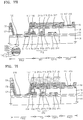
- FIG. 8 is a schematic plan view illustrating an organic light-emitting display apparatus 3 according to another embodiment of the present invention.
- FIGS. 9A through 9I are schematic cross-sectional views illustrating a method of manufacturing the organic light-emitting display apparatus of FIG. 8 , according to another embodiment of the present invention.
- a pixel area PXL3 including at least one organic emission layer 121, a transistor area TR3 including at least one thin film transistor, a capacitor area CAP3 including at least one capacitor, and a pad area PAD3 are provided on the substrate 10.
- the following description mainly focuses on differences between the organic light-emitting display apparatus 3 of the present embodiment and the organic light-emitting display apparatus 1 of FIG. 2 .
- the buffer layer 11 and the active layer 212 are provided on the substrate 10 in the transistor area TR3.
- the active layer 212 may include the channel area 212c, and the source area 212a and the drain area 212b which are provided in the outside of the channel area 212c and doped with ion impurities.
- the first insulating layer 13 is provided on the active layer 212, and the gate electrode 215 is provided on the first insulating layer 13.
- the second insulating layer 16 is provided on the gate electrode 215, and the source electrode 217a and the drain electrode 217b are provided on the second insulating layer 16.
- each of the source electrode 217a and the drain electrode 217b may be formed in two metal layers.
- the source electrode 217a is formed in a first metal layer 217a-1 and a second metal layer 217a-2 that covers the first metal layer 217a-1.
- the drain electrode 217b is formed in a first metal layer 217b-1 and a second metal layer 217b-2 that covers the first metal layer 217b-1.
- Each of the metal layers 217a-1, 217a-2, 217b-1, and 217b-2 forming the source electrode 217a and the drain electrode 217b may have a structure of two or more heterogeneous metal layers having different electron mobility.
- each of the metal layers 217a-1, 217a-2, 217b-1, and 217b-2 may have a two or more layer structure including a metal material selected from the group consisting of Al, Pt, Pd, Ag, Mg, Au, Ni, Nd, Ir, Cr, Li, Ca, Mo, Ti, W, Cu, and alloys of these metal materials.
- the source electrode 217a and the drain electrode 217b each are formed in a double metal layer, the thicknesses of the source electrode 217a and the drain electrode 217b may be increased. Accordingly, a signal delay due to wiring resistance may be reduced by lowering the wiring resistance.
- the third insulating layer 19 is provided on the source electrode 217a and the drain electrode 217b, and the fourth insulating layer 20 is provided on the third insulating layer 19.
- the first insulating layer 13 is provided on the buffer layer 11 in the pixel area PXL3, and the protection layer 119 and the pixel electrode 120 are provided on the first insulating layer 13.
- the characteristics of the protection layer 119 and the pixel electrode 120 are the same as those of the above-described first embodiment.
- silver (Ag) included in the semi-transmissive conductive layer 120b reacts with the silicon oxide film formed on the surface of the silicon nitride film and diffuses through the pin hole of the first transparent conductive oxide layer 120a formed to be thin in the lower portion of the semi-transmissive conductive layer 120b.
- a void may be generated in the semi-transmissive conductive layer 120b, and the diffused silver (Ag) may cause a dark spot defect.
- the protection layer 119 is formed between the first insulating layer 13 and the pixel electrode 120, although a material that easily reacts with silver (Ag) is formed on the first insulating layer 13, the protection layer 119 may block the reaction with silver (Ag).
- a reactivity of silver (Ag) particles is controlled, thereby remarkably improving the dark spot defect due to silver (Ag) particles.
- efficiency of light of the organic light-emitting display apparatus 3 may be improved.
- the intermediate layer (not shown) including the organic emission layer 121 is provided on the pixel electrode 120, and the opposing electrode 122 is provided as a common electrode on the organic emission layer 121.
- a capacitor having a first electrode 315 arranged in the same layer as the gate electrode 215 and a second electrode 318 arranged in the same layer as the source electrode 217a and the drain electrode 217b is provided on the substrate 10 and the buffer layer 11 in a capacitor area CAP3.
- the first electrode 315 of the capacitor may be formed of the same material as the gate electrode 215.
- the second electrode 318 of the capacitor may be formed of the same material as the source electrode 217a and the drain electrode 217b.
- the second electrode 318 of the capacitor may be formed of two metal layers, that is, a first metal layer 318-1 and a second metal layer 318-2.
- the first pad layer 417 and the second pad layer 418 are provided on the second insulating layer 16 in a pad area PAD3.
- the first pad layer 417 may be formed of the same material as those of the source electrode 217a and the drain electrode 217b.
- the first pad layer 417 may be formed of two metal layers, that is, a first metal layer 417-1 and a second metal layer 417-2.
- the second pad layer 418 may be formed of a transparent conductive oxide.
- the second pad layer 418 may prevent the first pad layer 417 from being exposed to moisture and oxygen, thereby preventing deterioration of reliability of a pad.
- a method of manufacturing the organic light-emitting display apparatus 3 according to the present embodiment is briefly described below with reference to FIGS. 9A to 9I .
- FIG. 9A is a schematic cross-sectional view illustrating a first mask process of the organic light-emitting display apparatus 3 according to the present embodiment.
- the buffer layer 11 is formed on the substrate 10 and the active layer 212 of a thin film transistor is formed on the buffer layer 11.
- FIG. 9B is a schematic cross-sectional view illustrating a second mask process of the organic light-emitting display apparatus 3 according to the present embodiment.
- the first insulating layer 13 is formed on a resultant structure of the first mask process of FIG. 9A .
- the gate electrode 215 and the first electrode 315 of the capacitor are formed on the first insulating layer 13.
- Ion impurities are doped in the active layer 212 by using the gate electrode 215 as a self-align mask. Accordingly, the active layer 212 is provided with the source area 212a and the drain area 212b, which are doped with ion impurities, and the channel area 212c between the source area 212a and the drain area 212b.
- FIG. 9C is a schematic cross-sectional view illustrating a third mask process of the organic light-emitting display apparatus 3 according to the present embodiment.
- the second insulating layer 16 is formed on a resultant structure of the second mask process of FIG. 9B . Openings C3 and C4 exposing the source area 212a and the drain area 212b of the active layer 212 and an opening C1 in an area space apart toward a side surface of the active layer 212 are formed by patterning the second insulating layer 16.
- FIG. 9D is a schematic cross-sectional view illustrating a fourth mask process of the organic light-emitting display apparatus 3 according to the present embodiment.
- a metal layer (not shown) is formed on a resultant structure of the third mask process of FIG. 9C .
- the first metal layer 217a-1 of the source electrode, the first metal layer 217b-1 of the drain electrode, and the first metal layer 417-1 of the first pad layer are simultaneously formed by patterning the metal layer (not shown).
- the metal layer (not shown) may have a structure of two or more heterogeneous metal layers having different electron mobility.
- the first metal layer 417-1 of the first pad layer may be formed of the first layer 417a including molybdenum (Mo), the second layer 417b including aluminum (Al), and the third layer 417c including molybdenum (Mo).
- FIG. 9E is a schematic cross-sectional view illustrating a fifth mask process of the organic light-emitting display apparatus 3 according to the present embodiment.
- a metal layer (not shown) is formed on a resultant structure of the fourth mask process of FIG. 9D .
- the second metal layer 217a-2 of the source electrode, the second metal layer 217b-2 of the drain electrode, and the second metal layer 417-2 of the first pad layer are simultaneously formed by patterning the metal layer (not shown).
- the metal layer (not shown) may have a structure of two or more heterogeneous metal layers having different electron mobility.
- FIG. 9F is a schematic cross-sectional view illustrating a sixth mask process of the organic light-emitting display apparatus 3 according to the present embodiment.
- a transparent conductive oxide layer (not shown) is formed on a resultant structure of the fifth mask process of FIG. 9E .
- a pixel electrode contact unit 218, the second pad layer 418 of the pad electrode, and the protection layer 119 are simultaneously formed by patterning the transparent conductive oxide layer (not shown).
- FIG. 9G is a schematic cross-sectional view illustrating a seventh mask process of the organic light-emitting display apparatus 3 according to the present embodiment.
- the third insulating layer 19 is formed on a resultant structure of the sixth mask process of FIG. 9F .
- a contact hole C6 exposing an upper portion of the pixel electrode contact unit 218, a contact hole C7 exposing an upper portion of the second pad layer 418, and an opening C5 in the pixel area PXL3 where the pixel electrode 120 is arranged are formed by patterning the third insulating layer 19.
- FIG. 9H is a schematic cross-sectional view illustrating an eighth mask process of the organic light-emitting display apparatus 3 according to the present embodiment.
- a semi-transmissive metal layer (not shown) is formed on a resultant structure of the seventh mask process of FIG. 9G .
- the pixel electrode 120 is formed by patterning the semi-transmissive metal layer (not shown).
- the pixel electrode 120 is connected to a drive transistor through the pixel electrode contact unit 218, arranged in the opening C5 that is formed in the third insulating layer 19, and formed on the protection layer 119.
- FIG. 9I is a schematic cross-sectional view illustrating a ninth mask process of the organic light-emitting display apparatus 3 according to the present embodiment.
- the fourth insulating layer 20 is formed on a resultant structure of the eighth mask process of FIG. 9H , and then the ninth mask process for forming the opening C8 exposing the upper portion of the pixel electrode 120 is performed.
- the intermediate layer (not shown) including the organic emission layer 121 (see FIG. 8 ) is formed on a resultant structure of the ninth mask process of FIG. 9I , and then, the opposing electrode 122 (see FIG. 8 ) is formed.
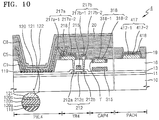
- FIG. 10 is a schematic cross-sectional view illustrating a part of a pixel and a pad of an organic light-emitting display apparatus 4 according to another embodiment of the present invention.
- a pixel area PXL4 including at least one organic emission layer 121, a transistor area TR4 including at least one thin film transistor, a capacitor area CAP4 including at least one capacitor, and a pad area PAD4 are provided on the substrate 10.
- the following description mainly focuses on differences between the organic light-emitting display apparatus 4 of the present embodiment and the organic light-emitting display apparatus 3 of FIG. 8 .
- the buffer layer 11 and the active layer 212 are provided on the substrate 10 in the transistor area TR4.
- the active layer 212 may include the channel area 212c, and the source area 212a and the drain area 212b which are provided in the outside of the channel area 212c and doped with ion impurities.
- the first insulating layer 13 is provided on the active layer 212, and the gate electrode 215 is provided on the first insulating layer 13.
- the source electrode 217a and the drain electrode 217b are provided on the second insulating layer 16.
- each of the source electrode 217a and the drain electrode 217b may be formed in two metal layers.
- the source electrode 217a is formed in the first metal layer 217a-1 and the second metal layer 217a-2 that covers the first metal layer 217a-1.
- the drain electrode 217b is formed in the first metal layer 217b-1 and the second metal layer 217b-2 that covers the first metal layer 217b-1.
- the intermediate layer (not shown) including the organic emission layer 121 is provided on the pixel electrode 120, and the opposing electrode 122 is provided as a common electrode on the organic emission layer 121.
- the first electrode 315 of the capacitor may include the same material as the gate electrode 215, and the second electrode 318 of the capacitor may include the same material as the source electrode 217a and the drain electrode 217b.
- the second insulating layer 16 that is a dielectric film is located between the first electrode 315 and the second electrode 318 of the capacitor.
- a trench T is formed in the second insulating layer 16. Since the second electrode 318 of the capacitor is formed in the trench t, the thickness of the dielectric film of the capacitor decreases. Accordingly, capacitance of the capacitor increases.
- the first pad layer 417 and the second pad layer 418 are provided on the second insulating layer 16 in a pad area PAD4.
- the first pad layer 417 may be formed of the same material as the source electrode 217a and the drain electrode 217b.
- the first pad layer 417 may be formed of two metal layers, that is, the first metal layer 417-1 and the second metal layer 417-2.
- the second pad layer 418 may be formed of a transparent conductive oxide.
- the second pad layer 418 may prevent the first pad layer 417 from being exposed to moisture and oxygen, thereby preventing deterioration of reliability of a pad.
- the organic light-emitting display apparatus and method of manufacturing the same according to the present invention may have the following characteristics:
- a pixel electrode is formed as a semi-transmissive metal layer, thereby increasing light efficiency of a display apparatus by a micro cavity.
- a source electrode and a drain electrode are covered by a third insulation layer that is an organic film, thereby preventing silver (Ag) from being educed again due to the source electrode and the drain electrode when the pixel electrode is patterned.
- protection layers are formed on a first contact layer of a pixel electrode contact unit, a first contact layer of a cathode contact unit, and a top portion of a first pad layer of a pad electrode, thereby preventing silver (Ag) from being educing again due to the first contact layer and the first pad layer when the pixel electrode is patterned.
- a structure of the pixel electrode contact unit is dualized, thereby preventing a signal short circuit between the pixel electrode and a driving device.
- a protection layer including a transparent conductive oxide is formed in a lower portion of the pixel electrode including semi-transmissive metal, thereby reducing a dark spot defect due to silver (Ag) and increasing a light characteristic.
Landscapes
- Electroluminescent Light Sources (AREA)
- Devices For Indicating Variable Information By Combining Individual Elements (AREA)
Claims (24)
- Appareil d'affichage à émission de lumière organique (1) comprenant :une zone de pixel (PXL1) ;une zone de transistor (TR1) ;une zone de plot (PAD1) ;un transistor à film mince qui est situé dans la zone de transistor (TR1) et qui comprend une couche active (212), une électrode de grille (215), une électrode de source (213a), une électrode de drain (217b), une première couche isolante (13) entre la couche active (212) et l'électrode de grille (215) et une deuxième couche isolante (16) qui est prévue sur la première couche isolante (13) et sur l'électrode de grille (215) ainsi qu'entre l'électrode de grille (215) et les électrodes de source et de drain (217a, 217b) ;une électrode de plot qui est située dans la zone de plot (PAD1) et qui comprend une première couche de plot (417) sur la même couche que l'électrode de source (217a) et que l'électrode de drain (217b) et une seconde couche de plot (418) sur la première couche de plot (417) ;une troisième couche isolante (19) qui recouvre la deuxième couche isolante (16), l'électrode de source (217a) et l'électrode de drain (217b) ainsi qu'une partie d'extrémité de l'électrode de plot (417, 418), la troisième couche isolante (19) comprenant une ouverture (C5) dans la zone de pixel (PXL1) ;une électrode de pixel (120) qui est située dans la zone de pixel (PXL1) et qui comprend une couche électriquement conductrice semi-transmissive (120b) dans l'ouverture (C5) qui est formée dans la troisième couche isolante (19) ;une couche de protection (119) qui est située dans la zone de pixel (PXL1) ainsi qu'entre l'électrode de pixel (120) et la première couche isolante (13) ;une quatrième couche isolante (20) qui est située dans la zone de pixel (PXL1), qui est prévue sur la troisième couche isolante (19) et qui comporte une ouverture (C8) au niveau d'une localisation qui correspond à l'ouverture (C5) qui est formée dans la troisième couche isolante (19), la quatrième couche isolante (20) recouvrant la partie d'extrémité de l'électrode de pixel (120) ;une couche d'émission (121) sur l'électrode de pixel ; etune électrode opposée (122) sur la couche d'émission (121).
- Appareil d'affichage à émission de lumière organique selon la revendication 1, dans lequel la couche de protection (119) comprend le même matériau que la seconde couche de plot (418).
- Appareil d'affichage à émission de lumière organique selon la revendication 1 ou 2, dans lequel la seconde couche de plot (418) comprend un oxyde conducteur transparent.
- Appareil d'affichage à émission de lumière organique selon la revendication 3, dans lequel l'oxyde conducteur transparent comprend un ou plusieurs matériau(x) qui est/sont sélectionné(s) parmi le groupe qui est constitué par l'oxyde d'indium et d'étain (ITO), l'oxyde d'indium et de zinc (IZO), l'oxyde de zinc (ZnO), l'oxyde d'indium (In2O3), l'oxyde d'indium et de gallium (IGO) et l'oxyde d'aluminium et de zinc (AZO).
- Appareil d'affichage à émission de lumière organique selon l'une quelconque des revendications qui précèdent, dans lequel l'épaisseur de la couche de protection (119) s'inscrit dans la plage qui va de 200 Å à 800 Å.
- Appareil d'affichage à émission de lumière organique selon l'une quelconque des revendications qui précèdent, dans lequel l'électrode de source (217a) et l'électrode de drain (217b) présentent une structure d'empilement qui est constituée par une pluralité de couches électriquement conductrices hétérogènes qui présentent des mobilités électroniques différentes.
- Appareil d'affichage à émission de lumière organique selon la revendication 6, dans lequel l'électrode de source (217a) et l'électrode de drain (217b) comprennent une couche qui comprend du molybdène et une couche qui comprend de l'aluminium.
- Appareil d'affichage à émission de lumière organique selon l'une quelconque des revendications qui précèdent, dans lequel l'électrode de source (217a) et l'électrode de drain (217b) comprennent une première couche en métal et une seconde couche en métal sur la première couche en métal.
- Appareil d'affichage à émission de lumière organique selon l'une quelconque des revendications qui précèdent, comprenant en outre un condensateur qui comprend une première électrode (312) sur la même couche que la couche active (212) et une deuxième électrode (314) sur la même couche que l'électrode de grille (215).
- Appareil d'affichage à émission de lumière organique selon la revendication 9, dans lequel la première électrode (312) du condensateur comprend un matériau semiconducteur qui est dopé avec des impuretés d'ions.
- Appareil d'affichage à émission de lumière organique selon la revendication 9 ou 10, dans lequel la deuxième électrode (314) du condensateur comprend un oxyde conducteur transparent.
- Appareil d'affichage à émission de lumière organique selon la revendication 9, 10 ou 11, dans lequel le condensateur comprend en outre une troisième électrode (317) au niveau d'une même couche que l'électrode de source (217a) et que l'électrode de drain (217b).
- Appareil d'affichage à émission de lumière organique selon l'une des revendications 9 à 12, comprenant en outre : une unité de contact d'électrode de pixel (PECNT1) qui est couplée électriquement entre l'électrode de pixel (120) et une électrode prise parmi l'électrode de source (PECNT1) (217a) et l'électrode de drain (217b) par l'intermédiaire d'un trou de contact (C6) qui est formé dans la troisième couche isolante (19) ; dans lequel :
l'unité de contact d'électrode de pixel (PECNT1) comprend :une première couche de contact (117) qui comprend le même matériau que l'électrode de source (217a) et que l'électrode de drain (217b) ;une deuxième couche de contact (118) qui comprend le même matériau que la seconde couche de plot (418) ; etune troisième couche de contact (114) entre la première couche isolante (13) et la deuxième couche isolante (16) et qui comprend le même matériau que la deuxième électrode (314) du condensateur ;dans lequel la première couche de contact (117) est couplée électriquement à la troisième couche de contact (114) au travers d'un trou de contact qui est formé dans la deuxième couche isolante (16). - Appareil d'affichage à émission de lumière organique selon la revendication 13, dans lequel l'unité de contact d'électrode de pixel (PECNT1) comprend en outre une quatrième couche de contact (115a) qui est située entre la première couche isolante (13) et la deuxième couche isolante (16) et qui comprend le même matériau que l'électrode de grille (215).
- Appareil d'affichage à émission de lumière organique selon l'une des revendications 1 à 8, comprenant en outre un condensateur qui comprend une première électrode (314) sur la même couche que l'électrode de grille (215) et une deuxième électrode (317) sur la même couche que l'électrode de source (217a) et que l'électrode de drain (217b).
- Appareil d'affichage à émission de lumière organique selon la revendication 15, dans lequel la première électrode (314) du condensateur comprend le même matériau que l'électrode de grille (215).
- Appareil d'affichage à émission de lumière organique selon la revendication 15 ou 16, dans lequel la deuxième électrode (317) du condensateur comprend le même matériau que l'électrode de source (217a) et que l'électrode de drain (217b).
- Appareil d'affichage à émission de lumière organique selon la revendication 15, 16 ou 17, dans lequel la deuxième couche isolante (16) est disposée entre la première électrode (314) et la deuxième électrode (317) du condensateur, et la deuxième électrode (317) est disposée dans une tranchée qui est formée dans la deuxième couche isolante.
- Appareil d'affichage à émission de lumière organique selon la revendication 1, dans lequel la première couche de plot (417) comprend le même matériau que l'électrode de source (217a) et que l'électrode de drain (217b).
- Appareil d'affichage à émission de lumière organique selon l'une quelconque des revendications qui précèdent, dans lequel la couche électriquement conductrice semi-transmissive (120b) comprend de l'argent (Ag) ou un alliage d'argent.
- Appareil d'affichage à émission de lumière organique selon l'une quelconque des revendications qui précèdent, dans lequel une première couche en oxyde conducteur transparent (120a) est en outre empilée entre l'électrode de pixel (120) et la couche de protection (119).
- Appareil d'affichage à émission de lumière organique selon la revendication 21, dans lequel une seconde couche en oxyde conducteur transparente (120c) est en outre empilée sur une partie supérieure de l'électrode de pixel (120).
- Appareil d'affichage à émission de lumière organique selon l'une quelconque des revendications qui précèdent, dans lequel une ouverture (C1) qui est formée dans la deuxième couche isolante (16), l'ouverture (C5) qui est formée dans la troisième couche isolante (19) et l'ouverture (C8) qui est formée dans la quatrième couche isolante (20) se chevauchent les unes les autres, dans lequel la largeur de l'ouverture qui est formée dans la troisième couche isolante (19) est plus importante que la largeur de l'ouverture qui est formée dans la quatrième couche isolante (20) et est plus petite que la largeur de l'ouverture qui est formée dans la deuxième couche isolante (16).
- Appareil d'affichage à émission de lumière organique selon la revendication 23, dans lequel une partie d'extrémité de l'électrode de pixel (120) est sur les parois latérales de l'ouverture (C5) qui est formée dans la troisième couche isolante (19).
Applications Claiming Priority (2)
| Application Number | Priority Date | Filing Date | Title |
|---|---|---|---|
| KR20130062114 | 2013-05-30 | ||
| KR1020140057451A KR102230192B1 (ko) | 2013-05-30 | 2014-05-13 | 유기 발광 표시 장치 |
Publications (2)
| Publication Number | Publication Date |
|---|---|
| EP2808917A1 EP2808917A1 (fr) | 2014-12-03 |
| EP2808917B1 true EP2808917B1 (fr) | 2018-12-26 |
Family
ID=50841653
Family Applications (1)
| Application Number | Title | Priority Date | Filing Date |
|---|---|---|---|
| EP14170705.9A Active EP2808917B1 (fr) | 2013-05-30 | 2014-05-30 | Dispositif d'affichage électroluminescent organique |
Country Status (2)
| Country | Link |
|---|---|
| EP (1) | EP2808917B1 (fr) |
| CN (2) | CN104218064B (fr) |
Cited By (2)
| Publication number | Priority date | Publication date | Assignee | Title |
|---|---|---|---|---|
| TWI741789B (zh) * | 2020-09-16 | 2021-10-01 | 凌巨科技股份有限公司 | 顯示面板及其製造方法 |
| US12166044B2 (en) | 2020-01-03 | 2024-12-10 | Beijing Boe Technology Development Co., Ltd. | Array substrate and display panel including stacked metal layer test unit area |
Families Citing this family (5)
| Publication number | Priority date | Publication date | Assignee | Title |
|---|---|---|---|---|
| CN104518004B (zh) * | 2014-12-12 | 2016-08-17 | 深圳市华星光电技术有限公司 | Oled显示装置及其制造方法 |
| KR102628849B1 (ko) * | 2016-03-24 | 2024-01-25 | 삼성디스플레이 주식회사 | 유기발광 디스플레이 장치 |
| KR20210012100A (ko) * | 2019-07-23 | 2021-02-03 | 삼성디스플레이 주식회사 | 디스플레이 장치 |
| CN112447926A (zh) * | 2019-09-03 | 2021-03-05 | 群创光电股份有限公司 | 显示设备与电子装置 |
| CN111682050B (zh) * | 2020-06-22 | 2022-04-01 | 武汉华星光电半导体显示技术有限公司 | 触控显示装置及其制造方法 |
Family Cites Families (18)
| Publication number | Priority date | Publication date | Assignee | Title |
|---|---|---|---|---|
| KR100699996B1 (ko) * | 2004-09-02 | 2007-03-26 | 삼성에스디아이 주식회사 | 회로 측정용 패드를 포함하는 유기전계발광표시장치와 그제조방법 |
| KR100943187B1 (ko) * | 2008-05-20 | 2010-02-19 | 삼성모바일디스플레이주식회사 | 유기 발광 표시 장치 및 이의 제조 방법 |
| KR101117725B1 (ko) * | 2009-11-11 | 2012-03-07 | 삼성모바일디스플레이주식회사 | 유기 발광 표시 장치 및 이의 제조 방법 |
| KR101108160B1 (ko) * | 2009-12-10 | 2012-01-31 | 삼성모바일디스플레이주식회사 | 유기 발광 표시 장치 및 그 제조 방법 |
| KR101716471B1 (ko) * | 2010-06-07 | 2017-03-28 | 삼성디스플레이 주식회사 | 유기 발광 표시 장치 및 그 제조 방법 |
| KR101714026B1 (ko) * | 2010-07-02 | 2017-03-09 | 삼성디스플레이 주식회사 | 유기 발광 디스플레이 장치 및 그 제조 방법 |
| KR101811702B1 (ko) * | 2010-10-27 | 2017-12-26 | 삼성디스플레이 주식회사 | 유기 발광 디스플레이 장치 및 이의 제조 방법 |
| KR101705822B1 (ko) * | 2010-10-27 | 2017-02-23 | 삼성디스플레이 주식회사 | 유기 발광 표시 장치 및 그 제조 방법 |
| US8337996B2 (en) * | 2010-11-22 | 2012-12-25 | General Electric Company | Vanadium resistant coating system |
| KR101764272B1 (ko) * | 2010-12-02 | 2017-08-16 | 삼성디스플레이 주식회사 | 유기 발광 표시 장치 및 그 제조방법 |
| KR20120063746A (ko) * | 2010-12-08 | 2012-06-18 | 삼성모바일디스플레이주식회사 | 유기 발광 디스플레이 장치 및 이의 제조 방법 |
| KR101807849B1 (ko) * | 2010-12-08 | 2017-12-12 | 삼성디스플레이 주식회사 | 유기 발광 디스플레이 장치 및 이의 제조 방법 |
| KR101815256B1 (ko) * | 2011-06-28 | 2018-01-08 | 삼성디스플레이 주식회사 | 유기발광표시장치 및 그 제조방법 |
| KR101855406B1 (ko) * | 2011-08-18 | 2018-05-08 | 삼성디스플레이 주식회사 | 유기 발광 표시 장치 및 그 제조 방법 |
| KR102025836B1 (ko) * | 2011-11-07 | 2019-09-27 | 삼성디스플레이 주식회사 | 박막 트랜지스터 어레이 기판, 이를 포함하는 유기 발광 표시 장치 및 그 제조 방법 |
| KR101837625B1 (ko) * | 2011-11-10 | 2018-03-13 | 삼성디스플레이 주식회사 | 유기 발광 표시 장치 및 그 제조 방법 |
| KR20130053053A (ko) * | 2011-11-14 | 2013-05-23 | 삼성디스플레이 주식회사 | 유기 발광 표시 장치 및 유기 발광 표시 장치의 제조방법 |
| KR101880720B1 (ko) * | 2011-11-18 | 2018-07-23 | 삼성디스플레이 주식회사 | 박막 트랜지스터 어레이 기판, 이를 포함하는 유기 발광 표시 장치 및 그 제조 방법 |
-
2014
- 2014-05-30 EP EP14170705.9A patent/EP2808917B1/fr active Active
- 2014-05-30 CN CN201410238986.6A patent/CN104218064B/zh active Active
- 2014-05-30 CN CN201811502685.4A patent/CN109994518B/zh active Active
Non-Patent Citations (1)
| Title |
|---|
| None * |
Cited By (2)
| Publication number | Priority date | Publication date | Assignee | Title |
|---|---|---|---|---|
| US12166044B2 (en) | 2020-01-03 | 2024-12-10 | Beijing Boe Technology Development Co., Ltd. | Array substrate and display panel including stacked metal layer test unit area |
| TWI741789B (zh) * | 2020-09-16 | 2021-10-01 | 凌巨科技股份有限公司 | 顯示面板及其製造方法 |
Also Published As
| Publication number | Publication date |
|---|---|
| CN104218064B (zh) | 2019-01-04 |
| CN109994518A (zh) | 2019-07-09 |
| CN104218064A (zh) | 2014-12-17 |
| CN109994518B (zh) | 2023-08-01 |
| EP2808917A1 (fr) | 2014-12-03 |
Similar Documents
| Publication | Publication Date | Title |
|---|---|---|
| US9406736B2 (en) | Organic light-emitting display apparatus | |
| US9508782B2 (en) | Organic light emitting display and method of manufacturing the same | |
| US9741778B2 (en) | Organic light-emitting diode (OLED) display | |
| TWI629767B (zh) | 有機發光顯示設備 | |
| US9570528B2 (en) | Organic light-emitting display apparatus | |
| EP2808917B1 (fr) | Dispositif d'affichage électroluminescent organique | |
| CN105514141B (zh) | 有机发光显示设备 | |
| US20160247870A1 (en) | Organic light-emitting diode display and method of manufacturing the same | |
| US9029850B2 (en) | Organic light-emitting display apparatus | |
| KR102483959B1 (ko) | 유기 발광 표시 장치의 제조 방법 및 상기 제조 방법에 의해 제조된 유기 발광 표시 장치 | |
| US9190627B2 (en) | Organic light-emitting display apparatus and method of manufacturing the same | |
| KR20150043928A (ko) | 유기 발광 표시 장치 | |
| US9780155B2 (en) | Organic light-emitting display apparatus and method of manufacturing the same | |
| KR20160044171A (ko) | 유기 발광 표시 장치 및 그 제조 방법 | |
| KR102098742B1 (ko) | 유기 발광 표시 장치 및 그 제조 방법 | |
| KR102100373B1 (ko) | 유기 발광 표시 장치 | |
| KR20160009772A (ko) | 유기 발광 표시 장치 및 유기 발광 표시 장치의 제조 방법 |
Legal Events
| Date | Code | Title | Description |
|---|---|---|---|
| PUAI | Public reference made under article 153(3) epc to a published international application that has entered the european phase |
Free format text: ORIGINAL CODE: 0009012 |
|
| 17P | Request for examination filed |
Effective date: 20140530 |
|
| AK | Designated contracting states |
Kind code of ref document: A1 Designated state(s): AL AT BE BG CH CY CZ DE DK EE ES FI FR GB GR HR HU IE IS IT LI LT LU LV MC MK MT NL NO PL PT RO RS SE SI SK SM TR |
|
| AX | Request for extension of the european patent |
Extension state: BA ME |
|
| R17P | Request for examination filed (corrected) |
Effective date: 20150603 |
|
| RBV | Designated contracting states (corrected) |
Designated state(s): AL AT BE BG CH CY CZ DE DK EE ES FI FR GB GR HR HU IE IS IT LI LT LU LV MC MK MT NL NO PL PT RO RS SE SI SK SM TR |
|
| RAP1 | Party data changed (applicant data changed or rights of an application transferred) |
Owner name: SAMSUNG DISPLAY CO., LTD. |
|
| GRAP | Despatch of communication of intention to grant a patent |
Free format text: ORIGINAL CODE: EPIDOSNIGR1 |
|
| STAA | Information on the status of an ep patent application or granted ep patent |
Free format text: STATUS: GRANT OF PATENT IS INTENDED |
|
| INTG | Intention to grant announced |
Effective date: 20180702 |
|
| GRAS | Grant fee paid |
Free format text: ORIGINAL CODE: EPIDOSNIGR3 |
|
| GRAA | (expected) grant |
Free format text: ORIGINAL CODE: 0009210 |
|
| STAA | Information on the status of an ep patent application or granted ep patent |
Free format text: STATUS: THE PATENT HAS BEEN GRANTED |
|
| AK | Designated contracting states |
Kind code of ref document: B1 Designated state(s): AL AT BE BG CH CY CZ DE DK EE ES FI FR GB GR HR HU IE IS IT LI LT LU LV MC MK MT NL NO PL PT RO RS SE SI SK SM TR |
|
| REG | Reference to a national code |
Ref country code: GB Ref legal event code: FG4D |
|
| REG | Reference to a national code |
Ref country code: CH Ref legal event code: EP |
|
| REG | Reference to a national code |
Ref country code: AT Ref legal event code: REF Ref document number: 1082652 Country of ref document: AT Kind code of ref document: T Effective date: 20190115 |
|
| REG | Reference to a national code |
Ref country code: DE Ref legal event code: R096 Ref document number: 602014038493 Country of ref document: DE |
|
| REG | Reference to a national code |
Ref country code: IE Ref legal event code: FG4D |
|
| REG | Reference to a national code |
Ref country code: NL Ref legal event code: FP |
|
| PG25 | Lapsed in a contracting state [announced via postgrant information from national office to epo] |
Ref country code: BG Free format text: LAPSE BECAUSE OF FAILURE TO SUBMIT A TRANSLATION OF THE DESCRIPTION OR TO PAY THE FEE WITHIN THE PRESCRIBED TIME-LIMIT Effective date: 20190326 Ref country code: NO Free format text: LAPSE BECAUSE OF FAILURE TO SUBMIT A TRANSLATION OF THE DESCRIPTION OR TO PAY THE FEE WITHIN THE PRESCRIBED TIME-LIMIT Effective date: 20190326 Ref country code: FI Free format text: LAPSE BECAUSE OF FAILURE TO SUBMIT A TRANSLATION OF THE DESCRIPTION OR TO PAY THE FEE WITHIN THE PRESCRIBED TIME-LIMIT Effective date: 20181226 Ref country code: LT Free format text: LAPSE BECAUSE OF FAILURE TO SUBMIT A TRANSLATION OF THE DESCRIPTION OR TO PAY THE FEE WITHIN THE PRESCRIBED TIME-LIMIT Effective date: 20181226 Ref country code: LV Free format text: LAPSE BECAUSE OF FAILURE TO SUBMIT A TRANSLATION OF THE DESCRIPTION OR TO PAY THE FEE WITHIN THE PRESCRIBED TIME-LIMIT Effective date: 20181226 Ref country code: HR Free format text: LAPSE BECAUSE OF FAILURE TO SUBMIT A TRANSLATION OF THE DESCRIPTION OR TO PAY THE FEE WITHIN THE PRESCRIBED TIME-LIMIT Effective date: 20181226 |
|
| REG | Reference to a national code |
Ref country code: LT Ref legal event code: MG4D |
|
| PG25 | Lapsed in a contracting state [announced via postgrant information from national office to epo] |
Ref country code: GR Free format text: LAPSE BECAUSE OF FAILURE TO SUBMIT A TRANSLATION OF THE DESCRIPTION OR TO PAY THE FEE WITHIN THE PRESCRIBED TIME-LIMIT Effective date: 20190327 Ref country code: SE Free format text: LAPSE BECAUSE OF FAILURE TO SUBMIT A TRANSLATION OF THE DESCRIPTION OR TO PAY THE FEE WITHIN THE PRESCRIBED TIME-LIMIT Effective date: 20181226 Ref country code: RS Free format text: LAPSE BECAUSE OF FAILURE TO SUBMIT A TRANSLATION OF THE DESCRIPTION OR TO PAY THE FEE WITHIN THE PRESCRIBED TIME-LIMIT Effective date: 20181226 Ref country code: AL Free format text: LAPSE BECAUSE OF FAILURE TO SUBMIT A TRANSLATION OF THE DESCRIPTION OR TO PAY THE FEE WITHIN THE PRESCRIBED TIME-LIMIT Effective date: 20181226 |
|
| REG | Reference to a national code |
Ref country code: AT Ref legal event code: MK05 Ref document number: 1082652 Country of ref document: AT Kind code of ref document: T Effective date: 20181226 |
|
| PG25 | Lapsed in a contracting state [announced via postgrant information from national office to epo] |
Ref country code: IT Free format text: LAPSE BECAUSE OF FAILURE TO SUBMIT A TRANSLATION OF THE DESCRIPTION OR TO PAY THE FEE WITHIN THE PRESCRIBED TIME-LIMIT Effective date: 20181226 Ref country code: PT Free format text: LAPSE BECAUSE OF FAILURE TO SUBMIT A TRANSLATION OF THE DESCRIPTION OR TO PAY THE FEE WITHIN THE PRESCRIBED TIME-LIMIT Effective date: 20190426 Ref country code: ES Free format text: LAPSE BECAUSE OF FAILURE TO SUBMIT A TRANSLATION OF THE DESCRIPTION OR TO PAY THE FEE WITHIN THE PRESCRIBED TIME-LIMIT Effective date: 20181226 Ref country code: CZ Free format text: LAPSE BECAUSE OF FAILURE TO SUBMIT A TRANSLATION OF THE DESCRIPTION OR TO PAY THE FEE WITHIN THE PRESCRIBED TIME-LIMIT Effective date: 20181226 Ref country code: PL Free format text: LAPSE BECAUSE OF FAILURE TO SUBMIT A TRANSLATION OF THE DESCRIPTION OR TO PAY THE FEE WITHIN THE PRESCRIBED TIME-LIMIT Effective date: 20181226 |
|
| PG25 | Lapsed in a contracting state [announced via postgrant information from national office to epo] |
Ref country code: SK Free format text: LAPSE BECAUSE OF FAILURE TO SUBMIT A TRANSLATION OF THE DESCRIPTION OR TO PAY THE FEE WITHIN THE PRESCRIBED TIME-LIMIT Effective date: 20181226 Ref country code: IS Free format text: LAPSE BECAUSE OF FAILURE TO SUBMIT A TRANSLATION OF THE DESCRIPTION OR TO PAY THE FEE WITHIN THE PRESCRIBED TIME-LIMIT Effective date: 20190426 Ref country code: RO Free format text: LAPSE BECAUSE OF FAILURE TO SUBMIT A TRANSLATION OF THE DESCRIPTION OR TO PAY THE FEE WITHIN THE PRESCRIBED TIME-LIMIT Effective date: 20181226 Ref country code: SM Free format text: LAPSE BECAUSE OF FAILURE TO SUBMIT A TRANSLATION OF THE DESCRIPTION OR TO PAY THE FEE WITHIN THE PRESCRIBED TIME-LIMIT Effective date: 20181226 Ref country code: EE Free format text: LAPSE BECAUSE OF FAILURE TO SUBMIT A TRANSLATION OF THE DESCRIPTION OR TO PAY THE FEE WITHIN THE PRESCRIBED TIME-LIMIT Effective date: 20181226 |
|
| REG | Reference to a national code |
Ref country code: DE Ref legal event code: R097 Ref document number: 602014038493 Country of ref document: DE |
|
| PG25 | Lapsed in a contracting state [announced via postgrant information from national office to epo] |
Ref country code: AT Free format text: LAPSE BECAUSE OF FAILURE TO SUBMIT A TRANSLATION OF THE DESCRIPTION OR TO PAY THE FEE WITHIN THE PRESCRIBED TIME-LIMIT Effective date: 20181226 Ref country code: DK Free format text: LAPSE BECAUSE OF FAILURE TO SUBMIT A TRANSLATION OF THE DESCRIPTION OR TO PAY THE FEE WITHIN THE PRESCRIBED TIME-LIMIT Effective date: 20181226 |
|
| PLBE | No opposition filed within time limit |
Free format text: ORIGINAL CODE: 0009261 |
|
| STAA | Information on the status of an ep patent application or granted ep patent |
Free format text: STATUS: NO OPPOSITION FILED WITHIN TIME LIMIT |
|
| 26N | No opposition filed |
Effective date: 20190927 |
|
| REG | Reference to a national code |
Ref country code: CH Ref legal event code: PL |
|
| PG25 | Lapsed in a contracting state [announced via postgrant information from national office to epo] |
Ref country code: MC Free format text: LAPSE BECAUSE OF FAILURE TO SUBMIT A TRANSLATION OF THE DESCRIPTION OR TO PAY THE FEE WITHIN THE PRESCRIBED TIME-LIMIT Effective date: 20181226 Ref country code: LI Free format text: LAPSE BECAUSE OF NON-PAYMENT OF DUE FEES Effective date: 20190531 Ref country code: CH Free format text: LAPSE BECAUSE OF NON-PAYMENT OF DUE FEES Effective date: 20190531 |
|
| REG | Reference to a national code |
Ref country code: BE Ref legal event code: MM Effective date: 20190531 |
|
| PG25 | Lapsed in a contracting state [announced via postgrant information from national office to epo] |
Ref country code: SI Free format text: LAPSE BECAUSE OF FAILURE TO SUBMIT A TRANSLATION OF THE DESCRIPTION OR TO PAY THE FEE WITHIN THE PRESCRIBED TIME-LIMIT Effective date: 20181226 Ref country code: LU Free format text: LAPSE BECAUSE OF NON-PAYMENT OF DUE FEES Effective date: 20190530 |
|
| PG25 | Lapsed in a contracting state [announced via postgrant information from national office to epo] |
Ref country code: TR Free format text: LAPSE BECAUSE OF FAILURE TO SUBMIT A TRANSLATION OF THE DESCRIPTION OR TO PAY THE FEE WITHIN THE PRESCRIBED TIME-LIMIT Effective date: 20181226 |
|
| PG25 | Lapsed in a contracting state [announced via postgrant information from national office to epo] |
Ref country code: IE Free format text: LAPSE BECAUSE OF NON-PAYMENT OF DUE FEES Effective date: 20190530 |
|
| PG25 | Lapsed in a contracting state [announced via postgrant information from national office to epo] |
Ref country code: BE Free format text: LAPSE BECAUSE OF NON-PAYMENT OF DUE FEES Effective date: 20190531 |
|
| PG25 | Lapsed in a contracting state [announced via postgrant information from national office to epo] |
Ref country code: CY Free format text: LAPSE BECAUSE OF FAILURE TO SUBMIT A TRANSLATION OF THE DESCRIPTION OR TO PAY THE FEE WITHIN THE PRESCRIBED TIME-LIMIT Effective date: 20181226 |
|
| PG25 | Lapsed in a contracting state [announced via postgrant information from national office to epo] |
Ref country code: MT Free format text: LAPSE BECAUSE OF FAILURE TO SUBMIT A TRANSLATION OF THE DESCRIPTION OR TO PAY THE FEE WITHIN THE PRESCRIBED TIME-LIMIT Effective date: 20181226 Ref country code: HU Free format text: LAPSE BECAUSE OF FAILURE TO SUBMIT A TRANSLATION OF THE DESCRIPTION OR TO PAY THE FEE WITHIN THE PRESCRIBED TIME-LIMIT; INVALID AB INITIO Effective date: 20140530 |
|
| PG25 | Lapsed in a contracting state [announced via postgrant information from national office to epo] |
Ref country code: MK Free format text: LAPSE BECAUSE OF FAILURE TO SUBMIT A TRANSLATION OF THE DESCRIPTION OR TO PAY THE FEE WITHIN THE PRESCRIBED TIME-LIMIT Effective date: 20181226 |
|
| REG | Reference to a national code |
Ref country code: DE Ref legal event code: R079 Ref document number: 602014038493 Country of ref document: DE Free format text: PREVIOUS MAIN CLASS: H01L0051520000 Ipc: H10K0050800000 |
|
| P01 | Opt-out of the competence of the unified patent court (upc) registered |
Effective date: 20230515 |
|
| PGFP | Annual fee paid to national office [announced via postgrant information from national office to epo] |
Ref country code: NL Payment date: 20250422 Year of fee payment: 12 |
|
| PGFP | Annual fee paid to national office [announced via postgrant information from national office to epo] |
Ref country code: DE Payment date: 20250422 Year of fee payment: 12 |
|
| PGFP | Annual fee paid to national office [announced via postgrant information from national office to epo] |
Ref country code: GB Payment date: 20250422 Year of fee payment: 12 |
|
| PGFP | Annual fee paid to national office [announced via postgrant information from national office to epo] |
Ref country code: FR Payment date: 20250422 Year of fee payment: 12 |