EP2808248B1 - Verfahren zur umwandlung von dampfturbinenbetriebenen flüssigerdgasträgern - Google Patents
Verfahren zur umwandlung von dampfturbinenbetriebenen flüssigerdgasträgern Download PDFInfo
- Publication number
- EP2808248B1 EP2808248B1 EP13705515.8A EP13705515A EP2808248B1 EP 2808248 B1 EP2808248 B1 EP 2808248B1 EP 13705515 A EP13705515 A EP 13705515A EP 2808248 B1 EP2808248 B1 EP 2808248B1
- Authority
- EP
- European Patent Office
- Prior art keywords
- propulsion
- steam turbine
- electric
- engines
- gearbox
- Prior art date
- Legal status (The legal status is an assumption and is not a legal conclusion. Google has not performed a legal analysis and makes no representation as to the accuracy of the status listed.)
- Active
Links
Images





Classifications
-
- B—PERFORMING OPERATIONS; TRANSPORTING
- B63—SHIPS OR OTHER WATERBORNE VESSELS; RELATED EQUIPMENT
- B63H—MARINE PROPULSION OR STEERING
- B63H21/00—Use of propulsion power plant or units on vessels
- B63H21/20—Use of propulsion power plant or units on vessels the vessels being powered by combinations of different types of propulsion units
-
- B—PERFORMING OPERATIONS; TRANSPORTING
- B63—SHIPS OR OTHER WATERBORNE VESSELS; RELATED EQUIPMENT
- B63H—MARINE PROPULSION OR STEERING
- B63H21/00—Use of propulsion power plant or units on vessels
- B63H21/02—Use of propulsion power plant or units on vessels the vessels being steam-driven
- B63H21/06—Use of propulsion power plant or units on vessels the vessels being steam-driven relating to steam turbines
-
- Y—GENERAL TAGGING OF NEW TECHNOLOGICAL DEVELOPMENTS; GENERAL TAGGING OF CROSS-SECTIONAL TECHNOLOGIES SPANNING OVER SEVERAL SECTIONS OF THE IPC; TECHNICAL SUBJECTS COVERED BY FORMER USPC CROSS-REFERENCE ART COLLECTIONS [XRACs] AND DIGESTS
- Y02—TECHNOLOGIES OR APPLICATIONS FOR MITIGATION OR ADAPTATION AGAINST CLIMATE CHANGE
- Y02T—CLIMATE CHANGE MITIGATION TECHNOLOGIES RELATED TO TRANSPORTATION
- Y02T70/00—Maritime or waterways transport
- Y02T70/50—Measures to reduce greenhouse gas emissions related to the propulsion system
- Y02T70/5218—Less carbon-intensive fuels, e.g. natural gas, biofuels
Definitions
- the present specification relates to a method of converting steam turbine-powered LNG carriers used for transporting liquefied natural gas, characterized in that diesel electric propulsion with several dual-fuel electric power diesel generators or others, and several electric propulsion engines, is added, the mechanical power of which is injected in the existing gearbox or in the shaft line, keeping the existing steam turbine propulsion plant fully operative.
- the carrier resulting from the conversion has a double propulsion plant: the former steam turbine propulsion plant, and the new diesel electric propulsion plant, being able to use one, the other or both, as needed, and all this while maintaining both the shaft line and the gearbox initially existing in the carrier.
- LNG carriers are designed almost exclusively for transporting bulk liquefied natural gas, hereinafter referred to as LNG, at atmospheric pressure.
- LNG liquefied natural gas
- cargos such as ethylene or liquefied petroleum gases, hereinafter LPG, but they are of a residual nature. Pressurized natural gas can also be transported, but this is scarcely relevant today.
- the carriers are relatively large, greater than 35,000 m 3 up to 290,000 m 3 , and the most common ones are carriers between 120,000 and 180,000 m 3 . Even when different construction. technologies are used, they all share a series of common characteristics:
- HFO heavy fuel-oil
- MDO marine diesel-oil
- MGO marine gas oil
- HFO heavy fuel-oil
- MDO marine diesel-oil
- MGO marine gas oil
- the carriers can use one or the other or both fuels at the same time in the desired proportion.
- HFO heavy fuel-oil
- MDO marine diesel-oil
- MGO marine gas oil
- the use of HFO is not allowed or is limited in certain geographical areas, for example in ports in Western Europe. The boil-off will always have to be burned one way or another.
- the propulsion power is of the order of 25 MW to 30 MW.
- An essential characteristic of the propulsion of LNG carriers is that a very high degree of reliability is required of it. There are various reasons: safety due to the transported cargo; integration in a transport chain; supply schedule compliance assurance, cost of the boil-off in the event of a failure-induced downtime and various other reasons.
- the first alternative is based on carriers with diesel electric propulsion with dual-fuel four-stroke diesel engines. These engines can burn liquid fuel, whether it is HFO, MDO or MGO, and can also burn natural gas that is incorporated into the combustion air at a pressure of about 6 bars. Said engines each operate an alternator. This alternator produces electric power that is used to supply the carrier's electric system and to operate the electric propulsion engines, which are generally from one to four in number, most commonly two, through the corresponding converters. These electric engines in turn operate the propeller or propellers, generally through a gear reducer. Most carriers have a single propeller, some have two. These diesel electric plants generally have four diesel engines, sometimes three and sometimes five. The fitted engines have about 1000 KW per cylinder and the plants generally have between 30 and 40 cylinders in total, i.e., the installed electric power is from 30 to 40 MW. This is the dominant alternative at present.
- the second alternative consists of conventional, slow, two-stroke diesel engines which can only burn liquid fuels, with a shipboard reliquefaction plant for reliquefying the boil-off and the corresponding electric power generation plant with four-stroke diesel engines, the power of which must be increased to cover the requirements of the reliquefaction plant.
- Carriers are still being built with steam turbines but in a much lower proportion. Some carriers with steam turbine propulsion that are being built or have recently been built use more efficient steam cycles, primarily cycles with intermediate reheating (hereinafter reheat cycles). Even in these cases, the consumption of the steam turbine plants is considerably greater than that of diesel engine turbine plants.
- reheat cycles intermediate reheating
- an LNG carrier can consume about 175 mT of HFO a day, entailing about 113,750 USD/day with liquid fuel when it is steam turbine-powered, and about 120 mT of HFO, entailing about 78,000 USD/day.
- the daily cost difference is about 35,750 USD/day.
- the converted carrier would have a propulsion similar to that of carriers that are built or are being built with said type of propulsion.
- the conversion would entail:
- the main boilers could be maintained or eliminated but in any case it would have to have an auxiliary system for burning the excess boil-off when the latter is not required for propulsion, i.e., either boilers plus a condenser for excess steam or a closed flare (hereinafter gas combustion unit or GCU).
- GCU gas combustion unit
- the carrier Once the carrier is converted, it would have a fuel consumption similar to current fuel consumptions of the same technology and maintenance and operation costs and difficulties similar to current costs and difficulties of the same technology. There would be several second order differences, according to how the subject of boil-off and other subjects have been solved.
- the converted carrier would have propulsion by means of a dual, gas or liquid fuel, two-stroke diesel engine with a standard power of about 30 MW.
- the main boilers and the shaft line could be maintained or eliminated.
- the resulting carrier would have a fuel consumption that is slightly less than those of the carrier having diesel electric propulsion described in the preceding section.
- the conversion cost must be qualified as being high.
- the conversion time would likewise be high, because all the disassembly and scrapping work has to be performed in situ, and the installation work can begin only once the aforementioned has been done.
- the method of converting steam turbine-powered LNG carriers object of the present invention has been conceived, in which electric propulsion comprising several electric power generators, preferably dual-fuel diesel, gas turbine generators or others, and several electric propulsion engines, is added, the mechanical power of which is injected in the existing gearbox or in the shaft line, keeping the existing steam turbine propulsion plant fully operative.
- the carrier resulting from the conversion has a double propulsion plant: the former steam turbine propulsion plant, and the new diesel electric propulsion plant, being able to use one, the other or both, as needed, and all this while maintaining both the shaft line and the gearbox initially existing in the carrier.
- the electric generators are preferably dual four-stroke diesel engines, using between one and four dual engines, giving rise to diesel electric propulsion. It is envisaged that in an alternative embodiment the electric generators are gas turbines, giving rise in this case to turbo-electric propulsion by gas turbines, or a combination of both types. There will preferably be two electric propulsion engines.
- the generators and engines will be complemented with the necessary auxiliary elements: high voltage switchboards, transformers, frequency converters, additional low voltage switchboard or switchboards, compressors, heat exchangers, pumps, exhaust gas boilers, etc...
- All the main elements except the electric propulsion engines will preferably be housed in modules that will preferably be installed on the main deck, close or adjacent to the house referred to as "casing" existing in the stern area of all LNG carriers.
- This invention allows performing a type of conversion that is an optimal solution, because it allows meeting a series of objectives:
- This method of converting steam turbine-powered LNG carriers being presented provides multiple advantages with respect to the methods available today, the most important advantage being that it provides steam turbine-powered LNG carriers with a more economical and energy efficient shipboard power generation and propulsion plant without needing to eliminate the existing propulsion plant, therefore minimizing the reform time, with the subsequent financial saving.
- Another important advantage is that it allows obtaining a very significant fuel saving that is as high as in carriers with diesel electric propulsion with dual engines which are dominant in newly built carriers right now.
- Another advantage is that the resulting carrier has a double propulsion, combining the best properties of both, with three possible operating modes.
- Another advantage is that it is a method of conversion in which interventions on existing elements already in service are minimized.
- the conversion is less expensive.
- the costs of materials are reduced because the existing gearbox is used, it being unnecessary to purchase and install a new gearbox. It is also not necessary to purchase or install a gas combustion unit.
- the modular construction is less expensive and faster than scrapping and installing the numerous elements that must be added.
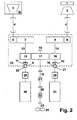
- the method of converting steam turbine-powered LNG carriers object of the present invention basically comprises, as can be seen in the attached drawings, adding one or several electric generator sets (47), together with their auxiliary components (48, 49, 50, 51, 52, 53, 54, 55, 56, 57), powering one or several electric propulsion engines (30, 31) transmitting power by means of a mechanical connection with the gearbox (25) and the output shaft line assembly (19, 20, 23) of the existing steam turbine (2, 3) propulsion plant.
- Output shaft line assembly is understood as the assembly primarily defined by the intermediate bow shaft (19), the intermediate stern shaft (20) (if there are two intermediate shafts) and the propeller shaft (23) operating the propeller (24).
- the auxiliary components of the electric generator sets (47) include one or several high voltage switchboards (48), transformers (49), converters (50), additional low voltage switchboards (51), compressors (52), heat exchangers (53), pumps (54), purifiers (55), heat exchangers (56) and exhaust gas boilers (57).
- Both the electric generator sets (47) and a substantial part of their auxiliary components (48, 49, 50, 51, 52, 53, 54, 57) are installed distributed in several prefabricated modules located on the main deck close to, adjacent to or on the house of the so-called "casing" existing in all LNG carriers in the stern area on the engine room.
- the electric generator sets (47) will preferably be dual-fuel diesel type, giving rise to diesel electric propulsion, although it is envisaged that they can alternatively be of the gas turbine type, giving rise to turbo-electric propulsion, or a diesel and gas turbine combination, giving rise to a composite diesel-turbo-electric propulsion, in all cases combined with the existing steam turbine (2, 3) propulsion
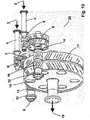
- the modified' conical couplings (26, 27) that are part of the existing gearbox (25) thus allow introducing the power of the electric propulsion engines (30, 31) located astern of the gearbox (25).
- power is introduced by means of additional gearboxes (32, 33) in the gearbox (25) by means of a first phase of modifying the stern end pieces of the hollow shaft with another internal shaft (13) of the low pressure side and of the hollow shaft with another internal shaft (14) of the high pressure side, referred to as quill shaft, of the existing gearbox (25) by means of modifying or replacing the conical coupling (9) on the low pressure side and the other conical coupling (10) on the high pressure side, respectively, such that the modified coupling includes at its stern end a shaft for the power input from the respective electric propulsion engines (30, 31) through additional gearboxes (32, 33), optionally provided with respective hydraulic clutches (36, 37), and connected to the existing gearbox (25) by means of flexible couplings and/or clutches (28, 29) and with modified conical couplings (26, 27), the electric propulsion engines (30, 31) being connected to the additional gearboxes (32, 33) by means of additional flexible couplings
- power is introduced by means of electric propulsion engines (30, 31) which introduce the power in the output shaft line assembly (19, 20) through one or two tunnel gear reducers by means of a first phase of modifying the intermediate bow shaft (19) to convert it into a modified intermediate bow shaft (38) on which one or several tunnel gear reducers is coupled in a second phase with a coupling (43) of the internal shaft, main wheels (44) and clutched pinions (45, 46), continuing with the phase of connecting the electric propulsion engines (30, 31) to the clutched pinions (45, 46) by means of additional flexible couplings (34, 35).
- the carrier resulting from the conversion has a double propulsion plant: the former steam turbine (2, 3) propulsion plant and the new electric propulsion plant, being able to use one, the other or both, as needed, all this while maintaining both the output shaft line assembly (19, 20, 23) and the gearbox (25) initially existing in the carrier with the indicated modifications.
- This method has a particular application to carriers with the following features:
- the present invention consists of a method of converting steam turbine-powered LNG carriers, particularly of the type used for transporting liquefied natural gas, characterized in that it comprises adding one or several electric power generator sets (47) and locating one or several electric propulsion engines (30, 31) next to the shaft line assembly (19, 20, 23) and gearbox (25) existing in the steam turbine (2, 3) propulsion plant.
Landscapes
- Chemical & Material Sciences (AREA)
- Engineering & Computer Science (AREA)
- Combustion & Propulsion (AREA)
- Mechanical Engineering (AREA)
- Ocean & Marine Engineering (AREA)
- Engine Equipment That Uses Special Cycles (AREA)
Claims (5)
- Verfahren zum Umwandeln von dampfturbinenbetriebenen LNG-Tankern, insbesondere des Typs, der zum Transportieren von verflüssigtem Erdgas verwendet wird, wobei das Verfahren den Antrieb mittels des Hinzufügens von einem oder mehreren Sätzen von elektrischen Leistungsgeneratoren (47), die durch Schaltanlagen (48) und Wandler (50) eine oder mehrere elektrische Antriebsmotoren (30, 31) betreiben, welche Leistung mittels einer mechanischen Verbindung mit dem Getriebe (25) übertragen, ändert, worin die Dampfturbinenantriebsanlage erhaltet wird, sodass der umgewandelte Tanker ferner einen dieselelektrischen Antrieb und einen hybriden Antrieb, der die vorstehenden zwei kombiniert, aufweist,
dadurch gekennzeichnet, dass die mechanische Leistung der elektrischen Antriebsmotoren (30, 31) direkt in das bestehende Getriebe (25) eingeführt wird, mittels einer ersten Phase des Modifizierens der Heckendstücke der hohlen Welle mit einer anderen Innenwelle (13) von der Niederdruckseite und der Hohlwelle mit einer anderen Innenwelle (14) von der Hochdruckseite, auf die als quill shaft Bezug genommen wird, des bestehenden Getriebes (25), mittels Modifizierens oder Ersetzens der Kegelkupplung (9) auf der Niederdruckseite und der anderen Kegelkupplung (10) auf der Hochdruckseite mit modifizierten Kegelkupplungen (26, 27), um mit einer Phase des Verbindens der jeweiligen elektrischen Antriebsmotoren (30, 31) mittels flexibler Kopplungen und/oder Kupplungen (28, 29) fortzufahren, die mit den zuvor in dem Getriebe (25) installierten modifizierten Kegelkupplungen (26, 27) verbunden sind, worin die elektrischen Antriebsmotoren (30, 31) hinter dem Getriebe (25) angeordnet wird. - Verfahren zum Umwandeln von dampfturbinenbetriebenen LNG-Tankern, insbesondere des Typs, der zum Transportieren von verflüssigtem Erdgas verwendet wird, wobei das Verfahren den Antrieb mittels des Hinzufügens von einem oder mehreren Sätzen von elektrischen Leistungsgeneratoren (47), die durch Schaltanlagen (48) und Wandler (50) eine oder mehrere elektrische Antriebsmotoren (30, 31) betreiben, welche Leistung mittels einer mechanischen Verbindung mit dem Getriebe (25) übertragen, ändert, worin die Dampfturbinenantriebsanlage erhaltet wird, sodass der umgewandelte Tanker ferner einen dieselelektrischen Antrieb und einen hybriden Antrieb, der die vorstehenden zwei kombiniert, aufweist,
dadurch gekennzeichnet, dass die mechanische Leistung der elektrischen Antriebsmotoren (30, 31) in das bestehende Getriebe (25) eingeführt wird, mittels einer ersten Phase des Modifizierens oder Ersetzens der Heckendteile der Hohlwelle mit einer anderen Innenwelle (13) von der Niederdruckseite und der Hohlwelle mit einer anderen Innenwelle (14) von der Hochdruckseite, auf die als quill shaft Bezug genommen wird, des bestehenden Getriebes (25), mittels eines Modifizierens oder Ersetzens der Kegelkupplung (9) auf der Niederdruckseite und der anderen Kegelkupplung (10) auf der Hochdruckseite, um mit einer Phase des Verbindens der jeweiligen elektrischen Antriebsmotoren (30, 31) mit zusätzlichen Getrieben (32, 33) fortzufahren, die optional mit jeweiligen hydraulischen Kupplungen (36, 37) bereitgestellt sind und mit dem bestehenden Getriebe (25) mittels flexibler Kopplungen und/oder Kupplungen (28, 29) über die modifizierten zuvor in dem Getriebe (25) ausgebildeten Kegelkupplungen (26, 27) verbunden sind, wobei die elektrischen Antriebsmotoren (30, 31) mit den zusätzlichen Getrieben (32, 33) mittels zusätzlicher flexibler Kopplungen (34, 35) verbunden werden, worin die elektrischen Antriebsmotoren (30, 31) in Richtung des Bugs oder Hecks angeordnet wird. - Verfahren zum Umwandeln von dampfturbinenbetriebenen LNG-Tankern nach Anspruch 1 oder 2, dadurch gekennzeichnet, dass es ein Hinzufügen von Hilfskomponenten der elektrischen Leistungsgeneratoren (47) umfasst, die aus der Gruppe ausgewählt werden, die aus Hochspannungsschaltanlagen (48), Transformatoren (49), Wandlern (50), zusätzlichen Niedervoltschaltanlagen (51), Verdichtern für Erdgas (52), Wärmetauschern für Erdgas (53), Pumpen (54), Reinigern (55), Hilfswärmetauschern für die elektrischen Leistungsgeneratoren (56) und Abgaskesseln (57) besteht.
- Verfahren zum Umwandeln von dampfturbinenbetriebenen LNG-Tankern nach dem vorstehenden Anspruch, dadurch gekennzeichnet, dass sowohl die elektrischen Leistungsgeneratoren (47) als auch ein wesentlicher Teil ihrer Hilfskomponenten (48, 49, 50, 51, 54, 55, 56, 57) in mehreren vorgefertigten Modulen verteilt installiert sind, die auf dem Hauptdeck nahe oder angrenzend an dem Haus des Maschinenraumgehäuses angeordnet sind, mit der Ausnahme der Verdichter für Erdgas und der Wärmetauscher (52, 53), die in dem Verdichterhaus, das in sämtlichen LNG-Tankern vorliegt, in einem neuen Modul installiert werden, das an das Haus angrenzt oder in seiner Nähe ist.
- Verfahren zum Umwandeln von dampfturbinenbetriebenen LNG-Tankern nach einem der vorstehenden Ansprüche, dadurch gekennzeichnet, dass die elektrischen Leistungsgeneratoren (47) Dual-Fuel-Dieselgeneratoren sind, was zu einem dieselelektrischen Antrieb kombiniert mit dem bestehenden Dampfturbinenantrieb (2, 3) des Gasturbinentyps führt, was zu einem turboelektrischen Antrieb kombiniert mit dem bestehenden Dampfturbinenantrieb (2, 3) führt, oder zu einer Diesel-Gasturbinen-Kombination, die zu einem Verbund aus einem Diesel-Turbo-Elektroantrieb kombiniert mit dem bestehenden Dampfturbinenantrieb (2, 3) führt.
Priority Applications (1)
| Application Number | Priority Date | Filing Date | Title |
|---|---|---|---|
| HRP20160607TT HRP20160607T1 (hr) | 2012-01-13 | 2013-01-14 | Postupak konverzije metanijera pogonjenih parnim turbinama |
Applications Claiming Priority (2)
| Application Number | Priority Date | Filing Date | Title |
|---|---|---|---|
| ES201230050A ES2397582B1 (es) | 2012-01-13 | 2012-01-13 | Procedimiento de transformación de buques metaneros propulsados por turbinas de vapor |
| PCT/ES2013/070008 WO2013104818A1 (es) | 2012-01-13 | 2013-01-14 | Procedimiento de transformación de buques metaneros propulsados por turbinas de vapor |
Publications (2)
| Publication Number | Publication Date |
|---|---|
| EP2808248A1 EP2808248A1 (de) | 2014-12-03 |
| EP2808248B1 true EP2808248B1 (de) | 2016-04-06 |
Family
ID=47722780
Family Applications (1)
| Application Number | Title | Priority Date | Filing Date |
|---|---|---|---|
| EP13705515.8A Active EP2808248B1 (de) | 2012-01-13 | 2013-01-14 | Verfahren zur umwandlung von dampfturbinenbetriebenen flüssigerdgasträgern |
Country Status (8)
| Country | Link |
|---|---|
| EP (1) | EP2808248B1 (de) |
| CN (1) | CN104334449B (de) |
| ES (2) | ES2397582B1 (de) |
| HR (1) | HRP20160607T1 (de) |
| PL (1) | PL2808248T3 (de) |
| PT (1) | PT2808248E (de) |
| SG (1) | SG11201404010VA (de) |
| WO (1) | WO2013104818A1 (de) |
Cited By (1)
| Publication number | Priority date | Publication date | Assignee | Title |
|---|---|---|---|---|
| CN105818953A (zh) * | 2016-03-17 | 2016-08-03 | 哈尔滨博展科技有限公司 | 一种双燃料船舶的动力系统 |
Families Citing this family (7)
| Publication number | Priority date | Publication date | Assignee | Title |
|---|---|---|---|---|
| CN103523193A (zh) * | 2013-10-29 | 2014-01-22 | 中国船舶重工集团公司第七�三研究所 | 一种船用柴燃联合动力传动系统 |
| CN105824257B (zh) * | 2016-04-18 | 2018-04-17 | 武汉交圣新能源工程有限公司 | Lng动力船舶的bog优先发电控制方法及其系统 |
| EP3301011B1 (de) * | 2016-09-28 | 2019-12-11 | Arista Shipping S. A. | Speisungssystem für ein schiff |
| IT201700003996A1 (it) * | 2017-01-16 | 2018-07-16 | Nuovo Pignone Tecnologie Srl | Struttura galleggiante e metodo di funzionamento di una struttura galleggiante |
| GB202019582D0 (en) * | 2020-12-11 | 2021-01-27 | Windship Tech Limited | Waterborne vessel |
| CN113357009A (zh) * | 2021-06-21 | 2021-09-07 | 中国舰船研究设计中心 | 一种船用燃蒸联合储能跨接并车动力系统 |
| WO2025068772A2 (en) * | 2023-09-28 | 2025-04-03 | Efalke Gmbh | Modular marine propulsion system for big vessels |
Family Cites Families (18)
| Publication number | Priority date | Publication date | Assignee | Title |
|---|---|---|---|---|
| GB189292A (en) * | 1921-10-04 | 1922-11-30 | Riugo Kodama | Improvements in and relating to ship propulsion |
| DE2237400A1 (de) * | 1972-07-29 | 1974-02-21 | Licentia Gmbh | Antriebs- und stromversorgungsanlage fuer schiffe |
| NO800935L (no) * | 1980-03-31 | 1981-10-01 | Moss Rosenberg Verft As | Fremdriftsmaskineri for lng-skip. |
| JPH0446892A (ja) * | 1990-06-12 | 1992-02-17 | Mitsubishi Heavy Ind Ltd | Lng運搬船の推進装置 |
| US5199912A (en) | 1991-08-15 | 1993-04-06 | Newport News Shipbuilding And Dry Dock Company | Electric power system for marine vehicles |
| FI96590B (fi) | 1992-09-28 | 1996-04-15 | Kvaerner Masa Yards Oy | Laivan propulsiolaite |
| DE4432483A1 (de) * | 1994-09-13 | 1996-03-14 | Blohm Voss Ag | Zusatzantrieb für Seeschiffe |
| ES2184356T3 (es) | 1998-01-16 | 2003-04-01 | Siemens Ag | Instalacion de accionamiento electrico para barcos. |
| DE50001863D1 (de) | 1999-02-12 | 2003-05-28 | Siemens Ag | Elektrischer schiffsantrieb |
| KR100815831B1 (ko) | 2001-06-14 | 2008-03-24 | 에이비비 오와이 | 선박 추진 장치 및 방법 |
| GB0117137D0 (en) | 2001-07-13 | 2001-09-05 | Dorchester Martime Ltd | A method of disposing of gas and propulsion apparatus for a ship |
| US7018249B2 (en) | 2001-11-29 | 2006-03-28 | Siemens Aktiengesellschaft | Boat propulsion system |
| JP4228608B2 (ja) * | 2002-07-23 | 2009-02-25 | 株式会社Ihi | 液化ガス運搬船の推進装置 |
| JP4261582B2 (ja) | 2003-08-12 | 2009-04-30 | エクセルレイト・エナジー・リミテッド・パートナーシップ | Lng搬送体に関する交流推進設備を使用した船上での再ガス化 |
| CN201385775Y (zh) * | 2009-04-09 | 2010-01-20 | 杭州前进齿轮箱集团股份有限公司 | 船用齿轮箱 |
| ES2369679B1 (es) * | 2009-07-16 | 2013-02-18 | Vicus Desarrollos Tecnológicos, S.L. | Sistema de propulsión y generación de energía eléctrica para buques. |
| KR100961869B1 (ko) * | 2009-10-16 | 2010-06-09 | 대우조선해양 주식회사 | 액화연료가스 주 추진 엔진과 액화연료가스 발전 엔진을 선택적으로 구동하는 선박 |
| CN202007867U (zh) * | 2011-04-07 | 2011-10-12 | 杭州前进齿轮箱集团股份有限公司 | 多用途船用齿轮箱 |
-
2012
- 2012-01-13 ES ES201230050A patent/ES2397582B1/es not_active Expired - Fee Related
-
2013
- 2013-01-14 SG SG11201404010VA patent/SG11201404010VA/en unknown
- 2013-01-14 EP EP13705515.8A patent/EP2808248B1/de active Active
- 2013-01-14 WO PCT/ES2013/070008 patent/WO2013104818A1/es not_active Ceased
- 2013-01-14 PL PL13705515.8T patent/PL2808248T3/pl unknown
- 2013-01-14 ES ES13705515.8T patent/ES2580015T3/es active Active
- 2013-01-14 HR HRP20160607TT patent/HRP20160607T1/hr unknown
- 2013-01-14 CN CN201380010531.2A patent/CN104334449B/zh active Active
- 2013-01-14 PT PT137055158T patent/PT2808248E/pt unknown
Cited By (1)
| Publication number | Priority date | Publication date | Assignee | Title |
|---|---|---|---|---|
| CN105818953A (zh) * | 2016-03-17 | 2016-08-03 | 哈尔滨博展科技有限公司 | 一种双燃料船舶的动力系统 |
Also Published As
| Publication number | Publication date |
|---|---|
| CN104334449A (zh) | 2015-02-04 |
| ES2397582A1 (es) | 2013-03-08 |
| PT2808248E (pt) | 2016-06-23 |
| HRP20160607T1 (hr) | 2016-07-15 |
| PL2808248T3 (pl) | 2016-10-31 |
| SG11201404010VA (en) | 2014-10-30 |
| ES2397582B1 (es) | 2014-03-11 |
| CN104334449B (zh) | 2016-10-26 |
| ES2580015T3 (es) | 2016-08-18 |
| WO2013104818A1 (es) | 2013-07-18 |
| EP2808248A1 (de) | 2014-12-03 |
Similar Documents
| Publication | Publication Date | Title |
|---|---|---|
| EP2808248B1 (de) | Verfahren zur umwandlung von dampfturbinenbetriebenen flüssigerdgasträgern | |
| US8216008B2 (en) | Mixed propulsion system | |
| KR102201254B1 (ko) | 유조선을 이용한 발전 플랜트 | |
| AU2010307416B2 (en) | Ship for alternatively running fuel gas main drive engine and fuel gas generator engine | |
| Haglind | A review on the use of gas and steam turbine combined cycles as prime movers for large ships. Part II: Previous work and implications | |
| KR101826686B1 (ko) | 부유식 구조물의 발전 시스템 | |
| CN105383672A (zh) | 浮式海上设备及浮式海上设备的电力供给方法 | |
| Mrzljak et al. | Comparison of COGES and diesel-electric ship propulsion systems | |
| CN108454786B (zh) | 浮船和运行浮船的方法 | |
| KR20150102238A (ko) | 선박 및 선박의 배치 구조 | |
| Micheli et al. | Energy systems on board ships | |
| KR102589458B1 (ko) | 선박의 하이브리드 발전 및 추진 시스템 및 방법 | |
| KR20110127505A (ko) | 전기저장장치를 갖는 부유식 구조물 | |
| Thijssen | Dual-fuel-electric LNG carriers | |
| RU2828506C1 (ru) | Судно с вертолетным комплексом | |
| Giernalczyk et al. | Ways of adjusting the two-stroke diesel engine to be run on liquefied natural gas | |
| Pereira et al. | Energy Assessment and Comparison of the Use of a Conventional Steam Turbine System in a Lng Carrier Propulsion with the Use of a Coges System | |
| Bassam | Dual Fuel Electric System as an alternative Propulsion for LNG Carrier | |
| WO2023102595A1 (en) | Liquified gas power vessel | |
| KR20230059560A (ko) | 선박의 하이브리드 발전 및 추진 시스템 및 방법 | |
| WO2017213542A1 (ru) | Роторная энергетическая судовая установка | |
| Tooke | Economic and Reliable-Gas Turbine Power for LNG Carriers | |
| KR102289309B1 (ko) | 적하역 전력공급시스템 및 방법 | |
| Górski et al. | Proposal of turbine propulsion for a new generation liquefied natural gas carrier with a capacity of 250 000--300 000 cbm | |
| Grone | 2. UIIQJIM |
Legal Events
| Date | Code | Title | Description |
|---|---|---|---|
| PUAI | Public reference made under article 153(3) epc to a published international application that has entered the european phase |
Free format text: ORIGINAL CODE: 0009012 |
|
| 17P | Request for examination filed |
Effective date: 20140729 |
|
| AK | Designated contracting states |
Kind code of ref document: A1 Designated state(s): AL AT BE BG CH CY CZ DE DK EE ES FI FR GB GR HR HU IE IS IT LI LT LU LV MC MK MT NL NO PL PT RO RS SE SI SK SM TR |
|
| DAX | Request for extension of the european patent (deleted) | ||
| GRAP | Despatch of communication of intention to grant a patent |
Free format text: ORIGINAL CODE: EPIDOSNIGR1 |
|
| INTG | Intention to grant announced |
Effective date: 20150924 |
|
| GRAS | Grant fee paid |
Free format text: ORIGINAL CODE: EPIDOSNIGR3 |
|
| GRAA | (expected) grant |
Free format text: ORIGINAL CODE: 0009210 |
|
| AK | Designated contracting states |
Kind code of ref document: B1 Designated state(s): AL AT BE BG CH CY CZ DE DK EE ES FI FR GB GR HR HU IE IS IT LI LT LU LV MC MK MT NL NO PL PT RO RS SE SI SK SM TR |
|
| REG | Reference to a national code |
Ref country code: GB Ref legal event code: FG4D |
|
| REG | Reference to a national code |
Ref country code: AT Ref legal event code: REF Ref document number: 787484 Country of ref document: AT Kind code of ref document: T Effective date: 20160415 Ref country code: CH Ref legal event code: EP |
|
| REG | Reference to a national code |
Ref country code: IE Ref legal event code: FG4D |
|
| REG | Reference to a national code |
Ref country code: DE Ref legal event code: R096 Ref document number: 602013006238 Country of ref document: DE |
|
| REG | Reference to a national code |
Ref country code: HR Ref legal event code: TUEP Ref document number: P20160607 Country of ref document: HR |
|
| REG | Reference to a national code |
Ref country code: RO Ref legal event code: EPE |
|
| REG | Reference to a national code |
Ref country code: PT Ref legal event code: SC4A Free format text: AVAILABILITY OF NATIONAL TRANSLATION Effective date: 20160615 |
|
| REG | Reference to a national code |
Ref country code: HR Ref legal event code: T1PR Ref document number: P20160607 Country of ref document: HR |
|
| REG | Reference to a national code |
Ref country code: LT Ref legal event code: MG4D Ref country code: NL Ref legal event code: MP Effective date: 20160406 |
|
| REG | Reference to a national code |
Ref country code: AT Ref legal event code: MK05 Ref document number: 787484 Country of ref document: AT Kind code of ref document: T Effective date: 20160406 |
|
| REG | Reference to a national code |
Ref country code: ES Ref legal event code: FG2A Ref document number: 2580015 Country of ref document: ES Kind code of ref document: T3 Effective date: 20160818 |
|
| PG25 | Lapsed in a contracting state [announced via postgrant information from national office to epo] |
Ref country code: NL Free format text: LAPSE BECAUSE OF FAILURE TO SUBMIT A TRANSLATION OF THE DESCRIPTION OR TO PAY THE FEE WITHIN THE PRESCRIBED TIME-LIMIT Effective date: 20160406 |
|
| PG25 | Lapsed in a contracting state [announced via postgrant information from national office to epo] |
Ref country code: IS Free format text: LAPSE BECAUSE OF FAILURE TO SUBMIT A TRANSLATION OF THE DESCRIPTION OR TO PAY THE FEE WITHIN THE PRESCRIBED TIME-LIMIT Effective date: 20160806 Ref country code: FI Free format text: LAPSE BECAUSE OF FAILURE TO SUBMIT A TRANSLATION OF THE DESCRIPTION OR TO PAY THE FEE WITHIN THE PRESCRIBED TIME-LIMIT Effective date: 20160406 Ref country code: LT Free format text: LAPSE BECAUSE OF FAILURE TO SUBMIT A TRANSLATION OF THE DESCRIPTION OR TO PAY THE FEE WITHIN THE PRESCRIBED TIME-LIMIT Effective date: 20160406 Ref country code: NO Free format text: LAPSE BECAUSE OF FAILURE TO SUBMIT A TRANSLATION OF THE DESCRIPTION OR TO PAY THE FEE WITHIN THE PRESCRIBED TIME-LIMIT Effective date: 20160706 |
|
| PG25 | Lapsed in a contracting state [announced via postgrant information from national office to epo] |
Ref country code: AT Free format text: LAPSE BECAUSE OF FAILURE TO SUBMIT A TRANSLATION OF THE DESCRIPTION OR TO PAY THE FEE WITHIN THE PRESCRIBED TIME-LIMIT Effective date: 20160406 Ref country code: RS Free format text: LAPSE BECAUSE OF FAILURE TO SUBMIT A TRANSLATION OF THE DESCRIPTION OR TO PAY THE FEE WITHIN THE PRESCRIBED TIME-LIMIT Effective date: 20160406 Ref country code: LV Free format text: LAPSE BECAUSE OF FAILURE TO SUBMIT A TRANSLATION OF THE DESCRIPTION OR TO PAY THE FEE WITHIN THE PRESCRIBED TIME-LIMIT Effective date: 20160406 Ref country code: GR Free format text: LAPSE BECAUSE OF FAILURE TO SUBMIT A TRANSLATION OF THE DESCRIPTION OR TO PAY THE FEE WITHIN THE PRESCRIBED TIME-LIMIT Effective date: 20160707 Ref country code: SE Free format text: LAPSE BECAUSE OF FAILURE TO SUBMIT A TRANSLATION OF THE DESCRIPTION OR TO PAY THE FEE WITHIN THE PRESCRIBED TIME-LIMIT Effective date: 20160406 |
|
| PG25 | Lapsed in a contracting state [announced via postgrant information from national office to epo] |
Ref country code: IT Free format text: LAPSE BECAUSE OF FAILURE TO SUBMIT A TRANSLATION OF THE DESCRIPTION OR TO PAY THE FEE WITHIN THE PRESCRIBED TIME-LIMIT Effective date: 20160406 Ref country code: BE Free format text: LAPSE BECAUSE OF FAILURE TO SUBMIT A TRANSLATION OF THE DESCRIPTION OR TO PAY THE FEE WITHIN THE PRESCRIBED TIME-LIMIT Effective date: 20160406 |
|
| REG | Reference to a national code |
Ref country code: DE Ref legal event code: R097 Ref document number: 602013006238 Country of ref document: DE |
|
| PG25 | Lapsed in a contracting state [announced via postgrant information from national office to epo] |
Ref country code: DK Free format text: LAPSE BECAUSE OF FAILURE TO SUBMIT A TRANSLATION OF THE DESCRIPTION OR TO PAY THE FEE WITHIN THE PRESCRIBED TIME-LIMIT Effective date: 20160406 Ref country code: SK Free format text: LAPSE BECAUSE OF FAILURE TO SUBMIT A TRANSLATION OF THE DESCRIPTION OR TO PAY THE FEE WITHIN THE PRESCRIBED TIME-LIMIT Effective date: 20160406 Ref country code: EE Free format text: LAPSE BECAUSE OF FAILURE TO SUBMIT A TRANSLATION OF THE DESCRIPTION OR TO PAY THE FEE WITHIN THE PRESCRIBED TIME-LIMIT Effective date: 20160406 Ref country code: CZ Free format text: LAPSE BECAUSE OF FAILURE TO SUBMIT A TRANSLATION OF THE DESCRIPTION OR TO PAY THE FEE WITHIN THE PRESCRIBED TIME-LIMIT Effective date: 20160406 |
|
| PLBE | No opposition filed within time limit |
Free format text: ORIGINAL CODE: 0009261 |
|
| STAA | Information on the status of an ep patent application or granted ep patent |
Free format text: STATUS: NO OPPOSITION FILED WITHIN TIME LIMIT |
|
| PG25 | Lapsed in a contracting state [announced via postgrant information from national office to epo] |
Ref country code: SM Free format text: LAPSE BECAUSE OF FAILURE TO SUBMIT A TRANSLATION OF THE DESCRIPTION OR TO PAY THE FEE WITHIN THE PRESCRIBED TIME-LIMIT Effective date: 20160406 |
|
| 26N | No opposition filed |
Effective date: 20170110 |
|
| PG25 | Lapsed in a contracting state [announced via postgrant information from national office to epo] |
Ref country code: SI Free format text: LAPSE BECAUSE OF FAILURE TO SUBMIT A TRANSLATION OF THE DESCRIPTION OR TO PAY THE FEE WITHIN THE PRESCRIBED TIME-LIMIT Effective date: 20160406 |
|
| REG | Reference to a national code |
Ref country code: DE Ref legal event code: R119 Ref document number: 602013006238 Country of ref document: DE |
|
| REG | Reference to a national code |
Ref country code: CH Ref legal event code: PL |
|
| GBPC | Gb: european patent ceased through non-payment of renewal fee |
Effective date: 20170114 |
|
| PG25 | Lapsed in a contracting state [announced via postgrant information from national office to epo] |
Ref country code: MC Free format text: LAPSE BECAUSE OF FAILURE TO SUBMIT A TRANSLATION OF THE DESCRIPTION OR TO PAY THE FEE WITHIN THE PRESCRIBED TIME-LIMIT Effective date: 20160406 |
|
| REG | Reference to a national code |
Ref country code: FR Ref legal event code: ST Effective date: 20170929 |
|
| PG25 | Lapsed in a contracting state [announced via postgrant information from national office to epo] |
Ref country code: LI Free format text: LAPSE BECAUSE OF NON-PAYMENT OF DUE FEES Effective date: 20170131 Ref country code: FR Free format text: LAPSE BECAUSE OF NON-PAYMENT OF DUE FEES Effective date: 20170131 Ref country code: CH Free format text: LAPSE BECAUSE OF NON-PAYMENT OF DUE FEES Effective date: 20170131 |
|
| REG | Reference to a national code |
Ref country code: IE Ref legal event code: MM4A |
|
| PG25 | Lapsed in a contracting state [announced via postgrant information from national office to epo] |
Ref country code: GB Free format text: LAPSE BECAUSE OF NON-PAYMENT OF DUE FEES Effective date: 20170114 Ref country code: LU Free format text: LAPSE BECAUSE OF NON-PAYMENT OF DUE FEES Effective date: 20170114 Ref country code: DE Free format text: LAPSE BECAUSE OF NON-PAYMENT OF DUE FEES Effective date: 20170801 |
|
| PG25 | Lapsed in a contracting state [announced via postgrant information from national office to epo] |
Ref country code: IE Free format text: LAPSE BECAUSE OF NON-PAYMENT OF DUE FEES Effective date: 20170114 |
|
| PG25 | Lapsed in a contracting state [announced via postgrant information from national office to epo] |
Ref country code: MT Free format text: LAPSE BECAUSE OF NON-PAYMENT OF DUE FEES Effective date: 20170114 |
|
| PG25 | Lapsed in a contracting state [announced via postgrant information from national office to epo] |
Ref country code: AL Free format text: LAPSE BECAUSE OF FAILURE TO SUBMIT A TRANSLATION OF THE DESCRIPTION OR TO PAY THE FEE WITHIN THE PRESCRIBED TIME-LIMIT Effective date: 20160406 |
|
| REG | Reference to a national code |
Ref country code: HR Ref legal event code: ODRP Ref document number: P20160607 Country of ref document: HR Payment date: 20181219 Year of fee payment: 7 |
|
| PG25 | Lapsed in a contracting state [announced via postgrant information from national office to epo] |
Ref country code: HU Free format text: LAPSE BECAUSE OF FAILURE TO SUBMIT A TRANSLATION OF THE DESCRIPTION OR TO PAY THE FEE WITHIN THE PRESCRIBED TIME-LIMIT; INVALID AB INITIO Effective date: 20130114 |
|
| PG25 | Lapsed in a contracting state [announced via postgrant information from national office to epo] |
Ref country code: BG Free format text: LAPSE BECAUSE OF FAILURE TO SUBMIT A TRANSLATION OF THE DESCRIPTION OR TO PAY THE FEE WITHIN THE PRESCRIBED TIME-LIMIT Effective date: 20160406 |
|
| PG25 | Lapsed in a contracting state [announced via postgrant information from national office to epo] |
Ref country code: CY Free format text: LAPSE BECAUSE OF FAILURE TO SUBMIT A TRANSLATION OF THE DESCRIPTION OR TO PAY THE FEE WITHIN THE PRESCRIBED TIME-LIMIT Effective date: 20160406 |
|
| PG25 | Lapsed in a contracting state [announced via postgrant information from national office to epo] |
Ref country code: MK Free format text: LAPSE BECAUSE OF FAILURE TO SUBMIT A TRANSLATION OF THE DESCRIPTION OR TO PAY THE FEE WITHIN THE PRESCRIBED TIME-LIMIT Effective date: 20160406 |
|
| REG | Reference to a national code |
Ref country code: HR Ref legal event code: ODRP Ref document number: P20160607 Country of ref document: HR Payment date: 20200108 Year of fee payment: 8 |
|
| PG25 | Lapsed in a contracting state [announced via postgrant information from national office to epo] |
Ref country code: TR Free format text: LAPSE BECAUSE OF FAILURE TO SUBMIT A TRANSLATION OF THE DESCRIPTION OR TO PAY THE FEE WITHIN THE PRESCRIBED TIME-LIMIT Effective date: 20160406 |
|
| REG | Reference to a national code |
Ref country code: HR Ref legal event code: ODRP Ref document number: P20160607 Country of ref document: HR Payment date: 20201218 Year of fee payment: 9 |
|
| REG | Reference to a national code |
Ref country code: HR Ref legal event code: ODRP Ref document number: P20160607 Country of ref document: HR Payment date: 20211220 Year of fee payment: 10 |
|
| REG | Reference to a national code |
Ref country code: HR Ref legal event code: ODRP Ref document number: P20160607 Country of ref document: HR Payment date: 20221221 Year of fee payment: 11 |
|
| REG | Reference to a national code |
Ref country code: HR Ref legal event code: ODRP Ref document number: P20160607 Country of ref document: HR Payment date: 20231219 Year of fee payment: 12 |
|
| PGFP | Annual fee paid to national office [announced via postgrant information from national office to epo] |
Ref country code: PT Payment date: 20241218 Year of fee payment: 13 Ref country code: PL Payment date: 20241218 Year of fee payment: 13 |
|
| REG | Reference to a national code |
Ref country code: HR Ref legal event code: ODRP Ref document number: P20160607 Country of ref document: HR Payment date: 20241218 Year of fee payment: 13 |
|
| PGFP | Annual fee paid to national office [announced via postgrant information from national office to epo] |
Ref country code: HR Payment date: 20241218 Year of fee payment: 13 |
|
| PGFP | Annual fee paid to national office [announced via postgrant information from national office to epo] |
Ref country code: RO Payment date: 20241220 Year of fee payment: 13 |
|
| PGFP | Annual fee paid to national office [announced via postgrant information from national office to epo] |
Ref country code: ES Payment date: 20250210 Year of fee payment: 13 |
|
| REG | Reference to a national code |
Ref country code: HR Ref legal event code: ODRP Ref document number: P20160607 Country of ref document: HR Payment date: 20260114 Year of fee payment: 14 |