EP2806743B1 - Formulations antifongiques comprenant un extrait des racines de rheum pour le traitement des maladies de plantes - Google Patents
Formulations antifongiques comprenant un extrait des racines de rheum pour le traitement des maladies de plantes Download PDFInfo
- Publication number
- EP2806743B1 EP2806743B1 EP13707264.1A EP13707264A EP2806743B1 EP 2806743 B1 EP2806743 B1 EP 2806743B1 EP 13707264 A EP13707264 A EP 13707264A EP 2806743 B1 EP2806743 B1 EP 2806743B1
- Authority
- EP
- European Patent Office
- Prior art keywords
- rheum
- formulation according
- antifungal formulation
- phase
- fusarium
- Prior art date
- Legal status (The legal status is an assumption and is not a legal conclusion. Google has not performed a legal analysis and makes no representation as to the accuracy of the status listed.)
- Not-in-force
Links
Images







Classifications
-
- A—HUMAN NECESSITIES
- A01—AGRICULTURE; FORESTRY; ANIMAL HUSBANDRY; HUNTING; TRAPPING; FISHING
- A01N—PRESERVATION OF BODIES OF HUMANS OR ANIMALS OR PLANTS OR PARTS THEREOF; BIOCIDES, e.g. AS DISINFECTANTS, AS PESTICIDES OR AS HERBICIDES; PEST REPELLANTS OR ATTRACTANTS; PLANT GROWTH REGULATORS
- A01N65/00—Biocides, pest repellants or attractants, or plant growth regulators containing material from algae, lichens, bryophyta, multi-cellular fungi or plants, or extracts thereof
-
- A—HUMAN NECESSITIES
- A01—AGRICULTURE; FORESTRY; ANIMAL HUSBANDRY; HUNTING; TRAPPING; FISHING
- A01N—PRESERVATION OF BODIES OF HUMANS OR ANIMALS OR PLANTS OR PARTS THEREOF; BIOCIDES, e.g. AS DISINFECTANTS, AS PESTICIDES OR AS HERBICIDES; PEST REPELLANTS OR ATTRACTANTS; PLANT GROWTH REGULATORS
- A01N65/00—Biocides, pest repellants or attractants, or plant growth regulators containing material from algae, lichens, bryophyta, multi-cellular fungi or plants, or extracts thereof
- A01N65/08—Magnoliopsida [dicotyledons]
- A01N65/30—Polygonaceae [Buckwheat family], e.g. red-knees or rhubarb
Definitions
- the invention relates to the use of an antifungal formulation for combating fungal plant diseases which contain at least active substances or active ingredient compositions with antifungal activity from polyphenolic extracts of the roots of Rheum species and other polyphenol-containing plants.
- the herbal active ingredients have a novel mechanism of action against fungal diseases. Because of the high risk of developing resistance to fungal diseases to synthetic fungicides and also because many of the fungicides used have the same mechanism of action against certain plant diseases, in practice preparations with a novel mechanism of action are urgently needed.
- the DE 4411 895 A1 describes a method for controlling fungi on plants, materials and seeds by the action of a fungicidally effective amount of Rheum rhabarbarum and Solidago canadensis.
- Plasmopara viticola are listed as pathogens in wine, Phytophthora infestans as causative agent of late blight in potatoes, Erysiphe cichoracearum as causative agent of cucumber powdery mildew and Botrytis cinerea as a pathogen in peppers.
- epicatechin, epigallocatechin and epigallocatechin gallate act to inhibit a large number of plant pathogenic fungi.
- EC epicatechin
- Ecg epicatechin gallate
- KR 2010 0048351 A is an extract of Rheum undulatum known to control plant diseases caused by fungi.
- the object of the invention is to provide formulations with one or more plant-based active ingredients for use in combating fungal plant diseases. Ideally, such formulations should be both protective and curative.
- plant-based active ingredients may be developed that are new to the application described.
- the concept of the invention is that here vegetable polyphenols with protective and curative effect against fungal pathogens and the potential to protect important crops against abiotic stress by strengthening the antioxidant potential, are used, these plant polyphenols the basis for development innovative crop protection products.
- these plant polyphenols the basis for development innovative crop protection products.
- the present invention utilizes drugs and drug fractions derived from the use of an optimized extraction method solely from rhubarb roots and the roots of other polyphenol-containing plants.
- the extracts used according to the invention contain no anthraquinones and anthraquinone derivatives, since these are removed in step b) as lipophilic concomitants.
- it was also possible to detect a curative effect for example in the case of infestation of barley with Blumeria graminis.
- formulations developed on the basis of the extracts used according to the invention can surprisingly be used both for the protective and curative control of phytopathogenic fungi on plants.
- a chemically inert protective gas is provided. Nitrogen is used as the preferred protective gas.
- liquid / liquid distribution chromatographic separation techniques such as, for example, the so-called high-speed countercurrent chromatography (HSCCC) and / or the so-called Fast -Centrifugal Partitioning Chromatography (FCPC).
- HSCCC high-speed countercurrent chromatography
- FCPC Fast -Centrifugal Partitioning Chromatography
- successively several different alcohols are used in succession, that is to say at least two alcohols, preferably of different polarity.
- a further aspect of the invention relates to the use of the antifungal formulations according to the invention for combating fungal and / or plant fungal diseases.
- one or more phytopathogenic fungi or fungal fungi for example Erysiphe spec .; Blumeria, in particular Blumeria graminis f. sp.
- Rust diseases in particular Puccinia graminis, Puccinia triticina, Puccinia striiformis, Phakopsora spec., Hemileia vastatrix, Uromyces dianthi; powdery mildew; Septoria; Fusarium, in particular Fusarium solani complex, Fusarium oxysporum, Fusarium verticillioides, Fusarium proliferatum, Fusarium culmorum, Fusarium graminearum; Rhizoctonia, in particular Rhizoctonia solani complex; Alternaria; Helminthosporium; Bipolaris, especially Bipolaris sorokiniana; Thielaviopsis; Botrytis; Phytophthora, in particular Phytophthora capsici, Phytophthora infestans; Fusarium, especially Fusarium spec .; Venturia, in particular Venturia inaeqaulis;
- the polyphenols according to the invention can be used in all crops in which the infection of the controlled by the polyphenolic extracts mushrooms and / or fungal eggs is undesirable, for example, corn, corn, rice, legumes, potatoes, tomatoes, vegetables, fruit trees, Vines or ornamental plants.
- the polyphenolic extracts according to the invention may contain biological antagonists in coformulation which are suitable for the control of viruses, bacteria, nematodes, fungi, insects or weeds.
- biological antagonists are: Bacillus thuringiensis, Bacillus subtilus, Verticillium lecanii, Autographica californica NPV, Beauvaria bassicana, Metarhizium anisopliae, Pseudomonas fluorescens, Steptomyces griseoviridis, Trichoderma harzianum, Piriformospora indica and Sebacina vermifera.
- those biological antagonists are selected which have a complementary effect on the Rheum extracts, ie act against diseases that are not covered by the Rheum extracts.
- co-formulations may contain at least one of the polyphenolic substances of the present invention and a chemical agent that induces systemic acquired resistance (SAR) in plants, that is, an active ingredient that modulates the salicylic acid biosynthetic pathway and induces pathogenesis -related (PR) genes and thus contributes to plant-acquired resistance (SAR) to plant diseases, in particular 2,6-dichloro-isonicotinic acid (DCINA) or benzo (1,2,3) -thiadiazolecarbothionic acid S-methyl ester (BTH), which act as synthetic agents via the modulation of salicylic acid activity.
- SAR systemic acquired resistance
- DCINA 2,6-dichloro-isonicotinic acid
- BTH benzo (1,2,3) -thiadiazolecarbothionic acid S-methyl ester
- coformulations may contain at least one of the polyphenolic substances or active substances from the polyphenolic extract and chemical agents or non-pathogenic, root-colonizing rhizobacteria or fungi, in particular symbiotic root fungi, which have an induced systemic resistance (ISR) Create plants.
- ISR induced systemic resistance
- These are such microorganisms which over the modulation of jasmonate biosynthesis contribute to plant-induced resistance (ISR) to plant diseases.
- symbiotic root fungi arbuscular mycorrhizal fungi or Sebacina species, in particular Piriformospora spec. (for example Piriformospora indica) or Sebacina vermifera.
- co-formulations may contain at least one of the polyphenolic substances of the present invention and one or more adjuvants for improving the effect and rainfastness.
- adjuvants for improving the effect and rainfastness.
- any commercially available adjuvants can be used.
- Rheum species for the preparation of the extracts which are used in the application according to the invention are: Rheum rhaponticum L., Rheum officinale Baill. sp., Rheum palmatum L., Rheum altaicum LOSINSK, Rheum rhubarberum L., Rheum undulatum L., Rheum alexandrae VEITCH., Rheum wittrockii LUNDSTR, Rheum maximowiczii LOSINSK., Rheum leucorrhizum PALL., Rheum tanguticum Maxim., Rheum nobile Hook et.
- an alcoholic solvent for example, methanol
- these alcoholic extracts are further used.
- a preparative column chromatographic fractionation of the hydrophilic or hydrophobic phase can be carried out.
- rhubarb root material For extraction of the rhubarb root material, 1 kg of a dried and ground root sample was subjected to multi-stage vortex extraction with about 8000 ml of alcoholic solvent for 15 min each on the Ultra-Turrax. The collected extracts were then concentrated on a rotary evaporator under vacuum at temperatures up to a maximum of 50 ° C, and after addition of 500 ml of water, the alcoholic solvent was completely removed. To precipitate interfering lipophilic substances, the aqueous extract was stored overnight in a nitrogen atmosphere in the refrigerator at 5 ° C. The precipitates could be centrifuged off the next day. To separate further lipophilic accompanying substances, the aqueous solution was then shaken out three times with 500 ml of petroleum ether each time.
- the thus purified aqueous phase was then shaken four times with 750 ml of organic solvent from the group of esters, such as ethyl acetate, after which should be in the combined hydrophobic phases increasingly low oligomerized compounds and in the remaining hydrophilic phase compounds with higher degree of oligomerization , Both the hydrophobic and the hydrophilic phase were then gently concentrated under reduced pressure and at temperatures up to 50 ° C, taken up with a little water and then freeze-dried.
- esters such as ethyl acetate
- the freeze-dried hydrophobic and hydrophilic extracts were stored at -21 ° C under nitrogen atmosphere until further use.
- the column chromatographic (sc) preparative separation of the hydrophobic and the hydrophilic phase was carried out according to a preferred embodiment of the invention in order to limit the total spectrum of polyphenolic compounds to a limited number of substances.
- column chromatographic (sc) separation Sephadex LH-20 was used.
- the eluents used were successively different alcohols.
- mixtures of solvents of the alkanone series with water are suitable.
- the hydrophobic or hydrophilic phase was dissolved in short-chain alcohols or in alcohol / water mixtures, applied to the column (length 100 cm, diameter 5 cm) and eluted successively with different alcohols and mixtures of alkanones and water.
- an MPLC system with sample feed pump was used.
- TLC thin-layer chromatographic examination
- Barley plants (3 plants / vessel) were cultivated in Fruhstorfer Erde for three weeks. After 7 hours after application of the whole plants with the Trial products were cut off 7 cm long leaf segments, starting from the base of the stem, and each 15 leaves of the youngest and second youngest leaf were placed on benzimidazol agar in square Petri dishes (10 x 10 cm). To this was added 0.5% agar agar with 40 ppm added benzimidazole after autoclaving. Benzimidazole was added to the agar to prevent premature dehydration of the leaves. The leaves were inoculated with fresh conidia of the barley powdery mildew Blumeria graminis f. sp.
- the concentration of preparations for foliar application on whole plants was adjusted to 1000 ppm.
- the evaluation was carried out by evaluating the mildew pustules per leaf on 5 cm leaf length.
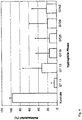
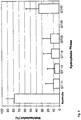
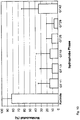
- the control plants were intensively colonized with mildew. There was 66% leaf infestation after 7 days and 97% leaf infestation after 14 days FIGS. 2 to 5 demonstrate.
- For a leaf segment test 7 cm long leaf segments starting from the culm base were cut off and 15 leaves each of the youngest and second youngest leaves were placed on benzimidazol agar in square Petri dishes (10 x 10 cm). To this was added 0.5% agar agar with 40 ppm added benzimidazole after autoclaving.
- the concentration of preparations for foliar application on whole plants was adjusted to 1000 ppm.
- the evaluation of the mildew effect was carried out after 7 and 14 days by evaluating the mildew pustules per leaf on 5 cm leaf length.
- the tested rhubarb extracts showed a remarkable activity against mildew, in both protective and curative applications.
- Chancellor wheat plants 3 plants per vessel, were cultivated in Fruhstorfer Erde for three weeks. At the end of 7 hours after application of the whole plants with the test products, 7 cm long leaf segments starting from the culm base were cut off and 15 leaves each of the youngest and second youngest leaves were mounted on benzimidazol agar in 10x10 cm square Petri dishes. To this was added 0.5% agar agar with 40 ppm added benzimidazole after autoclaving. The inoculation of the leaves was carried out by spraying the leaves by means of a membrane pump with fresh uredospores of the wheat brown rust Puccinia triticina. The incubation period was 10 days.
- the concentration of preparations for foliar application on whole plants was adjusted to 1000 ppm.
- the evaluation was carried out by evaluating the rust pustules per leaf on 5 cm blade length.
- the Fig. 11 shows the effect of rhubarb extracts GT 2 and GT 19 (hydrophobic phase) on the infection of chancre wheat with wheat brown rust (Puccinia triticina) 10 days after inoculation.
- the control plants were intensively colonized with brown rust.
- all tested rhubarb root extracts showed a marked activity against wheat brown rust, such as Fig. 11 shows.
- the Fig. 12 shows the effect of rhubarb root extract GT 2 (hydrophobic Phase) against the powdery mildew ( Oidium ) in vines (grape infestation) in the basic application amounts of 375 and 750 g / 10,000 m 2 .
- the fungus disease "powdery mildew” (Oidium) represents the world's most economically important grapevine disease.
- the Ascomycet attacks all European vines, with varieties such as Chardonnay, Kerner, Scheurebe, Muller-Thurgau, Chenin Blanc, Cabernet Franc, St. Laurent, Trollinger and Portuguese are particularly vulnerable.
- the application of the preparations took place at a time interval of 10 days, beginning with the BBCH development stage 50 and ending with the final injection to the BBCH development stage 81 of the vines.
- the application was carried out with a pneumatic application device for room cultures. Teejet flat jet nozzles were used for the application.
- the basic application amount for GT 2 (hydrophobic phase) was 375 or 750 g / 10,000 m 2 .
- the application was carried out in combination with the orange oil Prev_B2 frequently used in organic viticulture as an additive for better wetting of the leaves.
- the solo application of orange oil Prev_B2 has no effect against Oidium.
- a net sulfur preparation was applied at the approved application rate.
- the fungi were cultured on V8 agar plates at 25 ° C in the incubator in the dark.
- the overgrown mushroom mycelium was removed with a cork borer (5 mm diameter) at the agar plate edge of an actively growing fungal culture and placed in the center on a V8 agar plate with a seed needle under sterile conditions, which had final concentrations of 0.100 when poured into the Petri dishes , 250, 500 and 1000 ppm of rhubarb root extract were admixed.
- the fungal growth was scored at 7-day intervals by measuring fungal growth on the agar plates.
- Table 1 shows the effect of rhubarb root extract GT 2 (hydrophobic phase) against various phytopathogenic fungi in the agar diffusion test.
- Table 1 Growth as a percentage of control PG Pathogenic 100 ppm 250 ppm 500 ppm 1000 ppm 1 Thielaviopsis basicola (BK18) 74 43 48 30 2 Phytophthora capsici (V8) 56 17 0 0 3 Fusarium graminearum (WT 1003) 79 53 37 26 4 Bipolaris sorokiniana (JB2) 74 43 48 0 5 Rhizoctonia solani 512 (AG 2) 25 25 13 0
- the isolated polyphenolic extracts were characterized by HPLC with diode array detection or by coupling HPLC with mass spectrometry (negative ionization in electrospray ionization mode).
- Fig. 13 For example, for the GT 19, such a chromatographic separation of the hydrophobic phase is shown.
- Table 2 shows the polyphenolic substances found sorted according to substance classes by way of example for the hydrophobic phases of GT 2, GT 19 and GT 25.
- Table 2 material class GT 2 GT 19 GT 25th Flavan-3-ols catechin catechin catechin epicatechin epicatechin epicatechin epicatechin epicatechin ProcyanidinB1 ProcyanidinB2 ProcyanidinB2 ProcyanidinB2 Oligomeric proanthocyanidins Dimeric procyanidin, galloylated Precursors of hydrolyzable tannins Monogalloylglucose Monogalloylglucose Monogalloylglucose Monogalloylglucose Digalloylglucose Digalloylglucose stilbenes rhaponticin rhaponticin rhaponticin Rhaponticin, galloylated Rhaponticin, galloylated rhapontigenin deoxyrhaponticin deoxyrhaponticin Rh
Landscapes
- Health & Medical Sciences (AREA)
- Life Sciences & Earth Sciences (AREA)
- General Health & Medical Sciences (AREA)
- Engineering & Computer Science (AREA)
- Mycology (AREA)
- Biotechnology (AREA)
- Agronomy & Crop Science (AREA)
- Microbiology (AREA)
- Natural Medicines & Medicinal Plants (AREA)
- Plant Pathology (AREA)
- Dentistry (AREA)
- Wood Science & Technology (AREA)
- Zoology (AREA)
- Environmental Sciences (AREA)
- Agricultural Chemicals And Associated Chemicals (AREA)
- Compounds Of Unknown Constitution (AREA)
Claims (16)
- Utilisation d'une formulation antifongique pour lutter contre des maladies cryptogamiques des plantes, dans laquelle un ou plusieurs champignons phytopathogènes font partie des champignons phytopathogènes à combattre et la formulation antifongique contient au moins des substances actives ou des compositions de substances actives d'extraits polyphénoliques des racines d'espèces de rhéum, ne contenant pas d'anthraquinone ou de dérivés d'anthraquinone, dans laquelle ces substances actives ou ces compositions de substances actives peuvent être obtenues par un procédé comprenant les étapes de procédé suivantes:a) extraction effectuée en continu ou par lots, en une ou plusieurs étapes, des racines nettoyées et réduites ou broyées, dans lequel on utilise les racines à l'état non séché ou séché, au moyen d'un solvant alcoolique;b) élimination précautionneusement du solvant alcoolique à pression réduite et à des températures de 50°C au maximum avec addition d'eau, dans lequel on précipite des substances associées lipophiles hors de la phase aqueuse formée par refroidissement à une température de 2 à 8°C et on les élimine par filtration ou centrifugation et on élimine d'autres substances associées lipophiles ensuite par agitation de la phase liquide avec de l'éther de pétrole ou on sépare des substances associées lipophiles hors de la phase aqueuse formée au moyen de procédés chromatographiques liquide-liquide;c) séparation extractive de l'extrait aqueux obtenu sous b) avec utilisation d'un solvant organique du groupe des esters en une phase hydrophile et une phase hydrophobe; etd) obtention d'extraits des deux phases d'extraits de l'étape de procédé c), dans les étapes partielles suivantes:d1) on effectue une séparation chromatographique sur colonne au Sephadex LH-20 de la phase d'extrait hydrophobe ou de la phase d'extrait hydrophile, dans lequel on utilise comme agents d'élution les uns après les autres différents alcools et un mélange de solvants de la série des alcanones et d'eau, et ensuited2) on rassemble les fractions obtenues à partir de la phase hydrophobe ou de la phase hydrophile ayant respectivement le même spectre d'ingrédients en fractions de substances actives, puisd3) on opère une sélection de fractions de substances actives individuelles pour leur utilisation après avoir effectué une vérification de l'efficacité des fractions de substances actives en ce qui concerne leur efficacité de protection et/ou de traitement contre des champignons phytopathogènes.
- Utilisation d'une formulation antifongique selon la revendication 1, caractérisée en ce que l'on utilise à l'étape de procédé a) les racines sous forme séchée et moulue.
- Utilisation d'une formulation antifongique selon la revendication 1 ou 2, caractérisée en ce que l'on effectue l'extraction à l'étape de procédé a) en une à cent étapes.
- Utilisation d'une formulation antifongique selon la revendication 3, caractérisée en ce que l'on effectue l'extraction à l'étape de procédé a) en deux à six étapes.
- Utilisation d'une formulation antifongique selon l'une quelconque des revendications 1 à 4, caractérisée en ce que l'on exécute l'étape de procédé b) avec emploi d'un gaz de protection pour la réduction de processus oxydants.
- Utilisation d'une formulation antifongique selon la revendication 5, caractérisée en ce que l'on utilise un gaz de protection chimiquement inerte, de préférence de l'azote.
- Utilisation d'une formulation antifongique selon l'une quelconque des revendications 1 à 6, caractérisée en ce que l'on utilise comme solvant organique du groupe des esters à l'étape de procédé c) de l'ester éthylique de l'acide acétique.
- Utilisation d'une formulation antifongique selon l'une quelconque des revendications 1 à 7, caractérisée en ce que l'on utilise comme alcools dans l'étape de procédé d1) du méthanol, de l'éthanol, du propanol ou du butanol et comme solvant de la série des alcanones du propanone, du butanone ou du pentanone.
- Utilisation d'une formulation antifongique selon l'une quelconque des revendications 1 à 8, caractérisée en ce que l'on peut utiliser les espèces de rhéum suivantes: rheum rhaponticum L., rheum officinale Baill. sp., rheum palmatum L., rheum altaicum LOSINSK., rheum rhabarberum L., rheum undulatum L., rheum alexandrae VEITCH., rheum wittrockii LUNDSTR., rheum maximowiczii LOSINSK., rheum leucorrhizum PALL., rheum tanguticum Maxim., rheum nobile Hook et. Thomson, rheum alexandrae Batalin, rheum tibeticum, rheum palaestinum, rheum australe, rheum collinianum, rheum compactum, rheum delavayi, rheum franzenbachii, rheum moorcroftianum, rheum nanum, rheum ribes, rheum
robertianum, rheum rupestre, rheum songaricum, rheum spiciforme, rheum tataricum, rheum tetragonopos, rheum turcestanicum et rheum webbianum. - Utilisation d'une formulation antifongique selon l'une quelconque des revendications 1 à 9, caractérisée en ce que l'on utilise un matériau génétiquement unitaire.
- Utilisation d'une formulation antifongique selon l'une quelconque des revendications 1 à 10, contenant respectivement comme co-formulation au moins une substance active provenant de l'extrait polyphénolique ainsi qu'un ou plusieurs antagoniste(s) biologique(s) pour le contrôle de virus, de bactéries, de nématodes, de champignons, d'insectes ou de mauvaises herbes.
- Utilisation d'une formulation antifongique selon la revendication 11, caractérisée en ce qu'elle contient un ou plusieurs antagoniste(s) biologique(s) du groupe Bacillus thuringiensis, Bacillus subtilus, Verticillium lecanii, Autographica california NPV, Beauvaria bassicana, Metarhizium anisopliae, Pseudomonas fluorescens et Streptomyces griseoviridis, Trichoderma harzianum.
- Utilisation d'une formulation antifongique selon l'une quelconque des revendications 1 à 12, contenant respectivement comme co-formulation au moins une substance active provenant de l'extrait polyphénolique et un agent chimique, qui induit une résistance acquise de façon systémique dans des plantes, en d'autres termes donc une substance active, qui est caractérisée par la modulation de la biosynthèse de l'acide salicylique ainsi que par l'induction de gènes liés à la pathogénèse (PR) et contribue ainsi à la résistance acquise de façon systémique dans les plantes (SAR) contre des maladies des plantes, en particulier l'acide 2,6-dichloro-isonicotinique (DCINA) ou l'ester méthylique de l'acide benzo(1,2,3)-thiadiazoles carbothionique (BTH).
- Utilisation d'une formulation antifongique selon l'une quelconque des revendications 1 à 12, contenant respectivement comme co-formulation au moins une substance active provenant de l'extrait polyphénolique et des rhizobactéries non pathogènes ou des mycorhizes symbiotiques, qui induisent dans les plantes une résistance systémique (induced systemic résistance = ISR), en d'autres termes contiennent des microorganismes, qui contribuent à la résistance induite dans la plante contre des maladies des plantes par la modulation de la biosynthèse du jasmonate.
- Utilisation d'une formulation antifongique selon l'une quelconque des revendications 1 à 14, contenant respectivement comme co-formulation au moins une substance active provenant de l'extrait polyphénolique et un adjuvant ou plusieurs adjuvants pour l'amélioration de l'action et de la résistance à la pluie.
- Utilisation d'une formulation antifongique selon l'une quelconque des revendications 1 à 15, caractérisée en ce que lesdits un ou plusieurs champignons phytopathogènes comprennent Blumeria graminis f. sp. hordei; Erysiphe spec.; maladies de la rouille, en particulier Puccinia graminis, Puccinia triticina, Puccinia striiformis, Phakopsora spec., Hemiléia vastatrix, Uromyces dianthi; Oïdium; Septoria; Fusarium, en particulier Fusarium solani complex, Fusarium oxysporum, Fusarium verticillioides, Fusarium proliferatum, Fusarium culmorum, Fusarium graminearum; Rhizoctonia, en particulier Rhizoctonia solani-complex; Alternaria; Helminthosporium; Bipolaris, en particulier Bipolaris sorokiniana; Thielaviopsis; Botrytis; Phytophthora, en particulier Phytophthora capsici, Phytophthora infestans; Fusarium, en particulier Fusarium spec.; Venturia, en particulier Venturia inaequalis; Plasmopora, en particulier Plasmopora viticola; ou Perenospora.
Applications Claiming Priority (2)
| Application Number | Priority Date | Filing Date | Title |
|---|---|---|---|
| DE102012001867A DE102012001867A1 (de) | 2012-01-24 | 2012-01-24 | Antifungale Formulierungen zur Bekämpfung von Pflanzenkrankheiten |
| PCT/DE2013/000031 WO2013110258A1 (fr) | 2012-01-24 | 2013-01-17 | Formulations antifongiques utilisées pour la lutte contre les maladies des plantes |
Publications (2)
| Publication Number | Publication Date |
|---|---|
| EP2806743A1 EP2806743A1 (fr) | 2014-12-03 |
| EP2806743B1 true EP2806743B1 (fr) | 2017-09-06 |
Family
ID=47789925
Family Applications (1)
| Application Number | Title | Priority Date | Filing Date |
|---|---|---|---|
| EP13707264.1A Not-in-force EP2806743B1 (fr) | 2012-01-24 | 2013-01-17 | Formulations antifongiques comprenant un extrait des racines de rheum pour le traitement des maladies de plantes |
Country Status (5)
| Country | Link |
|---|---|
| EP (1) | EP2806743B1 (fr) |
| DE (1) | DE102012001867A1 (fr) |
| ES (1) | ES2649043T3 (fr) |
| PT (1) | PT2806743T (fr) |
| WO (1) | WO2013110258A1 (fr) |
Cited By (1)
| Publication number | Priority date | Publication date | Assignee | Title |
|---|---|---|---|---|
| CN108293480A (zh) * | 2018-03-26 | 2018-07-20 | 叶志坚 | 利用生防菌剂防治番茄灰霉病的方法 |
Families Citing this family (13)
| Publication number | Priority date | Publication date | Assignee | Title |
|---|---|---|---|---|
| US9018392B1 (en) | 2014-04-22 | 2015-04-28 | Active AgriProducts Inc. | Compounds, compositions and methods for crop enhancement |
| CN104026168B (zh) * | 2014-05-28 | 2016-05-18 | 赵兰 | 一种防治草莓灰霉病的天然杀菌剂及其制备方法 |
| DE102014013302A1 (de) * | 2014-09-04 | 2016-03-10 | Hochschule Anhalt | Wirkstoffzusammensetzung zur Bekämpfung von Pflanzenkrankheiten |
| CN104541668B (zh) * | 2014-12-04 | 2016-06-22 | 浙江大学 | 一种提高烟草漂浮育苗种子发芽率和壮苗的方法 |
| CN109831959A (zh) * | 2017-09-20 | 2019-06-04 | 中国科学院西北高原生物研究所 | 一种唐古特大黄免耕生态抚育方法 |
| CN112266889B (zh) * | 2020-11-06 | 2022-02-18 | 青岛农业大学 | 枯草芽孢杆菌、食用菌采前处理制剂及其应用 |
| CN113215061B (zh) * | 2021-06-15 | 2022-12-06 | 四川农业大学 | 一种枯草芽孢杆菌scau-z8及其应用 |
| CN113519505A (zh) * | 2021-09-01 | 2021-10-22 | 宁波西敦医药包衣科技有限公司 | 环保水性交联剂生物组织保存材料及其制备方法 |
| CN115226580B (zh) * | 2022-06-16 | 2023-08-15 | 河北工业大学 | 一种防治小麦纹枯病生物源方法及应用 |
| CN115088733A (zh) * | 2022-06-29 | 2022-09-23 | 福建百果壹号农业发展有限公司 | 一种基于植入印度梨形孢提高百香果抗寒性的方法 |
| CN117044627B (zh) * | 2023-10-11 | 2023-12-15 | 中国科学院昆明植物研究所 | 一种高山植物塔黄的组培快繁及离体保存方法 |
| WO2026006571A1 (fr) * | 2024-06-28 | 2026-01-02 | Vegamour, Inc. | Compositions pour le traitement des cheveux avec de la rhapontigénine et ses dérivés |
| CN119257127A (zh) * | 2024-10-17 | 2025-01-07 | 山东农业大学 | 一种抑制番茄茎基腐病的中草药大黄制剂及其使用方法 |
Family Cites Families (9)
| Publication number | Priority date | Publication date | Assignee | Title |
|---|---|---|---|---|
| DE484489C (de) | 1923-04-03 | 1929-10-21 | Walter Ilisch | Verfahren zur Bekaempfung von Pflanzenschaedlingen |
| DE4411895A1 (de) | 1994-04-07 | 1995-05-24 | Basf Ag | Verfahren zur Bekämpfung von Pilzen mit Rheum rhabarbarum und Solidago canadensis |
| KR100552997B1 (ko) * | 2004-01-09 | 2006-02-16 | 최용표 | 대황 추출물 함유 생물농약제제 및 항곰팡이제 |
| DE102006015574A1 (de) | 2006-04-03 | 2007-10-04 | Esa Patentverwertungsagentur Sachsen-Anhalt Gmbh | Wirkstofffraktionen für Formulierungen zur Therapie und Prävention von entzündlichen Erkrankungen |
| DE102006015573A1 (de) * | 2006-04-03 | 2007-10-04 | Esa Patentverwertungsagentur Sachsen-Anhalt Gmbh | Wirkstofffraktionen mit hoher antiviraler Aktivität |
| DE102006015575A1 (de) * | 2006-04-03 | 2007-10-04 | Hochschule Anhalt (Fh) | Antioxidative Wirkstofffraktionen für kosmetische Formulierungen |
| KR20100048351A (ko) * | 2008-10-31 | 2010-05-11 | 주식회사 아이지에스 | 식물병해 방제 활성을 갖는 종대황 추출물 |
| AR077432A1 (es) * | 2009-07-30 | 2011-08-24 | Marrone Bio Innovations | Combinaciones de inhibidor de patogenos de planta y metodos de uso |
| ES2848156T3 (es) | 2009-09-03 | 2021-08-05 | Fbsciences Holdings Inc | Composiciones y métodos de tratamiento de semillas |
-
2012
- 2012-01-24 DE DE102012001867A patent/DE102012001867A1/de not_active Withdrawn
-
2013
- 2013-01-17 EP EP13707264.1A patent/EP2806743B1/fr not_active Not-in-force
- 2013-01-17 WO PCT/DE2013/000031 patent/WO2013110258A1/fr not_active Ceased
- 2013-01-17 ES ES13707264.1T patent/ES2649043T3/es active Active
- 2013-01-17 PT PT137072641T patent/PT2806743T/pt unknown
Non-Patent Citations (1)
| Title |
|---|
| None * |
Cited By (1)
| Publication number | Priority date | Publication date | Assignee | Title |
|---|---|---|---|---|
| CN108293480A (zh) * | 2018-03-26 | 2018-07-20 | 叶志坚 | 利用生防菌剂防治番茄灰霉病的方法 |
Also Published As
| Publication number | Publication date |
|---|---|
| WO2013110258A1 (fr) | 2013-08-01 |
| EP2806743A1 (fr) | 2014-12-03 |
| DE102012001867A1 (de) | 2013-07-25 |
| ES2649043T3 (es) | 2018-01-09 |
| PT2806743T (pt) | 2017-11-28 |
Similar Documents
| Publication | Publication Date | Title |
|---|---|---|
| DE102012001867A1 (de) | Antifungale Formulierungen zur Bekämpfung von Pflanzenkrankheiten | |
| Ahmadu et al. | Antifungal efficacy of Moringa oleifera leaf and seed extracts against Botrytis cinerea causing gray mold disease of tomato (Solanum lycopersicum L.) | |
| de Rodríguez et al. | Antifungal activity in vitro of Rhus muelleri against Fusarium oxysporum f. sp. lycopersici | |
| Eloff et al. | Solvent-solvent fractionation can increase the antifungal activity of a Melianthus comosus (Melianthaceae) acetone leaf extract to yield a potentially useful commercial antifungal product | |
| Meela et al. | Acetone leaf extracts of seven invasive weeds have promising activity against eight important plant fungal pathogens | |
| US9456610B2 (en) | Plant extracts for use as phytochemicals | |
| Sheeba et al. | Bioactive compounds and antimicrobial activity of fungal crude extract from medicinal plants | |
| Uthpala et al. | Evaluation of antimicrobial potential and phytochemicals in Acmella (A. oleracea) flower pod extracts subjected to different drying techniques | |
| Khurshid et al. | Antifungal activity of aerial parts of Cenchrus pennisetiformis against Fusarium oxysporum f. sp. lycopersici | |
| Leontopoulos et al. | Antifungal activity of Azadirachta indica aqueous and non-aqueous extracts on Colletotrichum gloeosporioides, Botryodiplodia theobromae and Fusarium solani. A first approach | |
| Fu et al. | Isolation, purification and identification of the active compound of turmeric and its potential application to control cucumber powdery mildew | |
| KR101837622B1 (ko) | 빌레나무 추출물을 유효성분으로 함유하는 식물병 방제용 조성물 및 이를 이용한 식물병 방제방법 | |
| Aboh et al. | Preliminary studies on Luffa cylindrica: Comparative phytochemical and antimicrobial screening of the fresh and dried aerial parts | |
| Omoniyi et al. | Efficacy of three selected botanicals in the control of Botrytis cinerea associated with damping off in Citrullus lanatus (Thunb.) Matsum and Nakai | |
| Muthuraj et al. | Pharmacognostical, phytochemical and pharmacological review on Casuarina equisetifolia Linn | |
| Agrawal et al. | Insecticidal and Antimicrobial Activity of Ethanolic Extract of Lantana camara and GC-MS Analysis | |
| Bamidele | Antifungal potency of Aframomum melegueta (alligator pepper) seed extracts on postharvest rot fungi of two citrus species | |
| Ikhwan | Analysis of Metabolites from Purple Cleome Extract (Cleome rutidosperma Linn.) as Potential Organic Fungicides | |
| KR102135166B1 (ko) | 항균제 조성물 및 호두나무탄저병균의 생장 억제 효과가 우수한 은사시나무 추출물의 제조방법 | |
| Nurhidayat et al. | Isolation and Identification of Endophytic Fungi Associated with Indonesian Sesbania grandiflora Plant | |
| Kumar et al. | Comparative evaluation of in vitro antibacterial activity of several extracts of Achyranthes aspera, Azolla pinnata, Cissus quadrangularis and Tinospora cordifolia | |
| Oladele et al. | Activities of leaf extracts of cashew (Anacardium occidentale L.) and pawpaw (Carica papaya L.) against mycelia growth of Aspergillus species obtained from decayed cashew fruits | |
| Qureshi et al. | Isolation and identification of endophytic fungi inhabiting Azadirachta indica A juss from different regions of Jabalpur (MP) India | |
| KR102339423B1 (ko) | 은행나무 꽃 추출물을 유효성분으로 포함하는 항진균 조성물 | |
| Tauseef et al. | Antifungal Potential of Leaves and Barks of Azadirachta indica: Antifungal Potential of Neem Tree |
Legal Events
| Date | Code | Title | Description |
|---|---|---|---|
| PUAI | Public reference made under article 153(3) epc to a published international application that has entered the european phase |
Free format text: ORIGINAL CODE: 0009012 |
|
| 17P | Request for examination filed |
Effective date: 20140812 |
|
| AK | Designated contracting states |
Kind code of ref document: A1 Designated state(s): AL AT BE BG CH CY CZ DE DK EE ES FI FR GB GR HR HU IE IS IT LI LT LU LV MC MK MT NL NO PL PT RO RS SE SI SK SM TR |
|
| DAX | Request for extension of the european patent (deleted) | ||
| 17Q | First examination report despatched |
Effective date: 20151126 |
|
| REG | Reference to a national code |
Ref country code: DE Ref legal event code: R079 Ref document number: 502013008273 Country of ref document: DE Free format text: PREVIOUS MAIN CLASS: A01N0065300000 Ipc: A01N0065000000 |
|
| RIC1 | Information provided on ipc code assigned before grant |
Ipc: A01N 65/00 20090101AFI20170202BHEP Ipc: A01N 65/30 20090101ALI20170202BHEP Ipc: A01P 3/00 20060101ALI20170202BHEP |
|
| GRAP | Despatch of communication of intention to grant a patent |
Free format text: ORIGINAL CODE: EPIDOSNIGR1 |
|
| INTG | Intention to grant announced |
Effective date: 20170314 |
|
| GRAS | Grant fee paid |
Free format text: ORIGINAL CODE: EPIDOSNIGR3 |
|
| GRAA | (expected) grant |
Free format text: ORIGINAL CODE: 0009210 |
|
| AK | Designated contracting states |
Kind code of ref document: B1 Designated state(s): AL AT BE BG CH CY CZ DE DK EE ES FI FR GB GR HR HU IE IS IT LI LT LU LV MC MK MT NL NO PL PT RO RS SE SI SK SM TR |
|
| REG | Reference to a national code |
Ref country code: GB Ref legal event code: FG4D Free format text: NOT ENGLISH |
|
| REG | Reference to a national code |
Ref country code: CH Ref legal event code: EP Ref country code: AT Ref legal event code: REF Ref document number: 924879 Country of ref document: AT Kind code of ref document: T Effective date: 20170915 |
|
| REG | Reference to a national code |
Ref country code: IE Ref legal event code: FG4D Free format text: LANGUAGE OF EP DOCUMENT: GERMAN |
|
| REG | Reference to a national code |
Ref country code: DE Ref legal event code: R096 Ref document number: 502013008273 Country of ref document: DE |
|
| REG | Reference to a national code |
Ref country code: PT Ref legal event code: SC4A Ref document number: 2806743 Country of ref document: PT Date of ref document: 20171128 Kind code of ref document: T Free format text: AVAILABILITY OF NATIONAL TRANSLATION Effective date: 20171121 |
|
| REG | Reference to a national code |
Ref country code: ES Ref legal event code: FG2A Ref document number: 2649043 Country of ref document: ES Kind code of ref document: T3 Effective date: 20180109 |
|
| REG | Reference to a national code |
Ref country code: NL Ref legal event code: MP Effective date: 20170906 |
|
| REG | Reference to a national code |
Ref country code: FR Ref legal event code: PLFP Year of fee payment: 6 |
|
| REG | Reference to a national code |
Ref country code: LT Ref legal event code: MG4D |
|
| PG25 | Lapsed in a contracting state [announced via postgrant information from national office to epo] |
Ref country code: FI Free format text: LAPSE BECAUSE OF FAILURE TO SUBMIT A TRANSLATION OF THE DESCRIPTION OR TO PAY THE FEE WITHIN THE PRESCRIBED TIME-LIMIT Effective date: 20170906 Ref country code: HR Free format text: LAPSE BECAUSE OF FAILURE TO SUBMIT A TRANSLATION OF THE DESCRIPTION OR TO PAY THE FEE WITHIN THE PRESCRIBED TIME-LIMIT Effective date: 20170906 Ref country code: NO Free format text: LAPSE BECAUSE OF FAILURE TO SUBMIT A TRANSLATION OF THE DESCRIPTION OR TO PAY THE FEE WITHIN THE PRESCRIBED TIME-LIMIT Effective date: 20171206 Ref country code: SE Free format text: LAPSE BECAUSE OF FAILURE TO SUBMIT A TRANSLATION OF THE DESCRIPTION OR TO PAY THE FEE WITHIN THE PRESCRIBED TIME-LIMIT Effective date: 20170906 Ref country code: LT Free format text: LAPSE BECAUSE OF FAILURE TO SUBMIT A TRANSLATION OF THE DESCRIPTION OR TO PAY THE FEE WITHIN THE PRESCRIBED TIME-LIMIT Effective date: 20170906 |
|
| PG25 | Lapsed in a contracting state [announced via postgrant information from national office to epo] |
Ref country code: RS Free format text: LAPSE BECAUSE OF FAILURE TO SUBMIT A TRANSLATION OF THE DESCRIPTION OR TO PAY THE FEE WITHIN THE PRESCRIBED TIME-LIMIT Effective date: 20170906 Ref country code: GR Free format text: LAPSE BECAUSE OF FAILURE TO SUBMIT A TRANSLATION OF THE DESCRIPTION OR TO PAY THE FEE WITHIN THE PRESCRIBED TIME-LIMIT Effective date: 20171207 Ref country code: LV Free format text: LAPSE BECAUSE OF FAILURE TO SUBMIT A TRANSLATION OF THE DESCRIPTION OR TO PAY THE FEE WITHIN THE PRESCRIBED TIME-LIMIT Effective date: 20170906 Ref country code: BG Free format text: LAPSE BECAUSE OF FAILURE TO SUBMIT A TRANSLATION OF THE DESCRIPTION OR TO PAY THE FEE WITHIN THE PRESCRIBED TIME-LIMIT Effective date: 20171206 |
|
| PG25 | Lapsed in a contracting state [announced via postgrant information from national office to epo] |
Ref country code: NL Free format text: LAPSE BECAUSE OF FAILURE TO SUBMIT A TRANSLATION OF THE DESCRIPTION OR TO PAY THE FEE WITHIN THE PRESCRIBED TIME-LIMIT Effective date: 20170906 |
|
| PG25 | Lapsed in a contracting state [announced via postgrant information from national office to epo] |
Ref country code: RO Free format text: LAPSE BECAUSE OF FAILURE TO SUBMIT A TRANSLATION OF THE DESCRIPTION OR TO PAY THE FEE WITHIN THE PRESCRIBED TIME-LIMIT Effective date: 20170906 Ref country code: CZ Free format text: LAPSE BECAUSE OF FAILURE TO SUBMIT A TRANSLATION OF THE DESCRIPTION OR TO PAY THE FEE WITHIN THE PRESCRIBED TIME-LIMIT Effective date: 20170906 Ref country code: PL Free format text: LAPSE BECAUSE OF FAILURE TO SUBMIT A TRANSLATION OF THE DESCRIPTION OR TO PAY THE FEE WITHIN THE PRESCRIBED TIME-LIMIT Effective date: 20170906 |
|
| PG25 | Lapsed in a contracting state [announced via postgrant information from national office to epo] |
Ref country code: EE Free format text: LAPSE BECAUSE OF FAILURE TO SUBMIT A TRANSLATION OF THE DESCRIPTION OR TO PAY THE FEE WITHIN THE PRESCRIBED TIME-LIMIT Effective date: 20170906 Ref country code: SK Free format text: LAPSE BECAUSE OF FAILURE TO SUBMIT A TRANSLATION OF THE DESCRIPTION OR TO PAY THE FEE WITHIN THE PRESCRIBED TIME-LIMIT Effective date: 20170906 Ref country code: IS Free format text: LAPSE BECAUSE OF FAILURE TO SUBMIT A TRANSLATION OF THE DESCRIPTION OR TO PAY THE FEE WITHIN THE PRESCRIBED TIME-LIMIT Effective date: 20180106 Ref country code: SM Free format text: LAPSE BECAUSE OF FAILURE TO SUBMIT A TRANSLATION OF THE DESCRIPTION OR TO PAY THE FEE WITHIN THE PRESCRIBED TIME-LIMIT Effective date: 20170906 |
|
| REG | Reference to a national code |
Ref country code: DE Ref legal event code: R097 Ref document number: 502013008273 Country of ref document: DE |
|
| PLBE | No opposition filed within time limit |
Free format text: ORIGINAL CODE: 0009261 |
|
| STAA | Information on the status of an ep patent application or granted ep patent |
Free format text: STATUS: NO OPPOSITION FILED WITHIN TIME LIMIT |
|
| PG25 | Lapsed in a contracting state [announced via postgrant information from national office to epo] |
Ref country code: DK Free format text: LAPSE BECAUSE OF FAILURE TO SUBMIT A TRANSLATION OF THE DESCRIPTION OR TO PAY THE FEE WITHIN THE PRESCRIBED TIME-LIMIT Effective date: 20170906 |
|
| 26N | No opposition filed |
Effective date: 20180607 |
|
| PG25 | Lapsed in a contracting state [announced via postgrant information from national office to epo] |
Ref country code: SI Free format text: LAPSE BECAUSE OF FAILURE TO SUBMIT A TRANSLATION OF THE DESCRIPTION OR TO PAY THE FEE WITHIN THE PRESCRIBED TIME-LIMIT Effective date: 20170906 |
|
| REG | Reference to a national code |
Ref country code: CH Ref legal event code: PL |
|
| PG25 | Lapsed in a contracting state [announced via postgrant information from national office to epo] |
Ref country code: MT Free format text: LAPSE BECAUSE OF FAILURE TO SUBMIT A TRANSLATION OF THE DESCRIPTION OR TO PAY THE FEE WITHIN THE PRESCRIBED TIME-LIMIT Effective date: 20170906 |
|
| PG25 | Lapsed in a contracting state [announced via postgrant information from national office to epo] |
Ref country code: LU Free format text: LAPSE BECAUSE OF NON-PAYMENT OF DUE FEES Effective date: 20180117 |
|
| REG | Reference to a national code |
Ref country code: IE Ref legal event code: MM4A |
|
| REG | Reference to a national code |
Ref country code: BE Ref legal event code: MM Effective date: 20180131 |
|
| PG25 | Lapsed in a contracting state [announced via postgrant information from national office to epo] |
Ref country code: BE Free format text: LAPSE BECAUSE OF NON-PAYMENT OF DUE FEES Effective date: 20180131 Ref country code: LI Free format text: LAPSE BECAUSE OF NON-PAYMENT OF DUE FEES Effective date: 20180131 Ref country code: CH Free format text: LAPSE BECAUSE OF NON-PAYMENT OF DUE FEES Effective date: 20180131 |
|
| PG25 | Lapsed in a contracting state [announced via postgrant information from national office to epo] |
Ref country code: IE Free format text: LAPSE BECAUSE OF NON-PAYMENT OF DUE FEES Effective date: 20180117 |
|
| PG25 | Lapsed in a contracting state [announced via postgrant information from national office to epo] |
Ref country code: MC Free format text: LAPSE BECAUSE OF FAILURE TO SUBMIT A TRANSLATION OF THE DESCRIPTION OR TO PAY THE FEE WITHIN THE PRESCRIBED TIME-LIMIT Effective date: 20170906 |
|
| PG25 | Lapsed in a contracting state [announced via postgrant information from national office to epo] |
Ref country code: TR Free format text: LAPSE BECAUSE OF FAILURE TO SUBMIT A TRANSLATION OF THE DESCRIPTION OR TO PAY THE FEE WITHIN THE PRESCRIBED TIME-LIMIT Effective date: 20170906 |
|
| PG25 | Lapsed in a contracting state [announced via postgrant information from national office to epo] |
Ref country code: HU Free format text: LAPSE BECAUSE OF FAILURE TO SUBMIT A TRANSLATION OF THE DESCRIPTION OR TO PAY THE FEE WITHIN THE PRESCRIBED TIME-LIMIT; INVALID AB INITIO Effective date: 20130117 |
|
| PG25 | Lapsed in a contracting state [announced via postgrant information from national office to epo] |
Ref country code: CY Free format text: LAPSE BECAUSE OF FAILURE TO SUBMIT A TRANSLATION OF THE DESCRIPTION OR TO PAY THE FEE WITHIN THE PRESCRIBED TIME-LIMIT Effective date: 20170906 Ref country code: MK Free format text: LAPSE BECAUSE OF NON-PAYMENT OF DUE FEES Effective date: 20170906 |
|
| PG25 | Lapsed in a contracting state [announced via postgrant information from national office to epo] |
Ref country code: AL Free format text: LAPSE BECAUSE OF FAILURE TO SUBMIT A TRANSLATION OF THE DESCRIPTION OR TO PAY THE FEE WITHIN THE PRESCRIBED TIME-LIMIT Effective date: 20170906 |
|
| PGFP | Annual fee paid to national office [announced via postgrant information from national office to epo] |
Ref country code: ES Payment date: 20240216 Year of fee payment: 12 |
|
| PGFP | Annual fee paid to national office [announced via postgrant information from national office to epo] |
Ref country code: AT Payment date: 20240118 Year of fee payment: 12 |
|
| PGFP | Annual fee paid to national office [announced via postgrant information from national office to epo] |
Ref country code: DE Payment date: 20231220 Year of fee payment: 12 Ref country code: PT Payment date: 20240115 Year of fee payment: 12 Ref country code: GB Payment date: 20240124 Year of fee payment: 12 |
|
| PGFP | Annual fee paid to national office [announced via postgrant information from national office to epo] |
Ref country code: IT Payment date: 20240131 Year of fee payment: 12 Ref country code: FR Payment date: 20240124 Year of fee payment: 12 |
|
| REG | Reference to a national code |
Ref country code: DE Ref legal event code: R119 Ref document number: 502013008273 Country of ref document: DE |
|
| REG | Reference to a national code |
Ref country code: AT Ref legal event code: MM01 Ref document number: 924879 Country of ref document: AT Kind code of ref document: T Effective date: 20250117 |
|
| GBPC | Gb: european patent ceased through non-payment of renewal fee |
Effective date: 20250117 |
|
| PG25 | Lapsed in a contracting state [announced via postgrant information from national office to epo] |
Ref country code: PT Free format text: LAPSE BECAUSE OF NON-PAYMENT OF DUE FEES Effective date: 20250717 |
|
| PG25 | Lapsed in a contracting state [announced via postgrant information from national office to epo] |
Ref country code: DE Free format text: LAPSE BECAUSE OF NON-PAYMENT OF DUE FEES Effective date: 20250801 |
|
| PG25 | Lapsed in a contracting state [announced via postgrant information from national office to epo] |
Ref country code: GB Free format text: LAPSE BECAUSE OF NON-PAYMENT OF DUE FEES Effective date: 20250117 |
|
| PG25 | Lapsed in a contracting state [announced via postgrant information from national office to epo] |
Ref country code: AT Free format text: LAPSE BECAUSE OF NON-PAYMENT OF DUE FEES Effective date: 20250117 Ref country code: FR Free format text: LAPSE BECAUSE OF NON-PAYMENT OF DUE FEES Effective date: 20250131 |
|
| PG25 | Lapsed in a contracting state [announced via postgrant information from national office to epo] |
Ref country code: IT Free format text: LAPSE BECAUSE OF NON-PAYMENT OF DUE FEES Effective date: 20250117 |
|
| REG | Reference to a national code |
Ref country code: ES Ref legal event code: FD2A Effective date: 20260227 |
|
| PG25 | Lapsed in a contracting state [announced via postgrant information from national office to epo] |
Ref country code: ES Free format text: LAPSE BECAUSE OF NON-PAYMENT OF DUE FEES Effective date: 20250118 |