EP2797366B1 - Fahrzeugkommunikationsverfahren, -vorrichtung und -system - Google Patents
Fahrzeugkommunikationsverfahren, -vorrichtung und -system Download PDFInfo
- Publication number
- EP2797366B1 EP2797366B1 EP12860557.3A EP12860557A EP2797366B1 EP 2797366 B1 EP2797366 B1 EP 2797366B1 EP 12860557 A EP12860557 A EP 12860557A EP 2797366 B1 EP2797366 B1 EP 2797366B1
- Authority
- EP
- European Patent Office
- Prior art keywords
- fixed
- vehicular
- time
- vehicle
- allocated
- Prior art date
- Legal status (The legal status is an assumption and is not a legal conclusion. Google has not performed a legal analysis and makes no representation as to the accuracy of the status listed.)
- Active
Links
Images

Classifications
-
- H—ELECTRICITY
- H04—ELECTRIC COMMUNICATION TECHNIQUE
- H04W—WIRELESS COMMUNICATION NETWORKS
- H04W48/00—Access restriction; Network selection; Access point selection
- H04W48/02—Access restriction performed under specific conditions
- H04W48/04—Access restriction performed under specific conditions based on user or terminal location or mobility data, e.g. moving direction, speed
-
- H—ELECTRICITY
- H04—ELECTRIC COMMUNICATION TECHNIQUE
- H04W—WIRELESS COMMUNICATION NETWORKS
- H04W48/00—Access restriction; Network selection; Access point selection
- H04W48/16—Discovering, processing access restriction or access information
-
- H—ELECTRICITY
- H04—ELECTRIC COMMUNICATION TECHNIQUE
- H04W—WIRELESS COMMUNICATION NETWORKS
- H04W48/00—Access restriction; Network selection; Access point selection
- H04W48/20—Selecting an access point
Definitions
- the present invention relates to the field of communications, and particularly, relates to a vehicular communication method, device and system.
- a bus in a city has the characteristics of fixed lines, large passenger flow and the like.
- a solution of a wireless city is pushed in many cities nowadays, and access points of a WLAN (Wireless Local Area Network, wireless local area network) are arranged on two sides of many roads, such as a telephone booth.
- WLAN Wireless Local Area Network
- PCCW Pacific Century Cyber Works Limited, Pacific Century Cyber Works Limited
- An access device is deployed in a bus, wireless coverage in the bus is implemented by using a WLAN technology, and a base station is connected for a backhaul link by using a cellular technology.
- a user on the bus is connected to the vehicular communication access device by using the WLAN access technology to use a service such as internet browsing or the like.
- a WLAN may provide a relatively high access rate, for example, the highest wireless data rate of the WLAN 802.11n may reach 600Mbps
- a rate supported by a current cellular network (3G) is only several Mbps to more than ten Mbps compared to the WLAN technology, for example, a theoretical rate of Unicom WCDMA is 14.4Mbps.
- a communication bandwidth of a user is currently limited by a bandwidth of a backhaul link in a vehicular communication environment.
- a bandwidth obtained by each user is very small which can not support a high-speed data service, such as a multimedia service or the like, due to a narrower bandwidth of a cellular network.
- US6345186B1 discloses that when the mobile base station and the mobile cells handled thereby are stationary within a fixed cell, at least for a given time period, the mobile station is docked in said fixed cell such that handovers are allowed between the mobile cell and the fixed cell.
- US2010/142504A1 discloses that during rapid motion, it is unlikely that terminal will remain in the service area of an access point long enough to establish communications, and that the terminal may carry on communication with WLAN access points while continuing to communicate with the WiMAX base station.
- WO2010/133040A1 discloses an accessing method including that computing relative speeds between a UE and all APs, and selecting the AP on which the relative is less than the threshold value.
- the objective of embodiments of the present invention is to provide a vehicular communication method, device and system based on a wireless multi-connection in a vehicular environment, which increases the bandwidth when a user on a bus surfs the internet through a vehicular access device to support bulk data service.
- the invention is according to the appended claims.
- An example for understanding of the present invention provides a vehicular communication method, wherein the method is carried out by a vehicular communication device and includes:
- An example for understanding of the present invention further provides a vehicular communication device, including:
- An example for understanding of the present invention further provides a vehicular communication system, including a vehicular communication device and a vehicular AP which are arranged in a vehicle; wherein, the vehicular communication device is configured to:
- a fixed AP with relatively high signal strength is selected by scanning fixed APs nearby a vehicle during the running of the vehicle, and a UE in the vehicle is triggered to access a vehicular AP and the selected fixed AP with relatively high signal strength according to allocated time when an access condition is satisfied. Because the fixed AP can provide a higher data transmission rate compared to the vehicular AP, the communication bandwidth of the user in the vehicle can be increased to support bulk data service.
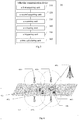
- Fig. 1 shows a typical application scenario of an embodiment of the present invention.
- multiple users are located in a mobile bus carrying a vehicular AP (Access point, access point), and the vehicular AP supports a WLAN access technology and a cellular network access technology.
- the WLAN access technology is described by taking an IEEE 802.11n technology as an example, and the cellular network access technology is described by using a WCDMA access technology as an example.
- a handheld device of the user supports IEEE 802.11n which may access the vehicular AP, and the vehicular AP communicates with a WCDMA macro base station by using the WCDMA access technology.
- the handheld device of the user supports a multi-connection, and may be simultaneously connected to multiple WALN access devices.
- a GPS on the bus may measure a position and a running speed of the bus, and the vehicular AP may use the two pieces of information.
- a running line of the bus is fixed, and many fixed APs are arranged nearby the bus line. These fixed APs may be WiFi telephone booths with a WLAN access function or other access devices supporting a cellular access function.
- the user on the bus may be connected to the fixed APs nearby the bus line based on an access device of the terminal.
- One scheduling period D is divided into 20 sub-timeslices, and the length of each sub-timeslice d is 20ms.
- an embodiment of the present invention provides a vehicular communication method based on a wireless multi-connection.
- the method is applied in the scenario shown in Fig. 1 .
- the method includes:
- Step 102 all fixed APs satisfying a condition outside the vehicle are acquired according to the current position of the vehicle, wherein the fixed AP satisfying the condition is the one, the distance from which to the current position of the vehicle is smaller than the fixed AP's own maximum transmission distance; specifically, in an embodiment, all the fixed APs satisfying the condition may be acquired in a querying manner: a fixed AP database is pre-established based on statistics of APs nearby a bus line, wherein, the database records a corresponding relationship between each position interval and all fixed APs (all the fixed APs capable of covering the current position interval), the distance from each of which to the position interval is smaller than its maximum transmission distance, and the position interval is obtained by dividing the whole bus line into a plurality of regions; and then a vehicular AP makes the current position correspond to a position interval of the bus line according to current position information acquired by a GPS on the bus, and acquires all the fixed APs satisfying the condition by querying the pre-established fixed AP database.
- a maximum transmission distance of a fixed AP is generally 50m, 100m, 150m, 200m or 300m, and is specifically determined according to transmission power and a surrounding environment of the AP. It should be understood that a maximum transmission distance of an AP is longer in an open environment without obstacles compared with an indoor environment or an environment with an obstacle. In addition, in a same environment, the higher transmission power of the AP is, the longer the maximum transmission distance of the AP is.
- the fixed APs satisfying the condition may also be obtained by summarizing historic records of fixed APs satisfying the condition previously scanned by the vehicular AP at the position interval.
- the fixed APs satisfying the condition may be detected by a signal detection device of the vehicular AP in real time.
- the signal detection device of the vehicular AP broadcasts a detection request message around and may learn that distances between which fixed AP and the current position of the vehicle is smaller than its own maximum transmission distances according to a received response signal, thus obtaining all the fixed APs satisfying the condition.
- Step 103 all the fixed APs satisfying the condition are scanned in a scheduling period; specifically, taking the scheduling period as a unit, a process of scanning the fixed APs satisfying the condition is as follows: the vehicular AP successively sends a detection request message to all the acquired fixed APs satisfying the condition, and records received response signal strength of each AP, i.e. an RSSI (Received Signal Strength Indication, received signal strength indication) value (unit: dbm); and if a response signal of a certain AP is not received, an RSSI of the AP is recorded as zero.
- RSSI Receiveived Signal Strength Indication, received signal strength indication
- Step 104 according to the scanning results, at least one fixed AP of which signal strength is greater than a preset value in all the fixed APs satisfying the condition is selected as a to-be-accessed fixed AP; in an embodiment, after all the fixed APs satisfying the condition are scanned once, an AP with a largest RSSI is selected as a to-be-accessed fixed AP; in another embodiment, after all the fixed APs satisfying the condition are scanned once, RSSI values of all the fixed APs satisfying the condition are sorted from big to small, and k (k is a positive integer) fixed APs of which RSSIs are greater than a preset value are used as to-be-accessed fixed APs.
- all the fixed APs satisfying the condition may be scanned for multiple times, such as three times, using multiple sub-timeslices in one scheduling period, an RSSI of each fixed AP in each scanning process is recorded, and a fixed AP with a maximum average RSSI value (average of three times) is used as a to-be-accessed fixed AP after three times of scanning.
- k (k is a positive integer) fixed APs with maximum average RSSI values may also be selected as to-be-accessed fixed APs.
- Step 105 when a preset access condition is satisfied, a mobile terminal in the vehicle is triggered to respectively access the vehicular AP and the to-be-accessed fixed AP in the scheduling period according to allocated time.
- the mobile terminal may be a user equipment (User Equipment, UE for short below), a mobile relay or the like; and the UE may be a mobile phone, a personal computer or the like.
- the UE is taken as an example for illustration in the embodiments of the present invention, but is not used for limiting the protection scope of the mobile terminal.
- the vehicular AP triggers the mobile terminal in the vehicle to respectively access the vehicular AP and the to-be-accessed fixed AP in the scheduling period according to the allocated time. Specifically, it is assumed that a previously selected access AP is expressed as AP best according to the scanning result.
- the vehicular AP detects and acquires measurement information of a current speed provided by a vehicular GPS.
- the vehicular AP broadcasts the device name AP best of the to-be-accessed fixed AP selected in the step 102 to a UE in the vehicle using one sub-timeslice (if multiple to-be-accessed fixed APs are selected in the step 102, the vehicular AP broadcasts a device name list AP best of the selected multiple to-be-accessed fixed APs to the UE in the vehicle).
- VL preset speed value
- the UE on the bus receives the AP best broadcasted by the vehicular AP, the UE respectively accesses the vehicular AP and the to-be-accessed fixed AP in the scheduling period according to the allocated time.
- the optimized solution is based on a dynamic planning method, in which each user may optimize and configure time to access each AP, so that time proportion of accessing each AP is not more than e i / w i , where, e i is a wired bandwidth of the AP, w i is a wireless bandwidth of the AP.
- the objective of the optimization configuration is to maximize the throughput of the user.
- the allocated time in the embodiments of the present invention indicates time allocated to the vehicular AP and time allocated to the to-be-accessed fixed AP.
- the allocated time may be preset time. For example, in one scheduling period D (400ms), the time allocated to the vehicular AP may be preset as 100ms, and the time allocated to the to-be-accessed fixed AP is 300ms.
- the allocated time may be calculated according to a preset scheduling strategy. Specifically, when there is one to-be-accessed fixed AP, it is assumed that the vehicular AP is AP c and an AP in the AP best is AP g , and a method for calculating time in which the UE is connected to the AP c and the AP g is as follows: In one scheduling period, it is assumed that the time allocated to the vehicular AP AP c is f c and the time allocated to the to-be-accessed fixed AP AP g is f g.
- ⁇ is handover time in which the UE is handed over between different APs.
- Handover time of a UE is generally about 4ms.
- RSS g is an RSSI of the AP g .
- the RSSI of the to-be-accessed fixed AP AP g may be the one recorded in the scanning process of step 102; and in another embodiment, to acquire a current RSSI of the to-be-accessed fixed AP AP g more accurately so as to formulate a more accurate scheduling solution, a UE on the bus may actively scan an AP in the AP best using one sub-timeslice to acquire a current RSSI of the AP in the AP best after receiving the AP best broadcasted by the vehicular AP, and calculates the time allocated to the vehicular AP AP c and the to-be-accessed fixed AP AP g using the RSSI.
- RSS 0 is a threshold value, and -95dbm is suggested. If the RSS g is below the RSS 0 value, it is meant that the signal of the to-be-accessed fixed AP is very weak, and is not enough to keep high-speed connection.
- ⁇ is a system parameter for controlling whether more connection time is allocated to the fixed AP, and a value between 0.5 and 2 is suggested.
- the value of the ⁇ may be determined according to the speed, namely the lower the speed is, the larger the weight ⁇ is, and when the speed is zero, namely the vehicle stops, the weight is the maximum 1; when the speed V is equal to the V L , a theoretical value of the weight ⁇ is 0, but the weight does not have a practical significance, therefore, the ⁇ may be assigned as a specific value under such a special situation, such as 0.01.
- the ⁇ may also be determined according to signal strength of a data packet currently received by the vehicular AP, and the higher the signal strength of the data packet currently received by the vehicular AP is, the larger the ⁇ is, and if the signal strength of the data packet currently received by the vehicular AP is 100%, the ⁇ is 1.
- one scheduling period is assumed as 400ms in the embodiments of the present invention
- the UE configures the time to access the vehicular AP and the to-be-accessed fixed AP according to the calculated time f c and f g in one scheduling period, and respectively accesses the vehicular AP and the to-be-accessed fixed AP in one scheduling period according to the configured time.
- the objective of allocating the time herein is that, a user allocates more time to connect the to-be-accessed fixed AP to increase the throughput when the bus is relatively close to the to-be-accessed fixed AP and the speed is relatively low; and when the bus starts running, the user starts moving away from the to-be-accessed fixed AP, the connection bandwidth with the AP declines, and the connection time with the AP is reduced at this moment, so that shorter interruption time (i.e. f c * D ) of the connection can be ensured when the user is disconnected from the AP.
- the AP best includes k (k is a positive integer and k>1) APs
- the k APs included in the AP best are successively AP g 1 , AP g 2 ,..., AP g k
- time allocated to the vehicular AP AP c is f c
- time allocated to the to-be-accessed fixed APs is f g 1 , f g 2 ,..., f g k in one scheduling period.
- the formula 2 is calculated respectively for each of the to-be-accessed fixed APs in the AP best to obtain ratios f c : f g 1 , f c : f g 2 ... f c : f gk of the time allocated to the vehicular AP to the time allocated to the to-be-accessed fixed APs, and finally, each ratio is substituted into formula (3).
- f c + ⁇ i 1 k
- f gi 1 ⁇ 2 d D ⁇ ⁇
- the time allocated to the vehicular AP AP c and the time f g 1 , f g 2 ... f gk allocated to the k to-be-accessed fixed APs AP g 1 , AP g 2 ,..., AP g k are calculated.
- the method that the vehicular AP triggers a UE in the vehicle to simultaneously connect to the vehicular AP and the to-be-accessed fixed AP according to the speed is described in detail by merely taking the speed serving as a triggering condition as an example in the embodiments of the present invention, but the speed serving as the triggering condition set no limitation to the technical solutions provided by the present invention.
- signal strength of a data packet received by the vehicular AP may be used as a triggering condition, to trigger a UE in the vehicle to respectively access the vehicular AP and the to-be-accessed fixed AP in the scheduling period according to the time.
- a device name of a to-be-accessed fixed AP previously selected according to a scanning result is expressed as AP best .
- RSS 0 preset strength value
- the UE After the UE on the bus receives the AP best broadcasted by the vehicular AP, the UE respectively accesses the vehicular AP and the to-be-accessed fixed AP in the scheduling period according to the allocated time in a multi-connection manner.
- the time in which the UE is connected with the vehicular AP and the to-be-accessed fixed AP has been illustrated previously in detail, and is not described redundantly herein.
- a fixed AP with relatively high signal strength is selected by scanning fixed APs nearby a vehicle during the running of the vehicle, and a UE in the vehicle is triggered to access a vehicular AP and the selected fixed AP with relatively high signal strength according to allocated time when an access condition is satisfied. Because the fixed AP can provide a higher data transmission rate compared to the vehicular AP, the communication bandwidth of the user in the vehicle can be increased to support bulk data service.
- an embodiment of the present invention provides a vehicular communication device, including:
- the second acquiring unit 320 acquires all the fixed APs satisfying the condition in a querying manner.
- a fixed AP database is pre-established based on statistics of the APs nearby a bus line, wherein, the database records a corresponding relationship between each position interval on the bus line and all fixed APs (all the fixed APs capable of covering the current position interval), the distance from each of which to the position interval is smaller than its maximum transmission distance, and the position interval is obtained by dividing the whole bus line into a plurality of regions; and then the second acquiring unit 320 makes the current position correspond to a position interval on the bus line according to current position information acquired by a GPS on the bus, and the second acquiring unit 320 acquires all the fixed APs satisfying the condition by querying the pre-established fixed AP database.
- a maximum transmission distance of a fixed AP is generally 50m, 100m, 150m, 200m or 300m, and is specifically determined according to transmission power and a surrounding environment of the AP. It should be understood that a maximum transmission distance of an AP is longer in an open environment without obstacles compared with an indoor environment or an environment with an obstacle. In addition, in a same environment, the higher the transmission power of the AP is, the longer the maximum transmission distance of the AP is.
- the second acquiring unit 320 may also combine historic records of fixed APs satisfying the condition previously acquired at the position interval as all the fixed APs satisfying the condition.
- the second acquiring unit 320 may also obtain the fixed APs satisfying the condition in a way of real-time detection. Specifically, a signal detection device broadcasts a detection request message around and may learn that distances between which fixed AP and the current position of the vehicle is smaller than its own maximum transmission distances according to received response signal strength, namely the current position of the vehicle is within the signal coverage area, thus obtaining all the fixed APs satisfying the condition.
- a scanning unit 330 configured to scan all the fixed APs satisfying the condition in one scheduling period.
- a scanning process by the scanning unit 330 is as follows: the scanning unit 330 successively sends a detection request message to all the fixed APs satisfying the condition acquired by the acquiring unit 330, and records a received RSSI of each fixed AP; and if a response signal of a certain AP is not received, a RSSI of the AP is recorded as zero.
- a selecting unit 340 configured to select at least one fixed AP of which signal strength is greater than a preset value in all the fixed APs satisfying the condition as a to-be-accessed fixed AP, according to a scanning result of the scanning unit.
- the selecting unit 340 selects an AP with a largest RSSI as a to-be-accessed fixed AP; in another embodiment, after the scanning unit 330 scans all the fixed APs satisfying the condition once, the selecting unit 340 may sort RSSI values of all the fixed APs satisfying the condition from big to small, and select k (k is a positive integer) fixed APs of which RSSIs are greater than a preset value as to-be-accessed fixed APs.
- the scanning unit 330 may scan all the fixed APs satisfying the condition for multiple times, such as three times, using multiple sub-timeslices in one scheduling period, and record an RSSI of each fixed AP in each scanning process.
- the selecting unit 340 selects an AP with a maximum average RSSI value (average of three times) as a to-be-accessed fixed AP after three times of scanning. It should be understood that in another embodiment, the scanning unit 330 may also select k (k>1) APs with maximum average RSSI values as to-be-accessed fixed APs.
- a triggering unit 350 configured to trigger a mobile terminal in the vehicle to respectively access a vehicular AP in the vehicle and the to-be-accessed fixed AP in the scheduling period according to allocated time, when a preset access condition is satisfied.
- the access condition is that a speed is lower than a preset value. Specifically, it is assumed that a device name of an access AP selected by the selecting unit 340 is expressed as AP best .
- the triggering unit 350 detects measurement information of a current speed provided by the GPS.
- the triggering unit 350 broadcasts the device name AP best of the to-be-accessed fixed AP selected by the selecting unit 340 to a UE in the vehicle using one sub-timeslice (if the selecting unit 340 selects multiple to-be-accessed fixed APs, a device name list AP best of the selected multiple to-be-accessed fixed APs is broadcasted to the UE in the vehicle).
- the UE on the bus receives the AP best broadcasted by the triggering unit 350, the UE respectively accesses the vehicular AP and the to-be-accessed fixed AP in the scheduling period according to the allocated time.
- the triggering unit 350 may trigger the UE in the vehicle to respectively access the vehicular AP and the to-be-accessed fixed AP in the scheduling period according to the time by taking a condition that signal strength of a data packet received by the vehicular AP is greater than a certain set strength value as an access condition. Specifically, it is assumed that a device name of the to-be-accessed fixed AP previously selected according to a scanning result is expressed as AP best . Once the vehicular AP receives a data packet, the vehicular AP measures signal strength of the data packet.
- the triggering unit 350 broadcasts the device name AP best of the to-be-accessed fixed AP selected by the selecting unit 340 to the UE in the vehicle using one sub-timeslice. After the UE on the bus receives the AP best broadcasted by the triggering unit 350, the UE respectively accesses the vehicular AP and the to-be-accessed fixed AP in the scheduling period according to the allocated time.
- the vehicular communication device provided by an embodiment of the present invention further includes: a time calculating unit 360, configured to calculate the time allocated to the vehicular AP and the time allocated to the to-be-accessed fixed AP according to a preset scheduling strategy.
- a method that the time calculating unit 360 calculates time in which the UE is connected to the AP c and the AP g is as follows.
- ⁇ is handover time in which the UE is handed over between different APs.
- Handover time of a UE is generally about 4ms.
- RSS g is an RSSI of the AP g .
- the RSSI of the to-be-accessed fixed AP AP g may be the one recorded by the scanning unit 330 in the scanning rocess; and in another embodiment, to acquire a current RSSI of the to-be-accessed fixed AP AP g more accurately so as to formulate a more accurate scheduling solution, a UE on the bus may actively scan an AP in the AP best using one sub-timeslice to acquire the current RSSI of the AP in the AP best after receiving the AP best broadcasted by the vehicular AP, and calculates the time allocated to the vehicular AP AP c and the to-be-accessed fixed AP AP g using the RSSI.
- RSS 0 is a threshold value, and -95dbm is suggested. If the RSS g is below the RSS 0 value, it is meant that the signal of the to-be-accessed fixed AP is very weak, and is not enough to keep high-speed connection.
- ⁇ is a system parameter for controlling whether more connection time is allocated to the fixed AP, and a value between 0.5 and 2 is suggested.
- the value of the ⁇ may be determined according to the speed, namely the lower the speed is, the larger the weight ⁇ is, and when the speed is zero, namely the vehicle stops, the weight is maximum 1; when the speed V is equal to the V L , a theoretical value of the weight ⁇ is 0, but the weight does not have a practical significance, therefore, the ⁇ may be assigned as a specific value under such a special situation, such as 0.01.
- the ⁇ may also be determined according to signal strength of a data packet currently received by the vehicular AP, and the higher the signal strength of the data packet currently received by the vehicular AP is, the larger the ⁇ is, and if the signal strength of the data packet currently received by the vehicular AP is 100%, the ⁇ is 1.
- one scheduling period is assumed as 400ms in the embodiments of the present invention
- the UE allocates the time to access the vehicular AP and the to-be-accessed fixed AP according to the time f c and f g calculated by the time calculating unit 360 in one scheduling period, and respectively accesses the vehicular AP and the to-be-accessed fixed AP in one scheduling period according to the allocated time.
- the objective of allocating the time herein is that, a user allocates more time to connect the to-be-accessed fixed AP to increase the throughput when the bus is relatively close to the to-be-accessed fixed AP and the speed is relatively low; and when the bus starts running, the user starts moving away from the to-be-accessed fixed AP, the connection bandwidth with the AP declines, and the connection time with the AP is reduced at this moment, so that shorter interruption time (namely f c * D ) of the connection can be ensured when the user is disconnected from the AP.
- the time calculating unit 360 calculates the formula 2 respectively for each of the to-be-accessed fixed APs in the AP best , to obtain ratios f c : f g 1 , f c : f g 2 ...
- f c f gk of the time allocated to the vehicular AP to the time allocated to the to-be-accessed fixed APs, and then calculates the time f c , f g 1 , f g 2 ... f gk allocated to the vehicular AP AP c and k to-be-accessed fixed APs Ap g 1 , AP g 2 ... AP g k in one scheduling period according to the formula 3.
- the UE respectively accesses the vehicular AP and the to-be-accessed fixed APs according to the time calculated by the time calculating unit 360.
- a fixed AP with relatively high signal strength is selected by scanning fixed APs nearby a vehicle during the running of the vehicle, and a UE in the vehicle is triggered to access a vehicular AP and the selected fixed AP with relatively high signal strength according to allocated time when an access condition is satisfied. Because the fixed AP can provide a higher data transmission rate compared to the vehicular AP, the communication bandwidth of the user in the vehicle can be increased to support bulk data service.
- an embodiment of the present invention provides a vehicular communication system, including a vehicular communication device 401 and a vehicular AP 402.
- the vehicular communication device 401 is configured to: acquire a current position of a vehicle; acquire all fixed APs satisfying a condition outside the vehicle according to the current position of the vehicle, wherein the fixed AP satisfying the condition is the one, the distance from which to the current position of the vehicle is smaller than the fixed AP's own maximum transmission distance; scan all the fixed APs satisfying the condition in a scheduling period; select at least one fixed AP of which signal strength is greater than a preset value in all the fixed APs satisfying the condition as a to-be-accessed fixed AP according to a scanning result; and trigger a mobile terminal in the vehicle to respectively access the vehicular AP 402 and the to-be-accessed fixed AP in the scheduling period according to allocated time, when a preset access condition is satisfied.
- the vehicular AP 402 supports a wireless access technology, which is described by using a WCDMA access technology as an example in the embodiment of the present invention. It is should be understood for those skilled in the art that the wireless access technology is not limited to the WCDMA, and other access manners may be adopted, such as IEEE 802.11n.
- the vehicular AP 402 is connected with the mobile terminals 411 and 412 using a WCDMA frequency band 1, and performs backhaul access using a WCDMA frequency band 2 to be connected with a micro base station 403.
- the vehicular communication device 401 scans the fixed APs 414-416 in one scheduling period, selects at least one fixed AP of which signal strength is greater than a preset value in the fixed APs as a to-be-accessed fixed AP (assuming 416 in Fig. 4 ) according to a scanning result, and triggers the mobile terminals 411 and 412 to respectively access the vehicular AP 402 and the to-be-accessed fixed AP 416 in the scheduling period according to allocated time when an access condition is satisfied.
- a fixed AP with a largest RSSI may be selected as a to-be-accessed fixed AP; or RSSI values of the fixed APs 414-416 may also be sorted from big to small, and an AP of which an RSSI is greater than a preset value is selected as a to-be-accessed fixed AP.
- VL preset speed value
- the mobile terminals 411 and 412 After the mobile terminals 411 and 412 receive the broadcast of the vehicular communication device 401, the mobile terminals 411 and 412 access respectively the vehicular AP 402 and the to-be-accessed fixed AP 416 in the scheduling period according to the allocated time.
- the allocated time has been described in detail in the step 103 of the embodiment of the present invention, which will not be described redundantly herein.
- the vehicular communication device 401 triggers the mobile terminals 411 and 412 to respectively access the vehicular AP 402 and the to-be-accessed fixed AP 416 in the scheduling period according to the allocated time by taking a condition that signal strength of a data packet received by the vehicular AP 402 is greater than a preset strength value as an access condition. Specifically, it is assumed that a device name of the to-be-accessed fixed AP previously selected according to a scanning result is expressed as AP best . Once the vehicular AP 402 receives a data packet, the vehicular AP 402 measures signal strength of the data packet.
- the vehicular communication device 401 broadcasts the device name of the selected to-be-accessed fixed AP 416 to the mobile terminals 411 and 412 in the vehicle using one sub-timeslice. After the mobile terminals 411 and 412 receives the broadcast of the vehicular communication device 401, the mobile terminals 411 and 412 respectively access the vehicular AP 402 and the to-be-accessed fixed AP 416 in the scheduling period according to the allocated time.
- the allocated time has been described in detail in the step 103 of the embodiment of the present invention, which will not be described redundantly herein.
- a fixed AP with a relatively high signal strength is selected by scanning fixed APs nearby a vehicle during the running of the vehicle, and a UE in the vehicle is triggered to access a vehicular AP and the selected fixed APs with relatively high signal strength according to allocated time when an access condition is satisfied. Because the fixed AP can provide a higher data transmission rate compared to the vehicular AP, the communication bandwidth of the user in the vehicle may be increased to support bulk data service.
Landscapes
- Engineering & Computer Science (AREA)
- Computer Security & Cryptography (AREA)
- Computer Networks & Wireless Communication (AREA)
- Signal Processing (AREA)
- Mobile Radio Communication Systems (AREA)
- Traffic Control Systems (AREA)
Claims (15)
- Fahrzeugkommunikationsverfahren, wobei das Verfahren durch eine Fahrzeugkommunikationsvorrichtung ausgeführt wird und Folgendes umfasst:Erfassen (101) einer aktuellen Position eines Fahrzeugs;Erfassen (102) aller festen Zugangspunkte, AP, die eine erste Bedingung erfüllen und sich gemäß der aktuellen Position des Fahrzeugs außerhalb des Fahrzeugs befinden, wobei die erste Bedingung ist, dass die Distanz von einem festen AP zur aktuellen Position des Fahrzeugs geringer als die eigene Maximalsendedistanz des festen AP ist;Abtasten (103), in einer Planungsperiode, aller festen APs, die die erste Bedingung erfüllen, um ein Abtastergebnis zu erfassen, das eine Signalstärke jedes aller festen APs umfasst, wobei die Planungsperiode eine Zeit, in der eine Kanalabtastung durchgeführt wird, und eine Zeit, in der verschiedene APs angebunden sind, zu planen und zuzuordnen hat;Auswählen (104), in Übereinstimmung mit dem Abtastergebnis, mindestens eines festen AP unter allen festen APs, die die erste Bedingung erfüllen, als einen festen AP, auf den zuzugreifen ist, wobei die Signalstärke des mindestens einen festen AP größer als ein vorbestimmter Wert ist;Auslösen (105), dass ein mobiles Endgerät im Fahrzeug jeweils auf einen Fahrzeug-AP im Fahrzeug und den festen AP, auf den zuzugreifen ist, in der Planungsperiode in Übereinstimmung mit der zugeordneten Zeit zugreift, die die dem Fahrzeug-AP zugeordnete Zeit und die dem festen AP, auf den zuzugreifen ist, zugeordnete Zeit anzeigt, wenn eine zweite Bedingung erfüllt ist, die eine vorbestimmte Zugriffsbedingung ist.
- Verfahren nach Anspruch 1, wobei das Verfahren nach dem Erfassen (101) der aktuellen Position des Fahrzeugs ferner umfasst: Erfassen einer Geschwindigkeit des Fahrzeugs; und die Zugriffsbedingung lautet, dass die Geschwindigkeit des Fahrzeugs geringer als ein vorbestimmter Geschwindigkeitswert ist.
- Verfahren nach Anspruch 1, wobei das Verfahren ferner umfasst: Erfassen einer Signalstärke eines vom Fahrzeug-AP im Fahrzeug empfangenen Datenpakets; und die Zugriffsbedingung lautet, dass die Signalstärke des vom Fahrzeug-AP im Fahrzeug empfangenen Datenpakets größer als ein vorbestimmter Stärkewert ist.
- Verfahren nach einem der Ansprüche 1 bis 3, wobei, bevor das mobile Endgerät im Fahrzeug jeweils auf den Fahrzeug-AP und den festen AP, auf den zuzugreifen ist, in der Planungsperiode in Übereinstimmung mit der zugeordneten Zeit zugreift, das Verfahren ferner umfasst: Berechnen der zugeordneten Zeit, die anzeigt, welche Zeit dem Fahrzeug-AP im Fahrzeug zugeordnet ist und welche Zeit dem festen AP, auf den zuzugreifen ist, zugeordnet ist, in Übereinstimmung mit einer vorbestimmten Planungsstrategie.
- Verfahren nach Anspruch 4, wobei es einen festen AP gibt, auf den zuzugreifen ist, und das Berechnen der zugeordneten Zeit, die anzeigt, welche Zeit dem Fahrzeug-AP zugeordnet ist und welche Zeit dem festen AP, auf den zuzugreifen ist, zugeordnet ist, in Übereinstimmung mit einer vorbestimmten Planungsstrategie Folgendes umfasst:Berechnen der dem Fahrzeug-AP zugeordneten Zeit und der dem festen AP, auf den zuzugreifen ist, zugeordneten Zeit in Übereinstimmung mit den Formeln fc + fg = 1 - 2d/D - ε und
 wobei D die Planungsperiode ist, d eine Länge jedes Teilzeitintervalls ist, nachdem D in eine Vielzahl von Teilzeitintervallen aufgeteilt wurde, fc die Zeit ist, die dem Fahrzeug-AP zugeordnet ist, fg die Zeit ist, die dem festen AP, auf den zuzugreifen ist, zugeordnet ist, ε eine Übergabezeit ist, in der das Endgerät zwischen verschiedenen APs übergeben wird, RSSg eine empfangene Signalstärke, RSSI, des festen AP ist, auf den zuzugreifen ist, RSSo ein festgelegter Schwellenwert der Signalstärke ist, α ein Systemparameter mit einem Wert zwischen 0,5 und 2 ist, λ ein Gewicht mit einem Wert zwischen 0 und 1 ist und das Gewicht dynamisch in Übereinstimmung mit einer Geschwindigkeit des Fahrzeugs oder einer Signalstärke eines vom Fahrzeug-AP empfangenen Datenpakets angepasst werden kann.
 - Verfahren nach Anspruch 4, wobei es eine Vielzahl von festen APs gibt, auf die zuzugreifen ist, und das Berechnen der zugeordneten Zeit, die anzeigt, welche Zeit dem Fahrzeug-AP zugeordnet ist und welche Zeit den festen APs, auf die zuzugreifen ist, zugeordnet ist, in Übereinstimmung mit einer vorbestimmten Planungsstrategie Folgendes umfasst:für jeden festen AP, auf den zuzugreifen ist, in der Vielzahl von festen APs, auf die zuzugreifen ist, Berechnen eines Zeitverhältnisses der dem Fahrzeug-AP zugeordneten Zeit und der jeweils jedem festen AP, auf den zuzugreifen ist, zugeordneten Zeit in Übereinstimmung mit einer Formel
 Berechnen der dem Fahrzeug-AP zugeordneten Zeit und der jedem festen AP, auf den zuzugreifen ist, zugeordneten Zeit in Übereinstimmung mit einer Formel fc +
 wobei D die Planungsperiode ist, d eine Länge jedes Teilzeitintervalls ist, nachdem D in eine Vielzahl von Teilzeitintervallen aufgeteilt wurde, k die Anzahl der Vielzahl von festen APs ist, auf die zuzugreifen ist, fc die Zeit ist, die dem Fahrzeug-AP zugeordnet ist, fgi die Zeit ist, die dem i-ten festen AP unter den mehreren festen APs, auf die zuzugreifen ist, zugeordnet ist, ε eine Übergabezeit ist, in der das Endgerät zwischen verschiedenen APs übergeben wird, RSSg eine empfangene Signalstärke, RSSI, des festen AP ist, auf den zuzugreifen ist, RSS 0 ein festgelegter Schwellenwert der Signalstärke ist, α ein Systemparameter mit einem Wert zwischen 0,5 und 2 ist, λ ein Gewicht mit einem Wert zwischen 0 und 1 ist und das Gewicht dynamisch in Übereinstimmung mit einer Geschwindigkeit des Fahrzeugs oder einer Signalstärke eines vom Fahrzeug-AP empfangenen Datenpakets angepasst werden kann.
 - Verfahren nach einem der Ansprüche 1 bis 6, wobei die Maximalsendedistanz 50 m, 100 m oder 200 m beträgt.
- Fahrzeugkommunikationsvorrichtung (30), umfassend:eine erste Erfassungseinheit (310), die ausgelegt ist, eine aktuelle Position eines Fahrzeugs zu erfassen;eine zweite Erfassungseinheit (320), die ausgelegt ist, alle festen APs zu erfassen, die eine erste Bedingung erfüllen und sich gemäß der aktuellen Position des Fahrzeugs außerhalb des Fahrzeugs befinden, wobei die erste Bedingung ist, dass die Distanz von einem festen AP zur aktuellen Position des Fahrzeugs geringer als die eigene Maximalsendedistanz des festen AP ist;eine Abtasteinheit (330), die ausgelegt ist, in einer Planungsperiode alle festen APs abzutasten, die die erste Bedingung erfüllen, um ein Abtastergebnis zu erfassen, das eine Signalstärke jedes aller festen APs umfasst, wobei die Planungsperiode eine Zeit, in der eine Kanalabtastung durchgeführt wird, und eine Zeit, in der verschiedene APs verbunden sind, zu planen und zuzuordnen hat;eine Auswahleinheit (340), die ausgelegt ist, in Übereinstimmung mit dem Abtastergebnis mindestens einen festen AP unter allen festen APs, die die erste Bedingung erfüllen, als einen festen AP auszuwählen, auf den zuzugreifen ist, wobei die Signalstärke des mindestens einen festen AP größer als ein vorbestimmter Wert ist;eine Auslöseeinheit (350), die ausgelegt ist, auszulösen, dass ein mobiles Endgerät im Fahrzeug jeweils auf einen Fahrzeug-AP im Fahrzeug und den festen AP, auf den zuzugreifen ist, in der Planungsperiode in Übereinstimmung mit der zugeordneten Zeit zugreift, die dem Fahrzeug-AP zugeordnete Zeit und dem festen AP, auf den zuzugreifen ist, zugeordnete Zeit anzeigt, wenn eine zweite Bedingung erfüllt ist, die eine vorbestimmte Zugriffsbedingung ist.
- Vorrichtung nach Anspruch 8, wobei das erste Erfassungsmodul ausgelegt ist, eine Geschwindigkeit des Fahrzeugs zu erfassen; und die Auslöseeinheit (350) ausgelegt ist, auszulösen, dass das mobile Endgerät im Fahrzeug jeweils auf den Fahrzeug-AP im Fahrzeug und den festen AP, auf den zuzugreifen ist, in der Planungsperiode in Übereinstimmung mit der zugeordneten Zeit zugreift, wenn die Geschwindigkeit des Fahrzeugs geringer als ein vorbestimmter Geschwindigkeitswert ist.
- Vorrichtung nach Anspruch 8, wobei das erste Erfassungsmodul ausgelegt ist, eine Signalstärke eines vom Fahrzeug-AP im Fahrzeug empfangenen Datenpakets zu erfassen; und die Auslöseeinheit (350) ausgelegt ist, auszulösen, dass das mobile Endgerät im Fahrzeug jeweils auf den Fahrzeug-AP im Fahrzeug und den festen AP, auf den zuzugreifen ist, in der Planungsperiode in Übereinstimmung mit der zugeordneten Zeit zugreift, wenn die Signalstärke des vom Fahrzeug-AP im Fahrzeug empfangenen Datenpakets größer als ein vorbestimmter Stärkewert ist.
- Vorrichtung nach einem der Ansprüche 8 bis 10, ferner umfassend:
eine Zeitberechnungseinheit (360), die ausgelegt ist, in Übereinstimmung mit einer vorbestimmten Planungsstrategie die zugeordnete Zeit zu berechnen, die anzeigt, welche Zeit dem Fahrzeug-AP zugeordnet ist und welche Zeit dem festen AP, auf den zuzugreifen ist, zugeordnet ist. - Fahrzeugkommunikationssystem, das eine Fahrzeugkommunikationsvorrichtung und einen Fahrzeugzugangspunkt, Fahrzeug-AP, umfasst, die in einem Fahrzeug angeordnet sind; wobei
die Fahrzeugkommunikationsvorrichtung ausgelegt ist:eine aktuelle Position des Fahrzeugs zu erfassen;alle festen APs zu erfassen, die eine erste Bedingung erfüllen und sich gemäß der aktuellen Position des Fahrzeugs außerhalb des Fahrzeugs befinden, wobei die erste Bedingung ist, dass die Distanz von einem festen AP zur aktuellen Position des Fahrzeugs geringer als die eigene Maximalsendedistanz des festen AP ist;in einer Planungsperiode alle festen APs abzutasten, die die erste Bedingung erfüllen, um ein Abtastergebnis zu erfassen, das eine Signalstärke jedes aller festen APs umfasst, wobei die Planungsperiode eine Zeit, in der eine Kanalabtastung durchgeführt wird, und eine Zeit, in der verschiedene APs verbunden sind, zu planen und zuzuordnen hat;in Übereinstimmung mit dem Abtastergebnis mindestens einen festen AP unter allen festen APs, die die erste Bedingung erfüllen, als einen festen AP auszuwählen, auf den zuzugreifen ist, wobei die Signalstärke des mindestens einen festen AP größer als ein vorbestimmter Wert ist;auszulösen, dass ein mobiles Endgerät im Fahrzeug jeweils auf den Fahrzeug-AP und den festen AP, auf den zuzugreifen ist, in der Planungsperiode in Übereinstimmung mit der zugeordneten Zeit zugreift, die dem Fahrzeug-AP zugeordnete Zeit und dem festen AP, auf den zuzugreifen ist, zugeordnete Zeit anzeigt, wenn eine zweite Bedingung erfüllt ist, die eine vorbestimmte Zugriffsbedingung ist. - System nach Anspruch 12, wobei die Fahrzeugkommunikationsvorrichtung ausgelegt ist, eine Geschwindigkeit des Fahrzeugs zu erfassen; und die Zugriffsbedingung lautet, dass die Geschwindigkeit des Fahrzeugs geringer als ein vorbestimmter Geschwindigkeitswert ist.
- System nach Anspruch 12, wobei die Fahrzeugkommunikationsvorrichtung ausgelegt ist, eine Signalstärke eines vom Fahrzeug-AP im Fahrzeug empfangenen Datenpakets zu erfassen; und die Zugriffsbedingung lautet, dass die Signalstärke des vom Fahrzeug-AP empfangenen Datenpakets größer als ein vorbestimmter Stärkewert ist.
- System nach einem der Ansprüche 12 bis 14, wobei, bevor ausgelöst wird, dass das mobile Endgerät im Fahrzeug jeweils auf den Fahrzeug-AP und den festen AP, auf den zuzugreifen ist, in der Planungsperiode in Übereinstimmung mit der zugeordneten Zeit zugreift, die Fahrzeugkommunikationsvorrichtung ausgelegt ist, in Übereinstimmung mit einer vorbestimmten Planungsstrategie die zugeordnete Zeit zu berechnen, die anzeigt, welche Zeit dem Fahrzeug-AP im Fahrzeug zugeordnet ist und welche Zeit dem festen AP, auf den zuzugreifen ist, zugeordnet ist.
Applications Claiming Priority (2)
| Application Number | Priority Date | Filing Date | Title |
|---|---|---|---|
| CN201110430543.3A CN103179643B (zh) | 2011-12-20 | 2011-12-20 | 车载通信方法、装置及系统 |
| PCT/CN2012/075774 WO2013091342A1 (zh) | 2011-12-20 | 2012-05-19 | 车载通信方法、装置及系统 |
Publications (3)
| Publication Number | Publication Date |
|---|---|
| EP2797366A1 EP2797366A1 (de) | 2014-10-29 |
| EP2797366A4 EP2797366A4 (de) | 2014-12-10 |
| EP2797366B1 true EP2797366B1 (de) | 2018-07-04 |
Family
ID=48639199
Family Applications (1)
| Application Number | Title | Priority Date | Filing Date |
|---|---|---|---|
| EP12860557.3A Active EP2797366B1 (de) | 2011-12-20 | 2012-05-19 | Fahrzeugkommunikationsverfahren, -vorrichtung und -system |
Country Status (4)
| Country | Link |
|---|---|
| US (1) | US9479999B2 (de) |
| EP (1) | EP2797366B1 (de) |
| CN (1) | CN103179643B (de) |
| WO (1) | WO2013091342A1 (de) |
Families Citing this family (21)
| Publication number | Priority date | Publication date | Assignee | Title |
|---|---|---|---|---|
| CN103731890A (zh) * | 2013-12-11 | 2014-04-16 | 福建星网锐捷网络有限公司 | 高速运动状态下链路切换方法、车载ap及系统 |
| KR102186547B1 (ko) * | 2014-02-06 | 2020-12-04 | 삼성전자주식회사 | 선택 가능한 통신 서비스를 지원하는 무선 통신 방법 및 장치 |
| GB2532912B (en) | 2014-05-02 | 2020-06-24 | Mclaren Applied Tech Ltd | Location based connections |
| CN104219731B (zh) * | 2014-09-28 | 2018-10-02 | 北京智谷睿拓技术服务有限公司 | 无线接入控制方法、装置及无人驾驶飞机 |
| CN104780592B (zh) * | 2015-04-22 | 2020-02-11 | 新华三技术有限公司 | 一种链路选择方法及装置 |
| US9894491B2 (en) * | 2015-05-22 | 2018-02-13 | Ford Global Technologies, Llc | Context-based wireless network link access prioritization system |
| CN104853394B (zh) * | 2015-05-26 | 2019-06-07 | 新华三技术有限公司 | 一种链路切换方法及装置 |
| CN106937353A (zh) * | 2015-12-30 | 2017-07-07 | 中兴通讯股份有限公司 | 接入控制方法及装置 |
| CN107347200A (zh) * | 2016-05-06 | 2017-11-14 | 上海连尚网络科技有限公司 | 用于确定用户设备待接入的无线接入点的方法与设备 |
| EP3466159B1 (de) * | 2016-05-31 | 2019-09-18 | Teleste Oyj | Verfahren und system zur dynamischen verwaltung von multimedia-inhalten in fahrzeugen |
| US10268207B2 (en) | 2017-03-10 | 2019-04-23 | Ford Global Technologies, Llc | Autonomous vehicle network bandwidth bridging |
| CN107248308A (zh) * | 2017-06-19 | 2017-10-13 | 深圳市盛路物联通讯技术有限公司 | 一种用户停车触发的物联网信息交互方法及系统 |
| US10542493B2 (en) | 2017-06-30 | 2020-01-21 | Ford Global Technologies, Llc | Vehicle communications management |
| CN107547095B (zh) * | 2017-10-16 | 2019-06-28 | 深圳匡合智能有限公司 | 一种车载联网装置的实现方法 |
| CN109889992B (zh) * | 2017-12-06 | 2020-12-08 | 深圳富泰宏精密工业有限公司 | 无线接入点过滤方法、系统及电子装置 |
| TWI669022B (zh) * | 2017-12-06 | 2019-08-11 | 群邁通訊股份有限公司 | 無線接入點過濾方法、電腦程式產品及電子裝置 |
| CN111936819B (zh) * | 2018-02-02 | 2024-11-15 | 松下电器(美国)知识产权公司 | 信息发送方法及客户端装置 |
| CN109067448A (zh) * | 2018-07-18 | 2018-12-21 | 广东惠利普路桥信息工程有限公司 | 一种实现数据中转的运输车 |
| JP7116010B2 (ja) * | 2019-06-04 | 2022-08-09 | 矢崎総業株式会社 | 車両通信装置 |
| CN114531720A (zh) * | 2020-11-23 | 2022-05-24 | 华为技术有限公司 | 用于终端扫描的方法、系统、装置、电子设备及存储介质 |
| CN113232624B (zh) * | 2021-06-22 | 2022-10-14 | 广州小鹏汽车科技有限公司 | 车辆控制方法、装置、电子控制器以及车辆 |
Family Cites Families (15)
| Publication number | Priority date | Publication date | Assignee | Title |
|---|---|---|---|---|
| SE519650C2 (sv) * | 1998-12-11 | 2003-03-25 | Ericsson Telefon Ab L M | Anordning, system och förfarande relaterande till mobilkommunikation |
| JP3760079B2 (ja) | 2000-03-15 | 2006-03-29 | 株式会社デンソー | 無線通信システム、基地局及び端末局 |
| JPWO2006100714A1 (ja) * | 2005-03-18 | 2008-08-28 | 富士通株式会社 | 旅客及び貨物を輸送する手段における通信システム |
| US7768981B1 (en) * | 2005-06-14 | 2010-08-03 | Marvell International Ltd. | Bluetooth coexistence timing synchronization |
| EP1816802A1 (de) * | 2006-02-01 | 2007-08-08 | Alcatel Lucent | Verfahren und Kommunikationsnetz zur Bereitstellung drahtloser Kommunikation für ein sich schnell bewegendes Fahrzeug |
| US7545787B2 (en) * | 2006-02-09 | 2009-06-09 | Altair Semiconductor Ltd. | Simultaneous operation of wireless LAN and long-range wireless connections |
| CN101610553B (zh) * | 2008-06-17 | 2011-04-27 | 福建工程学院 | 一种多无线模块快速切换方法 |
| US8516096B2 (en) * | 2008-07-09 | 2013-08-20 | In Motion Technology Inc. | Cognitive wireless system |
| WO2010099658A1 (zh) | 2009-03-05 | 2010-09-10 | 深圳市华利通科技有限公司 | 使用无线局域网的移动通信系统及车辆监控系统 |
| CN102334372A (zh) * | 2009-05-22 | 2012-01-25 | 华为技术有限公司 | 一种用户设备及其接入方法 |
| CN101605332B (zh) * | 2009-06-26 | 2013-02-27 | 北京鼎盛光华科技有限责任公司 | 车载多模无线网络通讯系统的控制方法 |
| US8542636B2 (en) * | 2010-01-04 | 2013-09-24 | Lili Qiu | Vehicular content distribution |
| CN101917749B (zh) * | 2010-08-17 | 2014-05-07 | 杭州华三通信技术有限公司 | 列车通信系统中实现信道动态切换的方法和装置 |
| CN101977423B (zh) * | 2010-10-19 | 2013-01-30 | 北京航空航天大学 | 一种车载WiFi设备选择访问点的方法 |
| CN102118813B (zh) * | 2011-01-21 | 2013-11-06 | 西安理工大学 | 一种基于ap切换的列车通信系统及通信方法 |
-
2011
- 2011-12-20 CN CN201110430543.3A patent/CN103179643B/zh active Active
-
2012
- 2012-05-19 WO PCT/CN2012/075774 patent/WO2013091342A1/zh not_active Ceased
- 2012-05-19 EP EP12860557.3A patent/EP2797366B1/de active Active
-
2014
- 2014-06-19 US US14/309,444 patent/US9479999B2/en active Active
Non-Patent Citations (1)
| Title |
|---|
| None * |
Also Published As
| Publication number | Publication date |
|---|---|
| US9479999B2 (en) | 2016-10-25 |
| WO2013091342A1 (zh) | 2013-06-27 |
| CN103179643A (zh) | 2013-06-26 |
| EP2797366A4 (de) | 2014-12-10 |
| EP2797366A1 (de) | 2014-10-29 |
| CN103179643B (zh) | 2017-06-06 |
| US20140321380A1 (en) | 2014-10-30 |
Similar Documents
| Publication | Publication Date | Title |
|---|---|---|
| US9479999B2 (en) | Vehicular communication method, device and system | |
| Mahajan et al. | Understanding WiFi-based connectivity from moving vehicles | |
| US9078176B2 (en) | System and method for multi-hierarchical cell configuration | |
| US9439121B2 (en) | Method and apparatus for multi-network communication in vehicular networks | |
| WO2022199430A1 (zh) | 测量及上报方法、装置及系统 | |
| EP2564628B1 (de) | Koexistenz von mehreren drahtlosen netzen | |
| US8897775B2 (en) | Method and system for searching femtocell access points | |
| Mota et al. | On the feasibility of wifi offloading in urban areas: The paris case study | |
| US9420610B2 (en) | Estimating wireless capacity | |
| US10362155B2 (en) | Method, base station, and terminal for wireless link processing | |
| Johnson et al. | An optimized algorithm for vertical handoff in heterogeneous wireless networks | |
| Yoo et al. | An opportunistic relay protocol for vehicular road-side access with fading channels | |
| CN113645671B (zh) | 异频测量方法及相关设备 | |
| CN103209447A (zh) | 一种车联网中支持多跳wlan的用户接入终端选择装置及方法 | |
| CN112514419B (zh) | 终端获取测量信息的方法、装置、通信设备及存储介质 | |
| US20120263059A1 (en) | Mobile terminal, wireless network system having the mobile terminal, and scanning method of the wireless network system | |
| US11729710B2 (en) | Greedy user equipment data transport network selection | |
| US9848432B2 (en) | Offload determination system for multiple wireless network, server and method thereof | |
| CN108848450B (zh) | 一种宏用户位置确定方法、微基站群及宏基站 | |
| US20150341848A1 (en) | Method and apparatus for discovering radio network | |
| Sadiq et al. | Intelligent vertical handover for heterogeneous wireless network | |
| Cheng et al. | Opportunistic Spectrum Utilization in Vehicular Communication Networks | |
| KR101937986B1 (ko) | 다계층 셀 구성 방법 및 시스템 | |
| Chui et al. | An access point coordination system for improved voip/wlan handover performance | |
| Liu et al. | A mutil-rate access point selection policy in IEEE 802.11 WLANs |
Legal Events
| Date | Code | Title | Description |
|---|---|---|---|
| PUAI | Public reference made under article 153(3) epc to a published international application that has entered the european phase |
Free format text: ORIGINAL CODE: 0009012 |
|
| 17P | Request for examination filed |
Effective date: 20140627 |
|
| AK | Designated contracting states |
Kind code of ref document: A1 Designated state(s): AL AT BE BG CH CY CZ DE DK EE ES FI FR GB GR HR HU IE IS IT LI LT LU LV MC MK MT NL NO PL PT RO RS SE SI SK SM TR |
|
| A4 | Supplementary search report drawn up and despatched |
Effective date: 20141110 |
|
| RIC1 | Information provided on ipc code assigned before grant |
Ipc: H04W 48/20 20090101AFI20141104BHEP |
|
| RIN1 | Information on inventor provided before grant (corrected) |
Inventor name: TIAN, YONGGANG Inventor name: CAO, JIANNONG Inventor name: ZHANG, JUN |
|
| RIN1 | Information on inventor provided before grant (corrected) |
Inventor name: TIAN, YONGGANG Inventor name: CAO, JIANNONG Inventor name: ZHANG, JUN |
|
| DAX | Request for extension of the european patent (deleted) | ||
| RAP1 | Party data changed (applicant data changed or rights of an application transferred) |
Owner name: HUAWEI TECHNOLOGIES CO., LTD. |
|
| STAA | Information on the status of an ep patent application or granted ep patent |
Free format text: STATUS: EXAMINATION IS IN PROGRESS |
|
| 17Q | First examination report despatched |
Effective date: 20170706 |
|
| RIC1 | Information provided on ipc code assigned before grant |
Ipc: H04W 48/04 20090101ALN20171207BHEP Ipc: H04W 48/20 20090101AFI20171207BHEP Ipc: H04W 48/16 20090101ALN20171207BHEP |
|
| GRAP | Despatch of communication of intention to grant a patent |
Free format text: ORIGINAL CODE: EPIDOSNIGR1 |
|
| STAA | Information on the status of an ep patent application or granted ep patent |
Free format text: STATUS: GRANT OF PATENT IS INTENDED |
|
| RIC1 | Information provided on ipc code assigned before grant |
Ipc: H04W 48/04 20090101ALN20180111BHEP Ipc: H04W 48/16 20090101ALN20180111BHEP Ipc: H04W 48/20 20090101AFI20180111BHEP |
|
| INTG | Intention to grant announced |
Effective date: 20180125 |
|
| GRAS | Grant fee paid |
Free format text: ORIGINAL CODE: EPIDOSNIGR3 |
|
| GRAA | (expected) grant |
Free format text: ORIGINAL CODE: 0009210 |
|
| STAA | Information on the status of an ep patent application or granted ep patent |
Free format text: STATUS: THE PATENT HAS BEEN GRANTED |
|
| AK | Designated contracting states |
Kind code of ref document: B1 Designated state(s): AL AT BE BG CH CY CZ DE DK EE ES FI FR GB GR HR HU IE IS IT LI LT LU LV MC MK MT NL NO PL PT RO RS SE SI SK SM TR |
|
| REG | Reference to a national code |
Ref country code: GB Ref legal event code: FG4D |
|
| REG | Reference to a national code |
Ref country code: CH Ref legal event code: EP |
|
| REG | Reference to a national code |
Ref country code: AT Ref legal event code: REF Ref document number: 1015852 Country of ref document: AT Kind code of ref document: T Effective date: 20180715 |
|
| REG | Reference to a national code |
Ref country code: IE Ref legal event code: FG4D |
|
| REG | Reference to a national code |
Ref country code: DE Ref legal event code: R096 Ref document number: 602012048224 Country of ref document: DE |
|
| REG | Reference to a national code |
Ref country code: NL Ref legal event code: MP Effective date: 20180704 |
|
| REG | Reference to a national code |
Ref country code: LT Ref legal event code: MG4D |
|
| REG | Reference to a national code |
Ref country code: AT Ref legal event code: MK05 Ref document number: 1015852 Country of ref document: AT Kind code of ref document: T Effective date: 20180704 |
|
| PG25 | Lapsed in a contracting state [announced via postgrant information from national office to epo] |
Ref country code: NL Free format text: LAPSE BECAUSE OF FAILURE TO SUBMIT A TRANSLATION OF THE DESCRIPTION OR TO PAY THE FEE WITHIN THE PRESCRIBED TIME-LIMIT Effective date: 20180704 |
|
| PG25 | Lapsed in a contracting state [announced via postgrant information from national office to epo] |
Ref country code: LT Free format text: LAPSE BECAUSE OF FAILURE TO SUBMIT A TRANSLATION OF THE DESCRIPTION OR TO PAY THE FEE WITHIN THE PRESCRIBED TIME-LIMIT Effective date: 20180704 Ref country code: PL Free format text: LAPSE BECAUSE OF FAILURE TO SUBMIT A TRANSLATION OF THE DESCRIPTION OR TO PAY THE FEE WITHIN THE PRESCRIBED TIME-LIMIT Effective date: 20180704 Ref country code: RS Free format text: LAPSE BECAUSE OF FAILURE TO SUBMIT A TRANSLATION OF THE DESCRIPTION OR TO PAY THE FEE WITHIN THE PRESCRIBED TIME-LIMIT Effective date: 20180704 Ref country code: IS Free format text: LAPSE BECAUSE OF FAILURE TO SUBMIT A TRANSLATION OF THE DESCRIPTION OR TO PAY THE FEE WITHIN THE PRESCRIBED TIME-LIMIT Effective date: 20181104 Ref country code: AT Free format text: LAPSE BECAUSE OF FAILURE TO SUBMIT A TRANSLATION OF THE DESCRIPTION OR TO PAY THE FEE WITHIN THE PRESCRIBED TIME-LIMIT Effective date: 20180704 Ref country code: BG Free format text: LAPSE BECAUSE OF FAILURE TO SUBMIT A TRANSLATION OF THE DESCRIPTION OR TO PAY THE FEE WITHIN THE PRESCRIBED TIME-LIMIT Effective date: 20181004 Ref country code: CZ Free format text: LAPSE BECAUSE OF FAILURE TO SUBMIT A TRANSLATION OF THE DESCRIPTION OR TO PAY THE FEE WITHIN THE PRESCRIBED TIME-LIMIT Effective date: 20180704 Ref country code: GR Free format text: LAPSE BECAUSE OF FAILURE TO SUBMIT A TRANSLATION OF THE DESCRIPTION OR TO PAY THE FEE WITHIN THE PRESCRIBED TIME-LIMIT Effective date: 20181005 Ref country code: NO Free format text: LAPSE BECAUSE OF FAILURE TO SUBMIT A TRANSLATION OF THE DESCRIPTION OR TO PAY THE FEE WITHIN THE PRESCRIBED TIME-LIMIT Effective date: 20181004 Ref country code: SE Free format text: LAPSE BECAUSE OF FAILURE TO SUBMIT A TRANSLATION OF THE DESCRIPTION OR TO PAY THE FEE WITHIN THE PRESCRIBED TIME-LIMIT Effective date: 20180704 Ref country code: FI Free format text: LAPSE BECAUSE OF FAILURE TO SUBMIT A TRANSLATION OF THE DESCRIPTION OR TO PAY THE FEE WITHIN THE PRESCRIBED TIME-LIMIT Effective date: 20180704 |
|
| PG25 | Lapsed in a contracting state [announced via postgrant information from national office to epo] |
Ref country code: HR Free format text: LAPSE BECAUSE OF FAILURE TO SUBMIT A TRANSLATION OF THE DESCRIPTION OR TO PAY THE FEE WITHIN THE PRESCRIBED TIME-LIMIT Effective date: 20180704 Ref country code: ES Free format text: LAPSE BECAUSE OF FAILURE TO SUBMIT A TRANSLATION OF THE DESCRIPTION OR TO PAY THE FEE WITHIN THE PRESCRIBED TIME-LIMIT Effective date: 20180704 Ref country code: AL Free format text: LAPSE BECAUSE OF FAILURE TO SUBMIT A TRANSLATION OF THE DESCRIPTION OR TO PAY THE FEE WITHIN THE PRESCRIBED TIME-LIMIT Effective date: 20180704 Ref country code: LV Free format text: LAPSE BECAUSE OF FAILURE TO SUBMIT A TRANSLATION OF THE DESCRIPTION OR TO PAY THE FEE WITHIN THE PRESCRIBED TIME-LIMIT Effective date: 20180704 |
|
| REG | Reference to a national code |
Ref country code: DE Ref legal event code: R097 Ref document number: 602012048224 Country of ref document: DE |
|
| PG25 | Lapsed in a contracting state [announced via postgrant information from national office to epo] |
Ref country code: RO Free format text: LAPSE BECAUSE OF FAILURE TO SUBMIT A TRANSLATION OF THE DESCRIPTION OR TO PAY THE FEE WITHIN THE PRESCRIBED TIME-LIMIT Effective date: 20180704 Ref country code: EE Free format text: LAPSE BECAUSE OF FAILURE TO SUBMIT A TRANSLATION OF THE DESCRIPTION OR TO PAY THE FEE WITHIN THE PRESCRIBED TIME-LIMIT Effective date: 20180704 |
|
| PLBE | No opposition filed within time limit |
Free format text: ORIGINAL CODE: 0009261 |
|
| STAA | Information on the status of an ep patent application or granted ep patent |
Free format text: STATUS: NO OPPOSITION FILED WITHIN TIME LIMIT |
|
| PG25 | Lapsed in a contracting state [announced via postgrant information from national office to epo] |
Ref country code: SM Free format text: LAPSE BECAUSE OF FAILURE TO SUBMIT A TRANSLATION OF THE DESCRIPTION OR TO PAY THE FEE WITHIN THE PRESCRIBED TIME-LIMIT Effective date: 20180704 Ref country code: SK Free format text: LAPSE BECAUSE OF FAILURE TO SUBMIT A TRANSLATION OF THE DESCRIPTION OR TO PAY THE FEE WITHIN THE PRESCRIBED TIME-LIMIT Effective date: 20180704 Ref country code: DK Free format text: LAPSE BECAUSE OF FAILURE TO SUBMIT A TRANSLATION OF THE DESCRIPTION OR TO PAY THE FEE WITHIN THE PRESCRIBED TIME-LIMIT Effective date: 20180704 |
|
| 26N | No opposition filed |
Effective date: 20190405 |
|
| PG25 | Lapsed in a contracting state [announced via postgrant information from national office to epo] |
Ref country code: SI Free format text: LAPSE BECAUSE OF FAILURE TO SUBMIT A TRANSLATION OF THE DESCRIPTION OR TO PAY THE FEE WITHIN THE PRESCRIBED TIME-LIMIT Effective date: 20180704 |
|
| REG | Reference to a national code |
Ref country code: CH Ref legal event code: PL |
|
| PG25 | Lapsed in a contracting state [announced via postgrant information from national office to epo] |
Ref country code: LI Free format text: LAPSE BECAUSE OF NON-PAYMENT OF DUE FEES Effective date: 20190531 Ref country code: MC Free format text: LAPSE BECAUSE OF FAILURE TO SUBMIT A TRANSLATION OF THE DESCRIPTION OR TO PAY THE FEE WITHIN THE PRESCRIBED TIME-LIMIT Effective date: 20180704 Ref country code: CH Free format text: LAPSE BECAUSE OF NON-PAYMENT OF DUE FEES Effective date: 20190531 |
|
| REG | Reference to a national code |
Ref country code: BE Ref legal event code: MM Effective date: 20190531 |
|
| PG25 | Lapsed in a contracting state [announced via postgrant information from national office to epo] |
Ref country code: LU Free format text: LAPSE BECAUSE OF NON-PAYMENT OF DUE FEES Effective date: 20190519 |
|
| PG25 | Lapsed in a contracting state [announced via postgrant information from national office to epo] |
Ref country code: TR Free format text: LAPSE BECAUSE OF FAILURE TO SUBMIT A TRANSLATION OF THE DESCRIPTION OR TO PAY THE FEE WITHIN THE PRESCRIBED TIME-LIMIT Effective date: 20180704 |
|
| PG25 | Lapsed in a contracting state [announced via postgrant information from national office to epo] |
Ref country code: IE Free format text: LAPSE BECAUSE OF NON-PAYMENT OF DUE FEES Effective date: 20190519 |
|
| PG25 | Lapsed in a contracting state [announced via postgrant information from national office to epo] |
Ref country code: BE Free format text: LAPSE BECAUSE OF NON-PAYMENT OF DUE FEES Effective date: 20190531 |
|
| PG25 | Lapsed in a contracting state [announced via postgrant information from national office to epo] |
Ref country code: PT Free format text: LAPSE BECAUSE OF FAILURE TO SUBMIT A TRANSLATION OF THE DESCRIPTION OR TO PAY THE FEE WITHIN THE PRESCRIBED TIME-LIMIT Effective date: 20181105 |
|
| PG25 | Lapsed in a contracting state [announced via postgrant information from national office to epo] |
Ref country code: CY Free format text: LAPSE BECAUSE OF FAILURE TO SUBMIT A TRANSLATION OF THE DESCRIPTION OR TO PAY THE FEE WITHIN THE PRESCRIBED TIME-LIMIT Effective date: 20180704 |
|
| PG25 | Lapsed in a contracting state [announced via postgrant information from national office to epo] |
Ref country code: HU Free format text: LAPSE BECAUSE OF FAILURE TO SUBMIT A TRANSLATION OF THE DESCRIPTION OR TO PAY THE FEE WITHIN THE PRESCRIBED TIME-LIMIT; INVALID AB INITIO Effective date: 20120519 Ref country code: MT Free format text: LAPSE BECAUSE OF FAILURE TO SUBMIT A TRANSLATION OF THE DESCRIPTION OR TO PAY THE FEE WITHIN THE PRESCRIBED TIME-LIMIT Effective date: 20180704 |
|
| PG25 | Lapsed in a contracting state [announced via postgrant information from national office to epo] |
Ref country code: MK Free format text: LAPSE BECAUSE OF FAILURE TO SUBMIT A TRANSLATION OF THE DESCRIPTION OR TO PAY THE FEE WITHIN THE PRESCRIBED TIME-LIMIT Effective date: 20180704 |
|
| REG | Reference to a national code |
Ref country code: FR Ref legal event code: PLFP Year of fee payment: 12 |
|
| PGFP | Annual fee paid to national office [announced via postgrant information from national office to epo] |
Ref country code: DE Payment date: 20250402 Year of fee payment: 14 |
|
| PGFP | Annual fee paid to national office [announced via postgrant information from national office to epo] |
Ref country code: IT Payment date: 20250422 Year of fee payment: 14 |
|
| PGFP | Annual fee paid to national office [announced via postgrant information from national office to epo] |
Ref country code: FR Payment date: 20250401 Year of fee payment: 14 |
|
| PGFP | Annual fee paid to national office [announced via postgrant information from national office to epo] |
Ref country code: GB Payment date: 20260325 Year of fee payment: 15 |