EP2795941B1 - Handling impaired wireless connection in a communication system - Google Patents
Handling impaired wireless connection in a communication system Download PDFInfo
- Publication number
- EP2795941B1 EP2795941B1 EP12787608.4A EP12787608A EP2795941B1 EP 2795941 B1 EP2795941 B1 EP 2795941B1 EP 12787608 A EP12787608 A EP 12787608A EP 2795941 B1 EP2795941 B1 EP 2795941B1
- Authority
- EP
- European Patent Office
- Prior art keywords
- impairment
- portable device
- content
- predicting
- location
- Prior art date
- Legal status (The legal status is an assumption and is not a legal conclusion. Google has not performed a legal analysis and makes no representation as to the accuracy of the status listed.)
- Active
Links
Images




Classifications
-
- H—ELECTRICITY
- H04—ELECTRIC COMMUNICATION TECHNIQUE
- H04W—WIRELESS COMMUNICATION NETWORKS
- H04W8/00—Network data management
- H04W8/30—Network data restoration; Network data reliability; Network data fault tolerance
-
- H—ELECTRICITY
- H04—ELECTRIC COMMUNICATION TECHNIQUE
- H04W—WIRELESS COMMUNICATION NETWORKS
- H04W4/00—Services specially adapted for wireless communication networks; Facilities therefor
- H04W4/18—Information format or content conversion, e.g. adaptation by the network of the transmitted or received information for the purpose of wireless delivery to users or terminals
-
- H—ELECTRICITY
- H04—ELECTRIC COMMUNICATION TECHNIQUE
- H04L—TRANSMISSION OF DIGITAL INFORMATION, e.g. TELEGRAPHIC COMMUNICATION
- H04L69/00—Network arrangements, protocols or services independent of the application payload and not provided for in the other groups of this subclass
- H04L69/40—Network arrangements, protocols or services independent of the application payload and not provided for in the other groups of this subclass for recovering from a failure of a protocol instance or entity, e.g. service redundancy protocols, protocol state redundancy or protocol service redirection
-
- H—ELECTRICITY
- H04—ELECTRIC COMMUNICATION TECHNIQUE
- H04W—WIRELESS COMMUNICATION NETWORKS
- H04W4/00—Services specially adapted for wireless communication networks; Facilities therefor
- H04W4/02—Services making use of location information
- H04W4/029—Location-based management or tracking services
Definitions
- the present disclosure generally relates to wireless communication systems, and more specifically, to improved handling of dropped or otherwise impaired wireless connections.
- EP 2073486 describes a method of providing multimedia service to a mobile device in case of forseen network unavailability.
- Each error handling method alters content being presented by a user device to mitigate the effects of the connection outage.
- this disclosure has to do with a wireless communication system that predicts disconnections with end-user portable devices in advance so that the service interruptions can be handled more gracefully.
- the system predicts the loss of service based on information such as the current GPS location of the user device, its direction and velocity of travel, time of day, weather conditions, wireless network coverage maps, user calendar of events, user habits, etc.
- the predicted loss of service may occur just seconds before it actually happens.
- the portable devices can include mobile devices, such as personal digital assistants (PDAs), smart phones, personal computers, entertainment systems, cellular phones, video game devices and the like.
- PDAs personal digital assistants
- smart phones smart phones
- personal computers personal computers
- entertainment systems cellular phones
- video game devices and the like.
- the system intelligently decides how to handle the connection error. It may handle it in one of several ways, depending on the length of time that the loss is predicted to exist. For example, the system may handle the error by: 1) muting the corrupted communication signal; 2) time warping the media signal (voice and/or audio) to stretch it to cover the period of loss, if the loss period is short enough; 3) inserting alternative entertainment or advertising information; and/or 4) inserting a warning alert before the loss happens to warn the user of the impending loss of service and predicted return of service.
- the inserted filler content can be downloaded and pre-stored on the portable user device from, for example, a cloud storage system as a result of the system anticipating the user's loss of service.
- the download may occur just prior to the loss actually occurring or the content may be pre-loaded onto the portable device prior to user operation.
- FIG. 1 illustrates an exemplary wireless system 10 in which a portable device 14 loses its connection to a wireless network 12.
- the portable device 14 maintains a radio frequency (RF) connection to the wireless network 12 while in a first location.
- RF radio frequency
- the disconnection may occur due to a variety of reasons, including moving out of range of the wireless network's coverage area, or physical obstructions that block or weaken the RF signals of the connection, such as geographic features, e.g., hills or mountains, buildings and/or other structures.
- the connection impairment may also happen due to other reasons not caused by movement of the device 14, such as weather conditions or network operating conditions causing a service outage or dropped connection.
- system 10 is configured to predict the disconnection with the portable device 14 in advance so that connection interruptions can be handled more gracefully.
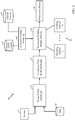
- FIG. 2 is a block diagram illustrating an exemplary system 50 for predicting and handling impaired wireless connections.
- the system 50 may be included in the wireless communication system 10 of FIG. 1 .
- the system 50 includes a sensor and data acquisition block 52 receiving sensor data from one or more sensors 53 and various types of data from one or more data sources 55.
- the system 50 also includes a connection error prediction engine (CEPE) 54, an impairment handling method selection block 56, impairment handling methods 58, alternative content rendering engine 60, local content storage 62, external content storage 64, and one or more presentations devices 66.
- CEPE connection error prediction engine
- the data sources 55 may provide data concerning the environment in which a portable device is operating, device location, direction of travel, speed of travel, network coverage map information, weather and the like.
- the sources 55 may include storage devices and their interfaces for storing such data either locally on a portable device and/or remotely on networked servers.
- the sensors 53 may provide data concerning GPS coordinates of a portable device, time of day, wireless connection strength and the like.
- the sensors 53 may include a GPS module included in a portable device for communicating with GPS satellites, and/or an air interface for wireless communications with a cellular network, wherein the air interface is configured to determine the strength of the wireless channels with the network.
- Velocity information about the portable device may be provided by sensors 53, or may alternatively be calculated by the acquisition block 52 using GPS coordinate data gathered by the block 52 over a predefined period of time.
- the CEPE 54 predicts future impairments to the portable device's wireless connection based on data provided to the CEPE by the sensor and data acquisition block 52.
- the CEPE 54 may calculate the severity of the impairment, for example, a complete loss of the connection verses moderately degraded signal quality, and the predicted start time and duration of the impairment.
- the prediction of the temporary loss of wireless service may be made based on GPS location, speed and direction of travel of the portable device. Additionally/alternatively, the prediction can be made based on a carrier network coverage map, time of day, local weather conditions, local traffic conditions, detected signal strength and/or the like.
- the prediction can be made based on location tags uploaded into a cloud (e.g., facebook or other social network) from a user community.
- the tags identify locations that have poor signal reception.
- Each tag may include GPS coordinates, and may be weighted according to the number of community users reporting the location as having poor signal reception.
- the tags may be periodically pushed onto the portable device of a community member.
- Any suitable combination of the foregoing data and information may be used to predict connection impairments by the CEPE 54.
- the predicted timing, severity and duration of the anticipated impairment are passed to the impairment handing method selection block 56.
- the selection block 56 selects one or more handling methods 58 that are to be executed when the connection impairment is predicted to occur.
- the impairment (error) handling methods may include 1) time warping the content of the user's current communication session; 2) inserting filler/alternative content; 3) providing a user warning of impeding loss of service; 4) muting content signal during loss period; or any suitable combination of the foregoing handling methods.
- the time warping content may be selectively used, for example, only when the loss period is less than a predefined duration.
- Content is time-warped by stretching or shrinking in the time domain the audio and/or video signal corresponding to the content.
- time-warping is used to stretch or shrink the time axis of the audio and/or visual signal associated with the content to align it with a period of time during which an impairment is to be concealed.
- Time warping is a general technique that can be applied to audio and/or video content and embedded software for performing time warping is commercially available.
- the selected impairment handling method includes presenting alternative or filler content during the connection disruption period
- such content can be rendered for presentation on the user portable device by the alternative content rendering block 60.
- the content rendering block 60 can retrieve content from a local content storage source 62, which may be located within the portable device, or from an external content storage source 64.
- the external content storage source 64 can be a server that is included as part of a cloud service system.
- the alternative/filler content can alternatively be pushed onto a portable user device from the external content source 64, upon predicting the imminent loss of wireless service, but prior to actually losing service. Additionally/alternatively, the filler content can be pre-loaded onto a portable device.
- the selected impairment handling method is then executed by the system 50 at the predicted time of the impairment.
- the output of the selected handling method is provided to one or more presentation devices 66 that are included in the user's portable device.
- the selected handling method alters content currently being presented on the presentation device(s) 66 to mask or conceal the effects of the connection disruption.
- Content includes audio and/or visual information that can be digitally represented.
- the selected impairment handling method alters the content by manipulating the digital signals representing such content.
- the presentation devices 66 may include a visual display and/or audio output components such as speakers or headphones.
- FIG. 3 shows a flowchart 100 of an exemplary method of operating the system 50 of FIG. 2 .
- sensor(s) and a data source(s) are queried to retrieve data relevant to predicting a connection impairment for a portable device.
- connection disruption is determined based on the retrieved data.
- the connection disruption can be predicted based on, for example, the calculated direction and speed of travel of the portable device and a comparison thereof to a wireless network coverage map.
- a check is made as to whether a future connection impairment is imminent. For example, based on the comparison of the portable device velocity to a network coverage map, the system can predict the occurrence time of the impairment and estimate its duration. The predicted occurrence time can be compared to a threshold, and if the disruption is to happen within the time specified by the threshold, the impairment is determined to be imminent. If the impairment is not imminent, the method returns to box 102. However, if a connection impairment is predicted, the method proceeds to box 108.
- an impairment handling method is selected.
- the handling method may be selected according to the predicted start time and/or duration of the connection disruption.
- the handling method selection may also depend upon the availability of alternative content and/or user inputs and setting.
- the impairment handling methods may include 1) time warping the content of the user's current communication session; 2) inserting filler/alternative content; 3) providing a user warning of impeding loss of service; 4) muting content signal during loss period; or any suitable combination of the foregoing handling methods.
- decision box 110 a check is made to determine whether external content data is needed by the selected handling method.
- the content data may be alternative filler content, such as audio and/or video content files. If external content is not required, the method proceeds to box 114 and retrieves any local content that may be required by the selecting handling method. However, if content from external sources is needed, the method proceeds to box 112 and the content is fetched from one or more external sources.
- the selected handling method is executed at the predicted time of the impairment to reduce the perceived effect of the connection disruption.
- box 118 the results of the handling method and readings from sensors and prediction data sources are updated.
- decision box 120 a check is made to determine whether the impairment has been handled. This may be done by checking the elapsed time from starting execution of the handling method and comparing it to the predicted duration of the connection impairment. If it is determined that the impairment has been appropriately handled, the method returns to box 102. However, if the impairment handling method has not completed, the method returns to box 116 to continue execution of the handling method.
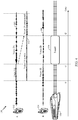
- FIG. 4 shows a timeline graph 150 illustrating the process of time warping a voice signal in an example operational scenario.
- the graph 150 depicts voice signals output at portable device A 152 and portable device B 154.
- the device A 152 travels by train 156 through a tunnel 158, where it loses its wireless connection.
- Voice signal 160 depicts the voice signal output by device A 152, unaltered by an impairment handling method.
- a second voice signal 162 depicts the voice signal output by device A 152 as result of time warping the voice signal 160 to stretch so that it covers the impairment period, t1-t2, as the train 156 passes through the tunnel.
- a third voice signal 164 depicts the voice signal output by the second device B 154.
- FIG. 5 shows a flowchart 200 of a first exemplary method of handling the dropped wireless connection described in connection with FIG. 4 .
- a call is established between portable device A 152 and portable device B 154 through a wireless network.
- the location and velocity of both portable device A and B 152, 154 may be calculated from GPS coordinate data for both devices.
- the CEPE determines that device A 152 will enter a tunnel at a future time, e.g., in ten seconds at time t1.
- the CEPE further determines that device A 152 will remain in the tunnel for a certain duration, e.g., three seconds until time t2. These determinations can be made by comparing the location and velocity calculated for device A 152 to a stored digitized geographic map of the terrain and features surrounding device A 152 at its current location.
- the CEPE also predicts that the wireless connection between devices A and B will be lost during the transit of the tunnel, between times t1 and t2.
- an impairment handling method is selected to deal with the lost wireless connection between devices A and B.
- time warping is selected for mitigating the effect of the lost connection during passage through the tunnel.
- box 210 at a time prior to the predicted connection loss, time t0, e.g., five seconds before entering the tunnel, device A 152 warps its voice signal to stretch from time t1 to t2. This is shown by stretch voice signal 162 of FIG. 4 .
- the call between devices A and B 152, 154 is dropped from time t1 to t2 as the train passes through the tunnels. During this period, the user at device A 152 hears the slowed-down, stretched voice signal 162. At time t2, the wireless system automatically reconnects the call between device A and B. In box 214, the call is terminated.
- FIG. 6 shows a flowchart 250 of a second exemplary method of handling the dropped wireless connection described in connection with FIG. 4 .
- a call is established between portable device A 152 and portable device B 154 through a wireless network.
- the location and velocity of both portable device A and B 152, 154 may be calculated from GPS coordinate data for both devices.
- the CEPE determines that device A 152 will enter a tunnel at a future time, e.g., in ten seconds at time t1, and remain in the tunnel for 60 seconds, until time t2. These determinations can be made by comparing the location and velocity calculated for device A 152 to a stored digitized geographic map of the terrain and features surrounding device A 152 at its current location. The CEPE also predicts that the wireless connection between devices A and B will be lost during the transit of the tunnel, between times t1 and t2.
- an impairment handling method is selected to deal with the lost wireless connection between devices A and B.
- an alert message plus alternative filler content is selected for mitigating the effect of the lost connection during passage through the tunnel.
- devices A and B 152, 154 present the alert message to the users warning them that their call is about to be dropped for 60 seconds and then automatically reconnected.
- box 262 the alternative content is presented at both devices A and B, starting at time t1.
- the call between devices A and B 152, 154 is dropped from time t1 to t2 as the train passes through the tunnels. During this period, the users at devices A and 152,154 hear the filler content. At time t2, the wireless system automatically reconnects the call between device A and B and the filler content is discontinued. In box 266, the call is terminated.
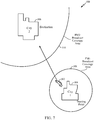
- FIG. 7 is a diagram illustrating the loss of a wireless broadcast during a car trip between two cities.
- the diagram depicts an exemplary geographic area 300 having a first city (City 1) 304, a second city (City 2) 306, and a vehicle traveling from the first city 304 to the second city 306.
- a first radio station located in City 1 304 e.g., a first FM station, FM1 broadcasts over a first broadcast coverage area 308, and a second radio station e.g., a second FM station, FM2, located in City 2 306 broadcasts over a second broadcast coverage area 310.
- a user in the car 302 may begin his/her journey listening to the FM1 station. As the car 302 travels away from City 1, the signal from the FM1 station fades, while the signal from the FM2 station grows stronger.
- the systems and methods disclosed herein may be used in this scenario to predict when a radio or TV broadcast station will fade out on a wireless device in the car 302, based on the user's location and direction of travel.
- the wireless device can 1) substitute a local broadcasting station, e.g. FM2, that is broadcasting similar content; or 2) substitute pre-recorded content from the original broadcasting station that has been stored on the device in lieu of the weakened, distorted radio or TV broadcast signal.
- FIG. 8 shows a flowchart 350 of a first exemplary method of handling the loss of the wireless broadcast FM1 of FIG. 7 .
- This method involves selecting an alternative broadcast station, such as FM2, as given in the example scenario of FIG. 7 .
- the driver begins a driving trip in the car 304 going from City 1 to City 2.
- the CEPE determines that the user is listening to a particular local radio station, FM1, by monitoring the operational state of the user's radio.
- the radio can be configured to make available to the CEPE a flag indicating its on/off state and a digital value indicating the radio frequency to which the radio is presently tuned. Any suitable digital data networking communication or bus scheme can be used to transfer this information from the user's radio to the CEPE.
- the CEPE queries a stored user calendar and GPS data to confirm the travel path from City 1 to City 2.
- the user calendar may include an entry indicating that the user is traveling to City 2 at a particular time and date.
- the location and velocity of the car's travel can be determined from the GPS data.
- the CEPE predicts that at the user's rate of travel, the broadcast connection with FM1 will be significantly degraded at a certain time in the future. This prediction can be based on the calculated user velocity and a stored map of the broadcast coverage area of FM1. Alternatively, the strength of FM1's broadcast signal can be periodically measured to predict when the broadcast will become unacceptably impaired from the user's perspective.
- an impairment handling method is selected to deal with the degraded broadcast connection between FM1 and the portable device in the car 304.
- an equivalent alternative broadcast station, FM2 along the travel path is selected to substitute for FM1 at the predicted time of the broadcast impairment.
- the alternative station can be selected from a database storing information about broadcast stations, such as their programming type, location, broadcast power, broadcast frequency, coverage map and the like. For example, the alternative station can be selected by matching the programming type indicated in the database records to that of the currently heard station and then comparing the user's GPS coordinate location with the coverage map records in the database to select a new local station with similar programming.
- the new broadcast station FM2 is faded in on the portable device at the predicted time the first broadcast signal is lost.
- decision box 364 a check is made to determine whether the user has selected a different broadcast station. If not, the portable device continues to present the substituted broadcast until the device is turned off (e.g., the destination is reached, box 366). However, if the user should select a new station, the method returns to box 354.
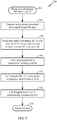
- FIG. 9 shows a flowchart 400 of a second exemplary method of handling the loss of the wireless broadcast FM1 of FIG. 7 .
- This method involves terminating reception of broadcasts from FM1 and substituting locally-stored, pre-recorded content for the FM1 broadcast.
- the driver begins a driving trip in the car 304 going from City 1 to City 2.
- the CEPE determines that the user is listening to a particular local radio station, FM1.
- the CEPE queries a stored user calendar and GPS data to confirm the travel path from City 1 to City 2.
- the user calendar may include an entry indicating that the user is traveling to City 2 at a particular time and date. The location and velocity of the car's travel can be determined from the GPS data.
- the CEPE predicts that, at the user's rate of travel, the broadcast connection with FM1 will be significantly degraded at a certain time in the future. This prediction can be based on the calculated user velocity and a stored map of the broadcast coverage area of FM1. Alternatively, the strength of FM1's broadcast signal can be periodically measured to predict when the broadcast will become unacceptably impaired from the user's perceptive.
- an impairment handling method is selected to deal with the degraded broadcast connection between FM1 and the portable device in the car 304.
- locally-stored, pre-recorded content is selected to substitute for FM1 at the predicted time of the broadcast impairment.
- the pre-recorded content that is equivalent in type to the programming of FM1 can be selected based stored information about broadcast stations including FM1, such as the station programming type, location, broadcast power, coverage map and the like.
- the pre-recorded content is faded in on the portable device at the predicted time the broadcast signal from FM1 is lost.
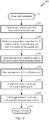
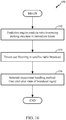
- FIG. 10 is a flowchart 450 of an exemplary method of handling the loss of a wireless connection, such as satellite broadcast, due to an obstruction.
- the CEPE predicts that a portable device, such as a radio in a vehicle, is going to lose wireless coverage due to a particular event, such as entering a parking structure or building.
- the system determines that the user is currently receiving content by way of a wireless connection, such as a satellite broadcast.
- an impairment handling method is selected to deal with the lost connection. In this case, the impairment handling method presents an alert prior to the event, warning the user disconnection, and then mutes the broadcasted signal at the portable device.
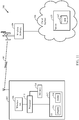
- FIG. 11 is a block diagram illustrating certain components of an exemplary wireless communication system 500 configured to predict and handle temporary impairments of a wireless connection 501 with a portable device 502.
- the system 500 can be configured to implement any or all of the systems and methods described in connection with FIGS. 1-10 .
- the wireless communication system 500 includes the portable device 502 in communication with a wireless network 504.
- the wireless network 504 communicates with a cloud service 506 that includes a server 520.
- the server 520 can include a database (DB) storing external content and/or other data that can be downloaded to the portable device 502 by way of the wireless network 504.
- DB database
- the portable device 502 includes a wireless interface 508, a processor 510, a user interface (UI) 512 and a memory 514.
- the UI 512 includes a visual display 516 and an audio user interface 518 for, among other things, outputting audio to a user.
- the processor 510 can use data and execute programming code stored in the memory 514 to implement the functionality of the system blocks 52-66 of FIG. 2 and the method steps disclosed herein.
- the functionality of the systems, apparatuses, devices and their respective components, as well as the method steps and modules described herein may be implemented in hardware, software/firmware executed by hardware, or any suitable combination thereof.
- the software/firmware may be a program having sets of instructions (e.g., programming code segments) executable by one or more digital circuits, such as microprocessors, DSPs, embedded controllers, or intellectual property (IP) cores.
- IP intellectual property
- the functions may be stored as instructions or code on one or more computer-readable media.
- the computer-readable media may include computer storage media.
- a storage medium may be any available medium that can be accessed by a computer.
- Such computer-readable medium can comprise RAM, ROM, EEPROM, CD-ROM or other optical disk storage, magnetic disk storage or other magnetic storage devices, or any other medium that can be used to carry or store desired program code in the form of instructions or data structures and that can be accessed by a computer.
- Disk and disc includes compact disc (CD), laser disc, optical disc, digital versatile disc (DVD), floppy disk and Blu-ray disc where disks usually reproduce data magnetically, while discs reproduce data optically with lasers. Combinations of the above should also be included within the scope of computer-readable medium.
Landscapes
- Engineering & Computer Science (AREA)
- Computer Networks & Wireless Communication (AREA)
- Signal Processing (AREA)
- Computer Security & Cryptography (AREA)
- Databases & Information Systems (AREA)
- Mobile Radio Communication Systems (AREA)
- Telephone Function (AREA)
- Telephonic Communication Services (AREA)
- Two-Way Televisions, Distribution Of Moving Picture Or The Like (AREA)
Applications Claiming Priority (3)
| Application Number | Priority Date | Filing Date | Title |
|---|---|---|---|
| US201161577613P | 2011-12-19 | 2011-12-19 | |
| US13/665,621 US9578495B2 (en) | 2011-12-19 | 2012-10-31 | Handling impaired wireless connection in a communication system |
| PCT/US2012/063047 WO2013095782A1 (en) | 2011-12-19 | 2012-11-01 | Handling impaired wireless connection in a communication system |
Publications (2)
| Publication Number | Publication Date |
|---|---|
| EP2795941A1 EP2795941A1 (en) | 2014-10-29 |
| EP2795941B1 true EP2795941B1 (en) | 2018-05-23 |
Family
ID=48611379
Family Applications (1)
| Application Number | Title | Priority Date | Filing Date |
|---|---|---|---|
| EP12787608.4A Active EP2795941B1 (en) | 2011-12-19 | 2012-11-01 | Handling impaired wireless connection in a communication system |
Country Status (6)
| Country | Link |
|---|---|
| US (1) | US9578495B2 (enExample) |
| EP (1) | EP2795941B1 (enExample) |
| JP (1) | JP6073365B2 (enExample) |
| KR (1) | KR101851201B1 (enExample) |
| CN (1) | CN104012126B (enExample) |
| WO (1) | WO2013095782A1 (enExample) |
Families Citing this family (28)
| Publication number | Priority date | Publication date | Assignee | Title |
|---|---|---|---|---|
| WO2014141676A1 (ja) * | 2013-03-12 | 2014-09-18 | パナソニック株式会社 | 情報通信端末、対話提供方法 |
| US10735408B2 (en) | 2013-03-14 | 2020-08-04 | Samsung Electronics Co., Ltd. | Application connection for devices in a network |
| US10284657B2 (en) * | 2013-03-14 | 2019-05-07 | Samsung Electronics Co., Ltd. | Application connection for devices in a network |
| US20140357226A1 (en) * | 2013-05-29 | 2014-12-04 | Kent S. Charugundla | Zone Based Radio Communication System |
| US9591095B2 (en) * | 2014-03-10 | 2017-03-07 | Microsoft Technology Licensing, Llc | Prefetching application data for periods of disconnectivity |
| DE102014104562A1 (de) * | 2014-04-01 | 2015-10-01 | Karlsruher Institut für Technologie | Verfahren zur Verbesserung der Konnektivitätsprognose und Zwischenspeicherung von mobilen Endgeräten |
| JP6340917B2 (ja) * | 2014-05-23 | 2018-06-13 | 富士ゼロックス株式会社 | 文書管理プログラム、文書閲覧編集プログラム、文書管理装置、端末装置及び文書管理システム |
| US9420477B2 (en) * | 2014-06-04 | 2016-08-16 | Grandios Technologies, Llc | Signal strength management |
| US20160088143A1 (en) * | 2014-09-24 | 2016-03-24 | Intel Corporation | Method, system and apparatus for graceful disconnection from a wireless docking station |
| US9973448B2 (en) | 2015-02-25 | 2018-05-15 | At&T Mobility Ii Llc | Predictive cached buffer for communication devices |
| US9571624B2 (en) | 2015-03-24 | 2017-02-14 | Intel IP Corporation | Apparatus, system and method of terminating a docking session between a mobile device and a docking device |
| FR3058862B1 (fr) * | 2016-11-15 | 2019-07-19 | Red Technologies Sas | Alerte de connectivite d'une carte d'environnement radio |
| US10367706B2 (en) * | 2016-11-21 | 2019-07-30 | At&T Intellectual Property I, L.P. | Automatic identification of solutions for weather-related network impairments |
| US10772147B2 (en) * | 2016-12-22 | 2020-09-08 | Intel Corporation | Methods and apparatus for connection attempt failure avoidance with a wireless network |
| JP6763311B2 (ja) * | 2017-01-27 | 2020-09-30 | 株式会社デンソーウェーブ | 無線通信システム |
| US10945141B2 (en) | 2017-07-25 | 2021-03-09 | Qualcomm Incorporated | Systems and methods for improving content presentation |
| US11438654B2 (en) * | 2018-03-30 | 2022-09-06 | Rhapsody International Inc. | Geographically tailored content management systems and methods |
| US10757623B2 (en) | 2018-11-27 | 2020-08-25 | International Business Machines Corporation | Cognitive analysis of temporal obstructions |
| CN110457781B (zh) * | 2019-07-24 | 2022-12-23 | 中南大学 | 面向乘客舒适性的列车过隧道时长计算方法 |
| WO2021063474A1 (en) | 2019-09-30 | 2021-04-08 | Telefonaktiebolaget Lm Ericsson (Publ) | Controlling traffic and interference in a communications network |
| CN115499775A (zh) * | 2019-12-31 | 2022-12-20 | 北京骑胜科技有限公司 | 一种设备离线处理方法及装置 |
| US11783332B2 (en) | 2020-02-14 | 2023-10-10 | Mastercard International Incorporated | Method and system for facilitating secure card-based transactions |
| WO2021196117A1 (en) * | 2020-04-02 | 2021-10-07 | Qualcomm Incorporated | Preloading application data based on network status prediction and data access behavior prediction |
| EP3933730A1 (en) * | 2020-06-30 | 2022-01-05 | Mastercard International Incorporated | Realtime selection of payment account |
| US12538150B2 (en) | 2022-12-20 | 2026-01-27 | Intergraph Corporation | Synchronization/resynchronization of data assets based on wireless dead zone geofence changes |
| US12501278B2 (en) | 2022-12-20 | 2025-12-16 | Intergraph Corporation | Generating wireless coverage maps |
| US12408003B2 (en) | 2022-12-20 | 2025-09-02 | Intergraph Corporation | Synchronization/resynchronization of data assets based on entering a wireless dead zone geofence |
| US12425894B2 (en) * | 2022-12-20 | 2025-09-23 | Intergraph Corporation | Predicting future wireless coverage based on weather |
Family Cites Families (16)
| Publication number | Priority date | Publication date | Assignee | Title |
|---|---|---|---|---|
| US5781864A (en) | 1996-05-20 | 1998-07-14 | Metawave Communications Corporation | Cellular system conditioner which overrides a disconnect for active radios wirelessly communicating with mobiles located in pre-identified territorial positions |
| US7203487B2 (en) | 2002-04-22 | 2007-04-10 | Intel Corporation | Pre-notification of potential connection loss in wireless local area network |
| JP2004228851A (ja) | 2003-01-22 | 2004-08-12 | Matsushita Electric Ind Co Ltd | 通信システム |
| US8295838B2 (en) * | 2004-11-19 | 2012-10-23 | Research In Motion Limited | Method and system for predicting service drop in a wireless network |
| JP4371272B2 (ja) | 2005-07-04 | 2009-11-25 | ソニー・エリクソン・モバイルコミュニケーションズ株式会社 | 携帯端末装置、コンテンツ配信システム、及びコンテンツ再生プログラム |
| JP4388083B2 (ja) | 2007-01-29 | 2009-12-24 | 株式会社エヌ・ティ・ティ・ドコモ | コンテンツ配信システム、コンテンツ配信制御装置及びコンテンツ配信方法 |
| CN101246417B (zh) | 2007-02-13 | 2010-09-29 | 艾威梯科技(北京)有限公司 | 音频数据流输入/输出无间断软件切换的方法和系统 |
| US8620319B1 (en) * | 2007-04-24 | 2013-12-31 | At&T Mobility Ii Llc | Intelligent algorithm to determine service availability and presentation to user |
| EP2073486A1 (en) | 2007-12-17 | 2009-06-24 | Alcatel Lucent | Method for providing multimedia service to a mobile device in case of foreseen network unavailability |
| US8180375B2 (en) * | 2008-03-31 | 2012-05-15 | At&T Mobility Ii Llc | Potential call drop indicator |
| US8023964B2 (en) * | 2008-04-01 | 2011-09-20 | International Business Machines Corporation | Predictive mobile phone service disruption service |
| US8098590B2 (en) * | 2008-06-13 | 2012-01-17 | Qualcomm Incorporated | Apparatus and method for generating performance measurements in wireless networks |
| JP5202194B2 (ja) | 2008-09-03 | 2013-06-05 | 株式会社日立製作所 | 無線アクセスネットワークおよび通信品質管理装置ならびに無線基地局 |
| US8948738B2 (en) * | 2008-12-17 | 2015-02-03 | International Business Machines Corporation | Generating alerts based on predicted wireless connection losses |
| US8321216B2 (en) | 2010-02-23 | 2012-11-27 | Broadcom Corporation | Time-warping of audio signals for packet loss concealment avoiding audible artifacts |
| WO2013131098A1 (en) * | 2012-03-02 | 2013-09-06 | Seven Networks, Inc. | Providing data to a mobile application accessible at a mobile device via different network connections without interruption and mobile devices which hands over connectivity from one network connection to another network connection without interruption in application data flow and methods therefor |
-
2012
- 2012-10-31 US US13/665,621 patent/US9578495B2/en active Active
- 2012-11-01 JP JP2014547237A patent/JP6073365B2/ja not_active Expired - Fee Related
- 2012-11-01 CN CN201280062718.2A patent/CN104012126B/zh active Active
- 2012-11-01 KR KR1020147019729A patent/KR101851201B1/ko not_active Expired - Fee Related
- 2012-11-01 EP EP12787608.4A patent/EP2795941B1/en active Active
- 2012-11-01 WO PCT/US2012/063047 patent/WO2013095782A1/en not_active Ceased
Non-Patent Citations (1)
| Title |
|---|
| None * |
Also Published As
| Publication number | Publication date |
|---|---|
| EP2795941A1 (en) | 2014-10-29 |
| JP2015508587A (ja) | 2015-03-19 |
| US20130159552A1 (en) | 2013-06-20 |
| WO2013095782A1 (en) | 2013-06-27 |
| KR101851201B1 (ko) | 2018-04-23 |
| JP6073365B2 (ja) | 2017-02-01 |
| KR20140113952A (ko) | 2014-09-25 |
| US9578495B2 (en) | 2017-02-21 |
| CN104012126B (zh) | 2018-12-11 |
| CN104012126A (zh) | 2014-08-27 |
Similar Documents
| Publication | Publication Date | Title |
|---|---|---|
| EP2795941B1 (en) | Handling impaired wireless connection in a communication system | |
| US8606511B2 (en) | Methods to improve route quality using off-route data | |
| US7212781B2 (en) | Mobile terminal having functions of program reception through broadcasting and through network communication, and program reception controlling method | |
| US6363240B2 (en) | Method for transmitting/receiving portions of an audio signal based on a priority of each portion | |
| US8645054B2 (en) | Navigation system | |
| CN106032987A (zh) | 一种车载导航设备及车载收音机播放方法 | |
| CN108847912A (zh) | 一种本地电台与在线电台的切换方法 | |
| CN108631892B (zh) | 检测车辆处的卫星无线电广播干扰的方法 | |
| US9215558B2 (en) | Method for digital radio fringe area learning | |
| JP2006060710A (ja) | 無線通信端末 | |
| EP3968549A1 (en) | Broadcast receiver | |
| CN102124504A (zh) | 路径决定支持装置和路径决定支持方法 | |
| JP4849693B2 (ja) | 再生システム及び再生方法、移動型再生装置、記録装置、並びにコンピュータプログラム | |
| JP2006129051A (ja) | デジタル放送受信装置、デジタル放送受信制御プログラム | |
| JP2011024117A (ja) | 番組受信装置および番組受信方法 | |
| JPH08265107A (ja) | 多重放送自動探局装置 | |
| JP2016048876A (ja) | サイマル放送受信装置とデジタルテレビ放送受信装置 | |
| JP2013195113A (ja) | ナビゲーション装置 | |
| JP2004304498A (ja) | 放送受信装置 | |
| JP6022833B2 (ja) | 放送受信機及びチャンネルリスト管理方法 | |
| JP2009093530A (ja) | 道路通信システム,通信端末,データ再生処理方法およびデータ再生用プログラム | |
| JP2007214652A (ja) | 車載放送受信装置および放送受信方法 | |
| KR100991094B1 (ko) | 내비게이션 단말기에서의 교통 정보 수신 방법 및 장치 | |
| JP2006127359A (ja) | 交通情報受信装置 | |
| FR2993733A1 (fr) | Procede et systeme de reception de signaux de radiodiffusion |
Legal Events
| Date | Code | Title | Description |
|---|---|---|---|
| PUAI | Public reference made under article 153(3) epc to a published international application that has entered the european phase |
Free format text: ORIGINAL CODE: 0009012 |
|
| 17P | Request for examination filed |
Effective date: 20140702 |
|
| AK | Designated contracting states |
Kind code of ref document: A1 Designated state(s): AL AT BE BG CH CY CZ DE DK EE ES FI FR GB GR HR HU IE IS IT LI LT LU LV MC MK MT NL NO PL PT RO RS SE SI SK SM TR |
|
| DAX | Request for extension of the european patent (deleted) | ||
| GRAP | Despatch of communication of intention to grant a patent |
Free format text: ORIGINAL CODE: EPIDOSNIGR1 |
|
| RIC1 | Information provided on ipc code assigned before grant |
Ipc: H04L 29/14 20060101ALI20171127BHEP Ipc: H04W 4/18 20090101AFI20171127BHEP Ipc: H04W 8/30 20090101ALI20171127BHEP Ipc: H04W 4/02 20180101ALN20171127BHEP |
|
| INTG | Intention to grant announced |
Effective date: 20171211 |
|
| GRAS | Grant fee paid |
Free format text: ORIGINAL CODE: EPIDOSNIGR3 |
|
| GRAA | (expected) grant |
Free format text: ORIGINAL CODE: 0009210 |
|
| AK | Designated contracting states |
Kind code of ref document: B1 Designated state(s): AL AT BE BG CH CY CZ DE DK EE ES FI FR GB GR HR HU IE IS IT LI LT LU LV MC MK MT NL NO PL PT RO RS SE SI SK SM TR |
|
| REG | Reference to a national code |
Ref country code: GB Ref legal event code: FG4D |
|
| REG | Reference to a national code |
Ref country code: CH Ref legal event code: EP |
|
| REG | Reference to a national code |
Ref country code: IE Ref legal event code: FG4D |
|
| REG | Reference to a national code |
Ref country code: DE Ref legal event code: R096 Ref document number: 602012046656 Country of ref document: DE |
|
| REG | Reference to a national code |
Ref country code: AT Ref legal event code: REF Ref document number: 1002516 Country of ref document: AT Kind code of ref document: T Effective date: 20180615 |
|
| REG | Reference to a national code |
Ref country code: NL Ref legal event code: MP Effective date: 20180523 |
|
| REG | Reference to a national code |
Ref country code: LT Ref legal event code: MG4D |
|
| PG25 | Lapsed in a contracting state [announced via postgrant information from national office to epo] |
Ref country code: BG Free format text: LAPSE BECAUSE OF FAILURE TO SUBMIT A TRANSLATION OF THE DESCRIPTION OR TO PAY THE FEE WITHIN THE PRESCRIBED TIME-LIMIT Effective date: 20180823 Ref country code: NO Free format text: LAPSE BECAUSE OF FAILURE TO SUBMIT A TRANSLATION OF THE DESCRIPTION OR TO PAY THE FEE WITHIN THE PRESCRIBED TIME-LIMIT Effective date: 20180823 Ref country code: FI Free format text: LAPSE BECAUSE OF FAILURE TO SUBMIT A TRANSLATION OF THE DESCRIPTION OR TO PAY THE FEE WITHIN THE PRESCRIBED TIME-LIMIT Effective date: 20180523 Ref country code: SE Free format text: LAPSE BECAUSE OF FAILURE TO SUBMIT A TRANSLATION OF THE DESCRIPTION OR TO PAY THE FEE WITHIN THE PRESCRIBED TIME-LIMIT Effective date: 20180523 Ref country code: LT Free format text: LAPSE BECAUSE OF FAILURE TO SUBMIT A TRANSLATION OF THE DESCRIPTION OR TO PAY THE FEE WITHIN THE PRESCRIBED TIME-LIMIT Effective date: 20180523 Ref country code: ES Free format text: LAPSE BECAUSE OF FAILURE TO SUBMIT A TRANSLATION OF THE DESCRIPTION OR TO PAY THE FEE WITHIN THE PRESCRIBED TIME-LIMIT Effective date: 20180523 |
|
| REG | Reference to a national code |
Ref country code: FR Ref legal event code: PLFP Year of fee payment: 7 |
|
| PG25 | Lapsed in a contracting state [announced via postgrant information from national office to epo] |
Ref country code: NL Free format text: LAPSE BECAUSE OF FAILURE TO SUBMIT A TRANSLATION OF THE DESCRIPTION OR TO PAY THE FEE WITHIN THE PRESCRIBED TIME-LIMIT Effective date: 20180523 Ref country code: LV Free format text: LAPSE BECAUSE OF FAILURE TO SUBMIT A TRANSLATION OF THE DESCRIPTION OR TO PAY THE FEE WITHIN THE PRESCRIBED TIME-LIMIT Effective date: 20180523 Ref country code: HR Free format text: LAPSE BECAUSE OF FAILURE TO SUBMIT A TRANSLATION OF THE DESCRIPTION OR TO PAY THE FEE WITHIN THE PRESCRIBED TIME-LIMIT Effective date: 20180523 Ref country code: GR Free format text: LAPSE BECAUSE OF FAILURE TO SUBMIT A TRANSLATION OF THE DESCRIPTION OR TO PAY THE FEE WITHIN THE PRESCRIBED TIME-LIMIT Effective date: 20180824 Ref country code: RS Free format text: LAPSE BECAUSE OF FAILURE TO SUBMIT A TRANSLATION OF THE DESCRIPTION OR TO PAY THE FEE WITHIN THE PRESCRIBED TIME-LIMIT Effective date: 20180523 |
|
| REG | Reference to a national code |
Ref country code: AT Ref legal event code: MK05 Ref document number: 1002516 Country of ref document: AT Kind code of ref document: T Effective date: 20180523 |
|
| PG25 | Lapsed in a contracting state [announced via postgrant information from national office to epo] |
Ref country code: PL Free format text: LAPSE BECAUSE OF FAILURE TO SUBMIT A TRANSLATION OF THE DESCRIPTION OR TO PAY THE FEE WITHIN THE PRESCRIBED TIME-LIMIT Effective date: 20180523 Ref country code: EE Free format text: LAPSE BECAUSE OF FAILURE TO SUBMIT A TRANSLATION OF THE DESCRIPTION OR TO PAY THE FEE WITHIN THE PRESCRIBED TIME-LIMIT Effective date: 20180523 Ref country code: DK Free format text: LAPSE BECAUSE OF FAILURE TO SUBMIT A TRANSLATION OF THE DESCRIPTION OR TO PAY THE FEE WITHIN THE PRESCRIBED TIME-LIMIT Effective date: 20180523 Ref country code: RO Free format text: LAPSE BECAUSE OF FAILURE TO SUBMIT A TRANSLATION OF THE DESCRIPTION OR TO PAY THE FEE WITHIN THE PRESCRIBED TIME-LIMIT Effective date: 20180523 Ref country code: AT Free format text: LAPSE BECAUSE OF FAILURE TO SUBMIT A TRANSLATION OF THE DESCRIPTION OR TO PAY THE FEE WITHIN THE PRESCRIBED TIME-LIMIT Effective date: 20180523 Ref country code: CZ Free format text: LAPSE BECAUSE OF FAILURE TO SUBMIT A TRANSLATION OF THE DESCRIPTION OR TO PAY THE FEE WITHIN THE PRESCRIBED TIME-LIMIT Effective date: 20180523 Ref country code: SK Free format text: LAPSE BECAUSE OF FAILURE TO SUBMIT A TRANSLATION OF THE DESCRIPTION OR TO PAY THE FEE WITHIN THE PRESCRIBED TIME-LIMIT Effective date: 20180523 |
|
| REG | Reference to a national code |
Ref country code: DE Ref legal event code: R097 Ref document number: 602012046656 Country of ref document: DE |
|
| PG25 | Lapsed in a contracting state [announced via postgrant information from national office to epo] |
Ref country code: SM Free format text: LAPSE BECAUSE OF FAILURE TO SUBMIT A TRANSLATION OF THE DESCRIPTION OR TO PAY THE FEE WITHIN THE PRESCRIBED TIME-LIMIT Effective date: 20180523 Ref country code: IT Free format text: LAPSE BECAUSE OF FAILURE TO SUBMIT A TRANSLATION OF THE DESCRIPTION OR TO PAY THE FEE WITHIN THE PRESCRIBED TIME-LIMIT Effective date: 20180523 |
|
| PLBE | No opposition filed within time limit |
Free format text: ORIGINAL CODE: 0009261 |
|
| STAA | Information on the status of an ep patent application or granted ep patent |
Free format text: STATUS: NO OPPOSITION FILED WITHIN TIME LIMIT |
|
| 26N | No opposition filed |
Effective date: 20190226 |
|
| PG25 | Lapsed in a contracting state [announced via postgrant information from national office to epo] |
Ref country code: SI Free format text: LAPSE BECAUSE OF FAILURE TO SUBMIT A TRANSLATION OF THE DESCRIPTION OR TO PAY THE FEE WITHIN THE PRESCRIBED TIME-LIMIT Effective date: 20180523 |
|
| REG | Reference to a national code |
Ref country code: CH Ref legal event code: PL |
|
| PG25 | Lapsed in a contracting state [announced via postgrant information from national office to epo] |
Ref country code: LU Free format text: LAPSE BECAUSE OF NON-PAYMENT OF DUE FEES Effective date: 20181101 Ref country code: MC Free format text: LAPSE BECAUSE OF FAILURE TO SUBMIT A TRANSLATION OF THE DESCRIPTION OR TO PAY THE FEE WITHIN THE PRESCRIBED TIME-LIMIT Effective date: 20180523 |
|
| REG | Reference to a national code |
Ref country code: BE Ref legal event code: MM Effective date: 20181130 |
|
| REG | Reference to a national code |
Ref country code: IE Ref legal event code: MM4A |
|
| PG25 | Lapsed in a contracting state [announced via postgrant information from national office to epo] |
Ref country code: CH Free format text: LAPSE BECAUSE OF NON-PAYMENT OF DUE FEES Effective date: 20181130 Ref country code: LI Free format text: LAPSE BECAUSE OF NON-PAYMENT OF DUE FEES Effective date: 20181130 |
|
| PG25 | Lapsed in a contracting state [announced via postgrant information from national office to epo] |
Ref country code: IE Free format text: LAPSE BECAUSE OF NON-PAYMENT OF DUE FEES Effective date: 20181101 |
|
| PG25 | Lapsed in a contracting state [announced via postgrant information from national office to epo] |
Ref country code: AL Free format text: LAPSE BECAUSE OF FAILURE TO SUBMIT A TRANSLATION OF THE DESCRIPTION OR TO PAY THE FEE WITHIN THE PRESCRIBED TIME-LIMIT Effective date: 20180523 Ref country code: BE Free format text: LAPSE BECAUSE OF NON-PAYMENT OF DUE FEES Effective date: 20181130 |
|
| PG25 | Lapsed in a contracting state [announced via postgrant information from national office to epo] |
Ref country code: MT Free format text: LAPSE BECAUSE OF NON-PAYMENT OF DUE FEES Effective date: 20181101 |
|
| PGFP | Annual fee paid to national office [announced via postgrant information from national office to epo] |
Ref country code: DE Payment date: 20191017 Year of fee payment: 8 |
|
| PG25 | Lapsed in a contracting state [announced via postgrant information from national office to epo] |
Ref country code: TR Free format text: LAPSE BECAUSE OF FAILURE TO SUBMIT A TRANSLATION OF THE DESCRIPTION OR TO PAY THE FEE WITHIN THE PRESCRIBED TIME-LIMIT Effective date: 20180523 |
|
| PG25 | Lapsed in a contracting state [announced via postgrant information from national office to epo] |
Ref country code: PT Free format text: LAPSE BECAUSE OF FAILURE TO SUBMIT A TRANSLATION OF THE DESCRIPTION OR TO PAY THE FEE WITHIN THE PRESCRIBED TIME-LIMIT Effective date: 20180523 |
|
| PG25 | Lapsed in a contracting state [announced via postgrant information from national office to epo] |
Ref country code: HU Free format text: LAPSE BECAUSE OF FAILURE TO SUBMIT A TRANSLATION OF THE DESCRIPTION OR TO PAY THE FEE WITHIN THE PRESCRIBED TIME-LIMIT; INVALID AB INITIO Effective date: 20121101 Ref country code: CY Free format text: LAPSE BECAUSE OF FAILURE TO SUBMIT A TRANSLATION OF THE DESCRIPTION OR TO PAY THE FEE WITHIN THE PRESCRIBED TIME-LIMIT Effective date: 20180523 Ref country code: MK Free format text: LAPSE BECAUSE OF NON-PAYMENT OF DUE FEES Effective date: 20180523 |
|
| PG25 | Lapsed in a contracting state [announced via postgrant information from national office to epo] |
Ref country code: IS Free format text: LAPSE BECAUSE OF FAILURE TO SUBMIT A TRANSLATION OF THE DESCRIPTION OR TO PAY THE FEE WITHIN THE PRESCRIBED TIME-LIMIT Effective date: 20180923 |
|
| REG | Reference to a national code |
Ref country code: DE Ref legal event code: R119 Ref document number: 602012046656 Country of ref document: DE |
|
| PG25 | Lapsed in a contracting state [announced via postgrant information from national office to epo] |
Ref country code: DE Free format text: LAPSE BECAUSE OF NON-PAYMENT OF DUE FEES Effective date: 20210601 |
|
| PGFP | Annual fee paid to national office [announced via postgrant information from national office to epo] |
Ref country code: GB Payment date: 20251009 Year of fee payment: 14 |
|
| PGFP | Annual fee paid to national office [announced via postgrant information from national office to epo] |
Ref country code: FR Payment date: 20251013 Year of fee payment: 14 |