EP2793883B1 - Trpm8 antagonists - Google Patents
Trpm8 antagonists Download PDFInfo
- Publication number
- EP2793883B1 EP2793883B1 EP12812229.8A EP12812229A EP2793883B1 EP 2793883 B1 EP2793883 B1 EP 2793883B1 EP 12812229 A EP12812229 A EP 12812229A EP 2793883 B1 EP2793883 B1 EP 2793883B1
- Authority
- EP
- European Patent Office
- Prior art keywords
- thiazole
- carboxylate
- ethyl
- oxy
- fluorophenyl
- Prior art date
- Legal status (The legal status is an assumption and is not a legal conclusion. Google has not performed a legal analysis and makes no representation as to the accuracy of the status listed.)
- Active
Links
- 0 C*c1n[o]c(C)n1 Chemical compound C*c1n[o]c(C)n1 0.000 description 1
- PETVNYBGUYXLNT-UHFFFAOYSA-N CNC(c1ccc(C(F)(F)F)cc1)=O Chemical compound CNC(c1ccc(C(F)(F)F)cc1)=O PETVNYBGUYXLNT-UHFFFAOYSA-N 0.000 description 1
- VVGDMTFRMSXUJC-UHFFFAOYSA-N COCc1ccccc1Cl Chemical compound COCc1ccccc1Cl VVGDMTFRMSXUJC-UHFFFAOYSA-N 0.000 description 1
- MKPPYUWHRSJVKB-UHFFFAOYSA-N Clc1ccc(CO[IH]I)cc1 Chemical compound Clc1ccc(CO[IH]I)cc1 MKPPYUWHRSJVKB-UHFFFAOYSA-N 0.000 description 1
- OJZQOQNSUZLSMV-UHFFFAOYSA-N Nc1cc(CO)ccc1 Chemical compound Nc1cc(CO)ccc1 OJZQOQNSUZLSMV-UHFFFAOYSA-N 0.000 description 1
- SRWILAKSARHZPR-UHFFFAOYSA-N O=Cc1cc(Cl)ccc1 Chemical compound O=Cc1cc(Cl)ccc1 SRWILAKSARHZPR-UHFFFAOYSA-N 0.000 description 1
Images
Classifications
-
- C—CHEMISTRY; METALLURGY
- C07—ORGANIC CHEMISTRY
- C07D—HETEROCYCLIC COMPOUNDS
- C07D417/00—Heterocyclic compounds containing two or more hetero rings, at least one ring having nitrogen and sulfur atoms as the only ring hetero atoms, not provided for by group C07D415/00
- C07D417/02—Heterocyclic compounds containing two or more hetero rings, at least one ring having nitrogen and sulfur atoms as the only ring hetero atoms, not provided for by group C07D415/00 containing two hetero rings
- C07D417/12—Heterocyclic compounds containing two or more hetero rings, at least one ring having nitrogen and sulfur atoms as the only ring hetero atoms, not provided for by group C07D415/00 containing two hetero rings linked by a chain containing hetero atoms as chain links
-
- A—HUMAN NECESSITIES
- A61—MEDICAL OR VETERINARY SCIENCE; HYGIENE
- A61K—PREPARATIONS FOR MEDICAL, DENTAL OR TOILETRY PURPOSES
- A61K31/00—Medicinal preparations containing organic active ingredients
- A61K31/33—Heterocyclic compounds
- A61K31/395—Heterocyclic compounds having nitrogen as a ring hetero atom, e.g. guanethidine or rifamycins
- A61K31/41—Heterocyclic compounds having nitrogen as a ring hetero atom, e.g. guanethidine or rifamycins having five-membered rings with two or more ring hetero atoms, at least one of which being nitrogen, e.g. tetrazole
- A61K31/42—Oxazoles
- A61K31/421—1,3-Oxazoles, e.g. pemoline, trimethadione
-
- A—HUMAN NECESSITIES
- A61—MEDICAL OR VETERINARY SCIENCE; HYGIENE
- A61K—PREPARATIONS FOR MEDICAL, DENTAL OR TOILETRY PURPOSES
- A61K31/00—Medicinal preparations containing organic active ingredients
- A61K31/33—Heterocyclic compounds
- A61K31/395—Heterocyclic compounds having nitrogen as a ring hetero atom, e.g. guanethidine or rifamycins
- A61K31/41—Heterocyclic compounds having nitrogen as a ring hetero atom, e.g. guanethidine or rifamycins having five-membered rings with two or more ring hetero atoms, at least one of which being nitrogen, e.g. tetrazole
- A61K31/4245—Oxadiazoles
-
- A—HUMAN NECESSITIES
- A61—MEDICAL OR VETERINARY SCIENCE; HYGIENE
- A61K—PREPARATIONS FOR MEDICAL, DENTAL OR TOILETRY PURPOSES
- A61K31/00—Medicinal preparations containing organic active ingredients
- A61K31/33—Heterocyclic compounds
- A61K31/395—Heterocyclic compounds having nitrogen as a ring hetero atom, e.g. guanethidine or rifamycins
- A61K31/41—Heterocyclic compounds having nitrogen as a ring hetero atom, e.g. guanethidine or rifamycins having five-membered rings with two or more ring hetero atoms, at least one of which being nitrogen, e.g. tetrazole
- A61K31/425—Thiazoles
- A61K31/426—1,3-Thiazoles
-
- A—HUMAN NECESSITIES
- A61—MEDICAL OR VETERINARY SCIENCE; HYGIENE
- A61K—PREPARATIONS FOR MEDICAL, DENTAL OR TOILETRY PURPOSES
- A61K31/00—Medicinal preparations containing organic active ingredients
- A61K31/33—Heterocyclic compounds
- A61K31/395—Heterocyclic compounds having nitrogen as a ring hetero atom, e.g. guanethidine or rifamycins
- A61K31/41—Heterocyclic compounds having nitrogen as a ring hetero atom, e.g. guanethidine or rifamycins having five-membered rings with two or more ring hetero atoms, at least one of which being nitrogen, e.g. tetrazole
- A61K31/425—Thiazoles
- A61K31/427—Thiazoles not condensed and containing further heterocyclic rings
-
- A—HUMAN NECESSITIES
- A61—MEDICAL OR VETERINARY SCIENCE; HYGIENE
- A61K—PREPARATIONS FOR MEDICAL, DENTAL OR TOILETRY PURPOSES
- A61K31/00—Medicinal preparations containing organic active ingredients
- A61K31/33—Heterocyclic compounds
- A61K31/395—Heterocyclic compounds having nitrogen as a ring hetero atom, e.g. guanethidine or rifamycins
- A61K31/435—Heterocyclic compounds having nitrogen as a ring hetero atom, e.g. guanethidine or rifamycins having six-membered rings with one nitrogen as the only ring hetero atom
- A61K31/44—Non condensed pyridines; Hydrogenated derivatives thereof
- A61K31/4427—Non condensed pyridines; Hydrogenated derivatives thereof containing further heterocyclic ring systems
- A61K31/4439—Non condensed pyridines; Hydrogenated derivatives thereof containing further heterocyclic ring systems containing a five-membered ring with nitrogen as a ring hetero atom, e.g. omeprazole
-
- A—HUMAN NECESSITIES
- A61—MEDICAL OR VETERINARY SCIENCE; HYGIENE
- A61K—PREPARATIONS FOR MEDICAL, DENTAL OR TOILETRY PURPOSES
- A61K31/00—Medicinal preparations containing organic active ingredients
- A61K31/33—Heterocyclic compounds
- A61K31/395—Heterocyclic compounds having nitrogen as a ring hetero atom, e.g. guanethidine or rifamycins
- A61K31/435—Heterocyclic compounds having nitrogen as a ring hetero atom, e.g. guanethidine or rifamycins having six-membered rings with one nitrogen as the only ring hetero atom
- A61K31/47—Quinolines; Isoquinolines
- A61K31/472—Non-condensed isoquinolines, e.g. papaverine
-
- A—HUMAN NECESSITIES
- A61—MEDICAL OR VETERINARY SCIENCE; HYGIENE
- A61P—SPECIFIC THERAPEUTIC ACTIVITY OF CHEMICAL COMPOUNDS OR MEDICINAL PREPARATIONS
- A61P1/00—Drugs for disorders of the alimentary tract or the digestive system
- A61P1/04—Drugs for disorders of the alimentary tract or the digestive system for ulcers, gastritis or reflux esophagitis, e.g. antacids, inhibitors of acid secretion, mucosal protectants
-
- A—HUMAN NECESSITIES
- A61—MEDICAL OR VETERINARY SCIENCE; HYGIENE
- A61P—SPECIFIC THERAPEUTIC ACTIVITY OF CHEMICAL COMPOUNDS OR MEDICINAL PREPARATIONS
- A61P11/00—Drugs for disorders of the respiratory system
-
- A—HUMAN NECESSITIES
- A61—MEDICAL OR VETERINARY SCIENCE; HYGIENE
- A61P—SPECIFIC THERAPEUTIC ACTIVITY OF CHEMICAL COMPOUNDS OR MEDICINAL PREPARATIONS
- A61P11/00—Drugs for disorders of the respiratory system
- A61P11/06—Antiasthmatics
-
- A—HUMAN NECESSITIES
- A61—MEDICAL OR VETERINARY SCIENCE; HYGIENE
- A61P—SPECIFIC THERAPEUTIC ACTIVITY OF CHEMICAL COMPOUNDS OR MEDICINAL PREPARATIONS
- A61P13/00—Drugs for disorders of the urinary system
-
- A—HUMAN NECESSITIES
- A61—MEDICAL OR VETERINARY SCIENCE; HYGIENE
- A61P—SPECIFIC THERAPEUTIC ACTIVITY OF CHEMICAL COMPOUNDS OR MEDICINAL PREPARATIONS
- A61P13/00—Drugs for disorders of the urinary system
- A61P13/02—Drugs for disorders of the urinary system of urine or of the urinary tract, e.g. urine acidifiers
-
- A—HUMAN NECESSITIES
- A61—MEDICAL OR VETERINARY SCIENCE; HYGIENE
- A61P—SPECIFIC THERAPEUTIC ACTIVITY OF CHEMICAL COMPOUNDS OR MEDICINAL PREPARATIONS
- A61P13/00—Drugs for disorders of the urinary system
- A61P13/08—Drugs for disorders of the urinary system of the prostate
-
- A—HUMAN NECESSITIES
- A61—MEDICAL OR VETERINARY SCIENCE; HYGIENE
- A61P—SPECIFIC THERAPEUTIC ACTIVITY OF CHEMICAL COMPOUNDS OR MEDICINAL PREPARATIONS
- A61P17/00—Drugs for dermatological disorders
- A61P17/04—Antipruritics
-
- A—HUMAN NECESSITIES
- A61—MEDICAL OR VETERINARY SCIENCE; HYGIENE
- A61P—SPECIFIC THERAPEUTIC ACTIVITY OF CHEMICAL COMPOUNDS OR MEDICINAL PREPARATIONS
- A61P25/00—Drugs for disorders of the nervous system
-
- A—HUMAN NECESSITIES
- A61—MEDICAL OR VETERINARY SCIENCE; HYGIENE
- A61P—SPECIFIC THERAPEUTIC ACTIVITY OF CHEMICAL COMPOUNDS OR MEDICINAL PREPARATIONS
- A61P25/00—Drugs for disorders of the nervous system
- A61P25/04—Centrally acting analgesics, e.g. opioids
-
- A—HUMAN NECESSITIES
- A61—MEDICAL OR VETERINARY SCIENCE; HYGIENE
- A61P—SPECIFIC THERAPEUTIC ACTIVITY OF CHEMICAL COMPOUNDS OR MEDICINAL PREPARATIONS
- A61P25/00—Drugs for disorders of the nervous system
- A61P25/06—Antimigraine agents
-
- A—HUMAN NECESSITIES
- A61—MEDICAL OR VETERINARY SCIENCE; HYGIENE
- A61P—SPECIFIC THERAPEUTIC ACTIVITY OF CHEMICAL COMPOUNDS OR MEDICINAL PREPARATIONS
- A61P25/00—Drugs for disorders of the nervous system
- A61P25/18—Antipsychotics, i.e. neuroleptics; Drugs for mania or schizophrenia
-
- A—HUMAN NECESSITIES
- A61—MEDICAL OR VETERINARY SCIENCE; HYGIENE
- A61P—SPECIFIC THERAPEUTIC ACTIVITY OF CHEMICAL COMPOUNDS OR MEDICINAL PREPARATIONS
- A61P25/00—Drugs for disorders of the nervous system
- A61P25/22—Anxiolytics
-
- A—HUMAN NECESSITIES
- A61—MEDICAL OR VETERINARY SCIENCE; HYGIENE
- A61P—SPECIFIC THERAPEUTIC ACTIVITY OF CHEMICAL COMPOUNDS OR MEDICINAL PREPARATIONS
- A61P25/00—Drugs for disorders of the nervous system
- A61P25/24—Antidepressants
-
- A—HUMAN NECESSITIES
- A61—MEDICAL OR VETERINARY SCIENCE; HYGIENE
- A61P—SPECIFIC THERAPEUTIC ACTIVITY OF CHEMICAL COMPOUNDS OR MEDICINAL PREPARATIONS
- A61P25/00—Drugs for disorders of the nervous system
- A61P25/28—Drugs for disorders of the nervous system for treating neurodegenerative disorders of the central nervous system, e.g. nootropic agents, cognition enhancers, drugs for treating Alzheimer's disease or other forms of dementia
-
- A—HUMAN NECESSITIES
- A61—MEDICAL OR VETERINARY SCIENCE; HYGIENE
- A61P—SPECIFIC THERAPEUTIC ACTIVITY OF CHEMICAL COMPOUNDS OR MEDICINAL PREPARATIONS
- A61P29/00—Non-central analgesic, antipyretic or antiinflammatory agents, e.g. antirheumatic agents; Non-steroidal antiinflammatory drugs [NSAID]
-
- A—HUMAN NECESSITIES
- A61—MEDICAL OR VETERINARY SCIENCE; HYGIENE
- A61P—SPECIFIC THERAPEUTIC ACTIVITY OF CHEMICAL COMPOUNDS OR MEDICINAL PREPARATIONS
- A61P43/00—Drugs for specific purposes, not provided for in groups A61P1/00-A61P41/00
-
- A—HUMAN NECESSITIES
- A61—MEDICAL OR VETERINARY SCIENCE; HYGIENE
- A61P—SPECIFIC THERAPEUTIC ACTIVITY OF CHEMICAL COMPOUNDS OR MEDICINAL PREPARATIONS
- A61P9/00—Drugs for disorders of the cardiovascular system
- A61P9/10—Drugs for disorders of the cardiovascular system for treating ischaemic or atherosclerotic diseases, e.g. antianginal drugs, coronary vasodilators, drugs for myocardial infarction, retinopathy, cerebrovascula insufficiency, renal arteriosclerosis
-
- C—CHEMISTRY; METALLURGY
- C07—ORGANIC CHEMISTRY
- C07D—HETEROCYCLIC COMPOUNDS
- C07D263/00—Heterocyclic compounds containing 1,3-oxazole or hydrogenated 1,3-oxazole rings
- C07D263/02—Heterocyclic compounds containing 1,3-oxazole or hydrogenated 1,3-oxazole rings not condensed with other rings
- C07D263/30—Heterocyclic compounds containing 1,3-oxazole or hydrogenated 1,3-oxazole rings not condensed with other rings having two or three double bonds between ring members or between ring members and non-ring members
- C07D263/34—Heterocyclic compounds containing 1,3-oxazole or hydrogenated 1,3-oxazole rings not condensed with other rings having two or three double bonds between ring members or between ring members and non-ring members with hetero atoms or with carbon atoms having three bonds to hetero atoms with at the most one bond to halogen, e.g. ester or nitrile radicals, directly attached to ring carbon atoms
- C07D263/36—One oxygen atom
- C07D263/40—One oxygen atom attached in position 4
-
- C—CHEMISTRY; METALLURGY
- C07—ORGANIC CHEMISTRY
- C07D—HETEROCYCLIC COMPOUNDS
- C07D263/00—Heterocyclic compounds containing 1,3-oxazole or hydrogenated 1,3-oxazole rings
- C07D263/02—Heterocyclic compounds containing 1,3-oxazole or hydrogenated 1,3-oxazole rings not condensed with other rings
- C07D263/30—Heterocyclic compounds containing 1,3-oxazole or hydrogenated 1,3-oxazole rings not condensed with other rings having two or three double bonds between ring members or between ring members and non-ring members
- C07D263/34—Heterocyclic compounds containing 1,3-oxazole or hydrogenated 1,3-oxazole rings not condensed with other rings having two or three double bonds between ring members or between ring members and non-ring members with hetero atoms or with carbon atoms having three bonds to hetero atoms with at the most one bond to halogen, e.g. ester or nitrile radicals, directly attached to ring carbon atoms
- C07D263/36—One oxygen atom
- C07D263/42—One oxygen atom attached in position 5
-
- C—CHEMISTRY; METALLURGY
- C07—ORGANIC CHEMISTRY
- C07D—HETEROCYCLIC COMPOUNDS
- C07D277/00—Heterocyclic compounds containing 1,3-thiazole or hydrogenated 1,3-thiazole rings
- C07D277/02—Heterocyclic compounds containing 1,3-thiazole or hydrogenated 1,3-thiazole rings not condensed with other rings
- C07D277/20—Heterocyclic compounds containing 1,3-thiazole or hydrogenated 1,3-thiazole rings not condensed with other rings having two or three double bonds between ring members or between ring members and non-ring members
- C07D277/32—Heterocyclic compounds containing 1,3-thiazole or hydrogenated 1,3-thiazole rings not condensed with other rings having two or three double bonds between ring members or between ring members and non-ring members with hetero atoms or with carbon atoms having three bonds to hetero atoms with at the most one bond to halogen, e.g. ester or nitrile radicals, directly attached to ring carbon atoms
- C07D277/56—Carbon atoms having three bonds to hetero atoms with at the most one bond to halogen
-
- C—CHEMISTRY; METALLURGY
- C07—ORGANIC CHEMISTRY
- C07D—HETEROCYCLIC COMPOUNDS
- C07D413/00—Heterocyclic compounds containing two or more hetero rings, at least one ring having nitrogen and oxygen atoms as the only ring hetero atoms
- C07D413/02—Heterocyclic compounds containing two or more hetero rings, at least one ring having nitrogen and oxygen atoms as the only ring hetero atoms containing two hetero rings
- C07D413/04—Heterocyclic compounds containing two or more hetero rings, at least one ring having nitrogen and oxygen atoms as the only ring hetero atoms containing two hetero rings directly linked by a ring-member-to-ring-member bond
-
- C—CHEMISTRY; METALLURGY
- C07—ORGANIC CHEMISTRY
- C07D—HETEROCYCLIC COMPOUNDS
- C07D417/00—Heterocyclic compounds containing two or more hetero rings, at least one ring having nitrogen and sulfur atoms as the only ring hetero atoms, not provided for by group C07D415/00
- C07D417/02—Heterocyclic compounds containing two or more hetero rings, at least one ring having nitrogen and sulfur atoms as the only ring hetero atoms, not provided for by group C07D415/00 containing two hetero rings
- C07D417/04—Heterocyclic compounds containing two or more hetero rings, at least one ring having nitrogen and sulfur atoms as the only ring hetero atoms, not provided for by group C07D415/00 containing two hetero rings directly linked by a ring-member-to-ring-member bond
-
- C—CHEMISTRY; METALLURGY
- C07—ORGANIC CHEMISTRY
- C07D—HETEROCYCLIC COMPOUNDS
- C07D417/00—Heterocyclic compounds containing two or more hetero rings, at least one ring having nitrogen and sulfur atoms as the only ring hetero atoms, not provided for by group C07D415/00
- C07D417/02—Heterocyclic compounds containing two or more hetero rings, at least one ring having nitrogen and sulfur atoms as the only ring hetero atoms, not provided for by group C07D415/00 containing two hetero rings
- C07D417/10—Heterocyclic compounds containing two or more hetero rings, at least one ring having nitrogen and sulfur atoms as the only ring hetero atoms, not provided for by group C07D415/00 containing two hetero rings linked by a carbon chain containing aromatic rings
Definitions
- the present invention relates to 2-aryl oxazole and thiazole derivatives that are useful for the prevention, reduction of the risk of, amelioration and/or treatment of diseases associated with the activity of the Transient Receptor Potential cation channel subfamily M member 8 (hereinafter TRPM8) also known as Cold Menthol Receptor 1 (CMR-1 and in particular for the prevention, reduction of the risk of, amelioration and/or treatment of itch, irritable bowel diseases, cold induced and/or exhacerbated respiratory disorders, ischaemia, pain, neurodegeneration, psychiatric disorders, stroke and urological disorders.
- TRPM8 Transient Receptor Potential cation channel subfamily M member 8
- CMR-1 Cold Menthol Receptor 1
- the invention further relates to pharmaceutical compositions containing the above compounds.
- TRP channels are one of the largest group of ion channels and, based on their sequence homology, are classified into 6 sub-families (TRPV, TRPM; TRPA, TRPC, TRPP and TRPML).
- TRP channels are cation-selective channels activated by several physical (such as temperature, osmolarity and mechanical stimuli) and chemical stimuli.
- TRPM8 which was cloned in 2002, is a non-selective cation channel of the TRP family expressed on a subpopulation of somatic sensory nerves on dorsal root ganglion and trigeminal ganglia that causes sensory nerve excitation.
- TRPM8 is also gated by voltage [ Nilius B. et al., J. Physiol. (2005) 567, 35-44 ].
- the voltage dependence of TRPM8 is characterized by a strong outward rectification at depolarized transmembrane potential and a rapid and potential-dependent closure at negative membrane potentials.
- Cooling agents and menthol application shifts the activation curve towards more negative potentials, increasing the possibility for the opening of the channel and boosting inward currents at physiological membrane potentials.
- Other endogenous factors such as phospholipase A 2 products [ Vanden Abeele F. et al., J. Biol.Chem. (2006) 281,40174-40182 ], endocannabinoids [ De Petrocellis L. et al., Exp.Cell. Res. (2007) 313, 1911-1920 ] and PIP2 [ Rohacs T. et al., Nat. Neurosci. (2005) 8, 626-634 ] also participate in channel regulation.
- TRPM8 transduce reflex signals that are involved in the overactive bladder of patients with damaged or abnormal spinal reflex pathways [ De Groat W.C. et al., Urology (1997) 50, 36-52 ].
- TRPM8 is activated by temperatures between 8°C and 28°C and expressed on the primary nociceptive neurons, including bladder urothelium, dorsal root ganglia, A-delta and C-fibers. The intravesical ice water or menthol also induce C-fiber mediated spinal micturition reflex in patients with urgency and urinary incontinence [ Everaerts W. et al., Neurol. Urodyn. (2008) 27, 264-73 ].
- TRPM8 is known to regulate Ca 2+ concentration influxes in response to cold temperature or pharmacological stimuli.
- TRPM8 also a relevant target for the management of these pathologies [ Xing H. et al., Molecular Pain (2008), 4, 22-30 ].
- the disorders or diseases that have been proven to be affected by the modulation of TRPM8 are pain such as chronic pain, neuropathic pain including cold allodynia and diabetic neuropathy, postoperative pain, osteoarthritic pain, rheumatoid arthritic pain, cancer pain, neuralgia, neuropathies, algesia, fibromyalgia, nerve injury, migraine, headaches; ischaemia, neurodegeneration, stroke, psychiatric disorders, including anxiety and depression, and itch, irritable bowel diseases, cold induced and/or exhacerbated respiratory disorders such as cold induced and/or exhacerbated pulmonary hypertension, asthma and COPD; urological disorders such as painful bladder syndrome, interstitial cystitis, detrusor overactivity (overactive bladder), urinary incontinence,
- WO 2006/040136 discloses benzyloxy derivatives as TRPM8 antagonists for the treatment of urological disorders
- WO 2007/134107 describes phosphorous-bearing compounds as TRPM8 antagonists for the treatment of TRPM8-related disorders
- WO 2009/012430 describes sulfonamides for the treatment of diseases associated with TRPM8
- WO 2010/103381 describes the use of spirocyclic piperidine derivatives as TRPM8 modulators in prevention or treatment of TRPM8-related disorders or diseases
- WO 2010/125831 describes sulfamoyl benzoic acid derivatives as modulators of the TRPM8 receptor and their use in the treatment of inflammatory, pain and urological disorders.
- US 2010/160289 discloses sulfonamide compounds active as inhibitors of
- a therapeutic area in which there is a particularly high need for the development of antagonists of TRPM8 is that of urological-related disorders.
- traditional drugs and medications currently available for the treatment of urinary incontinence and disorders are characterized by several side effects.
- the therapy of overactive bladder syndrome is based on the use of drugs, especially anticholinergic agents that affect peripheral neural control mechanisms or bladder detrusor smooth muscle contraction. These drugs inhibit parasympathetic nerves exerting a direct spasmolytic effect on the muscle of the bladder.
- 2-arylthiazole compounds have been disclosed in the art.
- US5614520 discloses 2-arylthiazole compounds as therapeutic agents for the treatment of gout hyperuricemia and diseases associated with the production of IL-1.
- Francis et al, J. Med Chem. Vol 34 (7) pages 2158-2165 discloses 2-arylthiazole derivatives inhibitors of lipoxygenase.
- the aim of the present invention is to provide novel antagonists of TRPM8 with high selectivity for this specific receptor and an adequate pharmacokinetic profile for use in therapy.
- TRPM8 Transient Receptor Potential cation channel subfamily M member 8
- a first object of the present invention are compounds of formula ( I ): and pharmaceutically acceptable salts thereof, wherein
- said disease is selected from chronic pain, neuropathic pain, postoperative pain, cancer pain, osteoarthritic pain, rheumatoid arthritic pain, neuralgia, fibromyalgia, neuropathies, fibromyalgia, algesia, nerve injury, migraine, headache, itch, painful bladder syndrome, interstitial cystitis, detrusor overactivity, urinary incontinence, neurogenic detrusor overactivity, idiopathic detrusor overactivity, benign prostatic hyperplasia, anxiety, depression and cold-induced pulmonary hypertension, COPD and asthma.
- R 5 may be selected from H, C 1 -C 4 alkyl, trifluoromethanesulfonyl, benzyl, (trifluoromethyl)benzyl, (chloro)benzyl, (trifluoromethyl)benzoyl, N-benzylcarbamoyl, cyclohexyloxyacetoyl substituted with at least one C 1 -C 3 alkyl group, (methoxy)methyl, propanoyl and CH 2 CH 2 NHR 6 wherein R 6 is as above.
- R 5 is selected from H, methyl, isobutyl, trifluoromethanesulfonyl, benzyl, 4-(trifluoromethyl)benzyl, (chloro)benzyl, 4-(trifluoromethyl)benzoyl, N-benzylcarbamoyl, 2-isopropyl-5-methylcyclohexyloxyacetoyl, (methoxy)methyl, propanoyl and CH 2 CH 2 NHR 6 wherein R 6 is as above.
- R 7 may be selected from H, tert-butoxycarbonyl, acetyl, 4-(trifluoromethyl)benzoyl, N-phenylaminoacarbonyl, CH 2 R 8 , wherein
- R 10 may be selected from H, C 1 -C 3 alkyl and 2-isopropyl-5-cyclohexyl.
- R 4 may be selected from H, CH 3 , F, Cl, dimethylamino, preferably in position para, pyridin-4yl, phenyl, 2-F-penyl, 2-trifluoromethylphenyl and 2- or 4-halobenzyloxy, wherein said halo is preferably F or Cl.
- a second object of the present invention are compounds of formula I, wherein X is selected from S or O; R 1 is selected from the group consisting of:
- a third object of the present invention are compounds of formula I, wherein X is selected from S or O; R 1 is selected from the group consisting of:
- Particularly preferred among the compounds of the invention are also compounds of formula I wherein R 3 is H.
- R 3 is in position ortho of the aromatic ring and R 4 is F in position para of the aromatic ring, and when R 3 is H, R 4 is in position para or meta on the aromatic ring.
- the compounds of formula I are selected from:
- a fourth object of the present invention are the following compounds for use as medicaments:
- the compounds of formula I are selected from:
- Example 119 the present inventors have found that the above compounds 1-118 are potent antagonists of TRPM8.
- Example 120 and 121 compounds 10 and 45 have been tested in an isovolumetric bladder model, an animal model for the evaluation of drugs active on pain induced by contractions of bladder, and compounds 10,45 and 118 in a Chronic Constriction Injury of sciatic nerve (CCI), an animal model of neuropathic pain.
- CCI Chronic Constriction Injury of sciatic nerve
- the compounds showed significant efficacy in inhibiting rhythmic bladder contractions and micturition frequency. Moreover, both the compounds did not change Amplitude of Micturition (AM) when compared to basal values, suggesting that they are selective for the afferent arm of micturition reflex with no effect on the efferent pathway.
- AM Amplitude of Micturition
- the tested compounds showed a significant antiallodynic activity both in mechanical and cold allodynia.
- the compounds of the invention show a high selectivity for TRPM8 and are thus devoid of side effects due to interference with other ion channels and GPCRs.
- both 10,45 and 118 have been demonstrated to be selective in a wide range of ion channel and GPCRs.
- Example 123 the compounds of the invention have an optimal pharmacokinetic profile.
- the compounds of the invention are particularly suitable to be used in therapy.
- disease that is associated with activity of TRPM8 it is preferably meant a disease selected from pain, itch, irritable bowel diseases, cold induced and/or exhacerbated respiratory disorders, ischaemia, neurodegeneration, stroke, urological disorders, and psychiatric disorders.
- said pain is selected from chronic pain, cancer pain, neuropathic pain, which is meant to include cold allodynia and diabetic neuropathy, postoperative pain, osteoarthritic pain, rheumatoid arthritic pain, neuralgia, neuropathies, fibromyalgia, algesia, nerve injury, migraine, headaches.
- said cold-induced and/or exhacerbated respiratory disorder is selected from cold-induced and/or exhacerbated pulmonary hypertension, COPD and asthma.
- said urological disorders are selected from painful bladder syndrome, interstitial cystitis, detrusor overactivity (also known as overactive bladder), urinary incontinence, neurogenic detrusor overactivity (also known as detrusor hyperflexia), idiopathic detrusor overactivity (also known as detrusor instability), benign prostatic hyperplasia, lower urinary tract disorders and lower urinary tract symptoms.
- said psychiatric disorders are selected from anxiety and depression.
- a sixth object of the present invention are pharmaceutical compositions comprising the at least one of the above said compounds of formula I in combination with pharmaceutically acceptable excipients and/or diluents.
- said pharmaceutical composition is for the prevention, reduction of the risk of, amelioration and/or treatment of a disease associated with activity of TRPM8.
- said pharmaceutical composition contains at least one of the above compounds of formula I as the sole active principle(s). According to an alternative embodiment, said pharmaceutical composition contains at least one of the above compounds of formula I in association with at least one other active principle.
- the pharmaceutical compositions may be for intravescical, intravenous, topical or oral administration.
- the compounds of the invention of formula ( I ) are conveniently formulated in pharmaceutical compositions using conventional techniques and excipients such as those described in " Remington's Pharmaceutical Sciences Handbook” MACK Publishing, New York, 18th ed., 1990 .
- the compounds of the invention can be administered as the sole active principles or in combination with other therapeutically active compounds.
- the administration of the compounds of the invention can be effected by intravesical instillation, by intravenous injection, as a bolus, in dermatological preparations (creams, lotions, sprays and ointments), by inhalation as well as orally in the form of capsules, tablets, syrup, controlled- release formulations and the like.
- the average daily dose depends on several factors such as the severity of the disease, the condition, age, sex and weight of the patient.
- the dose will vary generally from 1 to 1500 mg of compounds of formula (I) per day optionally divided in multiple administrations.
- Ethyl-2-(4-chlorophenyl)-4-hydroxy-1,3-thiazole-5-carboxylate 8 (0.5 g, 1.8 mmol) (prepared according the general Procedure B, see below) was dissolved in dioxane (3 mL) and aqueous hydrochloric acid (37%) (0.3 mL) was added. The mixture was irradiated by microwave (250W, 150°C) for 10 min, whereupon the solvent was removed under vacuum. The crude product was purified by HPLC to yield the acid (0.34 g, 74%) as a white solid.
- the compound was prepared according to the experimental procedure described for compound 15 and starting from ethyl 2-(3'-bromophenyl)-4-hydroxy-1,3-thiazole-5-carboxylate (0.14 g, 0.43 mmol) and 2 fluorophenylboronic acid (0.12 g, 0.86 mmol).
- Compound 16 was obtained as a yellow oil after HPLC purification (106 mg, 72%).
- the compound was prepared according to the experimental procedure described for compound 15 and starting from ethyl 2-(4-bromophenyl)-4-hydroxy-1,3-thiazole-5-carboxylate (0.12 g, 0.36 mmol) and 2-trifluoromethylphenylboronic acid (136 mg, 0.72 mmol).
- Compound 17 was obtained as a yellow solid after purification of the crude product by trituration with acetonitrile (106 mg, 75%).
- the compound was prepared according to the experimental procedure described for compound 15 and starting from ethyl 2-(4-bromophenyl)-4-hydroxy-1,3-thiazole-5-carboxylate (0.12 mg, 0.36 mmol) and 2-fluorophenylboronic acid (0.1 mg, 0.72 mmol).
- Compound 18 was obtained as a white solid after purification of the crude product by trituration with acetonitrile (105 mg, 85%).
- Ethyl 4-(2-aminoethoxy)-2-(4-chlorophenyl)-1,3-thiazole-5-carboxylate 41 (0.15 g, 0.46 mmol) and furan-2-carbaldehyde (48 mg, 0.51 mmol) were mixed in dry MeOH (15 mL) at room temperature under nitrogen atmosphere. The mixture was stirred at room temperature for 1 h, until the aldimine formation was completed (determined by analytic HPLC). The aldimine solution in MeOH was carefully treated with solid NaBH 4 (0.6 g, 16 mmol). The reaction mixture was stirred for furher 2 h and quenched with a saturated aqueous solution of NH 4 Cl.
- the mixture was irradiated by microwave (250 W, 135°C) for 1 h, whereupon the mixture was filtered on a celite pad and the solvent was removed under vacuum.
- the crude product was purified by flash column chromatography (eluent hexane/ethyl acetate mixture of increasing polarity) to yield the compound 62 as a yellow solid (157 mg, 86%).
- the mixture was diluted with toluene (10 mL) and transferred to a separatory funnel; the organic layer was washed with water, dried over Na 2 SO 4 , filtered, and concentrated in vacuo to afford a brown oil which was used in the next step without further purification.
- the oil was dissolved in toluene (10 mL), added to a microwave vial and irradiated by MW at 170 °C for 20 min. After consumption of the starting material, 2 mL of 6 N HCl were added and vigorous stirring continued for 1 h. The organic layer was isolated and the aqueous layer extracted with ethyl acetate (2 x 10 mL).
- a microwave vial was charged with 2-(4-chlorophenyl)-4-(methoxymethoxy)-1,3-thiazole-5-carbonitrile 94 (250 mg, 0.89 mmol), acetic acid (5 mL), hydroxylamine (117 mg, 3.56 mmol) and 2,2-dimethyl-1,3-dioxane-4,6-dione (Meldrum's acid) (131 mg, 0.91 mmol).
- the mixture was irradiated by MW for 10 min at 130 °C, then quenched with 10 mL of water and the precipitate was filtered and dried under vacuum at 50 °C.
- the compound was dissolved in polyphosphoric acid (5 mL) in a microwave vial and irradiated by MW for 40 min at 150°C. The solution was added to an ice/water mixture and the precipitate filtered and washed with water. The solid precipitated was dried under vacuum at 50°C to afford compound 103 as a whitish solid (182 mg, 37%).
- Triethylamine (3.4 mL, 24 mmol) and 4-methylbenzoyl chloride (1.59 mL, 12.0 mmol) were added to a solution of diethyl 2-aminomalonate hydrochloride (2.28 g, 10.8 mmol in CH 2 Cl 2 (40 mL).and the resulting mixture was stirred overnight at room temperature.
- the intermediate 1 (476 mg, 1.78 mmol) was dissolved in dioxane (5 mL) and 2 mL of aqueous hydrochloric acid (37%) were added. The mixture was heated at 80°C for 16 h. After solvent removal under vacuum and the crude product was purified by HPLC to yield 2-(3-fluorophenyl)-4-hydroxy-1,3-thiazole-5-carboxylic acid as a white solid (0.315 g, 74%).
- the intermediate 2 (130 mg, 0.54 mmol) was dissolved in dry CH 2 Cl 2 (10 mL) and 1,1'-carbonyldiimidazole (135 mg, 0.81 mmol) was added at 0 °C. The mixture was stireed at room temperature and stirred for 30 min. Gaseous NH 3 was bubbled into the mixture and the course of the reaction was monitored by LC-MS analysis. At the end of the reaction the mixture was concentrated under reducer pressure and the crude product triturated with acetone. The resulting solid was purified by flash column chromatography (CH 2 Cl 2 / MeOH 95:5 as eluent).
- a functional cell-based assay for the identification of TRPM8 receptor antagonists optimised to allow high throughput screening at FLIPR TETRA , was developed in HEK293 cells by stable pure clone selection and functional characterization with a fluorescent calcium sensitive dye.
- TRPM8 was cloned into the multiple clonig site of pcDNA3 mammalian expression vector; the obtained construct pcDNA3/hTRPM8 was fully sequence verified and used for the transfection of HEK293 cell line.
- HEK293 cells stably transfected with TRPM8 gene were maintained in Minimum essential medium. The cells were transfected with the pcDNA3/hTRPM8 vector by electroporation and then selected with medium containing 0.8 mg/ml G418 for 10-15 days.
- TRPM8 channel reference compound The following commercial compounds were used as TRPM8 channel reference compound to test HEK293/hTRPM8 cell line for both agonist and antagonist activity:
- the experimental activities were performed using FLIPR instruments.
- the functional clones were selected at FLIPR 384 on the basis of 1 mM menthol response. Two best responder clones were selected, diluted at a cell density of 1 cell/well and analysed at FLIPR 384 with 1 mM menthol.
- the TRPM8 receptor was analysed for the response to reference agonist, menthol, using a calcium-dependent fluorescence signal.
- the selected clone of TRPM8 was analysed after 24h at FLIPR 384 in presence of variable concentrations of antagonist (from 100 nM to 316 ⁇ M).
- the experimental activities were performed using FLIPR TETRA instruments.
- HEK293 cells stably transfected with TRPM8 gene were maintained in Minimum essential medium.
- the TRPM8 cell line was analysed for the response to a library of compounds using a Ca 2+ mobilization-dependent fluorescence signal in 384 wells microtiter plate format. The analysis was performed using the FLIPR TETPA (MDC) with the ICCD Camera.
- MDC FLIPR TETPA
- the execution of the assay involved the use of three microtiter plates:
- the test was carried out according to a procedure comprising the following steps:
- the "Max Signal Control in first injection” indicates the Cooling Agent 10 agonist response at EC 100
- “Max Signal Control in the second injection” indicates the agonist at EC 80 (10 ⁇ M) in presence of pre-injected Assay buffer
- the “Min Signal Control in first injection” corresponds to Assay buffer injection
- “Min Signal Control in the second injection” indicates the agonist at EC 80 (20 ⁇ M) in presence of pre-injected reference antagonist Capazepine at IC 100 (50 ⁇ M).
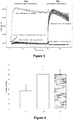
- Figure 3 respresents a typical kinetic response graph obtained with all the compounds of Table IV.
- the injection of the reference agonist at EC 80 gave an increase of fluorescent signal in MAX Signal control wells in which the assay buffer in CA was preinjected, while the response was completely inhibited in MIN Signal control wells due to the preinjection of the reference inhibitor Capsazepine.
- the goal of the assay was to find antagonists of TRPM8 activity; to this aim the change of fluorescent signal during TA phase was measured.
- capsazepine reference antagonist
- Channels were activated with menthol, as the positive control agonist, and the ability of test compound to inhibit this signal was examined and compared to the positive control antagonist, 2-APB.
- the signal elicited in the presence of the positive control agonist (10 ⁇ M menthol) was set to 100% and the signal in the presence of the positive control antagonist (200 ⁇ M 2-APB) was set to 0.
- the plC 50 values of the compound 10 45 and 118 were 9.7, 6 and 7.7 respectively. Values were considered significant if the test compound mean was three or more standard deviations away from the positive control agonist mean.
- Threshold Volume (TV)
- MF Micturition Frequency
- AM Amplitude of Micturition
- the threshold volume (TV) was significantly increased compared to the group treated with the solvent reaching 1.5 mL of volume whereas, in the vehicle group, RBC occurred in all rats with a mean volume of 0.7 ⁇ 0.09 mL.
- Compound 10 did not change AM. No effect on the total MF (measured during 90 min) was observed.
- Compound 118 (10 mg/kg; 5 mg/ml; 0.5 ml/iv/rat) was dissolved in 10% solutol-HS15 and N-Methylpyrrolidone (NMP) (SOLUTOL:NMP 2:1 w/v) and 90% Phosphate Buffered Saline (PBS) 1X, and was administered at day 3 rd , 7 th and 14 th following sciatic nerve ligation. Antiallodynic effects were assessed at 1 and 3 h post dose. Control animals received vehicle alone (0.5 ml/iv/rat; 10% solutol-NMP and 90% PBS).
- NMP N-Methylpyrrolidone
- PBS Phosphate Buffered Saline
- CCI Chronic constriction injury
- sensitivity to tactile stimulation was measured using the Dynamic Plantar Aesthesiometer (DPA, Ugo Basile, Italy). Ligated animals were placed in a chamber with a mesh metal floor covered by a plastic dome that enabled the animal to walk freely, but not to jump. The mechanical stimulus was then delivered in the mid-plantar skin of the hind paw. The cut-off was fixed at 50 g, while the increasing force rate (ramp duration) was settled at 20 sec. The DPA automatically records the force at which the foot was withdrawn and the withdrawal latency. Each paw was tested twice per session. This test did not require any special pre-training, just an acclimation period to the environment and testing procedure. Testing was performed on both the ispsilateral (ligated) and contralateral (unligated) paw before ligation (day 0) and then on 3 rd , 7 th and 14 th days after ligation.
- DPA Dynamic Plantar Aesthesiometer
- Cold sensitivity was measured as the number of foot withdrawal responses after application of acetone to the dorsal surface of the paw.
- a drop of acetone (15-20°C) was applied to the dorsal surface of the ligated paw with a syringe connected to a thin polyethylene tube while the rats were standing on a metal mesh.
- Basal response was measured on the days before treatment (2 nd , 6 th and 13 th ). Data represents mean ⁇ SEM of 3 measurements performed at an interval of approximately 5 min.
- a concentration-response curve of the appropriate reference compound was performed in each experiment.
- the sample radioactivity content was measured after the addition of the scintillation cocktail Microscint 20 (PerkinElmer), by a microplate scintillation Beta-counter TopCount NXT (PerkinElmer).
- the atomic disintegrations per minutes evaluated with the beta counter were about 15 times higher than those found using the gamma counter. Data are expressed as percentage of control binding value (%B) and test compound inhibition was considered significant when %B was ⁇ 75% at 10 ⁇ M.
- each test compound to act as an antagonist of TRPV1 was evaluated with a calcium influx assay.
- the signal elicited in the presence of the positive control agonist (0.1 ⁇ M capsaicin) was set to 100% and the signal in the presence of the antagonist (5 ⁇ M ruthenium red) was set to 0.
- the normalized % inhibition of the test articles is shown in Table below. Values were considered significant if the test article mean was three or more standard deviations away from the positive control agonist mean..
- Table III Compound 10 Log D CYP (% inhibition) @10 ⁇ M hERG binding @10 ⁇ M Microsome stability (% remaining) @1 ⁇ M t 1/2 i.v. rat (min) Plasma Protein Binding (% @10 ⁇ M) 1.59 1A2 ⁇ 5 No effect rat 45 50 rat 98 2C9 ⁇ 5 2C19 ⁇ 5 human 55 human 97 2D6 ⁇ 5 3A4 ⁇ 5 Compound 45 Log D CYP (% inhibition) @10 ⁇ M hERG binding @10 ⁇ M Plasma stability (% remaining) @10 ⁇ M t 1/2 i.v.
- the low logD values of compounds 10 and 118 make them particularly suitable when ip, iv and i ves applications are required, especially in the treatment of urological disorders.
Landscapes
- Health & Medical Sciences (AREA)
- Chemical & Material Sciences (AREA)
- Organic Chemistry (AREA)
- General Health & Medical Sciences (AREA)
- Veterinary Medicine (AREA)
- Medicinal Chemistry (AREA)
- Public Health (AREA)
- Pharmacology & Pharmacy (AREA)
- Life Sciences & Earth Sciences (AREA)
- Animal Behavior & Ethology (AREA)
- Bioinformatics & Cheminformatics (AREA)
- Engineering & Computer Science (AREA)
- General Chemical & Material Sciences (AREA)
- Nuclear Medicine, Radiotherapy & Molecular Imaging (AREA)
- Chemical Kinetics & Catalysis (AREA)
- Epidemiology (AREA)
- Biomedical Technology (AREA)
- Neurology (AREA)
- Neurosurgery (AREA)
- Urology & Nephrology (AREA)
- Pain & Pain Management (AREA)
- Psychiatry (AREA)
- Pulmonology (AREA)
- Vascular Medicine (AREA)
- Rheumatology (AREA)
- Hospice & Palliative Care (AREA)
- Dermatology (AREA)
- Heart & Thoracic Surgery (AREA)
- Cardiology (AREA)
- Pharmaceuticals Containing Other Organic And Inorganic Compounds (AREA)
- Thiazole And Isothizaole Compounds (AREA)
- Plural Heterocyclic Compounds (AREA)
- Acyclic And Carbocyclic Compounds In Medicinal Compositions (AREA)
- Heterocyclic Carbon Compounds Containing A Hetero Ring Having Nitrogen And Oxygen As The Only Ring Hetero Atoms (AREA)
- Organic Low-Molecular-Weight Compounds And Preparation Thereof (AREA)
Priority Applications (8)
| Application Number | Priority Date | Filing Date | Title |
|---|---|---|---|
| HRP20181086TT HRP20181086T1 (hr) | 2011-12-19 | 2012-12-19 | Antagonisti trpm8 |
| SI201231328T SI2793883T1 (en) | 2011-12-19 | 2012-12-19 | Trpm8 antagonists |
| SM20180351T SMT201800351T1 (it) | 2011-12-19 | 2012-12-19 | Antagonisti trpm8 |
| PL12812229T PL2793883T3 (pl) | 2011-12-19 | 2012-12-19 | Antagoniści trpm8 |
| RS20180793A RS57389B1 (sr) | 2011-12-19 | 2012-12-19 | Antagonisti trpm8 |
| EP12812229.8A EP2793883B1 (en) | 2011-12-19 | 2012-12-19 | Trpm8 antagonists |
| MEP-2018-177A ME03038B (me) | 2011-12-19 | 2012-12-19 | Antagonisti trpm8 |
| CY20181100717T CY1120403T1 (el) | 2011-12-19 | 2018-07-10 | Ανταγωνιστες trpm8 |
Applications Claiming Priority (4)
| Application Number | Priority Date | Filing Date | Title |
|---|---|---|---|
| EP11194365.0A EP2606888A1 (en) | 2011-12-19 | 2011-12-19 | Trpm8 antagonists |
| EP12178327 | 2012-07-27 | ||
| PCT/EP2012/076147 WO2013092711A1 (en) | 2011-12-19 | 2012-12-19 | Trpm8 antagonists |
| EP12812229.8A EP2793883B1 (en) | 2011-12-19 | 2012-12-19 | Trpm8 antagonists |
Publications (2)
| Publication Number | Publication Date |
|---|---|
| EP2793883A1 EP2793883A1 (en) | 2014-10-29 |
| EP2793883B1 true EP2793883B1 (en) | 2018-04-18 |
Family
ID=47520061
Family Applications (1)
| Application Number | Title | Priority Date | Filing Date |
|---|---|---|---|
| EP12812229.8A Active EP2793883B1 (en) | 2011-12-19 | 2012-12-19 | Trpm8 antagonists |
Country Status (22)
| Country | Link |
|---|---|
| US (2) | US9585875B2 (enExample) |
| EP (1) | EP2793883B1 (enExample) |
| JP (2) | JP6238906B2 (enExample) |
| KR (1) | KR102000319B1 (enExample) |
| CN (1) | CN104220069B (enExample) |
| AU (1) | AU2012357747B2 (enExample) |
| CY (1) | CY1120403T1 (enExample) |
| DK (1) | DK2793883T3 (enExample) |
| EA (1) | EA025356B1 (enExample) |
| ES (1) | ES2676884T3 (enExample) |
| HR (1) | HRP20181086T1 (enExample) |
| HU (1) | HUE038407T2 (enExample) |
| LT (1) | LT2793883T (enExample) |
| ME (1) | ME03038B (enExample) |
| PL (1) | PL2793883T3 (enExample) |
| PT (1) | PT2793883T (enExample) |
| RS (1) | RS57389B1 (enExample) |
| SI (1) | SI2793883T1 (enExample) |
| SM (1) | SMT201800351T1 (enExample) |
| TR (1) | TR201808861T4 (enExample) |
| WO (1) | WO2013092711A1 (enExample) |
| ZA (1) | ZA201404499B (enExample) |
Families Citing this family (9)
| Publication number | Priority date | Publication date | Assignee | Title |
|---|---|---|---|---|
| EP2481727A1 (en) * | 2011-01-28 | 2012-08-01 | Dompe S.p.A. | TRPM8 receptor antagonists |
| SMT201800351T1 (it) | 2011-12-19 | 2018-09-13 | Dompe Farm Spa | Antagonisti trpm8 |
| CA2908365C (en) | 2013-05-24 | 2023-02-28 | Nestec S.A. | Treatment or prevention of non-inflammatory neuronal damage from brain trauma and strokes using linalool |
| US10294243B2 (en) | 2014-06-05 | 2019-05-21 | Bayer Cropscience Aktiengesellschaft | Bicyclic compounds as pesticides |
| SI3157918T1 (sl) | 2014-06-23 | 2019-05-31 | Dompe Farmaceutici S.P.A. | 2-aril-4-hidroksi-1,3-tiazolni derivati, uporabni kot inhibitorji TRPM8 pri zdravljenju nevralgije, bolečine, KOPB in astme |
| JP6865743B2 (ja) | 2015-10-01 | 2021-04-28 | フィルメニッヒ インコーポレイテッドFirmenich Incorporated | Trpm8の活性調節因子として有用な化合物 |
| EP3184524A1 (en) * | 2015-12-21 | 2017-06-28 | Dompé farmaceutici S.p.A. | 4-hydroxy-2-phenyl-1,3-thiazol-5-yl methanone derivatives as trpm8 antagonists |
| JP6943887B2 (ja) | 2016-06-13 | 2021-10-06 | 田辺三菱製薬株式会社 | 血管運動症状を治療または予防するための組成物および方法 |
| WO2018117166A1 (ja) * | 2016-12-21 | 2018-06-28 | キッセイ薬品工業株式会社 | チアゾール誘導体、またはその薬理学的に許容される塩 |
Family Cites Families (17)
| Publication number | Priority date | Publication date | Assignee | Title |
|---|---|---|---|---|
| DE2713573A1 (de) * | 1977-03-28 | 1978-10-05 | Basf Ag | 4,5-disubstituierte thiazole und verfahren zu ihrer herstellung |
| JPS59220687A (ja) * | 1983-05-30 | 1984-12-12 | 株式会社日立製作所 | 直接サイクル型軽水原子炉一次冷却系の腐食環境抑制設備 |
| SG86971A1 (en) * | 1990-11-30 | 2002-03-19 | Teijin Ltd | 2-arylthiazole derivatives and pharmaceutical composition thereof |
| EP1321463B1 (en) * | 2001-12-21 | 2007-08-08 | Virochem Pharma Inc. | Thiazole derivatives and their use for the treatment or prevention of Flavivirus infections |
| US20080214654A1 (en) | 2004-10-13 | 2008-09-04 | Bayer Healthcare Ag | Substituted Benzyloxy-Phenylmethylamide Derivatives |
| WO2007017094A1 (en) | 2005-08-04 | 2007-02-15 | Bayer Healthcare Ag | Substituted benzyloxy-phenylmethylcarbamate derivatives |
| WO2007017092A1 (en) | 2005-08-04 | 2007-02-15 | Bayer Healthcare Ag | Substituted 4-benzyloxy-benzoic acid amide derivatives |
| WO2007017093A1 (en) | 2005-08-04 | 2007-02-15 | Bayer Healthcare Ag | Substituted 2-benzyloxy-benzoic acid amide derivatives |
| WO2007080109A1 (en) | 2006-01-16 | 2007-07-19 | Bayer Healthcare Ag | Substituded benzyloxy-phenylmethylurea derivatives |
| WO2007089031A1 (en) * | 2006-02-01 | 2007-08-09 | Takeda Pharmaceutical Company Limited | Piperidine derivatives as tachykinin receptor antagonists |
| CA2651865C (en) | 2006-05-10 | 2015-11-24 | Janssen Pharmaceutica N.V. | Cold menthol receptor-1 antagonists |
| EP2183239B1 (en) | 2007-07-18 | 2012-08-22 | Janssen Pharmaceutica, N.V. | Sulfonamides as trpm8 modulators |
| US8148422B2 (en) * | 2008-12-18 | 2012-04-03 | Janssen Pharmaceutica, Nv | Sulfonamides as TRPM8 modulators |
| WO2010103381A1 (en) | 2009-03-13 | 2010-09-16 | Glenmark Pharmaceuticals S.A. | Spirocyclic piperidine derivatives as trpm 8 modulators |
| US20120094964A1 (en) * | 2009-05-01 | 2012-04-19 | Tadashi Inoue | Sulfamoyl benzoic acid derivatives as trpm8 antagonists |
| WO2012036233A1 (ja) * | 2010-09-17 | 2012-03-22 | 塩野義製薬株式会社 | メラニン凝集ホルモン受容体アンタゴニスト活性を有する縮合へテロ環誘導体 |
| SMT201800351T1 (it) | 2011-12-19 | 2018-09-13 | Dompe Farm Spa | Antagonisti trpm8 |
-
2012
- 2012-12-19 SM SM20180351T patent/SMT201800351T1/it unknown
- 2012-12-19 SI SI201231328T patent/SI2793883T1/en unknown
- 2012-12-19 ES ES12812229.8T patent/ES2676884T3/es active Active
- 2012-12-19 EP EP12812229.8A patent/EP2793883B1/en active Active
- 2012-12-19 HR HRP20181086TT patent/HRP20181086T1/hr unknown
- 2012-12-19 DK DK12812229.8T patent/DK2793883T3/en active
- 2012-12-19 HU HUE12812229A patent/HUE038407T2/hu unknown
- 2012-12-19 LT LTEP12812229.8T patent/LT2793883T/lt unknown
- 2012-12-19 AU AU2012357747A patent/AU2012357747B2/en active Active
- 2012-12-19 JP JP2014547975A patent/JP6238906B2/ja active Active
- 2012-12-19 WO PCT/EP2012/076147 patent/WO2013092711A1/en not_active Ceased
- 2012-12-19 ME MEP-2018-177A patent/ME03038B/me unknown
- 2012-12-19 US US14/366,796 patent/US9585875B2/en active Active
- 2012-12-19 CN CN201280069993.7A patent/CN104220069B/zh active Active
- 2012-12-19 TR TR2018/08861T patent/TR201808861T4/tr unknown
- 2012-12-19 RS RS20180793A patent/RS57389B1/sr unknown
- 2012-12-19 PT PT128122298T patent/PT2793883T/pt unknown
- 2012-12-19 EA EA201491213A patent/EA025356B1/ru unknown
- 2012-12-19 KR KR1020147019697A patent/KR102000319B1/ko active Active
- 2012-12-19 PL PL12812229T patent/PL2793883T3/pl unknown
-
2014
- 2014-06-19 ZA ZA2014/04499A patent/ZA201404499B/en unknown
-
2017
- 2017-01-25 US US15/414,803 patent/US9856246B2/en active Active
- 2017-06-19 JP JP2017119493A patent/JP2017197564A/ja not_active Withdrawn
-
2018
- 2018-07-10 CY CY20181100717T patent/CY1120403T1/el unknown
Non-Patent Citations (1)
| Title |
|---|
| None * |
Also Published As
Similar Documents
| Publication | Publication Date | Title |
|---|---|---|
| EP2793883B1 (en) | Trpm8 antagonists | |
| Bhutani et al. | Novel hybrids of benzothiazole-1, 3, 4-oxadiazole-4-thiazolidinone: Synthesis, in silico ADME study, molecular docking and in vivo anti-diabetic assessment | |
| RU2271355C2 (ru) | Производные пятичленных гетероциклов, способ их получения и их применение в качестве лекарственных средств | |
| US11046662B2 (en) | 2-aryl-4-hydroxy-1,3-thiazole derivatives useful as TRPM8-inhibitors in treatment of neuralgia, pain, COPD and asthma | |
| US20060178400A1 (en) | Novel acetyl-CoA carboxylase (ACC) inhibitors and their use in diabetes, obesity and metabolic syndrome | |
| EP2606888A1 (en) | Trpm8 antagonists | |
| Purohit et al. | Benzisoxazole containing thiazolidinediones as peroxisome proliferator activated receptor-γ agonists: design, molecular docking, synthesis & antidiabetic studies | |
| HK1235778B (en) | 2-aryl-4-hydroxy-1,3-thiazole derivatives useful as trpm8-inhibitors in treatment of neuralgia, pain, copd and asthma | |
| HK1235778A1 (en) | 2-aryl-4-hydroxy-1,3-thiazole derivatives useful as trpm8-inhibitors in treatment of neuralgia, pain, copd and asthma | |
| HK1203810B (zh) | Trpm8拮抗剂 | |
| EP3394053B1 (en) | (4-hydroxy-2-phenyl-1,3-thiazol-5-yl) methanone derivatives as trpm8 antagonists | |
| HK1257896A1 (en) | (4-hydroxy-2-phenyl-1,3-thiazol-5-yl) methanone derivatives as trpm8 antagonists |
Legal Events
| Date | Code | Title | Description |
|---|---|---|---|
| PUAI | Public reference made under article 153(3) epc to a published international application that has entered the european phase |
Free format text: ORIGINAL CODE: 0009012 |
|
| 17P | Request for examination filed |
Effective date: 20140718 |
|
| AK | Designated contracting states |
Kind code of ref document: A1 Designated state(s): AL AT BE BG CH CY CZ DE DK EE ES FI FR GB GR HR HU IE IS IT LI LT LU LV MC MK MT NL NO PL PT RO RS SE SI SK SM TR |
|
| AX | Request for extension of the european patent |
Extension state: BA ME |
|
| RIN1 | Information on inventor provided before grant (corrected) |
Inventor name: COLAGIOIA, SANDRO Inventor name: BRANDOLINI, LAURA Inventor name: LIBERATI, CHIARA Inventor name: ARAMINI, ANDREA Inventor name: MORICONI, ALESSIO Inventor name: BIANCHINI, GIANLUCA Inventor name: BOVOLENTA, SILVIA |
|
| RAP1 | Party data changed (applicant data changed or rights of an application transferred) |
Owner name: DOMPE FARMACEUTICI S.P.A. |
|
| 17Q | First examination report despatched |
Effective date: 20160714 |
|
| RIC1 | Information provided on ipc code assigned before grant |
Ipc: A61K 31/421 20060101AFI20170929BHEP Ipc: C07D 263/48 20060101ALI20170929BHEP Ipc: A61P 29/00 20060101ALI20170929BHEP Ipc: C07D 413/02 20060101ALI20170929BHEP Ipc: A61K 31/4439 20060101ALI20170929BHEP Ipc: C07D 263/40 20060101ALI20170929BHEP Ipc: A61K 31/422 20060101ALI20170929BHEP Ipc: A61K 31/472 20060101ALI20170929BHEP Ipc: A61K 31/427 20060101ALI20170929BHEP Ipc: C07D 417/02 20060101ALI20170929BHEP Ipc: C07D 277/34 20060101ALI20170929BHEP Ipc: C07D 277/42 20060101ALI20170929BHEP Ipc: C07D 263/42 20060101ALI20170929BHEP Ipc: C07D 417/10 20060101ALI20170929BHEP Ipc: C07D 403/02 20060101ALI20170929BHEP Ipc: C07D 417/12 20060101ALI20170929BHEP Ipc: C07D 417/04 20060101ALI20170929BHEP Ipc: C07D 413/04 20060101ALI20170929BHEP Ipc: C07D 277/56 20060101ALI20170929BHEP Ipc: A61K 31/426 20060101ALI20170929BHEP Ipc: A61K 31/4245 20060101ALI20170929BHEP |
|
| GRAP | Despatch of communication of intention to grant a patent |
Free format text: ORIGINAL CODE: EPIDOSNIGR1 |
|
| INTG | Intention to grant announced |
Effective date: 20171212 |
|
| GRAS | Grant fee paid |
Free format text: ORIGINAL CODE: EPIDOSNIGR3 |
|
| GRAA | (expected) grant |
Free format text: ORIGINAL CODE: 0009210 |
|
| AK | Designated contracting states |
Kind code of ref document: B1 Designated state(s): AL AT BE BG CH CY CZ DE DK EE ES FI FR GB GR HR HU IE IS IT LI LT LU LV MC MK MT NL NO PL PT RO RS SE SI SK SM TR |
|
| AX | Request for extension of the european patent |
Extension state: BA ME |
|
| REG | Reference to a national code |
Ref country code: GB Ref legal event code: FG4D |
|
| REG | Reference to a national code |
Ref country code: CH Ref legal event code: EP |
|
| REG | Reference to a national code |
Ref country code: AT Ref legal event code: REF Ref document number: 989706 Country of ref document: AT Kind code of ref document: T Effective date: 20180515 |
|
| REG | Reference to a national code |
Ref country code: IE Ref legal event code: FG4D |
|
| REG | Reference to a national code |
Ref country code: DE Ref legal event code: R096 Ref document number: 602012045410 Country of ref document: DE |
|
| REG | Reference to a national code |
Ref country code: SE Ref legal event code: TRGR |
|
| REG | Reference to a national code |
Ref country code: RO Ref legal event code: EPE |
|
| REG | Reference to a national code |
Ref country code: HR Ref legal event code: TUEP Ref document number: P20181086 Country of ref document: HR |
|
| REG | Reference to a national code |
Ref country code: PT Ref legal event code: SC4A Ref document number: 2793883 Country of ref document: PT Date of ref document: 20180718 Kind code of ref document: T Free format text: AVAILABILITY OF NATIONAL TRANSLATION Effective date: 20180711 |
|
| REG | Reference to a national code |
Ref country code: ES Ref legal event code: FG2A Ref document number: 2676884 Country of ref document: ES Kind code of ref document: T3 Effective date: 20180725 Ref country code: NL Ref legal event code: FP |
|
| REG | Reference to a national code |
Ref country code: DK Ref legal event code: T3 Effective date: 20180719 |
|
| REG | Reference to a national code |
Ref country code: EE Ref legal event code: FG4A Ref document number: E015581 Country of ref document: EE Effective date: 20180618 |
|
| REG | Reference to a national code |
Ref country code: NO Ref legal event code: T2 Effective date: 20180418 |
|
| REG | Reference to a national code |
Ref country code: HR Ref legal event code: T1PR Ref document number: P20181086 Country of ref document: HR |
|
| REG | Reference to a national code |
Ref country code: SK Ref legal event code: T3 Ref document number: E 27733 Country of ref document: SK |
|
| REG | Reference to a national code |
Ref country code: HU Ref legal event code: AG4A Ref document number: E038407 Country of ref document: HU |
|
| REG | Reference to a national code |
Ref country code: HR Ref legal event code: ODRP Ref document number: P20181086 Country of ref document: HR Payment date: 20181207 Year of fee payment: 7 |
|
| REG | Reference to a national code |
Ref country code: DE Ref legal event code: R097 Ref document number: 602012045410 Country of ref document: DE |
|
| REG | Reference to a national code |
Ref country code: GR Ref legal event code: EP Ref document number: 20180401982 Country of ref document: GR Effective date: 20190109 |
|
| PLBE | No opposition filed within time limit |
Free format text: ORIGINAL CODE: 0009261 |
|
| STAA | Information on the status of an ep patent application or granted ep patent |
Free format text: STATUS: NO OPPOSITION FILED WITHIN TIME LIMIT |
|
| 26N | No opposition filed |
Effective date: 20190121 |
|
| REG | Reference to a national code |
Ref country code: HR Ref legal event code: ODRP Ref document number: P20181086 Country of ref document: HR Payment date: 20191218 Year of fee payment: 8 |
|
| REG | Reference to a national code |
Ref country code: DE Ref legal event code: R082 Ref document number: 602012045410 Country of ref document: DE Representative=s name: STRAUS, ALEXANDER, DIPL.-CHEM.UNIV. DR.PHIL., DE Ref country code: DE Ref legal event code: R082 Ref document number: 602012045410 Country of ref document: DE Representative=s name: 2K PATENT- UND RECHTSANWAELTE PARTNERSCHAFT MB, DE |
|
| REG | Reference to a national code |
Ref country code: HR Ref legal event code: ODRP Ref document number: P20181086 Country of ref document: HR Payment date: 20201202 Year of fee payment: 9 |
|
| REG | Reference to a national code |
Ref country code: AT Ref legal event code: UEP Ref document number: 989706 Country of ref document: AT Kind code of ref document: T Effective date: 20180418 |
|
| REG | Reference to a national code |
Ref country code: HR Ref legal event code: ODRP Ref document number: P20181086 Country of ref document: HR Payment date: 20211203 Year of fee payment: 10 |
|
| REG | Reference to a national code |
Ref country code: HR Ref legal event code: ODRP Ref document number: P20181086 Country of ref document: HR Payment date: 20221207 Year of fee payment: 11 |
|
| P01 | Opt-out of the competence of the unified patent court (upc) registered |
Effective date: 20230528 |
|
| REG | Reference to a national code |
Ref country code: HR Ref legal event code: ODRP Ref document number: P20181086 Country of ref document: HR Payment date: 20231206 Year of fee payment: 12 |
|
| REG | Reference to a national code |
Ref country code: DE Ref legal event code: R082 Ref document number: 602012045410 Country of ref document: DE Representative=s name: STRAUS, ALEXANDER, DIPL.-CHEM.UNIV. DR.PHIL., DE |
|
| PGFP | Annual fee paid to national office [announced via postgrant information from national office to epo] |
Ref country code: PT Payment date: 20241204 Year of fee payment: 13 |
|
| PGFP | Annual fee paid to national office [announced via postgrant information from national office to epo] |
Ref country code: LT Payment date: 20241203 Year of fee payment: 13 |
|
| PGFP | Annual fee paid to national office [announced via postgrant information from national office to epo] |
Ref country code: MC Payment date: 20241205 Year of fee payment: 13 |
|
| PGFP | Annual fee paid to national office [announced via postgrant information from national office to epo] |
Ref country code: DK Payment date: 20241226 Year of fee payment: 13 |
|
| PGFP | Annual fee paid to national office [announced via postgrant information from national office to epo] |
Ref country code: BE Payment date: 20241227 Year of fee payment: 13 Ref country code: PL Payment date: 20241210 Year of fee payment: 13 Ref country code: NL Payment date: 20241226 Year of fee payment: 13 Ref country code: GR Payment date: 20241230 Year of fee payment: 13 Ref country code: FI Payment date: 20241226 Year of fee payment: 13 Ref country code: LU Payment date: 20241227 Year of fee payment: 13 |
|
| PGFP | Annual fee paid to national office [announced via postgrant information from national office to epo] |
Ref country code: GB Payment date: 20241227 Year of fee payment: 13 |
|
| REG | Reference to a national code |
Ref country code: HR Ref legal event code: ODRP Ref document number: P20181086 Country of ref document: HR Payment date: 20241210 Year of fee payment: 13 |
|
| PGFP | Annual fee paid to national office [announced via postgrant information from national office to epo] |
Ref country code: FR Payment date: 20241226 Year of fee payment: 13 Ref country code: BG Payment date: 20241212 Year of fee payment: 13 |
|
| PGFP | Annual fee paid to national office [announced via postgrant information from national office to epo] |
Ref country code: LV Payment date: 20241203 Year of fee payment: 13 Ref country code: EE Payment date: 20241203 Year of fee payment: 13 |
|
| PGFP | Annual fee paid to national office [announced via postgrant information from national office to epo] |
Ref country code: HU Payment date: 20241209 Year of fee payment: 13 Ref country code: IS Payment date: 20241210 Year of fee payment: 13 Ref country code: AT Payment date: 20241204 Year of fee payment: 13 |
|
| PGFP | Annual fee paid to national office [announced via postgrant information from national office to epo] |
Ref country code: CZ Payment date: 20241206 Year of fee payment: 13 Ref country code: HR Payment date: 20241210 Year of fee payment: 13 Ref country code: IE Payment date: 20241227 Year of fee payment: 13 |
|
| PGFP | Annual fee paid to national office [announced via postgrant information from national office to epo] |
Ref country code: RO Payment date: 20241209 Year of fee payment: 13 Ref country code: SK Payment date: 20241203 Year of fee payment: 13 |
|
| PGFP | Annual fee paid to national office [announced via postgrant information from national office to epo] |
Ref country code: IT Payment date: 20241218 Year of fee payment: 13 Ref country code: RS Payment date: 20241205 Year of fee payment: 13 Ref country code: SM Payment date: 20241209 Year of fee payment: 13 |
|
| PGFP | Annual fee paid to national office [announced via postgrant information from national office to epo] |
Ref country code: SE Payment date: 20241227 Year of fee payment: 13 |
|
| PGFP | Annual fee paid to national office [announced via postgrant information from national office to epo] |
Ref country code: MT Payment date: 20241203 Year of fee payment: 13 |
|
| PGFP | Annual fee paid to national office [announced via postgrant information from national office to epo] |
Ref country code: AL Payment date: 20241211 Year of fee payment: 13 |
|
| PGFP | Annual fee paid to national office [announced via postgrant information from national office to epo] |
Ref country code: SI Payment date: 20241202 Year of fee payment: 13 |
|
| PGFP | Annual fee paid to national office [announced via postgrant information from national office to epo] |
Ref country code: DE Payment date: 20241227 Year of fee payment: 13 |
|
| PGFP | Annual fee paid to national office [announced via postgrant information from national office to epo] |
Ref country code: ES Payment date: 20250102 Year of fee payment: 13 |
|
| PGFP | Annual fee paid to national office [announced via postgrant information from national office to epo] |
Ref country code: NO Payment date: 20241230 Year of fee payment: 13 |
|
| PGFP | Annual fee paid to national office [announced via postgrant information from national office to epo] |
Ref country code: CH Payment date: 20250108 Year of fee payment: 13 |
|
| PGFP | Annual fee paid to national office [announced via postgrant information from national office to epo] |
Ref country code: TR Payment date: 20241210 Year of fee payment: 13 |
|
| PGFP | Annual fee paid to national office [announced via postgrant information from national office to epo] |
Ref country code: CY Payment date: 20241210 Year of fee payment: 13 |
|
| PGFP | Annual fee paid to national office [announced via postgrant information from national office to epo] |
Ref country code: MK Payment date: 20241204 Year of fee payment: 13 |