EP2791137B1 - Pyrazolopyridine derivatives, preparation process therefor and therapeutic use thereof - Google Patents
Pyrazolopyridine derivatives, preparation process therefor and therapeutic use thereof Download PDFInfo
- Publication number
- EP2791137B1 EP2791137B1 EP12808328.4A EP12808328A EP2791137B1 EP 2791137 B1 EP2791137 B1 EP 2791137B1 EP 12808328 A EP12808328 A EP 12808328A EP 2791137 B1 EP2791137 B1 EP 2791137B1
- Authority
- EP
- European Patent Office
- Prior art keywords
- group
- pyrazolo
- chf
- hcl
- phenyl
- Prior art date
- Legal status (The legal status is an assumption and is not a legal conclusion. Google has not performed a legal analysis and makes no representation as to the accuracy of the status listed.)
- Active
Links
- 0 Cc1ccc(C**)cc1 Chemical compound Cc1ccc(C**)cc1 0.000 description 67
- OZLMBXPYRDASTP-UHFFFAOYSA-N Cc(cc1C#N)ccc1N Chemical compound Cc(cc1C#N)ccc1N OZLMBXPYRDASTP-UHFFFAOYSA-N 0.000 description 11
- NMILGIZTAZXMTM-UHFFFAOYSA-N CCCN1CCOCC1 Chemical compound CCCN1CCOCC1 NMILGIZTAZXMTM-UHFFFAOYSA-N 0.000 description 4
- UREMNBHWTNQTMS-UHFFFAOYSA-N Cc(cc1)cc(C(O)=O)c1F Chemical compound Cc(cc1)cc(C(O)=O)c1F UREMNBHWTNQTMS-UHFFFAOYSA-N 0.000 description 3
- RZXMPPFPUUCRFN-UHFFFAOYSA-N Cc(cc1)ccc1N Chemical compound Cc(cc1)ccc1N RZXMPPFPUUCRFN-UHFFFAOYSA-N 0.000 description 3
- CMAOLVNGLTWICC-UHFFFAOYSA-N Cc(cc1C#N)ccc1F Chemical compound Cc(cc1C#N)ccc1F CMAOLVNGLTWICC-UHFFFAOYSA-N 0.000 description 3
- UVYKXYCKWHOYOC-UHFFFAOYSA-N Cc(cc1C#N)ccc1NC Chemical compound Cc(cc1C#N)ccc1NC UVYKXYCKWHOYOC-UHFFFAOYSA-N 0.000 description 3
- CJJLEUQMMMLOFI-UHFFFAOYSA-N Cc(cc1OC)ccc1N Chemical compound Cc(cc1OC)ccc1N CJJLEUQMMMLOFI-UHFFFAOYSA-N 0.000 description 2
- FSXUPZLFIOETTL-UHFFFAOYSA-N Cc(cc1OC)ccc1NC Chemical compound Cc(cc1OC)ccc1NC FSXUPZLFIOETTL-UHFFFAOYSA-N 0.000 description 2
- VDWQWOXVBXURMT-UHFFFAOYSA-N Cc1cncc(C#N)c1 Chemical compound Cc1cncc(C#N)c1 VDWQWOXVBXURMT-UHFFFAOYSA-N 0.000 description 2
- AHZKBURRPSXTLD-JOHQOZBBSA-N C/C=C/C(/CC#N)=C/C(/C=C\C1=CC1)=N\C Chemical compound C/C=C/C(/CC#N)=C/C(/C=C\C1=CC1)=N\C AHZKBURRPSXTLD-JOHQOZBBSA-N 0.000 description 1
- YNAVUWVOSKDBBP-UHFFFAOYSA-N C1NCCOC1 Chemical compound C1NCCOC1 YNAVUWVOSKDBBP-UHFFFAOYSA-N 0.000 description 1
- GVWRNXHVPREISV-UHFFFAOYSA-N CC(C=C1C#N)=CC=CC1N Chemical compound CC(C=C1C#N)=CC=CC1N GVWRNXHVPREISV-UHFFFAOYSA-N 0.000 description 1
- SHPLUPWGQJEUOW-UHFFFAOYSA-N CC(C=C1C#N)=CCC1F Chemical compound CC(C=C1C#N)=CCC1F SHPLUPWGQJEUOW-UHFFFAOYSA-N 0.000 description 1
- OMAMMBSCEDNJKL-UHFFFAOYSA-N CC(C=C1C#N)=CCC1N=C Chemical compound CC(C=C1C#N)=CCC1N=C OMAMMBSCEDNJKL-UHFFFAOYSA-N 0.000 description 1
- ZMXNPHZWKUPSLE-UHFFFAOYSA-N CC(C=C1C#N)=CCC1NC Chemical compound CC(C=C1C#N)=CCC1NC ZMXNPHZWKUPSLE-UHFFFAOYSA-N 0.000 description 1
- XWGAHYROKJEMMP-UHFFFAOYSA-N CC(C=C1C(O)=O)=CCC1F Chemical compound CC(C=C1C(O)=O)=CCC1F XWGAHYROKJEMMP-UHFFFAOYSA-N 0.000 description 1
- GAFSZESZYDQOJI-UHFFFAOYSA-O CC(C=C1[OH2+])=CCC1N Chemical compound CC(C=C1[OH2+])=CCC1N GAFSZESZYDQOJI-UHFFFAOYSA-O 0.000 description 1
- MQDYCJYIXJGZFV-UHFFFAOYSA-N CC(CC=C1N)C=C1C#N Chemical compound CC(CC=C1N)C=C1C#N MQDYCJYIXJGZFV-UHFFFAOYSA-N 0.000 description 1
- PXRRHQUNXRDQKU-UHFFFAOYSA-N CC(CC=C1NCO)C=C1NC Chemical compound CC(CC=C1NCO)C=C1NC PXRRHQUNXRDQKU-UHFFFAOYSA-N 0.000 description 1
- JTKIEIHPPVHAIC-UHFFFAOYSA-N CC(CNCc1ncccc1)=O Chemical compound CC(CNCc1ncccc1)=O JTKIEIHPPVHAIC-UHFFFAOYSA-N 0.000 description 1
- PRBDBRIBRKFJIJ-UHFFFAOYSA-N CC(NC1=NCCC=C1)=O Chemical compound CC(NC1=NCCC=C1)=O PRBDBRIBRKFJIJ-UHFFFAOYSA-N 0.000 description 1
- QROKOTBWFZITJZ-UHFFFAOYSA-N CC(Nc1ccccn1)=O Chemical compound CC(Nc1ccccn1)=O QROKOTBWFZITJZ-UHFFFAOYSA-N 0.000 description 1
- GXXRVISNHJUONO-UHFFFAOYSA-N CC1=CC(C(F)(F)F)NN1C Chemical compound CC1=CC(C(F)(F)F)NN1C GXXRVISNHJUONO-UHFFFAOYSA-N 0.000 description 1
- MLQGUSUHSHGMCL-UHFFFAOYSA-N CC1=[N]=C(CC(CCO)=N)C=C1 Chemical compound CC1=[N]=C(CC(CCO)=N)C=C1 MLQGUSUHSHGMCL-UHFFFAOYSA-N 0.000 description 1
- IKLJUPAVTMQKCD-UHFFFAOYSA-N CC1C=C2N=CNC2=CC1 Chemical compound CC1C=C2N=CNC2=CC1 IKLJUPAVTMQKCD-UHFFFAOYSA-N 0.000 description 1
- COCKLDXEHIUNCQ-UHFFFAOYSA-N CC1N(c2ccc(C)cc2)N=C(C)C1 Chemical compound CC1N(c2ccc(C)cc2)N=C(C)C1 COCKLDXEHIUNCQ-UHFFFAOYSA-N 0.000 description 1
- LVQUNUGXWNMQJI-UHFFFAOYSA-N CCC(CCC=C1N)C=C1C#N Chemical compound CCC(CCC=C1N)C=C1C#N LVQUNUGXWNMQJI-UHFFFAOYSA-N 0.000 description 1
- HVCNXQOWACZAFN-UHFFFAOYSA-N CCN1CCOCC1 Chemical compound CCN1CCOCC1 HVCNXQOWACZAFN-UHFFFAOYSA-N 0.000 description 1
- HCPJEHJGFKWRFM-UHFFFAOYSA-N Cc(cc1)cc(O)c1N Chemical compound Cc(cc1)cc(O)c1N HCPJEHJGFKWRFM-UHFFFAOYSA-N 0.000 description 1
- QXMOFZGGGOFRPH-UHFFFAOYSA-N Cc(cc1)ccc1C(N1CCCC1)=O Chemical compound Cc(cc1)ccc1C(N1CCCC1)=O QXMOFZGGGOFRPH-UHFFFAOYSA-N 0.000 description 1
- KAKHDLZASCIGMT-UHFFFAOYSA-N Cc(cc1)cnc1NCCO Chemical compound Cc(cc1)cnc1NCCO KAKHDLZASCIGMT-UHFFFAOYSA-N 0.000 description 1
- MGTGNJJCHUKKEL-UHFFFAOYSA-N Cc(cc1C#N)ccc1N=C Chemical compound Cc(cc1C#N)ccc1N=C MGTGNJJCHUKKEL-UHFFFAOYSA-N 0.000 description 1
- CZKDMJBSPOUACB-UHFFFAOYSA-N Cc(cc1C#N)cnc1OC Chemical compound Cc(cc1C#N)cnc1OC CZKDMJBSPOUACB-UHFFFAOYSA-N 0.000 description 1
- XGYLSRFSXKAYCR-UHFFFAOYSA-N Cc(cc1Cl)ccc1N Chemical compound Cc(cc1Cl)ccc1N XGYLSRFSXKAYCR-UHFFFAOYSA-N 0.000 description 1
- NZKFECDSBHQDCQ-UHFFFAOYSA-N Cc1cc(C)cc(NC)c1 Chemical compound Cc1cc(C)cc(NC)c1 NZKFECDSBHQDCQ-UHFFFAOYSA-N 0.000 description 1
- PQNUIDJXNXPHGG-UHFFFAOYSA-N Cc1ccc(N2CCCC2)nc1 Chemical compound Cc1ccc(N2CCCC2)nc1 PQNUIDJXNXPHGG-UHFFFAOYSA-N 0.000 description 1
- BOHCMQZJWOGWTA-UHFFFAOYSA-N Cc1cccc(C#N)c1 Chemical compound Cc1cccc(C#N)c1 BOHCMQZJWOGWTA-UHFFFAOYSA-N 0.000 description 1
- ZTWBFEWDADLHNH-UHFFFAOYSA-N Cc1cccc(N(C)I)c1 Chemical compound Cc1cccc(N(C)I)c1 ZTWBFEWDADLHNH-UHFFFAOYSA-N 0.000 description 1
- HDMDXJAWWCMBSV-UHFFFAOYSA-N Cc1cccc(N2CCOCC2)c1 Chemical compound Cc1cccc(N2CCOCC2)c1 HDMDXJAWWCMBSV-UHFFFAOYSA-N 0.000 description 1
- OSIGJGFTADMDOB-UHFFFAOYSA-N Cc1cccc(OC)c1 Chemical compound Cc1cccc(OC)c1 OSIGJGFTADMDOB-UHFFFAOYSA-N 0.000 description 1
Images

Classifications
-
- A—HUMAN NECESSITIES
- A61—MEDICAL OR VETERINARY SCIENCE; HYGIENE
- A61K—PREPARATIONS FOR MEDICAL, DENTAL OR TOILETRY PURPOSES
- A61K31/00—Medicinal preparations containing organic active ingredients
- A61K31/33—Heterocyclic compounds
- A61K31/395—Heterocyclic compounds having nitrogen as a ring hetero atom, e.g. guanethidine or rifamycins
- A61K31/535—Heterocyclic compounds having nitrogen as a ring hetero atom, e.g. guanethidine or rifamycins having six-membered rings with at least one nitrogen and one oxygen as the ring hetero atoms, e.g. 1,2-oxazines
- A61K31/5375—1,4-Oxazines, e.g. morpholine
- A61K31/538—1,4-Oxazines, e.g. morpholine ortho- or peri-condensed with carbocyclic ring systems
-
- A—HUMAN NECESSITIES
- A61—MEDICAL OR VETERINARY SCIENCE; HYGIENE
- A61K—PREPARATIONS FOR MEDICAL, DENTAL OR TOILETRY PURPOSES
- A61K31/00—Medicinal preparations containing organic active ingredients
- A61K31/33—Heterocyclic compounds
- A61K31/395—Heterocyclic compounds having nitrogen as a ring hetero atom, e.g. guanethidine or rifamycins
- A61K31/435—Heterocyclic compounds having nitrogen as a ring hetero atom, e.g. guanethidine or rifamycins having six-membered rings with one nitrogen as the only ring hetero atom
- A61K31/4353—Heterocyclic compounds having nitrogen as a ring hetero atom, e.g. guanethidine or rifamycins having six-membered rings with one nitrogen as the only ring hetero atom ortho- or peri-condensed with heterocyclic ring systems
- A61K31/437—Heterocyclic compounds having nitrogen as a ring hetero atom, e.g. guanethidine or rifamycins having six-membered rings with one nitrogen as the only ring hetero atom ortho- or peri-condensed with heterocyclic ring systems the heterocyclic ring system containing a five-membered ring having nitrogen as a ring hetero atom, e.g. indolizine, beta-carboline
-
- A—HUMAN NECESSITIES
- A61—MEDICAL OR VETERINARY SCIENCE; HYGIENE
- A61K—PREPARATIONS FOR MEDICAL, DENTAL OR TOILETRY PURPOSES
- A61K31/00—Medicinal preparations containing organic active ingredients
- A61K31/33—Heterocyclic compounds
- A61K31/395—Heterocyclic compounds having nitrogen as a ring hetero atom, e.g. guanethidine or rifamycins
- A61K31/435—Heterocyclic compounds having nitrogen as a ring hetero atom, e.g. guanethidine or rifamycins having six-membered rings with one nitrogen as the only ring hetero atom
- A61K31/44—Non condensed pyridines; Hydrogenated derivatives thereof
- A61K31/4427—Non condensed pyridines; Hydrogenated derivatives thereof containing further heterocyclic ring systems
- A61K31/444—Non condensed pyridines; Hydrogenated derivatives thereof containing further heterocyclic ring systems containing a six-membered ring with nitrogen as a ring heteroatom, e.g. amrinone
-
- A—HUMAN NECESSITIES
- A61—MEDICAL OR VETERINARY SCIENCE; HYGIENE
- A61K—PREPARATIONS FOR MEDICAL, DENTAL OR TOILETRY PURPOSES
- A61K31/00—Medicinal preparations containing organic active ingredients
- A61K31/33—Heterocyclic compounds
- A61K31/395—Heterocyclic compounds having nitrogen as a ring hetero atom, e.g. guanethidine or rifamycins
- A61K31/435—Heterocyclic compounds having nitrogen as a ring hetero atom, e.g. guanethidine or rifamycins having six-membered rings with one nitrogen as the only ring hetero atom
- A61K31/44—Non condensed pyridines; Hydrogenated derivatives thereof
- A61K31/445—Non condensed piperidines, e.g. piperocaine
- A61K31/4523—Non condensed piperidines, e.g. piperocaine containing further heterocyclic ring systems
- A61K31/4545—Non condensed piperidines, e.g. piperocaine containing further heterocyclic ring systems containing a six-membered ring with nitrogen as a ring hetero atom, e.g. pipamperone, anabasine
-
- A—HUMAN NECESSITIES
- A61—MEDICAL OR VETERINARY SCIENCE; HYGIENE
- A61K—PREPARATIONS FOR MEDICAL, DENTAL OR TOILETRY PURPOSES
- A61K31/00—Medicinal preparations containing organic active ingredients
- A61K31/33—Heterocyclic compounds
- A61K31/395—Heterocyclic compounds having nitrogen as a ring hetero atom, e.g. guanethidine or rifamycins
- A61K31/535—Heterocyclic compounds having nitrogen as a ring hetero atom, e.g. guanethidine or rifamycins having six-membered rings with at least one nitrogen and one oxygen as the ring hetero atoms, e.g. 1,2-oxazines
- A61K31/5355—Non-condensed oxazines and containing further heterocyclic rings
-
- A—HUMAN NECESSITIES
- A61—MEDICAL OR VETERINARY SCIENCE; HYGIENE
- A61K—PREPARATIONS FOR MEDICAL, DENTAL OR TOILETRY PURPOSES
- A61K31/00—Medicinal preparations containing organic active ingredients
- A61K31/33—Heterocyclic compounds
- A61K31/395—Heterocyclic compounds having nitrogen as a ring hetero atom, e.g. guanethidine or rifamycins
- A61K31/535—Heterocyclic compounds having nitrogen as a ring hetero atom, e.g. guanethidine or rifamycins having six-membered rings with at least one nitrogen and one oxygen as the ring hetero atoms, e.g. 1,2-oxazines
- A61K31/536—Heterocyclic compounds having nitrogen as a ring hetero atom, e.g. guanethidine or rifamycins having six-membered rings with at least one nitrogen and one oxygen as the ring hetero atoms, e.g. 1,2-oxazines ortho- or peri-condensed with carbocyclic ring systems
-
- A—HUMAN NECESSITIES
- A61—MEDICAL OR VETERINARY SCIENCE; HYGIENE
- A61K—PREPARATIONS FOR MEDICAL, DENTAL OR TOILETRY PURPOSES
- A61K31/00—Medicinal preparations containing organic active ingredients
- A61K31/33—Heterocyclic compounds
- A61K31/395—Heterocyclic compounds having nitrogen as a ring hetero atom, e.g. guanethidine or rifamycins
- A61K31/535—Heterocyclic compounds having nitrogen as a ring hetero atom, e.g. guanethidine or rifamycins having six-membered rings with at least one nitrogen and one oxygen as the ring hetero atoms, e.g. 1,2-oxazines
- A61K31/5375—1,4-Oxazines, e.g. morpholine
- A61K31/5377—1,4-Oxazines, e.g. morpholine not condensed and containing further heterocyclic rings, e.g. timolol
-
- A—HUMAN NECESSITIES
- A61—MEDICAL OR VETERINARY SCIENCE; HYGIENE
- A61K—PREPARATIONS FOR MEDICAL, DENTAL OR TOILETRY PURPOSES
- A61K45/00—Medicinal preparations containing active ingredients not provided for in groups A61K31/00 - A61K41/00
- A61K45/06—Mixtures of active ingredients without chemical characterisation, e.g. antiphlogistics and cardiaca
-
- A—HUMAN NECESSITIES
- A61—MEDICAL OR VETERINARY SCIENCE; HYGIENE
- A61N—ELECTROTHERAPY; MAGNETOTHERAPY; RADIATION THERAPY; ULTRASOUND THERAPY
- A61N5/00—Radiation therapy
- A61N5/10—X-ray therapy; Gamma-ray therapy; Particle-irradiation therapy
-
- A—HUMAN NECESSITIES
- A61—MEDICAL OR VETERINARY SCIENCE; HYGIENE
- A61P—SPECIFIC THERAPEUTIC ACTIVITY OF CHEMICAL COMPOUNDS OR MEDICINAL PREPARATIONS
- A61P35/00—Antineoplastic agents
-
- A—HUMAN NECESSITIES
- A61—MEDICAL OR VETERINARY SCIENCE; HYGIENE
- A61P—SPECIFIC THERAPEUTIC ACTIVITY OF CHEMICAL COMPOUNDS OR MEDICINAL PREPARATIONS
- A61P35/00—Antineoplastic agents
- A61P35/04—Antineoplastic agents specific for metastasis
-
- C—CHEMISTRY; METALLURGY
- C07—ORGANIC CHEMISTRY
- C07D—HETEROCYCLIC COMPOUNDS
- C07D471/00—Heterocyclic compounds containing nitrogen atoms as the only ring hetero atoms in the condensed system, at least one ring being a six-membered ring with one nitrogen atom, not provided for by groups C07D451/00 - C07D463/00
- C07D471/02—Heterocyclic compounds containing nitrogen atoms as the only ring hetero atoms in the condensed system, at least one ring being a six-membered ring with one nitrogen atom, not provided for by groups C07D451/00 - C07D463/00 in which the condensed system contains two hetero rings
- C07D471/04—Ortho-condensed systems
Definitions
- the present invention relates to pyrazolopyrimidine derivatives that inhibit the FGF (Fibroblast Growth Factor) receptors, to a process for preparing them and to the therapeutic use thereof.
- FGF Fibroblast Growth Factor
- FGFs are a family of polypeptides synthesized by a large number of cells during embryonic development and by adult tissue cells under various pathological conditions.
- the present invention discloses compounds corresponding to formula (I): in which: the representation of the pyrazole ring indicates that the substituent R 4 may be borne either by the nitrogen alpha to the pyridine ring (I') or by the nitrogen alpha to the carbon bearing a substituent R 3 (I") such that: Either
- the present invention relates to compound corresponding to formula (I): in which: the representation of the pyrazole ring indicates that the substituent R 4 may be borne either by the nitrogen alpha to the pyridine ring (I') or by the nitrogen alpha to the carbon bearing a substituent R 3 (I") such that: Either
- the compounds of formula (I) may exist in the form of bases or salified with acids or bases, especially pharmaceutically acceptable acids or bases. Such addition salts form part of the invention.
- salts are advantageously prepared with pharmaceutically acceptable acids, but salts of other acids that are of use, for example, for purifying or isolating the compounds of formula (I) are also described in the invention.
- a subject of the present invention is particularly compounds of formula (I) as defined above in which R 1 represents an aryl group, in the form of the base or of an acid-addition or base-addition salt.
- Another subject of the present invention is particularly compounds of formula (I) as defined above in which R 2 represents a group:
- protecting group (P) means a group that can, firstly, protect a reactive function such as a hydroxyl or an amine during a synthesis and, secondly, regenerate the intact reactive function at the end of the synthesis. Examples of protecting groups and also of protection and deprotection methods are given in Protective Groups in Organic Synthesis, Greene et al., 3rd Edition (John Wiley & Sons, Inc., New York ).
- the compounds of general formula (I) may be prepared according to the process that follows.
- the compound of formula (IV) when R 2 represents a -CF 3 group is obtained via methods known in the literature from the 2-aminopyrazole (III) and the 4,4,4-trifluoroacetoacetate (II), according to the following reaction scheme described in the Polish Journal of Chemistry, 1983, 57, 789 .
- the compound of formula (IV) when R 2 represents a -CHF 2 group is obtained via a method similar to that described previously by condensation of the 2-aminopyrazole (III) and 4,4-difluoroacetoacetate.
- the compound of formula (XII) in which R 2 represents a group -CHF 2 or -CF 3 is obtained by chlorination in the presence of POCl 3 of the compound of formula (IV) in which R 2 represents a group -CHF 2 or -CF 3 .
- the compound of formula (VI) in which R 2 represents a group -CF 3 and R 3 is a phenyl is obtained via methods known in the literature from 3-phenyl-1H-pyrazol-5-amine (V) and ethyl 4,4,4-trifluoro-3-oxobutanoate, according to the following reaction scheme described in the Polish Journal of Chemistry, 1983, 57, 789 .
- the compound of formula (VI) is subjected to a bromination reaction in the presence of POBr 3 in order to obtain the compound of formula (VII).
- the compound of formula (VII) is subjected to an alkylation reaction in the presence of a protecting group P in order to obtain the compound of formula (VIII).
- the compound of formula (VIII) is subjected, in the presence of a palladium catalyst, a ligand and a base, to a reaction with phenylboronic or heteroarylboronic derivatives or phenylboronate esters or heteroarylboronate esters according to a Suzuki coupling, in order to obtain the compound of formula (IX).
- the compound of formula (IX) is subjected to a deprotection reaction in order to obtain the compounds of formula (I) in which R 1 is as defined previously, and R 2 represents a group -CF 3 or -CHF 2 .
- the compound of formula (VII) may optionally be subjected, in the presence of a palladium catalyst, a ligand and a base, to a reaction with phenylboronic or heteroarylboronic derivatives or phenylboronate esters or heteroarylboronate esters according to a Suzuki coupling, in order to obtain the compound of formula (I) in which R 1 is as defined previously, and R2 represents a group -CF 3 or -CHF 2 .
- Scheme 2 presents a route for obtaining compounds of formula (I) in which R 1 and R 4 are as defined previously with the exception of a hydrogen atom.
- the compound of formula (VII) is subjected to an alkylation reaction in the presence of a base and a halogenated derivative of formula R 4 -X in order to obtain the compounds of formulae (X) and (XI).
- the compounds of formulae (X) and (XI) are subjected separately, in the presence of a palladium catalyst, a ligand and a base, to a reaction with phenylboronic or heteroarylboronic derivatives or phenylboronate esters or heteroarylboronate esters according to a Suzuki coupling, in order to obtain the compounds of formula (I) in which R 1 and R 4 are as defined previously.
- Scheme 3 presents a route for obtaining compounds of formula (I) in which R 2 represents a group -CHF 2 or -CF 3 ; R 1 and R 4 are as defined previously, with the exception that R 4 represents a hydrogen atom.
- the compound of formula (XII) is subjected to an alkylation reaction in the presence of a halogenated derivative of formula R 4 -X in order to obtain the compounds of formulae (XIII) and (XIV).
- the compounds of formulae (XIII) and (XIV) are separately subjected, in the presence of a palladium catalyst, a ligand and a base such as caesium carbonate, to a reaction with phenylboronic or heteroarylboronic derivatives or phenylboronate esters or heteroarylboronate esters according to a Suzuki coupling, in order to obtain the compound of formula (I) in which R 2 represents a group -CHF 2 or -CF 3 ; R 1 and R 4 are as defined previously.
- Scheme 4 presents a route for obtaining compounds of formula (I) in which R 2 represents a group -CHF 2 or -CF 3 , R 3 and R 4 represent a hydrogen atom and R 1 is as defined previously.
- the compound of formula (XV) is subjected to an alkylation reaction in the presence of a protecting group P in order to obtain the compound of formula (XVI).
- the compound of formula (XVI) is subjected, in the presence of a palladium catalyst, a ligand and a base, to a reaction with phenylboronic or heteroarylboronic derivatives or phenylboronate esters or heteroarylboronate esters according to a Suzuki coupling, in order to obtain the compound of formula (XVII).
- the compound of formula (XVII) is then subjected to a deprotection reaction in order to obtain the compound of formula (I) in which R 2 represents a group -CHF 2 or -CF 3 and R 1 is as defined previously.
- Scheme 5 presents a first process according to the present invention for preparing compounds of formula (I) as claimed, in which R 2 represents a group -CHF 2 or -CF 3 ; R 1 , R 3 and R 4 are as defined previously, with the exception that R 3 and R 4 represent a hydrogen atom.
- the compound of formula (XV) is subjected to an iodination reaction in the presence of N-iodosuccinimide in order to obtain the compound of formula (XVIII).
- the compound of formula (XVIII) is then subjected to an alkylation reaction in the presence of a halogenated derivative of formula R 4 -X in order to obtain the compounds of formulae (XIX) and (XX).
- the compounds of formulae (XIX) and (XX) are separately subjected, in the presence of a palladium catalyst, a ligand and a base, to a reaction with phenylboronic or heteroarylboronic derivatives or phenylboronate esters or heteroarylboronate esters according to a Suzuki coupling, in order to obtain the compounds of formulae (XXI) and (XXII).
- the compounds of formulae (XXI) and (XXII) are subjected separately, in the presence of a palladium catalyst, a ligand and a base, to a reaction with phenylboronic or heteroarylboronic derivatives or phenylboronate esters or heteroarylboronate esters according to a Suzuki coupling, in order to obtain the compound of formula (I) in which R 2 represents a group -CHF 2 or -CF 3 and R 1 , R 3 and R 4 are as defined previously, with the exception of a hydrogen atom.
- Scheme 6 presents a second process according to the invention for preparing compounds of formula (I) as claimed, in which R 2 represents a group -CHF 2 or -CF 3 and R 1 and R 3 are as defined previously, with the exception of R 3 representing a hydrogen atom.
- the compound of formula (XVIII) is subjected to an alkylation reaction in the presence of a protecting group P in order to obtain the compound of formula (XXIII).
- the compound of formula (XXIII) is subjected, in the presence of a palladium catalyst, a ligand and a base, to a reaction with phenylboronic or heteroarylboronic derivatives or phenylboronate esters or heteroarylboronate esters according to a Suzuki coupling, in order to obtain the compound of formula (XXIV).
- the compound of formula (XXIV) is subjected, in the presence of a palladium catalyst, a ligand and a base, to a reaction with phenylboronic or heteroarylboronic derivatives or phenylboronate esters or heteroarylboronate esters according to a Suzuki coupling, in order to obtain the compound of formula (XXV).
- the compound of formula (XXV) is then subjected to a protection reaction in order to obtain the compound of formula (I) in which R 2 represents a group -CHF 2 or -CF 3 and R 1 and R 3 are as defined previously, with the exception that R 3 and R 4 represent a hydrogen atom.
- Scheme 7 presents a route for obtaining compounds of formula (I) in which R 2 is as defined previously, with the exception of a group -CHF 2 or -CF 3 ; R 1 , R 3 and R 4 are as defined previously.
- the compound of formula (XXVI) is subjected to a condensation reaction with the compound of formula (XXVII) and methyl 2-oxopropanoate in order to obtain the compound of formula (XXVIII).
- the compound of formula (XXVIII) is subjected to a saponification reaction or to substitution with an amine in order to obtain the compound of formula (I) in which R 2 is as defined previously, except for a group -CHF 2 or -CF 3 ; R 1 , R 3 and R 4 are as defined previously.
- the starting compounds, the reagents and the intermediates when their preparation method is not described, are commercially available or described in the literature, or alternatively may be prepared according to methods that are described therein or that are known to those skilled in the art.
- the invention also describes the compounds of formulae (II) to (XXVIII) defined above. These compounds are useful as intermediates for synthesizing the compounds of formula (I).
- Example 1 (compound 46 according to the invention)
- the resin is rinsed several times with DMSO and then with methanol, and finally treated for 30 minutes in a 10% solution of TFA in methanol. After filtration, the organic phase is concentrated under reduced pressure. The residue obtained is taken up in 100 ml of ethanol and 40 ml of acetic acid. 300 mg of zinc powder are added. The reaction medium is stirred at room temperature. 1 g of zinc powder are added after 15 minutes. The reaction medium is filtered and then concentrated under reduced pressure. After purification by column chromatography on C-18 reverse-phase silica gel, eluting with an acetonitrile/H 2 O/0.1% TFA mixture, 23.7 mg of a lyophilizate are obtained.
- Example 3 (compound 53 according to the invention)
- the organic phase is separated out by settling of the phases, diluted with THF, washed with saturated aqueous sodium chloride solution and concentrated under reduced pressure. After purification by column chromatography on C-18 reverse-phase silica gel, eluting with an acetonitrile/H 2 O/0.1% TFA mixture, 12.3 mg of a lyophilizate are obtained.
- the organic phase is separated out by settling of the phases, diluted with THF, washed with saturated aqueous sodium chloride solution and concentrated under reduced pressure.
- the residue obtained is purified by column chromatography on C-18 reverse-phase silica gel, eluting with an acetonitrile/H 2 O/0.1% TFA mixture.
- the solid obtained is taken up in a 1/1 DMF/NaOH (1N) mixture and stirred for 1 hour at room temperature.
- 34 mg of a lyophilizate are obtained.
- Example 5 (compound 61 according to the invention)
- Example 6 (compound 57 according to the invention)
- reaction medium is hydrolysed with water and then extracted with ethyl acetate.
- organic phase is dried over sodium sulfate and then concentrated under reduced pressure.
- residue obtained is purified by column chromatography on silica gel, eluting with a heptane/dichloromethane mixture. 170 mg of a white solid are obtained.
- Example 7 (compound 108 according to the invention)
- the reaction medium is hydrolysed with water and then extracted with ethyl acetate.
- the organic phase is dried over sodium sulfate and then stirred for 2 hours in the presence of mercaptopropyl silica gel. After filtration, the organic phase is concentrated under reduced pressure. The residue obtained is taken up in methanol. The precipitate obtained is filtered off and then dried under reduced pressure at 50°C for 18 hours. 196 mg of a yellow solid are obtained.
- Example 8 (compound 88 according to the invention)
- the reaction medium is hydrolysed with water and then extracted with dichloromethane.
- the organic phase is dried over sodium sulfate and then concentrated under reduced pressure.
- the residue obtained is taken up in THF.
- the solution obtained is stirred for 2 hours in the presence of mercaptopropyl silica gel (Sigma-Aldrich). After filtration, the medium is concentrated under reduced pressure.
- the residue obtained is taken up in methanol.
- the precipitate obtained is filtered off and then dried under reduced pressure at 50°C for 18 hours. 216 mg of a yellow solid are obtained.
- Example 9 (compound 114 according to the invention)
- the reaction medium is hydrolysed with water and then extracted with dichloromethane.
- the organic phase is dried over sodium sulfate and then concentrated under reduced pressure.
- the residue obtained is purified by column chromatography on silica gel, eluting with a heptane/dichloromethane mixture.
- the solid obtained is taken up in a dichloromethane/pentane mixture.
- the precipitate obtained is filtered off and then dried under reduced pressure at 50°C for 18 hours. 267 mg of a yellow solid are obtained.
- the reaction medium is hydrolysed with water and then extracted with dichloromethane.
- the organic phase is dried over sodium sulfate and then concentrated under reduced pressure.
- the residue obtained is taken up in THF.
- the solution obtained is stirred for 2 hours in the presence of mercaptopropyl silica gel (Sigma-Aldrich). After filtration, the medium is concentrated under reduced pressure.
- the residue obtained is taken up in methanol.
- the precipitate obtained is filtered off and then dried under reduced pressure at 50°C for 18 hours. 134 mg of a beige-coloured solid are obtained.
- Example 11 (compound 106 according to the invention)
- the reaction medium is hydrolysed with water and then extracted with dichloromethane.
- the organic phase is dried over sodium sulfate and then concentrated under reduced pressure.
- the residue obtained is taken up in THF.
- the solution obtained is stirred for 2 hours in the presence of mercaptopropyl silica gel. After filtration, the medium is concentrated under reduced pressure.
- the residue obtained is taken up in dichloromethane.
- the precipitate obtained is filtered off and then dried under reduced pressure at 50°C for 18 hours.
- the solid obtained is purified by column chromatography on silica gel, eluting with a toluene/acetone mixture. 0.015g of a yellow solid is obtained.
- the reaction medium is heated at 150°C for 15 minutes by microwave.
- the reaction medium is hydrolysed with water and then extracted with dichloromethane.
- the organic phase is dried over sodium sulfate and then concentrated under reduced pressure.
- the residue obtained is purified by column chromatography on silica gel, eluting with a toluene/acetone mixture.
- the residue obtained is taken up in a dichloromethane/heptane mixture.
- the precipitate obtained is filtered off and then dried under reduced pressure at 50°C for 18 hours.
- the solid obtained is purified by column chromatography on silica gel, eluting with a toluene/acetone mixture. 0.6 g of a white solid is obtained.
- MH + 370 Melting point: 192°C
- Example 13 (compound 83 according to the invention)
- the reaction medium is heated at 150°C for 15 minutes by microwave.
- the reaction medium is hydrolysed with water and then extracted with dichloromethane.
- the organic phase is dried over sodium sulfate and then concentrated under reduced pressure.
- the residue obtained is purified by column chromatography on silica gel, eluting with a dichloromethane/methanol mixture.
- the residue obtained is taken up in a dichloromethane/pentane mixture.
- the precipitate obtained is filtered off and then dried under reduced pressure at 50°C for 18 hours. 0.161 g of a white solid is obtained.
- Example 14 (compound 93 according to the invention)
- the reaction medium is heated at 150°C for 15 minutes by microwave.
- the reaction medium is hydrolysed with water and then extracted with dichloromethane.
- the organic phase is dried over sodium sulfate and then concentrated under reduced pressure.
- the residue obtained is purified by column chromatography on silica gel, eluting with a dichloromethane/methanol mixture. After recrystallization from diisopropyl ether, 0.106 g of a white solid is obtained.
- Example 15 (compound 91 according to the invention)
- the reaction medium is hydrolysed with water and then extracted with dichloromethane.
- the organic phase is dried over sodium sulfate and then concentrated under reduced pressure.
- the residue obtained is purified by column chromatography on silica gel, eluting with a dichloromethane/methanol mixture.
- the residue obtained is taken up in a dichloromethane/pentane mixture.
- the precipitate obtained is filtered off and then dried under reduced pressure at 50°C for 18 hours. 0.517 g of a yellow solid is obtained.
- MH + 365
- the reaction medium is heated at 150°C for 15 minutes by microwave.
- the reaction medium is hydrolysed with water and then extracted with dichloromethane.
- the organic phase is dried over sodium sulfate and then concentrated under reduced pressure.
- the residue obtained is purified by column chromatography on silica gel, eluting with a dichloromethane/methanol mixture.
- the residue obtained is taken up in a dichloromethane/pentane mixture.
- the precipitate obtained is filtered off and then dried under reduced pressure at 50°C for 18 hours. 0.204 g of a yellow solid is obtained.
- MH + 447 Melting point: 140°C
- the compounds according to the invention and outside the invention underwent pharmacological trials to determine their inhibitory effect on the FGF receptors.
- Example 16 in vitro angiogenesis of HUVEC cells induced with FGF-2
- matrices composed of matrigel (growth factor reduced matrigel, Becton Dickinson 356230) and of collagen (rat tail collagen type I, Becton Dickinson 354236) are deposited in an amount of 160 ⁇ l into each chamberslide well (Biocoat Cellware collagen, Type I, 8-well culturesides: Becton dickinson 354630), or 60 ⁇ l per well of 96-plate wells (Biocoat collagenl cellware, Becton Dickinson 354407).
- the matrix is prepared by mixing 1/3 of matrigel, 1 mg/ml final of collagen, 0.1 N NaOH (0.026 ⁇ the volume of collagen in ⁇ l), PBS 1x, and the volume is then adjusted with water.
- the gels are kept for 1 hour at 37°C to allow their polymerization.
- the human venous endothelial cells (HUVEC ref.: C-12200 - Promocell) were seeded at 15 ⁇ 10 3 or 6 ⁇ 10 3 cells/well in 400 or 120 ⁇ l (for the 8-well or 96-well plates, respectively) of EBM medium (Clonetics C3121) + 2% FBS + hEGF 10 ⁇ g/ml. They are stimulated with 1 or 3 ng/ml of FGF-2 (R&D system, 133-FB-025; Invitrogen, PHG0026) for 24 hours at 37°C in the presence of 5% CO 2 .
- FGF-2 R&D system, 133-FB-025; Invitrogen, PHG0026
- the length of the network of microtubules formed is measured by means of the computer-assisted image analysis system (Imagenia Biocom, Courtaboeuf, France) and the total length of the pseudotubules in each well is determined.
- the mean total length of the microcapillary network is calculated in ⁇ m for each condition corresponding to the mean on 6 replicates
- FGF-2 Stimulation with FGF-2 allows induction of the formation of new tubules.
- An FGF-R antagonist is considered as being active in this test if it is capable of partially inhibiting this angiogenesis at a dose of less than or equal to 300 nM.
- Angiogenesis is required for the development of chronic inflammatory diseases such as rheumatoid arthritis.
- the formation of new blood vessels allows not only the perfusion of the pathological tissues but also the transportation of cytokines which are responsible for establishing the chronic state of the disease.
- the model described by Colville-NH et al. in 1995 makes it possible to study pharmacological agents that are capable of modulating the appearance of angiogenesis in an inflammatory context.
- the model is developed on female OF1 mice (Charles River laboratories) weighing about 25 g, and per group of 12. The animals are anaesthetized intraperitoneally with pentobarbital sodium (60 mg/kg; Sanofi Nutrition Santé Animale). An air pocket is created on the mouse's back by injecting 3 ml of air subcutaneously. After waking up, the animals receive a treatment in general by gavage and receive an injection of 0.5 ml of Freud's adjuvant (Sigma) with 0.1% croton oil (Sigma) into the pocket.
- mice Seven days later, the mice are again anaesthetized and placed on a hotplate at 40°C. 1 ml of carmine red (Aldrich Chemicals, 5% in 10% of gelatin) is injected into the caudal vein. The animals are then placed at 4°C for 2-3 hours. The skins are then removed and dried for 24 hours in an oven at 56°C. The dry tissues are weighed and placed in 1.8 ml of digestion solution (dithiothreitol 2 mM, Na 2 HPO 4 20 mM, EDTA 1 mM, papain 12 U/ml) for 24 hours. The dye is then dissolved in 0.2 ml of 5M NaOH.
- digestion solution dithiothreitol 2 mM, Na 2 HPO 4 20 mM, EDTA 1 mM, papain 12 U/ml
- the skins are centrifuged at 2000 rpm for 10 minutes at room temperature.
- the supernatants are filtered through 0.2 ⁇ m cellulose acetate membranes.
- the filtrates are read in a spectrophotometer at 492 nm against a calibration range of carmine red.
- Two parameters are studied: the dry weight of the granuloma and the amount of dye after digestion of the tissues. The results are expressed as mean values ( ⁇ sem).
- the differences between the groups are tested with an ANOVA followed by a Dunnett test, in which the reference group is the "solvent control" group.
- the FGF-R antagonists are evaluated between 1 and 50 mg/kg using methylcellulose/Tween (0.6% v/v) as vehicle or any other vehicle that enables dissolution of the active principle.
- the molecules are daily administered orally (once or twice a day) by gavage.
- the antagonists of the present invention are considered as active if they enable either a significant reduction in the mass of the granuloma by measuring the mass of the dried skin, or a significant reduction in the angiogenic parameter by measuring the amount of carmine red dye in the skins of the treated animals.
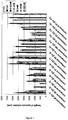
- Compound 46 according to the invention (Example 1) at 30 mg/kg, after one week of the treatment, significantly reduces the weight of granuloma (dry weight of the skin; figure 2 ).
- FGFs and their receptors are significantly involved, via autocrine, paracrine or juxtacrine secretions, in the phenomena of deregulation of stimulation of the growth of cancer cells. Furthermore, FGFs and the receptors thereof affect tumour angiogenesis, which plays a predominant role both on the growth of tumour and also on the metastatic phenomena.
- Angiogenesis is a process of generation of new capillaries from pre-existing blood vessels or by mobilization and differentiation of bone marrow cells.
- endothelial cells and mobilization of angioblasts from bone marrow are observed in the processes of tumour neovascularization.
- a-FGF and b-FGF interact with the epithelial cells via two classes of receptor, the high-affinity receptors with tyrosine kinase activity (FGF-R) and the low-affinity receptors of heparan sulfate proteoglycan (HSPG) type located at the surface of the cells and in the extracellular matrices. While the paracrine role of these two factors on endothelial cells is widely described, these FGFs might also intervene on these cells by means of an autocrine process. Thus, FGFs and their receptors represent very pertinent targets for therapies directed towards inhibiting angiogenesis processes ( Keshet E., Ben-Sasson S.A., J. Clin. Invest, (1999), vol.
- FGFs play an important role in the growth and maintenance of prostate cells. It has been shown both in animal models and in man that an impairment of the cellular response to these factors plays a fundamental role in the progress of prostate cancer. Specifically, in these pathologies, an increase in the production of a-FGF, b-FGF, FGF-6, FGF-8, etc. by the fibroblasts, stromal cells, residual basal cells and endothelial cells present in the tumour and an increase in the expression of the FGF receptors and of the ligands by the tumour cells are recorded. Thus, paracrine stimulation of the cancer cells of the prostate operates, and this process is considered to be a major component of this pathology.
- a compound with FGF receptor antagonist activity such as the compounds of the present invention might represent a therapy of choice in these pathologies ( Giri D., Ropiquet F., Clin. Cancer Res., (1999), vol. 71, pp. 5-1063 ; Doll J.A., Erasmusr F.K., Crawford S.E., Pins M.R., Campbell S.C., Bouck N.P., Prostate, (2001), vol. 305, pp. 49-293 ) (Sahadevan et al., 2007) (Kwabi-Addo et al., 2004).
- a compound with FGF-R receptor antagonist activity such as the compounds of formula I, may represent a therapy of choice in these pathologies ( Vercoutter-Edouart A-S, Czeszak X, Crupin M, Lemoine J, Boilly B, Le Bourhis X et al., Exp.Cell Res., (2001), vol. 262, pp. 59-68 ) (Schwertfeger, 2009).
- Cancerous melanomas are tumours that induce metastases in high frequency and that are highly resistant to the various chemotherapy treatments.
- Angiogenesis processes play a predominant role in the progress of a cancerous melanoma.
- the probability of appearance of metastases increases very greatly as the vascularization of the primary tumour increases.
- Melanoma cells produce and secrete various angiogenic factors including a-FGF and b-FGF.
- inhibition of the cellular effect of these two factors by the soluble FGF-R1 receptor blocks the proliferation and survival of tumoral melanoma cells in vitro and blocks the tumour progress in vivo.
- a compound with FGF receptor antagonist activity may represent a therapy of choice in these pathologies ( Rofstad E.K., Halsor E.F., Cancer Res., (2000 ); Yayon A., Ma Y-S, Safran M., Klagsbrun M., Halaban R., Oncogene, (1997), vol. 14, pp. 2999-3009 ).
- Glioma cells produce a-FGF and b-FGF in vitro and in vivo and have various FGF receptors at their surface. This therefore suggests that these two factors via an autocrine and paracrine effect play a pivotal role in the progress of this type of tumour. Furthermore, as for the majority of solid tumours, the progress of gliomas and their capacity to induce metastases is very much dependent on the angiogenesis processes in the primary tumour. It has also been shown that FGF-R1 receptor antisense factors block the proliferation of human astrocytomas. Furthermore, naphthalenesulfonates are described for inhibiting the cellular effects of a-FGF and b-FGF in vitro and the angiogenesis induced by these growth factors in vivo.
- a compound with a-FGF and/or b-FGF and/or FGF receptor antagonist activity may represent a therapy of choice in these pathologies ( Yamada S.M., Yamaguchi F., Brown R., Berger M.S., Morrison R.S., Glia, (1999), vol. 76, pp. 28-66 ; Auguste P., Gursel D.B., Lemière S., Reimers D., Cuevas P., Carceller F. et al., Cancer Res., (2001), vol. 26, pp. 61-1717 ) (Loilome et al ., 2008).
- HCC hepatocarcinomas or hepatocellular carcinoma
- the antagonists of the present invention may thus be a treatment of choice for hepatocellular carcinomas or hepatocarcinomas.
- an FGF receptor antagonist such as those of the present invention may represent a therapy of choice for lung cancers of NSCLC type, alone or in combination with EGF receptor inhibitors or chemotherapies.
- the antagonists of the present invention may thus be a treatment of choice for stomach cancers.
- b-FGF has been detected in numerous lymphoblastic and haematopoietic tumoral cell lines. FGF receptors are also present on the majority of these lines, suggesting a possible autocrine cellular effect of a-FGF and b-FGF inducing the proliferation of these cells. Moreover, it has been reported that the angiogenesis of bone marrow via paracrine effects was correlated to the progress of some of these pathologies.
- CLL chronic lymphocytic leukaemia
- Bcl2 anti-apoptotic protein
- the levels of b-FGF measured in these cells are highly correlated with the degree of clinical advancement of the disease and the resistance to chemotherapy applied in this pathology (fludarabine).
- a compound with FGF receptor antagonist activity may represent a therapy of choice alone or in combination with fludarabine or other products that are active in this pathology ( Thomas D.A., Giles F.J., Cortes J., Albitar M., Kantarjian H.M., Acta Haematol., (2001), vol. 207, pp. 106-190 ; Gabrilove J.L., Oncologist, (2001), vol. 6, pp. 4-7 ).
- FGFs and FGF-Rs participate actively in the resistance of tumoral and/or endothelial cells to chemotherapy or radiotherapy treatments or alternatively to anti-VEGF therapies.
- These resistances involve different cell mechanisms such as protection against apoptosis by a positive regulation of the protein Bcl-xl by FGF-R4 in the case of resistance of breast cancer to doxorubicin (Roidl et a / ., 2009) or the production of FGF-2 in the case of a resistance to cisplatin of bladder tumours (Miyake et al ., 1998), by activation of the Pi3K/AKT pathway by the FGF2/FGF-R1 couple in the case of the resistance to cytarabine of acute myeloid leukaemia cells (Karajannis et al ., 2006), by stimulation of the RAS/MAP-K, PI3-K and mTOR pathway by FGF-1 for certain mammary tumours
- the FGFs/FGF-Rs couple is also involved in resistance to anti-VEGF treatments in the context of pancreatic carcinomas (Casanovas et al ., 2005) or glioblastomas (Batchelor et al ., 2007) or alternatively in radiotherapy resistance phenomena (Gu et al ., 2004; Moyal et al ., 2009).
- the compounds of the present invention could be combined with the existing therapies to limit the appearance of resistance phenomena.
- tumour innovation which is one of the hallmarks of malignancy, consists of the translocation of tumour cells from the initial neoplastic focus to the surrounding host tissues, enabling the tumour to penetrate into the vascular endothelial in order to circulate and to form metastatic foci remote from the primary tumour.
- EMT epithelial-mesenchymal transition
- FGFs Growth factors such as FGFs participate in this cell process by means of their stimulatory activity on cell migration and invasion, but also, for the FGF receptors, via their capacity to interact with cadherins, thus facilitating the migration of tumour cells (Cowin et al ., 2005).
- the FGF-R antagonists described here may be used to prevent these metastatic phases of a large number of cancers.
- vascular smooth muscle cells contributes towards intimal hypertrophy of the arteries and thus plays a predominant role in atherosclerosis and in restenosis after angioplasty and endoarterectomy.
- in vivo studies show after lesion of the carotid artery by "balloon injury", a local production of a-FGF and b-FGF.
- an anti-FGF2 neutralizing antibody inhibits the proliferation of the vascular smooth muscle cells and thus decreases the intimal hypertrophy.
- FGF2 chimeric protein linked to a molecule such as saporin inhibits the proliferation of vascular smooth muscle cells in vitro and intimal hypertrophy in vivo ( Epstein C.E., Siegall C.B., Biro S, Fu Y.M., FitzGerald D., Circulation, (1991), vol. 87, pp. 84-778 ; Waltenberger J., Circulation, (1997), pp. 96-4083 ).
- FGF receptor antagonists such as the compounds of the present invention, represent a therapy of choice, either alone or in combination with antagonist compounds of other growth factors involved in these pathologies such as PDGF, in the treatment of pathologies associated with the proliferation of vascular smooth muscle cells, such as atherosclerosis, post-angioplasty restenosis or restenosis following the insertion of endovascular prostheses (stents) or during aorto-coronary bypasses.
- Cardiac hypertrophic arises in response to stress on the ventricular wall induced by an overload in terms of pressure or volume.
- This overload may be the consequence of numerous physiopathological conditions such as hypertension, AC (aortic coarctation), myocardial infarction and various vascular disorders.
- the consequences of this pathology are morphological, molecular and functional changes such as hypertrophy of the cardiac myocytes, the accumulation of matrix proteins and the re-expression of foetal genes.
- b-FGF is involved in this pathology. Specifically, the addition of b-FGF to newborn rat cardiomyocyte cultures modifies the profile of the genes corresponding to the contractile proteins, leading to a gene profile of foetal type.
- a compound with FGF receptor antagonist activity represents a therapy of choice in the treatment of cardiac insufficiency and any other pathology associated with degeneration of cardiac tissue.
- This treatment could be performed alone or in combination with common treatments (beta-blockers, diuretics, angiotensin antagonists, antiarrhythmics, anti-calcium, antithrombotic etc. agents).
- Diabetes-related vascular disorders are characterized by an impairment of vascular reactivity and of the blood flow, hyperpermeability, an exacerbated proliferative response and an increase in matrix protein deposits.
- a-FGF and b-FGF are present in the preretinal membranes of patients with diabetic retinopathy, in membranes of the subjacent capillaries and in the vitreous humour of patients suffering from proliferative retinopathy.
- a soluble FGF receptor that is capable of binding both to a-FGF and b-FGF is developed in diabetes-related vascular disorders ( Tilton R.G., Dixon R.A.F., Brock T.A., Exp. Opin. Invest. Drugs, (1997), vol. 84, pp. 6-1671 ).
- a compound with FGF receptor antagonist activity such as the compounds of formula I, represents a therapy of choice either alone or in combination with compounds that are antagonists of other growth factors involved in these pathologies, for instance VEGF, such as the anti-VEGF therapy mentioned above.
- Fibrosis is the abnormal formation of scar tissue following a tissue lesion, and leads to chronic and progressive impairment of the affected organ, which may result in serious dysfunction of the affected organ. It may arise in any tissue, but is mainly prevalent in organs exposed to chemical or biological attack, such as the lungs, the skin, the kidneys, the digestive tube, the liver, etc. FGFs participate in this cell process and promote the production and accumulation of extracellular matrices by the fibroblasts, and their proliferation and infiltration into numerous organs such as the kidneys or the lungs (Khalil et al ., 2005) (Strutz et al ., 2003). Antagonists of the activity of these FGFs, such as the molecules of the present invention, may be used alone or in combination in the treatment of fibrosis.
- RA Rheumatoid arthritis
- RA Rheumatoid arthritis
- Angiogenesis appears to substantially affect the progress of this pathology.
- a-FGF and b-FGF have been detected in synovial tissue and in the articular fluid of patients suffering from RA, indicating that this growth factor intervenes in the initiation and/or progress of this pathology.
- angiogenesis represents a key factor in bone formation (osteophytes), thus contributing towards the progress of the disease.
- the innervation of new blood vessels may also contribute towards the chronic pain associated with this pathology ( Walsh D.A., Curr. Opin. Rheumatol. 2004 Sep;16(5):609-15 )
- the compounds according to the invention represents a therapy of choice in this pathology.
- IBD inflammatory bowel disease
- UC ulcerative colitis
- CD Crohn's disease
- IBD is characterized by an immune dysfunction that is reflected by an inappropriate production of inflammatory cytokines, inducing the establishment of a local microvascular system.
- a consequence of this angiogenesis of inflammatory origin is a vasoconstriction-induced intestinal ischaemia.
- Substantial circulating and local levels of b-FGF have been measured in the case of patients suffering from these pathologies ( Kanazawa S, Tsunoda T, Onuma E, Majima T, Kagiyama M, Kkuchi K., American Journal of Gastroenterology, (2001), vol. 28, pp.
- BPH benign prostate hyperplasia
- BPH is an age-related disease which is characterized by hyperplasia of the glandular tissues and of stroma around the urethra up to the point of its obstruction. At the cellular level, this pathology involves hyperplasia of the basal cells, an increase in the stromal mass, an amplified deposition of matrix or a reduction in the elasticity of the tissues (Schgasser et al., 2005).
- FGFs participate in the development of this disease by stimulating the proliferation of the prostate stromal and epithelial cells and especially FGF-7 or KGF, but also FGF-2 or FGF-17 (Wang 2008, Boget 2001, Giri 2001). Furthermore, the FGFs promote the transdifferentiation step by modifying the epithelial cell/stromal cell interactions, in combination with TGF- ⁇ (Schgasser 2005). Finally, certain receptors such as FGF-R1 are overexpressed in BPH, promoting induction of the pathology and potentiating the paracrine effects of FGF-2 (Boget 2001). An antagonist of the effect of these FGFs is thus a treatment of choice for benign prostate hyperplasia.
- Psoriasis is a chronic skin disease caused by hyperproliferation of the epidermal keratinocytes
- clear cell acanthoma CCA
- CCA clear cell acanthoma
- KGF or FGF-7 plays an a predominant role in the development of the pathology (Kovacs et al ., 2006) (Finch et al ., 1997).
- the use of the antagonists of the present invention may make it possible to slow down the development of such skin diseases.
- FGF-R1, -R2 and -R3 are involved in chronogenesis and osteogenesis processes. Mutations leading to the expression of FGF-Rs that are always activated have been linked to a large number of human genetic diseases reflected by skeletal malformations, such as the Pfeiffer, Crouzon, Apert, Jackson-Weiss and Bear-Stevenson cutis gyrata syndromes. Some of these mutations more particularly affecting the FGF-R3 receptor lead especially to achondroplasias (ACH), hypochondroplasias (HCH) and TD (thanatophoric dysplasia); ACH being the most common form of dwarfism.
- ACH achondroplasias
- HH hypochondroplasias
- TD thanatophoric dysplasia
- the sustained activation of these receptors takes place via dimerization of the receptor in the absence of ligand ( Chen L., Adar R., Yang X. Monsonego E.O., LI C., Hauschka P.V., Yagon A. and Deng C.X., (1999), The Journ. of Clin. Invest., vol. 104, No. 11, pp. 1517-1525 ).
- the compounds of the invention with antagonist activity towards the FGFs or the FGF receptors and which inhibit FGF-R-dependent intracellular signalling represent a therapy of choice in these pathologies.
- adipose tissue is one of the rare tissues that can develop or regress in adults. This tissue is highly vascularized and a very dense network of microvessels surrounds each adipocyte.
- the compounds of the present invention find their use in the treatment and prevention of any carcinoma having a substantial degree of vascularization, such as lung, breast, prostate, oesophageal, pancreatic, liver, bowel or kidney carcinomas or which induce metastases, such as bowel, breast, liver and stomach carcinomas, melanomas, or which are sensitive to a-FGF or to b-FGF in an autocrine manner, or alternatively in pathologies such as glioma, lymphoma and leukaemia, or finally in any therapy-resistance phenomenon.
- carcinoma having a substantial degree of vascularization such as lung, breast, prostate, oesophageal, pancreatic, liver, bowel or kidney carcinomas or which induce metastases, such as bowel, breast, liver and stomach carcinomas, melanomas, or which are sensitive to a-FGF or to b-FGF in an autocrine manner, or alternatively in pathologies such as glioma, lymphoma and leukaemia
- the compounds according to the invention also find their use in the treatment and prevention of cardiovascular diseases such as atherosclerosis, post-angioplasty restenosis, in the treatment of diseases associated with complications arising after the insertion of endovascular prostheses and/or aorto-coronary bypasses or other vascular grafts and cardiac hypertrophy or vascular complications of diabetes such as diabetic retinopathy.
- cardiovascular diseases such as atherosclerosis, post-angioplasty restenosis
- the compounds according to the invention also find their use in the treatment and prevention of chronic inflammatory diseases such as rheumatoid arthritis, IBD or benign prostate hyperplasia.
- the compounds according to the invention may be used in the treatment and prevention of achondroplasias (ACH), hypochondroplasias (
- a subject of the present invention relates to compound of formula (I) in which: the representation of the pyrazole ring indicates that the substituent R 4 may be borne either by the nitrogen alpha to the pyridine ring (I') or by the nitrogen alpha to the carbon bearing a substituent R 3 (I") such that: Either
- the present invention relates to compound selected from the following compounds: No. R 2 R 3 R 1 R 4 Salt m.p. (°C) M+H + 1 CF 3 Ph Me / / 397 2 CF 3 Ph Me / / 461 3 CF 3 Ph Me / / 407 4 CF 3 Ph Me / / 447 5 CF 3 Ph Me / / 426 6 CF 3 Ph Me / / 461 7 CF 3 Ph Me / / 384 8 CF 3 Ph Me / / 429 9 CF 3 Ph Me / / 397 10 CF 3 Ph Me / / 448 11 CF 3 Ph Me / / 453 12 CF 3 Ph Me / / 380 13 CF 3 Ph Me / / 398 14 CF 3 Ph Me / / 425 15 CF 3 Ph Me / / 425 16 CF 3 Ph Me / / 440 17 CF 3 Ph Me / / 385 18 CF 3 Ph Me / / 4 /
- the products according to the invention also find their use in the treatment and prevention of macular degeneration, especially age-related macular degeneration (AMD).
- AMD age-related macular degeneration
- a major feature of the loss of vision in adults is the consecutive neovascularization and haemorrhaging, which cause major functional disorders in the eye and which are reflected by early-onset blindness.
- Recently, study of the mechanisms involved in ocular neovascularization phenomena have revealed the involvement of pro-angiogenic factors in these pathologies.
- By using a model of laser-induced choroid neoangiogenesis it has been possible to confirm that the products according to the invention also make it possible to modulate the neovascularization of the choroid.
- the products of the invention may be used in the treatment or prevention of thrombopenia caused especially by anticancer chemotherapy. Specifically, it has been demonstrated that the products of the invention can improve the levels of circulating platelets during chemotherapy.
- the products according to the invention find a use in the treatment and prevention of skin diseases such as psoriasis or clear-cell acanthoma, in combating the progress of hepatic, renal or pulmonary fibrosis, and also in the treatment of neuropathic pain.
- skin diseases such as psoriasis or clear-cell acanthoma
- the invention also describes medicaments comprising a compound of formula (I), or a pharmaceutically acceptable acid-addition or base-addition salt thereof.
- medicaments find their use for example in the treatment and prevention of any carcinoma having a substantial degree of vascularization, such as lung, breast, prostate, oesophageal, pancreatic, liver, bowel or kidney carcinomas or which induce metastases, such as bowel, breast, liver and stomach carcinomas, melanomas, or which are sensitive to a-FGF or to b-FGF in an autocrine manner, or alternatively in pathologies such as glioma, lymphoma and leukaemia, or finally in any therapy-resistance phenomenon.
- any carcinoma having a substantial degree of vascularization such as lung, breast, prostate, oesophageal, pancreatic, liver, bowel or kidney carcinomas or which induce metastases, such as bowel, breast, liver and stomach carcinomas, melanomas, or which are sensitive to a-FGF or to b-FGF in an autocrine manner, or alternatively in pathologies such as glioma, lymphoma and leukaemia,
- These medicaments also find their use in the treatment and prevention of cardiovascular diseases such as atherosclerosis, post-angioplasty restenosis, in the treatment of diseases associated with complications arising after the insertion of endovascular prostheses and/or aorto-coronary bypasses or other vascular grafts and cardiac hypertrophy or vascular complications of diabetes such as diabetic retinopathy. They also find their use in the treatment and prevention of chronic inflammatory diseases such as rheumatoid arthritis, IBD or benign prostate hyperplasia. They may be used in the treatment and prevention of achondroplasias (ACH), hypochondroplasias (HCH) and TD (thanatophoric dysplasia), and also in the treatment of obesity.
- ACH achondroplasias
- HSH hypochondroplasias
- TD thanatophoric dysplasia
- the medicaments disclosed in the invention also find their use in the treatment and prevention of macular degeneration, especially age-related macular degeneration (AMD). They also make it possible to modulate neovascularization of the choroid.
- AMD age-related macular degeneration
- the medicaments described in the invention may be used in the treatment or prevention of thrombopenia caused especially by anticancer chemotherapy.
- a subject of the present invention is also the use of a compound of formula (I) in which: the representation of the pyrazole ring indicates that the substituent R 4 may be borne either by the nitrogen alpha to the pyridine ring (I') or by the nitrogen alpha to the carbon bearing a substituent R 3 (I") such that: Either
- the present invention also describes a compound of formula (I) as defined above, for its use in the treatment and prevention of diseases necessitating a modulation of the FGFs.
- a subject of the present invention is also a compound in which: the representation of the pyrazole ring indicates that the substituent R 4 may be borne either by the nitrogen alpha to the pyridine ring (I') or by the nitrogen alpha to the carbon bearing a substituent R 3 (I") such that: Either
- a compound of formula (I) according to the present invention may be administered alone or in combination with one or more compounds with anti-angiogenic activity or with one or more cytotoxic compounds (chemotherapy), or alternatively in combination with a radiotherapy.
- a subject of the present invention is also a compound of formula (I) as defined above administered in combination with one or more anticancer active principles and/or with any anti-VEGF and/or administered in combination with a radiotherapy.
- a subject of the present invention is also a compound in which: the representation of the pyrazole ring indicates that the substituent R 4 may be borne either by the nitrogen alpha to the pyridine ring (I') or by the nitrogen alpha to the carbon bearing a substituent R 3 (I") such that: Either
- the compound is more particularly selected from the following compounds: No. R 2 R 3 R 1 R 4 Salt m.p. (°C) M+H + 1 CF 3 Ph Me / / 397 2 CF 3 Ph - Me / / 461 3 CF 3 Ph Me / / 407 4 CF 3 Ph Me / / 447 5 CF 3 Ph Me / / 426 6 CF 3 Ph Me / / 461 7 CF 3 Ph Me / / 384 8 CF 3 Ph Me / / 429 9 CF 3 Ph Me / / 397 10 CF 3 Ph Me / / 448 11 CF 3 Ph Me / / 453 12 CF 3 Ph Me / / 380 13 CF 3 Ph Me / / 398 14 CF 3 Ph Me / / 425 15 CF 3 Ph Me / / 425 16 CF 3 Ph Me / / 440 17 CF 3 Ph Me / / 385 18 CF
- a further subject of the present invention is also the combination of a compound in which: the representation of the pyrazole ring indicates that the substituent R 4 may be borne either by the nitrogen alpha to the pyridine ring (I') or by the nitrogen alpha to the carbon bearing a substituent R 3 (I") such that: Either
- the present invention relates to pharmaceutical compositions comprising a compound of formula (I).
- the representation of the pyrazole ring indicates that the substituent R 4 may be borne either by the nitrogen alpha to the pyridine ring (I') or by the nitrogen alpha to the carbon bearing a substituent R 3 (I") such that:
- the present invention particularly relates to pharmaceutical compositions comprising a compound selected from the following compounds No. R 2 R 3 R 1 R 4 Salt m.p. (°C) M+H + 1 CF 3 Ph Me / / 397 2 CF 3 Ph Me / / 461 3 CF 3 Ph Me / / 407 4 CF 3 Ph Me / / 447 5 CF 3 Ph Me / / 426 6 CF 3 Ph Me / / 461 7 CF 3 Ph Me / / 384 8 CF 3 Ph Me / / 429 9 CF 3 Ph Me / / 397 10 CF 3 Ph Me / / 448 11 CF 3 Ph Me / / 453 12 CF 3 Ph Me / / 380 13 CF 3 Ph Me / 398 14 CF 3 Ph Me / / 425 15 CF 3 Ph Me / / 425 16 CF 3 Ph Me / / 440 17 CF 3 Ph Me / / 385 18 CF 3
- compositions contain an effective dose of at least one compound as defined above, or a pharmaceutically acceptable salt, and also at least one pharmaceutically acceptable excipient.
- excipients are chosen, according to the pharmaceutical form and the mode of administration desired, from the usual excipients that are known to those skilled in the art.
- compositions for oral, sublingual, subcutaneous, intramuscular, intravenous, topical, local, intratracheal, intranasal, transdermal or rectal administration may be administered in unit administration form, as a mixture with standard pharmaceutical excipients, to man and animals for the treatment of the disorders or diseases mentioned previously.
- the appropriate unit administration forms include oral-route forms such as tablets, soft or hard gel capsules, powders, granules and oral solutions or suspensions, sublingual, buccal, intratracheal, intraocular and intranasal administration forms, inhalation forms, topical, transdermal, subcutaneous, intramuscular or intravenous administration forms, rectal administration forms and implants.
- oral-route forms such as tablets, soft or hard gel capsules, powders, granules and oral solutions or suspensions
- sublingual, buccal, intratracheal intraocular and intranasal administration forms, inhalation forms
- topical administration the disclosed compounds may be used in creams, gels, pomades or lotions.
- compositions according to the present invention are preferably administered orally.
- a unit administration form of a compound according to the invention in tablet form may comprise the following components: Compound according to the invention 50.0 mg Mannitol 223.75 mg Croscaramellose sodium 6.0 mg Corn starch 15.0 mg Hydroxypropylmethylcellulose 2.25 mg Magnesium stearate 3.0 mg
- the present invention also describes a pharmaceutical composition as defined above, as a medicament.
- compositions disclosed in the invention, for oral administration contain recommended doses of 0.01 to 700 mg. There may be special cases in which higher or lower dosages are appropriate; such dosages are not outside the scope of the invention. According to the usual practice, the dosage that is appropriate to each patient is determined by the doctor according to the mode of administration, the age, weight and response of the patient, and also according to the degree of progress of the disease.
Landscapes
- Health & Medical Sciences (AREA)
- Chemical & Material Sciences (AREA)
- Public Health (AREA)
- Veterinary Medicine (AREA)
- Life Sciences & Earth Sciences (AREA)
- Animal Behavior & Ethology (AREA)
- General Health & Medical Sciences (AREA)
- Medicinal Chemistry (AREA)
- Pharmacology & Pharmacy (AREA)
- Epidemiology (AREA)
- Organic Chemistry (AREA)
- Nuclear Medicine, Radiotherapy & Molecular Imaging (AREA)
- Chemical Kinetics & Catalysis (AREA)
- General Chemical & Material Sciences (AREA)
- Engineering & Computer Science (AREA)
- Biomedical Technology (AREA)
- Oncology (AREA)
- Pathology (AREA)
- Radiology & Medical Imaging (AREA)
- Nitrogen Condensed Heterocyclic Rings (AREA)
- Pharmaceuticals Containing Other Organic And Inorganic Compounds (AREA)
- Medicines That Contain Protein Lipid Enzymes And Other Medicines (AREA)
Priority Applications (1)
| Application Number | Priority Date | Filing Date | Title |
|---|---|---|---|
| PL12808328T PL2791137T3 (pl) | 2011-12-14 | 2012-12-13 | Pochodne pirazolopirydyny, sposób ich otrzymywania i zastosowanie terapeutyczne |
Applications Claiming Priority (2)
| Application Number | Priority Date | Filing Date | Title |
|---|---|---|---|
| FR1161589A FR2984325A1 (fr) | 2011-12-14 | 2011-12-14 | Derives de pyrazolopyridine, leur procede de preparation et leur application en therapeutique |
| PCT/EP2012/075328 WO2013087744A1 (en) | 2011-12-14 | 2012-12-13 | Pyrazolopyridine derivatives, preparation process therefor and therapeutic use thereof |
Publications (2)
| Publication Number | Publication Date |
|---|---|
| EP2791137A1 EP2791137A1 (en) | 2014-10-22 |
| EP2791137B1 true EP2791137B1 (en) | 2019-01-23 |
Family
ID=47458918
Family Applications (1)
| Application Number | Title | Priority Date | Filing Date |
|---|---|---|---|
| EP12808328.4A Active EP2791137B1 (en) | 2011-12-14 | 2012-12-13 | Pyrazolopyridine derivatives, preparation process therefor and therapeutic use thereof |
Country Status (23)
| Country | Link |
|---|---|
| US (2) | US20140350006A1 (enExample) |
| EP (1) | EP2791137B1 (enExample) |
| JP (2) | JP6214551B2 (enExample) |
| KR (1) | KR102012058B1 (enExample) |
| CN (2) | CN104114555B (enExample) |
| AU (1) | AU2012351712B2 (enExample) |
| BR (1) | BR112014014452A2 (enExample) |
| CA (1) | CA2857749A1 (enExample) |
| CL (1) | CL2014001539A1 (enExample) |
| CO (1) | CO7000778A2 (enExample) |
| DK (1) | DK2791137T3 (enExample) |
| EA (1) | EA027421B1 (enExample) |
| ES (1) | ES2719444T3 (enExample) |
| FR (1) | FR2984325A1 (enExample) |
| HK (1) | HK1198442A1 (enExample) |
| IL (1) | IL232906A (enExample) |
| MA (1) | MA35841B1 (enExample) |
| MX (1) | MX358422B (enExample) |
| PH (1) | PH12014501258A1 (enExample) |
| PL (1) | PL2791137T3 (enExample) |
| PT (1) | PT2791137T (enExample) |
| SG (2) | SG11201402851TA (enExample) |
| WO (1) | WO2013087744A1 (enExample) |
Families Citing this family (19)
| Publication number | Priority date | Publication date | Assignee | Title |
|---|---|---|---|---|
| US10138235B2 (en) | 2011-12-14 | 2018-11-27 | Sanofi | Pyrazolopyridine derivatives, preparation process therefor and therapeutic use thereof |
| FR2984325A1 (fr) * | 2011-12-14 | 2013-06-21 | Sanofi Sa | Derives de pyrazolopyridine, leur procede de preparation et leur application en therapeutique |
| EA201591324A1 (ru) | 2013-01-16 | 2016-01-29 | Инсерм (Энститю Насьональ Де Ля Сантэ Э Де Ля Решерш Медикаль) | Полипептид растворимого рецептора 3 фактора роста фибробластов (fgr3) для применения с целью предотвращения или лечения нарушений, связанных с замедлением роста скелета |
| AR094812A1 (es) | 2013-02-20 | 2015-08-26 | Eisai R&D Man Co Ltd | Derivado de piridina monocíclico como inhibidor del fgfr |
| US20140303121A1 (en) | 2013-03-15 | 2014-10-09 | Plexxikon Inc. | Heterocyclic compounds and uses thereof |
| RU2680100C9 (ru) | 2013-03-15 | 2019-04-18 | Плексксикон Инк. | Гетероциклические соединения и их применения |
| PL3007694T3 (pl) * | 2013-06-14 | 2018-12-31 | Sanofi | Pochodne pirazolopirydynowe do zastosowania w leczeniu nowotworu pęcherza moczowego |
| ES2914072T3 (es) | 2014-08-18 | 2022-06-07 | Eisai R&D Man Co Ltd | Sal de derivado de piridina monocíclico y su cristal |
| EP3275442B1 (en) | 2015-03-25 | 2021-07-28 | National Cancer Center | Therapeutic agent for bile duct cancer |
| US11059817B2 (en) | 2015-09-23 | 2021-07-13 | The Regents Of The University Of California | Potent antiviral pyrazolopyridine compounds |
| RU2730503C2 (ru) | 2015-12-17 | 2020-08-24 | Эйсай Ар Энд Ди Менеджмент Ко., Лтд. | Терапевтическое средство для лечения рака молочной железы |
| RU2751483C2 (ru) | 2016-07-07 | 2021-07-14 | Пфайзер Инк. | Полипептиды, являющиеся растворимыми рецепторами 3 фактора роста фибробластов (sfgfr3), и пути их применения |
| US10717735B2 (en) | 2017-10-13 | 2020-07-21 | Plexxikon Inc. | Solid forms of a compound for modulating kinases |
| CN112105357A (zh) * | 2018-02-16 | 2020-12-18 | Ucb生物制药有限责任公司 | 药用6,5杂双环衍生物 |
| EP3777860A4 (en) | 2018-03-28 | 2021-12-15 | Eisai R&D Management Co., Ltd. | THERAPEUTIC FOR HEPATOCELLULAR CARCINOMA |
| CN108774224B (zh) * | 2018-04-23 | 2020-10-30 | 浙江大学 | 吡唑并[3,4-b]吡啶类化合物及其制备方法和应用 |
| CN110833556A (zh) * | 2018-08-15 | 2020-02-25 | 广西梧州制药(集团)股份有限公司 | 吡唑并嘧啶衍生物在治疗肝纤维化的用途 |
| WO2020178316A1 (en) * | 2019-03-05 | 2020-09-10 | Aziende Chimiche Riunite Angelini Francesco - A.C.R.A.F. S.P.A. | 5- or 7-azaindazoles as beta-lactamase inhibitors |
| CN118791483B (zh) * | 2024-07-01 | 2025-10-21 | 郑州大学 | 一种1H-吡唑并[3,4-b]吡啶类衍生物及其制备方法和应用 |
Citations (1)
| Publication number | Priority date | Publication date | Assignee | Title |
|---|---|---|---|---|
| WO2009069032A2 (en) * | 2007-11-30 | 2009-06-04 | Pfizer Limited | Novel glucocorticoid receptor agonists |
Family Cites Families (12)
| Publication number | Priority date | Publication date | Assignee | Title |
|---|---|---|---|---|
| WO2006050076A1 (en) * | 2004-10-29 | 2006-05-11 | Janssen Pharmaceutica, N.V. | Pyrimidinyl substituted fused-pyrrolyl compounds useful in treating kinase disorders |
| DE102004061288A1 (de) * | 2004-12-14 | 2006-06-29 | Schering Ag | 3-Amino-Pyrazolo[3,4b]pyridine als Inhibitoren von Proteintyrosinkinasen, deren Herstellung und Verwendung als Arzneimittel |
| PL1896470T3 (pl) * | 2005-05-16 | 2011-03-31 | Irm Llc | Pochodne pirolopirydynowe jako inhibitory kinazy białkowej |
| US7541367B2 (en) * | 2005-05-31 | 2009-06-02 | Janssen Pharmaceutica, N.V. | 3-benzoimidazolyl-pyrazolopyridines useful in treating kinase disorders |
| FR2889526B1 (fr) * | 2005-08-04 | 2012-02-17 | Aventis Pharma Sa | 7-aza-indazoles substitues, compositions les contenant, procede de fabrication et utilisation |
| CN101511828A (zh) * | 2006-09-06 | 2009-08-19 | 霍夫曼-拉罗奇有限公司 | 作为蛋白激酶抑制剂的杂芳基衍生物 |
| KR20090031122A (ko) * | 2007-09-21 | 2009-03-25 | 주식회사 중외제약 | 인다졸 골격을 함유하는 화합물, 이의 제조방법 및 상기화합물을 함유하는 약제학적 조성물 |
| AU2009335016A1 (en) * | 2008-12-30 | 2011-08-18 | Arqule, Inc. | Substituted pyrazolo [3, 4-b] pyridine compounds |
| FR2951172B1 (fr) * | 2009-10-13 | 2014-09-26 | Pf Medicament | Derives pyrazolopyridines en tant qu'agent anticancereux |
| SMT201700581T1 (it) * | 2009-12-21 | 2018-01-11 | Samumed Llc | 1h-pirazolo[3,4-b]piridine e loro usi terapeutici |
| WO2012019954A1 (en) * | 2010-08-12 | 2012-02-16 | Evotec (Uk) Ltd. | Pyrazolopyridine compounds as pde10a inhibitors |
| FR2984325A1 (fr) * | 2011-12-14 | 2013-06-21 | Sanofi Sa | Derives de pyrazolopyridine, leur procede de preparation et leur application en therapeutique |
-
2011
- 2011-12-14 FR FR1161589A patent/FR2984325A1/fr active Pending
-
2012
- 2012-12-13 CN CN201280069679.9A patent/CN104114555B/zh active Active
- 2012-12-13 EA EA201491149A patent/EA027421B1/ru not_active IP Right Cessation
- 2012-12-13 SG SG11201402851TA patent/SG11201402851TA/en unknown
- 2012-12-13 HK HK14111927.9A patent/HK1198442A1/xx unknown
- 2012-12-13 KR KR1020147019030A patent/KR102012058B1/ko not_active Expired - Fee Related
- 2012-12-13 ES ES12808328T patent/ES2719444T3/es active Active
- 2012-12-13 SG SG10201510204QA patent/SG10201510204QA/en unknown
- 2012-12-13 EP EP12808328.4A patent/EP2791137B1/en active Active
- 2012-12-13 WO PCT/EP2012/075328 patent/WO2013087744A1/en not_active Ceased
- 2012-12-13 PT PT12808328T patent/PT2791137T/pt unknown
- 2012-12-13 CA CA2857749A patent/CA2857749A1/en not_active Abandoned
- 2012-12-13 JP JP2014546500A patent/JP6214551B2/ja active Active
- 2012-12-13 PL PL12808328T patent/PL2791137T3/pl unknown
- 2012-12-13 AU AU2012351712A patent/AU2012351712B2/en not_active Ceased
- 2012-12-13 DK DK12808328.4T patent/DK2791137T3/en active
- 2012-12-13 CN CN201610708994.1A patent/CN106317056B/zh active Active
- 2012-12-13 BR BR112014014452A patent/BR112014014452A2/pt not_active Application Discontinuation
- 2012-12-13 MX MX2014007168A patent/MX358422B/es active IP Right Grant
- 2012-12-13 US US14/364,420 patent/US20140350006A1/en not_active Abandoned
-
2014
- 2014-06-01 IL IL232906A patent/IL232906A/en active IP Right Grant
- 2014-06-04 PH PH12014501258A patent/PH12014501258A1/en unknown
- 2014-06-11 CL CL2014001539A patent/CL2014001539A1/es unknown
- 2014-07-02 MA MA37174A patent/MA35841B1/fr unknown
- 2014-07-10 CO CO14149160A patent/CO7000778A2/es unknown
-
2017
- 2017-03-07 US US15/451,970 patent/US20170231998A1/en not_active Abandoned
- 2017-07-07 JP JP2017133321A patent/JP2017206544A/ja not_active Withdrawn
Patent Citations (1)
| Publication number | Priority date | Publication date | Assignee | Title |
|---|---|---|---|---|
| WO2009069032A2 (en) * | 2007-11-30 | 2009-06-04 | Pfizer Limited | Novel glucocorticoid receptor agonists |
Non-Patent Citations (1)
| Title |
|---|
| CHEBANOV V. A. ET AL.: "Cyclocondensation reactions of 5-aminopyrazoles, pyruvic acids and aldehydes. Multicomponent approaches to pyrazolopyridines and related products", TETRAHEDRON, vol. 63, 11 December 2006 (2006-12-11), pages 1229 - 1242, XP005811221, DOI: doi:10.1016/j.tet.2006.11.048 * |
Also Published As
Similar Documents
| Publication | Publication Date | Title |
|---|---|---|
| EP2791137B1 (en) | Pyrazolopyridine derivatives, preparation process therefor and therapeutic use thereof | |
| EP2590976B1 (en) | Imidazopyridine derivatives, process for the preparation thereof and therapeutic use thereof | |
| DK2590975T3 (en) | Indolizine derivatives, MANUFACTURING METHOD THEREOF AND THERAPEUTIC USE THEREOF | |
| US10138235B2 (en) | Pyrazolopyridine derivatives, preparation process therefor and therapeutic use thereof | |
| OA16295A (en) | Indolizine derivatives, process for the preparation thereof and therapeutic use thereof. | |
| OA16296A (en) | Imidazopyridine derivatives, process for the preparation thereof and therapeutic use thereof. |
Legal Events
| Date | Code | Title | Description |
|---|---|---|---|
| PUAI | Public reference made under article 153(3) epc to a published international application that has entered the european phase |
Free format text: ORIGINAL CODE: 0009012 |
|
| 17P | Request for examination filed |
Effective date: 20140714 |
|
| AK | Designated contracting states |
Kind code of ref document: A1 Designated state(s): AL AT BE BG CH CY CZ DE DK EE ES FI FR GB GR HR HU IE IS IT LI LT LU LV MC MK MT NL NO PL PT RO RS SE SI SK SM TR |
|
| AX | Request for extension of the european patent |
Extension state: BA ME |
|
| REG | Reference to a national code |
Ref country code: HK Ref legal event code: DE Ref document number: 1198442 Country of ref document: HK |
|
| 17Q | First examination report despatched |
Effective date: 20150420 |
|
| STAA | Information on the status of an ep patent application or granted ep patent |
Free format text: STATUS: EXAMINATION IS IN PROGRESS |
|
| GRAP | Despatch of communication of intention to grant a patent |
Free format text: ORIGINAL CODE: EPIDOSNIGR1 |
|
| STAA | Information on the status of an ep patent application or granted ep patent |
Free format text: STATUS: GRANT OF PATENT IS INTENDED |
|
| INTG | Intention to grant announced |
Effective date: 20180416 |
|
| GRAJ | Information related to disapproval of communication of intention to grant by the applicant or resumption of examination proceedings by the epo deleted |
Free format text: ORIGINAL CODE: EPIDOSDIGR1 |
|
| STAA | Information on the status of an ep patent application or granted ep patent |
Free format text: STATUS: EXAMINATION IS IN PROGRESS |
|
| GRAP | Despatch of communication of intention to grant a patent |
Free format text: ORIGINAL CODE: EPIDOSNIGR1 |
|
| STAA | Information on the status of an ep patent application or granted ep patent |
Free format text: STATUS: GRANT OF PATENT IS INTENDED |
|
| INTC | Intention to grant announced (deleted) | ||
| INTG | Intention to grant announced |
Effective date: 20180823 |
|
| GRAS | Grant fee paid |
Free format text: ORIGINAL CODE: EPIDOSNIGR3 |
|
| GRAA | (expected) grant |
Free format text: ORIGINAL CODE: 0009210 |
|
| STAA | Information on the status of an ep patent application or granted ep patent |
Free format text: STATUS: THE PATENT HAS BEEN GRANTED |
|
| AK | Designated contracting states |
Kind code of ref document: B1 Designated state(s): AL AT BE BG CH CY CZ DE DK EE ES FI FR GB GR HR HU IE IS IT LI LT LU LV MC MK MT NL NO PL PT RO RS SE SI SK SM TR |
|
| AX | Request for extension of the european patent |
Extension state: BA ME |
|
| REG | Reference to a national code |
Ref country code: GB Ref legal event code: FG4D |
|
| REG | Reference to a national code |
Ref country code: CH Ref legal event code: EP |
|
| REG | Reference to a national code |
Ref country code: AT Ref legal event code: REF Ref document number: 1091354 Country of ref document: AT Kind code of ref document: T Effective date: 20190215 |
|
| REG | Reference to a national code |
Ref country code: IE Ref legal event code: FG4D |
|
| REG | Reference to a national code |
Ref country code: DE Ref legal event code: R096 Ref document number: 602012056280 Country of ref document: DE |
|
| REG | Reference to a national code |
Ref country code: DK Ref legal event code: T3 Effective date: 20190415 |
|
| REG | Reference to a national code |
Ref country code: SE Ref legal event code: TRGR |
|
| REG | Reference to a national code |
Ref country code: NL Ref legal event code: FP Ref country code: PT Ref legal event code: SC4A Ref document number: 2791137 Country of ref document: PT Date of ref document: 20190508 Kind code of ref document: T Free format text: AVAILABILITY OF NATIONAL TRANSLATION Effective date: 20190410 |
|
| REG | Reference to a national code |
Ref country code: ES Ref legal event code: FG2A Ref document number: 2719444 Country of ref document: ES Kind code of ref document: T3 Effective date: 20190710 |
|
| PG25 | Lapsed in a contracting state [announced via postgrant information from national office to epo] |
Ref country code: LT Free format text: LAPSE BECAUSE OF FAILURE TO SUBMIT A TRANSLATION OF THE DESCRIPTION OR TO PAY THE FEE WITHIN THE PRESCRIBED TIME-LIMIT Effective date: 20190123 Ref country code: NO Free format text: LAPSE BECAUSE OF FAILURE TO SUBMIT A TRANSLATION OF THE DESCRIPTION OR TO PAY THE FEE WITHIN THE PRESCRIBED TIME-LIMIT Effective date: 20190423 |
|
| PG25 | Lapsed in a contracting state [announced via postgrant information from national office to epo] |
Ref country code: HR Free format text: LAPSE BECAUSE OF FAILURE TO SUBMIT A TRANSLATION OF THE DESCRIPTION OR TO PAY THE FEE WITHIN THE PRESCRIBED TIME-LIMIT Effective date: 20190123 Ref country code: GR Free format text: LAPSE BECAUSE OF FAILURE TO SUBMIT A TRANSLATION OF THE DESCRIPTION OR TO PAY THE FEE WITHIN THE PRESCRIBED TIME-LIMIT Effective date: 20190424 Ref country code: IS Free format text: LAPSE BECAUSE OF FAILURE TO SUBMIT A TRANSLATION OF THE DESCRIPTION OR TO PAY THE FEE WITHIN THE PRESCRIBED TIME-LIMIT Effective date: 20190523 Ref country code: LV Free format text: LAPSE BECAUSE OF FAILURE TO SUBMIT A TRANSLATION OF THE DESCRIPTION OR TO PAY THE FEE WITHIN THE PRESCRIBED TIME-LIMIT Effective date: 20190123 Ref country code: BG Free format text: LAPSE BECAUSE OF FAILURE TO SUBMIT A TRANSLATION OF THE DESCRIPTION OR TO PAY THE FEE WITHIN THE PRESCRIBED TIME-LIMIT Effective date: 20190423 Ref country code: RS Free format text: LAPSE BECAUSE OF FAILURE TO SUBMIT A TRANSLATION OF THE DESCRIPTION OR TO PAY THE FEE WITHIN THE PRESCRIBED TIME-LIMIT Effective date: 20190123 |
|
| REG | Reference to a national code |
Ref country code: DE Ref legal event code: R097 Ref document number: 602012056280 Country of ref document: DE |
|
| PG25 | Lapsed in a contracting state [announced via postgrant information from national office to epo] |
Ref country code: SK Free format text: LAPSE BECAUSE OF FAILURE TO SUBMIT A TRANSLATION OF THE DESCRIPTION OR TO PAY THE FEE WITHIN THE PRESCRIBED TIME-LIMIT Effective date: 20190123 Ref country code: RO Free format text: LAPSE BECAUSE OF FAILURE TO SUBMIT A TRANSLATION OF THE DESCRIPTION OR TO PAY THE FEE WITHIN THE PRESCRIBED TIME-LIMIT Effective date: 20190123 Ref country code: AL Free format text: LAPSE BECAUSE OF FAILURE TO SUBMIT A TRANSLATION OF THE DESCRIPTION OR TO PAY THE FEE WITHIN THE PRESCRIBED TIME-LIMIT Effective date: 20190123 Ref country code: CZ Free format text: LAPSE BECAUSE OF FAILURE TO SUBMIT A TRANSLATION OF THE DESCRIPTION OR TO PAY THE FEE WITHIN THE PRESCRIBED TIME-LIMIT Effective date: 20190123 Ref country code: EE Free format text: LAPSE BECAUSE OF FAILURE TO SUBMIT A TRANSLATION OF THE DESCRIPTION OR TO PAY THE FEE WITHIN THE PRESCRIBED TIME-LIMIT Effective date: 20190123 |
|
| PG25 | Lapsed in a contracting state [announced via postgrant information from national office to epo] |
Ref country code: SM Free format text: LAPSE BECAUSE OF FAILURE TO SUBMIT A TRANSLATION OF THE DESCRIPTION OR TO PAY THE FEE WITHIN THE PRESCRIBED TIME-LIMIT Effective date: 20190123 |
|
| PLBE | No opposition filed within time limit |
Free format text: ORIGINAL CODE: 0009261 |
|
| STAA | Information on the status of an ep patent application or granted ep patent |
Free format text: STATUS: NO OPPOSITION FILED WITHIN TIME LIMIT |
|
| 26N | No opposition filed |
Effective date: 20191024 |
|
| PG25 | Lapsed in a contracting state [announced via postgrant information from national office to epo] |
Ref country code: SI Free format text: LAPSE BECAUSE OF FAILURE TO SUBMIT A TRANSLATION OF THE DESCRIPTION OR TO PAY THE FEE WITHIN THE PRESCRIBED TIME-LIMIT Effective date: 20190123 |
|
| PGFP | Annual fee paid to national office [announced via postgrant information from national office to epo] |
Ref country code: PL Payment date: 20191002 Year of fee payment: 8 |
|
| PG25 | Lapsed in a contracting state [announced via postgrant information from national office to epo] |
Ref country code: TR Free format text: LAPSE BECAUSE OF FAILURE TO SUBMIT A TRANSLATION OF THE DESCRIPTION OR TO PAY THE FEE WITHIN THE PRESCRIBED TIME-LIMIT Effective date: 20190123 |
|
| REG | Reference to a national code |
Ref country code: AT Ref legal event code: UEP Ref document number: 1091354 Country of ref document: AT Kind code of ref document: T Effective date: 20190123 Ref country code: FI Ref legal event code: MAE |
|
| REG | Reference to a national code |
Ref country code: DK Ref legal event code: EBP Effective date: 20191231 |
|
| REG | Reference to a national code |
Ref country code: SE Ref legal event code: EUG |
|
| PG25 | Lapsed in a contracting state [announced via postgrant information from national office to epo] |
Ref country code: FI Free format text: LAPSE BECAUSE OF NON-PAYMENT OF DUE FEES Effective date: 20191213 |
|
| REG | Reference to a national code |
Ref country code: CH Ref legal event code: PL |
|
| REG | Reference to a national code |
Ref country code: NL Ref legal event code: MM Effective date: 20200101 |
|
| REG | Reference to a national code |
Ref country code: BE Ref legal event code: MM Effective date: 20191231 |
|
| PG25 | Lapsed in a contracting state [announced via postgrant information from national office to epo] |
Ref country code: MC Free format text: LAPSE BECAUSE OF FAILURE TO SUBMIT A TRANSLATION OF THE DESCRIPTION OR TO PAY THE FEE WITHIN THE PRESCRIBED TIME-LIMIT Effective date: 20190123 |
|
| PG25 | Lapsed in a contracting state [announced via postgrant information from national office to epo] |
Ref country code: NL Free format text: LAPSE BECAUSE OF NON-PAYMENT OF DUE FEES Effective date: 20200101 |
|
| PG25 | Lapsed in a contracting state [announced via postgrant information from national office to epo] |
Ref country code: SE Free format text: LAPSE BECAUSE OF NON-PAYMENT OF DUE FEES Effective date: 20191214 Ref country code: IE Free format text: LAPSE BECAUSE OF NON-PAYMENT OF DUE FEES Effective date: 20191213 Ref country code: LU Free format text: LAPSE BECAUSE OF NON-PAYMENT OF DUE FEES Effective date: 20191213 Ref country code: IT Free format text: LAPSE BECAUSE OF NON-PAYMENT OF DUE FEES Effective date: 20191213 |
|
| PG25 | Lapsed in a contracting state [announced via postgrant information from national office to epo] |
Ref country code: BE Free format text: LAPSE BECAUSE OF NON-PAYMENT OF DUE FEES Effective date: 20191231 Ref country code: LI Free format text: LAPSE BECAUSE OF NON-PAYMENT OF DUE FEES Effective date: 20191231 Ref country code: CH Free format text: LAPSE BECAUSE OF NON-PAYMENT OF DUE FEES Effective date: 20191231 |
|
| PG25 | Lapsed in a contracting state [announced via postgrant information from national office to epo] |
Ref country code: PT Free format text: LAPSE BECAUSE OF NON-PAYMENT OF DUE FEES Effective date: 20201022 Ref country code: DK Free format text: LAPSE BECAUSE OF NON-PAYMENT OF DUE FEES Effective date: 20191231 |
|
| REG | Reference to a national code |
Ref country code: AT Ref legal event code: MM01 Ref document number: 1091354 Country of ref document: AT Kind code of ref document: T Effective date: 20191213 |
|
| PG25 | Lapsed in a contracting state [announced via postgrant information from national office to epo] |
Ref country code: CY Free format text: LAPSE BECAUSE OF FAILURE TO SUBMIT A TRANSLATION OF THE DESCRIPTION OR TO PAY THE FEE WITHIN THE PRESCRIBED TIME-LIMIT Effective date: 20190123 Ref country code: AT Free format text: LAPSE BECAUSE OF NON-PAYMENT OF DUE FEES Effective date: 20191213 |
|
| REG | Reference to a national code |
Ref country code: ES Ref legal event code: FD2A Effective date: 20210601 |
|
| PG25 | Lapsed in a contracting state [announced via postgrant information from national office to epo] |
Ref country code: HU Free format text: LAPSE BECAUSE OF FAILURE TO SUBMIT A TRANSLATION OF THE DESCRIPTION OR TO PAY THE FEE WITHIN THE PRESCRIBED TIME-LIMIT; INVALID AB INITIO Effective date: 20121213 Ref country code: MT Free format text: LAPSE BECAUSE OF FAILURE TO SUBMIT A TRANSLATION OF THE DESCRIPTION OR TO PAY THE FEE WITHIN THE PRESCRIBED TIME-LIMIT Effective date: 20190123 |
|
| REG | Reference to a national code |
Ref country code: HK Ref legal event code: WD Ref document number: 1198442 Country of ref document: HK |
|
| PG25 | Lapsed in a contracting state [announced via postgrant information from national office to epo] |
Ref country code: ES Free format text: LAPSE BECAUSE OF NON-PAYMENT OF DUE FEES Effective date: 20191214 |
|
| PG25 | Lapsed in a contracting state [announced via postgrant information from national office to epo] |
Ref country code: MK Free format text: LAPSE BECAUSE OF FAILURE TO SUBMIT A TRANSLATION OF THE DESCRIPTION OR TO PAY THE FEE WITHIN THE PRESCRIBED TIME-LIMIT Effective date: 20190123 |
|
| PG25 | Lapsed in a contracting state [announced via postgrant information from national office to epo] |
Ref country code: PL Free format text: LAPSE BECAUSE OF NON-PAYMENT OF DUE FEES Effective date: 20201213 |
|
| PGFP | Annual fee paid to national office [announced via postgrant information from national office to epo] |
Ref country code: DE Payment date: 20241001 Year of fee payment: 13 |
|
| PGFP | Annual fee paid to national office [announced via postgrant information from national office to epo] |
Ref country code: GB Payment date: 20241001 Year of fee payment: 13 |
|
| PGFP | Annual fee paid to national office [announced via postgrant information from national office to epo] |
Ref country code: FR Payment date: 20250930 Year of fee payment: 14 |