EP2785334B1 - Transdermales therapeutisches system zur verabreichung von fentanyl oder einem analogstoff davon - Google Patents
Transdermales therapeutisches system zur verabreichung von fentanyl oder einem analogstoff davon Download PDFInfo
- Publication number
- EP2785334B1 EP2785334B1 EP12791163.4A EP12791163A EP2785334B1 EP 2785334 B1 EP2785334 B1 EP 2785334B1 EP 12791163 A EP12791163 A EP 12791163A EP 2785334 B1 EP2785334 B1 EP 2785334B1
- Authority
- EP
- European Patent Office
- Prior art keywords
- polyisobutylene
- active ingredient
- matrix layer
- transdermal therapeutic
- therapeutic system
- Prior art date
- Legal status (The legal status is an assumption and is not a legal conclusion. Google has not performed a legal analysis and makes no representation as to the accuracy of the status listed.)
- Active
Links
Images

Classifications
-
- A—HUMAN NECESSITIES
- A61—MEDICAL OR VETERINARY SCIENCE; HYGIENE
- A61K—PREPARATIONS FOR MEDICAL, DENTAL OR TOILETRY PURPOSES
- A61K9/00—Medicinal preparations characterised by special physical form
- A61K9/70—Web, sheet or filament bases ; Films; Fibres of the matrix type containing drug
- A61K9/7023—Transdermal patches and similar drug-containing composite devices, e.g. cataplasms
- A61K9/703—Transdermal patches and similar drug-containing composite devices, e.g. cataplasms characterised by shape or structure; Details concerning release liner or backing; Refillable patches; User-activated patches
- A61K9/7038—Transdermal patches of the drug-in-adhesive type, i.e. comprising drug in the skin-adhesive layer
- A61K9/7046—Transdermal patches of the drug-in-adhesive type, i.e. comprising drug in the skin-adhesive layer the adhesive comprising macromolecular compounds
- A61K9/7053—Transdermal patches of the drug-in-adhesive type, i.e. comprising drug in the skin-adhesive layer the adhesive comprising macromolecular compounds obtained by reactions only involving carbon to carbon unsaturated bonds, e.g. polyvinyl, polyisobutylene, polystyrene
-
- A—HUMAN NECESSITIES
- A61—MEDICAL OR VETERINARY SCIENCE; HYGIENE
- A61K—PREPARATIONS FOR MEDICAL, DENTAL OR TOILETRY PURPOSES
- A61K31/00—Medicinal preparations containing organic active ingredients
- A61K31/33—Heterocyclic compounds
- A61K31/395—Heterocyclic compounds having nitrogen as a ring hetero atom, e.g. guanethidine or rifamycins
- A61K31/435—Heterocyclic compounds having nitrogen as a ring hetero atom, e.g. guanethidine or rifamycins having six-membered rings with one nitrogen as the only ring hetero atom
- A61K31/44—Non condensed pyridines; Hydrogenated derivatives thereof
- A61K31/445—Non condensed piperidines, e.g. piperocaine
- A61K31/4468—Non condensed piperidines, e.g. piperocaine having a nitrogen directly attached in position 4, e.g. clebopride, fentanyl
-
- A—HUMAN NECESSITIES
- A61—MEDICAL OR VETERINARY SCIENCE; HYGIENE
- A61P—SPECIFIC THERAPEUTIC ACTIVITY OF CHEMICAL COMPOUNDS OR MEDICINAL PREPARATIONS
- A61P25/00—Drugs for disorders of the nervous system
-
- A—HUMAN NECESSITIES
- A61—MEDICAL OR VETERINARY SCIENCE; HYGIENE
- A61P—SPECIFIC THERAPEUTIC ACTIVITY OF CHEMICAL COMPOUNDS OR MEDICINAL PREPARATIONS
- A61P25/00—Drugs for disorders of the nervous system
- A61P25/04—Centrally acting analgesics, e.g. opioids
-
- B—PERFORMING OPERATIONS; TRANSPORTING
- B32—LAYERED PRODUCTS
- B32B—LAYERED PRODUCTS, i.e. PRODUCTS BUILT-UP OF STRATA OF FLAT OR NON-FLAT, e.g. CELLULAR OR HONEYCOMB, FORM
- B32B37/00—Methods or apparatus for laminating, e.g. by curing or by ultrasonic bonding
- B32B37/14—Methods or apparatus for laminating, e.g. by curing or by ultrasonic bonding characterised by the properties of the layers
- B32B37/26—Methods or apparatus for laminating, e.g. by curing or by ultrasonic bonding characterised by the properties of the layers with at least one layer which influences the bonding during the lamination process, e.g. release layers or pressure equalising layers
-
- B—PERFORMING OPERATIONS; TRANSPORTING
- B32—LAYERED PRODUCTS
- B32B—LAYERED PRODUCTS, i.e. PRODUCTS BUILT-UP OF STRATA OF FLAT OR NON-FLAT, e.g. CELLULAR OR HONEYCOMB, FORM
- B32B38/00—Ancillary operations in connection with laminating processes
- B32B38/0004—Cutting, tearing or severing, e.g. bursting; Cutter details
-
- B—PERFORMING OPERATIONS; TRANSPORTING
- B32—LAYERED PRODUCTS
- B32B—LAYERED PRODUCTS, i.e. PRODUCTS BUILT-UP OF STRATA OF FLAT OR NON-FLAT, e.g. CELLULAR OR HONEYCOMB, FORM
- B32B37/00—Methods or apparatus for laminating, e.g. by curing or by ultrasonic bonding
- B32B37/14—Methods or apparatus for laminating, e.g. by curing or by ultrasonic bonding characterised by the properties of the layers
- B32B37/26—Methods or apparatus for laminating, e.g. by curing or by ultrasonic bonding characterised by the properties of the layers with at least one layer which influences the bonding during the lamination process, e.g. release layers or pressure equalising layers
- B32B2037/268—Release layers
-
- B—PERFORMING OPERATIONS; TRANSPORTING
- B32—LAYERED PRODUCTS
- B32B—LAYERED PRODUCTS, i.e. PRODUCTS BUILT-UP OF STRATA OF FLAT OR NON-FLAT, e.g. CELLULAR OR HONEYCOMB, FORM
- B32B2323/00—Polyalkenes
-
- B—PERFORMING OPERATIONS; TRANSPORTING
- B32—LAYERED PRODUCTS
- B32B—LAYERED PRODUCTS, i.e. PRODUCTS BUILT-UP OF STRATA OF FLAT OR NON-FLAT, e.g. CELLULAR OR HONEYCOMB, FORM
- B32B2556/00—Patches, e.g. medical patches, repair patches
-
- Y—GENERAL TAGGING OF NEW TECHNOLOGICAL DEVELOPMENTS; GENERAL TAGGING OF CROSS-SECTIONAL TECHNOLOGIES SPANNING OVER SEVERAL SECTIONS OF THE IPC; TECHNICAL SUBJECTS COVERED BY FORMER USPC CROSS-REFERENCE ART COLLECTIONS [XRACs] AND DIGESTS
- Y10—TECHNICAL SUBJECTS COVERED BY FORMER USPC
- Y10T—TECHNICAL SUBJECTS COVERED BY FORMER US CLASSIFICATION
- Y10T156/00—Adhesive bonding and miscellaneous chemical manufacture
- Y10T156/10—Methods of surface bonding and/or assembly therefor
- Y10T156/1052—Methods of surface bonding and/or assembly therefor with cutting, punching, tearing or severing
Definitions
- the subject of the present application is a system for the transdermal administration of fentanyl or an analogue thereof for therapeutic purposes.
- the transdermal therapeutic system (TDS, drug patch) is characterized by an excellent combination of the properties relevant for such a system, in particular sufficient adhesive strength and skin compatibility over a long period of time, so that the system can be worn for at least 3 days, the absence of cold flow, low drug loading and excellent drug release.
- Fentanyl and its analogues are effective synthetic opiates. Fentanyl and its analogues are highly effective and are quickly metabolized. The problem with these compounds is that they have a relatively narrow therapeutic index. If the limit values are exceeded, undesirable side effects occur, in particular impaired breathing, which - if appropriate countermeasures are not taken - can lead to death.
- the active ingredients are relatively expensive and there is a very high risk of abuse.
- fentanyl patches must, on the one hand, ensure a very precisely controlled release of the active ingredient and, on the other hand, the product must be designed in such a way that the active ingredient cannot be easily removed for abuse purposes.
- the patches are usually intended for use for at least three days and must stick sufficiently to the skin over this period.
- a drug patch is typically a small adhesive bandage containing the drug to be delivered. These bandages can have various shapes and sizes.
- the simplest type is an adhesive monolith, which comprises a reservoir of drug on a carrier.
- the reservoir is typically formed from the drug in a pharmaceutically acceptable pressure-sensitive adhesive.
- it can also be formed from a non-adhesive (or poorly adhesive) material, the skin contact surface of which is provided with a thin layer of a suitable adhesive.
- More complex patches are multi-laminates or patches with a drug reservoir (which may be dissolved in a liquid) in which a membrane controlling the drug release can be placed between the drug reservoir and the adhesive that contacts the skin.
- This membrane serves to control the effects to control and, if necessary, reduce variations in skin permeability by reducing the in vitro and in vivo release rate of the active substance from the patch.
- An active ingredient patch can either contain the active ingredient completely dissolved in the reservoir or the reservoir can contain an excess of undissolved active ingredient (depot patch).
- the presence of undissolved active ingredient or other components in a patch can cause stability and other problems during storage and use. Another difficulty is that it must be ensured that the active ingredient dissolves from the solid depot sufficiently quickly to replace the active ingredient released. Active ingredient patches whose reservoir contains solid active ingredient particles are therefore often considered disadvantageous in the state of the art.
- transdermal patch for the administration of fentanyl
- WO 02/074286 describes a transdermal patch with a reservoir containing fentanyl, wherein the reservoir has a polymer composition, preferably polyacrylate, in a uniform phase state, which is free of undissolved active ingredient. Oversaturation should be expressly avoided here.
- a transdermal therapeutic system with a polyisobutylene matrix is in Roy et al., Journal of Pharmaceutical Sciences, Vol. 85, No. 5, May 1996, pages 491 to 495 It is shown that at concentrations of fentanyl in the polyisobutylene matrix of more than 4%, active substance precipitates, and this was evidently Roy et al. considered negative. Roy et al. suggested polysilicone patches rather than polyisobutylene patches for patches with low drug loading of fentanyl.
- polyisobutylene matrices are therefore proposed, where care must be taken to ensure that the active ingredient is completely dissolved in the polyisobutylene matrix. The appearance of crystals in the matrix is considered negative.
- the polyisobutylene matrices contain polyisobutylenes of different molecular weights and a mineral oil, which is preferably liquid paraffin, or a styrene-isoprene-styrene block polymer.
- the DE 198 37 902 discloses transdermal therapeutic systems based on polyisobutylene, which are particularly suitable for administering clonidine, but fentanyl is also among the active ingredients mentioned there.
- fentanyl patches There are no examples of fentanyl patches in this publication, nor is there any indication in the publication that the active ingredient in the patches disclosed there should be present as a solid.
- the publication does not contain any in vivo studies on the release of the active ingredient from the patches.
- the polyisobutylene layer of these patches contains at least 5% by weight of a filler.
- Transdermal therapeutic systems for the administration of fentanyl or an analogue thereof are described, in which a polyisobutylene layer containing the active ingredient and a gelling agent content of no more than 4% by weight is applied to a backing layer. These patches are intended to achieve a longer and more uniform release than the known fentanyl patches.
- the EP0 272 987 also discloses a patch for administering active substances, wherein a specially designed carrier layer is considered relevant.
- a fentanyl patch is disclosed which contains two active substance layers, wherein one active substance layer is a polyisobutylene layer and the other a polydimethylsiloxane layer.
- the publication discloses that the active substance flow from the polyisobutylene layer is significantly lower than from the polydimethylsiloxane layer.
- the WO 2011/029948 discloses a transdermal therapeutic system for administering fentanyl or a fentanyl analogue through the skin, wherein the matrix layer consists of two layers, each of which comprises a polyisobutylene having a different composition.
- the structure of the plasters is relatively complex due to the multiple coatings.
- the US2011/0020426 discloses a process for preparing an adhesive composition from a high molecular weight polyisobutylene and a lower molecular weight polyisobutylene.
- This adhesive composition is suitable for drug delivery patches.
- the drugs are not particularly limited and fentanyl is disclosed as one drug from a long list of drugs. None of the examples relates to a fentanyl patch.
- the EP1 625 845 discloses a transdermal therapeutic system for the administration of fentanyl consisting of an adhesive layer made of two types of polyisobutylene with different molecular weights.
- the adhesive layer further contains a tackifier and an organic liquid, which may be polybutene.
- the tackifier and the organic liquid are selected to ensure complete dissolution of the fentanyl in the adhesive layer.
- the organic liquid is preferably a mixture of a fatty acid alkyl ester and a branched long-chain alcohol, since the solubility of the fentanyl is greatest in this mixture.
- transdermal therapeutic system for the administration of fentanyl or an analogue thereof that advantageously combines all properties relevant to practice.
- a transdermal therapeutic system must not only ensure sufficient release of active ingredient over the entire application period, but also have sufficient adhesive strength and skin compatibility to ensure the application period of typically three days that is usual for fentanyl and analogues thereof.
- no significant cold flow must occur in the transdermal therapeutic system. If such cold flow occurs, the transdermal therapeutic system becomes practically unusable during storage.
- the patch should also be easy and inexpensive to produce, require as little active ingredient loading as possible and have as low a residual active ingredient content as possible after use.
- the polyisobutylene-based plasters proposed in the prior art fulfil partial aspects of the above desired properties.
- the EP1 625 845 The described patches with a matrix layer of two polyisobutylenes with different molecular weights provide a satisfactory release of the active ingredient, but the adhesive performance of the patches is not satisfactory. If the adhesive performance of the patch is insufficient, it is obviously not reliably possible to use it over a longer period of time, e.g. 3 days or more. The amount of active ingredient that is introduced into the patch is also too small for a multi-day patch for the treatment of severe pain.
- WO 2011/029948 A way was found to improve the adhesive properties of polyisobutylene-based fentanyl patches and at the same time achieve excellent drug release.
- the amount of drug that can be introduced into the patches is sufficient to treat severe pain over several days.
- the patches disclosed therein tend to show cold flow and the structure of the patches with two pressure-sensitive adhesive layers made of different polyisobutylenes arranged on top of each other is relatively complex, which makes the production of the patch complex and expensive.
- the known plasters show a significant residual active ingredient content after use.
- HG Kress et al. European Journal of Pharmaceutics and Biopharmaceutics, 75(2010), 225-231
- the measured residual fentanyl content in commercially available Matrifen ® and Durogesic DTrans ® patches is on average 82.3% and 52.3% respectively, although their release is bioequivalent. Accordingly, the total content in Durogesic DTrans ® is significantly higher before use.
- a residual content of active ingredient after use in the range of 50-80% is not only disadvantageous from an economic point of view, but also represents a significant risk of abuse.
- transdermal therapeutic systems in which the matrix layer is made up of polyisobutylenes whose viscoelastic properties show a certain temperature dependence have the combination of the above-mentioned excellent properties, in particular if the matrix layer also contains a permeation enhancer and a tackifier.
- the transdermal therapeutic system contains as active ingredient fentanyl or a fentanyl analogue selected from alfentanil, carfentanil, lofentanil, remifentanil and trefentanil or a salt of one of these active ingredients. Most preferably is the active ingredient fentanyl.
- fentanyl or a fentanyl analogue selected from alfentanil, carfentanil, lofentanil, remifentanil and trefentanil or a salt of one of these active ingredients.
- fentanyl or a fentanyl analogue selected from alfentanil, carfentanil, lofentanil, remifentanil and trefentanil or a salt of one of these active ingredients.
- Most fentanyl is the active ingredient fentanyl.
- the invention is explained below essentially using the active ingredient fentanyl. However, the explanation
- the preferred structure of the transdermal therapeutic system according to the invention in its simplest embodiment is Figure 1 shown.
- the backing layer (1) is located on the end of the transdermal therapeutic system facing the skin during use.
- the pressure-sensitive adhesive matrix layer (2) also referred to as a reservoir, is located on the side of the backing layer (1) facing the skin during use.
- the transdermal therapeutic system according to the invention is a suspension plaster, ie the active ingredient is partially suspended undissolved in the pressure-sensitive adhesive matrix layer.
- the active ingredient particles (4) are shown.
- the pressure-sensitive adhesive matrix layer contains so much active ingredient that part of the active ingredient is present in undissolved form, i.e. as active ingredient particles.
- the active ingredient is preferably used in micronized form, in which more than 90% of the particles are smaller than 50 ⁇ m, preferably smaller than 25 ⁇ m.
- the active ingredient is also present in micronized form in the matrix layer of the transdermal therapeutic system, although rearrangement reactions during production and storage of the transdermal therapeutic system can result in deviations in particle size.
- more than 90% of the active ingredient particles are preferably smaller than 100 ⁇ m, more preferably smaller than 50 ⁇ m and in particular smaller than 25 ⁇ m.
- micronized fentanyl with an average particle size of 1 ⁇ m or more, more preferably 2 ⁇ m or more, is preferably used. In the case of the fentanyl used, more than 90% of the particles are preferably smaller than 25 ⁇ m. These particle sizes are also preferably found in the finished transdermal therapeutic system.
- the particle size and particle size distribution of the active ingredient particles can best be determined by conventional light microscopy. The evaluation is carried out using conventional computer programs (image processing systems), which are usually tailored to the used Microscopes. Particle size refers to particle diameter unless otherwise stated or obvious.
- fentanyl which is suitable for clinical use per se, is used as the starting material for the micronized fentanyl.
- fentanyl usually has a particle size distribution such that 90% of the particles are smaller than 2500 ⁇ m.
- about 90% of the particles are smaller than about 1000 ⁇ m and/or more preferably 50% of the particles are smaller than about 100 ⁇ m.
- any known micronization process that provides the desired particle size can be used.
- Fentanyl that has been micronized using a conventional "jet mill” is preferably used, e.g. a jet mill of type AS from Hosokawa Alpine AG.
- the size of the fentanyl particles is preferably adjusted so that the average particle size is in the ranges specified above. It is also preferred that more than 90% of the particles are smaller than 50 ⁇ m, more preferably smaller than 25 ⁇ m.
- the (average) particle sizes or particle size distributions are determined using laser diffraction, for example using the Mastersizer 2000 device from Malvern.
- the micronized active ingredient used according to the invention preferably has an average particle size of 20 ⁇ m or less, and it is preferred that the active ingredient has a grain size distribution (particle size distribution) in which less than 10% of the particles have a size of 30 ⁇ m or more and less than 10% of the particles have a size of 1 ⁇ m or less.
- the transdermal therapeutic system according to the invention also has a release layer (3) which covers the pressure-sensitive adhesive matrix layer and which is to be removed before use and application of the patch.
- the transdermal therapeutic system consists exclusively of the backing layer (1) and the pressure-sensitive adhesive matrix layer (2) which contains the active ingredient and the release layer (3) which is to be removed before use.
- the transdermal therapeutic system it is also possible for the transdermal therapeutic system to have an additional adhesive layer or an overtape on the pressure-sensitive adhesive matrix layer (2) which is intended to improve the adhesion of the transdermal therapeutic system according to the invention to the skin of a patient.
- An overtape is an additional adhesive layer which is larger than the active substance-containing layer or the actual TDS and thus improves adhesion.
- Such an adhesive layer can consist of various pressure-sensitive adhesives known per se, such as polyisobutylene, polysilicone or polyacrylate.
- a membrane it is also possible for a membrane to be applied to the pressure-sensitive adhesive matrix layer (2) to control the release of the active ingredient. According to the invention, it was again found that such a membrane is not required in the inventive structure of the transdermal therapeutic system, but it can of course be applied (for example to increase safety).
- Suitable membranes are known in the prior art and can be based on polypropylene or polyethylene vinyl acetate, for example the membrane can be a microporous polypropylene film. Suitable membranes are described in the WO 2009/130039 on page 5, the disclosure of which is incorporated herein by reference.
- the transdermal therapeutic systems according to the invention preferably do not have such a membrane. If such a membrane is nevertheless present, there is an adhesive layer on it so that the transdermal therapeutic system adheres to the skin.
- the transdermal therapeutic systems therefore consist exclusively of the backing layer (1), the pressure-sensitive adhesive matrix layer (2) which contains the active ingredient and the release layer (3) which is to be removed before use of the transdermal therapeutic system, and additional adhesive layers or a membrane controlling the release of the active ingredient are not present.
- the backing layer (1) of the transdermal therapeutic system is occlusive (i.e. enclosing).
- Backing layers of this type are known in the art and can consist, for example, of polyolefins, in particular polyethylene, polyesters or polyurethanes. Layers that contain several different polymers arranged one above the other can also be used advantageously as backing layers in the transdermal therapeutic systems according to the invention.
- a suitable material for the backing layer is, for example, a polyolefin that is sold by Mylan Technologies Inc. under the name Mediflex ® 1000.
- Suitable materials include cellophane, cellulose acetate, ethyl cellulose, plasticized vinyl acetate-vinyl chloride copolymers, ethylene-vinyl acetate copolymers, polyethylene terephthalate, nylon, polyethylene, polypropylene, polyvinylidene chloride, ethylene methacrylate copolymers, paper, which can optionally be coated, textile fabrics and polyester films such as polyethylene terephthalate films.
- Aluminum foils and polymer-metal composite materials are also particularly preferred.
- the thickness of the backing layer is, as is usual in the prior art, e.g. in the range of 10 ⁇ m to 80 ⁇ m, and in the examples a backing layer with a nominal thickness of about 10-55 ⁇ m was used.
- a covering layer can be located on the backing layer of the plaster, as is known in the art.
- the covering layer preferably lies loosely on the backing layer and is held in place by electrostatic forces.
- Such covering layers are for example in the EP1 097 090 described, to which reference is made in full.
- the cover layer is non-stick coated, e.g. siliconized or fluorinated, at least on the side lying on the back layer.
- the release layer (3) lying on the pressure-sensitive adhesive matrix layer is usually also referred to as a release liner. It is usually applied to the pressure-sensitive adhesive matrix layer to prevent the pressure-sensitive adhesive matrix layer from sticking to the packaging, for example, and is removed before use of the transdermal therapeutic system.
- the release layer is preferably made from polymeric material, which may optionally also be metallized. Examples of preferably used polymeric materials are polyurethanes, polyvinyl acetate, polyvinylidene chloride, polypropylene, polycarbonate, polystyrene, polyethylene, polyethylene terephthalate, polybutylene terephthalate and, optionally, papers surface-coated with corresponding polymers.
- the release layer is preferably coated with fluoropolymer or siliconized on one or both sides.
- fluoropolymer or siliconized polyester films such as the one-sided siliconized commercial products Primeliner 75 ⁇ m or 100 ⁇ m (Loparex, NL) and the one-sided fluoropolymer-coated commercial products Scotchpack 1022 or Scotchpack 9742 from 3M.
- the composition of the pressure-sensitive adhesive matrix layer containing the active ingredient is essential.
- the polyisobutylenes used for the matrix layer must be selected very carefully in order to ensure sufficient and as complete as possible release of the active ingredient, but at the same time also to ensure sufficient adhesion to the skin without significant skin irritation over a period of at least three days and to minimize cold flow even during storage.
- the selection of the appropriate polymers is made more difficult by the fact that the transdermal therapeutic systems are stored at a different temperature than they are used.
- the transdermal therapeutic systems are stored at room temperature and then applied to the human skin with the pressure-sensitive adhesive layer, which has a temperature of around 32°C. At this temperature, the transdermal therapeutic systems must then adhere sufficiently and show sufficient and as complete as possible release of the active ingredient.
- the transdermal therapeutic systems according to the invention also have a particularly low cold flow at the temperatures at which the transdermal therapeutic systems are often stored.
- the temperature dependence of the storage modulus of a polyisobutylene has a decisive influence on the properties of a transdermal therapeutic system.
- an excellent release of active ingredient down to an extremely low residual active ingredient content with simultaneously excellent and long-lasting adhesion of the pressure-sensitive adhesive matrix layer to the skin and a substantial absence of cold flow during storage of the transdermal therapeutic system can be achieved if a mixture of two polyisobutylenes is used as the pressure-sensitive adhesive matrix material, one of which, referred to here as polyisobutylene (A), shows practically no temperature dependence of the storage modulus G' in the temperature range from 10 to 40°C, preferably from 10 to 60°C and in particular from 0 to 80°C, while the second polyisobutylene, referred to here as polyisobutylene (B), has a storage modulus G' that continuously falls with increasing temperature in this temperature range.
- the transdermal therapeutic system according to the
- the storage modulus G' and the loss modulus G" are parameters known to the person skilled in the art that characterize a viscoelastic material. It is assumed that the strength of the elastic part of a viscoelastic polymer is described by the storage modulus G' and the strength of the viscous part of a viscoelastic polymer is described by the loss modulus G". The quotient of loss modulus G” and storage modulus G'G"/G' is referred to as the loss tangent tan ⁇ . The frequency when measuring G' and G" is kept constant at 10 rad/second in the present invention.
- the storage modulus G' and the loss modulus G" were determined using a Rheometrics RDA-III device from TA-Instruments, Newcastle, Delaware, USA (parallel plates, 8 mm diameter, distance 2-2.5 mm). The determination of G' and G" takes place at low deflection stresses when measuring in linear viscoelastic range, and is therefore independent of the stress. Furthermore, G' and G" are determined according to the regulations of DIN EN ISO 6721-1:2011.
- Polyisobutylenes are known in the art and are offered by a whole range of companies, including in the form of solutions.
- the polyisobutylenes can contain conventional stabilizers or preservatives.
- the term "polyisobutylenes" as used in this application includes polyisobutylenes which contain or do not contain such conventional preservatives and/or stabilizers.
- the storage modulus G' is, in addition to the molecular weight distribution, a typical parameter for characterizing polyisobutylenes.
- Polyisobutylenes characterized by certain storage moduli G' are commercially available.
- the polyisobutylene solutions used in the examples of the present application were obtained from Henkel Corporation, Bridgewater, USA, but competing products can of course also be used.
- the specification of the desired course of the storage modulus is sufficient for the manufacturer of the polyisobutylenes to provide a corresponding polyisobutylene.
- the storage modulus is determined on the polyisobutylene after the solvents have been removed.
- the transdermal therapeutic system according to the invention has a pressure-sensitive adhesive matrix layer which contains a mixture of a polyisobutylene A and a polyisobutylene B.
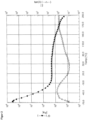
- the polyisobutylene A is characterized by its storage modulus G', which is essentially constant in the temperature range from 10 to 40°C, preferably from 10 to 60°C and in particular from 0 to 80°C, i.e. the storage modulus G' has a plateau in this temperature range.
- "essentially constant” is understood to mean that when the values of the storage modulus G' (as a logarithm) are plotted against the temperature in the temperature range from at least 10 to 40°C, preferably from 10 to 60°C and in particular from 0 to 80°C, a flat plateau is shown.
- "essentially constant" means that in the specified temperature range none of the values for the storage modulus G' is more than 50% (absolute, ie not logarithmic), more preferably more than 25% (absolute) and in particular more than 15% (absolute) downwards from the value of the storage modulus at 40°C, and that none of the values for the storage modulus G' deviates more than 100% (absolute), preferably more than 50% (absolute), more preferably more than 25% (absolute) upwards.
- the absolute value of the plateau in the range from 10 to 40°C, preferably from 10 to 60°C and in particular from 0 to 80°C, for the polyisobutylene A is preferably in the range from 5 ⁇ 10 4 Pascal to 5 ⁇ 10 6 Pascal, in particular in the range from 10 5 to 10 6 Pascal and most preferably in the range from 10 5 Pascal to 5 ⁇ 10 5 Pascal.
- the molecular weight distribution of the polyisobutylene A is not relevant for the present invention as long as the values for the storage modulus G' are maintained.
- the polyisobutylene A can be produced, for example, by mixing two or more polyisobutylenes to produce a polyisobutylene with the desired storage modulus profile.
- the polyisobutylene A is a single polyisobutylene.
- An example of a suitable polyisobutylene A is the product Durotak 87-625A from Henkel Corporation, Brigewater, USA.
- the profile of the storage modulus G' (together with the profile of the quotient of the loss modulus G" and the storage modulus G', which is referred to as tan ⁇ or loss tangent) for the commercial product Durotak 87-625A is shown in Figure 2 shown.
- the polyisobutylene A is present in a mixture with a second polyisobutylene, which is referred to here as polyisobutylene B.
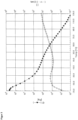
- Polyisobutylene B is also characterized by its storage modulus G'. Unlike polyisobutylene A, the storage modulus of polyisobutylene B must fall continuously in the range from 10 to 40°C, preferably from 10 to 60°C and in particular from 0 to 80°C, and the value for the storage modulus G' of polyisobutylene B is the lower temperature of the respective range is significantly higher than at the higher temperature of the respective range.
- the storage modulus G' of the polyisobutylene B is generally at least twice as high (absolute) at 0°C as at 80°C, preferably the storage modulus G' at 0°C is at least five times as high (absolute) as at 80°C and particularly preferably the storage modulus G' of the polyisobutylene B is at least 10 times as high (absolute) at 0°C as at 80°C.
- the storage modulus G' of the polyisobutylene B at a temperature of 10°C is also at least twice as high (absolute), preferably at least three times as high (absolute) as at a temperature of 40°C.
- the absolute value of the storage modulus G' at 0°C for the polyisobutylene B is preferably in the range from 5 ⁇ 10 4 Pascal to 5 ⁇ 10 6 Pascal, in particular in the range from 5 ⁇ 10 4 Pascal to 10 6 Pascal and very particularly preferably in the range from 10 5 to 10 6 Pascal.
- the absolute value of the storage modulus G' at 80°C for the polyisobutylene is preferably in the range from 5 ⁇ 10 2 Pascal to 5 ⁇ 10 4 Pascal, more preferably in the range from 5 ⁇ 10 2 Pascal to 10 4 Pascal and in particular in the range from 10 3 to 10 4 Pascal.
- the absolute value of the storage modulus G' for polyisobutylene B at 10°C is preferably in the range from 2 ⁇ 10 4 Pascal to 10 6 Pascal, in particular in the range from 5 ⁇ 10 4 Pascal to 10 6 Pascal.
- the absolute value of the storage modulus G' at 40°C for polyisobutylene B is preferably in the range from 5 ⁇ 10 3 Pascal to 2 ⁇ 10 5 Pascal, more preferably in the range from 10 4 Pascal to 10 5 Pascal.
- the absolute value of the storage modulus G' at 60°C for polyisobutylene B is preferably in the range from 5 ⁇ 10 2 Pascal to 10 5 Pascal, more preferably in the range from 5 ⁇ 10 3 Pascal to 5 ⁇ 10 4 Pascal.
- the molecular weight distribution of polyisobutylene B is not relevant for the present invention as long as the storage modulus G' has the temperature dependence required according to the invention.
- transdermal therapeutic systems which have a certain ratio of storage modulus to loss modulus.
- the transdermal therapeutic systems according to the invention can additionally be specified by the value of the loss tangent ⁇ at 30°C.
- the loss tangent ⁇ at 30°C is preferably in the range from 10 -2 to 5 ⁇ 10 -1 , more preferably in the range from 5 ⁇ 10 -2 to 5 ⁇ 10 -1 .
- the loss tangent ⁇ at 30°C is preferably in the range of more than 5 ⁇ 10 -1 to 10, in particular in the range of 6 ⁇ 10 -1 to 5.
- the loss tangent of polyisobutylene B at 30°C is higher than that of polyisobutylene A.
- polyisobutylene B can also be produced, for example, by mixing two or more polyisobutylenes to produce a polyisobutylene with the desired storage modulus G' curve.
- Polyisobutylene B is preferably a single polyisobutylene.
- An example of a suitable polyisobutylene B is the product Durotak 87-626A from Henkel Corporation, Bridgewater, USA.
- the curve of the storage modulus G' (together with the curve of the quotient of the loss modulus G" and the storage modulus G', which is referred to as tan ⁇ (or loss tangent)) for the commercial product Durotak 87-626A is shown in Figure 3 shown.
- the pressure-sensitive adhesive matrix layer of the transdermal therapeutic system according to the invention contains a mixture of polyisobutylene A and polyisobutylene B and the polyisobutylene A and/or the polyisobutylene B preferably each consist of one polyisobutylene or each of a mixture of at least two polyisobutylenes with different average molecular weights
- the pressure-sensitive adhesive matrix of the transdermal therapeutic system according to the invention can comprise two, three, four or more polyisobutylenes with different average molecular weights.
- a single polyisobutylene has a molecular weight distribution with a single peak without a shoulder, which corresponds to the molecular weight distribution obtained when the polyisobutylene is polymerized from the individual monomers. If two molecules formed by simple If polyisobutylenes of different molecular weights produced by polymerization are mixed, a mixture of two polyisobutylenes is present according to the invention.
- a mixture of two polyisobutylenes is characterized according to the invention in that the molecular weight distribution of the mixture of two polyisobutylenes has two peaks at two different molecular weights or the molecular weight distribution shows a peak with a shoulder (if the average molecular weights of the mixed polyisobutylenes are too close to one another so that two separate peaks do not appear).
- the pressure-sensitive adhesive matrix layer consists of a mixture of a polyisobutylene A and a polyisobutylene B, which differ in the temperature dependence of their storage moduli.
- the polyisobutylene A also has a different average molecular weight than the polyisobutylene B.
- the molecular weight distribution of the mixture of the polyisobutylene A and the polyisobutylene B will therefore have at least two peaks, one of which is due to the polyisobutylene A and one to the polyisobutylene B.
- the polyisobutylene A and/or the polyisobutylene B were in turn produced from at least two polyisobutylenes with different molecular weights.
- the pressure-sensitive adhesive matrix layer is preferably composed of two polyisobutylenes, wherein each polyisobutylene in the pressure-sensitive adhesive matrix layer of the transdermal therapeutic system according to the invention shows a separate peak or shoulder in the molecular weight distribution.
- polyisobutylene A or B are mixtures of polyisobutylene
- the individual polyisobutylenes that make up polyisobutylene A and polyisobutylene B are selected such that the desired temperature dependence of the storage modulus for polyisobutylene A and B, respectively, is obtained.
- the molecular weight distribution of a polyisobutylene or a mixture of several polyisobutylenes can be determined in the prior art by gel permeation chromatography (GPC), for example against a polystyrene standard.
- GPC gel permeation chromatography
- the amount of polyisobutylene B in the pressure-sensitive adhesive matrix layer in relation to the amount of polyisobutylene A in the pressure-sensitive adhesive matrix layer can be suitably adjusted by a person skilled in the art.
- the weight ratio of polyisobutylene A:polyisobutylene B in the matrix layer is in the range of 20% (A):80% (B) to 40% (A):60% (B) and in particular 25% (A):75% (B) to 35% (A):65% (B), each based on the total weight of the two polyisobutylenes, and preferably the content of polyisobutylene B in the matrix layer is higher than the content of polyisobutylene A.
- the amount of polyisobutylene A in the matrix layer is preferably in the range of 10 to 25%, more preferably in the range of 10 to 20%, in particular in the range of 12 to 20%, in particular from 16 to 18%, each as a weight percent based on the total weight of the matrix layer.
- the content of polyisobutylene B in the matrix layer is preferably in the range of 30 to 60%, more preferably in the range of 30 to 50% and in particular in the range of 40 to 45%, each as a weight percent based on the total weight of the matrix layer.
- the matrix layer of the transdermal therapeutic system according to the invention contains the active ingredient as well as the polyisobutylene A and the polyisobutylene B.
- the matrix layer also preferably contains a permeation enhancer. Any permeation enhancer known in the art for the active ingredient fentanyl can be used as the permeation enhancer.
- a carboxylic acid ester and in particular a fatty acid ester is particularly preferably used. Isopropyl myristic acid ester (isopropyl myristate) and oleyl oleate (oleyl oleate) are particularly preferred.
- the permeation enhancer isopropyl myristate is particularly well suited to providing a transdermal therapeutic system with the desired properties.
- the content of permeation enhancer in the matrix layer of the transdermal therapeutic system according to the invention is not particularly limited, but is generally in the range from 2 to 20% by weight based on the total weight of the matrix layer, particularly preferably in the range from 5 to 15% by weight, for example 10% by weight based on the total weight of the matrix layer.
- the range from 8 to 15% by weight, based on the total weight of the matrix layer according to the invention has proven to be particularly advantageous.
- the pressure-sensitive adhesive matrix layer of the transdermal therapeutic system according to the invention preferably also contains a tackifier.
- a polybutene is particularly suitable as a tackifier, but another tackifier suitable for polyisobutylenes, such as rosin resin, terpene resin or petroleum resin, can also be used.
- polybutene is preferred as a tackifier, in particular polybutene with a number-average molecular weight in the range from 700 to 6000, in particular from 900 to 4000, such as the product Indopol H-1900 with a number-average molecular weight of 2500.
- Polybutene is an isobutylene/butene copolymer.
- a hydrogenated or non-hydrogenated rosin resin in particular a hydrogenated rosin resin, is preferred as a tackifier.
- a hydrogenated or non-hydrogenated rosin resin is preferred as a tackifier.
- An example of this is the commercial product Foral ® 105-E from Eastman Chemical Middelburg BV, The Hague, Netherlands.
- the content of tackifier, in particular polybutene, in the matrix layer of the transdermal therapeutic system according to the invention is generally 0 to 40% by weight, preferably 5 to 35% by weight, in particular 10 to 30% by weight, e.g. about 25% by weight, in each case based on the total weight of the matrix layer.
- the cold flow is particularly low at typical storage temperatures of less than 20°C and after application to the skin (i.e. at temperatures >30°C).
- the matrix layer of the transdermal therapeutic system according to the invention therefore preferably consists of active ingredient, polyisobutylene A, polyisobutylene B, permeation enhancer (in particular a carboxylic acid ester, preferably isopropyl myristate or oleyl oleate, particularly preferably isopropyl myristate) and tackifier (particularly preferably polybutene, particularly Indopol H-1900).
- permeation enhancer in particular a carboxylic acid ester, preferably isopropyl myristate or oleyl oleate, particularly preferably isopropyl myristate
- tackifier particularly preferably polybutene, particularly Indopol H-1900
- the matrix layer of the transdermal therapeutic systems according to the invention is in particular free of gelling agents.
- the matrix of the transdermal therapeutic systems according to the invention preferably contains no branched higher-chain alcohol, particularly preferably no higher-chain alcohol at all, wherein a branched higher-chain alcohol or a higher-chain alcohol is understood to mean an alcohol with 5 or more carbon atoms.
- the polyisobutylene A has a viscosity-average molecular weight of approximately 1,100,000 g/mol and the polyisobutylene B has a viscosity-average molecular weight of approximately 30,000 to approximately 60,000 g/mol, preferably approximately 40,000 or 55,000 g/mol.
- the patch further contains a tackifier and a permeation enhancer, in particular the tackifier Indopol H 1900, i.e.
- polybutene with a number-average molecular weight of approximately 2500 g/mol and as a permeation enhancer in particular either oleyl oleate or isopropyl myristate, the polybutene preferably being present in an amount of 23 to 28% by weight and the isopropyl myristate or oleyl oleate being present in an amount of 8 to 15% by weight.
- the matrix layer comprises an amount of fentanyl or an analogue thereof sufficient to induce and maintain analgesia in a human for three to seven days (from the time of administration of the patch).
- the absolute amount of active ingredient to be used depends on various factors, in particular on the size of the patch to be used and the duration of use.
- the transdermal therapeutic system preferably contains the active ingredient (in particular fentanyl) in an amount of 3 to 15% by weight, particularly preferably 3 to 10% by weight. %, in particular from 4 to 8 wt.%, 4 to 6 wt.% or 5 to 6 wt.%, for example from about 6 wt.%, in each case based on the total weight of the matrix layer.
- the active ingredient can either be completely dissolved in the matrix layer, or individual active ingredient particles can be undissolved in the matrix layer. According to the invention, individual active ingredient particles can be undissolved in the matrix layer. In this case, it is referred to as a suspension plaster.
- a suspension plaster according to the invention is in Figure 1 where reference numeral 4 designates the solid active ingredient particles in the matrix layer.
- the matrix layer has a composition summarized in the table below.
- the basis weight of the matrix layer is preferably in the range from 20 g/m 2 to 100 g/m 2 , in particular in the range from 30 g/m 2 to 70 g/m 2 , in each case based on the basis weight of the dried matrix layer.
- the present invention relates to a transdermal system for relieving pain during the intended wearing time, as described above, in which the matrix layer, after application to the skin for the duration of the intended wearing time of 3 to 7 days, in particular 3 days, has a residual active ingredient content of less than 35%, preferably less than 25%, more preferably less than 20%, even more preferably less than 15%, in particular less than 10%, e.g. less than 8%, 7%, 6% or 5% of the initial active ingredient content.
- the residual active ingredient content is in the range from less than 35% to 10%, preferably less than 25% to 2%, more preferably in the range from less than 20% to 3%, even more preferably in the range from less than 15% to 4%, in particular less than 10% to 5% of the initial active ingredient content.
- the initial active ingredient content refers to the absolute amount of active ingredient to be used in the matrix layer as defined above.
- the residual active ingredient content (in %) is the quotient of the absolute amount of residual active ingredient content of the matrix layer and the absolute amount of active ingredient used.
- the absolute amount of residual active ingredient content of the matrix layer is the amount of active ingredient remaining in the transdermal system after application to the skin for the intended period of wear, from 3 to 7 days, e.g. 3 days.
- the absolute amount of residual active ingredient in a transdermal system can be determined using methods known in the art.
- the matrix layer of the used transdermal system can be dissolved in a suitable solvent and the total amount of active ingredient in the solution can be determined, for example chromatographically.
- the transdermal therapeutic system according to the present invention has a release rate of the active ingredient that corresponds to that of a transdermal therapeutic system that has been approved by at least one drug authority.
- Typical release rates of this type are in the range of about 12.5 ⁇ g/h to about 100 ⁇ g/h, preferably 12.5 ⁇ g/h, 25 ⁇ g/h, 50 ⁇ g/h, 75 ⁇ g/h and/or 100 ⁇ g/h.
- the transdermal therapeutic system has a release rate of at least 100 ⁇ g/h or more, preferably at least 100 ⁇ g/h or more to about 300 ⁇ g/h, in particular about 150 ⁇ g/h to about 250 ⁇ g/h, e.g. about 200 ⁇ g/h or 250 ⁇ g/h.
- the release rates are preferably achieved with a low active ingredient load (absolute amount of active ingredient in the transdermal therapeutic system) compared to known, in particular approved transdermal therapeutic systems.
- the low residual active ingredient content achieved according to the invention at high release rates not only avoids unnecessary costs due to unused active ingredient remaining in the transdermal system, but also reduces the risk and misuse potential of worn transdermal systems that still have residual active ingredient content.
- the present invention therefore also relates to worn transdermal therapeutic systems as defined above with the above-mentioned residual active ingredient content after use.
- the transdermal therapeutic system according to the invention is produced according to processes known in principle in the prior art.
- the active ingredient is dispersed in the permeation enhancer.
- the polyisobutylene A and the polyisobutylene B are also dissolved in a suitable solvent, in particular a liquid alkane, in particular an alkane with 5 to 7 carbon atoms, such as heptane.
- the dissolved polyisobutylenes are mixed with the dispersed fentanyl while stirring.
- the tackifier is then added if necessary and stirring is continued until a homogeneous coating mass is formed.
- the homogeneous coating mass is then applied to the release layer and dried while heating so that the residual solvent content is as low as possible.
- the residual solvent content is preferably less than 1%, in particular less than 0.5%.
- the dried matrix is laminated with the backing layer, creating a laminate. Plasters of a suitable size are punched out of this laminate.
- transdermal therapeutic systems described here can be prepared by the above process according to the invention and the invention therefore also relates to the process for preparing the transdermal therapeutic systems according to the invention and the transdermal therapeutic systems obtainable by this process.
- the present invention also relates to the use of a mixture of polyisobutylene A and polyisobutylene B as described above for producing a matrix layer of a transdermal therapeutic system or the use of such a matrix layer for administering fentanyl or an analogue of fentanyl as described above, wherein the matrix layer of the transdermal therapeutic system after application to the skin for the intended wearing time of 3 to 7 days, in particular 3 days, has a residual active ingredient content as defined above for the matrix, below 35%, preferably below 25%, more preferably below 20%, even more preferably below 15%, in particular below 10%, for example below 8%, 7%, 6% or 5% of the initial active ingredient content.
- the present invention also relates to the use of such a mixture of polyisobutylene A and polyisobutylene B for producing a matrix layer of a transdermal therapeutic system or the use of such a matrix layer in a transdermal therapeutic system which is protected against misuse or abuse, in particular after use.
- the present invention also relates to the use of a mixture of polyisobutylene A and polyisobutylene B for reducing the size of a transdermal therapeutic system with essentially constant release, in particular the release rates mentioned above.
- a mixture of polyisobutylene A and polyisobutylene B is used to produce a matrix layer of a transdermal therapeutic system or such a matrix layer is used in a transdermal therapeutic system in order to reduce the size of the transdermal therapeutic system with a constant, i.e. bioequivalent, release profile compared to a commercially available transdermal therapeutic system, such as Matrifen® and Durogesic DTrans® .
- a transdermal therapeutic system is thus made available which, despite its small size, is bioequivalent to the market product, in particular the commercially available Matrifen ® or Durogesic DTrans ® .
- the use of small transdermal therapeutic systems is particularly desirable for cosmetic reasons.
- the present invention relates to the use of a mixture of polyisobutylene A and polyisobutylene B as described above for producing a matrix layer of a transdermal therapeutic system or the use of such a matrix layer in a transdermal therapeutic system which has a release rate as defined above, in particular of at least 200 ⁇ g/h, eg at least 250 ⁇ g/h.
- the transdermal therapeutic system according to the invention preferably has a size of less than 80 cm 2 , more preferably less than 60 cm 2 , even more preferably less than 50 cm 2 , in particular less than 45 cm 2 .
- fentanyl 0.6 g was dispersed in 1.0 g of isopropyl myristate. The mixture was stirred until a homogeneous suspension was obtained. 5.58 g of Durotak 87-626A (solids content 73.71%) and 14.48 g of Durotak 87-625A (solids content 12.18%) were added to the mixture of fentanyl and isopropyl myristate with stirring over a period of 20 minutes. Then 2.52 g of polybutene was added to the remaining mixture.
- the mixture was stirred until a homogeneous coating mass was formed. This homogeneous coating mass was applied to a Scotchpak 9742 film in a thickness of 117 ⁇ m.
- the mixture was then heated in stages to 50°C, 60°C, 70°C and 80°C and dried. The basis weight of the dried matrix layer is approximately 50 g/m 2 .
- the dried matrix was laminated with a Scotchpak 9723 backing layer. Plaster fragments of suitable size were punched out of the laminate.
- the plasters produced in this way were stored for 8 weeks in the refrigerator at 2°C to 8°C, at 25°C and 60% relative humidity and at 40°C and 75% relative humidity. No significant cold flow occurred in the plasters. All of the plasters tested under all conditions investigated, the maximum cold flow was below 0.3 mm.
- a transdermal therapeutic system according to Example 2 of WO 2011/029948 and stored for 8 weeks at 25°C/60% humidity and at 40°C/75% humidity. The comparison plasters showed a pronounced cold flow on the peel-off aid and also on the backing layer, which was significantly greater than the cold flow that was shown in the plaster according to the invention.
- the patches adhere without significant skin irritation and are well tolerated locally on the skin for up to three days.
- transdermal therapeutic systems according to the invention therefore show the same good skin compatibility, the same adhesive strength and the same permeation rates as common commercial systems. Unlike the transdermal therapeutic systems of WO 2011/029948 However, the transdermal therapeutic systems according to the invention show practically no cold flow during storage and are also much simpler and more cost-effective to produce with even lower active ingredient content and low residual active ingredient content.
Landscapes
- Health & Medical Sciences (AREA)
- Engineering & Computer Science (AREA)
- Bioinformatics & Cheminformatics (AREA)
- Veterinary Medicine (AREA)
- Chemical & Material Sciences (AREA)
- Medicinal Chemistry (AREA)
- Pharmacology & Pharmacy (AREA)
- Life Sciences & Earth Sciences (AREA)
- Animal Behavior & Ethology (AREA)
- General Health & Medical Sciences (AREA)
- Public Health (AREA)
- Epidemiology (AREA)
- Dermatology (AREA)
- Neurology (AREA)
- Biomedical Technology (AREA)
- Neurosurgery (AREA)
- Chemical Kinetics & Catalysis (AREA)
- General Chemical & Material Sciences (AREA)
- Nuclear Medicine, Radiotherapy & Molecular Imaging (AREA)
- Organic Chemistry (AREA)
- Pain & Pain Management (AREA)
- Medicinal Preparation (AREA)
- Pharmaceuticals Containing Other Organic And Inorganic Compounds (AREA)
- Hydrogenated Pyridines (AREA)
Description
- Gegenstand der vorliegenden Anmeldung ist ein System zur transdermalen Verabreichung von Fentanyl oder einem Analogstoff davon für therapeutische Zwecke. Das transdermale therapeutische System (TDS, Wirkstoffpflaster) zeichnet sich durch eine hervorragende Kombination der für ein solches System relevanten Eigenschaften aus, insbesondere ausreichende Klebekraft und Hautverträglichkeit über einen langen Zeitraum, so dass eine Tragedauer des Systems von mindestens 3 Tagen gewährleistet ist, die Abwesenheit von kaltem Fluss, geringe Wirkstoffbeladung und ausgezeichnete Wirkstofffreisetzung.
- Fentanyl und dessen Analogstoffe, insbesondere Alfentanil, Carfentanil, Lofentanil, Remifentanil, Sufentanil, Trefentanil und ähnliche Verbindungen sind wirksame synthetische Opiate. Fentanyl und dessen Analogstoffe sind hochwirksam und werden schnell metabolisiert. Problematisch bei diesen Verbindungen ist, dass sie einen relativ engen therapeutischen Index besitzen. Bei Überschreiten der Grenzwerte treten unerwünschte Nebeneffekte auf, insbesondere eine Beeinträchtigung der Atmung, die - wenn nicht geeignete Gegenmaßnahmen ergriffen werden - zum Tod führen kann. Die Wirkstoffe sind relativ teuer und es besteht ein sehr hohes Missbrauchsrisiko. Deshalb müssen Fentanylpflaster einerseits eine sehr präzise gesteuerte Freisetzung des Wirkstoffs gewährleisten und andererseits soll das Produkt so geschaffen sein, dass der Wirkstoff hieraus nicht leicht zu Missbrauchszwecken entfernt werden kann. Die Pflaster sind in der Regel für einen Einsatz von mindestens drei Tagen vorgesehen und müssen über diesen Zeitraum ausreichend auf der Haut kleben.
- Ein Wirkstoffpflaster ist typischerweise eine kleine klebende Bandage, welche den abzugebenden Wirkstoff enthält. Diese Bandagen können verschiedene Formen und Größen haben. Der einfachste Typ ist ein Klebe-Monolith, welcher einen Wirkstoffvorrat (Reservoir) auf einem Träger umfasst. Das Reservoir wird typischerweise aus dem Wirkstoff in einem pharmazeutisch akzeptablen druckempfindlichen Klebstoff gebildet. Es kann aber auch aus einem nicht (oder schlecht) klebenden Material geformt sein, dessen Haut-Kontaktfläche mit einer dünnen Schicht eines geeigneten Klebstoffes versehen ist.
- Komplexere Pflaster sind Mehrfachlaminate oder Pflaster mit Wirkstoffvorrat (der gegebenenfalls in einer Flüssigkeit gelöst vorliegen kann), in welchen zwischen dem Wirkstoffvorrat und dem die Haut kontaktierenden Klebstoff eine die Wirkstoff-Freisetzung steuernde Membran angeordnet sein kann. Diese Membran dient dazu, die Auswirkungen von Variationen der Hautdurchlässigkeit durch Herabsetzung der in vitro- und in vivo-Abgaberate des Wirkstoffs aus dem Pflaster zu kontrollieren und gegebenenfalls zu vermindern.
- Ein Wirkstoffpflaster kann den Wirkstoff entweder vollständig gelöst im Vorrat enthalten oder der Vorrat kann einen Überschuss ungelösten Wirkstoffs enthalten (Depot-Pflaster). Die Anwesenheit von ungelöstem Wirkstoff oder anderen Bestandteilen in einem Pflaster kann bei der Lagerung sowie beim Gebrauch allerdings Stabilitäts- und andere Probleme aufwerfen. Eine Schwierigkeit besteht auch darin, dass sichergestellt werden muss, dass sich der Wirkstoff aus dem festen Depot ausreichend schnell nachlöst, um den abgegebenen Wirkstoff zu ersetzen. Wirkstoffpflaster, deren Reservoir feste Wirkstoffteilchen aufweist, werden im Stand der Technik daher häufig als nachteilig angesehen.
- Aus dem Stand der Technik sind viele verschiedene transdermale Pflaster für die Verabreichung von Fentanyl bekannt. Die
WO 02/074286 - Es gibt viele Versuche, Fentanylpflaster auch auf der Basis einer Matrixschicht aus Polyisobutylen herzustellen. Erste derartige Versuche werden bereits in dem Grundpatent zu Fentanylpflastern, dem
US-A 4,588,580 , beschrieben. Diese Druckschrift offenbart ein transdermales therapeutisches System mit einer Polyisobutylenmatrix und Mineralöl, die eine 2%ige Beladung von Fentanyl als ungelöstem Feststoff enthält. Das System weist in der Praxis jedoch Nachteile auf, und in der Folgezeit ging die Entwicklung daher von Polyisobutylenmatrices weg bzw. falls Polyisobutylenmatrices verwendet wurden, versuchte man, den Wirkstoff vollständig in der Polyisobutylenmatrix zu lösen. - Ein transdermales therapeutisches System mit einer Polyisobutylenmatrix ist in Roy et al., Journal of Pharmaceutical Sciences, Vol. 85, Nr. 5, Mai 1996, Seiten 491 bis 495 beschrieben. Es wird gezeigt, dass bei Konzentrationen von Fentanyl in der Polyisobutylenmatrix von mehr als 4% Wirkstoff ausfällt, und dies wurde offensichtlich von Roy et al. als negativ angesehen. Roy et al. schlägt für Pflaster mit geringer Wirkstoffbeladung an Fentanyl Polysilikonpflaster vor und keine Polyisobutylenpflaster.
- In der
US 2007/0009588 und derUS 2006/0013865 werden dementsprechend Polyisobutylenmatrices vorgeschlagen, bei denen sorgfältig darauf zu achten ist, dass der Wirkstoff in der Polyisobutylenmatrix vollständig gelöst vorliegt. Das Auftreten von Kristallen in der Matrix wird als negativ angesehen. Die Polyisobutylenmatrices enthalten Polyisobutylene unterschiedlichen Molekulargewichts und ein Mineralöl, bei dem es sich bevorzugt um flüssiges Paraffin handelt, oder ein Styrol-Isopren-Styrol Blockpolymer. - Die
DE 198 37 902 offenbart transdermale therapeutische Systeme auf der Basis von Polyisobutylen, die insbesondere zur Verabreichung von Clonidin geeignet sind, unter den dort genannten Wirkstoffen findet sich aber auch Fentanyl. Beispiele für Fentanylpflaster finden sich in dieser Druckschrift nicht, ein Hinweis darauf, dass bei den dort offenbarten Pflastern der Wirkstoff als Feststoff vorhanden sein soll, findet sich in der Druckschrift ebenfalls nicht. Die Druckschrift enthält keine in vivo-Untersuchungen zur Freisetzung des Wirkstoffs aus den Pflastern. Die Polyisobutylenschicht dieser Pflaster enthält mindestens 5 Gew.-% eines Füllstoffs. - In der
WO 2009/130039 werden transdermale therapeutische Systeme zur Verabreichung von Fentanyl oder einem Analogstoff davon beschrieben, bei denen auf einer Rückschicht eine Polyisobutylenschicht aufgebracht ist, die den Wirkstoff enthält und die einen Gehalt an Gelbildner von höchstens 4 Gew.-% aufweist. Mit diesen Pflastern soll eine längere und gleichmäßigere Freisetzung erzielt werden, als mit den bekannten Fentanylpflastern. - Die
EP 0 272 987 offenbart ebenfalls ein Pflaster zur Verabreichung von Wirkstoffen, wobei eine besonders ausgestaltete Trägerschicht als relevant angesehen wird. In einem Beispiel der Druckschrift wird ein Fentanylpflaster offenbart, das zwei Wirkstoffschichten enthält, wobei die eine Wirkstoffschicht eine Polyisobutylenschicht, die andere eine Polydimethylsiloxanschicht darstellt. Die Druckschrift offenbart, dass der Wirkstofffluss aus der Polyisobutylenschicht wesentlich niedriger ist, als aus der Polydimethylsiloxanschicht. - Die
WO 2011/029948 offenbart ein transdermales therapeutisches System zur Verabreichung von Fentanyl oder einem Analogstoff des Fentanyls durch die Haut bei der die Matrixschicht aus zwei Schichten besteht, die jeweils ein Polyisobutylen mit einer anderen Zusammensetzung enthalten. Der Aufbau der Pflaster ist durch die Mehrfachbeschichtung relativ komplex. - Die
US 2011/0020426 offenbart ein Verfahren zur Herstellung einer Klebstoffzusammensetzung aus einem Polyisobutylen mit hohem Molekulargewicht und einem Polyisobutylen mit geringerem Molekulargewicht. Diese Klebstoffzusammensetzung ist für Pflaster zur Verabreichung von Wirkstoff geeignet. Die Wirkstoffe sind nicht besonders eingeschränkt und Fentanyl wird als ein Wirkstoff aus einer langen Liste von Wirkstoffen offenbart. Keines der Beispiele betrifft ein Fentanylpflaster. - Die
EP 1 625 845 offenbart ein transdermales therapeutisches System für die Verabreichung von Fentanyl aus einer Klebstoffschicht aus zwei Arten von Polyisobutylen mit unterschiedlichem Molekulargewicht. Die Klebstoffschicht enthält weiterhin noch einen Klebrigmacher und eine organische Flüssigkeit, bei der es sich um Polybuten handeln kann. Wie in derUS 2007/0009588 und derUS 2006/0013865 sieht es dieEP 1 625 845 als wesentlich an, dass das Fentanyl in der Klebstoffschicht vollständig gelöst ist. Dementsprechend werden der Klebrigmacher und die organische Flüssigkeit ausgewählt, um eine vollständige Lösung des Fentanyls in der Klebstoffschicht zu gewährleisten. Bei der organischen Flüssigkeit handelt es sich bevorzugt um ein Gemisch aus einem Fettsäurealkylester und einem verzweigten langkettigen Alkohol, da in diesem Gemisch die Löslichkeit des Fentanyls am Stärksten ist. - Es ist eine ausgesprochen anspruchsvolle Aufgabe, ein transdermales therapeutisches System für die Verabreichung von Fentanyl oder einem Analogstoff davon zur Verfügung zu stellen, das alle praxisrelevanten Eigenschaften vorteilhaft verbindet. Ein derartiges transdermales therapeutisches System muss nicht nur über die gesamte Anwendungsdauer eine ausreichende Wirkstofffreisetzung gewährleisten, sondern darüber hinaus auch eine ausreichende Klebekraft und Hautverträglichkeit damit die für Fentanyl und Analogstoffe davon übliche Anwendungsdauer von typischerweise drei Tagen gewährleistet ist. Ferner darf bei dem transdermalen therapeutischen System kein nennenswerter kalter Fluss auftreten. Bei einem solchen kalten Fluss wird das transdermale therapeutische System während der Lagerung praktisch unbrauchbar. Schließlich sollte das Pflaster auch noch einfach und kostengünstig herzustellen sein, mit möglichst wenig Wirkstoffbeladung auskommen und einen möglichst geringen Restwirkstoffgehalt nach Gebrauch aufweisen.
- Die im Stand der Technik vorgeschlagenen Pflaster auf Polyisobutylenbasis erfüllen Teilaspekte der vorstehenden erwünschten Eigenschaften. Beispielsweise zeigt das in der
EP 1 625 845 beschriebene Pflaster mit einer Matrixschicht aus zwei Polyisobutylenen mit unterschiedlichem Molekulargewicht eine zufriedenstellende Freisetzung des Wirkstoffs, allerdings ist die Klebleistung der Pflaster nicht zufriedenstellend. Bei nicht hinreichender Klebeleistung des Pflasters ist selbstverständlich eine Anwendung über einen längeren Zeitraum, z.B. von 3 Tagen oder mehr, nicht zuverlässig möglich. Auch ist die Menge an Wirkstoff, die in das Pflaster eingebracht wird, für ein Mehrtagespflaster zur Behandlung von starken Schmerzen zu gering. In derWO 2011/029948 wurde ein Weg gefunden, die Klebeeigenschaften der Fentanylpflaster auf Polyisobutylenbasis zu verbessern und gleichzeitig eine ausgezeichnete Wirkstofffreisetzung zu erzielen. In die Pflaster kann eine Menge an Wirkstoff eingebracht werden, die auch zur Behandlung starker Schmerzen über mehrere Tage ausreichend ist. Allerdings neigen die dort offenbarten Pflaster dazu, kalten Fluss zu zeigen und der Aufbau der Pflaster mit zwei übereinander angeordneten haftklebenden Schichten aus verschiedenen Polyisobutylenen ist relativ komplex was die Herstellung des Pflasters aufwendig und teuer macht. - Desweiteren zeigen die bekannten Pflaster einen signifikanten Restwirkstoffgehalt nach Gebrauch. Gemäß H.G. Kress et al., European Journal of Pharmaceutics and Biopharmaceutics, 75(2010), 225-231 ist der gemessene Restfentanylgehalt in kommerziell erhätlichen Matrifen® und Durogesic DTrans® Pflastern im Mittel 82.3% bzw. 52.3%, obwohl ihre Freisetzung bioequivalent ist. Entsprechend ist der Gesamtgehalt in Durogesic DTrans® vor Gebrauch deutlich höher. Ein Restgehalt an Wirkstoff nach Gebrauch im Bereich von 50-80% ist jedoch nicht nur aus Wirtschaftlichkeitsaspekten nachteilig, sondern stellt insbesondere ein signifikantes Missbrauchsrisiko dar.
- Es besteht daher weiterhin Bedarf nach einem Pflaster auf der Basis von Polyisobutylenen zur Verabreichung von Fentanyl oder einem Analogstoff davon, das die vorstehend genannte vorteilhafte Kombination an Eigenschaften aufweist, das also nicht nur eine hervorragende Freisetzung des Wirkstoffs sondern auch sehr gute Klebeeigenschaften und hervorragenden Tragekomfort (jeweils von drei Tagen oder mehr), zur Verfügung stellt, dabei bei der Lagerung keinen kalten Fluss zeigt und das leicht und kostengünstig mit geringem Wirkstoffeinsatz und geringem Restwirkstoffgehalt nach Gebrauch hergestellt werden kann.
- Die Erfinder der vorliegenden Anmeldung haben nunmehr überraschend gefunden, dass die Temperaturabhängigkeit des viskoelastischen Verhaltens der Polyisobutylene der Matrixschicht eines transdermalen therapeutischen Systems von entscheidender Bedeutung für die relevanten Eigenschaften des transdermalen therapeutischen Systems ist, insbesondere für die Kombination der Eigenschaften a) gute Klebeeigenschaft, b) Minimierung von kaltem Fluss, c) hohe Wirkstofffreisetzung über mehrere Tage und d) geringem Restwirkstoffgehalt nach Gebrauch. Es wurde gefunden, dass transdermale therapeutische Systeme, bei denen die Matrixschicht aus Polyisobutylenen aufgebaut ist, deren viskoelastische Eigenschaften eine bestimmte Temperaturabhängigkeit zeigen, die Kombination der vorstehend genannten hervorragenden Eigenschaften aufweisen, insbesondere wenn die Matrixschicht noch einen Permeationsverstärker und einen Klebrigmacher enthält. Überraschenderweise wurde gefunden, dass insbesondere die Temperaturabhängigkeit des Speichermoduls der in der Matrixschicht vorhandenen Polyisobutylene eine entscheidende Rolle spielt, um kalten Fluss zu vermeiden, gleichzeitig eine hohe Klebkraft bei sehr guter Hautverträglichkeit über einen Zeitraum von mindestens drei Tagen zur Verfügung zu stellen und trotzdem eine ausreichende Freisetzung des Wirkstoffs und geringem Restwirkstoffgehalt zu gewährleisten. Ein komplexer mehrschichtiger Aufbau, wie er beispielsweise in der
WO 2011/029948 verlangt wird, ist bei den erfindungsgemäßen transdermalen therapeutischen Systemen nicht erforderlich. - Die vorliegende Anmeldung betrifft damit ein transdermales therapeutisches System zur Linderung von Schmerz durch Verabreichung eines Wirkstoffs durch die Haut während einer vorgesehenen Tragezeit von 3 bis 7 Tagen bestehend aus
- a) einer Rückschicht,
- b) einer haftklebende Matrixschicht, die den Wirkstoff enthält, und
- c) einer Abziehschicht (Release-Liner),
- b1) einer zusätzlichen Klebstoffschicht oder einem Overtape, die die Haftung des transdermalen therapeutischen Systems auf der Haut verbessert und die auf der haftklebenden Matrixschicht aufgebracht sind, oder
- b2) einer Membran, die die Freisetzung des Wirkstoffes kontrolliert und auf der sich eine Klebstoffschicht befindet, wobei die Membran auf der haftklebenden Matrixschicht aufgebracht ist,
- wobei der Wirkstoff Fentanyl oder ein Analogstoff des Fentanyls ausgewählt aus Alfentanil, Lorfentanil, Lofentanil, Remifentanil und Trefentanil oder ein Salz eines dieser Wirkstoffe ist und
- wobei die Matrixschicht frei von Gelbildnern ist und
- als haftklebendes Polymer ein Gemisch aus einem Polyisobutylen A und einem Polyisobutylen B enthält,
- wobei der Gehalt des Polyisobutylens A zum Polyisobutylen B in der Matrixschicht im Bereich von 20% (A) : 80% (B) bis 40% (A) : 60% (B) liegt, jeweils bezogen auf das Gesamtgewicht der Polyisobutylene A und B, und
- wobei das Polyisobutylen A ein Speichermodul G' aufweist, dessen Wert im Temperaturbereich von 10°C bis 40°C im Wesentlichen konstant ist und
- wobei das Polyisobutylen B ein Speichermodul G' aufweist, dessen Wert im Temperaturbereich von 10°C bis 40°C mit steigender Temperatur kontinuierlich abnimmt,
- wobei das Speichermodul G' im linearen viskoelastischen Bereich bei einer Frequenz von 10 rad/sec unter Verwendung eines Rheometers mit paralleler Plattengeometrie und parallelen Platten gemessen wird und
- wobei die haftklebende Matrixschicht ungelösten Wirkstoff in Form von Wirkstoffpartikeln enthält, und nach Applikation auf der Haut für die Dauer der vorgesehenen Tragezeit, einen Restwirkstoffgehalt von unter 35%, vorzugsweise von 25% des Ausgangsgehalts an Wirkstoff aufweist.
- Das erfindungsgemäße transdermale therapeutische System enthält als Wirkstoff Fentanyl oder einen Analogstoff des Fentanyls ausgewählt aus Alfentanil, Carfentanil, Lofentanil, Remifentanil und Trefentanil oder ein Salz einer dieser Wirkstoffe. Am meisten bevorzugt ist der Wirkstoff Fentanyl. Die Erfindung wird im Folgenden im Wesentlichen anhand des Wirkstoffs Fentanyl erläutert. Die Ausführungen gelten aber entsprechend auch für die angegebenen Analogstoffe des Fentanyls.
- Der bevorzugte Aufbau des erfindungsgemäßen transdermalen therapeutischen Systems in seiner einfachsten Ausgestaltung ist in
Figur 1 gezeigt. Auf dem bei der Anwendung der Haut gegenüber befindlichen Ende des transdermalen therapeutischen Systems befindet sich die Rückschicht (1). An der der Haut beim Gebrauch zugewandten Seite der Rückschicht (1) befindet sich die haftklebende Matrixschicht (2), die auch als Reservoir bezeichnet wird. Bei dem erfindungsgemäßen transdermalen therapeutischen System handelt es sich um ein Suspensionspflaster, d.h. der Wirkstoff ist teilweise ungelöst in der haftklebenden Matrixschicht suspendiert. InFigur 1 sind die Wirkstoffteilchen (4) gezeigt. - Wesentlich für die erfindungsgemäßen transdermalen therapeutischen Systeme ist, dass die haftklebende Matrixschicht so viel Wirkstoff enthält, dass ein Teil des Wirkstoffs in ungelöster Form, also als Wirkstoffpartikel, vorliegt.
- Bei der Herstellung des erfindungsgemäßen transdermalen therapeutischen Systems wird der Wirkstoff bevorzugt in mikronisierter Form, bei der mehr als 90% der Partikel kleiner als 50 µm, bevorzugt kleiner 25 µm, eingesetzt. Auch in der Matrixschicht des transdermalen therapeutischen Systems liegt der Wirkstoff in mikronisierter Form vor, allerdings können sich durch Umlagerungsreaktionen bei der Herstellung und Lagerung des transdermalen therapeutischen Systems Abweichungen der Teilchengröße ergeben. Auch innerhalb des transdermalen therapeutischen Systems sind vorzugsweise mehr als 90% der Wirkstoffpartikel kleiner als 100 µm, stärker bevorzugt kleiner als 50 µm und insbesondere kleiner als 25 µm. Zur Herstellung des erfindungsgemäßen transdermalen therapeutischen Systems wird bevorzugt mikronisiertes Fentanyl mit einer mittleren Teilchengröße von 1 µm oder mehr, stärker bevorzugt 2 µm oder mehr, eingesetzt. Bei dem eingesetzten Fentanyl sind bevorzugt mehr als 90% der Partikel kleiner 25 µm. Diese Teilchengrößen finden sich bevorzugt ebenfalls in dem fertig hergestellten transdermalen therapeutischen System. In der Matrixschicht des transdermalen therapeutischen Systems kann die Teilchengröße und die Teilchengrößenverteilung der Wirkstoffteilchen am besten durch übliche Lichtmikroskopie bestimmt werden. Die Auswertung erfolgt über übliche Computerprogramme (Bildverarbeitungssysteme), die in der Regel auf die verwendeten Mikroskope abgestimmt sind. Die Teilchengröße bezieht sich auf den Teilchendurchmesser, sofern nichts anderes angegeben oder offensichtlich ist.
- Als Ausgangsmaterial für das mikronisierte Fentanyl wird handelsübliches Fentanyl eingesetzt, das an sich für die klinische Anwendung geeignet ist. Derartiges Fentanyl hat üblicherweise eine Verteilung der Partikelgröße dergestalt, dass 90% der Partikel kleiner sind als 2500 µm. Vorzugsweise sind etwa 90% der Partikel kleiner als etwa 1000 µm und/oder mehr bevorzugt 50% der Partikel kleiner als etwa 100 µm.
- Erfindungsgemäß kann jedes bekannte Mikronisierungsverfahren verwendet werden, das die gewünschte Teilchengröße zur Verfügung stellt. Bevorzugt wird Fentanyl eingesetzt, das mittels einer üblichen "jet mill" mikronisiert wurde, z.B. einer jet mill vom Typ AS der Hosokawa Alpine AG.
- Durch das erfindungsgemäß eingesetzte Mikronisierungsverfahren wird die Größe der Fentanylpartikel bevorzugt so eingestellt, dass die mittlere Teilchengröße in den vorstehend angegebenen Bereichen liegt. Bevorzugt ist ebenfalls, dass mehr als 90% der Partikel kleiner sind als 50 µm, mehr bevorzugt kleiner als 25 µm.
- Für die Bestimmung der Teilchengröße bzw. der Teilchengrößenverteilung des Wirkstoffs gibt es verschiedene Verfahren, beispielsweise Lichtbeugungsverfahren (Laserdiffraktometrie), wie sie in den Geräten der Firma Malvern Instruments, z.B. dem "Malvern MasterSizer X", verwendet werden, mechanische Siebrüttelverfahren, wie sie die Firma FMC zur Bestimmung der Korngrößenverteilung ihrer AVICEL PH®-Produkte verwendet, oder auch "air jet"-Siebanalysen, die beispielsweise mit einem ALPINA®-"air jet" Modell 200 ausgeführt werden können.
- Sofern nicht anders angegeben, werden die (mittleren) Teilchengrößen bzw. Teilchengrößenverteilungen mit dem Verfahren Laserdiffraktometrie bestimmt, beispielweise mit dem Gerät Mastersizer 2000 von Malvern.
- Definiert man den Wirkstoff über die Angabe der mittleren Teilchengröße und die Teilchengrößenverteilung, weist der erfindungsgemäß eingesetzte mikronisierte Wirkstoff bevorzugt eine mittlere Teilchengröße von 20 µm oder weniger auf, und es ist bevorzugt, dass der Wirkstoff eine Korngrößenverteilung (Teilchengrößenverteilung) hat, bei der weniger als 10% der Teilchen eine Größe von 30 µm oder darüber haben und weniger als 10% der Teilchen eine Größe von 1 µm oder darunter haben.
- Das erfindungsgemäße transdermale therapeutische System weist ebenfalls eine Abziehschicht (3) auf, die die haftklebende Matrixschicht bedeckt und die vor Gebrauch und Anwendung des Pflasters zu entfernen ist.
- In der am stärksten bevorzugten Ausführungsform besteht das erfindungsgemäße transdermale therapeutische System ausschließlich aus der Rückschicht (1) und der haftklebenden Matrixschicht (2), die den Wirkstoff enthält und der vor Gebrauch zu entfernenden Abziehschicht (3).
- Es ist auch möglich, dass das transdermale therapeutische System auf der haftklebenden Matrixschicht (2) noch eine zusätzliche Klebstoffschicht oder ein Overtape aufweist die die Haftung des erfindungsgemäßen transdermalen therapeutischen Systems auf der Haut eines Patienten verbessern soll. Bei einem Overtape handelt es sich um eine zusätzliche Klebstoffschicht, die größter ist als die wirkstoffhaltige Schicht bzw. das eigentliche TDS und somit die Haftung verbessert. Erfindungsgemäß wurde aber gefunden, dass eine solche zusätzliche Klebstoffschicht bzw. ein Overtape bei dem erfindungsgemäßen transdermalen therapeutischen System nicht erforderlich ist und daher ist erfindungsgemäß ein transdermales therapeutisches System bevorzugt, das eine solche zusätzliche Klebstoffschicht bzw. ein Overtape nicht enthält. Eine derartige Klebstoffschicht kann aus verschiedenen an sich bekannten Haftklebstoffen bestehen, wie z.B. ebenfalls Polyisobutylen, Polysilikon oder Polyacrylat.
- Ebenfalls ist es möglich, dass auf der haftklebenden Matrixschicht (2) noch eine Membran aufgebracht ist, die die Freisetzung des Wirkstoffs kontrolliert. Erfindungsgemäß wurde wiederum gefunden, dass bei dem erfindungsgemäßen Aufbau des transdermalen therapeutischen Systems eine solche Membran nicht erforderlich ist, sie kann aber selbstverständlich (beispielsweise zur Erhöhung der Sicherheit) aufgebracht werden. Geeignete Membranen sind im Stand der Technik bekannt und können beispielsweise auf der Basis von Polypropylen oder Polyethylenvinylacetat aufgebaut sein, beispielsweise kann es sich bei der Membran und eine mikroporöse Polypropylenfolie handeln. Geeignete Membranen sind in der
WO 2009/130039 auf Seite 5 offenbart, deren Offenbarung insoweit hier durch Bezugnahme aufgenommen wird. - Da bei den erfindungsgemäßen transdermalen therapeutischen Systemen eine derartige Membran aber nicht zwingend erforderlich ist, weisen die erfindungsgemäßen transdermalen therapeutischen Systeme bevorzugt keine solche Membran auf. Falls eine derartige Membran dennoch vorhanden ist, befindet sich auf ihr noch eine Klebstoffschicht damit das transdermale therapeutische System auf der Haut haftet.
- In der besonders bevorzugten Ausführungsform der erfindungsgemäßen transdermalen therapeutischen Systeme bestehen daher die transdermalen therapeutischen Systeme ausschließlich aus der Rückschicht (1), der haftklebenden Matrixschicht (2), die den Wirkstoff enthält und der Abziehschicht (3), die vor Gebrauch des transdermalen therapeutischen Systems zu entfernen ist und zusätzliche Klebstoffschichten oder eine die Abgabe des Wirkstoffs steuernde Membran sind nicht vorhanden.
- Die Rückschicht (1) des transdermalen therapeutischen Systems ist in einer bevorzugten Ausführungsform okklusiv (also abschließend). Derartige Rückschichten sind im Stand der Technik bekannt und können beispielsweise aus Polyolefinen, insbesondere Polyethylen, aus Polyestern oder Polyurethanen bestehen. Auch Schichten, die mehrere verschiedene Polymere übereinander angeordnet beinhalten, sind vorteilhaft als Rückschichten in den erfindungsgemäßen transdermalen therapeutischen Systemen einsetzbar. Ein geeignetes Material für die Rückschicht ist beispielsweise ein Polyolefin, das von der Firma Mylan Technologies Inc. unter der Bezeichnung Mediflex® 1000 vertrieben wird. Andere geeignete Materialien umfassen Cellophan, Celluloseacetat, Ethylcellulose, mit Weichmachern versehene Vinylacetatvinylchloridcopolymere, Ethylenvinylacetatcopolymere, Polyethylenterephthalat, Nylon, Polyethylen, Polypropylen, Polyvinylidenchlorid, Ethylenmethacrylatcopolymere, Papier, das gegebenenfalls beschichtet sein kann, textile Gewebe und Polyesterfolien wie Polyethylenterephthalatfolien. Besonders bevorzugt sind auch Aluminiumfolien und Polymer-Metall-Kompositmaterialien. Die Dicke der Rückschicht ist wie im Stand der Technik üblich z.B. im Bereich von 10 µm bis 80 µm, und in den Beispielen wurde eine Rückschicht mit einer nominellen Dicke von etwa 10-55 µm eingesetzt.
- Auf der Rückschicht des Pflasters kann sich noch eine Abdeckschicht befinden, wie es im Stand der Technik bekannt ist. Die Abdeckschicht liegt bevorzugt lose auf der Rückschicht auf und wird durch elektrostatische Kräfte gehalten. Derartige Abdeckschichten sind beispielsweise in der
EP 1 097 090 beschrieben, auf die insoweit vollinhaltlich Bezug genommen wird. Die Abdeckschicht ist zumindest auf der auf der Rückschicht aufliegenden Seite antihaftbeschichtet, z.B. silikonisiert oder fluoriert. - Die auf der haftklebenden Matrixschicht aufliegende Abziehschicht (3) wird üblicherweise auch als Release-Liner bezeichnet. Sie wird üblicherweise auf der haftklebenden Matrixschicht aufgebracht, um ein Verkleben der haftklebenden Matrixschicht beispielsweise mit der Verpackung zu verhindern und vor Gebrauch des transdermalen therapeutischen Systems entfernt. Die Abziehschicht wird bevorzugt aus polymerem Material hergestellt, das gegebenenfalls auch metallisiert sein kann. Beispiele für bevorzugt eingesetzte polymere Materialien sind Polyurethane, Polyvinylacetat, Polyvinylidenchlorid, Polypropylen, Polycarbonat, Polystyrol, Polyethylen, Polyethylenterephthalat, Polybutylenterephthalat sowie gegebenenfalls mit entsprechenden Polymeren oberflächenbeschichtete Papiere. Bevorzugter ist die Abziehschicht einseitig oder beidseitig fluorpolymerbeschichtet oder silikonisiert. Bevorzugt sind handelsübliche fluorpolymerbeschichtete oder silikonisierte Polyesterfolien wie die einseitig silikonisierten Handelsprodukte Primeliner 75 µm oder 100 µm (Firma Loparex, NL) sowie die einseitig fluorpolymerbeschichteten Handelsprodukte Scotchpack 1022 oder Scotchpack 9742 der Firma 3M.
- Erfindungsgemäß wesentlich ist die Zusammensetzung der haftklebenden Matrixschicht, die den Wirkstoff enthält. Die für die Matrixschicht verwendeten Polyisobutylene müssen sehr sorgfältig ausgewählt werden, um eine ausreichende und möglichst vollständige Wirkstofffreisetzung zu gewährleisten, gleichzeitig aber auch eine ausreichende Haftung ohne nennenswerte Hautreizungen auf der Haut, über einen Zeitraum von mindestens drei Tagen, und Minimierung von kaltem Fluss auch während der Lagerung sicherzustellen. Die Auswahl der entsprechenden Polymere wird dadurch erschwert, dass die transdermalen therapeutischen Systeme bei einer anderen Temperatur gelagert werden als sie angewendet werden. Die transdermalen therapeutischen Systeme werden bei Raumtemperatur gelagert und dann mit der haftklebenden Schicht auf die menschliche Haut aufgebracht, die eine Temperatur von etwa 32°C aufweist. Bei dieser Temperatur müssen die transdermalen therapeutischen Systeme dann ausreichend haften und eine ausreichende und möglichst vollständige Wirkstofffreisetzung zeigen.
- Überraschenderweise wurden erfindungsgemäß transdermale therapeutische Systeme gefunden, bei denen der kalte Fluss insbesondere auch bei der Anwendungstemperatur (Hauttemperatur = 32°C) ausgesprochen niedrig ist, und mit steigender Temperatur fällt. Die erfindungsgemäßen transdermalen therapeutischen Systeme weisen aber auch bei den Temperaturen, bei denen häufig eine Lagerung der transdermalen therapeutischen Systeme stattfindet, einen besonders niedrigen kalten Fluss auf.
- Erfindungsgemäß wurde nunmehr überraschend gefunden, dass die Temperaturabhängigkeit des Speichermoduls eines Polyisobutylens einen entscheidenden Einfluss auf die Eigenschaften eines transdermalen therapeutischen Systems hat. Insbesondere wurde gefunden, dass eine hervorragende Wirkstofffreisetzung bis zu einem äußerst geringen Restwirkstoffgehalt bei gleichzeitig exzellenter und langanhaltender Haftung der haftklebenden Matrixschicht auf der Haut und weitgehender Abwesenheit von kaltem Fluss bei der Lagerung des transdermalen therapeutischen Systems erzielt werden kann, wenn als haftklebendes Matrixmaterial ein Gemisch aus zwei Polyisobutylenen verwendet wird, von denen eines, das hier als Polyisobutylen (A) bezeichnet wird im Temperaturbereich von 10 bis 40°C, vorzugsweise von 10 bis 60°C und insbesondere von 0 bis 80°C praktisch keine Temperaturabhängigkeit des Speichermoduls G' zeigt, während das zweite Polyisobutylen, das hier als Polyisobutylen (B) bezeichnet wird in diesem Temperaturbereich ein mit steigender Temperatur kontinuierlich fallendes Speichermodul G' aufweist. Aufgrund dieser überraschenden Erkenntnis wurde dann das erfindungsgemäße transdermale therapeutische System entwickelt.
- Das Speichermodul G' sowie das Verlustmodul G" sind dem Fachmann bekannte Parameter, die einen viskoelastischen Stoff kennzeichnen. Man geht davon aus, dass die Stärke des elastischen Anteils eines viskoelastischen Polymers durch das Speichermodul G' und die Stärke des viskosen Anteils eines viskoelastischen Polymers durch das Verlustmodul G" beschrieben wird. Der Quotient aus Verlustmodul G" und Speichermodul G' G"/G' wird als Verlusttangens tan δ bezeichnet. Die Frequenz bei der Messung von G' und G" wird in der vorliegenden Erfindung bei 10 rad/Sekunde konstant gehalten. Im Rahmen der vorliegenden Anmeldung wurde das Speichermodul G' und das Verlustmodul G" mit einer Vorrichtung Rheometrics RDA-III der Firma TA-Instruments, Newcastle, Delaware, USA bestimmt (parallele Platten, 8 mm Durchmesser, Abstand 2-2,5 mm). Die Bestimmung von G' und G" erfolgt bei niedrigen Auslenkspannungen bei der Messung im linearen viskoelastischen Bereich, und ist daher von der Spannung unabhängig. Im Übrigen werden G' und G" nach den Vorschriften der DIN EN ISO 6721-1:2011 bestimmt.
- Polyisobutylene sind im Stand der Technik bekannt und werden von einer ganzen Reihe von Firmen angeboten, unter anderem auch in Form von Lösungen. Die Polyisobutylene können übliche Stabilisatoren oder Konservierungsmittel enthalten. Der Ausdruck "Polyisobutylene" wie er im Rahmen dieser Anmeldung verwendet wird, umfasst Polyisobutylene, die derartige übliche Konservierungsmittel und/oder Stabilisatoren enthalten oder nicht enthalten.
- Das Speichermodul G' ist neben der Molekulargewichtsverteilung ein typischer Parameter zur Charakterisierung der Polyisobutylene. Polyisobutylene, die durch bestimmte Speichermodule G' gekennzeichnet sind, sind kommerziell erhältlich. Die in den Beispielen der vorliegenden Anmeldung verwendeten Polyisobutylenlösungen wurden von der Firma Henkel Corporation, Bridgewater, USA erhalten, es können aber selbstverständlich auch Konkurrenzprodukte verwendet werden. Die Angabe des gewünschten Verlaufs des Speichermoduls ist für den Hersteller der Polyisobutylene ausreichend, um ein entsprechendes Polyisobutylen zur Verfügung zu stellen. Selbstverständlich wird das Speichermodul an dem Polyisobutylen nach Entfernen der Lösemittel bestimmt.
- Das erfindungsgemäße transdermale therapeutische System weist eine haftklebende Matrixschicht auf, die ein Gemisch aus einem Polyisobutylen A und einem Polyisobutylen B enthält.
- Das Polyisobutylen A ist durch sein Speichermodul G' gekennzeichnet, das im Temperaturbereich von 10 bis 40°C, vorzugsweise von 10 bis 60°C und insbesondere von 0 bis 80°C im Wesentlichen konstant ist, das heißt das Speichermodul G' weist in diesem Temperaturbereich ein Plateau auf. Unter "im Wesentlichen konstant" wird erfindungsgemäß verstanden, dass sich bei der Auftragung der Werte des Speichermoduls G' (als Logarithmus) gegen die Temperatur im Temperaturbereich von zumindest 10 bis 40°C, vorzugsweise von 10 bis 60°C und insbesondere von 0 bis 80°C ein flaches Plateau zeigt. In einer bevorzugten Ausführungsform des erfindungsgemäßen transdermalen therapeutischen Systems bedeutet "im Wesentlichen konstant", dass in dem angegebenen Temperaturbereich keiner der Werte für das Speichermodul G' mehr als 50% (absolut, d.h. nicht logarithmisch), stärker bevorzugt mehr als 25% (absolut) und insbesondere mehr als 15% (absolut) von dem Wert des Speichermoduls bei 40°C, nach unten abweicht und dass keiner der Werte für das Speichermodul G' mehr als 100% (absolut), bevorzugt mehr als 50% (absolut), stärker bevorzugt mehr als 25% (absolut) nach oben abweicht.
- Der Absolutwert des Plateaus im Bereich von 10 bis 40°C, vorzugsweise von 10 bis 60°C und insbesondere von 0 bis 80°C liegt für das Polyisobutylen A vorzugsweise in dem Bereich von 5 × 10⁴ Pascal bis 5 × 10⁶ Pascal, insbesondere im Bereich von 105 bis 106 Pascal und am stärksten bevorzugt im Bereich von 105 Pascal bis 5 × 10⁵ Pascal. Die Molekulargewichtsverteilung des Polyisobutylens A ist für die vorliegende Erfindung nicht relevant, so lange die Werte für das Speichermodul G' eingehalten werden.
- Das Polyisobutylen A kann beispielsweise durch Mischen von zwei oder mehr Polyisobutylenen hergestellt werden, so dass sich ein Polyisobutylen mit dem gewünschten Verlauf für das Speichermodul ergibt. Vorzugsweise handelt es sich bei dem Polyisobutylen A jedoch um ein einzelnes Polyisobutylen. Ein Beispiel für ein geeignetes Polyisobutylen A ist das Produkt Durotak 87-625A der Firma Henkel Corporation, Brigewater, USA. Der Verlauf des Speichermoduls G' (zusammen mit dem Verlauf des Quotienten aus dem Verlustmodul G" und dem Speichermodul G', der als tan δ oder auch als Verlusttangens bezeichnet wird) für das kommerzielle Produkt Durotak 87-625A ist in
Figur 2 gezeigt. - Während das Produkt Durotak 87-625A als Polyisobutylen A gemäß der vorliegenden Erfindung bevorzugt ist, können selbstverständlich auch entsprechende Produkte anderer Hersteller oder des gleichen Herstellers verwendet werden, bei denen die Temperaturabhängigkeit des Speichermoduls im erfindungsgemäßen Bereich liegt.
- In der haftklebenden Matrixschicht des erfindungsgemäßen transdermalen therapeutischen Systems liegt das Polyisobutylen A im Gemisch mit einem zweiten Polyisobutylen vor, das hier als Polyisobutylen B bezeichnet wird.
- Auch das Polyisobutylen B wird durch sein Speichermodul G' gekennzeichnet. Anders als bei dem Polyisobutylen A muss bei dem Polyisobutylen B das Speichermodul im Bereich von 10 bis 40°C, vorzugsweise von 10 bis 60°C und insbesondere von 0 bis 80°C kontinuierlich fallen, und der Wert für das Speichermodul G' des Polyisobutylens B ist bei der niedrigeren Temperatur des jeweiligen Bereichs deutlich höher als bei der höheren Temperatur des jeweiligen Bereichs. Das Speichermodul G' des Polyisobutylens B ist in der Regel bei 0°C mindestens doppelt so hoch (absolut) wie bei 80°C, bevorzugt ist das Speichermodul G' bei 0°C mindestens fünf Mal so hoch (absolut) wie bei 80°C und besonders bevorzugt ist das Speichermodul G' des Polyisobutylens B bei 0°C mindestens 10 Mal so hoch (absolut) wie bei 80°C. In der Regel ist auch bei dem Polyisobutylen B das Speichermodul G' bei einer Temperatur von 10°C mindestens doppelt so hoch (absolut), bevorzugt mindestens dreimal so hoch (absolut) wie bei einer Temperatur von 40°C.
- Der Absolutwert des Speichermoduls G' bei 0°C ist bei dem Polyisobutylen B bevorzugt im Bereich von 5 × 10⁴ Pascal bis 5 × 10⁶ Pascal, insbesondere im Bereich von 5 × 10⁴ Pascal bis 106 Pascal und ganz besonders bevorzugt im Bereich von 105 bis 106 Pascal. Der Absolutwert des Speichermoduls G' bei 80°C ist bei dem Polyisobutylen bevorzugt im Bereich von 5 × 10² Pascal bis 5 × 10⁴ Pascal, stärker bevorzugt im Bereich von 5 × 10² Pascal bis 104 Pascal und insbesondere im Bereich von 103 bis 104 Pascal.
- Der Absolutwert des Speichermoduls G' ist bei den Polyisobutylen B bei 10°C, bevorzugt im Bereich von 2×10⁴ Pascal bis 106 Pascal, insbesondere im Bereich von 5×10⁴ Pascal bis 106 Pascal. Der Absolutwert des Speichermoduls G' bei 40°C ist bei dem Polyisobutylen B bevorzugt im Bereich von 5×10³ Pascal bis 2×10⁵ Pascal, stärker bevorzugt im Bereich von 104 Pascal bis 105 Pascal. Der Absolutwert des Speichermoduls G' bei 60°C ist bei dem Polyisobutylen B bevorzugt im Bereich von 5×10² Pascal bis 105 Pascal, stärker bevorzugt im Bereich von 5×10³ Pascal bis 5×10⁴ Pascal. Wie beim Polyisobutylen A ist auch für das Polyisobutylen B die Molekulargewichtsverteilung für die vorliegende Erfindung nicht relevant, so lange das Speichermodul G' die erfindungsgemäß erforderliche Temperaturabhängigkeit aufweist.
- Weiterhin hat sich gezeigt, dass zur Lösung der erfindungsgemäßen Ausgabe derartige transdermale therapeutische Systeme bevorzugt sind, die ein bestimmtes Verhältnis von Speichermodul zu Verlustmodul aufweisen. Bei dieser bevorzugten Ausführungsform können die erfindungsgemäßen transdermalen therapeutischen Systeme zusätzlich durch den Wert des Verlusttangens δ bei 30°C angegeben werden. So ist bei dem Polyisobutylen A der Verlusttangens δ bei 30°C, vorzugsweise im Bereich von 10-2 bis 5×10⁻¹, stärker bevorzugt im Bereich von 5×10⁻² bis 5×10⁻¹. Bei den erfindungsgemäßen Polyisobutylenen B ist der Verlusttangens δ bei 30°C bevorzugt im Bereich von mehr als 5×10⁻¹ bis 10, insbesondere im Bereich von 6×10⁻¹ bis 5. Bevorzugt ist also in erfindungsgemäßen transdermalen therapeutischen Systemen der Verlusttangens bei dem Polyisobutylen B bei 30°C höher als bei dem Polyisobutylen A.
- Wie das Polyisobutylen A kann auch das Polyisobutylen B beispielsweise durch Mischen von zwei oder mehr Polyisobutylenen hergestellt werden, so dass sich ein Polyisobutylen mit dem gewünschten Verlauf für das Speichermodul G' ergibt. Vorzugsweise handelt es sich bei Polyisobutylen B um ein einzelnes Polyisobutylen. Ein Beispiel für ein geeignetes Polyisobutylen B ist das Produkt Durotak 87-626A der Firma Henkel Corporation, Bridgewater, USA. Der Verlauf des Speichermoduls G' (zusammen mit dem Verlauf des Quotienten aus dem Verlustmodul G" und dem Speichermodul G', der als tan δ (oder auch als Verlusttangens) bezeichnet wird), für das kommerzielle Produkt Durotak 87-626A ist in
Figur 3 gezeigt. - Während das Produkt Durotak 87-626A als Polyisobutylen B gemäß der vorliegenden Erfindung bevorzugt ist, können selbstverständlich auch entsprechende Produkte anderer Hersteller oder des gleichen Herstellers verwendet werden, bei denen die Temperaturabhängigkeit des Speichermoduls im erfindungsgemäßen Bereich liegt.
- Da die haftklebende Matrixschicht des erfindungsgemäßen transdermalen therapeutischen Systems ein Gemisch des Polyisobutylens A und des Polyisobutylens B enthält und das Polyisobutylen A und/oder das Polyisobutylen B bevorzugt aus jeweils einem Polyisobutylen oder jeweils aus einem Gemisch aus zumindest zwei Polyisobutylenen mit unterschiedlichem mittleren Molekulargewicht besteht, kann die haftklebende Matrix des erfindungsgemäßen transdermalen therapeutischen Systems zwei, drei, vier oder mehr Polyisobutylene mit unterschiedlichem mittleren Molekulargewicht aufweisen.
- Sofern im Rahmen der vorliegenden Beschreibung von einem mittleren Molekulargewicht die Rede ist, wird hierunter ein gewichtsgemitteltes mittleres Molekulargewicht verstanden, sofern nichts anderes ausdrücklich erwähnt ist oder sich aus den Umständen ergibt.
- Erfindungsgemäß wird davon ausgegangen, dass ein einzelnes Polyisobutylen eine Molekulargewichtsverteilung mit einem einzelnen Peak ohne Schulter aufweist, die derjenigen Molekulargewichtsverteilung entspricht, die man bei der Polymerisation des Polyisobutylens aus den einzelnen Monomeren erhält. Werden zwei durch einfache Polymerisation hergestellte Polyisobutylene unterschiedlichen Molekulargewichts gemischt, liegt erfindungsgemäß ein Gemisch aus zwei Polyisobutylenen vor. Ein Gemisch aus zwei Polyisobutylenen ist erfindungsgemäß dadurch gekennzeichnet, dass die Molekulargewichtsverteilung des Gemisches aus zwei Polyisobutylenen zwei Peaks bei zwei unterschiedlichen Molekulargewichten aufweist oder die Molekulargewichtsverteilung einen Peak mit einer Schulter zeigt (falls die mittleren Molekulargewichte der gemischten Polyisobutylene zu nahe aneinander liegen, so dass sich keine zwei getrennten Peaks zeigen).
- Bei dem erfindungsgemäßen transdermalen therapeutischen System besteht die haftklebende Matrixschicht aus einem Gemisch aus einem Polyisobutylen A und einem Polyisobutylen B, die sich durch die Temperaturabhängigkeit ihrer Speichermodule unterscheiden. In der Regel weist das Polyisobutylen A auch ein anders mittleres Molekulargewicht auf als das Polyisobutylen B. In der Regel wird daher die Molekulargewichtsverteilung des Gemisches aus dem Polyisobutylen A und dem Polyisobutylen B mindestens zwei Peaks aufweisen, von denen einer auf das Polyisobutylen A und einer auf das Polyisobutylen B zurückgeht. Es ist auch möglich, dass das Polyisobutylen A und/oder das Polyisobutylen B wiederum aus mindestens zwei Polyisobutylenen mit unterschiedlichem Molekulargewicht hergestellt wurde. In dem erfindungsgemäßen transdermalen therapeutischen System ist die haftklebende Matrixschicht aber bevorzugt aus zwei Polyisobutylenen aufgebaut, wobei jedes Polyisobutylen in der haftklebenden Matrixschicht des erfindungsgemäßen transdermalen therapeutischen Systems einen gesonderten Peak oder eine Schulter in der Molekulargewichtsverteilung zeigt.
- Für den Fall, dass es sich bei Polyisobutylen A oder B jeweils um Gemische aus Polyisobutylen handelt, werden die einzelnen Polyisobutylene, aus denen das Polyisobutylen A und das Polyisobutylen B besteht, so gewählt, dass man jeweils die gewünschte Temperaturabhängigkeit des Speichermoduls für Polyisobutylen A bzw. B erhält.
- Die Molekulargewichtsverteilung eines Polyisobutylens bzw. eines Gemisches mehrerer Polyisobutylene kann im Stand der Technik durch Gelpermeations-Chromatographie (GPC), beispielsweise gegen einen Polystyrol-Standard, bestimmt werden.
- Die Menge an Polyisobutylen B in der haftklebenden Matrixschicht im Verhältnis zur Menge an Polyisobutylen A in der haftklebenden Matrixschicht kann von einem Fachmann geeignet eingestellt werden. Gemäß Erfindung liegt das Gewichtsverhältnis von Polyisobutylen A : Polyisobutylen B in der Matrixschicht im Bereich von 20% (A) : 80% (B) bis 40% (A) : 60% (B) und insbesondere 25% (A) : 75% (B) bis 35% (A) : 65% (B), jeweils bezogen auf das Gesamtgewicht der beiden Polyisobutylene, und bevorzugt ist aber der Gehalt an Polyisobutylen B in der Matrixschicht höher als der Gehalt an Polyisobutylen A. Die Menge an Polyisobutylen A in der Matrixschicht ist bevorzugt im Bereich von 10 bis 25%, stärker bevorzugt im Bereich von 10 bis 20%, insbesondere im Bereich von 12 bis 20%, insbesondere von 16 bis 18%, jeweils als Gewichtsprozent bezogen auf das Gesamtgewicht der Matrixschicht. Der Gehalt an Polyisobutylen B in der Matrixschicht liegt bevorzugt im Bereich von 30 bis 60%, stärker bevorzugt im Bereich von 30 bis 50% und insbesondere im Bereich von 40 bis 45%, jeweils als Gewichtsprozent bezogen auf das Gesamtgewicht der Matrixschicht.
- Die Matrixschicht des erfindungsgemäßen transdermalen therapeutischen Systems enthält den Wirkstoff sowie das Polyisobutylen A und das Polyisobutylen B. Weiterhin enthält die Matrixschicht bevorzugt noch einen Permeationsverstärker. Als Permeationsverstärker kann ein beliebiger im Stand der Technik bekannter Permeationsverstärker für den Wirkstoff Fentanyl verwendet werden. Besonders bevorzugt wird erfindungsgemäß ein Carbonsäureester und hier insbesondere ein Fettsäureester verwendet. Besonders bevorzugt sind der Myristinsäureisopropylester (Isopropylmyristat) und der Ölsäureoleylester (Oleyloleat). Überraschenderweise hat sich gezeigt, dass bei Verwendung der erfindungsgemäßen Matrix der Permeationsverstärker Isopropylmyristat besonders gut geeignet ist, um ein transdermales therapeutisches System mit den gewünschten Eigenschaften bereitzustellen.
- Der Gehalt an Permeationsverstärker in der Matrixschicht des erfindungsgemäßen transdermalen therapeutischen Systems ist nicht besonders eingeschränkt, er liegt aber in der Regel im Bereich von 2 bis 20 Gew.-% bezogen auf das Gesamtgewicht der Matrixschicht, besonders bevorzugt im Bereich von 5 bis 15 Gew.-%, beispielsweise bei 10 Gew.-% bezogen auf das Gesamtgewicht der Matrixschicht. Bei Verwendung von Isopropylmyristat als Permeationsverstärker hat sich der Bereich von 8 bis 15 Gew.-%, bezogen auf das Gesamtgewicht der erfindungsgemäßen Matrixschicht, als besonders vorteilhaft herausgestellt.
- Weiterhin bevorzugt enthält die haftklebende Matrixschicht des erfindungsgemäßen transdermalen therapeutischen Systems auch noch einen Klebrigmacher. Als Klebrigmacher eignet sich insbesondere ein Polybuten, es kann aber auch ein anderer für Polyisobutylene geeigneter Klebrigmacher wie Rosinharz, Terpenharz oder Petrolharz verwendet werden. Polybuten ist als Klebrigmacher jedoch bevorzugt, insbesondere Polybuten mit einem zahlengemittelten Molekulargewicht im Bereich von 700 bis 6000, insbesondere von 900 bis 4000, wie das Produkt Indopol H-1900 mit einem zahlengemittelten mittleren Molekulargewicht von 2500. Bei Polybuten handelt es sich um ein Isobutylen/buten Copolymer.
- Weiterhin ist als Klebrigmacher ein hydriertes oder nicht-hydriertes Kolophoniumharz, insbesondere ein hydriertes Kolophoniumharz, bevorzugt. Als Beispiel hierfür kann das kommerzielle Produkt Foral® 105-E der Firma Eastman Chemical Middelburg BV, Den Haag, Niederlande genannt werden.
- Der Gehalt an Klebrigmacher, insbesondere an Polybuten in der Matrixschicht des erfindungsgemäßen transdermalen therapeutischen Systems beträgt in der Regel 0 bis 40 Gew.-%, vorzugsweise 5 bis 35 Gew.-%, insbesondere 10 bis 30 Gew.-%, z.B. etwa 25 Gew.-%, jeweils bezogen auf das Gesamtgewicht der Matrixschicht.
- Bei Verwendung von Isopropylmyristat als Permeationsverstärker hat es sich überraschenderweise als vorteilhaft herausgestellt, ein Polybuten mit einem zahlengemittelten Molekulargewicht im Bereich von 1800 bis 2800 zu verwenden, und zwar besonders vorteilhaft im Bereich von 22 bis 28 Gew.-%, bezogen auf das Gesamtgewicht der erfindungsgemäßen Matrixschicht.
- Überraschenderweise hat sich zudem gezeigt, dass bei den erfindungsgemäß bevorzugten Mengenverhältnissen von Indopol 1900, Polyisobutylen A und Polyisobutylen B in dem transdermalen therapeutischen System der kalte Fluss bei typischen Lagertemperaturen von weniger als 20°C und nach Aufbringen auf die Haut (d.h. bei Temperaturen >30°C) besonders gering ist.
- Weitere Bestandteile befinden sich erfindungsgemäß bevorzugt nicht in der Matrixschicht des erfindungsgemäßen transdermalen therapeutischen Systems. Die Matrixschicht des erfindungsgemäßen transdermalen therapeutischen Systems besteht daher erfindungsgemäß bevorzugt aus Wirkstoff, Polyisobutylen A, Polyisobutylen B, Permeationsverstärker (insbesondere ein Carbonsäureester, bevorzugt Isopropylmyristat oder Oleyloleat, besonders bevorzugt Isopropylmyristat) und Klebrigmacher (besonders bevorzugt Polybuten, insbesondere Indopol H-1900).
- Die Matrixschicht der erfindungsgemäßen transdermalen therapeutischen Systeme ist insbesondere frei von Gelbildnern.
- Die Matrix der erfindungsgemäßen transdermalen therapeutischen Systeme weist bevorzugt keinen verzweigten höherkettigen Alkohol, insbesondere bevorzugt überhaupt keinen höherkettigen Alkohol auf, wobei unter einem verzweigten höherkettigen Alkohol oder einem höherkettigen Alkohol ein Alkohol mit 5 oder mehr Kohlenstoffatomen verstanden wird.
- In einer bevorzugten Ausführungsform weist das Polyisobutylen A beispielsweise ein viskositätsgemitteltes mittleres Molekulargewicht von ca. 1,100,000 g/mol und das Polyisobutylen B ein viskositätsgemitteltes mittleres Molekulargewicht von ca. 30.000 bis ca. 60.000 g/mol, vorzugsweise ca. 40.000 oder 55.000 g/mol auf. Bei dieser Ausführungsform enthält das Pflaster weiterhin einen Klebrigmacher und einen Permeationsverstärker, insbesondere den Klebrigmacher Indopol H 1900, also ein Polybuten mit einem zahlengemittelten Molekulargewicht von etwa 2500 g/mol und als Permeationsverstärker insbesondere entweder Oleyloleat oder Isopropylmyristat, wobei das Polybuten bevorzugt in einer Menge von 23 bis 28 Gew.-% vorhanden ist und das Isopropylmyristat bzw. das Oleyloleat in einer Menge von 8 bis 15 Gew.-% vorhanden ist.
- In dem transdermalen therapeutischen System gemäß der Erfindung weist die Matrixschicht eine Menge an Fentanyl oder einem Analogstoff davon auf, die ausreichend ist, um Schmerzfreiheit bei einem Menschen zu induzieren und für drei bis sieben Tage aufrechtzuerhalten (bezogen auf den Zeitpunkt der Verabreichung des Pflasters).
- Die absolute Menge an einzusetzendem Wirkstoff hängt von verschiedenen Faktoren, insbesondere von der Größe des einzusetzenden Pflasters und der Anwendungsdauer ab. Bevorzugt enthält das transdermale therapeutische System den Wirkstoff (insbesondere Fentanyl) in einer Menge von 3 bis 15 Gew.-%, besonders bevorzugt von 3 bis 10 Gew.- %, insbesondere von 4 bis 8 Gew.-%, 4 bis 6 Gew.-% oder 5 bis 6 Gew.-%, beispielsweise von etwa 6 Gew.-%, jeweils bezogen auf das Gesamtgewicht der Matrixschicht. In Abhängigkeit von der genauen Zusammensetzung der Matrixschicht und der verwendeten Menge an Wirkstoff kann der Wirkstoff entweder vollständig gelöst in der Matrixschicht vorliegen, oder es befinden sich einzelne Wirkstoffteilchen ungelöst in der Matrixschicht. Erfindungsgemäß befinden sich einzelne Wirkstoffteilchen ungelöst in der Matrixschicht. In dem Fall, spricht man von einem Suspensionspflaster. Ein erfindungsgemäßes Suspensionspflaster ist in
Figur 1 gezeigt, wobei Bezugszeichen 4 die festen Wirkstoffteilchen in der Matrixschicht kennzeichnet. - Aus den vorstehenden Ausführungen ergeben sich bevorzugte Ausgestaltungen des erfindungsgemäßen transdermalen therapeutischen Systems, bei denen die Matrixschicht eine der in der nachstehenden Tabelle zusammengefassten Zusammensetzung aufweist.
BESTANDTEIL GEW-% GEW-% GEW-% GEW-% GEW-% Fentanyl 3 - 10 4 - 8 4 - 6 5.0 - 6.0 6 Permeationsverstärker 5 - 15 8 - 15 8 - 12 9 - 11 10 Polyisobutylen B 20 - 60 30 - 50 35 - 50 40 - 45 41,2 Polyisobutylen A 5 - 30 8 - 25 12 - 20 16 - 18 17,6 Klebrigmacher 15 - 45 15 - 40 20 - 35 23 - 28 25,2 BESTANDTEIL GEW-% GEW-% GEW-% GEW-% GEW-% Fentanyl 3 - 10 4 - 8 4 - 6 5.0 - 6.0 6 Isopropylmyristat 5 - 15 8 - 15 8 - 12 9 - 11 10 Polyisobutylen B (besonders bevorzugt Durotak 87-626A) 20 - 60 30 - 50 35 - 50 40 - 45 41,2 Polyisobutylen A (besonders bevorzugt Durotak 87-625A) 5 - 30 8 - 25 12 - 20 16 - 18 17,6 Polybuten mit einem zahlengemittelten Molekulargewicht von etwa 2500 15 - 45 15 - 40 20 - 35 23 - 28 25,2 - Die Gewichtsprozentangaben in den vorstehenden Tabellen beziehen sich jeweils auf das Gesamtgewicht der Matrixschicht. Das Flächengewicht der Matrixschicht liegt erfindungsgemäß bevorzugt im Bereich von 20 g/m2 bis 100 g/m2, insbesondere im Bereich von 30 g/m2 bis 70 g/m2, jeweils bezogen auf das Flächengewicht der getrockneten Matrixschicht.
- Die vorliegende Erfindung betrifft ein transdermales System zur Linderung von Schmerz während der vorgesehenen Tragezeit, wie oben beschrieben, bei dem die Matrixschicht, nach Applikation auf der Haut für die Dauer der vorgesehenen Tragezeit von 3 bis 7 Tagen, insbesondere 3 Tagen, einen Restwirkstoffgehalt von unter 35%, vorzugsweise unter 25%, mehr bevorzugt unter 20%, noch mehr bevorzugt unter 15%, insbesondere unter 10%, z.B. unter 8%, 7%, 6% oder 5% des Ausgangsgehaltes an Wirkstoff aufweist. Typischerweise liegt der Restwirkstoffgehalt im Bereich von unter 35% bis 10%, bevorzugt unter 25% bis 2%, mehr bevorzugt im Bereich von unter 20% bis 3%, noch mehr bevorzugt im Bereich von unter 15% bis 4%, insbesondere unter 10% bis 5% des Ausgangsgehalts an Wirkstoff. Der Ausgangsgehalt an Wirkstoff bezieht sich auf die absolute Menge an einzusetzendem Wirkstoff in der Matrixschicht wie oben definiert. Der Restwirkstoffgehalt (in %) ergibt sich aus dem Quotient aus der Absolutmenge an Restwirkstoffgehalt der Matrixschicht und der absoluten Menge an eingesetztem Wirkstoff. Die Absolutmenge an Restwirkstoffgehalt der Matrixschicht ist die im transdermalen System nach Applikation auf der Haut für die vorgesehene Tragezeigt, von 3 bis 7 Tagen, z.B. 3 Tage, verbleibende Menge an Wirkstoff. Die Absolutmenge an Restwirkstoff eines transdermalen Systems kann mit im Stand der Technik bekannten Methoden bestimmt werden. So kann beispielsweise die Matrixschicht des gebrauchten transdermalen Systems in einem geeigneten Lösungsmittel aufgelöst werden, und die Gesamtmenge an Wirkstoff in der Lösung bestimmt werden, beispielsweise chromatographisch.
- Es hat sich überraschenderweise gezeigt, dass insbesondere durch die Wahl der oben angegebenen Polymere in der Matrixschicht trotz geringem Wirkstoffeinsatz ein ausgezeichneter Wirkstofffluss und damit hohe Abgaberaten über den vorgesehenen Applikationszeitraum des transdermalen Systems bis hin zu äußerst niedrigen Restwirkstoffgehalten realisiert werden kann. Bevorzugt weist das transdermale therapeutische System gemäß der vorliegenden Erfindung eine Abgaberate des Wirkstoffs auf, die der eines transdermalen therapeutischen Systems entspricht, dass von mindestens einer Arzneimittelbehörde zugelassen wurde. Typische derartige Abgaberaten sind im Bereich von etwa 12,5 µg/h bis etwa 100 µg/h, vorzugsweise 12,5 µg/h, 25 µg/h, 50 µg/h, 75 µg/h und/oder 100 µg/h. In einer Ausführungsform weist das transdermale therapeutische System eine Abgaberate von mindestens 100 µg/h oder mehr auf, vorzugsweise mindestens 100 µg/h oder mehr bis etwa 300 µg/h, insbesondere etwa 150 µg/h bis etwa 250 µg/h, z.B. etwa 200 µg/h oder 250 µg/h. Vorzugsweise werden die Abgaberaten bei einer im Vergleich zu bekannten, insbesondere zugelassene transdermale therapeutische Systeme geringer Wirkstoffbeladung (Absolutmenge an Wirkstoff im transdermalen therapeutischen System) erreicht. Durch die erfindungsgemäß erreichten niedrige Restwirkstoffgehalt bei hohen Abgaberaten werden somit nicht nur unnötige Kosten durch im transdermalen System verbleibenden ungenutzten Wirkstoff vermieden, sondern auch das Gefahr- und Missbrauchspotenzial durch getragene und noch Restwirkstoffgehalt aufweisende transdermale System vermindert. Die vorliegende Erfindung betrifft daher auch getragene transdermale therapeutische Systeme wie oben definiert mit dem oben angegebenen Gehalt an Restwirkstoff nach Gebrauch.
- Das erfindungsgemäße transdermale therapeutische System wird nach im Stand der Technik im Prinzip bekannten Verfahren hergestellt. Hierzu wird der Wirkstoff im Permeationsverstärker dispergiert. Das Polyisobutylen A und das Polyisobutylen B werden ebenfalls in einem geeigneten Lösemittel insbesondere einem flüssigen Alkan, insbesondere einen Alkan mit 5 bis 7 Kohlenstoffatomen, wie z.B. Heptan gelöst. Die gelösten Polyisobutylene werden unter Rühren mit dem dispergierten Fentanyl gemischt. Anschließend wird gegebenenfalls der Klebrigmacher zugegeben und es wird weitergerührt, bis eine homogene Beschichtungsmasse entsteht. Die homogene Beschichtungsmasse wird dann auf die Abziehschicht aufgetragen und unter Erwärmen getrocknet, so dass der Restlösemittelgehalt möglichst gering ist. Bevorzugt beträgt der Restlösemittelgehalt weniger als 1%, insbesondere weniger als 0,5%. Die getrocknete Matrix wird mit der Rückschicht kaschiert, wodurch ein Laminat entsteht. Aus diesem Laminat werden Pflaster geeigneter Größe ausgestanzt.
- Die hier beschriebenen transdermalen therapeutischen Systeme können nach dem vorstehenden erfindungsgemäßen Verfahren hergestellt werden und die Erfindung betrifft daher auch das Verfahren zur Herstellung der erfindungsgemäßen transdermalen therapeutischen Systeme und die nach diesem Verfahren erhältlichen transdermalen therapeutischen Systeme.
- Desweiteren betrifft die vorliegende Erfindung auch die Verwendung eines Gemischs aus Polyisobutylen A und Polyisobutylen B wie oben beschrieben zur Herstellung einer Matrixschicht eines transdermalen therapeutischen Systems oder die Verwendung einer derartigen Matrixschicht zur Verabreichung von Fentanyl oder eines Analogstoffes des Fentanyl wie oben beschrieben, wobei die Matrixschicht des transdermalen therapeutischen Systems nach Applikation auf der Haut für die vorgesehene Tragezeit von 3 bis 7 Tagen, insbesondere 3 Tagen, einen Restwirkstoffgehalt wie oben für die Matrix definiert, unter 35%, vorzugsweise unter 25%, mehr bevorzugt unter 20%, noch mehr bevorzugt unter 15%, insbesondere unter 10%, zum Beispiel unter 8%, 7%, 6% oder 5% des Ausgangsgehalts an Wirkstoff aufweist. Auch betrifft die vorliegende Erfindung die Verwendung eines derartigen Gemischs aus Polyisobutylen A und Polyisobutylen B zur Herstellung einer Matrixschicht eines transdermalen therapeutischen Systems oder die Verwendung einer derartigen Matrixschicht in einem transdermalen therapeutischen System, das, insbesondere nach Gebrauch, gegen Missbrauch oder Fehlgebrauch geschützt ist. Auch betrifft die vorliegende Erfindung die Verwendung eines Gemischs aus Polyisobutylen A und Polyisobutylen B zur Verkleinerung der Größe eines transdermalen therapeutischen Systems bei im Wesentlich gleichbleibender Freisetzung, insbesondere den oben genannten Abgaberaten. Insbesondere wird erfindungsgemäß ein Gemisch aus Polyisobutylen A und Polyisobutylen B zur Herstellung einer Matrixschicht eines transdermalen therapeutischen Systems verwendet oder eine derartige Matrixschicht in einem transdermalen therapeutischen System eingesetzt, um die Größe des transdermalen therapeutischen Systems bei im Vergleich zu einem kommerziell erhältlichen transdermalen therapeutischen System, wie zum Beispiel Matrifen® und Durogesic DTrans® bei gleichbleibenden, also bioequivalentem Freisetzungsprofil zu verkleinern. Damit wird erfindungsgemäß ein transdermales therapeutisches System zur Verfügung gestellt, das bei geringer Größe zum Marktprodukt, insbesondere dem kommerziell erhältlichen Matrifen® oder Durogesic DTrans®, bioequivalent ist. Der Einsatz kleiner transdermaler therapeutischer Systeme ist insbesondere aus kosmetischen Gründen wünschenswert.
- Schließlich betrifft die vorliegende Erfindung die Verwendung eines Gemisches aus Polyisobutylen A und Polyisobutylen B wie oben beschrieben zur Herstellung einer Matrixschicht eines transdermalen therapeutischen Systems oder die Verwendung einer derartigen Matrixschicht in einem transdermalen therapeutischen System, das eine Abgaberate wie oben definiert, insbesondere von mindestens 200 µg/h, z.B. mindestens 250 µg/h aufweist. Vorzugsweise weist das erfindungsgemäße transdermale therapeutische System eine Größe von weniger als 80 cm2, mehr bevorzugt weniger als 60 cm2, noch mehr bevorzugt weniger als 50 cm2, insbesondere weniger als 45 cm2 auf.
- Das folgende Beispiel erläutert die Erfindung.
- Ein transdermales therapeutisches System mit einer haftklebenden Matrixschicht der folgenden Zusammensetzung:
- 6% Fentanyl
- 10% Isopropylmyristat
- 41,2% Durotak 87-626A
- 17,6% Durotak 87-625A und
- 25,2% Indopol 1900
- 0,6 g Fentanyl wurden in 1,0 g Isopropylmyristat dispergiert. Der Ansatz wurde bis zur homogenen Suspension gerührt. 5,58 g Durotak 87-626A (Feststoffgehalt 73,71%) und 14,48 g Durotak 87-625A (Feststoffgehalt 12,18%) wurden unter Rühren über einen Zeitraum von 20 Minuten zu dem Ansatz aus Fentanyl und Isopropylmyristat zugegeben. Anschließend wurden 2,52 g Polybuten zu dem restlichen Gemisch zugefügt.
- Es wurde gerührt, bis eine homogene Beschichtungsmasse entsteht. Diese homogene Beschichtungsmasse wurde auf einer Folie der Marke Scotchpak 9742 in einer Dicke von 117 µm aufgetragen. Das Gemisch wurde anschließend stufenweise auf 50°C, 60°C, 70°C und 80°C erwärmt und getrocknet. Das Flächengewicht der getrockneten Matrixschicht beträgt ca. 50 g/m2. Die getrocknete Matrix wurde mit einer Rückschicht der Marke Scotchpak 9723 kaschiert. Aus dem Laminat wurden Pflasterfragmente in geeigneter Größe ausgestanzt.
- Die so hergestellten Pflaster wurden 8 Wochen im Kühlschrank bei 2°C bis 8°C, bei 25°C und 60% relativer Luftfeuchtigkeit und bei 40°C und 75% relativer Luftfeuchtigkeit gelagert. Bei den Pflastern trat kein nennenswerter kalter Fluss auf. Bei allen untersuchten Pflastern unter allen untersuchten Bedingungen lag der maximale kalte Fluss unter 0,3 mm. Als Vergleich wurde ein transdermales therapeutisches System gemäß Beispiel 2 der
WO 2011/029948 hergestellt und über 8 Wochen bei 25°C/60% Luftfeuchtigkeit und bei 40°C/75% Luftfeuchtigkeit gelagert. Die Vergleichspflaster zeigten einen ausgeprägten kalten Fluss an der Abziehhilfe und auch an der Rückschicht, der wesentlich größer war als der kalte Fluss, der sich bei dem erfindungsgemäßen Pflaster zeigte. - Mit den erfindungsgemäßen Pflastern wurden in vitro-Studien durchgeführt. Es zeigten sich Permeationsraten in Franz-Zellen, die im Wesentlichen denen des Pflasters des Beispiels 2 der
WO 2011/029948 entspricht. - Die Pflaster haften ohne nennenswerte Hautreizungen und werden lokal bis zu drei Tagen auf der Haut gut vertragen.
- Damit zeigen die erfindungsgemäßen transdermalen therapeutischen Systeme die gleiche gute Hautverträglichkeit, die gleiche Klebkraft und gleiche Permeationsraten wie gängige kommerzielle Systeme. Anders als die transdermalen therapeutischen Systeme der
WO 2011/029948 zeigen die erfindungsgemäßen transdermalen therapeutischen Systeme aber bei der Lagerung praktisch keinen kalten Fluss und sind auch wesentlich einfacher und kostengünstiger mit noch geringerem Wirkstoffgehalt und geringen Restwirkstoffgehalt herzustellen.
Claims (14)
- Transdermales therapeutisches System zur Verwendung zur Linderung von Schmerz durch Verabreichung eines Wirkstoffs durch die Haut während einer vorgesehenen Tragezeit von 3 bis 7 Tagen bestehend ausa) einer Rückschicht,b) einer haftklebenden Matrixschicht, die den Wirkstoff enthält,
undc) einer Abziehschicht (Release-Liner),sowie gegebenenfallsb1) einer zusätzlichen Klebstoffschicht oder einem Overtape, die die Haftung des transdermalen therapeutischen Systems auf der Haut verbessern und die auf der haftklebenden Matrixschicht aufgebracht sind, oderb2) einer Membran, die die Freisetzung des Wirkstoffes kontrolliert und auf der sich eine Klebstoffschicht befindet, wobei die Membran auf der haftklebenden Matrixschicht aufgebracht ist,wobei der Wirkstoff Fentanyl oder ein Analogstoff des Fentanyls ausgewählt aus Alfentanil, Carfentanil, Lofentanil, Remifentanil und Trefentanil oder ein Salz eines dieser Wirkstoffe ist undwobei die Matrixschicht frei von Gelbildnern ist und als haftklebendes Polymer ein Gemisch aus einem Polyisobutylen A und einem Polyisobutylen B enthält,wobei der Gehalt des Polyisobutylens A zum Polyisobutylen B in der Matrixschicht im Bereich von 20% (A) : 80% (B) bis 40% (A) : 60% (B) liegt, jeweils bezogen auf das Gesamtgewicht der Polyisobutylene A und B, undwobei das Polyisobutylen A ein Speichermodul G' aufweist, dessen Wert im Temperaturbereich von 10°C bis 40°C im Wesentlichen konstant ist unddas Polyisobutylen B ein Speichermodul G' aufweist, dessen Wert im Temperaturbereich von 10°C bis 40°C mit steigender Temperatur kontinuierlich abnimmt,wobei das Speichermodul G' im linearen viskoelastischen Bereich bei einer Frequenz von 10 rad/sec unter Verwendung eines Rheometers mit paralleler Plattengeometrie und parallelen Platten gemessen wird, undwobei die haftklebende Matrixschicht ungelösten Wirkstoff in Form von Wirkstoffpartikeln enthält, und nach Applikation auf der Haut für die Dauer der vorgesehenen Tragezeit, einen Restwirkstoffgehalt von unter 35%, vorzugsweise unter 25% des Ausgangsgehalts an Wirkstoff aufweist. - Transdermales therapeutisches System zur Verwendung zur Linderung von Schmerz gemäß Anspruch 1, wobei die haftklebende Matrixschicht ungelösten Wirkstoff in Form von Wirkstoffpartikeln enthält, wobei in der Matrixschicht der Wirkstoff in einer Menge von 3 bis 10 Gew.-%, das Polyisobutylen A in einer Menge von 10 bis 25 Gew.-% und das Polyisobutylen B in einer Menge von 30 bis 50 Gew.-%, jeweils bezogen auf das Gesamtgewicht der Matrixschicht, enthalten ist.
- Transdermales therapeutisches System zur Verwendung zur Linderung von Schmerz nach einem der Ansprüche 1 oder 2, wobei für das Polyisobutylen A im Temperaturbereich von 10°C bis 40°C alle Werte des Speichermoduls G' von dem Wert für das Speichermodul G' bei 40°C um nicht mehr als 50%, bevorzugt um nicht mehr als 25% abweichen.
- Transdermales therapeutisches System zur Verwendung zur Linderung von Schmerz nach einem der vorstehenden Ansprüche, wobei für das Polyisobutylen B das Speichermodul G' bei 10°C mindestens das 2-fache, bevorzugt mindestens das 3-fache des Speichermoduls G' bei 80°C beträgt.
- Transdermales therapeutisches System zur Verwendung zur Linderung von Schmerz nach einem der vorstehenden Ansprüche, wobei der Gehalt des Polyisobutylens A zum Polyisobutylen B in der Matrixschicht im Bereich von 25% (A) : 75% (B) bis 35% (A) : 65% (B) liegt, jeweils bezogen auf das Gesamtgewicht der Polyisobutylene A und B.
- Transdermales therapeutisches System zur Verwendung zur Linderung von Schmerz nach einem der vorstehenden Ansprüche, wobei es sich bei dem Polyisobutylen A und bei dem Polyisobutylen B jeweils um einzelne Polyisobutylene mit unterschiedlichen mittleren Molekulargewichten handelt.
- Transdermales therapeutisches System zur Verwendung zur Linderung von Schmerz nach einem der Ansprüche 1-7, wobei die Matrixschicht einen Permeationsverstärker enthält, bei dem es sich bevorzugt um Isopropylmyristat oder Oleyloleat handelt und/oder wobei die Matrixschicht einen Klebrigmacher (tackifier) enthält, bei dem es sich bevorzugt um ein Polybuten oder einen hydrierten oder nicht hydrierten Kolophoniumester handelt.
- Transdermales therapeutisches System zur Verwendung zur Linderung von Schmerz nach einem der vorstehenden Ansprüche, dadurch gekennzeichnet, dass die Wirkstoffmenge für eine Applikationsdauer von 3 Tagen ausreichend ist und der Wirkstoff in der Matrixschicht in einer Konzentration im Bereich von 4-6 Gew.-% und bevorzugt im Bereich von 5-6 Gew.-% vorhanden ist (bezogen auf das Gewicht der Matrixschicht).
- Transdermales therapeutisches System zur Verwendung zur Linderung von Schmerz nach einem der vorstehenden Ansprüche, dadurch gekennzeichnet, dass in der haftklebenden Matrixschicht neben dem Wirkstoff, dem Polyisobutylen A und dem Polyisobutylen B nur noch ein Klebrigmacher, bevorzugt ein Polybuten oder ein hydrierter Kolophoniumester und ein Permeationsverstärker, bevorzugt Isopropylmyristat oder Oleyloleat vorhanden ist, wobei bevorzugt der Klebrigmacher in einer Menge im Bereich von 23 bis 28% und der Permeationsverstärker in einer Menge im Bereich von 8 bis 15 % vorhanden sind, jeweils bezogen auf das Gesamtgewicht der Matrixschicht.
- Verfahren zur Herstellung eines transdermalen therapeutischen Systems nach einem der Ansprüche 1-9, bei dem die haftklebende Matrixschicht frei von Gelbildnern ist und einen Permeationsverstärker enthält, wobei der Wirkstoff im Permeationsverstärker dispergiert wird,das Polyisobutylen A und das Polyisobutylen B, die wie in Ansprüchen 1 bis 7 definiert sind, jeweils in einem geeigneten Lösungsmittel verteilt werden, anschließend die beiden polymerhaltigen Lösungen homogen gemischt werden,die polymerhaltigen Lösungen mit dem dispergierten Wirkstoff und gegebenenfalls weitere Bestandteile gemischt werden, bis eine einheitliche Masse entsteht,die so entstandene Masse auf die Abziehschicht oder die Rückschicht aufgebracht wird,das Lösungsmittel entfernt wird,die Rückschicht bzw. die Abziehschicht auflaminiert wird undtransdermale therapeutische Systeme der gewünschten Größe ausgeschnitten oder ausgestanzt werden.
- Transdermales therapeutisches System zur Verwendung zur Linderung von Schmerz nach einem der Ansprüche 1-9, bei dem die haftklebende Matrixschicht einen Permeationsverstärker enthält, erhältlich nach einem Verfahren nach Anspruch 10.
- Verwendung einer haftklebenden Matrixschicht, wobei die Matrixschicht frei von Gelbildnern ist und als haftklebendes Polymer ein Gemisch aus einem Polyisobutylen A und einem Polyisobutylen B enthält,wobei der Gehalt des Polyisobutylens A zum Polyisobutylen B in der Matrixschicht im Bereich von 20% (A) : 80% (B) bis 40% (A) : 60% (B) liegt, jeweils bezogen auf das Gesamtgewicht der Polyisobutylene A und B, undwobei das Polyisobutylen A ein Speichermodul G' aufweist, dessen Wert im Temperaturbereich von 10°C bis 40°C im Wesentlichen konstant ist unddas Polyisobutylen B ein Speichermodul G' aufweist, dessen Wert im Temperaturbereich von 10°C bis 40°C mit steigender Temperatur kontinuierlich abnimmt,wobei das Speichermodul G' im linearen viskoelastischen Bereich bei einer Frequenz von 10 rad/sec unter Verwendung eines Rheometers mit paralleler Plattengeometrie und parallelen Platten gemessen wird, undwobei die haftklebende Matrixschicht ungelösten Wirkstoff in Form von Wirkstoffpartikeln enthält, zur Herstellung eines transdermalen therapeutischen Systems, bestehend ausa) einer Rückschicht,b) einer haftklebenden Matrixschicht, die den Wirkstoff enthält,
undc) einer Abziehschicht (Release-Liner),sowie gegebenenfallsb1) einer zusätzlichen Klebstoffschicht oder einem Overtape, die die Haftung des transdermalen therapeutischen Systems auf der Haut verbessern und die auf der haftklebenden Matrixschicht aufgebracht sind, oderb2) einer Membran, die die Freisetzung des Wirkstoffes kontrolliert und auf der sich eine Klebstoffschicht befindet, wobei die Membran auf der haftklebenden Matrixschicht aufgebracht ist,wobei der Wirkstoff Fentanyl oder ein Analogstoff des Fentanyls ausgewählt aus Alfentanil, Carfentanil, Lofentanil, Remifentanil und Trefentanil oder ein Salz eines dieser Wirkstoffe ist und das gegen Missbrauch oder Fehlgebrauch geschützt ist. - Verwendung einer haftklebenden Matrixschicht gemäß Anspruch 12 zur Herstellung eines transdermalen therapeutischen Systems, das Schmerz während einer vorgesehenen Tragezeit von 3 bis 7 Tagen lindert,
wobei die Matrixschicht des herzustellenden transdermalen therapeutischen Systems nach Applikation auf der Haut für die vorgesehene Tragezeit einen Restwirkstoffgehalt von unter 35%, vorzugsweise unter 25% des Ausgangsgehalts an Wirkstoff aufweist. - Verwendung einer haftklebenden Matrixschicht gemäß Anspruch 13, wobei die Matrixschicht frei von Gelbildnern ist und als haftklebendes Polymer ein Gemisch aus einem Polyisobutylen A und einem Polyisobutylen B enthält, wobei der Gehalt des Polyisobutylens A zum Polyisobutylen B in der Matrixschicht im Bereich von 20% (A) : 80% (B) bis 40% (A) : 60% (B) liegt, jeweils bezogen auf das Gesamtgewicht der Polyisobutylene A und B,wobei das Polyisobutylen A ein Speichermodul G' aufweist, dessen Wert im Temperaturbereich von 10°C bis 40°C im Wesentlichen konstant ist unddas Polyisobutylen B ein Speichermodul G' aufweist, dessen Wert im Temperaturbereich von 10°C bis 40°C mit steigender Temperatur kontinuierlich abnimmt,wobei das Speichermodul G' im linearen viskoelastischen Bereich bei einer Frequenz von 10 rad/sec unter Verwendung eines Rheometers mit paralleler Plattengeometrie und parallelen Platten gemessen wird, undwobei die haftklebende Matrixschicht ungelösten Wirkstoff in Form von Wirkstoffpartikeln enthält, zur Bereitstellung eines transdermalen therapeutischen Systems, das eine Abgaberate von mehr als 100 µg/h, vorzugsweise mindestens 200 µg/h aufweist, wobei das transdermale therapeutische System bevorzugt eine Größe von weniger als 50 cm2, vorzugsweise von weniger als 45 cm2 aufweist.
Priority Applications (1)
| Application Number | Priority Date | Filing Date | Title |
|---|---|---|---|
| EP12791163.4A EP2785334B1 (de) | 2011-11-30 | 2012-11-22 | Transdermales therapeutisches system zur verabreichung von fentanyl oder einem analogstoff davon |
Applications Claiming Priority (3)
| Application Number | Priority Date | Filing Date | Title |
|---|---|---|---|
| EP11191254.9A EP2599478A1 (de) | 2011-11-30 | 2011-11-30 | Transdermales therapeutisches System zur Verabreichung von Fentanyl oder einem Analogstoff davon |
| EP12791163.4A EP2785334B1 (de) | 2011-11-30 | 2012-11-22 | Transdermales therapeutisches system zur verabreichung von fentanyl oder einem analogstoff davon |
| PCT/EP2012/073314 WO2013079386A1 (de) | 2011-11-30 | 2012-11-22 | Transdermales therapeutisches system zur verabreichung von fentanyl oder einem analogstoff davon |
Publications (3)
| Publication Number | Publication Date |
|---|---|
| EP2785334A1 EP2785334A1 (de) | 2014-10-08 |
| EP2785334B1 true EP2785334B1 (de) | 2024-09-25 |
| EP2785334C0 EP2785334C0 (de) | 2024-09-25 |
Family
ID=47226157
Family Applications (2)
| Application Number | Title | Priority Date | Filing Date |
|---|---|---|---|
| EP11191254.9A Withdrawn EP2599478A1 (de) | 2011-11-30 | 2011-11-30 | Transdermales therapeutisches System zur Verabreichung von Fentanyl oder einem Analogstoff davon |
| EP12791163.4A Active EP2785334B1 (de) | 2011-11-30 | 2012-11-22 | Transdermales therapeutisches system zur verabreichung von fentanyl oder einem analogstoff davon |
Family Applications Before (1)
| Application Number | Title | Priority Date | Filing Date |
|---|---|---|---|
| EP11191254.9A Withdrawn EP2599478A1 (de) | 2011-11-30 | 2011-11-30 | Transdermales therapeutisches System zur Verabreichung von Fentanyl oder einem Analogstoff davon |
Country Status (11)
| Country | Link |
|---|---|
| US (1) | US20140330223A1 (de) |
| EP (2) | EP2599478A1 (de) |
| JP (1) | JP2015502940A (de) |
| KR (1) | KR101968366B1 (de) |
| AR (1) | AR089040A1 (de) |
| CA (1) | CA2850906C (de) |
| EA (1) | EA032150B1 (de) |
| MX (1) | MX2014005437A (de) |
| UA (1) | UA114101C2 (de) |
| WO (1) | WO2013079386A1 (de) |
| ZA (1) | ZA201403497B (de) |
Families Citing this family (9)
| Publication number | Priority date | Publication date | Assignee | Title |
|---|---|---|---|---|
| DE102014000200A1 (de) * | 2014-01-03 | 2015-07-09 | Michael Horstmann | Transdermales Therapeutisches System |
| WO2016100708A1 (en) * | 2014-12-19 | 2016-06-23 | 3M Innovative Properties Company | Transdermal drug delivery device including fentanyl |
| JP2020510086A (ja) | 2017-03-24 | 2020-04-02 | イー インク カリフォルニア, エルエルシー | 活性分子を送達するためのマイクロセルシステム |
| CN110446491A (zh) | 2017-03-24 | 2019-11-12 | 伊英克加利福尼亚有限责任公司 | 调节活性物质给予速率的包含带电粒子或磁性粒子的微单元递送系统 |
| DE102017115701B4 (de) * | 2017-07-12 | 2022-03-03 | Lts Lohmann Therapie-Systeme Ag | Fampridin-TTS |
| JP6972334B2 (ja) | 2017-11-14 | 2021-11-24 | イー インク カリフォルニア, エルエルシー | 多孔性伝導電極層を含む電気泳動活性分子送達システム |
| WO2021108210A1 (en) | 2019-11-27 | 2021-06-03 | E Ink California, Llc | Benefit agent delivery system comprising microcells having an electrically eroding sealing layer |
| WO2022093541A1 (en) | 2020-10-29 | 2022-05-05 | E Ink California, Llc | Microcell systems for delivering benefit agents |
| WO2022093547A1 (en) | 2020-10-29 | 2022-05-05 | E Ink California, Llc | Microcell systems for delivering hydrophilic active molecules |
Family Cites Families (20)
| Publication number | Priority date | Publication date | Assignee | Title |
|---|---|---|---|---|
| US4588580B2 (en) | 1984-07-23 | 1999-02-16 | Alaz Corp | Transdermal administration of fentanyl and device therefor |
| AU601528B2 (en) | 1986-12-22 | 1990-09-13 | Ortho-Mcneil Pharmaceutical, Inc. | Resilient transdermal drug-delivery device and compositions and devices employing fatty acid esters/ethers of alkanediols and percutaneous absorption enhancers |
| DE19701949A1 (de) * | 1997-01-13 | 1998-07-16 | Jenapharm Gmbh | Transdermales therapeutisches System |
| US5948433A (en) | 1997-08-21 | 1999-09-07 | Bertek, Inc. | Transdermal patch |
| DE19830898A1 (de) | 1998-07-10 | 2000-01-13 | Hexal Ag | Vorrichtung zur Verbesserung der Entnahmefähigkeit von in Beuteln verpackten, haftklebend ausgerüsteten, flächigen Substratabschnitten |
| JP3943724B2 (ja) * | 1998-07-31 | 2007-07-11 | 東光薬品工業株式会社 | フェンタニル含有経皮投与マトリックス型貼付剤 |
| KR100904158B1 (ko) * | 2001-03-16 | 2009-06-23 | 알자 코포레이션 | 펜타닐 투여용 경피성 패치 |
| JP4199485B2 (ja) * | 2002-06-07 | 2008-12-17 | 久光製薬株式会社 | 貼付剤 |
| AU2003272878A1 (en) | 2002-09-13 | 2004-04-30 | Hisamitsu Pharmaceutical Co., Inc. | Adhesive patch |
| TWI296531B (en) * | 2002-10-18 | 2008-05-11 | Hisamitsu Pharmaceutical Co | Transdermal adhesive preparations for topical administration of fentanyl |
| KR100563194B1 (ko) * | 2003-11-14 | 2006-03-21 | (주) 에프디엘 | 펜타닐을 유효성분으로 함유하는 경피투여제제 |
| JP4745747B2 (ja) | 2004-08-12 | 2011-08-10 | 日東電工株式会社 | フェンタニル含有貼付製剤 |
| ATE551995T1 (de) * | 2004-10-21 | 2012-04-15 | Durect Corp | Transdermale abgabesysteme |
| US8252320B2 (en) * | 2004-10-21 | 2012-08-28 | Durect Corporation | Transdermal delivery system for sufentanil |
| JP4786196B2 (ja) * | 2005-02-24 | 2011-10-05 | ライオン株式会社 | ゲル組成物及びその製造方法 |
| CA2653827C (en) * | 2006-06-09 | 2014-04-08 | Dainippon Sumitomo Pharma Co., Ltd. | Novel blonanserin tape preparation |
| ES2657887T3 (es) * | 2006-07-14 | 2018-03-07 | Hisamitsu Pharmaceutical Co., Inc. | Preparación adhesiva |
| EP2111857A1 (de) | 2008-04-25 | 2009-10-28 | Acino AG | Transdermales therapeutisches System zur Verabreichung von Fentanyl oder einem Analogstoff hiervon |
| EP2456839A1 (de) | 2009-07-21 | 2012-05-30 | Mylan Inc. | Verfahren zur kontinuierlichen herstellung eines transdermalen pflasters auf polyisobutylenbasis |
| EP2295046B1 (de) * | 2009-09-14 | 2012-12-19 | Acino AG | Transdermales therapeutisches System zur Verabreichung von Fentanyl oder einem Analogstoff davon |
-
2011
- 2011-11-30 EP EP11191254.9A patent/EP2599478A1/de not_active Withdrawn
-
2012
- 2012-11-22 EA EA201400628A patent/EA032150B1/ru not_active IP Right Cessation
- 2012-11-22 CA CA2850906A patent/CA2850906C/en active Active
- 2012-11-22 UA UAA201407194A patent/UA114101C2/uk unknown
- 2012-11-22 WO PCT/EP2012/073314 patent/WO2013079386A1/de not_active Ceased
- 2012-11-22 MX MX2014005437A patent/MX2014005437A/es unknown
- 2012-11-22 EP EP12791163.4A patent/EP2785334B1/de active Active
- 2012-11-22 KR KR1020147014767A patent/KR101968366B1/ko active Active
- 2012-11-22 JP JP2014543842A patent/JP2015502940A/ja active Pending
- 2012-11-22 US US14/359,676 patent/US20140330223A1/en not_active Abandoned
- 2012-11-30 AR ARP120104500A patent/AR089040A1/es not_active Application Discontinuation
-
2014
- 2014-05-14 ZA ZA2014/03497A patent/ZA201403497B/en unknown
Also Published As
| Publication number | Publication date |
|---|---|
| MX2014005437A (es) | 2014-09-01 |
| CA2850906A1 (en) | 2013-06-06 |
| EA201400628A1 (ru) | 2014-09-30 |
| EP2785334A1 (de) | 2014-10-08 |
| AR089040A1 (es) | 2014-07-23 |
| JP2015502940A (ja) | 2015-01-29 |
| EA032150B1 (ru) | 2019-04-30 |
| KR101968366B1 (ko) | 2019-04-11 |
| UA114101C2 (xx) | 2017-04-25 |
| ZA201403497B (en) | 2015-12-23 |
| WO2013079386A1 (de) | 2013-06-06 |
| CA2850906C (en) | 2022-05-10 |
| KR20140098765A (ko) | 2014-08-08 |
| US20140330223A1 (en) | 2014-11-06 |
| EP2785334C0 (de) | 2024-09-25 |
| EP2599478A1 (de) | 2013-06-05 |
Similar Documents
| Publication | Publication Date | Title |
|---|---|---|
| EP2295046B1 (de) | Transdermales therapeutisches System zur Verabreichung von Fentanyl oder einem Analogstoff davon | |
| EP2599478A1 (de) | Transdermales therapeutisches System zur Verabreichung von Fentanyl oder einem Analogstoff davon | |
| EP2515886B1 (de) | Transdermales therapeutisches system zur verabreichung von rivastigmin oder dessen derivaten | |
| DE60220661T2 (de) | Transdermales pflaster zur verabreichung von fentanyl | |
| EP2468274B1 (de) | Transdermales therapeutisches System zur Verabreichung eines Wirkstoffs | |
| EP2111857A1 (de) | Transdermales therapeutisches System zur Verabreichung von Fentanyl oder einem Analogstoff hiervon | |
| DE10141651B4 (de) | Transdermales Therapeutisches System (TTS) mit dem Wirkstoff Fentanyl und Verfahren zu seiner Herstellung | |
| EP0817622B1 (de) | Transdermal applizierbares arzneimittel mit ace-hemmern | |
| EP1313457A1 (de) | Transdermales therapeutisches system zur abgabe von venlafaxin | |
| EP0665745B1 (de) | Pflaster zur transdermalen verabreichung von flüchtigen, pharmazeutisch wirksamen, chemisch basischen inhaltsstoffen und verfahren zu seiner herstellung | |
| DE19906152A1 (de) | Wirkstoffhaltige Laminate für Transdermalsysteme | |
| EP1480625B1 (de) | Transdermalsystem mit fentanyl | |
| DE69216963T2 (de) | Acrylgel und dieses enthaltende Zusammensetzung zur perkutanen Absorption | |
| EP1385490A1 (de) | Haftkleber auf basis von ethylen-vinylacetat-copolymeren und klebharzen, für medizinische verwendungszwecke | |
| WO1996008251A1 (de) | Scopolaminpflaster | |
| DE10035891A1 (de) | Medizinischer Haftkleber mit einer zweiphasigen Klebermatrix aus Polyacrylaten und Polyaminsalzen | |
| WO2002017928A2 (de) | Transdermales therapeutisches system zur abgabe von exemestan | |
| DE102017104026A1 (de) | Nicotin enthaltendes transparentes transdermales therapeutisches System | |
| DE60108870T2 (de) | Transdermales Verabreichungssystem für die Behandlung von Harnwegserkrankungen | |
| DE10025971B4 (de) | Transdermales therapeutisches System in Plasterform mit verminderter Tendenz zur Wirkstoffkristallisation und seine Verwendung | |
| DE102012000369A1 (de) | Transdermales therapeutisches System mit Cholinesterase-Hemmer | |
| DE20221397U1 (de) | Transdermal-Pflaster zum Verabreichen von Fentanyl | |
| DE4438989C2 (de) | Scopolaminpflaster | |
| EP3651744B1 (de) | Fampridin-tts | |
| EP3725300A1 (de) | Transdermales darreichungssystem mit aromatasehemmer |
Legal Events
| Date | Code | Title | Description |
|---|---|---|---|
| PUAI | Public reference made under article 153(3) epc to a published international application that has entered the european phase |
Free format text: ORIGINAL CODE: 0009012 |
|
| 17P | Request for examination filed |
Effective date: 20140320 |
|
| AK | Designated contracting states |
Kind code of ref document: A1 Designated state(s): AL AT BE BG CH CY CZ DE DK EE ES FI FR GB GR HR HU IE IS IT LI LT LU LV MC MK MT NL NO PL PT RO RS SE SI SK SM TR |
|
| DAX | Request for extension of the european patent (deleted) | ||
| 17Q | First examination report despatched |
Effective date: 20150904 |
|
| RAP1 | Party data changed (applicant data changed or rights of an application transferred) |
Owner name: LUYE PHARMA AG |
|
| STAA | Information on the status of an ep patent application or granted ep patent |
Free format text: STATUS: EXAMINATION IS IN PROGRESS |
|
| RIC1 | Information provided on ipc code assigned before grant |
Ipc: A61P 25/04 20060101ALI20240306BHEP Ipc: A61P 25/00 20060101ALI20240306BHEP Ipc: A61K 31/4468 20060101ALI20240306BHEP Ipc: A61K 9/70 20060101AFI20240306BHEP |
|
| GRAP | Despatch of communication of intention to grant a patent |
Free format text: ORIGINAL CODE: EPIDOSNIGR1 |
|
| STAA | Information on the status of an ep patent application or granted ep patent |
Free format text: STATUS: GRANT OF PATENT IS INTENDED |
|
| INTG | Intention to grant announced |
Effective date: 20240417 |
|
| GRAS | Grant fee paid |
Free format text: ORIGINAL CODE: EPIDOSNIGR3 |
|
| GRAA | (expected) grant |
Free format text: ORIGINAL CODE: 0009210 |
|
| STAA | Information on the status of an ep patent application or granted ep patent |
Free format text: STATUS: THE PATENT HAS BEEN GRANTED |
|
| AK | Designated contracting states |
Kind code of ref document: B1 Designated state(s): AL AT BE BG CH CY CZ DE DK EE ES FI FR GB GR HR HU IE IS IT LI LT LU LV MC MK MT NL NO PL PT RO RS SE SI SK SM TR |
|
| REG | Reference to a national code |
Ref country code: GB Ref legal event code: FG4D Free format text: NOT ENGLISH |
|
| REG | Reference to a national code |
Ref country code: CH Ref legal event code: EP |
|
| REG | Reference to a national code |
Ref country code: DE Ref legal event code: R096 Ref document number: 502012017283 Country of ref document: DE |
|
| REG | Reference to a national code |
Ref country code: IE Ref legal event code: FG4D Free format text: LANGUAGE OF EP DOCUMENT: GERMAN |
|
| U01 | Request for unitary effect filed |
Effective date: 20241024 |
|
| U07 | Unitary effect registered |
Designated state(s): AT BE BG DE DK EE FI FR IT LT LU LV MT NL PT RO SE SI Effective date: 20241106 |
|
| U20 | Renewal fee for the european patent with unitary effect paid |
Year of fee payment: 13 Effective date: 20241126 |
|
| PG25 | Lapsed in a contracting state [announced via postgrant information from national office to epo] |
Ref country code: NO Free format text: LAPSE BECAUSE OF FAILURE TO SUBMIT A TRANSLATION OF THE DESCRIPTION OR TO PAY THE FEE WITHIN THE PRESCRIBED TIME-LIMIT Effective date: 20241225 |
|
| PG25 | Lapsed in a contracting state [announced via postgrant information from national office to epo] |
Ref country code: GR Free format text: LAPSE BECAUSE OF FAILURE TO SUBMIT A TRANSLATION OF THE DESCRIPTION OR TO PAY THE FEE WITHIN THE PRESCRIBED TIME-LIMIT Effective date: 20241226 |
|
| PG25 | Lapsed in a contracting state [announced via postgrant information from national office to epo] |
Ref country code: RS Free format text: LAPSE BECAUSE OF FAILURE TO SUBMIT A TRANSLATION OF THE DESCRIPTION OR TO PAY THE FEE WITHIN THE PRESCRIBED TIME-LIMIT Effective date: 20241225 |
|
| PG25 | Lapsed in a contracting state [announced via postgrant information from national office to epo] |
Ref country code: RS Free format text: LAPSE BECAUSE OF FAILURE TO SUBMIT A TRANSLATION OF THE DESCRIPTION OR TO PAY THE FEE WITHIN THE PRESCRIBED TIME-LIMIT Effective date: 20241225 Ref country code: NO Free format text: LAPSE BECAUSE OF FAILURE TO SUBMIT A TRANSLATION OF THE DESCRIPTION OR TO PAY THE FEE WITHIN THE PRESCRIBED TIME-LIMIT Effective date: 20241225 Ref country code: GR Free format text: LAPSE BECAUSE OF FAILURE TO SUBMIT A TRANSLATION OF THE DESCRIPTION OR TO PAY THE FEE WITHIN THE PRESCRIBED TIME-LIMIT Effective date: 20241226 |
|
| PG25 | Lapsed in a contracting state [announced via postgrant information from national office to epo] |
Ref country code: IS Free format text: LAPSE BECAUSE OF FAILURE TO SUBMIT A TRANSLATION OF THE DESCRIPTION OR TO PAY THE FEE WITHIN THE PRESCRIBED TIME-LIMIT Effective date: 20250125 |
|
| PG25 | Lapsed in a contracting state [announced via postgrant information from national office to epo] |
Ref country code: SM Free format text: LAPSE BECAUSE OF FAILURE TO SUBMIT A TRANSLATION OF THE DESCRIPTION OR TO PAY THE FEE WITHIN THE PRESCRIBED TIME-LIMIT Effective date: 20240925 |
|
| PG25 | Lapsed in a contracting state [announced via postgrant information from national office to epo] |
Ref country code: ES Free format text: LAPSE BECAUSE OF FAILURE TO SUBMIT A TRANSLATION OF THE DESCRIPTION OR TO PAY THE FEE WITHIN THE PRESCRIBED TIME-LIMIT Effective date: 20240925 |
|
| PG25 | Lapsed in a contracting state [announced via postgrant information from national office to epo] |
Ref country code: PL Free format text: LAPSE BECAUSE OF FAILURE TO SUBMIT A TRANSLATION OF THE DESCRIPTION OR TO PAY THE FEE WITHIN THE PRESCRIBED TIME-LIMIT Effective date: 20240925 Ref country code: CZ Free format text: LAPSE BECAUSE OF FAILURE TO SUBMIT A TRANSLATION OF THE DESCRIPTION OR TO PAY THE FEE WITHIN THE PRESCRIBED TIME-LIMIT Effective date: 20240925 |
|
| PG25 | Lapsed in a contracting state [announced via postgrant information from national office to epo] |
Ref country code: SK Free format text: LAPSE BECAUSE OF FAILURE TO SUBMIT A TRANSLATION OF THE DESCRIPTION OR TO PAY THE FEE WITHIN THE PRESCRIBED TIME-LIMIT Effective date: 20240925 |
|
| PG25 | Lapsed in a contracting state [announced via postgrant information from national office to epo] |
Ref country code: MC Free format text: LAPSE BECAUSE OF FAILURE TO SUBMIT A TRANSLATION OF THE DESCRIPTION OR TO PAY THE FEE WITHIN THE PRESCRIBED TIME-LIMIT Effective date: 20240925 |
|
| PLBE | No opposition filed within time limit |
Free format text: ORIGINAL CODE: 0009261 |
|
| STAA | Information on the status of an ep patent application or granted ep patent |
Free format text: STATUS: NO OPPOSITION FILED WITHIN TIME LIMIT |
|
| 26N | No opposition filed |
Effective date: 20250626 |
|
| REG | Reference to a national code |
Ref country code: CH Ref legal event code: U11 Free format text: ST27 STATUS EVENT CODE: U-0-0-U10-U11 (AS PROVIDED BY THE NATIONAL OFFICE) Effective date: 20251201 |
|
| U20 | Renewal fee for the european patent with unitary effect paid |
Year of fee payment: 14 Effective date: 20251126 |
|
| PGFP | Annual fee paid to national office [announced via postgrant information from national office to epo] |
Ref country code: GB Payment date: 20251120 Year of fee payment: 14 |
|
| PG25 | Lapsed in a contracting state [announced via postgrant information from national office to epo] |
Ref country code: HR Free format text: LAPSE BECAUSE OF FAILURE TO SUBMIT A TRANSLATION OF THE DESCRIPTION OR TO PAY THE FEE WITHIN THE PRESCRIBED TIME-LIMIT Effective date: 20240925 |
|
| PGFP | Annual fee paid to national office [announced via postgrant information from national office to epo] |
Ref country code: CH Payment date: 20251201 Year of fee payment: 14 |
|
| PGFP | Annual fee paid to national office [announced via postgrant information from national office to epo] |
Ref country code: IE Payment date: 20251120 Year of fee payment: 14 |
|
| PG25 | Lapsed in a contracting state [announced via postgrant information from national office to epo] |
Ref country code: HU Free format text: LAPSE BECAUSE OF FAILURE TO SUBMIT A TRANSLATION OF THE DESCRIPTION OR TO PAY THE FEE WITHIN THE PRESCRIBED TIME-LIMIT; INVALID AB INITIO Effective date: 20121122 |
|
| PG25 | Lapsed in a contracting state [announced via postgrant information from national office to epo] |
Ref country code: CY Free format text: LAPSE BECAUSE OF FAILURE TO SUBMIT A TRANSLATION OF THE DESCRIPTION OR TO PAY THE FEE WITHIN THE PRESCRIBED TIME-LIMIT; INVALID AB INITIO Effective date: 20121122 |
|
| PG25 | Lapsed in a contracting state [announced via postgrant information from national office to epo] |
Ref country code: TR Free format text: LAPSE BECAUSE OF FAILURE TO SUBMIT A TRANSLATION OF THE DESCRIPTION OR TO PAY THE FEE WITHIN THE PRESCRIBED TIME-LIMIT Effective date: 20240925 |