EP2764911B1 - Produktionsanlage und Verfahren zur Polymerisation von Polyamiden - Google Patents
Produktionsanlage und Verfahren zur Polymerisation von Polyamiden Download PDFInfo
- Publication number
- EP2764911B1 EP2764911B1 EP13154504.8A EP13154504A EP2764911B1 EP 2764911 B1 EP2764911 B1 EP 2764911B1 EP 13154504 A EP13154504 A EP 13154504A EP 2764911 B1 EP2764911 B1 EP 2764911B1
- Authority
- EP
- European Patent Office
- Prior art keywords
- reactor
- heating
- polymer melt
- tubular
- flow
- Prior art date
- Legal status (The legal status is an assumption and is not a legal conclusion. Google has not performed a legal analysis and makes no representation as to the accuracy of the status listed.)
- Active
Links
- 238000000034 method Methods 0.000 title claims description 21
- 239000004952 Polyamide Substances 0.000 title claims description 12
- 229920002647 polyamide Polymers 0.000 title claims description 12
- 238000004519 manufacturing process Methods 0.000 title claims description 6
- 238000010438 heat treatment Methods 0.000 claims description 44
- 229920000642 polymer Polymers 0.000 claims description 26
- 238000001816 cooling Methods 0.000 claims description 17
- XLYOFNOQVPJJNP-UHFFFAOYSA-N water Substances O XLYOFNOQVPJJNP-UHFFFAOYSA-N 0.000 claims description 12
- 229920002292 Nylon 6 Polymers 0.000 claims description 5
- 230000003068 static effect Effects 0.000 claims description 5
- 238000009833 condensation Methods 0.000 claims description 4
- 230000005494 condensation Effects 0.000 claims description 4
- 238000002156 mixing Methods 0.000 claims description 4
- QAOWNCQODCNURD-UHFFFAOYSA-N Sulfuric acid Chemical compound OS(O)(=O)=O QAOWNCQODCNURD-UHFFFAOYSA-N 0.000 claims description 3
- 239000000654 additive Substances 0.000 claims description 3
- 229920001577 copolymer Polymers 0.000 claims description 3
- 239000000178 monomer Substances 0.000 claims description 2
- 230000007704 transition Effects 0.000 claims description 2
- 235000011149 sulphuric acid Nutrition 0.000 claims 1
- 239000001117 sulphuric acid Substances 0.000 claims 1
- 239000000155 melt Substances 0.000 description 15
- 238000006116 polymerization reaction Methods 0.000 description 14
- 239000002689 soil Substances 0.000 description 9
- JBKVHLHDHHXQEQ-UHFFFAOYSA-N epsilon-caprolactam Chemical compound O=C1CCCCCN1 JBKVHLHDHHXQEQ-UHFFFAOYSA-N 0.000 description 4
- 239000000203 mixture Substances 0.000 description 4
- 238000000926 separation method Methods 0.000 description 4
- 239000003381 stabilizer Substances 0.000 description 4
- 239000000126 substance Substances 0.000 description 3
- 238000006243 chemical reaction Methods 0.000 description 2
- 238000009413 insulation Methods 0.000 description 2
- 239000007788 liquid Substances 0.000 description 2
- 239000002994 raw material Substances 0.000 description 2
- 230000003685 thermal hair damage Effects 0.000 description 2
- 238000011144 upstream manufacturing Methods 0.000 description 2
- 230000015556 catabolic process Effects 0.000 description 1
- 239000013058 crude material Substances 0.000 description 1
- 230000003247 decreasing effect Effects 0.000 description 1
- 238000006731 degradation reaction Methods 0.000 description 1
- 230000001419 dependent effect Effects 0.000 description 1
- 230000001627 detrimental effect Effects 0.000 description 1
- 238000011161 development Methods 0.000 description 1
- 230000018109 developmental process Effects 0.000 description 1
- 238000002845 discoloration Methods 0.000 description 1
- 238000001704 evaporation Methods 0.000 description 1
- 230000008020 evaporation Effects 0.000 description 1
- 239000000284 extract Substances 0.000 description 1
- 238000000605 extraction Methods 0.000 description 1
- 238000000265 homogenisation Methods 0.000 description 1
- 238000002844 melting Methods 0.000 description 1
- 230000008018 melting Effects 0.000 description 1
- 239000002245 particle Substances 0.000 description 1
- 230000006641 stabilisation Effects 0.000 description 1
- 238000011105 stabilization Methods 0.000 description 1
- 229920002994 synthetic fiber Polymers 0.000 description 1
- 239000012209 synthetic fiber Substances 0.000 description 1
Images
Classifications
-
- B—PERFORMING OPERATIONS; TRANSPORTING
- B01—PHYSICAL OR CHEMICAL PROCESSES OR APPARATUS IN GENERAL
- B01J—CHEMICAL OR PHYSICAL PROCESSES, e.g. CATALYSIS OR COLLOID CHEMISTRY; THEIR RELEVANT APPARATUS
- B01J19/00—Chemical, physical or physico-chemical processes in general; Their relevant apparatus
- B01J19/0006—Controlling or regulating processes
- B01J19/0013—Controlling the temperature of the process
-
- B—PERFORMING OPERATIONS; TRANSPORTING
- B01—PHYSICAL OR CHEMICAL PROCESSES OR APPARATUS IN GENERAL
- B01J—CHEMICAL OR PHYSICAL PROCESSES, e.g. CATALYSIS OR COLLOID CHEMISTRY; THEIR RELEVANT APPARATUS
- B01J19/00—Chemical, physical or physico-chemical processes in general; Their relevant apparatus
- B01J19/0053—Details of the reactor
- B01J19/006—Baffles
-
- B—PERFORMING OPERATIONS; TRANSPORTING
- B01—PHYSICAL OR CHEMICAL PROCESSES OR APPARATUS IN GENERAL
- B01J—CHEMICAL OR PHYSICAL PROCESSES, e.g. CATALYSIS OR COLLOID CHEMISTRY; THEIR RELEVANT APPARATUS
- B01J19/00—Chemical, physical or physico-chemical processes in general; Their relevant apparatus
- B01J19/24—Stationary reactors without moving elements inside
- B01J19/2415—Tubular reactors
-
- C—CHEMISTRY; METALLURGY
- C08—ORGANIC MACROMOLECULAR COMPOUNDS; THEIR PREPARATION OR CHEMICAL WORKING-UP; COMPOSITIONS BASED THEREON
- C08G—MACROMOLECULAR COMPOUNDS OBTAINED OTHERWISE THAN BY REACTIONS ONLY INVOLVING UNSATURATED CARBON-TO-CARBON BONDS
- C08G69/00—Macromolecular compounds obtained by reactions forming a carboxylic amide link in the main chain of the macromolecule
- C08G69/02—Polyamides derived from amino-carboxylic acids or from polyamines and polycarboxylic acids
- C08G69/08—Polyamides derived from amino-carboxylic acids or from polyamines and polycarboxylic acids derived from amino-carboxylic acids
- C08G69/14—Lactams
- C08G69/16—Preparatory processes
-
- B—PERFORMING OPERATIONS; TRANSPORTING
- B01—PHYSICAL OR CHEMICAL PROCESSES OR APPARATUS IN GENERAL
- B01J—CHEMICAL OR PHYSICAL PROCESSES, e.g. CATALYSIS OR COLLOID CHEMISTRY; THEIR RELEVANT APPARATUS
- B01J2219/00—Chemical, physical or physico-chemical processes in general; Their relevant apparatus
- B01J2219/00049—Controlling or regulating processes
- B01J2219/00051—Controlling the temperature
- B01J2219/00074—Controlling the temperature by indirect heating or cooling employing heat exchange fluids
- B01J2219/00076—Controlling the temperature by indirect heating or cooling employing heat exchange fluids with heat exchange elements inside the reactor
- B01J2219/00081—Tubes
-
- B—PERFORMING OPERATIONS; TRANSPORTING
- B01—PHYSICAL OR CHEMICAL PROCESSES OR APPARATUS IN GENERAL
- B01J—CHEMICAL OR PHYSICAL PROCESSES, e.g. CATALYSIS OR COLLOID CHEMISTRY; THEIR RELEVANT APPARATUS
- B01J2219/00—Chemical, physical or physico-chemical processes in general; Their relevant apparatus
- B01J2219/00049—Controlling or regulating processes
- B01J2219/00051—Controlling the temperature
- B01J2219/00074—Controlling the temperature by indirect heating or cooling employing heat exchange fluids
- B01J2219/00076—Controlling the temperature by indirect heating or cooling employing heat exchange fluids with heat exchange elements inside the reactor
- B01J2219/00083—Coils
-
- B—PERFORMING OPERATIONS; TRANSPORTING
- B01—PHYSICAL OR CHEMICAL PROCESSES OR APPARATUS IN GENERAL
- B01J—CHEMICAL OR PHYSICAL PROCESSES, e.g. CATALYSIS OR COLLOID CHEMISTRY; THEIR RELEVANT APPARATUS
- B01J2219/00—Chemical, physical or physico-chemical processes in general; Their relevant apparatus
- B01J2219/00049—Controlling or regulating processes
- B01J2219/00051—Controlling the temperature
- B01J2219/00074—Controlling the temperature by indirect heating or cooling employing heat exchange fluids
- B01J2219/00087—Controlling the temperature by indirect heating or cooling employing heat exchange fluids with heat exchange elements outside the reactor
- B01J2219/00094—Jackets
-
- B—PERFORMING OPERATIONS; TRANSPORTING
- B01—PHYSICAL OR CHEMICAL PROCESSES OR APPARATUS IN GENERAL
- B01J—CHEMICAL OR PHYSICAL PROCESSES, e.g. CATALYSIS OR COLLOID CHEMISTRY; THEIR RELEVANT APPARATUS
- B01J2219/00—Chemical, physical or physico-chemical processes in general; Their relevant apparatus
- B01J2219/00049—Controlling or regulating processes
- B01J2219/00168—Controlling or regulating processes controlling the viscosity
-
- B—PERFORMING OPERATIONS; TRANSPORTING
- B01—PHYSICAL OR CHEMICAL PROCESSES OR APPARATUS IN GENERAL
- B01J—CHEMICAL OR PHYSICAL PROCESSES, e.g. CATALYSIS OR COLLOID CHEMISTRY; THEIR RELEVANT APPARATUS
- B01J2219/00—Chemical, physical or physico-chemical processes in general; Their relevant apparatus
- B01J2219/00761—Details of the reactor
- B01J2219/00763—Baffles
- B01J2219/00765—Baffles attached to the reactor wall
- B01J2219/0077—Baffles attached to the reactor wall inclined
- B01J2219/00774—Baffles attached to the reactor wall inclined in the form of cones
-
- B—PERFORMING OPERATIONS; TRANSPORTING
- B01—PHYSICAL OR CHEMICAL PROCESSES OR APPARATUS IN GENERAL
- B01J—CHEMICAL OR PHYSICAL PROCESSES, e.g. CATALYSIS OR COLLOID CHEMISTRY; THEIR RELEVANT APPARATUS
- B01J2219/00—Chemical, physical or physico-chemical processes in general; Their relevant apparatus
- B01J2219/18—Details relating to the spatial orientation of the reactor
- B01J2219/182—Details relating to the spatial orientation of the reactor horizontal
-
- B—PERFORMING OPERATIONS; TRANSPORTING
- B01—PHYSICAL OR CHEMICAL PROCESSES OR APPARATUS IN GENERAL
- B01J—CHEMICAL OR PHYSICAL PROCESSES, e.g. CATALYSIS OR COLLOID CHEMISTRY; THEIR RELEVANT APPARATUS
- B01J2219/00—Chemical, physical or physico-chemical processes in general; Their relevant apparatus
- B01J2219/19—Details relating to the geometry of the reactor
- B01J2219/194—Details relating to the geometry of the reactor round
- B01J2219/1941—Details relating to the geometry of the reactor round circular or disk-shaped
- B01J2219/1943—Details relating to the geometry of the reactor round circular or disk-shaped cylindrical
Definitions
- the invention relates to a production plant and a process for the polymerization of polyamides, in particular PA 6.
- the inventive plant and the inventive method can be produced highly viscous polyamides, which are suitable for diverse applications even with intensive stabilization of the polymer with high product quality.
- the increase in viscosity in the polymerization stage requires the separation of water from the polymer melt due to the chemical equilibrium. This is done most effectively by additional reactor stages, which are pressure-graded (with decreasing pressure) are passed through successively. The water content is reduced from level to level and thus the viscosity is increased. However, this results in an increased complexity of the entire system due to the additional number of reactors and associated equipment.
- the separation of the water from the last polymerization stage is classically enhanced by lowering the pressure or raising the temperature in the last reactor stage. Both methods have a detrimental effect on the quality of the product. Exceeding a limit temperature at the heat exchanger surfaces (> 290 ° C) can lead to dislocation and thermal damage of the polymer at the heat exchanger surfaces. With a strong reduction of the pressure below 600 mbar absolute, it can lead to deposits on walls, which also leads to a longer operating time to the degradation of the polymer and a discoloration brings to blackening with it. This results in black particles in the product as the blackened deposits fall into the melt.
- the polymerization is usually carried out in 2 stages according to the prior art ( Synthetic fibers, Franz Fourne, Kunststoff / Vienna 1995, pp. 54-55 ).
- the viscosity increase of prepolymer by lowering the temperature is off Ind. Eng. Chem. Res. 1997, 36, 1202-1210 known.
- the reactor according to the invention in contrast to the known from the prior art reactors between the first flow tube part and the second flow tube part on a cooling unit.
- the temperature of the polymer melt in the outlet of the reactor for the prepolymerization can be lowered.
- the reaction weight is shifted so that the proportion of vaporizable water in the polymer melt is increased.
- RV relative viscosity
- a preferred embodiment provides that the inlet area is preceded by a mixing vessel in which the educts, in particular monomers such as ⁇ -caprolactam, water and additives can be premixed.
- the heating unit is preferably a static heating unit, in particular a tube bundle, an internally heated overflow body, a plate heat exchanger or a heating coil.
- dynamic heating aggregates can be used, such as e.g. a Roberts evaporator or a circulating water heater.
- the separate wall heaters are preferably independent of each other double jackets and / or Halbrohrsammlungsch Siemens.
- the flow tube parts in the reactor preferably have flow straighteners to allow a piston flow of the polymer melt.
- a discharge pump for transporting the prepolymer is integrated in the outlet line.
- the outlet line may furthermore preferably have a wall heating, in particular a double jacket.
- a further preferred embodiment of the method according to the invention provides that the educts are premixed in a mixing container, which is connected upstream of the inlet region of the reactor.
- heating units preferably static heating units, in particular a tube bundle, an internally heated fürström emotions, a plate heat exchanger or a heating coil. It is also possible dynamic heating units, in particular a Roberts evaporator or a water heater to use.
- the polymer melt is preferably passed through the outlet conduit by means of a Discharge pump or transported by pressure in the reactor.
- the outlet line has a heating, in particular a heating jacket, an introduction of heat into the polymer melt can take place in this way.
- the said heating is preferably also thermally coupled via the heat carrier circuit.
- a further preferred variant provides that the temperature of the polymer melt at the transition of the outlet line to the condensation tube (VK reactor) is preferably 240 to 275 ° C., particularly preferably 253 to 268 ° C.
- the polyamide has a relative viscosity of 2.4 to 4.5, in particular from 3.0 to 3.6, measured in a solution of 1 g of polyamide in 96% sulfuric acid at 25 ° C. ,
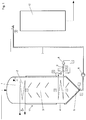
- Fig. 1 shows a schematic representation of a production plant according to the invention.
- the prepolymerization reactor (11) consists of an inlet region (1) into which the crude material mixture of caprolactam, water, additives and optionally recycled extracts from an extraction stage are metered.
- the raw material mixture has already been mixed and heated in an upstream mixing vessel and the finished mixture is added to the prepolymerization reactor. The result is a liquid level through the accumulated raw material mixture which brings a homogenization of the melt with it.
- a heater (2) either static (tube bundle, internally heated overflow body, plate heat exchanger, heating coil or the like) or as a dynamic heater (Roberts evaporator, circulating heater or similar) can be performed.
- a dynamic heater Robots evaporator, circulating heater or similar
- a flow tube part (3) which is equipped with flow rectifiers to adjust a piston flow of the melt and thus a homogeneous residence time distribution.
- This part of the reactor is completely equipped with a separate wall heating (double jacket or half pipe heating coil) which, as active insulation, counteracts heat loss without affecting the melt temperature.
- the prepolymer melt is then passed through a static prepolymer cooler (4) in which the temperature is reduced to a temperature below the prepolymerization temperature but above the melting point (225 to 260 ° C, preferably 230 to 240 ° C).
- melt is led out of the reactor and passed to a subsequent discharge pump (6).
- the increased pressure in the prepolymerization reactor can also be used for further melt transport.
- the melt is conveyed via a heated prepolymer line (7) to the head of the subsequent VK tube (10).
- the temperature of the melt is raised again.
- the heat which is removed from the polymer melt in the prepolymer cooler (4) is used to reheat the prepolymer melt exiting the prepolymerization reactor. Due to the limited residence time in the prepolymerization line, the chemical equilibrium remains in the prepolymer melt unchanged and the increased water separation in the subsequent VK tube (10) is still present.
- the cooling of the prepolymer melt is ensured by a constant heat transfer oil flow (HTM). Cooled HTM is passed through the melt cooler (4) in countercurrent to the melt. The heat transfer oil takes the inlet temperature of the melt in the cooler. At this temperature level, the HTM can be used to heat the heating jacket of the flow tube part (3) of the prepolymerization reactor (11). Thereafter, the HTM is passed in countercurrent to the prepolymer melt in the jacket of the prepolymerization line. The countercurrent flow heats the prepolymer melt and the HTM is cooled almost to the outlet temperature of the prepolymerization reactor.
- HTM heat transfer oil flow
- the HTM is passed through the jacket of the lower reactor part (5) so that it leaves the shell of the reactor at a temperature close to the melt temperature in the outlet of the melt cooler.
- a pump (8) and an air cooler (9) it is cooled even further passed back into the melt cooler (4).
- Table 1 shows temperature ranges according to the invention in the reaction sequence of a PA6 production plant with prepolymer cooling, the flow numbers being based on Fig. 1 Respectively.
- Table 1 ⁇ / b> current number temperature A 240 ... 270 ° C, preferably 250 ... 265 ° C B 245 ... 275 ° C, preferably 255 ... 270 ° C C 220 ... 255 ° C, preferably 230 ... 240 ° C D 220 ... 255 ° C, preferably 230 ... 240 ° C e 240 ... 275 ° C, preferably 253 ... 268 ° C F 218 ... 253 ° C, preferably 228 ...
Landscapes
- Chemical & Material Sciences (AREA)
- Organic Chemistry (AREA)
- Chemical Kinetics & Catalysis (AREA)
- Health & Medical Sciences (AREA)
- Medicinal Chemistry (AREA)
- Polymers & Plastics (AREA)
- Polyamides (AREA)
- Polymerisation Methods In General (AREA)
Description
- Die Erfindung betrifft eine Produktionsanlage und ein Verfahren für die Polymerisation von Polyamiden, insbesondere PA 6. Durch die erfindungsgemäße Anlage sowie das erfindungsgemäße Verfahren lassen sich hochviskose Polyamide herstellen, die für diverse Anwendungsfelder auch bei intensiver Stabilisierung des Polymers bei gleichzeitig hoher Produktqualität geeignet sind.
- Die Erhöhung der Viskosität in der Polymerisationsstufe erfordert aufgrund des Chemischen Gleichgewichtes die Abtrennung von Wasser aus der Polymerschmelze. Dies erfolgt am effektivsten durch zusätzliche Reaktorstufen, die druckabgestuft (mit abnehmenden Druck) nacheinander durchfahren werden. Dabei wird der Wasseranteil von Stufe zu Stufe reduziert und damit die Viskosität gesteigert. Dabei ergibt sich aber durch die zusätzliche Anzahl der Reaktoren und zugehöriger Ausrüstungsteile eine erhöhte Komplexität der Gesamtanlage.
- Die Abtrennung des Wassers aus der letzten Polymerisationsstufe wird klassisch durch Absenkung des Druckes oder Anhebung der Temperatur in der letzten Reaktorstufe verstärkt. Beide Verfahren haben eine nachteilige Wirkung auf die Qualität des Produktes. Bei Überschreiten einer Grenztemperatur an den Wärmetauscherflächen (> 290 °C) kann es zu Versetzung und thermischer Schädigung des Polymers an den Wärmetauscherflächen kommen. Bei starker Absenkung des Druckes unter 600 mbar absolut kann es zu Ablagerungen an Wänden kommen, die mit längerer Betriebszeit ebenfalls zur Degradation des Polymers führt und eine Verfärbung bis zur Schwarzfärbung mit sich bringt. Hierdurch kommt es zu schwarzen Partikeln im Produkt, da die geschwärzten Ablagerungen in die Schmelze fallen.
- Die Polymerisation erfolgt gemäß dem Stand der Technik gewöhnlich in 2 Stufen (Synthetische Fasern, Franz Fourne, München/Wien 1995, S. 54-55). Die Viskositätserhöhung von Prepolymer durch Temperaturabsenkung ist aus Ind. Eng. Chem. Res. 1997, 36, 1202-1210 bekannt.
- Es war daher Aufgabe der vorliegenden Erfindung eine Anlage für die Polymerisation von Polyamiden bereitzustellen, der eine stärkere Abtrennung von Wasser im letzten Polymerisationsreaktor ermöglicht ohne dass es zu einer thermischen Schädigung des Polymers kommt.
- Diese Aufgabe wird durch den Reaktor mit den Merkmalen des Anspruchs 1 und durch das Verfahren mit den Merkmalen des Anspruchs 6 gelöst. Die weiteren abhängigen Ansprüche zeigen vorteilhafte Weiterbildungen auf. Erfindungsgemäß wird eine Produktionsanlage für die Polymerisation von Polyamiden, insbesondere PA 6, sowie deren Copolymeren bereitgestellt, enhaltend einen Reaktor für die Prepolymerisation mit den folgenden Komponenten:
- einen Einlaufbereich für die Zugabe der Edukte,
- einen Heizaggregat,
- einen ersten Strömungsrohrteil, der eine separate Wandbeheizung aufweist,
- einen zweiten Strömungsrohrteil, der eine separate Wandbeheizung aufweist sowie
- eine Auslassleitung für das Prepolymer,
- Der erfindungsgemäße Reaktor weist im Unterschied zu den aus dem Stand der Technik bekannten Reaktoren zwischen dem ersten Strömungsrohrteil und dem zweiten Strömungsrohrteil ein Kühlaggregat auf. Hierdurch kann die Temperatur der Polymerschmelze im Ausgang des Reaktors für die Prepolymerisation gesenkt werden. Hierdurch wird das Reaktionsgewicht so verschoben, dass der Anteil von verdampfbarem Wasser in der Polymerschmelze vergrößert wird. Nach Erreichen des chemischen Gleichgewichtes bei niedrigerer Temperatur im Auslauf des Reaktors für die Prepolymerisation kann in einem sich anschließenden Reaktor ohne weitere konstruktive Änderungen eine stärkere Wasserverdampfung erreicht werden, die zu einer höheren relativen Viskosität (RV) im Auslauf des sich anschließenden Reaktors führt.
- Bei einem unstabilisierten Polymer kann so die relative Viskosität um bis zu 0,2 Viskositätspunkte erhöht werden, wobei die Prozessparameter in dem sich anschließenden Reaktor unverändert belassen werden können.
- Eine bevorzugte Ausführungsform sieht vor, dass dem Einlaufbereich ein Mischbehälter vorgeschaltet ist, in dem die Edukte, insbesondere Monomere wie ε-Caprolactam, Wasser und Additive vorgemischt werden können.
- Das Heizaggregat ist vorzugsweise ein statisches Heizaggregat, insbesondere ein Rohrbündel, ein innenbeheizter Überströmkörper, ein Plattenwärmetauscher oder eine Heizschlange. Ebenso können dynamische Heizaggregate eingesetzt werden, wie z.B. ein Roberts-Verdampfer oder ein Umlauferhitzer.
- Die separaten Wandbeheizungen sind vorzugsweise unabhängig voneinander Doppelmäntel und/oder Halbrohrheizschlangen.
- Die Strömungsrohrteile im Reaktor weisen vorzugsweise Strömungsgleichrichter auf, um eine Kolbenströmung der Polymerschmelze zu ermöglichen.
- Es ist weiterhin bevorzugt, dass in der Auslassleitung eine Austragspumpe zum Transport des Prepolymers integriert ist.
- Die Auslassleitung kann dabei weiterhin vorzugsweise ein Wandbeheizung, insbesondere einen Doppelmantel aufweisen.
- Erfindungsgemäß wird ebenso ein Verfahren zur Polymerisation von Polyamiden in einem Reaktor bereitgestellt, bei dem
- a) in einen Einlaufbereich (1) des Reaktors die Edukte dosiert werden,
- b) mittels eines Heizaggregats (2) die Temperatur der Polymerschmelze auf 240 bis 270°C, insbesondere 250 bis 265 °C eingestellt wird,
- c) die Polymerschmelze über einen ersten Strömungsrohrteil (3), der mit einer separaten Wandbeheizung zur Vermeidung eines Wärmeverlusts gekoppelt ist, die Polymerschmelze zu einem Kühlaggregat (4) geleitet wird, mit dem die Temperatur der Polymerschmelze auf 220 bis 255 °C, insbesondere 230 bis 240 °C eingestellt wird und
- d) die Polymerschmelze über einen zweiten Strömungsrohrteil (5), der mit einer separaten Wandbeheizung zur Vermeidung eines Wärmeverlusts gekoppelt ist, zu einer Auslassleitung (7) transportiert wird und
- e) das Prepolymer über die Auslassleitung einem Reaktor mit einem vertikalen Kondensationsrohr (VK-Reaktor) (10) zugeführt wird, wobei das Kühlaggregat und die separaten Wandbeheizungen über einen einzigen Wärmeträgerkreislauf thermisch gekoppelt sind.
- Eine weitere bevorzugte Ausführungsform des erfindungsgemäßen Verfahrens sieht vor, dass in einem Mischbehälter, der dem Einlaufbereich des Reaktors vorgeschaltet ist, die Edukte vorgemischt werden.
- Im erfindungsgemäßen Verfahren lassen sich als Heizaggregate vorzugsweise statische Heizaggregate, insbesondere ein Rohrbündel, ein innenbeheizter Überströmkörper, ein Plattenwärmetauscher oder eine Heizschlange einsetzen. Ebenso ist es möglich, dynamische Heizaggregate, insbesondere einen Roberts-Verdampfer oder einen Umlauferhitzer, zu verwenden.
- Die Polymerschmelze wird vorzugsweise durch die Auslassleitung mittels einer Austragspumpe oder mittels Druck im Reaktor transportiert.
- Wenn nach einer bevorzugten Variante die Auslassleitung eine Beheizung, insbesondere einen Heizmantel, aufweist, kann auf diese Weise eine Einleitung von Wärme in die Polymerschmelze erfolgen. In diesem Fall ist die besagte Beheizung vorzugsweise ebenfalls über den Wärmeträgerkreislauf thermisch gekoppelt.
- Eine weitere bevorzugte Variante sieht vor, dass die Temperatur der Polymerschmelze am Übergang der Auslassleitung zum Kondensationsrohr (VK-Reaktor) beträgt bevorzugt 240 bis 275 °C, besonders bevorzugt 253 bis 268°C.
- In einer weiteren vorteilhaften Variante des Verfahrens weist das Polyamid eine relative Viskosität von 2,4 bis 4,5, insbesondere von 3,0 bis 3,6, gemessen in einer Lösung von 1 g Polyamid in 96%iger Schwefelsäure bei 25 °C auf.
- Anhand der nachfolgenden Figuren soll der erfindungsgemäße Gegenstand näher erläutert werden, ohne diesen auf die hier gezeigte spezifische Ausführungsform einschränken zu wollen.
-
Fig. 1 zeigt anhand einer schematischen Darstellung eine erfindungsgemäße Produktionsanlage.
Der Prepolymerisationsreaktor (11) besteht aus einem Einlaufbereich (1) in den die Rohmaterialmischung aus Caprolactam, Wasser, Additiven und optional rückgeführten Extrakten aus einer Extraktionsstufe eindosiert werden. Es besteht auch die Möglichkeit, dass die Rohmaterialmischung in einem vorgeschalteten Mischbehälter bereits durchmischt und aufgeheizt wurde und die fertige Mischung in den Prepolymerisationsreaktor gegeben wird. Es ergibt sich ein Flüssigkeitsspiegel durch die angesammelte Rohmaterialmischung die eine Vergleichmäßigung der Schmelze mit sich bringt. - Unterhalb des Flüssigkeitsspiegels befindet sich ein Heizer (2), der entweder statisch (Rohrbündel, innenbeheizter Überströmkörper, Plattenwärmetauscher, Heizschlange oder ähnlich) oder als dynamischer Heizer (Roberts-Verdampfer, Umlaufheizer oder ähnlich) ausgeführt werden kann. Hier wird die für die Prepolymerisation notwendige Temperatur automatisch, kontinuierlich eingestellt.
- Unterhalb des Heizers befindet sich ein Strömungsrohrteil (3), das mit Strömungsgleichrichtern ausgestattet ist, um eine Kolbenströmung der Schmelze und damit eine homogene Verweilzeitverteilung einzustellen. Dieser Reaktorteil ist komplett mit einer separaten Wandbeheizung (Doppelmantel oder Halbrohrheizschlange) ausgestattet, der als aktive Isolierung einem Wärmeverlust entgegenwirkt, ohne die Schmelzetemperatur zu beeinflussen.
- Die Prepolymerschmelze wird danach durch einen statischen Prepolymerkühler (4) geführt, in dem die Temperatur auf eine Temperatur unterhalb der Prepolymerisationstemperatur aber oberhalb des Schmelzpunktes (225 bis 260 °C, bevorzugt 230 bis 240 °C) reduziert.
- Unterhalb des Kühlers befindet sich ein weiterer Strömungsrohrteil (5), das mit Strömungsgleichrichtern ausgestattet ist, um eine Kolbenströmung der Schmelze und damit eine homogene Verweilzeitverteilung einzustellen. Dieser Reaktorteil ist wiederum mit einer separaten Wandbeheizung (Doppelmantel oder Halbrohrheizschlange) ausgestattet, der als aktive Isolierung einem Wärmeverlust entgegenwirkt, ohne die Schmelzetemperatur zu beeinflussen. Über einen Austragskonus wird die Schmelze aus dem Reaktor herausgeleitet und zu einer nachfolgenden Austragspumpe (6) geleitet. Optional kann auch der erhöhte Druck im Prepolymerisationsreaktor für den weiteren Schmelzetransport genutzt werden. Die Schmelze wird über eine beheizte Prepolymerleitung (7) zum Kopf des nachfolgenden VK-Rohrs (10) gefördert. Hierbei wird aufgrund des intensiven Kontaktes und der großen Rohroberfläche die Temperatur der Schmelze wieder angehoben.
- Die Wärme, die der Polymerschmelze im Prepolymerkühler (4) entzogen wird, wird genutzt, um die Prepolymerschmelze, die den Prepolymerisationsreaktor verlässt wieder aufzuheizen. Durch die begrenzte Verweilzeit in der Prepolymerisationsleitung bleibt das chemische Gleichgewicht in der Prepolymerschmelze unverändert und die verstärkte Wasserabscheidung im nachfolgenden VK-Rohr (10) ist immer noch gegeben.
- Die Kühlung der Prepolymerschmelze wird durch einen konstanten Wärmeträgerölstrom (HTM) gewährleistet. Abgekühltes HTM wird im Gegenstrom zur Schmelze durch den Schmelzekühler (4) geleitet. Dabei nimmt das Wärmeträgeröl die Einlauftemperatur der Schmelze in den Kühler an. Auf diesem Temperaturniveau kann das HTM genutzt werden, um den Heizmantel des Strömungsrohrteils (3) des Prepolymerisationsreaktors (11) zu beheizen. Danach wird das HTM im Gegenstrom zur Prepolymerschmelze in den Mantel der Prepolymerisationsleitung geführt. Durch die Gegenstromführung wird die Prepolymerschmelze aufgeheizt und das HTM wird nahezu auf Austrittstemperatur des Prepolymerisationsreaktors abgekühlt. Danach wird das HTM durch den Mantel des unteren Reaktorteils (5) gegeben, so dass es den Mantel des Reaktors mit einer Temperatur nahe der Schmelzetemperatur im Auslauf des Schmelzekühlers verlässt. Über eine Pumpe (8) und einen Luftkühler (9) wird es noch weiter abgekühlt wieder in den Schmelzekühler (4) geleitet.
- In Tabelle 1 sind erfindungsgemäße Temperaturbereiche im Reaktionsablauf einer PA6-Produktionsanlage mit Prepolymerkühlung angegeben, wobei sich die Stromnummern auf
Fig. 1 beziehen.Tabelle 1 Stromnummer Temperatur A 240...270 °C, bevorzugt 250...265°C B 245...275 °C, bevorzugt 255...270°C C 220...255 °C, bevorzugt 230...240°C D 220...255 °C, bevorzugt 230...240°C E 240...275 °C, bevorzugt 253...268°C F 218...253 °C, bevorzugt 228...238°C G 243...273 °C, bevorzugt 253...268°C J 222...257 °C, bevorzugt 232...242°C K 222...257 °C, bevorzugt 232...242°C - Im Folgenden werden bevorzugte Verfahrensparameter für verschiedene Verfahrensweisen des erfindungsgemäßen Verfahrens angegeben:
1. Polymerisation ohne Prepolymerkühlung, unstabilisiert:Prepolymerisationsreaktor: TKopf = 250 °C TBoden = 265 °C p = 3 bar VK-Rohr: TKopf = 275 °C TBoden = 245 °C p = 0,6 bar → µrel = 3,31
2. Polymerisation mit Prepolymerkühlung, unstabilisiert:Prepolymerisationsreaktor: TKopf = 250 °C TBoden = 230 °C p = 2,5 bar VK-Rohr: TKopf = 275 °C TBoden = 245 °C p = 0,6 bar → µrel = 3,71
3. Polymerisation ohne Prepolymerkühlung, mit Stabilisator (0,05 % C2H4O2):Prepolymerisationsreaktor: TKopf = 250 °C TBoden = 265 °C p = 3 bar VK-Rohr: TKopf = 275 °C TBoden = 245 °C p = 0,6 bar → µrel = 3,05
4. Polymerisation mit Prepolymerkühlung, mit Stabilisator (0,1 % C2H4O2):Prepolymerisationsreaktor: TKopf = 250 °C TBoden = 230 °C p = 2,5 bar VK-Rohr: TKopf = 275 °C TBoden = 245 °C p = 0,6 bar → µrel = 3,35
5. Polymerisation ohne Prepolymerkühlung, mit Stabilisator (0,10 % C2H4O2):Prepolymerisationsreaktor: TKopf = 250 °C TBoden = 265 °C p = 3 bar VK-Rohr: TKopf = 275 °C TBoden = 245 °C p = 0,6 bar → µrel = 2,83
6. Polymerisation mit Prepolymerkühlung, mit Stabilisator (0,10 % C2H4O2):Prepolymerisationsreaktor: TKopf = 250 °C TBoden = 230 °C p = 2,5 bar VK-Rohr: TKopf = 275 °C TBoden = 245 °C p = 0,6 bar → µrel = 3,06
sowie einen sich anschließenden Reaktor mit einem vertikalen Kondensationsrohr (VK-Reaktor).
Claims (13)
- Produktionsanlage für die Polymerisation von Polyamiden, insbesondere Polyamid 6 (PA 6), sowie Copolymeren hiervon enthaltend einen Reaktor für die Prepolymerisation (11) mit- einem Einlaufbereich (1) für die Zugabe der Edukte,- einem Heizaggregat (2),- einem ersten Strömungsrohrteil (3), der eine separate Wandbeheizung aufweist,- einem zweiten Strömungsrohrteil (5), der eine separate Wandbeheizung aufweist sowie- einer Auslassleitung (7) für das Prepolymer,wobei der Reaktor zwischen dem ersten Strömungsrohrteil (3) und dem zweiten Strömungsrohrteil (5) ein Kühlaggregat (4) aufweist und das Kühlaggregat (4) und die separaten Wandbeheizungen über einen einzigen Wärmeträgerkreislauf thermisch gekoppelt sind;
sowie einen sich anschließenden Reaktor mit einem vertikalen Kondensationsrohr (VK-Reaktor) (10). - Reaktor nach einem der vorhergehenden Ansprüche,
dadurch gekennzeichnet, dass das Heizaggregat ein statisches Heizaggregat, insbesondere ein Rohrbündel, ein innenbeheizter Überströmkörper, ein Plattenwärmetauscher oder eine Heizschlange, oder ein dynamisches Heizaggregat, insbesondere ein Roberts-Verdampfer oder ein Umlauferhitzer, ist. - Reaktor nach einem der vorhergehenden Ansprüche,
dadurch gekennzeichnet, dass die separaten Wandbeheizungen unabhängig voneinander Doppelmäntel und/oder Halbrohrheizschlangen sind. - Reaktor nach einem der vorhergehenden Ansprüche,
dadurch gekennzeichnet, dass die Strömungsrohrteile (3, 5) Strömungsgleichrichter aufweisen. - Reaktor nach einem der vorhergehenden Ansprüche,
dadurch gekennzeichnet, dass in der Auslassleitung (7) eine Austragspumpe (6) zum Transport des Prepolymers integriert ist und/oder eine Wandbeheizung, insbesondere einen Heizmantel, aufweist. - Verfahren zur Polymerisation von Polyamiden, insbesondere Polyamid 6 (PA 6), sowie Copolymeren hiervon, bei dema) in einen Einlaufbereich (1) eines Prepolymerisationsreaktors (11) die Edukte dosiert werden,b) mittels eines Heizaggregats (2) die Temperatur der Polymerschmelze auf 240 bis 270°C, insbesondere 250 bis 265 °C eingestellt wird,c) die Polymerschmelze über einen ersten Strömungsrohrteil (3), der mit einer separaten Wandbeheizung zur Vermeidung eines Wärmeverlusts gekoppelt ist, zu einem Kühlaggregat (4) geleitet wird, mit dem die Temperatur der Polymerschmelze auf 220 bis 240 °C eingestellt wird undd) die Polymerschmelze über einen zweiten Strömungsrohrteil (5), der mit einer separaten Wandbeheizung zur Vermeidung eines Wärmeverlusts gekoppelt ist, zu einer Auslassleitung (7) transportiert wird unde) das Prepolymer über die Auslassleitung einem Reaktor mit einem vertikalen Kondensationsrohr (VK-Reaktor) (10) zugeführt wird,wobei das Kühlaggregat (4) und die separaten Wandbeheizungen über einen einzigen Wärmeträgerkreislauf thermisch gekoppelt werden.
- Verfahren nach Anspruch 6,
dadurch gekennzeichnet, dass in einem dem Einlaufbereich (1) vorgeschalteten Mischbehälter, die Edukte, insbesondere Monomere, Wasser und Additive, vorgemischt werden. - Verfahren nach einem der Ansprüche 6 bis 7,
dadurch gekennzeichnet, dass als separate Wandbeheizungen unabhängig voneinander Doppelmäntel und/oder Halbrohrheizschlangen verwendet werden. - Verfahren nach einem der Ansprüche 6 bis 8,
dadurch gekennzeichnet, dass in den Strömungsrohrteilen (3, 5) mittels Strömungsgleichrichter eine Kolbenströmung der Polymerschmelze ermöglicht wird. - Verfahren nach einem der Ansprüche 6 bis 9,
dadurch gekennzeichnet, dass die Polymerschmelze durch die Auslassleitung (7) mittels einer Austragspumpe (6) oder mittels Druck im Reaktor transportiert wird. - Verfahren nach einem der Ansprüche 6 bis 10,
dadurch gekennzeichnet, dass die Auslassleitung (7) eine Beheizung, insbesondere einen Heizmantel, zur Wärmeeinleitung in die Polymerschmelze aufweist, wobei die Beheizung vorzugsweise ebenfalls über den Wärmeträgerkreislauf thermisch gekoppelt ist. - Verfahren nach einem der Ansprüche 6 bis 11,
dadurch gekennzeichnet, dass die Temperatur der Polymerschmelze am Übergang der Auslassleitung zum Kondensationsreaktor bevorzugt 240 bis 275 °C, besonders bevorzugt 253 bis 268 °C beträgt. - Verfahren nach einem der Ansprüche 6 bis 12,
dadurch gekennzeichnet, dass das Polyamid eine relative Viskosität von 2,4 bis 4,5, insbesondere von 3,0 bis 3,6, gemessen in einer Lösung von 1 g Polyamid in 96%iger Schwefelsäure bei 25 °C aufweist.
Priority Applications (7)
| Application Number | Priority Date | Filing Date | Title |
|---|---|---|---|
| PL13154504T PL2764911T3 (pl) | 2013-02-08 | 2013-02-08 | Instalacja produkcyjna i sposób polimeryzacji poliamidów |
| SI201331107T SI2764911T1 (sl) | 2013-02-08 | 2013-02-08 | Proizvodna linija in postopek za polimerizacijo poliamidov |
| ES13154504.8T ES2682117T3 (es) | 2013-02-08 | 2013-02-08 | Instalación de producción y procedimiento para la polimerización de poliamidas |
| EP13154504.8A EP2764911B1 (de) | 2013-02-08 | 2013-02-08 | Produktionsanlage und Verfahren zur Polymerisation von Polyamiden |
| CN201320213602.6U CN203653475U (zh) | 2013-02-08 | 2013-02-18 | 用于预聚合聚酰胺以及聚酰胺的共聚物的反应器 |
| PCT/EP2014/051148 WO2014122010A1 (de) | 2013-02-08 | 2014-01-21 | Reaktor und verfahren zur prepolymerisation von polyamiden |
| TW103102572A TWI631148B (zh) | 2013-02-08 | 2014-01-24 | 用於聚醯胺預聚合反應之反應器和方法 |
Applications Claiming Priority (1)
| Application Number | Priority Date | Filing Date | Title |
|---|---|---|---|
| EP13154504.8A EP2764911B1 (de) | 2013-02-08 | 2013-02-08 | Produktionsanlage und Verfahren zur Polymerisation von Polyamiden |
Publications (2)
| Publication Number | Publication Date |
|---|---|
| EP2764911A1 EP2764911A1 (de) | 2014-08-13 |
| EP2764911B1 true EP2764911B1 (de) | 2018-05-30 |
Family
ID=47666032
Family Applications (1)
| Application Number | Title | Priority Date | Filing Date |
|---|---|---|---|
| EP13154504.8A Active EP2764911B1 (de) | 2013-02-08 | 2013-02-08 | Produktionsanlage und Verfahren zur Polymerisation von Polyamiden |
Country Status (7)
| Country | Link |
|---|---|
| EP (1) | EP2764911B1 (de) |
| CN (1) | CN203653475U (de) |
| ES (1) | ES2682117T3 (de) |
| PL (1) | PL2764911T3 (de) |
| SI (1) | SI2764911T1 (de) |
| TW (1) | TWI631148B (de) |
| WO (1) | WO2014122010A1 (de) |
Families Citing this family (2)
| Publication number | Priority date | Publication date | Assignee | Title |
|---|---|---|---|---|
| CN116272739B (zh) * | 2023-03-28 | 2024-08-20 | 清华大学 | 一种聚间苯二甲酰间苯二胺的连续聚合装置和方法 |
| CN120021416A (zh) * | 2023-09-18 | 2025-05-20 | Epc工程与技术有限公司 | 适合于高灵活且稳固的聚碳酸酯设施、特别是采用预酯交换技术的反应器及其特殊设计 |
Family Cites Families (9)
| Publication number | Priority date | Publication date | Assignee | Title |
|---|---|---|---|---|
| BE484840A (de) * | 1947-11-28 | |||
| NL135965C (de) * | 1962-09-06 | |||
| US3565866A (en) * | 1964-09-17 | 1971-02-23 | Basf Ag | Continuous polymerization of lactams |
| US3451976A (en) * | 1966-10-10 | 1969-06-24 | Polymer Corp | Continuous anionic polymerization of lactams |
| US3813366A (en) * | 1973-03-21 | 1974-05-28 | Allied Chem | Method to prepare nylon 6 prepolymer providing a final shaped article of low oligomer content |
| DE2918828A1 (de) * | 1979-05-10 | 1980-11-20 | Basf Ag | Verfahren zur kontinuierlichen herstellung von polycaprolactam sowie eine vorrichtung zur durchfuehrung des verfahrens |
| DE19506407B4 (de) * | 1995-02-23 | 2006-08-10 | Karl-Heinz Wiltzer | Verfahren und Vorrichtung zur Herstellung von hochviskosen oder hochstabilisierten, reaktionsstabilen Polyamiden und zur kontinuierlichen Entmonomerisierung von Polyamiden |
| EP1148077A1 (de) * | 2000-04-21 | 2001-10-24 | Dsm N.V. | Verfahren zur gleichzeitigen Herstellung von Polymeren des Caprolactams mit mindestens zwei Viskositäten |
| WO2006103732A1 (ja) * | 2005-03-28 | 2006-10-05 | Taisei Chemical Industries, Ltd. | 両性電解質樹脂の連続塊状重合による製造方法及びそのための装置 |
-
2013
- 2013-02-08 EP EP13154504.8A patent/EP2764911B1/de active Active
- 2013-02-08 SI SI201331107T patent/SI2764911T1/sl unknown
- 2013-02-08 ES ES13154504.8T patent/ES2682117T3/es active Active
- 2013-02-08 PL PL13154504T patent/PL2764911T3/pl unknown
- 2013-02-18 CN CN201320213602.6U patent/CN203653475U/zh not_active Expired - Lifetime
-
2014
- 2014-01-21 WO PCT/EP2014/051148 patent/WO2014122010A1/de not_active Ceased
- 2014-01-24 TW TW103102572A patent/TWI631148B/zh not_active IP Right Cessation
Non-Patent Citations (1)
| Title |
|---|
| None * |
Also Published As
| Publication number | Publication date |
|---|---|
| SI2764911T1 (sl) | 2018-09-28 |
| TWI631148B (zh) | 2018-08-01 |
| EP2764911A1 (de) | 2014-08-13 |
| ES2682117T3 (es) | 2018-09-18 |
| PL2764911T3 (pl) | 2018-10-31 |
| CN203653475U (zh) | 2014-06-18 |
| TW201437258A (zh) | 2014-10-01 |
| WO2014122010A1 (de) | 2014-08-14 |
Similar Documents
| Publication | Publication Date | Title |
|---|---|---|
| DE2410474C2 (de) | ||
| EP2297228B1 (de) | Kontinuierliches verfahren zur mehrstufigen trocknung und nachkondensation von polyamidgranulat | |
| EP2764912B1 (de) | Reaktor mit vertikalem Kondensationsrohr und Verfahren zur Polymerisation von Polyamiden in einem derartigen Reaktor | |
| EP2376557B1 (de) | Verfahren zur kontinuierlichen herstellung von copolyamiden aus lactamen und salzen aus diaminen und dicarbonsäuren | |
| EP1272545B1 (de) | Polyamidzusammensetzung und verfahren zu ihrer herstellung | |
| WO2008155281A1 (de) | Verfahren zur herstellung von polyamiden | |
| DE1024234B (de) | Verfahren zur Herstellung von linearen Polyamiden aus Diaminen und aliphatischen Dicarbonsaeuren | |
| EP2046863A2 (de) | Verfahren zur kontinuierlichen herstellung von polyamid-granulat | |
| EP1030872B1 (de) | Verfahren zur kontinuierlichen extraktion von polyamid | |
| EP1034208A2 (de) | Verfahren zur kontinuierlichen extraktion von polyamid | |
| DE2417003A1 (de) | Verfahren zum kontinuierlichen herstellen von polyamiden | |
| EP1173264A1 (de) | Verfahren und vorrichtung zum eindampfen von polymerlösungen thermoplastischer polymerer sowie polycarbonat erhältlich durch eindampfen | |
| DE102018120988C5 (de) | Verfahren und Vorrichtung zur Herstellung von extraktarmem Polyamid 6 | |
| EP2764911A1 (de) | Reaktor und Verfahren zur Prepolymerisation von Polyamiden | |
| DE19506407B4 (de) | Verfahren und Vorrichtung zur Herstellung von hochviskosen oder hochstabilisierten, reaktionsstabilen Polyamiden und zur kontinuierlichen Entmonomerisierung von Polyamiden | |
| EP1058576B1 (de) | Verfahren zur extraktion von polyamid-6-teilchen | |
| EP3883986B1 (de) | Verfahren zur herstellung von polyamid 6 | |
| DE102005040656A1 (de) | Verfahren zur Herstellung von Polyamiden | |
| DE851853C (de) | Polymonochlortrifluoraethylen-Loesungen | |
| DE2016867A1 (de) | ||
| EP2725051A1 (de) | Kontinuierliches Verfahren zur Herstellung von Polyamid 6 und Vorrichtungen hierzu | |
| DE3605202C2 (de) | ||
| DE1495654A1 (de) | Verfahren und Vorrichtung zur kontinuierlichen Rueckgewinnung einer aus Lactamen und Amidoligomeren bestehenden Gasmischung aus mit dieser Mischung verunreinigten Polyamiden | |
| WO2019002121A1 (de) | Energieeffizientes verfahren zur bereitstellung von gereinigtem phosgen-dampf | |
| AT243063B (de) | Verfahren zur Sterilisierung von Milch |
Legal Events
| Date | Code | Title | Description |
|---|---|---|---|
| PUAI | Public reference made under article 153(3) epc to a published international application that has entered the european phase |
Free format text: ORIGINAL CODE: 0009012 |
|
| 17P | Request for examination filed |
Effective date: 20130208 |
|
| AK | Designated contracting states |
Kind code of ref document: A1 Designated state(s): AL AT BE BG CH CY CZ DE DK EE ES FI FR GB GR HR HU IE IS IT LI LT LU LV MC MK MT NL NO PL PT RO RS SE SI SK SM TR |
|
| AX | Request for extension of the european patent |
Extension state: BA ME |
|
| R17P | Request for examination filed (corrected) |
Effective date: 20150211 |
|
| RBV | Designated contracting states (corrected) |
Designated state(s): AL AT BE BG CH CY CZ DE DK EE ES FI FR GB GR HR HU IE IS IT LI LT LU LV MC MK MT NL NO PL PT RO RS SE SI SK SM TR |
|
| STAA | Information on the status of an ep patent application or granted ep patent |
Free format text: STATUS: EXAMINATION IS IN PROGRESS |
|
| 17Q | First examination report despatched |
Effective date: 20170727 |
|
| GRAP | Despatch of communication of intention to grant a patent |
Free format text: ORIGINAL CODE: EPIDOSNIGR1 |
|
| STAA | Information on the status of an ep patent application or granted ep patent |
Free format text: STATUS: GRANT OF PATENT IS INTENDED |
|
| INTG | Intention to grant announced |
Effective date: 20171222 |
|
| GRAS | Grant fee paid |
Free format text: ORIGINAL CODE: EPIDOSNIGR3 |
|
| GRAA | (expected) grant |
Free format text: ORIGINAL CODE: 0009210 |
|
| STAA | Information on the status of an ep patent application or granted ep patent |
Free format text: STATUS: THE PATENT HAS BEEN GRANTED |
|
| AK | Designated contracting states |
Kind code of ref document: B1 Designated state(s): AL AT BE BG CH CY CZ DE DK EE ES FI FR GB GR HR HU IE IS IT LI LT LU LV MC MK MT NL NO PL PT RO RS SE SI SK SM TR |
|
| REG | Reference to a national code |
Ref country code: GB Ref legal event code: FG4D Free format text: NOT ENGLISH |
|
| REG | Reference to a national code |
Ref country code: CH Ref legal event code: EP |
|
| REG | Reference to a national code |
Ref country code: AT Ref legal event code: REF Ref document number: 1003054 Country of ref document: AT Kind code of ref document: T Effective date: 20180615 |
|
| REG | Reference to a national code |
Ref country code: IE Ref legal event code: FG4D Free format text: LANGUAGE OF EP DOCUMENT: GERMAN |
|
| REG | Reference to a national code |
Ref country code: DE Ref legal event code: R096 Ref document number: 502013010227 Country of ref document: DE |
|
| REG | Reference to a national code |
Ref country code: CH Ref legal event code: NV Representative=s name: JACOBACCI AND PARTNERS SA, CH |
|
| REG | Reference to a national code |
Ref country code: NL Ref legal event code: FP |
|
| REG | Reference to a national code |
Ref country code: ES Ref legal event code: FG2A Ref document number: 2682117 Country of ref document: ES Kind code of ref document: T3 Effective date: 20180918 |
|
| REG | Reference to a national code |
Ref country code: LT Ref legal event code: MG4D |
|
| PG25 | Lapsed in a contracting state [announced via postgrant information from national office to epo] |
Ref country code: BG Free format text: LAPSE BECAUSE OF FAILURE TO SUBMIT A TRANSLATION OF THE DESCRIPTION OR TO PAY THE FEE WITHIN THE PRESCRIBED TIME-LIMIT Effective date: 20180830 Ref country code: FI Free format text: LAPSE BECAUSE OF FAILURE TO SUBMIT A TRANSLATION OF THE DESCRIPTION OR TO PAY THE FEE WITHIN THE PRESCRIBED TIME-LIMIT Effective date: 20180530 Ref country code: LT Free format text: LAPSE BECAUSE OF FAILURE TO SUBMIT A TRANSLATION OF THE DESCRIPTION OR TO PAY THE FEE WITHIN THE PRESCRIBED TIME-LIMIT Effective date: 20180530 Ref country code: CY Free format text: LAPSE BECAUSE OF FAILURE TO SUBMIT A TRANSLATION OF THE DESCRIPTION OR TO PAY THE FEE WITHIN THE PRESCRIBED TIME-LIMIT Effective date: 20180530 Ref country code: SE Free format text: LAPSE BECAUSE OF FAILURE TO SUBMIT A TRANSLATION OF THE DESCRIPTION OR TO PAY THE FEE WITHIN THE PRESCRIBED TIME-LIMIT Effective date: 20180530 Ref country code: NO Free format text: LAPSE BECAUSE OF FAILURE TO SUBMIT A TRANSLATION OF THE DESCRIPTION OR TO PAY THE FEE WITHIN THE PRESCRIBED TIME-LIMIT Effective date: 20180830 |
|
| PG25 | Lapsed in a contracting state [announced via postgrant information from national office to epo] |
Ref country code: RS Free format text: LAPSE BECAUSE OF FAILURE TO SUBMIT A TRANSLATION OF THE DESCRIPTION OR TO PAY THE FEE WITHIN THE PRESCRIBED TIME-LIMIT Effective date: 20180530 Ref country code: HR Free format text: LAPSE BECAUSE OF FAILURE TO SUBMIT A TRANSLATION OF THE DESCRIPTION OR TO PAY THE FEE WITHIN THE PRESCRIBED TIME-LIMIT Effective date: 20180530 Ref country code: GR Free format text: LAPSE BECAUSE OF FAILURE TO SUBMIT A TRANSLATION OF THE DESCRIPTION OR TO PAY THE FEE WITHIN THE PRESCRIBED TIME-LIMIT Effective date: 20180831 Ref country code: LV Free format text: LAPSE BECAUSE OF FAILURE TO SUBMIT A TRANSLATION OF THE DESCRIPTION OR TO PAY THE FEE WITHIN THE PRESCRIBED TIME-LIMIT Effective date: 20180530 |
|
| PG25 | Lapsed in a contracting state [announced via postgrant information from national office to epo] |
Ref country code: EE Free format text: LAPSE BECAUSE OF FAILURE TO SUBMIT A TRANSLATION OF THE DESCRIPTION OR TO PAY THE FEE WITHIN THE PRESCRIBED TIME-LIMIT Effective date: 20180530 Ref country code: SK Free format text: LAPSE BECAUSE OF FAILURE TO SUBMIT A TRANSLATION OF THE DESCRIPTION OR TO PAY THE FEE WITHIN THE PRESCRIBED TIME-LIMIT Effective date: 20180530 Ref country code: CZ Free format text: LAPSE BECAUSE OF FAILURE TO SUBMIT A TRANSLATION OF THE DESCRIPTION OR TO PAY THE FEE WITHIN THE PRESCRIBED TIME-LIMIT Effective date: 20180530 Ref country code: RO Free format text: LAPSE BECAUSE OF FAILURE TO SUBMIT A TRANSLATION OF THE DESCRIPTION OR TO PAY THE FEE WITHIN THE PRESCRIBED TIME-LIMIT Effective date: 20180530 Ref country code: DK Free format text: LAPSE BECAUSE OF FAILURE TO SUBMIT A TRANSLATION OF THE DESCRIPTION OR TO PAY THE FEE WITHIN THE PRESCRIBED TIME-LIMIT Effective date: 20180530 |
|
| PG25 | Lapsed in a contracting state [announced via postgrant information from national office to epo] |
Ref country code: SM Free format text: LAPSE BECAUSE OF FAILURE TO SUBMIT A TRANSLATION OF THE DESCRIPTION OR TO PAY THE FEE WITHIN THE PRESCRIBED TIME-LIMIT Effective date: 20180530 |
|
| REG | Reference to a national code |
Ref country code: DE Ref legal event code: R097 Ref document number: 502013010227 Country of ref document: DE |
|
| PLBE | No opposition filed within time limit |
Free format text: ORIGINAL CODE: 0009261 |
|
| STAA | Information on the status of an ep patent application or granted ep patent |
Free format text: STATUS: NO OPPOSITION FILED WITHIN TIME LIMIT |
|
| 26N | No opposition filed |
Effective date: 20190301 |
|
| GBPC | Gb: european patent ceased through non-payment of renewal fee |
Effective date: 20190208 |
|
| PG25 | Lapsed in a contracting state [announced via postgrant information from national office to epo] |
Ref country code: MC Free format text: LAPSE BECAUSE OF FAILURE TO SUBMIT A TRANSLATION OF THE DESCRIPTION OR TO PAY THE FEE WITHIN THE PRESCRIBED TIME-LIMIT Effective date: 20180530 Ref country code: LU Free format text: LAPSE BECAUSE OF NON-PAYMENT OF DUE FEES Effective date: 20190208 |
|
| REG | Reference to a national code |
Ref country code: BE Ref legal event code: MM Effective date: 20190228 |
|
| REG | Reference to a national code |
Ref country code: IE Ref legal event code: MM4A |
|
| PG25 | Lapsed in a contracting state [announced via postgrant information from national office to epo] |
Ref country code: AL Free format text: LAPSE BECAUSE OF FAILURE TO SUBMIT A TRANSLATION OF THE DESCRIPTION OR TO PAY THE FEE WITHIN THE PRESCRIBED TIME-LIMIT Effective date: 20180530 |
|
| PG25 | Lapsed in a contracting state [announced via postgrant information from national office to epo] |
Ref country code: IE Free format text: LAPSE BECAUSE OF NON-PAYMENT OF DUE FEES Effective date: 20190208 Ref country code: GB Free format text: LAPSE BECAUSE OF NON-PAYMENT OF DUE FEES Effective date: 20190208 |
|
| PG25 | Lapsed in a contracting state [announced via postgrant information from national office to epo] |
Ref country code: BE Free format text: LAPSE BECAUSE OF NON-PAYMENT OF DUE FEES Effective date: 20190228 Ref country code: FR Free format text: LAPSE BECAUSE OF NON-PAYMENT OF DUE FEES Effective date: 20190228 |
|
| PG25 | Lapsed in a contracting state [announced via postgrant information from national office to epo] |
Ref country code: TR Free format text: LAPSE BECAUSE OF FAILURE TO SUBMIT A TRANSLATION OF THE DESCRIPTION OR TO PAY THE FEE WITHIN THE PRESCRIBED TIME-LIMIT Effective date: 20180530 |
|
| REG | Reference to a national code |
Ref country code: AT Ref legal event code: MM01 Ref document number: 1003054 Country of ref document: AT Kind code of ref document: T Effective date: 20190208 |
|
| PG25 | Lapsed in a contracting state [announced via postgrant information from national office to epo] |
Ref country code: AT Free format text: LAPSE BECAUSE OF NON-PAYMENT OF DUE FEES Effective date: 20190208 |
|
| PGFP | Annual fee paid to national office [announced via postgrant information from national office to epo] |
Ref country code: PL Payment date: 20200127 Year of fee payment: 8 Ref country code: IT Payment date: 20200225 Year of fee payment: 8 Ref country code: NL Payment date: 20200219 Year of fee payment: 8 Ref country code: ES Payment date: 20200322 Year of fee payment: 8 |
|
| PGFP | Annual fee paid to national office [announced via postgrant information from national office to epo] |
Ref country code: CH Payment date: 20200219 Year of fee payment: 8 Ref country code: SI Payment date: 20200122 Year of fee payment: 8 |
|
| PG25 | Lapsed in a contracting state [announced via postgrant information from national office to epo] |
Ref country code: MT Free format text: LAPSE BECAUSE OF FAILURE TO SUBMIT A TRANSLATION OF THE DESCRIPTION OR TO PAY THE FEE WITHIN THE PRESCRIBED TIME-LIMIT Effective date: 20180530 Ref country code: PT Free format text: LAPSE BECAUSE OF FAILURE TO SUBMIT A TRANSLATION OF THE DESCRIPTION OR TO PAY THE FEE WITHIN THE PRESCRIBED TIME-LIMIT Effective date: 20181001 |
|
| PG25 | Lapsed in a contracting state [announced via postgrant information from national office to epo] |
Ref country code: IS Free format text: LAPSE BECAUSE OF FAILURE TO SUBMIT A TRANSLATION OF THE DESCRIPTION OR TO PAY THE FEE WITHIN THE PRESCRIBED TIME-LIMIT Effective date: 20180930 |
|
| PG25 | Lapsed in a contracting state [announced via postgrant information from national office to epo] |
Ref country code: HU Free format text: LAPSE BECAUSE OF FAILURE TO SUBMIT A TRANSLATION OF THE DESCRIPTION OR TO PAY THE FEE WITHIN THE PRESCRIBED TIME-LIMIT; INVALID AB INITIO Effective date: 20130208 |
|
| PG25 | Lapsed in a contracting state [announced via postgrant information from national office to epo] |
Ref country code: LI Free format text: LAPSE BECAUSE OF NON-PAYMENT OF DUE FEES Effective date: 20210228 Ref country code: CH Free format text: LAPSE BECAUSE OF NON-PAYMENT OF DUE FEES Effective date: 20210228 |
|
| REG | Reference to a national code |
Ref country code: NL Ref legal event code: MM Effective date: 20210301 |
|
| PG25 | Lapsed in a contracting state [announced via postgrant information from national office to epo] |
Ref country code: NL Free format text: LAPSE BECAUSE OF NON-PAYMENT OF DUE FEES Effective date: 20210301 |
|
| REG | Reference to a national code |
Ref country code: SI Ref legal event code: KO00 Effective date: 20211126 |
|
| PG25 | Lapsed in a contracting state [announced via postgrant information from national office to epo] |
Ref country code: SI Free format text: LAPSE BECAUSE OF NON-PAYMENT OF DUE FEES Effective date: 20210209 |
|
| PG25 | Lapsed in a contracting state [announced via postgrant information from national office to epo] |
Ref country code: IT Free format text: LAPSE BECAUSE OF NON-PAYMENT OF DUE FEES Effective date: 20210208 |
|
| REG | Reference to a national code |
Ref country code: ES Ref legal event code: FD2A Effective date: 20220513 |
|
| PG25 | Lapsed in a contracting state [announced via postgrant information from national office to epo] |
Ref country code: MK Free format text: LAPSE BECAUSE OF FAILURE TO SUBMIT A TRANSLATION OF THE DESCRIPTION OR TO PAY THE FEE WITHIN THE PRESCRIBED TIME-LIMIT Effective date: 20180530 |
|
| PG25 | Lapsed in a contracting state [announced via postgrant information from national office to epo] |
Ref country code: ES Free format text: LAPSE BECAUSE OF NON-PAYMENT OF DUE FEES Effective date: 20210209 |
|
| PG25 | Lapsed in a contracting state [announced via postgrant information from national office to epo] |
Ref country code: PL Free format text: LAPSE BECAUSE OF NON-PAYMENT OF DUE FEES Effective date: 20210208 |
|
| PGFP | Annual fee paid to national office [announced via postgrant information from national office to epo] |
Ref country code: DE Payment date: 20250218 Year of fee payment: 13 |