EP2761011B1 - Use of non-subtype b gag proteins for lentiviral packaging - Google Patents
Use of non-subtype b gag proteins for lentiviral packaging Download PDFInfo
- Publication number
- EP2761011B1 EP2761011B1 EP12813090.3A EP12813090A EP2761011B1 EP 2761011 B1 EP2761011 B1 EP 2761011B1 EP 12813090 A EP12813090 A EP 12813090A EP 2761011 B1 EP2761011 B1 EP 2761011B1
- Authority
- EP
- European Patent Office
- Prior art keywords
- hiv
- subtype
- gag
- vector
- pol
- Prior art date
- Legal status (The legal status is an assumption and is not a legal conclusion. Google has not performed a legal analysis and makes no representation as to the accuracy of the status listed.)
- Active
Links
Images





Classifications
-
- C—CHEMISTRY; METALLURGY
- C12—BIOCHEMISTRY; BEER; SPIRITS; WINE; VINEGAR; MICROBIOLOGY; ENZYMOLOGY; MUTATION OR GENETIC ENGINEERING
- C12N—MICROORGANISMS OR ENZYMES; COMPOSITIONS THEREOF; PROPAGATING, PRESERVING, OR MAINTAINING MICROORGANISMS; MUTATION OR GENETIC ENGINEERING; CULTURE MEDIA
- C12N15/00—Mutation or genetic engineering; DNA or RNA concerning genetic engineering, vectors, e.g. plasmids, or their isolation, preparation or purification; Use of hosts therefor
- C12N15/09—Recombinant DNA-technology
- C12N15/63—Introduction of foreign genetic material using vectors; Vectors; Use of hosts therefor; Regulation of expression
- C12N15/79—Vectors or expression systems specially adapted for eukaryotic hosts
- C12N15/85—Vectors or expression systems specially adapted for eukaryotic hosts for animal cells
- C12N15/86—Viral vectors
-
- A—HUMAN NECESSITIES
- A61—MEDICAL OR VETERINARY SCIENCE; HYGIENE
- A61P—SPECIFIC THERAPEUTIC ACTIVITY OF CHEMICAL COMPOUNDS OR MEDICINAL PREPARATIONS
- A61P31/00—Antiinfectives, i.e. antibiotics, antiseptics, chemotherapeutics
-
- A—HUMAN NECESSITIES
- A61—MEDICAL OR VETERINARY SCIENCE; HYGIENE
- A61P—SPECIFIC THERAPEUTIC ACTIVITY OF CHEMICAL COMPOUNDS OR MEDICINAL PREPARATIONS
- A61P31/00—Antiinfectives, i.e. antibiotics, antiseptics, chemotherapeutics
- A61P31/12—Antivirals
-
- A—HUMAN NECESSITIES
- A61—MEDICAL OR VETERINARY SCIENCE; HYGIENE
- A61P—SPECIFIC THERAPEUTIC ACTIVITY OF CHEMICAL COMPOUNDS OR MEDICINAL PREPARATIONS
- A61P31/00—Antiinfectives, i.e. antibiotics, antiseptics, chemotherapeutics
- A61P31/12—Antivirals
- A61P31/14—Antivirals for RNA viruses
- A61P31/18—Antivirals for RNA viruses for HIV
-
- C—CHEMISTRY; METALLURGY
- C07—ORGANIC CHEMISTRY
- C07K—PEPTIDES
- C07K14/00—Peptides having more than 20 amino acids; Gastrins; Somatostatins; Melanotropins; Derivatives thereof
- C07K14/005—Peptides having more than 20 amino acids; Gastrins; Somatostatins; Melanotropins; Derivatives thereof from viruses
-
- C—CHEMISTRY; METALLURGY
- C12—BIOCHEMISTRY; BEER; SPIRITS; WINE; VINEGAR; MICROBIOLOGY; ENZYMOLOGY; MUTATION OR GENETIC ENGINEERING
- C12N—MICROORGANISMS OR ENZYMES; COMPOSITIONS THEREOF; PROPAGATING, PRESERVING, OR MAINTAINING MICROORGANISMS; MUTATION OR GENETIC ENGINEERING; CULTURE MEDIA
- C12N2740/00—Reverse transcribing RNA viruses
- C12N2740/00011—Details
- C12N2740/10011—Retroviridae
- C12N2740/15011—Lentivirus, not HIV, e.g. FIV, SIV
- C12N2740/15041—Use of virus, viral particle or viral elements as a vector
- C12N2740/15043—Use of virus, viral particle or viral elements as a vector viral genome or elements thereof as genetic vector
-
- C—CHEMISTRY; METALLURGY
- C12—BIOCHEMISTRY; BEER; SPIRITS; WINE; VINEGAR; MICROBIOLOGY; ENZYMOLOGY; MUTATION OR GENETIC ENGINEERING
- C12N—MICROORGANISMS OR ENZYMES; COMPOSITIONS THEREOF; PROPAGATING, PRESERVING, OR MAINTAINING MICROORGANISMS; MUTATION OR GENETIC ENGINEERING; CULTURE MEDIA
- C12N2740/00—Reverse transcribing RNA viruses
- C12N2740/00011—Details
- C12N2740/10011—Retroviridae
- C12N2740/16011—Human Immunodeficiency Virus, HIV
- C12N2740/16041—Use of virus, viral particle or viral elements as a vector
- C12N2740/16043—Use of virus, viral particle or viral elements as a vector viral genome or elements thereof as genetic vector
-
- C—CHEMISTRY; METALLURGY
- C12—BIOCHEMISTRY; BEER; SPIRITS; WINE; VINEGAR; MICROBIOLOGY; ENZYMOLOGY; MUTATION OR GENETIC ENGINEERING
- C12N—MICROORGANISMS OR ENZYMES; COMPOSITIONS THEREOF; PROPAGATING, PRESERVING, OR MAINTAINING MICROORGANISMS; MUTATION OR GENETIC ENGINEERING; CULTURE MEDIA
- C12N2740/00—Reverse transcribing RNA viruses
- C12N2740/00011—Details
- C12N2740/10011—Retroviridae
- C12N2740/16011—Human Immunodeficiency Virus, HIV
- C12N2740/16051—Methods of production or purification of viral material
- C12N2740/16052—Methods of production or purification of viral material relating to complementing cells and packaging systems for producing virus or viral particles
-
- C—CHEMISTRY; METALLURGY
- C12—BIOCHEMISTRY; BEER; SPIRITS; WINE; VINEGAR; MICROBIOLOGY; ENZYMOLOGY; MUTATION OR GENETIC ENGINEERING
- C12N—MICROORGANISMS OR ENZYMES; COMPOSITIONS THEREOF; PROPAGATING, PRESERVING, OR MAINTAINING MICROORGANISMS; MUTATION OR GENETIC ENGINEERING; CULTURE MEDIA
- C12N2740/00—Reverse transcribing RNA viruses
- C12N2740/00011—Details
- C12N2740/10011—Retroviridae
- C12N2740/16011—Human Immunodeficiency Virus, HIV
- C12N2740/16211—Human Immunodeficiency Virus, HIV concerning HIV gagpol
- C12N2740/16222—New viral proteins or individual genes, new structural or functional aspects of known viral proteins or genes
-
- C—CHEMISTRY; METALLURGY
- C12—BIOCHEMISTRY; BEER; SPIRITS; WINE; VINEGAR; MICROBIOLOGY; ENZYMOLOGY; MUTATION OR GENETIC ENGINEERING
- C12N—MICROORGANISMS OR ENZYMES; COMPOSITIONS THEREOF; PROPAGATING, PRESERVING, OR MAINTAINING MICROORGANISMS; MUTATION OR GENETIC ENGINEERING; CULTURE MEDIA
- C12N2800/00—Nucleic acids vectors
Definitions
- Recombinant vaccines have been developed with the progress of recombinant DNA technology, allowing the modification of viral genomes to produce modified viruses. In this manner, it has been possible to introduce genetic sequences into non-pathogenic viruses, so that they encode immunogenic proteins to be expressed in target cells upon infection, in order to develop a specific immune response in their host.
- Such vaccines constitute a major advance in vaccine technology ( Kutzler et al., Nat Rev Genet, 9(10) : 776-788, 2008 ). In particular, they have the advantage over traditional vaccines of avoiding live (attenuated) virus and eliminating risks associated with the manufacture of inactivated vaccines.
- retroviral vectors Gene delivery using modified retroviruses was introduced in the early 1980s by Mann et al. (Cell, 33(1): 153-9, 1983 ).
- the most commonly used oncogenic retroviral vectors are based on the Moloney murine leukemia virus (MLV). They have a simple genome from which the polyproteins Gag, Pol and Env are produced and are required in trans for viral replication ( Breckpot et al., 2007, Gene Ther, 14(11):847-62 ; He et al. 2007, Expert Rev vaccines, 6(6):913-24 ).
- MMV Moloney murine leukemia virus
- LTRs long terminal repeats
- IR or att sites the inverted repeats required for integration
- packaging sequence ⁇ the packaging sequence ⁇
- transport RNA-binding site primer binding site, PBS
- some additional sequences involved in reverse transcription the repeat R within the LTRs, and the polypurine tracts, PPT, necessary for plus strand initiation.
- the gag, pol, and env genes are generally entirely deleted and replaced with an expression cassette.
- Retroviral vectors deriving from lentivirus genomes have emerged as promising tools for both gene therapy and immunotherapy purposes, because they exhibit several advantages over other viral systems.
- lentiviral vectors themselves are not toxic and, unlike other retroviruses, lentiviruses are capable of transducing non-dividing cells, in particular dendritic cells ( He et al. 2007, Expert Rev vaccines, 6(6):913-24 ), allowing antigen presentation through the endogenous pathway.
- Lentiviruses represent a genus of slow viruses of the Retroviridae family, which includes the human immunodeficiency viruses (HIV), the simian immunodeficiency virus (SIV), the equine infectious encephalitis virus (EIAV), the caprine arthritis encephalitis virus (CAEV), the bovine immunodeficiency virus (BIV) and the feline immunodeficiency virus (FIV).
- Lentiviruses can persist indefinitely in their hosts and replicate continuously at variable rates during the course of the lifelong infection. Persistent replication of the viruses in their hosts depends on their ability to circumvent host defenses.
- the design of recombinant lentiviral vectors is based on the separation of the cis- and trans-acting sequences of the lentivirus. Efficient integration and replication in non-dividing cells requires the presence of two cis -acting sequences in the lentiviral genome, the central polypurine tract (cPPT) and the central terminal sequence (CTS). These lead to the formation of a triple-stranded DNA structure called the central DNA "flap", which maximizes the efficiency of gene import into the nuclei of non-dividing cells, including dendritic cells (DCs) ( Zennou et al., 2000, Cell, 101(2) 173-85 ; Arhel et al., 2007, EMBO J, 26(12):3025-37 ).
- DCs dendritic cells
- HIV-1 lentiviral vectors have been generated based on providing the subtype B Gag, Pol, Tat and Rev proteins for packaging vectors in trans from a packaging construct ( Naldini et al, PNAS 15: 11382-8 (1996 ); Zufferey et al, Nature Biotechnology 15:871-875, 1997 ); Dull et al, Journal of Virology (1997 )). These studies were performed with subtype B Gag and Pol proteins. The effect of non-subtype B gag and pol sequences in a HIV-1 packaging construct was not assessed.
- HIV-1 subtype B There are many different subtypes of HIV-1 other than subtype B. Some subtypes of HIV-1, such as C, E, and A, appear to be transmitted more efficiently than HIV-1 subtype B, which is the major subtype in the United States and Europe. Essex et al., Adv Virus Res. 1999; 53:71-88 . The predominant subtype of HIV-1 that is found in the developed Western World, clade B, differs considerably from those subtypes and recombinants that exist in Africa and Asia, where the vast majority of HIV-infected persons reside. Spira et al., J. Antimicrobial Chemotherapy (2003) 51, 229-240 .
- HIV phylogenic classifications are normally based either on nucleotide sequences derived from multiple sub genomic regions ( gag, pol and env ) of the same isolates, or on full-length genome sequence analysis.
- a phylogenic analysis of HIV-1 near-full length sequences revealed that HIV-1 subtype B was most closely related genetically to HIV subtype D ( Figure 1 ).
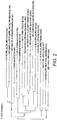
- Phylogenic analyses of HIV-1 Gag and Pol protein sequences also showed that HIV-1 subtype B was most closely related genetically to HIV subtype D ( Figure 2 ).
- HIV-1-NDK a subtype D virus
- HIV-1-BRU prototype a subtype B virus. This may be due to enhanced fusogenicity and infectivity of subtype D viruses.
- Phenotypic analysis of recombinant viruses indicated that 75 amino acids from the N-terminal part of HIV-1-NDK matrix (MA) protein, together with the HIV-1-NDK envelope glycoprotein, are responsible for enhanced fusogenicity of HIV-1-NDK in CD4+ lymphocytes as well as for enhanced infectivity of HIV-1-NDK in some CD4-cell lines. Id.
- gag-pol gene of subtype B of HIV-1 in a lentiviral packaging plasmid (construct p8.74) was replaced by the gag-pol gene of a subtype D HIV-1 to generate construct pThV-GP-N.
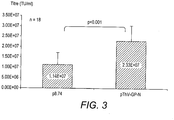
- the constructs were used for lentiviral vector production. Approximately 2-fold higher titers were obtained using the pThV-GP-N plasmid as compared to construct p8.74.
- the Gag-Pol of a subtype D virus increases the titer of lentiviral vector particles relative to a Gag-Pol of a subtype B virus.
- the lentiviral packaging vector comprises the nucleotide sequence of SEQ ID NO:1.
- the present invention relates to a replication-defective lentiviral packaging vector not encoding a functional HIV-1 Env and lacking a ⁇ site and encoding HIV-1 Gag-Pol selected from the group consisting of HIV-1 Gag-Pol of HIV-1 NDK or HIV-1 Gal-Pol of a subtype D HIV-1 characterized in that the Gag-Pol protein comprises a MA protein portion having one or more of the following features:
- the HIV-1 Gag-Pol protein is a HIV-1 Gag-Pol protein of HIV-1 NDK.
- the lentiviral packaging vector encodes the amino acid sequence of SEQ ID NO:2.
- the nucleotide sequence of SEQ ID NO 1 is:
- amino acid sequence of SEQ ID NO 2 is:
- the text describes a lentiviral packaging vector comprising a subtype D MA sequence, particularly from HIV-1 NDK.
- the lentiviral packaging vector encodes an MA protein comprising the amino acid sequence of SEQ ID NO:3.
- amino acid sequence of SEQ ID NO 3 is:
- the lentiviral packaging vector encoding the HIV Gag MA protein generates at least a 1.5 fold increase, or at least a 2-fold increase, in the titer of a packaged lentiviral vector as compared to the lentiviral packaging vector encoding an HIV Gag MA protein of HIV-1 BRU, e.g., p8.74.
- the lentiviral packaging vector is replication-defective and lacks a ⁇ site.
- the lentiviral packaging vector encodes an HIV Gag MA protein having an amino acid at position 12 that is not a glutamic acid and an amino acid at position 15 that is not an arginine.
- the lentiviral packaging vector does not have both a valine at position 46 and a leucine at position 61.
- the amino acid at position 12 of the MA protein is a lysine.
- the amino acid at position 15 is a threonine.
- the amino acid at position 15 is an alanine.
- the amino acid at position 46 is a leucine.
- the amino acid at position 61 is an isoleucine.
- the amino acid at position 61 is a methionine.
- the vector does not encode a functional Env protein.
- the invention also encompasses methods for making the above lentiviral packaging vectors and methods for using these lentiviral packaging vectors.
- the present invention relates to a method for generating a replication-defective lentiviral packaging vector of the invention, the method comprising inserting a nucleotide sequence encoding HIV-1 Gag-Pol according to the invention, respectively into a plasmid under the control of a non-HIV promoter to generate the packaging vector.
- the present invention also relates to an in vitro method for generating a lentiviral vector particle, the method comprising administering a packaging vector according to the invention to a cell with a lentiviral vector.
- Subtype B HIV-1 viruses differ from other HIV-1 subtypes in that subtype B viruses appear to be transmitted less efficiently and have a different mode of transmission. Nevertheless, subtype B viruses have been used extensively in the generation of HIV-1 lentiviral vectors and lentiviral packaging vectors. To determine whether the Gag and Pol proteins of non-subtype B viruses could be used for the generation of lentiviral packaging vectors, the gag-pol gene of HIV-1 subtype B in a lentiviral packaging plasmid (construct p8.74) was replaced by the gag-pol gene of a subtype D HIV-1 to generate construct pThV-GP-N. The constructs were used for lentiviral vector production.
- Increased titer of the lentiviral vector is beneficial in allowing the reduction in contaminants in a given dose of lentiviral vector. This facilitates a reduction in injection volumes, and an increase in possible dosages. It further facilitates reducing the cost of vaccination by reducing the quantity of materials and labor necessary to achieve a particular dose, and by increasing the number of patients that could be treated with a single batch of lentival vector.
- HIV-1-NDK matrix (MA) protein is responsible for enhanced fusogenicity of HIV-1-NDK in CD4+ lymphocytes as well as for enhanced infectivity of HIV-1-NDK in some CD4-cell lines.
- MA HIV-1-NDK matrix
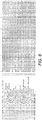
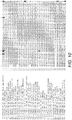
- HIV-1 NDK showed 10 differences in amino acids from HIV-1 BRU ( Figure 7 ). However, only eight of these differences were seen when HIV-1 NDK was compared to an assortment of 20 different HIV-1 subtype B viruses ( Figure 8 ). When other subtype D viruses were included in the comparison, only 4 of these differences remained ( Figure 9 ). These differences are the absence of a glutamic acid at amino acid position 12, the absence of an arginine at amino acid position 15, the absence of a valine at amino acid position 46, and the absence of a leucine at amino acid position 61 in subtype D viruses.
- the text describes packaging vectors encoding non-subtype B Gag and/or Pol proteins and host cells comprising these vectors.
- the text further describes methods for making packaging vectors encoding non-subtype B Gag and/or Pol proteins.
- the text also describes methods for using these packaging vectors to generate lentiviral vectors, and lentiviral vectors comprising non-subtype B Gag and/or Pol proteins.
- a lentiviral "packaging vector” is defined herein as a nucleic acid sequence not encoding functional HIV-1 Env and lacking a ⁇ site, but capable of expressing lentiviral Gag and/or Pol proteins that can be incorporated into viral particles when cotransfected with a vector containing appropriate lentiviral cis-acting signals for packaging.
- the lentiviral packaging vector of the invention is unable to replicate itself by packaging and reverse transcribing its own sequence.
- the packaging vector can be an RNA or DNA vector.
- the non-subtype B Gag and Pol proteins can be selected from subtype A, subtype C, subtype D, subtype E, subtype F1, subtype F2, subtype G, subtype H, and subtype J proteins, and recombinants thereof.
- a preferred packaging vector comprises SEQ ID NO:1 or encodes SEQ ID NO:2.
- the text describes packaging vectors encoding non-subtype B Gag proteins and host cells comprising these vectors.
- the non-subtype B Gag proteins can be selected from subtype A, subtype C, subtype D, subtype E, subtype F1, subtype F2, subtype G, subtype H, and subtype J proteins, and recombinants thereof.
- the present invention relates to a replication-defective lentiviral packaging vector not encoding a functional HIV-1 Env and lacking a ⁇ site and encoding HIV-1 Gag-Pol selected from the group consisting of HIV-1 Gag-Pol of HIV-1 NDK or HIV-1 Gal-Pol of a subtype D HIV-1 characterized in that the Gag-Pol protein comprises a MA protein portion having one or more of the following features:
- a preferred packaging vector encodes the Gag protein portion of SEQ ID NO:2.
- the text describes packaging vectors encoding non-subtype B MA proteins and host cells comprising these vectors.
- the non-subtype B MA proteins can be selected from subtype A, subtype C, subtype D, subtype E, subtype F1, subtype F2, subtype G, subtype H, and subtype J proteins, and recombinants thereof.
- a preferred packaging vector encodes SEQ ID NO:3 or the MA protein portion of SEQ ID NO:2.
- the packaging vector comprises SEQ ID NO:1 or a nucleic acid sequence that is at least 95%, 96%, 97%, 98%, 99% identical with SEQ ID NO:1.
- the packaging vector encodes SEQ ID NO:2, SEQ ID NO:3, or an amino acid sequence that is at least 95%, 96%, 97%, 98%, 99% identical with SEQ ID NO:2 or SEQ ID NO:3.
- the percent identity of two nucleic acid sequences can be determined by comparing sequence information using the GAP computer program, version 6.0 described by Devereux et al. (Nucl. Acids Res. 12:387, 1984 ) and available from the University of Wisconsin Genetics Computer Group (UWGCG), using the default parameters for the GAP program including: (1) a unary comparison matrix (containing a value of 1 for identities and 0 for non-identities) for nucleotides, and the weighted comparison matrix of Gribskov and Burgess, Nucl. Acids Res. 14:6745, 1986 , as described by Schwartz and Dayhoff, eds., Atlas of Protein Sequence and Structure, National Biomedical Research Foundation, pp. 353-358, 1979 ; (2) a penalty of 3.0 for each gap and an additional 0.10 penalty for each symbol in each gap; and (3) no penalty for end gaps.
- GAP computer program version 6.0 described by Devereux et al. (Nucl. Acids Res. 12:387,
- the vector comprises a sequence encoding an HIV-1 MA protein having one or more of the following features:
- the vector comprises a sequence encoding an HIV-1 MA protein having one or more of the following features:
- the packaging vector encodes HIV-1 Gag and Pol. Most preferably, the packaging vector encodes an HIV-1 Gag MA protein.
- the packaging vector can contain viral or non-viral sequences for expression of Gag and Pol.
- the packaging vector can contain an HIV-1 LTR or the U3 region of an HIV-1 LTR. In other embodiments, the packaging vector does not contain HIV-1 LTRs.
- Any promoter can be used to drive expression of Gag and Pol.
- the promoter is a strong promoter in human cells.
- the packaging vector contains a Cytomegalovirus (CMV) promoter, a CMV early enhancer/chicken ⁇ actin (CAG) promoter, a Rous Sarcoma Virus (RSV) promoter, a human phosphoglycerate kinase (hPGK) promoter, or a U3 from an LTR (e.g., myeloproliferative sarcoma virus (MPSV) U3) promoter driving expression of the encoded genes, e.g. gag and pol.
- CMV Cytomegalovirus
- CAG CMV early enhancer/chicken ⁇ actin
- RSV Rous Sarcoma Virus
- hPGK human phosphoglycerate kinase
- LTR e.g., myeloproliferative sarcoma virus (MPSV) U3
- the packaging vector contains a polyadenylation signal.
- Any polyadenylation signal can be.
- polyadenylation signal is a strong signal in human cells.
- the polyadenylation signal is a human ⁇ 2 globin or a Bovine Growth hormone (BGH) polyadenylation signal.
- BGH Bovine Growth hormone
- the packaging vector contains a Rev-responsive element (RRE).
- the packaging vector expresses an HIV-1 Rev protein.
- the packaging vector contains at least one splice donor site and at least one splice acceptor site.
- the packaging vector expresses an HIV-1 Tat protein.
- the packaging vector lacks sequences encoding HIV-1 Vif, Vpr, Vpu, and/or Nef.
- the packaging vector can comprise a sequence encoding an HIV-1 MA protein having one or more of the features discussed herein.
- the packaging vector encodes only 1 HIV-1 protein, Gag. In one embodiment, the packaging vector encodes only 2 HIV-1 proteins, Gag and Pol. In one embodiment, the packaging vector encodes only 3 HIV-1 proteins, selected from Gag, Pol, Rev, and Tat. In one embodiment, the packaging vector encodes only 4 HIV-1 proteins, Gag, Pol, Rev, and Tat.
- the vector comprises (from 5' to 3') a CMV promoter, a nucleic acid sequence encoding HIV-1 Gag-Pol, an exon encoding part of Tat and Rev, a splice donor site, an intron containing an RRE, a splice acceptor site, an exon encoding part of Tat and Rev, and a polyadenylation signal.
- the HIV-1 Gag-Pol is a subtype D HIV-1 Gag-Pol.
- the packaging vector may further contain an origin for replication in bacteria or eukaryotic cells.
- the packaging vector may contain a selectable marker gene for selection in bacteria or eukaryotic cells.
- the text describes host cells comprising the packaging vectors of the invention.
- the host cells can be transiently transfected with the packaging vectors of the invention.
- the present invention relates to a isolated cell comprising the replication-defective lentiviral packaging vector of the invention.
- the vector is stably integrated into the genome of the cell.
- the host cells can be cell lines with the packaging vectors of the invention integrated into the genome of the host cell.
- Many different cells are suitable host cells
- the cells are human cells, most preferably an immortalized human cell line.
- the cells are HEK 293T cells.
- the cells are HeLA, HT1080 or PER C6 cells ( Delenda et al, Cells for Gene Therapy and vector Production, from Methods in Biotechnology, Vol 24 : Animal Cell Biotechnology : Methods and Protocols, 2nd Ed. Edited by R. Pörtner, Humana Press Inc., Totowa, NJ ).
- a lentiviral "packaging system” is defined herein as a cell-based system comprising cells expressing at least lentiviral Gag and Pol proteins in the absence of a ⁇ site, and capable of packaging and reverse transcribing an exogenous nucleic acid containing a ⁇ site.
- the cells of the lentiviral packaging system can also express other viral proteins.
- the lentiviral packaging system expresses an envelope protein.
- the envelope protein can be a lentiviral (e.g., HIV-1 Env) or non-lentiviral (e.g., VSV, Sindbis virus, Rabies virus) envelope protein.
- the lentiviral packaging system expresses an HIV-1 Tat and/or Rev protein.
- the cells of the lentiviral packaging system contain sequences encoding HIV-1 Gag and/or Pol stably integrated into their genome. In various embodiments, the cells of the lentiviral packaging system contain sequences encoding an envelope protein stably integrated into their genome. In various embodiments, the cells of the lentiviral packaging system contain sequences encoding HIV-1 Tat and/or Rev stably integrated into their genome.
- the cells of the lentiviral packaging system transiently express HIV-1 Gag and/or Pol proteins. In various embodiments, the cells of the lentiviral packaging system transiently express an envelope protein. In various embodiments, the cells of the lentiviral packaging system transiently express HIV-1 Tat and/or Rev proteins.
- the cells of the lentiviral packaging system can express non-subtype B Gag and Pol proteins selected from subtype A, subtype C, subtype D, subtype E, subtype F1, subtype F2, subtype G, subtype H, and subtype J proteins, and recombinants thereof.
- the cells of the lentiviral packaging system comprise SEQ ID NO:1 or express SEQ ID NO:2.
- the cells of the lentiviral packaging system express non-subtype B Gag proteins.
- the non-subtype B Gag proteins can be selected from subtype A, subtype C, subtype D, subtype E, subtype F1, subtype F2, subtype G, subtype H, and subtype J proteins, and recombinants thereof.
- the cells of the lentiviral packaging system express non-subtype B MA proteins.
- the non-subtype B MA proteins can be selected from subtype A, subtype C, subtype D, subtype E, subtype F1, subtype F2, subtype G, subtype H, and subtype J proteins, and recombinants thereof.
- a preferred packaging vector encodes SEQ ID NO:3 or the MA protein portion of SEQ ID NO:2.
- the cells of the lentiviral packaging system can contain any of the lentiviral vectors of the invention.
- the cells of the lentiviral packaging system contain SEQ ID NO:1 or a nucleic acid sequence that is at least 95%, 96%, 97%, 98%, 99% identical with SEQ ID NO:1.
- the cells of the lentiviral packaging system express a protein with the amino acid sequence of SEQ ID NO:2, SEQ ID NO:3, or an amino acid sequence that is at least 95%, 96%, 97%, 98%, 99% identical with SEQ ID NO:2 or SEQ ID NO:3.
- the text describes methods for making packaging vectors encoding non-subtype B Gag and/or Pol proteins.
- the packaging vector can comprise any of the features discussed herein.
- the present invention relates a method for generating a replication-defective lentiviral packaging vector of any of the invention, the method comprising inserting a nucleotide sequence encoding HIV-1 Gag-Pol according to the invention, respectively into a plasmid under the control of a non-HIV promoter to generate the packaging vector.
- the method comprises inserting a Gag and/or Pol sequence from a non-subtype B HIV-1 virus into a plasmid under the control of a non-HIV promoter (e.g., CMV promoter) to generate a packaging vector.
- a non-HIV promoter e.g., CMV promoter
- the packaging vector encodes only 1 HIV-1 protein.
- the packaging vector encodes only 2 HIV-1 proteins.
- the packaging vector encodes only 3 HIV-1 proteins, selected from Gag, Pol, Rev, and Tat.
- the packaging vector encodes only 4 HIV-1 proteins, Gag, Pol, Rev, and Tat.
- the plasmid comprises one or more of a CMV promoter, an exon encoding part of Tat and Rev, a splice donor site, an intron containing an RRE, a splice acceptor site, an exon encoding part of Tat and Rev, and a polyadenylation signal.
- the packaging vector comprises a CMV promoter, an exon encoding part of Tat and Rev, a splice donor site, an intron containing an RRE, a splice acceptor site, an exon encoding part of Tat and Rev, and a polyadenylation signal.
- the non-subtype B HIV-1 virus can be selected from subtype A, subtype C, subtype D, subtype E, subtype F1, subtype F2, subtype G, subtype H, and subtype J viruses, and recombinants thereof.
- the method comprises providing a packaging vector comprising a Gag sequence of an HIV-1 subtype B virus and replacing Gag sequences in the vector with sequences from an HIV-1 non-subtype B virus.
- non-subtype B HIV-1 virus can be selected from subtype A, subtype C, subtype D, subtype E, subtype F1, subtype F2, subtype G, subtype H, and subtype J viruses, and recombinants thereof.
- non-subtype B HIV-1 virus is HIV-1 NDK.
- the text also mentions methods for using packaging vectors encoding HIV-1 non-subtype B Gag and/or Pol proteins to generate lentiviral vectors.
- the text describes administering a packaging vector encoding an HIV-1 non-subtype B Gag or Pol protein to a cell with a lentiviral vector.
- the packaging vector can comprise any of the features discussed herein.
- the present invention relates to an in vitro method for generating a lentiviral vector particle, the method comprising administering a packaging vector according to any of the invention to a cell with a lentiviral vector.
- the packaging vector is transfected into the cell.
- the packaging vector is stably integrated into the genome of the cell.
- the lentiviral vector comprises cis-acting sequences for packaging and reverse transcription, including a ⁇ site and primer binding site.
- the lentiviral vector comprises two HIV-1 LTR sequences. In one embodiment, one of the LTRs is deleted for U3 and R sequences.
- the lentiviral vector comprises a central polypurine tract (cPPT) and a central terminal sequence (CTS).
- CPS central terminal sequence
- the lentiviral vector preferably encodes a lentiviral or non-lentiviral protein, such as a selectable marker or tumor antigen.
- the lentiviral vector comprises one or more HIV antigen, preferably an HIV-1 antigen.
- the antigen is a Gag, Pol, Env, Vif, Vpr, Vpu, Nef, Tat, or Rev antigen.
- the antigen can be a single antigen, a mix of antigens, an antigenic polypeptide, or a mix of antigenic polypeptides from these proteins.
- the lentiviral vector comprises an HIV-1 p24 Gag antigen.
- the text describes a lentiviral vector comprising an NIS-containing promoter.
- An "NIS-containing promoter” comprises an NF-Kb binding site, an interferon stimulated response element (ISRE), and an SXY module (SXY). Examples of naturally occurring NIS-containing promoters are the ⁇ 2m promoter and the MHC class I gene promoters.
- NIS-containing promoters are generally cloned or reproduced from the promoter region of a gene encoding a protein ⁇ 2m or a MHC class I protein, or referred to as putatively encoding such proteins in genome databases (ex: NCBI polynucleotide database http://www.ncbi.nlm.nih.gov/guide/dna-rna). Both ⁇ 2m and class I MHC proteins enter the Major Histocompatibility Complex (MHC). ⁇ 2m and class I MHC promoter sequences are also usually referred to as such in genome databases - i.e. annotated as being ⁇ 2m and class I MHC promoter sequences.
- MHC Major Histocompatibility Complex
- MHC class I and ⁇ 2-microglobulin promoters contain the shared structural homologies of NIS-containing promoters. These promoters also share the ability to be strongly activated in dendritic cells, as well as, to lower intensity, in the majority of the other human body tissues.
- the packaging vector and the lentiviral vector are introduced together into a cell to allow the formation of lentiviral vector particles containing the Gag protein produced by the packaging vector and the nucleic acid produced by the lentiviral vector.
- this is achieved by cotransfection of the cells with the packaging vector and the lentiviral vector.
- the cells can also be transfected with a nucleic acid encoding an Env protein, preferably a VSV Glycoprotein G.
- the lentiviral vector particles are capable of entry, reverse transcription, and expression in an appropriate host cell.
- the packaging vector or the lentiviral vector is stably integrated into cells, and the non-integrated vector is transfected into the cells to allow the formation of lentiviral vector particles.
- the method further comprises collecting the lentiviral vector produced by the cells.
- the method further comprises selecting for a packaging vector that packages a higher titer of the lentiviral vector than a same packaging vector encoding a subtype B Gag or Pol protein.
- the titer is increased at least 1.5 or 2-fold relative to the packaging vector encoding a subtype B Gag or Pol protein.
- the text also describes lentiviral vector particles comprising HIV-1 non-subtype B Gag and/or Pol proteins.
- the non-subtype B Gag and Pol proteins can comprise any of the features discussed herein.
- the present invention relates to a lentiviral vector particle comprising HIV-1 Gag and Pol proteins selected from the group consisting of HIV-1 Gag and Pol proteins of HIV-1 NDK or HIV-1 Gag and Pol proteins of a subtype D HIV-1 characterized in that the Gag-Pol protein comprises a MA protein portion having one or more of the following features:
- the Gag and Pol proteins are Gag and Pol proteins produced by expressing a nucleic acid sequence that encodes the amino acid sequence of SEQ ID NO:2.
- the lentiviral vector particle comprises a nucleic acid comprising cis-acting sequences for packaging and reverse transcription, including a ⁇ site and primer binding site in association with Gag, Pol and Env proteins.
- the nucleic acid comprises two HIV-1 LTR sequences. In one embodiment, one of the LTRs is deleted for U3 and R sequences.
- the nucleic acid of the lentiviral vector particle comprises a central polypurine tract (cPPT) and a central terminal sequence (CTS).
- CPS central terminal sequence
- the nucleic acid preferably encodes a lentiviral or non-lentiviral protein, such as a selectable marker or tumor antigen.
- the lentiviral vector particle comprises a VSV Glycoprotein.
- the lentiviral vector comprises an NIS-containing promoter.
- the promoter is a ⁇ 2m promoter.
- the lentiviral vector comprises one or more HIV antigen, preferably an HIV-1 antigen.
- the antigen is a Gag, Pol, Env, Vif, Vpr, Vpu, Nef, Tat, or Rev antigen.
- the lentiviral vectors of the invention can be administered to a host cell, including a human host.
- the lentiviral vector particle can contain a targeting mechanism for specific cell types. See, e.g., Yang et al., Targeting lentiviral vectors to specific cell types in vivo, PNAS 113(31):11479-11484 (2006 ), which is hereby incorporated by reference. Targeting can be achieved through an antibody that binds to a cell surface protein on a cell.
- the targeted cell type is preferably a dendritic cell, a T cell, a B cell. Targeting to dendritic cell type is preferred and can be accomplished through envelope proteins that specifically bind to a DC surface protein.
- the present text further describes the use of the lentiviral vectors according to the invention, especially in the form of lentiviral vector particles, for the preparation of therapeutic compositions or vaccines which are capable of inducing or contributing to the occurrence or improvement of an immunogical reaction against epitopes, more particularly those encoded by the transgene present in the vectors.
- gag-pol gene was amplified by PCR, using two primers and pNDK-N, a clone of HIV-1 NDK, as template.
- pThV-GP-N plasmid the PCR product was digested with EagI/SalI and inserted in packaging construct p8.74, also digested by EagI/SalI.
- Lentiviral vector stock was produced using pFLAP CMV GFP bis and pTHV-VSV.G (INDI-CO)bis in combination with p8.74 or pThV-GP-N. 36 transfections were done, 18 with p8.74 and 18 with pThV-GP-N. All the supernatant were stored at -80°C.
- GFP Green Fluorescence protein
- Vector titer was determined by the frequency of GFP expression in 293T cells.
- Cells were cultivated in 24-well plates, in DMEM containing 10% FBS, until they reached a density of 1 ⁇ 10 5 cells per well. The cells were then transduced with different volume of vector supernatant in a final volume of 300 ⁇ L. After 2 hours, 700 ⁇ l of fresh medium containing 10% FBS was added in each well. 72 hours after transduction, the medium was then removed and the cells washed in Dulbecco's phosphate-buffered saline (DPBS; Gibco). Cells were removed with 0.05% Trypsin-EDTA (Gibco).
- DPBS Dulbecco's phosphate-buffered saline
- Trypsinization was stopped by the addition of 300 ⁇ l complete DMEM, and the cells were transferred to a tube for FACS, after which the number of GFP-expressing cells was counted with a FACSCalibur (BD Biosciences) using an excitation wavelength of 509 nm. Only the percent of GFP positive cells under 30% was considered.
- Example 4 Increased titer of lentiviral vector with pThV-GP-N
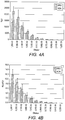
- HIV-1 BRU and HIV-1 NDK viruses were made on 293T cells and used to transduced P4 CCR5 cells. These cells encompass a stable luciferase gene under the control of the HIV LTR: If they are transduced with TAT protein (which is the case when they are infected with a WT HIV), the LacZ gene is expressed and a luciferase expression can be measured. HIV-1 Gag p24 and luciferase expression were measured. The results are shown in Figure 4 , and confirm that wild type NDK virus has a higher transduction rate than the wild type BRU one.
- Packaging vectors p8.74 and pTHV-GP-N were used to produce supernatants containing lentiviral vector particles.
- Western blots were performed on the supernatants using the NIH anti-P24 MAB (183-H12-5C). The results are shown in Figure 6 , and confirm that the difference between the NDK and BRU packaging plasmids relies on the production of P24 protein and precursor, as the NDK seems to generate a higher P24 synthesis (presence of P24 precursor in the viral supernatant) when the BRU shows only P24 in viral supernatant.
Landscapes
- Health & Medical Sciences (AREA)
- Life Sciences & Earth Sciences (AREA)
- Chemical & Material Sciences (AREA)
- Genetics & Genomics (AREA)
- Organic Chemistry (AREA)
- Engineering & Computer Science (AREA)
- General Health & Medical Sciences (AREA)
- Virology (AREA)
- Molecular Biology (AREA)
- General Engineering & Computer Science (AREA)
- Biotechnology (AREA)
- Bioinformatics & Cheminformatics (AREA)
- Biomedical Technology (AREA)
- Wood Science & Technology (AREA)
- Zoology (AREA)
- Biophysics (AREA)
- Biochemistry (AREA)
- Medicinal Chemistry (AREA)
- Physics & Mathematics (AREA)
- Plant Pathology (AREA)
- Microbiology (AREA)
- Proteomics, Peptides & Aminoacids (AREA)
- Gastroenterology & Hepatology (AREA)
- Communicable Diseases (AREA)
- Animal Behavior & Ethology (AREA)
- Chemical Kinetics & Catalysis (AREA)
- Nuclear Medicine, Radiotherapy & Molecular Imaging (AREA)
- Oncology (AREA)
- Pharmacology & Pharmacy (AREA)
- Veterinary Medicine (AREA)
- Public Health (AREA)
- General Chemical & Material Sciences (AREA)
- AIDS & HIV (AREA)
- Tropical Medicine & Parasitology (AREA)
- Peptides Or Proteins (AREA)
- Micro-Organisms Or Cultivation Processes Thereof (AREA)
- Medicines That Contain Protein Lipid Enzymes And Other Medicines (AREA)
- Medicines Containing Antibodies Or Antigens For Use As Internal Diagnostic Agents (AREA)
- Medicinal Preparation (AREA)
- Preparation Of Compounds By Using Micro-Organisms (AREA)
Priority Applications (1)
| Application Number | Priority Date | Filing Date | Title |
|---|---|---|---|
| EP12813090.3A EP2761011B1 (en) | 2011-09-26 | 2012-09-25 | Use of non-subtype b gag proteins for lentiviral packaging |
Applications Claiming Priority (3)
| Application Number | Priority Date | Filing Date | Title |
|---|---|---|---|
| EP11306222 | 2011-09-26 | ||
| PCT/IB2012/002363 WO2013046034A2 (en) | 2011-09-26 | 2012-09-25 | Use of non-subtype b gag proteins for lentiviral packaging |
| EP12813090.3A EP2761011B1 (en) | 2011-09-26 | 2012-09-25 | Use of non-subtype b gag proteins for lentiviral packaging |
Publications (2)
| Publication Number | Publication Date |
|---|---|
| EP2761011A2 EP2761011A2 (en) | 2014-08-06 |
| EP2761011B1 true EP2761011B1 (en) | 2018-05-23 |
Family
ID=47522726
Family Applications (1)
| Application Number | Title | Priority Date | Filing Date |
|---|---|---|---|
| EP12813090.3A Active EP2761011B1 (en) | 2011-09-26 | 2012-09-25 | Use of non-subtype b gag proteins for lentiviral packaging |
Country Status (14)
| Country | Link |
|---|---|
| US (2) | US9752160B2 (enExample) |
| EP (1) | EP2761011B1 (enExample) |
| JP (3) | JP6495653B2 (enExample) |
| KR (1) | KR101811736B1 (enExample) |
| CN (2) | CN107858375A (enExample) |
| AU (1) | AU2012313960B2 (enExample) |
| BR (1) | BR112014007027A2 (enExample) |
| CA (2) | CA2959867C (enExample) |
| DK (1) | DK2761011T3 (enExample) |
| ES (1) | ES2683820T3 (enExample) |
| IL (1) | IL231666B (enExample) |
| SG (1) | SG11201400987QA (enExample) |
| WO (1) | WO2013046034A2 (enExample) |
| ZA (1) | ZA201401780B (enExample) |
Families Citing this family (7)
| Publication number | Priority date | Publication date | Assignee | Title |
|---|---|---|---|---|
| WO2014195159A1 (en) * | 2013-06-03 | 2014-12-11 | Theravectys | Lentiviral vectors containing an mhc class i, mhc class ii, or beta-2 microglobulin upstream promoter sequence |
| EP3009144A1 (en) * | 2014-10-15 | 2016-04-20 | Theravectys | Lentiviral vectors for inducing CD4+ and CD8+ immune responses in vaccination of humans |
| WO2015063708A1 (en) * | 2013-10-31 | 2015-05-07 | Theravectys | LENTIVIRAL VECTORS FOR INDUCING CD4+ and CD8+ IMMUNE RESPONSES IN VACCINATION OF HUMANS INFECTED WITH HIV-1 |
| WO2016120489A2 (en) * | 2015-02-01 | 2016-08-04 | Theravectys | Lentiviral vectors for expression of mycobacterium tuberculosis antigens |
| US12084674B2 (en) * | 2019-10-07 | 2024-09-10 | University Of Utah Research Foundation | Methods and compositions for a HIV based delivery system |
| US20250319173A1 (en) * | 2021-03-12 | 2025-10-16 | Institut Pasteur | Lentiviral vectors targeting antigens to mhc-ii pathway and inducing protective cd8+ and cd4+ t-cell immunity in a host |
| CN114107393A (zh) | 2021-04-07 | 2022-03-01 | 上海劲威生物科技有限公司 | 一种治疗乙型肝炎的慢病毒载体、慢病毒颗粒及其制备方法和应用 |
Family Cites Families (8)
| Publication number | Priority date | Publication date | Assignee | Title |
|---|---|---|---|---|
| FR2646606B1 (fr) | 1989-05-03 | 1994-06-17 | Inst Nat Sante Rech Med | Retrovirus hautement cytopathogenique hiv-ndk. fragment d'adn de ce retrovirus, procede de preparation d'une proteine et/ou enzyme de ce virus et leurs utilisations |
| UA68327C2 (en) * | 1995-07-04 | 2004-08-16 | Gsf Forschungszentrum Fur Unwe | A recombinant mva virus, an isolated eukaryotic cell, infected with recombinant mva virus, a method for production in vitro of polypeptides with use of said cell, a method for production in vitro of virus parts (variants), vaccine containing the recombinant mva virus, a method for immunization of animals |
| US7262049B2 (en) * | 1999-03-16 | 2007-08-28 | Dana-Farber Cancer Institute, Inc. | Pseudotyped lentiviral vectors and uses thereof |
| WO2004087201A2 (en) | 2003-03-28 | 2004-10-14 | The Government Of The United States Of America, As Represented By The Secretary, Department Of Health And Human Services | Mva virus expressing modified hiv envelope, gag, and pol genes |
| GB0318704D0 (en) | 2003-08-08 | 2003-09-10 | Sirus Pharmaceuticals Ltd | Chimaeric vector system |
| WO2005027840A2 (en) | 2003-09-15 | 2005-03-31 | Chiron Corporation | Combination approaches for generating immune responses |
| GB0702694D0 (en) * | 2007-02-12 | 2007-03-21 | Ark Therapeutics Ltd | Vectors |
| CN101353667B (zh) * | 2008-08-15 | 2011-06-08 | 中国人民解放军军事医学科学院微生物流行病研究所 | Hiv毒株耐药表型分析细胞模型及其专用假型慢病毒 |
-
2012
- 2012-09-25 CN CN201710942647.XA patent/CN107858375A/zh active Pending
- 2012-09-25 AU AU2012313960A patent/AU2012313960B2/en active Active
- 2012-09-25 CA CA2959867A patent/CA2959867C/en active Active
- 2012-09-25 CA CA2849652A patent/CA2849652C/en active Active
- 2012-09-25 KR KR1020147009812A patent/KR101811736B1/ko active Active
- 2012-09-25 WO PCT/IB2012/002363 patent/WO2013046034A2/en not_active Ceased
- 2012-09-25 EP EP12813090.3A patent/EP2761011B1/en active Active
- 2012-09-25 ES ES12813090.3T patent/ES2683820T3/es active Active
- 2012-09-25 BR BR112014007027A patent/BR112014007027A2/pt not_active Application Discontinuation
- 2012-09-25 CN CN201280046712.6A patent/CN104039968B/zh active Active
- 2012-09-25 US US14/346,961 patent/US9752160B2/en active Active
- 2012-09-25 SG SG11201400987QA patent/SG11201400987QA/en unknown
- 2012-09-25 DK DK12813090.3T patent/DK2761011T3/en active
- 2012-09-25 JP JP2014531334A patent/JP6495653B2/ja active Active
-
2014
- 2014-03-11 ZA ZA2014/01780A patent/ZA201401780B/en unknown
- 2014-03-23 IL IL231666A patent/IL231666B/en active IP Right Grant
-
2016
- 2016-09-12 JP JP2016178074A patent/JP2017018132A/ja active Pending
-
2017
- 2017-08-10 US US15/673,454 patent/US20170362607A1/en not_active Abandoned
-
2018
- 2018-07-19 JP JP2018135840A patent/JP2018183165A/ja active Pending
Non-Patent Citations (1)
| Title |
|---|
| None * |
Also Published As
| Publication number | Publication date |
|---|---|
| BR112014007027A2 (pt) | 2017-04-11 |
| JP2014530000A (ja) | 2014-11-17 |
| ZA201401780B (en) | 2015-09-30 |
| EP2761011A2 (en) | 2014-08-06 |
| ES2683820T3 (es) | 2018-09-28 |
| CA2849652C (en) | 2017-11-21 |
| IL231666A0 (en) | 2014-05-28 |
| WO2013046034A3 (en) | 2013-05-30 |
| JP2018183165A (ja) | 2018-11-22 |
| CN104039968B (zh) | 2018-10-26 |
| US20140234908A1 (en) | 2014-08-21 |
| CN107858375A (zh) | 2018-03-30 |
| CA2959867C (en) | 2020-04-28 |
| WO2013046034A2 (en) | 2013-04-04 |
| KR20140116053A (ko) | 2014-10-01 |
| IL231666B (en) | 2018-03-29 |
| HK1200870A1 (en) | 2015-08-14 |
| US9752160B2 (en) | 2017-09-05 |
| JP6495653B2 (ja) | 2019-04-03 |
| DK2761011T3 (en) | 2018-08-27 |
| CA2849652A1 (en) | 2013-04-04 |
| CA2959867A1 (en) | 2013-04-04 |
| NZ622860A (en) | 2016-05-27 |
| AU2012313960B2 (en) | 2016-05-12 |
| AU2012313960A1 (en) | 2014-04-10 |
| JP2017018132A (ja) | 2017-01-26 |
| CN104039968A (zh) | 2014-09-10 |
| KR101811736B1 (ko) | 2017-12-22 |
| SG11201400987QA (en) | 2014-07-30 |
| US20170362607A1 (en) | 2017-12-21 |
Similar Documents
| Publication | Publication Date | Title |
|---|---|---|
| US20170362607A1 (en) | Use of non-subtype b gag proteins for lentiviral packaging | |
| US20220204946A1 (en) | Modified envelope glycoproteins for retroviridae viral vector pseudotyping and process for obtaining it | |
| Di Nunzio et al. | HIV-derived vectors for therapy and vaccination against HIV | |
| US20150182617A1 (en) | Glycoproteins for pseudotyping lentivectors | |
| WO2004067710A2 (en) | Compositions and methods for tissue specific targeting of lentivirus vectors | |
| Negre et al. | Lentiviral vectors derived from simian immunodeficiency virus | |
| Pandya et al. | Development of an Rev-independent, minimal simian immunodeficiency virus-derived vector system | |
| US9840720B2 (en) | Materials and methods relating to packaging cell lines | |
| JP4627950B2 (ja) | 変異HIVgag/pol、SIVgagおよびSIVenv遺伝子を持つ分子クローン | |
| Pandya et al. | Lentivirus and foamy virus vectors: novel gene therapy tools | |
| Mautino et al. | Inhibition of HIV-1 replication by novel lentiviral vectors expressing transdominant Rev and HIV-1 env antisense | |
| Barker et al. | Vectors derived from the human immunodeficiency virus, HIV-1 | |
| HK1200870B (en) | Use of non-subtype b gag proteins for lentiviral packaging | |
| NZ622860B2 (en) | Use of non-subtype b gag proteins for lentiviral packaging | |
| WO2001092506A1 (en) | Siv derived lentiviral vector systems | |
| WO2005058357A1 (en) | Virus-like particle (vlp) as vaccine | |
| Dubois et al. | Development of Minimal Lentivirus Vectors | |
| Follenzi et al. | HIV-based vectors |
Legal Events
| Date | Code | Title | Description |
|---|---|---|---|
| PUAI | Public reference made under article 153(3) epc to a published international application that has entered the european phase |
Free format text: ORIGINAL CODE: 0009012 |
|
| 17P | Request for examination filed |
Effective date: 20140428 |
|
| AK | Designated contracting states |
Kind code of ref document: A2 Designated state(s): AL AT BE BG CH CY CZ DE DK EE ES FI FR GB GR HR HU IE IS IT LI LT LU LV MC MK MT NL NO PL PT RO RS SE SI SK SM TR |
|
| AX | Request for extension of the european patent |
Extension state: BA ME |
|
| REG | Reference to a national code |
Ref country code: HK Ref legal event code: DE Ref document number: 1200870 Country of ref document: HK |
|
| 17Q | First examination report despatched |
Effective date: 20150827 |
|
| STAA | Information on the status of an ep patent application or granted ep patent |
Free format text: STATUS: EXAMINATION IS IN PROGRESS |
|
| GRAP | Despatch of communication of intention to grant a patent |
Free format text: ORIGINAL CODE: EPIDOSNIGR1 |
|
| STAA | Information on the status of an ep patent application or granted ep patent |
Free format text: STATUS: GRANT OF PATENT IS INTENDED |
|
| INTG | Intention to grant announced |
Effective date: 20171004 |
|
| RIN1 | Information on inventor provided before grant (corrected) |
Inventor name: BAUCHE, CECILE Inventor name: TRAN, THI-LAN Inventor name: CHARNEAU, PIERRE |
|
| GRAS | Grant fee paid |
Free format text: ORIGINAL CODE: EPIDOSNIGR3 |
|
| GRAA | (expected) grant |
Free format text: ORIGINAL CODE: 0009210 |
|
| STAA | Information on the status of an ep patent application or granted ep patent |
Free format text: STATUS: THE PATENT HAS BEEN GRANTED |
|
| AK | Designated contracting states |
Kind code of ref document: B1 Designated state(s): AL AT BE BG CH CY CZ DE DK EE ES FI FR GB GR HR HU IE IS IT LI LT LU LV MC MK MT NL NO PL PT RO RS SE SI SK SM TR |
|
| AX | Request for extension of the european patent |
Extension state: BA ME |
|
| REG | Reference to a national code |
Ref country code: GB Ref legal event code: FG4D |
|
| REG | Reference to a national code |
Ref country code: CH Ref legal event code: EP |
|
| REG | Reference to a national code |
Ref country code: IE Ref legal event code: FG4D |
|
| REG | Reference to a national code |
Ref country code: DE Ref legal event code: R096 Ref document number: 602012046686 Country of ref document: DE |
|
| REG | Reference to a national code |
Ref country code: AT Ref legal event code: REF Ref document number: 1001549 Country of ref document: AT Kind code of ref document: T Effective date: 20180615 |
|
| REG | Reference to a national code |
Ref country code: DK Ref legal event code: T3 Effective date: 20180821 |
|
| REG | Reference to a national code |
Ref country code: NL Ref legal event code: FP |
|
| REG | Reference to a national code |
Ref country code: SE Ref legal event code: TRGR |
|
| REG | Reference to a national code |
Ref country code: FR Ref legal event code: PLFP Year of fee payment: 7 Ref country code: ES Ref legal event code: FG2A Ref document number: 2683820 Country of ref document: ES Kind code of ref document: T3 Effective date: 20180928 |
|
| REG | Reference to a national code |
Ref country code: LT Ref legal event code: MG4D |
|
| PG25 | Lapsed in a contracting state [announced via postgrant information from national office to epo] |
Ref country code: BG Free format text: LAPSE BECAUSE OF FAILURE TO SUBMIT A TRANSLATION OF THE DESCRIPTION OR TO PAY THE FEE WITHIN THE PRESCRIBED TIME-LIMIT Effective date: 20180823 Ref country code: FI Free format text: LAPSE BECAUSE OF FAILURE TO SUBMIT A TRANSLATION OF THE DESCRIPTION OR TO PAY THE FEE WITHIN THE PRESCRIBED TIME-LIMIT Effective date: 20180523 Ref country code: NO Free format text: LAPSE BECAUSE OF FAILURE TO SUBMIT A TRANSLATION OF THE DESCRIPTION OR TO PAY THE FEE WITHIN THE PRESCRIBED TIME-LIMIT Effective date: 20180823 Ref country code: LT Free format text: LAPSE BECAUSE OF FAILURE TO SUBMIT A TRANSLATION OF THE DESCRIPTION OR TO PAY THE FEE WITHIN THE PRESCRIBED TIME-LIMIT Effective date: 20180523 |
|
| PG25 | Lapsed in a contracting state [announced via postgrant information from national office to epo] |
Ref country code: RS Free format text: LAPSE BECAUSE OF FAILURE TO SUBMIT A TRANSLATION OF THE DESCRIPTION OR TO PAY THE FEE WITHIN THE PRESCRIBED TIME-LIMIT Effective date: 20180523 Ref country code: HR Free format text: LAPSE BECAUSE OF FAILURE TO SUBMIT A TRANSLATION OF THE DESCRIPTION OR TO PAY THE FEE WITHIN THE PRESCRIBED TIME-LIMIT Effective date: 20180523 Ref country code: GR Free format text: LAPSE BECAUSE OF FAILURE TO SUBMIT A TRANSLATION OF THE DESCRIPTION OR TO PAY THE FEE WITHIN THE PRESCRIBED TIME-LIMIT Effective date: 20180824 Ref country code: LV Free format text: LAPSE BECAUSE OF FAILURE TO SUBMIT A TRANSLATION OF THE DESCRIPTION OR TO PAY THE FEE WITHIN THE PRESCRIBED TIME-LIMIT Effective date: 20180523 |
|
| PG25 | Lapsed in a contracting state [announced via postgrant information from national office to epo] |
Ref country code: PL Free format text: LAPSE BECAUSE OF FAILURE TO SUBMIT A TRANSLATION OF THE DESCRIPTION OR TO PAY THE FEE WITHIN THE PRESCRIBED TIME-LIMIT Effective date: 20180523 Ref country code: SK Free format text: LAPSE BECAUSE OF FAILURE TO SUBMIT A TRANSLATION OF THE DESCRIPTION OR TO PAY THE FEE WITHIN THE PRESCRIBED TIME-LIMIT Effective date: 20180523 Ref country code: RO Free format text: LAPSE BECAUSE OF FAILURE TO SUBMIT A TRANSLATION OF THE DESCRIPTION OR TO PAY THE FEE WITHIN THE PRESCRIBED TIME-LIMIT Effective date: 20180523 Ref country code: CZ Free format text: LAPSE BECAUSE OF FAILURE TO SUBMIT A TRANSLATION OF THE DESCRIPTION OR TO PAY THE FEE WITHIN THE PRESCRIBED TIME-LIMIT Effective date: 20180523 Ref country code: EE Free format text: LAPSE BECAUSE OF FAILURE TO SUBMIT A TRANSLATION OF THE DESCRIPTION OR TO PAY THE FEE WITHIN THE PRESCRIBED TIME-LIMIT Effective date: 20180523 |
|
| REG | Reference to a national code |
Ref country code: DE Ref legal event code: R097 Ref document number: 602012046686 Country of ref document: DE |
|
| PG25 | Lapsed in a contracting state [announced via postgrant information from national office to epo] |
Ref country code: SM Free format text: LAPSE BECAUSE OF FAILURE TO SUBMIT A TRANSLATION OF THE DESCRIPTION OR TO PAY THE FEE WITHIN THE PRESCRIBED TIME-LIMIT Effective date: 20180523 |
|
| PLBE | No opposition filed within time limit |
Free format text: ORIGINAL CODE: 0009261 |
|
| STAA | Information on the status of an ep patent application or granted ep patent |
Free format text: STATUS: NO OPPOSITION FILED WITHIN TIME LIMIT |
|
| PG25 | Lapsed in a contracting state [announced via postgrant information from national office to epo] |
Ref country code: MC Free format text: LAPSE BECAUSE OF FAILURE TO SUBMIT A TRANSLATION OF THE DESCRIPTION OR TO PAY THE FEE WITHIN THE PRESCRIBED TIME-LIMIT Effective date: 20180523 |
|
| 26N | No opposition filed |
Effective date: 20190226 |
|
| PG25 | Lapsed in a contracting state [announced via postgrant information from national office to epo] |
Ref country code: SI Free format text: LAPSE BECAUSE OF FAILURE TO SUBMIT A TRANSLATION OF THE DESCRIPTION OR TO PAY THE FEE WITHIN THE PRESCRIBED TIME-LIMIT Effective date: 20180523 |
|
| PG25 | Lapsed in a contracting state [announced via postgrant information from national office to epo] |
Ref country code: LU Free format text: LAPSE BECAUSE OF NON-PAYMENT OF DUE FEES Effective date: 20180925 |
|
| PG25 | Lapsed in a contracting state [announced via postgrant information from national office to epo] |
Ref country code: AL Free format text: LAPSE BECAUSE OF FAILURE TO SUBMIT A TRANSLATION OF THE DESCRIPTION OR TO PAY THE FEE WITHIN THE PRESCRIBED TIME-LIMIT Effective date: 20180523 |
|
| PG25 | Lapsed in a contracting state [announced via postgrant information from national office to epo] |
Ref country code: MT Free format text: LAPSE BECAUSE OF NON-PAYMENT OF DUE FEES Effective date: 20180925 |
|
| REG | Reference to a national code |
Ref country code: AT Ref legal event code: UEP Ref document number: 1001549 Country of ref document: AT Kind code of ref document: T Effective date: 20180523 |
|
| PG25 | Lapsed in a contracting state [announced via postgrant information from national office to epo] |
Ref country code: TR Free format text: LAPSE BECAUSE OF FAILURE TO SUBMIT A TRANSLATION OF THE DESCRIPTION OR TO PAY THE FEE WITHIN THE PRESCRIBED TIME-LIMIT Effective date: 20180523 |
|
| PG25 | Lapsed in a contracting state [announced via postgrant information from national office to epo] |
Ref country code: PT Free format text: LAPSE BECAUSE OF FAILURE TO SUBMIT A TRANSLATION OF THE DESCRIPTION OR TO PAY THE FEE WITHIN THE PRESCRIBED TIME-LIMIT Effective date: 20180523 Ref country code: HU Free format text: LAPSE BECAUSE OF FAILURE TO SUBMIT A TRANSLATION OF THE DESCRIPTION OR TO PAY THE FEE WITHIN THE PRESCRIBED TIME-LIMIT; INVALID AB INITIO Effective date: 20120925 |
|
| PG25 | Lapsed in a contracting state [announced via postgrant information from national office to epo] |
Ref country code: MK Free format text: LAPSE BECAUSE OF NON-PAYMENT OF DUE FEES Effective date: 20180523 Ref country code: CY Free format text: LAPSE BECAUSE OF FAILURE TO SUBMIT A TRANSLATION OF THE DESCRIPTION OR TO PAY THE FEE WITHIN THE PRESCRIBED TIME-LIMIT Effective date: 20180523 |
|
| PG25 | Lapsed in a contracting state [announced via postgrant information from national office to epo] |
Ref country code: IS Free format text: LAPSE BECAUSE OF FAILURE TO SUBMIT A TRANSLATION OF THE DESCRIPTION OR TO PAY THE FEE WITHIN THE PRESCRIBED TIME-LIMIT Effective date: 20180923 |
|
| REG | Reference to a national code |
Ref country code: CH Ref legal event code: U11 Free format text: ST27 STATUS EVENT CODE: U-0-0-U10-U11 (AS PROVIDED BY THE NATIONAL OFFICE) Effective date: 20251001 |
|
| PGFP | Annual fee paid to national office [announced via postgrant information from national office to epo] |
Ref country code: DK Payment date: 20250923 Year of fee payment: 14 Ref country code: DE Payment date: 20250919 Year of fee payment: 14 |
|
| PGFP | Annual fee paid to national office [announced via postgrant information from national office to epo] |
Ref country code: NL Payment date: 20250918 Year of fee payment: 14 Ref country code: IT Payment date: 20250923 Year of fee payment: 14 |
|
| PGFP | Annual fee paid to national office [announced via postgrant information from national office to epo] |
Ref country code: GB Payment date: 20250918 Year of fee payment: 14 Ref country code: BE Payment date: 20250918 Year of fee payment: 14 |
|
| PGFP | Annual fee paid to national office [announced via postgrant information from national office to epo] |
Ref country code: FR Payment date: 20250922 Year of fee payment: 14 Ref country code: AT Payment date: 20250919 Year of fee payment: 14 |
|
| PGFP | Annual fee paid to national office [announced via postgrant information from national office to epo] |
Ref country code: SE Payment date: 20250918 Year of fee payment: 14 |
|
| PGFP | Annual fee paid to national office [announced via postgrant information from national office to epo] |
Ref country code: IE Payment date: 20250918 Year of fee payment: 14 |
|
| PGFP | Annual fee paid to national office [announced via postgrant information from national office to epo] |
Ref country code: CH Payment date: 20251001 Year of fee payment: 14 |
|
| PGFP | Annual fee paid to national office [announced via postgrant information from national office to epo] |
Ref country code: ES Payment date: 20251028 Year of fee payment: 14 |