EP2740186B1 - Carrier-envelope-phase stabilizaton of a master oscillator optical amplifier system - Google Patents
Carrier-envelope-phase stabilizaton of a master oscillator optical amplifier system Download PDFInfo
- Publication number
- EP2740186B1 EP2740186B1 EP12750906.5A EP12750906A EP2740186B1 EP 2740186 B1 EP2740186 B1 EP 2740186B1 EP 12750906 A EP12750906 A EP 12750906A EP 2740186 B1 EP2740186 B1 EP 2740186B1
- Authority
- EP
- European Patent Office
- Prior art keywords
- cep
- frequency
- laser
- pulse
- feedback signal
- Prior art date
- Legal status (The legal status is an assumption and is not a legal conclusion. Google has not performed a legal analysis and makes no representation as to the accuracy of the status listed.)
- Active
Links
Images


Classifications
-
- G—PHYSICS
- G01—MEASURING; TESTING
- G01J—MEASUREMENT OF INTENSITY, VELOCITY, SPECTRAL CONTENT, POLARISATION, PHASE OR PULSE CHARACTERISTICS OF INFRARED, VISIBLE OR ULTRAVIOLET LIGHT; COLORIMETRY; RADIATION PYROMETRY
- G01J11/00—Measuring the characteristics of individual optical pulses or of optical pulse trains
-
- H—ELECTRICITY
- H01—ELECTRIC ELEMENTS
- H01S—DEVICES USING THE PROCESS OF LIGHT AMPLIFICATION BY STIMULATED EMISSION OF RADIATION [LASER] TO AMPLIFY OR GENERATE LIGHT; DEVICES USING STIMULATED EMISSION OF ELECTROMAGNETIC RADIATION IN WAVE RANGES OTHER THAN OPTICAL
- H01S3/00—Lasers, i.e. devices using stimulated emission of electromagnetic radiation in the infrared, visible or ultraviolet wave range
- H01S3/005—Optical devices external to the laser cavity, specially adapted for lasers, e.g. for homogenisation of the beam or for manipulating laser pulses, e.g. pulse shaping
- H01S3/0057—Temporal shaping, e.g. pulse compression, frequency chirping
-
- H—ELECTRICITY
- H01—ELECTRIC ELEMENTS
- H01S—DEVICES USING THE PROCESS OF LIGHT AMPLIFICATION BY STIMULATED EMISSION OF RADIATION [LASER] TO AMPLIFY OR GENERATE LIGHT; DEVICES USING STIMULATED EMISSION OF ELECTROMAGNETIC RADIATION IN WAVE RANGES OTHER THAN OPTICAL
- H01S3/00—Lasers, i.e. devices using stimulated emission of electromagnetic radiation in the infrared, visible or ultraviolet wave range
- H01S3/10—Controlling the intensity, frequency, phase, polarisation or direction of the emitted radiation, e.g. switching, gating, modulating or demodulating
- H01S3/11—Mode locking; Q-switching; Other giant-pulse techniques, e.g. cavity dumping
- H01S3/1106—Mode locking
-
- H—ELECTRICITY
- H01—ELECTRIC ELEMENTS
- H01S—DEVICES USING THE PROCESS OF LIGHT AMPLIFICATION BY STIMULATED EMISSION OF RADIATION [LASER] TO AMPLIFY OR GENERATE LIGHT; DEVICES USING STIMULATED EMISSION OF ELECTROMAGNETIC RADIATION IN WAVE RANGES OTHER THAN OPTICAL
- H01S3/00—Lasers, i.e. devices using stimulated emission of electromagnetic radiation in the infrared, visible or ultraviolet wave range
- H01S3/10—Controlling the intensity, frequency, phase, polarisation or direction of the emitted radiation, e.g. switching, gating, modulating or demodulating
- H01S3/13—Stabilisation of laser output parameters, e.g. frequency or amplitude
- H01S3/1305—Feedback control systems
-
- H—ELECTRICITY
- H01—ELECTRIC ELEMENTS
- H01S—DEVICES USING THE PROCESS OF LIGHT AMPLIFICATION BY STIMULATED EMISSION OF RADIATION [LASER] TO AMPLIFY OR GENERATE LIGHT; DEVICES USING STIMULATED EMISSION OF ELECTROMAGNETIC RADIATION IN WAVE RANGES OTHER THAN OPTICAL
- H01S3/00—Lasers, i.e. devices using stimulated emission of electromagnetic radiation in the infrared, visible or ultraviolet wave range
- H01S3/10—Controlling the intensity, frequency, phase, polarisation or direction of the emitted radiation, e.g. switching, gating, modulating or demodulating
- H01S3/13—Stabilisation of laser output parameters, e.g. frequency or amplitude
- H01S3/1307—Stabilisation of the phase
-
- H—ELECTRICITY
- H01—ELECTRIC ELEMENTS
- H01S—DEVICES USING THE PROCESS OF LIGHT AMPLIFICATION BY STIMULATED EMISSION OF RADIATION [LASER] TO AMPLIFY OR GENERATE LIGHT; DEVICES USING STIMULATED EMISSION OF ELECTROMAGNETIC RADIATION IN WAVE RANGES OTHER THAN OPTICAL
- H01S3/00—Lasers, i.e. devices using stimulated emission of electromagnetic radiation in the infrared, visible or ultraviolet wave range
- H01S3/10—Controlling the intensity, frequency, phase, polarisation or direction of the emitted radiation, e.g. switching, gating, modulating or demodulating
- H01S3/13—Stabilisation of laser output parameters, e.g. frequency or amplitude
- H01S3/131—Stabilisation of laser output parameters, e.g. frequency or amplitude by controlling the active medium, e.g. by controlling the processes or apparatus for excitation
- H01S3/1312—Stabilisation of laser output parameters, e.g. frequency or amplitude by controlling the active medium, e.g. by controlling the processes or apparatus for excitation by controlling the optical pumping
-
- H—ELECTRICITY
- H01—ELECTRIC ELEMENTS
- H01S—DEVICES USING THE PROCESS OF LIGHT AMPLIFICATION BY STIMULATED EMISSION OF RADIATION [LASER] TO AMPLIFY OR GENERATE LIGHT; DEVICES USING STIMULATED EMISSION OF ELECTROMAGNETIC RADIATION IN WAVE RANGES OTHER THAN OPTICAL
- H01S3/00—Lasers, i.e. devices using stimulated emission of electromagnetic radiation in the infrared, visible or ultraviolet wave range
- H01S3/23—Arrangements of two or more lasers not provided for in groups H01S3/02 - H01S3/22, e.g. tandem arrangements of separate active media
- H01S3/2308—Amplifier arrangements, e.g. MOPA
-
- H—ELECTRICITY
- H01—ELECTRIC ELEMENTS
- H01S—DEVICES USING THE PROCESS OF LIGHT AMPLIFICATION BY STIMULATED EMISSION OF RADIATION [LASER] TO AMPLIFY OR GENERATE LIGHT; DEVICES USING STIMULATED EMISSION OF ELECTROMAGNETIC RADIATION IN WAVE RANGES OTHER THAN OPTICAL
- H01S3/00—Lasers, i.e. devices using stimulated emission of electromagnetic radiation in the infrared, visible or ultraviolet wave range
- H01S3/005—Optical devices external to the laser cavity, specially adapted for lasers, e.g. for homogenisation of the beam or for manipulating laser pulses, e.g. pulse shaping
- H01S3/0085—Modulating the output, i.e. the laser beam is modulated outside the laser cavity
-
- H—ELECTRICITY
- H01—ELECTRIC ELEMENTS
- H01S—DEVICES USING THE PROCESS OF LIGHT AMPLIFICATION BY STIMULATED EMISSION OF RADIATION [LASER] TO AMPLIFY OR GENERATE LIGHT; DEVICES USING STIMULATED EMISSION OF ELECTROMAGNETIC RADIATION IN WAVE RANGES OTHER THAN OPTICAL
- H01S3/00—Lasers, i.e. devices using stimulated emission of electromagnetic radiation in the infrared, visible or ultraviolet wave range
- H01S3/10—Controlling the intensity, frequency, phase, polarisation or direction of the emitted radiation, e.g. switching, gating, modulating or demodulating
- H01S3/13—Stabilisation of laser output parameters, e.g. frequency or amplitude
- H01S3/1301—Stabilisation of laser output parameters, e.g. frequency or amplitude in optical amplifiers
-
- H—ELECTRICITY
- H01—ELECTRIC ELEMENTS
- H01S—DEVICES USING THE PROCESS OF LIGHT AMPLIFICATION BY STIMULATED EMISSION OF RADIATION [LASER] TO AMPLIFY OR GENERATE LIGHT; DEVICES USING STIMULATED EMISSION OF ELECTROMAGNETIC RADIATION IN WAVE RANGES OTHER THAN OPTICAL
- H01S3/00—Lasers, i.e. devices using stimulated emission of electromagnetic radiation in the infrared, visible or ultraviolet wave range
- H01S3/10—Controlling the intensity, frequency, phase, polarisation or direction of the emitted radiation, e.g. switching, gating, modulating or demodulating
- H01S3/13—Stabilisation of laser output parameters, e.g. frequency or amplitude
- H01S3/136—Stabilisation of laser output parameters, e.g. frequency or amplitude by controlling devices placed within the cavity
Definitions
- the present invention relates in general to laser oscillator-plus-amplifier arrangements for delivering femtosecond pulses.
- the invention relates in particular to such arrangements wherein a laser pulse is temporally stretched prior to amplification and the amplified pulse is temporally compressed before delivery.
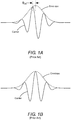
- Optical pulses having a duration of a few femtoseconds or less may include only a few optical cycles at a fundamental carrier frequency of the pulse within an envelope of the pulse.
- a pulse-envelope typically has a Gaussian or Sech-squared form.
- the peak power within the envelope will depend on the phase of the carrier cycles relative to the envelope. This is referred to by practitioners of the art as the carrier envelope phase (CEP).
- One such technique involves a closed loop feedback arrangement wherein the CEP is measured and compared with a desired value. Any difference between the measured and actual value is used to vary optical-pump power to a gain medium of the oscillator to drive the measured value back to the desired value. It has been found, however, that if a pulse from a CEP-stabilized oscillator is amplified in a chirped pulse amplification arrangement the CEP of the amplified pulses will usually not be stable.
- input pulses from the oscillator are temporally stretched by a pulse stretcher from an original duration before amplification; amplified in an optical amplifier; and temporally compressed in a pulse compressor back to about the original pulse duration.
- stabilization is effected by a closed loop arrangement in which the CEP is again measured and compared with a desired value. Any difference between the measured and actual value is used to vary the separation of gratings in the pulse stretcher or compressor of the amplifier to drive the measured value back to the desired value.
- a problem with this and other prior-art approaches to CEP control in a master-oscillator-plus-amplifier system is that the approaches do not take into account that different factors contribute to total CEP instability.
- US Patent No. 7,701,982, granted to Yu et al. discloses an arrangement for a stabilizing the CEP of a modelocked oscillator, optically pumped by a beam from a pump-laser.
- a balanced homodyne detection system is used in an f-2f interferometer to generate a CEP error signal that is used to stabilize the CEP of an ultrafast oscillator.
- Two parts of the error signal are processed by a first PID (proportional-integral-differential) controller (feedback circuit).
- a feedback signal from the first PID controller is split into two portions. A first of the two portions is fed to a second PID controller.
- a signal from the second PID controller is used to adjust a slow (low-frequency) response actuator in the oscillator, in this case, a prism located in the oscillator between resonator (laser-cavity) mirrors of the oscillator, and moveable by a piezoelectric transducer (PZT) in response to the signal from the second PID controller.
- the second of the two portions of the signal from first PID controller is fed to a fast-response) actuator outside of the laser cavity, which responds primarily to high-frequency components of the signal from the first PID controller.
- the actuator is an acousto-optic modulator (AOM) inserted in the pump-laser beam to precisely modulate the pump power delivered to a gain-element in the oscillator laser-cavity.
- AOM acousto-optic modulator
- One shortcoming of the arrangement of the Yu et al. patent is that the signal controlling the low frequency actuator is not independent of the signal controlling the high frequency actuator. Any adjustment of the gain of the first PID controller automatically adjusts the net gain of the first and second PID controllers in series.
- Another shortcoming of the arrangement of the Yu et al. patent is that there is no provision for selecting the frequency bands applied to the high-frequency and low-frequency actuators. The particular actuators selected primarily determine whatever frequency selection there is.
- Yet another shortcoming of the arrangement of the Yu et al. patent is that low-frequency control requires a movable element in the oscillator laser cavity. Moving this element during operation could interfere with the mode-locking of the oscillator.
- a further shortcoming of the disclosure of the Yu et al. patent is that it does not address the problem of controlling the CEP of an oscillator-plus-amplifier system. This is significant inasmuch as most ultrafast laser systems in use are oscillator-plus-amplifier systems.
- an apparatus in accordance with the present invention comprises an oscillator arrangement including a laser cavity for generating modelocked optical pulses from which a sequence thereof, having a predetermined pulse-repetition frequency (PRF), is selected for amplification.
- An optical amplifier arrangement is provided for amplifying the sequence of optical pulses selected for amplification and delivering a corresponding sequence of amplified pulses.
- Electronic means are provided for dividing the first signal into second and third signals.
- the second signal includes frequency components in a first range between DC and a first frequency less than the maximum frequency
- the third signal includes frequency components in a second range between a second frequency less than the maximum frequency and the maximum frequency.
- a slow-response CEP-controller and a fast-response CEP-controller are provided for adjusting the CEP of the pulses in the sequence of amplified pulses.
- Each of the CEP-controllers is located outside of the laser cavity of the oscillator arrangement.
- a first signal processing device is arranged to receive the second signal, and a second signal processing device is arranged to receive the third signal.
- the first and second signal processing devices are arranged to generate respectively first and second control signals, each thereof representative of a difference between the instant and a desired CEP of the pulses in the sequence of amplified pulses.
- the first and second control signals adjust respectively the slow-response and fast-response CEP-controllers to minimize the difference between the instant and the desired CEP of the pulses in the sequence of amplified pulses.
- FIG. 2 and FIG. 2A schematically illustrate one preferred embodiment 10 of ultrafast oscillator-amplifier apparatus in accordance with the present invention.
- electrical paths are depicted by bold lines and optical paths are depicted by fine lines.
- Apparatus 10 includes an ultrafast laser oscillator 12, here, an oscillator including a titanium-doped sapphire (Ti:sapphire) gain-medium.
- Oscillator 12 includes a pump-laser 14 which delivers a beam 16 of pump-radiation.
- a modulator 18, such as an AOM, is provided for selectively modulating beam 16 to provide a modulated pump-beam 20.
- Beam 20 optically pumps a Ti:sapphire gain medium (not shown) in a modelocked laser-resonator (laser-cavity) 22.
- Resonator 22 delivers a sequence 28 of modelocked pulses at a pulse-repetition frequency on the order of tens of megahertz (MHz).
- the CEP of pulses in beam 28 is locked to a predetermined offset frequency and phase (locking point) by a phase-locked loop 32 including an inline f-2f interferometer 30 and locking electronics (PLL electronics) 36.
- the offset frequency is an integer sub-multiple of the PRF of pulses in path 28. By way of example, an offset frequency of 0.25 provides that every fourth pulse in path is about identical with a previous or subsequent fourth pulse.
- Interferometer 30 provides a signal 34 representative of the instant CEP of pulses in path 28 to the locking electronics 36.
- the frequency spectrum of a pulse to be CEP-measured is spectrally broadened by a broadening device such as a structured fiber to in excess of one octave.
- a broadening device such as a structured fiber to in excess of one octave.
- the spectrum is broadened into a white light continuum.
- the spectrum is split into high and low frequency portions, the low frequency portion is frequency converted to a higher frequency by an optically nonlinear crystal.
- the high frequency and converted low frequency portions are temporally separated leaving a temporal overlap and a corresponding spectral overlap.
- the two portions are optically re-combined to provide a beat-frequency which is measured directly as an RF signal from which signal 34 is calculated.
- the locking electronics provides a control signal 38 representative of the difference between the instant CEP and the desired value and the signal is delivered to AOM 28, which adjusts the CEP of pulses in path 28 to the predetermined locking-point value by changing the pump power delivered to resonator 22.
- An AOM has a high frequency-response and is able to respond at the highest PRF contemplated for pulses in path 28.
- oscillator 12 One suitable oscillator for oscillator 12 is a model Micra-CEPSTM available from Coherent Inc., of Santa Clara, California. This oscillator is phase-locked, as described above, by an f-2f interferometer and associated locking electronics available as model XPS800 from Menlo Systems GmbH of Kunststoff, Germany.
- the phase-locked pulses in path 28 are delivered to a chirped-pulse amplifier (CPA) system 42 including a pulse-stretcher 40, an optical amplifier 46, and a pulse-compressor 48.
- a pulse picker or frequency divider 26 is provided, here between the pulse stretcher and the amplifier, for reducing the pulse-repetition frequency to a few kilohertz (KHz) along beam path 28.
- One optical amplifier suitable for use as CPA 42 is a Coherent Inc. model Legend-EliteTM, in which amplifier 46 is a regenerative amplifier. Amplifier 46 is optically pumped by a Coherent Inc. model Evolution-30TM DPSS pump laser (not shown).
- Amplified pulses from pulse compressor 48 are sampled by a beam-splitting mirror 50 and the sample 52 is sent to an f-2f interferometer and processor 54 for measuring the CEP of the amplified pulses.
- Interferometer 54 preferably has a detector arrangement fast enough to measure the CEP of each pulse which allows the collection of data on every laser pulse in the sequence thereof delivered from pulse compressor 48, thereby maximizing the CE phase-noise information detected in the frequency domain.
- a single analog detector (a photodiode) was used to measure the beat-frequency spectrum provided by the interferometer. The detector output was sampled at a maximum rate equal to the PRF of pulses from the CPA.
- a CEP voltage-signal 56 from interferometer 54 is split into two portions by an electronic frequency splitter 58.
- a high frequency portion 64 includes frequencies between a predetermined splitting-frequency and a maximum frequency which is preferably the pulse-repetition frequency of the amplified pulses.
- a low frequency portion 64 includes frequencies between DC and the splitting frequency.
- the low frequency portion is received by processing electronics 60, preferably a PID-controller PID-1.
- PID-1 generates a control signal 62 representative of the difference between the instantly measured CEP and a desired CEP value of the amplified pulses.
- This signal is delivered to pulse-stretcher 40, which is configured such that the pulse stretching can be selectively varied by varying the dispersion provided by dispersive elements (such as gratings or prisms) in the pulse stretcher.
- CEP-control by varying dispersion in a pulse stretcher is known in the art.
- one approach to stabilizing output pulses from a chirped pulse amplification arrangement is disclosed in U.S. Publication No. 2010/0061411 .
- an error-signal representing a difference between the measured and desired value is used to vary the separation of a pair of gratings in the pulse stretcher or compressor in a CPA system to drive the measured value back to the desired value.
- a preferred approach involves using an error signal to vary the inclination of a grating in a pulse-stretcher or pulse-compressor for changing dispersion, and accordingly CEP. This approach is described in U.S. Pre-Grant Publication No. 20110019267 , assigned to the assignee of the present invention.
- the pulse stretcher 40 functions as a low frequency CEP-controller, without compromising the pulse-stretching function necessary for the CPA amplification.
- High frequency portion 64 from frequency splitter 58 is received by signal processing electronic 66 (PID-2).
- PID-2 generates a control signal 68 representative of the difference between the instantly measured CEP and a desired CEP value of the amplified pulses.
- This signal is delivered oscillator locking electronics 36 of phase-locked loop 32.
- the signal is added to signal 34 and causes the locking electronics to vary the locking point of the phase-locked loop to pre-compensate the phase-locked CEP, via the high-frequency CEP controller (AOM) 18, for countering high-frequency CEP changes introduced in CPA 42.
- AOM high-frequency CEP controller
- CEP control signal 56 into high-frequency and low-frequency portions is described above as being accomplished by frequency-splitter 58, it is also possible to achieve the frequency-splitting by dividing signal 56 into two portions including all frequencies, and then provide frequency-filtering using separate electronic-filtering devices in or ahead of PID-1 and PID-2. This would allow overlap of the high-frequency and low-frequency ranges selected, should this prove advantageous, for example, to use the higher parts of the gain-bandwidth of each PID controller. In such an overlap condition, the high-frequency limit of the low-frequency range would be greater than the low-frequency limit of the high-frequency range.
- the high frequency and low frequency ranges need not fill the entire range of frequencies up to the maximum frequency. Indeed, it may be useful to select some limited high-frequency range to match some known characteristic mechanical-resonance frequency of CPA 36. What is important is that the signal processing electronics (PIDs) be adjustable completely independent of each other, and not inter-dependent as in the above-discussed oscillator stabilizing method of Yu et al.
- the inventive CEP-control method was evaluated in an example of apparatus 10 wherein phase-locked Ti:sapphire oscillator 12 and CPA 36 were as exemplified above.
- the variation of CEP in pulse stretcher 40 was according to the method described in above-referenced Pre-Grant Publication 20110019267 .
- Oscillator output pulses had a FWHM-duration of about 20 femtoseconds (fs) at a PRF of 80 Megahertz (MHz). This duration was stretched to about 150 picoseconds (ps) in pulse-stretcher 40. Following the stretching, the PRF was reduced to 10 kHz by pulse picker 26. Following amplification, the stretched pulses were compressed to less than 40 fs duration in pulse-compressor 48.
- the compressed amplified pulses had an energy-per-pulse of about 0.5 millijoules (mJ).
- the low-frequency signal-portion delivered to PID-1 included frequencies between DC and 10 Hz.
- the high-frequency signal-portion delivered to PID-2 included frequencies between 10 Hz and 10 KHz.
- PID controllers suitable for use as PID-1 and PID-2 are available from Stanford Research Systems Inc., of Sunnyvale, California.
- FIG. 3 is a graph schematically illustrating measured CEP of the compressed amplified pulses as a function of time in the above-described experimental example of the apparatus of FIG. 2 .
- the CIP was measured over an operating period of 120 minutes.
- the RMS phase-variation of the CEP is about 200 milliradians (mrad). It can be seen from the graph that the peak-to-peak variation is about 1.3 radians. About 20% of the peak-to-peak variation is contributed by a very low-frequency drift over a period of about 60 minutes.
- FIG. 4 schematically illustrates another preferred embodiment of apparatus 10A in accordance with the present invention.
- Apparatus 10A is similar to the apparatus 10 of FIG. 2 with an exception that the pulse compressor rather than the pulse stretcher is used as a low-frequency CEP-controller.
- a preferred arrangement of the compressor is described in the above Pre-Grant Publication 20110019267 .
- Embodiments of the present invention are possible wherein CEP controllers not having a dual function are used.
- the output of PID-2 could be used to drive an independent high-frequency-response CEP-controller in the path between interferometer 30 and pulse stretcher 40 in the arrangements of FIGS 2 and 4 .
- An independent low-frequency-response CEP-controller could be located anywhere in the CPA 42 of these arrangements.
- In an optical amplifier including multiple stages of amplification such a low-frequency-response CEP-controller could be located between amplifier stages.
- Devices suitable for use as independent fast-frequency-response CEP controllers include acousto-optical and electro-optical frequency/phase shifters (AOFS/AOPS/EOFS/EOPS), and acousto-optical programmable dispersive filters (AOPDF), for example Dazzler, available from FASTLITE, of Paris, France.
- AOFS/AOPS/EOFS/EOPS acousto-optical programmable dispersive filters
- Dazzler acousto-optical programmable dispersive filters
- interferometer 54 included only a single analog detector for examining the fringe spectrum produced in the interferometer.
- FIG. 5A schematically depicts this particular arrangement 54A of the interferometer in simplified form.
- a white light continuum 70, produced from a pulse to be measured is delivered to polychromatic-fringe forming optics 72 which function as described above.
- a dispersive device 74 including a grating or a prism (not shown) projects a fringed spectrum 76 of the fringe-pattern in optics 72.
- the spectrum has a plurality of fringes at wavelengths in a range from a short wavelength ⁇ S to a long wavelength ⁇ L .
- the spectrum is depicted here rotated from perpendicular to the plane of the drawing into the plane of the drawing, for convenience of illustration. In the experimental example, this range was from about 490 nm to about 570 nm.
- a slit arrangement 79 has an aperture 78 with a width less than the width of one fringe of the spectrum such that the single analog detector 80 sees less than the entire fringe, preferably an edge of the fringe.
- Pulse to pulse CEP variations cause motion of fringe spectrum 76 as indicated in the drawing by arrows M. This causes detector 80 to detect the CEP changes as simple variations of the detector output voltage V.
- Signal processing electronics 82 samples the detector voltage and generates a corresponding voltage (amplified or attenuated if necessary) to send a signal 56 for frequency splitting.
- This signal has frequency components from DC up to the maximum sampling frequency, here the PRF of the amplifier output, which is 10 kHz in the experimental example.
- a shortcoming of the arrangement of FIG. 5A is that detector 80 and the associated signal processing electronics 82 cannot differentiate between voltage variations due to the spectrum-motion M (phase noise) and amplitude noise.
- the robust phase locking demonstrated in FIG. 3 is all the more remarkable because of this. Decoupling phase-noise from amplitude noise could lead to improved stabilizing and would enable the amplifier output CEP to be locked to a selected CEP rather than following the locking point of the stabilized oscillator.
- FIG. 5B schematically illustrates an arrangement 54B of interferometer 54 capable of providing some decoupling of phase-noise from amplitude-noise.
- Arrangement 54B is similar to arrangement 54A with an exception that single detector 80 of arrangement 54A is replaced in arrangement 55B by a multi-element-array position-sensitive detector 84.
- the aperture in slit arrangement 79 is made wide enough such that detector can "see” an entire fringe of spectrum 76. The fringe received by the detector will move over the detector corresponding to the spectral motion M.
- the position sensitive detector generates voltages V A and V B which are sensitive to the position of the fringe-spot along the axis of the array.
- the difference between voltages V A and V B is proportional to the position on the detector and therefore the phase of the fringe. Accordingly this difference signal can be used directly (amplified or attenuated if necessary) as signal 56.
- Position sensitive detector 84 must have an operating bandwidth greater than the repetition rate of the amplifier output.
- FIG. 5C schematically illustrates an arrangement 54C of interferometer 54 capable of providing essentially complete decoupling of phase-noise from amplitude noise.
- Arrangement 54C is similar to arrangement 54B with an exception that position sensitive detector 84 of arrangement 54B is replaced in arrangement 55C by a CCD array 56.
- the slit aperture is made wide enough such that most of the fringe spectrum 76 falls on the CCD array.
- the fringe spectrum will change position on the CCD array corresponding to the spectral motion M.
- the processing electronics 82 here samples a row of the CCD array at the PRF of the amplifier output.
- a phase voltage V is calculated from a fast Fourier Transform of the pixel voltages V 0 through V N , where N is typically 255.
- a readout of the fringe amplitude as a function of wavelength can be extracted for diagnostic purposes.
- the entire sampling and calculation from acquisition of the CCD array sample through calculation the Fourier Transform, must happen at the PRF of the amplified laser pulses.
Landscapes
- Physics & Mathematics (AREA)
- Electromagnetism (AREA)
- Engineering & Computer Science (AREA)
- Plasma & Fusion (AREA)
- Optics & Photonics (AREA)
- Automation & Control Theory (AREA)
- General Physics & Mathematics (AREA)
- Spectroscopy & Molecular Physics (AREA)
- Lasers (AREA)
Applications Claiming Priority (2)
| Application Number | Priority Date | Filing Date | Title |
|---|---|---|---|
| US13/204,429 US8411354B2 (en) | 2011-08-05 | 2011-08-05 | Carrier-envelope-phase stabilization of a master oscillator optical amplifier system |
| PCT/US2012/049134 WO2013022667A1 (en) | 2011-08-05 | 2012-08-01 | Carrier-envelope-phase stabilizaton of a master oscillator optical amplifier system |
Publications (2)
| Publication Number | Publication Date |
|---|---|
| EP2740186A1 EP2740186A1 (en) | 2014-06-11 |
| EP2740186B1 true EP2740186B1 (en) | 2019-02-06 |
Family
ID=46727581
Family Applications (1)
| Application Number | Title | Priority Date | Filing Date |
|---|---|---|---|
| EP12750906.5A Active EP2740186B1 (en) | 2011-08-05 | 2012-08-01 | Carrier-envelope-phase stabilizaton of a master oscillator optical amplifier system |
Country Status (5)
| Country | Link |
|---|---|
| US (2) | US8411354B2 (https=) |
| EP (1) | EP2740186B1 (https=) |
| JP (1) | JP6045044B2 (https=) |
| CN (1) | CN104025398B (https=) |
| WO (1) | WO2013022667A1 (https=) |
Cited By (1)
| Publication number | Priority date | Publication date | Assignee | Title |
|---|---|---|---|---|
| WO2024054341A1 (en) * | 2022-09-06 | 2024-03-14 | Newport Corporation | Devices and methods for carrier envelope phase stabilization of ultrashort amplifier systems |
Families Citing this family (20)
| Publication number | Priority date | Publication date | Assignee | Title |
|---|---|---|---|---|
| JP5851138B2 (ja) * | 2011-07-20 | 2016-02-03 | 株式会社フジクラ | 高パワーパルス光発生装置 |
| US8411354B2 (en) * | 2011-08-05 | 2013-04-02 | Coherent, Inc. | Carrier-envelope-phase stabilization of a master oscillator optical amplifier system |
| US8786942B2 (en) * | 2012-06-13 | 2014-07-22 | Northrop Grumman Systems Corporation | Coherently phase combined, high contrast, pulsed optical fiber amplifier array |
| FR3014251B1 (fr) * | 2013-12-04 | 2017-04-28 | Thales Sa | Compresseur associe a un dispositif d'echantillonnage d'un faisceau laser a haute energie et grande taille |
| JP6565079B2 (ja) * | 2015-06-23 | 2019-08-28 | 国立研究開発法人理化学研究所 | レーザ装置及びこれに使用可能な装置 |
| CN107688167B (zh) * | 2016-08-03 | 2020-09-11 | 北京遥感设备研究所 | 一种多时宽线性调频脉冲压缩信号幅度包络曲线生成方法 |
| CN107026388B (zh) * | 2016-09-27 | 2019-09-20 | 中国科学院上海光学精密机械研究所 | 载波包络相位稳定性高的光参量放大系统和稳定方法 |
| EP3541271A4 (en) | 2016-11-15 | 2020-07-08 | Cornell University | ADAPTIVE LIGHTING APPARATUS, METHOD AND APPLICATIONS |
| US10234765B2 (en) | 2017-06-05 | 2019-03-19 | Coherent Lasersystems Gmbh & Co. Kg | Energy controller for excimer-laser silicon crystallization |
| US10707837B2 (en) | 2017-07-06 | 2020-07-07 | Analog Photonics LLC | Laser frequency chirping structures, methods, and applications |
| CN109412586A (zh) * | 2017-08-17 | 2019-03-01 | 北京遥感设备研究所 | 一种Ka波段低相噪锁相介质振荡器 |
| CN107565360B (zh) * | 2017-08-21 | 2018-05-22 | 华中科技大学 | 一种半导体激光器泵浦的克尔透镜锁模钛宝石激光器 |
| GB2567470B (en) * | 2017-10-13 | 2022-03-09 | M Squared Lasers Ltd | A laser system comprising two phase-locked continuous-wave laser sources |
| CN117673881A (zh) * | 2017-11-07 | 2024-03-08 | 希万先进科技有限公司 | 激光系统和用于在激光系统中聚焦激光束的方法 |
| US11081855B2 (en) * | 2018-06-18 | 2021-08-03 | Coherent, Inc. | Laser-MOPA with burst-mode control |
| US20210159661A1 (en) * | 2019-11-27 | 2021-05-27 | Toptica Photonics Ag | Laser Device for Generating an Optical Frequency Comb |
| CN111010177A (zh) * | 2019-12-18 | 2020-04-14 | 长春理工大学 | 零差相干探测中宽范围快调谐三级复合轴锁相方法及结构 |
| GB202004950D0 (en) * | 2020-04-03 | 2020-05-20 | Secr Defence | Computer implemented method for detecting pulsed radiation |
| US20250062588A1 (en) * | 2021-12-15 | 2025-02-20 | Tohoku University | Device for measuring carrier-envelope phase, stabilized light source, and method for measuring carrier-envelope phase |
| CN118472762B (zh) * | 2024-07-10 | 2024-10-22 | 北京卓镭激光技术有限公司 | 一种多模式输出激光器、激光发射器及流速测量的方法 |
Family Cites Families (23)
| Publication number | Priority date | Publication date | Assignee | Title |
|---|---|---|---|---|
| US7010231B1 (en) * | 1997-08-04 | 2006-03-07 | Cisco Photonics Italy S.R.L. | System and method of high-speed transmission and appropriate transmission apparatus |
| US6597711B2 (en) * | 1998-12-04 | 2003-07-22 | Cidra Corporation | Bragg grating-based laser |
| AU2001251214A1 (en) * | 2000-03-30 | 2001-10-15 | National Institute Of Standards And Technology ("Nist") | Mode-locked pulsed laser system and method |
| US7190705B2 (en) * | 2000-05-23 | 2007-03-13 | Imra America. Inc. | Pulsed laser sources |
| US6831935B2 (en) * | 2001-03-29 | 2004-12-14 | The Regents Of The University Of Colorado | Multistage synchronization of pulsed radiation sources |
| JP4459547B2 (ja) | 2003-04-15 | 2010-04-28 | 独立行政法人科学技術振興機構 | 光パルス圧縮器および光関数発生器、光パルス圧縮方法および光関数発生方法 |
| US7330301B2 (en) * | 2003-05-14 | 2008-02-12 | Imra America, Inc. | Inexpensive variable rep-rate source for high-energy, ultrafast lasers |
| CA2574111C (en) | 2004-07-21 | 2012-11-27 | Femtolasers Produktions Gmbh | Generation of radiation with stabilized frequency |
| US7620077B2 (en) * | 2005-07-08 | 2009-11-17 | Lockheed Martin Corporation | Apparatus and method for pumping and operating optical parametric oscillators using DFB fiber lasers |
| DE102005035173B4 (de) | 2005-07-27 | 2016-08-11 | Menlo Systems Gmbh | Interferometer, insbesondere für die Bestimmung und Stabillisierung der relativen Phase kurzer Pulse |
| US7809222B2 (en) * | 2005-10-17 | 2010-10-05 | Imra America, Inc. | Laser based frequency standards and their applications |
| US20090296758A1 (en) * | 2005-11-01 | 2009-12-03 | Cymer, Inc. | Laser system |
| DE102006023601B4 (de) | 2006-05-19 | 2009-01-15 | Menlo Systems Gmbh | Lasersystem |
| CN101473499B (zh) * | 2006-06-23 | 2010-11-17 | 堪萨斯州立大学研究基金会 | 用于控制载波包络相位的方法和装置 |
| WO2008064710A1 (en) * | 2006-12-01 | 2008-06-05 | Max-Planck-Gesellschaft Zur Förderung Der Wissenschaft E. V. | Method and device for carrier envelope phase stabilisation |
| KR100942380B1 (ko) * | 2007-11-23 | 2010-02-12 | 광주과학기술원 | 직접 잠금 방법을 적용한 레이저 펄스의 절대 위상 안정화장치 및 방법 |
| WO2009126810A2 (en) * | 2008-04-10 | 2009-10-15 | Kansas State University Research Foundation | Phase modulator system for generating millijoule level few-cycle laser pulses |
| CN101846861A (zh) * | 2009-03-25 | 2010-09-29 | 中国科学院物理研究所 | 高稳定高重复频率单块光学频率梳 |
| US8462427B2 (en) | 2009-07-24 | 2013-06-11 | Coherent, Inc. | Carrier envelope phase stabilization of an optical amplifier |
| US8780440B2 (en) | 2009-08-03 | 2014-07-15 | Lawrence Livermore National Security, Llc | Dispersion compensation in chirped pulse amplification systems |
| JP5764566B2 (ja) | 2009-10-02 | 2015-08-19 | イムラ アメリカ インコーポレイテッド | モード同期レーザによる光信号処理 |
| WO2011130131A1 (en) * | 2010-04-12 | 2011-10-20 | Lockheed Martin Corporation | Beam diagnostics and feedback system and method for spectrally beam-combined lasers |
| US8411354B2 (en) * | 2011-08-05 | 2013-04-02 | Coherent, Inc. | Carrier-envelope-phase stabilization of a master oscillator optical amplifier system |
-
2011
- 2011-08-05 US US13/204,429 patent/US8411354B2/en active Active
-
2012
- 2012-08-01 EP EP12750906.5A patent/EP2740186B1/en active Active
- 2012-08-01 JP JP2014524043A patent/JP6045044B2/ja active Active
- 2012-08-01 CN CN201280038705.1A patent/CN104025398B/zh active Active
- 2012-08-01 WO PCT/US2012/049134 patent/WO2013022667A1/en not_active Ceased
-
2013
- 2013-02-26 US US13/776,982 patent/US8760755B2/en active Active
Non-Patent Citations (1)
| Title |
|---|
| None * |
Cited By (2)
| Publication number | Priority date | Publication date | Assignee | Title |
|---|---|---|---|---|
| WO2024054341A1 (en) * | 2022-09-06 | 2024-03-14 | Newport Corporation | Devices and methods for carrier envelope phase stabilization of ultrashort amplifier systems |
| US12355203B2 (en) | 2022-09-06 | 2025-07-08 | Newport Corporation | Devices and methods for carrier envelope phase stabilization of ultrashort amplifier systems |
Also Published As
| Publication number | Publication date |
|---|---|
| US8760755B2 (en) | 2014-06-24 |
| JP6045044B2 (ja) | 2016-12-14 |
| US20130170510A1 (en) | 2013-07-04 |
| CN104025398A (zh) | 2014-09-03 |
| JP2014524662A (ja) | 2014-09-22 |
| US20130034114A1 (en) | 2013-02-07 |
| WO2013022667A1 (en) | 2013-02-14 |
| EP2740186A1 (en) | 2014-06-11 |
| CN104025398B (zh) | 2017-02-15 |
| US8411354B2 (en) | 2013-04-02 |
Similar Documents
| Publication | Publication Date | Title |
|---|---|---|
| EP2740186B1 (en) | Carrier-envelope-phase stabilizaton of a master oscillator optical amplifier system | |
| US8462427B2 (en) | Carrier envelope phase stabilization of an optical amplifier | |
| US8315282B2 (en) | Fourier domain mode locking: method and apparatus for control and improved performance | |
| KR100942380B1 (ko) | 직접 잠금 방법을 적용한 레이저 펄스의 절대 위상 안정화장치 및 방법 | |
| KR101633466B1 (ko) | 광빗에서 직접적으로 추출된 광모드를 이용하여 펨토초레이저의 광빗이 갖는 전체적 주파수의 안정화를 구현하는 장치 및 방법 | |
| US10161805B2 (en) | Laser frequency measurement method using optical frequency comb | |
| US7602825B1 (en) | Tunable passively mode-locked lasers with phase-lock feedback for low timing jitters | |
| US12266901B2 (en) | Laser device for generating an optical frequency comb | |
| US8462825B2 (en) | Method and device for carrier envelope phase stabilisation | |
| JP7515936B2 (ja) | ファイバーレーザーモジュールを含むシステム | |
| JP6748630B2 (ja) | 波長掃引光源 | |
| JP2019106488A (ja) | 波長掃引光源 | |
| JP2019114720A (ja) | 波長掃引光源 | |
| CN115541518B (zh) | 一种基于光梳锁定的长波红外标准波长产生装置及方法 | |
| WO2015046070A1 (ja) | 光学測定装置および光学測定方法 | |
| JP2019114719A (ja) | 波長掃引光源 | |
| US12355203B2 (en) | Devices and methods for carrier envelope phase stabilization of ultrashort amplifier systems | |
| US8228961B2 (en) | Temperature feedback control for long-term carrier-envelope phase locking | |
| CN112880824A (zh) | 超短光脉冲放大压缩系统cep的噪声测量、稳定控制方法及系统 | |
| Corsi et al. | Robustness of phase coherence against amplification in a flashlamp-pumped multi-pass femtosecond laser | |
| AU2013211513B2 (en) | Fourier domain mode locking | |
| Lücking et al. | Reliable carrier-envelope phase control for current and future attosecond experiments | |
| JPS6333883A (ja) | 波長安定化装置 |
Legal Events
| Date | Code | Title | Description |
|---|---|---|---|
| PUAI | Public reference made under article 153(3) epc to a published international application that has entered the european phase |
Free format text: ORIGINAL CODE: 0009012 |
|
| 17P | Request for examination filed |
Effective date: 20140130 |
|
| AK | Designated contracting states |
Kind code of ref document: A1 Designated state(s): AL AT BE BG CH CY CZ DE DK EE ES FI FR GB GR HR HU IE IS IT LI LT LU LV MC MK MT NL NO PL PT RO RS SE SI SK SM TR |
|
| RIN1 | Information on inventor provided before grant (corrected) |
Inventor name: FERU, PHILIPPE Inventor name: LI, CHENGQUAN Inventor name: SCHILL, ALEXANDER, W. |
|
| DAX | Request for extension of the european patent (deleted) | ||
| STAA | Information on the status of an ep patent application or granted ep patent |
Free format text: STATUS: EXAMINATION IS IN PROGRESS |
|
| 17Q | First examination report despatched |
Effective date: 20171129 |
|
| REG | Reference to a national code |
Ref country code: DE Ref legal event code: R079 Ref document number: 602012056465 Country of ref document: DE Free format text: PREVIOUS MAIN CLASS: H01S0003000000 Ipc: H01S0003130000 |
|
| GRAP | Despatch of communication of intention to grant a patent |
Free format text: ORIGINAL CODE: EPIDOSNIGR1 |
|
| STAA | Information on the status of an ep patent application or granted ep patent |
Free format text: STATUS: GRANT OF PATENT IS INTENDED |
|
| RIC1 | Information provided on ipc code assigned before grant |
Ipc: H01S 3/23 20060101ALI20180719BHEP Ipc: H01S 3/136 20060101ALI20180719BHEP Ipc: H01S 3/131 20060101ALI20180719BHEP Ipc: H01S 3/13 20060101AFI20180719BHEP Ipc: G01J 11/00 20060101ALI20180719BHEP Ipc: H01S 3/00 20060101ALI20180719BHEP Ipc: H01S 3/11 20060101ALI20180719BHEP |
|
| INTG | Intention to grant announced |
Effective date: 20180814 |
|
| GRAS | Grant fee paid |
Free format text: ORIGINAL CODE: EPIDOSNIGR3 |
|
| GRAA | (expected) grant |
Free format text: ORIGINAL CODE: 0009210 |
|
| STAA | Information on the status of an ep patent application or granted ep patent |
Free format text: STATUS: THE PATENT HAS BEEN GRANTED |
|
| RIN1 | Information on inventor provided before grant (corrected) |
Inventor name: FERU, PHILIPPE Inventor name: LI, CHENGQUAN Inventor name: SCHILL, ALEXANDER, W. |
|
| AK | Designated contracting states |
Kind code of ref document: B1 Designated state(s): AL AT BE BG CH CY CZ DE DK EE ES FI FR GB GR HR HU IE IS IT LI LT LU LV MC MK MT NL NO PL PT RO RS SE SI SK SM TR |
|
| REG | Reference to a national code |
Ref country code: GB Ref legal event code: FG4D |
|
| REG | Reference to a national code |
Ref country code: CH Ref legal event code: EP Ref country code: AT Ref legal event code: REF Ref document number: 1095452 Country of ref document: AT Kind code of ref document: T Effective date: 20190215 |
|
| REG | Reference to a national code |
Ref country code: IE Ref legal event code: FG4D |
|
| REG | Reference to a national code |
Ref country code: DE Ref legal event code: R096 Ref document number: 602012056465 Country of ref document: DE |
|
| REG | Reference to a national code |
Ref country code: NL Ref legal event code: MP Effective date: 20190206 |
|
| REG | Reference to a national code |
Ref country code: LT Ref legal event code: MG4D |
|
| PG25 | Lapsed in a contracting state [announced via postgrant information from national office to epo] |
Ref country code: NO Free format text: LAPSE BECAUSE OF FAILURE TO SUBMIT A TRANSLATION OF THE DESCRIPTION OR TO PAY THE FEE WITHIN THE PRESCRIBED TIME-LIMIT Effective date: 20190506 Ref country code: PT Free format text: LAPSE BECAUSE OF FAILURE TO SUBMIT A TRANSLATION OF THE DESCRIPTION OR TO PAY THE FEE WITHIN THE PRESCRIBED TIME-LIMIT Effective date: 20190606 Ref country code: SE Free format text: LAPSE BECAUSE OF FAILURE TO SUBMIT A TRANSLATION OF THE DESCRIPTION OR TO PAY THE FEE WITHIN THE PRESCRIBED TIME-LIMIT Effective date: 20190206 Ref country code: LT Free format text: LAPSE BECAUSE OF FAILURE TO SUBMIT A TRANSLATION OF THE DESCRIPTION OR TO PAY THE FEE WITHIN THE PRESCRIBED TIME-LIMIT Effective date: 20190206 Ref country code: FI Free format text: LAPSE BECAUSE OF FAILURE TO SUBMIT A TRANSLATION OF THE DESCRIPTION OR TO PAY THE FEE WITHIN THE PRESCRIBED TIME-LIMIT Effective date: 20190206 Ref country code: NL Free format text: LAPSE BECAUSE OF FAILURE TO SUBMIT A TRANSLATION OF THE DESCRIPTION OR TO PAY THE FEE WITHIN THE PRESCRIBED TIME-LIMIT Effective date: 20190206 |
|
| PG25 | Lapsed in a contracting state [announced via postgrant information from national office to epo] |
Ref country code: GR Free format text: LAPSE BECAUSE OF FAILURE TO SUBMIT A TRANSLATION OF THE DESCRIPTION OR TO PAY THE FEE WITHIN THE PRESCRIBED TIME-LIMIT Effective date: 20190507 Ref country code: BG Free format text: LAPSE BECAUSE OF FAILURE TO SUBMIT A TRANSLATION OF THE DESCRIPTION OR TO PAY THE FEE WITHIN THE PRESCRIBED TIME-LIMIT Effective date: 20190506 Ref country code: IS Free format text: LAPSE BECAUSE OF FAILURE TO SUBMIT A TRANSLATION OF THE DESCRIPTION OR TO PAY THE FEE WITHIN THE PRESCRIBED TIME-LIMIT Effective date: 20190606 Ref country code: HR Free format text: LAPSE BECAUSE OF FAILURE TO SUBMIT A TRANSLATION OF THE DESCRIPTION OR TO PAY THE FEE WITHIN THE PRESCRIBED TIME-LIMIT Effective date: 20190206 Ref country code: RS Free format text: LAPSE BECAUSE OF FAILURE TO SUBMIT A TRANSLATION OF THE DESCRIPTION OR TO PAY THE FEE WITHIN THE PRESCRIBED TIME-LIMIT Effective date: 20190206 Ref country code: LV Free format text: LAPSE BECAUSE OF FAILURE TO SUBMIT A TRANSLATION OF THE DESCRIPTION OR TO PAY THE FEE WITHIN THE PRESCRIBED TIME-LIMIT Effective date: 20190206 |
|
| PG25 | Lapsed in a contracting state [announced via postgrant information from national office to epo] |
Ref country code: SK Free format text: LAPSE BECAUSE OF FAILURE TO SUBMIT A TRANSLATION OF THE DESCRIPTION OR TO PAY THE FEE WITHIN THE PRESCRIBED TIME-LIMIT Effective date: 20190206 Ref country code: CZ Free format text: LAPSE BECAUSE OF FAILURE TO SUBMIT A TRANSLATION OF THE DESCRIPTION OR TO PAY THE FEE WITHIN THE PRESCRIBED TIME-LIMIT Effective date: 20190206 Ref country code: RO Free format text: LAPSE BECAUSE OF FAILURE TO SUBMIT A TRANSLATION OF THE DESCRIPTION OR TO PAY THE FEE WITHIN THE PRESCRIBED TIME-LIMIT Effective date: 20190206 Ref country code: EE Free format text: LAPSE BECAUSE OF FAILURE TO SUBMIT A TRANSLATION OF THE DESCRIPTION OR TO PAY THE FEE WITHIN THE PRESCRIBED TIME-LIMIT Effective date: 20190206 Ref country code: DK Free format text: LAPSE BECAUSE OF FAILURE TO SUBMIT A TRANSLATION OF THE DESCRIPTION OR TO PAY THE FEE WITHIN THE PRESCRIBED TIME-LIMIT Effective date: 20190206 Ref country code: IT Free format text: LAPSE BECAUSE OF FAILURE TO SUBMIT A TRANSLATION OF THE DESCRIPTION OR TO PAY THE FEE WITHIN THE PRESCRIBED TIME-LIMIT Effective date: 20190206 Ref country code: ES Free format text: LAPSE BECAUSE OF FAILURE TO SUBMIT A TRANSLATION OF THE DESCRIPTION OR TO PAY THE FEE WITHIN THE PRESCRIBED TIME-LIMIT Effective date: 20190206 Ref country code: AL Free format text: LAPSE BECAUSE OF FAILURE TO SUBMIT A TRANSLATION OF THE DESCRIPTION OR TO PAY THE FEE WITHIN THE PRESCRIBED TIME-LIMIT Effective date: 20190206 |
|
| REG | Reference to a national code |
Ref country code: DE Ref legal event code: R097 Ref document number: 602012056465 Country of ref document: DE |
|
| PG25 | Lapsed in a contracting state [announced via postgrant information from national office to epo] |
Ref country code: SM Free format text: LAPSE BECAUSE OF FAILURE TO SUBMIT A TRANSLATION OF THE DESCRIPTION OR TO PAY THE FEE WITHIN THE PRESCRIBED TIME-LIMIT Effective date: 20190206 Ref country code: PL Free format text: LAPSE BECAUSE OF FAILURE TO SUBMIT A TRANSLATION OF THE DESCRIPTION OR TO PAY THE FEE WITHIN THE PRESCRIBED TIME-LIMIT Effective date: 20190206 |
|
| PLBE | No opposition filed within time limit |
Free format text: ORIGINAL CODE: 0009261 |
|
| STAA | Information on the status of an ep patent application or granted ep patent |
Free format text: STATUS: NO OPPOSITION FILED WITHIN TIME LIMIT |
|
| 26N | No opposition filed |
Effective date: 20191107 |
|
| PG25 | Lapsed in a contracting state [announced via postgrant information from national office to epo] |
Ref country code: SI Free format text: LAPSE BECAUSE OF FAILURE TO SUBMIT A TRANSLATION OF THE DESCRIPTION OR TO PAY THE FEE WITHIN THE PRESCRIBED TIME-LIMIT Effective date: 20190206 |
|
| PG25 | Lapsed in a contracting state [announced via postgrant information from national office to epo] |
Ref country code: TR Free format text: LAPSE BECAUSE OF FAILURE TO SUBMIT A TRANSLATION OF THE DESCRIPTION OR TO PAY THE FEE WITHIN THE PRESCRIBED TIME-LIMIT Effective date: 20190206 |
|
| PG25 | Lapsed in a contracting state [announced via postgrant information from national office to epo] |
Ref country code: CH Free format text: LAPSE BECAUSE OF NON-PAYMENT OF DUE FEES Effective date: 20190831 Ref country code: LU Free format text: LAPSE BECAUSE OF NON-PAYMENT OF DUE FEES Effective date: 20190801 Ref country code: MC Free format text: LAPSE BECAUSE OF FAILURE TO SUBMIT A TRANSLATION OF THE DESCRIPTION OR TO PAY THE FEE WITHIN THE PRESCRIBED TIME-LIMIT Effective date: 20190206 Ref country code: LI Free format text: LAPSE BECAUSE OF NON-PAYMENT OF DUE FEES Effective date: 20190831 |
|
| REG | Reference to a national code |
Ref country code: BE Ref legal event code: MM Effective date: 20190831 |
|
| PG25 | Lapsed in a contracting state [announced via postgrant information from national office to epo] |
Ref country code: IE Free format text: LAPSE BECAUSE OF NON-PAYMENT OF DUE FEES Effective date: 20190801 |
|
| PG25 | Lapsed in a contracting state [announced via postgrant information from national office to epo] |
Ref country code: BE Free format text: LAPSE BECAUSE OF NON-PAYMENT OF DUE FEES Effective date: 20190831 |
|
| PG25 | Lapsed in a contracting state [announced via postgrant information from national office to epo] |
Ref country code: CY Free format text: LAPSE BECAUSE OF FAILURE TO SUBMIT A TRANSLATION OF THE DESCRIPTION OR TO PAY THE FEE WITHIN THE PRESCRIBED TIME-LIMIT Effective date: 20190206 |
|
| PG25 | Lapsed in a contracting state [announced via postgrant information from national office to epo] |
Ref country code: HU Free format text: LAPSE BECAUSE OF FAILURE TO SUBMIT A TRANSLATION OF THE DESCRIPTION OR TO PAY THE FEE WITHIN THE PRESCRIBED TIME-LIMIT; INVALID AB INITIO Effective date: 20120801 Ref country code: MT Free format text: LAPSE BECAUSE OF FAILURE TO SUBMIT A TRANSLATION OF THE DESCRIPTION OR TO PAY THE FEE WITHIN THE PRESCRIBED TIME-LIMIT Effective date: 20190206 |
|
| REG | Reference to a national code |
Ref country code: AT Ref legal event code: UEP Ref document number: 1095452 Country of ref document: AT Kind code of ref document: T Effective date: 20190206 |
|
| PG25 | Lapsed in a contracting state [announced via postgrant information from national office to epo] |
Ref country code: MK Free format text: LAPSE BECAUSE OF FAILURE TO SUBMIT A TRANSLATION OF THE DESCRIPTION OR TO PAY THE FEE WITHIN THE PRESCRIBED TIME-LIMIT Effective date: 20190206 |
|
| P01 | Opt-out of the competence of the unified patent court (upc) registered |
Effective date: 20230625 |
|
| PGFP | Annual fee paid to national office [announced via postgrant information from national office to epo] |
Ref country code: GB Payment date: 20250612 Year of fee payment: 14 |
|
| PGFP | Annual fee paid to national office [announced via postgrant information from national office to epo] |
Ref country code: FR Payment date: 20250610 Year of fee payment: 14 |
|
| PGFP | Annual fee paid to national office [announced via postgrant information from national office to epo] |
Ref country code: DE Payment date: 20250604 Year of fee payment: 14 |
|
| PGFP | Annual fee paid to national office [announced via postgrant information from national office to epo] |
Ref country code: AT Payment date: 20250725 Year of fee payment: 14 |