EP2736270B1 - System zur Steuerung von Audioeffektparametern von Sprachsignalen - Google Patents
System zur Steuerung von Audioeffektparametern von Sprachsignalen Download PDFInfo
- Publication number
- EP2736270B1 EP2736270B1 EP13192872.3A EP13192872A EP2736270B1 EP 2736270 B1 EP2736270 B1 EP 2736270B1 EP 13192872 A EP13192872 A EP 13192872A EP 2736270 B1 EP2736270 B1 EP 2736270B1
- Authority
- EP
- European Patent Office
- Prior art keywords
- vocal
- microphone
- signal
- effect
- audio signal
- Prior art date
- Legal status (The legal status is an assumption and is not a legal conclusion. Google has not performed a legal analysis and makes no representation as to the accuracy of the status listed.)
- Active
Links
Images




Classifications
-
- G—PHYSICS
- G10—MUSICAL INSTRUMENTS; ACOUSTICS
- G10L—SPEECH ANALYSIS TECHNIQUES OR SPEECH SYNTHESIS; SPEECH RECOGNITION; SPEECH OR VOICE PROCESSING TECHNIQUES; SPEECH OR AUDIO CODING OR DECODING
- G10L21/00—Speech or voice signal processing techniques to produce another audible or non-audible signal, e.g. visual or tactile, in order to modify its quality or its intelligibility
-
- G—PHYSICS
- G10—MUSICAL INSTRUMENTS; ACOUSTICS
- G10H—ELECTROPHONIC MUSICAL INSTRUMENTS; INSTRUMENTS IN WHICH THE TONES ARE GENERATED BY ELECTROMECHANICAL MEANS OR ELECTRONIC GENERATORS, OR IN WHICH THE TONES ARE SYNTHESISED FROM A DATA STORE
- G10H1/00—Details of electrophonic musical instruments
- G10H1/0091—Means for obtaining special acoustic effects
-
- H—ELECTRICITY
- H04—ELECTRIC COMMUNICATION TECHNIQUE
- H04R—LOUDSPEAKERS, MICROPHONES, GRAMOPHONE PICK-UPS OR LIKE ACOUSTIC ELECTROMECHANICAL TRANSDUCERS; ELECTRIC HEARING AIDS; PUBLIC ADDRESS SYSTEMS
- H04R3/00—Circuits for transducers
- H04R3/005—Circuits for transducers for combining the signals of two or more microphones
-
- G—PHYSICS
- G10—MUSICAL INSTRUMENTS; ACOUSTICS
- G10H—ELECTROPHONIC MUSICAL INSTRUMENTS; INSTRUMENTS IN WHICH THE TONES ARE GENERATED BY ELECTROMECHANICAL MEANS OR ELECTRONIC GENERATORS, OR IN WHICH THE TONES ARE SYNTHESISED FROM A DATA STORE
- G10H2210/00—Aspects or methods of musical processing having intrinsic musical character, i.e. involving musical theory or musical parameters or relying on musical knowledge, as applied in electrophonic musical tools or instruments
- G10H2210/155—Musical effects
- G10H2210/315—Dynamic effects for musical purposes, i.e. musical sound effects controlled by the amplitude of the time domain audio envelope, e.g. loudness-dependent tone colour or musically desired dynamic range compression or expansion
-
- G—PHYSICS
- G10—MUSICAL INSTRUMENTS; ACOUSTICS
- G10H—ELECTROPHONIC MUSICAL INSTRUMENTS; INSTRUMENTS IN WHICH THE TONES ARE GENERATED BY ELECTROMECHANICAL MEANS OR ELECTRONIC GENERATORS, OR IN WHICH THE TONES ARE SYNTHESISED FROM A DATA STORE
- G10H2220/00—Input/output interfacing specifically adapted for electrophonic musical tools or instruments
- G10H2220/155—User input interfaces for electrophonic musical instruments
- G10H2220/211—User input interfaces for electrophonic musical instruments for microphones, i.e. control of musical parameters either directly from microphone signals or by physically associated peripherals, e.g. karaoke control switches or rhythm sensing accelerometer within the microphone casing
Definitions
- This disclosure pertains to vocal effect processing.
- a vocal effect processor is a device that is capable of modifying an input vocal signal in order to change the sound of a voice.
- the vocal signal may typically be modified by, for example, adding reverberation, creating distortion, pitch shifting, and band-limiting.
- Non real-time vocal processors generally operate on pre-recorded signals that are file-based and produce file-based output. Real-time vocal processors can operate with fast processing using minimal look-ahead such that the processed output voices are produced with very short delay, such as less than 500ms, making it practical to use them during a live performance.
- a vocal processor can have a microphone connected to an input of the processor.
- the vocal processor may also include other inputs, such as an instrument signal, that can be used to determine how the input vocal signal may be modified.
- a guitar signal is used to determine the most musically pleasing pitch shift amount in order to generate vocal harmonies that sound musically correct with respect to the input vocal melody.
- United States Patent Application Publication US 2008/170717 A1 discloses an energy based technique to estimate the positions of people speaking from an ad hoc network of microphones. A technique to normalize the gains of the microphones based on people's speech is also presented, which allows aggregation of various audio channels from the ad hoc microphone network into a single stream for audio conferencing.
- United States Patent Application Publication US 2004/0131201 A1 discloses a multiple wireless microphone speakerphone system that includes one or more wireless microphones. The wireless microphones accept speech and transmit the speech to receivers, one receiver corresponding to each wireless microphone.
- United States Patent US 6069961 A discloses a microphone system capable of detecting a direction of a sound source and extracting an object sound with a high signal-to-noise ratio. based on a minimum value output detection.
- United States Patent Application Publication US 2006/083392 A1 discloses a condenser microphone having a proximity sensor consisting of an infrared light emitting diode and an infrared photodetector, the condenser microphone preventing the occurrence of noise and the malfunctioning of the infrared photodetector when the infrared light emitting diode is lighted.
- United States Patent Application Publication US 2002/0090094 A1 discloses automatically adjusting the gain of an audio system as a speaker's head moves relative to a microphone, which includes using a video of the speaker to determine an orientation of the speaker's head relative to the microphone and, hence, a gain adjust signal. The gain adjust signal is then applied to the audio system that is associated with the microphone to dynamically and continuously adjust the gain the audio system.
- United States Patent Application Publication US 2012/0008802 A1 discloses a voice detection approach that addresses a situation where the user's own voice undesirably affects the functionality of an automatic volume control for a two-way communication device, such as a cellular telephone.
- United States Patent US 2002/0090094 A1 discloses a system and method for automatically adjusting the gain of an audio system as a speaker's head moves relative to a microphone.
- the system and method include using a video of the speaker to determine an orientation of the speaker's head relative to the microphone and, hence, a gain adjust signal.
- the gain adjust signal is then applied to the audio system that is associated with the microphone to dynamically and continuously adjust the gain of the audio system.
- a computer readable memory storage device has instructions stored thereon that are executable by a processor and which, when executed by the processor, cause the processor to provide vocal effect processing.
- the instructions include instructions executable to receive a first audio signal from a first vocal microphone and a second audio signal from a second vocal microphone, the audio signals representative of audible sound detected by each of the first vocal microphone and the second vocal microphone, instructions executable to determine a proximate location of a user with respect to the first vocal microphone and the second vocal microphone based on proximity sensor data from a proximity sensor, instructions executable to identify at least one of the first vocal microphone and the second vocal microphone as an activation target in response to determining the location of the user with respect to the first vocal microphone and the second vocal microphone, instructions executable to combine the first and second audio signals by cross fading between the first and second audio signals based on the activation target, thereby providing a single activation-based audio signal, instructions executable to employ hysteresis to avoid, in said cross fading, rapid cross
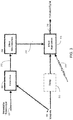
- Figure 1 is a block diagram of an example vocal effect processing system 102 that may receive one or more input signals on input signal channels 104.
- the input signals may include one or more audio signals that include one or more vocal microphone input signals on respective vocal microphone input channels 106, and one or more non-vocal audio signals, such as instrument input signals, for example a guitar signal, on respective instrument input channels 108.
- a signal or audio signal generally refers to a time-varying electrical signal (voltage or current) corresponding to an audible sound to be presented to one or more listeners.
- Such signals can be produced with one or more audio transducers such as microphones, guitar pickups, or other devices.
- Audio signals can be processed by, for example, amplification or filtering or other techniques prior to delivery to audio output devices such as speakers or headphones.
- An “audio signal” refers to a signal whose source is any form of audible sound including music, background noise, and/or any other sound capable of being perceived.
- a “vocal signal” or “vocal audio signal” refers to a signal whose source is human voice, such as a human singing voice or speaking voice, and which may be included in an audio signal.
- the term “signal” or “audio signal” is used to interchangeably describe both an electrical signal and an audible sound signal propagated as a sound wave, unless otherwise indicated.
- a "vocal microphone,” as used herein, is a microphone configured and used for receipt of a human voice either speaking or singing in the form of a vocal microphone signal
- a “non-vocal microphone,” as used herein refers to a microphone configured and used for other than receipt of a human voice, such as configured for receipt of audible sound emitted by an instrument, or for receipt of background noise, or other such audible sound which provides a non-vocal microphone signal.
- the vocal effect processing system 102 may include a processor 110, a memory module 112, an input signal processing module 114, a user interface module 116, a communication interface module 118, an output signal processing module 120 and an effect modification module 122.
- module or “units” may be defined to include a plurality of executable modules or units, respectively, and may be used interchangeably. As described herein, the term “modules” or “units,” are defined to include software, hardware or some combination thereof executable by the processor 110.
- Software modules or software units may include instructions stored in the memory module 112, or other memory device, that are executable by the processor 110 or other processor.
- Hardware modules or hardware units may include various devices, components, circuits, gates, circuit boards, and the like that are executable, directed, and/or controlled for performance by the processor 110.
- the processor 110 may be any form of device(s) or mechanism(s) capable of performing logic operations, such as a central processing unit (CPU), a graphics processing unit (GPU), and/or a digital signal processor (DSP), or some combination of different or the same processors.
- the processor 110 may be a component in a variety of systems.
- the processor 110 may be part of a personal computer, a workstation or any other computing device.
- the processor 110 may include cooperative operation of one or more general processors, digital signal processors (DSPs), application specific integrated circuits (ASICs), field programmable gate arrays (FPGA), digital circuits, analog circuits, and/or combinations thereof, and/or other now known or later developed devices for analyzing and processing data.
- the processor 110 may implement a software program, such as code generated manually or programmed.
- the processor 110 may operate and control at least a portion of the vocal effect processing system 102.
- the processor 110 may communicate with the modules via a communication path, such as a communication bus 124.
- the communication bus 124 may be hardwired, may be a network, and/or may be any number of buses capable of transporting data and commands.
- the modules and the processor may communicate with each other on the communication bus 124.
- the memory module 112 may include a main memory, a static memory, and/or a dynamic memory.
- the memory 112 may include, but is not limited to computer readable storage media, or machine readable media, such as various types of non-transitory volatile and non-volatile storage media, which is not a signal propagated in a wire, including but not limited to random access memory, read-only memory, programmable read-only memory, electrically programmable read-only memory, electrically erasable read-only memory, flash memory, magnetic tape or disk, optical media and the like.
- the memory 112 includes a cache or random access memory for the processor 110.
- the memory 112 may be separate from the processor 110, such as a separate cache memory of a processor, the system memory, or other memory.
- the memory 112 may also include (or be) an external storage device or database for storing data. Examples include a hard drive, compact disc (“CD”), digital video disc (“DVD”), memory card, memory stick, floppy disc, universal serial bus (“USB”) memory device, or any other device operative to store data.
- CD compact disc
- DVD digital video disc
- USB universal serial bus
- the memory 112 is operable to store instructions executable by the processor 110 and data.
- the functions, acts or tasks illustrated in the figures or described may be performed by the programmed processor 110 executing the instructions stored in the memory 112.
- the functions, acts or tasks may be independent of the particular type of instructions set, storage media, processor or processing strategy and may be performed by software, hardware, integrated circuits, firm-ware, micro-code and the like, operating alone or in combination.
- processing strategies may include multiprocessing, multitasking, parallel processing and the like.
- the input signal processing module 114 may receive and process the input signals on the input signal channels 104.
- the input signal processing module 114 may include analog-to-digital (A/D) converters, gain amplifiers, filters and/or any other signal processing mechanisms, devices and/or techniques.
- Input signals may be analog signals, digital signals, or some combination of analog and digital signals.
- Input signals that are vocal and instrument signals are typically analog audio signals that are directed to the A/D converters.
- the input signals may be provided in digital format and the A/D converters may be bypassed.
- the user interface module 116 may receive and process user commands, and provide indication of the operation of the vocal effect processing system 102.
- the user interface module 116 may include, for example, a display unit, such as a liquid crystal display (LCD), an organic light emitting diode (OLED), a flat panel display, a solid state display, a cathode ray tube (CRT), a projector, or other now known or later developed display device for outputting determined information.
- the display may be a touchscreen capable of also receiving user commands.
- the user interface module 116 may also include indicators such as meters, lights, audio, or any other sensory related indications of functionality.
- the user interface module 116 may also include at least one input device configured to allow a user to interact with any of the modules and/or the processor 110.
- the input device may be a keypad, a keyboard, or a cursor control device, such as a mouse, or a joystick, touch screen display, remote control, knobs, sliders, switches, buttons, or any other device operative to interact with the vocal effects processing system 102.
- a cursor control device such as a mouse, or a joystick, touch screen display, remote control, knobs, sliders, switches, buttons, or any other device operative to interact with the vocal effects processing system 102.
- the network module 118 may provide an interface to a network. Voice, video, audio, images or any other data may be communicated by the network module 118 over the network.
- the network module 118 may include a communication port that may be a part of the processor 110 or may be a separate component. The communication port may be created in software or may be a physical connection in hardware.
- the connection with the network may be a physical connection, such as a wired Ethernet connection, or may be established wirelessly.
- the network may include wired networks, wireless networks, Ethernet AVB networks, or combinations thereof.
- the wireless network may be a cellular telephone network, an 802.11, 802.16, 802.20, 802.1Q or WiMax network.
- the network may be a public network, such as the Internet, a private network, such as an intranet, or combinations thereof, and may utilize a variety of networking protocols now available or later developed including, but not limited to TCP/IP based networking protocols.
- the output signal processing module 120 may generate output signals on output channels 128, such as left and right components on respective left and right channels 130 and 132.
- Digital-to-analog (D/A) converters, filters, gain amplifiers, equalizers, or any other signal processing devices and/or techniques may be included in the output signal processing module 120.
- the left and right channels 130 and 132 may be a stereo output signal containing a mix of an input vocal signal and one or more effects that may be applied to the input signal using the effect modification module 122. In some examples only a monophonic signal may be output, and in other examples, more than two signals may be output (for example a mix of the original and effected signals, as well as multiple signals with just the applied effects).
- the effect modification module 122 may selectively apply one or more effects to a vocal signal included in the input signal 104.
- the effects such as reverberation, echo, pitch shifting, distortion, band-limiting, or any other modification may be selectively applied upon determination with the effect modification module 122 of the likelihood or probability that a vocal signal is present in the input signal.
- any other effect that changes the characteristic(s) of an audio signal may be applied by the effect modification module 122.
- the user interface of the vocal effect processing system 102 may allow the user to enable or disable one or more vocal effects currently being applied. This may be accomplished by, for example, a button, or by a footswitch when the system is designed for on-the-floor use.
- One possible issue with manually enabling and disabling the system occurs when a vocal signal is intermittent, such as when a singer is not singing (for example during an instrumental break in a song).
- an ambient signal can be picked up by a vocal microphone and this input signal can be processed and amplified by the system. This can create a displeasing sound - one example being the sound of a strummed guitar being unintentionally modified by a vocal harmony processor.
- the vocal effect processing system 102 may include automated functionality to selectively process the input audio signal by selection of vocal effects.
- the effect modification module 122 may be used to automatically modify the parameters of one or more vocal effects as part of the selection. Each of the vocal effects may be independently and selectively controlled, or the vocal effects may be controlled in groups. Control of the vocal effects may involve turning on and off one or more effects and/or dynamically adjusting the effects parameters, by adjustments such as a gain, aggressiveness, strength, effect activation thresholds, and the like.
- automatic modification of the parameters may be based on a vocal likelihood score (VLS). Rather than simply turning off the processed input signal when the energy drops below a threshold, the effect modification module 122 may determine how likely it is that an input signal includes a vocal signal.
- VLS vocal likelihood score
- the effect modification module 122 may adjust the parameters of the vocal effect (such as effect strength) being applied to the audio signal to minimize the processing of unintended input audio, while at the same time minimizing abrupt changes to the effected output signal in response to changes in the likelihood that the audio signal includes a vocal signal.
- the parameters of the vocal effect such as effect strength
- Figure 2 is a block diagram of an example of the effect modification module 122.
- the effect modification module 122 includes an estimation unit 202, an effect determination unit 204, and an effect application unit 208.
- the effect modification module 122 may also include a delay unit 210.
- the input signal to the vocal processing system is a single vocal microphone input received on the vocal microphone input channel 106.
- the effect modification module 122 may receive and process the input signal to determine a degree of probability of the input signal containing a vocal signal.
- the degree of probability, or likelihood of the input signal containing a vocal signal may be based on a vocal likelihood score (VLS).
- VLS vocal likelihood score
- the vocal likelihood score (VLS) of an audio signal is a variable indication of likelihood or probability that an audio signal includes a vocal signal. Determination of the VLS may be performed in many different ways, as described later.
- the estimation unit 202 may provide an indication to the effect determination unit 204 of the estimated likelihood or estimated probability of the audio signal including a vocal audio signal on a vocal indication line 212.
- the VLS may be provided to the effect determination unit 204 as a variable value between an indication that no vocal signal is present and a vocal signal is present, such as a scale from 0-100.
- predetermined values, representative of the VLS such as an "includes vocal,” “likely includes vocal,” “unlikely to include vocal,” or “no vocal included” indication, an indication of the signal strength of the vocal audio portion, such as 0% to 100% or any other indicator of whether the audio signal is more or less likely to include a vocal audio signal may be provided.
- determination of the likelihood estimate that the audio signal includes a vocal signal using the VLS may be based on time-based and/or frequency-based analysis of the audio signal, using, for example windowing and fast Fourier transform (FFT) block analysis.
- FFT fast Fourier transform
- a short term energy level of the audio signal may be based on data received during a predetermined period of time forming a data window (such as audio data received in the previous 20ms to 500ms) may be compared to a predetermined threshold to identify a VLS value. The higher the energy level of the audio signal is above the predetermined threshold, the higher the likelihood of the presence of a vocal signal is indicated, and the lower below the threshold, the more unlikely the presence of a vocal signal is indicated.
- the likelihood estimate can be based on a predetermined threshold ratio between two or more energy estimates from different predetermined frequency bands of the audio signal.
- the energy estimates may be an average of an energy level over a predetermined window of time.
- the estimation unit 202 may perform matching of the audio signal to a predetermined audio model, such as a vocal tract model.
- the determination of the likelihood that a vocal signal is included in the input signal may, for example, may be based on estimation of parameters for a model of a vocal tract being matched to predetermined parameters. Estimation of the parameters for the model of the vocal tract can be based on application of the input signal to a model, such as an all-pole model.
- the estimation unit 202 may then decide if the parameters fall within the ranges typically seen in human voices.
- the predetermined frequency bands may be selected based on the estimation unit 202 also dynamically determining if a possible vocal signal included in the audio signal is female or male, for example by comparing the input pitch period and vocal tract model to typical models obtained by analyzing databases of known male and female singers / speakers.
- a model may, for example, include estimates for formant locations and vocal tract length.
- any other method or system for determining the likelihood of an audio signal containing a vocal audio signal may be used to detect the likelihood of presence of a vocal signal in an audio signal.
- This likelihood score can then be used to modify parameters based on the input vocal type as part of the selection of the effect.
- a typical example is that very often singers want effects to only be active while singing, but not while speaking to the audience between songs. In this case, the effects could be automatically turned off when the likelihood score indicated that the input was most likely a speaking voice.
- the effect determination unit 204 may use the vocal indication provided on the vocal indication line 212 to automatically select one or more effects for application to the audio signal.
- the effects determined by the effect determination unit 204 may be based on a predetermined list of effects selected by a user. Alternatively, or in addition, the effects may be dynamically selected by the system based on the vocal likelihood indication. Thus, determination and/or application of one or more effects by the effect determination unit can be based on a degree of likelihood that the input signal is a vocal audio signal.
- pre-specified effects may be applied or effects may be automatically and dynamically determined.
- the effects being applied may be correspondingly dynamically adjusted.
- the effect determination unit 204 may receive the VLS.
- the effect may be selected and an output effect level of the effect may be dynamically modified based on the VLS received.
- An example modification process may involve use of a linear mapping between VLS and an output effect level for each respective effect.
- the linear mapping may be used such that input signals with high probability of being a vocal signal as opposed to background noise have a higher level of a respective effect applied.
- more complicated mappings can be used, as well as more sophisticated effect control.
- the level of the effect may be dynamically adjusted, the type of effect applied may be dynamically changed, and/or the parameters of an applied effect may be dynamically adjusted as part of the selection process.
- the effect determination unit 204 may provide an effects setting signal on an effect identification (ID) line 214.
- the effects setting signal may provide an identifier of an effect and corresponding effect parameters associated with the effect.
- the effect determination unit 204 may provide the effect parameters as the effects setting signal on the effect ID line 214.
- the identifier provided on the effects setting signal may provide the effect itself, a predetermined identifier of the effect, or a sequence that triggers use of the effect by the effect application unit 208.
- the corresponding effect parameters associated with the effect may be settings for the effect, such as a level, that may be used by the effect application unit 208 when the effect is applied.
- the effect application unit 208 may apply one or more time varying effects to the audio signal and provide a processed signal output on the processed output signal line 216.
- the processed output signal may be the audio signal modified by one or more effects that are added to modify the vocal signal, or vocal signal component, of the audio signal.
- Application of the effects to the audio signal by the effect application unit 208 may be based on the effect setting signal, and may be varied dynamically as the effect setting signal changes.
- Effect parameters adjusting a respective effect may be, for example, attenuating an energy level of an output effect being applied to an audio signal, or reducing an amount of an effect being applied to an audio signal.
- Another example involves adjustment of a doubling effect, which is where a slight echo or reverberation effect is used to allow a person to be perceived as singing with another singer, which is in fact a duplicate of the singers voice slightly delayed or accelerated with respect to the original vocal signal of the singer, which is also provided.
- doubling effect adjustment may involve how "tight" or "loose” the duplicated vocal signal accompanies the original vocal signal. In other words, the time period of delay between the original vocal signal and the duplicated vocal signal may be adjusted with an effects adjustment.
- effects may be applied to one or both voice signals.
- the estimation unit 202 may identify that the audio signal received on the vocal microphone input line 106 is less likely, or not likely to be a vocal signal (depending on the degree of correlation, for example) using the vocal indication signal provided on the vocal indication line 212. Conversely, when there is little or no correlation between the microphone input signal and the non-vocal signal, the audio signal on the microphone input signal channel 106 may be identified on the vocal microphone input line 106 as likely to include a vocal signal, depending on the degree or level of non-correlation, for example. Correlation of the received audio signals may be an energy magnitude correlation in certain frequency ranges, frequency matching, frequency and energy matching, or any other mechanism or technique for determining similarities between two different audio signals.
- the estimation unit 202 may indicate that the vocal microphone input signal is unlikely to be a voice signal. By comparing these energies it is possible to compute a VLS.
- the VLS can be obtained by mapping any of the likelihood estimates into a variable range from 0 to 1.
- the respective signals on the first and second processed output audio signal lines 216a and 216b may be provided to a mixer unit 402 that combines the respective processed signals.
- the mixer unit 402 may output a single processed audio output signal 404 representing the combination of the signals on the respective processed signal lines 216a and 216b.
- the vocal effect processing system 102 may provide this function since, during operation in the second mode of operation, each of the estimation units 202a and 202b may independently determine how likely it is that a singer is singing into the corresponding first microphone or the second microphone. As such, the output effect perceived by a listening audience can be changed depending on which microphone the singer is directing vocal sound towards. For example, using this system, a singer could turn a harmony effect on by simply moving from singing in one microphone to singing in another.
- the proximity determination unit 502 may perform analysis of the two input signals in order to determine an estimate for the proximity of the vocalist relative to the two microphones. Estimation of the relative distance of the origination of the vocal signals, such as a singer's lips from each of the microphones, may be based on comparison of parameters of the audio signals detected by the respective microphones. Parameters compared may include energy levels, correlation, delay, volume, phase, or any other parameter that is variable with distance from a microphone.
- An example for determining an estimate of intended activation based on a relative proximate location of a singer or speaker with respect to the microphones can involve using energy differences between the two signals. For example, an energy ratio of short term energy estimates between the two microphones can be computed in order to estimate an approximate proximity of the singer, such as a relative distance of the singer, from each of the microphones. If both microphones have substantially the same gain, sensitivity, and pattern, for example, the ratio of the two energies can be approximately 1.0 when the singer is directing vocal energy to the halfway point between the two microphones and the relative distance to each of the microphones is approximately equal. Predetermined parameters, a table, or calculations may be performed to estimate the proximate location or relative distance based on the energy differences. In this example, the effects can be applied and adjusted for both audio signals.
- the operation determines if the operation will use a proximity sensor, or multiple of the audio signals to estimate a proximate location of the source of the audio signal. If a proximity sensor is used, at block 736 an estimate of the proximate location of the vocalist is determined. At block 738, an estimate of the intent of the vocalist to activate each of the multiple vocal microphones is determined based on the proximate location. The vocal microphones are selectively identified as activation targets at block 740 based on the proximate location. At block 742, the audio signals are combined to form the activation-based audio signal. The operation than proceeds to block 720 to select one or more effects, and output a modified audio signal at block 730, as previously discussed.
Landscapes
- Engineering & Computer Science (AREA)
- Physics & Mathematics (AREA)
- Acoustics & Sound (AREA)
- Multimedia (AREA)
- Health & Medical Sciences (AREA)
- Signal Processing (AREA)
- Otolaryngology (AREA)
- General Health & Medical Sciences (AREA)
- Computational Linguistics (AREA)
- Quality & Reliability (AREA)
- Audiology, Speech & Language Pathology (AREA)
- Human Computer Interaction (AREA)
- Circuit For Audible Band Transducer (AREA)
Claims (5)
- Computerlesbare Speichervorrichtung (112), auf der Anweisungen gespeichert sind, die von einem Prozessor (110) ausführbar sind und bei Ausführung durch den Prozessor den Prozessor veranlassen, eine Spracheffektverarbeitung bereitzustellen, wobei die Anweisungen Folgendes umfassen:Anweisungen, die ausführbar sind, um ein erstes Audiosignal (106a) von einem ersten Sprachmikrofon und ein zweites Audiosignal (106b) von einem zweiten Sprachmikrofon zu empfangen, wobei das erste and zweite Audiosignal (106a, 106b) hörbaren Ton darstellen, der jeweils von dem ersten Sprachmikrofon und dem zweiten Sprachmikrofon erfasst wird;Anweisungen, die ausführbar sind, um auf Grundlage von Näherungssensordaten von einem Näherungssensor eine nahe Position eines Benutzers in Bezug auf das erste Sprachmikrofon und das zweite Sprachmikrofon zu bestimmen;Anweisungen, die ausführbar sind, um in Reaktion auf das Bestimmen der Position des Benutzers in Bezug auf das erste Sprachmikrofon und das zweite Sprachmikrofon wenigstens eines von dem ersten Sprachmikrofon und dem zweiten Sprachmikrofon als ein Aktivierungsziel zu identifizieren;Anweisungen, die ausführbar sind, um das erste und zweite Audiosignal (106a, 106b) auf Grundlage des Aktivierungsziels durch Crossfading zwischen dem ersten und zweiten Audiosignal zu kombinieren, wodurch ein einzelnes aktivierungsbasiertes Audiosignal bereitgestellt wird;Anweisungen, die ausführbar sind, um Hysterese anzuwenden, um bei dem Crossfading schnelles Crossfading zwischen dem ersten Audiosignal, das am ersten Sprachmikrofon empfangen wird, und dem zweiten Audiosignal, das am zweiten Sprachmikrofon empfangen wird, zu vermeiden, wenn bestimmt wird, dass die Position des Benutzers und des geschätzten Aktivierungsziels zwischen dem ersten Sprachmikrofon und dem zweiten Sprachmikrofon im Wesentlichen gleich ist; undAnweisungen, die ausführbar sind, um einen Spracheffekt auf das einzelne aktivierungsbasierte Audiosignal anzuwenden.
- Computerlesbare Speichervorrichtung nach Anspruch 1, wobei die Anweisungen zum Bestimmen einer nahen Position eines Benutzers in Bezug auf das erste Sprachmikrofon und das zweite Sprachmikrofon auf Grundlage von Näherungssensordaten von einem Näherungssensor Anweisungen umfassen, die ausführbar sind, um die nahe Position des Benutzers in Bezug auf das erste Sprachmikrofon und das zweite Sprachmikrofon auf Grundlage von Näherungssensordaten zu bestimmen, die von einer Bildaufnahmevorrichtung übertragen werden.
- Computerlesbare Speichervorrichtung nach Anspruch 2, wobei die Anweisungen ferner Anweisungen umfassen, die ausführbar sind, um eine Kopfhaltungsschätzung durchzuführen, um die nahe Position des Benutzers in Bezug auf das erste Sprachmikrofon und das zweite Sprachmikrofon auf Grundlage der von der Bildaufnahmevorrichtung bereitgestellten Näherungssensordaten zu bestimmen.
- Computerlesbare Speichervorrichtung nach Anspruch 3, wobei die Anweisungen ferner Folgendes umfassen
Anweisungen, die ausführbar sind, um auf Grundlage der Kopfhaltungsschätzung das erste Sprachmikrofon oder das zweite Sprachmikrofon als das geschätzte Aktivierungsziel auszuwählen; und
Anweisungen, die ausführbar sind, um Parameter des Spracheffekts anzupassen, der auf das aktivierungsbasierte Audiosignal angewandt wird. - Computerlesbare Speichervorrichtung nach Anspruch 3, wobei die Anweisungen ferner Anweisungen umfassen, die ausführbar sind, um den Spracheffekt auf Grundlage der Kopfhaltungsschätzung auf das aktivierungsbasierte Audiosignal anzuwenden.
Applications Claiming Priority (1)
| Application Number | Priority Date | Filing Date | Title |
|---|---|---|---|
| US13/683,829 US9424859B2 (en) | 2012-11-21 | 2012-11-21 | System to control audio effect parameters of vocal signals |
Publications (2)
| Publication Number | Publication Date |
|---|---|
| EP2736270A1 EP2736270A1 (de) | 2014-05-28 |
| EP2736270B1 true EP2736270B1 (de) | 2018-10-10 |
Family
ID=49674142
Family Applications (1)
| Application Number | Title | Priority Date | Filing Date |
|---|---|---|---|
| EP13192872.3A Active EP2736270B1 (de) | 2012-11-21 | 2013-11-14 | System zur Steuerung von Audioeffektparametern von Sprachsignalen |
Country Status (2)
| Country | Link |
|---|---|
| US (1) | US9424859B2 (de) |
| EP (1) | EP2736270B1 (de) |
Families Citing this family (10)
| Publication number | Priority date | Publication date | Assignee | Title |
|---|---|---|---|---|
| US9959886B2 (en) * | 2013-12-06 | 2018-05-01 | Malaspina Labs (Barbados), Inc. | Spectral comb voice activity detection |
| US20160048372A1 (en) * | 2014-08-14 | 2016-02-18 | Nokia Corporation | User Interaction With an Apparatus Using a Location Sensor and Microphone Signal(s) |
| JP6696138B2 (ja) * | 2015-09-29 | 2020-05-20 | ヤマハ株式会社 | 音信号処理装置およびプログラム |
| WO2018043917A1 (en) * | 2016-08-29 | 2018-03-08 | Samsung Electronics Co., Ltd. | Apparatus and method for adjusting audio |
| US12444433B2 (en) * | 2017-02-27 | 2025-10-14 | VTouch Co., Ltd. | Method and system for providing voice recognition trigger and non-transitory computer-readable recording medium |
| KR101893768B1 (ko) * | 2017-02-27 | 2018-09-04 | 주식회사 브이터치 | 음성 인식 트리거를 제공하기 위한 방법, 시스템 및 비일시성의 컴퓨터 판독 가능한 기록 매체 |
| CN108847905A (zh) * | 2018-06-14 | 2018-11-20 | 电子科技大学 | 一种多通道盲信号侦收中的自适应门限检测方法 |
| US10540139B1 (en) | 2019-04-06 | 2020-01-21 | Clayton Janes | Distance-applied level and effects emulation for improved lip synchronized performance |
| EP4005228B1 (de) | 2019-07-30 | 2025-08-27 | Dolby Laboratories Licensing Corporation | Steuerung für akustische echokompensation für verteilte audiogeräte |
| CN115134733B (zh) * | 2022-06-28 | 2025-03-14 | 深圳创维数字技术有限公司 | 机顶盒的喇叭和麦克风的测试方法以及测试系统 |
Family Cites Families (35)
| Publication number | Priority date | Publication date | Assignee | Title |
|---|---|---|---|---|
| JPS60214164A (ja) * | 1984-04-09 | 1985-10-26 | Nec Corp | オ−デイオシンクロナイザ |
| KR910005555B1 (ko) * | 1988-12-31 | 1991-07-31 | 삼성전자 주식회사 | 전자악기의 듀엣음 발생 방법 |
| US5253298A (en) * | 1991-04-18 | 1993-10-12 | Bose Corporation | Reducing audible noise in stereo receiving |
| JP2848286B2 (ja) * | 1995-09-29 | 1999-01-20 | ヤマハ株式会社 | カラオケ装置 |
| JP3797751B2 (ja) | 1996-11-27 | 2006-07-19 | 富士通株式会社 | マイクロホンシステム |
| US7130705B2 (en) | 2001-01-08 | 2006-10-31 | International Business Machines Corporation | System and method for microphone gain adjust based on speaker orientation |
| US20080056517A1 (en) * | 2002-10-18 | 2008-03-06 | The Regents Of The University Of California | Dynamic binaural sound capture and reproduction in focued or frontal applications |
| US6987992B2 (en) | 2003-01-08 | 2006-01-17 | Vtech Telecommunications, Limited | Multiple wireless microphone speakerphone system and method |
| JP2004343262A (ja) * | 2003-05-13 | 2004-12-02 | Sony Corp | マイクロフォン・スピーカ一体構成型・双方向通話装置 |
| JP4328707B2 (ja) | 2004-10-20 | 2009-09-09 | 株式会社オーディオテクニカ | コンデンサマイクロホン |
| US8184430B2 (en) * | 2005-06-29 | 2012-05-22 | Harman International Industries, Incorporated | Vehicle media system |
| US7576766B2 (en) * | 2005-06-30 | 2009-08-18 | Microsoft Corporation | Normalized images for cameras |
| JP4258498B2 (ja) * | 2005-07-25 | 2009-04-30 | ヤマハ株式会社 | 吹奏電子楽器の音源制御装置とプログラム |
| US7935881B2 (en) * | 2005-08-03 | 2011-05-03 | Massachusetts Institute Of Technology | User controls for synthetic drum sound generator that convolves recorded drum sounds with drum stick impact sensor output |
| US20070244698A1 (en) * | 2006-04-18 | 2007-10-18 | Dugger Jeffery D | Response-select null steering circuit |
| JP4816221B2 (ja) * | 2006-04-21 | 2011-11-16 | ヤマハ株式会社 | 収音装置および音声会議装置 |
| US8204253B1 (en) * | 2008-06-30 | 2012-06-19 | Audience, Inc. | Self calibration of audio device |
| US7953183B2 (en) * | 2006-06-16 | 2011-05-31 | Harman International Industries, Incorporated | System for high definition radio blending |
| US8168877B1 (en) * | 2006-10-02 | 2012-05-01 | Harman International Industries Canada Limited | Musical harmony generation from polyphonic audio signals |
| US7924655B2 (en) | 2007-01-16 | 2011-04-12 | Microsoft Corp. | Energy-based sound source localization and gain normalization |
| DE102007018032B4 (de) * | 2007-04-17 | 2010-11-11 | Fraunhofer-Gesellschaft zur Förderung der angewandten Forschung e.V. | Erzeugung dekorrelierter Signale |
| NO327899B1 (no) * | 2007-07-13 | 2009-10-19 | Tandberg Telecom As | Fremgangsmate og system for automatisk kamerakontroll |
| US8175871B2 (en) | 2007-09-28 | 2012-05-08 | Qualcomm Incorporated | Apparatus and method of noise and echo reduction in multiple microphone audio systems |
| JP4780119B2 (ja) * | 2008-02-15 | 2011-09-28 | ソニー株式会社 | 頭部伝達関数測定方法、頭部伝達関数畳み込み方法および頭部伝達関数畳み込み装置 |
| US8831936B2 (en) * | 2008-05-29 | 2014-09-09 | Qualcomm Incorporated | Systems, methods, apparatus, and computer program products for speech signal processing using spectral contrast enhancement |
| US9224395B2 (en) | 2008-07-02 | 2015-12-29 | Franklin S. Felber | Voice detection for automatic volume controls and voice sensors |
| KR101340520B1 (ko) * | 2008-07-22 | 2013-12-11 | 삼성전자주식회사 | 잡음을 제거하는 장치 및 방법 |
| US8798289B1 (en) * | 2008-08-05 | 2014-08-05 | Audience, Inc. | Adaptive power saving for an audio device |
| US8218397B2 (en) * | 2008-10-24 | 2012-07-10 | Qualcomm Incorporated | Audio source proximity estimation using sensor array for noise reduction |
| DE102008064484B4 (de) * | 2008-12-22 | 2012-01-19 | Siemens Medical Instruments Pte. Ltd. | Verfahren zum Auswählen einer Vorzugsrichtung eines Richtmikrofons und entsprechende Hörvorrichtung |
| GB2471871B (en) * | 2009-07-15 | 2011-12-14 | Sony Comp Entertainment Europe | Apparatus and method for a virtual dance floor |
| CA2826253A1 (en) * | 2010-02-03 | 2011-08-11 | Hoyt M. Layson, Jr. | Location derived messaging system |
| US8473287B2 (en) * | 2010-04-19 | 2013-06-25 | Audience, Inc. | Method for jointly optimizing noise reduction and voice quality in a mono or multi-microphone system |
| EP2771820A1 (de) * | 2011-10-24 | 2014-09-03 | Omnifone Ltd | Verfahren, system und computerprogrammprodukt zum navigieren durch digitale medieninhalte |
| US8878708B1 (en) * | 2012-04-06 | 2014-11-04 | Zaxcom, Inc. | Systems and methods for processing and recording audio |
-
2012
- 2012-11-21 US US13/683,829 patent/US9424859B2/en active Active
-
2013
- 2013-11-14 EP EP13192872.3A patent/EP2736270B1/de active Active
Non-Patent Citations (1)
| Title |
|---|
| None * |
Also Published As
| Publication number | Publication date |
|---|---|
| US9424859B2 (en) | 2016-08-23 |
| EP2736270A1 (de) | 2014-05-28 |
| US20140142927A1 (en) | 2014-05-22 |
Similar Documents
| Publication | Publication Date | Title |
|---|---|---|
| EP2736270B1 (de) | System zur Steuerung von Audioeffektparametern von Sprachsignalen | |
| EP2736041B1 (de) | System zur selektiven Modifizierung von Audioeffektparametern von Sprachsignalen | |
| KR102670118B1 (ko) | 다중 스피커를 통한 다중 오디오 스트림 재생 관리 | |
| CN114208209B (zh) | 音频处理系统、方法和介质 | |
| US20210204003A1 (en) | Network-based processing and distribution of multimedia content of a live musical performance | |
| Palomäki et al. | A binaural processor for missing data speech recognition in the presence of noise and small-room reverberation | |
| KR20230011496A (ko) | 개인화된 실시간 오디오 프로세싱 | |
| JP4295798B2 (ja) | ミキシング装置及び方法並びにプログラム | |
| CN114747233A (zh) | 内容和环境感知的环境噪声补偿 | |
| WO2015035492A1 (en) | System and method for performing automatic multi-track audio mixing | |
| CN113270082A (zh) | 一种车载ktv控制方法及装置、以及车载智能网联终端 | |
| CN114631142B (zh) | 电子设备、方法和计算机程序 | |
| WO2018017878A1 (en) | Network-based processing and distribution of multimedia content of a live musical performance | |
| KR102535704B1 (ko) | 상이한 재생 능력을 구비한 디바이스에 걸친 역학 처리 | |
| AU2023234658A1 (en) | Apparatus and method for an automated control of a reverberation level using a perceptional model | |
| CN112511966B (zh) | 一种车载立体声重放的自适应主动分频方法 | |
| EP3613043B1 (de) | Ambienteerzeugung für räumliche audiomischung mit verwendung eines original- und erweiterten signals | |
| RU2783150C1 (ru) | Динамическая обработка в устройствах с отличающимися функциональными возможностями воспроизведения | |
| RU2854397C2 (ru) | Пространственный рендеринг аудиоданных, адаптивный к уровню сигнала и предельным пороговым значениям воспроизведения с помощью громкоговорителей | |
| HK40062546B (en) | Server-based processing and distribution of multimedia content of a live musical performance | |
| CN119605194A (zh) | 适应于信号电平和扩音器回放限制阈值的空间音频渲染 | |
| Morrell et al. | Dynamic panner: An adaptive digital audio effect for spatial audio | |
| CN121001018A (zh) | 一种音响扬声器的校正增强方法及系统 |
Legal Events
| Date | Code | Title | Description |
|---|---|---|---|
| PUAI | Public reference made under article 153(3) epc to a published international application that has entered the european phase |
Free format text: ORIGINAL CODE: 0009012 |
|
| 17P | Request for examination filed |
Effective date: 20131114 |
|
| AK | Designated contracting states |
Kind code of ref document: A1 Designated state(s): AL AT BE BG CH CY CZ DE DK EE ES FI FR GB GR HR HU IE IS IT LI LT LU LV MC MK MT NL NO PL PT RO RS SE SI SK SM TR |
|
| AX | Request for extension of the european patent |
Extension state: BA ME |
|
| R17P | Request for examination filed (corrected) |
Effective date: 20141125 |
|
| RBV | Designated contracting states (corrected) |
Designated state(s): AL AT BE BG CH CY CZ DE DK EE ES FI FR GB GR HR HU IE IS IT LI LT LU LV MC MK MT NL NO PL PT RO RS SE SI SK SM TR |
|
| 17Q | First examination report despatched |
Effective date: 20151130 |
|
| GRAP | Despatch of communication of intention to grant a patent |
Free format text: ORIGINAL CODE: EPIDOSNIGR1 |
|
| INTG | Intention to grant announced |
Effective date: 20180423 |
|
| GRAS | Grant fee paid |
Free format text: ORIGINAL CODE: EPIDOSNIGR3 |
|
| GRAA | (expected) grant |
Free format text: ORIGINAL CODE: 0009210 |
|
| AK | Designated contracting states |
Kind code of ref document: B1 Designated state(s): AL AT BE BG CH CY CZ DE DK EE ES FI FR GB GR HR HU IE IS IT LI LT LU LV MC MK MT NL NO PL PT RO RS SE SI SK SM TR |
|
| REG | Reference to a national code |
Ref country code: GB Ref legal event code: FG4D |
|
| REG | Reference to a national code |
Ref country code: CH Ref legal event code: EP Ref country code: AT Ref legal event code: REF Ref document number: 1052679 Country of ref document: AT Kind code of ref document: T Effective date: 20181015 |
|
| REG | Reference to a national code |
Ref country code: IE Ref legal event code: FG4D |
|
| REG | Reference to a national code |
Ref country code: DE Ref legal event code: R096 Ref document number: 602013044781 Country of ref document: DE |
|
| REG | Reference to a national code |
Ref country code: NL Ref legal event code: MP Effective date: 20181010 |
|
| REG | Reference to a national code |
Ref country code: LT Ref legal event code: MG4D |
|
| REG | Reference to a national code |
Ref country code: AT Ref legal event code: MK05 Ref document number: 1052679 Country of ref document: AT Kind code of ref document: T Effective date: 20181010 |
|
| PG25 | Lapsed in a contracting state [announced via postgrant information from national office to epo] |
Ref country code: NL Free format text: LAPSE BECAUSE OF FAILURE TO SUBMIT A TRANSLATION OF THE DESCRIPTION OR TO PAY THE FEE WITHIN THE PRESCRIBED TIME-LIMIT Effective date: 20181010 |
|
| PG25 | Lapsed in a contracting state [announced via postgrant information from national office to epo] |
Ref country code: LV Free format text: LAPSE BECAUSE OF FAILURE TO SUBMIT A TRANSLATION OF THE DESCRIPTION OR TO PAY THE FEE WITHIN THE PRESCRIBED TIME-LIMIT Effective date: 20181010 Ref country code: AT Free format text: LAPSE BECAUSE OF FAILURE TO SUBMIT A TRANSLATION OF THE DESCRIPTION OR TO PAY THE FEE WITHIN THE PRESCRIBED TIME-LIMIT Effective date: 20181010 Ref country code: FI Free format text: LAPSE BECAUSE OF FAILURE TO SUBMIT A TRANSLATION OF THE DESCRIPTION OR TO PAY THE FEE WITHIN THE PRESCRIBED TIME-LIMIT Effective date: 20181010 Ref country code: IS Free format text: LAPSE BECAUSE OF FAILURE TO SUBMIT A TRANSLATION OF THE DESCRIPTION OR TO PAY THE FEE WITHIN THE PRESCRIBED TIME-LIMIT Effective date: 20190210 Ref country code: HR Free format text: LAPSE BECAUSE OF FAILURE TO SUBMIT A TRANSLATION OF THE DESCRIPTION OR TO PAY THE FEE WITHIN THE PRESCRIBED TIME-LIMIT Effective date: 20181010 Ref country code: NO Free format text: LAPSE BECAUSE OF FAILURE TO SUBMIT A TRANSLATION OF THE DESCRIPTION OR TO PAY THE FEE WITHIN THE PRESCRIBED TIME-LIMIT Effective date: 20190110 Ref country code: PL Free format text: LAPSE BECAUSE OF FAILURE TO SUBMIT A TRANSLATION OF THE DESCRIPTION OR TO PAY THE FEE WITHIN THE PRESCRIBED TIME-LIMIT Effective date: 20181010 Ref country code: BG Free format text: LAPSE BECAUSE OF FAILURE TO SUBMIT A TRANSLATION OF THE DESCRIPTION OR TO PAY THE FEE WITHIN THE PRESCRIBED TIME-LIMIT Effective date: 20190110 Ref country code: ES Free format text: LAPSE BECAUSE OF FAILURE TO SUBMIT A TRANSLATION OF THE DESCRIPTION OR TO PAY THE FEE WITHIN THE PRESCRIBED TIME-LIMIT Effective date: 20181010 Ref country code: LT Free format text: LAPSE BECAUSE OF FAILURE TO SUBMIT A TRANSLATION OF THE DESCRIPTION OR TO PAY THE FEE WITHIN THE PRESCRIBED TIME-LIMIT Effective date: 20181010 |
|
| PG25 | Lapsed in a contracting state [announced via postgrant information from national office to epo] |
Ref country code: RS Free format text: LAPSE BECAUSE OF FAILURE TO SUBMIT A TRANSLATION OF THE DESCRIPTION OR TO PAY THE FEE WITHIN THE PRESCRIBED TIME-LIMIT Effective date: 20181010 Ref country code: SE Free format text: LAPSE BECAUSE OF FAILURE TO SUBMIT A TRANSLATION OF THE DESCRIPTION OR TO PAY THE FEE WITHIN THE PRESCRIBED TIME-LIMIT Effective date: 20181010 Ref country code: GR Free format text: LAPSE BECAUSE OF FAILURE TO SUBMIT A TRANSLATION OF THE DESCRIPTION OR TO PAY THE FEE WITHIN THE PRESCRIBED TIME-LIMIT Effective date: 20190111 Ref country code: PT Free format text: LAPSE BECAUSE OF FAILURE TO SUBMIT A TRANSLATION OF THE DESCRIPTION OR TO PAY THE FEE WITHIN THE PRESCRIBED TIME-LIMIT Effective date: 20190210 Ref country code: AL Free format text: LAPSE BECAUSE OF FAILURE TO SUBMIT A TRANSLATION OF THE DESCRIPTION OR TO PAY THE FEE WITHIN THE PRESCRIBED TIME-LIMIT Effective date: 20181010 |
|
| REG | Reference to a national code |
Ref country code: CH Ref legal event code: PL |
|
| REG | Reference to a national code |
Ref country code: DE Ref legal event code: R097 Ref document number: 602013044781 Country of ref document: DE |
|
| PG25 | Lapsed in a contracting state [announced via postgrant information from national office to epo] |
Ref country code: CZ Free format text: LAPSE BECAUSE OF FAILURE TO SUBMIT A TRANSLATION OF THE DESCRIPTION OR TO PAY THE FEE WITHIN THE PRESCRIBED TIME-LIMIT Effective date: 20181010 Ref country code: IT Free format text: LAPSE BECAUSE OF FAILURE TO SUBMIT A TRANSLATION OF THE DESCRIPTION OR TO PAY THE FEE WITHIN THE PRESCRIBED TIME-LIMIT Effective date: 20181010 Ref country code: LU Free format text: LAPSE BECAUSE OF NON-PAYMENT OF DUE FEES Effective date: 20181114 Ref country code: DK Free format text: LAPSE BECAUSE OF FAILURE TO SUBMIT A TRANSLATION OF THE DESCRIPTION OR TO PAY THE FEE WITHIN THE PRESCRIBED TIME-LIMIT Effective date: 20181010 |
|
| PLBE | No opposition filed within time limit |
Free format text: ORIGINAL CODE: 0009261 |
|
| STAA | Information on the status of an ep patent application or granted ep patent |
Free format text: STATUS: NO OPPOSITION FILED WITHIN TIME LIMIT |
|
| REG | Reference to a national code |
Ref country code: BE Ref legal event code: MM Effective date: 20181130 |
|
| REG | Reference to a national code |
Ref country code: IE Ref legal event code: MM4A |
|
| PG25 | Lapsed in a contracting state [announced via postgrant information from national office to epo] |
Ref country code: RO Free format text: LAPSE BECAUSE OF FAILURE TO SUBMIT A TRANSLATION OF THE DESCRIPTION OR TO PAY THE FEE WITHIN THE PRESCRIBED TIME-LIMIT Effective date: 20181010 Ref country code: SK Free format text: LAPSE BECAUSE OF FAILURE TO SUBMIT A TRANSLATION OF THE DESCRIPTION OR TO PAY THE FEE WITHIN THE PRESCRIBED TIME-LIMIT Effective date: 20181010 Ref country code: SM Free format text: LAPSE BECAUSE OF FAILURE TO SUBMIT A TRANSLATION OF THE DESCRIPTION OR TO PAY THE FEE WITHIN THE PRESCRIBED TIME-LIMIT Effective date: 20181010 Ref country code: EE Free format text: LAPSE BECAUSE OF FAILURE TO SUBMIT A TRANSLATION OF THE DESCRIPTION OR TO PAY THE FEE WITHIN THE PRESCRIBED TIME-LIMIT Effective date: 20181010 Ref country code: MC Free format text: LAPSE BECAUSE OF FAILURE TO SUBMIT A TRANSLATION OF THE DESCRIPTION OR TO PAY THE FEE WITHIN THE PRESCRIBED TIME-LIMIT Effective date: 20181010 Ref country code: LI Free format text: LAPSE BECAUSE OF NON-PAYMENT OF DUE FEES Effective date: 20181130 Ref country code: CH Free format text: LAPSE BECAUSE OF NON-PAYMENT OF DUE FEES Effective date: 20181130 |
|
| 26N | No opposition filed |
Effective date: 20190711 |
|
| PG25 | Lapsed in a contracting state [announced via postgrant information from national office to epo] |
Ref country code: SI Free format text: LAPSE BECAUSE OF FAILURE TO SUBMIT A TRANSLATION OF THE DESCRIPTION OR TO PAY THE FEE WITHIN THE PRESCRIBED TIME-LIMIT Effective date: 20181010 Ref country code: FR Free format text: LAPSE BECAUSE OF NON-PAYMENT OF DUE FEES Effective date: 20181210 Ref country code: IE Free format text: LAPSE BECAUSE OF NON-PAYMENT OF DUE FEES Effective date: 20181114 |
|
| PG25 | Lapsed in a contracting state [announced via postgrant information from national office to epo] |
Ref country code: BE Free format text: LAPSE BECAUSE OF NON-PAYMENT OF DUE FEES Effective date: 20181130 |
|
| PG25 | Lapsed in a contracting state [announced via postgrant information from national office to epo] |
Ref country code: MT Free format text: LAPSE BECAUSE OF NON-PAYMENT OF DUE FEES Effective date: 20181114 |
|
| PG25 | Lapsed in a contracting state [announced via postgrant information from national office to epo] |
Ref country code: TR Free format text: LAPSE BECAUSE OF FAILURE TO SUBMIT A TRANSLATION OF THE DESCRIPTION OR TO PAY THE FEE WITHIN THE PRESCRIBED TIME-LIMIT Effective date: 20181010 |
|
| PG25 | Lapsed in a contracting state [announced via postgrant information from national office to epo] |
Ref country code: HU Free format text: LAPSE BECAUSE OF FAILURE TO SUBMIT A TRANSLATION OF THE DESCRIPTION OR TO PAY THE FEE WITHIN THE PRESCRIBED TIME-LIMIT; INVALID AB INITIO Effective date: 20131114 Ref country code: CY Free format text: LAPSE BECAUSE OF FAILURE TO SUBMIT A TRANSLATION OF THE DESCRIPTION OR TO PAY THE FEE WITHIN THE PRESCRIBED TIME-LIMIT Effective date: 20181010 Ref country code: MK Free format text: LAPSE BECAUSE OF NON-PAYMENT OF DUE FEES Effective date: 20181010 |
|
| REG | Reference to a national code |
Ref country code: DE Ref legal event code: R081 Ref document number: 602013044781 Country of ref document: DE Owner name: COR-TEK CORPORATION, KR Free format text: FORMER OWNER: HARMAN INTERNATIONAL INDUSTRIES CANADA, LTD., VICTORIA, BRITISH COLUMBIA, CA Ref country code: DE Ref legal event code: R081 Ref document number: 602013044781 Country of ref document: DE Owner name: HARMAN INTERNATIONAL INDUSTRIES, INC.(N. D. GE, US Free format text: FORMER OWNER: HARMAN INTERNATIONAL INDUSTRIES CANADA, LTD., VICTORIA, BRITISH COLUMBIA, CA |
|
| REG | Reference to a national code |
Ref country code: GB Ref legal event code: 732E Free format text: REGISTERED BETWEEN 20220526 AND 20220601 |
|
| REG | Reference to a national code |
Ref country code: DE Ref legal event code: R081 Ref document number: 602013044781 Country of ref document: DE Owner name: COR-TEK CORPORATION, KR Free format text: FORMER OWNER: HARMAN INTERNATIONAL INDUSTRIES, INC.(N. D. GES. D. STAATES DELAWARE), STAMFORD, CT, US |
|
| P01 | Opt-out of the competence of the unified patent court (upc) registered |
Effective date: 20230527 |
|
| REG | Reference to a national code |
Ref country code: GB Ref legal event code: 732E Free format text: REGISTERED BETWEEN 20230928 AND 20231004 |
|
| PGFP | Annual fee paid to national office [announced via postgrant information from national office to epo] |
Ref country code: DE Payment date: 20241212 Year of fee payment: 12 |
|
| PGFP | Annual fee paid to national office [announced via postgrant information from national office to epo] |
Ref country code: GB Payment date: 20251022 Year of fee payment: 13 |