EP2723361B1 - Methods of treating chronic disorders with complement inhibitors - Google Patents
Methods of treating chronic disorders with complement inhibitors Download PDFInfo
- Publication number
- EP2723361B1 EP2723361B1 EP12803380.0A EP12803380A EP2723361B1 EP 2723361 B1 EP2723361 B1 EP 2723361B1 EP 12803380 A EP12803380 A EP 12803380A EP 2723361 B1 EP2723361 B1 EP 2723361B1
- Authority
- EP
- European Patent Office
- Prior art keywords
- disclosure
- complement
- subject
- compstatin
- chronic
- Prior art date
- Legal status (The legal status is an assumption and is not a legal conclusion. Google has not performed a legal analysis and makes no representation as to the accuracy of the status listed.)
- Active
Links
Images



Classifications
-
- A—HUMAN NECESSITIES
- A61—MEDICAL OR VETERINARY SCIENCE; HYGIENE
- A61K—PREPARATIONS FOR MEDICAL, DENTAL OR TOILETRY PURPOSES
- A61K38/00—Medicinal preparations containing peptides
- A61K38/04—Peptides having up to 20 amino acids in a fully defined sequence; Derivatives thereof
- A61K38/12—Cyclic peptides, e.g. bacitracins; Polymyxins; Gramicidins S, C; Tyrocidins A, B or C
-
- A—HUMAN NECESSITIES
- A61—MEDICAL OR VETERINARY SCIENCE; HYGIENE
- A61B—DIAGNOSIS; SURGERY; IDENTIFICATION
- A61B5/00—Measuring for diagnostic purposes; Identification of persons
- A61B5/145—Measuring characteristics of blood in vivo, e.g. gas concentration or pH-value ; Measuring characteristics of body fluids or tissues, e.g. interstitial fluid or cerebral tissue
- A61B5/14546—Measuring characteristics of blood in vivo, e.g. gas concentration or pH-value ; Measuring characteristics of body fluids or tissues, e.g. interstitial fluid or cerebral tissue for measuring analytes not otherwise provided for, e.g. ions, cytochromes
-
- A—HUMAN NECESSITIES
- A61—MEDICAL OR VETERINARY SCIENCE; HYGIENE
- A61B—DIAGNOSIS; SURGERY; IDENTIFICATION
- A61B5/00—Measuring for diagnostic purposes; Identification of persons
- A61B5/41—Detecting, measuring or recording for evaluating the immune or lymphatic systems
- A61B5/414—Evaluating particular organs or parts of the immune or lymphatic systems
-
- A—HUMAN NECESSITIES
- A61—MEDICAL OR VETERINARY SCIENCE; HYGIENE
- A61K—PREPARATIONS FOR MEDICAL, DENTAL OR TOILETRY PURPOSES
- A61K31/00—Medicinal preparations containing organic active ingredients
- A61K31/70—Carbohydrates; Sugars; Derivatives thereof
- A61K31/7088—Compounds having three or more nucleosides or nucleotides
-
- A—HUMAN NECESSITIES
- A61—MEDICAL OR VETERINARY SCIENCE; HYGIENE
- A61K—PREPARATIONS FOR MEDICAL, DENTAL OR TOILETRY PURPOSES
- A61K31/00—Medicinal preparations containing organic active ingredients
- A61K31/70—Carbohydrates; Sugars; Derivatives thereof
- A61K31/7088—Compounds having three or more nucleosides or nucleotides
- A61K31/7105—Natural ribonucleic acids, i.e. containing only riboses attached to adenine, guanine, cytosine or uracil and having 3'-5' phosphodiester links
-
- A—HUMAN NECESSITIES
- A61—MEDICAL OR VETERINARY SCIENCE; HYGIENE
- A61K—PREPARATIONS FOR MEDICAL, DENTAL OR TOILETRY PURPOSES
- A61K38/00—Medicinal preparations containing peptides
- A61K38/04—Peptides having up to 20 amino acids in a fully defined sequence; Derivatives thereof
- A61K38/10—Peptides having 12 to 20 amino acids
-
- A—HUMAN NECESSITIES
- A61—MEDICAL OR VETERINARY SCIENCE; HYGIENE
- A61K—PREPARATIONS FOR MEDICAL, DENTAL OR TOILETRY PURPOSES
- A61K38/00—Medicinal preparations containing peptides
- A61K38/16—Peptides having more than 20 amino acids; Gastrins; Somatostatins; Melanotropins; Derivatives thereof
- A61K38/43—Enzymes; Proenzymes; Derivatives thereof
- A61K38/46—Hydrolases (3)
- A61K38/48—Hydrolases (3) acting on peptide bonds (3.4)
-
- A—HUMAN NECESSITIES
- A61—MEDICAL OR VETERINARY SCIENCE; HYGIENE
- A61K—PREPARATIONS FOR MEDICAL, DENTAL OR TOILETRY PURPOSES
- A61K39/00—Medicinal preparations containing antigens or antibodies
- A61K39/395—Antibodies; Immunoglobulins; Immune serum, e.g. antilymphocytic serum
- A61K39/39533—Antibodies; Immunoglobulins; Immune serum, e.g. antilymphocytic serum against materials from animals
- A61K39/3955—Antibodies; Immunoglobulins; Immune serum, e.g. antilymphocytic serum against materials from animals against proteinaceous materials, e.g. enzymes, hormones, lymphokines
-
- A—HUMAN NECESSITIES
- A61—MEDICAL OR VETERINARY SCIENCE; HYGIENE
- A61P—SPECIFIC THERAPEUTIC ACTIVITY OF CHEMICAL COMPOUNDS OR MEDICINAL PREPARATIONS
- A61P11/00—Drugs for disorders of the respiratory system
-
- A—HUMAN NECESSITIES
- A61—MEDICAL OR VETERINARY SCIENCE; HYGIENE
- A61P—SPECIFIC THERAPEUTIC ACTIVITY OF CHEMICAL COMPOUNDS OR MEDICINAL PREPARATIONS
- A61P11/00—Drugs for disorders of the respiratory system
- A61P11/06—Antiasthmatics
-
- A—HUMAN NECESSITIES
- A61—MEDICAL OR VETERINARY SCIENCE; HYGIENE
- A61P—SPECIFIC THERAPEUTIC ACTIVITY OF CHEMICAL COMPOUNDS OR MEDICINAL PREPARATIONS
- A61P19/00—Drugs for skeletal disorders
-
- A—HUMAN NECESSITIES
- A61—MEDICAL OR VETERINARY SCIENCE; HYGIENE
- A61P—SPECIFIC THERAPEUTIC ACTIVITY OF CHEMICAL COMPOUNDS OR MEDICINAL PREPARATIONS
- A61P21/00—Drugs for disorders of the muscular or neuromuscular system
-
- A—HUMAN NECESSITIES
- A61—MEDICAL OR VETERINARY SCIENCE; HYGIENE
- A61P—SPECIFIC THERAPEUTIC ACTIVITY OF CHEMICAL COMPOUNDS OR MEDICINAL PREPARATIONS
- A61P21/00—Drugs for disorders of the muscular or neuromuscular system
- A61P21/04—Drugs for disorders of the muscular or neuromuscular system for myasthenia gravis
-
- A—HUMAN NECESSITIES
- A61—MEDICAL OR VETERINARY SCIENCE; HYGIENE
- A61P—SPECIFIC THERAPEUTIC ACTIVITY OF CHEMICAL COMPOUNDS OR MEDICINAL PREPARATIONS
- A61P27/00—Drugs for disorders of the senses
-
- A—HUMAN NECESSITIES
- A61—MEDICAL OR VETERINARY SCIENCE; HYGIENE
- A61P—SPECIFIC THERAPEUTIC ACTIVITY OF CHEMICAL COMPOUNDS OR MEDICINAL PREPARATIONS
- A61P27/00—Drugs for disorders of the senses
- A61P27/02—Ophthalmic agents
-
- G—PHYSICS
- G01—MEASURING; TESTING
- G01N—INVESTIGATING OR ANALYSING MATERIALS BY DETERMINING THEIR CHEMICAL OR PHYSICAL PROPERTIES
- G01N33/00—Investigating or analysing materials by specific methods not covered by groups G01N1/00 - G01N31/00
- G01N33/48—Biological material, e.g. blood, urine; Haemocytometers
- G01N33/50—Chemical analysis of biological material, e.g. blood, urine; Testing involving biospecific ligand binding methods; Immunological testing
- G01N33/68—Chemical analysis of biological material, e.g. blood, urine; Testing involving biospecific ligand binding methods; Immunological testing involving proteins, peptides or amino acids
- G01N33/6863—Cytokines, i.e. immune system proteins modifying a biological response such as cell growth proliferation or differentiation, e.g. TNF, CNF, GM-CSF, lymphotoxin, MIF or their receptors
- G01N33/6869—Interleukin
-
- G—PHYSICS
- G01—MEASURING; TESTING
- G01N—INVESTIGATING OR ANALYSING MATERIALS BY DETERMINING THEIR CHEMICAL OR PHYSICAL PROPERTIES
- G01N33/00—Investigating or analysing materials by specific methods not covered by groups G01N1/00 - G01N31/00
- G01N33/48—Biological material, e.g. blood, urine; Haemocytometers
- G01N33/50—Chemical analysis of biological material, e.g. blood, urine; Testing involving biospecific ligand binding methods; Immunological testing
- G01N33/68—Chemical analysis of biological material, e.g. blood, urine; Testing involving biospecific ligand binding methods; Immunological testing involving proteins, peptides or amino acids
- G01N33/6884—Chemical analysis of biological material, e.g. blood, urine; Testing involving biospecific ligand binding methods; Immunological testing involving proteins, peptides or amino acids from lung
-
- G—PHYSICS
- G01—MEASURING; TESTING
- G01N—INVESTIGATING OR ANALYSING MATERIALS BY DETERMINING THEIR CHEMICAL OR PHYSICAL PROPERTIES
- G01N2800/00—Detection or diagnosis of diseases
- G01N2800/12—Pulmonary diseases
-
- G—PHYSICS
- G01—MEASURING; TESTING
- G01N—INVESTIGATING OR ANALYSING MATERIALS BY DETERMINING THEIR CHEMICAL OR PHYSICAL PROPERTIES
- G01N2800/00—Detection or diagnosis of diseases
- G01N2800/12—Pulmonary diseases
- G01N2800/122—Chronic or obstructive airway disorders, e.g. asthma COPD
-
- G—PHYSICS
- G01—MEASURING; TESTING
- G01N—INVESTIGATING OR ANALYSING MATERIALS BY DETERMINING THEIR CHEMICAL OR PHYSICAL PROPERTIES
- G01N2800/00—Detection or diagnosis of diseases
- G01N2800/14—Disorders of ear, nose or throat
-
- G—PHYSICS
- G01—MEASURING; TESTING
- G01N—INVESTIGATING OR ANALYSING MATERIALS BY DETERMINING THEIR CHEMICAL OR PHYSICAL PROPERTIES
- G01N2800/00—Detection or diagnosis of diseases
- G01N2800/24—Immunology or allergic disorders
Definitions
- COPD chronic obstructive lung disease
- Pharmacological therapies such as bronchodilators and corticosteroids are widely used in the treatment of asthma and COPD. However, a significant proportion of patients experience persistent symptoms despite such interventions. Furthermore, these agents can be associated with significant side effects. There is a need for additional pharmacological therapies for treating disorders affecting the respiratory system.
- the disclosure provides, among other things, methods of treating a chronic complement-mediated disorder, the methods comprising administering a complement inhibitor to a subject in need of treatment for the disorder.
- the disclosure provides methods of treating a chronic disorder of the respiratory system, the methods comprising administering a complement inhibitor to a subject in need of treatment for the disorder.
- the disorder is asthma.
- the disclosure provides a method of treating a subject in need of treatment for a chronic respiratory disorder or other chronic complement-mediated disorder , the method comprising administering multiple doses of a complement inhibitor to the subject according to a dosing schedule in which successive doses are administered on average (i) at least 2 weeks after the plasma concentration of the complement inhibitor decreases to no more than 20% of the maximum plasma concentration that was reached after the previous dose; (ii) at least 2 weeks after plasma complement activation capacity has returned to at least 50% of baseline after the previous dose; (iii) at intervals equal to at least 2 times the terminal plasma half-life of the complement inhibitor; or (iv) at intervals at least 3 weeks apart.
- successive doses of the complement inhibitor are administered on average (i) between 2 weeks and 6 weeks after the plasma concentration of the complement inhibitor decreases to no more than 20% of the maximum plasma concentration that was reached after the previous dose; (ii) between 2 weeks and 6 weeks after plasma complement activation capacity has returned to at least 50% of baseline after the previous dose; (iii) at intervals equal to between 2 and 5 times the terminal plasma half-life of the complement inhibitor; or (iv) at intervals between 3 weeks and 6 weeks apart.
- successive doses of the complement inhibitor are administered on average at least 4 weeks apart.
- successive doses of the complement inhibitor are administered on average at least 2 weeks after plasma complement activation capacity has returned to within the normal range after the previous dose.
- successive doses of the complement inhibitor are administered on average at least 2 weeks after the plasma concentration of the complement inhibitor decreases to no more than 10% of the maximum plasma concentration that was reached after the previous dose. In some embodiments of the disclosure successive doses of the complement inhibitor are administered on average at least 2 weeks after the plasma concentration of the complement inhibitor decreases to no more than 5% of the maximum plasma concentration that was reached after the previous dose.
- the dosing schedule is determined based at least in part on values of the complement inhibitor plasma concentration, complement inhibitor plasma half-life, and/or plasma complement activation capacity, as measured in a population of subjects. In some embodiments of the disclosure the dosing schedule is determined based at least in part on values of the complement inhibitor plasma concentration, complement inhibitor plasma half-life, and/or plasma complement activation capacity, of the subject being treated.
- any method comprising dosing at least 5 doses are administered.
- a of the disclosure subject is in need of treatment for asthma, chronic obstructive pulmonary disease (COPD), or both.
- COPD chronic obstructive pulmonary disease
- a subject is in need of treatment for severe asthma.
- a complement inhibitor is administered by the respiratory route. In some embodiments of the disclosure a complement inhibitor is administered using a nebulizer, metered dose inhaler, or dry powder inhaler. In some embodiments of the disclosure a complement inhibitor is administered using a vibrating mesh nebulizer.
- a complement inhibitor is administered by the intravenous route.
- a complement inhibitor acts on C3 or upstream of C3 in the complement cascade. In some embodiments of the disclosure the complement inhibitor inhibits cleavage of C3, C5, or factor B.
- a complement inhibitor comprises an antibody, aptamer, peptide, polypeptide, or small molecule.
- a complement inhibitor comprises an antibody, aptamer, peptide, polypeptide, or small molecule that binds to C3, C5, factor B, or factor D.
- a complement inhibitor comprises a compstatin analog.
- a complement inhibitor comprises a compstatin analog whose sequence comprises SEQ ID NO: 14, 21, 28, 29, 32, 33, 34, or 36.
- a complement inhibitor comprises a compstatin analog whose sequence comprises any of SEQ ID NOs: 3 - 41.
- a complement-mediated disorder is a Th17-associated disorder.
- any method of treatment comprises detecting a Th17 biomarker in the subject or in a sample obtained from the subject.
- the Th17 biomarker is detected in a sample comprising a body fluid, wherein the body fluid is optionally selected from blood, BAL fluid, sputum, nasal secretion, or urine or a combination thereof.
- the biomarker comprises at least one cytokine that is produced by or promotes formation, survival, or activity of Th17 cells.
- an increased level of the Th17 biomarker as compared to a reference indicates that the subject is in need of a dose of the complement inhibitor.
- a method of treating a Th17-associated disorder comprises administering a composition comprising a complement inhibitor and an anti-Th17 agent to a subject in need thereof.
- an "analog" of an amino acid may be a different amino acid that structurally resembles the amino acid or a compound other than an amino acid that structurally resembles the amino acid.
- a large number of art-recognized analogs of the 20 amino acids commonly found in proteins (the "standard” amino acids) are known.
- One or more of the amino acids in a polypeptide may be modified, for example, by the addition of a chemical entity such as a carbohydrate group, a phosphate group, a farnesyl group, an isofarnesyl group, a fatty acid group, a linker for conjugation, functionalization, or other modification, etc. Certain non-limiting suitable analogs and modifications are described in WO2004026328 and/or below.
- the polypeptide may be acetylated, e.g., at the N-terminus and/or amidated, e.g., at the C-terminus.
- one, more than one, or all biological functions or activities of a variant or fragment is substantially similar to that of the corresponding biological function or activity of the original molecule.
- the activity of a variant or fragment may be at least 20%, at least 50%, at least 60%, at least 70%, at least 80%, or at least 90% of the activity of the original molecule, up to approximately 100%, approximately 125%, or approximately 150% of the activity of the original molecule.
- an activity of a variant or fragment is such that the amount or concentration of the variant needed to produce an effect is within .5 to 5-fold of the amount or concentration of the original molecule needed to produce that effect.
- alkoxy and alkoxyl refer to an optionally substituted alkyl-O- group wherein alkyl is as previously defined.
- exemplary alkoxy and alkoxyl groups include methoxy, ethoxy, n-propoxy, i-propoxy, n-butoxy, and heptoxy.
- aromatic amino acid analog is an amino acid analog that comprises at least one aromatic ring, e.g., it comprises an aryl group.
- Non-limiting information regarding disorders of interest herein may be found, e.g., in standard textbooks of internal medicine such as Cecil Textbook of Medicine (e.g., 23rd editi on), Harrison's Principles of Internal Medicine (e.g., 17th editi on), and/or standard textbooks focusing on particular areas of medicine, particular body systems or organs, and/or particular disorders.
- Cecil Textbook of Medicine e.g., 23rd editi on
- Harrison's Principles of Internal Medicine e.g., 17th editi on
- standard textbooks focusing on particular areas of medicine, particular body systems or organs, and/or particular disorders.
- Th2 cells typically secrete characteristic cytokines such as interleukin-4 (IL-4), interleukin-5 (IL-5), and interleukin-13 (IL-13), while Th1 cells typically secrete interferon-y (IFN- ⁇ ) and tumor necrosis factor ⁇ (TNF ⁇ ).
- a Th2-associated disorder is characterized by excessive production and/or amount of IL-4, IL-5, and/or IL-13, e.g., relative to IFN- ⁇ and/or TNF ⁇ e.g., in at least some at least one tissue, organ, or structure.
- a chronic complement-mediated disorder is a Th17-associated disorder.
- a Th17-associated disorder is a disorder characterized by an excessive number and/or excessive or inappropriate activity of CD4+ helper T cells of the Th17 subtype ("Th17 cells") in the body or a portion thereof, e.g., in at least one tissue, organ, or structure.
- Th17 cells the Th17 subtype
- a predominance of Th17 cells is a relative predominance, e.g., the ratio of Th17 cells to Th1 cells and/or the ratio of Th17 cells to Th2 cells, is increased relative to normal values.
- the ratio of Th17 cells to T regulatory cells CD4 + CD25 + regulatory T cells, also termed "Treg cells"
- Treg cells formation of Th17 cells and/or activation of Th 17 cells is promoted by various cytokines, e.g., interleukin 6 (IL-6), interleukin 21 (IL-21), interleukin 23 (IL-23), and/or interleukin 1 ⁇ (IL-1 ⁇ ).
- Th17 cells encompasses differentiation of precursor T cells, e.g., naive CD4+ T cells, towards a Th17 phenotype and their maturation into functional Th17 cells.
- formation of Th17 cells encompasses any aspect of development, proliferation (expansion), survival, and/or maturation of Th17 cells.
- a Th17-associated disorder is characterized by excessive production and/or amount of IL-6, IL-21, IL-23, and/or IL-1 ⁇ .
- Th17 cells typically secrete characteristic cytokines such as interleukin-17A (IL-17A), interleukin-17F (IL-17F), interleukin-21 (IL-21), and interleukin-22 (IL-22).
- a Th17 disorder is any chronic inflammatory disease, which term encompasses a range of ailments characterized by self-perpetuating immune insults to a variety of tissues and that seem to be dissociated from the initial insult that caused the ailment (which may be unknown).
- a Th17-associated disorder is any autoimmune disease. Many if not most "chronic inflammatory diseases" may in fact be auto-immune diseases.
- Th17-associated disorders include inflammatory skin diseases such as psoriasis and atopic dermatitis; systemic scleroderma and sclerosis; inflammatory bowel disease (IBD) (such as Crohn's disease and ulcerative colitis); Behcet's Disease; dermatomyositis; polymyositis; multiple sclerosis (MS); dermatitis; meningitis; encephalitis; uveitis; osteoarthritis; lupus nephritis; rheumatoid arthritis (RA), Sjorgen's syndrome, multiple sclerosis, vasculitis; central nervous system (CNS) inflammatory disorders, chronic hepatitis; chronic pancreatitis, glomerulonephritis; sarcoidosis; thyroiditis, pathologic immune responses to tissue/organ transplantation (e.g., transplant rejection); COPD, asthma, bronchiolitis, hypersensitivity pneumonitis, idiopathic pulmonary fibros,
- DCs In response to various stimuli (e.g., pathogen-associated substances or other danger signals, inflammatory cytokines, and/or antigen-activated T cells), DCs mature and migrate to lymphoid tissues, where they act as antigen-presenting cells and activate other immune system cells, such as T cells and B cells, by presenting them with antigen fragments together with non-antigen specific costimulatory molecules.
- DC stimulation promotes Th cell proliferation, activation, and differentiation into effector Th cells.
- Effector Th cells "help" cytotoxic T cells, B cells, and macrophages by, e.g., secreting cytokines that have various stimulatory effects. Th help can, for example, enhance proliferation and activation of cytotoxic T cells, stimulate B cell proliferation and maturation and antibody production.
- mature DCs are capable of causing CD4+ helper T cells to differentiate into Th17 cells, which in turn stimulate maturation and activation of B cells, resulting in production of antibodies.
- a first mechanism involves oxidative cleavages in either the protein backbone or amino acid side chains, e.g., side chains of Pro, Arg, Lys, Thr, Glu or Asp residues, which may occur by direct oxidation with reactive oxygen species (ROS).
- ROS reactive oxygen species
- Certain ROS are produced during normal cellular metabolism, and various mechanisms exist to defend against the potentially damaging effects of such compounds. Examples of ROS include, e.g., superoxide anion, hydrogen peroxide, and peroxynitrite. Excessive levels of reactive oxygen species (ROS) can result from the environment and/or defects in cellular processes or antioxidant mechanisms, resulting in high levels of oxidative stress.
- Macrophages e.g., M1-polarized macrophages, and the products they produce can lead to tissue damage and are important mediators of immunopathology. Modification of self proteins and other cellular components by reactive nitrogen and oxygen species can render them dysfunctional, thereby interfering with normal cellular processes. Dysfunctional modified proteins can accumulate to toxic levels, which can lead to cell death. Macrophages are also capable of direct killing of altered self cells, e.g., self cells that have oxidatively modified proteins or lipids exposed at their cell surface. Reactive nitrogen and oxygen species produced by macrophages can amplify oxidative stress, resulting in further modification of self proteins by mechanisms such as those described above, which produces new targets for self-reactive antibodies and macrophages.
- DC-Th17-B-Ab-C-DC cycle and its outputs may vary in different tissues or organs.
- they may at least in part underlie chronic respiratory diseases such as asthma and COPD.
- chronic disorders such as age-related macular degeneration.
- they may at least in part underlie psoriasis.
- pancreas they may at least in part underlie Type I diabetes.
- a chronic complement-mediated disorder is an IgE-associated disorder.
- an "IgE-associated disorder” is a disorder characterized by excessive and/or inappropriate production and/or amount of IgE, excessive or inappropriate activity of IgE producing cells (e.g., IgE producing B cells or plasma cells), and/or excessive and/or inappropriate activity of IgE responsive cells such as eosinophils or mast cells.
- an IgE-associated disorder is characterized by elevated levels of total IgE and/or in some embodiments of the disclosure, allergen-specific IgE, in the plasma of a subject and/or locally.
- a chronic complement-mediated disorder is characterized by complement-mediated hemolysis, e.g., complement-mediated hemolysis attributable to deficiency or mutation of one or more endogenous complement regulatory proteins.
- a chronic complement-mediated disorder is not characterized by hemolysis attributable, e.g., to deficiency or mutation of one or more endogenous complement regulatory proteins.
- a chronic complement-mediated disorder is characterized by the presence of autoantibodies and/or immune complexes in the body, which may activate complement via, e.g., the classical pathway.
- Autoantibodies may, for example, bind to self antigens, e.g., on cells or tissues in the body.
- autoantibodies bind to antigens in blood vessels, skin, nerves, muscle, connective tissue, heart, kidney, thyroid, etc.
- a chronic complement-mediated disorder is not characterized by autoantibodies and/or immune complexes.
- the disclosure provides methods for treating a chronic complement-mediated disorder by administering multiple doses of a complement inhibitor, wherein the complement inhibitor is administered according to a dosing schedule that utilizes the prolonged effect of complement inhibition.
- Dosing schedule refers to the timing of administration of a compound (or composition containing a compound).
- a method of the disclosure utilizes an increased dosing interval as compared, for example, with a dosing interval that aims to maintain a significant level of complement inhibitor and/or a significant level of complement inhibition in the body substantially throughout a treatment period.
- a method of the disclosure utilizes an increased dosing interval as compared, for example, with a dosing interval that aims to expose tissue(s) or organ(s) affected by a complement-mediated disorder to a significant level of complement inhibitor and/or maintain a significant level of complement inhibition in such tissue(s) or organ(s) (and/or in body fluids contacting or within such tissue(s) or organ(s)) substantially throughout a treatment period.
- dosing interval refers to the time interval between administration of successive doses of a compound (or composition comprising a compound).
- a chronic complement-mediated disorder is a respiratory disorder.
- a chronic respiratory disorder is asthma or chronic obstructive pulmonary disease (COPD).
- COPD chronic obstructive pulmonary disease
- a chronic respiratory disorder is pulmonary fibrosis (e.g., idiopathic pulmonary fibrosis), radiation-induced lung injury, allergic bronchopulmonary aspergillosis, hypersensitivity pneumonitis (also known as allergic alveolitis), eosinophilic pneumonia, interstitial pneumonia, sarcoid, Wegener's granulomatosis, or bronchiolitis obliterans.
- a chronic complement-mediated disorder is allergic rhinitis, rhinosinusitis, or nasal polyposis.
- the disclosure provides a method of treating a subject in need of treatment for allergic rhinitis, rhinosinusitis, or nasal polyposis, the method comprising administering a complement inhibitor according to a dosing schedule described herein to a subject in need of treatment for the disorder.
- a chronic complement-mediated disorder is a disorder that affects the musculoskeletal system.
- disorders include inflammatory joint conditions (e.g., arthritis such as rheumatoid arthritis or psoriatic arthritis, juvenile chronic arthritis, spondyloarthropathies Reiter's syndrome, gout).
- a musculoskeletal system disorder results in symptoms such as pain, stiffness and/or limitation of motion of the affected body part(s).
- Inflammatory myopathies include dermatomyositis, polymyositis, and various others are disorders of chronic muscle inflammation of unknown etiology that result in muscle weakness.
- a chronic complement-mediated disorder is myasthenia gravis.
- the disclosure provides a method of treating any of the foregoing disorders affecting the musculoskeletal system, the method comprising administering a complement inhibitor according to a dosing schedule described herein to a subject in need of treatment for the disorder.
- a chronic complement-mediated disorder is a disorder that affects the integumentary system.
- disorders include, e.g., atopic dermatitis, psoriasis, pemphigus, systemic lupus erythematosus, dermatomyositis, scleroderma, sclerodermatomyositis, Sjogren syndrome, and chronic urticaria.
- the disclosure provides a method of treating any of the foregoing disorders affecting the integumentary system, the method comprising administering a complement inhibitor according to a dosing schedule described herein to a subject in need of treatment for the disorder.
- a chronic complement-mediated disorder affects the nervous system, e.g., the central nervous system (CNS) and/or peripheral nervous system (PNS).
- the nervous system e.g., the central nervous system (CNS) and/or peripheral nervous system (PNS).
- disorders include, e.g., multiple sclerosis, other chronic demyelinating diseases, amyotrophic lateral sclerosis, chronic pain, stroke, allergic neuritis, Huntington's disease, Alzheimer's disease, and Parkinson's disease.
- the disclosure provides a method of treating any of the foregoing disorders affecting the nervous system, the method comprising administering a complement inhibitor according to a dosing schedule described herein to a subject in need of treatment for the disorder.
- a chronic complement-mediated disorder affects the circulatory system.
- the disorder is a vasculitis or other disorder associated with vessel inflammation, e.g., blood vessel and/or lymph vessel inflammation.
- a vasculitis is polyarteritis nodosa, Wegener's granulomatosis, giant cell arteritis, Churg-Strauss syndrome, microscopic polyangiitis, Henoch-Schonlein purpura, Takayasu's arteritis, Kawasaki disease, or Behcet's disease.
- a subject e.g., a subject in need of treatment for vasculitis, is positive for antineutrophil cytoplasmic antibody (ANCA).
- ANCA antineutrophil cytoplasmic antibody
- a chronic complement-mediated disorder affects the gastrointestinal system.
- the disorder may be inflammatory bowel disease, e.g., Crohn's disease or ulcerative colitis.
- the disclosure provides a method of treating a chronic complement-mediated disorder that affects the gastrointestinal system, the method comprising administering a complement inhibitor according to a dosing schedule described herein to a subject in need of treatment for the disorder.
- a chronic complement-mediated disorder is a thyroiditis (e.g., Hashimoto's thryoiditis, Graves' disease, post-partum thryoiditis), myocarditis, hepatitis (e.g., hepatitis C), pancreatitis, glomerulonephritis (e.g., membranoproliferative glomerulonephritis or membranous glomerulonephritis), or panniculitis.
- thyroiditis e.g., Hashimoto's thryoiditis, Graves' disease, post-partum thryoiditis
- myocarditis e.g., hepatitis C
- pancreatitis e.g., glomerulonephritis (e.g., membranoproliferative glomerulonephritis or membranous glomerulonephritis)
- the disclosure provides methods of treating a subject suffering from chronic pain, the methods comprising administering a complement inhibitor to a subject according to a dosing schedule of the present disclosure.
- a subject suffers from neuropathic pain.
- Neuropathic pain has been defined as pain initiated or caused by a primary lesion or dysfunction in the nervous system, in particular, pain arising as a direct consequence of a lesion or disease affecting the somatosensory system.
- neuropathic pain may arise from lesions that involve the somatosensory pathways with damage to small fibres in peripheral nerves and/or to the spinothalamocortical system in the CNS.
- Exemplary conditions of or associated with neuropathic pain include painful diabetic neuropathy, post-herpetic neuralgia (e.g., pain persisting or recurring at the site of acute herpes zoster 3 or more months after the acute episode), trigeminal neuralgia, cancer related neuropathic pain, chemotherapy-associated neuropathic pain, HIV-related neuropathic pain (e.g., from HIV neuropathy), central/post-stroke neuropathic pain, neuropathy associated with back pain, e.g., low back pain (e.g., from radiculopathy such as spinal root compression, e.g., lumbar root compression, which compression may arise due to disc herniation), spinal stenosis, peripheral nerve injury pain, phantom limb pain, polyneuropathy, spinal cord injury related pain, myelopathy, and multiple sclerosis.
- a complement inhibitor is administered according to a dosing schedule to treat neuropathic pain in a subject with one or more of the
- a chronic complement-mediated disorder is a chronic eye disorder.
- the chronic eye disorder is characterized by macular degeneration, choroidal neovascularization (CNV), retinal neovascularization (RNV), ocular inflammation, or any combination of the foregoing.
- Macular degeneration, CNV, RNV, and/or ocular inflammation may be a defining and/or diagnostic feature of the disorder.
- a subject is in need of treatment for ocular inflammation.
- Ocular inflammation can affect a large number of eye structures such as the conjunctiva (conjunctivitis), cornea (keratitis), episclera, sclera (scleritis), uveal tract, retina, vasculature, and/or optic nerve.
- Evidence of ocular inflammation can include the presence of inflammation-associated cells such as white blood cells (e.g., neutrophils, macrophages) in the eye, the presence of endogenous inflammatory mediator(s), one or more symptoms such as eye pain, redness, light sensitivity, blurred vision and floaters, etc.
- a chronic complement-mediated disorder is chronic rejection of a transplanted organ, tissue, cells or populations of cells (collectively "grafts").
- grafts include, e.g., solid organs such as kidney, liver, lung, pancreas, heart; tissues such as cartilage, tendons, cornea, skin, heart valves, and blood vessels; pancreatic islets or islet cells.
- Transplant rejection is one of the major risks associated with transplants between genetically different individuals of the same species (allografts) or between individuals of different species (xenografts) and can lead to graft failure and a need to remove the graft from the recipient.
- chronic rejection refers to rejection occurring at least 6 months post-transplant, e.g., between 6 months and 1, 2, 3, 4, 5 years, or more post-transplant, often after months to years of good graft function.
- chronic rejection can include chronic graft vasculopathy, a term used to refer to fibrosis of the internal blood vessels of the transplanted tissue.
- the disclosure provides a method of treating a subject in need of treatment to inhibit chronic rejection of a graft, the method comprising administering a complement inhibitor to the subject according to a dosing schedule described herein.
- the disclosure provides a method of treating a subject who has undergone a transplant or is scheduled to undergo a transplant within the subsequent 12 weeks. In some embodiments of the disclosure, treatment is initiated no later than 1, 2, 3, 6, or 12 months following the transplant.
- the disclosure provides a method of treating a subject in need of treatment for a chronic complement-mediated disorder, e.g., a chronic respiratory disorder, the method comprising administering multiple doses of a complement inhibitor to the subject according to a dosing schedule in which successive doses are administered on average (i) at least 2 weeks after the plasma concentration of the complement inhibitor decreases to no more than 20% of the maximum plasma concentration that was reached after the previous dose; (ii) at least 2 weeks after plasma complement activation capacity has returned to at least 50% of baseline or to within the normal range after the previous dose; (iii) at intervals equal to at least 2 times the terminal plasma half-life of the complement inhibitor; or (iv) at intervals at least 3 weeks apart.
- a chronic complement-mediated disorder e.g., a chronic respiratory disorder
- a method of the disclosure comprises administration of a complement inhibitor with an average dosing interval of at least 3 weeks, e.g., between 3 and 15 weeks, e.g., between 3 and 12 weeks, e.g., between 3 and 10 weeks, e.g, between 4 and 8 weeks, e.g., about every 4, 5, 6, 7, or 8 weeks.
- at least 2 of the foregoing conditions are met.
- at least 3 of the foregoing conditions are met.
- all of the foregoing conditions are met.
- a complement inhibitor is administered according to a dosing schedule that is selected based at least in part on local complement activation capacity and/or local concentration of the complement inhibitor.
- local complement activation capacity refers to complement activation capacity in a tissue or organ affected by a complement-mediated disorder, which may be determined, for example, using a relevant sample obtained from such tissue or organ.
- local concentration e.g., local concntration of a complement inhibitor or a Th17 biomarker such as a Th17-associated cytokine
- concentration in a tissue or organ e.g., a tissue or organ affected by a complement-mediated disorder
- a sample comprises a body fluid obtained from a tissue or organ (or portion thereof) affected by a complement-mediated disorder.
- a fluid is BAL fluid, sputum (e.g., induced sputum), pleural fluid, synovial fluid, vitreous or aqueous humor, or cerebrospinal fluid.
- sputum e.g., induced sputum
- pleural fluid e.g., synovial fluid
- vitreous or aqueous humor e.g., vitreous or aqueous humor
- cerebrospinal fluid e.g., a complement inhibitor is administered at least 2 weeks after local complement activation capacity has returned to at least 50% of baseline or to within the normal range following the previous dose.
- a complement inhibitor is administered between 2 and 15 weeks after local complement activation capacity has returned to at least 50% of baseline or to within the normal range following the previous dose.
- a complement inhibitor is administered according to a dosing schedule in which successive doses are administered on average (i) at least 2 weeks after the local concentration of the complement inhibitor decreases to no more than 20% of the maximum local concentration that was reached after the previous dose. In some embodiments of any of the afore-mentioned methods of the disclosure, a complement inhibitor is administered locally.
- a method of the disclosure comprises administration of a complement inhibitor with an average dosing interval of at least 3 weeks, e.g., between 3 and 15 weeks, e.g., between 3 and 12 weeks e.g., between 3 and 10 weeks, e.g, between 4 and 8 weeks, e.g., about every 4, 5, 6, 7, or 8 weeks.
- a method of the disclosure comprises administration of a complement inhibitor with an average dosing interval of between 4 and 6 weeks.
- a dose sufficient to substantially inhibit plasma complement activation capacity is administered.
- a dose sufficient to substantially inhibit local complement activation capacity in a tissue or organ affected by a complement-mediated disorder is administered.
- complement activation capacity e.g., plasma complement activation capacity or local complement activation capacity
- complement activation capacity is considered “substantially inhibited” if reduced to no more than twice background levels, e.g., to approximately background levels.
- Background levels may be levels determined using a variety of suitable approaches.
- a control sample e.g., a control plasma sample or other body fluid sample, in which complement has been inactivated, e.g., by heat inactivation, or that has been depleted of one or more complement components such as C3
- a control assay can be performed in which an essential assay component is omitted.
- a dose sufficient to reduce and/or maintain plasma complement to within the normal range administered. In some embodiments of the disclosure, a dose sufficient to reduce and/or maintain local complement activation in a tissue or organ affected by a complement-mediated disorder to within the normal range is administered.
- element (i) comprises administering multiple doses of a complement inhibitor to the subject according to a dosing schedule in which successive doses are administered on average at least 2 weeks after the plasma concentration of the complement inhibitor decreases to no more than 10%, or in some embodiments no more than 5%, or in some embodiments no more than 1%, of the maximum plasma concentration that was reached after the previous dose.
- element (i) comprises administering multiple doses of a complement inhibitor to the subject according to a dosing schedule in which successive doses are administered on average at least 3, 4, 5, 6, 7, 8, 9, 10, 11, 12, 13, 14, or 15 weeks after the plasma concentration of the complement inhibitor decreases to no more than 20% of the maximum plasma concentration that was reached after the previous dose or, in some embodiments at least 3, 4, 5, 6, 7, 8, 9, 10, 11, 12, 13, 14, or 15 weeks after the plasma concentration of the complement inhibitor decreases to no more than 10%, or in some embodiments no more than 5%, or in some embodiments no more than 1%, of the maximum plasma concentration that was reached after the previous dose.
- a method comprises administering a complement inhibitor at intervals such that the subject's plasma complement activation capacity is at least 50% of baseline or within the normal range for on average at least 2 weeks between doses. In some embodiments of the disclosure, a method comprises administering a complement inhibitor at intervals such that the subject's plasma complement activation capacity is at least 50% of baseline for on average at least 2 weeks between doses.
- Baseline in this context refers to the subject's typical complement activation capacity when not affected by administration of an agent or exposure to a stimulus that significantly affects the complement system; and not having experienced an exacerbation of asthma or COPD (or, in some aspects of the disclosure, another complement-mediated disorder, as applicable) within the preceding 6 weeks.
- a dosing regimen comprises administering a complement inhibitor at intervals such that the subject's plasma complement activation capacity is within the normal range for on average at least 2 weeks between doses.
- "Normal range” in this context typically refers to a range of within ⁇ 2 standard deviations from a mean value (e.g., an arithmetic mean value) in a population of subjects.
- a mean value e.g., an arithmetic mean value
- a normal range may at least in part depend on the particular assay used to assess complement activation capacity and/or factors such as the specific reagents used.
- a normal range may be determined using published data.
- a normal range may be appropriately defined by a laboratory, testing center, ordinary skilled artisan, etc.
- the complement inhibitor is administered with a dosing interval such that the subject's complement activation capacity is at least 50% of baseline or within the normal range for on average at least 3 weeks, e.g., between 3 and 15 weeks, e.g., e.g., between 3 and 12 weeks, e.g., between 3 and 10 weeks, e.g, between 4 and 8 weeks, e.g., about 4, 5, 6, 7, or 8 weeks between doses.
- plasma and serum complement activation capacity are not significantly different and can be used interchangeably absent evidence to the contrary. If a difference is determined to exist, the present disclosure provides embodiments in which plasma complement activation capacity is used, embodiments in which the serum complement activation capacity is used, and embodiments in which an average value is used.
- a method comprises administering a complement at intervals at least equal on average to twice (2X) the plasma half-life of the complement inhibitor when administered intravenously.
- a dosing regimen comprises administering a complement inhibitor at intervals at least equal on average to 3X, 4X, 5X, 6X, 7X, 8X, 9X, or 10X the plasma half-life of the complement inhibitor when administered intravenously.
- a method comprises administering a complement inhibitor by a selected administration route, at intervals at least equal on average to twice (2X) the plasma half-life of the complement inhibitor when administered by the same route.
- a method comprises administering a complement inhibitor at intervals at least equal on average to 3X, 4X, 5X, 6X, 7X, 8X, 9X, or 10X the plasma half-life of the complement inhibitor when administered by the same route.
- an administration route is the respiratory route.
- a complement inhibitor has a mean plasma half-life of between 1 and 5 days. In some embodiments of the disclosure, a complement inhibitor has a mean plasma half-life of between 5 and 10 days. In some embodiments of the disclosure, a complement inhibitor has a mean plasma half-life of between 10 and 20 days. In some embodiments of the disclosure, a complement inhibitor has a mean plasma half-life of between 20 and 30 days.
- half-life can be determined by a method comprising: administering one or more doses of the compound to subjects, obtaining blood samples from the subject at various times after administration, measuring the concentration of the compound in said samples, and calculating a half-life based at least in part on said measurements.
- plasma and serum concentrations are not significantly different and can be used interchangeably absent evidence to the contrary. If a difference is determined to exist, the disclosure provides embodiments in which plasma concentrations (and/or plasma half-life) is used, embodiments of the disclosure in which the serum concentrations (and/or serum half-life therein) is used, and embodiments of the disclosure in which an average value is used.
- a terminal half-life is calculated following administration of multiple doses and allowing the concentration to reach steady state.
- a half-life determined for the initial (distribution) phase is used. For example, if the majority of the compound is removed from circulation during the distribution phase, an initial half-life may be used in some embodiments of the disclosure.
- half-life is determined by conducting a PK analysis using non-compartmental analysis on multiple dose PK data from a group of subjects. In some embodiments of the disclosure, half-life is determined by conducting a PK analysis using a standard 1-compartment model on multiple dose PK data from a group of subjects. In some embodiments of the disclosure, a half-life determined in subjects suffering from a chronic respiratory disorder (e.g., asthma or COPD) is used. In some embodiments of the disclosure, a half-life determined in subjects who are healthy and not known to be suffering from a disorder is used. In some embodiments of the disclosure, a half-life determined in subjects suffering from a complement-mediated disorder other than a chronic respiratory disorder is used. In some embodiments of the disclosure, a half-life determined in adults (persons at least 18 years of age) is used.
- a chronic respiratory disorder e.g., asthma or COPD
- a half-life determined in subjects who are healthy and not known to be suffering from a disorder is used.
- a method comprises intravenous administration of a complement inhibitor with an average dosing interval of at least 3 weeks, e.g., between 3 and 15 weeks, e.g., between 3 and 12 weeks, e.g., between 3 and 10 weeks, e.g, between 4 and 8 weeks, e.g., about every 4, 5, 6, 7, or 8 weeks.
- a method of selecting a dosing interval for a complement inhibitor comprises: (a) determining the length of time that the complement inhibitor reduces plasma complement activation capacity by at least 50% of baseline and/or the length of time that the complement inhibitor reducees plasma complement activation capacity to below the normal range; and (b) selecting any of the dosing intervals of the disclosure set forth above based on said measured length of time.
- a method of selecting a dosing interval can further comprise testing a complement inhibitor administered according to a dosing schedule of the present disclosure to an animal that serves as a model for a chronic complement-mediated disorder, e.g., a chronic complement-mediated respiratory disorder.
- a treatment method comprises an induction phase and a maintenance phase.
- the induction phase (if used) occurs when a subject initiates therapy.
- the induction phase can consist of a period of time during which a complement inhibitor is administered at a higher dose and/or at more frequent intervals and/or using a different route of administration than during the maintenance phase.
- the complement inhibitor may be administered using any of the herein disclosed dosing schedules and/or dosing intervals described above.
- the complement inhibitor may be administered weekly during an induction phase and on average every 4 - 15 weeks, e.g., every 4-8 weeks, during a maintenance phase.
- a complement inhibitor is administered once or more times daily during an induction phase. In some embodiments of the disclosure a complement inhibitor is administered at least 1, 2, 3, 4, 5, 6, or 7 times weekly during an induction phase. In some embodiments of the disclosure an induction phase lasts for up to 1, 2, 3, 4, 5, 6, 7, or 8 weeks. In some embodiments of the disclosure a dose or dosing interval is adjusted during an induction phase. For example, in some embodiments of the disclosure the dosing interval may be increased over time and/or the dose may be decreased or increased over time during the induction phase.
- the chronic respiratory disease is asthma.
- Information regarding risk factors, epidemiology, pathogenesis, diagnosis, current management of asthma, etc., may be found, e.g., in " Expert Panel Report 3: Guidelines for the Diagnosis and Management of Asthma”. National Heart Lung and Blood Institute. 2007. http://www.nhlbi.nih.gov/guidelines/asthma/asthgdln.pdf.
- Asthma is a chronic inflammatory disorder of the airways in which many cells and cellular elements play a role, such as, mast cells, eosinophils, T lymphocytes, macrophages, neutrophils, and epithelial cells
- Asthmatic individuals experience recurrent episodes associated with symptoms such as wheezing, breathlessness (also termed dyspnea or shortness of breath), chest tightness, and coughing. These episodes are usually associated with widespread but variable airflow obstruction that is often reversible, either spontaneously or with treatment.
- the inflammation also causes an associated increase in the existing bronchial hyperresponsiveness to a variety of stimuli.
- Airway hyperresponsiveness an exaggerated bronchoconstrictor response to stimuli is a typical feature of asthma.
- airflow limitation results from bronchoconstriction and airway edema.
- Reversibility of airflow limitation may be incomplete in some patients with asthma.
- airway remodeling can lead to fixed airway narrowing.
- Structural changes can include thickening of the sub-basement membrane, subepithelial fibrosis, airway smooth muscle hypertrophy and hyperplasia, blood vessel proliferation and dilation, and mucous gland hyperplasia, and hypersecretion.
- Severe asthma exacerbations are identified as events characterized by a change from the individual's previous status. Severe asthma exacerbations can be defined as events that require urgent action on the part of the individual and his/her physician to prevent a serious outcome, such as hospitalization or death from asthma. For example, a severe asthma exacerbation may require use of systemic corticosteroids (e.g., oral corticosteroids) in a subject whose asthma is usually well controlled without OCS or may require an increase in a stable maintenance dose.
- Moderate asthma exacerbations can be defined as events that are troublesome to the subject, and that prompt a need for a change in treatment, but that are not severe. These events are clinically identified by being outside the subject's usual range of day-to-day asthma variation.
- control medications such as inhaled corticosteroids (ICS), oral corticosteroids (OCS), long-acting bronchodilators (LABAs), leukotriene modifiers (e.g., leukotriene receptor antagonists or leukotriene synthesis inhibitors, anti-IgE antibodies (omalizumab (Xolair®)), cromolyn and nedocromil, which are used to achieve and maintain control of persistent asthma and quick-relief medications such as short-acting bronchodilators (SABAs), which are used to treat acute symptoms and exacerbations.
- SABAs short-acting bronchodilators
- Treatment of exacerbations may also include increasing the dose and/or intensity of controller medication therapy.
- a course of OCS can be used to regain asthma control.
- Current guidelines mandate daily administration of controller medication or, in many cases, administration of multiple doses of controller medication each day for subjects with persistent asthma (with the exception of Xolair, which is administered every 2 or 4 weeks).
- a subject is generally considered to have persistent asthma if the subject suffers from symptoms on average more than twice a week and/or typically uses a quick relief medication (e.g., SABA) more than twice a week for symptom control.
- a quick relief medication e.g., SABA
- "Asthma severity” can be classified based on the intensity of treatment required to control the subject's asthma once relevant comorbidities have been treated and inhaler technique and adherence have been optimized (see, e.g., GINA Report; Taylor, DR, Eur Respir J 2008; 32:545-554 ).
- the description of treatment intensity can be based on the medications and doses recommended in the stepwise treatment algorithm found in guidelines such as NHLBI Guidelines 2007, GINA Report, and their predecessors and/or in standard medical textbooks.
- asthma can be classified as intermittent, mild, moderate, or severe as indicated in Table 1, where "treatment” refers to treatment sufficient to achieve subject's best level of asthma control. (It will be understood that the categories of mild, moderate, and severe asthma in general imply persistent rather than intermittent asthma).
- Table 1 is exemplary, and that not all of these medications will be available in all healthcare systems, which may affect the assessment of asthma severity in some environments. It will also be appreciated that other emerging or new approaches may affect the classification of mild/moderate asthma. However, the same principle, of mild asthma being defined by the ability to achieve good control using very low-intensity treatment and severe asthma being defined by the requirement for high-intensity treatment, can still be applied.
- asthma severity can also or alternately be classified based on intrinsic intensity of the disease in the absence of treatment (see, e.g., NHBLI Guidelines 2007 ). Assessment can be made on the basis of current spirometry and the patient's recall of symptomsover the previous 2-4 weeks. Parameters of current impairment and future risk may be assessed and included in a determination of the level of asthma severity.
- asthma severity is defined as shown in Figure 3.4(a), 3.4(b), 3.4(c) of the NHBLI Guidelines, for individuals 0-4, 5-11, or ⁇ 12 years of age, respectively.
- Table 1 Treatment-based Asthma Classification Asthma Classification Treatment Intermittent SABA as needed (typically no more than twice a week) Mild Low-dose ICS or other low-intensity treatment (e.g., LTRA, cromolyn, nedocromil, theophylline) Moderate Low to moderate dose ICS and LABA or other extra treatment Severe High-intensity treatment (high-dose ICS and LABA ⁇ oral corticosteroids and/or other extra treatment)
- Mild Low-dose ICS or other low-intensity treatment e.g., LTRA, cromolyn, nedocromil, theophylline
- Moderate Low to moderate dose ICS and LABA or other extra treatment Severe High-intensity treatment (high-dose ICS and LABA ⁇ oral corticosteroids and/or other extra treatment)
- a subject suffering from persistent asthma is treated with a complement inhibitor using a dosing regimen as disclosed herein.
- the subject suffers from mild or moderate asthma.
- the subject suffers from severe asthma.
- a subject has asthma that is not well controlled using conventional therapy.
- a subject has asthma that, when treated using conventional therapy, requires use of ICS in order to be well controlled.
- a subject has asthma that fails to be well controlled despite use of ICS.
- a subject has asthma that, if treated using conventional therapy, would require use of OCS in order to be well controlled.
- a subject has asthma that fails to be well controlled despite use of high intensity conventional therapy that includes OCS.
- a dosing regimen as disclosed herein comprises administering a complement inhibitor as a controller medication, wherein the complement inhibitior is administered with reduced frequency and/or on a less regular basis, as compared with standard controller medications, while maintaining at least equivalent asthma control.
- a dosing regimen as disclosed herein affords improved patient acceptability, compliance, and/or convenience, as compared with standard regimens of conventional controller medications, while maintaining at least equivalent asthma control.
- a subject treated with a complement inhibitor e.g., according to a dosing regimen of the present disclosure, can significantly decrease the dose (e.g., by at least 50%) or substantially avoid use of ICS, Xolair, and/or OCS as a controller medication.
- an asthmatic subject is considered to have allergic asthma if the subject (i) reproducibly develops asthma symptoms (or worsening of asthma symptoms) following exposure to an allergen or allergen(s) to which the subject is sensitive; (ii) exhibits IgE specific for an allergen or allergen(s) to which the subject is sensitive; (iii) exhibits a positive skin-prick test to an allergen or allergen(s) to which the subject is sensitive; and/or (iv) exhibits other symptom(s) of characteristic(s) consistent with atopy such as allergic rhinitis, eczema, or elevated total serum IgE.
- a specific allergic trigger may not be identified but may be suspected or inferred if the subject experiences worsening symptoms in particular environments, for example.
- airway eosiphophilia may be detected as an increase in eosinophils in sputum and/or BAL fluid.
- the EAR sometimes referred to as the immediate asthmatic response (IAR), is a response to allergen challenge by inhalation that becomes detectable shortly after the inhalation, typically within 10 minutes (min) of the inhalation, e.g., as a decrease in FEV 1 .
- the EAR typically reaches a maximum within 30 min and resolves within 2 -3 hours (h) post-challenge.
- a subject may be considered to exhibit a "positive" EAR if his/her FEV 1 decreases by at least 15%, e.g., at least 20%, within this time window relative to baseline FEV 1 (where "baseline” in this context refers to conditions before the challenge, e.g., conditions equivalent to the subject's usual condition when not experiencing an asthma exacerbation and not exposed to allergic stimuli to which the subjectis sensitive).
- baseline in this context refers to conditions before the challenge, e.g., conditions equivalent to the subject's usual condition when not experiencing an asthma exacerbation and not exposed to allergic stimuli to which the subjectis sensitive.
- the late asthmatic response typically starts between 3 h and 8 h post-challenge and is characterized by cellular inflammation of the airway, increased bronchiovascular permeability, and mucus secretion.
- COPD chronic lung disease
- Characteristic pathophysiologic features of COPD include narrowing of and structural changes in the small airways and destruction of lung parenchyma (in particular around alveoli), most commonly due to chronic inflammation.
- the chronic airflow limitation observed in COPD typically involves a mixture of these factors, and their relative importance in contributing to airflow limitation and symptoms varies from person to person.
- the term “emphysema” refers to enlargement of the air spaces (alveoli) distal to the terminal bronchioles, with destruction of their walls. It should be noted that the term “emphysema” is often used clinically to refer to the medical condition associated with such pathological changes.
- COPD chronic bronchitis
- bronchitis is defined in clinical terms as a cough with sputum production on most days for 3 months of a year, for 2 consecutive years. Further information regarding risk factors, epidemiology, pathogenesis, diagnosis, and current management of COPD may be found, e.g., in " Global Strategy for the Diagnosis, Management, and Prevention of Chronic Obstructive Pulmonary Disease” (updated 2009) available on the Global Initiative on Chronic Obstructive Pulmonary Disease, Inc.
- GOLD website (www.goldcopd.org), also referred to herein as the "GOLD Report”, the American Thoracic Society/European Respiratory Society Guidelines (2004) available on the ATS website at www.thoracic.org/clinical/copd-guidelines/resources/copddoc.pdf referred to herein as "ATC/ERS COPD Guidelines " and standard textbooks of internal medicine such as Cecil Textbook of Medicine (20th editi on), Harrison's Principles of Internal Medicine (17th editi on), and/or standard textbooks focusing on pulmonary medicine.
- methods disclosed herein inhibit (interfere with, disrupt) the DC-Th17-B-Ab-C-DC cycle discussed above.
- administration of a complement inhibitor may break the cycle by which complement stimulates DC cells to promote the Th17 phenotype.
- the number and/or activity of Th17 cells diminishes, which in turn reduces the amount of Th17-mediated stimulation of B cells and polyclonal antibody production.
- these effects result in "resetting" the immunological microenvironment to a more normal, less pathological state.
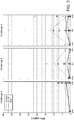
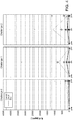
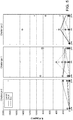
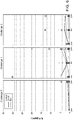
- evidence supporting the capacity of complement inhibition to have a prolonged inhibitory effect on Th17-associated cytokine production was obtained in an animal model of asthma.
- inhibiting the DC-Th17-B-Ab-C-DC cycle has a disease-modifying effect.
- inhibiting the DC-Th17-B-Ab-C-DC cycle may interfere with fundamental pathologic mechanisms that may contribute to ongoing tissue damage even when symptoms are well controlled and/or that may contribute to exacerbations of the disease.
- inhibiting the DC-Th17-B-Ab-C-DC cycle causes a chronic disorder to go into remission.
- remission refers to a state of absence or substantial absence of disease activity in a subject with a chronic disorder, with the possibility of return of disease.
- remission may be sustained for a prolonged period of time (e.g., at least 6 months, e,g., 6-12 months, 12-24 months, or more) in the absence of continued therapy or with a reduced dose or increased dosing interval.
- inhibition of complement may change the immunological micro-environment of a tissue that is rich in Th17 cells and modify it into a micro-environment that is rich in regulatory T cells (Tregs). Doing so could allow the immune system to "reset" itself and go into a state of remission.
- remission may be sustained until occurrence of a triggering event.
- a triggering event may be, for example, an infection (which may result in production of polyclonal antibodies that react both with an infectious agent and a self protein), exposure to particular environmental conditions (e.g., high levels of air pollutants such as ozone or particulate matter or components of smoke such as cigarette smoke, allergens), etc.
- Genetic factors may play a role.
- individuals having particular alleles of genes encoding complement components may have a higher baseline level of complement activity, a more reactive complement system and/or a lower baseline level of endogenous complement regulatory protein activity.
- an individual has a genotype associated with increased risk of AMD.
- the subject may have a polymorphism in a gene encoding a complement protein or complement regulatory protein, e.g., CFH, C3, factor B, wherein the polymorphism is associated with an increased risk of AMD.
- an immunologic microenvironment may become progressively more polarized towards a pathological state over time, e.g., in a subject who has not yet developed symptoms of a chronic disorder or in a subject who has developed the disorder and has been treated as described herein.
- Such a transition may occur stochastically (e.g., due at least in part to apparently random fluctuations in antibody levels and/or affinity) and/or as a result of accumulated "sub-threshold" trigger events that are not of sufficient intensity to trigger a symptomatic outbreak of a disorder.
- methods disclosed herein comprise monitoring a subject for evidence of the DC-Th17-B-Ab-C-DC cycle. If such evidence is detected, the subject may be treated with a complement inhibitor and/or other agent that disrupts the DC-Th17-B-Ab-C-DC cycle.
- a subject is tested for Th17 cells (e.g., Th17 cell number or relative number) and/or for one or more biomarkers associated with Th17 cells and/or Th17 activity ("Th17 biomarker").
- a subject is treated with a complement inhibitor based at least in part on assessment of Th17 cells with a Th17 biomarker.
- Th17 biomarker encompasses any molecule or detectable indicator that correlates with Th17 cell presence (e.g., number or concentration of Th17 cells) and/or correlates with at least one Th17 cell activity.
- a Th17 biomarker comprises a level of a Th17-associated cytokine.
- a Th17-associated cytokine is a cytokine that promotes formation and/or activation of Th17 cells, e.g., IL-6, IL-21, IL-23, and/or IL-1 ⁇ .
- a Th17-associated cytokine is a cytokine produced by Th17 cells, e.g., IL-17 (e.g., IL-17A and/or IL-17F), IL-21, and/or IL-22.
- IL-17 e.g., IL-17A and/or IL-17F
- an increased amount or increased relative amount of a Th17-associated activity is indicative of increased Th17 cells and/or increased Th17-associated activity.
- a relative amount is an amount as compared with a different cytokine.
- the different cytokine is associated with Treg cells.
- the different cytokine is IL-10.
- Th17-associated cytokines levels of 2, 3, 4, 5, or more Th17-associated cytokines are measured.
- a collective index or score indicative of the level of Th17-associated activity may be obtained and used as a Th17 biomarker.
- the presence or level of Th17 cells themselves is assessed for any purpose for which a Th17 biomarker may be assessed.
- the presence or level of Tregs is assessed.
- Tregs are identified based on expression of FOXP3.
- a Th17 biomarker level is measured in a sample obtained from a subject.
- a sample comprises a body fluid, e.g., blood, BAL fluid, sputum, nasal secretion, urine, etc.
- a sample comprises a tissue sample, which may be obtained from a tissue or organ affected by a complement-mediated disorder.
- tissue sample which may be obtained from a tissue or organ affected by a complement-mediated disorder.
- two or more samples of different body fluids or a body fluid and a tissue sample are assessed.
- a level is compared with a reference value.
- a reference value may be a normal value (e.g., a value within a normal range, e.g., an upper limit of a normal range). In some embodiments of the disclosure a reference value may be a value established for the subject at a previous time, e.g., when the subject's disorder was well controlled or prior to development of the disorder. In some embodiments of the disclosure, if a measured value deviates significantly from a reference value or shows a trend towards increased deviation from a reference value, the subject may be treated with a complement inhibitor. In some embodiments of the disclosure the subject may be treated with a complement inhibitor and a second agent that disrupts the DC-Th17-B-Ab-C-DC cycle.
- a "normal range” may be a range that encompasses at least 95% of healthy individuals.
- a reference value may be a value associated with a disease, e.g., a value typically found in subjects suffering from a disease in an untreated state.
- a normal or disease-associated range may depend at least in part on demographic factors such as age, sex, etc., and can be adjusted accordingly.
- An appropriate reference value or range may be established empirically for different disorders and/or different Th17 biomarkers and/or, in some embodiments of the disclosure, for individual subjects.
- Th17 cells and/or a Th17 biomarker in vivo assessment of Th17 cells and/or a Th17 biomarker is envisioned.
- a detectably labeled agent that binds to Th17 cells e.g., to a cell surface marker or combination thereof that is reasonably specific for Th17 cells
- a suitable imaging method is used to visualize the agent in vivo.
- an image is obtained of the lungs, skin, or other location that may be affected by a complement-mediated disorder.
- in vivo detection allows assessment of the immunological microenvironment in a tissue or organ of interest.
- information obtained from a Th17 biomarker assessment is used together with additional information, e.g., genotype information, environmental exposure information, and/or subject historical information, to determine whether or when to administer a complement-inhibitor and/or anti-Th17 agent and/or to select a dose or dosing regimen for a subject.
- additional information e.g., genotype information, environmental exposure information, and/or subject historical information
- any of the biomarker assessment and/or treatment decision methods may be performed at least in part by one or more computers.
- any of the biomarker assessment and/or treatment decision methods may be embodied or stored at least in part on a computer-readable medium having computer-executable instructions thereon.
- a computer-readable medium comprises any non-transitory and/or tangible computer-readable medium.
- retreatment may occur on a fixed time schedule.
- the lectin complement pathway is initiated by binding of mannose-binding lectin (MBL) and MBL-associated serine protease (MASP) to carbohydrates.
- MBL mannose-binding lectin
- MASP MBL-associated serine protease
- the MB1-1 gene (known as LMAN-1 in humans) encodes a type I integral membrane protein localized in the intermediate region between the endoplasmic reticulum and the Golgi.
- the MBL-2 gene encodes the soluble mannose-binding protein found in serum.
- MASP-1 and MASP-2 are involved in the proteolysis of C4 and C2, leading to a C3 convertase described above.
- a complement inhibitor comprises an antibody that substantially lacks the capacity to activate complement.
- the antibody may have less than 10%, less than 5%, or less than 1% complement stimulating activity as compared with full length human IgG1.
- the antibody comprises a CH2 domain that has reduced ability to bind C1q as compared with human IgG1 CH2 domain.
- the antibody contains CH1, CH2, and/or CH3 domains from human IgG4 and/or does not contain CHI, CH2, and/or CH3 domains from human IgG1.
- Compstatin analogs may be acetylated or amidated, e.g., at the N-terminus and/or C-terminus.
- compstatin analogs may be acetylated at the N-terminus and amidated at the C-terminus.
- "compstatin" as used herein, and the activities of compstatin analogs described herein relative to that of compstatin refer to compstatin amidated at the C-terminus (Mallik, 2005, supra ).
- Concatamers or multimers of compstatin or a complement inhibiting analog thereof are also of use in the present disclosure.
- compstatin analog includes compstatin and any complement inhibiting analog thereof.
- compstatin analog encompasses compstatin and other compounds designed or identified based on compstatin and whose complement inhibiting activity is at least 50% as great as that of compstatin as measured, e.g., using any complement activation assay accepted in the art or substantially similar or equivalent assays. Certain suitable assays are described in U.S. Pat. No.
- the assay may, for example, measure alternative or classical pathway-mediated erythrocyte lysis or be an ELISA assay. In some embodiments of the disclosure, an assay described in WO/2010/135717 ( PCT/US2010/035871 ) is used.
- the activity of a compstatin analog may be expressed in terms of its IC 50 (the concentration of the compound that inhibits complement activation by 50%), with a lower IC 50 indicating a higher activity as recognized in the art.
- the activity of a preferred compstatin analog for use in the present disclosure is at least as great as that of compstatin. It is noted that certain modifications known to reduce or eliminate complement inhibiting activity and may be explicitly excluded from any embodiment of the disclosure.
- the IC 50 of compstatin has been measured as 12 ⁇ M using an alternative pathway-mediated erythrocyte lysis assay ( WO2004/026328 ). It will be appreciated that the precise IC 50 value measured for a given compstatin analog will vary with experimental conditions (e.g., the serum concentration used in the assay).
- the IC 50 of the compstatin analog is no more than the IC 50 of compstatin.
- the activity of the compstatin analog is between 2 and 99 times that of compstatin (i.e., the analog has an IC 50 that is less than the IC 50 of compstatin by a factor of between 2 and 99).
- the activity may be between 10 and 50 times as great as that of compstatin, or between 50 and 99 times as great as that of compstatin.
- the activity of the compstatin analog is between 99 and 264 times that of compstatin.
- the activity may be 100, 110, 120, 130, 140, 150, 160, 170, 180, 190, 200, 210, 220, 230, 240, 250, 260, or 264 times as great as that of compstatin.
- the activity is between 250 and 300, 300 and 350, 350 and 400, or 400 and 500 times as great as that of compstatin.
- the present disclosure further contemplates compstatin analogs having activities between 500 and 1000 times that of compstatin, or more, e.g., between 1000 and 2000 times that of compstatin, or more.
- the IC 50 of the compstatin analog is between about 0.2 ⁇ M and about 0.5 ⁇ M.
- the K d of compstatin binding to C3 can be measured using isothermal titration calorimetry ( Katragadda, et al., J. Biol. Chem., 279(53), 54987-54995, 2004 ). Binding affinity of a variety of compstatin analogs for C3 has been correlated with their activity, with a lower K d indicating a higher binding affinity, as recognized in the art. A linear correlation between binding affinity and activity was shown for certain analogs tested (Katragadda, 2004, supra; Katragadda 2006, supra ).
- the sequence of the compstatin analog comprises or consists essentially of a sequence that is obtained by making 1, 2, 3, or 4 substitutions in the sequence of compstatin, i.e., 1, 2, 3, or 4 amino acids in the sequence of compstatin is replaced by a different standard amino acid or by a non-standard amino acid.
- the amino acid at position 4 is altered.
- the amino acid at position 9 is altered.
- the amino acids at positions 4 and 9 are altered. In certain embodiments of the disclosure only the amino acids at positions 4 and 9 are altered.
- amino acid at position 4 or 9 is altered, or in certain embodiments of the disclosure both amino acids 4 and 9 are altered, and in addition up to 2 amino acids located at positions selected from 1, 7, 10, 11, and 13 are altered.
- amino acids at positions 4, 7, and 9 are altered.
- amino acids at position 2, 12, or both are altered, provided that the alteration preserves the ability of the compound to be cyclized.
- Such alteration(s) at positions 2 and/or 12 may be in addition to the alteration(s) at position 1, 4, 7, 9, 10, 11, and/or 13.
- Useful non-standard amino acids include singly and multiply halogenated (e.g., fluorinated) amino acids, D-amino acids, homo-amino acids, N-alkyl amino acids, dehydroamino acids, aromatic amino acids (other than phenylalanine, tyrosine and tryptophan), ortho-, meta- or para-aminobenzoic acid, phospho-amino acids, methoxylated amino acids, and ⁇ , ⁇ -disubstituted amino acids.
- a compstatin analog is designed by replacing one or more L-amino acids in a compstatin analog described elsewhere herein with the corresponding D-amino acid.
- the compstatin analog comprises one or more Trp analogs (e.g., at position 4 and/or 7 relative to the sequence of compstatin).
- Trp analogs are mentioned above. See also Beene, et. al. Biochemistry 41: 10262-10269, 2002 (describing, inter alia, singly- and multiply-halogenated Trp analogs); Babitzke & Yanofsky, J. Biol. Chem. 270: 12452-12456, 1995 (describing, inter alia, methylated and halogenated Trp and other Trp and indole analogs); and U.S.
- Trp analogs include variants that are substituted (e.g., by a methyl group) at the ⁇ or ⁇ carbon and, optionally, also at one or more positions of the indole ring.
- Amino acids comprising two or more aromatic rings, including substituted, unsubstituted, or alternatively substituted variants thereof, are of interest as Trp analogs.
- the Trp analog e.g., at position 4, is 5-methoxy, 5-methyl-, 1-methyl-, or 1-formyl-tryptophan.
- the Trp analog has increased hydrophobic character relative to Trp.
- the indole ring may be substituted by one or more alkyl (e.g., methyl) groups.
- the Trp analog participates in a hydrophobic interaction with C3.
- Such a Trp analog may be located, e.g., at position 4 relative to the sequence of compstatin.
- the Trp analog comprises a substituted or unsubstituted bicyclic aromatic ring component or two or more substituted or unsubstituted monocyclic aromatic ring components.
- the Trp analog has increased propensity to form hydrogen bonds with C3 relative to Trp but does not have increased hydrophobic character relative to Trp.
- the Trp analog may have increased polarity relative to Trp and/or an increased ability to participate in an electrostatic interaction with a hydrogen bond donor on C3.
- Certain exemplary Trp analogs with an increased hydrogen bond forming character comprise an electronegative substituent on the indole ring. Such a Trp analog may be located, e.g., at position 7 relative to the sequence of compstatin.
- the compstatin analog is a compound that comprises a peptide that has a sequence of (X'aa) n - Gln - Asp - Xaa - Gly-(X"aa) m , (SEQ ID NO: 2) wherein each X'aa and each X"aa is an independently selected amino acid or amino acid analog, wherein Xaa is Trp or an analog of Trp, and wherein n>1 and m>1 and n+m is between 5 and 21.
- Xaa is an amino acid or amino acid analog other than a Trp analog that allows the Gln - Asp - Xaa - Gly (SEQ ID NO: 71) peptide to form a ⁇ -turn.
- the ⁇ -turn may be flexible, allowing the peptide to assume two or more conformations as assessed for example, using nuclear magnetic resonance (NMR).
- NMR nuclear magnetic resonance
- X'aa is an analog of Trp that comprises a substituted or unsubstituted bicyclic aromatic ring component or two or more substituted or unsubstituted monocyclic aromatic ring components.
- X'aa is selected from the group consisting of 2-napthylalanine, 1-napthylalanine, 2-indanylglycine carboxylic acid, dihydrotryptophan, and benzoylphenylalanine.
- X'aa is an analog of Trp that has increased hydrophobic character relative to Trp.
- X'aa may be 1-methyltryptophan.
- Xaa is an analog of Trp that has increased propensity to form hydrogen bonds relative to Trp but, in certain embodiments of the disclosure, not having increased hydrophobic character relative to Trp.
- the analog of Trp that has increased propensity to form hydrogen bonds relative to Trp comprises a modification on the indole ring of Trp, e.g., at position 5, such as a substitution of a halogen atom for an H atom at position 5.
- Xaa may be 5-fluorotryptophan.
- the peptide has a core sequence of X'aa-Gln - Asp - Xaa - Gly-X"aa (SEQ ID NO: 4), where X'aa and Xaa are each independently selected from Trp and analogs of Trp and X"aa is selected from His, Ala, analogs of Ala, Phe, and Trp.
- X'aa is an analog of Trp that has increased hydrophobic character relative to Trp, such as 1-methyltryptophan or another Trp analog having an alkyl substituent on the indole ring (e.g., at position 1, 4, 5, or 6).
- X'aa is an analog of Trp that comprises a substituted or unsubstituted bicyclic aromatic ring component or two or more substituted or unsubstituted monocyclic aromatic ring components.
- X'aa is selected from the group consisting of 2-napthylalanine, 1-napthylalanine, 2-indanylglycine carboxylic acid, dihydrotryptophan, and benzoylphenylalanine.
- Trp is an analog of Trp that has increased propensity to form hydrogen bonds with C3 relative to Trp but, in certain embodiments of the disclosure, not having increased hydrophobic character relative to Trp.
- the peptide has a core sequence of X'aa-Gln - Asp - Xaa - Gly-X"aa (SEQ ID NO: 4), where X'aa and Xaa are each independently selected from Trp, analogs of Trp, and amino acids or amino acid analogs comprising at least one aromatic side chain, and X"aa is selected from His, Ala, analogs of Ala, Phe, and Trp. In certain embodiments of the disclosure X"aa is selected from analogs of Trp, aromatic amino acids, and aromatic amino acid analogs.
- the peptide is cyclic.
- the peptide may be cyclized via a bond between any two amino acids, one of which is (X'aa) n and the other of which is located within (X"aa) m .
- the cyclic portion of the peptide is between 9 and 15 amino acids in length, e.g., 10-12 amino acids in length.
- the cyclic portion of the peptide is 11 amino acids in length, with a bond (e.g., a disulfide bond) between amino acids at positions 2 and 12.
- the peptide may be 13 amino acids long, with a bond between amino acids at positions 2 and 12 resulting in a cyclic portion 11 amino acids in length.
- the peptide comprises or consists of the sequence X'aa1 - X'aa2 - X'aa3 - X'aa4 -Gln-Asp-Xaa-Gly- X"aa1- X"aa2- X"aa3- X"aa4-X"aa5 (SEQ ID NO: 5).
- X'aa4 and Xaa are selected from Trp and analogs of Trp, and X'aa1, X'aa2, X'aa3, X"aa1, X"aa2, X"aa3, X"aa4, and X"aa5 are independently selected from among amino acids and amino acid analogs. In certain embodiments of the disclosure X'aa4 and Xaa are selected from aromatic amino acids and aromatic amino acid analogs.
- X'aa1, X'aa2, X'aa3, X"aa1, X"aa2, X"aa3, X"aa4, and X"aa5 may be identical to the amino acid at the corresponding position in compstatin.
- X"aa1 is Ala or a single methyl unbranched amino acid.
- the peptide may be cyclized via a covalent bond between (i) X'aa1, X'aa2, or X'aa3; and (ii) X"aa2, X"aa3, X"aa4 or X"aa5.
- the peptide is cyclized via a covalent bond between X'aa2 and X"aa4.
- the covalently bound amino acid are each Cys and the covalent bond is a disulfide (S-S) bond.
- the covalent bond is a C-C, C-O, C-S, or C-N bond.
- one of the covalently bound residues is an amino acid or amino acid analog having a side chain that comprises a primary or secondary amine
- the other covalently bound residue is an amino acid or amino acid analog having a side chain that comprises a carboxylic acid group
- the covalent bond is an amide bond.
- Examples of amino acids having a side chain that comprises a carboxylic acid group include dicarboxylic amino acids such as glutamic acid and aspartic acid. Analogs such as beta-hydroxy-L-glutamic acid may also be used.
- a peptide is cyclized with a thioether bond, e.g., as described in PCT/US2011/052442 ( WO/2012/040259 ).
- a disulfide bond in any of the peptides is replaced with a thioether bond.
- a cystathionine is formed.
- the cystathionine is a delta-cystathionine or a gamma-cystathionine.
- a modification comprises replacement of a Cys-Cys disulfide bond between cysteines at X'aa2 and X"aa4 in SEQ ID NO: 5 (or corresponding positions in other sequences) with addition of a CH 2 , to form a homocysteine at X'aa2 or X"aa4, and introduction of a thioether bond, to form a cystathionine.
- the cystathionine is a gamma-cystathionine.
- the cystathionine is a delta-cystathionine.
- Another modification of use in certain embodiments comprises replacement of the disulfide bond with a thioether bond without the addition of a CH 2 , thereby forming a lantithionine.
- a compstatin analog having a thioether in place of a disulfide bond has increased stability, at least under some conditions, as compared with the compstatin analog having the disulfide bond.
- the compstatin analog is a compound that comprises a peptide having a sequence:
- Xaa1 is absent or is any amino acid or amino acid analog
- Xaa2, Xaa2*, Xaa3, and Xaa4 are as defined above. If Xaa1 is absent, the N-terminal Cys residue may have a blocking moiety B 1 attached thereto.
- Xaa4 is any amino acid or amino acid analog and Xaa1, Xaa2, Xaa2*, and Xaa3 are as defined above.
- Xaa4 is a dipeptide selected from the group consisting of: Thr-Ala and Thr-Asn, wherein the carboxy terminal -OH or the Ala or Asn is optionally replaced by a second blocking moiety B 2 .
- Xaa2 may be Trp.
- Xaa2 may be an analog of Trp comprising a substituted or unsubstituted bicyclic aromatic ring component or two or more substituted or unsubstituted monocyclic aromatic ring components.
- the analog of Trp may be selected from 2-naphthylalanine (2-NaI), 1-naphthylalanine (1-NaI), 2-indanylglycine carboxylic acid (Ig1), dihydrotrpytophan (Dht), and 4-benzoyl-L-phenylalanine.
- Xaa2 may be an analog of Trp having increased hydrophobic character relative to Trp.
- the analog of Trp may be selected from 1-methyltryptophan, 4-methyltryptophan, 5-methyltryptophan, and 6-methyltryptophan.
- the analog of Trp is 1-methyltryptophan.
- Xaa2 is 1-methyltryptophan
- Xaa2* is Trp
- Xaa3 is Ala
- the other amino acids are identical to those of compstatin.
- Xaa2 is analog of Trp having increased hydrophobic character relative to Trp such as an analog of Trp selected from 1-methyltryptophan, 4-methyltryptophan, 5-methyltryptophan, and 6-methyltryptophan
- Xaa2* is an analog of Trp having increased hydrogen bond forming propensity with C3 relative to Trp which, in certain embodiments of the disclosure, does not have increased hydrophobic character relative to Trp.
- Xaa2 is methyltryptophan and Xaa2* is 5-fluorotryptophan.
- blocking moiety present at the N- or C-terminus of any of the compstatin analogs described herein is any moiety that stabilizes a peptide against degradation that would otherwise occur in mammalian (e.g., human or non-human primate) blood or interstitial fluid.
- blocking moiety B 1 could be any moiety that alters the structure of the N-terminus of a peptide so as to inhibit cleavage of a peptide bond between the N-terminal amino acid of the peptide and the adjacent amino acid.
- blocking moiety B 2 is a primary or secondary amine (-NH 2 or -NHR 1 , wherein R is an organic moiety such as an alkyl group).
- the compstatin analog is acetylated or amidated at the N-terminus and/or C-terminus, respectively.
- a compstatin analog may be acetylated at the N-terminus, amidated at the C-terminus, and or both acetylated at the N-terminus and amidated at the C-terminus.
- a compstatin analog comprises an alkyl or aryl group at the N-terminus rather than an acetyl group.
- Xaa1 is Ile
- Xaa2* is Trp
- Xaa4 is L-Thr.
- Table 2 provides a non-limiting list of compstatin analogs useful in the present disclosure.
- the analogs are referred to in abbreviated form in the left column by indicating specific modifications at designated positions (1-13) as compared to the parent peptide, compstatin.
- compstatin as used herein, and the activities of compstatin analogs described herein relative to that of compstatin, refer to the compstatin peptide amidated at the C-terminus. Unless otherwise indicated, peptides in Table 2 are amidated at the C-terminus.
- Bold text is used to indicate certain modifications.
- one or more amino acid(s) of a compstatin analog can be an N-alkyl amino acid (e.g., an N-methyl amino acid).
- N-alkyl amino acid e.g., an N-methyl amino acid
- at least one amino acid within the cyclic portion of the peptide, at least one amino acid N-terminal to the cyclic portion, and/or at least one amino acid C-terminal to the cyclic portion may be an N-alkyl amino acid, e.g., an N-methyl amino acid.
- N-methylated amino acids comprise N-methyl Gly at position 8 and N-methyl Ile at position 13.
- N-methylated amino acids comprise N-methyl Gly in a core sequence such as SEQ ID NO: 3 or SEQ ID NO: 4.
- B 1a comprises or consists of, e.g., an acyl group that, e.g., comprises between 1 and 12 carbons, e.g., between 1 and 6 carbons.
- blocking moiety B 1a is selected from the group consisting of: formyl, acetyl, proprionyl, butyryl, isobutyryl, valeryl, isovaleryl, etc.
- a blocking moiety B 2 comprising an amino acid, e.g., a non-standard amino acid, may further comprise a moiety B 2a
- blocking moiety B 2 may be represented as XaaN-B 2a , where N represents the appropriate number for the amino acid (which will depend on the numbering used in the rest of the peptide).
- B 2a neutralizes or reduces a negative charge that may otherwise be present at the C-terminus at physiological pH.
- B 2a comprises or consistsof a primary or secondary amine (e.g., NH 2 ).
- a blocking activity of moiety B 1a -Xaa0 and/or XaaN-B 2a may be provided by either or both components of the moiety in various embodiments of the disclosure.
- a blocking moiety or portion thereof e.g., an amino acid residue
- a contribution to affinity or activity of an amino acid residue may be at least as important as a contribution to blocking activity.
- Xaa0 and/or XaaN in B 1a -Xaa0 and/or XaaN-B 2a may function mainly to increase affinity or activity of the compound, while B 1a and/or B 2a may inhibit digestion of and/or neutralize a charge of the peptide.
- a compstatin analog comprises the amino acid sequence of any of SEQ ID NOs: 5-36, wherein SEQ ID NOs: 5-36 is further extended at the N- and/or C-terminus.
- a compstatin analog comprises B 1a -Xaa0 - Xaa1 - Xaa2- Xaa3 - Xaa4 - Xaa5 - Xaa6 - Xaa7 - Xaa8 - Xaa9 - Xaa10- Xaa11- Xaa12-Xaa13-XaaN-B 2a (SEQ ID NO: 39) wherein Xaa1, Xaa2, Xaa3, Xaa4 , Xaa5, Xaa6, Xaa7, Xaa8, Xaa9, Xaa10, Xaa11, Xaa12, and Xaa13 are identical to amino acids at positions 1-13 of any of SEQ ID NOs: 9-36.
- Xaa0 comprises an O-methyl analog of tyrosine, 2-hydroxyphenylalanine or 3-hydroxyphenylalanine.
- a lower case "m” followed by a three letter amino acid abbreviation may be used to specifically indicate that the amino acid is an N-methyl amino acid.
- mGly N-methyl glycine (also sometimes referred to as sarcosine or Sar).
- Xaa0 is or comprises mGly, Tyr, Phe, Arg, Trp, Thr, Tyr(Me), Cha, mPhe, mVal, mIle, mAla, DTyr, DPhe, DArg, DTrp, DThr, DTyr(Me), mPhe, mVal, mIle, DAla, or DCha.
- the peptide is acetylated at the N-terminus and/or amidated at the C-terminus.
- B 1 comprises B 1a -Xaa0 and/or B 2 comprises XaaN-B 2a , as described above.
- an Ile at position Xaa1 is replaced by Gly.
- Complement inhibition potency and/or C3b binding parameters of selected compstatin analogs are described in WO/2010/127336 ( PCT/US2010/033345 ) and/or in Qu, et al., Immunobiology (2012), doi:10.1016/j.imbio.2012.06.003 .
- a blocking moiety or portion thereof may contribute to increasing affinity of the compound for C3 or C3b and/or improve the activity of the compound.
- a contribution to affinity or activity of an amino acid or amino acid analog may be more significant than a blocking activity.
- the compstatin analog has a sequence as set forth in Table 2, but where the Ac- group is replaced by an alternate blocking moiety B 1 , as described herein. In some embodiments of the disclosure the -NH 2 group is replaced by an alternate blocking moiety B 2 , as described herein.
- the compstatin analog binds to substantially the same region of the ⁇ chain of human C3 as does compstatin.
- the compstatin analog is a compound that binds to a fragment of the C-terminal portion of the ⁇ chain of human C3 having a molecular weight of about 40 kDa to which compstatin binds ( Soulika, A.M., et al., Mol. Immunol., 35:160, 1998 ; Soulika, A.M., et al., Mol. Immunol. 43(12):2023-9, 2006 ).
- the compstatin analog is a compound that binds to the binding site of compstatin as determined in a compstatin-C3 structure, e.g., a crystal structure or NMR-derived 3D structure.
- the compstatin analog is a compound that could substitute for compstatin in a compstatin-C3 structure and would form substantially the same intermolecular contacts with C3 as compstatin.
- the compstatin analog is a compound that binds to the binding site of a peptide having a sequence set forth in Table 2, e.g., SEQ ID NO: 14, 21, 28, 29, 32, 33, 34, or 36 or another compstatin analog sequence disclosed herein in a peptide-C3 structure, e.g., a crystal structure.
- the compstatin analog is a compound that binds to the binding site of a peptide having SEQ ID NO: 30 or 31 in a peptide-C3 structure, e.g., a crystal structure.
- a compstatin analog binds to a fragment of the C-terminal portion of the ⁇ chain of C3 using routine experimental methods.
- one of skill in the art could synthesize a photocrosslinkable version of the compstatin analog by including a photo-crosslinking amino acid such as p -benzoyl-L-phenylalanine (Bpa) in the compound, e.g., at the C-terminus of the sequence (Soulika, A.M., et al, supra ).
- additional amino acids e.g., an epitope tag such as a FLAG tag or an HA tag could be included to facilitate detection of the compound, e.g., by Western blotting.
- the compstatin analog is incubated with the fragment and crosslinking is initiated. Colocalization of the compstatin analog and the C3 fragment indicates binding. Surface plasmon resonance may also be used to determine whether a compstatin analog binds to the compstatin binding site on C3 or a fragment thereof.
- Peptides may be purified using standard approaches such as reversed-phase HPLC. Separation of diasteriomeric peptides, if desired, may be performed using known methods such as reversed-phase HPLC. Preparations may be lyophilized, if desired, and subsequently dissolved in a suitable solvent, e.g., water. The pH of the resulting solution may be adjusted, e.g. to physiological pH, using a base such as NaOH. Peptide preparations may be characterized by mass spectrometry if desired, e.g., to confirm mass and/or disulfide bond formation. See, e.g., Mallik, 2005, and Katragadda, 2006.
- a compstatin analog can be modified by addition of a molecule such as polyethylene glycol (PEG) or similar molecules to stabilize the compound, reduce its immunogenicity, increase its lifetime in the body, increase or decrease its solubility, and/or increase its resistance to degradation.
- PEG polyethylene glycol
- Methods for pegylation are well known in the art ( Veronese, F.M. & Harris, Adv. Drug Deliv. Rev. 54, 453-456, 2002 ; Davis, F.F., Adv. Drug Deliv. Rev. 54, 457-458, 2002 ); Hinds, K.D. & Kim, S.W. Adv. Drug Deliv. Rev. 54, 505-530 ( 2002; Roberts, M.J., Bentley, M.D. & Harris, J.M.
- a compstatin analog is fused to the Fc domain of an immunoglobulin or a portion thereof. In some other embodiments of the disclosure a compstatin analog is conjugated to an albumin moiety or to an albumin binding peptide.
- a compstatin analog is modified with one or more polypeptide or non-polypeptide components, e.g., the compstatin analog is pegylated or conjugated to another moiety.
- the component is not the Fc domain of an immunoglobulin or a portion thereof.
- a compstatin analog can be provided as a multimer or as part of a supramolecular complex, which can include either a single molecular species or multiple different species (e.g., multiple different analogs).
- a compstatin analog of use in methods described herein is a long-acting compstatin analog, that has a terminal half-life of at least 3, 4, 5, 6, or 7 days.
- a long-acting compstatin analog is a pegylated compstatin analog. Exemplary long-acting compstatin analogs are described below and/or in PCT/US12/37648 , entitled “CELL-REACTIVE, LONG-ACTING, OR TARGETED COMPSTATIN ANALOGS AND USES THEREOF", filed May 11, 2012.
- the compstatin analog comprises a compstatin analog whose sequence comprises any of SEQ ID NOs: 3 - 41, wherein the compstatin analog is a long-acting compstatin analog.
- a compstatin analog is a multivalent compound comprising a plurality of compstatin analog moieties covalently or noncovalently linked to a polymeric backbone or scaffold.
- the compstatin analog moieties can be identical or different.
- the multivalent compound comprises multiple instances, or copies, of a single compstatin analog moiety.
- the multivalent compound comprises one or more instances of each of two of more non-identical compstatin analog moieties, e.g., 3, 4, 5, or more different compstatin analog moieties.
- the number of compstatin analog moieties (“n") is between 2 and 6. In other embodiments of the disclosure n is between 7 and 20.
- n is between 20 and 100. In other embodiments of the disclosure n is between 100 and 1,000. In other embodiments of the disclosure n is between 1,000 and 10,000. In other embodiments of the disclosure n is between 10,000 and 50,000. In other embodiments of the disclosure n is between 50,000 and 100,000. In other embodiments of the disclosure n is between 100,000 and 1,000,000.
- the amino acid having a side chain comprising a primary or secondary amine and/or at least one amino acid in a spacer is a D-amino acid.
- a PEG moiety or similar molecule or polymeric scaffold may be linked to the primary or secondary amine, optionally via a linker.
- a bifunctional linker is used.
- Abifunctional linker may comprise two reactive functional groups, which may be the same or different in various embodiments of the disclosure.
- one or more linkers, spacers, and/or techniques of conjugation described in Hermanson, supra, is used.
- polymeric backbones or scaffolds may be any of a variety of polymeric backbones or scaffolds.
- the polymeric backbone or scaffold may be a polyamide, polysaccharide, polyanhydride, polyacrylamide, polymethacrylate, polypeptide, polyethylene oxide, or dendrimer. Suitable methods and polymeric backbones are described, e.g., in WO98/46270 ( PCT/US98/07171 ) or WO98/47002 ( PCT/US98/06963 ).
- the polymeric backbone or scaffold comprises multiple reactive functional groups, such as carboxylic acids, anhydride, or succinimide groups. The polymeric backbone or scaffold is reacted with the compstatin analogs.
- the compstatin analog comprises any of a number of different reactive functional groups, such as carboxylic acids, anhydride, or succinimide groups, which are reacted with appropriate groups on the polymeric backbone.
- monomeric units that could be joined to one another to form a polymeric backbone or scaffold are first reacted with the compstatin analogs and the resulting monomers are polymerized.
- short chains are prepolymerized, functionalized, and then a mixture of short chains of different composition are assembled into longer polymers.
- a moiety such as a polyethylene glycol (PEG) chain or other polymer(s) that, e.g., stabilize the compound, increase its lifetime in the body, increase its solubility, decrease its immunogenicity, and/or increase its resistance to degradation may be referred to herein as a "clearance reducing moiety" (CRM), and a compstatin analog comprising such a moiety may be referred to as a long-acting compstatin analog.
- PEG polyethylene glycol
- CCM tolerance reducing moiety
- a long-acting compstatin analog comprises a compound of formula M-L-A, wherein A is a moiety that comprises a CRM, L is an optionally present linking portion, and M comprises a compstatin analog moiety.
- the compstatin analog moiety can comprise any compstatin analog, e.g., any compstatin analog described above, in various embodiments of the disclosure.
- a long-acting compstatin analog in which the compstatin analog moiety comprises a compstatin analog that contains an amino acid with a side chain containing a primary amine (NH 2 ) group can have a formula R 1 -NH-L- A in which a new covalent bond to L (e.g., N-C) has been formed and a hydrogen lost.
- the term "compstatin analog moiety" includes molecular structures in which at least one atom of a compstatin analog participates in a covalent bond with a second moiety, which may, e.g., modification of a side chain.
- a plasma half-life is a terminal half-life after administration of a single IV dose. In some embodiments of the disclosure, a plasma half-life is a terminal half-life after steady state has been reached following administration of multiple IV doses. In some embodiments of the disclosure, a long-acting compstatin analog achieves a Cmax in plasma at least 5-fold as great as that of a corresponding compstatin analog not comprising the CRM, e.g., between 5- and 50-fold as great, following administration of a single IV dose to a primate, or following administration of multiple IV doses.
- renal clearance of a long-acting compstatin analog during the first 24 hours following administration IV at a dose of 10 mg/kg to humans or to non-human primates is reduced by at least a factor of 2, e.g., by a factor of 2-5, 5-10, 10-50, or 50-100 -fold as compared with renal clearance of a corresponding compstatin analog.
- concentration of compstatin analog can be measured in blood and/or urine samples using, e.g., UV, HPLC, mass spectrometry (MS) or antibody to the CRM, or combinations of such methods, such as LC/MS or LC/MS/MS.
- Pharmacokinetic parameters such as half-life and clearance can be determined using methods known to those of ordinary skill in the art. Pharmacokinetic analysis can be performed, e.g., with WinNonlin software v 5.2 (Pharsight Corporation, St. Louis, MO).
- a linker comprises an (CH 2 CH 2 O) n moiety having an average molecular weight of between about 500; 1,000; 1,500; 2,000; 5,000; 10,000; 20,000; 30,000; 40,000; 50,000; 60,000; 70,000; 80,000; 90,000; and 100,000 daltons.
- Average molecular weight refers to the number average molecular weight.
- the polydispersity D of a (CH 2 CH 2 O)n moiety is between 1.0005 and 1.50, e.g., between 1.005 and 1.10, 1.15,1.20, 1.25, 1.30, 1.40, or 1.50, or any value between 1.0005 and 1.50.
- a (CH 2 CH 2 O)n moiety is monodisperse and the polydispersity of a (CH 2 CH 2 O)n moiety is 1.0.
- Such monodisperse (CH 2 CH 2 O)n moieties are known in the art and are commercially available from Quanta BioDesign (Powell, OH), and include, by way of nonlimiting example, monodisperse moieties where n is 2, 4, 6, 8, 12, 16, 20, or 24.
- a compound comprises multiple (CH 2 CH 2 O) n moieties wherein the total molecular weight of said (CH 2 CH 2 O) n moieties is between about 1,000; 5,000; 10,000; 20,000; 30,000; 40,000; 50,000; 60,000; 70,000; 80,000; 90,000; and 100,000 daltons.
- the compound comprises a sufficient number of (CH 2 CH 2 O) n moieties having defined lengths to result in a total molecular weight of said (CH 2 CH 2 O) n moieties of between about 1,000; 5,000; 10,000; 20,000; 30,000; 40,000; 50,000; 60,000; 70,000; 80,000; 90,000; and 100,000 daltons.
- n is between about 30 and about 3000.
- a compstatin analog moiety is attached at each end of a linear PEG.
- a bifunctional PEG having a reactive functional group at each end of the chain may be used, e.g., as described above.
- the reactive functional groups are identical while in some embodiments of the disclosure different reactive functional groups are present at each end.
- multiple (CH 2 CH 2 O) n moieties are provided as a branched structure.
- the branches may be attached to a linear polymer backbone (e.g., as a comb-shaped structure) or may emanate from one or more central core groups, e.g., as a star structure.
- a branched molecule has 3 to 10 (CH 2 CH 2 O) n chains.
- a branched molecule has 4 to 8 (CH 2 CH 2 O) n chains.
- a branched molecule has 10, 9, 8, 7, 6, 5, 4, or 3 (CH 2 CH 2 O) n chains.
- a star -shaped molecule has 10-100, 10-50, 10-30, or 10-20 (CH 2 CH 2 O) n chains emanating from a central core group.
- a long-acting compstatin analog thus may comprise, e.g., 3-10 compstatin analog moieties, e.g., 4-8 compstatin analog moieties, each attached to a (CH 2 CH 2 O) n chain via a functional group at the end of the chain.
- a long-acting compstatin analog may comprise, e.g., 10-100 compstatin analog moieties, each attached to a (CH 2 CH 2 O) n chain via a functional group at the end of the chain.
- branches sometimes referred to as "arms" of a branched or star-shaped PEG contain about the same number of (CH 2 CH 2 O) moieties.
- at least some of the branch lengths may differ. It will be understood that in some embodiments of the disclosure one or more (CH 2 CH 2 O) n chains does not have a comptatin analog moiety attached thereto. In some embodiments of the disclosure at least about 30%, 40%, 50%, 60%, 70%, 80%, 90%, 95%, or 100% of the chains has a compstatin analog moiety attached thereto.
- a polyethylene glycol moiety is drawn with the oxygen atom on the right side of the repeating unit or the left side of the repeating unit.
- the present disclosure encompasses both orientations (i.e., (CH 2 CH 2 O) n and (OCH 2 CH 2 ) n ) of polyethylene glycol moieties for a given compound or genus, or in cases where a compound or genus contains multiple polyethylene glycol moieties, all combinations of orientations are encompasses by the present disclosure.
- Formulas of some exemplary monofunctional PEGs comprising a reactive functional group are illustrated below.
- the reactive functional group(s) comprise an NHS ester are depicted, but other reactive functional groups could be used, e.g., as described above.
- the (CH 2 CH 2 O) n are depicted as terminating at the left end with a methoxy group (OCH 3 ) but it will be understood that the chains depicted below and elsewhere herein may terminate with a different OR moiety (e.g., an aliphatic group, an alkyl group, a lower alkyl group, or any other suitable PEG end group) or an OH group.
- moieties other than those depicted may connect the (CH 2 CH 2 O) n moieties with the NHS group in various embodiments of the disclosure.
- a monofunctional PEG is of formula A:
- Exemplary monofunctional PEGs of formula A include:
- a monofunctional PEGs has the structure of Formula I, where m is between 1 and 10, e.g., between 1 and 5.
- m is 3, as shown below:
- a mono functional PEG has the structure of Formula II, where m is between 1 and 10 (e.g., wherein m is 5 as shown in Formula III below), or wherein m is 0 (as shown below in Formula IIIa).
- a bifunctional linear PEG comprises a moiety comprising a reactive functional group at each of its ends.
- the reactive functional groups may be the same (homobifunctional) or different (heterobifunctional).
- the structure of a bifunctional PEG may be symmetric, wherein the same moiety is used to connect the reactive functional group to oxygen atoms at each end of the -(CH 2 CH 2 O) n chain.
- different moieties are used to connect the two reactive functional groups to the PEG portion of the molecule.
- the structures of exemplary bifunctional PEGs are depicted below. For illustrative purposes, formulas in which the reactive functional group(s) comprise an NHS ester are depicted, but other reactive functional groups could be used.
- a bifunctional linear PEG is of formula B: wherein each T and "Reactive functional group" is independently as defined above and described in classes and subclasses herein, and n is as defined above and described in classes and subclasses herein.
- Exemplary bifunctional PEGs of formula B include:
- exemplary branched PEGs having 4 arms, or branches
- NHS moieties as reactive functional groups
- branches emanating from the backbone may be varied.
- the number 4 in the above formulae VI and VII may be changed to any other integer between 0 and 10 in various embodiments of the disclosure.
- one or more branches does not contain a reactive function group and the branch terminates with a -CH 2 CH 2 OH or -CH 2 CH 2 OR group, as described above.
- a branched PEG has the structure of Formula VII, VIII, or IX (or variants thereof having different numbers of branches) with the proviso that x is
- any of a variety of moieties may be incorporated between the peptide component and (CH 2 CH 2 O) n -R moiety of a long-acting compstatin analog, such as an linear alkyl, ester, amide, aromatic ring (e.g., a substituted or unsubstituted phenyl), a substituted or unsubstituted cycloalkyl structure, or combinations thereof.
- a long-acting compstatin analog such as an linear alkyl, ester, amide, aromatic ring (e.g., a substituted or unsubstituted phenyl), a substituted or unsubstituted cycloalkyl structure, or combinations thereof.
- such moiet(ies) may render the compound more susceptible to hydrolysis, which may release the peptide portion of the compound from the CRM.
- hydrolysis is general (e.g., acid-base) hydrolysis.
- hydrolysis is enzyme-catalyzed, e.g., esterase-catalyzed. Of course both types of hydrolysis may occur.
- PEGs comprising one or more such moieties and an NHS ester as a reactive functional group are as follows:
- a branched (multi-arm) PEG or star-shaped PEG comprises a pentaerythritol core, hexaglycerin core, or tripentaerythritol core. It will be understood that the branches may not all emanate from a single point in certain embodiments of the disclosure.
- Monofunctional, bifunctional, branched, and other PEGs comprising one or more reactive functional groups may be obtained from, e.g., NOF America Corp. White Plains, NY or BOC Sciences 45-16 Ramsey Road Shirley, NY 11967, USA, among others.
- a compstatin analog of, e.g., any of SEQ ID NOs: 3-41 is extended by one or more amino acids at the N-terminus, C-terminus, or both, wherein at least one of the amino acids has a side chain that comprises a reactive functional group such as a primary or secondary amine, a sulfhydryl group, a carboxyl group (which may be present as a carboxylate group), a guanidino group, a phenol group, an indole ring, a thioether, or an imidazole ring, wherein the reactive functional group may be used, e.g., to attach a CRM or moiety comprising a CRM.
- a reactive functional group such as a primary or secondary amine, a sulfhydryl group, a carboxyl group (which may be present as a carboxylate group), a guanidino group, a phenol group, an indole ring, a thioether,
- the amino acid(s) is/are L-amino acids. In some embodiments of the disclosure, any one or more of the amino acid(s) is a D-amino acid. If multiple amino acids are added, the amino acids can be independently selected.
- the reactive functional group e.g., a primary or secondary amine
- at least one amino acid is cysteine, aspartic acid, glutamic acid, arginine, tyrosine, tryptophan, methionine, or histidine.
- non-standard amino acids having side chains that comprise one or more such reactive functional group(s) are available, including naturally occurring amino acids and amino acids not found in nature. See, e.g., Hughes, B. (ed.), Amino Acids, Peptides and Proteins in Organic Chemistry, Volumes 1-4, Wiley-VCH (2009-2011 ); Blaskovich, M., Handbook on Syntheses of Amino Acids General Routes to Amino Acids, Oxford University Press, 2010 .
- Embodiments of the disclosure in which one or more non-standard amino acid(s) is/are used to provide a target for addition of a moiety comprising a CRM are encompassed.
- any one or more of the amino acid(s) may be protected as appropriate during synthesis of the compound.
- one or more amino acid(s) may be protected during reaction(s) involving the target amino acid side chain.
- the sulfhydryl is protected while the compound is being cyclized by formation of an intramolecular disulfide bond between other amino acids such as cysteines.
- an amino acid having a side chain containing an amine group is used as an example.
- Analogous embodiments of the disclosure are encompassed in which an amino acid having a side chain containing a different reactive functional group is used.
- an amino acid having a side chain comprising a primary or secondary amine is attached directly to the N-terminus or C-terminus of any of SEQ ID NOs: 3-41 via a peptide bond.
- an amino acid having a side chain comprising a primary or secondary amine is attached to the N- or C-terminus of any of SEQ ID NOs: 3-41 via a linking portion, which may contain any one or more of the linking moieties described above.
- At least two amino acids are appended to either or both termini.
- the two or more appended amino acids may be joined to each other by peptide bonds or at least some of the appended amino acids may be joined to each other by a linking portion, which may contain any one or more of the linking moieties described herein.
- a corresponding compstatin analog not comprising the CRM may also lack one or more such amino acids which are present in the long-acting compstatin analog to which it corresponds.
- a corresponding compstatin analog comprising any of SEQ ID NOs: 3-41 and lacking a CRM will be understood to "have the same amino acid sequence" as SEQ ID NO: 3-41, respectively.
- a corresponding compstatin analog comprising the amino acid sequence of SEQ ID NO: 14, 21, 28, 29, 32, 33, 34, or 36 and lacking a CRM will be understood to "have the same amino acid sequence” as SEQ ID NO: 14, 21, 28, 29, 32, 33, 34, or 36, respectively.
- a peptide having the amino acid sequence Ile-Cys*-Val-(1Me)Trp-Gln-Asp-Trp-Gly-Ala-His-Arg-Cys*-Thr (SEQ ID NO: 42) (corresponding to the compstatin analog of SEQ ID NO: 28, wherein asterisks in SEQ ID NO: 42 represent cysteines joined by a disulfide bond in the active compound, and (1Me)Trp represents 1-methyl-tryptophan)), is used as an exemplary compstatin analog moiety; (CH2) n and (O-CH2-CH2) n are used as examples of linking portions; lysine is used as an example of an amino acid comprising a reactive functional group (in some compounds), and acetylation and amidation of the N- and C-termini, respectively, are used as optionally present exemplary blocking moieties in some compounds and may be represented in italics, i.e., as Ac and NH 2 respectively.
- SEQ ID NO: 42 is extended to comprise a Lys residue at the N- or C- terminus of the peptide, e.g., as exemplified below for a C-terminal linkage: Ac -Ile-Cys*-Val-(1Me)Trp-Gln-Asp-Trp-Gly-Ala-His-Arg-Cys*-Thr-Lys- NH 2 (SEQ ID NO: 43).
- a Lys residue is attached to the N- or C-terminus of SEQ ID NO: 42 via a peptide linker, e.g., as exemplified below for a C-terminal linkage:
- an NHS ester thereof e.g., an NHS ester of 8-amino-3,6-dioxaoctanoic acid or 11-amino-3,6,9-trioxaundecanoic acid
- the resulting compound is as follows (wherein the portion contributed by the linker is shown in bold):
- a Lys residue is attached to the N- or C-terminus of SEQ ID NO: 42 via a linker comprising a non-peptide portion.
- the linker can comprise an alkyl chain, oligo(ethylene glycol) chain, and/or cyclic ring system.
- 8-AEEAc or an NHS ester thereof is used, resulting (in the case of attachment of Lys at the C-terminus) in the following compound (wherein the portion contributed by 8-AEEAc is shown in bold):
- the NH moiety is attached to the immediately N-terminal amino acid (Thr), via a C-N bond, wherein the C is the carbonyl carbon of the amino acid and is not shown.
- the compounds of SEQ ID NOs: 43-47 can be modified at the primary amine group to produce a long-acting compstatin analog.
- SEQ ID NO: 48 the (CH 2 CH 2 O)n is coupled via an amide bond to the N-terminal amino acid.
- SEQ ID NOs: 49-53 the (CH 2 CH 2 O)n moiety is coupled via an amide bond to a Lys side chain; thus it will be understood that the NH 2 at the C-terminus in SEQ ID NOs: 49, 50, and 51, represents amidation of the C-terminus of the peptide, and it will be understood that in SEQ ID NOs: 52 and 53, the Ac at the N-terminus represents acetylation of the N-terminus of the peptide, as described above.
- the moiety comprising the reactive functional group may vary, as described herein (e.g., according to any of the formulas described herein).
- long-acting compstatin analogs comprising the same peptide sequence as SEQ ID NO: 54, in which the moiety comprising the reactive functional group comprises an ester and/or alkyl chain may be represented as follows
- SEQ ID NOs: 55-57 m may range from 1 up to about 2, 3, 4, 5, 6, 7, 8, 10, 15, 20, or 30 in various embodimetns
- SEQ ID NOs: 57 j may range from 1 up to about 2, 3, 4, 5, 6, 7, 8, 10, 15, 20, or 30 in various embodiments of the disclosure.
- producing a long-acting compstatin analog comprises reacting a compstatin analog comprising a reactive functional group with the N-terminal amine and/or C-terminal carboxyl group of the polypeptide. In some embodiments of the disclosure, producing a long-acting compstatin analog comprises reacting a compstatin analog comprising an amine-reactive functional group with amino acids having a side chain comprising a primary amine (e.g., lysine) and/or with the N-terminal amine of the polypeptide.
- a primary amine e.g., lysine
- Disulfide crosslinks of cystines in proteins can be reduced to cysteine residues by dithiothreitol (DTT), tris-(2-carboxyethyl)phosphine (TCEP), or or tris-(2-cyanoethyl)phosphine.
- DTT dithiothreitol
- TCEP tris-(2-carboxyethyl)phosphine
- Amines can be indirectly thiolated by reaction with succinimidyl 3-(2-pyridyldithio)propionate (SPDP) followed by reduction of the 3-(2-pyridyldithio)propionyl conjugate with DTT or TCEP.
- SPDP succinimidyl 3-(2-pyridyldithio)propionate
- a substantially similar variant of the polypeptide is sufficiently similar to the polypeptide of which it is a variant so as to not be recognized as foreign by a normal immune system of a subject, e.g., a human subject.
- alterations in the sequence of substantially similar variant as compared with the polypeptide of which it is a variant are selected so as to avoid generating MHC Class I epitopes.
- Various methods known in the art can be used to predict whether a sequence comprises an MHC Class I epitope.
- the compstatin mimetic is more stable, orally available, or has a better bioavailability than compstatin.
- the compstatin mimetic may be a peptide, nucleic acid, or small molecule.
- the compstatin mimetic is a compound that binds to the binding site of compstatin as determined in a compstatin-C3 structure, e.g., a crystal structure or a 3-D structure derived from NMR experiments.
- the compstatin mimetic is a compound that could substitute for compstatin in a compstatin-C3 structure and would form substantially the same intermolecular contacts with C3 as compstatin.
- a test compound that diminishes steady-state concentration of a compstatin analog-C3 complex, or that diminishes the rate of formation of a compstatin analog-C3 complex by at least 25%, or by at least 50% is a candidate compstatin mimetic.
- Compounds to be screened include natural products, libraries of aptamers, phage display libraries, compound libraries synthesized using combinatorial chemistry, etc.
- the present disclosure encompasses synthesizing a combinatorial library of compounds based upon the core sequence described above and screening the library to identify compstatin mimetics. Any of these methods could also be used to identify new compstatin analogs having higher inhibitory activity than compstatin analogs tested thus far.
- a peptide that binds to and inhibits factor B is identified using, for example, a method such as phage display.
- a complement inhibitor comprises an aptamer that binds to and inhibits factor B.
- an RNAi agent that inhibits expression of factor B may be used.
- the complement inhibitor inhibits factor D.
- the complement inhibitor may bind to factor D.
- Exemplary agents include antibodies, antibody fragments, peptides, small molecules, and aptamers. Exemplary antibodies that inhibit factor D are described in U.S. Pat. No. 7,112,327 .
- the complement inhibitor is an antibody, small molecule, aptamer, or polypeptide that binds to substantially the same binding site on factor D as an antibody described in U.S. Pat. No. 7,112,327 .
- FCFD4514S (formerly under development by Tanox as TNX-234), is a humanized monoclonal antibody fragment that binds Factor D.
- the complement inhibitor comprises FCFD4514S or an antibody, small molecule, aptamer, or polypeptide that binds to substantially the same binding site on factor D as FCFD4514S.
- Exemplary polypeptides that inhibit alternative pathway activation and are believed to inhibit factor D are disclosed in U.S. Pub. No. 20040038869 .
- Use of peptides that bind to and inhibit factor D, which may be identified using methods such as phage display, is within the scope of the disclosure.
- Use of aptamers that bind to and inhibit factor D which may be identified using methods such as SELEX, is within the scope of the disclosure.
- an RNAi agent that inhibits expression of factor D may be used.
- the complement inhibitor comprises a chimeric polypeptide comprising a first polypeptide that inhibits complement activation, linked, e.g., covalently linked, to a second polypeptide that inhibits complement activation and/or that binds to a complement component or complement activation product.
- at least one of the polypeptides comprises at least a portion of a mammalian complement regulatory protein.
- the chimeric polypeptide may contain one or more additional domains located, e.g., between the first and second polypeptides or at a terminus.
- the first and second polypeptides can be separated by a spacer polypeptide.
- pexelizumab also known as h5G1.1-scFv
- h5G1.1-scFv a humanized, recombinant, single-chain antibody derived from h5G1.1-mAb
- the complement inhibitor comprises a Staphylococcus SSL7 protein from Staphylococcus aureus or a variant or derivative or mimetic of such protein that can bind to C5 and inhibit its cleavage.
- the complement inhibitor binds to C5aR and inhibits binding of C5a thereto.
- a cyclic peptide comprising the sequence [OPdChaWR] (SEQ ID NO: 59) is used.
- a cyclic peptide comprising the sequence [KPdChaWR] (SEQ ID NO: 60) is used.
- a peptide comprising the sequence (Xaa) n [OPdChaWR] (SEQ ID NO: 61) is used, wherein Xaa is an amino acid residue and n is between 1 and 5.
- the complement inhibitor is an agent, e.g., an antibody, small molecule, aptamer, or polypeptide, that binds to substantially the same binding site on C5 or C5aR as a compound described in any of the afore-mentioned references disclosing agents that bind to C5 or C5aR.
- the complement inhibitor is not an antagonist of a C5a receptor.
- viruses encode immunomodulatory proteins that are believed to play a role in pathogenesis by subverting one or more aspects of the normal immune response and/or fostering development of a more favorable environment in the host organism ( Kotwal, GJ, Immunology Today, 21(5), 242-248, 2000 ).
- VCCPs include VCCPs.
- Poxvirus complement control proteins are members of the complement control protein (CCP) superfamily and typically contain 4 SCR modules.
- the VCCP is a poxvirus complement control protein (PVCCP).
- the PVCCP protein can be a precursor of a mature PVCCP (i.e., can include a signal sequence that is normally cleaved off when the protein is expressed in virus-infected cells) or can be a mature form (i.e., lacking the signal sequence).
- FIGs 3A and 3B of USSN 11/247,886 and PCT/US2005/36547 show the sequence of the precursor and mature VCP proteins, respectively.
- VCP has been shown to inhibit the classical pathway of complement activation via its ability to bind to C3 and C4 and act as a cofactor for factor I mediated cleavage of these components as well as promoting decay of existing convertase ( Kotwal, GK, et al., Science, 250, 827-830, 1990 ; McKenzie et al., J. Infect. Dis., 1566, 1245-1250, 1992 ).
- VCP can be taken up by mast cells and possibly persist in tissue for lengthy periods of time, thereby potentially prolonging its activity ( Kotwal, GJ, et al., In GP. Talwat, et al. (eds), 10th International Congress of Immunology., Monduzzi Editore, Bologna, Italy, 1998 ).
- VCP can reduce chemotactic migration of leukocytes by blocking chemokine binding ( Reynolds, D, et al., in S. Jameel and L. Villareal (ed., Advances in animal virology. Oxford and IBN Publishing, New Delhi, India, 1999 ).
- VCP and other PVCCPs have a relatively small size relative to mammalian CCPs, which is advantageous for delivery in the present disclosure.
- SPICE smallpox inhibitor of complement enzymes
- SPICE binds to C3b and C4b and causes their degradation, acting as a cofactor for factor I.
- SPICE degrades C3b approximately 100 times as fast as VCP and degrades C4b approximately 6 times as fast as VCP.
- the amino acid sequence of SPICE is presented in Figure 6 (SEQ ID NO: 12) of USSN 11/247,886 and PCT/US2005/36547 ( WO2006042252 ) and can be described as follows.
- a signal sequence extends from amino acid 1 to about amino acid 19.
- Four SCRs extend from about amino acid 20 to amino acid 263.
- Each SCR is characterized by four cysteine residues. The four cysteine residues form two disulfide bonds in the expressed protein. The boundaries of each SCR are best defined by the first and fourth cysteine residues in the sequence that forms the disulfide bonds of the SCR.
- SCR1 extends from amino acid 20 or 21 to amino acid 81. Both residues are cysteines that may be involved in disulfide bonding.
- SCR2 extends from amino acid 86 to amino acid 143.
- SCR3 extends from amino acid 148 to amino acid 201.
- SCR4 extends from amino acid 206 to amino acid 261.
- the SCRs include the complement binding locations of SPICE. SPICE or any of the portions thereof that inhibit complement activation, e.g., SPICE and SPICE-related polypeptides containing four SCRs, such as those described in U.S. Pat. No. 6,551,595 , are of use in the present disclosure.
- Complement control proteins from cowpox virus referred to as inflammation modulatory protein, IMP
- monkeypox virus referred to herein as monkeypox virus complement control protein, MCP
- MCP monkeypox virus complement control protein
- complement control proteins identified in different virus isolates may differ slightly. Such proteins fall within the scope of the present disclosure. Complement control proteins from any such isolate may be used, provided that the protein has not undergone a mutation that substantially abolishes its activity.
- sequence of a VCCP such as SPICE or VCP may differ from the exact sequences presented herein or under the accession numbers listed in Table 3.
- a number of amino acid alterations e.g., additions, deletions, or substitutions such as conservative amino acid substitutions, may be made in a typical polypeptide such as a VCCP without significantly affecting its activity, such that the resulting protein is considered equivalent to the original polypeptide.
- Table 3 Representative Viral Complement Control Proteins Virus Protein Accession Virus Type Variola D12L NP_042056 Orthopoxvirus D15L (SPICE) AAA69423 Orthopoxvirus Vaccinia VCP AAO89304 Orthopoxvirus Cowpox CPXV034 AAM13481 Orthopoxvirus C17L CAA64102 Orthopoxvirus Monkeypox D14L AAV84857 Orthopoxvirus Ectromelia virus Complement control protein CAE00484 Orthopoxvirus Rabbitpox RPXV017 AAS49730 Orthopoxvirus Macaca fuscata rhadinovirus JM4 AAS99981 Rhadinavirus (Herpesvirus) Cercopithecine herpesvirus 17 Complement binding protein (ORF4) NP_570746 Herpesvirus Human herpes virus 8 Complement binding protein (ORF4) A
- HSV-1, HSV-2, VZV, PRV, BHV-1, EHV-1, and EHV-4 all encode versions of a conserved glycoprotein known as gC ( Schreurs, et al., J Virol., 62, 2251-2257, 1988 ; Mettenleiter, et al, J. Virol., 64, 278-286; 1990 ; Herold, et al., J Virol., 65, 1090-1098; 1991 ).
- VZV the gC protein encoded by these viruses binds to C3b ( Friedman, et al., Nature, 309, 633-634,1984 ; Huemer, et al., Virus Res., 23, 271-280, 1993 )
- gC1 from HSV-1 accelerates decay of the classical pathway C3 convertase and inhibits binding of properdin and C5 to C3.
- Purified EBV virions possess an activity that accelerates decay of the alternative pathway C3 convertase and serves as a cofactor for the complement regulatory protein factor 1 ( Mold et al., J Exp Med, 168, 949-969, 1988 ).
- virus complement interfering proteins By any of a variety of means, such as interfering with one or more steps of complement activation, accelerating decay of a complement component, and/or enhancing activity of a complement regulatory protein, these VCIPs are said to inhibit complement. Any of these proteins, or derivatives thereof, e.g., fragments or variants thereof, can be used as a therapeutic agent in the disclosure. As in the case of VCCPs, will be appreciated that the exact sequence of VCIPs identified in different virus isolates may differ slightly. Such proteins fall within the scope of the present disclosure.
- a fragment or variant of a VCCP or VCIP is locally administered to a subject.
- Preferred fragments and variants of a PVCCP possess at least one of the following activities: (i) ability to bind to C3, C3b, or both; (ii) ability to act as a cofactor for factor I cleavage of C3; (iii) ability to bind to C4, C4b, or both; (iv) ability to act as a cofactor for factor I cleavage of C4; (v) ability to accelerate decay of existing C3 convertase of the classical pathway, alternate pathway, or both; (vi) ability to bind heparin; (vii) ability to bind to heparan sulfate proteoglycans; (viii) ability to reduce chemotactic migration of leukocytes; (ix) ability to block chemokine (e.g, MIP-1 ⁇ ) binding, e.g., to the surface of a cell (e.g.
- Preferred PVCCP fragments and variants display complement binding activity, by which is meant ability to detectably bind to one or more complement components, preferably (in the case of VCCPs) selected from the group consisting of: C3, C3b, C4, and C4b.
- Preferred fragments or variants of HVCCPs may also display ability to detectably bind to one or more complement components.
- the binding of the VCCP to the complement component is specific. It will be understood that a VCCP may be able to bind to only a single complement component or may be able to bind to more than one different complement component.
- the PVCCP variant comprises at least one SCR module from a first PVCPP and at least one SCR module from a second PVCPP. In certain embodiments of the disclosure the PVCCP variant comprises at least one SCR module from a PVCCP and at least one SCR from a mammalian complement control protein (RCA protein). Any number of SCR modules, e.g., 1, 2, 3, 4, or more can come from any particular PVCCP or RCA protein in various embodiments of the disclosure. All such combinations and permutations are contemplated, even if not explicitly set forth herein.
- a fragment or variant of a naturally occurring VCCP or VCIP possesses sufficient structural similarity to its naturally occurring counterpart that it is recognized by a polyclonal antibody that recognizes the naturally occurring counterpart.
- a fragment or variant of a VCCP possesses sufficient structural similarity to VCP or SPICE so that when its 3-dimensional structure (either actual or predicted structure) is superimposed on the structure of VCP or SPICE, the volume of overlap is at least 70%, preferably at least 80%, more preferably at least 90% of the total volume of the VCP structure.
- a partial or complete 3-dimensional structure of the fragment or variant may be determined by crystallizing the protein as described for VCP (Murthy, 2001).
- an NMR solution structure can be generated, as performed for various VCP fragments ( Wiles, AP, et al., J. Mol. Biol. 272, 253-265, 1997 ).
- a modeling program such as MODELER ( Sali, A. and Blundell, TL, J. Mol. Biol., 234, 779-815, 1993 ), or any other modeling program, can be used to generate a predicted structure.
- the model can be based on the VCP structure and/or any known SCR structure.
- the PROSPECT-PSPP suite of programs can be used ( Guo, JT, et al., Nucleic Acids Res. 32(Web Server issue):W522-5, July 1, 2004 ). Similar methods may be used to generate a structure for SPICE.
- Fragments or variants of a VCCP or VCIP may be generated by any available means, a large number of which are known in the art.
- VCCPs, VCIPs, and fragments or variants thereof can be produced using recombinant DNA technology as described below.
- a VCCP or VCIP fragment may be chemically synthesized, produced using PCR amplification from a cloned VCCP or VCIP sequence, generated by a restriction digest, etc.
- a complement inhibitor is a naturally occurring mammalian complement regulatory protein or a fragment or derivative thereof.
- the complement regulatory protein may be CR1, DAF, MCP, CFH, or CFI.
- the complement regulatory polypeptide is one that is normally membrane-bound in its naturally occurring state.
- a fragment of such polypeptide that lacks some or all of a transmembrane and/or intracellular domain is used.
- Soluble forms of complement receptor 1 (sCR1) for example, are of use in the present disclosure.
- the compounds known as TP10 or TP20 (Avant Therapeutics) can be used.
- C1 inhibitor (C1-INH) is also of use.
- a soluble complement control protein e.g., CFH, is used.
- the polypeptide is modified to increase its solubility.
- Certain of the peptides comprise or consist of WESNGQPENN (SEQ ID NO: 68) or KTISKAKGQPREPQVYT (SEQ ID NO: 69) or a peptide having significant sequence identity and/or three-dimensional structural similarity thereto. In some embobiments these peptides are identical or substantially identical to a portion of an IgG or IgM molecule.
- U.S. Pat. No. 7,041,796 discloses C3b/C4b Complement Receptor-like molecules and uses thereof to inhibit complement activation.
- U.S. Pat. No. 6,998,468 discloses anti-C2/C2a inhibitors of complement activation.
- U.S. Pat. No. 6,676,943 discloses human complement C3-degrading protein from Streptococcus pneumoniae.
- An anti-Th17 agent is any agent that inhibits formation, survival, and/or activity of Th17 cells or that inhibits production or a biological activity of a Th17 cell effector molecule such as IL-17.
- an anti-Th17 agent inhibits development, proliferation, survival, and/or maturation of Th17 cells.
- an anti-Th17 agent inhibits production and/or a biological activity of IL-6, IL-21, IL-23, and/or IL-1 ⁇ .
- an anti-Th17 agent inhibits production and/or activity of a Th17 effector cytokine, e.g., IL-17A, IL-17F, IL-21, and/or IL-22.
- Exemplary anti-Th17 agents include, e.g., agents that bind to a Th17-associated cytokine or agents that bind to a receptor for a Th17-associated cytokine and, e.g., block interaction of the receptor with the endogenous cytokine but do not themselves significantly activate the receptor.
- Exemplary anti-Th17 agents include, e.g., antibodies, aptamers, soluble receptor fragments (e.g., soluble extracellular domain of the relevant cytokine receptor) or other polypeptides, peptides, small molecules, etc.
- an anti-Th17 agent comprises an antibody that substantially lacks the capacity to activate complement.
- the antibody may have less than 10%, less than 5%, or less than 1% complement stimulating activity as compared with full length human IgG1.
- the antibody comprises a CH2 domain that has reduced ability to bind C1q as compared with human IgG1 CH2 domain.
- the antibody contains CH1, CH2, and/or CH3 domains from human IgG4 and/or does not contain CH1, CH2, and/or CH3 domains from human IgG1.
- a useful binding agent e.g., an antibody
- variant sequences, short peptide segments, etc. may be used in certain embodiments of the disclosure.
- Table 4 Gene ID and Accession Numbers for Certain Thl7-Associated Cytokines and their Receptors Protein and mRNA Gene Official Symbol/Name Alternate name and comments Gene ID mRNA accession number Protein accession number IL23A/ interleukin 23, alpha subunit p19 51561 NM_016584 NP_057668 IL12B/ interleukin 12B p40; IL23 beta subunit.
- a STAT inhibitor inhibits STAT expression.
- Methods of use to inhibit STAT expression in some embodiments of the disclosure include the use of RNAi agents (e.g., siRNA) or antisense oligonucleotides.
- a STAT inhibitor inhibits STAT binding to JAK.
- a STAT inhibitor inhibits STAT dimerization or nuclear translocation.
- a STAT inhibitor comprises a phosphopeptide which, e.g., competes with STAT for binding to phosphorylated JAK.
- WO/2008/151037 discloses certain peptide-based STAT inhibitors of use in certain embodiments of the disclosure.
- a suitable carrier, diluent, or vehicle may be provided separately or acquired by a health care provider from an appropriate source.
- a pack contains instructions for dissolving or diluting the complement inhibitor in the carrier, diluent, or vehicle to produce a composition for administration.
- a package insert states one or more indications that include one or more chronic complement-mediated disorders, e.g., one or more chronic respiratory disorders, e.g., asthma or COPD.
- the package insert states particular patient and/or disease characteristics or criteria that define a patient population or disease category for treatment of which the composition has been approved for use.
- the package insert specifies that the composition may be or should be administered according to a method of the present disclosure, e.g., according to a dosing schedule and/or using a dosing interval described herein.
- a pharmaceutical composition can be administered to a subject by any suitable route of administration including, but not limited to, intravenous, intramuscular, subcutaneously, by the respiratory route, etc.
- local administration to a tissue or organ affected by a complement-mediated disorder is used.
- administration encompasses directly administering a compound or composition to a subject, instructing a third party to administer a compound or composition to a subject, prescribing or suggesting a compound or composition to a subject (e.g., for self-administration), self-administration, and, as appropriate, other means of making a compound or composition available to a subject.
- administration can refer to causing release of a composition or compound from the reservoir.
- compositions suitable for injectable use typically include sterile aqueous solutions (where water soluble) or dispersions and sterile powders for the extemporaneous preparation of sterile injectable solutions or dispersion.
- one or more biological effect(s) of a complement inhibitor is evident when tested at multiple time points during a dosing interval of the instant disclosure, wherein said time points encompass at least 75% of the dosing interval, e.g., at least 80%, 85%, 90%, 95%, or more of the dosing interval.
- one or more biological effect(s) of a complement inhibitor is evident when tested at or near the end of the dosing interval, where "near the end of the dosing interval" means up to 2 days before the end of the dosing interval, e.g., on the day before the end of the dosing interval.
- a significant reduction in allergen-induced EAR, LAR, and/or AHR indicates effectiveness.
- a reduction in EAR, LAR, and/or AHR remains evident at the end of a dosing interval selected according to the instant disclosure (e.g., immediately prior to the next dose).
Landscapes
- Health & Medical Sciences (AREA)
- Life Sciences & Earth Sciences (AREA)
- Engineering & Computer Science (AREA)
- Chemical & Material Sciences (AREA)
- General Health & Medical Sciences (AREA)
- Medicinal Chemistry (AREA)
- Immunology (AREA)
- Animal Behavior & Ethology (AREA)
- Public Health (AREA)
- Veterinary Medicine (AREA)
- Molecular Biology (AREA)
- Pharmacology & Pharmacy (AREA)
- Bioinformatics & Cheminformatics (AREA)
- Biomedical Technology (AREA)
- Proteomics, Peptides & Aminoacids (AREA)
- Physics & Mathematics (AREA)
- Epidemiology (AREA)
- Urology & Nephrology (AREA)
- Hematology (AREA)
- Pathology (AREA)
- Cell Biology (AREA)
- Microbiology (AREA)
- Gastroenterology & Hepatology (AREA)
- Organic Chemistry (AREA)
- Chemical Kinetics & Catalysis (AREA)
- General Chemical & Material Sciences (AREA)
- Nuclear Medicine, Radiotherapy & Molecular Imaging (AREA)
- Biochemistry (AREA)
- Food Science & Technology (AREA)
- Analytical Chemistry (AREA)
- General Physics & Mathematics (AREA)
- Biotechnology (AREA)
- Heart & Thoracic Surgery (AREA)
- Medical Informatics (AREA)
- Surgery (AREA)
- Biophysics (AREA)
- Pulmonology (AREA)
- Physical Education & Sports Medicine (AREA)
- Optics & Photonics (AREA)
- Mycology (AREA)
Priority Applications (1)
| Application Number | Priority Date | Filing Date | Title |
|---|---|---|---|
| EP18212739.9A EP3524258B1 (en) | 2011-06-22 | 2012-06-22 | Methods of treating chronic disorders with complement inhibitors |
Applications Claiming Priority (2)
| Application Number | Priority Date | Filing Date | Title |
|---|---|---|---|
| US201161499895P | 2011-06-22 | 2011-06-22 | |
| PCT/US2012/043845 WO2012178083A1 (en) | 2011-06-22 | 2012-06-22 | Methods of treating chronic disorders with complement inhibitors |
Related Child Applications (2)
| Application Number | Title | Priority Date | Filing Date |
|---|---|---|---|
| EP18212739.9A Division-Into EP3524258B1 (en) | 2011-06-22 | 2012-06-22 | Methods of treating chronic disorders with complement inhibitors |
| EP18212739.9A Division EP3524258B1 (en) | 2011-06-22 | 2012-06-22 | Methods of treating chronic disorders with complement inhibitors |
Publications (3)
| Publication Number | Publication Date |
|---|---|
| EP2723361A1 EP2723361A1 (en) | 2014-04-30 |
| EP2723361A4 EP2723361A4 (en) | 2014-12-31 |
| EP2723361B1 true EP2723361B1 (en) | 2019-10-30 |
Family
ID=47422981
Family Applications (2)
| Application Number | Title | Priority Date | Filing Date |
|---|---|---|---|
| EP12803380.0A Active EP2723361B1 (en) | 2011-06-22 | 2012-06-22 | Methods of treating chronic disorders with complement inhibitors |
| EP18212739.9A Active EP3524258B1 (en) | 2011-06-22 | 2012-06-22 | Methods of treating chronic disorders with complement inhibitors |
Family Applications After (1)
| Application Number | Title | Priority Date | Filing Date |
|---|---|---|---|
| EP18212739.9A Active EP3524258B1 (en) | 2011-06-22 | 2012-06-22 | Methods of treating chronic disorders with complement inhibitors |
Country Status (11)
| Country | Link |
|---|---|
| US (4) | US10039802B2 (cg-RX-API-DMAC7.html) |
| EP (2) | EP2723361B1 (cg-RX-API-DMAC7.html) |
| JP (3) | JP6618682B2 (cg-RX-API-DMAC7.html) |
| CN (1) | CN103796667A (cg-RX-API-DMAC7.html) |
| AU (3) | AU2012272706B2 (cg-RX-API-DMAC7.html) |
| BR (1) | BR112013033272A2 (cg-RX-API-DMAC7.html) |
| CA (1) | CA2840270C (cg-RX-API-DMAC7.html) |
| ES (1) | ES3044832T3 (cg-RX-API-DMAC7.html) |
| IL (2) | IL229950B (cg-RX-API-DMAC7.html) |
| MX (2) | MX379206B (cg-RX-API-DMAC7.html) |
| WO (1) | WO2012178083A1 (cg-RX-API-DMAC7.html) |
Families Citing this family (63)
| Publication number | Priority date | Publication date | Assignee | Title |
|---|---|---|---|---|
| US8168584B2 (en) | 2005-10-08 | 2012-05-01 | Potentia Pharmaceuticals, Inc. | Methods of treating age-related macular degeneration by compstatin and analogs thereof |
| WO2011163394A2 (en) | 2010-06-22 | 2011-12-29 | Apellis Pharmaceuticals, Inc. | Compstatin analogs for treatment of neuropathic pain |
| US10125171B2 (en) | 2011-05-11 | 2018-11-13 | Apellis Pharmaceuticals, Inc. | Cell-reactive, long-acting, or targeted compstatin analogs and uses thereof |
| BR112013033272A2 (pt) | 2011-06-22 | 2020-11-10 | Apellis Pharmaceuticals, Inc. | composição farmaceutica compreendendo um inibidor do complemento e um agente anti-th17, e usos dos mesmos |
| AU2012304442B2 (en) | 2011-09-07 | 2017-05-25 | The Trustees Of The University Of Pennsylvania | Compstatin analogs with improved pharmacokinetic properties |
| US9579360B2 (en) | 2012-06-20 | 2017-02-28 | The Trustees Of The University Of Pennsylvania | Methods of treating or preventing periodontitis and diseases associated with periodontitis |
| ES2879430T3 (es) | 2012-11-15 | 2021-11-22 | Apellis Pharmaceuticals Inc | Análogos de compstatina de acción prolongada y composiciones y métodos relacionados |
| WO2014152391A1 (en) | 2013-03-15 | 2014-09-25 | Apellis Pharmaceuticals, Inc. | Cell-penetrating compstatin analogs and uses thereof |
| WO2014172560A1 (en) * | 2013-04-17 | 2014-10-23 | Genzyme Corporation | Compositions and methods for treating and preventing macular degeneration |
| KR20240170595A (ko) | 2013-12-12 | 2024-12-03 | 알닐람 파마슈티칼스 인코포레이티드 | 보체 성분 iRNA 조성물 및 이의 이용 방법 |
| AP2016009435A0 (en) | 2014-02-25 | 2016-09-30 | Achillion Pharmaceuticals Inc | Ether compounds for treatment of complement mediated disorders |
| WO2015152182A1 (ja) * | 2014-03-31 | 2015-10-08 | 日油株式会社 | 環状ベンジリデンアセタールリンカーを有する親水性ポリマー誘導体 |
| WO2016019888A1 (zh) * | 2014-08-07 | 2016-02-11 | 深圳华大基因科技有限公司 | 筛选纳米抗体的方法及系统 |
| EP3227683B1 (en) * | 2014-12-05 | 2019-04-24 | Nestec S.A. | Indirect homogeneous mobility shift assays for the detection of biologics in patient samples |
| WO2016200627A1 (en) * | 2015-06-09 | 2016-12-15 | Children's Hospital Medical Center | Dosing algorithm for complement inhibitor |
| AR105809A1 (es) | 2015-08-26 | 2017-11-08 | Achillion Pharmaceuticals Inc | Compuestos para el tratamiento de trastornos médicos |
| ES2908479T3 (es) | 2015-08-26 | 2022-04-29 | Achillion Pharmaceuticals Inc | Compuestos para el tratamiento de trastornos inmunitarios e inflamatorios |
| WO2017035361A1 (en) | 2015-08-26 | 2017-03-02 | Achillion Pharmaceuticals, Inc. | Disubstituted compounds for the treatment of medical disorders |
| EP3340983B1 (en) | 2015-08-26 | 2023-10-04 | Achillion Pharmaceuticals, Inc. | Aryl, heteroaryl, and heterocyclic compounds for treatment of immune and inflammatory disorders |
| AR106018A1 (es) | 2015-08-26 | 2017-12-06 | Achillion Pharmaceuticals Inc | Compuestos de arilo, heteroarilo y heterocíclicos para el tratamiento de trastornos médicos |
| WO2017035357A1 (en) | 2015-08-26 | 2017-03-02 | Achillion Pharmaceuticals, Inc. | Phosphonate compounds for treatment of medical disorders |
| AR105808A1 (es) | 2015-08-26 | 2017-11-08 | Achillion Pharmaceuticals Inc | Compuestos de amida para el tratamiento de trastornos médicos |
| WO2017035401A1 (en) | 2015-08-26 | 2017-03-02 | Achillion Pharmaceuticals, Inc. | Amide compounds for treatment of immune and inflammatory disorders |
| WO2017035405A1 (en) | 2015-08-26 | 2017-03-02 | Achillion Pharmaceuticals, Inc. | Amino compounds for treatment of immune and inflammatory disorders |
| WO2017035362A1 (en) * | 2015-08-26 | 2017-03-02 | Achillion Pharmaceuticals, Inc. | Use of complement pathway inhibitor compounds to mitigate adoptive t-cell therapy associated adverse immune responses |
| US10385097B2 (en) | 2015-08-26 | 2019-08-20 | Achillion Pharmaceuticals, Inc. | Ether compounds for treatment of medical disorders |
| WO2017035351A1 (en) | 2015-08-26 | 2017-03-02 | Achillion Pharmaceuticals, Inc. | Amino compounds for treatment of medical disorders |
| FI3359555T3 (fi) * | 2015-10-07 | 2024-03-20 | Apellis Pharmaceuticals Inc | Annostusohjeet |
| AU2016344133A1 (en) * | 2015-10-30 | 2018-05-17 | Genentech, Inc. | Anti-Factor D antibody formulations |
| AU2017210042B2 (en) | 2016-01-20 | 2021-01-21 | 396419 B.C. Ltd. | Compositions and methods for inhibiting Factor D |
| KR20180128941A (ko) * | 2016-03-31 | 2018-12-04 | 오메로스 코포레이션 | 혈관 형성의 억제를 필요로 하는 대상체에서 혈관 형성을 억제하는 방법 |
| WO2018136827A1 (en) | 2017-01-20 | 2018-07-26 | Vitrisa Therapeutics, Inc. | Stem-loop compositions and methods for inhibiting factor d |
| CN107019793B (zh) * | 2017-02-27 | 2019-12-24 | 新乡医学院 | MBL在制备预防或治疗Th17细胞引发疾病药物中的应用 |
| MX2019010381A (es) | 2017-03-01 | 2020-01-21 | Achillion Pharmaceuticals Inc | Compuestos farmaceuticos de arilo, heteroarilo y heterociclicos para el tratamiento de trastornos medicos. |
| EP3589287B1 (en) | 2017-03-01 | 2022-09-14 | Achillion Pharmaceuticals, Inc. | Macrocyclic compounds for treatment of medical disorders |
| WO2018160891A1 (en) | 2017-03-01 | 2018-09-07 | Achillion Pharmaceutical, Inc. | Pharmaceutical compounds for treatment of medical disorders |
| JP2020516607A (ja) | 2017-04-07 | 2020-06-11 | アペリス・ファーマシューティカルズ・インコーポレイテッドApellis Pharmaceuticals,Inc. | 投与レジメンならびに関連組成物および方法 |
| EP3612206A1 (en) * | 2017-04-21 | 2020-02-26 | Volution Immuno Pharmaceuticals SA | Coversin for the treatment of cicatrising eye inflammatory disorders |
| GB201706406D0 (en) | 2017-04-21 | 2017-06-07 | Volution Immuno Pharmaceuticals Sa | Method of treatment |
| IL269895B2 (en) | 2017-04-21 | 2024-06-01 | Volution Immuno Pharmaceuticals Sa | Coversin for the treatment of autoimmune blistering diseases |
| WO2019022986A1 (en) * | 2017-07-24 | 2019-01-31 | Vitrisa Therapeutics, Inc. | NUCLEIC ACID COMPOSITIONS AND METHODS OF INHIBITING D-FACTOR |
| WO2019028284A1 (en) | 2017-08-02 | 2019-02-07 | Achillion Pharmaceuticals, Inc. | THERAPEUTIC REGIMES FOR THE TREATMENT OF NOCTURNAL PAROXYSTIC HEMOGLOBINURIA |
| CN107463795A (zh) * | 2017-08-02 | 2017-12-12 | 南昌大学 | 一种识别酪氨酸翻译后修饰位点的预测算法 |
| WO2019089653A1 (en) * | 2017-10-30 | 2019-05-09 | Apellis Pharmaceuticals, Inc. | Treatment of disorders |
| EP3717004A4 (en) | 2017-12-01 | 2021-12-01 | Children's Hospital Medical Center | COMPOSITIONS FOR BLOCKING INTERERONS AND THEIR METHODS OF USE |
| WO2019118938A1 (en) | 2017-12-15 | 2019-06-20 | Apellis Pharmaceuticals, Inc. | Dosing regimens and related compositions and methods |
| PL3645550T3 (pl) | 2018-04-06 | 2022-04-04 | The Trustees Of The University Of Pennsylvania | Analogi kompstatyny o zwiększonej rozpuszczalności i ulepszonych właściwościach farmakokinetycznych |
| CN109078168B (zh) * | 2018-07-26 | 2019-09-06 | 广西医科大学第一附属医院 | 靶向补体抑制剂在制备改善脑死亡供肝药物中的应用 |
| JP7538113B2 (ja) | 2018-08-20 | 2024-08-21 | アキリオン ファーマシューティカルズ,インコーポレーテッド | 補体d因子の医学的障害の治療のための医薬化合物 |
| US11814391B2 (en) | 2018-09-06 | 2023-11-14 | Achillion Pharmaceuticals, Inc. | Macrocyclic compounds for the treatment of medical disorders |
| MX2021002640A (es) | 2018-09-06 | 2021-07-16 | Achillion Pharmaceuticals Inc | Formas morficas de los inhibidores del factor d del complemento. |
| MX2021003425A (es) | 2018-09-25 | 2021-07-16 | Achillion Pharmaceuticals Inc | Formas morficas de los inhibidores del factor d del complemento. |
| AU2019406830A1 (en) | 2018-12-17 | 2021-07-08 | Achillion Pharmaceuticals, Inc. | Targeted dosing for the treatment of complement mediated disorders |
| WO2020198062A1 (en) | 2019-03-22 | 2020-10-01 | Achillion Pharmaceuticals, Inc. | Pharmaceutical compounds for the treatment of complement mediated disorders |
| JP7676377B2 (ja) | 2019-10-22 | 2025-05-14 | アルナイラム ファーマシューティカルズ, インコーポレイテッド | 補体成分C3 iRNA組成物およびその使用方法 |
| US20250197403A1 (en) | 2020-02-20 | 2025-06-19 | Achillion Pharmaceuticals, Inc. | Heteroaryl compounds for treatment of complement factor d mediated disorders |
| WO2021222549A1 (en) | 2020-04-30 | 2021-11-04 | Alnylam Pharmaceuticals, Inc. | Complement factor b (cfb) irna compositions and methods of use thereof |
| US20230172930A1 (en) | 2020-05-12 | 2023-06-08 | Alexion Pharmaceuticals, Inc. | Use of complement factor d inhibitors alone or in combination with anti-c5 antibodies for treatment of paroxysmal nocturnal hemoglobinuria |
| US11918624B2 (en) | 2020-06-10 | 2024-03-05 | Kelsius Laboratories LLC | Therapeutic composition for use in the treatment of COVID-19 and other cytokine storm associated disorders |
| WO2022066774A1 (en) | 2020-09-23 | 2022-03-31 | Achillion Pharmaceuticals, Inc. | Pharmaceutical compounds for the treatment of complement mediated disorders |
| EP4274896A1 (en) | 2021-01-05 | 2023-11-15 | Alnylam Pharmaceuticals, Inc. | Complement component 9 (c9) irna compositions and methods of use thereof |
| WO2023044370A2 (en) | 2021-09-17 | 2023-03-23 | Alnylam Pharmaceuticals, Inc. | Irna compositions and methods for silencing complement component 3 (c3) |
| KR20240095325A (ko) | 2021-10-29 | 2024-06-25 | 알닐람 파마슈티칼스 인코포레이티드 | 보체 인자 b (cfb) irna 조성물 및 이의 사용 방법 |
Family Cites Families (89)
| Publication number | Priority date | Publication date | Assignee | Title |
|---|---|---|---|---|
| US22260A (en) | 1858-12-07 | Improvement in saw-sets | ||
| FR2295746A1 (fr) | 1974-12-23 | 1976-07-23 | Francaise Coop Pharma | Nouveaux derives du tryptophane a activite nerveuse centrale renforcee |
| US4522811A (en) | 1982-07-08 | 1985-06-11 | Syntex (U.S.A.) Inc. | Serial injection of muramyldipeptides and liposomes enhances the anti-infective activity of muramyldipeptides |
| IT1179866B (it) | 1984-12-12 | 1987-09-16 | Rotta Research Lab | Derivati del triptofano farmaceuticamente attivi e composizioni farmaceutiche che li contengono |
| US4576750A (en) | 1985-04-22 | 1986-03-18 | Merck & Co., Inc. | Tryptophan derivative |
| US5157110A (en) | 1988-08-20 | 1992-10-20 | The Government Of The United States Of America | Synthetic, anti-complement protein |
| US6395888B1 (en) | 1996-02-01 | 2002-05-28 | Gilead Sciences, Inc. | High affinity nucleic acid ligands of complement system proteins |
| EP0512733A2 (en) | 1991-05-03 | 1992-11-11 | Washington University | Modified complement system regulator |
| US5679546A (en) | 1993-09-24 | 1997-10-21 | Cytomed, Inc. | Chimeric proteins which block complement activation |
| US5776970A (en) | 1994-04-28 | 1998-07-07 | Yeda Research And Development Co. Ltd. | Tryptophan derivatives as protein tyrosine kinase blockers and their use in the treatment of neoplastic diseases |
| US6074642A (en) | 1994-05-02 | 2000-06-13 | Alexion Pharmaceuticals, Inc. | Use of antibodies specific to human complement component C5 for the treatment of glomerulonephritis |
| WO1997033603A1 (en) | 1996-03-13 | 1997-09-18 | Trustees Of The University Of Pennsylvania | Novel peptides which inhibit complement activation |
| US6503480B1 (en) | 1997-05-23 | 2003-01-07 | Massachusetts Institute Of Technology | Aerodynamically light particles for pulmonary drug delivery |
| US6254854B1 (en) | 1996-05-24 | 2001-07-03 | The Penn Research Foundation | Porous particles for deep lung delivery |
| US5874064A (en) | 1996-05-24 | 1999-02-23 | Massachusetts Institute Of Technology | Aerodynamically light particles for pulmonary drug delivery |
| WO1997047321A1 (en) | 1996-06-14 | 1997-12-18 | The Johns Hopkins University School Of Medicine | Use of chimeric vaccinia virus complement control proteins to inhibit complement |
| JPH1087700A (ja) | 1996-06-17 | 1998-04-07 | Smithkline Beecham Corp | C3a受容体およびC3aを用いる治療およびスクリーニング方法 |
| CA2286692A1 (en) | 1997-04-11 | 1998-10-22 | President And Fellows Of Harvard College | Polymeric conjugates polyvalently presenting an agent for therapy |
| AU6957098A (en) | 1997-04-11 | 1998-11-11 | Advanced Medicine, Inc. | Polyvalent presenter combinatorial libraries and their uses |
| US6676943B1 (en) | 1997-04-24 | 2004-01-13 | Regents Of The University Of Minnesota | Human complement C3-degrading protein from Streptococcus pneumoniae |
| AUPO755097A0 (en) | 1997-06-25 | 1997-07-17 | University Of Queensland, The | Receptor agonist and antagonist |
| AU756490B2 (en) | 1997-08-26 | 2003-01-16 | Abgenix, Inc. | A process for inhibiting complement activation via the alternative pathway |
| US6169057B1 (en) | 1997-09-04 | 2001-01-02 | The Regents Of The University Of California | Use of tryptophan and analogs as plant growth regulators |
| US7112327B2 (en) | 1998-02-20 | 2006-09-26 | Tanox, Inc. | Inhibition of complement activation |
| WO1999044625A1 (en) | 1998-03-03 | 1999-09-10 | John Hopkins University | Smallpox inhibitor of complement enzymes (spice) protein and methods of inhibiting complement activation |
| US6214790B1 (en) | 1998-04-10 | 2001-04-10 | Mayo Foundation For Medical Education And Research | Neo-tryptophan |
| CA2360233A1 (en) | 1999-02-09 | 2000-08-17 | 3-Dimensional Pharmaceuticals, Inc. | Methods of treating c1s-mediated diseases and conditions, and compounds and compositions therefor |
| AU4369000A (en) | 1999-04-26 | 2000-11-10 | Duke University | Inhibition of complement action |
| GB9930659D0 (en) | 1999-12-24 | 2000-02-16 | Bio Discovery Ltd | Inhibitors of complement activation |
| DK1265929T3 (da) | 2000-03-23 | 2009-11-16 | Genentech Inc | Anti-C2/C2a-inhibitorer til komplement aktivering |
| JP2004522410A (ja) | 2000-08-01 | 2004-07-29 | アムジェン インコーポレーテッド | C3b/C4b補体レセプター様分子およびその使用 |
| US7118737B2 (en) | 2000-09-08 | 2006-10-10 | Amylin Pharmaceuticals, Inc. | Polymer-modified synthetic proteins |
| PT1325033E (pt) | 2000-10-10 | 2010-04-15 | Genentech Inc | Inibição da activação do complemento c5 para o tratamento e a prevenção da rejeição diferida de um xenoenxertos ou de uma rejeição vascular aguda |
| CA2433335C (en) | 2000-12-29 | 2010-04-20 | Advanced Inhalation Research, Inc. | Particles for inhalation having sustained release properties |
| JP2005538953A (ja) | 2002-05-28 | 2005-12-22 | 3−ディメンショナル ファーマシューティカルズ, インコーポレイテッド | 新規チオフェンアミジン、それらの組成物、および補体媒介疾患および病気を治療する方法 |
| US20040092470A1 (en) | 2002-06-18 | 2004-05-13 | Leonard Sherry A. | Dry powder oligonucleotide formualtion, preparation and its uses |
| ITMI20021527A1 (it) | 2002-07-11 | 2004-01-12 | Consiglio Nazionale Ricerche | Anticorpi anti componente c5 del complemento e loro uso |
| ES2373649T3 (es) | 2002-09-20 | 2012-02-07 | The Trustees Of The University Of Pennsylvania | Análogos de compstatina con actividad mejorada. |
| WO2004094600A2 (en) | 2003-04-16 | 2004-11-04 | The Texas A & M University System | Staphylococcus aureus efb protein and c3 binding region which inhibit complement activation |
| WO2004106369A2 (en) | 2003-06-02 | 2004-12-09 | Evolutec Limited | Complement inhibitors from ticks |
| EP1498422A1 (de) | 2003-07-17 | 2005-01-19 | Jerini AG | C5a-Rezeptor-Antagonisten |
| US7489726B2 (en) | 2003-08-13 | 2009-02-10 | Mitsubishi Electric Research Laboratories, Inc. | Resource-constrained sampling of multiple compressed videos |
| US7322498B2 (en) | 2003-09-10 | 2008-01-29 | The Ergo Baby Carrier, Inc. | Baby carrier |
| CA2579635A1 (en) | 2003-09-10 | 2005-03-17 | Baxter International Inc. | Peptides that inhibit complement activation |
| US8501705B2 (en) * | 2003-09-11 | 2013-08-06 | The Board Of Regents Of The University Of Texas System | Methods and materials for treating autoimmune and/or complement mediated diseases and conditions |
| JP4960096B2 (ja) * | 2003-09-22 | 2012-06-27 | ペントラコール ゲゼルシャフト ミット ベシュレンクテル ハフツング | Il−6の生物学的効果を減じる化合物の使用 |
| JP5137053B2 (ja) | 2004-02-10 | 2013-02-06 | ザ リージェンツ オブ ザ ユニバーシティ オブ コロラド,ア ボディー コーポレイト | 抗b因子抗体もしくはその抗原結合性フラグメント、それを含む組成物、抗原結合性ポリペプチド、および治療薬 |
| EP2578683B9 (en) | 2004-02-12 | 2015-04-15 | Archemix LLC | Aptamer therapeutics useful in the treatment of complement-related disorders |
| EP1745033A4 (en) | 2004-05-08 | 2009-08-26 | Neurogen Corp | 2-ARYLPYRIMIDINES DISUBSTITUTED IN 4,5 |
| US7919094B2 (en) | 2004-06-10 | 2011-04-05 | Omeros Corporation | Methods for treating conditions associated with MASP-2 dependent complement activation |
| WO2006042252A2 (en) | 2004-10-08 | 2006-04-20 | Potentia Pharmeceuticals, Inc. | Viral complement control proteins for eye disorders |
| EP1861114B1 (en) | 2005-03-11 | 2011-02-02 | Potentia Pharmaceuticals, Inc. | Compositions comprising modulators of g-protein-coupled receptor for treatment of macular degeneration |
| EP1739078A1 (de) | 2005-05-30 | 2007-01-03 | Jerini AG | C5a-Rezeptor-Antagonisten |
| EP1893227A2 (en) * | 2005-06-06 | 2008-03-05 | Girish J. Kotwal | Methods for treatment or prophylaxis of atherosclerosis and reperfusion injury |
| GB0518443D0 (en) * | 2005-09-09 | 2005-10-19 | Evolutec Ltd | Method of treating myasthenia gravis |
| WO2007034277A1 (en) | 2005-09-19 | 2007-03-29 | Pfizer Products Inc. | Aryl substituted imidazo [4,5-c] pyridine compounds as c3a receptor antagonists |
| WO2007034282A2 (en) | 2005-09-19 | 2007-03-29 | Pfizer Products Inc. | Diaryl-imidazole compounds condensed with a heterocycle as c3a receptor antagonists |
| WO2007034278A2 (en) | 2005-09-19 | 2007-03-29 | Pfizer Products Inc. | Fused imidazole derivatives as c3a receptor antagonists |
| DK1951279T3 (en) | 2005-10-08 | 2017-07-31 | Apellis Pharmaceuticals Inc | COMPSTATIN AND ANALOGUES THEREOF FOR EYE DISEASES |
| JP5302004B2 (ja) | 2005-11-28 | 2013-10-02 | ザ トラスティーズ オブ ザ ユニバーシティ オブ ペンシルバニア | 強力なコンプスタチン類似体 |
| WO2008010902A2 (en) | 2006-07-06 | 2008-01-24 | The Trustees Of The University Of Pennsylvania | Regulation of tlr signaling by complement |
| CA2671766A1 (en) | 2006-12-22 | 2008-07-03 | Encysive Pharmaceuticals, Inc. | Modulators of c3a receptor and methods of use thereof |
| PL2148691T3 (pl) | 2007-02-05 | 2015-12-31 | Apellis Pharmaceuticals Inc | Analogi kompstatyny do stosowania w leczeniu stanów zapalnych układu oddechowego |
| EP2417974A1 (en) * | 2007-02-28 | 2012-02-15 | Schering Corporation | Combination therapy for treatment of immune disorders |
| AU2008221287A1 (en) * | 2007-03-01 | 2008-09-04 | Wellstat Immunotherapeutics, Llc | Treatment of diseases characterized by inflammation |
| WO2009029669A1 (en) | 2007-08-27 | 2009-03-05 | Novelmed Therapeutics, Inc. | Method of inhibiting complement activation with factor bb specific antibodies |
| WO2008151037A1 (en) | 2007-05-30 | 2008-12-11 | Government Of The United States Of America, Represented By The Secretary, Department Of Health And Human Services | Peptide-based stat inhibitor |
| US20090048295A1 (en) | 2007-08-13 | 2009-02-19 | Joseph Kent Barbay | Substituted 5,6,7,8-tetrahydroquinoline derivatives, compositions, and methods of use thereof |
| RU2505311C2 (ru) | 2007-10-02 | 2014-01-27 | Потентия Фармасьютикалз, Инк. | Пролонгированная доставка аналогов компстатина из гелей |
| JP2011509676A (ja) * | 2008-01-18 | 2011-03-31 | ザ ブライハム アンド ウイメンズ ホスピタル, インコーポレイテッド | ヒトTh17細胞の選択的分化、同定および調節 |
| PL2262831T3 (pl) | 2008-03-03 | 2015-08-31 | Novelmed Therapeutics Inc | Przeciwciała przeciwko properdynie |
| BRPI0921237A2 (pt) * | 2008-11-10 | 2015-09-22 | Alexion Pharma Inc | métodos e composições para o tratamento de distúrbios associados ao complemento |
| SG172338A1 (en) | 2008-12-22 | 2011-07-28 | Chemocentryx Inc | C5ar antagonists |
| GB0906779D0 (en) | 2009-04-20 | 2009-06-03 | Natural Environment Res Council | Composition |
| CA2760839C (en) * | 2009-05-01 | 2019-02-12 | The Trustees Of The University Of Pennsylvania | Modified compstatin with peptide backbone and c-terminal modifications |
| WO2010135717A2 (en) | 2009-05-21 | 2010-11-25 | Potentia Pharmaceuticals, Inc. | Complement assays and uses thereof |
| CN102597005A (zh) | 2009-06-23 | 2012-07-18 | 阿雷克森制药公司 | 与补体蛋白质结合的双特异性抗体 |
| EP2327725A1 (en) | 2009-11-26 | 2011-06-01 | InflaRx GmbH | Anti-C5a binding moieties with high blocking activity |
| WO2011100567A1 (en) * | 2010-02-11 | 2011-08-18 | The Board Of Trustees Of The Leland Stanford Junior University | Therapeutic inhibition of granulocyte function in demyelinating disease |
| US8625635B2 (en) | 2010-04-26 | 2014-01-07 | Cleversafe, Inc. | Dispersed storage network frame protocol header |
| WO2011163394A2 (en) | 2010-06-22 | 2011-12-29 | Apellis Pharmaceuticals, Inc. | Compstatin analogs for treatment of neuropathic pain |
| ES2626182T3 (es) * | 2010-07-21 | 2017-07-24 | Eastern Virginia Medical School | Compuestos peptídicos para regular el sistema del complemento |
| JP6173911B2 (ja) * | 2010-09-10 | 2017-08-09 | メディミューン リミテド | 抗体誘導体 |
| WO2012040259A2 (en) | 2010-09-23 | 2012-03-29 | The Trustees Of The University Of Pennsylvania | Modified compstatin with improved stability and binding properties |
| BR112013033272A2 (pt) | 2011-06-22 | 2020-11-10 | Apellis Pharmaceuticals, Inc. | composição farmaceutica compreendendo um inibidor do complemento e um agente anti-th17, e usos dos mesmos |
| JP5878270B2 (ja) | 2012-12-19 | 2016-03-08 | プロメラス, エルエルシー | 高純度ノルボルネンアルカノールおよびその誘導体の製造方法 |
| WO2015023972A1 (en) * | 2013-08-16 | 2015-02-19 | Alexion Pharmaceuticals, Inc. | Treatment of graft rejection by administering a complement inhibitor to an organ prior to transplant |
| US9806963B2 (en) | 2013-10-18 | 2017-10-31 | Cellco Partnership | Feature activation on device |
| JP6815852B2 (ja) | 2016-11-30 | 2021-01-20 | Ntn株式会社 | 電動アクチュエータ用回転駆動源および電動アクチュエータ |
-
2012
- 2012-06-22 BR BR112013033272-7A patent/BR112013033272A2/pt not_active Application Discontinuation
- 2012-06-22 EP EP12803380.0A patent/EP2723361B1/en active Active
- 2012-06-22 JP JP2014517223A patent/JP6618682B2/ja active Active
- 2012-06-22 US US14/128,447 patent/US10039802B2/en active Active
- 2012-06-22 ES ES18212739T patent/ES3044832T3/es active Active
- 2012-06-22 CN CN201280036308.0A patent/CN103796667A/zh active Pending
- 2012-06-22 CA CA2840270A patent/CA2840270C/en active Active
- 2012-06-22 WO PCT/US2012/043845 patent/WO2012178083A1/en not_active Ceased
- 2012-06-22 EP EP18212739.9A patent/EP3524258B1/en active Active
- 2012-06-22 AU AU2012272706A patent/AU2012272706B2/en active Active
- 2012-06-22 MX MX2019003528A patent/MX379206B/es unknown
- 2012-06-22 MX MX2013014756A patent/MX363606B/es unknown
-
2013
- 2013-12-17 IL IL22995013A patent/IL229950B/en active IP Right Grant
-
2017
- 2017-09-27 AU AU2017235936A patent/AU2017235936B2/en active Active
-
2018
- 2018-05-15 JP JP2018093590A patent/JP2018138603A/ja active Pending
- 2018-06-29 US US16/023,383 patent/US20190192617A1/en not_active Abandoned
-
2019
- 2019-11-04 IL IL270406A patent/IL270406B/en unknown
- 2019-11-19 AU AU2019268066A patent/AU2019268066A1/en not_active Abandoned
- 2019-12-03 JP JP2019218474A patent/JP2020045361A/ja active Pending
- 2019-12-13 US US16/714,252 patent/US11013782B2/en active Active
-
2021
- 2021-04-20 US US17/235,281 patent/US11712460B2/en active Active
Non-Patent Citations (1)
| Title |
|---|
| None * |
Also Published As
Similar Documents
| Publication | Publication Date | Title |
|---|---|---|
| US11712460B2 (en) | Methods of treating chronic disorders with complement inhibitors | |
| JP7093871B2 (ja) | 細胞反応性、長時間作用型または標的化コンプスタチン類似体ならびに関係する組成物および方法 | |
| RU2770099C2 (ru) | Схемы введения | |
| BR112019020955A2 (pt) | regimes de dosagem e composições e métodos relacionados | |
| HK40012685A (en) | Methods of treating chronic disorders with complement inhibitors | |
| US20200354441A1 (en) | Treatment of disorders | |
| HK1197727A (en) | Methods of treating chronic disorders with complement inhibitors | |
| HK1197727B (en) | Methods of treating chronic disorders with complement inhibitors | |
| RU2779495C2 (ru) | Схемы дозирования и соответствующие композиции и способы | |
| HK40111320A (en) | Dosing regimens | |
| HK1259491B (en) | Dosing regimens | |
| HK1215445B (en) | Long-acting compstatin analogs and related compositions and methods |
Legal Events
| Date | Code | Title | Description |
|---|---|---|---|
| PUAI | Public reference made under article 153(3) epc to a published international application that has entered the european phase |
Free format text: ORIGINAL CODE: 0009012 |
|
| 17P | Request for examination filed |
Effective date: 20140122 |
|
| AK | Designated contracting states |
Kind code of ref document: A1 Designated state(s): AL AT BE BG CH CY CZ DE DK EE ES FI FR GB GR HR HU IE IS IT LI LT LU LV MC MK MT NL NO PL PT RO RS SE SI SK SM TR |
|
| DAX | Request for extension of the european patent (deleted) | ||
| A4 | Supplementary search report drawn up and despatched |
Effective date: 20141201 |
|
| RIC1 | Information provided on ipc code assigned before grant |
Ipc: A61K 38/12 20060101ALI20141125BHEP Ipc: G01N 33/68 20060101ALI20141125BHEP Ipc: A61K 38/10 20060101AFI20141125BHEP Ipc: G01N 33/53 20060101ALI20141125BHEP Ipc: A61K 39/395 20060101ALI20141125BHEP Ipc: A61P 27/00 20060101ALI20141125BHEP Ipc: A61P 11/06 20060101ALI20141125BHEP |
|
| REG | Reference to a national code |
Ref country code: HK Ref legal event code: DE Ref document number: 1197727 Country of ref document: HK |
|
| 17Q | First examination report despatched |
Effective date: 20160104 |
|
| STAA | Information on the status of an ep patent application or granted ep patent |
Free format text: STATUS: EXAMINATION IS IN PROGRESS |
|
| REG | Reference to a national code |
Ref country code: DE Ref legal event code: R079 Ref document number: 602012065296 Country of ref document: DE Free format text: PREVIOUS MAIN CLASS: A61K0038100000 Ipc: A61B0005145000 |
|
| RIC1 | Information provided on ipc code assigned before grant |
Ipc: G01N 33/68 20060101ALI20180308BHEP Ipc: A61K 38/12 20060101ALI20180308BHEP Ipc: A61B 5/145 20060101AFI20180308BHEP Ipc: A61K 38/10 20060101ALI20180308BHEP Ipc: A61B 5/00 20060101ALI20180308BHEP Ipc: A61K 39/395 20060101ALI20180308BHEP |
|
| GRAP | Despatch of communication of intention to grant a patent |
Free format text: ORIGINAL CODE: EPIDOSNIGR1 |
|
| STAA | Information on the status of an ep patent application or granted ep patent |
Free format text: STATUS: GRANT OF PATENT IS INTENDED |
|
| INTG | Intention to grant announced |
Effective date: 20180423 |
|
| GRAS | Grant fee paid |
Free format text: ORIGINAL CODE: EPIDOSNIGR3 |
|
| GRAA | (expected) grant |
Free format text: ORIGINAL CODE: 0009210 |
|
| STAA | Information on the status of an ep patent application or granted ep patent |
Free format text: STATUS: THE PATENT HAS BEEN GRANTED |
|
| AK | Designated contracting states |
Kind code of ref document: B1 Designated state(s): AL AT BE BG CH CY CZ DE DK EE ES FI FR GB GR HR HU IE IS IT LI LT LU LV MC MK MT NL NO PL PT RO RS SE SI SK SM TR |
|
| REG | Reference to a national code |
Ref country code: GB Ref legal event code: FG4D |
|
| REG | Reference to a national code |
Ref country code: CH Ref legal event code: EP |
|
| REG | Reference to a national code |
Ref country code: CH Ref legal event code: NV Representative=s name: VENI GMBH, CH Ref country code: AT Ref legal event code: REF Ref document number: 1195288 Country of ref document: AT Kind code of ref document: T Effective date: 20191115 |
|
| REG | Reference to a national code |
Ref country code: DE Ref legal event code: R096 Ref document number: 602012065296 Country of ref document: DE |
|
| REG | Reference to a national code |
Ref country code: IE Ref legal event code: FG4D |
|
| REG | Reference to a national code |
Ref country code: LT Ref legal event code: MG4D |
|
| PG25 | Lapsed in a contracting state [announced via postgrant information from national office to epo] |
Ref country code: BG Free format text: LAPSE BECAUSE OF FAILURE TO SUBMIT A TRANSLATION OF THE DESCRIPTION OR TO PAY THE FEE WITHIN THE PRESCRIBED TIME-LIMIT Effective date: 20200130 Ref country code: PT Free format text: LAPSE BECAUSE OF FAILURE TO SUBMIT A TRANSLATION OF THE DESCRIPTION OR TO PAY THE FEE WITHIN THE PRESCRIBED TIME-LIMIT Effective date: 20200302 Ref country code: FI Free format text: LAPSE BECAUSE OF FAILURE TO SUBMIT A TRANSLATION OF THE DESCRIPTION OR TO PAY THE FEE WITHIN THE PRESCRIBED TIME-LIMIT Effective date: 20191030 Ref country code: NL Free format text: LAPSE BECAUSE OF FAILURE TO SUBMIT A TRANSLATION OF THE DESCRIPTION OR TO PAY THE FEE WITHIN THE PRESCRIBED TIME-LIMIT Effective date: 20191030 Ref country code: SE Free format text: LAPSE BECAUSE OF FAILURE TO SUBMIT A TRANSLATION OF THE DESCRIPTION OR TO PAY THE FEE WITHIN THE PRESCRIBED TIME-LIMIT Effective date: 20191030 Ref country code: PL Free format text: LAPSE BECAUSE OF FAILURE TO SUBMIT A TRANSLATION OF THE DESCRIPTION OR TO PAY THE FEE WITHIN THE PRESCRIBED TIME-LIMIT Effective date: 20191030 Ref country code: LV Free format text: LAPSE BECAUSE OF FAILURE TO SUBMIT A TRANSLATION OF THE DESCRIPTION OR TO PAY THE FEE WITHIN THE PRESCRIBED TIME-LIMIT Effective date: 20191030 Ref country code: NO Free format text: LAPSE BECAUSE OF FAILURE TO SUBMIT A TRANSLATION OF THE DESCRIPTION OR TO PAY THE FEE WITHIN THE PRESCRIBED TIME-LIMIT Effective date: 20200130 Ref country code: GR Free format text: LAPSE BECAUSE OF FAILURE TO SUBMIT A TRANSLATION OF THE DESCRIPTION OR TO PAY THE FEE WITHIN THE PRESCRIBED TIME-LIMIT Effective date: 20200131 Ref country code: LT Free format text: LAPSE BECAUSE OF FAILURE TO SUBMIT A TRANSLATION OF THE DESCRIPTION OR TO PAY THE FEE WITHIN THE PRESCRIBED TIME-LIMIT Effective date: 20191030 Ref country code: ES Free format text: LAPSE BECAUSE OF FAILURE TO SUBMIT A TRANSLATION OF THE DESCRIPTION OR TO PAY THE FEE WITHIN THE PRESCRIBED TIME-LIMIT Effective date: 20191030 |
|
| REG | Reference to a national code |
Ref country code: NL Ref legal event code: MP Effective date: 20191030 |
|
| PG25 | Lapsed in a contracting state [announced via postgrant information from national office to epo] |
Ref country code: HR Free format text: LAPSE BECAUSE OF FAILURE TO SUBMIT A TRANSLATION OF THE DESCRIPTION OR TO PAY THE FEE WITHIN THE PRESCRIBED TIME-LIMIT Effective date: 20191030 Ref country code: RS Free format text: LAPSE BECAUSE OF FAILURE TO SUBMIT A TRANSLATION OF THE DESCRIPTION OR TO PAY THE FEE WITHIN THE PRESCRIBED TIME-LIMIT Effective date: 20191030 Ref country code: IS Free format text: LAPSE BECAUSE OF FAILURE TO SUBMIT A TRANSLATION OF THE DESCRIPTION OR TO PAY THE FEE WITHIN THE PRESCRIBED TIME-LIMIT Effective date: 20200229 |
|
| PG25 | Lapsed in a contracting state [announced via postgrant information from national office to epo] |
Ref country code: AL Free format text: LAPSE BECAUSE OF FAILURE TO SUBMIT A TRANSLATION OF THE DESCRIPTION OR TO PAY THE FEE WITHIN THE PRESCRIBED TIME-LIMIT Effective date: 20191030 |
|
| PG25 | Lapsed in a contracting state [announced via postgrant information from national office to epo] |
Ref country code: DK Free format text: LAPSE BECAUSE OF FAILURE TO SUBMIT A TRANSLATION OF THE DESCRIPTION OR TO PAY THE FEE WITHIN THE PRESCRIBED TIME-LIMIT Effective date: 20191030 Ref country code: EE Free format text: LAPSE BECAUSE OF FAILURE TO SUBMIT A TRANSLATION OF THE DESCRIPTION OR TO PAY THE FEE WITHIN THE PRESCRIBED TIME-LIMIT Effective date: 20191030 Ref country code: RO Free format text: LAPSE BECAUSE OF FAILURE TO SUBMIT A TRANSLATION OF THE DESCRIPTION OR TO PAY THE FEE WITHIN THE PRESCRIBED TIME-LIMIT Effective date: 20191030 Ref country code: CZ Free format text: LAPSE BECAUSE OF FAILURE TO SUBMIT A TRANSLATION OF THE DESCRIPTION OR TO PAY THE FEE WITHIN THE PRESCRIBED TIME-LIMIT Effective date: 20191030 |
|
| REG | Reference to a national code |
Ref country code: DE Ref legal event code: R097 Ref document number: 602012065296 Country of ref document: DE |
|
| REG | Reference to a national code |
Ref country code: AT Ref legal event code: MK05 Ref document number: 1195288 Country of ref document: AT Kind code of ref document: T Effective date: 20191030 |
|
| PG25 | Lapsed in a contracting state [announced via postgrant information from national office to epo] |
Ref country code: SM Free format text: LAPSE BECAUSE OF FAILURE TO SUBMIT A TRANSLATION OF THE DESCRIPTION OR TO PAY THE FEE WITHIN THE PRESCRIBED TIME-LIMIT Effective date: 20191030 Ref country code: IT Free format text: LAPSE BECAUSE OF FAILURE TO SUBMIT A TRANSLATION OF THE DESCRIPTION OR TO PAY THE FEE WITHIN THE PRESCRIBED TIME-LIMIT Effective date: 20191030 Ref country code: SK Free format text: LAPSE BECAUSE OF FAILURE TO SUBMIT A TRANSLATION OF THE DESCRIPTION OR TO PAY THE FEE WITHIN THE PRESCRIBED TIME-LIMIT Effective date: 20191030 |
|
| PLBE | No opposition filed within time limit |
Free format text: ORIGINAL CODE: 0009261 |
|
| STAA | Information on the status of an ep patent application or granted ep patent |
Free format text: STATUS: NO OPPOSITION FILED WITHIN TIME LIMIT |
|
| 26N | No opposition filed |
Effective date: 20200731 |
|
| PG25 | Lapsed in a contracting state [announced via postgrant information from national office to epo] |
Ref country code: AT Free format text: LAPSE BECAUSE OF FAILURE TO SUBMIT A TRANSLATION OF THE DESCRIPTION OR TO PAY THE FEE WITHIN THE PRESCRIBED TIME-LIMIT Effective date: 20191030 Ref country code: SI Free format text: LAPSE BECAUSE OF FAILURE TO SUBMIT A TRANSLATION OF THE DESCRIPTION OR TO PAY THE FEE WITHIN THE PRESCRIBED TIME-LIMIT Effective date: 20191030 |
|
| PG25 | Lapsed in a contracting state [announced via postgrant information from national office to epo] |
Ref country code: MC Free format text: LAPSE BECAUSE OF FAILURE TO SUBMIT A TRANSLATION OF THE DESCRIPTION OR TO PAY THE FEE WITHIN THE PRESCRIBED TIME-LIMIT Effective date: 20191030 |
|
| PG25 | Lapsed in a contracting state [announced via postgrant information from national office to epo] |
Ref country code: LU Free format text: LAPSE BECAUSE OF NON-PAYMENT OF DUE FEES Effective date: 20200622 |
|
| REG | Reference to a national code |
Ref country code: BE Ref legal event code: MM Effective date: 20200630 |
|
| PG25 | Lapsed in a contracting state [announced via postgrant information from national office to epo] |
Ref country code: IE Free format text: LAPSE BECAUSE OF NON-PAYMENT OF DUE FEES Effective date: 20200622 |
|
| PG25 | Lapsed in a contracting state [announced via postgrant information from national office to epo] |
Ref country code: BE Free format text: LAPSE BECAUSE OF NON-PAYMENT OF DUE FEES Effective date: 20200630 |
|
| PG25 | Lapsed in a contracting state [announced via postgrant information from national office to epo] |
Ref country code: TR Free format text: LAPSE BECAUSE OF FAILURE TO SUBMIT A TRANSLATION OF THE DESCRIPTION OR TO PAY THE FEE WITHIN THE PRESCRIBED TIME-LIMIT Effective date: 20191030 Ref country code: MT Free format text: LAPSE BECAUSE OF FAILURE TO SUBMIT A TRANSLATION OF THE DESCRIPTION OR TO PAY THE FEE WITHIN THE PRESCRIBED TIME-LIMIT Effective date: 20191030 Ref country code: CY Free format text: LAPSE BECAUSE OF FAILURE TO SUBMIT A TRANSLATION OF THE DESCRIPTION OR TO PAY THE FEE WITHIN THE PRESCRIBED TIME-LIMIT Effective date: 20191030 |
|
| PG25 | Lapsed in a contracting state [announced via postgrant information from national office to epo] |
Ref country code: MK Free format text: LAPSE BECAUSE OF FAILURE TO SUBMIT A TRANSLATION OF THE DESCRIPTION OR TO PAY THE FEE WITHIN THE PRESCRIBED TIME-LIMIT Effective date: 20191030 |
|
| P01 | Opt-out of the competence of the unified patent court (upc) registered |
Effective date: 20230523 |
|
| PGFP | Annual fee paid to national office [announced via postgrant information from national office to epo] |
Ref country code: DE Payment date: 20250627 Year of fee payment: 14 |
|
| PGFP | Annual fee paid to national office [announced via postgrant information from national office to epo] |
Ref country code: GB Payment date: 20250627 Year of fee payment: 14 |
|
| PGFP | Annual fee paid to national office [announced via postgrant information from national office to epo] |
Ref country code: FR Payment date: 20250625 Year of fee payment: 14 |
|
| PGFP | Annual fee paid to national office [announced via postgrant information from national office to epo] |
Ref country code: CH Payment date: 20250701 Year of fee payment: 14 |