EP2717926B1 - Compositions and methods to prevent and treat biofilms - Google Patents
Compositions and methods to prevent and treat biofilms Download PDFInfo
- Publication number
- EP2717926B1 EP2717926B1 EP12800279.7A EP12800279A EP2717926B1 EP 2717926 B1 EP2717926 B1 EP 2717926B1 EP 12800279 A EP12800279 A EP 12800279A EP 2717926 B1 EP2717926 B1 EP 2717926B1
- Authority
- EP
- European Patent Office
- Prior art keywords
- biofilm
- trehalase
- trehalose
- biofilms
- bacterial
- Prior art date
- Legal status (The legal status is an assumption and is not a legal conclusion. Google has not performed a legal analysis and makes no representation as to the accuracy of the status listed.)
- Active
Links
Images

Classifications
-
- C—CHEMISTRY; METALLURGY
- C12—BIOCHEMISTRY; BEER; SPIRITS; WINE; VINEGAR; MICROBIOLOGY; ENZYMOLOGY; MUTATION OR GENETIC ENGINEERING
- C12Y—ENZYMES
- C12Y302/00—Hydrolases acting on glycosyl compounds, i.e. glycosylases (3.2)
- C12Y302/01—Glycosidases, i.e. enzymes hydrolysing O- and S-glycosyl compounds (3.2.1)
- C12Y302/01028—Alpha,alpha-trehalase (3.2.1.28)
-
- A—HUMAN NECESSITIES
- A01—AGRICULTURE; FORESTRY; ANIMAL HUSBANDRY; HUNTING; TRAPPING; FISHING
- A01N—PRESERVATION OF BODIES OF HUMANS OR ANIMALS OR PLANTS OR PARTS THEREOF; BIOCIDES, e.g. AS DISINFECTANTS, AS PESTICIDES OR AS HERBICIDES; PEST REPELLANTS OR ATTRACTANTS; PLANT GROWTH REGULATORS
- A01N63/00—Biocides, pest repellants or attractants, or plant growth regulators containing microorganisms, viruses, microbial fungi, animals or substances produced by, or obtained from, microorganisms, viruses, microbial fungi or animals, e.g. enzymes or fermentates
- A01N63/50—Isolated enzymes; Isolated proteins
-
- A—HUMAN NECESSITIES
- A61—MEDICAL OR VETERINARY SCIENCE; HYGIENE
- A61K—PREPARATIONS FOR MEDICAL, DENTAL OR TOILETRY PURPOSES
- A61K38/00—Medicinal preparations containing peptides
- A61K38/16—Peptides having more than 20 amino acids; Gastrins; Somatostatins; Melanotropins; Derivatives thereof
- A61K38/43—Enzymes; Proenzymes; Derivatives thereof
- A61K38/46—Hydrolases (3)
- A61K38/47—Hydrolases (3) acting on glycosyl compounds (3.2), e.g. cellulases, lactases
-
- A—HUMAN NECESSITIES
- A61—MEDICAL OR VETERINARY SCIENCE; HYGIENE
- A61K—PREPARATIONS FOR MEDICAL, DENTAL OR TOILETRY PURPOSES
- A61K8/00—Cosmetics or similar toiletry preparations
- A61K8/18—Cosmetics or similar toiletry preparations characterised by the composition
- A61K8/30—Cosmetics or similar toiletry preparations characterised by the composition containing organic compounds
- A61K8/64—Proteins; Peptides; Derivatives or degradation products thereof
- A61K8/66—Enzymes
-
- A—HUMAN NECESSITIES
- A61—MEDICAL OR VETERINARY SCIENCE; HYGIENE
- A61P—SPECIFIC THERAPEUTIC ACTIVITY OF CHEMICAL COMPOUNDS OR MEDICINAL PREPARATIONS
- A61P1/00—Drugs for disorders of the alimentary tract or the digestive system
-
- A—HUMAN NECESSITIES
- A61—MEDICAL OR VETERINARY SCIENCE; HYGIENE
- A61P—SPECIFIC THERAPEUTIC ACTIVITY OF CHEMICAL COMPOUNDS OR MEDICINAL PREPARATIONS
- A61P1/00—Drugs for disorders of the alimentary tract or the digestive system
- A61P1/02—Stomatological preparations, e.g. drugs for caries, aphtae, periodontitis
-
- A—HUMAN NECESSITIES
- A61—MEDICAL OR VETERINARY SCIENCE; HYGIENE
- A61P—SPECIFIC THERAPEUTIC ACTIVITY OF CHEMICAL COMPOUNDS OR MEDICINAL PREPARATIONS
- A61P11/00—Drugs for disorders of the respiratory system
-
- A—HUMAN NECESSITIES
- A61—MEDICAL OR VETERINARY SCIENCE; HYGIENE
- A61P—SPECIFIC THERAPEUTIC ACTIVITY OF CHEMICAL COMPOUNDS OR MEDICINAL PREPARATIONS
- A61P13/00—Drugs for disorders of the urinary system
- A61P13/02—Drugs for disorders of the urinary system of urine or of the urinary tract, e.g. urine acidifiers
-
- A—HUMAN NECESSITIES
- A61—MEDICAL OR VETERINARY SCIENCE; HYGIENE
- A61P—SPECIFIC THERAPEUTIC ACTIVITY OF CHEMICAL COMPOUNDS OR MEDICINAL PREPARATIONS
- A61P13/00—Drugs for disorders of the urinary system
- A61P13/08—Drugs for disorders of the urinary system of the prostate
-
- A—HUMAN NECESSITIES
- A61—MEDICAL OR VETERINARY SCIENCE; HYGIENE
- A61P—SPECIFIC THERAPEUTIC ACTIVITY OF CHEMICAL COMPOUNDS OR MEDICINAL PREPARATIONS
- A61P27/00—Drugs for disorders of the senses
- A61P27/02—Ophthalmic agents
-
- A—HUMAN NECESSITIES
- A61—MEDICAL OR VETERINARY SCIENCE; HYGIENE
- A61P—SPECIFIC THERAPEUTIC ACTIVITY OF CHEMICAL COMPOUNDS OR MEDICINAL PREPARATIONS
- A61P31/00—Antiinfectives, i.e. antibiotics, antiseptics, chemotherapeutics
-
- A—HUMAN NECESSITIES
- A61—MEDICAL OR VETERINARY SCIENCE; HYGIENE
- A61P—SPECIFIC THERAPEUTIC ACTIVITY OF CHEMICAL COMPOUNDS OR MEDICINAL PREPARATIONS
- A61P31/00—Antiinfectives, i.e. antibiotics, antiseptics, chemotherapeutics
- A61P31/04—Antibacterial agents
-
- A—HUMAN NECESSITIES
- A61—MEDICAL OR VETERINARY SCIENCE; HYGIENE
- A61P—SPECIFIC THERAPEUTIC ACTIVITY OF CHEMICAL COMPOUNDS OR MEDICINAL PREPARATIONS
- A61P9/00—Drugs for disorders of the cardiovascular system
-
- A—HUMAN NECESSITIES
- A61—MEDICAL OR VETERINARY SCIENCE; HYGIENE
- A61Q—SPECIFIC USE OF COSMETICS OR SIMILAR TOILETRY PREPARATIONS
- A61Q11/00—Preparations for care of the teeth, of the oral cavity or of dentures; Dentifrices, e.g. toothpastes; Mouth rinses
-
- C—CHEMISTRY; METALLURGY
- C12—BIOCHEMISTRY; BEER; SPIRITS; WINE; VINEGAR; MICROBIOLOGY; ENZYMOLOGY; MUTATION OR GENETIC ENGINEERING
- C12N—MICROORGANISMS OR ENZYMES; COMPOSITIONS THEREOF; PROPAGATING, PRESERVING, OR MAINTAINING MICROORGANISMS; MUTATION OR GENETIC ENGINEERING; CULTURE MEDIA
- C12N9/00—Enzymes; Proenzymes; Compositions thereof; Processes for preparing, activating, inhibiting, separating or purifying enzymes
- C12N9/14—Hydrolases (3)
- C12N9/24—Hydrolases (3) acting on glycosyl compounds (3.2)
- C12N9/2402—Hydrolases (3) acting on glycosyl compounds (3.2) hydrolysing O- and S- glycosyl compounds (3.2.1)
- C12N9/2405—Glucanases
-
- Y—GENERAL TAGGING OF NEW TECHNOLOGICAL DEVELOPMENTS; GENERAL TAGGING OF CROSS-SECTIONAL TECHNOLOGIES SPANNING OVER SEVERAL SECTIONS OF THE IPC; TECHNICAL SUBJECTS COVERED BY FORMER USPC CROSS-REFERENCE ART COLLECTIONS [XRACs] AND DIGESTS
- Y10—TECHNICAL SUBJECTS COVERED BY FORMER USPC
- Y10T—TECHNICAL SUBJECTS COVERED BY FORMER US CLASSIFICATION
- Y10T29/00—Metal working
- Y10T29/49—Method of mechanical manufacture
- Y10T29/49826—Assembling or joining
Definitions
- the present disclosure is generally related to compositions and methods to prevent and treat biofilms.
- biofilms have been described as a ubiquitous form of microbial life in various ecosystems which can occur at solid-liquid, solid-air, liquid-liquid, and liquid-air interfaces.
- the general theory of biofilm predominance was defined and published in 1978 ( Costerton JW, Geesey GG, and Cheng GK, "How bacteria stick,” Sci. Am., 1978; 238: 86-95 .).
- the basic data for this theory initially came mostly from natural aquatic ecosystems showing that more than 99.9% of the bacteria grow in biofilms on a variety of surfaces, causing serious problems in industrial water systems as well as in various pipelines and vessels.
- biofilms Over decades, direct physical and chemical studies of various biofilms (mostly grown in laboratory settings) show that they consist of single microbial cells and microcolonies, all embedded in a highly hydrated exopolymer matrix comprising biopolymers of microbial origin, such as polysaccharides (the major component), proteins, glycoproteins, nucleic acids, lipids, phospholipids, and humic substances; ramifying water channels bisect the whole structure, carrying bulk fluid into the biofilm by convective flow, providing transport of nutrients and waste products, and contributing to a pH gradient within the biofilm ( Costerton JW and Irvin RT, "The Bacteria Glycocalyx in Nature and Disease," Ann. Rev.
- Polysaccharides postulated to be the key component of the biofilm matrix, provide diverse structural variations of the glycocalux formed by saprophytic and pathogenic microorganisms in a variety of environments ( Barbara Vu, et al., "Review. Bacterial extracellular polysaccharides involved in biofilm formation," Molecules, 2009; 14: 2535- 2554; doi: 3390/molecule 14072535 .).
- EPS exopolysaccharides
- Exopolysaccharides can be neutral homopolymers (such as cellulose, dextrans, levans), but the majority are polyanionic (for example, alginates, gellan, xanthan produced by Gram-negative bacteria) with attraction of divalent cations (Ca, Mg) to increase binding force, and a few are polycationic, such as those produced by some Gram-positive bacteria ( Sutherland IW, "Biotechnology of Exopolysaccharides," Cambridge: Cambridge University Press, 1990 .); ( Mack D, Fische W, Krokotsc A, Leopold K, Hartmann R, Egge H, and Laufs R, " The intercellular adhesin involved in biofilm accumulation of Staphylococcus epidermidis is a linear ⁇ -1, 6-linked glucosaminoglycan: purification and structural analysis," J Bacteriol, 1996; 178: 175-183 .).
- extracellular products can be either released into the biofilm from aging and lysed cells or trapped within the biofilm matrix, and “cemented” there by mixture of exopolysaccharides ( Christensen BE, "The role of extracellular polysaccharides in biofilms,” J. Biotechnol., 1989; 10: 181-201 .).
- microorganisms use special chemical signaling molecules to communicate (the process called quorum-sensing - QS), and the presence of an adequate number of neighboring cells with coordinated chemical signaling between them allow bacteria to properly respond to changes in environmental conditions, including insult from antimicrobials, and benefit from living in the biofilm community.
- QS chemical signaling molecules
- any biofilm can be described as: a non-homogenous multi-layer structure with dynamic environment; growing in a 3-dimensional mode, with constant addition of the new layers and detachment of the parts of the biofilm; with spatial and temporal heterogeneity within the biofilm and variations in bacterial growth rate; with different metabolic and genetic activities of the microorganisms resulting in increased resistance to antimicrobials (including antibiotics) and host defense mechanisms ( Charaklis WG, Marshall KC , "Biofilm as a basis for interdisciplinary approach," pp.3-15, In: Biofilms, 1990, John Wiley and Sons, Charaklis WG. and Marshall KC.
- biofilm-specific phenotypes of bacteria were proposed to express specific biofilm-related genes compared with their planktonic counterparts ( Kuchma SL, and O'Toole G A, "Surface-induced and biofilm-induced changes in gene expression,” Curr. Opin. Biotechnol., 2000; 11: 429-433 .).
- biofilm-grown cells differ from their planktonic counterparts in specific properties, including nutrients utilization, growth rate, stress response, and increased resistance to antimicrobial agents and the host defenses.
- biofilm exopolymer matrix As the initial physical and/or chemical barrier that can prevent, inhibit or delay penetration of antimicrobials and host defense cells into the biofilm.
- the diffusion of antimicrobials through the biofilm can be inhibited by various means: for example, the common disinfectant chlorine is consumed by chemical reaction within the matrix of a mixed Klebsiella pneumoniae and Pseudomonas aeruginosa biofilm ( de Beer D, et al., "Direct measurement of chlorine penetration into biofilms during disinfection," Appl. Environ.
- positively charged aminoglycosides bind to negatively charged matrix polymers, such as ⁇ 1,4-glucosaminoglycan in Staphylococcus epidermidis biofilm and alginate in Pseudomonas aeruginosa biofilm ( Lewis K, " Riddle of biofilm resistance,” Antimicrob Agents Chemother., 2001; 45: 999-1007 .); ( Walters MC, et al., "Contributions of antibiotic penetration, oxygen limitation, and low metabolic activity to tolerance of Pseudomonas aeruginosa biofilms to ciprofloxacin and tobramycin," Antimicrob.
- alginate produced by mucoid phenotype of Pseudomonas aeruginosa protects bacteria from phagocytosis by host leukocytes and INF- ⁇ activated macrophages ( Bayer AS, et al., "Functional role of mucoid exopolysaccharide (alginate) in antibiotic-induced and polymorphonuclear leukocyte-mediated killing of Pseudomonas aeruginosa," Infect.
- Antimicrobials diffusion can also be inhibited or delayed by specific active substances produced by bacteria themselves: for example, enzyme catalase produced by Pseudomonas aeruginosa spp. degrades hydrogen peroxide on diffusion into thick biofilm ( Stewart PS, et al., "Effect of catalase on hydrogen peroxide penetration into Pseudomonas aeruginosa biofilms," Appl. Environ.
- a PMN toxin, rhamnolipid B, produced by Pseudomonas aeruginosa is known to kill neutrophils ( Jensen P ⁇ , Bjarnsholt T, Phipps R, Rasmussen TB, Calum H, Christoffersen L, et al., "Rapid necrotic killing of polymorphonuclear leukocytes is caused by quorum-sensing-controlled production of rhamnolipid by Pseudomonas aeruginosa," Microbiology, 2007; 153: 1329-1338 .).
- the central regulator of a general stress response is the alternate sigma-factor RpoS induced by high cell density, and the presence of activated gene rpoS' mRNA was detected by RT-PCR in sputum from Cystic Fibrosis patients with chronic Pseudomonas aeruginosa biofilm infections ( Foley I, et al., "General stress response master regulator rpoS is expressed in human infection: a possible role in chronicity," J. Antimicrob. Chemother., 1999; 43: 164-165 .).
- Microbial biofilms are important factors in the pathogenesis of various human chronic infections, including native valve endocarditis (NVE), line sepsis, chronic otitis media, chronic sinusitis and rhinosinusitis, chronic bronchitis, cystic fibrosis pseudomonas pneumonia, chronic bacterial prostatitis, chronic urinary tract infections (UTIs), periodontal disease, chronic wound infections, osteomyelitis ( Costerton JW, Stewart P, Greenberg E, "Bacterial biofilms: a common cause of persistent infections," Science, 1999; 284: 1318-1322 .); ( Hall-Stoodley L and Stoodley P, "Evolving concepts in biofilm infections," Cellular Microbiology, 2009; 11 (7): 1034-1043 .).
- NVE native valve endocarditis
- line sepsis chronic otitis media
- chronic sinusitis and rhinosinusitis chronic bronchitis
- cystic fibrosis pseudomonas pneumonia chronic bacterial prosta
- Microbial biofilms are detected on various medical devices (prosthetic heart valves, central venous catheters, urinary catheters, contact lenses, tympanostomy tubes, intrauterine devices), as well as on medical equipment (endoscopes, dialysis systems, nebulizers, dental unit water lines), and on a variety of surfaces in hospitals and other medical settings ( Costeron JW and Stewart PS, "Biofilms and device-related infections," In: Nataro J.P., Blaser M.J., Cunningham-Rundles S., eds. Persistent bacterial infections.
- NVE Native Valve Endocarditis
- Biofilm formation mainly with Pseudomonas aeruginosa infection, was confirmed in patients who had surgery and continued to have symptoms despite medical treatment ( Cryer J, Schipor I, Perloff JR, Palmer JN, "Evidence of bacterial biofilms in human chronic sinusitis," ORL J Otolaryngol Relat Spec, 2004; 66: 155-158 .).
- mucosal biopsies demonstrated different stages of the biofilm by scanning electron microscopy (SEM) in five out of five patients, and all five patients showed aberrant findings of the mucosal surface with various degrees of severity: from disarrayed cilia to complete absence of cilia and goblet cells ( Ramadan HH, Sanclement JA, Thomas JG, "Chronic rhinosinusitis and biofilms," Otolaryngol Head Neck Surg, 2005; 132: 414-417 .).
- SEM scanning electron microscopy
- Otitis Media involves inflammation of the middle-ear mucoperiosteal lining and is caused by a variety of microorganisms, including: Streptococcus pneumoniae, Haemophilus influenzae, Moraxella catarrhalis, group A beta-hemolytic streptococci, enteric bacteria, Staphylococcus aureus, Staphylococcus epidermidis, "Pseudomonas aeruginosa, and other organisms; mixed cultures can also be isolated ( Feigin RD, Kline MW, Hyatt SR, and Ford III KL, "Otitis media," pp. 174-189.
- Biofilm aggregates of Streptococcus pneumoniae, Haemophilus influenzae and Moraxella catarrhalis were detected in biopsies of the middle-ear mucosal lining in children with chronic or recurrent OM undergoing TT placement for treatment, but not in the middle-ear mucosal biopsies from patients undergoing surgery for cochlear implantation ( Hall-Stoodley L, Hu FZ, Gieseke A, Nistico L, Nguyen D, Hayes J, et al., "Direct detection of bacterial biofilms on the middle-ear mucosa of children with chronic otitis media," JAMA, 2006; 296: 202-211 .)
- Tympanostomy tubes In chronic OM with effusion, the presence of highly viscous fluid in the middle ear requires in many cases the implantation of tympanostomy tubes (TT) to alleviate pressure build-up and hearing loss. Tympanostomy tubes are subject to contamination, and biofilms build up on their inner surfaces.
- Cystic fibrosis a chronic disease of the lower respiratory system, is the most common inherited disease: 70% of patients with CF are defective in the cystic fibrosis transmembrane conductance regulator protein (CFTR), which functions as a chloride ion channel protein, resulting in altered secretions in the secretory epithelia of the respiratory tract. In CF, there is a net deficiency of water, which hinders the upward flow of the mucus layer thus altering mucociliary clearance.
- CFTR cystic fibrosis transmembrane conductance regulator protein
- aeruginosa following adherence to the surface ( Hoyle BD, Williams LJ, and Costerton JW, "Production of mucoid exopolysaccharide during development of Pseudomonas aeruginosa biofilms," Infect. Immun., 1993; 61: 777-780 .).
- Microorganisms isolated from patients with moderate periodontal disease include Fusobacterium nucleatum, Peptostreptococcus micros, Eubacterium timidum, Eubacterium brachy, Lactobacillus spp., Actinomyces naeslundii, Pseudomonas anaerobius, Eubacterium sp. strain D8, Bacteroides intermedius, Fusobacterium spp., Selenomonas sproda, Eubacterium sp.
- subgingival plaques harbor spirochetes and cocci, and the predominant microorganisms of active lesions in subgingival areas include Fusobacterium nucleatum, Wolinella recta, Bacteroides intermedius, Bacteroides forsythus, and Bacteroides gingivalis (Porphyromonas gingivalis) ( Omar AA, Newman HN, and Osborn J, "Darkground microscopy of subgingival plaque from the top to the bottom of the periodontal pocket," J. Clin.
- Proteinaceous conditioning films developed on the exposed surfaces of enamel almost immediately after cleaning of the tooth surface, comprises albumin, lysozyme, glycoproteins, phosphoproteins, lipids, and gingival crevice fluid.
- acquired pellicle Proteinaceous conditioning films
- albumin primarily gram-positive cocci and rod-shaped bacteria from the normal oral flora colonize these surfaces, binding directly to the pellicle through the production of extracellular glucans ( Kolenbrander PE and London J, "Adhere today, here tomorrow: oral bacterial adherence," J. Bacteriol., 1993; 175: 3247-3252 .).
- the prostate gland may become infected by bacteria ascended from the urethra or by reflux of infected urine into the prostatic ducts emptying into the posterior urethra ( Domingue GJ and Hellstrom WJG, "Prostatitis,” Clin. Microbiol. Rev., 1998; 11: 604-613 .). If bacteria were not eradicated with antibiotic therapy at the early stage of infection, they continue to persist and can form sporadic microcolonies and biofilms that adhere to the epithelial cells of the prostatic duct system, resulting in chronic bacterial prostatitis.
- the microorganisms involved in this process include: E.
- biofilms on various medical devices including prosthetic heart valves, central venous catheters, urinary (Foley) catheters, contact lenses, intrauterine devices, and dental unit water lines, have been studied using viable bacterial culture techniques and scanning electron microscopy, and for certain devices (contact lenses and urinary catheters) additional evaluation of susceptibility of various materials to bacterial adhesion and biofilm formation have also been implemented ( Costerton JW, Stewart PS, and Greenberg EP, "Bacterial biofilms: a common cause of persistent infections," Science, 1999; 284: 1318-1322 .); ( Donlan RM and Costerton JW, "Review. Biofilms: Survival mechanisms of clinically relevant microorganisms," Clinical Microbiology Reviews, Apr. 2002; 167-193 .).
- Prosthetic valve endocarditis is a microbial infection of the valve and surrounding tissues of the heart, ranging between 0.5% and 4%, and is similar for both types of valves currently used - mechanical valves and bioprostheses ( Douglas JL and Cobbs CG, "Prosthetic valve endocarditis,” pp.375-396. In: Infective endocarditis, Kaye D. (ed.), 2-nd ed., 1992; Raven Press LTD., New York, N.Y .). Tissue damage resulting from surgical implantation of the prosthetic valve, leads to accumulation of platelets and fibrin at the suture site and on the device, providing a favorable environment for bacterial colonization and biofilm development.
- PVE is predominantly caused by microbial colonization of the sewing cuff fabric.
- the microorganisms commonly invade the valve annulus, potentially promoting separation between the valve and the tissue resulting in leakage.
- Infectious microorganisms involved in PVE include Staphylococcus epidermidis (at the early stages), followed by Streptococci, CoNS, Enterococci, Staphylococcus aureus, gram-negative Coccobacilli, fungi, and Streptococcus viridans spp. (the most common microorganism isolated during late PVE) ( Hancock EW, "Artificial valve disease," pp. 1539-1545.
- furanones from the red seaweed Delisea pulchra which effectively avoids a broad spectrum of bacterial infections without inciting any bacterial resistance to its defensive chemistry.
- Furanones produced by this seaweed bind readily to the same specific protein-covered bacterial receptor sites that receive the bacterial signaling molecules (N-acyl homoserine lactone) which normally induce surface colonization.
- BioSignal Ltd. is targeting the use of synthetic furanones to block bacterial communication and thereby prevent bacteria from forming groups and biofilms in applications including pipelines, HVAC, and water lines treatment.
- Patent Application 20110104141 to Novozyme which discloses the use of alpha-amylase as a primary enzyme for the breakdown of biofilm polysaccharides with the potential inclusion of additional enzymes such as aminopeptidase, amylase, carbohydrase, carboxypeptidase, catalase, cellulase, chitinase, cutinase, cyclodextrin glycosyltransferase, deoxyribonuclease, esterase, alpha-galactosidase, beta-galactosidase, glucoamylase, alpha-glucosidase, beta-glucosidase, haloperoxidase, invertase, laccase, lipase, mannosidase, oxidoreductases, pectinolytic enzyme, peptidoglutaminase, peroxidase, phytase, polyphenoloxidase, proteolytic enzyme,
- HVAC and refrigeration systems encounter problems associated with biofilms formed on cooling coils, drain pans, and in duct work subjected to water condensation.
- Biofilm formation on cooling coils diminishes heat exchange efficiency; its growth on other surfaces, including drain pans and duct work, is a source of contamination in the air stream.
- Conventional methods of addressing biofilms in these applications include maintenance cleaning of coils, duct work and drain pans, use of anticorrosion and antimicrobial coatings on system surfaces, and the exposure of system surfaces to C-band ultraviolet light to break down biofilms and kill pathogens.
- An innovation in this sector is probiotic-based cleaning. Some versions of these products lay down layers of benign bacteria that successfully compete with pathogenic bacteria for resources on kitchen and bathroom surfaces. Other such products combine enzymes with probiotic bacteria to digest biofilms and dead pathogens. A leading example of this class of products is PIP produced by Chrisal Probiotics of the Netherlands.
- Trehalose a universal general stress response metabolite and an osmoprotectant
- Trehalose can play an important role in the formation and development of microbial biofilm and the specific interactions of trehalose with water can be considered to be one of the most important mechanisms of biofilm formation (see for example: E. W. Petzold et al, "Characterization and Regulation of the Trehalose Synthesis Pathway and Its Importance in the Pathogenicity of Cryptococcus neoformans" in Infection and Immunity, 2006, 74 (10), 5877 ).
- Certain enzymes such as peroxidases and lysozymes (see EP 1068871 ), Serratia peptidases (see US 20110129454 ) or even certain carbohydrases (see US 6759040 ), have previously been disclosed to prevent or degrade biofilms.
- the present compositions and methods have been conceived to target trehalose degradation as a key step in degrading biofilm.
- compositions and methods compounds that prevent, degrade, and/or inhibit the formation of biofilms, compositions comprising these compounds, devices exploiting these compounds, and methods of using the same are disclosed.
- trehalose serves to manipulate hydrogen bonds among water molecules and bacterial cells in the process of forming the biofilm gel
- the degradation of trehalose ultimately should result in degradation of the biofilm gel.
- a class of compounds that degrade trehalose with high specificity, thereby degrading the biofilm matrix gel is disclosed.
- the naturally occurring enzyme trehalase will hydrolyze a molecule of trehalose into two molecules of glucose.
- the small amount of enzyme trehalase produced in the human body must be augmented with the administration of much larger amounts to treat in vivo biofilm-based infections.
- Various treatment formulations that incorporate trehalase enzymes and associated delivery mechanisms are detailed for specific types of infections; these include systemic and local treatment protocols.
- Sufficient for efficacy - pertains to treatment composition amounts and treatment exposure durations adequate to breakdown the gel structure of biofilm for its dispersal and further penetration by antimicrobial agents to treat the target infectious pathogens.
- Trehalase - refers to any enzyme selected from the category of trehalase isoenzymes.
- trehalase enzymes There are two types of trehalase enzymes found in microorganisms: neutral trehalase (NT) typically found in the cytosol and acid trehalase (AT) found in the vacuoles of the cytosol, either of which type may find application in the present compositions and methods. Further, the number of candidate enzymes is large; as many as 541 model variants (isoenzymes) of trehalase can be found in the Protein Model Portal ( http://www.proteinmodelportal.org/ ), each exhibiting varying potencies in the hydrolysis of trehalose into glucose.
- saccharidases enzyme hydrolyzing saccharides
- Other saccharidases include various di-, oligo-, and polysaccharidases.
- GI tract - refers to the gastrointestinal tract; the upper GI tract comprising the mouth, esophagus, stomach, and duodenum, and the lower GI tract comprising the small and large intestines.
- Administering via the GI tract - relates to three main alternative treatment delivery methods: first is oral administration in which the treatment compounds are administered via the mouth; for the patients that may not be able to receive treatment by mouth, the second method available is by the naso-gastric tube; and a third method includes delivery by colonic irrigation.
- Administering via systemic use - relates to administration of treatment compounds by percutaneous injection, intramuscular injection, intra-venous injection, and venous catheter administration.
- any bacterial biofilm can be defined as a living dynamic structure with spatial and temporal heterogeneity for both, the exopolymer matrix and bacterial microcolonies, the treatment of biofilm-based chronic infections should be aimed at both components simultaneously.
- Trehalose may be partially responsible for the virulence and antimicrobial resistance properties in various opportunistic and pathogenic microorganisms, including those known to cause chronic infections with biofilm formation in the human body, including: Pseudomonas spp., Bacillus spp., Staphylococci spp., Streptococci spp, Haemophilus influenza, Klebsiella pneumoniae, Proteus spp., Mycobacteria spp., Corynebacteria spp., Enterococci spp., enteropathogenic E. coli, Candida spp., actinomycetes, and other pathogenic yeasts and fungi.
- Pseudomonas spp. Bacillus spp., Staphylococci spp., Streptococci spp, Haemophilus influenza, Klebsiella pneumoniae, Proteus spp., Mycobacteria
- C. albicans mutants with deleted gene TSP2 which encodes trehalose-6-phosphate phosphatase, one of two enzymes involved in trehalose synthesis exhibited diminished virulence in an in vivo mouse model of systemic infection and, being grown within in vitro biofilm systems, displayed significantly less biofilm formation than selected non-mutant strains ( Coeney T, Nailis H, Tournu H, Van Dick P, and Nelis H, "Biofilm Formation and Stress Response in Candida Albicans TSP2 Mutant," ASM Conference on Candida and Candidiasis, Edition 8, Denver, CO; March 12-17,2006 .).
- trehalose ubiquitous in presence and versatile in function, in microbial life is demonstrated by the fact that all microorganisms can synthesize trehalose intracellularly and/or take it from the environment using multiple synthesis and degradation pathways for trehalose metabolism. The use of less or more of these pathways depends on the genetic program for trehalose utilization in a given bacteria.
- mycobacteria such as Mycobacterium smegmatis and Mycobacterium tuberculosis, possessing unusual trehalose-6-phosphate synthases, are capable of utilizing all five nucleoside diphosphate glucose derivatives as glucosyl donors ( Lapp D, Patterson BW, Elbein AD, "Properties of a trehalose phosphate synthetase from Mycobacterium smegmatis. Activation of the enzyme by polynucleotides and other polyanions," J. Biol. Chem., 1971; 246 (14): 4567-4579 .).
- trehalose can be synthesized directly from maltose, independently of the presence of the phosphate compounds trehalose-6-phosphate and glucose-6-phosphate.
- This pathway involves the intramolecular rearrangement of maltose (glucosyl-alphal, 4-glucopyranoside) to convert the 1, 4-linkage to the 1, 1-bond of trehalose; this reaction is catalyzed by the enzyme trehalose synthase and gives rise to free trehalose as the initial product.
- trehalose can be formed from polysaccharides, such as glycogen or starch, by the action of several enzymes: first, an isoamylase hydrolyzes the ⁇ -1, 6-glucosidic linkage in glycogen or the ⁇ -1, 4-glucosidic linkages in other polysaccharides, such as starch, to produce a maltodextrin; next, a maltoolgosyl-trehalose synthase (MTS) converts maltodextrin to maltooligosyl-trehalose by forming an ⁇ , ⁇ -1, 1-glucosidic linkage via intermolecular transglucosylation; and the third enzyme, maltooligosyl-trehalose trehalohydrolase (MTH) hydrolyzes the product to form trehalose and a maltodextrin which becomes shorter by two glucosyl residues.
- an isoamylase hydrolyzes the ⁇ -1, 6-glucosidic linkage in glyco
- Unmodified trehalose may be degraded by a hydrolyzing enzyme trehalase (the cytoplasmic trehalase --- TreF, or the periplasmic trehalase - TreA), yielding two ⁇ -D-glucose molecules or it may be split by the action of the enzyme trehalose phosphorylase, yielding ⁇ -D-glucose-6-phosphate as end product.
- trehalase the cytoplasmic trehalase --- TreF, or the periplasmic trehalase - TreA
- Trehalose phosphorylase the key enzyme in several pathways, can also catalyze the reversible synthesis (and degradation) of trehalose from / to a ⁇ -D-glucose-1-phosphate and ⁇ -D-glucose, or ⁇ -D-glucose-1-phosphate and ⁇ -D-glucose.
- trehalose-6-phosphate may be either hydrolyzed by trehalose-6-phosphate hydrolase, yielding ⁇ -D-glucose and ⁇ -D-glucose-6-phosphate, or degraded by the trehalose-6-phosphate phosphorylase, yielding ⁇ -D-glucose-1-phosphate and ⁇ -D-glucose-6-phosphate. All end products of the degradation pathways can be metabolized via glycolysis.
- Trehalose degradation pathways utilizing the phosphorylated form of trehalose, a trehalose-6-phosphate are found in many bacteria, both Gram-positive and Gram-negative ( Helfert C, Gotsche S, Dahl MK, "Cleavage of trehalose-phosphate in Bacillus subtilis is catalyzed by a phospho-alpha-(1-1)-glucosidase encoded by the TreA gene," Mol Microbiol, 1995; 16(1): 111-120 .
- the pathways for import and efflux of compatible solutes include PTS system, ABC transporters, mechanosensitive channels, and porins ( Berrier CM, Besnard M, Ajouz B, Coulombe A, and Ghazi A, "Multiple mechanosensitive ion channels from Escherichia coli, activated at different thresholds of applied pressure," J. Membr.
- Compatible solutes are small, zwitterionic, highly soluble organic molecules, which include diverse substances, such as amino acids (proline,glutamate), amino acid derivatives (glycine betaine, ectoine), and sugars (trehalose and sucrose), that are thought to stabilize proteins and lead to the hydration of the cell ( Steator RD and Hill C, "Bacterial osmoadaptation: the role of osmolytes in bacterial stress and virulence,” FEMS Mocrobiol. Rev., 2002; 26: 49-71 .).
- Various bacteria may prefer different osmolytes taken from the environment, but all of them constitutively utilize trehalose as a universal osmoprotectant. For example, E.
- coli and Vibrio Cholerae in human GI tract prefer glycine betaine, but its synthesis relies on an external supply of proline, betaines, or choline which may not be readily available in the environment or significantly reduced in the deeper layers of microbial biofilm.
- a cell can achieve a moderate level of osmotic tolerance by accumulation of glutamate and trehalose ( Styrvold OB, Strom A R, "Synthesis, accumulation, and excretion of trehalose in osmotically stressed Escherichia coli K-12 strains: influence of amber suppressors and function of periplasmic trehalase," J Bacteriol, 1991; 173 (3): 1187-1192 .
- the first adaptive response to osmotic stress comprises both the increased uptake rate and the amount of cytosolic potassium, followed by the accumulation of glutamate and synthesis of trehalose ( Dinnbier U, Limpinsel E, Schmid R, and Bakker EP, "Transient accumulation of potassium glutamate and its replacement by trehalose during adaptation of growing cells of Escherichia coli K-12 to elevated sodium chloride concentrations," Arch. Microbiol., 1988; 150: 348-357 .); ( McLaggan D, Naprstek J, Buurman ET, and Epstein W, "Interdependence of K+ and glutamate accumulation during osmotic adaptation of Escherichia coli," J. Biol.
- coli grown under aerobic conditions in response to osmotic stress, demonstrated upregulated genes for synthesis of both trehalose and cytosolic trehalase - TreF (trehalose-degrading enzyme with regulatory properties) in the middle phase(10 to 30 minutes) and the long phase (30 to 60 minutes) of bacterial adaptation to hyperosmotic stress, with the trehalase - TreF synthesis genes being already upregulated in the early phase of adaptation (0 to 10 minutes) ( Weber A, Kögl SA, and Jung K, "Time-Dependent Proteome Alterations under Osmotic Stress during Aerobic and Anaerobic Growth in Escherichia coli," Journal of Bacteriology, Oct. 2006: 7165-7175. doi: 10.1128/JB.00508-06 .).
- Trehalose is a stable dissacharide with glycosidic bond [O- ⁇ -D-Glucopyranosyl-(1-1)- ⁇ -D-glucopyranoside] formed from a condensation between the hydroxyl groups of the anomeric carbons of two molecules of glucose, preventing them from interacting with other molecules and thereby rendering trehalose among the most chemically inert sugars ( Birch GG, "Trehaloses,” Adv. Carbohydr. Chem. Biochem., 1963; 18: 201-225 .); ( Elbein AD, "The metabolism of alpha, alpha-trehalose,” Adv. Carbohydr. Chem. Biochem., 1974; 30: 227-256 .).
- the flexible glycosidic bond together with the absence of internal hydrogen bonds, yields a supple molecule, but this glycosidic bond does not break easily: the 1kcal/mol linkage is highly resilient, enabling the trehalose molecule to withstand a wide range of temperature and pH conditions ( Pava CL and Panek AD, "Biotechnological applications of the disaccharide trehalose,” Biotechnol. Annu. Rev., 1996; 2: 293-314 .).
- H bonds Intermolecular hydrogen bonds
- trehalose The chemical structure of trehalose is depicted in Figure 1a indicating an alpha-linked disaccharide formed by an ⁇ , ⁇ -1,1-glucosidic bond between two ⁇ -glucose units.
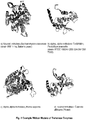
- the backbone structure of this enzyme is shown in Figure 1b depicting the two planes established by the glucose units.
- Trehalose has been determined to capture water through extensive solvation.
- Water molecules are arranged in a solvation complex around trehalose molecules, with water associating with trehalose functional groups through H bond formation; at infinite dilution, the solvation number approaches 15 (the highest among all disaccharides).
- This relatively large hydration number supports a potent ability to restructure water at minimum aqueous concentrations of trehalose and contribute to gelation phenomena.
- trehalose enhances the hydrogen bonding between water molecules by approximately 2%. This is sufficient to destructure the pure water tetrahedral network in conformity with a restructuring imposed by trehalose clusters.
- trehalose In a ternary mixture of protein (lysozyme), sugar, and water, at a moderate concentration of 0.5 M, trehalose can cluster around the protein, thereby trapping a thin layer of water molecules with modified solvation properties, playing the role of a "dynamic reducer" for solvent water molecules in the hydration shell around the protein.
- a remarkable conformational rigidity of the trehalose molecule due to anisotropic hydration provides stable interactions with hydrogen-bonded water molecules; trehalose makes an average of 2.8 long-lived hydrogen bonds per each step of molecular dynamic simulation compared with the average of 2.1 for the other sugars ( Lins RD, Pereira CS, and Hunenberger PH, "Protein-Trehalose Interactions in Aqueous Solution,” Proteins, 2004; 55: 177 .); ( Choi Y, Cho KW, Jeong K, and Jung S, "Molecular dynamic simulations of trehalose as a 'dynamic reducer' for solvent water molecules in the hydration shell," Carbohydr Res., June 12, 2006; 341(8): 1020-1028 .).
- a simulated ternary mixture of lipid membranes composed of DPPC (dipalmitoylphosphatidylcholine) in contact with an aqueous solution of trehalose shows that trehalose molecules cluster near membrane interfaces, forming hydrogen bonds, both between trehalose molecules and with the lipid headgroups ( Pereira CS, Hunenberger PH, "The effect of trehalose on a phospholipid membrane under mechanical stress," Biophys. J., 2008; 95: 3525 .); ( Sum AK, Faller R, and de Pablo JJ, "Molecular simulation study of phospholipid bilayers and insights of the interactions with disaccharides," Biophys. J., 2003; 85: 2830 .).
- DPPC dipalmitoylphosphatidylcholine
- Trehalose may compete with water binding to both carbonyls and phosphates in cell membranes, forming the OH bridges that are stronger than the H-bonds of water with those groups, and the displacement of water is compensated with the insertion of sugar.
- Trehalose a dimer of glucose with the ability to form at least 10 hydrogen bonds, inserts in a lipid interface nearly normal to the lipid bilayer plane and can decrease water activity in the cell membrane up to 70% at a concentration of trehalose as low as 0.1 mM.
- trehalose may affect the cell surface potential and hence cell aggregation and attachment to surfaces. There can be at least two mechanisms for these phenomena. First, the magnitude of cell surface potential can be modulated by trehalose displacement of water in its attachment to cell membrane phospholipids and carbonyl compounds.
- trehalose can be one of the most important components of microbial biofilm, and its specific interactions with water can be considered to be one of the most important mechanisms of biofilm formation.
- trehalose facilitates adhesion of planktonic bacteria to surfaces by various means: as a result of its interaction with water and the lipid headgroups at the cell membrane interfaces, it decreases the microbial cell surface potential and enhances the bacterial cell aggregation, initial adsorption and attachment to the surfaces, both biotic and abiotic.
- trehalose favors the bacterial cell aggregation and attachment to various surfaces by forming a hydration layer with modified solvation properties around the bacterial cell and reducing the dynamic properties of water in this layer (and up to the 3-rd and 4-th hydration layers), thus slowing down the bacterial cell movement.
- trehalose self-associates in aqueous solution in a concentration dependent manner to form clustering networks, affecting the dynamic properties of the solution. Through extensive solvation, trehalose has a potent ability to restructure water in the solution and enhance the hydrogen bonding between water molecules, thus contributing to the gelation phenomena and the biofilm formation.
- the bacteria will continuously produce trehalose as a general stress response metabolite and an osmoprotectant in response to constantly varying environmental conditions, such as increased cell density, nutrients limitations, and waste products accumulation in the biofilm. Then, the continuous trehalose - water interactions, with attraction of new water molecules and further restructuring of water, will result in formation of new layers of the biofilm and gradually increased biofilm volume.
- bacteria will release into the biofilm matrix various extracellular substances, including specific proteins (adhesins, matrix interacting factors), compatible solutes, metabolic end- or by-products, such as polysaccharides, lipids, phospholipids, and the detritus from aging and lysed cells, which will contribute to the formation of the tertiary structure of the biofilm, stabilization of the biofilm architecture, thickening of the biofilm matrix, and increased density of the biofilm.
- specific proteins as adhesins, matrix interacting factors
- compatible solutes such as polysaccharides, lipids, phospholipids, and the detritus from aging and lysed cells
- the amount of trehalose in the superficial layers of the biofilm can decrease due to higher accumulation of trehalose in the deeper layers adjacent to the bacterial cells, so that the trehalose restructuring effect on water, the strengthening effect on the hydrogen bonds between water molecules, and the aggregation forces between the bacterial cells gradually diminish and favor the sloughing off of the superficial layers of the biofilm, and dissemination of the pathogenic bacteria to the new places.
- bacteria will respond to any environmental assault on the biofilm, including the use of various disinfectants and antimicrobials, by additional production of trehalose as a general stress response metabolite and an osmoprotectant, that will result in further increase of the biofilm gel matrix volume and density, preventing the penetration of harmful substances into the biofilm.
- trehalose was detected in a small amount (3%), along with glycerol (5%), mannitol (18%), and glucose (74%), in the monosaccharide-polyol fraction of the aerial-grown hyphae of the Aspergillus fumigatus biofilm; all hexoses and polyols were found intracellularly in the same proportion as extracellularly ( Beauvais A, Schmidt C, Guadagnini S, Roux P, Perret E, Henry C, Paris S, Mallet A, Prevost M, and Latge JP, "An extracellular matrix glues together the aerial-grown hyphae of Aspergillus fumigates," Cellular Microbiology, 2007; 9(6): 1588-1600 .).
- biofilm development on stainless steel by Listeria monocytogenes was enhanced by the presence of mannose or trehalose as nutrients in the growth media, with trehalose being superior to mannose in constant biofilm production during 12 days of incubation at 21 degrees C ( Kim KY and Frank JF, "Effect of nutrients on biofilm formation by Listeria monocytogenes on stainless steel," Journal of food protection, 1995; 58(1): 24-28 .).
- Isolated intestinal trehalase deficiency is found in approximately 8% of Greenlanders; it is not infrequent among Finns, but is believed to be rare elsewhere.
- the low (2%) incidence of isolated trehalase enzyme deficiency was described in the populations from the USA, UK, and mainland Europe ( Bergoz R, Valloton MC, and Loizeau E, "Trehalase deficiency," Ann. Nutr. Metab., 1982; 26: 191-195 .).
- a specific treatment embodiment for pipelines involves the exploitation of annular liquid flow geometries.
- the annular flow pattern of two immiscible liquids having very different viscosities in a horizontal pipe (also known as “core-annular flow”) has been proposed as an attractive means for the pipeline transportation of heavy oils since the oil tends to occupy the center of the tube, surrounded by a thin annulus of a lubricant fluid (usually water)
- Bannwar AC "Modeling aspects of oil-water core-annular flows," Journal of Petroleum Science and Engineering Volume 32, Issues 2-4, 29 December 2001, Pages 127-143 .).
- a thin water film can be introduced between the oil and the pipe wall to act as a lubricant, giving a pressure gradient reduction.
- Candidate industrial biocides for use with trehalase enzyme-based treatments include popular industrial biocide products on the market such as Ultra KleenTM manufactured by Sterilex Corp., Hunt Valley, MD , the active ingredients of which comprise:
- SWG Biocide manufactured by Albermarle Corp., Baton Rouge, LA, the active ingredients of which comprise sodium bromosulfamate and sodium chlorosulfamate.
- Candidates may also be found among the wider generic categories of industrial biocides comprising: glutaraldehyde, quaternary ammonium compounds (QACs), blends of Gut and QACs, Amine salts, Polymeric biguanide, benzisothiazolone, blend of methyl isothiazolones, and acrolein ( Handbook of Biocide and Preservative Use, Edited by H. W. Rossmoore, Chapman and Hall, 1995 ).
- QACs quaternary ammonium compounds
- Amine salts Polymeric biguanide
- benzisothiazolone blend of methyl isothiazolones
- acrolein Handbook of Biocide and Preservative Use, Edited by H. W. Rossmoore, Chapman and Hall, 1995 ).
Landscapes
- Health & Medical Sciences (AREA)
- Life Sciences & Earth Sciences (AREA)
- General Health & Medical Sciences (AREA)
- Chemical & Material Sciences (AREA)
- Engineering & Computer Science (AREA)
- Organic Chemistry (AREA)
- Bioinformatics & Cheminformatics (AREA)
- Veterinary Medicine (AREA)
- Public Health (AREA)
- Animal Behavior & Ethology (AREA)
- Medicinal Chemistry (AREA)
- Pharmacology & Pharmacy (AREA)
- Zoology (AREA)
- Nuclear Medicine, Radiotherapy & Molecular Imaging (AREA)
- General Chemical & Material Sciences (AREA)
- Chemical Kinetics & Catalysis (AREA)
- Wood Science & Technology (AREA)
- Genetics & Genomics (AREA)
- Biotechnology (AREA)
- Microbiology (AREA)
- Proteomics, Peptides & Aminoacids (AREA)
- Epidemiology (AREA)
- General Engineering & Computer Science (AREA)
- Biochemistry (AREA)
- Oral & Maxillofacial Surgery (AREA)
- Agronomy & Crop Science (AREA)
- Oncology (AREA)
- Environmental Sciences (AREA)
- Dentistry (AREA)
- Biomedical Technology (AREA)
- Molecular Biology (AREA)
- Birds (AREA)
- Virology (AREA)
- Plant Pathology (AREA)
- Gastroenterology & Hepatology (AREA)
- Immunology (AREA)
- Urology & Nephrology (AREA)
- Communicable Diseases (AREA)
- Pest Control & Pesticides (AREA)
- Ophthalmology & Optometry (AREA)
Applications Claiming Priority (3)
| Application Number | Priority Date | Filing Date | Title |
|---|---|---|---|
| US201161520654P | 2011-06-13 | 2011-06-13 | |
| US13/481,787 US20120315260A1 (en) | 2011-06-13 | 2012-05-26 | Compositions and Methods to Prevent and Treat Biofilms |
| PCT/US2012/040408 WO2012173796A2 (en) | 2011-06-13 | 2012-06-01 | Compositions and methods to prevent and treat biofilms |
Publications (3)
| Publication Number | Publication Date |
|---|---|
| EP2717926A2 EP2717926A2 (en) | 2014-04-16 |
| EP2717926A4 EP2717926A4 (en) | 2014-12-31 |
| EP2717926B1 true EP2717926B1 (en) | 2017-05-24 |
Family
ID=47293375
Family Applications (1)
| Application Number | Title | Priority Date | Filing Date |
|---|---|---|---|
| EP12800279.7A Active EP2717926B1 (en) | 2011-06-13 | 2012-06-01 | Compositions and methods to prevent and treat biofilms |
Country Status (5)
| Country | Link |
|---|---|
| US (1) | US20120315260A1 (https=) |
| EP (1) | EP2717926B1 (https=) |
| JP (1) | JP2015502179A (https=) |
| DK (1) | DK2717926T3 (https=) |
| WO (1) | WO2012173796A2 (https=) |
Cited By (15)
| Publication number | Priority date | Publication date | Assignee | Title |
|---|---|---|---|---|
| US10856984B2 (en) | 2017-08-25 | 2020-12-08 | Neovasc Tiara Inc. | Sequentially deployed transcatheter mitral valve prosthesis |
| US10940001B2 (en) | 2012-05-30 | 2021-03-09 | Neovasc Tiara Inc. | Methods and apparatus for loading a prosthesis onto a delivery system |
| US11311376B2 (en) | 2019-06-20 | 2022-04-26 | Neovase Tiara Inc. | Low profile prosthetic mitral valve |
| US11357622B2 (en) | 2016-01-29 | 2022-06-14 | Neovase Tiara Inc. | Prosthetic valve for avoiding obstruction of outflow |
| US11389291B2 (en) | 2013-04-04 | 2022-07-19 | Neovase Tiara Inc. | Methods and apparatus for delivering a prosthetic valve to a beating heart |
| US11413139B2 (en) | 2011-11-23 | 2022-08-16 | Neovasc Tiara Inc. | Sequentially deployed transcatheter mitral valve prosthesis |
| US11419720B2 (en) | 2010-05-05 | 2022-08-23 | Neovasc Tiara Inc. | Transcatheter mitral valve prosthesis |
| US11464631B2 (en) | 2016-11-21 | 2022-10-11 | Neovasc Tiara Inc. | Methods and systems for rapid retraction of a transcatheter heart valve delivery system |
| US11491006B2 (en) | 2019-04-10 | 2022-11-08 | Neovasc Tiara Inc. | Prosthetic valve with natural blood flow |
| US11497602B2 (en) | 2012-02-14 | 2022-11-15 | Neovasc Tiara Inc. | Methods and apparatus for engaging a valve prosthesis with tissue |
| US11602429B2 (en) | 2019-04-01 | 2023-03-14 | Neovasc Tiara Inc. | Controllably deployable prosthetic valve |
| US11737872B2 (en) | 2018-11-08 | 2023-08-29 | Neovasc Tiara Inc. | Ventricular deployment of a transcatheter mitral valve prosthesis |
| US11779742B2 (en) | 2019-05-20 | 2023-10-10 | Neovasc Tiara Inc. | Introducer with hemostasis mechanism |
| US11998447B2 (en) | 2019-03-08 | 2024-06-04 | Neovasc Tiara Inc. | Retrievable prosthesis delivery system |
| US12109111B2 (en) | 2015-12-15 | 2024-10-08 | Neovasc Tiara Inc. | Transseptal delivery system |
Families Citing this family (17)
| Publication number | Priority date | Publication date | Assignee | Title |
|---|---|---|---|---|
| JP5548121B2 (ja) | 2007-05-14 | 2014-07-16 | リサーチ ファウンデーション オブ ステイト ユニバーシティ オブ ニューヨーク | バイオフィルム中の細菌細胞における生理学的分散応答の誘導 |
| US10420822B2 (en) | 2011-06-13 | 2019-09-24 | Ziolase, Llc | Compositions and methods to prevent and treat biofilms |
| US9549904B2 (en) | 2012-06-06 | 2017-01-24 | Thomas Bryan | Method of destroying bacterial biofilm using sterile intravenous or intracavernous glycerin |
| US9480669B2 (en) | 2015-01-06 | 2016-11-01 | The Regents Of The University Of California | Method of destroying and preventing bacterial and fungal biofilm by amino acid infusion |
| DE102013201883B4 (de) * | 2013-02-05 | 2025-11-20 | Zyfoma Gmbh | Verwendung einer wässrigen Lösung einer Säure als Behandlungsflüssigkeit zur Reinigung eines Implantat-Teils |
| EP2803372A1 (en) | 2013-05-16 | 2014-11-19 | Universiteit Twente | Process for the preparation of an object supporting a lipid bilayer |
| US20180044628A1 (en) * | 2015-03-13 | 2018-02-15 | The Regents Of The University Of California | Method for Biofilm Control and Treatment |
| JP6849658B2 (ja) * | 2015-08-18 | 2021-03-24 | ウィスコンシン アルムニ リサーチ ファンデイション | 医療機器包装フィルムからのClO2ガスの放出 |
| JP7249149B2 (ja) * | 2016-05-12 | 2023-03-30 | ザ トラスティーズ オブ ザ ユニバーシティ オブ ペンシルバニア | バイオフィルムの堆積および産生を阻害するための組成物および方法 |
| WO2018209345A1 (en) * | 2017-05-12 | 2018-11-15 | The Trustees Of The University Of Pennsylvania | Compositions and methods for inhibiting biofilm deposition and production |
| BR112019018738A2 (pt) * | 2017-03-10 | 2020-04-07 | Biohm Health Llc | composições e métodos para promoção de uma flora microbiana saudável em um mamífero |
| US11382885B2 (en) | 2017-06-07 | 2022-07-12 | The Regents Of The University Of California | Compositions for treating fungal and bacterial biofilms and methods of using the same |
| US11541105B2 (en) | 2018-06-01 | 2023-01-03 | The Research Foundation For The State University Of New York | Compositions and methods for disrupting biofilm formation and maintenance |
| US12226386B2 (en) | 2018-12-03 | 2025-02-18 | The Regents Of The University Of California | Compositions and methods for treating biofilms |
| CN110538314B (zh) * | 2019-09-28 | 2024-09-13 | 上海泌码生命科学有限公司 | 用于杀灭已形成生物膜的铜绿假单胞菌的抗菌肽组合物 |
| CN113769148B (zh) * | 2021-09-27 | 2023-03-21 | 中国科学院微生物研究所 | PslG蛋白在隐形眼镜护理液中的应用 |
| US12109176B1 (en) | 2023-04-20 | 2024-10-08 | Thomas Bryan | Effect of glycerol on biofilm forming bacteria and fungi that changes the microbes sensitivity to pro and anti-biofilm non-toxic, non-bonded plasma amino acids and amino acid derivatives |
Family Cites Families (16)
| Publication number | Priority date | Publication date | Assignee | Title |
|---|---|---|---|---|
| JPH0751063A (ja) * | 1993-06-11 | 1995-02-28 | Kirin Brewery Co Ltd | 逆反応性を有するトレハラーゼ、およびα,α−トレハロースの製造方法 |
| JP3659985B2 (ja) * | 1993-12-28 | 2005-06-15 | 三栄源エフ・エフ・アイ株式会社 | トレハラーゼ及び該酵素を用いた糖類の製法 |
| NZ306445A (en) * | 1995-04-07 | 1999-02-25 | Betzdearborn Inc | Exopolysaccharide degrading enzyme and its use in the treatment of aqueous systems |
| AU2446997A (en) * | 1996-04-10 | 1997-10-29 | Merck & Co., Inc. | Method for improving culture medium for recombinant yeasts |
| IN1997CH00924A (en) * | 1996-05-03 | 2005-03-04 | Syngenta Mogen Bv | Regulating metabolism by modifying the level of trehalose-6-phosphate |
| US6759040B1 (en) * | 1997-09-12 | 2004-07-06 | University Of Maryland, College Park | Preparation and use of biofilm-degrading, multiple-specificity, hydrolytic enzyme mixtures |
| US20020022005A1 (en) * | 1997-10-16 | 2002-02-21 | Budny John A. | Compositions for treating cystic fibrosis |
| US5871714A (en) * | 1997-10-16 | 1999-02-16 | Pharmacal Biotechnologies, Inc. | Compositions for controlling bacterial colonization |
| EP1068871A1 (en) * | 1999-07-07 | 2001-01-17 | Jean-Paul Perraudin | Novel methods and medicament for treating infections diseases involving microbial biofilms |
| EP1081232A1 (en) * | 1999-08-30 | 2001-03-07 | K.U. Leuven Research & Development | Novel target for antifungals |
| JP3959439B2 (ja) * | 2001-08-21 | 2007-08-15 | 学校法人 東洋大学 | 耐熱性トレハラーゼと、その製造法 |
| EP1796687A2 (en) * | 2004-09-14 | 2007-06-20 | Elixir Pharmaceuticals, Inc. | Combination therapy for controlled carbohydrate digestion |
| US20080139450A1 (en) * | 2005-07-01 | 2008-06-12 | Srinivasa Madhyastha | Antimicrobial Compositions and Uses Thereof |
| EP1872791A1 (en) * | 2006-06-30 | 2008-01-02 | Institut Pasteur | Use of bacterial polysaccharides for biofilm inhibition |
| PL2254591T3 (pl) * | 2008-02-08 | 2018-01-31 | Prothera Inc | Inhibicja i leczenie biofilmów żołądkowo-jelitowych |
| WO2011063394A2 (en) * | 2009-11-23 | 2011-05-26 | Olmstead Stephen F | Compositions and methods comprising serratia peptidase for inhibition and treatment of biofilms related to certain conditions |
-
2012
- 2012-05-26 US US13/481,787 patent/US20120315260A1/en not_active Abandoned
- 2012-06-01 EP EP12800279.7A patent/EP2717926B1/en active Active
- 2012-06-01 DK DK12800279.7T patent/DK2717926T3/en active
- 2012-06-01 WO PCT/US2012/040408 patent/WO2012173796A2/en not_active Ceased
- 2012-06-01 JP JP2014515857A patent/JP2015502179A/ja active Pending
Non-Patent Citations (1)
| Title |
|---|
| E. W. PETZOLD ET AL: "Characterization and Regulation of the Trehalose Synthesis Pathway and Its Importance in the Pathogenicity of Cryptococcus neoformans", INFECTION AND IMMUNITY, vol. 74, no. 10, 20 September 2006 (2006-09-20), US, pages 5877 - 5887, XP055340600, ISSN: 0019-9567, DOI: 10.1128/IAI.00624-06 * |
Cited By (25)
| Publication number | Priority date | Publication date | Assignee | Title |
|---|---|---|---|---|
| US12611303B2 (en) | 2010-05-05 | 2026-04-28 | Neovasc Tiara Inc. | Transcatheter mitral valve prosthesis |
| US11419720B2 (en) | 2010-05-05 | 2022-08-23 | Neovasc Tiara Inc. | Transcatheter mitral valve prosthesis |
| US11413139B2 (en) | 2011-11-23 | 2022-08-16 | Neovasc Tiara Inc. | Sequentially deployed transcatheter mitral valve prosthesis |
| US12053369B2 (en) | 2011-11-23 | 2024-08-06 | Neovasc Tiara Inc. | Sequentially deployed transcatheter mitral valve prosthesis |
| US12138159B2 (en) | 2012-02-14 | 2024-11-12 | Neovasc Tiara Inc. | Methods and apparatus for engaging a valve prosthesis with tissue |
| US11497602B2 (en) | 2012-02-14 | 2022-11-15 | Neovasc Tiara Inc. | Methods and apparatus for engaging a valve prosthesis with tissue |
| US11617650B2 (en) | 2012-05-30 | 2023-04-04 | Neovasc Tiara Inc. | Methods and apparatus for loading a prosthesis onto a delivery system |
| US11389294B2 (en) | 2012-05-30 | 2022-07-19 | Neovasc Tiara Inc. | Methods and apparatus for loading a prosthesis onto a delivery system |
| US10940001B2 (en) | 2012-05-30 | 2021-03-09 | Neovasc Tiara Inc. | Methods and apparatus for loading a prosthesis onto a delivery system |
| US11389291B2 (en) | 2013-04-04 | 2022-07-19 | Neovase Tiara Inc. | Methods and apparatus for delivering a prosthetic valve to a beating heart |
| US12109111B2 (en) | 2015-12-15 | 2024-10-08 | Neovasc Tiara Inc. | Transseptal delivery system |
| US12193932B2 (en) | 2016-01-29 | 2025-01-14 | Neovasc Tiara Inc. | Prosthetic valve for avoiding obstruction of outflow |
| US11357622B2 (en) | 2016-01-29 | 2022-06-14 | Neovase Tiara Inc. | Prosthetic valve for avoiding obstruction of outflow |
| US11464631B2 (en) | 2016-11-21 | 2022-10-11 | Neovasc Tiara Inc. | Methods and systems for rapid retraction of a transcatheter heart valve delivery system |
| US12201524B2 (en) | 2016-11-21 | 2025-01-21 | Neovasc Tiara Inc. | Methods and systems for rapid retraction of a transcatheter heart valve delivery system |
| US11793640B2 (en) | 2017-08-25 | 2023-10-24 | Neovasc Tiara Inc. | Sequentially deployed transcatheter mitral valve prosthesis |
| US10856984B2 (en) | 2017-08-25 | 2020-12-08 | Neovasc Tiara Inc. | Sequentially deployed transcatheter mitral valve prosthesis |
| US11737872B2 (en) | 2018-11-08 | 2023-08-29 | Neovasc Tiara Inc. | Ventricular deployment of a transcatheter mitral valve prosthesis |
| US11998447B2 (en) | 2019-03-08 | 2024-06-04 | Neovasc Tiara Inc. | Retrievable prosthesis delivery system |
| US11602429B2 (en) | 2019-04-01 | 2023-03-14 | Neovasc Tiara Inc. | Controllably deployable prosthetic valve |
| US12036117B2 (en) | 2019-04-10 | 2024-07-16 | Neovasc Tiara Inc. | Prosthetic valve with natural blood flow |
| US11491006B2 (en) | 2019-04-10 | 2022-11-08 | Neovasc Tiara Inc. | Prosthetic valve with natural blood flow |
| US11779742B2 (en) | 2019-05-20 | 2023-10-10 | Neovasc Tiara Inc. | Introducer with hemostasis mechanism |
| US11931254B2 (en) | 2019-06-20 | 2024-03-19 | Neovasc Tiara Inc. | Low profile prosthetic mitral valve |
| US11311376B2 (en) | 2019-06-20 | 2022-04-26 | Neovase Tiara Inc. | Low profile prosthetic mitral valve |
Also Published As
| Publication number | Publication date |
|---|---|
| US20120315260A1 (en) | 2012-12-13 |
| EP2717926A2 (en) | 2014-04-16 |
| WO2012173796A3 (en) | 2013-05-02 |
| EP2717926A4 (en) | 2014-12-31 |
| WO2012173796A2 (en) | 2012-12-20 |
| DK2717926T3 (en) | 2017-09-18 |
| JP2015502179A (ja) | 2015-01-22 |
Similar Documents
| Publication | Publication Date | Title |
|---|---|---|
| EP2717926B1 (en) | Compositions and methods to prevent and treat biofilms | |
| US10758596B2 (en) | Compositions and methods to prevent and treat biofilms | |
| CA3088187A1 (en) | Compositions and methods to prevent and treat biofilms | |
| US20200078448A1 (en) | Compositions and methods to prevent and treat biofilms | |
| JP6869637B2 (ja) | 抗菌性組成物 | |
| Jain et al. | Biofilms—a microbial life perspective: a critical review | |
| Tolker‐Nielsen | Pseudomonas aeruginosa biofilm infections: from molecular biofilm biology to new treatment possibilities | |
| Kokare et al. | Biofilm: Importance and applications | |
| Cos et al. | Biofilms: an extra hurdle for effective antimicrobial therapy | |
| CA2511103C (en) | Compositions and methods for enzymatic detachment of bacterial and fungal biofilms | |
| JP6244291B2 (ja) | 胃腸のバイオフィルムの抑制および治療 | |
| Vani et al. | A narrative review on bacterial biofilm: Its formation, clinical aspects and inhibition strategies | |
| EP2236594B1 (en) | Method for removing biofilms | |
| US8377455B2 (en) | Biosurfactant composition produced by a new Bacillus licheniforms strain, uses and products thereof | |
| US9357792B2 (en) | Fermented cereal product obtained by fermentation of rye bran with a Lactobacillus curvatus strain | |
| Khan et al. | Contribution of chitooligosaccharides to biofilm formation, antibiotics resistance and disinfectants tolerance of Listeria monocytogenes | |
| US9480729B2 (en) | Enzymes for inhibiting growth of biofilms and degrading same | |
| Puca et al. | Biofilm and bacterial membrane vesicles: recent advances | |
| Choi et al. | Oleic acid and inhibition of glucosyltransferase | |
| US20220322671A1 (en) | Methods to reduce contamination, biofilm and fouling from water systems, surfaces, and products | |
| Liaqat et al. | Biofilm, dental unit water line and its control | |
| Peterson | Investigations of Substrate Recognition of the Biofilm Glycosidase Enzyme Dispersin B | |
| Atanasković et al. | Enzyme-based strategies for inhibiting medically relevant biofilms: applications in healthcare and food safety | |
| Manikandan et al. | Bacteriology of Biofilm | |
| Kao et al. | Biofilm disease and otitis |
Legal Events
| Date | Code | Title | Description |
|---|---|---|---|
| PUAI | Public reference made under article 153(3) epc to a published international application that has entered the european phase |
Free format text: ORIGINAL CODE: 0009012 |
|
| 17P | Request for examination filed |
Effective date: 20140109 |
|
| AK | Designated contracting states |
Kind code of ref document: A2 Designated state(s): AL AT BE BG CH CY CZ DE DK EE ES FI FR GB GR HR HU IE IS IT LI LT LU LV MC MK MT NL NO PL PT RO RS SE SI SK SM TR |
|
| DAX | Request for extension of the european patent (deleted) | ||
| A4 | Supplementary search report drawn up and despatched |
Effective date: 20141127 |
|
| RIC1 | Information provided on ipc code assigned before grant |
Ipc: A61L 27/00 20060101ALI20141121BHEP Ipc: A61K 8/66 20060101ALI20141121BHEP Ipc: A61F 2/20 20060101ALI20141121BHEP Ipc: A61L 2/16 20060101AFI20141121BHEP Ipc: A61K 38/47 20060101ALI20141121BHEP Ipc: A61F 2/24 20060101ALI20141121BHEP |
|
| 17Q | First examination report despatched |
Effective date: 20151208 |
|
| GRAP | Despatch of communication of intention to grant a patent |
Free format text: ORIGINAL CODE: EPIDOSNIGR1 |
|
| RIC1 | Information provided on ipc code assigned before grant |
Ipc: A61L 27/00 20060101ALI20170131BHEP Ipc: A61L 2/16 20060101AFI20170131BHEP Ipc: A61K 8/66 20060101ALI20170131BHEP Ipc: A61K 38/47 20060101ALI20170131BHEP Ipc: A01N 63/02 20060101ALI20170131BHEP Ipc: A61F 2/24 20060101ALI20170131BHEP Ipc: A61F 2/20 20060101ALI20170131BHEP |
|
| INTG | Intention to grant announced |
Effective date: 20170227 |
|
| GRAS | Grant fee paid |
Free format text: ORIGINAL CODE: EPIDOSNIGR3 |
|
| GRAA | (expected) grant |
Free format text: ORIGINAL CODE: 0009210 |
|
| RIN1 | Information on inventor provided before grant (corrected) |
Inventor name: CONNELLAN, THOMAS K. Inventor name: DAVIS, DENNIS W. Inventor name: IVANOVA, SVETLANA A. Inventor name: ARENZ, BRAD W. |
|
| AK | Designated contracting states |
Kind code of ref document: B1 Designated state(s): AL AT BE BG CH CY CZ DE DK EE ES FI FR GB GR HR HU IE IS IT LI LT LU LV MC MK MT NL NO PL PT RO RS SE SI SK SM TR |
|
| REG | Reference to a national code |
Ref country code: GB Ref legal event code: FG4D |
|
| REG | Reference to a national code |
Ref country code: CH Ref legal event code: EP |
|
| REG | Reference to a national code |
Ref country code: IE Ref legal event code: FG4D |
|
| REG | Reference to a national code |
Ref country code: AT Ref legal event code: REF Ref document number: 895688 Country of ref document: AT Kind code of ref document: T Effective date: 20170615 |
|
| REG | Reference to a national code |
Ref country code: FR Ref legal event code: PLFP Year of fee payment: 6 |
|
| REG | Reference to a national code |
Ref country code: DE Ref legal event code: R096 Ref document number: 602012032829 Country of ref document: DE |
|
| REG | Reference to a national code |
Ref country code: GB Ref legal event code: 732E Free format text: REGISTERED BETWEEN 20170727 AND 20170802 |
|
| REG | Reference to a national code |
Ref country code: DE Ref legal event code: R081 Ref document number: 602012032829 Country of ref document: DE Owner name: ZIOLASE, LLC, WINTER SPRINGS, US Free format text: FORMER OWNER: IVANOVA, SVETLANA A., WINTER SPRINGS, FLA., US |
|
| REG | Reference to a national code |
Ref country code: CH Ref legal event code: PUE Owner name: ZIOLASE, LLC, US Free format text: FORMER OWNER: IVANOVA, SVETLANA A., US Ref country code: DE Ref legal event code: R082 Ref document number: 602012032829 Country of ref document: DE |
|
| RAP2 | Party data changed (patent owner data changed or rights of a patent transferred) |
Owner name: ZIOLASE, LLC |
|
| REG | Reference to a national code |
Ref country code: NL Ref legal event code: FP |
|
| REG | Reference to a national code |
Ref country code: DK Ref legal event code: T3 Effective date: 20170911 |
|
| REG | Reference to a national code |
Ref country code: SE Ref legal event code: TRGR |
|
| REG | Reference to a national code |
Ref country code: LT Ref legal event code: MG4D |
|
| REG | Reference to a national code |
Ref country code: AT Ref legal event code: MK05 Ref document number: 895688 Country of ref document: AT Kind code of ref document: T Effective date: 20170524 |
|
| REG | Reference to a national code |
Ref country code: NL Ref legal event code: PD Owner name: ZIOLASE, LLC; US Free format text: DETAILS ASSIGNMENT: CHANGE OF OWNER(S), ASSIGNMENT; FORMER OWNER NAME: IVANOVA, SVETLANA A. Effective date: 20170822 |
|
| PG25 | Lapsed in a contracting state [announced via postgrant information from national office to epo] |
Ref country code: ES Free format text: LAPSE BECAUSE OF FAILURE TO SUBMIT A TRANSLATION OF THE DESCRIPTION OR TO PAY THE FEE WITHIN THE PRESCRIBED TIME-LIMIT Effective date: 20170524 Ref country code: LT Free format text: LAPSE BECAUSE OF FAILURE TO SUBMIT A TRANSLATION OF THE DESCRIPTION OR TO PAY THE FEE WITHIN THE PRESCRIBED TIME-LIMIT Effective date: 20170524 Ref country code: NO Free format text: LAPSE BECAUSE OF FAILURE TO SUBMIT A TRANSLATION OF THE DESCRIPTION OR TO PAY THE FEE WITHIN THE PRESCRIBED TIME-LIMIT Effective date: 20170824 Ref country code: FI Free format text: LAPSE BECAUSE OF FAILURE TO SUBMIT A TRANSLATION OF THE DESCRIPTION OR TO PAY THE FEE WITHIN THE PRESCRIBED TIME-LIMIT Effective date: 20170524 Ref country code: GR Free format text: LAPSE BECAUSE OF FAILURE TO SUBMIT A TRANSLATION OF THE DESCRIPTION OR TO PAY THE FEE WITHIN THE PRESCRIBED TIME-LIMIT Effective date: 20170825 Ref country code: HR Free format text: LAPSE BECAUSE OF FAILURE TO SUBMIT A TRANSLATION OF THE DESCRIPTION OR TO PAY THE FEE WITHIN THE PRESCRIBED TIME-LIMIT Effective date: 20170524 Ref country code: AT Free format text: LAPSE BECAUSE OF FAILURE TO SUBMIT A TRANSLATION OF THE DESCRIPTION OR TO PAY THE FEE WITHIN THE PRESCRIBED TIME-LIMIT Effective date: 20170524 |
|
| PG25 | Lapsed in a contracting state [announced via postgrant information from national office to epo] |
Ref country code: LV Free format text: LAPSE BECAUSE OF FAILURE TO SUBMIT A TRANSLATION OF THE DESCRIPTION OR TO PAY THE FEE WITHIN THE PRESCRIBED TIME-LIMIT Effective date: 20170524 Ref country code: RS Free format text: LAPSE BECAUSE OF FAILURE TO SUBMIT A TRANSLATION OF THE DESCRIPTION OR TO PAY THE FEE WITHIN THE PRESCRIBED TIME-LIMIT Effective date: 20170524 Ref country code: BG Free format text: LAPSE BECAUSE OF FAILURE TO SUBMIT A TRANSLATION OF THE DESCRIPTION OR TO PAY THE FEE WITHIN THE PRESCRIBED TIME-LIMIT Effective date: 20170824 Ref country code: IS Free format text: LAPSE BECAUSE OF FAILURE TO SUBMIT A TRANSLATION OF THE DESCRIPTION OR TO PAY THE FEE WITHIN THE PRESCRIBED TIME-LIMIT Effective date: 20170924 |
|
| PG25 | Lapsed in a contracting state [announced via postgrant information from national office to epo] |
Ref country code: EE Free format text: LAPSE BECAUSE OF FAILURE TO SUBMIT A TRANSLATION OF THE DESCRIPTION OR TO PAY THE FEE WITHIN THE PRESCRIBED TIME-LIMIT Effective date: 20170524 Ref country code: SK Free format text: LAPSE BECAUSE OF FAILURE TO SUBMIT A TRANSLATION OF THE DESCRIPTION OR TO PAY THE FEE WITHIN THE PRESCRIBED TIME-LIMIT Effective date: 20170524 Ref country code: CZ Free format text: LAPSE BECAUSE OF FAILURE TO SUBMIT A TRANSLATION OF THE DESCRIPTION OR TO PAY THE FEE WITHIN THE PRESCRIBED TIME-LIMIT Effective date: 20170524 Ref country code: RO Free format text: LAPSE BECAUSE OF FAILURE TO SUBMIT A TRANSLATION OF THE DESCRIPTION OR TO PAY THE FEE WITHIN THE PRESCRIBED TIME-LIMIT Effective date: 20170524 |
|
| REG | Reference to a national code |
Ref country code: DE Ref legal event code: R097 Ref document number: 602012032829 Country of ref document: DE |
|
| PG25 | Lapsed in a contracting state [announced via postgrant information from national office to epo] |
Ref country code: PL Free format text: LAPSE BECAUSE OF FAILURE TO SUBMIT A TRANSLATION OF THE DESCRIPTION OR TO PAY THE FEE WITHIN THE PRESCRIBED TIME-LIMIT Effective date: 20170524 Ref country code: SM Free format text: LAPSE BECAUSE OF FAILURE TO SUBMIT A TRANSLATION OF THE DESCRIPTION OR TO PAY THE FEE WITHIN THE PRESCRIBED TIME-LIMIT Effective date: 20170524 Ref country code: IT Free format text: LAPSE BECAUSE OF FAILURE TO SUBMIT A TRANSLATION OF THE DESCRIPTION OR TO PAY THE FEE WITHIN THE PRESCRIBED TIME-LIMIT Effective date: 20170524 |
|
| REG | Reference to a national code |
Ref country code: IE Ref legal event code: MM4A |
|
| PLBE | No opposition filed within time limit |
Free format text: ORIGINAL CODE: 0009261 |
|
| STAA | Information on the status of an ep patent application or granted ep patent |
Free format text: STATUS: NO OPPOSITION FILED WITHIN TIME LIMIT |
|
| PG25 | Lapsed in a contracting state [announced via postgrant information from national office to epo] |
Ref country code: LU Free format text: LAPSE BECAUSE OF NON-PAYMENT OF DUE FEES Effective date: 20170601 Ref country code: IE Free format text: LAPSE BECAUSE OF NON-PAYMENT OF DUE FEES Effective date: 20170601 |
|
| 26N | No opposition filed |
Effective date: 20180227 |
|
| PG25 | Lapsed in a contracting state [announced via postgrant information from national office to epo] |
Ref country code: SI Free format text: LAPSE BECAUSE OF FAILURE TO SUBMIT A TRANSLATION OF THE DESCRIPTION OR TO PAY THE FEE WITHIN THE PRESCRIBED TIME-LIMIT Effective date: 20170524 |
|
| REG | Reference to a national code |
Ref country code: FR Ref legal event code: PLFP Year of fee payment: 7 |
|
| PG25 | Lapsed in a contracting state [announced via postgrant information from national office to epo] |
Ref country code: MT Free format text: LAPSE BECAUSE OF NON-PAYMENT OF DUE FEES Effective date: 20170601 |
|
| PG25 | Lapsed in a contracting state [announced via postgrant information from national office to epo] |
Ref country code: HU Free format text: LAPSE BECAUSE OF FAILURE TO SUBMIT A TRANSLATION OF THE DESCRIPTION OR TO PAY THE FEE WITHIN THE PRESCRIBED TIME-LIMIT; INVALID AB INITIO Effective date: 20120601 Ref country code: MC Free format text: LAPSE BECAUSE OF FAILURE TO SUBMIT A TRANSLATION OF THE DESCRIPTION OR TO PAY THE FEE WITHIN THE PRESCRIBED TIME-LIMIT Effective date: 20170524 |
|
| PG25 | Lapsed in a contracting state [announced via postgrant information from national office to epo] |
Ref country code: CY Free format text: LAPSE BECAUSE OF NON-PAYMENT OF DUE FEES Effective date: 20170524 |
|
| PG25 | Lapsed in a contracting state [announced via postgrant information from national office to epo] |
Ref country code: MK Free format text: LAPSE BECAUSE OF FAILURE TO SUBMIT A TRANSLATION OF THE DESCRIPTION OR TO PAY THE FEE WITHIN THE PRESCRIBED TIME-LIMIT Effective date: 20170524 |
|
| PG25 | Lapsed in a contracting state [announced via postgrant information from national office to epo] |
Ref country code: TR Free format text: LAPSE BECAUSE OF FAILURE TO SUBMIT A TRANSLATION OF THE DESCRIPTION OR TO PAY THE FEE WITHIN THE PRESCRIBED TIME-LIMIT Effective date: 20170524 |
|
| PG25 | Lapsed in a contracting state [announced via postgrant information from national office to epo] |
Ref country code: PT Free format text: LAPSE BECAUSE OF FAILURE TO SUBMIT A TRANSLATION OF THE DESCRIPTION OR TO PAY THE FEE WITHIN THE PRESCRIBED TIME-LIMIT Effective date: 20170524 |
|
| PG25 | Lapsed in a contracting state [announced via postgrant information from national office to epo] |
Ref country code: AL Free format text: LAPSE BECAUSE OF FAILURE TO SUBMIT A TRANSLATION OF THE DESCRIPTION OR TO PAY THE FEE WITHIN THE PRESCRIBED TIME-LIMIT Effective date: 20170524 |
|
| P01 | Opt-out of the competence of the unified patent court (upc) registered |
Effective date: 20230502 |
|
| PGFP | Annual fee paid to national office [announced via postgrant information from national office to epo] |
Ref country code: DE Payment date: 20250618 Year of fee payment: 14 |
|
| PGFP | Annual fee paid to national office [announced via postgrant information from national office to epo] |
Ref country code: GB Payment date: 20250416 Year of fee payment: 14 Ref country code: DK Payment date: 20250625 Year of fee payment: 14 |
|
| PGFP | Annual fee paid to national office [announced via postgrant information from national office to epo] |
Ref country code: NL Payment date: 20250618 Year of fee payment: 14 Ref country code: BE Payment date: 20250618 Year of fee payment: 14 |
|
| PGFP | Annual fee paid to national office [announced via postgrant information from national office to epo] |
Ref country code: FR Payment date: 20250624 Year of fee payment: 14 |
|
| PGFP | Annual fee paid to national office [announced via postgrant information from national office to epo] |
Ref country code: SE Payment date: 20250618 Year of fee payment: 14 |
|
| PGFP | Annual fee paid to national office [announced via postgrant information from national office to epo] |
Ref country code: CH Payment date: 20250701 Year of fee payment: 14 |