EP2702007B1 - Schweisshemmende aktive zusammensetzungen und ihre herstellung - Google Patents
Schweisshemmende aktive zusammensetzungen und ihre herstellung Download PDFInfo
- Publication number
- EP2702007B1 EP2702007B1 EP11808786.5A EP11808786A EP2702007B1 EP 2702007 B1 EP2702007 B1 EP 2702007B1 EP 11808786 A EP11808786 A EP 11808786A EP 2702007 B1 EP2702007 B1 EP 2702007B1
- Authority
- EP
- European Patent Office
- Prior art keywords
- aluminum
- nmr
- buffer
- aluminum salt
- species
- Prior art date
- Legal status (The legal status is an assumption and is not a legal conclusion. Google has not performed a legal analysis and makes no representation as to the accuracy of the status listed.)
- Active
Links
Images


Classifications
-
- A—HUMAN NECESSITIES
- A61—MEDICAL OR VETERINARY SCIENCE; HYGIENE
- A61K—PREPARATIONS FOR MEDICAL, DENTAL OR TOILETRY PURPOSES
- A61K8/00—Cosmetics or similar toiletry preparations
- A61K8/18—Cosmetics or similar toiletry preparations characterised by the composition
- A61K8/19—Cosmetics or similar toiletry preparations characterised by the composition containing inorganic ingredients
- A61K8/26—Aluminium; Compounds thereof
-
- A—HUMAN NECESSITIES
- A61—MEDICAL OR VETERINARY SCIENCE; HYGIENE
- A61K—PREPARATIONS FOR MEDICAL, DENTAL OR TOILETRY PURPOSES
- A61K8/00—Cosmetics or similar toiletry preparations
- A61K8/18—Cosmetics or similar toiletry preparations characterised by the composition
- A61K8/19—Cosmetics or similar toiletry preparations characterised by the composition containing inorganic ingredients
-
- A—HUMAN NECESSITIES
- A61—MEDICAL OR VETERINARY SCIENCE; HYGIENE
- A61K—PREPARATIONS FOR MEDICAL, DENTAL OR TOILETRY PURPOSES
- A61K8/00—Cosmetics or similar toiletry preparations
- A61K8/18—Cosmetics or similar toiletry preparations characterised by the composition
- A61K8/19—Cosmetics or similar toiletry preparations characterised by the composition containing inorganic ingredients
- A61K8/20—Halogens; Compounds thereof
-
- A—HUMAN NECESSITIES
- A61—MEDICAL OR VETERINARY SCIENCE; HYGIENE
- A61K—PREPARATIONS FOR MEDICAL, DENTAL OR TOILETRY PURPOSES
- A61K8/00—Cosmetics or similar toiletry preparations
- A61K8/18—Cosmetics or similar toiletry preparations characterised by the composition
- A61K8/19—Cosmetics or similar toiletry preparations characterised by the composition containing inorganic ingredients
- A61K8/28—Zirconium; Compounds thereof
-
- A—HUMAN NECESSITIES
- A61—MEDICAL OR VETERINARY SCIENCE; HYGIENE
- A61K—PREPARATIONS FOR MEDICAL, DENTAL OR TOILETRY PURPOSES
- A61K8/00—Cosmetics or similar toiletry preparations
- A61K8/18—Cosmetics or similar toiletry preparations characterised by the composition
- A61K8/30—Cosmetics or similar toiletry preparations characterised by the composition containing organic compounds
- A61K8/40—Cosmetics or similar toiletry preparations characterised by the composition containing organic compounds containing nitrogen
- A61K8/42—Amides
-
- A—HUMAN NECESSITIES
- A61—MEDICAL OR VETERINARY SCIENCE; HYGIENE
- A61K—PREPARATIONS FOR MEDICAL, DENTAL OR TOILETRY PURPOSES
- A61K8/00—Cosmetics or similar toiletry preparations
- A61K8/18—Cosmetics or similar toiletry preparations characterised by the composition
- A61K8/30—Cosmetics or similar toiletry preparations characterised by the composition containing organic compounds
- A61K8/40—Cosmetics or similar toiletry preparations characterised by the composition containing organic compounds containing nitrogen
- A61K8/44—Aminocarboxylic acids or derivatives thereof, e.g. aminocarboxylic acids containing sulfur; Salts; Esters or N-acylated derivatives thereof
-
- A—HUMAN NECESSITIES
- A61—MEDICAL OR VETERINARY SCIENCE; HYGIENE
- A61Q—SPECIFIC USE OF COSMETICS OR SIMILAR TOILETRY PREPARATIONS
- A61Q15/00—Anti-perspirants or body deodorants
-
- C—CHEMISTRY; METALLURGY
- C01—INORGANIC CHEMISTRY
- C01F—COMPOUNDS OF THE METALS BERYLLIUM, MAGNESIUM, ALUMINIUM, CALCIUM, STRONTIUM, BARIUM, RADIUM, THORIUM, OR OF THE RARE-EARTH METALS
- C01F7/00—Compounds of aluminium
- C01F7/48—Halides, with or without other cations besides aluminium
- C01F7/56—Chlorides
- C01F7/57—Basic aluminium chlorides, e.g. polyaluminium chlorides
-
- C—CHEMISTRY; METALLURGY
- C01—INORGANIC CHEMISTRY
- C01F—COMPOUNDS OF THE METALS BERYLLIUM, MAGNESIUM, ALUMINIUM, CALCIUM, STRONTIUM, BARIUM, RADIUM, THORIUM, OR OF THE RARE-EARTH METALS
- C01F7/00—Compounds of aluminium
- C01F7/78—Compounds containing aluminium, with or without oxygen or hydrogen, and containing two or more other elements
-
- A—HUMAN NECESSITIES
- A61—MEDICAL OR VETERINARY SCIENCE; HYGIENE
- A61K—PREPARATIONS FOR MEDICAL, DENTAL OR TOILETRY PURPOSES
- A61K2800/00—Properties of cosmetic compositions or active ingredients thereof or formulation aids used therein and process related aspects
- A61K2800/40—Chemical, physico-chemical or functional or structural properties of particular ingredients
- A61K2800/58—Metal complex; Coordination compounds
-
- C—CHEMISTRY; METALLURGY
- C01—INORGANIC CHEMISTRY
- C01P—INDEXING SCHEME RELATING TO STRUCTURAL AND PHYSICAL ASPECTS OF SOLID INORGANIC COMPOUNDS
- C01P2002/00—Crystal-structural characteristics
- C01P2002/80—Crystal-structural characteristics defined by measured data other than those specified in group C01P2002/70
- C01P2002/86—Crystal-structural characteristics defined by measured data other than those specified in group C01P2002/70 by NMR- or ESR-data
-
- C—CHEMISTRY; METALLURGY
- C01—INORGANIC CHEMISTRY
- C01P—INDEXING SCHEME RELATING TO STRUCTURAL AND PHYSICAL ASPECTS OF SOLID INORGANIC COMPOUNDS
- C01P2002/00—Crystal-structural characteristics
- C01P2002/80—Crystal-structural characteristics defined by measured data other than those specified in group C01P2002/70
- C01P2002/87—Crystal-structural characteristics defined by measured data other than those specified in group C01P2002/70 by chromatography data, e.g. HPLC, gas chromatography
Definitions
- the invention relates to antiperspirant active compositions comprising an aluminum salt and to methods of making an antiperspirant active composition.
- Antiperspirant salts such as aluminum chlorohydrex (also called aluminum chlorohydrex polymeric salts and abbreviated here as “ACH”) and aluminum zirconium glycine salts (abbreviated here as “ZAG”, “ZAG complexes” or “AZG”), are known to contain a variety of polymeric and oligomeric species with molecular weights (MW) of 100 Da - 500,000 Da. It has been clinically shown that, in general, the smaller the species, the higher the efficacy for reducing sweat.
- MW molecular weights
- Peak 1 contains the larger Zr species (greater than 60 Angstroms). Peaks 2 and 3 contain larger aluminum species. Peak 4 contains smaller aluminum species (aluminum oligomers, or small aluminum clusters) and has been correlated with enhanced antiperspirant efficacy for both Al and Al/Zr salts. Peak 5 contains the smallest and most acidic aluminum species.
- Various analytical approaches for characterizing the peaks of ACH and various types of ZAG actives are found in " Antiperspirant Actives--Enhanced Efficacy Aluminum-Zirconium-Glycine (AZG) Salts" by Dr. Allan H. Rosenberg (Cosmetics and Toiletries Worldwide, Fondots, D. C. ed., Hertfordshire, UK: Aston Publishing Group, 1993, pages 252, 254-256 ).
- Solutions of partially neutralized aluminum are known to contain a variety of hydrolytic Al species. The identity and distribution of these various forms depends on the hydrolysis ratio (i.e. the OH:Al molar ratio), the Al precursor and the choice of the reaction condition.
- SEC chromatography is the traditional method used for elucidating the distribution of these Al species. Conventional SEC physically separates Al species into domains which are subsequently measured using a concentration detector. It is generally recognized that at least five domains of Al species can be differentiated by size-exclusive chromatography. These domains are commonly referred to Peak 1, Peak 2, Peak 3, Peak 4, and Peak 5, where increasing peak number indicates smaller relative size of the eluting species. Peak 4 and Peak 5 have been implicated as highly efficacious Al domains for antiperspirants. Monomeric Al and low oligomers, are known to elute under Peak 5. Oligomeric polyhydroxyoxoaluminum cations elute under Peak 4.
- the octahedral region is exemplified by the hexa-aqua Al species, i.e. monomeric Al, which resonates sharply at 0 ppm.
- the tetrahedral region is exemplified by sharp resonance at 62.5 ppm from the Al 13 polyhydroxyoxoaluminum cation.
- Al 13 is composed of 12 octahedrally coordinated Al atoms surrounded by one centrally-cited Al atom which is tetrahedrally coordinated.
- the Al 30 polyhydroxyoxoaluminum cation is essentially a dimer of the Al 13 polyhydroxyoxoaluminum cation and contains 2 tetrahedrally coordinated Al atoms which resonate at 70 ppm.
- the state of the art discloses a number of methods for synthesizing and purifying the Al 13 polyhydroxyoxoaluminum cation (for example Fu G, et al, "Aging Processes of Alumina Sol-Gels; Characterization of New Aluminum Polycations by 27Al NMR Spectroscopy” Chem. Mater. 1991, 3(4), pages 602 to 610 ).
- Al 13 polyhydroxyoxoaluminum cation may be converted to obtain the Al 30 polyhydroxyoxoaluminum cation by heating a solution of the Al 13 polyhydroxyoxoaluminum cation ( Roswell J et al, "Speciation and Thermal Transformation in Alumina Sols; Structures of the Polyhydroxyoxoaluminum Cluster [Al30O8(OH)56(H2O)26]18+ and its ⁇ -Keggin Moieté", J. Am. Chem. Soc.
- Heating an Al 13 solution is the only synthetic pathway to achieving Al 30 which has been described in the literature.
- WO-A-2006/103092 and Shafran KL et al "The static anion exchange method for generation of high purity aluminum polyoxocations and monodisperse aluminum hydroxide nano-particles", J. Mater. Chem., 2005, 15, pages 3415 to 3423 , disclose the use of an ion-exchange process to synthesize Al 13 to achieve greater than 90% purity, and disclose heating the thus-formed Al 13 solution to form Al 30 .
- Partial neutralization of Al salts have been shown to yield trace quantities of the polyhydroxyoxoaluminum cation detectable at 76 ppm by 27 Al NMR.
- the small quantities obtained, lack of purity, and lack of method of making has prevented science from isolating this polycation in sufficient quantity and purity so that its structure could be determined.
- the present invention is based on modifying the composition from the inventors' earlier work.
- WO-A-2012/060817 filed 2 November 2011 . It has been discovered that the Al 30 in antiperspirant salt can be converted to a species of polyhydroxyoxoaluminum cation detectable at 76 ppm by 27 Al NMR. This species also will elute at Peak 4 on a SEC chromatogram.
- the previous material can be aged for a sufficient time at sufficient temperature to convert the Al 30 .
- the material can be aged at about 100°C for a sufficient period of time, such as about 10 days or greater, or about 30 days or greater.
- the material can aged by supercritical heating in an isochoric reaction vessel or under hydrothermal reaction at sufficient temperature and time, such as at 100°C for 5 days.
- the material can be aged at ambient conditions (such as 15°C to 60°C) for a period of time of several months, such as at least 6 months, to more than one year.
- the present invention accordingly provides antiperspirant active composition
- an aluminum salt comprising an aluminum salt, the aluminum salt (i) having an aluminum to chloride molar ratio of 0.3:1 to 3:1; and (ii) having a species of polyhydroxyoxoaluminum cation detectable at 76 ppm by 27 Al NMR that is present in a relative abundance on a 27 Al NMR spectrograph that is greater than any other polyhydroxyoxoaluminum cation detectable by 27 Al NMR.
- the species of polyhydroxyoxoaluminum cation detectable at 76 ppm by 27 Al NMR is present in an amount that is a majority of a total amount of all species of polyhydroxyoxoaluminum cations detectable by 27 Al NMR.
- the species of polyhydroxyoxoaluminum cation detectable at 76 ppm by 27 Al NMR is present in an amount that is at least 50, 55, 60, 65, 70, 75, 80, 85, 90, 95, 96, 97, 98, 99, 99.5, 99.9, 99.99, or 99.999% of a total amount of all species of polyhydroxyoxoaluminum cations detectable by 27 Al NMR.
- the aluminum salt exhibits a SEC chromatogram having a SEC Peak 4 area of at least 90% of a total area of Peaks 1, 2, 3, 4 and 5 in the SEC chromatogram.
- the SEC chromatogram is measured using an aqueous solution of the aluminum salt.
- the 27 Al NMR spectrum has a species distribution including at most 5% Al 13 polyhydroxyoxoaluminum cation in the species detectable by 27 Al NMR within the aluminum salt. In some embodiments, the 27 Al NMR spectrum has a species distribution including no Al 13 polyhydroxyoxoaluminum cation in the species detectable by 27 Al NMR within the aluminum salt. In some embodiments, the 27 Al NMR spectrum has a species distribution including at most 5% Al m , Al m comprising an aluminum-and chloride-containing monomer, in the species detectable by 27 Al NMR within the aluminum salt.
- the aluminum salt has an OH to Al ratio of at most 2.6:1, and in other embodiments 2:1 to 2.6:1, optionally an OH to Al ratio of 2:1 to 2.5:1, or 2.3:1 to 2.5:1.
- the antiperspirant active composition may optionally further comprise a buffer, wherein a molar ratio of buffer to aluminum is at least 0.1:1. In other embodiments, the molar ratio is 0.1:1 to 3:1.
- the buffer may be at least one buffer chosen from an amino acid, betaine, and quat.
- the buffer is an amino acid and a molar ratio of amino acid to aluminum is at least 0.1:1. In some embodiments, the amino acid is glycine.
- the composition has a SEC Peak 4 area of at least 95% of a total area of Peaks 1, 2, 3, 4 and 5 in the SEC chromatogram. In some embodiments, the composition has a SEC Peak 3 area of less than 5% of a total area of Peaks 1, 2, 3, 4 and 5 in the SEC chromatogram, and most preferably has no SEC Peak 3 area in the SEC chromatogram.
- the composition has a SEC Peak 5 area of less than 5% of a total area of Peaks 1, 2, 3, 4 and 5 in the SEC chromatogram, and most preferably has no SEC Peak 5 area in the SEC chromatogram.
- the antiperspirant active composition has a SEC Peak 4 area of 95 to 100%, no SEC Peak 3 area, and a SEC Peak 5 area of from 0 to 5% of a total area of Peaks 1, 2, 3, 4 and 5 in the SEC chromatogram.
- the antiperspirant active composition may further comprise zirconium, and optionally a molar ratio of aluminum to zirconium is 5:1 to 10:1.
- a method of making an antiperspirant active composition comprising:
- the present invention also provides a method of making an antiperspirant active composition comprising:
- the present invention also provides a method of making a polyhydroxyoxoaluminum cation detectable at 76 ppm by 27 Al NMR comprising storing an aqueous solution containing i) the aluminum salt containing an Al 30 polyhydroxyoxoaluminum cation and having an aluminum to chloride molar ratio of 0.3:1 to 3:1 , ii) an inorganic salt, and iii) a buffer, wherein the buffer is at least one of an amino acid, betaine, and quat, and a molar ratio of buffer to aluminum is at least 0.1:1 at a temperature of 15°C to 60°C for a period of time until the polyhydroxyoxoaluminum cation detectable at 76 ppm by 27 Al NMR that is present in a relative abundance on a 27 Al NMR spectrograph that is greater than any other polyhydroxyoxoaluminum cation detectable by 27 Al NMR.
- the buffer is glycine.
- the inorganic salt is at least one chloride salt chosen from calcium chloride, magnesium chloride, strontium chloride, barium chloride, stannous chloride, and yttrium chloride.
- the inorganic base includes at least one member chosen from calcium hydroxide, magnesium hydroxide, strontium hydroxide, barium hydroxide, stannous hydroxide, yttrium hydroxide, calcium oxide, magnesium oxide, strontium oxide, barium oxide, stannous oxide, yttrium oxide, calcium carbonate, magnesium carbonate, strontium carbonate, barium carbonate, stannous carbonate, and yttrium carbonate.
- the inorganic base is calcium hydroxide.
- the aluminum salt solution has an OH to Al molar ratio of 2.0:1 to 2.5:1 or 2.1:1 to 2.5:1.
- the first aluminum salt is an aluminum chloride compound chosen from aluminum trichloride, aluminum chlorohexahydrate, aluminum dichlorohydrate, and aluminum monochlorohydrate.
- the composition further comprises zirconium.
- the zirconium compound may be ZrOCl 2 ⁇ 8H 2 O or Oxo-Hexameric Zirconium-Octaamino Acid.
- the fourth aluminum salt has a SEC Peak 4 area of at least 95% of a total area of Peaks 1, 2, 3, 4 and 5 in the SEC chromatogram. In some embodiments, the fourth aluminum salt has a SEC Peak 3 area of less than 5% of a total area of Peaks 1, 2, 3, 4 and 5 in the SEC chromatogram, and preferably the fourth aluminum salt has no SEC Peak 3 area in the SEC chromatogram. In some embodiments, the fourth aluminum salt has a SEC Peak 5 area of less than 5% of a total area of Peaks 1, 2, 3, 4 and 5 in the SEC chromatogram.
- the period of time is at least 12 hours, or in some embodiments at least 24 hours.
- the present invention further provides the use of a heating step to convert Al 30 polyhydroxyoxoaluminum cations in the species detectable by 27 Al NMR within an aqueous aluminum salt solution into a species of polyhydroxyoxoaluminum cation detectable at 76 ppm by 27 Al NMR, the aqueous aluminum salt solution i) having an aluminum to chloride molar ratio of 0.3:1 to 3:1; ii) an inorganic salt, and iii) a buffer, wherein the buffer is at least one of an amino acid, betaine, and quat, and a molar ratio of buffer to aluminum is at least 0.1:1; an OH:Al molar ratio of at most 2.6:1, or optionally, 2:1 to 2.6:1; and the heating step is one of:
- the heating step converts all the Al 13 polyhydroxyoxoaluminum cation species present in the aqueous aluminum salt solution into the Al 30 polyhydroxyoxoaluminum cation species. In some embodiments, the heating step reduces a SEC Peak 5 area in the SEC chromatogram. Optionally, the period of time is at least 12 hours or, in other embodiments, at least 24 hours. In some embodiments, the buffer is glycine.
- the OH:Al molar ratio has been achieved by adding to the aqueous aluminum salt solution an inorganic base including at least one member chosen from calcium hydroxide, magnesium hydroxide, strontium hydroxide, barium hydroxide, stannous hydroxide, yttrium hydroxide, calcium oxide, magnesium oxide, strontium oxide, barium oxide, stannous oxide, yttrium oxide, calcium carbonate, magnesium carbonate, strontium carbonate, barium carbonate, stannous carbonate, and yttrium carbonate.
- the inorganic base is calcium hydroxide.
- the OH to Al molar ratio is 2.0:1 to 2.5:1 or 2.1:1 to 2.5:1.
- the aluminum salt is an aluminum chloride compound chosen from aluminum trichloride, acidified aluminum chlorohexahydrate, aluminum dichlorohydrate, and aluminum monochlorohydrate.
- the heating increases the Al 30 polyhydroxyoxoaluminum cation species in the 27 Al NMR spectrum from at least 90% to at least 95% of the species detectable by 27 Al NMR within the aluminum salt.
- the aluminum salt has a SEC Peak 4 area of at least 95% of a total area of Peaks 1, 2, 3, 4 and 5 in the SEC chromatogram. In some embodiments, after the heating step the aluminum salt has a SEC Peak 3 area of less than 5% of a total area of Peaks 1, 2, 3, 4 and 5 in the SEC chromatogram, and preferably has no SEC Peak 3 area in the SEC chromatogram. In some embodiments, after the heating step the aluminum salt has a SEC Peak 5 area of less than 5% of a total area of Peaks 1, 2, 3, 4 and 5 in the SEC chromatogram.
- the present invention further provides an antiperspirant active composition including an aluminum salt produced by the method of the invention or the use of the invention.
- 27 Al NMR data is not quantitative but considers only NMR-visible Al species and in particular resonances at 0 ppm, 62.5 ppm, 70 ppm, and 76 ppm.
- Octahedrally coordinated nuclei are detected via 27 Al NMR.
- the Al monomer resonance at 0 ppm is octahedrally coordinated.
- Octahedral bands in Al 13 and Al 30 are broad and overlapping, so they're not useful when identifying Al species.
- the breadth of octahedral bands in Al 13 & Al 30 is due to structural and environmental variation. Because the Al nuclei in monomeric Al exist structurally in one form, the signal is narrow, and easily identified. Tetrahedrally coordinated nuclei in Al 13 and Al 30 also feature minimal variation, which leads to narrow, identifiable NMR signals.
- 27 Al NMR data do not indicate the amount of undetected Al embodied in NMR-invisible species.
- the tetrahedral resonance peak of the aluminum is integrated and multiplied by a scaling factor to account for other octahedrally coordinated Al present in the structure.
- Al 13 polyhydroxyoxoaluminum cation there is one tetrahedral resonance peak in the structure.
- Al 30 polyhydroxyoxoaluminum cation there are two tetrahedral resonance peaks in the structure.
- the resonance from the Al 13 polyhydroxyoxoaluminum cation is multiplied by 13
- the resonance from the Al 30 polyhydroxyoxoaluminum cation is multiplied by 15.
- the amounts of each species of polyhydroxyoxoaluminum cation in a composition will be characterized by the relative abundance of tetrahedral aluminum resonance peaks on a 27 Al NMR spectrograph.
- the 27 Al NMR spectrograph should be collected at sufficient enough field strength so that all relevant signals can be integrated.
- the resonance frequency is at least 104.2 Mhz to provide a sufficient field strength.
- the present invention is directed to antiperspirant active composition
- an aluminum salt the aluminum salt (i) having an aluminum to chloride molar ratio of 0.3:1 to 3:1; and (ii) having a species of polyhydroxyoxoaluminum cation detectable at 76 ppm by 27 Al NMR that is present in a relative abundance on a 27 Al NMR spectrograph that is greater than any other polyhydroxyoxoaluminum cation detectable by 27 Al NMR.
- the species of polyhydroxyoxoaluminum cation detectable at 76 ppm by 27 Al NMR is present in an amount that is at least 50, 55, 60, 65, 70, 75, 80, 85, 90, 95, 96, 97, 98, 99, 99.5, 99.9, 99.99, or 99.999% of a total amount of all species of polyhydroxyoxoaluminum cation detectable by 27 Al NMR.
- the species of polyhydroxyoxoaluminum cation detectable at 76 ppm by 27 Al NMR is present in an amount that is a majority of a total amount of all species of polyhydroxyoxoaluminum cations detectable by 27 Al NMR.
- the species of polyhydroxyoxoaluminum cation detectable at 76 ppm by 27 Al NMR can be made by heating an aqueous solution containing i) a first aluminum salt containing an Al 30 polyhydroxyoxoaluminum cation and having an aluminum to chloride molar ratio of 0.3:1 to 3:1, ii) an inorganic salt, and iii) a buffer, wherein the buffer is at least one of an amino acid, betaine, and quat, and a molar ratio of buffer to aluminum is at least 0.1:1, wherein the heating is one of
- the reaction in the isochoric reactor is conducted at 100°C to 250°C.
- the time need to convert Al 30 polyhydroxyoxoaluminum cation to the polyhydroxyoxoaluminum cation detectable at 76 ppm by 27 Al NMR decreases.
- the inorganic salt and buffer help to stabilize the species of polyhydroxyoxoaluminum cation detectable at 76 ppm by 27 Al NMR.
- the inorganic salt is at least one chloride salt chosen from calcium chloride, strontium chloride, barium chloride, magnesium chloride, stannous chloride, and yttrium chloride.
- the salt is calcium chloride.
- the buffer is glycine.
- the inorganic salt is calcium chloride and the buffer is glycine.
- the present invention can provide an antiperspirant active composition having a high SEC peak 4 in aqueous solution.
- the composition is obtained by a stepwise procedure to neutralize aluminum chloride in a solution (optionally buffered) using inorganic bases.
- the antiperspirant active compositions obtained by this stepwise procedure include aluminum salts having an aluminum to chloride molar ratio of 0.3:1 to 3:1, optionally, the aluminum salt exhibits a SEC chromatogram having a SEC Peak 4 area of at least 90% of a total area of Peaks 1, 2, 3, 4 and 5 in the SEC chromatogram in aqueous solution.
- the composition may optionally include zirconium.
- the Al 30 containing compositions may be made in a variety of ways involving a stepwise procedure to neutralize aluminum chloride in solution (optionally buffered) using inorganic basic salts.
- the procedure generally includes the step of heating an aqueous solution containing an aluminum chloride compound (optionally with a buffer agent) at a temperature of 50°C to 100°C, optionally 50°C to 95°C, for a period of time of 1 hour to 6 hours.
- the heating may be under stirring, such as vigorous stirring, or under reflux.
- an aqueous solution containing an aluminum chloride compound and a buffer agent is heated at a temperature of 75°C to 95°C to reflux for a period of time of 2 hours to 4 hours.
- the temperature is 95°C under vigorous stirring for a period of time of 2.5 hours.
- an aqueous solution of an inorganic base is added to the heated solution to thereby obtain a pH adjusted aluminum salt solution having a hydroxide to aluminum molar ratio of 1:1 to 4:1, and a pH of 2 to 5.
- the hydroxide to aluminum molar ratio of 2:1 to 3:1.
- the hydroxide to aluminum molar ratio is 2.1:1 to 2.6:1.
- the inorganic base can be at least one base chosen from metal hydroxides, calcium hydroxide, magnesium hydroxide, strontium hydroxide, barium hydroxide, stannous hydroxide, yttrium hydroxide, calcium oxide, magnesium oxide, strontium oxide, barium oxide, stannous oxide, yttrium oxide, calcium carbonate, magnesium carbonate, strontium carbonate, barium carbonate, stannous carbonate, and yttrium carbonate.
- metal hydroxides calcium hydroxide, magnesium hydroxide, strontium hydroxide, barium hydroxide, stannous hydroxide, yttrium hydroxide, calcium oxide, magnesium oxide, strontium oxide, barium oxide, stannous oxide, yttrium oxide, calcium carbonate, magnesium carbonate, strontium carbonate, barium carbonate, stannous carbonate, and yttrium carbonate.
- a buffer can be included.
- Buffers that can be used can be chosen from amino acids, such as glycine, and betaine, such as betaine monohydrate, or quats.
- the buffer to aluminum molar ratio in certain embodiments can be at least 0.1:1, or 0.1:1 to 3:1. In another embodiment, the buffer to aluminum molar ratio is 0.1: 1 to 2: 1.
- the inorganic base is calcium hydroxide.
- the addition of calcium hydroxide provides an aqueous solution having a Ca(OH) 2 :glycine molar ratio of at least 0.1:1.
- an aqueous aluminum chloride salt solution is buffered with glycine and held at 50°C to 95°C under vigorous stirring for a period time of 1 to 6 hours.
- an aqueous solution of an inorganic base is added dropwise over a period of time of 1 to 3 hours while maintaining the aluminum-glycine solution at 50°C to 95°C under vigorous stirring.
- the solution has a glycine to aluminum molar ratio of 1.5.
- the solution has a glycine to aluminum molar ratio of 0.5.
- a zirconium salt may also be added to the pH adjusted aluminum salt solution.
- the molar ratio of Al: Zr is 5:1 to 10:1.
- the zirconium salt may be simple Zr salts: ZrOCl 2 ⁇ 8H 2 O or Oxo-Hexameric Zirconium-Octaamino Acid.
- the molar ratio of Al: Zr is 8.
- the molar ratio of Al: Zr is 7.
- the molar ratio of Al: Zr is 9.
- the aluminum chloride salt and inorganic base may be obtained from a variety of sources.
- the aluminum chloride salt includes aluminum trichloride, acidified aluminum chlorohexahydrate, aluminum dichlorohydrate, and aluminum monochlorohydrate.
- the aluminum chloride salt is aluminum chlorohexahydrate.
- the present invention provides for aluminum antiperspirant active compositions and/or aluminum-zirconium antiperspirant active compositions having high levels of low molecular weight Al and Zr species.
- the high levels of low molecular weight Al and Zr species is reflected in a SEC trace that has an intense Peak 4 and low Peaks 1, 2, 3 and 5.
- the polymerization of the antiperspirant actives in aqueous solutions and the correspondent gelation process were followed by monitoring the molecular weight profile of the polyoxohalides in time by SEC.
- the relative retention time (“Kd”) for each of these peaks varies depending on the experimental conditions, but the peaks remain relative to each other.
- the SEC data for the examples was obtained using an SEC chromatogram using the following parameters: Waters®600 analytical pump and controller, Rheodyne® 77251 injector, Protein-Pak® 125 (Waters) column, Waters 2414 Refractive Index Detector. 5.56mM nitric acid mobile phase, 0.50ml/min flow rate, 2.0 microliter injection volume. Data was analyzed using Waters® Empower software (Waters Corporation, Milford, Mass.). The concentration of the antiperspirant in aqueous solution does not affect the retention time in the machine.
- AP salts aims at actives with high levels of low molecular weight Al and Zr species, which is reflected in a SEC trace that has intense Peak 4 and low Peaks 1, 2, and 3, and optionally low Peak 5.
- a preferred antiperspirant salt would have a very low f P1 , f P2 , f P3 , and/or f P5 , and a high f P4 .
- the ratio of Peak 4 to Peak 3 is at least 8, 9, 10, 11, 12, 13, 14, 15, 16, 17, 18, 19, 20, 25, 30, 35, 40, 45, 50, 60, 70, 80, 90, 100, or any number up to infinity.
- Peak 3 is so low as to be undetectable.
- an aluminum salt and/or aluminum-zirconium salt in aqueous solution, exhibit a SEC profile wherein the SEC Peak 4 to Peak 3 intensity ratio is even as high as infinity, because the Peak 3 is undetectable.
- the percentage of SEC Peak 4 of a total area of Peaks 1, 2, 3, 4 and 5 in the SEC chromatogram is: at least at least 90%; at least 95%, or 95 to 100%. In another such embodiment, the SEC Peak 4 area is 100%.
- the aluminum salt and/or the aluminum-zirconium salt, in aqueous solution exhibits a SEC profile which exhibits low percentage of SEC Peak 3.
- the composition has the percentage of SEC Peak 3 area of a total area of Peaks 1, 2, 3, 4 and 5 in the SEC chromatogram is: less than 5 %; less than 2 %; less than 1 %; less than 0.9 %; less than 0.8 %; less than 0.7 %; less than 0.6 %; of less than 0.5 %; less than 0.4 %; less than 0.3 %; less than 0.2 %; or less than 0.1 %.
- the composition has no SEC Peak 3 area.
- the aluminum salt and/or the aluminum-zirconium salt, in aqueous solution exhibits a SEC profile which exhibits low percentages of SEC Peak 5.
- the percentage of SEC Peak 5 area of a total area of Peaks 1, 2, 3, 4 and 5 in the SEC chromatogram is: less than 5 %; or less than 1 %.
- the composition has no SEC Peak 5 area.
- the aluminum salt and/or the aluminum-zirconium salt, in aqueous solution exhibits a SEC profile which exhibits a low percentage of SEC Peak 1 and a low percentage of SEC Peak 2.
- the percentage of SEC Peak 1 area of a total area of Peaks 1, 2, 3, 4 and 5 in the SEC chromatogram is less than 5 %; less than 2 %; or less than 1 %, or the salt has no SEC Peak 1 area.
- the percentage of SEC Peak 2 area of a total area of Peaks 1, 2, 3, 4 and 5 in the SEC chromatogram is less than 5 %; less than 2 % or less than 1 %; or the salt has no SEC Peak 2 area.
- the salt has no Peak 1 area and no Peak 2 area. More preferably, the salt has no Peak 1 area, no Peak 2 area and no Peak 3 area. Yet more preferably, the salt has no Peak 1 area, no Peak 2 area, no Peak 3 area and no Peak 5 area.
- the aluminum antiperspirant active compositions and/or aluminum-zirconium antiperspirant active compositions may be used in a variety of antiperspirant products. If the product is used as a solid powder, the size of the particles of antiperspirant active of the invention can be any desired size, and may include conventional sizes such as in the range of 2 to 100 microns, with selected grades having an average particle size of 30-40 microns; finer sized grades having an average particle size distribution of 2-10 microns with an average size of 7 microns as made by a suitable dry-grinding method; and micronized grades having an average particle size of less than or equal to 2 microns, or less than or equal to 1.5 microns.
- compositions of this invention may be used to formulate antiperspirants having improved efficacy.
- antiperspirants include solids such as sticks and creams (creams sometimes being included in the term "soft solid"), gels, liquids (such as are suitable for roll-on products), and aerosols.
- the forms of these products may be suspensions or emulsions.
- These antiperspirant actives can be used as the antiperspirant active in any antiperspirant composition. Examples of formulations can be found in WO2009/076591 .
- the present invention is exemplified by the following non-limiting Examples.
- the materials are aqueous systems that contain the glycine buffer and the calcium chloride byproduct of the manufacturing process.
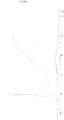
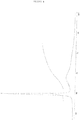
- the raw integration values for 27 Al NMR spectroscopy peaks for these materials are listed below in Table 1, and Table 2 shows the relative abundance.
- the materials are analyzed by taking a 1 M solution and diluting in a 1:4 ratio using D 2 O. The final Al concentration for all samples is 0.25M.
- the samples are analyzed at a 27 Al resonance frequency of 104.2 MHz at 90°C.
- a coaxial insert containing NaAlO 2 is included to provide a reference resonance peak at 80ppm.
- the instrument collects 1500 transients, with a pulse width of 6.4 ⁇ s and a delay time of 2 seconds. The data for the relevant peaks are shown in the tables below.
- the full spectrographs can be seen in Figures 1 to 4 .
- Materials 1 is held at reflux for 30 days at 100°C.
- Material 2 is subjected to 100°C for 5 days in an isochoric reaction vessel.
- the following discussion relates only with the relative integrations instead of raw data.
- the Al 30 signal (encompassing 96.10% of the total visible tetrahedral Al) is converted to a signal at 76 ppm (97.76% Td Al). Also, the amount of Al 13 is reduced from 3.90% to 2.24%.
- the Al 30 signal at 70 ppm (encompassing 98.44% of the total visible tetrahedral Al) is converted to a signal at 76 ppm (99.37% Td Al). Also, the amount of Al 13 is reduced from 1.56% to 0.63%.
- ranges are used as shorthand for describing each and every value that is within the range. Any value within the range can be selected as the terminus of the range. In the event of a conflict in a definition in the present disclosure and that of a cited reference, the present disclosure controls.
Landscapes
- Life Sciences & Earth Sciences (AREA)
- Health & Medical Sciences (AREA)
- Chemical & Material Sciences (AREA)
- General Health & Medical Sciences (AREA)
- Animal Behavior & Ethology (AREA)
- Public Health (AREA)
- Veterinary Medicine (AREA)
- Inorganic Chemistry (AREA)
- Birds (AREA)
- Epidemiology (AREA)
- Organic Chemistry (AREA)
- Geology (AREA)
- Cosmetics (AREA)
- Compounds Of Alkaline-Earth Elements, Aluminum Or Rare-Earth Metals (AREA)
- Pharmaceuticals Containing Other Organic And Inorganic Compounds (AREA)
Claims (28)
- Aktive Antiperspirant-Zusammensetzung die ein Aluminiumsalz umfasst, wobei das Aluminiumsalz (i) ein Molverhältnis von Aluminium zu Chlorid von 0,3:1 bis 3:1 aufweist; und (ii) eine Polyhydroxyoxoaluminium-Kation-Spezies aufweist, die bei 76 ppm im 27Al NMR detektierbar ist, und die in einer Menge vorliegt, die mindestens 85% einer Gesamtmenge an im 27Al NMR detektierbaren Polyhydroxyoxoaluminium.Kationen-Spezies entspricht.
- Aktive Antiperspirant-Zusammensetzung nach Anspruch 1, wobei die bei 76 ppm im 27Al NMR detektierbare Polyhydroxyoxoaluminium-Kation-Spezies in einer Menge vorliegt, die mindestens 90% einer Gesamtmenge aller im 27Al NMR detektierbaren Polyhydroxyoxoaluminium-Kation-Spezies entspricht.
- Aktive Antiperspirant-Zusammensetzung nach einem beliebigen vorhergehenden Anspruch, wobei das Aluminiumsalz ein GPC Chromatogramm mit einer GPC Peak 4 Fläche aufweist, die mindestens 90% einer Gesamtfläche von Peaks 1, 2, 3, 4 und 5 in dem GPC Chromatogramm entspricht.
- Aktive Antiperspirazt-Zusammensetzung nach einem beliebigen vorhergehenden Anspruch, wobei das 27Al NMR Spektrum eine Spezies-Verteilung aufweist, welche höchstens 5% Al13 Polyhydroxyoxoaluminium-Kation der im 27Al NMR innerhalb des Aluminiumsalzes detektierbaren Spezies enthält.
- Aktive Antiperspirant-Zusammensetzung nach einem beliebigen vorhergehenden Anspruch, wobei das Aluminiumsalz ein OH zu AI Verhältnis von höchstens 2,6:1, oder 2:1 zu 2,6:1 aufweist.
- Aktive Antiperspirant-Zusammensetzung nach einem beliebigen vorhergehenden Anspruch, des Weiteren umfassend einen Puffer, wobei ein Molverhältnis von Puffer zu Aluminium mindestens 0,1:1 beträgt.
- Aktive Antiperspirant-Zusammensetzung nach Anspruch 6, wobei der Puffer mindestens ein aus einer Aminosäure, einem Betain, und einem Quat ausgewählter Puffer ist.
- Aktive Antiperspirant-Zusammensetzung nach einem beliebigen vorhergehenden Anspruch, wobei die Zusammensetzung eine GPC Peak 4 Fläche aufweist, welche mindestens 95% einer Gesamtfläche von Peaks 1, 2, 3, 4 und 5 in dem GPC Chromatogramm entspricht; und/oder wobei die Zusammensetzung eine GPC Peak 5 Fläche aufweist, welche weniger als 5% einer Gesamtfläche von Peaks 1, 2, 3, 4 und 5 in dem GPC Chromatogramm entspricht.
- Aktive Antiperspirant-Zusammensetzung nach einem beliebigen vorhergehenden Anspruch, wobei die Zusammensetzung eine GPC Peak 3 Fläche aufweist, welche weniger als 5% einer Gesamtfläche von Peaks 1, 2, 3, 4 und 5 in dem GPC Chromatogramm entspricht.
- Aktive Antiperspirant-Zusammensetzung nach einem beliebigen vorhergehenden Anspruch, wobei die Zusammensetzung des Weiteren Zirkonium umfasst; wahlweise wobei das Zirkonium ausgewählt ist, aus ZrOCl2.8H2O oder Oxo-Hexamerer Zirkonium-Octaaminosäure.
- Verfahren zum Herstellen einer aktiven Antiperspirant-Zusammensetzung, umfassend:I) Erhitzen einer wässrigen Lösung enthaltend i) ein erstes Aluminiumsalz mit einem Al30 Polyhydroxyoxoaluminium-Kation und mit einem Molverhältnis von Aluminium zu Chlorid von 0,3:1 bis 3:1, ii) ein anorganisches Salz, und iii) einen Puffer, wobei der Puffer mindestens einer ist von einer Aminosäure, einem Betain, und einem Quat, und wobei ein Molverhältnis von Puffer zu Aluminium mindestens 0,1:1 beträgt, wobei das Erhitzen stattfindeta) bei einer Temperatur von 100°C bis 250°C in einem isochoren Reaktor, oder unter hydrothermaler Reaktion für eine Zeit, die ausreicht, um eine bei 76 ppm im 27Al NMR detektierbare Polyhydroxyoxoaluminium-Kation-Spezies zu bilden; oderb) bei 100°C unter Reflux für etwa 10 Tage oder mehr, wahlweise für etwa 30 Tage oder mehr,um ein viertes Aluminiumsalz zu bilden.
- Verfahren zum Herstellen einer aktiven Antiperspirant-Zusammensetzung, umfassend:I) Erhitzen einer wässrigen Lösung, welche ein erstes Aluminiumsalz mit einem Molverhältnis von Aluminium zu Chlorid von 0,3:1 bis 3:1 und einen Puffer enthält, wobei der Puffer mindestens einer ist von einer Aminosäure, einem Betain, und einem Quat, und wobei ein Molverhältnis von Puffer zu Aluminium mindestens 0,1:1 beträgt, bei einer Temperatur von 50°C bis 100°C, für eine Dauer von 1 Stunde bis 6 Stunden, um eine erste Aluminiumsalzlösung zu erhalten;II) Hinzufügen zu der ersten Aluminiumsalzlösung einer wässrigen Lösung einer anorganischen Base, um eine zweite pH-eingestellte Aluminiumsalzlösung mit einem Molverhältnis von OH:AI von höchstens von 2,6:1, oder wahlweise 2:1 zu 2,6:1, und mit einem pH von 2 bis 5, zu erhalten.III) Erhitzen der zweiten pH-eingestellten Aluminiumsalzlösung bei einer Temperatur von 50°C bis 100°C für eine Dauer von mindestens 6 Stunden, um eine dritte Aluminiumsalzlösung, die ein Al30 Polyhydroxyoxoaluminium-Kation enthält, zu erhalten; undIV) Erhitzen der dritten Aluminiumsalzlösung beia) einer Temperatur von 100°C bis 250°C in einem isochoren Reaktor für eine Zeit, die ausreicht, um eine bei 76 ppm im 27Al NMR detektierbare Polyhydroxyoxoaluminium-Kation-Spezies zu bilden; oderb) bei 100°C bei Reflux für etwa 30 Tage oder mehr; um ein viertes Aluminiumsalz zu bilden.
- Verfahren nach Anspruch 11, wobei das anorganische Salz mindestens ein Chlorid-Salz ist, ausgewählt aus Kalziumchlorid, Strontiumchlorid, Bariumchlorid, und Yttriumchlorid.
- Verfahren nach Anspruch 11, wobei der Puffer Glycin ist.
- Verfahren nach Anspruch 11 oder 12, wobei das Erhitzen in dem isochoren Reaktor oder unter hydrothermaler Reaktion stattfindeti) bei 100°C für etwa 5 Tage,ii) bei 120°C für etwa 12 Stunden, oderiii) bei 150°C für etwa 20 Minuten.
- Verfahren nach einem beliebigen der Ansprüche 11 bis 15, wobei das Aluminiumsalz ein GPC Chromatogramm mit einer GPC Peak 4 Fläche aufweist, welche mindestens 90% einer Gesamtfläche von Peaks 1, 2, 3, 4 und 5 in dem GPC Chromatogramm entspricht.
- Verfahren nach Anspruch 12 oder 16, wobei der Puffer Glycin ist.
- Verfahren nach einem beliebigen der Ansprüche 12 oder 15 bis 17, wobei die anorganische Base mindestens ein Mitglied enthält, ausgewählt aus Kalziumhydroxid, Strontiumhydroxid, Bariumhydroxid, Kalziumoxid, Strontiumoxid, Bariumoxid, Kalziumcarbonat, Bariumcarbonat, Strontiumcarbonat, Yttriumhydroxid, Yttriumoxid, und Yttriumcarbonat.
- Verfahren nach einem beliebigen der Ansprüche 12 oder 15 bis 18, wobei die zweite pH-eingestellte Aluminiumsalzlösung ein Molverhältnis von OH zu AI von 2:1 bis 2,5:1 oder 2,3:1 bis 2,5:1 aufweist; und/oder wobei das erste Aluminiumsalz eine Aluminiumchloridverbindung ist, ausgewählt aus Aluminiumtrichlorid, Aluminiumchlorhexahydrat, und Aluminiumdichlorhydrat.
- Verfahren nach einem beliebigen der Ansprüche 12 oder 15 bis 19, wobei die Zusammensetzung des Weiteren Zirkonium umfasst, und wobei das Verfahren des Weiteren den Schritt enthält V) Hinzufügen einer wässrigen Lösung, die eine Zirkoniumverbindung enthält, zu der zweiten pH-eingestellten Aluminiumsalzlösung, um dadurch eine zweite pH-eingestellte Aluminium-Zirkoniumsalzlösung mit einem Molverhältnis von Aluminium zu Zirkonium von 5:1 bis 10:1 zu erhalten; wahlweise wobei das Zirkonium ausgewählt ist aus ZrOCl2.8H2O oder Oxo-Hexamerer Zirkonium-Octaaminosäure.
- Verfahren nach einem beliebigen der Ansprüche 11 bis 20, wobei das 27Al NMR Spektrum eine Speziesverteilung aufweist, die höchstens 5% Al13 Polyhydroxyoxoaluminium-Kation in der innerhalb des vierten Aluminiumsalzes im 27Al NMR detektierbaren Spezies enthält.
- Verfahren nach Anspruch 21, wobei das 27Al NMR Spektrum eine Speziesverteilung aufweist, die kein Al13 Polyhydroxyoxoaluminium-Kation in der innerhalb des vierten Aluminiumsalzes im 27Al NMR detektierbaren Spezies enthält.
- Verfahren nach einem beliebigen der Ansprüche 11 bis 22, wobei das vierte Aluminiumsalz eine GPC Peak 4 Fläche aufweist, die mindestens 95% einer Gesamtfläche von Peaks 1, 2, 3, 4 und 5 in dem GPC Chromatogramm entspricht; und/oder wobei das vierte Aluminiumsalz eine GPC Peak 3 Fläche aufweist, die weniger als 5% einer Gesamtfläche von Peaks 1, 2, 3, 4 und 5 in dem GPC Chromatogramm entspricht.
- Verfahren nach einem beliebigen der Ansprüche 12 oder 15 bis 23, wobei das dritte Aluminiumsalz eine GPC Peak 5 Fläche aufweist, die weniger als 5% einer Gesamtfläche von Peaks 1, 2, 3, 4 und 5 in dem GPC Chromatogramm entspricht; und/oder wobei in Schritt III) die Dauer mindestens 12 Stunden beträgt.
- Verfahren zum Herstellen eines Polyhydroxyoxoaluminium-Kations, das bei 76 ppm im 27Al NMR detektierbar ist, umfassend Lagern einer wässrigen Lösung enthaltend i) ein Aluminiumsalz enthaltend ein Al30 Polyhydroxyoxoaluminium-Kation und mit einem Molverhältnis von Aluminium zu Chlorid von 0,3:1 bis 3:1, ii) ein anorganisches Salz, und iii) einen Puffer, wobei der Puffer mindestens einer ist von eine Aminosäure, einem Betain, und einem Quat, und wobei ein Molverhältnis von Puffer zu Aluminium mindestens 0,1:1 beträgt, bei einer Temperatur von 15°C bis 60°C für eine Dauer bis das bei 76 ppm im 27Al NMR detektierbare Polyhydroxyoxoaluminium-Kation, in relativ großer Menge in einem 27Al NMR Spectogramm vorliegt, welche größer ist, als für jedes andere im 27Al NMR detektierbare Polyhydroxyoxoaluminium-Kation.
- Verwendung eines Heizschritts, um Al30 Polyhydroxyoxoaluminium-Kationen in eine innerhalb einer wässrigen Aluminiumsalzlösung im 27Al NMR detektierbare Spezies in eine bei 76 ppm im 27Al NMR detektierbare Polyhydroxyoxoaluminium-Kation Spezies umzuwandeln,
wobei die wässrige Aluminiumsalzlösung i) ein Molverhältnis von Aluminium zu Chlorid von 0,3:1 bis 3:1; ii) ein anorganisches Salz, und iii) einen Puffer aufweist, wobei der Puffer mindestens einer ist von einer Aminosäure, einem Betain, und einem Quat, und wobei ein Molverhältnis von Puffer zu Aluminium mindestens 0,1:1 beträgt; ein Molverhältnis von OH:AI höchstens 2,6:1, oder wahlweise 2:1 bis 2,6:1 beträgt; und wobei der Heizschritt stattfindet:a) bei einer Temperatur von 100°C bis 250°C in einem isochoren Reaktor für eine Zeit, die ausreicht, um eine bei 76 ppm im 27Al NMR detektierbare Polyhydroxyoxoaluminium-Kation Spezies zu bilden; oderb) bei 100°C unter Reflux für etwa 30 Tage oder mehr. - Verwendung nach Anspruch 26, wobei der Puffer Glycin ist.
- Verwendung nach einem beliebigen der Ansprüche 26 bis 27, wobei das Molverhältnis von OH:AI erreicht wurde durch Hinzufügen zu der wässrigen Aluminiumsalzlösung einer anorganische Base mit mindestens einem Mitglied, ausgewählt aus Kalziumhydroxid, Strontiumhydroxid, Bariumhydroxid, Kalziumoxid, Strontiumoxid, Bariumoxid, Kalziumcarbonat, Bariumcarbonat, Strontiumcarbonat, Yttriumhydroxid, Yttriumoxid, und Yttriumcarbonat.
Applications Claiming Priority (2)
| Application Number | Priority Date | Filing Date | Title |
|---|---|---|---|
| US201161479069P | 2011-04-26 | 2011-04-26 | |
| PCT/US2011/066012 WO2012148480A1 (en) | 2011-04-26 | 2011-12-20 | Antiperspirant active compositions and manufacture thereof |
Publications (2)
| Publication Number | Publication Date |
|---|---|
| EP2702007A1 EP2702007A1 (de) | 2014-03-05 |
| EP2702007B1 true EP2702007B1 (de) | 2018-11-14 |
Family
ID=45491802
Family Applications (1)
| Application Number | Title | Priority Date | Filing Date |
|---|---|---|---|
| EP11808786.5A Active EP2702007B1 (de) | 2011-04-26 | 2011-12-20 | Schweisshemmende aktive zusammensetzungen und ihre herstellung |
Country Status (13)
| Country | Link |
|---|---|
| US (3) | US20140314700A1 (de) |
| EP (1) | EP2702007B1 (de) |
| AR (1) | AR086119A1 (de) |
| AU (1) | AU2011366870B2 (de) |
| BR (1) | BR112013027593A2 (de) |
| CA (1) | CA2834132C (de) |
| CL (1) | CL2013003094A1 (de) |
| CO (1) | CO6801701A2 (de) |
| GT (1) | GT201300261A (de) |
| MX (1) | MX347432B (de) |
| RU (1) | RU2567941C2 (de) |
| WO (1) | WO2012148480A1 (de) |
| ZA (1) | ZA201307191B (de) |
Families Citing this family (9)
| Publication number | Priority date | Publication date | Assignee | Title |
|---|---|---|---|---|
| US9775791B2 (en) | 2013-05-20 | 2017-10-03 | Conopco, Inc. | Method of manufacture of antiperspirant salts |
| AU2014270473A1 (en) | 2013-05-20 | 2015-10-29 | Unilever Plc | Antiperspirant compositions |
| EP3185844B1 (de) * | 2014-09-26 | 2020-09-16 | Colgate-Palmolive Company | Aluminiumchlorhydratsalze mit hohem sec-peak-1 |
| WO2016066527A1 (en) | 2014-10-27 | 2016-05-06 | Unilever Plc | Anhydrous antiperspirant compositions |
| AU2015340798B2 (en) | 2014-10-27 | 2018-11-29 | Unilever Global Ip Limited | Anhydrous antiperspirant aerosol compositions |
| US9867765B2 (en) | 2014-11-19 | 2018-01-16 | Conopco, Inc. | Antiperspirant compositions |
| EP3220878B1 (de) | 2014-11-19 | 2019-02-20 | Unilever PLC | Verfahren zur herstellung einer schweisshemmenden zusammensetzung |
| WO2017076562A1 (en) | 2015-11-06 | 2017-05-11 | Unilever Plc | Antiperspirant compositions |
| MX367566B (es) | 2015-11-06 | 2019-08-27 | Unilever Nv | Producto antitranspirante en aerosol. |
Family Cites Families (53)
| Publication number | Priority date | Publication date | Assignee | Title |
|---|---|---|---|---|
| US1979510A (en) | 1932-04-06 | 1934-11-06 | Financial Press Companies Of A | Telegraphic printing mechanism |
| US3991176A (en) | 1973-11-23 | 1976-11-09 | Armour Pharmaceutical Company | Aluminum-zirconium anti-perspirant systems with hydroxy carboxylic compounds |
| US3979510A (en) | 1973-11-23 | 1976-09-07 | Armour Pharmaceutical Company | Aluminum-zirconium anti-perspirant systems with complex aluminum buffers |
| GB2144992A (en) | 1983-08-16 | 1985-03-20 | Gillette Co | Antiperspirants |
| US4871525A (en) | 1986-10-24 | 1989-10-03 | Westwood Chemical Corporation | Antiperspirant composition and method of preparation |
| US5358694A (en) | 1986-01-08 | 1994-10-25 | Westwood Chemical Corporation | Method for preparing basic aluminum halides and product produced therefrom |
| GB8619553D0 (en) | 1986-08-11 | 1986-09-24 | Unilever Plc | Antiperspirants |
| CA1325776C (en) | 1987-05-15 | 1994-01-04 | Allan Robert Burger | Transparent antiperspirant stick compositions |
| US5330751A (en) | 1988-04-14 | 1994-07-19 | The Gilette Company | Antiperspirant and method of making same |
| US5348720A (en) | 1988-08-17 | 1994-09-20 | The Mennen Company | Basic aluminum antiperspirant active material having enhanced activity, antiperspirant active composition containing such material, and methods for preparation of such material and composition |
| US5643558A (en) | 1994-11-02 | 1997-07-01 | The Gillette Company | Method of making polyhydric alcohol solutions of enhanced efficacy antiperspirant actives |
| US5725846A (en) | 1995-03-02 | 1998-03-10 | The Gillette Company | Clear antiperspirant stick containing dibenzylidene alditol and hydroxyalkyl cellulose |
| US6010688A (en) | 1997-06-25 | 2000-01-04 | The Gillette Company | Polyhydric alcohol stabilized antiperspirant salt solutions |
| US5997850C1 (en) | 1997-10-29 | 2001-11-27 | Colgate Palmolive Co | Antiperspirant actives and formulations made therefrom |
| US6682749B1 (en) | 1998-04-03 | 2004-01-27 | Colgate-Palmolive Company | Low Residue cosmetic composition |
| US6042816A (en) | 1998-08-19 | 2000-03-28 | The Gillette Company | Enhanced antiperspirant salts stabilized with calcium and concentrated aqueous solutions of such salts |
| US5955065A (en) | 1998-08-19 | 1999-09-21 | The Gillette Company | Antiperspirant compositions containing calcium salts |
| US6136302A (en) | 1999-02-18 | 2000-10-24 | The Procter & Gamble Company | Process of making zirconium-aluminum antiperspirant active |
| EP1057474B1 (de) | 1999-05-29 | 2002-08-07 | BK Giulini Chemie GmbH & Co. OHG | Verfahren zur Herstellung feinteiliger Antiperspirantwirkstoff Suspensionen |
| US6149897A (en) | 1999-08-24 | 2000-11-21 | The Procter & Gamble Company | Process for making anhydrous compositions containing solubilized, enhanced antiperspirant active |
| US6451296B1 (en) | 2000-02-01 | 2002-09-17 | Zijun Li | Enhanced efficacy aluminum-zirconium antiperspirants and methods for making |
| GB0012267D0 (en) | 2000-05-19 | 2000-07-12 | Unilever Plc | Method pf prepatationof an antiperspirant salt |
| US6375937B1 (en) | 2000-10-20 | 2002-04-23 | Colgate-Palmolive Company | Antiperspirant salts for enhanced cosmetic products |
| US6436381B1 (en) | 2000-10-25 | 2002-08-20 | The Gillette Company | Aluminum-zirconium antiperspirant salts with high peak 5 al content |
| GB0100549D0 (en) | 2001-01-09 | 2001-02-21 | Unilever Plc | Antiperspirant or deodorant compositions |
| US6342210B1 (en) | 2001-04-20 | 2002-01-29 | Colgate-Palmolive Company | Antiperspirant actives from a glass form and products made therewith |
| AU2003212794A1 (en) | 2002-01-10 | 2003-07-30 | Chemlmage Corporation | Method for detection of pathogenic microorganisms |
| US6726901B2 (en) | 2002-05-09 | 2004-04-27 | The Gillette Company | Stabilized antiperspirant compositions containing aluminum-zirconium salts with low M:Cl ratio |
| US6835373B2 (en) | 2002-07-12 | 2004-12-28 | The Procter & Gamble Company | Non-irritating antiperspirant compositions containing acidic antiperspirant active |
| EP1524959A1 (de) | 2002-08-02 | 2005-04-27 | The Gillette Company | Klare körperpflegezusammensetzungen mit sichtbaren kapseln |
| US20040091436A1 (en) | 2002-11-12 | 2004-05-13 | Zijun Li | Antiperspirant compositions of enhanced efficacy containing strontium |
| US6936242B2 (en) | 2002-11-15 | 2005-08-30 | The Gillette Company | Multi-portion antiperspirant composition |
| US20040198998A1 (en) | 2003-04-04 | 2004-10-07 | Marian Holerca | Glycine-free antiperspirant salts with betaine for enhanced cosmetic products |
| US7105691B2 (en) | 2003-06-26 | 2006-09-12 | Colgate-Palmolive Company | Aluminum / zirconium / glycine antiperspirant actives stabilized with Betaine |
| US6942850B2 (en) | 2003-08-15 | 2005-09-13 | The Gillette Company | Aqueous alcoholic antiperspirant composition containing calcium enhanced antiperspirant salt |
| US6902724B1 (en) | 2004-03-24 | 2005-06-07 | Reheis, Inc. | Enhanced efficacy basic aluminum halides, antiperspirant active compositions and methods for making |
| US7087220B2 (en) * | 2004-05-28 | 2006-08-08 | Reheis, Inc. | High pH antiperspirant compositions of enhanced efficacy |
| EP1814508A1 (de) | 2004-10-22 | 2007-08-08 | Reheis, Inc. | Aktivierte aluminium/depolymerisierte zirkonium-antiperspirans-zusammensetzungen |
| US8883129B2 (en) | 2005-01-13 | 2014-11-11 | The Procter & Gamble Company | Enhanced efficacy antiperspirant active |
| US7704531B2 (en) | 2005-02-18 | 2010-04-27 | Colgate-Palmolive Company | Enhanced efficacy aluminum or aluminum-zirconium antiperspirant salt compositions containing calcium salt(s) and betaine |
| PL1863741T3 (pl) | 2005-03-31 | 2009-10-30 | Unilever Nv | Sposób wytwarzania związków glinu |
| US20060292098A1 (en) | 2005-05-19 | 2006-12-28 | Scavone Timothy A | Consumer noticeable improvement in wetness protection |
| US20070003499A1 (en) | 2005-06-30 | 2007-01-04 | The Gillette Company | Particulate enhanced efficacy antiperspirant salt with raised pH |
| US20070020211A1 (en) | 2005-07-22 | 2007-01-25 | Reheis, Inc. | Betaine with Calcium and/or Strontium Antiperspirants |
| CL2006003116A1 (es) | 2005-11-16 | 2008-02-29 | Colgate Palmolive Co | Composicion antitranspirante que comprende al menos una sal elegida de aluminio, aluminio zirconio, una sal compleja de aluminio o una sal compleja de aluminio-zirconio, un hidroxiacido y un compuesto acido de amonio cuaternario; proceso para prepara |
| US8801909B2 (en) | 2006-01-06 | 2014-08-12 | Nextchem, Llc | Polymetal hydroxychloride processes and compositions: enhanced efficacy antiperspirant salt compositions |
| US20070196303A1 (en) | 2006-02-17 | 2007-08-23 | Reheis, Inc. | Stable buffered aluminum compositions having high hplc bands iii and iv containing calcium/strontium |
| WO2008063188A2 (en) | 2006-11-03 | 2008-05-29 | Reheis, Inc. | Betaine with calcium and/or strontium antiperspirants |
| JP5177998B2 (ja) | 2006-11-27 | 2013-04-10 | Jx日鉱日石エネルギー株式会社 | 改質装置及びその運転方法 |
| US20080131354A1 (en) | 2006-12-05 | 2008-06-05 | Reheis, Inc. | Polyaluminum calcium hydroxychlorides and methods of making the same |
| US20090016979A1 (en) | 2007-07-09 | 2009-01-15 | Zijun Li | Aluminum and aluminum-zirconium compositions of enhanced efficacy containing reduced buffer and/or reduced zirconium |
| US20100202993A1 (en) | 2007-12-12 | 2010-08-12 | Long Pan | Antiperspirant Active Compositions Having SEC Chromatogram Exhibiting High SEC Peak 4 Intensity |
| CA2814490C (en) | 2010-11-02 | 2016-06-14 | Colgate-Palmolive Company | Antiperspirant active compositions and manufacture thereof |
-
2011
- 2011-12-20 EP EP11808786.5A patent/EP2702007B1/de active Active
- 2011-12-20 RU RU2013152264/05A patent/RU2567941C2/ru active
- 2011-12-20 MX MX2013012366A patent/MX347432B/es active IP Right Grant
- 2011-12-20 BR BR112013027593A patent/BR112013027593A2/pt not_active IP Right Cessation
- 2011-12-20 WO PCT/US2011/066012 patent/WO2012148480A1/en not_active Ceased
- 2011-12-20 CA CA2834132A patent/CA2834132C/en active Active
- 2011-12-20 AU AU2011366870A patent/AU2011366870B2/en not_active Ceased
- 2011-12-20 US US14/110,721 patent/US20140314700A1/en not_active Abandoned
-
2012
- 2012-04-26 AR ARP120101459A patent/AR086119A1/es not_active Application Discontinuation
-
2013
- 2013-09-25 ZA ZA2013/07191A patent/ZA201307191B/en unknown
- 2013-10-23 GT GT201300261A patent/GT201300261A/es unknown
- 2013-10-24 CO CO13252810A patent/CO6801701A2/es not_active Application Discontinuation
- 2013-10-25 CL CL2013003094A patent/CL2013003094A1/es unknown
-
2015
- 2015-10-20 US US14/887,774 patent/US9408789B2/en active Active
-
2016
- 2016-08-01 US US15/224,681 patent/US9717663B2/en active Active
Non-Patent Citations (1)
| Title |
|---|
| None * |
Also Published As
| Publication number | Publication date |
|---|---|
| ZA201307191B (en) | 2016-01-27 |
| WO2012148480A1 (en) | 2012-11-01 |
| CA2834132C (en) | 2017-12-12 |
| AR086119A1 (es) | 2013-11-20 |
| CA2834132A1 (en) | 2012-11-01 |
| AU2011366870B2 (en) | 2014-10-30 |
| US20170128330A1 (en) | 2017-05-11 |
| RU2567941C2 (ru) | 2015-11-10 |
| US20140314700A1 (en) | 2014-10-23 |
| BR112013027593A2 (pt) | 2017-06-20 |
| MX347432B (es) | 2017-04-26 |
| MX2013012366A (es) | 2014-02-03 |
| RU2013152264A (ru) | 2015-06-10 |
| CL2013003094A1 (es) | 2014-03-28 |
| CO6801701A2 (es) | 2013-11-29 |
| GT201300261A (es) | 2015-03-09 |
| US9408789B2 (en) | 2016-08-09 |
| US20160106643A1 (en) | 2016-04-21 |
| AU2011366870A1 (en) | 2013-05-02 |
| EP2702007A1 (de) | 2014-03-05 |
| US9717663B2 (en) | 2017-08-01 |
Similar Documents
| Publication | Publication Date | Title |
|---|---|---|
| US9717663B2 (en) | Antiperspirant active compositions and manufacture thereof | |
| EP2635353B1 (de) | Aluminiumsaltze mit hohem Gehalt an AL30 | |
| EP2702008B1 (de) | Zusammensetzungen mit polyhydroxyoxoaluminiumkationen und ihre herstellung | |
| EP2838847B1 (de) | Verfahren zur herstellung einer aluminiumsalzzusammensetzung | |
| EP2462061B1 (de) | Verfahren zur herstellung einer aktiven schweisshemmenden zusammensetzung mit sec-chromatogramm mit hoher sec-peak-4-intensität | |
| US5624665A (en) | Basic aluminum antiperspirant active materials having enhanced activity, antiperspirant active compositions containing such materials, and methods for preparation of such materials and compositions | |
| WO2001089994A1 (en) | Method of preparation of an antiperspirant salt |
Legal Events
| Date | Code | Title | Description |
|---|---|---|---|
| PUAI | Public reference made under article 153(3) epc to a published international application that has entered the european phase |
Free format text: ORIGINAL CODE: 0009012 |
|
| 17P | Request for examination filed |
Effective date: 20131021 |
|
| AK | Designated contracting states |
Kind code of ref document: A1 Designated state(s): AL AT BE BG CH CY CZ DE DK EE ES FI FR GB GR HR HU IE IS IT LI LT LU LV MC MK MT NL NO PL PT RO RS SE SI SK SM TR |
|
| DAX | Request for extension of the european patent (deleted) | ||
| 17Q | First examination report despatched |
Effective date: 20150414 |
|
| REG | Reference to a national code |
Ref country code: DE Ref legal event code: R079 Ref document number: 602011053944 Country of ref document: DE Free format text: PREVIOUS MAIN CLASS: C01F0007000000 Ipc: C01F0007560000 |
|
| GRAP | Despatch of communication of intention to grant a patent |
Free format text: ORIGINAL CODE: EPIDOSNIGR1 |
|
| STAA | Information on the status of an ep patent application or granted ep patent |
Free format text: STATUS: GRANT OF PATENT IS INTENDED |
|
| RIC1 | Information provided on ipc code assigned before grant |
Ipc: C01F 7/56 20060101AFI20180514BHEP Ipc: A61K 8/44 20060101ALI20180514BHEP Ipc: A61K 8/26 20060101ALI20180514BHEP Ipc: A61Q 15/00 20060101ALI20180514BHEP Ipc: A61K 8/28 20060101ALI20180514BHEP |
|
| INTG | Intention to grant announced |
Effective date: 20180606 |
|
| GRAS | Grant fee paid |
Free format text: ORIGINAL CODE: EPIDOSNIGR3 |
|
| GRAA | (expected) grant |
Free format text: ORIGINAL CODE: 0009210 |
|
| STAA | Information on the status of an ep patent application or granted ep patent |
Free format text: STATUS: THE PATENT HAS BEEN GRANTED |
|
| AK | Designated contracting states |
Kind code of ref document: B1 Designated state(s): AL AT BE BG CH CY CZ DE DK EE ES FI FR GB GR HR HU IE IS IT LI LT LU LV MC MK MT NL NO PL PT RO RS SE SI SK SM TR |
|
| REG | Reference to a national code |
Ref country code: GB Ref legal event code: FG4D |
|
| REG | Reference to a national code |
Ref country code: CH Ref legal event code: EP Ref country code: AT Ref legal event code: REF Ref document number: 1064565 Country of ref document: AT Kind code of ref document: T Effective date: 20181115 |
|
| REG | Reference to a national code |
Ref country code: DE Ref legal event code: R096 Ref document number: 602011053944 Country of ref document: DE |
|
| REG | Reference to a national code |
Ref country code: IE Ref legal event code: FG4D |
|
| REG | Reference to a national code |
Ref country code: NL Ref legal event code: MP Effective date: 20181114 |
|
| REG | Reference to a national code |
Ref country code: LT Ref legal event code: MG4D |
|
| REG | Reference to a national code |
Ref country code: AT Ref legal event code: MK05 Ref document number: 1064565 Country of ref document: AT Kind code of ref document: T Effective date: 20181114 |
|
| PG25 | Lapsed in a contracting state [announced via postgrant information from national office to epo] |
Ref country code: ES Free format text: LAPSE BECAUSE OF FAILURE TO SUBMIT A TRANSLATION OF THE DESCRIPTION OR TO PAY THE FEE WITHIN THE PRESCRIBED TIME-LIMIT Effective date: 20181114 Ref country code: AT Free format text: LAPSE BECAUSE OF FAILURE TO SUBMIT A TRANSLATION OF THE DESCRIPTION OR TO PAY THE FEE WITHIN THE PRESCRIBED TIME-LIMIT Effective date: 20181114 Ref country code: LT Free format text: LAPSE BECAUSE OF FAILURE TO SUBMIT A TRANSLATION OF THE DESCRIPTION OR TO PAY THE FEE WITHIN THE PRESCRIBED TIME-LIMIT Effective date: 20181114 Ref country code: NO Free format text: LAPSE BECAUSE OF FAILURE TO SUBMIT A TRANSLATION OF THE DESCRIPTION OR TO PAY THE FEE WITHIN THE PRESCRIBED TIME-LIMIT Effective date: 20190214 Ref country code: FI Free format text: LAPSE BECAUSE OF FAILURE TO SUBMIT A TRANSLATION OF THE DESCRIPTION OR TO PAY THE FEE WITHIN THE PRESCRIBED TIME-LIMIT Effective date: 20181114 Ref country code: IS Free format text: LAPSE BECAUSE OF FAILURE TO SUBMIT A TRANSLATION OF THE DESCRIPTION OR TO PAY THE FEE WITHIN THE PRESCRIBED TIME-LIMIT Effective date: 20190314 Ref country code: BG Free format text: LAPSE BECAUSE OF FAILURE TO SUBMIT A TRANSLATION OF THE DESCRIPTION OR TO PAY THE FEE WITHIN THE PRESCRIBED TIME-LIMIT Effective date: 20190214 Ref country code: HR Free format text: LAPSE BECAUSE OF FAILURE TO SUBMIT A TRANSLATION OF THE DESCRIPTION OR TO PAY THE FEE WITHIN THE PRESCRIBED TIME-LIMIT Effective date: 20181114 Ref country code: LV Free format text: LAPSE BECAUSE OF FAILURE TO SUBMIT A TRANSLATION OF THE DESCRIPTION OR TO PAY THE FEE WITHIN THE PRESCRIBED TIME-LIMIT Effective date: 20181114 |
|
| PG25 | Lapsed in a contracting state [announced via postgrant information from national office to epo] |
Ref country code: RS Free format text: LAPSE BECAUSE OF FAILURE TO SUBMIT A TRANSLATION OF THE DESCRIPTION OR TO PAY THE FEE WITHIN THE PRESCRIBED TIME-LIMIT Effective date: 20181114 Ref country code: GR Free format text: LAPSE BECAUSE OF FAILURE TO SUBMIT A TRANSLATION OF THE DESCRIPTION OR TO PAY THE FEE WITHIN THE PRESCRIBED TIME-LIMIT Effective date: 20190215 Ref country code: SE Free format text: LAPSE BECAUSE OF FAILURE TO SUBMIT A TRANSLATION OF THE DESCRIPTION OR TO PAY THE FEE WITHIN THE PRESCRIBED TIME-LIMIT Effective date: 20181114 Ref country code: AL Free format text: LAPSE BECAUSE OF FAILURE TO SUBMIT A TRANSLATION OF THE DESCRIPTION OR TO PAY THE FEE WITHIN THE PRESCRIBED TIME-LIMIT Effective date: 20181114 Ref country code: NL Free format text: LAPSE BECAUSE OF FAILURE TO SUBMIT A TRANSLATION OF THE DESCRIPTION OR TO PAY THE FEE WITHIN THE PRESCRIBED TIME-LIMIT Effective date: 20181114 Ref country code: PT Free format text: LAPSE BECAUSE OF FAILURE TO SUBMIT A TRANSLATION OF THE DESCRIPTION OR TO PAY THE FEE WITHIN THE PRESCRIBED TIME-LIMIT Effective date: 20190314 |
|
| REG | Reference to a national code |
Ref country code: DE Ref legal event code: R119 Ref document number: 602011053944 Country of ref document: DE |
|
| PG25 | Lapsed in a contracting state [announced via postgrant information from national office to epo] |
Ref country code: DK Free format text: LAPSE BECAUSE OF FAILURE TO SUBMIT A TRANSLATION OF THE DESCRIPTION OR TO PAY THE FEE WITHIN THE PRESCRIBED TIME-LIMIT Effective date: 20181114 Ref country code: IT Free format text: LAPSE BECAUSE OF FAILURE TO SUBMIT A TRANSLATION OF THE DESCRIPTION OR TO PAY THE FEE WITHIN THE PRESCRIBED TIME-LIMIT Effective date: 20181114 Ref country code: PL Free format text: LAPSE BECAUSE OF FAILURE TO SUBMIT A TRANSLATION OF THE DESCRIPTION OR TO PAY THE FEE WITHIN THE PRESCRIBED TIME-LIMIT Effective date: 20181114 Ref country code: CZ Free format text: LAPSE BECAUSE OF FAILURE TO SUBMIT A TRANSLATION OF THE DESCRIPTION OR TO PAY THE FEE WITHIN THE PRESCRIBED TIME-LIMIT Effective date: 20181114 |
|
| REG | Reference to a national code |
Ref country code: CH Ref legal event code: PL |
|
| PG25 | Lapsed in a contracting state [announced via postgrant information from national office to epo] |
Ref country code: RO Free format text: LAPSE BECAUSE OF FAILURE TO SUBMIT A TRANSLATION OF THE DESCRIPTION OR TO PAY THE FEE WITHIN THE PRESCRIBED TIME-LIMIT Effective date: 20181114 Ref country code: LU Free format text: LAPSE BECAUSE OF NON-PAYMENT OF DUE FEES Effective date: 20181220 Ref country code: SK Free format text: LAPSE BECAUSE OF FAILURE TO SUBMIT A TRANSLATION OF THE DESCRIPTION OR TO PAY THE FEE WITHIN THE PRESCRIBED TIME-LIMIT Effective date: 20181114 Ref country code: MC Free format text: LAPSE BECAUSE OF FAILURE TO SUBMIT A TRANSLATION OF THE DESCRIPTION OR TO PAY THE FEE WITHIN THE PRESCRIBED TIME-LIMIT Effective date: 20181114 Ref country code: EE Free format text: LAPSE BECAUSE OF FAILURE TO SUBMIT A TRANSLATION OF THE DESCRIPTION OR TO PAY THE FEE WITHIN THE PRESCRIBED TIME-LIMIT Effective date: 20181114 Ref country code: SM Free format text: LAPSE BECAUSE OF FAILURE TO SUBMIT A TRANSLATION OF THE DESCRIPTION OR TO PAY THE FEE WITHIN THE PRESCRIBED TIME-LIMIT Effective date: 20181114 |
|
| REG | Reference to a national code |
Ref country code: IE Ref legal event code: MM4A |
|
| PLBE | No opposition filed within time limit |
Free format text: ORIGINAL CODE: 0009261 |
|
| STAA | Information on the status of an ep patent application or granted ep patent |
Free format text: STATUS: NO OPPOSITION FILED WITHIN TIME LIMIT |
|
| REG | Reference to a national code |
Ref country code: BE Ref legal event code: MM Effective date: 20181231 |
|
| 26N | No opposition filed |
Effective date: 20190815 |
|
| PG25 | Lapsed in a contracting state [announced via postgrant information from national office to epo] |
Ref country code: SI Free format text: LAPSE BECAUSE OF FAILURE TO SUBMIT A TRANSLATION OF THE DESCRIPTION OR TO PAY THE FEE WITHIN THE PRESCRIBED TIME-LIMIT Effective date: 20181114 Ref country code: DE Free format text: LAPSE BECAUSE OF NON-PAYMENT OF DUE FEES Effective date: 20190702 Ref country code: IE Free format text: LAPSE BECAUSE OF NON-PAYMENT OF DUE FEES Effective date: 20181220 |
|
| PG25 | Lapsed in a contracting state [announced via postgrant information from national office to epo] |
Ref country code: BE Free format text: LAPSE BECAUSE OF NON-PAYMENT OF DUE FEES Effective date: 20181231 |
|
| PG25 | Lapsed in a contracting state [announced via postgrant information from national office to epo] |
Ref country code: CH Free format text: LAPSE BECAUSE OF NON-PAYMENT OF DUE FEES Effective date: 20181231 Ref country code: LI Free format text: LAPSE BECAUSE OF NON-PAYMENT OF DUE FEES Effective date: 20181231 |
|
| PG25 | Lapsed in a contracting state [announced via postgrant information from national office to epo] |
Ref country code: MT Free format text: LAPSE BECAUSE OF NON-PAYMENT OF DUE FEES Effective date: 20181220 |
|
| PG25 | Lapsed in a contracting state [announced via postgrant information from national office to epo] |
Ref country code: TR Free format text: LAPSE BECAUSE OF FAILURE TO SUBMIT A TRANSLATION OF THE DESCRIPTION OR TO PAY THE FEE WITHIN THE PRESCRIBED TIME-LIMIT Effective date: 20181114 |
|
| PG25 | Lapsed in a contracting state [announced via postgrant information from national office to epo] |
Ref country code: HU Free format text: LAPSE BECAUSE OF FAILURE TO SUBMIT A TRANSLATION OF THE DESCRIPTION OR TO PAY THE FEE WITHIN THE PRESCRIBED TIME-LIMIT; INVALID AB INITIO Effective date: 20111220 Ref country code: MK Free format text: LAPSE BECAUSE OF NON-PAYMENT OF DUE FEES Effective date: 20181114 Ref country code: CY Free format text: LAPSE BECAUSE OF FAILURE TO SUBMIT A TRANSLATION OF THE DESCRIPTION OR TO PAY THE FEE WITHIN THE PRESCRIBED TIME-LIMIT Effective date: 20181114 |
|
| P01 | Opt-out of the competence of the unified patent court (upc) registered |
Effective date: 20230528 |
|
| PGFP | Annual fee paid to national office [announced via postgrant information from national office to epo] |
Ref country code: GB Payment date: 20251229 Year of fee payment: 15 |
|
| PGFP | Annual fee paid to national office [announced via postgrant information from national office to epo] |
Ref country code: FR Payment date: 20251226 Year of fee payment: 15 |