EP2674402B1 - Superhydrophobe Beschichtung - Google Patents
Superhydrophobe Beschichtung Download PDFInfo
- Publication number
- EP2674402B1 EP2674402B1 EP13447010.3A EP13447010A EP2674402B1 EP 2674402 B1 EP2674402 B1 EP 2674402B1 EP 13447010 A EP13447010 A EP 13447010A EP 2674402 B1 EP2674402 B1 EP 2674402B1
- Authority
- EP
- European Patent Office
- Prior art keywords
- weight
- suspension
- less
- acid
- sio
- Prior art date
- Legal status (The legal status is an assumption and is not a legal conclusion. Google has not performed a legal analysis and makes no representation as to the accuracy of the status listed.)
- Active
Links
Images


Classifications
-
- C—CHEMISTRY; METALLURGY
- C01—INORGANIC CHEMISTRY
- C01B—NON-METALLIC ELEMENTS; COMPOUNDS THEREOF; METALLOIDS OR COMPOUNDS THEREOF NOT COVERED BY SUBCLASS C01C
- C01B33/00—Silicon; Compounds thereof
- C01B33/113—Silicon oxides; Hydrates thereof
- C01B33/12—Silica; Hydrates thereof, e.g. lepidoic silicic acid
- C01B33/18—Preparation of finely divided silica neither in sol nor in gel form; After-treatment thereof
-
- B—PERFORMING OPERATIONS; TRANSPORTING
- B82—NANOTECHNOLOGY
- B82Y—SPECIFIC USES OR APPLICATIONS OF NANOSTRUCTURES; MEASUREMENT OR ANALYSIS OF NANOSTRUCTURES; MANUFACTURE OR TREATMENT OF NANOSTRUCTURES
- B82Y30/00—Nanotechnology for materials or surface science, e.g. nanocomposites
-
- C—CHEMISTRY; METALLURGY
- C03—GLASS; MINERAL OR SLAG WOOL
- C03C—CHEMICAL COMPOSITION OF GLASSES, GLAZES OR VITREOUS ENAMELS; SURFACE TREATMENT OF GLASS; SURFACE TREATMENT OF FIBRES OR FILAMENTS MADE FROM GLASS, MINERALS OR SLAGS; JOINING GLASS TO GLASS OR OTHER MATERIALS
- C03C17/00—Surface treatment of glass, not in the form of fibres or filaments, by coating
- C03C17/006—Surface treatment of glass, not in the form of fibres or filaments, by coating with materials of composite character
- C03C17/007—Surface treatment of glass, not in the form of fibres or filaments, by coating with materials of composite character containing a dispersed phase, e.g. particles, fibres or flakes, in a continuous phase
-
- C—CHEMISTRY; METALLURGY
- C09—DYES; PAINTS; POLISHES; NATURAL RESINS; ADHESIVES; COMPOSITIONS NOT OTHERWISE PROVIDED FOR; APPLICATIONS OF MATERIALS NOT OTHERWISE PROVIDED FOR
- C09C—TREATMENT OF INORGANIC MATERIALS, OTHER THAN FIBROUS FILLERS, TO ENHANCE THEIR PIGMENTING OR FILLING PROPERTIES ; PREPARATION OF CARBON BLACK ; PREPARATION OF INORGANIC MATERIALS WHICH ARE NO SINGLE CHEMICAL COMPOUNDS AND WHICH ARE MAINLY USED AS PIGMENTS OR FILLERS
- C09C1/00—Treatment of specific inorganic materials other than fibrous fillers; Preparation of carbon black
- C09C1/28—Compounds of silicon
- C09C1/30—Silicic acid
-
- C—CHEMISTRY; METALLURGY
- C09—DYES; PAINTS; POLISHES; NATURAL RESINS; ADHESIVES; COMPOSITIONS NOT OTHERWISE PROVIDED FOR; APPLICATIONS OF MATERIALS NOT OTHERWISE PROVIDED FOR
- C09C—TREATMENT OF INORGANIC MATERIALS, OTHER THAN FIBROUS FILLERS, TO ENHANCE THEIR PIGMENTING OR FILLING PROPERTIES ; PREPARATION OF CARBON BLACK ; PREPARATION OF INORGANIC MATERIALS WHICH ARE NO SINGLE CHEMICAL COMPOUNDS AND WHICH ARE MAINLY USED AS PIGMENTS OR FILLERS
- C09C1/00—Treatment of specific inorganic materials other than fibrous fillers; Preparation of carbon black
- C09C1/28—Compounds of silicon
- C09C1/30—Silicic acid
- C09C1/3072—Treatment with macro-molecular organic compounds
-
- C—CHEMISTRY; METALLURGY
- C09—DYES; PAINTS; POLISHES; NATURAL RESINS; ADHESIVES; COMPOSITIONS NOT OTHERWISE PROVIDED FOR; APPLICATIONS OF MATERIALS NOT OTHERWISE PROVIDED FOR
- C09C—TREATMENT OF INORGANIC MATERIALS, OTHER THAN FIBROUS FILLERS, TO ENHANCE THEIR PIGMENTING OR FILLING PROPERTIES ; PREPARATION OF CARBON BLACK ; PREPARATION OF INORGANIC MATERIALS WHICH ARE NO SINGLE CHEMICAL COMPOUNDS AND WHICH ARE MAINLY USED AS PIGMENTS OR FILLERS
- C09C1/00—Treatment of specific inorganic materials other than fibrous fillers; Preparation of carbon black
- C09C1/28—Compounds of silicon
- C09C1/30—Silicic acid
- C09C1/3081—Treatment with organo-silicon compounds
-
- C—CHEMISTRY; METALLURGY
- C09—DYES; PAINTS; POLISHES; NATURAL RESINS; ADHESIVES; COMPOSITIONS NOT OTHERWISE PROVIDED FOR; APPLICATIONS OF MATERIALS NOT OTHERWISE PROVIDED FOR
- C09D—COATING COMPOSITIONS, e.g. PAINTS, VARNISHES OR LACQUERS; FILLING PASTES; CHEMICAL PAINT OR INK REMOVERS; INKS; CORRECTING FLUIDS; WOODSTAINS; PASTES OR SOLIDS FOR COLOURING OR PRINTING; USE OF MATERIALS THEREFOR
- C09D1/00—Coating compositions, e.g. paints, varnishes or lacquers, based on inorganic substances
- C09D1/02—Coating compositions, e.g. paints, varnishes or lacquers, based on inorganic substances alkali metal silicates
-
- C—CHEMISTRY; METALLURGY
- C09—DYES; PAINTS; POLISHES; NATURAL RESINS; ADHESIVES; COMPOSITIONS NOT OTHERWISE PROVIDED FOR; APPLICATIONS OF MATERIALS NOT OTHERWISE PROVIDED FOR
- C09D—COATING COMPOSITIONS, e.g. PAINTS, VARNISHES OR LACQUERS; FILLING PASTES; CHEMICAL PAINT OR INK REMOVERS; INKS; CORRECTING FLUIDS; WOODSTAINS; PASTES OR SOLIDS FOR COLOURING OR PRINTING; USE OF MATERIALS THEREFOR
- C09D5/00—Coating compositions, e.g. paints, varnishes or lacquers, characterised by their physical nature or the effects produced; Filling pastes
- C09D5/16—Antifouling paints; Underwater paints
- C09D5/1681—Antifouling coatings characterised by surface structure, e.g. for roughness effect giving superhydrophobic coatings or Lotus effect
-
- C—CHEMISTRY; METALLURGY
- C09—DYES; PAINTS; POLISHES; NATURAL RESINS; ADHESIVES; COMPOSITIONS NOT OTHERWISE PROVIDED FOR; APPLICATIONS OF MATERIALS NOT OTHERWISE PROVIDED FOR
- C09D—COATING COMPOSITIONS, e.g. PAINTS, VARNISHES OR LACQUERS; FILLING PASTES; CHEMICAL PAINT OR INK REMOVERS; INKS; CORRECTING FLUIDS; WOODSTAINS; PASTES OR SOLIDS FOR COLOURING OR PRINTING; USE OF MATERIALS THEREFOR
- C09D7/00—Features of coating compositions, not provided for in group C09D5/00; Processes for incorporating ingredients in coating compositions
- C09D7/40—Additives
- C09D7/66—Additives characterised by particle size
- C09D7/69—Particle size larger than 1000 nm
-
- C—CHEMISTRY; METALLURGY
- C01—INORGANIC CHEMISTRY
- C01P—INDEXING SCHEME RELATING TO STRUCTURAL AND PHYSICAL ASPECTS OF SOLID INORGANIC COMPOUNDS
- C01P2004/00—Particle morphology
- C01P2004/50—Agglomerated particles
-
- C—CHEMISTRY; METALLURGY
- C01—INORGANIC CHEMISTRY
- C01P—INDEXING SCHEME RELATING TO STRUCTURAL AND PHYSICAL ASPECTS OF SOLID INORGANIC COMPOUNDS
- C01P2004/00—Particle morphology
- C01P2004/60—Particles characterised by their size
- C01P2004/62—Submicrometer sized, i.e. from 0.1-1 micrometer
-
- C—CHEMISTRY; METALLURGY
- C01—INORGANIC CHEMISTRY
- C01P—INDEXING SCHEME RELATING TO STRUCTURAL AND PHYSICAL ASPECTS OF SOLID INORGANIC COMPOUNDS
- C01P2004/00—Particle morphology
- C01P2004/60—Particles characterised by their size
- C01P2004/64—Nanometer sized, i.e. from 1-100 nanometer
-
- C—CHEMISTRY; METALLURGY
- C01—INORGANIC CHEMISTRY
- C01P—INDEXING SCHEME RELATING TO STRUCTURAL AND PHYSICAL ASPECTS OF SOLID INORGANIC COMPOUNDS
- C01P2006/00—Physical properties of inorganic compounds
- C01P2006/12—Surface area
-
- C—CHEMISTRY; METALLURGY
- C03—GLASS; MINERAL OR SLAG WOOL
- C03C—CHEMICAL COMPOSITION OF GLASSES, GLAZES OR VITREOUS ENAMELS; SURFACE TREATMENT OF GLASS; SURFACE TREATMENT OF FIBRES OR FILAMENTS MADE FROM GLASS, MINERALS OR SLAGS; JOINING GLASS TO GLASS OR OTHER MATERIALS
- C03C2217/00—Coatings on glass
- C03C2217/40—Coatings comprising at least one inhomogeneous layer
- C03C2217/43—Coatings comprising at least one inhomogeneous layer consisting of a dispersed phase in a continuous phase
- C03C2217/46—Coatings comprising at least one inhomogeneous layer consisting of a dispersed phase in a continuous phase characterized by the dispersed phase
- C03C2217/47—Coatings comprising at least one inhomogeneous layer consisting of a dispersed phase in a continuous phase characterized by the dispersed phase consisting of a specific material
- C03C2217/475—Inorganic materials
- C03C2217/478—Silica
-
- C—CHEMISTRY; METALLURGY
- C03—GLASS; MINERAL OR SLAG WOOL
- C03C—CHEMICAL COMPOSITION OF GLASSES, GLAZES OR VITREOUS ENAMELS; SURFACE TREATMENT OF GLASS; SURFACE TREATMENT OF FIBRES OR FILAMENTS MADE FROM GLASS, MINERALS OR SLAGS; JOINING GLASS TO GLASS OR OTHER MATERIALS
- C03C2217/00—Coatings on glass
- C03C2217/70—Properties of coatings
- C03C2217/76—Hydrophobic and oleophobic coatings
Definitions
- the present invention relates to a superhydrophobic coating.
- the expression “super hydrophobic coating” means a coating having an external surface for which a drop of water (10 ⁇ l) placed on this external surface in a horizontal position defines a static contact angle of recoil of more than 135 °, advantageously more than 140 °, preferably more than 145 °, for example from 145 ° to 160 °, and / or a static contact angle of advance of more than 135 °, advantageously more than 140 °, preferably more than 145 °, for example from 145 ° to 160 °.
- WO2007 / 102960 describes a hydrophobic self-cleaning coating composition comprising silica and a hydrocarbon solvent.
- the document EP2116518 describes products having hydophobic surfaces, prepared by forming a first layer of sintered metal oxide particles, and by forming on this first layer a film comprising a binder and hydrophobic metal oxide particles.
- the document US2012 / 0021177 describes a process for preparing hydrophobic substrates, by forming on this substrate a lower layer of metal oxide particles and a binder of the metal oxide type, and by applying a hydrophobic layer on this lower layer, for example by means silicone.
- the document US2008 / 0156224 describes a method for forming a transparent hydrophobic layer from a precursor of particles of less than 400 nm, of the TEOS type, and of silane, siloxane or silicone,
- the applicant then sought a solution to obtain, in a simple manner, a superhydrophobic face at a very economical cost, but above all which can be produced in a very short time.
- the thickness of the under layer and of the outer layer is very small, since it is sought to obtain substantially a single layer.
- the applicant has therefore sought to obtain a superhydrophobic coating which can already be obtained by the deposition of a single layer of particles of SiO 2 , a layer which can be thick and which does not require melting of particles on the support.
- This layer can be deposited in a single step, without the need to deposit a pre-layer of SiO 2 particles.
- This coating is therefore easier to deposit and exhibits greater reliability of its super hydrophobic performance.
- the pH measurement can be determined using a WTM "Multiline P4" device with a Hamilton LiCl electrode. Such a pH measurement is described in the document PCT / BE2008 / 000065 . In the present specification, when reference is made to a pH, this pH is measured at 20 ° C.
- a coating prepared from such a fresh acid composition that is to say prepared from a composition in which the solid particles, the alcohol, the TEOS and the acid are brought into contact. contact between them less than 12 hours, advantageously less than 6 hours, preferably less than 3 hours, composition prepared and maintained at 20 ° C or at a temperature below 20 ° C, it was possible to obtain a superhydrophobic coating, even in the absence of fluorinated compounds, having excellent resistance to acids and other chemicals, but also good abrasion resistance and excellent adhesion to the support.
- the coating had good mechanical resistance, in particular as regards its crushing, its detachment. It also had good chemical resistance, even for acidic pH, for example at pH 4 or less than 4, for example at acid rain.
- the coating according to the invention even if it consists essentially of a single relatively thick layer, has been found to be excellent for giving better resistance to cracking of the support.
- the primary nanoparticles of SiO 2 of said agglomerates present in the layer exterior and having a number average particle size less than 70 nm have a particle size dispersion comprising a fraction of nanoparticles of less than 40 nm, or even less than 20 nm and a fraction of nanoparticles of more than 80 nm, or even more than 100 nm.
- the particle size dispersion of the primary SiO 2 nanoparticles of said agglomerates has a degree of polydispersity in number at 90% greater than 0.2, advantageously greater than 0.5, preferably greater than 0.7, more specifically greater than 1 .
- the coating according to the invention is prepared from a fresh acid suspension whose water / Teos molar ratio is between 0.8 and 1.2, while the amount of Teos is such that the Teos / solid particles weight ratio is between 2 and 5.
- the subject of the invention is also a product of which a face or a primary layer covering this face has a resistance to the acid medium of the suspension described above, for at least 1 minute, said face or primary layer being provided with a coating. according to the invention, as described above, in particular as described in any one of the attached claims.
- the product can be any product. If the face of the product to be covered with the super hydrophobic coating according to the invention does not contain a silicon atom or not enough Si atoms, it is preferable to provide said face with a primary layer comprising Si, in particular in the form of SiO 2 , a primary layer having resistance to the acid medium of the fresh acid suspension to form the coating according to the invention.
- said face before applying the suspension to one face of the product, said face is provided with a primary layer having resistance to the acid medium of the suspension, this primary layer comprising silicon atoms, in particular SiO 2 particles.
- said composition and said acidic aqueous medium are simultaneously projected onto said face, so as to ensure mixing of said composition with said acidic medium to form a suspension as defined in claim 1 at least on said face.
- the application of the suspension on the face or on the primary layer can be carried out by brush, brush, roller, by immersing the support in a bath, leaving the suspension poured along the face or primary layer, by spraying, for example using an Air Brush spraying device, model 360 from Badger.
- a spray application separate compositions can be used, for example a first non-acid composition comprising TEOS and a second acidic aqueous composition not containing TEOS, which are either mixed together just before being sprayed. , or sprayed separately to form a mixture during the spraying step (for example before the contact of the compositions with the face to be provided with a coating, or during or after the contact of the compositions with the face to be provided with a coating .
- Silica 1 hydrophobic synthetic amorphous silica of average particle size in number equal to about 40 nm (particle size of primary particles measured by transmission electron microscope, TEM, Phillips, CM360). The particles are white in color and are surface treated to present dimethyl siloxy functions. The BET specific surface of the particles is between 110 and 140m 2 / g (method described in paragraph 0051 of US2010 / 0196811 - DIN EN ISO 9277 / DIN 66132).
- the relative residual surface area content of SiOH group (relative to the silanol content of hydrophilic pyrogenic silica, which is approximately 2 SiOH groups per nm 2 ) is approximately 50%, that is to say that the relative silanol content for hydrophobic silica is approximately 1 SiOH group per nm 2 .
- the relative residual content of SiOH group surface is for example determined by the method referred to in paragraph 0047 of US2010 / 0196811 published on August 5, 2010 or in paragraph 0161 of US2007 / 0281878 , namely by an acid-base titration by GW Sears, Anal. Chem., 1956, 28, 1981 and 12, 1950 .
- the carbon content of the particles is less than 2% (content measured by the method described in paragraph 0162 of US2007 / 281878 , namely by elementary analysis of carbon, by combustion of a sample at more than 1000 ° C in a stream of oxygen, and by detection and quantification of the CO 2 produced using infrared detectors, for example of the apparatus LECO 244 sold by Leco Corporation, MI, USA.
- a dispersion at 4% by weight of particles dispersed in a liquid medium consisting of 50% by weight of water and 50% by weight of methanol has a pH of about 4.5.
- Such particles are marketed under the name HDK H13L - Pyrogenic Silica by Wacker-Chemie, Germany.
- the particles used had a measured degree of polydispersity of 0.5.
- Silica 2 hydrophobic synthetic amorphous silica of average particle size in number equal to about 40 nm (particle size of primary particles measured by transmission electron microscope, TEM, Phillips, CM360). The particles are white in color and are surface treated to present dimethyl siloxy functions. The BET specific surface of the particles is between 170 and 230m 2 / g. The relative residual surface area content of SiOH group (relative to the silanol content of hydrophilic pyrogenic silica, which is approximately 2 SiOH groups per nm 2 ) is approximately 25%, that is to say that the relative silanol content for hydrophobic silica is approximately 0.5 SiOH group per nm 2 . The carbon content of the particles is less than 2%.
- a dispersion at 4% by weight of particles dispersed in a liquid medium consisting of 50% by weight of water and 50% by weight of methanol has a pH of approximately 4.5.
- Such particles are marketed under the name HDK H20 - Pyrogenic Silica by Wacker-Chemie, Germany.
- the particles used had a measured degree of polydispersity of 0.7.
- Silica 3 with negative charge hydrophilic synthetic amorphous silica of average particle size in number equal to approximately 40nm (particle size of primary particles measured by transmission electron microscope - Transmission Electron Microscope TEM, Philipps, CM200).
- the particles are white in color and have a BET surface area of approximately 125m 2 / g.
- the particles are treated with polydimethylsiloxane.
- the relative residual surface area content of SiOH group (relative to the silanol content of hydrophilic pyrogenic silica, which is approximately 2 SiOH groups per nm 2 ) is less than 25%, that is to say that the relative silanol content for hydrophobic silica is less than 0.5 SiOH group per nm 2 .
- the carbon content of the particles is less than 3%.
- a dispersion at 4% by weight of particles dispersed in a liquid medium consisting of 50% by weight of water and 50% by weight of methanol has a pH of approximately 4 - 5.
- Such particles are sold under the name HDK H13TD - Pyrogenic Silica by Wacker-Chemie, Germany.
- the particles used had a measured degree of polydispersity of 0.5.
- compositions were prepared which were then applied in a single operation to a previously cleaned glass surface. Two minutes after applying the composition to the glass surface, the treated surface was rinsed with ethanol and the treated surface was dried at 60 ° C for 10 minutes.
- the static contact angle of recoil and the static contact angle of advancement were measured to determine whether it was much greater than 135 °.
- the slip angle was also measured by determining the inclination to be given to the surface of the coating with respect to a horizontal plane, so that a drop of 10 ⁇ l of water flows downwards.
- a dispersion of silica was prepared on the one hand by mixing the silica in the alcohol. TEOS was then added to this dispersion. Finally, the acid, optionally premixed, was added to an amount of ethanol and / or methanol. This dispersion was subjected to a homogenization phase by ultrasound for 5 minutes after the addition of the acid medium.
- the following table shows the composition of the dispersions prepared, the time T between the addition of the acid medium to the mixture and the application of the dispersion or suspension on the glass surface, as well as the angles of static contact of recoil and of advancement ( ⁇ recoil; ⁇ advancement), and the slip angle.
- the slip angle was very small. For these coatings, less than 5 ° was indicated, even if the angle measured was closer to 1 to 2 °. For coatings not according to the invention, the slip angle is greater than 20 °.
- TEOS will form a layer around the particles of SiO 2 , this layer adhering to the particles via the still existing silanol sites. SiO 2 bonds will thus form between silica atoms of adjacent particles, but also between the particles and silica atoms of the glass support.
- the coating corresponding to dispersion or suspension 1 it was determined whether the coating had porosity for ambient humidity. This determination was carried out using an atmospheric porosimeter ellipsometer (EPA marketed by Semilab Sopra, Courbevoie, France) which gives an adsorption-desorption curve for humidity at 20 ° C., curve defined by the angle Phi of the tangent. To do this, the coating is placed in an atmosphere whose humidity varies. The adsorption - desorption curves overlap, indicating therefore that the superhydrophode coating according to the invention does not absorb moisture.
- an atmospheric porosimeter ellipsometer EPA marketed by Semilab Sopra, Courbevoie, France
- the roughness of the coating corresponding to the dispersion or suspension 1 was characterized by a Wenzel factor of 1.28 measured with a magnification of 50, by an AFM device using the SPIP software.
- the thickness of this coating corresponding to the suspension or dispersion 1 was approximately 1 ⁇ m.
- Dispersion 1 was prepared again, but the mixture was operated at 15 ° C by ultrasound. The dispersion was very homogeneous.
- the coating obtained by means of this more homogeneous dispersion 1 (by application 20 minutes after the start of the mixing phase) was a coating similar to the coating according to the invention in the table above, but having greater homogeneity.
- the coatings according to the invention exhibited good resistance to abrasion, but also to various chemical agents.
- the face of the support is provided with a primary layer resistant to the acid medium at least for 5 minutes.
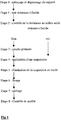
- Step 3 primary layer
- Such a primer can be deposited on said face using numerous compositions, in particular compositions containing silicone or siloxane, with methods such as spraying, brushing, immersing the material in a bath, vapor deposition, etc.
- SILIKOPON EF sold by Evonik Tego Chemie GmbH, Germany
- This hybrid binder is advantageously applied after the addition of dispersing agent and of crosslinking or hardening agent (Dynasilan Ameo (R)). Details of such formulations are given on the website of the company EVONIK TEGO CHEMIE.
- This primer is for example applied at room temperature.
- Step 4 application of a suspension on the surface resistant to the acid medium or on the primary layer
- suspension 1 or 4 from the preceding table is applied with a brush or a brush to the face or the primary layer.
- Step 5 elimination of the excess suspension
- Step 6 washing
- the surface covered with the suspension is washed with an alkaline solution, advantageously acid, to remove the particles which do not adhere sufficiently to the support.
- This washing step can also be carried out by a jet of steam.
- Step 7 drying
- drying can be carried out at ambient temperature, the drying is advantageously carried out at a temperature of 30 to 60 ° C., for example in a chamber inert by radiation. If the washing involves a treatment with water vapor, the drying may consist only of a treatment using a chamois.
- Step 8 Quality control
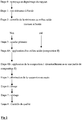
- the method according to this example is shown schematically in the figure 2 .
- a first alcoholic composition comprising the silica particles and the TEOS is prepared on the one hand, this first composition I being substantially free of water, and on the other hand a second alcoholic composition II comprising the acid and water.
- compositions I and II once mixed then form a suspension according to the invention, for example suspension 1 or 4.
- compositions I and II intended to be mixed together to form a suspension 1 or 4 are given in the following table.
- suspension composition I Composition II 1 2g silica 1 1 ml 37% HCl 50ml alcohol 1 (aqueous solution) 6ml TEOS 1 2g Silica 1 1ml 37% HCl 40ml alcohol 1 10ml alcohol 1 6ml TEOS 1 2g Silica 1 1ml 37% HCl 30ml Alcohol 1 20ml alcohol 1 6ml TEOS 4 1g Silica 1 1ml 37% HCl 50ml alcohol 1 6ml TEOS 4 1g Silica 1 1ml 37% HCl 30ml alcohol 1 20ml alcohol 6ml TEOS 4 1g Silica 1 1ml 37% HCl 20ml alcohol 6ml TEOS 4 1g Silica 1 1ml 37% HCl 20ml alcohol 1 30ml alcohol 1 6ml TEOS 4 1g Silica 1 1ml 37% HCl 20ml alcohol 1 30
- step 4A only part of the composition II is used, the other part of the composition II being sprayed onto the face after application of the composition I.
- step 4A the application of the acid medium (step 4A) (possibly with a part of composition II) is carried out on the face or primary layer on which the composition It is applied (Step 4B).
- Example 3 the method of Example 3 is repeated, except that the compositions I and II are sprayed simultaneously on said face or primer so that the compositions I and II are in contact with one another. with the other before touching said face or primary layer.
- the primary face or layer is first treated with part of the composition II (Step 4bis) before the composition I and the rest of the composition II are sprayed simultaneously on the primary face or layer.
Landscapes
- Chemical & Material Sciences (AREA)
- Organic Chemistry (AREA)
- Engineering & Computer Science (AREA)
- Materials Engineering (AREA)
- Life Sciences & Earth Sciences (AREA)
- Nanotechnology (AREA)
- Wood Science & Technology (AREA)
- Crystallography & Structural Chemistry (AREA)
- Composite Materials (AREA)
- Inorganic Chemistry (AREA)
- General Physics & Mathematics (AREA)
- Chemical Kinetics & Catalysis (AREA)
- Physics & Mathematics (AREA)
- Condensed Matter Physics & Semiconductors (AREA)
- Geochemistry & Mineralogy (AREA)
- Dispersion Chemistry (AREA)
- General Chemical & Material Sciences (AREA)
- Paints Or Removers (AREA)
- Application Of Or Painting With Fluid Materials (AREA)
- Silicon Compounds (AREA)
- Glanulating (AREA)
Claims (19)
- Superhydrophobe Beschichtung mit einer Außenfläche, für die ein Wassertropfen (10 µl), der auf dieser Außenfläche in horizontaler Position angeordnet ist, einen statischen Rücklauf-Kontaktwinkel von mehr als 135 ° und/oder einen statischen Vorlauf-Kontaktwinkel von mehr als 135 ° definiert, wobei die Beschichtung mindestens eine Außenschicht mit einer Dicke von weniger als 500 µm umfasst, die erhalten werden kann und insbesondere durch Auftragen auf einen Träger mindestens einer frischen Säuresuspension, gebildet aus mindestens 97 Gew.-%, erhalten wird durch:- feste Partikel mit einer Partikelgröße von weniger als 500 µm, vorteilhaft weniger als 300 µm, wobei die festen Partikel zu über 80 Gew.-%, vorteilhaft zu über 85 Gew.-%, vorzugsweise zu mehr als 90 Gew.-% aus Agglomeraten von primären Nanopartikeln von SiO2 gebildet werden, wobei die primären Nanopartikel von SiO2 der Agglomerate eine zahlenmäßige durchschnittliche Partikelgröße von weniger als 70 nm, vorteilhaft von weniger als 60 nm, vorzugsweise von weniger als 50 nm aufweisen, wobei die Agglomerate von Partikeln von SiO2 und/oder Nanopartikel von SiO2 davon mit Gruppen funktionalisiert sind, die ausgewählt sind aus der Gruppe bestehend aus Dimethyloxy, Trimethyloxy und deren Gemisch, so dass sie einen Restgehalt in Bezug auf die SiOH-Gruppe von 40% bis 60% des SiOH-Restgehalts von pyrogenen Siliziumdioxidpartikeln mit etwa 2 SiOH-Gruppen pro nm2 aufweisen, wobei die Partikel von 0,6 bis 6 Gew.-%, vorteilhaft von 1 bis 6 Gew.-%, vorzugsweise von 2 bis 4 Gew.-% der Suspension ausmachen;- einen Alkohol oder eine Mischung von Alkoholen, wobei der Alkohol oder die Alkohole vorteilhaft von 1 bis 6 Kohlenstoffatome, vorzugsweise von 1 bis 4 Kohlenstoffatome umfassen,- TEOS mit einem Anteil von 2 bis 20 Gew.-%, insbesondere von 3 bis 15 Gew.-% der Suspension,- eine Säure, und- Wasser;wobei die frische Säuresuspension auf einen Träger aufgebracht wird, um die Beschichtung innerhalb von 12 Stunden, vorteilhaft innerhalb von 6 Stunden nach dem Mischen der Säure mit TEOS bei Vorhandensein von Wasser zu bilden, wenn diese Mischung gehandhabt und bei 20 °C oder weniger gehalten wird, um die superhydrophobe Beschichtung nach dem Trocknen zu bilden,
wobei die frische Säuresuspension derart ist, dass sie(a) eine solche Wassermenge enthält, dass das Molverhältnis Wasser/TEOS zwischen 0,5 und 2,5, vorteilhaft zwischen 0,5 und 2, vorzugsweise zwischen 0,5 und 1,5 enthalten ist,(b) eine Menge an TEOS enthält, so dass das Gewichtsverhältnis TEOS/feste Partikel zwischen 1 und 10 enthalten ist, und(c) eine Menge an Säure enthält, so dass der pH-Wert der frischen Suspension, gemessen bei 20 °C, kleiner als 3, vorteilhaft kleiner als oder gleich 1 ist. - Superhydrophobe Beschichtung nach Anspruch 1, dadurch gekennzeichnet, dass sie eine Menge an TEOS enthält, so dass das Gewichtsverhältnis TEOS/feste Partikel zwischen 2 und 10 liegt, vorzugsweise zwischen 2 und 5 und/oder, vorzugsweise und, dass sie eine Menge an Säure enthält, damit der pH-Wert der frischen Suspension, gemessen bei 20 °C, niedriger als 2, insbesondere niedriger als 1 ist.
- Superhydrophobe Beschichtung nach einem der Ansprüche 1 bis 2, dadurch gekennzeichnet, dass für die frische Säuresuspension das Molverhältnis Wasser/TEOS zwischen 0,8 und 1,2 liegt, während die Menge an TEOS so bemessen ist, dass das Gewichtsverhältnis TEOS/feste Partikel zwischen 2 und 5 liegt.
- Superhydrophobe Beschichtung nach einem der vorhergehenden Ansprüche, dadurch gekennzeichnet, dass die primären Nanopartikel von SiO2 der Agglomerate mit einer zahlenmäßigen durchschnittlichen Partikelgröße von weniger als 70 nm eine Partikelgrößendispersion aufweisen, die einen Anteil von Nanopartikeln von weniger als 40 nm, insbesondere weniger als 20 nm, und einen weiteren Anteil von Nanopartikeln von mehr als 80 nm oder sogar mehr als 100 nm umfasst.
- Superhydrophobe Beschichtung nach einem der vorhergehenden Ansprüche, dadurch gekennzeichnet, dass die primären Nanopartikel von SiO2 der Agglomerate eine Partikelgrößendispersion der primären Nanopartikeln von SiO2 aufweisen, mit einem Grad der Polydispersität in der Anzahl bei 90% größer als 0,2, vorteilhaft größer als 0,5, vorzugsweise größer als 0,7, insbesondere größer als 1.
- Superhydrophobe Beschichtung nach einem der vorhergehenden Ansprüche, dadurch gekennzeichnet, dass die festen Partikel der frischen Säuresuspension zu mehr als 95 Gew.-%, vorteilhaft zu mehr als 97 Gew.-%, vorzugsweise zu mehr als 99 Gew.-% aus Agglomeraten von primären Nanopartikeln von SiO2 gebildet werden, wobei die Nanopartikel eine zahlenmäßige durchschnittliche Partikelgröße von weniger als 40 nm aufweisen, wobei die Agglomerate von Nanopartikeln von SiO2 und/oder Nanopartikel von SiO2 davon mit Gruppen funktionalisiert sind, die ausgewählt sind aus der Gruppe bestehend aus Dimethyloxy, Trimethyloxy und deren Gemisch, wobei die Partikel von 1 bis 6 Gew.-% der frischen Säuresuspension, vorteilhaft von 2 bis 5 Gew.-% der frischen Säuresuspension ausmachen.
- Superhydrophobe Beschichtung nach einem der vorstehenden Ansprüche, dadurch gekennzeichnet, dass sie mindestens eine Innenschicht umfasst, gelegen unter der Außenschicht, wobei die Innenschicht eine Schicht mit mindestens Siliziumatomen ist, insbesondere von SiO2.
- Superhydrophobe Beschichtung nach einem der vorhergehenden Ansprüche, dadurch gekennzeichnet, dass für die frische Säuresuspension das Molverhältnis SiO2 /TEOS-Partikel zwischen 0,8 und 1,2 liegt.
- Superhydrophobe Beschichtung nach einem der vorhergehenden Ansprüche, dadurch gekennzeichnet, dass die Agglomerate von Nanopartikeln von SiO2 der frischen Säuresuspension eine spezifische Oberfläche von 50 m2/g bis 150 m2/g aufweisen.
- Superhydrophobe Beschichtung nach einem der vorhergehenden Ansprüche, dadurch gekennzeichnet dass mindestens 95% der Außenschicht im Wesentlichen aus einer Schicht von Partikel von SiO2 gebildet werden, die durch -O-Si-O-Bindungen miteinander verbunden sind.
- Superhydrophobe Beschichtung nach einem der vorhergehenden Ansprüche, dadurch gekennzeichnet, dass die Außenschicht mit einem Vergrößerungsfaktor von 50, d. h. bei einer Skala von etwa 2,2 mm, zwischen 1,1 µm und 20 µm, eine Außenfläche mit einer mittleren quadratischen Rauigkeit (Grundoberflächenrauigkeit) zwischen 1,1 µm und 20 µm und/oder einen Wenzel-Rauigkeitsfaktor von mehr als 1,2 aufweist.
- Produkt, bei dem eine Seite oder Grundierschicht, die diese Fläche bedeckt, eine Beständigkeit gegen das saure Medium der frischen Säuresuspension für mindestens 1 Minute aufweist, wobei die Seite oder Grundierschicht, die diese Fläche bedeckt, mit einer superhydrophoben Beschichtung nach einem der vorhergehenden Ansprüche versehen ist.
- Verfahren zum Aufbringen einer superhydrophoben Beschichtung nach einem der Ansprüche 1 bis 11 entlang einer Seite eines Produkts, wobei das Verfahren die folgenden Schritte umfasst:- Behandeln der zu bedeckenden Seite, um zumindest Fett und/oder Staub zu entfernen;- zumindest wenn diese Seite mindestens 1 Minute lang keine Beständigkeit in dem sauren wässrigen Medium der frischen Säuresuspension aufweist, Auftragen einer gegen das saure Medium beständigen Grundierschicht auf diese Seite,- Auftragen einer frischen Säuresuspension auf diese Seite oder auf die gegen das saure Medium beständige Grundierschicht, gegebenenfalls nach dem Benetzen der Seite oder der gegen das saure Medium beständigen Schicht, die aus mindestens 97 Gew.-% gebildet wird durch:- feste Partikel, gebildet zu mehr als 80 Gew.-%, vorteilhaft zu mehr als 85 Gew.-%, vorzugsweise zu mehr als 90 Gew.-% aus Agglomeraten von primären Nanopartikeln von SiO2, wobei die primären Nanopartikel von SiO2 der Agglomerate eine zahlenmäßige durchschnittliche Partikelgröße von weniger als 70 nm aufweisen, wobei die Agglomerate von Partikeln von SiO2 und/oder Nanopartikel von SiO2 davon mit Gruppen funktionalisiert sind, die ausgewählt sind aus der Gruppe bestehend aus Dimethyloxy, Trimethyloxy und deren Gemisch, so dass sie einen Restgehalt in Bezug auf die SiOH-Gruppe von 40% bis 60% des SiOH-Restgehalts von pyrogenen Siliziumdioxidpartikeln mit etwa 2 SiOH-Gruppen pro nm2 aufweisen, wobei die Partikel von 0,6 bis 6 Gew.-% der Suspension ausmachen;- einen Alkohol oder eine Mischung von Alkoholen, wobei der Alkohol oder die Alkohole vorteilhaft von 1 bis 6 Kohlenstoffatome, vorzugsweise von 1 bis 4 Kohlenstoffatome umfassen:- TEOS mit einem Anteil von 2 bis 20 Gew.-% der Suspension, und- Säure(n) und Wasser;wobei die frische Säuresuspension derart ist, dass sie(a) eine solche Wassermenge enthält, dass das Molverhältnis Wasser/TEOS zwischen 0,5 und 2,5, vorteilhaft zwischen 0,5 und 2, vorzugsweise zwischen 0,5 und 1,5 enthalten ist,(b) eine Menge an TEOS enthält, so dass das Gewichtsverhältnis TEOS/feste Partikel zwischen 1 und 10 enthalten ist, und(c) eine Menge an Säure enthält, so dass der pH-Wert der frischen Suspension, gemessen bei 20 °C, kleiner als 3, vorteilhaft kleiner als oder gleich 1 ist,um die Suspension innerhalb von 12 Stunden nach dem Mischen oder Kontaktieren der Säure mit dem TEOS bei Vorhandensein von Wasser auf die Seite oder Grundierschicht aufzubringen, wenn dieses Mischen oder Kontaktieren gehandhabt und auf einer Temperatur von 20 °C oder weniger gehalten wird;- Entfernen einer überschüssigen Menge an Suspension, die auf der Seite und/oder der Grundierschicht vorhanden ist,- optionale Behandlung mit einem sauren wässrigen Medium bei Vorhandensein mindestens eines Tensids, wobei das saure wässrige Medium vorteilhaft einen pH-Wert von weniger als 3 aufweist, und- Trocknen der Beschichtung, wobei das Trocknen vorteilhaft bei einer Temperatur von mehr als 50 °C für mindestens 1 Minute, aber bei einer Temperatur unter der Erweichungstemperatur der Agglomerate von Nanopartikeln von SiO2 durchgeführt wird,wobei die Beschichtung eine superhydrophobe Beschichtung mit einer Außenfläche ist, für die ein Wassertropfen (10 µl), der auf der Außenfläche in horizontaler Position angeordnet ist, einen statischen Rücklauf-Kontaktwinkel von mehr als 135° und/oder einen statischen Vorlauf-Kontaktwinkel von mehr als 135° definiert.
- Verfahren nach dem vorhergehenden Anspruch, dadurch gekennzeichnet, dass die Suspension nach Anspruch 13 durch Mischen einer Zusammensetzung hergestellt wird, gebildet aus mindestens 97 Gew.-% durch:- feste Partikel, gebildet zu mehr als 80 Gew.-%, vorteilhaft zu mehr als 85 Gew.-%, vorzugsweise zu mehr als 90 Gew.-% aus Agglomeraten von primären Nanopartikeln von SiO2, wobei die primären Nanopartikel von SiO2 eine zahlenmittlere Partikelgröße von weniger als 70 nm aufweisen, wobei die Agglomerate von Nanopartikeln von SiO2 und/oder Nanopartikel davon mit Gruppen funktionalisiert sind, die ausgewählt sind aus der Gruppe bestehend aus Dimethyloxy, Trimethyloxy und deren Gemisch, so dass sie einen relativen Restgehalt an SiOH-Gruppen von zwischen 40% und 60% des Rest-SiOH-Gehalts an pyrogenen Siliziumdioxidpartikeln mit etwa 2 SiOH-Gruppen pro nm2 aufweisen,- einen Alkohol oder eine Mischung von Alkoholen,- TEOS,mit einem sauren wässrigen Medium weniger als 12 Stunden, vorzugsweise weniger als 6 Stunden, vorzugsweise weniger als 2 Stunden vor dem Auftragen der Suspension auf die säurebeständige Seite und/oder Grundierschicht, wenn diese Mischung gehandhabt und bei 20 °C oder niedriger gehalten wird.
- Verfahren nach Anspruch 13 oder 14, dadurch gekennzeichnet, dass ein saures wässriges Medium, vorzugsweise frei von TEOS, auf die beständige Seite oder Grundierschicht aufgebracht wird, bevor auf diese Seite oder Schicht mindestens eine Zusammensetzung aufgebracht wird, die aus mindestens 97 Gew.-% besteht, durch:- feste Partikel, gebildet zu mehr als 80 Gew.-%, vorteilhaft zu mehr als 85 Gew.-%, vorzugsweise zu mehr als 90 Gew.-% aus Agglomeraten von primären Nanopartikeln von SiO2, wobei die primären Nanopartikel von SiO2 eine Partikelgröße von weniger als 70 nm aufweisen, wobei die Agglomerate von Nanopartikeln von SiO2 und/oder Nanopartikel davon mit Gruppen funktionalisiert sind, die ausgewählt sind aus der Gruppe bestehend aus Dimethyloxy, Trimethyloxy und deren Gemisch, so dass sie einen relativen Restgehalt auf die SiOH-Gruppe von 40% bis 60% des SiOH-Restgehalts von pyrogenen Siliziumdioxidpartikeln mit etwa 2 SiOH-Gruppen pro nm2 aufweisen,- einen Alkohol oder eine Mischung von Alkoholen,- TEOS, wobei die Zusammensetzung im Wesentlichen frei von Wasser und Säure ist, wobei das saure wässrige Medium und die Zusammensetzung in Menge und Gehalt angepasst sind, um auf der Seite oder Schicht eine Suspension nach Anspruch 13 zu bilden.
- Verfahren nach einem der Ansprüche 13 bis 15, dadurch gekennzeichnet, dass ein erstes saures wässriges Medium, vorteilhaft frei von TEOS, auf die beständige Seite oder Schicht aufgebracht wird, bevor auf die Seite oder Schicht (a) eine Zusammensetzung aufgebracht wird, die aus mindestens 97 Gew.-% besteht, durch:- feste Partikel, gebildet zu mehr als 80 Gew.-%, vorteilhaft zu mehr als 85 Gew.-%, vorzugsweise zu mehr als 90 Gew.-% aus Agglomeraten von primären Partikeln von SiO2, wobei die primären Partikel von SiO2 eine Partikelgröße von weniger als 70 nm aufweisen, die Agglomerate von Nanopartikeln von SiO2 mit Gruppen funktionalisiert sind, die ausgewählt sind aus der Gruppe bestehend aus Dimethyloxy, Trimethyloxy und deren Gemisch, so dass sie einen relativen Restgehalt auf die SiOH-Gruppe von 40% bis 60% des SiOH-Restgehalts von pyrogenen Siliziumdioxidpartikeln mit etwa 2 SiOH-Gruppen pro nm2 aufweisen;- einen Alkohol oder eine Mischung von Alkoholen,- TEOS, wobei diese Zusammensetzung im Wesentlichen frei von Wasser und Säure ist, und dann (b) ein zweites saures wässriges Medium, wobei das erste und zweite saure wässrige Medium und die Zusammensetzung in Menge und Gehalt angepasst sind, um auf der Seite oder Schicht eine Suspension nach Anspruch 13 zu bilden.
- Verfahren nach einem der Ansprüche 13 bis 16, dadurch gekennzeichnet, dass die Zusammensetzung und das saure wässrige Medium gleichzeitig auf die Seite projiziert werden, um das Mischen der Zusammensetzung mit dem sauren Medium sicherzustellen, zum Bilden einer Suspension nach Anspruch 13 zumindest auf der Seite.
- Verfahren nach einem der Ansprüche 13 bis 17, dadurch gekennzeichnet, dass die Suspension und/oder die Zusammensetzung und/oder das saure Medium bei einer Temperatur von weniger als 30 °C, vorzugsweise zwischen -10 °C und 20 °C, auf die Seite oder Schicht aufgebracht wird.
- Verfahren nach einem der Ansprüche 13 bis 18, dadurch gekennzeichnet, dass die auf die Seite oder Grundierschicht, die gegen das saure Medium beständig ist, aufgetragene Suspension geeignet ist, eine oder mehrere der Eigenschaften der Ansprüche 2 bis 11 zu zeigen.
Applications Claiming Priority (1)
| Application Number | Priority Date | Filing Date | Title |
|---|---|---|---|
| BE201200390A BE1020749A3 (fr) | 2012-06-13 | 2012-06-13 | Revetement superhydrophobe. |
Publications (3)
| Publication Number | Publication Date |
|---|---|
| EP2674402A2 EP2674402A2 (de) | 2013-12-18 |
| EP2674402A3 EP2674402A3 (de) | 2014-02-26 |
| EP2674402B1 true EP2674402B1 (de) | 2020-05-13 |
Family
ID=48656014
Family Applications (1)
| Application Number | Title | Priority Date | Filing Date |
|---|---|---|---|
| EP13447010.3A Active EP2674402B1 (de) | 2012-06-13 | 2013-06-12 | Superhydrophobe Beschichtung |
Country Status (2)
| Country | Link |
|---|---|
| EP (1) | EP2674402B1 (de) |
| BE (1) | BE1020749A3 (de) |
Families Citing this family (1)
| Publication number | Priority date | Publication date | Assignee | Title |
|---|---|---|---|---|
| CN104212346B (zh) * | 2014-09-05 | 2016-08-31 | 东莞市瀛通电线有限公司 | 疏油疏水耐沾污涂层材料的制备方法、制品及应用 |
Family Cites Families (7)
| Publication number | Priority date | Publication date | Assignee | Title |
|---|---|---|---|---|
| US7070833B2 (en) | 2003-03-05 | 2006-07-04 | Restek Corporation | Method for chemical vapor deposition of silicon on to substrates for use in corrosive and vacuum environments |
| DE102004014704A1 (de) | 2004-03-25 | 2005-10-13 | Wacker-Chemie Gmbh | Partikelstabilisierte Emulsionen |
| WO2007102960A2 (en) * | 2006-01-30 | 2007-09-13 | Ashland Licensing And Intellectual Property Llc | Hydrophobic self-cleaning coating compositions |
| WO2008072707A1 (ja) * | 2006-12-15 | 2008-06-19 | Asahi Glass Company, Limited | 撥水性表面を有する物品 |
| TWI384039B (zh) * | 2006-12-27 | 2013-02-01 | Ind Tech Res Inst | 透明疏水自潔塗料的製作方法、所製得之塗料以及塗膜 |
| DE102007033448A1 (de) | 2007-07-18 | 2009-01-22 | Wacker Chemie Ag | Hochdisperse Metalloxide mit einer hohen positiven Oberflächenladung |
| WO2010007956A1 (ja) * | 2008-07-17 | 2010-01-21 | 旭硝子株式会社 | 撥水性基体およびその製造方法 |
-
2012
- 2012-06-13 BE BE201200390A patent/BE1020749A3/fr not_active IP Right Cessation
-
2013
- 2013-06-12 EP EP13447010.3A patent/EP2674402B1/de active Active
Non-Patent Citations (1)
| Title |
|---|
| None * |
Also Published As
| Publication number | Publication date |
|---|---|
| BE1020749A3 (fr) | 2014-04-01 |
| EP2674402A2 (de) | 2013-12-18 |
| EP2674402A3 (de) | 2014-02-26 |
Similar Documents
| Publication | Publication Date | Title |
|---|---|---|
| EP3145642B1 (de) | Neuartiges verfahren zur gewinnung von superhydrophoben oder superhydrophilen oberflächen | |
| EP0927144B1 (de) | Substrat mit verbesserten hydrophilen oder hydrophoben eingenschaften mit unregelmässigkeiten | |
| CN100349660C (zh) | 防污性材料、其制造方法及用于该方法的涂料组合物和装置 | |
| EP3032296B1 (de) | Optisches element und verfahren zur herstellung eines optischen elements | |
| FR2746811A1 (fr) | Composition pour un revetement non-mouillable, procede de traitement d'un vitrage a l'aide de la composition et produits obtenue | |
| WO2014193513A2 (en) | Tuning the anti-reflective, abrasion resistance, anti-soiling and self-cleaning properties of transparent coatings for different glass substrates and solar cells | |
| CN101563301A (zh) | 具有斥水性表面的物品 | |
| EP3347320A1 (de) | Transportfahrzeugverglasung mit wasserabweisender und staubschutzbeschichtung in verbindung mit einem detektor | |
| CN102608103A (zh) | 表面增强拉曼散射基底及其制备方法 | |
| US8354165B2 (en) | Substrates supplied with a dust and aerosol-repellent coating, method for the production thereof and materials for this purpose | |
| JP3427755B2 (ja) | シリカ系膜被覆物品を製造する方法 | |
| EP2674402A2 (de) | Superhydrophobe Beschichtung | |
| BE1019921A3 (fr) | Support super hydrophobe et panneau photovoltaïque comprenant un tel support. | |
| FR2982607A1 (fr) | Materiau fonctionnel a haute durabilite | |
| EP1829991A1 (de) | Rostfreies Stahlblech mit selbstreinigender Beschichtung. | |
| FR2765211A1 (fr) | Verre hydrofuge ayant une excellente durabilite et son procede de fabrication | |
| EP3006599B1 (de) | Beschichtungsverfahren der oberfläche eines metallsubstrats | |
| CN109678359B (zh) | 一种自清洁玻璃疏水剂的制备方法及应用 | |
| FR2826654A1 (fr) | Composition et procede de traitement de surface et substrats susceptibles d'etre ainsi obtenus | |
| JP2003292342A (ja) | シリカ系膜被覆物品 | |
| JP3948130B2 (ja) | 防汚ガラスとその製造方法 | |
| EP4622931A1 (de) | Verfahren zur hydrophobierung einer luft- und raumfahrtverglasung | |
| US20210101828A1 (en) | Atomized anti-scratching nano-coating for glass surface and method of manufacturing thereof | |
| Meignanamoorthi et al. | Transparent Superhydrophobic Al2O3/ZnO Coating with Long-Term Antifogging Performance | |
| EP3589597B1 (de) | Artikel für einen feuchtraum mit hydrophober verglasung |
Legal Events
| Date | Code | Title | Description |
|---|---|---|---|
| PUAI | Public reference made under article 153(3) epc to a published international application that has entered the european phase |
Free format text: ORIGINAL CODE: 0009012 |
|
| AK | Designated contracting states |
Kind code of ref document: A2 Designated state(s): AL AT BE BG CH CY CZ DE DK EE ES FI FR GB GR HR HU IE IS IT LI LT LU LV MC MK MT NL NO PL PT RO RS SE SI SK SM TR |
|
| AX | Request for extension of the european patent |
Extension state: BA ME |
|
| PUAL | Search report despatched |
Free format text: ORIGINAL CODE: 0009013 |
|
| AK | Designated contracting states |
Kind code of ref document: A3 Designated state(s): AL AT BE BG CH CY CZ DE DK EE ES FI FR GB GR HR HU IE IS IT LI LT LU LV MC MK MT NL NO PL PT RO RS SE SI SK SM TR |
|
| AX | Request for extension of the european patent |
Extension state: BA ME |
|
| RIC1 | Information provided on ipc code assigned before grant |
Ipc: C09D 5/16 20060101ALI20140123BHEP Ipc: C01B 33/18 20060101ALI20140123BHEP Ipc: C09D 1/00 20060101ALI20140123BHEP Ipc: C09C 1/30 20060101ALI20140123BHEP Ipc: C03C 17/00 20060101AFI20140123BHEP |
|
| 17P | Request for examination filed |
Effective date: 20140812 |
|
| RBV | Designated contracting states (corrected) |
Designated state(s): AL AT BE BG CH CY CZ DE DK EE ES FI FR GB GR HR HU IE IS IT LI LT LU LV MC MK MT NL NO PL PT RO RS SE SI SK SM TR |
|
| STAA | Information on the status of an ep patent application or granted ep patent |
Free format text: STATUS: EXAMINATION IS IN PROGRESS |
|
| 17Q | First examination report despatched |
Effective date: 20170209 |
|
| GRAP | Despatch of communication of intention to grant a patent |
Free format text: ORIGINAL CODE: EPIDOSNIGR1 |
|
| STAA | Information on the status of an ep patent application or granted ep patent |
Free format text: STATUS: GRANT OF PATENT IS INTENDED |
|
| INTG | Intention to grant announced |
Effective date: 20190117 |
|
| GRAS | Grant fee paid |
Free format text: ORIGINAL CODE: EPIDOSNIGR3 |
|
| GRAA | (expected) grant |
Free format text: ORIGINAL CODE: 0009210 |
|
| STAA | Information on the status of an ep patent application or granted ep patent |
Free format text: STATUS: THE PATENT HAS BEEN GRANTED |
|
| AK | Designated contracting states |
Kind code of ref document: B1 Designated state(s): AL AT BE BG CH CY CZ DE DK EE ES FI FR GB GR HR HU IE IS IT LI LT LU LV MC MK MT NL NO PL PT RO RS SE SI SK SM TR |
|
| REG | Reference to a national code |
Ref country code: GB Ref legal event code: FG4D Free format text: NOT ENGLISH |
|
| REG | Reference to a national code |
Ref country code: CH Ref legal event code: EP |
|
| REG | Reference to a national code |
Ref country code: DE Ref legal event code: R096 Ref document number: 602013069031 Country of ref document: DE |
|
| REG | Reference to a national code |
Ref country code: AT Ref legal event code: REF Ref document number: 1270065 Country of ref document: AT Kind code of ref document: T Effective date: 20200615 |
|
| REG | Reference to a national code |
Ref country code: NL Ref legal event code: FP |
|
| REG | Reference to a national code |
Ref country code: LT Ref legal event code: MG4D |
|
| PG25 | Lapsed in a contracting state [announced via postgrant information from national office to epo] |
Ref country code: LT Free format text: LAPSE BECAUSE OF FAILURE TO SUBMIT A TRANSLATION OF THE DESCRIPTION OR TO PAY THE FEE WITHIN THE PRESCRIBED TIME-LIMIT Effective date: 20200513 Ref country code: FI Free format text: LAPSE BECAUSE OF FAILURE TO SUBMIT A TRANSLATION OF THE DESCRIPTION OR TO PAY THE FEE WITHIN THE PRESCRIBED TIME-LIMIT Effective date: 20200513 Ref country code: GR Free format text: LAPSE BECAUSE OF FAILURE TO SUBMIT A TRANSLATION OF THE DESCRIPTION OR TO PAY THE FEE WITHIN THE PRESCRIBED TIME-LIMIT Effective date: 20200814 Ref country code: IS Free format text: LAPSE BECAUSE OF FAILURE TO SUBMIT A TRANSLATION OF THE DESCRIPTION OR TO PAY THE FEE WITHIN THE PRESCRIBED TIME-LIMIT Effective date: 20200913 Ref country code: NO Free format text: LAPSE BECAUSE OF FAILURE TO SUBMIT A TRANSLATION OF THE DESCRIPTION OR TO PAY THE FEE WITHIN THE PRESCRIBED TIME-LIMIT Effective date: 20200813 Ref country code: SE Free format text: LAPSE BECAUSE OF FAILURE TO SUBMIT A TRANSLATION OF THE DESCRIPTION OR TO PAY THE FEE WITHIN THE PRESCRIBED TIME-LIMIT Effective date: 20200513 Ref country code: PT Free format text: LAPSE BECAUSE OF FAILURE TO SUBMIT A TRANSLATION OF THE DESCRIPTION OR TO PAY THE FEE WITHIN THE PRESCRIBED TIME-LIMIT Effective date: 20200914 |
|
| PG25 | Lapsed in a contracting state [announced via postgrant information from national office to epo] |
Ref country code: HR Free format text: LAPSE BECAUSE OF FAILURE TO SUBMIT A TRANSLATION OF THE DESCRIPTION OR TO PAY THE FEE WITHIN THE PRESCRIBED TIME-LIMIT Effective date: 20200513 Ref country code: RS Free format text: LAPSE BECAUSE OF FAILURE TO SUBMIT A TRANSLATION OF THE DESCRIPTION OR TO PAY THE FEE WITHIN THE PRESCRIBED TIME-LIMIT Effective date: 20200513 Ref country code: BG Free format text: LAPSE BECAUSE OF FAILURE TO SUBMIT A TRANSLATION OF THE DESCRIPTION OR TO PAY THE FEE WITHIN THE PRESCRIBED TIME-LIMIT Effective date: 20200813 Ref country code: LV Free format text: LAPSE BECAUSE OF FAILURE TO SUBMIT A TRANSLATION OF THE DESCRIPTION OR TO PAY THE FEE WITHIN THE PRESCRIBED TIME-LIMIT Effective date: 20200513 |
|
| REG | Reference to a national code |
Ref country code: AT Ref legal event code: MK05 Ref document number: 1270065 Country of ref document: AT Kind code of ref document: T Effective date: 20200513 |
|
| PG25 | Lapsed in a contracting state [announced via postgrant information from national office to epo] |
Ref country code: AL Free format text: LAPSE BECAUSE OF FAILURE TO SUBMIT A TRANSLATION OF THE DESCRIPTION OR TO PAY THE FEE WITHIN THE PRESCRIBED TIME-LIMIT Effective date: 20200513 |
|
| PG25 | Lapsed in a contracting state [announced via postgrant information from national office to epo] |
Ref country code: IT Free format text: LAPSE BECAUSE OF FAILURE TO SUBMIT A TRANSLATION OF THE DESCRIPTION OR TO PAY THE FEE WITHIN THE PRESCRIBED TIME-LIMIT Effective date: 20200513 Ref country code: DK Free format text: LAPSE BECAUSE OF FAILURE TO SUBMIT A TRANSLATION OF THE DESCRIPTION OR TO PAY THE FEE WITHIN THE PRESCRIBED TIME-LIMIT Effective date: 20200513 Ref country code: EE Free format text: LAPSE BECAUSE OF FAILURE TO SUBMIT A TRANSLATION OF THE DESCRIPTION OR TO PAY THE FEE WITHIN THE PRESCRIBED TIME-LIMIT Effective date: 20200513 Ref country code: SM Free format text: LAPSE BECAUSE OF FAILURE TO SUBMIT A TRANSLATION OF THE DESCRIPTION OR TO PAY THE FEE WITHIN THE PRESCRIBED TIME-LIMIT Effective date: 20200513 Ref country code: AT Free format text: LAPSE BECAUSE OF FAILURE TO SUBMIT A TRANSLATION OF THE DESCRIPTION OR TO PAY THE FEE WITHIN THE PRESCRIBED TIME-LIMIT Effective date: 20200513 Ref country code: RO Free format text: LAPSE BECAUSE OF FAILURE TO SUBMIT A TRANSLATION OF THE DESCRIPTION OR TO PAY THE FEE WITHIN THE PRESCRIBED TIME-LIMIT Effective date: 20200513 Ref country code: CZ Free format text: LAPSE BECAUSE OF FAILURE TO SUBMIT A TRANSLATION OF THE DESCRIPTION OR TO PAY THE FEE WITHIN THE PRESCRIBED TIME-LIMIT Effective date: 20200513 Ref country code: ES Free format text: LAPSE BECAUSE OF FAILURE TO SUBMIT A TRANSLATION OF THE DESCRIPTION OR TO PAY THE FEE WITHIN THE PRESCRIBED TIME-LIMIT Effective date: 20200513 |
|
| REG | Reference to a national code |
Ref country code: CH Ref legal event code: PL |
|
| REG | Reference to a national code |
Ref country code: DE Ref legal event code: R097 Ref document number: 602013069031 Country of ref document: DE |
|
| PG25 | Lapsed in a contracting state [announced via postgrant information from national office to epo] |
Ref country code: SK Free format text: LAPSE BECAUSE OF FAILURE TO SUBMIT A TRANSLATION OF THE DESCRIPTION OR TO PAY THE FEE WITHIN THE PRESCRIBED TIME-LIMIT Effective date: 20200513 Ref country code: MC Free format text: LAPSE BECAUSE OF FAILURE TO SUBMIT A TRANSLATION OF THE DESCRIPTION OR TO PAY THE FEE WITHIN THE PRESCRIBED TIME-LIMIT Effective date: 20200513 Ref country code: PL Free format text: LAPSE BECAUSE OF FAILURE TO SUBMIT A TRANSLATION OF THE DESCRIPTION OR TO PAY THE FEE WITHIN THE PRESCRIBED TIME-LIMIT Effective date: 20200513 |
|
| PLBE | No opposition filed within time limit |
Free format text: ORIGINAL CODE: 0009261 |
|
| STAA | Information on the status of an ep patent application or granted ep patent |
Free format text: STATUS: NO OPPOSITION FILED WITHIN TIME LIMIT |
|
| 26N | No opposition filed |
Effective date: 20210216 |
|
| PG25 | Lapsed in a contracting state [announced via postgrant information from national office to epo] |
Ref country code: CH Free format text: LAPSE BECAUSE OF NON-PAYMENT OF DUE FEES Effective date: 20200630 Ref country code: IE Free format text: LAPSE BECAUSE OF NON-PAYMENT OF DUE FEES Effective date: 20200612 Ref country code: LI Free format text: LAPSE BECAUSE OF NON-PAYMENT OF DUE FEES Effective date: 20200630 |
|
| PG25 | Lapsed in a contracting state [announced via postgrant information from national office to epo] |
Ref country code: SI Free format text: LAPSE BECAUSE OF FAILURE TO SUBMIT A TRANSLATION OF THE DESCRIPTION OR TO PAY THE FEE WITHIN THE PRESCRIBED TIME-LIMIT Effective date: 20200513 |
|
| PG25 | Lapsed in a contracting state [announced via postgrant information from national office to epo] |
Ref country code: TR Free format text: LAPSE BECAUSE OF FAILURE TO SUBMIT A TRANSLATION OF THE DESCRIPTION OR TO PAY THE FEE WITHIN THE PRESCRIBED TIME-LIMIT Effective date: 20200513 Ref country code: MT Free format text: LAPSE BECAUSE OF FAILURE TO SUBMIT A TRANSLATION OF THE DESCRIPTION OR TO PAY THE FEE WITHIN THE PRESCRIBED TIME-LIMIT Effective date: 20200513 Ref country code: CY Free format text: LAPSE BECAUSE OF FAILURE TO SUBMIT A TRANSLATION OF THE DESCRIPTION OR TO PAY THE FEE WITHIN THE PRESCRIBED TIME-LIMIT Effective date: 20200513 |
|
| PG25 | Lapsed in a contracting state [announced via postgrant information from national office to epo] |
Ref country code: MK Free format text: LAPSE BECAUSE OF FAILURE TO SUBMIT A TRANSLATION OF THE DESCRIPTION OR TO PAY THE FEE WITHIN THE PRESCRIBED TIME-LIMIT Effective date: 20200513 |
|
| PGFP | Annual fee paid to national office [announced via postgrant information from national office to epo] |
Ref country code: LU Payment date: 20230315 Year of fee payment: 11 Ref country code: FR Payment date: 20230315 Year of fee payment: 11 |
|
| PGFP | Annual fee paid to national office [announced via postgrant information from national office to epo] |
Ref country code: NL Payment date: 20230601 Year of fee payment: 11 Ref country code: DE Payment date: 20230523 Year of fee payment: 11 |
|
| PGFP | Annual fee paid to national office [announced via postgrant information from national office to epo] |
Ref country code: BE Payment date: 20230531 Year of fee payment: 11 |
|
| PGFP | Annual fee paid to national office [announced via postgrant information from national office to epo] |
Ref country code: GB Payment date: 20230517 Year of fee payment: 11 |
|
| REG | Reference to a national code |
Ref country code: DE Ref legal event code: R119 Ref document number: 602013069031 Country of ref document: DE |
|
| REG | Reference to a national code |
Ref country code: NL Ref legal event code: MM Effective date: 20240701 |
|
| PG25 | Lapsed in a contracting state [announced via postgrant information from national office to epo] |
Ref country code: LU Free format text: LAPSE BECAUSE OF NON-PAYMENT OF DUE FEES Effective date: 20240612 |
|
| GBPC | Gb: european patent ceased through non-payment of renewal fee |
Effective date: 20240612 |
|
| PG25 | Lapsed in a contracting state [announced via postgrant information from national office to epo] |
Ref country code: NL Free format text: LAPSE BECAUSE OF NON-PAYMENT OF DUE FEES Effective date: 20240701 |
|
| PG25 | Lapsed in a contracting state [announced via postgrant information from national office to epo] |
Ref country code: NL Free format text: LAPSE BECAUSE OF NON-PAYMENT OF DUE FEES Effective date: 20240701 |
|
| PG25 | Lapsed in a contracting state [announced via postgrant information from national office to epo] |
Ref country code: DE Free format text: LAPSE BECAUSE OF NON-PAYMENT OF DUE FEES Effective date: 20250101 |
|
| PG25 | Lapsed in a contracting state [announced via postgrant information from national office to epo] |
Ref country code: BE Free format text: LAPSE BECAUSE OF NON-PAYMENT OF DUE FEES Effective date: 20240630 |
|
| PG25 | Lapsed in a contracting state [announced via postgrant information from national office to epo] |
Ref country code: FR Free format text: LAPSE BECAUSE OF NON-PAYMENT OF DUE FEES Effective date: 20240630 |
|
| PG25 | Lapsed in a contracting state [announced via postgrant information from national office to epo] |
Ref country code: GB Free format text: LAPSE BECAUSE OF NON-PAYMENT OF DUE FEES Effective date: 20240612 |
|
| REG | Reference to a national code |
Ref country code: BE Ref legal event code: MM Effective date: 20240630 |