EP2662445A2 - Verfahren zur Konstruktion eines mutierten Enzyms, Verfahren zur Herstellung davon und mutiertes Enzym - Google Patents
Verfahren zur Konstruktion eines mutierten Enzyms, Verfahren zur Herstellung davon und mutiertes Enzym Download PDFInfo
- Publication number
- EP2662445A2 EP2662445A2 EP13179288.9A EP13179288A EP2662445A2 EP 2662445 A2 EP2662445 A2 EP 2662445A2 EP 13179288 A EP13179288 A EP 13179288A EP 2662445 A2 EP2662445 A2 EP 2662445A2
- Authority
- EP
- European Patent Office
- Prior art keywords
- amino acid
- enzyme
- mutated
- pullulanase
- acid corresponding
- Prior art date
- Legal status (The legal status is an assumption and is not a legal conclusion. Google has not performed a legal analysis and makes no representation as to the accuracy of the status listed.)
- Granted
Links
Images



Classifications
-
- C—CHEMISTRY; METALLURGY
- C12—BIOCHEMISTRY; BEER; SPIRITS; WINE; VINEGAR; MICROBIOLOGY; ENZYMOLOGY; MUTATION OR GENETIC ENGINEERING
- C12Y—ENZYMES
- C12Y302/00—Hydrolases acting on glycosyl compounds, i.e. glycosylases (3.2)
- C12Y302/01—Glycosidases, i.e. enzymes hydrolysing O- and S-glycosyl compounds (3.2.1)
- C12Y302/01041—Pullulanase (3.2.1.41)
-
- C—CHEMISTRY; METALLURGY
- C12—BIOCHEMISTRY; BEER; SPIRITS; WINE; VINEGAR; MICROBIOLOGY; ENZYMOLOGY; MUTATION OR GENETIC ENGINEERING
- C12N—MICROORGANISMS OR ENZYMES; COMPOSITIONS THEREOF; PROPAGATING, PRESERVING, OR MAINTAINING MICROORGANISMS; MUTATION OR GENETIC ENGINEERING; CULTURE MEDIA
- C12N9/00—Enzymes; Proenzymes; Compositions thereof; Processes for preparing, activating, inhibiting, separating or purifying enzymes
- C12N9/14—Hydrolases (3)
- C12N9/24—Hydrolases (3) acting on glycosyl compounds (3.2)
- C12N9/2402—Hydrolases (3) acting on glycosyl compounds (3.2) hydrolysing O- and S- glycosyl compounds (3.2.1)
- C12N9/2405—Glucanases
- C12N9/2451—Glucanases acting on alpha-1,6-glucosidic bonds
-
- C—CHEMISTRY; METALLURGY
- C12—BIOCHEMISTRY; BEER; SPIRITS; WINE; VINEGAR; MICROBIOLOGY; ENZYMOLOGY; MUTATION OR GENETIC ENGINEERING
- C12N—MICROORGANISMS OR ENZYMES; COMPOSITIONS THEREOF; PROPAGATING, PRESERVING, OR MAINTAINING MICROORGANISMS; MUTATION OR GENETIC ENGINEERING; CULTURE MEDIA
- C12N9/00—Enzymes; Proenzymes; Compositions thereof; Processes for preparing, activating, inhibiting, separating or purifying enzymes
- C12N9/14—Hydrolases (3)
- C12N9/24—Hydrolases (3) acting on glycosyl compounds (3.2)
- C12N9/2402—Hydrolases (3) acting on glycosyl compounds (3.2) hydrolysing O- and S- glycosyl compounds (3.2.1)
- C12N9/2405—Glucanases
- C12N9/2451—Glucanases acting on alpha-1,6-glucosidic bonds
- C12N9/2457—Pullulanase (3.2.1.41)
-
- C—CHEMISTRY; METALLURGY
- C12—BIOCHEMISTRY; BEER; SPIRITS; WINE; VINEGAR; MICROBIOLOGY; ENZYMOLOGY; MUTATION OR GENETIC ENGINEERING
- C12N—MICROORGANISMS OR ENZYMES; COMPOSITIONS THEREOF; PROPAGATING, PRESERVING, OR MAINTAINING MICROORGANISMS; MUTATION OR GENETIC ENGINEERING; CULTURE MEDIA
- C12N9/00—Enzymes; Proenzymes; Compositions thereof; Processes for preparing, activating, inhibiting, separating or purifying enzymes
- C12N9/14—Hydrolases (3)
- C12N9/24—Hydrolases (3) acting on glycosyl compounds (3.2)
- C12N9/2402—Hydrolases (3) acting on glycosyl compounds (3.2) hydrolysing O- and S- glycosyl compounds (3.2.1)
- C12N9/2405—Glucanases
- C12N9/2451—Glucanases acting on alpha-1,6-glucosidic bonds
- C12N9/246—Isoamylase (3.2.1.68)
-
- C—CHEMISTRY; METALLURGY
- C12—BIOCHEMISTRY; BEER; SPIRITS; WINE; VINEGAR; MICROBIOLOGY; ENZYMOLOGY; MUTATION OR GENETIC ENGINEERING
- C12Y—ENZYMES
- C12Y302/00—Hydrolases acting on glycosyl compounds, i.e. glycosylases (3.2)
- C12Y302/01—Glycosidases, i.e. enzymes hydrolysing O- and S-glycosyl compounds (3.2.1)
- C12Y302/01068—Isoamylase (3.2.1.68)
-
- C—CHEMISTRY; METALLURGY
- C07—ORGANIC CHEMISTRY
- C07K—PEPTIDES
- C07K2299/00—Coordinates from 3D structures of peptides, e.g. proteins or enzymes
Definitions
- the present invention relates to a method for designing a mutated enzyme hydrolyzing an ⁇ -1, 6-glycosidic linkage, a method for preparing the same, and a mutated enzyme.
- Pullulanase (EC 3.2.1.41) is an enzyme hydrolyzing an ⁇ -1,6 linkage of, for example, amylopectin in starch.
- Pullulanase is an enzyme having a high industrial applicability in the fields of sugar, for example, production of maltooligosaccharides such as glucose, maltose, maltotriose, maltotetraose, maltopentaose and maltohexaose ( OLIGOSACCHARIDES, Gordon and Breach Science Publishers, p3 ), improvement of rice cooking (patent document 1), and the like.
- Pullulanase derived from microorganism includes Bacillus sp.
- APC-9603 (patent document 2), and ones derived from Klebsiella pneumonia (AMANO ENZYME INC.), Bacillus deramificans, Bacillus acidpullulyticus, Bacillus stearothermophilus, Bacillus sectorramus, Bacillus circulans, Bacillus cereus, and Bacillus sectorramus.
- Patent document 3 discloses one example of a mutant of pullulanase.
- the present inventors have keenly investigated further. As a result, the present inventors have obtained an important finding regarding the recognition of a substrate in pullulanase derived from Bacillus subtilis strain 168 by making good use of an X-ray analysis technology for a crystalline structure. That is to say, regarding the pullulanase, the present inventors have succeeded in crystallizing it into a state containing a substrate analog ( ⁇ -cyclodextrin), and in obtaining information about the three-dimensional structure thereof. Thereby, they have clarified a site to which a substrate analog is bound. Thus, amino acid that is thought to be involved in recognition of a substrate has been specified.
- an active site is searched for by using G4 (maltotetraose) (see, non-patent document 1).
- the binding site of the substrate indicated therein is located in the vicinity of the binding site of a substrate analog predicted by the above-mentioned method (a method by comparing with pullulanase derived from Bacillus subtilis strain 168). This fact supports the involvement of the binding site of the substrate analog successfully found by the present inventors in the recognition of actual substrate.
- the present invention is mainly based on the above-mentioned results and provides a designing method of an enzyme mentioned below.
- a first aspect of the present invention provides a designing method of a mutated enzyme based on an enzyme hydrolyzing an ⁇ -1, 6-glycosidic linkage.
- the designing method of the present invention is used as a technique for changing the action properties of an enzyme.
- the designing method of the present invention can be used for the purpose of improving the activity and/or substrate specificity of pullulanase with respect to pullulan, or the activity and/or substrate specificity of pullulanase with respect to amylopectin. It can be expected that the improvement of the activity enables obtaining of a sufficient effect with less amount. That is to say, reduction of the amount to be used can be expected.
- the improvement of the substrate specificity facilitates the use thereof and reduces the amount to be used. Furthermore, if different substrate specificities are provided, a novel application of use can be achieved.
- Pullulanase that is one of the enzymes hydrolyzing an ⁇ -1, 6-glycosidic linkage can act on amylopectin in starch so as to form straight chain amylase.
- pullulanase has been widely used for processing starch, production of glucose, maltose, oligosaccharide, or the like, or brewing.
- pullulanase is an enzyme that is used for various industrial purposes of, for example, manufacturing a material of thermally stable microcapsule, a carrier of an immobilized enzyme, and the like. If the reactivity with respect to ⁇ -1,6 binding can be freely changed, for example, it is possible to increase the yield in products, to reduce the amount of enzyme to be used (an amount to be added). At the same time, this enzyme can be applied to new fields.
- reaction property is used as a term including properties (including activity and substrate specificity with respect to pullulan and activity and substrate specificity with respect to amylopectin) relating to the actions for hydrolyzing an ⁇ -1,6-glycosidic linkage.
- the evaluation of the "action property” can be carried out by using the Km value, Kcat value, and the like, obtained by the test system using pullulan, amylopectin, and starch as a substrate.
- Km value, Kcat value can be determined by the following method.
- the designing method of the mutated enzyme of the present invention includes roughly two steps, that is, a step of specifying an amino acid to be mutated (step (1)) and a step of constructing an amino acid sequence of the mutated amino acid (step (2)).
- step (1) a step of specifying an amino acid to be mutated
- step (2) a step of constructing an amino acid sequence of the mutated amino acid
- step (1) in an amino acid sequence of an enzyme (enzyme to be mutated) hydrolyzing an ⁇ -1,6-glycosidic linkage, one or two or more of amino acid(s) to which mutation is carried out (hereinafter, which is also referred to as "amino acid to be mutated") is specified.
- the amino acid to be mutated of the present invention is selected from the group shown below in an amino acid sequence of an enzyme that hydrolyzes an ⁇ -1,6-glycosidic linkage, that is, the group consisting of an amino acid corresponding to an amino acid at the 292 position, an amino acid corresponding to an amino acid at the 371 position, an amino acid corresponding to an amino acid at the 406 position, an amino acid corresponding to an amino acid at the 407 position, an amino acid corresponding to an amino acid at the 437 position, an amino acid corresponding to an amino acid at the 465 position, an amino acid corresponding to an amino acid at the 475 position, an amino acid corresponding to an amino acid at the 476 position; an amino acid corresponding to an amino acid at the 525 position, an amino acid corresponding to an amino acid at the 526 position, an amino acid corresponding to an amino acid at the 580 position and an amino acid corresponding to an amino acid at the 582 position of the amino acid sequence set forth in SEQ ID NO: 2.
- these amino acids to be mutated are amino acids that have been suggested to be involved in the recognition of the substrate as a result of analysis of the three-dimensional structure at the time of binding of a substrate analog ( ⁇ -cyclodextrin, hereinafter, referred to as "CD") regarding pullulanase derived from Bacillus subtilis strain 168 (including the amino acid sequence set force in SEQ ID NO: 2), and from the comparison results between this three-dimensional structure and the three-dimensional structure of an enzyme derived from a microorganism.
- CD substrate analog
- pullulanase derived from Bacillus subtilis strain 168 including the amino acid sequence set force in SEQ ID NO: 2
- corresponding to be used for amino acid residues in the specification means the equal contribution to exhibition of the function between proteins (enzymes) to be compared. In particular, it means that the contribution to the substrate specificity is equivalent.
- an amino acid sequence to be compared is arranged with respect to the reference amino acid sequence (that is to say, amino acid sequence set forth in SEQ ID NO: 2) so that suitable comparison can be carried out while considering the partial homology of the primary structure (that is to say, an amino acid sequence) (at this time, a gap may be introduced so as to optimize the alignment if necessary)
- an amino acid in a position corresponding to a certain amino acid in the reference to amino acid sequence can be defined as "corresponding amino acid.”
- "corresponding amino acid" can be specified.
- the three-dimensional structure information By using the three-dimensional structure information, it is possible to comparison results with high reliability.
- atomic coordinates of the three-dimensional structures of a plurality of enzymes can be compared with each other so as to carry out alignment.
- the three-dimensional structure information on the enzyme to be mutated can be obtained from, for example, Protein Data Bank (http://www.pdbj.org/index_j.html).
- the present inventors have tried to crystallize the recombinant pullulanase purified from Bacillus subtilis strain 168 and to crystallize the pullulanase in a state in which it contains CD as a substrate analog and have succeeded in obtaining three-dimensional structure of both types of pullulanase.
- atomic coordinates of the three-dimensional structure of the pullulanase containing CD are shown in the last part of this specification.
- the amino acid sequence of pullulanase and the base sequence of a gene encoding thereof are shown in SEQ ID NO: 2 and SEQ ID NO: 1 in the sequence listing, respectively.
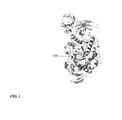
- Fig. 1 is a view showing a crystalline structure of pullulanase by a ribbon model. ⁇ -helix and ⁇ -sheet are shown in a helix shape and an arrow shape, respectively ( Fig. 1 ), and a substrate analog (CD) is shown by an arrow CD ( Figs. 1 to 3 ).
- Fig. 1 is a view showing a crystalline structure of pullulanase by a ribbon model. ⁇ -helix and ⁇ -sheet are shown in a helix shape and an arrow shape, respectively ( Fig. 1 ), and a substrate analog (CD) is shown by an arrow CD ( Figs. 1 to 3 ).
- Fig. 1 is a view showing a crystalline structure of pullulanase by a ribbon model. ⁇ -helix and ⁇ -sheet are shown in a helix shape and an arrow shape, respectively ( Fig. 1 ), and a substrate analog (CD) is shown by an arrow CD ( Figs.
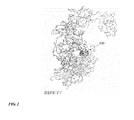
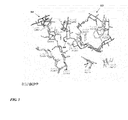
- FIG. 2 is a view shown by superimposing Bacillus subtilis pullulanase (BSP) having ⁇ -cyclodextrin as a ligand and ⁇ carbon of pullulanase (KPP) Klebsiella pneumonia onto each other.
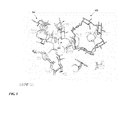
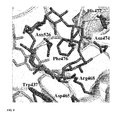
- Fig. 3 is an enlarged view of a substrate binding region of Fig. 2 .
- the amino acid to be mutated is selected from the group consisting of an amino acid corresponding to an amino acid at the 292 position, an amino acid corresponding to an amino acid at the 371 position, an amino acid corresponding to an amino acid at the 407 position, an amino acid corresponding to an amino acid at the 475 position, an amino acid corresponding to an amino acid at the 476 position and an amino acid corresponding to an amino acid at the 582 position of the amino acid sequence set forth in SEQ ID NO: 2.
- amino acids to be mutated are an amino acid corresponding to an amino acid that has been determined to be directly involved in binding between pullulanase derived from Bacillus subtilis strain 168 and a substrate analog (CD).
- an amino acid at the 476 position of the amino acid sequence set forth in SEQ ID NO: 2 is arranged so that it enters a ring structure of CD that is a substrate analog in the three-dimensional structure analysis about pullulanase derived from Bacillus subtilis strain 168, and this amino acid is thought to play an important role in the recognition of a substrate. Therefore, in the further preferable embodiment of the present invention, an amino acid corresponding to the amino acid is to be an amino acid to be mutated.
- the kinds, origins and the like of enzymes to be mutated in accordance with the present invention are not particularly limited as long as the enzymes hydrolyze an ⁇ -1,6-glycosidic linkage.
- the enzyme to be mutated is pullulanase or isoamylase derived from microorganisms.
- An example of the microorganism herein can include a microorganism of genus bacillus, a microorganism of genus Klebsiella, or a microorganism of genus pseudomonas.
- the pullulanase derived from microorganism Bacillus sp. APC-9603 (Japanese Patent Unexamined Publication No.
- H5-292962 and ones derived from derived from Klebsiella pneumonia (AMANO ENZYME INC.), Bacillus deramificans, Bacillus acidpullulyticus, Bacillus stearothermophilus, Bacillus sectorramus, Bacillus circulans, Bacillus cereus, and Bacillus subtilis strain 168 are well known. For example, any of them can be employed as the enzyme to be mutated in the present invention. Furthermore, isoamylase of Pseudomonas amyloderamosa can be employed as the enzyme to be mutated in the present invention.
- a specific example of the enzyme to be mutated includes an enzyme (pullulanase of Bacillus subtilis strain 168) consisting of an amino acid sequence set forth in SEQ ID NO: 2, an enzyme (pullulanase of Klebsiella pneumoniae ATCC9621) consisting of an amino acid sequence set forth in SEQ ID NO: 13, an enzyme (pullulanase of Bacillus sp.
- APC-9603 consisting of an amino acid sequence set forth in SEQ ID NO: 14
- an enzyme pulselulanase of Bacillus deramificans
- an enzyme isoamylase of Pseudomonas amyloderamosa
- an enzyme consisting of an amino acid sequence having a high identity with the amino acid sequence set forth in SEQ ID NO: 2 is an enzyme to be mutated. It is preferable because effective improvement is expected to be achieved and the specification of the amino acid to be mutated is facilitated. Specifically, it is preferable that the enzyme to be mutated is an enzyme consisting of an amino acid sequence having 70% or more identity with the amino acid sequence set forth in SEQ ID NO: 2. Herein, the higher identity is generally more preferable.
- the enzyme to be mutated is an enzyme consisting of an amino acid sequence having the identity of preferably 80% or more, further preferably 90% or more, and further preferably 95% or more.
- the identity (%) between two amino acid sequences can be determined by the following procedure. Firstly, two sequences are aligned for optimum comparison of the two sequences (for example, a gap may be introduced in the first sequence so as to obtain an optimum alignment with the second sequence). When a molecule (amino acid residue) at the specific position in the first sequence and a molecule in the corresponding position in the second sequence are the same, the molecules in the positions are defined as being identical.
- the comparison and determination of identity between two sequences can be carried out by using a mathematical algorithm.
- a specific example of mathematical algorithm that can be used for comparing sequences include an algorithm described in Karlin and Altschul (1990) Proc. Natl. Acad. Sci. USA 87:2264-68 and modified by Karlin and Altschul (1993) Proc. Natl. Acad. Sci. USA 90:5873-77 but the algorithm is not limited to this.
- Such an algorithm is incorporated in NBLAST and XBLAST programs (version 2.0) of Altschul et al. (1990) J. Mol. Biol. 215: 403-10 .
- Gapped BLAST as described in Altschul et al., (1997) Amino Acids Research 25(17): 3389-3402 can be utilized.
- the default parameters of the respective programs e.g., XBLAST and NBLAST
- Another example of mathematical algorithm that can be used for comparing sequences includes an algorithm of Meyers and Miller (Comput. Appl.
- a PAM120 weight residue table can be used with a gap length penalty of 12 and a gap penalty of 4.
- the identity between two amino acid sequences can be determined using the GAP program in the GCG software package, using a Blossom 62 matrix or PAM250 matrix and a gap weight of 12, 10, 8, 6, or 4, and a gap length weight of 2, 3, or 4.
- the homology between two nucleic acid sequences can be determined using the GAP program in the GCG software package (available at http://www.gcg.com) with a gap weight of 50 and a gap length weight of 3.
- the enzyme to be mutated is typically a wild type enzyme (naturally occurring enzyme). However, an enzyme to which some mutation or modification has already been given is not excluded. Thus, the present invention can be used for the purpose of further improving the property of an enzyme.
- an amino acid sequence in which an amino acid specified in the step (1) has been substituted with another amino acid or the amino acid has been deleted, is constructed based on an amino acid sequence of the enzyme to be mutated.
- the kinds of substituted amino acids are not particularly limited and therefore may include conservative substitution of amino acid or non-conservative substitution of amino acid.
- a "conservative amino acid substitution” is one in which the amino acid residue is substituted with an amino acid residue having a side chain with similar feature.
- the amino acid residues are divided into some families including basic side chains (e. g. , lysine, arginine, histidine), acidic side chains (e.g., aspartic acid, glutamic acid), uncharged polar side chains (e.
- the conservative amino acid substitution is a substitution between preferably an amino acid residue of the same family.
- a second aspect of the present invention relates to a preparation method of a mutated enzyme.
- the preparation method in accordance with the present invention includes the following steps:
- a position specific amino acid saturated mutation method can be employed.
- the position specific amino acid saturated mutation method is a "Semi-rational, semi-random" technique in which a position relating to the intended function is deduced based on the three-dimensional structure of protein, and the amino acid saturated mutation is introduced ( J. Mol. Biol. 331, 585-592 (2003 )).
- a position specific amino acid saturated mutation can be introduced by using a kit such as Quick change (Stratagene), Overlap extension PCR ( Nucleic Acid Res. 16, 7351-7367 (1988 )).
- DNA polymerase used for PCR Taq polymerase can be used. However, it is preferable that DNA polymerase with high purify, for example, KOD-PLUS- (TOYOBO), Pfu turbo (Stratagene) are used.
- a gene encoding a mutated enzyme can be prepared by inserting random mutation into an enzyme gene, comparing the substrate specificities of expression product by mutants each other, and selecting a gene having preferable substrate specificity.
- a random mutation is introduced, firstly, for example, error-prone PCR is used and mutation is introduced into a targeted gene region randomly so as to construct a mutated enzyme gene library. Then, a clone is selected from the resultant library using the enzymatic activity or the substrate specificity as an index.
- a gene prepared in the step (1) is expressed.
- mutated enzymes as expression products are collected.
- a cell-free synthesis system may be used.
- the preparation method of the mutated enzyme by using a host-vector system the below-mentioned description may be employed (see, the column of 4. Nucleic acid encoding mutated enzyme).
- the "cell-free synthesis system (cell-free transcription system, cell-free transcription / translation system)" denotes that living cells are not used but a ribosome derived from living cells (or cells obtained by genetically engineering technique) or by using a transcription / translation factor and the like, mRNA or protein encoded by nucleic acid (DNA or mRNA) as a template are synthesized from them in vitro.
- a cell extract obtained by purifying a cell homogenized solution if necessary is used in the cell-free synthesis system.
- a cell extract includes ribosome necessary to synthesis of protein, various factors such an initiation factor, various enzymes such as tRNA.
- cell-free transcription /translation system can be used interchangeably with the term cell-free protein synthesis system, in vitro translation system or in vitro transcription / translation system.
- protein is synthesized by using RNA as a template.
- RNA total RNA, mRNA, in vitro transcription product, and the like, are used.
- DNA is used as a template.
- the template DNA should include a ribosome-binding region and preferably includes an appropriate terminator sequence. Note here that the in vitro transcription / translation system sets a condition in which factors necessary to reaction are added so that the transcription reaction and translation reaction proceed consecutively.
- a further aspect of the present invention provides a mutated enzyme.
- an action property with respect to pullulan or action property with respect to amylopectin are improved over the enzyme to be mutated.
- the mutated enzyme of the present invention is an amino acid sequence wherein in the amino acid sequence of enzyme (enzyme to be mutated) hydrolyzing an ⁇ -1,6-glycosidic linkage, one or two or more amino acids selected from the group consisting of an amino acid corresponding to an amino acid at the 292 position, an amino acid corresponding to an amino acid at the 371 position, an amino acid corresponding to an amino acid at the 406 position, an amino acid corresponding to an amino acid at the 407 position, an amino acid corresponding to an amino acid at the 437 position, an amino acid corresponding to an amino acid at the 465 position, an amino acid corresponding to an amino acid at the 475 position, an amino acid corresponding to an amino acid at the 476 position; an amino acid corresponding to an amino acid at the 525 position, an amino acid corresponding to an amino acid at the 526 position, an amino acid corresponding to an amino acid at the 580 position and an amino acid corresponding to an amino acid at the 582 position of the amino acid sequence set forth in S
- the substituted or deleted amino acid is one or two or more amino acid selected from the group consisting of an amino acid corresponding to an amino acid at the 292 position, an amino acid corresponding to an amino acid at the 371 position, an amino acid corresponding to an amino acid at the 407 position, an amino acid corresponding to an amino acid at the 475 position, an amino acid corresponding to an amino acid at the 476 position, and an amino acid corresponding to an amino acid at the 582 position of the amino acid sequence set forth in SEQ ID NO: 2.
- the substituted or deleted amino acid is an amino acid corresponding to an amino acid at the 476 position of the amino acid sequence set forth in SEQ ID NO: 2.
- a specific example of the enzyme to be mutated includes an enzyme (pullulanase of Bacillus subtilis strain 168) consisting of an amino acid sequence set forth in SEQ ID NO:2, an enzyme (pullulanase of Klebsiella pneumoniae ATCC9621) consisting of an amino acid sequence set forth in SEQ ID NO: 13, an enzyme (pullulanase of Bacillus sp.
- APC-9603 consisting of an amino acid sequence set forth in SEQ ID NO: 14
- an enzyme pulselulanase of Bacillus deramificans
- an enzyme isoamylase of Pseudomonas amyloderamosa
- the mutated enzyme of the present invention is characterized by having an amino acid sequence in which a certain position of the amino acid sequence of the enzyme before mutation (enzyme to be mutated) has been mutated. In a position other than the position related to the mutation, a part of the amino acid may be mutated or modified.
- the present invention also provides protein having the same function as compared with the mutated enzyme having the amino acid sequence to which the above-mentioned mutation has been given but having a difference in a part of the amino acid sequence (hereinafter, also referred to as "homologous protein").
- the term "having a difference in a part of the amino acid sequence” typically means that the amino acid sequence is mutated (changed) by the deletion and substitution of one to several amino acids constituting the amino acid sequence, or addition of one to several amino acids, or the combination thereof.
- the difference in the amino acid sequence herein is acceptable as long as the properties related to hydrolysis of an ⁇ -1,6-glycosidic linkage are not radically reduced (preferably, in the limit substantially held).
- the position of difference in the amino acid sequence is not particularly limited and the difference may occur in a plurality of positions.
- the plurality herein signifies a numerical value corresponding to less than about 30%, preferably less than about 20%, further preferably less than about 10%, yet further preferably less than about 5%, and most preferably less than about 1% with respect to the entire amino acid. That is to say, homologous protein has, for example, about 70% or more, preferably about 80% or more, further preferably about 90% or more, yet further preferably about 95% or more and most preferably about 99% or more of similarly to the amino acid sequence of the mutated enzyme.
- the mutated enzyme can be used for arbitrary applications that need hydrolyzing an ⁇ -1,6-glycosidic linkage.
- the mutated enzyme can be used for production of maltooligosaccharide such as glucose, maltose, maltotriose, maltotetraose, maltopentaose, and maltohexaose, and for the improvement of rice cooking, and the like.
- the amount of the mutated enzyme to be used can be appropriately set so that the intended effect can be exhibited.
- the enzyme reaction can be carried out under conditions so that the enzyme concentration in the reaction solution becomes about 10 nM to about 100 ⁇ M.
- the present invention further provides a nucleic acid related to a mutated enzyme of the present invention. That is to say, the present invention provides a gene encoding a mutated enzyme, nucleic acid that can be used as a probe for identifying a nucleic acid encoding a mutated enzyme, and nucleic acid that can be used as a primer for amplifying or mutating a nucleic acid encoding the mutated enzyme.
- a gene encoding a mutated enzyme is typically used for preparing a mutated enzyme.
- a genetically engineering preparation method using a gene encoding a mutated enzyme makes it possible to obtain a mutated enzyme in a more homogeneous state. Furthermore, the method is a suitable for preparing a large amount of mutated enzymes. Note here that the application of the gene encoding a mutated enzyme is not limited to preparation of a mutated enzyme.
- the nucleic acid can be used as an research tool for the purpose of elucidating the mechanism of action of a mutated enzyme, or as a tool for designing or preparing a further mutant of an enzyme.
- the "gene encoding a mutated enzyme” refers to nucleic acid capable of obtaining the mutated enzyme when it is expressed, and includes not only a nucleic acid having a base sequence corresponding to an amino acid sequence of the mutated enzyme but also a nucleic acid obtained by adding a sequence that does not encode the amino acid sequence to the nucleic acid. Furthermore, degeneracy of codon is also considered.
- the nucleic acid of the present invention can be prepared in an isolated state by standard genetic engineering technique, molecular biological technique, biochemical technique, and the like, with reference to sequence information disclosed in this specification or attached sequence list.
- nucleic acid that has a base sequence having the same function as the base sequences of a gene encoding a mutated enzyme of the present invention but having a difference in a part of the base sequence (hereinafter, which is also referred to as "homologous nucleic acid.” Furthermore, a base sequence specifying the homologous nucleic acid is also referred to as a “homologous base sequence").
- An example of the homologous nucleic acid can include DNA encoding a protein including a base sequence in which one or a plurality of bases are substituted, deleted, inserted, added or inverted relative to the base sequences of a gene encoding a mutated enzyme of the present invention and having an activity capable of hydrolyzing an ⁇ -1,6-glycosidic linkage. Such substitution, deletion, or the like, may be occurred in a plurality of sites.
- the "plurality” herein differs depending upon the position or kinds of amino acid residues in a three-dimensional structure of a protein encoded by the nucleic acid codes, but the "plurality" of bases includes, for example, 2 to 40 bases, preferably 2 to 20 bases and more preferably 2 to 10 bases.
- homologous nucleic acid can be obtained by introduction of mutation by, for example, a treatment with a restriction enzyme; treatment with exonuclease, DNA ligase, etc; introduction of mutation by a site-directed mutagenesis ( Molecular Cloning, Third Edition, Chapter 13, Cold Spring Harbor Laboratory Press, New York ); random mutagenesis ( Molecular Cloning, Third Edition, Chapter 13, Cold Spring Harbor Laboratory Press, New York ), and the like.
- homologous nucleic acid can be obtained by other methods such as irradiation with ultraviolet ray.
- a further embodiment of the present invention relates to nucleic acid having a base sequence complementary to the base sequence of the gene encoding a mutated enzyme of the present invention.
- a further embodiment of the present invention provides nucleic acid having a base sequence at least 60%, 70%, 80%, 90%, 95%, 99% or 99.9% identical to the base sequences of the gene encoding a mutated enzyme of the present invention.
- a further embodiment of the present invention relates to nucleic acid having a base sequence that hybridizes, under stringent conditions, to the base sequence complementary to the base sequences of the gene encoding a mutated enzyme of the present invention or the homologous base sequence thereof.
- stringent conditions herein denote a condition in which a so-called specific hybrid is formed and a non-specific hybrid is not formed. Such stringent conditions are well known to the person skilled in the art and can be set with reference to Molecular Cloning (Third Edition, Cold Spring Harbor Laboratory Press, New York ) or Current protocols in molecular biology (edited by Frederick M. Ausubel et al., 1987 ).
- An example of the stringent conditions includes a condition in which a DNA is incubated in a hybridization solution (50% formamide, 10 ⁇ SSC (0.15 M NaCl, 15 mM sodium citrate, pH 7.0), 5 ⁇ Denhardt solution, 1% SDS, 10% dextran sulfate, 10 ⁇ g/ml denatured salmon sperm DNA, 50 mM phosphate buffer (pH7.5)) at about 42°C to about 50°C, followed by washing with 0.1 ⁇ SSC and 0.1% SDS at about 65°C to about 70°C.
- a hybridization solution 50% formamide, 10 ⁇ SSC (0.15 M NaCl, 15 mM sodium citrate, pH 7.0
- 5 ⁇ Denhardt solution 1% SDS
- 10% dextran sulfate 10 ⁇ g/ml denatured salmon sperm DNA
- 50 mM phosphate buffer (pH7.5) 50 mM phosphate buffer
- a more preferable example of the stringent conditions can include a condition using a hybridization solution (50% formamide, 5 ⁇ SSC (0.15 M NaCl, 15 mM sodium citrate, pH 7.0), 1 ⁇ Denhardt solution, 1% SDS, 10% dextran sulfate, 10 ⁇ g/ml denatured salmon sperm DNA, 50 mM phosphate buffer (pH 7.5)).
- a hybridization solution 50% formamide, 5 ⁇ SSC (0.15 M NaCl, 15 mM sodium citrate, pH 7.0), 1 ⁇ Denhardt solution, 1% SDS, 10% dextran sulfate, 10 ⁇ g/ml denatured salmon sperm DNA, 50 mM phosphate buffer (pH 7.5)).
- a further embodiment of the present invention provides a base sequence of the gene encoding a mutated enzyme of the present invention or a nucleic acid (a nucleic acid fragment) having a part of a base sequence complementary to the base sequence.
- a nucleic acid fragment can be used for detecting, identifying and/or amplifying the nucleic acid having a base sequence of a gene encoding a mutated enzyme of the present invention.
- the nucleic acid fragment is designed to include at least a part for hybridizing a continuous nucleotide part (for example, about 10 to about 100 base length, preferably about 20 to about 100 base length, and further preferably about 30 to about 100 base length) in the base sequence of the gene encoding a mutated enzyme of the present invention.
- the nucleic acid fragment When the nucleic acid fragment is used as a probe, it can be labeled. Labeling can be carried out by using a fluorescence material, enzyme, and radioactive isotope.
- a yet further aspect of the present invention relates to recombinant DNA including a gene of the present invention (a gene encoding a mutated enzyme).
- the recombinant DNA is provided in a form of, for example, a vector.
- vector in this specification refers to a nucleic acid molecule that can transport a nucleic acid inserted therein to the inside of a target such as a cell. In accordance with the purpose of use (cloning, protein expression), and by considering the kinds of host cells, an appropriate vector is selected.
- a vector examples include a vector using Escherichia coli as a host (M13 phage or the modified body thereof, ⁇ phage or the modified body thereof, pBR322 or the modified body thereof (pB325, pAT153, pUC8, etc.) and the like), a vector using yeast as a host (pYepSecl, pMFa, pYES2, etc.), a vector using insect cells as a host (pAc, pVL, etc.), a vector using mammalian cells as a host (pCDM8, pMT2PC, etc.).
- the vector of the present invention is preferably an expression vector.
- expression vector is a vector capable of introducing the nucleic acid inserted therein into the target cells (host cells) and expressing in the cells.
- the expression vector usually includes a promoter sequence necessary for expression of the inserted nucleic acid and an enhancer sequence for promoting the expression, and the like.
- An expression vector including a selection marker can be used. When such an expression vector is used, by using the selection marker, the presence or absence of the introduction of an expression vector (and the degree thereof) can be confirmed.
- Insertion of the nucleic acid of the present invention into a vector, insertion of the selection marker gene (if necessary), and insertion of a promoter (if necessary), and the like, can be carried out by a standard recombination DNA technology (see, for example, Molecular Cloning, Third Edition, 1.84, Cold Spring Harbor Laboratory Press, New York, a well-known method using restriction enzyme and DNA ligase).
- a bacterial cell such as Escherichia coli is used.
- the host cell is not limited to the bacterial cell as long as it can reproduce the recombinant DNA and express a gene of the mutated enzyme.
- the host includes T7 system promoter, Escherichia coli BL21 (DE3) pLysS can be used. In other case, Escherichia coli JM109 can be used.
- a further aspect of the present invention relates to a microorganism (that is, transformant) carrying a recombinant DNA of the present invention.
- the microorganism of the present invention can be obtained by the transfection or transformation using the above-mentioned vector of the present invention.
- a calcium chloride method J. Mol. Biol., Vol. 53, page 159 (1970 )
- a Hanahan method J. Mol. Biol., Vol. 166, page 557 (1983 )
- SEM method Gene, Vol. 96, page 23 (1990 )
- Chung et al a method by Chung et al.
- a microorganism of the present invention can be used for producing a mutated enzyme of the present invention. That is to say, a further aspect of the present invention provides a method for producing a mutated enzyme of the present invention by using the above-mentioned microorganism.
- the production method of the present invention includes at least a step of culturing the above-mentioned microorganism under the conditions in which the mutated enzyme of the present invention is produced. In general, in addition to this step, a step of collecting (separating and purifying) the produced protein is carried out.
- the microorganism (transformant) in accordance with the present invention is cultured in a usual manner.
- a carbon compound that can be assimilated may be used as a carbon source to be used for a medium.
- An example may include glucose, sucrose, lactose, maltose, syrup, pyruvic acid, and the like.
- any available nitrogen compounds may be used as a nitrogen source.
- An example may include peptone, meat extract, yeast extract, casein hydrolysate, soybean cake alkali extract, and the like.
- salts of phosphate, carbonate, sulfate, magnesium, calcium, potassium, iron, manganese, zinc, and the like, certain amino acids, certain vitamins, can be used if necessary.
- the culture temperature can be set 30 to 40°C (preferably about 37°C).
- Culture time can be set considering the growing property of transformant to be cultured or production property of mutated enzyme, and the like.
- the pH of the medium is adjusted in a range in which the transformant is grown and an enzyme is produced. Preferably, pH of the medium is adjusted to about 6.0 to 9.0 (preferably, around pH 7.0).
- a culture solution containing a bacterial body producing a mutated enzyme can be used as an enzyme solution as it is or after concentration or removing of impurities are carried out. Generally, however, a mutated enzyme is once collected from a culture solution or a bacterial body. When the produced mutated enzyme is secreting type protein, the mutated enzyme can be collected from the culture solution, and in other case, the mutated enzyme can be collected from the bacterial body.
- purified products of the mutated enzyme can be obtained by, for example, subjecting the culture supernatant to filtering or centrifugation so as to remove insoluble matters, followed by carrying out separation and purification by the combination of vacuum concentration, membrane concentration, salting out using ammonium sulfate and sodium sulfate, fractional precipitation by methanol, ethanol or acetone, dialysis, heat treatment, isoelectric point treatment, various chromatography such as gel filtration chromatography, adsorption chromatography, ion exchange chromatography and affinity chromatography (for example, gel filtration by Sephadex gel (Pharmacia Biotech) and the like, DEAE sepharose CL-6B (Pharmacia Biotech), octyl sepharose CL-6B (Pharmacia Biotech), CM sepharose CL-6B (Pharmacia Biotech)), and the like.
- purified products of the mutated enzyme can be obtained by subjecting a culture solution to filtration and centrifugation to collect a bacterial body, followed by destructing the bacterial body by mechanical method such as pressure treatment and ultrasonication, or by an enzymatic method using lysozyme, and then carrying out separation and purification as mentioned above.
- Purified enzyme obtained as mentioned above can be provided in a state of powder by, for example, freeze drying, vacuum drying or spray drying.
- a purified enzyme may be solved in phosphate buffer, triethanolamine buffer, Tris hydrochloric acid buffer, GOOD buffer in advance.
- phosphate buffer and triethanolamine buffer can be used.
- An example of the GOOD buffer may include PIPES, MES or MOPS.
- the present invention is described further specifically. However, the present invention is not limited to these Examples.
- a gene AmyX (GenBank Accesion No. NC 000964) encoding pullulanase, which is found in the genome sequence of Bacillus subtilus, was amplified by PCR as follows.
- the above-mentioned expression plasmid was introduced into Escherichia coli HMS 174 (DE3) (Novagen) by transformation.
- the obtained transformant was inoculated on LB medium (500 ml) containing 100 ⁇ /ml ampicillin and the medium was shaken at 37°C.
- IPTG isopropylthiogalactoside
- the bacterial bodies were collected from the culture solution by centrifugation and suspended in a buffer solution (20 mM tris-hydrochloric acid (pH 8.1) / 5 mM EDTA / 20 mM ⁇ -mercaptoethanol / 0.2 mM PMSF).
- the suspension obtained in (2) was subjected to ultrasonication (4°C, 30 minutes, 200 ⁇ A) and then subjected to centrifugation (14000 rpm, 4°C, 30 minutes) to obtain a crude solution. To this solution, 30% saturated ammonium sulfate was added. Then, impurities were removed by centrifugation. To this centrifuged supernatant, 60% saturated ammonium sulfate was added. Then, precipitates were collected by centrifugation.
- the precipitates were dissolved in the buffer solution of (2) containing 20% saturated ammonium sulfate, and subjected to Butyl-Toyopearl 650M column (TOSOH CORPORATION) that had been equilibrated by the buffer solution containing 20% saturated ammonium sulfate, and eluted at the concentration gradient of 20% to 0% of ammonium sulfate.
- the obtained pullulanase active fraction was dialyzed to buffer solution of (2), and subjected to HiLoad Q Sepharose Column (Amersham) that had been equilibrated by the same buffer solution, and eluted at the concentration gradient of 0 to 0.5 M of NaCl to obtain active fraction.
- This fraction was dialyzed to the buffer solution of (2), and subjected to Mono Q Column (Amersham) that had been equilibrated by the same buffer solution, and eluted at the concentration gradient of 0 to 0.5 M of NaCl to obtain purified Bacillus subtilis recombinant pullulanase.
- the analysis result of N-terminal amino acid sequence of this purified enzyme was MVSIRRSFEA and completely identity to gene sequence.
- Crystallization of Bacillus subtilis recombinant pullulanase was carried out by the following procedure. Firstly, screening was carried out by a sitting drop vapor diffusion method by using a 96-well plate (product by Emerald Biostructure and Hampton Research). After 24 hours at 20°C, small and thin crystal was observed in Wizard II No.8 well. Next, by changing the molecular weight and concentration of polyethylene glycol (PEG) or the concentration of buffer solution or salts, conditions were optimized. Finally, a crystal was obtained by a hanging drop vapor diffusion method by using a 24-well plate.
- PEG polyethylene glycol
- the hanging drop (6 ⁇ l) consisting of 3 ⁇ l of enzyme solution (10 mg/ml) and 3 ⁇ l of reservoir solution (10% PEG4000, 0.1 M acetate buffer, pH 5.2, 0.2 M Mg CH 3 COO) 2 ) was used and incubated for one to two days. Thus, diamond shaped crystal was obtained.
- treatment with a reservoir solution containing 30% glycerol was carried out and then cooled instantly by using liquid nitrogen (-173°C).
- a three-dimensional structure was determined at the resolution of 2.1 ⁇ by a molecule substitution method using an atomic coordinate (PDB accession code 2FGZ) of pullulanase of Klebsiella pneumonia.
- the substitution of molecules and the refinement of structure were carried out by using program CNS_SOLVE ver.11. Data related to statistics of data collection and refinement are shown in Table 1.
- Sicne ⁇ -cyclodextrin is cyclic oligosaccharide and is an analog having a structure of amylose helix consisting of six glucose residues, it has often been used for studying as an inhibitor of an amylolytic enzyme such as amylase and pullulanase.
- an analysis of the three-dimensional structure of enzyme containing CD as a ligand hereinafter, referred to as "CD-containing Bacillus subtilis pullulanase
- the analysis of the three-dimensional structure was carried out basically by the same method as 2. except that purified Bacillus subtilis recombinant pullulanase was prepared in 1.
- FIG. 1 A model of the three-dimensional structure of the obtained CD-containing Bacillus subtilis pullulanase is shown in Fig. 1 . Note here that data of atomic coordinate are shown in the last part of the specification.
- FIG. 3 shows a CD binding site with respect to Bacillus subtilis pullulanase and the binding site of maltotetraose with respect to Klebsiella pneumoniae pullulanase (G4) (see, non-patent document 1).
- An amino acid residue (upper stage) in a position capable of forming CD and hydrogen binding in Bacillus subtilis pullulanase is shown together with the corresponding amino acid residue (lower stage) in Klebsiella pneumoniae pullulanase.
- amino acid residue (lower stage) that has been deduced to be involved in binding to G4 in Klebsiella pneumoniae pullulanase and the corresponding amino acid residue (upper stage) in Bacillus subtilis pullulanase are also shown together.
- N1 domain in the N terminal region observed in Klebsiella pneumoniae pullulanase was not observed in Bacillus subtilis pullulanase, both enzymes were very similar to each other in a catalytic region and a domain (A domain) as a nucleus including a substrate binding region. Furthermore, a CD binding site of Bacillus subtilis pullulanase is in the vicinity of G4 binding site of Klebsiella pneumonia. As shown in Fig.
- amino acid corresponding to these amino acid residues that is, Y559 (tyrosine at the 559 position), C643 (cysteine at the 643 position), D677 (aspartic acid at the 677 position), L678 (leucine at the 678 position), W708 (tryptophane at the 708 position), D734 (aspartic acid at the 734 position), P745 (proline at the 745 position), F746 (phenyl alanine at the 746 position), D834 (aspartic acid at the 834 position), N835 (asparagine at the 835 position), D890 (aspartic acid at the 890 position), and Y892 (tyrosine at the 892 position) were successfully determined.
- D677, W708, D734, D834, N835 and D890 were amino acids deduced to be involved in binding to G4 in
- the both enzymes do not have a domain (N1 domain) in the N terminal region observed in Klebsiella pneumoniae pullulanase and is very similar in domain (A domain) in terms of, for example, a nucleus including a catalytic region or a substrate binding region.
- the amino acid residue (upper stage) in the position capable of forming hydrogen binding to CD in Bacillus subtilis pullulanase is shown together with the corresponding amino acid residue (lower stage) in Pseudomonas amyloderamosa isoamylase.
- amino acid residues corresponding to the amino acids deduced to be involved in binding to G4 in Klebsiella pneumoniae pullulanase (upper stage: Bacillus subtilis pullulanase, and lower stage: Pseudomonas amyloderamosa).
- the obtained PCR product was confirmed by 1% agarose gel electrophoresis, and then the rest of the PCR product was treated with restriction enzyme Dpn I to degrade a methylated template plasmid and transformed to Escherichia coli competent cell DH5 ⁇ strain. Plasmid DNA was isolated from the obtained ampicillin resistance transformant, the base sequence was confirmed and the intended mutated gene was obtained. A plasmid having the intended mutated gene was introduced into an expression host Escherichia coli HMS174 (DE3) strain to express and purify the mutated pullulanase of Bacillus subtilis similar to 1. (2) and (3).
- the wild type and the mutant types are compared with each other, they are shown to be different in the Km value and Kcat value.
- the mutant type F476G: mutated enzyme in which an amino acid residue at the 476 position is changed from phenyl alanine to glycine
- the Km value when amylopectin is used as a substrate is considerably lower than that of the wild type, which shows that the affinity to amylopectin is radically improved.
- the Km value when amylopectin is used as a substrate is lower than that of the wild type while the Km value when pullulan is used as a substrate is radically higher than that of the wild type, which shows that the substrate specificity has radically changed.
- introduction of mutation enabled the action property with respect to pullulan and amylopectin to be changed.
- Two primers (SEQ ID NOs: 7 and 8) were synthesized with reference to the base sequence of pullulanase of Klebsiella aerogence W70 strain ( J. Bacteriol. 169 (5), 2301-2306 (1987 ) and J Bacteriol. 174(9): 3095.(1992 ), GenBank accession No. M16187).
- the PCR reaction was carried out under the following conditions by using chromosome DNA of Klebsiella pneumoniae ATCC9621 strain that had been isolated by the method by Sambrook et al. (Molecular Cloning: a laboratory manual, 2nd Edition, Cold Spring harbor Laboratory Press, 1989 ) as a template.
- the PCR reaction was carried out by using Accu TaqTM LA DNA polymerase system (Sigma), the reaction included one cycle of reaction at 98°C for 30 seconds - at 59°C for 20 seconds - at 68°C for 3 minutes; 29 cycles of reaction at 98°C for 15 seconds - at 59°C for 20 seconds - at 68°C for 3 minutes; and reaction at 68°C for 10 minutes of amplification was carried out.
- the obtained PCR fragment was subjected to TA cloning by using a pGEM-T vector (Promega). It was confirmed that the obtained PCR fragment encodes pullulanase correctly by determining the base sequence.
- the base sequence of the obtained PCR fragment and the amino acid sequence encoded thereby are shown in SEQ ID NO: 12 and SEQ ID NO: 13, respectively.
- primers shown in SEQ ID NOs: 9 and 10 were synthesized, and PCR reaction was carried out by using a pullulanase gene of Klebsiella pneumoniae as a template.
- the obtained PCR product was treated with restriction enzymes Nde I and Xba I, and linked to a plasmid pCold-I (TAKARA) to obtain an expression plasmid pCold-KPP of Klebsiella pneumoniae pullulanase.
- the plasmid was introduced into Escherichia coli JM109 (TAKARA) by transformation. Culture of the obtained transformant and purification of the expressed recombinant pullulanase were carried out according to the method described in 1.
- Forward primers and the corresponding reverse primers set forth in SEQ ID NO: 11 were synthesized respectively in order to replace Phe746 with Ala in Klebsiella pneumoniae, and the concentration was adjusted to 100 ng/ ⁇ l.
- the following PCR reaction was carried out: 1.5 ⁇ l (30 ng/ ⁇ l) of pEBSP, 5 ⁇ l of 10 x PCR buffer solution (one attached to the below-mentioned DNA polymerase), 1.0 ⁇ l (2.5 mM each) of dNTP, 1.25 ⁇ l each of mutated primer sets (forward and reverse primers), 39 ⁇ l of sterile water and 1 ⁇ l (2.5 U) of Pfu Turbo Hotstart DNA polymerase (Stratagene) were prepared; 30 cycles of reactions at 95°C for 30 seconds (denaturation) - at 55°C for 60 seconds (annealing) - at 68
- the obtained PCR product was confirmed by 1% agarose gel electrophoresis, and then the rest of the PCR product was treated with restriction enzyme Dpn I to degrade a methylated template plasmid and transformed to Escherichia coli competent cell DH5 ⁇ strain. Plasmid DNA was isolated from the obtained ampicillin resistance transformant, the base sequence was confirmed and the intended mutated gene was obtained. A plasmid having the intended mutated gene was introduced into an expression host Escherichia coli HMS174 (DE3) strain to express and purify the mutated pullulanase of Klebsiella pneumoniae similar to 1. (2) and (3).
- the kinetic parameters with respect to pullulan and amylopectin of mutated pullulanase (F746A) and wild type pullulanase (WT) of Klebsiella pneumoniae prepared in 10. were measure according to the method described in J Biochem (Tokyo), 116(6): 1264-8 (1994 ). Pullulan or amylopectin having various concentrations were dissolved in 50 mM acetate buffer (pH 5.6) and reacted at 25°C. The concentration of a reducing sugar contained in the regularly sampled reaction solution was determined by a Park-Johnson method, and the reaction rate was measured from the increasing rate of the reducing sugar.
- Km value and Kcat value were obtained by curve fitting into Michaelis-Menten equation by the non-linear minimum square method. Results are shown in Table 4. [Table 4] pullulan amylopectin K m (%) K cat (s -1 ) K m (%) K cat (s -1 ) wild type pullulanase 0.00091 52.0 0.0063 7.0 mutant type (F746A) 0.00045 18.2 0.0083 5.2
- Km value when pullulan was used for a substrate was lowered in the case of mutated enzyme as compared with the case of the wild type enzyme.
- Km value when amylopectin was used for a substrate was increased. From the results, it can be evaluated that in the mutated enzyme, the affinity to pullulan is improved (the affinity to amylopectin is lowered). Furthermore, Kcat value is different between the wild type and the mutant type.
- introduction of mutation enabled the action property with respect to pullulan and amylopectin to be changed.
- the enzyme in which the affinity to a certain substrate is improved can act on a smaller amount of substrate. Such a property is advantageous in that the presence of the small amount of substrates is required to be measured.
- a designing method and a preparation method of the present invention are used for improving an enzyme hydrolyzing an ⁇ -1,6-glycosidic linkage.
- a mutated enzyme whose affinity and specificity to a substrate are improved, the increase in the yield of products and reduction of the amount of enzyme to be used (additive amount) can be achieved.
- the use of the designing method and the preparation method of the present invention provide a mutated enzyme usable to a novel application that has not been assumed with the use of wild type enzymes. That is to say, the present invention is capable of contributing to expansion of the applications of use of enzymes hydrolyzing an ⁇ -1,6-glycosidic linkage.
Landscapes
- Chemical & Material Sciences (AREA)
- Life Sciences & Earth Sciences (AREA)
- Health & Medical Sciences (AREA)
- Organic Chemistry (AREA)
- Genetics & Genomics (AREA)
- Engineering & Computer Science (AREA)
- Bioinformatics & Cheminformatics (AREA)
- Zoology (AREA)
- Wood Science & Technology (AREA)
- General Health & Medical Sciences (AREA)
- Biochemistry (AREA)
- General Engineering & Computer Science (AREA)
- Microbiology (AREA)
- Biotechnology (AREA)
- Biomedical Technology (AREA)
- Molecular Biology (AREA)
- Medicinal Chemistry (AREA)
- Enzymes And Modification Thereof (AREA)
- Micro-Organisms Or Cultivation Processes Thereof (AREA)
- Preparation Of Compounds By Using Micro-Organisms (AREA)
Applications Claiming Priority (2)
| Application Number | Priority Date | Filing Date | Title |
|---|---|---|---|
| JP2006213490 | 2006-08-04 | ||
| EP07767790.4A EP2058394B1 (de) | 2006-08-04 | 2007-06-28 | Verfahren zur konstruktion eines mutierten enzyms, verfahren zur herstellung davon und mutiertes enzym |
Related Parent Applications (3)
| Application Number | Title | Priority Date | Filing Date |
|---|---|---|---|
| EP07767790.4A Division-Into EP2058394B1 (de) | 2006-08-04 | 2007-06-28 | Verfahren zur konstruktion eines mutierten enzyms, verfahren zur herstellung davon und mutiertes enzym |
| EP07767790.4A Division EP2058394B1 (de) | 2006-08-04 | 2007-06-28 | Verfahren zur konstruktion eines mutierten enzyms, verfahren zur herstellung davon und mutiertes enzym |
| EP07767790.4 Division | 2007-06-28 |
Publications (3)
| Publication Number | Publication Date |
|---|---|
| EP2662445A2 true EP2662445A2 (de) | 2013-11-13 |
| EP2662445A3 EP2662445A3 (de) | 2014-01-22 |
| EP2662445B1 EP2662445B1 (de) | 2017-10-25 |
Family
ID=38997043
Family Applications (2)
| Application Number | Title | Priority Date | Filing Date |
|---|---|---|---|
| EP07767790.4A Not-in-force EP2058394B1 (de) | 2006-08-04 | 2007-06-28 | Verfahren zur konstruktion eines mutierten enzyms, verfahren zur herstellung davon und mutiertes enzym |
| EP13179288.9A Not-in-force EP2662445B1 (de) | 2006-08-04 | 2007-06-28 | Verfahren zur Konstruktion eines mutierten Enzyms, Verfahren zur Herstellung davon und mutiertes Enzym |
Family Applications Before (1)
| Application Number | Title | Priority Date | Filing Date |
|---|---|---|---|
| EP07767790.4A Not-in-force EP2058394B1 (de) | 2006-08-04 | 2007-06-28 | Verfahren zur konstruktion eines mutierten enzyms, verfahren zur herstellung davon und mutiertes enzym |
Country Status (6)
| Country | Link |
|---|---|
| US (1) | US20090280553A1 (de) |
| EP (2) | EP2058394B1 (de) |
| JP (1) | JP5178517B2 (de) |
| CN (1) | CN101528923B (de) |
| DK (2) | DK2662445T3 (de) |
| WO (1) | WO2008015861A1 (de) |
Families Citing this family (7)
| Publication number | Priority date | Publication date | Assignee | Title |
|---|---|---|---|---|
| DE102009029194A1 (de) | 2009-09-04 | 2011-04-07 | Kimberly-Clark Worldwide, Inc., Neenah | Abtrennung gefärbter Stoffe aus wasserhaltigen Flüssigkeiten |
| US9283127B2 (en) | 2012-03-30 | 2016-03-15 | Kimberly-Clark Worldwide, Inc. | Absorbent articles with decolorizing structures |
| US9237975B2 (en) | 2013-09-27 | 2016-01-19 | Kimberly-Clark Worldwide, Inc. | Absorbent article with side barriers and decolorizing agents |
| CN103789285B (zh) * | 2014-02-19 | 2016-01-20 | 江南大学 | 一种热稳定性提高的淀粉酶突变体及其构建方法和应用 |
| US10017751B2 (en) | 2014-12-05 | 2018-07-10 | Godo Shusei Co., Ltd. | Heat-resistant isoamylase |
| CN114262710B (zh) * | 2021-12-31 | 2023-10-31 | 西南大学 | 水稻胞间连丝基因及其突变基因、编码的蛋白和应用 |
| EP4525615A2 (de) | 2022-05-14 | 2025-03-26 | Novozymes A/S | Zusammensetzungen und verfahren zur prävention, behandlung, unterdrückung und/oder beseitigung von phytopathogenen befällen und infektionen |
Citations (3)
| Publication number | Priority date | Publication date | Assignee | Title |
|---|---|---|---|---|
| JPH05292962A (ja) | 1992-02-26 | 1993-11-09 | Amano Pharmaceut Co Ltd | 新規な枝切り酵素及びその製造法 |
| JPH07289186A (ja) | 1994-04-26 | 1995-11-07 | Akiko Matsunaga | 炊飯用酵素組成物、それを用いた米飯類の製造法及び製品 |
| JP2002505108A (ja) | 1998-03-04 | 2002-02-19 | ジェネンコア インターナショナル インコーポレーテッド | プルラナーゼの修飾形態 |
Family Cites Families (5)
| Publication number | Priority date | Publication date | Assignee | Title |
|---|---|---|---|---|
| DK0605040T3 (da) * | 1992-12-28 | 2000-03-13 | Genencor Int | Pullulanase, mikroorganismer producerende denne fremgangsmåde il fremstilling af denne pullulanase og anvendelse deraf |
| US6265197B1 (en) * | 1998-07-02 | 2001-07-24 | Novozymes A/S Krogshoejvej | Starch debranching enzymes |
| AU4897199A (en) * | 1998-07-02 | 2000-01-24 | Novozymes A/S | Starch debranching enzymes |
| AU2663801A (en) * | 2000-01-12 | 2001-07-24 | Novozymes A/S | Pullulanase variants and methods for preparing such variants with predetermined properties |
| JP2006174841A (ja) * | 2006-01-16 | 2006-07-06 | Kao Corp | 変異プルラナーゼ |
-
2007
- 2007-06-28 JP JP2008527685A patent/JP5178517B2/ja not_active Expired - Fee Related
- 2007-06-28 DK DK13179288.9T patent/DK2662445T3/en active
- 2007-06-28 CN CN2007800363075A patent/CN101528923B/zh not_active Expired - Fee Related
- 2007-06-28 EP EP07767790.4A patent/EP2058394B1/de not_active Not-in-force
- 2007-06-28 DK DK07767790.4T patent/DK2058394T3/en active
- 2007-06-28 EP EP13179288.9A patent/EP2662445B1/de not_active Not-in-force
- 2007-06-28 US US12/309,929 patent/US20090280553A1/en not_active Abandoned
- 2007-06-28 WO PCT/JP2007/062996 patent/WO2008015861A1/ja not_active Ceased
Patent Citations (3)
| Publication number | Priority date | Publication date | Assignee | Title |
|---|---|---|---|---|
| JPH05292962A (ja) | 1992-02-26 | 1993-11-09 | Amano Pharmaceut Co Ltd | 新規な枝切り酵素及びその製造法 |
| JPH07289186A (ja) | 1994-04-26 | 1995-11-07 | Akiko Matsunaga | 炊飯用酵素組成物、それを用いた米飯類の製造法及び製品 |
| JP2002505108A (ja) | 1998-03-04 | 2002-02-19 | ジェネンコア インターナショナル インコーポレーテッド | プルラナーゼの修飾形態 |
Non-Patent Citations (26)
| Title |
|---|
| "Molecular Cloning", COLD SPRING HARBOR LABORATORY PRESS |
| "Molecular Cloning", vol. 1.84, COLD SPRING HARBOR LABORATORY PRESS |
| "OLIGOSACCHARIDES", GORDON AND BREACH SCIENCE PUBLISHERS, pages: 3 |
| ALTSCHUL ET AL., AMINO ACIDS RESEARCH, vol. 25, no. 17, 1997, pages 3389 - 3402 |
| ALTSCHUL ET AL., J. MOL. BIOL., vol. 215, 1990, pages 403 - 10 |
| AMEMURA, A.; CHAKRABORTY, R.; FUJITA, M.; NOUMI, T.; FUTAI, M.: "Cloning and nucleotide sequence of the isoamylase gene from Pseudomonas amyloderamosa SB-15", JOURNAL J. BIOL. CHEM., vol. 263, no. 19, 1988, pages 9271 - 9275 |
| CHUNG ET AL., PROCEEDING OF THE NATIONAL ACADEMY OF SCIENCES OF THE USA, vol. 86, 1989, pages 2172 |
| FELGNER, P.L. ET AL., PROC. NATL. ACAD. SCI. U.S.A., vol. 84, 1984, pages 7413 - 7417 |
| FREDERICK M. AUSUBEL ET AL.,: "Current protocols in molecular biology", 1987 |
| GENE, vol. 96, 1990, pages 23 |
| J BACTERIOL., vol. 174, no. 9, 1992, pages 3095 |
| J BIOCHEM (TOKYO, vol. 116, no. 6, 1994, pages 1264 - 8 |
| J MOL BIOL., vol. 359, no. 3, 9 June 2006 (2006-06-09), pages 690 - 707 |
| J. BACTERIOL., vol. 169, no. 5, 1987, pages 2301 - 2306 |
| J. MOL BIOL., vol. 281, no. 5, 1998, pages 885 - 97 |
| J. MOL. BIOL., vol. 166, 1983, pages 557 |
| J. MOL. BIOL., vol. 331, 2003, pages 585 - 592 |
| J. MOL. BIOL., vol. 359, no. 3, 2006, pages 690 - 707 |
| J. MOL. BIOL., vol. 53, 1970, pages 159 |
| KARLIN; ALTSCHUL, PROC. NATL. ACAD. SCI. USA, vol. 87, 1990, pages 2264 - 68 |
| KARLIN; ALTSCHUL, PROC. NATL. ACAD. SCI. USA, vol. 90, 1993, pages 5873 - 77 |
| MEYERS; MILLER, COMPUT. APPL. BIOSCI., vol. 4, 1988, pages 11 - 17 |
| NUCLEIC ACID RES., vol. 16, 1988, pages 7351 - 7367 |
| POTTER, H. ET AL., PROC. NATL. ACAD. SCI. U.S.A., vol. 81, 1984, pages 7161 - 7165 |
| SAMBROOK ET AL.: "Molecular Cloning: a laboratory manual", 1989, COLD SPRING HARBOR LABORATORY PRESS |
| SHIMIZU, Y. ET AL., NATURE BIOTECH., vol. 19, 2001, pages 751 - 755 |
Also Published As
| Publication number | Publication date |
|---|---|
| JPWO2008015861A1 (ja) | 2009-12-17 |
| WO2008015861A1 (en) | 2008-02-07 |
| EP2058394B1 (de) | 2014-11-12 |
| EP2662445B1 (de) | 2017-10-25 |
| EP2058394A4 (de) | 2009-09-30 |
| DK2662445T3 (en) | 2017-12-04 |
| DK2058394T3 (en) | 2015-02-02 |
| EP2058394A1 (de) | 2009-05-13 |
| CN101528923B (zh) | 2012-03-21 |
| US20090280553A1 (en) | 2009-11-12 |
| EP2662445A3 (de) | 2014-01-22 |
| CN101528923A (zh) | 2009-09-09 |
| JP5178517B2 (ja) | 2013-04-10 |
Similar Documents
| Publication | Publication Date | Title |
|---|---|---|
| US9090886B2 (en) | Beta-amylase, gene coding therefor and manufacturing method thereof | |
| EP2454942B1 (de) | Verfahren zur verbesserung von lebensmitteln mit beta-amylase | |
| EP2662445B1 (de) | Verfahren zur Konstruktion eines mutierten Enzyms, Verfahren zur Herstellung davon und mutiertes Enzym | |
| EP1092014B1 (de) | Stärke "debranching-enzyme" | |
| EP2351837B1 (de) | Verfahren zur konstruktion einer enzymmutante, verfahren zur herstellung einer enzymmutante und enzymmutante | |
| EP1661985B1 (de) | Verfahren zur herstellung hitzestabiler saccharosephosphorylase (sp) | |
| Malle et al. | Overexpression, purification and preliminary X-ray analysis of pullulanase from Bacillus subtilis strain 168 | |
| Chung et al. | Characterization of a Thermostable Cyclodextrin Glucanotransferase Isolated from Bacillus s tearothermophilus ET1 | |
| Ohta et al. | Enhancing thermostability and the structural characterization of Microbacterium saccharophilum K-1 β-fructofuranosidase | |
| Solomon et al. | Crystallization and preliminary crystallographic analysis of GanB, a GH42 intracellular β-galactosidase from Geobacillus stearothermophilus | |
| US9969996B2 (en) | Method for making mutated pullulanase enzyme, mutated pullulanase enzyme, and microorganism expressing the same | |
| Fan et al. | Catalytic activity enhancement of 1, 4-α-glucan branching enzyme by N-terminal modification | |
| JPH11318441A (ja) | 超耐熱耐酸性アミロプルラナーゼ | |
| CN115873832A (zh) | 一种稳定性提高的普鲁兰酶突变体及其构建方法 | |
| Yamaguchi et al. | Structures of endo-1, 5-α-L-arabinanase mutants from Bacillus thermodenitrificans TS-3 in complex with arabino-oligosaccharides | |
| KR102312806B1 (ko) | 비피도박테리움 속 유래인 저항전분 분해 활성을 나타내는 아밀라아제들 및 이의 용도 | |
| CN116042554B (zh) | 具有高酶活性与高热稳定性的葡聚糖单加氧酶及其制备方法与应用 | |
| CN119570765B (zh) | 用于合成l-肌肽的氨肽酶及其应用 | |
| KR102312807B1 (ko) | 비피도박테리움 속의 저항전분 분해 활성을 가지는 아밀라아제들 및 이의 용도 | |
| Cielo et al. | Structure of ST0929, a putative glycosyl transferase from Sulfolobus tokodaii | |
| Ikuta et al. | Biochemical characterization and preliminary X-ray crystallographic analysis of cyanobacterial α-glucan phosphorylases | |
| WO2026063497A1 (ja) | グルコシルトランスフェラーゼ |
Legal Events
| Date | Code | Title | Description |
|---|---|---|---|
| PUAI | Public reference made under article 153(3) epc to a published international application that has entered the european phase |
Free format text: ORIGINAL CODE: 0009012 |
|
| AC | Divisional application: reference to earlier application |
Ref document number: 2058394 Country of ref document: EP Kind code of ref document: P |
|
| AK | Designated contracting states |
Kind code of ref document: A2 Designated state(s): AT BE BG CH CY CZ DE DK EE ES FI FR GB GR HU IE IS IT LI LT LU LV MC MT NL PL PT RO SE SI SK TR |
|
| PUAL | Search report despatched |
Free format text: ORIGINAL CODE: 0009013 |
|
| RIC1 | Information provided on ipc code assigned before grant |
Ipc: C12N 1/21 20060101ALI20131211BHEP Ipc: C12N 1/15 20060101ALI20131211BHEP Ipc: C12N 15/09 20060101AFI20131211BHEP Ipc: C12N 1/19 20060101ALI20131211BHEP Ipc: C12N 5/10 20060101ALI20131211BHEP Ipc: C12N 9/44 20060101ALI20131211BHEP |
|
| AK | Designated contracting states |
Kind code of ref document: A3 Designated state(s): AT BE BG CH CY CZ DE DK EE ES FI FR GB GR HU IE IS IT LI LT LU LV MC MT NL PL PT RO SE SI SK TR |
|
| 17P | Request for examination filed |
Effective date: 20140317 |
|
| RBV | Designated contracting states (corrected) |
Designated state(s): AT BE BG CH CY CZ DE DK EE ES FI FR GB GR HU IE IS IT LI LT LU LV MC MT NL PL PT RO SE SI SK TR |
|
| 17Q | First examination report despatched |
Effective date: 20140818 |
|
| GRAP | Despatch of communication of intention to grant a patent |
Free format text: ORIGINAL CODE: EPIDOSNIGR1 |
|
| INTG | Intention to grant announced |
Effective date: 20170324 |
|
| GRAS | Grant fee paid |
Free format text: ORIGINAL CODE: EPIDOSNIGR3 |
|
| GRAJ | Information related to disapproval of communication of intention to grant by the applicant or resumption of examination proceedings by the epo deleted |
Free format text: ORIGINAL CODE: EPIDOSDIGR1 |
|
| GRAL | Information related to payment of fee for publishing/printing deleted |
Free format text: ORIGINAL CODE: EPIDOSDIGR3 |
|
| INTC | Intention to grant announced (deleted) | ||
| GRAR | Information related to intention to grant a patent recorded |
Free format text: ORIGINAL CODE: EPIDOSNIGR71 |
|
| GRAA | (expected) grant |
Free format text: ORIGINAL CODE: 0009210 |
|
| AC | Divisional application: reference to earlier application |
Ref document number: 2058394 Country of ref document: EP Kind code of ref document: P |
|
| AK | Designated contracting states |
Kind code of ref document: B1 Designated state(s): AT BE BG CH CY CZ DE DK EE ES FI FR GB GR HU IE IS IT LI LT LU LV MC MT NL PL PT RO SE SI SK TR |
|
| INTG | Intention to grant announced |
Effective date: 20170918 |
|
| REG | Reference to a national code |
Ref country code: GB Ref legal event code: FG4D |
|
| REG | Reference to a national code |
Ref country code: CH Ref legal event code: EP |
|
| REG | Reference to a national code |
Ref country code: AT Ref legal event code: REF Ref document number: 939974 Country of ref document: AT Kind code of ref document: T Effective date: 20171115 |
|
| REG | Reference to a national code |
Ref country code: IE Ref legal event code: FG4D |
|
| REG | Reference to a national code |
Ref country code: DK Ref legal event code: T3 Effective date: 20171127 |
|
| REG | Reference to a national code |
Ref country code: NL Ref legal event code: FP |
|
| REG | Reference to a national code |
Ref country code: DE Ref legal event code: R096 Ref document number: 602007052841 Country of ref document: DE |
|
| REG | Reference to a national code |
Ref country code: LT Ref legal event code: MG4D |
|
| REG | Reference to a national code |
Ref country code: AT Ref legal event code: MK05 Ref document number: 939974 Country of ref document: AT Kind code of ref document: T Effective date: 20171025 |
|
| PG25 | Lapsed in a contracting state [announced via postgrant information from national office to epo] |
Ref country code: ES Free format text: LAPSE BECAUSE OF FAILURE TO SUBMIT A TRANSLATION OF THE DESCRIPTION OR TO PAY THE FEE WITHIN THE PRESCRIBED TIME-LIMIT Effective date: 20171025 Ref country code: LT Free format text: LAPSE BECAUSE OF FAILURE TO SUBMIT A TRANSLATION OF THE DESCRIPTION OR TO PAY THE FEE WITHIN THE PRESCRIBED TIME-LIMIT Effective date: 20171025 Ref country code: FI Free format text: LAPSE BECAUSE OF FAILURE TO SUBMIT A TRANSLATION OF THE DESCRIPTION OR TO PAY THE FEE WITHIN THE PRESCRIBED TIME-LIMIT Effective date: 20171025 Ref country code: SE Free format text: LAPSE BECAUSE OF FAILURE TO SUBMIT A TRANSLATION OF THE DESCRIPTION OR TO PAY THE FEE WITHIN THE PRESCRIBED TIME-LIMIT Effective date: 20171025 |
|
| REG | Reference to a national code |
Ref country code: FR Ref legal event code: PLFP Year of fee payment: 12 |
|
| PG25 | Lapsed in a contracting state [announced via postgrant information from national office to epo] |
Ref country code: LV Free format text: LAPSE BECAUSE OF FAILURE TO SUBMIT A TRANSLATION OF THE DESCRIPTION OR TO PAY THE FEE WITHIN THE PRESCRIBED TIME-LIMIT Effective date: 20171025 Ref country code: GR Free format text: LAPSE BECAUSE OF FAILURE TO SUBMIT A TRANSLATION OF THE DESCRIPTION OR TO PAY THE FEE WITHIN THE PRESCRIBED TIME-LIMIT Effective date: 20180126 Ref country code: BG Free format text: LAPSE BECAUSE OF FAILURE TO SUBMIT A TRANSLATION OF THE DESCRIPTION OR TO PAY THE FEE WITHIN THE PRESCRIBED TIME-LIMIT Effective date: 20180125 Ref country code: AT Free format text: LAPSE BECAUSE OF FAILURE TO SUBMIT A TRANSLATION OF THE DESCRIPTION OR TO PAY THE FEE WITHIN THE PRESCRIBED TIME-LIMIT Effective date: 20171025 Ref country code: IS Free format text: LAPSE BECAUSE OF FAILURE TO SUBMIT A TRANSLATION OF THE DESCRIPTION OR TO PAY THE FEE WITHIN THE PRESCRIBED TIME-LIMIT Effective date: 20180225 |
|
| REG | Reference to a national code |
Ref country code: DE Ref legal event code: R097 Ref document number: 602007052841 Country of ref document: DE |
|
| PG25 | Lapsed in a contracting state [announced via postgrant information from national office to epo] |
Ref country code: SK Free format text: LAPSE BECAUSE OF FAILURE TO SUBMIT A TRANSLATION OF THE DESCRIPTION OR TO PAY THE FEE WITHIN THE PRESCRIBED TIME-LIMIT Effective date: 20171025 Ref country code: CZ Free format text: LAPSE BECAUSE OF FAILURE TO SUBMIT A TRANSLATION OF THE DESCRIPTION OR TO PAY THE FEE WITHIN THE PRESCRIBED TIME-LIMIT Effective date: 20171025 Ref country code: EE Free format text: LAPSE BECAUSE OF FAILURE TO SUBMIT A TRANSLATION OF THE DESCRIPTION OR TO PAY THE FEE WITHIN THE PRESCRIBED TIME-LIMIT Effective date: 20171025 Ref country code: CY Free format text: LAPSE BECAUSE OF FAILURE TO SUBMIT A TRANSLATION OF THE DESCRIPTION OR TO PAY THE FEE WITHIN THE PRESCRIBED TIME-LIMIT Effective date: 20171025 |
|
| PG25 | Lapsed in a contracting state [announced via postgrant information from national office to epo] |
Ref country code: PL Free format text: LAPSE BECAUSE OF FAILURE TO SUBMIT A TRANSLATION OF THE DESCRIPTION OR TO PAY THE FEE WITHIN THE PRESCRIBED TIME-LIMIT Effective date: 20171025 Ref country code: RO Free format text: LAPSE BECAUSE OF FAILURE TO SUBMIT A TRANSLATION OF THE DESCRIPTION OR TO PAY THE FEE WITHIN THE PRESCRIBED TIME-LIMIT Effective date: 20171025 Ref country code: IT Free format text: LAPSE BECAUSE OF FAILURE TO SUBMIT A TRANSLATION OF THE DESCRIPTION OR TO PAY THE FEE WITHIN THE PRESCRIBED TIME-LIMIT Effective date: 20171025 |
|
| PLBE | No opposition filed within time limit |
Free format text: ORIGINAL CODE: 0009261 |
|
| STAA | Information on the status of an ep patent application or granted ep patent |
Free format text: STATUS: NO OPPOSITION FILED WITHIN TIME LIMIT |
|
| 26N | No opposition filed |
Effective date: 20180726 |
|
| PG25 | Lapsed in a contracting state [announced via postgrant information from national office to epo] |
Ref country code: SI Free format text: LAPSE BECAUSE OF FAILURE TO SUBMIT A TRANSLATION OF THE DESCRIPTION OR TO PAY THE FEE WITHIN THE PRESCRIBED TIME-LIMIT Effective date: 20171025 |
|
| REG | Reference to a national code |
Ref country code: CH Ref legal event code: PL |
|
| REG | Reference to a national code |
Ref country code: BE Ref legal event code: MM Effective date: 20180630 |
|
| PG25 | Lapsed in a contracting state [announced via postgrant information from national office to epo] |
Ref country code: MC Free format text: LAPSE BECAUSE OF FAILURE TO SUBMIT A TRANSLATION OF THE DESCRIPTION OR TO PAY THE FEE WITHIN THE PRESCRIBED TIME-LIMIT Effective date: 20171025 Ref country code: LU Free format text: LAPSE BECAUSE OF NON-PAYMENT OF DUE FEES Effective date: 20180628 |
|
| REG | Reference to a national code |
Ref country code: IE Ref legal event code: MM4A |
|
| PG25 | Lapsed in a contracting state [announced via postgrant information from national office to epo] |
Ref country code: CH Free format text: LAPSE BECAUSE OF NON-PAYMENT OF DUE FEES Effective date: 20180630 Ref country code: LI Free format text: LAPSE BECAUSE OF NON-PAYMENT OF DUE FEES Effective date: 20180630 Ref country code: IE Free format text: LAPSE BECAUSE OF NON-PAYMENT OF DUE FEES Effective date: 20180628 |
|
| PG25 | Lapsed in a contracting state [announced via postgrant information from national office to epo] |
Ref country code: BE Free format text: LAPSE BECAUSE OF NON-PAYMENT OF DUE FEES Effective date: 20180630 |
|
| PG25 | Lapsed in a contracting state [announced via postgrant information from national office to epo] |
Ref country code: MT Free format text: LAPSE BECAUSE OF NON-PAYMENT OF DUE FEES Effective date: 20180628 |
|
| PG25 | Lapsed in a contracting state [announced via postgrant information from national office to epo] |
Ref country code: TR Free format text: LAPSE BECAUSE OF FAILURE TO SUBMIT A TRANSLATION OF THE DESCRIPTION OR TO PAY THE FEE WITHIN THE PRESCRIBED TIME-LIMIT Effective date: 20171025 |
|
| PG25 | Lapsed in a contracting state [announced via postgrant information from national office to epo] |
Ref country code: PT Free format text: LAPSE BECAUSE OF FAILURE TO SUBMIT A TRANSLATION OF THE DESCRIPTION OR TO PAY THE FEE WITHIN THE PRESCRIBED TIME-LIMIT Effective date: 20171025 Ref country code: HU Free format text: LAPSE BECAUSE OF FAILURE TO SUBMIT A TRANSLATION OF THE DESCRIPTION OR TO PAY THE FEE WITHIN THE PRESCRIBED TIME-LIMIT; INVALID AB INITIO Effective date: 20070628 |
|
| P01 | Opt-out of the competence of the unified patent court (upc) registered |
Effective date: 20230512 |
|
| PGFP | Annual fee paid to national office [announced via postgrant information from national office to epo] |
Ref country code: NL Payment date: 20230515 Year of fee payment: 17 Ref country code: FR Payment date: 20230510 Year of fee payment: 17 Ref country code: DK Payment date: 20230613 Year of fee payment: 17 Ref country code: DE Payment date: 20230502 Year of fee payment: 17 |
|
| PGFP | Annual fee paid to national office [announced via postgrant information from national office to epo] |
Ref country code: GB Payment date: 20230504 Year of fee payment: 17 |
|
| REG | Reference to a national code |
Ref country code: DE Ref legal event code: R119 Ref document number: 602007052841 Country of ref document: DE |
|
| REG | Reference to a national code |
Ref country code: DK Ref legal event code: EBP Effective date: 20240630 |
|
| REG | Reference to a national code |
Ref country code: NL Ref legal event code: MM Effective date: 20240701 |
|
| GBPC | Gb: european patent ceased through non-payment of renewal fee |
Effective date: 20240628 |
|
| PG25 | Lapsed in a contracting state [announced via postgrant information from national office to epo] |
Ref country code: NL Free format text: LAPSE BECAUSE OF NON-PAYMENT OF DUE FEES Effective date: 20240701 |
|
| PG25 | Lapsed in a contracting state [announced via postgrant information from national office to epo] |
Ref country code: NL Free format text: LAPSE BECAUSE OF NON-PAYMENT OF DUE FEES Effective date: 20240701 |
|
| PG25 | Lapsed in a contracting state [announced via postgrant information from national office to epo] |
Ref country code: DE Free format text: LAPSE BECAUSE OF NON-PAYMENT OF DUE FEES Effective date: 20250101 |
|
| PG25 | Lapsed in a contracting state [announced via postgrant information from national office to epo] |
Ref country code: FR Free format text: LAPSE BECAUSE OF NON-PAYMENT OF DUE FEES Effective date: 20240630 |
|
| PG25 | Lapsed in a contracting state [announced via postgrant information from national office to epo] |
Ref country code: GB Free format text: LAPSE BECAUSE OF NON-PAYMENT OF DUE FEES Effective date: 20240628 |
|
| PG25 | Lapsed in a contracting state [announced via postgrant information from national office to epo] |
Ref country code: DK Free format text: LAPSE BECAUSE OF NON-PAYMENT OF DUE FEES Effective date: 20240630 |