EP2630296B1 - Processing of wood fibre fraction - Google Patents
Processing of wood fibre fraction Download PDFInfo
- Publication number
- EP2630296B1 EP2630296B1 EP11833921.7A EP11833921A EP2630296B1 EP 2630296 B1 EP2630296 B1 EP 2630296B1 EP 11833921 A EP11833921 A EP 11833921A EP 2630296 B1 EP2630296 B1 EP 2630296B1
- Authority
- EP
- European Patent Office
- Prior art keywords
- pulp
- fraction
- wood
- wood fibre
- fibre
- Prior art date
- Legal status (The legal status is an assumption and is not a legal conclusion. Google has not performed a legal analysis and makes no representation as to the accuracy of the status listed.)
- Not-in-force
Links
Images
Classifications
-
- D—TEXTILES; PAPER
- D21—PAPER-MAKING; PRODUCTION OF CELLULOSE
- D21H—PULP COMPOSITIONS; PREPARATION THEREOF NOT COVERED BY SUBCLASSES D21C OR D21D; IMPREGNATING OR COATING OF PAPER; TREATMENT OF FINISHED PAPER NOT COVERED BY CLASS B31 OR SUBCLASS D21G; PAPER NOT OTHERWISE PROVIDED FOR
- D21H11/00—Pulp or paper, comprising cellulose or lignocellulose fibres of natural origin only
- D21H11/16—Pulp or paper, comprising cellulose or lignocellulose fibres of natural origin only modified by a particular after-treatment
- D21H11/18—Highly hydrated, swollen or fibrillatable fibres
-
- D—TEXTILES; PAPER
- D06—TREATMENT OF TEXTILES OR THE LIKE; LAUNDERING; FLEXIBLE MATERIALS NOT OTHERWISE PROVIDED FOR
- D06M—TREATMENT, NOT PROVIDED FOR ELSEWHERE IN CLASS D06, OF FIBRES, THREADS, YARNS, FABRICS, FEATHERS OR FIBROUS GOODS MADE FROM SUCH MATERIALS
- D06M10/00—Physical treatment of fibres, threads, yarns, fabrics or fibrous goods made from such materials, e.g. by ultrasonic waves, corona discharge, irradiation, electric currents or magnetic fields; Physical treatment combined with treatment with chemical compounds or elements
- D06M10/02—Sonic or ultrasonic waves; Corona discharge
-
- D—TEXTILES; PAPER
- D21—PAPER-MAKING; PRODUCTION OF CELLULOSE
- D21B—FIBROUS RAW MATERIALS OR THEIR MECHANICAL TREATMENT
- D21B1/00—Fibrous raw materials or their mechanical treatment
- D21B1/02—Pretreatment of the raw materials by chemical or physical means
-
- D—TEXTILES; PAPER
- D21—PAPER-MAKING; PRODUCTION OF CELLULOSE
- D21B—FIBROUS RAW MATERIALS OR THEIR MECHANICAL TREATMENT
- D21B1/00—Fibrous raw materials or their mechanical treatment
- D21B1/04—Fibrous raw materials or their mechanical treatment by dividing raw materials into small particles, e.g. fibres
-
- D—TEXTILES; PAPER
- D21—PAPER-MAKING; PRODUCTION OF CELLULOSE
- D21C—PRODUCTION OF CELLULOSE BY REMOVING NON-CELLULOSE SUBSTANCES FROM CELLULOSE-CONTAINING MATERIALS; REGENERATION OF PULPING LIQUORS; APPARATUS THEREFOR
- D21C5/00—Other processes for obtaining cellulose, e.g. cooking cotton linters ; Processes characterised by the choice of cellulose-containing starting materials
- D21C5/005—Treatment of cellulose-containing material with microorganisms or enzymes
-
- D—TEXTILES; PAPER
- D21—PAPER-MAKING; PRODUCTION OF CELLULOSE
- D21C—PRODUCTION OF CELLULOSE BY REMOVING NON-CELLULOSE SUBSTANCES FROM CELLULOSE-CONTAINING MATERIALS; REGENERATION OF PULPING LIQUORS; APPARATUS THEREFOR
- D21C5/00—Other processes for obtaining cellulose, e.g. cooking cotton linters ; Processes characterised by the choice of cellulose-containing starting materials
- D21C5/02—Working-up waste paper
-
- D—TEXTILES; PAPER
- D21—PAPER-MAKING; PRODUCTION OF CELLULOSE
- D21C—PRODUCTION OF CELLULOSE BY REMOVING NON-CELLULOSE SUBSTANCES FROM CELLULOSE-CONTAINING MATERIALS; REGENERATION OF PULPING LIQUORS; APPARATUS THEREFOR
- D21C9/00—After-treatment of cellulose pulp, e.g. of wood pulp, or cotton linters ; Treatment of dilute or dewatered pulp or process improvement taking place after obtaining the raw cellulosic material and not provided for elsewhere
-
- D—TEXTILES; PAPER
- D21—PAPER-MAKING; PRODUCTION OF CELLULOSE
- D21H—PULP COMPOSITIONS; PREPARATION THEREOF NOT COVERED BY SUBCLASSES D21C OR D21D; IMPREGNATING OR COATING OF PAPER; TREATMENT OF FINISHED PAPER NOT COVERED BY CLASS B31 OR SUBCLASS D21G; PAPER NOT OTHERWISE PROVIDED FOR
- D21H11/00—Pulp or paper, comprising cellulose or lignocellulose fibres of natural origin only
- D21H11/16—Pulp or paper, comprising cellulose or lignocellulose fibres of natural origin only modified by a particular after-treatment
- D21H11/20—Chemically or biochemically modified fibres
-
- D—TEXTILES; PAPER
- D21—PAPER-MAKING; PRODUCTION OF CELLULOSE
- D21C—PRODUCTION OF CELLULOSE BY REMOVING NON-CELLULOSE SUBSTANCES FROM CELLULOSE-CONTAINING MATERIALS; REGENERATION OF PULPING LIQUORS; APPARATUS THEREFOR
- D21C9/00—After-treatment of cellulose pulp, e.g. of wood pulp, or cotton linters ; Treatment of dilute or dewatered pulp or process improvement taking place after obtaining the raw cellulosic material and not provided for elsewhere
- D21C9/001—Modification of pulp properties
- D21C9/007—Modification of pulp properties by mechanical or physical means
-
- Y—GENERAL TAGGING OF NEW TECHNOLOGICAL DEVELOPMENTS; GENERAL TAGGING OF CROSS-SECTIONAL TECHNOLOGIES SPANNING OVER SEVERAL SECTIONS OF THE IPC; TECHNICAL SUBJECTS COVERED BY FORMER USPC CROSS-REFERENCE ART COLLECTIONS [XRACs] AND DIGESTS
- Y02—TECHNOLOGIES OR APPLICATIONS FOR MITIGATION OR ADAPTATION AGAINST CLIMATE CHANGE
- Y02W—CLIMATE CHANGE MITIGATION TECHNOLOGIES RELATED TO WASTEWATER TREATMENT OR WASTE MANAGEMENT
- Y02W30/00—Technologies for solid waste management
- Y02W30/50—Reuse, recycling or recovery technologies
- Y02W30/64—Paper recycling
Definitions
- the invention relates to processing a wood fibre fraction.
- Pulp manufacture is based on separating wood fibres contained in a wood material from one another. Pulp may be manufactured by a chemical pulp manufacturing process and/or a mechanical pulp manufacturing process. In the chemical pulp manufacture, wood chips are boiled in lye. In the mechanic pulp manufacture, wood fibres are detached from one another by means of mechanical stress by grinding or refining. A refining process may be enhanced by chemicals or heat, a grinding process by pressure.
- a problem with the arrangement described above is that it has been impossible to utilize all waste and side flows generated in pulp and paper making for energy production and, further, their efficiency in energy production is poor.
- An object of the invention is thus to provide a method and an arrangement so as to enable the aforementioned problems to be solved.
- the object of the invention is achieved by a method, a system, a wood fibre gel, a wood fibre product and a use which are characterized by what is stated in the independent claims. Preferred embodiments of the invention are disclosed in the dependent claims.
- the present solution is based on processing a wood fibre fraction by performing biological or biochemical processing on the fraction, whereby one or more biocatalysts having a disintegrating influence on the structure of wood fibres and wood fibre bundles are added to the fraction for weakening the bonds between the wood fibres, and performing physical processing on the fraction whereby, as a consequence of the physical processing, at least some of the wood fibres processed with a biocatalyst or not processed with a biocatalyst gellify, forming a gellified pulp, whereby the formed gellified pulp is recovered, whereby the wood fibre fraction comprises fibre containing waste generated in pulp or papermaking industry, wherein the biocatalyst comprises at least one of a living microbial growth, an enzyme produced by the living microbial growth when present in the fraction, a single enzyme, an enzyme mixture, and a mixture of several enzyme mixtures.
- An advantage of the solution according to the invention is that it is environmentally friendly as it becomes possible to utilize unsuitable waste or corresponding flows generated in connection with pulp manufacture and/or paper manufacture more efficiently. This is because owing to its state, it is easier to think of potential practical uses for the gellified wood fibre containing material than for the original waste pulp.
- a gel refers to a mixture wherein liquid is dispersed in an inner part of a porous solid matter.
- solids may absorb liquid and swell.
- the continuous phase (outer phase) is solid while the dispersed phase (inner phase) is liquid.
- Gels are semisolid products. Gels consist of a large molecular gellifier and liquid.
- Hydrogels consist of a gellifier and a hydrophilic medium (e.g. water).
- a wood fibre gel is produced when a fibre containing material is processed biologically or biochemically by means of a biocatalyst (such as an enzyme) as well as physically (e.g. mechanically in a counter impact mill or by ultrasound processing).
- a biocatalyst such as an enzyme
- physically e.g. mechanically in a counter impact mill or by ultrasound processing.
- the biological/biochemical processing is alternative (optional), i.e. a wood fibre gel may be achieved 1) as a result of "mere” physical processing or 2) as a result of physical processing and biological (or biochemical) processing.
- a fibre containing material used as the raw material may refer to pulp and paper industry waste, side and/or reject flows or any other suitable material containing wood and/or paper fibres. Examples of such fibre containing materials include i) fibrous clay, i.e.
- fibre containing sludge consisting of pulp and paper industry side flows
- OPA precipitate i.e. a paper making side flow containing a coating material and reject fibre
- flour i.e. reject fibre unsuitable for paper making (e.g. too short a fibre which passes through a wire of a paper machine).
- the invention is not, however, intended to be restricted to these raw materials only, but the invention may also utilize any other at least partly gellifiable wood or paper fibre containing material.
- Bio/biochemical processing may refer to influencing pulp properties by adding to the pulp a suitable amount of one or more active biocatalysts (e.g. an enzyme) and by allowing it/them to work in the pulp (become mixed therewith) in suitable conditions for a given period of time (e.g. an hour or more; e.g. about 1 to 2 hours).
- Enzyme activity may be directed e.g. at disintegrating the adhesive agents in fibre bundles contained in the pulp.
- the influence of the biocatalyst processing may be enhanced by physical processing, wherein the biologically or biochemically processed pulp is fed to a so-called counter impact mill (it is also possible to omit the biocatalyst processing).
- a counter impact technique may be used for influencing the fibre bundles by disintegrating them and spreading the disintegrated fibre bundles uniformly within the pulp.
- the influence may be enhanced by repeating a cycle several times.
- a counter impact mill or a corresponding device it is feasible to use any other device suitable for mechanically breaking the fibre bundles, such as an ultrasound device.
- the biological/biochemical step improves the efficiency of the physical step by influencing the bonds between the fibre bundles. In the physical step, the fibre bundles disintegrate, whereby enzyme activity is allowed to influence surfaces inside the fibre bundles.
- a biocatalyst is added to the pulp as late as during the physical (e.g. counter impact mill) processing, before or after it.
- the number of mechanical and/or enzymatic (biological, biochemical and/or physical) processing steps may be one or more, and the processings may have a given duration (e.g. about 1 to 2 hours).
- the processing may be a continuous process or a batch process, and it may include recycling of the biocatalyst (enzyme(s)) and/or the material being processed in order to enhance the processing.
- a counter impact mill refers to one or more mills which are based on a rotor blade rotating in the same or different direction and which are suitable for breaking the bonds between fibres by producing a kind of tearing influence on the fibres.
- the present solution may also utilize a ball mill or a stone mill.
- a wood fibre gel is achieved wherein microfibrils of the fibre containing pulp are located separately from one another and dispersed uniformly into a gel-like pulp.
- the gel-like pulp is suitable (after a possible water removal step) for use e.g. as an additional material in a pellet, a super capacitor electrode material, and in electromagnetic shielding.
- the properties of the wood fibre gel according to the present solution enable it to be utilized e.g. in the following applications:
- An advantage of the present solution is the significant commercial potential of the wood fibre gel in the aforementioned applications.
- the raw material for the wood fibre gel is inexpensive, and it is available in abundance. Manufacturing costs are reasonable in proportion to the value of the applications. Instead, an unprocessed (non-gellified) wood fibre fraction is typically not applicable to these purposes.
- the wood fibre gel obtained as a result of the physical and biocatalyst processing is dried, i.e. water is removed therefrom, making it strong enough for sheet manufacture carried out by pressing, for instance.
- the strength properties, electric insulating properties and thermal insulation properties of the gel improve clearly as compared with waste pulp (sludge) used as the raw material, even if this requires water removal and, when insulating properties are in question, additives to be blended with the gel as well. Gelation is clearly observable in approximation and by a microscope as compared with the appearance of the waste pulp used as the raw material since in the waste pulp liquid the fibres are randomly (non-uniformly, vaguely) dispersed in the pulp.
- the fibre is dispersed more homogenously (uniformly) in the material, whereby it is easier to think of potential uses for such a material.
- the gelation does not have to be complete but it may suffice that some of the wood fibres gellify.
- the wood fibres may disintegrate such that single fibres are separated (detached) from other fibres, whereby microfibrils are formed.
- the wood fibres may also break down such that a single fibre is defibrated into a smaller one, whereby amorphous cellulose is formed.
- the physical bonds between the fibres and/or the physical bonds inside a fibre may disintegrate. Both manners of disintegration, together and/or separately, enhance gelation.
- the present invention was developed in laboratory tests and test runs which were carried out in connection with corresponding materials and processings and wherein the purpose was to find practical uses for industrial side flows.
- a wood fibre fraction is processed such that physical processing is performed on the fraction whereby, as a consequence of the physical processing, at least some of the wood fibres processed with a biocatalyst or not processed with a biocatalyst gellify, forming a gel-like pulp.
- the wood fibre fraction is processed in an alternative step such that the fraction is subjected to (e.g. prior to the physical processing) biological or biochemical processing, whereby one or more biocatalysts having a disintegrating influence on the structure of wood fibres and wood fibre bundles are added to the fraction for weakening the bonds between the wood fibres.
- the gel-like pulp formed is recovered.
- the physical processing is based on kinetic energy applied to the wood fibre fraction non-uniformly in respect of time and place.
- the physical processing is based on strong solid and/or liquid material flows which are applied to the wood fibre fraction and which contain organic and/or inorganic microparticles and/or nanoparticles.
- the physical processing employs a ball mill, a stone mill, and/or a counter impact mill.
- the physical processing is based on defibrating the wood fibres in the fraction by means of rock and/or mineral particles contained in the fraction and/or added thereto.
- the particles comprise calcium carbonate particles (CaCO 3 ).
- the physical processing is based on ultrasound, whereby ultrasound is applied to the wood fibre fraction in order to produce a gel-like pulp.
- the particles are separated from the gel-like pulp by dissolving the pulp into a solvent and separating the liquid phase from the pulp.
- the biocatalyst comprises a living microbial growth and/or an enzyme produced by it when present in the fraction.
- the biocatalyst comprises a single enzyme, an enzyme mixture or a mixture of several enzyme mixtures.
- the biological or biochemical processing comprises steps of adding a chosen enzyme to the wood fibre fraction prior to feeding the fraction to a counter impact mill, allowing the enzyme to work for a given period of time, and running, after the given period of time, the enzyme containing wood fibre fraction through the counter impact mill (or ball mill/stone mill).
- the enzyme comprises one or more enzymes having a disintegrating influence on lignocellulose or the bonds between wood fibres.
- the recovered gel-like pulp is used as a reinforcing material in composite structures. According to an embodiment, the recovered gel-like pulp is used as a matrix for particles having electromagnetic properties. According to an embodiment, the recovered gel-like pulp is used as a matrix for carbon nanotubes. According to an embodiment, the recovered gel-like pulp is used as a filler in a building material.
- the recovered gel-like pulp contains cellulose microfibrils. According to an embodiment, the recovered gel-like pulp contains molecular and/or amorphous cellulose such that the recovered gel-like pulp is useful for the manufacture of nanocomposites.
- the wood fibre fraction comprises chemically, chemi-mechanically and/or mechanically produced cellulose pulp. According to an embodiment, the wood fibre fraction comprises waste or reject material from pulp or papermaking industry. According to an embodiment, the wood fibre fraction comprises fibrous clay, OPA precipitate, and/or flour. According to an embodiment, the wood fibre fraction comprises chemically, mechanically and/or chemi-mechanically produced fibre.
- water is removed from the gel-like pulp.
- the water in the gel-like pulp is replaced by an organic solvent.
- a system S for processing a wood fibre fraction comprises alternatively means for performing biological or biochemical processing on the fraction, whereby one or more biocatalysts having a disintegrating influence on the structure of wood fibres and wood fibre bundles are added to the fraction for weakening the bonds between the wood fibres, means M for performing physical processing on the fraction whereby, as a consequence of the physical processing, at least some of the wood fibres processed with a biocatalyst or not processed with a biocatalyst gellify, forming a gel-like pulp, and means for recovering the formed gel-like pulp.
- the means for performing the physical processing comprise a ball mill, a stone mill, and/or a counter impact mill.
- the means for performing the physical processing comprise means for producing ultrasound and applying it to the wood fibre fraction in order to provide a gel-like pulp.
- sonication is performed e.g. by a sonicator or an ultrasonicator, whereby ultrasound is used for applying energy to an object, enabling nano- and microparticles to be mixed with one another, for instance.
- An exemplary embodiment of the present solution comprises a wood fibre gel produced by the aforementioned method.
- An exemplary embodiment of the present solution comprises a wood fibre containing product comprising a wood fibre gel produced by the aforementioned method, water having been removed from the wood fibre gel.
- An exemplary embodiment of the present solution comprises a use of a wood fibre gel produced by the aforementioned method for the manufacture of a nanotube, a fuel pellet, a super capacitor electrode, an electromagnetic shielding material, a building board, a thermal board, and/or an antistatic material.
- the raw material i.e. a wood fibre containing material
- the method comprises adding such a material to the wood fibre containing material.
- the rock and/or mineral containing material may be removed from the amorphous cellulose by dissolving it with a suitable solvent (such as sulphuric acid or hydrochloric acid).
- a suitable solvent such as sulphuric acid or hydrochloric acid
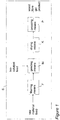
- FIG. 1 illustrates a system S according to an embodiment of the present solution.
- the system S comprises a feed of the raw material, i.e. a pulp or paper mill waste flow, for instance, to filtering means F.
- the system S may comprise filtering means F configured to remove liquid from the feed flow, resulting in dried sludge.
- the system is configured to feed the dried sludge, which in this connection is also called a wood fibre fraction, to means M for physically processing the fraction, wherein the means may comprise e.g. a counter impact mill or a corresponding device suitable for grinding wood fibre bundles (grinding means M) or a device M for producing ultrasound and/or applying it to the fraction so as to process the fraction physically.
- the means may comprise e.g. a counter impact mill or a corresponding device suitable for grinding wood fibre bundles (grinding means M) or a device M for producing ultrasound and/or applying it to the fraction so as to process the fraction physically.
- the system S may further comprise a biocatalyst feed to the system for biological/biochemical processing of the fraction.
- the biocatalyst is mixed with the wood fibre fraction either during, before or after the physical processing.
- Figure 1 illustrates a situation wherein the biocatalyst is fed during grinding.
- the system may be configured to feed the formed wood fibre gel (gel-like pulp) to drying means K for the removal of water (or some of the water) from the wood fibre gel.
- the wood fibre gel possibly having water removed therefrom, may be processed further e.g. by pressing means P, resulting e.g. in wood fibre gel containing sheets or bars. These may be further used for the manufacture of wood fibre gel containing products in construction or electronics industry, for instance.
- various ligninolytic (i.e. wood delignifying) and/or softening enzymes and/or other enzymes having an influence on wood cells and fibres such as pectinases, laccases, resinases, hemicellulases and/or cellulases, may be used, depending on the wood species.
- the amounts of enzyme to be used may depend on the wood species and quality of the raw material as well as on the enzyme used.
- the present solution may be applied to processing the reject and side flows of the production of both chemical and mechanical pulp (TMP, cTMP, PGW).
- TMP chemical and mechanical pulp
- cTMP cTMP
- PGW chemical and mechanical pulp
- Paper fibres lose strength with each recycling. They become shorter and shorter until they are no longer suitable for paper making, in which case they have to be separated and removed from circulation. A single wood fibre can be recycled about 4 to 7 times.
- the present invention is also applicable to the utilization of unusable recycled paper since fibres unsuitable for recycling can be processed in accordance with the present invention.
- a short fibre fraction unsuitable for paper making is not necessarily as such suitable to be burnt for energy production but some combustion enhancing material, such as peat, may be necessary to be added to the sludge prior to burning.
- combustion enhancing material such as peat
- the energy efficiency of the wood fibre containing sludge is rather poor.
- the wood fibre containing sludge ends up in a waste water plant, this would be a problem to the waste water purification plant since as far as the waste water purification plant is concerned, wood fibres are difficult to purify from the waste water and they cause problems to the purification process. Consequently, the present solution is a very welcome alternative in processing and utilizing a wood fibre fraction.
- the pulp may also contain non-gellified wood fibres.
- the state of the formed gel-like pulp differs significantly from the original wood fibre fraction. Consequently, the method enables pulp mill waste liquid, for which it is otherwise difficult to find useful applications, to be processed into a state wherein it is easier to think of applications for the pulp (it is, among other things, compressible mechanically into a strong plate or tube, which is not possible when using non-processed pulp making waste liquid).
- wood fibre wood fibre containing
- wood fibre gel wood fibre gel
- the raw material is thus other than the actual cellulose fibre.
- the raw material of the present solution i.e. waste fibre, has been subjected to a separation phase wherein small fibre is separated, e.g. on a paper wire, from fibre to be supplied to the paper pulp.
- a product according to the present solution differs from the prior art nano- and microcrystalline cellulose such that the product according to the present solution has a good binding capability, enabling it to be used for making a paper-like product.
- the wood fibre gel product according to the present solution has properties like those of nano- and microcrystalline cellulose, i.e. it contains small and microfibrillated fibre.
- a raw material according to a preferred embodiment comprises fibre containing waste generated in pulp and paper making. Basically, it is a different raw material than cellulose pulp.
- the wood fibre gel produced is a gel-like pulp which, however, has fibre-like properties, i.e. the fibres bind to one another.
- nano- and microcrystalline cellulose since it contains a large amount of small and microfibrillated fibre. These properties may be utilized in nanotechnological applications when nanoparticles are mixed with pulp in order to provide functional properties (e.g. electrical conductivity).
- the production process i.e. Enzymatic Mechanical Treatment or EMT processing
- EMT processing considerably differs from the prior art production of nano- and microcrystalline cellulose owing to the smaller energy consumption and lower costs of the present solution.
- the product i.e. wood fibre gel
- the product differs from the prior art nano- and microcrystalline cellulose such that in the present solution the product is still fibrous or at least it contains fibre-like components that bind to one another.
- the prior art microcrystalline cellulose does not bind in a similar manner.
- Waste fibre as such cannot be used for making paper sheets, or the strength of the sheets is extremely poor.
- the EMT processing improved the strength clearly.
- EMT processing was performed on waste fibre, a combination of waste fibre and microcrystalline cellulose, and mere microcrystalline cellulose. Addition of microcrystalline cellulose reduced the strength as compared with waste fibre.
- EMT processing was performed on waste fibre and waste fibre mixed with 10% and 20% carbon nanotubes (HNP), and test sheets were made wherefrom resistivity was measured.
- HNP carbon nanotubes
Landscapes
- Engineering & Computer Science (AREA)
- Life Sciences & Earth Sciences (AREA)
- Chemical & Material Sciences (AREA)
- Biochemistry (AREA)
- Mechanical Engineering (AREA)
- Wood Science & Technology (AREA)
- Microbiology (AREA)
- Physics & Mathematics (AREA)
- Plasma & Fusion (AREA)
- Textile Engineering (AREA)
- Paper (AREA)
- Processing Of Solid Wastes (AREA)
Applications Claiming Priority (2)
| Application Number | Priority Date | Filing Date | Title |
|---|---|---|---|
| FI20106078A FI124324B (fi) | 2010-10-18 | 2010-10-18 | Puukuitupitoisen jakeen käsittely |
| PCT/FI2011/050901 WO2012052617A1 (en) | 2010-10-18 | 2011-10-17 | Processing of wood fibre fraction |
Publications (3)
| Publication Number | Publication Date |
|---|---|
| EP2630296A1 EP2630296A1 (en) | 2013-08-28 |
| EP2630296A4 EP2630296A4 (en) | 2015-08-05 |
| EP2630296B1 true EP2630296B1 (en) | 2018-02-14 |
Family
ID=43064236
Family Applications (1)
| Application Number | Title | Priority Date | Filing Date |
|---|---|---|---|
| EP11833921.7A Not-in-force EP2630296B1 (en) | 2010-10-18 | 2011-10-17 | Processing of wood fibre fraction |
Country Status (4)
| Country | Link |
|---|---|
| EP (1) | EP2630296B1 (enExample) |
| FI (1) | FI124324B (enExample) |
| NO (1) | NO2630296T3 (enExample) |
| WO (1) | WO2012052617A1 (enExample) |
Families Citing this family (5)
| Publication number | Priority date | Publication date | Assignee | Title |
|---|---|---|---|---|
| ES2558472B1 (es) * | 2014-07-03 | 2016-11-16 | Consejo Superior De Investigaciones Científicas (Csic) | Material composite de nanocelulosa y arcillas fibrosas,procedimiento de fabricación y uso |
| CN105113339B (zh) * | 2015-07-28 | 2016-09-28 | 界首市鑫旺彩印包装有限公司 | 一种包装纸的生产方法 |
| US10557235B2 (en) | 2017-07-21 | 2020-02-11 | Andritz Inc. | Ultrasonic semelt dissolving and shattering system |
| CN110744668B (zh) * | 2019-10-30 | 2021-09-28 | 凉山德农生物能源股份有限公司 | 一种小桐子基纳米纸浆的制备方法 |
| CN114875707A (zh) * | 2022-05-13 | 2022-08-09 | 广东理文造纸有限公司 | 一种采用木纤维和废纸用于制备纸浆的制备工艺 |
Family Cites Families (5)
| Publication number | Priority date | Publication date | Assignee | Title |
|---|---|---|---|---|
| US6372085B1 (en) * | 1998-12-18 | 2002-04-16 | Kimberly-Clark Worldwide, Inc. | Recovery of fibers from a fiber processing waste sludge |
| DE10122331B4 (de) * | 2001-05-08 | 2005-07-21 | Alpha Calcit Füllstoff Gesellschaft Mbh | Verfahren zur Wiederverwertung von Spuckstoff sowie dessen Verwendung |
| JP5359819B2 (ja) * | 2008-11-28 | 2013-12-04 | 三菱化学株式会社 | セルロース繊維複合材料、およびその製造方法 |
| EP2805986B1 (en) * | 2009-03-30 | 2017-11-08 | FiberLean Technologies Limited | Process for the production of nano-fibrillar cellulose gels |
| SE536744C2 (sv) * | 2010-05-12 | 2014-07-08 | Stora Enso Oyj | En process för tillverkning av en komposition innehållande fibrillerad cellulosa och en komposition |
-
2010
- 2010-10-18 FI FI20106078A patent/FI124324B/fi active IP Right Grant
-
2011
- 2011-10-17 WO PCT/FI2011/050901 patent/WO2012052617A1/en not_active Ceased
- 2011-10-17 NO NO11833921A patent/NO2630296T3/no unknown
- 2011-10-17 EP EP11833921.7A patent/EP2630296B1/en not_active Not-in-force
Non-Patent Citations (1)
| Title |
|---|
| None * |
Also Published As
| Publication number | Publication date |
|---|---|
| NO2630296T3 (enExample) | 2018-07-14 |
| WO2012052617A1 (en) | 2012-04-26 |
| FI20106078A7 (fi) | 2012-04-19 |
| EP2630296A1 (en) | 2013-08-28 |
| FI20106078A0 (fi) | 2010-10-18 |
| EP2630296A4 (en) | 2015-08-05 |
| FI20106078L (fi) | 2012-04-19 |
| FI124324B (fi) | 2014-06-30 |
Similar Documents
| Publication | Publication Date | Title |
|---|---|---|
| Liu et al. | Enzyme-assisted mechanical grinding for cellulose nanofibers from bagasse: Energy consumption and nanofiber characteristics | |
| JP5544747B2 (ja) | 微細繊維状セルロースの製造方法 | |
| CN103755190B (zh) | 一种再生纤维素纤维及其制造方法 | |
| WO2012052617A1 (en) | Processing of wood fibre fraction | |
| JP2012036508A (ja) | 微細繊維状セルロースの製造方法 | |
| JP2023060307A (ja) | ナノリグノセルロース組成物およびこれらの組成物を生成するプロセス | |
| JP2013163773A (ja) | 微細繊維状セルロースの製造方法 | |
| WO2011129241A1 (ja) | 微細繊維状セルロースの製造方法 | |
| Chen et al. | Effect of solvent fractionation pretreatment on energy consumption of cellulose nanofabrication from switchgrass | |
| CN107001699A (zh) | 纤维素基功能复合材料、储能装置及其制备方法 | |
| CN110050097A (zh) | 基于植物纤维和矿物填料的粘合剂组合物及其制备与用途 | |
| Amiri et al. | Effect of chitosan molecular weight on the performance of chitosan-silica nanoparticle system in recycled pulp | |
| Dong et al. | Two-step enzyme treatment to improve the quality and forming performance of wheat straw chemical-mechanical pulp | |
| JP2012046848A (ja) | 微細繊維状セルロースの製造方法 | |
| JP2013087132A (ja) | 微細繊維状セルロースの製造方法 | |
| Balea et al. | Effect of NFC from organosolv corn stalk pulp on retention and drainage during papermaking | |
| Wang et al. | Macroscopic and microscopic properties of fibers after enzymatic deinking of mixed office waste paper | |
| Haque et al. | Green Nanofibrillation of Hemp Cellulose via Deep Eutectic Solvent and Simple Shear Mixing: A Response Surface Approach to Process Refinement | |
| Sarder et al. | Decarbonizing paper mill sludge waste into micro and nanofibrillated cellulose via enzyme hydrolysis and dual asymmetric centrifugation | |
| CN105155340A (zh) | 一种废水污泥用做造纸辅料的方法 | |
| CN1742136A (zh) | 生产用于制备薄纸幅或卫生用薄纸幅的纤维材料悬浮液的方法 | |
| JP6098370B2 (ja) | 複合材料及びその製造方法 | |
| KR101229710B1 (ko) | 지력증강제용 nfc를 이용한 종이 제조 방법 | |
| de Amorim dos Santos et al. | The use of enzymatic pre-treatment to facilitate and reduce the energy consumption of unbleached cellulose micro/nanofibrils production from Eucalyptus spp. and Pinus spp. kraft pulps | |
| CN1786342A (zh) | 一种制浆造纸工艺中溶胶物质生物处理的方法 |
Legal Events
| Date | Code | Title | Description |
|---|---|---|---|
| PUAI | Public reference made under article 153(3) epc to a published international application that has entered the european phase |
Free format text: ORIGINAL CODE: 0009012 |
|
| 17P | Request for examination filed |
Effective date: 20130510 |
|
| AK | Designated contracting states |
Kind code of ref document: A1 Designated state(s): AL AT BE BG CH CY CZ DE DK EE ES FI FR GB GR HR HU IE IS IT LI LT LU LV MC MK MT NL NO PL PT RO RS SE SI SK SM TR |
|
| DAX | Request for extension of the european patent (deleted) | ||
| RA4 | Supplementary search report drawn up and despatched (corrected) |
Effective date: 20150706 |
|
| RIC1 | Information provided on ipc code assigned before grant |
Ipc: D21C 9/00 20060101ALI20150710BHEP Ipc: D21H 11/18 20060101AFI20150710BHEP Ipc: D21H 11/20 20060101ALI20150710BHEP Ipc: D21C 5/00 20060101ALI20150710BHEP Ipc: D21B 1/02 20060101ALI20150710BHEP Ipc: B02C 13/00 20060101ALI20150710BHEP Ipc: D21C 5/02 20060101ALI20150710BHEP |
|
| 17Q | First examination report despatched |
Effective date: 20160517 |
|
| GRAP | Despatch of communication of intention to grant a patent |
Free format text: ORIGINAL CODE: EPIDOSNIGR1 |
|
| RIC1 | Information provided on ipc code assigned before grant |
Ipc: D21C 5/02 20060101ALI20170830BHEP Ipc: B02C 13/00 20060101ALI20170830BHEP Ipc: D21H 11/20 20060101ALI20170830BHEP Ipc: D21H 11/18 20060101AFI20170830BHEP Ipc: D21C 5/00 20060101ALI20170830BHEP Ipc: D21C 9/00 20060101ALI20170830BHEP Ipc: D21B 1/02 20060101ALI20170830BHEP |
|
| INTG | Intention to grant announced |
Effective date: 20170915 |
|
| GRAS | Grant fee paid |
Free format text: ORIGINAL CODE: EPIDOSNIGR3 |
|
| GRAA | (expected) grant |
Free format text: ORIGINAL CODE: 0009210 |
|
| AK | Designated contracting states |
Kind code of ref document: B1 Designated state(s): AL AT BE BG CH CY CZ DE DK EE ES FI FR GB GR HR HU IE IS IT LI LT LU LV MC MK MT NL NO PL PT RO RS SE SI SK SM TR |
|
| REG | Reference to a national code |
Ref country code: GB Ref legal event code: FG4D |
|
| REG | Reference to a national code |
Ref country code: CH Ref legal event code: EP |
|
| REG | Reference to a national code |
Ref country code: IE Ref legal event code: FG4D |
|
| REG | Reference to a national code |
Ref country code: DE Ref legal event code: R096 Ref document number: 602011045667 Country of ref document: DE Ref country code: AT Ref legal event code: REF Ref document number: 969899 Country of ref document: AT Kind code of ref document: T Effective date: 20180315 |
|
| REG | Reference to a national code |
Ref country code: SE Ref legal event code: TRGR |
|
| REG | Reference to a national code |
Ref country code: NL Ref legal event code: MP Effective date: 20180214 |
|
| REG | Reference to a national code |
Ref country code: NO Ref legal event code: T2 Effective date: 20180214 |
|
| REG | Reference to a national code |
Ref country code: AT Ref legal event code: MK05 Ref document number: 969899 Country of ref document: AT Kind code of ref document: T Effective date: 20180214 |
|
| PG25 | Lapsed in a contracting state [announced via postgrant information from national office to epo] |
Ref country code: FI Free format text: LAPSE BECAUSE OF FAILURE TO SUBMIT A TRANSLATION OF THE DESCRIPTION OR TO PAY THE FEE WITHIN THE PRESCRIBED TIME-LIMIT Effective date: 20180214 Ref country code: LT Free format text: LAPSE BECAUSE OF FAILURE TO SUBMIT A TRANSLATION OF THE DESCRIPTION OR TO PAY THE FEE WITHIN THE PRESCRIBED TIME-LIMIT Effective date: 20180214 Ref country code: HR Free format text: LAPSE BECAUSE OF FAILURE TO SUBMIT A TRANSLATION OF THE DESCRIPTION OR TO PAY THE FEE WITHIN THE PRESCRIBED TIME-LIMIT Effective date: 20180214 Ref country code: ES Free format text: LAPSE BECAUSE OF FAILURE TO SUBMIT A TRANSLATION OF THE DESCRIPTION OR TO PAY THE FEE WITHIN THE PRESCRIBED TIME-LIMIT Effective date: 20180214 Ref country code: NL Free format text: LAPSE BECAUSE OF FAILURE TO SUBMIT A TRANSLATION OF THE DESCRIPTION OR TO PAY THE FEE WITHIN THE PRESCRIBED TIME-LIMIT Effective date: 20180214 Ref country code: CY Free format text: LAPSE BECAUSE OF FAILURE TO SUBMIT A TRANSLATION OF THE DESCRIPTION OR TO PAY THE FEE WITHIN THE PRESCRIBED TIME-LIMIT Effective date: 20180214 |
|
| PG25 | Lapsed in a contracting state [announced via postgrant information from national office to epo] |
Ref country code: RS Free format text: LAPSE BECAUSE OF FAILURE TO SUBMIT A TRANSLATION OF THE DESCRIPTION OR TO PAY THE FEE WITHIN THE PRESCRIBED TIME-LIMIT Effective date: 20180214 Ref country code: LV Free format text: LAPSE BECAUSE OF FAILURE TO SUBMIT A TRANSLATION OF THE DESCRIPTION OR TO PAY THE FEE WITHIN THE PRESCRIBED TIME-LIMIT Effective date: 20180214 Ref country code: GR Free format text: LAPSE BECAUSE OF FAILURE TO SUBMIT A TRANSLATION OF THE DESCRIPTION OR TO PAY THE FEE WITHIN THE PRESCRIBED TIME-LIMIT Effective date: 20180515 Ref country code: BG Free format text: LAPSE BECAUSE OF FAILURE TO SUBMIT A TRANSLATION OF THE DESCRIPTION OR TO PAY THE FEE WITHIN THE PRESCRIBED TIME-LIMIT Effective date: 20180514 Ref country code: AT Free format text: LAPSE BECAUSE OF FAILURE TO SUBMIT A TRANSLATION OF THE DESCRIPTION OR TO PAY THE FEE WITHIN THE PRESCRIBED TIME-LIMIT Effective date: 20180214 |
|
| PG25 | Lapsed in a contracting state [announced via postgrant information from national office to epo] |
Ref country code: EE Free format text: LAPSE BECAUSE OF FAILURE TO SUBMIT A TRANSLATION OF THE DESCRIPTION OR TO PAY THE FEE WITHIN THE PRESCRIBED TIME-LIMIT Effective date: 20180214 Ref country code: AL Free format text: LAPSE BECAUSE OF FAILURE TO SUBMIT A TRANSLATION OF THE DESCRIPTION OR TO PAY THE FEE WITHIN THE PRESCRIBED TIME-LIMIT Effective date: 20180214 Ref country code: IT Free format text: LAPSE BECAUSE OF FAILURE TO SUBMIT A TRANSLATION OF THE DESCRIPTION OR TO PAY THE FEE WITHIN THE PRESCRIBED TIME-LIMIT Effective date: 20180214 Ref country code: RO Free format text: LAPSE BECAUSE OF FAILURE TO SUBMIT A TRANSLATION OF THE DESCRIPTION OR TO PAY THE FEE WITHIN THE PRESCRIBED TIME-LIMIT Effective date: 20180214 Ref country code: PL Free format text: LAPSE BECAUSE OF FAILURE TO SUBMIT A TRANSLATION OF THE DESCRIPTION OR TO PAY THE FEE WITHIN THE PRESCRIBED TIME-LIMIT Effective date: 20180214 |
|
| REG | Reference to a national code |
Ref country code: DE Ref legal event code: R097 Ref document number: 602011045667 Country of ref document: DE |
|
| PG25 | Lapsed in a contracting state [announced via postgrant information from national office to epo] |
Ref country code: CZ Free format text: LAPSE BECAUSE OF FAILURE TO SUBMIT A TRANSLATION OF THE DESCRIPTION OR TO PAY THE FEE WITHIN THE PRESCRIBED TIME-LIMIT Effective date: 20180214 Ref country code: SK Free format text: LAPSE BECAUSE OF FAILURE TO SUBMIT A TRANSLATION OF THE DESCRIPTION OR TO PAY THE FEE WITHIN THE PRESCRIBED TIME-LIMIT Effective date: 20180214 Ref country code: SM Free format text: LAPSE BECAUSE OF FAILURE TO SUBMIT A TRANSLATION OF THE DESCRIPTION OR TO PAY THE FEE WITHIN THE PRESCRIBED TIME-LIMIT Effective date: 20180214 Ref country code: DK Free format text: LAPSE BECAUSE OF FAILURE TO SUBMIT A TRANSLATION OF THE DESCRIPTION OR TO PAY THE FEE WITHIN THE PRESCRIBED TIME-LIMIT Effective date: 20180214 |
|
| PLBE | No opposition filed within time limit |
Free format text: ORIGINAL CODE: 0009261 |
|
| STAA | Information on the status of an ep patent application or granted ep patent |
Free format text: STATUS: NO OPPOSITION FILED WITHIN TIME LIMIT |
|
| 26N | No opposition filed |
Effective date: 20181115 |
|
| PG25 | Lapsed in a contracting state [announced via postgrant information from national office to epo] |
Ref country code: SI Free format text: LAPSE BECAUSE OF FAILURE TO SUBMIT A TRANSLATION OF THE DESCRIPTION OR TO PAY THE FEE WITHIN THE PRESCRIBED TIME-LIMIT Effective date: 20180214 |
|
| REG | Reference to a national code |
Ref country code: DE Ref legal event code: R119 Ref document number: 602011045667 Country of ref document: DE |
|
| REG | Reference to a national code |
Ref country code: CH Ref legal event code: PL |
|
| GBPC | Gb: european patent ceased through non-payment of renewal fee |
Effective date: 20181017 |
|
| REG | Reference to a national code |
Ref country code: BE Ref legal event code: MM Effective date: 20181031 |
|
| PG25 | Lapsed in a contracting state [announced via postgrant information from national office to epo] |
Ref country code: MC Free format text: LAPSE BECAUSE OF FAILURE TO SUBMIT A TRANSLATION OF THE DESCRIPTION OR TO PAY THE FEE WITHIN THE PRESCRIBED TIME-LIMIT Effective date: 20180214 Ref country code: LU Free format text: LAPSE BECAUSE OF NON-PAYMENT OF DUE FEES Effective date: 20181017 |
|
| REG | Reference to a national code |
Ref country code: IE Ref legal event code: MM4A |
|
| PG25 | Lapsed in a contracting state [announced via postgrant information from national office to epo] |
Ref country code: DE Free format text: LAPSE BECAUSE OF NON-PAYMENT OF DUE FEES Effective date: 20190501 |
|
| PG25 | Lapsed in a contracting state [announced via postgrant information from national office to epo] |
Ref country code: CH Free format text: LAPSE BECAUSE OF NON-PAYMENT OF DUE FEES Effective date: 20181031 Ref country code: LI Free format text: LAPSE BECAUSE OF NON-PAYMENT OF DUE FEES Effective date: 20181031 Ref country code: BE Free format text: LAPSE BECAUSE OF NON-PAYMENT OF DUE FEES Effective date: 20181031 |
|
| PG25 | Lapsed in a contracting state [announced via postgrant information from national office to epo] |
Ref country code: FR Free format text: LAPSE BECAUSE OF NON-PAYMENT OF DUE FEES Effective date: 20181031 Ref country code: IE Free format text: LAPSE BECAUSE OF NON-PAYMENT OF DUE FEES Effective date: 20181017 Ref country code: GB Free format text: LAPSE BECAUSE OF NON-PAYMENT OF DUE FEES Effective date: 20181017 |
|
| PG25 | Lapsed in a contracting state [announced via postgrant information from national office to epo] |
Ref country code: MT Free format text: LAPSE BECAUSE OF NON-PAYMENT OF DUE FEES Effective date: 20181017 |
|
| PG25 | Lapsed in a contracting state [announced via postgrant information from national office to epo] |
Ref country code: TR Free format text: LAPSE BECAUSE OF FAILURE TO SUBMIT A TRANSLATION OF THE DESCRIPTION OR TO PAY THE FEE WITHIN THE PRESCRIBED TIME-LIMIT Effective date: 20180214 |
|
| PG25 | Lapsed in a contracting state [announced via postgrant information from national office to epo] |
Ref country code: PT Free format text: LAPSE BECAUSE OF FAILURE TO SUBMIT A TRANSLATION OF THE DESCRIPTION OR TO PAY THE FEE WITHIN THE PRESCRIBED TIME-LIMIT Effective date: 20180214 |
|
| PG25 | Lapsed in a contracting state [announced via postgrant information from national office to epo] |
Ref country code: MK Free format text: LAPSE BECAUSE OF NON-PAYMENT OF DUE FEES Effective date: 20180214 Ref country code: HU Free format text: LAPSE BECAUSE OF FAILURE TO SUBMIT A TRANSLATION OF THE DESCRIPTION OR TO PAY THE FEE WITHIN THE PRESCRIBED TIME-LIMIT; INVALID AB INITIO Effective date: 20111017 |
|
| PG25 | Lapsed in a contracting state [announced via postgrant information from national office to epo] |
Ref country code: IS Free format text: LAPSE BECAUSE OF FAILURE TO SUBMIT A TRANSLATION OF THE DESCRIPTION OR TO PAY THE FEE WITHIN THE PRESCRIBED TIME-LIMIT Effective date: 20180614 |
|
| PGFP | Annual fee paid to national office [announced via postgrant information from national office to epo] |
Ref country code: NO Payment date: 20211022 Year of fee payment: 11 Ref country code: SE Payment date: 20211020 Year of fee payment: 11 |
|
| REG | Reference to a national code |
Ref country code: NO Ref legal event code: MMEP Ref country code: SE Ref legal event code: EUG |
|
| PG25 | Lapsed in a contracting state [announced via postgrant information from national office to epo] |
Ref country code: NO Free format text: LAPSE BECAUSE OF NON-PAYMENT OF DUE FEES Effective date: 20221031 |
|
| PG25 | Lapsed in a contracting state [announced via postgrant information from national office to epo] |
Ref country code: SE Free format text: LAPSE BECAUSE OF NON-PAYMENT OF DUE FEES Effective date: 20221018 |