EP2602328A1 - Verfahren zur Oxidation von Alkanen unter Verwendung einer AlkB Alkan 1-Monooxygenase - Google Patents
Verfahren zur Oxidation von Alkanen unter Verwendung einer AlkB Alkan 1-Monooxygenase Download PDFInfo
- Publication number
- EP2602328A1 EP2602328A1 EP11191910.6A EP11191910A EP2602328A1 EP 2602328 A1 EP2602328 A1 EP 2602328A1 EP 11191910 A EP11191910 A EP 11191910A EP 2602328 A1 EP2602328 A1 EP 2602328A1
- Authority
- EP
- European Patent Office
- Prior art keywords
- alkane
- alkb
- oxidation
- alkanes
- oxidoreductase
- Prior art date
- Legal status (The legal status is an assumption and is not a legal conclusion. Google has not performed a legal analysis and makes no representation as to the accuracy of the status listed.)
- Withdrawn
Links
- 150000001335 aliphatic alkanes Chemical class 0.000 title claims abstract description 92
- 230000003647 oxidation Effects 0.000 title claims description 54
- 238000007254 oxidation reaction Methods 0.000 title claims description 54
- 238000000034 method Methods 0.000 title claims description 23
- 102000005297 Cytochrome P-450 CYP4A Human genes 0.000 title 1
- 108010081498 Cytochrome P-450 CYP4A Proteins 0.000 title 1
- 102000004316 Oxidoreductases Human genes 0.000 claims abstract description 45
- 108090000854 Oxidoreductases Proteins 0.000 claims abstract description 45
- 239000001301 oxygen Substances 0.000 claims abstract description 16
- 229910052760 oxygen Inorganic materials 0.000 claims abstract description 16
- QVGXLLKOCUKJST-UHFFFAOYSA-N atomic oxygen Chemical compound [O] QVGXLLKOCUKJST-UHFFFAOYSA-N 0.000 claims abstract description 15
- 150000001732 carboxylic acid derivatives Chemical class 0.000 claims abstract description 15
- LFQSCWFLJHTTHZ-UHFFFAOYSA-N Ethanol Chemical compound CCO LFQSCWFLJHTTHZ-UHFFFAOYSA-N 0.000 claims abstract description 14
- 239000000203 mixture Substances 0.000 claims abstract description 10
- 241000589776 Pseudomonas putida Species 0.000 claims description 29
- NNPPMTNAJDCUHE-UHFFFAOYSA-N isobutane Chemical compound CC(C)C NNPPMTNAJDCUHE-UHFFFAOYSA-N 0.000 claims description 27
- IJDNQMDRQITEOD-UHFFFAOYSA-N n-butane Chemical compound CCCC IJDNQMDRQITEOD-UHFFFAOYSA-N 0.000 claims description 24
- 229920001184 polypeptide Polymers 0.000 claims description 23
- 108090000765 processed proteins & peptides Proteins 0.000 claims description 23
- 102000004196 processed proteins & peptides Human genes 0.000 claims description 23
- 239000001273 butane Substances 0.000 claims description 16
- 125000004432 carbon atom Chemical group C* 0.000 claims description 16
- OFBQJSOFQDEBGM-UHFFFAOYSA-N n-pentane Natural products CCCCC OFBQJSOFQDEBGM-UHFFFAOYSA-N 0.000 claims description 16
- 239000003054 catalyst Substances 0.000 claims description 12
- 239000001282 iso-butane Substances 0.000 claims description 11
- 230000008569 process Effects 0.000 claims description 11
- 238000002360 preparation method Methods 0.000 claims description 8
- 230000001590 oxidative effect Effects 0.000 abstract description 6
- LRHPLDYGYMQRHN-UHFFFAOYSA-N N-Butanol Chemical compound CCCCO LRHPLDYGYMQRHN-UHFFFAOYSA-N 0.000 description 39
- FERIUCNNQQJTOY-UHFFFAOYSA-N Butyric acid Chemical compound CCCC(O)=O FERIUCNNQQJTOY-UHFFFAOYSA-N 0.000 description 36
- BTANRVKWQNVYAZ-UHFFFAOYSA-N butan-2-ol Chemical compound CCC(C)O BTANRVKWQNVYAZ-UHFFFAOYSA-N 0.000 description 27
- ZTQSAGDEMFDKMZ-UHFFFAOYSA-N Butyraldehyde Chemical compound CCCC=O ZTQSAGDEMFDKMZ-UHFFFAOYSA-N 0.000 description 23
- 239000011573 trace mineral Substances 0.000 description 21
- 235000013619 trace mineral Nutrition 0.000 description 21
- 210000004027 cell Anatomy 0.000 description 20
- 239000000047 product Substances 0.000 description 20
- 241000588724 Escherichia coli Species 0.000 description 17
- AMIMRNSIRUDHCM-UHFFFAOYSA-N Isopropylaldehyde Chemical compound CC(C)C=O AMIMRNSIRUDHCM-UHFFFAOYSA-N 0.000 description 17
- 150000001413 amino acids Chemical class 0.000 description 17
- 150000007523 nucleic acids Chemical group 0.000 description 17
- FAPWRFPIFSIZLT-UHFFFAOYSA-M Sodium chloride Chemical compound [Na+].[Cl-] FAPWRFPIFSIZLT-UHFFFAOYSA-M 0.000 description 14
- 238000006243 chemical reaction Methods 0.000 description 14
- 102000004190 Enzymes Human genes 0.000 description 12
- 108090000790 Enzymes Proteins 0.000 description 12
- 102000008109 Mixed Function Oxygenases Human genes 0.000 description 12
- 108010074633 Mixed Function Oxygenases Proteins 0.000 description 12
- 229910052799 carbon Inorganic materials 0.000 description 12
- 150000001721 carbon Chemical group 0.000 description 11
- 239000002609 medium Substances 0.000 description 10
- 108020004707 nucleic acids Proteins 0.000 description 10
- 102000039446 nucleic acids Human genes 0.000 description 10
- 239000011734 sodium Substances 0.000 description 10
- 239000000243 solution Substances 0.000 description 10
- 239000000872 buffer Substances 0.000 description 9
- 235000013847 iso-butane Nutrition 0.000 description 9
- 241000672609 Escherichia coli BL21 Species 0.000 description 8
- WQZGKKKJIJFFOK-GASJEMHNSA-N Glucose Natural products OC[C@H]1OC(O)[C@H](O)[C@@H](O)[C@@H]1O WQZGKKKJIJFFOK-GASJEMHNSA-N 0.000 description 8
- 239000008103 glucose Substances 0.000 description 8
- 229930027917 kanamycin Natural products 0.000 description 8
- SBUJHOSQTJFQJX-NOAMYHISSA-N kanamycin Chemical compound O[C@@H]1[C@@H](O)[C@H](O)[C@@H](CN)O[C@@H]1O[C@H]1[C@H](O)[C@@H](O[C@@H]2[C@@H]([C@@H](N)[C@H](O)[C@@H](CO)O2)O)[C@H](N)C[C@@H]1N SBUJHOSQTJFQJX-NOAMYHISSA-N 0.000 description 8
- 229960000318 kanamycin Drugs 0.000 description 8
- 229930182823 kanamycin A Natural products 0.000 description 8
- 238000002474 experimental method Methods 0.000 description 7
- 239000011780 sodium chloride Substances 0.000 description 7
- 241001302584 Escherichia coli str. K-12 substr. W3110 Species 0.000 description 6
- 101000836620 Homo sapiens Nucleic acid dioxygenase ALKBH1 Proteins 0.000 description 6
- 102100027051 Nucleic acid dioxygenase ALKBH1 Human genes 0.000 description 6
- 108091028043 Nucleic acid sequence Proteins 0.000 description 6
- ATUOYWHBWRKTHZ-UHFFFAOYSA-N Propane Chemical compound CCC ATUOYWHBWRKTHZ-UHFFFAOYSA-N 0.000 description 6
- 230000000694 effects Effects 0.000 description 6
- HGBOYTHUEUWSSQ-UHFFFAOYSA-N valeric aldehyde Natural products CCCCC=O HGBOYTHUEUWSSQ-UHFFFAOYSA-N 0.000 description 6
- 229940024606 amino acid Drugs 0.000 description 5
- 239000007789 gas Substances 0.000 description 5
- 239000013612 plasmid Substances 0.000 description 5
- 150000001299 aldehydes Chemical class 0.000 description 4
- 230000015572 biosynthetic process Effects 0.000 description 4
- 229940041514 candida albicans extract Drugs 0.000 description 4
- 239000000460 chlorine Substances 0.000 description 4
- 230000002255 enzymatic effect Effects 0.000 description 4
- 125000005842 heteroatom Chemical group 0.000 description 4
- 238000009396 hybridization Methods 0.000 description 4
- ZXEKIIBDNHEJCQ-UHFFFAOYSA-N isobutanol Chemical compound CC(C)CO ZXEKIIBDNHEJCQ-UHFFFAOYSA-N 0.000 description 4
- VNWKTOKETHGBQD-UHFFFAOYSA-N methane Chemical compound C VNWKTOKETHGBQD-UHFFFAOYSA-N 0.000 description 4
- 239000000523 sample Substances 0.000 description 4
- 239000012138 yeast extract Substances 0.000 description 4
- CSCPPACGZOOCGX-UHFFFAOYSA-N Acetone Chemical compound CC(C)=O CSCPPACGZOOCGX-UHFFFAOYSA-N 0.000 description 3
- 241000894006 Bacteria Species 0.000 description 3
- MYMOFIZGZYHOMD-UHFFFAOYSA-N Dioxygen Chemical compound O=O MYMOFIZGZYHOMD-UHFFFAOYSA-N 0.000 description 3
- PEDCQBHIVMGVHV-UHFFFAOYSA-N Glycerine Chemical compound OCC(O)CO PEDCQBHIVMGVHV-UHFFFAOYSA-N 0.000 description 3
- XEEYBQQBJWHFJM-UHFFFAOYSA-N Iron Chemical compound [Fe] XEEYBQQBJWHFJM-UHFFFAOYSA-N 0.000 description 3
- HEMHJVSKTPXQMS-UHFFFAOYSA-M Sodium hydroxide Chemical compound [OH-].[Na+] HEMHJVSKTPXQMS-UHFFFAOYSA-M 0.000 description 3
- 230000014509 gene expression Effects 0.000 description 3
- KQNPFQTWMSNSAP-UHFFFAOYSA-N isobutyric acid Chemical compound CC(C)C(O)=O KQNPFQTWMSNSAP-UHFFFAOYSA-N 0.000 description 3
- 239000007788 liquid Substances 0.000 description 3
- 238000004519 manufacturing process Methods 0.000 description 3
- 239000007800 oxidant agent Substances 0.000 description 3
- 239000001294 propane Substances 0.000 description 3
- 102000004169 proteins and genes Human genes 0.000 description 3
- 108090000623 proteins and genes Proteins 0.000 description 3
- 238000000746 purification Methods 0.000 description 3
- 239000002994 raw material Substances 0.000 description 3
- 239000007858 starting material Substances 0.000 description 3
- 239000000126 substance Substances 0.000 description 3
- 238000003786 synthesis reaction Methods 0.000 description 3
- 210000005253 yeast cell Anatomy 0.000 description 3
- YEJRWHAVMIAJKC-UHFFFAOYSA-N 4-Butyrolactone Chemical compound O=C1CCCO1 YEJRWHAVMIAJKC-UHFFFAOYSA-N 0.000 description 2
- 229920001817 Agar Polymers 0.000 description 2
- 239000002028 Biomass Substances 0.000 description 2
- CURLTUGMZLYLDI-UHFFFAOYSA-N Carbon dioxide Chemical compound O=C=O CURLTUGMZLYLDI-UHFFFAOYSA-N 0.000 description 2
- KRKNYBCHXYNGOX-UHFFFAOYSA-K Citrate Chemical compound [O-]C(=O)CC(O)(CC([O-])=O)C([O-])=O KRKNYBCHXYNGOX-UHFFFAOYSA-K 0.000 description 2
- 229910021591 Copper(I) chloride Inorganic materials 0.000 description 2
- 241000588921 Enterobacteriaceae Species 0.000 description 2
- OTMSDBZUPAUEDD-UHFFFAOYSA-N Ethane Chemical compound CC OTMSDBZUPAUEDD-UHFFFAOYSA-N 0.000 description 2
- 241000206672 Gelidium Species 0.000 description 2
- MHAJPDPJQMAIIY-UHFFFAOYSA-N Hydrogen peroxide Chemical compound OO MHAJPDPJQMAIIY-UHFFFAOYSA-N 0.000 description 2
- 241000235070 Saccharomyces Species 0.000 description 2
- DKGAVHZHDRPRBM-UHFFFAOYSA-N Tert-Butanol Chemical compound CC(C)(C)O DKGAVHZHDRPRBM-UHFFFAOYSA-N 0.000 description 2
- 241000282485 Vulpes vulpes Species 0.000 description 2
- 235000010419 agar Nutrition 0.000 description 2
- 150000001298 alcohols Chemical class 0.000 description 2
- 238000004458 analytical method Methods 0.000 description 2
- 239000002518 antifoaming agent Substances 0.000 description 2
- 239000007864 aqueous solution Substances 0.000 description 2
- 230000008901 benefit Effects 0.000 description 2
- 238000011138 biotechnological process Methods 0.000 description 2
- WERYXYBDKMZEQL-UHFFFAOYSA-N butane-1,4-diol Chemical compound OCCCCO WERYXYBDKMZEQL-UHFFFAOYSA-N 0.000 description 2
- 150000001735 carboxylic acids Chemical class 0.000 description 2
- 238000004587 chromatography analysis Methods 0.000 description 2
- 230000000295 complement effect Effects 0.000 description 2
- 150000001875 compounds Chemical class 0.000 description 2
- OXBLHERUFWYNTN-UHFFFAOYSA-M copper(I) chloride Chemical compound [Cu]Cl OXBLHERUFWYNTN-UHFFFAOYSA-M 0.000 description 2
- 150000001924 cycloalkanes Chemical class 0.000 description 2
- 230000001419 dependent effect Effects 0.000 description 2
- 229910001882 dioxygen Inorganic materials 0.000 description 2
- 210000003527 eukaryotic cell Anatomy 0.000 description 2
- 239000000499 gel Substances 0.000 description 2
- RWSXRVCMGQZWBV-WDSKDSINSA-N glutathione Chemical compound OC(=O)[C@@H](N)CCC(=O)N[C@@H](CS)C(=O)NCC(O)=O RWSXRVCMGQZWBV-WDSKDSINSA-N 0.000 description 2
- 230000026030 halogenation Effects 0.000 description 2
- 238000005658 halogenation reaction Methods 0.000 description 2
- 238000004128 high performance liquid chromatography Methods 0.000 description 2
- QWTDNUCVQCZILF-UHFFFAOYSA-N isopentane Chemical compound CCC(C)C QWTDNUCVQCZILF-UHFFFAOYSA-N 0.000 description 2
- 239000006166 lysate Substances 0.000 description 2
- 229920002521 macromolecule Polymers 0.000 description 2
- BDJAEZRIGNCQBZ-UHFFFAOYSA-N methylcyclobutane Chemical group CC1CCC1 BDJAEZRIGNCQBZ-UHFFFAOYSA-N 0.000 description 2
- 150000002763 monocarboxylic acids Chemical group 0.000 description 2
- CRSOQBOWXPBRES-UHFFFAOYSA-N neopentane Chemical compound CC(C)(C)C CRSOQBOWXPBRES-UHFFFAOYSA-N 0.000 description 2
- 230000002018 overexpression Effects 0.000 description 2
- 239000008188 pellet Substances 0.000 description 2
- 239000008363 phosphate buffer Substances 0.000 description 2
- 210000001236 prokaryotic cell Anatomy 0.000 description 2
- 150000003839 salts Chemical class 0.000 description 2
- 238000005070 sampling Methods 0.000 description 2
- 239000000758 substrate Substances 0.000 description 2
- 239000006228 supernatant Substances 0.000 description 2
- 238000012546 transfer Methods 0.000 description 2
- XLYOFNOQVPJJNP-UHFFFAOYSA-N water Substances O XLYOFNOQVPJJNP-UHFFFAOYSA-N 0.000 description 2
- OWEGMIWEEQEYGQ-UHFFFAOYSA-N 100676-05-9 Natural products OC1C(O)C(O)C(CO)OC1OCC1C(O)C(O)C(O)C(OC2C(OC(O)C(O)C2O)CO)O1 OWEGMIWEEQEYGQ-UHFFFAOYSA-N 0.000 description 1
- PKAUICCNAWQPAU-UHFFFAOYSA-N 2-(4-chloro-2-methylphenoxy)acetic acid;n-methylmethanamine Chemical compound CNC.CC1=CC(Cl)=CC=C1OCC(O)=O PKAUICCNAWQPAU-UHFFFAOYSA-N 0.000 description 1
- 102000007698 Alcohol dehydrogenase Human genes 0.000 description 1
- 108010021809 Alcohol dehydrogenase Proteins 0.000 description 1
- 241000186063 Arthrobacter Species 0.000 description 1
- 241000222120 Candida <Saccharomycetales> Species 0.000 description 1
- 241000222178 Candida tropicalis Species 0.000 description 1
- OKTJSMMVPCPJKN-UHFFFAOYSA-N Carbon Chemical group [C] OKTJSMMVPCPJKN-UHFFFAOYSA-N 0.000 description 1
- KZBUYRJDOAKODT-UHFFFAOYSA-N Chlorine Chemical compound ClCl KZBUYRJDOAKODT-UHFFFAOYSA-N 0.000 description 1
- 241000186216 Corynebacterium Species 0.000 description 1
- 108020004414 DNA Proteins 0.000 description 1
- 241000588722 Escherichia Species 0.000 description 1
- 241000282326 Felis catus Species 0.000 description 1
- 108010024636 Glutathione Proteins 0.000 description 1
- 102000005720 Glutathione transferase Human genes 0.000 description 1
- 108010070675 Glutathione transferase Proteins 0.000 description 1
- 229930194542 Keto Natural products 0.000 description 1
- 241000235058 Komagataella pastoris Species 0.000 description 1
- CKLJMWTZIZZHCS-REOHCLBHSA-N L-aspartic acid Chemical compound OC(=O)[C@@H](N)CC(O)=O CKLJMWTZIZZHCS-REOHCLBHSA-N 0.000 description 1
- WHUUTDBJXJRKMK-VKHMYHEASA-N L-glutamic acid Chemical compound OC(=O)[C@@H](N)CCC(O)=O WHUUTDBJXJRKMK-VKHMYHEASA-N 0.000 description 1
- ROHFNLRQFUQHCH-YFKPBYRVSA-N L-leucine Chemical compound CC(C)C[C@H](N)C(O)=O ROHFNLRQFUQHCH-YFKPBYRVSA-N 0.000 description 1
- KZSNJWFQEVHDMF-BYPYZUCNSA-N L-valine Chemical compound CC(C)[C@H](N)C(O)=O KZSNJWFQEVHDMF-BYPYZUCNSA-N 0.000 description 1
- ROHFNLRQFUQHCH-UHFFFAOYSA-N Leucine Natural products CC(C)CC(N)C(O)=O ROHFNLRQFUQHCH-UHFFFAOYSA-N 0.000 description 1
- 239000006142 Luria-Bertani Agar Substances 0.000 description 1
- 239000006137 Luria-Bertani broth Substances 0.000 description 1
- 239000007993 MOPS buffer Substances 0.000 description 1
- GUBGYTABKSRVRQ-PICCSMPSSA-N Maltose Natural products O[C@@H]1[C@@H](O)[C@H](O)[C@@H](CO)O[C@@H]1O[C@@H]1[C@@H](CO)OC(O)[C@H](O)[C@H]1O GUBGYTABKSRVRQ-PICCSMPSSA-N 0.000 description 1
- 101710175625 Maltose/maltodextrin-binding periplasmic protein Proteins 0.000 description 1
- PXHVJJICTQNCMI-UHFFFAOYSA-N Nickel Chemical compound [Ni] PXHVJJICTQNCMI-UHFFFAOYSA-N 0.000 description 1
- 108091005804 Peptidases Proteins 0.000 description 1
- 239000001888 Peptone Substances 0.000 description 1
- 108010080698 Peptones Proteins 0.000 description 1
- 241000235648 Pichia Species 0.000 description 1
- 239000004365 Protease Substances 0.000 description 1
- 241000589516 Pseudomonas Species 0.000 description 1
- 102000007056 Recombinant Fusion Proteins Human genes 0.000 description 1
- 108010008281 Recombinant Fusion Proteins Proteins 0.000 description 1
- 102100037486 Reverse transcriptase/ribonuclease H Human genes 0.000 description 1
- 241000235346 Schizosaccharomyces Species 0.000 description 1
- 241000235347 Schizosaccharomyces pombe Species 0.000 description 1
- 102000003929 Transaminases Human genes 0.000 description 1
- 108090000340 Transaminases Proteins 0.000 description 1
- KZSNJWFQEVHDMF-UHFFFAOYSA-N Valine Natural products CC(C)C(N)C(O)=O KZSNJWFQEVHDMF-UHFFFAOYSA-N 0.000 description 1
- 241000235013 Yarrowia Species 0.000 description 1
- 241000235015 Yarrowia lipolytica Species 0.000 description 1
- 239000002253 acid Substances 0.000 description 1
- 150000007513 acids Chemical class 0.000 description 1
- 230000009471 action Effects 0.000 description 1
- 238000007792 addition Methods 0.000 description 1
- 101150035861 alkG gene Proteins 0.000 description 1
- 101150026307 alkT gene Proteins 0.000 description 1
- 238000013459 approach Methods 0.000 description 1
- 229940009098 aspartate Drugs 0.000 description 1
- 230000001580 bacterial effect Effects 0.000 description 1
- 239000003124 biologic agent Substances 0.000 description 1
- 239000007853 buffer solution Substances 0.000 description 1
- 229930188620 butyrolactone Natural products 0.000 description 1
- 239000006227 byproduct Substances 0.000 description 1
- 239000001569 carbon dioxide Substances 0.000 description 1
- 229910002092 carbon dioxide Inorganic materials 0.000 description 1
- 125000003178 carboxy group Chemical group [H]OC(*)=O 0.000 description 1
- 238000006555 catalytic reaction Methods 0.000 description 1
- 239000003795 chemical substances by application Substances 0.000 description 1
- 238000011097 chromatography purification Methods 0.000 description 1
- 230000008878 coupling Effects 0.000 description 1
- 238000010168 coupling process Methods 0.000 description 1
- 238000005859 coupling reaction Methods 0.000 description 1
- 125000000753 cycloalkyl group Chemical group 0.000 description 1
- 238000012217 deletion Methods 0.000 description 1
- 230000037430 deletion Effects 0.000 description 1
- 239000003814 drug Substances 0.000 description 1
- 238000005516 engineering process Methods 0.000 description 1
- 239000003797 essential amino acid Substances 0.000 description 1
- 235000020776 essential amino acid Nutrition 0.000 description 1
- 238000011156 evaluation Methods 0.000 description 1
- 239000000284 extract Substances 0.000 description 1
- 238000000605 extraction Methods 0.000 description 1
- 230000004129 fatty acid metabolism Effects 0.000 description 1
- 239000012527 feed solution Substances 0.000 description 1
- 239000012634 fragment Substances 0.000 description 1
- 239000000446 fuel Substances 0.000 description 1
- 238000003958 fumigation Methods 0.000 description 1
- 102000037865 fusion proteins Human genes 0.000 description 1
- 108020001507 fusion proteins Proteins 0.000 description 1
- 230000002068 genetic effect Effects 0.000 description 1
- 239000011521 glass Substances 0.000 description 1
- 229930195712 glutamate Natural products 0.000 description 1
- 229960003180 glutathione Drugs 0.000 description 1
- 239000001963 growth medium Substances 0.000 description 1
- 238000010438 heat treatment Methods 0.000 description 1
- HNDVDQJCIGZPNO-UHFFFAOYSA-N histidine Natural products OC(=O)C(N)CC1=CN=CN1 HNDVDQJCIGZPNO-UHFFFAOYSA-N 0.000 description 1
- 229930195733 hydrocarbon Natural products 0.000 description 1
- 150000002430 hydrocarbons Chemical class 0.000 description 1
- 230000007062 hydrolysis Effects 0.000 description 1
- 238000006460 hydrolysis reaction Methods 0.000 description 1
- 125000002887 hydroxy group Chemical group [H]O* 0.000 description 1
- 238000011065 in-situ storage Methods 0.000 description 1
- 230000006698 induction Effects 0.000 description 1
- 229910003480 inorganic solid Inorganic materials 0.000 description 1
- 239000000543 intermediate Substances 0.000 description 1
- 229910052742 iron Inorganic materials 0.000 description 1
- 125000000468 ketone group Chemical group 0.000 description 1
- 150000003951 lactams Chemical class 0.000 description 1
- 239000003446 ligand Substances 0.000 description 1
- 230000014759 maintenance of location Effects 0.000 description 1
- 210000004962 mammalian cell Anatomy 0.000 description 1
- 238000002844 melting Methods 0.000 description 1
- 230000008018 melting Effects 0.000 description 1
- 230000002906 microbiologic effect Effects 0.000 description 1
- 238000010369 molecular cloning Methods 0.000 description 1
- 229910001453 nickel ion Inorganic materials 0.000 description 1
- 229930027945 nicotinamide-adenine dinucleotide Natural products 0.000 description 1
- BOPGDPNILDQYTO-NNYOXOHSSA-N nicotinamide-adenine dinucleotide Chemical compound C1=CCC(C(=O)N)=CN1[C@H]1[C@H](O)[C@H](O)[C@@H](COP(O)(=O)OP(O)(=O)OC[C@@H]2[C@H]([C@@H](O)[C@@H](O2)N2C3=NC=NC(N)=C3N=C2)O)O1 BOPGDPNILDQYTO-NNYOXOHSSA-N 0.000 description 1
- 238000010534 nucleophilic substitution reaction Methods 0.000 description 1
- 235000019319 peptone Nutrition 0.000 description 1
- 229920003023 plastic Polymers 0.000 description 1
- 239000004033 plastic Substances 0.000 description 1
- 239000011148 porous material Substances 0.000 description 1
- 239000012286 potassium permanganate Substances 0.000 description 1
- 230000002797 proteolythic effect Effects 0.000 description 1
- 239000012429 reaction media Substances 0.000 description 1
- 230000001105 regulatory effect Effects 0.000 description 1
- 108060007223 rubredoxin Proteins 0.000 description 1
- 108010060589 rubredoxin-NAD+ reductase Proteins 0.000 description 1
- 229930195734 saturated hydrocarbon Natural products 0.000 description 1
- 150000003333 secondary alcohols Chemical class 0.000 description 1
- IFGCUJZIWBUILZ-UHFFFAOYSA-N sodium 2-[[2-[[hydroxy-(3,4,5-trihydroxy-6-methyloxan-2-yl)oxyphosphoryl]amino]-4-methylpentanoyl]amino]-3-(1H-indol-3-yl)propanoic acid Chemical compound [Na+].C=1NC2=CC=CC=C2C=1CC(C(O)=O)NC(=O)C(CC(C)C)NP(O)(=O)OC1OC(C)C(O)C(O)C1O IFGCUJZIWBUILZ-UHFFFAOYSA-N 0.000 description 1
- 239000007787 solid Substances 0.000 description 1
- 239000007790 solid phase Substances 0.000 description 1
- 239000002904 solvent Substances 0.000 description 1
- 238000003756 stirring Methods 0.000 description 1
- 238000006467 substitution reaction Methods 0.000 description 1
- 238000012360 testing method Methods 0.000 description 1
- UEUXEKPTXMALOB-UHFFFAOYSA-J tetrasodium;2-[2-[bis(carboxylatomethyl)amino]ethyl-(carboxylatomethyl)amino]acetate Chemical compound [Na+].[Na+].[Na+].[Na+].[O-]C(=O)CN(CC([O-])=O)CCN(CC([O-])=O)CC([O-])=O UEUXEKPTXMALOB-UHFFFAOYSA-J 0.000 description 1
- 125000003396 thiol group Chemical group [H]S* 0.000 description 1
- 231100000331 toxic Toxicity 0.000 description 1
- 230000002588 toxic effect Effects 0.000 description 1
- 230000009466 transformation Effects 0.000 description 1
- 229910021642 ultra pure water Inorganic materials 0.000 description 1
- 239000012498 ultrapure water Substances 0.000 description 1
- 239000004474 valine Substances 0.000 description 1
- 239000013598 vector Substances 0.000 description 1
- 125000000391 vinyl group Chemical group [H]C([*])=C([H])[H] 0.000 description 1
- 238000005406 washing Methods 0.000 description 1
Images





Classifications
-
- C—CHEMISTRY; METALLURGY
- C12—BIOCHEMISTRY; BEER; SPIRITS; WINE; VINEGAR; MICROBIOLOGY; ENZYMOLOGY; MUTATION OR GENETIC ENGINEERING
- C12P—FERMENTATION OR ENZYME-USING PROCESSES TO SYNTHESISE A DESIRED CHEMICAL COMPOUND OR COMPOSITION OR TO SEPARATE OPTICAL ISOMERS FROM A RACEMIC MIXTURE
- C12P7/00—Preparation of oxygen-containing organic compounds
- C12P7/40—Preparation of oxygen-containing organic compounds containing a carboxyl group including Peroxycarboxylic acids
- C12P7/52—Propionic acid; Butyric acids
-
- C—CHEMISTRY; METALLURGY
- C12—BIOCHEMISTRY; BEER; SPIRITS; WINE; VINEGAR; MICROBIOLOGY; ENZYMOLOGY; MUTATION OR GENETIC ENGINEERING
- C12P—FERMENTATION OR ENZYME-USING PROCESSES TO SYNTHESISE A DESIRED CHEMICAL COMPOUND OR COMPOSITION OR TO SEPARATE OPTICAL ISOMERS FROM A RACEMIC MIXTURE
- C12P7/00—Preparation of oxygen-containing organic compounds
- C12P7/02—Preparation of oxygen-containing organic compounds containing a hydroxy group
-
- C—CHEMISTRY; METALLURGY
- C12—BIOCHEMISTRY; BEER; SPIRITS; WINE; VINEGAR; MICROBIOLOGY; ENZYMOLOGY; MUTATION OR GENETIC ENGINEERING
- C12P—FERMENTATION OR ENZYME-USING PROCESSES TO SYNTHESISE A DESIRED CHEMICAL COMPOUND OR COMPOSITION OR TO SEPARATE OPTICAL ISOMERS FROM A RACEMIC MIXTURE
- C12P7/00—Preparation of oxygen-containing organic compounds
- C12P7/02—Preparation of oxygen-containing organic compounds containing a hydroxy group
- C12P7/04—Preparation of oxygen-containing organic compounds containing a hydroxy group acyclic
- C12P7/16—Butanols
-
- C—CHEMISTRY; METALLURGY
- C12—BIOCHEMISTRY; BEER; SPIRITS; WINE; VINEGAR; MICROBIOLOGY; ENZYMOLOGY; MUTATION OR GENETIC ENGINEERING
- C12P—FERMENTATION OR ENZYME-USING PROCESSES TO SYNTHESISE A DESIRED CHEMICAL COMPOUND OR COMPOSITION OR TO SEPARATE OPTICAL ISOMERS FROM A RACEMIC MIXTURE
- C12P7/00—Preparation of oxygen-containing organic compounds
- C12P7/24—Preparation of oxygen-containing organic compounds containing a carbonyl group
-
- C—CHEMISTRY; METALLURGY
- C12—BIOCHEMISTRY; BEER; SPIRITS; WINE; VINEGAR; MICROBIOLOGY; ENZYMOLOGY; MUTATION OR GENETIC ENGINEERING
- C12P—FERMENTATION OR ENZYME-USING PROCESSES TO SYNTHESISE A DESIRED CHEMICAL COMPOUND OR COMPOSITION OR TO SEPARATE OPTICAL ISOMERS FROM A RACEMIC MIXTURE
- C12P7/00—Preparation of oxygen-containing organic compounds
- C12P7/40—Preparation of oxygen-containing organic compounds containing a carboxyl group including Peroxycarboxylic acids
-
- Y—GENERAL TAGGING OF NEW TECHNOLOGICAL DEVELOPMENTS; GENERAL TAGGING OF CROSS-SECTIONAL TECHNOLOGIES SPANNING OVER SEVERAL SECTIONS OF THE IPC; TECHNICAL SUBJECTS COVERED BY FORMER USPC CROSS-REFERENCE ART COLLECTIONS [XRACs] AND DIGESTS
- Y02—TECHNOLOGIES OR APPLICATIONS FOR MITIGATION OR ADAPTATION AGAINST CLIMATE CHANGE
- Y02E—REDUCTION OF GREENHOUSE GAS [GHG] EMISSIONS, RELATED TO ENERGY GENERATION, TRANSMISSION OR DISTRIBUTION
- Y02E50/00—Technologies for the production of fuel of non-fossil origin
- Y02E50/10—Biofuels, e.g. bio-diesel
Definitions
- the invention relates to a process for the oxidation of an alkane comprising contacting the alkane with an alkB-type oxidoreductase and using an alkB-type oxidoreductase to produce a mixture of oxidation products of an alkane, wherein the ratio of carboxylic acid to alcohol among the oxidation products is preferably greater than 1: 1.
- Alkanes are some of the most important raw materials in the chemical industry.
- the starting point for their extraction are usually fossil raw materials, but meanwhile also methods for the production of alkanes from renewable raw materials are known.
- alkanes are known to the public, in particular because of their usefulness as fuels, for example in the form of gases of short-chain alkanes or liquid long-chain alkanes, they are in the industry mainly in their role as starting materials or solvents for numerous syntheses that are important products of the daily Life like plastics or pharmaceuticals lead, indispensable.
- alkanes for such purposes are the possibility of oxidative introduction of heteroatom-containing functions into the alkane carbon chains, eg of hydroxy, keto and carboxy functions, since alkanes per se are chemically characterized as relatively reactive due to their saturation.
- heteroatom-containing functions in contrast to the use of alkanes as a heating agent, it should not lead to a complete oxidation of alkanes to carbon dioxide, but the heteroatom-containing functions must be introduced selectively and controlled.
- the object underlying the invention is to develop a biotechnological process for the oxidation of alkanes, which is suitable for the selective oxidation of a terminal carbon atom of an alkane to the carboxylic acid.
- the object underlying the invention is to develop a method that is suitable for producing various products of the alkane oxidized selectively on the terminal carbon atom, wherein the amount or the ratio of the products can be influenced.
- the object underlying the invention is to provide an oxidoreductase system which is capable of catalyzing the oxidation of a terminal carbon atom to all oxidation states from the group comprising alcohol, aldehyde and carboxylic acid, wherein only a single catalytically active polypeptide with the Substratalkan endeavor. Intermediates comes into contact.
- the object underlying the invention is to provide a system for the selective terminal oxidation of alkanes, independent of the fatty acid metabolism and characterized by overexpression of a single oxidation system.
- Another object of the invention is to provide a process for the oxidation of alkanes, preferably of gaseous alkanes, which is suitable for oxidizing the alkane predominantly or with improved yield to the carboxylic acid, not only predominantly to the alcohol.
- the problem underlying the invention is solved by a process for the oxidation of an alkane comprising contacting the alkane with an alkB type oxidoreductase in the presence of oxygen.
- the alkane is an alkane having 1 to 5 carbon atoms.
- the alkane is an alkane having 1 to 4 carbon atoms, preferably butane.
- the alkane is a branched alkane, preferably having four or five carbon atoms, more preferably isobutane.
- the AlkB type oxidoreductase is AlkB of Pseudomonas putida GPO1 or a variant thereof.
- the alkB type oxidoreductase is provided in the form of a whole-cell catalyst.
- the alkB type oxidoreductase is provided in the form of a purified polypeptide.
- the problem underlying the invention is solved by the use of an alkB-type oxidoreductase for the preparation in the presence of oxygen of a mixture of oxidation products of an alkane, wherein the ratio of carboxylic acid to alcohol among the oxidation products is preferably greater than 1: 1 is.
- the alkane is an alkane having 1 to 5 carbon atoms.
- the alkane is an alkane having 1 to 4 carbon atoms, preferably butane.
- the alkane is a branched alkane, preferably having four or five carbon atoms, more preferably isobutane.
- the AlkB-type oxidoreductase is AlkB from Pseudomonas putida GPO1 or a variant thereof.
- the alkB type oxidoreductase is provided in the form of a whole-cell catalyst.
- the AlkB-type oxidoreductase is provided in the form of a purified polypeptide.
- the ratio of carboxylic acid to alcohol among the oxidation products is greater than 5: 1, preferably greater than 12: 1, more preferably greater than 20: 1, most preferably greater than 40: 1.
- AlkB-type oxidoreductases known in the literature as catalysts for the production of predominantly less oxidized products, can surprisingly be used to convert alkanes, especially gaseous alkanes, predominantly to products of higher oxidation states , in particular carboxylic acids, starting from alkanes.
- the ratio of produced carboxylic acids to produced alcohols is surprisingly high.
- the inventors have surprisingly found that such oxidoreductases are capable of selective oxidation of alkanes, and to produce expected by-products, especially on alkanes oxidized other than terminal carbon atoms only to an unexpectedly small extent or not at all in detectable amounts.
- alkanes preferably gaseous alkanes
- alkB-type oxidoreductase in the presence of oxygen.
- AlkB represents an oxidoreductase first known from the AlkBGT system from Pseudomonas putida Gpo1, which is dependent on two further polypeptides, AlkG and AlkT.
- AlkT is characterized as FAD-dependent rubredoxin reductase, which transfers electrons from NADH to AlkG.
- AlkG is a rubredoxin, an iron-containing redox protein that acts as a direct electron donor for AlkB.
- alkB-type oxidoreductase refers to a polypeptide having a sequence homology of, more preferably, at least 75, 80, 85, 90, 92, 94, 96, 98 or 99% to the sequence of the alkB of Pseudomonas putida Gpo1 (database code: CAB54050.1; this database code, like all other prior art used in the application, namely from the NCBI database, more specifically the release available online on November 15, 2011) with the ability to oxidize alkanes.
- the alkB-type oxidoreductase is an alkane oxidizing oxidoreductase which interacts functionally with the alkG (CAB54052.1) and alkT (CAB54063.1) polypeptides from Pseudomonas putida Gpo1.
- the AlkB-type oxidoreductase is AlkB from the AlkBGT system of Pseudomonas putida Gpo1 or a variant thereof.
- teachings of the present invention may be made not only by using the exact amino acid or nucleic acid sequences of the biological macromolecules described herein, but also by using variants of such macromolecules obtained by deletion, addition or substitution of one or more amino acids or nucleic acids can.
- the term "variant" of a nucleic acid sequence or amino acid sequence hereinafter synonymous and interchangeable with the term “homologs” as used herein, means another nucleic acid or amino acid sequence that is unique with respect to the corresponding original wild-type nucleic acid sequence.
- homology here used as identity, of 70, 75, 80, 85, 90, 92, 94, 96, 98, 99% or more percent, preferably other than the catalytically active center forming amino acids or for the structure or folding essential amino acids are deleted or substituted or the latter are only conservatively substituted, for example, a glutamate instead of an aspartate or a leucine instead of a valine.
- sequence has a correspondingly high homology over its entire length; according to the invention, it is also possible to use fusion proteins or nucleic acids coding for those which have a part with corresponding homology and / or activity.
- the variant of an amino acid or nucleic acid sequence preferably in addition to the sequence homology mentioned above, has essentially the same enzymatic activity of the wild-type molecule or the original molecule.
- a variant of a polypeptide enzymatically active as protease has the same or substantially the same proteolytic activity as the polypeptide enzyme, ie the ability to catalyze the hydrolysis of a peptide bond.
- the term "substantially the same enzymatic activity” means activity with respect to the substrates of the wild-type polypeptide that is well above the background activity and / or is less than 3, more preferably 2, more preferably on the order of distinguishes the K M and / or k cat values exhibited by the wild-type polypeptide with respect to the same substrates.
- the term "variant" of a nucleic acid or amino acid sequence comprises at least one active part or fragment of the nucleic acid or amino acid sequence.
- the term "Active Part” as used herein means an amino acid sequence or nucleic acid sequence that is less than full length of the amino acid sequence or less than full length of the amino acid sequence, wherein the amino acid sequence or the encoded amino acid sequence is shorter than that Wild-type amino acid sequence having substantially the same enzymatic activity as the wild-type polypeptide or a variant thereof, for example as alcohol dehydrogenase, monooxygenase or transaminase.
- the term "variant" of a nucleic acid comprises a nucleic acid whose complementary strand, preferably under stringent conditions, binds to the wild-type nucleic acid.
- the stringency of the hybridization reaction is readily determinable by those skilled in the art and generally depends on the length of the probe, the temperatures of washing and the salt concentration. In general, longer probes require higher temperatures for hybridization, whereas shorter probes manage at low temperatures. Whether hybridization takes place generally depends on the ability of the denatured DNA to anneal to complementary strands present in their environment, below the melting temperature.
- the stringency of hybridization reaction and corresponding conditions are more fully described in Ausubel et al. (1995).
- the term "variant" of a nucleic acid as used herein includes any nucleic acid sequence encoding the same amino acid sequence as the original nucleic acid or a variant of that amino acid sequence in the context of degeneracy of the genetic code.
- the AlkB-type oxidoreductase used as part of a whole cell catalyst will be the embodiment of choice, as it does not require or at least complete purification of the oxidoreductase or its activity.
- the term "whole-cell catalyst" as used herein means a metabolically active cell having an enzymatic activity of interest, preferably that of an alkB-type oxidoreductase, preferably in an increased level relative to its wild-type advantageously can be achieved by overexpression of a recombinant alkyd-type oxidoreductase on a plasmid or integrated into the genome.
- the cell used as the whole-cell catalyst or in the cell used as the expression system is a prokaryotic cell, preferably a bacterial cell. In a further preferred embodiment, it is a mammalian cell. In a further preferred Embodiment is a lower eukaryotic cell, preferably a yeast cell.
- Exemplary prokaryotic cells include Escherichia, especially Escherichia coli, and strains of the genus Pseudomonas and Corynebacterium.
- Exemplary lower eukaryotic cells include the genera Saccharomyces, Candida, Pichia, Yarrowia, Schizosaccharomyces, especially the strains Candida tropicalis, Schizosaccharomyces pombe, Pichia pastoris, Yarrowia lipolytica and Saccharomyces cerivisiae.
- the cell may contain one or more than one nucleic acid sequence coding for an enzyme used according to the invention on a plasmid or integrated in its genome.
- a method for producing such plasmids or cells can be carried out by the person skilled in the art routinely. They are in Textbooks and experimental protocol collections of molecular biology, biochemistry, genetics and microbiology are described, for example, in Sambrook et al. (1989 ).
- the alkB-type oxidoreductase is a purified enzyme.
- these may be cells comprising enzymatically active polypeptides or their lysates or preparations of the polypeptides in all purification stages, from the crude lysate to the pure polypeptide.
- the term "purified" enzyme as used herein means, in a preferred embodiment, that not the whole cell or an unprocessed extract of it is used for catalysis, but that the enzyme is partially or completely purified.
- the term "purified" enzyme as used herein means that the enzyme is purified to such an extent that on an SDS gel of the preparation, it is more preferably at least about 80, 85, 95, 98 or preferably 99% of the preparation represents visible proteins. In a more preferred embodiment, the enzyme is purified to the point that it is the only recognizable polypeptide on an SDS gel of the appropriate preparation. Numerous methods are known to those skilled in the art for over-expressing and isolating enzymatically-active polypeptides in suitable cells. Thus, for the expression of the polypeptides all expression systems available to the person skilled in the art can be used, for example vectors of the type pET or pGEX.
- Purification may be carried out by chromatographic methods, for example the affinity chromatographic purification of a tagged recombinant protein using an immobilized ligand, for example a nickel ion in the case of a histidine tag, of immobilized glutathione in the case of a target protein fused glutathione-S-transferase or immobilized maltose in the case of a tag comprising maltose-binding protein.
- an immobilized ligand for example a nickel ion in the case of a histidine tag
- immobilized glutathione in the case of a target protein fused glutathione-S-transferase
- maltose in the case of a tag comprising maltose-binding protein.
- the purified enzymatically active polypeptides can be used either in soluble form or immobilized.
- the person skilled in the art is familiar with suitable methods by which polypeptides can be covalently or non-covalently immobilized on organic or inorganic solid phases, for example by means of sulfhydryl coupling chemistry (for example kits from Pierce).
- alkane is a saturated hydrocarbon from the group comprising linear and branched hydrocarbons of the molecular formula C n H 2n + 2 and cyclic hydrocarbons of the molecular formula C n H 2n where n is the values 1, 2, 3, 4, 5, 6, 7, 8, 9, 10, 11, 12, 13, 14, 15, 16, 17, 18, 19, 20 and more, preferably 1 to 5, more preferably 1 to 4, may take.
- alkanes of 1 to 4 carbon atoms include the compounds methane, ethane, propane, butane and isobutane.
- the alkanes include linear alkanes, eg the group comprising methane, ethane, propane and butane.
- the alkane is a branched alkane, preferably from the group comprising isobutane, 2-methylbutane and neo-pentane.
- the alkane is an alkane from the group comprising butane and isobutane. In a further particularly preferred embodiment, it is methylcyclobutane.
- the oxygen may be in the form of oxygen sources such as hydrogen peroxide or potassium permanganate and may be formed therefrom in situ , but particularly preferred is the introduction of oxygen gas, more preferably in the form of air, into the liquid reaction medium comprising the oxidoreductase.
- the temperature may be more than 20 ° C, 30 ° C, 40 ° C with the proviso that in the case of using a living cell or a preparation of suitable enzymes, the selected cell or enzymes are viable or show activity , 50 ° C, 60 ° C, 70 ° C or more than 80 ° C, preferably to 100 ° C.
- the temperature may be 5 to 45 ° C, more preferably 15 to 42 ° C, more preferably 20 to 30 ° C.
- the temperature may be 5 to 45 ° C, more preferably 15 to 42 ° C, even more preferably 20 to 30 ° C, most preferably 35 to 40 ° C.
- the pH must be such as to maintain the activity of the alkB-type oxidoreductase at least for a sufficient time. In the case of using a whole-cell catalyst, the cell must remain intact for a sufficient period of time. For example, the pH may be between 3 and 12, more preferably 5 and 9, even more preferably 6 and 8.
- the contacting of the alkane with the alkB-type oxidoreductase is preferably carried out in such a way that the purified or present in the form of a whole-cell catalyst AlkB-type oxidoreductase in aqueous solution in sufficiently stable form and the alkane with gentle stirring together with oxygen Solution is added, if it is a solid or liquid alkane, or in the form of a gas, if it is a gaseous alkane is introduced into the aqueous solution.
- a suitable buffer system the setting of appropriate temperature, pH and salt concentration values are described in the literature, for example in Cornish-Bowden, 1995.
- a yeast cell for example YPD, YPN and YNB
- amino acids for example with 0.01 g / L tryptophan, or with glucose, for example in a concentration of 1% ( w / v) can be supplemented.
- a bacterium from the family Enterobacteriaceae preferably E.
- coli come to grow full media such as LB medium or high cell density medium (HZD medium) consisting of NH 4 SO 4 1.76 g, K 2 HPO 4 19.08 g, KH 2 PO 4 12.5 g, yeast extract 6.66 g, Na 3 citrate 1.96 g, NH 4 Fe citrate (1%) 17 ml, trace element solution US3 5 ml, feed solution (glucose 50% w / v, MgSO 4 [x 7 H 2 O 0.5% w / v, NH 4 Cl 2.2% w / v) 30 ml per liter.
- HZD medium high cell density medium
- cells used in the process according to the invention are used in a medium other than that used for the alkane oxidation is used.
- the medium used for the cultivation is a complete medium and the medium used for alkane oxidation is a minimal medium.
- the method according to the invention if carried out using viable cells, is preferably carried out after growth of the cells in transformation buffer which contains per liter (NH 4 ) H 2 PO 4 8 g, NaCl 0.5 g, MgSO 4 .7H 2 O 0.38 g, trace element solution US315 ml.
- 1 liter of the trace element solution US3 was composed of HCl 37% 36.5 g, MnCl 2 ⁇ 4H 2 O 1.91 g, ZnSO 4 ⁇ 7H 2 O 1.87 g, sodium EDTA x 2H 2 O 0.8 g, H 3 BO 3 0.3 g, Na 2 MoO 4 x 2H 2 O 0.25 g, CaCl 2 x 2H 2 O 4.7 g, FeSO 4 x 7 H 2 O 17.8 g, CuCl 2 ⁇ 2H 2 O comprises 0.15 g and its pH is adjusted to 5.4.
- the alkane oxidation is carried out in M9 medium (15 g glucose, 6.79 g Na 2 PO 4 , 3 g KH 2 PO 4 , 0.5 g NaCl, 2 g NH 4 Cl, 15 g yeast extract, 0 , 49 g MgSO 4 .7H 2 O, 1 ml TE and 50 ⁇ g kanamycin in 1000 ml shake flasks, the trace element solution (TE) per liter being used as follows: 36.5 g HCl 37%, 1.91 g MnCl 2 * 4H 2 O, 1.87 g ZnSO 4 * 7H 2 O, 0.84 g Na-EDTA * 2H 2 O, 0.3 g H 3 BO 3 , 0.25 g Na 2 MoO 4 * 2H 2 O, 4.7 g CaCl 2 * 2H 2 O, 17.3 g of FeSO 4 * 7H 2 O and 0.15 g of C U Cl 2 * 2 O).
- M9 medium 15 g glucose, 6.79 g Na
- the process according to the invention can be carried out at atmospheric pressure.
- the pressure is more than 1.5, 2, 3 or 4 bar.
- the pressure is 0.5 to 4, preferably 1 to 3, most preferably 1 to 1.5 bar.
- a particular advantage of the process according to the invention is that certain ratios of the oxidation products of the alkane used as starting material can be obtained.
- the alkane can be oxidized in principle by the alkB type oxidoreductase at a terminal carbon atom, ie a carbon atom which is covalently linked only to at most one further carbon atom, to three oxidation states, namely the alcohol, the aldehyde and the carboxylic acid.
- the statement that "the ratio of carboxylic acid to alcohol among the oxidation products is preferably greater than 1: 1" means that the molar ratio of carboxylic acid to alcohol, preferably the molar ratio of carboxylic acid formed by oxidation of a terminal carbon atom to oxidation of a terminal carbon born alcohol is greater than 1: 1, ie in As a product mixture, more molecules of the carboxylic acid produced by oxidation of a terminal carbon atom are present as molecules of the alcohol formed by oxidation of a terminal carbon atom.
- an alkB-type oxidoreductase preferably AlkB of Pseudomonas putida Gpo1
- an alkane preferably one having 1 to 5, more preferably 1 to 4 carbon atoms, most preferably 4 carbon atoms, in the presence of oxygen
- the ratio of carboxylic acid to alcohol is greater than 1: 1, more preferably 1.5: 1, 2: 1, 5: 1, 10: 1, 15: 1 or 20: 1.
- the invention comprises a process for the oxidation of a terminal carbon atom of a non-cyclic alkane to a corresponding aldehyde and / or a corresponding terminal monocarboxylic acid, comprising contacting the alkane with a biological agent comprising a catalytically active oxidoreductase in the presence of one Oxidizing agent wherein the alkane is butane or isobutane and wherein the oxidoreductase is an alkB-type oxidoreductase, more preferably the monooxygenase AlkB is from P.
- putida GPO1 or a homologue thereof and the oxidizing agent is oxygen and a use of an alkB-type oxidoreductase, more preferably the monooxygenase AlkB from P. putida GPO1 or a homologue thereof for the oxidation of a terminal carbon atom of a non-cyclic alkane to a corresponding aldehyde and / or a corresponding terminal monocarboxylic acid, wherein the alkane is butane or isobutane.
- Example 1 Oxidation of Butane by E. coli by the alkoxygenase system alkBGT from P. putida GPO1
- E. coli BL21 pCOM10 empty plasmid
- E. coli BL21 pBT10 WO 2009/077461
- the LB plates are prepared from 1 liter of a solution of yeast extract 5 g, peptone 10 g, NaCl 0.5 g, agar-agar 15 g and kanamycin 50 ⁇ g. The pH is adjusted to 7.4 before autoclaving with 5% NH 4 OH.
- the flasks are incubated for 2 hours at 37 ° C and 180 rpm (amplitude 2.5 cm). Thereafter, the temperature is reduced to 25 ° C. After 0.5 hours at 25 ° C, induction is with 0.4 mM DCPK. The culture is shaken for an additional 16 hours at 25 ° C and 180 rpm. This is followed by a microscopic examination for monosepsis.
- the cultures are pooled, filled into 50 ml Falcon tubes and centrifuged at 10,000 g at 25 ° C for 10 minutes. The supernatant is discarded. The pellets from 200 ml of culture are resuspended in 10 ml of conversion buffer.
- the conversion buffer consists of 70 mM Na + / K + phosphate buffer, pH 7, adjusted with 1 M NaOH, with 6.79 g Na 2 PO 4 , 3 g KH 2 PO 4 , 0.5 g NaCl, 0.49 g MgSO 4 4 * 7H 2 O, 1 ml TE and 50 ⁇ g kanamycin or from 70 mM (NH 4 ) H 2 PO 4 buffer, pH 7 with 8 g (NH 4 ) H 2 PO 4 , 0.5 g NaCl, 0.49 g MgSO 4 .7H 2 O, 1 ml TE and 50 ⁇ g kanamycin per liter.
- the pH is adjusted here with 5% NH 4 OH.
- 170 ml of buffer containing about 3 drops of autoclaved antifoam (Delamex) are placed in a 300 ml fermenter.
- the fermenter is gassed with a gas mixture of a gas cylinder with 5 bar initial pressure of 25% butane and 75% synthetic air through a sintered glass perlator with a pore size of 0.2 microns at a walking rate of 25 l / h.
- the fermenter is tempered in a water bath at 25 ° C and stirred with the aid of a magnetic stirrer at 500 rpm for 2 hours, then at 800 rpm.
- the exhaust air is discharged through a wash bottle filled with 150 ml of water.
- the fermenter is inoculated with 10 ml of the resuspended pellet.
- the OD of both cultures is about 10.
- the reaction is started by adding 1% by volume of glucose.
- the pH may be unregulated or regulated over the experimental period.
- 10 ml of the fermenter and wash bottle are drawn.
- the reaction is stopped with 2 ml of HCl.
- the fermenter samples are centrifuged for 10 minutes at 10,000 g and room temperature, and the supernatant is filtered through a 0.2 ⁇ m syringe filter.
- the samples are filled in HPLC vials for analysis. The analysis was carried out by HPLC chromatography on an Agilent Technologies 1200 system.
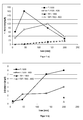
- the concentration of all oxidation products increases over the entire experimental period. It consumes about 1 g / lh of glucose, the pH drops from 7 to about 5.
- Example 2 The experiment is carried out analogously to Example 1.
- the stirrer speed is set in a second approach from the beginning constant at 900 rpm.
- the OD is twice as high as in Example 1.
- the TE concentration is 15-fold. The last sampling took place after 200 minutes.
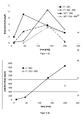
- n-Butyric acid is formed at low stirrer speed only at the end of the experimental period. With high stirrer speed, the concentration increases continuously. In the wash bottles no n-butyric acid can be detected.
- Example 3 Influence of biomass concentration on the oxidation of n-butane by E. coli with the monooxygenase (alkBGT) from P. putida GPO1
- Example 2 The experiment is carried out analogously to Example 1.
- the stirrer speed is constant at 900 rpm, the TE concentration is 15 times each.
- 1x means an OD of about 10, 2x corresponding to 20.
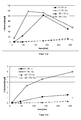
- Butyric acid can only be detected in the fermenter (F), not in the wash bottles. With twice the OD, butyric acid formation begins at the beginning of the conversion. With simple OD, butyric acid can only be detected after 240 minutes under these conditions. The concentration is about 18% of the maximum concentration at double OD.
- Example 4 Influence of the TE concentration on the oxidation of n-butane by E. coli with the monooxygenase (alkBGT) from P. putida GPO1
- the experiment is carried out analogously to Example 1.
- the stirrer speed is constantly 900 rpm.
- the strain used is E. coli W3110 pBT10.
- the concentration of TE is 1 ml / l buffer (1x) or 15 ml / l buffer (15x). In the experiment with the 15-fold concentration are additionally added with 30 mg / l MOPS.
- Example 5 Strain Comparison E. coli BL21 with E. coli W3110 with the monooxygenase (alkBGT) from P. putida GPO1
- the experiment is carried out analogously to Example 1 with a fixed stirrer speed 900 rpm.
- the TE concentration is 15 ml / l conversion buffer.
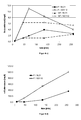
- the results are in the Figs. 4 a) - d) .
- the strain E. coli W3110 pBT10 forms all the oxidation products faster and in higher concentrations than the strain E. coli BL21 pBT10.
- Example 6 Oxidation of iso-butane by E. coli with the monooxygenase (alkBGT) from P. putida GPO1
- the procedure is analogous to Example 1. Only the strain E. coli W3110 pBT10 is used.
- the conversion buffer consists of 70 mM Na + / K + phosphate buffer, pH 7, adjusted with 5% NH 4 OH, with 6.79 g Na 2 PO 4 , 3 g KH 2 PO 4 , 0.5 g NaCl, 0.49 g MgSO 4 .7H 2 O, 15 ml TE and 50 ⁇ g kanamycin per liter.
- Fumigation is carried out as in Example 1 only with a mixture of 25% i-butane and 75% synthetic air.
Landscapes
- Organic Chemistry (AREA)
- Chemical & Material Sciences (AREA)
- Engineering & Computer Science (AREA)
- Zoology (AREA)
- Life Sciences & Earth Sciences (AREA)
- Wood Science & Technology (AREA)
- Chemical Kinetics & Catalysis (AREA)
- Microbiology (AREA)
- General Chemical & Material Sciences (AREA)
- Biotechnology (AREA)
- Health & Medical Sciences (AREA)
- Biochemistry (AREA)
- Bioinformatics & Cheminformatics (AREA)
- General Engineering & Computer Science (AREA)
- General Health & Medical Sciences (AREA)
- Genetics & Genomics (AREA)
- Preparation Of Compounds By Using Micro-Organisms (AREA)
- Enzymes And Modification Thereof (AREA)
Abstract
Description
- Die Erfindung betrifft ein Verfahren zur Oxidation eines Alkans umfassend Kontaktieren des Alkans mit einer Oxidoreduktase vom AlkB-Typ sowie Verwendung einer Oxidoreduktase vom AlkB-Typ zur Herstellung eines Gemisches von Oxidationsprodukten eines Alkans, wobei das Verhältnis von Carbonsäure zu Alkohol unter den Oxidationsprodukten bevorzugt größer als 1:1 ist.
- Alkane stellen einige der wichtigsten Grundstoffe der chemischen Industrie dar. Ausgangspunkt ihrer Gewinnung sind in der Regel fossile Rohstoffe, mittlerweile sind allerdings auch Verfahren zur Gewinnung von Alkanen aus nachwachsenden Rohstoffen bekannt. Während der Öffentlichkeit Alkane insbesondere aufgrund ihrer Verwendbarkeit als Energieträger, beispielsweise in Form von Gasen der kurzkettigen Alkane oder flüssigen längerkettigen Alkane bekannt sind, sind sie in der Industrie vor allem in ihrer Rolle als Edukte oder Lösungsmittel für zahlreiche Synthesen, die zu wichtigen Produkten des täglichen Lebens wie Kunststoffen oder Pharmazeutika führen, unentbehrlich.
- Eine Grundbedingung für die Verwendung von Alkanen zu derartigen Zwecken ist die Möglichkeit der oxidativen Einführung von heteroatomhaltigen Funktionen in die Alkan-Kohlenstoffketten, z.B. von Hydroxy-, Keto- und Carboxyfunktionen, da Alkane per se aufgrund ihrer Sättigung chemisch als relativreaktionsträge zu charakterisieren sind. Dabei darf es, anders als bei der Verwendung von Alkanen als Heizmittel, jedoch nicht zu einer vollständigen Oxidation von Alkanen zu Kohlendioxid kommen, sondern die heteroatomhaltigen Funktionen müssen selektiv und kontrolliert eingeführt werden.
- Zur synthetischen Darstellung von mit heteroatomhaltigen Funktionen substituierten Alkanen sind zahlreiche Reaktionen bekannt, beispielsweise die Halogenierung von Alkanen unter Einwirkung von UV-Licht, deren Produkte als Edukte für Synthese zahlreicher Verbindungen dienen können. So können Alkohole durch nukleophile Substitution des halogensubstituierten Alkans erhalten werden. Derartige Reaktionen verlangen jedoch häufig die Verwendung von giftigen und/oder umweltschädlichen Stoffe, beispielsweise von Chlorgas, das aufgrund seines niedrigen Preises industriell häufig zur Halogenierung eingesetzt wird.
- Auch eine Reihe von biotechnologischen Verfahren zur Einführung von heteroatomhaltigen, insbesondere sauerstoffhaltigen, Funktionen in Alkane sind bekannt. So wird in einem Patent von Exxon (
EP 98137 - Vor diesem Hintergrund besteht die der Erfindung zugrunde liegende Aufgabe darin, ein biotechnologisches Verfahren zur Oxidation von Alkanen zu entwickeln, das zur selektiven Oxidation eines endständigen Kohlenstoffatoms eines Alkans bis hin zur Carbonsäure geeignet ist.
- Weiterhin besteht die der Erfindung zugrunde liegende Aufgabe darin, ein Verfahren zu entwickeln, dass geeignet ist, um verschiedene selektiv am endständigen Kohlenstoffatom oxidierte Produkte des Alkans herzustellen, wobei die Menge bzw. das Verhältnis der Produkte beeinflusst werden kann.
- Weiterhin besteht die der Erfindung zugrunde liegende Aufgabe darin, ein Oxidoreduktasesystem bereitzustellen, das die Oxidation eines endständigen Kohlenstoffatoms zu sämtlichen Oxidationsstufen aus der Gruppe umfassend Alkohol, Aldehyd und Carbonsäure zu katalysieren imstande ist, wobei nur ein einziges katalytisch aktives Polypeptid mit dem Substratalkan bzw. dessen Zwischenprodukten in Kontakt tritt.
- Weiterhin besteht die der Erfindung zugrunde liegende Aufgabe darin, ein vom Fettsäurestoffwechsel unabhängiges und durch Überexpression eines einzelnen Oxidationssystems charakterisiertes System zur selektiven endständigen Oxidation von Alkanen bereitzustellen.
- Eine weitere der Erfindung zu Grunde liegenden Aufgabe besteht darin, ein Verfahren zur Oxidation von Alkanen, bevorzugt von gasförmigen Alkanen, bereitzustellen, das geeignet ist, um das Alkan überwiegend bzw. mit verbesserter Ausbeute zur Carbonsäure, nicht lediglich überwiegend zum Alkohol zu oxidieren.
- Diese und weitere Aufgaben werden durch den Gegenstand der vorliegenden Anmeldung und insbesondere auch durch den Gegenstand der beigefügten unabhängigen Ansprüche gelöst, wobei sich Ausführungsformen aus den Unteransprüchen ergeben.
- In einem ersten Aspekt wird das der Erfindung zu Grunde liegende Problem gelöst durch ein Verfahren zur Oxidation eines Alkans umfassend Kontaktieren des Alkans mit einer Oxidoreduktase vom AlkB-Typ in Anwesenheit von Sauerstoff.
- In einer ersten Ausführungsform des ersten Aspektes handelt es sich bei dem Alkan um ein Alkan mit 1 bis 5 Kohlenstoffatomen.
- In einer zweiten Ausführungsform des ersten Aspektes, bei der es sich auch um eine Ausführungsform der ersten Ausführungsform des ersten Aspektes handelt, handelt es sich bei dem Alkan um ein Alkan mit 1 bis 4 Kohlenstoffatomen, bevorzugt um Butan, handelt.
- In einer dritten Ausführungsform des ersten Aspektes, bei der es sich auch um eine Ausführungsform der ersten bis zweiten Ausführungsform des ersten Aspektes handelt, handelt es sich bei dem Alkan um ein verzweigtes Alkan, bevorzugt mit vier oder fünf Kohlenstoffatomen, noch bevorzugter Isobutan, handelt.
- In einer vierten Ausführungsform des ersten Aspektes, bei der es sich um eine Ausführungsform der ersten bis dritten Ausführungsform des ersten Aspektes handelt, handelt es sich bei der Oxidoreduktase vom AlkB-Typ um AlkB aus Pseudomonas putida GPO1 oder eine Variante davon handelt.
- In einer fünften Ausführungsform des ersten Aspektes, bei der es sich auch um eine Ausführungsform der ersten bis vierten Ausführungsform des ersten Aspektes handelt, wird die Oxidoreduktase vom AlkB-Typ in Form von einem Ganzzellkatalysator bereitgestellt.
- In einer sechsten Ausführungsform des ersten Aspektes, bei der es sich auch um eine Ausführungsform der ersten bis fünften Ausführungsform des ersten Aspektes handelt, wird die Oxidoreduktase vom AlkB-Typ in Form von einem aufgereinigten Polypeptid bereitgestellt.
- In einem zweiten Aspekt wird das der Erfindung zu Grunde liegende Problem gelöst durch die Verwendung einer Oxidoreduktase vom AlkB-Typ zur Herstellung in Anwesenheit von Sauerstoff eines Gemisches von Oxidationsprodukten eines Alkans, wobei das Verhältnis von Carbonsäure zu Alkohol unter den Oxidationsprodukten bevorzugt größer als 1:1 ist.
- In einer ersten Ausführungsform des zweiten Aspektes handelt es sich bei dem Alkan um ein Alkan mit 1 bis 5 Kohlenstoffatomen.
- In einer zweiten Ausführungsform des zweiten Aspektes, bei der es sich auch um eine Ausführungsform der ersten Ausführungsform des zweiten Aspektes handelt, handelt es sich bei dem Alkan um ein Alkan mit 1 bis 4 Kohlenstoffatomen, bevorzugt um Butan.
- In einer dritten Ausführungsform des zweiten Aspektes, bei der es sich auch um eine Ausführungsform der ersten bis zweiten Ausführungsform des zweiten Aspektes handelt, handelt es sich bei dem Alkan um ein verzweigtes Alkan, bevorzugt mit vier oder fünf Kohlenstoffatomen, noch bevorzugter Isobutan.
- In einer vierten Ausführungsform des zweiten Aspektes, bei der es sich auch um eine Ausführungsform der ersten bis dritten Ausführungsform des zweiten Aspektes handelt, handelt es sich bei der Oxidoreduktase vom AlkB-Typ um AlkB aus Pseudomonas putida GPO1 oder eine Variante davon.
- In einer fünften Ausführungsform des zweiten Aspektes, bei der es sich auch um eine Ausführungsform der ersten bis vierten Ausführungsform des zweiten Aspektes handelt, wird die Oxidoreduktase vom AlkB-Typ in Form von einem Ganzzellkatalysator bereitgestellt.
- In einer sechsten Ausführungsform des zweiten Aspektes, bei der es sich auch um eine Ausführungsform der ersten bis vierten Ausführungsform des zweiten Aspektes handelt, wird die Oxidoreduktase vom AlkB-Typ in Form von einem aufgereinigten Polypeptid bereitgestellt.
- In einer siebten Ausführungsform des zweiten Aspektes, bei der es sich auch um eine Ausführungsform der ersten bis sechsten Ausführungsform des zweiten Aspektes handelt, ist das Verhältnis von Carbonsäure zu Alkohol unter den Oxidationsprodukten größer als 5:1, bevorzugt größer als 12:1 ist, noch bevorzugter größer als 20:1, am bevorzugtesten größer als 40:1 ist.
- Die Erfinder der vorliegenden Erfindung haben festgestellt, dass Oxidoreduktasen vom AlkB-Typ, die in der Literatur als Katalysatoren zur Herstellung überwiegend von weniger stark oxidierten Produkten bekannt sind, überraschend verwendet werden können, um aus Alkanen, insbesondere aus gasförmigen Alkanen, überwiegend Produkte höherer Oxidationsstufen, insbesondere Carbonsäuren, ausgehend von Alkanen herzustellen. Insbesondere ist das Verhältnis von produzierten Carbonsäuren zu produzierten Alkoholen überraschend hoch. Weiterhin haben die Erfinder überraschend gefunden, dass derartige Oxidoreduktasen zur selektiven Oxidation von Alkanen befähigt sind, und zu erwartende Nebenprodukte, insbesondere an anderen als endständigen Kohlenstoffatomen oxidierte Alkane nur in unerwartet geringem Ausmaß oder überhaupt nicht in nachweisbaren Mengen herstellen.
- Erfindungsgemäß werden Alkane, bevorzugt gasförmige Alkane unter Verwendung einer Oxidoreduktase vom AlkB-Typ in Anwesenheit von Sauerstoff oxidiert. AlkB stellt eine zunächst aus dem AlkBGT-System aus Pseudomonas putida Gpo1 bekannt gewordene Oxidoreduktase dar, die von zwei weiteren Polypeptiden, AlkG und AlkT, abhängig ist. AlkT wird als FADabhängige Rubredoxin-Reduktase charakterisiert, die Elektronen aus NADH an AlkG weitergibt. Bei AlkG handelt es sich um ein Rubredoxin, ein eisenhaltiges Redoxprotein, das als direkter Elektronendonor für AlkB fungiert. In einer bevorzugten Ausführungsform wird unter dem selben Begriff "Oxidoreduktase des alkB-Typs" ein Polypeptid mit einer Sequenzhomologie von zunehmend bevorzugt wenigstens 75, 80, 85, 90, 92, 94, 96, 98 oder 99 % zur Sequenz des AlkB von Pseudomonas putida Gpo1 (Datenbankcode: CAB54050.1; dieser Datenbankcode stammt wie alle weiteren in der Anmeldung verwendeten aus dem Stand der Technik, nämlich aus der NCBI Datenbank, genauer dem am 15. November 2011 online verfügbaren Release) mit der Fähigkeit, Alkane zu oxidieren. In einer besonders bevorzugten Ausführungsform handelt es sich bei der Oxidoreduktase vom AlkB-Typ um eine mit den AlkG (CAB54052.1)- und AlkT (CAB54063.1)-Polypeptiden aus Pseudomonas putida Gpo1 funktionell zusammenwirkende, Alkane oxidierende Oxidoreduktase. In einer bevorzugtesten Ausführungsform handelt es sich bei der Oxidoreduktase vom AlkB-Typ um AlkB aus dem AlkBGT-System aus Pseudomonas putida Gpo1 oder eine Variante davon.
- Die Lehre der vorliegenden Erfindung kann nicht nur unter Verwendung der exakten Aminosäure- oder Nukleinsäuresequenzen der hierin beschriebenen biologischen Makromoleküle ausgeführt werden, sondern auch unter Verwendung von Varianten derartiger Makromoleküle, die durch Deletion, Addition oder Substitution einer oder mehr als einer Aminosäuren oder Nukleinsäuren erhalten werden können. In einer bevorzugten Ausführungsform bedeutet der Begriff "Variante" einer Nukleinsäuresequenz oder Aminosäuresequenz, im Folgenden gleichbedeutend und austauschbar mit dem Begriff "Homologen" gebraucht, wie hierin verwendet, eine andere Nukleinsäure- oder Aminosäuresequenz, die mit Hinblick auf die entsprechende ursprüngliche Wildtyp-Nukleinsäure- oder -aminosäuresequenz eine Homologie, hier gleichbedeutend mit Identität verwendet, von 70, 75, 80, 85, 90, 92, 94, 96, 98, 99 % oder mehr Prozent aufweist, wobei bevorzugt andere als die das katalytisch aktive Zentrum ausbildende Aminosäuren oder für die Struktur oder Faltung essentielle Aminosäuren deletiert oder substituiert sind oder letztere lediglich konservativ substituiert sind, beispielsweise ein Glutamat statt einem Aspartat oder ein Leucin statt einem Valin. Es besteht keine Notwendigkeit, dass die Sequenz über ihre gesamte Länge eine entsprechend hohe Homologie aufweist, erfindungsgemäß können auch Fusionsproteine oder für solche kodierende Nukleinsäuren verwendet werden, die einen Teil mit entsprechender Homologie und/oder Aktivität aufweist. Der Stand der Technik beschreibt Algorithmen, die verwendet werden können, um das Ausmaß von Homologie von zwei Sequenzen zu berechnen, z. B. Arthur Lesk (2008), Introduction to bioinformatics, 3rd edition. In einer weiteren bevorzugteren Ausführungsform der vorliegenden Erfindung weist die Variante einer Aminosäure- oder Nukleinsäuresequenz, bevorzugt zusätzlich zur oben genannten Sequenzhomologie, im Wesentlichen die gleiche enzymatisch Aktivität des Wildtypmoleküls bzw. des ursprünglichen Moleküls auf. Zum Beispiel weist eine Variante eines als Protease enzymatisch aktiven Polypeptids die gleiche oder im Wesentlichen die gleiche proteolytische Aktivität wie das Polypeptidenzym auf, d.h. die Fähigkeit, die Hydrolyse einer Peptidbindung zu katalysieren. In einer besonderen Ausführungsform bedeutet der Begriff "im Wesentlichen die gleiche enzymatische Aktivität" eine Aktivität mit Hinblick auf die Substrate des Wildtyp-Polypeptids, die deutlich über der Hintergrundaktivität liegt oder/und sich um weniger als 3, bevorzugter 2, noch bevorzugter eine Größenordnung von den KM- und/oder kcat- Werten unterscheidet, die das Wildtyppolypeptid mit Hinblick auf die gleichen Substrate aufweist. In einer weiteren bevorzugten Ausführungsform umfasst der Begriff "Variante" einer Nukleinsäure- oder Aminosäuresequenz wenigstens einen aktiven Teil/oder Fragment der Nukleinsäure- bzw. Aminosäuresequenz. In einer weiteren bevorzugten Ausführungsform bedeutet der Begriff "aktiver Teil", wie hierin verwendet, eine Aminosäuresequenz oder eine Nukleinsäuresequenz, die eine geringere als die volle Länge der Aminosäuresequenz aufweist bzw. für eine geringere als die volle Länge der Aminosäuresequenz kodiert, wobei die Aminosäuresequenz oder die kodierte Aminosäuresequenz mit geringerer Länge als der Wildtyp-Aminosäuresequenz im Wesentlichen die gleiche enzymatische Aktivität wie das Wildtyppolypeptid oder eine Variante davon aufweist, beispielsweise als Alkoholdehydrogenase, Monooxygenase oder Transaminase. In einer besonderen Ausführungsform umfasst der Begriff "Variante" einer Nukleinsäure eine Nukleinsäure, deren komplementärer Strang, bevorzugt unter stringenten Bedingungen, an die Wildtyp-Nukleinsäure bindet. Die Stringenz der Hybridisierungsreaktion ist für den Fachmann leicht bestimmbar und hängt im Allgemeinen von der Länge der Sonde, den Temperaturen beim Waschen und der Salzkonzentration ab. Im Allgemeinen benötigen längere Sonden höhere Temperaturen zum Hybridisieren, wohingegen kürzere Proben mit geringen Temperaturen auskommen. Ob Hybridisierung stattfindet, hängt im Allgemeinen von der Fähigkeit der denaturierten DNA ab, an komplementäre Stränge zu annellieren, die in ihrer Umgebung vorhanden sind, und zwar unterhalb der Schmelztemperatur. Die Stringenz von Hybridisierungsreaktion und entsprechende Bedingungen sind ausführlicher in Ausubel et al. (1995) beschrieben. In einer bevorzugten Ausführungsform umfasst der Begriff "Variante" einer Nukleinsäure, wie hierin verwendet, eine beliebige Nukleinsäuresequenz, die für die gleiche Aminosäuresequenz wie die ursprüngliche Nukleinsäure oder eine Variante dieser Aminosäuresequenz im Rahmen der Degeneriertheit des genetischen Codes kodiert.
- Für viele Anwendungen wird die Oxidoreduktase vom AlkB-Typ verwendet als Teil eines Ganzzellkatalysators die Ausführungsform der Wahl sein, da sie keine oder zumindest vollständige Aufreinigung der Oxidoreduktase bzw. ihrer Aktivität erfordert. In einer bevorzugten Ausführungsform wird unter dem Begriff "Ganzzellkatalysator", wie hierin verwendet, eine stoffwechselaktive Zelle verstanden, die eine enzymatische Aktivität von Interesse, bevorzugt die einer Oxidoreduktase vom AlkB-Typ, aufweist, bevorzugt in einem relativ zu ihrem Wildtyp erhöhten Maß, das vorteilhafterweise durch Überexpression einer rekombinanten Oxidoreduktase vom AlkB-Typ auf einem Plasmid oder integriert ins Genom erreicht werden kann. Dem Fachmann sind zahlreiche Systeme zur Herstellung von Ganzzellkatalysatoren bekannt, beispielsweise aus der
DE 60216245 . In einer bevorzugten Ausführungsform handelt es sich bei der als Ganzzellkatalysator oder bei der als Expressionssystem verwendeten Zelle um eine prokaryotische, bevorzugt um eine bakterielle Zelle. In einer weiteren bevorzugten Ausführungsform handelt es sich um eine Säugetierzelle. In einer weiteren bevorzugten Ausführungsform handelt es sich um eine niedere eukaryotische Zelle, bevorzugt um eine Hefezelle. Beispielhafte prokaryotische Zellen umfassen Escherichia, besonders Escherichia coli, und Stämme der Gattung Pseudomonas und Corynebacterium. Beispielhafte niedere eukaryotische Zellen umfassen die Gattungen Saccharomyces, Candida, Pichia, Yarrowia, Schizosaccharomyces, besonders die Stämme Candida tropicalis, Schizosaccharomyces pombe, Pichia pastoris, Yarrowia lipolytica und Saccharomyces cerivisiae. Die Zelle kann eine oder mehr als eine für ein erfindungsgemäß verwendetes Enzym kodierende Nukleinsäuresequenz auf einem Plasmid oder integriert in ihrem Genom enthalten. Verfahren zur Herstellung derartiger Plasmide bzw. Zellen kann der Fachmann routinemäßig ausführen. Sie sind in Lehrbüchern und Versuchsprotokollsammlungen der Molekularbiologie, Biochemie, Genetik und Mikrobiologie beschrieben, beispielsweise in Sambrook et al. (1989). - In einer weiteren bevorzugten Ausführungsform, handelt es sich bei der Oxidoreduktase vom AlkB-Typ jedoch um ein aufgereinigtes Enzym. Dabei kann es sich, wie bei allen erfindungsgemäß eingesetzten enzymatisch aktiven Polypeptiden, um Zellen umfassend enzymatisch aktive Polypeptide oder deren Lysate oder Präparationen der Polypeptide in sämtlichen Aufreinigungsstufen, vom kruden Lysat bis zum reinen Polypeptid, handeln. In einer bevorzugten Ausführungsform ist unter dem Begriff "aufgereinigtes" Enzym, wie hierein verwendet, in einer bevorzugten Ausführungsform zu verstehen, dass nicht die ganze Zelle oder ein unverarbeitetes Extrakt von ihr zur Katalyse eingesetzt wird, sondern das Enzym teilweise oder vollständig aufgereinigt wird. In einer besonders bevorzugten Ausführungsform bedeutet der Begriff "aufgereinigtes" Enzym, wie hierin verwendet, dass das Enzyme soweit aufgereinigt ist, dass es auf einem SDS-Gel der Präparation zunehmend bevorzugt wenigstens ca. 80, 85, 95, 98 oder bevorzugt 99 % der sichtbaren Proteine darstellt. In einer noch bevorzugteren Ausführungsform ist das Enzym soweit aufgereinigt, dass es das einzige erkennbare Polypeptid auf einem SDS-Gel der entsprechenden Präparation darstellt. Dem Fachmann auf dem Gebiet sind zahlreiche Verfahren bekannt, mit denen enzymatisch aktive Polypeptide in geeigneten Zellen überexprimiert und aufgereinigt bzw. isoliert werden können. So können zur Expression der Polypeptide sämtliche dem Fachmann zur Verfügung stehende Expressionssysteme verwendet werden, beispielsweise Vektoren vom Typ pET oder pGEX. Zur Aufreinigung kommen chromatographische Verfahren in Frage, beispielsweise die affinitätschromatographische Aufreinigung eines mit einem Tag versehenen rekombinanten Proteins unter Verwendungen eines immobilisierten Liganden, beispielsweise eines Nickelions im Falle eines Histidin-Tags, von immobilisiertem Glutathion im Falle einer an das Zielprotein fusionierten Glutathion-S-Transferase oder von immobilisierter Maltose im Falle eines Tags umfassend Maltose-bindendes Protein.
- Die aufgereinigten enzymatisch aktiven Polypeptide können entweder in löslicher Form oder immobilisiert eingesetzt werden. Dem Fachmann sind geeignete Verfahren bekannt, mit denen Polypeptide an organischen oder anorganischen Festphasen kovalent oder nichtkovalent immobilisiert werden können, beispielsweise durch Sulfhydryl-Kupplungs-Chemie (z.B. Kits der Firma Pierce).
- Die erfindungsgemäße Lehre kann auf eine Vielzahl von Alkanen angewendet werden. In einer bevorzugten Ausführungsform handelt es sich bei dem Begriff "Alkan", wie hierin verwendet, um einen gesättigten Kohlenwasserstoff, aus der Gruppe, die lineare und verzweigte Kohlenwasserstoffe der Summenformel CnH2n+2 sowie zyklische Kohlenwasserstoffe der Summenformel CnH2n umfasst, wobei n die Werte 1, 2, 3, 4, 5, 6, 7, 8, 9, 10, 11, 12, 13, 14, 15, 16, 17, 18, 19, 20 und mehr, bevorzugt 1 bis 5, noch bevorzugter 1 bis 4, annehmen kann. Beispielsweise umfassen Alkane mit 1 bis 4 Kohlenstoffatomen die Verbindungen Methan, Ethan, Propan, Butan und Isobutan. Die Alkane umfassen lineare Alkane, z.B. die Gruppe umfassend Methan, Ethan, Propan und Butan. In einer bevorzugten Ausführungsform handelt es sich bei dem Alkan um ein verzweigtes Alkan, bevorzugt aus der Gruppe umfassend Isobutan, 2-Methylbutan und neo-Pentan. In einer weiteren besonders bevorzugten Ausführungsform handelt es sich bei dem Alkan um ein Alkan aus der Gruppe umfassend Butan und Isobutan. In einer weiteren besonders bevorzugten Ausführungsform handelt es sich um Methylcyclobutan.
- Zur Durchführung des erfindungsgemäßen Verfahrens kommen verschiedene Bedingungen in Frage. Essentiell ist die Anwesenheit von molekularem Sauerstoff als Oxidationsmittel. Der Sauerstoff kann in Form von Sauerstoffquellen wie Wasserstoffperoxid oder Kaliumpermanganat vorliegen und aus diesen in situ gebildet werden, besonders bevorzugt ist jedoch die Einleitung von Sauerstoffgas, noch bevorzugter in Form von Luft, in das die Oxidoreduktase umfassende flüssige Reaktionsmedium. Die Temperatur kann dabei mit der Maßgabe, dass im Falle der Verwendung einer lebenden Zelle bzw. einer Präparation geeigneter Enzyme die gewählte Zelle bzw. die gewählten Enzyme lebensfähig sind bzw. Aktivität zeigen, mehr als 20 °C, 30 °C, 40 °C, 50 °C, 60 °C, 70 °C oder mehr als 80 °C, bevorzugt bis 100 °C betragen. Dem Fachmann ist bekannt, welche Organismen bei welchen Temperaturen lebensfähig sind, beispielsweise aus Lehrbüchern wie Fuchs/Schlegel, 2007. Im Falle einer lebenden Hefezelle kann die Temperatur 5 bis 45 °C, bevorzugter 15 bis 42 °C, noch bevorzugter 20 bis 30 °C betragen. Im Falle eines Gram-negativen Bakteriums, bevorzugt eines Bakteriums aus der Familie der Enterobacteriaceae, am bevorzugtesten E. coli, kann die Temperatur 5 bis 45 °C, bevorzugter 15 bis 42 °C, noch bevorzugter 20 bis 30 °C, am bevorzugtesten 35 bis 40 °C betragen. Der pH-Wert muss derart sein, dass die Aktivität der Oxidoreduktase vom AlkB-Typ zumindest ausreichend lange erhalten bleibt. Im Falle der Verwendung eines Ganzzellkatalysators muss die Zelle ausreichend lange intakt bleiben. Beispielsweise kann der pH-Wert zwischen 3 und 12, bevorzugter 5 und 9, noch bevorzugter 6 und 8 liegen.
- Das Kontaktieren des Alkans mit der Oxidoreduktase vom AlkB-Typ erfolgt bevorzugterweise in der Weise, dass die aufgereinigte oder in Form von einem Ganzzellkatalysator vorliegende Oxidoreduktase vom AlkB-Typ in wässriger Lösung in ausreichend stabiler Form vorliegt und das Alkan unter sanftem Rühren zusammen mit Sauerstoff zur Lösung hinzugegeben wird, falls es sich um ein festes oder flüssiges Alkan handelt, oder in Form eines Gases, sofern es sich um ein gasförmiges Alkan handelt, in die wässrige Lösung eingeleitet wird. Der Fachmann ist in der Lage, im Rahmen routinemäßiger Experimente stabilisierte Formen des Enzyms oder Ganzzellkatalysators bereitzustellen. Zu beachtende Faktoren wie der Einsatz eines geeigneten Puffersystems, die Einstellung geeigneter Temperatur-, pH- und Salzkonzentrationswerte sind in der Literatur beschrieben, beispielsweise in Cornish-Bowden, 1995.
- Zur Anzucht der erfindungsgemäßen Zelle kommen zahlreiche Kulturmedien in Frage, im Falle der Verwendung einer Hefezelle beispielsweise YPD, YPN und YNB, die mit Aminosäuren, beispielsweise mit 0,01 g/L Tryptophan, oder mit Glucose, beispielsweise in einer Konzentration von 1 % (w/v), supplementiert sein können. Im Falle der Verwendung eines Bakteriums aus der Familie der Enterobacteriaceae, bevorzugt E. coli, kommen zur Anzucht Vollmedien wie LB-Medium oder Hochzelldichtemedium (HZD-Medium) bestehend aus NH4SO4 1,76 g, K2HPO4 19,08 g, KH2PO4 12,5 g, Hefeextrakt 6,66 g, Na3-Citrat 1,96 g , NH4Fe-Citrat (1 %) 17 ml, Spurenelementelösung US3 5 ml, Feedlösung (Glucose 50 % w/v, MgSO4 [x 7 H2O 0,5 % w/v, NH4Cl 2,2 % w/v) 30 ml pro Liter in Frage.
- In einer bevorzugten Ausführungsform werden im erfindungsgemäßen Verfahren verwendete Zellen in einem anderen Medium als demjenigen herangezogen, das für die Alkanoxidation verwendet wird. In einer besonders bevorzugten Ausführungsform handelt es sich bei dem für die Anzucht verwendeten Medium um ein Vollmedium und um das für Alkanoxidation verwendete Medium um ein Minimalmedium. Das erfindungsgemäße Verfahren, sofern es unter Verwendung lebensfähiger Zellen durchgeführt wird, wird nach Anzucht der Zellen bevorzugt in Transformationspuffer durchgeführt, der pro Liter (NH4)H2PO4 8 g, NaCl 0,5 g, MgSO4 x 7 H2O 0,48 g, Spurenelementlösung US315 ml. 1 Liter der Spurenelementelösung US3 setzte sich zusammen aus HCl 37 % 36,5 g, MnCl2 x 4H2O 1,91 g, ZnSO4 x 7H2O 1,87 g, Na-EDTA x 2H2O 0,8 g, H3BO3 0,3 g, Na2MoO4 x 2H2O 0,25 g, CaCl2 x 2H2O 4,7 g, FeSO4 x 7 H2O 17,8 g, CuCl2 x 2H2O 0,15 g umfasst und dessen pH auf 5,4 eingestellt wird. In einer weiteren Ausführungsform wird die Alkanoxidation in M9-Medium durchgeführt (15 g Glucose, 6,79 g Na2PO4, 3 g KH2PO4, 0,5 g NaCl, 2 g NH4Cl, 15 g Hefeextrakt, 0,49 g MgSO4*7H2O, 1 ml TE und 50 µg Kanamycin in 1000 ml Schüttelkolben überimpft, wobei die Spurenelementlösung (TE) pro Liter wie folgt angesetzt wird: 36,5 g HCl 37 %, 1,91 g MnCl2*4H2O, 1,87 g ZnSO4*7H2O, 0,84 g Na-EDTA*2H2O, 0,3 g H3BO3, 0,25 g Na2MoO4*2H2O, 4,7 g CaCl2*2H2O, 17,3 g FeSO4*7H2O und 0,15 g CUCl2*2H2O).
- Das erfindungsgemäßen Verfahrens kann bei Atmosphärendruck durchgeführt. Im Falle der Verwendung gasförmiger Alkanedukte kann es jedoch vorteilhaft sein, die Oxidoreduktase vom AlkB-Typ die Reaktion bei höheren Drücke in Anwesenheit eines Gasgemisches katalysieren zu lassen, das überwiegend eine Mischung aus Alkanen und Sauerstoff umfasst, zunehmend bevorzugt mehr als 50, 60, 70 oder 80 Volumenprozent. In einer bevorzugten Ausführungsform beträgt der Druck mehr als 1,5, 2, 3 oder 4 bar. In einer weiteren Ausführungsform beträgt der Druck 0,5 bis 4, bevorzugt 1 bis 3, am bevorzugtesten 1 bis 1,5 bar.
- Ein besonderer Vorteil des erfindungsgemäßen Verfahrens besteht darin, dass bestimmte Verhältnisse der Oxidationsprodukte des als Edukt eingesetzten Alkans erhalten werden können. Das Alkan kann von der Oxidoreduktase vom AlkB-Typ an einem endständigen Kohlenstoffatom, d.h. einem Kohlenstoffatom, das kovalent nur mit höchstens einem weiteren Kohlenstoffatom direkt verbunden ist, prinzipiell zu drei Oxidationsstufen oxidiert werden, nämlich dem Alkohol, dem Aldehyd und der Carbonsäure. In einer bevorzugten Ausführungsform bedeutet die Angabe, dass "das Verhältnis von Carbonsäure zu Alkohol unter den Oxidationsprodukten bevorzugt größer als 1:1 ist", dass das Stoffmengenverhältnis von Carbonsäure zu Alkohol, bevorzugt das Stoffmengenverhältnis von durch Oxidation eines endständigen Kohlenstoffatoms entstandener Carbonsäure zu durch Oxidation eines endständigen Kohlenstoffatoms entstandenem Alkohol größer als 1:1 ist, d.h. im Produktgemisch sind mehr Moleküle der durch Oxidation eines endständigen Kohlenstoffatoms entstandenen Carbonsäure als Moleküle des durch Oxidation eines endständigen Kohlenstoffatoms entstandenen Alkohols vorhanden.
- In einer bevorzugten Ausführungsform kann eine Oxidoreduktase vom AlkB-Typ, bevorzugt AlkB von Pseudomonas putida Gpo1, verwendet werden, um aus einem Alkan, bevorzugt einem mit 1 bis 5, noch bevorzugter 1 bis 4 Kohlenstoffatomen, am bevorzugtesten 4 Kohlenstoffatomen, in Anwesenheit von Sauerstoff Oxidationsprodukte herzustellen, wobei das Verhältnis von Carbonsäure zu Alkohol bevorzugt größer als 1:1, zunehmend bevorzugter 1,5:1, 2:1, 5:1, 10:1, 15:1 oder 20:1.
- In einer weiteren bevorzugten Ausführungsform umfasst die Erfindung ein Verfahren zur Oxidation eines endständigen Kohlenstoffatoms eines nichtzyklischen Alkans zu einem entsprechenden Aldehyd und/oder einer entsprechenden endständigen Monocarbonsäure, umfassend Kontaktieren des Alkans mit einem biologischen Agens, das eine katalytisch aktive Oxidoreduktase umfasst, in Anwesenheit von einem Oxidationsmittel, wobei es sich bei dem Alkan um Butan oder Isobutan handelt und wobei es sich bei der Oxidoreduktase um eine Oxidoreduktase vom alkB-Typ, noch bevorzugter um die Monooxygenase AlkB aus P. putida GPO1 oder ein Homologon davon handelt und das Oxidationsmittel Sauerstoff ist und eine Verwendung einer Oxidoreduktase vom alkB-Typ, bevorzugter um die Monooxygenase AlkB aus P. putida GPO1 oder einem Homologon davon zur Oxidation eines endständigen Kohlenstoffatoms eines nichtzyklischen Alkans zu einem entsprechenden Aldehyd und/oder einer entsprechenden endständigen Monocarbonsäure, wobei es sich bei dem Alkan um Butan oder Isobutan handelt.
- Die vorliegende Erfindung wird weiterhin durch die folgenden Figuren und nicht beschränkenden Beispiele veranschaulicht, denen weitere Merkmale, Ausführungsformen, Aspekte und Vorteile der vorliegenden Erfindung entnommen werden können.
-
Figs. 1a ), b), c) und d) zeigen die Konzentration von 1-Butanol (a)), 2-Butanol (b)), Butyraldehyd (c)) bzw. Buttersäure (d)) im Zeitverlauf bei Umsetzung von Butan mit Sauerstoff durch das Monooxygenase-System alkBGT aus P. putida GPO1 bei einer Rührerdrehzahl von 500 - 800 oder 900 Upm. Es werden die Konzentrationen im Fermenter (F) und in der Waschflasche (WF) gezeigt. -
Figs. 2 a) und b) zeigen den Einfluss der Biomassekonzentration auf die Oxidation von Butan durch E. coli durch das Monooxygenase-System alkBGT aus P. putida GPO1, genauer die Konzentration von 1-Butanol (a)) und Buttersäure (b)) im Zeitverlauf. -
Figs. 3a ), b), c) und d) zeigen den Einfluss der Konzentration an Spurenelement (TE)-Lösung auf die Oxidation von Butan durch E. coli durch das Monooxygenase-System alkBGT aus P. putida GPO1, genauer die Konzentration von 1-Butanol (a)), 2-Butanol (b)), Butyraldehyd (c)) bzw. Buttersäure (d)) im Zeitverlauf -
Figs. 4a ), b), c) und d) zeigen einen Stämmevergleich E. coli BL21 mit E. coli W3110 durch das Monooxygenase-System alkBGT aus P. putida GPO1 und deren Einfluss auf die Oxidation von Butan durch E. coli mit der Monooxygenase (alkBGT) aus P. putida GPO1, genauer die Konzentration von 1-Butanol (a)), 2-Butanol (b)), Butyraldehyd (c)) bzw. Buttersäure (d)) im Zeitverlauf -
Figs. 5a ), b), c) zeigen die Oxidation von iso-Butan durch E. coli durch das Monooxygenase-System alkBGT aus P. putida GPO1, genauer die Konzentration von 2-Methyl-1-propanol (a)), iso-Butyraldehyd (b)) und iso-Buttersäure (c)) im Zeitverlauf. - 100µl einer Glycerin-Kryokultur von E. coli BL21 pCOM10 (Leerplasmid) und E. coli BL21 pBT10 (
WO 2009/077461 ) werden auf einer LB-Agarplatte mit 50 µl Kanamycin ausplattiert und für 24 h bei 37°C inkubiert. Die LB-Platten werden aus 1 Liter einer Lösung von Hefeextrakt 5 g, Pepton 10 g, NaCl 0,5 g, Agar-Agar 15 g und Kanamycin 50 µg hergestellt. Der pH wird vor dem Autoklavierten mit 5 % NH4OH auf 7,4 eingestellt. - Von diesen Platten werden (für einen Konversionsansatz) 2 x 25 ml LB-Broth (obige Lösung ohne Agar-Agar) mit 50 µl Kanamycin in einem 100 ml-Schüttelkolben mit Schikanen mit einem vollen Loop einer Impföse (Kapazität 10 µl) angeimpft. Die Kulturen werden für 24 h bei 37 °C und 200 Upm (Amplitude 2,5 cm) inkubiert.
- Danach werden je 25 ml der Kulturbrühe in 75 ml modifiziertes M9-Medium (steril filtriert) mit folgender Zusammensetzung pro Liter: 15 g Glucose, 6,79 g Na2PO4, 3 g KH2PO4, 0,5 g NaCl, 2 g NH4Cl, 15 g Hefeextrakt, 0,49 g MgSO4*7H2O, 1 ml TE und 50 µg Kanamycin in 1000 ml Schüttelkolben überimpft. Die Spurenelementlösung (TE) wird pro Liter wie folgt angesetzt: 36,5 g HCl 37 %, 1,91 g MnCl2*4H2O, 1,87 g ZnSO4*7H2O, 0,84 g Na-EDTA*2H2O, 0,3 g H3BO3, 0,25 g Na2MoO4*2H2O, 4,7 g CaCl2*2H2O, 17,3 g FeSO4*7H2O und 0,15 g CuCl2*2H2O. Der pH wird mit 5 % NH4OH auf 7,4 eingestellt. Des Weiteren werden pro Kolben 3 Tropfen autokaviertem Antischaum (Delamex) und zugegeben.
- Die Kolben werden für 2 Stunden bei 37°C und 180 Upm (Amplitude 2,5 cm) inkubiert. Danach wird die Temperatur auf 25 °C reduziert. Nach 0,5 Stunden bei 25 °C erfolgt die Induktion mit 0,4 mM DCPK. Die Kultur wird für weitere 16 Stunden bei 25 °C und 180 Upm geschüttelt. Danach erfolgt eine mikroskopische Prüfung auf Monosepsis.
- Die Kulturen werden vereinigt, in 50 ml-Falcon Tubes abgefüllt und bei 10000 g bei 25 °C für 10 Minuten zentrifugiert. Der Überstand wird verworfen. Die Pellets aus 200 ml Kultur werden in 10 ml Konversionspuffer resuspendiert. Der Konversionspuffer besteht aus 70 mM Na+/K+ phosphatpuffer, pH 7, eingestellt mit 1 M NaOH, mit 6,79 g Na2PO4, 3 g KH2PO4, 0,5 g NaCl, 0,49 g MgSO4*7H2O, 1 ml TE und 50 µg Kanamycin oder aus 70 mM (NH4)H2PO4 Puffer, pH 7 mit 8 g (NH4)H2PO4, 0,5 g NaCl, 0,49 g MgSO4*7H2O, 1 ml TE und 50 µg Kanamycin pro Liter. Die pH-Einstellung erfolgt hier mit 5 % NH4OH.
- 170 ml Puffer mit ca. 3 Tropfen autokaviertem Antischaum (Delamex) werden in einem 300 ml-Fermenter vorgelegt. Der Fermenter wird mit einem Gasgemisch aus einer Gasflasche mit 5 bar Anfangsdruck von 25 % Butan und 75 % synthetischer Luft über einen Sinterglasperlator mit einer Porengröße von 0,2 µm mit einer Fußrate von 25 l/h begast. Der Fermenter wird in einem Wasserbad auf 25 °C temperiert und mit Hilfe eines Magnetrührers mit 500 Upm für 2 Stunden, danach mit 800 Upm gerührt. Die Abluft wird durch eine Waschflasche, die mit 150 ml Wasser gefüllt ist, abgeleitet.
- Der Fermenter wird mit 10 ml des resuspendierten Pellets angeimpft. Die OD beider Kulturen liegt bei ca. 10. Die Reaktion wird durch Zugabe von 1 Vol.-% Glucose gestartet. Der pH kann wahlweise über den Versuchszeitraum ungeregelt oder geregelt sein. Nach 10, 45, 135 und 240 Minuten werden aus dem Fermenter und der Waschflasche jeweils 10 ml Probe gezogen. In den Proben aus dem Fermenter wird mit 2 ml HCl die Reaktion gestoppt. Die Fermenterproben werden 10 Minuten bei 10000 g und Raumtemperatur zentrifugiert und der Überstand über einen 0,2 µm-Spritzenvorsatzfilter filtriert. Die Proben werden für die Analytik in HPLC Vials abgefüllt. Die Analytik erfolgte chromatographisch mit HPLC-RID an einer Agilent Technologies 1200-Anlage. Es wurde eine Aminex HPX-87H-Säule (300mmx 7,8mm) verwendet. Die Anlage wurde mit 10 mM H2SO4 als Laufmittel bei einer Flussrate von 0,6 ml/min und einer Säulentemperatur von 40°C betrieben. Standards aller zu analysierender Stoffe wurden in Reinstwasser vorbereitet und unter identischen Bedingungen gemessen. Die Auswertung erfolgte über Vergleich der Retentionszeiten. Zusätzlich wird zu jedem Probenahmezeitpunkt eine 2 ml-Probe zu Bestimmung von pH, OD und Glucosekonzentration aus dem Fermenter gezogen. Der pH wird an einem externen pH-Meter gemessen, die OD spektrometrisch bei 600 nm und der Glucosegehalt mit einem biochemischen Analysator (YSI Select 2700 Von Kreienbaum) bestimmt.
- Die Ergebnisse sind in den
Fig. 1 a) - d) dargestellt. Bei den Versuchen mit E. coli BL21 pCOM10 (Leerplasmid) findet keine Oxidation von Butan bzw. 1-Butanol statt. Hingegen werden mehr Verwendungen von E. coli BL21 pBT10 als Oxidationsprodukten von n-Butan: 1-Butanol, Buttersäure, 2-Butanol, Butyraldehyd, 1,4-Butandiol (nicht quantifizierbar) und Butyrolacton (in Spuren) gefunden. - Die Konzentration aller Oxidationsprodukte steigt über den gesamten Versuchszeitraum an. Es wird ca. 1 g/lh Glucose verbraucht, der pH-Wert sinkt von 7 auf ca 5.
- Der Versuch wird analog dem Beispiel 1 durchgeführt. Die Rührerdrehzahl wird in einem 2. Ansatz von Beginn an konstant auf 900 Upm gestellt. Die OD ist im Vergleich zu Beispiel 1 doppelt so hoch. Die TE-Konzentration ist 15fach. Die letzte Probenahme erfolgte nach 200 Minuten.
- Die Bildung von 1-Butanol im Fermenter (F) erfolgt bei ständig höherer Drehzahl schneller und erreicht eher ihr Maximum. In den Waschflaschen (WF) ist die Konzentration von 1-Butanol auf niedrigem Niveau annähernd identisch. Die Konzentration von 2-Butanol im Fermenter (F) steigt bei jeder Rührerdrehzahl über den gesamten Versuchszeitraum an, bleibt aber gering. In den Waschflaschen ist 2-Butanol erst am Ende der Versuchszeit nachweisbar. Die Konzentration von Butyraldehyd steigt mit höherer Rührerdrehzahl schneller, wird aber da der Dampfdruck bei 113 hPa (20°C) liegt auch schneller ausgetrieben. Butyraldehyd ist so nur qualitativ, nicht aber quantitativ nachweisbar.
- n-Buttersäure wird bei niederer Rührerdrehzahl erst am Ende des Versuchszeitraums gebildet. Mit hoher Rührerdrehzahl steigt die Konzentration kontinuierlich an. In den Waschflaschen kann keine n-Buttersäure nachgewiesen werden.
- Der Versuch wird analog dem Beispiel 1 durchgeführt. Die Rührerdrehzahl liegt konstant bei 900 Upm, die TE Konzentration ist jeweils 15fach. 1x bedeutet eine OD von ca. 10, 2x entsprechend 20.
- Die Ergebnisse sind in den
Fig. 2 a) und b) dargestellt. Die Maximalkonzentration wird mit doppelter OD zu einem früheren Versuchzeitpunkterreicht erreicht. 1-Butanol wird dann auch schneller umgesetzt. - Buttersäure kann nur im Fermenter (F), nicht in den Waschflaschen nachgewiesen werden. Mit der doppelten OD beginnt die Buttersäurebildung bereits zu Beginn der Konversion. Mit einfacher OD kann unter diesen Bedingungen erst nach 240 Minuten Buttersäure nachgewiesen werden. Die Konzentration beträgt etwa 18% der Maximalkonzentration bei doppelter OD.
- Der Versuch wird analog dem Beispiel 1 durchgeführt. Die Rührerdrehzahl beträgt konstant 900 Upm. Der verwendete Stamm ist E. coli W3110 pBT10. Die Konzentration an TE ist 1 ml/l Puffer (1x) bzw. 15 ml/l Puffer (15x). Im Versuch mit der 15fachen Konzentration sind zusätzlich mit 30 mg/l MOPS zugegeben.
- Die Ergebnisse werden sind in den
Figs. 3 a) - d) dargestellt. Bei der 15 fachen TE Konzentrationen werden alle Oxidationsprodukte schneller und in höherer Konzentration gebildet. - Der Versuch wird analog dem Beispiel 1 mit fester Rührerdrehzahl 900 Upm durchgeführt. Die TE-Konzentration beträgt 15 ml/l Konversionspuffer.
- Die Ergebnisse sind in den
Figs. 4 a) - d) dargestellt. Der Stamm E. coli W3110 pBT10 bildet alle Oxidationsprodukte schneller und in höheren Konzentrationen als der Stamm E. coli BL21 pBT10. - Der Arbeitsablauf erfolgt analog dem Beispiel 1. Verwendet wird nur der Stamm E. coli W3110 pBT10. Der Konversionspuffer besteht aus 70 mM Na+/K+-phosphatpuffer, pH7, eingestellt mit 5 % NH4OH, mit 6,79 g Na2PO4, 3 g KH2PO4, 0,5 g NaCl, 0,49 g MgSO4*7H2O, 15 ml TE und 50 µg Kanamycin pro Liter.
- Die Begasung erfolgt wie in Beispiel 1 nur mit einer Mischung aus 25 % i-Butan und 75 % synthetischer Luft.
- Die Ergebnisse sind in den
Figuren 5 a) - c) dargestellt. An Oxidationsprodukten von i-Butan werden i-Butanol, i-Buttersäure, tert.-Butanol und i-Butyraldehyd gefunden. -
- A. Cornish-Bowden (1995), Fundamentals of Enzym Kinetics, Portland Press Limited, 1995
-
DE 60216245 (2007 ): Functional Display of Polypeptides - Sambrook/Fritsch/Maniatis (1989): Molecular Cloning: A Laboratory Manual, Cold Spring Harbor Laboratory Press, 2nd edition
- Fuchs/Schlegel (2007) Allgemeine Mikrobiologie, 2008, Georg Thieme Verlag
-
EP 98137 (1984 -
WO 2009/077461 : ω-Aminocarbonsäuren oder ihre Lactame, herstellende, rekombinante Zellen - A. Lesk (2008), Introduction to bioinformatics, 3rd edition
- F. M. Ausubel (1995), Current Protocols in Molecular Biology. John Wiley & Sons, Inc.
- C Grant, J M Woodley, F Baganz (2011): Enzyme and Microbial Technology 48, 408-486
Claims (15)
- Verfahren zur Oxidation eines Alkans umfassend Kontaktieren des Alkans mit einer Oxidoreduktase vom AlkB-Typ in Anwesenheit von Sauerstoff.
- Verfahren nach Anspruch 1, wobei es sich bei dem Alkan um ein Alkan mit 1 bis 5 Kohlenstoffatomen handelt.
- Verfahren nach Anspruch 2, wobei es sich bei dem Alkan um ein Alkan mit 1 bis 4 Kohlenstoffatomen, bevorzugt um Butan, handelt.
- Verfahren nach einem der Ansprüche 1 bis 3, wobei es sich bei dem Alkan um ein verzweigtes Alkan, bevorzugt mit vier oder fünf Kohlenstoffatomen, noch bevorzugter Isobutan, handelt.
- Verfahren nach einem der Ansprüche 1 bis 4, wobei es sich bei der Oxidoreduktase vom AlkB-Typ um AlkB aus Pseudomonas putida GPO1 oder eine Variante davon handelt.
- Verfahren nach einem der Ansprüche 1 bis 5, wobei die Oxidoreduktase vom AlkB-Typ in Form von einem Ganzzellkatalysator bereitgestellt wird.
- Verfahren nach einem der Ansprüche 1 bis 5, wobei die Oxidoreduktase vom AlkB-Typ in Form von einem aufgereinigtem Polypeptid bereitgestellt wird.
- Verwendung einer Oxidoreduktase vom AlkB-Typ zur Herstellung in Anwesenheit von Sauerstoff eines Gemisches von Oxidationsprodukten eines Alkans, wobei das Verhältnis von Carbonsäure zu Alkohol unter den Oxidationsprodukten größer als 1:1 ist.
- Verwendung nach Anspruch 8, wobei es sich bei dem Alkan um ein Alkan mit 1 bis 5 Kohlenstoffatomen handelt.
- Verwendung nach Anspruch 9, wobei es sich bei dem Alkan um ein Alkan mit 1 bis 4 Kohlenstoffatomen, bevorzugt um Butan, handelt.
- Verwendung nach einem der Ansprüche 8 bis 10, wobei es sich bei dem Alkan um ein verzweigtes Alkan, bevorzugt mit vier oder fünf Kohlenstoffatomen, noch bevorzugter Isobutan, handelt.
- Verwendung nach einem der Ansprüche 8 bis 11, wobei es sich bei der Oxidoreduktase vom AlkB-Typ um AlkB aus Pseudomonas putida GPO1 oder eine Variante davon handelt.
- Verwendung nach einem der Ansprüche 8 bis 12, wobei die Oxidoreduktase vom AlkB-Typ in Form von einem Ganzzellkatalysator bereitgestellt wird.
- Verwendung nach einem der Ansprüche 8 bis 12, wobei die Oxidoreduktase vom AlkB-Typ in Form von einem aufgereinigten Polypeptid bereitgestellt wird.
- Verwendung nach einem der Ansprüche 8 bis 14, wobei das Verhältnis von Carbonsäure zu Alkohol unter den Oxidationsprodukten größer als 5:1, bevorzugt größer als 12:1 ist, noch bevorzugter größer als 20:1, am bevorzugtesten größer als 40:1 ist.
Priority Applications (9)
| Application Number | Priority Date | Filing Date | Title |
|---|---|---|---|
| EP11191910.6A EP2602328A1 (de) | 2011-12-05 | 2011-12-05 | Verfahren zur Oxidation von Alkanen unter Verwendung einer AlkB Alkan 1-Monooxygenase |
| EP12788556.4A EP2788493B1 (de) | 2011-12-05 | 2012-11-22 | Verwendung einer alkb alkan 1-monooxygenase zur oxidation von propan und butan |
| PCT/EP2012/073334 WO2013083412A1 (de) | 2011-12-05 | 2012-11-22 | Verfahren zur oxidation von alkanen unter verwendung einer alkb alkan 1-monooxygenase |
| US14/363,165 US10053713B2 (en) | 2011-12-05 | 2012-11-22 | Biological alkane oxidation |
| BR112014013481-2A BR112014013481B1 (pt) | 2011-12-05 | 2012-11-22 | Uso de uma oxirredutase do tipo alkb |
| CN201280059816.0A CN103975069B (zh) | 2011-12-05 | 2012-11-22 | 通过使用AlkB烷烃1-单加氧酶氧化烷烃的方法 |
| CA2857713A CA2857713C (en) | 2011-12-05 | 2012-11-22 | Biological alkane oxidation |
| JP2014545161A JP6373190B2 (ja) | 2011-12-05 | 2012-11-22 | AlkBアルカン1−モノオキシゲナーゼを用いた、アルカンの酸化法 |
| DK12788556.4T DK2788493T3 (da) | 2011-12-05 | 2012-11-22 | Anvendelse af en alkb alkan 1-monooxygenase til oxidering af propan og butan |
Applications Claiming Priority (1)
| Application Number | Priority Date | Filing Date | Title |
|---|---|---|---|
| EP11191910.6A EP2602328A1 (de) | 2011-12-05 | 2011-12-05 | Verfahren zur Oxidation von Alkanen unter Verwendung einer AlkB Alkan 1-Monooxygenase |
Publications (1)
| Publication Number | Publication Date |
|---|---|
| EP2602328A1 true EP2602328A1 (de) | 2013-06-12 |
Family
ID=47216296
Family Applications (2)
| Application Number | Title | Priority Date | Filing Date |
|---|---|---|---|
| EP11191910.6A Withdrawn EP2602328A1 (de) | 2011-12-05 | 2011-12-05 | Verfahren zur Oxidation von Alkanen unter Verwendung einer AlkB Alkan 1-Monooxygenase |
| EP12788556.4A Active EP2788493B1 (de) | 2011-12-05 | 2012-11-22 | Verwendung einer alkb alkan 1-monooxygenase zur oxidation von propan und butan |
Family Applications After (1)
| Application Number | Title | Priority Date | Filing Date |
|---|---|---|---|
| EP12788556.4A Active EP2788493B1 (de) | 2011-12-05 | 2012-11-22 | Verwendung einer alkb alkan 1-monooxygenase zur oxidation von propan und butan |
Country Status (8)
| Country | Link |
|---|---|
| US (1) | US10053713B2 (de) |
| EP (2) | EP2602328A1 (de) |
| JP (1) | JP6373190B2 (de) |
| CN (1) | CN103975069B (de) |
| BR (1) | BR112014013481B1 (de) |
| CA (1) | CA2857713C (de) |
| DK (1) | DK2788493T3 (de) |
| WO (1) | WO2013083412A1 (de) |
Cited By (1)
| Publication number | Priority date | Publication date | Assignee | Title |
|---|---|---|---|---|
| WO2018172331A1 (en) * | 2017-03-23 | 2018-09-27 | Wageningen Universiteit | Diterminal oxidation of alkanes |
Families Citing this family (19)
| Publication number | Priority date | Publication date | Assignee | Title |
|---|---|---|---|---|
| UA112980C2 (uk) | 2011-02-16 | 2016-11-25 | Евонік Дегусса Гмбх | Рідкі катіоніти |
| EP2607479A1 (de) | 2011-12-22 | 2013-06-26 | Evonik Industries AG | Biotechnologische Herstellung von Alkoholen und Derivaten davon |
| EP2631298A1 (de) | 2012-02-22 | 2013-08-28 | Evonik Industries AG | Biotechnologisches Verfahren zur Herstellung von Butanol und Buttersäure |
| EP2647696A1 (de) | 2012-04-02 | 2013-10-09 | Evonik Degussa GmbH | Verfahren zur aeroben Herstellung von Alanin oder einer unter Verbrauch von Alanin entstehenden Verbindung |
| DE102012207921A1 (de) | 2012-05-11 | 2013-11-14 | Evonik Industries Ag | Mehrstufiges Syntheseverfahren mit Synthesegas |
| EP2700448A1 (de) | 2012-08-21 | 2014-02-26 | Evonik Industries AG | Verzweigte Fettsäuren als flüssige Kationenaustauscher |
| ES2531144T3 (es) | 2012-09-07 | 2015-03-11 | Evonik Industries Ag | Composiciones curables a base de resinas epoxídicas sin alcohol bencílico |
| EP2730655A1 (de) | 2012-11-12 | 2014-05-14 | Evonik Industries AG | Verfahren zur Umsetzung eines Carbonsäureesters unter Verwendung BioH-defizienter Zellen |
| EP2746397A1 (de) | 2012-12-21 | 2014-06-25 | Evonik Industries AG | Herstellung von Omega-Aminofettsäuren |
| EP2746400A1 (de) | 2012-12-21 | 2014-06-25 | Evonik Industries AG | Herstellung von Aminen und Diaminen aus einer Carbonsäure oder Dicarbonsäure oder eines Monoesters davon |
| EP2759598A1 (de) * | 2013-01-24 | 2014-07-30 | Evonik Industries AG | Verfahren zur Herstellung von alpha, omega-Alkandiol |
| WO2015014644A1 (en) * | 2013-07-31 | 2015-02-05 | Basf Se | Process for the bioconversion of c3-c13 alkanes to c3-c 13 primary alcohols |
| EP2944697A1 (de) | 2014-05-13 | 2015-11-18 | Evonik Degussa GmbH | Verfahren zur Herstellung von Nylon |
| EP3056561A1 (de) | 2015-02-16 | 2016-08-17 | Evonik Degussa GmbH | Mikroorganismen mit reduzierter Enzymaktivität |
| CA2937594A1 (en) | 2015-02-26 | 2016-08-26 | Evonik Degussa Gmbh | Alkene production |
| WO2017102952A1 (en) | 2015-12-17 | 2017-06-22 | Evonik Degussa Gmbh | A genetically modified acetogenic cell |
| EP3336180A1 (de) * | 2016-07-04 | 2018-06-20 | Evonik Degussa GmbH | Mutantes alkb-gen |
| EP3490969B1 (de) | 2016-07-27 | 2020-07-22 | Evonik Operations GmbH | N-acetylhomoserin |
| IL310503A (en) * | 2021-08-06 | 2024-03-01 | Isobionics B V | An artificial alkane oxidation system for the allylic oxidation of a terpene substrate |
Citations (3)
| Publication number | Priority date | Publication date | Assignee | Title |
|---|---|---|---|---|
| EP0098137A2 (de) | 1982-06-28 | 1984-01-11 | Exxon Research And Engineering Company | Mikrobiologisches Verfahren zur Oxydation von Alkanen, Vinylverbindungen und sekundären Alkoholen |
| DE60216245T2 (de) | 2001-03-02 | 2007-06-21 | Universität des Saarlandes Wissens- und Technologietransfer GmbH | Funktionelles oberflächendisplay von polypeptiden |
| WO2009077461A1 (de) | 2007-12-17 | 2009-06-25 | Evonik Degussa Gmbh | ω-AMINOCARBONSÄUREN, ω-AMINOCARBONSÄUREESTER ODER IHRE LACTAME HERSTELLENDE, REKOMBINANTE ZELLEN |
Family Cites Families (80)
| Publication number | Priority date | Publication date | Assignee | Title |
|---|---|---|---|---|
| DE10054347A1 (de) | 2000-11-02 | 2002-05-08 | Degussa | Verfahren zur katalytischen Hydrierung organischer Verbindungen und Trägerkatalysatoren hierfür |
| DE10142621A1 (de) | 2001-08-31 | 2003-03-20 | Degussa | Aufarbeitung der Ammoximationsprodukte von Ketonen durch Flüssig-Flüssig-Extraktion in einem ternären Lösemittelsystem |
| DE10142620A1 (de) | 2001-08-31 | 2003-03-20 | Degussa | Ammoximation von Ketonen und Aufarbeitung durch Pervaporation/Dampfpermeation |
| DE10153546A1 (de) | 2001-10-30 | 2003-05-22 | Degussa | Direktsynthese von Wasserstoffperoxid und deren Integration in Oxidationsprozesse |
| EP1350761A1 (de) | 2002-03-28 | 2003-10-08 | Degussa AG | Verfahren zur Herstellung von Wasserstoffperoxid |
| EP1350788A3 (de) | 2002-03-28 | 2003-11-12 | Degussa AG | Verfahren zur Herstellung von Hexamethylendiamin aus Butadien |
| EP1366812B1 (de) | 2002-05-31 | 2009-02-18 | Evonik Degussa GmbH | Geträgerter Rutheniumkatalysator und Verfahren zur Hydrierung eines aromatischen Amins in Gegenwart dieses Katalysators |
| DE10231119A1 (de) | 2002-07-10 | 2004-02-05 | Degussa Ag | Verfahren zur Selektivitätserhöhung der Hydrierung von 4,4'-Diaminodiphenylmethan zu 4,4'-Diaminodicyclohexylmethan in Gegenwart eines N-Alkyl-4,4'-Diaminodiphenylmethans |
| DE10247495A1 (de) | 2002-10-11 | 2004-04-22 | Degussa Ag | Verfahren zur Epoxidierung cyclischer Alkene |
| EP1424332A1 (de) | 2002-11-26 | 2004-06-02 | Degussa AG | Verfahren zur Reinigung rohen Propenoxids |
| US6878836B2 (en) | 2003-06-18 | 2005-04-12 | Degussa Ag | Process for the epoxidation of propene |
| ES2301080T3 (es) | 2004-12-20 | 2008-06-16 | Evonik Degussa Gmbh | Procedimiento para la recuperacion de metanol. |
| CN100335638C (zh) * | 2005-10-28 | 2007-09-05 | 南开大学 | 嗜热长链烷烃单加氧酶及其编码基因与应用 |
| CN1840686A (zh) * | 2006-01-13 | 2006-10-04 | 江苏瑞迪生科技有限公司 | 利用酶降解-溶剂萃取法制备叶黄素脂肪酸酯的方法 |
| DE102006017760A1 (de) | 2006-03-24 | 2007-09-27 | Ufz-Umweltforschungszentrum Leipzig-Halle Gmbh | Verfahren zur enzymatischen Herstellung von 2-Hydroxy-2-methylcarbonsäuren |
| EP2024501B1 (de) | 2006-05-11 | 2016-11-16 | Evonik Degussa GmbH | Verbesserte produktion von sphingoid-basen mittles gentechnisch veränderten mikrobiellen stämmen |
| DE102006025821A1 (de) | 2006-06-02 | 2007-12-06 | Degussa Gmbh | Ein Enzym zur Herstellung von Mehylmalonatsemialdehyd oder Malonatsemialdehyd |
| DE102007021199B4 (de) | 2006-07-17 | 2016-02-11 | Evonik Degussa Gmbh | Zusammensetzungen aus organischem Polymer als Matrix und anorganischen Partikeln als Füllstoff, Verfahren zu deren Herstellung sowie deren Verwendung und damit hergestellte Formkörper |
| WO2008013996A2 (en) * | 2006-07-27 | 2008-01-31 | Gevo Inc. | Engineered microorganisms for increasing product yield in biotransformations, related methods and systems |
| DE102007005072A1 (de) | 2007-02-01 | 2008-08-07 | Evonik Degussa Gmbh | Verfahren zur fermentativen Herstellung von Cadaverin |
| DE102007015583A1 (de) | 2007-03-29 | 2008-10-02 | Albert-Ludwigs-Universität Freiburg | Ein Enzym zur Herstellung von Methylmalonyl-Coenzym A oder Ethylmalonyl-Coenzym A sowie dessen Verwendung |
| DE102007031689A1 (de) | 2007-07-06 | 2009-01-08 | Evonik Goldschmidt Gmbh | Enzympräparate |
| DE102007035646A1 (de) | 2007-07-27 | 2009-01-29 | Evonik Goldschmidt Gmbh | Über SIC- und über Carbonsäureestergruppen verknüpfte lineare Polydimethylsiloxan-Polyoxyalkylen-Blockcopolymere, ein Verfahren zur ihrer Herstellung und ihre Verwendung |
| DE102007052463A1 (de) | 2007-11-02 | 2009-05-07 | Evonik Degussa Gmbh | Fermentative Gewinnung von Aceton aus erneuerbaren Rohstoffen mittels neuen Stoffwechselweges |
| DE102008004725A1 (de) | 2008-01-16 | 2009-07-23 | Evonik Goldschmidt Gmbh | Verfahren zur heterogenkatalysierten Herstellung von Carbonsäurederivaten |
| DE102008004726A1 (de) | 2008-01-16 | 2009-07-23 | Evonik Goldschmidt Gmbh | Verfahren zur enzymatischen Herstellung von Carbonsäureestern |
| DE102008000266A1 (de) | 2008-02-11 | 2009-08-13 | Evonik Goldschmidt Gmbh | Die Erfindung betrifft die Verwendung von Schaumstabilisatoren, die auf Basis nachwachsender Rohstoffe hergestellt werden, zur Herstellung von Polyurethanschäumen |
| DE102008002090A1 (de) | 2008-05-30 | 2009-12-03 | Evonik Degussa Gmbh | Ungesättigte Dicarbonsäuren aus ungesättigten cyclischen Kohlenwasserstoffen und Acrylsäure mittels Metathese, deren Verwendung als Monomere für Polyamide, Polyester, Polyurethane sowie weitere Umsetzung zu DIolen und Diaminen |
| DE102008002715A1 (de) | 2008-06-27 | 2009-12-31 | Evonik Röhm Gmbh | 2-Hydroxyisobuttersäure produzierende rekombinante Zelle |
| DE102008040193A1 (de) | 2008-07-04 | 2010-01-07 | Evonik Röhm Gmbh | Verfahren zur Herstellung freier Carbonsäuren |
| DE102008040415A1 (de) | 2008-07-15 | 2010-01-21 | Evonik Röhm Gmbh | Thermisches Salzspalten von Ammoniumcarboxylaten |
| DE102008041754A1 (de) | 2008-09-02 | 2010-03-04 | Evonik Goldschmidt Gmbh | Enzympräparate |
| DE102009000592A1 (de) | 2009-02-04 | 2010-08-05 | Evonik Degussa Gmbh | Verfahren zur Herstellung von Aminogruppen tragenden, multizyklischen Ringsystemen |
| DE102009000661A1 (de) | 2009-02-06 | 2010-08-12 | Evonik Degussa Gmbh | Verfahren zur Herstellung von 2,6-Dioxabicyclo-(3.3.0)-octan-4,8-dion[1S,5S] |
| DE102009000662A1 (de) | 2009-02-06 | 2010-08-12 | Evonik Degussa Gmbh | Verfahren zur Herstellung von Aldehyden und Ketonen aus primären und sekundären Alkoholen |
| DE102009009580A1 (de) | 2009-02-19 | 2010-08-26 | Evonik Degussa Gmbh | Verfahren zur Herstellung freier Säuren aus ihren Salzen |
| DE102009015211A1 (de) | 2009-03-31 | 2010-10-14 | Evonik Goldschmidt Gmbh | Selbstvernetzende Polysiloxane in Beschichtungen von Enzymimmobilisaten |
| DE102009002371A1 (de) | 2009-04-15 | 2010-10-21 | Evonik Goldschmidt Gmbh | Verfahren zur Herstellung von geruchlosen Polyetheralkoholen mittels DMC-Katalysatoren und deren Verwendung in kosmetischen und/oder dermatologischen Zubereitungen |
| DE102009002811A1 (de) | 2009-05-05 | 2010-11-11 | Evonik Degussa Gmbh | Enzymatisches Verfahren zur Herstellung von Aldehyden |
| DE102009046626A1 (de) | 2009-11-11 | 2011-05-12 | Evonik Degussa Gmbh | Candida tropicalis Zellen und deren Verwendung |
| DE102009046623A1 (de) | 2009-11-11 | 2011-05-12 | Evonik Röhm Gmbh | Verwendung eines zu einem MeaB-Protein homologen Proteins zur Erhöhung der enzymatischen Aktivität einer 3-Hydroxycarbonsäure-CoA-Mutase |
| DE102010014680A1 (de) | 2009-11-18 | 2011-08-18 | Evonik Degussa GmbH, 45128 | Zellen, Nukleinsäuren, Enzyme und deren Verwendung sowie Verfahren zur Herstellung von Sophorolipiden |
| DE102009046910A1 (de) | 2009-11-20 | 2011-05-26 | Evonik Degussa Gmbh | Verfahren zur Aufarbeitung eines Laurinlactam enthaltenen Stoffstroms für die Rückgewinnung aller enthaltene Wertstoffkomponenten durch Kombination von Kristallisation mit nachgeschalteter Destillation |
| US20120315366A1 (en) | 2009-12-23 | 2012-12-13 | Evonik Degussa Gmbh | Sweetener and method of production thereof |
| DE102010002809A1 (de) | 2010-03-12 | 2011-11-17 | Evonik Degussa Gmbh | Verfahren zur Herstellung von linearen alpha,omega-Dicarbonsäurediestern |
| DE102010015807A1 (de) | 2010-04-20 | 2011-10-20 | Evonik Degussa Gmbh | Biokatalytisches Oxidationsverfahren mit alkL-Genprodukt |
| DE102010026196A1 (de) | 2010-06-25 | 2011-12-29 | Evonik Degussa Gmbh | Synthese von omega-Aminocarbonsäuren und deren Estern aus ungesättigten Fettsäurederivaten |
| DE102010032484A1 (de) | 2010-07-28 | 2012-02-02 | Evonik Goldschmidt Gmbh | Zellen und Verfahren zur Herstellung von Rhamnolipiden |
| DE102011004465A1 (de) | 2010-09-10 | 2012-03-15 | Evonik Degussa Gmbh | Verfahren zur direkten Aminierung sekundärer Alkohole mit Ammoniak zu primären Aminen |
| DE102011075162A1 (de) | 2010-12-08 | 2012-06-14 | Evonik Degussa Gmbh | Verfahren zur homogen-katalysierte, hochselektiven direkten Aminierung von primären Alkoholen mit Ammoniak zu primären Aminen bei hohem Volumenverhältnis von Flüssig- zu Gasphase und/oder hohen Drücken |
| UA112980C2 (uk) | 2011-02-16 | 2016-11-25 | Евонік Дегусса Гмбх | Рідкі катіоніти |
| EP2678306B1 (de) | 2011-02-21 | 2017-06-21 | Evonik Degussa GmbH | Verfahren zur direkten aminierung von alkoholen mit ammoniak zu primären aminen mittels eines xantphos katalysatorsystems |
| DE102011015150A1 (de) | 2011-03-25 | 2012-09-27 | Evonik Degussa Gmbh | Syntese von alpha, omega-Dicarbonsäuren und deren Estern aus ungesättigten Fettsäurederivaten |
| DE102011006362A1 (de) | 2011-03-29 | 2012-10-04 | Evonik Goldschmidt Gmbh | Isopentylester zur Verwendung in kosmetischen, dermatologischen oder pharmazeutischen Kompositionen |
| JP6021892B2 (ja) | 2011-04-12 | 2016-11-09 | エボニック デグサ ゲーエムベーハーEvonik Degussa GmbH | ニトロキシルラジカルを含む触媒を用いてカルボニル化合物を製造する、連続運転可能な方法 |
| EP2557176A1 (de) | 2011-06-15 | 2013-02-13 | Evonik Degussa GmbH | Enzymatische Aminierung |
| CN107217078A (zh) * | 2011-07-20 | 2017-09-29 | 赢创德固赛有限公司 | 伯醇的氧化和胺化 |
| EP2739744A1 (de) * | 2011-08-05 | 2014-06-11 | Evonik Degussa GmbH | Oxidation und aminierung von sekundären alkoholen |
| DE102011110945A1 (de) | 2011-08-15 | 2013-02-21 | Evonik Degussa Gmbh | Biotechnologisches Syntheseverfahren von organischen Verbindungen mit alkIL-Genprodukt |
| DE102011110946A1 (de) | 2011-08-15 | 2016-01-21 | Evonik Degussa Gmbh | Biotechnologisches Syntheseverfahren von omegafunktionalisierten Carbonsäuren und Carbonsäure-Estern aus einfachen Kohlenstoffquellen |
| DE102011110959A1 (de) | 2011-08-18 | 2013-02-21 | Evonik Degussa Gmbh | Pichia ciferrii Zellen und deren Verwendung |
| DE102011084518A1 (de) | 2011-10-14 | 2013-04-18 | Evonik Industries Ag | Verwendung einer Mehrschichtfolie mit Polyamid- und Polyesterschichten fürdie Herstellung photovoltaischer Module |
| EP2602329A1 (de) * | 2011-12-05 | 2013-06-12 | Evonik Degussa GmbH | Biotechnologische Herstellung von 3-Hydroxyisobuttersäure |
| EP2607479A1 (de) | 2011-12-22 | 2013-06-26 | Evonik Industries AG | Biotechnologische Herstellung von Alkoholen und Derivaten davon |
| EP2607490A1 (de) | 2011-12-22 | 2013-06-26 | Evonik Industries AG | Verfahren zur verbesserten Abtrennung einer hydrophoben organischen Lösung von einem wässrigen Kulturmedium |
| EP2620504A1 (de) * | 2012-01-25 | 2013-07-31 | Evonik Industries AG | Verfahren zur Oxidation von Alkenen unter Verwendung der Pseudomonas putida GPo1 AlkB Monooxygenase |
| EP2631298A1 (de) * | 2012-02-22 | 2013-08-28 | Evonik Industries AG | Biotechnologisches Verfahren zur Herstellung von Butanol und Buttersäure |
| EP2639308A1 (de) * | 2012-03-12 | 2013-09-18 | Evonik Industries AG | Enzymatische omega-Oxidation und -Aminierung von Fettsäuren |
| EP2647696A1 (de) * | 2012-04-02 | 2013-10-09 | Evonik Degussa GmbH | Verfahren zur aeroben Herstellung von Alanin oder einer unter Verbrauch von Alanin entstehenden Verbindung |
| EP2653538A1 (de) | 2012-04-20 | 2013-10-23 | Evonik Industries AG | NADP-abhängige Alanindehydrogenase |
| DE102012207921A1 (de) * | 2012-05-11 | 2013-11-14 | Evonik Industries Ag | Mehrstufiges Syntheseverfahren mit Synthesegas |
| EP2674489A1 (de) * | 2012-06-15 | 2013-12-18 | Evonik Industries AG | Biotechnologische Herstellung von 2-hydroxyisobuttersäure |
| EP2700448A1 (de) * | 2012-08-21 | 2014-02-26 | Evonik Industries AG | Verzweigte Fettsäuren als flüssige Kationenaustauscher |
| ES2531144T3 (es) * | 2012-09-07 | 2015-03-11 | Evonik Industries Ag | Composiciones curables a base de resinas epoxídicas sin alcohol bencílico |
| EP2730655A1 (de) | 2012-11-12 | 2014-05-14 | Evonik Industries AG | Verfahren zur Umsetzung eines Carbonsäureesters unter Verwendung BioH-defizienter Zellen |
| EP2733215A1 (de) * | 2012-11-20 | 2014-05-21 | Evonik Industries AG | Verfahren zur Herstellung von alpha,omega-Diolen aus Alkanen oder 1-Alkanolen unter Verwendung einer CYP153 Alkanhydroxylase |
| EP2746397A1 (de) | 2012-12-21 | 2014-06-25 | Evonik Industries AG | Herstellung von Omega-Aminofettsäuren |
| EP2746400A1 (de) * | 2012-12-21 | 2014-06-25 | Evonik Industries AG | Herstellung von Aminen und Diaminen aus einer Carbonsäure oder Dicarbonsäure oder eines Monoesters davon |
| EP2759598A1 (de) * | 2013-01-24 | 2014-07-30 | Evonik Industries AG | Verfahren zur Herstellung von alpha, omega-Alkandiol |
| DE102013203470A1 (de) | 2013-03-01 | 2014-09-04 | Evonik Industries Ag | Verfahren zur Herstellung von Ketonen aus Epoxiden |
-
2011
- 2011-12-05 EP EP11191910.6A patent/EP2602328A1/de not_active Withdrawn
-
2012
- 2012-11-22 US US14/363,165 patent/US10053713B2/en active Active
- 2012-11-22 EP EP12788556.4A patent/EP2788493B1/de active Active
- 2012-11-22 CA CA2857713A patent/CA2857713C/en active Active
- 2012-11-22 CN CN201280059816.0A patent/CN103975069B/zh not_active Expired - Fee Related
- 2012-11-22 WO PCT/EP2012/073334 patent/WO2013083412A1/de not_active Ceased
- 2012-11-22 DK DK12788556.4T patent/DK2788493T3/da active
- 2012-11-22 BR BR112014013481-2A patent/BR112014013481B1/pt not_active IP Right Cessation
- 2012-11-22 JP JP2014545161A patent/JP6373190B2/ja not_active Expired - Fee Related
Patent Citations (3)
| Publication number | Priority date | Publication date | Assignee | Title |
|---|---|---|---|---|
| EP0098137A2 (de) | 1982-06-28 | 1984-01-11 | Exxon Research And Engineering Company | Mikrobiologisches Verfahren zur Oxydation von Alkanen, Vinylverbindungen und sekundären Alkoholen |
| DE60216245T2 (de) | 2001-03-02 | 2007-06-21 | Universität des Saarlandes Wissens- und Technologietransfer GmbH | Funktionelles oberflächendisplay von polypeptiden |
| WO2009077461A1 (de) | 2007-12-17 | 2009-06-25 | Evonik Degussa Gmbh | ω-AMINOCARBONSÄUREN, ω-AMINOCARBONSÄUREESTER ODER IHRE LACTAME HERSTELLENDE, REKOMBINANTE ZELLEN |
Non-Patent Citations (12)
| Title |
|---|
| A. CORNISH-BOWDEN: "Fundamentals of Enzym Kinetics", 1995, PORTLAND PRESS LIMITED |
| A. LESK: "Introduction to bioinformatics, 3rd edition", 2008 |
| C GRANT; J M WOODLEY; F BAGANZ, ENZYME AND MICROBIAL TECHNOLOGY, vol. 48, 2011, pages 408 - 486 |
| F. M. AUSUBEL: "Current Protocols in Molecular Biology", 1995, JOHN WILEY & SONS, INC |
| FUCHS; SCHLEGEL: "Allgemeine Mikrobiologie, 2008", 2007, GEORG THIEME VERLAG |
| FUJI, T. ET AL.: "Biotransformation of Various Alkanes Using the Escherichia coli Expressing an Alkane Hydroxylase System from Gordonia sp. TF6", BIOSCIENCE, BIOTECHNOLOGY, AND BIOCHEMISTRY, vol. 68, no. 10, 2004, pages 2171 - 2177, XP002669751 * |
| GRANT, C. ET AL.: "Whole-cell bio-oxidation of n-dodecane using the alkane hydroxylase system of P. putida GPo1 expressed in E. coli", ENZYME AND MICROBIAL TECHNOLOGY, vol. 48, no. 6-7, 6 May 2011 (2011-05-06), pages 480 - 486, XP002667148 * |
| JOHNSON, E.L. [PH D]: "Gasoline oxygenate biodegradation processes in Mycobacterium vaccae JOB5", 2005, pages 110 - 140, XP008148917, ISBN: 0-542-14173-6, Retrieved from the Internet <URL:http://search.proquest.com/docview/305395658?accountid=29404> * |
| MCKENNA, E.J. & COON, M.J.: "Enzymatic omega-Oxidation.IV. Purification and properties of the omega-hydroxylase of Pseudomonas oleovorans", JOURNAL OF BIOLOGICAL CHEMISTRY, vol. 245, no. 15, 1970, pages 3882 - 3889, XP002671879 * |
| SAMBROOK; FRITSCH; MANIATIS: "Molecular Cloning: A Laboratory Manual, 2nd edition", 1989, COLD SPRING HARBOR LABORATORY PRESS |
| VAN BEILEN, J.B. ET AL.: "Substrate specificity of the alkane hydroxylase system of Pseudomonas oleovorans GPo1", ENZYME AND MICROBIAL TECHNOLOGY, vol. 16, no. 10, 1994, pages 904 - 911, XP023679643 * |
| WUBBOLTS, M.G. ET AL.: "Biosynthesis of Synthons in Two-Liquid-Phase Media", BIOTECHNOLOGY AND BIOENGINEERING, vol. 52, no. 2, 20 October 1996 (1996-10-20), pages 301 - 308, XP000972414 * |
Cited By (1)
| Publication number | Priority date | Publication date | Assignee | Title |
|---|---|---|---|---|
| WO2018172331A1 (en) * | 2017-03-23 | 2018-09-27 | Wageningen Universiteit | Diterminal oxidation of alkanes |
Also Published As
| Publication number | Publication date |
|---|---|
| CA2857713C (en) | 2021-08-03 |
| BR112014013481A2 (pt) | 2019-01-15 |
| JP6373190B2 (ja) | 2018-08-15 |
| DK2788493T3 (da) | 2019-08-12 |
| CN103975069B (zh) | 2021-09-07 |
| JP2015500642A (ja) | 2015-01-08 |
| CA2857713A1 (en) | 2013-06-13 |
| CN103975069A (zh) | 2014-08-06 |
| WO2013083412A1 (de) | 2013-06-13 |
| US20150044744A1 (en) | 2015-02-12 |
| US10053713B2 (en) | 2018-08-21 |
| BR112014013481B1 (pt) | 2021-11-30 |
| EP2788493A1 (de) | 2014-10-15 |
| EP2788493B1 (de) | 2019-05-15 |
Similar Documents
| Publication | Publication Date | Title |
|---|---|---|
| EP2788493B1 (de) | Verwendung einer alkb alkan 1-monooxygenase zur oxidation von propan und butan | |
| EP2834347B1 (de) | Verfahren zur aeroben herstellung von alanin | |
| EP2794898B1 (de) | Verfahren zur verbesserten abtrennung einer hydrophoben organischen lösung von einem wässrigen kulturmedium | |
| EP2489432B1 (de) | Verfahren zur entfernung einer organischen verbindung aus einer wässrigen lösung mittels eines flüssigen kationenaustauschers sowie reaktionsmischung zu diesem zweck | |
| EP2788494A1 (de) | Biotechnologische herstellung von 3-hydroxyisobuttersäure | |
| EP2922963B1 (de) | Verfahren zur herstellung von alpha,omega-diolen aus c4-alkanen oder c4-1-alkanolen unter verwendung einer cyp153 alkanhydroxylase | |
| EP1999264A2 (de) | Verfahren zur enzymatischen herstellung von 2-hydroxy-2-methylcarbonsäuren | |
| EP2739744A1 (de) | Oxidation und aminierung von sekundären alkoholen | |
| EP2759598A1 (de) | Verfahren zur Herstellung von alpha, omega-Alkandiol | |
| EP2888046B1 (de) | Verzweigte fettsäuren als flüssige kationenaustauscher | |
| DE102004014280A1 (de) | Verfahren zur Herstellung von optisch aktiven Aminosäuren mittels eines Ganzzellkatalysators | |
| DE102007059248A1 (de) | Zelle, welche in der Lage ist, CO2 zu fixieren | |
| DE102017210944A1 (de) | Alkoholdehydrogenasen und Verfahren zur stereoselektiven Reduktion von Carbonylverbindungen | |
| EP1313870B1 (de) | Verfahren zur verbesserten herstellung und isolierung von trans-dihydroxy-cyclohexadien-carbonsäuren und/oder deren folgeprodukte sowie ein dazu geeigneter genetisch veränderter organismus | |
| DE102022119514A1 (de) | Genetisch veränderte Zellen von Methylorubrum zur fermentativen Produktion von Glycolsäure und Milchsäure aus Cx-Verbindungen | |
| EP4678755A1 (de) | Verfahren zur herstellung von einer wässerigen lösung enthaltend d-mannitol | |
| WO2010070086A2 (de) | Verfahren zur enzymatischen umsetzung von alkanen | |
| EP3056561A1 (de) | Mikroorganismen mit reduzierter Enzymaktivität | |
| DE102007051452A1 (de) | Fermentative Gewinnung von α-Ketoglutarsäure aus erneuerbaren Rohstoffen unter erhöhter Stickstoffzufuhr | |
| DE102016008326A1 (de) | Chemo-enzymatische Katalyse zur Herstellung von Pyruvat und anderen α-Keto-Säuren | |
| DE102007045092A1 (de) | Enzymsystem mit der Aktivität einer Monooxygenase und Verfahren zur Oxidation von Methylgruppen in aliphatischen Kohlenwasserstoffen |
Legal Events
| Date | Code | Title | Description |
|---|---|---|---|
| PUAI | Public reference made under article 153(3) epc to a published international application that has entered the european phase |
Free format text: ORIGINAL CODE: 0009012 |
|
| 17P | Request for examination filed |
Effective date: 20120510 |
|
| AK | Designated contracting states |
Kind code of ref document: A1 Designated state(s): AL AT BE BG CH CY CZ DE DK EE ES FI FR GB GR HR HU IE IS IT LI LT LU LV MC MK MT NL NO PL PT RO RS SE SI SK SM TR |
|
| AX | Request for extension of the european patent |
Extension state: BA ME |
|
| RBV | Designated contracting states (corrected) |
Designated state(s): AL AT BE BG CH CY CZ DE DK EE ES FI FR GB GR HR HU IE IS IT LI LT LU LV MC MK MT NL NO PL PT RO RS SE SI SK SM TR |
|
| STAA | Information on the status of an ep patent application or granted ep patent |
Free format text: STATUS: THE APPLICATION IS DEEMED TO BE WITHDRAWN |
|
| 18D | Application deemed to be withdrawn |
Effective date: 20131213 |