EP2598950B1 - Laserbedruckbare oberschicht mit hoher opazität - Google Patents
Laserbedruckbare oberschicht mit hoher opazität Download PDFInfo
- Publication number
- EP2598950B1 EP2598950B1 EP11746712.6A EP11746712A EP2598950B1 EP 2598950 B1 EP2598950 B1 EP 2598950B1 EP 11746712 A EP11746712 A EP 11746712A EP 2598950 B1 EP2598950 B1 EP 2598950B1
- Authority
- EP
- European Patent Office
- Prior art keywords
- layer
- facestock
- label
- sheet
- approximately
- Prior art date
- Legal status (The legal status is an assumption and is not a legal conclusion. Google has not performed a legal analysis and makes no representation as to the accuracy of the status listed.)
- Active
Links
Images



Classifications
-
- G—PHYSICS
- G03—PHOTOGRAPHY; CINEMATOGRAPHY; ANALOGOUS TECHNIQUES USING WAVES OTHER THAN OPTICAL WAVES; ELECTROGRAPHY; HOLOGRAPHY
- G03G—ELECTROGRAPHY; ELECTROPHOTOGRAPHY; MAGNETOGRAPHY
- G03G7/00—Selection of materials for use in image-receiving members, i.e. for reversal by physical contact; Manufacture thereof
- G03G7/0006—Cover layers for image-receiving members; Strippable coversheets
- G03G7/0013—Inorganic components thereof
-
- B—PERFORMING OPERATIONS; TRANSPORTING
- B32—LAYERED PRODUCTS
- B32B—LAYERED PRODUCTS, i.e. PRODUCTS BUILT-UP OF STRATA OF FLAT OR NON-FLAT, e.g. CELLULAR OR HONEYCOMB, FORM
- B32B27/00—Layered products comprising a layer of synthetic resin
- B32B27/06—Layered products comprising a layer of synthetic resin as the main or only constituent of a layer, which is next to another layer of the same or of a different material
- B32B27/08—Layered products comprising a layer of synthetic resin as the main or only constituent of a layer, which is next to another layer of the same or of a different material of synthetic resin
-
- B—PERFORMING OPERATIONS; TRANSPORTING
- B32—LAYERED PRODUCTS
- B32B—LAYERED PRODUCTS, i.e. PRODUCTS BUILT-UP OF STRATA OF FLAT OR NON-FLAT, e.g. CELLULAR OR HONEYCOMB, FORM
- B32B27/00—Layered products comprising a layer of synthetic resin
- B32B27/18—Layered products comprising a layer of synthetic resin characterised by the use of special additives
- B32B27/20—Layered products comprising a layer of synthetic resin characterised by the use of special additives using fillers, pigments, thixotroping agents
-
- B—PERFORMING OPERATIONS; TRANSPORTING
- B32—LAYERED PRODUCTS
- B32B—LAYERED PRODUCTS, i.e. PRODUCTS BUILT-UP OF STRATA OF FLAT OR NON-FLAT, e.g. CELLULAR OR HONEYCOMB, FORM
- B32B27/00—Layered products comprising a layer of synthetic resin
- B32B27/36—Layered products comprising a layer of synthetic resin comprising polyesters
-
- B—PERFORMING OPERATIONS; TRANSPORTING
- B32—LAYERED PRODUCTS
- B32B—LAYERED PRODUCTS, i.e. PRODUCTS BUILT-UP OF STRATA OF FLAT OR NON-FLAT, e.g. CELLULAR OR HONEYCOMB, FORM
- B32B29/00—Layered products comprising a layer of paper or cardboard
-
- B—PERFORMING OPERATIONS; TRANSPORTING
- B32—LAYERED PRODUCTS
- B32B—LAYERED PRODUCTS, i.e. PRODUCTS BUILT-UP OF STRATA OF FLAT OR NON-FLAT, e.g. CELLULAR OR HONEYCOMB, FORM
- B32B7/00—Layered products characterised by the relation between layers; Layered products characterised by the relative orientation of features between layers, or by the relative values of a measurable parameter between layers, i.e. products comprising layers having different physical, chemical or physicochemical properties; Layered products characterised by the interconnection of layers
- B32B7/04—Interconnection of layers
- B32B7/06—Interconnection of layers permitting easy separation
-
- B—PERFORMING OPERATIONS; TRANSPORTING
- B32—LAYERED PRODUCTS
- B32B—LAYERED PRODUCTS, i.e. PRODUCTS BUILT-UP OF STRATA OF FLAT OR NON-FLAT, e.g. CELLULAR OR HONEYCOMB, FORM
- B32B7/00—Layered products characterised by the relation between layers; Layered products characterised by the relative orientation of features between layers, or by the relative values of a measurable parameter between layers, i.e. products comprising layers having different physical, chemical or physicochemical properties; Layered products characterised by the interconnection of layers
- B32B7/04—Interconnection of layers
- B32B7/12—Interconnection of layers using interposed adhesives or interposed materials with bonding properties
-
- B—PERFORMING OPERATIONS; TRANSPORTING
- B41—PRINTING; LINING MACHINES; TYPEWRITERS; STAMPS
- B41M—PRINTING, DUPLICATING, MARKING, OR COPYING PROCESSES; COLOUR PRINTING
- B41M5/00—Duplicating or marking methods; Sheet materials for use therein
- B41M5/50—Recording sheets characterised by the coating used to improve ink, dye or pigment receptivity, e.g. for ink-jet or thermal dye transfer recording
- B41M5/502—Recording sheets characterised by the coating used to improve ink, dye or pigment receptivity, e.g. for ink-jet or thermal dye transfer recording characterised by structural details, e.g. multilayer materials
- B41M5/504—Backcoats
-
- B—PERFORMING OPERATIONS; TRANSPORTING
- B41—PRINTING; LINING MACHINES; TYPEWRITERS; STAMPS
- B41M—PRINTING, DUPLICATING, MARKING, OR COPYING PROCESSES; COLOUR PRINTING
- B41M5/00—Duplicating or marking methods; Sheet materials for use therein
- B41M5/50—Recording sheets characterised by the coating used to improve ink, dye or pigment receptivity, e.g. for ink-jet or thermal dye transfer recording
- B41M5/502—Recording sheets characterised by the coating used to improve ink, dye or pigment receptivity, e.g. for ink-jet or thermal dye transfer recording characterised by structural details, e.g. multilayer materials
- B41M5/508—Supports
-
- B—PERFORMING OPERATIONS; TRANSPORTING
- B41—PRINTING; LINING MACHINES; TYPEWRITERS; STAMPS
- B41M—PRINTING, DUPLICATING, MARKING, OR COPYING PROCESSES; COLOUR PRINTING
- B41M5/00—Duplicating or marking methods; Sheet materials for use therein
- B41M5/50—Recording sheets characterised by the coating used to improve ink, dye or pigment receptivity, e.g. for ink-jet or thermal dye transfer recording
- B41M5/52—Macromolecular coatings
- B41M5/5218—Macromolecular coatings characterised by inorganic additives, e.g. pigments, clays
-
- G—PHYSICS
- G03—PHOTOGRAPHY; CINEMATOGRAPHY; ANALOGOUS TECHNIQUES USING WAVES OTHER THAN OPTICAL WAVES; ELECTROGRAPHY; HOLOGRAPHY
- G03G—ELECTROGRAPHY; ELECTROPHOTOGRAPHY; MAGNETOGRAPHY
- G03G7/00—Selection of materials for use in image-receiving members, i.e. for reversal by physical contact; Manufacture thereof
-
- G—PHYSICS
- G03—PHOTOGRAPHY; CINEMATOGRAPHY; ANALOGOUS TECHNIQUES USING WAVES OTHER THAN OPTICAL WAVES; ELECTROGRAPHY; HOLOGRAPHY
- G03G—ELECTROGRAPHY; ELECTROPHOTOGRAPHY; MAGNETOGRAPHY
- G03G7/00—Selection of materials for use in image-receiving members, i.e. for reversal by physical contact; Manufacture thereof
- G03G7/0053—Intermediate layers for image-receiving members
-
- G—PHYSICS
- G03—PHOTOGRAPHY; CINEMATOGRAPHY; ANALOGOUS TECHNIQUES USING WAVES OTHER THAN OPTICAL WAVES; ELECTROGRAPHY; HOLOGRAPHY
- G03G—ELECTROGRAPHY; ELECTROPHOTOGRAPHY; MAGNETOGRAPHY
- G03G7/00—Selection of materials for use in image-receiving members, i.e. for reversal by physical contact; Manufacture thereof
- G03G7/006—Substrates for image-receiving members; Image-receiving members comprising only one layer
- G03G7/0073—Organic components thereof
- G03G7/008—Organic components thereof being macromolecular
-
- G—PHYSICS
- G03—PHOTOGRAPHY; CINEMATOGRAPHY; ANALOGOUS TECHNIQUES USING WAVES OTHER THAN OPTICAL WAVES; ELECTROGRAPHY; HOLOGRAPHY
- G03G—ELECTROGRAPHY; ELECTROPHOTOGRAPHY; MAGNETOGRAPHY
- G03G7/00—Selection of materials for use in image-receiving members, i.e. for reversal by physical contact; Manufacture thereof
- G03G7/0086—Back layers for image-receiving members; Strippable backsheets
-
- G—PHYSICS
- G09—EDUCATION; CRYPTOGRAPHY; DISPLAY; ADVERTISING; SEALS
- G09F—DISPLAYING; ADVERTISING; SIGNS; LABELS OR NAME-PLATES; SEALS
- G09F3/00—Labels, tag tickets, or similar identification or indication means; Seals; Postage or like stamps
- G09F3/02—Forms or constructions
-
- G—PHYSICS
- G09—EDUCATION; CRYPTOGRAPHY; DISPLAY; ADVERTISING; SEALS
- G09F—DISPLAYING; ADVERTISING; SIGNS; LABELS OR NAME-PLATES; SEALS
- G09F3/00—Labels, tag tickets, or similar identification or indication means; Seals; Postage or like stamps
- G09F3/08—Fastening or securing by means not forming part of the material of the label itself
- G09F3/10—Fastening or securing by means not forming part of the material of the label itself by an adhesive layer
-
- B—PERFORMING OPERATIONS; TRANSPORTING
- B32—LAYERED PRODUCTS
- B32B—LAYERED PRODUCTS, i.e. PRODUCTS BUILT-UP OF STRATA OF FLAT OR NON-FLAT, e.g. CELLULAR OR HONEYCOMB, FORM
- B32B2255/00—Coating on the layer surface
- B32B2255/10—Coating on the layer surface on synthetic resin layer or on natural or synthetic rubber layer
-
- B—PERFORMING OPERATIONS; TRANSPORTING
- B32—LAYERED PRODUCTS
- B32B—LAYERED PRODUCTS, i.e. PRODUCTS BUILT-UP OF STRATA OF FLAT OR NON-FLAT, e.g. CELLULAR OR HONEYCOMB, FORM
- B32B2255/00—Coating on the layer surface
- B32B2255/20—Inorganic coating
-
- B—PERFORMING OPERATIONS; TRANSPORTING
- B32—LAYERED PRODUCTS
- B32B—LAYERED PRODUCTS, i.e. PRODUCTS BUILT-UP OF STRATA OF FLAT OR NON-FLAT, e.g. CELLULAR OR HONEYCOMB, FORM
- B32B2264/00—Composition or properties of particles which form a particulate layer or are present as additives
- B32B2264/10—Inorganic particles
- B32B2264/102—Oxide or hydroxide
-
- B—PERFORMING OPERATIONS; TRANSPORTING
- B32—LAYERED PRODUCTS
- B32B—LAYERED PRODUCTS, i.e. PRODUCTS BUILT-UP OF STRATA OF FLAT OR NON-FLAT, e.g. CELLULAR OR HONEYCOMB, FORM
- B32B2307/00—Properties of the layers or laminate
- B32B2307/40—Properties of the layers or laminate having particular optical properties
- B32B2307/406—Bright, glossy, shiny surface
-
- B—PERFORMING OPERATIONS; TRANSPORTING
- B32—LAYERED PRODUCTS
- B32B—LAYERED PRODUCTS, i.e. PRODUCTS BUILT-UP OF STRATA OF FLAT OR NON-FLAT, e.g. CELLULAR OR HONEYCOMB, FORM
- B32B2307/00—Properties of the layers or laminate
- B32B2307/40—Properties of the layers or laminate having particular optical properties
- B32B2307/41—Opaque
-
- B—PERFORMING OPERATIONS; TRANSPORTING
- B32—LAYERED PRODUCTS
- B32B—LAYERED PRODUCTS, i.e. PRODUCTS BUILT-UP OF STRATA OF FLAT OR NON-FLAT, e.g. CELLULAR OR HONEYCOMB, FORM
- B32B2307/00—Properties of the layers or laminate
- B32B2307/70—Other properties
- B32B2307/75—Printability
-
- B—PERFORMING OPERATIONS; TRANSPORTING
- B32—LAYERED PRODUCTS
- B32B—LAYERED PRODUCTS, i.e. PRODUCTS BUILT-UP OF STRATA OF FLAT OR NON-FLAT, e.g. CELLULAR OR HONEYCOMB, FORM
- B32B2519/00—Labels, badges
-
- B—PERFORMING OPERATIONS; TRANSPORTING
- B41—PRINTING; LINING MACHINES; TYPEWRITERS; STAMPS
- B41M—PRINTING, DUPLICATING, MARKING, OR COPYING PROCESSES; COLOUR PRINTING
- B41M2205/00—Printing methods or features related to printing methods; Location or type of the layers
- B41M2205/34—Both sides of a layer or material are treated, e.g. coated
-
- G—PHYSICS
- G09—EDUCATION; CRYPTOGRAPHY; DISPLAY; ADVERTISING; SEALS
- G09F—DISPLAYING; ADVERTISING; SIGNS; LABELS OR NAME-PLATES; SEALS
- G09F3/00—Labels, tag tickets, or similar identification or indication means; Seals; Postage or like stamps
- G09F3/02—Forms or constructions
- G09F2003/0201—Label sheets intended to be introduced in a printer, e.g. laser printer
-
- G—PHYSICS
- G09—EDUCATION; CRYPTOGRAPHY; DISPLAY; ADVERTISING; SEALS
- G09F—DISPLAYING; ADVERTISING; SIGNS; LABELS OR NAME-PLATES; SEALS
- G09F3/00—Labels, tag tickets, or similar identification or indication means; Seals; Postage or like stamps
- G09F3/02—Forms or constructions
- G09F2003/023—Adhesive
- G09F2003/0241—Repositionable or pressure sensitive adhesive
-
- Y—GENERAL TAGGING OF NEW TECHNOLOGICAL DEVELOPMENTS; GENERAL TAGGING OF CROSS-SECTIONAL TECHNOLOGIES SPANNING OVER SEVERAL SECTIONS OF THE IPC; TECHNICAL SUBJECTS COVERED BY FORMER USPC CROSS-REFERENCE ART COLLECTIONS [XRACs] AND DIGESTS
- Y10—TECHNICAL SUBJECTS COVERED BY FORMER USPC
- Y10T—TECHNICAL SUBJECTS COVERED BY FORMER US CLASSIFICATION
- Y10T428/00—Stock material or miscellaneous articles
- Y10T428/14—Layer or component removable to expose adhesive
Definitions
- the present invention relates to labels. More specifically, the invention relates to labels that prevent viewing of covered indicia through the label when applied to a substrate or another label.
- Labels for shipping containers are required to be resistant to exposure to weather conditions such as rain and snow. In order to meet this moisture resistant requirement, filmic labels are preferred over paper labels. Additionally, consumers prefer to reuse shipping containers by applying a new label over the existing address on the container. It is highly desired that the previous address information not be visible through the new label.
- a preferred method of printing address information on a label is with a laser printer or similar device such as a photocopier.
- a laser printer or similar device such as a photocopier.
- the high temperatures and static charge utilized in a laser printing process presents additional challenges that require the label to be resistant to high temperatures and have a low propensity to store electrical charge.
- efforts have been made to produce high opacity filmic labels a continuing need exists for a high opacity filmic label which is heat resistant and has a low propensity to store electrical charge.
- US 5,830,571 A describes a heat resistant pressure sensitive adhesive construction, comprising a heat resistant facestock having a first surface and a second surface, comprising one or more layers of polymeric material, including an outer layer of at least one crosslinked polyolefin, a pressure sensitive adhesive adhered to at least a portion of the first surface of the facestock, and a release surface releasably secured to the pressure sensitive adhesive wherein the heat resistant construction is suitable for electrophoretic printing.
- the present invention provides a high opacity laser printable film facestock as claimed in claim 1.
- the invention provides a label sheet as claimed in claim 11. Further embodiments of the present invention are set out in the dependent claims.
- the present invention relates to high opacity printable films or laminates.
- the films or laminates can be used for shipping labels that can be placed over existing labels or other markings, to hide or block the underlying label or markings from showing through.
- a particular feature of the present invention is that the films or laminates can be used in laser printers.
- the high pigment loadings required to produce a high opacity film preclude the use of such films in laser printers. That is, if such films are used in laser printers, they tend to cause static shocks to users due to the high concentrations of metalized pigments or materials that provide the high opacity.
- the present invention is based upon a discovery that high opacity films or laminates can be formed by using a combination of titanium dioxide pigment in conjunction with one or more optical brighteners.
- the combination of these materials in a film or laminate does not result in electrical shocks when the film or laminate is used in a laser printer.
- this combination provides remarkably high levels of opacity, brightness and whiteness qualities.
- a high opacity multilayer laminate in which a film layer and a liner layer are separated by a layer of a pressure sensitive adhesive.
- the invention provides a high opacity multilayer laminate in the form of (i) a facestock, (ii) a layer of a pressure sensitive adhesive and (iii) a liner.
- the layer of pressure sensitive adhesive is disposed between the facestock and the liner.
- the facestock is preferably die cut to form labels carried and retained on the liner by the pressure sensitive adhesive.
- the facestock of the invention exhibits various optical characteristics and a thickness of less than 63.5 ⁇ m (2.5 mils).
- Various details and additional aspects of the high opacity facestock and associated laminates and layered assemblies are set forth herein as follows.
- opacity is defined as the measurement of the ability of an object to prevent the passage of light through it. The higher the measure of opacity, the more opaque the object is and the more difficult it is to discern underlying indicia.
- Objects can have increased opacity measurements through the addition of materials designed to increase opacity, for example, by using additional layers of materials or by increasing the amount of material that light must travel through. It is possible for an object to be opaque to one type of light and not to other types, for example, an object may be opaque to ultra-violet light but transparent to visible light.
- the opacity of the preferred embodiment labels of the present invention refers to the labels being opaque to visible light.
- Brightness is defined as a measurement of the amount of light reflected from the surface of an object. Brightness of a surface is determined by following the Technical Association of the Pulp and Paper Industry (“TAPPI”) T-452 om-92 test method, and is based upon reflection of blue light of 457 nm wavelength.
- TAPPI Technical Association of the Pulp and Paper Industry
- Whiteness index is based upon the ASTM E313 specification.
- Whiteness is the degree to which a surface matches a white reference standard.
- whiteness is a measurement of light reflectance across all wavelengths of light comprising the full visible spectrum.
- whiteness is a single number index referencing the relative degree of whiteness (of near-white materials under specific lighting conditions). Generally, the higher the whiteness value, the whiter the material.
- Color is the color space defined as CIE L*a*b* (CIELAB), developed by the International Commission on Illumination (Commission Internationale d'Eclairage or CIE).
- L* CIELAB L*
- a* represents the color's position along the red(magenta)/green axis (negative values represent green and positive values represent red or magenta)
- b* CIELAB b*
- the high opacity laminates and labels comprise (i) one or more facestock layers which generally include one or more printable top coats and one or more film layers, (ii) one or more layers of pressure sensitive adhesives, and (iii) one or more liners.
- facestock layers which generally include one or more printable top coats and one or more film layers
- pressure sensitive adhesives one or more layers of pressure sensitive adhesives
- liners one or more liners.
- the facestock includes at least an outer printable layer generally referred to herein as a top coat, and a structural film layer.
- the facestock may also include one or more additional layers.
- the facestock includes a film layer having a top coat on one face of the film layer and a hide coat disposed on an opposite face of the film layer.
- the printable layer or top coat includes a combination of titanium dioxide and an optical brightener.
- the hide coat includes a combination of titanium dioxide and one or more polyester agents.
- the titanium dioxide and optical brightener are preferably applied onto the film layer by application of a top coat.
- the film layer can be any film having a softening point of at least about 200°C.
- a preferred example of the film layer is a polyester such as PET.
- Preferred aspects of the facestock components are as follows.
- the film layer is a thermal resistant film which does not soften when passed through a typical fuser mechanism as used in a laser printer.
- thermal resistant films include, but are not limited to, polyethylene terephthalate, polyimide, polyetherimide, polysulfone, polyethersulfone, polytetraflouroethylene, nylon 6, nylon 6/6, nylon 6,10, nylon 11, nylon 12, polyamide-imide, polybutylene terephthalate, polyetheretherketone, including blends or copolymers thereof.
- the coextruded polyolefin, heat resistant polymer films such as those described in US 5,830,571 may also be used.
- the selected film material preferably exhibits a softening point of at least about 200°C.
- the film layer may contain opacifying pigments such as titanium dioxide, calcium carbonate, kaolin clay, barium sulfate, carbon black, hollow spheres, etc.
- the film layer may be cavitated to increase opacity and brightness. However, it is generally preferred that the film layer not be cavitated.
- Optical brighteners such as those included in the laser top coat layer described below, may be included in the film layer.
- a typical range and preferred thickness for the film layer is from about 12.7 ⁇ m (0.5 mils) to about 55.88 ⁇ m (2.2 mils), with 50.8 ⁇ m (2 mils) being preferred.
- the outer printable layer of the facestock includes a combination of titanium dioxide and optical brighteners. This combination is applied as a top coat to the film layer.
- Rutile coatings grade is preferred, Anatase may also be used.
- the titanium dioxide particles have a maximum span of approximately 200 nm to 600 nm, and preferably about 410 nm.
- the term "maximum span" refers to the average value of the maximum distance extending across a particle from a representative sample of particles in the top coat formulation. For example, for spherical particles, the maximum distance extending across a particle corresponds to the diameter of the particle.
- the weight percent concentration of the titanium dioxide is preferably from about 2.5% to about 12.5%, based upon the total weight of the top coat formulation. All percentages noted herein are percentages by weight unless indicated otherwise.
- the outer printable layer of the facestock i.e. the top coat, also includes optical brighteners.
- the optical brightener is an organic compound that absorbs ultraviolet light and reemits light in the visible range. Examples include but are not limited to triazine-stilbenes, coumarins, imidazolines, diazoles, thiaxoles, benzoxalines, biphenyl-stilbenes and combinations thereof. Examples of commercially available optical brighteners include UVITEX OB, UVITEX MES, LEUCOPUR EGM. and EASTOBRITE OB-1. UVITEX OB and UVITEX MES are available from Ciba Specialty Chemicals, High Point, NC or Ciba of Basel, Switzerland.
- LEUCOPUR EGM is an optical brightener and is available from Ciba.
- EASTOBRITE OB-1 is another optical brightener available from Eastman Chemical of Kingsport, TN.
- the one or more optical brighteners are utilized in amounts such that when incorporated into a top coat formulation and formed into a top coat layer as described herein, the resulting top coat layers exhibit the noted optical properties described herein. These amounts are referred to herein as "effective amounts" of the one or more optical brighteners.
- Preferred weight percent concentrations used for the optical brighteners are from about 0.05% to about 0.75%, based upon the total weight of the top coat formulation.
- titanium dioxide interferes with optical brighteners.
- concentration of TiO 2 in the print receptive coating is optimized to aid in opacity with minimal interference with the optical brighteners in the coating and the optical brighteners which may also be present in the white film.
- Higher levels of TiO 2 in the top coat typically result in reduced brightness of the film composite.
- nonmetallic pigments refers to an agent free of any metals existing in their elemental form, and which agent is typically used to impart color to a composition. Imparting color to a composition requires that the incorporation of the agent into the composition changes the color of reflected or transmitted light as the result of wavelength-selective absorption. Thus, nonmetallic pigments typically exclude metallic pigments such as aluminum particles or aluminum flakes.
- nonmetallic pigments typically include titanium dioxide and potentially other metallic oxides, and may for example be in the form of barium sulfate, silica dioxide, calcium carbonates, kaolin clays, and carbon blacks.
- metallic pigments refers to one or more metals in their elemental form and which are used to impart color to a composition. Representative examples of such include but are not limited to aluminum, copper, and iron, in any shape such as particles or flakes.
- the preferred top coat formulations also comprise one or more binders.
- binders can be used.
- an inert polyester binder available under the designation VITEL PE 200 from Bostik, MA can be used.
- VITEL PE 200 available under the designation VITEL PE 200 from Bostik, MA
- the various top coat formulations preferably employ one or more binders, the selection of which is dictated primarily by process and application considerations.
- top coat layers can be used, such as, for example, a top coat, a top coat base layer, and a top coat base intermediate layer. Representative examples of these are described in various examples presented herein. For example, in certain embodiments, it is preferred to include a top coat generally comprising titanium dioxide, one or more optical brighteners, a polyester intermediate formulation, and one or more other agents. Representative top coat formulations, according to various embodiments of the invention, are set forth in the various tables herein.
- a wide range of thicknesses and coat weights can be used for this layer or collection of layers.
- a representative preferred range of coating weights for a top coat is from about 1 to about 10 grams per square meter (g/m 2 or gsm), more preferably from about 2 to about 8 g/m 2 , and most preferably from about 4 to about 6 g/m 2 . It will be understood that the present invention includes the use of top coats having coating weights less than or greater than these amounts.
- Facestocks as described herein include one or more hide coats.
- the one or more hide coats are disposed alongside a face of the film layer that is opposite the face along which the one or more top coats reside.
- the one or more hide coats comprise titanium dioxide, as previously noted for use in the top coat, in conjunction with one or more polyester agents, and optionally further in combination with one or more solvents.
- the concentration of titanium dioxide in the hide coat can be any effective concentration that results in the desired effect.
- the desired effect as explained throughout the present application is to increase opacity of the facestock or label, avoid detrimental effects with optical brighteners, and provide a label that is heat resistant and has a low propensity to store electrical charge.
- the polyester agent is preferably an inert polyester binder which for example is available from numerous commercial sources. Also, it may be preferred to include one or more hide coats in association with the film layer.
- Preferred hide coats generally comprise titanium dioxide, a polyester intermediate formulation, and one or more other agents.
- the hide coat may also contain inert filler such as silica or calcium carbonate. Preferred examples of particular top coats and hide coats for application to one or more film layers constituting a facestock, are provided in the description of various examples herein.
- a wide range of thicknesses and coat weights can be used for this layer or collection of layers.
- a representative preferred range of coating weights for a hide coat is from about 1 to about 12 grams per square meter (g/m 2 or gsm), more preferably from about 4 to about 10 g/m 2 , and most preferably from about 6 to about 8 g/m 2 . It will be appreciated that the invention includes the use of hide coats having coating weights less than or greater than these amounts.
- pressure sensitive adhesives be used in the high opacity multilayer laminates and label assemblies.
- Adhesives applicable to this construction include, but are not limited to, permanent adhesives, removable adhesives, ultra-removable adhesives, heat-activated adhesives, moisture-activated adhesives, and radiation-activated adhesives.
- the adhesives may also be classified according to the chemical composition type. These types include, but are not limited to, natural rubber, acrylic emulsion, hot melt, warm melt, solvent-based, silicone, and acrylic radiation-curable adhesives.
- Adhesive coating weight depends on the particular needs of the application. Adhesive coat weights of approximately 20 grams per square meter (g/m 2 or gsm) are preferred. Coat weights significantly greater than approximately 25 g/m 2 are less desirable because the adhesive can ooze from under the label causing errors in printers. Adhesive ooze after application of the label to a substrate can cause adhesion to additional surfaces. For example, a label with a high coat weight adhesive attached to an envelope can adhere to other envelopes during a mail-handling process. Coat weights significantly less than approximately 15 g/m 2 can have poor adhesion to substrates causing the label to lift or pull off of the substrate to which it is attached.
- a typical range of adhesive layer thickness is from about 2.54 ⁇ m (0.1 mil) to about 254 ⁇ m (10 mil), again depending on the needs of the application.
- a preferred thickness of the adhesive layer is from about 12.7 ⁇ m (0.5 mil) to about 76.2 ⁇ m (3 mil). It will be appreciated that the relationship between the adhesive coating weight and the adhesive layer thickness may vary greatly when comparing different adhesives.
- the adhesive coat weights and the adhesive layer thicknesses noted herein are merely guidelines.
- liner materials also depends on the particular needs of the application. Typical types of liner materials include, but are not limited to, paper (super calendered, lacquer or varnish-coated, glassine, kraft), film (polyolefin, polyester), foil, glass, and multilayer construction (polyolefin-coated paper). For cost reasons and ease of printing in desktop printers, paper is the liner material of choice.
- Typical thicknesses of the liner material range from about 12.7 ⁇ m (0.5 mil) to about 127 ⁇ m (5 mil).
- liners typically include one or more release coatings.
- Surface energy and rheological properties are the critical characteristics of the release coating on the liner. These properties of the release coating should be designed such that the liner or release coating may be poorly wetted by the adhesive that is to be used.
- the release values should be low enough such that the labels can be easily removed from the liner without curling or deforming the label, yet high enough to prevent the labels from prematurely separating from the liner, for example, while within a desktop printer.
- FIG. 1 is a schematic cross sectional view of a preferred embodiment multilayer laminate 10 in accordance with the invention.
- the preferred embodiment laminate 10 comprises a facestock 32 that includes a top coat layer 20 and a film layer 30.
- the laminate 10 also comprises a liner 50 and layer of adhesive 40 which preferably includes a pressure sensitive adhesive disposed between the facestock 32 and the liner 50.
- the top coat layer 20 preferably defines an outermost exposed face 22 for receiving printing or other application of indicia or the like.
- the present invention also relates to labels 100, associated label sheets and related methods.
- the labels 100 are used to cover existing indicia 102 on substrates 104, for example packages and envelopes, so that the substrate 104 can be reused. In use, the labels 100 prevent viewing of the underlying indicia 102.
- the present invention also relates to labels 110, associated label sheets and related methods.
- the labels 110 are used to cover existing labels 116 having indicia 112, the labels 116 disposed on substrates 114, for example, packages and envelopes, so that the substrate 114 can be reused. In use, the labels 110 prevent viewing of the underlying indicia 112.
- the label embodiments of the present invention are characterized by their properties, namely opacity, brightness, whiteness index and color.
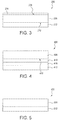
- a sectional view of another preferred embodiment label 200 is shown in Figure 3 and includes a facestock 206 having a first surface 208 and a second surface 210, and a layer of pressure sensitive adhesive ("PSA") 212 proximal to the second surface of the facestock.
- Proximal as used herein, means nearby and does not preclude intervening structures, for example, additional layers or gaps.
- the label can optionally include an indicia-accepting layer 214 proximal to the first surface 208 of the facestock 206.
- the label 200 is tailored to exhibit an opacity of greater than or equal to approximately 99.0%, a brightness value of greater than or equal to approximately 94.5%, a CIELAB L* greater than or equal to approximately 93.5, and a CIELAB b* less than or equal to approximately -5.0. Most preferably, the opacity is greater than 99.7%.
- the label is constructed to have a whiteness index greater than or equal to approximately 110. By “alternatively,” it is meant that instead of the label exhibiting the previously noted CIELAB parameters, the label exhibits a particular whiteness index as measured pursuant to the ASTM E313 specification as noted herein.
- These properties are achieved by use of a combination of titanium dioxide and one or more optical brighteners in the noted proportions in the facestock 206 and/or the layer 214. These properties may be enhanced or further promoted by modifying the facestock 206, the pressure sensitive adhesive 212, or both. Modifications can include the use of additives in the facestock or pressure sensitive adhesive and the use of additional thin layers of materials, as described herein. Furthermore, additional steps can be taken to increase opacity of the label during manufacture including, for example, increasing the film density, increasing the film thickness, increasing the basis weight and/or increasing binder or sizing levels.
- a label 400 according to another preferred embodiment is shown in Figure 4 .
- a facestock 406 is coated on its second surface 410 with a second layer 418 including a primer and at least one second layer additive.
- the second surface 410 is also coated with a first layer 416 including a primer and at least one first layer additive.
- the first and second layers are coupled between the facestock 406 and a layer of an adhesive 412.
- One of the layers, e.g. the first layer 416 or the second layer 418, is light absorbing and the other layer is light reflecting.
- the first layer 416 is configured to absorb light and the second layer 418 is configured to reflect light.
- the primer of the first and second layers 416 and 418, respectively, can be the same, or they can be different primers.
- Materials suitable for use as primers are compatible with the additives included in the respective layer.
- the additives should remain evenly dispersed in the primer.
- the primers are preferably aqueous dispersions of synthetic latex. Dispersions including polyvinyl acetate, styrene butadiene rubber, polyvinyl alcohol, starch and styrene acrylics are non-limiting examples of suitable primers.
- a wide range of thicknesses and coat weights can be used for the primer layer or collection of layers.
- a representative preferred range of coating weights for a primer layer is from about 0.5 to about 12 grams per square meter (g/m 2 or gsm), more preferably from about 2 to about 10 g/m 2 , and most preferably from about 4 to about 8 g/m 2 . It will be appreciated that the invention includes the use of primer layers having coating weights less than or greater than these amounts.
- the additives in the first layer 416 are chosen to absorb light, thereby increasing the opacity of the layer compared to a similar layer without the additive.
- increasing the opacity means the opacity of a material is greater than the opacity of another material.
- Suitable first layer additives include, but are not limited to, carbon black, metallic flakes, other metallic particles and other dark dispersants, as well as dark dyes, in particular dark blue dyes and dark gray dyes. Although metal agents are noted, it is particularly preferred that this layer be free from any metallic pigments, metallic agents, or metallic additives.
- the additives in the second layer 418 are chosen to reflect light, and particularly in a diffuse manner, i.e., randomly and evenly scattered, although materials that absorb and re-emit light are also suitable.
- Additives suitable for inclusion in the second layer include, but are not limited to, titanium dioxide, calcium carbonate, in particular precipitated calcium carbonate, barium sulfate, aluminum trihydrate, talc, zinc sulfide, diatomaceous silica, clay, chalk, ash, finely dispersed gases, stilbenes, azoles, coumarins, pyrazenes and napthalimides. It is particularly preferred that this layer be free from any metallic pigments, metallic agents, or metallic additives.
- the first layer 416 is directly adjacent to the second surface 410 of the paper facestock 406.
- directly adjacent means that the layer is in direct contact with the second surface of the facestock with no intervening layers. It is believed that in this instance, the first layer absorbs light passing through the facestock, thus increasing the opacity of the label.
- the second layer 418 is adjacent to the second surface of the facestock. It is believed that in this instance, the second layer reflects light passing through the facestock, thus increasing the opacity of the label.
- a facestock 506 includes at least one facestock additive and a layer of pressure sensitive adhesive 512 includes at least one adhesive additive.
- the label has an opacity greater than if the at least one facestock additive and at least one adhesive additive were not included.
- Pigments, fillers and optical brighteners can affect the brittleness, tensile strength and cuttability, among other attributes, of a film layer. Film layers can become more brittle, have less tensile strength, be more difficult to cut and cause cutting blades to dull sooner than expected. Pigments, fillers and optical brighteners can affect the peel strength, tack, shear and viscosity, among other attributes, of adhesives. The adhesive can lose peel strength, tack and shear, and thus become less aggressive. The viscosity of the adhesive can increase making it difficult to apply to substrates. Because the physical properties of the film layer and adhesives can be negatively affected by additives, it can be difficult obtain sufficient opacity to block out underlying indicia when the film and adhesive are made into a label.
- the amount or concentration of additives in the pressure sensitive adhesive 512 is chosen to minimally impact the adhesive's properties while providing opacity. If the level of additives is too high, the PSA will have insufficient adhesive properties to allow the label 500 to adhere to envelopes and packages during handling prior to delivery. If the level of additives is too low, underlying indicia may be visible through the applied label.
- the concentration of the additives in the pressure sensitive adhesive is such that the PSA exhibits sufficient adhesive properties whereby the label adequately adheres to envelopes and packages; and the label exhibits sufficient opacity when used in combination with the inventive face stock whereby underlying indicia or previous markings on envelopes and packages is not visible through the label.
- the amount or concentration of additives in the facestock sheet 506 is chosen to provide maximum opacity of the label 500 when attached to an envelope or package while maintaining desirable properties including printability in laser and inkjet printers and copiers, stiffness, machinability in processes used to manufacture labels, whiteness and brightness.
- a preferred method 600 of achieving the goal of opaque labels 200 is to include additives in the adhesive 212, as shown in step 608 of Figure 6 , to obtain as high an opacity as possible while maintaining adhesion to a substrate.
- the first three steps 602, 604 and 606, of the method provide additives, adhesive and film layer material, respectively. Additive levels can be adjusted during the manufacture of the facestock in step 610 to achieve at least 99.0% opacity in the final product produced in step 612.
- the first three steps 702, 704 and 706, involve providing additives, adhesive and film material, respectively.
- the facestock can be made as opaque as possible, step 708, while maintaining film properties sufficient for converting.
- a sufficient amount of additives are included in the adhesive, step 710, to achieve 99.0% opacity in the label stock (see later discussion) produced in step 712. Most preferably, the opacity is greater than 99.7%.
- the at least one facestock additive can be chosen from, but not limited to, titanium dioxide, calcium carbonate, in particular precipitated calcium carbonate, barium sulfate, aluminum trihydrate, talc, zinc sulfide, diatomaceous silica, clay, chalk, ash, finely dispersed gases, stilbenes, azoles, coumarins, pyrazenes and napthalimides.
- Other acceptable facestock additive materials are those that increase the opacity of the facestock by reflecting light rather than transmitting or absorbing light. It is particularly preferred that this layer be free from any metallic pigments, metallic agents, or metallic additives.
- the at least one adhesive additive can include carbon black, titanium dioxide, metallic flakes, other metallic particles and other dark dispersants, as well as dark dyes, in particular dark blue dyes and dark gray dyes. Other materials that absorb light, rather than reflect or transmit light, can also be used. Although metallic agents are noted, it is generally preferred that the adhesive layer be free of any metallic additives or agents.
- a single pigmented layer 816 is coupled between a facestock 806 and a pressure sensitive adhesive 812.
- the pigmented layer preferably includes light absorbing materials.
- the light absorbing materials include carbon black, metallic flakes, other metallic particles and other dark dispersants, as well as dark dyes, in particular dark blue dyes and dark gray dyes.
- the pigmented layer is blue.
- metal agents are noted, it is particularly preferred that this layer be free from any metallic pigments, metallic agents, or metallic additives.
- the facestock 806 includes at least one whiteness enhancer.
- the at least one whiteness enhancer can include titanium dioxide, calcium carbonate, in particular precipitated calcium carbonate, barium sulfate, aluminum trihydrate, talc, zinc sulfide, diatomaceous silica, clay, chalk, ash, finely dispersed gases, stilbenes, azoles, coumarins, pyrazenes and napthalimides.
- the facestock 806 is preferably made with a grammage higher than current facestocks suitable for use in pressure sensitive labels. Grammage of facestocks suitable for use in pressure sensitive labels is approximately 70 g/m 2 , and has a low enough opacity to allow underlying indicia 102 to be discerned.
- the pigmented layer 816 also referred to as a back coat or size coat
- the pigmented back coat is blue to have minimal impact on the whiteness of the label 800, but other colors may also prove useful.
- Useful blue pigment dyes include IRGALITE BLUE RL and IRGALITE BLUE RM (both available from Ciba Specialty Chemicals of High Point, NC) and others.
- the grammage of the facestock and the pigmented back coat provide opacity to the finished label such that any underlying indicia are effectively blocked out.
- a preferred facestock grammage is approximately 90 g/m 2
- the pigmented back coat is preferably approximately 10 g/m 2 .
- the facestock 806 is coated with a layer 812 of pressure sensitive adhesive suitable for the label's intended use.
- pressure sensitive adhesive suitable for the label's intended use.
- permanent PSAs are used, for example those described in U.S. Patent 6,423,392 , but other types of PSAs, for example removable or repositionable adhesives, for example those noted in U.S. Patent 4,925,908 , can be used.
- the adhesive is preferably coated at between approximately 15 g/m 2 to approximately 25 g/m 2 , more preferably approximately 18 g/m 2 to approximately 20 g/m 2 .
- any of the label embodiments 100, 200, 400, 500 and 800 can further include an indicia-accepting layer, such as the layer 214 proximal to the first surface 208 of the facestock 206 as shown in Figure 3 .
- the indicia-accepting layer can be any of those known in the art to allow acceptance of ink-jet ink, laser toner, or hand-held writing instrument markings.
- the indicia-accepting layer can increase the opacity of the label, preferably by reflecting light.
- All of the label embodiments 100, 200, 400, 500 and 800 include at least two layers wherein one layer is a facestock 206, 406, 506, and 806 and the other layer is an adhesive 212, 412, 512 and 812. Additional layers 416, 418 and 816 can also be present, as previously discussed.
- Any of the laminates, labels, or label sheets described herein can include one or more hide layers. As previously described, the one or more hide layers are disposed along a face of a film layer that is oppositely directed from the top coat. Thus, referring to Figure 1 for example, in the event that laminate 10 included a hide coat, such hide coat would be present between layers 30 and 40.
- the labels herein described are meant to remain intact during use, that is, the labels are not intended to delaminate. The entire label should be removable from the substrate when removable or ultraremovable adhesives are used, or either the label or the substrate should tear, particularly when the substrate is paper. In neither situation should the layers of the label separate from one another.
- a label sheet embodiment 900 using the label stock 520 of Figure 5 is shown in Figure 9 and a label sheet embodiment 1000 using the label stock 820 of Figure 8 is shown in Figure 10 .
- Label sheet embodiments 900 and 1000 can be made by adding a release-coated liner 922 and 1022, respectively, to any of the label embodiments.
- the release-coated liner is used to protect the pressure sensitive adhesive 912 and 1012 and to allow the adhesive-backed label to be passed through a printer, in particular, a desktop printer that can be attached to a personal computer.
- the release-coated liner can be those routinely used for label manufacture including paper, film and film-coated paper liners. Any release system is suitable in which the release value is greater than or equal to approximately 50 gsm. Release systems can include silicones, waxes, fluorocarbons and other abherent materials.
- the release coating is usually less than or equal to approximately 2 g/m 2 .
- label sheets 1100 having labels 1124 are generally meant to be printed upon by handheld writing instruments or printers.
- Label sheets intended to be printed upon using a printer are constructed to allow passage through the printer without becoming caught on any of the printer's mechanical parts.
- Some of the many concerns regarding the construction of the label sheet include the thickness and curl, or flatness, of the label sheet to be printed.
- Printers generally exhibit tight tolerances and tight turns in the path a label sheet 1100 follows while being printed.
- Label sheets that are too thick or high in caliper can have difficulties during transport through a printer. Thick label sheets can be improperly picked up by the paper transport mechanism resulting in a jam as the sheet enters the printer. Even if a thick sheet is transported successfully into a printer, tolerances between rollers may prevent the sheet from completing the paper path without becoming stuck or bound inside the printer. Also, if the sheet is too thick, it may be too stiff to bend around the printer's internal rollers and become jammed inside the printer.
- Preferred embodiments of the label sheet have an overall caliper ("C") (see also Figure 9 ) of less than or equal to approximately +0.254 mm (+0.01 inch), or about 254 ⁇ m (10 mils).
- the lower limit for caliper is usually not an issue for label sheets 1100. Because the label sheet includes a facestock 906, a layer of adhesive 912 and a release-coated liner 922, the sheet is usually thick enough to avoid printing difficulties associated with thin sheets. The difficulties that can be encountered with thin sheets include the sheet not being picked up by the sheet transport mechanism of the printer and jamming inside the printer because the sheet is not stiff enough. Sheets with insufficient stiffness do not follow the printer's paper path because free edges can bend out of the paper path and become caught on internal printer parts. Additionally, label sheets that are too thin can have labels insufficiently opaque to hide covered indicia on a substrate to which the label has been applied. Preferred embodiments of the label sheet have an overall caliper of greater than or equal to approximately +0.0762 mm (+0.003 inch), or about 76.2 ⁇ m (3 mils).
- Curl is a measure of how well a label sheet 1100 conforms to planarity. Curl can be especially pronounced at the corners 1126 of the label sheet and if the magnitude of the curl is too high, the corners of the sheet can become lodged inside a printer during printing. As shown in Figure 11 , sides 1128 of the sheet 1100 generally meet at corners 1126. Curl can be determined by placing a label sheet on a flat surface in a controlled environment with the facestock 906 away from the flat surface. Each corner can be inspected and the deflection of any corner lifted from the flat surface is measured and recorded as a positive curl value. The label sheet is then placed onto the flat surface with the facestock against the flat surface.
- a label sheet having maximum curl values less than or equal to approximately 12.7 mm (0.5 inch) in magnitude are acceptable.
- a sheet with -15.24 mm (-0.6 inches) of curl is unacceptable.
- a sheet with +15.24 mm (+0.6 inches) of curl is also unacceptable.
- a label sheet having maximum curl values less than or equal to approximately 6.35 mm (0.25 inch) in magnitude is preferred.
- One example embodiment has measured curl values between approximately +6.35 mm (+0.25 inch) and approximately -12.7 mm (-0.5 inch).
- a label sheet 1100 includes a label stock 920 (see Figure 9 ) and a release-coated liner 922.
- the label stock includes a facestock 906 and a layer of pressure sensitive adhesive 912.
- the release-coated liner is coupled to the layer of pressure sensitive adhesive.
- the label stock has an opacity greater than or equal to approximately 99.0%.
- the label stock has a whiteness index greater than or equal to approximately 110, or alternatively, a brightness greater than or equal to approximately 94.5%, a CIELAB L* greater than or equal to approximately 93.5 and a CIELAB b* less than or equal to approximately -5.0. Most preferably, the opacity is greater than 99.7%.
- the total caliper of the label sheet is less than or equal to approximately +0.254 mm (+0.01 inch), or 254 ⁇ m (10 mils).
- An opaque label sheet 1100 of the present invention is machine printable in laser and inkjet printers and copiers and has the following performance characteristics:
- one embodiment of a method 1200 for manufacturing a label stock includes the steps of providing a facestock 1202, providing a pressure sensitive adhesive 1204 and coupling the pressure sensitive adhesive to the facestock 1206.
- the label stock thus formed has an opacity greater than or equal to approximately 99.0%.
- the label stock also includes a whiteness index greater than or equal to approximately 110, or alternatively, a brightness greater than or equal to approximately 94.5%, a CIELAB L* greater than or equal to approximately 93.5, and a CIELAB b* less than or equal to approximately -5.0. Most preferably, the opacity is greater than 99.7%.
- FIG. 13 another embodiment of a method 1300 for manufacturing a label stock includes providing a pressure sensitive adhesive in the form of a layer 1304 and providing a facestock 1302.
- the step of coupling the layer of pressure sensitive adhesive to the facestock includes laminating the pressure sensitive adhesive layer and facestock together 1306 to produce the label stock.
- yet another embodiment of a method 1400 for manufacturing a label stock includes the pressure sensitive adhesive being provided on a release-coated liner at step 1404.
- the pressure sensitive adhesive can be applied to the release-coated liner by any known means, including die coating, curtain coating, extrusion and spray coating.
- a facestock is provided in step 1402. Laminating the pressure sensitive adhesive layer and the facestock together 1406 produces the label stock attached to the release coated liner.
- Those skilled in the art of manufacturing pressure sensitive adhesive labels 100, 200, 400, 500, 800, particularly those designed for use with desktop printers, are able to produce flat label sheets 1100.
- Methods known to those skilled in the art include balancing the tension of the facestock such as facestock 906 and the release-coated liner, such as liner 922, during fabrication and balancing the moisture levels of the components of the label sheet.
- the moisture level in the label sheet can be adjusted by heating any or all of the layers in the assembly such as previously noted layers 206, 212, 406, 412, 416, 418, 1006, 1012, 1016, 1022 to lower the moisture level or by subjecting any or all of the layers to steam to increase the moisture level.
- Both the facestock and the release coated liner can be subjected to these treatments to balance the moisture level.
- Another embodiment of a method for manufacturing a label stock includes the facestock and pressure sensitive adhesive being permanently attached.
- the facestock and pressure sensitive adhesive should not delaminate from one another during use.
- nonmetallic pigments include titanium dioxide (and potentially other metallic oxides), barium sulfate, silica dioxide, calcium carbonates, kaolin clays, carbon blacks or similar inorganic or organic materials. And, as previously noted, nonmetallic pigments typically exclude metallic pigments such as aluminum particles or aluminum flakes. In US 5,256,490 , metallic pigment coatings were used to provide a high opacity benefit. Coating an insulator such as polyester film with a metallic pigment coating inadvertently increases the propensity of the multiple sheets to store electrical charge.
- the laser printing process involves charging a substrate to allow for transfer of toner to the substrate. Therefore, printing multiple sheets results in enough electrical charge storage to cause a static shock to consumers when removing printed sheets from the laser printer.
- a typical opacity measuring method involves measuring the contrast ratio of the facestock when it is placed in front of white and black backgrounds. This and the following appearance tests may be performed using a MACBETH COLOR-EYE 2020 PLUS spectrophotometer (Gretag-Macbeth AG of Regensdorf, Switzerland).
- a 50.8 ⁇ m (2 mils) white high opacity polyester facestock exhibits 91% opacity. That polyester facestock is Hostaphan W270 and is available from Mitsubishi Polyester Film, Inc. of Greer, SC.
- Brightness of a surface is determined by following the Technical Association of the Pulp and Paper Industry (“Tappi”) T-452 om-92 test method. This method is based upon reflection of blue light of 475 nm wavelength.
- Whiteness index is based upon the ASTM E313 specification. Whiteness is the degree to which a surface matches a white reference standard. There are many alternative ways to describe color. Color, as used herein, is the color space defined as CIE L*a*b*(CIELAB), developed by the International Commission on Illumination (Commission Internationale d'Eclairage or CIE).
- L* (CIELAB L*) represents the lightness of the color and ranges from 0 (black) to 100 (white)
- a* represents the color's position along the red (magenta)/green axis (negative values represent green and positive values represent red or magenta)
- b* (CiELAB b*) represents the color's position along the blue/yellow axis (negative values represent blue and positive values represent yellow).
- Caliper test method The thickness of a single sheet of film is measured with the use of an EMVECO Model 210-A Microgage micrometer available from Emveco Inc. of Newberg, OR.
- top coats having different concentrations of titanium dioxide were prepared by combining titanium dioxide intermediate formulation identified in Table 4 with a laser top coat base intermediate formulation identified in Table 5 along with an optical brightener.
- the resulting top coats are noted below in Table 1.
- Table 1 provides an indication as to the percentage of titanium dioxide resulting in a top coat formulation prepared by combining a titanium dioxide intermediate (the formulation of which is noted in Table 4) and a laser top coat base intermediate (the formulation of which is noted in Table 5).
- Table 1 provides an indication as to the percentage of titanium dioxide resulting in a top coat formulation prepared by combining a titanium dioxide intermediate (the formulation of which is noted in Table 4) and a laser top coat base intermediate (the formulation of which is noted in Table 5).
- Table 1 provides an indication as to the percentage of titanium dioxide resulting in a top coat formulation prepared by combining a titanium dioxide intermediate (the formulation of which is noted in Table 4) and a laser top coat base intermediate (the formulation of which is noted in Table 5).
- a 5% concentration of titanium dioxide is desired in
- the optical brightener is UVITEX available from Ciba Specialty Chemicals of High Point, NC.
- UVITEX optical brightener is 2,5 thiophenediylbis (5-tert-butyl-1,3-benzoxazole).
- Table 1-Top Coats With Different Concentrations of TiO 2 (percent TiO2 Laser top coat 0% TC* 5% TC 10% TC 15% TC 20% TC Titanium Dioxide Intermediate 0 6.51 13.02 19.53 26.04 Laser Top Coat Base Intermediate 99.8 93.29 86.78 86.78 86.78 UVITEX 0.2 0.2 0.2 0.2 0.2 0.2 Gravure plate 100HK 100HK 100HK 100HK 100HK 100HK L* Value D65 93.26 94.33 94.29 94.79 94.89 Brightness 99.96 96.97 97.98 97.65 96.78 Whiteness 145.37 123.53 126.8 121.28 117.33 B* -10.94 -6
- the facestock can include one or more additional layers. Examples of these other additional layers are set forth below in Table 2 as follows.
- the first facestock is designated as D5 and includes a hide coat formulation number 9 noted in Table 7 which was applied using a 100HK and a 150HK gravure cylinder pattern to a coat weight of approximately 6 g/m 2 (gsm) onto a face of a 50.8 ⁇ m (2 mils) PET film layer.
- the PET film layer is available from Mitsubishi Polyester Film, Inc. of Greer, SC under the designation Hostaphan W270.
- a laser top coat having a particular formulation noted in Table 6 as number 14 was applied with a 100HK gravure cylinder pattern to a coat weight of approximately 4 gsm.
- the other facestock is designated as D9. Thickness (i.e. caliper) measurements and optical characteristics were taken as described herein and the values presented in Table 2.
- various laser top coats listed in Table 6 were formed by combining various weight proportions of a titanium dioxide intermediate (specified in Table 4) and a laser top coat base intermediate (specified in Table 5) along with an optical brightener.
- the resulting laser top coats are noted in Table 6.
- Various hide coats listed in Table 7 were formed by combining various weight proportions of a polyester intermediate (specified in Table 3) and the titanium dioxide intermediate (specified in Table 4), along with several other components.
- the resulting hide coats are noted in Table 7.
- Table 3 Polyester Intermediate Component Percent by Weight Toluene 30.00 Methyl Ethyl Ketone 42.00 VITEL PE200 28.00
- the polyester intermediate formulation of Table 3 includes VITEL PE 200, an inert polyester binder available from Bostik of Middleton, MA.
- Table 4 Titanium Dioxide Intermediate Component Percent by Weight Polyester intermediate 40 TI-PURE R-900 60
- the titanium dioxide intermediate formulation of Table 4 includes TI-PURE R-900 which is a general purpose titanium dioxide pigment available from E.I. du Pont de Nemours and Company of Wilmington, DE. Table 5 - Laser Top Coat Base Intermediate Component Percent by Weight Polyester intermediate 65.94 TITANTIC KR38S 00.01 HYDRAL710 06.67 SYLOID 234 02.42 Toluene 16.19 Cyclohexanone 05.00 Methyl Ethyl Ketone 03.77
- the laser top coat base intermediate formulation of Table 5 includes TITANTIC KR38S which is isopropyl-tris (dioctyl-pyrophosphate) titanate, available from Kenrich Petrochemicals of Bayonne, NJ; HYDRAL 710 is an extra fine, uniform median particle size of about 1.0 micron in diameter, of specially precipitated white aluminum trihydroxide Al(OH) 3 , available from Almatis, Inc. of Bauxite, AR; and SYLOID 234 which is an amorphous synthetic silica available from W.R. Grace & Company of Columbia, MD.
- TITANTIC KR38S which is isopropyl-tris (dioctyl-pyrophosphate) titanate, available from Kenrich Petrochemicals of Bayonne, NJ
- HYDRAL 710 is an extra fine, uniform median particle size of about 1.0 micron in diameter, of specially precipitated white aluminum trihydroxide Al(OH) 3 , available from Almatis, Inc. of Bauxite
- UVITEX optical brightener available from Ciba of Basel, Switzerland was used. Table 6 - Laser Top Coats Laser top coat number 4 5 6 10 11 12 14 15 17 18 19 Titanium Dioxide Intermediate 13.02 0 26.04 13.02 13.02 6.51 6.51 6.51 13.02 0 26.04 Laser top coat base Intermediate 86.78 99.8 86.78 86.78 86.78 86.78 86.78 86.78 86.78 86.78 86.78 86.78 86.78 86.78 86.78 86.78 86.78 86.78 86.78 86.78 86.78 UVITEX 0.2 0.2 0.2 0.3 0.15 0.2 0.15 0.11 0.11 0 0.11
- Table 7 summarizes various hide coats that were formed.
- GIBRALTAR 335-39270 available from Gibraltar Chemical Works of South Holland, IL was incorporated as noted.
- Tables 8A and 8B were printed using the Gravure plate also designated in the tables.
- the resulting lightness values, whiteness values, brightness values, b* values, and opacity were taken. These were all printed over a 50.8 ⁇ m (2 mils) white polyester film.
- the polyester film is available from Mitsubishi Polyester Film, Inc. of Greer, SC under the designation Hostaphan W270. The results are summarized below in Tables 8A and 8B.
- anti-static agents are materials typically added to a coating or a film to reduce the tendency of static charge built up.
- Typical anti-static agents are migratory hydrophilic materials such as surfactants and salts which dissipate static charges via moisture retention.
- various amounts of an anti-static agent available under the designation CYASTAT 609, from Cytec Industries of West Paterson, NJ were used in a laser top coat base intermediate formulation.
- CYASTAT 609 available under the designation Cytec Industries of West Paterson, NJ were used in a laser top coat base intermediate formulation.
- Table 10 - Use of Anti-Static Agents M1 M2 M3 Laser top coat base Intermediate 100 97.13 94.27 Cyastat 609 0 2.86 5.72 Gravure plate 100HK 100HK 100HK
- Capacitance was measured with a Fluke 26 III multimeter available from Fluke Corporation of Everett, WA. The capacitance was measured by placing a 10.16 x 12.7 cm (4 x 5 inch) label face down (adhesive side up) on an aluminum test panel and contacting one probe to the aluminum panel and one probe through the adhesive contacting the face material.
Landscapes
- Physics & Mathematics (AREA)
- General Physics & Mathematics (AREA)
- Engineering & Computer Science (AREA)
- Theoretical Computer Science (AREA)
- Chemical & Material Sciences (AREA)
- Inorganic Chemistry (AREA)
- Spectroscopy & Molecular Physics (AREA)
- Laminated Bodies (AREA)
- Adhesive Tapes (AREA)
- Thermal Transfer Or Thermal Recording In General (AREA)
Claims (14)
- Laserbedruckbare Filmoberschicht mit hoher Opazität, umfassend:
eine Laser-bedruckbare Filmoberschicht mit einer bedruckbaren ersten Schicht, einer zweiten Schicht und einer dritten Schicht, wobei die erste Schicht eine Topcoat-Schicht ist, die zweite Schicht eine Filmschicht ist und die dritte Schicht eine Deckschicht ist, wobei die zweite Schicht zwischen der ersten Schicht und der dritten Schicht angeordnet ist, wobei die bedruckbare erste Schicht eine Kombination von Titandioxid und einem optischen Aufheller umfaßt, und die dritte Schicht Titandioxid und ein oder mehrere Polyestermittel umfaßt, und die laserbedruckbare Filmoberschicht eine Opazität von mehr als oder gleich annähernd 99,9%, einen CIELAB L* von mehr als oder gleich etwa 93,5, einen CIALAB b* von weniger als oder gleich annähernd -5,0 und ein oder mehrere Charakteristika, ausgewählt aus der Gruppe, bestehend aus (i) einem Weißindex von höher als oder gleich etwa 110 und (ii) einer Helligkeit von mehr als oder gleich annähernd 94,5%, zeigt, wobei die laserbedruckbare Filmoberschicht eine Dicke von weniger als oder gleich etwa 63,5 µm (2,5 mils) aufweist. - Laserbedruckbare Filmoberschicht mit hoher Opazität gemäß Anspruch 1, weiter umfassend:eine vierte Schicht, angebunden zwischen der zweiten Schicht und der dritten Schicht,wobei die vierte Schicht konfiguriert ist, Licht zu reflektieren und einen Primer und mindestens ein Viertschicht-Additiv einschließt und die vierte Schicht frei von metallischen Pigmenten ist.
- Laserbedruckbare Filmoberschicht mit hoher Opazität gemäß Anspruch 1, wobei die dritte Schicht frei von metallischen Pigmenten ist.
- Laserbedruckbare Filmoberschicht mit hoher Opazität, wobei die zweite Schicht ein Film mit einer Erweichungstemperatur von höher als oder gleich annähernd 200°C ist.
- Laserbedruckbare Filmoberschicht mit hoher Opazität gemäß Anspruch 1, wobei die zweite Schicht ein Polyesterfilm ist.
- Laserbedruckbare Filmoberschicht mit hoher Opazität gemäß Anspruch 1, wobei die zweite Schicht ein Material einschließt, ausgewählt aus der Gruppe, bestehend aus Polyethylenterephthalat, Polyimid, Polyetherimid, Polysulfon, Polyethersulfon, Polytetrafluorethylen, Nylon 6, Nylon 6/6, Nylon 6,10, Nylon 11, Nylon 12, Polyamid-imid, Polybutylenterephthalat, Polyetheretherketon und Blends oder Copolymeren davon.
- Laserbedruckbare Filmoberschicht mit hoher Opazität gemäß Anspruch 6, wobei die zweite Schicht Polyethylenterephthalat einschließt.
- Laserbedruckbare Filmoberschicht mit hoher Opazität gemäß Anspruch 1, wobei die erste Schicht 2,5 bis 12,5 Gew.-% Titandioxid einschließt.
- Laserbedruckbare Filmoberschicht mit hoher Opazität gemäß Anspruch 1, wobei die erste Schicht eine wirksame Menge von mindestens einem optischen Aufheller einschließt, wobei die Konzentration des optischen Aufhellers in der ersten Schicht vorzugsweise von etwa 0,05% bis etwa 0,75% beträgt.
- Laserbedruckbare Filmoberschicht mit hoher Opazität gemäß Anspruch 1, wobei die Oberschicht eine Opazität von mehr als oder gleich annähernd 99,7% zeigt.
- Etikettblatt, umfassend:ein Trägerblatt,ein Oberschichtblatt, welches die laserbedruckbare Filmoberschicht gemäß einem der Ansprüche 1 bis 10 einschließt, undeine Haftkleberschicht, trennbar das Trägerblatt an das Oberschichtblatt anbindend,wobei das Etikettblatt Schnittlinien einschließt, welche sich durch das Oberschichtblatt erstrecken, aber nicht durch das Trägerblatt, um dadurch mindestens ein Etikett zu definieren.
- Etikettblatt gemäß Anspruch 11, wobei der Haftkleber aus der Gruppe, bestehend aus Permanenthaftmitteln, hochabziehbaren Haftmitteln und entfernbaren Haftklebern, ausgewählt ist.
- Etikettblatt gemäß Anspruch 11, wobei der Etikettblatt mindestens einen Etikettstreifen einschließt, definiert durch mindestens eine Schnittlinie durch das Oberschichtblatt, aber nicht das Trägersubstrat, und der Etikettstreifen eine Vielzahl von Etiketten einschließt.
- Etikettblatt gemäß Anspruch 11, wobei das Etikettblatt zum Drucken in einem Desktop-Drucker oder Kopierer konfiguriert ist.
Applications Claiming Priority (2)
| Application Number | Priority Date | Filing Date | Title |
|---|---|---|---|
| US12/846,998 US9188889B2 (en) | 2007-09-07 | 2010-07-30 | High opacity laser printable facestock |
| PCT/US2011/046130 WO2012016241A1 (en) | 2010-07-30 | 2011-08-01 | High opacity laser printable facestock |
Publications (2)
| Publication Number | Publication Date |
|---|---|
| EP2598950A1 EP2598950A1 (de) | 2013-06-05 |
| EP2598950B1 true EP2598950B1 (de) | 2018-05-09 |
Family
ID=44504245
Family Applications (1)
| Application Number | Title | Priority Date | Filing Date |
|---|---|---|---|
| EP11746712.6A Active EP2598950B1 (de) | 2010-07-30 | 2011-08-01 | Laserbedruckbare oberschicht mit hoher opazität |
Country Status (8)
| Country | Link |
|---|---|
| US (2) | US9188889B2 (de) |
| EP (1) | EP2598950B1 (de) |
| KR (1) | KR20130099925A (de) |
| CN (1) | CN103124930B (de) |
| AU (1) | AU2011283642B2 (de) |
| NZ (1) | NZ606951A (de) |
| RU (1) | RU2590925C2 (de) |
| WO (1) | WO2012016241A1 (de) |
Families Citing this family (12)
| Publication number | Priority date | Publication date | Assignee | Title |
|---|---|---|---|---|
| EP2325829A1 (de) * | 2009-11-18 | 2011-05-25 | KPSS Kao Professional Salon Services GmbH | Etikett, Verpackung, Verwendung eines Klebeetiketts und Verfahren zur Bereitstellung einer Testprobe |
| CA2935368C (en) * | 2013-12-30 | 2022-12-06 | Wen-Li A. Chen | Compostable films and compostable labels |
| CN103897386A (zh) * | 2014-04-02 | 2014-07-02 | 苏州大业三维打印技术有限公司 | 一种选择性激光烧结技术使用的增强材料 |
| US20160314723A1 (en) * | 2015-02-27 | 2016-10-27 | Domtar Paper Company, Llc | Method of Making Promotional Tags |
| CN108684202A (zh) | 2015-04-30 | 2018-10-19 | 艾利丹尼森公司 | 潮湿条件下应用于标签的不透明性胶粘剂 |
| US10421259B2 (en) | 2015-08-19 | 2019-09-24 | Achilles Usa, Inc. | Perforated polyolefin films |
| US11100816B2 (en) | 2017-04-18 | 2021-08-24 | Upm Raflatac Oy | Method for selecting a face material for a printable label and a printed label |
| US11466180B2 (en) | 2017-05-08 | 2022-10-11 | Avery Dennison Corporation | Vulcanization tire label |
| US11261348B2 (en) | 2018-03-16 | 2022-03-01 | Brady Worldwide, Inc. | Label construction for ablative laser marking |
| CA3109619A1 (en) | 2018-11-08 | 2020-05-14 | Ccl Label, Inc. | Laser printable metallic label assembly |
| US12397533B2 (en) * | 2019-10-07 | 2025-08-26 | Mucell Extrusion, Llc | Lightweight multilayer foam film with enhanced perceived surface whiteness |
| US11842237B2 (en) | 2020-06-29 | 2023-12-12 | Capital One Services, Llc | Biodegradable cards and systems and methods for making the same |
Family Cites Families (67)
| Publication number | Priority date | Publication date | Assignee | Title |
|---|---|---|---|---|
| JPS5327743B2 (de) | 1972-11-06 | 1978-08-10 | ||
| US3904876A (en) | 1974-09-20 | 1975-09-09 | Cons Paper Inc | Determination of paper ash content by X-ray absorption analysis |
| JP2596923B2 (ja) | 1985-02-05 | 1997-04-02 | エーブリー インターナショナル コーポレイション | 多層ラベル・ストックの製造方法 |
| US4763930A (en) | 1985-07-05 | 1988-08-16 | Arthur Matney | Transparent gummed label having see through indicia and opaque universal product code bar and numerical indicia at a side thereof on small nail polish bottles |
| US4863772A (en) | 1985-11-26 | 1989-09-05 | Avery International Corporation | Label stock with dry separation interface |
| US4925908A (en) | 1987-12-11 | 1990-05-15 | Avery International Corporation | Acrylic based emulsion polymers |
| US5192611A (en) | 1989-03-03 | 1993-03-09 | Kansai Paint Co., Ltd. | Patterned film forming laminated sheet |
| US5131910A (en) | 1989-09-29 | 1992-07-21 | Bayer (Canada) Inc. | Method of coloring or tinting paper: adding red, yellow and blue dyes in selected proportions to base furnish |
| US5314560A (en) | 1991-06-14 | 1994-05-24 | Almedica Services Corp. | Blinded label and method of making same |
| US5418026A (en) | 1991-10-10 | 1995-05-23 | Peter J. Dronzek, Jr. | Curl-resistant printing sheet for labels and tags |
| US5256490A (en) | 1992-07-10 | 1993-10-26 | Bainbridge/Aquabatten, Inc. | High opacity flexible composite material |
| US5354588A (en) | 1992-07-13 | 1994-10-11 | Moore Business Forms, Inc. | Linerless labels with tie coat |
| US5417790A (en) | 1992-10-01 | 1995-05-23 | Michael R. Kennedy | Label systems for reusable containers and the like |
| US5735549A (en) | 1995-06-02 | 1998-04-07 | The Standard Register Company | Dual use product or shipping label |
| DE19680543T1 (de) | 1995-06-05 | 1997-07-24 | Avery Dennison Corp | Wärmebeständige Haftkleberkonstruktionen |
| US5800893A (en) | 1995-06-27 | 1998-09-01 | The Standard Register Company | Double-blind label and method for double-blind labelling |
| GB9514388D0 (en) | 1995-07-13 | 1995-09-13 | Tioxide Group Services Ltd | Titanium dioxide pigments |
| GB9520703D0 (en) | 1995-10-10 | 1995-12-13 | Ecc Int Ltd | Paper coating pigments and their production and use |
| US5972155A (en) | 1996-04-15 | 1999-10-26 | 3M Innovative Properties Company | Method of making repositionable blank signage sheets |
| US5919537A (en) | 1996-06-18 | 1999-07-06 | Android Industries Of Michigan, L.L.C. | Decorative films and laminated formable sheets with dual protective film layers |
| US5914165A (en) | 1996-07-29 | 1999-06-22 | Avery Dennison Corporation | Peelable label for articles for resale |
| US20030108730A1 (en) * | 2000-02-14 | 2003-06-12 | John Francis | Opaque polyester film as substrate with white coatings on both sides |
| US5981009A (en) | 1997-01-30 | 1999-11-09 | Leonard Kurz Gmbh & Co. | Decorative film with hot melt adhesive layer |
| US6086107A (en) * | 1997-05-05 | 2000-07-11 | Barbara Thomas Enterprises, Inc. | Computer printer compatible labels |
| US6268032B1 (en) * | 1997-10-03 | 2001-07-31 | 3M Innovative Properties Company | Repositionable note sheets and method of formation thereof |
| US6143408A (en) | 1997-10-24 | 2000-11-07 | Mitsubishi Polyester Film Corporation | White laminated polyester film and imaging medium |
| US6461706B1 (en) | 1998-04-17 | 2002-10-08 | Avery Dennison Corporation | Multilayer films and labels |
| US6358588B1 (en) | 1998-10-03 | 2002-03-19 | Brady Worldwide, Inc. | Tags having a metallic heft and appearance and process for making them |
| JP4623772B2 (ja) | 1998-11-10 | 2011-02-02 | 特種製紙株式会社 | 完全不透明度紙 |
| DE69930730T2 (de) | 1998-12-15 | 2007-04-12 | Yupo Corp. | Etikett |
| AU2364900A (en) | 1998-12-15 | 2000-07-03 | Avery Dennison Corporation | Label adhesives and constructions exhibiting low adhesive residue in printers |
| US6254138B1 (en) | 1999-07-29 | 2001-07-03 | Ncr Corporation | Semi-transparent label laminate |
| US6503620B1 (en) | 1999-10-29 | 2003-01-07 | Avery Dennison Corporation | Multilayer composite PSA constructions |
| MXPA02007666A (es) | 2000-02-08 | 2004-08-23 | Applied Extrusion Technologies | Pelicula metalizable blanco opaco, peliculas metalizadas elaboradas de la misma y etiquetas elaboradas de peliculas metalizadas. |
| KR20020081440A (ko) | 2000-03-22 | 2002-10-26 | 아사히 가라스 가부시키가이샤 | 기능성 적층 필름과 그 제조 방법 및 이 필름이 접착된crt |
| GB0021404D0 (en) | 2000-09-01 | 2000-10-18 | Clariant Int Ltd | Improvement in or to organic compounds |
| US20020090482A1 (en) | 2000-10-24 | 2002-07-11 | Lintec Corporation | Release sheet with printed layer, pressure sensitive adhesive label having the printed layer, and method of manufacturing the pressure sensitive adhesive label using thermal transfer printing |
| US6521312B1 (en) | 2000-11-28 | 2003-02-18 | Loparex, Inc. | Multilayered film structures and methods of making and using the same |
| US6984429B2 (en) | 2001-01-12 | 2006-01-10 | 3M Innovative Properties Company | Laminate from which decorative films can be applied to a substrate |
| US6780484B2 (en) | 2001-02-02 | 2004-08-24 | 3M Innovative Properties Company | Adhesive article and method of preparing |
| US20040247862A1 (en) * | 2001-06-26 | 2004-12-09 | Mikio Asajima | Thermal transfer sheet |
| MXPA04000614A (es) | 2001-07-25 | 2005-02-17 | Avery Dennison Corp | Revestimientos para papel sintetico y metodo para su fabricacion. |
| US6531258B1 (en) | 2001-12-21 | 2003-03-11 | Eastman Kodak Company | Transparent label with enhanced sharpness |
| US6699397B1 (en) | 2002-03-14 | 2004-03-02 | Teng-Kuei Chen | Method of producing transfer stickers with metal powder and transfer stickers produced by the method |
| US7608338B2 (en) | 2002-06-13 | 2009-10-27 | International Paper Company | High brightness coating compositions and related products |
| US6946186B2 (en) | 2002-08-24 | 2005-09-20 | International Paper Co. | Uncoated facestock for adhesive-backed labels |
| US7135258B2 (en) * | 2002-09-26 | 2006-11-14 | Eastman Kodak Company | Imaging member adhered to vacuous core base |
| US20040126507A1 (en) * | 2002-12-26 | 2004-07-01 | O'brien Jeffrey James | UV inkjet printed substrates |
| US20070103528A1 (en) | 2003-06-16 | 2007-05-10 | Kornit Digital Ltd. | Ink composition |
| JP2005154942A (ja) * | 2003-11-25 | 2005-06-16 | Daio Paper Corp | 疑似接着用紙およびその製造方法 |
| JP2006028706A (ja) | 2004-07-21 | 2006-02-02 | Oji Paper Co Ltd | 感圧接着シート |
| CN101005948B (zh) | 2004-08-23 | 2012-03-21 | 三菱瓦斯化学株式会社 | 覆金属箔白色层压体 |
| US8012570B2 (en) | 2004-09-10 | 2011-09-06 | Yupo Corporation | Printing paper |
| WO2006075458A1 (ja) | 2005-01-11 | 2006-07-20 | Konica Minolta Medical & Graphic, Inc. | インクジェット用白インク組成物、それを用いたインクジェット画像形成方法及びインクジェット記録装置 |
| US8246780B2 (en) | 2005-09-19 | 2012-08-21 | Nalco Company | Methods for enhancing brightness and resistance to thermal yellowing of bleached kraft pulp and paper |
| AP2007004271A0 (en) | 2005-05-11 | 2007-12-31 | Arrow Coated Products Ltd | Self adhesive material with a water soluble protective layer |
| US7846501B2 (en) | 2005-09-09 | 2010-12-07 | The Procter & Gamble Company | Method of making opaque printed substrate |
| US20070170716A1 (en) | 2005-09-14 | 2007-07-26 | Cerkleski James J | Return label and tracking system |
| US20070077410A1 (en) | 2005-09-30 | 2007-04-05 | Guangda Shi | Plastic films |
| US20070120283A1 (en) | 2005-10-18 | 2007-05-31 | Applied Extrusion Technologies, Inc. | Polypropylene films employing recycled commercially used polypropylene based films and labels |
| FI20055576A7 (fi) | 2005-10-26 | 2007-04-27 | Dryad Ltd Oy | Monikerrospaperi ja menetelmä sen valmistamiseksi |
| US20070141291A1 (en) | 2005-12-16 | 2007-06-21 | Ward/Kraft | Removable opaque coating providing on a pressure sensitive piggyback label intermediate configuration and package containing same |
| US20070231571A1 (en) | 2006-04-04 | 2007-10-04 | Richard Lane | Pressure sensitive adhesive (PSA) laminates |
| US20070248810A1 (en) | 2006-04-25 | 2007-10-25 | Mcgee Dennis E | Coated polymeric film |
| JP5579436B2 (ja) | 2006-07-17 | 2014-08-27 | エーブリー デニソン コーポレイション | 非対称の多層高分子フィルム、並びにラベルストック及びそのラベル |
| MX2010002651A (es) | 2007-09-07 | 2010-03-25 | Avery Dennison Corp | Etiqueta de ocultamiento, hoja de etiquetas y metodo relacionado. |
| US20090197032A1 (en) | 2008-02-01 | 2009-08-06 | Illen Products Ltd. | Multi-layer sheet and method of manufacturing same |
-
2010
- 2010-07-30 US US12/846,998 patent/US9188889B2/en active Active
-
2011
- 2011-08-01 EP EP11746712.6A patent/EP2598950B1/de active Active
- 2011-08-01 KR KR1020137005393A patent/KR20130099925A/ko not_active Ceased
- 2011-08-01 RU RU2013107660/05A patent/RU2590925C2/ru active
- 2011-08-01 CN CN201180047279.3A patent/CN103124930B/zh active Active
- 2011-08-01 AU AU2011283642A patent/AU2011283642B2/en not_active Ceased
- 2011-08-01 NZ NZ606951A patent/NZ606951A/en not_active IP Right Cessation
- 2011-08-01 WO PCT/US2011/046130 patent/WO2012016241A1/en not_active Ceased
-
2015
- 2015-09-30 US US14/870,494 patent/US9696643B2/en active Active
Non-Patent Citations (1)
| Title |
|---|
| None * |
Also Published As
| Publication number | Publication date |
|---|---|
| KR20130099925A (ko) | 2013-09-06 |
| CN103124930A (zh) | 2013-05-29 |
| RU2590925C2 (ru) | 2016-07-10 |
| AU2011283642A1 (en) | 2013-02-28 |
| WO2012016241A1 (en) | 2012-02-02 |
| RU2013107660A (ru) | 2014-09-10 |
| US9696643B2 (en) | 2017-07-04 |
| AU2011283642B2 (en) | 2016-03-10 |
| US9188889B2 (en) | 2015-11-17 |
| US20110123753A1 (en) | 2011-05-26 |
| EP2598950A1 (de) | 2013-06-05 |
| NZ606951A (en) | 2015-02-27 |
| CN103124930B (zh) | 2016-11-16 |
| US20160018748A1 (en) | 2016-01-21 |
Similar Documents
| Publication | Publication Date | Title |
|---|---|---|
| US9696643B2 (en) | High opacity laser printable facestock | |
| US10636330B2 (en) | Block out label, label sheet, and related method | |
| US5422175A (en) | Void-containing composite film of polyester type | |
| EP3064539A1 (de) | Thermoplastischer harzfilm, hohler formbehälter mit einem daran angebrachten etikett, klebefolie, etikett und film zur verwendung beim drucken | |
| JP7208426B2 (ja) | 積層体及び粘着ラベル | |
| EP1880844B1 (de) | Biaxial gestreckte mehrschichtige polypropylenfolie und verwendung davon | |
| EP0687223B1 (de) | Dauerhaft für xerographischen toner empfängliches registertrennblatt | |
| EP1486528B1 (de) | Aufzeichnungspapier und etikettenpapier, bei dem dieses verwendet wird | |
| WO2008008148A2 (en) | Composite film | |
| US12525150B2 (en) | Laser printable metallic label assembly | |
| EP1443366A2 (de) | Elektrophotographisches Transferblatt | |
| WO2025129444A1 (en) | Opacifying systems for polymeric transparent substrates | |
| EP4368408A1 (de) | Wärmeübertragungsfolie | |
| JP2000135766A (ja) | 白色積層ポリエステルフィルム | |
| JP2024144879A (ja) | 記録用紙 | |
| JP2020203691A (ja) | 包装材、包装容器及び蓋体 | |
| JP2000017238A (ja) | インクジェット記録用シート |
Legal Events
| Date | Code | Title | Description |
|---|---|---|---|
| PUAI | Public reference made under article 153(3) epc to a published international application that has entered the european phase |
Free format text: ORIGINAL CODE: 0009012 |
|
| 17P | Request for examination filed |
Effective date: 20130214 |
|
| AK | Designated contracting states |
Kind code of ref document: A1 Designated state(s): AL AT BE BG CH CY CZ DE DK EE ES FI FR GB GR HR HU IE IS IT LI LT LU LV MC MK MT NL NO PL PT RO RS SE SI SK SM TR |
|
| DAX | Request for extension of the european patent (deleted) | ||
| RAP1 | Party data changed (applicant data changed or rights of an application transferred) |
Owner name: CCL LABEL, INC. |
|
| 17Q | First examination report despatched |
Effective date: 20160908 |
|
| GRAP | Despatch of communication of intention to grant a patent |
Free format text: ORIGINAL CODE: EPIDOSNIGR1 |
|
| INTG | Intention to grant announced |
Effective date: 20171123 |
|
| GRAS | Grant fee paid |
Free format text: ORIGINAL CODE: EPIDOSNIGR3 |
|
| GRAA | (expected) grant |
Free format text: ORIGINAL CODE: 0009210 |
|
| AK | Designated contracting states |
Kind code of ref document: B1 Designated state(s): AL AT BE BG CH CY CZ DE DK EE ES FI FR GB GR HR HU IE IS IT LI LT LU LV MC MK MT NL NO PL PT RO RS SE SI SK SM TR |
|
| REG | Reference to a national code |
Ref country code: GB Ref legal event code: FG4D |
|
| REG | Reference to a national code |
Ref country code: CH Ref legal event code: EP Ref country code: AT Ref legal event code: REF Ref document number: 998104 Country of ref document: AT Kind code of ref document: T Effective date: 20180515 |
|
| REG | Reference to a national code |
Ref country code: DE Ref legal event code: R096 Ref document number: 602011048225 Country of ref document: DE Ref country code: IE Ref legal event code: FG4D |
|
| REG | Reference to a national code |
Ref country code: NL Ref legal event code: MP Effective date: 20180509 |
|
| REG | Reference to a national code |
Ref country code: LT Ref legal event code: MG4D |
|
| PG25 | Lapsed in a contracting state [announced via postgrant information from national office to epo] |
Ref country code: ES Free format text: LAPSE BECAUSE OF FAILURE TO SUBMIT A TRANSLATION OF THE DESCRIPTION OR TO PAY THE FEE WITHIN THE PRESCRIBED TIME-LIMIT Effective date: 20180509 Ref country code: LT Free format text: LAPSE BECAUSE OF FAILURE TO SUBMIT A TRANSLATION OF THE DESCRIPTION OR TO PAY THE FEE WITHIN THE PRESCRIBED TIME-LIMIT Effective date: 20180509 Ref country code: NO Free format text: LAPSE BECAUSE OF FAILURE TO SUBMIT A TRANSLATION OF THE DESCRIPTION OR TO PAY THE FEE WITHIN THE PRESCRIBED TIME-LIMIT Effective date: 20180809 Ref country code: FI Free format text: LAPSE BECAUSE OF FAILURE TO SUBMIT A TRANSLATION OF THE DESCRIPTION OR TO PAY THE FEE WITHIN THE PRESCRIBED TIME-LIMIT Effective date: 20180509 Ref country code: BG Free format text: LAPSE BECAUSE OF FAILURE TO SUBMIT A TRANSLATION OF THE DESCRIPTION OR TO PAY THE FEE WITHIN THE PRESCRIBED TIME-LIMIT Effective date: 20180809 Ref country code: SE Free format text: LAPSE BECAUSE OF FAILURE TO SUBMIT A TRANSLATION OF THE DESCRIPTION OR TO PAY THE FEE WITHIN THE PRESCRIBED TIME-LIMIT Effective date: 20180509 |
|
| PG25 | Lapsed in a contracting state [announced via postgrant information from national office to epo] |
Ref country code: RS Free format text: LAPSE BECAUSE OF FAILURE TO SUBMIT A TRANSLATION OF THE DESCRIPTION OR TO PAY THE FEE WITHIN THE PRESCRIBED TIME-LIMIT Effective date: 20180509 Ref country code: LV Free format text: LAPSE BECAUSE OF FAILURE TO SUBMIT A TRANSLATION OF THE DESCRIPTION OR TO PAY THE FEE WITHIN THE PRESCRIBED TIME-LIMIT Effective date: 20180509 Ref country code: GR Free format text: LAPSE BECAUSE OF FAILURE TO SUBMIT A TRANSLATION OF THE DESCRIPTION OR TO PAY THE FEE WITHIN THE PRESCRIBED TIME-LIMIT Effective date: 20180810 Ref country code: HR Free format text: LAPSE BECAUSE OF FAILURE TO SUBMIT A TRANSLATION OF THE DESCRIPTION OR TO PAY THE FEE WITHIN THE PRESCRIBED TIME-LIMIT Effective date: 20180509 Ref country code: NL Free format text: LAPSE BECAUSE OF FAILURE TO SUBMIT A TRANSLATION OF THE DESCRIPTION OR TO PAY THE FEE WITHIN THE PRESCRIBED TIME-LIMIT Effective date: 20180509 |
|
| REG | Reference to a national code |
Ref country code: AT Ref legal event code: MK05 Ref document number: 998104 Country of ref document: AT Kind code of ref document: T Effective date: 20180509 |
|
| PG25 | Lapsed in a contracting state [announced via postgrant information from national office to epo] |
Ref country code: CZ Free format text: LAPSE BECAUSE OF FAILURE TO SUBMIT A TRANSLATION OF THE DESCRIPTION OR TO PAY THE FEE WITHIN THE PRESCRIBED TIME-LIMIT Effective date: 20180509 Ref country code: SK Free format text: LAPSE BECAUSE OF FAILURE TO SUBMIT A TRANSLATION OF THE DESCRIPTION OR TO PAY THE FEE WITHIN THE PRESCRIBED TIME-LIMIT Effective date: 20180509 Ref country code: EE Free format text: LAPSE BECAUSE OF FAILURE TO SUBMIT A TRANSLATION OF THE DESCRIPTION OR TO PAY THE FEE WITHIN THE PRESCRIBED TIME-LIMIT Effective date: 20180509 Ref country code: PL Free format text: LAPSE BECAUSE OF FAILURE TO SUBMIT A TRANSLATION OF THE DESCRIPTION OR TO PAY THE FEE WITHIN THE PRESCRIBED TIME-LIMIT Effective date: 20180509 Ref country code: DK Free format text: LAPSE BECAUSE OF FAILURE TO SUBMIT A TRANSLATION OF THE DESCRIPTION OR TO PAY THE FEE WITHIN THE PRESCRIBED TIME-LIMIT Effective date: 20180509 Ref country code: RO Free format text: LAPSE BECAUSE OF FAILURE TO SUBMIT A TRANSLATION OF THE DESCRIPTION OR TO PAY THE FEE WITHIN THE PRESCRIBED TIME-LIMIT Effective date: 20180509 Ref country code: AT Free format text: LAPSE BECAUSE OF FAILURE TO SUBMIT A TRANSLATION OF THE DESCRIPTION OR TO PAY THE FEE WITHIN THE PRESCRIBED TIME-LIMIT Effective date: 20180509 |
|
| REG | Reference to a national code |
Ref country code: DE Ref legal event code: R097 Ref document number: 602011048225 Country of ref document: DE |
|
| PG25 | Lapsed in a contracting state [announced via postgrant information from national office to epo] |
Ref country code: IT Free format text: LAPSE BECAUSE OF FAILURE TO SUBMIT A TRANSLATION OF THE DESCRIPTION OR TO PAY THE FEE WITHIN THE PRESCRIBED TIME-LIMIT Effective date: 20180509 Ref country code: SM Free format text: LAPSE BECAUSE OF FAILURE TO SUBMIT A TRANSLATION OF THE DESCRIPTION OR TO PAY THE FEE WITHIN THE PRESCRIBED TIME-LIMIT Effective date: 20180509 |
|
| PLBE | No opposition filed within time limit |
Free format text: ORIGINAL CODE: 0009261 |
|
| STAA | Information on the status of an ep patent application or granted ep patent |
Free format text: STATUS: NO OPPOSITION FILED WITHIN TIME LIMIT |
|
| PG25 | Lapsed in a contracting state [announced via postgrant information from national office to epo] |
Ref country code: MC Free format text: LAPSE BECAUSE OF FAILURE TO SUBMIT A TRANSLATION OF THE DESCRIPTION OR TO PAY THE FEE WITHIN THE PRESCRIBED TIME-LIMIT Effective date: 20180509 |
|
| REG | Reference to a national code |
Ref country code: CH Ref legal event code: PL |
|
| 26N | No opposition filed |
Effective date: 20190212 |
|
| PG25 | Lapsed in a contracting state [announced via postgrant information from national office to epo] |
Ref country code: CH Free format text: LAPSE BECAUSE OF NON-PAYMENT OF DUE FEES Effective date: 20180831 Ref country code: LI Free format text: LAPSE BECAUSE OF NON-PAYMENT OF DUE FEES Effective date: 20180831 Ref country code: LU Free format text: LAPSE BECAUSE OF NON-PAYMENT OF DUE FEES Effective date: 20180801 |
|
| REG | Reference to a national code |
Ref country code: BE Ref legal event code: MM Effective date: 20180831 |
|
| REG | Reference to a national code |
Ref country code: IE Ref legal event code: MM4A |
|
| PG25 | Lapsed in a contracting state [announced via postgrant information from national office to epo] |
Ref country code: SI Free format text: LAPSE BECAUSE OF FAILURE TO SUBMIT A TRANSLATION OF THE DESCRIPTION OR TO PAY THE FEE WITHIN THE PRESCRIBED TIME-LIMIT Effective date: 20180509 |
|
| PG25 | Lapsed in a contracting state [announced via postgrant information from national office to epo] |
Ref country code: IE Free format text: LAPSE BECAUSE OF NON-PAYMENT OF DUE FEES Effective date: 20180801 |
|
| PG25 | Lapsed in a contracting state [announced via postgrant information from national office to epo] |
Ref country code: BE Free format text: LAPSE BECAUSE OF NON-PAYMENT OF DUE FEES Effective date: 20180831 |
|
| PG25 | Lapsed in a contracting state [announced via postgrant information from national office to epo] |
Ref country code: AL Free format text: LAPSE BECAUSE OF FAILURE TO SUBMIT A TRANSLATION OF THE DESCRIPTION OR TO PAY THE FEE WITHIN THE PRESCRIBED TIME-LIMIT Effective date: 20180509 |
|
| PG25 | Lapsed in a contracting state [announced via postgrant information from national office to epo] |
Ref country code: MT Free format text: LAPSE BECAUSE OF NON-PAYMENT OF DUE FEES Effective date: 20180801 |
|
| PG25 | Lapsed in a contracting state [announced via postgrant information from national office to epo] |
Ref country code: TR Free format text: LAPSE BECAUSE OF FAILURE TO SUBMIT A TRANSLATION OF THE DESCRIPTION OR TO PAY THE FEE WITHIN THE PRESCRIBED TIME-LIMIT Effective date: 20180509 |
|
| PG25 | Lapsed in a contracting state [announced via postgrant information from national office to epo] |
Ref country code: PT Free format text: LAPSE BECAUSE OF FAILURE TO SUBMIT A TRANSLATION OF THE DESCRIPTION OR TO PAY THE FEE WITHIN THE PRESCRIBED TIME-LIMIT Effective date: 20180509 Ref country code: HU Free format text: LAPSE BECAUSE OF FAILURE TO SUBMIT A TRANSLATION OF THE DESCRIPTION OR TO PAY THE FEE WITHIN THE PRESCRIBED TIME-LIMIT; INVALID AB INITIO Effective date: 20110801 |
|
| PG25 | Lapsed in a contracting state [announced via postgrant information from national office to epo] |
Ref country code: MK Free format text: LAPSE BECAUSE OF NON-PAYMENT OF DUE FEES Effective date: 20180509 Ref country code: CY Free format text: LAPSE BECAUSE OF FAILURE TO SUBMIT A TRANSLATION OF THE DESCRIPTION OR TO PAY THE FEE WITHIN THE PRESCRIBED TIME-LIMIT Effective date: 20180509 |
|
| PG25 | Lapsed in a contracting state [announced via postgrant information from national office to epo] |
Ref country code: IS Free format text: LAPSE BECAUSE OF FAILURE TO SUBMIT A TRANSLATION OF THE DESCRIPTION OR TO PAY THE FEE WITHIN THE PRESCRIBED TIME-LIMIT Effective date: 20180909 |
|
| PGFP | Annual fee paid to national office [announced via postgrant information from national office to epo] |
Ref country code: DE Payment date: 20240828 Year of fee payment: 14 |
|
| PGFP | Annual fee paid to national office [announced via postgrant information from national office to epo] |
Ref country code: GB Payment date: 20240827 Year of fee payment: 14 |
|
| PGFP | Annual fee paid to national office [announced via postgrant information from national office to epo] |
Ref country code: FR Payment date: 20240826 Year of fee payment: 14 |
|
| REG | Reference to a national code |
Ref country code: DE Ref legal event code: R119 Ref document number: 602011048225 Country of ref document: DE |
|
| GBPC | Gb: european patent ceased through non-payment of renewal fee |
Effective date: 20250801 |