EP2596587B1 - Für stationsgruppenverwaltung konfigurierter zugangspunkt und verfahren zur verwaltung von stationsverwaltungsgruppen - Google Patents
Für stationsgruppenverwaltung konfigurierter zugangspunkt und verfahren zur verwaltung von stationsverwaltungsgruppen Download PDFInfo
- Publication number
- EP2596587B1 EP2596587B1 EP11810167.4A EP11810167A EP2596587B1 EP 2596587 B1 EP2596587 B1 EP 2596587B1 EP 11810167 A EP11810167 A EP 11810167A EP 2596587 B1 EP2596587 B1 EP 2596587B1
- Authority
- EP
- European Patent Office
- Prior art keywords
- station
- stations
- access point
- group
- management group
- Prior art date
- Legal status (The legal status is an assumption and is not a legal conclusion. Google has not performed a legal analysis and makes no representation as to the accuracy of the status listed.)
- Active
Links
Images

Classifications
-
- H—ELECTRICITY
- H04—ELECTRIC COMMUNICATION TECHNIQUE
- H04W—WIRELESS COMMUNICATION NETWORKS
- H04W4/00—Services specially adapted for wireless communication networks; Facilities therefor
- H04W4/06—Selective distribution of broadcast services, e.g. multimedia broadcast multicast service [MBMS]; Services to user groups; One-way selective calling services
- H04W4/08—User group management
-
- H—ELECTRICITY
- H04—ELECTRIC COMMUNICATION TECHNIQUE
- H04W—WIRELESS COMMUNICATION NETWORKS
- H04W8/00—Network data management
- H04W8/18—Processing of user or subscriber data, e.g. subscribed services, user preferences or user profiles; Transfer of user or subscriber data
- H04W8/186—Processing of subscriber group data
-
- H—ELECTRICITY
- H04—ELECTRIC COMMUNICATION TECHNIQUE
- H04B—TRANSMISSION
- H04B7/00—Radio transmission systems, i.e. using radiation field
- H04B7/02—Diversity systems; Multi-antenna system, i.e. transmission or reception using multiple antennas
- H04B7/04—Diversity systems; Multi-antenna system, i.e. transmission or reception using multiple antennas using two or more spaced independent antennas
- H04B7/0413—MIMO systems
- H04B7/0452—Multi-user MIMO systems
-
- H—ELECTRICITY
- H04—ELECTRIC COMMUNICATION TECHNIQUE
- H04B—TRANSMISSION
- H04B7/00—Radio transmission systems, i.e. using radiation field
- H04B7/02—Diversity systems; Multi-antenna system, i.e. transmission or reception using multiple antennas
- H04B7/04—Diversity systems; Multi-antenna system, i.e. transmission or reception using multiple antennas using two or more spaced independent antennas
- H04B7/0413—MIMO systems
- H04B7/0456—Selection of precoding matrices or codebooks, e.g. using matrices antenna weighting
-
- H—ELECTRICITY
- H04—ELECTRIC COMMUNICATION TECHNIQUE
- H04B—TRANSMISSION
- H04B7/00—Radio transmission systems, i.e. using radiation field
- H04B7/02—Diversity systems; Multi-antenna system, i.e. transmission or reception using multiple antennas
- H04B7/04—Diversity systems; Multi-antenna system, i.e. transmission or reception using multiple antennas using two or more spaced independent antennas
- H04B7/06—Diversity systems; Multi-antenna system, i.e. transmission or reception using multiple antennas using two or more spaced independent antennas at the transmitting station
- H04B7/0613—Diversity systems; Multi-antenna system, i.e. transmission or reception using multiple antennas using two or more spaced independent antennas at the transmitting station using simultaneous transmission
- H04B7/0615—Diversity systems; Multi-antenna system, i.e. transmission or reception using multiple antennas using two or more spaced independent antennas at the transmitting station using simultaneous transmission of weighted versions of same signal
- H04B7/0619—Diversity systems; Multi-antenna system, i.e. transmission or reception using multiple antennas using two or more spaced independent antennas at the transmitting station using simultaneous transmission of weighted versions of same signal using feedback from receiving side
- H04B7/0621—Feedback content
- H04B7/0623—Auxiliary parameters, e.g. power control [PCB] or not acknowledged commands [NACK], used as feedback information
-
- H—ELECTRICITY
- H04—ELECTRIC COMMUNICATION TECHNIQUE
- H04B—TRANSMISSION
- H04B7/00—Radio transmission systems, i.e. using radiation field
- H04B7/02—Diversity systems; Multi-antenna system, i.e. transmission or reception using multiple antennas
- H04B7/04—Diversity systems; Multi-antenna system, i.e. transmission or reception using multiple antennas using two or more spaced independent antennas
- H04B7/06—Diversity systems; Multi-antenna system, i.e. transmission or reception using multiple antennas using two or more spaced independent antennas at the transmitting station
- H04B7/0613—Diversity systems; Multi-antenna system, i.e. transmission or reception using multiple antennas using two or more spaced independent antennas at the transmitting station using simultaneous transmission
- H04B7/0615—Diversity systems; Multi-antenna system, i.e. transmission or reception using multiple antennas using two or more spaced independent antennas at the transmitting station using simultaneous transmission of weighted versions of same signal
- H04B7/0619—Diversity systems; Multi-antenna system, i.e. transmission or reception using multiple antennas using two or more spaced independent antennas at the transmitting station using simultaneous transmission of weighted versions of same signal using feedback from receiving side
- H04B7/0621—Feedback content
- H04B7/0632—Channel quality parameters, e.g. channel quality indicator [CQI]
-
- H—ELECTRICITY
- H04—ELECTRIC COMMUNICATION TECHNIQUE
- H04W—WIRELESS COMMUNICATION NETWORKS
- H04W74/00—Wireless channel access
- H04W74/08—Non-scheduled access, e.g. ALOHA
- H04W74/0808—Non-scheduled access, e.g. ALOHA using carrier sensing, e.g. carrier sense multiple access [CSMA]
- H04W74/0816—Non-scheduled access, e.g. ALOHA using carrier sensing, e.g. carrier sense multiple access [CSMA] with collision avoidance
-
- H—ELECTRICITY
- H04—ELECTRIC COMMUNICATION TECHNIQUE
- H04W—WIRELESS COMMUNICATION NETWORKS
- H04W8/00—Network data management
- H04W8/18—Processing of user or subscriber data, e.g. subscribed services, user preferences or user profiles; Transfer of user or subscriber data
- H04W8/20—Transfer of user or subscriber data
- H04W8/205—Transfer to or from user equipment or user record carrier
-
- H—ELECTRICITY
- H04—ELECTRIC COMMUNICATION TECHNIQUE
- H04W—WIRELESS COMMUNICATION NETWORKS
- H04W88/00—Devices specially adapted for wireless communication networks, e.g. terminals, base stations or access point devices
- H04W88/08—Access point devices
Definitions
- the present disclosure relates to multi-user multiple-input multiple-output (MU-MIMO) communications.
- MU-MIMO multi-user multiple-input multiple-output
- MU-MIMO systems use multiple spatial channels to transmit and receive signals to/from multiple stations at the same time using two or more antennas.
- the signals for the different stations are precoded for transmission on different spatial channels, allowing the stations to separate out the data intended for a particular station.
- One issue with MU-MIMO systems is managing and maintaining groups of stations.
- US2010182932 discloses exemplary embodiments to provide a reduction in signaling overhead by allocating radio resources to subscriber stations (SSs) based on a group of connection identifiers (CIDs), where the group corresponds to a plurality of connections.
- a method includes receiving signaling that assigns a subscriber station to a particular group of subscriber stations or that removes an already assigned subscriber station from a particular group of subscriber stations and transmitting an acknowledgment that confirms receipt of the signaling.
- US2007064829 discloses a method and system for a simplified user group selection scheme with finite-rate channel state information feedback for frequency division duplex (FDD) multiuser multiple-input-multiple-output (MIMO) downlink transmission.
- the method may include selecting, from a plurality of users, a first user having a channel gain that is greater than a channel gain corresponding to a remaining portion of the plurality of users. At least a second user may be selected from a portion of the remaining portion of the plurality of users. The selected at least second user has a channel direction that may be approximately orthogonal to that of the first user.
- FDD frequency division duplex
- MIMO multiple-input-multiple-output
- FIG. 1 illustrates a basic service set (BSS) in accordance with some embodiments.
- BSS 100 includes an access point (AP) 102 and a plurality of associated communication stations (STA) 104.
- the access point 102 is configured to transmit data frames to the stations 104 that are part of a station-management group using a MU-MIMO technique.
- the access point 102 may establish, maintain and delete one or more station-management groups, such as station-management group 105 and station-management group 115, within the BSS 100.
- Stations 104 may also maintain non-interfering peer link groups with peer-to-peer links 107.
- the access point 102 is configured to transmit data frames 103 to the stations 104 that are part of station-management group 105 using a MU-MIMO technique.
- the access point 102 may also be configured to transmit data frames 113 to the stations 104 that are part of station-management group 115 using a MU-MIMO technique.
- Data frames 103 transmitted to the stations 104 of the station-management group 105, and data frames 113 transmitted to the stations 104 of the station-management group 115 may be referred to as downlink (DL) MU-MIMO transmissions, which are described in more detail below.
- DL downlink
- the access point 102 may select stations 104 for a station-management group 105 and transmit a group allocation message to the selected stations 104.
- the access point 102 may also establish a station-management group 105 that includes stations 104 from which response frames were received.
- a response frame may be an acknowledge (ACK) frame or a frame that includes channel-state information (CSI) feedback.
- ACK acknowledge
- CSI channel-state information
- the access point 102 may transmit data frames 103 to the stations 104 of the station-management group 105 using a MU-MIMO technique.
- the access point 102 may also either explicitly delete a station 104 from the station-management group 105 by transmitting a group deletion message to the station 104, or implicitly delete a station 104 from the station-management group 105 by refraining from transmitting DL MU-MIMO transmissions or group update messages to the station 104. These embodiments are described in more detail below.
- the access point 102 and the stations 104 of BSS 100 may implement a carrier-sense multiple access technique (CSMA) for accessing the wireless medium, such as the carrier-sense multiple access with collision avoidance (CSMA/CA) technique of IEEE 802.11.
- CSMA carrier-sense multiple access technique
- the access point 102 and the stations 104 may also implement a MU-MIMO technique of IEEE 802.11ac.
- the access point 102 and stations 104 may include several separate functional elements to implement the operations described herein, including a radio transceiver, processing circuitry and memory.
- One or more of the functional elements may be combined and may be implemented by combinations of software-configured elements, such as processing elements including digital signal processors (DSPs), and/or other hardware elements.
- DSPs digital signal processors
- some elements may comprise one or more microprocessors, DSPs, application specific integrated circuits (ASICs), radio-frequency integrated circuits (RFICs) and combinations of various hardware and logic circuitry for performing at least the functions described herein.
- stations 104 may be a fixed or mobile wireless communication device, such a personal digital assistant (PDA), a laptop or portable computer with wireless communication capability, a smart phone, a web tablet, a wireless telephone, a wireless headset, a pager, an instant messaging device, a digital camera, an access point, a television, a medical device (e.g., a heart rate monitor, a blood pressure monitor, etc.), or other device that may receive and/or transmit information wirelessly.
- PDA personal digital assistant
- laptop or portable computer with wireless communication capability such as a personal digital assistant (PDA), a laptop or portable computer with wireless communication capability, a smart phone, a web tablet, a wireless telephone, a wireless headset, a pager, an instant messaging device, a digital camera, an access point, a television, a medical device (e.g., a heart rate monitor, a blood pressure monitor, etc.), or other device that may receive and/or transmit information wirelessly.
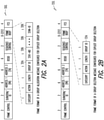
- FIG. 2A illustrates the frame format of a group allocation message configured for explicit deletion of station-management groups in accordance with some embodiments.
- the group allocation message 202 may be transmitted by the access point 102 ( FIG. 1 ) to indicate to which of stations 104 ( FIG. 1 ) are selected to be part of a station-management group 105 ( FIG. 1 ).
- the numbers above each field of the group allocation message 202 may indicate the length of each of the fields in octets.
- the group allocation message 202 includes a group identification (ID) field 204 within the frame body to identify the station-management group 105 and a plurality of associated identifier (AID) fields 206 to identify the associated IDs of the stations 104 that are being selected for the station-management group 105.
- the group allocation message 202 may be transmitted in either a broadcast or a unicast fashion. When transmitted in a broadcast fashion, the receiver address (RA) of the group allocation message 202 is the broadcast address.
- the frame body of the group allocation message 202 may also include a category field and an action field indicating that the message is a group allocation message, and a length field indicating the length of the frame body.
- FIG. 2B illustrates the frame format of a group deletion message in accordance with some embodiments.
- the group deletion message 232 may be transmitted by an access point 102 ( FIG. 1 ) to delete an established station-management group 105 ( FIG. 1 ) or to remove one or more stations 104 ( FIG. 1 ) from the established station-management group 105.
- the numbers above each field of the group allocation message 232 may indicate the length of each of the fields in octets.
- the group deletion message 232 may be considered a station deletion message.
- the group deletion message 232 may be addressed to the one or more stations 104 of the station-management group 105 that are to be deleted.
- the group deletion message 232 may include a group ID field 234 in the frame body to identify the station-management group 105.
- the group deletion message 232 may be addressed to the stations being removed from the group using the RA field.
- the frame body of the group deletion message 232 may also include a category field and an action field indicating that the message is a group allocation message, and a length field indicating the length of the frame body.
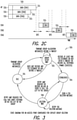
- FIG. 2C illustrates a DL MU MIMO transmission in accordance with some embodiments.
- the DL MU MIMO transmission 240 may be transmitted by an access point to stations that are part of an established station-management group.
- the DL MU MIMO transmission 240 may correspond to data frames 103 ( FIG. 1 ) that are transmitted in accordance with a MU-MIMO technique to station management group 105 ( FIG. 1 ), or data frames 113 ( FIG. 1 ) that are transmitted in accordance with a MU-MIMO technique to station management group 115 ( FIG. 1 ).
- the DL MU MIMO transmission 240 may comprise a concurrent transmission of spatially-separated data packets 250 to at least some of the stations 104 of a station-management group.
- the spatially-separated data packets 250 may comprise a plurality of individual data packets, such as data packet 251, data packet 252 and data packet 253, transmitted concurrently within the same frequency spectrum.
- Data packet 251 may be intended for a first station (STA1)
- data packet 252 may be intended for a second station (STA2)
- data packet 253 may be intended for a third station (STA3).
- STA1 first station
- STA2 second station
- STA3 third station
- individual data packets 251, 252, 253 are separately illustrated in FIG. 2C , this does not imply that they are transmitted on separate frequency channels.
- each data packet 250 may be separately precoded for receipt by the receiving stations. These embodiments are described in more detail below.
- the spatially-separated individual data packets 250 may be transmitted concurrently on the same frequency channel, which may comprise the same set of orthogonal frequency division multiplexed (OFDM) frequency subcarriers.
- Each of the individual data packets 250 may be addressed to and precoded for receipt by one of the stations 104 of the station-management group 105.
- the individual data packets may be transmitted at the same time and each data packet 250 may be transmitted on a different spatial channel.
- a DL MU MIMO or a DL SDMA technique may be employed.
- a single frequency channel may be used to transmit the DL MU MIMO transmission 240.
- a primary frequency channel and up to seven secondary frequency channels may be used to transmit the DL MU-MIMO transmissions 240.
- Each frequency channel may be a 20-MHZ frequency channel and may use a plurality of OFDM subcarriers.
- the plurality of individual data packets 250 of the DL MU-MIMO transmission 240 may be transmitted as a single frame by the access point 102 in accordance with a CSMA/CA technique.
- the access point 102 may receive individual acknowledgements 255, such as block acknowledgements (BA) 255, from the stations 104 of the station-management group 105.
- the acknowledgements 255 may be transmitted by the stations in accordance with a CSMA/CA technique on the same frequency channel in response to receipt of the DL MU-MIMO transmission 240.
- block acknowledgements 255 are illustrated in FIG. 2C , this does not imply that they are transmitted on different frequency channels.
- a DL MU-MIMO transmission 240 may be a single frame that may include, among other things, one or more training fields and one or more signaling fields.
- a DL MU-MIMO transmission 240 may be configured in accordance with an IEEE 802.11 standard.
- FIG. 3 is a state diagram for an access point configured for explicit deletion of station-management groups in accordance with some embodiments.
- An access point such as access point 102 ( FIG. 1 ) may operate in accordance with state diagram 300.
- the access point 102 is idle with respect to station group management activities.
- the access point 102 may enter the group setup wait state 302.
- the access point 102 may establish a station-management group 105 to include stations 104 from which response frames are received and enter the established state 304.
- the access point 102 may transmit a DL MU-MIMO transmission 240 to the stations 104 of the established station-management group 105 using a MU-MIMO technique. While in the established state 304, the access point 102 may explicitly delete the station-management group 105 by transmitting a group deletion message 232 ( FIG. 2B ) or a station deletion message and enter the deletion wait state 306. During the deletion wait state 306, the access point 102 may wait for stations to acknowledge receipt of the group deletion message 232. After all stations 104 are deleted from the station-management group 105 or a retry limit is reached, the access point 102 may return to the idle state 301.
- the access point 102 may return to the idle state 301 from the group setup wait state 302 when no response frames are received from any of the selected stations 104 within a predetermined period of time.
- the access point 102 may also retry sending a station deletion message while in the deletion wait state 306 and return to the established state 304 if there is station remaining in the group.
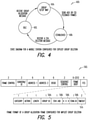
- FIG. 4 is a state diagram for a station configured for explicit deletion of station-management groups in accordance with some embodiments.
- a communication station such as one of communication stations 104 ( FIG. 1 ), may operate in accordance with state diagram 400.
- the communication station 104 may receive a group allocation message 202 ( FIG. 2A ) from an access point 102 ( FIG. 1 ) and enter group setup wait state 404.
- the communication station 104 may send a response frame, such as an ACK frame or a frame that includes CSI feedback, to indicate that it will join a station-management group 105 ( FIG. 1 ) indicated in the group allocation message 202 and enter the established state 406.
- a response frame such as an ACK frame or a frame that includes CSI feedback
- the communication station 104 is a member of the station-management group 105 and may receive DL MU-MIMO transmission 240 ( FIG. 2C ) from the access point 102. In these explicit group deletion embodiments, the communication station 104 may remain in the established state 406 until it receives a group deletion message from the access point.
- FIG. 5 illustrates the frame format of a group allocation message configured for implicit deletion of station-management groups in accordance with some embodiments.
- the group allocation message 502 may be transmitted by the access point 102 ( FIG. 1 ) to stations 104 ( FIG. 1 ) that are selected to be part of a station-management group 105 ( FIG. 1 ).
- the numbers above each field of the group allocation message 502 may indicate the length of each of the fields in octets.
- the group allocation message 502 includes a group ID field 504 within the frame body to identify the station-management group 105 and a plurality of AID fields 506 to identify the associated IDs of the stations 104 that are being selected for the station-management group 105.
- the frame body of the group allocation message 502 may also include a timeout field 514 to indicate a maximum duration of group membership.
- the access point 102 will automatically delete the station-management group when no group update messages or no DL MU-MIMO transmissions 240 are sent after the predetermined period of time indicated in timeout field 514 to the stations of the established station-management group 105.
- timeout field 514 may indicate a timeout interval in milliseconds.
- the frame body of the group allocation message 502 may also include a category field indicating that the message is a group allocation message configured for implicit group deletion, an action field, and a length field indicating the length of the frame body. Other fields may be included in the frame body of the group allocation message 502, group allocation message 202 ( FIG. 2A ), and group deletion message 232 ( FIG. 2B ).
- station-management groups may be established for time periods ranging from 10 milliseconds to a much longer period such as hours.
- the establishment and reestablishment of station-management groups in both the explicit group deletion and implicit group deletion embodiments allows an access point to dynamically update and change members of a station-management group based on, among other things, traffic patterns of the individual stations and changing channel conditions.
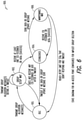
- FIG. 6 is a state diagram for an access point configured for implicit deletion of station-management groups in accordance with some embodiments.
- An access point such as access point 102 ( FIG. 1 ) may operate in accordance with state diagram 600.
- idle state 601 the access point 102 is idle with respect to station group management activities.
- group allocation message 502 FIG. 5
- selected stations 104 FIG. 1
- the access point 102 may enter the group setup wait state 602.
- the access point 102 may establish the station-management group 105 to include stations 104 from which response frames are received and enter the established state 604 and establish a station-management group 105 ( FIG. 1 ).
- the access point 102 may transmit a DL MU-MIMO transmission 240 ( FIG. 2C ) to the stations 104 of the station-management group 105. While in the established state 604, the access point 102 may implicitly delete the station-management group 105 by refraining from transmitting DL MU-MIMO transmissions 240 or group update messages to the stations 104 of the established station-management group 105 after a predetermined period of time indicated in timeout field 514 ( FIG. 5 ) and return to idle state 601. While in the established state 604, the access point 102 may enter maintenance wait state 606 while waiting for acknowledgement frames or CSI feedback from stations 104 in response to a DL MU-MIMO transmission 240. Data packets may be retransmitted when acknowledgements are not received in accordance with conventional techniques.
- the access point 102 may return to the idle state 601 from the group setup wait state 602 when no response frames are received from any of the selected stations 104 within a predetermined period of time.
- the access point 102 may also return to the idle state 601 after a predetermined period of time after a retry limit is reached for stations that do not respond with to the a DL MU-MIMO transmission 240.
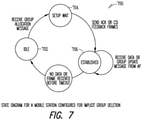
- FIG. 7 is a state diagram for a communication station configured for implicit deletion of station-management groups in accordance with some embodiments.
- a communication station such as one of communication stations 104 ( FIG. 1 ), may operate in accordance with state diagram 700.
- the communication station 104 may receive a group allocation message 502 ( FIG. 5 ) from an access point 102 ( FIG. 1 ) and enter group setup wait state 704.
- the communication station 104 may send a response frame, such as an ACK frame or a frame including CSI feedback , to indicate that it will join the indicated station-management group and enter the established state 706.
- the communication station 104 may receive DL MU-MIMO transmissions 240 ( FIG.
- the communication station 104 may remain in the established state 706 until it no longer receives any DL MU-MIMO transmissions 240 or group update messages for the predetermined period of time indicated in timeout field 514 ( FIG. 5 ) of the group allocation message 502.
- the access point 102 is configured to set up and manage one or more station-management groups 105 by transmitting a group allocation message to selected stations 104.
- Group allocation message 202 ( FIG. 2A ) may be transmitted when the access point 102 employs explicit group deletion, and group allocation message 502 ( FIG. 5 ) may be transmitted when the access point 102 employs implicit group deletion.
- the access point 102 may establish the station-management group 105 to include stations from which response frames are received.
- the access point 102 may transmit DL MU-MIMO transmissions 240 to the stations of the station-management group 105 using a MU-MIMO technique.
- the access point 102 may either explicitly delete the station-management group by transmitting a group deletion message 232 to the stations of the group or implicitly delete the station-management group by refraining from transmitting DL MU-MIMO transmissions 240 or group update messages to the stations of the group for a predetermined period of time. In some embodiments, the access point 102 may concurrently establish more than one station-management group.
- the response frames are transmitted by at least some of the selected stations 104 in response to receipt of a group allocation message 202 or 502, and the access point 102 establishes the station-management group 105 to include stations 104 from which response frames are received within a predetermined period of time.
- the response frames are acknowledge frames, and all stations that receive a group allocation message send back an acknowledge frame. Based on the receipt of acknowledge frames, the access point 102 may decide which of the stations to include in the station management group.
- the access point 102 may attempt to establish a station-management group 105 within a predetermined period of time. During this period of time, the access point 102 may transmit one or more group allocation messages to selected stations 104. Stations 104 that respond within this period of time may become part of the indicated station-management group 105.
- the access point 102 may explicitly delete one or more stations 104 from the established station-management group 105 by transmitting a group deletion message 232 to one or more of the stations 104 of the established station-management group 105. In some embodiments, the access point 102 may implicitly delete one or more stations 104 from an established station-management group 105 by refraining from transmitting a DL MU-MIMO transmission 240 or group update messages to one or more stations 104 for a predetermined period of time. Stations 104 that are deleted from the station-management group may be deleted from a memory of the access point 102 that identifies stations currently part of a station-management group.
- the access point 102 When the access point 102 is configured for implicit group deletion, no explicit messages need to be transmitted to the stations 104 of an established station-management group 105 to indicate that stations are being removed or the station-management group 105 is being deleted.
- the stations of the station-management group 105 are automatically deleted as discussed above by refraining from transmitting DL MU-MIMO transmissions 240 or group update messages for a predetermined period of time.
- stations 104 may respond to the group deletion message 232 with an acknowledgement frame. These responding stations 104 may be deleted from the station-management group 105 after the acknowledgement frame is received by the access point 102.
- a DL MU-MIMO transmission 240 may comprise a concurrent transmission of spatially-separated data packets 250 to at least some of the stations 104 of the station management group 105 employing a DL MU MIMO or DL SDMA technique.
- beamforming may be employed by the access point 102 as well as the stations 104 for transmitting and receiving.
- a station-management group may be a DL SDMA group when an SDMA technique is used to transmit DL MU-MIMO transmissions 240.
- the individual data packets 251, 252, and 253 may be precoded based on a CSI matrix for the stations 104 of the station-management group 105.
- the precoding matrix may be generated from the CSI for each station 104, and the precoding matrix may be used to precode the individual data packets for concurrent transmission within a DL MU-MIMO transmission 240.
- the stations 104 include processing circuitry to separate their packet from packets intended for other stations based on the station's CSI or the CSI matrix.
- the group allocation message 202 may be used as a sounding frame by the stations 104 to determine their CSI.
- the access point 102 may be configured to select stations 104 for the station-management group 105 based on the CSI of the stations 104 associated with the access point within the BSS 100. Stations 104 having a greatest difference between their CSI's may be selected for a station-management group 105, although this is not a requirement. In these embodiments, the greater difference in CSI's between stations 104 of a station-management group 105 may provide for a greater spatial channel separation by precoding, making it easier for a station 104 to separate out its data packet from the other data packets within a DL MU-MIMO transmission 240.
- the access point 102 may select stations 104 for different station-management groups 105 and 115 so that peer-to-peer links 107 within a group can be used to communicate simultaneously without causing interference to each other's directional transmissions.
- FIG. 1 illustrates stations 104 of station-management group 105 being located together and stations of station-management group 115 being located together, this may not be the case when stations 104 are selected for a station-management group based on their CSI.
- the access point 102 may transmit the buffered traffic as unicast traffic to the station rather than transmitting the traffic as part of a DL MU-MIMO transmission 240.
- a station 104 may be removed from a group if the station's CSI has changed (e.g., if the CSI of the station 104 is not sufficiently different from the CSI of other stations to allow for sufficient signal separation by precoding) or if there has been no traffic for the station 104.
Landscapes
- Engineering & Computer Science (AREA)
- Computer Networks & Wireless Communication (AREA)
- Signal Processing (AREA)
- Databases & Information Systems (AREA)
- Multimedia (AREA)
- Mobile Radio Communication Systems (AREA)
Claims (13)
- Zugangspunkt (102), der konfiguriert ist, eine Stationsmanagementgruppe einzurichten und zu managen, wobei der Zugangspunkt konfiguriert ist zum:Senden einer Gruppenzuteilungsnachricht (202, 232, 502) an ausgewählte Stationen (104), wobei die Gruppenzuteilungsnachricht (202, 232, 502) ein Timeout-Feld (514) enthält;Einrichten der Stationsmanagementgruppe so, dass sie Stationen enthält, von denen Antwortrahmen auf die Gruppenzuteilungsnachricht empfangen werden;Senden von Datenrahmen (103, 113) an die Stationen der Stationsmanagementgruppe (105, 115) als eine Downlink-Mehrfachanwender-Mehrfacheingabe-Mehrfachausgabe-Übertragung, DL-MU-MIMO-Übertragung, (103, 113); undimplizit Löschen einer oder mehrerer Stationen von der Stationsmanagementgruppe, wobei keine explizite Nachricht gesendet wird, um anzugeben, dass die eine oder die mehreren Stationen von der Stationsmanagementgruppe zu entfernen sind, wobei der Zugangspunkt konfiguriert ist, die eine oder die mehreren Stationen durch Absehen vom Senden von DL-MU-MIMO-Übertragungen oder Gruppenaktualisierungsnachrichten an die eine oder die mehreren Stationen der Stationsmanagementgruppe für eine vorgegebene Zeitperiode automatisch von der Stationsmanagementgruppe zu löschen, wobei die vorgegebene Zeitperiode in dem Timeout-Feld angegeben ist.
- Zugangspunkt nach Anspruch 1, wobei der Zugangspunkt ausgelegt ist, die Antwortrahmen zumindest von einigen der ausgewählten Stationen als Reaktion auf den Empfang der Gruppenzuteilungsnachricht zu empfangen, und
wobei der Zugangspunkt ausgelegt ist, die Stationsmanagementgruppe so einzurichten, dass sie Stationen enthält, von denen Antwortrahmen innerhalb der vorgegebenen Zeitperiode empfangen werden. - Zugangspunkt nach Anspruch 1, wobei der Zugangspunkt ausgelegt ist, die DL-MU-MIMO-Übertragung an die Stationen der Stationsmanagementgruppe zu senden, nachdem die Stationsmanagementgruppe eingerichtet wurde, und
wobei die DL-MU-MIMO-Übertragung eine gleichzeitige Übertragung von räumlich getrennten Datenpaketen an die Stationen der Stationsmanagementgruppe umfasst. - Zugangspunkt nach Anspruch 3, wobei die räumlich getrennten Datenpakete mehrere individuelle Datenpakete umfassen, die gleichzeitig auf demselben Frequenzkanal gesendet werden,
wobei der Zugangspunkt ausgelegt ist, für den Empfang durch eine der Stationen der Stationsmanagementgruppe jedes der individuellen Datenpakete zu adressieren und vorzucodieren. - Zugangspunkt nach Anspruch 4, wobei der Zugangspunkt ausgelegt ist, auf ein drahtloses Medium in Übereinstimmung mit einer Technik eines Trägererfassungsmehrfachzugriffs mit Kollisionsverhinderung, CSMA/CA-Technik, zuzugreifen, und wobei die DL-MU-MIMO-Übertragung von dem Zugangspunkt eine einzige Übertragung in Übereinstimmung mit der CSMA/CA-Technik ist, und
wobei nach der Übertragung der DL-MU-MIMO-Übertragung der Zugangspunkt konfiguriert ist, individuelle Bestätigungen von den Stationen der Stationsmanagementgruppe zu empfangen, wobei die Bestätigungen durch die Stationen in Übereinstimmung mit einer CSMA/CA-Technik gesendet werden. - Zugangspunkt nach Anspruch 4, wobei der Zugangspunkt ausgelegt ist, die individuellen Datenpakete in der DL-MU-MIMO-Übertragung anhand einer Kanalzustandsinformationsmatrix, CSI-Matrix, für die Stationen der Stationsmanagementgruppe vorzucodieren.
- Zugangspunkt nach Anspruch 1, wobei der Zugangspunkt konfiguriert ist, Stationen für die Stationsmanagementgruppe anhand von Kanalzustandsinformationen, CSI, der Stationen, die dem Zugangspunkt zugeordnet sind, auszuwählen,wobei Stationen mit einem größten Unterschied zwischen ihren CSI oder Stationen mit ähnlichen Verkehrsmustern für die Stationsmanagementgruppe ausgewählt werden undwobei die Antwortrahmen entweder einen Bestätigungsrahmen oder einen Rahmen, der eine CSI-Rückmeldung enthält, umfassen.
- Zugangspunkt nach Anspruch 1, wobei die Gruppenzuteilungsnachricht ein Gruppenidentifikationsfeld, Gruppen-ID-Feld, um die Stationsmanagementgruppe zu identifizieren, und eine zugeordnete Kennung, AID, um die Stationen zu identifizieren, die für die Stationsmanagementgruppe ausgewählt wurden, enthält.
- Zugangspunkt nach Anspruch 8, wobei der Zugangspunkt ausgelegt ist, die Gruppenzuteilungsnachricht so zu konfigurieren, dass sie das Timeout-Feld enthält, um die vorgegebene Zeitperiode zum automatischen Löschen der Stationsmanagementgruppe anzugeben, nachdem der Zugangspunkt davon absieht, DL-MU-MIMO-Übertragungen oder Gruppenaktualisierungsnachrichten an die Stationen der Stationsmanagementgruppe zu senden, und
wobei der Zugangspunkt ferner konfiguriert ist, die Gruppenaktualisierungsnachrichten oder die DL-MU-MIMO-Übertragungen an die Stationen der Stationsmanagementgruppe innerhalb der vorgegebenen Zeitperiode zu senden, um eine Einrichtung der Stationsmanagementgruppe beizubehalten. - Zugangspunkt nach Anspruch 1, wobei der Zugangspunkt und mehrere der Stationen eine Basisdienstgruppe, BSS, umfassen, die ausgelegt ist, in Übereinstimmung mit einem IEEE 802.11-Standard zu arbeiten,wobei der Zugangspunkt ausgelegt ist, Stationen von der BSS für die Stationsmanagementgruppe auszuwählen, undwobei der Zugangspunkt und die Stationen ausgelegt sind, eine CSMA/CA-Technik eines IEEE 802.11-Standards zum Zugreifen auf ein drahtloses Medium zu implementieren.
- Verfahren, das durch einen Zugangspunkt, AP, für ein Stationsgruppenmanagement ausgeführt wird, und das Folgendes umfasst:Senden einer Gruppenzuteilungsnachricht an ausgewählte Stationen, wobei die Gruppenzuteilungsnachricht ein Timeout-Feld enthält;Einrichten einer Stationsmanagementgruppe so, dass sie Stationen enthält, von denen Antwortrahmen auf die Gruppenzuteilungsnachricht empfangen werden;Senden von Datenrahmen an Stationen der Stationsmanagementgruppe als eine Downlink-Mehrfachanwender-Mehrfacheingabe-Mehrfachausgabe-Übertragung, DL-MU-MIMO-Übertragung; undimplizit Löschen einer oder mehrerer Stationen von der Stationsmanagementgruppe, wobei keine explizite Nachricht gesendet wird, um anzugeben, dass die eine oder die mehreren Stationen von der Stationsmanagementgruppe zu entfernen sind, wobei der Zugangspunkt die eine oder die mehreren Stationen durch Absehen vom Senden von DL-MU-MIMO-Übertragungen oder Gruppenaktualisierungsnachrichten an die eine oder die mehreren Stationen der Stationsmanagementgruppe für eine vorgegebene Zeitperiode automatisch von der Stationsmanagementgruppe löscht, wobei die vorgegebene Zeitperiode in dem Timeout-Feld angegeben ist.
- Verfahren nach Anspruch 11, wobei die Antwortrahmen zumindest von einigen der ausgewählten Stationen als Reaktion auf den Empfang der Gruppenzuteilungsnachricht empfangen werden und
wobei der Zugangspunkt die Stationsmanagementgruppe so einrichtet, dass sie Stationen enthält, von denen Antwortrahmen innerhalb der vorgegebenen Zeitperiode empfangen werden. - Zugangspunkt nach Anspruch 11, wobei die DL-MU-MIMO-Übertragung an die Stationen der Stationsmanagementgruppe gesendet wird, nachdem die Stationsmanagementgruppe eingerichtet wurde, und
wobei die DL-MU-MIMO-Übertragung eine gleichzeitige Übertragung von räumlich getrennten Datenpaketen an die Stationen der Stationsmanagementgruppe umfasst.
Applications Claiming Priority (2)
| Application Number | Priority Date | Filing Date | Title |
|---|---|---|---|
| US12/842,239 US8194687B2 (en) | 2010-07-23 | 2010-07-23 | Access point configured for station group management and method for managing station-management groups |
| PCT/US2011/043732 WO2012012229A2 (en) | 2010-07-23 | 2011-07-12 | Access point configured for station group management and method for managing station-management groups |
Publications (3)
| Publication Number | Publication Date |
|---|---|
| EP2596587A2 EP2596587A2 (de) | 2013-05-29 |
| EP2596587A4 EP2596587A4 (de) | 2017-05-03 |
| EP2596587B1 true EP2596587B1 (de) | 2022-01-19 |
Family
ID=45493553
Family Applications (1)
| Application Number | Title | Priority Date | Filing Date |
|---|---|---|---|
| EP11810167.4A Active EP2596587B1 (de) | 2010-07-23 | 2011-07-12 | Für stationsgruppenverwaltung konfigurierter zugangspunkt und verfahren zur verwaltung von stationsverwaltungsgruppen |
Country Status (7)
| Country | Link |
|---|---|
| US (3) | US8194687B2 (de) |
| EP (1) | EP2596587B1 (de) |
| JP (2) | JP5636103B2 (de) |
| KR (1) | KR101516094B1 (de) |
| CN (2) | CN103109468B (de) |
| BR (1) | BR112013001687B1 (de) |
| WO (1) | WO2012012229A2 (de) |
Families Citing this family (32)
| Publication number | Priority date | Publication date | Assignee | Title |
|---|---|---|---|---|
| US8194687B2 (en) | 2010-07-23 | 2012-06-05 | Intel Corporation | Access point configured for station group management and method for managing station-management groups |
| US9287944B2 (en) * | 2010-12-20 | 2016-03-15 | Celeno Communications Ltd. | System and method for allowing multiple stations in a network to use MU-MIMO transmit beamforming |
| KR101942551B1 (ko) * | 2011-12-12 | 2019-01-25 | 한국전자통신연구원 | 통신 시스템에서 데이터 송수신 장치 및 방법 |
| EP4618660A3 (de) | 2012-03-01 | 2025-12-17 | InterDigital Patent Holdings, Inc. | Paralleler mehrbenutzerkanalzugriff in wlan-systemen |
| CN103313414B (zh) | 2012-03-09 | 2017-02-08 | 上海贝尔股份有限公司 | 在无线局域网中用于调度无线资源的方法 |
| WO2013141672A1 (ko) * | 2012-03-23 | 2013-09-26 | 엘지전자 주식회사 | 상향링크 신호 전송 방법 및 스테이션 장치와, 상향링크 신호 수신 방법 및 액세스 포인트 장치 |
| CN108990038B (zh) * | 2012-04-11 | 2021-12-03 | 苹果公司 | 运营商辅助的设备到设备(d2d)发现 |
| US8942173B2 (en) * | 2012-04-13 | 2015-01-27 | Intel Corporation | Interference notification in device-to-device communication |
| US9379794B2 (en) * | 2012-10-02 | 2016-06-28 | Qualcomm Incorporated | Scheduling transmission for multi-user, multiple-input, multiple-output data |
| JP6008697B2 (ja) * | 2012-11-02 | 2016-10-19 | 富士フイルム株式会社 | 放射線画像撮影システム、放射線画像撮影装置および自動露出制御方法 |
| CN103906087A (zh) * | 2012-12-28 | 2014-07-02 | 华为技术有限公司 | 升级接入点的方法、装置和系统 |
| EP3028479A4 (de) * | 2013-07-30 | 2016-12-21 | Nokia Technologies Oy | Positionskonfigurationsinformationen |
| US9991940B2 (en) * | 2013-09-10 | 2018-06-05 | Qualcomm Incorporated | Multi-user multiple-input multiple-output (MU-MIMO) feedback protocol |
| US20160255656A1 (en) * | 2013-10-01 | 2016-09-01 | Interdigital Patent Holdings, Inc. | Enhancements for coordinated orthogonal block-based resource allocation (cobra) in wlan systems |
| CN105024787A (zh) * | 2014-08-29 | 2015-11-04 | 魅族科技(中国)有限公司 | 一种数据传输方法、相关装置及系统 |
| EP3188536B1 (de) | 2014-08-29 | 2021-04-14 | Kabushiki Kaisha Toshiba | Integrierte schaltung zur drahtlosen kommunikation, drahtloskommunikationsendgerät und drahtloskommunikationsverfahren |
| CN105578453B (zh) * | 2014-10-11 | 2019-12-13 | 电信科学技术研究院 | 一种寻址方法及设备 |
| US10257854B2 (en) * | 2015-02-02 | 2019-04-09 | Samsung Electronics Co., Ltd. | Management of uplink multi-user transmissions in wireless local area networks |
| US9723623B2 (en) * | 2015-03-11 | 2017-08-01 | Qualcomm Incorporated | Access point managed concurrent transmissions |
| US20180132278A1 (en) * | 2015-04-28 | 2018-05-10 | Interdigital Patent Holdings, Inc. | Methods, apparatus and systems for procedures for carrier sense multiple access and spatial reuse in sub-channelized wireless local area networks (wlans) |
| JP2019522931A (ja) * | 2016-06-24 | 2019-08-15 | クゥアルコム・インコーポレイテッドQualcomm Incorporated | 適応型非アクティビティタイムアウト管理 |
| JP6335976B2 (ja) * | 2016-07-06 | 2018-05-30 | インテル・コーポレーション | コンピュータプログラムおよびコンピュータ可読記録媒体 |
| CN115296707B (zh) * | 2016-07-21 | 2024-03-26 | 交互数字专利控股公司 | 毫米波wlan系统中的多输入多输出设置 |
| US10270875B1 (en) | 2016-09-19 | 2019-04-23 | Amazon Technologies, Inc. | Dynamic grouping of device representations |
| US10270738B1 (en) | 2016-09-19 | 2019-04-23 | Amazon Technologies, Inc. | Aggregated group state for a group of device representations |
| US10887174B2 (en) * | 2016-09-19 | 2021-01-05 | Amazon Technologies, Inc. | Group command management for device groups |
| EP3599785B1 (de) | 2017-03-20 | 2022-10-05 | LG Electronics Inc. | Sitzungsverwaltungsverfahren und smf-knoten |
| US20180324801A1 (en) * | 2017-05-02 | 2018-11-08 | Qualcomm Incorporated | Access point managed channel correlation for mu-mimo |
| US10348375B2 (en) * | 2017-09-28 | 2019-07-09 | Hewlett Packard Enterprise Development Lp | Changing steering matrix corresponding to MU-MIMO group to allow access points transmit on wireless communication channel simultaneously |
| US10523287B1 (en) * | 2018-11-28 | 2019-12-31 | Telefonaktiebolaget Lm Ericsson (Publ) | Transmission parameter assignment for MU-MIMO wireless devices |
| US12308965B2 (en) * | 2020-04-07 | 2025-05-20 | Telefonaktiebolaget Lm Ericsson (Publ) | Codebook based zero-forced MU-MIMO beamforming |
| CN113810925A (zh) * | 2020-06-12 | 2021-12-17 | 华为技术有限公司 | 接入点功能、中继功能自动开启方法及电子设备 |
Family Cites Families (36)
| Publication number | Priority date | Publication date | Assignee | Title |
|---|---|---|---|---|
| JP4178501B2 (ja) * | 2002-05-21 | 2008-11-12 | 日本電気株式会社 | アンテナ送受信システム |
| US7599420B2 (en) * | 2004-07-30 | 2009-10-06 | Rearden, Llc | System and method for distributed input distributed output wireless communications |
| JP4463744B2 (ja) * | 2005-08-29 | 2010-05-19 | 株式会社ケーヒン | ユニット連結構造 |
| US7826416B2 (en) * | 2005-09-21 | 2010-11-02 | Broadcom Corporation | Method and system for a simplified user group selection scheme with finite-rate channel state information feedback for FDD multiuser MIMO downlink transmission |
| US7839842B2 (en) * | 2005-09-21 | 2010-11-23 | Broadcom Corporation | Method and system for a range reduction scheme for user selection in a multiuser MIMO downlink transmission |
| CN101034923A (zh) * | 2006-03-07 | 2007-09-12 | 松下电器产业株式会社 | 一种用于多天线无线通信系统中的分组调度方法和系统 |
| US7941186B2 (en) * | 2006-07-25 | 2011-05-10 | Samsung Electronics Co., Ltd. | Apparatus and method for scheduling multiuser/single user in multiple input multiple output (MIMO) system |
| US8072922B2 (en) * | 2006-07-31 | 2011-12-06 | Qualcomm Incorporated | Method and apparatus for negotiating personalities in a wireless communications system |
| CN1929638A (zh) * | 2006-10-20 | 2007-03-14 | 中兴通讯股份有限公司 | 一种无线局域网ip组播帧传输的组播成员管理方法 |
| JP2010512110A (ja) * | 2006-12-06 | 2010-04-15 | トムソン ライセンシング | MIMO(Multiple−inputMultiple−output)システムにおけるオーバーヘッドの削減 |
| JP5134018B2 (ja) * | 2007-06-23 | 2013-01-30 | パナソニック株式会社 | 多入力多出力(mimo)通信システムにおける通信チャネルの最適化の方法およびシステム |
| CN101350649A (zh) * | 2007-07-19 | 2009-01-21 | 中兴通讯股份有限公司 | 一种无线网络控制器获知不支持组合使用能力的方法 |
| WO2009014751A2 (en) * | 2007-07-24 | 2009-01-29 | Nokia Siemens Networks Oy | Apparatus, methods and computer program product providing group source allocation for reducing signaling overhead |
| US8379601B2 (en) * | 2007-08-16 | 2013-02-19 | Motorola Mobility Llc | Method and system for selective use of control channel element based implicit pointing |
| CN101409883A (zh) * | 2007-10-12 | 2009-04-15 | Nxp股份有限公司 | 多载波宽带系统中对下行链路辅助基准信号作资源规划的方法和系统 |
| US7826848B2 (en) * | 2007-10-31 | 2010-11-02 | Mitisubishi Electric Research Laboratories, Inc. | Cooperative communication in wireless cellular networks |
| US8331284B2 (en) * | 2008-03-03 | 2012-12-11 | Qualcomm Incorporated | Method of assigning traffic resources to one or more access terminals |
| JP5211779B2 (ja) * | 2008-03-19 | 2013-06-12 | 富士通株式会社 | 無線通信システム並びに運用管理保守方法及び運用管理保守装置 |
| CN101547066B (zh) * | 2008-03-25 | 2013-03-27 | 中兴通讯股份有限公司 | 基于mu-mimo方式的下行预编码信息指示方法 |
| JP2010028737A (ja) * | 2008-07-24 | 2010-02-04 | Nippon Telegr & Teleph Corp <Ntt> | 無線通信方法及び無線通信システム |
| JP2010081360A (ja) * | 2008-09-26 | 2010-04-08 | Toshiba Corp | 無線通信装置および無線通信方法 |
| US8743985B2 (en) * | 2009-01-05 | 2014-06-03 | Intel Corporation | Method and apparatus using a base codebook structure for beamforming |
| US8351533B2 (en) * | 2009-04-16 | 2013-01-08 | Intel Corporation | Group resource allocation techniques for IEEE 802.16m |
| US8526351B2 (en) * | 2009-06-05 | 2013-09-03 | Broadcom Corporation | Channel characterization and training within multiple user, multiple access, and/or MIMO wireless communications |
| CN101621322B (zh) * | 2009-07-23 | 2013-05-22 | 北京航空航天大学 | 协作多点mimo传输中的低反馈量多用户调度方法 |
| US8472383B1 (en) * | 2009-11-24 | 2013-06-25 | Marvell International Ltd. | Group management in multiuser communications |
| US8599708B2 (en) * | 2010-01-14 | 2013-12-03 | Qualcomm Incorporated | Channel feedback based on reference signal |
| WO2011115408A2 (en) * | 2010-03-15 | 2011-09-22 | Lg Electronics Inc. | Method and apparatus for transmitting frame in wlan system |
| US8855067B2 (en) * | 2010-04-02 | 2014-10-07 | Marvell World Trade Ltd. | Multi-user communication group management and signaling |
| US8917790B2 (en) * | 2010-04-12 | 2014-12-23 | Lg Electronics Inc. | Method and device for efficient feedback in wireless communication system supporting multiple antennas |
| US8594007B2 (en) * | 2010-04-23 | 2013-11-26 | Qualcomm Incorporated | Sequential ACK for multi-user transmissions |
| US9089002B2 (en) * | 2010-05-16 | 2015-07-21 | Qualcomm Incorporated | Efficient group ID management for wireless local area networks (WLANs) |
| US9860037B2 (en) * | 2010-07-21 | 2018-01-02 | Qualcomm, Incorporated | Method and apparatus for ordering sub-fields of VHT-SIG-A and VIT-SIG-B fields |
| US8194687B2 (en) | 2010-07-23 | 2012-06-05 | Intel Corporation | Access point configured for station group management and method for managing station-management groups |
| US9209872B2 (en) * | 2010-12-22 | 2015-12-08 | Intel Corporation | MU-MIMO access point and user station including methods for multi-user group management |
| US9215571B2 (en) * | 2011-02-27 | 2015-12-15 | Lg Electronics Inc. | Method for transmitting and receiving packet for multi user in wireless local area network and apparatus for the same |
-
2010
- 2010-07-23 US US12/842,239 patent/US8194687B2/en active Active
-
2011
- 2011-07-12 WO PCT/US2011/043732 patent/WO2012012229A2/en not_active Ceased
- 2011-07-12 JP JP2013520741A patent/JP5636103B2/ja active Active
- 2011-07-12 KR KR1020137004506A patent/KR101516094B1/ko active Active
- 2011-07-12 BR BR112013001687-6A patent/BR112013001687B1/pt active IP Right Grant
- 2011-07-12 CN CN201180045785.9A patent/CN103109468B/zh active Active
- 2011-07-12 CN CN201610862340.4A patent/CN107070518B/zh active Active
- 2011-07-12 EP EP11810167.4A patent/EP2596587B1/de active Active
-
2012
- 2012-05-02 US US13/461,909 patent/US9161180B2/en active Active
-
2014
- 2014-10-17 JP JP2014212374A patent/JP5932939B2/ja active Active
-
2015
- 2015-08-28 US US14/838,840 patent/US9813893B2/en active Active
Also Published As
| Publication number | Publication date |
|---|---|
| US8194687B2 (en) | 2012-06-05 |
| EP2596587A4 (de) | 2017-05-03 |
| EP2596587A2 (de) | 2013-05-29 |
| US20120020243A1 (en) | 2012-01-26 |
| BR112013001687A2 (pt) | 2016-05-24 |
| CN107070518B (zh) | 2021-02-09 |
| US9161180B2 (en) | 2015-10-13 |
| JP2015029353A (ja) | 2015-02-12 |
| US20160057611A1 (en) | 2016-02-25 |
| BR112013001687B1 (pt) | 2022-02-22 |
| KR101516094B1 (ko) | 2015-05-04 |
| CN103109468B (zh) | 2017-04-05 |
| WO2012012229A2 (en) | 2012-01-26 |
| KR20130042577A (ko) | 2013-04-26 |
| JP2013532921A (ja) | 2013-08-19 |
| WO2012012229A3 (en) | 2012-04-05 |
| CN107070518A (zh) | 2017-08-18 |
| CN103109468A (zh) | 2013-05-15 |
| US20120213122A1 (en) | 2012-08-23 |
| JP5932939B2 (ja) | 2016-06-08 |
| US9813893B2 (en) | 2017-11-07 |
| JP5636103B2 (ja) | 2014-12-03 |
Similar Documents
| Publication | Publication Date | Title |
|---|---|---|
| US9813893B2 (en) | System for station group management and method for managing station-management groups | |
| US10243714B2 (en) | Efficient uplink SDMA operation | |
| US12369069B2 (en) | Method for transmitting preferred link information | |
| EP3662710B1 (de) | Multi-tid-a-mpdu-übertragung | |
| EP3241391B1 (de) | Verfahren und station für digitale kommunikation mit störungsvermeidung | |
| US11064488B2 (en) | Efficient DL OFDMA frequency selectivity harvesting | |
| US9185692B2 (en) | Method and apparatus for retrieving transmit opportunity control in reverse direction grant | |
| WO2016095723A1 (en) | System and method for orthogonal frequency division multiple access power-saving poll transmission | |
| TW201116125A (en) | Communication system, communication device, communication method, and computer program | |
| CN1929338B (zh) | 蜂窝网和泛在网的融合方法和设备 | |
| CN103428885A (zh) | 一种竞争接入方法和站点 | |
| US10582449B2 (en) | Intra-PDDU power saving in WLAN | |
| EP3152854A1 (de) | Verfahren zur bereitstellung einer konkurrierenden kommunikation zwischen mehreren drahtloskommunikationsvorrichtungen | |
| CN109728839A (zh) | 一种接收上行报文的方法及无线局域网设备 | |
| EP4541120B1 (de) | Verfahren zur ermöglichung gleichzeitiger übertragungen über mehrere platten eines gemeinsam genutzten physikalischen uplink-kanals | |
| US20260206056A1 (en) | In device coexistence enhancements unavailability encoding and uhr operating mode notification frame enhancements | |
| WO2026145139A1 (zh) | 调度请求方法、调度请求接收方法、装置及设备 |
Legal Events
| Date | Code | Title | Description |
|---|---|---|---|
| PUAI | Public reference made under article 153(3) epc to a published international application that has entered the european phase |
Free format text: ORIGINAL CODE: 0009012 |
|
| 17P | Request for examination filed |
Effective date: 20130205 |
|
| AK | Designated contracting states |
Kind code of ref document: A2 Designated state(s): AL AT BE BG CH CY CZ DE DK EE ES FI FR GB GR HR HU IE IS IT LI LT LU LV MC MK MT NL NO PL PT RO RS SE SI SK SM TR |
|
| DAX | Request for extension of the european patent (deleted) | ||
| A4 | Supplementary search report drawn up and despatched |
Effective date: 20170330 |
|
| RIC1 | Information provided on ipc code assigned before grant |
Ipc: H04W 88/08 20090101ALI20170325BHEP Ipc: H04B 7/04 20170101AFI20170325BHEP |
|
| STAA | Information on the status of an ep patent application or granted ep patent |
Free format text: STATUS: EXAMINATION IS IN PROGRESS |
|
| 17Q | First examination report despatched |
Effective date: 20190305 |
|
| GRAP | Despatch of communication of intention to grant a patent |
Free format text: ORIGINAL CODE: EPIDOSNIGR1 |
|
| STAA | Information on the status of an ep patent application or granted ep patent |
Free format text: STATUS: GRANT OF PATENT IS INTENDED |
|
| RIC1 | Information provided on ipc code assigned before grant |
Ipc: H04W 8/18 20090101ALI20200925BHEP Ipc: H04W 88/08 20090101ALI20200925BHEP Ipc: H04B 7/04 20170101AFI20200925BHEP Ipc: H04W 4/08 20090101ALI20200925BHEP |
|
| INTG | Intention to grant announced |
Effective date: 20201016 |
|
| GRAJ | Information related to disapproval of communication of intention to grant by the applicant or resumption of examination proceedings by the epo deleted |
Free format text: ORIGINAL CODE: EPIDOSDIGR1 |
|
| STAA | Information on the status of an ep patent application or granted ep patent |
Free format text: STATUS: EXAMINATION IS IN PROGRESS |
|
| INTC | Intention to grant announced (deleted) | ||
| GRAP | Despatch of communication of intention to grant a patent |
Free format text: ORIGINAL CODE: EPIDOSNIGR1 |
|
| STAA | Information on the status of an ep patent application or granted ep patent |
Free format text: STATUS: GRANT OF PATENT IS INTENDED |
|
| INTG | Intention to grant announced |
Effective date: 20210813 |
|
| GRAS | Grant fee paid |
Free format text: ORIGINAL CODE: EPIDOSNIGR3 |
|
| GRAA | (expected) grant |
Free format text: ORIGINAL CODE: 0009210 |
|
| STAA | Information on the status of an ep patent application or granted ep patent |
Free format text: STATUS: THE PATENT HAS BEEN GRANTED |
|
| AK | Designated contracting states |
Kind code of ref document: B1 Designated state(s): AL AT BE BG CH CY CZ DE DK EE ES FI FR GB GR HR HU IE IS IT LI LT LU LV MC MK MT NL NO PL PT RO RS SE SI SK SM TR |
|
| REG | Reference to a national code |
Ref country code: GB Ref legal event code: FG4D |
|
| REG | Reference to a national code |
Ref country code: CH Ref legal event code: EP |
|
| REG | Reference to a national code |
Ref country code: DE Ref legal event code: R096 Ref document number: 602011072425 Country of ref document: DE |
|
| REG | Reference to a national code |
Ref country code: AT Ref legal event code: REF Ref document number: 1464379 Country of ref document: AT Kind code of ref document: T Effective date: 20220215 |
|
| REG | Reference to a national code |
Ref country code: IE Ref legal event code: FG4D |
|
| REG | Reference to a national code |
Ref country code: NL Ref legal event code: FP |
|
| REG | Reference to a national code |
Ref country code: LT Ref legal event code: MG9D |
|
| REG | Reference to a national code |
Ref country code: AT Ref legal event code: MK05 Ref document number: 1464379 Country of ref document: AT Kind code of ref document: T Effective date: 20220119 |
|
| PG25 | Lapsed in a contracting state [announced via postgrant information from national office to epo] |
Ref country code: SE Free format text: LAPSE BECAUSE OF FAILURE TO SUBMIT A TRANSLATION OF THE DESCRIPTION OR TO PAY THE FEE WITHIN THE PRESCRIBED TIME-LIMIT Effective date: 20220119 Ref country code: RS Free format text: LAPSE BECAUSE OF FAILURE TO SUBMIT A TRANSLATION OF THE DESCRIPTION OR TO PAY THE FEE WITHIN THE PRESCRIBED TIME-LIMIT Effective date: 20220119 Ref country code: PT Free format text: LAPSE BECAUSE OF FAILURE TO SUBMIT A TRANSLATION OF THE DESCRIPTION OR TO PAY THE FEE WITHIN THE PRESCRIBED TIME-LIMIT Effective date: 20220519 Ref country code: NO Free format text: LAPSE BECAUSE OF FAILURE TO SUBMIT A TRANSLATION OF THE DESCRIPTION OR TO PAY THE FEE WITHIN THE PRESCRIBED TIME-LIMIT Effective date: 20220419 Ref country code: LT Free format text: LAPSE BECAUSE OF FAILURE TO SUBMIT A TRANSLATION OF THE DESCRIPTION OR TO PAY THE FEE WITHIN THE PRESCRIBED TIME-LIMIT Effective date: 20220119 Ref country code: HR Free format text: LAPSE BECAUSE OF FAILURE TO SUBMIT A TRANSLATION OF THE DESCRIPTION OR TO PAY THE FEE WITHIN THE PRESCRIBED TIME-LIMIT Effective date: 20220119 Ref country code: ES Free format text: LAPSE BECAUSE OF FAILURE TO SUBMIT A TRANSLATION OF THE DESCRIPTION OR TO PAY THE FEE WITHIN THE PRESCRIBED TIME-LIMIT Effective date: 20220119 Ref country code: BG Free format text: LAPSE BECAUSE OF FAILURE TO SUBMIT A TRANSLATION OF THE DESCRIPTION OR TO PAY THE FEE WITHIN THE PRESCRIBED TIME-LIMIT Effective date: 20220419 |
|
| PG25 | Lapsed in a contracting state [announced via postgrant information from national office to epo] |
Ref country code: PL Free format text: LAPSE BECAUSE OF FAILURE TO SUBMIT A TRANSLATION OF THE DESCRIPTION OR TO PAY THE FEE WITHIN THE PRESCRIBED TIME-LIMIT Effective date: 20220119 Ref country code: LV Free format text: LAPSE BECAUSE OF FAILURE TO SUBMIT A TRANSLATION OF THE DESCRIPTION OR TO PAY THE FEE WITHIN THE PRESCRIBED TIME-LIMIT Effective date: 20220119 Ref country code: GR Free format text: LAPSE BECAUSE OF FAILURE TO SUBMIT A TRANSLATION OF THE DESCRIPTION OR TO PAY THE FEE WITHIN THE PRESCRIBED TIME-LIMIT Effective date: 20220420 Ref country code: FI Free format text: LAPSE BECAUSE OF FAILURE TO SUBMIT A TRANSLATION OF THE DESCRIPTION OR TO PAY THE FEE WITHIN THE PRESCRIBED TIME-LIMIT Effective date: 20220119 Ref country code: AT Free format text: LAPSE BECAUSE OF FAILURE TO SUBMIT A TRANSLATION OF THE DESCRIPTION OR TO PAY THE FEE WITHIN THE PRESCRIBED TIME-LIMIT Effective date: 20220119 |
|
| PG25 | Lapsed in a contracting state [announced via postgrant information from national office to epo] |
Ref country code: IS Free format text: LAPSE BECAUSE OF FAILURE TO SUBMIT A TRANSLATION OF THE DESCRIPTION OR TO PAY THE FEE WITHIN THE PRESCRIBED TIME-LIMIT Effective date: 20220519 |
|
| REG | Reference to a national code |
Ref country code: DE Ref legal event code: R097 Ref document number: 602011072425 Country of ref document: DE |
|
| PG25 | Lapsed in a contracting state [announced via postgrant information from national office to epo] |
Ref country code: SM Free format text: LAPSE BECAUSE OF FAILURE TO SUBMIT A TRANSLATION OF THE DESCRIPTION OR TO PAY THE FEE WITHIN THE PRESCRIBED TIME-LIMIT Effective date: 20220119 Ref country code: SK Free format text: LAPSE BECAUSE OF FAILURE TO SUBMIT A TRANSLATION OF THE DESCRIPTION OR TO PAY THE FEE WITHIN THE PRESCRIBED TIME-LIMIT Effective date: 20220119 Ref country code: RO Free format text: LAPSE BECAUSE OF FAILURE TO SUBMIT A TRANSLATION OF THE DESCRIPTION OR TO PAY THE FEE WITHIN THE PRESCRIBED TIME-LIMIT Effective date: 20220119 Ref country code: EE Free format text: LAPSE BECAUSE OF FAILURE TO SUBMIT A TRANSLATION OF THE DESCRIPTION OR TO PAY THE FEE WITHIN THE PRESCRIBED TIME-LIMIT Effective date: 20220119 Ref country code: DK Free format text: LAPSE BECAUSE OF FAILURE TO SUBMIT A TRANSLATION OF THE DESCRIPTION OR TO PAY THE FEE WITHIN THE PRESCRIBED TIME-LIMIT Effective date: 20220119 Ref country code: CZ Free format text: LAPSE BECAUSE OF FAILURE TO SUBMIT A TRANSLATION OF THE DESCRIPTION OR TO PAY THE FEE WITHIN THE PRESCRIBED TIME-LIMIT Effective date: 20220119 |
|
| PLBE | No opposition filed within time limit |
Free format text: ORIGINAL CODE: 0009261 |
|
| STAA | Information on the status of an ep patent application or granted ep patent |
Free format text: STATUS: NO OPPOSITION FILED WITHIN TIME LIMIT |
|
| PG25 | Lapsed in a contracting state [announced via postgrant information from national office to epo] |
Ref country code: AL Free format text: LAPSE BECAUSE OF FAILURE TO SUBMIT A TRANSLATION OF THE DESCRIPTION OR TO PAY THE FEE WITHIN THE PRESCRIBED TIME-LIMIT Effective date: 20220119 |
|
| 26N | No opposition filed |
Effective date: 20221020 |
|
| PG25 | Lapsed in a contracting state [announced via postgrant information from national office to epo] |
Ref country code: SI Free format text: LAPSE BECAUSE OF FAILURE TO SUBMIT A TRANSLATION OF THE DESCRIPTION OR TO PAY THE FEE WITHIN THE PRESCRIBED TIME-LIMIT Effective date: 20220119 Ref country code: MC Free format text: LAPSE BECAUSE OF FAILURE TO SUBMIT A TRANSLATION OF THE DESCRIPTION OR TO PAY THE FEE WITHIN THE PRESCRIBED TIME-LIMIT Effective date: 20220119 |
|
| REG | Reference to a national code |
Ref country code: CH Ref legal event code: PL |
|
| REG | Reference to a national code |
Ref country code: BE Ref legal event code: MM Effective date: 20220731 |
|
| PG25 | Lapsed in a contracting state [announced via postgrant information from national office to epo] |
Ref country code: LU Free format text: LAPSE BECAUSE OF NON-PAYMENT OF DUE FEES Effective date: 20220712 Ref country code: LI Free format text: LAPSE BECAUSE OF NON-PAYMENT OF DUE FEES Effective date: 20220731 Ref country code: CH Free format text: LAPSE BECAUSE OF NON-PAYMENT OF DUE FEES Effective date: 20220731 |
|
| PG25 | Lapsed in a contracting state [announced via postgrant information from national office to epo] |
Ref country code: BE Free format text: LAPSE BECAUSE OF NON-PAYMENT OF DUE FEES Effective date: 20220731 |
|
| P01 | Opt-out of the competence of the unified patent court (upc) registered |
Effective date: 20230518 |
|
| PG25 | Lapsed in a contracting state [announced via postgrant information from national office to epo] |
Ref country code: IT Free format text: LAPSE BECAUSE OF FAILURE TO SUBMIT A TRANSLATION OF THE DESCRIPTION OR TO PAY THE FEE WITHIN THE PRESCRIBED TIME-LIMIT Effective date: 20220119 Ref country code: IE Free format text: LAPSE BECAUSE OF NON-PAYMENT OF DUE FEES Effective date: 20220712 |
|
| PG25 | Lapsed in a contracting state [announced via postgrant information from national office to epo] |
Ref country code: HU Free format text: LAPSE BECAUSE OF FAILURE TO SUBMIT A TRANSLATION OF THE DESCRIPTION OR TO PAY THE FEE WITHIN THE PRESCRIBED TIME-LIMIT; INVALID AB INITIO Effective date: 20110712 |
|
| PG25 | Lapsed in a contracting state [announced via postgrant information from national office to epo] |
Ref country code: MK Free format text: LAPSE BECAUSE OF FAILURE TO SUBMIT A TRANSLATION OF THE DESCRIPTION OR TO PAY THE FEE WITHIN THE PRESCRIBED TIME-LIMIT Effective date: 20220119 Ref country code: CY Free format text: LAPSE BECAUSE OF FAILURE TO SUBMIT A TRANSLATION OF THE DESCRIPTION OR TO PAY THE FEE WITHIN THE PRESCRIBED TIME-LIMIT Effective date: 20220119 |
|
| PG25 | Lapsed in a contracting state [announced via postgrant information from national office to epo] |
Ref country code: MT Free format text: LAPSE BECAUSE OF FAILURE TO SUBMIT A TRANSLATION OF THE DESCRIPTION OR TO PAY THE FEE WITHIN THE PRESCRIBED TIME-LIMIT Effective date: 20220119 |
|
| PGFP | Annual fee paid to national office [announced via postgrant information from national office to epo] |
Ref country code: DE Payment date: 20250618 Year of fee payment: 15 |
|
| PG25 | Lapsed in a contracting state [announced via postgrant information from national office to epo] |
Ref country code: TR Free format text: LAPSE BECAUSE OF FAILURE TO SUBMIT A TRANSLATION OF THE DESCRIPTION OR TO PAY THE FEE WITHIN THE PRESCRIBED TIME-LIMIT Effective date: 20220119 |
|
| PGFP | Annual fee paid to national office [announced via postgrant information from national office to epo] |
Ref country code: GB Payment date: 20260622 Year of fee payment: 16 |
|
| PGFP | Annual fee paid to national office [announced via postgrant information from national office to epo] |
Ref country code: FR Payment date: 20260629 Year of fee payment: 16 |
|
| PGFP | Annual fee paid to national office [announced via postgrant information from national office to epo] |
Ref country code: NL Payment date: 20260713 Year of fee payment: 16 |