EP2575141B1 - Kondensationskammerkühlsystem - Google Patents
Kondensationskammerkühlsystem Download PDFInfo
- Publication number
- EP2575141B1 EP2575141B1 EP12006588.3A EP12006588A EP2575141B1 EP 2575141 B1 EP2575141 B1 EP 2575141B1 EP 12006588 A EP12006588 A EP 12006588A EP 2575141 B1 EP2575141 B1 EP 2575141B1
- Authority
- EP
- European Patent Office
- Prior art keywords
- condensation chamber
- cooling system
- water
- cooling
- condensation
- Prior art date
- Legal status (The legal status is an assumption and is not a legal conclusion. Google has not performed a legal analysis and makes no representation as to the accuracy of the status listed.)
- Not-in-force
Links
Images

Classifications
-
- G—PHYSICS
- G21—NUCLEAR PHYSICS; NUCLEAR ENGINEERING
- G21C—NUCLEAR REACTORS
- G21C9/00—Emergency protection arrangements structurally associated with the reactor, e.g. safety valves provided with pressure equalisation devices
- G21C9/004—Pressure suppression
- G21C9/012—Pressure suppression by thermal accumulation or by steam condensation, e.g. ice condensers
-
- F—MECHANICAL ENGINEERING; LIGHTING; HEATING; WEAPONS; BLASTING
- F28—HEAT EXCHANGE IN GENERAL
- F28D—HEAT-EXCHANGE APPARATUS, NOT PROVIDED FOR IN ANOTHER SUBCLASS, IN WHICH THE HEAT-EXCHANGE MEDIA DO NOT COME INTO DIRECT CONTACT
- F28D15/00—Heat-exchange apparatus with the intermediate heat-transfer medium in closed tubes passing into or through the conduit walls ; Heat-exchange apparatus employing intermediate heat-transfer medium or bodies
-
- G—PHYSICS
- G21—NUCLEAR PHYSICS; NUCLEAR ENGINEERING
- G21C—NUCLEAR REACTORS
- G21C15/00—Cooling arrangements within the pressure vessel containing the core; Selection of specific coolants
- G21C15/18—Emergency cooling arrangements; Removing shut-down heat
-
- G—PHYSICS
- G21—NUCLEAR PHYSICS; NUCLEAR ENGINEERING
- G21C—NUCLEAR REACTORS
- G21C15/00—Cooling arrangements within the pressure vessel containing the core; Selection of specific coolants
- G21C15/24—Promoting flow of the coolant
- G21C15/243—Promoting flow of the coolant for liquids
-
- G—PHYSICS
- G21—NUCLEAR PHYSICS; NUCLEAR ENGINEERING
- G21C—NUCLEAR REACTORS
- G21C15/00—Cooling arrangements within the pressure vessel containing the core; Selection of specific coolants
- G21C15/24—Promoting flow of the coolant
- G21C15/26—Promoting flow of the coolant by convection, e.g. using chimneys, using divergent channels
-
- G—PHYSICS
- G21—NUCLEAR PHYSICS; NUCLEAR ENGINEERING
- G21C—NUCLEAR REACTORS
- G21C19/00—Arrangements for treating, for handling, or for facilitating the handling of, fuel or other materials which are used within the reactor, e.g. within its pressure vessel
- G21C19/28—Arrangements for introducing fluent material into the reactor core; Arrangements for removing fluent material from the reactor core
-
- G—PHYSICS
- G21—NUCLEAR PHYSICS; NUCLEAR ENGINEERING
- G21D—NUCLEAR POWER PLANT
- G21D1/00—Details of nuclear power plant
- G21D1/02—Arrangements of auxiliary equipment
-
- G—PHYSICS
- G21—NUCLEAR PHYSICS; NUCLEAR ENGINEERING
- G21D—NUCLEAR POWER PLANT
- G21D3/00—Control of nuclear power plant
- G21D3/04—Safety arrangements
-
- Y—GENERAL TAGGING OF NEW TECHNOLOGICAL DEVELOPMENTS; GENERAL TAGGING OF CROSS-SECTIONAL TECHNOLOGIES SPANNING OVER SEVERAL SECTIONS OF THE IPC; TECHNICAL SUBJECTS COVERED BY FORMER USPC CROSS-REFERENCE ART COLLECTIONS [XRACs] AND DIGESTS
- Y02—TECHNOLOGIES OR APPLICATIONS FOR MITIGATION OR ADAPTATION AGAINST CLIMATE CHANGE
- Y02E—REDUCTION OF GREENHOUSE GAS [GHG] EMISSIONS, RELATED TO ENERGY GENERATION, TRANSMISSION OR DISTRIBUTION
- Y02E30/00—Energy generation of nuclear origin
-
- Y—GENERAL TAGGING OF NEW TECHNOLOGICAL DEVELOPMENTS; GENERAL TAGGING OF CROSS-SECTIONAL TECHNOLOGIES SPANNING OVER SEVERAL SECTIONS OF THE IPC; TECHNICAL SUBJECTS COVERED BY FORMER USPC CROSS-REFERENCE ART COLLECTIONS [XRACs] AND DIGESTS
- Y02—TECHNOLOGIES OR APPLICATIONS FOR MITIGATION OR ADAPTATION AGAINST CLIMATE CHANGE
- Y02E—REDUCTION OF GREENHOUSE GAS [GHG] EMISSIONS, RELATED TO ENERGY GENERATION, TRANSMISSION OR DISTRIBUTION
- Y02E30/00—Energy generation of nuclear origin
- Y02E30/30—Nuclear fission reactors
Definitions
- the invention relates to a condensation chamber with the condensation chamber cooling system comprising a condensation chamber for a boiling water reactor and at least one is arranged outside the condensation chamber heat exchanger.
- the reactor core is covered with water in a boiling water reactor, sufficient cooling can be assumed.
- boiling water reactors the after-decay heat generated after a shutdown is removed by boiling the water surrounding the fuel elements. By evaporating the water, a cooling effect of the fuel elements corresponding to the respective evaporation energy takes place.
- the resulting steam is blown off via safety valves in a water reservoir outside the pressure or safety container in a so-called condensation chamber and condensed there.
- the lost by blowing off steam into the condensation chamber water inventory of the pressure vessel is typically performed by active feed systems from the condensation chamber back into the pressure vessel.
- EP 0476 563 A2 discloses a nuclear reactor with reactor pressure vessel and a cooling system.
- the patent document DE 44 16 140 A1 discloses a nuclear reactor plant having a containment surrounding a reactor pressure vessel and forming therein a dry well, which usually contains a non-condensable gas such as nitrogen.
- a conventional reactor core is arranged in Water is immersed and the water is heated to generate steam, which is discharged from the pressure vessel.
- the patent document US Pat. No. 6,285,727 B1 discloses a nuclear reactor plant having a light water reactor and a containment shell having an upper space and a lower space, the lower space being separated from the upper space by a partition and intended to receive a refrigerant, and the light water reactor having a reactor vessel including a reactor Reactor core accommodates and is arranged in the upper space.
- cooling systems for discharging the condensation heat introduced into the condensation chamber are of an active nature, that is to say that active components such as circulation pumps for the cooling medium require water.
- active components such as circulation pumps for the cooling medium require water.
- a condensation chamber cooling system of the aforementioned type This is characterized in that an elongate cooling module is provided in the condensation chamber, with an evaporation space located in its upper region, the cooling module being arranged in the condensation chamber such that the evaporation space above a maximum level of a water reservoir is located in the condensation chamber.
- the condensation chamber cooling system comprises at least one riser and one downcomer, which open with their respective upper ends in the evaporation space and with their respective lower ends in the condensation chamber below a minimum level of the water mask, wherein a first pressure line from the evaporation space to the heat exchanger is provided and there a second pressure line, which opens in the condensation chamber preferably below the minimum level, so that a passive closed cooling circuit is formed by the condensation chamber, the pressure lines, the cooling module and the heat exchanger.
- the basic idea of the invention is to provide a condensation chamber cooling system with natural circulation of the coolant or water, thus avoiding an active circulation pump and thus reducing the probability of failure of the cooling system.
- the riser downpipe is located in preferably approximately vertical arrangement completely within the condensation chamber and protrudes with its lower end into the liquid condensation chamber water.
- the liquid water within the riser down pipe also heats up to the temperature within the condensation chamber, which may be configured, for example, as a torus-like ring around the lower portion of the containment.
- the water level within the riser downpipe is geodetically higher than the water level or the level of the condensing chamber.
- the static pressure in the evaporation chamber at a height difference of for example 2m is correspondingly lower. If the condensation chamber water is at saturation temperature, as explained above, the water will boil in the evaporation space located above the water level of the condensation chamber or the corresponding pipe sections due to the lower static pressure prevailing there.
- the boiling process leads to a cooling of the water located in the evaporation chamber on the one hand and a vapor formation on the other.
- the riser downpipe is designed so that water is passed to saturation temperature via the riser pipe in the evaporation space and is cooled there by the boiling process with formation of steam.
- the cooled water which then has a correspondingly higher density than the water to saturation temperature, is then returned via the downcomer to the water reservoir within the condensation chamber.
- their respective lower orifices are preferably offset relative to one another.
- the resulting vapor in the evaporation chamber is passed from there through the first pressure line, a steam line, preferably to a condenser comprising a heat exchanger, where the steam gives off by condensation heat to the heat exchanger. This then dissipates the heat directly or indirectly to an external heat sink, for example to a cooling tower.
- the heat exchanger can also have a water reservoir which absorbs the condensation heat and dissipates it by means of a further water circulation.
- the condensate formed during condensation is conducted via the second pressure line, a condensate line, from the condenser back into the condensation chamber.
- the heat exchanger is arranged on such a geodetic height above the condensation chamber, that the condensate alone flows back into the condensation chamber via the condensate line, which is preferably designed with a constant gradient.
- the condensate line which is preferably designed with a constant gradient.
- the drop tube is nested in the riser, so that an outer riser and an inner downpipe extending therein are formed. This proves to be particularly favorable as a manufacturing technology and also allows a high mechanical stability of the cooling module according to the invention.
- the heat exchanger comprises an evaporation condenser.
- a discharge line opens below the minimum filling level in the condensation chamber.
- This line is intended to introduce vapor released from an associated boiling water reactor via a drain valve into the water reservoir of the condensation chamber.
- this line is branched at its end so as to allow an improved penetration of the water with the steam. As a result, the condensation of the vapor and thus also the effectiveness of the condensation chamber cooling system is improved.
- a vacuum pump acting on the cooling circuit is provided.
- the passively operating condensation chamber cooling system is thus evacuated. This ensures that only liquid or gaseous water is within the pipe system or cooling circuit.
- the vacuum pump remains in operation to prevent accumulation of non-condensable gases.
- the at least one heat exchanger is arranged geodetically above the condensation chamber. This allows for a correspondingly falling falling condensate line a purely gravity-driven return of the condensate in the condensation chamber, so that no pumping means are required.
- the minimum filling level of the condensation chamber preferably corresponds at least approximately to its maximum filling level.
- the cooling properties of the condensation chamber cooling system are thereby kept constant. Such approximately the same level level is achieved by appropriate controlled recycling of Kondensationshuntwasser in the reactor.
- a particularly preferred variant of the condensation chamber cooling system according to the invention is characterized in that at least one additional active cooling circuit is provided for the removal of waste heat from the condensation chamber.
- a total cooling system for the condensation chamber is created, which is diverse, so based on different working cooling systems.
- the simultaneous failure of diversely operating cooling systems is less likely than the simultaneous failure of similar cooling systems.
- the safety of such a total cooling system is further increased.
- at least the active cooling system is also designed to be redundant, so from several possibly similar and parallel operating individual systems, the total cooling capacity is below the maximum expected cooling capacity, so that despite a possible failure of a system safe cooling is guaranteed.
- the additional use of a passive system described above further increases the reliability, the individual failure probability is particularly low due to the passive principle.
- a pumping system for the return of water in the condensation chamber to the associated boiling water reactor is provided. This is necessary as mentioned above to maintain the water inventory of the boiling water reactor and may also be considered part of the refrigeration system of the present invention.
- the heat exchanger according to the invention is intended to dissipate waste heat to the environment. This can optionally take place via the interposition of further cooling circuits and heat exchangers, wherein a cooling tower represents a preferred heat sink for the final heat release to the environment.
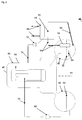
- Fig. 1 shows a first exemplary cooling module 10 in a sectional view.
- an evaporation chamber 12 is provided in its interior.
- the riser is indicated as rotationally symmetrical about a rotation axis 28, but any other cross-sectional shapes are conceivable, for example rectangular or not interleaved variants .
- a connection 22 for a first pressure line or steam line is arranged, which leads to a capacitor, not shown.
- the cooling module protrudes in its lower region into the water of a condenser, not shown, whose maximum level is indicated by the dashed line with the reference numeral 14 and whose minimum level is indicated by the dashed line by the reference numeral 16. This ensures that condensation chamber water can always flow into the riser pipe, as indicated by the arrow with the reference numeral 24.
- the water level of the water located in the evaporation space is geodetically higher than the maximum and minimum level in the condensation chamber, as within which the cooling module 10 is to be assumed arranged. It is also to be assumed that the condensation chamber water has saturation temperature, that is, that the liquid and the overlying gaseous phase of the water are in saturation equilibrium and that the cooling module 10 has likewise assumed this temperature. Due to the geodetically higher arrangement of the evaporation chamber 12, the water therein is boiling under the mentioned boundary conditions.
- the boiling process also generates steam, which is then conducted through the connection 22 in the upper region of the evaporation space to a condenser, not shown, where the heat is released by condensation in an equally effective manner.
- a suitable material for a cooling module according to the invention is, for example, stainless steel, wherein a cooling module - depending on the design - for example, may have a height of, for example, 1 m to 2 m. This height difference is sufficient to cause boiling in the evaporation space 12 at saturation temperature conditions.
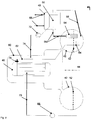
- Fig. 2 shows an exemplary boiling water reactor with Kondensationsschkühlsystem in a schematic view 40.
- a boiling water reactor 46 is disposed within a security or pressure vessel 60, which has, for example, a height of 10m.
- a ring-like condensation chamber 42 is provided in the form of a torus about this, arranged around a rotation axis 44, which is connected to the pressure vessel 60 via corresponding pressure-resistant pipe connections.
- the condensation chamber is filled up to a level 52 with condensation chamber water.
- a drain line 62 closable by means of a drain valve 76 leads into the condensation chamber 42 and flows below the fill level 52 into a distributor 64.
- the latter ensures a particularly good penetration of the condensation chamber water from steam flowing through the drain line 62.
- Steam is then introduced from the boiling water reactor 46 into the drain line 62 when it is created during the reactor cooling and with it too high a pressure. This steam leads to condensation in the condensation chamber to a heating of the condensation chamber water therein.
- a cooling module 54 Vertically disposed within the condensation chamber 42 and into the condensation chamber water projecting is a cooling module 54. This has an evaporator chamber and a riser down pipe, wherein water rises through the riser into the evaporator chamber, there boiling with the release of steam, is cooled and by the Downpipe falls back down again. Thus, a cooling of the condensation chamber water is effected. It is thus formed another natural cooling circuit.
- the resulting vapor is conducted from the evaporator chamber via a first pressure line 56 to a heat exchanger 48, which in particular has a capacitor 50.
- a heat exchanger 48 which in particular has a capacitor 50.
- the steam is transferred with the release of heat in the liquid water state and led back from the condenser 50 via a steadily falling second pressure line 58 back into the condensation chamber 42, which is done solely by gravity.
- the heat exchanger 48 is in turn connected via corresponding inlet and outlet lines directly or indirectly with a heat sink for heat dissipation to the environment, such as a cooling tower.
- a vacuum pump 72 having a return line 74 acting on the cooling circuit is provided to evacuate the passively operating condensation chamber cooling system during normal plant operation. This ensures that only liquid or gaseous water is within the pipe system or cooling circuit. During the request, the vacuum pump 72 remains in operation to prevent accumulation of non-condensable gases.
- condensation water can be back into the boiling water reactor 46, so that its water inventory is maintained despite the discharge of steam into the condensation chamber 42.
Landscapes
- Engineering & Computer Science (AREA)
- Physics & Mathematics (AREA)
- General Engineering & Computer Science (AREA)
- Plasma & Fusion (AREA)
- High Energy & Nuclear Physics (AREA)
- Thermal Sciences (AREA)
- Mechanical Engineering (AREA)
- Business, Economics & Management (AREA)
- Emergency Management (AREA)
- Structure Of Emergency Protection For Nuclear Reactors (AREA)
Description
- Die Erfindung betrifft eine Kondensationskammer mit Kondensationskammerkühlsystem, umfassend eine Kondensationskammer für einen Siedewasserreaktor und wenigstens einen außerhalb der Kondensationskammer angeordneten Wärmetauscher.
- Es ist allgemein bekannt, dass Leichtwasserreaktoren zur Stromerzeugung genutzt werden. Hierbei erzeugt nuklearer Brennstoff, beispielsweise in Form von Uranbrennstäben, in einem Reaktorkern in einem nuklearen Spalt- und Zerfallsprozess Wärme. In jedem Fall ist durch eine Wärmeabfuhr aus dem Reaktorkern dafür zu sorgen, dass dieser innerhalb eines unkritischen Temperaturbereiches bleibt. Bei Leichtwasserreaktoren (Druck- und Siedewasserreaktoren) ist der Reaktorkern innerhalb eines Druckbeziehungsweise Sicherheitsbehälters angeordnet. Dieser bildet bei Druckwasserreaktoren mit einem Dampferzeuger und den Zu- bzw. Ableitungen ein geschlossenes System zum Umlauf von Kühlmittel, das eigentliche Kernreaktorkühlsystem. Zur Abfuhr der durch den Kontakt des Kühlmittels mit den Brennelementen übertragenden Wärme dienen bei einem Druckwasserreaktor im normalen Betrieb der Dampferzeuger und die nachgeschaltete Dampfturbine mit ihrem Kondensator. Bei Siedewasserreaktoren entfallen die Dampferzeuger, d. h. der Dampf aus dem Reaktor wird zum Antrieb der Wasserdampfturbinen direkt genutzt wobei so die Wärme des Kühlmittels abgegeben wird. Eine typische Reaktorleistung beträgt beispielsweise 1,4GW.
- Aber auch wenn ein Leichtwasserreaktor, beispielsweise zu Wartungszwecken, komplett heruntergefahren worden ist, erzeugt er für einen längeren Zeitraum eine Restwärme, die Nachzerfallswärme. Wird diese nicht zuverlässig abgeführt, kann es zu einer unerlaubten Temperaturerhöhung des Reaktorkerns mit möglichen Brennelementeschäden bis hin zur Kernschmelze kommen.
- Ist bei einem Siedewasserreaktor der Reaktorkern mit Wasser überdeckt, kann von einer ausreichenden Kühlung ausgegangen werden. Bei Siedewasserreaktoren wird die nach einer Abschaltung entstehende Nachzerfallswärme durch Sieden des die Brennelemente umgebenden Wassers abgeführt. Durch Verdampfen des Wassers erfolgt ein der jeweiligen Verdampfungsenergie entsprechender Kühleffekt der Brennelemente. Der so entstehende Dampf wird über Sicherheitsventile in eine Wasservorlage außerhalb des Druck- beziehungsweise Sicherheitsbehälters in eine sogenannte Kondensationskammer abgeblasen und dort kondensiert. Das durch Abblasen Dampfes in die Kondensationskammer verlorene Wasserinventar des Druckbehälters wird typischerweise durch aktive Einspeisesysteme aus der Kondensationskammer zurück in den Druckbehälter geführt.
- Beim Kondensieren, also beim Übergang des gasförmigen Dampfes in seinen flüssigen Zustand, erfolgt eine jeweilige Energieabgabe, welche zu einer Erhitzung des in der Kondensationskammer befindlichen Wassers führt. Daher sind entsprechend dem Stand der Technik aktive Not- und Nachkühlsysteme vorgesehen, mittels welcher über entsprechende Wärmetauscher und Wärmekreisläufe eine Kühlung der Kondensationskammer beziehungsweise der in dieser befindlichen Wasservorlage und eine Wärmeübertragung an eine externe Wärmesenke, beispielsweise einen Kühlturm, erfolgt.
- Das Patentdokument
EP 0476 563 A2 offenbart einen Kernreaktor mit Reaktordruckbehälter und einem Kühlsystem. - Das Patentdokument
DE 44 16 140 A1 offenbart eine Kernreaktoranlage mit einem Containment, welches einen Reaktordruckbehälter umgibt und darin einen Trockenschacht bildet, der üblicherweise ein nicht-kondensierbares Gas, wie beispielsweise Stickstoff enthält. In dem Druckbehälter ist ein üblicher Reaktorkern angeordnet, der in Wasser eingetaucht ist und das Wasser erhitzt, um Dampf zu erzeugen, der von dem Druckbehälter abgegeben wird. - Das Patentdokument
US 6 285 727 B1 offenbart eine Kernreaktoranlage mit einem Leichtwasserreaktor und einer Sicherheitshülle, welche einen oberen Raum und einen unteren Raum hat, wobei der untere Raum von dem oberen Raum durch ein Trennglied getrennt ist und zur Aufnahme eines Kühlmittels bestimmt ist und wobei zum Leichtwasserreaktor ein Reaktorgefäß gehört, welches einen Reaktorkern aufnimmt und in dem oberen Raum angeordnet ist. - Als nachteilig erweist es sich hierbei, dass derartige Kühlsysteme zur Abführung der in die Kondensationskammer eingetragenen Kondensationswärme aktiver Natur sind, also aktive Komponenten wie beispielsweise Umlaufpumpen für das Kühlmedium Wasser erfordern. Trotz höchster Sicherheitsmaßnahmen und redundanter Auslegung der jeweiligen Kühlsysteme kann nicht vollständig ausgeschlossen werden, den, dass ein aktiver Kühlkreislauf nach Ausfall beispielsweise seiner Umlaufpumpe in einem Störfall nicht zur Verfügung steht.
- Ausgehend von diesem Stand der Technik ist es Aufgabe der Erfindung ein Kondensationskammerkühlsystem anzugeben, welches aktive Komponenten und insbesondere Umlaufpumpen möglichst vermeidet.
- Diese Aufgabe wird gelöst durch ein Kondensationskammerkühlsystem der eingangs genannten Art. Dieses ist dadurch gekennzeichnet, dass in der Kondensationskammer ein längliches Kühlmodul vorgesehen ist, mit einem in seinem oberen Bereich befindlichen Verdampfungsraum, wobei das Kühlmodul derart in der Kondensationskammer angeordnet ist, dass der Verdampfungsraum oberhalb eines Höchstfüllstandniveaus einer Wasservorlage in der Kondensationskammer befindlich ist. Fernerhin umfasst das erfindungsgemäße Kondensationskammerkühlsystem wenigstens ein Steig- und ein Fallrohr, welche mit ihren jeweiligen oberen Enden in den Verdampfungsraum münden und mit ihren jeweiligen unteren Enden in der Kondensationskammer unterhalb eines Mindestfüllstandsniveaus der Wasservorlage, wobei eine erste Druckleitung vom Verdampfungsraum zum Wärmetauscher vorgesehen ist und von dort eine zweite Druckleitung, welche in der Kondensationskammer vorzugsweise unterhalb des Mindestfüllstandsniveaus mündet, so dass durch die Kondensationskammer, die Druckleitungen, das Kühlmodul und den Wärmetauscher ein passiver geschlossener Kühlkreislauf gebildet ist.
- Die Grundidee der Erfindung besteht darin, ein Kondensationskammerkühlsystem mit Naturumlauf des Kühlmittels beziehungsweise Wassers bereitzustellen, somit eine aktive Umlaufpumpe zu vermeiden und damit die Ausfallwahrscheinlichkeit des Kühlsystems zu reduzieren.
- Bei Ausfall der aktiven Nachwärmeabfuhrsysteme im Anforderungsfall heizt sich das Kondensationskammerwasser beziehungsweise die Wasservorlage auf und der Druck innerhalb des Druck- beziehungsweise Sicherheitsbehälters steigt an. Damit steigt auch der Druck in der damit verbundenen Kondensationskammer an. Die flüssige Phase des Wassers in der Kondensationskammer und die darüber befindliche gasförmige Phase befinden sich nach einer gewissen Zeit im Sättigungsgleichgewicht, das heißt, das Kondensationskammerwasser weist eine Sättigungstemperatur entsprechend dem Sicherheitsbehälterinnendruck auf.
- Das Steig-Fallrohr befindet sich in vorzugsweise etwa senkrechter Anordnung komplett innerhalb der Kondensationskammer und ragt mit seinem unteren Ende in das flüssige Kondensationskammerwasser. Das flüssige Wasser innerhalb des Steig-Fallrohres erwärmt sich ebenfalls auf die Temperatur innerhalb der Kondensationskammer, welche beispielsweise als Torus- ähnlicher Ring um den unteren Bereich des Sicherheitsbehälters ausgestaltet sein kann. Der Wasserspiegel innerhalb des Steig-Fallrohres ist jedoch geodätisch höher als der Wasserspiegel beziehungsweise das Füllstandsniveau der Kondensationskammer.
- Aufgrund des geodätischen Höhenunterschiedes des Wasserspiegels in der Kondensationskammer und des Wasserspiegels im Steig-Fallrohr beziehungsweise im Verdampfungsraum, in welchen die Rohre mit ihren jeweiligen oberen Enden münden, ist der statische Druck im Verdampfungsraum bei einem Höhenunterschied von beispielsweise 2m entsprechend geringer. Befindet sich das Kondensationskammerwasser wie zuvor erläutert auf Sättigungstemperatur, siedet das Wasser in dem oberhalb des Wasserspiegels der Kondensationskammer befindlichen Verdampfungsraum beziehungsweise den entsprechenden Rohrabschnitten aufgrund des dort herrschenden geringeren statischen Drucks.
- Der Siedevorgang führt zu einer Kühlung des in dem Verdampfungsraum befindlichen Wassers einerseits und einer Dampfentstehung andererseits. Das Steig-Fallrohr ist so ausgestaltet, dass Wasser auf Sättigungstemperatur über das Steigrohr in den Verdampfungsraum geführt wird und dort durch den Siedevorgang unter Dampfbildung gekühlt wird. Das gekühlte Wasser, welches dann eine entsprechend höhere Dichte aufweist als das Wasser auf Sättigungstemperatur, wird dann wieder über das Fallrohr der Wasservorlage innerhalb der Kondensationskammer zugeführt. Durch diesen Dichteunterschied ist ein natürlicher Umlauf des Wassers durch das Kühlmodul ermöglicht, welcher in vorteilhafter Weise keinerlei aktive Umlaufpumpe oder dergleichen erfordert.
- Um ein unmittelbares Vermischen von in das Steigrohr eintretendem Wasser und aus dem Fallrohr austretendem gekühlten Wasser zu vermeiden, sind deren jeweilige untere Mündungen vorzugsweise versetzt zueinander angeordnet.
- Der in dem Verdampfungsraum entstehende Dampf wird von dort durch die erste Druckleitung, einer Dampfleitung, zum vorzugsweise einen Kondensator umfassenden Wärmetauscher geleitet, wo der Dampf durch Kondensation Wärme an den Wärmetauscher abgibt. Dieser führt die Wärme dann direkt oder indirekt an eine externe Wärmesenke ab, beispielsweise an einen Kühlturm. So kann der Wärmetauscher aber auch über ein Wasserreservoir verfügen, welches die Kondensationswärme aufnimmt und mittels eines weiteren Wasserumlaufs ableitet. Das beim Kondensieren entstehende Kondensat wird über die zweite Druckleitung, einer Kondensatleitung, vom Kondensator zurück in die Kondensationskammer geleitet. Idealerweise ist der Wärmetauscher auf einer derartigen geodätischen Höhe oberhalb der Kondensationskammer angeordnet, dass das Kondensat über die vorzugsweise mit einem steten Gefälle ausgestalteten Kondensatleitung alleine schwerkraftbedingt in die Kondensationskammer zurückfließt. Somit ist auch für diesen Kühlmittelkreislauf in vorteilhafter Weise kein aktives Pumpelement notwendig.
- Auf diese Weise können auch bei vergleichsweise niedrigen Wassertemperaturen, beispielsweise 120°C oder 140°C, hohe Wärmeströme realisiert werden, weil das zu kühlende Medium, nämlich das in der Kondensationskammer befindliche Wasser, direkt auch als Kühlmittel für den Kühlkreislauf verwendet wird. Damit entfallen in vorteilhafter Weise ein sonst notwendiger Wärmetauschvorgang zwischen Kühlmittel und zu kühlendem Medium und die dafür erforderlichen Wärmetauscher.
- Entsprechend einer bevorzugten Ausgestaltung des erfindungsgemäßen Kondensationskammerkühlsystems ist das Fallrohr in das Steigrohr verschachtelt, so dass ein äußeres Steigrohr und ein darin verlaufendes inneres Fallrohr gebildet sind. Dies erweist sich als fertigungstechnisch als besonders günstig und ermöglicht zudem eine hohe mechanische Stabilität des erfindungsgemäßen Kühlmoduls.
- Gemäß einer weiteren Ausgestaltung des erfindungsgemäßen Kondensationskammerkühlsystems umfasst dessen Wärmetauscher einen Verdampfungskondensator.
- Dieser ermöglicht wie zuvor erläutert aufgrund der abgegebenen Kondensationswärme einen sehr effektiven Wärmetausch.
- Einer weiteren Ausgestaltungsvariante des Kondensationskammerkühlsystems entsprechend mündet eine Abblasleitung unterhalb des Mindestfüllstandsniveaus in der Kondensationskammer. Diese Leitung ist dafür vorgesehen, aus einem zugehörigen Siedewasserreaktor über ein Ablassventil abgelassenen Dampf in die Wasservorlage der Kondensationskammer einzuführen. Hierdurch wird das Kondensationskammerwasser entsprechend erhitzt. Vorzugsweise ist diese Leitung an ihrem Ende verästelt um so eine verbesserte Durchdringung des Wassers mit dem Dampf zu ermöglichen. Hierdurch wird die Kondensation des Dampfes und damit der auch die Effektivität des Kondensationskammerkühlsystems verbessert.
- Entsprechend einer bevorzugten Variante des erfindungsgemäßen Kondensationskammerkühlsystems ist eine auf den Kühlkreislauf wirkende Vakuumpumpe vorgesehen. Während des normalen Anlagenbetriebes wird damit das passiv arbeitende Kondensationskammerkühlsystems evakuiert. Dadurch ist gewährleistet, dass sich ausschließlich flüssiges oder gasförmiges Wasser innerhalb des Rohrsystems beziehungsweise Kühlkreislaufes befindet. Während der Anforderung im Abschaltungsfall bleibt die Vakuumpumpe in Betrieb, um eine Ansammlung nichtkondensierbarer Gase zu vermeiden.
- Gemäß einer besonders bevorzugten Ausgestaltung des erfindungsgemäßen Kondensationskammerkühlsystems ist der wenigstens eine Wärmetauscher geodätisch oberhalb der Kondensationskammer angeordnet. Dies ermöglicht bei entsprechender stetig fallend ausgeführter Kondensatleitung eine rein schwerkraftgetriebene Rückführung des Kondensats in die Kondensationskammer, so dass keine Pumpmittel erforderlich sind.
- Vorzugsweise entspricht das Mindestfüllstandsniveau der Kondensationskammer zumindest annähernd deren Höchstfüllstandsniveau. Die Kühleigenschaften des Kondensationskammerkühlsystem werden dadurch konstant gehalten. Ein derartiges annähernd gleiches Füllstandsniveau wird durch entsprechende geregelte Rückführung von Kondensationskammerwasser in den Reaktor erreicht.
- Eine besonders bevorzugte Variante des erfindungsgemäßen Kondensationskammerkühlsystem ist dadurch gekennzeichnet, dass wenigstens ein zusätzlicher aktiver Kühlkreislauf zur Abführung von Abwärme aus der Kondensationskammer vorgesehen ist. Somit ist ein Gesamtkühlsystem für die Kondensationskammer geschaffen, welches diversitär ist, also auf verschieden arbeitenden Kühlsystemen basiert. Der gleichzeitige Ausfall von diversitär arbeitenden Kühlsystemen ist unwahrscheinlicher als der gleichzeitige Ausfall von gleichartig arbeitenden Kühlsystemen. Somit ist in vorteilhafter Weise die Sicherheit eines derartigen Gesamtkühlsystems weiter gesteigert. Idealerweise ist zumindest das aktive Kühlsystem zudem noch redundant ausgelegt, also aus mehreren gegebenenfalls gleichartigen und parallel arbeitenden Einzelsystemen, deren summarische Kühlleistung unterhalb der maximal zu erwartenden Kühlleistung liegt, so dass trotz eines eventuellen Ausfalls eines Systems eine sichere Kühlung gewährleistet ist. Die zusätzliche Verwendung eines zuvor beschriebenen passiven Systems steigert die Betriebssicherheit weiter, wobei dessen Einzelausfallwahrscheinlichkeit aufgrund des passiven Prinzips besonders niedrig ist.
- Erfindungsgemäß ist einer Ausgestaltungsvariante folgend ein Pumpsystem für die Rückführung von in der Kondensationskammer befindlichem Wasser in den zugehörigen Siedewasserreaktor vorgesehen. Dieses ist wie zuvor erwähnt zur Erhaltung des Wasserinventars des Siedewasserreaktors notwendig und kann auch als Teil des erfindungsgemäßen Kühlsystems angesehen werden.
- Der Wärmetauscher ist erfindungsgemäß dafür vorgesehen ist, Abwärme an die Umgebung abzuführen. Dies kann gegebenenfalls über das Zwischenschalten weiterer Kühlkreisläufe und Wärmetauscher erfolgen, wobei ein Kühlturm eine bevorzugte Wärmesenke für die abschließende Wärmeabgabe an die Umgebung darstellt.
- Weitere vorteilhafte Ausgestaltungsmöglichkeiten sind den weiteren abhängigen Ansprüchen zu entnehmen.
- Anhand der in den Zeichnungen dargestellten Ausführungsbeispiele sollen die Erfindung, weitere Ausführungsformen und weitere Vorteile näher beschrieben werden.
- Es zeigen
- Fig. 1
- ein erstes exemplarisches Kühlmodul und
- Fig. 2
- einen exemplarischen Siedewasserreaktor mit Kondensationskammerkühlsystem.
-
Fig. 1 zeigt ein erstes exemplarisches Kühlmodul 10 in einer Schnittansicht. Im oberen Bereich des senkrecht ausgerichteten Kühlmoduls 10 ist in seinem Innenraum ein Verdampfungsraum 12 vorgesehen. In diesen mündet von unten ein Steigrohr 18 und ein in dieses verschachtelt angeordnetes Fallrohr 20. In diesem Beispiel ist das Steig-Fallrohr als rotationssymmetrisch um eine Rotationsachse 28 angedeutet, es sind aber auch beliebige weitere Querschnittsformen denkbar, beispielsweise rechteckförmig oder auch nicht miteinander verschachtelte Varianten. Im oberen Bereich des Verdampfungsraumes 12 ist ein Anschluss 22 für eine erste Druckleitung beziehungsweise Dampfleitung angeordnet, welche zu einem nicht gezeigten Kondensator führt. Das Kühlmodul ragt in seinem unteren Bereich in das Wasser eines nicht gezeigten Kondensators, dessen Höchstfüllstandsniveau mit der gestrichelten Linie mit der Bezugsziffer 14 und dessen Mindestfüllstandsniveau mit der gestrichelten Linie mit der Bezugsziffer 16 angedeutet ist. Somit ist sichergestellt, dass stets Kondensationskammerwasser in das Steigrohr hineinströmen kann, wie mit dem Pfeil mit der Bezugsziffer 24 angedeutet. - Das Wasserstandsniveau des im Verdampfungsraum befindlichen Wassers ist geodätisch höher als das Höchst- und Mindestfüllstandsniveau in der Kondensationskammer, als innerhalb derer das Kühlmodul 10 angeordnet anzunehmen ist. Es ist ferner davon auszugehen, dass das Kondensationskammerwasser Sättigungstemperatur aufweist, das heißt, dass die flüssige und die darüber liegende gasförmige Phase des Wassers im Sättigungsgleichgewicht sind und dass das Kühlmodul 10 ebenfalls diese Temperatur angenommen hat. Aufgrund der geodätisch höheren Anordnung der Verdampfungsraum 12 siedet das darin befindliche Wasser unter den genannten Randbedingungen.
- Dies hat einerseits den Effekt, dass das siedende Wasser gekühlt wird, also Wärme abgibt. Durch das Abkühlen des Wassers steigt dessen Dichte und es sinkt durch das Fallrohr 20 zurück unterhalb des Mindestfüllstandsniveaus, wie mit dem Pfeil 26 angedeutet, es ist also ein Naturumlauf des Wassers bewirkt. Damit ist eine sehr effektive Kühlung des Kondensationskammerwassers erreicht, weil dieses direkt als Kühlmittel verwendet wird, welches durch den Siedevorgang in sehr effektiver Weise Wärme abgibt.
- Durch den Siedevorgang wird andererseits auch Dampf erzeugt, welcher dann durch den Anschluss 22 im oberen Bereich der Verdampfungsraum zu einem nicht gezeigten Kondensator geführt wird, wo durch Kondensation in ebenso effektiver Weise die Wärme abgegeben wird.
- Ein geeignetes Material für ein erfindungsgemäßes Kühlmodul ist beispielsweise Edelstahl, wobei ein Kühlmodul - je nach Ausführung - beispielsweise eine Höhe von beispielsweise 1 m bis 2m aufweisen kann. Dieser Höhenunterschied ist ausreichend, um bei Sättigungstemperaturbedingungen ein Sieden in dem Verdampfungsraum 12 zu bewirken.
-
Fig. 2 zeigt einen exemplarischen Siedewasserreaktor mit Kondensationskammerkühlsystem in einer schematischen Ansicht 40. Ein Siedewasserreaktor 46 ist innerhalb eines Sicherheits- beziehungsweise Druckbehälters 60 angeordnet, welcher beispielsweise eine Höhe von 10m aufweist. Im unteren Bereich des Druckbehälters 60 ist torusförmig um diesen um eine Rotationsachse 44 angeordnet eine ringähnliche Kondensationskammer 42 vorgesehen, welche über entsprechende druckbeständige Rohrverbindungen mit dem Druckbehälter 60 verbunden ist. Die Kondensationskammer ist bis zu einem Füllstandsniveau 52 mit Kondensationskammerwasser gefüllt. - Vom Siedewasserreaktor 46 führt eine mittels eines Ablassventils 76 verschließbare Ablassleitung 62 in die Kondensationskammer 42 und mündet dort unterhalb des Füllstandsniveaus 52 in eine Verteilvorrichtung 64. Letztere stellt eine besonders gute Durchdringung des Kondensationskammerwassers von durch die Ablassleitung 62 strömenden Dampf sicher. Dampf wird dann aus dem Siedewasserreaktor 46 in die Ablassleitung 62 eingeführt, wenn dieser bei der Reaktorkühlung entstanden ist und mit ihm ein zu hoher Druck. Dieser Dampf führt bei Kondensierung in der Kondensationskammer zu einer Erhitzung des darin befindlichen Kondensationskammerwassers.
- Senkrecht innerhalb der Kondensationskammer 42 und in das Kondensationskammerwasser ragend angeordnet ist ein Kühlmodul 54. Dieses weist eine Verdampferkammer und ein Steig-Fallrohr auf, wobei Wasser durch das Steigrohr in die Verdampferkammer aufsteigt, dort unter Abgabe von Dampf siedet, dadurch gekühlt wird und durch das Fallrohr wieder zurück nach unten fällt. Somit ist eine Kühlung des Kondensationskammerwassers bewirkt. Es ist somit ein weiterer natürlicher Kühlkreislauf gebildet.
- Der dabei entstehende Dampf wird aus der Verdampferkammer über eine erste Druckleitung 56 zu einem Wärmetauscher 48 geführt, welcher insbesondere einen Kondensator 50 aufweist. Hier wird der Dampf unter Abgabe von Wärme in den flüssigen Wasserzustand überführt und vom Kondensator 50 über eine stetig fallende zweite Druckleitung 58 wieder zurück in die Kondensationskammer 42 geführt, wobei dies ausschließlich schwerkraftbedingt erfolgt. Der Wärmetauscher 48 ist seinerseits über entsprechende Zu- und Abführleitungen direkt oder indirekt mit einer Wärmesenke zur Wärmeabgabe an die Umgebung verbunden, beispielsweise einem Kühlturm.
- Eine auf den Kühlkreislauf wirkende Vakuumpumpe 72 mit einer Rückführleitung 74 ist dafür vorgesehen, während des normalen Anlagenbetriebes das passiv arbeitende Kondensationskammerkühlsystems zu evakuieren. Dadurch ist gewährleistet, dass sich ausschließlich flüssiges oder gasförmiges Wasser innerhalb des Rohrsystems beziehungsweise Kühlkreislaufes befindet. Während der Anforderung bleibt die Vakuumpumpe 72 in Betrieb, um eine Ansammlung nichtkondensierbarer Gase zu vermeiden.
- Mittels einer Einspeisepumpe 68 und einer Wasserrückführleitung 70 lässt sich Kondensationskammerwasser wieder zurück in den Siedewasserreaktor 46 führen, so dass dessen Wasserinventar trotz Ablassen von Dampf in die Kondensationskammer 42 erhalten bleibt.
-
- 10
- erstes exemplarisches Kühlmodul
- 12
- Verdampfungsraum
- 14
- Höchstfüllstandniveau
- 16
- Mindestfüllstandsniveau
- 18
- Steigrohr
- 20
- Fallrohr
- 22
- Anschluss für erste Druckleitung
- 24
- aufsteigendes Wasser
- 26
- absteigendes gekühltes Wasser
- 28
- Rotationsachse Kühlmodul
- 40
- exemplarischer Siedewasserreaktor mit Kondensationskammerkühlsystem
- 42
- Kondensationskammer
- 44
- Rotationsachse von Kondensationskammer
- 46
- Siedewasserreaktor
- 48
- Wärmetauscher
- 50
- Verdampfungskondensator
- 52
- Füllstandsniveau
- 54
- zweites exemplarisches Kühlmodul
- 56
- erste Druckleitung
- 58
- zweite Druckleitung
- 60
- Sicherheits- Druckbehälter für Reaktor (Reaktorcontainment)
- 62
- Ablassleitung
- 64
- Verteilervorrichtung für Ablassleitung
- 66
- Zu- Ableitung für Wärmetauscher
- 68
- Einspeisepumpe
- 70
- Wasserrückführleitung
- 72
- Vakuumpumpe
- 74
- Rückführleitung
- 76
- Ablassventil
Claims (10)
- Kondensationskammer mit Kondensationskammerkühlsystem, umfassend• eine Kondensationskammer (42) für einen Siedewasserreaktor (46) und• wenigstens einen außerhalb der Kondensationskammer (42) angeordneten Wärmetauscher (48),dadurch gekennzeichnet, dass• in der Kondensationskammer (42) ein längliches Kühlmodul (10, 54) vorgesehen ist, umfassend• in seinem oberen Bereich einen Verdampfungsraum (12), wobei das Kühlmodul (10, 54) derart in der Kondensationskammer (42) angeordnet ist, dass der Verdampfungsraum (12) oberhalb eines Höchstfüllstandniveaus (14) der Kondensationskammer (42) befindlich ist,• wenigstens ein Steig- (18) und ein Fallrohr (20), welche mit ihren jeweiligen oberen Enden in den Verdampfungsraum (12) münden und mit ihren jeweiligen unteren Enden in der Kondensationskammer (42) unterhalb eines Mindestfüllstandsniveaus (16),wobei eine erste Druckleitung (56) vom Verdampfungsraum (12) zum Wärmetauscher (48) vorgesehen ist und von dort eine zweite Druckleitung (58), welche in der Kondensationskammer (42) mündet, so dass durch die Kondensationskammer (42), die Druckleitungen (56, 58), das Kühlmodul (10, 54) und den Wärmetauscher (48) ein passiver geschlossener Kühlkreislauf gebildet ist.
- Kondensationskammer mit Kondensationskammerkühlsystem nach Anspruch 1, dadurch gekennzeichnet, dass das Fallrohr (20) in das Steigrohr (18) verschachtelt ist.
- Kondensationskammer mit Kondensationskammerkühlsystem nach einem der Ansprüche 1 oder 2, dadurch gekennzeichnet, dass der Wärmetauscher (48) einen Verdampfungskondensator (50) umfasst.
- Kondensationskammer mit Kondensationskammerkühlsystem nach einem der vorherigen Ansprüche, dadurch gekennzeichnet, dass eine Abblasleitung (62) unterhalb des Mindestfüllstandsniveaus (16) in der Kondensationskammer (42) mündet.
- Kondensationskammer mit Kondensationskammerkühlsystem nach einem der vorherigen Ansprüche, dadurch gekennzeichnet, dass eine auf den Kühlkreislauf wirkende Vakuumpumpe (72) vorgesehen ist.
- Kondensationskammer mit Kondensationskammerkühlsystem nach einem der vorherigen Ansprüche, dadurch gekennzeichnet, dass der wenigstens eine Wärmetauscher (48) geodätisch oberhalb der Kondensationskammer (42) angeordnet ist.
- Kondensationskammer mit Kondensationskammerkühlsystem nach einem der vorherigen Ansprüche, dadurch gekennzeichnet, dass das Mindestfüllstandsniveau (16) zumindest annähernd dem Höchstfüllstandsniveau (18) entspricht.
- Kondensationskammer mit Kondensationskammerkühlsystem nach einem der vorherigen Ansprüche, dadurch gekennzeichnet, dass ein zusätzlicher aktiver Kühlkreislauf zur Abführung von Abwärme aus der Kondensationskammer (42) vorgesehen ist.
- Kondensationskammer mit Kondensationskammerkühlsystem nach einem der vorherigen Ansprüche, dadurch gekennzeichnet, dass ein Pumpsystem (68, 70) für die Rückführung von in der Kondensationskammer (42) befindlichem Wasser in den zugehörigen Siedewasserreaktor (46) vorgesehen ist.
- Kondensationskammer mit Kondensationskammerkühlsystem nach einem der vorherigen Ansprüche, dadurch gekennzeichnet, dass der Wärmetauscher (48) dafür vorgesehen ist, Abwärme an die Umgebung abzuführen.
Applications Claiming Priority (1)
| Application Number | Priority Date | Filing Date | Title |
|---|---|---|---|
| DE102011115177A DE102011115177B3 (de) | 2011-09-28 | 2011-09-28 | Kondensationskammerkühlsystem |
Publications (3)
| Publication Number | Publication Date |
|---|---|
| EP2575141A2 EP2575141A2 (de) | 2013-04-03 |
| EP2575141A3 EP2575141A3 (de) | 2015-07-01 |
| EP2575141B1 true EP2575141B1 (de) | 2016-03-30 |
Family
ID=46509787
Family Applications (1)
| Application Number | Title | Priority Date | Filing Date |
|---|---|---|---|
| EP12006588.3A Not-in-force EP2575141B1 (de) | 2011-09-28 | 2012-09-20 | Kondensationskammerkühlsystem |
Country Status (5)
| Country | Link |
|---|---|
| US (1) | US9194629B2 (de) |
| EP (1) | EP2575141B1 (de) |
| JP (1) | JP6022286B2 (de) |
| DE (1) | DE102011115177B3 (de) |
| ES (1) | ES2576288T3 (de) |
Cited By (1)
| Publication number | Priority date | Publication date | Assignee | Title |
|---|---|---|---|---|
| DE102017008253B3 (de) * | 2017-09-01 | 2018-12-06 | Westinghouse Electric Germany Gmbh | Sicherheitsbehälterkühlsystem |
Families Citing this family (7)
| Publication number | Priority date | Publication date | Assignee | Title |
|---|---|---|---|---|
| US9368241B2 (en) | 2012-06-29 | 2016-06-14 | Ge-Hitachi Nuclear Energy Americas Llc | System and method for processing and storing post-accident coolant |
| US9406407B2 (en) * | 2012-12-11 | 2016-08-02 | Ge-Hitachi Nuclear Energy Americas Llc | Radioactive capture system for severe accident containment of light water reactors (LWRS), and method thereof |
| KR101545085B1 (ko) | 2013-06-19 | 2015-08-18 | 한국원자력연구원 | 원자로 격납구조물 장기 냉각 시스템 |
| JP5853054B2 (ja) | 2013-06-19 | 2016-02-09 | コリア アトミック エナジー リサーチ インスティチュート | 原子炉格納構造物の冷却システム |
| KR101669765B1 (ko) * | 2015-07-24 | 2016-10-26 | 이창건 | 원자력 발전소의 증기를 이용한 냉각매체 생성장치 및 그 냉각방법 |
| CN111785399B (zh) * | 2020-07-06 | 2023-06-20 | 武汉第二船舶设计研究所(中国船舶重工集团公司第七一九研究所) | 一种用于海洋核动力平台热量导出的系统 |
| CN117450424B (zh) * | 2023-09-27 | 2025-12-30 | 常熟市飞奥压力容器制造有限公司 | 插入式双管冷凝气化换热器、换热系统及其控制方法 |
Family Cites Families (18)
| Publication number | Priority date | Publication date | Assignee | Title |
|---|---|---|---|---|
| US3397113A (en) * | 1966-05-10 | 1968-08-13 | Chicago Bridge & Iron Co | Modular suppression tanks for nuclear containment structures |
| US3431168A (en) * | 1967-06-26 | 1969-03-04 | Gen Electric | Reactor cooling system |
| DE2932815A1 (de) * | 1979-08-13 | 1981-03-26 | Kraftwerk Union AG, 45473 Mülheim | Siedewasserreaktor |
| JPS63109394A (ja) * | 1986-10-27 | 1988-05-14 | 株式会社東芝 | 原子炉格納容器保護装置 |
| JPS63212892A (ja) * | 1987-02-28 | 1988-09-05 | 株式会社日立製作所 | 可搬式クエンチヤ型フイルタベントシステム |
| JPH01199192A (ja) * | 1988-02-04 | 1989-08-10 | Nippon Atom Ind Group Co Ltd | 格納容器保護装置 |
| US4998509A (en) * | 1989-05-11 | 1991-03-12 | General Electric Company | Passive heat removal from containment |
| US4986956A (en) * | 1989-11-27 | 1991-01-22 | Stone & Webster Engineering Corporation | Passive nuclear power plant containment system |
| WO1992003828A1 (fr) * | 1990-08-14 | 1992-03-05 | Moritaka Ishimaru | Systeme de production d'energie atomique et procede de construction correspondant |
| JP2507694B2 (ja) * | 1990-09-17 | 1996-06-12 | 株式会社日立製作所 | 原子炉設備 |
| JPH04128693A (ja) * | 1990-09-20 | 1992-04-30 | Hitachi Ltd | 原子炉格納容器 |
| US5295168A (en) * | 1993-04-15 | 1994-03-15 | General Electric Company | Pressure suppression containment system |
| SE9401559L (sv) * | 1993-05-07 | 1994-11-08 | Gen Electric | Passiv blandare |
| SE508995C2 (sv) * | 1997-03-07 | 1998-11-23 | Asea Atom Ab | Kärnreaktoranläggning |
| US6069930A (en) * | 1997-06-27 | 2000-05-30 | General Electric Company | Modified passive containment cooling system for a nuclear reactor |
| US8170173B2 (en) * | 2007-11-15 | 2012-05-01 | The State Of Oregon Acting By And Through The State Board Of Higher Education On Behalf Of Oregon State University | Passive emergency feedwater system |
| KR100966854B1 (ko) * | 2009-01-14 | 2010-06-29 | 한국원자력연구원 | 부분잠김형 열교환기를 사용하는 소듐냉각 고속로의 완전 피동형 잔열제거계통 |
| DE102010035955A1 (de) * | 2010-08-31 | 2012-03-01 | Westinghouse Electric Germany Gmbh | Brennelementlagerbecken mit Kühlsystem |
-
2011
- 2011-09-28 DE DE102011115177A patent/DE102011115177B3/de not_active Expired - Fee Related
-
2012
- 2012-09-20 EP EP12006588.3A patent/EP2575141B1/de not_active Not-in-force
- 2012-09-20 ES ES12006588.3T patent/ES2576288T3/es active Active
- 2012-09-28 JP JP2012216404A patent/JP6022286B2/ja not_active Expired - Fee Related
- 2012-09-28 US US13/630,789 patent/US9194629B2/en not_active Expired - Fee Related
Cited By (1)
| Publication number | Priority date | Publication date | Assignee | Title |
|---|---|---|---|---|
| DE102017008253B3 (de) * | 2017-09-01 | 2018-12-06 | Westinghouse Electric Germany Gmbh | Sicherheitsbehälterkühlsystem |
Also Published As
| Publication number | Publication date |
|---|---|
| EP2575141A3 (de) | 2015-07-01 |
| JP2013072879A (ja) | 2013-04-22 |
| ES2576288T3 (es) | 2016-07-06 |
| EP2575141A2 (de) | 2013-04-03 |
| JP6022286B2 (ja) | 2016-11-09 |
| US20130140005A1 (en) | 2013-06-06 |
| US9194629B2 (en) | 2015-11-24 |
| DE102011115177B3 (de) | 2012-07-12 |
Similar Documents
| Publication | Publication Date | Title |
|---|---|---|
| DE102011115177B3 (de) | Kondensationskammerkühlsystem | |
| EP2423925B1 (de) | Brennelementelagerbecken mit Kühlsystem | |
| DE68906727T2 (de) | Passives volldrucksystem zur spaltzonennotkuehlung und zur nachwaermeabfuhr fuer wassergekuehlte kernreaktoren. | |
| DE69110810T2 (de) | Kernreaktoranlage mit passiver Kühlung. | |
| EP2095370B1 (de) | Kerntechnische anlage und verfahren zum betreiben einer kerntechnischen anlage | |
| WO2018011363A1 (de) | Hochtemperatur-strahlungsreceiver-system | |
| DE1881622U (de) | Vorrichtung zur dampferzeugung mit einem atomreaktor als waermequelle. | |
| DE102012213489A1 (de) | Wärmeabfuhrsystem für eine kerntechnische Anlage | |
| DE3435255A1 (de) | Kernreaktoranlage mit einem ht-kleinreaktor mit kugelfoermigen brennelementen | |
| EP0598787B1 (de) | Sekundärseitiges nachwärmeabfuhrsystem für druckwasser-kernreaktoren | |
| EP1053550B1 (de) | Druckspeicher und verfahren zum bereitstellen eines unter druck stehenden fluids | |
| DE102017008253B3 (de) | Sicherheitsbehälterkühlsystem | |
| DE2554180A1 (de) | Kernreaktoranlage | |
| DE102012007210B4 (de) | Verfahren und Vorrichtung zur thermischen Speicherung von Elektroenergie | |
| EP3984046B1 (de) | Reaktordruckbehälterkühlsystem | |
| EP1576331B1 (de) | Kraftwerkskondensator mit entlüftungs-/entgasungssystem | |
| EP4089690B1 (de) | Sicherheitsbehälterkühlsystem | |
| EP0734028A1 (de) | Sicherheitsbehälter einer Kernkraftanlage | |
| DE69405973T2 (de) | Kondensator für mit unkondensierbaren Gasen gemischten Dampf, ausgelegt für Naturumlauf in Kernreaktorschutzsystemen | |
| DE3701604C2 (de) | ||
| DE1539728B1 (de) | Schiffs-Atomkernreaktor zur Dampferzeugung und -ueberhitzung und Verfahren zum Betreiben des Kernreaktors | |
| DE1639239A1 (de) | Kernkraftwerk | |
| EP1089294B1 (de) | Vorrichtung zum Druckentlasten und zum passiven Nachspeisen von Kühlmittel in einem Druckbehälter | |
| EP1777709B1 (de) | Verfahren zur Drucksteuerung des Drucks eines Kühlmittels im Primärkreislauf einer Kernreaktoranlage sowie diesbezügliche Kernreaktoranlage | |
| DE3814691C2 (de) |
Legal Events
| Date | Code | Title | Description |
|---|---|---|---|
| PUAI | Public reference made under article 153(3) epc to a published international application that has entered the european phase |
Free format text: ORIGINAL CODE: 0009012 |
|
| AK | Designated contracting states |
Kind code of ref document: A2 Designated state(s): AL AT BE BG CH CY CZ DE DK EE ES FI FR GB GR HR HU IE IS IT LI LT LU LV MC MK MT NL NO PL PT RO RS SE SI SK SM TR |
|
| AX | Request for extension of the european patent |
Extension state: BA ME |
|
| PUAL | Search report despatched |
Free format text: ORIGINAL CODE: 0009013 |
|
| AK | Designated contracting states |
Kind code of ref document: A3 Designated state(s): AL AT BE BG CH CY CZ DE DK EE ES FI FR GB GR HR HU IE IS IT LI LT LU LV MC MK MT NL NO PL PT RO RS SE SI SK SM TR |
|
| AX | Request for extension of the european patent |
Extension state: BA ME |
|
| RIC1 | Information provided on ipc code assigned before grant |
Ipc: G21C 15/26 20060101ALI20150528BHEP Ipc: G21C 15/18 20060101ALI20150528BHEP Ipc: G21D 3/04 20060101ALI20150528BHEP Ipc: G21D 1/02 20060101ALI20150528BHEP Ipc: G21C 19/28 20060101ALI20150528BHEP Ipc: G21C 15/243 20060101ALI20150528BHEP Ipc: G21C 9/012 20060101AFI20150528BHEP |
|
| 17P | Request for examination filed |
Effective date: 20150804 |
|
| GRAP | Despatch of communication of intention to grant a patent |
Free format text: ORIGINAL CODE: EPIDOSNIGR1 |
|
| INTG | Intention to grant announced |
Effective date: 20151023 |
|
| GRAS | Grant fee paid |
Free format text: ORIGINAL CODE: EPIDOSNIGR3 |
|
| GRAA | (expected) grant |
Free format text: ORIGINAL CODE: 0009210 |
|
| AK | Designated contracting states |
Kind code of ref document: B1 Designated state(s): AL AT BE BG CH CY CZ DE DK EE ES FI FR GB GR HR HU IE IS IT LI LT LU LV MC MK MT NL NO PL PT RO RS SE SI SK SM TR |
|
| REG | Reference to a national code |
Ref country code: GB Ref legal event code: FG4D Free format text: NOT ENGLISH |
|
| REG | Reference to a national code |
Ref country code: CH Ref legal event code: EP |
|
| REG | Reference to a national code |
Ref country code: AT Ref legal event code: REF Ref document number: 786132 Country of ref document: AT Kind code of ref document: T Effective date: 20160415 |
|
| REG | Reference to a national code |
Ref country code: IE Ref legal event code: FG4D Free format text: LANGUAGE OF EP DOCUMENT: GERMAN |
|
| REG | Reference to a national code |
Ref country code: DE Ref legal event code: R096 Ref document number: 502012006478 Country of ref document: DE |
|
| REG | Reference to a national code |
Ref country code: ES Ref legal event code: FG2A Ref document number: 2576288 Country of ref document: ES Kind code of ref document: T3 Effective date: 20160706 |
|
| REG | Reference to a national code |
Ref country code: LT Ref legal event code: MG4D |
|
| REG | Reference to a national code |
Ref country code: SE Ref legal event code: TRGR |
|
| PG25 | Lapsed in a contracting state [announced via postgrant information from national office to epo] |
Ref country code: HR Free format text: LAPSE BECAUSE OF FAILURE TO SUBMIT A TRANSLATION OF THE DESCRIPTION OR TO PAY THE FEE WITHIN THE PRESCRIBED TIME-LIMIT Effective date: 20160330 Ref country code: GR Free format text: LAPSE BECAUSE OF FAILURE TO SUBMIT A TRANSLATION OF THE DESCRIPTION OR TO PAY THE FEE WITHIN THE PRESCRIBED TIME-LIMIT Effective date: 20160701 Ref country code: NO Free format text: LAPSE BECAUSE OF FAILURE TO SUBMIT A TRANSLATION OF THE DESCRIPTION OR TO PAY THE FEE WITHIN THE PRESCRIBED TIME-LIMIT Effective date: 20160630 |
|
| REG | Reference to a national code |
Ref country code: NL Ref legal event code: MP Effective date: 20160330 |
|
| PG25 | Lapsed in a contracting state [announced via postgrant information from national office to epo] |
Ref country code: LV Free format text: LAPSE BECAUSE OF FAILURE TO SUBMIT A TRANSLATION OF THE DESCRIPTION OR TO PAY THE FEE WITHIN THE PRESCRIBED TIME-LIMIT Effective date: 20160330 Ref country code: LT Free format text: LAPSE BECAUSE OF FAILURE TO SUBMIT A TRANSLATION OF THE DESCRIPTION OR TO PAY THE FEE WITHIN THE PRESCRIBED TIME-LIMIT Effective date: 20160330 Ref country code: RS Free format text: LAPSE BECAUSE OF FAILURE TO SUBMIT A TRANSLATION OF THE DESCRIPTION OR TO PAY THE FEE WITHIN THE PRESCRIBED TIME-LIMIT Effective date: 20160330 |
|
| PG25 | Lapsed in a contracting state [announced via postgrant information from national office to epo] |
Ref country code: NL Free format text: LAPSE BECAUSE OF FAILURE TO SUBMIT A TRANSLATION OF THE DESCRIPTION OR TO PAY THE FEE WITHIN THE PRESCRIBED TIME-LIMIT Effective date: 20160330 |
|
| PG25 | Lapsed in a contracting state [announced via postgrant information from national office to epo] |
Ref country code: IS Free format text: LAPSE BECAUSE OF FAILURE TO SUBMIT A TRANSLATION OF THE DESCRIPTION OR TO PAY THE FEE WITHIN THE PRESCRIBED TIME-LIMIT Effective date: 20160730 Ref country code: PL Free format text: LAPSE BECAUSE OF FAILURE TO SUBMIT A TRANSLATION OF THE DESCRIPTION OR TO PAY THE FEE WITHIN THE PRESCRIBED TIME-LIMIT Effective date: 20160330 Ref country code: EE Free format text: LAPSE BECAUSE OF FAILURE TO SUBMIT A TRANSLATION OF THE DESCRIPTION OR TO PAY THE FEE WITHIN THE PRESCRIBED TIME-LIMIT Effective date: 20160330 |
|
| PG25 | Lapsed in a contracting state [announced via postgrant information from national office to epo] |
Ref country code: SK Free format text: LAPSE BECAUSE OF FAILURE TO SUBMIT A TRANSLATION OF THE DESCRIPTION OR TO PAY THE FEE WITHIN THE PRESCRIBED TIME-LIMIT Effective date: 20160330 Ref country code: PT Free format text: LAPSE BECAUSE OF FAILURE TO SUBMIT A TRANSLATION OF THE DESCRIPTION OR TO PAY THE FEE WITHIN THE PRESCRIBED TIME-LIMIT Effective date: 20160801 Ref country code: SM Free format text: LAPSE BECAUSE OF FAILURE TO SUBMIT A TRANSLATION OF THE DESCRIPTION OR TO PAY THE FEE WITHIN THE PRESCRIBED TIME-LIMIT Effective date: 20160330 Ref country code: CZ Free format text: LAPSE BECAUSE OF FAILURE TO SUBMIT A TRANSLATION OF THE DESCRIPTION OR TO PAY THE FEE WITHIN THE PRESCRIBED TIME-LIMIT Effective date: 20160330 Ref country code: RO Free format text: LAPSE BECAUSE OF FAILURE TO SUBMIT A TRANSLATION OF THE DESCRIPTION OR TO PAY THE FEE WITHIN THE PRESCRIBED TIME-LIMIT Effective date: 20160330 |
|
| PG25 | Lapsed in a contracting state [announced via postgrant information from national office to epo] |
Ref country code: IT Free format text: LAPSE BECAUSE OF FAILURE TO SUBMIT A TRANSLATION OF THE DESCRIPTION OR TO PAY THE FEE WITHIN THE PRESCRIBED TIME-LIMIT Effective date: 20160330 |
|
| REG | Reference to a national code |
Ref country code: DE Ref legal event code: R097 Ref document number: 502012006478 Country of ref document: DE |
|
| PG25 | Lapsed in a contracting state [announced via postgrant information from national office to epo] |
Ref country code: DK Free format text: LAPSE BECAUSE OF FAILURE TO SUBMIT A TRANSLATION OF THE DESCRIPTION OR TO PAY THE FEE WITHIN THE PRESCRIBED TIME-LIMIT Effective date: 20160330 |
|
| PLBE | No opposition filed within time limit |
Free format text: ORIGINAL CODE: 0009261 |
|
| STAA | Information on the status of an ep patent application or granted ep patent |
Free format text: STATUS: NO OPPOSITION FILED WITHIN TIME LIMIT |
|
| PG25 | Lapsed in a contracting state [announced via postgrant information from national office to epo] |
Ref country code: BE Free format text: LAPSE BECAUSE OF NON-PAYMENT OF DUE FEES Effective date: 20160930 |
|
| 26N | No opposition filed |
Effective date: 20170103 |
|
| PG25 | Lapsed in a contracting state [announced via postgrant information from national office to epo] |
Ref country code: MC Free format text: LAPSE BECAUSE OF FAILURE TO SUBMIT A TRANSLATION OF THE DESCRIPTION OR TO PAY THE FEE WITHIN THE PRESCRIBED TIME-LIMIT Effective date: 20160330 |
|
| GBPC | Gb: european patent ceased through non-payment of renewal fee |
Effective date: 20160920 |
|
| PG25 | Lapsed in a contracting state [announced via postgrant information from national office to epo] |
Ref country code: SI Free format text: LAPSE BECAUSE OF FAILURE TO SUBMIT A TRANSLATION OF THE DESCRIPTION OR TO PAY THE FEE WITHIN THE PRESCRIBED TIME-LIMIT Effective date: 20160330 |
|
| REG | Reference to a national code |
Ref country code: IE Ref legal event code: MM4A |
|
| REG | Reference to a national code |
Ref country code: FR Ref legal event code: ST Effective date: 20170531 |
|
| PG25 | Lapsed in a contracting state [announced via postgrant information from national office to epo] |
Ref country code: FR Free format text: LAPSE BECAUSE OF NON-PAYMENT OF DUE FEES Effective date: 20160930 Ref country code: IE Free format text: LAPSE BECAUSE OF NON-PAYMENT OF DUE FEES Effective date: 20160920 Ref country code: GB Free format text: LAPSE BECAUSE OF NON-PAYMENT OF DUE FEES Effective date: 20160920 |
|
| PG25 | Lapsed in a contracting state [announced via postgrant information from national office to epo] |
Ref country code: LU Free format text: LAPSE BECAUSE OF NON-PAYMENT OF DUE FEES Effective date: 20160920 |
|
| REG | Reference to a national code |
Ref country code: BE Ref legal event code: MM Effective date: 20160930 |
|
| PG25 | Lapsed in a contracting state [announced via postgrant information from national office to epo] |
Ref country code: CY Free format text: LAPSE BECAUSE OF FAILURE TO SUBMIT A TRANSLATION OF THE DESCRIPTION OR TO PAY THE FEE WITHIN THE PRESCRIBED TIME-LIMIT Effective date: 20160330 Ref country code: HU Free format text: LAPSE BECAUSE OF FAILURE TO SUBMIT A TRANSLATION OF THE DESCRIPTION OR TO PAY THE FEE WITHIN THE PRESCRIBED TIME-LIMIT; INVALID AB INITIO Effective date: 20120920 |
|
| PG25 | Lapsed in a contracting state [announced via postgrant information from national office to epo] |
Ref country code: MT Free format text: LAPSE BECAUSE OF FAILURE TO SUBMIT A TRANSLATION OF THE DESCRIPTION OR TO PAY THE FEE WITHIN THE PRESCRIBED TIME-LIMIT Effective date: 20160330 Ref country code: TR Free format text: LAPSE BECAUSE OF FAILURE TO SUBMIT A TRANSLATION OF THE DESCRIPTION OR TO PAY THE FEE WITHIN THE PRESCRIBED TIME-LIMIT Effective date: 20160330 Ref country code: MK Free format text: LAPSE BECAUSE OF FAILURE TO SUBMIT A TRANSLATION OF THE DESCRIPTION OR TO PAY THE FEE WITHIN THE PRESCRIBED TIME-LIMIT Effective date: 20160330 |
|
| PG25 | Lapsed in a contracting state [announced via postgrant information from national office to epo] |
Ref country code: BG Free format text: LAPSE BECAUSE OF FAILURE TO SUBMIT A TRANSLATION OF THE DESCRIPTION OR TO PAY THE FEE WITHIN THE PRESCRIBED TIME-LIMIT Effective date: 20160330 |
|
| PG25 | Lapsed in a contracting state [announced via postgrant information from national office to epo] |
Ref country code: AL Free format text: LAPSE BECAUSE OF FAILURE TO SUBMIT A TRANSLATION OF THE DESCRIPTION OR TO PAY THE FEE WITHIN THE PRESCRIBED TIME-LIMIT Effective date: 20160330 |
|
| REG | Reference to a national code |
Ref country code: AT Ref legal event code: MM01 Ref document number: 786132 Country of ref document: AT Kind code of ref document: T Effective date: 20170920 |
|
| PG25 | Lapsed in a contracting state [announced via postgrant information from national office to epo] |
Ref country code: AT Free format text: LAPSE BECAUSE OF NON-PAYMENT OF DUE FEES Effective date: 20170920 |
|
| PGFP | Annual fee paid to national office [announced via postgrant information from national office to epo] |
Ref country code: DE Payment date: 20200925 Year of fee payment: 9 Ref country code: FI Payment date: 20200921 Year of fee payment: 9 |
|
| PGFP | Annual fee paid to national office [announced via postgrant information from national office to epo] |
Ref country code: CH Payment date: 20200921 Year of fee payment: 9 Ref country code: SE Payment date: 20200925 Year of fee payment: 9 |
|
| PGFP | Annual fee paid to national office [announced via postgrant information from national office to epo] |
Ref country code: ES Payment date: 20201120 Year of fee payment: 9 |
|
| REG | Reference to a national code |
Ref country code: DE Ref legal event code: R119 Ref document number: 502012006478 Country of ref document: DE |
|
| REG | Reference to a national code |
Ref country code: FI Ref legal event code: MAE |
|
| PG25 | Lapsed in a contracting state [announced via postgrant information from national office to epo] |
Ref country code: FI Free format text: LAPSE BECAUSE OF NON-PAYMENT OF DUE FEES Effective date: 20210920 |
|
| REG | Reference to a national code |
Ref country code: CH Ref legal event code: PL |
|
| REG | Reference to a national code |
Ref country code: SE Ref legal event code: EUG |
|
| PG25 | Lapsed in a contracting state [announced via postgrant information from national office to epo] |
Ref country code: SE Free format text: LAPSE BECAUSE OF NON-PAYMENT OF DUE FEES Effective date: 20210921 Ref country code: DE Free format text: LAPSE BECAUSE OF NON-PAYMENT OF DUE FEES Effective date: 20220401 |
|
| PG25 | Lapsed in a contracting state [announced via postgrant information from national office to epo] |
Ref country code: LI Free format text: LAPSE BECAUSE OF NON-PAYMENT OF DUE FEES Effective date: 20210930 Ref country code: CH Free format text: LAPSE BECAUSE OF NON-PAYMENT OF DUE FEES Effective date: 20210930 |
|
| REG | Reference to a national code |
Ref country code: ES Ref legal event code: FD2A Effective date: 20221125 |
|
| PG25 | Lapsed in a contracting state [announced via postgrant information from national office to epo] |
Ref country code: ES Free format text: LAPSE BECAUSE OF NON-PAYMENT OF DUE FEES Effective date: 20210921 |