EP2549376B1 - Method and apparatus for branch prediction. - Google Patents
Method and apparatus for branch prediction. Download PDFInfo
- Publication number
- EP2549376B1 EP2549376B1 EP11174969.3A EP11174969A EP2549376B1 EP 2549376 B1 EP2549376 B1 EP 2549376B1 EP 11174969 A EP11174969 A EP 11174969A EP 2549376 B1 EP2549376 B1 EP 2549376B1
- Authority
- EP
- European Patent Office
- Prior art keywords
- branch
- instruction
- pattern history
- program counter
- prediction
- Prior art date
- Legal status (The legal status is an assumption and is not a legal conclusion. Google has not performed a legal analysis and makes no representation as to the accuracy of the status listed.)
- Active
Links
Images

Classifications
-
- G—PHYSICS
- G06—COMPUTING OR CALCULATING; COUNTING
- G06F—ELECTRIC DIGITAL DATA PROCESSING
- G06F9/00—Arrangements for program control, e.g. control units
- G06F9/06—Arrangements for program control, e.g. control units using stored programs, i.e. using an internal store of processing equipment to receive or retain programs
- G06F9/30—Arrangements for executing machine instructions, e.g. instruction decode
- G06F9/38—Concurrent instruction execution, e.g. pipeline or look ahead
-
- G—PHYSICS
- G06—COMPUTING OR CALCULATING; COUNTING
- G06F—ELECTRIC DIGITAL DATA PROCESSING
- G06F9/00—Arrangements for program control, e.g. control units
- G06F9/06—Arrangements for program control, e.g. control units using stored programs, i.e. using an internal store of processing equipment to receive or retain programs
- G06F9/30—Arrangements for executing machine instructions, e.g. instruction decode
- G06F9/38—Concurrent instruction execution, e.g. pipeline or look ahead
- G06F9/3802—Instruction prefetching
- G06F9/3804—Instruction prefetching for branches, e.g. hedging, branch folding
- G06F9/3806—Instruction prefetching for branches, e.g. hedging, branch folding using address prediction, e.g. return stack, branch history buffer
-
- G—PHYSICS
- G06—COMPUTING OR CALCULATING; COUNTING
- G06F—ELECTRIC DIGITAL DATA PROCESSING
- G06F9/00—Arrangements for program control, e.g. control units
- G06F9/06—Arrangements for program control, e.g. control units using stored programs, i.e. using an internal store of processing equipment to receive or retain programs
- G06F9/30—Arrangements for executing machine instructions, e.g. instruction decode
- G06F9/38—Concurrent instruction execution, e.g. pipeline or look ahead
- G06F9/3836—Instruction issuing, e.g. dynamic instruction scheduling or out of order instruction execution
- G06F9/3842—Speculative instruction execution
- G06F9/3848—Speculative instruction execution using hybrid branch prediction, e.g. selection between prediction techniques
Definitions
- Embodiments herein relate to a branch prediction unit and a method therein. In particular, embodiments relate to prediction of a next taken branch instruction.
- Microprocessors are electronic devices that can perform a variety of computing operations in response to instructions that implement a computer program.
- a common technique for implementing computer programs is to send multiple instructions in a predetermined sequence to an execution unit of the microprocessor.
- the execution unit executes the instructions in accordance with the predetermined sequence.
- the order in which instructions are executed is referred to as control flow.
- control flow does not follow a linear path but jumps to an instruction which is not the next instruction in the sequence. Instructions that cause jumps in the control flow are referred to as control instructions, an example of such a control instruction is the branch instruction.
- the execution unit jumps to the target instruction identified by the branch instruction and executes the target instruction next, rather than the next sequential instruction.
- Microprocessors often process instructions using several processing stages, which can include an instruction fetch stage in which instructions are fetched from an instruction memory; an instruction decoding stage in which the fetched instructions are decoded; an instruction execution stage in which the instructions are executed, and a writeback stage in which the results of the executed instructions are written back to some kind of memory.
- instruction fetch stage in which instructions are fetched from an instruction memory
- instruction decoding stage in which the fetched instructions are decoded
- an instruction execution stage in which the instructions are executed
- a writeback stage in which the results of the executed instructions are written back to some kind of memory.
- a first instruction is processed by the first stage of the pipelined processor in a first clock cycle.
- the first instruction is processed in a second stage of the pipelined processor and a second instruction is processed by the first stage.
- the first instruction is processed by a third stage of the pipelined processor, the second instruction is processed by the second stage and a third instruction is processed by the first stage. This procedure continues for all instructions until they have been processed by the total number of processing stages.
- CPUs Central Processing Units
- pipelines with a large number of processing stages are needed to achieve a high clock frequency.
- These pipelined processors are efficient at executing linear code, i.e., instructions in a predetermined sequential order, but have difficulties in executing branch instructions.
- the changes in control flow caused by branch instructions can lead to substantial loss of performance.
- an error in the branch prediction such as a wrong prediction of the next instruction, may cause the processor to stall.
- a wrong prediction may also cause the currently pipelined sequence of instructions to be thrown out or "flushed" from the pipelined processor, and a new sequence of instructions must be loaded into the pipeline.
- a flush of the pipeline results in stall cycles for the execution stage and therefore degrades the performance of the processor.
- the number of stalls resulting from a flush is proportional to the pipeline depth and is referred to as the misprediction penalty.
- the first pipeline stages or "frontend" of the pipelined processor are often made speculative. This means that the frontend of the pipelined processor is configured to predict the next address in the instruction memory at which to continue fetching instructions without knowing the architectural state (i.e. the state of the processor after execution of all previous instructions) or even having fully decoded the already fetched instructions.
- Branch prediction consists of two tasks: 1) predicting if there is a branch that should be taken, and 2) predicting where to branch to, i.e., predicting the branch target.
- US 2008/0168263 to Park discloses a pipelined processor comprising an instruction fetch unit receiving an instruction from a memory.
- the instruction fetch unit provides the received instruction to an instruction decoder unit that decodes the instruction and provides the decoded instruction to an execution unit for execution.
- the instruction fetch unit provides an instruction portion to a branch prediction unit.
- the instruction portion comprises an instruction address.
- the branch prediction unit predicts a next instruction and provides a predicted address to the instruction fetch unit.
- the instruction fetch unit fetches the instruction corresponding to the predicted address from the memory and loads it onto the pipeline.
- the branch prediction unit also receives a definite next address from the execution unit when the instruction has been executed and by means of this definite next address, the branch prediction unit can determine whether the previously predicted next instruction was the correct next instruction. If the prediction was correct, the pipeline continues forward with the pipelined sequence of instructions. However, if the prediction was incorrect, the processor flushes the pipeline and loads the instruction indicated by the next address indication.
- US 7,519,798 to Chung discloses a branch prediction system comprising a processor core, a branch predictor and a branch target buffer.
- the processor core may output branch information to the branch predictor.
- the branch information may represent an address of a current instruction and/or may indicate whether a previous instruction is a branch instruction.
- the branch predictor may predict a branch of the current instruction using the address of the current instruction, and may output a final branch prediction result to the processor core. By means of the final branch prediction result the branch predictor may indicate to the processor core when to fetch the branch address from the branch target buffer.
- a drawback with the methods and apparatuses disclosed in US 2008/0168263 and US 7,519,798 is that they are based on the operation of a single instruction at a time, i.e. at each clock cycle, causing these methods and apparatuses to be both time consuming and power consuming.
- US 2010/0169625 to Wang et al. discloses a pipeline microprocessor comprising an instruction fetch stage in which a plurality of instructions are fetched from an instruction cache for further processing and execution.
- control flow instructions are divided into control flow instructions and non-control flow instructions and it has been determined that only control flow instructions can be branch instructions.
- the microprocessor comprises further a branch target buffer, a branch history table and a control instruction identification unit.
- the control instruction identification unit is configured to identify control instructions in the fetched group of instructions. Once the control instructions have been identified, access to the branch target buffer and the branch history table can be limited so that only the control flow instructions are looked up in the branch target buffer.
- a drawback with the method and apparatus disclosed in US 2010/0169625 is that the instruction type, i.e. control flow instruction or non-control flow instruction, has to be known, requiring an extra analysis step to be performed by the control instruction identification unit causing also this method and apparatus to be unnecessary time and power consuming.
- US 5 978 908 A discloses a computer instruction supply system with a store and fetch circuitry for obtaining a sequence of instructions, test circuitry for locating the first instruction in the sequence to be enabled, and for testing separately successive instructions in the sequence to locate any branch instruction which is predicted to be taken and control circuitry to disregard target addresses of branch instructions in the sequence prior to the first instruction to be executed.
- branch prediction apparatuses and methods comprise high performance computer processing units having high power consumption. Further, in the prior art, the prediction whether or not a branch is taken and the prediction where to branch to are usually done in parallel. This is expensive in terms of power consumption and does not take into account that only for the taken branches the branch target needs to be calculated. Specifically when 2-way associative structures or higher associative structures are used for holding the branch target the power consumption becomes high.
- the object is achieved by a method in a branch prediction unit for prediction of a next taken branch instruction in a processing unit comprising the branch prediction unit.
- a program counter corresponding to a start address of an instruction memory word is received and a search program counter based on the received program counter is determined.
- a pattern history memory comprising a number of branch source addresses and a number of branch indicators
- at least one branch indicator configured to indicate at least one predicted taken branch instruction that is comprised in an execution path, is found. This is performed by means of the search program counter.
- a first found branch indicator is selected as an indication of a first predicted taken branch instruction in the execution path.
- a branch source address of the first predicted taken branch instruction is retrieved from the pattern history memory.
- Finding and selecting a branch indicator is repeated until all entries in the pattern history have been visited or until the retrieved branch source address matches the address of the search program counter, a branch target buffer is indexed by means of the retrieved branch source address, and a branch target retrieved from the branch target buffer is outputted as a next program counter. Then the prediction of a next taken branch instruction is stopped.
- the object is achieved by a branch prediction unit for prediction of a next taken branch instruction in a processing unit comprising the branch prediction unit.
- the branch prediction unit comprises a pattern history memory, which pattern history memory comprises a number of branch source addresses and a number of branch indicators.
- the branch indicator is configured to indicate at least one predicted taken branch instruction for a branch source address.
- the branch prediction unit comprises further a branch target buffer comprising a number of branch targets.
- a branch prediction logical circuit connected to the pattern history memory and to the branch target buffer is also comprised in the branch prediction unit.
- the branch prediction logical circuit is configured to receive a program counter corresponding to a start address of an instruction memory word and to determine a search program counter based on the received program counter.
- the branch prediction logical circuit is configured to find in the pattern history memory at least one branch indicator.
- the at least one branch indicator is configured to indicate at least one predicted taken branch instruction that is comprised in an execution path.
- the branch prediction logical circuit is further configured to select a first found branch indicator as an indication of a first predicted taken branch instruction in the execution path.
- the branch prediction logical circuit is configured to retrieve from the pattern history memory, a branch source address of the first predicted taken branch instruction.
- the branch prediction logical circuit When either, all of the entries in the pattern history have been searched, or the retrieved branch source address matches the address of the search program counter, the branch prediction logical circuit is configured to index the branch target buffer by means of the retrieved branch source address and to output a retrieved branch target from the branch target buffer as a next program counter. Then the branch prediction logical circuit is configured to stop prediction of a next taken branch instruction.
- branch target buffer is only indexed and accessed when the nearest branch source address has been found, no unnecessary accesses to the branch target buffer are performed. Further, since the branch prediction unit operates autonomously and separated from the instruction fetch unit, the branch prediction does not interfere with instruction fetching and therefore does not negatively influence the performance of the instruction fetch unit. This results in an improved performance of the pipelined processing unit.
- An advantage with embodiments herein is that the power consumption of the branch prediction unit is reduced.
- a further advantage with embodiments herein is that it is easier to keep up with a fast working pipeline processing unit since the search does not need to be exhaustive.
- a further advantage with embodiments herein is that they provide for simultaneous handling of a plurality of instructions.
- a further advantage with embodiments herein is that the search can be paused when the next predicted branch instruction has been found. This leads to reduced power consumption of the branch prediction unit.
- a further advantage with embodiments herein is that the size of the pattern history memory and the branch target buffer can be tuned or optimized to the size required by the taken branch instructions.
- Embodiments herein provide for the prediction of a next taken branch instruction in a pipelined processing unit in order to avoid stalling of the processing unit and in order to avoid flushing of the processing unit due to the fact that a next instruction in the pipeline sequence is not the correct instruction.
- the branch prediction may be performed for all types of branch instructions.
- the branch instruction may be a direct branch instruction, an indirect branch instruction, a conditional branch instruction, an unconditional branch instruction or a combination thereof, i.e., a direct conditional branch instruction, a direct unconditional branch instruction, an indirect conditional branch instruction, or an indirect unconditional branch instruction.
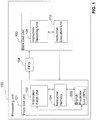
- FIG. 1 depicts a processing unit 100 in which embodiments herein may be implemented.
- the processing unit 100 is a pipelined processing unit 100.
- the term "processing unit” when used herein comprises any digital logic device or system capable of executing or responding to an instruction sequence.
- the term comprises for example Central Processing Units (CPUs), microprocessors, Digital Signal Processors (DSPs), Reduced Instruction Set Computer (RISC) processors, vector processors, and Single-Instruction-Multiple-Data (SIMD) processors.
- CPUs Central Processing Units
- DSPs Digital Signal Processors
- RISC Reduced Instruction Set Computer
- SIMD Single-Instruction-Multiple-Data
- the processing unit 100 comprises a front end unit 101 and a back end unit 103.
- the front end unit 101 is configured to perform processing of instructions in front end processing stages of the pipelined processing unit 100.
- the front end unit 101 comprises an instruction fetch unit 102 configured to receive a program counter (pc).
- a program counter is a register indicating where the processing unit 100 is in its processing of instructions in a sequence of instructions.
- the program counter is configured to hold an instruction address of a next instruction to be fetched or an address of the instruction memory word containing one or more instructions among which a next instruction to be fetched.
- the instruction fetch unit 102 is configured to fetch instructions from an instruction memory 104 based on the received program counter.
- the instruction fetch unit 102 is further configured to store the fetched instructions in a First In, First Out (FIFO) memory 106 connected to the instruction fetch unit 102.
- FIFO First In, First Out
- the first element stored is also the first element to be removed from the FIFO memory 106 for processing thereof.
- the second element stored after the first element is the second element to be removed from the FIFO element and processed, etc.
- elements are also removed from the FIFO memory 106.
- the instruction memory 104 may be comprised in the front end unit 101 and is configured to store instructions. In some embodiments, the instruction memory 104 is arranged in the instruction fetch unit 102. In other embodiments, the instruction memory 104 is arranged in communication with the instruction fetch unit 102. Further, in some embodiments, the instruction memory 104 is arranged external to the processing unit 100 and in communication with the processing unit 100.
- the front end unit 101 comprises further a branch prediction unit (BPU) 500 configured to perform branch predictions based on the received program counter.
- the branch prediction unit 500 comprises branch prediction logical circuit 502, a pattern history memory 504, a branch target buffer 506, a FIFO memory 508, and a next branch memory 510.
- the branch prediction unit 500 will be described in more detail below.
- the pattern history memory 504 and the branch target buffer 506 may be realized as processor caches configured to store and provide frequently used information.
- the pattern history memory 504 and the branch target buffer 506 may be configured to provide information in a single clock cycle.
- the pattern history memory 504 and the branch target buffer 506 will be described in more detail below and with reference to Figure 6 .
- the back end unit 103 is configured to perform processing of instructions in back end processing stages of the processing unit 100.
- the back end unit 103 is configured to retrieve instructions to be processed from the FIFO memory 106.
- the back end unit 103 comprises an instruction decoding unit 108 configured to decode instructions as is well-known in the art.
- the instruction decoding unit 108 is further configured to check whether an instruction following a direct branch instruction in the FIFO memory 106 is the correct instruction.
- the direct branch instruction may be a conditional direct branch instruction or an unconditional direct branch instruction. Since a direct branch instruction has the branch target encoded as part of the instruction, the instruction decoding unit 108 will know the branch target when the instruction has been decoded. Then the instruction decoding unit 108 can compare the branch target with the instruction address of the next instruction in the FIFO memory 106. When the branch target does not match the address of the next instruction, the next instruction is not the correct instruction and the pipeline, e.g. the FIFO memory 106, has to be flushed as previously described.
- instruction decoding unit 108 may be configured to provide branch information to the front end unit 101.
- the back end unit 103 further comprises an instruction execution unit 110 configured to execute decoded instructions.
- the instruction execution unit 110 is further configured to check whether an instruction following a branch instruction, i.e., an indirect branch instruction or a direct branch instruction, in the FIFO memory 106 is the correct instruction.
- An indirect branch instruction may be a conditional indirect branch instruction or an unconditional indirect branch instruction. Since an indirect branch instruction refers to a storage location for the branch target, the indirect branch instruction has to be executed before the branch target is known. Thus, the instruction execution unit 110 will know the branch target when the instruction has been executed. Then the instruction execution unit 110 can compare the branch target with the instruction address of the next instruction in the FIFO memory 106.
- a direct branch instruction may be a conditional direct branch instruction or an unconditional direct branch instruction. Since a direct branch instruction has the branch target encoded as part of the instruction, the instruction decoding unit 108 will know the branch target after the instruction has been decoded. In case of an unconditional direct branch instruction, the comparison of the branch target with the instruction address of the next instruction in the FIFO memory 106 can already take place after the decoding of the branch instruction. For a conditional direct branch instruction the comparison with the instruction address of the next instruction in the FIFO memory 106 can only be performed after the conditional direct branch instruction has been executed.
- the next instruction is the correct instruction.
- the next instruction is not the correct instruction and the pipeline, e.g. the FIFO memory 106, has to be flushed.
- instruction execution unit 110 is configured to provide branch information to the front end unit 101.
- the branch information thus provided to the front end unit 101 relates to decoded branch instructions or executed branch instructions and may comprise information of the type of the branch, e.g. conditional or unconditional branch and direct or indirect branch, the instruction address of the branch source, the instruction address of the branch target, i.e. the address of the target instruction, and/or information about whether the branch has been taken or not.
- the branch prediction unit 500 may use the branch information to update the pattern history memory 504.
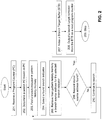
- Embodiments of a method in the branch prediction unit 500 for prediction of a next taken branch instruction in the processing unit 100 will now be described with reference to the flowchart depicted in Figure 2 , with further reference to Figures 5 and 6 .
- the branch prediction unit 500 is comprised in the processing unit 100.
- the method comprises the following actions executed during two clock cycles of the processing unit 100.
- an instruction branch exists in the administration, of the branch prediction unit 500, i.e. is registered in the branch prediction unit 500 for that search program counter, it may take the branch prediction unit 500 one additional clock cycle to provide the branch prediction.
- This incorrectly fetched instruction word may be flushed from the pipeline according to some embodiments.
- this problem only exists when the branch prediction unit 500 did not have the opportunity to run ahead of the instruction fetch unit 102.
- the instruction fetch unit 102 may be stalled frequently since the instruction fetch unit 102 works at one (1) instruction word per clock cycle, while the instruction decoding unit 108 may only process one (1) instruction per clock cycle. Having multiple instructions in a memory word may therefore lead to stalls of the instruction fetch unit 102. During these stalls the branch prediction unit 500 may run ahead of the instruction fetch unit 102 and that typically compensates for the one clock cycle of additional latency to produce the prediction, according to some embodiments.
- the actions are further performed separated from and concurrently with the instruction fetching of the processing unit 100. This means that the actions of predicting a next taken branch is performed independent of and simultaneously with the actions of fetching instructions. Thereby, branch prediction may be performed independently from, and simultaneously with, instruction fetching according to some embodiments. However, it should be understood that the actions of predicting a next taken branch may be carried out in another suitable order than described below.
- a program counter corresponding to a start instruction address of an instruction memory word is received.
- the start instruction address is the instruction address of the first instruction comprised in the instruction memory word.
- the instruction memory word may comprise a number of instructions, each of which instruction may be a branch instruction. This means that the instruction memory word may comprise a plurality of branch instructions. Further, the instructions may have a fixed instruction size or may have a variable instruction size.
- the instruction memory word may be comprised in the instruction memory 104.
- the prediction of a next taken branch instruction is initiated by a new branch signal sent to the branch prediction unit 500.
- the new branch signal indicates that a prediction of a next taken branch instruction has to be performed, e.g. an indication of a program start, of a pipeline flush or of a corrected program counter, or an indication that an instruction branch is predicted as taken, or that an instruction branch has been incorrectly predicted.
- a new branch signal is sent every time the program counter starts a new linear sequence of increments.
- the back end unit 103 may send the new branch signal to the branch prediction unit 500 when the current prediction is used to fetch the next instruction or a flush has occurred in the pipeline.
- search pc Determine a search program counter (search pc) based on the received program counter.
- the search program counter corresponds to or is equal to the program counter.
- At least one branch indicator is found in a pattern history memory 504.
- the branch indicators comprised in the pattern history memory 504 are referred to as BI 0,0 -BI N-1,K , wherein N is the number of branch source addresses A 0 , A 1 , ..A N-1 comprised in the pattern history memory 504, and K is the number of branch indicators for each branch source address A 0 , A 1 , ..A N-1 .
- the branch indicators for the branch source address A 0 may be referred to as BI 0,0 , BI 0,1 , BI 0,2 , ... BI 0,K
- the branch indicators for the branch source address A N-1 may be referred to as BI N-1,0 , BI N-1,1 , BI N-1,2 , ... BI N-1,K .
- the number of branch indicators for each branch source address may be different for the different branch source addresses.
- the pattern history table 504 is initially empty comprising a zero in every entry. However, in some other embodiments, all entries may be prefilled according to a predetermined schema based on e.g. a static code scan by a compiler.
- the pattern history memory 504 may comprise the at least one branch indicator BI 0,0 -BI N-1,K relating to at least one previously taken branch instruction, i.e. to at least one branch instruction taken in the history, thereof the name pattern history.
- This history information can be used in the prediction of upcoming branch instructions, meaning that the branch prediction is based on previously taken branch instructions.
- the at least one branch indicator BI 0,0 -BI N-1,K is found by searching the pattern history memory 504 by means of the search program counter.
- the at least one branch indicator BI 0,0 -BI N-1,K is configured to indicate at least one predicted taken branch instruction that is comprised in an execution path.
- the execution path starts at the program counter and ends at a last instruction comprised in the instruction memory word.
- the at least one branch indicator BI 0,0 -BI N-1,K may be found concurrently for a plurality of instructions comprised in the instruction memory word. This means that the pattern history memory 504 has to be searched simultaneously for the plurality of instructions.
- the search program counter is mapped to a pattern history index i.
- the pattern history index i By means of the pattern history index i, the at least one branch indicator BI 0,0 -BI N-1,K is found.
- the at least one branch indicator BI 0,0 -BI N-1,K is comprised in the entry of the pattern history memory 504 corresponding to the pattern history index i.
- the search program counter may be mapped to a single pattern history index i or to multiple pattern history indices i. The mapping will be described in more detail below.
- the search may end and the branch prediction unit 500 may enter idle mode as soon as it arrives at that conclusion.
- a first found branch indicator BI 0,0 -BI N-1,K is selected as an indication of a first predicted taken branch instruction in the execution path. This means that the first found branch indicator among all the found branch indicator(-s) is considered as an indication of the first predicted taken branch instruction in the execution path.
- a branch source address A 0 , ..., A N-1 is retrieved from the pattern history memory 504.
- the branch source address A 0 , ..., A N-1 is the branch source address A 0 , ..., A N-1 of the first predicted taken branch instruction.
- the branch source address of the first predicted taken branch is used to check whether the first predicted taken branch instruction is a first predicted taken branch instruction for the search program counter, which will be checked in action 206.
- a branch target buffer 506 comprising a number of branch targets is indexed by means of the retrieved branch source address A 0 , ..., A N-1 . This means that the retrieved branch source address is used for accessing the correct entry of the branch target buffer in order to be able to find the branch target, cf. action 208.
- this action is performed by indexing of the branch target buffer 506 by mapping the retrieved branch source address A 0 , ..., A N-1 to a branch target buffer index j. Further, by means of the branch target buffer index j, the branch target Target 0 , ..., Target M-1 for the retrieved branch source address A 0 , ..., A N-1 is found in the branch target buffer 506, wherein M is the number of branch targets stored in the branch target buffer 506.
- the branch target Target 0 , ..., Target M-1 is comprised in the entry of the branch target buffer 506 corresponding to the branch target buffer index j.
- the mapping will be described in more detail below.
- the retrieved branch source address A 0 , ..., A N-1 is mapped to a single branch target buffer index j or to multiple branch target buffer indices j.
- the branch target Target 0 , ..., Target M-1 may comprise the instruction address of the next predicted taken branch instruction or a pointer to the next predicted taken branch instruction.
- a branch target Target 0 , ..., Target M-1 retrieved from the branch target buffer 506 is outputted as a next program counter.
- the branch target Target 0 , ..., Target M-1 is outputted to the instruction fetch unit 102 that fetches the relevant instruction and stores it in the FIFO memory 106.
- the prediction idles until a new prediction is initiated by a new branch signal as described above under action 201. This means that the power consumption in the branch prediction unit 500 is reduced during the idle period.
- the pattern history memory 504 and/or the branch target buffer 506 is updated during the period when it is not predicting a next taken branch instruction.
- the updating procedure will be described in more detail below.
- the retrieved branch source address A 0 , ..., A N-1 is not known with certainty to be nearest branch source address to the search program counter
- the retrieved branch source address (A 0 , ..., A N-1 ) is stored in a next branch memory 510, as a predicted taken branch for a subsequent instruction in the execution path, and the actions 203, 204, 205, 206, 210 are continued until it is certain the nearest branch source address to the search program counter is found, according to some embodiments.
- a subsequent instruction is meant an instruction that is subsequent to the instruction corresponding to the search program counter in action 201.
- a second found branch indicator indicating a second predicted taken branch instruction in the execution path is selected in action 204.
- the branch source address of the second predicted taken branch instruction is retrieved from the pattern history memory 504.
- a second iteration may start in action 203.
- the branch target buffer 506 is indexed by means of the retrieved branch source address in action 207.
- a branch target retrieved from the branch target buffer 506 is output as a next program counter, and in action 209 the branch prediction unit stops the prediction of a next taken branch instruction.
- the branch prediction unit 500 searches for the first predicted taken branch on a linear execution path starting from the program counter.
- the program counter is the start address of the search and the search program counter points to the instruction word address that is being searched in a particular clock cycle.
- a search for the first, herein also referred to as the nearest, instruction branch occurring on the execution path that starts at the program counter is performed.
- the search program counter is mapped to an index i of the pattern history memory 504 by means of a first mapping function.
- An example of a first mapping function for a pattern history memory 504 having eight (8) entries, wherein each entry contains max four (4) branch indicators and wherein every instruction branch fits in a byte and which pattern history memory 504 is byte addressed, is i ((program counter) / 4) modulo 8. Since there are many more addresses than indices, every index i may be associated with a plurality of search program counters.
- the pattern history memory 504 has the content illustrated in Table 1 below. As illustrated, the index i can take a value between 0 and 7. Further, the branch source address A 1 has a value of 4, the branch source address A 2 has a value of 72, and the branch source address of A 7 has a value of 60. Furthermore, the pattern history memory 504 illustrated in Table 1, comprises for each index i four branch indicators, BI i,0 -BI i,3 , each branch indicator corresponding to an offset relative the branch source address, A i .
- branch indicators BI 0,0 -BI 7,0 correspond to an offset of +0 byte
- branch indicators BI 0,1 -BI 7,1 correspond to an offset of +1 byte
- branch indicators BI 0,2 -BI 7,2 correspond to an offset of +2 bytes
- branch indicators BI 0,3 -BI 7,3 correspond to an offset of +3 bytes relative the respective branch source address A 0 -A 7 .
- instruction branches are shown as BR.
- Table 1 Exemplifying content of a pattern history memory 504.
- the program counter is 6, that a new branch signal is active and received in the branch prediction unit 500. This relates to action 201. Then the search program counter 6 is mapped to index 1, by means of the first mapping function described above. Therefore, at clock cycle 0, the branch prediction unit 500, by means of the search program counter, starts searching for a branch indicator indicating an instruction branch at index 1, offset +2. This relates to actions 202 and 203.
- Table 2 schematically illustrates the search program counter, the index i, the offset and the taken action for the following clock cycles 1-7.
- the search program counter is 6, the index is 1 and the offset is 2, and no instruction branch is found. Therefore, the branch prediction unit 500 continues to search.
- the search program counter is 8
- the index is 2
- the offset is 3.
- an instruction branch BR at the branch address 75 is found. This instruction branch is stored in a next branch memory 510 as the nearest found instruction branch.
- the search program counter is 12, the index is 3 and the offset is 0, and no instruction branch is found. Therefore, the branch prediction unit 500 continues to search.
- the search program counter is 16, the index is 4 and the offset is 0, and no instruction branch is found. Therefore, the branch prediction unit 500 continues to search.
- the search program counter is 20, the index is 5 and the offset is 0, and no instruction branch is found. Therefore, the branch prediction unit 500 continues to search.
- the search program counter is 24, the index is 6 and the offset is 0, and no instruction branch is found. Therefore, the branch prediction unit 500 continues to search.
- the search program counter is 28, the index is 7 and the offset is 0.
- an instruction branch BR at the branch address 60 is found. This instruction branch is compared with the branch stored in the next branch memory and since the branch instruction is nearer to the program counter from action 201 than the branch stored in the next branch memory, the newly found branch instruction is stored in the next branch memory as the nearest found instruction branch.
- the search concludes that the branch source address of 60 is the branch source address nearest to the search program counter. This relates to the actions 203, 204, 205, 206, and 210.
- Table 2 schematic illustration of the search program counter, the index i, the offset and the taken action for the clock cycles 1-7
- table 3 Clock cycle Search PC Index i Offset Action 1 6 1 2 continue search 2 8 2 0 found BR at 9, match with Search PC, nearest found, report 9
- a search ends or is paused when all entries in the pattern history memory 504 have been visited or when an instruction branch has been found for which the branch source address A i matches (ignoring offsets / last x bits) the Search PC (implies nearest branch has been found).
- the nearest branch if any, will be used to index the branch target buffer 506, whereby a branch target is retrieved from the branch target buffer 506 and outputted as a next program counter.
- the indexing of the branch target buffer 506 is performed by first translating the nearest branch source address to an index j according to a second mapping function.
- At least one pattern history update to the pattern history memory 504 is buffered in a FIFO memory 508 and the pattern history memory 504 is updated with the buffered at least one pattern history update when the pattern history memory 504 is not searched.
- the at least one pattern history update may relate to at least one new or updated branch source address or to at least one new or updated taken branch instruction received from the back end unit 103, i.e., received from the instruction decoding unit 108 and/or from the instruction execution unit 110.
- At least one branch target buffer update to the branch target buffer 506 is buffered in the FIFO memory 508 and the branch target buffer 506 is updated with the buffered at least one branch target buffer update when the branch target buffer 506 is not indexed.
- the at least one branch target buffer update relates to at least one new or updated branch target Target 0 , ..., Target M-1 .
- the at least one pattern history update and/or branch target buffer update may be determined when the instruction decoding unit 108 and/or the instruction execution unit 106 after decoding and/or execution of a branch instruction.
- the updating does not interfere with the prediction procedure and therefore does not negatively influence the performance of the branch prediction unit 500.
- mapping of the search program counter to a pattern history index i and the mapping of the branch source address to a branch target buffer index j may be performed in different ways that will be described below, cf. Figure 6 .
- mapping of the search program counter to index i is such that each value of the search program counter that is used to access the pattern history memory 504 is associated with a single index i.
- the mapping of the branch source address to the index j of the branch target buffer may also be a single mapping, i.e. such that the branch source address A 0 , ..., A N-1 that is used to access the branch target buffer 506 is associated with a single index j.
- mapping the search program counter and the branch source address to a single index i, and single index j, respectively the power consumption can be reduced or minimized as compared to the case when the search program counter and/or the branch source address are mapped to multiple indices, because such mapping to multiple indices will require a policy that determines which of the indices to be used causing the power consumption to increase. Further, a mapping to single indices provides for a cheap implementation. However, mapping the search program counter and/or the branch source address to multiple indices may lead to better branch prediction and therefore requiring fewer pipeline flushes, which in turn may result in reduced power consumption.
- the size of the pattern history memory 504 and the branch target buffer 506, could be tuned or optimized to the size required.
- mapping of the search program counter to index i is such that each value of the search program counter that is used to access the pattern history memory 504 is associated with multiple indices i.
- the mapping of the branch source address to the index j of the branch target buffer may also be a multiple mapping, i.e. such that the branch source address A 0 , ..., A N-1 that is used to access the branch target buffer 506 is associated with multiple indices j.
- a policy is used to determine which one of the plurality of indices to use for accessing the pattern history memory 504 or the branch target buffer 506.
- a policy may say that the index referring to an empty entry is to be used when storing new data in the pattern history memory 504 and/or the branch target buffer 506.
- a policy may say that the entry comprising data produced in a specific time window is to be used when retrieving data from the pattern history memory 504 and/or the branch target buffer 506.
- mapping a search program counter to multiple indices i of the pattern history memory 504 the likeliness that two entries that are to be written to the pattern history memory 504 will map to the same index and overwrite one another is smaller than in the case when the search program counter is mapped to a single index i of the pattern history memory 504. The same is true for the mapping of branch source address to multiple indices j of the branch target buffer 506.
- the size of the pattern history memory 504 and the branch target buffer 506, could be tuned or optimized to the size required.
- pattern history memory 504 has as a pointer the search program counter, is indexed with index i and has n entries.
- the branch target buffer 506 has as a pointer the branch source address, is indexed with index j, and has m entries.
- every index i is associated with multiple search program counters, and every search program counter is associated with either a single index i or multiple indices i's (i.e. the two mapping alternatives previously described, wherein the association with multiple indices i's can lead to less overwrites).
- every index j is associated with multiple branch source addresses, and every branch source address is associated with either a single index j or multiple indices j's (i.e. the two mapping alternatives previously described, wherein the association with multiple indices j's can lead to less overwrites).
- the tuning or optimization potential may then be described as allowing the number of entries n and m to be different.
- the prediction of a next taken branch may be separated from the fetching of instructions from an instruction memory. This means that the branch prediction unit 500 operates autonomously and separated from the instruction fetching unit 102. This is also referred to as the decoupled branch prediction and will be described in more detail below with reference to Figure 3 and Figure 4 .
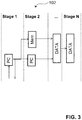
- Figure 3 depicts embodiments of processing stages comprised in the instruction fetch unit 102.
- a program counter PC is received from a pipeline control logical circuit (not depicted) in the Front End Unit 101 or from the branch prediction unit 500 (not shown in this figure).
- the program counter PC is the branch target outputted from the branch prediction unit 500, as previously described under action 208 above.
- the program counter PC is transmitted from the instruction fetch unit 102 to the branch prediction unit 500.
- the branch prediction unit 500 may start a prediction of a next taken branch instruction. This relates to action 201 described above.
- stage 2 the instruction fetch unit 102 fetches an instruction from a functional memory unit, denoted Mem in figure 3 , by means of the program counter.
- the functional memory unit corresponds to the instruction memory 104 in figure 1 .
- stage 3 to stage N the instruction fetch unit 103 processes data comprised in the fetched instruction.
- the instruction fetch unit 102 may perform some additional operations, such as expansion or alignment correction of the instruction data until finally in stage N it communicates the data to the FIFO memory 106.
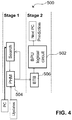
- Figure 4 depicts embodiments of processing stages comprised in the branch prediction unit 500.
- stage 1 a program counter PC is received in the branch prediction unit 500. This relates to action 201 previously described.
- the program counter is received in a functional search unit, denoted Search, configured to search the pattern history memory 504 and to retrieve the branch source address of a first found predicted taken branch instruction.
- the functional search unit is configured to perform action 201 to action 206 previously described.
- the functional search unit may correspond to or be comprised in a branch prediction logical circuit 502.
- stage 2 the branch prediction logical circuit 502 performs the actions 207-209 previously described.
- the branch prediction logical circuit 502 indexes the branch target buffer 406 by means of the retrieved branch source address and retrieves a branch target for the retrieved branch source address from the branch target buffer 506. Further, the branch prediction logical circuit 502 outputs the branch target as a next program counter.
- Figure 5 depicts embodiments of the branch prediction unit 500 for prediction of a next taken branch instruction.
- the branch prediction unit 500 is comprised in the processing unit 100.
- the branch prediction unit 500 may according to some embodiments be configured to perform the prediction during e.g. two clock cycles of the processing unit 100. However, in other embodiments, the prediction may be performed during another number of clock cycles, such as e.g. one clock cycle, or n clock cycles, where n is an arbitrary integer, just to mention some non-limiting examples.
- branch prediction unit 500 is configured to use search program counters that after each search program counter increment during the search process point to instruction memory word addresses, as described above, it is possible for the branch prediction unit 500 to handle instructions of fixed size and instructions of variable sizes.
- the branch prediction unit 500 may be configured to provide the predictions for the branches of all instructions in an instruction memory word up until the first predicted taken branch.
- the branch prediction unit 500 may be configured to handle multiple instructions simultaneously. Thereby, the branch prediction unit 500 may be configured to keep up with an unstalled pipeline of the processing unit 100 that uses variable instruction sizes.
- the branch prediction unit 500 comprises a pattern history memory 504 comprising a number of branch source addresses A 0 , ..., A N-1 and a number of branch indicators BI 0,0 -BI N-1,K .
- the branch indicator BI 0,0 -BI N-1,K is configured to indicate at least one predicted taken branch instruction for a branch source address A 0 , ..., A N-1 .
- the pattern history memory 504 will be described in more detail below with reference in Figure 6 .
- the branch prediction unit 500 comprises further a branch target buffer 506 comprising a number of branch targets Target 0 , ..., Target M-1 .
- the branch target buffer 506 will be described in more detail below with reference to Figure 6 .
- the branch prediction unit 500 comprises a branch prediction logical circuit 502 .
- the branch prediction logical circuit 502 is connected to the pattern history memory 504 and to the branch target buffer 506.
- the branch prediction logical circuit 502 is configured to receive a program counter corresponding to the address of an instruction and to determine a search program counter based on the received program counter.
- the branch prediction logical circuit 502 may receive the program counter from the instruction fetch unit 102.
- the branch prediction logical circuit 502 is configured to start the prediction of a next taken branch instruction upon reception of a new branch signal indicating that the prediction of a next taken branch instruction has to be performed, e.g. when an instruction branch has been predicted as taken.
- the branch prediction logical circuit 502 is configured to find in the pattern history memory 504 at least one branch indicator BI 0,0 -BI N-1,K .
- the at least one branch indicator BI 0,0 -BI N-1,K is configured to indicate at least one predicted taken branch instruction that is comprised in an execution path.
- the branch prediction logical circuit 502 is configured to find at least one branch indicator BI 0,0 -BI N-1,K comprised in the pattern history memory 504 concurrently for a plurality of instructions comprised in the instruction memory word.
- the branch prediction logical circuit 502 may be configured to find the at least one branch indicator BI 0,0 -BI N-1,K in the pattern history memory 504 by mapping the search program counter to a pattern history index i. By means of the pattern history index i, the branch prediction logical circuit 502 may find the at least one branch indicator BI 0,0 -BI N-1,K .
- the at least one branch indicator BI 0,0 -BI N-1,K may be comprised in the entry of the pattern history memory 504 corresponding to the pattern history index i.
- the branch prediction logical circuit 502 is configured to map the search program counter to a single pattern history index i or to multiple pattern history indices i, as previously described.
- the branch prediction logical circuit 502 is further configured to select a first found branch indicator BI 0,0 -BI N-1,K as an indication of a first predicted taken branch instruction in the execution path, and to, by means of the first found branch indicator BI 0,0 -B N-1,K , retrieve a branch source address A 0 ,..., A N-1 of the first predicted taken branch instruction from the pattern history memory 504.
- the branch prediction logical circuit 502 is configured to index the branch target buffer 506 by means of the retrieved branch source address (A 0 , ..., A N-1 ).
- the branch prediction logical circuit 502 is configured to index the branch target buffer 506 by mapping the retrieved branch source address A 0 , ..., A N-1 to a branch target buffer index j.
- the branch prediction logical circuit 502 may be configured to map the retrieved branch source address A 0 , ..., A N-1 to a single branch target buffer index j or to multiple branch target buffer indices j.
- the branch prediction logical circuit 502 may find, in the branch target buffer 506, the branch target Target 0 , ..., Target M-1 for the retrieved branch source address A 0 , ..., A K .
- the branch target Target 0 , ..., Target M-1 may be comprised in the entry of the branch target buffer 506 corresponding to the branch target buffer index j.
- the branch prediction logical circuit 502 is further configured to retrieve a branch target Target 0 , ..., Target M-1 from the branch target buffer 506 and to output the retrieved branch target Target 0 , ..., Target M-1 as a next program counter. When the next program counter has been outputted, the branch prediction logical circuit 502 is configured to stop or pause the prediction of a next taken branch instruction until a new branch signal is received.
- the branch prediction logical circuit 502 is further configured to continue searching.
- the branch prediction unit 500 may further comprise or be connected to a FIFO memory 508.
- the FIFO memory 508 is configured to store at least one pattern history update to the pattern history memory 504 or at least one branch target buffer update to the branch target buffer 506.
- the at least one pattern history update relates to at least one new or updated branch source address or to at least one new or updated taken branch instruction.
- the at least one branch target buffer update relates to at least one new or updated branch target Target 0 , ...,Target M-1 .
- the branch prediction logical circuit 502 is configured to buffer at least one pattern history update to the pattern history memory 504 in the FIFO memory 508 and to update the pattern history memory 504 with the buffered at least one pattern history update when the pattern history memory 504 is not searched. Further, the branch prediction logical circuit 502 may be configured to buffer at least one branch target buffer update to the branch target buffer 506 in the FIFO memory 508 and to update the branch target buffer 506 with the buffered at least one branch target buffer update when the branch target buffer 506 is not indexed.
- the branch prediction unit 500 may further comprise or be connected to a next branch memory 510 configured to store a nearest found instruction branch, as previously described.
- Embodiments herein do also relate to a processing unit 100 comprising the branch target unit 500, to an integrated circuit comprising the processing unit 100, and to a communication device comprising the integrated circuit.
- a communication device may comprise e.g. a base station, a network node, a relay station, a user equipment or any other device configured for communication.
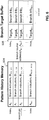
- Figure 6 depicts embodiments of the pattern history memory 504 and the branch target buffer 506.
- the pattern history memory 504 comprises the at least one branch indicator BI 0,0 -BI N-1,K relating to at least one previously taken branch instruction, i.e. to at least one branch instruction taken in the history, thereof the name pattern history.
- This history information can be used in the prediction of upcoming branch instructions, meaning that the branch prediction is based on previously taken branch instructions.
- the branch indicator BI 0,0 -BI N-1,K is configured to indicate at least one predicted taken branch instruction for a branch source address A 0 , ..., A N-1 .
- K branch indicators may exist for each branch source address A 0 , ..., A N-1 .
- each branch source address as a starting address in an instruction memory word, a plurality of branch instructions comprised in the instruction memory word may be indicated in the pattern history memory 504.
- the number of branch indicators for each branch source address may be different, i.e. the value of K may be different for the different branch source addresses A 0 , ..., A N-1 .
- the search may end and the branch prediction unit 500 may enter idle mode as soon as it arrives at that conclusion.
- the pattern history memory 504 is arranged as a table and referred to as a pattern history table 504.
- the pattern history table 504 may be a concise list comprising an ordered set of values.
- pattern history information could be stored in another suitable way, such as an unordered set of values with identifiers, wherein the identifiers are configured to identify the values comprised in the unordered set.
- the branch target buffer 506 comprises a number of branch targets Target 0 , ..., Target M-1 .
- the branch target buffer 506 is configured to comprise branch target information Branch Info 0 , ..., Branch Info M-1 such as branch instruction type, a branch source address, and information about whether the branch is taken or not.
- the branch target Target 0 , ..., Target M-1 may comprise the instruction address of the next predicted taken branch instruction or a pointer to the next predicted taken branch instruction.
- the pattern history memory 504 and the branch target buffer 506 may be realized as processor caches configured to store and provide frequently used information.
- the pattern history memory 504 and the branch target buffer 506 may be configured to provide information in a single clock cycle.
- the search program counter is used to access the pattern history memory 504, and that the branch source address retrieved from the pattern history memory 504 is used to access the branch target buffer 506. Further, as previously described, the search program counter may be mapped to at least one of index 0 -index i of the pattern history memory 504 and the retrieved branch source address may be mapped to at least one of index 0 -index j of the branch target buffer 506.
- action When using the word "action”/"actions” it shall be interpreted broadly and not to imply that the actions have to be carried out in the order mentioned. Instead, the actions may be carried out in any suitable order other than the order mentioned. Further, some action/actions may be optional.
Landscapes
- Engineering & Computer Science (AREA)
- Software Systems (AREA)
- Theoretical Computer Science (AREA)
- Physics & Mathematics (AREA)
- General Engineering & Computer Science (AREA)
- General Physics & Mathematics (AREA)
- Advance Control (AREA)
Priority Applications (5)
| Application Number | Priority Date | Filing Date | Title |
|---|---|---|---|
| EP11174969.3A EP2549376B1 (en) | 2011-07-22 | 2011-07-22 | Method and apparatus for branch prediction. |
| PCT/EP2012/063867 WO2013014012A1 (en) | 2011-07-22 | 2012-07-16 | Method and apparatus for branch prediction |
| US14/128,876 US9465615B2 (en) | 2011-07-22 | 2012-07-16 | Method and apparatus for branch prediction |
| IN245DEN2014 IN2014DN00245A (cg-RX-API-DMAC7.html) | 2011-07-22 | 2012-07-16 | |
| RU2014106700/08A RU2602335C2 (ru) | 2011-07-22 | 2012-07-16 | Способ и устройство для предсказания ветвлений |
Applications Claiming Priority (1)
| Application Number | Priority Date | Filing Date | Title |
|---|---|---|---|
| EP11174969.3A EP2549376B1 (en) | 2011-07-22 | 2011-07-22 | Method and apparatus for branch prediction. |
Publications (2)
| Publication Number | Publication Date |
|---|---|
| EP2549376A1 EP2549376A1 (en) | 2013-01-23 |
| EP2549376B1 true EP2549376B1 (en) | 2019-03-13 |
Family
ID=44910038
Family Applications (1)
| Application Number | Title | Priority Date | Filing Date |
|---|---|---|---|
| EP11174969.3A Active EP2549376B1 (en) | 2011-07-22 | 2011-07-22 | Method and apparatus for branch prediction. |
Country Status (5)
| Country | Link |
|---|---|
| US (1) | US9465615B2 (cg-RX-API-DMAC7.html) |
| EP (1) | EP2549376B1 (cg-RX-API-DMAC7.html) |
| IN (1) | IN2014DN00245A (cg-RX-API-DMAC7.html) |
| RU (1) | RU2602335C2 (cg-RX-API-DMAC7.html) |
| WO (1) | WO2013014012A1 (cg-RX-API-DMAC7.html) |
Families Citing this family (21)
| Publication number | Priority date | Publication date | Assignee | Title |
|---|---|---|---|---|
| US9639368B2 (en) | 2014-06-13 | 2017-05-02 | International Business Machines Corporation | Branch prediction based on correlating events |
| US9875106B2 (en) * | 2014-11-12 | 2018-01-23 | Mill Computing, Inc. | Computer processor employing instruction block exit prediction |
| US10402200B2 (en) | 2015-06-26 | 2019-09-03 | Samsung Electronics Co., Ltd. | High performance zero bubble conditional branch prediction using micro branch target buffer |
| US9934041B2 (en) | 2015-07-01 | 2018-04-03 | International Business Machines Corporation | Pattern based branch prediction |
| US10725685B2 (en) * | 2017-01-19 | 2020-07-28 | International Business Machines Corporation | Load logical and shift guarded instruction |
| US10210090B1 (en) | 2017-10-12 | 2019-02-19 | Texas Instruments Incorporated | Servicing CPU demand requests with inflight prefetchs |
| US11086629B2 (en) * | 2018-11-09 | 2021-08-10 | Arm Limited | Misprediction of predicted taken branches in a data processing apparatus |
| US12067399B2 (en) | 2022-02-01 | 2024-08-20 | Apple Inc. | Conditional instructions prediction |
| US12493469B1 (en) | 2023-08-30 | 2025-12-09 | Ventana Micro Systems Inc. | Microprocessor that extends sequential multi-fetch block macro-op cache entries |
| US12498928B1 (en) | 2023-08-30 | 2025-12-16 | Ventana Micro Systems Inc. | Microprocessor that builds multi-fetch block macro-op cache entries in two-stage process |
| US12498929B1 (en) | 2022-11-03 | 2025-12-16 | Ventana Micro Systems Inc. | Microprocessor that performs partial fallback abort processing of multi-fetch block macro-op cache entries |
| US12498927B1 (en) | 2023-08-30 | 2025-12-16 | Ventana Micro Systems Inc. | Microprocessor that allows same-fetch block start address co-residence of unrolled loop multi-fetch block macro-op cache entry and loop body macro-op cache entry used to build same |
| US12498926B1 (en) | 2023-08-30 | 2025-12-16 | Ventana Micro Systems Inc. | Microprocessor that builds consistent loop iteration count unrolled loop multi-fetch block macro-op cache entries |
| US12493466B1 (en) | 2023-08-30 | 2025-12-09 | Ventana Micro Systems Inc. | Microprocessor that builds inconsistent loop that iteration count unrolled loop multi-fetch block macro-op cache entries |
| US12450067B1 (en) | 2023-08-30 | 2025-10-21 | Ventana Micro Systems Inc. | Microprocessor that performs selective multi-fetch block macro-op cache entry invalidation |
| US12450066B1 (en) | 2023-08-30 | 2025-10-21 | Ventana Micro Systems Inc. | Microprocessor that builds sequential multi-fetch block macro-op cache entries |
| US12450068B2 (en) | 2023-07-25 | 2025-10-21 | Apple Inc. | Biased conditional instruction prediction |
| US12578965B2 (en) | 2023-07-25 | 2026-03-17 | Apple Inc. | Biased indirect control transfer prediction |
| US12487926B1 (en) * | 2023-08-30 | 2025-12-02 | Ventana Micro Systems Inc. | Prediction unit that predicts branch history update information produced by multi-fetch block macro-op cache entry |
| US12493468B1 (en) | 2023-08-30 | 2025-12-09 | Ventana Micro Systems Inc. | Microprocessor that performs mid-macro-op cache entry restart abort processing |
| US12498933B1 (en) | 2023-08-30 | 2025-12-16 | Ventana Micro Systems Inc. | Prediction unit that predicts successor fetch block start address of multi-fetch block macro-op cache entry |
Family Cites Families (7)
| Publication number | Priority date | Publication date | Assignee | Title |
|---|---|---|---|---|
| GB9521978D0 (en) * | 1995-10-26 | 1996-01-03 | Sgs Thomson Microelectronics | Computer instruction supply |
| US6957327B1 (en) * | 1998-12-31 | 2005-10-18 | Stmicroelectronics, Inc. | Block-based branch target buffer |
| US7493480B2 (en) * | 2002-07-18 | 2009-02-17 | International Business Machines Corporation | Method and apparatus for prefetching branch history information |
| KR100980076B1 (ko) | 2003-10-24 | 2010-09-06 | 삼성전자주식회사 | 저전력 분기 예측 시스템 및 분기 예측 방법 |
| KR100591769B1 (ko) | 2004-07-16 | 2006-06-26 | 삼성전자주식회사 | 분기 예측 정보를 가지는 분기 타겟 버퍼 |
| US7415638B2 (en) * | 2004-11-22 | 2008-08-19 | Qualcomm Incorporated | Pre-decode error handling via branch correction |
| CN101763249A (zh) | 2008-12-25 | 2010-06-30 | 世意法(北京)半导体研发有限责任公司 | 对非控制流指令减少分支检验 |
-
2011
- 2011-07-22 EP EP11174969.3A patent/EP2549376B1/en active Active
-
2012
- 2012-07-16 WO PCT/EP2012/063867 patent/WO2013014012A1/en not_active Ceased
- 2012-07-16 RU RU2014106700/08A patent/RU2602335C2/ru active
- 2012-07-16 IN IN245DEN2014 patent/IN2014DN00245A/en unknown
- 2012-07-16 US US14/128,876 patent/US9465615B2/en active Active
Non-Patent Citations (1)
| Title |
|---|
| None * |
Also Published As
| Publication number | Publication date |
|---|---|
| US9465615B2 (en) | 2016-10-11 |
| EP2549376A1 (en) | 2013-01-23 |
| US20140229719A1 (en) | 2014-08-14 |
| RU2014106700A (ru) | 2015-08-27 |
| WO2013014012A1 (en) | 2013-01-31 |
| RU2602335C2 (ru) | 2016-11-20 |
| IN2014DN00245A (cg-RX-API-DMAC7.html) | 2015-06-05 |
Similar Documents
| Publication | Publication Date | Title |
|---|---|---|
| EP2549376B1 (en) | Method and apparatus for branch prediction. | |
| EP0227892B1 (en) | Updates to branch history table in a pipeline processing system | |
| US9367471B2 (en) | Fetch width predictor | |
| US9529595B2 (en) | Branch processing method and system | |
| US9201654B2 (en) | Processor and data processing method incorporating an instruction pipeline with conditional branch direction prediction for fast access to branch target instructions | |
| US9250912B2 (en) | Fast index tree for accelerated branch prediction | |
| US20120311308A1 (en) | Branch Predictor with Jump Ahead Logic to Jump Over Portions of Program Code Lacking Branches | |
| JP5209633B2 (ja) | ワーキング・グローバル・ヒストリ・レジスタを備えるシステム及び方法 | |
| US20090265533A1 (en) | Branch Prediction Mechanisms Using Multiple Hash Functions | |
| US8473727B2 (en) | History based pipelined branch prediction | |
| JP2009536770A (ja) | ブロックに基づく分岐先アドレスキャッシュ | |
| EP2368180B1 (en) | Method and apparatus for performing jump operations in a digital processor | |
| JP2015133126A (ja) | プロシージャリターンシーケンスを加速するための方法およびシステム | |
| US8909907B2 (en) | Reducing branch prediction latency using a branch target buffer with a most recently used column prediction | |
| US9507600B2 (en) | Processor loop buffer | |
| US11294681B2 (en) | Processing device with a microbranch target buffer for branch prediction using loop iteration count | |
| CN100397365C (zh) | 解决分支目标地址快取中死结提取条件的装置与方法 | |
| US20050108508A1 (en) | Apparatus having a micro-instruction queue, a micro-instruction pointer programmable logic array and a micro-operation read only memory and method for use thereof | |
| US20140019722A1 (en) | Processor and instruction processing method of processor | |
| US9250909B2 (en) | Fast index tree for accelerated branch prediction | |
| US20060224861A1 (en) | Condition branch instruction encoding within a multiple instruction set data processing system | |
| WO1998020416A1 (en) | A stride-based data address prediction structure |
Legal Events
| Date | Code | Title | Description |
|---|---|---|---|
| PUAI | Public reference made under article 153(3) epc to a published international application that has entered the european phase |
Free format text: ORIGINAL CODE: 0009012 |
|
| AK | Designated contracting states |
Kind code of ref document: A1 Designated state(s): AL AT BE BG CH CY CZ DE DK EE ES FI FR GB GR HR HU IE IS IT LI LT LU LV MC MK MT NL NO PL PT RO RS SE SI SK SM TR |
|
| AX | Request for extension of the european patent |
Extension state: BA ME |
|
| 17P | Request for examination filed |
Effective date: 20130716 |
|
| RBV | Designated contracting states (corrected) |
Designated state(s): AL AT BE BG CH CY CZ DE DK EE ES FI FR GB GR HR HU IE IS IT LI LT LU LV MC MK MT NL NO PL PT RO RS SE SI SK SM TR |
|
| RAP1 | Party data changed (applicant data changed or rights of an application transferred) |
Owner name: ERICSSON MODEMS SA |
|
| RAP1 | Party data changed (applicant data changed or rights of an application transferred) |
Owner name: ERICSSON MODEMS SA |
|
| RAP1 | Party data changed (applicant data changed or rights of an application transferred) |
Owner name: TELEFONAKTIEBOLAGET L M ERICSSON (PUBL) |
|
| STAA | Information on the status of an ep patent application or granted ep patent |
Free format text: STATUS: EXAMINATION IS IN PROGRESS |
|
| 17Q | First examination report despatched |
Effective date: 20180424 |
|
| GRAP | Despatch of communication of intention to grant a patent |
Free format text: ORIGINAL CODE: EPIDOSNIGR1 |
|
| STAA | Information on the status of an ep patent application or granted ep patent |
Free format text: STATUS: GRANT OF PATENT IS INTENDED |
|
| INTG | Intention to grant announced |
Effective date: 20181204 |
|
| GRAS | Grant fee paid |
Free format text: ORIGINAL CODE: EPIDOSNIGR3 |
|
| GRAA | (expected) grant |
Free format text: ORIGINAL CODE: 0009210 |
|
| STAA | Information on the status of an ep patent application or granted ep patent |
Free format text: STATUS: THE PATENT HAS BEEN GRANTED |
|
| AK | Designated contracting states |
Kind code of ref document: B1 Designated state(s): AL AT BE BG CH CY CZ DE DK EE ES FI FR GB GR HR HU IE IS IT LI LT LU LV MC MK MT NL NO PL PT RO RS SE SI SK SM TR |
|
| REG | Reference to a national code |
Ref country code: GB Ref legal event code: FG4D |
|
| REG | Reference to a national code |
Ref country code: CH Ref legal event code: EP Ref country code: AT Ref legal event code: REF Ref document number: 1108624 Country of ref document: AT Kind code of ref document: T Effective date: 20190315 |
|
| REG | Reference to a national code |
Ref country code: IE Ref legal event code: FG4D |
|
| REG | Reference to a national code |
Ref country code: DE Ref legal event code: R096 Ref document number: 602011057062 Country of ref document: DE |
|
| REG | Reference to a national code |
Ref country code: NL Ref legal event code: MP Effective date: 20190313 |
|
| REG | Reference to a national code |
Ref country code: LT Ref legal event code: MG4D |
|
| PG25 | Lapsed in a contracting state [announced via postgrant information from national office to epo] |
Ref country code: NO Free format text: LAPSE BECAUSE OF FAILURE TO SUBMIT A TRANSLATION OF THE DESCRIPTION OR TO PAY THE FEE WITHIN THE PRESCRIBED TIME-LIMIT Effective date: 20190613 Ref country code: SE Free format text: LAPSE BECAUSE OF FAILURE TO SUBMIT A TRANSLATION OF THE DESCRIPTION OR TO PAY THE FEE WITHIN THE PRESCRIBED TIME-LIMIT Effective date: 20190313 Ref country code: LT Free format text: LAPSE BECAUSE OF FAILURE TO SUBMIT A TRANSLATION OF THE DESCRIPTION OR TO PAY THE FEE WITHIN THE PRESCRIBED TIME-LIMIT Effective date: 20190313 Ref country code: FI Free format text: LAPSE BECAUSE OF FAILURE TO SUBMIT A TRANSLATION OF THE DESCRIPTION OR TO PAY THE FEE WITHIN THE PRESCRIBED TIME-LIMIT Effective date: 20190313 |
|
| PG25 | Lapsed in a contracting state [announced via postgrant information from national office to epo] |
Ref country code: BG Free format text: LAPSE BECAUSE OF FAILURE TO SUBMIT A TRANSLATION OF THE DESCRIPTION OR TO PAY THE FEE WITHIN THE PRESCRIBED TIME-LIMIT Effective date: 20190613 Ref country code: RS Free format text: LAPSE BECAUSE OF FAILURE TO SUBMIT A TRANSLATION OF THE DESCRIPTION OR TO PAY THE FEE WITHIN THE PRESCRIBED TIME-LIMIT Effective date: 20190313 Ref country code: NL Free format text: LAPSE BECAUSE OF FAILURE TO SUBMIT A TRANSLATION OF THE DESCRIPTION OR TO PAY THE FEE WITHIN THE PRESCRIBED TIME-LIMIT Effective date: 20190313 Ref country code: LV Free format text: LAPSE BECAUSE OF FAILURE TO SUBMIT A TRANSLATION OF THE DESCRIPTION OR TO PAY THE FEE WITHIN THE PRESCRIBED TIME-LIMIT Effective date: 20190313 Ref country code: GR Free format text: LAPSE BECAUSE OF FAILURE TO SUBMIT A TRANSLATION OF THE DESCRIPTION OR TO PAY THE FEE WITHIN THE PRESCRIBED TIME-LIMIT Effective date: 20190614 Ref country code: HR Free format text: LAPSE BECAUSE OF FAILURE TO SUBMIT A TRANSLATION OF THE DESCRIPTION OR TO PAY THE FEE WITHIN THE PRESCRIBED TIME-LIMIT Effective date: 20190313 |
|
| REG | Reference to a national code |
Ref country code: AT Ref legal event code: MK05 Ref document number: 1108624 Country of ref document: AT Kind code of ref document: T Effective date: 20190313 |
|
| PG25 | Lapsed in a contracting state [announced via postgrant information from national office to epo] |
Ref country code: SK Free format text: LAPSE BECAUSE OF FAILURE TO SUBMIT A TRANSLATION OF THE DESCRIPTION OR TO PAY THE FEE WITHIN THE PRESCRIBED TIME-LIMIT Effective date: 20190313 Ref country code: EE Free format text: LAPSE BECAUSE OF FAILURE TO SUBMIT A TRANSLATION OF THE DESCRIPTION OR TO PAY THE FEE WITHIN THE PRESCRIBED TIME-LIMIT Effective date: 20190313 Ref country code: IT Free format text: LAPSE BECAUSE OF FAILURE TO SUBMIT A TRANSLATION OF THE DESCRIPTION OR TO PAY THE FEE WITHIN THE PRESCRIBED TIME-LIMIT Effective date: 20190313 Ref country code: PT Free format text: LAPSE BECAUSE OF FAILURE TO SUBMIT A TRANSLATION OF THE DESCRIPTION OR TO PAY THE FEE WITHIN THE PRESCRIBED TIME-LIMIT Effective date: 20190713 Ref country code: AL Free format text: LAPSE BECAUSE OF FAILURE TO SUBMIT A TRANSLATION OF THE DESCRIPTION OR TO PAY THE FEE WITHIN THE PRESCRIBED TIME-LIMIT Effective date: 20190313 Ref country code: CZ Free format text: LAPSE BECAUSE OF FAILURE TO SUBMIT A TRANSLATION OF THE DESCRIPTION OR TO PAY THE FEE WITHIN THE PRESCRIBED TIME-LIMIT Effective date: 20190313 Ref country code: RO Free format text: LAPSE BECAUSE OF FAILURE TO SUBMIT A TRANSLATION OF THE DESCRIPTION OR TO PAY THE FEE WITHIN THE PRESCRIBED TIME-LIMIT Effective date: 20190313 Ref country code: ES Free format text: LAPSE BECAUSE OF FAILURE TO SUBMIT A TRANSLATION OF THE DESCRIPTION OR TO PAY THE FEE WITHIN THE PRESCRIBED TIME-LIMIT Effective date: 20190313 |
|
| PG25 | Lapsed in a contracting state [announced via postgrant information from national office to epo] |
Ref country code: PL Free format text: LAPSE BECAUSE OF FAILURE TO SUBMIT A TRANSLATION OF THE DESCRIPTION OR TO PAY THE FEE WITHIN THE PRESCRIBED TIME-LIMIT Effective date: 20190313 Ref country code: SM Free format text: LAPSE BECAUSE OF FAILURE TO SUBMIT A TRANSLATION OF THE DESCRIPTION OR TO PAY THE FEE WITHIN THE PRESCRIBED TIME-LIMIT Effective date: 20190313 |
|
| REG | Reference to a national code |
Ref country code: DE Ref legal event code: R097 Ref document number: 602011057062 Country of ref document: DE |
|
| PG25 | Lapsed in a contracting state [announced via postgrant information from national office to epo] |
Ref country code: AT Free format text: LAPSE BECAUSE OF FAILURE TO SUBMIT A TRANSLATION OF THE DESCRIPTION OR TO PAY THE FEE WITHIN THE PRESCRIBED TIME-LIMIT Effective date: 20190313 Ref country code: IS Free format text: LAPSE BECAUSE OF FAILURE TO SUBMIT A TRANSLATION OF THE DESCRIPTION OR TO PAY THE FEE WITHIN THE PRESCRIBED TIME-LIMIT Effective date: 20190713 |
|
| PLBE | No opposition filed within time limit |
Free format text: ORIGINAL CODE: 0009261 |
|
| STAA | Information on the status of an ep patent application or granted ep patent |
Free format text: STATUS: NO OPPOSITION FILED WITHIN TIME LIMIT |
|
| PG25 | Lapsed in a contracting state [announced via postgrant information from national office to epo] |
Ref country code: DK Free format text: LAPSE BECAUSE OF FAILURE TO SUBMIT A TRANSLATION OF THE DESCRIPTION OR TO PAY THE FEE WITHIN THE PRESCRIBED TIME-LIMIT Effective date: 20190313 |
|
| 26N | No opposition filed |
Effective date: 20191216 |
|
| PG25 | Lapsed in a contracting state [announced via postgrant information from national office to epo] |
Ref country code: MC Free format text: LAPSE BECAUSE OF FAILURE TO SUBMIT A TRANSLATION OF THE DESCRIPTION OR TO PAY THE FEE WITHIN THE PRESCRIBED TIME-LIMIT Effective date: 20190313 Ref country code: SI Free format text: LAPSE BECAUSE OF FAILURE TO SUBMIT A TRANSLATION OF THE DESCRIPTION OR TO PAY THE FEE WITHIN THE PRESCRIBED TIME-LIMIT Effective date: 20190313 |
|
| REG | Reference to a national code |
Ref country code: CH Ref legal event code: PL |
|
| PG25 | Lapsed in a contracting state [announced via postgrant information from national office to epo] |
Ref country code: TR Free format text: LAPSE BECAUSE OF FAILURE TO SUBMIT A TRANSLATION OF THE DESCRIPTION OR TO PAY THE FEE WITHIN THE PRESCRIBED TIME-LIMIT Effective date: 20190313 |
|
| REG | Reference to a national code |
Ref country code: BE Ref legal event code: MM Effective date: 20190731 |
|
| PG25 | Lapsed in a contracting state [announced via postgrant information from national office to epo] |
Ref country code: LI Free format text: LAPSE BECAUSE OF NON-PAYMENT OF DUE FEES Effective date: 20190731 Ref country code: LU Free format text: LAPSE BECAUSE OF NON-PAYMENT OF DUE FEES Effective date: 20190722 Ref country code: CH Free format text: LAPSE BECAUSE OF NON-PAYMENT OF DUE FEES Effective date: 20190731 Ref country code: BE Free format text: LAPSE BECAUSE OF NON-PAYMENT OF DUE FEES Effective date: 20190731 |
|
| PG25 | Lapsed in a contracting state [announced via postgrant information from national office to epo] |
Ref country code: IE Free format text: LAPSE BECAUSE OF NON-PAYMENT OF DUE FEES Effective date: 20190722 |
|
| PG25 | Lapsed in a contracting state [announced via postgrant information from national office to epo] |
Ref country code: CY Free format text: LAPSE BECAUSE OF FAILURE TO SUBMIT A TRANSLATION OF THE DESCRIPTION OR TO PAY THE FEE WITHIN THE PRESCRIBED TIME-LIMIT Effective date: 20190313 |
|
| PG25 | Lapsed in a contracting state [announced via postgrant information from national office to epo] |
Ref country code: MT Free format text: LAPSE BECAUSE OF FAILURE TO SUBMIT A TRANSLATION OF THE DESCRIPTION OR TO PAY THE FEE WITHIN THE PRESCRIBED TIME-LIMIT Effective date: 20190313 Ref country code: HU Free format text: LAPSE BECAUSE OF FAILURE TO SUBMIT A TRANSLATION OF THE DESCRIPTION OR TO PAY THE FEE WITHIN THE PRESCRIBED TIME-LIMIT; INVALID AB INITIO Effective date: 20110722 |
|
| PG25 | Lapsed in a contracting state [announced via postgrant information from national office to epo] |
Ref country code: MK Free format text: LAPSE BECAUSE OF FAILURE TO SUBMIT A TRANSLATION OF THE DESCRIPTION OR TO PAY THE FEE WITHIN THE PRESCRIBED TIME-LIMIT Effective date: 20190313 |
|
| P01 | Opt-out of the competence of the unified patent court (upc) registered |
Effective date: 20230523 |
|
| PGFP | Annual fee paid to national office [announced via postgrant information from national office to epo] |
Ref country code: DE Payment date: 20250729 Year of fee payment: 15 |
|
| PGFP | Annual fee paid to national office [announced via postgrant information from national office to epo] |
Ref country code: GB Payment date: 20250728 Year of fee payment: 15 |
|
| PGFP | Annual fee paid to national office [announced via postgrant information from national office to epo] |
Ref country code: FR Payment date: 20250725 Year of fee payment: 15 |