EP2531857B1 - Infection prognostic assay - Google Patents
Infection prognostic assay Download PDFInfo
- Publication number
- EP2531857B1 EP2531857B1 EP11702698.9A EP11702698A EP2531857B1 EP 2531857 B1 EP2531857 B1 EP 2531857B1 EP 11702698 A EP11702698 A EP 11702698A EP 2531857 B1 EP2531857 B1 EP 2531857B1
- Authority
- EP
- European Patent Office
- Prior art keywords
- flc
- infection
- free
- total
- serum
- Prior art date
- Legal status (The legal status is an assumption and is not a legal conclusion. Google has not performed a legal analysis and makes no representation as to the accuracy of the status listed.)
- Active
Links
Images


Classifications
-
- G—PHYSICS
- G01—MEASURING; TESTING
- G01N—INVESTIGATING OR ANALYSING MATERIALS BY DETERMINING THEIR CHEMICAL OR PHYSICAL PROPERTIES
- G01N33/00—Investigating or analysing materials by specific methods not covered by groups G01N1/00 - G01N31/00
- G01N33/48—Biological material, e.g. blood, urine; Haemocytometers
- G01N33/50—Chemical analysis of biological material, e.g. blood, urine; Testing involving biospecific ligand binding methods; Immunological testing
- G01N33/68—Chemical analysis of biological material, e.g. blood, urine; Testing involving biospecific ligand binding methods; Immunological testing involving proteins, peptides or amino acids
- G01N33/6854—Immunoglobulins
- G01N33/6857—Antibody fragments
-
- G—PHYSICS
- G01—MEASURING; TESTING
- G01N—INVESTIGATING OR ANALYSING MATERIALS BY DETERMINING THEIR CHEMICAL OR PHYSICAL PROPERTIES
- G01N33/00—Investigating or analysing materials by specific methods not covered by groups G01N1/00 - G01N31/00
- G01N33/48—Biological material, e.g. blood, urine; Haemocytometers
- G01N33/50—Chemical analysis of biological material, e.g. blood, urine; Testing involving biospecific ligand binding methods; Immunological testing
- G01N33/53—Immunoassay; Biospecific binding assay; Materials therefor
- G01N33/575—Immunoassay; Biospecific binding assay; Materials therefor for cancer
-
- G—PHYSICS
- G01—MEASURING; TESTING
- G01N—INVESTIGATING OR ANALYSING MATERIALS BY DETERMINING THEIR CHEMICAL OR PHYSICAL PROPERTIES
- G01N2800/00—Detection or diagnosis of diseases
- G01N2800/50—Determining the risk of developing a disease
Definitions
- the invention relates to a method of prognosis of a human patient with an infection, and/or identifying a human patient at greater risk from an infection.
- the infection is a bacterial infection selected from, a lower respiratory tract infection (such as pneumonia), urinary tract infection, Clostridium difficile infection, septicaemia or peritonitis.
- Antibodies comprise heavy chains and light chains. They usually have a two-fold symmetry and are composed of two identical heavy chains and two identical light chains, each containing variable and constant region domains. The variable domains of each light-chain/heavy-chain pair combine to form an antigen-binding site, so that both chains contribute to the antigen-binding specificity of the antibody molecule.
- Light chains are of two types, ⁇ and ⁇ and any given antibody molecule is produced with either light chain but never both. There are approximately twice as many ⁇ as ⁇ molecules produced in humans, but this is different in some mammals. Usually the light chains are attached to heavy chains. However, some unattached "free light chains" are detectable in the serum or urine of individuals.
- Free light chains may be specifically identified by raising antibodies against the surface of the free light chain that is normally hidden by the binding of the light chain to the heavy chain. In free light chains (FLC) this surface is exposed, allowing it to be detected immunologically.
- kits for the detection of ⁇ or ⁇ free light chains include, for example, "FreeliteTM", manufactured by The Binding Site Limited, Birmingham, United Kingdom. The Applicants have previously identified that determining the amount of free ⁇ /free ⁇ ratios, aids the diagnosis of monoclonal gammopathies in patients.
- an increase in one of the ⁇ or ⁇ light chains and a consequently abnormal ratio is looked for.
- multiple myelomas result from the monoclonal multiplication of a malignant plasma cell, resulting in an increase in a single type of cell producing a single type of immunoglobulin.
- This increase in concentration may be determined, and usually the ratio of the free ⁇ to free ⁇ is determined and compared with the normal range. This aids in the diagnosis of monoclonal disease.
- the free light chain assays may also be used for the following of treatment of the disease in patients. Prognosis of, for example, patients after treatment for AL amyloidosis may be carried out.
- US4792529 discloses the increase of kappa FLC in cerebrospinal fluid (CSF) in patients with multiple sclerosis (MS). Furthermore, US4792529 reports that 38% of the samples from patients with various CNS inflammatory and infectious diseases exhibit abnormal levels of lambda FLC, but not kappa FLC. A selective increase in the CSF indicates localised production of the light chains. Localised immunoglobulin production in the CNS is not commonplace, and so normal levels of FLC and intact immunoglobulins are low in normal CSF. Localised production of light chains in the CSF may therefore result in a discernable increase in FLC levels. In contrast, immunoglobulin levels in normal serum are found in g/L quantities. Here, the antibody levels are systemic and not due to localised production.
- Fagnart et al. also reports a correlation between kappa FLC and MS in CSF.
- a number of viral and bacterial diseases of the CNS are studied, but there are large discrepancies between different infections and whether CNS or sera was tested.
- Mean free kappa in sera did not vary between the control and test groups, although the paper does highlight an increase in lambda FLC serum in the control groups.
- this observation was shown for both sera from patients with infectious and non-infectious neurological disorders, and the increase was higher in those patients with non-infectious neurological disorders.
- this paper concludes that identifying a correlation between local production of FLC in the CNS can be seen in MS only, similar to US4792529 .
- the Applicants have now identified that assaying for FLC and especially total FLC can be used in a method of prognosis for a subject with an infection, identifying a subject at greater risk from an infection and/or identifying a subject at risk of developing an infection. They have found that FLC concentration is statistically significantly linked to risk of death in subjects from infection and to be indicative of the presence of such an infection.
- the concentration of FLC in serum from individuals that are apparently healthy is influenced to some extent by the ability of the individual's kidneys to filter and excrete FLC. In individuals where FLC clearance is restricted, there is an increase in the levels of FLC found in serum. As a consequence, it is now believed that FLC is a good marker of renal function. Because monomeric FLC kappa molecules (25kDa) are of different size to dimeric lambda molecules (50kDa), together they are better markers of glomerular filtration than, for example, creatinine 113 kDa). However, in contrast to creatinine, production of FLCs may result as a consequence of many diseases, so serum FLCs will typically not be used as a renal function marker, in isolation.
- FLC production is an early indicator of B-cell up-regulation. In this respect it can complement the use of CRP which is a T-cell mediated marker of inflammatory responses.
- High FLC concentrations may well be an indication of chronic renal or inflammatory disorders or B-cell dyscrasias.
- an abnormal FLC assay result may be a marker of a variety of disorders that currently require several tests in combination. The converse of this, when the FLC assay results are normal, indicates good renal function, no inflammatory conditions and no evidence of B-cell dyscrasia.
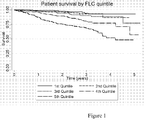
- the Applicant studied serum samples from patients having various degrees of renal impairment. The causes of death of patients was investigated in comparison with FLC concentration. FLC levels, and especially total FLC levels, were observed to be clearly associated with risk of death from infection.
- the invention provides a method of prognosis of a human patient with an infection, and/or identifying a human patient at greater risk of death from an infection, the method comprising detecting an amount of free light chains (FLC) in a sample of blood or serum from the human patient, wherein a higher amount of FLC is associated with decreased survival due to the infection and/or increased risk from an infection wherein the infection is a bacterial infection selected from a lower respiratory tract infection (such as pneumonia), urinary tract infection, Clostridium difficile infection, septicaemia or peritonitis.
- FLC free light chains
- the subject may not have been previously diagnosed with an infection.
- the FLC may be kappa or lambda FLC. However, preferably the total FLC concentration is measured, as detecting kappa FLC or lambda FLC alone may miss, for example, abnormally high levels of one or other FLC produced for example monoclonally in the patient.
- Total free light chain means the total amount of free kappa plus free lambda light chains in a sample.
- the subject does not necessarily have symptoms of a B-cell associated disease.
- the symptoms may include recurrent infections, bone pain and fatigue.
- a B-cell associated disease is preferably not a myeloma, (such as intact immunoglobulin myeloma, light chain myeloma, non-secretory myeloma), an MGUS, AL amyloidosis, Waldenström's macroglobulinaemia, Hodgkin's lymphoma, follicular centre cell lymphoma, chronic lymphocytic leukaemia, mantle cell lymphoma, pre-B cell leukaemia or acute lymphoblastic leukaemia.
- the individual typically does not have reduced bone marrow function.
- the individual typically does not have an abnormal ⁇ : ⁇ FLC ratio, typically found in many such diseases.
- total free light chains means the amount of ⁇ and ⁇ free light chains in the sample from the subject.
- the FLC is determined by immunoassay, such as ELISA assays, Serum Protein Electrophoresis (SPE), or utilising fluorescently labelled beads, such as Luminex TM beads.
- immunoassay such as ELISA assays, Serum Protein Electrophoresis (SPE), or utilising fluorescently labelled beads, such as Luminex TM beads.
- Total free light chain means the total amount of free kappa plus free lambda light chains in a sample.
- the subject does not necessarily have symptoms of a B-cell associated disease.
- the symptoms may include recurrent infections, bone pain and fatigue.
- a B-cell associated disease is preferably not a myeloma, (such as intact immunoglobulin myeloma, light chain myeloma, non-secretory myeloma), an MGUS, AL amyloidosis, Waldenstrom's Sandwich assays, for example use antibodies to detect specific antigens.
- One or more of the antibodies used in the assay may be labelled with an enzyme capable of converting a substrate into a detectable analyte.
- enzymes include horseradish peroxidase, alkaline phosphatase and other enzymes known in the art.
- detectable tags or labels may be used instead of, or together with, the enzymes.
- detectable tags or labels include radioisotopes, a wide range of coloured and fluorescent labels known in the art, including fluorescein, Alexa fluor, Oregon Green, BODIPY, rhodamine red, Cascade Blue, Marina Blue, Pacific Blue, Cascade Yellow, gold; and conjugates such as biotin (available from, for example, Invitrogen Ltd, United Kingdom).
- Dye sols, chemiluminescent labels, metallic sols or coloured latex may also be used.
- One or more of these labels may be used in the ELISA assays according to the various inventions described herein or alternatively in the other assays, labelled antibodies or kits described herein.
- sandwich-type assays is itself well known in the art.
- a "capture antibody” specific for the FLC is immobilised on a substrate.
- the “capture antibody” may be immobilised onto the substrate by methods which are well known in the art.
- FLC in the sample are bound by the "capture antibody” which binds the FLC to the substrate via the "capture antibody”.
- Unbound immunoglobulins may be washed away.
- the presence of bound immunoglobulins may be determined by using a labeled "detecting antibody” specific to a different part of the FLC of interest than the binding antibody.
- Flow cytometry may be used to detect the binding of the FLC of interest. This technique is well known in the art for, e.g. cell sorting. However, it can also be used to detect labeled particles, such as beads, and to measure their size. Numerous text books describe flow cytometry, such as Practical Flow Cytometry, 3rd Ed. (1994), H. Shapiro, Alan R. Liss, New York , and Flow Cytometry, First Principles (2nd Ed.) 2001, A.L. Given, Wiley Liss .
- One of the binding antibodies such as the antibody specific for FLC, is bound to a bead, such as a polystyrene or latex bead.
- the beads are mixed with the sample and the second detecting antibody.
- the detecting antibody is preferably labeled with a detectable label, which binds the FLC to be detected in the sample. This results in a labeled bead when the FLC to be assayed is present.
- Labeled beads may then be detected via flow cytometry.
- Different labels such as different fluorescent labels may be used for, for example, the anti- free ⁇ and anti- free ⁇ antibodies.
- Other antibodies specific for other analytes, such as bacterial-specific antigens, described herein may also be used in this or other assays described herein to allow the detection of those analytes. This allows the amount of each type of FLC bound to be determined simultaneously or the presence of other analytes to be determined.
- different sized beads may be used for different antibodies, for example for different marker specific antibodies.
- Flow cytometry can distinguish between different sized beads and hence can rapidly determine the amount of each FLC or other analyte in a sample.
- An alternative method uses the antibodies bound to, for example, fluorescently labeled beads such as commercially available LuminexTM beads. Different beads are used with different antibodies. Different beads are labeled with different fluorophore mixtures, thus allowing different analytes to be determined by the fluorescent wavelength. Luminex beads are available from Luminex Corporation, Austin, Texas, United States of America.
- the assay used is a nephelometric or turbidimetric method.
- Nephelometric and turbidimetric assays for the detection of ⁇ - or ⁇ - FLC are generally known in the art, but not for total FLC assays. They have the best level of sensitivity for the assay.
- ⁇ and ⁇ FLC concentrations may be separately determined or a single assay for total FLC arrived at.
- Such an assay contains anti-K and anti- ⁇ FLC antibodies typically at a 60:40 ratio, but other ratios, such as 50:50 may be used.
- Antibodies may also be raised against a mixture of free ⁇ and free ⁇ light chains.
- the amount of FLC such as total FLC may be compared to a standard, predetermined value to determine whether the total amount is higher or lower than a normal range of FLC.
- a level of >1.7 mg/L of FLC per unit GFR was associated with an increased risk of death from infection. Patients with a level above the 90 th percentile (6.12mg/L of FLC per unit GFR) had a very significantly increased risk.
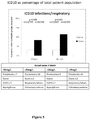
- ICD10 levels have shown increased mortality at 50mg/ml and 60mg/ml FLC as measured by SPE.
- assay kits have been produced for measurement of kappa and lambda FLC separately, to allow the calculation of a ratio. They have been conventionally used in individuals already exhibiting disease symptoms.
- the assay is capable of determining FLC, for example total FLC, in the sample for example from approximately 1 mg/L to 100 mg/L, or 1 mg/L - 80 mg/L. This is expected to detect the serum FLC concentrations in the vast majority of individuals without the requirement for re-assaying samples at a different dilution.
- the method comprises detecting the amount of total free light chain in the sample utilising an immunoassay, for example, by utilising a mixture of anti-free ⁇ light chain and anti-free ⁇ light chain antibodies or fragments thereof.
- Such antibodies may be in a ratio of 50:50 anti-K: anti- ⁇ antibodies.
- Antibodies, or fragments, bound to FLC may be detected directly by using labelled antibodies or fragments, or indirectly using labelled antibodies against the anti-free ⁇ or anti-free ⁇ antibodies.
- the antibodies may be polyclonal or monoclonal. Polyclonal may be used because they allow for some variability between light chains of the same type to be detected as they are raised against different parts of the same chain. The production of polyclonal antibodies is described, for example in WO97/17372 .
- the amount of serum FLC, such as total FLC, identified, and found to be significant to show an increased likelihood of overall survival is below 50 mg/L.
- a level of ⁇ 47.4mg/L showed P ⁇ 0.001.
- the patients were recruited from the renal clinics at the University Hospital Birmingham.
- the patients had a range of renal problems including proteinuria, haematuria, chronic kidney disease (all stages), end stage renal failure (haemodialysis and peritoneal dialysis) and renal transplant recipients.
- the principal infections identified were lower respiratory tract infections (pneumonia), urinary tract infections, Clostridium difficile, septicaemia and peritonitis.
- the method according to the invention may utilise the following assay kit.
- the assay kit quantifies the total free ⁇ plus free ⁇ light chains present within patient samples, for example, in serum. This may be achieved by coating 100 nm carboxyl modified latex particles with a 50:50 blend of anti-free ⁇ and anti-free ⁇ light chain sheep antibody.
- the measuring range for the total free light chains is for 1-80 mg/L. However, other measuring ranges could equally be considered.
- Anti-free ⁇ and anti-free ⁇ anti sera are produced using techniques generally known in the art, in this particular case in sheep.
- the general immunisation process is described in WO 97/17372 .
- Anti- ⁇ and anti- ⁇ antisera were diluted to equal concentrations using phosphate buffered saline (PBS). Those antibodies were combined to produce antisera comprising 50% anti ⁇ antibody and 50% anti ⁇ antibody.
- PBS phosphate buffered saline
- Antibodies were coated onto carboxyl modified latex at a coat load of 10 mg/lot. This was achieved using standard procedures. See, for example, " Microparticle Reagent Optimization: A laboratory reference manual from the authority on microparticles” Eds: Caryl Griffin, Jim Sutor, Bruce Shull. Copyright Seradyn Inc, 1994 (P/N 0347835(1294 ).
- the combined antibodies were compared to results obtained using commercially available ⁇ and ⁇ FreeliteTM kits (obtained from the Binding Site Group Limited, Birmingham, United Kingdom). Such FreeliteTM kits identify the amount of ⁇ and the amount of ⁇ free light chains in separate assays.
- the total FLC kits were used to generate curves, which were validated using controlled concentrations. Calibration curves were able to be obtained between 1 and 80 mg/l for total free light chain.
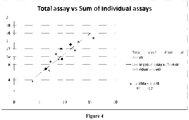
- results were obtained for ⁇ free light chain (KFLC), ⁇ free light chain (LFLC) and total FLC, using the ⁇ FreeliteTM, ⁇ FreeliteTM and total free light chain assays. These results are shown for 15 different normal serum samples. The results are shown in the table below and in Figure 4 as measured by turbidimetry.
- the figure ( Figure 5 ) represents the % of deaths due to infections/respiratory causes in the different categories. Statistical significance was determined by Chi-squared analysis.
Landscapes
- Health & Medical Sciences (AREA)
- Life Sciences & Earth Sciences (AREA)
- Immunology (AREA)
- Engineering & Computer Science (AREA)
- Molecular Biology (AREA)
- Biomedical Technology (AREA)
- Chemical & Material Sciences (AREA)
- Hematology (AREA)
- Urology & Nephrology (AREA)
- Food Science & Technology (AREA)
- Biochemistry (AREA)
- Cell Biology (AREA)
- Biotechnology (AREA)
- Medicinal Chemistry (AREA)
- Physics & Mathematics (AREA)
- Analytical Chemistry (AREA)
- Microbiology (AREA)
- General Health & Medical Sciences (AREA)
- General Physics & Mathematics (AREA)
- Pathology (AREA)
- Proteomics, Peptides & Aminoacids (AREA)
- Investigating Or Analysing Biological Materials (AREA)
- Peptides Or Proteins (AREA)
- Measuring Or Testing Involving Enzymes Or Micro-Organisms (AREA)
Applications Claiming Priority (2)
| Application Number | Priority Date | Filing Date | Title |
|---|---|---|---|
| GBGB1001950.3A GB201001950D0 (en) | 2010-02-05 | 2010-02-05 | Infection prognostic assay |
| PCT/GB2011/050197 WO2011095820A1 (en) | 2010-02-05 | 2011-02-04 | Infection prognostic assay |
Publications (2)
| Publication Number | Publication Date |
|---|---|
| EP2531857A1 EP2531857A1 (en) | 2012-12-12 |
| EP2531857B1 true EP2531857B1 (en) | 2017-01-18 |
Family
ID=42082582
Family Applications (1)
| Application Number | Title | Priority Date | Filing Date |
|---|---|---|---|
| EP11702698.9A Active EP2531857B1 (en) | 2010-02-05 | 2011-02-04 | Infection prognostic assay |
Country Status (6)
| Country | Link |
|---|---|
| US (2) | US20130217030A1 (enExample) |
| EP (1) | EP2531857B1 (enExample) |
| JP (2) | JP5818817B2 (enExample) |
| CN (2) | CN102859362B (enExample) |
| GB (1) | GB201001950D0 (enExample) |
| WO (1) | WO2011095820A1 (enExample) |
Families Citing this family (2)
| Publication number | Priority date | Publication date | Assignee | Title |
|---|---|---|---|---|
| GB2519564A (en) * | 2013-10-24 | 2015-04-29 | Shared Band Ltd | Multicast transmission over bonded broadband |
| US20170252364A1 (en) | 2014-07-30 | 2017-09-07 | Mor Research Applications Ltd. | Compositions for treatment of acute lymphoblastic leukemia and methods of use thereof |
Family Cites Families (12)
| Publication number | Priority date | Publication date | Assignee | Title |
|---|---|---|---|---|
| US4792529A (en) * | 1985-10-18 | 1988-12-20 | University Of Rochester | Immunoassay of free kappa light chains for the detection of multiple sclerosis |
| IT1216698B (it) * | 1988-04-01 | 1990-03-08 | New Scient Co Spa | Metodo per la determinazione della presenza di catene leggere libere in campioni di urina, complesso di preparati per l'esecuzione del metodo, e relativo reagente. |
| ATE285417T1 (de) | 1995-11-03 | 2005-01-15 | Binding Site Ltd | Herstellung von antikörpern |
| US6322788B1 (en) * | 1998-08-20 | 2001-11-27 | Stanley Arthur Kim | Anti-bacterial antibodies and methods of use |
| US20040018576A1 (en) * | 2002-07-24 | 2004-01-29 | Dematteo Todd M. | Bence Jones protein testing cassette |
| JP4438455B2 (ja) * | 2004-03-04 | 2010-03-24 | ヤマサ醤油株式会社 | 遊離ヒトイムノグロブリン軽鎖の測定法及びキット |
| WO2005116651A2 (en) * | 2004-05-24 | 2005-12-08 | Diasys Corporation | Method and device for testing for bence-jones protein |
| US20090082304A1 (en) * | 2004-11-12 | 2009-03-26 | Northwestern University | Methods of Treating Hematological Malignancies with Nucleoside Analog Drugs |
| GB0501741D0 (en) * | 2005-01-27 | 2005-03-02 | Binding Site The Ltd | Antibody |
| JP4950879B2 (ja) * | 2005-04-12 | 2012-06-13 | 松森 昭 | 心疾患診断用バイオマーカー及びその利用 |
| JP2007292661A (ja) * | 2006-04-26 | 2007-11-08 | Akira Matsumori | 活動性心筋炎の検出方法および検出試薬 |
| GB0801609D0 (en) * | 2008-01-29 | 2008-03-05 | Binding Site The Ltd | Hevylite diagnostic stain |
-
2010
- 2010-02-05 GB GBGB1001950.3A patent/GB201001950D0/en not_active Ceased
-
2011
- 2011-02-04 EP EP11702698.9A patent/EP2531857B1/en active Active
- 2011-02-04 US US13/576,099 patent/US20130217030A1/en not_active Abandoned
- 2011-02-04 CN CN201180008422.8A patent/CN102859362B/zh active Active
- 2011-02-04 CN CN201180008402.0A patent/CN102859361B/zh active Active
- 2011-02-04 JP JP2012551687A patent/JP5818817B2/ja active Active
- 2011-02-04 JP JP2012551689A patent/JP5818818B2/ja active Active
- 2011-02-04 WO PCT/GB2011/050197 patent/WO2011095820A1/en not_active Ceased
- 2011-02-04 US US13/576,063 patent/US20130149792A1/en not_active Abandoned
Non-Patent Citations (1)
| Title |
|---|
| BALMER PAUL ET AL: "Anti-pneumococcal antibody titre measurement: what useful information does it yield?", JOURNAL OF CLINICAL PATHOLOGY APR 2007, vol. 60, no. 4, April 2007 (2007-04-01), pages 345 - 350, ISSN: 0021-9746 * |
Also Published As
| Publication number | Publication date |
|---|---|
| JP2013519082A (ja) | 2013-05-23 |
| JP5818818B2 (ja) | 2015-11-18 |
| JP5818817B2 (ja) | 2015-11-18 |
| CN102859362B (zh) | 2015-11-25 |
| GB201001950D0 (en) | 2010-03-24 |
| CN102859361A (zh) | 2013-01-02 |
| JP2013519083A (ja) | 2013-05-23 |
| US20130149792A1 (en) | 2013-06-13 |
| WO2011095820A1 (en) | 2011-08-11 |
| CN102859361B (zh) | 2015-06-17 |
| US20130217030A1 (en) | 2013-08-22 |
| CN102859362A (zh) | 2013-01-02 |
| EP2531857A1 (en) | 2012-12-12 |
Similar Documents
| Publication | Publication Date | Title |
|---|---|---|
| EP2467724B1 (en) | Survival prognostic assay | |
| EP2623517B1 (en) | Urine and serum biomarkers associated with diabetic nephropathy | |
| US20130078655A1 (en) | Kidney prognostic assay | |
| KR20110022621A (ko) | IgA 신증의 검사 방법 및 검사 키트 | |
| US20140017707A1 (en) | Methods and kits for predicting the risk of respiratory failure, renal failure or thrombopenia in a septic patient by measuring endocan levels in blood | |
| EP2875358A1 (en) | Triage scoring system | |
| US20130071855A1 (en) | Flc as biomarker | |
| EP2531857B1 (en) | Infection prognostic assay | |
| EP2764366B1 (en) | Prognostic method for diabetes | |
| EP2531854B1 (en) | Cancer prognosis assay | |
| EP2791682B1 (en) | Assay |
Legal Events
| Date | Code | Title | Description |
|---|---|---|---|
| PUAI | Public reference made under article 153(3) epc to a published international application that has entered the european phase |
Free format text: ORIGINAL CODE: 0009012 |
|
| 17P | Request for examination filed |
Effective date: 20120713 |
|
| AK | Designated contracting states |
Kind code of ref document: A1 Designated state(s): AL AT BE BG CH CY CZ DE DK EE ES FI FR GB GR HR HU IE IS IT LI LT LU LV MC MK MT NL NO PL PT RO RS SE SI SK SM TR |
|
| DAX | Request for extension of the european patent (deleted) | ||
| 17Q | First examination report despatched |
Effective date: 20130524 |
|
| REG | Reference to a national code |
Ref country code: DE Ref legal event code: R079 Ref document number: 602011034443 Country of ref document: DE Free format text: PREVIOUS MAIN CLASS: G01N0033680000 Ipc: G01N0033574000 |
|
| RIC1 | Information provided on ipc code assigned before grant |
Ipc: G01N 33/574 20060101AFI20160621BHEP Ipc: G01N 33/68 20060101ALI20160621BHEP |
|
| GRAP | Despatch of communication of intention to grant a patent |
Free format text: ORIGINAL CODE: EPIDOSNIGR1 |
|
| INTG | Intention to grant announced |
Effective date: 20160802 |
|
| GRAJ | Information related to disapproval of communication of intention to grant by the applicant or resumption of examination proceedings by the epo deleted |
Free format text: ORIGINAL CODE: EPIDOSDIGR1 |
|
| STAA | Information on the status of an ep patent application or granted ep patent |
Free format text: STATUS: EXAMINATION IS IN PROGRESS |
|
| GRAP | Despatch of communication of intention to grant a patent |
Free format text: ORIGINAL CODE: EPIDOSNIGR1 |
|
| STAA | Information on the status of an ep patent application or granted ep patent |
Free format text: STATUS: GRANT OF PATENT IS INTENDED |
|
| GRAS | Grant fee paid |
Free format text: ORIGINAL CODE: EPIDOSNIGR3 |
|
| INTC | Intention to grant announced (deleted) | ||
| RIN1 | Information on inventor provided before grant (corrected) |
Inventor name: MEAD, GRAHAM Inventor name: BRADWELL, ARTHUR |
|
| GRAA | (expected) grant |
Free format text: ORIGINAL CODE: 0009210 |
|
| STAA | Information on the status of an ep patent application or granted ep patent |
Free format text: STATUS: THE PATENT HAS BEEN GRANTED |
|
| INTG | Intention to grant announced |
Effective date: 20161202 |
|
| AK | Designated contracting states |
Kind code of ref document: B1 Designated state(s): AL AT BE BG CH CY CZ DE DK EE ES FI FR GB GR HR HU IE IS IT LI LT LU LV MC MK MT NL NO PL PT RO RS SE SI SK SM TR |
|
| REG | Reference to a national code |
Ref country code: GB Ref legal event code: FG4D |
|
| REG | Reference to a national code |
Ref country code: CH Ref legal event code: EP |
|
| REG | Reference to a national code |
Ref country code: AT Ref legal event code: REF Ref document number: 863202 Country of ref document: AT Kind code of ref document: T Effective date: 20170215 |
|
| REG | Reference to a national code |
Ref country code: FR Ref legal event code: PLFP Year of fee payment: 7 |
|
| REG | Reference to a national code |
Ref country code: IE Ref legal event code: FG4D |
|
| REG | Reference to a national code |
Ref country code: DE Ref legal event code: R096 Ref document number: 602011034443 Country of ref document: DE |
|
| REG | Reference to a national code |
Ref country code: NL Ref legal event code: MP Effective date: 20170118 |
|
| REG | Reference to a national code |
Ref country code: LT Ref legal event code: MG4D |
|
| PG25 | Lapsed in a contracting state [announced via postgrant information from national office to epo] |
Ref country code: BE Free format text: LAPSE BECAUSE OF NON-PAYMENT OF DUE FEES Effective date: 20170228 |
|
| REG | Reference to a national code |
Ref country code: AT Ref legal event code: MK05 Ref document number: 863202 Country of ref document: AT Kind code of ref document: T Effective date: 20170118 |
|
| PG25 | Lapsed in a contracting state [announced via postgrant information from national office to epo] |
Ref country code: NL Free format text: LAPSE BECAUSE OF FAILURE TO SUBMIT A TRANSLATION OF THE DESCRIPTION OR TO PAY THE FEE WITHIN THE PRESCRIBED TIME-LIMIT Effective date: 20170118 |
|
| PG25 | Lapsed in a contracting state [announced via postgrant information from national office to epo] |
Ref country code: LT Free format text: LAPSE BECAUSE OF FAILURE TO SUBMIT A TRANSLATION OF THE DESCRIPTION OR TO PAY THE FEE WITHIN THE PRESCRIBED TIME-LIMIT Effective date: 20170118 Ref country code: NO Free format text: LAPSE BECAUSE OF FAILURE TO SUBMIT A TRANSLATION OF THE DESCRIPTION OR TO PAY THE FEE WITHIN THE PRESCRIBED TIME-LIMIT Effective date: 20170418 Ref country code: HR Free format text: LAPSE BECAUSE OF FAILURE TO SUBMIT A TRANSLATION OF THE DESCRIPTION OR TO PAY THE FEE WITHIN THE PRESCRIBED TIME-LIMIT Effective date: 20170118 Ref country code: FI Free format text: LAPSE BECAUSE OF FAILURE TO SUBMIT A TRANSLATION OF THE DESCRIPTION OR TO PAY THE FEE WITHIN THE PRESCRIBED TIME-LIMIT Effective date: 20170118 Ref country code: IS Free format text: LAPSE BECAUSE OF FAILURE TO SUBMIT A TRANSLATION OF THE DESCRIPTION OR TO PAY THE FEE WITHIN THE PRESCRIBED TIME-LIMIT Effective date: 20170518 Ref country code: GR Free format text: LAPSE BECAUSE OF FAILURE TO SUBMIT A TRANSLATION OF THE DESCRIPTION OR TO PAY THE FEE WITHIN THE PRESCRIBED TIME-LIMIT Effective date: 20170419 |
|
| PG25 | Lapsed in a contracting state [announced via postgrant information from national office to epo] |
Ref country code: AT Free format text: LAPSE BECAUSE OF FAILURE TO SUBMIT A TRANSLATION OF THE DESCRIPTION OR TO PAY THE FEE WITHIN THE PRESCRIBED TIME-LIMIT Effective date: 20170118 Ref country code: ES Free format text: LAPSE BECAUSE OF FAILURE TO SUBMIT A TRANSLATION OF THE DESCRIPTION OR TO PAY THE FEE WITHIN THE PRESCRIBED TIME-LIMIT Effective date: 20170118 Ref country code: LV Free format text: LAPSE BECAUSE OF FAILURE TO SUBMIT A TRANSLATION OF THE DESCRIPTION OR TO PAY THE FEE WITHIN THE PRESCRIBED TIME-LIMIT Effective date: 20170118 Ref country code: RS Free format text: LAPSE BECAUSE OF FAILURE TO SUBMIT A TRANSLATION OF THE DESCRIPTION OR TO PAY THE FEE WITHIN THE PRESCRIBED TIME-LIMIT Effective date: 20170118 Ref country code: PT Free format text: LAPSE BECAUSE OF FAILURE TO SUBMIT A TRANSLATION OF THE DESCRIPTION OR TO PAY THE FEE WITHIN THE PRESCRIBED TIME-LIMIT Effective date: 20170518 Ref country code: BG Free format text: LAPSE BECAUSE OF FAILURE TO SUBMIT A TRANSLATION OF THE DESCRIPTION OR TO PAY THE FEE WITHIN THE PRESCRIBED TIME-LIMIT Effective date: 20170418 Ref country code: PL Free format text: LAPSE BECAUSE OF FAILURE TO SUBMIT A TRANSLATION OF THE DESCRIPTION OR TO PAY THE FEE WITHIN THE PRESCRIBED TIME-LIMIT Effective date: 20170118 Ref country code: SE Free format text: LAPSE BECAUSE OF FAILURE TO SUBMIT A TRANSLATION OF THE DESCRIPTION OR TO PAY THE FEE WITHIN THE PRESCRIBED TIME-LIMIT Effective date: 20170118 |
|
| REG | Reference to a national code |
Ref country code: CH Ref legal event code: PL |
|
| REG | Reference to a national code |
Ref country code: DE Ref legal event code: R097 Ref document number: 602011034443 Country of ref document: DE |
|
| PG25 | Lapsed in a contracting state [announced via postgrant information from national office to epo] |
Ref country code: LI Free format text: LAPSE BECAUSE OF NON-PAYMENT OF DUE FEES Effective date: 20170228 Ref country code: IT Free format text: LAPSE BECAUSE OF FAILURE TO SUBMIT A TRANSLATION OF THE DESCRIPTION OR TO PAY THE FEE WITHIN THE PRESCRIBED TIME-LIMIT Effective date: 20170118 Ref country code: EE Free format text: LAPSE BECAUSE OF FAILURE TO SUBMIT A TRANSLATION OF THE DESCRIPTION OR TO PAY THE FEE WITHIN THE PRESCRIBED TIME-LIMIT Effective date: 20170118 Ref country code: RO Free format text: LAPSE BECAUSE OF FAILURE TO SUBMIT A TRANSLATION OF THE DESCRIPTION OR TO PAY THE FEE WITHIN THE PRESCRIBED TIME-LIMIT Effective date: 20170118 Ref country code: CZ Free format text: LAPSE BECAUSE OF FAILURE TO SUBMIT A TRANSLATION OF THE DESCRIPTION OR TO PAY THE FEE WITHIN THE PRESCRIBED TIME-LIMIT Effective date: 20170118 Ref country code: CH Free format text: LAPSE BECAUSE OF NON-PAYMENT OF DUE FEES Effective date: 20170228 Ref country code: SK Free format text: LAPSE BECAUSE OF FAILURE TO SUBMIT A TRANSLATION OF THE DESCRIPTION OR TO PAY THE FEE WITHIN THE PRESCRIBED TIME-LIMIT Effective date: 20170118 |
|
| PLBE | No opposition filed within time limit |
Free format text: ORIGINAL CODE: 0009261 |
|
| STAA | Information on the status of an ep patent application or granted ep patent |
Free format text: STATUS: NO OPPOSITION FILED WITHIN TIME LIMIT |
|
| REG | Reference to a national code |
Ref country code: IE Ref legal event code: MM4A |
|
| PG25 | Lapsed in a contracting state [announced via postgrant information from national office to epo] |
Ref country code: SM Free format text: LAPSE BECAUSE OF FAILURE TO SUBMIT A TRANSLATION OF THE DESCRIPTION OR TO PAY THE FEE WITHIN THE PRESCRIBED TIME-LIMIT Effective date: 20170118 Ref country code: MC Free format text: LAPSE BECAUSE OF FAILURE TO SUBMIT A TRANSLATION OF THE DESCRIPTION OR TO PAY THE FEE WITHIN THE PRESCRIBED TIME-LIMIT Effective date: 20170118 Ref country code: DK Free format text: LAPSE BECAUSE OF FAILURE TO SUBMIT A TRANSLATION OF THE DESCRIPTION OR TO PAY THE FEE WITHIN THE PRESCRIBED TIME-LIMIT Effective date: 20170118 |
|
| 26N | No opposition filed |
Effective date: 20171019 |
|
| PG25 | Lapsed in a contracting state [announced via postgrant information from national office to epo] |
Ref country code: LU Free format text: LAPSE BECAUSE OF NON-PAYMENT OF DUE FEES Effective date: 20170204 |
|
| REG | Reference to a national code |
Ref country code: BE Ref legal event code: MM Effective date: 20170228 |
|
| REG | Reference to a national code |
Ref country code: FR Ref legal event code: PLFP Year of fee payment: 8 |
|
| PG25 | Lapsed in a contracting state [announced via postgrant information from national office to epo] |
Ref country code: SI Free format text: LAPSE BECAUSE OF FAILURE TO SUBMIT A TRANSLATION OF THE DESCRIPTION OR TO PAY THE FEE WITHIN THE PRESCRIBED TIME-LIMIT Effective date: 20170118 Ref country code: IE Free format text: LAPSE BECAUSE OF NON-PAYMENT OF DUE FEES Effective date: 20170204 |
|
| PG25 | Lapsed in a contracting state [announced via postgrant information from national office to epo] |
Ref country code: MT Free format text: LAPSE BECAUSE OF NON-PAYMENT OF DUE FEES Effective date: 20170204 |
|
| PG25 | Lapsed in a contracting state [announced via postgrant information from national office to epo] |
Ref country code: HU Free format text: LAPSE BECAUSE OF FAILURE TO SUBMIT A TRANSLATION OF THE DESCRIPTION OR TO PAY THE FEE WITHIN THE PRESCRIBED TIME-LIMIT; INVALID AB INITIO Effective date: 20110204 |
|
| PG25 | Lapsed in a contracting state [announced via postgrant information from national office to epo] |
Ref country code: CY Free format text: LAPSE BECAUSE OF NON-PAYMENT OF DUE FEES Effective date: 20170118 |
|
| PG25 | Lapsed in a contracting state [announced via postgrant information from national office to epo] |
Ref country code: MK Free format text: LAPSE BECAUSE OF FAILURE TO SUBMIT A TRANSLATION OF THE DESCRIPTION OR TO PAY THE FEE WITHIN THE PRESCRIBED TIME-LIMIT Effective date: 20170118 |
|
| PG25 | Lapsed in a contracting state [announced via postgrant information from national office to epo] |
Ref country code: TR Free format text: LAPSE BECAUSE OF FAILURE TO SUBMIT A TRANSLATION OF THE DESCRIPTION OR TO PAY THE FEE WITHIN THE PRESCRIBED TIME-LIMIT Effective date: 20170118 |
|
| PG25 | Lapsed in a contracting state [announced via postgrant information from national office to epo] |
Ref country code: AL Free format text: LAPSE BECAUSE OF FAILURE TO SUBMIT A TRANSLATION OF THE DESCRIPTION OR TO PAY THE FEE WITHIN THE PRESCRIBED TIME-LIMIT Effective date: 20170118 |
|
| P01 | Opt-out of the competence of the unified patent court (upc) registered |
Effective date: 20230529 |
|
| REG | Reference to a national code |
Ref country code: DE Ref legal event code: R079 Ref document number: 602011034443 Country of ref document: DE Free format text: PREVIOUS MAIN CLASS: G01N0033574000 Ipc: G01N0033575000 |
|
| PGFP | Annual fee paid to national office [announced via postgrant information from national office to epo] |
Ref country code: GB Payment date: 20260209 Year of fee payment: 16 |
|
| PGFP | Annual fee paid to national office [announced via postgrant information from national office to epo] |
Ref country code: DE Payment date: 20260113 Year of fee payment: 16 |
|
| PGFP | Annual fee paid to national office [announced via postgrant information from national office to epo] |
Ref country code: FR Payment date: 20260209 Year of fee payment: 16 |