EP2531249B1 - Nitric oxide delivery system - Google Patents
Nitric oxide delivery system Download PDFInfo
- Publication number
- EP2531249B1 EP2531249B1 EP11737816.6A EP11737816A EP2531249B1 EP 2531249 B1 EP2531249 B1 EP 2531249B1 EP 11737816 A EP11737816 A EP 11737816A EP 2531249 B1 EP2531249 B1 EP 2531249B1
- Authority
- EP
- European Patent Office
- Prior art keywords
- gas
- reservoir
- oxygen
- patient
- nitric oxide
- Prior art date
- Legal status (The legal status is an assumption and is not a legal conclusion. Google has not performed a legal analysis and makes no representation as to the accuracy of the status listed.)
- Active
Links
Images
Classifications
-
- A—HUMAN NECESSITIES
- A61—MEDICAL OR VETERINARY SCIENCE; HYGIENE
- A61M—DEVICES FOR INTRODUCING MEDIA INTO, OR ONTO, THE BODY; DEVICES FOR TRANSDUCING BODY MEDIA OR FOR TAKING MEDIA FROM THE BODY; DEVICES FOR PRODUCING OR ENDING SLEEP OR STUPOR
- A61M16/00—Devices for influencing the respiratory system of patients by gas treatment, e.g. ventilators; Tracheal tubes
- A61M16/10—Preparation of respiratory gases or vapours
- A61M16/12—Preparation of respiratory gases or vapours by mixing different gases
-
- A—HUMAN NECESSITIES
- A61—MEDICAL OR VETERINARY SCIENCE; HYGIENE
- A61M—DEVICES FOR INTRODUCING MEDIA INTO, OR ONTO, THE BODY; DEVICES FOR TRANSDUCING BODY MEDIA OR FOR TAKING MEDIA FROM THE BODY; DEVICES FOR PRODUCING OR ENDING SLEEP OR STUPOR
- A61M16/00—Devices for influencing the respiratory system of patients by gas treatment, e.g. ventilators; Tracheal tubes
- A61M16/021—Devices for influencing the respiratory system of patients by gas treatment, e.g. ventilators; Tracheal tubes operated by electrical means
- A61M16/022—Control means therefor
- A61M16/024—Control means therefor including calculation means, e.g. using a processor
-
- A—HUMAN NECESSITIES
- A61—MEDICAL OR VETERINARY SCIENCE; HYGIENE
- A61M—DEVICES FOR INTRODUCING MEDIA INTO, OR ONTO, THE BODY; DEVICES FOR TRANSDUCING BODY MEDIA OR FOR TAKING MEDIA FROM THE BODY; DEVICES FOR PRODUCING OR ENDING SLEEP OR STUPOR
- A61M16/00—Devices for influencing the respiratory system of patients by gas treatment, e.g. ventilators; Tracheal tubes
- A61M16/10—Preparation of respiratory gases or vapours
- A61M16/1005—Preparation of respiratory gases or vapours with O2 features or with parameter measurement
- A61M2016/102—Measuring a parameter of the content of the delivered gas
- A61M2016/1035—Measuring a parameter of the content of the delivered gas the anaesthetic agent concentration
-
- A—HUMAN NECESSITIES
- A61—MEDICAL OR VETERINARY SCIENCE; HYGIENE
- A61M—DEVICES FOR INTRODUCING MEDIA INTO, OR ONTO, THE BODY; DEVICES FOR TRANSDUCING BODY MEDIA OR FOR TAKING MEDIA FROM THE BODY; DEVICES FOR PRODUCING OR ENDING SLEEP OR STUPOR
- A61M2202/00—Special media to be introduced, removed or treated
- A61M2202/02—Gases
- A61M2202/0208—Oxygen
-
- A—HUMAN NECESSITIES
- A61—MEDICAL OR VETERINARY SCIENCE; HYGIENE
- A61M—DEVICES FOR INTRODUCING MEDIA INTO, OR ONTO, THE BODY; DEVICES FOR TRANSDUCING BODY MEDIA OR FOR TAKING MEDIA FROM THE BODY; DEVICES FOR PRODUCING OR ENDING SLEEP OR STUPOR
- A61M2202/00—Special media to be introduced, removed or treated
- A61M2202/02—Gases
- A61M2202/0266—Nitrogen (N)
- A61M2202/0275—Nitric oxide [NO]
Definitions
- This description relates to ambulatory and stationary methods and systems of using liquid nitrogen dioxide (N 2 O 4 ) with a ventilator to generate and deliver nitric oxide to a patient.
- liquid nitrogen dioxide N 2 O 4
- Nitric oxide also known as the nitrosyl radical
- NO is a free radical that can be an important signalling molecule.
- NO causes smooth muscles in blood vessels to relax, thereby resulting in vasodilation and increased blood flow through the blood vessel.
- N 2 nitrogen gas
- O 2 oxygen
- NO 2 nitrogen dioxide
- the part per million levels of NO 2 gas is highly toxic if inhaled and can form nitric and nitrous acid in the lungs.
- EP 2 501 427 A1 citeable under Article 54(3) EPC discloses a device for delivery of a therapeutic amount of nitric oxide to an individual's lungs.
- US 2008/317874 A1 discloses a nitric oxide delivery system which includes a gas bottle having nitrogen dioxide in air, converts nitrogen dioxide to nitric oxide and employs a surface- active material coated with an aqueous solution of antioxidant.
- the present invention provides a system for delivering a therapeutic amount of nitric oxide to a patient as defined in the appended claims.
- a system for delivering a therapeutic amount of nitric oxide includes: ventilator for
- the reservoir can contain compressed nitrogen dioxide with or without a diluent gas.
- the receptacle can include a cartridge.
- the surface-activated material can be a silica gel, activated charcoal, activated carbon, activated alumina or calcium sulfate.
- the antioxidant can be a reducing agent, such as ascorbic acid, alpha tocopherol, or gamma tocopherol.
- the patient interface can be a mouth piece, face mask, or fully-sealed face mask or by means of tracheal intubation.
- the system can further include a second receptacle wherein the second receptacle includes a surface-activated material saturated with an aqueous solution of an antioxidant.
- the system can further include a heating element associated with the reservoir.
- the system can further include a valve coupled to the reservoir and the tube.
- the tube can have a bore size of 10 microns or less.
- Nitric oxide (NO) also known as the nitrosyl radical, is a free radical that is an important signaling molecule in pulmonary vessels. Nitric oxide (NO) can moderate pulmonary hypertension caused by elevation of the pulmonary arterial pressure. Inhaling low concentrations of nitric oxide (NO), for example, in the range of 1-100 ppm can rapidly and safely decrease pulmonary hypertension in a mammal by vasodilation of pulmonary vessels.
- nitric oxide nitric oxide
- nitric oxide nitric oxide
- the use of low concentrations of inhaled nitric oxide (NO) can prevent, reverse, or limit the progression of disorders which can include, but are not limited to, acute pulmonary vasoconstriction, traumatic injury, aspiration or inhalation injury, fat embolism in the lung, acidosis, inflammation of the lung, adult respiratory distress syndrome, acute pulmonary edema, acute mountain sickness, post cardiac surgery acute pulmonary hypertension, persistent pulmonary hypertension of a newborn, perinatal aspiration syndrome, haline membrane disease, acute pulmonary thromboembolism, heparin-protamine reactions, sepsis, asthma and status asthmaticus or hypoxia.
- disorders can include, but are not limited to, acute pulmonary vasoconstriction, traumatic injury, aspiration or inhalation injury, fat embolism in the lung, acidosis, inflammation of the lung, adult respiratory distress syndrome, acute pulmonary edema,
- Nitric oxide can also be used to treat chronic pulmonary hypertension, bronchopulmonary dysplasia, chronic pulmonary thromboembolism and idiopathic or primary pulmonary hypertension or chronic hypoxia. NO can also be used to treat influenza. NO can further be used to inhibit the replication of the influenza virus in the lungs.
- nitric oxide is inhaled or otherwise delivered to the individual's lungs.
- Providing a therapeutic dose of NO would treat a patient suffering from a disorder or physiological condition that can be mediated by inhalation of NO or supplement or minimize the need for traditional treatments in such disorders or physiological conditions.
- nitric oxide (NO) inhalation describe two solutions of solving the problem of fluctuating NO 2 concentration during NO delivery when the NO is supplied by means of a ventilator.
- the NO is diluted and mixed with oxygen upstream of the ventilator by means of a conventional blending valve. See for example, Figure 1 of Kirmse et al, Chest, Vol. 113, p. 1650-1657 (1998 ).
- the ventilator then pushes this premixed gas into the lungs.
- the result is that the NO is perfectly mixed and there are no concentration swings during the time of a typical breath, which may vary from approximately 1 to 4 seconds.
- the second approach is one that is currently used, which is to inject the NO gas after the ventilator using computer control (see for example, U.S. Patent Nos. 5,373,693 , 5,558,083 , 5,732,694 , 5,752,504 , 6,089,229 , 6,109,260 , 6,125,846 , 6,164,276 , 6,581,592 ).
- the references describe measuring the instantaneous air flow rate with a hot wire anemometer or other very fast air flow measuring device, and sending this signal to the computer.
- the computer than calculates the timing on a valve which injects NO gas from a gas bottle containing NO in nitrogen (typically at 800 ppm) into the air/oxygen gas stream going to the patient. When the patient is exhaling, the valve is closed and when the patient is inhaling more and more NO can go into the circuit, so as to try and achieve a steady concentration of NO gas being delivered to the patient, during the breathing cycle.
- NO delivery system has to be purged to ensure that there is no NO 2 present in the delivery mechanism.
- NO gas is stored in heavy gas bottles with nitrogen and no traces of oxygen.
- the NO 2 impurity may be as high as 1% of the NO concentration and there is no way to remove this impurity and prevent it from reaching the patient along with the NO (at 80 ppm a 1% impurity could represent 0.8 ppm of NO 2 from this source).
- the NO gas is mixed with the air/oxygen gas mixture that is being delivered to the patient, by means of a specialized injector whose timing sequences are controlled by a microprocessor and which requires instantaneous measurement of the air/oxygen flow rate being delivered to the patient. All this equipment is required in order to minimize the oxidation of NO into nitrogen dioxide (NO 2 ) during the mixing and delivery process since NO 2 is highly toxic. There is also a need to monitor for NO 2 so as to ensure that the sensors and electronics are working properly. An oxygen analyzer is needed to ensure that the gas being delivered to the patient always has greater than 21% oxygen. A NO detector is also used to monitor the NO concentration. The equipment is also required to get the NO mixture to the lungs as soon as possible to minimize the formation of NO 2 in the delivery circuit.
- concentration gradients of NO during the course of a breath result and are thought to be unavoidable.
- the flow rate to the lungs can vary from for example, 60 liters per minute down to zero. In some cases, the variation could be 120 liters per minute down to zero. If a steady flow of NO were to be introduced into this stream, instead of the introduction being computer controlled based on the instantaneous oxygen/air flow, then the concentration of NO would be expected to fluctuate widely during the course of a single breath, from many hundreds of ppm of NO down to zero, which would clearly be unacceptable.
- the delivery devices disclosed herein use one of two sources of NO 2 , a gas bottle containing NO 2 diluted in oxygen or air to approximately 800 ppm to 2000 ppm, or a liquid source containing pure N 2 O 4 in which the N 2 O 4 is vaporized to produce NO 2 .
- NO 2 gas is introduced into the air/oxygen gas stream. Since NO 2 is being introduced, there is no concern about NO 2 formation.
- the air/oxygen gas stream containing the NO 2 at the appropriate average concentration is then mixed and passed through a cartridge for generating NO by converting NO 2 to NO to generate NO gas.
- the NO containing air stream then passes though a second cartridge just prior to the inhalation by the patient, with the primary purpose of the second cartridge to remove any NO 2 that may have been formed in the gas lines after the first cartridge.
- a secondary use of the second cartridge is to provide 100% redundancy to the first cartridge in case of operational failure of the first cartridge.
- Both the gas bottle and liquid source platforms do not require sophisticated electronics, computers, measuring instantaneous air/oxygen flow going to the patient, a fast acting injecting valve, and monitoring equipment for NO 2 and oxygen. Additionally, the delivery devices are easy to use and do not require any specialized training.
- the NO delivery device uses a liquid N 2 O 4 source which is the size of a coke can for one-time use or short-term treatments typically lasting from 1 to 24 hours or longer. Typical use involves reducing the NO concentration over time to zero as the patient is weaned off the NO gas.
- the NO delivery device can deliver NO for 24 hours at 80 ppm NO at an average flow rate for example, of 15 L/min from a source of only 4 gram of liquid N 2 O 4 (or less than 2.5 mL).
- the NO delivery device is a gas bottle containing 1000 ppm of NO 2 in oxygen or air.
- a system that includes the use of liquid nitrogen dioxide (NO 2 ), also called dinitrogen tetroxide (N 2 O 4 ), as an NO 2 source is described.
- the system works by storing liquid N 2 O 4 in a reservoir which is heated. N 2 O 4 boils at approximately 21°C. When the liquid reservoir is heated, the pressure rises. At 31°C the pressure in the reservoir is approximately 1 Atmosphere above ambient. Heating to 51°C raises the pressure in the reservoir to approximately 4 atmospheres. This is sufficient to drive the NO 2 vapor out of the reservoir and through a restriction (orifice) and into an air or oxygen stream.
- NO 2 liquid nitrogen dioxide
- N 2 O 4 dinitrogen tetroxide
- a system described herein can include the use of a gas bottle containing NO 2 diluted in oxygen or air to approximately 800 ppm to 2000 ppm as an NO 2 source.
- This device is ideal for generating a steady flow of NO 2 into the air stream, but has not been considered before as useful when connected to a ventilator that pulses air into the lungs at a typical frequency of 10 to 30 pulses (breaths) per minute.
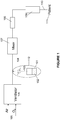
- the liquid storage NO delivery system includes a heated reservoir 101.
- the reservoir 101 supplies NO lasting a few hours to one or more days of continuous use, depending upon the amount of liquid in the reservoir and the specific needs of the patient.
- the reservoir 101 stores a therapeutic amount of NO 2 that is converted into NO by the cartridge 108.
- the therapeutic amount of NO is diluted to the necessary concentration.
- the reservoir 101 is sized to hold tens of milligrams to tens of grams of liquid N 2 O 4 .
- the reservoir 101 can be sized to contain a few milligrams of N 2 O 4 .
- the reservoir 101 may be sized to hold approximately 30 mg of N 2 O 4 (101), which would provide 20 ppm of NO at 15 L/min for 60 minutes.
- the reservoir 101 may be sized to contain 10 or more g of N 2 O 4 for long-term use such as days to a week.
- a reservoir containing approximately 7g of N 2 O 4 may provide 20 ppm of NO at 20 L/min. for 7 days.
- the reservoir 101 is sized to hold less then 1 ml, 2 ml, 3 ml, 4 ml, 5 ml, or 10 ml of liquid N 2 O 4 .
- the liquid reservoir and its heated components 101-104 and 112 are replaced with a pressurized gas bottle containing NO 2 in air or oxygen.
- the flow out of the gas bottle can be controlled by a pressure regulator that is attached to the gas bottle, and/or by a fine control valve.
- the concentration of NO 2 in the gas bottle is typically in the range of 800 to 2000 ppm.
- the reservoir 101 can contain 1 g (about 0.7 ml) of N 2 O 4 (102).
- the reservoir 101 can be attached to a tiny orifice or tube with a very narrow bore, 103.
- the reservoir 101 and the tube 103 can be covered by insulation. Since N 2 O 4 boils at approximately 21°C, the pressure inside the reservoir would be approximately 15 psi at 30°C, 30 psi at 40°C and 60 psi at 50°C, for example.
- the temperature can be controlled such that the pressure inside the device is controlled precisely.
- a heating element 112 can be associated with the reservoir and used to control the temperature.
- a small microprocessor can be used to select the proper temperature such that the pressure inside the device and the release of NO 2 is controlled precisely.
- the entire liquid system including elements 101-104 and 112 must be all be temperature controlled so that only NO 2 vapor is introduced into the air/oxygen flow.
- N 2 O 4 As the gas vaporizes, one molecule of N 2 O 4 forms two molecules of NO 2 .
- a critical orifice hole of about 3 to 4 microns would leak out NO 2 at about 0.16 ml per minute. If this 0.16ml of NO 2 were diluted into a gas stream of 2 liters per minute, the resulting concentration would be 80 ppm (parts per million).
- the same result can be achieved by using, for example, a quartz tube 103 with a 25 micron diameter bore size and about 20 inches long.
- the pressure inside the reservoir 101 can be controlled very precisely by controlling the temperature.
- a small ON/OFF valve 104 can be inserted between the reservoir and the fine control valve.
- a check valve can be used such that the pressure on the spring of the check valve ensures that it remains tightly sealed at ambient temperatures.
- the valve can act as a variable sized hole or a simple needle valve.
- a small microprocessor can be used to select the setting on the valve.
- a quartz tube can be used to control the flow and all variations are controlled by varying the temperature only. This system would have no valve; resulting in an extremely simple device with just a reservoir which is heated to a known temperature and a fine tube. The device can be activated by heating the reservoir and cutting the tube to the desired length.
- This device is designed to work with a ventilator in which an air/oxygen gas stream is pulsed into the lungs of a patient at a typical frequency of 15 to 30 pulses (breaths) per minute.
- the heated N 2 O 4 source can leak a precisely controlled amount of NO 2 into the air/oxygen stream that leaves the ventilator.
- the gasses are then passed through a gas mixer 107 to ensure proper mixing.
- the gasses then pass through a receptacle 108 which includes a surface-activated material saturated with an aqueous solution of an antioxidant.
- the receptacle can be a cartridge for generating NO by converting NO 2 to NO.
- the cartridge which may be referred to as a NO generation cartridge, includes an inlet and an outlet.
- the cartridges are designed to have a very low pressure drop of less than a few inches of water.
- Cartridges with this performance capability are manufactured by GeNO LLC. These cartridges contain a surface-active material that is soaked with a saturated solution of antioxidant in water to coat the surface-active material.
- the antioxidant can be a reducing agent, such as ascorbic acid, alpha tocopherol, or gamma tocopherol.
- the surface-active material can be silica gel.
- the NO gas can exit from the first receptacle into a second receptacle 109 which is typically identical to the former, except for the gas connections.
- the second receptacle can be an optional safety device used to ensure that all NO 2 is converted to NO before delivery to a patient.
- the function of the second receptacle is the same as the first receptacle and serves as a back up in case the first receptacle fails to convert NO 2 to NO.
- the mixture then flows directly to a patient interface 111.
- the patient interface can be a mouth piece, face mask, or fully-sealed face mask.
- the NO 2 concentration in the gas stream to the patient is always zero, even if the gas flow is delayed, since the second receptacle will convert any NO 2 present in the gas lines to NO.
- the NO gas can exit from the receptacle 107, into a NO sensor.
- the NO sensor can be an optional safety device used to assure that NO gas is flowing.
- the system illustrated in FIG. 1 can optionally include a NO 2 monitor, although this is not needed since the NO 2 concentration of the gas being delivered to the patient is typically zero.
- the system of delivering NO gas can be used in a light, portable, ambulatory device for delivering NO with air.
- the device may be powered by a small, battery-driven pump or by patient inhalation (similar to smoking a cigar) and can be self-contained portable systems that do not require heavy gas bottles, sophisticated electronics, or monitoring equipment.
- the delivery devices can allow an individual to self-administer a NO treatment.
- the delivery devices are also lightweight, compact, and portable.
- the NO delivery device can be a larger device, yet portable device that can deliver NO for longer periods of time.
- the ambulatory systems can include a mixing volume immediately after the NO 2 has been introduced into the air stream inside the ambulatory device itself so that the NO 2 can thoroughly mix.
- Such ambulatory systems can further include a conserver to extend the useful life of the portable device.
- a conserver can sense the inhalation cycle and provide a gas flow of NO 2 gas but stop the flow during the exhalation process.
- Such conservers can double the lifetime of a portable NO gas bottle and provide a steady concentration of NO during the time frame of each breath.
- conserveers for portable systems are commercially available for example, from Pulmolab Medical Supplies and are known under trade names such as Bonsai OxyPneumatic conserveer, EasyPulse5 O 2 Conserving Regulator by Precision Medical, Lotus Electronic Oxygen conserveer with Alarm or without alarm, Oxymatic Electronic Every Breath 400 Series conserveer, Oxymatic Electronic Every Breath 400 Series conserveer Adjustable, Sage S.M.A.R.T.
- conservers can include Electronic Demand Pulsed-Dose delivery systems configured to deliver NO 2 to the patient by detecting the patient's inspiratory effort and providing gas flow during the initial portion of inspiration. As the patient initiates a breath, the cannula tip senses the flow, a solenoid valve opens, and a burst of oxygen is rapidly delivered to the patient. The size of the burst or flow can vary among different manufacturers.
- the pulsed-dose system can take the place of a flowmeter during NO therapy and can be attached to a gas source. In most devices the operator can select the gas flow and the mode of operation (either pulse or continuous flow).
- a battery-powered fluidic valve can be attached to a gaseous or liquid NO 2 supply to operate the system.
- NO 2 was injected directly into the air/oxygen stream leaving the ventilator (Biomed (Crossvent 4+).
- the tidal volume was set to 1000 mL with 20 breaths per minute at a 1:2 I:E to achieve a 20 L/min flow with a peak flow of 60 L/min.
- the amount of NO 2 gas being delivered was controlled by controlling the temperature of the N 2 O 4 reservoir and by means of a simple needle valve.
- the two GENO cartridges have considerable volume and also act to mix up the gas stream.
- a fast chemiluminescent detector was used to monitor the NO response.
- the NO detector was of our own design.
- the NO chemiluminescent detector was built from the parts of a TEA nitrosamine analyzer.
- the ozone - sample reactor operating at 10 mm Hg pressure by means of a vacuum pump.
- the ozone and the sample were mixed in the ozone reactor in front of a cooled photomultiplier tube.
- the response of the photomultiplier tube was a measure of the NO concentration.
- the key to the high speed was to operate under vacuum and to have a fast amplifier that was taken from the TEA analyzer.
- the response time of the instrument was determined to be 10 milliseconds.
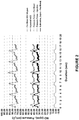
- the perturbation in the NO signal versus time during the course of a single breath was compared for two cases (see Figure 2 ).
- the timing of the pressure pulses is shown in the bottom line, as measured by a pressure transducer.
- the response of the chemiluminescent NO analyser for the premixed condition of NO 2 in oxygen is shown as the second line from the top (blue).
- the pulses that are shown represent the effect of the pressure pulses of the ventilator on the chemiluminescent detector and do not reflect actual concentration gradients, since the gases were premixed.
- the response of the chemiluminescent analyzer to NO 2 being introduced at a steady flow rate down stream of the ventilator and after the two ascorbic acid cartridges is shown in the line at the top of the page (red).
- the difference is shown as the third line from the top (black). All of the data was collected at 80 ppm, the offsets are shown in the figure are for clarity only.
- the subtracted line has a peak to peak noise of 10 ppm of NO.
- the difference from the mean is + 7 ppm (+8.8%) and -3 ppm (-3.8%), which means that at 80 ppm the peak was 87 and the low 77 ppm.
- the system was used in preliminary animal studies using pigs.
- the anesthetised animal was placed was placed on a Crossvent 4+ ventilator (Bio-Med Devices) connected to the NO delivery system described here.
- the air and oxygen was mixed prior to the ventilator by means of a medical air - oxygen gas blender.
- the pig was stabilized for 30 minutes prior to induction of pulmonary hypoxemia that was induced by decreasing the inspired concentration of oxygen to 15% from a normoxic level of 30%. Hypoxia was maintained for approximately 10 to 15 minutes prior to treatment with specific doses of inhaled NO therapy.
- the NO was delivered by the GeNO system described herein at either 1, 5, 20 or 80 PPM for 10 to 15 minutes.
- the desired NO dose was delivered by turning on the flow of NO 2 and adjusting the air /oxygen blender so that the ventilator delivered the precise NO 2 concentration to the ascorbic acid cartridge for generation of NO, just prior to inhalation.
- the inspired concentration of NO and NO 2 was continuously monitored by removing a 250ml/min in a side stream to an electrochemical gas analyzer (PrinterNox, Micro Medical Limited, Kent, UK). Following each treatment with NO, the FIO 2 was returned to 30% for at least 30 minutes.
Landscapes
- Health & Medical Sciences (AREA)
- Emergency Medicine (AREA)
- Pulmonology (AREA)
- Engineering & Computer Science (AREA)
- Anesthesiology (AREA)
- Biomedical Technology (AREA)
- Heart & Thoracic Surgery (AREA)
- Hematology (AREA)
- Life Sciences & Earth Sciences (AREA)
- Animal Behavior & Ethology (AREA)
- General Health & Medical Sciences (AREA)
- Public Health (AREA)
- Veterinary Medicine (AREA)
- Pharmaceuticals Containing Other Organic And Inorganic Compounds (AREA)
Applications Claiming Priority (2)
| Application Number | Priority Date | Filing Date | Title |
|---|---|---|---|
| US30042510P | 2010-02-01 | 2010-02-01 | |
| PCT/US2011/023172 WO2011094684A1 (en) | 2010-02-01 | 2011-01-31 | Nitric oxide delivery system |
Publications (3)
| Publication Number | Publication Date |
|---|---|
| EP2531249A1 EP2531249A1 (en) | 2012-12-12 |
| EP2531249A4 EP2531249A4 (en) | 2014-08-27 |
| EP2531249B1 true EP2531249B1 (en) | 2021-03-24 |
Family
ID=44319849
Family Applications (1)
| Application Number | Title | Priority Date | Filing Date |
|---|---|---|---|
| EP11737816.6A Active EP2531249B1 (en) | 2010-02-01 | 2011-01-31 | Nitric oxide delivery system |
Country Status (7)
| Country | Link |
|---|---|
| US (1) | US20110240019A1 (enExample) |
| EP (1) | EP2531249B1 (enExample) |
| JP (1) | JP5965845B2 (enExample) |
| AU (1) | AU2011210543B2 (enExample) |
| CA (1) | CA2788582C (enExample) |
| ES (1) | ES2873089T3 (enExample) |
| WO (1) | WO2011094684A1 (enExample) |
Families Citing this family (34)
| Publication number | Priority date | Publication date | Assignee | Title |
|---|---|---|---|---|
| US7560076B2 (en) | 2004-08-18 | 2009-07-14 | Geno Llc | Conversion of nitrogen dioxide (NO2) to nitric oxide (NO) |
| US7618594B2 (en) * | 2004-08-18 | 2009-11-17 | Geno Llc | Conversion of nitrogen dioxide (NO2) to nitric oxide (NO) |
| WO2009097343A1 (en) | 2008-01-28 | 2009-08-06 | Geno Llc | Conversion of nitrogen dioxide (no2) to nitric oxide (no) |
| US8607785B2 (en) | 2008-08-21 | 2013-12-17 | Geno Llc | Systems and devices for generating nitric oxide |
| JP5878866B2 (ja) | 2009-06-22 | 2016-03-08 | ゲノ エルエルシー | 一酸化窒素治療 |
| AU2011336358B2 (en) | 2010-12-03 | 2016-09-29 | VERO Biotech LLC. | Nitric oxide treatments |
| NZ611564A (en) | 2011-01-06 | 2015-07-31 | Ino Therapeutics Llc | Gas delivery device and system |
| AU2013257484B2 (en) * | 2011-01-06 | 2017-09-28 | Mallinckrodt Hospital Products IP Limited | Nitric oxide delivery device |
| EP3391891A3 (en) * | 2011-06-10 | 2019-01-02 | VERO Biotech LLC | Pressurized vessel of nitric oxide (no) |
| EP3421042B1 (en) | 2012-03-07 | 2024-04-17 | Beyond Air Ltd | Inhalation of nitric oxide for treating respiratory diseases |
| US10556086B2 (en) * | 2012-03-15 | 2020-02-11 | Mallinckrodt Hospital IP Limited | Methods of administering high concentrations of nitric oxide |
| US9423051B2 (en) * | 2012-08-17 | 2016-08-23 | The Coca-Cola Company | Dispensing carbonated beverages from a closed package |
| CA2890202A1 (en) * | 2012-11-05 | 2014-05-08 | Geno Llc | Method of mixing gases including nitric oxide |
| WO2014136111A2 (en) | 2013-03-07 | 2014-09-12 | Advanced Inhalation Therapies (Ait) Ltd. | Inhalation of nitric oxide for treating respiratory diseases |
| EP3653119A1 (en) * | 2013-03-13 | 2020-05-20 | Ino Therapeutics LLC | Devices for monitoring oxygenation during treatment with delivery of nitric oxide |
| JP6072611B2 (ja) * | 2013-05-28 | 2017-02-01 | 住友精化株式会社 | 二酸化窒素の変換方法および二酸化窒素変換装置 |
| US10525226B2 (en) * | 2014-05-14 | 2020-01-07 | Mallinckrodt Hospital Products IP Limited | Systems and methods for indicating lifetime of an NO2-to-NO reactor cartridge used to deliver NO for inhalation therapy to a patient |
| EP3302277A4 (en) * | 2015-05-25 | 2019-01-02 | VERO Biotech LLC | Nitric oxide treatment system and method |
| WO2017027810A2 (en) * | 2015-08-12 | 2017-02-16 | The General Hospital Corporation | Compositions and methods that promote hypoxia or the hypoxia response for treatment and prevention of mitochondrial dysfunction and oxidative stress disorders |
| US10894140B2 (en) | 2015-10-01 | 2021-01-19 | Mallinckrodt Hospital Products IP Unlimited Company | Device and method for diffusing high concentration NO with inhalation therapy gas |
| BR112018011762A2 (pt) * | 2015-12-11 | 2018-12-04 | Vero Biotech LLC | método e aparelho para administração de gases inclu-indo óxido nítrico para combater fibrose |
| EP4095094A1 (en) | 2017-02-27 | 2022-11-30 | Third Pole, Inc. | Systems and methods for ambulatory generation of nitric oxide |
| BR112019016708B1 (pt) | 2017-02-27 | 2024-01-30 | Third Pole, Inc | Sistemas de geração de óxido nítrico |
| MX2020010523A (es) | 2017-02-27 | 2021-02-09 | Third Pole Inc | Sistemas y metodos para generar oxido nitrico. |
| CN116236665A (zh) * | 2017-06-08 | 2023-06-09 | 凯斯西储大学 | 以受控浓度输送的汽化系统 |
| US11672938B1 (en) * | 2018-07-18 | 2023-06-13 | Vero Biotech LLC | Start-up protocols for nitric oxide delivery device |
| US11754538B1 (en) * | 2018-07-18 | 2023-09-12 | Vero Biotech Inc. | Method and apparatus for automatic calibration |
| WO2020232419A1 (en) | 2019-05-15 | 2020-11-19 | Third Pole, Inc. | Systems and methods for generating nitric oxide |
| CN114269685A (zh) | 2019-05-15 | 2022-04-01 | 第三极股份有限公司 | 用于一氧化氮生成的电极 |
| WO2021142472A1 (en) | 2020-01-11 | 2021-07-15 | Third Pole, Inc. | Systems and methods for nitric oxide generation with humidity control |
| WO2021252401A1 (en) * | 2020-06-07 | 2021-12-16 | Alti, Llc | Nitric oxide generation, delivery, and monitoring system |
| EP4167920A4 (en) | 2020-06-18 | 2024-06-12 | Third Pole, Inc. | Systems and methods for preventing and treating infections with nitric oxide |
| JP2024534608A (ja) | 2021-09-23 | 2024-09-20 | サード ポール,インコーポレイテッド | 一酸化窒素を送達するシステム及び方法 |
| KR102831194B1 (ko) * | 2022-12-22 | 2025-07-09 | 성균관대학교산학협력단 | 관류 mri 획득 방법 및 시스템 |
Family Cites Families (28)
| Publication number | Priority date | Publication date | Assignee | Title |
|---|---|---|---|---|
| US3521865A (en) * | 1968-05-20 | 1970-07-28 | Du Pont | Generation of accurately known vapor concentrations by permeation |
| US3856204A (en) * | 1973-03-12 | 1974-12-24 | Ecology Board Inc | Gas emitting device |
| US4399942A (en) * | 1981-11-09 | 1983-08-23 | Gc Industries | Gas emitting device |
| US5324478A (en) * | 1987-08-14 | 1994-06-28 | American Air Liquide | Gas generating apparatus |
| US5653885A (en) * | 1990-07-13 | 1997-08-05 | Isco, Inc. | Apparatus and method for supercritical fluid extraction |
| US5156334A (en) * | 1990-08-15 | 1992-10-20 | Kimbell Charles L | Gas permeation system |
| US5396882A (en) * | 1992-03-11 | 1995-03-14 | The General Hospital Corporation | Generation of nitric oxide from air for medical uses |
| EP0621051B1 (de) * | 1993-04-17 | 2001-08-22 | MESSER GRIESHEIM AUSTRIA Ges.m.b.H. | Gerät zur kontrollierten Zudosierung von NO zur Atemluft von Patienten |
| GB9320978D0 (en) * | 1993-10-12 | 1993-12-01 | Higenbottam Timohy W | Nitric oxide treatment |
| US5558083A (en) * | 1993-11-22 | 1996-09-24 | Ohmeda Inc. | Nitric oxide delivery system |
| JP3142716B2 (ja) * | 1994-04-28 | 2001-03-07 | 裕一 石部 | 呼吸器への一酸化窒素の供給装置 |
| DE19612289A1 (de) * | 1996-03-28 | 1997-10-02 | Messer Griesheim Gmbh | Verfahren und Vorrichtung zur Minderung von Risiken bei der inhalativen NO-Therapie |
| US5692495A (en) * | 1996-04-02 | 1997-12-02 | The Boc Group, Inc. | Method and apparatus for the production of nitric oxide gas mixture |
| US5743251A (en) * | 1996-05-15 | 1998-04-28 | Philip Morris Incorporated | Aerosol and a method and apparatus for generating an aerosol |
| US6564656B1 (en) * | 1998-05-19 | 2003-05-20 | Markes International Limited | Sampling device |
| US6089229A (en) * | 1998-05-26 | 2000-07-18 | Datex-Ohmeda, Inc. | High concentration no pulse delivery device |
| US7516742B2 (en) * | 1999-11-24 | 2009-04-14 | Cardinal Health 207, Inc. | Method and apparatus for delivery of inhaled nitric oxide to spontaneous-breathing and mechanically-ventilated patients with intermittent dosing |
| MY136453A (en) * | 2000-04-27 | 2008-10-31 | Philip Morris Usa Inc | "improved method and apparatus for generating an aerosol" |
| PT2495004E (pt) * | 2001-07-31 | 2014-07-24 | Philip Morris Products S A S | Método e aparelho para produzir um material volatilizado |
| US6681769B2 (en) * | 2001-12-06 | 2004-01-27 | Crysalis Technologies Incorporated | Aerosol generator having a multiple path heater arrangement and method of use thereof |
| CN1950120B (zh) * | 2004-05-11 | 2010-10-20 | 伟亚医疗森迪斯公司 | 一氧化氮气体的间歇计量 |
| US7618594B2 (en) * | 2004-08-18 | 2009-11-17 | Geno Llc | Conversion of nitrogen dioxide (NO2) to nitric oxide (NO) |
| US7560076B2 (en) * | 2004-08-18 | 2009-07-14 | Geno Llc | Conversion of nitrogen dioxide (NO2) to nitric oxide (NO) |
| US20070181126A1 (en) * | 2006-02-08 | 2007-08-09 | Tolmie Craig R | Method and apparatus for ventilating a patient with a breathing gas mixture formed from nitric oxide, air, and oxygen |
| CA2681308C (en) | 2007-03-23 | 2015-11-24 | Geno Llc | Conversion of nitrogen dioxide (no2) to nitric oxide (no) |
| WO2009097343A1 (en) * | 2008-01-28 | 2009-08-06 | Geno Llc | Conversion of nitrogen dioxide (no2) to nitric oxide (no) |
| EP2306814B1 (en) * | 2008-07-24 | 2013-11-27 | Geno LLC | Methods for diagnosing and treating a heart condition in a patient |
| JP5995724B2 (ja) * | 2009-11-20 | 2016-09-21 | ゲノ エルエルシー | 一酸化窒素送達システム |
-
2011
- 2011-01-31 ES ES11737816T patent/ES2873089T3/es active Active
- 2011-01-31 EP EP11737816.6A patent/EP2531249B1/en active Active
- 2011-01-31 WO PCT/US2011/023172 patent/WO2011094684A1/en not_active Ceased
- 2011-01-31 US US13/017,768 patent/US20110240019A1/en not_active Abandoned
- 2011-01-31 JP JP2012551368A patent/JP5965845B2/ja not_active Expired - Fee Related
- 2011-01-31 CA CA2788582A patent/CA2788582C/en active Active
- 2011-01-31 AU AU2011210543A patent/AU2011210543B2/en active Active
Non-Patent Citations (1)
| Title |
|---|
| None * |
Also Published As
| Publication number | Publication date |
|---|---|
| EP2531249A4 (en) | 2014-08-27 |
| WO2011094684A1 (en) | 2011-08-04 |
| JP5965845B2 (ja) | 2016-08-10 |
| CA2788582A1 (en) | 2011-08-04 |
| AU2011210543A1 (en) | 2012-08-23 |
| EP2531249A1 (en) | 2012-12-12 |
| US20110240019A1 (en) | 2011-10-06 |
| JP2013518615A (ja) | 2013-05-23 |
| ES2873089T3 (es) | 2021-11-03 |
| CA2788582C (en) | 2020-01-07 |
| AU2011210543B2 (en) | 2016-02-25 |
Similar Documents
| Publication | Publication Date | Title |
|---|---|---|
| EP2531249B1 (en) | Nitric oxide delivery system | |
| US12383692B2 (en) | Systems and methods for synthesis of nitric oxide | |
| US20220016379A1 (en) | Delivery of high concentration nitric oxide | |
| CA2278053C (en) | Controlled gas supply system | |
| US5839433A (en) | Nitric oxide treatment | |
| US20190216377A1 (en) | Devices and methods for monitoring oxygenation uring treatment with delivery of nitric oxide | |
| AU2013337351B2 (en) | Method of mixing gases including nitric oxide | |
| US10682486B1 (en) | Single treatment disposable nitric oxide delivery | |
| US7299802B2 (en) | Carbon dioxide delivery apparatus and method for using same | |
| RU182740U1 (ru) | Блок дозирования газа | |
| HK40041930B (en) | Systems and methods for synthesis of nitric oxide | |
| HK40041930A (en) | Systems and methods for synthesis of nitric oxide | |
| Gomez et al. | Delivery of inhaled nitric oxide from a 10% source by gas phase titration | |
| ROLLY | CLINICAL EXPERIENCE WITH LOW FLOW ANESTHESIA-USE OF AN ELECTRONICALLY CONTROLLED ANESTHESIA SYSTEM |
Legal Events
| Date | Code | Title | Description |
|---|---|---|---|
| PUAI | Public reference made under article 153(3) epc to a published international application that has entered the european phase |
Free format text: ORIGINAL CODE: 0009012 |
|
| 17P | Request for examination filed |
Effective date: 20120828 |
|
| AK | Designated contracting states |
Kind code of ref document: A1 Designated state(s): AL AT BE BG CH CY CZ DE DK EE ES FI FR GB GR HR HU IE IS IT LI LT LU LV MC MK MT NL NO PL PT RO RS SE SI SK SM TR |
|
| DAX | Request for extension of the european patent (deleted) | ||
| A4 | Supplementary search report drawn up and despatched |
Effective date: 20140730 |
|
| RIC1 | Information provided on ipc code assigned before grant |
Ipc: A61M 16/12 20060101ALI20140724BHEP Ipc: A61M 16/10 20060101AFI20140724BHEP |
|
| STAA | Information on the status of an ep patent application or granted ep patent |
Free format text: STATUS: EXAMINATION IS IN PROGRESS |
|
| 17Q | First examination report despatched |
Effective date: 20180815 |
|
| RAP1 | Party data changed (applicant data changed or rights of an application transferred) |
Owner name: VERO BIOTECH LLC |
|
| GRAP | Despatch of communication of intention to grant a patent |
Free format text: ORIGINAL CODE: EPIDOSNIGR1 |
|
| STAA | Information on the status of an ep patent application or granted ep patent |
Free format text: STATUS: GRANT OF PATENT IS INTENDED |
|
| INTG | Intention to grant announced |
Effective date: 20201030 |
|
| RIN1 | Information on inventor provided before grant (corrected) |
Inventor name: DENTON, RYAN Inventor name: VASQUEZ, GREGORY Inventor name: JOHNSON, BRYAN Inventor name: FINE, DAVID, H. |
|
| GRAS | Grant fee paid |
Free format text: ORIGINAL CODE: EPIDOSNIGR3 |
|
| GRAA | (expected) grant |
Free format text: ORIGINAL CODE: 0009210 |
|
| STAA | Information on the status of an ep patent application or granted ep patent |
Free format text: STATUS: THE PATENT HAS BEEN GRANTED |
|
| AK | Designated contracting states |
Kind code of ref document: B1 Designated state(s): AL AT BE BG CH CY CZ DE DK EE ES FI FR GB GR HR HU IE IS IT LI LT LU LV MC MK MT NL NO PL PT RO RS SE SI SK SM TR |
|
| REG | Reference to a national code |
Ref country code: GB Ref legal event code: FG4D |
|
| REG | Reference to a national code |
Ref country code: CH Ref legal event code: EP |
|
| REG | Reference to a national code |
Ref country code: DE Ref legal event code: R096 Ref document number: 602011070468 Country of ref document: DE |
|
| REG | Reference to a national code |
Ref country code: IE Ref legal event code: FG4D |
|
| REG | Reference to a national code |
Ref country code: AT Ref legal event code: REF Ref document number: 1373849 Country of ref document: AT Kind code of ref document: T Effective date: 20210415 |
|
| REG | Reference to a national code |
Ref country code: NL Ref legal event code: FP |
|
| REG | Reference to a national code |
Ref country code: LT Ref legal event code: MG9D |
|
| PG25 | Lapsed in a contracting state [announced via postgrant information from national office to epo] |
Ref country code: NO Free format text: LAPSE BECAUSE OF FAILURE TO SUBMIT A TRANSLATION OF THE DESCRIPTION OR TO PAY THE FEE WITHIN THE PRESCRIBED TIME-LIMIT Effective date: 20210624 Ref country code: BG Free format text: LAPSE BECAUSE OF FAILURE TO SUBMIT A TRANSLATION OF THE DESCRIPTION OR TO PAY THE FEE WITHIN THE PRESCRIBED TIME-LIMIT Effective date: 20210624 Ref country code: GR Free format text: LAPSE BECAUSE OF FAILURE TO SUBMIT A TRANSLATION OF THE DESCRIPTION OR TO PAY THE FEE WITHIN THE PRESCRIBED TIME-LIMIT Effective date: 20210625 Ref country code: HR Free format text: LAPSE BECAUSE OF FAILURE TO SUBMIT A TRANSLATION OF THE DESCRIPTION OR TO PAY THE FEE WITHIN THE PRESCRIBED TIME-LIMIT Effective date: 20210324 Ref country code: FI Free format text: LAPSE BECAUSE OF FAILURE TO SUBMIT A TRANSLATION OF THE DESCRIPTION OR TO PAY THE FEE WITHIN THE PRESCRIBED TIME-LIMIT Effective date: 20210324 |
|
| RAP4 | Party data changed (patent owner data changed or rights of a patent transferred) |
Owner name: VERO BIOTECH LLC |
|
| PG25 | Lapsed in a contracting state [announced via postgrant information from national office to epo] |
Ref country code: SE Free format text: LAPSE BECAUSE OF FAILURE TO SUBMIT A TRANSLATION OF THE DESCRIPTION OR TO PAY THE FEE WITHIN THE PRESCRIBED TIME-LIMIT Effective date: 20210324 Ref country code: RS Free format text: LAPSE BECAUSE OF FAILURE TO SUBMIT A TRANSLATION OF THE DESCRIPTION OR TO PAY THE FEE WITHIN THE PRESCRIBED TIME-LIMIT Effective date: 20210324 Ref country code: LV Free format text: LAPSE BECAUSE OF FAILURE TO SUBMIT A TRANSLATION OF THE DESCRIPTION OR TO PAY THE FEE WITHIN THE PRESCRIBED TIME-LIMIT Effective date: 20210324 |
|
| REG | Reference to a national code |
Ref country code: AT Ref legal event code: MK05 Ref document number: 1373849 Country of ref document: AT Kind code of ref document: T Effective date: 20210324 |
|
| REG | Reference to a national code |
Ref country code: DE Ref legal event code: R081 Ref document number: 602011070468 Country of ref document: DE Owner name: VERO BIOTECH LLC, ATLANTA, US Free format text: FORMER OWNER: VERO BIOTECH LLC, COCOA, FL, US |
|
| PG25 | Lapsed in a contracting state [announced via postgrant information from national office to epo] |
Ref country code: AT Free format text: LAPSE BECAUSE OF FAILURE TO SUBMIT A TRANSLATION OF THE DESCRIPTION OR TO PAY THE FEE WITHIN THE PRESCRIBED TIME-LIMIT Effective date: 20210324 Ref country code: SM Free format text: LAPSE BECAUSE OF FAILURE TO SUBMIT A TRANSLATION OF THE DESCRIPTION OR TO PAY THE FEE WITHIN THE PRESCRIBED TIME-LIMIT Effective date: 20210324 Ref country code: LT Free format text: LAPSE BECAUSE OF FAILURE TO SUBMIT A TRANSLATION OF THE DESCRIPTION OR TO PAY THE FEE WITHIN THE PRESCRIBED TIME-LIMIT Effective date: 20210324 Ref country code: EE Free format text: LAPSE BECAUSE OF FAILURE TO SUBMIT A TRANSLATION OF THE DESCRIPTION OR TO PAY THE FEE WITHIN THE PRESCRIBED TIME-LIMIT Effective date: 20210324 Ref country code: CZ Free format text: LAPSE BECAUSE OF FAILURE TO SUBMIT A TRANSLATION OF THE DESCRIPTION OR TO PAY THE FEE WITHIN THE PRESCRIBED TIME-LIMIT Effective date: 20210324 |
|
| REG | Reference to a national code |
Ref country code: ES Ref legal event code: FG2A Ref document number: 2873089 Country of ref document: ES Kind code of ref document: T3 Effective date: 20211103 |
|
| PG25 | Lapsed in a contracting state [announced via postgrant information from national office to epo] |
Ref country code: RO Free format text: LAPSE BECAUSE OF FAILURE TO SUBMIT A TRANSLATION OF THE DESCRIPTION OR TO PAY THE FEE WITHIN THE PRESCRIBED TIME-LIMIT Effective date: 20210324 Ref country code: IS Free format text: LAPSE BECAUSE OF FAILURE TO SUBMIT A TRANSLATION OF THE DESCRIPTION OR TO PAY THE FEE WITHIN THE PRESCRIBED TIME-LIMIT Effective date: 20210724 Ref country code: SK Free format text: LAPSE BECAUSE OF FAILURE TO SUBMIT A TRANSLATION OF THE DESCRIPTION OR TO PAY THE FEE WITHIN THE PRESCRIBED TIME-LIMIT Effective date: 20210324 Ref country code: PL Free format text: LAPSE BECAUSE OF FAILURE TO SUBMIT A TRANSLATION OF THE DESCRIPTION OR TO PAY THE FEE WITHIN THE PRESCRIBED TIME-LIMIT Effective date: 20210324 Ref country code: PT Free format text: LAPSE BECAUSE OF FAILURE TO SUBMIT A TRANSLATION OF THE DESCRIPTION OR TO PAY THE FEE WITHIN THE PRESCRIBED TIME-LIMIT Effective date: 20210726 |
|
| REG | Reference to a national code |
Ref country code: DE Ref legal event code: R097 Ref document number: 602011070468 Country of ref document: DE |
|
| PG25 | Lapsed in a contracting state [announced via postgrant information from national office to epo] |
Ref country code: DK Free format text: LAPSE BECAUSE OF FAILURE TO SUBMIT A TRANSLATION OF THE DESCRIPTION OR TO PAY THE FEE WITHIN THE PRESCRIBED TIME-LIMIT Effective date: 20210324 Ref country code: AL Free format text: LAPSE BECAUSE OF FAILURE TO SUBMIT A TRANSLATION OF THE DESCRIPTION OR TO PAY THE FEE WITHIN THE PRESCRIBED TIME-LIMIT Effective date: 20210324 |
|
| PLBE | No opposition filed within time limit |
Free format text: ORIGINAL CODE: 0009261 |
|
| STAA | Information on the status of an ep patent application or granted ep patent |
Free format text: STATUS: NO OPPOSITION FILED WITHIN TIME LIMIT |
|
| PG25 | Lapsed in a contracting state [announced via postgrant information from national office to epo] |
Ref country code: SI Free format text: LAPSE BECAUSE OF FAILURE TO SUBMIT A TRANSLATION OF THE DESCRIPTION OR TO PAY THE FEE WITHIN THE PRESCRIBED TIME-LIMIT Effective date: 20210324 |
|
| 26N | No opposition filed |
Effective date: 20220104 |
|
| PG25 | Lapsed in a contracting state [announced via postgrant information from national office to epo] |
Ref country code: IS Free format text: LAPSE BECAUSE OF FAILURE TO SUBMIT A TRANSLATION OF THE DESCRIPTION OR TO PAY THE FEE WITHIN THE PRESCRIBED TIME-LIMIT Effective date: 20210724 |
|
| PG25 | Lapsed in a contracting state [announced via postgrant information from national office to epo] |
Ref country code: MC Free format text: LAPSE BECAUSE OF FAILURE TO SUBMIT A TRANSLATION OF THE DESCRIPTION OR TO PAY THE FEE WITHIN THE PRESCRIBED TIME-LIMIT Effective date: 20210324 |
|
| REG | Reference to a national code |
Ref country code: CH Ref legal event code: PL |
|
| REG | Reference to a national code |
Ref country code: BE Ref legal event code: MM Effective date: 20220131 |
|
| PG25 | Lapsed in a contracting state [announced via postgrant information from national office to epo] |
Ref country code: LU Free format text: LAPSE BECAUSE OF NON-PAYMENT OF DUE FEES Effective date: 20220131 |
|
| PG25 | Lapsed in a contracting state [announced via postgrant information from national office to epo] |
Ref country code: BE Free format text: LAPSE BECAUSE OF NON-PAYMENT OF DUE FEES Effective date: 20220131 |
|
| PG25 | Lapsed in a contracting state [announced via postgrant information from national office to epo] |
Ref country code: LI Free format text: LAPSE BECAUSE OF NON-PAYMENT OF DUE FEES Effective date: 20220131 Ref country code: CH Free format text: LAPSE BECAUSE OF NON-PAYMENT OF DUE FEES Effective date: 20220131 |
|
| PG25 | Lapsed in a contracting state [announced via postgrant information from national office to epo] |
Ref country code: IE Free format text: LAPSE BECAUSE OF NON-PAYMENT OF DUE FEES Effective date: 20220131 |
|
| P01 | Opt-out of the competence of the unified patent court (upc) registered |
Effective date: 20230518 |
|
| PG25 | Lapsed in a contracting state [announced via postgrant information from national office to epo] |
Ref country code: HU Free format text: LAPSE BECAUSE OF FAILURE TO SUBMIT A TRANSLATION OF THE DESCRIPTION OR TO PAY THE FEE WITHIN THE PRESCRIBED TIME-LIMIT; INVALID AB INITIO Effective date: 20110131 |
|
| REG | Reference to a national code |
Ref country code: NL Ref legal event code: PD Owner name: VERO BIOTECH LLC; US Free format text: DETAILS ASSIGNMENT: CHANGE OF OWNER(S), CHANGE OF LEGAL ENTITY; FORMER OWNER NAME: VERO BIOTECH LLC Effective date: 20240326 |
|
| PG25 | Lapsed in a contracting state [announced via postgrant information from national office to epo] |
Ref country code: MK Free format text: LAPSE BECAUSE OF FAILURE TO SUBMIT A TRANSLATION OF THE DESCRIPTION OR TO PAY THE FEE WITHIN THE PRESCRIBED TIME-LIMIT Effective date: 20210324 Ref country code: CY Free format text: LAPSE BECAUSE OF FAILURE TO SUBMIT A TRANSLATION OF THE DESCRIPTION OR TO PAY THE FEE WITHIN THE PRESCRIBED TIME-LIMIT Effective date: 20210324 |
|
| PG25 | Lapsed in a contracting state [announced via postgrant information from national office to epo] |
Ref country code: MT Free format text: LAPSE BECAUSE OF FAILURE TO SUBMIT A TRANSLATION OF THE DESCRIPTION OR TO PAY THE FEE WITHIN THE PRESCRIBED TIME-LIMIT Effective date: 20210324 |
|
| PGFP | Annual fee paid to national office [announced via postgrant information from national office to epo] |
Ref country code: NL Payment date: 20250127 Year of fee payment: 15 |
|
| PGFP | Annual fee paid to national office [announced via postgrant information from national office to epo] |
Ref country code: DE Payment date: 20250121 Year of fee payment: 15 |
|
| PGFP | Annual fee paid to national office [announced via postgrant information from national office to epo] |
Ref country code: ES Payment date: 20250210 Year of fee payment: 15 |
|
| PGFP | Annual fee paid to national office [announced via postgrant information from national office to epo] |
Ref country code: FR Payment date: 20250121 Year of fee payment: 15 |
|
| PGFP | Annual fee paid to national office [announced via postgrant information from national office to epo] |
Ref country code: IT Payment date: 20250129 Year of fee payment: 15 Ref country code: GB Payment date: 20250116 Year of fee payment: 15 |
|
| PG25 | Lapsed in a contracting state [announced via postgrant information from national office to epo] |
Ref country code: TR Free format text: LAPSE BECAUSE OF FAILURE TO SUBMIT A TRANSLATION OF THE DESCRIPTION OR TO PAY THE FEE WITHIN THE PRESCRIBED TIME-LIMIT Effective date: 20210324 |