EP2523925B1 - Materiau pour isolation thermique et son procede de fabrication - Google Patents
Materiau pour isolation thermique et son procede de fabrication Download PDFInfo
- Publication number
- EP2523925B1 EP2523925B1 EP11704288.7A EP11704288A EP2523925B1 EP 2523925 B1 EP2523925 B1 EP 2523925B1 EP 11704288 A EP11704288 A EP 11704288A EP 2523925 B1 EP2523925 B1 EP 2523925B1
- Authority
- EP
- European Patent Office
- Prior art keywords
- mineral foam
- foam
- mineral
- les
- agents
- Prior art date
- Legal status (The legal status is an assumption and is not a legal conclusion. Google has not performed a legal analysis and makes no representation as to the accuracy of the status listed.)
- Active
Links
Images




Classifications
-
- C—CHEMISTRY; METALLURGY
- C04—CEMENTS; CONCRETE; ARTIFICIAL STONE; CERAMICS; REFRACTORIES
- C04B—LIME, MAGNESIA; SLAG; CEMENTS; COMPOSITIONS THEREOF, e.g. MORTARS, CONCRETE OR LIKE BUILDING MATERIALS; ARTIFICIAL STONE; CERAMICS; REFRACTORIES; TREATMENT OF NATURAL STONE
- C04B38/00—Porous mortars, concrete, artificial stone or ceramic ware; Preparation thereof
- C04B38/02—Porous mortars, concrete, artificial stone or ceramic ware; Preparation thereof by adding chemical blowing agents
-
- C—CHEMISTRY; METALLURGY
- C04—CEMENTS; CONCRETE; ARTIFICIAL STONE; CERAMICS; REFRACTORIES
- C04B—LIME, MAGNESIA; SLAG; CEMENTS; COMPOSITIONS THEREOF, e.g. MORTARS, CONCRETE OR LIKE BUILDING MATERIALS; ARTIFICIAL STONE; CERAMICS; REFRACTORIES; TREATMENT OF NATURAL STONE
- C04B28/00—Compositions of mortars, concrete or artificial stone, containing inorganic binders or the reaction product of an inorganic and an organic binder, e.g. polycarboxylate cements
- C04B28/02—Compositions of mortars, concrete or artificial stone, containing inorganic binders or the reaction product of an inorganic and an organic binder, e.g. polycarboxylate cements containing hydraulic cements other than calcium sulfates
- C04B28/06—Aluminous cements
-
- C—CHEMISTRY; METALLURGY
- C04—CEMENTS; CONCRETE; ARTIFICIAL STONE; CERAMICS; REFRACTORIES
- C04B—LIME, MAGNESIA; SLAG; CEMENTS; COMPOSITIONS THEREOF, e.g. MORTARS, CONCRETE OR LIKE BUILDING MATERIALS; ARTIFICIAL STONE; CERAMICS; REFRACTORIES; TREATMENT OF NATURAL STONE
- C04B28/00—Compositions of mortars, concrete or artificial stone, containing inorganic binders or the reaction product of an inorganic and an organic binder, e.g. polycarboxylate cements
- C04B28/02—Compositions of mortars, concrete or artificial stone, containing inorganic binders or the reaction product of an inorganic and an organic binder, e.g. polycarboxylate cements containing hydraulic cements other than calcium sulfates
- C04B28/06—Aluminous cements
- C04B28/065—Calcium aluminosulfate cements, e.g. cements hydrating into ettringite
-
- C—CHEMISTRY; METALLURGY
- C04—CEMENTS; CONCRETE; ARTIFICIAL STONE; CERAMICS; REFRACTORIES
- C04B—LIME, MAGNESIA; SLAG; CEMENTS; COMPOSITIONS THEREOF, e.g. MORTARS, CONCRETE OR LIKE BUILDING MATERIALS; ARTIFICIAL STONE; CERAMICS; REFRACTORIES; TREATMENT OF NATURAL STONE
- C04B28/00—Compositions of mortars, concrete or artificial stone, containing inorganic binders or the reaction product of an inorganic and an organic binder, e.g. polycarboxylate cements
- C04B28/14—Compositions of mortars, concrete or artificial stone, containing inorganic binders or the reaction product of an inorganic and an organic binder, e.g. polycarboxylate cements containing calcium sulfate cements
- C04B28/16—Compositions of mortars, concrete or artificial stone, containing inorganic binders or the reaction product of an inorganic and an organic binder, e.g. polycarboxylate cements containing calcium sulfate cements containing anhydrite, e.g. Keene's cement
-
- C—CHEMISTRY; METALLURGY
- C04—CEMENTS; CONCRETE; ARTIFICIAL STONE; CERAMICS; REFRACTORIES
- C04B—LIME, MAGNESIA; SLAG; CEMENTS; COMPOSITIONS THEREOF, e.g. MORTARS, CONCRETE OR LIKE BUILDING MATERIALS; ARTIFICIAL STONE; CERAMICS; REFRACTORIES; TREATMENT OF NATURAL STONE
- C04B38/00—Porous mortars, concrete, artificial stone or ceramic ware; Preparation thereof
- C04B38/10—Porous mortars, concrete, artificial stone or ceramic ware; Preparation thereof by using foaming agents or by using mechanical means, e.g. adding preformed foam
-
- C—CHEMISTRY; METALLURGY
- C04—CEMENTS; CONCRETE; ARTIFICIAL STONE; CERAMICS; REFRACTORIES
- C04B—LIME, MAGNESIA; SLAG; CEMENTS; COMPOSITIONS THEREOF, e.g. MORTARS, CONCRETE OR LIKE BUILDING MATERIALS; ARTIFICIAL STONE; CERAMICS; REFRACTORIES; TREATMENT OF NATURAL STONE
- C04B38/00—Porous mortars, concrete, artificial stone or ceramic ware; Preparation thereof
- C04B38/10—Porous mortars, concrete, artificial stone or ceramic ware; Preparation thereof by using foaming agents or by using mechanical means, e.g. adding preformed foam
- C04B38/106—Porous mortars, concrete, artificial stone or ceramic ware; Preparation thereof by using foaming agents or by using mechanical means, e.g. adding preformed foam by adding preformed foams
-
- E—FIXED CONSTRUCTIONS
- E04—BUILDING
- E04B—GENERAL BUILDING CONSTRUCTIONS; WALLS, e.g. PARTITIONS; ROOFS; FLOORS; CEILINGS; INSULATION OR OTHER PROTECTION OF BUILDINGS
- E04B1/00—Constructions in general; Structures which are not restricted either to walls, e.g. partitions, or floors or ceilings or roofs
- E04B1/62—Insulation or other protection; Elements or use of specified material therefor
- E04B1/74—Heat, sound or noise insulation, absorption, or reflection; Other building methods affording favourable thermal or acoustical conditions, e.g. accumulating of heat within walls
- E04B1/76—Heat, sound or noise insulation, absorption, or reflection; Other building methods affording favourable thermal or acoustical conditions, e.g. accumulating of heat within walls specifically with respect to heat only
- E04B1/78—Heat insulating elements
-
- C—CHEMISTRY; METALLURGY
- C04—CEMENTS; CONCRETE; ARTIFICIAL STONE; CERAMICS; REFRACTORIES
- C04B—LIME, MAGNESIA; SLAG; CEMENTS; COMPOSITIONS THEREOF, e.g. MORTARS, CONCRETE OR LIKE BUILDING MATERIALS; ARTIFICIAL STONE; CERAMICS; REFRACTORIES; TREATMENT OF NATURAL STONE
- C04B2103/00—Function or property of ingredients for mortars, concrete or artificial stone
- C04B2103/30—Water reducers, plasticisers, air-entrainers, flow improvers
- C04B2103/304—Air-entrainers
-
- C—CHEMISTRY; METALLURGY
- C04—CEMENTS; CONCRETE; ARTIFICIAL STONE; CERAMICS; REFRACTORIES
- C04B—LIME, MAGNESIA; SLAG; CEMENTS; COMPOSITIONS THEREOF, e.g. MORTARS, CONCRETE OR LIKE BUILDING MATERIALS; ARTIFICIAL STONE; CERAMICS; REFRACTORIES; TREATMENT OF NATURAL STONE
- C04B2111/00—Mortars, concrete or artificial stone or mixtures to prepare them, characterised by specific function, property or use
- C04B2111/20—Resistance against chemical, physical or biological attack
- C04B2111/28—Fire resistance, i.e. materials resistant to accidental fires or high temperatures
-
- Y—GENERAL TAGGING OF NEW TECHNOLOGICAL DEVELOPMENTS; GENERAL TAGGING OF CROSS-SECTIONAL TECHNOLOGIES SPANNING OVER SEVERAL SECTIONS OF THE IPC; TECHNICAL SUBJECTS COVERED BY FORMER USPC CROSS-REFERENCE ART COLLECTIONS [XRACs] AND DIGESTS
- Y02—TECHNOLOGIES OR APPLICATIONS FOR MITIGATION OR ADAPTATION AGAINST CLIMATE CHANGE
- Y02W—CLIMATE CHANGE MITIGATION TECHNOLOGIES RELATED TO WASTEWATER TREATMENT OR WASTE MANAGEMENT
- Y02W30/00—Technologies for solid waste management
- Y02W30/50—Reuse, recycling or recovery technologies
- Y02W30/91—Use of waste materials as fillers for mortars or concrete
Definitions
- the present invention relates to a thermo-insulating material with a cellular structure, a mineral foam making it possible to obtain said thermo-insulating material as well as the manufacturing processes of these materials.
- Thermal insulation materials are currently experiencing a real expansion. In fact, it is estimated in France that the building sector is responsible for around 46% of the total energy consumed and 25% of the overall CO 2 emissions. Regulations on energy performance for buildings provide for significant reductions in the energy consumption of homes.
- New construction techniques are also developing, such as the single wall and the use of load-bearing panels of the sandwich type comprising a framework filled with insulating materials.
- the polymers which have thermal conductivity values in the low range have drawbacks linked to recycling problems, including in particular the need to separate the polymer from the construction materials during landfill. In addition, they pose problems of fire resistance and the potential release of toxic vapors in the event of fire (case of PU foams).
- cement slurry a composition in its plastic state obtained by adding at least one inorganic hydraulic binder, water, and optionally specific adjuvants and additives, calcium sulphate and fillers.
- This term designates foams consisting of at least one gas, in particular air and a solvent which may be water. These foams do not contain a mineral binder.
- initial time is meant the moment when the operator has completed the air entrainment to generate the foam, as described in the patent.
- foam stabilizers such as, for example, alkanolamides, hydrocolloids, proteins mentioned in patent applications and patents.
- surfactants associated with foam stabilizers such as, for example, alkanolamides, hydrocolloids, proteins mentioned in patent applications and patents.
- foams comprising at least one gas, in particular air, at least one solvent which may be water, at least one inorganic hydraulic binder and at least one filler, in particular a filler, in the proportions defined below. -after. These foams, like the previous ones, will evolve over time and will only be stabilized when the mineral binder has reacted to “fix” the structure of the material.
- This term designates the mineral foams ultimately obtained after reaction (hydration) of the hydraulic binder which will set, via the percolation of the hydrate network, the skeleton of the mineral foam. It also designates the thermo-insulating material with a cellular structure obtained by hardening the mineral foam.
- the heat-insulating material is obtained from a cement grout based on an aluminous hydraulic binder comprising shaped charges of low density, by hardening of the cement grout.
- Aluminous hydraulic binder (noted LHA) :
- This term designates hydraulic binders comprising at least one phase chosen from C3A, CA, C12A7, C11A7CaF2, C4A3 $ (yée lemite), C2A (1-x) Fx (with x belonging to] 0, 1]), amorphous phases hydraulic having a C / A molar ratio of between 0.3 and 15 and such that the cumulative Al2O3 contents of these phases are between 3 and 70% by weight of the total of the hydraulic binder, preferably between 7 and 50% by weight and better between 20 and 30% by weight.
- the document WO00 / 23395 describes aerated mortar compositions based on calcium aluminate and comprising a filler in the form of an aggregate.
- the insulating materials obtained using these compositions have a very high density and therefore insufficient performance in terms of insulation.
- the document RU2305087 describes hardened mineral foams based on calcium aluminate, gypsum and sand.
- the insulating materials obtained in this document have a high thermal conductivity and a high density.
- Hardened mineral foams have also been developed for anti-fire applications where, by virtue of their intrinsic non-combustibility characteristics, or even their refractory properties, they have an obvious advantage over materials comprising organic-based or polymer-based components.
- the intrinsic insulating efficiency of a material obtained from a hardened mineral foam of cement will be all the higher the higher the fraction of gas bubbles in the material and the thinner the bubbles are. and not connected to avoid thermal bridges.
- the increase in the pore volume for a given pore diameter distribution beneficial for the insulating character, results in an increased fragility of the material, which explains this limit reached with hardened fire-resistant mineral foams.
- EP 0 121 524 comprising obtaining an aqueous foam stream by mechanical foaming with air, an aqueous solution of a polyvinyl alcohol and a dispersing agent followed by adding to the aqueous foam stream a solution aqueous comprising magnesium oxide and barium metaborate.
- obtaining a stable aqueous foam is made possible by the combined use of a polyvinyl alcohol and a sodium or barium metaborate.
- the boric acid salt here acts as a crosslinking agent for the polyvinyl alcohol making it possible to fix the size of the air bubbles included in the material. There is therefore a chemical stabilization of the aqueous foam.
- EP 0 628 523 discloses a heat-insulating material with a cellular structure, prepared from a mineral foam comprising a binder based on calcium sulfate hemi-hydrate, anhydrite and aluminate cement, a reactive filler, a non-reactive filler and an aqueous foam, the porosity of said material being greater than 90%.
- aluminous hydraulic binder compositions make it possible to incorporate large quantities of air in finely divided form, in particular in the form of bubbles, or in the form of shaped charges of low density and to obtain afterwards curing of the binder a material having low thermal conductivity and high mechanical strength, in particular high compressive strength.
- a material with a cellular structure obtained from a hardened mineral cement foam exhibiting excellent thermal insulation properties but also sufficient short-term mechanical resistance allowing this material to be used in many applications requiring in particular the in situ placement of said material.
- Such values of compressive strength cannot be obtained when binders consisting essentially of Portland cement are employed.
- the invention also relates to a thermo-insulating material with a cellular structure, obtained after hardening of the mineral foam according to the invention, and said thermo-insulating material with a cellular structure exhibiting an open porosity, measured according to standard EN 993-1, by volume, of between 70% and 95%.
- Said material advantageously has a coefficient of thermal conductivity at 20 ° C, equal to or less than 0.2 W / m ° C, better still equal to or less than 0.15 W / m ° C, preferably equal to or less than 0.08 W / m ° C, better still less than or equal to 0.045 W / m ° C, and even more preferably equal to or less than 0.04 W / m ° C.
- the binder of the insulating material further comprises relative to the total weight of the binder - 10 to 50% and even better up to 40% calcium sulphate or a source of calcium sulphate, and, 0 to less than 5% portland cement.
- the cementitious matrix represents from 10 to 80%, and better still from 20 to 60% by weight of the thermo-insulating material with cellular structure.
- hydration of a hydraulic binder is meant bringing the dry hydraulic binder into contact with water, the water / hydraulic binder weight ratio generally being between 0.1 and 0.7, preferably between 0.15 and 0.5.
- the mineral foams of the invention are prepared using water as solvent and this weight ratio characterizes the mineral foams of the invention.
- This hydration can be carried out during the preparation of the cement slurry as described below, or at any time by introducing water or an aqueous solvent during the preparation of the mineral foam.
- a method of manufacturing the heat-insulating material, or hardened mineral foam comprising the manufacture of a mineral foam or of a cement grout comprising shaped charges. of low density which will be described below and a setting or hardening step, of a more or less long duration depending on the additives which have been used.
- the mineral foam which makes it possible to obtain, after hardening, the heat-insulating material as well as the process for preparing the mineral foam is also described.
- the cement grout comprising shaped charges of low density making it possible to obtain, after hardening, the heat-insulating material as well as the process for preparing this cement grout.
- LHA hydraulic aluminous binders is particularly well suited to obtain a compromise between the workability properties of the foam / early development of the hydrate network.
- these properties can be obtained by the use of shaped charges of low density dispersed in a cement slurry based on such LHA aluminous hydraulic binders.
- these properties are reinforced by the use of fillers chosen from reactive fillers.
- hydraulic binders comprising calcium sulphate or a source of calcium sulphate, in order to promote the generation of ettringittic phases and hydrated alumina which have the double advantage of reinforcing the mechanical properties of the mineral foam. hardened and also improve the fire resistance of the latter.
- binders are particularly advantageous for obtaining high early mechanical strength.
- the materials of the invention exhibit at least 80% of their final mechanical strength, which is not the case with materials whose binder consists essentially of Portland cement.
- binders also make it possible to control and limit the shrinkage of the material upon curing.
- LHA hydraulic binder makes it possible to obtain hardened mineral foams free from polymers, in particular polymers of EPS, XPS, PU, PIR type, these hardened mineral foams having the desired thermal conductivity properties and good fire resistance.
- This type of LHA hydraulic binders therefore makes it possible to improve the fire resistance of materials, which constitutes a marked improvement compared to foams based on polymers of the EPS, XPS, PU, PIR type.
- the binders used in the invention may contain aluminous cements and cements of calcium sulphoaluminate type which may optionally be combined with a source of calcium sulphate.
- Non-limiting examples of commercial aluminous cements are for example Secar 71, Secar 51, Fondu cement, Ternal RG, Ternal EV marketed by the company Kerneos, and the aluminous cements marketed by the companies Calucem, Cementos Molins and by the companies TMC and Denka in Japan.
- Non-limiting examples of commercial sulfoaluminate cements are for example Rapidset marketed by CTS, Ali jewe cement marketed by Italcementi, calcium sulfoaluminates marketed by Polarbear and Lionhead.
- the aluminous hydraulic binders LHA used in the invention make it possible to rapidly develop a hydrate network which percolates, fixes the diameter of the bubbles and constitutes the mineral backbone of the hardened mineral foam.
- This phenomenon occurs whatever the agent used to obtain the aqueous foam, that is to say whatever the foaming agent, the air entraining agent or the gas generating agent.
- the mechanisms underlying the invention correspond to mineral stabilization obtained by the formation of hydrates which freeze gas or air inclusions at an early stage. A hardened mineral foam is thus obtained which has bubbles of small sizes and which are distributed very evenly.
- the invention is therefore distinguished from the hardened mineral foam compositions described in the prior art and in particular in the patent.
- EP 0 121 524 by the specific choice of an LHA hydraulic binder.
- the significant reactivity of the mineral compounds used makes it possible to obtain a hardened mineral foam of excellent quality without requiring, for example, the use of the polyvinyl alcohol / boric acid salt combination.
- the inorganic foam as well as the cured mineral foam and the cellular structure heat-insulating material of the invention are preferably free from the polyvinyl alcohol / boric acid salt combination.
- the present invention therefore makes it possible to manage the setting of the mineral system at young ages and to overcome, among other things, the Ostwald ripening which results in an increase in the size of the bubbles and consequently in an increase in the coefficient of thermal conductivity and a decrease in mechanical resistance.
- the stabilization of the hardened mineral foam or of the cement slurry obtained thanks to the high reactivity of the LHA hydraulic binders associated with calcium sulphates according to the invention allows, by comparison to an improvement in the stability of the aqueous foam or of the foam mineral obtained by a judicious selection of surfactants associated with polymers or other stabilizers of aqueous foams well known to those skilled in the art such as proteins, polymers of natural or synthetic origin, to obtain reliably and robust, a hardened mineral foam exhibiting a fine and homogeneous network of bubbles leading, after setting, to a thermo-insulating material with a cellular structure having a lower thermal conductivity while retaining good mechanical resistance.
- the cured mineral foams of the invention Compared to the mineral foams of the prior art comprising large amounts of silicates, the cured mineral foams of the invention have a lower density combined with a high mechanical strength.
- the porosity can be provided by the presence of shaped charges of low density in the cement slurry, optionally in association with an aqueous foam.
- the heat-insulating materials described are also characterized by a shrinkage value of less than 500 ⁇ m / m, preferably less than 400 ⁇ m / m, advantageously less than 300 ⁇ m / m and even more preferably less than 200 ⁇ m / m. This shrinkage is measured according to the method taught by standard NF EN 128 08-4.
- This property gives the materials described the advantage of good adhesion to the walls for filling hollow construction elements and better stability over time. This property is particularly important during the in situ placement of the foam: renovation of buildings, production of sandwich panels, to avoid the formation of thermal bridges.
- the mineral foams described also have the advantage of making it possible to modulate the setting time. This is advantageous over mineral foams comprising essentially as a binder Portland cement which does not intrinsically develop such a strong nucleation of hydrates at young ages.
- Portland cement-based mineral foams (without an accelerator system) generally have setting times greater than 2 hours.
- the mineral foams and the cement grouts of the invention can have a workability as low as 5 minutes (flash setting) or greater than 30 minutes.
- the mineral foam described therefore has a workability which is easily adjustable to values of between 5 to 30 minutes, or even to values greater than 30 minutes.
- the fact that the setting time is flexible is advantageous because for the manufacture of prefabricated, a rapid setting of 20 to 30 minutes is advantageous while for applications requiring the in situ placement of the mineral foam, longer setting times. long, longer than 30 minutes or even longer than 1 hour or 2 hours, can be advantageous.
- LHA hydraulic binders it is possible to obtain workability greater than one hour, or even two hours, while retaining rapid mechanical performance acquisition kinetics after the workability period.
- the small hydrates precipitated during the workability period stabilize the mineral foam without degrading its plastic characteristics, which is known to those skilled in the art.
- the workability time / acquisition of mechanical performance compromise can be easily adjusted by using the systems of accelerator / retarder adjuvants known to those skilled in the art and described below.
- the heat-insulating materials with a cellular structure of the invention preferably have a density equal to or less than 500 kg / m 3 , preferably equal to or less than 300 Kg / m 3 .
- they have a density which can range from 80 to 250 kg / m 3 .
- the heat-insulating material described comprises from 1 to 40% of shaped charges of low density, advantageously from 5 to 30% by weight relative to the total weight of the heat-insulating material.
- the mineral foam is also described which serves as a precursor for obtaining the thermo-insulating material with a cellular structure (hardened mineral foam).
- a cement slurry comprising shaped charges is also described which serves as a precursor for obtaining the thermo-insulating material with a cellular structure (hardened mineral foam) according to the invention.
- a shaped charge of low density is introduced in amounts ranging from 1 to 80%, preferably 1 to 60%, advantageously 1 to 40% still better still 5 to 30% by weight relative to the total weight of dry matter of the cement grout or of the mineral foam.
- the mineral foam and cement slurry compositions used for the implementation of the present invention advantageously comprise: An aluminous hydraulic binder as defined above.
- the binder comprises 10 to 50% by weight, relative to the total weight of the binder, of calcium sulfate.
- These mineral foam or cement slurry compositions also contain at least one filler chosen from reactive fillers. They can also contain shaped charges of low density.
- the composition of mineral foam or cement slurry comprises, for the preparation of the hardened mineral foam material of the invention 0.5 to 5, by weight relative to the total weight of the mineral foam composition of at least one reactive charge activator compound (s).
- the term “reactive charge activator” is intended to mean a compound chosen from alkali metal and alkaline earth metal salts, in particular carbonates and sulphates of alkali and alkaline earth metals.
- the inorganic foam composition of the invention may contain chemically inert fillers, or fillers.
- these represent between 10 and 70% by weight relative to the weight of dry matter of the mineral foam or of cement grout.
- the binder may optionally also contain, relative to the total weight of the binder: 0 to less than 5% Portland cement.
- Calcium silicate is one of the constituents of Portland cement, it usually represents 40 to 60% by weight of the composition of a Portland cement.
- the binders can contain from 0 to less than 3%, even better less than 2%, by weight of alkali or alkaline earth metal silicate, this component being used alone or being incorporated in the form of an addition of Portland cement.
- They can contain from 0 to less than 5% by weight of calcium hydroxide and calcium oxide, in% by cumulative weight of these two materials, relative to the weight of mineral foam or of cement grout.
- reactive fillers or reactive fillers (fillers whose particle size is by convention less than 100 ⁇ m), which can be used in binders, there may be mentioned in particular: silica fume, blast furnace slag, steelmaking slag , fly ash, metakaolins, silicas including pyrogenation and precipitation silicas, silicas recovered from rice husks, diatomaceous silicas, different forms of alumina (hydrated or not), hollow beads of alumina, calcined, standard or expanded clays, silica aerogels, pozzolans.
- chemical materials which can be employed in the present invention as a reactive filler some exist in different particle sizes.
- reactive fillers in the present invention is understood to be of a material in a form which effectively allows participation of that material in the hydration reaction of the hydraulic binder.
- Portland cement does not fall under the category of reactive fillers.
- the reactive fillers used in the invention have a median diameter D 50 less than or equal to 30 ⁇ m, advantageously less than or equal to 15 ⁇ m.
- the reactive fillers used in the invention have a median diameter D 90 less than or equal to 80 ⁇ m, advantageously less than or equal to 35 ⁇ m.
- the invention also relates to the process for preparing an inorganic foam as described above.
- the methods and devices for preparing foams are known and described for example in the patents US2005 / 0126781 and US 4,731,389 .
- the reactive charge activator can be introduced into the cement grout or with the charges.
- the adjuvants such as setting activators and the like, can be introduced in whole or in part into the grout or into the foam or after mixing the foam and the grout.
- the maximization of the contact surface between the gas and the cement slurry can be obtained, for example by using a static mixer.
- the introduction of all or part of the charge into the grout at the same time as the gas increases the contact surface between the gas and the grout.
- the mineral foam can be generated without the addition of surfactants by simply entraining air during the preparation of a grout.
- cement comprising an LHA hydraulic binder, containing calcium sulphate, a solvent, and optionally fillers, which can be introduced in whole or in part either during the preparation of the grout, or after this step.
- the structure is generally reinforced by the light fillers mentioned above in order to limit the shrinkage after curing and to increase the mechanical strengths.
- a coefficient of thermal conductivity at 20 ° C less than or equal to 0.2 W / m ° C and preferably less than or equal to 0.15 W / m ° C is sufficient in this application.
- the binder according to the invention is an ettringite binder.
- ettringite binder is meant a hydraulic binder whose components, during hydration under normal conditions of use, give ettringite as main hydrate, which is a calcium trisulfoaluminate corresponding to the formula 3CaO, Al 2 O 3 .3CaSO 4 .32H 2 O.
- LHA binders containing calcium sulphate lead to the formation of ettringite upon hydration. Consequently, the hydraulic binder LHA of the invention comprises, 10 to 50% by weight of calcium sulfate relative to the total weight of the hydraulic binder, preferably 20 to 40%.
- Calcium sulphate comes from compounds of natural or synthetic origin or from the treatment of by-products chosen from anhydrites, hemi-hydrates, gypsum and their mixtures.
- LHA hydraulic binder comprising very reactive materials makes it possible to obtain mineral foams, cement grouts and heat-insulating materials having a very low binder rate, for example less than 20%, preferably less at 10%, or even 4% by weight relative to the total weight of the composition.
- thermo-insulating materials with a cellular structure according to the invention comprise at most 70% by weight of fillers, better still at most 60% of fillers.
- the hydraulic binders used in the invention can mainly comprise an aluminous cement and (or) a calcium sulfo aluminate cement.
- they can comprise, as a minor component of Portland cement, preferably within a limit of 5% by weight relative to the total weight of the hydraulic binder.
- the materials of the invention also exhibit excellent fire resistance properties. It is observed that this property is more pronounced when an ettringite binder is used thanks to the large amount of bound water present in the molecular structure of ettringite.
- the hydraulic binder used in the invention comprises setting regulating additives such as setting accelerators or setting retarders. They represent from 0.1 to 15% by weight, preferably from 0.1 to 10% by weight relative to the total weight of the hydraulic binder.
- the setting accelerators used in the present invention can be of any known type. Their use makes it possible to adjust the workability of the mineral foam or the cement grout. Mention may be made, by way of examples, of sodium aluminate, sodium silicate, potassium aluminate, aluminum sulphate, potassium carbonate, lithium salts such as lithium hydroxide, lithium sulphate and lithium carbonate which can be used alone or as a mixture
- the setting retarders used in the present invention can be of any known type, mention may in particular be made, by way of examples, of citric acid, tartaric acid, gluconate, and boric acid and its salts which can be used alone. or as a mixture.
- the water-retaining agents and rheology modifiers can be chosen from the family of cellulose ethers, guar ethers, starch ethers, associative polymers, polymers obtained by biofermentation such as xanthan gums, wellan gums, etc.
- water repellents can be used, depending on their nature, either pure or diluted in a solvent or in dispersion or in emulsion in water.
- polymers such as for example polyvinyl alcohols, polyamides, latexes in liquid form or in liquid form. powder form.
- latex an emulsion of one or more polymers obtained by radical polymerization of ethylenically unsaturated monomers chosen from styrene, styrene derivatives, ethylene, vinyl acetate, vinyl chloride, vinylidene chloride , vinyl propionate, vinyl n-butyrate, vinyl laurate, vinyl pivalate and vinyl stearate, VEOVA ° 9 to 11, (meth) acrylamide, (C1-C20) alkyl esters of methacrylic acid, (C2-C20) alkenyl esters of methacrylic acid with alkanols with 1 to 12 C atoms, such as methyl, ethyl, n-butyl, isobutyl, t-butyl and 2-ethylhexyl esters of acrylic and methacrylic acids, nitriles, acrylonitriles, dienes, such as 1, 3-butadiene, isoprene, monomers bearing
- thermo-curable polymers or photo-crosslinkable polymers in whole or in part, either during the preparation of the mineral foam or of the cement grout, or by spraying or impregnation on the hardened mineral foam.
- thermosetting polymers which crosslink under the effect of heat or radiation
- the fillers used according to the invention are generally inert materials used as a filler. According to the invention, provision is made to use reactive fillers in the mineral foam. According to another variant described, not in accordance with the invention, provision is made to use hollow charges of low density in the mineral foam or in the cement grout.
- the fillers can be mineral or organic.
- the mineral fillers can be chosen, for example, from silica fume, blast furnace slag, steel mill slag, fly ash, limestone fillers, crushed quartz, silicas including pyrogenation and precipitation silicas, silicas recovered from rice husks, diatomaceous silicas, calcium carbonates, barium sulphates, metakaolins, metal oxides of titanium, iron, zinc, chromium, zirconium, magnesium, the different forms alumina (hydrated or not), hollow alumina balls, boron nitride, lithopone, barium metaborate, calcined, standard or expanded clays, perlite, vermiculite, pumice, rhyolite, chamotte, talc, mica, possibly hollow glass beads or expanded glass granules, silica aerogels, silicate foam grains, sands, chippings, gravel and / or pebbles.
- the organic fillers can be chosen from the group consisting of organic polymeric beads (polytetrafluoroethylene, polyethylene, polypropylene, polystyrene, polyvinyl chloride, polydimethylsiloxane), rubber granules, wood such as cork powder, sawdust, straw and / or polystyrene beads.
- organic polymeric beads polytetrafluoroethylene, polyethylene, polypropylene, polystyrene, polyvinyl chloride, polydimethylsiloxane
- rubber granules wood such as cork powder, sawdust, straw and / or polystyrene beads.
- Low density shaped charges are preferably used.
- the fillers have a density less than the density of the fresh mortar (which is less than 3).
- the shaped charges of low density have a density of less than 0.5, preferably less than 0.1, advantageously less than 0.05.
- the size of the shaped charges is preferably between 10 ⁇ m and 2.5mm.
- Hydrophobic fillers for example calcium carbonate, are preferably used.
- the fine fillers that is to say the fillers having an average diameter D90 less than or equal to 5 ⁇ m, preferably less than 1 ⁇ m, reinforce the mineral foam.
- the material of the invention comprises fillers with an average diameter (D90) less than or equal to 5 ⁇ m.
- expanded glass granules By way of expanded glass granules, mention may be made of the granules marketed under the trademark Poraver®, having an apparent density depending on the apparent particle size of between 140 and 530 kg / m 3 . For example, granules of standard particle size 4 - 8 mm have a bulk density of 180 kg / m 3 and granules of particle size 0.1 - 0.3 mm have a density of 400 kg / m 3 . Mention may also be made of the expanded glass granules Liaver, the particle size of which is between 0.25 and 4 mm, as well as the grains of higher particle size (0 - 72 mm) sold under the name Misapor®.
- hollow glass beads By way of hollow glass beads, mention may be made of the glass beads sold by the companies 3M, Potters PQ and Akzo Nobel Expancel, having a particle size of between 20 ⁇ m and 110 ⁇ m and a density of approximately 100 kg / m 3 .
- cenospheres As cenospheres, it is possible to use the products marketed by the companies Trelleborg Fillite, Potters PQ, Omega Minerais. These fillers are cenospheres with a particle size of 0 - 0.5 mm with an apparent density of 350 to 450 kg / m 3
- silicate foam grain mention may be made of the SLS®20 grains which are very light grains of hydrophobic nature.
- expanded clay use is made, for example, of those with a particle size of 0-4 mm and having an apparent density of approximately 200 kg / m 3 .
- Pumice or pumice stones are very porous volcanic rocks with a low density, frequently less than 1.
- the pumice Preferably, the pumice have a particle size of 0.3 - 8 mm. This product is marketed by the company Quick Mix.
- the expanded clays used according to the invention preferably have a particle size of between 1 and 8 mm and an apparent density of between 280 and 650 kg / m 3 . These products are marketed by the companies Maxit Fibo and Liapor. Surface treated expanded clays can be chosen to reduce water demand.
- the expanded shales used according to the invention preferably have a particle size of between 2 and 8 mm. These products are marketed by the company Berwilit.
- the perlite used according to the invention preferably has a particle size of between 0 and 6 mm and an apparent density of between 39 and 95 kg / m 3 .
- This product is marketed for example by the companies Knauf and Pavatex.
- the vermiculite used according to the invention preferably has a particle size of between 0 and 2 mm and an apparent density of between 60 and 160 kg / m 3 .
- This product is marketed for example by the companies Isola-Mineralwolle Werke, CMMP and Reppel.
- the rhyolite used according to the invention preferably has a particle size of between 10 and 350 ⁇ m and an apparent density of between 180 and 350 kg / m 3 .
- This product is marketed for example by the company Lafarge Noblite.
- adjuvants such as, for example, water-retaining and rheology-modifying agents which can be chosen from the family of cellulose ethers, guar ethers, starch ethers, polyvinyl alcohols, polyacrylamides, associative polymers, polymers obtained by biofermentation such as xanthan gums, wellan gums, pyrogenic silicas, precipitated silicas, laponites, bentonites, hectorites ...
- dispersants such as, for example, lignosulphonates, naphthalene sulphonates, melamine sulphonates, caseins, modified polycarboxylates, polymers comprising phosphonate units, phosphates and phosphonates.
- the mineral foam or the cement grout comprising shaped charges are obtained from a cement grout.
- the cement grout can be prepared extemporaneously, that is to say just before use. In this case, it is possible first of all to mix the components of the hydraulic binder, the setting regulators and optionally charges and / or other additives so as to form a powdery mixture, then mix with water or a solvent. the mixture thus obtained to form a cement slurry.
- a ready-to-use aqueous grout that is, a pre-prepared grout.
- the grouts must be stabilized to have a long shelf life, that is to say at least one month, better still two months, preferably 3 months or more and better still at least 6 months, in order to protect against delays in storage or delivery.
- the term “lifespan” is understood to mean the time during which a component remains in the form of an aqueous or non-aqueous suspension of solid products, more or less fluid, which can return to the state of suspension. aqueous or non-aqueous by simple mechanical stirring, without setting.
- the grout in the aqueous phase must be stabilized (or delayed) for several months. Boric acid or one of its salts suspended in water can, for example, be used for this purpose. In order to be able to trigger the setting, it will therefore be necessary to release the cement contained in the grout before use.
- use is generally made of a material capable of “unblocking” the retarded aluminous cement and optionally a catalyst making it possible to accelerate the setting of the cement, for example, a mixture of lime and lithium hydroxide.
- Licences EP 0241 230 and EP 0 113 593 disclose systems of this type.
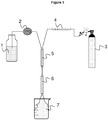
- the cement slurry described above can be mixed with an aqueous foam comprising at least one compound chosen from foaming agents, air entrainers and gas-generating agents. It is possible to use an apparatus as shown in figure 1 to prepare the aqueous foam.
- a mixture of water and foaming agents or air entrainers 1 is pumped using a metering pump 2 and is co-injected with a gas 3 into a mixer 5, for example a static mixer (or a tube filled with beads).
- the gas which may for example be air, nitrogen or carbon dioxide is taken from a gas source 3.
- the flow of injected gas is controlled using a flowmeter 4.
- the mixture of gas and water, of foaming agents and / or air entrainers passes through several ball mixers 5 and 6 having diameters of balls of increasingly small diameters.
- the aqueous foam is recovered in a container 7.
- At least one compound chosen from foaming agents, air entrainers, gas-generating agents then a gas is injected into this grout so as to form the mineral foam. Gas injection is carried out by maximizing the interaction surface between the gas and the grout so as to obtain an abundant and stable mineral foam.
- An apparatus such as that described in the figure 1 by replacing the mixture of water and foaming agents or air entrainers with the additive cement grout.
- the mineral foam can be generated without the addition of surfactants by entraining air during the preparation of a cement slurry comprising an LHA hydraulic binder, a solvent, fillers, according to the invention.
- reactive fillers or else fillers not in accordance with the invention such as shaped fillers of low density, or for example fillers, which can be introduced in whole or in part either during the preparation of the grout, or after this step.
- shaped charges are incorporated into the cement slurry so as to generate porosity.
- the mineral foam or the cement grout thus obtained can be directly used to manufacture a heat-insulating material with a cellular structure (or hardened mineral foam) according to the invention.
- the mineral foam or the cement slurry or the hardened mineral foam according to the invention has the advantage of not requiring any heat treatment, in particular an expensive hydrothermal treatment.
- the thermo-insulating material with a cellular structure of the invention can therefore be obtained without heat or hydrothermal treatment.
- any foaming agent conventionally used to foam cement is suitable, such as anionic and nonionic surfactants and mixtures thereof.
- an aqueous foam stabilizer additive can be added.
- the stabilizing additives can be either surfactants, or polymers, long-chain alcohols, in liquid form or in solid particles such as, for example, alkanolamides, hydrocolloids, proteins cited in the patents. WO / 2008/020246 , WO / 2006/067064 , US 4218490 .
- the foam of the invention may not contain a foaming agent or foam stabilizing agents.
- Air entraining agents are compounds which stabilize the air bubbles trapped by the turbulence generated during mixing. Mention may be made, as air entraining agent, of natural wood resins, sulfated or sulfonated compounds, synthetic detergents and organic fatty acids.
- the material hardened mineral foam
- mineral foam or cement grout with shaped charges can also be used to place mineral foam in situ to fill the hollow parts of building construction elements, such as walls, ceilings, concrete blocks, doors, ducts ...
- the material or the mineral foam can also be used to place mineral foam in situ on the underside in contact with the pipes used in the context of heated floors.
- the material or the mineral foam or the cement grout comprising shaped charges can also be used to place mineral foam in situ in exterior application as a monolayer having an insulating function for the coating of buildings, this monolayer being able to be covered with 'an aesthetic topcoat.
- the material, or the mineral foam of the invention, or the cement grout comprising shaped charges, not in accordance with the invention, is also particularly useful for producing concrete or insulating bricks for refractory applications including the production of refractory bricks and the in situ placement of mineral foam for the production of monolithic concretes.
- thermal conductivities were measured according to the standard EN 12667: 2001 "Thermal performance of materials and products for the building industry. Determination of thermal resistance by the guarded hot plate method and the metric flux method. Product of high and medium thermal resistance ".
- the compressive strength is determined according to standard EN 196-1 on 100x100x100 mm cubes after 3 and 24 hours.
- the sample must be placed in an oven at 60 ° C (minimum 2 hours) then cooled to be free of water to stabilize the measurement more quickly (5 successive identical measurements).
- the result corresponds to the average of the last five results included in the confidence interval of the device (0.02% variation in volume).
- the hardened mineral foam is impregnated with a hardenable resin (epoxy resin) in order to be observed under optical microscopy. After 12 hours of hardening, the sample is cut transversely into plates of approximately 4 cm * 4 cm in thickness between 0.05 and 3 mm. The observation of the transverse surface of the samples is carried out under X5 magnification.
- a hardenable resin epoxy resin
- compositions according to the invention and evaluation of the thermal conductivity and of the compressive strength of the insulating materials of the invention
- Component Binder according to the invention
- L1 Hydraulic binder Calcium aluminate from the company TMC 70 g Gypsum 30 g Lithium carbonate 0.05 g * Citric acid 0.18 g * Dispersant: Mighty 21 PZ® (Polycarboxylate ether powder) 0.22 g Cellulose ether 0.1 g Cellulose microfibers: Arbocel® 40 (CFF) length 0.45-1 ⁇ m.
- Charge silica fume Rw Q1 Fuller 5 g Water : 22.5 g
- Crosslinking agent LithoFoam® NWFS 1.5 g
- the components are mixed using an electric mixer for 30 seconds at low speed (graduation 1) then 1 minute 30 seconds at high speed (graduation 5). A cement grout is thus obtained.
- the mineral foam is poured into molds of dimensions 4 cm * 4 cm * 16 cm previously lubricated with a release oil.
- the components are mixed using an electric mixer for 30 seconds at low speed (graduation 1) then 1 minute 30 seconds at high speed (graduation 5).
- the mineral foam of the invention is easy to obtain because the aqueous foam is easily incorporated into the binder phase and the whole is homogeneous.
- the mineral foam of Comparative Test 2 was difficult to obtain because the binder was not sufficiently fluid.
- the mineral foam is poured into molds of dimensions 4 cm * 4 cm * 16 cm previously lubricated with a release oil.
- the mineral foams are then dried at 23 ° C. and 60% RH for 24 hours in order to obtain the heat-insulating material with a cellular structure according to the invention.
- the mineral foam mainly based on Portland obtained with the comparative binder LC1 collapses ( figure 2b ) unlike the mineral foam of the invention, mainly based on L2 aluminous cement which does not collapse ( figure 2a ).
- the figure 2 c) represents the insulating material mainly based on Portland cement LC2. Less collapse is observed but a great inhomogeneity within the thermo-insulating material with cellular structure obtained.
- thermo-insulating material with a cellular structure is measured using a pycnometer, this measurement is compared with the result obtained by porosimetry under water.
- a density of 0.29 and a pore volume of 85% are measured for the insulating material of the invention comprising a binder based on aluminous cement, calcium sulfate and Portland cement.
- the hardened mineral foam is impregnated with a hardenable resin (epoxy resin) in order to be observed under optical microscopy. After 12 hours of hardening, the sample is cut transversely into plates of approximately 4 cm * 4 cm * of thickness between 0.05 and 3 mm.
- a hardenable resin epoxy resin
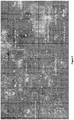
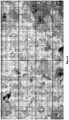
- the observation of the transverse surface of the samples is carried out under X5 magnification and is illustrated on the figures 3 a) and 3 b ).
- the hardened mineral foam according to the invention (L2, figure 2a ) exhibits excellent mechanical strength, while hardened mineral foams based only on Portland cement (LC1, figure 2b and LC2, figure 3b ) collapsed when the aqueous foam came into contact with the grout.
- the hardened mineral foam according to the invention (L2, figure 3a ) includes evenly distributed bubbles, 4 to 5 bubbles per mm 2 and of regular size, while the hardened mineral foam of Comparative Example LC1 ( figure 3b ) exhibits heterogeneity in the size and distribution of the bubbles.
- Component Binder according to the invention L3 with shaped and reactive charges Comparison / Binder 1 LC3 without shaped charges Binder 100% comparative OPC / Binder 1 LC4 Hydraulic binder: Portland cement 52.5R (Lafarge Le Havre) 7.15 g 7.15 g 100 g Calcium aluminate Secar 51® (Kerneos) 35.75 g 35.75 g - Anhydrite 12.5 g 12.5 g - Sodium carbonate - - 0.4 g Citric acid 0.1 g 0.1 g 0.1 0.1 g Hollow charge Thermosilit® (*) 11.0 g - - Reactive loads: silica fume Rw Q1 Fuller 5.03 g 5.03 g 5.03 g Dispersant: Conpac 500 0.36 g 0.36 g 0.36 g Cellulose ether: Tylose H300P2 0.11 g 0.11 g 0.11 g Resin Vinnapass 5011 L 3 g 3
- the components are mixed using an electric mixer for 30 seconds at low speed (graduation 1) then 1 minute 30 seconds at high speed (graduation 5). A cement grout is thus obtained.
- the mineral foam is poured into molds with dimensions of 4 cm * 4 cm * 16 cm or 10 cm * 10 cm * 10 cm made of polystyrene.
- the mineral foams are then dried at 23 ° C. and 60% RH for 24 hours in order to obtain the heat-insulating material with a cellular structure according to the invention.
- the mineral foam predominantly based on Portland obtained with the comparative binder LC3 collapses unlike the mineral foam of the invention mainly based on aluminous cement L3 with reactive charges and shaped charges which does not collapse.
- Composition L3% (by weight) Binder 32.78 Hollow charge 6.51 Reactive load 2.98 Charge 14.79 Water 39.75 Foaming agent 0.30 Other additives 3.19
- the mineral foam of the comparative test with Portland cement LC4 could not be obtained due to the collapse of the mineral foam.
- the causes of this collapse are due to the low reactivity of this system.
- the components are mixed using an electric mixer for 30 seconds at low speed (graduation 1) then 3 minutes 30 seconds at high speed (graduation 5). This gives a mineral foam.
- Binder L3 9.27 Hollow charge 3.56 Reactive load 7.13 Charge 50.88 Water 28.12 Foaming agent 0.52 Other additives 0.63
- the mineral foam of the comparative test LC5 with Portland cement could not be obtained due to the collapse of the mineral foam.
- the causes of this collapse are due to the low reactivity of this system.
- the components are mixed using an electric mixer for 30 seconds at low speed (graduation 1) then 3 minutes 30 seconds at high speed (graduation 5). This gives a mineral foam.
- the components are mixed using an electric mixer for 30 seconds at low speed (graduation 1) then 1 minute 30 seconds at high speed (graduation 5). A cement grout is thus obtained.
- Binder L6 % (weight) Binder L7 Binder 32.31 32.31 Reactive load 6.31 3.15 Charge 24.08 27.23 Water 35.95 35.95 Foaming agent 0.92 0.92 Other additives 0.43 0.43
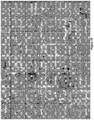
- binder L6 on the figure 7 pore sizes are observed essentially less than 400 ⁇ m.
- binder L7 on the figure 8 pore sizes are observed essentially less than 350 ⁇ m
- the components are mixed using an electric mixer for 30 seconds at low speed (graduation 1) then 1 minute 30 seconds at high speed (graduation 5). A cement grout is thus obtained.
- the components are mixed using an electric mixer for 30 seconds at low speed (graduation 1) then 1 minute 30 seconds at high speed (graduation 5). A cement grout is thus obtained.
- Composition L9% (by weight) L10% (by weight) Binder 34.68 34.68 Reactive load 3.28 6.56 Charge 22.70 19.43 Water 36.23 36.23 Foaming agent 0.62 0.62 Other additives 2.49 2.49
- the components are mixed using an electric mixer for 30 seconds at low speed (graduation 1) then 1 minute 30 seconds at high speed (graduation 5). A cement grout is thus obtained.
- Composition Formula L11% (by weight) Binder 34.68 Reactive load 2.52 Charge 25.09 Water 35.85 Foaming agent 1.00 Other additives 0.91
- the components are mixed using an electric mixer for 30 seconds at low speed (graduation 1) then 1 minute 30 seconds at high speed (graduation 5). A cement grout is thus obtained.
Landscapes
- Chemical & Material Sciences (AREA)
- Engineering & Computer Science (AREA)
- Ceramic Engineering (AREA)
- Structural Engineering (AREA)
- Materials Engineering (AREA)
- Organic Chemistry (AREA)
- Chemical Kinetics & Catalysis (AREA)
- Inorganic Chemistry (AREA)
- General Chemical & Material Sciences (AREA)
- Physics & Mathematics (AREA)
- Architecture (AREA)
- Civil Engineering (AREA)
- Acoustics & Sound (AREA)
- Electromagnetism (AREA)
- Curing Cements, Concrete, And Artificial Stone (AREA)
- Porous Artificial Stone Or Porous Ceramic Products (AREA)
- Manufacture Of Porous Articles, And Recovery And Treatment Of Waste Products (AREA)
- Thermal Insulation (AREA)
- Environmental & Geological Engineering (AREA)
- Inorganic Insulating Materials (AREA)
- Glass Compositions (AREA)
Priority Applications (3)
| Application Number | Priority Date | Filing Date | Title |
|---|---|---|---|
| PL11704288T PL2523925T3 (pl) | 2010-01-13 | 2011-01-13 | Materiał do izolacji termicznej i sposób jego wytwarzania |
| HRP20210080TT HRP20210080T1 (hr) | 2010-01-13 | 2011-01-13 | Materijal za termoizolaciju i postupak za njegovu proizvodnju |
| EP20205260.1A EP3792231A1 (fr) | 2010-01-13 | 2011-01-13 | Materiau pour isolation thermique et son procede de fabrication |
Applications Claiming Priority (2)
| Application Number | Priority Date | Filing Date | Title |
|---|---|---|---|
| FR1050212A FR2955104B1 (fr) | 2010-01-13 | 2010-01-13 | Materiau pour isolation thermique et son procede de fabrication |
| PCT/FR2011/050066 WO2011086333A2 (fr) | 2010-01-13 | 2011-01-13 | Materiau pour isolation thermique et son procede de fabrication |
Related Child Applications (1)
| Application Number | Title | Priority Date | Filing Date |
|---|---|---|---|
| EP20205260.1A Division EP3792231A1 (fr) | 2010-01-13 | 2011-01-13 | Materiau pour isolation thermique et son procede de fabrication |
Publications (2)
| Publication Number | Publication Date |
|---|---|
| EP2523925A2 EP2523925A2 (fr) | 2012-11-21 |
| EP2523925B1 true EP2523925B1 (fr) | 2020-12-02 |
Family
ID=42555950
Family Applications (2)
| Application Number | Title | Priority Date | Filing Date |
|---|---|---|---|
| EP11704288.7A Active EP2523925B1 (fr) | 2010-01-13 | 2011-01-13 | Materiau pour isolation thermique et son procede de fabrication |
| EP20205260.1A Pending EP3792231A1 (fr) | 2010-01-13 | 2011-01-13 | Materiau pour isolation thermique et son procede de fabrication |
Family Applications After (1)
| Application Number | Title | Priority Date | Filing Date |
|---|---|---|---|
| EP20205260.1A Pending EP3792231A1 (fr) | 2010-01-13 | 2011-01-13 | Materiau pour isolation thermique et son procede de fabrication |
Country Status (16)
| Country | Link |
|---|---|
| US (1) | US10160691B2 (pl) |
| EP (2) | EP2523925B1 (pl) |
| KR (1) | KR101808663B1 (pl) |
| CN (1) | CN102918000B (pl) |
| AR (1) | AR079900A1 (pl) |
| AU (1) | AU2011206426A1 (pl) |
| BR (1) | BR112012017432A2 (pl) |
| CA (1) | CA2786986A1 (pl) |
| DK (1) | DK2523925T3 (pl) |
| ES (1) | ES2849198T3 (pl) |
| FR (1) | FR2955104B1 (pl) |
| HR (1) | HRP20210080T1 (pl) |
| MX (1) | MX2012008137A (pl) |
| PL (1) | PL2523925T3 (pl) |
| RU (1) | RU2012134387A (pl) |
| WO (1) | WO2011086333A2 (pl) |
Families Citing this family (43)
| Publication number | Priority date | Publication date | Assignee | Title |
|---|---|---|---|---|
| CN102503319B (zh) * | 2011-10-24 | 2013-11-06 | 沈阳建筑大学 | 一种相变储能相变混凝土及制备方法 |
| CA2854366A1 (en) | 2011-11-30 | 2013-06-06 | James Hardie Technology Limited | Lightweight extruded cementitious material and method of making the same |
| FR2987619B1 (fr) * | 2012-03-01 | 2015-04-24 | Francais Ciments | Retardateur de prise pour ciment sulfo-alumineux |
| US9193627B2 (en) | 2012-03-09 | 2015-11-24 | Parexgroup Sa | Use of at least one superabsorbent polymer (SAP), in a dry composition based on mineral binder and intended for the preparation of a hardenable wet formulation for the construction industry |
| CN104159866A (zh) * | 2012-03-09 | 2014-11-19 | 帕雷克斯集团有限公司 | 基于无机粘合剂和旨在制备用于建筑工业的可硬化湿制剂的干组合物 |
| FR2989083B1 (fr) | 2012-04-06 | 2014-04-25 | Lafarge Sa | Mousse minerale isolante |
| EP2722319B1 (de) | 2012-10-16 | 2019-07-03 | STO SE & Co. KGaA | Schall- und/oder Wärmedämmung sowie Wärmedämmsystem |
| WO2014072200A1 (de) * | 2012-11-09 | 2014-05-15 | Sika Technology Ag | Polycarboxylatether als dispergiermittel für epoxidharze |
| US10196309B2 (en) * | 2013-10-17 | 2019-02-05 | The Intellectual Gorilla Gmbh | High temperature lightweight thermal insulating cement and silica based materials |
| EP3065925B1 (en) * | 2013-11-07 | 2021-07-21 | Air Krete, Inc. | A progressive bubble generating system used in making cementitous foam |
| EP3084092B1 (en) * | 2013-12-19 | 2021-07-28 | 3M Innovative Properties Company | Barrier films and vacuum insulated panels employing same |
| FR3031535B1 (fr) * | 2015-01-13 | 2018-05-11 | Bousseau Vincent Michel Joseph | Element constructif en beton poreux avec une porosite variable selon l'epaisseur |
| FR3034415A1 (fr) * | 2015-04-02 | 2016-10-07 | Lafarge Sa | Materiau de construction isolant a base d'additions vegetales |
| FR3043675B1 (fr) * | 2015-11-17 | 2022-11-11 | Lafarge Sa | Mousse minerale ultra-legere et son procede de fabrication |
| ES2796926T3 (es) | 2015-12-04 | 2020-11-30 | Holcim Technology Ltd | Procedimiento para la producción de una espuma mineral ultraligera |
| ES2796927T3 (es) | 2015-12-04 | 2020-11-30 | Holcim Technology Ltd | Procedimiento para la producción de una espuma mineral ultraligera |
| EP3176139A1 (en) | 2015-12-04 | 2017-06-07 | Lafarge | Ultra-light mineral foam |
| DE102016001930A1 (de) | 2016-02-18 | 2017-08-24 | K-Utec Ag Salt Technologies | Selbsttätig aufschäumender und selbsttätig aushärtender anorganischer Mineralschaum |
| CN105884295B (zh) * | 2016-04-11 | 2018-06-22 | 舟山市大昌预拌混凝土有限公司 | 一种地暖用高强泡沫混凝土材料及其制备方法 |
| CN107522505A (zh) * | 2016-06-21 | 2017-12-29 | 天津城建大学 | 一种超轻绝热保温材料及其制备方法 |
| US9670096B1 (en) * | 2016-08-04 | 2017-06-06 | Geopolymer Solutions LLC | High strength, density controlled cold fusion concrete cementitious spray applied fireproofing |
| CA3055003A1 (en) * | 2017-03-06 | 2018-09-13 | Construction Research & Technology Gmbh | Inorganic foam based on calcium sulfoaluminate |
| US12157699B2 (en) | 2018-05-30 | 2024-12-03 | Holcim Technology Ltd | Ultra-light mineral foam having water repellent properties |
| US11602091B2 (en) * | 2018-06-29 | 2023-03-07 | Lg Chem, Ltd. | Electromagnetic wave shielding film |
| CN110759747A (zh) * | 2018-07-26 | 2020-02-07 | 上海住总工程材料有限公司 | 石膏体及其制备方法 |
| FR3085374B1 (fr) | 2018-08-28 | 2020-11-13 | Holcim Technology Ltd | Procede de preparation d'une mousse minerale legere, mousse minerale obtenue et utilisations |
| EP3666743A1 (en) | 2018-12-10 | 2020-06-17 | Imertech Sas | Geopolymer foam composition |
| EP3744701A1 (de) * | 2019-05-28 | 2020-12-02 | Sika Technology Ag | Leitfähiger mörtel |
| GB2586951B (en) * | 2019-06-12 | 2024-01-31 | Ardex Group Gmbh | A method and apparatus for processing water treatment residuals |
| RU2717156C1 (ru) * | 2019-08-30 | 2020-03-18 | Федеральное государственное бюджетное образовательное учреждение высшего образования "Петербургский государственный университет путей сообщения Императора Александра I" | Сырьевая смесь для теплоизоляционного бетона |
| US10954162B1 (en) | 2019-09-24 | 2021-03-23 | Geopolymer Solutions, LLC | Protective coating |
| CN115244019A (zh) * | 2020-03-10 | 2022-10-25 | 瓦克化学股份公司 | 泡沫混凝土的制造方法 |
| WO2022122760A1 (en) | 2020-12-07 | 2022-06-16 | Holcim Technology Ltd | Process for the production of an ultra-light mineral, and use of the resulting mineral foam as a refractory material |
| CN112876225B (zh) * | 2021-02-08 | 2023-08-01 | 新疆硅质耐火材料有限公司 | 一种烧结耐高温轻质隔热材料及其制备方法 |
| KR102334180B1 (ko) * | 2021-03-03 | 2021-12-02 | 전춘택 | 다공성 폼 단열보드의 제조방법 및 그에 의해 제조된 다공성 폼 단열보드 |
| US20220281213A1 (en) * | 2021-03-04 | 2022-09-08 | Välinge Innovation AB | Building panel and a method to produce such a building panel |
| EP4384672A1 (en) * | 2021-08-13 | 2024-06-19 | Sika Technology AG | Fire-resistant light-weight thermal insulation panel |
| US12479767B2 (en) | 2021-09-29 | 2025-11-25 | Owens Corning Intellectual Capital, Llc | Gypsum cement with reduced permeability |
| CN118871401A (zh) | 2022-04-04 | 2024-10-29 | 瓦克化学股份公司 | 矿物基膨胀泡沫 |
| US20240059618A1 (en) * | 2022-08-22 | 2024-02-22 | Nano And Advanced Materials Institute Limited | Method of manufacturing lightweight thermal insulating cellular cement-based materials |
| KR102876186B1 (ko) * | 2022-12-02 | 2025-10-24 | (주)엘엑스하우시스 | 시멘트 단열재 및 이의 제조방법 |
| DE102023109513B4 (de) * | 2023-04-14 | 2025-05-08 | CCM-Concepts GmbH | Poröse mineralische Baustoffmasse und seine Verwendung |
| IT202300020721A1 (it) * | 2023-10-06 | 2025-04-06 | Isoltech S R L | Metodo per preparare una schiuma minerale e materiale minerale cellulare ottenibile da detta schiuma minerale. |
Family Cites Families (44)
| Publication number | Priority date | Publication date | Assignee | Title |
|---|---|---|---|---|
| SU444750A1 (ru) | 1972-04-18 | 1974-09-30 | Московский Ордена Ленина И Ордена Трудового Красного Знамени Институт Инженеров Железнодорожного Транспорта | Сырьева смесь дл приготовлени жаростойкого газобетона |
| US3989534A (en) * | 1973-03-19 | 1976-11-02 | Mark Plunguian | Foamed cementitious compositions and method of producing same |
| FR2289460A1 (fr) * | 1974-10-31 | 1976-05-28 | Lafarge Sa | Ciment prompt d'ettringite a prise reglable et ses applications |
| GB1585111A (en) | 1976-04-23 | 1981-02-25 | Bio Isolates Ltd | Functional proteins |
| DE2714735A1 (de) | 1977-04-01 | 1978-10-05 | Eugen Schwarz Fa | Material zur herstellung von poroeser feuerfester isolation |
| GB1578470A (en) * | 1977-12-16 | 1980-11-05 | Shikoku Kaken Kogyo Kk | Process for manufacturing inorganic heat insulating material |
| US4350533A (en) | 1981-08-03 | 1982-09-21 | United States Gypsum Company | High early strength cement |
| DE3227079A1 (de) * | 1982-07-17 | 1984-01-19 | Ivan Prof. Dr.-Ing. 3380 Goslar Odler | Hartschaumstoff und verfahren zu seiner herstellung |
| JPH062622B2 (ja) | 1982-08-27 | 1994-01-12 | トムソン,ドナルド ダブリユ | 泡断熱材、その製造方法およびその製造装置 |
| US4731389A (en) | 1982-09-03 | 1988-03-15 | Air Krete, Inc. | Foam insulation and process for producing the same |
| GB8300166D0 (en) | 1983-01-05 | 1983-02-09 | Fosroc International Ltd | Anchoring capsule |
| DE3403866A1 (de) * | 1984-02-04 | 1985-08-08 | Sicowa Verfahrenstechnik für Baustoffe GmbH & Co KG, 5100 Aachen | Verfahren zur schnellerhaertung einer giessfaehigen rohmischung |
| JPS6136183A (ja) * | 1984-07-30 | 1986-02-20 | ミサワホ−ム株式会社 | 気泡コンクリ−トの製造法 |
| US4596834A (en) * | 1985-02-14 | 1986-06-24 | The Babcock & Wilcox Company | Water resistant foamed product prepared from a latex, a mineral acid, hydraulic cement, filler, aggregate and stabilizer |
| US4746365A (en) * | 1985-02-19 | 1988-05-24 | Construction Products Research, Inc. | Utilization of latexes with hydraulic cement and gypsum compositions |
| JPH0656497B2 (ja) | 1985-11-08 | 1994-07-27 | キヤノン株式会社 | 光導電部材用基体の製造装置 |
| IN168168B (pl) | 1986-04-10 | 1991-02-16 | Fosroc International Ltd | |
| FR2651492B1 (fr) | 1989-09-06 | 1993-06-18 | Saint Gobain Rech | Procede et produits obtenus par melange de ciment et de fiibres de renfort. |
| US5109030A (en) * | 1989-11-22 | 1992-04-28 | Rohm And Haas Company | Foamed hydraulic compositions containing copolymeric foam stabilizers |
| RU2013421C1 (ru) | 1991-03-05 | 1994-05-30 | Научно-исследовательский институт строительных материалов при Томском инженерно-строительном институте | Способ приготовления легкого бетона |
| RU2070874C1 (ru) | 1991-11-01 | 1996-12-27 | Тихонов Юрий Михайлович | Способ приготовления смеси для аэрированного легкого бетона и аэросмеситель турбулентного действия |
| JPH0656497A (ja) * | 1992-08-13 | 1994-03-01 | Sansou:Kk | アルミナセメント複合材料 |
| DE4339137A1 (de) | 1993-06-08 | 1994-12-15 | Sicowa Verfahrenstech | Verfahren zur Herstellung von Wärmedämmaterial |
| US5373079A (en) | 1993-10-19 | 1994-12-13 | Dow Corning Corporation | Method for the preparation of polydimethylsiloxanes having low reactivity endgroups and high reactivity endgroups and polydimethylsiloxanes made thereby |
| JP3317429B2 (ja) * | 1995-08-07 | 2002-08-26 | 住友金属鉱山株式会社 | 補修用モルタル |
| RU2194684C2 (ru) | 1997-07-25 | 2002-12-20 | ТОО "Стром-Сервис" | Сырьевая смесь для изготовления теплоизоляционного строительного материала |
| JP2000128661A (ja) * | 1998-10-19 | 2000-05-09 | East Japan Railway Co | 透水性気泡モルタルの製造方法および該モルタル並びにこれに用いるモルタル材料 |
| US6443258B1 (en) * | 1999-10-01 | 2002-09-03 | Awi Licensing Company | Durable porous article of manufacture and a process to create same |
| FR2839066B1 (fr) * | 2002-04-24 | 2005-02-04 | Lafarge Aluminates | Liant ettringitique pour mortier dense, comprenant des sulfates de calcium et un compose mineral d'aluminates de calcium |
| US6722434B2 (en) | 2002-05-31 | 2004-04-20 | Halliburton Energy Services, Inc. | Methods of generating gas in well treating fluids |
| US6869474B2 (en) * | 2002-08-29 | 2005-03-22 | United States Gypsum Company | Very fast setting cementitious composition |
| FR2861388B1 (fr) | 2003-10-23 | 2006-02-03 | Lafarge Aluminates | Mortier dense a base de liant ettringitique binaire, comprenant au moins un polymere peigne de poly(oxyde d'alkylene) et au moins une resine organique structurante. |
| DE102004003675A1 (de) | 2004-01-24 | 2005-08-11 | Degussa Ag | Dispersion und Beschichtungszubereitung enthaltend nanoskaliges Zinkoxid |
| US7288147B2 (en) | 2004-06-15 | 2007-10-30 | Construction Research&Technology Gmbh | Providing freezing and thawing resistance to cementitious compositions |
| WO2006067064A1 (en) | 2004-12-21 | 2006-06-29 | Nestec S.A. | Shelf stable mousse |
| RU2305087C1 (ru) * | 2006-02-13 | 2007-08-27 | Государственное образовательное учреждение высшего профессионального образования "Петербургский государственный университет путей сообщения" | Смесь для пенобетона |
| AT9511U1 (de) | 2006-05-19 | 2007-11-15 | Manfred Sterrer | Leichtbetone bzw. mineralstoffe sowie verfahren zu ihrer herstellung |
| WO2008020246A2 (en) | 2006-08-18 | 2008-02-21 | Lavitec Corporation Limited | Sanitary composition |
| KR100809804B1 (ko) * | 2006-09-28 | 2008-03-04 | 한국전력공사 | 바텀애쉬를 이용한 흡음재용 경량 기포 콘크리트 조성물,이를 이용한 흡음재용 경량 기포 콘크리트 제품 및 그의제조 방법 |
| FR2913351B1 (fr) | 2007-03-08 | 2010-11-26 | Rhodia Recherches Et Tech | Utilisation d'une betaine a titre d'agent de reduction du drainage de la mousse |
| EP2045227B1 (de) | 2007-09-24 | 2014-08-27 | Promat GmbH | Anorganische Schäume auf Basis von Schnellzement als Brandschutzmasse zum Füllen von Hohlkörpern |
| US7740066B2 (en) * | 2008-01-25 | 2010-06-22 | Halliburton Energy Services, Inc. | Additives for high alumina cements and associated methods |
| FR2927623B1 (fr) * | 2008-02-19 | 2012-05-25 | Imerys Tc | Composition de mousse de chaux pour isolation thermique |
| FR2929270A1 (fr) | 2008-03-26 | 2009-10-02 | Lozano Aime Jean Marie | Beton autoplacant et derives,et procedes de mise en oeuvre |
-
2010
- 2010-01-13 FR FR1050212A patent/FR2955104B1/fr active Active
-
2011
- 2011-01-13 RU RU2012134387/03A patent/RU2012134387A/ru unknown
- 2011-01-13 EP EP11704288.7A patent/EP2523925B1/fr active Active
- 2011-01-13 CA CA 2786986 patent/CA2786986A1/fr not_active Abandoned
- 2011-01-13 WO PCT/FR2011/050066 patent/WO2011086333A2/fr not_active Ceased
- 2011-01-13 PL PL11704288T patent/PL2523925T3/pl unknown
- 2011-01-13 ES ES11704288T patent/ES2849198T3/es active Active
- 2011-01-13 CN CN201180013566.2A patent/CN102918000B/zh active Active
- 2011-01-13 US US13/522,279 patent/US10160691B2/en active Active
- 2011-01-13 DK DK11704288.7T patent/DK2523925T3/da active
- 2011-01-13 HR HRP20210080TT patent/HRP20210080T1/hr unknown
- 2011-01-13 KR KR1020127018469A patent/KR101808663B1/ko active Active
- 2011-01-13 AU AU2011206426A patent/AU2011206426A1/en not_active Abandoned
- 2011-01-13 EP EP20205260.1A patent/EP3792231A1/fr active Pending
- 2011-01-13 BR BR112012017432A patent/BR112012017432A2/pt not_active Application Discontinuation
- 2011-01-13 MX MX2012008137A patent/MX2012008137A/es active IP Right Grant
- 2011-01-14 AR ARP110100119 patent/AR079900A1/es unknown
Non-Patent Citations (1)
| Title |
|---|
| None * |
Also Published As
| Publication number | Publication date |
|---|---|
| CN102918000B (zh) | 2017-04-12 |
| AR079900A1 (es) | 2012-02-29 |
| CN102918000A (zh) | 2013-02-06 |
| EP3792231A1 (fr) | 2021-03-17 |
| DK2523925T3 (da) | 2021-02-01 |
| FR2955104B1 (fr) | 2014-08-08 |
| KR101808663B1 (ko) | 2017-12-14 |
| RU2012134387A (ru) | 2014-02-20 |
| WO2011086333A2 (fr) | 2011-07-21 |
| HRP20210080T1 (hr) | 2021-03-05 |
| US20120286190A1 (en) | 2012-11-15 |
| EP2523925A2 (fr) | 2012-11-21 |
| KR20130010046A (ko) | 2013-01-24 |
| FR2955104A1 (fr) | 2011-07-15 |
| US10160691B2 (en) | 2018-12-25 |
| WO2011086333A3 (fr) | 2011-10-27 |
| AU2011206426A1 (en) | 2012-08-02 |
| PL2523925T3 (pl) | 2021-07-05 |
| BR112012017432A2 (pt) | 2016-04-19 |
| MX2012008137A (es) | 2012-08-03 |
| ES2849198T3 (es) | 2021-08-16 |
| CA2786986A1 (fr) | 2011-07-21 |
Similar Documents
| Publication | Publication Date | Title |
|---|---|---|
| EP2523925B1 (fr) | Materiau pour isolation thermique et son procede de fabrication | |
| EP2822912B1 (fr) | Utilisation d'au moins un polymere superabsorbant -psa- (b), dans une composition seche a base de liant mineral et destinee a la preparation d'une formulation humide durcissable pour le batiment | |
| EP2822911B1 (fr) | Composition seche a base de liant mineral et destinee a la preparation d'une formulation humide durcissable pour le batiment | |
| EP2785664B1 (fr) | Béton ou mortier léger structurel, son procédé de fabrication et son utilisation en tant que béton auto-placant | |
| EP2523922B9 (fr) | Enduit isolant a base de xerogel de silice | |
| EP3535227B1 (fr) | Composition de construction seche projetable en voie humide a l'aide d'une pompe a vis et comprenant un liant et une charge biosourcee - preparation et applications d'une telle composition | |
| EP3371127A1 (fr) | Composition de construction seche projetable en voie humide a l'aide d'une pompe a vis et comprenant un liant et une charge biosourcee - preparation et applications d'une telle composition | |
| WO2017178729A1 (fr) | Composition de mortier fortement allege et isolant thermique | |
| WO2014096701A1 (fr) | Composition de béton ou mortier allégé comprenant une mousse aqueuse | |
| JP2010155755A (ja) | 高膨張軽量グラウトモルタル組成物 | |
| FR2956397A1 (fr) | Element constructif en beton leger isolant | |
| BE1022191B1 (fr) | Matrice cimentaire pour coulis, mortier ou beton leger, compositions cimentaires incluant une telle matrice et leurs utilisations pour des mortiers ou betons legers structurels | |
| FR3001727A1 (fr) | Liant hydraulique | |
| EP2401238B1 (fr) | Composition utile pour la preparation d'un beton sans ajout d'eau | |
| WO2017013376A1 (fr) | Procede de preparation d'un béton ou mortier allegé contenant de la glycerine | |
| TW201228994A (en) | Thermal insulation material and method for making the same | |
| JP5594760B2 (ja) | 自己平滑性を有する水硬性組成物 | |
| FR3148792A1 (fr) | Composition sèche de mortier, notamment de mortier-colle |
Legal Events
| Date | Code | Title | Description |
|---|---|---|---|
| PUAI | Public reference made under article 153(3) epc to a published international application that has entered the european phase |
Free format text: ORIGINAL CODE: 0009012 |
|
| 17P | Request for examination filed |
Effective date: 20120808 |
|
| AK | Designated contracting states |
Kind code of ref document: A2 Designated state(s): AL AT BE BG CH CY CZ DE DK EE ES FI FR GB GR HR HU IE IS IT LI LT LU LV MC MK MT NL NO PL PT RO RS SE SI SK SM TR |
|
| DAX | Request for extension of the european patent (deleted) | ||
| 17Q | First examination report despatched |
Effective date: 20130909 |
|
| TPAC | Observations filed by third parties |
Free format text: ORIGINAL CODE: EPIDOSNTIPA |
|
| STAA | Information on the status of an ep patent application or granted ep patent |
Free format text: STATUS: EXAMINATION IS IN PROGRESS |
|
| GRAP | Despatch of communication of intention to grant a patent |
Free format text: ORIGINAL CODE: EPIDOSNIGR1 |
|
| STAA | Information on the status of an ep patent application or granted ep patent |
Free format text: STATUS: GRANT OF PATENT IS INTENDED |
|
| INTG | Intention to grant announced |
Effective date: 20200617 |
|
| GRAS | Grant fee paid |
Free format text: ORIGINAL CODE: EPIDOSNIGR3 |
|
| GRAA | (expected) grant |
Free format text: ORIGINAL CODE: 0009210 |
|
| STAA | Information on the status of an ep patent application or granted ep patent |
Free format text: STATUS: THE PATENT HAS BEEN GRANTED |
|
| AK | Designated contracting states |
Kind code of ref document: B1 Designated state(s): AL AT BE BG CH CY CZ DE DK EE ES FI FR GB GR HR HU IE IS IT LI LT LU LV MC MK MT NL NO PL PT RO RS SE SI SK SM TR |
|
| REG | Reference to a national code |
Ref country code: GB Ref legal event code: FG4D Free format text: NOT ENGLISH |
|
| REG | Reference to a national code |
Ref country code: AT Ref legal event code: REF Ref document number: 1340748 Country of ref document: AT Kind code of ref document: T Effective date: 20201215 Ref country code: CH Ref legal event code: EP |
|
| REG | Reference to a national code |
Ref country code: DE Ref legal event code: R096 Ref document number: 602011069496 Country of ref document: DE |
|
| REG | Reference to a national code |
Ref country code: IE Ref legal event code: FG4D Free format text: LANGUAGE OF EP DOCUMENT: FRENCH |
|
| REG | Reference to a national code |
Ref country code: HR Ref legal event code: TUEP Ref document number: P20210080 Country of ref document: HR |
|
| REG | Reference to a national code |
Ref country code: DK Ref legal event code: T3 Effective date: 20210127 |
|
| REG | Reference to a national code |
Ref country code: DE Ref legal event code: R082 Ref document number: 602011069496 Country of ref document: DE Representative=s name: LAVOIX MUNICH, DE |
|
| REG | Reference to a national code |
Ref country code: FI Ref legal event code: FGE |
|
| REG | Reference to a national code |
Ref country code: HR Ref legal event code: ODRP Ref document number: P20210080 Country of ref document: HR Payment date: 20210120 Year of fee payment: 11 |
|
| REG | Reference to a national code |
Ref country code: HR Ref legal event code: T1PR Ref document number: P20210080 Country of ref document: HR |
|
| REG | Reference to a national code |
Ref country code: SE Ref legal event code: TRGR |
|
| PG25 | Lapsed in a contracting state [announced via postgrant information from national office to epo] |
Ref country code: RS Free format text: LAPSE BECAUSE OF FAILURE TO SUBMIT A TRANSLATION OF THE DESCRIPTION OR TO PAY THE FEE WITHIN THE PRESCRIBED TIME-LIMIT Effective date: 20201202 Ref country code: GR Free format text: LAPSE BECAUSE OF FAILURE TO SUBMIT A TRANSLATION OF THE DESCRIPTION OR TO PAY THE FEE WITHIN THE PRESCRIBED TIME-LIMIT Effective date: 20210303 |
|
| REG | Reference to a national code |
Ref country code: NO Ref legal event code: T2 Effective date: 20201202 |
|
| REG | Reference to a national code |
Ref country code: NL Ref legal event code: MP Effective date: 20201202 |
|
| REG | Reference to a national code |
Ref country code: AT Ref legal event code: MK05 Ref document number: 1340748 Country of ref document: AT Kind code of ref document: T Effective date: 20201202 |
|
| PG25 | Lapsed in a contracting state [announced via postgrant information from national office to epo] |
Ref country code: BG Free format text: LAPSE BECAUSE OF FAILURE TO SUBMIT A TRANSLATION OF THE DESCRIPTION OR TO PAY THE FEE WITHIN THE PRESCRIBED TIME-LIMIT Effective date: 20210302 Ref country code: LV Free format text: LAPSE BECAUSE OF FAILURE TO SUBMIT A TRANSLATION OF THE DESCRIPTION OR TO PAY THE FEE WITHIN THE PRESCRIBED TIME-LIMIT Effective date: 20201202 |
|
| PG25 | Lapsed in a contracting state [announced via postgrant information from national office to epo] |
Ref country code: NL Free format text: LAPSE BECAUSE OF FAILURE TO SUBMIT A TRANSLATION OF THE DESCRIPTION OR TO PAY THE FEE WITHIN THE PRESCRIBED TIME-LIMIT Effective date: 20201202 |
|
| REG | Reference to a national code |
Ref country code: LT Ref legal event code: MG9D |
|
| PG25 | Lapsed in a contracting state [announced via postgrant information from national office to epo] |
Ref country code: CZ Free format text: LAPSE BECAUSE OF FAILURE TO SUBMIT A TRANSLATION OF THE DESCRIPTION OR TO PAY THE FEE WITHIN THE PRESCRIBED TIME-LIMIT Effective date: 20201202 Ref country code: EE Free format text: LAPSE BECAUSE OF FAILURE TO SUBMIT A TRANSLATION OF THE DESCRIPTION OR TO PAY THE FEE WITHIN THE PRESCRIBED TIME-LIMIT Effective date: 20201202 Ref country code: SM Free format text: LAPSE BECAUSE OF FAILURE TO SUBMIT A TRANSLATION OF THE DESCRIPTION OR TO PAY THE FEE WITHIN THE PRESCRIBED TIME-LIMIT Effective date: 20201202 Ref country code: LT Free format text: LAPSE BECAUSE OF FAILURE TO SUBMIT A TRANSLATION OF THE DESCRIPTION OR TO PAY THE FEE WITHIN THE PRESCRIBED TIME-LIMIT Effective date: 20201202 Ref country code: SK Free format text: LAPSE BECAUSE OF FAILURE TO SUBMIT A TRANSLATION OF THE DESCRIPTION OR TO PAY THE FEE WITHIN THE PRESCRIBED TIME-LIMIT Effective date: 20201202 Ref country code: PT Free format text: LAPSE BECAUSE OF FAILURE TO SUBMIT A TRANSLATION OF THE DESCRIPTION OR TO PAY THE FEE WITHIN THE PRESCRIBED TIME-LIMIT Effective date: 20210405 Ref country code: RO Free format text: LAPSE BECAUSE OF FAILURE TO SUBMIT A TRANSLATION OF THE DESCRIPTION OR TO PAY THE FEE WITHIN THE PRESCRIBED TIME-LIMIT Effective date: 20201202 |
|
| REG | Reference to a national code |
Ref country code: ES Ref legal event code: FG2A Ref document number: 2849198 Country of ref document: ES Kind code of ref document: T3 Effective date: 20210816 |
|
| PG25 | Lapsed in a contracting state [announced via postgrant information from national office to epo] |
Ref country code: AT Free format text: LAPSE BECAUSE OF FAILURE TO SUBMIT A TRANSLATION OF THE DESCRIPTION OR TO PAY THE FEE WITHIN THE PRESCRIBED TIME-LIMIT Effective date: 20201202 |
|
| REG | Reference to a national code |
Ref country code: CH Ref legal event code: PL |
|
| REG | Reference to a national code |
Ref country code: DE Ref legal event code: R097 Ref document number: 602011069496 Country of ref document: DE |
|
| PG25 | Lapsed in a contracting state [announced via postgrant information from national office to epo] |
Ref country code: LU Free format text: LAPSE BECAUSE OF NON-PAYMENT OF DUE FEES Effective date: 20210113 Ref country code: IS Free format text: LAPSE BECAUSE OF FAILURE TO SUBMIT A TRANSLATION OF THE DESCRIPTION OR TO PAY THE FEE WITHIN THE PRESCRIBED TIME-LIMIT Effective date: 20210402 Ref country code: MC Free format text: LAPSE BECAUSE OF FAILURE TO SUBMIT A TRANSLATION OF THE DESCRIPTION OR TO PAY THE FEE WITHIN THE PRESCRIBED TIME-LIMIT Effective date: 20201202 |
|
| PLBE | No opposition filed within time limit |
Free format text: ORIGINAL CODE: 0009261 |
|
| STAA | Information on the status of an ep patent application or granted ep patent |
Free format text: STATUS: NO OPPOSITION FILED WITHIN TIME LIMIT |
|
| PG25 | Lapsed in a contracting state [announced via postgrant information from national office to epo] |
Ref country code: AL Free format text: LAPSE BECAUSE OF FAILURE TO SUBMIT A TRANSLATION OF THE DESCRIPTION OR TO PAY THE FEE WITHIN THE PRESCRIBED TIME-LIMIT Effective date: 20201202 |
|
| 26N | No opposition filed |
Effective date: 20210903 |
|
| PG25 | Lapsed in a contracting state [announced via postgrant information from national office to epo] |
Ref country code: CH Free format text: LAPSE BECAUSE OF NON-PAYMENT OF DUE FEES Effective date: 20210131 Ref country code: SI Free format text: LAPSE BECAUSE OF FAILURE TO SUBMIT A TRANSLATION OF THE DESCRIPTION OR TO PAY THE FEE WITHIN THE PRESCRIBED TIME-LIMIT Effective date: 20201202 Ref country code: LI Free format text: LAPSE BECAUSE OF NON-PAYMENT OF DUE FEES Effective date: 20210131 |
|
| REG | Reference to a national code |
Ref country code: HR Ref legal event code: ODRP Ref document number: P20210080 Country of ref document: HR Payment date: 20211220 Year of fee payment: 12 |
|
| PG25 | Lapsed in a contracting state [announced via postgrant information from national office to epo] |
Ref country code: IE Free format text: LAPSE BECAUSE OF NON-PAYMENT OF DUE FEES Effective date: 20210113 |
|
| PG25 | Lapsed in a contracting state [announced via postgrant information from national office to epo] |
Ref country code: IS Free format text: LAPSE BECAUSE OF FAILURE TO SUBMIT A TRANSLATION OF THE DESCRIPTION OR TO PAY THE FEE WITHIN THE PRESCRIBED TIME-LIMIT Effective date: 20210402 |
|
| REG | Reference to a national code |
Ref country code: HR Ref legal event code: ODRP Ref document number: P20210080 Country of ref document: HR Payment date: 20221221 Year of fee payment: 13 |
|
| PG25 | Lapsed in a contracting state [announced via postgrant information from national office to epo] |
Ref country code: HU Free format text: LAPSE BECAUSE OF FAILURE TO SUBMIT A TRANSLATION OF THE DESCRIPTION OR TO PAY THE FEE WITHIN THE PRESCRIBED TIME-LIMIT; INVALID AB INITIO Effective date: 20110113 Ref country code: CY Free format text: LAPSE BECAUSE OF FAILURE TO SUBMIT A TRANSLATION OF THE DESCRIPTION OR TO PAY THE FEE WITHIN THE PRESCRIBED TIME-LIMIT Effective date: 20201202 |
|
| P01 | Opt-out of the competence of the unified patent court (upc) registered |
Effective date: 20230526 |
|
| REG | Reference to a national code |
Ref country code: HR Ref legal event code: ODRP Ref document number: P20210080 Country of ref document: HR Payment date: 20231228 Year of fee payment: 14 |
|
| PG25 | Lapsed in a contracting state [announced via postgrant information from national office to epo] |
Ref country code: MK Free format text: LAPSE BECAUSE OF FAILURE TO SUBMIT A TRANSLATION OF THE DESCRIPTION OR TO PAY THE FEE WITHIN THE PRESCRIBED TIME-LIMIT Effective date: 20201202 |
|
| PG25 | Lapsed in a contracting state [announced via postgrant information from national office to epo] |
Ref country code: MT Free format text: LAPSE BECAUSE OF FAILURE TO SUBMIT A TRANSLATION OF THE DESCRIPTION OR TO PAY THE FEE WITHIN THE PRESCRIBED TIME-LIMIT Effective date: 20201202 |
|
| REG | Reference to a national code |
Ref country code: HR Ref legal event code: ODRP Ref document number: P20210080 Country of ref document: HR Payment date: 20250107 Year of fee payment: 15 |
|
| PGFP | Annual fee paid to national office [announced via postgrant information from national office to epo] |
Ref country code: HR Payment date: 20250107 Year of fee payment: 15 |
|
| PGFP | Annual fee paid to national office [announced via postgrant information from national office to epo] |
Ref country code: ES Payment date: 20250203 Year of fee payment: 15 |
|
| PGFP | Annual fee paid to national office [announced via postgrant information from national office to epo] |
Ref country code: TR Payment date: 20250102 Year of fee payment: 15 |
|
| PGFP | Annual fee paid to national office [announced via postgrant information from national office to epo] |
Ref country code: GB Payment date: 20251220 Year of fee payment: 16 |
|
| PGFP | Annual fee paid to national office [announced via postgrant information from national office to epo] |
Ref country code: NO Payment date: 20251218 Year of fee payment: 16 |
|
| PGFP | Annual fee paid to national office [announced via postgrant information from national office to epo] |
Ref country code: FI Payment date: 20251217 Year of fee payment: 16 Ref country code: DK Payment date: 20251217 Year of fee payment: 16 |
|
| PGFP | Annual fee paid to national office [announced via postgrant information from national office to epo] |
Ref country code: FR Payment date: 20251217 Year of fee payment: 16 |
|
| PGFP | Annual fee paid to national office [announced via postgrant information from national office to epo] |
Ref country code: BE Payment date: 20251217 Year of fee payment: 16 |
|
| PGFP | Annual fee paid to national office [announced via postgrant information from national office to epo] |
Ref country code: SE Payment date: 20251217 Year of fee payment: 16 |
|
| PGFP | Annual fee paid to national office [announced via postgrant information from national office to epo] |
Ref country code: PL Payment date: 20251229 Year of fee payment: 16 |
|
| PGFP | Annual fee paid to national office [announced via postgrant information from national office to epo] |
Ref country code: DE Payment date: 20251217 Year of fee payment: 16 |
|
| PGFP | Annual fee paid to national office [announced via postgrant information from national office to epo] |
Ref country code: IT Payment date: 20260107 Year of fee payment: 16 |