EP2518528A2 - Verfahren und Vorrichtung zum Messen einer Objektlänge, und computerlesbares medienspeicherndes Objektlängenmessprogramm - Google Patents
Verfahren und Vorrichtung zum Messen einer Objektlänge, und computerlesbares medienspeicherndes Objektlängenmessprogramm Download PDFInfo
- Publication number
- EP2518528A2 EP2518528A2 EP12162672A EP12162672A EP2518528A2 EP 2518528 A2 EP2518528 A2 EP 2518528A2 EP 12162672 A EP12162672 A EP 12162672A EP 12162672 A EP12162672 A EP 12162672A EP 2518528 A2 EP2518528 A2 EP 2518528A2
- Authority
- EP
- European Patent Office
- Prior art keywords
- target
- target object
- fish
- strength
- length
- Prior art date
- Legal status (The legal status is an assumption and is not a legal conclusion. Google has not performed a legal analysis and makes no representation as to the accuracy of the status listed.)
- Granted
Links
- 238000000034 method Methods 0.000 title claims description 9
- 238000001514 detection method Methods 0.000 claims abstract description 15
- 241000251468 Actinopterygii Species 0.000 description 155
- 235000019688 fish Nutrition 0.000 description 152
- 238000005259 measurement Methods 0.000 description 28
- 235000019514 herring Nutrition 0.000 description 19
- 241001454694 Clupeiformes Species 0.000 description 18
- 241000269821 Scombridae Species 0.000 description 18
- 235000020640 mackerel Nutrition 0.000 description 17
- 238000012545 processing Methods 0.000 description 15
- 230000005540 biological transmission Effects 0.000 description 12
- 238000004364 calculation method Methods 0.000 description 11
- XLYOFNOQVPJJNP-UHFFFAOYSA-N water Substances O XLYOFNOQVPJJNP-UHFFFAOYSA-N 0.000 description 9
- 230000000875 corresponding effect Effects 0.000 description 7
- 238000009826 distribution Methods 0.000 description 7
- 210000004712 air sac Anatomy 0.000 description 5
- 241000276457 Gadidae Species 0.000 description 4
- 238000013459 approach Methods 0.000 description 4
- 230000008901 benefit Effects 0.000 description 4
- 239000011435 rock Substances 0.000 description 3
- 239000013049 sediment Substances 0.000 description 3
- 241000252203 Clupea harengus Species 0.000 description 2
- 101100422881 Neurospora crassa (strain ATCC 24698 / 74-OR23-1A / CBS 708.71 / DSM 1257 / FGSC 987) swf-1 gene Proteins 0.000 description 2
- 238000010586 diagram Methods 0.000 description 2
- 238000012986 modification Methods 0.000 description 2
- 230000004048 modification Effects 0.000 description 2
- 238000005070 sampling Methods 0.000 description 2
- 239000004576 sand Substances 0.000 description 2
- 241000143060 Americamysis bahia Species 0.000 description 1
- 241000283153 Cetacea Species 0.000 description 1
- 241000555825 Clupeidae Species 0.000 description 1
- 238000007476 Maximum Likelihood Methods 0.000 description 1
- 241000975357 Salangichthys microdon Species 0.000 description 1
- 241000269849 Thunnus Species 0.000 description 1
- 241001504592 Trachurus trachurus Species 0.000 description 1
- 230000002596 correlated effect Effects 0.000 description 1
- 230000009977 dual effect Effects 0.000 description 1
- 239000011499 joint compound Substances 0.000 description 1
- 239000004973 liquid crystal related substance Substances 0.000 description 1
- 235000019512 sardine Nutrition 0.000 description 1
- 238000001228 spectrum Methods 0.000 description 1
Images






Classifications
-
- G—PHYSICS
- G01—MEASURING; TESTING
- G01S—RADIO DIRECTION-FINDING; RADIO NAVIGATION; DETERMINING DISTANCE OR VELOCITY BY USE OF RADIO WAVES; LOCATING OR PRESENCE-DETECTING BY USE OF THE REFLECTION OR RERADIATION OF RADIO WAVES; ANALOGOUS ARRANGEMENTS USING OTHER WAVES
- G01S7/00—Details of systems according to groups G01S13/00, G01S15/00, G01S17/00
- G01S7/52—Details of systems according to groups G01S13/00, G01S15/00, G01S17/00 of systems according to group G01S15/00
- G01S7/539—Details of systems according to groups G01S13/00, G01S15/00, G01S17/00 of systems according to group G01S15/00 using analysis of echo signal for target characterisation; Target signature; Target cross-section
-
- G—PHYSICS
- G01—MEASURING; TESTING
- G01B—MEASURING LENGTH, THICKNESS OR SIMILAR LINEAR DIMENSIONS; MEASURING ANGLES; MEASURING AREAS; MEASURING IRREGULARITIES OF SURFACES OR CONTOURS
- G01B17/00—Measuring arrangements characterised by the use of infrasonic, sonic or ultrasonic vibrations
-
- G—PHYSICS
- G01—MEASURING; TESTING
- G01S—RADIO DIRECTION-FINDING; RADIO NAVIGATION; DETERMINING DISTANCE OR VELOCITY BY USE OF RADIO WAVES; LOCATING OR PRESENCE-DETECTING BY USE OF THE REFLECTION OR RERADIATION OF RADIO WAVES; ANALOGOUS ARRANGEMENTS USING OTHER WAVES
- G01S15/00—Systems using the reflection or reradiation of acoustic waves, e.g. sonar systems
- G01S15/88—Sonar systems specially adapted for specific applications
- G01S15/96—Sonar systems specially adapted for specific applications for locating fish
-
- G—PHYSICS
- G01—MEASURING; TESTING
- G01S—RADIO DIRECTION-FINDING; RADIO NAVIGATION; DETERMINING DISTANCE OR VELOCITY BY USE OF RADIO WAVES; LOCATING OR PRESENCE-DETECTING BY USE OF THE REFLECTION OR RERADIATION OF RADIO WAVES; ANALOGOUS ARRANGEMENTS USING OTHER WAVES
- G01S7/00—Details of systems according to groups G01S13/00, G01S15/00, G01S17/00
- G01S7/02—Details of systems according to groups G01S13/00, G01S15/00, G01S17/00 of systems according to group G01S13/00
- G01S7/41—Details of systems according to groups G01S13/00, G01S15/00, G01S17/00 of systems according to group G01S13/00 using analysis of echo signal for target characterisation; Target signature; Target cross-section
- G01S7/411—Identification of targets based on measurements of radar reflectivity
- G01S7/412—Identification of targets based on measurements of radar reflectivity based on a comparison between measured values and known or stored values
Definitions
- the present invention relates to a method, an apparatus, and computer readable media storing a target length measurement program, which transmit a detection wave signal and measure a target length of a target object, such as fish, detected based on an echo signal.
- ultrasonic detection apparatus which transmit an ultrasonic wave as a detection wave signal, and detect a target object based on an echo signal, have been known.
- the ultrasonic detection apparatus is sometimes used as a fishfinder which detects a school of fish and a single fish, and a water bottom sediment determining apparatus which detects a water bottom sediment, such as rocks, sand, or mud.
- JP1965-025555B discloses another ultrasonic detection apparatus as a fishfinder which detects fish so as to identify whether the fish is large fish (whales, tunas, sardines, mackerels, horse mackerels, etc.) or small fish (whitebaits, shrimps, etc.) by using two kinds of ultrasonic signals having different frequencies.
- TS target strength
- L fish length
- TScm is a common standardized value of the target strength defined in advance regardless of the kind of fish.
- TS is a measured value of the target strength.
- the common standardized value TScm of the target strength corresponds to the target strength TS of a 1-cm-long fish.
- the standardized value TScm of the target strength may be different depending on the kind of fish.
- TScm is usually fixed to an average value of swim bladder fish (for example -66dB). Therefore, the fish length L has not been accurately calculated for every kind of fish.
- the present invention is made in view of the above situation, and provides a method, an apparatus, and computer readable media storing a target length measurement program, which can calculate a length of the target object highly accurately by identifying a kind of a target object.
- a target length measuring apparatus which includes a transceiver for transmitting a detection wave signal and receiving an echo signal, a kind identifier for detecting a target object and identifying a kind of the target object, based on the echo signal received by the transceiver, a measuring unit for measuring a target strength of the target object based on the echo signal received by the transceiver, a memory for storing a standardized value of the target strength for each kind of the target object, and a calculator for calculating a target length of the target object using the standardized value of the target strength stored in the memory and the target strength of the target object measured by the measuring unit.
- the target length (e.g., a fish length) of the target object can be calculated accurately, without being influenced by a difference in the kind of target object (e.g., a difference in the kind of fish).
- the calculator may calculate the target length of the target object using a predetermined common standardized value of the target strength and the target strength of the target object measured by the measuring unit. Therefore, the standardized value of the target strength for a kind of target object does not need to be particularly stored if the standardized value is substantially the same as the common standardized value so that a storage capacity of the memory can be reduced.
- the transceiver may transmit two or more detection wave signals of different frequencies.
- the kind identifier may calculate a histogram of difference of reflection intensity of the echo signals of different frequencies, and identify the kind of the target object based on a similarity of characteristics between the calculated histogram of the difference of reflection intensity and a reference histogram set for each kind of the target object.
- the similarity may be a likelihood obtained from correlation processing between the histogram of the difference of reflection intensity and the reference histogram.
- the kind of the target object may then be calculated based on the similarity.
- the target length measuring apparatus may further include a display controller for displaying on a display unit the kind of the target object identified by the kind identifier and the target length calculated for the kind of the target object by the calculator.
- the displayed contents may be presented to a user, such as a fisherman.
- a method of measuring a target length includes transmitting a detection wave signal and receiving an echo signal, detecting a target object and identifying a kind of the target object, based on the received echo signal, measuring a target strength of the target object based on the received echo signal, and calculating a target length of the target object using a predetermined standardized value of the target strength and the measured target strength.
- the target length (e.g., a fish length) of the target object can be calculated accurately, without being influenced by a difference in the kind of target object (e.g., a difference in the kind of fish).
- computer readable media to store in a non-transitory manner a computer executable program, which upon execution by a processor causes the computer to measure a target length according to a method.
- the program includes causing a computer to transmit a detection wave signal and receive an echo signal, causing a computer to detect a target object and identify a kind of the target object, based on the received echo signal, causing a computer to measure a target strength of the target object based on the received echo signal, and causing a computer to calculate a target length of the target object using a predetermined standardized value of the target strength and the measured target strength.
- the target length (e.g., a fish length) of the target object can be calculated accurately, without being influenced by a difference in the kind of target object (e.g., a difference in the kind of fish).
- Fig. 1 is a block diagram showing a configuration of a substantial part of a fishfinder
- Fig. 2 is a flowchart showing processing which identifies a fish kind
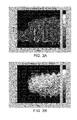
- Figs. 3A and 3B are charts showing distributions (echograms) of volume backscattering strength differences ⁇ SV according to the fish kinds;
- Fig. 4 is a graph showing actual measurement histograms His ⁇ SV according to the fish kinds
- Figs. 5A and 5B are graphs illustrating a concept of a likelihood Lx
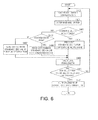
- Fig. 6 is a flowchart showing processing which calculates a fish length
- Fig. 7 is a table showing the standardized value of target strength (TScm).
- Fig. 8 is a view showing an example screen image
- Fig. 1 is a block diagram showing a configuration of a substantial part of the fishfinder 1.
- the fishfinder 1 includes a transducer 10, a transmitter 20, a receiver 30, a fish kind identification information calculator 40, a fish length calculator 50, a display controller 60, and a display unit 70.
- the transmitter 20 generates an ultrasonic transmission signal and outputs it to the transducer 10.
- the transmitter 20 can generate ultrasonic transmission signals of different frequencies.
- the transmitter 20 generates two kinds of ultrasonic transmission signals (Txf1 and Txf2) at 60kHz as a first frequency f1 and 200kHz as a second frequency f2, respectively.
- the transmitter 20 may generate three or more kinds of ultrasonic transmission signals having different frequencies. Moreover, the frequencies of the ultrasonic transmission signals may not be limited to 60kHz and 200kHz.
- the transmitter 20 outputs the ultrasonic transmission signal Txf1 at the first frequency f1 and the ultrasonic transmission signal Txf2 at the second frequency f2 to the transducer 10 at a predetermined time interval (e.g., at every PING).
- the transmitter 20 switches the frequency at every PING.
- the transmitter 20 alternately transmits, for every PING, the ultrasonic transmission signal Txf1 at the first frequency f1 and the ultrasonic transmission signal Txf2 at the second frequency f2.
- the transmitter 20 may also transmit the ultrasonic transmission signal Txf1 and the ultrasonic transmission signal Txf2 simultaneously.
- the transducer 10 includes one or more ultrasonic transducers corresponding to the above frequencies.
- the transducer 10 transmits ultrasonic waves SWf1 and SWf2 to underwater based on the ultrasonic transmission signals Txf1 and Txf2, respectively.
- the transducer 10 receives, by the ultrasonic transducer(s), reflection waves SEf1 and SEf2 which are produced by the ultrasonic waves SWf1 and SWf2 reflecting on a target object, respectively.
- the target object may be a school of fish or a single fish, and in the following description, the target object may be described as a "school of fish (which typically contains substantially the same kind of plural fish)" or simply "fish" although the terms may be interchangeable herein.
- the term "kind of fish” or “fish kind” as used herein refers to a fish specie, and may also be used when discriminating between male fish and female fish which may be significantly different in size even if the fish specie is the same, for example.
- the transducer 10 then generates echo signals REf1 and REf2 based on the received reflection waves, respectively, and outputs them to the receiver 30.
- the receiver 30 samples the inputted echo signals REf1 and REf2 at a predetermined sampling time interval, and generates reception data Rxf1 and Rxf2, respectively. In this embodiment, this sampling time interval is set based on a distance resolution of the apparatus in a water depth direction. The receiver 30 then outputs the reception data Rxf1 and Rxf2 to the fish kind identification information calculator 40.
- the transducer 10, the transmitter 20, and the receiver 30 constitute a transceiver in the claims.
- the fish kind identification information calculator 40 includes a volume backscattering strength difference ( ⁇ SV) calculator 41, a volume backscattering strength difference ( ⁇ SV) histogram calculator 42, a similarity calculator 43, and a reference database (DB) 400.
- ⁇ SV volume backscattering strength difference
- ⁇ SV volume backscattering strength difference
- DB reference database
- the fish kind identification information calculator 40 identifies a kind of the detected fish.
- Fig. 2 is a flowchart showing particular identification processing of the kind of fish.
- the ⁇ SV calculator 41 calculates a volume backscattering strength difference ⁇ SV based on the reception data inputted from the receiver 30 at each frequency (S101).
- the ⁇ SV calculator 41 acquires the reception data Rxf1 at the first frequency f1 and the reception data Rxf2 at the second frequency f2, and calculates a volume backscattering strength SV1 based on the reception data Rxf1 as a way of expressing reflection intensity of the reception data Rxf1 and calculates a volume backscattering strength SV2 based on the reception data Rxf2 as a way of expressing reflection intensity of the reception data Rxf2.
- the ⁇ SV calculator 41 determines whether the calculated volume backscattering strengths SV1 and SV2 are greater than predetermined thresholds Th1 and Th2, respectively.
- the thresholds Th1 and Th2 are set in order to distinguish a significant echo from noise. If the volume backscattering strength SV1 is greater than the threshold Th1 (SV1>Th1) and if the volume backscattering strength SV2 is greater than the threshold Th2 (SV2>Th2), the ⁇ SV calculator 41 then calculates the volume backscattering strength differences ⁇ SV.
- the volume backscattering strength difference ⁇ SV is a difference between the volume backscattering strength SV1 and the volume backscattering strength SV2.
- the ⁇ SV calculator 41 then omits the calculation of the volume backscattering strength differences ⁇ SV to reduce a load of apparatus resources.
- the volume backscattering strength difference ⁇ SV indicates different characteristics depending on the kind of fish.
- Figs. 3A and 3B are charts showing distributions (echograms) of the volume backscattering strength difference ⁇ SV according to the kind of fish, where Fig. 3A shows a distribution for mackerels and Fig. 3B shows a distribution for herrings.
- the horizontal axis shows PING numbers, whereas the vertical axis shows water depth.
- the volume backscattering strength difference ⁇ SV is expressed by luminance gradation.
- the distribution of the volume backscattering strength difference ⁇ SV differs between mackerels and herrings.
- the volume backscattering strength differences ⁇ SV(M) of mackerels are distributed at a lower level than the volume backscattering strength differences ⁇ SV(H) of herrings. Therefore, one fish kind identification information can be acquired by calculating the volume backscattering strength difference ⁇ SV.
- the ⁇ SV calculator 41 After calculating the volume backscattering strength difference ⁇ SV for every PING and every water depth position, the ⁇ SV calculator 41 outputs the volume backscattering strength differences ⁇ SV to the ⁇ SV histogram calculator 42.
- the ⁇ SV histogram calculator 42 calculates an actual measurement histogram His ⁇ SV based on the volume backscattering strength differences ⁇ SV for all PINGS and for all positions in the water depth direction (S102).
- Fig. 4 is a graph showing the actual measurement histograms His ⁇ SV for each kind of fish.
- solid lines are the actual measurement histograms His ⁇ SV of mackerels, and dashed lines are the actual measurement histograms His ⁇ SV of herrings.
- Fig. 4 shows the actual measurement histograms His ⁇ SV calculated from three different mackerel fish schools and three different herring fish schools.
- the actual measurement histograms His ⁇ SV of the volume backscattering strength differences ⁇ SV have substantially the same characteristics if the fish kind is the same, whereas it has completely different characteristics if the fish kind differs. For example, if using the above calculation method of the volume backscattering strength difference ⁇ SV for mackerels, a peak of the histogram appears when the volume backscattering strength difference ⁇ SV is around -5 to 0, showing a characteristic in which the volume backscattering strength differences ⁇ SV are concentrated within a narrow range.
- the fish kind identification information can also be acquired using such an actual measurement histogram His ⁇ SV of the volume backscattering strength differences ⁇ SV.
- the ⁇ SV histogram calculator 42 outputs the actual measurement histogram His ⁇ SV calculated in S102 to the similarity calculator 43.
- the similarity calculator 43 calculates a similarity using the actual measurement histogram His ⁇ SV (S103).
- the similarity calculator 43 acquires the actual measurement histogram His ⁇ SV from the ⁇ SV histogram calculator 42.
- the similarity calculator 43 reads a reference histogram RefHis ⁇ SVx of a fish kind X from the reference DB 400 in order to create similarity data.
- the reference DB 400 stores the reference histogram RefHis ⁇ SVx for every fish kind X in advance.
- the similarity calculator 43 performs correlation processing based on the actual measurement histogram His ⁇ SV and the reference histogram RefHis ⁇ SVx of the fish kind X to obtain a correlation processing result rSX.
- the similarity calculator 43 also calculates a likelihood Lx of the fish kind X for which the correlation processing result rSX is obtained.
- Figs. 5A and 5B are graphs showing a concept of the likelihood Lx, where Fig. 5A shows a case where the actual measurement histogram His ⁇ SV is for mackerels, and Fig. 5B shows a case where the actual measurement histogram His ⁇ SV is for herrings.
- the correlation processing result rSX becomes some value lower than "1" (1 meaning perfect correlation).
- the actual measurement histogram His ⁇ SV has very similar characteristics to the reference histogram RefHis ⁇ SVxH for herrings, and the correlation processing result rSX naturally approaches "1". For this reason, the likelihood LxM of mackerels becomes much lower than "100%", and the likelihood LxH of herrings approaches "100%".
- the similarity calculator 43 performs the calculation of the likelihood Lx for every fish kind X which is set in advance.
- a probability of being one kind of fish i.e., a probability of a kind of fish being mackerel or herring in this embodiment
- a probability of being one kind of fish i.e., a probability of a kind of fish being mackerel or herring in this embodiment
- the similarity calculator 43 After the likelihoods Lx are calculated for all kinds of fish, the similarity calculator 43 outputs the likelihoods Lx as similarity data to the fish length calculator 50 and the display controller 60. The similarity calculator 43 also outputs the actual measurement histogram His ⁇ SV to the display controller 60. The similarity calculator 43 also outputs to the display controller 60 the reference histogram RefHis ⁇ SVx of each kind of fish for which the likelihood Lx is calculated (note that it does not output it to the fish length calculator 50.).
- the fish length calculator 50 includes a target strength (TS) measuring unit 51, a calculator 52, and a target strength (TS) standardized value memory 53.
- the fish length calculator 50 calculates a length (fish length) of fish for which the fish kind identification information calculator 40 identified the kind of fish.
- Fig. 6 is a flowchart showing a calculation of the fish length.
- the TS measuring unit 51 calculates a target strength TSO based on the reception data Rxf1 at the first frequency f1 and the reception data Rxf2 at the second frequency f2 (S401).
- the calculation of the target strength TSO is performed by, but not limited to, a dual beam method in this embodiment.
- the reception data Rxf1 at the first or lower frequency f1 is used as reception data received from a wide range
- the reception data Rxf2 at the second or higher frequency f2 is used as reception data received from a narrow range.
- the TS measuring unit 51 calculates the target strength TSO for every fish for which the fish kind identification information calculator 40 identified the kind of fish.
- the TS measuring unit 51 inputs the target strength TSO into the calculator 52.
- the target strength TSO is a strength of a back-scattering wave, and defined as follows.
- I r is a strength of the back-scattering wave at a location at a unit distance from the fish
- I i is a strength of the incidence wave to the fish.
- the TS standardized value memory 53 stores a standardized value table of the target strength as shown in Fig. 7 .
- the standardized value table of the target strength is a table where standardized TS are registered so as to be associated with kinds of fish.
- Common standardized values are registered into the standardized value table.
- the common standardized value is the standardized TS used for a kind of fish which is not registered into the TS standardized value table.
- common standardized values for swim bladder fish and common standardized values for bladderless fish are registered in this embodiment.
- a standardized value for a kind of fish is substantially the same as the common standardized TS, the standardized value for the fish does not need to be registered in the standardized value table. In this way, a storage capacity of the TS standardized value memory 53 can be reduced.
- the calculator 52 determines a kind of fish for which the target strength TSO is inputted from the TS measuring unit 51 (5402).
- the kind of fish is determined based on the similarity data inputted from the fish kind identification information calculator 40 and corresponds to the fish kind with the maximum likelihood Lx.
- the calculator 52 determines whether the standardized TS of the fish kind is registered to the standardized value table (S403). If the standardized TS corresponding to the fish kind is registered (YES in S403), the calculator 52 reads out the standardized TS from the table (S404).
- the calculator 52 determines whether the fish is swim bladder fish or bladderless fish (S405). If the fish is swim bladder fish (YES in S405), the calculator 52 reads from the standardized value table the common standardized value registered as swim bladder fish (S406). On the contrary, if the fish kind is bladderless fish (NO in S405), the calculator 52 reads from the standardized value table the common standardized value registered as bladderless fish (S407).
- the calculator 52 calculates the fish length L based on the standardized TS read from the standardized value table in S404 or the common standardized value read from the standardized value table in S406 or S407, and the target strength TSO inputted from the TS measuring unit 51 (S408).
- TScm is the standardized TS or the common standardized value.
- the calculator 52 repeats the calculation of the fish length for the remaining fish (return to S401).
- the fish length L is calculated for every fish kind based on the standardized TS corresponding to the fish kind, the fish length L can be calculated accurately for any kind of fish.
- the calculator 52 After all the calculation of the fish length L is completed (YES in S409), the calculator 52 outputs fish length data to the display controller 60 (S410).
- the display unit 70 may be implemented using, but not limited to, a liquid crystal display, and displays an image based on a display control by the display controller 60.
- the display controller 60 performs the display control which displays an image shown in Fig. 8 (e.g., a screen image 700) on the display unit 70 based on the similarity data comprised of the likelihoods Lx for every kind of fish and each of the histograms which are inputted from the similarity calculator 43, and the fish length data for every fish inputted from the calculator 52 ( Fig. 2 : S104).
- the screen image 700 includes a histogram display window 701, and likelihood display windows 702A, 702B and 703.
- the histogram display window 701 is arranged in the centre of the screen image 700.
- the likelihood display window 702A of the likelihood LxM of mackerels and the likelihood display window 702B of the likelihood LxH of herrings are arranged on both sides of the histogram display window 701, respectively (i.e., left and right ends).
- the likelihood display window 703 of the likelihood LxC of cods is arranged in a lower part of the histogram display window 701 (i.e., a bottom end).
- the actual measurement histogram His ⁇ SV and the reference histograms RefHis ⁇ SVx of each kind of fish of which the likelihood Lx is calculated are drawn in the histogram display window 701.
- the likelihood of mackerels of the actual measurement histogram His ⁇ SV is displayed as a percentage value along with a bar 720A in the likelihood display window 702A.
- the bar 720A is drawn by a height corresponding to the calculated likelihood so that a height of the entire window 702A corresponds to 100% likelihood. Further, a colour of the bar 720A is changed according to the likelihood.
- the likelihood display window 702B the likelihood of herrings of the actual measurement histogram His ⁇ SV is displayed as a percentage value along with a bar 720B.
- the bar 720B is also drawn by a height and a colour corresponding to the calculated likelihood, similar to the bar 720A.
- the likelihood display window 703 the likelihood of cods of the actual measurement histogram His ⁇ SV is displayed as a percentage value along with a bar 703A.
- the bar 703A is also drawn with a width and a colour corresponding to the calculated likelihood.
- a fish length display window which shows a kind of fish (e.g., herrings) and the fish length L so the fish kind is associated with the fish length, may also be provided.
- the fish length L may be displayed as a representative value or a distribution of fish lengths may be displayed as a histogram.
- a fisherman can identify a kind of the detected fish only by viewing the screen image of the display unit 70.
- the fisherman can easily recognize that the likelihood of herrings is very high because the actual measurement histogram His ⁇ SV substantially matches with the reference histogram RefHis ⁇ SVxH of herrings.
- the fisherman can also easily recognize that the likelihood of mackerels is low because the actual measurement histogram His ⁇ SV is different from the reference histogram RefHis ⁇ SVxM of mackerels.
- the fisherman can also easily recognize that the likelihood of cods is low. Therefore, the fisherman can easily determine that the detected school of fish is herrings.
- the fishfinder 1 of this embodiment identifies the fish kind by the fish kind identification information calculator 40 using the volume backscattering strength SV as a way of expressing reflection intensity
- the fish kind may be identified using other ways of expressing reflection intensity.
- the fish kind may be identified based on target strength.
- the fish kind may be identified based on spectrum information, time waveform information, etc.
- the likelihood Lx may also be calculated by other methods as long as the similarity between the actual measurement histogram His ⁇ SV and the reference histogram RefHis ⁇ SVx is reflected to the calculation of the likelihood Lx.
- the histogram may be calculated only using the volume backscattering strength difference ⁇ SV over a narrower range.
- an echogram as shown in Fig. 3A or Fig. 3B may be displayed on the display unit 70, and the fisherman may then specify a range via a user interface.
- the fish kind identification information calculator 40 calculates the histogram only using the volume backscattering strength differences ⁇ SV within the specified range. Then, a likelihood is calculated based on the obtained histogram and a fish length L is calculated, in the manner described above.
- the similarity may be calculated based on a characteristic amount which can be extracted from the histogram.
- the similarity may be calculated based on at least one of the following items or a suitable combination of two or more items: a height, a width, a standard deviation, a distribution, an average and a median of the histogram, and ⁇ SV value at which the histogram exhibits a mode.
- the height of the histogram refers herein to the highest frequency (or ratio) of all the volume backscattering strength differences ⁇ SV which constitute the histogram.
- the width of the histogram refers herein to a width of the volume backscattering strength difference ⁇ SV where the frequencies (or ratios) become more than a predetermined value.
- the detection wave signal may be a millimetre wave signal (radio wave) when measuring a size of a ship or an island, without limiting to the ultrasonic signal described above.
Landscapes
- Engineering & Computer Science (AREA)
- Physics & Mathematics (AREA)
- Radar, Positioning & Navigation (AREA)
- Remote Sensing (AREA)
- General Physics & Mathematics (AREA)
- Computer Networks & Wireless Communication (AREA)
- Acoustics & Sound (AREA)
- Measurement Of Velocity Or Position Using Acoustic Or Ultrasonic Waves (AREA)
- Length Measuring Devices Characterised By Use Of Acoustic Means (AREA)
Applications Claiming Priority (1)
| Application Number | Priority Date | Filing Date | Title |
|---|---|---|---|
| JP2011097756A JP5775352B2 (ja) | 2011-04-26 | 2011-04-26 | ターゲット長計測装置、ターゲット長計測方法、およびターゲット長計測プログラム |
Publications (3)
| Publication Number | Publication Date |
|---|---|
| EP2518528A2 true EP2518528A2 (de) | 2012-10-31 |
| EP2518528A3 EP2518528A3 (de) | 2014-04-02 |
| EP2518528B1 EP2518528B1 (de) | 2016-11-30 |
Family
ID=45999627
Family Applications (1)
| Application Number | Title | Priority Date | Filing Date |
|---|---|---|---|
| EP12162672.5A Not-in-force EP2518528B1 (de) | 2011-04-26 | 2012-03-30 | Verfahren und Vorrichtung zum Messen einer Objektlänge, und computerlesbares medienspeicherndes Objektlängenmessprogramm |
Country Status (2)
| Country | Link |
|---|---|
| EP (1) | EP2518528B1 (de) |
| JP (1) | JP5775352B2 (de) |
Cited By (4)
| Publication number | Priority date | Publication date | Assignee | Title |
|---|---|---|---|---|
| GB2522302A (en) * | 2013-10-31 | 2015-07-22 | Furuno Electric Co | Size-and-type determining device, underwater detecting apparatus and method of determining size and type |
| RU2586818C1 (ru) * | 2014-11-24 | 2016-06-10 | ФГБНУ "Полярный научно-исследовательский институт морского рыбного хозяйства и океанографии им. Н.М.Книповича" (ФГБНУ "ПИНРО") | Гидроакустический способ определения размерного состава рыб в многовидовых скоплениях в естественной среде обитания |
| EP3153883A1 (de) * | 2015-10-06 | 2017-04-12 | Furuno Electric Company Limited | Detektionsvorrichtung, unterwasserdetektionsvorrichtung, radar-vorrichtung und detektionsverfahren |
| CN107908128A (zh) * | 2017-10-27 | 2018-04-13 | 江苏大学 | 一种海洋低温碱性蛋白酶的发酵控制方法 |
Families Citing this family (3)
| Publication number | Priority date | Publication date | Assignee | Title |
|---|---|---|---|---|
| JP6014382B2 (ja) * | 2012-06-20 | 2016-10-25 | 古野電気株式会社 | 水中探知装置、水中表示システム、プログラムおよび水中表示方法 |
| JP2016151460A (ja) * | 2015-02-17 | 2016-08-22 | いであ株式会社 | 水中探査解析方法 |
| JP2023166224A (ja) * | 2022-05-09 | 2023-11-21 | 古野電気株式会社 | 魚群探知装置、画像生成方法およびプログラム |
Family Cites Families (14)
| Publication number | Priority date | Publication date | Assignee | Title |
|---|---|---|---|---|
| JPS5757668B2 (de) * | 1973-04-05 | 1982-12-06 | Koden Seisakusho Kk | |
| JPS56128473A (en) * | 1980-03-14 | 1981-10-07 | Keisuke Honda | Fish finder with decision of fish type |
| JPH01229989A (ja) * | 1988-03-09 | 1989-09-13 | Japan Radio Co Ltd | 魚群探知機の画面表示方法 |
| JP2652058B2 (ja) * | 1989-03-06 | 1997-09-10 | 本田技研工業株式会社 | 物体検知装置 |
| JP2828259B2 (ja) * | 1989-04-03 | 1998-11-25 | 古野電気株式会社 | 魚群探知機 |
| US5260912A (en) * | 1991-05-17 | 1993-11-09 | Computrol, Inc. | Side-looking fish finder |
| JP3930166B2 (ja) * | 1998-11-10 | 2007-06-13 | 株式会社カイジョーソニック | 計量魚群探知機 |
| US6337654B1 (en) * | 1999-11-05 | 2002-01-08 | Lockheed Martin Corporation | A-scan ISAR classification system and method therefor |
| JP4475982B2 (ja) * | 2004-03-01 | 2010-06-09 | 古野電気株式会社 | 計量魚群探知機および魚体長計量方法 |
| DE102005024716B4 (de) * | 2005-05-30 | 2023-09-21 | Robert Bosch Gmbh | Verfahren und Vorrichtung zur Erkennung und Klassifizierung von Objekten |
| ES2443033T3 (es) * | 2005-06-08 | 2014-02-17 | Massachusetts Institute Of Technology | Supervisión continua de poblaciones y comportamiento de peces a escala de plataforma continental |
| JP5257783B2 (ja) * | 2009-05-11 | 2013-08-07 | 古野電気株式会社 | 水中探知装置及び水中探知画像表示方法 |
| JP5689611B2 (ja) * | 2010-04-19 | 2015-03-25 | 古野電気株式会社 | 超音波探知装置、魚群探知装置、超音波探知方法、および魚群探知方法 |
| JP5700500B2 (ja) * | 2010-07-23 | 2015-04-15 | 古野電気株式会社 | 水中探知装置、魚群探知装置、水中探知方法、および魚群探知方法 |
-
2011
- 2011-04-26 JP JP2011097756A patent/JP5775352B2/ja not_active Expired - Fee Related
-
2012
- 2012-03-30 EP EP12162672.5A patent/EP2518528B1/de not_active Not-in-force
Cited By (8)
| Publication number | Priority date | Publication date | Assignee | Title |
|---|---|---|---|---|
| GB2522302A (en) * | 2013-10-31 | 2015-07-22 | Furuno Electric Co | Size-and-type determining device, underwater detecting apparatus and method of determining size and type |
| GB2522302B (en) * | 2013-10-31 | 2020-06-03 | Furuno Electric Co | Size-and-type determining device, underwater detecting apparatus and method of determining size and type |
| RU2586818C1 (ru) * | 2014-11-24 | 2016-06-10 | ФГБНУ "Полярный научно-исследовательский институт морского рыбного хозяйства и океанографии им. Н.М.Книповича" (ФГБНУ "ПИНРО") | Гидроакустический способ определения размерного состава рыб в многовидовых скоплениях в естественной среде обитания |
| EP3153883A1 (de) * | 2015-10-06 | 2017-04-12 | Furuno Electric Company Limited | Detektionsvorrichtung, unterwasserdetektionsvorrichtung, radar-vorrichtung und detektionsverfahren |
| EP3153882A1 (de) * | 2015-10-06 | 2017-04-12 | Furuno Electric Company Limited | Detektionsvorrichtung, unterwasserdetektionsvorrichtung, radar-vorrichtung und detektionsverfahren |
| US10156632B2 (en) | 2015-10-06 | 2018-12-18 | Furuno Electric Company Limited | Detection apparatus, underwater detection apparatus, radar apparatus, and detection method |
| CN107908128A (zh) * | 2017-10-27 | 2018-04-13 | 江苏大学 | 一种海洋低温碱性蛋白酶的发酵控制方法 |
| CN107908128B (zh) * | 2017-10-27 | 2020-02-21 | 江苏大学 | 一种海洋低温碱性蛋白酶的发酵控制方法 |
Also Published As
| Publication number | Publication date |
|---|---|
| JP5775352B2 (ja) | 2015-09-09 |
| JP2012229963A (ja) | 2012-11-22 |
| EP2518528B1 (de) | 2016-11-30 |
| EP2518528A3 (de) | 2014-04-02 |
Similar Documents
| Publication | Publication Date | Title |
|---|---|---|
| EP2383584B1 (de) | Verfahren und Vorrichtung zur Erfassung von Ultraschallwellen sowie Verfahren und Vorrichtung zur Erkennung von Fischschwärmen | |
| EP2518528A2 (de) | Verfahren und Vorrichtung zum Messen einer Objektlänge, und computerlesbares medienspeicherndes Objektlängenmessprogramm | |
| US9268022B2 (en) | Underwater detection device and underwater detecting method | |
| EP2410349B1 (de) | Verfahren und Vorrichtung zur Unterwasserdetektion und Fischschwarmdetektion | |
| US20100134321A1 (en) | Method and apparatus for recognizing parking area | |
| US8300500B2 (en) | Underwater detection device | |
| US9182488B2 (en) | Method and device for detecting target object | |
| US9268021B2 (en) | Detection device and computer readable media storing detection program | |
| Kubilius et al. | Remote sizing of fish-like targets using broadband acoustics | |
| EP3086137B1 (de) | Unterwasserdetektionsvorrichtung | |
| EP0156636A2 (de) | Verarbeitung von Echosignalen | |
| Peña et al. | Estimating individual fish school biomass using digital omnidirectional sonars, applied to mackerel and herring | |
| Wiebe et al. | The acoustic properties of Salpa thompsoni | |
| CN112882037B (zh) | 侧扫声呐海底线检测方法及装置 | |
| JP2014077703A (ja) | 魚種判別装置、信号処理装置、水中探知機、魚種判別方法及びプログラム | |
| EP3153883B1 (de) | Detektionsvorrichtung, unterwasserdetektionsvorrichtung, radar-vorrichtung und detektionsverfahren | |
| JP6216108B2 (ja) | 魚種判別装置、信号処理装置、水中探知機、魚種判別方法、及びプログラム | |
| CN110703261A (zh) | 一种基于多峰值评分制的侧扫声呐底跟踪方法 | |
| Jech | Interpretation of multi-frequency acoustic data: effects of fish orientation | |
| JP2025033889A (ja) | 水中探知装置、魚群追尾方法およびプログラム | |
| Boyra et al. | Correction of beam overlap-induced athwart distortion in multibeam sonars | |
| JP2015165245A (ja) | 物標探知装置及び物標探知方法 | |
| Boyra et al. | Target strength measurements of Atlantic bluefin tuna (Thunnus thynnus) from a live-bait fishing vessel in the Bay of Biscay | |
| CHOI et al. | A study on calibration for commercial split beam echosounder using the bottom backscattering strength from a fishing vessel near the South Shetland Islands, Antarctica | |
| Sobradillo Benguria | Acoustic methods for the abundance estimation of pelagic species in the Bay of Biscay |
Legal Events
| Date | Code | Title | Description |
|---|---|---|---|
| PUAI | Public reference made under article 153(3) epc to a published international application that has entered the european phase |
Free format text: ORIGINAL CODE: 0009012 |
|
| AK | Designated contracting states |
Kind code of ref document: A2 Designated state(s): AL AT BE BG CH CY CZ DE DK EE ES FI FR GB GR HR HU IE IS IT LI LT LU LV MC MK MT NL NO PL PT RO RS SE SI SK SM TR |
|
| AX | Request for extension of the european patent |
Extension state: BA ME |
|
| PUAL | Search report despatched |
Free format text: ORIGINAL CODE: 0009013 |
|
| AK | Designated contracting states |
Kind code of ref document: A3 Designated state(s): AL AT BE BG CH CY CZ DE DK EE ES FI FR GB GR HR HU IE IS IT LI LT LU LV MC MK MT NL NO PL PT RO RS SE SI SK SM TR |
|
| AX | Request for extension of the european patent |
Extension state: BA ME |
|
| RIC1 | Information provided on ipc code assigned before grant |
Ipc: G01S 15/96 20060101ALI20140224BHEP Ipc: G01S 7/539 20060101AFI20140224BHEP |
|
| 17P | Request for examination filed |
Effective date: 20140715 |
|
| RBV | Designated contracting states (corrected) |
Designated state(s): AL AT BE BG CH CY CZ DE DK EE ES FI FR GB GR HR HU IE IS IT LI LT LU LV MC MK MT NL NO PL PT RO RS SE SI SK SM TR |
|
| GRAP | Despatch of communication of intention to grant a patent |
Free format text: ORIGINAL CODE: EPIDOSNIGR1 |
|
| INTG | Intention to grant announced |
Effective date: 20160426 |
|
| GRAJ | Information related to disapproval of communication of intention to grant by the applicant or resumption of examination proceedings by the epo deleted |
Free format text: ORIGINAL CODE: EPIDOSDIGR1 |
|
| INTC | Intention to grant announced (deleted) | ||
| GRAR | Information related to intention to grant a patent recorded |
Free format text: ORIGINAL CODE: EPIDOSNIGR71 |
|
| GRAS | Grant fee paid |
Free format text: ORIGINAL CODE: EPIDOSNIGR3 |
|
| GRAA | (expected) grant |
Free format text: ORIGINAL CODE: 0009210 |
|
| INTG | Intention to grant announced |
Effective date: 20160926 |
|
| AK | Designated contracting states |
Kind code of ref document: B1 Designated state(s): AL AT BE BG CH CY CZ DE DK EE ES FI FR GB GR HR HU IE IS IT LI LT LU LV MC MK MT NL NO PL PT RO RS SE SI SK SM TR |
|
| REG | Reference to a national code |
Ref country code: CH Ref legal event code: EP Ref country code: GB Ref legal event code: FG4D |
|
| REG | Reference to a national code |
Ref country code: AT Ref legal event code: REF Ref document number: 850316 Country of ref document: AT Kind code of ref document: T Effective date: 20161215 |
|
| REG | Reference to a national code |
Ref country code: IE Ref legal event code: FG4D |
|
| REG | Reference to a national code |
Ref country code: DE Ref legal event code: R096 Ref document number: 602012025935 Country of ref document: DE |
|
| PG25 | Lapsed in a contracting state [announced via postgrant information from national office to epo] |
Ref country code: LV Free format text: LAPSE BECAUSE OF FAILURE TO SUBMIT A TRANSLATION OF THE DESCRIPTION OR TO PAY THE FEE WITHIN THE PRESCRIBED TIME-LIMIT Effective date: 20161130 |
|
| REG | Reference to a national code |
Ref country code: LT Ref legal event code: MG4D |
|
| REG | Reference to a national code |
Ref country code: NL Ref legal event code: MP Effective date: 20161130 |
|
| REG | Reference to a national code |
Ref country code: AT Ref legal event code: MK05 Ref document number: 850316 Country of ref document: AT Kind code of ref document: T Effective date: 20161130 |
|
| PG25 | Lapsed in a contracting state [announced via postgrant information from national office to epo] |
Ref country code: GR Free format text: LAPSE BECAUSE OF FAILURE TO SUBMIT A TRANSLATION OF THE DESCRIPTION OR TO PAY THE FEE WITHIN THE PRESCRIBED TIME-LIMIT Effective date: 20170301 Ref country code: LT Free format text: LAPSE BECAUSE OF FAILURE TO SUBMIT A TRANSLATION OF THE DESCRIPTION OR TO PAY THE FEE WITHIN THE PRESCRIBED TIME-LIMIT Effective date: 20161130 Ref country code: NO Free format text: LAPSE BECAUSE OF FAILURE TO SUBMIT A TRANSLATION OF THE DESCRIPTION OR TO PAY THE FEE WITHIN THE PRESCRIBED TIME-LIMIT Effective date: 20170228 Ref country code: SE Free format text: LAPSE BECAUSE OF FAILURE TO SUBMIT A TRANSLATION OF THE DESCRIPTION OR TO PAY THE FEE WITHIN THE PRESCRIBED TIME-LIMIT Effective date: 20161130 |
|
| PG25 | Lapsed in a contracting state [announced via postgrant information from national office to epo] |
Ref country code: ES Free format text: LAPSE BECAUSE OF FAILURE TO SUBMIT A TRANSLATION OF THE DESCRIPTION OR TO PAY THE FEE WITHIN THE PRESCRIBED TIME-LIMIT Effective date: 20161130 Ref country code: PL Free format text: LAPSE BECAUSE OF FAILURE TO SUBMIT A TRANSLATION OF THE DESCRIPTION OR TO PAY THE FEE WITHIN THE PRESCRIBED TIME-LIMIT Effective date: 20161130 Ref country code: HR Free format text: LAPSE BECAUSE OF FAILURE TO SUBMIT A TRANSLATION OF THE DESCRIPTION OR TO PAY THE FEE WITHIN THE PRESCRIBED TIME-LIMIT Effective date: 20161130 Ref country code: AT Free format text: LAPSE BECAUSE OF FAILURE TO SUBMIT A TRANSLATION OF THE DESCRIPTION OR TO PAY THE FEE WITHIN THE PRESCRIBED TIME-LIMIT Effective date: 20161130 Ref country code: FI Free format text: LAPSE BECAUSE OF FAILURE TO SUBMIT A TRANSLATION OF THE DESCRIPTION OR TO PAY THE FEE WITHIN THE PRESCRIBED TIME-LIMIT Effective date: 20161130 Ref country code: RS Free format text: LAPSE BECAUSE OF FAILURE TO SUBMIT A TRANSLATION OF THE DESCRIPTION OR TO PAY THE FEE WITHIN THE PRESCRIBED TIME-LIMIT Effective date: 20161130 Ref country code: PT Free format text: LAPSE BECAUSE OF FAILURE TO SUBMIT A TRANSLATION OF THE DESCRIPTION OR TO PAY THE FEE WITHIN THE PRESCRIBED TIME-LIMIT Effective date: 20170330 |
|
| PG25 | Lapsed in a contracting state [announced via postgrant information from national office to epo] |
Ref country code: NL Free format text: LAPSE BECAUSE OF FAILURE TO SUBMIT A TRANSLATION OF THE DESCRIPTION OR TO PAY THE FEE WITHIN THE PRESCRIBED TIME-LIMIT Effective date: 20161130 |
|
| PG25 | Lapsed in a contracting state [announced via postgrant information from national office to epo] |
Ref country code: RO Free format text: LAPSE BECAUSE OF FAILURE TO SUBMIT A TRANSLATION OF THE DESCRIPTION OR TO PAY THE FEE WITHIN THE PRESCRIBED TIME-LIMIT Effective date: 20161130 Ref country code: DK Free format text: LAPSE BECAUSE OF FAILURE TO SUBMIT A TRANSLATION OF THE DESCRIPTION OR TO PAY THE FEE WITHIN THE PRESCRIBED TIME-LIMIT Effective date: 20161130 Ref country code: EE Free format text: LAPSE BECAUSE OF FAILURE TO SUBMIT A TRANSLATION OF THE DESCRIPTION OR TO PAY THE FEE WITHIN THE PRESCRIBED TIME-LIMIT Effective date: 20161130 Ref country code: CZ Free format text: LAPSE BECAUSE OF FAILURE TO SUBMIT A TRANSLATION OF THE DESCRIPTION OR TO PAY THE FEE WITHIN THE PRESCRIBED TIME-LIMIT Effective date: 20161130 Ref country code: SK Free format text: LAPSE BECAUSE OF FAILURE TO SUBMIT A TRANSLATION OF THE DESCRIPTION OR TO PAY THE FEE WITHIN THE PRESCRIBED TIME-LIMIT Effective date: 20161130 |
|
| PG25 | Lapsed in a contracting state [announced via postgrant information from national office to epo] |
Ref country code: IT Free format text: LAPSE BECAUSE OF FAILURE TO SUBMIT A TRANSLATION OF THE DESCRIPTION OR TO PAY THE FEE WITHIN THE PRESCRIBED TIME-LIMIT Effective date: 20161130 Ref country code: BE Free format text: LAPSE BECAUSE OF FAILURE TO SUBMIT A TRANSLATION OF THE DESCRIPTION OR TO PAY THE FEE WITHIN THE PRESCRIBED TIME-LIMIT Effective date: 20161130 Ref country code: SM Free format text: LAPSE BECAUSE OF FAILURE TO SUBMIT A TRANSLATION OF THE DESCRIPTION OR TO PAY THE FEE WITHIN THE PRESCRIBED TIME-LIMIT Effective date: 20161130 Ref country code: BG Free format text: LAPSE BECAUSE OF FAILURE TO SUBMIT A TRANSLATION OF THE DESCRIPTION OR TO PAY THE FEE WITHIN THE PRESCRIBED TIME-LIMIT Effective date: 20170228 |
|
| REG | Reference to a national code |
Ref country code: DE Ref legal event code: R097 Ref document number: 602012025935 Country of ref document: DE |
|
| REG | Reference to a national code |
Ref country code: DE Ref legal event code: R119 Ref document number: 602012025935 Country of ref document: DE |
|
| PLBE | No opposition filed within time limit |
Free format text: ORIGINAL CODE: 0009261 |
|
| STAA | Information on the status of an ep patent application or granted ep patent |
Free format text: STATUS: NO OPPOSITION FILED WITHIN TIME LIMIT |
|
| REG | Reference to a national code |
Ref country code: CH Ref legal event code: PL |
|
| 26N | No opposition filed |
Effective date: 20170831 |
|
| PG25 | Lapsed in a contracting state [announced via postgrant information from national office to epo] |
Ref country code: MC Free format text: LAPSE BECAUSE OF FAILURE TO SUBMIT A TRANSLATION OF THE DESCRIPTION OR TO PAY THE FEE WITHIN THE PRESCRIBED TIME-LIMIT Effective date: 20161130 Ref country code: SI Free format text: LAPSE BECAUSE OF FAILURE TO SUBMIT A TRANSLATION OF THE DESCRIPTION OR TO PAY THE FEE WITHIN THE PRESCRIBED TIME-LIMIT Effective date: 20161130 |
|
| REG | Reference to a national code |
Ref country code: IE Ref legal event code: MM4A |
|
| REG | Reference to a national code |
Ref country code: FR Ref legal event code: ST Effective date: 20171130 |
|
| PG25 | Lapsed in a contracting state [announced via postgrant information from national office to epo] |
Ref country code: LU Free format text: LAPSE BECAUSE OF NON-PAYMENT OF DUE FEES Effective date: 20170330 Ref country code: FR Free format text: LAPSE BECAUSE OF NON-PAYMENT OF DUE FEES Effective date: 20170331 Ref country code: DE Free format text: LAPSE BECAUSE OF NON-PAYMENT OF DUE FEES Effective date: 20171003 |
|
| PG25 | Lapsed in a contracting state [announced via postgrant information from national office to epo] |
Ref country code: CH Free format text: LAPSE BECAUSE OF NON-PAYMENT OF DUE FEES Effective date: 20170331 Ref country code: IE Free format text: LAPSE BECAUSE OF NON-PAYMENT OF DUE FEES Effective date: 20170330 Ref country code: LI Free format text: LAPSE BECAUSE OF NON-PAYMENT OF DUE FEES Effective date: 20170331 |
|
| PG25 | Lapsed in a contracting state [announced via postgrant information from national office to epo] |
Ref country code: MT Free format text: LAPSE BECAUSE OF NON-PAYMENT OF DUE FEES Effective date: 20170330 |
|
| PG25 | Lapsed in a contracting state [announced via postgrant information from national office to epo] |
Ref country code: HU Free format text: LAPSE BECAUSE OF FAILURE TO SUBMIT A TRANSLATION OF THE DESCRIPTION OR TO PAY THE FEE WITHIN THE PRESCRIBED TIME-LIMIT; INVALID AB INITIO Effective date: 20120330 |
|
| PG25 | Lapsed in a contracting state [announced via postgrant information from national office to epo] |
Ref country code: CY Free format text: LAPSE BECAUSE OF NON-PAYMENT OF DUE FEES Effective date: 20161130 |
|
| PG25 | Lapsed in a contracting state [announced via postgrant information from national office to epo] |
Ref country code: MK Free format text: LAPSE BECAUSE OF FAILURE TO SUBMIT A TRANSLATION OF THE DESCRIPTION OR TO PAY THE FEE WITHIN THE PRESCRIBED TIME-LIMIT Effective date: 20161130 |
|
| PG25 | Lapsed in a contracting state [announced via postgrant information from national office to epo] |
Ref country code: TR Free format text: LAPSE BECAUSE OF FAILURE TO SUBMIT A TRANSLATION OF THE DESCRIPTION OR TO PAY THE FEE WITHIN THE PRESCRIBED TIME-LIMIT Effective date: 20161130 |
|
| PG25 | Lapsed in a contracting state [announced via postgrant information from national office to epo] |
Ref country code: AL Free format text: LAPSE BECAUSE OF FAILURE TO SUBMIT A TRANSLATION OF THE DESCRIPTION OR TO PAY THE FEE WITHIN THE PRESCRIBED TIME-LIMIT Effective date: 20161130 Ref country code: IS Free format text: LAPSE BECAUSE OF FAILURE TO SUBMIT A TRANSLATION OF THE DESCRIPTION OR TO PAY THE FEE WITHIN THE PRESCRIBED TIME-LIMIT Effective date: 20170330 |
|
| PGFP | Annual fee paid to national office [announced via postgrant information from national office to epo] |
Ref country code: GB Payment date: 20230209 Year of fee payment: 12 |
|
| P01 | Opt-out of the competence of the unified patent court (upc) registered |
Free format text: CASE NUMBER: UPC_APP_325038/2023 Effective date: 20230523 |
|
| GBPC | Gb: european patent ceased through non-payment of renewal fee |
Effective date: 20240330 |
|
| PG25 | Lapsed in a contracting state [announced via postgrant information from national office to epo] |
Ref country code: GB Free format text: LAPSE BECAUSE OF NON-PAYMENT OF DUE FEES Effective date: 20240330 |
|
| PG25 | Lapsed in a contracting state [announced via postgrant information from national office to epo] |
Ref country code: GB Free format text: LAPSE BECAUSE OF NON-PAYMENT OF DUE FEES Effective date: 20240330 |