EP2516658B1 - Verfahren zur herstellung von äthanol durch gleichzeitige verzuckerung und fermentation - Google Patents
Verfahren zur herstellung von äthanol durch gleichzeitige verzuckerung und fermentation Download PDFInfo
- Publication number
- EP2516658B1 EP2516658B1 EP10798686.1A EP10798686A EP2516658B1 EP 2516658 B1 EP2516658 B1 EP 2516658B1 EP 10798686 A EP10798686 A EP 10798686A EP 2516658 B1 EP2516658 B1 EP 2516658B1
- Authority
- EP
- European Patent Office
- Prior art keywords
- saccharification
- biomass
- ethanol
- enzyme
- ethanologen
- Prior art date
- Legal status (The legal status is an assumption and is not a legal conclusion. Google has not performed a legal analysis and makes no representation as to the accuracy of the status listed.)
- Active
Links
Images





Classifications
-
- C—CHEMISTRY; METALLURGY
- C12—BIOCHEMISTRY; BEER; SPIRITS; WINE; VINEGAR; MICROBIOLOGY; ENZYMOLOGY; MUTATION OR GENETIC ENGINEERING
- C12P—FERMENTATION OR ENZYME-USING PROCESSES TO SYNTHESISE A DESIRED CHEMICAL COMPOUND OR COMPOSITION OR TO SEPARATE OPTICAL ISOMERS FROM A RACEMIC MIXTURE
- C12P7/00—Preparation of oxygen-containing organic compounds
- C12P7/02—Preparation of oxygen-containing organic compounds containing a hydroxy group
- C12P7/04—Preparation of oxygen-containing organic compounds containing a hydroxy group acyclic
- C12P7/06—Ethanol, i.e. non-beverage
- C12P7/065—Ethanol, i.e. non-beverage with microorganisms other than yeasts
-
- C—CHEMISTRY; METALLURGY
- C12—BIOCHEMISTRY; BEER; SPIRITS; WINE; VINEGAR; MICROBIOLOGY; ENZYMOLOGY; MUTATION OR GENETIC ENGINEERING
- C12N—MICROORGANISMS OR ENZYMES; COMPOSITIONS THEREOF; PROPAGATING, PRESERVING, OR MAINTAINING MICROORGANISMS; MUTATION OR GENETIC ENGINEERING; CULTURE MEDIA
- C12N1/00—Microorganisms, e.g. protozoa; Compositions thereof; Processes of propagating, maintaining or preserving microorganisms or compositions thereof; Processes of preparing or isolating a composition containing a microorganism; Culture media therefor
- C12N1/20—Bacteria; Culture media therefor
-
- Y—GENERAL TAGGING OF NEW TECHNOLOGICAL DEVELOPMENTS; GENERAL TAGGING OF CROSS-SECTIONAL TECHNOLOGIES SPANNING OVER SEVERAL SECTIONS OF THE IPC; TECHNICAL SUBJECTS COVERED BY FORMER USPC CROSS-REFERENCE ART COLLECTIONS [XRACs] AND DIGESTS
- Y02—TECHNOLOGIES OR APPLICATIONS FOR MITIGATION OR ADAPTATION AGAINST CLIMATE CHANGE
- Y02E—REDUCTION OF GREENHOUSE GAS [GHG] EMISSIONS, RELATED TO ENERGY GENERATION, TRANSMISSION OR DISTRIBUTION
- Y02E50/00—Technologies for the production of fuel of non-fossil origin
- Y02E50/10—Biofuels, e.g. bio-diesel
Definitions
- the invention relates to methods for the generation of ethanol from cellulosic biomass. Specifically, Zymomonas is used under specific simultaneous saccharification and fermentation process conditions for the production of high concentrations of ethanol.
- Fuel ethanol produced from renewable resources is one of the long-term solutions to global fossil fuel shortages, rising energy costs, and global warming effects related to increased atmospheric carbon dioxide.
- Fuel ethanol from renewable resources is produced by fermentation of sugars.
- glucose derived from corn grain is the most abundant sugar source for ethanol production. Due to the demands for corn grain as a feed and food supply, methods of converting various types of cellulosic biomass (including hemicellulose) to fermentable sugars are being developed.
- Sugar derived from this biomass source is a mixture of hexoses and pentoses, primarily glucose and xylose.
- Typical processes for the conversion of cellulosic biomass to ethanol comprise three steps; chemical and/or physical treatment of the biomass to reduce the lignin content of the biomass and to make polysaccharides available for enzymatic hydrolysis; saccharification or digestion or hydrolysis where polysaccharides are enzymatically converted to fermentable sugars; and fermentation where the fermentable sugars are consumed by an ethanologen for the production of ethanol.
- chemical and/or physical treatment of the biomass to reduce the lignin content of the biomass and to make polysaccharides available for enzymatic hydrolysis
- saccharification or digestion or hydrolysis where polysaccharides are enzymatically converted to fermentable sugars
- fermentation the fermentable sugars are consumed by an ethanologen for the production of ethanol.
- Ethanologens have typically been yeast (e.g. Saccharomyces ) or bacteria (e.g. Zymomonas ) .
- Zymomonas is well suited for the production of ethanol as it is generally robust, grows in relatively high glucose concentrations, and can be engineered to utilize C5 sugars such as xylose and arabinose (common products of saccharification) for ethanol generation.
- C5 sugars such as xylose and arabinose (common products of saccharification) for ethanol generation.
- effective utilization of Zymomonas requires improving processes for using Zymomonas as an ethanologen.
- Zymomonas as an ethanologen is known ( Saddler et al., Can. J. Microbiol. (1982), 28(12), 1311-19 : Golias et al., J. Biotechnol., (26 June, 2002) (96) 2, pp. 155168 ; Ma et al., Renewable Energy (2009) 34:1466-1470 ), however Zymomonas is sensitive to high concentrations of acetate produced by many of the biomass pretreatment methods. Reduction of acetate levels can be achieved by methods such as washing pretreated biomass ( Teixeira et al., Appl. Biochem. Biotechnol., (Spring, 2000) Vol. 84-86, pp.111-127 ).
- McMillan et al. (Appl. Biochem. Biotechnol. (1999) Vol. 77-79:649-665 .) demonstrated the use of Zymomonas in a simultaneous saccharification and fermentation process where the strain of Zymomonas was adapted to poplar hydrolysate, the biomass was pre-treated with dilute acid then MTBE extracted, the saccharification enzyme was cellulase, and where the fermentation was run in a fermenter with 11.5% insoluble solids and an agitator at 150 RPM. Using this method the authors were able to achieve production of about 35 g/L ethanol.
- the methods of the invention seek to solve the problem of optimizing the use of a prokaryotic ethanologen in simultaneous saccharification and fermentation (SSF) processes via identifying conditions that allow for the use of high input insoluble solids content in the saccharification and fermentation mixture, and that support production by the prokaryotic ethanologen such that high ethanol production is achieved.
- Ethanol production using the present methods may be in excess of 60 g/L.
- the invention provides a method for the production of ethanol comprising:
- the invention provides a method for the production of ethanol comprising:
- the invention relates to the use of a prokaryotic ethanologen, such as Zymomonas , in a simultaneous saccharification and fermentation (SSF) process, or a hybrid saccharification and fermentation (HSF) process, for the production of ethanol from cellulosic biomass.
- SSF simultaneous saccharification and fermentation
- HSF hybrid saccharification and fermentation
- the term “comprising” means the presence of the stated features, integers, steps, or components as referred to in the claims, but that it does not preclude the presence or addition of one or more other features, integers, steps, components or groups thereof.
- the term “comprising” is intended to include embodiments encompassed by the terms “consisting essentially of” and “consisting of”. Similarly, the term “consisting essentially of” is intended to include embodiments encompassed by the term “consisting of”.
- the term "about" modifying the quantity of an ingredient or reactant of the invention or employed refers to variation in the numerical quantity that can occur, for example, through typical measuring and liquid handling procedures used for making concentrates or use solutions in the real world; through inadvertent error in these procedures; through differences in the manufacture, source, or purity of the ingredients employed to make the compositions or carry out the methods; and the like.
- the term “about” also encompasses amounts that differ due to different equilibrium conditions for a composition resulting from a particular initial mixture. Whether or not modified by the term “about”, the claims include equivalents to the quantities.
- invention or "present invention” as used herein is a nonlimiting term and is not intended to refer to any single embodiment of the particular invention but encompasses all possible embodiments as described in the specification and the claims.
- ethanologen refers to an organism that produces ethanol through metabolism of carbohydrate sources.
- saccharification and fermentation refers to a process wherein biomass is saccharified and the fermentable sugars produced from saccharification are used by a biocatalyst to produce a product all at the same time, typically in the same reaction vessel.
- hybrid saccharification and fermentation refers to a process wherein biomass is saccharified to a limited extent (incomplete or partial saccharification), followed by continued saccharification and fermentation occurring simultaneously.
- transfermentable sugar(s) refers to oligosaccharides and monosaccharides that can be used as a carbon source by a microorganism in a fermentation process.
- partial saccharification refers to limited saccharification of biomass where the fermentable sugars released are less than the total of fermentable sugars that would be released if saccharification is run to completion.
- cellulosic refers to a composition comprising cellulose and additional components, including hemicellulose and lignin.
- sacharification refers to the production of fermentable sugars from polysaccharides.
- pretreated biomass means biomass that has been subjected to pretreatment prior to saccharification.
- Biomass refers to any cellulosic or lignocellulosic material and includes materials comprising cellulose, and optionally further comprising hemicellulose, lignin, starch, oligosaccharides and/or monosaccharides. Biomass may also comprise additional components, such as protein and/or lipid. Biomass may be derived from a single source, or biomass can comprise a mixture derived from more than one source; for example, biomass could comprise a mixture of corn cobs and corn stover, or a mixture of grass and leaves. Biomass includes, but is not limited to, bioenergy crops, agricultural residues, municipal solid waste, industrial solid waste, sludge from paper manufacture, yard waste, wood and forestry waste.
- biomass examples include, but are not limited to, corn cobs, crop residues such as corn husks, corn stover, grasses, wheat, wheat straw, barley straw, hay, rice straw, switchgrass, waste paper, sugar cane bagasse, sorghum, components obtained from milling of grains, trees, branches, roots, leaves, wood chips, sawdust, shrubs and bushes, vegetables, fruits, flowers and animal manure.
- corn cobs crop residues such as corn husks, corn stover, grasses, wheat, wheat straw, barley straw, hay, rice straw, switchgrass, waste paper, sugar cane bagasse, sorghum, components obtained from milling of grains, trees, branches, roots, leaves, wood chips, sawdust, shrubs and bushes, vegetables, fruits, flowers and animal manure.
- Biomass hydrolysate refers to the product resulting from saccharification of biomass.
- the biomass may also be pretreated prior to saccharification.
- sacharification enzyme refers to an enzyme that can catalyze conversion of a component of biomass to fermentable sugars. Typically the enzyme is more effective when the biomass is pretreated.
- insoluble solids refers to solids that do not dissolve in solution.
- total input insoluble solids refers to the total dry weight of biomass insoluble solids that is included in a saccharification-fermentation mixture.
- concentration of insoluble solids in the saccharification-fermentation mixture is referenced as % based on dry weight per liter, meaning grams dry weight per liter of total saccharification-fermentation mixture, Therefore 16% based on dry weight per liter for example, means 160 grams dry weight per liter of total saccharification-fermentation mixture.
- agitation means refers to a mechanism through which power may be applied to a mixture to cause mixing of the component of the mixture. Typically there is rotation motion of a mechanism causing the mixing through an agitation means.
- the present invention relates to methods for producing ethanol using a Zymomonas strain in an SSF process.
- the method proceeds with a cellulosic biomass that is pretreated and included at high insoluble solids concentration in a saccharification-fermentation mixture comprising the Zymomonas ethanologen in the presence of at least one saccharification enzyme under conditions of low agitation energy.
- the resulting process may produce ethanol in excess of 60 g/L.
- the biomass of the present method may be pretreated by any process that prepares the biomass for effective release of fermentable sugars during saccharification.
- Pretreatments are well known in the art and include, for example, treatments with acidic or basic chemicals and/or mechanical treatment for size reduction.
- Pretreated biomass contains insoluble solids, polysaccharides (which typically are a part of the insoluble solids), and other components including some that are inhibitory to Zymomonas growth and ethanol production. It is desired that pretreated biomass used in the present method has sufficiently low levels of fermentation inhibitors to allow for maximal growth and production by a prokaryotic ethanologen such as Zymomonas in a saccharification-fermentation mixture containing the pretreated biomass.
- acetate is a component of pretreated biomass that is inhibitory to Zymomonas.
- Acetate content in pretreated biomass may be lowered by washing pretreated biomass to remove acetate and other inhibitors.
- a particular pretreatment may result in acetate levels that are compatible with Zymomonas growth and production.
- the use of ammonia in pretreatment may result in lower levels of inhibitors, such as acetate, in pretreated biomass.
- the ammonia-treated biomass may have an acetamide to acetate molar ratio greater than about 1 and an acetyl conversion of greater than 60%, for example greater than about 65%, or greater than about 70%.
- ammonia pretreated biomass is preferred for use in the present method. It is preferred to use an ammonia concentration that is less than about 12 wt.% relative to the dry weight of biomass as in a pretreatment method that is disclosed in the commonly owned U.S. Patent 7,781,191 .
- Zymomonas or other ethanologen strains may have different levels of tolerance to acetate and/or other inhibitors that are present in pretreated biomass.
- Zymomonas strains may be sensitive to acetate levels such as 4-5 g/L.
- Zymomonas strains may be prepared to have improved tolerance to acetate, for example by genetic engineering as disclosed in commonly owned and co-pending US Patent Application Publication US 2009-0203099 A1 .
- improved tolerance to acetate may be achieved by adaptation in acetate-containing medium, as disclosed in commonly owned and co-pending United States Patent Application 12/641642 , published as WO 2010/075241 .
- Zymomonas strains produced using the disclosed adaptation process are suitably tolerant to at least about 9-10 g/L of acetate.
- acetate tolerance level of the Zymomonas strain used for ethanol production based on the tolerance level of the Zymomonas strain, where tolerance refers to the ability of a strain to grow and produce ethanol similarly in a medium with the specified level of acetate as compared to in a medium with less or no acetate.
- the present method pertains to simultaneous saccharification and fermentation (SSF).
- SSF simultaneous saccharification and fermentation
- a saccharification-fermentation mixture is prepared that includes pretreated biomass, a prokaryotic ethanologen, and at least one enzyme that converts polysaccharides of pretreated biomass to fermentable sugars. Additional media components such as sugars, salts, growth enhancers, and/or an antibiotic corresponding to an antibiotic resistance gene in the ethanologen cells are not typically necessary but can be included.
- Components of the pretreated biomass are saccharified, or hydrolyzed, by one or more of the saccharification enzymes to release fermentable sugars such as glucose and xylose. Sugars are released over time from the pretreated biomass. The released sugars are metabolized by the ethanologen to produce ethanol as a product.
- Saccharification enzymes are reviewed in Lynd, L. R., et al. (Microbiol. Mol. Biol. Rev., 66:506-577, 2002 ). At least one enzyme is used, and typically a saccharification enzyme consortium is used that includes one or more glycosidases. Glycosidases hydrolyze the ether linkages of di-, oligo-, and polysaccharides and are found in the enzyme classification EC 3.2.1.x ( Enzyme Nomenclature 1992, Academic Press, San Diego, CA with Supplement 1 (1993), Supplement 2 (1994), Supplement 3 (1995, Supplement 4 (1997) and Supplement 5 [in Eur. J. Biochem., 223:1-5, 1994 ; Eur. J.
- Glycosidases useful in the present method can be categorized by the biomass components that they hydrolyze.
- Glycosidases useful for the present method include cellulose-hydrolyzing glycosidases (for example, cellulases, endoglucanases, exoglucanases, cellobiohydrolases, ⁇ -glucosidases), hemicellulose-hydrolyzing glycosidases (for example, xylanases, endoxylanases, exoxylanases, ⁇ -xylosidases, arabino-xylanases, mannases, galactases, pectinases, glucuronidases), and starch-hydrolyzing glycosidases (for example, amylases, ⁇ -amylases, ⁇ -amylases, glucoamylases, ⁇ -glucosidases, isoamylases).
- glycosidases for example, cellulases, endoglucanases, exoglucanases, cellobiohydrolase
- saccharification enzyme consortium such as peptidases (EC 3.4.x.y), lipases (EC 3.1.1.x and 3.1.4.x), ligninases (EC 1.11.1.x), and feruloyl esterases (EC 3.1.1.73) to help release polysaccharides from other components of the biomass.
- peptidases EC 3.4.x.y
- lipases EC 3.1.1.x and 3.1.4.x
- ligninases EC 1.11.1.x
- feruloyl esterases EC 3.1.1.73
- a "cellulase” from a microorganism may comprise a group of enzymes, one or more or all of which may contribute to the cellulose-degrading activity.
- Commercial or non-commercial enzyme preparations, such as cellulase may comprise numerous enzymes depending on the purification scheme utilized to obtain the enzyme preparation.
- Saccharification enzymes may be obtained commercially, in isolated form, such as Spezyme® CP cellulase (Danisco US, Inc, Rochester, NY) and Multifect® xylanase (Danisco US, Inc.).
- saccharification enzymes may be unpurified and provided as a type of cell extract or whole cell preparation. The enzymes may be produced using recombinant microorganisms that have been engineered to express multiple saccharifying enzymes.
- One skilled in the art would know how to determine the effective amounts of enzymes to use in the present SSF method, and adjust conditions for optimal enzyme activity in the SSF.
- One skilled in the art would also know how to optimize the classes of enzyme activities required to obtain optimal saccharification of a given pretreated biomass under the selected conditions.
- the present method may be performed as hybrid saccharification and fermentation (HSF).
- HSF hybrid saccharification and fermentation
- saccharification occurs for a period of time prior to fermentation, where partial but not complete saccharification occurs.
- the ethanologen is added a period of time after the pretreated biomass and saccharification enzyme are combined so that some saccharification occurs in the absence of fermentation.
- the period of time before ethanologen is added may vary and is typically in a range of from one to a few hours so that fermentable sugars are released and already present at a desirable concentration when the ethanologen is added.
- HSF is exemplified in Example 4 where Zymomonas cells are added one hour after addition of the saccharifying enzymes.
- the present saccharification-fermentation mixture initially includes an inoculum of seed cells from a strain of a prokaryotic ethanologen.
- Any prokaryotic cell that produces ethanol effectively may be used as the ethanologen.
- Cells used may produce ethanol naturally, be engineered to produce ethanol, or may be natural ethanol producers that are engineered for improved ethanol production.
- Examples of prokaryotic ethanologens include, but are not limited to, Clostridium ( Stevenson and Weimer (2005) Applied and Environmental Microbiology 71:4672-4678 ), strains of E. coli that are engineered for ethanol production ( US 5,000,000 ), strains of Geobacillus thermoglucosidasius ( Cripps et al.
- Zymomonas which naturally ferments glucose to produce ethanol.
- Zymomonas strains that have been engineered for xylose utilization U.S. Patents 5,514,583 , 5,712,133 , 6,566,107 , PCT patent application number WO 95/28476 , Feldmann et al. (1992) Appl Microbiol Biotechnol 38: 354-361 , Zhang et al. (1995) Science 267:240-243 ) are useful in the present method.
- Zymomonas strains that have improvements in properties related to ethanol production have been made by genetic engineering and/or adaptation.
- a Zymomonas strain with multiple engineered and/or adapted improvements be used in the present method to maximize ethanol production. Improvements that have been made which may be present include but are not limited to: 1) engineering and adapting for improved xylose utilization ( U.S. Patent 7,223,575 and commonly owned U.S.
- Patent 7,741,119 US-2009-0246876 A1 , and US-2009-0246846 A1 ); 2) reducing synthesis of byproducts detrimental to ethanol production (commonly owned US 7,741,119 ); 3) engineering for improved acetate tolerance (commonly owned and co-pending US Patent Application Publication No: US2009-0203099 A1 , and United States Patent Application 12/641642 published as WO 2010/075241 ).
- Zymomonas strains with improved acetate tolerance produced such as by the process disclosed in WO 2010/075241 are preferred for use in the present method.
- pretreated biomass may be included in the present saccharification-fermentation mixture at high concentration, while maintaining a level of acetate that is not detrimental to ethanol production without extensive washing to remove acetate from the pretreated biomass.
- the desired Zymomonas strain is grown as a seed culture.
- a seed culture may be grown, for example, in medium consisting of: 5-20 g/L yeast extract, 2-4 g/L potassium hydrogen phosphate, 1-5 g/L magnesium sulfate heptahydrate and 100-200 g/L glucose to OD600 nm of 10 at 32°C-33°C, pH 5.5-5.8.
- the seed culture is used to start the SSF by adding a volume that is equivalent to about 10% of the saccharification - fermentation mixture volume.
- the amount of insoluble solids, which are present in pretreated biomass are included at a high level in the saccharification-fermentation mixture.
- the amount of pretreated biomass insoluble solids included correlates with the amount of fermentable sugars that can be produced during SSF, which in turn correlates with the amount of ethanol that can be produced from Zymomonas cells by metabolizing the fermentable sugars.
- the amount of insoluble solids relative to the amount of solids in a pretreated biomass preparation will vary depending on the particular pretreatment used, as well as on whether any washing step is included. Washing will solubilize solids that are not insoluble, leaving a higher percent of insoluble solids in the total solids. Some acid pretreatments may convert as much as 30% of unpretreated biomass solids to soluble solids, leaving 70% of total solids as insoluble. In contrast, with a low ammonia pretreatment the amount of solids and amount of insoluble solids may be similar in the pretreated biomass.
- the amount of insoluble solids relative to total solids in a pretreated biomass sample may typically be in the range of about 70% to about 99%.
- the insoluble solids are 90% -91% of total solids.
- it is the amount of total input insoluble solids from pretreated biomass that is included in the saccharification-fermentation mixture that is important for power input effects on ethanol production by the prokaryotic ethanologen.
- the total amount of insoluble solids that is loaded in the saccharification-fermentation mixture is at least about 160 grams dry weight per liter of total saccharification-fermentation mixture, or 16%.
- the pretreated biomass may be added in two or more portions. With addition of an initial portion, the insoluble solids concentration may be less than 16%. Adjustment of pH and temperature is facilitated at lower insoluble solids concentration. Additional pretreated biomass may then be added such that the total input insoluble solids loading is at least about 16%. The additional biomass may be added before or after the enzyme and/or Zymomonas loadings. The additional biomass may be added in one or more portions. The total input insoluble solids loaded may be at least about 16%, 17%, 18%, 19%, 20%, 21%, 24%, 25%, 30%, 35%, 40%, 45%, 50%, or higher, including any integer between the listed numbers.
- the amount of insoluble solids decreases as the pretreated biomass is saccharified by the saccharification enzymes present in the SSF.
- the insoluble solids may typically decrease to about half, or less, of the original amount after about 120 hours of a given SSF run.
- the saccharification-fermentation mixture is agitated in a bioreactor using an agitation means to provide mixing of the components including the pretreated biomass, saccharification enzymes, Zymomonas cells, and optionally other medium components.
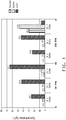
- Applicants have found that when a high amount of energy is provided in the agitation of a saccharification-fermentation mixture containing for example about 25% or more insoluble solids, ethanol production by the Zymomonas ethanologen is negatively impacted. Vigorous shaking (200 RPM) of a mixture having 25% insoluble solids concentration resulted in reduced ethanol production and reduced Zymomonas viability, while vigorous shaking of a mixture having 12% solids had no such effect.
- an agitator may provide to a saccharification-fermentation mixture containing Zymomonas ethanologen and at least about 22.5% insoluble solids, as described in Example 5 herein, to support desired ethanol production.
- the power provided by the agitation means is no more than about 0.2 watts per kilogram of total saccharification-fermentation mixture.
- Preferred for maximizing ethanol production is power input of less than about 0.2, 0.15, 0.1, 0.05, 0.01, 0.005, or 0.003 watts/kg of total saccharification-fermentation mixture.
- Agitation means may be any rotary stirrer, including any type of impeller such as a Rushton (6-blade), and any variety of pitched blade (marine, 4-blade, 3-segment). Two or more impeller blades may be used where the sum of the individual impeller powers is less than about 0.2 watt/kg.
- the Power may be varied over time as viscosity of the saccharification-fermentation mixture decreases due to saccharification of the biomass.
- the saccharification-fermentation mixture is maintained in a bioreactor with an agitation means for production of ethanol.
- Conditions favorable for saccharification and fermentation by Zymomonas are maintained.
- the pH is typically maintained between about 5 and about 7 using caustic solution (such as ammonium hydroxide, potassium hydroxide, or sodium hydroxide) and either sulfuric or phosphoric acid.
- pH is maintained at 5.8 using NaOH as base and H 2 SO 4 as acid.
- the temperature is maintained between about 28°C and about 37°C.
- temperature is maintained at about 33°C or varied between 33°C and 28°C.
- the SSF continues for at least about 40 hours, with 120 hours or more being typical for a run.
- the run may be batch where minimal alterations are made such as pH adjustment, or fed-batch where components may be fed to the saccharification-fermentation mixture as the SSF proceeds.
- Batch and fed-batch culturing methods are common and well known in the art and examples may be found in Biotechnology: A Textbook of Industrial Microbiology, Crueger, Crueger, and Brock, Second Edition (1989) Sinauer Associates, Inc., Sunderland, MA , or Deshpande, Mukund V., Appl. Biochem. Biotechnol., 36, 227, (1992 ).
- components that may be added during a fed-batch run may include additional pretreated biomass and/or additional sacharification enzymes.
- ethanol production is achievable using the present method.
- the specific amount of ethanol produced in the present SSF method will vary depending on conditions such as the specific Zymomonas strain used, the type of biomass, pretreatment of the biomass, concentration of insoluble solids, and saccharifying enzymes. Typically ethanol may be produced at greater than about 40 g/L. Ethanol may be produced at, for example, about 45, about 50, about 55, about 60, about 65, about 70, about 75, about 80, or about 85 g/L.
- Corn cob was pretreated prior to enzymatic hydrolysis using the low ammonia methods described in commonly owned U.S. Patent 7,781,191
- a horizontal Littleford Day 130 L reactor vessel containing a jacket for passing steam around the body of the vessel was used for pretreatment to generate pretreated cob named SSL21.
- the vessel was loaded with cob from seed corn processing (less than 1 mm in size) to reach 46 v% reactor fill on a wet cob basis (57.5 lbs).
- the cob was reduced to less than 1 mm in size using a large micropulverizer (Model #1SH, Serial #10019) with a 1.0 mm screen.
- a scoop of dry ice was added as needed to the cob before grinding to prevent the equipment from heating up.
- the main drive of the micropulverizer is a 5 h.p. motor, with a maximum rotor speed of 9,600 RPM. It has six rotating hammers; shell, and is lined with opposing impact edges.
- the cob had a wet loose bulk density of 0.420 g/cm 3 and 7.5 wt% moisture. Vacuum was applied to the vessel to reach 0.1 atm prior to introduction of a 28.9 wt% ammonium hydroxide solution (11.2 lbs) and water (20.1 lbs) near the top of the vessel to give a 6 wt% NH3 relative to dry weight biomass and 60 wt% solids inside the vessel.
- Table 1 lists cob properties and ammonium hydroxide and water amounts used for a second pretreatment batch named SSL22. In both cases, the reactor agitator was set to 70 rpm and steam was passed through the jacket of the vessel.
- Insoluble solids were determined to be 90%-91% of total solids for the SSL21 pretreated cob batch.
- Table 1 Cob properties and ammonium hydroxide and water amounts used for a second pretreatment batch (SSL 22). Loose wet bulk density (g/cm 3 ) Cob % moisture Cob amount on wet basis (lbs) NH 4 OH amount (lbs) Water amount (lbs) 0.416 10.4 54.8 10.3 16.8
- Table 2 Pretreated cob specifications for SSL21 and SSL22 batches Batch Wt % solids final Residual NH 3 at pH 5.3 (kg NH 3 /100kg dry solids) Acetamide/acetic acid ratio SSL 21 67.3 0.156 1.1 SSL 22 69.1 0.17 1.2
- the amount of glucan and xylan in starting cob was determined using methods well known in the art, such as ASTM E1758-01 "Standard method for the determination of carbohydrates by HPLC” and as further detailed n National Renewable Energy Lagoratory (Golden, CO)Technical Report NREL/TP-510-42618 (revised April 2008).
- the composition was determined to be 34.8 wt.% glucan, 29.2 wt.% xylan, and 12.8 wt.% lignin based on dry weight.
- Corn stover was pretreated prior to enzymatic hydrolysis using low ammonia methods described in commonly owned and co-pending United States Patent Application Publication US-2007/0031918-A1 .
- Second pass corn stover was milled to the average d50 particle size of 2 mm.
- the stover had a loose bulk density of 0.183 g/cm 3 and 8.73 wt% moisture.
- About 109-117 kg of the pre-milled stover was loaded into a 1700 L horizontal cylindrical pressure vessel. Vacuum was applied to the vessel to reach 0.1 atm prior to feeding ammonium hydroxide solution and water to attain about 11% NH 3 with respect to dry matter.
- An impeller in the vessel was rotated at approximately 37 rpm and steam was passed through the jacket of the vessel throughout the run. Steam was introduced to the vessel to raise the internal vessel temperature to about 150 °C. This temperature was held for 30 minutes under the constant reactor pressure of about 8 bar (abs; 0.8 megapascal).
- the reactor was depressurized through a vent condenser to reach atmospheric pressure. Vacuum (approximately to less than 1 atm) was subsequently applied for 4 to 8 minutes to lower the temperature to less than 60 °C and to remove the additional ammonia and water from the pretreated stover prior to opening the bottom valve of the vessel and recovering the pretreated biomass.
- the second pass stover was not analyzed for its composition, however, the compositional components were estimated in Table 3 based on prior stover determinations.
- Table 3 Assumed composition of second pass corn stover Biomass Number Glucan Xylan Arabinan Lignin Acetyls 2 nd pass corn stover 32.96 % 20.06 % 2.66 % 24.14 % 2.76 %
- Strain H3A is a recombinant Trichoderma reesei strain that was prepared as follows.
- Strain #229 was co-transformed with a ⁇ -xylosidase Fv3A expression cassette (comprising a cbh1 promoter, a ⁇ -xylosidase coding region, a cbh1 terminator, and an als gene), a ⁇ -xylosidase Fv43D expression cassette (comprising an eg1 promoter, a ⁇ -xylosidase coding region, and a native terminator), and a Fv51A ⁇ -arabinofuranosidase expression cassette (comprising an eg1 promoter, an L- ⁇ -arabinofuranosidase coding region, and a native terminator) using electroporation.
- Strain H3A was isolated from this transformation step.
- H3A extracellular protein preparation was used as a combination cellulase and hemicellulase preparation effecting complex carbohydrate hydrolysis during SSF.
- Extra cellular protein produced during fermentation of strain H3A was separated from the cell mass by centrifugation, concentrated by membrane-ultrafiltration through a Millipore 10 kD molecular cut off weight membrane and pH adjusted to 4.8.
- Total protein was determined using a modified Biuret method as modified by Weichselbaum and Gornall using Bovine Serum Albumin as a calibrator ( Weichselbaum, 1960, Amer. J. Clin. Path. 16:40 ; Gornall et al., 1949 J. Biol. Chem 177:752 ).
- This H3A extracellular protein preparation, called herein H3A protein was used as a combination cellulase and hemicellulase preparation effecting complex carbohydrate hydrolysis during SSF.
- Zymomonas mobilis strain ZW705 was produced from strain ZW801-4 as briefly restated here.
- ZW801-4 is a recombinant xylose-utilizing strain of Z. mobilis that was described in commonly owned US 7,741,119 .
- Strain ZW801-4 was derived from strain ZW800, which was derived from strain ZW658, all as described in US 7,741,119 .
- ZW658 was constructed by integrating two operons, PgapxylAB and Pgaptaltkt, containing four xylose-utilizing genes encoding xylose isomerase, xylulokinase, transaldolase and transketolase, into the genome of ZW1 (ATCC 31821) via sequential transposition events, and followed by adaptation on selective media containing xylose.
- ZW658 was deposited as ATCC PTA-7858.
- the gene encoding glucose-fructose oxidoreductase was insertionally-inactivated using host-mediated, double-crossover, homologous recombination and spectinomycin resistance as a selectable marker to create ZW800.
- the spectinomycin resistance marker which was bounded by loxP sites, was removed by site specific recombination using Cre recombinase to create ZW801-4.
- Cultures of Z. mobilis strain ZW801-4 were grown under conditions of stress, as disclosed in US Patent Application 12/641642 published as WO 2010/075241 , as follows.
- a continuous culture of ZW801-4 was run in 250 ml stirred, pH and temperature controlled fermentors (Sixfors; Bottmingen, Switzerland).
- the basal medium for fermentation was 5 g/L yeast extract, 15 mM ammonium phosphate, 1 g/L magnesium sulfate, 10 mM sorbitol, 50 g/L xylose and 50 g/L glucose.
- Adaptation to growth in the presence of high concentrations of acetate and ammonia was effected by gradually increasing the concentration of ammonium acetate added to the above continuous culture media while maintaining an established growth rate as measured by the specific dilution rate over a period of 97 days.
- Ammonium acetate was increased to a concentration of 160 mM.
- Further increases in ammonium ion concentration were achieved by addition of ammonium phosphate to a final total ammonium ion concentration of 210 mM by the end of 139 days of continuous culture.
- Strain ZW705 was isolated from the adapted population by plating to single colonies and amplification of one chosen colony.
- Zymomonas mobilis strain AR3 7-31 (also called Adapted 7-31) was derived from strain ZW705 by adaptation for growth in hydrolysate medium as described in commonly owned and co-pending Attorney Docket #CL5332. Adaptation was in a turbidostat which is a continuous flow culture device where the concentration of cells in the culture was kept constant by controlling the flow of medium, such that the turbidity of the culture was kept within certain narrow limits as described in US6686194 . Two media were available to the growing culture in the continuous culture device, a resting medium (Medium A) and a challenge medium (Medium B).
- a culture was grown on a resting medium in a growth chamber to a turbidity set point and then was diluted at a dilution rate set to maintain that cell density. Dilution was performed by adding media at a defined volume once every 10 minutes. When the turbidostat entered a media challenge mode, the choice of adding challenge medium or resting medium was made based on the rate of return to the set point after the previous media addition.
- the steady state concentration of media in the growth chamber was a mix of Medium A and Medium B, with the proportions of the two media dependent upon the rate of draw from each media that allowed maintenance of the set cell density at the set dilution rate.
- a sample of cells representative of the population in the growth chamber was recovered from the outflow of the turbostat (in a trap chamber) at weekly intervals.
- the cell sample was grown once in MRM3G6 media and saved as a glycerol stock at -80 °C.
- Cultures were grown using resting medium that was 50% HAc/YE and 50% MRM3G6.5X4.5NH 4 Ac12.3, and challenge medium that was HAc/YE. Samples taken weekly were assayed in HAc/YE medium for glucose and xylose utilization, and ethanol production. Colonies were isolated from the week 3 sample and those with good growth on MRM3X2 and MRM3G2 plates were chosen. Strains from these colonies were screened for glucose and xylose utilization, and ethanol production in HAc/YE medium. Strain 12-18X-2-36 was chosen for an additional round of adaptation using HAc/YE as resting medium and HAc/YE + 9 weight% ethanol.as the challenge medium.
- Adapted 7-31 also called AR3 7-3 was chosen following screening of strains from the adaptation, for its increase utilization of glucose and xylose, and increased production of ethanol when grown in HAc/YE + 9 weight% ethanol medium.
- Zymomonas mobilis ZW705 was maintained as 20% glycerol stocks frozen at -80 °C. To begin culture a 2 ml stock was thawed and used to inoculate 45 ml of media consisting of: 10 g/L yeast extract, 2 g/L potassium hydrogen phosphate, 5 g/L magnesium sulfate heptahydrate and 60 g/L glucose at pH 5.8 (MRM3G6) to OD 600 nm of 0.4.
- media consisting of: 10 g/L yeast extract, 2 g/L potassium hydrogen phosphate, 5 g/L magnesium sulfate heptahydrate and 60 g/L glucose at pH 5.8 (MRM3G6) to OD 600 nm of 0.4.
- the culture was grown at 33 °C in a loosely capped 50 ml tube to about 2.5 OD at 600 nm and used to inoculate a final seed culture of 150 - 200 g/L glucose, 2 g/L potassium dihydrogen phosphate, 5 g/L magnesium sulfate heptahydrate and 10 - 20 g/L yeast extract at pH 5.5. That culture was grown at 33 °C in a pH controlled and stirred fermenter to an OD600 nm of about 10 and a remaining glucose concentration such that about 120 g/L of glucose was consumed. A volume of the 10 OD seed that is equivalent to 10% of the SSF final fermentation volume was withdrawn and used to start the SSF.
- the HPLC column was purchased from BioRad (Aminex HPX-87H, BioRad Inc., Hercules, CA). Analytes were quantified by refractive index detection and compared to known standards.
- SSF flask runs were carried out anaerobically under suitable Zymomonas mobilis fermentation conditions. Unless otherwise stated, SSF experiments using dilute ammonia pre-treated corn cob substrate were typically carried out at 33°C, pH 5.8, and 25% solids loading by weight. 25% solids (12.5 g dry weight) of the pretreated corn cob was loaded first into a 125 mL Erlenmeyer flask, followed by the addition of deionized water pre-mixed with the required amount of 6N sulfuric acid to titrate the substrate pH to 5.8.
- H3A protein described above, was used as saccharifying enzyme and was added in an amount based on a basis of mg total H3A protein /g (cellulose + xylan) in the biomass substrate.
- Fermentation was commenced by the addition of 10% Zymomonas mobilis strain ZW705 inoculum (5 g) by weight into the reaction mixture with no additional nutrients added.
- the anaerobic environment and CO 2 outgassing were maintained by a 23 Gauge needle protruding from a rubber stopper that was used to cap the flask.
- All SSF runs had an initial 50 g total reaction weight in a flask and the reaction mixture consisted of pretreated corn cob, water, sulfuric acid, enzyme, and ZW705 cells.
- the flasks were agitated inside a shaker incubator (New Brunswick Scientific, Innova 44, Edison, New Jersey) at 50 or 200 RPM with the temperature cascaded down to 30°C from 33 °C at day 1 and to 28°C at day 2.
- a 3 liter dished-bottom glass reactor (Applikon Biotechnology Z61101C006, Foster City, CA) was used instead of the 125 mL flask. SSF was carried out at a 1000 g total reaction weight in the reactor for 144 hours. 25% (250 g) solids loading by weight was used for the scale-up studies. Approximately 75% of the dry solids were added to sterile MilliQ water and pH adjusted with 2N sulfuric acid to pH 5.8. This initial mixture was raised to and held constant at 33°C. Then, enzymes (20 mg H3A protein/g (cellulose + xylan)) and Zymomonas inoculum were added along with the remaining dry solids.
- the temperature was lowered to 30°C, then to 28°C at 48 hours.
- the temperature of reactor was maintained by an electrically powered heating tape wrapped around the outer surface of the reactor with the mixing provided by either a Rushton or a Marine pitched blade impeller.
- the headspace of the reaction was swept with nitrogen to reduce Zymomonas exposure to oxygen and outgas was controlled with a rubber stopper punctured with a 19 Gauge needle.
- CFU colony forming units
- This example demonstrates the effect of RPM and solids loading on the SSF process using dilute ammonia pretreated corn cob and recombinant Zymomonas mobilis strain ZW705.
- SSF was performed as described in General Methods for Flask SSF. The experimental runs were carried out at three different solids loadings (6%, 12%, and 25%) and two different RPM (50 RPM and 200 RPM) with H3A protein dosed at 15 mg/g glucan+xylan. Samples were taken after 3 days and assayed by HPLC as described in Materials and Methods.
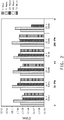
- the total viable cell counts of the above runs were monitored over time during the course of the experiment at 0, 4, 24, 48, and 72 hours as described in General Methods.
- the results shown in Figure 2 indicate that the loss of SSF fermentation performance at 25% solids and 200 RPM was directly related to the loss of CFU by Zymomonas mobilis.
- the Zymomonas experienced a rapid growth between the inoculation (0 hour) and 4 hours.
- the total viable cell counts stabilized to 2 to 9 ⁇ 109 CFU/mL after 4 hours for all runs except the one at 25% solids and 200 RPM where a 3 log reduction in Zymomonas viability (CFU) was seen within 24 hours and a 5 log reduction was seen within 48 hours.
- CFU Zymomonas viability
- Ballotini Soda Glass Beads (VWR, Cat# 33997-500/536/560/562/568/584, West Chester, PA) were used in mock SSF runs instead of pretreated corn cob. Beads with the following diameter ranges were washed, sterilized and dried before use: 0-50 ⁇ m, 100-200 ⁇ m, 400-600 ⁇ m, 1250-1550 ⁇ m (1.25-1.55 mm), and 2850-3300 ⁇ m (2.85-3.30 mm).
- reaction size was fixed at 50 g and 25% total solids (glass beads) in stoppered 125 mL Erlenmeyer flasks with 21Gauge needles for outgassing.
- media consisting of 80 g/L glucose and 70 g/L xylose was prepared in water and loaded. The media was sterilized by autoclaving at 121°C for 15 minutes. Zymomonas inoculum was loaded into the reaction mixture at 10% by weight, and no enzyme was added in this case.
- Each reaction was carried out in a shake incubator agitated at 100 or 200 RPM with temperature maintained constant at 33 °C.
- Ballotini beads RPM CFU/mL at 0 hr CFU/mL at 24 hr 0-50 ⁇ m 100 3.5 ⁇ 10 10 1.9 ⁇ 10 9 100-200 ⁇ m 100 3.5 ⁇ 10 10 8.0 ⁇ 10 8 400-600 ⁇ m 100 3.5 ⁇ 10 10 1.7 ⁇ 10 9 1250-1550 ⁇ m 100 3.5 ⁇ 10 10 1.2 ⁇ 10 9 2850-3300 ⁇ m 100 3.5 ⁇ 10 10 2.8 ⁇ 10 9 0-50 ⁇ m 200 3.5 ⁇ 10 10 1.2 ⁇ 10 10 100-200 ⁇ m 200 3.5 ⁇ 10 10 ⁇ 1.0 ⁇ 10 8 400-600 ⁇ m 200 3.5 ⁇ 10 10 ⁇ 1.0 ⁇ 10 8 1250-1550 ⁇ m 200 3.5 ⁇ 10 10 3.1 ⁇ 10 9 2850-3300 ⁇ m 200 3.5 ⁇ 10 10 3.0 ⁇ 10 9
- the critical particle size range for reducing ethanol production and cell viability determined using Ballotini beads under conditions tested (25% solids, 50 g reaction volume in 125 mL flask, 200 RPM) was in the range between 100 ⁇ m and 600 ⁇ m.
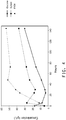
- glucose, xylose, and ethanol concentrations were determined over 140 hours by sampling and HPLC analysis, and the pattern of glucose, xylose and ethanol accumulation (shown in Figure 4 ) indicates a normal saccharification rate but incomplete fermentation.
- the non homogenous mixing was corrected by changing the impeller design and a second trail was run.
- Impellers were spaced 3 cm apart along the shaft with the bottom impeller spaced 2 cm from the bottom of the reactor. Impeller speed was increased to 150 RPM. Marine impellers were known to show a reduced maximum shear rate compared to Ruston impellers ( Shuler and Kargi, Bioprocess Engineering, 2nd edition, p287 (2002) Prentice Hall, Upper Saddle River, NJ ). This may lead to poor gas dispersion and transfer in the liquid, but is of less concern since the fermentation is anaerobic. The impeller change mitigated the mixing issues previously seen in trial 1.
- SSF Simultaneous saccharification and fermentation reactions were performed in a 1.7 L reactor under different mixing conditions. SSF runs were performed similarly to the stirred tank reactor SSF described in General Methods, with stirring blades described in Example 5 below, with about 1040 g total reaction weight, using pretreated corn cob as describe above with about 24% solids loading, at an enzyme loading of 14 mg H3A protein/g glucan + xylan present in the pretreated biomass, 33 °C (not reduced), and pH 5.8, with Z. mobilis ZW705 as the fermenting organism. The headspace was not swept with nitrogen.
- SSF runs were performed similarly to the stirred tank reactor SSF described in General Methods, with stirring blades described in Example 5 below, with about 1040 g total reaction weight, using pretreated corn cob as describe above with about 24% solids loading, at an enzyme loading of 14 mg H3A protein/g glucan + xylan present in the pretreated biomass, 33 °C (not reduced), and pH 5.8, with Z. mobilis ZW
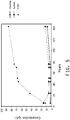
- Figure 6A shows ethanol concentration over time for the 250 rpm and 750 rpm runs with initial 25 weight percent of solids.
- Figure 6B shows the ethanol concentration over time for the 80 rpm and 250 rpm runs with partitioned addition of solids.
- no ethanol was produced beyond what was carried over with the seed culture ( Figure 6A ).
- ⁇ 40 g/L ethanol was produced in ⁇ 50 hr ( Figure 6A ).
- Figure 6B At 80 rpm with partitioned biomass addition, ⁇ 65 g/L ethanol was produced in ⁇ 50 hr ( Figure 6B ).
- Figure 6B At 250 RPM with partitioned biomass addition, ⁇ 40 g/L ethanol was produced in ⁇ 50 hr ( Figure 6B ).
- the glass reaction vessel used in Example 4 measured 11 cm in diameter and 18 cm in height, with a dished bottom. Filling the vessel to ⁇ 1 L resulted in a working height of ⁇ 10.5 cm, producing an h/d of 0.96. Mixing was provided through agitation with a two impeller system operating at the rpm values presented above.
- the bottom impeller was a 3-segment impeller with a 4.8 cm diameter (B Braun Biotech) located at a liquid volume of ⁇ 350 mL ( ⁇ 3.7 cm off the bottom) with the segments positioned at an up-pumping 45 degree angle.
- the top impeller was a 6-blade turbine impeller (Rushton) with a 4.5 cm blade diameter and 2.5 cm disc, located at a liquid volume of ⁇ 700 mL ( ⁇ 7.4 cm off the bottom).
- density ( ⁇ ) was assumed to be 1050 kg/m3 and viscosity ( ⁇ ) was assumed to be that of water at 33 °C (0.00075 kg/ms).
- Impeller Reynolds number (Re) was calculated as RPS*DI 2 * ⁇ / ⁇ , where RPS is revolutions per second and DI is the impeller diameter. In all cases the impeller Reynolds number was over 4000, therefore impeller power numbers were taken as the 'high Reynolds asymptote' values (1.5 for 3-segment impeller, 5 for Rushton impeller).
- total impeller mixing power was taken as the sum of the individual impeller mixing powers. Impeller power was calculated as the impeller power number * density * (RPS 3 ) * (DI 5 ). Power/mass (P/m) was obtained by dividing total impeller power by total reaction mass. Power/mass at the tip was calculated as total impeller power / (DI 3 * ⁇ ). Eddy size was calculated as [( ⁇ / ⁇ ) 3 / (power/mass)] 1/4 . For the 80, 250, and 750 rpm runs of Example 4, total impeller mixing powers were 0.0032, 0.099, and 2.7 W (power/mass of 0.0032, 0.099, and 2.7 W/kg), respectively.
- Impeller tip speeds in these three cases were 0.19, 0.59, and 1.8 m/s, respectively.
- Eddy sizes in these three cases were 104, 44, and 19 ⁇ m, respectively.
- Eddy size at the tip can be calculated by substituting power/mass at the tip for power/mass in the eddy size formula. Results are tabulated in Table 5.
- Table 5 Mixing parameters and final ethanol titer for the Z . mobilis ZW705 SSF reactions in stirred reactors (Example 4).
- Table 5 illustrates the strong influence of mixing on SSF success. As mixing intensity was increased, ethanol titer decreased. Under intense mixing conditions, no ethanol was formed beyond what was carried over with the seed. Specific power inputs below 0.2 W/kg of total reaction mass gave effective fermentation in SSF at high solids concentration.
- SSF Simultaneous saccharification and fermentation reactions were performed in a 2 L reactor, with three sets of 4-bladed, 45-degree down-pumping impellers. SSF runs were performed similarly to the stirred tank reactor SSF described in General Methods, with about 2140 g total reaction weight, using pretreated corn cob as described above, with about 22.5% final solids loading, at an enzyme loading of either 14 or 28 mg H3A protein/g glucan + xylan present in the pretreated biomass, 33 °C (not reduced), and pH 5.8, with Z . mobilis AR3 7-31 as the fermenting organism. The headspace was not swept with nitrogen.
- Pretreated cob preparation SSL27 was used which contained 65.3% dry matter. Initially 94 g pretreated cob and 1120 g water were added to the reactor, creating a 5% solids slurry. pH and temperature were adjusted to the setpoints of 5.8 and 33 °C, respectively. Then 40.2 g (for 14 mg/g) or 80.5 g (for 28 mg/g) of H3A enzyme were added (FBR746 and FBR747 runs, respectively), closely followed (within 5 min) by addition of 200 ml of Zymomonas cells. Over the following 7 hr, the remaining 637 g of pretreated cob were added, in equal increments each hour (total of 7 additions). pH was adjusted manually to maintain pH 5.8, using either 1N H 2 SO 4 or 1N NaOH.
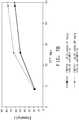
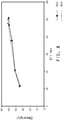
- Graphs of N JS for the 14 mg/g enzyme load reactor and for the 28 mg/g enzyme load reactor are shown in figure 7A .
- the reactor with twice the enzyme loading required lower stirring rates to maintain suspension throughout the run.
- the maximum stirring rate required for the run which used 28 mg/g enzyme loading was 110 rpm, whereas the run with 14 mg/g enzyme loading required a maximum of 140 rpm. Since power scales with stirring rate to the third power (P ⁇ N 3 ), this corresponds to approximately twice the power to maintain suspension in the lower enzyme run as compared to the doubled enzyme run.
- Power input was calculated as in Example 5, giving 0.025 W/kg at 110 rpm and 0.052 W/kg at 140 rpm.
- Figure 7B shows ethanol concentration over time for both reactors.
- the reactor with 28 mg/g enzyme loading reached about 77 g/L in 50 hr, whereas the reactor with 14 mg/g enzyme load reached about 62 g/L in the same amount of time.
- SSF saccharification and fermentation
- Corn stover prepared as described in the General methods, was used with about 20.6% final solids loading, at an enzyme loading of 17 mg H3A protein/g glucan + xylan (based on typical stover composition), 33 °C (not reduced), and an initial pH of 5.3, with Z. mobilis ZW705 as the fermenting organism.
- the headspace was not swept with nitrogen.
- the fermenter was equipped with a 3-segment impeller mounted at ⁇ 350 mL and a 6-blade turbine impeller (Rushton) mounted at ⁇ 700 mL, and the final reaction mass was about 810 g.
- the solids were loaded in a fed-batch mode.
- the pretreated stover preparation used contained 43.8% dry matter.
- SSF Simultaneous saccharification and fermentation
- This example demonstrates the effect of RPM and solids loading on the SSF process using dilute ammonia pretreated corn cob and a variety of ethanologens, including recombinant Zymomonas mobilis strain ZW705, Escherichia coli (OneShot®TOP10 chemically competent cells, Invitrogen), and a commercial Saccharomyces cerevisiae (Ethanol Red®; Fermentis, Lesaffre Group).
- SSF was performed as described in General Methods for Flask SSF.
- S. cerevisiae starter culture was prepared by adding dried Ethanol Red® to a 20 g/L glucose solution and incubating at 30 °C for 1 hr. No starter culture was prepared for E.
Landscapes
- Chemical & Material Sciences (AREA)
- Life Sciences & Earth Sciences (AREA)
- Engineering & Computer Science (AREA)
- Organic Chemistry (AREA)
- Health & Medical Sciences (AREA)
- Zoology (AREA)
- Wood Science & Technology (AREA)
- Genetics & Genomics (AREA)
- Biotechnology (AREA)
- Bioinformatics & Cheminformatics (AREA)
- General Engineering & Computer Science (AREA)
- Microbiology (AREA)
- Biochemistry (AREA)
- General Health & Medical Sciences (AREA)
- Biomedical Technology (AREA)
- Virology (AREA)
- Tropical Medicine & Parasitology (AREA)
- Medicinal Chemistry (AREA)
- Chemical Kinetics & Catalysis (AREA)
- General Chemical & Material Sciences (AREA)
- Preparation Of Compounds By Using Micro-Organisms (AREA)
- Apparatus Associated With Microorganisms And Enzymes (AREA)
- Micro-Organisms Or Cultivation Processes Thereof (AREA)
Claims (14)
- Verfahren für die Herstellung von Ethanol, umfassend:a) Bereitstellen von vorbehandelter Biomasse eines Partikelgrößenbereichs zwischen 100 µm und 600 µm, die unlösliche Feststoffe und Polysaccharide umfasst;b) Bereitstellen mindestens eines Verzuckerungsenzyms für die Umwandlung von Polysacchariden zu fermentierbaren Zuckern;c) Bereitstellen eines prokaryotischen Ethanologens;d) Herstellen in einem Bioreaktor, umfassend ein Mittel zum Rühren, das mindestens einen Impeller umfasst, das eine Leistung von nicht mehr als 0,2 Watt/kg der gesamten Verzuckerungs-Fermentationsmischung bereitstellt, einer Verzuckerungs-Fermentationsmischung, umfassend die vorbehandelte Biomasse von a), das Verzuckerungsenzym von b) und das prokaryotische Ethanologen von c); unde) Wachsenlassen des prokaryotischen Ethanologens in der Verzuckerungs-Fermentationsmischung, wobei bezogen auf Trockengewicht pro Liter die Konzentration der gesamten unlöslichen Eingangsfeststoffe in der Verzuckerungs-Fermentationsmischung mindestens 16% oder 20% beträgt und wobei das prokaryotische Ethanologen Ethanol erzeugt.
- Verfahren nach Anspruch 1, wobei das prokaryotische Ethanologen:(i) ein Vertreter einer Gattung ist, die ausgewählt ist aus der Gruppe bestehend aus Zymomonas, Zymobacter, Clostridium, Escherichia, Klebsiella und Geobacillus; oder(ii) tolerant ist gegenüber Acetat-Konzentration in der Verzuckerungs-Fermentationsmischung.
- Verfahren nach Anspruch 1 oder 2, wobei das Ethanologen von c) zu einem Zeitpunkt nach der Zugabe des Verzuckerungsenzyms von b) zugegeben wird, wenn eine teilweise Verzuckerung eingetreten ist.
- Verfahren nach Anspruch 1 bis 3, wobei die vorbehandelte Biomasse in mindestens zwei Portionen zugegeben wird, die bezogen auf Trockengewicht pro Liter vereint eine Konzentration der Gesamteingabe von unlöslichen Feststoffen von mindestens 16% ergibt.
- Verfahren nach einem der Ansprüche 1 bis 4, wobei die Biomasse ausgewählt ist aus der Gruppe bestehend aus Rutenhirse, Altpapier, Schlamm aus der Papierherstellung, Maiskolben, Maishülsen, Maisstroh, Gräsern, Weizen, Weizenstroh, Heu, Gerstenstroh, Reisstroh, Zuckerrohr-Bagasse, Sorghum, aus der Verarbeitung von Getreide erhaltenen Bestandteilen, Bäumen, Ästen, Wurzeln, Blättern, Holzschnitzeln, Sägemehl, Sträuchern und Büschen, Gemüse, Früchten, Blumen und Tierdung.
- Verfahren nach einem der Ansprüche 1 bis 5, wobei die vorbehandelte Biomasse durch Behandeln von Cellulose-Biomasse mit Ammoniak hergestellt wird.
- Verfahren nach Anspruch 6, wobei das Ammoniak bezogen auf das Trockengewicht der Biomasse weniger als 12 Gew.-% beträgt.
- Verfahren nach einem der Ansprüche 1 bis 7, wobei das mindestens eine Verzuckerungsenzym(i) ausgewählt ist aus der Gruppe bestehend aus Cellulose hydrolysierenden Glykosidasen und Hemicellulose hydrolysierenden Glykosidasen; oder(ii) ein Vertreter eines Enzymkonsortiums ist.
- Verfahren nach Anspruch 8, wobei das Konsortium des Verzuckerungsenzyms Enzyme umfasst, die ausgewählt sind aus der Gruppe bestehend aus Cellulasen, Endoglucanasen, Exoglucanasen, Cellobiohydrolasen, β-Glucosidasen, Xylanasen, Endoxylanasen, Exoxylanasen, β-Xylosidasen, Arabinoxylanasen, Mannasen, Galactasen, Pektinasen, Glucuronidasen, Amylasen, α-Amylasen, β-Amylasen, Glucoamylasen, α-Glucosidasen, Isoamylasen, Peptidasen, Lipasen, Ligninasen und Feruloylesterasen.
- Verfahren nach einem der Ansprüche 1 bis 9, wobei die Polysaccharide Xylan und Glucan umfassen.
- Verfahren nach einem der Ansprüche 1 bis 10, wobei die fermentierbaren Zucker Xylose und Glucose umfassen.
- Verfahren nach einem der Ansprüche 1 bis 11, wobei die Konzentration des erzeugten Ethanols mindestens 40 g/l beträgt.
- Verzuckerungs-Fermentationssystem, umfassend:a) eine vorbehandelte Biomasse eines Partikelgrößenbereichs zwischen 100 µm und 600 µm, die unlösliche Feststoffe und Polysaccharide umfasst;b) mindestens ein Verzuckerungsenzym für die Umwandlung von Polysacchariden zu fermentierbaren Zuckern; undc) ein prokaryotisches Ethanologen;wobei die Biomasse, das Enzym und das Ethanologen von (a), (b) bzw. (c) in einer Verzuckerungs-Fermentationsmischung vereint werden, die eine Konzentration der Gesamteingabe von unlöslichen Feststoffen aufweist, die bezogen auf Trockengewicht pro Liter mindestens 16% beträgt, und wobei die Biomasse, das Enzym und das Ethanologen von (a), (b) bzw. (c) in einem Bioreaktor enthalten sind, umfassend ein funktionelles Mittel zum Rühren, das mindestens einen Impeller umfasst, das eine Leistung von nicht mehr als 0,2 Watt/kg der gesamten Verzuckerungs-Fermentationsmischung bereitstellt.
- Verzuckerungs-Fermentationssystem nach Anspruch 13, wobei das prokariotische Ethanologen ausgewählt ist aus der Gruppe bestehend aus Zymomonas, Zymobacter, Clostridium, Escherichia, Klebsiella und Geobacillus.
Applications Claiming Priority (2)
| Application Number | Priority Date | Filing Date | Title |
|---|---|---|---|
| US28974909P | 2009-12-23 | 2009-12-23 | |
| PCT/US2010/061692 WO2011079158A2 (en) | 2009-12-23 | 2010-12-22 | Process for simultaneous saccharification and fermentation for production of ethanol |
Publications (2)
| Publication Number | Publication Date |
|---|---|
| EP2516658A2 EP2516658A2 (de) | 2012-10-31 |
| EP2516658B1 true EP2516658B1 (de) | 2018-07-04 |
Family
ID=43828167
Family Applications (1)
| Application Number | Title | Priority Date | Filing Date |
|---|---|---|---|
| EP10798686.1A Active EP2516658B1 (de) | 2009-12-23 | 2010-12-22 | Verfahren zur herstellung von äthanol durch gleichzeitige verzuckerung und fermentation |
Country Status (9)
| Country | Link |
|---|---|
| US (1) | US8647850B2 (de) |
| EP (1) | EP2516658B1 (de) |
| JP (1) | JP5946773B2 (de) |
| CN (1) | CN102933714B (de) |
| AU (1) | AU2010336458B2 (de) |
| BR (1) | BR112012015367B1 (de) |
| CA (1) | CA2780920A1 (de) |
| MY (1) | MY157298A (de) |
| WO (1) | WO2011079158A2 (de) |
Families Citing this family (16)
| Publication number | Priority date | Publication date | Assignee | Title |
|---|---|---|---|---|
| MX2012003091A (es) * | 2009-09-23 | 2012-04-30 | Danisco Us Inc | Enzimas de glicosil hidrolasa novedosas y usos de las mismas. |
| AU2010333801B2 (en) | 2009-12-23 | 2015-12-17 | Danisco Us Inc. | Methods for improving the efficiency of simultaneous saccharification and fermentation reactions |
| JP6290626B2 (ja) | 2011-03-17 | 2018-03-14 | ダニスコ・ユーエス・インク | 糖化プロセスにおける粘度を低下させる方法 |
| US8697426B2 (en) | 2012-06-15 | 2014-04-15 | E I Du Pont De Nemours And Company | Contaminant control in Zymomonas fermentation using virginiamycin |
| US20150167040A1 (en) | 2012-08-06 | 2015-06-18 | Danisco Us Inc. | Fungal Cells That Produce Decreased Amounts of Peptaibols |
| US8846357B2 (en) | 2012-12-20 | 2014-09-30 | E I Du Pont De Nemours And Company | Stabilized chlorine dioxide for contamination control in Zymomonas fermentation |
| US20140273105A1 (en) | 2013-03-12 | 2014-09-18 | E I Du Pont De Nemours And Company | Gradient pretreatment of lignocellulosic biomass |
| EP3063282B1 (de) * | 2013-09-11 | 2020-03-25 | Novozymes A/S | Verfahren zur herstellung von gärungsprodukten |
| US10227623B2 (en) | 2013-11-24 | 2019-03-12 | E I Du Pont De Nemours And Company | High force and high stress destructuring of cellulosic biomass |
| BR112016023823A2 (pt) | 2014-04-17 | 2017-08-15 | Shell Int Research | método para produção de um produto de fermentação |
| CN104450797A (zh) * | 2014-12-26 | 2015-03-25 | 哈尔滨工业大学宜兴环保研究院 | 一种以玉米秸秆和废弃烟叶为原料共发酵制备乙醇的方法 |
| US20160068870A1 (en) * | 2015-03-03 | 2016-03-10 | Edward Brian HAMRICK | Methods for fermenting carbohydrate-rich crops |
| WO2019047199A1 (en) * | 2017-09-11 | 2019-03-14 | Danisco Us Inc. | GLUCOAMYLASE AND METHODS OF USE THEREOF |
| US12392085B2 (en) * | 2020-04-28 | 2025-08-19 | The Regents Of The University Of California | Use of in-situ ionic liquid (IL) and deep eutectic solvent (DES) synthesis using chemically synthesized or biomass-derived ions in the pretreatment of biomass |
| CN112159824B (zh) * | 2020-09-27 | 2022-08-12 | 兴源环境科技股份有限公司 | 一种禽畜粪污的全资源再生利用方法 |
| EP4239075A1 (de) | 2022-03-04 | 2023-09-06 | Technische Universität München | Verfahren zur produktion von ethanol und/oder fermentationsnebenprodukten aus einer stärkehaltigen biomasse |
Family Cites Families (15)
| Publication number | Priority date | Publication date | Assignee | Title |
|---|---|---|---|---|
| US5000000A (en) | 1988-08-31 | 1991-03-19 | University Of Florida | Ethanol production by Escherichia coli strains co-expressing Zymomonas PDC and ADH genes |
| AU2388295A (en) | 1994-04-15 | 1995-11-10 | Midwest Research Institute | Recombinant zymomonas for pentose fermentation |
| US5712133A (en) | 1994-04-15 | 1998-01-27 | Midwest Research Institute | Pentose fermentation by recombinant zymomonas |
| US5514583A (en) | 1994-04-15 | 1996-05-07 | Midwest Research Institute | Recombinant zymomonas for pentose fermentation |
| DE19856136C2 (de) | 1998-12-04 | 2002-10-24 | Pasteur Institut | Verfahren und Vorrichtung zur Selektion beschleunigter Proliferation lebender Zellen in Suspension |
| US7223575B2 (en) | 2000-05-01 | 2007-05-29 | Midwest Research Institute | Zymomonas pentose-sugar fermenting strains and uses thereof |
| US6566107B1 (en) | 2000-11-01 | 2003-05-20 | Midwest Research Institute | Recombinant Zymomonas mobilis with improved xylose utilization |
| JP5804666B2 (ja) * | 2005-04-12 | 2015-11-04 | イー・アイ・デュポン・ドウ・ヌムール・アンド・カンパニーE.I.Du Pont De Nemours And Company | バイオマスの処理および利用における別の供給流れの集中 |
| US7781191B2 (en) | 2005-04-12 | 2010-08-24 | E. I. Du Pont De Nemours And Company | Treatment of biomass to obtain a target chemical |
| US7741119B2 (en) | 2006-09-28 | 2010-06-22 | E. I. Du Pont De Nemours And Company | Xylitol synthesis mutant of xylose-utilizing zymomonas for ethanol production |
| DE602008006446D1 (de) | 2007-10-30 | 2011-06-01 | Du Pont | Verfahren zur herstellung von etahnol in einem xylose enthaltenden medium unter verwendung eines rekombinanten zymomonas stammes mit reduzierter hima expression |
| EP2271755B1 (de) | 2008-03-27 | 2017-03-22 | E. I. du Pont de Nemours and Company | Starke zymomonas-expressionspromotoren |
| US7998722B2 (en) | 2008-03-27 | 2011-08-16 | E. I. Du Pont De Nemours And Company | Zymomonas with improved xylose utilization |
| US8247208B2 (en) | 2008-12-22 | 2012-08-21 | Alliance For Sustainable Energy Llc | Zymomonas with improved xylose utilization in stress conditions |
| JP5711873B2 (ja) | 2009-04-13 | 2015-05-07 | 日立造船株式会社 | セルロース系原料の同時糖化発酵法 |
-
2010
- 2010-12-17 US US12/970,992 patent/US8647850B2/en active Active
- 2010-12-22 WO PCT/US2010/061692 patent/WO2011079158A2/en not_active Ceased
- 2010-12-22 JP JP2012546172A patent/JP5946773B2/ja not_active Expired - Fee Related
- 2010-12-22 AU AU2010336458A patent/AU2010336458B2/en not_active Ceased
- 2010-12-22 CN CN201080059411.8A patent/CN102933714B/zh active Active
- 2010-12-22 BR BR112012015367-6A patent/BR112012015367B1/pt not_active IP Right Cessation
- 2010-12-22 MY MYPI2012002020A patent/MY157298A/en unknown
- 2010-12-22 EP EP10798686.1A patent/EP2516658B1/de active Active
- 2010-12-22 CA CA2780920A patent/CA2780920A1/en not_active Abandoned
Non-Patent Citations (1)
| Title |
|---|
| None * |
Also Published As
| Publication number | Publication date |
|---|---|
| US8647850B2 (en) | 2014-02-11 |
| WO2011079158A2 (en) | 2011-06-30 |
| BR112012015367A2 (pt) | 2018-09-18 |
| CN102933714B (zh) | 2016-07-27 |
| CA2780920A1 (en) | 2011-06-30 |
| AU2010336458A1 (en) | 2012-05-31 |
| BR112012015367B1 (pt) | 2020-12-15 |
| WO2011079158A3 (en) | 2011-11-17 |
| AU2010336458A2 (en) | 2012-12-20 |
| CN102933714A (zh) | 2013-02-13 |
| JP5946773B2 (ja) | 2016-07-06 |
| MY157298A (en) | 2016-05-31 |
| EP2516658A2 (de) | 2012-10-31 |
| US20110318803A1 (en) | 2011-12-29 |
| JP2013515484A (ja) | 2013-05-09 |
| AU2010336458B2 (en) | 2015-11-12 |
Similar Documents
| Publication | Publication Date | Title |
|---|---|---|
| EP2516658B1 (de) | Verfahren zur herstellung von äthanol durch gleichzeitige verzuckerung und fermentation | |
| BRPI0612207A2 (pt) | método para a produção de etanol | |
| EP2861748B1 (de) | Verwendung von hopfensäure zum regeln des bakteriellen kontamination in gärungen mittels zymomonas mobilis | |
| EP2935597B1 (de) | Stabilisiertes chlordioxid zur kontaminationskontrolle bei zymomonas vergärung | |
| EP2861747B1 (de) | Verwendung von virginiamycin zur bekämpfung von bakterieller kontamination in gärungen mit zymomonas mobilis |
Legal Events
| Date | Code | Title | Description |
|---|---|---|---|
| PUAI | Public reference made under article 153(3) epc to a published international application that has entered the european phase |
Free format text: ORIGINAL CODE: 0009012 |
|
| 17P | Request for examination filed |
Effective date: 20120621 |
|
| AK | Designated contracting states |
Kind code of ref document: A2 Designated state(s): AL AT BE BG CH CY CZ DE DK EE ES FI FR GB GR HR HU IE IS IT LI LT LU LV MC MK MT NL NO PL PT RO RS SE SI SK SM TR |
|
| DAX | Request for extension of the european patent (deleted) | ||
| 17Q | First examination report despatched |
Effective date: 20151006 |
|
| RAP1 | Party data changed (applicant data changed or rights of an application transferred) |
Owner name: E. I. DU PONT DE NEMOURS AND COMPANY |
|
| GRAP | Despatch of communication of intention to grant a patent |
Free format text: ORIGINAL CODE: EPIDOSNIGR1 |
|
| STAA | Information on the status of an ep patent application or granted ep patent |
Free format text: STATUS: GRANT OF PATENT IS INTENDED |
|
| INTG | Intention to grant announced |
Effective date: 20180207 |
|
| GRAS | Grant fee paid |
Free format text: ORIGINAL CODE: EPIDOSNIGR3 |
|
| GRAA | (expected) grant |
Free format text: ORIGINAL CODE: 0009210 |
|
| STAA | Information on the status of an ep patent application or granted ep patent |
Free format text: STATUS: THE PATENT HAS BEEN GRANTED |
|
| AK | Designated contracting states |
Kind code of ref document: B1 Designated state(s): AL AT BE BG CH CY CZ DE DK EE ES FI FR GB GR HR HU IE IS IT LI LT LU LV MC MK MT NL NO PL PT RO RS SE SI SK SM TR |
|
| REG | Reference to a national code |
Ref country code: GB Ref legal event code: FG4D |
|
| REG | Reference to a national code |
Ref country code: CH Ref legal event code: EP |
|
| REG | Reference to a national code |
Ref country code: AT Ref legal event code: REF Ref document number: 1014560 Country of ref document: AT Kind code of ref document: T Effective date: 20180715 |
|
| REG | Reference to a national code |
Ref country code: IE Ref legal event code: FG4D |
|
| REG | Reference to a national code |
Ref country code: DE Ref legal event code: R096 Ref document number: 602010051691 Country of ref document: DE |
|
| REG | Reference to a national code |
Ref country code: NL Ref legal event code: MP Effective date: 20180704 |
|
| REG | Reference to a national code |
Ref country code: LT Ref legal event code: MG4D |
|
| REG | Reference to a national code |
Ref country code: AT Ref legal event code: MK05 Ref document number: 1014560 Country of ref document: AT Kind code of ref document: T Effective date: 20180704 |
|
| PG25 | Lapsed in a contracting state [announced via postgrant information from national office to epo] |
Ref country code: NL Free format text: LAPSE BECAUSE OF FAILURE TO SUBMIT A TRANSLATION OF THE DESCRIPTION OR TO PAY THE FEE WITHIN THE PRESCRIBED TIME-LIMIT Effective date: 20180704 |
|
| PG25 | Lapsed in a contracting state [announced via postgrant information from national office to epo] |
Ref country code: GR Free format text: LAPSE BECAUSE OF FAILURE TO SUBMIT A TRANSLATION OF THE DESCRIPTION OR TO PAY THE FEE WITHIN THE PRESCRIBED TIME-LIMIT Effective date: 20181005 Ref country code: NO Free format text: LAPSE BECAUSE OF FAILURE TO SUBMIT A TRANSLATION OF THE DESCRIPTION OR TO PAY THE FEE WITHIN THE PRESCRIBED TIME-LIMIT Effective date: 20181004 Ref country code: RS Free format text: LAPSE BECAUSE OF FAILURE TO SUBMIT A TRANSLATION OF THE DESCRIPTION OR TO PAY THE FEE WITHIN THE PRESCRIBED TIME-LIMIT Effective date: 20180704 Ref country code: SE Free format text: LAPSE BECAUSE OF FAILURE TO SUBMIT A TRANSLATION OF THE DESCRIPTION OR TO PAY THE FEE WITHIN THE PRESCRIBED TIME-LIMIT Effective date: 20180704 Ref country code: FI Free format text: LAPSE BECAUSE OF FAILURE TO SUBMIT A TRANSLATION OF THE DESCRIPTION OR TO PAY THE FEE WITHIN THE PRESCRIBED TIME-LIMIT Effective date: 20180704 Ref country code: PL Free format text: LAPSE BECAUSE OF FAILURE TO SUBMIT A TRANSLATION OF THE DESCRIPTION OR TO PAY THE FEE WITHIN THE PRESCRIBED TIME-LIMIT Effective date: 20180704 Ref country code: CZ Free format text: LAPSE BECAUSE OF FAILURE TO SUBMIT A TRANSLATION OF THE DESCRIPTION OR TO PAY THE FEE WITHIN THE PRESCRIBED TIME-LIMIT Effective date: 20180704 Ref country code: IS Free format text: LAPSE BECAUSE OF FAILURE TO SUBMIT A TRANSLATION OF THE DESCRIPTION OR TO PAY THE FEE WITHIN THE PRESCRIBED TIME-LIMIT Effective date: 20181104 Ref country code: AT Free format text: LAPSE BECAUSE OF FAILURE TO SUBMIT A TRANSLATION OF THE DESCRIPTION OR TO PAY THE FEE WITHIN THE PRESCRIBED TIME-LIMIT Effective date: 20180704 Ref country code: LT Free format text: LAPSE BECAUSE OF FAILURE TO SUBMIT A TRANSLATION OF THE DESCRIPTION OR TO PAY THE FEE WITHIN THE PRESCRIBED TIME-LIMIT Effective date: 20180704 Ref country code: BG Free format text: LAPSE BECAUSE OF FAILURE TO SUBMIT A TRANSLATION OF THE DESCRIPTION OR TO PAY THE FEE WITHIN THE PRESCRIBED TIME-LIMIT Effective date: 20181004 |
|
| PG25 | Lapsed in a contracting state [announced via postgrant information from national office to epo] |
Ref country code: AL Free format text: LAPSE BECAUSE OF FAILURE TO SUBMIT A TRANSLATION OF THE DESCRIPTION OR TO PAY THE FEE WITHIN THE PRESCRIBED TIME-LIMIT Effective date: 20180704 Ref country code: ES Free format text: LAPSE BECAUSE OF FAILURE TO SUBMIT A TRANSLATION OF THE DESCRIPTION OR TO PAY THE FEE WITHIN THE PRESCRIBED TIME-LIMIT Effective date: 20180704 Ref country code: LV Free format text: LAPSE BECAUSE OF FAILURE TO SUBMIT A TRANSLATION OF THE DESCRIPTION OR TO PAY THE FEE WITHIN THE PRESCRIBED TIME-LIMIT Effective date: 20180704 Ref country code: HR Free format text: LAPSE BECAUSE OF FAILURE TO SUBMIT A TRANSLATION OF THE DESCRIPTION OR TO PAY THE FEE WITHIN THE PRESCRIBED TIME-LIMIT Effective date: 20180704 |
|
| REG | Reference to a national code |
Ref country code: DE Ref legal event code: R097 Ref document number: 602010051691 Country of ref document: DE |
|
| PG25 | Lapsed in a contracting state [announced via postgrant information from national office to epo] |
Ref country code: EE Free format text: LAPSE BECAUSE OF FAILURE TO SUBMIT A TRANSLATION OF THE DESCRIPTION OR TO PAY THE FEE WITHIN THE PRESCRIBED TIME-LIMIT Effective date: 20180704 Ref country code: RO Free format text: LAPSE BECAUSE OF FAILURE TO SUBMIT A TRANSLATION OF THE DESCRIPTION OR TO PAY THE FEE WITHIN THE PRESCRIBED TIME-LIMIT Effective date: 20180704 |
|
| PLBE | No opposition filed within time limit |
Free format text: ORIGINAL CODE: 0009261 |
|
| STAA | Information on the status of an ep patent application or granted ep patent |
Free format text: STATUS: NO OPPOSITION FILED WITHIN TIME LIMIT |
|
| PG25 | Lapsed in a contracting state [announced via postgrant information from national office to epo] |
Ref country code: SK Free format text: LAPSE BECAUSE OF FAILURE TO SUBMIT A TRANSLATION OF THE DESCRIPTION OR TO PAY THE FEE WITHIN THE PRESCRIBED TIME-LIMIT Effective date: 20180704 Ref country code: SM Free format text: LAPSE BECAUSE OF FAILURE TO SUBMIT A TRANSLATION OF THE DESCRIPTION OR TO PAY THE FEE WITHIN THE PRESCRIBED TIME-LIMIT Effective date: 20180704 Ref country code: DK Free format text: LAPSE BECAUSE OF FAILURE TO SUBMIT A TRANSLATION OF THE DESCRIPTION OR TO PAY THE FEE WITHIN THE PRESCRIBED TIME-LIMIT Effective date: 20180704 |
|
| 26N | No opposition filed |
Effective date: 20190405 |
|
| REG | Reference to a national code |
Ref country code: CH Ref legal event code: PL |
|
| GBPC | Gb: european patent ceased through non-payment of renewal fee |
Effective date: 20181222 |
|
| PG25 | Lapsed in a contracting state [announced via postgrant information from national office to epo] |
Ref country code: MC Free format text: LAPSE BECAUSE OF FAILURE TO SUBMIT A TRANSLATION OF THE DESCRIPTION OR TO PAY THE FEE WITHIN THE PRESCRIBED TIME-LIMIT Effective date: 20180704 Ref country code: SI Free format text: LAPSE BECAUSE OF FAILURE TO SUBMIT A TRANSLATION OF THE DESCRIPTION OR TO PAY THE FEE WITHIN THE PRESCRIBED TIME-LIMIT Effective date: 20180704 Ref country code: LU Free format text: LAPSE BECAUSE OF NON-PAYMENT OF DUE FEES Effective date: 20181222 |
|
| REG | Reference to a national code |
Ref country code: IE Ref legal event code: MM4A |
|
| REG | Reference to a national code |
Ref country code: BE Ref legal event code: MM Effective date: 20181231 |
|
| PG25 | Lapsed in a contracting state [announced via postgrant information from national office to epo] |
Ref country code: IE Free format text: LAPSE BECAUSE OF NON-PAYMENT OF DUE FEES Effective date: 20181222 |
|
| PG25 | Lapsed in a contracting state [announced via postgrant information from national office to epo] |
Ref country code: BE Free format text: LAPSE BECAUSE OF NON-PAYMENT OF DUE FEES Effective date: 20181231 |
|
| PG25 | Lapsed in a contracting state [announced via postgrant information from national office to epo] |
Ref country code: CH Free format text: LAPSE BECAUSE OF NON-PAYMENT OF DUE FEES Effective date: 20181231 Ref country code: GB Free format text: LAPSE BECAUSE OF NON-PAYMENT OF DUE FEES Effective date: 20181222 Ref country code: LI Free format text: LAPSE BECAUSE OF NON-PAYMENT OF DUE FEES Effective date: 20181231 |
|
| PG25 | Lapsed in a contracting state [announced via postgrant information from national office to epo] |
Ref country code: MT Free format text: LAPSE BECAUSE OF NON-PAYMENT OF DUE FEES Effective date: 20181222 |
|
| PG25 | Lapsed in a contracting state [announced via postgrant information from national office to epo] |
Ref country code: TR Free format text: LAPSE BECAUSE OF FAILURE TO SUBMIT A TRANSLATION OF THE DESCRIPTION OR TO PAY THE FEE WITHIN THE PRESCRIBED TIME-LIMIT Effective date: 20180704 |
|
| PG25 | Lapsed in a contracting state [announced via postgrant information from national office to epo] |
Ref country code: PT Free format text: LAPSE BECAUSE OF FAILURE TO SUBMIT A TRANSLATION OF THE DESCRIPTION OR TO PAY THE FEE WITHIN THE PRESCRIBED TIME-LIMIT Effective date: 20180704 |
|
| PG25 | Lapsed in a contracting state [announced via postgrant information from national office to epo] |
Ref country code: CY Free format text: LAPSE BECAUSE OF FAILURE TO SUBMIT A TRANSLATION OF THE DESCRIPTION OR TO PAY THE FEE WITHIN THE PRESCRIBED TIME-LIMIT Effective date: 20180704 Ref country code: HU Free format text: LAPSE BECAUSE OF FAILURE TO SUBMIT A TRANSLATION OF THE DESCRIPTION OR TO PAY THE FEE WITHIN THE PRESCRIBED TIME-LIMIT; INVALID AB INITIO Effective date: 20101222 Ref country code: MK Free format text: LAPSE BECAUSE OF NON-PAYMENT OF DUE FEES Effective date: 20180704 |
|
| PGFP | Annual fee paid to national office [announced via postgrant information from national office to epo] |
Ref country code: FR Payment date: 20250628 Year of fee payment: 15 |
|
| PGFP | Annual fee paid to national office [announced via postgrant information from national office to epo] |
Ref country code: DE Payment date: 20250627 Year of fee payment: 15 |
|
| PGFP | Annual fee paid to national office [announced via postgrant information from national office to epo] |
Ref country code: IT Payment date: 20250627 Year of fee payment: 15 |