EP2514686B1 - Anpassungsfähige Verpackungsanordnung für Lebensmittel und Verfahren zum Verpacken und Verarbeiten von Lebensmitteln in dieser anpassungsfähigen Verpackungsanordnung - Google Patents
Anpassungsfähige Verpackungsanordnung für Lebensmittel und Verfahren zum Verpacken und Verarbeiten von Lebensmitteln in dieser anpassungsfähigen Verpackungsanordnung Download PDFInfo
- Publication number
- EP2514686B1 EP2514686B1 EP12164764.8A EP12164764A EP2514686B1 EP 2514686 B1 EP2514686 B1 EP 2514686B1 EP 12164764 A EP12164764 A EP 12164764A EP 2514686 B1 EP2514686 B1 EP 2514686B1
- Authority
- EP
- European Patent Office
- Prior art keywords
- package
- internal chamber
- packaging
- product
- gas
- Prior art date
- Legal status (The legal status is an assumption and is not a legal conclusion. Google has not performed a legal analysis and makes no representation as to the accuracy of the status listed.)
- Not-in-force
Links
Images
Classifications
-
- B—PERFORMING OPERATIONS; TRANSPORTING
- B65—CONVEYING; PACKING; STORING; HANDLING THIN OR FILAMENTARY MATERIAL
- B65D—CONTAINERS FOR STORAGE OR TRANSPORT OF ARTICLES OR MATERIALS, e.g. BAGS, BARRELS, BOTTLES, BOXES, CANS, CARTONS, CRATES, DRUMS, JARS, TANKS, HOPPERS, FORWARDING CONTAINERS; ACCESSORIES, CLOSURES, OR FITTINGS THEREFOR; PACKAGING ELEMENTS; PACKAGES
- B65D81/00—Containers, packaging elements, or packages, for contents presenting particular transport or storage problems, or adapted to be used for non-packaging purposes after removal of contents
- B65D81/32—Containers, packaging elements, or packages, for contents presenting particular transport or storage problems, or adapted to be used for non-packaging purposes after removal of contents for packaging two or more different materials which must be maintained separate prior to use in admixture
- B65D81/3261—Flexible containers having several compartments
-
- B—PERFORMING OPERATIONS; TRANSPORTING
- B65—CONVEYING; PACKING; STORING; HANDLING THIN OR FILAMENTARY MATERIAL
- B65D—CONTAINERS FOR STORAGE OR TRANSPORT OF ARTICLES OR MATERIALS, e.g. BAGS, BARRELS, BOTTLES, BOXES, CANS, CARTONS, CRATES, DRUMS, JARS, TANKS, HOPPERS, FORWARDING CONTAINERS; ACCESSORIES, CLOSURES, OR FITTINGS THEREFOR; PACKAGING ELEMENTS; PACKAGES
- B65D77/00—Packages formed by enclosing articles or materials in preformed containers, e.g. boxes, cartons, sacks or bags
- B65D77/22—Details
- B65D77/225—Pressure relief-valves incorporated in a container wall, e.g. valves comprising at least one elastic element
-
- B—PERFORMING OPERATIONS; TRANSPORTING
- B65—CONVEYING; PACKING; STORING; HANDLING THIN OR FILAMENTARY MATERIAL
- B65D—CONTAINERS FOR STORAGE OR TRANSPORT OF ARTICLES OR MATERIALS, e.g. BAGS, BARRELS, BOTTLES, BOXES, CANS, CARTONS, CRATES, DRUMS, JARS, TANKS, HOPPERS, FORWARDING CONTAINERS; ACCESSORIES, CLOSURES, OR FITTINGS THEREFOR; PACKAGING ELEMENTS; PACKAGES
- B65D81/00—Containers, packaging elements, or packages, for contents presenting particular transport or storage problems, or adapted to be used for non-packaging purposes after removal of contents
- B65D81/18—Containers, packaging elements, or packages, for contents presenting particular transport or storage problems, or adapted to be used for non-packaging purposes after removal of contents providing specific environment for contents, e.g. temperature above or below ambient
- B65D81/20—Containers, packaging elements, or packages, for contents presenting particular transport or storage problems, or adapted to be used for non-packaging purposes after removal of contents providing specific environment for contents, e.g. temperature above or below ambient under vacuum or superatmospheric pressure, or in a special atmosphere, e.g. of inert gas
- B65D81/2069—Containers, packaging elements, or packages, for contents presenting particular transport or storage problems, or adapted to be used for non-packaging purposes after removal of contents providing specific environment for contents, e.g. temperature above or below ambient under vacuum or superatmospheric pressure, or in a special atmosphere, e.g. of inert gas in a special atmosphere
- B65D81/2084—Containers, packaging elements, or packages, for contents presenting particular transport or storage problems, or adapted to be used for non-packaging purposes after removal of contents providing specific environment for contents, e.g. temperature above or below ambient under vacuum or superatmospheric pressure, or in a special atmosphere, e.g. of inert gas in a special atmosphere in a flexible container
-
- B—PERFORMING OPERATIONS; TRANSPORTING
- B65—CONVEYING; PACKING; STORING; HANDLING THIN OR FILAMENTARY MATERIAL
- B65D—CONTAINERS FOR STORAGE OR TRANSPORT OF ARTICLES OR MATERIALS, e.g. BAGS, BARRELS, BOTTLES, BOXES, CANS, CARTONS, CRATES, DRUMS, JARS, TANKS, HOPPERS, FORWARDING CONTAINERS; ACCESSORIES, CLOSURES, OR FITTINGS THEREFOR; PACKAGING ELEMENTS; PACKAGES
- B65D2205/00—Venting means
Definitions
- 'Cooking' relates to the application of thermal energy to any food product or food product container so as to raise its temperature from any original starting temperature so as to change the status of the said food product, e.g. induce a state of stabilization, pasteurization or sterilization.
- Total Gas Volume' comprises and includes any gas present in the container prior to filling, any gas present in the foodstuff at the time of filling including dissolved gas and physically entrained gas, any gas subsequently added to the product container and/or the product prior to final sealing, any gas produced as a consequence of any chemical reaction occurring within the container or between the container and the foodstuffs or between the foodstuffs subsequent to the sealing of the container or any gas generated as a result of any change of state of any of the foodstuff constituents or the container itself subsequent to the sealing of the package and/or a consequence of any cooking or cooling step.
- 'Seal' relates to any method that can be applied to a food package so as to affect a physical separation between the internal contents of the package and the outside, irrespective of any action on the package or component within the package that may, deliberately or accidentally, subsequently result in a partial or complete destruction of the seal itself or the status of the package or the ability of any said seal to be reapplied.
- 'Approved for Food Use' relates to any component which, by regulation, legal approval, tacitly or by convention, can be used in any aspect of the manufacture, processing, storage, use containment and/or consumption of any foodstuff.
- 'Flowable' relates to gels, liquids and solids suspended, dissolved or floating in or on liquids, irrespective of viscosity, which under normal processing conditions are capable of movement in a continuous stream.
- 'Non-Flowable' relates to solids and liquids which have changed state as a result of physical or chemical reaction, such as freezing or precipitation or denaturation which are not capable of movement in a continuous stream.
- the present invention relates to an apparatus and method for modifying and controlling a number of processing conditions, particularly pack pressure, gas volume and gas composition within a reclosable package which has one or more chambers which may be separate or continuous, one or more mechanisms, which may be active or passive, to allow controlled and selective movement of gas but not liquid and/or solids within the package and to its outside.
- It also relates to the control and use of such adaptive packaging to significantly accelerate product cooking and cooling times while improving product quality and organoleptic properties.
- In-container sterilization has many benefits over other forms of food and drink processing. It is usually continuous compared with batch based retort systems, can process very large volumes of identical product, does not require the product package to be sterile before filling or processing unlike aseptic processing systems and can process solids, liquids and component mixtures with minimal change to processing conditions.
- the liquid/gaseous nature of the sterilizing media prevents the use of many newer packaging materials, particularly those made from laminated card or paperboard.
- the prolonged immersion times in a liquid and/or high humidity atmosphere will cause such materials to become water sodden and lose their physical strength and integrity.
- the container has traditionally been of robust construction, e.g. steel cans or thick-walled glass jars and bottles. While this allows product to be sterilized to required time, temperature and pressure conditions, it does so at a cost: in fact several costs.
- the thickness of the container adds weight and cost through space (it is usually not collapsible and occupies its full volume even when empty), storage (same reason) and transport.
- the wall thickness requires additional energy to both heat up and cool down while negatively effecting the rate of heat transfer between the energy source (water or steam) and the product inside. This in turn affects the resultant product quality.
- each layer of the laminate generates a specific property.
- an aluminum layer makes the package air and light controlled
- an EvOH layer protects the aluminum layer for attack from high acid foods
- a polypropylene layer allows the aluminum layer to be heat sealed, etc.
- GB 2 449 288 shows a pouch container according to the preamble of claim 1 having two compartments which are internally separated by a closure seam which has a pressure sensitive aperture portion adapted to be closed at ambient pressure but to open when an internal pressure differential between the compartments reaches a certain predetermined point.
- the pressure sensitive aperture portion may be formed by a zone of weakness in a seal between the compartments, but also may be formed by a pressure valve.
- the embodiments and preferred embodiments of this invention address all of these issues by adapting the manner in which packaging materials are used to contain the foodstuff, optimize its processing, increase its flexibility and yet substantially reduce processing time and costs.
- processing times and enhanced product quality are further improved by optimising the package structure and dimensions, in particular the surface area of the package relative to its content volume.
- gas pressure, gas volume and gas composition within the package can be further modified as required, after the package has been charged with its food components.
- the physical dimensions of the adaptive packaging can be modified to optimize its physical properties and the processing of the product without affecting its capability to be used as a component of a food packaging container of fixed dimensions or fixed volume.
- any or all stated objects of the invention can occur while the package contents remain effectively sealed to the outside without the removal or transfer of the foodstuff from the food packaging at any point in the processing or any subsequent manufacturing, further processing and/or handling operation.
- the package be designed effectively from a single piece of packaging material with more than one chamber so that two or more foodstuffs, the same or different in composition, may be cooked simultaneously without mixing.
- the rate of energy transfer through a film of liquid foodstuff e.g. fruit juice is considerably faster than through a similar thickness film of a foodstuff that contains particulates.
- the aseptic process method is based on passing energy (in the form of heating and/or cooling) rapidly through a thin film of foodstuff (Nelson, 2010).
- the dwell time of the foodstuff within the heating section of the process is adjusted so that the treated product receives sufficient energy to ensure it achieves the necessary level of pasteurization, (Nelson, 2010).
- this process becomes steadily less efficient as the ratio of solids to liquid increases and the greater the dimensions of the particulates, primarily due to the (generally) much slower transfer of energy through solids compared with liquids.
- the product In the retort process and the in-container process, the product is constrained within its container and the necessary energy is transferred from the system to the product but in different ways.
- the product In the retort system the product is essentially static and the processing environment changes around the product in stages.
- the environment With the in-container system, the environment is static, i.e. each of the different chambers houses a different environment, e.g. hot water, steam, cool water, and the product is (essentially) passively transported through the different processing environments.
- the continuous retort is a compromise of the two systems.
- the retort and in-container systems are much less energy transfer efficient.
- a moving product is a more efficient energy transfer system than a static product.
- the product in the aseptic process has no container to interfere with energy transfer, neither does it have any supporting structures such as chains, drives or container holders to further reduce energy transfer efficiencies.
- adaptive packaging as utilizing the physical characteristics and properties of the product packaging and its associated packaging system to potentially achieve all of the below-stated objects, but as a minimum to achieve at least objects 1 & 2 of the invention, in addition to one or more of the further objects/preferred embodiments a) - k)
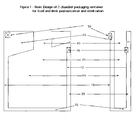
- the packaging consists of a flexible container with an first internal chamber (10) and an second internal chamber (20) connected by a capillary (55) formed by the selective seaming of the packaging as exemplified in Figure 1 .
- the first internal chamber (10) can be formed either as part of the onepiece which also forms the outside walls, floor and top of the overall package, or it can be a separate package heat welded to portions of the inside wall of the second internal chamber (15).
- the distal end of the first internal chamber (10) is connected to the proximal end of the capillary (55) through a two-way gas and float valve (45).
- the valve When the pressure of the first internal chamber reaches a pre-determined level, the valve will open and the excess pressure will be released. When the excess pressure has been released, the valve will start to close but gas can still flow back into first internal chamber until a pre-determined equilibration pressure is reached and the valve is shut.
- This valve also functions as a float valve. This ensures that any solid and/or liquid contents of the first internal chamber (10) do not escape into the capillary (55) and block the gas movement or pressure. When liquid tries to enter the air part of the valve, the floating seal is forced up to a flange and forms a liquid tight seal.
- the distal end of the capillary (55) opens into thesecond internal chamber (20) of the packaging which functions principally as an expansion chamber for the gaseous volume of the package contents. However, it also serves as a method of purging air and/or oxygen or any other unwanted gaseous component from the packaging.
- the distal end of the second internal chamber connects with a simple one-way valve (50) which connects the second internal chamber with the outside atmosphere. When gaseous pressure builds up inside the second internal chamber and reaches a pre-determined value, the valve opens and the excess pressure is released.
- the inner valve is not required as the shape of the package neck (30) where it adjoins the proximal end of the capillary together with product viscosity will prevent expansion of the contents of the first internal chamber into the second internal chamber while allowing sufficient air/gas to be discharged to the second internal chamber or the outside without package failure.
- the effective rate of energy transfer is determined by the energy transfer capabilities of the product and the energy transfer properties of the product packaging together with the total energy availability and the temperature differential. Once the foodstuff is packed and the pack sealed, these parameters are fixed.
- the adaptive package allows the product to spread into a larger volume for processing ( Fig 1 ). Faster processing will occur when the product volume assumes a greater surface area to volume ratio.
- a consumer pack of typical dimensions of 15cm x 20cm x 2cm the pack has a capacity of 600ml. If 300ml of product are loaded into the pouch and sealed, then the product volume will fill the bottom half of the pouch and assume dimensions of 15cm x 10cm x 2cm. This gives a volume of 300ml and a surface area of 340cm2, a ratio of 1.13.
- the remainder of the pouch will contribute little to energy transfer as it is devoid of product and acts minimally as a heat conductor or convector.
- the second internal chamber lining has preferred dimensions which are typically between 0.5cm and 50cm greater length and breadth compared with those of the first internal chamber and between 0.1 cm and 10cm greater depth.
- length and breadth dimensions are between 1.5cm and 20cm longer than those of the first internal chamber and between 0.5cm and 5cm greater depth.
- the limiting valve (45) is not present, the contents can fill both the first internal and second internal chambers and if the pack is orientated on its side, the product will spread and assume a dimension of 18cm x 13cm x 0.8cm so a surface area of almost 500cm2, a ratio of 1.6.
- a typical can of the same dimension has a ratio of 0.78 and a similar bottle of 0.83. Even if limiting valve (45) is present, the ratio will rise in excess of 1.5
- Containers such as metal cans, glass bottles and jars will withstand the high temperatures and pressures of retorting and in-container sterilization but only because they are thick walled, relatively heavy, rigid and generally inflexible.
- their geometric shapes are relatively simple and limited, such as flat or tapered cylinders, and the rate of heat transfer is relatively slow and uneven due principally to a low surface area to volume ratio and minimal temperature differential.
- combining the design of the additional space within the adaptive package with the enhanced agitation methods described in US Patent Application 61/488,220 further enhances the mixing of the product components and enhances the rate of energy transfer.
- containers are rigid and/or inflexible
- the only practical method of improved product mixing and thus enhanced energy transfer is container agitation.
- additional mixing of the product can be generated by physically contacting the external surfaces of the container and inducing movement of the internal contents.
- the act of trapping the package will cause the contents of the packaging to be moved forward or backward within the packaging, depending on the direction of motion of the conveyors receiving the package.
- This mixing motion can be repeated many times as the packaging moves through the system.
- the headspace volume and thus the gas content of any food or drink product is fixed once the container is filled and the cap or lid applied.
- the headspace is required to allow the contents to be mixed either passively through convection and conduction or actively, and more effectively, through agitation while the cap/lid remains in place.
- this creates a number of issues.
- the second internal chamber valve (50) is a one-way pressure valve
- the other (45) is a two-way valve.
- one valve (45) is located between the first internal chamber of the package and the duct/capillary connecting the first internal chamber to the second internal chamber; the second valve (50) is located in the vertical surface of the second internal chamber of the package, in any of the wall surfaces. It is a further preferred embodiment that the location of this second valve is positioned so as not to hinder the subsequent location and formation of an easy-open seal, a further embodiment described later.
- valves While the use of seals to alleviate pressure build-up is well known ( US 7178555 , Engel), the purpose of adding valves to this package is to enable the manufacturer to modify the volume of the head space to best suit both the product and the packaging application. We have surprisingly found that the need for one, both or neither of the valves is very dependent upon both these requirements.
- the inner valve (45) is not required and the headspace volume can be manufacturer controlled using the outer valve (50) alone.
- the inner valve is designed so that air/gas can continue to pass through the valve unhindered as the product expands. If liquid enters the valve, the floating valve seating rises and seals the valve. As the pressure falls and the liquid or liquid/particulate volume shrinks, the valve reopens to air/gas movement and equilibration of the first internal package chamber can occur.
- Example 1 A more detailed explanation is given with Example 1.
- either or both valves can be treated with suitable chemical or physical indicators (approved by regulatory bodies for food use) that visibly indicate whether the package has leaked such as water penetrating into the package or product contents have escaped from the package and/or air has leaked into the package.
- suitable chemical or physical indicators approved by regulatory bodies for food use
- visibly indicate whether the package has leaked such as water penetrating into the package or product contents have escaped from the package and/or air has leaked into the package.
- suitable chemical or physical indicators approved by regulatory bodies for food use
- valves has been designed to modify the headspace volume and pressure in both the first internal and second internal chambers of the packaging and for preventing liquids and solids escaping from the first internal chamber to the second internal.
- Oxidation reactions can occur and/or be catalysed in many ways including but not limited to the presence light, temperature, enzymic reaction, microbial growth and/or the process of auto-oxidation, especially prevalent in proteins where the reaction is a chain reaction that is self-perpetuating and continues until all the available oxygen has been exhausted.
- a small pellet of carbon dioxide is added to the contents of the first internal package chamber via the neck (30). If the product is liquid or predominantly a liquid with particulates, the CO2 pellet is added after the product has been filled into its packaging and immediately prior to sealing. If the product is predominantly solid, we have found that adding the CO2 pellet before the container contents, results in a more efficient purge of air from the package.
- the carbon dioxide pellet changes state from solid to gas and the now sublimated gas permeates from the first internal package chamber through the inner two-way valve (45-if present) along the capillary chamber (55) into the second internal package chamber. If the pressure exceeds that required for the package, the excess pressure is relieved through the opening of the outer valve (50).
- the rising temperature that occurs during pasteurization and, more preferably, during sterilization also causes oxygen and/or air to be driven from the product. It is also known that oxygen can become trapped between the layers of multi-laminate films. The carbon dioxide atmosphere surrounding the product forces this air away from the product and further reduces the potential for product oxidation.
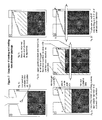
- the outer package can be additionally sealed at any suitable point below the location of the outer valve (50), see Figure 2d , at B-B'. This will further ensure that the package contents remain sterile during and after processing.
- the additional sealing occurs after the package has been subjected to a gentle compression of its outer walls by any suitable mechanism, more preferentially a roller to create a small negative gas pressure within the package.
- outer valve (50) can be replaced with a simple exit hole to the outside. For optimum flexibility, this will be located as far away from the distal end of the capillary (55) as is practical for the product/container combination.
- the concept of the 'pillow pack' is also well-known: (this is where the addition of a modified or controlled atmosphere through gas flushing adds a layer of air/gas between the product and the packaging walls).
- the main reason for this is to add an excess of gas to slow down the rate of any product deterioration due to the oxygen transmissibility of the packaging film.
- This increases the pressure within the pack there is a greater chance of puncture or seam failure.
- the dual chamber design of the pack together with the carbon dioxide atmosphere provides a protective buffer between the product contents in the first internal chamber and the second internal package chamber without the need for excessive gas pressure. It also allows thinner films to be used without increasing the risk for pack failure, thus reducing packaging costs.
- the two materials can be created as a heat formed laminate.
- the inner layer is composed of a suitable high temperature polymer approved for food use such A-PET, C-PET or PEN, especially resilient to high acid foods.
- This is laminated to an outer layer of Aluminum foil which may or may not be additionally treated to prevent high acid foods from reacting with the Aluminum, while the necessary structural shape of the bag and the seals are easily created by heat sealing and/or seaming.
- An alternative to the Aluminum layer is treated reinforced regenerated cellulose (as detailed in US Patent Application 61/182731 to Newman). As detailed in that application, the cellulose can be treated both during manufacture and afterward to modify its moisture, gas and light permeability to optimally suit the product requirements. Regenerated reinforced cellulose is considerably cheaper than Aluminum to manufacture and totally biodegradable. It also has lower costs to produce any required package artwork.
- the first internal chamber is comprised of a separate suitable high temperature polymer approved for food use with the valve embedded at a suitable location which will vary according to product volume and product composition, particularly liquid to solid ratio but its general location is in agreement with that shown in Figure 1 .
- the first internal chamber is secured to the second internal chamber by means of heat seals around its perimeter which also create the capillary to connect to the second internal chamber. This arrangement works well for retail size packages, typically from 25ml to 2.5I.
- the same configuration and construction methods are used, except that the first internal chamber is only sealed to the second internal chamber to a point (22) which is approx 5cm beyond the interface of the bottom wall of the first internal chamber and its right hand side wall (20).
- the first internal chamber is only sealed to the second internal chamber to a point (22) which is approx 5cm beyond the interface of the bottom wall of the first internal chamber and its right hand side wall (20).
- embedding a resealable seal such as found in ZiplocTM or similar bags, so that the resealable seal is positioned below heat seal A-A' and spanning at least the neck of the first internal chamber (30) and affixed into the walls of the second internal chamber (20), allows the bag to be cut above C-C' but below A-A', exposing the contents of the first internal chamber (10) for emptying through the original neck (30) but allowing the bag to be resealed along C-C' if residual contents remain.
- a resealable seal such as found in ZiplocTM or similar bags
- Maintaining the original loading 'neck' of the package allows the package to have both a usable opening for unloading the contents of the package as well as preserving any residual content without the need for inserting a separate neck, spout, tap or filler cap to the package - a major cost and high-speed construction and production constraint for previous similar packaging products.
- All of the preferred materials irrespective of whether the package is comprised of one or two separate containers, whether the metalized component is surface treated and/or laminated, and/or whether the non-metalized components are polyethylene or polypropylene based materials in laminated or non-laminated format, are all fully recyclable and/or reusable. If regenerated cellulose is used, such material is totally biodegradable.
- Taste panel results indicate that when identical product, processed in either conventional ICS packaging, or conventional retort packaging or the novel 'adaptive' packaging described in this patent application, are compared, the organoleptic quality of product processed in the adaptive packaging has significantly higher approval ratings compared with conventional processing packaging.
- Taste panel results indicate that when identical product is processed in either conventional ICS packaging, or conventional retort packaging or the novel 'adaptive' packaging described in this patent application and the processed product held under identical storage conditions (e.g. non-refrigerated warehouse at 10°C -15°C), are compared, the organoleptic quality of product processed and stored in the adaptive packaging has significantly higher approval ratings compared with conventional processing packaging.
- Instrumental measurements of indicator oxidation products (Table 4) are in agreement with Taste Panel results.
- the products can be the same, e.g. 2 separate portions of sauce or juice, or they can be different, e.g. meal components such as pasta and sauce or vegetables and a gravy.
- the dimensions of the adaptive package are modified so that those of second internal chamber are increased to ensure that the package can accommodate the required portion size of the second food component. This is achieved by extending the outer vertical wall closest to the outer valve (50) sufficient for purpose. This also forms a suitable filling neck for the second internal chamber. This will be sealed when the package is sealed with the heat seam at B-B'.
- the angle of vertical seam of the inner wall (15B) closest to the outer valve (50) is changed from vertical (with reference to the bottom wall of the package) to an acute angle, preferably 45° to 89° with reference to the bottom wall of the package.
- the distal end of the capillary within the second internal chamber is shortened to accommodate the increased volume. It is essential that the capillary outlet is not blocked or the escape of pressurized gas/air/CO2 hindered. Controlling the obtuse angle formed ensures that no product can cover the distal end of the now shortened capillary. It is obvious to those skilled in the art that the particle size of suitable food components for this dual fill can vary enormously. Therefore, the acute angle needed to best suit purpose will similarly vary, as will package dimensions.
- Example 1 Use of the Adaptive Package with a single component foodstuff
- a volume (500ml) of chicken noodle soup with vegetables (at 60°C) is charged into the first internal chamber (10) of the package through the open neck of the package (30).
- a small pellet (88) of solid Carbon Dioxide (0.25-0.50g) is added to the package. This rapidly sublimes into gaseous CO2.
- the package is then heat sealed at the lower part of the neck (30) along the plane A-A'. This seals the package contents from the immediate outside.
- the sublimed CO2 causes the first internal chamber to inflate. Once the first internal chamber reaches a pre-determined level, typically between 1,4-2,1 bar (20-30psi), the inner valve (45) opens and the excess gas pressure is vented along the capillary (55) into the second internal chamber (20) which also inflates.
- the outer valve (50) opens and the excess pressure is vented to the atmosphere.
- the contents are agitated within the package by any suitable means, typically, a pair of rollers make contact with the outer walls (15) of the package at a suitable location. This location varies with package size, product volume and composition but is usually sufficiently below the top level of the product so that when the roller pressure is applied, a small amount of liquid is trapped above the rollers.
- the package is now gently rolled in a vertical motion to a point close to the left edge of the seam (A).
- This rolling motion has two effects. It ensures that the internal pressure within the first internal chamber is close to atmospheric. It also ensures that any residual air/oxygen or other unwanted gaseous components are pushed out of the first internal chamber through valve (45) and capillary (55) into second internal chamber (20).
- Example 2 Use of the Adaptive Package with dual component foodstuffs
- a volume (200ml) of cheese sauce (at 50°C) is charged into the first internal chamber (10) of the package through the open neck to the first internal chamber of the package (30).
- a volume (300g) of gnocchi (at 50°C) is charged into the second internal chamber (20) of the package through the open neck of the second internal chamber of the package.
- a small pellet (88) of solid Carbon Dioxide (0.25g-0.50g) is added to the first internal chamber of the package. This rapidly sublimes into gaseous CO2.
- the package is then heat sealed at the lower part of the first internal chamber neck (30) and the second internal chamber neck along the plane A-A'. This seals the first internal chamber contents from the immediate outside.
- the subliming CO2 causes the first internal chamber to slowly inflate. Once the first internal chamber reaches a pre-determined level, typically between 1,4-2,1 bar (20-30psi), the inner valve (45) opens and the excess gas pressure is vented along the capillary (55) into the second internal chamber (20) which also inflates.
- the outer valve (50) opens and the excess pressure is vented to the atmosphere.
- the package is then agitated by any suitable means.
- a pair of rollers now make contact with the outer walls (15) of the package at a suitable location. This location varies with package size, product volume and composition but is usually sufficiently below the top level of the product so that when the roller pressure is applied, a small amount of liquid is above the rollers.
- the package is now gently rolled in an upward and vertical motion to a point close to the left edge of the seam (A). If the product in the second internal chamber is a solid or a particulate that would be organoleptically damaged by the application of pressure rollers, then the rollers only make contact with the liquid contents in the first internal chamber.
- This rolling motion has two effects. It ensures that the internal pressure within the first internal chamber is reduced closer to atmospheric. It also ensures that any residual air/oxygen or other unwanted gaseous component is pushed out of the first internal chamber through valve (45) and capillary (55) into second internal chamber (20).
- a second heat seam is applied horizontally across the whole of the package width along the plane B-B', immediately below the lower edge of the outer valve (50). This second seam intersects with the seam A-A' at A'.
- the package is now fully sealed from the outside atmosphere and processing environment.
- the sealed product package now has a controlled atmosphere effectively depleted of oxygen/air and a controlled gaseous volume so that during processing it will not be subjected to physical conditions that will cause puncture, burst or failure.
- the inner valve (45) can be omitted from the pack configuration. If there is a substantial difference in water activity or water content of a component then the inner valve (45) acts as a suitable barrier between the two.
- the water content/water activity of the second internal chamber foodstuff is also suitably low then there is no need for the outer valve (50) and the second internal chamber (20) can be vented to outside by means of a simple aperture/opening, usually at the furthest distance from the distal end of the capillary (55).
- maintaining at least a small positive pressure differential between the second internal chamber and the outside atmosphere appears to always enhance the organoleptic and keeping qualities of the foodstuff as well as the puncture resistance of the adaptive package.
Landscapes
- Engineering & Computer Science (AREA)
- Mechanical Engineering (AREA)
- Food Preservation Except Freezing, Refrigeration, And Drying (AREA)
- Packages (AREA)
Claims (13)
- Verpackungsanordnung für sowohl fließfähige als auch nicht-fließfähige Lebensmittel, welche imstande ist, Sterilisationstemperaturen und -drücken zu widerstehen, zumindest zwei Schichten umfassend, welche eine Einfassung ausbilden, welche zumindest zwei separate Öffnungen aufweist, wobei jede davon von der Außenseite zu einer inneren Kammer führt; wobei eine erste innere Kammer (10) mit einer zweiten inneren Kammer (20) oder mit der Außenseite durch eine interne Kapillare (55) verbunden ist, wobei die ersten und zweiten internen Kammern (10, 20) jeweils einen Mechanismus zum Steuern der Bewegung von Festkörpern, der Strömung von Flüssigkeit, der Strömung von Gas, der Menge von Gas und der Zusammensetzung von Gas sowohl innerhalb der Kammern der Verpackung und/oder zwischen der Verpackung und der Außenseite sowohl während als auch nach dem Versiegeln der Verpackung enthält,
dadurch gekennzeichnet, dass
der Steuermechanismus zwischen der zweiten internen Kammer (20) und der äußeren Atmosphäre ein Ein-Wege-Ventil (50) beherbergt. - Verpackungsanordnung gemäß Anspruch 1, wobei die ersten und zweiten internen Kammern (10, 20) gemeinsame Wandoberflächen aufweisen.
- Verpackungsanordnung gemäß einem der vorhergehenden Ansprüche, wobei die Mechanismen zum Steuern der Bewegung von Festkörpern, Flüssigkeitsströmung, Gasströmung, Gasmenge und Gaszusammensetzung aktiv oder passiv sind.
- Verpackungsanordnung gemäß einem der vorhergehenden Ansprüche, wobei ein Steuern der Gaszusammensetzung der Verpackung vorzugsweise Produktoxidationsbedingungen während einer Verarbeitung und folgender Lagerung reduziert oder eliminiert.
- Verpackungsanordnung gemäß einem der anderen vorhergehenden Ansprüche, wobei der Steuermechanismus zwischen der ersten internen Kammer (10) und Kapillare (55) des Gehäuses ein Zwei-Wege-Ventil beherbergt.
- Verpackungsanordnung gemäß einem der vorhergehenden Ansprüche, wobei die Steuermechanismen unabhängig voneinander Gas- und Flüssigkeits-/Festkörperbewegung zwischen den internen Kammern (10, 20) und zwischen den internen Kammern (10, 20) und der äußeren Atmosphäre steuern.
- Verpackungsanordnung gemäß einem der vorhergehenden Ansprüche, wobei die Einfassung, die erste interne Kammer (10), die Kapillare (55) und die zweite interne Kammer (20) darin im Wesentlichen von einem einzigen Stück von Verpackungsmaterial abgeleitet sind.
- Verpackungsanordnung gemäß einem der vorhergehenden Ansprüche, wobei die erste interne Kammer (10) und zweite interne Kammer (20) mit Kapillare (55) anfänglich separat ausgebildet und dann an jeder anderen Schicht, welche die Verpackungsanordnung aufweisen mag, angebracht wird.
- Verpackungsanordnung gemäß einem der vorhergehenden Ansprüche, wobei eine oder mehrere der internen Kammern (10, 20) nach einem Öffnen unabhängig voneinander wieder verschließbar sind.
- Verfahren zum Verpacken und Verarbeiten eines Lebensmittels in einer anpassungsfähigen Verpackungsanordnung gemäß einem der vorhergehenden Ansprüche, umfassend:a) Ausbilden der anpassungsfähigen Verpackung gemäß einem der vorhergehenden Ansprüche aus zumindest einer Schicht eines einzigen Stücks eines geeigneten Verpackungsmaterials, so dass zumindest zwei separate Öffnungen zu der Außenseite enthalten sind, welche jeweils separat mit einer oder mehreren internen Kammern (10, 20) verbunden sind;b) Verbinden zumindest einer internen Kammer mit zumindest einer anderen durch eine oder mehrere interne Kapillaren (55) ;c) nach Bedarf Anbringen eines oder mehrerer Ventile (45, 50) an Schnittstellen zwischen internen Kammern (10, 20), insbesondere zwischen entweder der ersten internen Kammer (10) und dem proximalen Ende der Kapillare (55) und/oder der zweiten internen Kammer (20) in einigem Abstand jenseits des distalen Endes der Kapillare (55);d) Befüllen zumindest einer Kammer (10) mit einer Portion Lebensmittel;e) Hinzufügen einer Portion modifizierenden Gases zu der Portion in einer geeigneten Form;f) Verschließen der Kammer (10) an ihrer Öffnung durch einen Verschluss entlang eines vorgegebenen Pfades;g) nach Erfordernis jeweils Befüllen jeglicher weiterer Kammern (20) mit einer Portion Lebensmittel ;h) Verschließen der zweiten internen Kammer (20) an ihrer Öffnung durch einen Verschluss entlang eines vorgegebenen Pfades;i) wobei ein äußerer Druck auf die Außenseite der Verpackungsanordnung ausgeübt wird, um jede erforderliche Gasmenge von der ersten internen Kammer (10) entlang der Kapillare (55) in die zweite interne Kammer (20) zu verlagern;j) wobei bei allen Verpackungen ein weiterer äußerer Druck auf die Außenseite der Verpackungsanordnung ausgeübt wird, um jede erforderliche Gasmenge von der zweiten internen Kammer (20) nach außen zu zwingen;k) Verschließen der zweiten internen Kammer an ihrer Öffnung durch einen Verschluss entlang eines vorgegebenen Pfades;l) Verladen der Verpackungsanordnung in ihre Verarbeitungsumgebung.
- Verfahren gemäß Anspruch 10, zusätzlich umfassend:m) Ausüben zusätzlichen Drucks und zusätzlicher Steuerung auf die Verpackungsanordnung in ihrer Verarbeitungsumgebung, um Gasdruck, Gasdruckverteilung und Gaszusammensetzung weiter zu steuern.
- Verfahren gemäß Anspruch 10 oder 11 mit einem zusätzlichen, dem Schritt a) vorhergehenden Schritt, wobei die erste innere Kammer (10) aus demselben Verpackungsmaterial separat ausgebildet ist und dann an der vorgeformten zweiten internen Kammer (20) und Kapillare (55) angebracht ist.
- Verfahren gemäß Anspruch 10, 11 oder 12 ohne Schritt g), sodass nur eine Kammer (10) befüllt wird und alle anderen leer an Lebensmitteln bleiben.
Applications Claiming Priority (1)
| Application Number | Priority Date | Filing Date | Title |
|---|---|---|---|
| US201161478190P | 2011-04-22 | 2011-04-22 |
Publications (2)
| Publication Number | Publication Date |
|---|---|
| EP2514686A1 EP2514686A1 (de) | 2012-10-24 |
| EP2514686B1 true EP2514686B1 (de) | 2015-07-29 |
Family
ID=45999687
Family Applications (1)
| Application Number | Title | Priority Date | Filing Date |
|---|---|---|---|
| EP12164764.8A Not-in-force EP2514686B1 (de) | 2011-04-22 | 2012-04-19 | Anpassungsfähige Verpackungsanordnung für Lebensmittel und Verfahren zum Verpacken und Verarbeiten von Lebensmitteln in dieser anpassungsfähigen Verpackungsanordnung |
Country Status (2)
| Country | Link |
|---|---|
| US (1) | US10252852B2 (de) |
| EP (1) | EP2514686B1 (de) |
Family Cites Families (141)
| Publication number | Priority date | Publication date | Assignee | Title |
|---|---|---|---|---|
| US1419139A (en) | 1920-12-07 | 1922-06-13 | Robert L Hunter | Continuous pressure cooker |
| US1868996A (en) | 1930-04-14 | 1932-07-26 | Sharp Paul Francis | Method of egg preservation |
| US1923421A (en) | 1931-01-19 | 1933-08-22 | Frank D Chapman | Process of heat treating substances |
| US2556385A (en) | 1947-10-21 | 1951-06-12 | Allan Edwin | Apparatus for treating vegetables with hot water and steam |
| US2660512A (en) | 1948-02-06 | 1953-11-24 | R W Webster And Company Ltd | Method and apparatus for controlling the liquid seals on steam sterilizers |
| US2595708A (en) * | 1948-09-01 | 1952-05-06 | Ivers Lee Co | Vented package |
| US2633284A (en) * | 1949-03-28 | 1953-03-31 | Howard J Moffett | Sealed cooking container for comestibles |
| US2806423A (en) | 1954-02-17 | 1957-09-17 | Stork & Co Nv | Apparatus for sterilizing and pasteurizing goods in containers |
| US2968232A (en) | 1954-09-28 | 1961-01-17 | Carvallo Pierre | Apparatus for the heat treatment of products in sealed containers |
| US2818012A (en) | 1954-11-04 | 1957-12-31 | R W Webster And Company Ltd | Sterilising machines and the like |
| US2870954A (en) * | 1956-05-15 | 1959-01-27 | Reynolds Metals Co | Vacuum package |
| US2976988A (en) * | 1957-06-25 | 1961-03-28 | William S Schneider | Unit dispensing container |
| US3088180A (en) | 1960-04-29 | 1963-05-07 | Wilmot Castle Co | Method for the controlled reduction of temperature in a sterilizing chamber |
| BE649640A (de) | 1963-06-26 | |||
| GB1082838A (en) | 1964-09-11 | 1967-09-13 | Stork & Co Nv | A device for the heating under pressure of commodities packed in containers |
| FR1454040A (fr) | 1965-08-20 | 1966-07-22 | Perfectionnements aux appareils stérilisateurs-refroidisseurs continus opérant sous pression hydrostatique | |
| NL135223C (de) | 1966-08-08 | |||
| US3394793A (en) | 1967-02-10 | 1968-07-30 | Fmc Corp | Hydrostatic cooker conveyor |
| US3469988A (en) | 1967-06-21 | 1969-09-30 | Fmc Corp | Continuous process for cooking food contained in hermetically sealed glass containers |
| US3495523A (en) | 1967-08-03 | 1970-02-17 | Int Machinery Corp | Rotary pressure cooker |
| US3545985A (en) | 1969-02-20 | 1970-12-08 | Int Machinery Corp | Double chain hydrostatic cooker and sterilizing process |
| US3637132A (en) * | 1970-01-09 | 1972-01-25 | Oscar S Gray | Pressure release package or container |
| US3927976A (en) | 1973-09-26 | 1975-12-23 | Fmc Corp | Containerized hydrostatic sterilizing system |
| NL7505435A (nl) | 1975-05-07 | 1976-11-09 | Stork Amsterdam | Installatie voor het thermisch behandelen van in houders verpakte waren. |
| US3960670A (en) | 1975-09-02 | 1976-06-01 | Pflug Irving J | Method and apparatus for sterility monitoring |
| US4067691A (en) | 1976-04-16 | 1978-01-10 | Mercy Hospital And Medical Center | Sterilizing system and automatic control therefor |
| US4196225A (en) | 1977-02-10 | 1980-04-01 | Fmc Corporation | Continuous pressure cooker and cooler with controlled liquid flow |
| JPS5811912B2 (ja) | 1977-12-27 | 1983-03-05 | 武田薬品工業株式会社 | プラスチツク金属箔複合包装材用接着剤組成物 |
| US4389371A (en) | 1979-09-14 | 1983-06-21 | Basf Wyandotte Corporation | Process for inhibiting the corrosion of aluminum |
| CA1155271A (en) | 1980-03-31 | 1983-10-18 | Dai Nippon Insatsu Kabushiki Kaisha | Method and apparatus for sterilizing food packages or the like |
| US4295566A (en) * | 1980-05-07 | 1981-10-20 | Becton, Dickinson And Company | Air-evacuated package with vacuum integrity indicator means |
| US4522015A (en) | 1980-12-31 | 1985-06-11 | Campbell Soup Company | Phased aseptic sterilization and packaging process and system |
| US4547383A (en) | 1983-06-07 | 1985-10-15 | Campbell Soup Company | Continuous food sterilization system with hydrostatic sealed treatment chamber |
| US4476263A (en) | 1983-11-23 | 1984-10-09 | Scm Corporation | Adhesion promoters for sanitary can coatings |
| US4631115A (en) | 1985-07-08 | 1986-12-23 | Lloyd Berg | Dehydration of ethanol by extractive distillation |
| JPS62146128A (ja) | 1985-12-16 | 1987-06-30 | ハウス食品工業株式会社 | 殺菌充填装置 |
| US4816269A (en) | 1986-08-14 | 1989-03-28 | Steeltin Can Corporation | Process of pasteurizing or sterilizing edible foodstuffs |
| US4739699A (en) | 1986-08-14 | 1988-04-26 | Steeltin Can Corporation | Apparatus for pasteurizing or sterilizing edible foodstuffs |
| NL8603158A (nl) | 1986-12-11 | 1988-07-01 | Baxter Travenol Lab | Werkwijze, installatie en transportbak toe te passen in een beladingssysteem voor kunststofzakken. |
| AU634724B2 (en) | 1988-10-03 | 1993-03-04 | Donald Cook's (Proprietary) Limited | Method of pasteurizing and aseptically packaging food pieces,and installation therefor |
| US4990347A (en) | 1989-03-10 | 1991-02-05 | The Pillsbury Co. | Heat processing of viscous food materials in rotating cans |
| DE3922802A1 (de) * | 1989-07-11 | 1991-01-24 | Becker Rolf | Aufblasbarer folienbeutel, insbesondere fuer verpackungszwecke und verfahren zu dessen herstellung |
| US5160755A (en) | 1990-01-26 | 1992-11-03 | Campbell Soup Company | Canned product sterilizing process |
| US5141662A (en) | 1990-02-15 | 1992-08-25 | Dexheimer Edward M | Heat transfer fluids comprising oxyalkylenated polyols |
| JP3063224B2 (ja) | 1991-05-17 | 2000-07-12 | 松下電器産業株式会社 | 調理器 |
| US5283033A (en) | 1991-11-29 | 1994-02-01 | Advanced Retort Systems, Inc. | Process for sterilizing the contents of a sealed deformable package |
| US5307985A (en) * | 1991-12-17 | 1994-05-03 | Societe De Constructions De Materiel Metallique Et Electrique | Container and process for its manufacture |
| US5218829A (en) | 1992-03-10 | 1993-06-15 | Campbell Soup Company | Flexible hydrostatic cooling tower for continuous cooker |
| US5484547A (en) | 1992-04-01 | 1996-01-16 | The Dow Chemical Company | Low temperature heat transfer fluids |
| US5368093A (en) | 1992-11-25 | 1994-11-29 | Sanwa Life Cela Kabushiki Kaisha | Thawing device for frozen foods |
| US5370174A (en) | 1993-06-02 | 1994-12-06 | Oak Park International, Ltd. | Method and apparatus for agitating and thermally conditioning filled containers |
| WO1995002335A1 (en) | 1993-07-15 | 1995-01-26 | Gazelle Foods Pty. Ltd. | Treatment of an edible product with humectants |
| US5478990A (en) | 1993-10-14 | 1995-12-26 | Coleman Environmental Systems, Inc. | Method for tracking the production history of food products |
| GB9325037D0 (en) | 1993-12-07 | 1994-02-02 | Newman Paul B D | A grading and quality control system for meat cuts |
| KR100193465B1 (ko) * | 1993-12-28 | 1999-06-15 | 가타야마 도루 | 포장용구 |
| EP0749696B1 (de) | 1994-03-04 | 2003-05-14 | Ono Foods Industrial Co., Ltd. | Kocheinrichtung für inertgas enthaltende lebensmittel |
| US5696686A (en) | 1994-06-10 | 1997-12-09 | Johnson & Johnson Vision Products, Inc. | Computer system for quality control correlations |
| GB9420650D0 (en) | 1994-10-13 | 1994-11-30 | Metal Box Plc | Thermal processing method and apparatus for use with packaging containers |
| US6090425A (en) | 1995-01-27 | 2000-07-18 | Samimi; Mohammad H. | Egg processing system and method of using same to extend the refrigerated shelf life of liquid egg product |
| US5685216A (en) | 1995-07-21 | 1997-11-11 | Fmc Corporation | Continuous vessel deflection monitor device |
| US5872359A (en) | 1995-07-27 | 1999-02-16 | American Sterilizer Company | Real-time monitor and control system and method for hydrogen peroxide vapor decontamination |
| US5759486A (en) | 1996-03-27 | 1998-06-02 | Bill F. McGraw, Trustee | Apparatus and method for sterilization of instruments |
| EP0808631A1 (de) | 1996-05-24 | 1997-11-26 | Intermedical S.A.H. | Messeinrichtung zum Überwachen von Sterilisationsbedingungen |
| US6086782A (en) | 1996-07-02 | 2000-07-11 | Advanced Fluid Technologies, Inc. | Heat transfer fluid compositions for low temperature applications |
| GB9615057D0 (en) | 1996-07-18 | 1996-09-04 | Newman Paul B D | Identification and tracking of carcasses and primal cuts of meat |
| WO1998007452A1 (en) | 1996-08-21 | 1998-02-26 | Sulzer Vascutek Limited | Method of sterilising material for implantation |
| DK173834B1 (da) | 1996-08-23 | 2001-12-03 | Atlas Stord Denmark As | Fremgangsmåde og apparat til sterilisering og/eller varmebehandling af produkter på partikelform |
| US6025189A (en) | 1997-05-14 | 2000-02-15 | 3M Innovative Properties Company | Apparatus for reading a plurality of biological indicators |
| EP0887285B1 (de) * | 1997-06-19 | 1999-09-01 | Hisao Kai | Beutel zur Vakuumverpackung sowie Verfahren zum Vakuumverpacken |
| US6096358A (en) | 1997-10-08 | 2000-08-01 | Abbott Laboratories | Method of manufacturing an aseptically sterilized package containing a liquid nutritional product |
| US6017572A (en) | 1998-09-17 | 2000-01-25 | Meyer; Richard S. | Ultra high pressure, high temperature food preservation process |
| CA2284354A1 (en) | 1998-10-01 | 2000-04-01 | Lowen Robert Morrison Jr. | Compositions, methods, and articles for treating footing material in a performance arena |
| US6472008B2 (en) | 1998-11-06 | 2002-10-29 | Fmc Technologies, Inc. | Method for administering and providing on-line correction of a batch sterilization process |
| US6416711B2 (en) | 1998-11-06 | 2002-07-09 | Fmc Technologies, Inc. | Controller and method for administering and providing on-line handling of deviations in a rotary sterilization process |
| US6440361B2 (en) | 1998-11-06 | 2002-08-27 | Fmc Technologies, Inc. | Controller and method for administering and providing on-line handling of deviations in a hydrostatic sterilization process |
| EP1008443A1 (de) | 1998-12-08 | 2000-06-14 | Alusuisse Technology & Management AG | Sterilisierbarer Folienverbund für Verpackungszwecke |
| US20030211212A1 (en) | 1998-12-21 | 2003-11-13 | Belongia Larry P. | Method and apparatus for providing heat exchange with continuous stream of containers |
| US6251337B1 (en) | 1999-09-13 | 2001-06-26 | Acton Materials, Inc. | Apparatus and method for treating a particulate material within a rotating retort |
| US6350482B2 (en) | 1999-12-15 | 2002-02-26 | Biosteam Technologies, Inc. | Apparatus and method for food microbial intervention and pasteurization |
| US6389828B1 (en) | 2000-03-15 | 2002-05-21 | Michael R. Thomas | Cryogenic cooling chamber apparatus and method |
| AU2001274592B2 (en) | 2000-06-23 | 2006-03-02 | Tetra Laval Holdings & Finance S.A. | Method for filling, apparatus for filling, and container for filling and packaging |
| US20020033470A1 (en) | 2000-07-19 | 2002-03-21 | Evans John W. | Non-aqueous heat transfer fluid and use thereof |
| US7178555B2 (en) | 2000-11-03 | 2007-02-20 | Plitek, Llc | Pressure relief valve |
| GB0027673D0 (en) | 2000-11-13 | 2000-12-27 | Apv Ltd | Product treatment apparatus |
| EP1397461A1 (de) | 2001-03-10 | 2004-03-17 | Evans Cooling Systems, Inc. | Toxizitätreduzierte ethylenglykolbasierende gefrierschutz- bzw. wärmeaustauschmittelkonzentrate und gefrierschutz- bzw. wärmeaustauschmittel |
| US6557462B1 (en) * | 2001-12-28 | 2003-05-06 | Wang Soo Chang | Combined vacuum valve and vacuum indicator |
| DE50209772D1 (de) | 2002-04-17 | 2007-05-03 | Wipf Ag | Ventilverpackung und Verfahren für die Pasteurisation von Lebensmitteln |
| GB0210377D0 (en) | 2002-05-07 | 2002-06-12 | Newman Paul B D | Treatment of vegetable foodstuffs |
| GB0219498D0 (en) | 2002-08-21 | 2002-10-02 | Newman Paul B D | Aseptic production of foodstuffs |
| WO2004074397A1 (ja) | 2003-01-29 | 2004-09-02 | Fukutani, Kikuko | 不凍液、及びそれに用いうる防錆剤 |
| WO2005017063A2 (en) | 2003-08-07 | 2005-02-24 | Daly Glendon C | Heat transfer fluid |
| CA2477824A1 (en) | 2003-08-13 | 2005-02-13 | Mars Incorporated | Method and apparatus for continuous processing of packaged products |
| EP1690144B1 (de) | 2003-11-28 | 2011-06-29 | Marel HF. | Verfahren und system zum verfolgen von nahrungsmittelartikeln |
| US20050253109A1 (en) | 2004-05-14 | 2005-11-17 | Tran Bo L | Product for dust control and freeze control |
| FR2871383B1 (fr) | 2004-06-14 | 2006-12-08 | Patrice Camu | Procede de pasteurisation ou de sterilisation et son dispositif de mise en oeuvre |
| JP4271095B2 (ja) | 2004-07-15 | 2009-06-03 | 東京エレクトロン株式会社 | 基板加熱装置及び基板加熱方法 |
| US7985349B2 (en) | 2004-09-08 | 2011-07-26 | Honeywell International Inc. | Non-conductive colored heat transfer fluids |
| WO2006073909A2 (en) | 2005-01-03 | 2006-07-13 | Mackay Jeffrey H | Tunnel for conditioning of products, especially for sterilization of food in prepackaged containers |
| DK1859002T3 (da) | 2005-02-28 | 2011-07-25 | Basf Se | Glycerinholdige antifrostmiddelkoncentrater med korrosionsbeskyttelse |
| GB0512889D0 (en) | 2005-06-24 | 2005-08-03 | Steamfast Europ Ltd | Improvement in or relating to containers for cooking foodstuffs |
| JP4684026B2 (ja) | 2005-07-04 | 2011-05-18 | 越後製菓株式会社 | 食品加熱処理方法並びに食品加熱処理装置 |
| US7475786B2 (en) | 2005-08-03 | 2009-01-13 | Ppg Industries Ohio, Inc. | Can coatings, methods for coating can and cans coated thereby |
| GB2442432B (en) | 2005-08-19 | 2009-07-15 | Zinetec Ltd | Processing method and apparatus |
| TWI264415B (en) | 2005-11-30 | 2006-10-21 | Ind Tech Res Inst | Heat transfer fluids with heteroatom-containing nanocapsules |
| JP2007161807A (ja) | 2005-12-12 | 2007-06-28 | Hokkaido Nippon Yushi Kk | 液状凍結防止剤組成物 |
| US20070160494A1 (en) | 2006-01-06 | 2007-07-12 | Sands Daniel L | Autoclave system using rfid tags on a case and/or instruments |
| US20080011752A1 (en) * | 2006-07-12 | 2008-01-17 | Fusako Saitoh | Structure of check valve and vacuum sealing container for food and other objects |
| US20080048147A1 (en) | 2006-08-22 | 2008-02-28 | Sanimax Industries Inc. | Glycerin systems |
| DE602006008004D1 (de) | 2006-09-27 | 2009-09-03 | John Bean Technologies S P A | Verfahren und Vorrichtung zur Verpackung von Nahrungsmittel in vorverschweisste Beutel |
| GB2449288A (en) | 2007-05-18 | 2008-11-19 | Elizabeth Johnson | Pouch container with two compartments separated by a fluid-tight weak bond |
| US20100047403A1 (en) * | 2006-10-30 | 2010-02-25 | Elizabeth Johnson | Pouch container for food product |
| US20080107781A1 (en) * | 2006-11-06 | 2008-05-08 | Christopher Carroll | Food container |
| EP1930031A1 (de) | 2006-11-07 | 2008-06-11 | INDAG Gesellschaft für Industriebedarf mbH & Co. Betriebs KG | Verfahren zum Sterilisieren des Anschlussbereichs eines Bag-in-Tank Systems sowie eine entsprechende Anlage zum Sterilisieren |
| EP1964785B1 (de) | 2006-12-13 | 2015-08-26 | Cornelius Beverage Technologies Limited | Verpackung |
| WO2008093367A1 (en) | 2007-01-30 | 2008-08-07 | Verinox S.P.A. | System for pasteurising foodstuffs |
| CA2687894C (en) | 2007-06-05 | 2016-05-10 | Nestec S.A. | Capsule system, device and method for preparing a food liquid contained in a receptacle by centrifugation |
| US20080311259A1 (en) | 2007-06-15 | 2008-12-18 | Singh Prem S | High pressure pasteurization of liquid food product |
| US20080315152A1 (en) | 2007-06-22 | 2008-12-25 | Daly Glendon C | Heat transfer fluid |
| AR067384A1 (es) | 2007-06-29 | 2009-10-07 | Archer Daniels Midland Co | Proceso para desalar soluciones de glicerol y recuperacion de sustancias quimicas |
| RU2437587C2 (ru) | 2007-07-02 | 2011-12-27 | Бюлер Барт Аг | Способ поверхностной тепловой инактивации штучных пищевых продуктов со средним или низким содержанием воды |
| US20090022858A1 (en) * | 2007-07-20 | 2009-01-22 | Adam Pawlick | Food product and cooking apparatus |
| EP2177116A4 (de) | 2007-08-10 | 2015-04-22 | Toyo Seikan Kaisha Ltd | Verfahren zur sterilisierung eines flüssigen nahrungsmittels in einem beutel |
| US20090081417A1 (en) | 2007-09-20 | 2009-03-26 | M&Q Packaging Corporation | High temperature thermoformed webs for packaging and cooking of food products |
| US7919042B2 (en) | 2007-11-29 | 2011-04-05 | The Invention Science Fund I, Llc | Sterilization of consumable composition dispensers |
| US20090169693A1 (en) | 2007-12-27 | 2009-07-02 | Hoffman Karl K | Interior-mountable pressure relief valve |
| ITBO20080052A1 (it) | 2008-01-25 | 2009-07-26 | Carpigiani Group Ali Spa | Macchina e metodo per il trattamento di miscele alimentari liquide o semiliquide. |
| US20090301118A1 (en) | 2008-06-06 | 2009-12-10 | Chengjun Julian Chen | Solar-Powered Air Conditioning System Using a Mixture of Glycerin and Water to Store Energy |
| US8181474B2 (en) | 2008-06-06 | 2012-05-22 | Chengjun Julian Chen | Solar-powered air conditioner using a mixture of glycerin, alcohol and water to store energy |
| US7543455B1 (en) | 2008-06-06 | 2009-06-09 | Chengjun Julian Chen | Solar-powered refrigerator using a mixture of glycerin, alcohol and water to store energy |
| JP4993135B2 (ja) | 2008-07-08 | 2012-08-08 | 信越化学工業株式会社 | 熱伝導性シリコーン組成物 |
| US8771542B2 (en) | 2008-07-11 | 2014-07-08 | Prestone Products Corporation | Heat transfer fluid, additive package, system and method |
| DE102008037726A1 (de) | 2008-08-14 | 2010-05-06 | Khs Ag | Verfahren und Vorrichtung zur Wärmebehandlung von flüssigen Lebensmitteln |
| US7666457B1 (en) | 2008-08-19 | 2010-02-23 | Delavau Llc | Dry mixes comprising glycerine |
| US7880887B2 (en) | 2008-08-29 | 2011-02-01 | Phygen, Inc. | Apparatus and method for measuring the concentration of gases in a sterilization chamber |
| GB2462995B (en) * | 2008-09-02 | 2012-11-14 | Excelsior Technologies Ltd | Improved food packaging for use in microwave ovens |
| ITMI20081993A1 (it) | 2008-11-11 | 2010-05-12 | Francesco Mazzariello | Metodo ed impianto per la sanificazione di prodotti alimentari contaminati da micotossine |
| CN102348776A (zh) | 2009-02-13 | 2012-02-08 | 爱尔发加热有限公司 | 传热流体 |
| NL2002579C2 (nl) | 2009-02-27 | 2010-08-30 | Teeling Petfood B V | Hydrostatische sterilisatie-inrichting. |
| DE102009018489A1 (de) | 2009-04-22 | 2010-10-28 | Huhtamaki Ronsberg, Zweigniederlassung Der Huhtamaki Deutschland Gmbh & Co. Kg | Verpackung, insbesondere Mikrowellen-Verpackungsbeutel, mit Druckausgleichsventil mit variablen Strömungsquerschnitt |
| DE102010018489A1 (de) | 2010-04-28 | 2011-11-03 | Jost Wacker | Eingabevorrichtung |
| US9131729B2 (en) | 2011-09-28 | 2015-09-15 | Ics Solutions B.V. | Safe and efficient thermal transfer media for processing of food and drink products |
-
2012
- 2012-04-18 US US13/449,718 patent/US10252852B2/en active Active
- 2012-04-19 EP EP12164764.8A patent/EP2514686B1/de not_active Not-in-force
Also Published As
| Publication number | Publication date |
|---|---|
| US10252852B2 (en) | 2019-04-09 |
| EP2514686A1 (de) | 2012-10-24 |
| US20120267264A1 (en) | 2012-10-25 |
Similar Documents
| Publication | Publication Date | Title |
|---|---|---|
| US20050276885A1 (en) | Self-venting microwaveable pouch, food item, and method of preparation | |
| EP2077966B1 (de) | Beutelbehälter für lebensmittel | |
| US5958486A (en) | Food packaging and method for treating the same | |
| EP2106219B1 (de) | System und verfahren zum verpacken | |
| WO2010117835A1 (en) | Packaging with on-demand oxygen generation | |
| EP1131251A4 (de) | Verfahren zum verpacken in einer geänderten atmosphäre | |
| Gupta et al. | Food packaging | |
| US9126734B2 (en) | Self venting steam valve for flexible packaging bags and pouches used in cooking of foods | |
| US20060127549A1 (en) | Heatable package with frangible seal and method of manufacture | |
| RU2435460C2 (ru) | Способ упаковки пищевого продукта с увеличенным сроком хранения | |
| US20070082096A1 (en) | Reusable Container and Method for Retorting Flexible Packages Containing Foodstuff | |
| Paine | Modern processing, packaging and distribution systems for food | |
| CN101374725A (zh) | 包装食品以及为了延长其保质期而进行的热处理的方法 | |
| EP2955128A1 (de) | Doppelte ofenfähige Pakete für verderbliche Nahrungsmittelprodukte | |
| EP3270709B1 (de) | Verpackungsverfahren unter verwendung von trockeneisschnee | |
| EP2514686B1 (de) | Anpassungsfähige Verpackungsanordnung für Lebensmittel und Verfahren zum Verpacken und Verarbeiten von Lebensmitteln in dieser anpassungsfähigen Verpackungsanordnung | |
| Serment-Moreno et al. | An introduction to packaging for commercial high-pressure processing (HPP) applications | |
| EP0619244B1 (de) | Lebensmittelverpackung | |
| Bindu et al. | Packaging of retort-processed seafood, meat and poultry | |
| Vaclavik et al. | Packaging of Food Products | |
| EP2666362B1 (de) | Verfahren zum Verpacken von Meeresfrüchtenrohmaterial in einen Lebensmittel-Behälter und zugehörige Verpackung | |
| Potter | Retortable pouches | |
| Gopakumar et al. | Retort pouch packaging | |
| US3718486A (en) | Method of packaging foodstuffs and a packaging for employing the method | |
| Brody | 14 Food Packaging Trends |
Legal Events
| Date | Code | Title | Description |
|---|---|---|---|
| PUAI | Public reference made under article 153(3) epc to a published international application that has entered the european phase |
Free format text: ORIGINAL CODE: 0009012 |
|
| AK | Designated contracting states |
Kind code of ref document: A1 Designated state(s): AL AT BE BG CH CY CZ DE DK EE ES FI FR GB GR HR HU IE IS IT LI LT LU LV MC MK MT NL NO PL PT RO RS SE SI SK SM TR |
|
| AX | Request for extension of the european patent |
Extension state: BA ME |
|
| 17P | Request for examination filed |
Effective date: 20130422 |
|
| 17Q | First examination report despatched |
Effective date: 20131008 |
|
| RAP1 | Party data changed (applicant data changed or rights of an application transferred) |
Owner name: STORK FOOD AND DAIRY SYSTEMS INC. |
|
| RIN1 | Information on inventor provided before grant (corrected) |
Inventor name: STORK FOOD AND DAIRY SYSTEMS INC. |
|
| RAP1 | Party data changed (applicant data changed or rights of an application transferred) |
Owner name: ICS SOLUTIONS B.V. |
|
| RIN1 | Information on inventor provided before grant (corrected) |
Inventor name: ICS SOLUTIONS B.V. |
|
| RIN1 | Information on inventor provided before grant (corrected) |
Inventor name: NEWMAN, PAUL BERNARD |
|
| GRAP | Despatch of communication of intention to grant a patent |
Free format text: ORIGINAL CODE: EPIDOSNIGR1 |
|
| INTG | Intention to grant announced |
Effective date: 20150218 |
|
| GRAS | Grant fee paid |
Free format text: ORIGINAL CODE: EPIDOSNIGR3 |
|
| GRAA | (expected) grant |
Free format text: ORIGINAL CODE: 0009210 |
|
| AK | Designated contracting states |
Kind code of ref document: B1 Designated state(s): AL AT BE BG CH CY CZ DE DK EE ES FI FR GB GR HR HU IE IS IT LI LT LU LV MC MK MT NL NO PL PT RO RS SE SI SK SM TR |
|
| REG | Reference to a national code |
Ref country code: GB Ref legal event code: FG4D |
|
| REG | Reference to a national code |
Ref country code: CH Ref legal event code: EP |
|
| REG | Reference to a national code |
Ref country code: AT Ref legal event code: REF Ref document number: 739072 Country of ref document: AT Kind code of ref document: T Effective date: 20150815 |
|
| REG | Reference to a national code |
Ref country code: IE Ref legal event code: FG4D |
|
| REG | Reference to a national code |
Ref country code: DE Ref legal event code: R096 Ref document number: 602012009067 Country of ref document: DE |
|
| REG | Reference to a national code |
Ref country code: AT Ref legal event code: MK05 Ref document number: 739072 Country of ref document: AT Kind code of ref document: T Effective date: 20150729 |
|
| REG | Reference to a national code |
Ref country code: LT Ref legal event code: MG4D |
|
| REG | Reference to a national code |
Ref country code: NL Ref legal event code: MP Effective date: 20150729 |
|
| PG25 | Lapsed in a contracting state [announced via postgrant information from national office to epo] |
Ref country code: LT Free format text: LAPSE BECAUSE OF FAILURE TO SUBMIT A TRANSLATION OF THE DESCRIPTION OR TO PAY THE FEE WITHIN THE PRESCRIBED TIME-LIMIT Effective date: 20150729 Ref country code: FI Free format text: LAPSE BECAUSE OF FAILURE TO SUBMIT A TRANSLATION OF THE DESCRIPTION OR TO PAY THE FEE WITHIN THE PRESCRIBED TIME-LIMIT Effective date: 20150729 Ref country code: GR Free format text: LAPSE BECAUSE OF FAILURE TO SUBMIT A TRANSLATION OF THE DESCRIPTION OR TO PAY THE FEE WITHIN THE PRESCRIBED TIME-LIMIT Effective date: 20151030 Ref country code: LV Free format text: LAPSE BECAUSE OF FAILURE TO SUBMIT A TRANSLATION OF THE DESCRIPTION OR TO PAY THE FEE WITHIN THE PRESCRIBED TIME-LIMIT Effective date: 20150729 Ref country code: NO Free format text: LAPSE BECAUSE OF FAILURE TO SUBMIT A TRANSLATION OF THE DESCRIPTION OR TO PAY THE FEE WITHIN THE PRESCRIBED TIME-LIMIT Effective date: 20151029 |
|
| PG25 | Lapsed in a contracting state [announced via postgrant information from national office to epo] |
Ref country code: ES Free format text: LAPSE BECAUSE OF FAILURE TO SUBMIT A TRANSLATION OF THE DESCRIPTION OR TO PAY THE FEE WITHIN THE PRESCRIBED TIME-LIMIT Effective date: 20150729 Ref country code: PT Free format text: LAPSE BECAUSE OF FAILURE TO SUBMIT A TRANSLATION OF THE DESCRIPTION OR TO PAY THE FEE WITHIN THE PRESCRIBED TIME-LIMIT Effective date: 20151130 Ref country code: SE Free format text: LAPSE BECAUSE OF FAILURE TO SUBMIT A TRANSLATION OF THE DESCRIPTION OR TO PAY THE FEE WITHIN THE PRESCRIBED TIME-LIMIT Effective date: 20150729 Ref country code: HR Free format text: LAPSE BECAUSE OF FAILURE TO SUBMIT A TRANSLATION OF THE DESCRIPTION OR TO PAY THE FEE WITHIN THE PRESCRIBED TIME-LIMIT Effective date: 20150729 Ref country code: PL Free format text: LAPSE BECAUSE OF FAILURE TO SUBMIT A TRANSLATION OF THE DESCRIPTION OR TO PAY THE FEE WITHIN THE PRESCRIBED TIME-LIMIT Effective date: 20150729 Ref country code: RS Free format text: LAPSE BECAUSE OF FAILURE TO SUBMIT A TRANSLATION OF THE DESCRIPTION OR TO PAY THE FEE WITHIN THE PRESCRIBED TIME-LIMIT Effective date: 20150729 Ref country code: IS Free format text: LAPSE BECAUSE OF FAILURE TO SUBMIT A TRANSLATION OF THE DESCRIPTION OR TO PAY THE FEE WITHIN THE PRESCRIBED TIME-LIMIT Effective date: 20151129 Ref country code: AT Free format text: LAPSE BECAUSE OF FAILURE TO SUBMIT A TRANSLATION OF THE DESCRIPTION OR TO PAY THE FEE WITHIN THE PRESCRIBED TIME-LIMIT Effective date: 20150729 |
|
| REG | Reference to a national code |
Ref country code: FR Ref legal event code: PLFP Year of fee payment: 5 |
|
| PG25 | Lapsed in a contracting state [announced via postgrant information from national office to epo] |
Ref country code: NL Free format text: LAPSE BECAUSE OF FAILURE TO SUBMIT A TRANSLATION OF THE DESCRIPTION OR TO PAY THE FEE WITHIN THE PRESCRIBED TIME-LIMIT Effective date: 20150729 |
|
| PG25 | Lapsed in a contracting state [announced via postgrant information from national office to epo] |
Ref country code: EE Free format text: LAPSE BECAUSE OF FAILURE TO SUBMIT A TRANSLATION OF THE DESCRIPTION OR TO PAY THE FEE WITHIN THE PRESCRIBED TIME-LIMIT Effective date: 20150729 Ref country code: IT Free format text: LAPSE BECAUSE OF FAILURE TO SUBMIT A TRANSLATION OF THE DESCRIPTION OR TO PAY THE FEE WITHIN THE PRESCRIBED TIME-LIMIT Effective date: 20150729 Ref country code: DK Free format text: LAPSE BECAUSE OF FAILURE TO SUBMIT A TRANSLATION OF THE DESCRIPTION OR TO PAY THE FEE WITHIN THE PRESCRIBED TIME-LIMIT Effective date: 20150729 Ref country code: SK Free format text: LAPSE BECAUSE OF FAILURE TO SUBMIT A TRANSLATION OF THE DESCRIPTION OR TO PAY THE FEE WITHIN THE PRESCRIBED TIME-LIMIT Effective date: 20150729 Ref country code: CZ Free format text: LAPSE BECAUSE OF FAILURE TO SUBMIT A TRANSLATION OF THE DESCRIPTION OR TO PAY THE FEE WITHIN THE PRESCRIBED TIME-LIMIT Effective date: 20150729 |
|
| REG | Reference to a national code |
Ref country code: DE Ref legal event code: R097 Ref document number: 602012009067 Country of ref document: DE |
|
| PG25 | Lapsed in a contracting state [announced via postgrant information from national office to epo] |
Ref country code: RO Free format text: LAPSE BECAUSE OF FAILURE TO SUBMIT A TRANSLATION OF THE DESCRIPTION OR TO PAY THE FEE WITHIN THE PRESCRIBED TIME-LIMIT Effective date: 20150729 |
|
| PLBE | No opposition filed within time limit |
Free format text: ORIGINAL CODE: 0009261 |
|
| STAA | Information on the status of an ep patent application or granted ep patent |
Free format text: STATUS: NO OPPOSITION FILED WITHIN TIME LIMIT |
|
| 26N | No opposition filed |
Effective date: 20160502 |
|
| PG25 | Lapsed in a contracting state [announced via postgrant information from national office to epo] |
Ref country code: BE Free format text: LAPSE BECAUSE OF NON-PAYMENT OF DUE FEES Effective date: 20160430 Ref country code: SI Free format text: LAPSE BECAUSE OF FAILURE TO SUBMIT A TRANSLATION OF THE DESCRIPTION OR TO PAY THE FEE WITHIN THE PRESCRIBED TIME-LIMIT Effective date: 20150729 |
|
| REG | Reference to a national code |
Ref country code: DE Ref legal event code: R081 Ref document number: 602012009067 Country of ref document: DE Owner name: JBT NETHERLANDS B.V., NL Free format text: FORMER OWNER: ICS SOLUTIONS B.V., AMSTERDAM, NL Ref country code: DE Ref legal event code: R082 Ref document number: 602012009067 Country of ref document: DE Representative=s name: KRAUS & WEISERT PATENTANWAELTE PARTGMBB, DE Ref country code: DE Ref legal event code: R081 Ref document number: 602012009067 Country of ref document: DE Owner name: JBT FOOD & DAIRY SYSTEMS B.V., NL Free format text: FORMER OWNER: ICS SOLUTIONS B.V., AMSTERDAM, NL |
|
| REG | Reference to a national code |
Ref country code: CH Ref legal event code: PL |
|
| GBPC | Gb: european patent ceased through non-payment of renewal fee |
Effective date: 20160419 |
|
| PG25 | Lapsed in a contracting state [announced via postgrant information from national office to epo] |
Ref country code: LU Free format text: LAPSE BECAUSE OF FAILURE TO SUBMIT A TRANSLATION OF THE DESCRIPTION OR TO PAY THE FEE WITHIN THE PRESCRIBED TIME-LIMIT Effective date: 20160419 Ref country code: BE Free format text: LAPSE BECAUSE OF FAILURE TO SUBMIT A TRANSLATION OF THE DESCRIPTION OR TO PAY THE FEE WITHIN THE PRESCRIBED TIME-LIMIT Effective date: 20150729 |
|
| REG | Reference to a national code |
Ref country code: IE Ref legal event code: MM4A |
|
| PG25 | Lapsed in a contracting state [announced via postgrant information from national office to epo] |
Ref country code: LI Free format text: LAPSE BECAUSE OF NON-PAYMENT OF DUE FEES Effective date: 20160430 Ref country code: CH Free format text: LAPSE BECAUSE OF NON-PAYMENT OF DUE FEES Effective date: 20160430 Ref country code: GB Free format text: LAPSE BECAUSE OF NON-PAYMENT OF DUE FEES Effective date: 20160419 |
|
| REG | Reference to a national code |
Ref country code: FR Ref legal event code: PLFP Year of fee payment: 6 |
|
| REG | Reference to a national code |
Ref country code: FR Ref legal event code: CA Effective date: 20170307 Ref country code: FR Ref legal event code: CD Owner name: JBT NETHERLANDS B.V., NL Effective date: 20170307 |
|
| PG25 | Lapsed in a contracting state [announced via postgrant information from national office to epo] |
Ref country code: IE Free format text: LAPSE BECAUSE OF NON-PAYMENT OF DUE FEES Effective date: 20160419 |
|
| REG | Reference to a national code |
Ref country code: FR Ref legal event code: PLFP Year of fee payment: 7 |
|
| REG | Reference to a national code |
Ref country code: DE Ref legal event code: R082 Ref document number: 602012009067 Country of ref document: DE Representative=s name: KRAUS & WEISERT PATENTANWAELTE PARTGMBB, DE Ref country code: DE Ref legal event code: R081 Ref document number: 602012009067 Country of ref document: DE Owner name: JBT FOOD & DAIRY SYSTEMS B.V., NL Free format text: FORMER OWNER: JBT NETHERLANDS B.V., AMSTERDAM, NL |
|
| PG25 | Lapsed in a contracting state [announced via postgrant information from national office to epo] |
Ref country code: HU Free format text: LAPSE BECAUSE OF FAILURE TO SUBMIT A TRANSLATION OF THE DESCRIPTION OR TO PAY THE FEE WITHIN THE PRESCRIBED TIME-LIMIT; INVALID AB INITIO Effective date: 20120419 Ref country code: SM Free format text: LAPSE BECAUSE OF FAILURE TO SUBMIT A TRANSLATION OF THE DESCRIPTION OR TO PAY THE FEE WITHIN THE PRESCRIBED TIME-LIMIT Effective date: 20150729 Ref country code: CY Free format text: LAPSE BECAUSE OF FAILURE TO SUBMIT A TRANSLATION OF THE DESCRIPTION OR TO PAY THE FEE WITHIN THE PRESCRIBED TIME-LIMIT Effective date: 20150729 |
|
| PG25 | Lapsed in a contracting state [announced via postgrant information from national office to epo] |
Ref country code: MT Free format text: LAPSE BECAUSE OF NON-PAYMENT OF DUE FEES Effective date: 20160430 Ref country code: MC Free format text: LAPSE BECAUSE OF FAILURE TO SUBMIT A TRANSLATION OF THE DESCRIPTION OR TO PAY THE FEE WITHIN THE PRESCRIBED TIME-LIMIT Effective date: 20150729 Ref country code: TR Free format text: LAPSE BECAUSE OF FAILURE TO SUBMIT A TRANSLATION OF THE DESCRIPTION OR TO PAY THE FEE WITHIN THE PRESCRIBED TIME-LIMIT Effective date: 20150729 Ref country code: MK Free format text: LAPSE BECAUSE OF FAILURE TO SUBMIT A TRANSLATION OF THE DESCRIPTION OR TO PAY THE FEE WITHIN THE PRESCRIBED TIME-LIMIT Effective date: 20150729 |
|
| PG25 | Lapsed in a contracting state [announced via postgrant information from national office to epo] |
Ref country code: BG Free format text: LAPSE BECAUSE OF FAILURE TO SUBMIT A TRANSLATION OF THE DESCRIPTION OR TO PAY THE FEE WITHIN THE PRESCRIBED TIME-LIMIT Effective date: 20150729 |
|
| PG25 | Lapsed in a contracting state [announced via postgrant information from national office to epo] |
Ref country code: AL Free format text: LAPSE BECAUSE OF FAILURE TO SUBMIT A TRANSLATION OF THE DESCRIPTION OR TO PAY THE FEE WITHIN THE PRESCRIBED TIME-LIMIT Effective date: 20150729 |
|
| PGFP | Annual fee paid to national office [announced via postgrant information from national office to epo] |
Ref country code: FR Payment date: 20200312 Year of fee payment: 9 |
|
| PGFP | Annual fee paid to national office [announced via postgrant information from national office to epo] |
Ref country code: DE Payment date: 20200408 Year of fee payment: 9 |
|
| REG | Reference to a national code |
Ref country code: DE Ref legal event code: R119 Ref document number: 602012009067 Country of ref document: DE |
|
| PG25 | Lapsed in a contracting state [announced via postgrant information from national office to epo] |
Ref country code: DE Free format text: LAPSE BECAUSE OF NON-PAYMENT OF DUE FEES Effective date: 20211103 Ref country code: FR Free format text: LAPSE BECAUSE OF NON-PAYMENT OF DUE FEES Effective date: 20210430 |