EP2503553A1 - Intelligente Musiktitelauswahl in einer vernetzten Umgebung - Google Patents
Intelligente Musiktitelauswahl in einer vernetzten Umgebung Download PDFInfo
- Publication number
- EP2503553A1 EP2503553A1 EP12166265A EP12166265A EP2503553A1 EP 2503553 A1 EP2503553 A1 EP 2503553A1 EP 12166265 A EP12166265 A EP 12166265A EP 12166265 A EP12166265 A EP 12166265A EP 2503553 A1 EP2503553 A1 EP 2503553A1
- Authority
- EP
- European Patent Office
- Prior art keywords
- user
- track
- tracks
- music
- subset
- Prior art date
- Legal status (The legal status is an assumption and is not a legal conclusion. Google has not performed a legal analysis and makes no representation as to the accuracy of the status listed.)
- Withdrawn
Links
Images



Classifications
-
- G—PHYSICS
- G11—INFORMATION STORAGE
- G11B—INFORMATION STORAGE BASED ON RELATIVE MOVEMENT BETWEEN RECORD CARRIER AND TRANSDUCER
- G11B27/00—Editing; Indexing; Addressing; Timing or synchronising; Monitoring; Measuring tape travel
- G11B27/10—Indexing; Addressing; Timing or synchronising; Measuring tape travel
- G11B27/34—Indicating arrangements
-
- G—PHYSICS
- G11—INFORMATION STORAGE
- G11B—INFORMATION STORAGE BASED ON RELATIVE MOVEMENT BETWEEN RECORD CARRIER AND TRANSDUCER
- G11B27/00—Editing; Indexing; Addressing; Timing or synchronising; Monitoring; Measuring tape travel
- G11B27/10—Indexing; Addressing; Timing or synchronising; Measuring tape travel
- G11B27/102—Programmed access in sequence to addressed parts of tracks of operating record carriers
- G11B27/105—Programmed access in sequence to addressed parts of tracks of operating record carriers of operating discs
-
- H—ELECTRICITY
- H04—ELECTRIC COMMUNICATION TECHNIQUE
- H04N—PICTORIAL COMMUNICATION, e.g. TELEVISION
- H04N21/00—Selective content distribution, e.g. interactive television or video on demand [VOD]
- H04N21/20—Servers specifically adapted for the distribution of content, e.g. VOD servers; Operations thereof
- H04N21/25—Management operations performed by the server for facilitating the content distribution or administrating data related to end-users or client devices, e.g. end-user or client device authentication, learning user preferences for recommending movies
- H04N21/258—Client or end-user data management, e.g. managing client capabilities, user preferences or demographics, processing of multiple end-users preferences to derive collaborative data
- H04N21/25866—Management of end-user data
- H04N21/25891—Management of end-user data being end-user preferences
-
- H—ELECTRICITY
- H04—ELECTRIC COMMUNICATION TECHNIQUE
- H04N—PICTORIAL COMMUNICATION, e.g. TELEVISION
- H04N21/00—Selective content distribution, e.g. interactive television or video on demand [VOD]
- H04N21/40—Client devices specifically adapted for the reception of or interaction with content, e.g. set-top-box [STB]; Operations thereof
- H04N21/41—Structure of client; Structure of client peripherals
- H04N21/422—Input-only peripherals, i.e. input devices connected to specially adapted client devices, e.g. global positioning system [GPS]
- H04N21/42201—Input-only peripherals, i.e. input devices connected to specially adapted client devices, e.g. global positioning system [GPS] biosensors, e.g. heat sensor for presence detection, EEG sensors or any limb activity sensors worn by the user
-
- H—ELECTRICITY
- H04—ELECTRIC COMMUNICATION TECHNIQUE
- H04N—PICTORIAL COMMUNICATION, e.g. TELEVISION
- H04N21/00—Selective content distribution, e.g. interactive television or video on demand [VOD]
- H04N21/40—Client devices specifically adapted for the reception of or interaction with content, e.g. set-top-box [STB]; Operations thereof
- H04N21/43—Processing of content or additional data, e.g. demultiplexing additional data from a digital video stream; Elementary client operations, e.g. monitoring of home network or synchronising decoder's clock; Client middleware
- H04N21/442—Monitoring of processes or resources, e.g. detecting the failure of a recording device, monitoring the downstream bandwidth, the number of times a movie has been viewed, the storage space available from the internal hard disk
- H04N21/44213—Monitoring of end-user related data
- H04N21/44218—Detecting physical presence or behaviour of the user, e.g. using sensors to detect if the user is leaving the room or changes his face expression during a TV programme
-
- H—ELECTRICITY
- H04—ELECTRIC COMMUNICATION TECHNIQUE
- H04N—PICTORIAL COMMUNICATION, e.g. TELEVISION
- H04N21/00—Selective content distribution, e.g. interactive television or video on demand [VOD]
- H04N21/40—Client devices specifically adapted for the reception of or interaction with content, e.g. set-top-box [STB]; Operations thereof
- H04N21/45—Management operations performed by the client for facilitating the reception of or the interaction with the content or administrating data related to the end-user or to the client device itself, e.g. learning user preferences for recommending movies, resolving scheduling conflicts
- H04N21/466—Learning process for intelligent management, e.g. learning user preferences for recommending movies
- H04N21/4667—Processing of monitored end-user data, e.g. trend analysis based on the log file of viewer selections
Definitions
- a indication is provided of a state of a body of content, the body of content including at least a portion of a track, the indication being updated based on a user's interaction with the content, the state of the body of content comprising information about the user's preferences with respect to the body of content.
- the state of the body of content includes the freshness of the body of content.
- the state of the body of content includes information about how recently portions of the body of content have been played.
- the state of the body of content includes information about how much of the body of content has been played.
- the state of the body of content includes information about an extent to which portions of the body of content match preferences of the user.
- the state of the body of content includes information about the extent to which portions of the body of content have not been played by the user.
- the method further includes retrieving the content from a library, the library including at least one reference to a track stored locally and at least one reference to a track stored remotely.
- the reference to the track stored remotely includes an address from which a computer program can stream the track.
- the indication includes a graphical representation.
- the graphical representation depicts a fuel gauge.
- the graphical representation depicts a fruit.
- a method including enabling a user using a user interface device to select an arbitrary cell located in a grid of cells, the grid having a first dimension and a second dimension, the selection of a cell representing a request to be applied to a track associated with the selected cell, each cell in the grid having an attribute with a value, the cells located along a line of cells in the first dimension having the same value for the attribute, and the cells located along a line of cells in the second dimension having a different value for the attribute.
- Implementations may include one or more of the following features.
- the attribute is chosen from the group consisting of genre, date, theme, mood, album, artist, and an extent to which a user likes a track.
- the method further includes deriving the attribute from metadata associated with a track. Each line of cells in the first dimension represents a station.
- the method further includes retrieving content from a library, the library including at least one reference to a track stored locally and at least one reference to a track stored remotely.
- the reference to the track stored remotely comprises an address from which a computer program can stream the track.
- a method including, based on the content of a log file on a device, creating a user profile without, at the time of the creation of the user profile, requesting user interaction, the log file reflecting user reactions to tracks.
- Implementations may include the method in which the device is selected from the group consisting of a computer, a portable playback device, and a digital video recorder.
- the invention features a computer-readable medium having instructions encoded thereon for executing any of the methods described above.
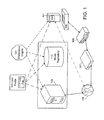
- an example music playback system includes a playback device 104, a preference engine 101 (for example, as described in the incorporated patent publications), and a user profile 102 which stores a user's music preferences.
- the preference engine 101 is located at a central server 109.
- the preference engine 101 is located in a music repository 110 or an end-point playback device 104.
- multiple preference engines are located in different locations and share information with each other.
- the user profile 102 is stored at the central server 109; in some examples, the user profile 102 is stored in the music repository 110 or the playback device 104. In some examples, the central server 109 is integrated in one physical component with the music repository 110. Other possible combinations of elements and their locations exist.
- the end-point playback device 104 can be inserted into a network enabled dock station 105.
- a router 106 connects to the dock station 105, and, in the depicted example, a cable modem 107 connects the router 106 to the internet 108.
- the end-point playback device 104 includes wireless network capabilities such as Wi-Fi or Bluetooth; or the device is incorporated into a cellular telephone which connects to the internet all the time.
- the device 104 connects to the network via dial up or through a wired connection with a computer. Other options, including combinations of these, are possible.
- data sent over the network connection is encrypted using public key encryption and/or using symmetric encryption, for example, using the secure sockets layer (SSL) protocol.
- SSL secure sockets layer
- the example depicted in FIG. 1 includes a central server 109 to which the end-point playback device 104 can connect across the internet 108.
- the depicted example also includes a music repository 110 for providing a library of tracks. Examples of tracks include songs stored on a compact disc; audio or video data stored on a local computer; audio or video data streamed from a remote server; audio or video data stored on a remote server and transferred to the local server, and audio or video data stored on a portable or automotive device.
- the music repository 110 is a subscription-based music service, such as Rhapsody (http://www.rhapsody.com).
- the repository 110 is a user's personal music collection stored on a hard drive-based product, such as a Bose Lifestyle system.
- the repository is a combination of a user's personal collection with music available on a subscription-based music service and/or a pay-per-song-based music service such as Apple's iTunes Music Store (http://phobos.apple.com/WebObjects/MZStore.woa/wa/storefront).
- the end-point playback device 104 is a portable device with music playback functionality, such as an MP3 player. In other examples, the playback device 104 is not portable. In some examples, the playback device 104 has local storage for storing a log file containing a user's feedback responses to tracks previously played on the playback device 104. Feedback responses include responses given by the user hitting the forward, repeat, and skip buttons or the + or - button. Some feedback is implicit, while other feedback is explicit. In some examples, the playback device 104 has a user interface to facilitate playback of the music tracks. The playback device 104 may also possess a processing capability such as a CPU. In some examples, the playback device 104 is a Bose Wave PC system or a Bose Lifestyle system.
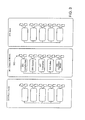
- tracks on the music repository are organized into a set of stations 301, 310, 311.
- An example of this form of organization is depicted more fully in FIG. 3 .
- a given station 301 corresponds to a particular genre of music, classical music.
- tracks 302 are further organized by subgenre, such as symphonies 305, operas 306, concertos 307, suites 308, and chamber music 309.
- tracks are organized by theme, mood, or other taxonomies.
- these taxonomies are derived from metadata derived from a publicly available database such as Gracenote's CDDB database.
- the central server 109 functions as a reflector server 1001.
- the reflector server 1001 acts as a focal point to facilitate communication between the playback device 104 and the music repository 110. These implementations are useful, for example, if the playback device 104 is located behind a firewall 1002 or Network Address Translation (NAT) router.
- the device 104 connects to the reflector server 1001, which is located outside the firewall 1002.
- the reflector server then communicates on the device's behalf with the music repository 110.
- NAT Network Address Translation
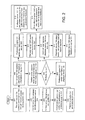
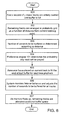
- the end-point playback device 104 contacts the central server 109 through the network enabled dock station 105 (step 201).
- the connection is to a reflector server 1001.
- the reflector server 1001 is running on the central server 109; in other examples, it is a separate entity that acts as a proxy, forwarding requests from the device 104 to the central server 109, and forwarding back responses. By keeping the reflector server separate, sensitive information such as preference information can be kept behind a firewall.
- the central server 109 uniquely identifies the end-point playback device 104 (step 202) and retrieves its user profile 102 (step 203).
- Various authentication means such as password can be utilized to associate one or more devices with a user.
- a user profile stored in a central server 109 can be downloaded to a device after authentication. The same device can also be used by multiple users.
- the user profile 102 may include a copy of log file 111 which can be, in some examples, uploaded from the playback device 104 and contains a user's feedback responses to tracks previously played on the playback device 104.
- the central server 109 parses the profile 102 and passes the information to a preference engine 101 (step 204).
- the preference engine 101 generates a list of tracks (step 205).
- An example of the algorithm by which the list is generated is explained in U.S. Patent Application Publication Nos. 2003-0236582-A1 (filed June 25, 2002 ).
- the central server 109 updates the user profile 102 using information from the log file 111 (step 206), and requests the newly-generated list of tracks from the music repository 110 (step 207). If no reflector server 1001 is in use (step 208), the central server 109 sends the new tracks to the playback device 104 (step 209). Otherwise, the central server 109 sends the new tracks to the reflector server (step 210), which sends them to the playback device 104 (step 211).
- the user may optionally remove the device from the dock (step 212).
- the device 104 plays the music, and the user provides implicit (forward, repeat, skip etc) and/or explicit (press +/- buttons) feedback (step 213).
- the device 104 stores the user feedback in a log file which, in some examples, resides on the playback device 104 (step 214).
- the preference engine 101 begins to poll to see if the playback device 104 is connected and if yes, upload the log file to the central server 109 to see if any of the tracks have been played and whether there is any new preference feedback (step 215). If there is feedback, control passes to step 201. If no reflector server 110 is in use, the system waits until the player is again docked (if it was undocked) and ready to send feedback (step 216), at which point control returns to step 201.
- the device 104 is periodically synchronized with the server 109.
- the device 104 may be continuously connected to the internet 108. In some of these examples, no log file 111 is needed. Instead, after step 211, the device 104 plays tracks and reports user feedback directly to the central server 109 or reflector server 1001. Control then returns to step 205.
- the device 104 is periodically synchronized with a home computer.
- the home computer maintains a constant network connection, and pre-downloads content such as the music track list based on the user profile 102, for quicker synchronization when the device 104 is reconnected.
- the central server 109 continuously works in the background based on a user's music preferences from the user profile, and sends new tracks to the computer whether or not the portable device is connected. The central server 109 performs this every time when new feedback is provided or when a threshold amount of feedback information has been exceeded or in other desirable manner. When the portable device 104 is not connected, new tracks will be downloaded onto the home computer waiting for the portable device to be docked in.
- the tracks on the device will be updated based on pre-downloaded new tracks.
- new tracks are continuously loaded to the home computer to create a larger track pool which may be more than what can fit onto a playback device 104.
- the preference engine which can either reside on the central server 109 or on the home computer, will generate new tracks from the larger track pool to download to the playback device 104.
- the large pool can then be further updated from the central server 109.
- Some of these described implementations are advantageous in their ability to store and manage a user profile 102 in a central location (e.g., on the central server 109). Some implementations allow the profile 102, which in some examples is located in a central location such as the on the central server 109, to be updated with feedback from multiple endpoint devices when the user profile is uniquely associated with the multiple devices. Furthermore, some implementations allow the profile to be easily downloaded to a new endpoint device, for examples, when a user purchases a new device or when a shared device is used by a specific user.
- a "pre-seeding" phase is included in which a set of representative/seed music tracks organized into stations are pre-selected and ready to be downloaded to the user to accelerate the rate at which the stations adapt to the user's tastes.
- the server selects and transmits a predetermined number of seed music tracks for each station to the end-point playback device 104.
- pre-seeding tracks corresponds to an initial user profile template which can be adapted to a user's taste based on a user's feedback and interaction with the tracks.
- the spectrum of this seed music tracks cover a wide breadth of musical tastes thereby quickly allowing a user to identify stations that embody the types of music that are most familiar or interesting to him or her.
- the seed music tracks contained within each station are selected to be representative of the station genre on the whole.
- seed music tracks belong to a sub-genre and are representative of the potential sub-genre path within the station.
- the seed music tracks are organized in tiers or hierarchy, as follows:
- the first tier 500 contains seed tracks 501, 502, 503 transmitted during a first connection. These are the likely best candidates to fit a substantial set of customer preferences across the tastes contained in the genre.
- the first tier offers the broadest range of tracks allowing a user to find a suitable artist and track.
- the tracks 501, 502, 503 in the first tier are drawn from within each station 301, 310, 311 and from within each subgenre 305, 306, 307, 308, 309 within a given station 301.
- more tracks in the first tier belong to a specific subgenre (for example, the symphony subgenre 305) because most users prefer that subgenre (e.g., symphonies are known to be more popular than operas).
- a specific subgenre for example, the symphony subgenre 305
- subgenre e.g., symphonies are known to be more popular than operas
- Second tier 502 seed tracks 504, 505, 506, are transmitted after a first set of user feedback is transmitted to the server.
- the tracks in the second tier represent a set of more narrowly defined tracks based on the user preferences. For example, the preference engine 101 learns that the user in fact prefers tracks from the opera subgenre 306 and includes more operas in the next set of seed tracks transmitted to the device 104.
- Third tier 503 seed tracks 507, 508, 509, are transmitted after a second set of user feedback is transmitted to the server.
- the tracks in the third tier represent a further refined set of narrowly defined tracks based on the user preferences.
- the multi-tiered approach allows the preference engine 101 to receive a constrained data set on which to perform its calculations, increasing both the speed at which a calculation can be performed and success in picking the next track(s).
- a multi-tiered approach as described above allows the preference engine 101 quickly to discern and target a listener's tastes, thereby reducing the amount of effort required by the listener to tune the system and improving the perceived responsiveness of the system.
- this approach permits a listener to initially hear tracks in a broad context, allowing the listener to better judge the suitability and fit of the track to their preferences.
- the seed music tracks for each of the tiers described above are obtained using collaborative filtering.
- the central server 109 uses multiple users' behaviors to make seed music tracks selections for individual users. In essence, the system comes up with an initial user profile based on similar user's profiles.
- the preferences engine 101 compiles information about users in a constrained geographic area and uses the compiled information when selecting seed tracks. In some examples, the preferences engine 101 learns that users in a particular geographical region prefer country music, and includes more country music songs in the first tier sent to playback devices 104 owned by users in that geographic region.
- a user is queried about a range of personal information which may or may not be directly related to the user's musical tastes. This information is incorporated into the pre-seeding process by determining an initial user profile based on the range of user personal information.
- the system requests the user's date of birth and pre-seeds tracks dating from the user's formative years. In some examples, the system asks the user where he or she was raised and pre-seeds tracks appealing in that geographic area (e.g., country music for users from the southern United States).
- information about a user's musical tastes is collected using a user interface running on a personal computer, or on the endpoint device 104, that presents the user with a series of album covers and asks the user which albums are preferred.
- the user is presented only with albums for which a relatively large amount of metadata is available, or for albums that contain more references to other tracks.
- Other information includes a user's birthplace, preferred radio stations, TV channels, movies, sound tracks and magazines.
- this information is collected without the user's direct involvement.
- the user's hard drive is scanned and data is extracted to determine a user profile.
- a user's TiVo log is scanned to determine a user profile.
- the user's locale is determined by examining his or her credit card billing address.
- information about the customer is supplied by the retailer from whom the device 104 was purchased.
- a user is enabled to bring a portable music player to a computer housed at a retailer which can run or can connect to the central server 109 to run the preference engine 101.
- the computer would scan the player and determine an initial user profile 102 that would be transmitted to the device 104 described above.
- a user can have a portable music player or a home computer hard drive or a TiVo log scanned over the internet by a server, which would then provide the device 104 with a default profile 102 based on the user's music preferences.
- a user provides a wide range of feedback using a limited number of user interface elements.
- user feedback may be represented by multiple or a continuous value having any possible value that falls into interval [-1, 1]. For example: “I love this” may be represented by 1; “I like this” by 0.5, etc.
- buttons one 1102 labeled “+”, the other 1101 labeled “-”, are provided. Different feedback values are associated with the buttons depending on how long each is held down.
- each button has two potential meanings: “quick press-and-release” (held fewer than 750 ms) and “extended hold” (held down 750 ms or longer).
- An extended hold on the "+” button 1102 means “I love this” and gives a target feedback score of +1.0.
- Quick press-and-release of the "+” button 1102 means “I like this” and gives a target feedback score of +0.5.
- Quick press-and-release of the "-” 1101 button means “I dislike this” and gives a target feedback score of -0.5.
- Extended hold of the "-” button 1101 means “I hate this” and gives a target feedback score of -1.
- a target score is computed as a continuous function based on the amount of time the + (1102) or - (1101) button is held down.
- the target feedback score is also influenced by implicit feedback. For example, if the user presses "next track" during a track, the score may be decremented by 0.3. Other forms of implicit feedback are disclosed in the incorporated patent publications.
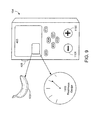
- a graphical indication 1201, 1202 of how much of a category of music (such as those tracks that match the user preferences) remains on the device that has not yet been played can be useful.
- the indication need not be graphical so long as it can be understood by a person.
- the freshness indicator 1201, 1202 approaches zero, the user will know that he should update his content by synchronizing the device with a larger collection.
- the freshness indicator is represented by a fuel gauge that gradually empties 1202.
- the freshness indicator is represented by a fruit, such as a banana, that gradually ripens 1201. In these and other examples, the indicator gives the user graphical feedback regarding when he is running out of music he likes but has not heard recently.
- the “freshness” value will change, prompting a change in the indicator. If the device discovers that the user does not like some of the music that was predicted to be liked, the “freshness” value will decline more rapidly. Conversely, if the device discovers that the user likes additional types of music that are present on the device 104, the “freshness” indicator will decline more slowly (and could possibly increase).
- the “freshness” indicator could also be estimated in terms of time, i.e., how many hours or minutes of "fresh” music remains.
- the graphical indication 1201, 1202 can be used to represent the amount of music meeting certain characteristic criteria besides "freshness" as described above.
- This general indicator for representing the amount of music meeting certain music characteristic can also change in response to user feedback with respect to the music content.
- the characteristics may refer to the type of music a user is likely to prefer listening to in the near future.
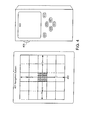
- a planar (non-hierarchical) music library navigation system 401 organizes and navigates digital music files in a two-dimensional grid 402 without requiring switching back and forth among multiple hierarchical menus.
- the user interface on an end-point playback device 104 includes a viewport 403, navigation controls (up 404, down 405, left 406, right 407) and other playback controls (volume 408, play 409 and pause 410).
- Music track files are organized in "stations" that can be grouped by date, genre, user-preference, or other criteria. Within each station are a series of music track files that fit the prescribed criteria.
- the music collection is organized as a two-dimensional grid with "stations" along the y-axis 411 and "tracks" on the x-axis 412.
- a viewport 403 reflects the current x-y position within the grid 402, and the audio playback directly corresponds to the current position.
- Operating the Up 404 and Down 405 controls on the end-point playback device 104 moves the viewport 403 along the y-axis 411, switching between stations.
- Left 406 and Right 407 controls move the viewport 403 along the x-axis412, switching between music tracks.
- the music repository includes both streamed music tracks such those from a subscription service and a user's pre-stored/owned music collection. They are seamlessly integrated into a music collection library. In some practices, the seed music tracks as described before are selected from this integrated library.
- the user's collection is parsed and used to create a station spectrum that matches the genres, musical styles, or moods contained in the collection.
- Music tracks are then added to fill out the stations that include tracks of the listener's collection as well as new music tracks from online delivery that have been referenced according to the user's music tracks.
- User feedback such as ratings can then be applied to this dataset.
- the user is presented with his own collection as a point of departure.
- the collection can be organized by station or genre/sub-genre or other relevant classification.
- the preference engine searches both the user collection and the online music delivery service to find music tracks that match user tastes to augment the listening experience.
- Some example systems utilize a method to allocate dynamically music data to the memory buffer of an end-point playback device 104. Certain implementations of such a method provide a faster response to user input, such as when skipping through tracks or switching between stations. Certain implementations of such a method avoid pauses caused by network traffic when playing streamed tracks.
- one example method operates as follows:
- the tracks may be from a user's collection, or from online delivery or from an integrated music library.
- the track list becomes more accurate to listener preferences, fewer tracks need to be buffered because it is less likely the user will skip a large number of tracks.
- the buffer is then filled with a mix of partial and complete tracks, allowing repetition of frequently played tracks without loading the server.
- extended listening is provided for even where connectivity to the network is interrupted.
Landscapes
- Engineering & Computer Science (AREA)
- Databases & Information Systems (AREA)
- Multimedia (AREA)
- Signal Processing (AREA)
- Health & Medical Sciences (AREA)
- General Health & Medical Sciences (AREA)
- Social Psychology (AREA)
- Biophysics (AREA)
- Computer Networks & Wireless Communication (AREA)
- Biomedical Technology (AREA)
- Chemical & Material Sciences (AREA)
- Life Sciences & Earth Sciences (AREA)
- Neurosurgery (AREA)
- Computer Graphics (AREA)
- Analytical Chemistry (AREA)
- Reverberation, Karaoke And Other Acoustics (AREA)
- Information Transfer Between Computers (AREA)
- Information Retrieval, Db Structures And Fs Structures Therefor (AREA)
- Signal Processing For Digital Recording And Reproducing (AREA)
- Management Or Editing Of Information On Record Carriers (AREA)
- User Interface Of Digital Computer (AREA)
- Indexing, Searching, Synchronizing, And The Amount Of Synchronization Travel Of Record Carriers (AREA)
Applications Claiming Priority (2)
| Application Number | Priority Date | Filing Date | Title |
|---|---|---|---|
| US11/774,110 US20090013260A1 (en) | 2007-07-06 | 2007-07-06 | Intelligent music track selection in a networked environment |
| EP08756651A EP2171718A2 (de) | 2007-07-06 | 2008-06-03 | Intelligente musiktitelauswahl in einer vernetzten umgebung |
Related Parent Applications (1)
| Application Number | Title | Priority Date | Filing Date |
|---|---|---|---|
| EP08756651A Division EP2171718A2 (de) | 2007-07-06 | 2008-06-03 | Intelligente musiktitelauswahl in einer vernetzten umgebung |
Publications (1)
| Publication Number | Publication Date |
|---|---|
| EP2503553A1 true EP2503553A1 (de) | 2012-09-26 |
Family
ID=39789661
Family Applications (2)
| Application Number | Title | Priority Date | Filing Date |
|---|---|---|---|
| EP08756651A Withdrawn EP2171718A2 (de) | 2007-07-06 | 2008-06-03 | Intelligente musiktitelauswahl in einer vernetzten umgebung |
| EP12166265A Withdrawn EP2503553A1 (de) | 2007-07-06 | 2008-06-03 | Intelligente Musiktitelauswahl in einer vernetzten Umgebung |
Family Applications Before (1)
| Application Number | Title | Priority Date | Filing Date |
|---|---|---|---|
| EP08756651A Withdrawn EP2171718A2 (de) | 2007-07-06 | 2008-06-03 | Intelligente musiktitelauswahl in einer vernetzten umgebung |
Country Status (3)
| Country | Link |
|---|---|
| US (2) | US20090013260A1 (de) |
| EP (2) | EP2171718A2 (de) |
| WO (1) | WO2009009231A2 (de) |
Families Citing this family (18)
| Publication number | Priority date | Publication date | Assignee | Title |
|---|---|---|---|---|
| JP2009140169A (ja) * | 2007-12-05 | 2009-06-25 | Sony Corp | サーバ装置、端末装置、コンテンツ送受信システム、コンテンツ送受信方法及びプログラム |
| KR101069090B1 (ko) * | 2011-03-03 | 2011-09-30 | 송석명 | 조립식 경조사용 쌀 화환 |
| US20140006512A1 (en) * | 2011-03-22 | 2014-01-02 | Telefonaktiebolaget L M Ericsson (Publ) | Methods for Exchanging User Profile, Profile Mediator Device, Agents, Computer Programs and Computer Program Products |
| US9529801B2 (en) | 2011-03-29 | 2016-12-27 | Bose Corporation | Multimedia analysis and recommendation generation |
| US9137564B2 (en) | 2012-06-28 | 2015-09-15 | Sonos, Inc. | Shift to corresponding media in a playback queue |
| US10140372B2 (en) | 2012-09-12 | 2018-11-27 | Gracenote, Inc. | User profile based on clustering tiered descriptors |
| US8875021B2 (en) * | 2012-10-23 | 2014-10-28 | Verizon Patent And Licensing Inc. | Visual playlist |
| US9383965B1 (en) | 2013-08-16 | 2016-07-05 | Amazon Technologies, Inc. | Media library analyzer |
| US9226072B2 (en) | 2014-02-21 | 2015-12-29 | Sonos, Inc. | Media content based on playback zone awareness |
| US10129599B2 (en) * | 2014-04-28 | 2018-11-13 | Sonos, Inc. | Media preference database |
| US9680960B2 (en) | 2014-04-28 | 2017-06-13 | Sonos, Inc. | Receiving media content based on media preferences of multiple users |
| US20150334204A1 (en) * | 2014-05-15 | 2015-11-19 | Google Inc. | Intelligent auto-caching of media |
| US10068012B2 (en) | 2014-06-27 | 2018-09-04 | Sonos, Inc. | Music discovery |
| US10802938B2 (en) * | 2014-09-23 | 2020-10-13 | At&T Intellectual Property I, L.P. | Accessory setting service |
| TWI588745B (zh) * | 2015-12-31 | 2017-06-21 | Fuelstation Inc | E-commerce system that can automatically record and update the information in the embedded electronic device by the cloud |
| US10860646B2 (en) * | 2016-08-18 | 2020-12-08 | Spotify Ab | Systems, methods, and computer-readable products for track selection |
| WO2019027914A1 (en) * | 2017-07-31 | 2019-02-07 | Bose Corporation | CONVERSATIONAL AUDIO ASSISTANT |
| US11393478B2 (en) | 2018-12-12 | 2022-07-19 | Sonos, Inc. | User specific context switching |
Citations (9)
| Publication number | Priority date | Publication date | Assignee | Title |
|---|---|---|---|---|
| EP1211690A2 (de) * | 2000-11-14 | 2002-06-05 | Pioneer Corporation | Informationswiedergabegerät und -verfahren zur Speicherung der Häufigkeit von Wiedergaben, und Speichermedium zur Speicherung des Programms für das Verfahren |
| WO2002095611A2 (en) * | 2001-05-23 | 2002-11-28 | Koninklijke Philips Electronics N.V. | Selection of an item of music based on access statistics |
| US20030236582A1 (en) | 2002-06-25 | 2003-12-25 | Lee Zamir | Selection of items based on user reactions |
| US20040225519A1 (en) | 2002-06-25 | 2004-11-11 | Martin Keith D. | Intelligent music track selection |
| US20050021470A1 (en) | 2002-06-25 | 2005-01-27 | Bose Corporation | Intelligent music track selection |
| US20050097085A1 (en) * | 2003-10-31 | 2005-05-05 | Bo Shen | Method for prioritizing content |
| US20050146444A1 (en) | 2004-01-06 | 2005-07-07 | Allen William A. | Remote controlling |
| EP1659588A1 (de) * | 2004-11-17 | 2006-05-24 | Sony Corporation | System zur Verwendung von Inhalten, Aufzeichnungsvorrichtung, Wiedergabevorrichtung und Systemsteuerungsverfahren |
| EP1755018A2 (de) * | 2005-08-01 | 2007-02-21 | Sony Corporation | Elektronische Vorrichtung, Datenverarbeitungsverfahren, Datensteuerungsverfahren und Inhaltsdatenverarbeitungssystem |
Family Cites Families (97)
| Publication number | Priority date | Publication date | Assignee | Title |
|---|---|---|---|---|
| US5355302A (en) * | 1990-06-15 | 1994-10-11 | Arachnid, Inc. | System for managing a plurality of computer jukeboxes |
| US5781889A (en) * | 1990-06-15 | 1998-07-14 | Martin; John R. | Computer jukebox and jukebox network |
| US5148153A (en) * | 1990-12-20 | 1992-09-15 | Motorola Inc. | Automatic screen blanking in a mobile radio data terminal |
| JP2689734B2 (ja) * | 1991-01-09 | 1997-12-10 | ヤマハ株式会社 | 音響装置 |
| JP3104192B2 (ja) * | 1991-05-20 | 2000-10-30 | ソニー株式会社 | 遠隔制御装置 |
| US6400996B1 (en) * | 1999-02-01 | 2002-06-04 | Steven M. Hoffberg | Adaptive pattern recognition based control system and method |
| US6850252B1 (en) * | 1999-10-05 | 2005-02-01 | Steven M. Hoffberg | Intelligent electronic appliance system and method |
| US5410344A (en) * | 1993-09-22 | 1995-04-25 | Arrowsmith Technologies, Inc. | Apparatus and method of selecting video programs based on viewers' preferences |
| US5749081A (en) * | 1995-04-06 | 1998-05-05 | Firefly Network, Inc. | System and method for recommending items to a user |
| US5751672A (en) * | 1995-07-26 | 1998-05-12 | Sony Corporation | Compact disc changer utilizing disc database |
| US5978766A (en) * | 1995-12-20 | 1999-11-02 | Starwave Corporation | Machine, method and medium for assisted selection of information from a choice space |
| US5864868A (en) * | 1996-02-13 | 1999-01-26 | Contois; David C. | Computer control system and user interface for media playing devices |
| DE69725666T2 (de) * | 1996-03-04 | 2004-07-29 | Koninklijke Philips Electronics N.V. | Dem benutzer zugeneigtes multimediapräsentationssystem für mehrere präsentationsartikel, welche jeder als ein agent wirken |
| US5668778A (en) * | 1996-07-09 | 1997-09-16 | The United States Of America As Represented By The Secretary Of The Navy | Method for detecting acoustic signals from an underwater source |
| US6195657B1 (en) * | 1996-09-26 | 2001-02-27 | Imana, Inc. | Software, method and apparatus for efficient categorization and recommendation of subjects according to multidimensional semantics |
| US6199076B1 (en) * | 1996-10-02 | 2001-03-06 | James Logan | Audio program player including a dynamic program selection controller |
| US6823225B1 (en) * | 1997-02-12 | 2004-11-23 | Im Networks, Inc. | Apparatus for distributing and playing audio information |
| US5949345A (en) * | 1997-05-27 | 1999-09-07 | Microsoft Corporation | Displaying computer information to a driver of a vehicle |
| US6327418B1 (en) * | 1997-10-10 | 2001-12-04 | Tivo Inc. | Method and apparatus implementing random access and time-based functions on a continuous stream of formatted digital data |
| US6131130A (en) * | 1997-12-10 | 2000-10-10 | Sony Corporation | System for convergence of a personal computer with wireless audio/video devices wherein the audio/video devices are remotely controlled by a wireless peripheral |
| US5986200A (en) * | 1997-12-15 | 1999-11-16 | Lucent Technologies Inc. | Solid state interactive music playback device |
| US6104334A (en) * | 1997-12-31 | 2000-08-15 | Eremote, Inc. | Portable internet-enabled controller and information browser for consumer devices |
| US6118450A (en) * | 1998-04-03 | 2000-09-12 | Sony Corporation | Graphic user interface that is usable as a PC interface and an A/V interface |
| US6446080B1 (en) * | 1998-05-08 | 2002-09-03 | Sony Corporation | Method for creating, modifying, and playing a custom playlist, saved as a virtual CD, to be played by a digital audio/visual actuator device |
| US6351442B1 (en) * | 1998-06-03 | 2002-02-26 | Matsushita Electric Industrial Co., Ltd. | Recording medium, recording apparatus and reproduction apparatus with reproduction path flag information |
| US6230074B1 (en) * | 1998-06-17 | 2001-05-08 | Sony Corporation Of Japan | High-capacity jukebox device for storing and accessing computer-readable media |
| US5969283A (en) * | 1998-06-17 | 1999-10-19 | Looney Productions, Llc | Music organizer and entertainment center |
| US6321221B1 (en) * | 1998-07-17 | 2001-11-20 | Net Perceptions, Inc. | System, method and article of manufacture for increasing the user value of recommendations |
| US6233389B1 (en) * | 1998-07-30 | 2001-05-15 | Tivo, Inc. | Multimedia time warping system |
| US6208341B1 (en) * | 1998-08-05 | 2001-03-27 | U. S. Philips Corporation | GUI of remote control facilitates user-friendly editing of macros |
| US6407750B1 (en) * | 1999-01-08 | 2002-06-18 | Sony Corporation | Broadcast and recorded music management system particularly for use in automobile |
| GB9918611D0 (en) * | 1999-08-07 | 1999-10-13 | Sibelius Software Ltd | Music database searching |
| KR100304482B1 (ko) * | 1999-09-22 | 2001-11-02 | 구자홍 | 다중 계층구조를 가지는 사용자 선호도 정보구조와 이를 이용한 멀티미디어 정보 서비스 방법 |
| US6192340B1 (en) * | 1999-10-19 | 2001-02-20 | Max Abecassis | Integration of music from a personal library with real-time information |
| US6526411B1 (en) * | 1999-11-15 | 2003-02-25 | Sean Ward | System and method for creating dynamic playlists |
| US6466918B1 (en) * | 1999-11-18 | 2002-10-15 | Amazon. Com, Inc. | System and method for exposing popular nodes within a browse tree |
| US6266589B1 (en) * | 1999-11-19 | 2001-07-24 | International Business Machines Corporation | Speed-based disabling of functionality for automotive applications |
| US6990464B1 (en) * | 2000-01-11 | 2006-01-24 | Ncr Corporation | Apparatus, system and method for electronic book distribution |
| EP1247234A1 (de) * | 2000-01-14 | 2002-10-09 | Marconi Commerce Systems Inc. | Datenhandelsystem |
| US7028082B1 (en) * | 2001-03-08 | 2006-04-11 | Music Choice | Personalized audio system and method |
| US20020002899A1 (en) * | 2000-03-22 | 2002-01-10 | Gjerdingen Robert O. | System for content based music searching |
| US6539395B1 (en) * | 2000-03-22 | 2003-03-25 | Mood Logic, Inc. | Method for creating a database for comparing music |
| EP1195990A1 (de) * | 2000-03-29 | 2002-04-10 | Sony Corporation | System zur bereitstellung einer liste virtueller programme |
| US20010053944A1 (en) * | 2000-03-31 | 2001-12-20 | Marks Michael B. | Audio internet navigation system |
| US20020032019A1 (en) * | 2000-04-24 | 2002-03-14 | Marks Michael B. | Method for assembly of unique playlists |
| US8352331B2 (en) * | 2000-05-03 | 2013-01-08 | Yahoo! Inc. | Relationship discovery engine |
| US8024419B2 (en) * | 2000-05-12 | 2011-09-20 | Sony Corporation | Method and system for remote access of personal music |
| KR100867760B1 (ko) * | 2000-05-15 | 2008-11-10 | 소니 가부시끼 가이샤 | 재생장치, 재생방법 및 기록매체 |
| US20020059610A1 (en) * | 2000-05-23 | 2002-05-16 | Ellis Michael D. | Interactive television application with watch lists |
| JP3481558B2 (ja) * | 2000-05-30 | 2003-12-22 | 松下電器産業株式会社 | ミュート装置およびミュート方法 |
| US6947922B1 (en) * | 2000-06-16 | 2005-09-20 | Xerox Corporation | Recommender system and method for generating implicit ratings based on user interactions with handheld devices |
| US6657116B1 (en) * | 2000-06-29 | 2003-12-02 | Microsoft Corporation | Method and apparatus for scheduling music for specific listeners |
| US7075000B2 (en) * | 2000-06-29 | 2006-07-11 | Musicgenome.Com Inc. | System and method for prediction of musical preferences |
| US6657117B2 (en) * | 2000-07-14 | 2003-12-02 | Microsoft Corporation | System and methods for providing automatic classification of media entities according to tempo properties |
| US20030164844A1 (en) * | 2000-09-25 | 2003-09-04 | Kravitz Dean Todd | System and method for processing multimedia content, stored in a computer-accessible storage medium, based on various user-specified parameters related to the content |
| US7734688B2 (en) * | 2000-09-28 | 2010-06-08 | Qwest Communications International Inc. | Portable wireless player and associated method |
| JP2002114107A (ja) * | 2000-10-10 | 2002-04-16 | Nissan Motor Co Ltd | オーディオ装置及び音楽提供方法 |
| US20020113824A1 (en) * | 2000-10-12 | 2002-08-22 | Myers Thomas D. | Graphic user interface that is usable as a commercial digital jukebox interface |
| US7667123B2 (en) * | 2000-10-13 | 2010-02-23 | Phillips Mark E | System and method for musical playlist selection in a portable audio device |
| US7721310B2 (en) * | 2000-12-05 | 2010-05-18 | Koninklijke Philips Electronics N.V. | Method and apparatus for selective updating of a user profile |
| EP1215834A1 (de) * | 2000-12-15 | 2002-06-19 | Sony France S.A. | Informationsreihenfolgenextraktion und Gebäudeapparat z.B. für das Produzieren der personifizierten Musiknamereihenfolgen |
| US7035871B2 (en) * | 2000-12-19 | 2006-04-25 | Intel Corporation | Method and apparatus for intelligent and automatic preference detection of media content |
| US20020151327A1 (en) * | 2000-12-22 | 2002-10-17 | David Levitt | Program selector and guide system and method |
| US6928433B2 (en) * | 2001-01-05 | 2005-08-09 | Creative Technology Ltd | Automatic hierarchical categorization of music by metadata |
| EP1241588A3 (de) * | 2001-01-23 | 2006-01-04 | Matsushita Electric Industrial Co., Ltd. | System zum Auffinden von Audio-Informationen |
| CA2438998C (en) * | 2001-02-20 | 2011-08-23 | Caron S. Ellis | Multiple radio signal processing and storing method and apparatus |
| US20020132616A1 (en) * | 2001-03-19 | 2002-09-19 | Ross Lorna R. | Communications system with automatic download capability |
| USD461191S1 (en) * | 2001-04-20 | 2002-08-06 | Radio Computing Services, Inc. | Computer generated image of a control device for a demand-based music scheduling system |
| US7003515B1 (en) * | 2001-05-16 | 2006-02-21 | Pandora Media, Inc. | Consumer item matching method and system |
| US6993532B1 (en) * | 2001-05-30 | 2006-01-31 | Microsoft Corporation | Auto playlist generator |
| US6574531B2 (en) * | 2001-07-25 | 2003-06-03 | Visteon Global Technologies, Inc. | Method and apparatus for providing information to an occupant of a vehicle |
| US7113999B2 (en) * | 2001-08-14 | 2006-09-26 | International Business Machines Corporation | Method, computer readable media and apparatus for the selection and rendering of audio files in a networked environment |
| US20030135513A1 (en) * | 2001-08-27 | 2003-07-17 | Gracenote, Inc. | Playlist generation, delivery and navigation |
| US20030058781A1 (en) * | 2001-09-27 | 2003-03-27 | Millikan Thomas N. | Method and apparatus for providing a playlist in a compact disc player |
| US7162733B2 (en) * | 2001-10-02 | 2007-01-09 | General Instrument Corporation | Method and apparatus for automatic set-up of electronic devices |
| JP3756799B2 (ja) * | 2001-10-23 | 2006-03-15 | アルパイン株式会社 | 音楽再生システム |
| US6914324B2 (en) * | 2001-10-26 | 2005-07-05 | Staktek Group L.P. | Memory expansion and chip scale stacking system and method |
| US7194617B2 (en) * | 2001-11-05 | 2007-03-20 | Koninklijke Philips Electronics N.V. | Method and apparatus to prevent the unauthorized copying of digital information |
| JP2005512270A (ja) * | 2001-12-06 | 2005-04-28 | トヨタ モーター セールス, ユー.エス.エー, インコーポレイテッド | 車両プレーヤーシステム |
| US6941324B2 (en) * | 2002-03-21 | 2005-09-06 | Microsoft Corporation | Methods and systems for processing playlists |
| US7631331B2 (en) * | 2002-03-29 | 2009-12-08 | Starz Entertainment, Llc | Cross-channel interstitial program promotion |
| JP2004023667A (ja) * | 2002-06-19 | 2004-01-22 | Matsushita Electric Ind Co Ltd | プロファイル情報送信装置 |
| US8171514B2 (en) * | 2002-08-21 | 2012-05-01 | Bernier Nicklas P | Managing favorite channels |
| US7797064B2 (en) * | 2002-12-13 | 2010-09-14 | Stephen Loomis | Apparatus and method for skipping songs without delay |
| AU2003285644A1 (en) * | 2002-12-19 | 2004-07-14 | Koninklijke Philips Electronics N.V. | Method and system for network downloading of music files |
| US7664273B2 (en) * | 2002-12-20 | 2010-02-16 | Elan Home Systems, L.L.C. | Approach for controlling audio signals in remote location |
| US7013238B1 (en) * | 2003-02-24 | 2006-03-14 | Microsoft Corporation | System for delivering recommendations |
| JP2004294584A (ja) * | 2003-03-26 | 2004-10-21 | Sony Corp | 音楽データ転送記録方法および音楽再生装置 |
| US20060235550A1 (en) * | 2003-04-24 | 2006-10-19 | Csicsatka Tibor G | Creation of playlists using audio identification |
| US7345232B2 (en) * | 2003-11-06 | 2008-03-18 | Nokia Corporation | Automatic personal playlist generation with implicit user feedback |
| CN1910582A (zh) * | 2004-01-20 | 2007-02-07 | 皇家飞利浦电子股份有限公司 | 分级播放表发生器 |
| US7500200B2 (en) * | 2004-09-15 | 2009-03-03 | International Business Machines Corporation | System and method for instant messenger busy gauge |
| US20070006162A1 (en) * | 2005-06-30 | 2007-01-04 | Nokia Corporation | Method, terminal device and computer software for changing the appearance of a visual program representative |
| US8255640B2 (en) * | 2006-01-03 | 2012-08-28 | Apple Inc. | Media device with intelligent cache utilization |
| US20080005699A1 (en) * | 2006-06-30 | 2008-01-03 | Motorola, Inc. | Method and system for podcast search and selection |
| US8463924B2 (en) * | 2007-02-02 | 2013-06-11 | Apple Inc. | Remote access of media items |
| US20080306936A1 (en) * | 2007-06-06 | 2008-12-11 | Mspot, Inc. | Method and apparatus for compiling user preferences for digital content streamed to a mobile handset |
-
2007
- 2007-07-06 US US11/774,110 patent/US20090013260A1/en not_active Abandoned
-
2008
- 2008-06-03 WO PCT/US2008/065653 patent/WO2009009231A2/en not_active Ceased
- 2008-06-03 EP EP08756651A patent/EP2171718A2/de not_active Withdrawn
- 2008-06-03 EP EP12166265A patent/EP2503553A1/de not_active Withdrawn
-
2010
- 2010-10-25 US US12/911,453 patent/US20110126114A1/en not_active Abandoned
Patent Citations (10)
| Publication number | Priority date | Publication date | Assignee | Title |
|---|---|---|---|---|
| EP1211690A2 (de) * | 2000-11-14 | 2002-06-05 | Pioneer Corporation | Informationswiedergabegerät und -verfahren zur Speicherung der Häufigkeit von Wiedergaben, und Speichermedium zur Speicherung des Programms für das Verfahren |
| WO2002095611A2 (en) * | 2001-05-23 | 2002-11-28 | Koninklijke Philips Electronics N.V. | Selection of an item of music based on access statistics |
| US20030236582A1 (en) | 2002-06-25 | 2003-12-25 | Lee Zamir | Selection of items based on user reactions |
| US20040225519A1 (en) | 2002-06-25 | 2004-11-11 | Martin Keith D. | Intelligent music track selection |
| US20050021470A1 (en) | 2002-06-25 | 2005-01-27 | Bose Corporation | Intelligent music track selection |
| US20050097085A1 (en) * | 2003-10-31 | 2005-05-05 | Bo Shen | Method for prioritizing content |
| EP1548740A2 (de) * | 2003-12-24 | 2005-06-29 | Bose Corporation | Intelligente Musikspurauswahl |
| US20050146444A1 (en) | 2004-01-06 | 2005-07-07 | Allen William A. | Remote controlling |
| EP1659588A1 (de) * | 2004-11-17 | 2006-05-24 | Sony Corporation | System zur Verwendung von Inhalten, Aufzeichnungsvorrichtung, Wiedergabevorrichtung und Systemsteuerungsverfahren |
| EP1755018A2 (de) * | 2005-08-01 | 2007-02-21 | Sony Corporation | Elektronische Vorrichtung, Datenverarbeitungsverfahren, Datensteuerungsverfahren und Inhaltsdatenverarbeitungssystem |
Non-Patent Citations (3)
| Title |
|---|
| BALAFOUTIS E ET AL: "Proxy caching and video segmentation based on request frequencies and access costs", TELECOMMUNICATIONS, 2003. ICT 2003. 10TH INTERNATIONAL CONFERENCE ON FEB. 23 - MAR. 1, 2003, PISCATAWAY, NJ, USA,IEEE, vol. 2, 23 February 2003 (2003-02-23), pages 1367 - 1372, XP010637996, ISBN: 978-0-7803-7661-8, DOI: 10.1109/ICTEL.2003.1191634 * |
| CHEN S ET AL: "Adaptive and lazy segmentation based proxy caching for streaming media delivery", NOSSDAV'03; [PROCEEDINGS OF THE INTERNATIONAL WORKSHOP ON NETWORK AND OPERATING SYSTEM SUPPORT FOR DIGITAL AUDIO AND VIDEO (NOSSDAV)], MONTEREY, CALIFORNIA, USA, 1 June 2003 (2003-06-01), pages 22 - 31, XP002322646, ISBN: 978-1-58113-694-4, DOI: 10.1145/776322.776328 * |
| HAO CHEN ET AL: "A new proxy caching scheme for parallel video servers", COMPUTER NETWORKS AND MOBILE COMPUTING, 2003. ICCNMC 2003. 2003 INTERN ATIONAL CONFERENCE ON 20-23 OCT. 2003, PISCATAWAY, NJ, USA,IEEE, 20 October 2003 (2003-10-20), pages 438 - 441, XP010666172, ISBN: 978-0-7695-2033-9 * |
Also Published As
| Publication number | Publication date |
|---|---|
| EP2171718A2 (de) | 2010-04-07 |
| WO2009009231A2 (en) | 2009-01-15 |
| US20110126114A1 (en) | 2011-05-26 |
| WO2009009231A3 (en) | 2009-04-23 |
| US20090013260A1 (en) | 2009-01-08 |
| WO2009009231A4 (en) | 2009-06-18 |
Similar Documents
| Publication | Publication Date | Title |
|---|---|---|
| US20110126114A1 (en) | Intelligent Music Track Selection in a Networked Environment | |
| US8060227B2 (en) | Digital media player and method for facilitating social music discovery through sampling, identification, and logging | |
| US11829403B2 (en) | Media content selected from listening history of social connections | |
| US11914839B2 (en) | Controlling automatic playback of media content | |
| US8200674B2 (en) | Personalized media recommendation | |
| US7076561B1 (en) | Personalized audio system and method | |
| AU2013312361B2 (en) | System and method for combining inputs to generate and modify playlists | |
| US7028082B1 (en) | Personalized audio system and method | |
| US20140136554A1 (en) | System and method for recommending timely digital content | |
| US20120088477A1 (en) | Mobile handset for media access and playback | |
| US12216668B2 (en) | Media content playback for a group of users | |
| JP4730619B2 (ja) | 情報処理装置および方法、並びにプログラム | |
| US20130309986A1 (en) | Method and apparatus for enhanced playback of content while switching among channels of broadcast or streamed content while being received | |
| US12164826B2 (en) | Skip behavior analyzer | |
| US20250274633A1 (en) | User interface for media content playback | |
| KR20140102131A (ko) | 재생목록들의 생성 | |
| KR20150097894A (ko) | 기분에 기초한 음악 서비스 시스템 및 방법 |
Legal Events
| Date | Code | Title | Description |
|---|---|---|---|
| PUAI | Public reference made under article 153(3) epc to a published international application that has entered the european phase |
Free format text: ORIGINAL CODE: 0009012 |
|
| AC | Divisional application: reference to earlier application |
Ref document number: 2171718 Country of ref document: EP Kind code of ref document: P |
|
| AK | Designated contracting states |
Kind code of ref document: A1 Designated state(s): AT BE BG CH CY CZ DE DK EE ES FI FR GB GR HR HU IE IS IT LI LT LU LV MC MT NL NO PL PT RO SE SI SK TR |
|
| AX | Request for extension of the european patent |
Extension state: AL BA MK RS |
|
| 17P | Request for examination filed |
Effective date: 20130318 |
|
| STAA | Information on the status of an ep patent application or granted ep patent |
Free format text: STATUS: REQUEST FOR EXAMINATION WAS MADE |
|
| STAA | Information on the status of an ep patent application or granted ep patent |
Free format text: STATUS: THE APPLICATION IS DEEMED TO BE WITHDRAWN |
|
| 18D | Application deemed to be withdrawn |
Effective date: 20170103 |